Basic Electronics II
Transistors
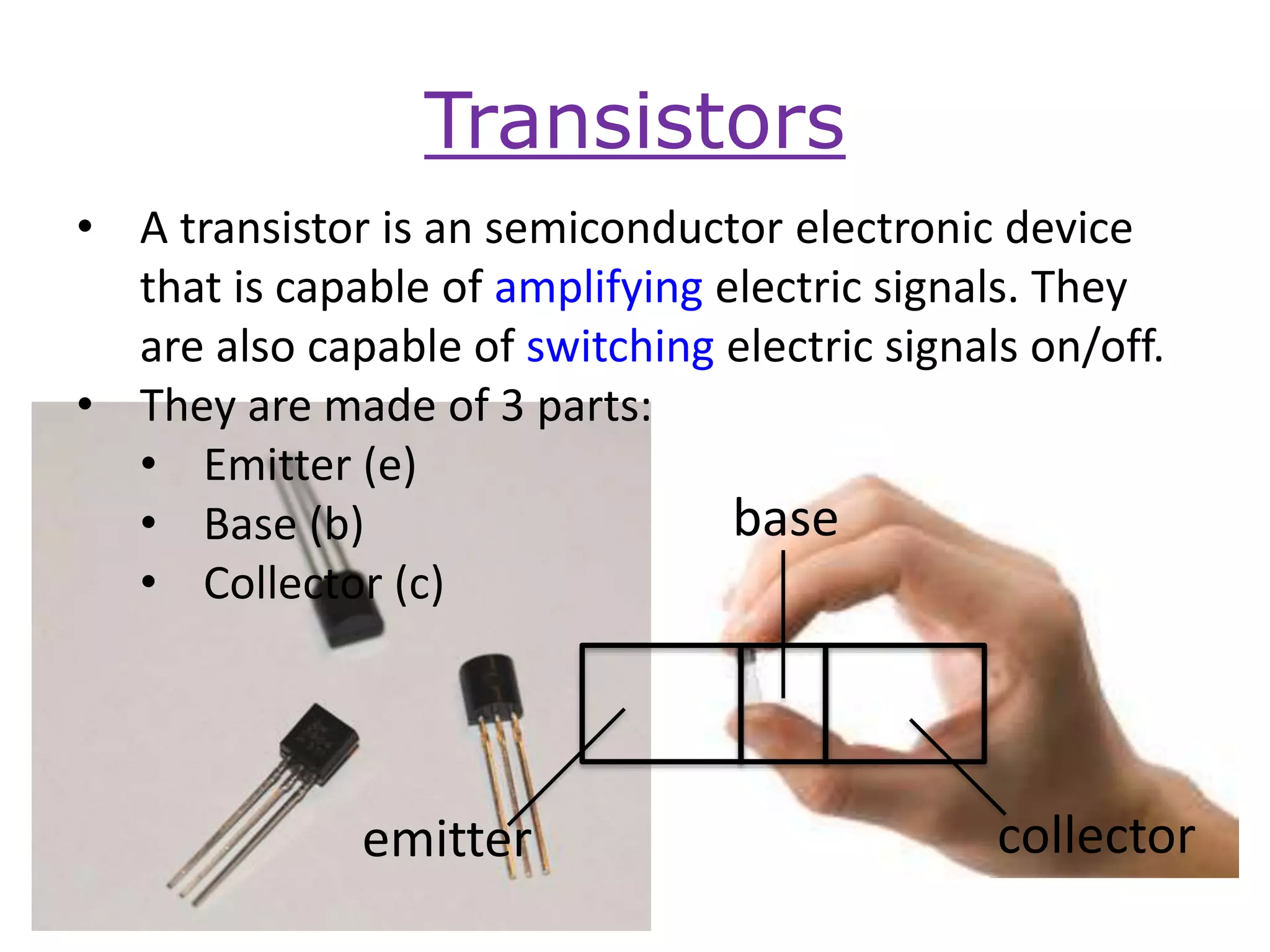
emitter
base
collector
• A transistor is an semiconductor electronic device
that is capable of amplifying electric signals. They
are also capable of switching electric signals on/off.
• They are made of 3 parts:
• Emitter (e)
• Base (b)
• Collector (c)
Types of Transistors
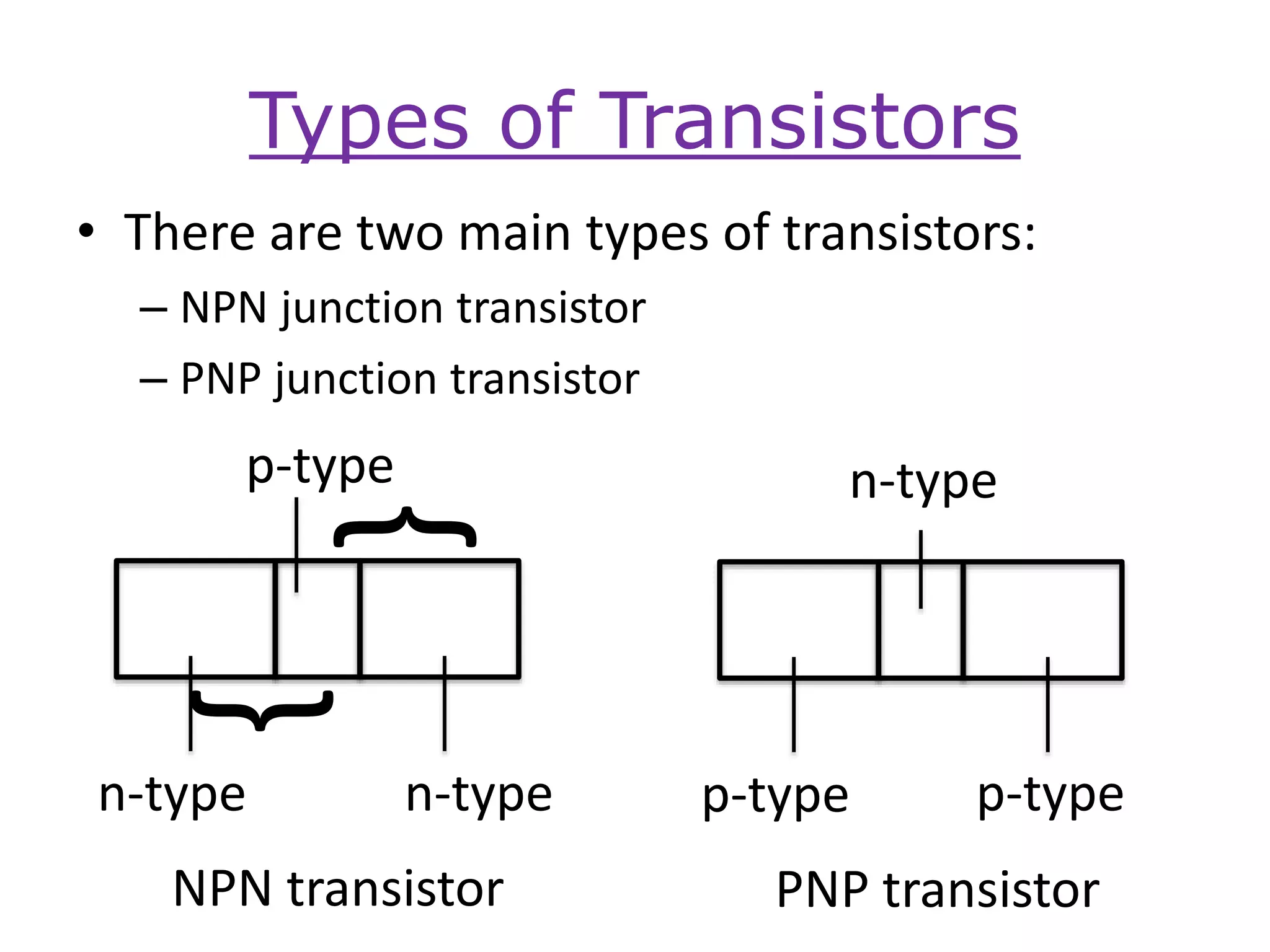
• There are two main types of transistors:
– NPN junction transistor
– PNP junction transistor
n-type n-type
p-type
NPN transistor
p-type
n-type
PNP transistor
p-type
{{
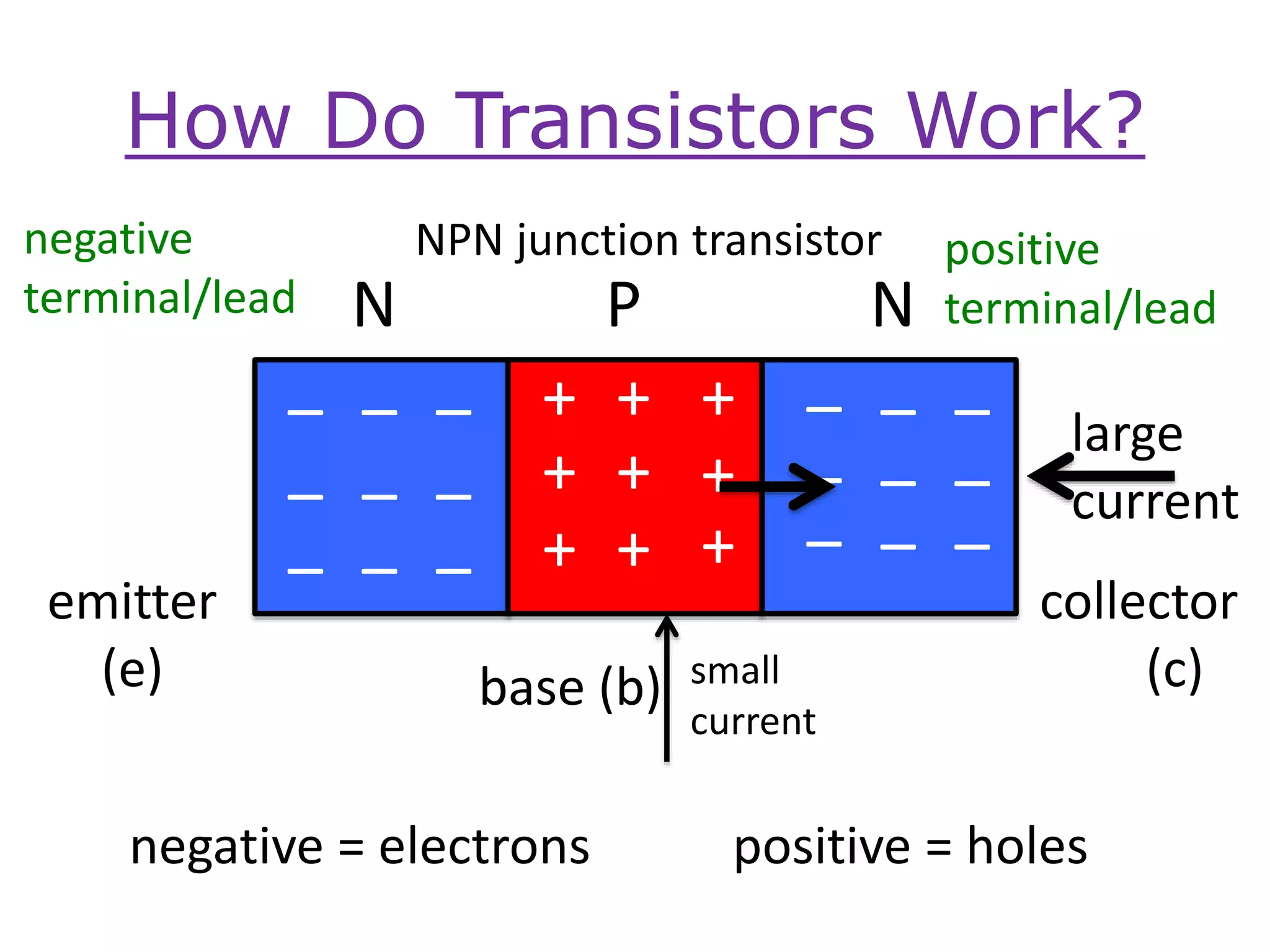
How Do Transistors Work?
NPN junction transistor
N NP
+ + +
+ + +
+ + +
– – –
– – –
– – –
– – –
– – –
– – –
emitter
(e) base (b)
collector
(c)
positive = holesnegative = electrons
small
current
large
current
positive
terminal/lead
negative
terminal/lead
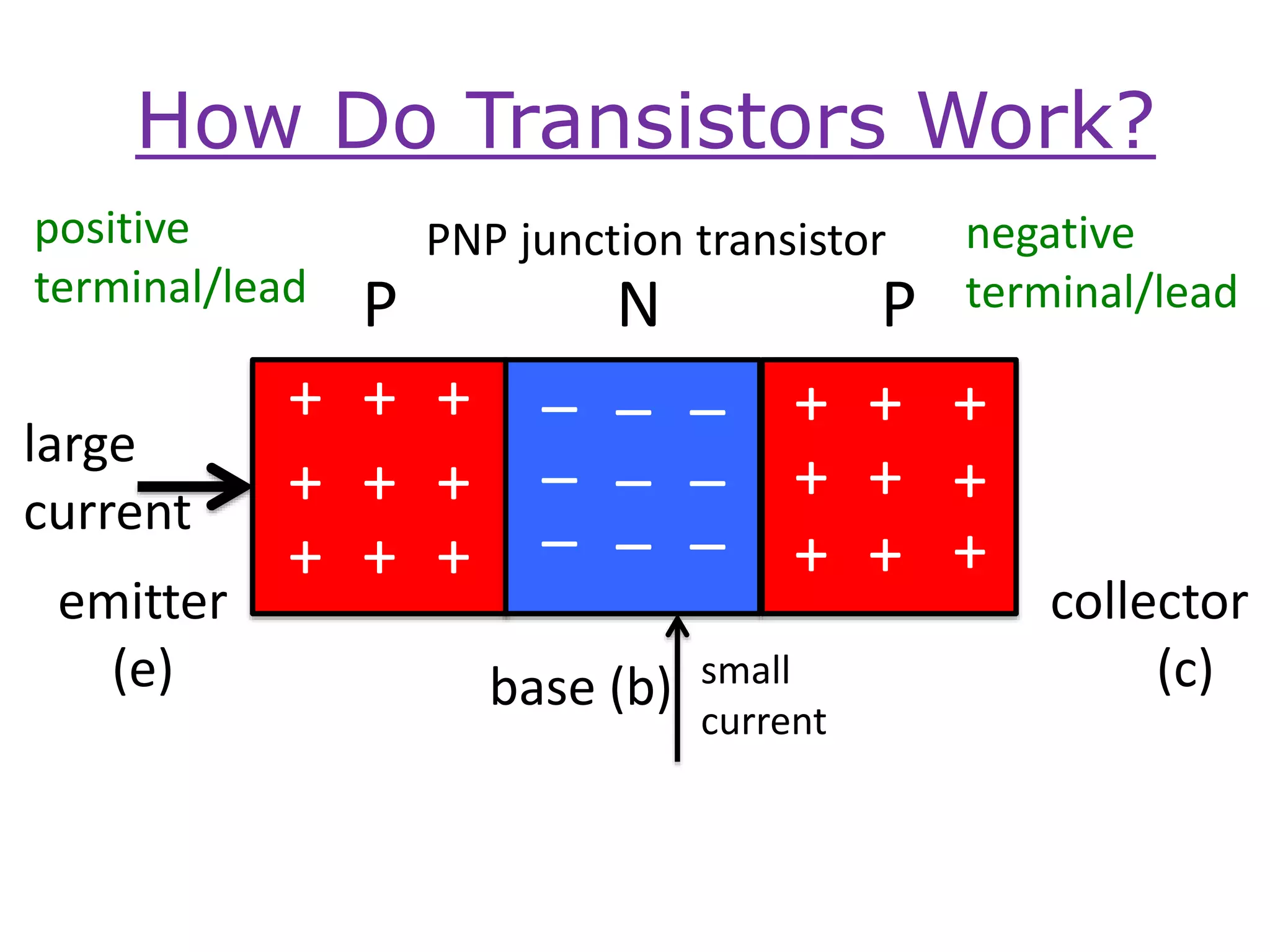
How Do Transistors Work?
PNP junction transistor
P PN
+ + +
+ + +
+ + +
+ + +
+ + +
+ + +
– – –
– – –
– – –
emitter
(e) base (b)
collector
(c)small
current
large
current
positive
terminal/lead
negative
terminal/lead
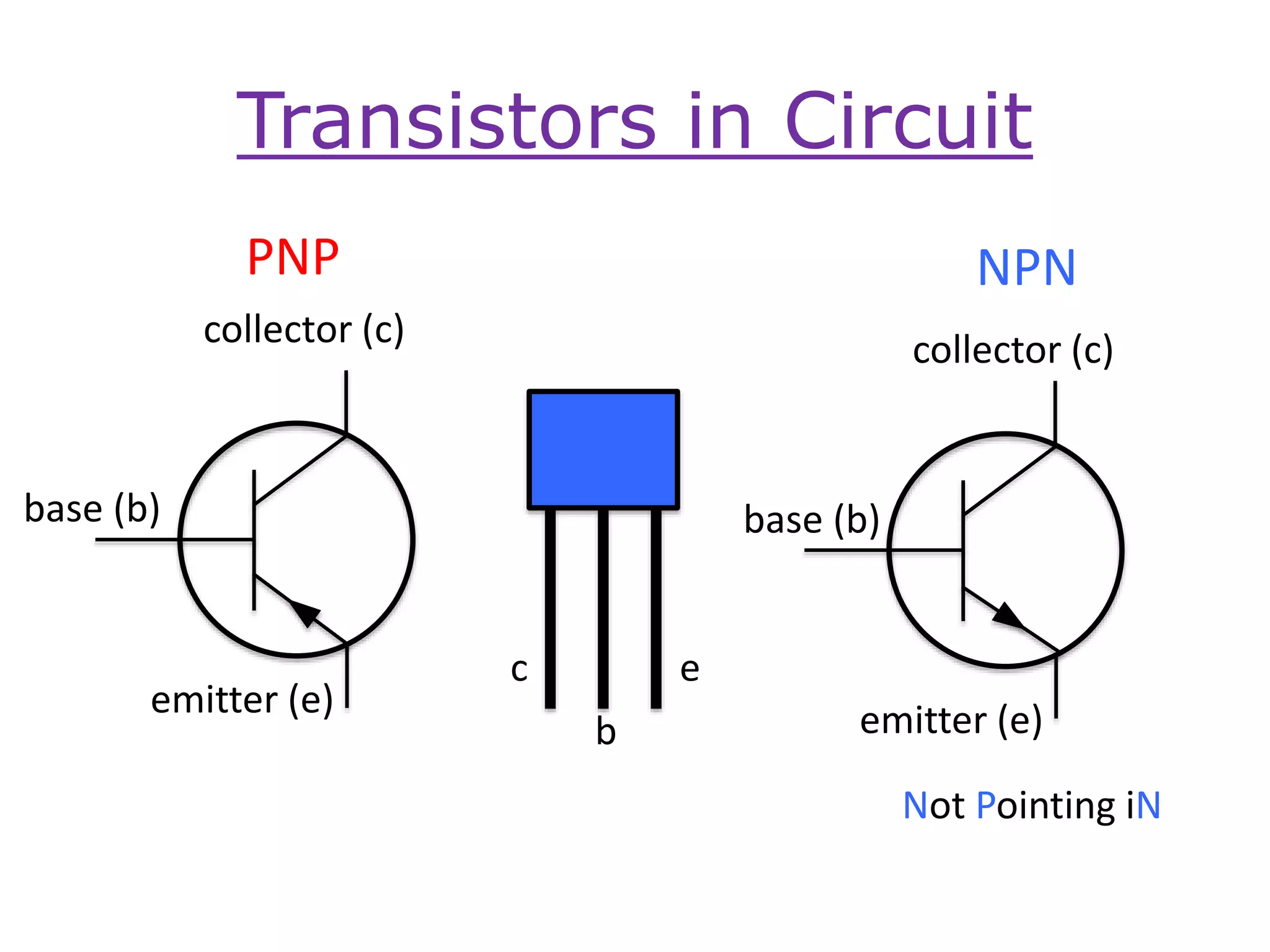
Transistors in Circuit
base (b)
collector (c)
emitter (e)
base (b)
collector (c)
emitter (e)b
c e
Not Pointing iN
PNP NPN
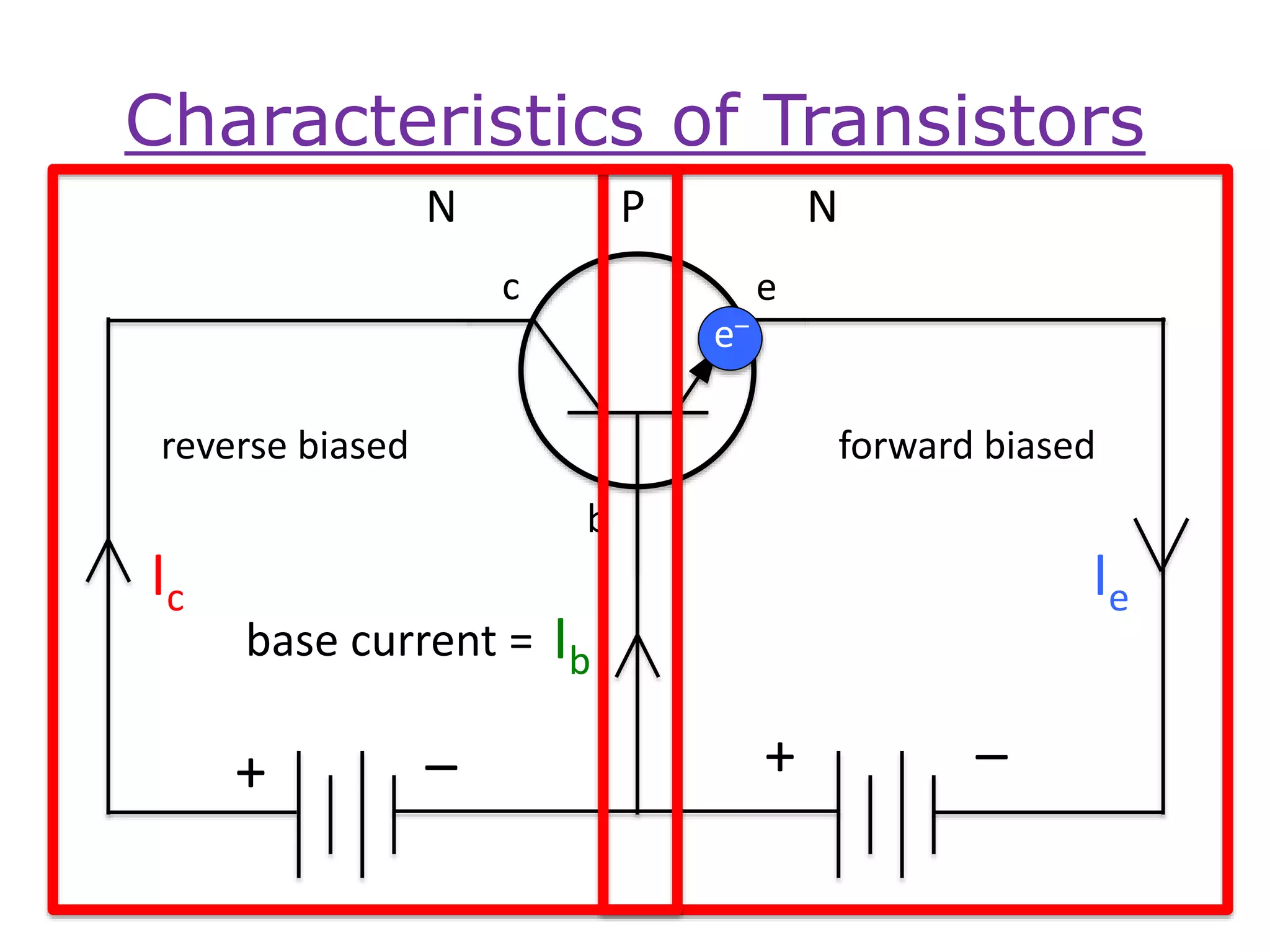
Characteristics of Transistors
b
c e
N P N
+ – + –
forward biasedreverse biased
Ie
Ib
Ic
e–
base current =
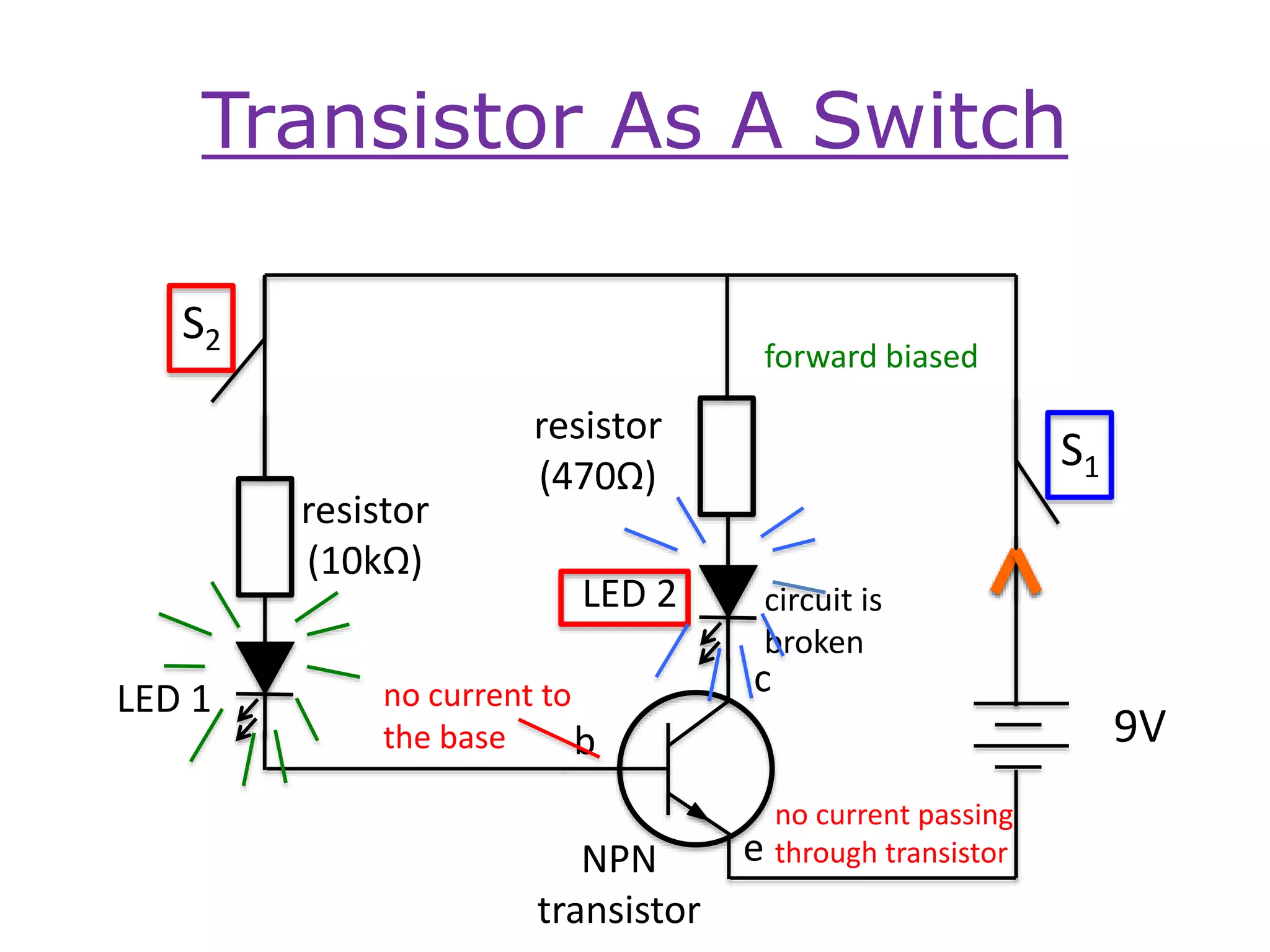
Transistor As A Switch
9V
S1
S2
NPN
transistor
resistor
(470Ω)
resistor
(10kΩ)
LED 1
LED 2
b
c
e
circuit is
broken
no current to
the base
no current passing
through transistor
forward biased
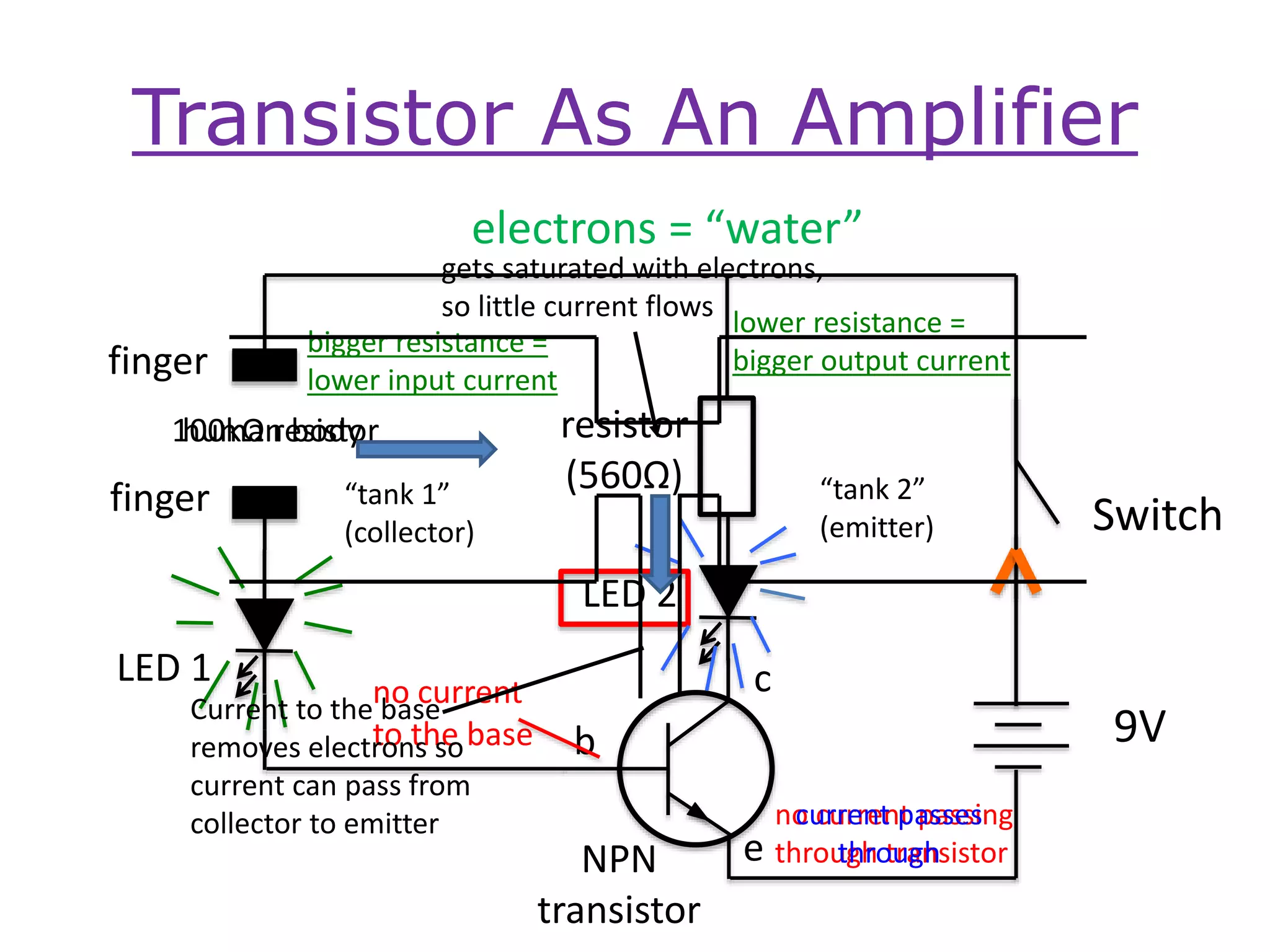
Transistor As An Amplifier
9V
Switch
NPN
transistor
resistor
(560Ω)
LED 2
b
c
e
no current
to the base
no current passing
through transistor
finger
finger
LED 1
human body100kΩ resistor
current passes
through
bigger resistance =
lower input current
lower resistance =
bigger output current
“tank 1”
(collector)
“tank 2”
(emitter)
electrons = “water”
gets saturated with electrons,
so little current flows
Current to the base
removes electrons so
current can pass from
collector to emitter
Charging and Discharging A
Capacitor Using A Transistor
9V 100kΩ
470Ω
3.3kΩ
b
c
e
NPN
transistor
(100µF) –
+
LED
capacitor
no voltage
no current
threshold voltage = 0.7V
CHARGEDIS
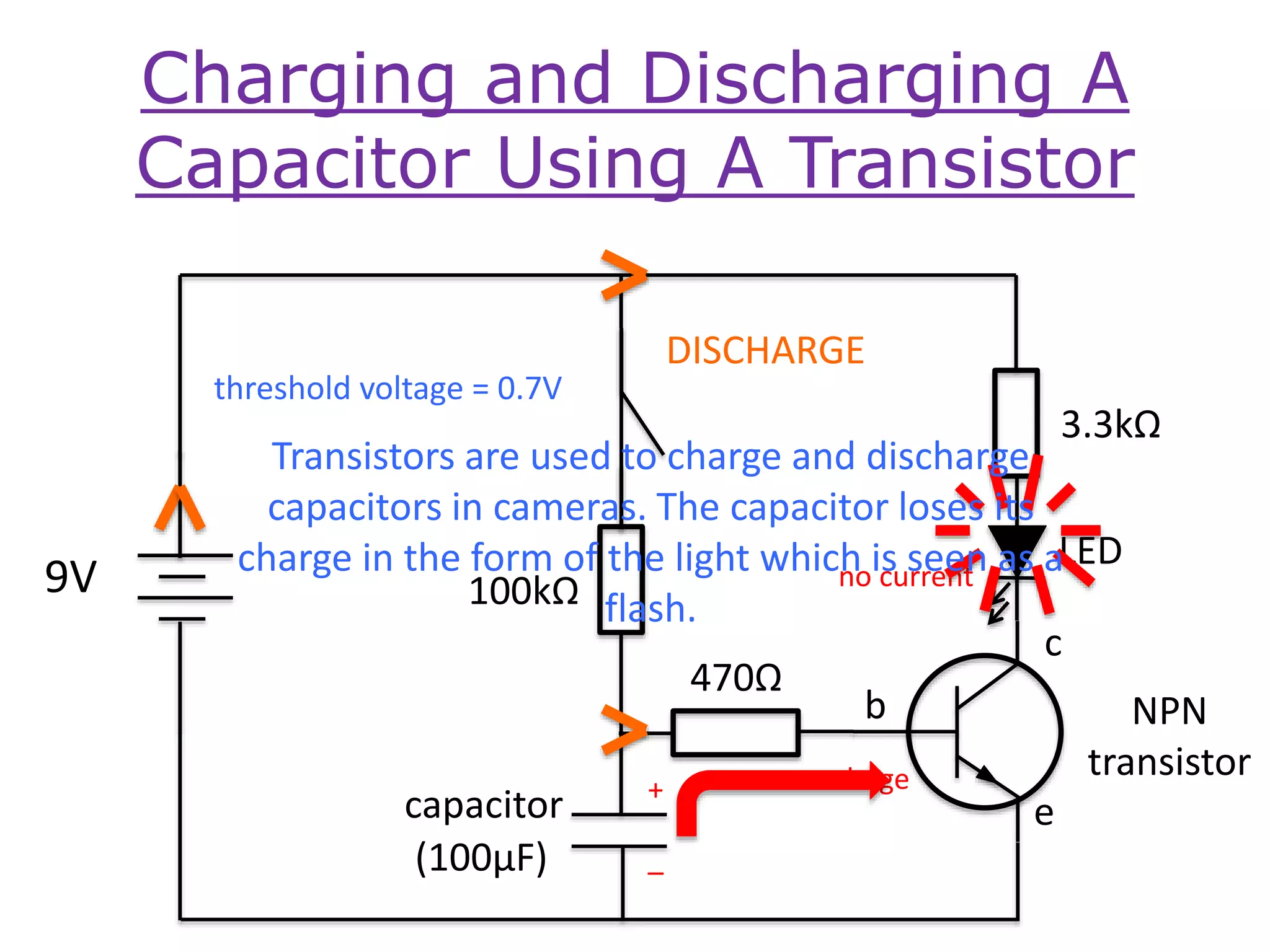
Transistors are used to charge and discharge
capacitors in cameras. The capacitor loses its
charge in the form of the light which is seen as a
flash.

Basic electronics ii

  • 1.
  • 2.
    Transistors emitter base collector • A transistoris an semiconductor electronic device that is capable of amplifying electric signals. They are also capable of switching electric signals on/off. • They are made of 3 parts: • Emitter (e) • Base (b) • Collector (c)
  • 3.
    Types of Transistors •There are two main types of transistors: – NPN junction transistor – PNP junction transistor n-type n-type p-type NPN transistor p-type n-type PNP transistor p-type {{
  • 4.
    How Do TransistorsWork? NPN junction transistor N NP + + + + + + + + + – – – – – – – – – – – – – – – – – – emitter (e) base (b) collector (c) positive = holesnegative = electrons small current large current positive terminal/lead negative terminal/lead
  • 5.
    How Do TransistorsWork? PNP junction transistor P PN + + + + + + + + + + + + + + + + + + – – – – – – – – – emitter (e) base (b) collector (c)small current large current positive terminal/lead negative terminal/lead
  • 6.
    Transistors in Circuit base(b) collector (c) emitter (e) base (b) collector (c) emitter (e)b c e Not Pointing iN PNP NPN
  • 7.
    Characteristics of Transistors b ce N P N + – + – forward biasedreverse biased Ie Ib Ic e– base current =
  • 8.
    Transistor As ASwitch 9V S1 S2 NPN transistor resistor (470Ω) resistor (10kΩ) LED 1 LED 2 b c e circuit is broken no current to the base no current passing through transistor forward biased
  • 9.
    Transistor As AnAmplifier 9V Switch NPN transistor resistor (560Ω) LED 2 b c e no current to the base no current passing through transistor finger finger LED 1 human body100kΩ resistor current passes through bigger resistance = lower input current lower resistance = bigger output current “tank 1” (collector) “tank 2” (emitter) electrons = “water” gets saturated with electrons, so little current flows Current to the base removes electrons so current can pass from collector to emitter
  • 10.
    Charging and DischargingA Capacitor Using A Transistor 9V 100kΩ 470Ω 3.3kΩ b c e NPN transistor (100µF) – + LED capacitor no voltage no current threshold voltage = 0.7V CHARGEDIS Transistors are used to charge and discharge capacitors in cameras. The capacitor loses its charge in the form of the light which is seen as a flash.

Editor's Notes

  • #3 A transistor is really simple—and really complex. Let's start with the simple part. A transistor is a miniature electronic component that can do two different jobs. It can work either as an amplifier or a switch: -When it works as an amplifier, it takes in a tiny electric current at one end (an input current) and produces a much bigger electric current (an output current) at the other. In other words, it's a kind of current booster. That comes in really useful in things like hearing aids, one of the first things people used transistors for. A hearing aid has a tiny microphone in it that picks up sounds from the world around you and turns them into fluctuating electric currents. These are fed into a transistor that boosts them and powers a tiny loudspeaker, so you hear a much louder version of the sounds around you. -Transistors can also work as switches. A tiny electric current flowing through one part of a transistor can make a much bigger current flow through another part of it. In other words, the small current switches on the larger one. This is essentially how all computer chips work. A transistor is a three-terminal device made up of a base, a collector and an emitter. Voltage applied to the base can control current that flows through the collector and the emitter
  • #8 -It is important to note that transistors have two p-n junctions. -Unlike regular switches we have around. The ON and OFF control in transistors is done by using input voltage. -When the input voltage is zero or negative, the transistor is said to be in the OFF condition -When the input voltage is made so much positive the transistor is said to be in the ON condition.