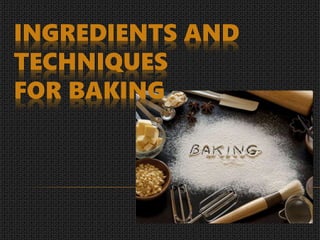
INGREDIENTS AND
TECHNIQUES
FOR BAKING
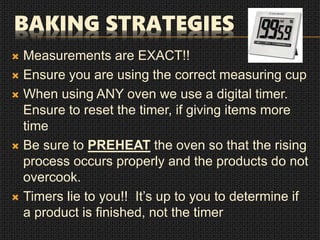
BAKING STRATEGIES
 Measurements are EXACT!!
 Ensure you are using the correct measuring cup
 When using ANY oven we use a digital timer.
Ensure to reset the timer, if giving items more
time
 Be sure to PREHEAT the oven so that the rising
process occurs properly and the products do not
overcook.
 Timers lie to you!! It’s up to you to determine if
a product is finished, not the timer
BAKING STRATEGIES
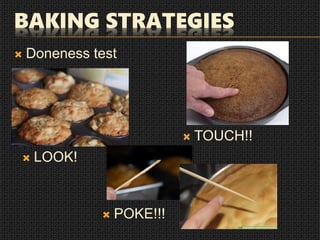
 Doneness test
 LOOK!
 TOUCH!!
 POKE!!!
BAKING STRATEGIES
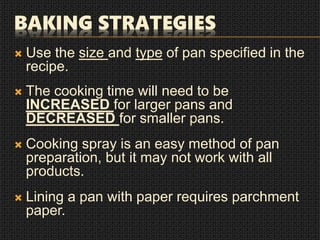
 Use the size and type of pan specified in the
recipe.
 The cooking time will need to be
INCREASED for larger pans and
DECREASED for smaller pans.
 Cooking spray is an easy method of pan
preparation, but it may not work with all
products.
 Lining a pan with paper requires parchment
paper.
BAKING STRATEGIES
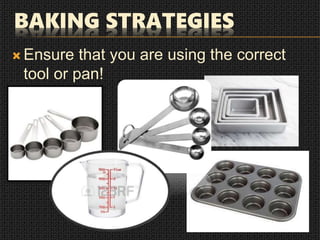
 Ensure that you are using the correct
tool or pan!
BAKING STRATEGIES
FLOUR
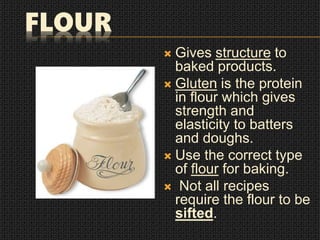
 Gives structure to
baked products.
 Gluten is the protein
in flour which gives
strength and
elasticity to batters
and doughs.
 Use the correct type
of flour for baking.
 Not all recipes
require the flour to be
sifted.
TYPES OF FLOUR
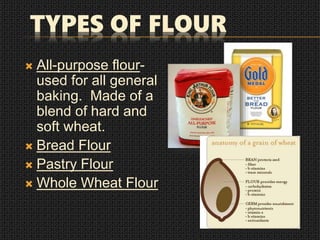
 All-purpose flour-
used for all general
baking. Made of a
blend of hard and
soft wheat.
 Bread Flour
 Pastry Flour
 Whole Wheat Flour
LEAVENING AGENTS
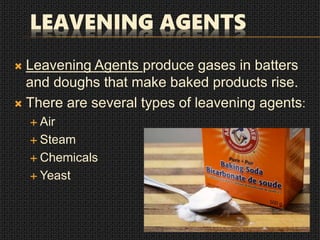
 Leavening Agents produce gases in batters
and doughs that make baked products rise.
 There are several types of leavening agents:
 Air
 Steam
 Chemicals
 Yeast
LIQUIDS
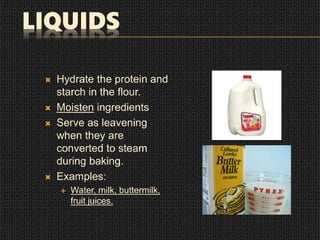
 Hydrate the protein and
starch in the flour.
 Moisten ingredients
 Serve as leavening
when they are
converted to steam
during baking.
 Examples:
 Water, milk, buttermilk,
fruit juices.
FATS
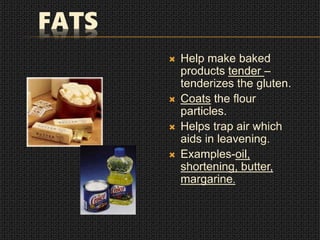
 Help make baked
products tender –
tenderizes the gluten.
 Coats the flour
particles.
 Helps trap air which
aids in leavening.
 Examples-oil,
shortening, butter,
margarine.
EGGS
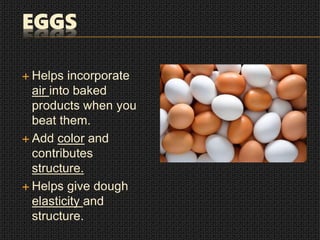
 Helps incorporate
air into baked
products when you
beat them.
 Add color and
contributes
structure.
 Helps give dough
elasticity and
structure.
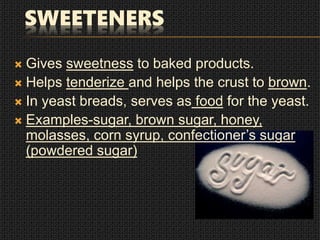
SWEETENERS
 Gives sweetness to baked products.
 Helps tenderize and helps the crust to brown.
 In yeast breads, serves as food for the yeast.
 Examples-sugar, brown sugar, honey,
molasses, corn syrup, confectioner’s sugar
(powdered sugar)
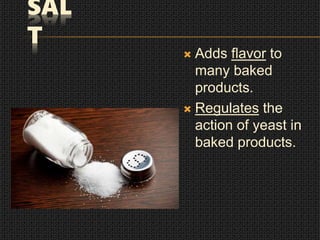
SAL
T
 Adds flavor to
many baked
products.
 Regulates the
action of yeast in
baked products.
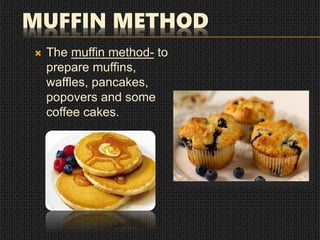
MUFFIN METHOD
 The muffin method- to
prepare muffins,
waffles, pancakes,
popovers and some
coffee cakes.
MUFFIN METHOD
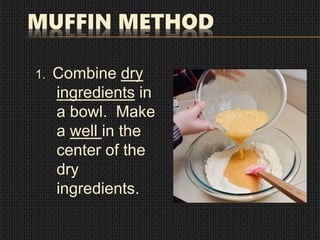
1. Combine dry
ingredients in
a bowl. Make
a well in the
center of the
dry
ingredients.
MUFFIN METHOD
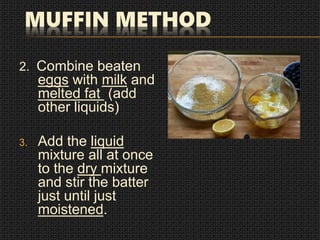
2. Combine beaten
eggs with milk and
melted fat (add
other liquids)
3. Add the liquid
mixture all at once
to the dry mixture
and stir the batter
just until just
moistened.
BISCUIT
METHOD
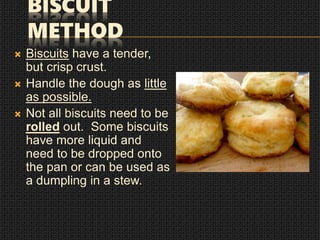
 Biscuits have a tender,
but crisp crust.
 Handle the dough as little
as possible.
 Not all biscuits need to be
rolled out. Some biscuits
have more liquid and
need to be dropped onto
the pan or can be used as
a dumpling in a stew.
BISCUIT METHOD
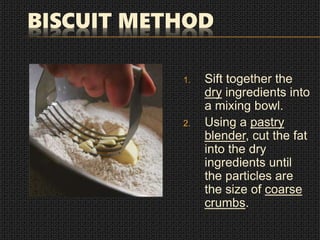
1. Sift together the
dry ingredients into
a mixing bowl.
2. Using a pastry
blender, cut the fat
into the dry
ingredients until
the particles are
the size of coarse
crumbs.
BISCUIT METHOD
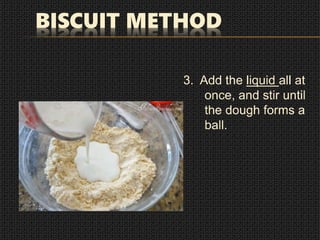
3. Add the liquid all at
once, and stir until
the dough forms a
ball.
BISCUIT METHOD
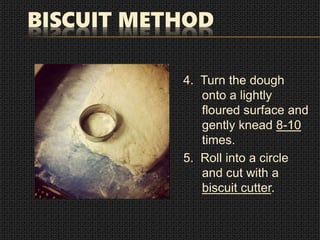
4. Turn the dough
onto a lightly
floured surface and
gently knead 8-10
times.
5. Roll into a circle
and cut with a
biscuit cutter.
CAKES & COOKIES
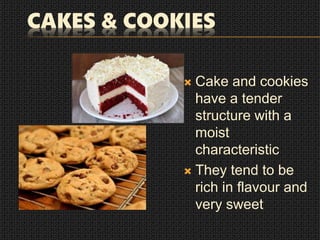
 Cake and cookies
have a tender
structure with a
moist
characteristic
 They tend to be
rich in flavour and
very sweet
CREAMING METHOD
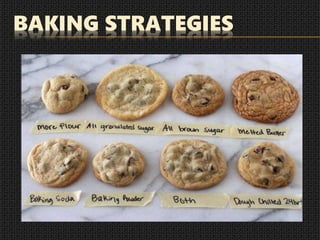
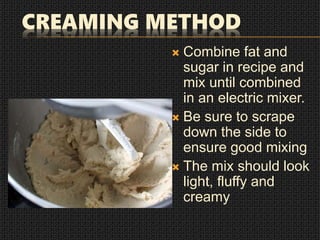
 Combine fat and
sugar in recipe and
mix until combined
in an electric mixer.
 Be sure to scrape
down the side to
ensure good mixing
 The mix should look
light, fluffy and
creamy
CREAMING METHOD
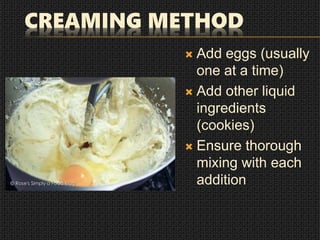
 Add eggs (usually
one at a time)
 Add other liquid
ingredients
(cookies)
 Ensure thorough
mixing with each
addition
CREAMING METHOD
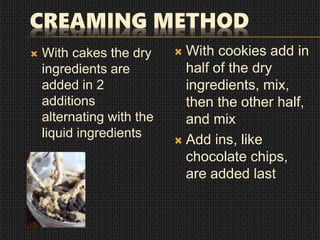
 With cakes the dry
ingredients are
added in 2
additions
alternating with the
liquid ingredients
 With cookies add in
half of the dry
ingredients, mix,
then the other half,
and mix
 Add ins, like
chocolate chips,
are added last
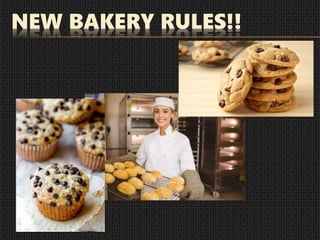
NEW BAKERY RULES!!
HOW IT WORKS
 You will choose the recipes each rotation in
the bakery out of the red binder
 Each daily recipe will be recorded. You will
also record how many sold the next day
 No recipe can be made 2 days in a row.
 Each rotation your group MUST make an
original recipe and record how it went
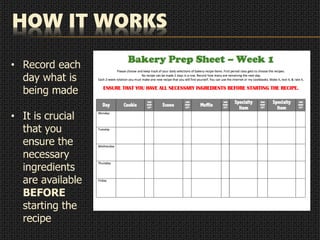
HOW IT WORKS
• Record each
day what is
being made
• It is crucial
that you
ensure the
necessary
ingredients
are available
BEFORE
starting the
recipe
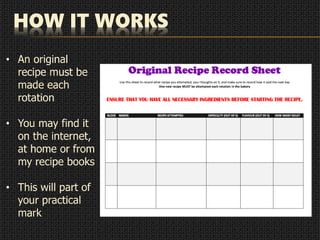
HOW IT WORKS
• An original
recipe must be
made each
rotation
• You may find it
on the internet,
at home or from
my recipe books
• This will part of
your practical
mark

Baking Basics

  • 1.
  • 2.
    BAKING STRATEGIES  Measurementsare EXACT!!  Ensure you are using the correct measuring cup  When using ANY oven we use a digital timer. Ensure to reset the timer, if giving items more time  Be sure to PREHEAT the oven so that the rising process occurs properly and the products do not overcook.  Timers lie to you!! It’s up to you to determine if a product is finished, not the timer
  • 3.
    BAKING STRATEGIES  Donenesstest  LOOK!  TOUCH!!  POKE!!!
  • 4.
    BAKING STRATEGIES  Usethe size and type of pan specified in the recipe.  The cooking time will need to be INCREASED for larger pans and DECREASED for smaller pans.  Cooking spray is an easy method of pan preparation, but it may not work with all products.  Lining a pan with paper requires parchment paper.
  • 5.
    BAKING STRATEGIES  Ensurethat you are using the correct tool or pan!
  • 6.
  • 7.
    FLOUR  Gives structureto baked products.  Gluten is the protein in flour which gives strength and elasticity to batters and doughs.  Use the correct type of flour for baking.  Not all recipes require the flour to be sifted.
  • 8.
    TYPES OF FLOUR All-purpose flour- used for all general baking. Made of a blend of hard and soft wheat.  Bread Flour  Pastry Flour  Whole Wheat Flour
  • 9.
    LEAVENING AGENTS  LeaveningAgents produce gases in batters and doughs that make baked products rise.  There are several types of leavening agents:  Air  Steam  Chemicals  Yeast
  • 10.
    LIQUIDS  Hydrate theprotein and starch in the flour.  Moisten ingredients  Serve as leavening when they are converted to steam during baking.  Examples:  Water, milk, buttermilk, fruit juices.
  • 11.
    FATS  Help makebaked products tender – tenderizes the gluten.  Coats the flour particles.  Helps trap air which aids in leavening.  Examples-oil, shortening, butter, margarine.
  • 12.
    EGGS  Helps incorporate airinto baked products when you beat them.  Add color and contributes structure.  Helps give dough elasticity and structure.
  • 13.
    SWEETENERS  Gives sweetnessto baked products.  Helps tenderize and helps the crust to brown.  In yeast breads, serves as food for the yeast.  Examples-sugar, brown sugar, honey, molasses, corn syrup, confectioner’s sugar (powdered sugar)
  • 14.
    SAL T  Adds flavorto many baked products.  Regulates the action of yeast in baked products.
  • 15.
    MUFFIN METHOD  Themuffin method- to prepare muffins, waffles, pancakes, popovers and some coffee cakes.
  • 16.
    MUFFIN METHOD 1. Combinedry ingredients in a bowl. Make a well in the center of the dry ingredients.
  • 17.
    MUFFIN METHOD 2. Combinebeaten eggs with milk and melted fat (add other liquids) 3. Add the liquid mixture all at once to the dry mixture and stir the batter just until just moistened.
  • 18.
    BISCUIT METHOD  Biscuits havea tender, but crisp crust.  Handle the dough as little as possible.  Not all biscuits need to be rolled out. Some biscuits have more liquid and need to be dropped onto the pan or can be used as a dumpling in a stew.
  • 19.
    BISCUIT METHOD 1. Sifttogether the dry ingredients into a mixing bowl. 2. Using a pastry blender, cut the fat into the dry ingredients until the particles are the size of coarse crumbs.
  • 20.
    BISCUIT METHOD 3. Addthe liquid all at once, and stir until the dough forms a ball.
  • 21.
    BISCUIT METHOD 4. Turnthe dough onto a lightly floured surface and gently knead 8-10 times. 5. Roll into a circle and cut with a biscuit cutter.
  • 22.
    CAKES & COOKIES Cake and cookies have a tender structure with a moist characteristic  They tend to be rich in flavour and very sweet
  • 23.
    CREAMING METHOD  Combinefat and sugar in recipe and mix until combined in an electric mixer.  Be sure to scrape down the side to ensure good mixing  The mix should look light, fluffy and creamy
  • 24.
    CREAMING METHOD  Addeggs (usually one at a time)  Add other liquid ingredients (cookies)  Ensure thorough mixing with each addition
  • 25.
    CREAMING METHOD  Withcakes the dry ingredients are added in 2 additions alternating with the liquid ingredients  With cookies add in half of the dry ingredients, mix, then the other half, and mix  Add ins, like chocolate chips, are added last
  • 26.
  • 27.
    HOW IT WORKS You will choose the recipes each rotation in the bakery out of the red binder  Each daily recipe will be recorded. You will also record how many sold the next day  No recipe can be made 2 days in a row.  Each rotation your group MUST make an original recipe and record how it went
  • 28.
    HOW IT WORKS •Record each day what is being made • It is crucial that you ensure the necessary ingredients are available BEFORE starting the recipe
  • 29.
    HOW IT WORKS •An original recipe must be made each rotation • You may find it on the internet, at home or from my recipe books • This will part of your practical mark