Autoimmune Hepatitis diagnosis & management Dr E M Said
definition unresolving inflammation of the liver of unknown cause. Reflex a complex interaction between triggering factors,autoantigens,genetic predisposition and immunoregulatory network. Characterized by the presence of interface hepatitis & portal plasma cell infiltration in histological examination,hypergammaglobulinaemia and auto antibodies.
 
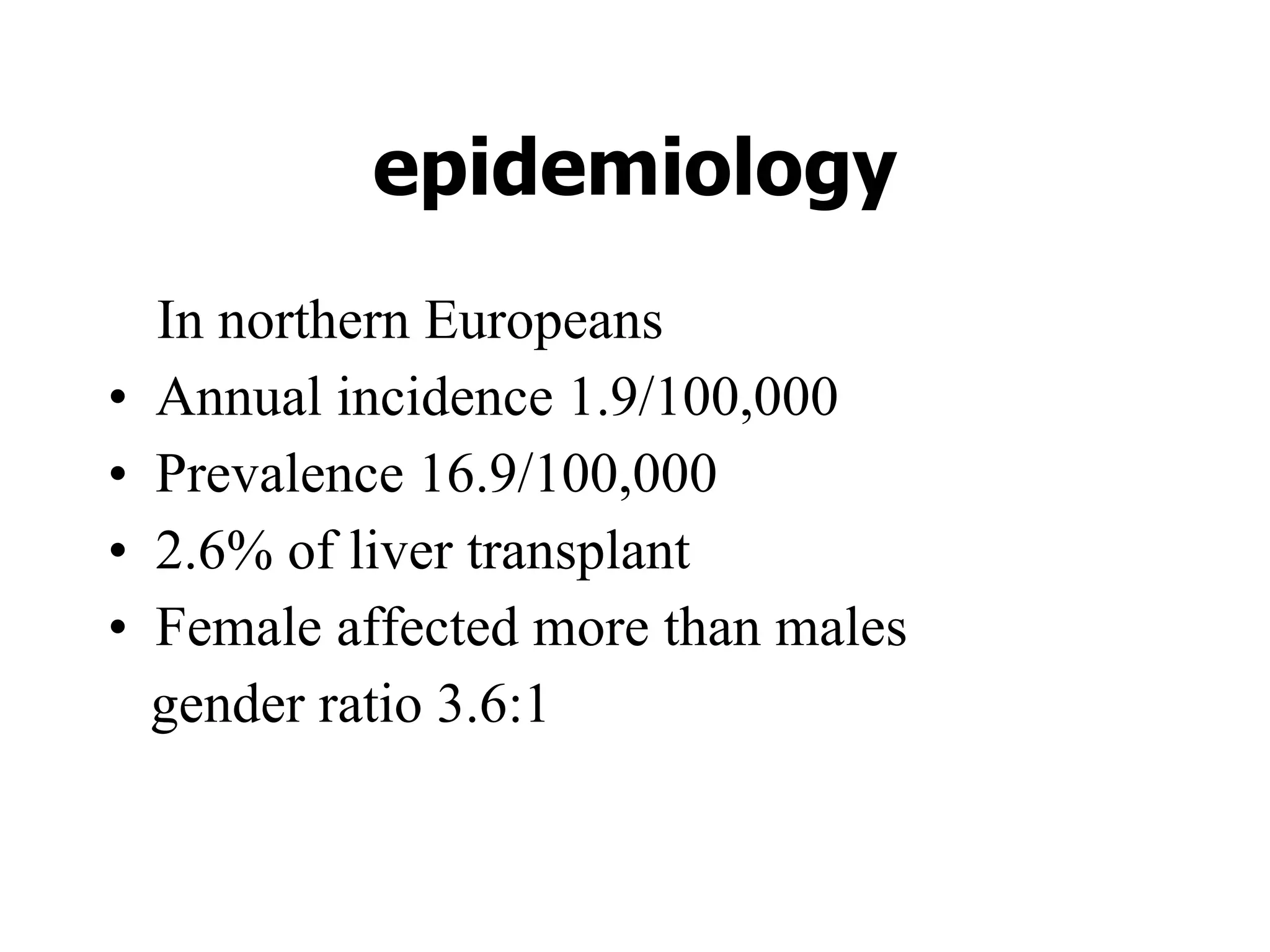
epidemiology In northern Europeans Annual incidence 1.9/100,000 Prevalence 16.9/100,000 2.6% of liver transplant Female affected more than males  gender ratio 3.6:1
40% of patient with untreated severe disease die within 6 month of diagnosis. of survivors  40% will develop cirrhosis, 54% will develop oesophageal varesis acute onset AIH is common 40%,and fulminant presentation with encephalopathy within 8 month is possible
classification 3 main subtypes Based on difference in their immunological markers. Not endorsed as a valid clinical entity by the international autoimmune hepatitis group
Type 1 AIH The most common form of the disease worldwide Associated with ANA and/or SMA Over 70% are female and over 40% younger age group.
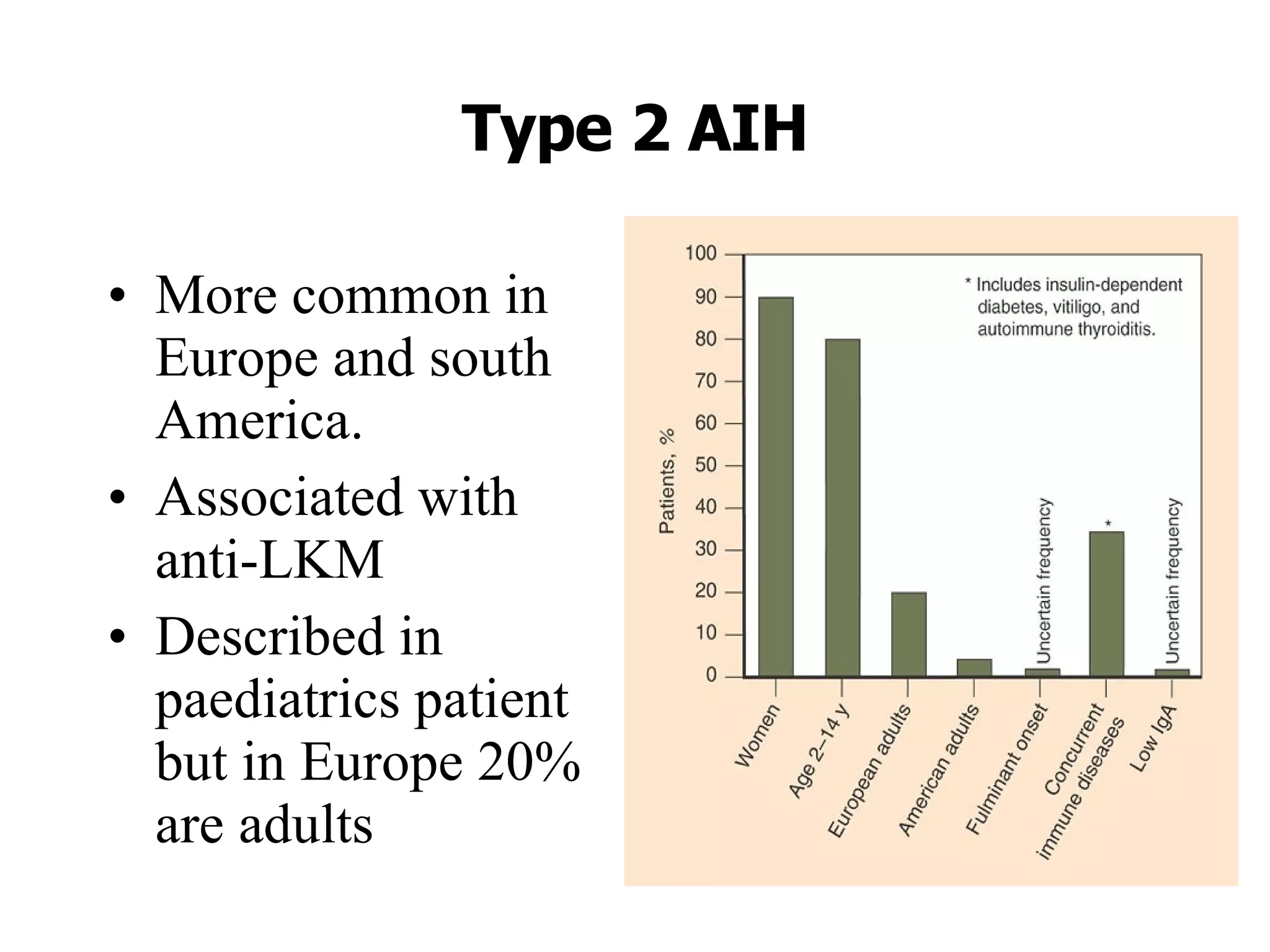
Type 2 AIH More common in Europe and south America. Associated with anti-LKM Described in paediatrics patient but in Europe 20% are adults
Type 3 AIH Is the least established form of the disease. Associated with anti-SLA/LP
Diagnostic criteria Diagnosis require presence of characteristics features & exclusion of other condition that resemble AIH All patients must be evaluated for hereditary, infectious and drug induced liver injury. Interface hepatitis is the histologic hall mark of the syndrome & portal plasma infiltration typifies the disorder, but neither are specific.
Interface hepatitis and bridging necrosis in severe type 1 autoimmune hepatitis
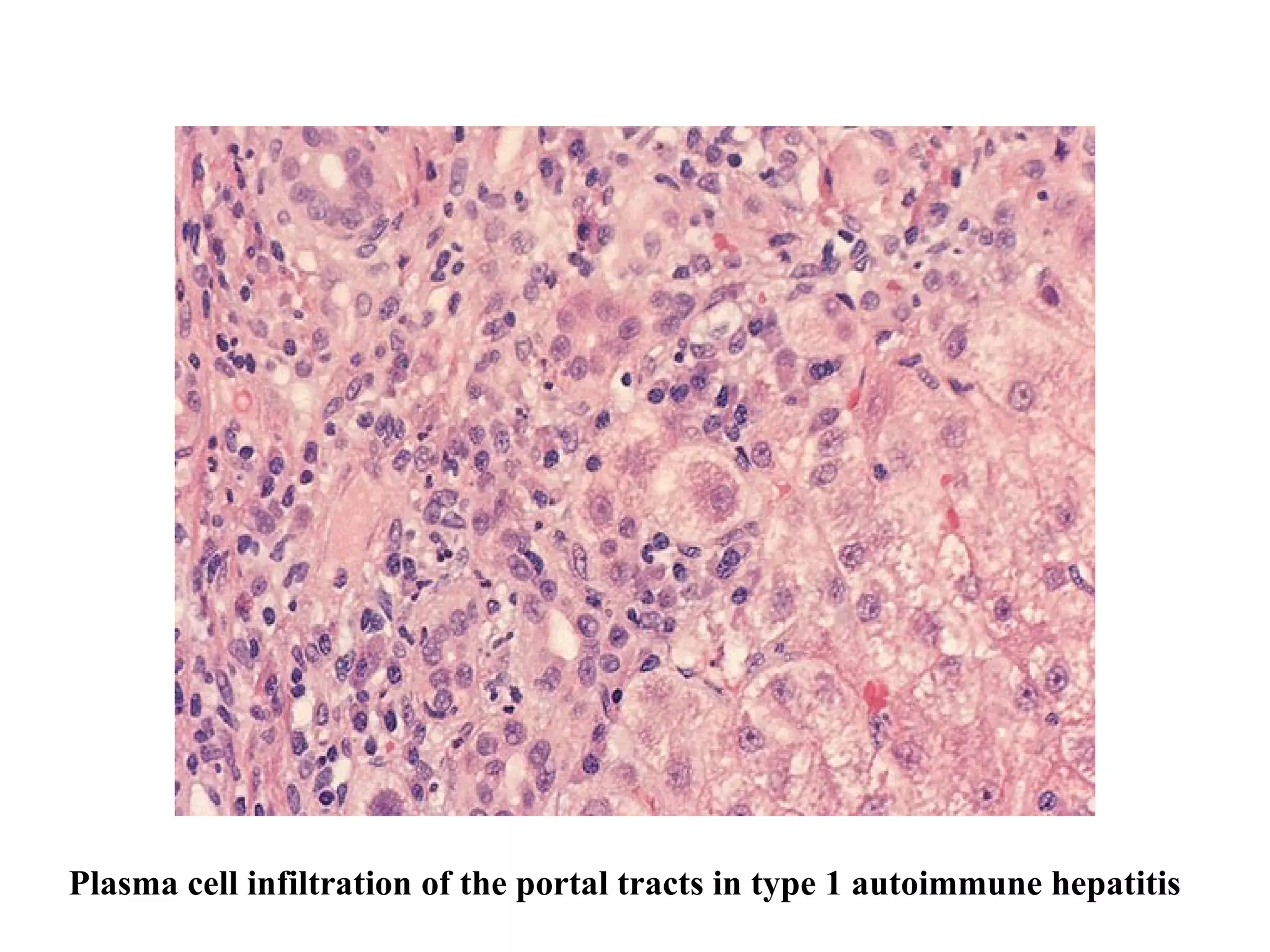
Plasma cell infiltration of the portal tracts in type 1 autoimmune hepatitis
The diagnosis of AIH require determination of aminotransferase and gamma globulins; detection of ANA and/or SMA or in their absence anti-LKM1,and liver tissue examination.
Diagnostic criteria should be applied to all patients
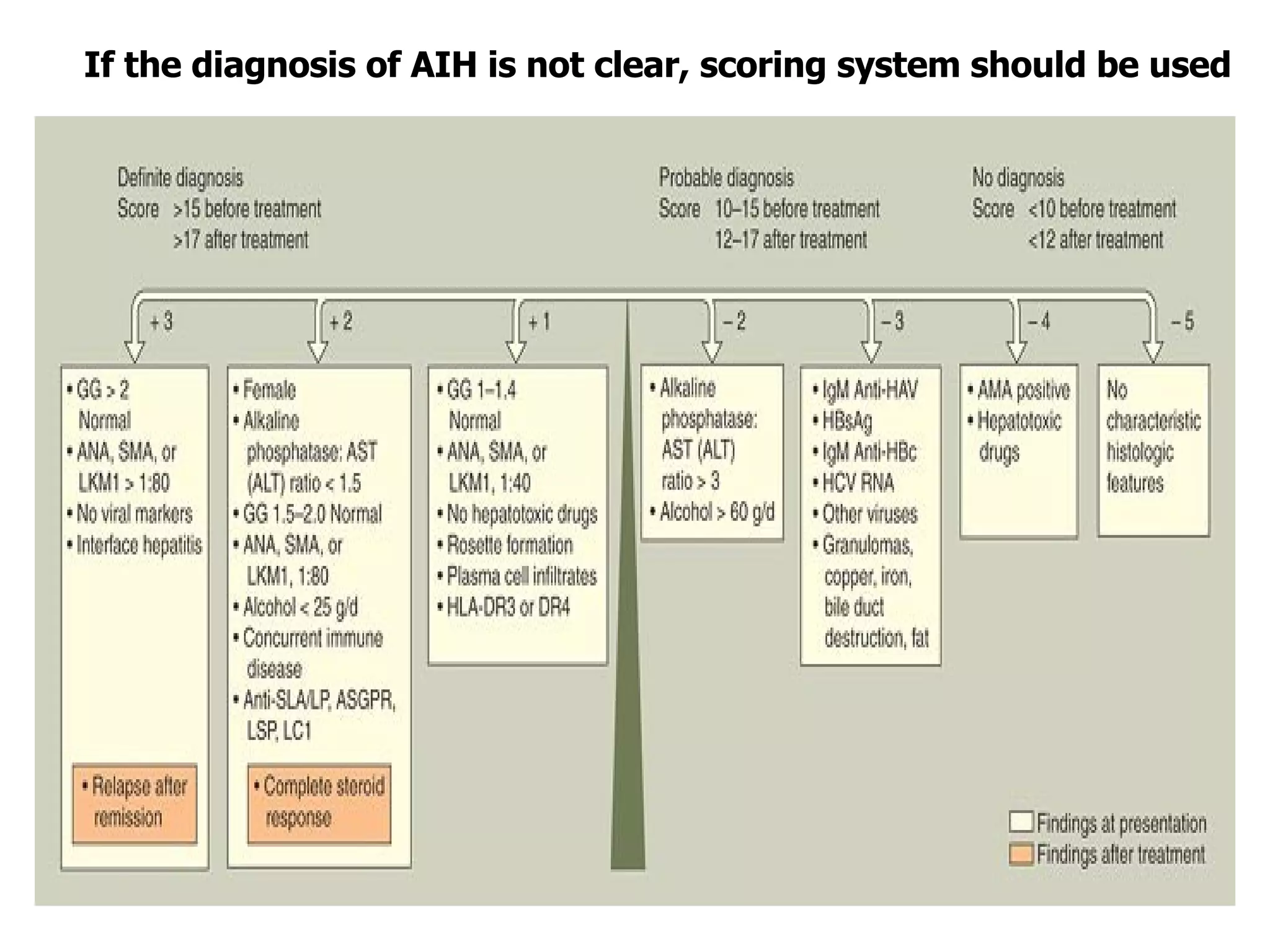
If the diagnosis of AIH is not clear, scoring system should be used
treatment 3 RCT showed improve clinical,histological & survival of  severe AIH  after use of steroids No trial has been performed in patients with less severe disease. The indication for steroids treatment in patients with mild disease must be individualized and based on clinical judgment
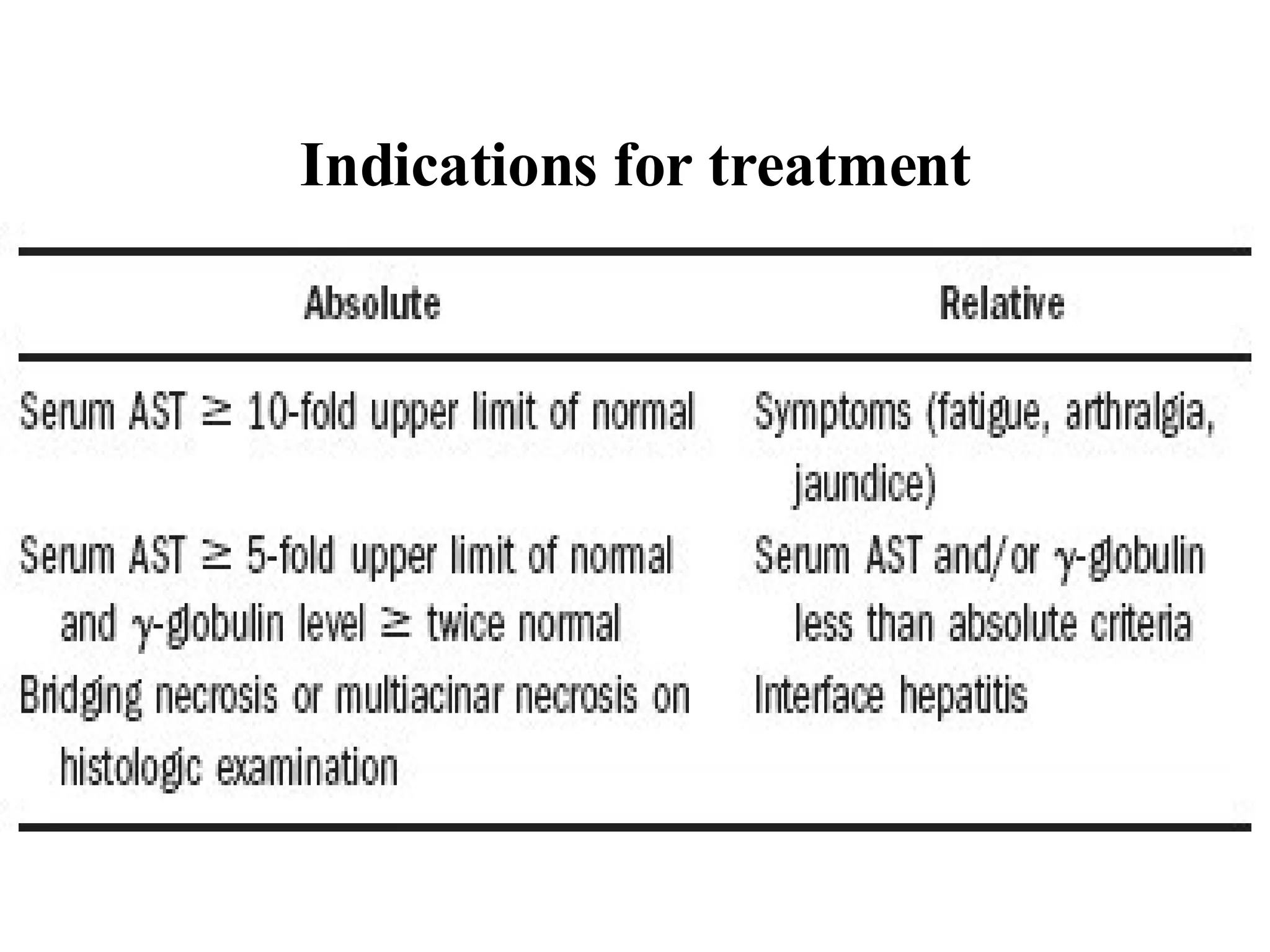
Indications for treatment
Treatment regimens Two regimens comparable with each other and superior to NSAID's Prednisolone alone or lower dose of prednisolone in conjunction with azathioprine All patients should be monitored for the development of drug side effect


Treatment end point Conventional treatment regimens should be continued until remission,treatment failure,incomplete response or drug toxicity Once disease remission is achieved drug withdrawal should be attempted.
 
relapse Relapse is common after drug withdrawal Patients should be monitored by serum aminotransferase ,bilirubin and gamma globulin level Two strategies are used in patients who relapse at least twice. Indefinite low dose prednisolone therapy Indefinite Azathioprine therapy
 
Treatment failure High dose prednisolone alone or in combination with azathioprine should be used in treatment failure Alternative management include administration of cyclosporine,methotrexate, 6-mercaptopurine or urodexycoliuc acid  Liver transplantation should be considered in the decompansated patient who is unable to undergo of be salvaged by drug therapy
 
Thank you

Autoimmune Hepatitis

  • 1.
    Autoimmune Hepatitis diagnosis& management Dr E M Said
  • 2.
    definition unresolving inflammationof the liver of unknown cause. Reflex a complex interaction between triggering factors,autoantigens,genetic predisposition and immunoregulatory network. Characterized by the presence of interface hepatitis & portal plasma cell infiltration in histological examination,hypergammaglobulinaemia and auto antibodies.
  • 3.
  • 4.
    epidemiology In northernEuropeans Annual incidence 1.9/100,000 Prevalence 16.9/100,000 2.6% of liver transplant Female affected more than males gender ratio 3.6:1
  • 5.
    40% of patientwith untreated severe disease die within 6 month of diagnosis. of survivors 40% will develop cirrhosis, 54% will develop oesophageal varesis acute onset AIH is common 40%,and fulminant presentation with encephalopathy within 8 month is possible
  • 6.
    classification 3 mainsubtypes Based on difference in their immunological markers. Not endorsed as a valid clinical entity by the international autoimmune hepatitis group
  • 7.
    Type 1 AIHThe most common form of the disease worldwide Associated with ANA and/or SMA Over 70% are female and over 40% younger age group.
  • 8.
    Type 2 AIHMore common in Europe and south America. Associated with anti-LKM Described in paediatrics patient but in Europe 20% are adults
  • 9.
    Type 3 AIHIs the least established form of the disease. Associated with anti-SLA/LP
  • 10.
    Diagnostic criteria Diagnosisrequire presence of characteristics features & exclusion of other condition that resemble AIH All patients must be evaluated for hereditary, infectious and drug induced liver injury. Interface hepatitis is the histologic hall mark of the syndrome & portal plasma infiltration typifies the disorder, but neither are specific.
  • 11.
    Interface hepatitis andbridging necrosis in severe type 1 autoimmune hepatitis
  • 12.
    Plasma cell infiltrationof the portal tracts in type 1 autoimmune hepatitis
  • 13.
    The diagnosis ofAIH require determination of aminotransferase and gamma globulins; detection of ANA and/or SMA or in their absence anti-LKM1,and liver tissue examination.
  • 14.
    Diagnostic criteria shouldbe applied to all patients
  • 15.
    If the diagnosisof AIH is not clear, scoring system should be used
  • 16.
    treatment 3 RCTshowed improve clinical,histological & survival of severe AIH after use of steroids No trial has been performed in patients with less severe disease. The indication for steroids treatment in patients with mild disease must be individualized and based on clinical judgment
  • 17.
  • 18.
    Treatment regimens Tworegimens comparable with each other and superior to NSAID's Prednisolone alone or lower dose of prednisolone in conjunction with azathioprine All patients should be monitored for the development of drug side effect
  • 19.
  • 20.
  • 21.
  • 22.
    Treatment end pointConventional treatment regimens should be continued until remission,treatment failure,incomplete response or drug toxicity Once disease remission is achieved drug withdrawal should be attempted.
  • 23.
  • 24.
    relapse Relapse iscommon after drug withdrawal Patients should be monitored by serum aminotransferase ,bilirubin and gamma globulin level Two strategies are used in patients who relapse at least twice. Indefinite low dose prednisolone therapy Indefinite Azathioprine therapy
  • 25.
  • 26.
    Treatment failure Highdose prednisolone alone or in combination with azathioprine should be used in treatment failure Alternative management include administration of cyclosporine,methotrexate, 6-mercaptopurine or urodexycoliuc acid Liver transplantation should be considered in the decompansated patient who is unable to undergo of be salvaged by drug therapy
  • 27.
  • 28.