BRIDGING THE REAL WORLD
AND VIRTUAL WORLD
A Look At AUGMENTED REALITY
Presented By
-ANAMIKA BHATTACHARYA(10)
-ANURADHA GANAI(15)
-ANWESHA MAITY(18)
CONTENT
1. Definition
2. Why augmented reality?
3. Overview of technology
4. Hardware devices
5. Software based Augmented Reality
6. Simultaneous Localization And Mapping
7. Applications
8. Motivations
9. Examples
10.GPS
11.video
12.Advantages
13.Limitation
14.Conclusion
Augmented Reality
What’s That??
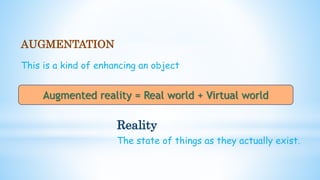
AUGMENTATION
This is a kind of enhancing an object
Reality
The state of things as they actually exist.
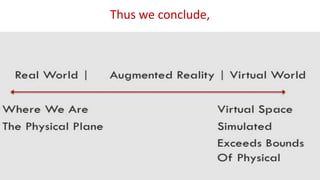
Augmented reality = Real world + Virtual world
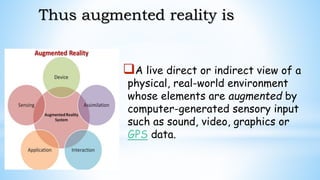
Thus augmented reality is
A live direct or indirect view of a
physical, real-world environment
whose elements are augmented by
computer-generated sensory input
such as sound, video, graphics or
GPS data.
WHY AUGMENTED REALITY?
Combines real and virtual object in a real environment.
Runs interactively and in real time.
It is to augment the real world with information handling capabilities.
It superimposes graphics over a real world environment in real time.
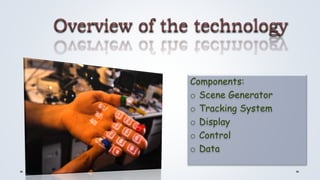
Overview of the technology
Components:
o Scene Generator
o Tracking System
o Display
o Control
o Data
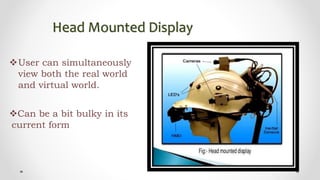
Head Mounted Display
User can simultaneously
view both the real world
and virtual world.
Can be a bit bulky in its
current form
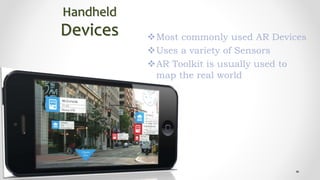
Handheld
Devices Most commonly used AR Devices
Uses a variety of Sensors
AR Toolkit is usually used to
map the real world
Software Based AR
 Use multiple sensors and tracking devices like GPS, Compasses
etc…
 Are leading the innovation in AR now.
 Two Stages Detection of Interest Points, Mapping the two
worlds.
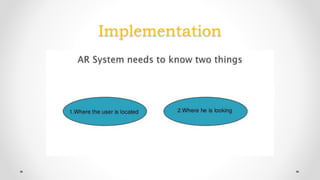
Implementation
Software and Technique
AR systems realistically integrate augmentations with the
real world by a process called image registration.
 First detection of interest points.
 Second is restoration of a real world coordinate system
from the data obtained in the first stage [SLAM].
Simultaneous Localization And Mapping
 SLAM is a technique to build up a map within a known or
an unknown environment while at the same time keeping
track of the current location.
 Maps are used to determine a location in an environment
and to depict this environment for an overview.
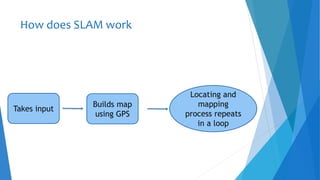
How does SLAM work
Takes input
Builds map
using GPS
Locating and
mapping
process repeats
in a loop
Challenges faced by SLAM Technology
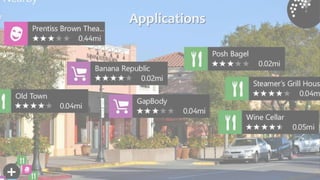
Applications
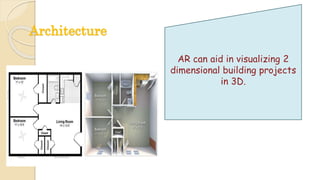
Architecture
AR can aid in visualizing 2
dimensional building projects
in 3D.
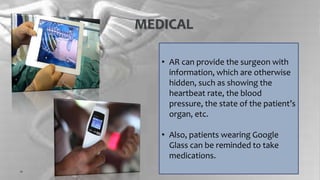
MEDICAL
• AR can provide the surgeon with
information, which are otherwise
hidden, such as showing the
heartbeat rate, the blood
pressure, the state of the patient’s
organ, etc.
• Also, patients wearing Google
Glass can be reminded to take
medications.
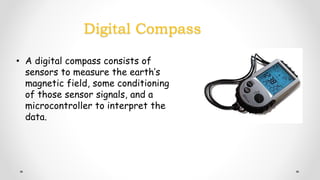
Digital Compass
• A digital compass consists of
sensors to measure the earth’s
magnetic field, some conditioning
of those sensor signals, and a
microcontroller to interpret the
data.
EDUCATION
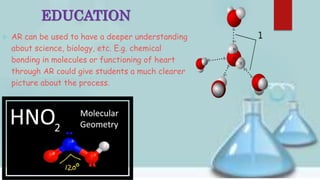
 AR can be used to have a deeper understanding
about science, biology, etc. E.g. chemical
bonding in molecules or functioning of heart
through AR could give students a much clearer
picture about the process.
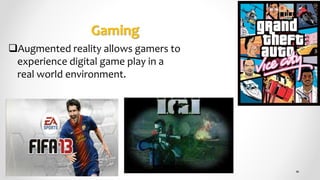
Gaming
Augmented reality allows gamers to
experience digital game play in a
real world environment.
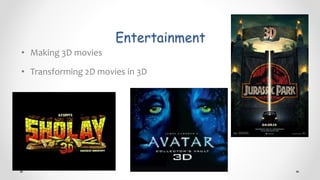
Entertainment
• Making 3D movies
• Transforming 2D movies in 3D
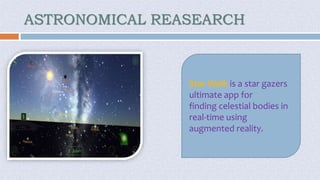
ASTRONOMICAL REASEARCH
Star Walk is a star gazers
ultimate app for
finding celestial bodies in
real-time using
augmented reality.
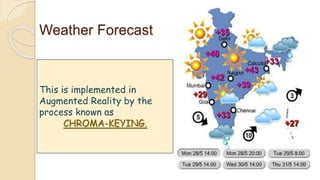
Weather Forecast
This is implemented in
Augmented Reality by the
process known as
CHROMA-KEYING.
Other Applications of AR
• Military and defense system
• Sports and entertainment
• Sightseeing or Tourism
• Disaster Management
• And Supports many complex tasks….
Augmented Reality Today
• AR enhances a user’s perception of
interaction with the real world.
• The virtual objects displays information
that the user can’t directly detect with
his own senses.
• The information conveyed by the virtual
objects helps a user perform real world
tasks.
Motivation:
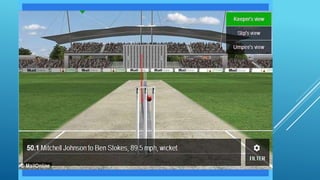
Some easy Examples to make clear
what AR actually is
Watch this clip….
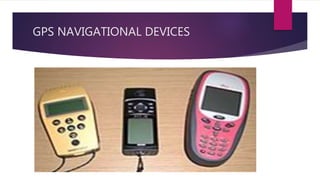
GPS Navigation System
GLOBAL POSITIONING SYSTEM
 A navigational system involving satellite and
computer that can determine the latitude and
the longitude of the receiver on earth by
computing the time difference of the signal
from different satellite to reach the receiver.
GPS NAVIGATIONAL DEVICES
Blurs the line between what's real and what's computer-
generated.
Information about the surrounding real world becomes
interactive and digitally manipulable.
Reality with more information added to it that is
normally not available.
Expensive to develop and maintain
Lack of Privacy
In case of GPS, we can not view the vehicles who are
passing by as it is dynamic in nature.
Thus we conclude,
THANK YOU

AUGMENTED_REALITY

  • 2.
    BRIDGING THE REALWORLD AND VIRTUAL WORLD A Look At AUGMENTED REALITY
  • 3.
  • 4.
    CONTENT 1. Definition 2. Whyaugmented reality? 3. Overview of technology 4. Hardware devices 5. Software based Augmented Reality 6. Simultaneous Localization And Mapping 7. Applications 8. Motivations 9. Examples 10.GPS 11.video 12.Advantages 13.Limitation 14.Conclusion
  • 5.
  • 6.
    AUGMENTATION This is akind of enhancing an object Reality The state of things as they actually exist. Augmented reality = Real world + Virtual world
  • 7.
    Thus augmented realityis A live direct or indirect view of a physical, real-world environment whose elements are augmented by computer-generated sensory input such as sound, video, graphics or GPS data.
  • 8.
    WHY AUGMENTED REALITY? Combinesreal and virtual object in a real environment. Runs interactively and in real time. It is to augment the real world with information handling capabilities. It superimposes graphics over a real world environment in real time.
  • 9.
    Overview of thetechnology Components: o Scene Generator o Tracking System o Display o Control o Data
  • 10.
    Head Mounted Display Usercan simultaneously view both the real world and virtual world. Can be a bit bulky in its current form
  • 11.
    Handheld Devices Most commonlyused AR Devices Uses a variety of Sensors AR Toolkit is usually used to map the real world
  • 12.
    Software Based AR Use multiple sensors and tracking devices like GPS, Compasses etc…  Are leading the innovation in AR now.  Two Stages Detection of Interest Points, Mapping the two worlds.
  • 13.
  • 14.
    Software and Technique ARsystems realistically integrate augmentations with the real world by a process called image registration.  First detection of interest points.  Second is restoration of a real world coordinate system from the data obtained in the first stage [SLAM].
  • 15.
    Simultaneous Localization AndMapping  SLAM is a technique to build up a map within a known or an unknown environment while at the same time keeping track of the current location.  Maps are used to determine a location in an environment and to depict this environment for an overview.
  • 16.
    How does SLAMwork Takes input Builds map using GPS Locating and mapping process repeats in a loop
  • 17.
    Challenges faced bySLAM Technology
  • 18.
  • 19.
    Architecture AR can aidin visualizing 2 dimensional building projects in 3D.
  • 20.
    MEDICAL • AR canprovide the surgeon with information, which are otherwise hidden, such as showing the heartbeat rate, the blood pressure, the state of the patient’s organ, etc. • Also, patients wearing Google Glass can be reminded to take medications.
  • 21.
    Digital Compass • Adigital compass consists of sensors to measure the earth’s magnetic field, some conditioning of those sensor signals, and a microcontroller to interpret the data.
  • 23.
    EDUCATION  AR canbe used to have a deeper understanding about science, biology, etc. E.g. chemical bonding in molecules or functioning of heart through AR could give students a much clearer picture about the process.
  • 24.
    Gaming Augmented reality allowsgamers to experience digital game play in a real world environment.
  • 25.
    Entertainment • Making 3Dmovies • Transforming 2D movies in 3D
  • 26.
    ASTRONOMICAL REASEARCH Star Walkis a star gazers ultimate app for finding celestial bodies in real-time using augmented reality.
  • 27.
    Weather Forecast This isimplemented in Augmented Reality by the process known as CHROMA-KEYING.
  • 28.
    Other Applications ofAR • Military and defense system • Sports and entertainment • Sightseeing or Tourism • Disaster Management • And Supports many complex tasks….
  • 29.
    Augmented Reality Today •AR enhances a user’s perception of interaction with the real world. • The virtual objects displays information that the user can’t directly detect with his own senses. • The information conveyed by the virtual objects helps a user perform real world tasks. Motivation:
  • 30.
    Some easy Examplesto make clear what AR actually is
  • 33.
    Watch this clip…. GPSNavigation System
  • 35.
    GLOBAL POSITIONING SYSTEM A navigational system involving satellite and computer that can determine the latitude and the longitude of the receiver on earth by computing the time difference of the signal from different satellite to reach the receiver.
  • 36.
  • 37.
    Blurs the linebetween what's real and what's computer- generated. Information about the surrounding real world becomes interactive and digitally manipulable. Reality with more information added to it that is normally not available.
  • 38.
    Expensive to developand maintain Lack of Privacy In case of GPS, we can not view the vehicles who are passing by as it is dynamic in nature.
  • 40.
  • 42.