Atmosphere Chapter 11
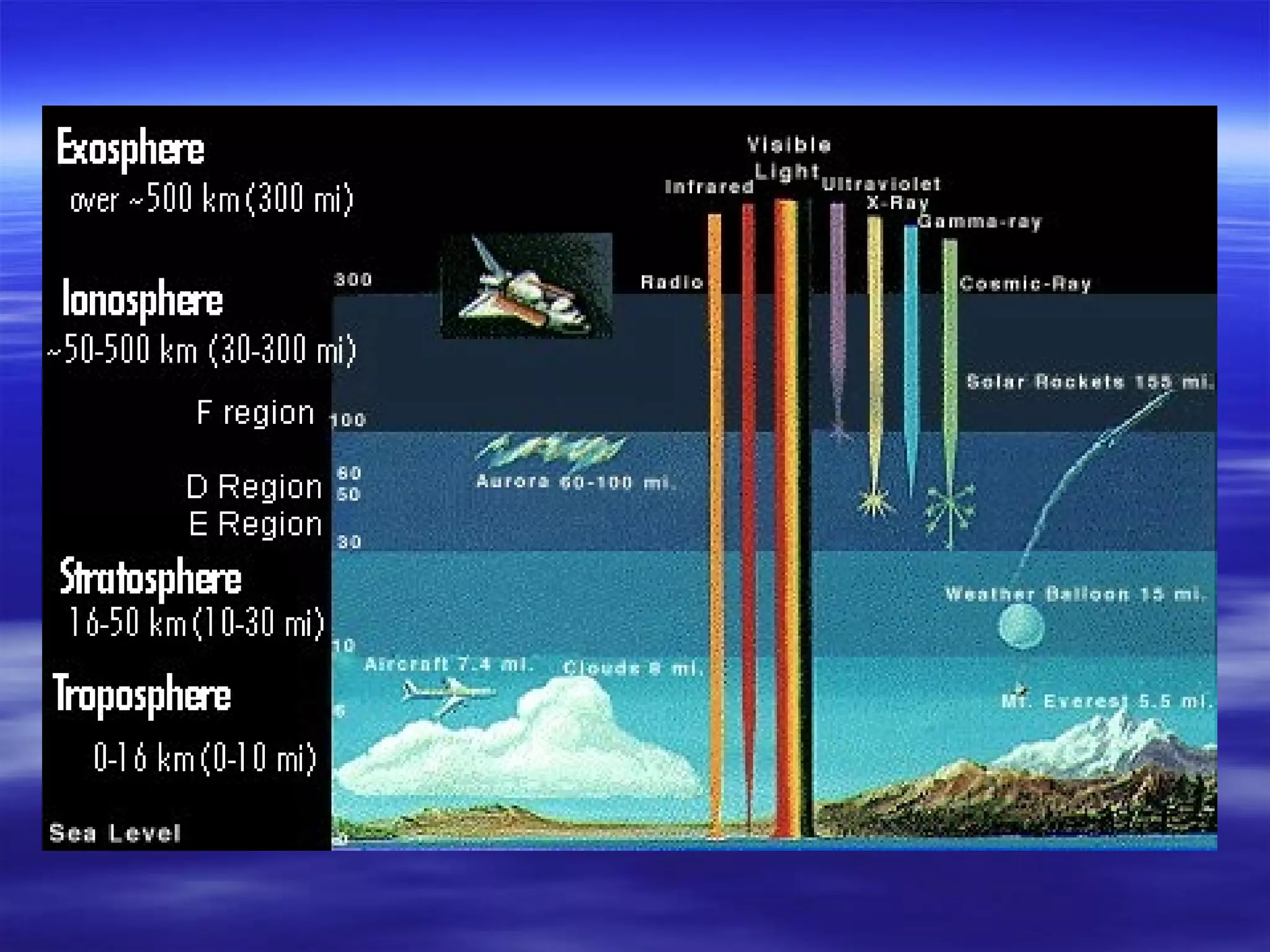
Structure of Atmosphere Troposphere- closest to earth; contains most of mass of atmosphere; general decrease in temp (bottom    top) Stratosphere- Second Layer Contains Ozone Layer   absorbs ultraviolet radiation   heated layer Mesosphere (middle)- temperature decreases Thermosphere- few air molecules   temp rises to 1000 °C Exosphere- Outer Layer; only H & He found here; no boundary between it and space
 
 
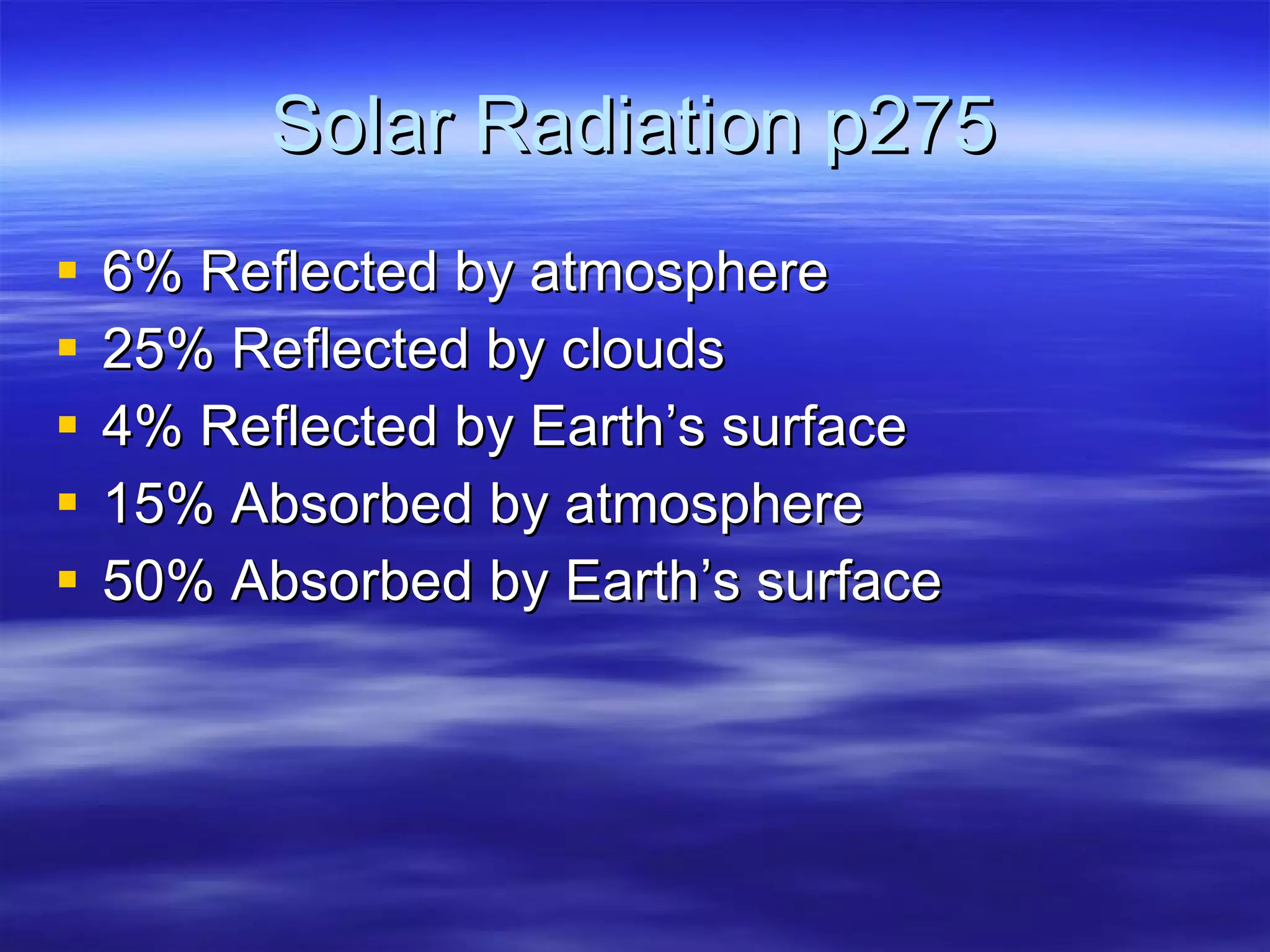
Solar Radiation p275 6% Reflected by atmosphere 25% Reflected by clouds 4% Reflected by Earth’s surface 15% Absorbed by atmosphere 50% Absorbed by Earth’s surface
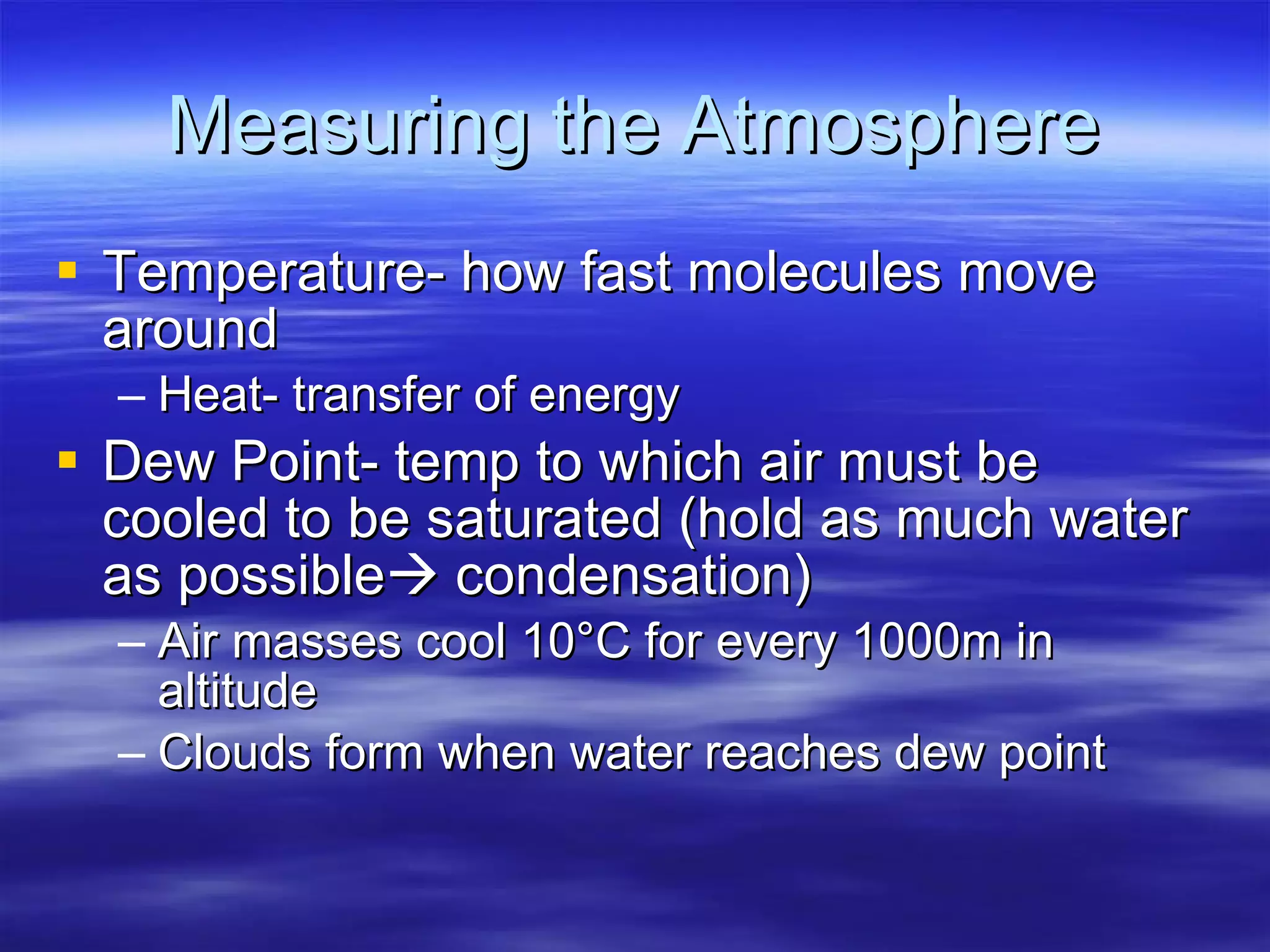
Measuring the Atmosphere Temperature- how fast molecules move around Heat- transfer of energy Dew Point- temp to which air must be cooled to be saturated (hold as much water as possible   condensation) Air masses cool 10 °C for every 1000m in altitude Clouds form when water reaches dew point
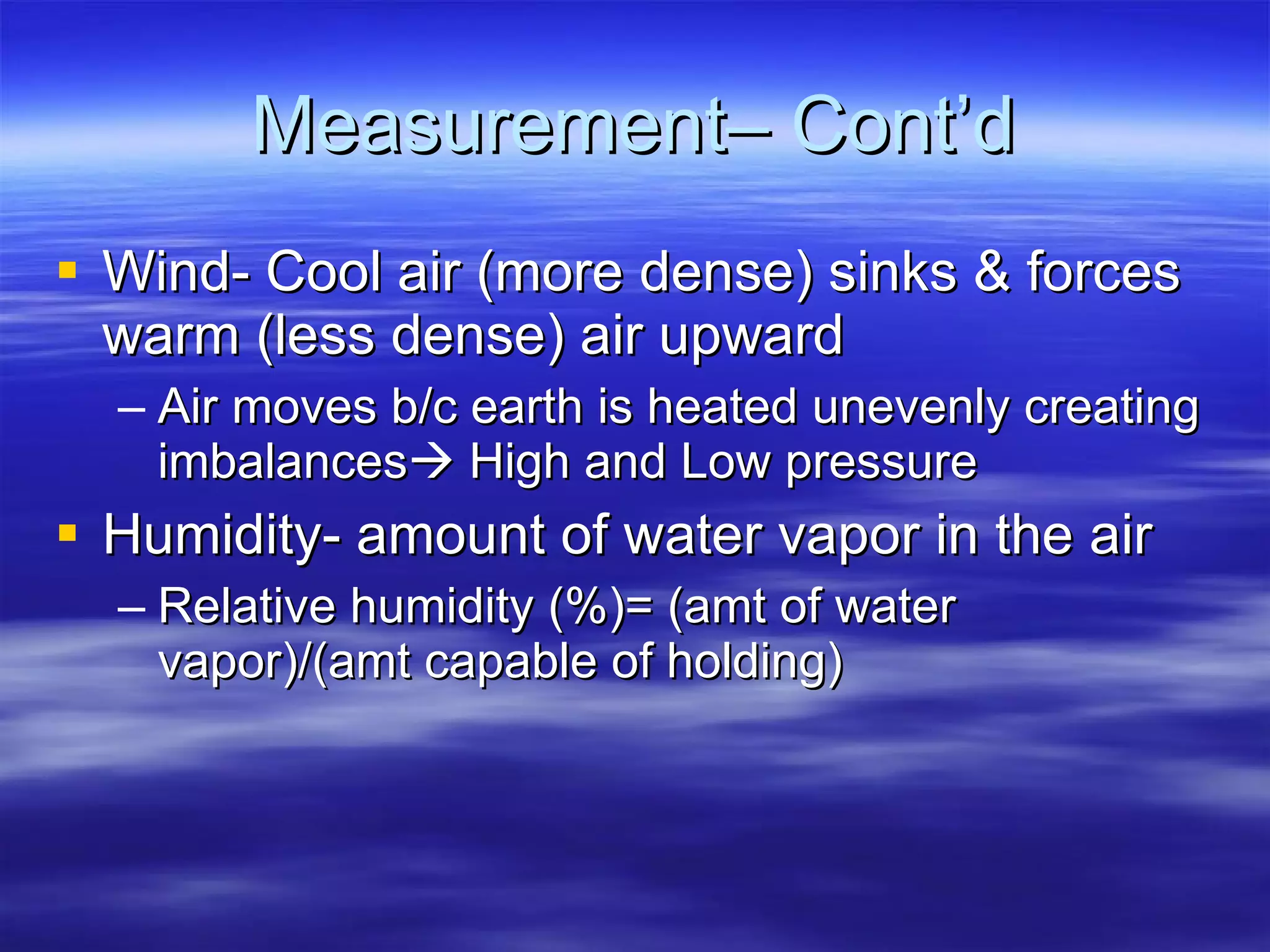
Measurement– Cont’d Wind- Cool air (more dense) sinks & forces warm (less dense) air upward Air moves b/c earth is heated unevenly creating imbalances   High and Low pressure Humidity- amount of water vapor in the air Relative humidity (%)= (amt of water vapor)/(amt capable of holding)
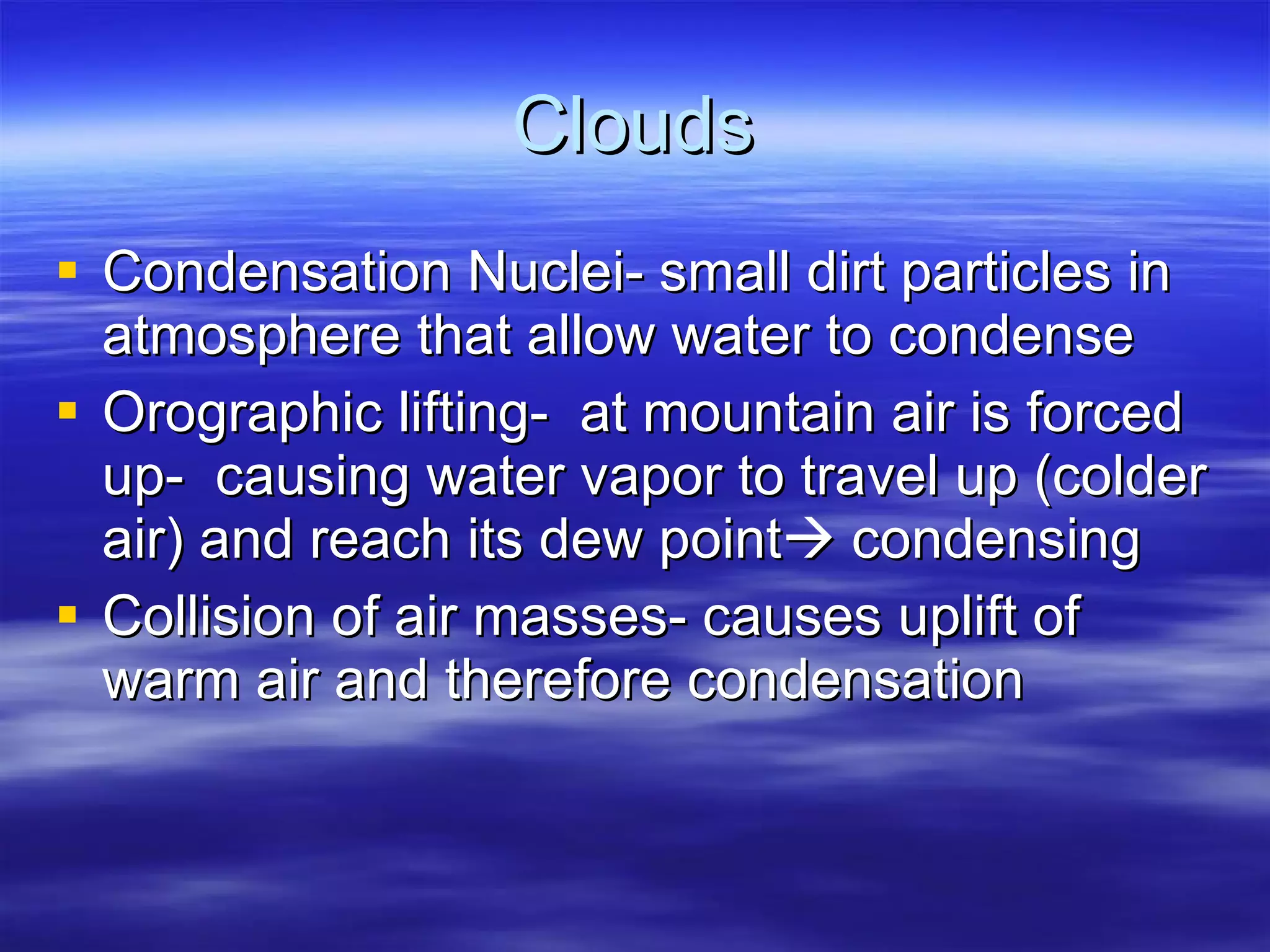
Clouds Condensation Nuclei- small dirt particles in atmosphere that allow water to condense Orographic lifting-  at mountain air is forced up-  causing water vapor to travel up (colder air) and reach its dew point   condensing Collision of air masses- causes uplift of warm air and therefore condensation
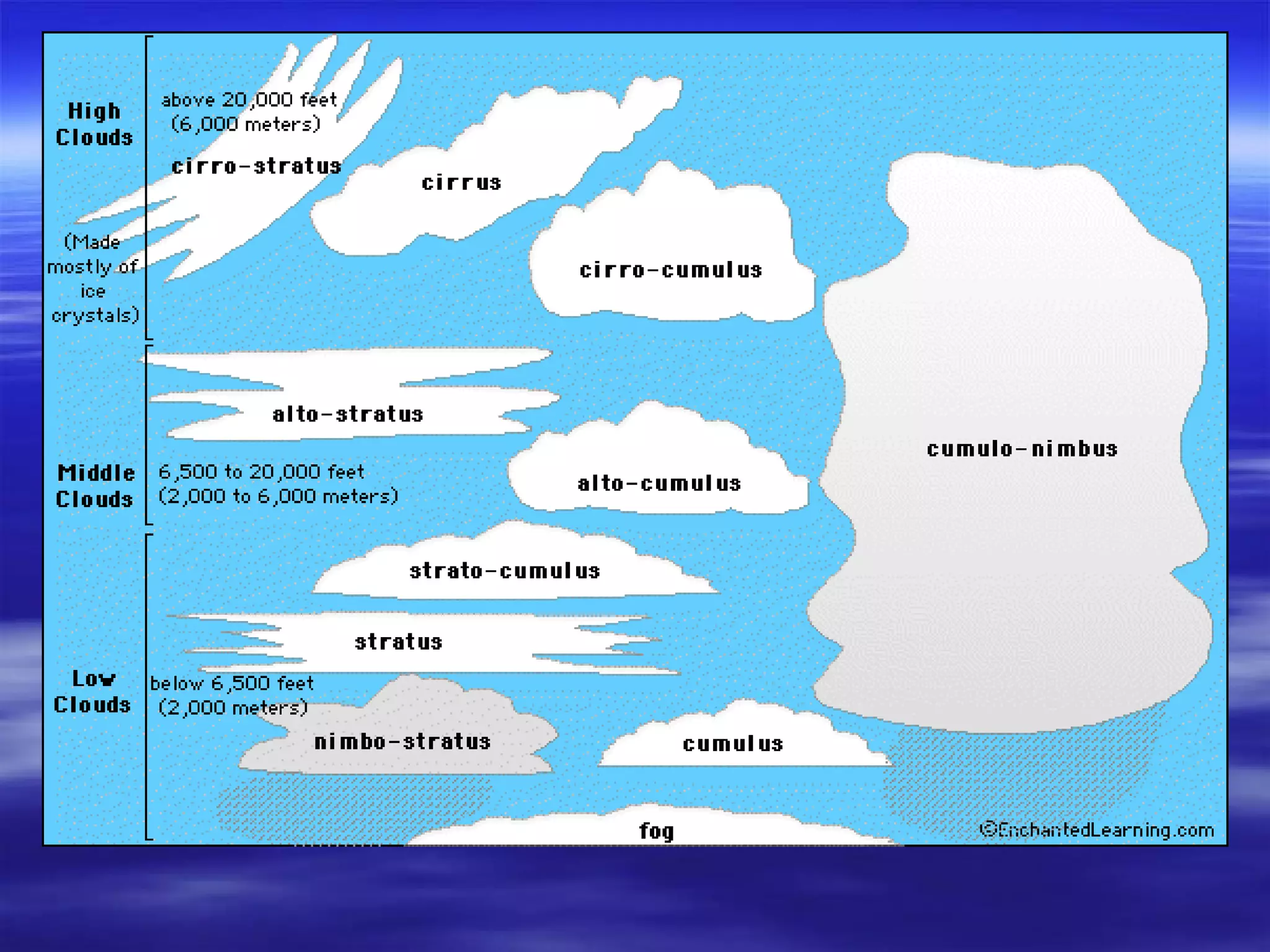
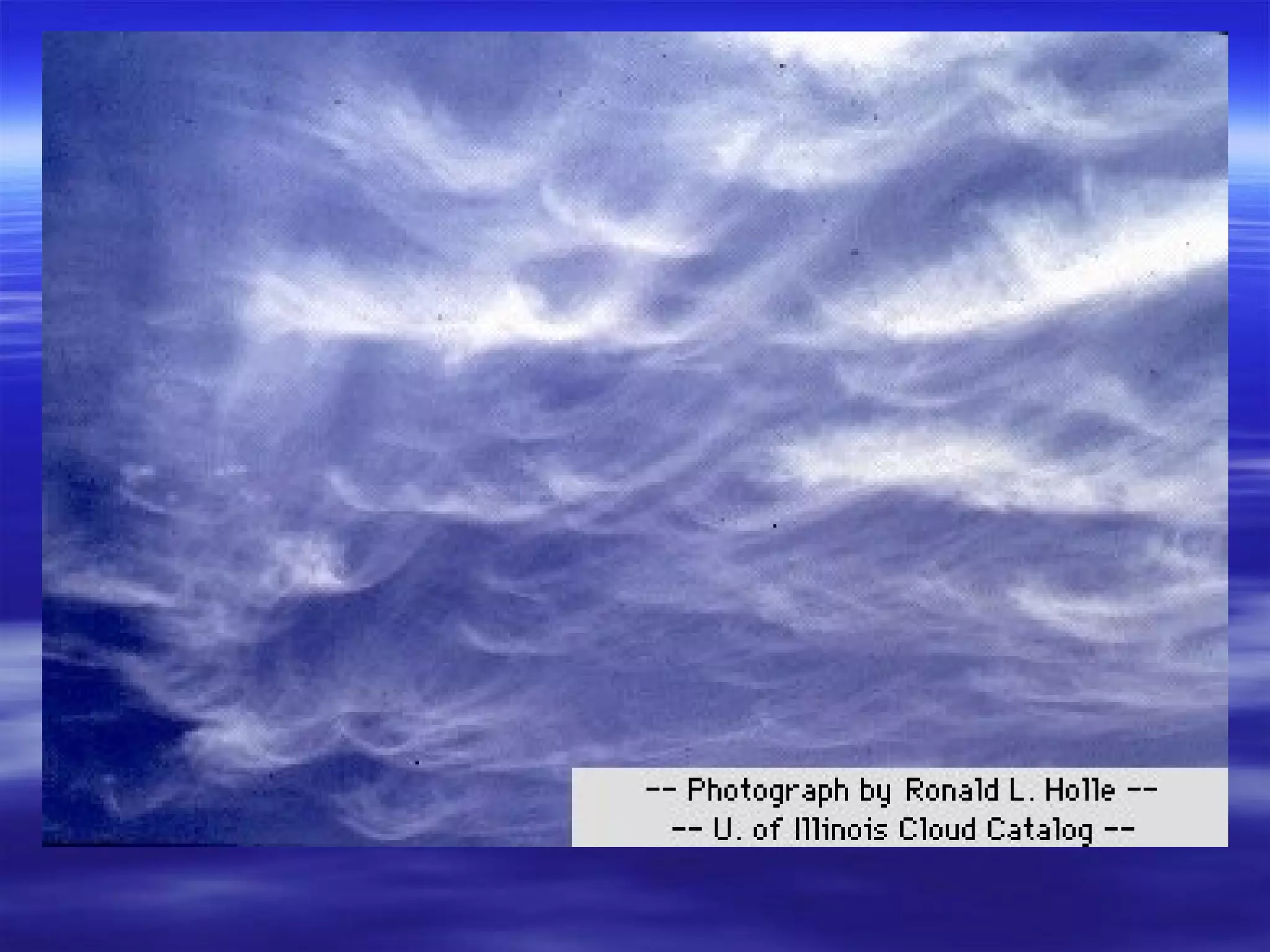
Types Height Cirro- above 6000m Alto- 2000-6000m Strato- below 2000m Shape Cirrus-”hair” wispy, stringy Cumulus- “pile or heap” puffy, lumpy clouds Stratus- “layer” sheets of clouds Nimbus “cloud” low gray rain clouds


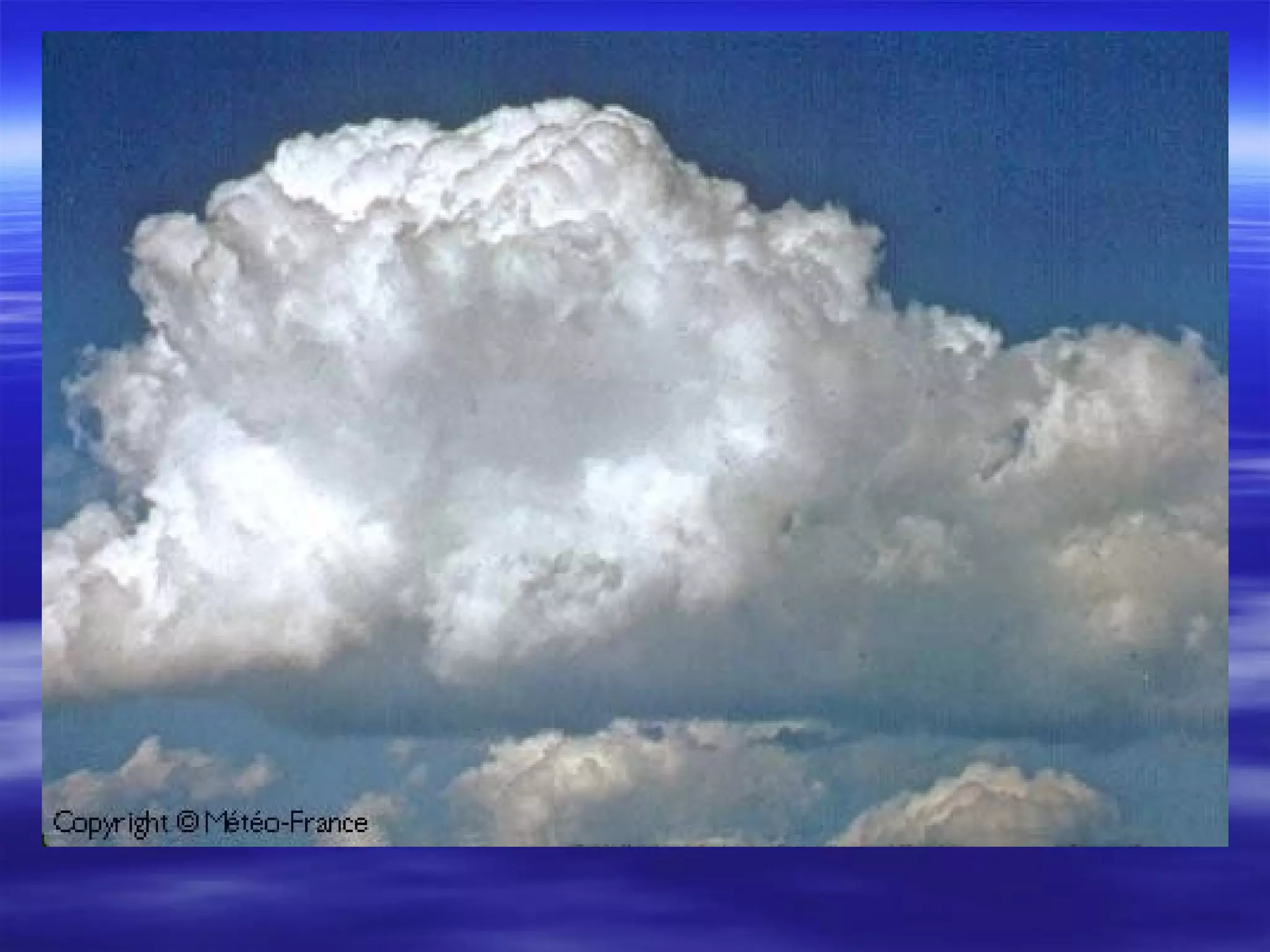
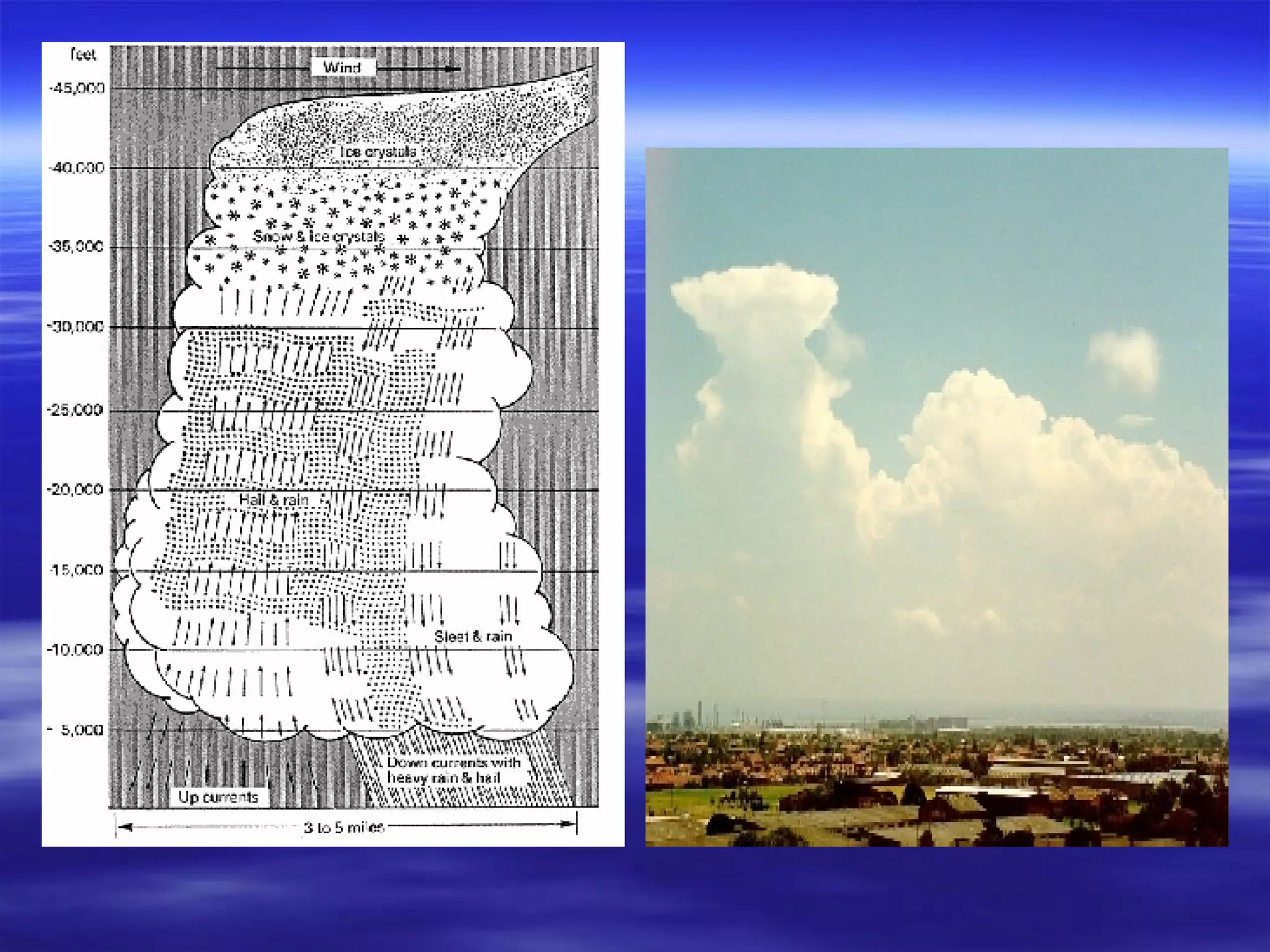
Special Clouds Vertical Development- if cloud is warmer than surrounding air/ground, cloud will grow upwards   thunderstorm Cumulonimbus Cloud
 
Precipitation Water droplets collide & join into larger droplets (coalescence)   too heavy to carry Sleet (ice pellets) form when droplets are carried back up into the cloud, freezing it Hail- layers and layer of sleet built up

Atmosphere Lecture

  • 1.
  • 2.
    Structure of AtmosphereTroposphere- closest to earth; contains most of mass of atmosphere; general decrease in temp (bottom  top) Stratosphere- Second Layer Contains Ozone Layer  absorbs ultraviolet radiation  heated layer Mesosphere (middle)- temperature decreases Thermosphere- few air molecules  temp rises to 1000 °C Exosphere- Outer Layer; only H & He found here; no boundary between it and space
  • 3.
  • 4.
  • 5.
    Solar Radiation p2756% Reflected by atmosphere 25% Reflected by clouds 4% Reflected by Earth’s surface 15% Absorbed by atmosphere 50% Absorbed by Earth’s surface
  • 6.
    Measuring the AtmosphereTemperature- how fast molecules move around Heat- transfer of energy Dew Point- temp to which air must be cooled to be saturated (hold as much water as possible  condensation) Air masses cool 10 °C for every 1000m in altitude Clouds form when water reaches dew point
  • 7.
    Measurement– Cont’d Wind-Cool air (more dense) sinks & forces warm (less dense) air upward Air moves b/c earth is heated unevenly creating imbalances  High and Low pressure Humidity- amount of water vapor in the air Relative humidity (%)= (amt of water vapor)/(amt capable of holding)
  • 8.
    Clouds Condensation Nuclei-small dirt particles in atmosphere that allow water to condense Orographic lifting- at mountain air is forced up- causing water vapor to travel up (colder air) and reach its dew point  condensing Collision of air masses- causes uplift of warm air and therefore condensation
  • 9.
    Types Height Cirro-above 6000m Alto- 2000-6000m Strato- below 2000m Shape Cirrus-”hair” wispy, stringy Cumulus- “pile or heap” puffy, lumpy clouds Stratus- “layer” sheets of clouds Nimbus “cloud” low gray rain clouds
  • 10.
  • 11.
  • 12.
  • 13.
  • 14.
  • 15.
    Special Clouds VerticalDevelopment- if cloud is warmer than surrounding air/ground, cloud will grow upwards  thunderstorm Cumulonimbus Cloud
  • 16.
  • 17.
    Precipitation Water dropletscollide & join into larger droplets (coalescence)  too heavy to carry Sleet (ice pellets) form when droplets are carried back up into the cloud, freezing it Hail- layers and layer of sleet built up