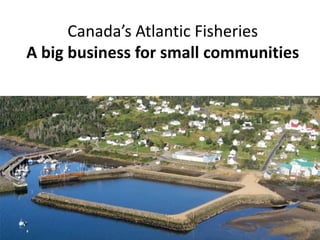
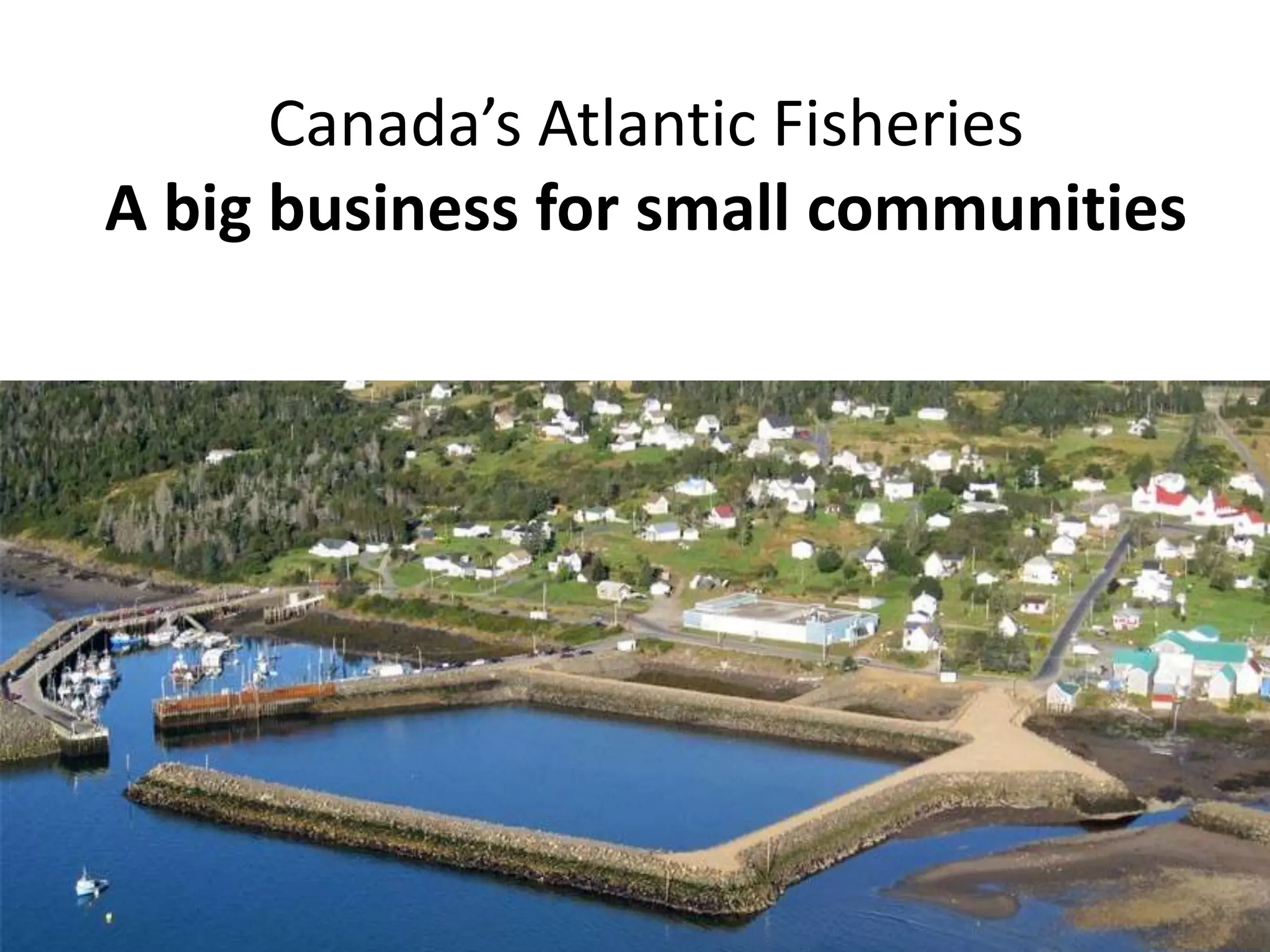
Canada’s  Atlantic  Fisheries
A big business for small communities
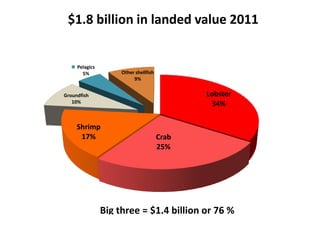
$1.8 billion in landed value 2011

Pelagics
5%

Other shellfish
9%

Lobster
34%

Groundfish
10%

Shrimp
17%

Crab
25%

Big three = $1.4 billion or 76 %
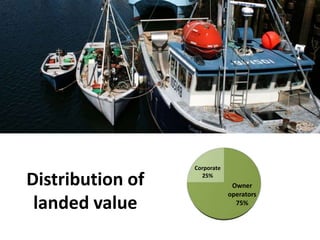
Distribution of
landed value

Corporate
25%

Owner
operators
75%
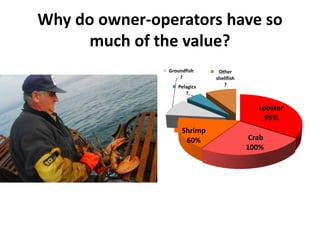
Why do owner-operators have so
much of the value?
Groundfish
?
Pelagics
?

Other
shellfish
?

Lobster
99%
Shrimp
60%

Crab
100%
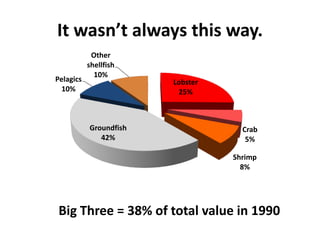
It  wasn’t  always  this  way.
Pelagics
10%

Other
shellfish
10%

Groundfish
42%

Lobster
25%

Crab
5%
Shrimp
8%

Big Three = 38% of total value in 1990
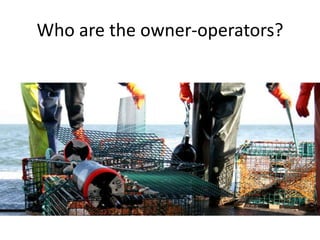
Who are the owner-operators?
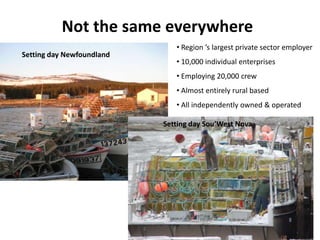
Not the same everywhere
Setting day Newfoundland

• Region  ’s  largest  private  sector  employer
• 10,000 individual enterprises
• Employing 20,000 crew
• Almost entirely rural based
• All independently owned & operated
Setting day Sou’West Nova
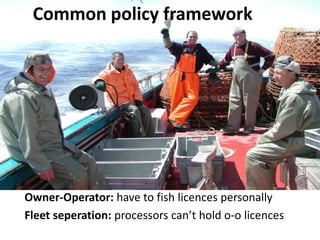
Common policy framework

Common policy framework

Owner-Operator: have to fish licences personally
Fleet seperation: processors  can’t  hold  o-o licences
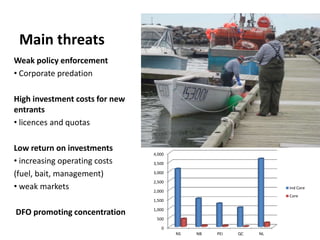
Main threats
Weak policy enforcement
• Corporate predation
High investment costs for new
entrants
• licences and quotas
Low return on investments
• increasing operating costs
(fuel, bait, management)
• weak markets

4,000
3,500
3,000
2,500
Ind Core

2,000

Core
1,500

DFO promoting concentration

1,000
500
0
NS

NB

PEI

QC

NL
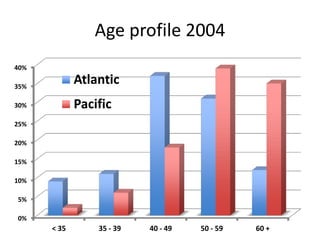
Age profile 2004
40%

35%

Atlantic

30%

Pacific

25%
20%
15%
10%
5%
0%

< 35

35 - 39

40 - 49

50 - 59

60 +
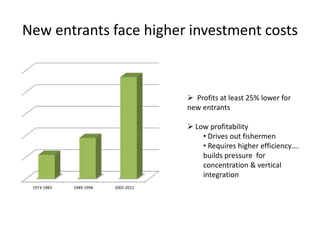
New entrants face higher investment costs

 Profits at least 25% lower for
new entrants
 Low profitability
• Drives out fishermen
• Requires  higher  efficiency….  
builds pressure for
concentration & vertical
integration
1973-1983

1989-1998

2005-2011
Fleets opposed to vertical integration
Reduces dock-side competition & owner-operator
bargaining power
– Lower prices paid to independent harvesters
– Reduced resources to other processors / wholesalers
– Leads to concentration

Results in lower employment
– Less jobs in some communities
– Conflicts between communities
– Conflicts between provinces
Today’s  Globe  and  Mail
Productivity overrated as a key to growth

“…focussing on efficiency at the expense of jobs
and  hours  worked  could  lead  to  ‘greater  
unemployment, income loss and reduced wellbeing’.”
- Andrew Sharpe, Editor International Productivity Monitor
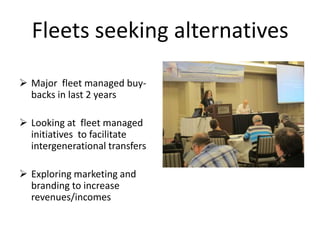
Fleets seeking alternatives
 Major fleet managed buybacks in last 2 years
 Looking at fleet managed
initiatives to facilitate
intergenerational transfers
 Exploring marketing and
branding to increase
revenues/incomes
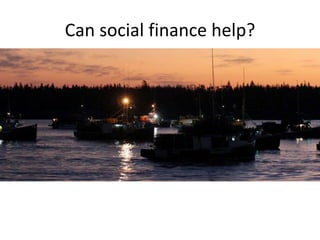
Can social finance help?

Canada's Atlantic Fisheries

  • 1.
    Canada’s  Atlantic  Fisheries Abig business for small communities
  • 2.
    $1.8 billion inlanded value 2011 Pelagics 5% Other shellfish 9% Lobster 34% Groundfish 10% Shrimp 17% Crab 25% Big three = $1.4 billion or 76 %
  • 3.
  • 4.
    Why do owner-operatorshave so much of the value? Groundfish ? Pelagics ? Other shellfish ? Lobster 99% Shrimp 60% Crab 100%
  • 5.
    It  wasn’t  always this  way. Pelagics 10% Other shellfish 10% Groundfish 42% Lobster 25% Crab 5% Shrimp 8% Big Three = 38% of total value in 1990
  • 6.
    Who are theowner-operators?
  • 7.
    Not the sameeverywhere Setting day Newfoundland • Region  ’s  largest  private  sector  employer • 10,000 individual enterprises • Employing 20,000 crew • Almost entirely rural based • All independently owned & operated Setting day Sou’West Nova
  • 8.
    Common policy framework Commonpolicy framework Owner-Operator: have to fish licences personally Fleet seperation: processors  can’t  hold  o-o licences
  • 9.
    Main threats Weak policyenforcement • Corporate predation High investment costs for new entrants • licences and quotas Low return on investments • increasing operating costs (fuel, bait, management) • weak markets 4,000 3,500 3,000 2,500 Ind Core 2,000 Core 1,500 DFO promoting concentration 1,000 500 0 NS NB PEI QC NL
  • 10.
  • 11.
    New entrants facehigher investment costs  Profits at least 25% lower for new entrants  Low profitability • Drives out fishermen • Requires  higher  efficiency….   builds pressure for concentration & vertical integration 1973-1983 1989-1998 2005-2011
  • 12.
    Fleets opposed tovertical integration Reduces dock-side competition & owner-operator bargaining power – Lower prices paid to independent harvesters – Reduced resources to other processors / wholesalers – Leads to concentration Results in lower employment – Less jobs in some communities – Conflicts between communities – Conflicts between provinces
  • 13.
    Today’s  Globe  and Mail Productivity overrated as a key to growth “…focussing on efficiency at the expense of jobs and  hours  worked  could  lead  to  ‘greater   unemployment, income loss and reduced wellbeing’.” - Andrew Sharpe, Editor International Productivity Monitor
  • 14.
    Fleets seeking alternatives Major fleet managed buybacks in last 2 years  Looking at fleet managed initiatives to facilitate intergenerational transfers  Exploring marketing and branding to increase revenues/incomes
  • 15.