
ASP.NET MVC 4
MVC pattern overview
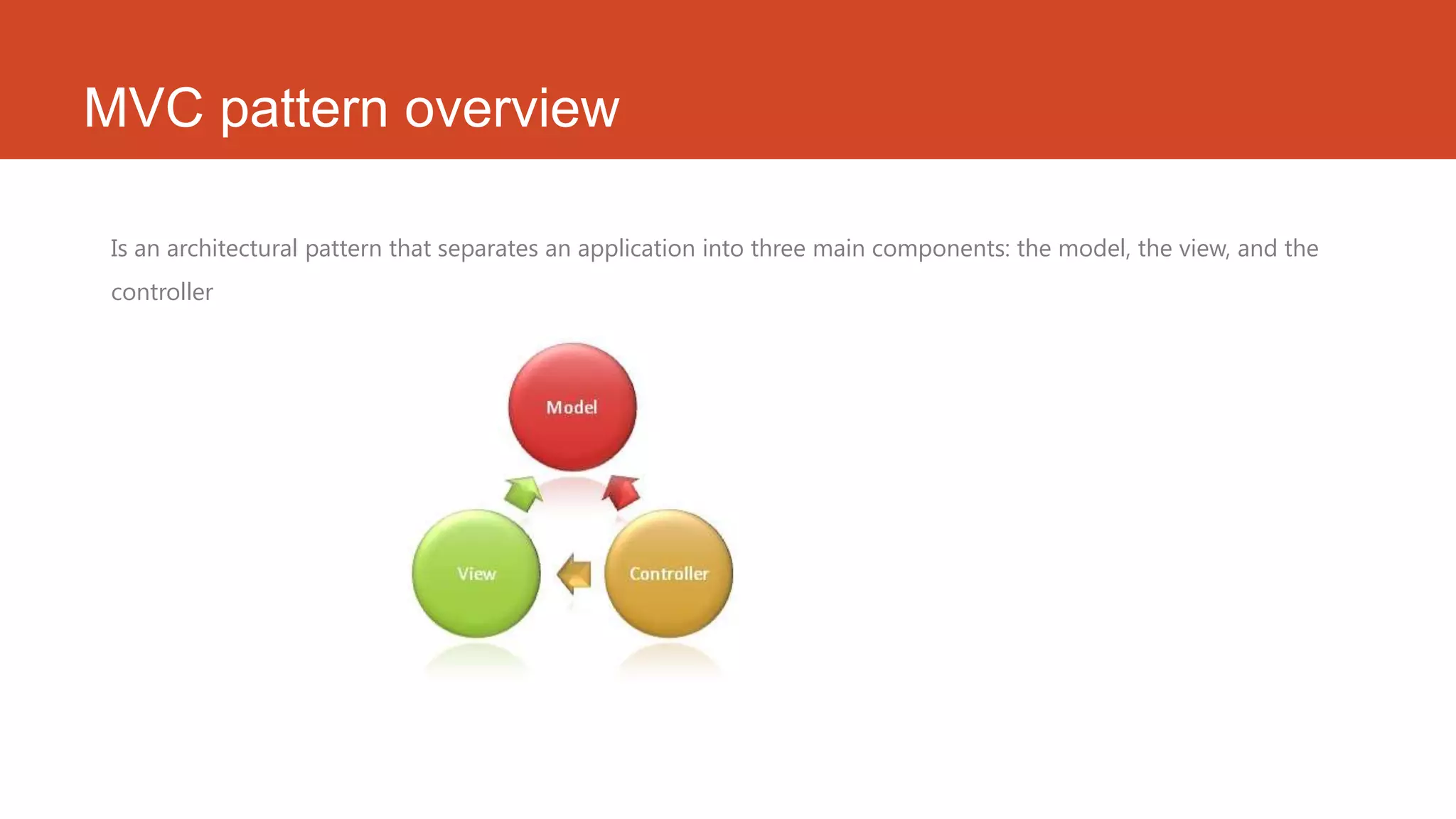
Is an architectural pattern that separates an application into three main components: the model, the view, and the
controller
MVC pattern advantages
• Managing complexity is easy
• Convention over configuration
• No view state
• Full control over the behavior of the application
• Better support of TDD
ASP.NET MVC
The ASP.NET MVC framework is a lightweight, highly testable presentation
framework that (as with Web Forms-based applications) is integrated with
existing ASP.NET features, such as master pages and membership-based
authentication. The MVC framework is defined in the System.Web.Mvc assembly
How ASP.NET MVC works
ASP.NET MVC Release history
ASP.NET MVC vs. ASP.NET Web Forms
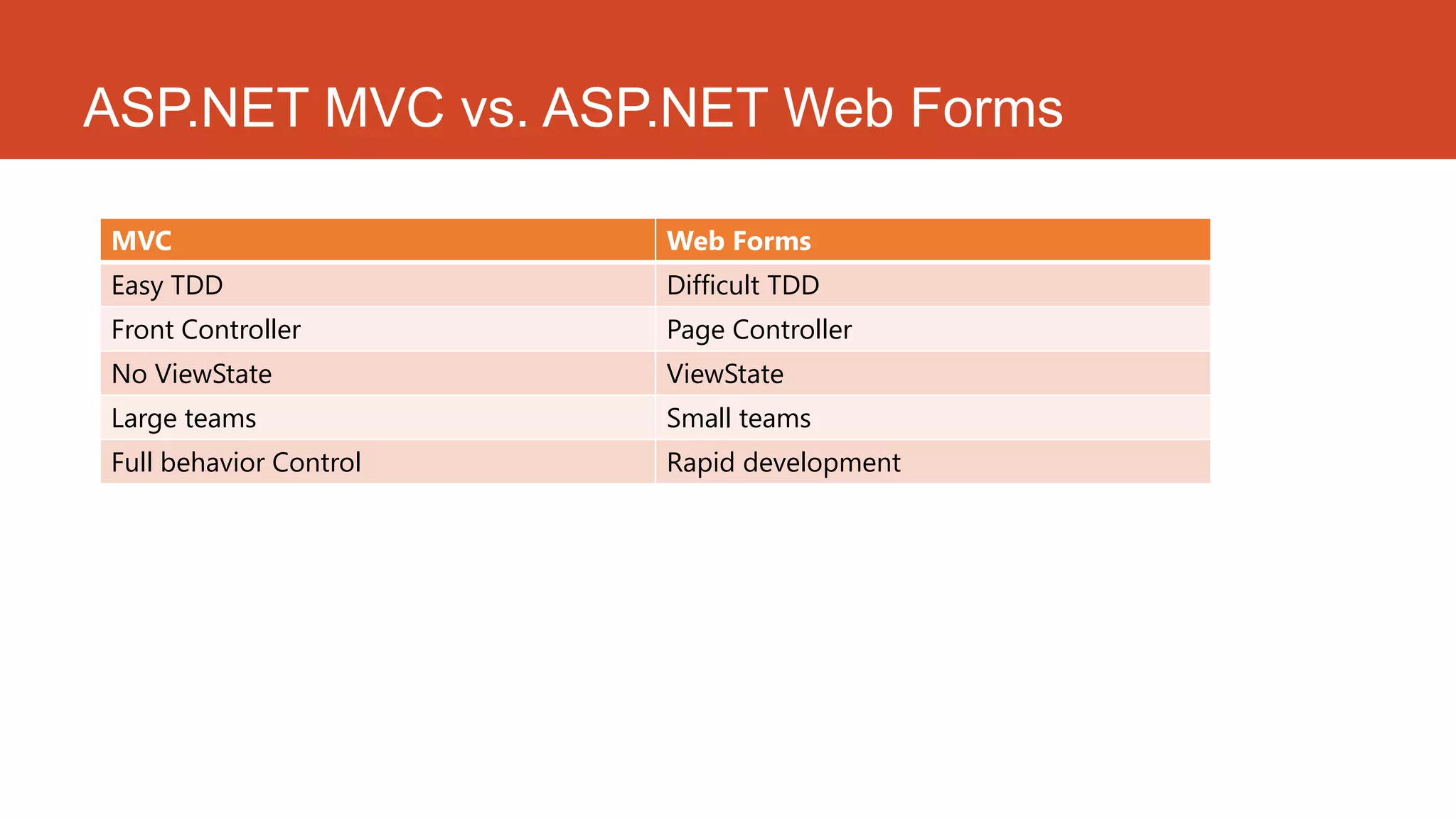
MVC

Web Forms

Easy TDD

Difficult TDD

Front Controller

Page Controller

No ViewState

ViewState

Large teams

Small teams

Full behavior Control

Rapid development
ASP.NET MVC4 new features
• ASP.NET web API
• Project templates enhancements
• Mobile project template
• Display modes
• JQuery mobile and View switcher
• Bundling and minification

• OAuth, OpenID
Creating ASP.NET MVC applications
Visual Studio 2012 supports MVC 4 and 3 web application projects
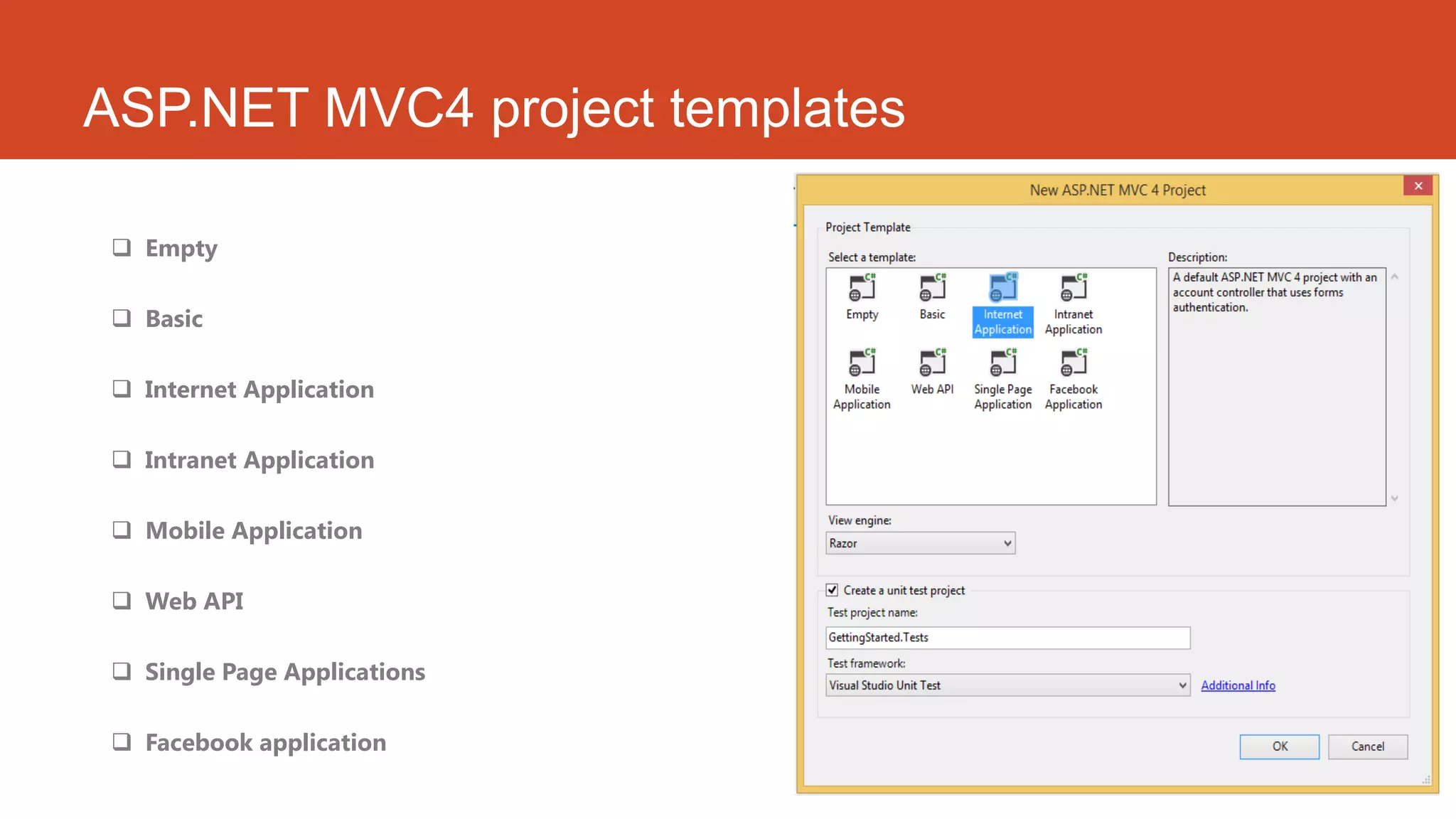
ASP.NET MVC4 project templates
 Empty
 Basic
 Internet Application
 Intranet Application
 Mobile Application
 Web API
 Single Page Applications

 Facebook application
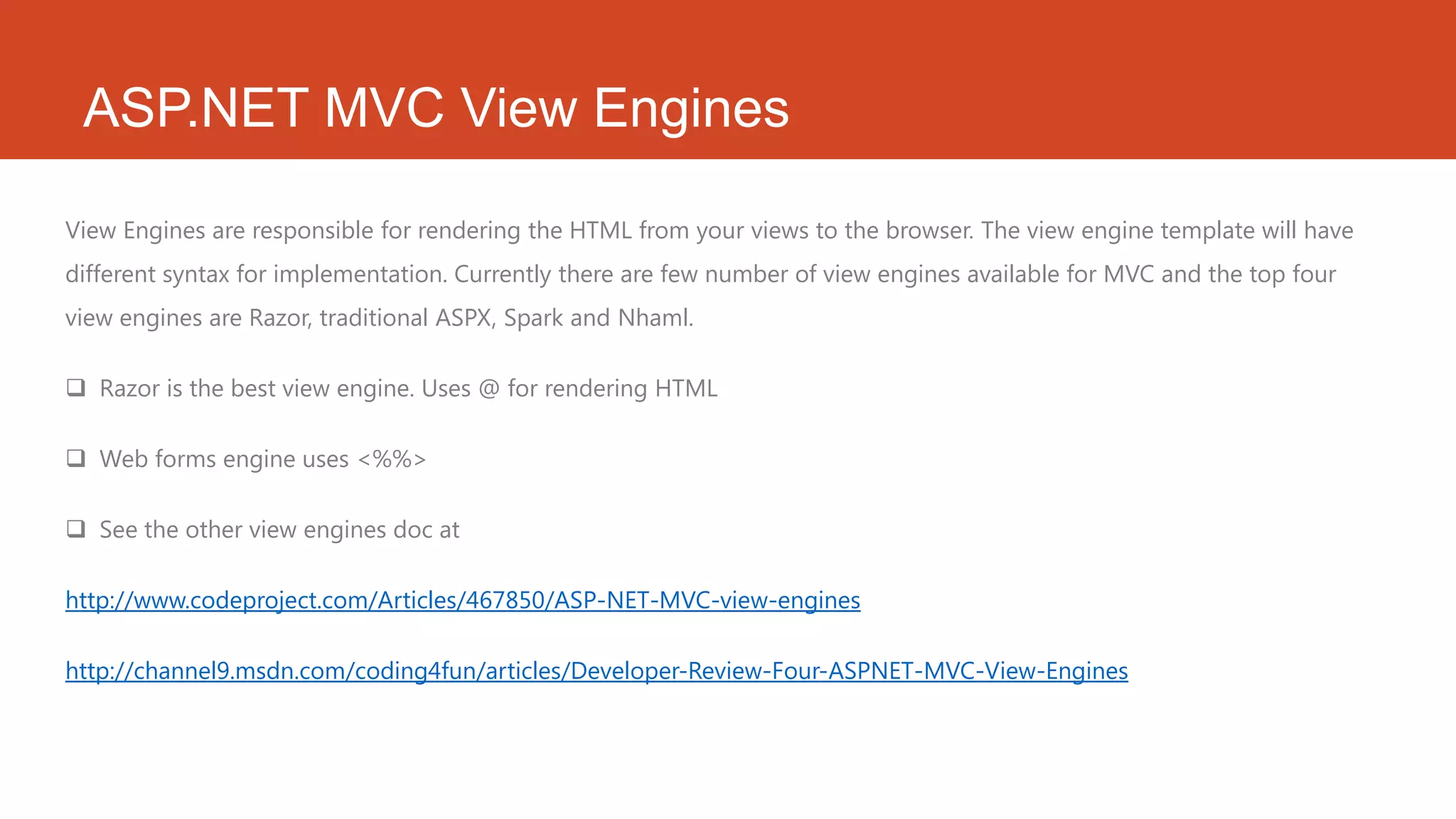
ASP.NET MVC View Engines
View Engines are responsible for rendering the HTML from your views to the browser. The view engine template will have

different syntax for implementation. Currently there are few number of view engines available for MVC and the top four
view engines are Razor, traditional ASPX, Spark and Nhaml.
 Razor is the best view engine. Uses @ for rendering HTML
 Web forms engine uses <%%>
 See the other view engines doc at
http://www.codeproject.com/Articles/467850/ASP-NET-MVC-view-engines
http://channel9.msdn.com/coding4fun/articles/Developer-Review-Four-ASPNET-MVC-View-Engines

ASP.NET MVC4 Overview

  • 1.
  • 2.
    MVC pattern overview Isan architectural pattern that separates an application into three main components: the model, the view, and the controller
  • 3.
    MVC pattern advantages •Managing complexity is easy • Convention over configuration • No view state • Full control over the behavior of the application • Better support of TDD
  • 4.
    ASP.NET MVC The ASP.NETMVC framework is a lightweight, highly testable presentation framework that (as with Web Forms-based applications) is integrated with existing ASP.NET features, such as master pages and membership-based authentication. The MVC framework is defined in the System.Web.Mvc assembly
  • 5.
  • 6.
  • 7.
    ASP.NET MVC vs.ASP.NET Web Forms MVC Web Forms Easy TDD Difficult TDD Front Controller Page Controller No ViewState ViewState Large teams Small teams Full behavior Control Rapid development
  • 8.
    ASP.NET MVC4 newfeatures • ASP.NET web API • Project templates enhancements • Mobile project template • Display modes • JQuery mobile and View switcher • Bundling and minification • OAuth, OpenID
  • 9.
    Creating ASP.NET MVCapplications Visual Studio 2012 supports MVC 4 and 3 web application projects
  • 10.
    ASP.NET MVC4 projecttemplates  Empty  Basic  Internet Application  Intranet Application  Mobile Application  Web API  Single Page Applications  Facebook application
  • 11.
    ASP.NET MVC ViewEngines View Engines are responsible for rendering the HTML from your views to the browser. The view engine template will have different syntax for implementation. Currently there are few number of view engines available for MVC and the top four view engines are Razor, traditional ASPX, Spark and Nhaml.  Razor is the best view engine. Uses @ for rendering HTML  Web forms engine uses <%%>  See the other view engines doc at http://www.codeproject.com/Articles/467850/ASP-NET-MVC-view-engines http://channel9.msdn.com/coding4fun/articles/Developer-Review-Four-ASPNET-MVC-View-Engines