TOP
HEALTHCARE
APP DEVELOPMENT
TRENDS
The mHealth market size was valued at
USD 63.88 billion in 2022 and is expected to
reach USD 243.57 billion by 2030 at a CAGR
of 18.2% in the timeline of 2022-2030.
One of the major roles that Blockchain
technology will be playing here is recording
and preserving patient data with the highest
data encryption level.
Artificial Intelligence can help to examine
patients more accurately and can be
considered a huge blessing where immediate
medical treatment is required.
Telemedicine is a great asset in remote
areas where medical facilities are not
accessible properly; and that too,
cost-effectively.
An app that any user can connect with its
wearable, like a smartwatch, to check blood
pressure, heart rate, body temperature, etc.,
and use it for further fitness and healthcare
planning.
Healthcare organizations can leverage big
data solutions to optimize resource
management, keep patients' data, prescribe
medications, and make data-driven decisions
through predictive analytics.
Augmented Reality (AR) is gaining popularity
in healthcare for enhancing medical education,
drug studies, and patient experience, and due
to that, its market is expected to reach $19.6
billion by 2030.
In-demand apps for patients to track their
healthcare routines, like exercise, medication,
appointment alerts, etc., especially for the
ones with Alzheimer's disease.

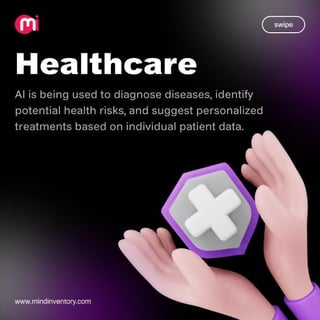
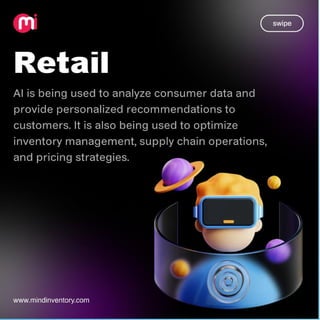
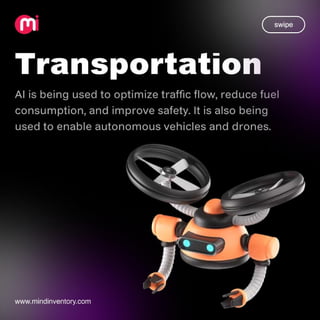
Artificial Intelligence's use cases in various industries.

  • 1.
  • 2.
    The mHealth marketsize was valued at USD 63.88 billion in 2022 and is expected to reach USD 243.57 billion by 2030 at a CAGR of 18.2% in the timeline of 2022-2030.
  • 3.
    One of themajor roles that Blockchain technology will be playing here is recording and preserving patient data with the highest data encryption level.
  • 4.
    Artificial Intelligence canhelp to examine patients more accurately and can be considered a huge blessing where immediate medical treatment is required.
  • 5.
    Telemedicine is agreat asset in remote areas where medical facilities are not accessible properly; and that too, cost-effectively.
  • 6.
    An app thatany user can connect with its wearable, like a smartwatch, to check blood pressure, heart rate, body temperature, etc., and use it for further fitness and healthcare planning.
  • 7.
    Healthcare organizations canleverage big data solutions to optimize resource management, keep patients' data, prescribe medications, and make data-driven decisions through predictive analytics.
  • 8.
    Augmented Reality (AR)is gaining popularity in healthcare for enhancing medical education, drug studies, and patient experience, and due to that, its market is expected to reach $19.6 billion by 2030.
  • 9.
    In-demand apps forpatients to track their healthcare routines, like exercise, medication, appointment alerts, etc., especially for the ones with Alzheimer's disease.