
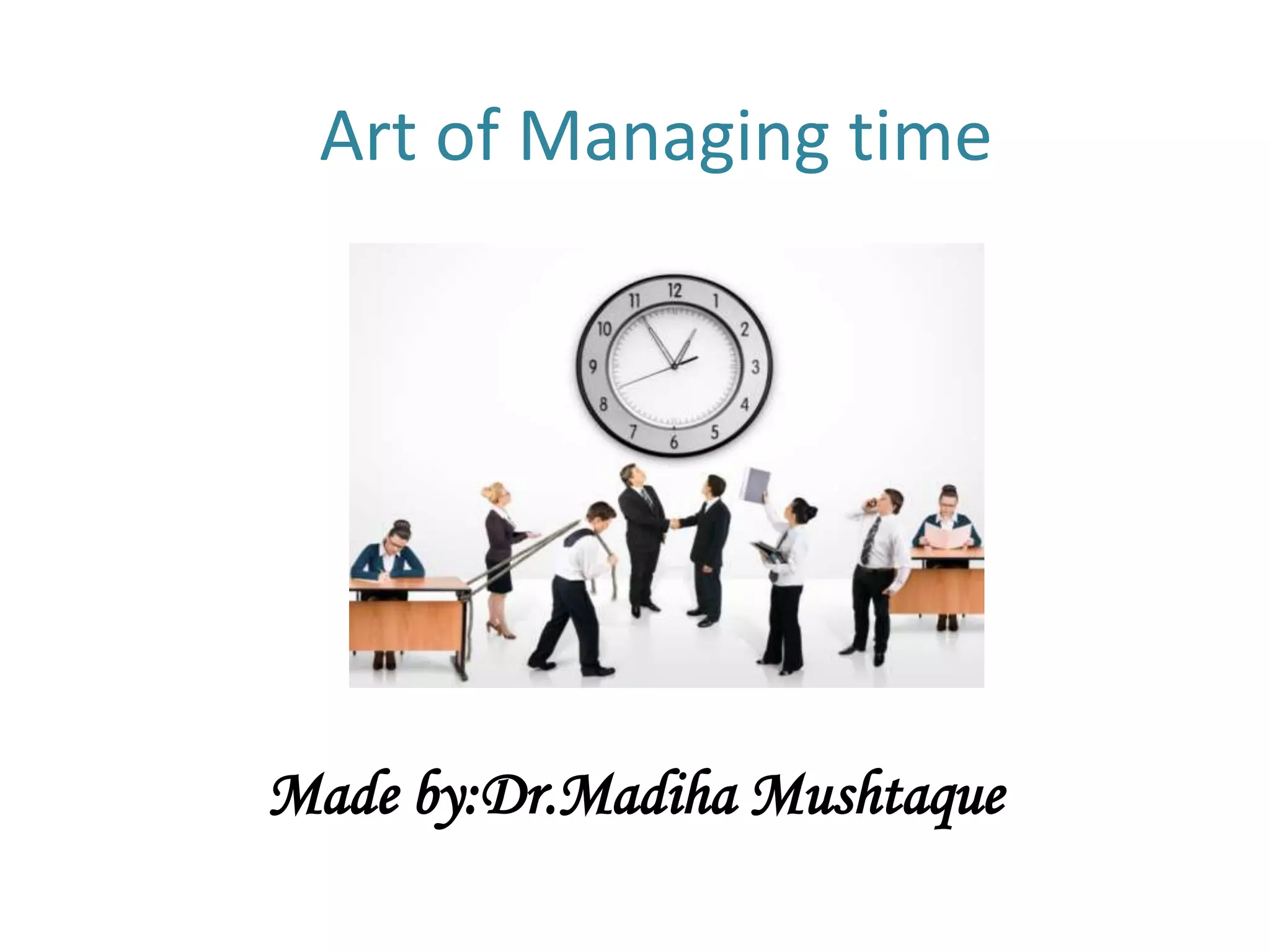





Art of Managing time
Made by:Dr.Madiha Mushtaque
Definition
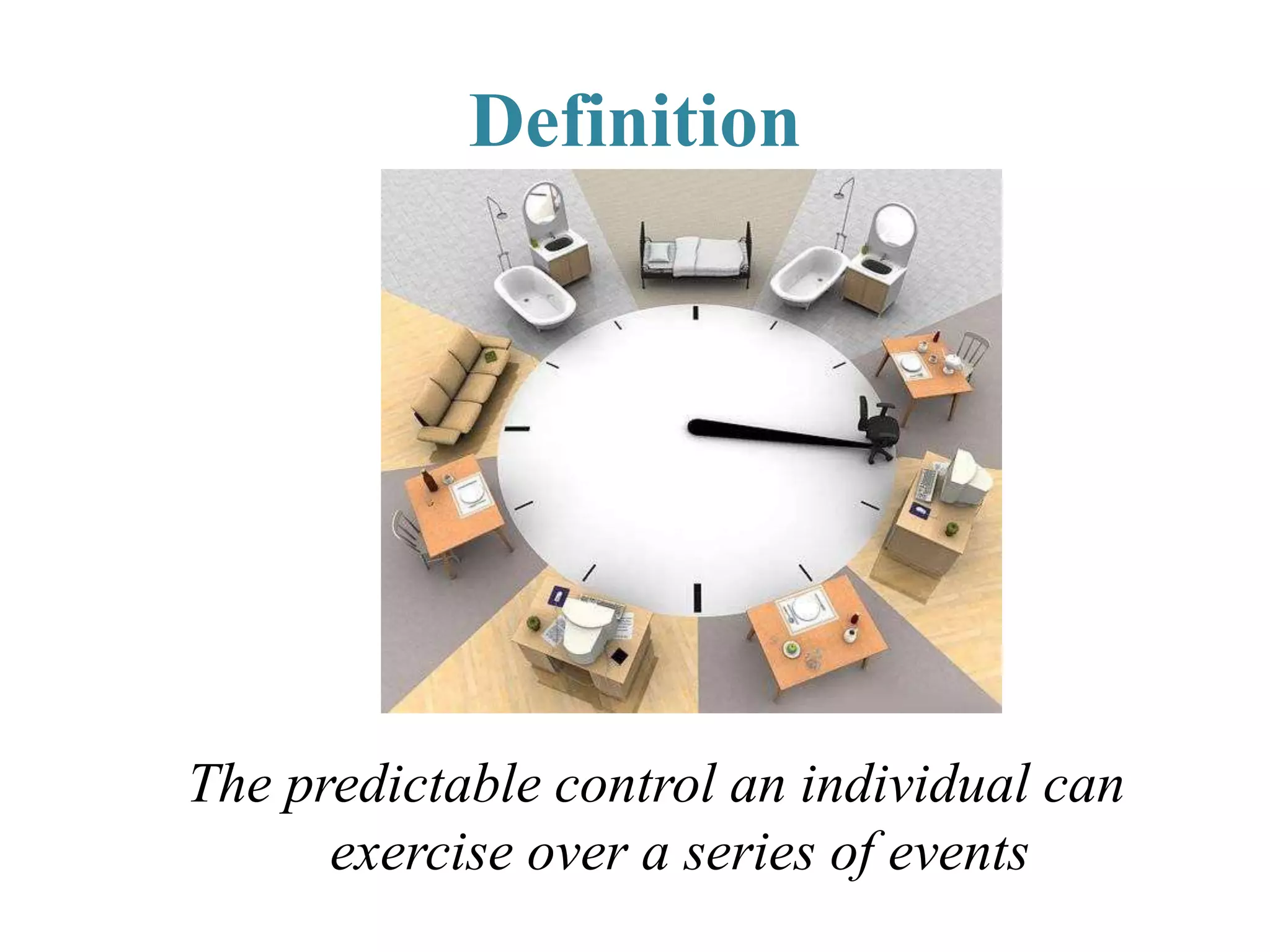
The predictable control an individual can
exercise over a series of events
You can’t
Manage Time!
Time
Management
Self
Purpose of Time (Self) Management
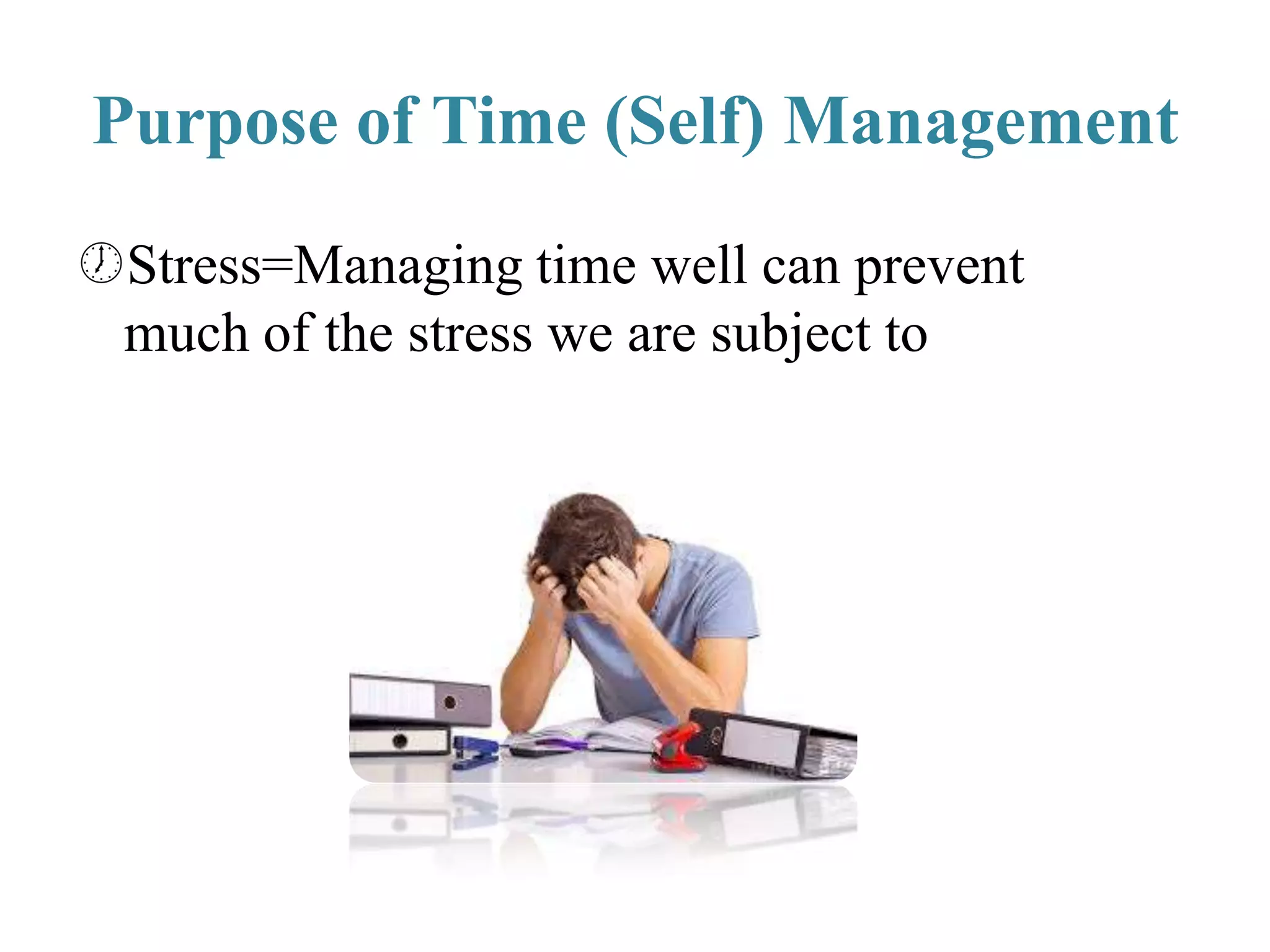
Stress=Managing time well can prevent
much of the stress we are subject to
Purpose of Time (Self) Management
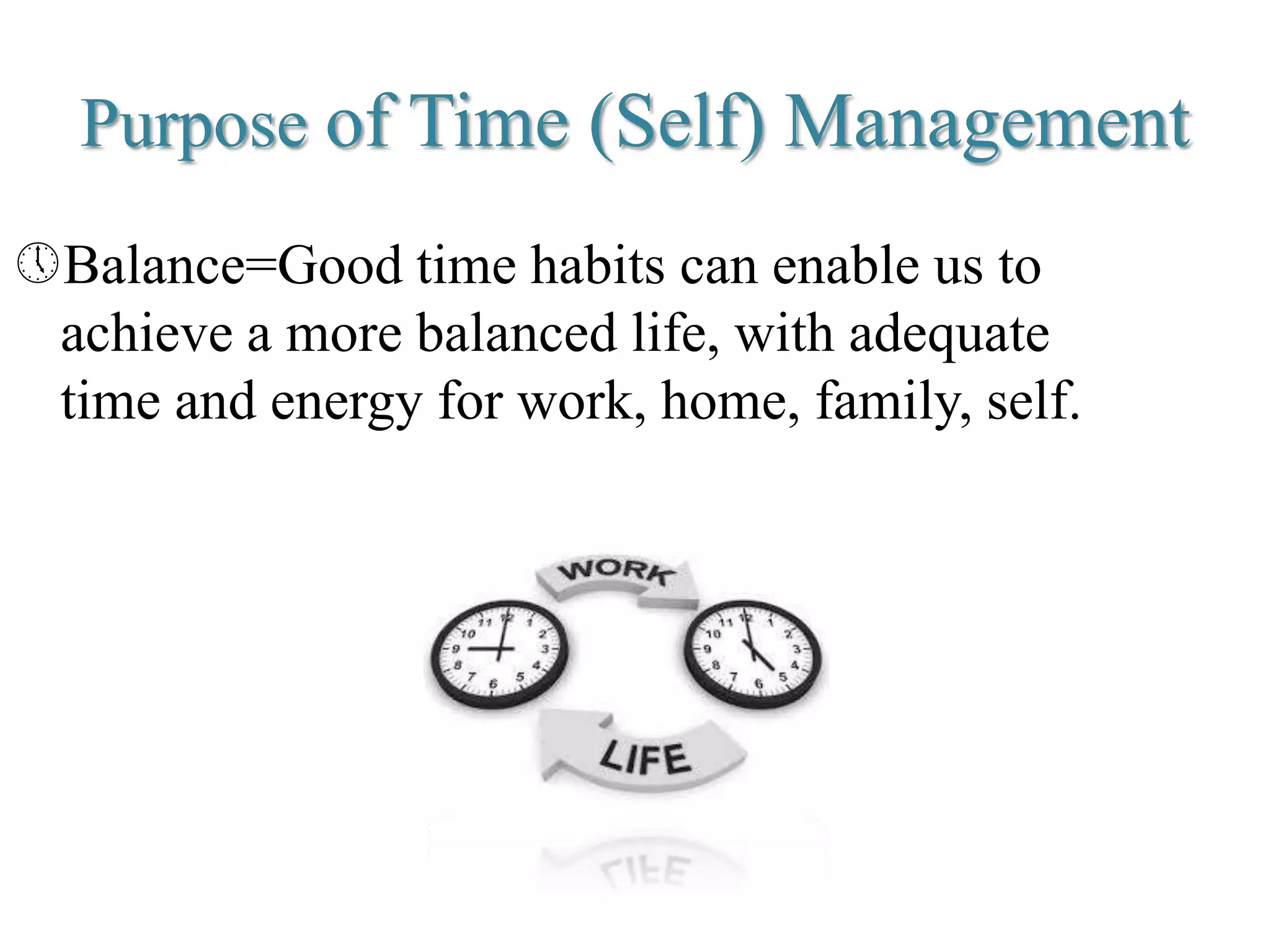
Balance=Good time habits can enable us to
achieve a more balanced life, with adequate
time and energy for work, home, family, self.
Purpose of Time (Self) Management
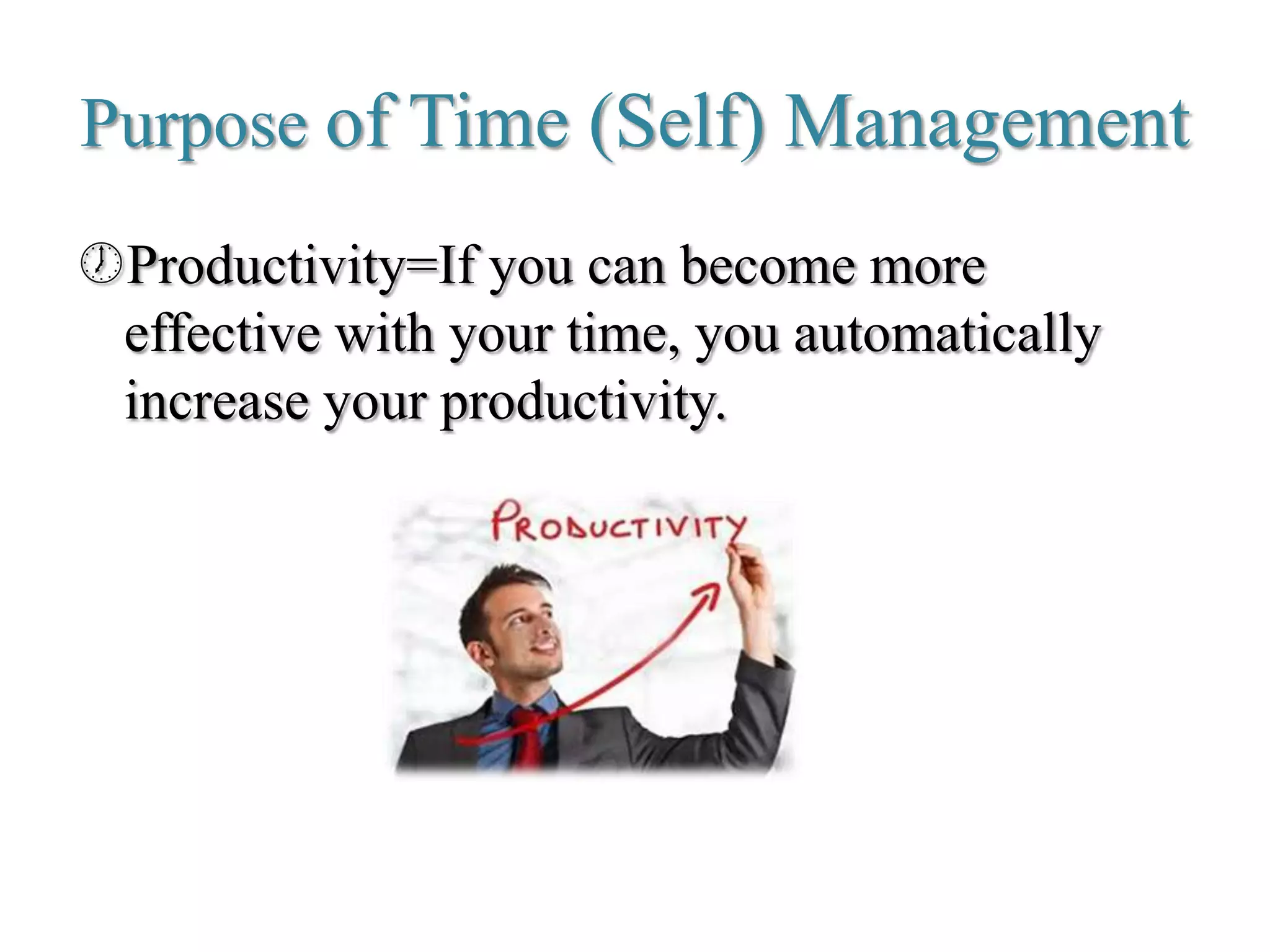
Productivity=If you can become more
effective with your time, you automatically
increase your productivity.
Purpose of Time (Self) Management
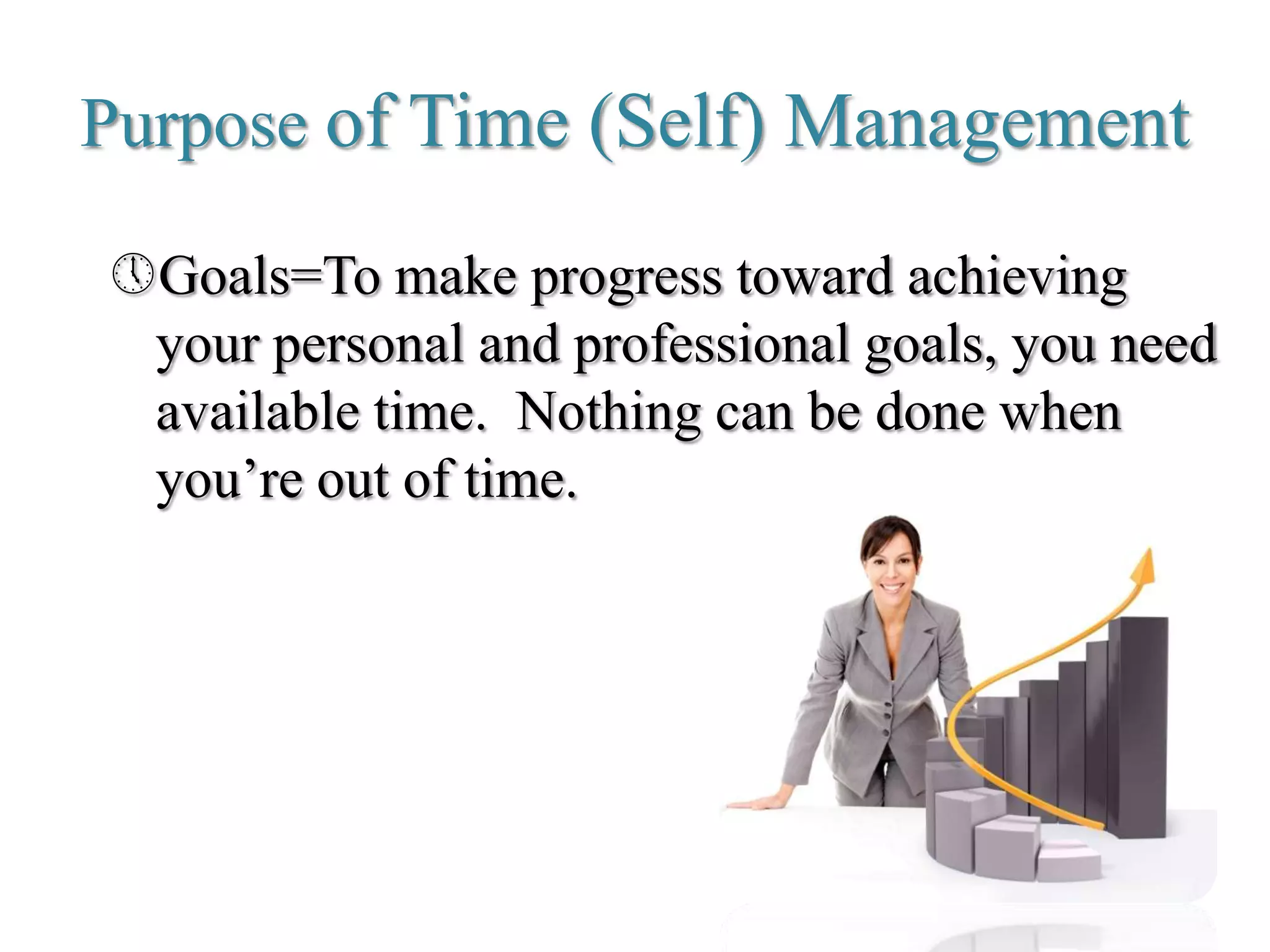
Goals=To make progress toward achieving
your personal and professional goals, you need
available time. Nothing can be done when
you’re out of time.
Q.What Are The Most
Common Time Wasters,
Thieves and Culprits?
Time Wasting Culprits
 Telephone Interruptions
 Inefficient Delegation
 Extended Lunches or Breaks
 Cluttered Work Space
 Poorly Run Meetings
 Socializing On The Job
 Misfiled Information
Time Wasting Culprits
Poor Planning
Procrastination
Waiting/Delays
Too much Paperwork
Junk Mail
Drop-In Visitors
Not Setting/Sticking to Priorities
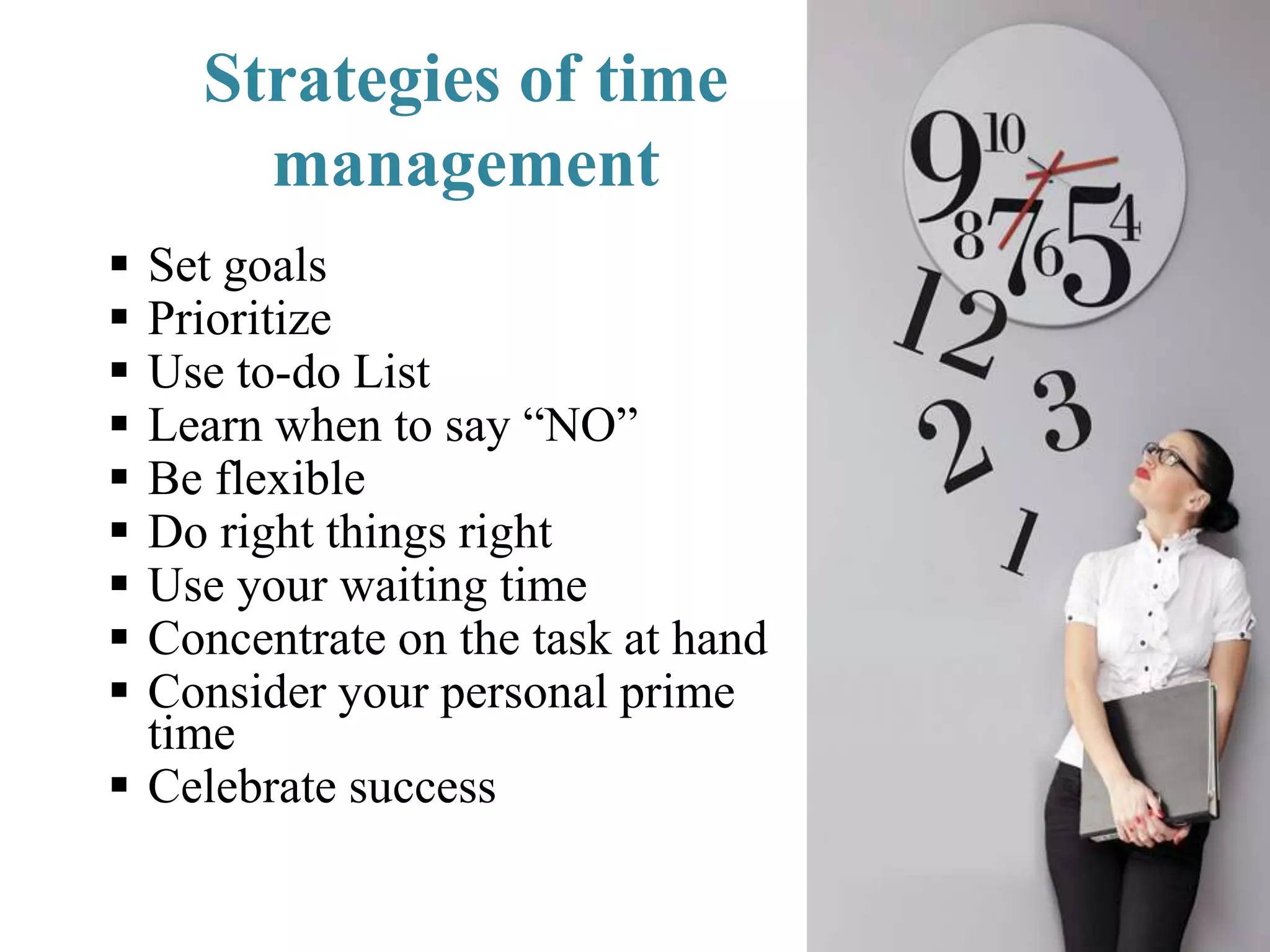
Strategies of time
management
 Set goals
 Prioritize
 Use to-do List
 Learn when to say “NO”
 Be flexible
 Do right things right
 Use your waiting time
 Concentrate on the task at hand
 Consider your personal prime
time
 Celebrate success
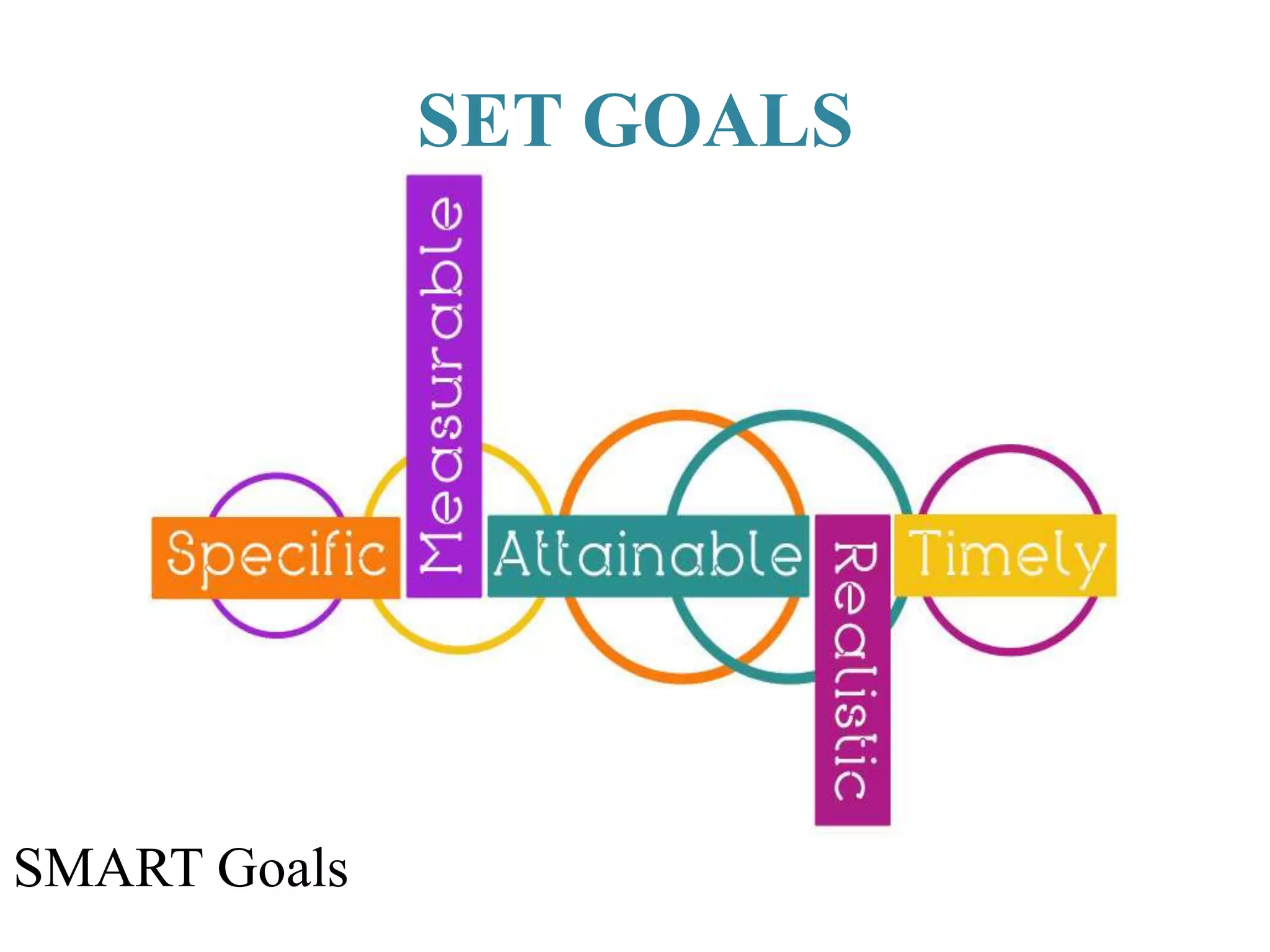
SET GOALS
SMART Goals
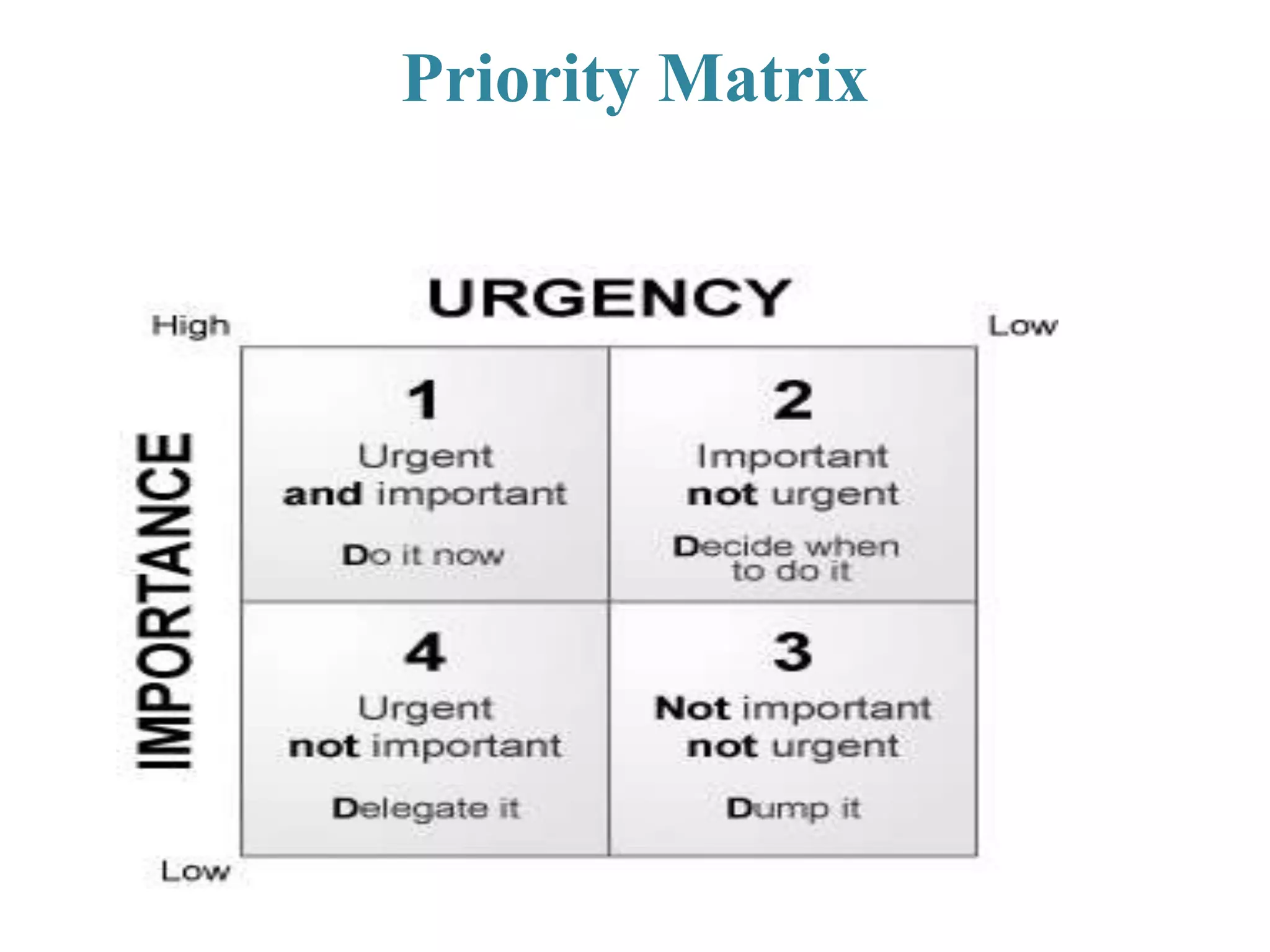
Priorities Goal
Establish priorities among those goals and
objectives based on their long-range
importance and short-range urgency.
Priority Matrix
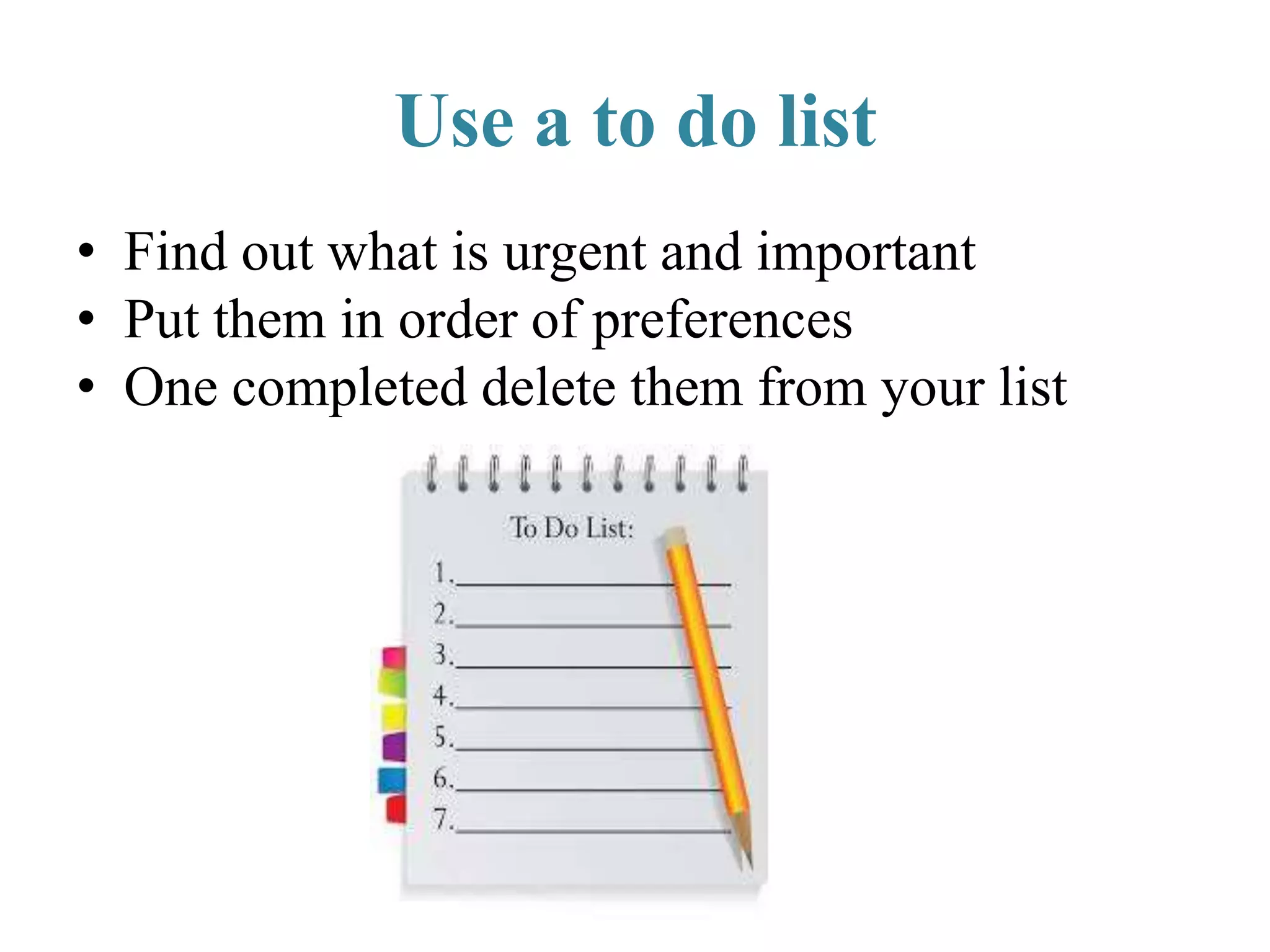
Use a to do list
• Find out what is urgent and important
• Put them in order of preferences
• One completed delete them from your list
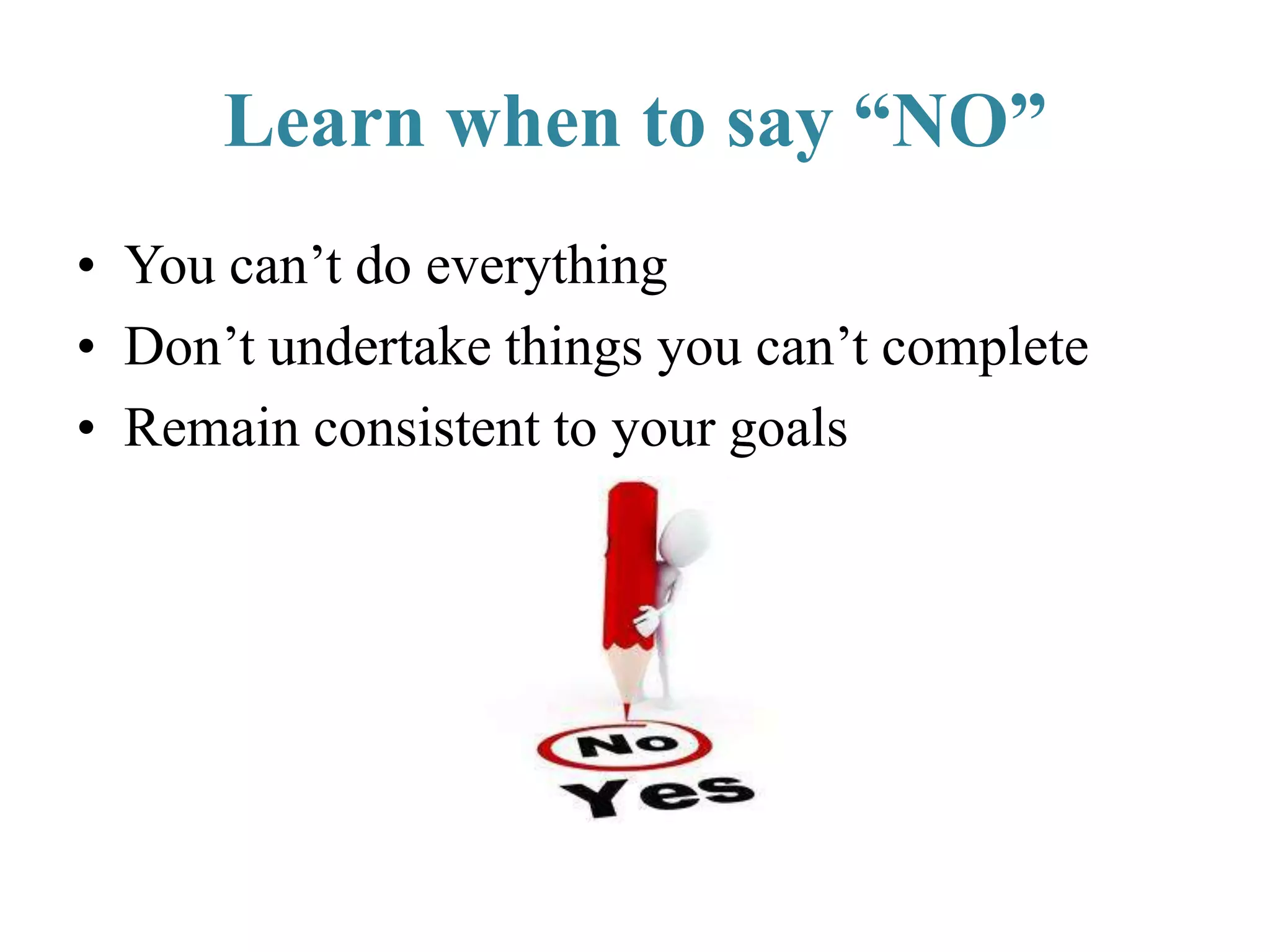
Learn when to say “NO”
• You can’t do everything
• Don’t undertake things you can’t complete
• Remain consistent to your goals
Be Flexible
• Allow time of interruptions and distractions
• Save larger block of time for priorities
• Ask yourself questions and get back to your
goal
Doing Things Right
• Doing things right is Effectiveness
• Doing things right is Efficiency
• Focus first for Effectiveness
• Concentrate on Efficiency
Use your waiting time
• On public transportation
• At the doctor’s office
• Waiting for your plane
• On hold
• When you are early
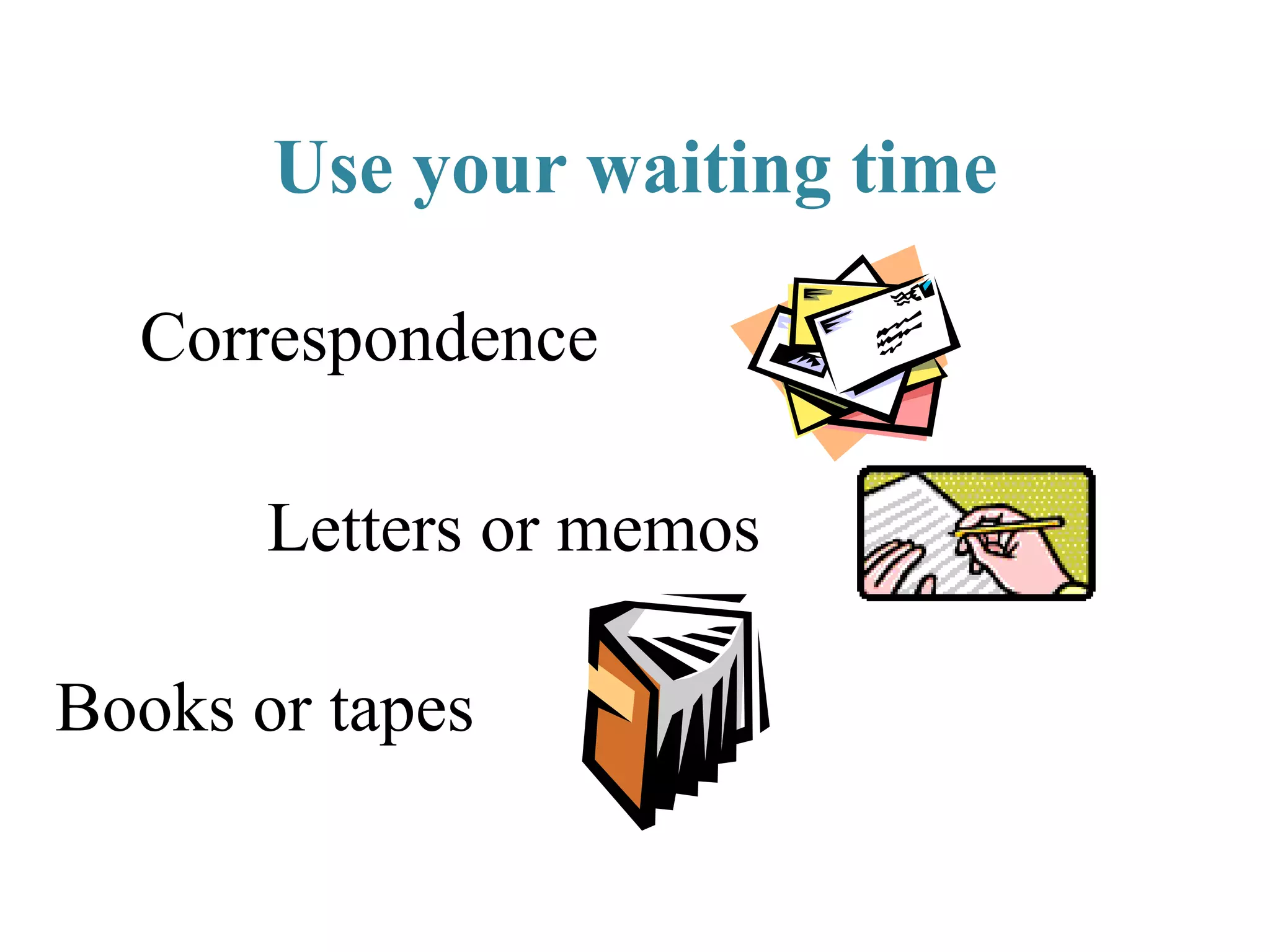
Use your waiting time
Correspondence
Letters or memos
Books or tapes
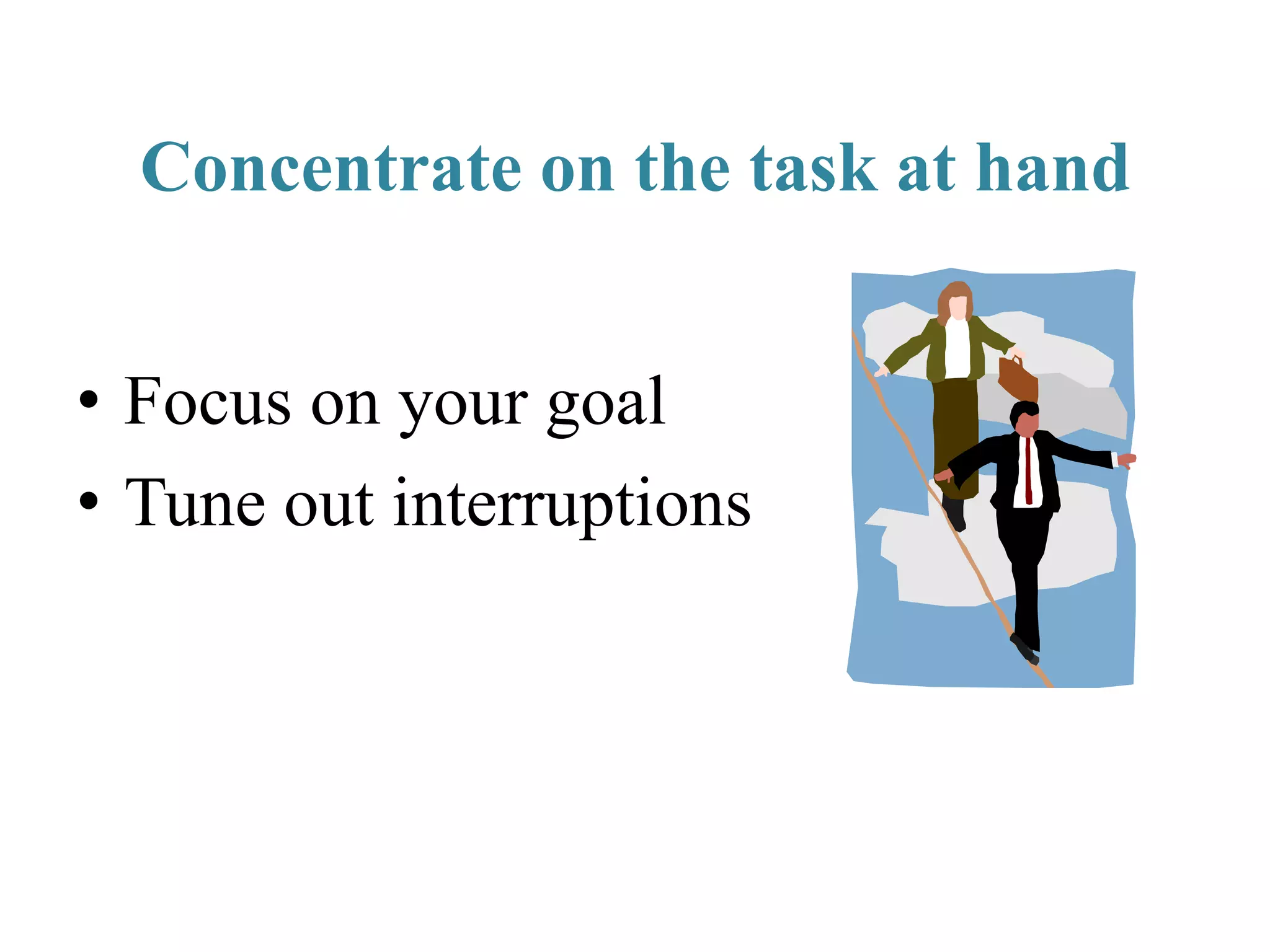
Concentrate on the task at hand
• Focus on your goal
• Tune out interruptions
Summary How to Use Time
Effectively
Consolidate Similar Tasks.
Tackle Tough Jobs First.
Delegate And Develop Others.
Learn To Use Time.
Get Control Of The Paper Flow.
Avoid The Cluttered Desk Syndrome.
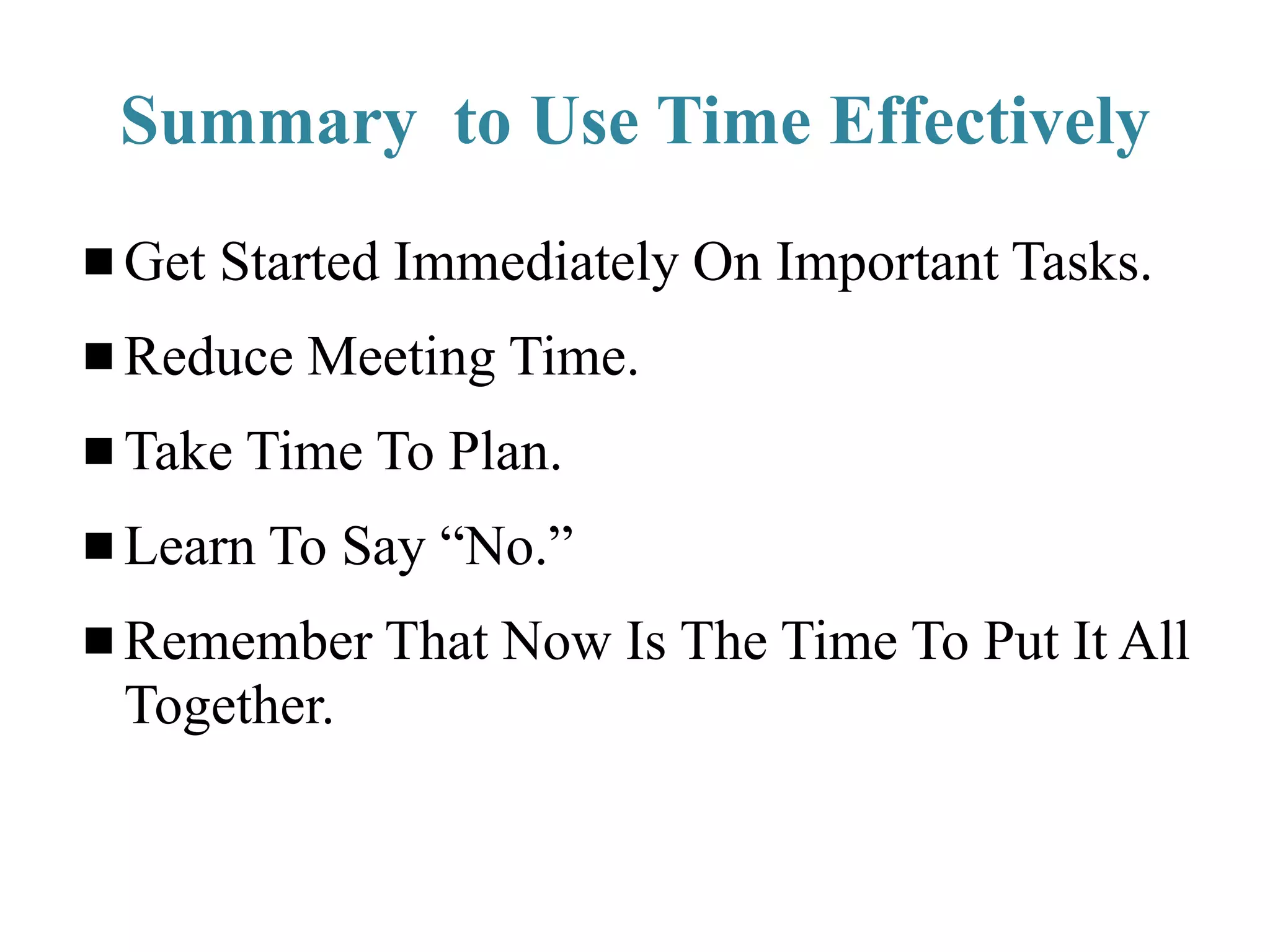
Summary to Use Time Effectively
Get Started Immediately On Important Tasks.
Reduce Meeting Time.
Take Time To Plan.
Learn To Say “No.”
Remember That Now Is The Time To Put It All
Together.
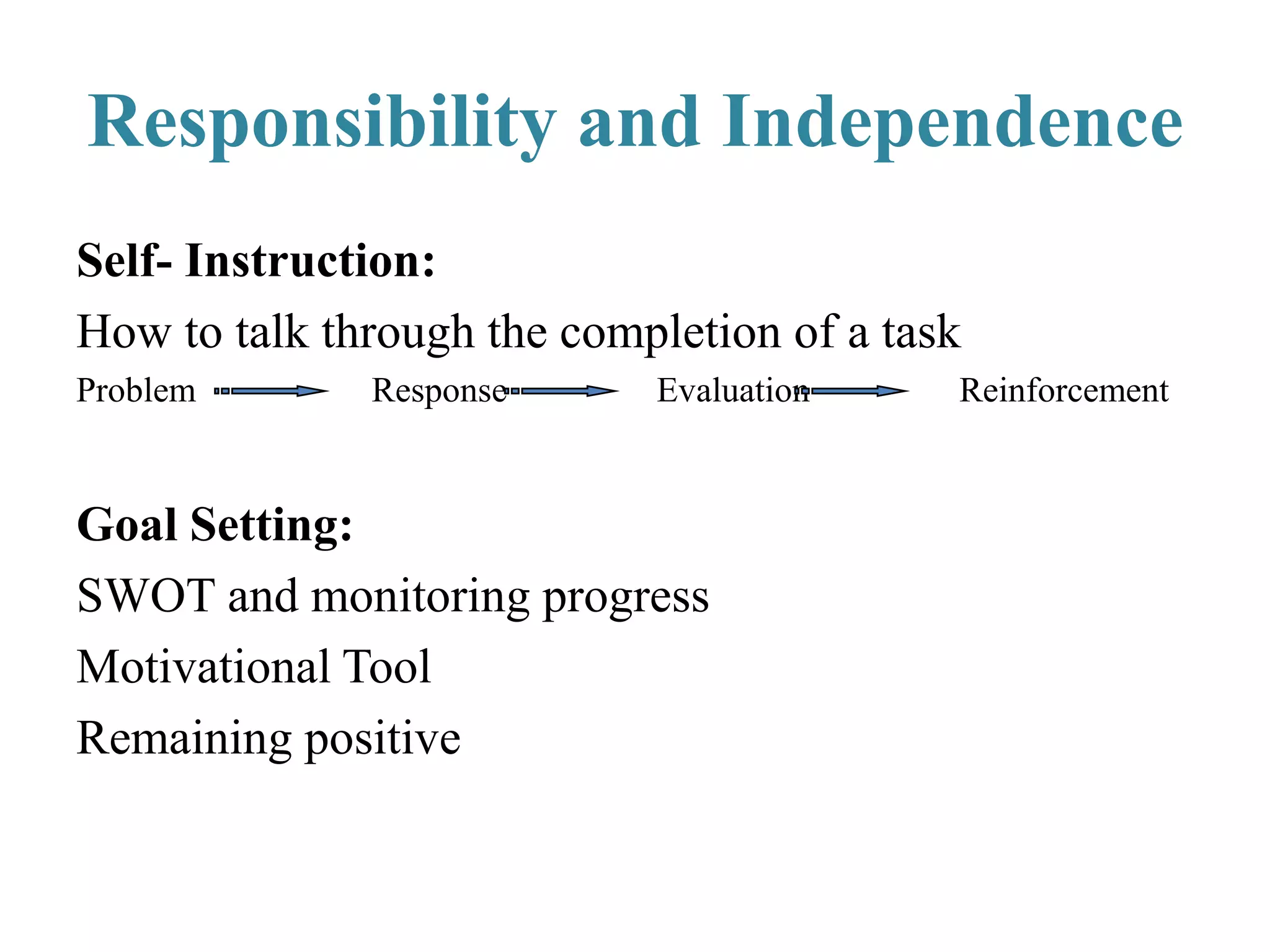
Responsibility and Independence
Self- Instruction:
How to talk through the completion of a task
Problem Response Evaluation Reinforcement
Goal Setting:
SWOT and monitoring progress
Motivational Tool
Remaining positive
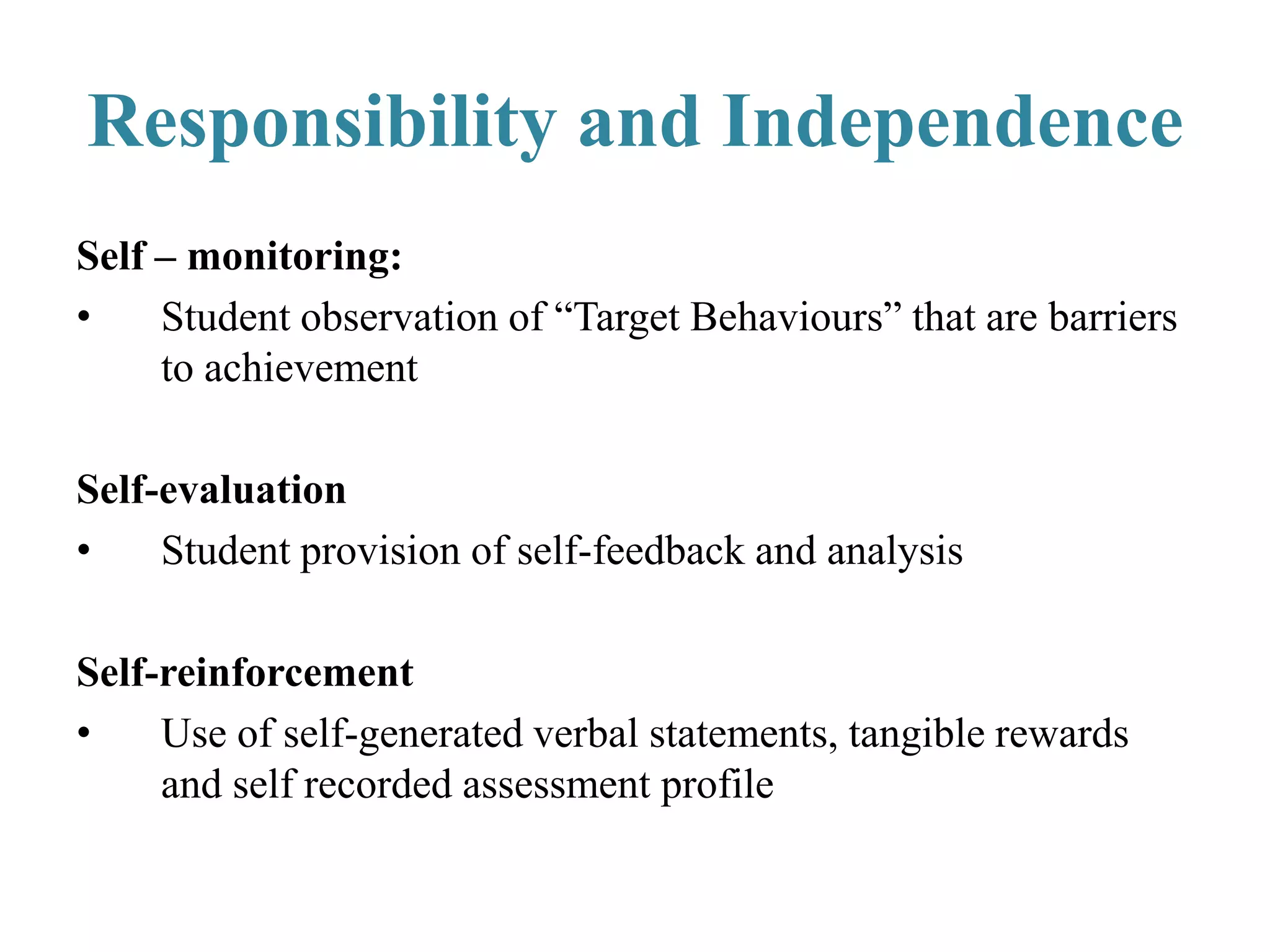
Self – monitoring:
• Student observation of “Target Behaviours” that are barriers
to achievement
Self-evaluation
• Student provision of self-feedback and analysis
Self-reinforcement
• Use of self-generated verbal statements, tangible rewards
and self recorded assessment profile
Responsibility and Independence
Art of managing time (presentation # 1)

Art of managing time (presentation # 1)

  • 2.
    Art of Managingtime Made by:Dr.Madiha Mushtaque
  • 4.
    Definition The predictable controlan individual can exercise over a series of events
  • 5.
  • 9.
  • 10.
    Purpose of Time(Self) Management Stress=Managing time well can prevent much of the stress we are subject to
  • 11.
    Purpose of Time(Self) Management Balance=Good time habits can enable us to achieve a more balanced life, with adequate time and energy for work, home, family, self.
  • 12.
    Purpose of Time(Self) Management Productivity=If you can become more effective with your time, you automatically increase your productivity.
  • 13.
    Purpose of Time(Self) Management Goals=To make progress toward achieving your personal and professional goals, you need available time. Nothing can be done when you’re out of time.
  • 14.
    Q.What Are TheMost Common Time Wasters, Thieves and Culprits?
  • 15.
    Time Wasting Culprits Telephone Interruptions  Inefficient Delegation  Extended Lunches or Breaks  Cluttered Work Space  Poorly Run Meetings  Socializing On The Job  Misfiled Information
  • 16.
    Time Wasting Culprits PoorPlanning Procrastination Waiting/Delays Too much Paperwork Junk Mail Drop-In Visitors Not Setting/Sticking to Priorities
  • 17.
    Strategies of time management Set goals  Prioritize  Use to-do List  Learn when to say “NO”  Be flexible  Do right things right  Use your waiting time  Concentrate on the task at hand  Consider your personal prime time  Celebrate success
  • 18.
  • 19.
    Priorities Goal Establish prioritiesamong those goals and objectives based on their long-range importance and short-range urgency.
  • 20.
  • 21.
    Use a todo list • Find out what is urgent and important • Put them in order of preferences • One completed delete them from your list
  • 22.
    Learn when tosay “NO” • You can’t do everything • Don’t undertake things you can’t complete • Remain consistent to your goals
  • 23.
    Be Flexible • Allowtime of interruptions and distractions • Save larger block of time for priorities • Ask yourself questions and get back to your goal
  • 24.
    Doing Things Right •Doing things right is Effectiveness • Doing things right is Efficiency • Focus first for Effectiveness • Concentrate on Efficiency
  • 25.
    Use your waitingtime • On public transportation • At the doctor’s office • Waiting for your plane • On hold • When you are early
  • 26.
    Use your waitingtime Correspondence Letters or memos Books or tapes
  • 27.
    Concentrate on thetask at hand • Focus on your goal • Tune out interruptions
  • 28.
    Summary How toUse Time Effectively Consolidate Similar Tasks. Tackle Tough Jobs First. Delegate And Develop Others. Learn To Use Time. Get Control Of The Paper Flow. Avoid The Cluttered Desk Syndrome.
  • 29.
    Summary to UseTime Effectively Get Started Immediately On Important Tasks. Reduce Meeting Time. Take Time To Plan. Learn To Say “No.” Remember That Now Is The Time To Put It All Together.
  • 30.
    Responsibility and Independence Self-Instruction: How to talk through the completion of a task Problem Response Evaluation Reinforcement Goal Setting: SWOT and monitoring progress Motivational Tool Remaining positive
  • 31.
    Self – monitoring: •Student observation of “Target Behaviours” that are barriers to achievement Self-evaluation • Student provision of self-feedback and analysis Self-reinforcement • Use of self-generated verbal statements, tangible rewards and self recorded assessment profile Responsibility and Independence