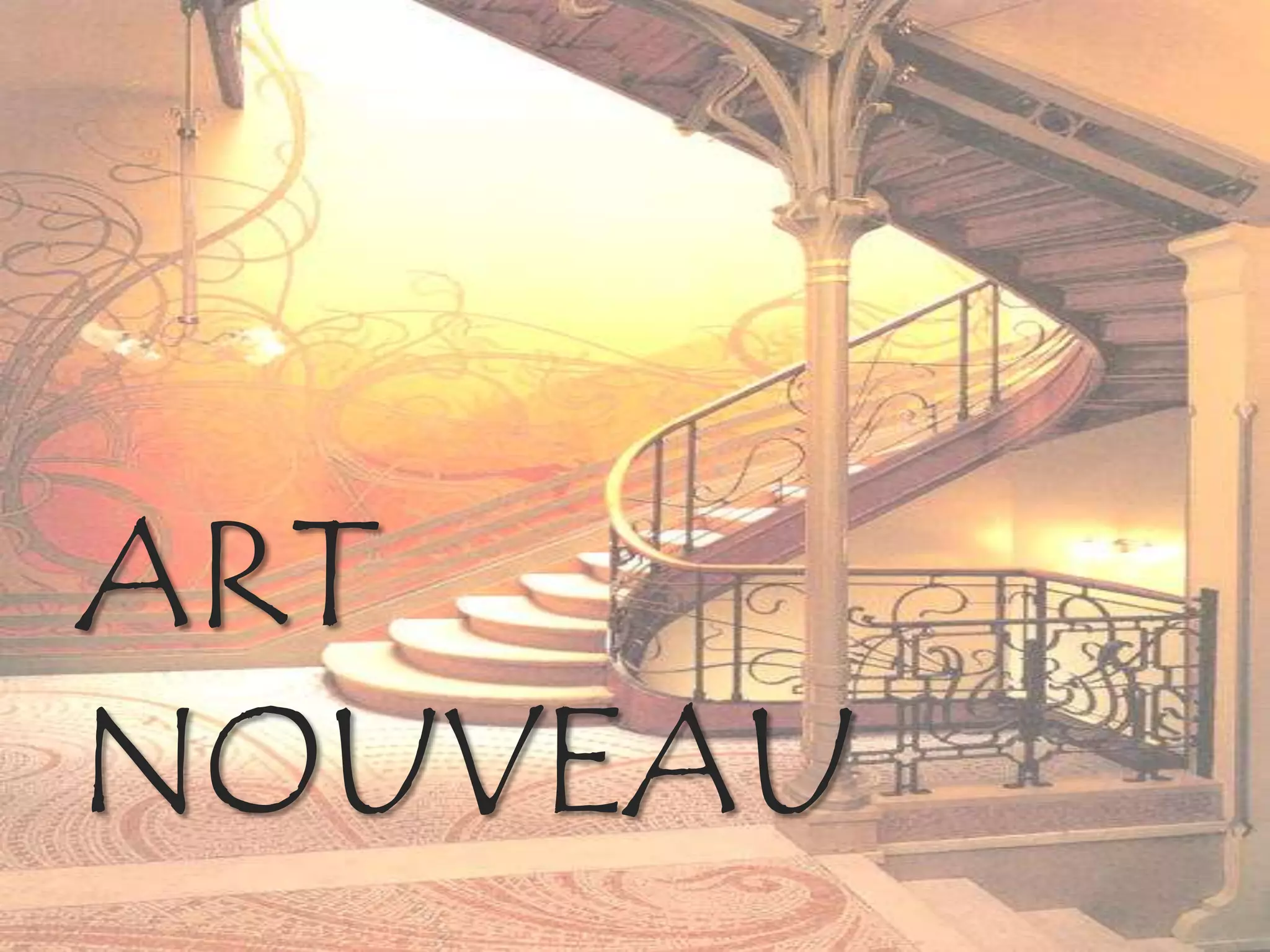
ART
NOUVEAU
OUTLINE
• Birth of Art Nouveau
• Introduction: Art Nouveau
-Time & Place
-Hallmarks of Art Nouveau Styles
-Other names for Art Nouveau
-Critical Nicknames
• Art Nouveau Architecture
-Features
-Pierre Francastel
-Stephan Tschudi Madsen
-Art Nouveau Architects and their Works
• Beginning of Art Deco
• References
BIRTH OF ART NOUVEAU

 The last third of the 19th century saw the
 development of a fundamentally
 approach to architecture and interior
 design. All over Europe there was a
 need for liberating change of direction, a
 desire to break away from set formulas
 based on pastiche of historical styles and a
 search for original ideas, all of which
 resulted at the beginning of the 1890s in
 the birth of Art Nouveau.
INTRODUCTION: ART NOUVEAU


 Art Nouveau (French for "New
 Style") was popularized by the
 famous Maison de l'Art
 Nouveau (House of New Art), a
 Paris art gallery operated by
 Siegfried Bing.
INTRODUCTION: ART NOUVEAU

Art Nouveau represents the beginning of
modernism in design (Modern Architecture).
It occurred at a time when mass-produced
consumer goods began to fill the
marketplace, and designers, architects, and
artists began to understand that the
handcrafted work of centuries past could be
lost. While reclaiming this craft tradition, art
nouveau designers simultaneously rejected
traditional styles in favor of new, organic forms
that emphasized humanity's connection
to nature.
INTRODUCTION: ART NOUVEAU

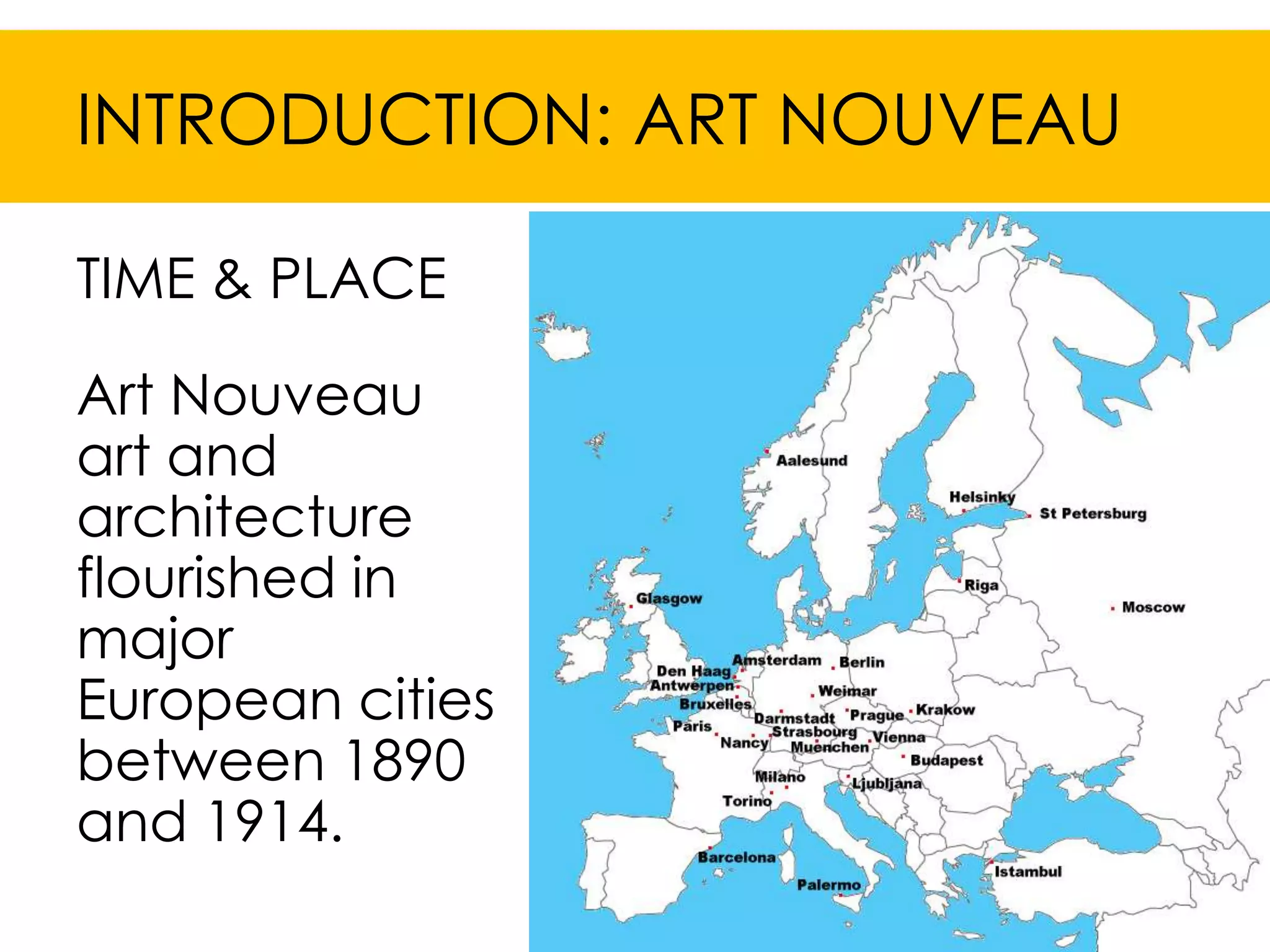
TIME & PLACE

Art Nouveau
art and
architecture
flourished in
major
European cities
between 1890
and 1914.
INTRODUCTION: ART NOUVEAU
It embraced all forms of art and design:

•   architecture
•   furniture
•   glassware
•   graphic design
•   jewelry
•   painting
•   pottery
•   metalwork
•   textile

This was a sharp contrast to the traditional separation of art into
the distinct categories of fine art (painting and sculpture) and
applied arts (ceramics,furniture, and other practical objects).
INTRODUCTION: ART NOUVEAU
HALLMARKS OF
ART NOUVEAU STYLE

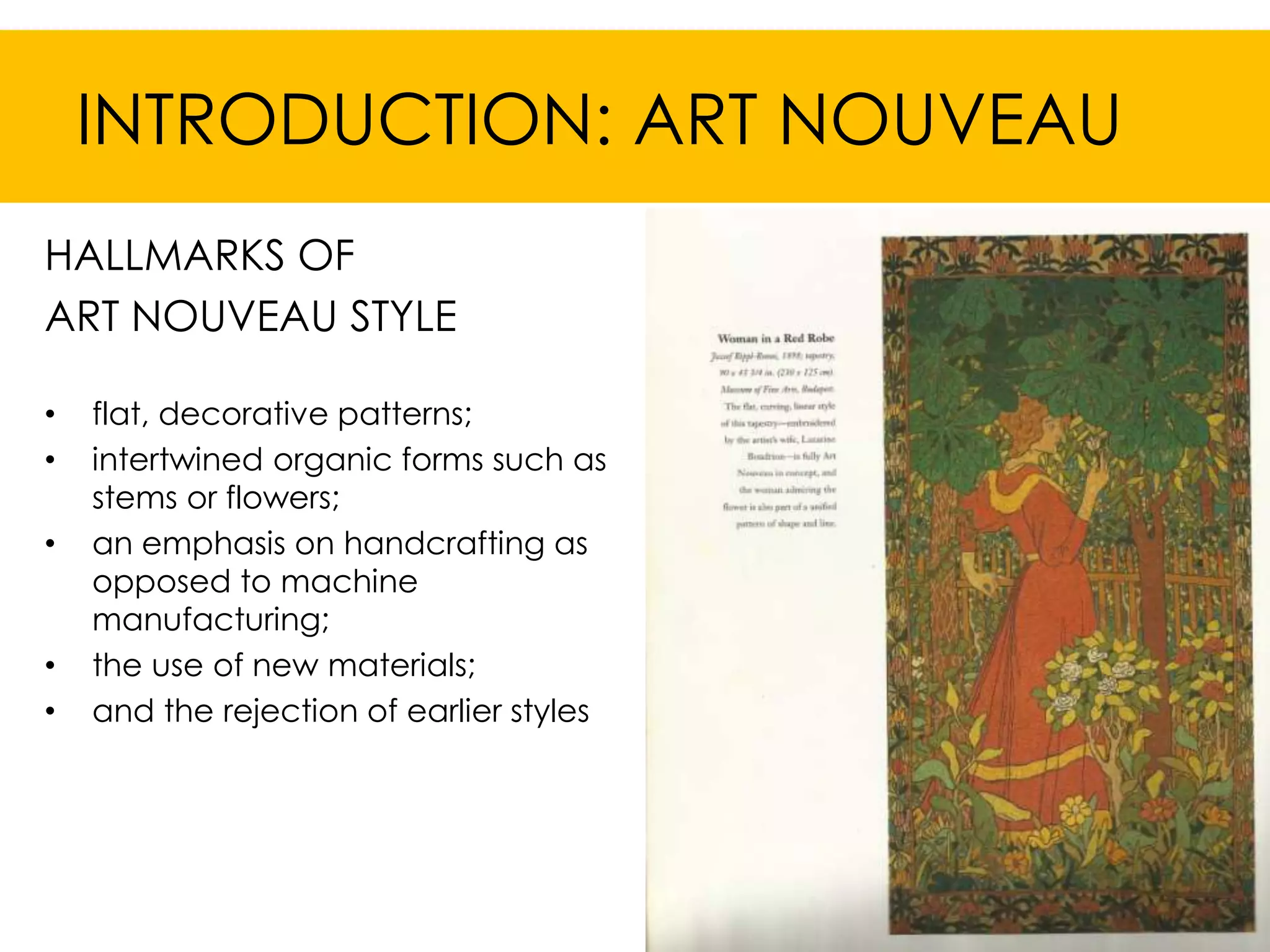
•   flat, decorative patterns;
•   intertwined organic forms such as
    stems or flowers;
•   an emphasis on handcrafting as
    opposed to machine
    manufacturing;
•   the use of new materials;
•   and the rejection of earlier styles
INTRODUCTION: ART NOUVEAU
Other names for Art Nouveau:

As it moved through Europe, Art Nouveau
went through several phases and took on a
variety of names.

•   Nieuwe Kunst In Netherland
•   Jugendstil in Germany
•   Arte Joven, in Spain
•   Secession, in Austria
•   Stile Liberty, in Italy
INTRODUCTION: ART NOUVEAU
CRITICAL NICKNAMES

From its earliest appearance, the Art
Nouveau was also dubbed with a host of
critical nicknames such as:

•   Eel style
•   Noodle style
•   Mutton bone style
•   Dandy style
ART NOUVEAU ARCHITECTURE
FEATURES

Art Nouveau buildings have many of these
features:

•   Asymmetrical shapes
•   Extensive use of arches and curved forms
•   Curved glass
•   Curving, plant-like embellishments
•   Mosaics
•   Stained glass
•   Japanese motifs
ART NOUVEAU ARCHITECTURE

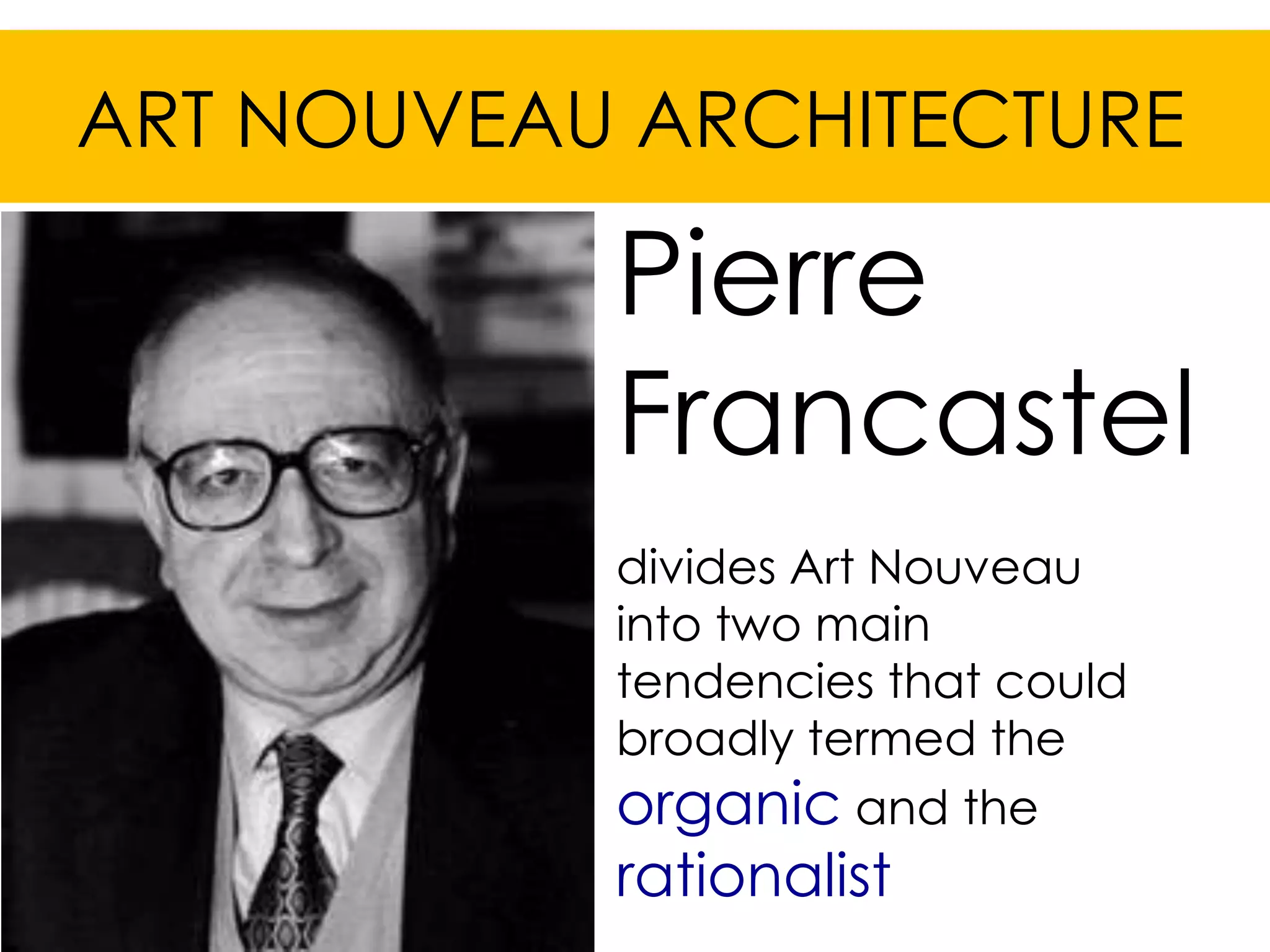
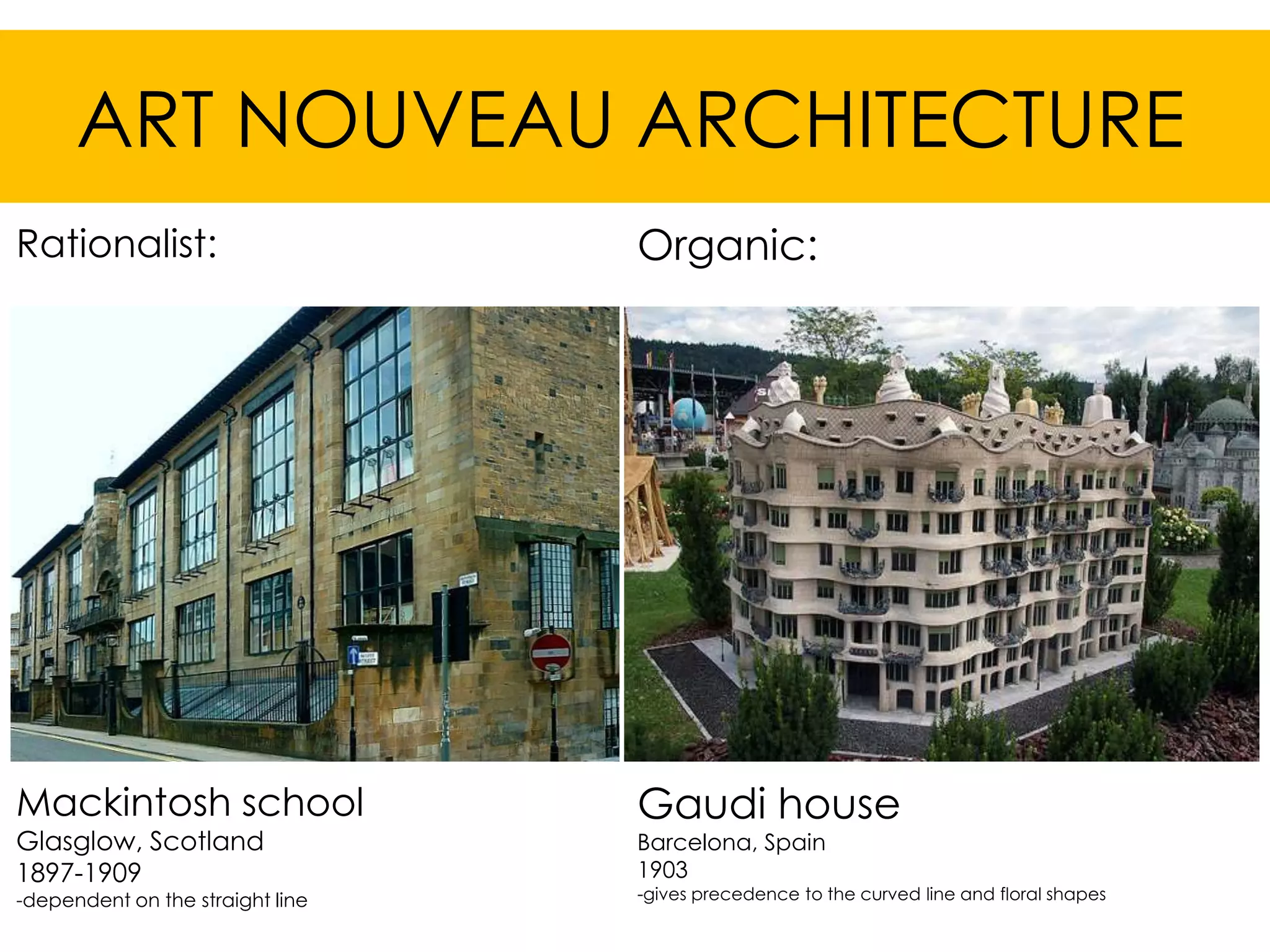
           Pierre
           Francastel
           divides Art Nouveau
           into two main
           tendencies that could
           broadly termed the
           organic and the
           rationalist
ART NOUVEAU ARCHITECTURE
Rationalist:                      Organic:


Mackintosh school                 Gaudi house
Glasglow, Scotland                Barcelona, Spain
1897-1909                         1903
-dependent on the straight line   -gives precedence to the curved line and floral shapes
ART NOUVEAU ARCHITECTURE

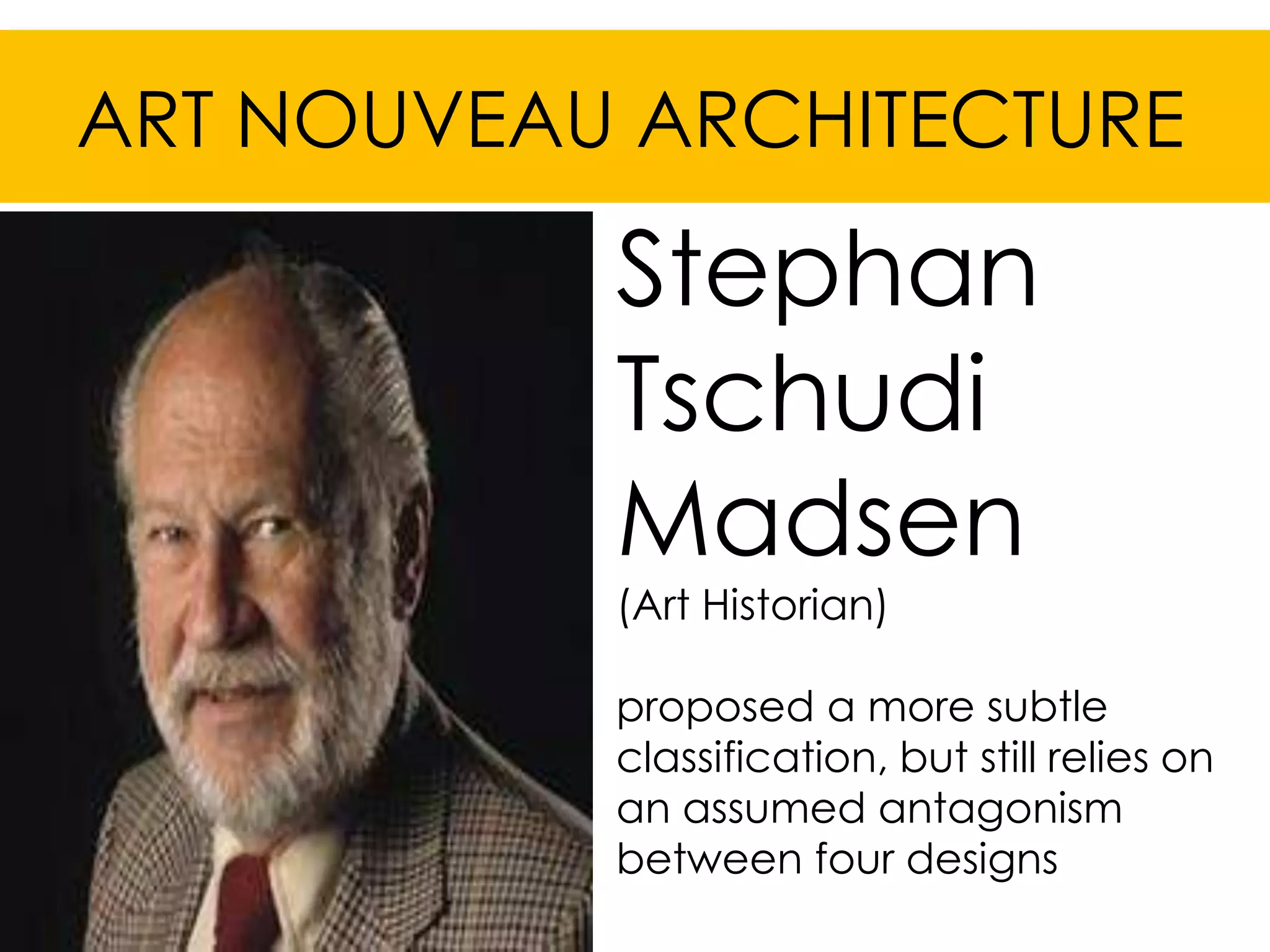
           Stephan
           Tschudi
           Madsen
           (Art Historian)

           proposed a more subtle
           classification, but still relies on
           an assumed antagonism
           between four designs
ART NOUVEAU ARCHITECTURE
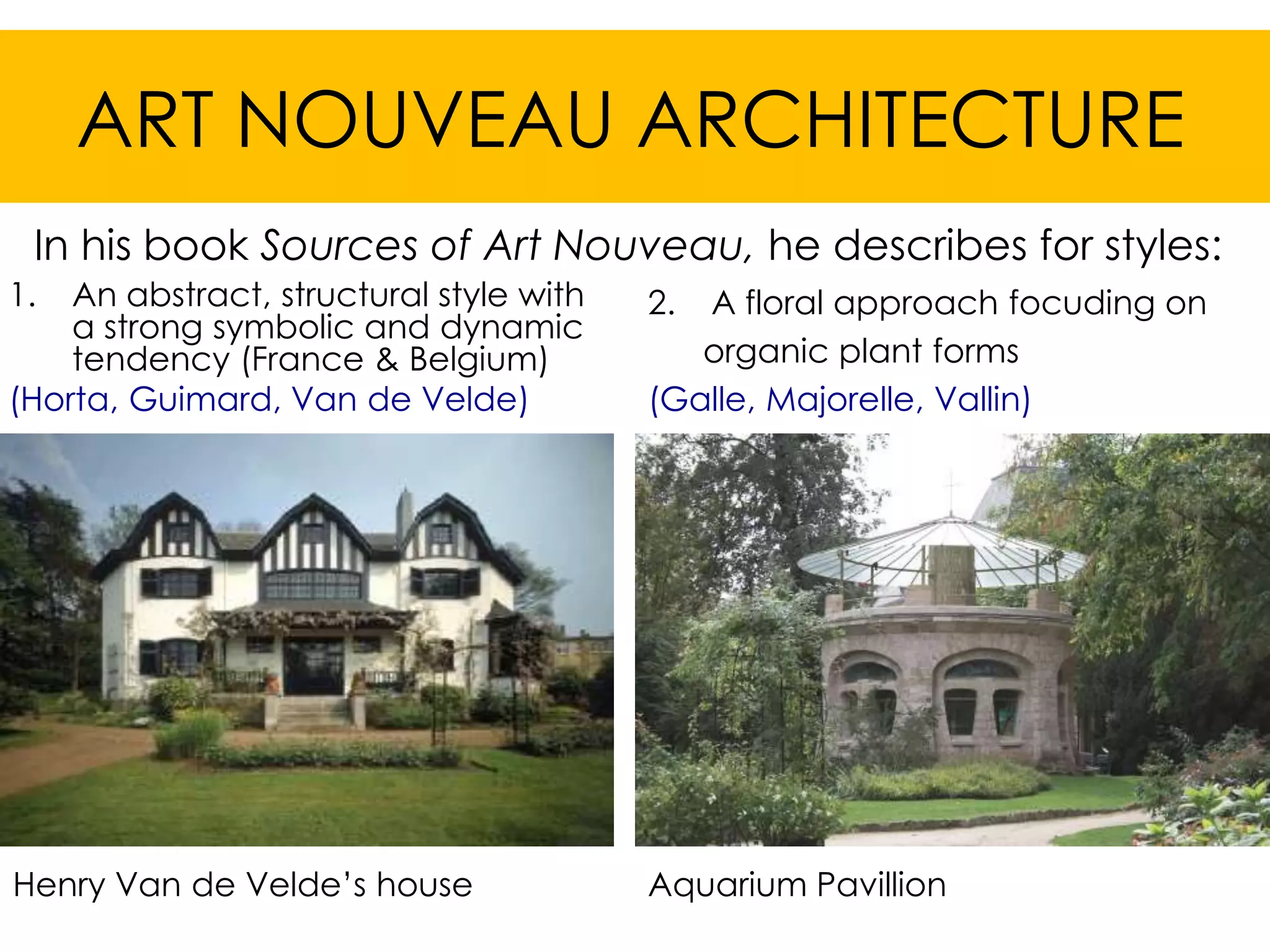
 In his book Sources of Art Nouveau, he describes for styles:
1.  An abstract, structural style with   2. A floral approach focuding on
    a strong symbolic and dynamic
    tendency (France & Belgium)             organic plant forms
(Horta, Guimard, Van de Velde)           (Galle, Majorelle, Vallin)


Henry Van de Velde’s house               Aquarium Pavillion
ART NOUVEAU ARCHITECTURE

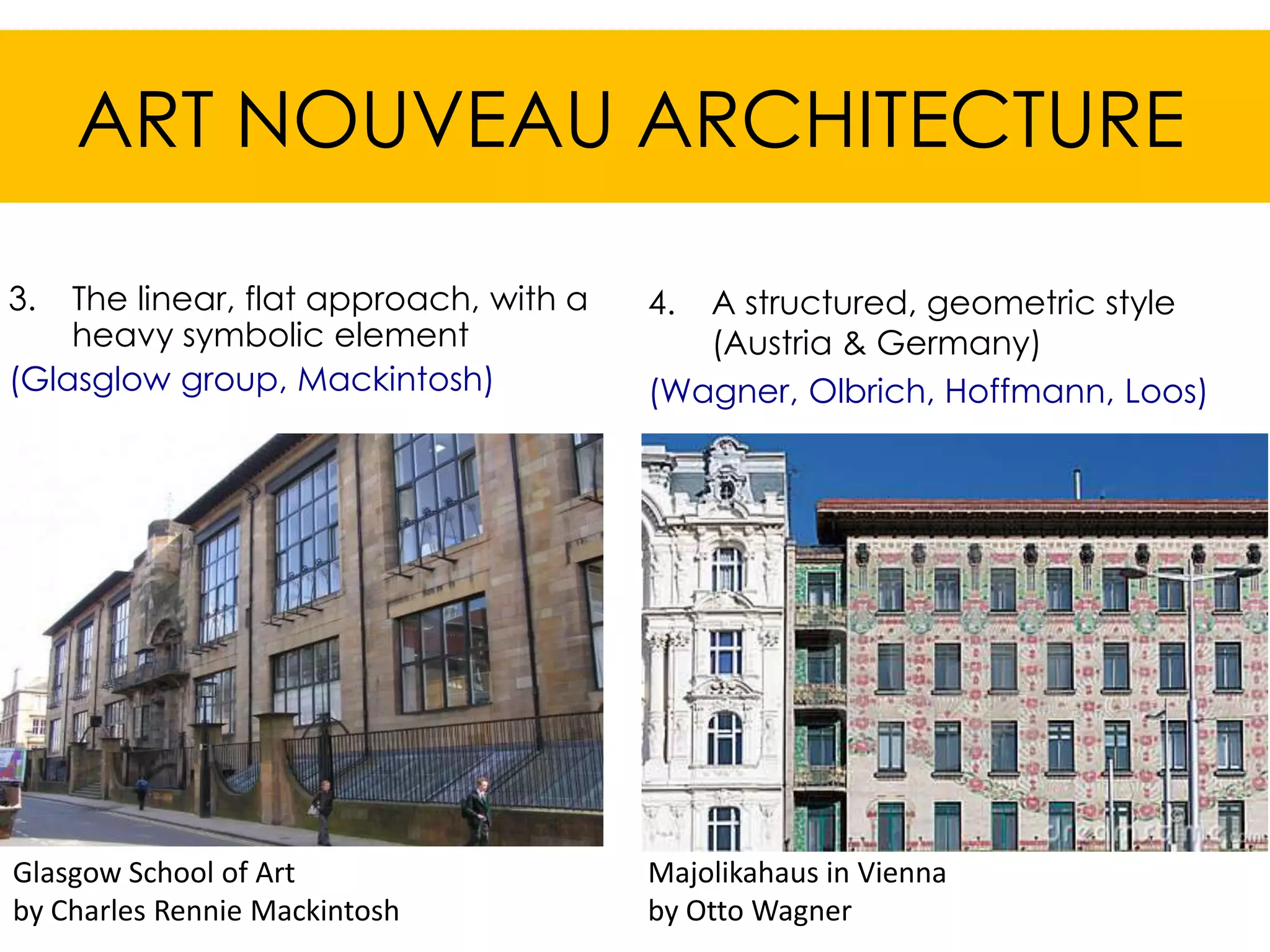
3.  The linear, flat approach, with a   4. A structured, geometric style
    heavy symbolic element                 (Austria & Germany)
(Glasglow group, Mackintosh)            (Wagner, Olbrich, Hoffmann, Loos)


Glasgow School of Art                   Majolikahaus in Vienna
by Charles Rennie Mackintosh            by Otto Wagner
ART NOUVEAU
     ARCHITECTS
AND THEIR WORKS
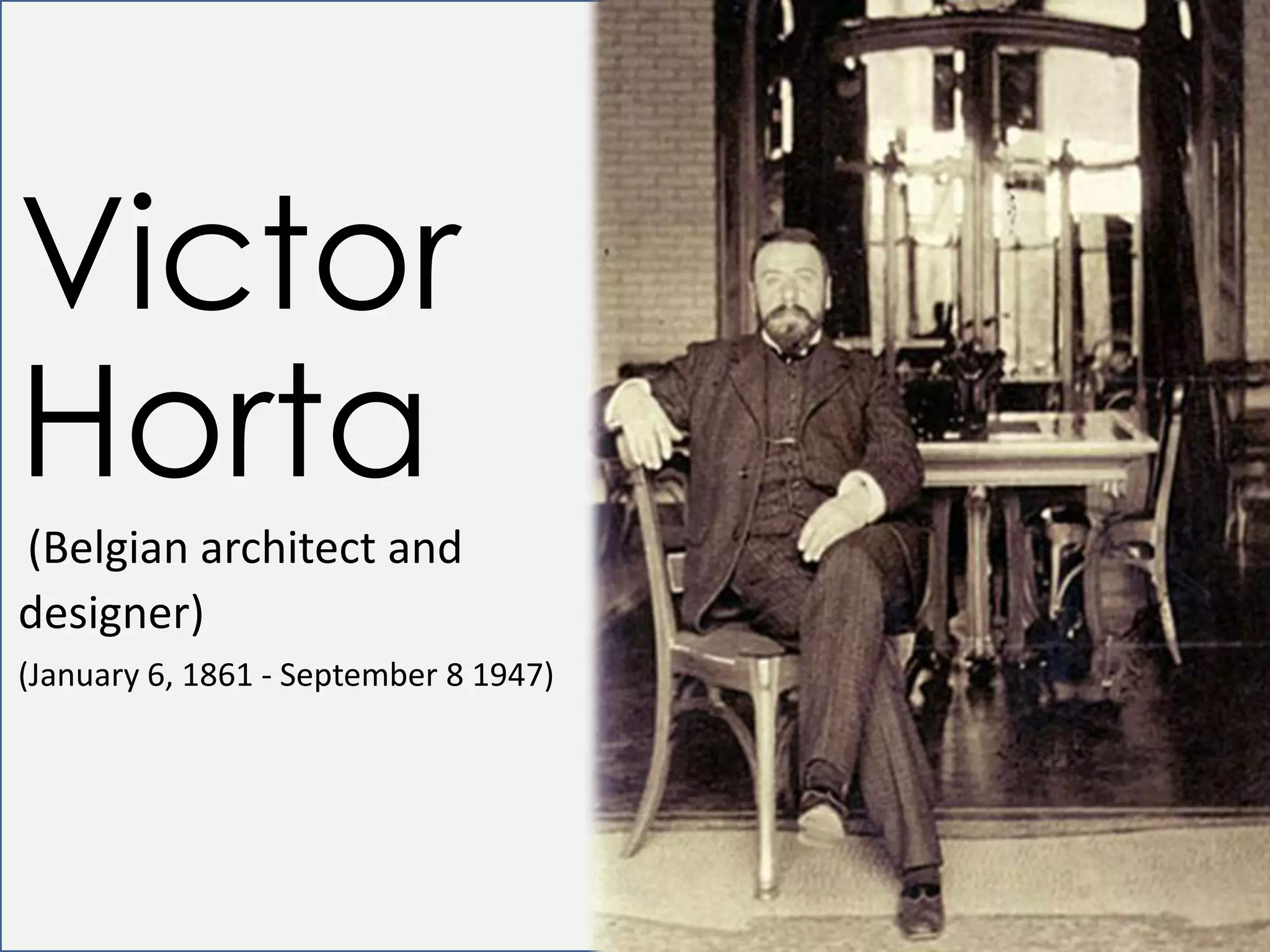
Victor
Horta
(Belgian architect and
designer)
(January 6, 1861 - September 8 1947)
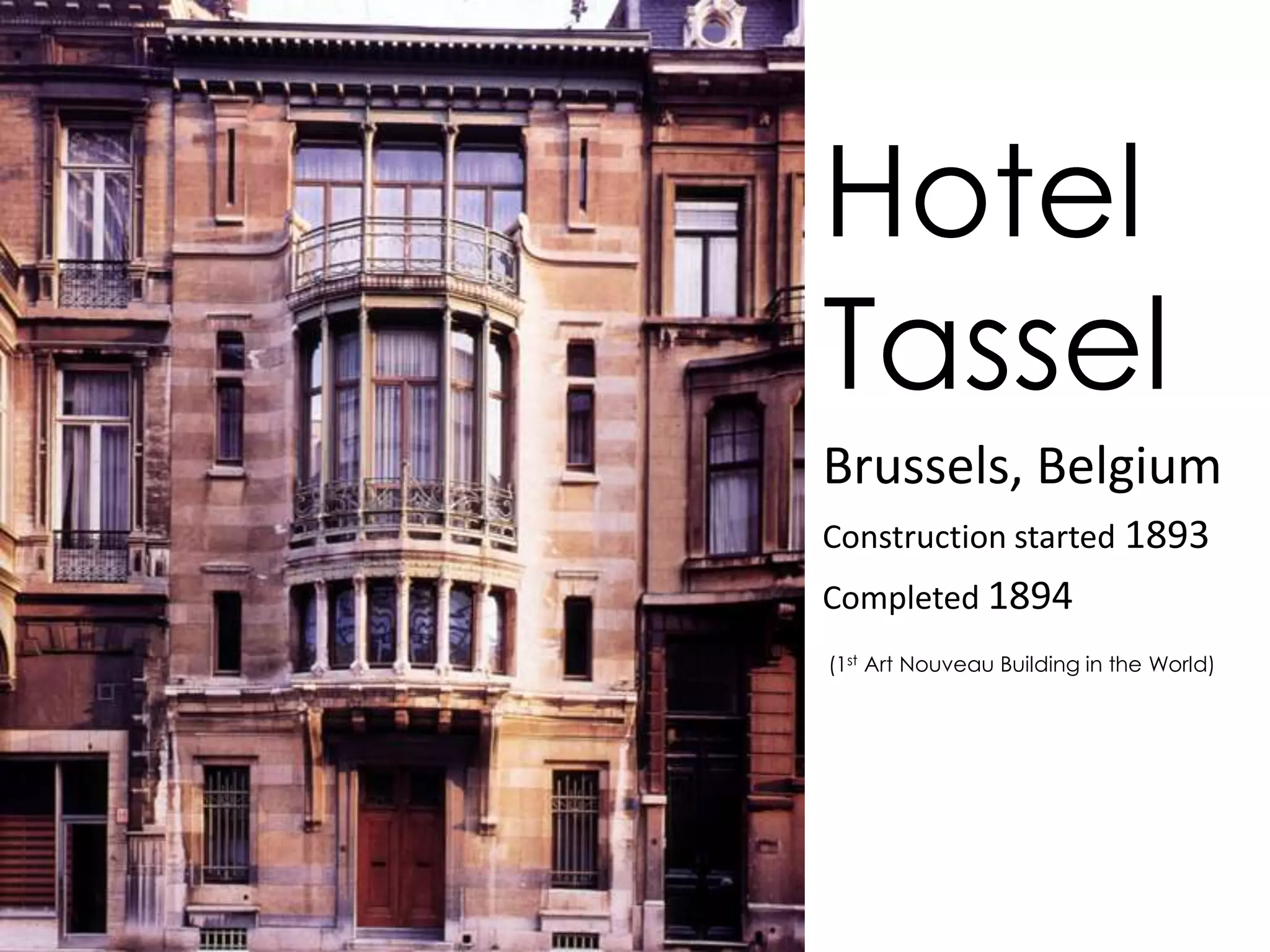
Hotel
Tassel
Brussels, Belgium
Construction started 1893
Completed 1894
(1st Art Nouveau Building in the World)
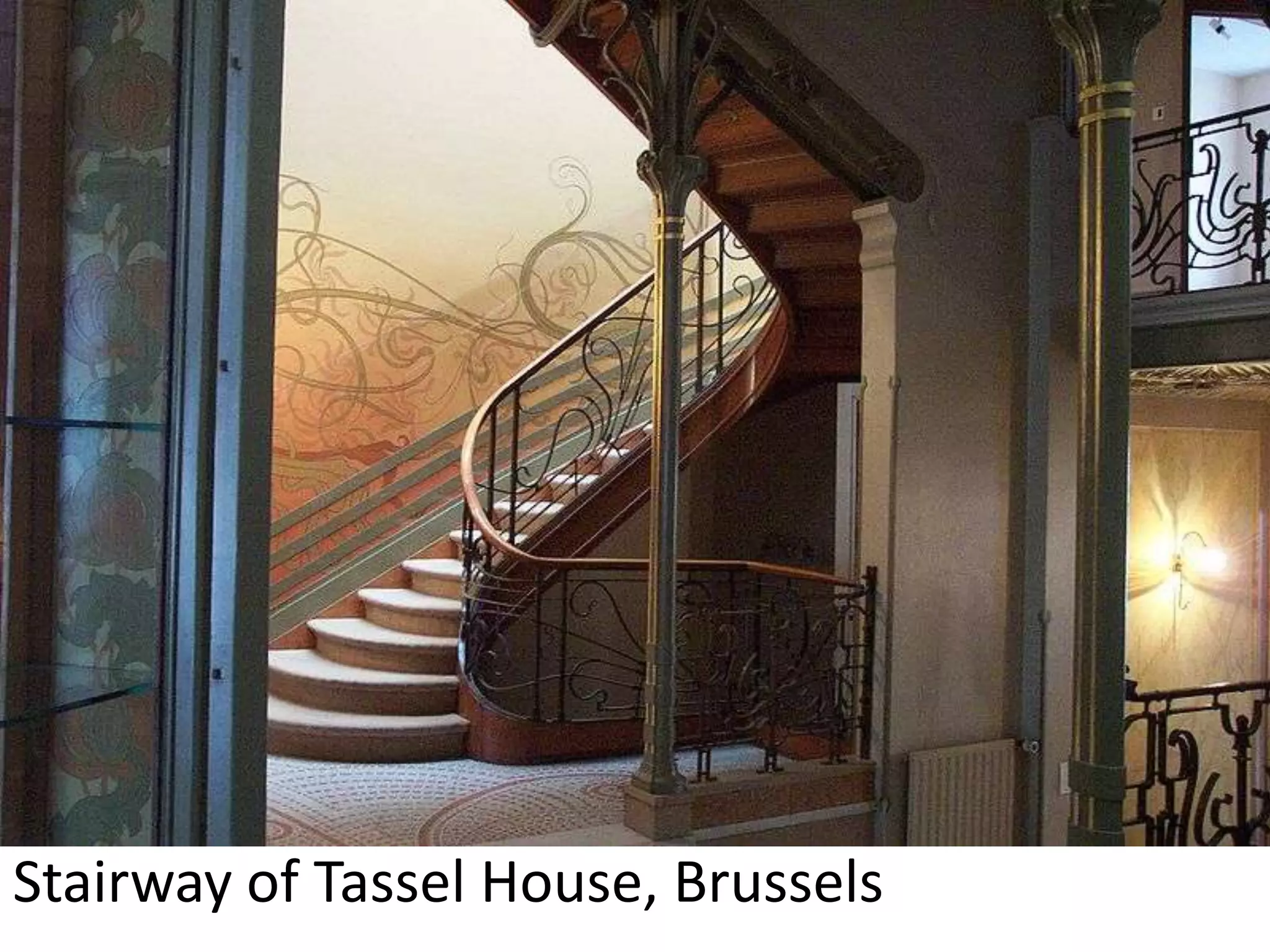
Stairway of Tassel House, Brussels
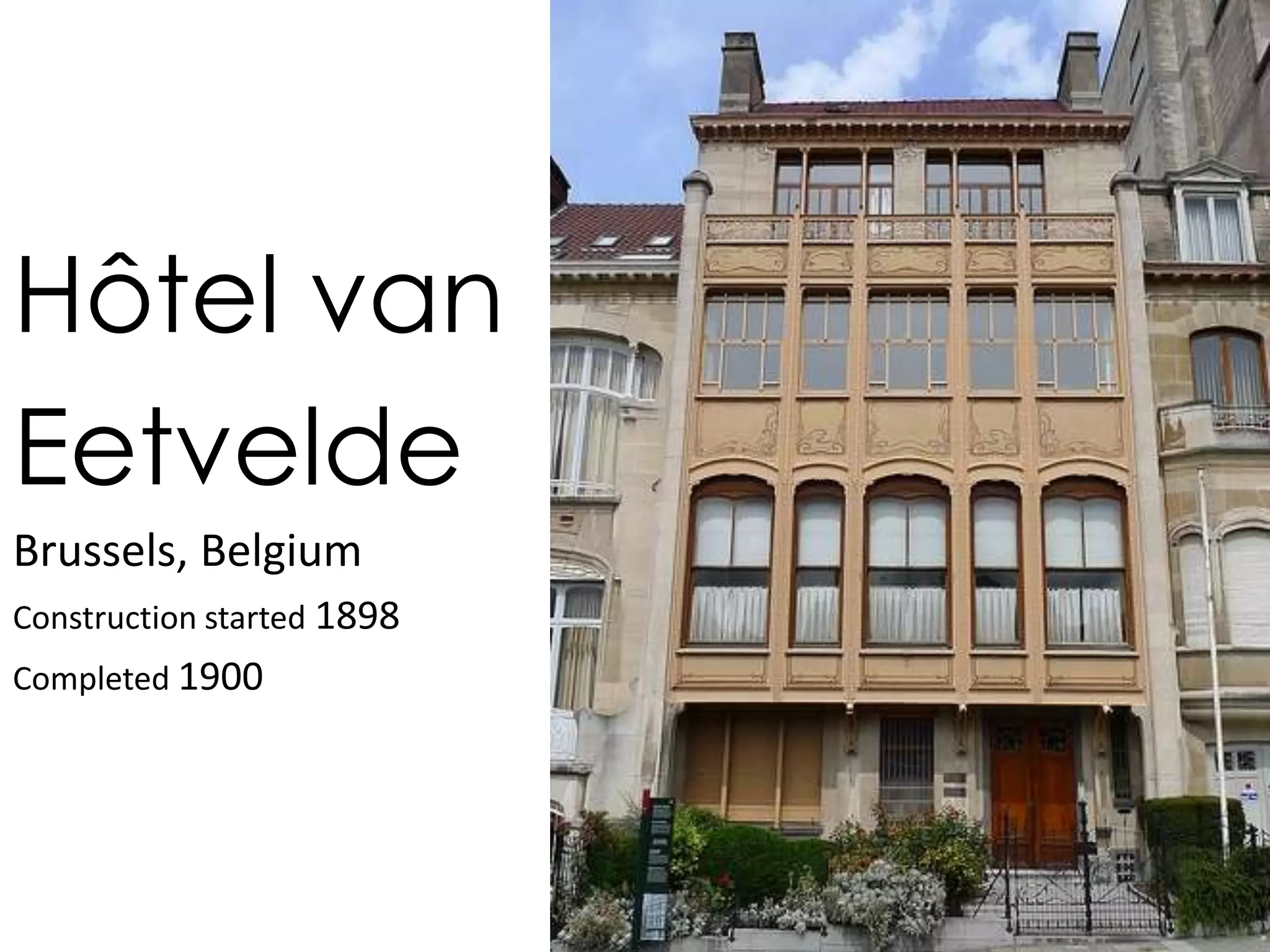
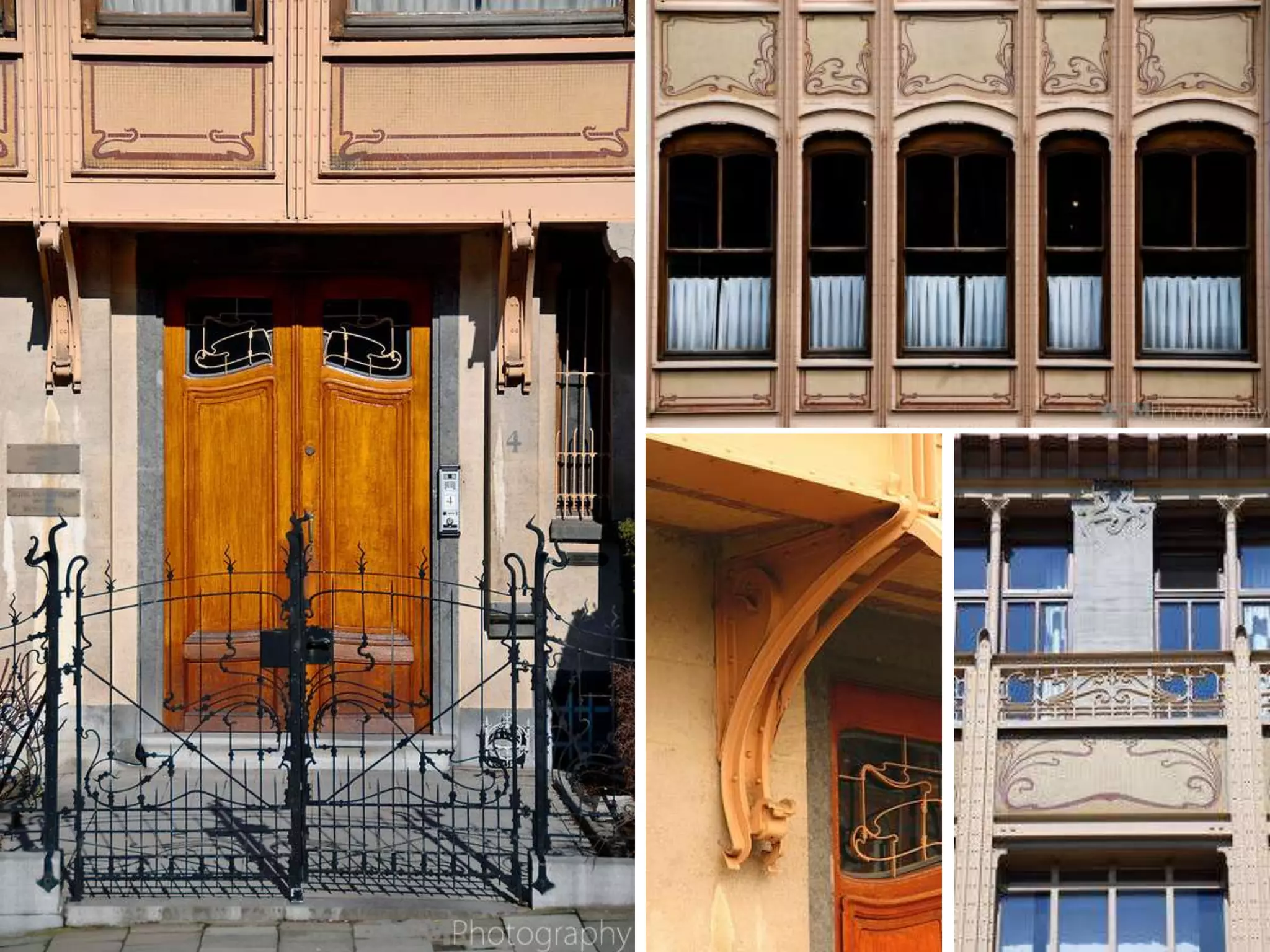
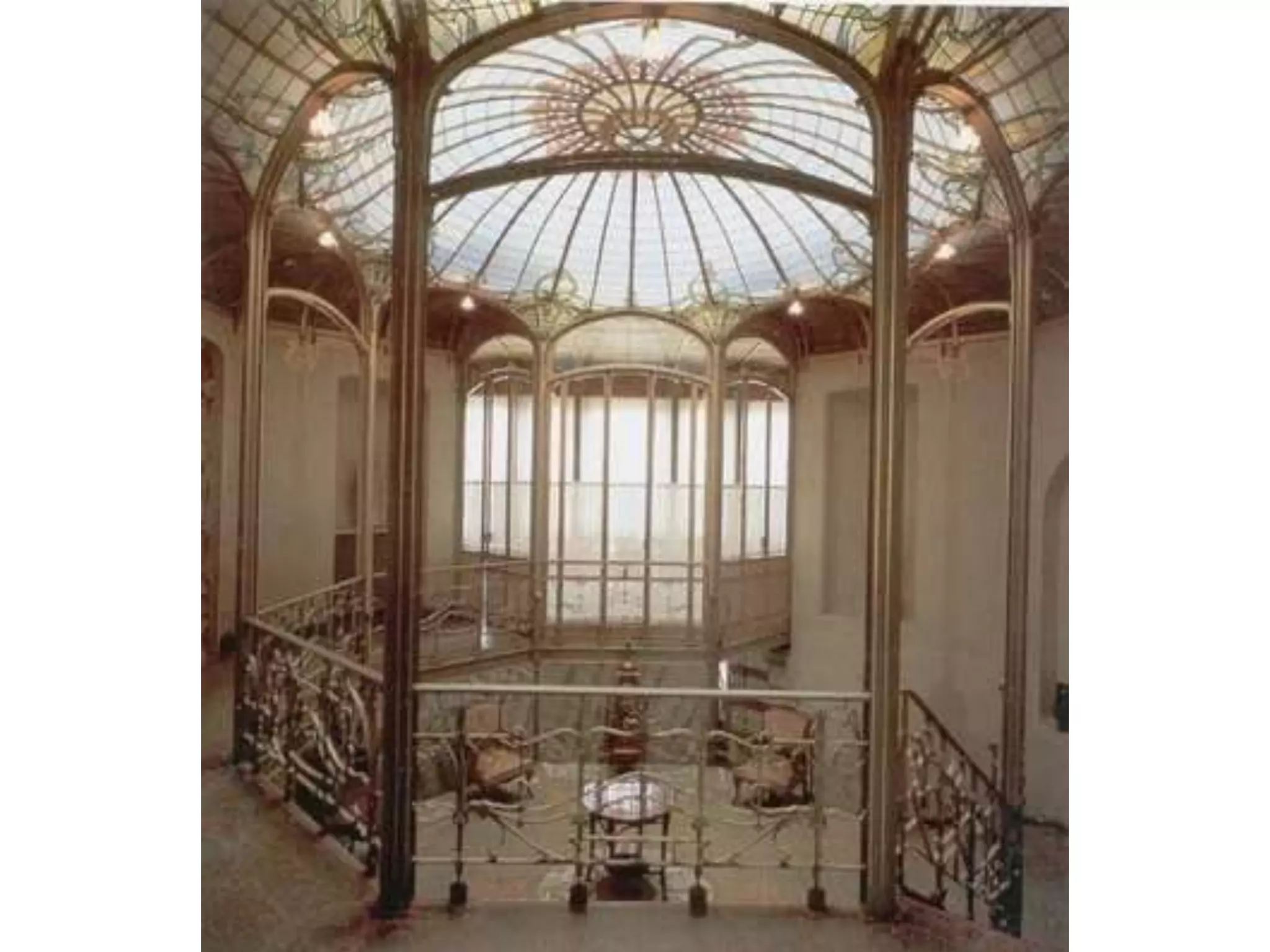
Hôtel van
Eetvelde
Brussels, Belgium
Construction started 1898
Completed 1900
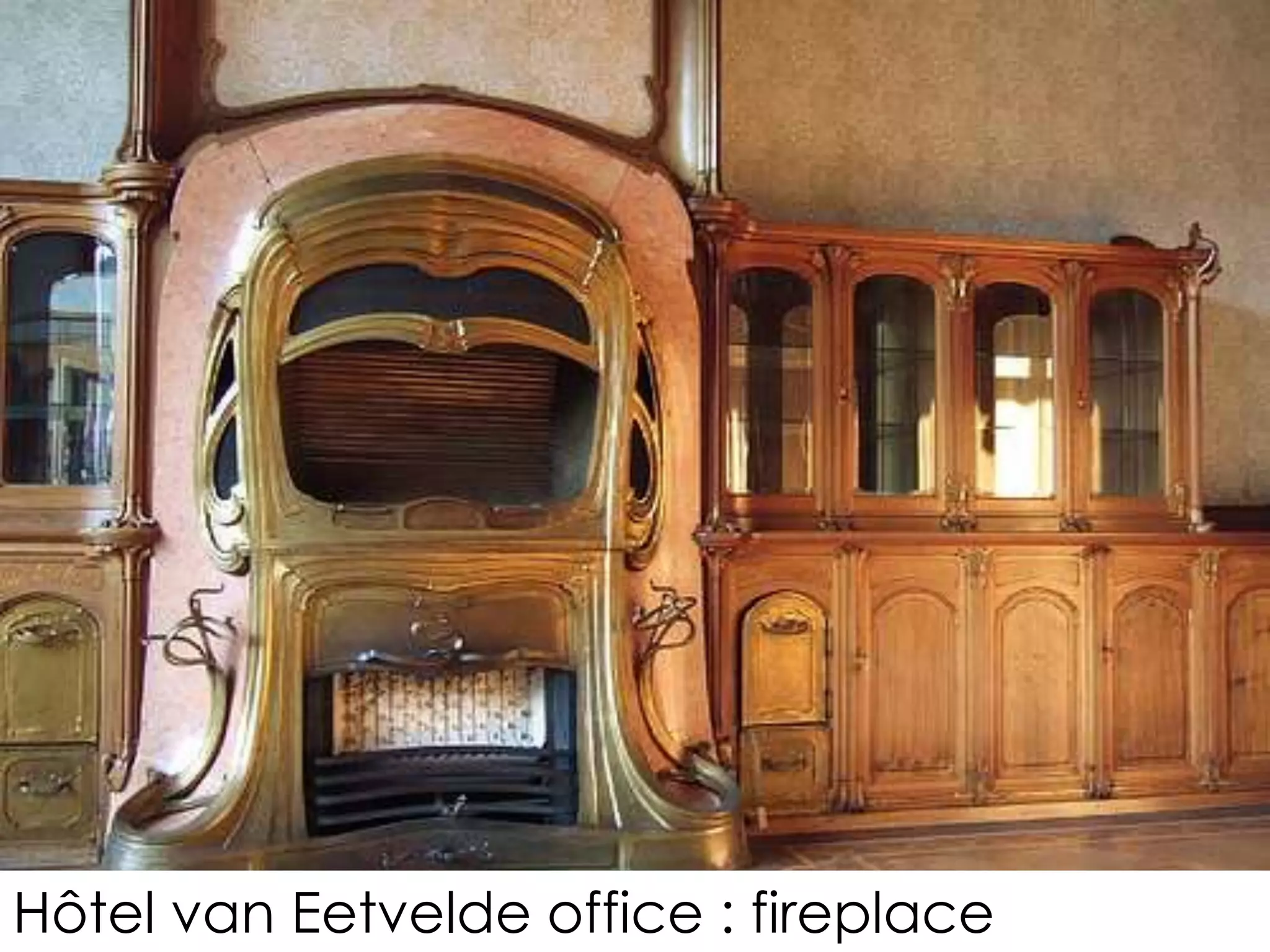
Hôtel van Eetvelde office : fireplace
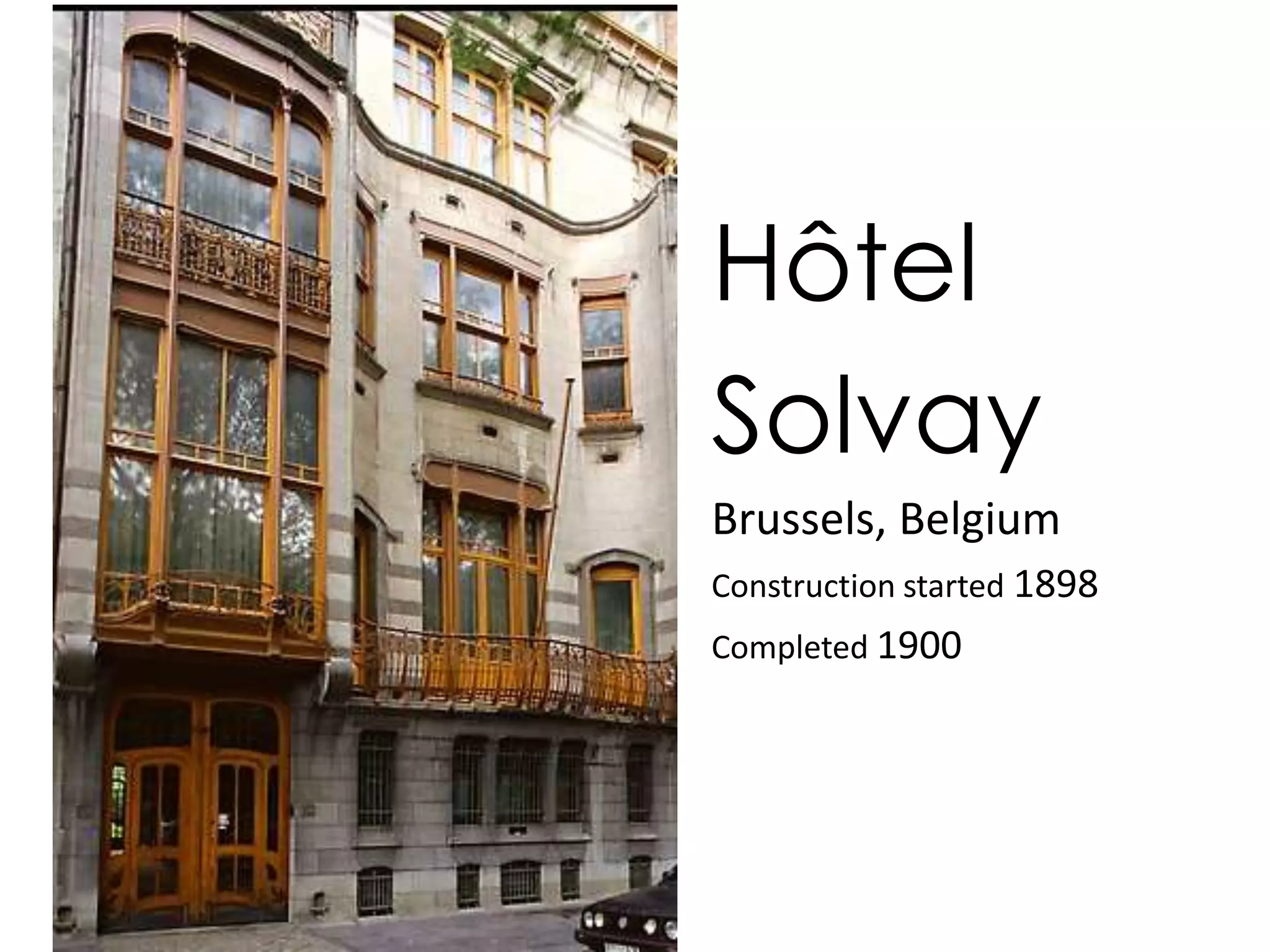
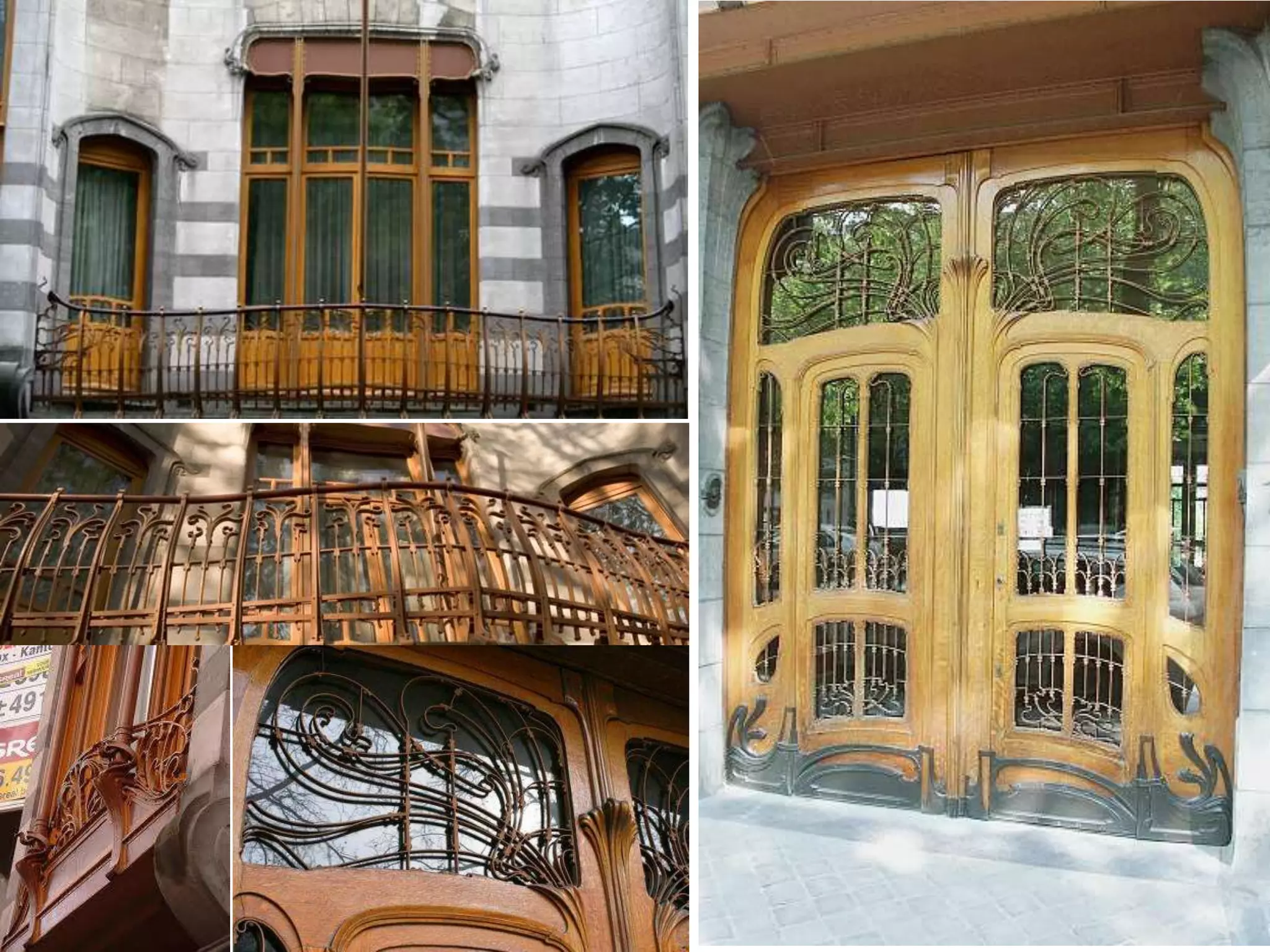
Hôtel
Solvay
Brussels, Belgium
Construction started 1898
Completed 1900
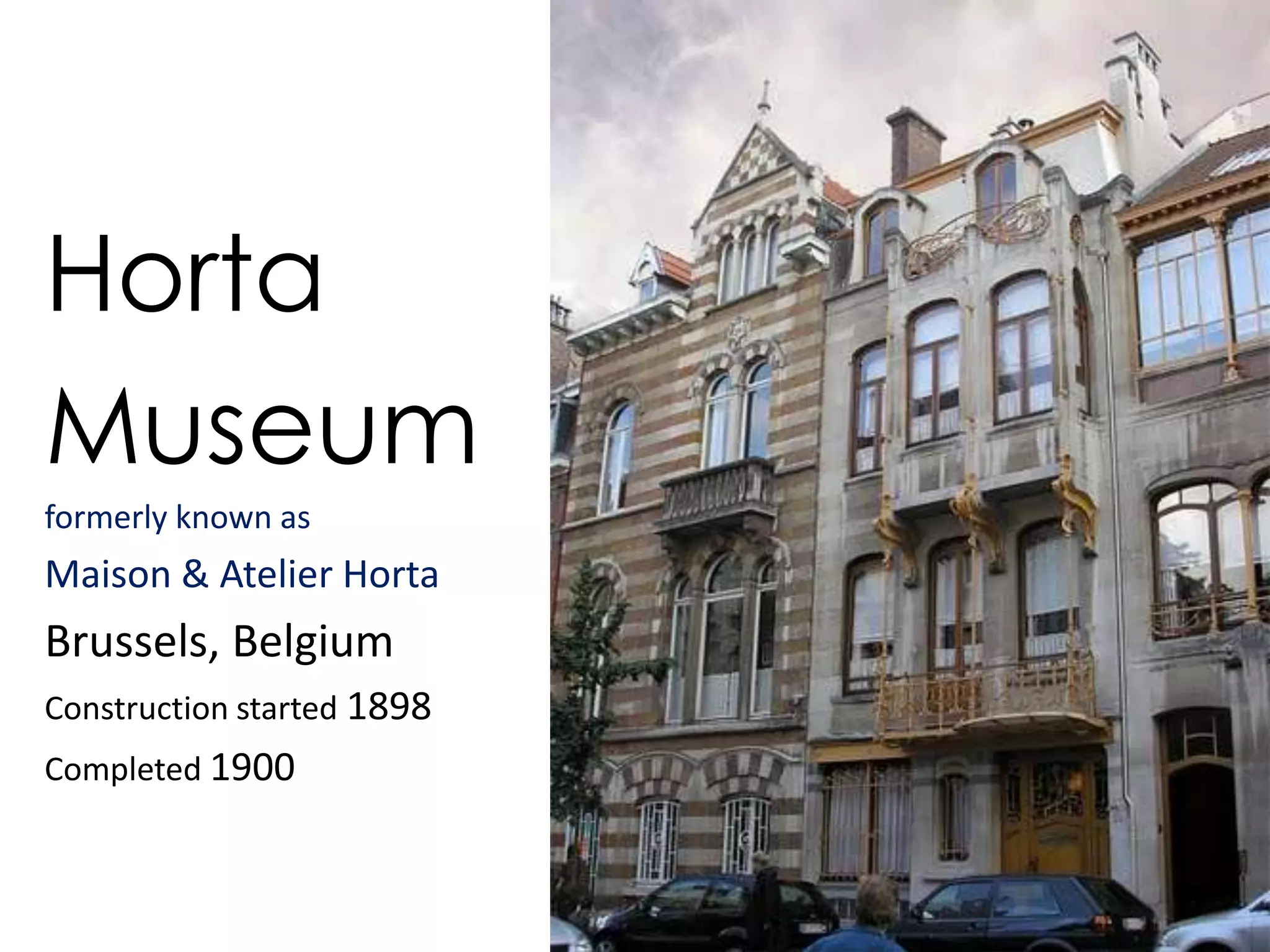
Horta
Museum
formerly known as
Maison & Atelier Horta
Brussels, Belgium
Construction started 1898
Completed 1900
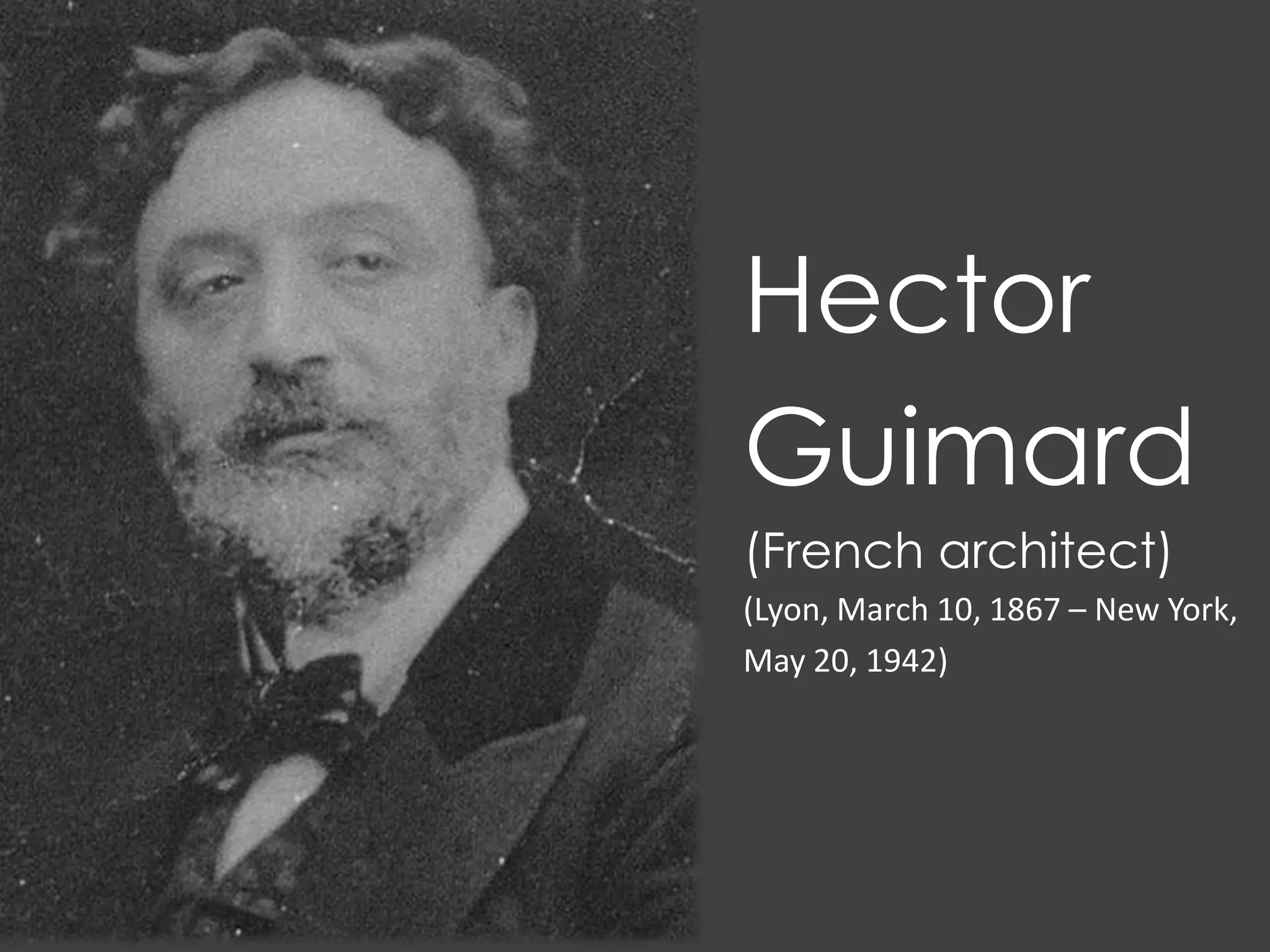
Hector
Guimard
(French architect)
(Lyon, March 10, 1867 – New York,
May 20, 1942)
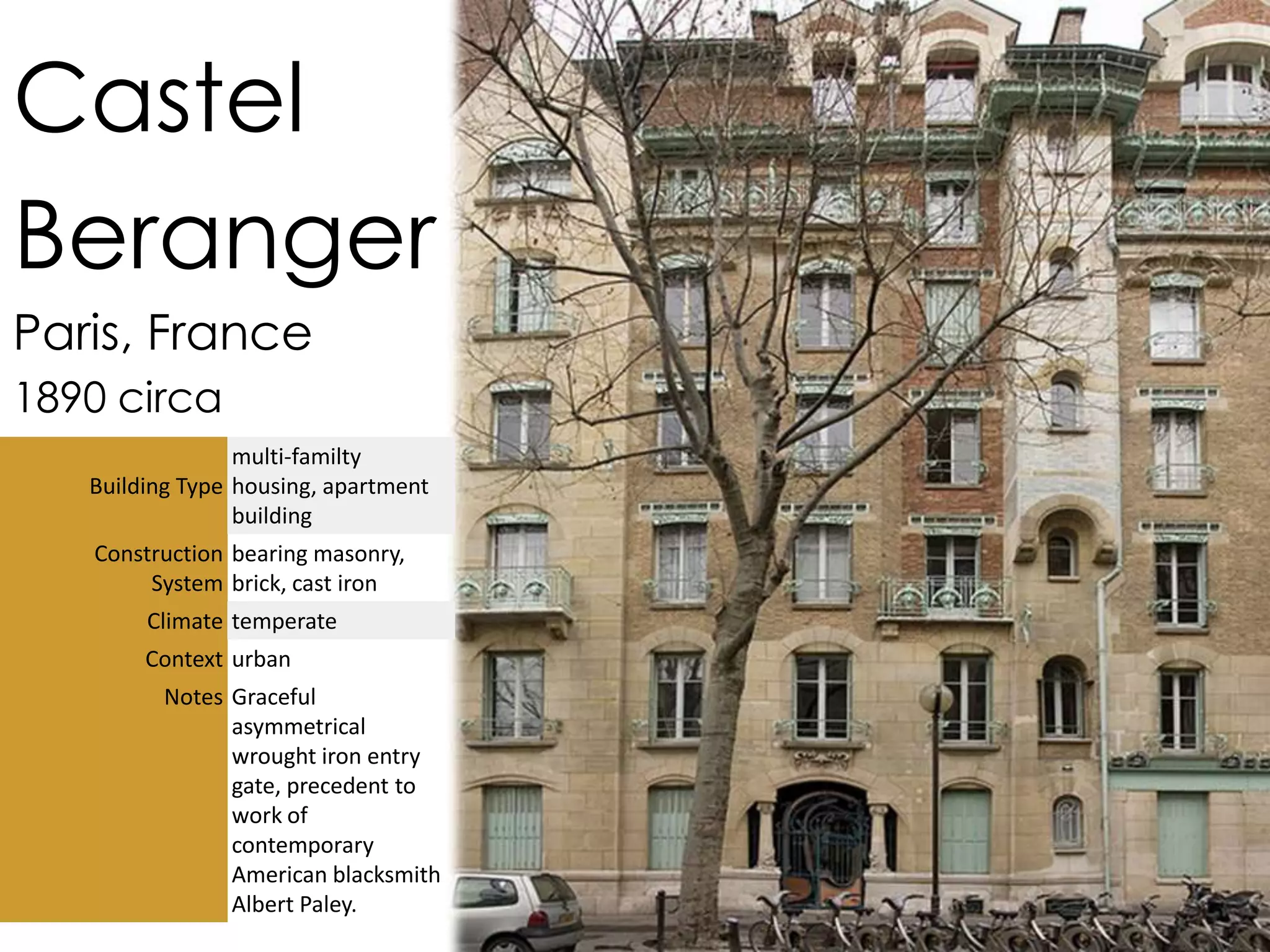
Castel
Beranger
Paris, France
1890 circa
                 multi-familty
   Building Type housing, apartment
                 building
   Construction bearing masonry,
        System brick, cast iron
        Climate temperate
        Context urban
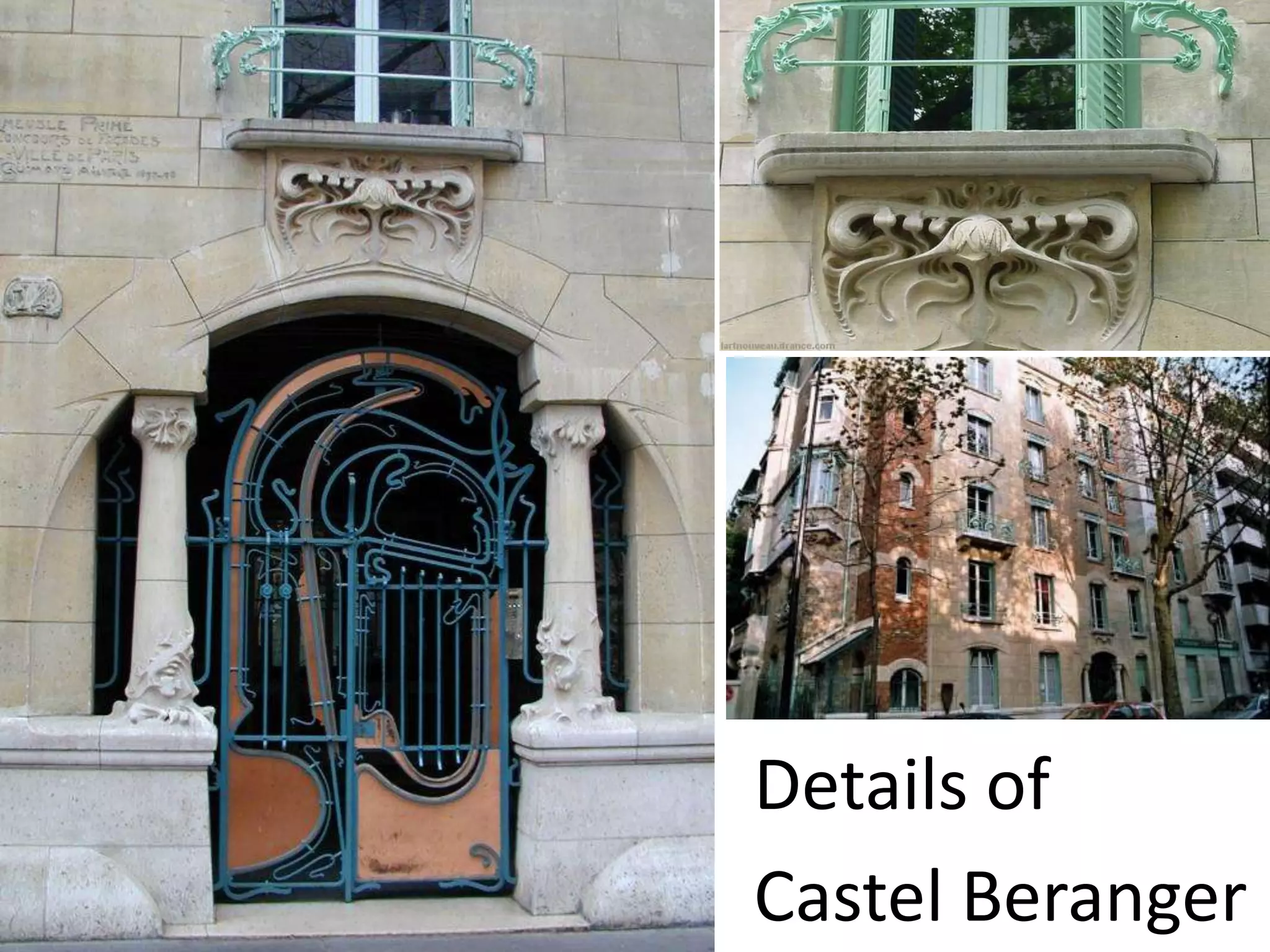
          Notes Graceful
                asymmetrical
                wrought iron entry
                gate, precedent to
                work of
                contemporary
                American blacksmith
                Albert Paley.
Details of
Castel Beranger
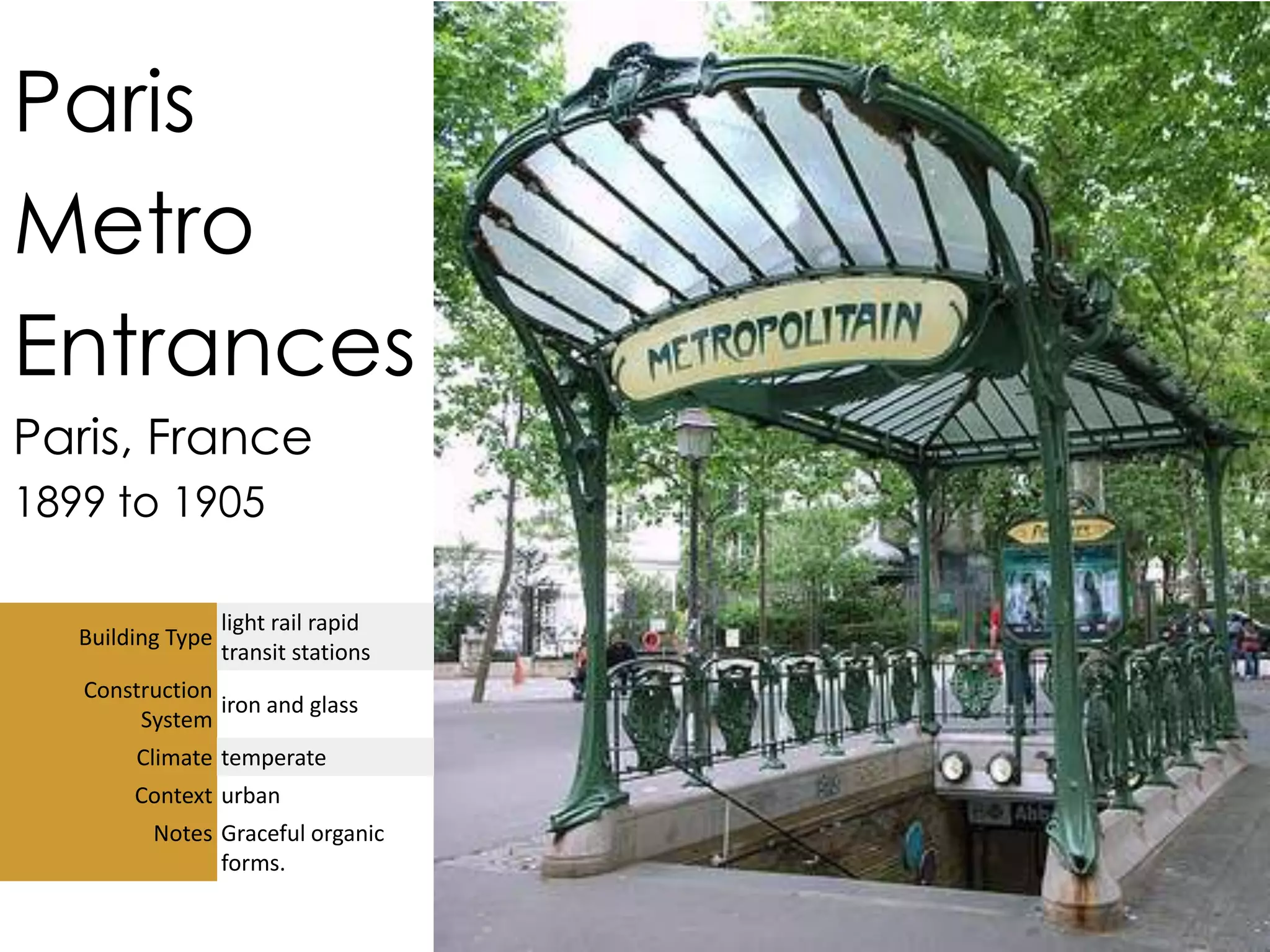
Paris
Metro
Entrances
Paris, France
1899 to 1905

                   light rail rapid
   Building Type
                   transit stations
   Construction
                iron and glass
        System
        Climate temperate
        Context urban
          Notes Graceful organic
                forms.
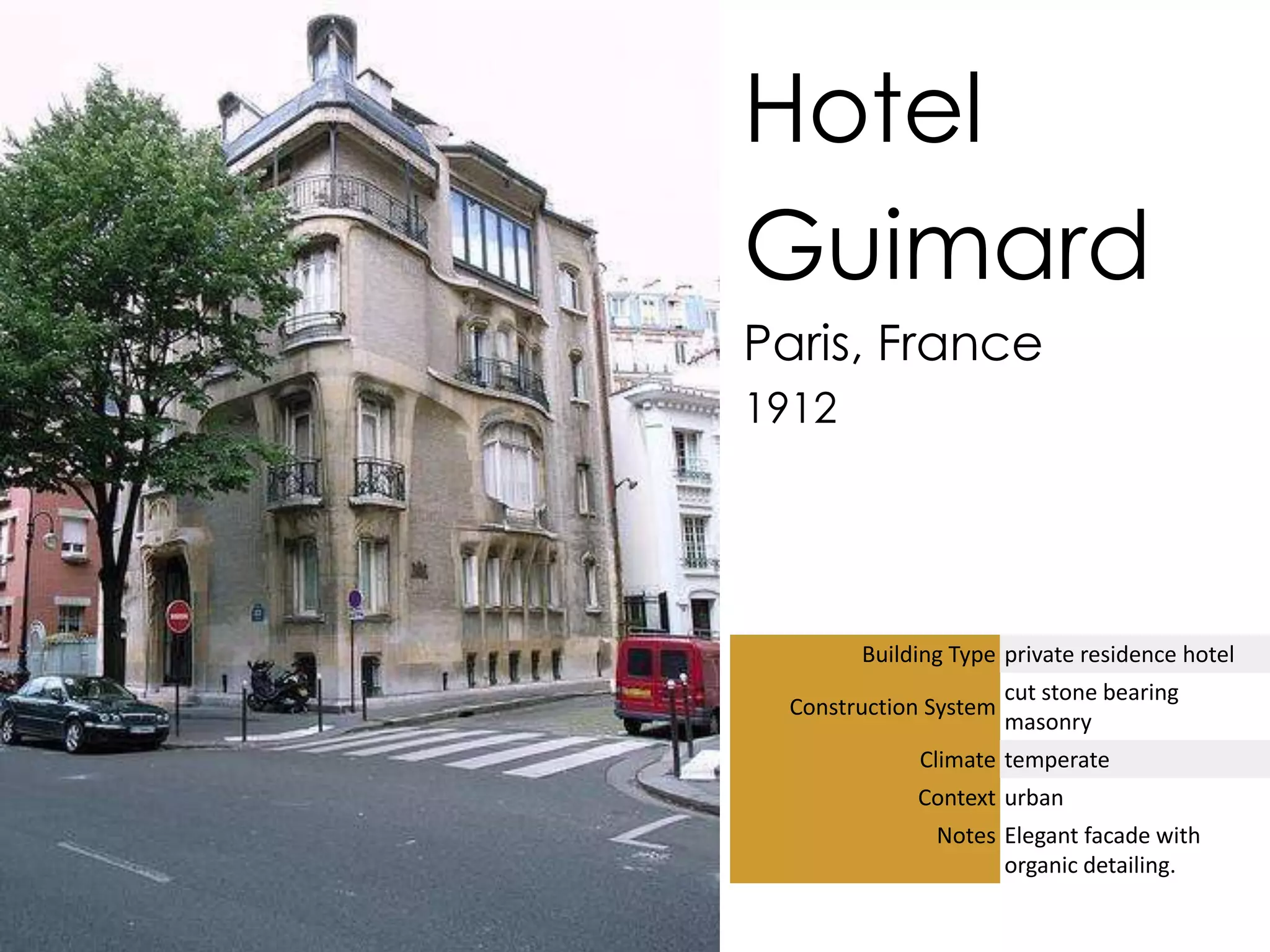
Hotel
Guimard
Paris, France
1912


        Building Type private residence hotel
                        cut stone bearing
  Construction System
                        masonry
             Climate temperate
             Context urban
               Notes Elegant facade with
                     organic detailing.
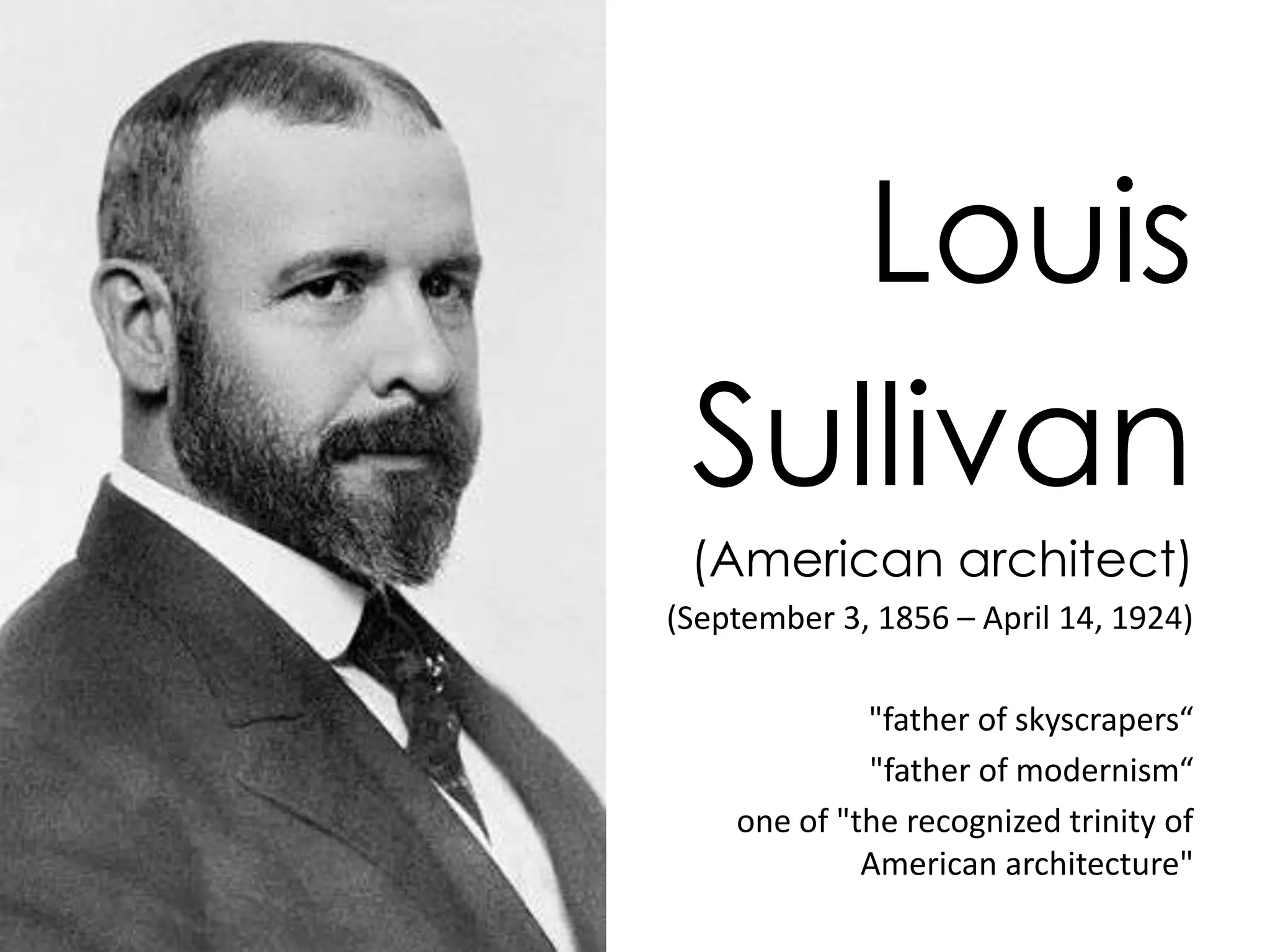
Louis
 Sullivan
 (American architect)
(September 3, 1856 – April 14, 1924)

             "father of skyscrapers“
             "father of modernism“
    one of "the recognized trinity of
             American architecture"
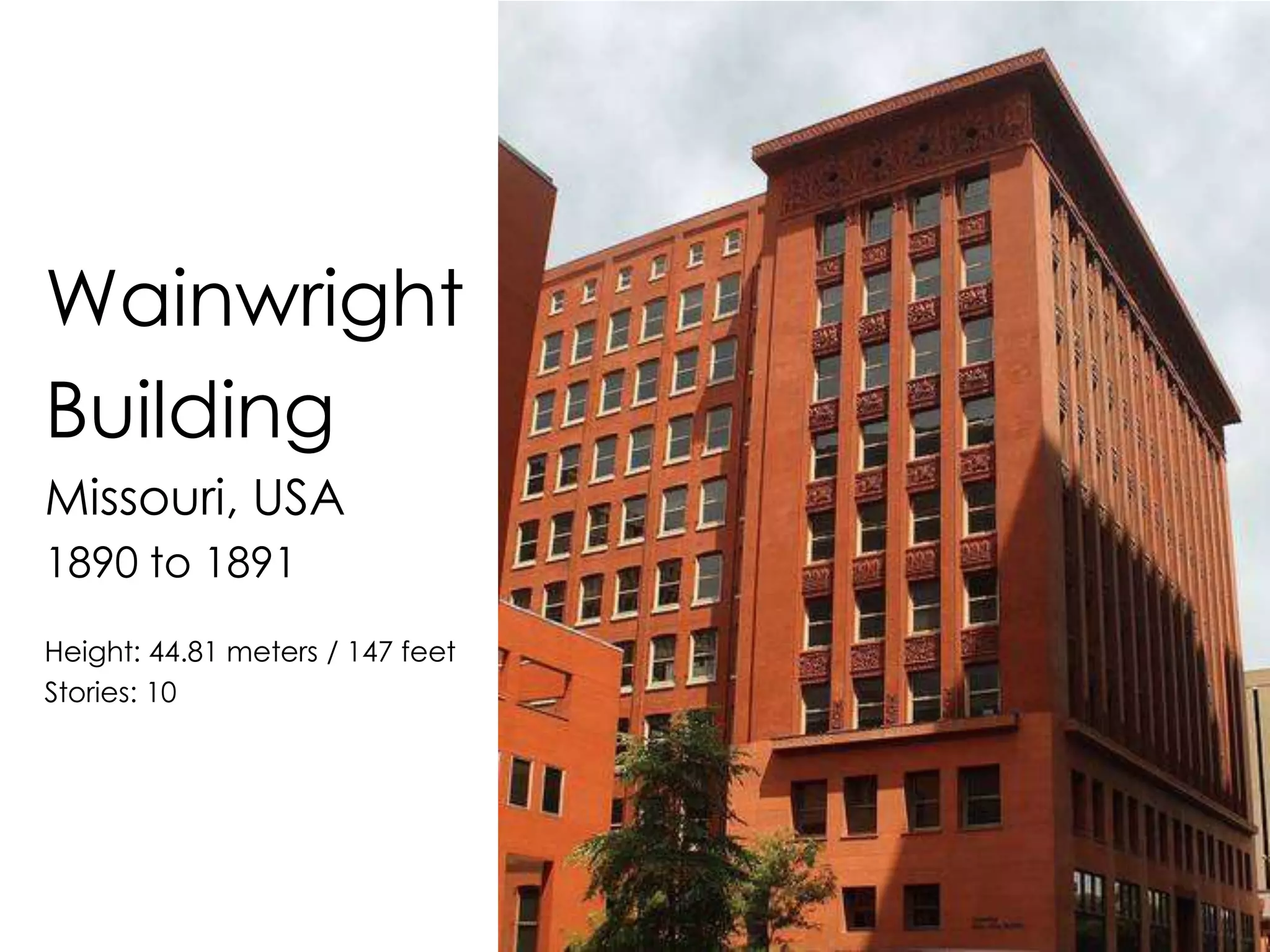
Wainwright
Building
Missouri, USA
1890 to 1891
Height: 44.81 meters / 147 feet
Stories: 10
Charles
   Rennie
Mackintosh
(British Architect, Interior Designer)
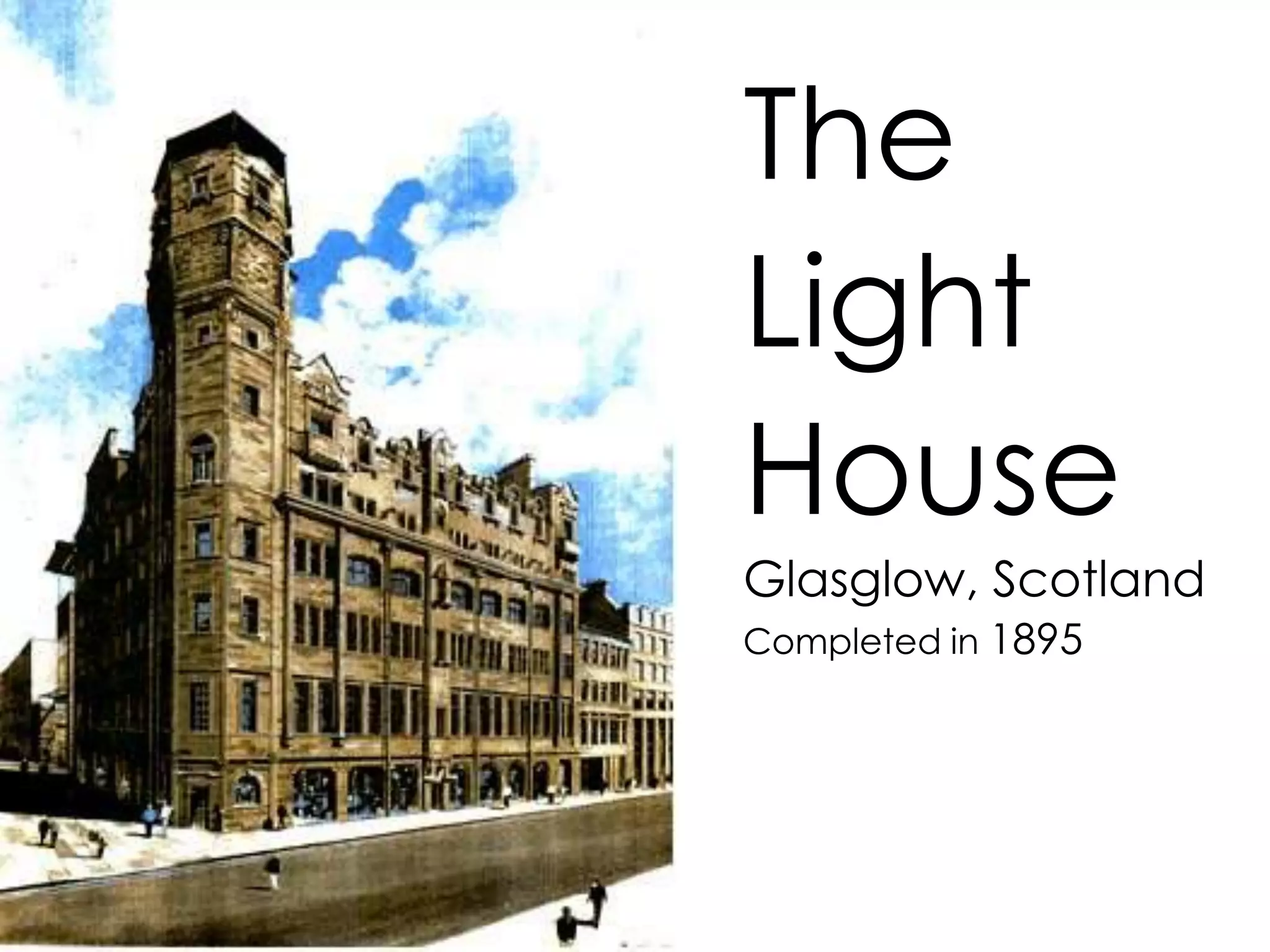
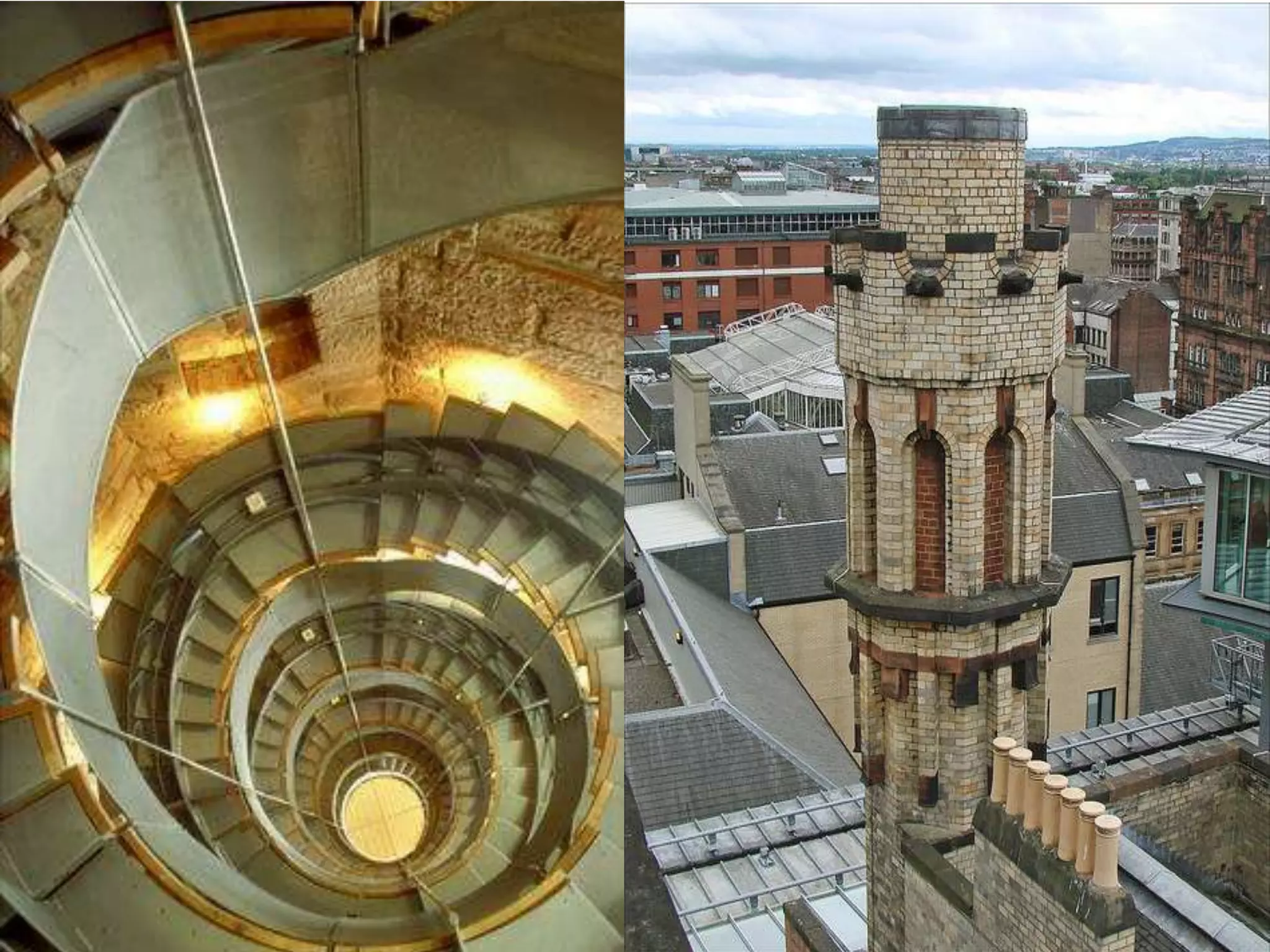
The
Light
House
Glasglow, Scotland
Completed in 1895
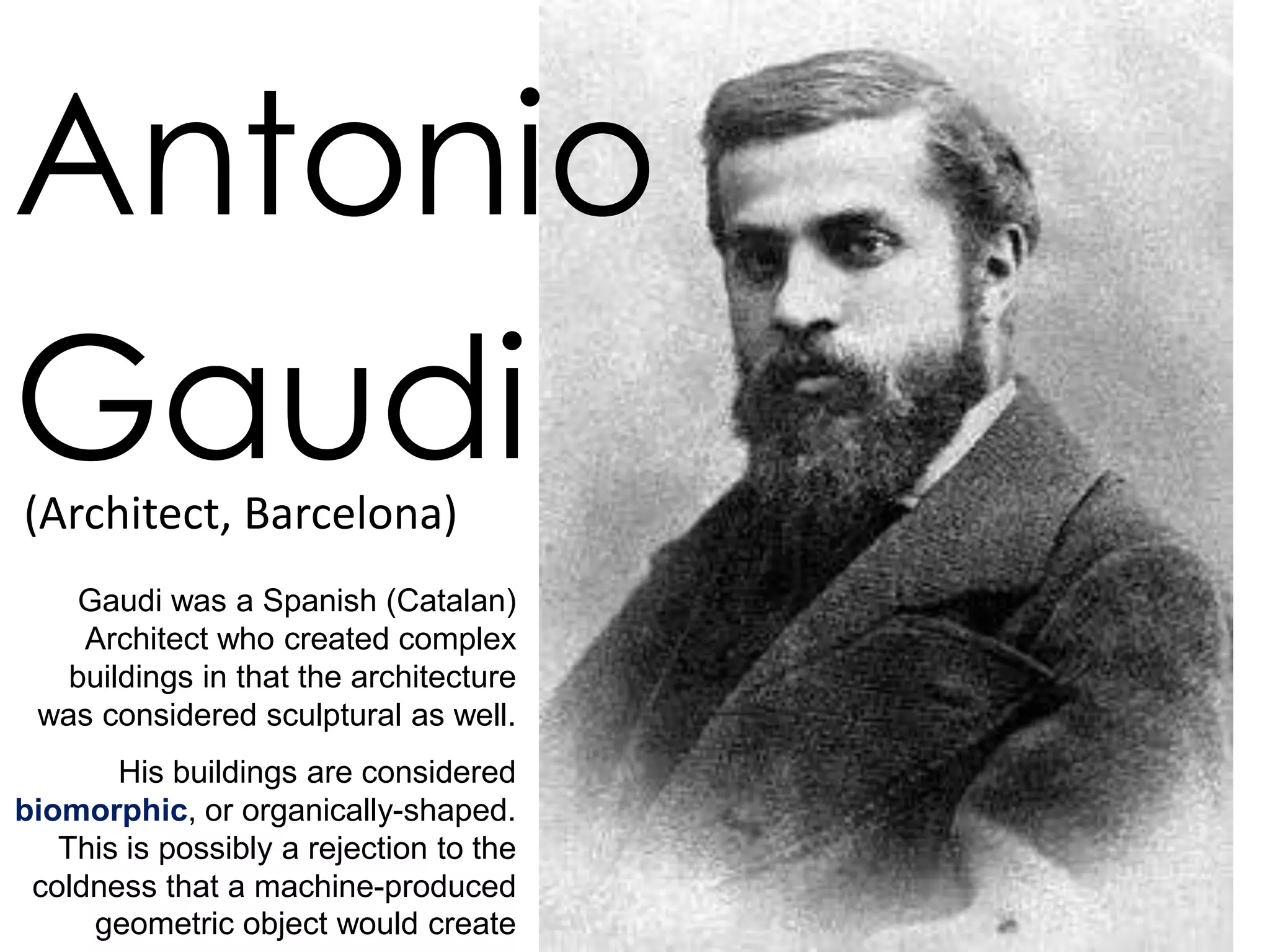
Antonio
Gaudi
(Architect, Barcelona)
    Gaudi was a Spanish (Catalan)
    Architect who created complex
   buildings in that the architecture
 was considered sculptural as well.
       His buildings are considered
biomorphic, or organically-shaped.
   This is possibly a rejection to the
 coldness that a machine-produced
     geometric object would create
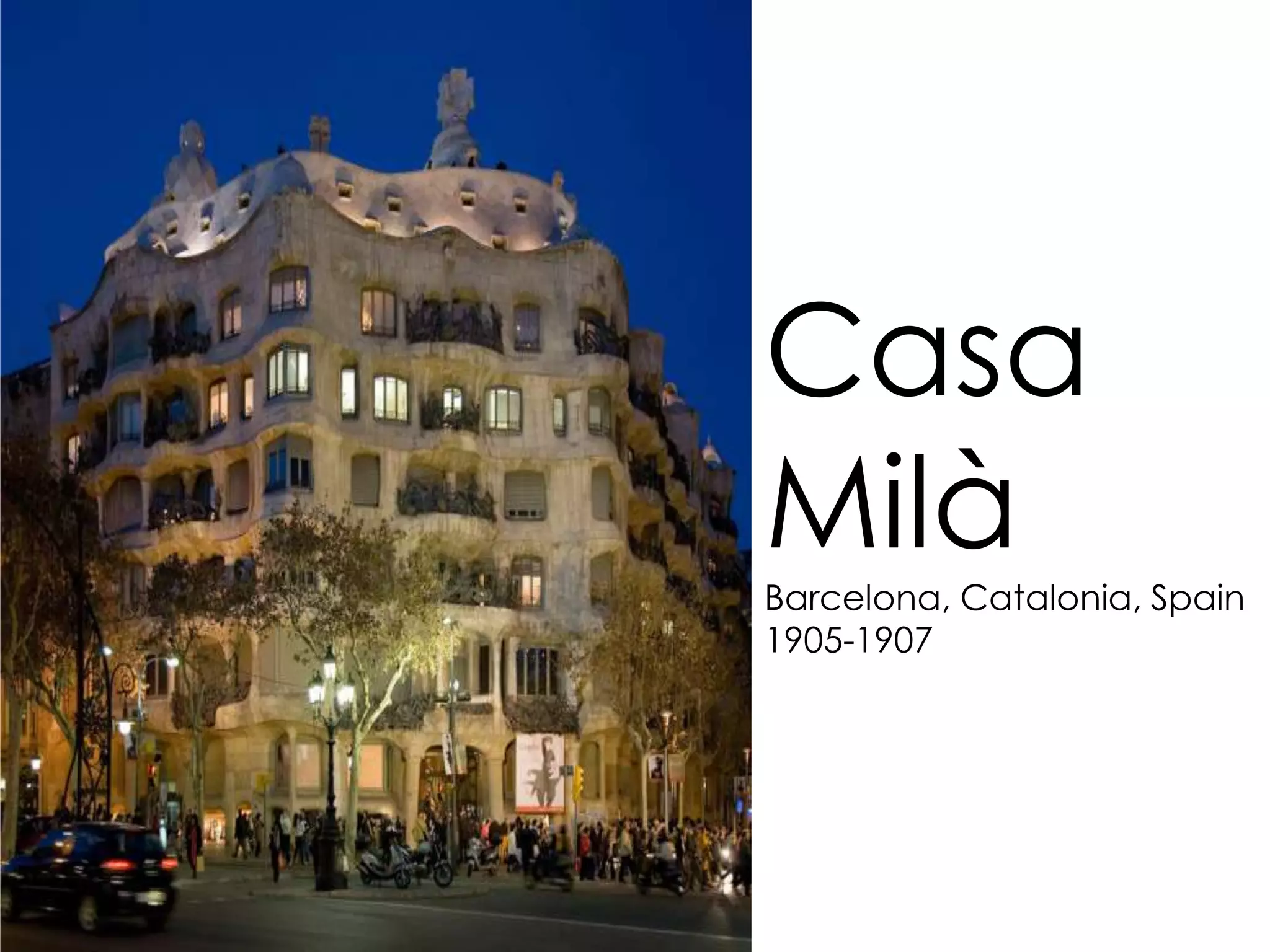
Casa
Milà
Barcelona, Catalonia, Spain
1905-1907
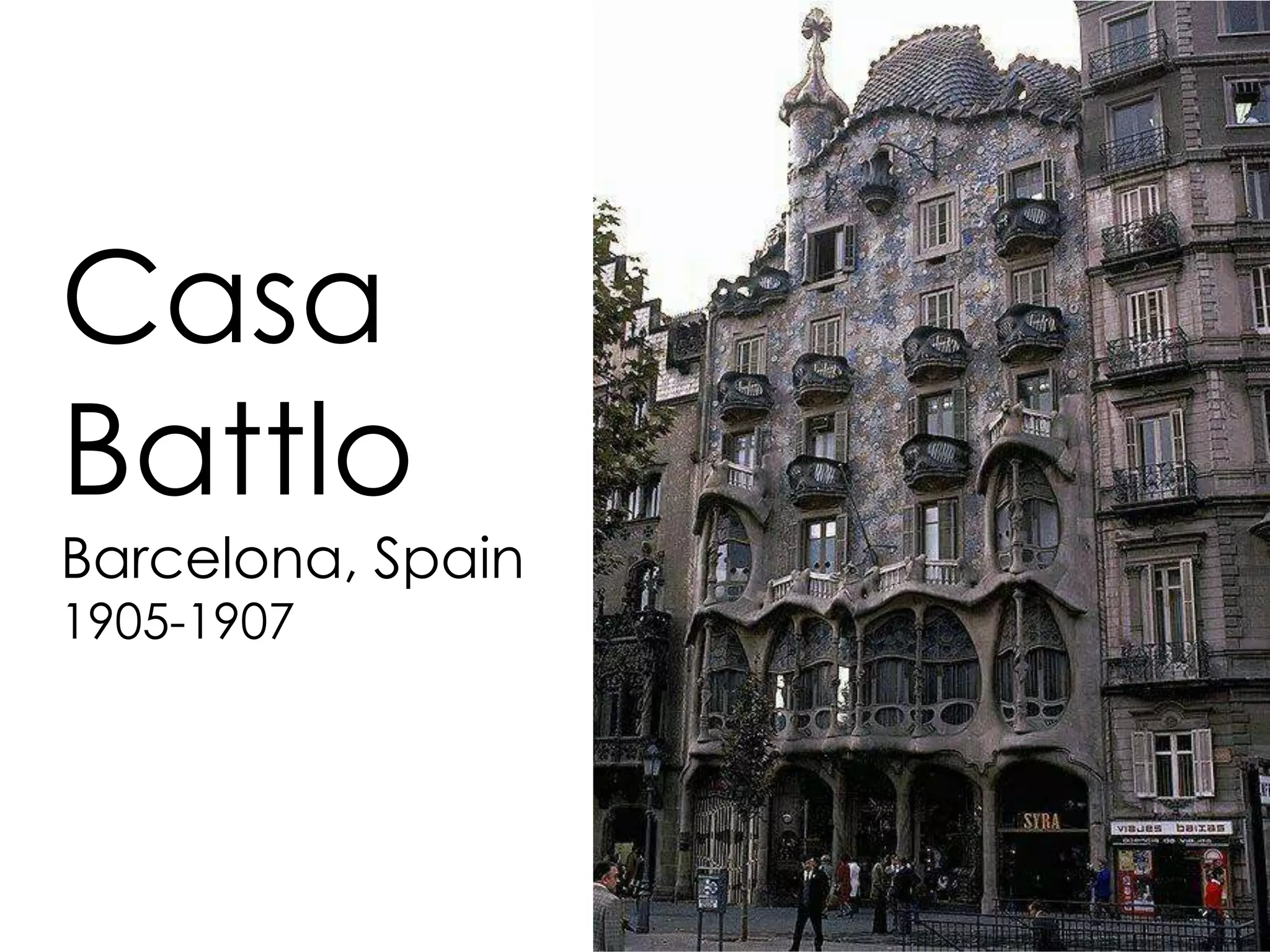
Casa
Battlo
Barcelona, Spain
1905-1907
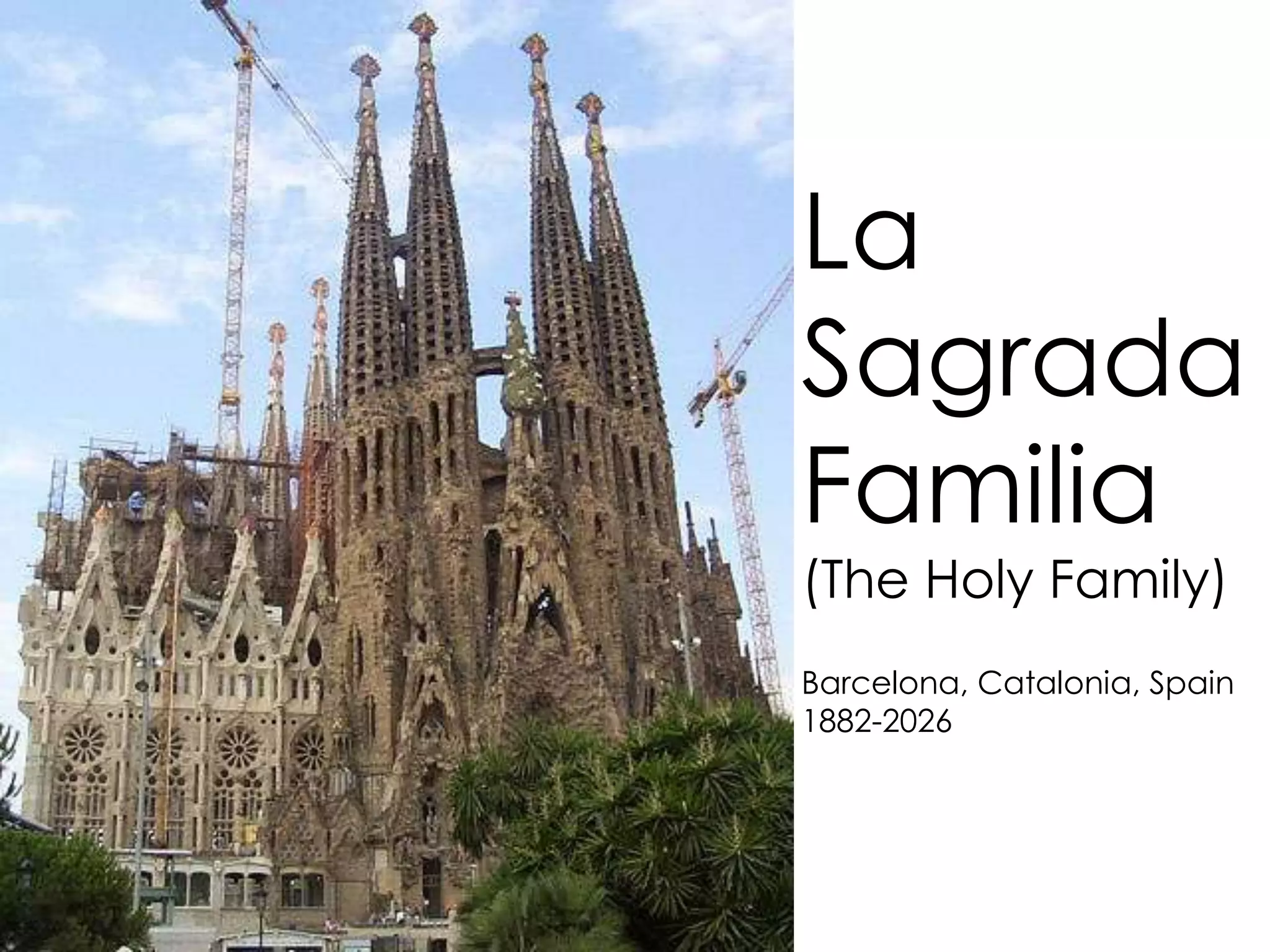
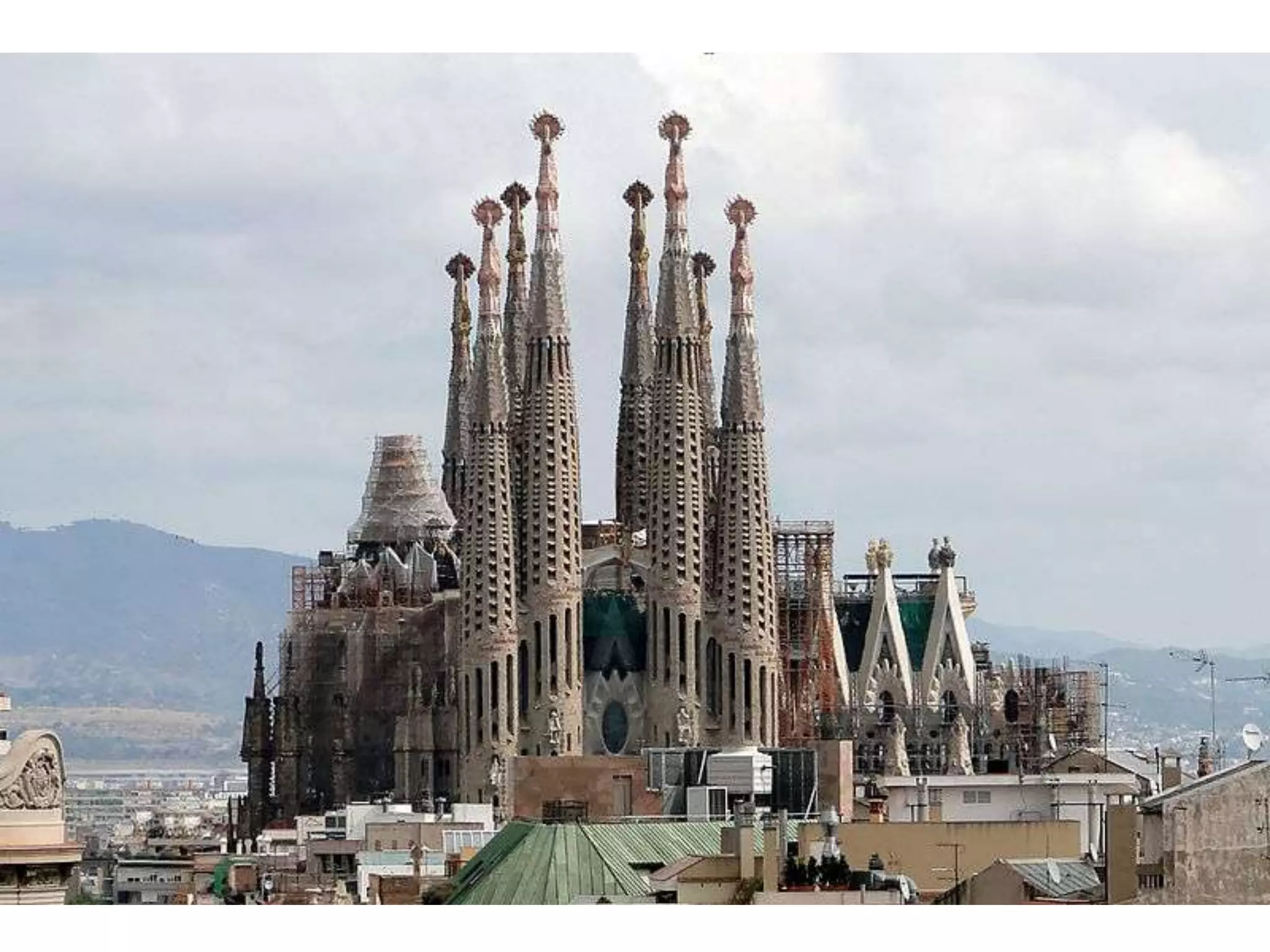
La
Sagrada
Familia
(The Holy Family)
Barcelona, Catalonia, Spain
1882-2026
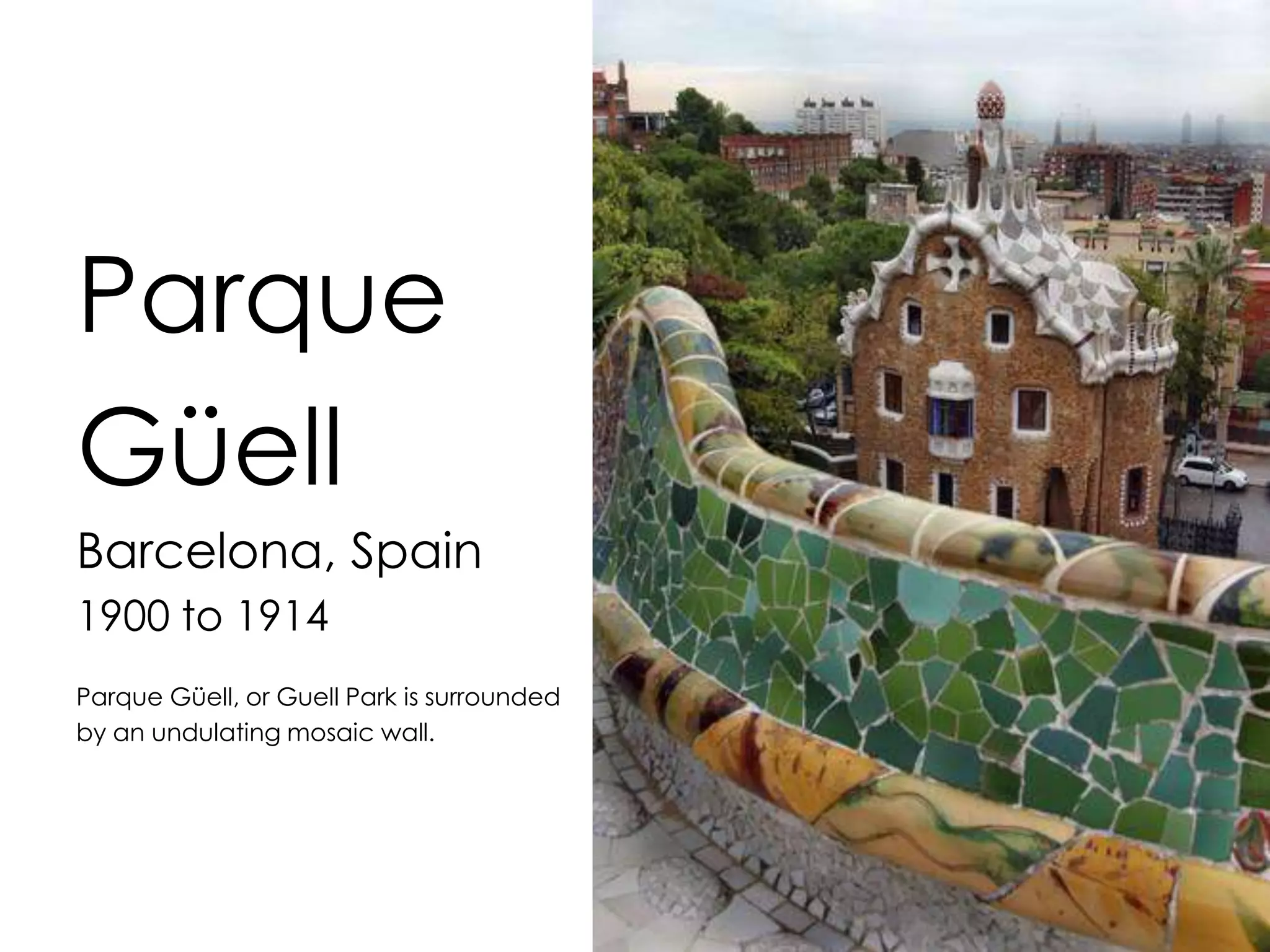
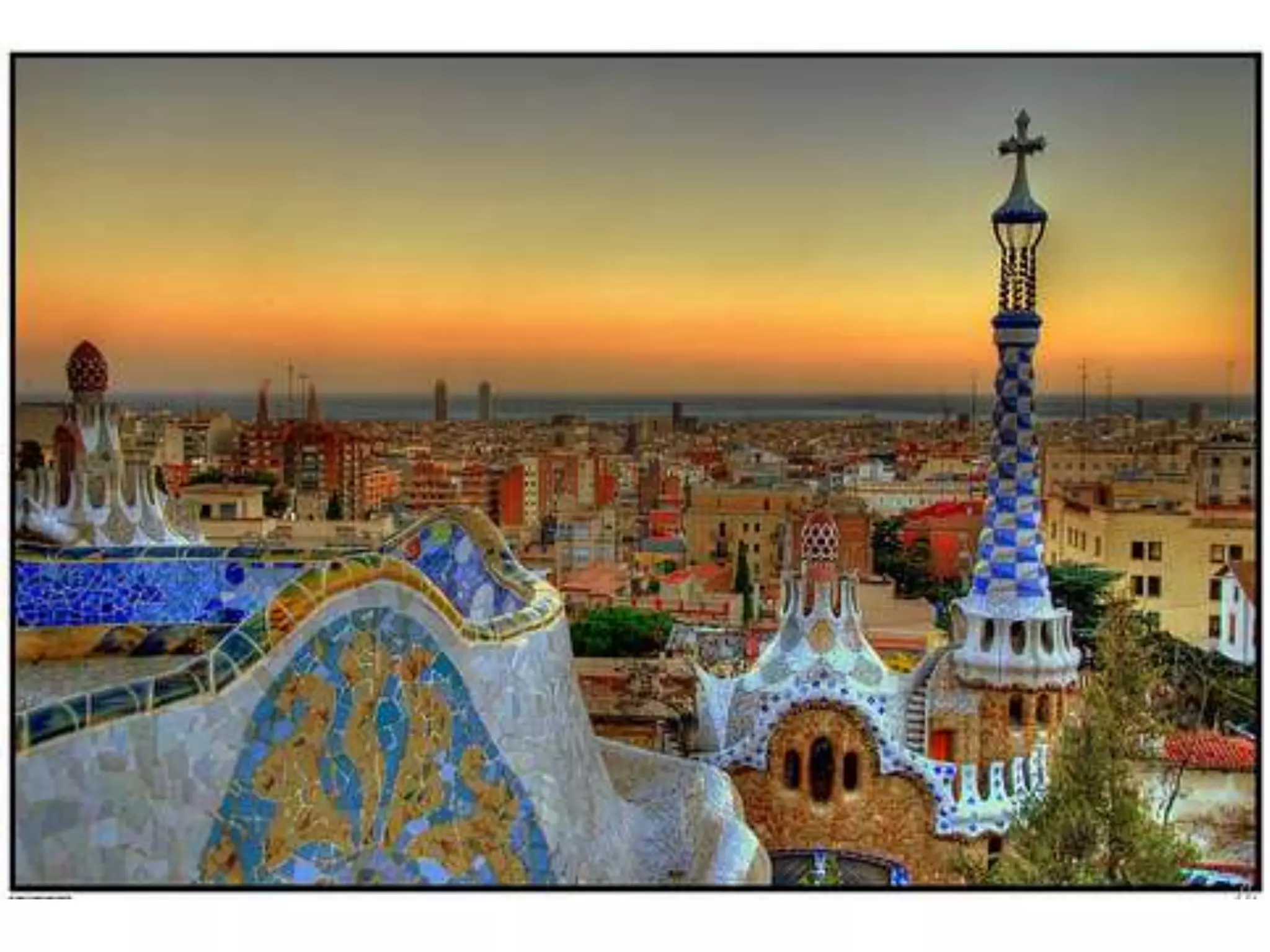
Parque
Güell
Barcelona, Spain
1900 to 1914
Parque Güell, or Guell Park is surrounded
by an undulating mosaic wall.
BEGINNING OF ART DECO

• When Art Nouveau fell out of fashion in
  the 1920s and 1930s, it was
  replaced by the clean, simple
  geometries of Art Deco.
• The extravagant curves of Art
  Nouveau were seen as old-fashioned
  and viewed with contempt.
BEGINNING OF ART DECO

• Many Art Nouveau products were put
  away, spurned, or destroyed.
• Rooms once decorated in what had
  been the height of fashion were
  redecorated to conform to the
  latest taste.
BEGINNING OF ART DECO

• It was not until nearly half a century later,
  in 1952, the first comprehensive
  exhibition devoted to Art Nouveau was
  organized in Zurich, Switzerland.
• Present day interest in Art Nouveau, and
  in particular its widespread appreciation
  within the last thirty years, has once again
  firmly established it as an important art
  movement.
REFERENCES
•    http://www.docstoc.com/docs/79051493/Art-Nouveau-%28PowerPoint%29
•    http://www.greatbuildings.com/architects/Hector_Guimard.html
•    http://architecture.about.com/od/artnouveau/g/artnouveau.htm
•    http://www.mr-oscar-wilde.de/lifetime/art_nouveau.htm#Sullivan
•    http://architecture.about.com/od/greatbuildings/ig/Antoni-Gaud-/Guell-Park.htm
•    KEIICHI TAHARA
    Art Nouveau Architecture
   Philippine Thiebaut
   Bruno Girveau
©2000 Thames and Hudson Ltd, London
•   ALASTAIR DUNCAN
  Art Nouveau (170 illustrations, 32 in colour)
©1994 Thames and Hudson Ltd, London
• Art Nouveau (Spirit of the Belle Epoque)
  by Susan A. Sternau
© 1996 Todri Production Limited
•   The Sources of Modern Architecture and Design
  by Nikolaus Pevsner
©1968 Thames and Hudson Ltd, London

Art Nouveau ppt

  • 1.
  • 2.
    OUTLINE • Birth ofArt Nouveau • Introduction: Art Nouveau -Time & Place -Hallmarks of Art Nouveau Styles -Other names for Art Nouveau -Critical Nicknames • Art Nouveau Architecture -Features -Pierre Francastel -Stephan Tschudi Madsen -Art Nouveau Architects and their Works • Beginning of Art Deco • References
  • 3.
    BIRTH OF ARTNOUVEAU The last third of the 19th century saw the development of a fundamentally approach to architecture and interior design. All over Europe there was a need for liberating change of direction, a desire to break away from set formulas based on pastiche of historical styles and a search for original ideas, all of which resulted at the beginning of the 1890s in the birth of Art Nouveau.
  • 4.
    INTRODUCTION: ART NOUVEAU Art Nouveau (French for "New Style") was popularized by the famous Maison de l'Art Nouveau (House of New Art), a Paris art gallery operated by Siegfried Bing.
  • 5.
    INTRODUCTION: ART NOUVEAU ArtNouveau represents the beginning of modernism in design (Modern Architecture). It occurred at a time when mass-produced consumer goods began to fill the marketplace, and designers, architects, and artists began to understand that the handcrafted work of centuries past could be lost. While reclaiming this craft tradition, art nouveau designers simultaneously rejected traditional styles in favor of new, organic forms that emphasized humanity's connection to nature.
  • 6.
    INTRODUCTION: ART NOUVEAU TIME& PLACE Art Nouveau art and architecture flourished in major European cities between 1890 and 1914.
  • 7.
    INTRODUCTION: ART NOUVEAU Itembraced all forms of art and design: • architecture • furniture • glassware • graphic design • jewelry • painting • pottery • metalwork • textile This was a sharp contrast to the traditional separation of art into the distinct categories of fine art (painting and sculpture) and applied arts (ceramics,furniture, and other practical objects).
  • 8.
    INTRODUCTION: ART NOUVEAU HALLMARKSOF ART NOUVEAU STYLE • flat, decorative patterns; • intertwined organic forms such as stems or flowers; • an emphasis on handcrafting as opposed to machine manufacturing; • the use of new materials; • and the rejection of earlier styles
  • 9.
    INTRODUCTION: ART NOUVEAU Othernames for Art Nouveau: As it moved through Europe, Art Nouveau went through several phases and took on a variety of names. • Nieuwe Kunst In Netherland • Jugendstil in Germany • Arte Joven, in Spain • Secession, in Austria • Stile Liberty, in Italy
  • 10.
    INTRODUCTION: ART NOUVEAU CRITICALNICKNAMES From its earliest appearance, the Art Nouveau was also dubbed with a host of critical nicknames such as: • Eel style • Noodle style • Mutton bone style • Dandy style
  • 11.
    ART NOUVEAU ARCHITECTURE FEATURES ArtNouveau buildings have many of these features: • Asymmetrical shapes • Extensive use of arches and curved forms • Curved glass • Curving, plant-like embellishments • Mosaics • Stained glass • Japanese motifs
  • 12.
    ART NOUVEAU ARCHITECTURE Pierre Francastel divides Art Nouveau into two main tendencies that could broadly termed the organic and the rationalist
  • 13.
    ART NOUVEAU ARCHITECTURE Rationalist: Organic: Mackintosh school Gaudi house Glasglow, Scotland Barcelona, Spain 1897-1909 1903 -dependent on the straight line -gives precedence to the curved line and floral shapes
  • 14.
    ART NOUVEAU ARCHITECTURE Stephan Tschudi Madsen (Art Historian) proposed a more subtle classification, but still relies on an assumed antagonism between four designs
  • 15.
    ART NOUVEAU ARCHITECTURE In his book Sources of Art Nouveau, he describes for styles: 1. An abstract, structural style with 2. A floral approach focuding on a strong symbolic and dynamic tendency (France & Belgium) organic plant forms (Horta, Guimard, Van de Velde) (Galle, Majorelle, Vallin) Henry Van de Velde’s house Aquarium Pavillion
  • 16.
    ART NOUVEAU ARCHITECTURE 3. The linear, flat approach, with a 4. A structured, geometric style heavy symbolic element (Austria & Germany) (Glasglow group, Mackintosh) (Wagner, Olbrich, Hoffmann, Loos) Glasgow School of Art Majolikahaus in Vienna by Charles Rennie Mackintosh by Otto Wagner
  • 17.
    ART NOUVEAU ARCHITECTS AND THEIR WORKS
  • 18.
  • 19.
    Hotel Tassel Brussels, Belgium Construction started1893 Completed 1894 (1st Art Nouveau Building in the World)
  • 20.
    Stairway of TasselHouse, Brussels
  • 21.
  • 23.
    Hôtel van Eetveldeoffice : fireplace
  • 25.
  • 27.
    Horta Museum formerly known as Maison& Atelier Horta Brussels, Belgium Construction started 1898 Completed 1900
  • 28.
    Hector Guimard (French architect) (Lyon, March10, 1867 – New York, May 20, 1942)
  • 29.
    Castel Beranger Paris, France 1890 circa multi-familty Building Type housing, apartment building Construction bearing masonry, System brick, cast iron Climate temperate Context urban Notes Graceful asymmetrical wrought iron entry gate, precedent to work of contemporary American blacksmith Albert Paley.
  • 30.
  • 31.
    Paris Metro Entrances Paris, France 1899 to1905 light rail rapid Building Type transit stations Construction iron and glass System Climate temperate Context urban Notes Graceful organic forms.
  • 32.
    Hotel Guimard Paris, France 1912 Building Type private residence hotel cut stone bearing Construction System masonry Climate temperate Context urban Notes Elegant facade with organic detailing.
  • 33.
    Louis Sullivan (Americanarchitect) (September 3, 1856 – April 14, 1924) "father of skyscrapers“ "father of modernism“ one of "the recognized trinity of American architecture"
  • 34.
    Wainwright Building Missouri, USA 1890 to1891 Height: 44.81 meters / 147 feet Stories: 10
  • 35.
    Charles Rennie Mackintosh (British Architect, Interior Designer)
  • 36.
  • 38.
    Antonio Gaudi (Architect, Barcelona) Gaudi was a Spanish (Catalan) Architect who created complex buildings in that the architecture was considered sculptural as well. His buildings are considered biomorphic, or organically-shaped. This is possibly a rejection to the coldness that a machine-produced geometric object would create
  • 39.
  • 40.
  • 41.
  • 43.
    Parque Güell Barcelona, Spain 1900 to1914 Parque Güell, or Guell Park is surrounded by an undulating mosaic wall.
  • 45.
    BEGINNING OF ARTDECO • When Art Nouveau fell out of fashion in the 1920s and 1930s, it was replaced by the clean, simple geometries of Art Deco. • The extravagant curves of Art Nouveau were seen as old-fashioned and viewed with contempt.
  • 46.
    BEGINNING OF ARTDECO • Many Art Nouveau products were put away, spurned, or destroyed. • Rooms once decorated in what had been the height of fashion were redecorated to conform to the latest taste.
  • 47.
    BEGINNING OF ARTDECO • It was not until nearly half a century later, in 1952, the first comprehensive exhibition devoted to Art Nouveau was organized in Zurich, Switzerland. • Present day interest in Art Nouveau, and in particular its widespread appreciation within the last thirty years, has once again firmly established it as an important art movement.
  • 48.
    REFERENCES • http://www.docstoc.com/docs/79051493/Art-Nouveau-%28PowerPoint%29 • http://www.greatbuildings.com/architects/Hector_Guimard.html • http://architecture.about.com/od/artnouveau/g/artnouveau.htm • http://www.mr-oscar-wilde.de/lifetime/art_nouveau.htm#Sullivan • http://architecture.about.com/od/greatbuildings/ig/Antoni-Gaud-/Guell-Park.htm • KEIICHI TAHARA Art Nouveau Architecture Philippine Thiebaut Bruno Girveau ©2000 Thames and Hudson Ltd, London • ALASTAIR DUNCAN Art Nouveau (170 illustrations, 32 in colour) ©1994 Thames and Hudson Ltd, London • Art Nouveau (Spirit of the Belle Epoque) by Susan A. Sternau © 1996 Todri Production Limited • The Sources of Modern Architecture and Design by Nikolaus Pevsner ©1968 Thames and Hudson Ltd, London

Editor's Notes

  • #4 During the late 1800s, many European artists, graphic designers, and architects rebelled against formal, classical approaches to design. They believed that the greatest beauty could be found in nature.
  • #9 In general, sinuous, curving lines also characterize art nouveau, although right-angled forms are also typical, especially as the style was practiced in Scotland and in Austria.