HOMOEOCON 2021
By
Allen College of
Homoeopathy
Janet Banerjea R.S.Hom.
Joint Principal Allen College of Homoeopathy, Essex, England
“Sapiens”, 382, Baddow Road, Great Baddow,
Chelmsford, Essex CM2 9RA, England
Tel No. 44 (0) 1245 505858 /59
allencollege@btconnect.com www.homoeopathy-course.com
A few anecdotes from the conference ‘at home’.
Janet Banerjea RSHom with thanks to Dr Sacheen Khirid
I have summarised some of the pertinent points delivered by this collection of highly
qualified teachers. My enjoyment at being connected to the Indian Conference was
immense and is a reminder to me, of my fortune, in learning from these Indian
experts in my formative years as a young homoeopath. Of course, I have included a
short synopsis of the two other doctors not from India but who have strong ties with
Homoeocon. I strongly advocate anyone practising or studying to join this
conference next year and we hope to have the date for your diary soon.
There is a list of new books for sale at the end of the article. All monies to the
Calcutta Charity.
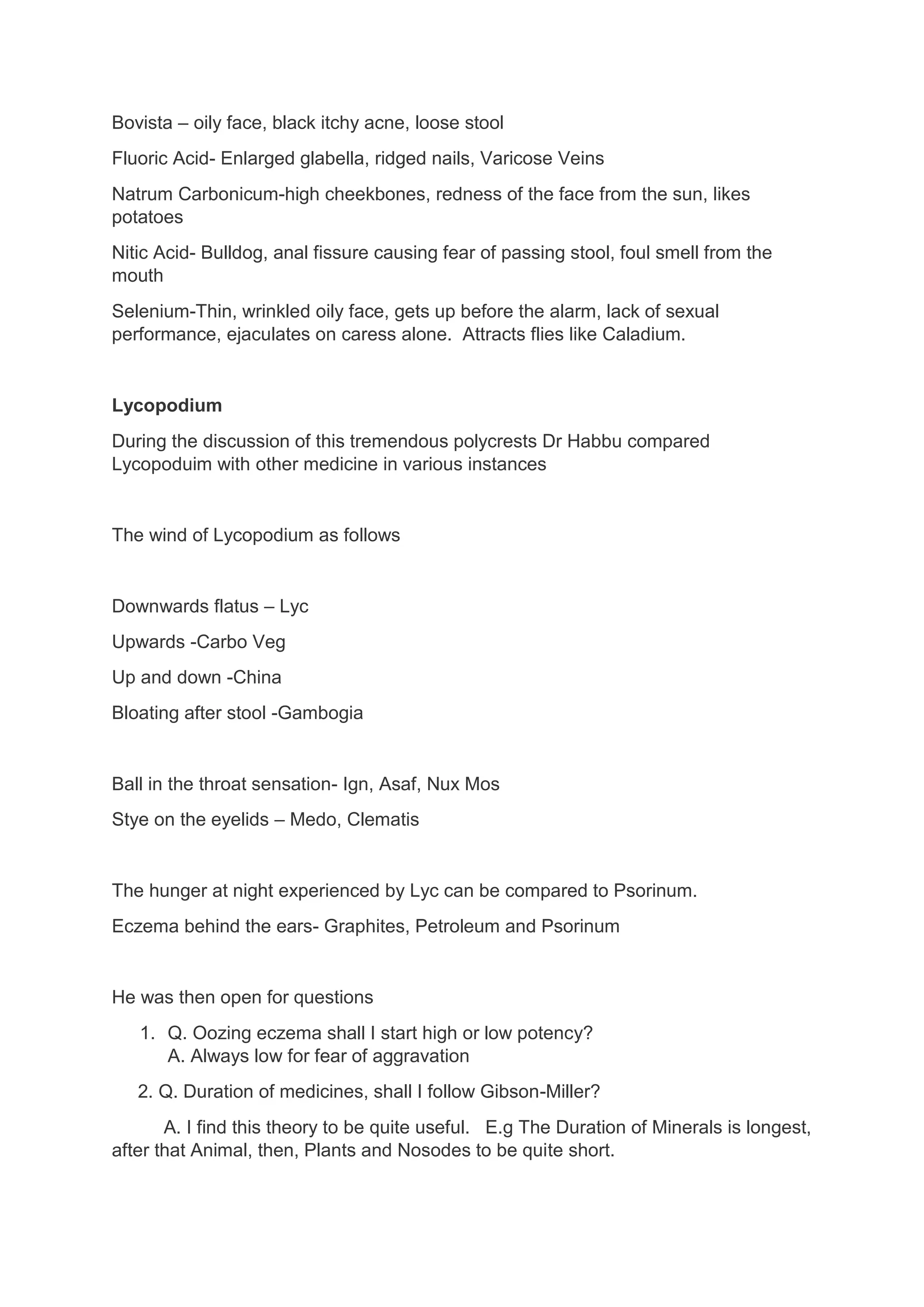
DR ANIL HABBU
Over four decades of experience in homoeopathy, practising out of Pune and
Mumbai. Completed MBBS and MD, D.P.H. from VMMC Solapur and Grant Medical
College Mumbai respectively and then studied Homeopathy at Royal London
Homeopathic Hospital under the auspices of the Faculty of Homeopathy UK, of
which he later became a Member. Especially known for keen observation and
brilliant constitutional prescribing. Ex consultant and ex honorary consultant at
Deenanath Mangeshkar Hospital and Sanjeevan Hospital respectively. He has
taught at the D.S.H.M. College, Pune for many years and has trained very many
homeopaths in his clinics in Mumbai and Pune. Awarded Best Practitioner award
from Dr Mahendra Singh Memorial Trust. For his pro bono homeopathic consulting
services to the Armed Forces (at the 101 Infantry Battalion, Territorial Army, Pune )
he has been conferred with the rank of Honorary Lt Colonel in 1997, and, then in
2007 Honorary Colonel, by the Honourable President of India.
The topic of Astute Observation caught my attention and Dr Habbu had no
hesitation in acknowledging Dr C.M Boger’s lessons in observation. He learnt
directly from Marjorie Blackie who always answered the door to the patients herself
to observe the patient from the outset. Some patients wait to be invited to take a
seat, (e.g Sil, Phos) some sit down immediately (e.g Sulph).
He reminded us that the build of the patient invites us to collect information thin, lean
(e.g Phos, Sil, Calc Phos, Tuberculinium, Psorinum) others will be bulky. (e,g Kali
Carb. Calc Carb, Thuja, Nit Ac)
Antimonium Crud -Poker face, won’t smile, thick coating on the tongue
Bovista – oily face, black itchy acne, loose stool
Fluoric Acid- Enlarged glabella, ridged nails, Varicose Veins
Natrum Carbonicum-high cheekbones, redness of the face from the sun, likes
potatoes
Nitic Acid- Bulldog, anal fissure causing fear of passing stool, foul smell from the
mouth
Selenium-Thin, wrinkled oily face, gets up before the alarm, lack of sexual
performance, ejaculates on caress alone. Attracts flies like Caladium.
Lycopodium
During the discussion of this tremendous polycrests Dr Habbu compared
Lycopoduim with other medicine in various instances
The wind of Lycopodium as follows
Downwards flatus – Lyc
Upwards -Carbo Veg
Up and down -China
Bloating after stool -Gambogia
Ball in the throat sensation- Ign, Asaf, Nux Mos
Stye on the eyelids – Medo, Clematis
The hunger at night experienced by Lyc can be compared to Psorinum.
Eczema behind the ears- Graphites, Petroleum and Psorinum
He was then open for questions
1. Q. Oozing eczema shall I start high or low potency?
A. Always low for fear of aggravation
2. Q. Duration of medicines, shall I follow Gibson-Miller?
A. I find this theory to be quite useful. E.g The Duration of Minerals is longest,
after that Animal, then, Plants and Nosodes to be quite short.
3.Q. Do you regard Nash?
A. I regard Nash’s Leaders a very important contribution. He is often missed
but will help a new homoeopath with the striking symptoms in a medicine.
Dr Habbu finished his comprehensive delivery of Lycopodium with some illustrations
of the ‘look’ of the constitution.
Intelligent, sharp, frown, inquisitive, Balding of hair to the front, and finally a comment
that commonly a Lycopodium will never reach the highest post in a company
because of his inability to take decisions by himself due to anxiety.
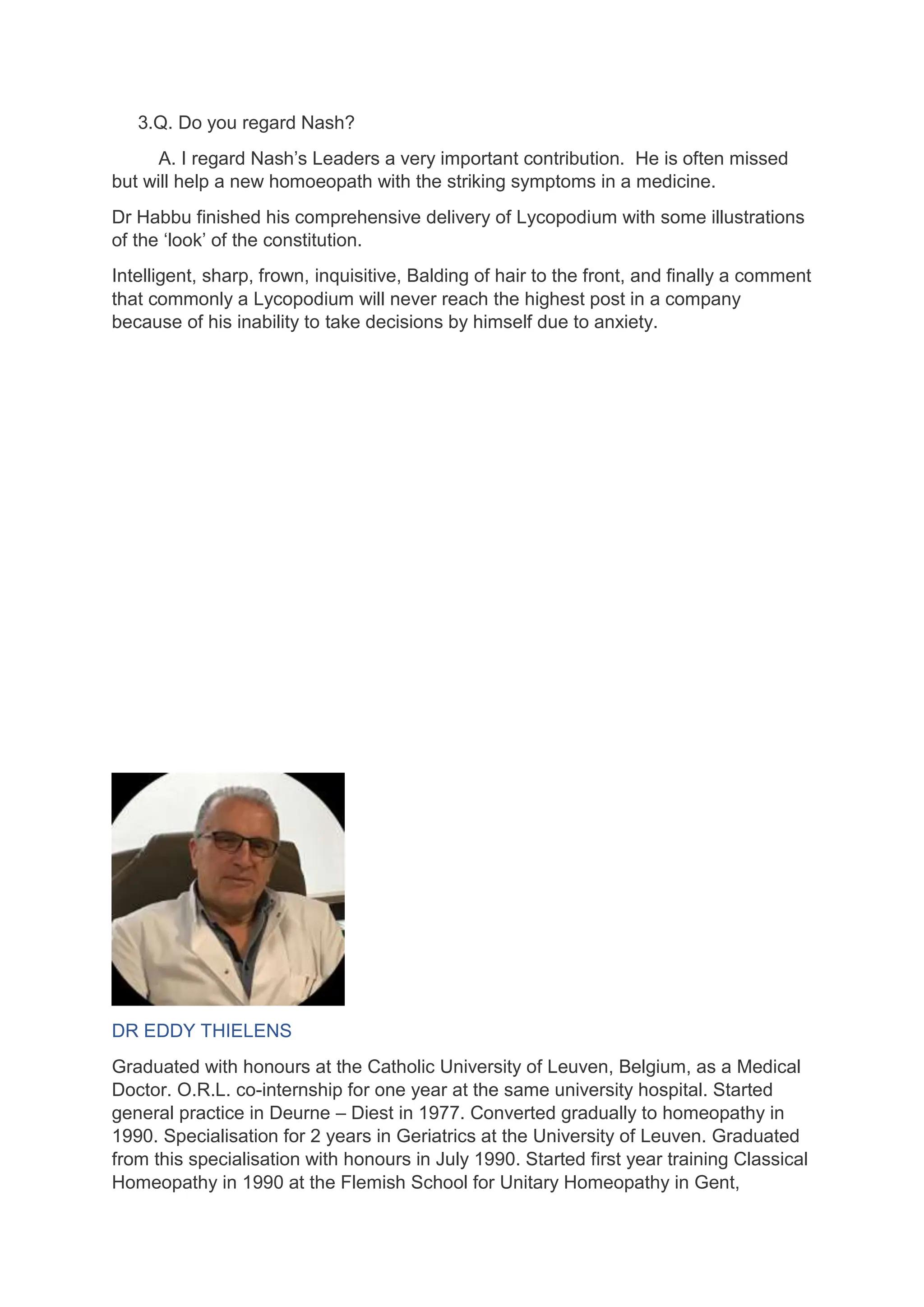
DR EDDY THIELENS
Graduated with honours at the Catholic University of Leuven, Belgium, as a Medical
Doctor. O.R.L. co-internship for one year at the same university hospital. Started
general practice in Deurne – Diest in 1977. Converted gradually to homeopathy in
1990. Specialisation for 2 years in Geriatrics at the University of Leuven. Graduated
from this specialisation with honours in July 1990. Started first year training Classical
Homeopathy in 1990 at the Flemish School for Unitary Homeopathy in Gent,
Belgium. Graduated in 1994 at the International School for Classical Homeopathy at
Hechtel, Belgium, after a 3 years training with the late Dr. Alfons Geukens. Taught
and supervised at the same School for many years. Was invited by George
Vithoulkas in 1997 to teach at his School in Alonissos, Greece from 1997 till 2000.
After this taught for many years in Malta, Sweden, Germany, Holland, Belgium,
Israel, Bulgaria, Moscow and now at Pune.
Acute Prescribing
Dr Eddy Thielens shared his experiences with acute prescribing and his observation
that there may be three stages
1. The remedy needed at the outset
2. The remedy needed for the developed symptoms
3. The convalescence remedy which may well be the constitutional one.
Diathesis is how the reaction in an acute
Constitution is the way of being
Temperament is the way of acting
He looked at the pace of the medicine and if there has been a violent, brutal Aconite
situation along with restlessness and anxiety, the next prescription will not be one
which manifests as sluggish. The pace of the situation should be matched.
Dry fever with anxiety, if perspiration develops Belladonna may well follow. Deep
sleep may precede recovery or profuse urination indicates recovery in Aconite.
Concomitants are helpful in acute prescribing. E.g Pale face on sitting up in Aconite.
Palpitation on lying on the left side could be Spigelia followed by a medicine from the
Aurum group.
Hepar Sulph could lead to Spongia in a laryngeal case.
He warned of using medicines which have centrifugal action in acutes, such as
Sulphur in Otitis Media, this would be damaging to the patient as there can be no
expansion in the ear canal an could cause perforation.
He has noted that medicines such as Mercurius if used when only partially similar
could produce abscess rather than cure it. Likewise Echinacea could encourage
suppuration of the appendix if inappropriately given.
Ferrum Phos often has a cough at the beginning of the fever.
The weak aspect of Ferrum Phos could be complemented by Hepar Sulph and the
constitutional of Tuberculinum will finish the case.
The Kaliums may not produce fever as this group is often weaker.
Pyrogen is frequently restless in fever and could be followed by Hepar Sulph.
He mentioned sequences of medicines such as
Aconite-Belladonna-Bryonia-Mercurius-Rhus tox-Arsenicum Alb
And also, to try and ensure the case does not reach the Arsenicum stage.
An acute fever is an acute crisis of toxicity.
The chronic cases can become very difficult when the patient becomes the diseased
organ. ‘The Liver patient’, the pancreas patient and so on.
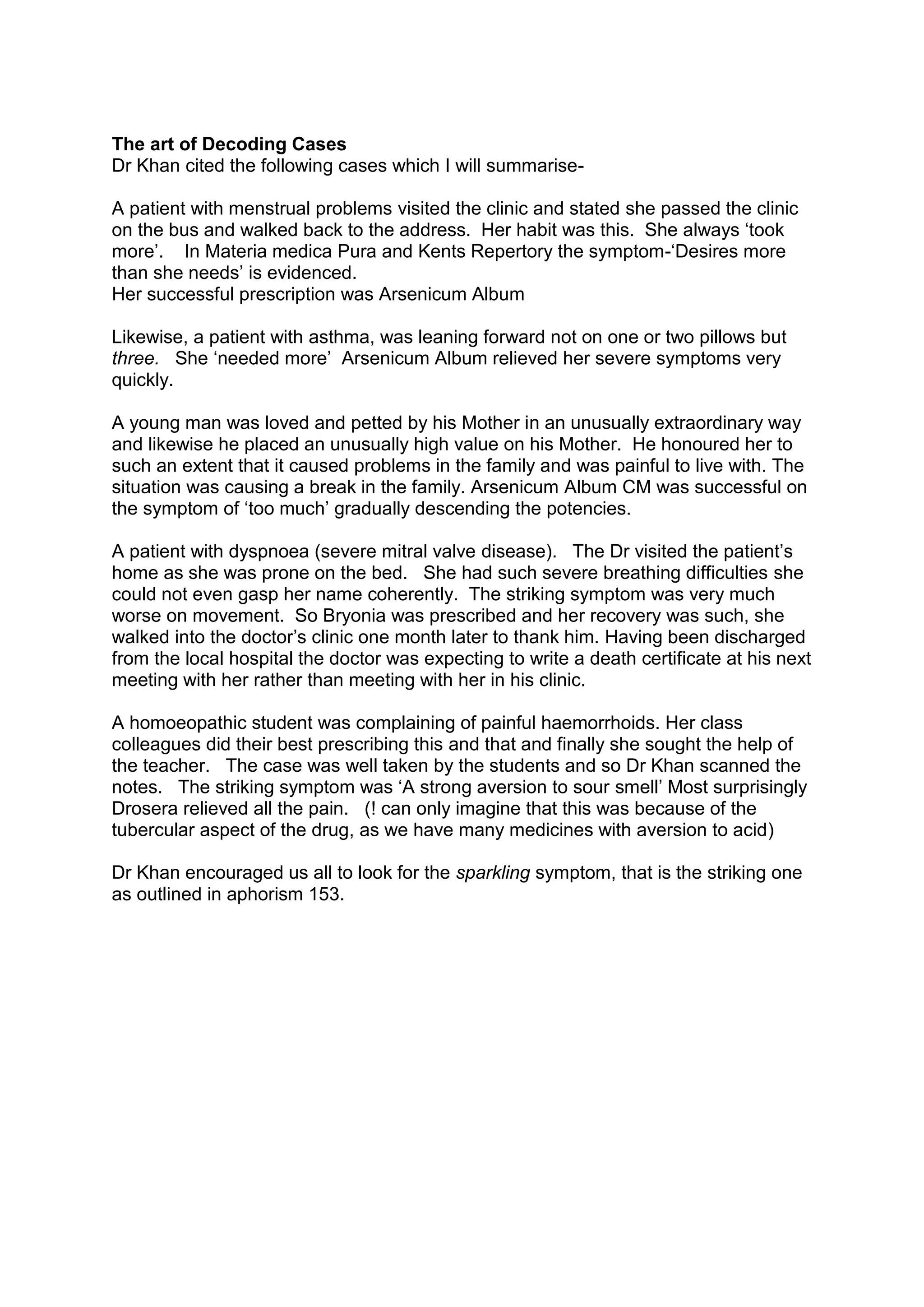
DR L M KHAN
A veteran prescriber and teacher who has held many a high post in the field of
Homoeopathy. Loves delivering lively lectures in his characteristic way that makes
the study of Homoeopathy very enjoyable. Encourages and exhorts the younger
generation to pick up the threads left by the old masters, and has shown his prowess
by successfully treating innumerable IPD and OPD cases based on the teachings of
our Master Hahnemann.
Dr Khan shared some age old stories which reflect the brilliance of homoeopathic
prescribing by observation and knowledge of Materia Medica. His references to
Materia medica Pura were encouraging to those who recognise the value of
following the precision of Hahnemanns’s provings and subsequent teaching.
The art of Decoding Cases
Dr Khan cited the following cases which I will summarise-
A patient with menstrual problems visited the clinic and stated she passed the clinic
on the bus and walked back to the address. Her habit was this. She always ‘took
more’. In Materia medica Pura and Kents Repertory the symptom-‘Desires more
than she needs’ is evidenced.
Her successful prescription was Arsenicum Album
Likewise, a patient with asthma, was leaning forward not on one or two pillows but
three. She ‘needed more’ Arsenicum Album relieved her severe symptoms very
quickly.
A young man was loved and petted by his Mother in an unusually extraordinary way
and likewise he placed an unusually high value on his Mother. He honoured her to
such an extent that it caused problems in the family and was painful to live with. The
situation was causing a break in the family. Arsenicum Album CM was successful on
the symptom of ‘too much’ gradually descending the potencies.
A patient with dyspnoea (severe mitral valve disease). The Dr visited the patient’s
home as she was prone on the bed. She had such severe breathing difficulties she
could not even gasp her name coherently. The striking symptom was very much
worse on movement. So Bryonia was prescribed and her recovery was such, she
walked into the doctor’s clinic one month later to thank him. Having been discharged
from the local hospital the doctor was expecting to write a death certificate at his next
meeting with her rather than meeting with her in his clinic.
A homoeopathic student was complaining of painful haemorrhoids. Her class
colleagues did their best prescribing this and that and finally she sought the help of
the teacher. The case was well taken by the students and so Dr Khan scanned the
notes. The striking symptom was ‘A strong aversion to sour smell’ Most surprisingly
Drosera relieved all the pain. (! can only imagine that this was because of the
tubercular aspect of the drug, as we have many medicines with aversion to acid)
Dr Khan encouraged us all to look for the sparkling symptom, that is the striking one
as outlined in aphorism 153.
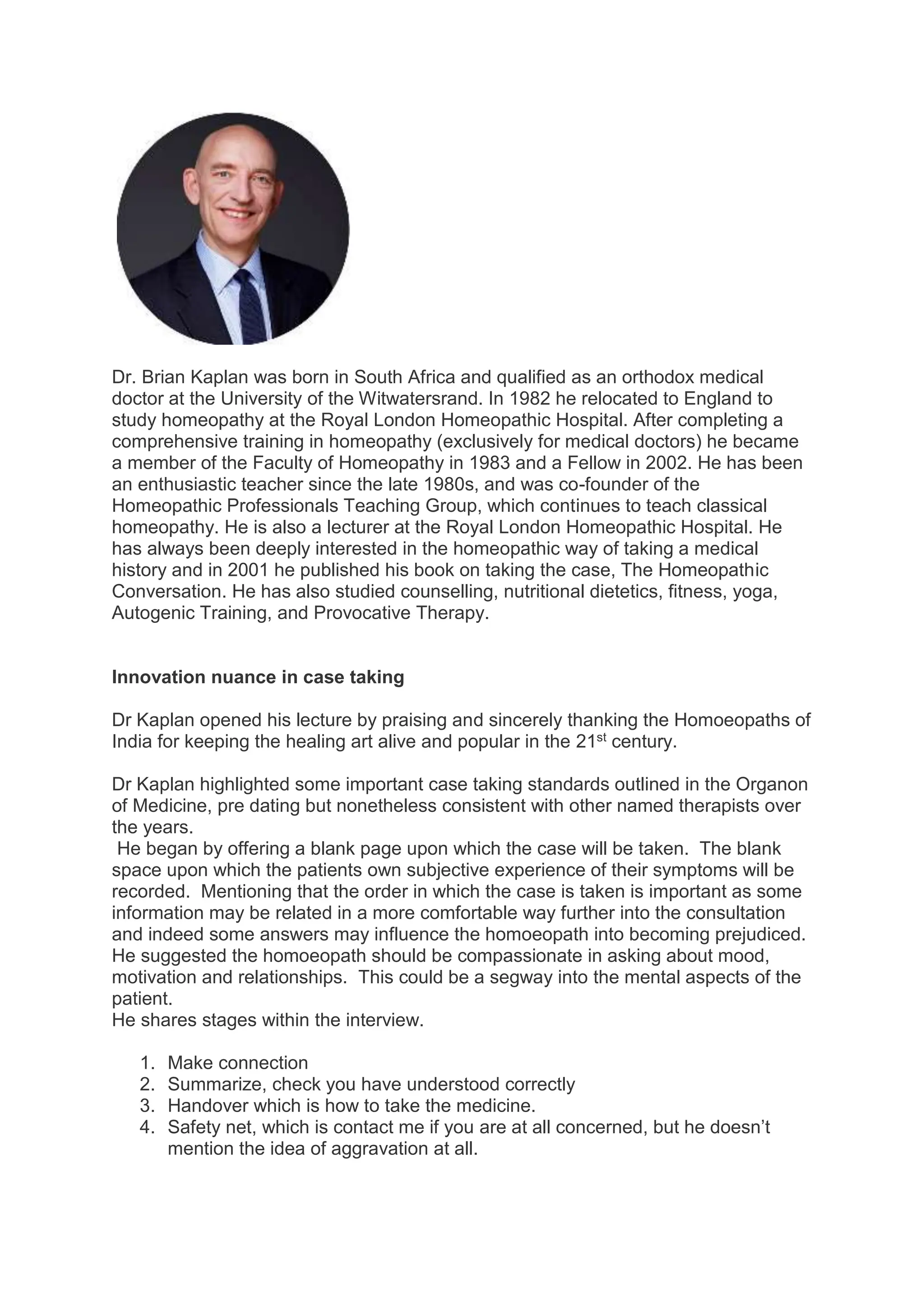
Dr. Brian Kaplan was born in South Africa and qualified as an orthodox medical
doctor at the University of the Witwatersrand. In 1982 he relocated to England to
study homeopathy at the Royal London Homeopathic Hospital. After completing a
comprehensive training in homeopathy (exclusively for medical doctors) he became
a member of the Faculty of Homeopathy in 1983 and a Fellow in 2002. He has been
an enthusiastic teacher since the late 1980s, and was co-founder of the
Homeopathic Professionals Teaching Group, which continues to teach classical
homeopathy. He is also a lecturer at the Royal London Homeopathic Hospital. He
has always been deeply interested in the homeopathic way of taking a medical
history and in 2001 he published his book on taking the case, The Homeopathic
Conversation. He has also studied counselling, nutritional dietetics, fitness, yoga,
Autogenic Training, and Provocative Therapy.
Innovation nuance in case taking
Dr Kaplan opened his lecture by praising and sincerely thanking the Homoeopaths of
India for keeping the healing art alive and popular in the 21st century.
Dr Kaplan highlighted some important case taking standards outlined in the Organon
of Medicine, pre dating but nonetheless consistent with other named therapists over
the years.
He began by offering a blank page upon which the case will be taken. The blank
space upon which the patients own subjective experience of their symptoms will be
recorded. Mentioning that the order in which the case is taken is important as some
information may be related in a more comfortable way further into the consultation
and indeed some answers may influence the homoeopath into becoming prejudiced.
He suggested the homoeopath should be compassionate in asking about mood,
motivation and relationships. This could be a segway into the mental aspects of the
patient.
He shares stages within the interview.
1. Make connection
2. Summarize, check you have understood correctly
3. Handover which is how to take the medicine.
4. Safety net, which is contact me if you are at all concerned, but he doesn’t
mention the idea of aggravation at all.
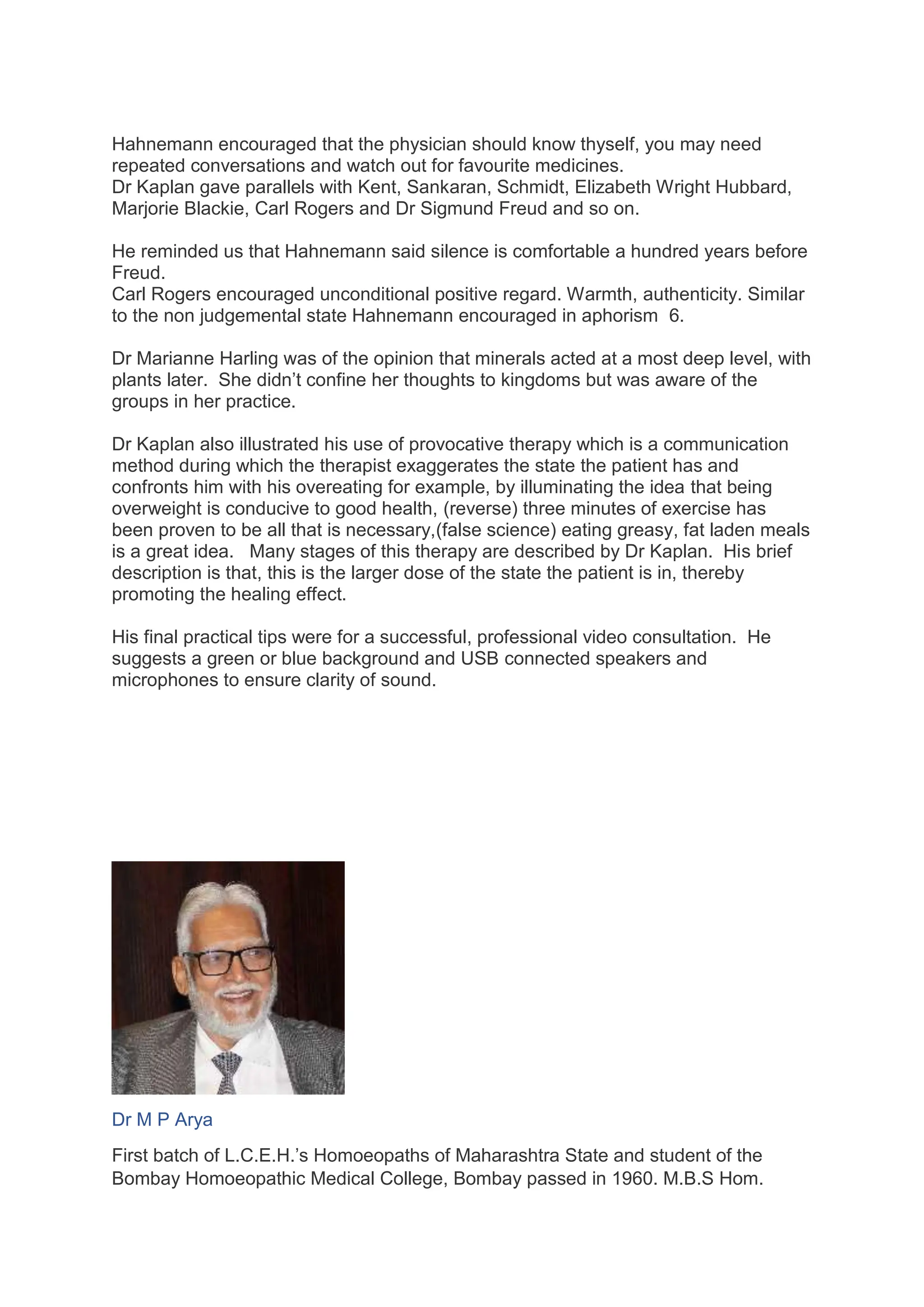
Hahnemann encouraged that the physician should know thyself, you may need
repeated conversations and watch out for favourite medicines.
Dr Kaplan gave parallels with Kent, Sankaran, Schmidt, Elizabeth Wright Hubbard,
Marjorie Blackie, Carl Rogers and Dr Sigmund Freud and so on.
He reminded us that Hahnemann said silence is comfortable a hundred years before
Freud.
Carl Rogers encouraged unconditional positive regard. Warmth, authenticity. Similar
to the non judgemental state Hahnemann encouraged in aphorism 6.
Dr Marianne Harling was of the opinion that minerals acted at a most deep level, with
plants later. She didn’t confine her thoughts to kingdoms but was aware of the
groups in her practice.
Dr Kaplan also illustrated his use of provocative therapy which is a communication
method during which the therapist exaggerates the state the patient has and
confronts him with his overeating for example, by illuminating the idea that being
overweight is conducive to good health, (reverse) three minutes of exercise has
been proven to be all that is necessary,(false science) eating greasy, fat laden meals
is a great idea. Many stages of this therapy are described by Dr Kaplan. His brief
description is that, this is the larger dose of the state the patient is in, thereby
promoting the healing effect.
His final practical tips were for a successful, professional video consultation. He
suggests a green or blue background and USB connected speakers and
microphones to ensure clarity of sound.
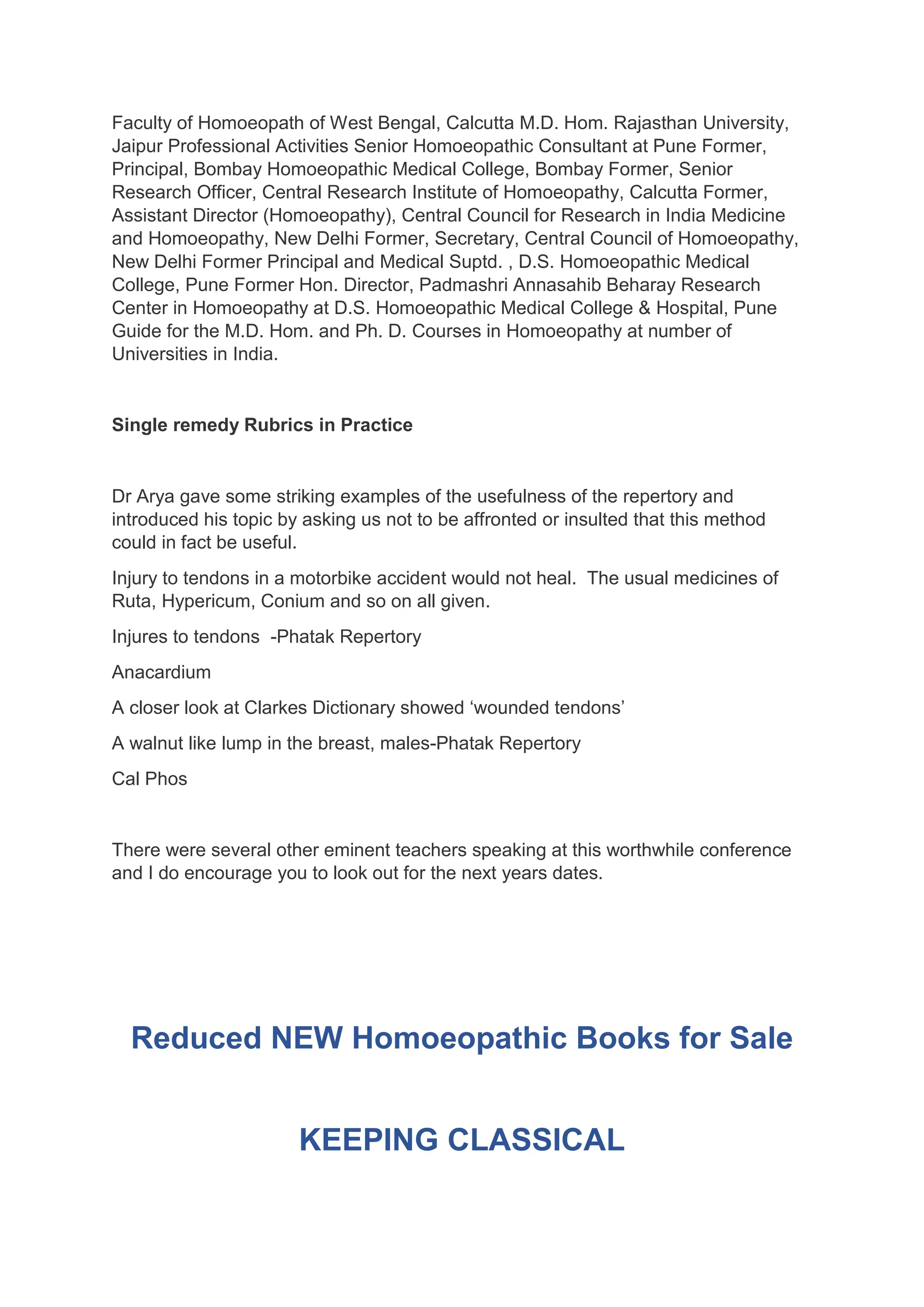
Dr M P Arya
First batch of L.C.E.H.’s Homoeopaths of Maharashtra State and student of the
Bombay Homoeopathic Medical College, Bombay passed in 1960. M.B.S Hom.
Faculty of Homoeopath of West Bengal, Calcutta M.D. Hom. Rajasthan University,
Jaipur Professional Activities Senior Homoeopathic Consultant at Pune Former,
Principal, Bombay Homoeopathic Medical College, Bombay Former, Senior
Research Officer, Central Research Institute of Homoeopathy, Calcutta Former,
Assistant Director (Homoeopathy), Central Council for Research in India Medicine
and Homoeopathy, New Delhi Former, Secretary, Central Council of Homoeopathy,
New Delhi Former Principal and Medical Suptd. , D.S. Homoeopathic Medical
College, Pune Former Hon. Director, Padmashri Annasahib Beharay Research
Center in Homoeopathy at D.S. Homoeopathic Medical College & Hospital, Pune
Guide for the M.D. Hom. and Ph. D. Courses in Homoeopathy at number of
Universities in India.
Single remedy Rubrics in Practice
Dr Arya gave some striking examples of the usefulness of the repertory and
introduced his topic by asking us not to be affronted or insulted that this method
could in fact be useful.
Injury to tendons in a motorbike accident would not heal. The usual medicines of
Ruta, Hypericum, Conium and so on all given.
Injures to tendons -Phatak Repertory
Anacardium
A closer look at Clarkes Dictionary showed ‘wounded tendons’
A walnut like lump in the breast, males-Phatak Repertory
Cal Phos
There were several other eminent teachers speaking at this worthwhile conference
and I do encourage you to look out for the next years dates.
Reduced NEW Homoeopathic Books for Sale
KEEPING CLASSICAL
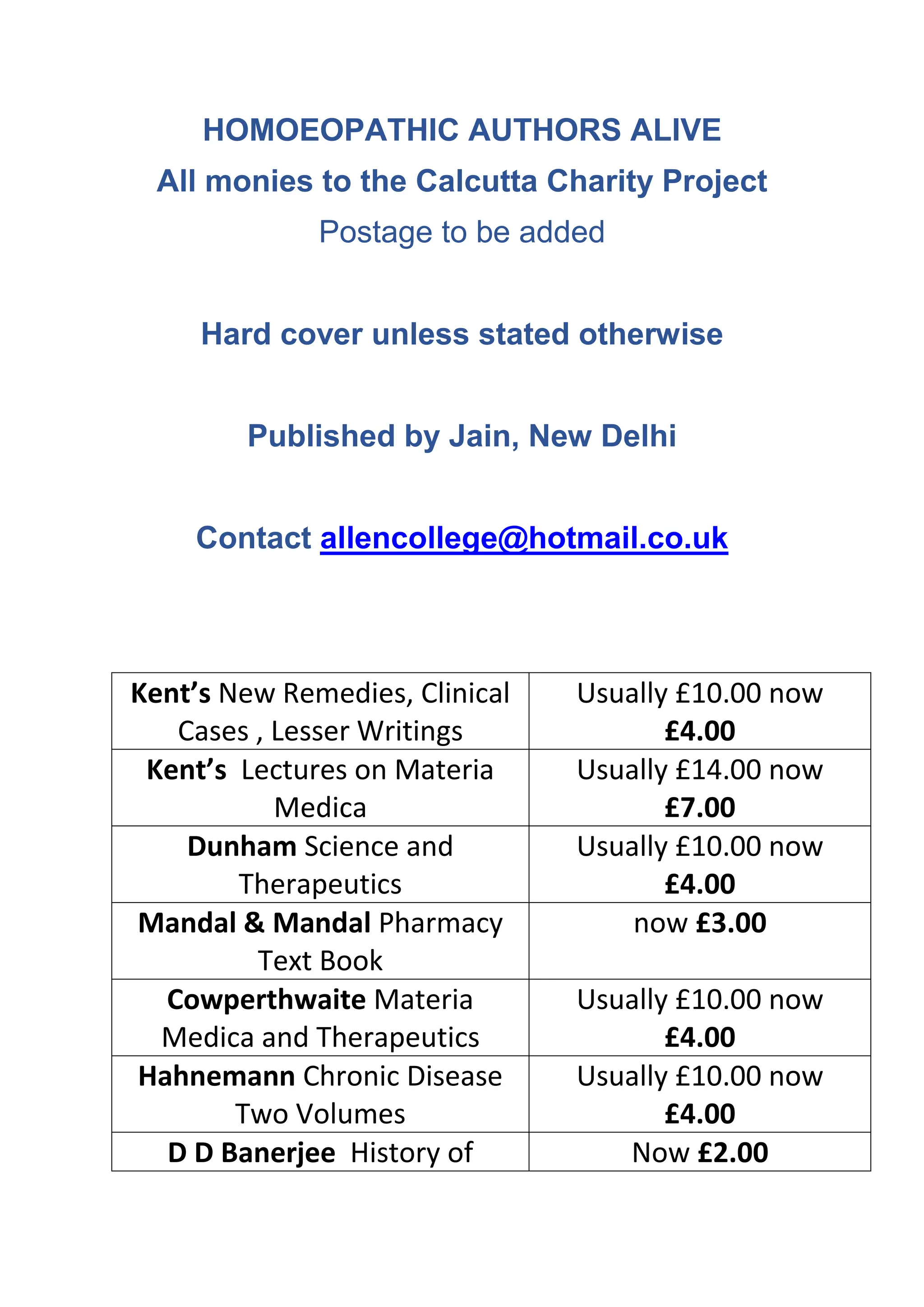
HOMOEOPATHIC AUTHORS ALIVE
All monies to the Calcutta Charity Project
Postage to be added
Hard cover unless stated otherwise
Published by Jain, New Delhi
Contact allencollege@hotmail.co.uk
Kent’s New Remedies, Clinical
Cases , Lesser Writings
Usually £10.00 now
£4.00
Kent’s Lectures on Materia
Medica
Usually £14.00 now
£7.00
Dunham Science and
Therapeutics
Usually £10.00 now
£4.00
Mandal & Mandal Pharmacy
Text Book
now £3.00
Cowperthwaite Materia
Medica and Therapeutics
Usually £10.00 now
£4.00
Hahnemann Chronic Disease
Two Volumes
Usually £10.00 now
£4.00
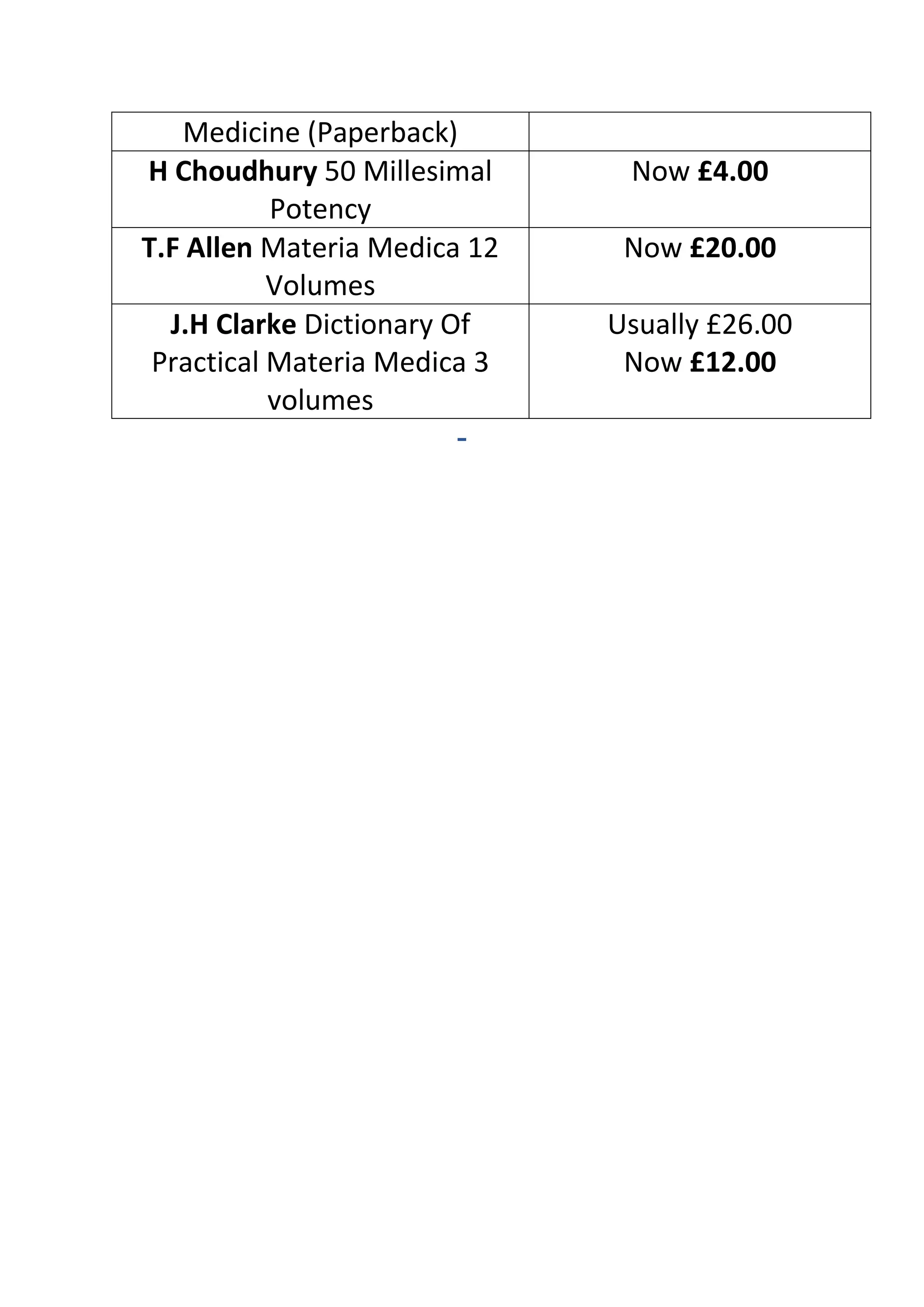
D D Banerjee History of Now £2.00
Medicine (Paperback)
H Choudhury 50 Millesimal
Potency
Now £4.00
T.F Allen Materia Medica 12
Volumes
Now £20.00
J.H Clarke Dictionary Of
Practical Materia Medica 3
volumes
Usually £26.00
Now £12.00
-

April-2021 - HOMOEOCON 2021--Janet Banerjea.doc

  • 1.
    HOMOEOCON 2021 By Allen Collegeof Homoeopathy Janet Banerjea R.S.Hom. Joint Principal Allen College of Homoeopathy, Essex, England “Sapiens”, 382, Baddow Road, Great Baddow, Chelmsford, Essex CM2 9RA, England Tel No. 44 (0) 1245 505858 /59 allencollege@btconnect.com www.homoeopathy-course.com A few anecdotes from the conference ‘at home’. Janet Banerjea RSHom with thanks to Dr Sacheen Khirid I have summarised some of the pertinent points delivered by this collection of highly qualified teachers. My enjoyment at being connected to the Indian Conference was immense and is a reminder to me, of my fortune, in learning from these Indian experts in my formative years as a young homoeopath. Of course, I have included a short synopsis of the two other doctors not from India but who have strong ties with
  • 2.
    Homoeocon. I stronglyadvocate anyone practising or studying to join this conference next year and we hope to have the date for your diary soon. There is a list of new books for sale at the end of the article. All monies to the Calcutta Charity. DR ANIL HABBU Over four decades of experience in homoeopathy, practising out of Pune and Mumbai. Completed MBBS and MD, D.P.H. from VMMC Solapur and Grant Medical College Mumbai respectively and then studied Homeopathy at Royal London Homeopathic Hospital under the auspices of the Faculty of Homeopathy UK, of which he later became a Member. Especially known for keen observation and brilliant constitutional prescribing. Ex consultant and ex honorary consultant at Deenanath Mangeshkar Hospital and Sanjeevan Hospital respectively. He has taught at the D.S.H.M. College, Pune for many years and has trained very many homeopaths in his clinics in Mumbai and Pune. Awarded Best Practitioner award from Dr Mahendra Singh Memorial Trust. For his pro bono homeopathic consulting services to the Armed Forces (at the 101 Infantry Battalion, Territorial Army, Pune ) he has been conferred with the rank of Honorary Lt Colonel in 1997, and, then in 2007 Honorary Colonel, by the Honourable President of India. The topic of Astute Observation caught my attention and Dr Habbu had no hesitation in acknowledging Dr C.M Boger’s lessons in observation. He learnt directly from Marjorie Blackie who always answered the door to the patients herself to observe the patient from the outset. Some patients wait to be invited to take a seat, (e.g Sil, Phos) some sit down immediately (e.g Sulph). He reminded us that the build of the patient invites us to collect information thin, lean (e.g Phos, Sil, Calc Phos, Tuberculinium, Psorinum) others will be bulky. (e,g Kali Carb. Calc Carb, Thuja, Nit Ac) Antimonium Crud -Poker face, won’t smile, thick coating on the tongue
  • 3.
    Bovista – oilyface, black itchy acne, loose stool Fluoric Acid- Enlarged glabella, ridged nails, Varicose Veins Natrum Carbonicum-high cheekbones, redness of the face from the sun, likes potatoes Nitic Acid- Bulldog, anal fissure causing fear of passing stool, foul smell from the mouth Selenium-Thin, wrinkled oily face, gets up before the alarm, lack of sexual performance, ejaculates on caress alone. Attracts flies like Caladium. Lycopodium During the discussion of this tremendous polycrests Dr Habbu compared Lycopoduim with other medicine in various instances The wind of Lycopodium as follows Downwards flatus – Lyc Upwards -Carbo Veg Up and down -China Bloating after stool -Gambogia Ball in the throat sensation- Ign, Asaf, Nux Mos Stye on the eyelids – Medo, Clematis The hunger at night experienced by Lyc can be compared to Psorinum. Eczema behind the ears- Graphites, Petroleum and Psorinum He was then open for questions 1. Q. Oozing eczema shall I start high or low potency? A. Always low for fear of aggravation 2. Q. Duration of medicines, shall I follow Gibson-Miller? A. I find this theory to be quite useful. E.g The Duration of Minerals is longest, after that Animal, then, Plants and Nosodes to be quite short.
  • 4.
    3.Q. Do youregard Nash? A. I regard Nash’s Leaders a very important contribution. He is often missed but will help a new homoeopath with the striking symptoms in a medicine. Dr Habbu finished his comprehensive delivery of Lycopodium with some illustrations of the ‘look’ of the constitution. Intelligent, sharp, frown, inquisitive, Balding of hair to the front, and finally a comment that commonly a Lycopodium will never reach the highest post in a company because of his inability to take decisions by himself due to anxiety. DR EDDY THIELENS Graduated with honours at the Catholic University of Leuven, Belgium, as a Medical Doctor. O.R.L. co-internship for one year at the same university hospital. Started general practice in Deurne – Diest in 1977. Converted gradually to homeopathy in 1990. Specialisation for 2 years in Geriatrics at the University of Leuven. Graduated from this specialisation with honours in July 1990. Started first year training Classical Homeopathy in 1990 at the Flemish School for Unitary Homeopathy in Gent,
  • 5.
    Belgium. Graduated in1994 at the International School for Classical Homeopathy at Hechtel, Belgium, after a 3 years training with the late Dr. Alfons Geukens. Taught and supervised at the same School for many years. Was invited by George Vithoulkas in 1997 to teach at his School in Alonissos, Greece from 1997 till 2000. After this taught for many years in Malta, Sweden, Germany, Holland, Belgium, Israel, Bulgaria, Moscow and now at Pune. Acute Prescribing Dr Eddy Thielens shared his experiences with acute prescribing and his observation that there may be three stages 1. The remedy needed at the outset 2. The remedy needed for the developed symptoms 3. The convalescence remedy which may well be the constitutional one. Diathesis is how the reaction in an acute Constitution is the way of being Temperament is the way of acting He looked at the pace of the medicine and if there has been a violent, brutal Aconite situation along with restlessness and anxiety, the next prescription will not be one which manifests as sluggish. The pace of the situation should be matched. Dry fever with anxiety, if perspiration develops Belladonna may well follow. Deep sleep may precede recovery or profuse urination indicates recovery in Aconite. Concomitants are helpful in acute prescribing. E.g Pale face on sitting up in Aconite. Palpitation on lying on the left side could be Spigelia followed by a medicine from the Aurum group. Hepar Sulph could lead to Spongia in a laryngeal case. He warned of using medicines which have centrifugal action in acutes, such as Sulphur in Otitis Media, this would be damaging to the patient as there can be no expansion in the ear canal an could cause perforation. He has noted that medicines such as Mercurius if used when only partially similar could produce abscess rather than cure it. Likewise Echinacea could encourage suppuration of the appendix if inappropriately given. Ferrum Phos often has a cough at the beginning of the fever.
  • 6.
    The weak aspectof Ferrum Phos could be complemented by Hepar Sulph and the constitutional of Tuberculinum will finish the case. The Kaliums may not produce fever as this group is often weaker. Pyrogen is frequently restless in fever and could be followed by Hepar Sulph. He mentioned sequences of medicines such as Aconite-Belladonna-Bryonia-Mercurius-Rhus tox-Arsenicum Alb And also, to try and ensure the case does not reach the Arsenicum stage. An acute fever is an acute crisis of toxicity. The chronic cases can become very difficult when the patient becomes the diseased organ. ‘The Liver patient’, the pancreas patient and so on. DR L M KHAN A veteran prescriber and teacher who has held many a high post in the field of Homoeopathy. Loves delivering lively lectures in his characteristic way that makes the study of Homoeopathy very enjoyable. Encourages and exhorts the younger generation to pick up the threads left by the old masters, and has shown his prowess by successfully treating innumerable IPD and OPD cases based on the teachings of our Master Hahnemann. Dr Khan shared some age old stories which reflect the brilliance of homoeopathic prescribing by observation and knowledge of Materia Medica. His references to Materia medica Pura were encouraging to those who recognise the value of following the precision of Hahnemanns’s provings and subsequent teaching.
  • 7.
    The art ofDecoding Cases Dr Khan cited the following cases which I will summarise- A patient with menstrual problems visited the clinic and stated she passed the clinic on the bus and walked back to the address. Her habit was this. She always ‘took more’. In Materia medica Pura and Kents Repertory the symptom-‘Desires more than she needs’ is evidenced. Her successful prescription was Arsenicum Album Likewise, a patient with asthma, was leaning forward not on one or two pillows but three. She ‘needed more’ Arsenicum Album relieved her severe symptoms very quickly. A young man was loved and petted by his Mother in an unusually extraordinary way and likewise he placed an unusually high value on his Mother. He honoured her to such an extent that it caused problems in the family and was painful to live with. The situation was causing a break in the family. Arsenicum Album CM was successful on the symptom of ‘too much’ gradually descending the potencies. A patient with dyspnoea (severe mitral valve disease). The Dr visited the patient’s home as she was prone on the bed. She had such severe breathing difficulties she could not even gasp her name coherently. The striking symptom was very much worse on movement. So Bryonia was prescribed and her recovery was such, she walked into the doctor’s clinic one month later to thank him. Having been discharged from the local hospital the doctor was expecting to write a death certificate at his next meeting with her rather than meeting with her in his clinic. A homoeopathic student was complaining of painful haemorrhoids. Her class colleagues did their best prescribing this and that and finally she sought the help of the teacher. The case was well taken by the students and so Dr Khan scanned the notes. The striking symptom was ‘A strong aversion to sour smell’ Most surprisingly Drosera relieved all the pain. (! can only imagine that this was because of the tubercular aspect of the drug, as we have many medicines with aversion to acid) Dr Khan encouraged us all to look for the sparkling symptom, that is the striking one as outlined in aphorism 153.
  • 8.
    Dr. Brian Kaplanwas born in South Africa and qualified as an orthodox medical doctor at the University of the Witwatersrand. In 1982 he relocated to England to study homeopathy at the Royal London Homeopathic Hospital. After completing a comprehensive training in homeopathy (exclusively for medical doctors) he became a member of the Faculty of Homeopathy in 1983 and a Fellow in 2002. He has been an enthusiastic teacher since the late 1980s, and was co-founder of the Homeopathic Professionals Teaching Group, which continues to teach classical homeopathy. He is also a lecturer at the Royal London Homeopathic Hospital. He has always been deeply interested in the homeopathic way of taking a medical history and in 2001 he published his book on taking the case, The Homeopathic Conversation. He has also studied counselling, nutritional dietetics, fitness, yoga, Autogenic Training, and Provocative Therapy. Innovation nuance in case taking Dr Kaplan opened his lecture by praising and sincerely thanking the Homoeopaths of India for keeping the healing art alive and popular in the 21st century. Dr Kaplan highlighted some important case taking standards outlined in the Organon of Medicine, pre dating but nonetheless consistent with other named therapists over the years. He began by offering a blank page upon which the case will be taken. The blank space upon which the patients own subjective experience of their symptoms will be recorded. Mentioning that the order in which the case is taken is important as some information may be related in a more comfortable way further into the consultation and indeed some answers may influence the homoeopath into becoming prejudiced. He suggested the homoeopath should be compassionate in asking about mood, motivation and relationships. This could be a segway into the mental aspects of the patient. He shares stages within the interview. 1. Make connection 2. Summarize, check you have understood correctly 3. Handover which is how to take the medicine. 4. Safety net, which is contact me if you are at all concerned, but he doesn’t mention the idea of aggravation at all.
  • 9.
    Hahnemann encouraged thatthe physician should know thyself, you may need repeated conversations and watch out for favourite medicines. Dr Kaplan gave parallels with Kent, Sankaran, Schmidt, Elizabeth Wright Hubbard, Marjorie Blackie, Carl Rogers and Dr Sigmund Freud and so on. He reminded us that Hahnemann said silence is comfortable a hundred years before Freud. Carl Rogers encouraged unconditional positive regard. Warmth, authenticity. Similar to the non judgemental state Hahnemann encouraged in aphorism 6. Dr Marianne Harling was of the opinion that minerals acted at a most deep level, with plants later. She didn’t confine her thoughts to kingdoms but was aware of the groups in her practice. Dr Kaplan also illustrated his use of provocative therapy which is a communication method during which the therapist exaggerates the state the patient has and confronts him with his overeating for example, by illuminating the idea that being overweight is conducive to good health, (reverse) three minutes of exercise has been proven to be all that is necessary,(false science) eating greasy, fat laden meals is a great idea. Many stages of this therapy are described by Dr Kaplan. His brief description is that, this is the larger dose of the state the patient is in, thereby promoting the healing effect. His final practical tips were for a successful, professional video consultation. He suggests a green or blue background and USB connected speakers and microphones to ensure clarity of sound. Dr M P Arya First batch of L.C.E.H.’s Homoeopaths of Maharashtra State and student of the Bombay Homoeopathic Medical College, Bombay passed in 1960. M.B.S Hom.
  • 10.
    Faculty of Homoeopathof West Bengal, Calcutta M.D. Hom. Rajasthan University, Jaipur Professional Activities Senior Homoeopathic Consultant at Pune Former, Principal, Bombay Homoeopathic Medical College, Bombay Former, Senior Research Officer, Central Research Institute of Homoeopathy, Calcutta Former, Assistant Director (Homoeopathy), Central Council for Research in India Medicine and Homoeopathy, New Delhi Former, Secretary, Central Council of Homoeopathy, New Delhi Former Principal and Medical Suptd. , D.S. Homoeopathic Medical College, Pune Former Hon. Director, Padmashri Annasahib Beharay Research Center in Homoeopathy at D.S. Homoeopathic Medical College & Hospital, Pune Guide for the M.D. Hom. and Ph. D. Courses in Homoeopathy at number of Universities in India. Single remedy Rubrics in Practice Dr Arya gave some striking examples of the usefulness of the repertory and introduced his topic by asking us not to be affronted or insulted that this method could in fact be useful. Injury to tendons in a motorbike accident would not heal. The usual medicines of Ruta, Hypericum, Conium and so on all given. Injures to tendons -Phatak Repertory Anacardium A closer look at Clarkes Dictionary showed ‘wounded tendons’ A walnut like lump in the breast, males-Phatak Repertory Cal Phos There were several other eminent teachers speaking at this worthwhile conference and I do encourage you to look out for the next years dates. Reduced NEW Homoeopathic Books for Sale KEEPING CLASSICAL
  • 11.
    HOMOEOPATHIC AUTHORS ALIVE Allmonies to the Calcutta Charity Project Postage to be added Hard cover unless stated otherwise Published by Jain, New Delhi Contact allencollege@hotmail.co.uk Kent’s New Remedies, Clinical Cases , Lesser Writings Usually £10.00 now £4.00 Kent’s Lectures on Materia Medica Usually £14.00 now £7.00 Dunham Science and Therapeutics Usually £10.00 now £4.00 Mandal & Mandal Pharmacy Text Book now £3.00 Cowperthwaite Materia Medica and Therapeutics Usually £10.00 now £4.00 Hahnemann Chronic Disease Two Volumes Usually £10.00 now £4.00 D D Banerjee History of Now £2.00
  • 12.
    Medicine (Paperback) H Choudhury50 Millesimal Potency Now £4.00 T.F Allen Materia Medica 12 Volumes Now £20.00 J.H Clarke Dictionary Of Practical Materia Medica 3 volumes Usually £26.00 Now £12.00 -