Biotechnology and its applications
Introduction
 Biotechnology is the broad area of biology, involving living systems and
organisms to develop or make products, or "any technological application that
uses biological systems, living organisms, or derivatives thereof, to make or
modify products or processes for specific use“.
 Depending on the tools and applications, it often overlaps with the (related)
fields of molecular biology, bio-engineering, biomedical
engineering, biomanufacturing, molecular engineering, etc.
 The wide concept of "biotech" or "biotechnology" encompasses a wide range of
procedures for modifying living organisms according to human purposes, going
back to domestication of animals, cultivation of the plants, and
"improvements" to these through breeding programs that employ artificial
selection and hybridization. Modern usage also includes genetic
engineering as well as cell and tissue culture technologies.
Its Applications
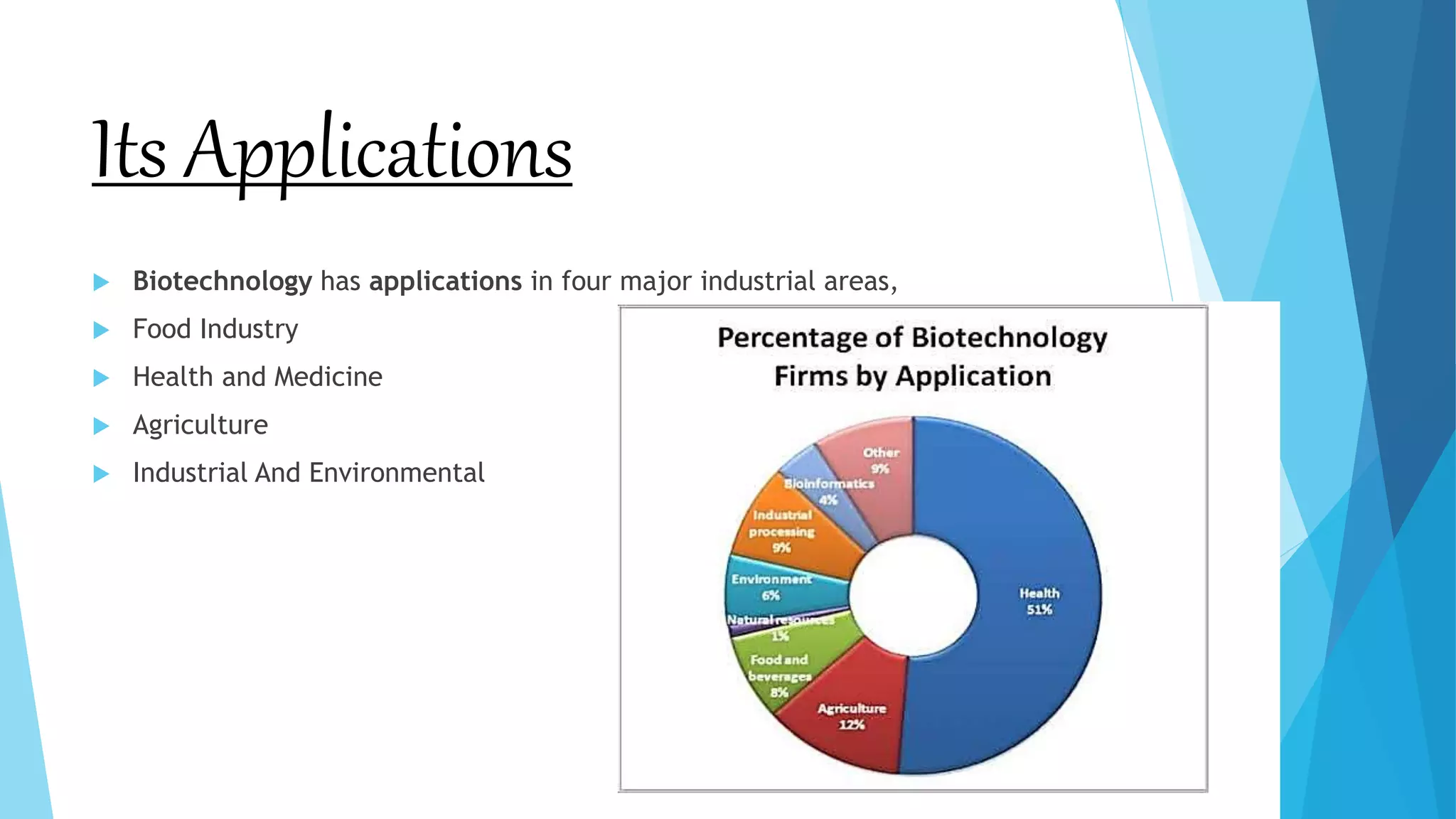
 Biotechnology has applications in four major industrial areas,
 Food Industry
 Health and Medicine
 Agriculture
 Industrial And Environmental
Food industry
 Fermentation:-
 Breweries are synthesized through the process of fermentation. Different
yeast strains are used to make breweries at commercial level. Genetic
engineering has enabled us to make light wine. During process of
fermentation yeast expresses glucoamylase (digestive enzyme) that convert
starch into glucose.
 Yeast strains used for wine synthesis which consists of two steps: 1) Primary
fermentation results in conversion of glucose into alcohol using yeast. 2)
Secondary fermentation uses bacteria and its product is lactic acid and this
causes the rise in level of acidity. To overcome this problem different
strategies are used which are costly. This problem was solved through
insertion of malolactic gene in industrial yeast strain. This gene lowers the
malate (malic acid) conversion hence lowering acidity level of wine.
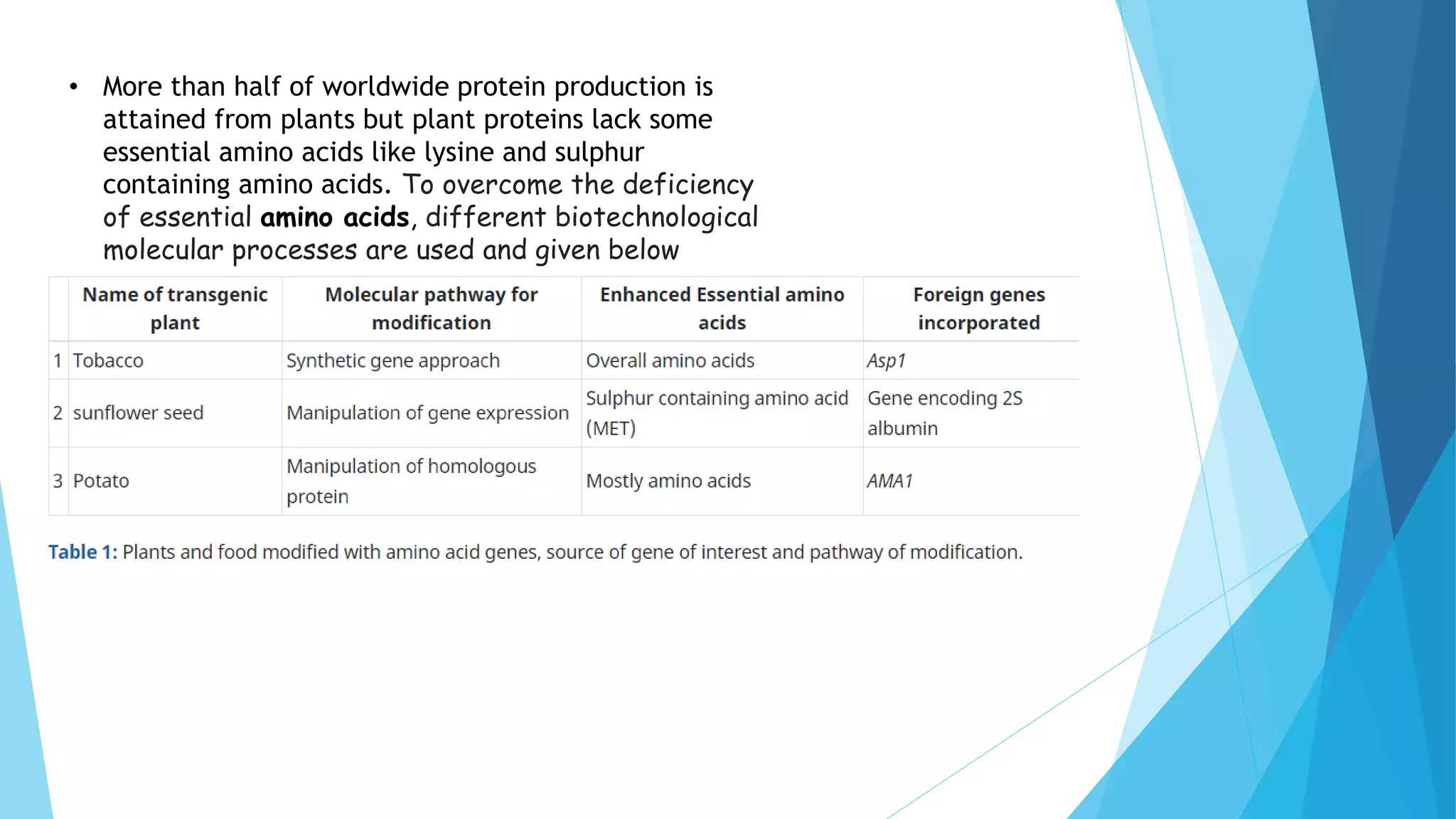
• More than half of worldwide protein production is
attained from plants but plant proteins lack some
essential amino acids like lysine and sulphur
containing amino acids. To overcome the deficiency
of essential amino acids, different biotechnological
molecular processes are used and given below
Medicine and Health Care
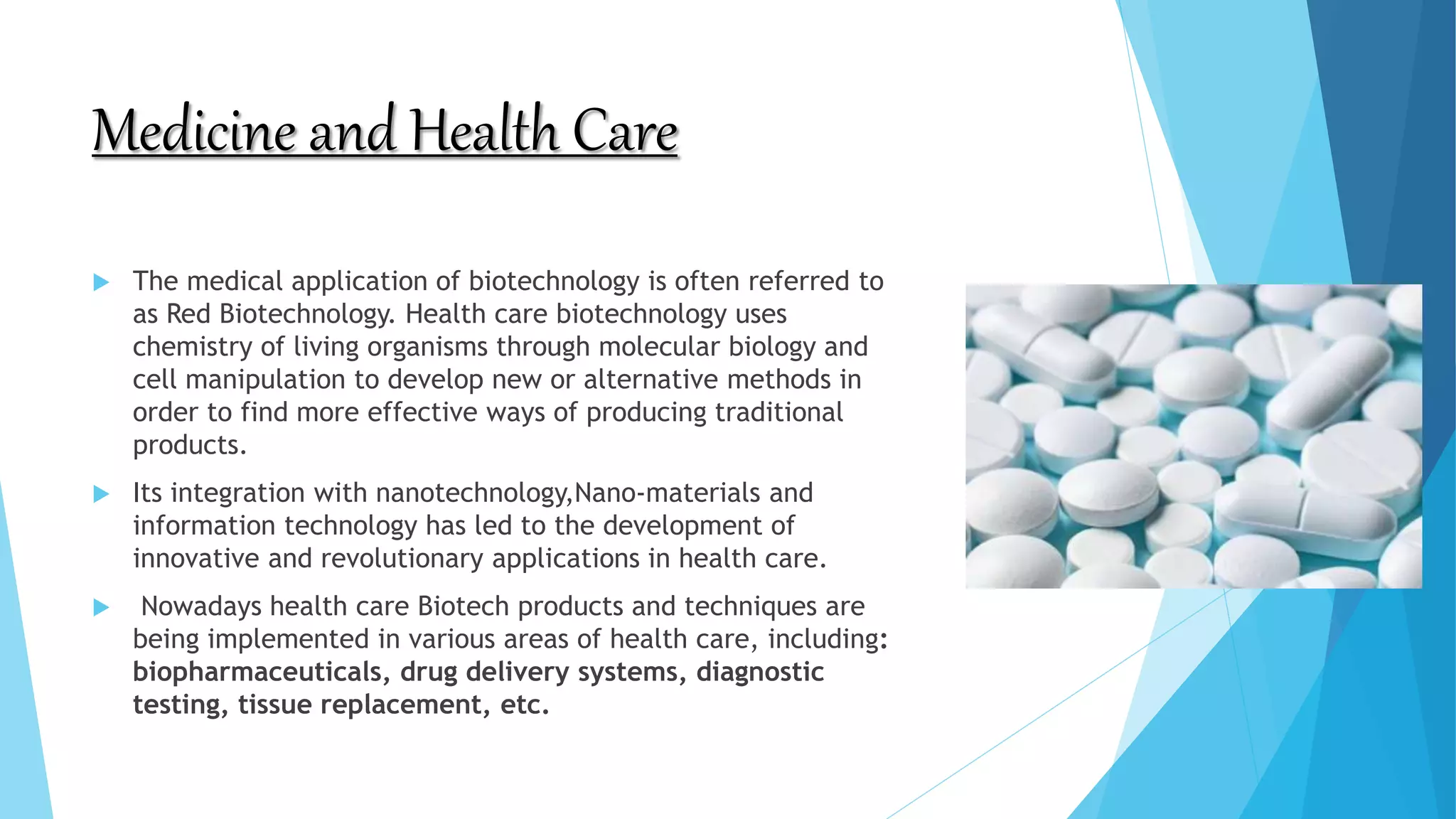
 The medical application of biotechnology is often referred to
as Red Biotechnology. Health care biotechnology uses
chemistry of living organisms through molecular biology and
cell manipulation to develop new or alternative methods in
order to find more effective ways of producing traditional
products.
 Its integration with nanotechnology,Nano-materials and
information technology has led to the development of
innovative and revolutionary applications in health care.
 Nowadays health care Biotech products and techniques are
being implemented in various areas of health care, including:
biopharmaceuticals, drug delivery systems, diagnostic
testing, tissue replacement, etc.
Example: Vaccines
 The modern biotechnological tools and genomics have
opened a new era to develop novel vaccines and many
products are successfully marketing around the world.
 New vaccines employing biotechnological innovations
are helping us to change the way for illness
prevention. The clinical application of vaccines will be
diversified along with the development of
biotechnologies.
 This method has helped create more than 20 new vaccines against infectious agents, improved
existing vaccines, and increased the amount of vaccine that can be produced.
 Advantages of vaccines produced by biotechnology : Low risk for infection:
Recombinant vaccines do not contain actual pathogens; only parts of the microbes (DNA, RNA,
or protein) are used for making vaccines. Thus, recombinant vaccines are safer than
conventional vaccines and can be given to people with weakened immune systems.
Agriculture
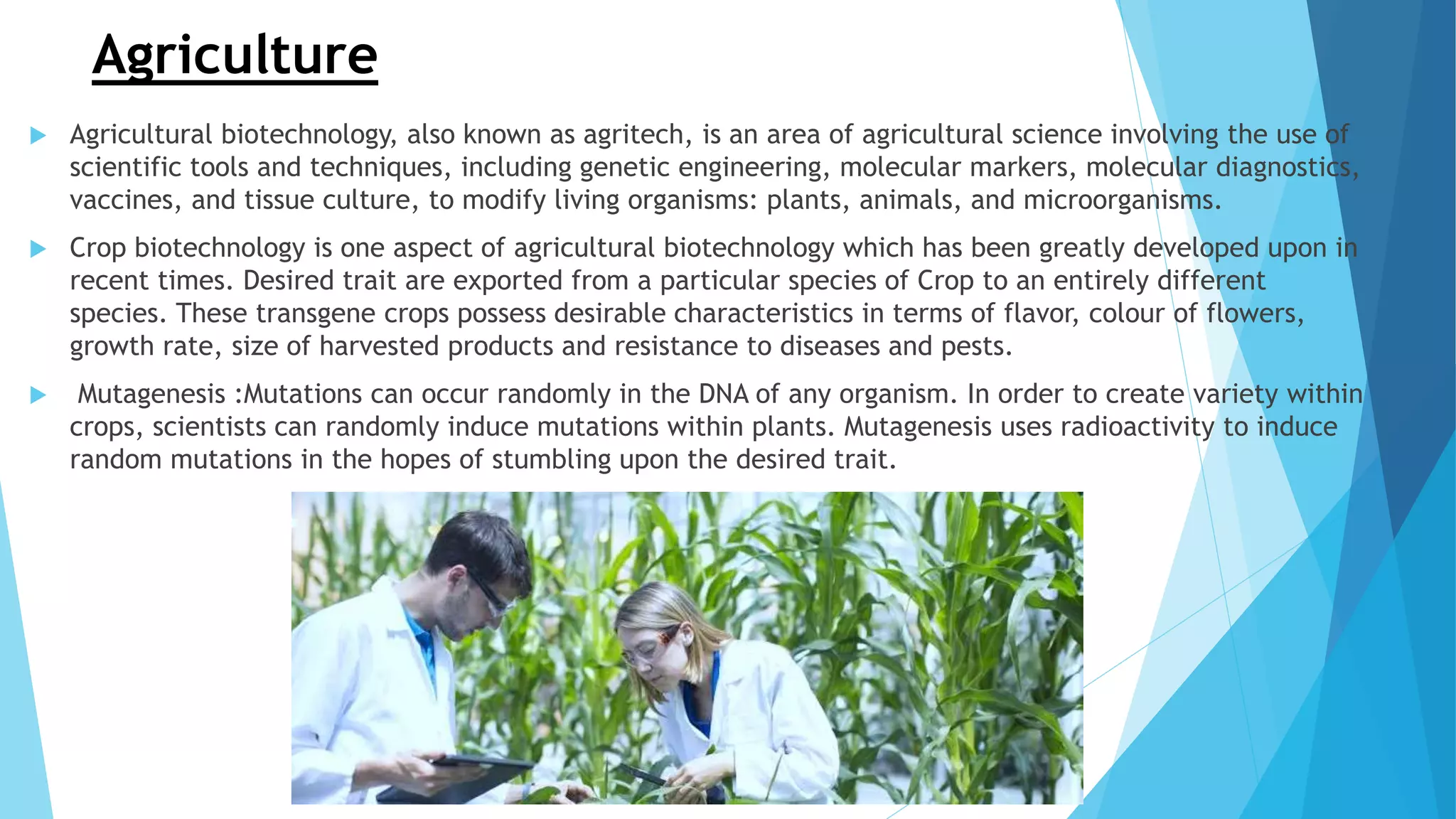
 Agricultural biotechnology, also known as agritech, is an area of agricultural science involving the use of
scientific tools and techniques, including genetic engineering, molecular markers, molecular diagnostics,
vaccines, and tissue culture, to modify living organisms: plants, animals, and microorganisms.
 Crop biotechnology is one aspect of agricultural biotechnology which has been greatly developed upon in
recent times. Desired trait are exported from a particular species of Crop to an entirely different
species. These transgene crops possess desirable characteristics in terms of flavor, colour of flowers,
growth rate, size of harvested products and resistance to diseases and pests.
 Mutagenesis :Mutations can occur randomly in the DNA of any organism. In order to create variety within
crops, scientists can randomly induce mutations within plants. Mutagenesis uses radioactivity to induce
random mutations in the hopes of stumbling upon the desired trait.
 Polyploidy can be induced to modify the number of chromosomes in a crop in order to
influence its fertility or size. Usually, organisms have two sets of chromosomes,
otherwise known as a diploidy. However, either naturally or through the use of
chemicals, that number of chromosomes can change, resulting in fertility changes or
size modification within the crop. Seedless watermelons are created in this manner.
 Protoplast fusion is the joining of cells or cell
components to transfer traits between species. For
example, the trait of male sterility is transferred
from radishes to red cabbages by protoplast fusion.
This male sterility helps plant breeders make hybrid
crops.
 RNA interference is the process in which a cell's RNA
to protein mechanism is turned down or off in order
to suppress genes. This method of genetic
modification works by interfering with messenger RNA
to stop the synthesis of proteins, effectively silencing
a gene.
Industrial and environmental Applications
 Mainly in Europe as white biotechnology
 Industrial biotechnology is the
application of biotechnology for
industrial purposes, including industrial
fermentation.
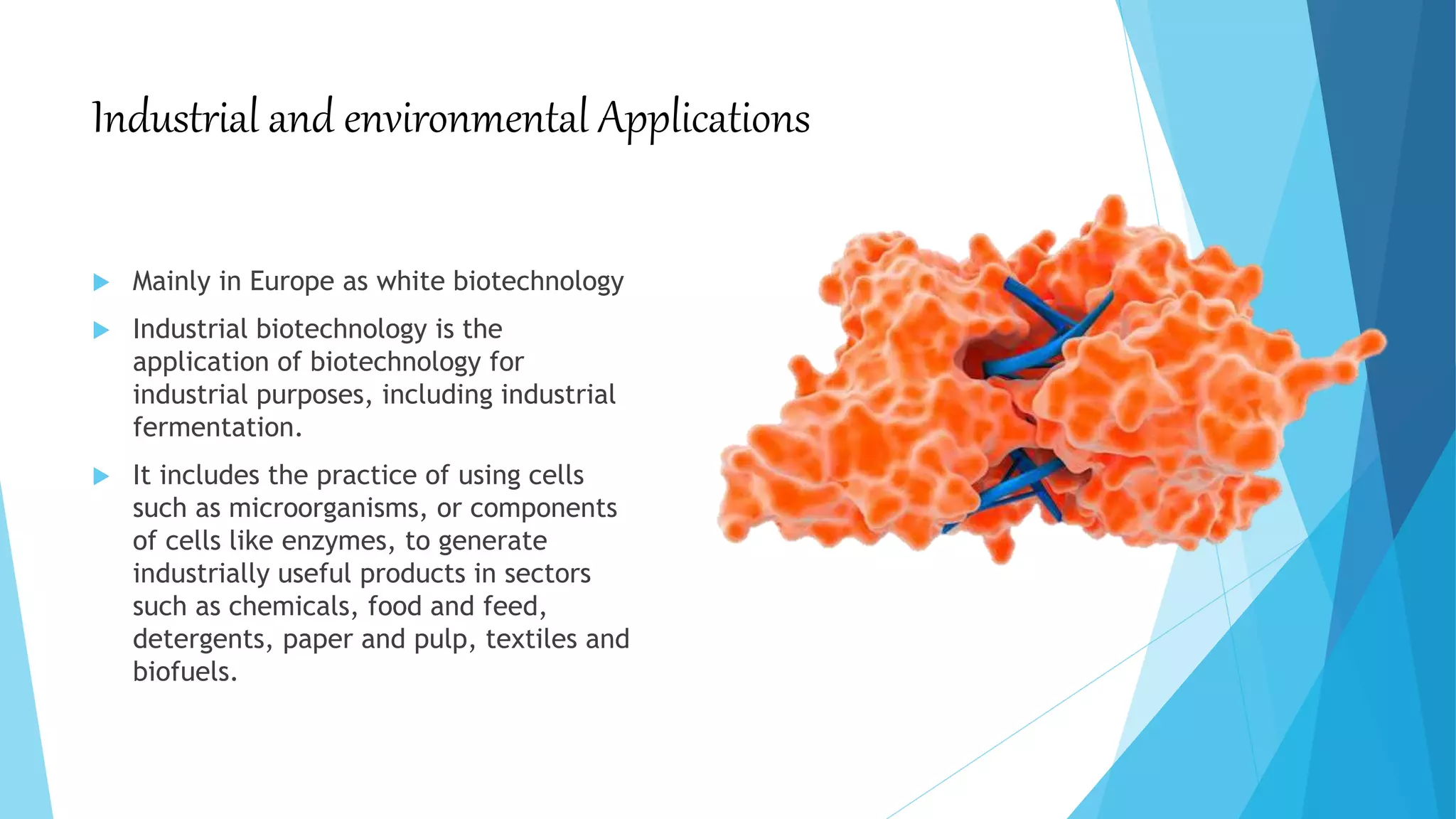
 It includes the practice of using cells
such as microorganisms, or components
of cells like enzymes, to generate
industrially useful products in sectors
such as chemicals, food and feed,
detergents, paper and pulp, textiles and
biofuels.
Industrial and environmental Applications
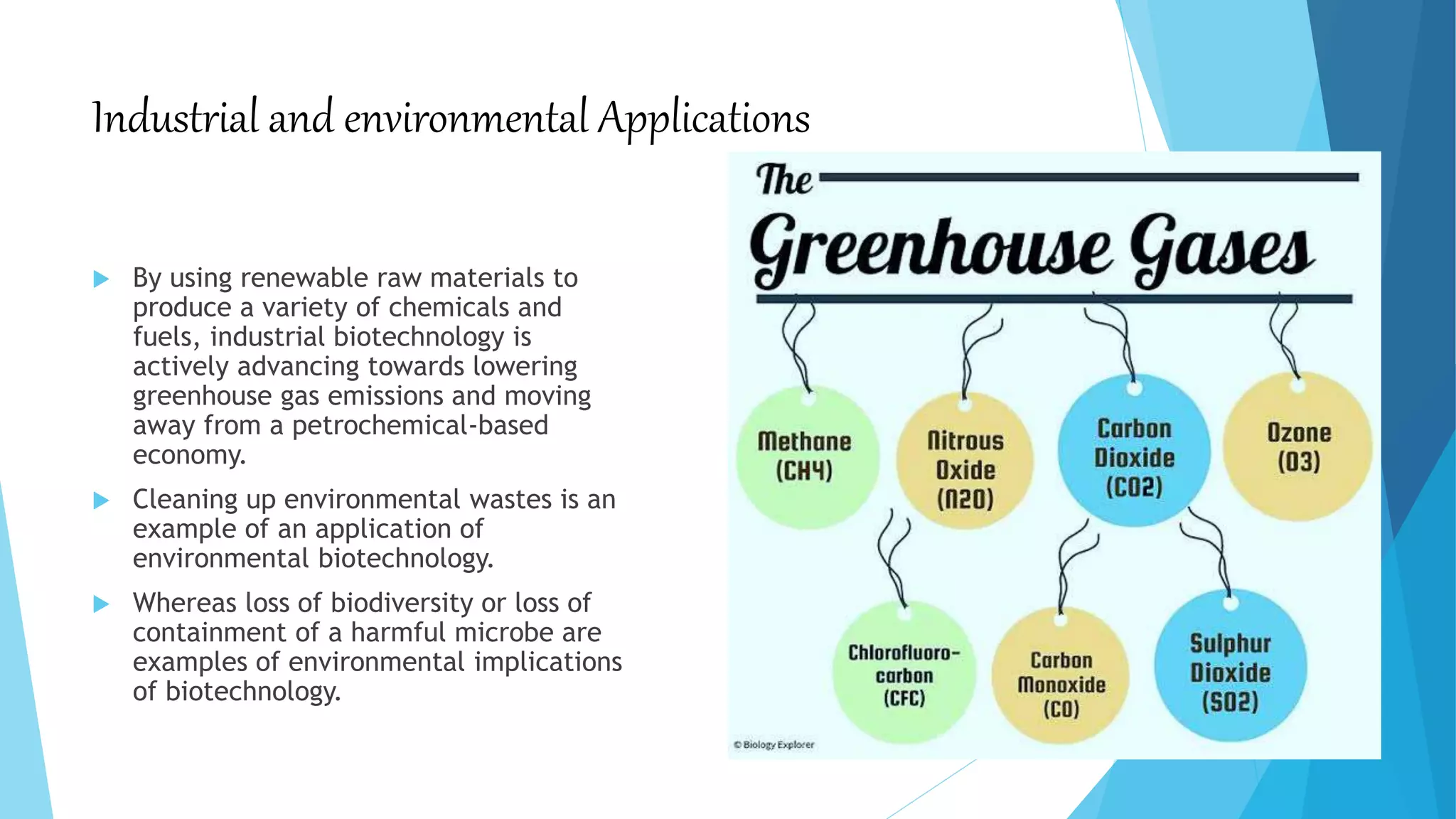
 By using renewable raw materials to
produce a variety of chemicals and
fuels, industrial biotechnology is
actively advancing towards lowering
greenhouse gas emissions and moving
away from a petrochemical-based
economy.
 Cleaning up environmental wastes is an
example of an application of
environmental biotechnology.
 Whereas loss of biodiversity or loss of
containment of a harmful microbe are
examples of environmental implications
of biotechnology.
Applications of Biotechnology

Applications of Biotechnology

  • 1.
  • 2.
    Introduction  Biotechnology isthe broad area of biology, involving living systems and organisms to develop or make products, or "any technological application that uses biological systems, living organisms, or derivatives thereof, to make or modify products or processes for specific use“.  Depending on the tools and applications, it often overlaps with the (related) fields of molecular biology, bio-engineering, biomedical engineering, biomanufacturing, molecular engineering, etc.  The wide concept of "biotech" or "biotechnology" encompasses a wide range of procedures for modifying living organisms according to human purposes, going back to domestication of animals, cultivation of the plants, and "improvements" to these through breeding programs that employ artificial selection and hybridization. Modern usage also includes genetic engineering as well as cell and tissue culture technologies.
  • 3.
    Its Applications  Biotechnologyhas applications in four major industrial areas,  Food Industry  Health and Medicine  Agriculture  Industrial And Environmental
  • 4.
    Food industry  Fermentation:- Breweries are synthesized through the process of fermentation. Different yeast strains are used to make breweries at commercial level. Genetic engineering has enabled us to make light wine. During process of fermentation yeast expresses glucoamylase (digestive enzyme) that convert starch into glucose.  Yeast strains used for wine synthesis which consists of two steps: 1) Primary fermentation results in conversion of glucose into alcohol using yeast. 2) Secondary fermentation uses bacteria and its product is lactic acid and this causes the rise in level of acidity. To overcome this problem different strategies are used which are costly. This problem was solved through insertion of malolactic gene in industrial yeast strain. This gene lowers the malate (malic acid) conversion hence lowering acidity level of wine.
  • 5.
    • More thanhalf of worldwide protein production is attained from plants but plant proteins lack some essential amino acids like lysine and sulphur containing amino acids. To overcome the deficiency of essential amino acids, different biotechnological molecular processes are used and given below
  • 6.
    Medicine and HealthCare  The medical application of biotechnology is often referred to as Red Biotechnology. Health care biotechnology uses chemistry of living organisms through molecular biology and cell manipulation to develop new or alternative methods in order to find more effective ways of producing traditional products.  Its integration with nanotechnology,Nano-materials and information technology has led to the development of innovative and revolutionary applications in health care.  Nowadays health care Biotech products and techniques are being implemented in various areas of health care, including: biopharmaceuticals, drug delivery systems, diagnostic testing, tissue replacement, etc.
  • 7.
    Example: Vaccines  Themodern biotechnological tools and genomics have opened a new era to develop novel vaccines and many products are successfully marketing around the world.  New vaccines employing biotechnological innovations are helping us to change the way for illness prevention. The clinical application of vaccines will be diversified along with the development of biotechnologies.  This method has helped create more than 20 new vaccines against infectious agents, improved existing vaccines, and increased the amount of vaccine that can be produced.  Advantages of vaccines produced by biotechnology : Low risk for infection: Recombinant vaccines do not contain actual pathogens; only parts of the microbes (DNA, RNA, or protein) are used for making vaccines. Thus, recombinant vaccines are safer than conventional vaccines and can be given to people with weakened immune systems.
  • 8.
    Agriculture  Agricultural biotechnology,also known as agritech, is an area of agricultural science involving the use of scientific tools and techniques, including genetic engineering, molecular markers, molecular diagnostics, vaccines, and tissue culture, to modify living organisms: plants, animals, and microorganisms.  Crop biotechnology is one aspect of agricultural biotechnology which has been greatly developed upon in recent times. Desired trait are exported from a particular species of Crop to an entirely different species. These transgene crops possess desirable characteristics in terms of flavor, colour of flowers, growth rate, size of harvested products and resistance to diseases and pests.  Mutagenesis :Mutations can occur randomly in the DNA of any organism. In order to create variety within crops, scientists can randomly induce mutations within plants. Mutagenesis uses radioactivity to induce random mutations in the hopes of stumbling upon the desired trait.
  • 9.
     Polyploidy canbe induced to modify the number of chromosomes in a crop in order to influence its fertility or size. Usually, organisms have two sets of chromosomes, otherwise known as a diploidy. However, either naturally or through the use of chemicals, that number of chromosomes can change, resulting in fertility changes or size modification within the crop. Seedless watermelons are created in this manner.  Protoplast fusion is the joining of cells or cell components to transfer traits between species. For example, the trait of male sterility is transferred from radishes to red cabbages by protoplast fusion. This male sterility helps plant breeders make hybrid crops.  RNA interference is the process in which a cell's RNA to protein mechanism is turned down or off in order to suppress genes. This method of genetic modification works by interfering with messenger RNA to stop the synthesis of proteins, effectively silencing a gene.
  • 10.
    Industrial and environmentalApplications  Mainly in Europe as white biotechnology  Industrial biotechnology is the application of biotechnology for industrial purposes, including industrial fermentation.  It includes the practice of using cells such as microorganisms, or components of cells like enzymes, to generate industrially useful products in sectors such as chemicals, food and feed, detergents, paper and pulp, textiles and biofuels.
  • 11.
    Industrial and environmentalApplications  By using renewable raw materials to produce a variety of chemicals and fuels, industrial biotechnology is actively advancing towards lowering greenhouse gas emissions and moving away from a petrochemical-based economy.  Cleaning up environmental wastes is an example of an application of environmental biotechnology.  Whereas loss of biodiversity or loss of containment of a harmful microbe are examples of environmental implications of biotechnology.