Annual Report
RWE Dea
2013
AT A GLANCE
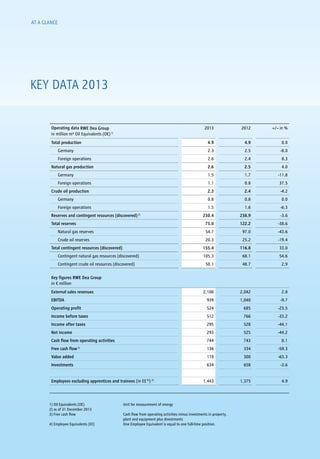
KEY DATA 2013
1) Oil Equivalents (OE)	 Unit for measurement of energy		
2) as of 31 December 2013
3) Free cash flow	Cash flow from operating activities minus investments in property,
	 plant and equipment plus divestments
4) Employee Equivalents (EE)	 One Employee Equivalent is equal to one full-time position.
Operating data RWE Dea Group 2013 2012 +/– in %
in million m³ Oil Equivalents (OE) 1)
Total production 4.9 4.9 0.0
Germany 2.3 2.5 -8.0
Foreign operations 2.6 2.4 8.3
Natural gas production 2.6 2.5 4.0
Germany 1.5 1.7 -11.8
Foreign operations 1.1 0.8 37.5
Crude oil production 2.3 2.4 -4.2
Germany 0.8 0.8 0.0
Foreign operations 1.5 1.6 -6.3
Reserves and contingent resources (discovered) 2)
230.4 238.9 -3.6
Total reserves 75.0 122.2 -38.6
Natural gas reserves 54.7 97.0 -43.6
Crude oil reserves 20.3 25.2 -19.4
Total contingent resources (discovered) 155.4 116.8 33.0
Contingent natural gas resources (discovered) 105.3 68.1 54.6
Contingent crude oil resources (discovered) 50.1 48.7 2.9
Key figures RWE Dea Group
in € million
External sales revenues 2,100 2,042 2.8
EBITDA 939 1,040 -9.7
Operating profit 524 685 -23.5
Income before taxes 512 766 -33.2
Income after taxes 295 528 -44.1
Net income 293 525 -44.2
Cash flow from operating activities 744 743 0.1
Free cash flow 3)
136 334 -59.3
Value added 110 300 -63.3
Investments 634 658 -3.6
Employees excluding apprentices and trainees (in EE 4)
) 2)
1,443 1,375 4.9
AT A GLANCE
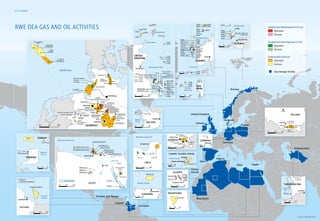
RWE DEA GAS AND OIL ACTIVITIES
as of 31 December 2013
Production/development of Gas
Operator
Partner
Production/development of Oil
Operator
Partner
Exploration licences
Operator
Partner
Gas storage facility
*) Kanuku Block
GUYANA
100 200km
*) subject to
Government approval
Atlantic
Ocean
NCMA 2
Scarborough
km 25 50km
Atlantic
Ocean
PORT-OF-SPAIN
km 50 100
Block 52
SURINAME
Atlantic Ocean
PARAMARIBO
Block 23
Caspian
Sea ASHGABAT
km 200 400
West Mediterranean-2 DLA
North Alexandria DLA
East Delta Fields DLA
North Idku DLA
North El Amriya
Ras Budran
Ras Fanar
Zeit Bay
Disouq Area-1 DL
NW Khilala DLA
East Ras Budran
Offshore
West Mediterranean-1 DLA
Alexandria
km 100 200
WWER 2 DLA
WWR DLA
Mediterranean Sea
GulfofSuez
WWER 3 DLA
CAIRO
Nile
Suez Canal
Red
Sea
SINAI
NC 195
NC193
Benghazi
Area 58
LIBYA
Mediterranean Sea
km 200 400
Block Ta10
MAURITANIA
km 100 200
Kahlouche
Kahlouche Sud
Tiouliline
Sali
Azrafil
Sud-Est
Reggane
km 100 200
Reggane Nord
ALGERIA
km 50 100
Canarias 1–9
CANARY ISLANDS (SPAIN)
Atlantic Ocean
PL589
PL596
PL539
PL566S
PL653
PL694
PL654
PL330
PL647
PL261
PL435
Norwegian Sea
North Sea
km 100 200
PL682
PL195B
PL418
PL195
PL153- Gjøa
PL420
PL153B
PL052B
PL552
PL089
PL638
PL635
PL582
PL634
PL373S- Knarr
PL057- Snorre
PL052- Veslefrikk
Snorre Unit
Sygna Unit
Øst UnitStatfjord
-Vigdis/Tordis
PL533
PL609
PL721
Snøhvit Unit
PL97,100, 110B, 110C
PL531
PL609B
Barents Sea
PL438
PL448
km 100 200
OSLO
km
PEL 01/06
27/4a
27/5a
27/9a
IRELAND
100 200
Atlantic
Ocean
DUBLIN
|P1328
|
|
P1741
P2109
Edinburgh
- Devenick
P0209
P1327
|P1230*
|P1741
|
|
P1741
P2109
P1630
P1630| |
- Crosgan
- Minke
- Orca
British North Sea
Shetland Islands
Orkney Islands
* - Breagh
P1832
P2074
P1975
P2018
P1631
P1932
P1327
P1327
- Crosgan
P1818
P1588
P1799
P1805
P2134
P1726
P0608- Kepler
P0611
P0520/P1013- Topaz
P0454- Orca
- Cavendish
P0607/P0608
P0611- Orca
- Windermere
- Victor
P0025/P0033
P1909P2119
P0130- Tethys
P0008/P0465- Clipper South
P0128/P1011- Anglia
P0701- Markham
P0524P0519- Saturn
P0459- Mimas
km 100 200
under negotiation
414 415
435433
km
Lodz
434
POLAND
Cracow
29/2013/p
30/2013/p26/2009/p
27/2008/p
100 200
4/95
16/98
07/06
km 10050
Danish
North Sea
km 50 100
GERMANY
Wolfersberg
Grafing
Inzenham-West
Breitbrunn-
Eggstätt
Munich
Hebertshausen I
Holzkirchen I
Inzenham-Ost
GERMANY
Karlsruhe
Rülzheim
km 5 10
Hamburg
Hanover
GERMANY
Bremen
North Sea
km 50 100
Schwedeneck-See
Preetz
Ploen-OstWarnau
Deutsche Nordsee
A6/B4
Rotenburg-Einloh
Rotenburg-Soehlingen
Rotenburg-Weissenmoor I
Boestlingen
Wietze-Osterheide I
Wietze-Wietzendorf I
Wietze-Becklingen
Wietze-Wardboehmen
Celle-Bleckmar
Hankensbuettel I
Hankensbuettel II
Wesendorf
Leiferde
Rotenburg-
Scheeßel
Rotenburg-Voelkersen I-Erweiterung
Wettrup I
Rotenburg-Voelkersen I
Heide-Mittelplate I
Oberlanger Tenge-Fehndorf I
Wettrup-Apeldorn II
Wettrup-Apeldorn I
Bersenbrueck-Menslage -Westum I Bersenbrueck-
Menslage II
Bersenbrueck-
Menslage I
Werder
Lingen
TG Emsbüren
TG Bardel
Unterweser
Taaken
TG BrümmerhofTG Ottersberg
Heide-Restfläche
Cuxhaven
TG Büsum
TG Heide
Preetz-
Restfläche
GNSC
GNSC-West
B 20 001
B 20 008/55
B 20 008/52
Rotenburg
Hahnenhorn
Rautenberg
TG Eickeloh
Celle
Ahrensheide
Verden
B/C-Block
Suriname
Guyan
Mauritania
Egypt
Turkmenistan
Libya
Algeria
Spain
Canary
Islands
Trinidad and Tobago
Germany
Poland
Ireland
United Kingdom
Norway
a
Denmark
EGYPT
Arrecife
Puerto del Rosario
TURKMENISTAN
TRINIDAD
TOBAGO
UNITED
KINGDOM
NORWAY
NORWAY
Hammerfest
DEN-
MARK
GEORGETOWN
RWE DEA ANNUAL REPORT 2013
2
BRIEF PORTRAIT OF RWE DEA
TABLE OF CONTENTS
The RWE Dea Group is an international operator in the field of exploration and production of
natural gas and crude oil. We concentrate on regions where we can deploy our expertise to the
best possible effect – applying our geoscientific know-how and state-of-the-art exploration,
drilling and production technologies, based on the company’s accumulated experience of 115
years. All our activities are strictly value-oriented and serve to boost the level of profi­tability
based on improved operational efficiency. In this context, health and safety at work enjoy top
priority. We respect the environment and are aware of our responsibility to society.
We are following an ambitious growth strategy with the object of doubling our production
by 2020, and being actively engaged, with a balanced portfolio, in at least four core regions.
We stand out in the following ways.
   •  Our technical and commercial peak achievements.
   •  Our awareness of environmental issues and our sense of responsibility.
   •  Our sustainable business model.
We continuously expand these capacities so that we can continue to be in demand as a partner
for the entire oil and gas value added chain.
Foreword from the Board of Management	 4
Economic development	 8
Health, safety and environmental protection	 20
Business Activities	 29
People at RWE Dea	 38
Supervisory Board Report	 46
Supervisory Board, Board of Management	 48
Glossary	49
Publishing information	 50
3
Dear Friends of the Company,
2013 was a successful year for RWE Dea, but an eventful one as well. In March 2013, the Board
of ­Management of RWE Aktiengesellschaft adopted a resolution to withdraw entirely from the
­exploration and ­production of crude oil and natural gas and announced that they would consider
all the available options when selling the company’s shares in RWE Dea. Despite the additional
­workload associated with the impending sale, there was no halt in RWE Dea’s operating activities.
With production launches in three of our self-operated, successful development projects within a
period of only 15 months, we once again delivered compelling evidence of our performance and
strength.
In business terms, RWE Dea is in a good, solid position. We once again achieved a very high ­operating
profit in 2013, one of the best results in our corporate history. In addition, the Company continued to
invest intensively in expanding production, which will be beneficial for results in future years.
We also continued to develop our strategy. Based on the experience of our 115-year history, we have
confirmed our Company’s ambitious growth targets. We are firmly intent on our goal of doubling our
production by the end of the decade. Moreover, as a growing international company, by 2020 we
want to be active, with a balanced portfolio, in at least four core regions.
In line with our strategy, we are taking up positions in new regions. For instance, we plan to ­develop
a new focus region in the northern part of South America. In Trinidad and ­Tobago, work progressed
quickly. In the nearby South American state of ­Suriname, we have been operating as partner with
a licence since 2013 and plans are under way to acquire a stake in neighbouring Guyana. We also
founded a subsidiary in Brazil, where we are currently ­assessing potential business opportunities.
We are also in the process of building a portfolio in Eastern Europe and in the Caspian region.
We are therefore looking for opportunities In Azerbaijan, Kazakhstan and Ukraine. We plan to drill
a first well in Turkmenistan before the end of this year.
We have maintained our strong position in Europe. In Great Britain, after starting production on our
flagship project, Breagh, we brought the Orca project into production as well in 2013. The ­Clipper
South field operated by us, which had been brought into production in the previous year, has
­developed a greater production capacity than anticipated. The successful ­commissioning of these
British projects has shown what we are capable of. We developed these fields using efficient and
technically innovative systems. This experience will be useful to us internationally and in our current
and future british concessions. We were able to broaden our portfolio in Great Britain with some
­attractive equity holdings West of Shetland.
FOREWORD FROM THE BOARD OF MANAGEMENT
RWE Dea Annual Report 2013
We are also making great headway in Norway, where three major development projects are under
way with our participation. Production for the Knarr project is due to start in 2014. This year we plan
to take a decision regarding the development of our self-operated development project, Zidane. We
succeeded in securing a stake in the Polarled pipeline project for the development of Zidane. The
Titan and Skarfjell discoveries continue to be explored with high expectations. And of course we
are also pursuing our other interesting and extensive ­exploration portfolio in the North with great
confidence. Our optimism is entirely justified – three of our ­exploration and appraisal wells in Norway
in 2013 were successful.
We continued to develop our oil production from the Mittelplate field in the German North Sea with
considerable know-how in 2013, substantially boosting our local production in that region. Our gas
production in Germany likewise made a good contribution to earnings, as always. However, we also
plan to continue our commitment in Germany beyond our existing production. In the search for
new gas and oil deposits, we still see opportunities, even though carrying out exploration projects
on a timely basis is becoming increasingly difficult due to environmental concerns. Our aim in this
context is to avoid or confine environmental impacts to a bare minimum in the course of all our
business operations. We are committed to this objective and assume responsibility for it. This is
why, ­especially in the region of our natural gas production, we engage in constant dialogue with the
population to foster understanding and acceptance of our work.
In Africa, the situation is positive for our company, especially in Egypt, where RWE Dea is largely
­operating without any problems. For instance, in the Disouq gas field we were able to start
­production; in the Gulf of Suez we succeeded in stabilising production and were also able to continue
with our exploration activities in the country. In Libya, we continue to monitor the security situation
closely. We are about to establish a joint venture company there to develop our extensive discoveries
and will continue our exploration activities accompanied by enhanced security measures.
In the other North African countries, the projects are proceeding as planned. This ­applies to the
­Algerian gas development project Reggane, for which the infrastructure is being put in place. In
2014, we also plan to finalise the exploration well we began to drill in Mauritania in 2013.
Beyond that we are widening our focus to include other African countries. We are searching for
­attractive options in sub-Saharan Africa, and we have been reviewing an increasing number of
new projects.
FOREWORD FROM THE BOARD OF MANAGEMENT 4
5
Thomas Rappuhn	 Dr. Johannes Karlisch 	 Dirk Warzecha 	
CEO	 CFO	COO	
We are optimistic – even in the context of the planned sale – that we can continue to implement our
growth projects, with new opportunities unfolding for us in the process. We will continue to pursue
growth. At the same time we will continue to work on enhancing our operational excellence – after
all, it ­constitutes the basis for the acceptance of our activities. Our objective is to become better
and ­better at what we do and to demonstrate this clearly in the dialogue in which we engage the
people living near our operations. In everything we do as a company, the topics of safety, health and
­environmental protection will be given top priority.
Sincerely,
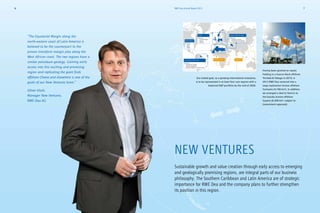
Europe
Focus on
 United Kingdom
 Norway
 Germany
Focus on
 Algeria

Egypt
Libya
MENA Region
Sub-Sahara Africa Australasia
Latin America / TT region
Focus on
 Trinidad and Tobago,
Southern Caribbean
 Equatorial Region of South America
Caspian / Black Sea region
Focus on
 Turkmenistan, Kazakhstan
 Azerbaijan, Ukraine
Having been granted an equity
holding in a licence block ­offshore
Trinidad  Tobago in 2010, in
2013 RWE Dea ventured into a
large exploration license offshore
Suriname (4,700 km2
). In addition,
we arranged a deal to farm-in to
the Kanuku license offshore
Guyana (6,200 km2
; subject to
Government approval).
NEW VENTURES
Sustainable growth and value creation through early access to emerging
and geologically promising regions, are integral parts of our business
philosophy. The Southern Caribbean and Latin America are of strategic
importance for RWE Dea and the company plans to further strengthen
its position in this region.
Our stated goal, as a growing international enterprise,
is to be represented in at least four core regions with a
balanced EP portfolio by the end of 2020.
“The Equatorial Margin along the
north-eastern coast of Latin America is
believed to be the counterpart to the
proven transform margin play along the
West African coast. The two regions have a
similar petroleum geology. Gaining early
access into this exciting and promising
region and replicating the giant finds
offshore Ghana and elsewhere is one of the
goals of our New Ventures team.”
Oliver Kluth,
Manager New Ventures,
RWE Dea AG
RWE Dea Annual Report 20136 7
8
In financial 2013, RWE Dea once again attained a good result. This was achieved on the basis of
stable production volumes in spite of declining oil prices, rising costs in the oil and gas sector, and
a weak US dollar. The company invests substantially in establishing production, which will pay off
in terms of the operating results in years to come.
Economic circumstances According to early estimates, in 2013 the aggregate global economic
­output was up by roughly 2 percent year-on-year. By contrast, last year’s Gross ­Domestic Product
(GDP) in the euro zone is assumed to have declined by about half a percent, due in particular to the
uncertainties triggered by the sovereign debt crisis. GDP in Germany, the largest economy in the
­currency area, is likely to have risen by about half a percent year-on-year. In this context, private
­consumption in particular had a positive influence.
Uncertainty regarding demand trend dampens oil prices Prices on the international crude oil
­markets in 2013 did not quite match the high level of the previous year. A barrel of North Sea Brent
was trading at an average of US$109 (€82) on the London spot market last year, down by 3 US
dollars from 2012. The slight price decline reflects the uncertainty regarding the development of
demand in China, the USA and the Euro crisis states. An additional compounding factor was that US
crude supplies occasionally reached historic alltime highs. Rising non-OPEC production – ­particularly
in the USA – likewise had a dampening effect on prices.
The price decline was slowed down by ongoing tensions in the Middle East, especially in Syria.
­Moreover, the demand for crude by emerging market countries continued to rise. Unexpected
defaults in supply by a number of producers likewise contributed to a stabilisation of oil prices.
European gas prices converge Gas imports to continental Europe are partly based on oil price-
dependent long-term agreements between energy suppliers and production companies. For this
reason the influence on import prices by developments unfolding on the oil market sometimes occurs
with a time lag. Gas supplies to Germany were settled at an average of €28 per megawatt hour (MWh)
in 2013, or €2 less than in the preceding year. In contrast, oil prices have no direct influence on price
developments in the European gas trade. At the Dutch Title Transfer Facility (TTF), the “key market”
in continental Europe, spot prices averaged €27/MWh, up by €2 over 2012 prices. In this context, the
weather-related surge in demand for gas was an important factor. The average gap between spot and
import prices narrowed from €4/MWh in the previous year to approximately €0.5/MWh.
In 2013, the gas price for RWE Dea was decisively shaped by developments on the wholesale markets
of relevance to Germany in the Netherlands, in Germany itself and on the British gas market. The
gas prices earned by RWE Dea, at 26.5 euro-cents per m³, remained high and increased by 5 percent
year-on-year.
The exchange rate of the US dollar weakened in 2013 and declined in relation to the euro. On an
­annual average, it was trading at US$1.33/€, while the previous year it was still US$1.29/€.
ECONOMIC DEVELOPMENT
RWE Dea Annual Report 2013
Production at the previous year’s level During the last financial year, RWE Dea produced 2.6 billion
cubic metres of gas and 2.3 million cubic metres of crude. Expressed in oil equivalents (OE), this
results in a total production volume of 4.9 million cubic metres of OE, or 31 million barrels of OE. We
therefore matched the volume of the preceding year.
Our natural gas production turned out to be 2 percent higher than in 2012. Production launches from
new field development projects had a positive impact in this regard. In the British North Sea fields
Clipper South and Devenick, we had already started production as early as the third quarter of 2012;
these results will be included in the full-year figures for the first time. We were able to report the
launch of production from the large British North Sea field Breagh in October 2013. To accommodate
normal regular cleaning work as part of the commissioning, production was interrupted in ­November
for seven weeks. In December, production from the smaller field development ­project Orca was
added – earlier than planned. We succeeded in stepping up gas production in Egypt ­substantially in
2013. The field development project in the Disouq concession in the Nile Delta was the first natural
gas project to be brought into production in Egypt by RWE Dea as operator in ­September 2013. The
project comprises the development of seven gas fields that will gradually be taken into ­production.
We experienced, too, the natural decline in production that inevitably accompanies the exploitation
of existing reserves. This had the strongest impact on our fields in Germany and the United ­Kingdom.
On the other hand, in the Norwegian Gjoa field the amount of gas rose as production progressed.
Gas and oil production
RWE Dea Group
2013 2012
Natural gas in million m3
Egypt 164 56
Germany 1,528 1,729
United Kingdom 505 431
Norway 428 363
Total 2,625 2,579
Crude oil in thousand m3
Egypt 486 514
Denmark 83 148
Germany 821 792
United Kingdom 43 22
Norway 883 919
Total 2,316 2,395
ECONOMIC DEVELOPMENT 9
10
In total, our oil production was down from the previous year’s level by 3 percent. A contributory
­influence was that production in Denmark was shut down for several months owing to problems with
the downstream infrastructure. Moreover, in the Norwegian Gjøa field increasing gas production
was accompanied by a decline in condensate production, as expected. By contrast, we managed to
boost the level of production in the German Mittelplate field in relation to 2012 thanks to technical
improvements and the drilling of new production wells.
Sales revenues up Sales generated by the RWE Dea Group in 2013 came to €2.1 billion. This
­represents an increase of 3 percent year-on-year. Revenue, however, was depressed by the weaker
US dollar.
Total gas sales increased by €99 million, or 15 percent. In Norway, the higher gas production in Gjøa
led to higher sales quantities; in addition we were able to realise higher prices. The sales situation
also saw a gratifying development in the Norwegian Snøvhit field, where sales substantially exceeded
the pro rata production figures; in the year under review we were able to sell four cargoes of LNG. In
the United Kingdom, the full-year production figures from Clipper South and the production launch
Breagh led to rising sales revenues. The production launch in the Egyptian Disouq concession in
September likewise led to slightly higher revenue figures. In contrast, in Germany gas revenues are
in decline – owing to lower sales volumes generated. Following the gas price revision last year, prices
are now fully linked to TTF quotations. The positive development of this index led to slightly higher
prices at RWE Dea, which however only partially offset the volume effect.
Oil sales declined by 2 percent. One of the reasons for this is the production short-fall in Denmark.
Sales in Egypt likewise decreased owing to price and volume factors. As sales revenues in ­Germany,
Norway and the United Kingdom were up only slightly, it was not possible to offset this ­shortfall.
RWE Dea Annual Report 2013
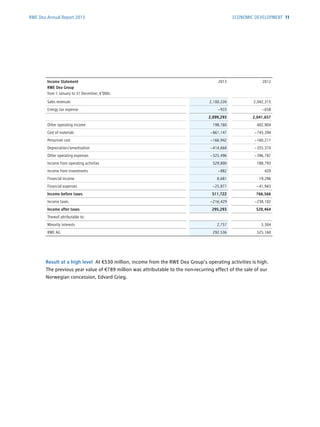
Income Statement
RWE Dea Group
from 1 January to 31 December, €’000s
2013 2012
Sales revenues 2,100,226 2,042,315
Energy tax expense – 933 – 658
2,099,293 2,041,657
Other operating income 198,760 402,904
Cost of materials – 861,147 – 743,394
Personnel cost – 166,942 – 160,217
Depreciation/amortisation – 414,668 – 355,370
Other operating expenses – 325,496 – 396,787
Income from operating activities 529,800 788,793
Income from investments – 882 420
Financial income 8,681 19,296
Financial expenses – 25,877 – 41,943
Income before taxes 511,722 766,566
Income taxes – 216,429 – 238,102
Income after taxes 295,293 528,464
Thereof attributable to:
Minority interests 2,757 3,304
RWE AG 292,536 525,160
ECONOMIC DEVELOPMENT 11
Result at a high level At €530 million, income from the RWE Dea Group’s operating activities is high.
The previous year value of €789 million was attributable to the non-recurring effect of the sale of our
Norwegian concession, Edvard Grieg.
2007
492
288
494
280
305
108
558
200
524
295
685
528
203
54
2008
2009
2010
2011
2012
2013
12
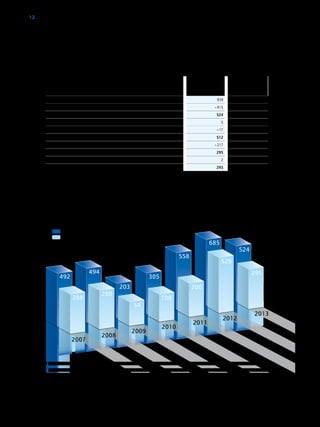
Business Income Statement
RWE Dea Group
€million
2013 2012
EBITDA 939 1,040
Depreciation/amortisation – 415 – 355
Operating result 524 685
Non-operating result 5 104
Financial result – 17 – 23
Income before taxes 512 766
Income taxes – 217 – 238
Income after taxes 295 528
Share of earnings attributable to minority interests 2 3
Net income 293 525
* The operating result is the factor used for internal control purposes within the RWE Dea Group. This key ratio is determined on the basis of
income of operating activities, adjusted for income and expenses which are unusual from a business management perspective or were caused
by special, non-recurring factors. These special facts and circumstances are reported under Non-operating result. All expenses and income
­occasioned in connection with the operational investments are likewise taken into account in the operating result. 
Operating result* and income after taxes RWE Dea Group, €million
Operating result
Income after taxes
2007
505
606
855
507
688 658
2008
2009
2010
2011
2012
634
2013
RWE Dea Annual Report 2013
In the year under review the operating result, at €524 million, was down by 24 percent year-on-year.
The positive effect of higher sales volumes was offset by the weaker US dollar and higher levels
of depreciation and amortisation. Another factor was that some of our exploration wells turned
out to be dry and we therefore accounted for the cost involved as expenses. Moreover, production
and operating costs rose, in total. Income before taxes came to €512 million. Compared with the
­previous year, net financial income improved by €5 million. Income after taxes came to €295 ­million.
The tax rate amounted to 42 percent. In the previous year, high tax-free income from the sale of the
­Norwegian concession Edvard Grieg had an impact on the tax rate, which amounted to 31 percent.
After deduction of minority interests, the level of net income amounted to €293 million, down on the
previous year figure of €525 million by 44 percent.
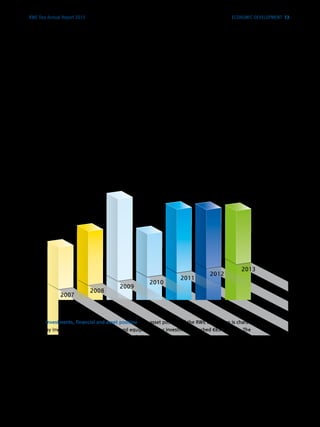
Investments, financial and asset position The asset position of the RWE Dea Group is ­characterised
by investments in property, plant and equipment. Our investments reached €634 ­million. The
primary focus was on the development of oil and gas fields in ­preparation for production, thanks
to which in 2013 we were abe to start gas ­production in the Egyptian concession area of ­Disouq
(­September) and in the British North Sea field Breagh (October). The Norwegian Knarr field, which
is to take up production in 2014, constitutes another focus of capex investments. In addition,
­substantial ­investments were made in both existing production projects in Germany, Norway and
Egypt, and in ­participations in new licences in the United Kingdom and Suriname.
Investments RWE Dea Group, €million
ECONOMIC DEVELOPMENT 13
14
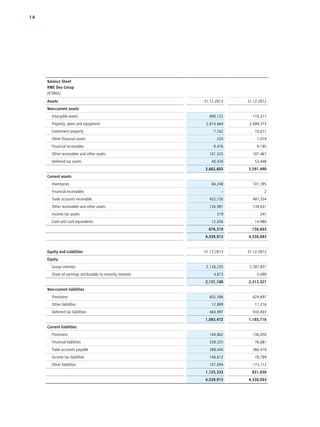
Balance Sheet
RWE Dea Group
(€’000s)
Assets 31.12.2013 31.12.2012
Non-current assets
Intangible assets 690,122 710,317
Property, plant and equipment 2,814,664 2,699,373
Investment property 7,162 10,671
Other financial assets 224 1,019
Financial receivables 9,476 9,195
Other receivables and other assets 101,525 107,467
Deferred tax assets 40,430 53,448
3,663,603 3,591,490
Current assets
Inventories 84,248 101,395
Financial receivables – 2
Trade accounts receivable 452,726 487,354
Other receivables and other assets 126,981 134,631
Income tax assets 319 241
Cash and cash equivalents 12,036 14,980
676,310 738,603
4,339,913 4,330,093
Equity and Liabilities 31.12.2013 31.12.2012
Equity
Group interests 2,126,235 2,307,837
Share of earnings attributable to minority interests 4,873 5,490
2,131,108 2,313,327
Non-current liabilities
Provisions 605,586 624,697
Other liabilities 12,889 17,216
Deferred tax liabilities 464,997 543,803
1,083,472 1,185,716
Current liabilities
Provisions 144,862 136,050
Financial liabilities 338,325 76,681
Trade accounts payable 388,440 366,418
Income tax liabilities 146,612 78,789
Other liabilities 107,094 173,112
1,125,333 831,050
4,339,913 4,330,093
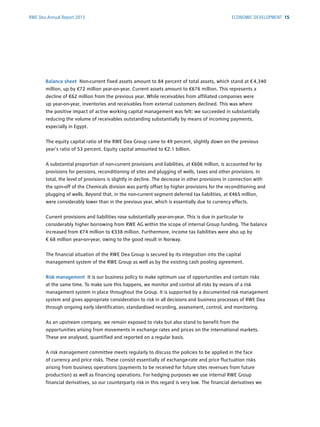
Balance sheet Non-current fixed assets amount to 84 percent of total assets, which stand at € 4,340
million, up by €72 million year-on-year. Current assets amount to €676 million. This represents a
decline of €62 million from the previous year. While receivables from affiliated companies were
up year-on-year, inventories and receivables from external customers declined. This was where
the ­positive impact of active working capital management was felt: we succeeded in substantially
­reducing the volume of receivables outstanding substantially by means of incoming payments,
­especially in Egypt.
The equity capital ratio of the RWE Dea Group came to 49 percent, slightly down on the previous
year’s ratio of 53 percent. Equity capital amounted to €2.1 billion.
A substantial proportion of non-current provisions and liabilities, at €606 million, is accounted for by
provisions for pensions, reconditioning of sites and plugging of wells, taxes and other ­provisions. In
total, the level of provisions is slightly in decline. The decrease in other provisions in connection with
the spin-off of the Chemicals division was partly offset by higher provisions for the ­reconditioning and
plugging of wells. Beyond that, in the non-current segment deferred tax liabilities, at €465 million,
were considerably lower than in the previous year, which is essentially due to currency effects.
Current provisions and liabilities rose substantially year-on-year. This is due in particular to
­considerably higher borrowing from RWE AG within the scope of internal Group funding. The ­balance
increased from €74 million to €338 million. Furthermore, income tax liabilities were also up by
€ 68 million year-on-year, owing to the good result in Norway.
The financial situation of the RWE Dea Group is secured by its integration into the capital
­management system of the RWE Group as well as by the existing cash pooling agreement.
Risk management It is our business policy to make optimum use of opportunities and contain risks
at the same time. To make sure this happens, we monitor and control all risks by means of a risk
­management system in place throughout the Group. It is supported by a documented risk management
system and gives appropriate consideration to risk in all decisions and business processes of RWE Dea
through ongoing early identification, standardised recording, assessment, control, and monitoring.
As an upstream company, we remain exposed to risks but also stand to benefit from the
­opportunities arising from movements in exchange rates and prices on the international markets.
These are analysed, quantified and reported on a regular basis.
A risk management committee meets regularly to discuss the policies to be applied in the face
of ­currency and price risks. These consist essentially of exchange-rate and price fluctuation risks
­arising from business operations (payments to be received for future sites revenues from future
­production) as well as financing operations. For hedging purposes we use internal RWE Group
financial ­derivatives, so our counterparty risk in this regard is very low. The financial derivatives we
RWE Dea Annual Report 2013 ECONOMIC DEVELOPMENT 15
use are primarily currency forwards, currency options, and commodity-price swaps. The terms of such
transactions are based on the term of the underlying transaction and are therefore predominantly
short to medium-term. All ­hedging ­transactions serve the exclusive purpose of covering the risk from
operational and financial ­transactions as well as underlying transactions accounted for or expected
with a high degree of ­probability.
We meet liquidity and default risks by conducting meticulous research on our counterparties
and ­limiting risks by means of appropriate limit parameters within the scope of a default risk
­management system throughout the Group.
Other risks consist primarily in the potential for misinterpreting geological structures and therefore
drilling dry wells. We contain such risks through state-of-the-art technology and systematic ­quality
assurance.
Notes to the RWE Dea Consolidated Financial Statements The Board of Management of RWE Dea AG,
Hamburg, is responsible for the preparation, completeness and accuracy of the Consolidated Financial
Statements for the RWE Dea Group.
The consolidated financial statements as at 31 December 2013 are prepared in accordance with both
the International Financial Reporting Standards (IFRS) applicable in the EU, and the supplementary
accounting regulations applicable pursuant to Sec. 315a (3) of the German Commercial Code (HGB).
All figures for the previous year were determined in conformity with the same principles.
The RWE Dea Consolidated Financial Statements comprise RWE Dea AG and all domestic and foreign
subsidiaries directly or indirectly controlled by RWE Dea AG. On the balance sheet date there were
17 consolidated subsidiaries, five of them foreign. In the year under review a newly founded foreign
company was consolidated for the first time.
No events subject to mandatory disclosure occurred after the balance sheet date.
RWE Dea AG is a wholly owned subsidiary of BGE Beteiligungs-Gesellschaft für ­Energieunternehmen
mbH, Essen, which is in turn a wholly owned subsidiary of RWE AG. RWE Dea AG is included in the
Consolidated Financial Statements of RWE AG, Essen. In 2013, a control and profit and loss transfer
agreement was in place with RWE AG, which was terminated ­effective as at midnight on 31 December
2013. The consolidated financial statements of RWE ­Aktiengesellschaft in ­accordance with IFRS
include our RWE Dea subgroup financial s­tatements as at 31 ­December 2013. A copy of the annual
financial statements is available from RWE ­Aktiengesellschaft, Opernplatz 1, 45128 Essen; the annual
financial statements are filed ­electronically with the operator of the ­German Government Gazette and
are then published there.
16
RWE Dea AG voluntarily prepared consolidated financial statements in accordance with the IFRS
and a summarised management report as at 31 December 2013. A copy of the annual financial
­statements is available from the headquarters of RWE Dea AG, Überseering 40, 22297 Hamburg;
the ­annual financial statements are filed electronically with the operator of the German Government
Gazette and are then published there.
In accordance with the resolution adopted at the Annual General Meeting, PricewaterhouseCoopers
Aktiengesellschaft Wirtschaftsprüfungsgesellschaft audited the consolidated financial statements
of RWE Dea and issued its unqualified audit certificate documented in a separate annex to these
­consolidated financial statements.
RWE Dea Annual Report 2013 ECONOMIC DEVELOPMENT 17
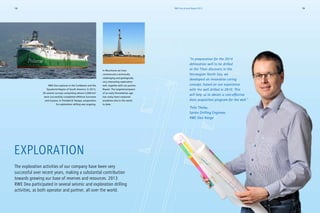
EXPLORATION
The exploration activities of our company have been very
successful over recent years, making a substantial contribution
­towards growing our base of reserves and resources. 2013
RWE Dea participated in several seismic and exploration drilling
­activities, as both operator and partner, all over the world.
“In preparation for the 2014
delineation well to be drilled
at the Titan discovery in the
Norwegian North Sea, we
developed an innovative coring
concept, based on our experience
with the well drilled in 2010. This
will help us to obtain a cost-effective
data acquisition program for the well.”
Thilo Theloy,
Senior Drilling Engineer,
RWE Dea Norge
In Mauritania we have
commenced a technically
challenging and geologically
very interesting exploration
well, together with our partner,
Repsol. The targeted prospect
of an early Precambrian age
has rarely been explored
anywhere else in the world
to date.
RWE Dea explores in the Caribbean and the
Equatorial Region of South America: In 2013,
3D seismic surveys comprising almost 5,000 km²
were successfully completed offshore Suriname
and Guyana. In Trinidad  Tobago, preparation
for exploration drilling was ongoing.
RWE Dea Annual Report 2013 1918
HEALTH, SAFETY AND ENVIRONMENTAL PROTECTION
20
At RWE Dea, health, safety and the protection of the environment are given the highest priority.
Our objective is to minimise environmental impacts and avoid hazards within the scope of all our
activities. We are committed to and assume responsibility for this aim. In 2013, we once again
worked intensively on further improving our already high standards in these areas.
Oil production from Mittelplate sets benchmarks for environmental protection Our Mittelplate
Drilling and Production Island is located in the national park, “Schleswig-Holsteinisches Wattenmeer”,
which has also had UN World Heritage Site status since 2009. We have produced oil there without a
single incident for over 25 years now, demonstrating that oil production is possible even in such a
sensitive environment. Mittelplate is known internationally as a paradigm for environmentally sound
oil production. In 2013 we continued to pursue our zero emissions principle.
We carry out all necessary activities in the Wadden Sea tidelands in such a way as to ensure that the
footprint is confined to a bare minimum, the duration is as short as possible and the periods are
selected to ensure that any disturbances to the animal world are minimal. In the most recent example
of our intention to minimise emissions, in 2013 we converted the transport ships’ power supply to
the main grid while the ships were berthed in Cuxhaven and on Mittelplate island. By not using diesel
equipment to generate electricity, we avoid the emission of contaminants and carbon dioxide in this
sensitive environment.
In order to improve our level of expertise in the habitat of the Wadden Sea tidal flats, in 2013 we
again monitored the condition of the local shelducks and the impact of temperature changes on the
tidal flats. This has allowed us to identify periods in which ­activities in the Wadden Sea tidelands
should be suspended and any negative changes to the habitat can be ruled out in good time prior
to carrying out any planned activities. We offset inevitable interventions, thus promoting continued
biodiversity.
We are aware of our responsibility in this vital natural habitat and train our employees ­accordingly.
This includes a seminar on the nature reserve of the Wadden Sea tidelands. We also make it a habit
to involve all concerned parties early on and throughout our activities when we work in ­ecologically
sensitive areas. Such parties include the National Park Administration, other public authorities,
­policymakers, other users of this natural habitat and non-government organisations. To provide the
general public with information about issues relating to Mittelplate we have set up an ­information
platform on the Internet, at www.mittelplate.com. Local residents and holiday-makers can find
information on all aspects of Mittelplate in a ­permanent ­exhibition at our Info Point in Friedrichskoog.
In a series of lectures, we also offer anyone who is interested an insight into living and working on
Mittelplate and explain importance of crude as a commodity in order to show what an important
contribution Mittelplate makes to supplying Germany with energy.
RWE Dea Annual Report 2013
Environmental activities associated with gas production in Lower Saxony Environmentally
c­ompatible and safe domestic production of natural gas has been a mainstay of Germany’s energy
supply for decades now. RWE Dea’s operational production contributes 20 percent to Germany’s
total domestic production of natural gas, making the Company one of country’s leading ­producers
of natural gas. The gas produced from the Völkersen field in Lower Saxony makes the biggest
­contribution.
Against the backdrop of the public discourse on the topic of natural gas, we constantly ­organise
information events in Lower Saxony, ranging from meetings with government ministers via
­presentations in various forums to discussions with representatives from citizen’s initiatives. A special
information event, part of the “RWE Dea im Dialog” (RWE Dea in Dialogue) series, has also generated
great interest. As a result, we have sought discussion with representatives from a diverse range of
groups within the region's population.
Despite our best efforts, and notwithstanding our strict compliance with the relevant legal
­provisions, at the end of 2011 we discovered elevated levels of aromatic hydrocarbons, such
as ­benzene, in the soil immediately adjacent to a pipeline carrying reservoir water from the gas
­production at Völkersen in Lower Saxony. An investigation determined that the hydrocarbons had
diffused through the PE material from which the pipeline was made. We responded immediately
by emptying and decommissioning the pipeline.
Removal of the affected pipeline, which extends over a distance of some 20 kilometres, was
­completed by May 2013. Soil samples taken from the two-thirds of this distance not saturated with
water did not show any abnormalities. However, as a precautionary measure we excavated the soil
along the course of the pipeline and disposed of it.
In one ­subsection extending over about one kilometre, microbiological rehabilitation of the affected
areas was achieved in situ through the injection of oxygenated air in 2013. This remediation measure
is expected to be completed in 2014. Along the remaining 7 kilometres of waterlogged ground along
the ­previous pipeline course, benzene concentrations were already low at the time of detection,
and they have been decreasing further due to natural biodegradation, in effect rendering additional
active ­remediation unnecessary. In the areas where the pipeline passed through water-saturated
ground and where benzene had been detected in the groundwater, benzene concentrations have
been decreasing in virtually all the sections, in some cases already falling well below the remediation
target values.
Investigations launched immediately upon detection by government authorities and by RWE Dea
showed that no benzene had either been taken up by plants growing above the pipeline or been
detected in foodstuffs or animal feed. Both external consultants and government authorities
­confirmed that at no time had there been a danger to vegetation or to the human population.
HEALTH, SAFETY AND ENVIRONMENTAL PROTECTION 21
22
In order to ensure acceptance of our operations in the future, we are developing new concepts for
the disposal of the reservoir water that is incidental to natural gas production. As part of this effort,
a team of independent experts evaluated the following range of options based on their respective
merits in terms of sustainability.
• Surface processing and injection of the purified reservoir water into a body of surface water
(direct injection).
• Surface processing and discharge to a wastewater treatment plant (indirect injection).
• Flooding of a former salt mine, as a means of stabilising the mine.
• Injection into a depleted gas reservoir at a depth of approximately 5,000 m.
The team’s analysis showed that returning the production water to the depleted gas deposit where
it originally came from was the most ecologically sound solution. RWE Dea will therefore give this
option priority, at the same time as investigating the other alternatives mentioned.
Mine-damage evidence preservation system optimised As the operator of four Rotliegend gas
fields in Lower Saxony, RWE Dea is facing up to its responsibility and, together with other natural gas
­companies active in this region, is operating a Bergschadenkundliches ­Beweissicherungssystem (BBS),
a system for the preservation of evidence of environmental damage caused by mining ­operations.
The system is designed to register seismic events in the areas ­surrounding the natural gas fields in
the region between the rivers Weser and Elbe. It was commissioned in October 2007. The system was
revised and modernised in 2013, and since April 2013 it has been capable of ­recording all the data
online and of automatically notifying the operators whenever a seismic event occurs.
All the data recorded by the system is communicated to the Federal Institute for Geosciences and
Natural Resources (BGR) as the competent authorities for the purpose of their evaluation. Access to
the data measured is also provided to interested parties on the website of the Association of German
Crude and Natural Gas Producers.
As part of the system upgrade in 2013, RWE Dea also commissioned five of its own ­measuring stations
at the gas fields operated by the Company. This measure further enhances the quality of the data in
case of a seismic event.
At the end of November 2012, an seismic event occurred along the periphery of the Völkersen
­natural gas field. According to the German Federal Institute for Geosciences and Natural Resources
(BGR) and the State Office for Mining and Energy (LBEG) it is probable that a relationship exists
between seismic events and gas production operations in Lower Saxony. A publicly appointed
RWE Dea Annual Report 2013
and sworn expert was commissioned with the task of recording and assessing reported claims for
­damage. At the end of 2013, the work of the expert was still ongoing. RWE Dea will take care of
all damage to buildings that can be associated with the seismic event according to the expert. To
owners of properties where the reported damage proves unrelated to the seismic event, we will be
offering the consultancy ­services of the independent assessor.
Fracking method the subject of public controversy Natural gas production from near-surface
­unconventional shale gas deposits has become the subject of a public controversy due to the
­fracturing treatments used in the process. Opponents fear that these treatments may cause
­environmental damage. To date, shale gas production has taken place chiefly in the United States.
RWE Dea is not involved in any projects to produce shale gas.
In the context of the public controversy, critical questions were also raised concerning natural gas
­production from conventional deposits in Germany. However, our fracking activities in the past
have been fundamentally different from the methods used to extract gas from ­unconventional
­near-­surface shale gas deposits. For over 50 years now, the German natural gas industry has
­successfully ­implemented the fracturing methods used in this country in more than 300 projects.
During this time, there has not been a single incident where the use of this technology has had a
detrimental effect on the quality of groundwater or potable water.
RWE Dea uses only fracking fluids that are non-toxic and do not pose a danger to the environment,
and which for the most part consist of substances encountered on a regular basis in our ­everyday
lives. The composition of the fracking fluid has reached this state after many years of research and
continual improvement. In order to further optimise the fracking process, we support our suppliers
in their efforts to develop fracking fluids that are even more environmentally compatible. In spite
of these realities, owing to the public discussion and the resultant legal uncertainties in Germany
RWE Dea has not been involved in fracking activities since June 2011.
RWE Dea continues to liaise closely with policymakers at federal, state, district and municipal level
over this issue, as well as maintaining close contact with a number of stakeholders and with the
­general public, for example via local citizens’ initiatives.
Environmental protection abroad In our foreign operations as well – from the initial exploration
right through to the deinstallation of our plant and equipment – we endeavour to avoid or minimise
the impact of all our activities on natural habitats, on flora and fauna, and on ecosystems in ­general.
We work towards these objectives within the scope of our international Corporate Management
­System and through local implementation of our strict internal standards. Even in the case of projects
where we are not the responsible operator, we become involved in issues relating to environmental
­protection.
HEALTH, SAFETY AND ENVIRONMENTAL PROTECTION 23
24
We cooperate closely with local authorities, public bodies and social interest groups. Environmental
impact assessments, risk assessments and monitoring of environmental conditions are just some of
the tools we deployed in 2013, as follows.
• For the Disouq gas project in Egypt, an environmental compatibility study combined with
­photographic documentation of the environment surrounding the site provided proof that
the environment was protected and preserved throughout the project.
• For our license in Libya, an “Environmental Baseline Study” and environmental impact
­assessments were carried out in connection with the exploration wells soon to be drilled.
Measures based on these studies allowed us to greatly reduce and even eliminate any
­environmental consequences that might have occurred.
• In Turkmenistan, the Environmental Monitoring Report compiled for the seismic survey
­conducted in 2012 was submitted to the local authorities and accepted by them without
objection. For the planned exploration well we assessed the potential environmental risks and
impacts, determined what protective measures might be needed, and produced the relevant
occupational health and safety, and environmental protection plans.
In 2013 we established our new HSE International team with the aim of further improving our
­international HSE performance. The primary focus here was on optimising the level of ­collaboration,
on the exchange of views and experiences, and on joint measures to be taken to train and qualify the
­various local HSE teams.
Our specialists put in place environmental protection measures of a high standard. For this ­purpose
they engage in the exchange of knowledge and experiences as well as ­networking in international
forums. Our very good result in the International Association of Oil and Gas Producers (OGP)
­Environmental Benchmark confirms that we are on the right track with our ­business activities.
Accident statistics remains at a low level With its “zero accidents” policy, RWE Dea assigns top
priority to occupational health and safety in both the daily work environment and project ­planning
activities. With an accident frequency of two incidents involving lost working time per million
­working hours for RWE Dea and its contractors, we have been able to demonstrate the success of
our efforts in this area over recent years.
Our aim is also to prevent accidents even beyond the immediate environment in which our activities
are conducted. We therefore communicate our safety philosophy clearly to all of our contractors’
employees. We assess our suppliers on the basis of occupational safety criteria and initiate measures
designed to improve the situation if required.
RWE Dea Annual Report 2013
Just how well our initiative for an improved safety performance on the part of our contractors abroad
is working is evident in the example of the RWE Dea-operated field development project, Breagh.
In a complex work programme with extensive occupational safety requirements, over 3.3 million
man-hours were worked with only a single work-related accident involving lost work time during a
four-year project phase up until the time of commissioning. In other words, for about three years an
average of 200 persons worked every day without any accidents. Our own employees working abroad
had no work-related accidents involving lost time in the year 2013.
Professional prevention and crisis management The well-being of our ­employees is one of the main
goals of our business. This aspriation takes us well beyond ensuring occupational health and safety,
and acquires particular significance during political crises of the kind witnessed in North Africa in
recent years. While we were able to carry on with our operational activities in Egypt, in spite of the
need for temporary evacuation of our international employees in 2011, we have thus far sent only
a small team of international experts to Lybia, without their families, due to the continuing lack of
clarity regarding the situation in that country. The work of the core workforce of more than 50 Libyan
employees continues.
In both countries as well as in Hamburg, we have adapted our human resource and organisational
processes in accordance with the relevant security situation. Working with our specialists based in the
two countries and with professional security service providers as well as the security ­organisation for
RWE Dea and for the RWE Group, we rapidly and reliably evaluate information regarding changes in
the security situation as they unfold. This allows us to gear up for the implementation of ­adequate
measures to ensure the highest possible levels of security for our staff and their families. We ­continue
to monitor developments very closely and will realise projects as soon as the security ­situation
­permits these to be executed safely.
Keeping healthy – an important corporate objective “Every employee is to return home as
healthy as when he or she arrived at work” – this guiding principle applies at RWE Dea not only
to ­occupational safety, but also health in general. In addition to the ­nation-wide ­campaigns for
bowel cancer prevention, rheumatism checks and bone marrow donor type ­classification, in 2013
­nutrition and physical exercise were also points of concern. A healthy diet and a ­balanced exercise
and ­recreation regime will allow us to counter the most common causes of ­illness among RWE Dea
personnel. In parallel with “On Top Form” seminars, campaign days and w­orkshops on the subject
of nutrition, fitness motivation days were also included at all ­participating sites in collaboration
with occupational medicine practitioners and local fitness cooperation ­partners. As in recent years,
in 2013 successful campaigns such as “Mit dem Rad zur Arbeit“ (“Cycling to work”), driver safety
training, bicycling and yoga courses, back gymnastics, health sports, work ­performance index, blood
donation days, fire-fighting training and many more activities were once again on offer. Since 2013,
employees in all operation sites in Germany have been able to use the questionnaire for the work
HEALTH, SAFETY AND ENVIRONMENTAL PROTECTION 25
performance index as the basis for general and individual preventive measures. We will also continue
to offer the programmes in the areas of healthy nutrition and more physical exercise, and supplement
them with site-specific services and campaign modules from our workers’ compensation association.
Integrated management systems Integrated management systems in the fields of ­environmental
protection, process and occupational safety, security and quality have long been inherent
­components for controlling the business processes at RWE Dea, and they contribute to the ongoing
improvement in our performance.
The Corporate Management System introduced in 2012, which applies to all German and foreign
operational companies and defines binding standards, was further developed in 2013, thereby
enhancing the process of harmonisation between our international locations. In addition to
­implementing an improved redesign of the long-established integrated management system in
­Norway, we also made further upgrades to the integrated management system in our subsidiaries
in Egypt during the period under review.
In 2013, the integrated management systems in the UK and in Germany were audited by the
­accredited certification organisation Det Norske Veritas (DNV), and as a result, the existing
­certificates were confirmed once again. The “Systematic Safety” seal of quality awarded by the
­Feedstocks and Chemical Industry Trade Association, which deals primarily with the implementation
of occupational health and safety practices in the workplace, remains in force in Germany.
Greater energy efficiency thanks to a new energy management system Making economical use
of natural resources and reducing the burden on the environment are among the key corporate
­objectives of RWE Dea. In terms of environmental protection, the focus has shifted to the efficient
use of energy in particular. For this reason, RWE Dea introduced an energy management system last
year. This system allows a more systematic representation of the energy flows within the Company,
paving the way for achieving greater efficiencies. The energy management system was audited and
certified by the accredited certification organisation DNV. The certificate attested that RWE Dea is
committed to saving energy at all levels of the organisation.
26
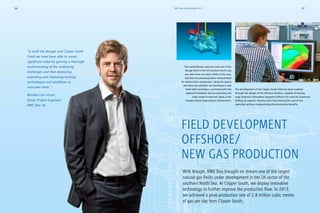
FIELD DEVELOPMENT
ONSHORE/
NEW GAS PRODUCTION
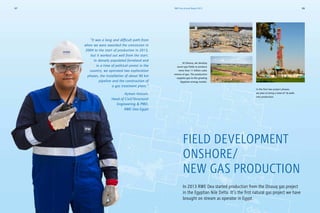
In 2013 RWE Dea started production from the Disouq gas project
in the Egyptian Nile Delta. It’s the first natural gas project we have
brought on stream as operator in Egypt.
In the first two project phases,
we plan to bring a total of 16 wells
into production.
At Disouq, we develop
seven gas fields to produce
more than 11 billion cubic
metres of gas. The production
supplies gas to the growing
Egyptian energy market.
“It was a long and difficult path from
when we were awarded the concession in
2004 to the start of production in 2013,
but it worked out well from the start.
In densely populated farmland and
in a time of political unrest in the
country, we operated two exploration
phases, the installation of about 90 km
pipeline and the construction of
a gas treatment plant.”
Ayman Hassan,
Head of Civil/Structural
Engineering  PMO,
RWE Dea Egypt
RWE Dea Annual Report 201327 28
29
RWE Dea is on a successful path to growth. We have laid the foundations for this growth over
many years thanks to excellent exploration work and successful acquisitions. We ­continually
extend our portfolio by successfully bidding in licence rounds and acquiring stakes in ­concessions.
In 2013, RWE Dea was active in 17 countries through licences and local offices, and also held
stakes in about 160 licences – acting as operator in almost half of these. In 2013 RWE Dea was
able to launch production in three of its ongoing field development projects, advanced other
­projects, and will therefore boost production significantly in the coming years.
Field development projects coming into production one by one In the period under review we
had eight major field development projects in our portfolio and we are operator in four of these.
These are the two British projects, Clipper South and Breagh, the Egyptian Disouq project, and the
NC193 / NC195 project in Libya. Four additional projects are operated by partner companies.
In 2013 RWE Dea started production in three field developments that are under way at ­present:
the Disouq project in Egypt, and the two British projects, Breagh and Orca. Thanks to these new
­production locations plus additional new fields coming on stream, we will be able to increase our
production substantially in the years to come. In addition to the major field development ­projects,
an ongoing programme of development work is being implemented at our existing production
­locations to ensure we maintain our high production levels.
Successful production and development projects in Europe RWE Dea is becoming strong on an
international scale. Today, over half of our total production comes from international production
locations. However, our domestic production is and will remain a mainstay of our business, and we
are one of the biggest upstream producers in Germany. This is also where our flagship project is
located – the Mittelplate Drilling and Production Island. In addition to the wells drilled directly from
Mittelplate Island, Germany’s biggest oil deposit, Mittelplate, is also being tapped from the ­mainland
through deviated extended-reach wells which are among the longest of their kind worldwide.
­Mittelplate Island is located in the ecologically sensitive tidelands of the Schleswig-Holstein Wadden
Sea National Park, in the German North Sea. Production from Mittelplate with its zero-incident record
is seen as a model for environmentally compatible oil production in an ecologically highly sensitive
area, and this project contributes to our reputation as a responsible, efficient operator.
In 2013 we boosted our domestic oil production from the Mittelplate field in the North Sea. We
achieved this by means of technical improvements carried out on a number of wells. Moreover, we
commissioned the new well, A24, and carried out a deviation of well A12b.
We also continued work on our gas production activities in Germany. While domestic natural gas
­production decreased in 2013 due to natural production decline, new wells in the northern German
gas fields ensured that we were able to maintain a high level of natural gas production in Germany.
In 2013, the RWE Dea-operated wells, Völkersen Z2a and Becklingen Z2, successfully entered the
production phase. Technical measures and additional wells drilled in Weissenmoor and Völkersen will
BUSINESS ACTIVITIES
RWE Dea Annual Report 2013
increase our production capacity. In the German North Sea, we have an equity interest in a combined
exploration and development well in licence A6/B4, where work started at the turn of 2013/2014.
Our projects in the British North Sea continued to make good progress. In the United Kingdom,
RWE Dea ramped up its natural gas and associated condensate production substantially. ­Production
from new field development projects coming on stream had a positive impact. The British North
Sea fields Clipper South and Devenick had already started production as early as the third quarter
of 2012 and contributed to the full-year figures for the very first time in 2013. In October 2013,
we were able to report the launch of production from the large British North Sea field Breagh. In
­December, production from the smaller field development project, Orca, also came on stream.
In Norway, gas production increased, whereas the volume of oil production declined slightly. The
­reason for this was that on the one hand, oil production from the Norwegian Gjøa field is ­gradually
declining over time, due to the characteristics of the reservoir, while at the same time the ­proportion of
gas is increasing. This development is in line with expectations. In addition, the ­availability of the LNG
plant at the Snøvhit field has improved substantially. Production in the Snorre field was ­encouragingly
stable in 2013, exceeding the previous year’s output. Work on the Knarr field ­development also
­progressed. The start of production from the Knarr project is planned for 2014. ­Production ­volumes
from Knarr will be transported by means of an FPSO vessel (FPSO stands for floating, ­production,
­storage and offloading). This vessel allows production volumes from the subsea wellheads to be
received on board through risers. These production volumes are then treated and stored on board,
before being shipped offsite. The installation of the two subsea templates and the linkup to the
­pipeline system were completed and the wells are almost finalised. Two additional large-scale
­development projects operated by RWE Dea are in preparation in Norway, namely Zidane and Titan.
Start of production on the Disouq gas project in Egypt In Egypt, we largely succeeded in ­countering
the natural production decline in our three oil fields in the Gulf of Suez. This was achieved by
­implementing measures to boost production, and by commissioning the new oil well Ras Budran.
We sold our equity interests in the marginal production fields West Med Onshore and East Yidma in
order to streamline our portfolio.
We managed to step up gas production in Egypt substantially in 2013. The field development
­project in the Disouq concession in the Nile Delta was the first natural gas project to be brought
into ­production in Egypt by RWE Dea as operator in September 2013. The project comprises the
­development of seven gas fields that are gradually being brought into production.
Alternative development concepts are currently being created for the third-party-operated ­alternative
West Nile Delta field development in the Mediterranean Sea. The need for new development
­concepts arose due to the fact that it was not possible for the location originally planned for the gas
treatment facility to be made available to the consortium of operators by the Egyptian authorities.
BUSINESS ACTIVITIES 30
31
Reggane field development in Algeria In future, RWE Dea will also be expanding its ­activities in
North Africa by building production facilities in Algeria. In the Algerian gas project Reggane, ­public
tenders for the operational work to be performed on the field development were carried out in
2013, along with preparatory activities for the construction of the field’s pipeline link by Algerian
state-owned corporation Sonatrach. Within the scope of this project, an additional 3D seismic survey
campaign also went ahead. Reggane is scheduled to come on stream in 2017.
Field development projects in Libya in preparation In Libya we are about to establish a Joint
­Operation Company for the development of our oil discoveries in concessions NC193 and NC195.
The security and safety situation in the country remained tense in 2013, so we were able to engage
only a small international crew on site.
Exploration activities Our exploration activities have been making a substantial contribution towards
growing our base of reserves and resources over recent years, in the process laying the ­foundations
for sustained organic growth in the future. In 2013, RWE Dea made three oil discoveries after
­drilling eleven wells – and all three are located in Norway. Eight exploration wells involving RWE Dea
­participation were dry. Two of these were British wells, three were Norwegian, and three were in Egypt.
More exploration in Germany planned In Europe, new discoveries can be efficiently developed
thanks to the existing infrastructure. Success in this region creates sound foundations for ensuring a
continued high level of production.
In pursuit of our goal of a sustained high domestic production, we are therefore also engaging in
­ongoing exploration activities in Germany. If successful, new discoveries can be developed quickly here.
In Germany, the exploration activities of RWE Dea are focused on further exploration of the German
­Wadden Sea tidal flats, as well as the drilling of wells in search of natural gas. More oil deposits are
assumed to exist near the Mittelplate oil field and along the coast of Lower Saxony off Cuxhaven. To test
these assumptions, RWE Dea has submitted applications to drill four exploration wells, with the work
to be carried out in compliance with the strictest safety standards. Following the response from the
­relevant authorities, we revised our application documentation in 2013, in preparation for resubmission.
Through this exploration project, we intend to prove the existence of assumed reserves of about 23
million cubic metres of crude, as well as obtaining data for a possible production at a later stage.
We have given our undertaking that, if oil is found, it will be extracted through wells located outside
the National Park or from the existing Mittelplate Drilling and Production Island. All activities will be
planned and conducted in such a way as to minimise any impact on the tidal flats.
Appraisal wells confirm discoveries in Norway In Norway, two appraisal wells in the previous year’s
Skarfjell discovery and the exploration well Ørneskate successfully encountered hydrocarbons in
2013. The three additional Norwegian wells Darwin, Sverdrup and Gjøa P-8 were dry. We plan to
RWE Dea Annual Report 2013
extend our commitment in Norway, and have successfully participated in concession rounds to
this end. We were awarded our first operator's licence in the Barents Sea, namely licence PL721. In
­addition, we were awarded licences PL682, in the northern North Sea, and PL694, in the northern
part of the Norwegian Sea. Thanks to these new licences, we were able to continue pursuing our
strategy of strengthening our presence in regions offering good prospects.
New licences in the UK RWE Dea also succeeded in expanding its exploration portfolio in the
United Kingdom. In 2013, RWE Dea was awarded three new licences West of Shetland, ­enabling
us to ­participate in an attractive exploration area. In the same region, RWE Dea also ­succeeded in
­participating in two further concessions with highly promising potential by means of farm-ins. At
the end of the year, RWE Dea was awarded three additional licences in the southern North Sea. The
Company also acts as operator for some fields in this region. The two exploration wells drilled in 2013
with RWE Dea participation, Taggart and Severn, were dry.
Contracts extended in Turkmenistan and Poland In Turkmenistan, the contract for extension by two
years of the exploration phase was signed in October 2013. RWE Dea was able to identify interesting
structures within the area covered by the licence and now plans to drill an exploration well. In Poland,
two exploration licences were renewed.
More exploration activity in North Africa The North African region holds particularly strong growth
potential in store. RWE Dea has been active in Egypt for some 40 years, having expanded its presence
there over time through major gas finds and new concessions, mainly in the Nile Delta.
In the year 2013, RWE Dea once again actively pursued exploration activities in Egypt. At the end of the
year, RWE Dea took over participation and operatorship of the East Ras Budran offshore ­concession in
the Gulf of Suez. The three onshore wells drilled in Egypt in 2013 – Al Nahda-1 and El Hammam-1 in the
concession South Mariut, and Helal-1X in the exploration section of the ­Disouq concession – were dry.
Both exploration licences were relinquished to the Egyptian state-owned ­company.
In Libya, the term for the Area 58 exploration licence was extended until the end of May 2014.
Exactly when the drilling of the mandatory wells is scheduled to begin in this area will depend on
the ­prevailing security and safety situation. We were able to start work on the 3D seismic campaign in
the NC193 / NC195 concessions in January 2014.
In Mauritania, we spudded an initial exploration well in 2013.
BUSINESS ACTIVITIES 32
165
74
239
160
70
230
2012 2013
Reserves1
[millions m³ OE]
Contingent resources
(discovered)1
[millions m³ OE]
Natural gas
Crude oil
Total
Natural gas
Crude oil
Total
33
Resource base at a high level By 31 December 2013, RWE Dea had reserves of 20 million cubic
metres of crude and 57 billion cubic metres of gas. Converting the gas into oil equivalents (OE) and
adding this figure to crude results in a total of 75 million cubic metres of OE. The term “reserves”
refers to resources that are located underground, the existence of which has been proven, and where
production is considered to be economically viable as well as secure in legal terms. Reserves are
distinguished from “contingent resources (discovered)”, which are raw material ­deposits that, while
potentially recoverable, are yet to be proven to be economically viable, and where a ­development
concept is yet to be put in place. At the end of 2013, RWE Dea’s contingent resources amounted to
50 million cubic metres of crude and 108 billion cubic metres of gas. This represents a total of 155
million cubic metres of OE. This exceeds the previous year’s figure by 38 million cubic metres of OE,
whereas reserves declined by 47 million cubic metres of OE. The principal reason for this is that the
hydrocarbon volumes in the large-scale Egyptian West Nile Delta project, which had been reported as
reserves in the past, are now booked as resources (discovered) as a result of an ongoing revision of
the field development plan.
Reserves and contingent resources (discovered) of RWE Dea in millions m3
oil equivalents (OE)1)
1)
as of 31 December
RWE Dea Annual Report 2013
In total, RWE Dea had reserves and contingent resources amounting to more than 230 million cubic
metres of oil equivalents by the end of 2013. This represents a decline of 9 million cubic metres of oil
equivalents year-on-year, or 4 percent. The decline is chiefly attributable to withdrawals in the course
of current production, which could not be fully offset by new exploration successes. In ­addition, there
were a number of necessary revisions.
We evaluate our reserves and resources in line with corporate guidelines that are based on
­internationally recognised standards in use throughout the oil and natural gas industry, and which
are continually revised by independent consultants. During the annual revision process, newly
acquired reservoir engineering and geoscientific data is interpreted and evaluated using state-of-the-
art ­technologies.
Further growth through new venture activities To maintain production at a high level in the long
term and possibly increase it and extend the portfolio even further, RWE Dea continues to scout for
attractive opportunities for oil and gas production. In addition to our existing focus regions in Europe
and North Africa, we are considering areas of interest to us in the Southern Caribbean and in the
Equatorial Region of South America, in the region around the Caspian Sea and the Black Sea, as well
as in Sub-Saharan Africa.
In Trinidad and Tobago, preparatory work for an exploration well with RWE Dea participation was
carried out in 2013. We have also had a presence in Suriname in South America since 2013. Here
RWE Dea acquired an equity interest in a new licence and has already conducted a seismic survey. In
addition, RWE Dea was able to acquire a share in a licence in the neighbouring country of Guyana,
subject to ministerial approval. In Brazil RWE Dea established a subsidiary, which has since gained
admission to Brazil licence bidding rounds.
Significant potential is likewise in store in the Caspian/Black Sea region, where we maintain a strong
presence. We are engaged in talks and negotiations in relation to possible exploration ­activities,
participation in existing licences, as well as acquisition of licences. A case in point is our participation
in exclusive negotiations in 2013 regarding our entry into an attractive licence in ­Azerbaijan. Older,
existing 3D seismic data is being reprocessed in order to enhance the ­interpretation as a means of
reducing the exploration risk.
RWE Dea deeply committed to research and development Our Company’s activities in the
­exploration and development of hydrocarbon reservoirs are typical for our industry. Assisting
these activities is our Geo Support Center with its own production engineering and geosciences
­laboratories, among other facilities.
The focus of our research activities is quite naturally on the ongoing improvement of our methods
for the exploration, development and production of hydrocarbon deposits.
BUSINESS ACTIVITIES 34
35
In 2013 we were again able to step up our research and development activities, launch new projects,
and transfer completed projects to the implementation phase and into day-to-day operations. Our
total 2013 expenditure on development amounted to around €4 million, an increase of 14 percent
year-on-year.
Participation in application-oriented development projects together with Deutsche Wissenschaft­
lichen Gesellschaft für Erdöl, Erdgas und Kohle (DGMK) [German Society for Petroleum and Coal
­Science and Technology] is resulting in improved, more efficient production processes thanks to
prompt implementation. We also sponsor fundamental research projects via the research fund of
our industry association, WEG. On an international scale, we participate in what are known as joint
­industry projects together with international partners from the EP industry.
Our research activities have a medium to long-term horizon. A high priority for us are targeted
­participation ventures in a multitude of national and international joint scientific and engineering
projects, and a high level of networking in scientific circles. In the year under review we ­continued
to expand and intensify cooperation with leading research institutions and consortiums, thus
­consolidating our standing as a recognised, reliable and sought-after partner in research projects.
Thanks to joint research projects, we are now in an even better position to evaluate indications of
hydrocarbon deposits as early as the lead-up to drilling projects. Aside from highly developed 3D
software-based methods, we also evaluate potential new processes and methods with the aim of
being able to carry out the combined evaluation of geophysical data and boost the efficiency of our
interpretations.
The experience and insights gained from our research into mud volcanoes in the western Nile Delta
in previous years are now finding application in projects based in the Caspian region. They make for
more accurate assessments of geo-hazards and slope stability, and they are also used in the ­planning
of drilling operations and in siting subsea production facilities. In Turkmenistan in particular, we are
working very closely with local scientists in order to establish this kind of expertise there, and to
boost the acceptance of drilling projects amongst the local population.
The development of the Clipper South field has been enabled
through the design of the offshore facilities, capable of hosting
large hydraulic stimulation programs without the need for expensive
drilling rig support, thereby more than halving the cost of the
operation without compromising the productive benefits.
With Breagh, RWE Dea brought on stream one of the largest
natural gas fields under development in the UK sector of the
southern North Sea. At Clipper South, we deploy innovative
technology to further improve the production flow. In 2013,
we achieved a peak production rate of 2.8 million cubic metres
of gas per day from Clipper South.
FIELD DEVELOPMENT
OFFSHORE/
NEW GAS PRODUCTION
The carboniferous reservoir intervals of the
Breagh field in the UK Southern North Sea
are older than any other fields in this area,
and had not previously been characterised
for hydrocarbon production. Using the sparse
well data set available, we developed a new
field wide correlation, consistent with the
regional framework and incorporating the
wide range of reservoir types in the
complex fluvial depositional environment.
“In both the Breagh and Clipper South
Fields we have been able to create
significant value by gaining a thorough
understanding of the underlying
challenges and then deploying,
extending and improving existing
technologies and workflows to
overcome them.”
Reindert-Jan Visser,
Senior Project Engineer,
RWE Dea UK
RWE Dea Annual Report 201336 37
RWE Dea offers highly qualified staff attractive employment opportunities and exciting fields
of activity in a technologically innovative, international company. We underpin our business
­development with targeted recruiting and systematic personnel development programmes. In
addition, we have a commitment to further the social interests of the people at our Company
and its environment.
2007
1,091
1,144
1,278
1,363
1,362
1,375
1,443
2008
2009
2010
2011
2012
2013
Further increase in size of workforce At the end of December 2013, RWE Dea employed a workforce of 1,443
in terms of full-time equivalents. This represents a 5 percent increase in the number of employees compared
with the previous year.
International assignments with RWE Dea RWE Dea is an international enterprise. People from almost 50
­nations successfully work together in our Company, and we are delighted with a growing exchange that is
unfolding amongst our international locations. Meanwhile the share of the workforce employed in a country
of which they are not nationals has reached over 12 percent. By becoming a Global Employment Company,
we want to become even more attractive to international experts in future.
At the end of 2013, roughly one third of our employees were working outside Germany. Of these, about
RWE Dea 80 staff members are engaged as expats abroad.
38
PEOPLE AT RWE DEA
Employees, RWE Dea Group; Number of jobs, expressed in Employee Equivalents
RWE Dea Annual Report 2013
Thanks to the exchange of staff between our various locations, we continue to promote the interna-
tionalisation of the Company and the exchange of know-how. Individuals of different nationalities
and diverse cultural backgrounds support each other in their work and provide each other with new
ideas and fresh impetus. At the same time, our employees develop an even better ­understanding of
foreign cultures and special features at many and various locations.
Securing strategic junior talent Early recruitment and promotion of junior talent represents the
­mainstays of our successful growth strategy. In 2013 we again succeeded in recruiting junior talent
and bringing them into the Company. To this end, we carry out diverse personnel marketing measures
and position our Company as an attractive employer at conferences, congresses and trade fairs.
Our further activities in Germany include scholarship programmes for students engaged in Petroleum
Engineering and the Geosciences. The RWE scholarship programme sponsors budding petroleum
engineers on an individual basis at the German universities of Clausthal and Freiberg as well as at the
Austrian university at Leoben. The two-year dual programme at the University of Clausthal provides
Masters students in the Petroleum Engineering course with practical assignments at RWE Dea on a
regular basis, along with financial support during their studies. We support our junior talent in the
geophysics discipline within the scope of a scholarship that assumes the costs of the “Joint Master’s
Degree in Applied Geophysics” from the universities of Aachen, Zurich and Delft.
In Egypt, RWE Dea runs a university-based scholarship programme for petroleum ­engineering
students. The programme is aimed at disadvantaged students with a good academic record
and ­supports them financially. Our financial support of the schools in Cairo is also part of our
­commitment to Egypt.
Students exhibit a lively interest in our programmes to promote an university education. In the
­disciplines of relevance to our operations – petroleum engineering, geology and geophysics – we
were again able to offer internship positions to more than 50 students, supervise study and thesis
assignments or deploy young petroleum engineering students on our T160 drilling rig in 2013. The
large number of applications, which always exceeds the number of places available, shows how
attractive these programmes are.
Vocational training also enjoys high priority at RWE Dea. In addition to internal traineeships, we
­support external apprentices by covering remuneration and social security contributions for trainees
in very small business. All these measures taken together allow RWE Dea to maintain the desired
training quota of 3 percent of the domestic workforce. Our aim is to offer our trainees temporary
employment for a duration of up to one year following their final exams.
RWE Dea also offers high school students and schools the opportunity to participate in ­information
events dedicated to the topics of energy, exploration and production of natural gas and crude.
To boost interest in our industry and technical professions in natural sciences, we maintain a
PEOPLE AT RWE DEA 39
40
­cooperative scheme together with the Domgymnasium Verden, (a grammar school) in the region
where our German domestic gas production is located. In a seminar course prepared jointly by
schools and the upstream industry, students learn about applied natural sciences using the example
of our business. Through these direct practical contacts, we also reinforce the level of interest in
issues relating to our industry.
Potential-assessment processes with a proven track record The potential-assessment process
­established at RWE Dea is one of our central personnel development instruments. It enables
­employees with potential for advanced tasks to be identified at an early stage, enabling their
­individual development to be supported. At the same time, this process constitutes the foundations
for our succession planning activities.
In 2013, 20 employees were identified by managers as having high potential, and almost as many
were developed accordingly. The total number of 100 high-potential employees corresponds
to a quota of 7 percent in relation to the total workforce. As always, the promotion of female
­high-potential employees remains part of our special focus.
Employee survey produces very good results RWE Dea has repeatedly commissioned ­specialised
­opinion survey institutions in the past several years to canvas its employees on topics like job
­satisfaction and possible potential for improvement. A Company-wide staff survey was once again
carried out in the year under review. With a high participation quota of 75 percent, the workforce
presented a reliable and representative opinion on its enterprise.
With a motivation index of 75 points, the survey continued to document the high level of ­motivation
to perform in the Company. The index included answers to questions concerning activities, personal
­development, leadership and the atmosphere at work.
What is particularly encouraging are the very high satisfaction values in the topic categories of
­diversity, activity and direct leadership. For instance, over 80 percent of the respondents were
very satisfied with their own working conditions and felt themselves encouraged and motivated by
their particular activities. The level of identification with the Company likewise remains very high:
80 ­percent of the respondents are convinced that RWE Dea will successfully master the challenges
of the future and are prepared to actively participate in any necessary changes.
The findings of the survey and the potential for improvements were intensively discussed within
the Company. Following the survey, employees have been asked to participate in ­exploiting their
­potential for improvement, such as collaboration across and beyond team and country frontiers.
Other ideas for improvement were also integrated into subsequent processes in close cooperation
with and endorsement by the Board of Management.
RWE Dea Annual Report 2013
Diversity – a corporate objective in daily life at work Diversity – making the most of individual
­differences and social variety – is always an important issue for the RWE Group and for RWE Dea. High
satisfaction values on the subject of equal treatment arising from the Staff Survey have ­confirmed that
this is also being addressed in day-to-day life at work. Beyond this, we are ­steadily ­pursuing our ­objective
of raising the proportion of women in our general workforce as well as at ­management level. Additional
activities on the topics of internationalisation and demographic change took place in 2013, in the form
of a ­number of information events on expat missions as well as on nursing care of family members. We
also ­increasingly take account of job applications by disabled persons in our recruitment activities.
Excellent compatibility of work and family life The “berufundfamilie“ (work and family) ­certificate
for family-friendly employment practices awarded to us in 2011 was renewed. Through ­numerous
measures on offer we want to carry on creating an even ­better balance between the interests of the
Company and those of its employees.
In 2013 RWE Dea once again continued a large number of family-friendly offers which contributed
towards achieving equality of opportunity for employees with or without family commitments. These
include flexible working time models, e.g. individual part-time work rules, the extension of statutory
parenting time by an additional year in accordance with a company agreement, as well as looking
after family members of employees sent on foreign assignments and their subsequent reintegration
after they return to Germany. Since 2011, RWE Dea has been offering employees the option to carry
out some of their work from their home office, subject to certain conditions.
In order to promote the compatibility of work and family life, RWE Dea works with a consultancy
and intermediary service specialised in this field. This service includes consultancy and ­intermediary
­services on the subject of child day care as well as nursing care for family members in need of
­support. The service includes finding qualified “emergency mothers” to stand in for the family
­member responsible for childcare, and also offers a children’s holiday programme.
In addition to the existing places at the City Nord children’s day care centre near the RWE Dea head
office in Hamburg, RWE Dea also assists employees in finding day care places for their children. In
order to bridge short gaps in the availability of care for the children of employees, RWE Dea provides
two parent-child rooms at Head Office.
The level of acceptance of this progressive family-friendly policy amongst employees at RWE Dea
is evident not least in the marked increase in the number of staff taking parental leave, an option
increasingly taken up by fathers.
We are are increasingly focussed on the issue of family care leave, both by offering part-time
­arrangements to allow caring for family members, and through a series of lectures on care ­leave-related
topics. Thanks to a cooperative arrangement, our employees also have the option to obtain assistance
in taking care of relatives.
PEOPLE AT RWE DEA 41
42
RWE Dea and its employees assume social commitments The social commitment of RWE Dea is not
confined to the welfare of its work-force. The Company and its employees also assume responsibility
for social issues in the countries and regions in which RWE Dea operates.
One of the opportunities to engage in such activities is offered by the “RWE Companius” initiative
created specifically with this objective in mind. The initiative takes a distinctly non-bureaucratic
approach to sponsoring non-profit projects in education, social welfare, sports, culture, energy,
­environmental protection and nature conservation. A prerequisite for obtaining sponsorship is that
RWE employees must be actively involved in these projects. In 2013, some 20 of our employees
signed up for voluntary projects in order to carry these out in the year under review and beyond. The
Company sponsored these projects with a total of €22,000. The spectrum of these projects ranged
from the “Big Brother-Big Sister” sponsorship programme through the “Akosua  Max” book project
for children in Ghana to a two-week skiing holiday for children and youth in the Czech Republic.
In addition to sponsoring Companius projects, our Company has for years been providing ­assistance
to socially disadvantaged people living near our operating sites. By foregoing gifts from the
­Company, RWE Dea employees raise a total of €40,000 each year for social welfare establishments
near our operating sites in Germany. In 2013, projects supported in this way included assistance for
homeless people, disadvantaged children and people with disabilities.
RWE Dea and its employees also see themselves as part of the community at the foreign locations
and therefore become actively involved both socially and culturally. Such initiatives abroad range
from the ­disbursement of scholarships for particularly talented music students in Norway through
music-related leisure activities for socially disadvantaged children in the UK and assistance for
­physically disabled people in Turkmenistan to providing support for schools and students in
North Africa.
In 2013 RWE Dea UK, instead of sending Christmas cards, supported the London Chamber ­Orchestra
 Barnardo’s Music Junction Project with a donation of €1,163. Our colleagues in Oslo donated
€2,500 for the foundation of the University Hospital Rikshospitalet, taking care of children who need
to spend a long time in hospital.
By sponsoring carefully selected projects, we aim to make a lasting contribution to social and
­economic development in our host countries. For instance, RWE Dea assumes special social
­responsibility in Turkmenistan in assisting people with disabilities. In addition to our sponsorship
of the ‘Centre of Support of Disabled Persons of Turkmenistan’, to which we had already donated
265 wheelchairs and 200 hearing aids for the needy and disabled in the previous year, in 2013 we
made six minibuses available to the ‘Central Sport Club for disabled people of Turkmenistan’. As a
result, it was ­possible for each of its facilities in the five provinces in Turkmenistan as well as in its
capital, Ashgabat, to be equipped with an urgently needed transport vehicle. In addition, RWE Dea
RWE Dea Annual Report 2013
in ­Turkmenistan supported the UNICEF project ‘Facts for Life’ by covering the cost of printing 20,000
copies of the Turkmenistan issue of their detailed and comprehensive handbook. This publication
performs a vital educational function in the fields of health and education for newborn babies and
small children in many parts of the world.
Other good examples of our sense of commitment can be found in Egypt. By supporting projects,
RWE Dea contributes to the socio-economic development of the country beyond the Company's
operational activities. In collaboration with a local development organisation, we supported a project
for sustainable agriculture. To ensure medical care of our employees and people in the surrounding
areas, RWE Dea made an ambulance available in the licence region Disouq. The promotion of cultural
projects in this region was also part of our social commitment.
Employee Suggestion Scheme – effective pooling of ideas The Employee Suggestion Scheme once
again turned out to be an effective and certainly colourful mix of ideas contributed by our staff. Our
employees showed a great deal of commitment and dedication to continually enhance the efficiency
of operational procedures and processes as well as safety at work and environmental protection.
With a total of 114 suggestions, the previous year’s level was once again matched.
One example of a suggestion by a dedicated employee was the development and programming
of an Excel-based HSE tool by a staff member of our Company on his own time. With the aid of
this ­programme, it was possible to improve and standardise the preparation of safety analyses on
our ­drilling rigs T 150 and T 160. Thanks to the timely analysis and the associated early ­detection
of improvement potential, workflows can be optimised and adjusted more speedily. Moreover,
by ­incorporating the findings into existing hazard assessments, the latter can be kept up to date.
­Accordingly, the introduction of the HSE tool at other RWE Dea operating sites is currently being
studied.
The Employee Suggestion Programme would also like to promote the employees’ ability to use their
initiative and be ready to assume voluntary services beyond their specific range of duties in order to
contribute to RWE Dea’s success. To this end, the internal processes for dealing with the suggestions
for improvements were optimised in 2013.
Our thanks to our employees Our employees secure the future of our business development to a
decisive degree through their untiring will to master major professional challenges, by being open to
necessary changes, and continually improving workflows through their commitment and dedication.
The Board of Management would like to thank the workforce for its joint effort, and also thank the
members of the Staff Council and Executive Staff Committee for their constructive collaboration in a
spirit of mutual trust.
PEOPLE AT RWE DEA 43
OIL PRODUCTION
At Mittelplate, RWE Dea has produced oil as operator, incident-free for
more than 25 years. The total annual production is about 1.4 million tonnes.
By applying intelligent solutions, we constantly seek to optimise production
from the field.
“In 2013 we brought the technically
demanding wells MIPL A24 and MIPL A12b
on stream. By positioning these wells over
distances of up to 1,000 metres ­horizontally
in two-to-three-metre-thick sandstone
­layers, we play in the champions league
of ­geosteering. Our success is due not
only to leading-edge technology but also
to a highly motivated and dedicated
­interdisciplinary team.”
Maren König,
Geologist Reservoirs Europe Oil,
RWE Dea AG
We have a world renowned reputation as
a result of our exemplary environmental
­protection concept at Mittelplate. Our
­extremely high safety standards ensure
wthat we do justice to the special conditions
existing in this ecologically sensitive
region of the Wadden Sea.
Highly deviated extended reach wells of up to almost
10 km length made onshore oil production possible.
Dual lateral wells of up to 6,000 metres long
maintain the high production level.
45RWE Dea Annual Report 201344
46
The Supervisory Board continually monitored the Company’s management during the year under review.
It was informed on a regular basis by the Board of Management, both orally and in writing, about the
situation of the Company and about corporate policy essentials. On the basis of this reporting, the
Supervisory Board thoroughly reviewed the course of business, the development of production, costs,
revenues and the earnings situation overall as well as corporate planning, personnel-related aspects
and all significant transactions. In addition, the Supervisory Board received regular and comprehensive
briefings regarding the measures taken to hedge business risks. Moreover, the Supervisory Board was
notified of the planned sale of RWE Dea by the RWE Group.
Moreover, at its meetings the activities concerning the expansion of business were discussed. The
­Supervisory Board arranged for detailed briefings to be given to it on the growth strategy pursued and
on the measures adopted for portfolio optimisation purposes, such as the Company’s ­engagement
in new countries such as Suriname and Guyana. Within the scope of regular reporting sessions on
the ­Company’s situation, its key activities in the various countries were presented by the Board of
­Management. The Supervisory Board was briefed on the status and results of exploration measures and,
in particular, of field development projects, and the production launches in the Egyptian Disouq field
and in the British Breagh and Orca fields were also discussed. Furthermore, the reporting activities dealt
with measures for the production and maintenance thereof at existing production locations. In ­addition,
the Supervisory Board was kept abreast of developments on the political situation in the countries
of North Africa in which RWE Dea is actively engaged. In the course of this reporting, reports were
­presented on the measures taken to protect the employees assigned to the countries in question.
The Chairman of the Supervisory Board also held meetings with individual members of the Board of
­Management to discuss important business policy matters and to continually receive reports on the
­situation and development of the Company.
Three Supervisory Board meetings were held during fiscal 2013. The Personnel Committee met twice,
whereas the Mediation Committee (pursuant to Art. 27, section 3, Co-Determination Act) was not
required to be convened during the period under review.
The Financial Statements for the 2013 fiscal year, the Consolidated Financial Statements and the
­summarised Management Report drawn up by the Board of Management, including the ­accounting
records, were audited and given an unqualified audit certificate by PricewaterhouseCoopers
­Aktiengesellschaft Wirtschaftsprüfungsgesellschaft, Frankfurt am Main, Essen Office, elected auditors
at the General Meeting of 21 February 2013 and commissioned by the Supervisory Board to perform
the audit.
The RWE Dea Annual Financial Statements, the Consolidated Financial Statements for RWE Dea AG,
the summarised Management Report for the RWE Dea Group and RWE Dea AG as well as the ­Auditor’s
REPORT OF THE SUPERVISORY BOARD OF RWE DEA AG
RWE Dea Annual Report 2013
Hamburg, 20 February 2014
The Supervisory Board
Peter Terium
Peter Terium,
Chairman of the Supervisory Board
Reports on the Annual Financial Statements and the Consolidated ­Financial
Statements were submitted to all members of the Supervisory Board in good
time prior to the balance sheet meeting scheduled for 20 ­February 2014.
The auditor attended consultancy meetings concerning the Annual Financial
Statements and the Consolidated Financial ­Statements. He reported about
material findings of his audit and was available to answer questions raised.
The Supervisory Board approved the audit results in ­relation to the Annual
Financial Statements and the Consolidated ­Financial Statements. The Super-
visory Board examined the Annual ­Financial ­Statements, the ­Consolidated
Financial Statements and the summarised Management Report compiled
by the Board of Management for the RWE Dea Group and for RWE Dea AG.
The final audit did not give rise to any objections. The ­Supervisory Board
approved the Annual Financial Statements and the ­Consolidated Financial
Statements as at 31 December 2013. The former have thus been adopted.
In the course of the year under review, Dr Leonhard Birnbaum resigned from the Supervisory Board on
27 March 2013. Dr Birnbaum had been appointed a member of the Supervisory Board early in 2011 and had
been Chairman of that body. We wish to take this opportunity to thank him for his collaboration in a spirit of
mutual trust and his commitment to the Company. Mr Peter Terium was appointed as his successor on 15 April
2013 as a member of the Supervisory Board, after which he was elected as its Chairman.
REPORT OF THE SUPERVISORY BOARD OF RWE DEA AG 47
4848
SUPERVISORY BOARD, BOARD OF MANAGEMENT
SUPERVISORY BOARD
Peter Terium, Essen (since 15 April 2013,
Chairman since 22 April 2013)
Chairman of the Board of Management
RWE Aktiengesellschaft
Dr Leonhard Birnbaum, Essen
(until 27 March 2013, Chairman)
Former member of the Board of Management
RWE Aktiengesellschaft
Werner Bischoff, Monheim (Deputy Chairman)
Former member of the Managing Executive
Council, Union of Mining, Chemical and
Energy Industry Employees
Hans Hermann Andreae, Hamburg
Head of Geo Support Centre RWE Dea AG
Thomas Birr, Essen
Head of Corporate Development  Group Strategy
RWE Aktiengesellschaft
Dr. Markus Coenen, Essen
Head of Group Finance RWE Aktiengesellschaft
Dr. Frank-Detlef Drake, Essen
Head of Research and Development
RWE Aktiengesellschaft
Ralf Erkens, Neumünster
District Chairman Rhine-Main, Union of Mining,
Chemical and Energy Industry Employees
Dr. Michael Herrmann, Essen
Head of Commodity Management
RWE Aktiengesellschaft
Stefan Judisch, Essen
Chairman of Management
RWE Supply  Trading GmbH
Holger Pittelkow, Hamburg
Functional Department Head Indirect Taxes
and Tax Audits RWE Dea AG
Günther Prien, Hamburg
Chairman of the Works Council, Hamburg
City Nord, RWE Dea AG
Manfred Weber, Eicklingen
Chairman of the Joint Works Council,
RWE Dea AG
BOARD OF MANAGEMENT
Thomas Rappuhn (Chairman)
Responsible for: chairing the Board of Management
Dr Johannes Karlisch
Responsible for: Finance
Dirk Warzecha
Responsible for: Operations
RWE Dea Annual Report 2013
Barrel: The international unit for trade in crude oil.
One barrel is the equivalent of about 159 litres.
Brent crude: Brent crude is a light crude oil with a
low sulphur content, found in the British North Sea.
Brent crude is used as a reference product in the
trade with crude oil.
Cash flow: Key figures used in analyses of financial
statements, corporations and equities to assess the
financial and earnings power of a company.
EBITDA: Abbreviation for “Earnings Before Interest,
Taxes, Depreciation and Amortisation”. EBITDA is an
indicator of the cash inflow generated by a com-
pany’s operations.
Exploration: The search for, and investigation of,
new crude oil and natural gas deposits.
Employee Equivalents: One Employee ­Equivalent
is equal to one full-time position. The figure
includes full-time, part-time and temporary labour,
less ­part-time reductions. Not included are:
­members of the Board of Management, ­managing
­directors / ­general managers, apprentices, ­inactive
employment, working students and interns,
­employees in the passive phase of the old-age
­part-time employment scheme.
Offshore: Located off the coast of the mainland or
off the shore of major inland bodies of water.
Onshore: Located on land.
Reserves: Clearly identifiable deposits that can be
exploited commercially using technologies that either
exist now or will exist in the near future.
Resources: Deposits in addition to reserves. These are
proven or probable deposits that cannot be exploited at
this stage, either for technical or commercial reasons.
Shale Gas: Unconventional gas which, unlike
­conventional gas, is found in deposits in claystone
rather than sand or sandstone.
Upstream: Describes the range of activities involved in
extracting hydrocarbons from a deposit and bringing
them to the earth’s surface. Specifically, the activities
are: exploration, field development, well drilling, and
production.
Value added: An indicator of the level of return
on capital invested. It is calculated by dividing the
operating profit by the average operating assets. The
percentage-based value added is calculated on the
basis of this return, less the capital cost rate, i.e. the
minimum interest claimed by the RWE Group on the
capital made available. This percentage, applied to the
average operating assets, results in the value added in
absolute terms.
GLOSSARY
SUPERVISORY BOARD, BOARD OF MANAGEMENT /GLOSSARY 49
50
PUBLISHING INFORMATION
RWE Dea
Corporate Communications
Überseering 40
22297 Hamburg
Germany
T	+49 40 6375-0
F	 +49 40 6375-3162
E	info@rwedea.com
I	www.rwedea.com
Cover picture
Herbert Ohge
Photography
Herbert Ohge
Rolf Estensen
Chris Renton
Mohamed Hamed
Myriad Global Media
Design
idea Kommunikation GmbH
RWE Dea AG
Überseering 40
22297 Hamburg
Germany
T	 +49 40 6375-0
F	 +49 40 6375-3162
E	info@rwedea.com
I	www.rwedea.com

Annual Report 2013

  • 1.
  • 2.
    AT A GLANCE KEYDATA 2013 1) Oil Equivalents (OE) Unit for measurement of energy 2) as of 31 December 2013 3) Free cash flow Cash flow from operating activities minus investments in property, plant and equipment plus divestments 4) Employee Equivalents (EE) One Employee Equivalent is equal to one full-time position. Operating data RWE Dea Group 2013 2012 +/– in % in million m³ Oil Equivalents (OE) 1) Total production 4.9 4.9 0.0 Germany 2.3 2.5 -8.0 Foreign operations 2.6 2.4 8.3 Natural gas production 2.6 2.5 4.0 Germany 1.5 1.7 -11.8 Foreign operations 1.1 0.8 37.5 Crude oil production 2.3 2.4 -4.2 Germany 0.8 0.8 0.0 Foreign operations 1.5 1.6 -6.3 Reserves and contingent resources (discovered) 2) 230.4 238.9 -3.6 Total reserves 75.0 122.2 -38.6 Natural gas reserves 54.7 97.0 -43.6 Crude oil reserves 20.3 25.2 -19.4 Total contingent resources (discovered) 155.4 116.8 33.0 Contingent natural gas resources (discovered) 105.3 68.1 54.6 Contingent crude oil resources (discovered) 50.1 48.7 2.9 Key figures RWE Dea Group in € million External sales revenues 2,100 2,042 2.8 EBITDA 939 1,040 -9.7 Operating profit 524 685 -23.5 Income before taxes 512 766 -33.2 Income after taxes 295 528 -44.1 Net income 293 525 -44.2 Cash flow from operating activities 744 743 0.1 Free cash flow 3) 136 334 -59.3 Value added 110 300 -63.3 Investments 634 658 -3.6 Employees excluding apprentices and trainees (in EE 4) ) 2) 1,443 1,375 4.9
  • 3.
    AT A GLANCE RWEDEA GAS AND OIL ACTIVITIES as of 31 December 2013 Production/development of Gas Operator Partner Production/development of Oil Operator Partner Exploration licences Operator Partner Gas storage facility *) Kanuku Block GUYANA 100 200km *) subject to Government approval Atlantic Ocean NCMA 2 Scarborough km 25 50km Atlantic Ocean PORT-OF-SPAIN km 50 100 Block 52 SURINAME Atlantic Ocean PARAMARIBO Block 23 Caspian Sea ASHGABAT km 200 400 West Mediterranean-2 DLA North Alexandria DLA East Delta Fields DLA North Idku DLA North El Amriya Ras Budran Ras Fanar Zeit Bay Disouq Area-1 DL NW Khilala DLA East Ras Budran Offshore West Mediterranean-1 DLA Alexandria km 100 200 WWER 2 DLA WWR DLA Mediterranean Sea GulfofSuez WWER 3 DLA CAIRO Nile Suez Canal Red Sea SINAI NC 195 NC193 Benghazi Area 58 LIBYA Mediterranean Sea km 200 400 Block Ta10 MAURITANIA km 100 200 Kahlouche Kahlouche Sud Tiouliline Sali Azrafil Sud-Est Reggane km 100 200 Reggane Nord ALGERIA km 50 100 Canarias 1–9 CANARY ISLANDS (SPAIN) Atlantic Ocean PL589 PL596 PL539 PL566S PL653 PL694 PL654 PL330 PL647 PL261 PL435 Norwegian Sea North Sea km 100 200 PL682 PL195B PL418 PL195 PL153- Gjøa PL420 PL153B PL052B PL552 PL089 PL638 PL635 PL582 PL634 PL373S- Knarr PL057- Snorre PL052- Veslefrikk Snorre Unit Sygna Unit Øst UnitStatfjord -Vigdis/Tordis PL533 PL609 PL721 Snøhvit Unit PL97,100, 110B, 110C PL531 PL609B Barents Sea PL438 PL448 km 100 200 OSLO km PEL 01/06 27/4a 27/5a 27/9a IRELAND 100 200 Atlantic Ocean DUBLIN |P1328 | | P1741 P2109 Edinburgh - Devenick P0209 P1327 |P1230* |P1741 | | P1741 P2109 P1630 P1630| | - Crosgan - Minke - Orca British North Sea Shetland Islands Orkney Islands * - Breagh P1832 P2074 P1975 P2018 P1631 P1932 P1327 P1327 - Crosgan P1818 P1588 P1799 P1805 P2134 P1726 P0608- Kepler P0611 P0520/P1013- Topaz P0454- Orca - Cavendish P0607/P0608 P0611- Orca - Windermere - Victor P0025/P0033 P1909P2119 P0130- Tethys P0008/P0465- Clipper South P0128/P1011- Anglia P0701- Markham P0524P0519- Saturn P0459- Mimas km 100 200 under negotiation 414 415 435433 km Lodz 434 POLAND Cracow 29/2013/p 30/2013/p26/2009/p 27/2008/p 100 200 4/95 16/98 07/06 km 10050 Danish North Sea km 50 100 GERMANY Wolfersberg Grafing Inzenham-West Breitbrunn- Eggstätt Munich Hebertshausen I Holzkirchen I Inzenham-Ost GERMANY Karlsruhe Rülzheim km 5 10 Hamburg Hanover GERMANY Bremen North Sea km 50 100 Schwedeneck-See Preetz Ploen-OstWarnau Deutsche Nordsee A6/B4 Rotenburg-Einloh Rotenburg-Soehlingen Rotenburg-Weissenmoor I Boestlingen Wietze-Osterheide I Wietze-Wietzendorf I Wietze-Becklingen Wietze-Wardboehmen Celle-Bleckmar Hankensbuettel I Hankensbuettel II Wesendorf Leiferde Rotenburg- Scheeßel Rotenburg-Voelkersen I-Erweiterung Wettrup I Rotenburg-Voelkersen I Heide-Mittelplate I Oberlanger Tenge-Fehndorf I Wettrup-Apeldorn II Wettrup-Apeldorn I Bersenbrueck-Menslage -Westum I Bersenbrueck- Menslage II Bersenbrueck- Menslage I Werder Lingen TG Emsbüren TG Bardel Unterweser Taaken TG BrümmerhofTG Ottersberg Heide-Restfläche Cuxhaven TG Büsum TG Heide Preetz- Restfläche GNSC GNSC-West B 20 001 B 20 008/55 B 20 008/52 Rotenburg Hahnenhorn Rautenberg TG Eickeloh Celle Ahrensheide Verden B/C-Block Suriname Guyan Mauritania Egypt Turkmenistan Libya Algeria Spain Canary Islands Trinidad and Tobago Germany Poland Ireland United Kingdom Norway a Denmark EGYPT Arrecife Puerto del Rosario TURKMENISTAN TRINIDAD TOBAGO UNITED KINGDOM NORWAY NORWAY Hammerfest DEN- MARK GEORGETOWN
  • 4.
  • 5.
    2 BRIEF PORTRAIT OFRWE DEA TABLE OF CONTENTS The RWE Dea Group is an international operator in the field of exploration and production of natural gas and crude oil. We concentrate on regions where we can deploy our expertise to the best possible effect – applying our geoscientific know-how and state-of-the-art exploration, drilling and production technologies, based on the company’s accumulated experience of 115 years. All our activities are strictly value-oriented and serve to boost the level of profi­tability based on improved operational efficiency. In this context, health and safety at work enjoy top priority. We respect the environment and are aware of our responsibility to society. We are following an ambitious growth strategy with the object of doubling our production by 2020, and being actively engaged, with a balanced portfolio, in at least four core regions. We stand out in the following ways.    •  Our technical and commercial peak achievements.    •  Our awareness of environmental issues and our sense of responsibility.    •  Our sustainable business model. We continuously expand these capacities so that we can continue to be in demand as a partner for the entire oil and gas value added chain. Foreword from the Board of Management 4 Economic development 8 Health, safety and environmental protection 20 Business Activities 29 People at RWE Dea 38 Supervisory Board Report 46 Supervisory Board, Board of Management 48 Glossary 49 Publishing information 50
  • 6.
    3 Dear Friends ofthe Company, 2013 was a successful year for RWE Dea, but an eventful one as well. In March 2013, the Board of ­Management of RWE Aktiengesellschaft adopted a resolution to withdraw entirely from the ­exploration and ­production of crude oil and natural gas and announced that they would consider all the available options when selling the company’s shares in RWE Dea. Despite the additional ­workload associated with the impending sale, there was no halt in RWE Dea’s operating activities. With production launches in three of our self-operated, successful development projects within a period of only 15 months, we once again delivered compelling evidence of our performance and strength. In business terms, RWE Dea is in a good, solid position. We once again achieved a very high ­operating profit in 2013, one of the best results in our corporate history. In addition, the Company continued to invest intensively in expanding production, which will be beneficial for results in future years. We also continued to develop our strategy. Based on the experience of our 115-year history, we have confirmed our Company’s ambitious growth targets. We are firmly intent on our goal of doubling our production by the end of the decade. Moreover, as a growing international company, by 2020 we want to be active, with a balanced portfolio, in at least four core regions. In line with our strategy, we are taking up positions in new regions. For instance, we plan to ­develop a new focus region in the northern part of South America. In Trinidad and ­Tobago, work progressed quickly. In the nearby South American state of ­Suriname, we have been operating as partner with a licence since 2013 and plans are under way to acquire a stake in neighbouring Guyana. We also founded a subsidiary in Brazil, where we are currently ­assessing potential business opportunities. We are also in the process of building a portfolio in Eastern Europe and in the Caspian region. We are therefore looking for opportunities In Azerbaijan, Kazakhstan and Ukraine. We plan to drill a first well in Turkmenistan before the end of this year. We have maintained our strong position in Europe. In Great Britain, after starting production on our flagship project, Breagh, we brought the Orca project into production as well in 2013. The ­Clipper South field operated by us, which had been brought into production in the previous year, has ­developed a greater production capacity than anticipated. The successful ­commissioning of these British projects has shown what we are capable of. We developed these fields using efficient and technically innovative systems. This experience will be useful to us internationally and in our current and future british concessions. We were able to broaden our portfolio in Great Britain with some ­attractive equity holdings West of Shetland. FOREWORD FROM THE BOARD OF MANAGEMENT
  • 7.
    RWE Dea AnnualReport 2013 We are also making great headway in Norway, where three major development projects are under way with our participation. Production for the Knarr project is due to start in 2014. This year we plan to take a decision regarding the development of our self-operated development project, Zidane. We succeeded in securing a stake in the Polarled pipeline project for the development of Zidane. The Titan and Skarfjell discoveries continue to be explored with high expectations. And of course we are also pursuing our other interesting and extensive ­exploration portfolio in the North with great confidence. Our optimism is entirely justified – three of our ­exploration and appraisal wells in Norway in 2013 were successful. We continued to develop our oil production from the Mittelplate field in the German North Sea with considerable know-how in 2013, substantially boosting our local production in that region. Our gas production in Germany likewise made a good contribution to earnings, as always. However, we also plan to continue our commitment in Germany beyond our existing production. In the search for new gas and oil deposits, we still see opportunities, even though carrying out exploration projects on a timely basis is becoming increasingly difficult due to environmental concerns. Our aim in this context is to avoid or confine environmental impacts to a bare minimum in the course of all our business operations. We are committed to this objective and assume responsibility for it. This is why, ­especially in the region of our natural gas production, we engage in constant dialogue with the population to foster understanding and acceptance of our work. In Africa, the situation is positive for our company, especially in Egypt, where RWE Dea is largely ­operating without any problems. For instance, in the Disouq gas field we were able to start ­production; in the Gulf of Suez we succeeded in stabilising production and were also able to continue with our exploration activities in the country. In Libya, we continue to monitor the security situation closely. We are about to establish a joint venture company there to develop our extensive discoveries and will continue our exploration activities accompanied by enhanced security measures. In the other North African countries, the projects are proceeding as planned. This ­applies to the ­Algerian gas development project Reggane, for which the infrastructure is being put in place. In 2014, we also plan to finalise the exploration well we began to drill in Mauritania in 2013. Beyond that we are widening our focus to include other African countries. We are searching for ­attractive options in sub-Saharan Africa, and we have been reviewing an increasing number of new projects. FOREWORD FROM THE BOARD OF MANAGEMENT 4
  • 8.
    5 Thomas Rappuhn Dr.Johannes Karlisch Dirk Warzecha CEO CFO COO We are optimistic – even in the context of the planned sale – that we can continue to implement our growth projects, with new opportunities unfolding for us in the process. We will continue to pursue growth. At the same time we will continue to work on enhancing our operational excellence – after all, it ­constitutes the basis for the acceptance of our activities. Our objective is to become better and ­better at what we do and to demonstrate this clearly in the dialogue in which we engage the people living near our operations. In everything we do as a company, the topics of safety, health and ­environmental protection will be given top priority. Sincerely,
  • 9.
    Europe Focus on UnitedKingdom Norway Germany Focus on Algeria Egypt Libya MENA Region Sub-Sahara Africa Australasia Latin America / TT region Focus on Trinidad and Tobago, Southern Caribbean Equatorial Region of South America Caspian / Black Sea region Focus on Turkmenistan, Kazakhstan Azerbaijan, Ukraine Having been granted an equity holding in a licence block ­offshore Trinidad Tobago in 2010, in 2013 RWE Dea ventured into a large exploration license offshore Suriname (4,700 km2 ). In addition, we arranged a deal to farm-in to the Kanuku license offshore Guyana (6,200 km2 ; subject to Government approval). NEW VENTURES Sustainable growth and value creation through early access to emerging and geologically promising regions, are integral parts of our business philosophy. The Southern Caribbean and Latin America are of strategic importance for RWE Dea and the company plans to further strengthen its position in this region. Our stated goal, as a growing international enterprise, is to be represented in at least four core regions with a balanced EP portfolio by the end of 2020. “The Equatorial Margin along the north-eastern coast of Latin America is believed to be the counterpart to the proven transform margin play along the West African coast. The two regions have a similar petroleum geology. Gaining early access into this exciting and promising region and replicating the giant finds offshore Ghana and elsewhere is one of the goals of our New Ventures team.” Oliver Kluth, Manager New Ventures, RWE Dea AG RWE Dea Annual Report 20136 7
  • 10.
    8 In financial 2013,RWE Dea once again attained a good result. This was achieved on the basis of stable production volumes in spite of declining oil prices, rising costs in the oil and gas sector, and a weak US dollar. The company invests substantially in establishing production, which will pay off in terms of the operating results in years to come. Economic circumstances According to early estimates, in 2013 the aggregate global economic ­output was up by roughly 2 percent year-on-year. By contrast, last year’s Gross ­Domestic Product (GDP) in the euro zone is assumed to have declined by about half a percent, due in particular to the uncertainties triggered by the sovereign debt crisis. GDP in Germany, the largest economy in the ­currency area, is likely to have risen by about half a percent year-on-year. In this context, private ­consumption in particular had a positive influence. Uncertainty regarding demand trend dampens oil prices Prices on the international crude oil ­markets in 2013 did not quite match the high level of the previous year. A barrel of North Sea Brent was trading at an average of US$109 (€82) on the London spot market last year, down by 3 US dollars from 2012. The slight price decline reflects the uncertainty regarding the development of demand in China, the USA and the Euro crisis states. An additional compounding factor was that US crude supplies occasionally reached historic alltime highs. Rising non-OPEC production – ­particularly in the USA – likewise had a dampening effect on prices. The price decline was slowed down by ongoing tensions in the Middle East, especially in Syria. ­Moreover, the demand for crude by emerging market countries continued to rise. Unexpected defaults in supply by a number of producers likewise contributed to a stabilisation of oil prices. European gas prices converge Gas imports to continental Europe are partly based on oil price- dependent long-term agreements between energy suppliers and production companies. For this reason the influence on import prices by developments unfolding on the oil market sometimes occurs with a time lag. Gas supplies to Germany were settled at an average of €28 per megawatt hour (MWh) in 2013, or €2 less than in the preceding year. In contrast, oil prices have no direct influence on price developments in the European gas trade. At the Dutch Title Transfer Facility (TTF), the “key market” in continental Europe, spot prices averaged €27/MWh, up by €2 over 2012 prices. In this context, the weather-related surge in demand for gas was an important factor. The average gap between spot and import prices narrowed from €4/MWh in the previous year to approximately €0.5/MWh. In 2013, the gas price for RWE Dea was decisively shaped by developments on the wholesale markets of relevance to Germany in the Netherlands, in Germany itself and on the British gas market. The gas prices earned by RWE Dea, at 26.5 euro-cents per m³, remained high and increased by 5 percent year-on-year. The exchange rate of the US dollar weakened in 2013 and declined in relation to the euro. On an ­annual average, it was trading at US$1.33/€, while the previous year it was still US$1.29/€. ECONOMIC DEVELOPMENT
  • 11.
    RWE Dea AnnualReport 2013 Production at the previous year’s level During the last financial year, RWE Dea produced 2.6 billion cubic metres of gas and 2.3 million cubic metres of crude. Expressed in oil equivalents (OE), this results in a total production volume of 4.9 million cubic metres of OE, or 31 million barrels of OE. We therefore matched the volume of the preceding year. Our natural gas production turned out to be 2 percent higher than in 2012. Production launches from new field development projects had a positive impact in this regard. In the British North Sea fields Clipper South and Devenick, we had already started production as early as the third quarter of 2012; these results will be included in the full-year figures for the first time. We were able to report the launch of production from the large British North Sea field Breagh in October 2013. To accommodate normal regular cleaning work as part of the commissioning, production was interrupted in ­November for seven weeks. In December, production from the smaller field development ­project Orca was added – earlier than planned. We succeeded in stepping up gas production in Egypt ­substantially in 2013. The field development project in the Disouq concession in the Nile Delta was the first natural gas project to be brought into production in Egypt by RWE Dea as operator in ­September 2013. The project comprises the development of seven gas fields that will gradually be taken into ­production. We experienced, too, the natural decline in production that inevitably accompanies the exploitation of existing reserves. This had the strongest impact on our fields in Germany and the United ­Kingdom. On the other hand, in the Norwegian Gjoa field the amount of gas rose as production progressed. Gas and oil production RWE Dea Group 2013 2012 Natural gas in million m3 Egypt 164 56 Germany 1,528 1,729 United Kingdom 505 431 Norway 428 363 Total 2,625 2,579 Crude oil in thousand m3 Egypt 486 514 Denmark 83 148 Germany 821 792 United Kingdom 43 22 Norway 883 919 Total 2,316 2,395 ECONOMIC DEVELOPMENT 9
  • 12.
    10 In total, ouroil production was down from the previous year’s level by 3 percent. A contributory ­influence was that production in Denmark was shut down for several months owing to problems with the downstream infrastructure. Moreover, in the Norwegian Gjøa field increasing gas production was accompanied by a decline in condensate production, as expected. By contrast, we managed to boost the level of production in the German Mittelplate field in relation to 2012 thanks to technical improvements and the drilling of new production wells. Sales revenues up Sales generated by the RWE Dea Group in 2013 came to €2.1 billion. This ­represents an increase of 3 percent year-on-year. Revenue, however, was depressed by the weaker US dollar. Total gas sales increased by €99 million, or 15 percent. In Norway, the higher gas production in Gjøa led to higher sales quantities; in addition we were able to realise higher prices. The sales situation also saw a gratifying development in the Norwegian Snøvhit field, where sales substantially exceeded the pro rata production figures; in the year under review we were able to sell four cargoes of LNG. In the United Kingdom, the full-year production figures from Clipper South and the production launch Breagh led to rising sales revenues. The production launch in the Egyptian Disouq concession in September likewise led to slightly higher revenue figures. In contrast, in Germany gas revenues are in decline – owing to lower sales volumes generated. Following the gas price revision last year, prices are now fully linked to TTF quotations. The positive development of this index led to slightly higher prices at RWE Dea, which however only partially offset the volume effect. Oil sales declined by 2 percent. One of the reasons for this is the production short-fall in Denmark. Sales in Egypt likewise decreased owing to price and volume factors. As sales revenues in ­Germany, Norway and the United Kingdom were up only slightly, it was not possible to offset this ­shortfall.
  • 13.
    RWE Dea AnnualReport 2013 Income Statement RWE Dea Group from 1 January to 31 December, €’000s 2013 2012 Sales revenues 2,100,226 2,042,315 Energy tax expense – 933 – 658 2,099,293 2,041,657 Other operating income 198,760 402,904 Cost of materials – 861,147 – 743,394 Personnel cost – 166,942 – 160,217 Depreciation/amortisation – 414,668 – 355,370 Other operating expenses – 325,496 – 396,787 Income from operating activities 529,800 788,793 Income from investments – 882 420 Financial income 8,681 19,296 Financial expenses – 25,877 – 41,943 Income before taxes 511,722 766,566 Income taxes – 216,429 – 238,102 Income after taxes 295,293 528,464 Thereof attributable to: Minority interests 2,757 3,304 RWE AG 292,536 525,160 ECONOMIC DEVELOPMENT 11 Result at a high level At €530 million, income from the RWE Dea Group’s operating activities is high. The previous year value of €789 million was attributable to the non-recurring effect of the sale of our Norwegian concession, Edvard Grieg.
  • 14.
    2007 492 288 494 280 305 108 558 200 524 295 685 528 203 54 2008 2009 2010 2011 2012 2013 12 Business Income Statement RWE DeaGroup €million 2013 2012 EBITDA 939 1,040 Depreciation/amortisation – 415 – 355 Operating result 524 685 Non-operating result 5 104 Financial result – 17 – 23 Income before taxes 512 766 Income taxes – 217 – 238 Income after taxes 295 528 Share of earnings attributable to minority interests 2 3 Net income 293 525 * The operating result is the factor used for internal control purposes within the RWE Dea Group. This key ratio is determined on the basis of income of operating activities, adjusted for income and expenses which are unusual from a business management perspective or were caused by special, non-recurring factors. These special facts and circumstances are reported under Non-operating result. All expenses and income ­occasioned in connection with the operational investments are likewise taken into account in the operating result.  Operating result* and income after taxes RWE Dea Group, €million Operating result Income after taxes
  • 15.
    2007 505 606 855 507 688 658 2008 2009 2010 2011 2012 634 2013 RWE DeaAnnual Report 2013 In the year under review the operating result, at €524 million, was down by 24 percent year-on-year. The positive effect of higher sales volumes was offset by the weaker US dollar and higher levels of depreciation and amortisation. Another factor was that some of our exploration wells turned out to be dry and we therefore accounted for the cost involved as expenses. Moreover, production and operating costs rose, in total. Income before taxes came to €512 million. Compared with the ­previous year, net financial income improved by €5 million. Income after taxes came to €295 ­million. The tax rate amounted to 42 percent. In the previous year, high tax-free income from the sale of the ­Norwegian concession Edvard Grieg had an impact on the tax rate, which amounted to 31 percent. After deduction of minority interests, the level of net income amounted to €293 million, down on the previous year figure of €525 million by 44 percent. Investments, financial and asset position The asset position of the RWE Dea Group is ­characterised by investments in property, plant and equipment. Our investments reached €634 ­million. The primary focus was on the development of oil and gas fields in ­preparation for production, thanks to which in 2013 we were abe to start gas ­production in the Egyptian concession area of ­Disouq (­September) and in the British North Sea field Breagh (October). The Norwegian Knarr field, which is to take up production in 2014, constitutes another focus of capex investments. In addition, ­substantial ­investments were made in both existing production projects in Germany, Norway and Egypt, and in ­participations in new licences in the United Kingdom and Suriname. Investments RWE Dea Group, €million ECONOMIC DEVELOPMENT 13
  • 16.
    14 Balance Sheet RWE Dea Group (€’000s) Assets31.12.2013 31.12.2012 Non-current assets Intangible assets 690,122 710,317 Property, plant and equipment 2,814,664 2,699,373 Investment property 7,162 10,671 Other financial assets 224 1,019 Financial receivables 9,476 9,195 Other receivables and other assets 101,525 107,467 Deferred tax assets 40,430 53,448 3,663,603 3,591,490 Current assets Inventories 84,248 101,395 Financial receivables – 2 Trade accounts receivable 452,726 487,354 Other receivables and other assets 126,981 134,631 Income tax assets 319 241 Cash and cash equivalents 12,036 14,980 676,310 738,603 4,339,913 4,330,093 Equity and Liabilities 31.12.2013 31.12.2012 Equity Group interests 2,126,235 2,307,837 Share of earnings attributable to minority interests 4,873 5,490 2,131,108 2,313,327 Non-current liabilities Provisions 605,586 624,697 Other liabilities 12,889 17,216 Deferred tax liabilities 464,997 543,803 1,083,472 1,185,716 Current liabilities Provisions 144,862 136,050 Financial liabilities 338,325 76,681 Trade accounts payable 388,440 366,418 Income tax liabilities 146,612 78,789 Other liabilities 107,094 173,112 1,125,333 831,050 4,339,913 4,330,093
  • 17.
    Balance sheet Non-currentfixed assets amount to 84 percent of total assets, which stand at € 4,340 million, up by €72 million year-on-year. Current assets amount to €676 million. This represents a decline of €62 million from the previous year. While receivables from affiliated companies were up year-on-year, inventories and receivables from external customers declined. This was where the ­positive impact of active working capital management was felt: we succeeded in substantially ­reducing the volume of receivables outstanding substantially by means of incoming payments, ­especially in Egypt. The equity capital ratio of the RWE Dea Group came to 49 percent, slightly down on the previous year’s ratio of 53 percent. Equity capital amounted to €2.1 billion. A substantial proportion of non-current provisions and liabilities, at €606 million, is accounted for by provisions for pensions, reconditioning of sites and plugging of wells, taxes and other ­provisions. In total, the level of provisions is slightly in decline. The decrease in other provisions in connection with the spin-off of the Chemicals division was partly offset by higher provisions for the ­reconditioning and plugging of wells. Beyond that, in the non-current segment deferred tax liabilities, at €465 million, were considerably lower than in the previous year, which is essentially due to currency effects. Current provisions and liabilities rose substantially year-on-year. This is due in particular to ­considerably higher borrowing from RWE AG within the scope of internal Group funding. The ­balance increased from €74 million to €338 million. Furthermore, income tax liabilities were also up by € 68 million year-on-year, owing to the good result in Norway. The financial situation of the RWE Dea Group is secured by its integration into the capital ­management system of the RWE Group as well as by the existing cash pooling agreement. Risk management It is our business policy to make optimum use of opportunities and contain risks at the same time. To make sure this happens, we monitor and control all risks by means of a risk ­management system in place throughout the Group. It is supported by a documented risk management system and gives appropriate consideration to risk in all decisions and business processes of RWE Dea through ongoing early identification, standardised recording, assessment, control, and monitoring. As an upstream company, we remain exposed to risks but also stand to benefit from the ­opportunities arising from movements in exchange rates and prices on the international markets. These are analysed, quantified and reported on a regular basis. A risk management committee meets regularly to discuss the policies to be applied in the face of ­currency and price risks. These consist essentially of exchange-rate and price fluctuation risks ­arising from business operations (payments to be received for future sites revenues from future ­production) as well as financing operations. For hedging purposes we use internal RWE Group financial ­derivatives, so our counterparty risk in this regard is very low. The financial derivatives we RWE Dea Annual Report 2013 ECONOMIC DEVELOPMENT 15
  • 18.
    use are primarilycurrency forwards, currency options, and commodity-price swaps. The terms of such transactions are based on the term of the underlying transaction and are therefore predominantly short to medium-term. All ­hedging ­transactions serve the exclusive purpose of covering the risk from operational and financial ­transactions as well as underlying transactions accounted for or expected with a high degree of ­probability. We meet liquidity and default risks by conducting meticulous research on our counterparties and ­limiting risks by means of appropriate limit parameters within the scope of a default risk ­management system throughout the Group. Other risks consist primarily in the potential for misinterpreting geological structures and therefore drilling dry wells. We contain such risks through state-of-the-art technology and systematic ­quality assurance. Notes to the RWE Dea Consolidated Financial Statements The Board of Management of RWE Dea AG, Hamburg, is responsible for the preparation, completeness and accuracy of the Consolidated Financial Statements for the RWE Dea Group. The consolidated financial statements as at 31 December 2013 are prepared in accordance with both the International Financial Reporting Standards (IFRS) applicable in the EU, and the supplementary accounting regulations applicable pursuant to Sec. 315a (3) of the German Commercial Code (HGB). All figures for the previous year were determined in conformity with the same principles. The RWE Dea Consolidated Financial Statements comprise RWE Dea AG and all domestic and foreign subsidiaries directly or indirectly controlled by RWE Dea AG. On the balance sheet date there were 17 consolidated subsidiaries, five of them foreign. In the year under review a newly founded foreign company was consolidated for the first time. No events subject to mandatory disclosure occurred after the balance sheet date. RWE Dea AG is a wholly owned subsidiary of BGE Beteiligungs-Gesellschaft für ­Energieunternehmen mbH, Essen, which is in turn a wholly owned subsidiary of RWE AG. RWE Dea AG is included in the Consolidated Financial Statements of RWE AG, Essen. In 2013, a control and profit and loss transfer agreement was in place with RWE AG, which was terminated ­effective as at midnight on 31 December 2013. The consolidated financial statements of RWE ­Aktiengesellschaft in ­accordance with IFRS include our RWE Dea subgroup financial s­tatements as at 31 ­December 2013. A copy of the annual financial statements is available from RWE ­Aktiengesellschaft, Opernplatz 1, 45128 Essen; the annual financial statements are filed ­electronically with the operator of the ­German Government Gazette and are then published there. 16
  • 19.
    RWE Dea AG voluntarilyprepared consolidated financial statements in accordance with the IFRS and a summarised management report as at 31 December 2013. A copy of the annual financial ­statements is available from the headquarters of RWE Dea AG, Überseering 40, 22297 Hamburg; the ­annual financial statements are filed electronically with the operator of the German Government Gazette and are then published there. In accordance with the resolution adopted at the Annual General Meeting, PricewaterhouseCoopers Aktiengesellschaft Wirtschaftsprüfungsgesellschaft audited the consolidated financial statements of RWE Dea and issued its unqualified audit certificate documented in a separate annex to these ­consolidated financial statements. RWE Dea Annual Report 2013 ECONOMIC DEVELOPMENT 17
  • 20.
    EXPLORATION The exploration activitiesof our company have been very successful over recent years, making a substantial contribution ­towards growing our base of reserves and resources. 2013 RWE Dea participated in several seismic and exploration drilling ­activities, as both operator and partner, all over the world. “In preparation for the 2014 delineation well to be drilled at the Titan discovery in the Norwegian North Sea, we developed an innovative coring concept, based on our experience with the well drilled in 2010. This will help us to obtain a cost-effective data acquisition program for the well.” Thilo Theloy, Senior Drilling Engineer, RWE Dea Norge In Mauritania we have commenced a technically challenging and geologically very interesting exploration well, together with our partner, Repsol. The targeted prospect of an early Precambrian age has rarely been explored anywhere else in the world to date. RWE Dea explores in the Caribbean and the Equatorial Region of South America: In 2013, 3D seismic surveys comprising almost 5,000 km² were successfully completed offshore Suriname and Guyana. In Trinidad Tobago, preparation for exploration drilling was ongoing. RWE Dea Annual Report 2013 1918
  • 21.
    HEALTH, SAFETY ANDENVIRONMENTAL PROTECTION 20 At RWE Dea, health, safety and the protection of the environment are given the highest priority. Our objective is to minimise environmental impacts and avoid hazards within the scope of all our activities. We are committed to and assume responsibility for this aim. In 2013, we once again worked intensively on further improving our already high standards in these areas. Oil production from Mittelplate sets benchmarks for environmental protection Our Mittelplate Drilling and Production Island is located in the national park, “Schleswig-Holsteinisches Wattenmeer”, which has also had UN World Heritage Site status since 2009. We have produced oil there without a single incident for over 25 years now, demonstrating that oil production is possible even in such a sensitive environment. Mittelplate is known internationally as a paradigm for environmentally sound oil production. In 2013 we continued to pursue our zero emissions principle. We carry out all necessary activities in the Wadden Sea tidelands in such a way as to ensure that the footprint is confined to a bare minimum, the duration is as short as possible and the periods are selected to ensure that any disturbances to the animal world are minimal. In the most recent example of our intention to minimise emissions, in 2013 we converted the transport ships’ power supply to the main grid while the ships were berthed in Cuxhaven and on Mittelplate island. By not using diesel equipment to generate electricity, we avoid the emission of contaminants and carbon dioxide in this sensitive environment. In order to improve our level of expertise in the habitat of the Wadden Sea tidal flats, in 2013 we again monitored the condition of the local shelducks and the impact of temperature changes on the tidal flats. This has allowed us to identify periods in which ­activities in the Wadden Sea tidelands should be suspended and any negative changes to the habitat can be ruled out in good time prior to carrying out any planned activities. We offset inevitable interventions, thus promoting continued biodiversity. We are aware of our responsibility in this vital natural habitat and train our employees ­accordingly. This includes a seminar on the nature reserve of the Wadden Sea tidelands. We also make it a habit to involve all concerned parties early on and throughout our activities when we work in ­ecologically sensitive areas. Such parties include the National Park Administration, other public authorities, ­policymakers, other users of this natural habitat and non-government organisations. To provide the general public with information about issues relating to Mittelplate we have set up an ­information platform on the Internet, at www.mittelplate.com. Local residents and holiday-makers can find information on all aspects of Mittelplate in a ­permanent ­exhibition at our Info Point in Friedrichskoog. In a series of lectures, we also offer anyone who is interested an insight into living and working on Mittelplate and explain importance of crude as a commodity in order to show what an important contribution Mittelplate makes to supplying Germany with energy.
  • 22.
    RWE Dea AnnualReport 2013 Environmental activities associated with gas production in Lower Saxony Environmentally c­ompatible and safe domestic production of natural gas has been a mainstay of Germany’s energy supply for decades now. RWE Dea’s operational production contributes 20 percent to Germany’s total domestic production of natural gas, making the Company one of country’s leading ­producers of natural gas. The gas produced from the Völkersen field in Lower Saxony makes the biggest ­contribution. Against the backdrop of the public discourse on the topic of natural gas, we constantly ­organise information events in Lower Saxony, ranging from meetings with government ministers via ­presentations in various forums to discussions with representatives from citizen’s initiatives. A special information event, part of the “RWE Dea im Dialog” (RWE Dea in Dialogue) series, has also generated great interest. As a result, we have sought discussion with representatives from a diverse range of groups within the region's population. Despite our best efforts, and notwithstanding our strict compliance with the relevant legal ­provisions, at the end of 2011 we discovered elevated levels of aromatic hydrocarbons, such as ­benzene, in the soil immediately adjacent to a pipeline carrying reservoir water from the gas ­production at Völkersen in Lower Saxony. An investigation determined that the hydrocarbons had diffused through the PE material from which the pipeline was made. We responded immediately by emptying and decommissioning the pipeline. Removal of the affected pipeline, which extends over a distance of some 20 kilometres, was ­completed by May 2013. Soil samples taken from the two-thirds of this distance not saturated with water did not show any abnormalities. However, as a precautionary measure we excavated the soil along the course of the pipeline and disposed of it. In one ­subsection extending over about one kilometre, microbiological rehabilitation of the affected areas was achieved in situ through the injection of oxygenated air in 2013. This remediation measure is expected to be completed in 2014. Along the remaining 7 kilometres of waterlogged ground along the ­previous pipeline course, benzene concentrations were already low at the time of detection, and they have been decreasing further due to natural biodegradation, in effect rendering additional active ­remediation unnecessary. In the areas where the pipeline passed through water-saturated ground and where benzene had been detected in the groundwater, benzene concentrations have been decreasing in virtually all the sections, in some cases already falling well below the remediation target values. Investigations launched immediately upon detection by government authorities and by RWE Dea showed that no benzene had either been taken up by plants growing above the pipeline or been detected in foodstuffs or animal feed. Both external consultants and government authorities ­confirmed that at no time had there been a danger to vegetation or to the human population. HEALTH, SAFETY AND ENVIRONMENTAL PROTECTION 21
  • 23.
    22 In order toensure acceptance of our operations in the future, we are developing new concepts for the disposal of the reservoir water that is incidental to natural gas production. As part of this effort, a team of independent experts evaluated the following range of options based on their respective merits in terms of sustainability. • Surface processing and injection of the purified reservoir water into a body of surface water (direct injection). • Surface processing and discharge to a wastewater treatment plant (indirect injection). • Flooding of a former salt mine, as a means of stabilising the mine. • Injection into a depleted gas reservoir at a depth of approximately 5,000 m. The team’s analysis showed that returning the production water to the depleted gas deposit where it originally came from was the most ecologically sound solution. RWE Dea will therefore give this option priority, at the same time as investigating the other alternatives mentioned. Mine-damage evidence preservation system optimised As the operator of four Rotliegend gas fields in Lower Saxony, RWE Dea is facing up to its responsibility and, together with other natural gas ­companies active in this region, is operating a Bergschadenkundliches ­Beweissicherungssystem (BBS), a system for the preservation of evidence of environmental damage caused by mining ­operations. The system is designed to register seismic events in the areas ­surrounding the natural gas fields in the region between the rivers Weser and Elbe. It was commissioned in October 2007. The system was revised and modernised in 2013, and since April 2013 it has been capable of ­recording all the data online and of automatically notifying the operators whenever a seismic event occurs. All the data recorded by the system is communicated to the Federal Institute for Geosciences and Natural Resources (BGR) as the competent authorities for the purpose of their evaluation. Access to the data measured is also provided to interested parties on the website of the Association of German Crude and Natural Gas Producers. As part of the system upgrade in 2013, RWE Dea also commissioned five of its own ­measuring stations at the gas fields operated by the Company. This measure further enhances the quality of the data in case of a seismic event. At the end of November 2012, an seismic event occurred along the periphery of the Völkersen ­natural gas field. According to the German Federal Institute for Geosciences and Natural Resources (BGR) and the State Office for Mining and Energy (LBEG) it is probable that a relationship exists between seismic events and gas production operations in Lower Saxony. A publicly appointed
  • 24.
    RWE Dea AnnualReport 2013 and sworn expert was commissioned with the task of recording and assessing reported claims for ­damage. At the end of 2013, the work of the expert was still ongoing. RWE Dea will take care of all damage to buildings that can be associated with the seismic event according to the expert. To owners of properties where the reported damage proves unrelated to the seismic event, we will be offering the consultancy ­services of the independent assessor. Fracking method the subject of public controversy Natural gas production from near-surface ­unconventional shale gas deposits has become the subject of a public controversy due to the ­fracturing treatments used in the process. Opponents fear that these treatments may cause ­environmental damage. To date, shale gas production has taken place chiefly in the United States. RWE Dea is not involved in any projects to produce shale gas. In the context of the public controversy, critical questions were also raised concerning natural gas ­production from conventional deposits in Germany. However, our fracking activities in the past have been fundamentally different from the methods used to extract gas from ­unconventional ­near-­surface shale gas deposits. For over 50 years now, the German natural gas industry has ­successfully ­implemented the fracturing methods used in this country in more than 300 projects. During this time, there has not been a single incident where the use of this technology has had a detrimental effect on the quality of groundwater or potable water. RWE Dea uses only fracking fluids that are non-toxic and do not pose a danger to the environment, and which for the most part consist of substances encountered on a regular basis in our ­everyday lives. The composition of the fracking fluid has reached this state after many years of research and continual improvement. In order to further optimise the fracking process, we support our suppliers in their efforts to develop fracking fluids that are even more environmentally compatible. In spite of these realities, owing to the public discussion and the resultant legal uncertainties in Germany RWE Dea has not been involved in fracking activities since June 2011. RWE Dea continues to liaise closely with policymakers at federal, state, district and municipal level over this issue, as well as maintaining close contact with a number of stakeholders and with the ­general public, for example via local citizens’ initiatives. Environmental protection abroad In our foreign operations as well – from the initial exploration right through to the deinstallation of our plant and equipment – we endeavour to avoid or minimise the impact of all our activities on natural habitats, on flora and fauna, and on ecosystems in ­general. We work towards these objectives within the scope of our international Corporate Management ­System and through local implementation of our strict internal standards. Even in the case of projects where we are not the responsible operator, we become involved in issues relating to environmental ­protection. HEALTH, SAFETY AND ENVIRONMENTAL PROTECTION 23
  • 25.
    24 We cooperate closelywith local authorities, public bodies and social interest groups. Environmental impact assessments, risk assessments and monitoring of environmental conditions are just some of the tools we deployed in 2013, as follows. • For the Disouq gas project in Egypt, an environmental compatibility study combined with ­photographic documentation of the environment surrounding the site provided proof that the environment was protected and preserved throughout the project. • For our license in Libya, an “Environmental Baseline Study” and environmental impact ­assessments were carried out in connection with the exploration wells soon to be drilled. Measures based on these studies allowed us to greatly reduce and even eliminate any ­environmental consequences that might have occurred. • In Turkmenistan, the Environmental Monitoring Report compiled for the seismic survey ­conducted in 2012 was submitted to the local authorities and accepted by them without objection. For the planned exploration well we assessed the potential environmental risks and impacts, determined what protective measures might be needed, and produced the relevant occupational health and safety, and environmental protection plans. In 2013 we established our new HSE International team with the aim of further improving our ­international HSE performance. The primary focus here was on optimising the level of ­collaboration, on the exchange of views and experiences, and on joint measures to be taken to train and qualify the ­various local HSE teams. Our specialists put in place environmental protection measures of a high standard. For this ­purpose they engage in the exchange of knowledge and experiences as well as ­networking in international forums. Our very good result in the International Association of Oil and Gas Producers (OGP) ­Environmental Benchmark confirms that we are on the right track with our ­business activities. Accident statistics remains at a low level With its “zero accidents” policy, RWE Dea assigns top priority to occupational health and safety in both the daily work environment and project ­planning activities. With an accident frequency of two incidents involving lost working time per million ­working hours for RWE Dea and its contractors, we have been able to demonstrate the success of our efforts in this area over recent years. Our aim is also to prevent accidents even beyond the immediate environment in which our activities are conducted. We therefore communicate our safety philosophy clearly to all of our contractors’ employees. We assess our suppliers on the basis of occupational safety criteria and initiate measures designed to improve the situation if required.
  • 26.
    RWE Dea AnnualReport 2013 Just how well our initiative for an improved safety performance on the part of our contractors abroad is working is evident in the example of the RWE Dea-operated field development project, Breagh. In a complex work programme with extensive occupational safety requirements, over 3.3 million man-hours were worked with only a single work-related accident involving lost work time during a four-year project phase up until the time of commissioning. In other words, for about three years an average of 200 persons worked every day without any accidents. Our own employees working abroad had no work-related accidents involving lost time in the year 2013. Professional prevention and crisis management The well-being of our ­employees is one of the main goals of our business. This aspriation takes us well beyond ensuring occupational health and safety, and acquires particular significance during political crises of the kind witnessed in North Africa in recent years. While we were able to carry on with our operational activities in Egypt, in spite of the need for temporary evacuation of our international employees in 2011, we have thus far sent only a small team of international experts to Lybia, without their families, due to the continuing lack of clarity regarding the situation in that country. The work of the core workforce of more than 50 Libyan employees continues. In both countries as well as in Hamburg, we have adapted our human resource and organisational processes in accordance with the relevant security situation. Working with our specialists based in the two countries and with professional security service providers as well as the security ­organisation for RWE Dea and for the RWE Group, we rapidly and reliably evaluate information regarding changes in the security situation as they unfold. This allows us to gear up for the implementation of ­adequate measures to ensure the highest possible levels of security for our staff and their families. We ­continue to monitor developments very closely and will realise projects as soon as the security ­situation ­permits these to be executed safely. Keeping healthy – an important corporate objective “Every employee is to return home as healthy as when he or she arrived at work” – this guiding principle applies at RWE Dea not only to ­occupational safety, but also health in general. In addition to the ­nation-wide ­campaigns for bowel cancer prevention, rheumatism checks and bone marrow donor type ­classification, in 2013 ­nutrition and physical exercise were also points of concern. A healthy diet and a ­balanced exercise and ­recreation regime will allow us to counter the most common causes of ­illness among RWE Dea personnel. In parallel with “On Top Form” seminars, campaign days and w­orkshops on the subject of nutrition, fitness motivation days were also included at all ­participating sites in collaboration with occupational medicine practitioners and local fitness cooperation ­partners. As in recent years, in 2013 successful campaigns such as “Mit dem Rad zur Arbeit“ (“Cycling to work”), driver safety training, bicycling and yoga courses, back gymnastics, health sports, work ­performance index, blood donation days, fire-fighting training and many more activities were once again on offer. Since 2013, employees in all operation sites in Germany have been able to use the questionnaire for the work HEALTH, SAFETY AND ENVIRONMENTAL PROTECTION 25
  • 27.
    performance index asthe basis for general and individual preventive measures. We will also continue to offer the programmes in the areas of healthy nutrition and more physical exercise, and supplement them with site-specific services and campaign modules from our workers’ compensation association. Integrated management systems Integrated management systems in the fields of ­environmental protection, process and occupational safety, security and quality have long been inherent ­components for controlling the business processes at RWE Dea, and they contribute to the ongoing improvement in our performance. The Corporate Management System introduced in 2012, which applies to all German and foreign operational companies and defines binding standards, was further developed in 2013, thereby enhancing the process of harmonisation between our international locations. In addition to ­implementing an improved redesign of the long-established integrated management system in ­Norway, we also made further upgrades to the integrated management system in our subsidiaries in Egypt during the period under review. In 2013, the integrated management systems in the UK and in Germany were audited by the ­accredited certification organisation Det Norske Veritas (DNV), and as a result, the existing ­certificates were confirmed once again. The “Systematic Safety” seal of quality awarded by the ­Feedstocks and Chemical Industry Trade Association, which deals primarily with the implementation of occupational health and safety practices in the workplace, remains in force in Germany. Greater energy efficiency thanks to a new energy management system Making economical use of natural resources and reducing the burden on the environment are among the key corporate ­objectives of RWE Dea. In terms of environmental protection, the focus has shifted to the efficient use of energy in particular. For this reason, RWE Dea introduced an energy management system last year. This system allows a more systematic representation of the energy flows within the Company, paving the way for achieving greater efficiencies. The energy management system was audited and certified by the accredited certification organisation DNV. The certificate attested that RWE Dea is committed to saving energy at all levels of the organisation. 26
  • 28.
    FIELD DEVELOPMENT ONSHORE/ NEW GASPRODUCTION In 2013 RWE Dea started production from the Disouq gas project in the Egyptian Nile Delta. It’s the first natural gas project we have brought on stream as operator in Egypt. In the first two project phases, we plan to bring a total of 16 wells into production. At Disouq, we develop seven gas fields to produce more than 11 billion cubic metres of gas. The production supplies gas to the growing Egyptian energy market. “It was a long and difficult path from when we were awarded the concession in 2004 to the start of production in 2013, but it worked out well from the start. In densely populated farmland and in a time of political unrest in the country, we operated two exploration phases, the installation of about 90 km pipeline and the construction of a gas treatment plant.” Ayman Hassan, Head of Civil/Structural Engineering PMO, RWE Dea Egypt RWE Dea Annual Report 201327 28
  • 29.
    29 RWE Dea is ona successful path to growth. We have laid the foundations for this growth over many years thanks to excellent exploration work and successful acquisitions. We ­continually extend our portfolio by successfully bidding in licence rounds and acquiring stakes in ­concessions. In 2013, RWE Dea was active in 17 countries through licences and local offices, and also held stakes in about 160 licences – acting as operator in almost half of these. In 2013 RWE Dea was able to launch production in three of its ongoing field development projects, advanced other ­projects, and will therefore boost production significantly in the coming years. Field development projects coming into production one by one In the period under review we had eight major field development projects in our portfolio and we are operator in four of these. These are the two British projects, Clipper South and Breagh, the Egyptian Disouq project, and the NC193 / NC195 project in Libya. Four additional projects are operated by partner companies. In 2013 RWE Dea started production in three field developments that are under way at ­present: the Disouq project in Egypt, and the two British projects, Breagh and Orca. Thanks to these new ­production locations plus additional new fields coming on stream, we will be able to increase our production substantially in the years to come. In addition to the major field development ­projects, an ongoing programme of development work is being implemented at our existing production ­locations to ensure we maintain our high production levels. Successful production and development projects in Europe RWE Dea is becoming strong on an international scale. Today, over half of our total production comes from international production locations. However, our domestic production is and will remain a mainstay of our business, and we are one of the biggest upstream producers in Germany. This is also where our flagship project is located – the Mittelplate Drilling and Production Island. In addition to the wells drilled directly from Mittelplate Island, Germany’s biggest oil deposit, Mittelplate, is also being tapped from the ­mainland through deviated extended-reach wells which are among the longest of their kind worldwide. ­Mittelplate Island is located in the ecologically sensitive tidelands of the Schleswig-Holstein Wadden Sea National Park, in the German North Sea. Production from Mittelplate with its zero-incident record is seen as a model for environmentally compatible oil production in an ecologically highly sensitive area, and this project contributes to our reputation as a responsible, efficient operator. In 2013 we boosted our domestic oil production from the Mittelplate field in the North Sea. We achieved this by means of technical improvements carried out on a number of wells. Moreover, we commissioned the new well, A24, and carried out a deviation of well A12b. We also continued work on our gas production activities in Germany. While domestic natural gas ­production decreased in 2013 due to natural production decline, new wells in the northern German gas fields ensured that we were able to maintain a high level of natural gas production in Germany. In 2013, the RWE Dea-operated wells, Völkersen Z2a and Becklingen Z2, successfully entered the production phase. Technical measures and additional wells drilled in Weissenmoor and Völkersen will BUSINESS ACTIVITIES
  • 30.
    RWE Dea AnnualReport 2013 increase our production capacity. In the German North Sea, we have an equity interest in a combined exploration and development well in licence A6/B4, where work started at the turn of 2013/2014. Our projects in the British North Sea continued to make good progress. In the United Kingdom, RWE Dea ramped up its natural gas and associated condensate production substantially. ­Production from new field development projects coming on stream had a positive impact. The British North Sea fields Clipper South and Devenick had already started production as early as the third quarter of 2012 and contributed to the full-year figures for the very first time in 2013. In October 2013, we were able to report the launch of production from the large British North Sea field Breagh. In ­December, production from the smaller field development project, Orca, also came on stream. In Norway, gas production increased, whereas the volume of oil production declined slightly. The ­reason for this was that on the one hand, oil production from the Norwegian Gjøa field is ­gradually declining over time, due to the characteristics of the reservoir, while at the same time the ­proportion of gas is increasing. This development is in line with expectations. In addition, the ­availability of the LNG plant at the Snøvhit field has improved substantially. Production in the Snorre field was ­encouragingly stable in 2013, exceeding the previous year’s output. Work on the Knarr field ­development also ­progressed. The start of production from the Knarr project is planned for 2014. ­Production ­volumes from Knarr will be transported by means of an FPSO vessel (FPSO stands for floating, ­production, ­storage and offloading). This vessel allows production volumes from the subsea wellheads to be received on board through risers. These production volumes are then treated and stored on board, before being shipped offsite. The installation of the two subsea templates and the linkup to the ­pipeline system were completed and the wells are almost finalised. Two additional large-scale ­development projects operated by RWE Dea are in preparation in Norway, namely Zidane and Titan. Start of production on the Disouq gas project in Egypt In Egypt, we largely succeeded in ­countering the natural production decline in our three oil fields in the Gulf of Suez. This was achieved by ­implementing measures to boost production, and by commissioning the new oil well Ras Budran. We sold our equity interests in the marginal production fields West Med Onshore and East Yidma in order to streamline our portfolio. We managed to step up gas production in Egypt substantially in 2013. The field development ­project in the Disouq concession in the Nile Delta was the first natural gas project to be brought into ­production in Egypt by RWE Dea as operator in September 2013. The project comprises the ­development of seven gas fields that are gradually being brought into production. Alternative development concepts are currently being created for the third-party-operated ­alternative West Nile Delta field development in the Mediterranean Sea. The need for new development ­concepts arose due to the fact that it was not possible for the location originally planned for the gas treatment facility to be made available to the consortium of operators by the Egyptian authorities. BUSINESS ACTIVITIES 30
  • 31.
    31 Reggane field developmentin Algeria In future, RWE Dea will also be expanding its ­activities in North Africa by building production facilities in Algeria. In the Algerian gas project Reggane, ­public tenders for the operational work to be performed on the field development were carried out in 2013, along with preparatory activities for the construction of the field’s pipeline link by Algerian state-owned corporation Sonatrach. Within the scope of this project, an additional 3D seismic survey campaign also went ahead. Reggane is scheduled to come on stream in 2017. Field development projects in Libya in preparation In Libya we are about to establish a Joint ­Operation Company for the development of our oil discoveries in concessions NC193 and NC195. The security and safety situation in the country remained tense in 2013, so we were able to engage only a small international crew on site. Exploration activities Our exploration activities have been making a substantial contribution towards growing our base of reserves and resources over recent years, in the process laying the ­foundations for sustained organic growth in the future. In 2013, RWE Dea made three oil discoveries after ­drilling eleven wells – and all three are located in Norway. Eight exploration wells involving RWE Dea ­participation were dry. Two of these were British wells, three were Norwegian, and three were in Egypt. More exploration in Germany planned In Europe, new discoveries can be efficiently developed thanks to the existing infrastructure. Success in this region creates sound foundations for ensuring a continued high level of production. In pursuit of our goal of a sustained high domestic production, we are therefore also engaging in ­ongoing exploration activities in Germany. If successful, new discoveries can be developed quickly here. In Germany, the exploration activities of RWE Dea are focused on further exploration of the German ­Wadden Sea tidal flats, as well as the drilling of wells in search of natural gas. More oil deposits are assumed to exist near the Mittelplate oil field and along the coast of Lower Saxony off Cuxhaven. To test these assumptions, RWE Dea has submitted applications to drill four exploration wells, with the work to be carried out in compliance with the strictest safety standards. Following the response from the ­relevant authorities, we revised our application documentation in 2013, in preparation for resubmission. Through this exploration project, we intend to prove the existence of assumed reserves of about 23 million cubic metres of crude, as well as obtaining data for a possible production at a later stage. We have given our undertaking that, if oil is found, it will be extracted through wells located outside the National Park or from the existing Mittelplate Drilling and Production Island. All activities will be planned and conducted in such a way as to minimise any impact on the tidal flats. Appraisal wells confirm discoveries in Norway In Norway, two appraisal wells in the previous year’s Skarfjell discovery and the exploration well Ørneskate successfully encountered hydrocarbons in 2013. The three additional Norwegian wells Darwin, Sverdrup and Gjøa P-8 were dry. We plan to
  • 32.
    RWE Dea AnnualReport 2013 extend our commitment in Norway, and have successfully participated in concession rounds to this end. We were awarded our first operator's licence in the Barents Sea, namely licence PL721. In ­addition, we were awarded licences PL682, in the northern North Sea, and PL694, in the northern part of the Norwegian Sea. Thanks to these new licences, we were able to continue pursuing our strategy of strengthening our presence in regions offering good prospects. New licences in the UK RWE Dea also succeeded in expanding its exploration portfolio in the United Kingdom. In 2013, RWE Dea was awarded three new licences West of Shetland, ­enabling us to ­participate in an attractive exploration area. In the same region, RWE Dea also ­succeeded in ­participating in two further concessions with highly promising potential by means of farm-ins. At the end of the year, RWE Dea was awarded three additional licences in the southern North Sea. The Company also acts as operator for some fields in this region. The two exploration wells drilled in 2013 with RWE Dea participation, Taggart and Severn, were dry. Contracts extended in Turkmenistan and Poland In Turkmenistan, the contract for extension by two years of the exploration phase was signed in October 2013. RWE Dea was able to identify interesting structures within the area covered by the licence and now plans to drill an exploration well. In Poland, two exploration licences were renewed. More exploration activity in North Africa The North African region holds particularly strong growth potential in store. RWE Dea has been active in Egypt for some 40 years, having expanded its presence there over time through major gas finds and new concessions, mainly in the Nile Delta. In the year 2013, RWE Dea once again actively pursued exploration activities in Egypt. At the end of the year, RWE Dea took over participation and operatorship of the East Ras Budran offshore ­concession in the Gulf of Suez. The three onshore wells drilled in Egypt in 2013 – Al Nahda-1 and El Hammam-1 in the concession South Mariut, and Helal-1X in the exploration section of the ­Disouq concession – were dry. Both exploration licences were relinquished to the Egyptian state-owned ­company. In Libya, the term for the Area 58 exploration licence was extended until the end of May 2014. Exactly when the drilling of the mandatory wells is scheduled to begin in this area will depend on the ­prevailing security and safety situation. We were able to start work on the 3D seismic campaign in the NC193 / NC195 concessions in January 2014. In Mauritania, we spudded an initial exploration well in 2013. BUSINESS ACTIVITIES 32
  • 33.
    165 74 239 160 70 230 2012 2013 Reserves1 [millions m³OE] Contingent resources (discovered)1 [millions m³ OE] Natural gas Crude oil Total Natural gas Crude oil Total 33 Resource base at a high level By 31 December 2013, RWE Dea had reserves of 20 million cubic metres of crude and 57 billion cubic metres of gas. Converting the gas into oil equivalents (OE) and adding this figure to crude results in a total of 75 million cubic metres of OE. The term “reserves” refers to resources that are located underground, the existence of which has been proven, and where production is considered to be economically viable as well as secure in legal terms. Reserves are distinguished from “contingent resources (discovered)”, which are raw material ­deposits that, while potentially recoverable, are yet to be proven to be economically viable, and where a ­development concept is yet to be put in place. At the end of 2013, RWE Dea’s contingent resources amounted to 50 million cubic metres of crude and 108 billion cubic metres of gas. This represents a total of 155 million cubic metres of OE. This exceeds the previous year’s figure by 38 million cubic metres of OE, whereas reserves declined by 47 million cubic metres of OE. The principal reason for this is that the hydrocarbon volumes in the large-scale Egyptian West Nile Delta project, which had been reported as reserves in the past, are now booked as resources (discovered) as a result of an ongoing revision of the field development plan. Reserves and contingent resources (discovered) of RWE Dea in millions m3 oil equivalents (OE)1) 1) as of 31 December
  • 34.
    RWE Dea AnnualReport 2013 In total, RWE Dea had reserves and contingent resources amounting to more than 230 million cubic metres of oil equivalents by the end of 2013. This represents a decline of 9 million cubic metres of oil equivalents year-on-year, or 4 percent. The decline is chiefly attributable to withdrawals in the course of current production, which could not be fully offset by new exploration successes. In ­addition, there were a number of necessary revisions. We evaluate our reserves and resources in line with corporate guidelines that are based on ­internationally recognised standards in use throughout the oil and natural gas industry, and which are continually revised by independent consultants. During the annual revision process, newly acquired reservoir engineering and geoscientific data is interpreted and evaluated using state-of-the- art ­technologies. Further growth through new venture activities To maintain production at a high level in the long term and possibly increase it and extend the portfolio even further, RWE Dea continues to scout for attractive opportunities for oil and gas production. In addition to our existing focus regions in Europe and North Africa, we are considering areas of interest to us in the Southern Caribbean and in the Equatorial Region of South America, in the region around the Caspian Sea and the Black Sea, as well as in Sub-Saharan Africa. In Trinidad and Tobago, preparatory work for an exploration well with RWE Dea participation was carried out in 2013. We have also had a presence in Suriname in South America since 2013. Here RWE Dea acquired an equity interest in a new licence and has already conducted a seismic survey. In addition, RWE Dea was able to acquire a share in a licence in the neighbouring country of Guyana, subject to ministerial approval. In Brazil RWE Dea established a subsidiary, which has since gained admission to Brazil licence bidding rounds. Significant potential is likewise in store in the Caspian/Black Sea region, where we maintain a strong presence. We are engaged in talks and negotiations in relation to possible exploration ­activities, participation in existing licences, as well as acquisition of licences. A case in point is our participation in exclusive negotiations in 2013 regarding our entry into an attractive licence in ­Azerbaijan. Older, existing 3D seismic data is being reprocessed in order to enhance the ­interpretation as a means of reducing the exploration risk. RWE Dea deeply committed to research and development Our Company’s activities in the ­exploration and development of hydrocarbon reservoirs are typical for our industry. Assisting these activities is our Geo Support Center with its own production engineering and geosciences ­laboratories, among other facilities. The focus of our research activities is quite naturally on the ongoing improvement of our methods for the exploration, development and production of hydrocarbon deposits. BUSINESS ACTIVITIES 34
  • 35.
    35 In 2013 wewere again able to step up our research and development activities, launch new projects, and transfer completed projects to the implementation phase and into day-to-day operations. Our total 2013 expenditure on development amounted to around €4 million, an increase of 14 percent year-on-year. Participation in application-oriented development projects together with Deutsche Wissenschaft­ lichen Gesellschaft für Erdöl, Erdgas und Kohle (DGMK) [German Society for Petroleum and Coal ­Science and Technology] is resulting in improved, more efficient production processes thanks to prompt implementation. We also sponsor fundamental research projects via the research fund of our industry association, WEG. On an international scale, we participate in what are known as joint ­industry projects together with international partners from the EP industry. Our research activities have a medium to long-term horizon. A high priority for us are targeted ­participation ventures in a multitude of national and international joint scientific and engineering projects, and a high level of networking in scientific circles. In the year under review we ­continued to expand and intensify cooperation with leading research institutions and consortiums, thus ­consolidating our standing as a recognised, reliable and sought-after partner in research projects. Thanks to joint research projects, we are now in an even better position to evaluate indications of hydrocarbon deposits as early as the lead-up to drilling projects. Aside from highly developed 3D software-based methods, we also evaluate potential new processes and methods with the aim of being able to carry out the combined evaluation of geophysical data and boost the efficiency of our interpretations. The experience and insights gained from our research into mud volcanoes in the western Nile Delta in previous years are now finding application in projects based in the Caspian region. They make for more accurate assessments of geo-hazards and slope stability, and they are also used in the ­planning of drilling operations and in siting subsea production facilities. In Turkmenistan in particular, we are working very closely with local scientists in order to establish this kind of expertise there, and to boost the acceptance of drilling projects amongst the local population.
  • 36.
    The development ofthe Clipper South field has been enabled through the design of the offshore facilities, capable of hosting large hydraulic stimulation programs without the need for expensive drilling rig support, thereby more than halving the cost of the operation without compromising the productive benefits. With Breagh, RWE Dea brought on stream one of the largest natural gas fields under development in the UK sector of the southern North Sea. At Clipper South, we deploy innovative technology to further improve the production flow. In 2013, we achieved a peak production rate of 2.8 million cubic metres of gas per day from Clipper South. FIELD DEVELOPMENT OFFSHORE/ NEW GAS PRODUCTION The carboniferous reservoir intervals of the Breagh field in the UK Southern North Sea are older than any other fields in this area, and had not previously been characterised for hydrocarbon production. Using the sparse well data set available, we developed a new field wide correlation, consistent with the regional framework and incorporating the wide range of reservoir types in the complex fluvial depositional environment. “In both the Breagh and Clipper South Fields we have been able to create significant value by gaining a thorough understanding of the underlying challenges and then deploying, extending and improving existing technologies and workflows to overcome them.” Reindert-Jan Visser, Senior Project Engineer, RWE Dea UK RWE Dea Annual Report 201336 37
  • 37.
    RWE Dea offers highlyqualified staff attractive employment opportunities and exciting fields of activity in a technologically innovative, international company. We underpin our business ­development with targeted recruiting and systematic personnel development programmes. In addition, we have a commitment to further the social interests of the people at our Company and its environment. 2007 1,091 1,144 1,278 1,363 1,362 1,375 1,443 2008 2009 2010 2011 2012 2013 Further increase in size of workforce At the end of December 2013, RWE Dea employed a workforce of 1,443 in terms of full-time equivalents. This represents a 5 percent increase in the number of employees compared with the previous year. International assignments with RWE Dea RWE Dea is an international enterprise. People from almost 50 ­nations successfully work together in our Company, and we are delighted with a growing exchange that is unfolding amongst our international locations. Meanwhile the share of the workforce employed in a country of which they are not nationals has reached over 12 percent. By becoming a Global Employment Company, we want to become even more attractive to international experts in future. At the end of 2013, roughly one third of our employees were working outside Germany. Of these, about RWE Dea 80 staff members are engaged as expats abroad. 38 PEOPLE AT RWE DEA Employees, RWE Dea Group; Number of jobs, expressed in Employee Equivalents
  • 38.
    RWE Dea AnnualReport 2013 Thanks to the exchange of staff between our various locations, we continue to promote the interna- tionalisation of the Company and the exchange of know-how. Individuals of different nationalities and diverse cultural backgrounds support each other in their work and provide each other with new ideas and fresh impetus. At the same time, our employees develop an even better ­understanding of foreign cultures and special features at many and various locations. Securing strategic junior talent Early recruitment and promotion of junior talent represents the ­mainstays of our successful growth strategy. In 2013 we again succeeded in recruiting junior talent and bringing them into the Company. To this end, we carry out diverse personnel marketing measures and position our Company as an attractive employer at conferences, congresses and trade fairs. Our further activities in Germany include scholarship programmes for students engaged in Petroleum Engineering and the Geosciences. The RWE scholarship programme sponsors budding petroleum engineers on an individual basis at the German universities of Clausthal and Freiberg as well as at the Austrian university at Leoben. The two-year dual programme at the University of Clausthal provides Masters students in the Petroleum Engineering course with practical assignments at RWE Dea on a regular basis, along with financial support during their studies. We support our junior talent in the geophysics discipline within the scope of a scholarship that assumes the costs of the “Joint Master’s Degree in Applied Geophysics” from the universities of Aachen, Zurich and Delft. In Egypt, RWE Dea runs a university-based scholarship programme for petroleum ­engineering students. The programme is aimed at disadvantaged students with a good academic record and ­supports them financially. Our financial support of the schools in Cairo is also part of our ­commitment to Egypt. Students exhibit a lively interest in our programmes to promote an university education. In the ­disciplines of relevance to our operations – petroleum engineering, geology and geophysics – we were again able to offer internship positions to more than 50 students, supervise study and thesis assignments or deploy young petroleum engineering students on our T160 drilling rig in 2013. The large number of applications, which always exceeds the number of places available, shows how attractive these programmes are. Vocational training also enjoys high priority at RWE Dea. In addition to internal traineeships, we ­support external apprentices by covering remuneration and social security contributions for trainees in very small business. All these measures taken together allow RWE Dea to maintain the desired training quota of 3 percent of the domestic workforce. Our aim is to offer our trainees temporary employment for a duration of up to one year following their final exams. RWE Dea also offers high school students and schools the opportunity to participate in ­information events dedicated to the topics of energy, exploration and production of natural gas and crude. To boost interest in our industry and technical professions in natural sciences, we maintain a PEOPLE AT RWE DEA 39
  • 39.
    40 ­cooperative scheme togetherwith the Domgymnasium Verden, (a grammar school) in the region where our German domestic gas production is located. In a seminar course prepared jointly by schools and the upstream industry, students learn about applied natural sciences using the example of our business. Through these direct practical contacts, we also reinforce the level of interest in issues relating to our industry. Potential-assessment processes with a proven track record The potential-assessment process ­established at RWE Dea is one of our central personnel development instruments. It enables ­employees with potential for advanced tasks to be identified at an early stage, enabling their ­individual development to be supported. At the same time, this process constitutes the foundations for our succession planning activities. In 2013, 20 employees were identified by managers as having high potential, and almost as many were developed accordingly. The total number of 100 high-potential employees corresponds to a quota of 7 percent in relation to the total workforce. As always, the promotion of female ­high-potential employees remains part of our special focus. Employee survey produces very good results RWE Dea has repeatedly commissioned ­specialised ­opinion survey institutions in the past several years to canvas its employees on topics like job ­satisfaction and possible potential for improvement. A Company-wide staff survey was once again carried out in the year under review. With a high participation quota of 75 percent, the workforce presented a reliable and representative opinion on its enterprise. With a motivation index of 75 points, the survey continued to document the high level of ­motivation to perform in the Company. The index included answers to questions concerning activities, personal ­development, leadership and the atmosphere at work. What is particularly encouraging are the very high satisfaction values in the topic categories of ­diversity, activity and direct leadership. For instance, over 80 percent of the respondents were very satisfied with their own working conditions and felt themselves encouraged and motivated by their particular activities. The level of identification with the Company likewise remains very high: 80 ­percent of the respondents are convinced that RWE Dea will successfully master the challenges of the future and are prepared to actively participate in any necessary changes. The findings of the survey and the potential for improvements were intensively discussed within the Company. Following the survey, employees have been asked to participate in ­exploiting their ­potential for improvement, such as collaboration across and beyond team and country frontiers. Other ideas for improvement were also integrated into subsequent processes in close cooperation with and endorsement by the Board of Management.
  • 40.
    RWE Dea AnnualReport 2013 Diversity – a corporate objective in daily life at work Diversity – making the most of individual ­differences and social variety – is always an important issue for the RWE Group and for RWE Dea. High satisfaction values on the subject of equal treatment arising from the Staff Survey have ­confirmed that this is also being addressed in day-to-day life at work. Beyond this, we are ­steadily ­pursuing our ­objective of raising the proportion of women in our general workforce as well as at ­management level. Additional activities on the topics of internationalisation and demographic change took place in 2013, in the form of a ­number of information events on expat missions as well as on nursing care of family members. We also ­increasingly take account of job applications by disabled persons in our recruitment activities. Excellent compatibility of work and family life The “berufundfamilie“ (work and family) ­certificate for family-friendly employment practices awarded to us in 2011 was renewed. Through ­numerous measures on offer we want to carry on creating an even ­better balance between the interests of the Company and those of its employees. In 2013 RWE Dea once again continued a large number of family-friendly offers which contributed towards achieving equality of opportunity for employees with or without family commitments. These include flexible working time models, e.g. individual part-time work rules, the extension of statutory parenting time by an additional year in accordance with a company agreement, as well as looking after family members of employees sent on foreign assignments and their subsequent reintegration after they return to Germany. Since 2011, RWE Dea has been offering employees the option to carry out some of their work from their home office, subject to certain conditions. In order to promote the compatibility of work and family life, RWE Dea works with a consultancy and intermediary service specialised in this field. This service includes consultancy and ­intermediary ­services on the subject of child day care as well as nursing care for family members in need of ­support. The service includes finding qualified “emergency mothers” to stand in for the family ­member responsible for childcare, and also offers a children’s holiday programme. In addition to the existing places at the City Nord children’s day care centre near the RWE Dea head office in Hamburg, RWE Dea also assists employees in finding day care places for their children. In order to bridge short gaps in the availability of care for the children of employees, RWE Dea provides two parent-child rooms at Head Office. The level of acceptance of this progressive family-friendly policy amongst employees at RWE Dea is evident not least in the marked increase in the number of staff taking parental leave, an option increasingly taken up by fathers. We are are increasingly focussed on the issue of family care leave, both by offering part-time ­arrangements to allow caring for family members, and through a series of lectures on care ­leave-related topics. Thanks to a cooperative arrangement, our employees also have the option to obtain assistance in taking care of relatives. PEOPLE AT RWE DEA 41
  • 41.
    42 RWE Dea and itsemployees assume social commitments The social commitment of RWE Dea is not confined to the welfare of its work-force. The Company and its employees also assume responsibility for social issues in the countries and regions in which RWE Dea operates. One of the opportunities to engage in such activities is offered by the “RWE Companius” initiative created specifically with this objective in mind. The initiative takes a distinctly non-bureaucratic approach to sponsoring non-profit projects in education, social welfare, sports, culture, energy, ­environmental protection and nature conservation. A prerequisite for obtaining sponsorship is that RWE employees must be actively involved in these projects. In 2013, some 20 of our employees signed up for voluntary projects in order to carry these out in the year under review and beyond. The Company sponsored these projects with a total of €22,000. The spectrum of these projects ranged from the “Big Brother-Big Sister” sponsorship programme through the “Akosua Max” book project for children in Ghana to a two-week skiing holiday for children and youth in the Czech Republic. In addition to sponsoring Companius projects, our Company has for years been providing ­assistance to socially disadvantaged people living near our operating sites. By foregoing gifts from the ­Company, RWE Dea employees raise a total of €40,000 each year for social welfare establishments near our operating sites in Germany. In 2013, projects supported in this way included assistance for homeless people, disadvantaged children and people with disabilities. RWE Dea and its employees also see themselves as part of the community at the foreign locations and therefore become actively involved both socially and culturally. Such initiatives abroad range from the ­disbursement of scholarships for particularly talented music students in Norway through music-related leisure activities for socially disadvantaged children in the UK and assistance for ­physically disabled people in Turkmenistan to providing support for schools and students in North Africa. In 2013 RWE Dea UK, instead of sending Christmas cards, supported the London Chamber ­Orchestra Barnardo’s Music Junction Project with a donation of €1,163. Our colleagues in Oslo donated €2,500 for the foundation of the University Hospital Rikshospitalet, taking care of children who need to spend a long time in hospital. By sponsoring carefully selected projects, we aim to make a lasting contribution to social and ­economic development in our host countries. For instance, RWE Dea assumes special social ­responsibility in Turkmenistan in assisting people with disabilities. In addition to our sponsorship of the ‘Centre of Support of Disabled Persons of Turkmenistan’, to which we had already donated 265 wheelchairs and 200 hearing aids for the needy and disabled in the previous year, in 2013 we made six minibuses available to the ‘Central Sport Club for disabled people of Turkmenistan’. As a result, it was ­possible for each of its facilities in the five provinces in Turkmenistan as well as in its capital, Ashgabat, to be equipped with an urgently needed transport vehicle. In addition, RWE Dea
  • 42.
    RWE Dea AnnualReport 2013 in ­Turkmenistan supported the UNICEF project ‘Facts for Life’ by covering the cost of printing 20,000 copies of the Turkmenistan issue of their detailed and comprehensive handbook. This publication performs a vital educational function in the fields of health and education for newborn babies and small children in many parts of the world. Other good examples of our sense of commitment can be found in Egypt. By supporting projects, RWE Dea contributes to the socio-economic development of the country beyond the Company's operational activities. In collaboration with a local development organisation, we supported a project for sustainable agriculture. To ensure medical care of our employees and people in the surrounding areas, RWE Dea made an ambulance available in the licence region Disouq. The promotion of cultural projects in this region was also part of our social commitment. Employee Suggestion Scheme – effective pooling of ideas The Employee Suggestion Scheme once again turned out to be an effective and certainly colourful mix of ideas contributed by our staff. Our employees showed a great deal of commitment and dedication to continually enhance the efficiency of operational procedures and processes as well as safety at work and environmental protection. With a total of 114 suggestions, the previous year’s level was once again matched. One example of a suggestion by a dedicated employee was the development and programming of an Excel-based HSE tool by a staff member of our Company on his own time. With the aid of this ­programme, it was possible to improve and standardise the preparation of safety analyses on our ­drilling rigs T 150 and T 160. Thanks to the timely analysis and the associated early ­detection of improvement potential, workflows can be optimised and adjusted more speedily. Moreover, by ­incorporating the findings into existing hazard assessments, the latter can be kept up to date. ­Accordingly, the introduction of the HSE tool at other RWE Dea operating sites is currently being studied. The Employee Suggestion Programme would also like to promote the employees’ ability to use their initiative and be ready to assume voluntary services beyond their specific range of duties in order to contribute to RWE Dea’s success. To this end, the internal processes for dealing with the suggestions for improvements were optimised in 2013. Our thanks to our employees Our employees secure the future of our business development to a decisive degree through their untiring will to master major professional challenges, by being open to necessary changes, and continually improving workflows through their commitment and dedication. The Board of Management would like to thank the workforce for its joint effort, and also thank the members of the Staff Council and Executive Staff Committee for their constructive collaboration in a spirit of mutual trust. PEOPLE AT RWE DEA 43
  • 43.
    OIL PRODUCTION At Mittelplate,RWE Dea has produced oil as operator, incident-free for more than 25 years. The total annual production is about 1.4 million tonnes. By applying intelligent solutions, we constantly seek to optimise production from the field. “In 2013 we brought the technically demanding wells MIPL A24 and MIPL A12b on stream. By positioning these wells over distances of up to 1,000 metres ­horizontally in two-to-three-metre-thick sandstone ­layers, we play in the champions league of ­geosteering. Our success is due not only to leading-edge technology but also to a highly motivated and dedicated ­interdisciplinary team.” Maren König, Geologist Reservoirs Europe Oil, RWE Dea AG We have a world renowned reputation as a result of our exemplary environmental ­protection concept at Mittelplate. Our ­extremely high safety standards ensure wthat we do justice to the special conditions existing in this ecologically sensitive region of the Wadden Sea. Highly deviated extended reach wells of up to almost 10 km length made onshore oil production possible. Dual lateral wells of up to 6,000 metres long maintain the high production level. 45RWE Dea Annual Report 201344
  • 44.
    46 The Supervisory Boardcontinually monitored the Company’s management during the year under review. It was informed on a regular basis by the Board of Management, both orally and in writing, about the situation of the Company and about corporate policy essentials. On the basis of this reporting, the Supervisory Board thoroughly reviewed the course of business, the development of production, costs, revenues and the earnings situation overall as well as corporate planning, personnel-related aspects and all significant transactions. In addition, the Supervisory Board received regular and comprehensive briefings regarding the measures taken to hedge business risks. Moreover, the Supervisory Board was notified of the planned sale of RWE Dea by the RWE Group. Moreover, at its meetings the activities concerning the expansion of business were discussed. The ­Supervisory Board arranged for detailed briefings to be given to it on the growth strategy pursued and on the measures adopted for portfolio optimisation purposes, such as the Company’s ­engagement in new countries such as Suriname and Guyana. Within the scope of regular reporting sessions on the ­Company’s situation, its key activities in the various countries were presented by the Board of ­Management. The Supervisory Board was briefed on the status and results of exploration measures and, in particular, of field development projects, and the production launches in the Egyptian Disouq field and in the British Breagh and Orca fields were also discussed. Furthermore, the reporting activities dealt with measures for the production and maintenance thereof at existing production locations. In ­addition, the Supervisory Board was kept abreast of developments on the political situation in the countries of North Africa in which RWE Dea is actively engaged. In the course of this reporting, reports were ­presented on the measures taken to protect the employees assigned to the countries in question. The Chairman of the Supervisory Board also held meetings with individual members of the Board of ­Management to discuss important business policy matters and to continually receive reports on the ­situation and development of the Company. Three Supervisory Board meetings were held during fiscal 2013. The Personnel Committee met twice, whereas the Mediation Committee (pursuant to Art. 27, section 3, Co-Determination Act) was not required to be convened during the period under review. The Financial Statements for the 2013 fiscal year, the Consolidated Financial Statements and the ­summarised Management Report drawn up by the Board of Management, including the ­accounting records, were audited and given an unqualified audit certificate by PricewaterhouseCoopers ­Aktiengesellschaft Wirtschaftsprüfungsgesellschaft, Frankfurt am Main, Essen Office, elected auditors at the General Meeting of 21 February 2013 and commissioned by the Supervisory Board to perform the audit. The RWE Dea Annual Financial Statements, the Consolidated Financial Statements for RWE Dea AG, the summarised Management Report for the RWE Dea Group and RWE Dea AG as well as the ­Auditor’s REPORT OF THE SUPERVISORY BOARD OF RWE DEA AG
  • 45.
    RWE Dea AnnualReport 2013 Hamburg, 20 February 2014 The Supervisory Board Peter Terium Peter Terium, Chairman of the Supervisory Board Reports on the Annual Financial Statements and the Consolidated ­Financial Statements were submitted to all members of the Supervisory Board in good time prior to the balance sheet meeting scheduled for 20 ­February 2014. The auditor attended consultancy meetings concerning the Annual Financial Statements and the Consolidated Financial ­Statements. He reported about material findings of his audit and was available to answer questions raised. The Supervisory Board approved the audit results in ­relation to the Annual Financial Statements and the Consolidated ­Financial Statements. The Super- visory Board examined the Annual ­Financial ­Statements, the ­Consolidated Financial Statements and the summarised Management Report compiled by the Board of Management for the RWE Dea Group and for RWE Dea AG. The final audit did not give rise to any objections. The ­Supervisory Board approved the Annual Financial Statements and the ­Consolidated Financial Statements as at 31 December 2013. The former have thus been adopted. In the course of the year under review, Dr Leonhard Birnbaum resigned from the Supervisory Board on 27 March 2013. Dr Birnbaum had been appointed a member of the Supervisory Board early in 2011 and had been Chairman of that body. We wish to take this opportunity to thank him for his collaboration in a spirit of mutual trust and his commitment to the Company. Mr Peter Terium was appointed as his successor on 15 April 2013 as a member of the Supervisory Board, after which he was elected as its Chairman. REPORT OF THE SUPERVISORY BOARD OF RWE DEA AG 47
  • 46.
    4848 SUPERVISORY BOARD, BOARDOF MANAGEMENT SUPERVISORY BOARD Peter Terium, Essen (since 15 April 2013, Chairman since 22 April 2013) Chairman of the Board of Management RWE Aktiengesellschaft Dr Leonhard Birnbaum, Essen (until 27 March 2013, Chairman) Former member of the Board of Management RWE Aktiengesellschaft Werner Bischoff, Monheim (Deputy Chairman) Former member of the Managing Executive Council, Union of Mining, Chemical and Energy Industry Employees Hans Hermann Andreae, Hamburg Head of Geo Support Centre RWE Dea AG Thomas Birr, Essen Head of Corporate Development Group Strategy RWE Aktiengesellschaft Dr. Markus Coenen, Essen Head of Group Finance RWE Aktiengesellschaft Dr. Frank-Detlef Drake, Essen Head of Research and Development RWE Aktiengesellschaft Ralf Erkens, Neumünster District Chairman Rhine-Main, Union of Mining, Chemical and Energy Industry Employees Dr. Michael Herrmann, Essen Head of Commodity Management RWE Aktiengesellschaft Stefan Judisch, Essen Chairman of Management RWE Supply Trading GmbH Holger Pittelkow, Hamburg Functional Department Head Indirect Taxes and Tax Audits RWE Dea AG Günther Prien, Hamburg Chairman of the Works Council, Hamburg City Nord, RWE Dea AG Manfred Weber, Eicklingen Chairman of the Joint Works Council, RWE Dea AG BOARD OF MANAGEMENT Thomas Rappuhn (Chairman) Responsible for: chairing the Board of Management Dr Johannes Karlisch Responsible for: Finance Dirk Warzecha Responsible for: Operations
  • 47.
    RWE Dea AnnualReport 2013 Barrel: The international unit for trade in crude oil. One barrel is the equivalent of about 159 litres. Brent crude: Brent crude is a light crude oil with a low sulphur content, found in the British North Sea. Brent crude is used as a reference product in the trade with crude oil. Cash flow: Key figures used in analyses of financial statements, corporations and equities to assess the financial and earnings power of a company. EBITDA: Abbreviation for “Earnings Before Interest, Taxes, Depreciation and Amortisation”. EBITDA is an indicator of the cash inflow generated by a com- pany’s operations. Exploration: The search for, and investigation of, new crude oil and natural gas deposits. Employee Equivalents: One Employee ­Equivalent is equal to one full-time position. The figure includes full-time, part-time and temporary labour, less ­part-time reductions. Not included are: ­members of the Board of Management, ­managing ­directors / ­general managers, apprentices, ­inactive employment, working students and interns, ­employees in the passive phase of the old-age ­part-time employment scheme. Offshore: Located off the coast of the mainland or off the shore of major inland bodies of water. Onshore: Located on land. Reserves: Clearly identifiable deposits that can be exploited commercially using technologies that either exist now or will exist in the near future. Resources: Deposits in addition to reserves. These are proven or probable deposits that cannot be exploited at this stage, either for technical or commercial reasons. Shale Gas: Unconventional gas which, unlike ­conventional gas, is found in deposits in claystone rather than sand or sandstone. Upstream: Describes the range of activities involved in extracting hydrocarbons from a deposit and bringing them to the earth’s surface. Specifically, the activities are: exploration, field development, well drilling, and production. Value added: An indicator of the level of return on capital invested. It is calculated by dividing the operating profit by the average operating assets. The percentage-based value added is calculated on the basis of this return, less the capital cost rate, i.e. the minimum interest claimed by the RWE Group on the capital made available. This percentage, applied to the average operating assets, results in the value added in absolute terms. GLOSSARY SUPERVISORY BOARD, BOARD OF MANAGEMENT /GLOSSARY 49
  • 48.
    50 PUBLISHING INFORMATION RWE Dea Corporate Communications Überseering40 22297 Hamburg Germany T +49 40 6375-0 F +49 40 6375-3162 E info@rwedea.com I www.rwedea.com Cover picture Herbert Ohge Photography Herbert Ohge Rolf Estensen Chris Renton Mohamed Hamed Myriad Global Media Design idea Kommunikation GmbH
  • 49.
    RWE Dea AG Überseering40 22297 Hamburg Germany T +49 40 6375-0 F +49 40 6375-3162 E info@rwedea.com I www.rwedea.com