ANGER MANAGEMENT
HOW DO I DO IT?
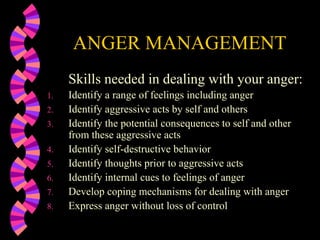
ANGER MANAGEMENT
Skills needed in dealing with your anger:
1. Identify a range of feelings including anger
2. Identify aggressive acts by self and others
3. Identify the potential consequences to self and other
from these aggressive acts
4. Identify self-destructive behavior
5. Identify thoughts prior to aggressive acts
6. Identify internal cues to feelings of anger
7. Develop coping mechanisms for dealing with anger
8. Express anger without loss of control
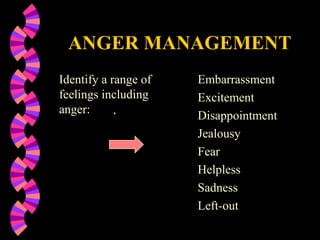
ANGER MANAGEMENT
Identify a range of
feelings including
anger:
Embarrassment
Excitement
Disappointment
Jealousy
Fear
Helpless
Sadness
Left-out
ANGER MANAGEMENT
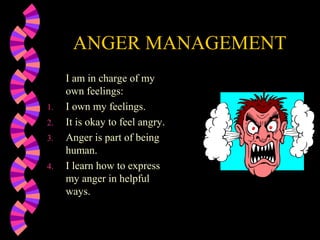
I am in charge of my
own feelings:
1. I own my feelings.
2. It is okay to feel angry.
3. Anger is part of being
human.
4. I learn how to express
my anger in helpful
ways.
ANGER MANAGEMENT
Identify aggressive
acts shown by self and
others:
Throw something
Kick someone or
something
Get in someone’s face
Shoving, grabbing, hitting
Break something
Call someone names
Give someone a dirty look
Silent treatment
Get others to “gang up”
Spread rumors
ANGER MANAGEMENT
I choose to feel good
about myself through
expressing my
feelings.
1. I express angry
feelings in ways that
are fair to others and
me.
2. I use fair words…e.g.
“I feel when you”
ANGER MANAGEMENT
The more I learn to take
care of my anger the
more powerful I become.
1. I need to control what I do
with my anger.
2. I control how I let my
anger out.
3. I practice cooling off.
4. I watch my thoughts.
ANGER MANAGEMENT
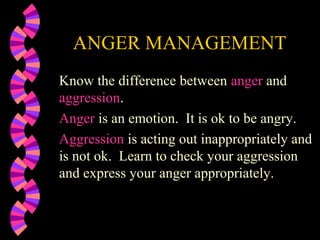
Know the difference between anger and
aggression.
Anger is an emotion. It is ok to be angry.
Aggression is acting out inappropriately and
is not ok. Learn to check your aggression
and express your anger appropriately.
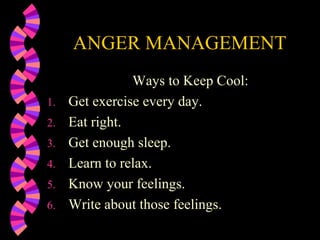
ANGER MANAGEMENT
Ways to Keep Cool:
1. Get exercise every day.
2. Eat right.
3. Get enough sleep.
4. Learn to relax.
5. Know your feelings.
6. Write about those feelings.
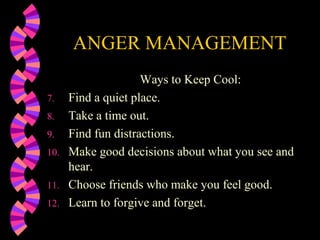
ANGER MANAGEMENT
Ways to Keep Cool:
7. Find a quiet place.
8. Take a time out.
9. Find fun distractions.
10. Make good decisions about what you see and
hear.
11. Choose friends who make you feel good.
12. Learn to forgive and forget.
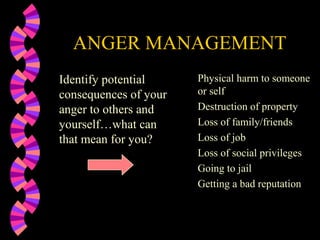
ANGER MANAGEMENT
Identify potential
consequences of your
anger to others and
yourself…what can
that mean for you?
Physical harm to someone
or self
Destruction of property
Loss of family/friends
Loss of job
Loss of social privileges
Going to jail
Getting a bad reputation
ANGER MANAGEMENT
Identify self-
destructive behavior…
How does that help or
hurt you?
Negative self-talk
Blaming everyone else
Taking everything
personally
Assuming
Overeating, drinking
Driving recklessly
Taking drugs
Looking for fights
Feeling outraged
ANGER MANAGEMENT
I stop blaming others
and myself.
1. Blaming only keeps
people upset.
2. Blaming is a way of not
respecting people.
3. I express my feelings
and then try to work
things out.
ANGER MANAGEMENT
Identify thoughts prior
to aggressive acts:
You did that on purpose…
You wanted to hurt me…
You deserve this…
You never even asked
me…
You’re being
unreasonable…
You think you’re so
good…
I’ll show you…
You started it…
There’s no justice…
ANGER MANAGEMENT
Identify internal cues
to feelings of anger:
Stomach gets tight/upset
Heart is beating faster
Clenching fists
Feel myself getting
flushed
Pressure on my temples
Sweaty palms
Clenched jaw
ANGER MANAGEMENT
I don’t have to hold on
to my anger.
1. I find ways to let it go
2. I talk about hurt and
angry feelings.
3. I look for someone to
discuss my anger.
4. I discuss my words and
actions that hurt others.
ANGER MANAGEMENT
Steps to taming anger
1. Know what pushes
your buttons.
2. Know your body’s
anger signs.
3. Stop and think!
4. Cage your rage…it’s
your choice.
5. Decide what to do.
ANGER MANAGEMENT
I take power.
1. I stand up for myself and
others being hurt.
2. I learn to defeat negative
self-talk.
3. I feel good about
learning about myself.
4. I am strong when I use
fair and firm words
instead of fists.
ANGER MANAGEMENT
I remember that people
are precious.
1. I watch my thoughts,
words, and actions.
2. I stop hurting people
with my words and
actions.
3. I take ownership of the
hurtful things I do and
say.
4. “Bullying” hurts
everyone.
ANGER MANAGEMENT
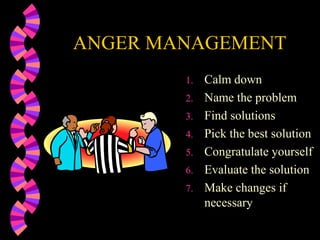
1. Calm down
2. Name the problem
3. Find solutions
4. Pick the best solution
5. Congratulate yourself
6. Evaluate the solution
7. Make changes if
necessary
ANGER MANAGEMENT
Can you identify any of the steps in
resolving conflict, controlling your anger
and avoiding aggressive behavior?
Well…(then click)
ANGER MANAGEMENT
Calm down
Show mutual respect
Name the problem
Find solutions
Choose the best solution
Congratulate yourself
Review the solution that was picked

Anger management

  • 1.
  • 2.
    ANGER MANAGEMENT Skills neededin dealing with your anger: 1. Identify a range of feelings including anger 2. Identify aggressive acts by self and others 3. Identify the potential consequences to self and other from these aggressive acts 4. Identify self-destructive behavior 5. Identify thoughts prior to aggressive acts 6. Identify internal cues to feelings of anger 7. Develop coping mechanisms for dealing with anger 8. Express anger without loss of control
  • 3.
    ANGER MANAGEMENT Identify arange of feelings including anger: Embarrassment Excitement Disappointment Jealousy Fear Helpless Sadness Left-out
  • 4.
    ANGER MANAGEMENT I amin charge of my own feelings: 1. I own my feelings. 2. It is okay to feel angry. 3. Anger is part of being human. 4. I learn how to express my anger in helpful ways.
  • 5.
    ANGER MANAGEMENT Identify aggressive actsshown by self and others: Throw something Kick someone or something Get in someone’s face Shoving, grabbing, hitting Break something Call someone names Give someone a dirty look Silent treatment Get others to “gang up” Spread rumors
  • 6.
    ANGER MANAGEMENT I chooseto feel good about myself through expressing my feelings. 1. I express angry feelings in ways that are fair to others and me. 2. I use fair words…e.g. “I feel when you”
  • 7.
    ANGER MANAGEMENT The moreI learn to take care of my anger the more powerful I become. 1. I need to control what I do with my anger. 2. I control how I let my anger out. 3. I practice cooling off. 4. I watch my thoughts.
  • 8.
    ANGER MANAGEMENT Know thedifference between anger and aggression. Anger is an emotion. It is ok to be angry. Aggression is acting out inappropriately and is not ok. Learn to check your aggression and express your anger appropriately.
  • 9.
    ANGER MANAGEMENT Ways toKeep Cool: 1. Get exercise every day. 2. Eat right. 3. Get enough sleep. 4. Learn to relax. 5. Know your feelings. 6. Write about those feelings.
  • 10.
    ANGER MANAGEMENT Ways toKeep Cool: 7. Find a quiet place. 8. Take a time out. 9. Find fun distractions. 10. Make good decisions about what you see and hear. 11. Choose friends who make you feel good. 12. Learn to forgive and forget.
  • 11.
    ANGER MANAGEMENT Identify potential consequencesof your anger to others and yourself…what can that mean for you? Physical harm to someone or self Destruction of property Loss of family/friends Loss of job Loss of social privileges Going to jail Getting a bad reputation
  • 12.
    ANGER MANAGEMENT Identify self- destructivebehavior… How does that help or hurt you? Negative self-talk Blaming everyone else Taking everything personally Assuming Overeating, drinking Driving recklessly Taking drugs Looking for fights Feeling outraged
  • 13.
    ANGER MANAGEMENT I stopblaming others and myself. 1. Blaming only keeps people upset. 2. Blaming is a way of not respecting people. 3. I express my feelings and then try to work things out.
  • 14.
    ANGER MANAGEMENT Identify thoughtsprior to aggressive acts: You did that on purpose… You wanted to hurt me… You deserve this… You never even asked me… You’re being unreasonable… You think you’re so good… I’ll show you… You started it… There’s no justice…
  • 15.
    ANGER MANAGEMENT Identify internalcues to feelings of anger: Stomach gets tight/upset Heart is beating faster Clenching fists Feel myself getting flushed Pressure on my temples Sweaty palms Clenched jaw
  • 16.
    ANGER MANAGEMENT I don’thave to hold on to my anger. 1. I find ways to let it go 2. I talk about hurt and angry feelings. 3. I look for someone to discuss my anger. 4. I discuss my words and actions that hurt others.
  • 17.
    ANGER MANAGEMENT Steps totaming anger 1. Know what pushes your buttons. 2. Know your body’s anger signs. 3. Stop and think! 4. Cage your rage…it’s your choice. 5. Decide what to do.
  • 18.
    ANGER MANAGEMENT I takepower. 1. I stand up for myself and others being hurt. 2. I learn to defeat negative self-talk. 3. I feel good about learning about myself. 4. I am strong when I use fair and firm words instead of fists.
  • 19.
    ANGER MANAGEMENT I rememberthat people are precious. 1. I watch my thoughts, words, and actions. 2. I stop hurting people with my words and actions. 3. I take ownership of the hurtful things I do and say. 4. “Bullying” hurts everyone.
  • 20.
    ANGER MANAGEMENT 1. Calmdown 2. Name the problem 3. Find solutions 4. Pick the best solution 5. Congratulate yourself 6. Evaluate the solution 7. Make changes if necessary
  • 21.
    ANGER MANAGEMENT Can youidentify any of the steps in resolving conflict, controlling your anger and avoiding aggressive behavior? Well…(then click)
  • 22.
    ANGER MANAGEMENT Calm down Showmutual respect Name the problem Find solutions Choose the best solution Congratulate yourself Review the solution that was picked