:


liliifiiilifillii^^^


                                                                           mfM

                       '-'r^TWtf |i#w«w;fc^n *


                       iliriiij             ^'^'t^


                                                     V-,^CBie»J*u*«f^^1l


                                          ,11;


                           :;ffl'.?^
Qlmient BouMe Cntrp
                                                                       &
                                                                       j^'


^Eutag           5acio(i*s(    Wnati^t          (a.   ©. 1494
—   tfjc earliesit   fenotun toriter   on   tjoofefeeeprng) Vt=
                                                                      >%'
probuteb anb transilateb                    luitf)   reprobuc=
tiong, notes;         anb ab^tractsi from               Man-
^oni, J^ietra, JUainarbi,               gmppn, g>tetiin
anb Bafforne


    3Iol)n 15.   (^timezk, IH.'B., 90.C.©,, C.p.a.
                              1914


                                                                  W


                          PubUd&eti b?
                      31obn 15. (Seffsbeefe
                        SDenber. Colorado
Copyright 1914

By the Author
DeDicateD          to    6@p mift


obo8t   initials!   3   batie aIUiap0 loDeD to         connect    toitl)


             0lv          itittle        ^toeetfjcart,


     toitbout    most        patience, kinDness, belp,
     anD inDuIgence, mp contritjutions to tie
     eDucational fielD of tbe professional
     accountant tooulD not               t)at)e   been possible.
.               .                                     .


                                              TABLE OF CONTENTS
                                                                                                         Page
IntroduL'tion                                                           (By Page Lawrence, C.P.A.)         1
Preface                                                                            (By the Author)         3
Partial Bibliography             .


Historical References
Historical                                                                          (By the Author)        8
Discursion in Theory                                                                (" "       "   )      14
Lucas Pacioli                        Reproduced                              (Author's explanation)       17
                                     Title Page                         (photographic reproduction)       18
                                     What was his    real   name                                         21
                                     Abbreviations used                                                  24-25
                                     Peculiar sayings                                                    27
                                     Comparative index of the earliest writers                           29
                                     Entire Text                        (photographic reproduction)       32 to 80
                                     Complete translation of entire text                                 33 to 81
Domenico Manzoni                     Journal                             (photographic reproduction)      82
                                     Author's notes on reproduction                                      83
                                     Abstracts from text                                                 84
                                     Rules for Journalizing                                              85
                                     Index to original text                                              85
Don Angelo         Pietra            Journal and Ledger reproduced                (Notes by Author)      87
                                     Index to original text                                              89
                                     Extent of original text                                             91
                                     Title   Page                        photographic reproduction)      93
                                     Chart                                                         )     94
                                     Journal                                                       )      95 to 96
                                     Ledger                                                        )      97 to 107
Matteo Mainardi                      Journal reproduced                           (Notes by Author)     107
  a          t (
                                     Title   Page                       photographic reproduction)      108
  ((         <c
                                     Introduction to Executor's Books                              )    109
                                     Journal                                                       )    110
Jan    Ympyn       Christolf els     Title   Page                                                  )    112
                                     Author's notes                                                     113
Simon Stevin                         Journal and Ledger reproduced               (Notes by Author)      114-118
                                     Title   Page                        photographic reproduction)     119
                                     Balance Sheet                                                 )    .120
                                     Profit and Loss Account.                                           .121
                                     Journal                                                            .122 to 127
                                     Ledger                                                             .128 to 135
                                     Controlling Account                                           ).   .136
Richard Dafforne                     Partially reproduced                        (Notes by Author)      137
                                     Title   Page                        photographic reproduction)     140
                                     Epistle Dedicatory                                            )    141
                                     Antiquity of Bookkeeping                                           .144
                                     Index                                                              .145
                                     Text                                                               .147 to 171
                                     Journal                                                            .172
                                     Ledger                                                             .174 to 179
                                     Trial Balance                                                      .180
Afterword                                                                                               .182
INTRODUCTION
                                           By Page Lawrence,      C.P.A.


    Nearly all historians, when tracing the gi'owth of an art or science from mere empiricism to the estab-
lishment of recognized principles, are confronted with an apparent insurmountable gap or complete silence
during the period known in history as the Dark Ages.
    Archaeological and historical researches have convinced this civilization that in Ancient Babylon,
                                                            —
Greece and Rome there was a high state of civilization both industrial and social.
     Today we may study    Aristotle's politics with great profit in our attempts to understand the political
and economic conditions confronting this generation. An acquaintance with the Greek philosophers is es-
sential in undei'standing our present philosophical thought.
     It would seem that, since we find so much help in consulting these ancient writers in an attempt to
solve the political problems of today which are presented by this complex civilization, in a large measure
at least our mentors must have been confronted with the same economic and industrial difficulties that we
are attempting to solve now as accountants.
     One is convinced that the ancient writers on political economy and commerce were closely allied with
the scribes or accountants who recorded the business transactions of those days. This allegiance seems to
have been lost after the Roman supremacy (and the consequent growth and spread of commerce), and it
is only within recent years that the modern economist and accountant has acknowledged that a truer un-
derstanding of modern commerce can be had with cooperation and that the two sciences (economics and
accounting) are finding so much in common that each is dependent upon the other for a full understanding
of modern business conditions.
     Mr. John P. Young, Editor of the San Francisco Chronicle, ably presented accounting in antiquity
before the convention of the American Association of Public Accountants at San Francisco (Year Book
1911, page 153).  He showed that Rome in Cicero's time was dependent upon the independent verifica-
tion of accounts and statements thereof by one skilled in accountancy.  The familiarity with which he
mentions the accountant would seem to indicate that his place in the Roman social organization was well
established.
     However, after the recorded utterances of Cicero the historian finds in the pages of history no further
mention of those individuals acknowledged to be skilled in accounts, which we are pleased to call account-
ants, until the writings of Paeioli in 1494 and Stevin in 1604.
     It seems especially appropriate that one so greatly interested as the author in that work dear to the
hearts of all progressive accountants, and who has done so much to place the education of the accountant
on equal footing with that of law or medicine, should be the first of modern times to translate this first re-
corded book of the principles of debit and credit into the English language.
     It is a significant fact that the rules and principles elucidated by Paeioli are contained in a book given
over to mathematics. One cannot help but believe that the derivation of double-entry bookkeeping is an
explanation of the algebraic equation used with sucli skill by the ancient Greek mathematicians, applied
practically to the scientific recording of business transactions for, just as in algebra, the equation once
established cannot be changed but by the addition of positive or negative quantities.
    This work will give an added assurance that the apparently empirical rules of commerce are based
upon an ancient scientific and mathematical foundation, to those who have attempted to instill into the
commercial mind the idea that accountancy is a science, the prime requisite of a mastery of which is a thor-
ough education in the theory of economics and allied sciences supplemented by practical experimentation
in the application of   formulae to practical biisiness situations.
    The accountant has   to correct constantly, or at least modify, the attitude of the business man toward
matters which are his dearest heirlooms handed down from the days of the Ancient Guild system, i. e.,
that the only wa.y to learn how to do business is to do it along the rule-of-thumb method communicated
from father to son by word of mouth.
     Accountants, who remember the dearth of accountanc.y literature in this country up to a hv short
years ago, are dumbfounded at the mass of accountancy publications which are constantly flooding the
market at this time. While I believe that the profession of accountancy as a whole recognizes the ines-
timable value of these publications, one cannot help but think in perusing their pages that they are largely
influenced b.y the empirical methods of general business, rather than based on scientific principles.     In
other words, on "how" but never "why."
     We are wont to look in vain through mazes of descriptions, forms and precedence of some particular
business enterprise for a principle of accountancy which can be applied to the specific difficulty we have
in hand.   It should be the aim of some of the brilliant members of the profession of accountancy to take
the great mass of historical records which have been published in the last few years of how this or that
business should be kept and, with the aid of recognized authorities on economics, codify, with quotation of
their source, the scattered and ill defined principles of accountancy for the benefit of accountancy educa-
tion, and to this end no better examples of axiomatic principles can be had than in the books of Paeioli,
Pietra and Stevin.
—


     The author, recoguiziug from his experience as an educator in accountancy (coming as he did from
Holland some twenty years ago without knowledge of American commercial practices or language) the
lack of clearly expressed principles in accountancy, commenced researches which have finally culminated
in this published translation in English of the first known writings on the subject of double entry book-
keeping.
     At every turn, in the preachment of the scientific principles of his profession to the commercial mind,
in his successful efforts for the passage of the Certified Public Accounts law in Colorado, then in his work
as secretary of the first examining board in that state, in his labors as Dean of the School of Commerce,
Accounts and Finance of The University of Denver, and as an instructor on practical and theoretical ac-
countancy subjects and, finally as Chairman of the Educational Committee of The American Association of
Public Accountants, the author has ever been confronted with the dearth of practical exemplification, his-
torical or otherwise, of the true foundation of what in modern times might be called the Art of Accountancy.
     To weld together into a well balanced whole the two plans of accountancy education, as embraced in
the curriculi of universities and colleges offering training to the embryo accountant, has long been the goal
of his educational endeavors, i. e., to leaven the purely academic training by instructors or professors
whose own knowledge of accountancy is in the main pedagogical, with the practical knowledge as imparted
by the practicing accountant and the business man. (The author, in the American Association of Public
Accountants Year Books for 1911-12-13 and 14, has gone into this subject extensively, showing that educa-
tional institutions of the country have chosen either the one or the other of the two methods of teaching
the academic training in pure theory, treated in much the same manner as economic subjects are presented
and without the same degree of accuracy, or the practical lecturing upon accountancy subjects by practic-
                                                                                     —
ing accountants and business men, supplemented by the best text books obtainable and urging the while
the necessity for the development together of the two accountancy educational plans, as is done in Great
Britain.)
     While it is true that to men of little or no practical experience in accountancy must be given the credit
for producing some of the finest examples of purely theoretical accounting which the literature of accoun-
tancy has today, the first mentioned criticism that this pedagogical instruction does not teach the actual
application of the theory to modern business, again applies. On the other liand, with the practical ac-
countant as the instructor or the writer of text books, too little cannot be said of the difficulty he has in
imparting to students and laymen the principles which seem exceedingly clear to him. And it was through
this research, this labor to combine in accountancy education theory with practice and practice with theory,
that this book was born. It is apparent in reading the ancient works of Pacioli, of Stevin and Pietra, in
their exhaustive explanations and their lengthy and precise instructions that in their endeavors to system-
atize the recording of the transactions of commerce of their time, they encountered many of the same sort
of, if not the identical, problems with which we are confronted today. The modern translations of their
works, with the author's own views presented as notes, it is believed will shed some light into the darkness
which has so long shrouded the actual foundation of the practice and the theory of the profession of pub-
lic   accountancy.

       Denver, Colorado, August, 1914.
;


                                                                       PREFACE

     As no technical books worth while can be prepared without diligent and persistent research, it natur-
ally follows that no such works can be produced unless there is material furnished to build upon, and the
cheapest and easiest foundation is usually the writings of men who have excelled in the same line of en-
deavor.   In other words, a library of books is absolutely essential to the advancement of thought on tech-
nical and professional subjects.
      While studying to Americanize my knowledge of accountancy twenty years ago, I came to the con-
clusion that there were then on that subject few modern books and still fewer ancient ones. This convic-
tion was constantly strengthened by conversation with my fellow-workers, and it remained unchanged un-
til a few years ago.

     When my duties came to include the teaching of accountancy and the direction of the thought of my
students, the choice of books for their reading became a serious problem.    It was then my privilege to start
the collection of a considerable library of works on accountancy and its allied subjects.
     However, I could learn of but few books of ancient date, and they were so scarce, difiScult to get, and
high priced, that most of them remain yet to be acquired. Among those which I did get is an original
copy of the oldest published work on bookkeeping. The price for copies of this book ranges from $50 to
$250, and it is thus not within the means of ordinary students and is even beyond the inclination of ac-
quisition of many of the most wealthy libraries. It became my desire to have it reproduced, together with a
free translation of its most important parts.
     This desire increased when                    my
                                     research showed me that the first man to follow the teachings of this
Italian book and to translate it into another language, was a fellow-countryman of mine, a Hollander
named Jan Ympyn Christoffels. He translated it into the Holland, French, and English languages, and
to this day we follow his lead, (as outlined in the title of his book), of calling double-entry bookkeeping
by the use of day book, journal, and ledger, the Italian method of bookkeeping.
     The Hollanders of ancient New Amsterdam (now New York) have left their unmistakable imprint
on our American political and social life, by the introduction into this country of many things which orig-
inated in their mother-coiuitry and which were unknown even in England prior to their use in America.
To this day many of these things remain unused in England, which is one reason why we are so different
from the English. Among these things may be mentioned :*
     The recording of deeds and mortgages in a public office the equal distribution of property among the
                                                                                                    ;


children of a person dying intestate the office of a district attorney in each comity the practice of giving
                                                            ;                                                  ;


a prisoner the free services of a lawyer for his defense the township system, by which each town has local
                                                                                   ;


self-government; the practice of making prisoners work; the turning of prisons into work houses; the
system of university education free public school system the red, white and blue striped flag the prin-
                                           ;                                                ;                              ;


ciples contained in our Declaration of Independence      the granting of religious freedom the cultivation of
                                                                               ;                                   ;


roses the present banking system the use of reading and spelling books for children the telescope the
     ;                                                  ;                                                          ;           ;


microscope the thermometer the discovery of capillary circulation of tlie blood the pendulum clock
               ;                       ;                                                                       ;


measuring degrees of latitude and longitude the compass the wind-mill with movable cap the glass hot-
                                                                       ;                        ;                      ;


house the use of underclothing the bedstead the brick the game of golf.
         ;                                     ;                           ;           ;


     It has seemed to me fitting that another Hollander should present to his American professional breth-
ren, and put within the reach of every student of accounting, for research and study, a reproduction of
that prized Italian book, which, as we shall see, has influenced us to such an extent that the principles it
enunciates as of use in its day, remain the foundation of our present methods of bookkeeping.
     It was not my aim to give a complete literal translation, because much of the text is reiteration and
pertains to subject-matter purely local and now entirely obsolete, which would necessitate lengthy expla-
nations of ancient methods of no present value or use. Therefore, numerous foreign terms and ancient
names have been left untranslated. Furthermore, as the book was written in contemporary Italian, or, in
other words, in the local dialect of Venice, which is neither Italian nor Latin, it is extremely difficult to get
local talent sufficiently trained in this                       work   to translate        it all literally.

    The old   style of writing is unattractive and tiresome to follow.   While it is customary and proper in
translations to follow the original style as much as possible, and to cliange it no more than is necessary to
make it readily understood and easily read in modern language, it was found extremely difficult to do that
in this instance, and furthermore, it would have served no practical purpose.      And then, who is there at
the present time but a scholar of some eminence and a linguist of no mean accomplishment, who will pre-
sume to say what is correct and what is incorrect ? Such authorities never agree among themselves, and it
would be useless to attempt to please them all. Therefore, we are extending the translations, not so much
for academic purposes as for the practical use of less pedantic people, upon the theory that they who wish
to obtain knowledge of any science must first learn its history and then trace its gradual growth.   There
is hardly another science about which there is as much doubt and darkness as bookkeeping, and therefore we
merely present this translation as a contribution to the history of bookkeeping.

William      Elliott Griffls in   "The Ladies' Home Journal."
'                                                                        :


                                                                                              '

                                                        Aucieut Double-Entry Bookkeeping, in the use of
                                                             '

     Criticism has beeu made of the title of this book,          '                                '


the word "Ancient" as applied to the year 1493 A. D.      The long obscurity of the "Dark Ages," during
which there was no light whatever upon this important subject, has, in our belief, made the treatise of
Pacioli ancient, and, further the abrupt "leap through the dark" from this ancient work to the works of
modern times, we believe justifies the title.
    The reader is further referred to the German translation of Pacioli 's book by E. L. Jager which ap-
peared in 1876, and the Russian translation by E. G. Waldenberg which was printed in St. Petersburg in
1893.
     Pacioli 's book was first photographed and plates made from these photographs. Proof sheets from these
plates were then sent to Rome, Italy, and there transcribed on a typewriter in modern letters, to facilitate
translating.    The typewritten transcript was then translated into Engli.sh, which was then compared with
an existing Grerman translation by Dr. Jager. Discrepancies were carefully noted by reference to the orig-
inal book, and the best possible corrections made.   This method brought to the surface obvious and glar-
ing short-comings in the German translation, and it also demonstrated our own inability to comprehend
and properly translate some of the old terms and words, which even the Italy of today has long forgotten.
With it all then, we are free to admit that in numerous places our English translation is defective. How-
ever, we are not imposing on those who are better scholars than we, because we give the original Italian
side by side with our English version, and any one so disposed can easily check it and correct our copy to
suit his fancy.
     The only object of our endeavors is to give something where there was nothing to those who hereto-
fore could not avaU themselves of the contents of this old and pioneer work on a subject now universally
recognized as being the foundation of all our modern industrial and commercial problems.
     We ask your indulgence for errors and omissions, and for the price of this book, as the work had to
be done hastily and cheaply, for the financial success of this enterprise is exceedingly problematical, owing
to the excessive cost of preparation and reproduction, and the very small possible circulation.     The work
therefore should be viewed largely as a labor of love, a voluntary philanthropic contribution to the pro-
fession of accountancy.
     Acknowledgment is due and most gladly given to my wife, a Certified Public Accountant of the State
                                                         :


of Colorado, who aided with the German translation to Mr. Robert Ferrari, LL.D. Roma, Italy, who
                                                     ;


aided with the Italian translation to Mr. Henry Rand Hatfield, PH.D., University of California, who crit-
                                       ;


icized the work and to Mr. Page Lawrence, C.P.A., who wrote the introduction
                  ;
                                                                                   :
                                                                                       —
                                                                                       truly a veritable com-
bination (trust) of formidable minds in restraint of duplication (competition) of this work, a combina-
tion of love and harmony, for without friends and without consideration for our neighbor there is neither
peace nor accomplishment.
     The book, therefore, is the result of a faithful compliance with the motto of the Boers of South Africa
"Eendracht maakt macht," which translated does not mean, as commonly stated, "In union there is
strength," but rather that "United, harmonious, loving cooperation to the same lawful end tends toward
                               '
power that brings just results.
                                                                                 J. B. Geijsbeek Molenaar.

Denver, August, 1914.
PARTIAL BIBLIOGRAPHY
                                                    1494 to 1636.


                  Sixteen of the most influential books out of a passible total of 50 works.
I.    ITALIAN.
             Snmma    de Arithmetica, Geometria,
                  Proportioni et Proportionalita.
                       Part  1, Section 9, Treatise 11,
                       Particularis de Computis et Scripturis.
                              Frater Lucas de Burgo Sancti Sepulchri, Ordinis Miuoruni
                              et saere theologie magister, in arte arithmetice et geometrie.
                                                                                                            Venice 1494
                                         Geijsbeek-Lawrence Library, Denver.
                                         Harvard University Library, Cambridge, Mass.

             La Seuola   perfetta dei mercanti.
                              Fra. Paciolo di Borgo Santo Sepolcro.
                                                                                                           Toscana 1504
             Summa    de Arithmetica
                   (see full title above, this being practically          a   duplicate   edition   of
                     1494, but contains less contractions          and abbreviations.)
                                                                                                            Venice 1523
                                         Edinburgh, Chartered Accountants' Library.
                                         Library, University of California.


             Quaderno doppio       col   suo giornale secoudo     11   costume di Venetia.
                              Domenico Manzoni.                                                             Venice 1534
                                                                                          Also 1554-1564-1565-1573-1574

                                         Edinburgh, Chartered Accountants' Library (1554 edition).

             Indrizzo de   gli   economi.
                              Don Angelo      Pietra de Genoa.
                                                                                                           Mantua 1586
                                         Geijsbeek-Lawrence Library, Denver.


             La   Scrittura Mercantile fatta e riordinata.
                   (Reprinted in 1700 under the title of "L'Economo overo La Scrit-
                     tura tutelare, Scrittura Mercantile.")
                              Matteo Mainardi.                                                             Bologna 1632
                                       Geijsbeek-Lawrence Library, Denver.


II.    GERMAN.
             Eiu Teutsch vertendig Buchhalten          fiir   Herren oder Gesellsehafter inhalt
                 Wellischem process.
                              Johann     Gotlieb.                                                        Nuremberg 1531
                                         Royal Library, Munich, Germany.

             Zwifach Buchhalten.
                              Wolffgang Schweicker.                                                      Nuremberg 1549
                                         Kheil Library, Prag.
                                         Edinburgh, Chartered Accountants' Library.

             Buchhalten nach arth und weise der Italianer.
                         Passchier Goessens from Brus.sels.
                                                                                                          Hamburg   1594
                                         State Library, Stuttgart, Germany.


                                                              5
.


III.   DUTCH.
            Nieuvve lustructie Ende Bewijs der Looffelijeker Cousten des Reken-
              boeckse ende Rekeuinghe te houdeue nae die Italiaeusche maniere.
                           Jan   Ympyn      Christoffels.
                                                                                    Antwerp (Dutch) 1543
                                                                                   Antwerp (French) 1543
                                                                                   Antwerp (English) 1543
                                      City Library at Antwerp (Dutch).
                                      Library of the Nieolai Gymnasium at Reval, Rus-
                                         sia (English).
                                       Fideicommiss-Bibliothek at Maihingen-Wallerstein,
                                         Germany      (   French )

            Verrechning van Domeine (including chapters on) Coopmans Bouck-
              houding op re Italiaeusche wyse and Vorstelicke Bouckhouding op de
                Italiaeusche wyse.
                           Simon     Stevin.
                                                                                             Amsterdam 1604
                                       Geijsbeek-Lawrence Library, Denver.

            Hypomnemata Mathematiea.
                           Simon     Stevin.                                                     Leijden 1608


IV.    ENGLISH.
            A   briefe instruction and maner to keepe bookes of accompts after the
                order of Debitor and Creditor, and as well for proper accompts parti-
                ble, etc. newely augmented and set forth by John Mellis, Scholemaister.
                 (purporting to be a reprint of a book bv Hvigh Oldcastle, London,
                1543.)
                           John   Mellis.                                                        London 1588
                                       Library of Institute of Chartered Accountants in
                                         England and Wales (London).


            The Merchants' Mirrour or Directions for the Perfect Ordering and
              Keeping of his Accounts. Framed by Way of Debitor and Creditor
              after the (so-termed) Italian Manner.
                           Richard Dafforne.                                                      London 1636
                                                                                           Also 1651-1660-1684
                                       Geijsbeek-Lawrence Library, Denver.
                                       Harvard University Library, Cambridge, Mass.
                                       Library of Congress, Washington, D. C.
HISTORICAL REFERENCES
Sehatzkammer Italienischen Buchhaltens.
                    Christophorus Achatius Hageru.                                                            Hamburg 1654
                                        State Library, Stuttgart, Germany.


Beitrage zur Geschiehte der Erfiudungen.
                    Johann Beckmann.                                                                            Leipzig 1786

                                        Library of Congress, Washington, D. 0.
                                        State Library, Stuttgart, Germany.


Origin and Progress of Bookkeeping.
                    B. F. Foster.                                                                              London 1852
                                        Library     of          Chartered Accountants
                                                         Institute   of
                                          in England and Wales (Loudon).


Die Berechtigung der einfachen Buchhaltung gegeniiber der doppelten.
                Ernst Ludwig Jager.                                                                           Stuttgart 1868

                                        Library, University of California.


Beitrage zur Geschiehte der Doppelbuchhaltuiig.
                    Ernst Ludwig    Jiiger.
                                                                                                              Stuttgart 1874
                                        Library,    Univei-sity of Cliicago.
                                        Library, University of CaHforuia.


Lucas Paccioli und Simon Stevin.
                    Ernst Ludwig Jager.                                                                       Stuttgart 1876

                                        Library,    Univei-sity of Chicago.


Luca   Pacciolo, considerato   come ragionere,     lezione tenuto alia     r.   scuolo di commerzio.
                    Guido Brandaglia de Arezzo.
                                                                                                                Venice 1882
Eleneo Cronologico della opera di computisteria          e ragioneira     venute alia enee in      Italia.
                                                                                                                 Kome 1886
                                        Library of Congress, Washington, D. C.


Ueber einige   iiltere   Bearbeitugen der Buchhaltung     —Tractates Von Luca           Pacioli.

                    Carl Peter Kheil.
                                                                                                                  Prag 1896
                                        Geijsbeek-Lawrence Library, Denver.


The History of Accounting and Accountants.
                    Richard Brown, Editor.
                                                                                                             Edinburgh 1905
HISTORICAL
     Printing from blocks of wood in which the letters were carved, was known long before the Chris-
tian era, but this was cumbersome and slow and hence but few books were published in that manner.
Printing from loose metal type which could be set up in the way known to us to-day did not begin to
be a success until after A. D. 1462, when the German city of Maintz or Mentz (where the first well-
known printer, Gutenberg, and his students lived) was sacked by Adolph of Nassau, and those who
were printers were scattered far and wide through other cities.
     Even during the first part of the sixteenth century, one-fourth of all the books printed came from
one city only, i. e., Venice in Italy. Therefore a book produced from loose type in 1494 in Venice, must
have been among the very first printed, and its subject must have been at that time of such prime
importance as to make it worthy of being among the first to be published. The oldest treatise which
lias come dowTi to us either printed or written on the subject of bookkeeping, is included as a part of a
rather large printed volume on arithmetic and geometry. This volume was published in November,
1494, in Venice, Italy.    It has been used considerably by later writers on the subject of arithmetic and
geometry,   and is mentioned in numerous works of bibliographers, botli ancient and modern. The title
is:   Summa de Arithmetica Geometria Proportioni e Proportionalita. " Bookkeeping is treated in Part
One, Section 9, Treatise 11, under the chapter title of "Particularis Computis et Scripturis," which
translated would mean: "Particulars of Reckonings and Their Recording."
    The exact name of the author cannot be established definitely from this work, as his full name does
not appear on the title page nor anywhere else.     The author calls himself in this book Frater Lucas
de Burgo Sancti Sepulehri, which translated into English may be called Brother Lucas of the City of
the Holy Sepulchre. The City of the Holy Sepulchre, or Sancti Sepulehri, is a city in the northern part
of Italy near Venice.  On page 67-2, line 5, of Frater Lucas' book "Summa de Arithmetica," he states
that about A. D. 1470 he dedicated a certain book to his students named Bartolo, Francesco, and Paulo,
the three sons of a prominent merchant of Venice named (Antonio de) Rompiasi. From other writ-
ings and other evidence, bibliographers have come to the conclusion through their researches that the
real   nameof this "Frater Lucas" was Lucas Pacioli.
     The copyright of the book published in 1494 expired in 1504, and about that time a reprint of
the chapter on bookkeeping appeared in Toscana, under the title of "La Scuola perfetta dei Mercanti."
A copy of this reprint was not in the possession of the writer, but it would appear that there the name
of the author was given as Fra. Paciolo di Borgo Santo Sepolcro.      In other writings he is known as
Patiolus, which is supposed to be the Latin for Pacioli.
     In 1509, shortly before he died, he wrote a book called "Divina Proportione," in which he gives a
foreword and reproduces several letters he has written. In these he signs himself as Lucas Patiolus.
This book was written in Latin. On page 33-b of this book, in section 6, treatise No. 1, chapter No. 1.
the author refers to his book published in 1494 in the following words: "in opera nostra grande dicta
summa de arithmetica etc. impressa in Venetia nel 1494 et al Magnanimo Diica d'Urbi)w dicata." We
underscored the word "nostra," which means "our."
     Lucas Pacioli, as we will call him hereafter, believing that to be his proper name, was born about
1445 in the little city of Sancti Sepulehri, in the Province of Arezzo, of Tuscany, west south-west of
the City of Urbino. He was a great lecturer, mathematician, writer, scholar, teacher, and traveler, a
well-known and famous man, who was the first to translate into Latin the works of Euclid. Succes-
sively he was professor of mathematics at Perugia, Rome, Naples, Pesa and Venice, and was chosen for
the first occupant of a professor's chair founded by Louis Sforza.     He was in Milan with Leonardo da
Vinci at the Court of Louis the Moor until the invasion of the French. It is not improbable that
Leonardo da Vinci helped Pacioli in the writing of this work as there are indications of two distinct
styles of writing.   He belonged to the Order of Friars Minor of St. Francis. It is apparent that he
took the cloth late in life, for protection and standing needed in his many traveling tours, during the
unrest then existing in Italy. He wrote his treatise on bookkeeping when he was about 50 years old,
and died near the end of the year 1509, at the age of 65.
     It is but natural that bookkeeping should be always in its greatest perfection in those countries
where commerce has reached its highest stage. It is well known that during the twelfth, thirteenth,
fourteenth and fifteenth centuries Venice was a powerful republic, from which all European commerce
radiated, until in 1498 the East Indian ocean route was discovered, from which time on the commercial
power of Venice waned. It is safe to assume that the book here reproduced faithfully depicts the con-
ditions existing at the time of its writing and the prevailing system of recording the transactions of
commerce. All the world's commerce, practically speaking, was concentrated in this small territory,
therefore its system of bookkeeping must have been the most perfect known in the world at that time.
The existence of a well advanced system of bookkeeping in the centers of commerce must have caused
considerable confusion and correspondence with the places where such a system did not exist, in order
to equalize and settle accounts between the merchants residing in these various places.
                     probable that a great need existed for taking advantage of the facilities which the
       It is therefore
 new  inventions in printing permitted, to present to the commercial world outside of these centers a
 systematic treatise of the mo.st important part of commerce, namely, the recording of its transactions


                                                     8
and  results.  Pacioli does not claim that he invented double-entry bookkeeping, but on the otlier hand
mentions in his book the existence of ancient customs and numerous methods named after the places
where they were used. Thus he calls the method of bookkeeping he describes, tlu; metliod of Venice,
as distinguished from those in use in other cities, the names of which appear in the translation we
have made of his book.
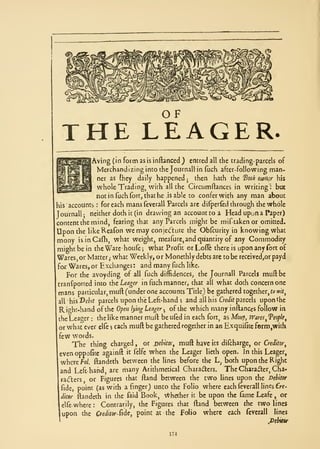
     While Paeioli gives in his book on arithmetic and geometry copious illustrations, as will be seen
from the sample page of that portion of the book herein reproduced, he did not give examples and illus-
trations of the day book, the journal and ledger, which he describes.      His book therefore has never
become as popular as those of later writers who give these examples. Pacioli, however, was very lengthy
and careful in his minute and detailed description of tlie various methods employed. The reading of
his book will be a revelation to those who liave an idea that the present high state of development of
American commerce should have produced methods of bookkeeping unknown at such an early period
as when Pacioli wrote.     They will find that there then existed the little safeguards which are not de-
scribed or explained in present books of instruction on bookkeeping, but which we accountants are
always wont to preach about to those bookkeepers who come under our observation, and whicli we do
not pass by simply as mere suggestions but upon which we insist emphatically with a "You must do
this." Pacioli especially describes these little things with great emphasis, and in a style cunning in the
extreme, fully punctuated with adages to bring the truth home so no one could forget it. He, however,
on the other hand, does not spend any time in explaining the modus operandi of bookkeeping, which we
learn only by practice (as he puts it), as he doubtless appreciated that he was not writing his treatise
to teach bookkeeping to those who did not know anything about it, but only describing the advantage
of the particular method in use in Venice in order to convert merchants to a change from their system
to the best system then known.
     Writers who have followed after Pacioli have practically all given full illustrations of the journal
and ledger, but have rather neglected to explain the "whys" and "wherefores" of the little and valu-
able details upon which Pacioli has laid so much stress, taking them as matters of fact rather than as
fundamental principles. As we all know, it is the little things which throw the safeguards about a
proper system of bookkeeping.
     It is not the writer's aim to go into detail as to the history of bookkeeping. Any one desiring to
study this subject in its entirety, is referred to the most remarkable records and researches of Jiiger,
Kheil, and Row Fogo as edited by BroASTi, the title of whose books are fully described in the bibliog-
raphy hereto appended.
    Jager and Klieil were prominent Grerman scholars, who must have devoted an enormous amount of
time to their researches as to the origin and growth of bookkeeping. Jager was somewhat hasty and
inaccurate; Kheil is somewhat brief, and therefore difficult to understand by those who have not read
other books on the subject. Both of these books are written in German.
     Happily we Americans have the aid of the recent book written in Scotland by Brown and his asso-
ciates.  The treatise they present is exhaustive, brief, to the point, and exceedingly accurate, fully
illustrated, and is of immense value to every student of the subject of accountancy.
     The writer does not wish to duplicate the work of any of these three, but by the present volume he
desires to emphasize the fact that Pacioli 's work is the real foundation of all books published in Ger-
many, Holland, France, and England within the first hundred years after it was written.        Wewill do
nothing more than describe the effect of Paeioli 's book on Manzoni and Pietra which appeared in
Italian, Gotlieb, Schweieker, and Goes,sens, which appeared in German, Ympyn and Stevin in Dutch,
Ympyn in French, and Ympyn, Oldcastle, Mellis, and Dafforne in English, as these books undoubtedly
have been the basis for subsequent works in these various languages, most of which are at present
available for comparison and study.     The titles of other contemporary books can be found in the bibli-
ography of Mr. Brown's work, for he gives an exhaustive list of over 150 books written on this subject
between Pacioli 's time and the beginning of the nineteenth century. Of these, 50 were written prior to
the publication of Dafforne 's "The Merchants' Mirrour" in 1636, which is really the first popular
English work. Most of these 50 were wintten in Italian, Dutch, or German, with the honors about
evenly divided.
     As we have said, Lucas Pacioli 's book appeared in Venice in 1494, with a ten-year copyright. At
the expiration of that period, or in 1504, the same printers published an exact duplicate of this book,
under a different title. Twenty-one years after the last date, or in 1525, there appeared in Venice a very
luisatisfactory and incomplete work on bookkeeping by Giovanni Antonio Tagliente, of which the his-
torians do not say much.
       Forty years after Pacioli 's book of 1494, or in the year 1534, Domenico Manzoni published in Venice
his   book on bookkeeping, which proved very popular, as during a period of 40 years it went through
six   or seven editions, which may be termed a tremendous success, considering the conditions of those
times.
     Manzoni dedicated his book to Alouisius Vallaressus, a rich brother of a friend of his named Petrus.
It seems apparent from his preface that he commenced the book years before it was published, when all
three (the author, his friend, and the latter 's rich brother) were going to school in Venice. In the
title he mentions "the method of Venice," but he does not tell anywhere how or where he gained his
knowledge and does not give Lucas Pacioli any mention or credit.
     Manzoni wrote in dialect, or what is called "patois." He says in his preface that he is not a
scholar and cannot use flowery language but only the speech of his inother, which he learned by word
of mouth.   He    states too that he is a poor man.  In those days only the very rich and the clergy could
attend schools.    The poor were usually artisans, learning their trade from their parents.
     Manzoni's book may be termed a revised reprint of Paeioli. Page after page is identical and word
for word, and the remainder is merely shorn of the religious expressions, adages, and peculiar repeti-
tions which Paeioli so freely indulged in. Much of value and many of the details given in Paeioli 's book
are here omitted.
    This book    is divided into two parts, one for the text and the other for examples of journal and
ledger.   While the text covers but 12 of the 36 chapters of Paeioli, the two parts combined may be said
to reproduce about 18 chapters of Paeioli.      At the beginning of the writer's translation of Paeioli 's
l)ook herein, a comparative index is given, which illustrates just how much of Paeioli 's book Manzoni
copied and what he left out. The only new idea in his book as compared with that of Paeioli, is the
consecutive numbering of the journal entries. In some respects, however, Manzoni is clearer than
Paeioli, as for instance, he gives definite rules for the making of journal entries tabulates six things or
                                                                                  ;


matters of information always contained in every journal entry; describes the form of journal better
by mentioning five "standing" or "down" lines; explains the use of more than one day book and gives
                                                                                                ;


a chapter to the apparent transposition of the terms "A" (our "To") and "Per" (our "By") in the
ledger from its customary use in the journal.
     jManzoni gives full illustrations of the journal and ledger, with its entries, which Paeioli, for rea-
sons stated, did not deem necessary. The addition of these illustrations of course has made the book
more popular, and jIanzoni, while a plagiarist in other respects, must be given the credit of having
really been the first to do this.   The writer regrets that Manzoni's book is not accessible to him for on
that account only one reproduction can here be given, namely, the last page of the journal, which is
taken from Brown's history of accounting.
     In 1586, nearly 100 years after Paeioli wrote, we find that Don Angelo Pietra published a work on
bookkeeping fully illustrated with numerous examples. The book was printed in Mantua by Franz
Osanna. Pietra was a monk, born in Genoa, stationed at the Monastery of Monte Cassino, Neapel,
Province of Caserta, near Sora. He was the auditor, storekeeper, and cellarer of that monastery. He
belonged to the Order of St. Benedict, and dedicated his book to Lastancius Facius, the abbot of the
Benedictine monastery at Mantua. Pietra 's style is very clear and concise, and his book contains some
60 short but pithy chapters. As will be seen from the comparative index heretofore mentioned, and
given farther on in this book, Pietra had for his guide the books of both Paeioli and Manzoni, for he
covered matters which Paeioli did, and also the items which we have just seen Manzoni mentioned in
his book but which we do not find in Paeioli.       Especially is this true in the enumeration of the items
which always must appear in a journal entry. Pietra uses Manzoni's six items in the same order, but
adds thereto two others. He also gives the definite rules for making journal entries, mentions the trans-
position of "A" and "Per," the five standing lines in the journal, and enumerates several day books.
He gives further some 30 additional items which neither Manzoni nor Paeioli mentions. Jager does not
speak very highly of Pietra, but it seems to the writer that Pietra was an ingenious man, fully as well
educated as Paeioli, and a good deal more experienced in the necessities required of a bookkeeper. He
recommends several innovations, prominent among which is double entry bookkeeping for those who are
not in business for profit but are capitalists or associations not organized for the making of profits,
which we might call eleemosynary corporations. For this purpose he describes three different ledgers,
one for merchants, one for bankers, and one for capitalists and those similarly situated. He calls the
ledger for the capitalist "economic ledger."
     Unlike Paeioli and Manzoni, Pietra does not begin with an inventory, but with a proprietorship
account. He is exceedingly careful in the taking of his inventory, and gives in his book a large folded
insert containing a tabular inventory.      He gives a tabulation of entries for the ledger which do not
have to go through the journal (such as closing entries). He advocates the vouchering of disburse-
ments. He minutely explains that expense accounts can show two balances, and that they can show a
profit as well as a balance to be carried forward in the nature of an inventory.      The detail of some 30
items which he mentions in his book and which neither Manzoni nor Paeioli describes, we give farther
on, by the side of the reproduction of some of the pages of Pietra 's book.
      In 1632 there appeared in Bologna a work on bookkeeping written by Matteo Mainardi. This book
is of a far later date than the ones heretofore mentioned, but it is somewhat remarkable in that it at-
tempts to describe, besides the system for the merchants, one for the keeping of executor's and trus-
tee's accounts.     In many respects this book compares favorably witli that of Pietra, and Mainardi
undoubtedly had all the three books just described at his command. In the reproductions herein, we
 are giving only the title, the preface, and two pages of the journal, the last for the purpose of indicat-
ing the method then in use of showing journal entries with more than one debit or more than one credit,
and to indicate further that bookkeeping made far greater progress in Holland than in Italy, as will be
apparent from the discussion of Simon Stevin's book published in 1604.
      We will now pass to the German authors. We have mentioned before that Venice and other places
 in the northern part of Italy were the centers of commerce from which the distribution of merchandise
 was made to the inland. The nearest commercial city of the inland known in those days was Nurem-
 berg, and it is therefore but natural that we should find there the first work on bookkeeping published in
 the German language.      The author was Johann Gotlieb, and the book was published in Nuremberg in
 1531, three years before Manzoni, the second Italian writer, published his book.         The author states
 frankly that he has translated his work from the "Welsh," meaning by this term "Italian." His
 book is considered a brief and very poor copy of Paeioli.

                                                     10
Gotlieb's book, however, is not the first that we know of in Germauy.   Heurifus Uranuiiateus, who
called himself in German Heinrieh Schreiber, lived for a long while in Vienna and there wrote in 1518
a book called "Rechenbiichlin, Kiinstlich, behend luid gewiss auf alle, Kauffmanschafft gerichtet" con-
taining mostly a text on arithmetic, but devoting some pages to the description of a very poor system of
bookkeeping, which by a stretch of the imagination may be identified as possibly covering double-entry
bookkeeping. This work was printed in Erfurt in 1523, and in Frankfurt in 1572.
     After Gotlieb's book we find one published in 1549 at Nuremberg entitled "Zwifach Buchhalten,"
by Wolfgang Sehweicker. This work can not be called excellent, nor is it as exhaustive or as good as
that of either Pacioli or Manzoni, but there is no doubt tliat he had both of these books at his command,
and especially followed Manzoni. The three German books thus far mentioned were undoubtedly not
good enough to have become standards, and they have exerted little infiuenee on tiie methods of book-
keeping used since then in Germany.
    The   first writer who was able toleave an impression which is lasting to this day was Passchier
Goessens, a   Dutchman from Brussels.  He wrote, in 1594, at Hamburg where he was then living, a book
on bookkeeping. Goessens states very plainly in his preface where he had learned tlie art and the
title indicates that he followed the Italian system.  He obtained his information from some of the
earlier Dutch writings, which we will soon mention.     German bookkeepers therefore, have benefited
more by the knowledge which the Dutch imparted to them than by that which their own countrymen
brought direct from Italy.
     Next in importance and period of time, we come to the influence of the Dutch writers on the Ger-
man, French, and English subsequent authors on the subject of bookkeeping. The Dutch for centuries
controlled the supremacy of the seas, as they were great ship-builders and navigators.    They were ex-
cellent, careful and honest tradesmen, and their trade was sought far and wide.    Yet the Italian cities,
through their ancient relation with the eastern nations, had become the world's leaders in commerce
and the Dutch people were therefore forced to trade with these Italian republics until the discovery in
1498 of an all-ocean route to the eastern countries. Thereafter the center of commerce was shifted
from Venice and its surrounding republics to Holland. As the Dutch were such travelers on water,
they naturally sent their young men by water to the trade centers, for education and training, and in
this way the knowledge of commerce also shifted from Venice to the Dutch countries.
     Jan Ympyn Christoffels was one of the Dutch merchants who visited Venice and the northern part
of Italy and he remained there for twelve years.     He returned evidently wise in the knowledge of the
keeping of books according to the Italian manner and wrote a book on that subject. He did not, how-
ever, live to see his book published, but his widow Anna Swinters published his manuscripts in the
Dutch and French languages during tlie year 1543. Of the Dutch edition there seems to be but one
copy in existence, which is in the City Library at Antwerp. The French work, however, can be pur-
chased. The discovery by Hugo Balg of an English copy of this book in a Ru.ssian library was reported
by the German scholar Kheil, although it was so mutilated that the name of the author does not remain,
and the exact date of its publication is not known. However, from the similarity of the contents Kheil
established the authorship of this book.     The widow of Jan Ympyn Christoffels (better known as Jan
Ympyn), says very distinctly in the preface of the Dutch book that it was written by her husband and
that she merely published it, which statement would indicate that the English book was written prior to
1543.   The illustrations in the book bear date of 1536 and 1537.
     Ympyn claims to have obtained his knowledge in Italy, and says he used Italian books for the foun-
dation of his work. He gives credit, however, indirectly to a person who has never been known as an
author on bookkeeping, and historians rather indicate that this person was merely an excellent book-
keeper from whom he gained considerable knowledge. He mentions, however, very distinctly the book
of Lucas Pacioli, although he calls him Brother Lucas de Bargo.     We find Lucas Pacioli 's name thus
quoted in a large number of books subsequently published, from which we may infer that Ympyn 's
work was well known and used by a good many writers, because from no other source could they have
obtained this faulty version of Pacioli 's name.
     The next important writer in the Dutch language was Simon Stevin, who wrote in Latin a l)ook on
matiiematics, which was published in Leijden in 1608, in which he includes several chapters on book-
keeping. These were a reproduction of a book published in the Dutch language on "bookkeeping for
merchants and for princely governments," which appeared in Amsterdam in 1604, and was rewritten
in The Hague in 1607 in the form of a letter addressed to Maximiliaen de Bethune, Duke of Sculley.
This Duke was superintendent of finance of France, and had numerous other imposing titles. He had
been very successful in rehabilitating the finances of France, and Stevin, knowing him through Prince
Maurits of Orange, was very anxious to acquaint him with the system which lie had installed and which
had proven so successful. This manuscript of 1607 was published in book form l)y Stevin 's son Hend-
rick "in the second year of the Dutch Peace" of Munster (1648), which ended the eighty year war with
Spain; this would make the date of publication 1650. Hendrick Stevin dedicated the book to the sister of
the deceased Prince Maurits, expressing the hope that she may continue with the system of municipal
bookkeeping which had made her brother's stewardship of the affairs of government so successful.
Stevin 's book becomes very important to Americans, because he materially influenced the views of his
friend Richard Dafforne, who through his book "The Merchants' Mirrour, " published in 1636, became
practically the English guide and pioneer writer of texts on bookkeeping.
     Simon Stevin, who was born in Bruges near Antwerp in 1548, and died in The Hague in 1620, was a
traveler, author, mathematician, engineer, and inventor, a highly educated man who thought bookkeep-
ing important enough to induce Prince Maurits of Orange, the then governor of the Dutch countries, to


                                                    11
install double-entry bookkeeping throughout his territory, thus practically putting municipal accounting
on the double-entry system, the very thing we are today after more than three hundred years sighing
for.   Stevin wrote part of the text of his book in tlie form of a dialogue, consisting of questions and
answers, which he says actually occurred in the arguments he had while teaching Prince Maurits the
art of bookkeeping.
       Simon Stevin served his apprenticeship in a mercantile office in Antwerp, where he learned book-
keeping.   After that he held important public offices, such as quarter-master-general, surveyor of taxes
of Bruges and, under Prince Maurits was minister of finances and chief inspector of public works.
There he displayed such inventive ingenuity in engineering that he may be said to have been the founder
of modern engineering.    His discoveries were in dynamics and hydrostatics, and among his many other
inventions may be mentioned an important improvement to the canal locks. He was the first to bring
into practical use decimal fractions.   His works on engineering and fortifications have remained stan-
dards until the last decade or two.
      Stevin was a prolific writer on many varied subjects. Among other things, he wrote about the art
of   war on land as well as on sea, about the construction of buildings, residences, and fortifications, the
improvement of cities and agricultural lands, about water mills, canals, the art of singing, the art of
oratory, rhetoric, mathematics, geometry, and about the weighing of metals and alloys through the
difference in weight above water and under water.
      The writer would consider Stevin to be one of the first men of whom we have a record as perform-
ing duties equal to those of a modern accountant. We have seen that his regular work was that of
superintendent of finance (secretary of the treasury) and chief engineer of fortifications and public
buildings of Holland, besides being tutor and adviser to Prince Maurits of Orange. In addition to all
of this, he was continually called in to settle disputes between partners, audited numerous mercantile
books and drew therefrom financial statements, made up partnership books to obtain their settlements,
installed systems in all departments of government, in mercantile houses, royal households, municipal-
ities, for construction of specific fortifications and public buildings, traveled to England, Prance, Ger-
many, Italy, Denmark and Belgium, in order to appear before courts to give testimony in the settlement
of financial affairs, and performed numerous other duties of an accountant, which we may infer from
his remarks throughout his book.
    Jager, Kheil, and Row Fogo through Brown ridicule to a considerable extent the old writers on
bookkeeping, instead of describing the worthy things about them and marveling at their accuracy and
ingenuity. Especially do they harangue about Stevin 's Latin, but overlook entirely the many worthy
suggestions from Stevin 's inventive genius.
     In Brown's book on the history of accounting Stevin 's treatise on mercantile bookkeeping is highly
spoken of but Stevin is ridiculed for his endeavor to put municipal accounting on the double-entry sys-
tem. We feel this to be an injustice to Stevin, for the reason that while his descriptions on miinicipal
accounting may at first blush appear to be faulty, we learn from the descriptions and illustrations he
gives of mercantile bookkeeping that he was exceedingly brief but accurate, and that therefore in the
text   we should take much   for granted.
     Stevin did not fully illustrate municipal accounting, for three reasons first of all the officials who
                                                                              :


were  to use the system he installed received regular orders with forms attached from headquarters;
therefore his book was not a full exposition of all these orders with their forms, but was merely a re-
view of the entire system. Secondly, (as he states) he was writing an argument in favor of his system
to those officials who were forced to use it and might hesitate to support it loyally.  This he did in an
authoritative manner, by quoting continually the friendly and close association he had with the Prince,
which of course he could not make use of in his official orders. Thus he put power and dignity behind
his orders.   Thirdly, he fully illustrated mercantile accounting and insisted on the employment only of
clerks who were well versed in the art of bookkeeping according to the Italian method. After illus-
trating mercantile accounting thoroughly, he then simply describes the difference between the two sys-
tems, which (he reiterates) is his only aim. He gives eight pages of journal and forty pages of ledger
on municipal accounting, although they contain only opening and not closing entries. The latter he
explains fully in his text by stating deviations from the system used by merchants.
     Yet apparently Stevin 's treatise on municipal accounting is judged only by the absence of illustra-
tions, but no credit is given him for the ingenious devices he mentions and which we now call
internal checks. Brown evidently had not read much of the text, nor his son's subsequent book and
notes, which as we have seen heretofore were published in 1650, at which time his son states that while
some defects were found in the previous treatise, the system had survived until that day and had been
improved upon, he describing such improvements in addition to reproducing his father's works.
     Stevin was very ingenious in prescribing methods for what we now are wont to call "internal
checks." For instance, in order to check the pay roll of the soldiers and other public officials, he de-
manded that the pay roll be sent direct to the auditors (and he calls them auditeurs, the French for
auditors), and then insisted that the cook at the mess-house where all the soldiers and officials were
being fed, should report independently to the auditors the number of meals served.
     Another internal check which he suggested in order to stop the making of errors and the stealing
in the collection of taxes and rents, was to make the sub-treasurer's report to the general treasurer each
month of not only the cash receipts and disbursements but the persons remaining delinquent in their pay-
ments. After the reported delinquents remained so for three months, he suggested the sending of the
sheriff by the general ti'easurer (not the sub-treasurers) to sell the property of the delinquent tax-payer


                                                    12
or to collect from him a bond. He explains that thus you can force the tax-payer to demand a receipt
from the sub-treasurer when paying, and display it to the sheriff, and tiius get evidence against tlic sub-
treasurer of stealing.
     Towards tlie end of this book we are reproducing Stevin's journal and ledger, and appended there-
to we have given some further remarks describing the superiorities of Stevin's work, which will prove
interesting reading.  Stevin undoubtedly followed Ympyn, who in turn as we have seen, obtained his
knowledge from      Paeioli.
     Upto this date then, we have, besides general mercantile books, records of specific systems of book-
keeping for merchants, branch stores, traveling salesmen, partnerships, household accounts, bankers,
capitalists,   monasteries, executors, and municipalities, as we will see from the specialties enumerated
by these writers.
     We   next will make a survey of   how   the knowledge of bookkeeping came to England, whence     it   prob-
ably came to America.
     AVe find that a school teacher by the name of John Mellis wrote in London in 1588 a book on book-
keeping, which in his preface he states to be a reprint of a book by Hugh Oldcastle, whicii Mellis says
appeared in London in 1543 under the title of "A profitable treatyce called the Instrument or Boke to
learne to knowe the good order of the kepying of the famouse reconynge called in Latyn Dare and
Habere and in Englyshe Debitor and Creditor." No copy exists as far as is known of this book of
Oldcastle, and it is not therefore an absolute certainty that it ever existed.  It might have been a man-
uscript only, and again, the date may not be reliable.  It may also be that the book was written by some
one else, and given to John Mellis by Hugh Oldcastle. It may therefore have been Jan Ympyn 's book in
English, especially as the dates are so close together. However this may be, Mellis 's book is nothing
more than a translation of Paeioli 's book, and Mellis states that he had traveled and studied in the
Dutch country. Brown in his historj^ of accounting openly says that every English writer on accounting
in the early days gained his knowledge from the Dutch, because Holland was the training school for
English merchants, and he gives numerous instances to support his statement.
     Any one doubting that Mellis 's book is a translation of Paeioli, should compare Mellis 's descrip-
tion of the checking of the ledger, as quoted by Brown, with our translation of this same subject in
Paeioli 's book.  That Mellis is undoubtedly a copy of Paeioli, appears from an error he made in refer-
ring in one of his chapters to a chapter previously mentioned, naming it chapter 15, th(! same as Paeioli
stated in his chapter 16, but as Mellis left out chapter 5 of Paeioli, containing a short introduction, and
also chapter 7 about the certification of books by notaries, Mellis 's chapter 14 is the same as Paeioli 's
16, and Mellis's chapter 13 is the same as Paeioli 's 15; yet Mellis makes reference to chapter 15 the same
as Paeioli, instead of using chapter 13.   The discovery of this error is mentioned in Brown's history of
accounting.
     Next in importance, and the last book we will mention in our survey, is "The Merchants' Mirrour,"
by Richard Dafforne. Dafforne says that in Germany, Italy and Holland, there had existed a great
many able writers on bookkeeping, and he gives a large list of authors. He attributes the existence of
these books to the demand, stating that there would not be a supply unless there was a demand.              He
very much deplores the fact that such a demand did not exist in England, nevertheless he contributes
his book, which is undoubtedly a very able treatise.     He even speaks of his acquaintance with Simon
Stevin, and he writes his book on the same order as Stevin, namely, in dialogue style, or questions and
answers. Dafforne 's book was published in London for the first time in 1636, and appeared afterwards
in 1651, 1660, and 1684.    Later English writers have followed Dafforne and Mellis. Therefore, direct-
ly and indirectly, Paeioli through the Dutch, has laid the foundation of our present accounting litera-
ture and our present knowledge of bookkeeping.
     We are reproducing most of the text of Dafforne 's book and a few pages from the daybook, journal
and ledger. Anyone doubting that Dafforne followed Simon Stevin and other Dutch writers on bookkeep-
ing will be convinced by reading his text. Numei'ous quotations are made from these and other Dutch
authors throughout the text and even in the title page. In one place an abstract from the bible is ren-
dered in the Dutch language. Further Dafforne states that he received his knowledge and ideas in Hol-
land and that part of the illustrations and text was written in Holland. The mentioning of so many Dutch
customs and Dutch names in the ledger accounts shows that he himself succumbed to what he feared:
"They being then at Rome, will do as there is done."
     "While we have described thus far the oldest text books in existence on the subject of bookkeeping,
the records of books of account predate these considerably, and for further information on this subject
we can do no better than refer you to Brown's history of accounting, where not only detail is given but
where also convincing illustrations are repi'oduced. However, the purpose of presenting to the reader
a correct idea of what was done in this line, we mii^lit state that the books of the steward of the city of
Genoa in 1340 were kept on the double-entry principle. The oldest mercantile ledger at Venice is dated
1460, and is that of the firm of Donado Soranzo & Brothers.      This ledger has a profit & loss and a capital
account.   Specimens of this ledger are reproduced in Brown's history of accounting on pages 99 to 106,
and will greatly help the reader to understand Paeioli 's instructions, in respect to the year, the Roman
figures in the money column, and the Arabic figures for the smallest coin or Picioli, etc.


                                                     13
DISCURSION IN THEORY
      We find in the translations of the old treatises on bookkeeping the terms debit, credit, inventory,
journal, cash, capital, balance, per (modern bjO, a (modern to), assets, liabilities, etc., and a definition
of each of these with their use in the olden times should prove of interest.
      Our word          put in Italian as ''debito'', which comes from the old Latin debita and debeo,
                    debit is
which                  from the standpoint of the proprietor means "owe" or "he owes to the pro-
           in business and
prietor," that which was loaned or given him by the proprietor.   (The old authors do not use it in ledger
accounts.)
     Our word credit is put in Italian as ''credito," coming from the old Latin word ''credo," which
means "trust or believe," as in business our creditors were "believers" in the integritj' of the pro-
prietor, and therefore loaned or gave him something.     Therefore, from the proprietor's point of view,
tlie word should be translated as the creditor "is owed by the proprietor," that which was loaned or
given to the proprietor.           (The old authors do not use         it   in ledger accounts.)
      Inventory in Italian, ''inventario," comes from the Latin "invenio," which means t« find out or
discover.
      Journal in Italian "giornal" comes from the Latin "diurnalis" which means daily happenings or
diurnal.
    Ledger comes from the Dutch ''Legger" meaning "to lie down" and was originated probably from
the necessity that the ledger, which was called the big book, became so large and cumbersome that it
remained, or was lying, always in one place.
      Cash in    Italian,   "cassa," comes from ease or box, which             is   the same as the Italian borscia from the
Latin bursa or purse.
     Capital, which is mentioned in Italian as "Cavidalc," comes from the old Latin "capitalis," which
means "chief" or "head," and also from the Latin "capitali," which means property. Thus capital
would mean "the property of the chief," i. e., proprietorship.
     As to the word "balance," the following will indicate its meaning. A clear distinction is made by
the old writers between (1) the difference in an account between the debit amounts and the credit
amounts, (2) the reason for entering this difference in the account, and (3) the status of the account
after equalizing both sides by the making of an entrj' and closing the account.    We term all three
balances and balancing, while two are distinctly opposite. In Italian they call the difference or the
remainder, "resto," and say they have entered this remainder in order to close (saldo), and then they
state that the    account   is   in balance (bilancw).
      As    to the terms    "By" and "To," Manzoni            says, as does Pacioli, that in the journal entries the      word
"Per" denotes       the debtor and always precedes            it. and that     "A"denotes the creditor.
      Manzoni then goes on          to point out that the prevailing
                                                                system (which Pacioli describes) in his time
was   to use   "Per" only (and            not   "A")
                                           as far as it relates to the ledger.  He calls it a misuse which
experts do not condone, and in his examples of ledger entries he uses in the debit of the debtor's ac-
count   "A"  because the name following it must of necessity be the name of the creditor and, as                          "A"
denotes the creditor, so it must here precede the name of the creditor, as well as in the journal, in spite
of the fact that it is written on the debit side of the ledger.   Likewise he puts on the credit side "Per"
in front of the name of the debtor.     Stevin, as explained, follows Pacioli.
      Until the very recent present day we used in the ledger "To" on the debit side as a prefix to the
name    of the creditor and "By" on the credit side as a prefix to the name of the debtor.
      It is difficult tosay whether we can translate the Italian "Per" into our "By" and the Italian
"A"   into our     "To," as these two expressions or words can be translated in many different ways ac-
cording to the     noun or verb following or preceding it, together with the consideration of the tense and
ease used.
    If, however, we take a literal translation of the Italian ledger heading used for our debit, or "dee
dare," we come to "shall give." Putting this into a sentence read from a ledger we have as at the
present time, "John Doe debit to Richard Roe" and in the old Italian, "John Doe dee dare (shall give)
A (To) Richard Roe," and as to the credit, we have in our present day "Richard Roe credit by John
Doe," and in the old Italian, "Richard Doe dee havere (shall have or receive) Per (by the hand of)
John Doe."
    Our ver.sion, therefore,         is   that today   we   follow   Manzoni rather than Pacioli and Stevin          in    tliis
respect.
     As to the journal, the old necessity for being particular in designating and separating the debtor
from the creditor by Per and A and the much commented upon little diagonal lines (//), has been
                                                                       —
obviated through the use of two columns in the journal one for the debit amount, the other for the
credit amount     —
                 and by the use of two lines of writing and by careful indentation.       Thus, while we do
not use the old expressions (Per and A) in the journal, we are more careful and systematic in separat-
ing debits from credits than the old authors were.
     It would be interesting to learn when and where and under what circumstances and conditions the
double column in the journal originated. Prom the fact that a trial balance, with total debits and total
credits instead of differences between debits and credits, is called a French trial balance, we might infer


                                                                14
:                                                           ;


that that system origiuated in France because a Freucli trial balance is based upon the system that all
entries are journalized and the total debits and the total credits of the journal are added to the total
debits and credits of the previous trial balance in order to arrive at the totals which the present trial
balance should show. Such a trial balance makes an absolute necessity for the having of two columns
in the journal.
      Stevin explains debit and credit as follows
      "Genomen      dat   ymant met naem        Pieter,   my        schuldich vvesende, doet daer op betaling van 100 L:
Eniek    gelt in een easse leggende, al of ict heur te bevvaren gave, segh dat die casse
          't                                                                                 't selve gelt  my
schuldich is, vvaer deur iek haer al oft een mensch vvaer, debiteur make, en Pieter crediteur, om dat hy
syn schult verniindert, stellende int lornael 't begin der partie aldus, 'Casse debet per Pieter'."
     The above translated would be about as follows                     -.


     "Suppose that some one by the name of Peter owed me some money, on account of which he paid me
£100, and I put the money in a cash drawer just as if I give it the money for safe keeping.       1 then say

that that easli drawer owes me that money, for which reason (just as if it were a human being) I made
it a debtor and Peter of course becomes a creditor because he reduces his debit to mo.         This 1 put in
the Journal thus:   'Cash Debit Per Peter'."
     From the above translation of the previous Dutch quotation it would seem that the journal entry
shown is rather a hasty conclusion. The entry, in order to follow his explanations, should have been
a double entry somewhat as follows                                               —                  —
                                          Cash Debit to ilyself Proprietor Credit for the money I gave
                                            :


the cash drawer for safe keeping. To be followed by Myself Debit to Peter Credit he gave me money
                                                                             :                          —
which I may have to return to him if he does not owe it to me.
     As most of the entries, if made in this form would have both a debit and a credit to the proprietor
for the same amount, these are simply omitted.
     If we eliminate on both sides, according to algebraic formulae, the word "myself," we then have
abbreviated the two entries to a real algebraic term, namely, "Cash Debit to Peter." Thus we have
condensed two entries of thought to one entry written down, very much the same as in algebra a        b                    =
b =  c; hence a =: c. In many of the old Dutch books Stevin 's idea of a twofold double entry is men-
tioned, and is brought down to the present day, which accounts for the existence of a clear idea on this
principle in Holland and in modern Dutch books on bookkeeping (see N. Brenkman, 1880, Theory of
Double-Entry Bookkeeping).
    It must be admitted that if we today would abolish the use of the words debit and credit in the
ledger and substitute therefor the ancient terms of "shall give" and "shall liave" or "shall receive,"
the personification of accounts in the proper way would not be difficult and, with it, bookkeeping would
become more intelligent to the proprietor, the layman, and the student.
      Elsewhere we have seen that Stevin insists upon testing when a journal entry in det)it and credit
must be made by asking the question, "When does proprietorship begin" or "When does proprietorship
end," from which it is apparent that proprietorship must enter in the consideration of each entry and,
if it is not there, it is simply eliminated by the rules of algebra.  This, of course, would at once lead to
the personification of the capital and profit or loss accounts into "the proprietor" as differentiated
from "the business," and would then immediately show the fallacj- of the statement that capital and
surplus are liabilities, as well as of the absurd theory that assets must equal liabilities.
      The following translation of the dialogue between Simon Stevin and the Prince Maurits of Orange
on this subject fully illustrates that Stevin then understood his subject far better than do some modern
text writers and theorists, and it makes certain recent so-called "discoveries" appear mere mental
vagaries, as far as the credit for discovery is conceriied.     It merely illustrates that they are today as
deep thinkers as Stevin was 300 years ago.
The Prince. I must ask another question. The entries stand in my ledger as debits and credits. Which
                of these two stand to my advantage and which to my disadvantage?
Stevin.         Debits in the ledger are your advantage, for the more Peter owes you the more your cap-
                ital is, and likewise much pepper in the warehouse, which stands as a debit, will make much
                money in the cash drawer. However, credits are the reverse.
The Prince. Are there no exceptions to this?
Stevin.        I cannot recall any.
The Prince.    Yet capital as a debit does not seem to me as an advantage, and capital as                       a credit   being
               a disadvantage to me appears entirely wrong.
Stevin.        I   forgot that.   You   are right.        I    meant     to say that capital is an exception.
The Prince.    Further, expense    is   a debit     and       it,   together with the debit in the profit and   loss,   are both
               disadvantages.
Stevin.        Because these two are a part of the capital account they are included in the exception.
The Prince.    The credits in the cloves account in the ledger are in excess of the debits by £74-4-7.
               This is an advantage to me because it represents a profit, yet it is in the credit.
Stevin.        The reply to this would be that if the account were closed (which you can do when you
               please, but usually at the end of the year), the excess in the credits would be transferred to
               the profit and loss account and your question would not arise.
The Prince.    Yet it remains that with accounts like the cloves account, where they show a profit or a
               loss, it is not so frequently true that at all times debit is an advantage and credit a dis-
               advantage.


                                                                        15
Stevin.        That appears to be true aud iu that respect it is somewhat similar to your exception, but
             it   shows all the more positively that in all accounts of capital, or those pertaining to cap-
               ital, debit is always a disadvantage and credit an advantage.
The Prince. Why has capital more exceptions than all the others?
Stevin.        Because capital debit means as much as though the proprietor said, "I am debit to all the
               other accounts." It follows that the more a proprietor is debtor in this manner the more
               it is to his disadvantage, and the more he is creditor the more it is to his advantage, for
               which reason capital must be the reverse of other accounts, and it is not therefore really
               an exception.
The Prince. If capital stands for the name of the proprietor, why is the proprietor's name not used
               instead of the word capital inasmuch as through the use of that word so many things be-
               come so difficult to understand?
Stevin.        Merchants often form partnerships with many who together put in one principal sum of
               money. For this reason we need one designation indicating them all at once as proprie-
               tors, and for this the word capital is used with good reasons.
      Furthermore, at that time the words assets and liabilities were not known in bookkeeping. Happy
days they must have been. These terms ought not to be known or used now. What we now term lia-
bilities, and some of which some of us are almost tempted to call "near liabilities" very much the same
as we define "near silk," never are and never will be liabilities, for at the time the financial statement
is prepared these amounts are not supposed to be due, hence the proprietor cannot possibly be liable
for them at that time. At most he is "trusted" for them by his creditors, as the old authors expressed it
correctly.    Neither are assets at any time, in a going, solvent business, real assets. The words assets
comes from "assez" which means "enough."           The question of whether the proprietor has enough to
cover his liabilities does not come up until his ability to meet his obligations is questioned or until he is
called upon to render a statement to the court wherein he is brought for this purpose to answer the
                                        —
question whether he has enough {assez assets) to cover that for which he is liable (liabilities) or past
due credits or trustings by the creditors. Those who doubt this should study from the reported court
cases the difference between mercantile insolvency and legal insolvency.
     In analyzing a financial statement I believe these assets and liabilities may be interpreted to mean
something like this: The proprietor, in order to be permitted to continue to do business on credit,
makes here a showing to those interested by which he agrees that his books show that the personifica-
tions of cash, real property, personal property, merchandise, as well as the persons owing him, are
obligated to him and "shall give" him the amounts stated on the left hand side of the statement or the
amounts appearing to the debit of these accounts in the ledger and to the credit of his own account,
and that thereby the proprietor will be able to meet whatever obligations he contracts with those with
whom he has dealings. He further states in this report that persons interested should take notice that
the books show that the following persons "shall have" or "shall receive" from him the items when
they become due and payable and standing on the right hand side of the statement, or the amounts
appearing to the credit of these accounts in the ledger and to the debit of his own account. That these
items are to be deducted from the items of cash, real property, personal property, etc., before those in-
                                                                              —
terested in the statement can judge as to whether they shall trust {credito credit) him further. Thus
it becomes at once apparent that capital, together with surplus and losses and gains, represent the owner-
ship of the things owned less those owed, leaving a net ownership, and net ownership can never be a
liability (i. e., a thing to be liable for). If surplus ever can be a liability then a minus-surplus or a
deficitmust of necessity become an asset, which is an absurdity.
     The statement of affairs described by Stevin and elsewhere reproduced, may be considered to be
merely a statement of the closing entries as they would be made in the respective individual ledger ac-
counts in order to make both the debits and the credits even and equal. For whatever each debit account
shows more in the debit than in the credit, as Stevin explained, it is given by the owner to that account
                                        —
for safe keeping as if it were a person hence this person or this account owes the proprietor; there-
fore, the proprietor trusts these personified accounts and becomes the creditor. With the credit accounts
it isthe reverse; hence Stevin 's statement of affairs is the capital account itemized with a preponderance
of credits to represent net capital.   The English follow this method of rendering a financial statement
to this day.  Why   Americans reverse the process is difficult to perceive.
     From the foregoing it will further be seen that thus with the aid of ancient terms we can read in-
telligently and explain the abbreviated forms used in bookkeeping so that it becomes at once apparent
why accounts like the cash account, which to the uninitiated looks like proprietorship, can be shown
on the debit side of the ledger and why capital account, which always represents ownership, appears
on the credit side. This at first thought may seenr contradictory, but the reason for this apparent in-
consistency lies in the elimination (through bookkeeping) of equal terms (as per rules of algebra)
brought about by the theoretical making of double entries (two entries, each with a common debit and
credit) and thus abbreviating it beyond the interpretation of ordinary language.        Thus we may go on
and with equal ease prove, as the German scholar Jager has done, that double-entry bookkeeping is
much older than single-entry bookkeeping, the latter being a still further shortening of methods of
classification by the use of the terms debit and credit.     Stevin very clearly suggests this in his ex-
planation of the rules of partnership.
     It is to be regretted that in the transfer of the expositions of the theory from the Dutch language
(as so plainly exemplified by the scholar Simon Stevin) to the English (by the flowery schoolmaster
Richard Daffome) should have been so badly done that all records of the scientific part of the art and
theory have been so completely obscured as to suggest even in the present day an argument on theories so
well known in those olden days.


                                                     16
LUCAS PACIOLI REPRODUCED
     The following eight pages, from 18 to 26, and the succeeding 32 left-hand pages, numbers 28 to 80,
represent photographic reproductions of the oldest extant book on double-entry bookkeeping, published in
Venice, Italy, in 1494. The reproductions are of the same size as the original, and fully illustrate the
make-up of the book, which is one of the oldest books ever printed from loose metal type in Roman letters,
as explained at the opening of the historical chapter.   The ink used was vegetable dye ink, and is today
as black and as fresh as India ink, after 420 years of use and exposure. It is printed on hand-made rag
paper, unsized, which after so many years of exposure to air and light is still so far superior to the very
best modern paper that a comparison eaiuiot be made.

     On page 18 appears the title of this book,       "Summa
                                                          de Arithmetica, Geometria, Proportioni et Pro-
portionalita, " (Review on Arithmetic, Geometry, and Proportions).     Below the title is a brief synopsis of
the contents of the book. Part 1, Section 9, Treatise 11 of this ancient book treats of double-entry book-
keeping and begins on page 199-a of the original, or i)age 32 of this volume, under the title of "Particu-
larisde eomputis et Scripturis" (Particulars of Reckonings and Their Recording). This can be found in
the seventh line of page 32.   The picture directly under the title, on page 32, is said by some to be that of
the author of this book, but there is nothing in this or any other book which substantiates this assertion.
    Page 19, which immediately follows the title page of the original, contains a dedicatory letter by the
author, whose name appears on the second line.      The lower half of this page is occupied on the right by
an epigram of praise to Paeioli by a friend of liis and on the left by an epigram by the author to the reader.
      The first of the four last lines of this page contain, a list of the letters to be used by the printer,
merely as a guide for those who are not familiar with this style of printed letters. Thereafter, on the last
line, the year (1494), then the date (November 20th), and then the place (Venetia or Venice), all of these
pertaining to the record of publication.
        Page 20   is   another dedicatory letter to the Duke of Urbino.   The author's name appears here      in the
third line.
    On page 22, in the third line of the center paragraph, the author's        name   is   given again, this time in
the genetive case, hence Pratris Luce instead of Frater Lucas.

     Pages 24 and 25 are reproduced in order to show the marginal notes there given, indicating the ab-
breviations used in the book, and their interpretation.   Page 25 is also given for the reference the author
makes in line 7 to three of his pupils, Bartolo, Francesco, and Paulo, the three sons of a prominent mer-
chant of Venice named (Antonio de) Rompiasi. The dash over the "o" in the original indicates that an
"m"   follows the "o."
    Page 23 is given to reproduce the type of numerous marginal illustrations the author gives on nearly
every page of his chapters on geometry and arithmetic, considering the manj* illustrations here used it
seems very strange that he should not have given some in his chapter on bookkeeping.
        Page 26
              is given to show that our modern so-called "eflSciency engineers" have nothing the best of
this    monk
           of over 400 years ago, as to "organization charts."    This chart illustrates the intricacies of
proportions.
     Pages 28 and 30 contain the index of the chapter on double-entry bookkeeping. No translation is
given of these pages, because they are merely repetitions of the headings of each chapter, and therefore
their translation appears at those places.  In their stead, a comparative index is given of four of the earli-
est writers on bookkeeping, in order to illustrate how closely they have followed each other.

        On
        pages 32 to 80 (left-hand only) are the reproductions of the original chapter on double-entry book-
keeping.  Opposite each reproduction is given the translation in modern English subject to the qualifica-
tions mentioned in the preface.


                                                          17
©uma t)eHritI?mctica &to>
metrmlC>20po:tiom %                                            iC^^o/
po2tionalira.

                 iCcntfncnria octuttalopcra.


be nu^tim' c jntfurc fn tutti modi occurrcnn'.
^&?opo:tionic4)po?rio3litaanotitia ocl. j? oc^iKti
 dc£ XX torn' (i alrri' foi libzi'.
Cbmi ouero cui'dcnnc numcro.                 i   ;-^ le qitita conn
 iiue^poJri63(iocI.6fc.7t De Nuclide cjrtrattt
Curte Ic Bri w:l3lgo2i(mo:doc.rclcuarc                .   gtir. multi/
 plicar.famarcc fotrarc co tuttt fuc 4>uc i fani c rot'
 ti.c   radW c pzogrcflioni.
£>c la regola mcrcanrefca Oi'tra            od-vc foi fodamcn'
 ricon cafiCKinplaripcr c?m?s.(g^uada5nuperd«
 tctranfpojf attoniic inucftjtc.
]^am'r.niultipliC9r.fuinmar.e fotrar oc le p2opo?tiO
 niexjctuttcfoniradici.
be le.^.rcgole or' catayn oftra pofirioe efua oji'gie.
£uidcnrie general! oucr conclufi'oni n?66.abfoluere
 ognicafodxperregoleozdinarteno                           fi   podciTc.
'^ucte f02te bmomii         c redfi c altrc lincc irrariSali oel
 ccdinoDc£ucIide.
S'utte regole oc al6cb?3 &itte oe la cofa c k)2 fabzi'
 dxefondanienii'.
£oiiip3gnieirutri modi.e 02 partire.
S^odde DC bcllianif. c 07 partiVc
^ittupefd6i:cottinii:Iiudli:logagionitcgod!menrf.
35aratti   i   tiuri modi   fcmpIid:conipofh:e cd tempo.
£ambi                                minuri ouer comuni.
           reali'.fcf cbi.fi'ttitij.c X>

£]^n'nTemplici c a capo           oanno c alrri tcrmim".
Kefti.feldi.fconri.dc       tempo coenari da rccarc aun
 dipm      partite
0jt.argetulo:o affinare. ecarattare*
fl^lticafieragiom'ftraojdmancvan'ce siuerfe 8
 tatfcoceurenticcommondlafeqoenre rauoh ap^
 pare o^dinatamentc oe tutte.
BvMu    a fapcr tener ognitotfj t fcn'pnire e cd qua
 dcrnofhvinegia.
ICarifia   m    tuttevfani'e t coftuittt nicre«ntefd?i             m tut
 todmoHdo.
:^?atica e t(?eo:ica    oe gcometria c ce H.^co:pf regu/
 lariealtrttJcpcndenn',
£ incite altrecofed grandirtimf piaceric frutto coj
 ino oifufamentcper la fequciitc tauola appare.


                                  18
£^gnifico patrtdo vmeto llkr^omipKto7i dcdqpito.b.Ll^rco (anuto viro in omni ©iTcipri'
naium genercperirilfciio .frater lucas D€burgorancnTepulciio2dini8 minoium 7intcr.J5a.2^l>co.
p?ofclToj€B iiiimnui0.S?.'^.£).
           ji   0n
                mcp2a(rit ODagmTicc fcnato; onincsiquos aliquod virruns fpcam^obfcctct ribi^p
           pluri'mum oabercuuiti noMlirateiqua p:cc[arani a tnaiojibiis nbi tradirain: indke magia
           I


           lilullrasitubumaniratercruditoct'r cloqueriarquibuspauci no oico rucciuitaris bomics:
           J5toriasit3lJcrccquaucnnr.£fl;ovcrol>uniJnitarcanccm9:cruditionc3dtiiiraru9:opcra
7 Diligenriam tuain oc amicis bene merendie crptrtuann ari'itjc tibi me oebac cofitco:. io5 quoin ani
mo rcpeto'qua cura 7 ftudio laboiaucmivt nollruni boc rolmne perpcriii's impzcfTojum monunicii/
ris twderetur non fans mibi ipft fufficcrc video:: vt ali'qua cr parre qiiirulaenq5 nbi fanTfafercm Blij
pkriqjmulrifiquippw in aliqua Ooctrina p2ofecmnr:lib208:quibu9 ad u1 pcrucnitur niaicimc latere
cupiunt.S^'ucofumatillimuaallroIoguea'n Britbmetieaemiiicti(Timu9:in 6eonietria ctcellcridlmus
noftratvtcdcrcntur nobis foIittfiu8ciirafti.'i5i7ofecro iKud erillimoiingenii tui fQeamdiratCMi no foi
imdalT^:fi (xci'n manus bominu perucnircnt:p7opterea no nbi plun'ina fuperfufura: que alios fugc*
rcmtucriflimuqj die illud ifc)lyni3nuin cr tc Didic»»5ta ccrtc recondunt qui pauca aliqua noucrc iuidc
tcs alije.©pii8 itaqj ipfumte boztanre 7 impeKcnre unpzelTum :qd 5l'u(lrifIiino Drbini bucioicaui
musad terecoci;nofcendmnniirto:euifi canes noftrioWan-auerrt qo fo'es tuis clicntft>u9 cgregiii pa
irocinium:inil;i p:eftes:obrecro.j^atn ccrtusfuni non cefuturos qui bos nollras w'gilias iniiUo ftu
di'o mulfoq5(abo:e defudarasrrepbcrunTintijSpus certe variiitcopiofiiiiocudtr.vndiq; inatbcmati/
cie tbeo:ematibu9 fcatens 7 qd no mediocre fructum fit aKamrum bijs qui £udidri Hftrologie 7 ne
gotiarioni operam funt.oaturi. ©cd vide qucfo quid nobis obtigen't:             wm
                                                                              tibi fatiffaccrc conoj ma/
ius mibiobfigationis vinculum inecto:non fan's (acr^v.qptc aucro:e noitcr liber in lucem p:odiret.
rutelam cnam ruam ocpofcimiis.tlermn'quod nog efficcrc non polTumus ocum optimum marimuj
                                    f
vna cum ferafico noftro fancto rancifco adiuuantibus cofratribus noftris frequenter ozabimus: vt
libipares gratias ingcnio ooorinc virtun 7 nobilitati tuc referant.                  tIaU          uota Bd

      ^4.l5>ompilij cpigf ama ad Icctojcm^                  £larifnmi'uiri bflminf i5>io?gri fifumarippa ve
                                                         roncfis parricij    £pigrainma adauaoxm.
CJucfucranr mcdiis carieconfumptalatcbris                £bidouefre(odartu3 nobcliate:
  IReftituit lucas lecto?   amice   tibi                    Xapjaticarlteozica c £>octrina
O^oem'a filapides^uotbabctereaa fubaurae:                   l&er lopja nonbumanarma diuina
 5uttibipt>ortjeo8 ttnipcret annus equoa;                   feoggiimp?efla iruieneriaalma dtate
£tquc cerulcao ducat re (lella per undae;                Zuca burgenfe mio ercellente ft-atc
 £( que occfiuoco:po?c figna cadantr                        /Conuerna bauer ftudiato in medicina:
J,inca;quid cojpustquid a'rcus et angulus ois:              >aftronomia:e in     liberal   foaim
 eiue fit apcllcfl piaa tabeKa manu:                        be larri   tutte:c in le flfbecf>anicatc.
Ultima que tern's regio-quas fluctibus urbes             €Ba cflfedo cufli ben dillucidata
 £rrrcmu8 gclidis abluat occeanus.                          £>3 tua crccllenca in ogniloco e parte
2renipo2e feu certoconco:dem emitterc uoccm                 £ a 6nido tibaldo 5ilnftre inritulata
 j^aturc mozes difcerc fcii cupies.                      i^cra da tutto i( inondo fibjamata
fcf mere feu
         numerosnumeris fiuc adderetctas                  iCbe ogni poema ognieloqucn^a ctarte
 Solidtum medio fen iuuat cfie (020:                        ©icomendarla rimarra ercufata.
fernic emetquicquid en"t liber bic coducet ag2n':
                                                                        I&uruedendottagrara
 cJuod non dantplurca: Wc fcret unus opem.              l&ongo Ho grandifale in tua m'uancjj
                                                        l^farla fapo?ica ^cuila inanda:


                9b.c.d.e.f.g.b.i.b.l.m.n.o.p.q,r.d tu.f.y.c^.'T.^^.aa.
      5«E?^* « qmcftquinrernu8.£t                                                          CmneeSmt qitoKf/
      iJipKter   If,                  BH quieftfepternus.
                             iRegi'flrutn £>eometnc:qucrc in     ulnma carra totiue opcris.
                                    fle>?cccc?ljcliiij?jc]cMRoucmbji8.                      ycncrije


                                                       19
C'Sd fUuftriflinttl 'piincipttSni.^lbzldii Hrbmi J^ucf, ^ontterntlrtrac &%
rantisComit^:£>rccid larinifqs littmsfOinmtCmuyi&dztbcmAtice eifnpbnc
cultorffmifrtflimn.'f rams 5Lucc DC J3urgo fancti Scpulcbii.w^idinte mino^
^facreXbcologic£@flgiftri.^n artcahtbinrticcii^eomcmc. ipzcfatio.


                                            3 quanta 2l^agnanimo t>uca
                                            c fi nobilc 1 cpcellcrc cofa   cbe inolti pbHofopbi
                                            p qlto Ibano giudicara ala fubftarta para: € co/
                                            indTacocterna.iPcrocbcbano cognofauto p
                                            vcrii niodo alcuna cofa in rep natara fen5a lei
                                            no porerc c]ciftere.*Hier la qual cofa T>e In itcdo
                                            ( CO
                                                 laiuto T>e colui cbc It noftri fcnfi reggg rra/
                                            ctarmr.nocbcpaltripzif^i canticbi pbflofo/
                                            pbinoncfiacopiofantftc tractatoiei tbcozica
                                            cp:atica«S^apcbcloz oictigtaalircpt          noftri
                                      fono molro obfcuri:c oa iiioln inaleapicfiicale
                                      pzattcbcTulganinalc appUcari:Dicbctn lo:o
                                      opattoiti niolto vanano:e co gridt elabouoft af
                                      fanni incttano in opa: ft oc nficri conto x>e inifu
re:vnde t>i lei parlldo no ini?do fe no quato cbc aU piatica c oparc fia ineftieronnc
fcoUdoa fecodo iluogbi opoztuni ancoia la tbco2ica:e caufa x>e talc oparc:fi ^c nu
men como dc geomema.^a pif a acio nttglio qllo cbc fcqutta fc babia ap^bcndc
rr.cfraquatitaDiuidereino fecodo clnfoppofito: ediuidcdola aciafcunfuo in^bio
aflegnaremo fua .ppna c vera Diffinitioe c i>efcriprt6c./8 alo:a poi fequira qllo cbc
firULoici in fccfldo pofter.Xflctni inanmc fcif aliad cfi babcf fuu j jd eft ic.
   ® iffinitfoncs i Biuifio ^ifcrctc ^ continue quantiiari8:artuulii» pxunu« ptim*
Dtftmctionis.
O^coftd5ca.:^quattraefrere fmediatc bimembiercice cotinua c                           ^ifcrcra.
             ia continua e quella lecbui parti fonno copulate e gionte a certo rernunc
             c5mune:c6mef6nolegni:fcrro:efaj:aic. 3Urifaeta oueramcte nfiero:
             c quella lecui parti no fonno giote adalcunotermmcc6e:c6moe.i .2.3.1c.
©icbcp2imax)eUt>ifcreta:cioc©eUnero:epon>ela continua cioegcometna:qu5
to alo intento afpeaa cbiaramentc tractaremo,
   j^iffinitio numeri pzopiiifruna.articulud fecundn^.

-^^^ €[mero e ( fecodo ciafcuno pbvlofopbate ) vna nviltitudine oe vnita copo/
nj fta:etcflra vnitanoe numeronnabenpnncipio Dcciafcunnuinero.edcqlla
  I   Fniediate laqualc ogni cofa e Dirta effere vna.e fecodo el feuerm 23o«io in
 *^ ^fua nmfica:e        la vnita ciafcfi   nnao i pctctiari paflTij i fua aritbmetica   iftegi
na c fondaincto Dogni numero lapella.3taqual piu magnificada in Ic cofe naturali
^ifle in qllo cbe fa ve vnitate 1 vno.€) mne q6 eft:ideo cft.qz vnu nnero eft. £ne aiv
 coia   nuero in iftniti mcbii x)iuifo:p quel cbe eflb Srifto.i>i):e:cioe.Sigd iftnitmn
        el
cft.nfierus cft.C pla tersa petitioe oel fcprio t>e /£uclide:la fua ferie in Iftnito pote^
re pcedereiet quociiqs nnero Dato;T)ari pot niaio: vmtatc addedo.g0a noi piglia^
remo quelle parti anoi piu note eaccomodate.C pero t>ico co gUaltri alcuno eflerc
p jimorede quello cbe folo T>ala vnita e niierato.e no ba altro niiero: cbe itegralmi'
tc apoto lo parta.S[ltro e Ditto c6pofto:ede qllo cbe x»a altro nijero c niefurato; ouc
roniierato.iSjrcplnpiimiComo.j.y.i .1 j.e.i y.ic.^cpla fccDdi.^6mo.4'ebel
                                               1


toilomefuraenaera:e.8.cbeL2.e.4.eii 2.1 4.1 3.efnnili:tutif6not>ittinfiericd
pofti.no folo cbe coftino ej: Digito 1 articulo fecondo facro bufco in fuo algozifinoi
                                                        (


ma pcije ftegralmctepaltri nneri fi poflfano mefurare e ptire:fec6do el fefo De£ucU
de in feptlo ancbe. 2 0. 5 o.4o.cbe fono meri amculi:p elTo fono Ditti copofiti. SL-
cuni fono nueri cotra fe piimi:i fono qlli como e Dcttoj cbe p fola vnita fono mefu/
                                                   (


rati e nfierati: come fono. 1 1 . 1 3 1 7. 1 9.cbeluno a laltro ejlalrro a.luno e f>nio.*ncc
                                      .


reUqufi p alrerfi ftegraliter Dmidt pot vt p5 !tu^ti,©e ijU alcuno po elTcre copofto e
laltro p:imo e luno laltro po efler pumo:como p la. 2 4. dcI. 7" fi rimoftra* Bjiiphxi


                                                   20
)


                          WHAT WAS                    PACIOLI'S      REAL NAME                 ?

     In the historical chapter, we have stated that the name of the author of the firat book on bookkeep-
ing was not definitely known. This is quite apparent from the different versions of the spelling of the
name, which we find in the various books, and it becomes rather amusing to read how the various au-
thors mentioning this name take delight in stating tliat the other fellow is wrong and they are right. Yet
no two of them apparently give it alike.
     Browai in his history of accounting especially ridicules Ympyn's version, and with it all Brown him-
self spells it Paciolo,with an "o" at the end, whereas all the authorities he quotes spell it with an "i" at
the end, and he gives no explanation as to why he prefers the "o".     Below we give a tabulation of the
various spellings of these names by the various authors, each one being preceded by the authority from
whicli we have taken the name.     We have adhered to the spelling of Lucas Pacioli throughout, because we
believe that to be the proper spelling, from the two best researchers who have written about him, namely,
the two Germans Jiiger and Kheil, and further, because we believe that the "li" in the old Italian was
Latinized into "lus," and the "c" is the old Italian for the Latin "t" in most all cases where the Latin
't" is preceded and followed by a vowel. Furthermore, we have the author's own version of his own
name, as we have seen elsewhere, in the only book that is published with his name in full, namely: "Di-
viua Proportione, " which was written in Latin and where he gives the Latin of his own name. While
"Luco"     is   the Italian for the Latin   "Lucas," we follow the author's own spelling       in   liis   Italian as well as
Latin books, namely "Lucas":

                           AUTHORITY.                                           SPELLING OF NAME.
     Summa        de Arithmetica                                  Frater Lucas de Burgo Sancti Sepulchri
          (author's original)

     (The above name appears first on the second line of page 19 of this               book, which is the second page
of the original; also on the third line, page 20 of this book, which is               page 3 of the original; and in
the third line of the second paragraph, page 22 of this book, being                    page 4 of the original here,  —
however, it is given in the genitive, hence Fratris Luce instead of Frater            Lucas).
     La Scuola      perfetta dei Mercanti (second edition         Fra Paciolo    di   Borgo Santo Sepolcro
          of   Summa   de Arithmetica by same printers)
     Diviua Proportione                                           Lucas Patiolus (the Latin of the Italian Pacioli)
          (author's original)
     Contemporary writers                                         Lucas Pacciolus
     Jan       Ympyn   Christoffels                               Frere Lucas de Bargo Sancty Sepulcry
          (in his   French book)
     Guido Brandaglia                                             Luca Pacciolo
     Ernst Ludwig Jager                                           Lucas Paccioli
     Carl Peter Kheil                                             Fra Luca   Pacioli di   Borgo Sansepolero
     Beckmann's History                                           Lucas von Borgo
     Anderson's History                                           Lucas von Borgo
     Clitofonte Bellini                                           Luca Paciolo
        (Trattato Elementare          Teorico     —Pratico   di
       Ragionesia Grenerale)
     V. VianeUo                                                   Luca Paciolo
       (Luca Paciolo nella Storia della Ragionesia)
     Pawell Ciompa                                                Luca Paciolo
       (Grundrisse einer Oekonometrie
     L.   Gomberg                                                 Luca Paciolo
          (Griindriss der Verrechnungswissenschaft)
     V. Gitti                                                     Fra Luca Pacciolo
          (De Computio    —modern)
     Moritz Cantor                                                Paciuolo
       (Geschichte der Mathematik)
     Sigismund Giinther                                           Paciolo
       (Geschichte der Mathematik)            '


     Catholic Encyclopedia                                        Lucas Pacioli
     Richard Brown                                                Fra Luca Paeiolo Da Borgo San Sepolchro
     John B. Geijsbeek                                            Lucas Pacioli

                                                             ai
trk'piCpditSit p26p07ti5dkz pcfRmtcndcnXcno nuUo fla cbc tal [audc fe attribudca              .Xafdo
b(J2niaiogna!rra cofacbc longo fcria d oirc-.nia folo rune Ic cofc crcatcfta noftro fpccbiccbc niuna
li troucra dx fo«o numcro^o e mcfura non fia conlhituta comrao e oitto oa falamonr :nd fccondo

oclarapkntia.Bwncocniq5p«:ocu(i0fummu9opifcrinrdc(lium tcrrdlriumqj itrum pifpofirionc
fcmpcr babuit-bum oAHum motus: curfufqs fyderum 7 plancrarum omnmm ozdinatilTiinc cnTponc
rct.B5ecquandocrfxrafimiabarfurfuin.£tappendd?arfund3inentatcrrc-.7 libjabac fotitce aqua'
rum.£nnari termtnumfuumnrcundat>arlcgeinq5 ponensaquig nc franfircnt fines ruosicumeo
mat cuncra componcs tc.^^on fia d^i reincrariainct c giudicado oica qud cbc fin qua oe Ic J^atbc
roarid oifcozfo babiama iperfuafioi a. tJ .b-ic^-fia faao.il la qualCfiando oi lo;of de ognaltra {?ccl'
icnrc)non aeadcua pcrconnumcranonc oc lunlira riegueiii ogn( oocmna c p.wica pcrdTe perfuadcr
licinfiammarla afeguirlec abzadarlc.        lK^ fdo a fuafionfe apcriincnto c>c la nobilita c vnlita
grandifflmaCcommo fop» w'ccnimo)oc U Rcuercrui di. U.D ^. quaft in fimfli crerdtandofe loivi
                                                                .


ta fuftenganoXommo per rune oegncterrea.U.&.b .fubiecte rifad7iaIrrafico.£ aim" laudabil<
crcrdni fonno oan'.iM quaU la oegna.O Xita oe     U rbino pjindpalmcntc e picna.lafdo oc la dta oc
Ogobio dfc ntial membzo ocU.C>-i^.la quale oe ogni u-aftco rcluce. lafdo fofamB:oncXagli c
CJfbacerata altre.tl.Ocgne dtaXaftd ouratci^aragnjlo x ^crcatcUo.£ raoltiritri luocgbi al.tl.
b.C>/onopoftiiicIiqn9li^onmccuro(knda'nicpcrtbewrcfiamanifell:o.£;Wconpoco c cbi con
Bhi fua vita crcrdtaodo fempzcmfu Ic famofe ficit per aqua e per terra. f£>?a auinegia.i0?a a Koma.
                                                                                              •


£> a fioicngi fc ritrouano.t^ Ic qual cofc non ouWto lapzefcmc 6pcra fummamcntc dferli grata:c5
dofia dx in Ida tuttcoccuntnticCcomino babianocducto)lifia fiiflfragatoziic fcrucmc^on attro
e per lo prcfente a.tI.£>.fi».oa c^ncrcCc non cbc in tuttf vcrfi vie c modilo infirno oc qudla figlicv
io c fcruo fratc luca oal 36o2go fan fcpolcro oc bzdinc oc li minoii bumitc Oc facra Clxologia pzo
fcflro:e ocuoramcntc aid fc rtcomanda.la quallo omnipotcntc oio fccondo ogni fuo bon ocfidcrio H

pbcdaacrcfccre rconfcruarecontutttoclacafafuaeccjdfatcDi'quellabcnuiQlic^dcrcnn'.                 tlalc.


       MA  iTIufWdimum ;^M'ndpem jSui.nbalduni tlrbini buccin 0^nti& fcrctri : ac ouranti«
£omftcm.6red9rariniTq5littcri6 £)2nan"IIimum:'r flK>atbetnanccOifdplinccolroje fcruenttflKmuj:
jpratris luce v^ ]6ursp fancri:$epiild?ri:03diHi8 minozwnufacre Cbcologic fl{^agiftri:^n arti
JStiasmakc:7£komcmc.             £pi(lo(s}.


                             tlom anfinadumcrcm    JUaftdflimc -^anccpe imcnfas oulctdincetae
                             manma0vtilitatc8C|ua6eicbije(dcnt(jsalTequimur:que grcd marbc'
                             mata noftri oifdplinas poflbnt appdlare: ft rcctc pzan'ce 7 Xbcoiiix
                             BnimoocmandcTitur.Conftjtuinouumboc volume pK> ingenij noftri
                             icnuitatccoipponercniatimcinco2umvfuni ac voluptarcin cdcrc qui
                             ri»tutom^cIoaflrecBcfTenr.5nquo(vtc]C fubfcriptoindicc facile pcrfpl
                             d potcft jVarias oiucrfafq5ilritbmeticc£fcomcm'c pioponioniB             a
                             ^joportionaltotfepartcaplorimumncceffariasitumin pjariuum in
                               arbcorica concgimu8:firmi(Timifq5 rationftnie 7canombU8 perfcctiflil
                               miefubicdniu6:etatitiqui9 7 rccCnnbue pbilofopi^is cuiufcunqsp:*/
                               fisindubitata fundamcnra.fE^amob^cm non immeritolib?i ttnilus.
5?animailriAm)ctfcc£JeoincnTClfex>po2tionum 7 •^^wpojtionalitatum Oicanir. "UW ante omnia
lluduimuB cractam in buiufccmodi facultatibus pizxim tridcre quemadmodiS cr ozdinariffima eiu©
fencl>aud oifficultcr intucri licer-tlcrum quia tempo:ibu0 noftrie verba pjopjia matlxfeos ob ran
tatcm bono2um p«ccpro2um apud latinos fermc intericre: cupicna ego vfui cfTc bijs qui vcftrc ottid<
parcntCnon ignarue fMo cleganrion.£(oquio £iccroniano tc falientcm doqucurie vnda, adiri opoi
tcrc)quid cp rnufquifq5 non Ixc capcrctifilatine per fcnpta e(Tcnt:potiu9 vernaculo fennonc oefcri*
p(imu9.1i'tttcraturc iiaqs pcriti9 paritcr.£t imperitis bee commodum et iocundirarcm 3ffcrcnt:fi in
ds fc crcrcucrint vacent qutbuflibct f acultaribus et arnbu9:ob per tractata que comunia vnicuiqj vi'
dcnrur 7 oprime applicari poflc.    £t piimo quis non oico ooctue:fed multo minus.q? mcdiocriter
crqditU9 dhqui non pcrfpicue vtdear quantum bcreant quantumqj necclTaria fint,>aft:rologi'ecuiU9
p2fncipc9 l>ac tempeftatc vigent ai>unculu9 tuu9 pnnceps ©t3uianu9: vna cum KcucrendilTimo foH
                ^ulo mindeburgen(iquo9 in o'mnibu9 fcmpcr admiroj 7 vcneroz : quozumqj
fimpjonij £pifcopo
cxads iud^s bocipfum opus non mrmiSQ C9ri(9t£rtibicdmi)e:vt que bcncCcripta Q'nt app2obcut


                                                  22
BiiHttdio    hU Capftulom fcrfmm.                              4   g
ifoali^.fiatfllmca.q        fccatmo od triangolo-q b d.ndqmk inenaro laUnca.fr. equcdidm^
tcaU li.fira.f r.cqualc a la linca.i R.pcrclx cqucdiftantt c (a hnca.f i.ala (inca.lt c.b k.c fia.r
ft.igualeal.f i.c il mangolo.q ((x.frb.ionnb (imHuBndc fc traremo.r k.doc.if.Dcl.k b. rv
iiiarrflnno.br.;.cpertixcglfe'cofi.br.al.r f.cofi'.fi.aWq.             ©nde      muItiiMi'cando.r fper.fi. e
tjiuWcndopcr.br.vicnnc. J.perlo catettcq i.f^iide tutta.q f.c.2o.cIxe lalteftadc la pira'
tnide.qabcd.
               £ innuna          fpcrafipi"(;Iia   viipontooalquafc.4.rettclmccfinicnino             infra- lo:o
               iguali e vadiiio ala fupcrficie oc la fpcra equcllc lincc          no ficiio invna fupcrfidc
               piana quel ponto fia (l(xntrooe la fpera.t3crbi graria fi'a la fpcra.a b.e           qlla   m
               fiail ponro-i". t>alqualc ft'cno menarc. 4.lince infra""(o:o iguali.$ b.i; g.^ d.^ ex no

ficnno li ponti.b.g.d»c.fnuna fupcrficfcpfana ^ico ilponfo-i-cirercccntro oc la ouia fpcra e
qlicfto   cuidcntcmcntc apparc c ^0 nona bifogno oc oimonnrarionc.
              Qando fira nicnato ml ponto t)€l capo Dognf pi'ramidc cofonnalc al ccrro t>h
             bafafua pcrpcndiculare fopja la fua b3fi3:a(o;a Ic lincc jtttc dx fonno menace
             Dal ponto ocl capo fuo al caSio contcncntc la fupcrfide oc la fua bafa (onno i
            fra loio iguali.jg (a nmltiplicatoc buna oi quelle lincc clx fonno mcnatc cal ca^
poldzo a! cerd?fo. contcncntc tafuabafa-.nc la mita vd ccrdno contcncntc la oitta bafa-£ la
rca ocla fupcrfTc(c ocritta piramidccolonnifctvcrbigratikfia la piramidc colonnalc^j bg
d.odaqualc la fua fomita fia.a.e la fua bafa fia il drculo.b g d.od quale fia il ccntro.c.£ la li
nca.a coztogonalmcnte fia ritta fop^a il piano oel cerd?io.b g d.e oal ponto.a.ala linca dr^
cunfcrcnrialc contcncntc il drculo.b g d.oc la bafa oc la twta piranudcoi colonna fc incn<
molfe Wnee.a b.a g.a d.oico ccrtamcte Ic rette.a b.3 g.a d.infral lo?o cfkrc iguali.la.pua mc
Btfc oal centro.clc rcttc.c b.e g.e d.d?c fonno tuttc iguali infra lo?o.£ pcrd?c.a e.e perpcit
dicularc fopja il pfano od arailo.b g d.ficnno gliangoli.ac b.a e g.a'e drctri. 0ndc li' tria
goli fonno o:togonii.a ^ b.a c g.a e d.e l>ano Ic twfc iguali dx fonno.c b.e g.c dx illato.a c.c
communc.©n3clilatifubtendcntiagliangolirctticbefonno.ab.a;g.ad.fonnoinfralo:o
<girati.£pcf quefto e manifcfto           dx tuttc Ic rcrte lincecbc   fi   polToiio inenarc oal.a.9la linea
fl'rcunfcrcntcb        g d.cflcre iguali a la linca.a b.
             0cm oicodx inultiplicato.a b.nda mini xk                  la lin^a drcunferentc.b           gd. fara
             (area oc la fupcrfide oc la piramidcicioc larci oifuoza oc la fupcrfidc.a b                   g   d.la
          quale fupcrficie e oal drculo oela bafa.b g d.infi'no ala fua fummifa.£ fc no fof
       fi fecof<.aio:a fia la muld^slicatide ocla linea.a b,oc la mita ocl
                                                                           circiilo.b gd.ma
$foxominb2equena,dx facia lareaoc la fupcrficie oico dx'qucKa.quannta dx fc mul;
tiplica per.a b.a fare larca oe la fupcrfide fua niinoTC oucr magio:?c oc la nnta oc la linea cir
                             h
difercntcb g d.£ fia quantita.f ^.c il ooppio od.i^.e piii dxl ccrcbio.b g d . ^donca fa'
ro fop?a il ccrcbio.b g d.vna; figura rctti linea baucnte e latic gliangoli iguali contcncntc
qocllotc ficnno li lati inficmi agibnti mcno dx lo ocppio od.i ^dx fta la ngura.l u t.£ mc
ncrola linea.a b.laqual<c pcrpcndicularC fop?a la linca.b u.in qucllo modo.a&cncro la li
ncfl.c t.ftcnno   li   quadrati oc le littcc.c b.7.b t.igu.ilial quadrato oc la linca.c t.c commune a
turn" fia fl quadrato      oc la pcrpcndicularc. a cfiranno li quadrati oc (c linccc b.c.b a. ^gua^
Ual quadrato oc la Imca.c t.c communamcntefagioiiga  il quadrato oc la pcrpcndicula'rca

c.ficnnoliquadratiioclclince.ac.cb.bt.ciocU quadrati oclclince.abx.b t.iguali ^l qua^
drato.at.onde langolo.a b t.e rctto.^pcndicularce adonca la linca.a b.fopja la linca.c ft.
5»imflmcntcfimoftra lalinca.a g.eflcrc pcrpcndicularc fop.'a.h                   l.c.a   d.fop:a lalinca.tl.    £
pcrdx le rcttca b.a g.a d.foimo infra lo:o iguali virra oc la muUiplicarione duna oi qiid
Ic   commo od.a b.ne la mita oc lari ocl trwngolo.t k Membado oucr area oc la fupcrfide oc
lapiramidc.a t k l.magioxoc la fupcrficie oc la piramidc.a b g d.condofia cofa cbc la coji
tcnga qudlaldoc qudlodxinfral ccrcbio.b g d.e il ponto.a.e (a nnta oclatioel n-iangolo
.t   k l.c mino2C dx la quantita.i<;.fldonca gia fo la multiplicationc oc la linca.a b.qucllo dS
( mcno oc la linca.i ^.c magio:c oc la fupcrficie oc la piramida oi colonna                   dx c   impollibi-
Ic.adonca non ne poffibilc dx la multiplicationc oc la linca.a b.ne la linca dx fia magio'
re DC la mita od cercbioisg d.fia Icmbado oucr contincnria oc la fupcrficic.a bg d. BncO'
ra P0220 la linca.i ^.mfox oc la mfta oc la drcufcrcntia ocl rirailo.b g dc fc poflTWlce cH» €1
outto.a b.i.i(.ncgucg3 (area oc la fupficie dla piramidc.a bgd.B multiplicarc adocad la
>i.t la cfrcufcrctia dl drculo.b g d.fara la fugfi'.Diia mio:e pirainidc t> la piramidc^ b g dL


                                                         23
'


                              ^i(HncUoqnintA.ZractataB pn'mua.                                    67
romrepartendofordipcr.zo.ncuc g-lScrclxlalira vbiqjfitcncfddLio.lc s.poia fame
o:o:fiparrano per la valuta DC quel 0:0 occnrrcnte:fccondo[iIuogbi.£ quelle cbauan^a
XX li ^J.partendoliin.i 2 .fonno d.£clo d?e auanca oe li f4)arnrirn.2o.f6no P.£do clx aua^
qi'pc Ic S-parrirc in la valuta oe lo:o occurrente fonfio.^.£t fic in ceteris oifcurrcndo: vcr^
bigratii-ponizmo cx tu babi arcdure ale inasiojivalutc ouer inagio?i moncce qucfta                            ^
tita oe pidoludoe piabli rtuniero.96598.C>ico clx pjima facci commo fcfti oi fop2a ni It pc
fio:dinamcnte rcducendo pziina ala immediata moneta fcquentetqualeccl foldo in que
fto modo."^rtendo la oitta fumma oe pidoliper. 2 .neuen.8o49.e fono foldi e auanca. o
                                                         1                                                     1


clxfon.io.pictolu£poiVif3rncg;.p3rtiraique(hToldivenutiper.2o.neucnc.402.£ que
fte fono %>xx valutarc au3n$a.9-d3e ron.9.foldi.£ poi per fame ojo.i&artirai le s per la           •


valuta JXl oitto 070 a S •£ Vtrrane lo:o.£ quello clx auanjfara fira s ,Cdmo k vdclfe far
ruc.liqu9limqueftobaueniopoftovalcreg;-7-luno.leottteg.venutepam'raipcr.7.nc
ucn.f 7-^ (on     wU  auan^a.j.dx fon %.^i dx oe pnmo ad vltimuin rcducendo li oitti" pi
dolialamagionnonetafirannoouc.J7'S-J-f-9-^.iO'£cofiregerateintutttvalutemeno
ri:rcduccndole ale magion: vt in       ifta.

                                nctanduni.£adem via pzocedens.
                          2:^crtium
            ticllo cbe babiamo oetto wli pcfi c moncta:anco:a fe babia a intcdcrc sdc tc
                                                                                         qp
            rita clx vadanoa numero:eanclx a mcfura ofiacoln)a;longa:crafa fecodo lo'
            ro ingo2dita:fi commo oefopja oicemmo-fl^gUorc pe^io-.e lon^oe co:to;e i                                   buc.    oucati.
            gozdooiuerfamentcfeatcndanoifccondolequatuicaivtrupza oeclarautmus.                                        S.tirc.lira.lib29.lib2C.
jSiclxbaueiido tu octauiocb:acciooepanno numero.4659^. oe panni a vdcrliredu                                           f.   ic'oldo. foldi.
It a canncla qualcommuniter fe tien bwccia.4-TB>:im3 partirai oitri oaaui per.2. e virraj                              d.benaro.oenari.
tc quartc:per dx femp:e in ogni quatita.2 .octaui fanno^.e lo remanete fira ocrauo.   poi                  £           p. i&idolo.pidoli.pcft'a.
Ic quarte partirai pa.4.e virratte b^acaa per dx.4.fanno bjaccio.i .£ lauan«,o fira quar/                              (S.Oncia.oncc.
tc.£ poi libzacd partirai pcr.4t virratte cane:e lauan^firan bzaccia.iSi commo baueiTe                                 ^.quarti.q>°.(p*       <p'.

K octaui p2Cditri parrili in.2 .neuen.2 ?2 97. £ fon quarri. £ auanca, .dx e. .ocamo
                                                                             1
                                                                               poi        1            .
                                                                                                           £           0ct. octauo. octaui.
parii.2i297-pcr.4.e virranac.^824.£ fonno b:?acda e aua^.i .clxe.»^quarta>£poi par                                     £133. cana. cane.
rilib?acdfl per.4-ncuen.i 4J6.c fonno canncre auanca nulla dx fonmullobjacdo-S^idx                                     b. 362ado. b;ad.
tK p7imo adulrimum la oitta reducnonc fa cannc.          1   45'6.b2accia   quarte, .oaaui. 1 .
                                                                                      1                    £ tu    i   rn.£l^ina.mine.mcno.
tuttc altre finuli per te farai ?£.                                                                                    jncfctaria.
                       Ouartum notandum oc carattcribus praticis bocm opere vfitatis.                                  m'. fl&arca. in'.mardj.
             £ftieroeanco2aoa notarequdloimpojtinolicarattcripcr noiin queflopera                                      R.£aratro.caratri.
             vfitari ado le lozo   abbzeuiaturc fien intefe per cbi Icgcra       bauengodx molri per                   g*. grane. gram'.
             le   pjopoftc qucfhoniper fe
                                     ftcITi le ap:endino.^on oimanco piu fonno qudli                                   g*.0rofTi.grofldni.
            poca praticaCpcr li quali pnndpalmente qucfto libjo fi fa ) clx non fonno
             0!                                                                                                        bl 36olosnino.bolognin
qudli dx iiuendano.£ impcro qui fequcntc turn MVaratteriie ab:euiarure dx per noi CO'                                   bol^one.
munamente in queflolib?ofevfaranno:oed3iararemo:fiinl3rtcmeno;eouermerc3to?ia:                                         V*. tlia.
commo in arte magiox-.ouer algcbzaXc qualipiu pcr4ipefi:e monm-.c mcfure:cbe f> al'                                    r'.lRcgula.rdla.r'.
trofonno trooari-.eircepto in algebja dx per fozt^aCoiffcrenrie caufa)fo bifogno trouare.                              £l^ca.multiplica.
 feercbcnon fi potte a tutte quantita metter nome.Jdeo 7c.                                                             flf^carc. raultiplicarc.
             i^ucfti carattericabzeuiature commo vedi.Blcuni fonno                dx piu oe       vna cofa             flf^cato. multiplicato.
             repzefentano.'i&erodx ale volte pefo:e ale volte valut3 oi mojiete.Si commo                               b:a.oifferentia.
             quefto s.cbc Old lira a valuta oe moJicta:dx fintende foldi.2o.£libM a pefo                               b2c, oiffcrcnnc.
             dx fintende once./ 2. e cofi quefta.p.cbe oid.piu. pidoli. pc^^e .pKdi.-jSjcr la ql
cofa tu ndli luogbioouc le iroucraipcr ruo ingegno           dmro
                                                              cognofccrai' quale oe luno oc
quedi tc rcp^'cfentaratfecondod fuon oe la materia dx life cohnra.0ndc fra le valute .p.
ocnota picioli. fra mefure picdi.f ra quanrita oe panni pc^^a 5n operatione oc algebra
                                                                        .


piu;e cofioe ciafcuna oc Ialtrc:fecondo li led>ie le matcrie te repzcfcnrarano luna oe le co'
fe oitte quial fuo incontro fidx tu per tc vf^rai lo ingcgno tuo:d qual bifo<;nafia fupplc^
tncntoaqudlocbio mancaffc. CJuiafupplcti'ofitloco^^oefeaus. iSHrdxtionepoflibilc
mai poncretutto qudlo dx alarte fe ricerca:ficommo e manifefto a qudlidxoi componc
r evolumife oelettano.Jurtaillud.bidte piendes non omnia polTumus oranceic cofi fa/
             rai oele-fequcnridx fon per algdjza.
                              5dem notadum oe carattcrtbus algcbzatids.]!
             £r lopcrarc oe larte magio:c: oitta oal vulgo la rcgola x>c la cofa oucr algcba
             e amucabala    fcruarcmo noi in quefto     le   qufoa lato abrcuiawrc oucr carattcri;
                                                                                              i   iii


                                                 24
©ilcncfio fcrta ffracfahispu'miw.
                                                                ficonnno4Jic<J2a ncWibltri nolW quatro vdumi oc fnuili oi'fciiilinc txr noicopflatifxjuc^
    '^.z'.co.cofa.
                                                                inovfaii:docinqueUodxoligioucniocpcrofaaiiuitiil.nncl.i47b.^cl quale non coo
    •^.;*.cc.ccnfo.
                                                                tanta copiofira fc tratto.    £
                                                                                           andx in qudlo dx a ^ara ncl. 48 .oc cafi piu funli c fo?ri com
                                                                                                                                       1   1


i"^.            J-*.     cc. cc.     ccnfo oc<xnfo,             ponemo.£ anclxin quelle dx ncl.i 47o.ocrii;a»no alinoftri rdciiari oifcipulifcr j6art"<
                                                                franccfco e p.nulo tratclliocropiafioj         la   sudccaiocgiu mcrcataiiti in rincgiaifigliuoli gia
    •^. o'. p^r^.                    piimo relate.
    •jr.        7'.cc.cu.cciifooccubo can^                      vc icr Antonio. i$>otto la cui omb:a patcrna c fratcrna i I02 pjopzia cafa mc reteuai. £ a ft
     dxcuboocccnfo.                                             mili fcicntic fotto la oifdplina oc nufcr £>omciic«:o biagadino li in rincgia oa la ercdfa ft
i


                         2"- r:                                 gno2i*lccto:c oc ogni fdcna publico ocpucata.£iual fo imcdiate fucccflTozcral pcrfpicacif^
    -r:. s*.                        fecundo rcfato.
    •jj. 9*. cc.               cc    cc.   ccnfodcccnfooc       fimo c "9^0 ooctoxic oifan iiftarco oanonico macftro paulo oa la pergola fuo p:cccpto.'
                                                                rc.£o;aalul:alp:cfcnted /nf^agnificoctcrimiooocto^mifcr       ^ntomo coznaro noftro
     ccnfo.
                                                                condifdpuloifofto   laoortrina oel oitto b23gadino.£ qudlo quando crauamo al fccolo.
    T^.     /       o". cu. cu.          cubo wcubo.
    p.          1
                    1
                        '.   cc. p°. r!    ccnfo dc pjuno
                                                                £Ry3oa poi cbc labito indegnamantc ocl ferapbyco fan francdco cr voto pigliamo:^ oi^
                                                                ucrfi paefi cc conuenuto andarc pcrcgn'nando.£ al p:dcnK 4 » po-ofda per puWicoc mo'
     rclaco.
    |f, 12*. j'.rTtcrsorclato.
                                                                lumento a fatiffation conmna-.a fimili faculta d rarouiamo.£ fcmp;e g o:dinc oe li noftrt
    5:. I?*. cu cc. cc.                        cubodcccnfo
                                                                lRcucrcdip2dari:marimc ocl rcucrcndilTimo.p.noftro gcycralc pzcfciitcmacllro f rau'
  occcnfo.0ubi oir cconucrfo.                                   cdco fafonc oa b:dda:co:?cndoglianni od nolh-o fcgno.x Jcfu £baflo. 4S7.lanno.4''.      1


 ^. 4^4^ r: quarto rclato.                                      ocl pontificate ocl faiKtilTimo in d)jifto.p,injJocetio oaauo.
            1

                                                                              iKa lojnando al pzopofito oe (i carattcn qudK fono maric in algcbja .£ Ixi
 •^  J^ cc. 2^ rt ccnfo oc fcctin-
        .       I

                                                                              ucMga dx in infininimXi polTa p:occdere wn oimcno quitp al pzopofiip no^
     do rclato.
                                                                              ft-o in qucftoili trenca gradiafcendcna pjj vi!35 ct moduni algcbjc a aliiiua'
 f.         i6',cu.p'. rTcubo                       ocpnrao
                                                                              bala. Ifeoc dt rcftaurarionfe 7 oppofitionis fonno ballanri.£ fc pur tu piu nc
    ''rclato
                    7"- cc. cc. cc. cc.
                                                                ro22ai per te ftcflb gradati? po:2ai fo;marnc.£ ^ncili foimo irgradi quafi modcriiamctt
 5:.                                             ccnfodcccfo
            1


    ''occenfo occcnfo.
                                                                cofi no jati baucnga dx       mturte Ic cofe li nomi-fieno a^lacito.£ fc codo qualdx fnnilitndi

                 8". s"'
                                                                nc matcnalc ipoitt fi commo oi fop?a ndla mftincrionc.2^nd trattato.i:alaraculo.9".DC.'
 ^.         1                      rt i^iifnto rclato.
                                                                d?iarammo.£ cofi ancoza fonno a pladto tuttiCi carattcn qu^ili noi qui bobiamo po(h' p
 52:.       J       cubo occcnfo
                    9'. cu.'cc. cu.
                                                                cbc rantctcrrc tantc v(mc3^^ti illud tot capita tot renfua.£t vdlc fun cuiqs ciqudbcT^
     ix cabo.0 ucrccfo cubo cubo.
 1^.20'.                     6".
                                                                CO 9cio tu impcrito non eredcftc neccflital^ro. bt li quali poi in algcbza rrattado fonnare/
                                   r^fcno rclato.
 ^.21". cc. cc.p°. i-: ccnfo occ^fo
                                                                nio l02o lib:etn fi commo in qucfto al fuo luogo vedcrai.                  £
                                                                                                                                  quelle figure ocnaii^ polk

 "ocpnnio rclato.                                               dx comcn^ano.'^.pama.-K.2'. i^.;'.7c.ffn.*9J.;o''.fono ocnominariolu'ocla p^aiica oc al
                                                                gcbza feeondo li arabi pjimrinucntozi oc fi facte p2««d?copcr"atiuc.£Ba ocl numcro i^r
 «:. 22'.cu.2,''rt                    cubo ocfcdo rt
                                                                ncrc3p2elToUgrecifo2on feeondo rfido:octymologiarum:c molri3lIri;iS^iaago2ad pHo
 5^. 25-'.                   cc ;^rt cenh w: tcnjo rt
                                                                c oa poi lui j(^a:omaco:oal qual el piu oc la fua aritbmetica ]6oc.p:crc.           £
                                                                                                                                               a p:rtfc lilanni
 f:.
            2 4^ y^r". fcptiino rclato.
 ^.2S*- cu.^cjcc. cc. cubooccefo
                                                                foTon piima Bpuleo c poi 36oc.c oc la geometria forono liegyptii ob in vndauone
                                                                ipfc ibidem indudt.^deo ipfuiti lege qui oprimc ocbuiufmodi materia iplcrifqj lone trat'
                                                                                                                                                             w   W
 "occcnfo pcccib. Oucr ccnfo oc
                                                                tatqucm plunesmcminimclcgiflcvade 7tu                      fac   fimilucripjoderiinbiTc.
  cubo vcccnfo occefo. £)ucr ccn
     fo occcnfo occcnfo oc cubo*
                                                                      Dilhnaio fcrta oc p:«ponionibu8 1 p»po:ribn3lit3nbu8.Z'ra.pmus.3r. p:«muB.
        ©uc ola idem important.
 5:. :6'.8*'.r".oct9uo rclato.
                                                                                                1
                                                                                                    fJnuno   dx  oi numcri alcujw cofa ba foipto fcmpjc anco?a in
 k:. 2              7^ cc,         4°.   r".   ccnfo oc quar/
                                                                                                    Ticmi CO qlli oc mcfurc al qfuJto Ixj cractatoic i copagnfa odic
     to rclato.
                                                                                                    od comim lo? vclhmcto Ditto^po.'tionc.£ qfto fia manifefto
 ;^.28'.cu.cu. cu. cubo occubo
                                                                                                    febe fi leggi oimolr ipby lo: lib;i:ocmatlxmandx fbculta co
     occubo.
                                                                                                    pibti.£6mo oc£udide mc^arcnfeila cui oj^ fcmp:cmtri li
 tjL.       2 9^ ce. cc. 2 ".r". ccnfo                occefa                                        ontidM ginnafiKcideoe ftoyd:academia:pcripatctici: platoni'
     ocfccundo rclato.
                                                                                                    d 7c.anc oioegna Oifdplina matlxniarica illuftrari.^clla q
 •^5o'.r°.nono rclato*
                                                                                                         oc ontl>mcric»:cioc oc numcri trattandoianco.^a oc gco'
                                                                                                    Ic lui
                        5^ini8.
                                                                                                    mctria:doc oc invfurc largamctc oiflciecon quelle a gi'dfc (c6/
                                                                                                    mo e oitto>l lo2 comun rdo oicto^jpoztiocandeoiuifc oit''
 ^.         TKadici.                                                                                ta opa i.( f .libzipartiali.&c li qli.i o.fono oe geomcfri3:doc p".
 •^tC.TRfldiciocradict.
                                                                                    -               -''•''•'^'•^''•"''•'^•'^•'4°''^"^9"3trofonnoocaritl>»iicticii
 §? V. iRadid vniucrfalc.                             ©ucr                               <,

                                                                pno'palmctttfloc?         •lo^cv^oCatuttiqfticpc:docd4ntoXoocla4)po^ti6c.taal
                                                                                        -S .9
     radio Icgata.                       Ouoi oirc radio        (fomo fe oira)cofi feafpccta al miorcomo ala mdura.C)d feuerino:6ocnoaco?afcbcn ft
     vnita.
                                                                cuarda i la fua antbmctica; troueralTe Ic fo2<,c oe geomcfru:e andx particularcmftioc DC
    5! cu.'B^adicfcutw.                                         fc^>po;ti6i.£>c tlxbitancora ocgno p6o(oel ql molto J6octiocrponcdo £udidc fe ml'
    I'.quannta.                                                 tioncntianmc nd (into)pfucopc oiffufamJtco lunac oilalrra ificmico le.ppojnbni frat
                                                                to.i>e4niaofisliuolooc5ofcpbC06lqualdau»p9nocrponcdodquitoof £udidc fa


                                                                                                                      25
BHVinaio fextz Bracfafae quartan                                    ti


                                                                                                                                Srmontcs
                                                                                                                                         ^
                            f    l        ContiniiB        ffl    ffl   pifatinm    H     ^   iScomarict         f1


                             jhititioiutis                                         Conrinua

                        I                                                                                                                    I
                                                                               I
                        X
                        ^
                                     iEq^al(tari^l
                                                      j^^               iRatkmaKg   (g|
                                                                                              |]J^5^f                  l
                                                                                                                      [j
                                                                                                                                IRatfenftlw Fi)


                                                                                                 -"XZ3
^                                     ^
                                                                                               attrtttplejfapi
                                                                                               parrtcuiafte
                                                                                                              M            3fl&n!t4>l<}:rupcrpi

                                                                                                                       JEl£Cft
                                                                                                                                              I
                                                           0Mptrb(parn
Duplir             jQuadrupI j
             [|                                            cnftcrrtaa


P^m
     i$£{4 altera

If
                            f)       ^fffjtcrrfa      [1


         a   firifimtum
                   in                m
                           vltimis fpcdebue.iQue ofa i fin
         fi|ulafup:a Zbeozrcci T^aticc figillarimcrcmpla
         rittTDcclarata funt.^uarusivirce cr fcquentibug
         coclufiorilbus icafibus mamfeftelittcratis'z
                                                      vul/
         Saribueapp^CHt.^tibi. ^dco-zc.

                                                                          26
PECULIAR SAYINGS OF PACIOLI
Chapter   1.   "Wlhere there               is    no order there is confusion."
          2.   "Every        action         is   determined by the end in vi(>w."
          3.   "Defining diligently and truthfully so that truth will always guide you."
          4.   "More bridges are necessary for a good merchaiit than a lawyer can make."

               "The merchant is                   like a rooster,     which of all tlie animals             is   the most alert, and in winter and
                  summer keeps                    his night vigils     and never rests."

               "Also      it is      said that the head of the             merchant         lias a      hundred eyes and        still   they are not suf-
                     ficient for all             he has to   saj'   or do."


               "The law           helps those that are awake               — not those that sleep."
               "Dante says:
               'My    son,      it   behooves that you quit your laziness.
                     God promised the crown to the watcliful ones.
                   He who       lies       on feathers or under cover will never amount to anything. Such a one leaves on
                     this earth the             same trace as the smoke in the air or foam on the water'."                                .


               "Work        should not seem to you strange for Mars never granted a victory to those that spent
                     their time resting."


               A    sage said to the lazy              man     to take the ant as           an example.

               Apostle Paul says that no one will be worthy of the crown except he who shall                                               figiit   valiantly
                    for   it.


               Remember God and your                      neighbor.


               Attend religious meditation every morning, for through                                      this   you   will   never lose your way.


               By    being charitable you will not lose your riches.

               The Saviour in the book of St. Matthew admonishes, "Seek you Christians first the Kingdom
                 of God and then the other temporal and spiritual things you will I'asily obtain."


 18 and 31     "Who does nothing makes no mistakes; who makes no mistakes learns nothing.

          22   Otfieials        do not bother about             details.


          23   Accounts are nothing else than tlie expressions                               in writing of the           arrangement of         his affaii's.

                 which the merchant keeps in his mind.

               If   you are          in business       and do not know              all   about   it,   your money      will   go   like flies, that   is,   you
                    will lose        it.


          29   Books should be closed each year, especially                                 in    partnership       because         frequent    accounting
                 makes for long friendship.

          33   If the losses are in excess of the gains                       — from       which state of         affairs   may God keep            every one
                    who    really lives as a good Christian.


          35   If    you do not put the place and date on a letter, you will be made fun of. because we say the
                    letter which does not bear the date was written during the night, and the letter which does
                    not bear the place we say that it was written in tlie other world and not in this one.


                                                                               27
00 mmepcgno.io.contra.i ^.vnalrro incttc.io.contra.: y-oiniandarc cbi cbc
               uanrjgi'o c    quanto p c.          f'n cofi pji'ina uedi quanto mcriccin'a.zo.dc I'coturo a
               rara.cbc.i o.a.i ^.c cnfe.i o.a.i ^.cl?f bara.:o.otrra baucr.'.o.oonca iicdi      dx   nori
               hi dcbito fcontro baWaiido.:? ozucdi djeli niancadx U niidxra O3.:7.a.;o.
<Ix foni.ucdi d?c gtefon dc fuo capital cbc c. odjc (on li-jl-C tato cb'jc oi oano n I fo ca
                                                            -


pitalc rcfpccro a lalcro.oonca argucfd clx laltro babia amqio U. Jdcl fuo capi'talc cb uol
dir.i S'.pcr.c^.dxfi rroua and?e a qudlomodo diccndo colui mcttcndo. o.riraria S.k mo  i
                                                                                                  i


teTc.i   oo.cbc n'rarauc opera riraria >"o.quair3(ua.Tt>oi p laltro oi'raifc.io.uol.i y-cbc uo'
                                               i


ra.t   oo.dx uirra a uolcrc. ;f .cb ocdi cbc itianco dx. ^o.del p°.fi dx cbbc fuatagio B (jqc
                                    i                              i


q'tog c'.abbari. f .dc. ? o.rcfta. f .c tato cbbc dar»o tutro per baucr mclto. oo.ci'oc Ixiuc
                     i   *^     i          i                       i                         i


darmo ral pane qual fon.i <.dc.i oc^.dx fon i ji.ut fup:a latro au.iiKo p u dx lui.i N.in tut'
to clx fon li.jl.pnr del oo.fuocapitale:fidxauantag«o.i f.p c^.fatta per cfx rcinp                    lal    par-
te qualegdc Innoqlla mcdcfima pre ucne a la^arc laltro e cofi i baratti.
                             Xauola del £5uadcrno.
&c qudic cox cbcp:mcipalmctcrdno nccclTaric al ucro mcrcataiuctc oe lojdinc a fapcrc tc
 nerc bene vn quadcriio c6 lofiio ^02n3lc in uenctia:c ancbc p oc,ni alrro !«Ot;o. ca'-i
be la pania ptc p:incipal oe qucllotraaato dcip ifiucntano:c dx eofa fia inuentarioie co
  me fra mcrcatanti fi babia a fare.                                                                        ca'. J
5^o?in3 crcinplarc:c6 tutrc fiic folcnnita i o iiiuctan'o requifitc.                                       ca^ j
OtilifTimaeroaationc'.cfalutifcridocuincntialbonmercataiucptincti.                                      ca'.4
bela.i'.pte pn'ticipale Del p:cfcre tractate ditta diTpoiiccomc lafabbia a ifciidere:e                i cbc c5

 fiftc:   circa al trafico.e   dc li. ; .lib.n' pniicipali del co:po mcrca nrcfco.                          ca'.?
t)d p'.lib^o ditto nicmojiale oner fquartafoblio o uadxtta qllo dx fe itcdaic comoi                         ciTo
 fe    babia a fcniicrcic per cbi.                                                                          ca'-fi

bcl nio coitio i niolti lod>i fi bablo autcn'care tutti li lib'. inercatcfcW:e p cixte da d>i.c.7
£6mo fe dcbino oittarc Ic ptitc f oitto mcmo2ia!e co ercpli.                         ,
                                                                                            ca^-9
bci noucmodip liqualicoiminamcrc ficoftuma frali mercawncicopazarcie               dlemeriatic
 quail d pin dc Ic iioltc dc ncccifita a tcoo (i cop:ano.                                   ea°. <f
bdfccondohbjop.'incipalcmcrcantcfco oitto giornaletquel cbel              (iaecommcfcdebiaoi
 fponere oiditratamciiie.                                                                             ca'.     i   o
bell 001 termini ncl ditto gibmale rfitatitnaicimc I vcnctia'.luno ditto p^r: laltro ditto.a


                                                          28
COMPARATIVE INDEX OF THE EARLIEST WRITERS
     The following is a schedule showing comparatively the contents of the chapters of Pacioli, Manzoni,
Pietra and Ympyn, so that the reader may have a quick perception of the extent to which Manzoni, Pietra
and Ympyn have followed Pacioli. Only the most important items are given. Carefully note the coin-
cidence that even the order in which the chapter is given practically remains unchanged from that of
Pacioli.

                  CONTENTS OF CHAPTERS.                                                      CHAPTER NUMBERS.
                                                                                   Pacioli   Manzoni    Pietra
The things a merchant needs and description of                             sys-
  tem of keeping a journal and a ledger                                                1     Vol. I/l      1

Description of an inventory, movables, immovables,
  accounts receivable, accounts payable                                                2     Vol. 1/2     6-8

Sample of an inventory                    in full detail   by   lots                   3     Vol. 1/3      9

Useful instruction to a merchant                                                       4     Vol. 1/4     10

Introduction to second part of the treatise covering
                        '
   'Disposition             '                                                          5

Description,        etc.,        of the   day book                                     6     Vol. 1/5     16

The marking of the books and the use of the cross
  on them                                                                              6

Authentication of books by notaries                                                    7

Sample entry for the day book                                                          8

Nine methods of purchasing goods, as many for                          selling         9

Description of the journal                                                           10

The two terms "Per" and                        "A"     and the two        little
  lines      //                                                                      11

The term "Cash"                                                                      12

The term "Capital"                                                                   12

Samples of journal entries                                                           12

One kind       of   money          in   amount column                                12

Line under each entry and through money column,
  diagonal line through day book entry when jour-
  nalized, or check off at beginning or end of entry                                 12

The Ledger                                                                           13

The Index                                                                            13

Four    lines for       money, one for ledger pages, two for
  dates                                                                              13

Posting from journal to ledger                                                       14
Two  diagonal lines, one on                 left   and one on    right,   when
  entry is posted                                                                    14

Posting figures one above other, divided by a                      little line       14

The place for the date                                                               15

Year    in   Roman              figures                                              1.')


Change       in j'ear       between entries                                          15

In personal account more detail required                                             15

Spacing of ledger to save transfer                          :                        15

Index                                                                                15

Further instruction about merchandise entries in the
  ledger                                                                             16
c                                 7:
                                                                                                       76
                                                                                                        5      1


                            Biftincfio   no^a2:^actat^9.xl^©c^mpfuri3.                  198
   e qucITo dv per lo:o fc I?abi3 3 oenowrc.                                   ca^                         1


 bd niodo a f.ipcr poncrec oinarc k ptirrc fogfojnalc od oarc
                                               i            dc lancre c6 molnercin
  pIi';c«xlidoiaItn termini ndquadcrnoufuatiluno ocrrocalTac lalrro caucdalcic qudlo
  cx per c(Ti fe babia intcnderc.                                             ca°.                    1


Dd rcr(,o 7 vUimo Iib:o pjinapalc mcreantdco oetto el cjderno commo ocbbe ciTer farto c
  pel fuo alfobcto cotno fc uebtn'a o:dinarc vgtiiolo e oopio.                             ca".i ?
bd mo a po:r3re le ptite oel giocnale     i qderno:c p dx de rna f gibrnafe fc iie facia ooiin
                                                                                                 q
 derno:eodmodoa Depcnnarc Ic parnrc in gioznalecdelioornumeri Die earn oclqua
 dcrno (be in k fue margine ft ponc:e p cbc.                                              a". 4


Del m«3 a fapc oitrare Ic ptirc oe la ealTa c eaucdalc nd quaderno i oare c l>auerf :c od mile-
 fimo d?e oi fop:3 nd p: incipio oc la earra a lantieo fi metre in eiToie oela fua mutan'oiic:c
 dd eoprir li fpacij oc le carti fcDo Ic gtite plecole e gradi k6o d bifogno D le faccde.ca.           1


tComo k dcbino oirrare le partite oe le mercanrie dx p inuentario alrro modo lomo fe n
 troii3:ncI quaderno in oare e in bauerc.                                                  ej°.i
t>d modo a tencr como con li officii puplidic per dx:c de la camera odimp:efhtti in vcnc
 rta d?e fe goiierna per via oe fertieri.                                                   ca?    1


Commofe ocbia tencr conto cbnToffifcio oc la mclTetaria in uenen'a c ocl oittare le f uc par''
 tire in memo:iale:5iorn3le:eqderno:eanco:aoclimp2elli.                                  sea". 18.

£>d modo a fapcre notare c oittare vna ptita 6 robba copata a (dmi'Atmn.Ui libji doc nic
 mo:iale:gio2nalc:c quadernorc come a ptc cotati e pte tepo al medefimo £apitolo.
£emmo fe ocbia o?dinare el pagamento cbc bauefle a fare per oitta e ba ncbo defcripr is nc
 li   toi lib2ip:inapali.                                                                ea°. 91


t>e le piitcfamofe epticulan" nd maneggio traficatc como fonobaratti copagnie tccomo
  le fe babbino afettare t ordinare ne li libii mcrcatefcbi:c p:ima oe li baratti femplici copo

   Hi e col tepo co apti erepli oc tutti i memo2iale:gio:nalf e qd trn 0.                 a". 20
tc laltra pariitta famofa oi'tta Compagniercommo fe ocbi'no 02dinarc:e dittarc          in tutti           U
 modi ocurrenti in eiafcunolib:o.                                                         ca'.ii.
Ce to:dine oc Ic pritc oeriafcuna fpcfarcomo oc cafa     o?dinarie:ftr3ordinarie:c oi nicrean
            oe g3r»;oni c facton como fabino a fcriucrc:e oittare neli libzi.
 ri j: falarij                                                                          ca°.2 2
be lojdinec mo a fap tencr f n eoto oc botcga in tua mano adaltri rccomandata c como
 feoebino nelilib:iautcntici'ddpatronecaficbeinqudlidcbotega feparacamente fcri'
 ueree oittare.                                                                         ea".:?
£6mo fe babino a fettare nd giojnale e qdcrno le ptite oe li bacbi oc fcritta:eqli fc inrcdi'
 no e ooue ne fia-.o de cabiitii co lo:ofiando mcrearante-.c tu c6 altriquado foiTc b^d?iai;
 e oe le quietace cbe p licabififannorc p dx fe ncfacia ooi oc medefimo tenojc.        ca".24
be vnaltra parrita dbc 3lc uoltc fe'coftuma nd qdcrno tcnerc octta entrata c ufdta c aleuoUc
 fenefa libjo parti'eulare.c per dx.                                                    ca°.2 j
£6mo fe babino afettare ndi lib:i k ptitc dc li uiaggf i fua mano:c qltc de li afaggi rccoma
 dm:c comooe neccfflta oe tali nafcono ooi quaderni.                                     ca°z6
bcunaltraptif3famofacittap:oco3nnooueroauangedcfauano':commo                       lafabia a tc
 nerc nd quadcrnoic p dx ella non fi metta hd gib.male como le aftre ptitc.               ca*'.:

£6mo fe oebino reportarc in an^e Ic ptite od quadcmorquando folTeropiencic dx luogo i

 fabbi a portare el refto:adono fia pzefa'maliria nd quaderno.                   ca'.a S
bd modo a faper   mutarcd milefimo nd quaderno fra le piite cbc 3 la gioznata acafcano:
 quando ognianno non fifaldaffc li libzi.                                         ca'29
Com m fe dcbia leuarc vn conto al debit ore cbc lo oomandafTcc ancora al fn patr one fi
 ondo factoze e cdmcrTo de tutta la amim'ftrarioe de le robbc.                   ca'.;o
bd modo e ordine a faper rctractare o ueroiftoznarc una piu partitctcfx p error iMueiTc
 poftein altro luogo cbc doucffcroandarc       como aduencprmemozaginc.             c&y
Commo fc debia fare d brtando od lib:o e dd   modo a repoztarc vn libro in laltrotcioc ej q
 dcrno ycd?io nd qdemo iiuouo e dd modo a pontarlo con lo fuo giornale e memon'ale c
 altri fcontri dctro e oifuo: od ditto quaderno.                                    P V*
                                                                                  bilanaoicioc
bz modoeo?dinc afcnuerelefaccndc dx occurrelTcrond            tempo dxfifad
 cbefifjldaiio lilib?ic commo ndi lilibriucd?i non fi (Jd?iarcriuerc     ncinnouare cofa alcu
 na in ditto tcmpoie la cagione per dx»                                                   ^   •'»


                                                   80
.


                 CONTENTS OP CHAPTERS.                                                 CHAPTER NUMBERS.
About      the entries in accounts with public officials             and     Pacioli   Mauzoni      Pietra   Ympyn
    banks                                                                      17

Transactions with the market master, and sales for
  cash or on time witlj brokers' commissions                                   18

Transfer of money through an order on another firm
    or a   bank                                                                19

Trades and exchanges, and their book entries                                   20

Joint venture accounts and trades                                              21                     51

General expenses, commissions, and salaries, income
    and expenses,        profit     and   loss                                 22                     35

Branch      stores or houses                                                   23

The bank or private draft and                 their duplicate receipt.         24

A   separate book for income and expenses                                      25                     43

A    separate ledger and journal when traveling with
    goods                                                                      26

Profit     and    loss                                                         27                     43

Why    these entries do not go through the journal                             27                     42

Transfer of an account to another page in the ledger
  (difference only) not entered in journal
                              ;                                                28       Vol. II/9     40

The change         in the year      between entries in the     ledger...       29

The preparation of a statement of account for                        cus-
    tomers               _                                                     30       Vol.

Correction of an error in posting                                              31

Balancing of the ledger and transfer to a new                  ledger...       32

Checking with dots                                                             32

Checking with other marks                                                      32

What       to   do with new entries during period of closing
    ledger                                                                     33

The balancing of             all   accounts                                    34

Profit     and    loss   account                                               34

Final closing of the profit and loss into capital                              34

The    trial     balance and balance account                                   34

                                     —
Letters and documents how preserved and filed;
  mercantile letters give date and place at top non-             ;


  mercantile at bottom                                                          35

Resume          of entire treatise                                              36

Balancing entries marked Ro (resto)                                  „          36
J;


                                  Bi/!incfiQ_non9.tP£lttatns -xC-Bc fcripmria

Conimo ft ocbiano            faldarc turn k partite oel quadcmo vccf?io:c                    i cl3i:c   per cf?cc oc     h     fij

  mafumaruin nclrare eoclaiicrculrimofcontrooclbilana'o.                                                               oa''.;4

i:>el   inodo  o:dic a fapcr tencre Ic fcnpturc menutc como fono rcripnoc manolrc familia
                e

 ri politic: ^clTiTcntcfie calmifhunicricjxl rtgiftrooc Icletrerc ipo:tan.            ca".;j
£pilogo ucro       fumaria rccolta dc tuttocl p^cfcntc tractaro;aaocon b:cue fubftatia fc ba
  bia    mandarc a m€mo2i3 Ic cofc                  octtc.                                                             ca"*.   i6
                    Oillmcrio.iionfl.'itractatua.rr.pticularis t>c coputia                  t fcriprun'e.
   be quelle cofc cbe fono necclTarie a uero n1erca^alue:c ve lo.'dmc a Tape be tcncrc vn q/
derno c6 fuo gioznalc i rinc^ia e anclx p ognalrro (uogo.                   £jpirolo p?uno.
                                      '|rcucrcnri(ubditio£.U.&.S^.On>35nanimo.C>.acio a picno
                                      DC turtolozdine mcrcanrcfco babi'no el bifoguo'.oelfPCTai.CoIr'.
                                      lccofcoman^cfqftanfaoqamttc)3nco23 parricular tractsto
                                      grandemere necefTano c6pillarc.£ in qflo folo o iferto: g cx
                                      a ogni loro occurrcca cl pfenre libzo li pofla fcruirc. Si oel mo
                                      do a conn e fcriprure:c6mo oe ragioni.£ per cITo iiiteiido oar/
                                      li   nojma fuffidenre e baftanre in rcnere ordinatanicnre rutri lor
                                      conri e hbji.-j&cro cbcCconio ft fa )trc cofc matime fono opor
                                      tunc:a d?i uole con Dcb'ta oiligcfia mercanrarc.5c                      ie   qlilaporif
                                      fima      e la   pecunia numcrara      c   ogin' altra faculta fu ftantialc.Ju
                                      rta illud pl?y vnii aliquid necefTano?!! e fubftanria-jSctia                      cl   cui
                                      fuflfragib inal        fi   po cl manegio    traficanrc erercitare.     Suega          dx
molri gia nudico bona fedc coracncandoroe gra facade babio farto,£ mcdiantc lo crediro
fedclmetc feruaroi magne ridxi^cc fieno pcruenutii£be afaip vtalia oifcurrcdo nabiamo
cognofcibn.         £
               piii ^d nele gra repuWtdx non fi poreua oireiclx la fedc od bon inercatan

te.£ a quella Ofermaua lo? giuramcnrotoicedo.B la fe oe real ntcrcaranre. € cio no oeuef
fere adtnirario;ie:c6ciofia          dx    i   |a   fede carolicamcrc     ognuno fi rjlui:e fcnca lc« fia ipolTibile
piacerc a   mo.         ta fecoda cofa cbc fi recerca              al oebito rraficoirie   clx   fia   bnon   ragioncri: e
^mpro copurifla.£ p qucftoV6fcq:iire.Coifop:3 como fc uc diito)o3l p:idpio alaiiiic: Ixi'
ucino Jducto rcgolc e canoni a clafcuna oparione requifin'.5n modo dx w fctogni otligc'
             porra ip2endere.£ d>i' oi' quefta pre non fofTe bene armatoila feqiiete in 'ua
te Iccroze.turto
no lifercbbe. la.; 'x vltima cofa opormna fie:clx c6 bello o:die tune fue facede ocbira-
mete oi'pongatado con b^cuitatpoda oc ciafciia baucr noritiaiqiianto alo: oebito c awdx
creditovelx circa altro non farcde d trafic o.£ qfta pte fra laltre e alojo unli(Tnna:dx i lor
facede altramcte regerfe:feria «po(Tibile:fcea oebito o:diiie c>e fcn'pfurc.£ fe^ alcti repofo la
lo?   mfte fempjc       ftaria in   gran trauagli.f poado con               laltre qfta poflino bjucre.el pfete tra
ctato ojdiai.J^d qlc fc da           el   mo a tutte fo?ri     a^g ca'.^xedcdo be clx no
                                                                   oe fcnptiM*c:a                             £
iipoik cufiapoto tutto el bifogno fcriuere.ji^o oimcno p ql dx fc oira.£f pcgrinoigegTa
qlucaln-olapiicara.           £
                          feruaremo i e(lt> cl tno »e rincgi3:q!e certamcre fra-gl^alcrie molto
da comediare£ niediantc qlllo i ogni altro fe po?ra guidare.£ qfto oiKideremo ^J pn                                U
dpali.tuna cbiamaremo iuctario.£ lalrra oifp6ne.£ p^oe lunaie poi oc laltra fuecelTiiia
mete fe oira fc^ lo?die i la ppofla tauob contenuto.t2>er la ql facilmente el leao:e po?ra Ic
occurJcntie trouare fecondo el numcro oe fuoi capitoli e carti.
            fei CO lo ocbiro o?die clx fafpccta uof fap be tenere vn qderno co lo fuo gib:n
            le a ql dx qui fe dira con ofligcria Ilia a teto                  £
                                                              acio.bc fintcda el ^elTo idurre/
            mo i capo vno cbe mo oinouocomcd a traficare como p 02<iic deba proccderc
            ndfcnere (oi conri e fcnpiuretaciodje fucitamcte ogni cofa pofliritrouare porta
Ql fuoluogo p         dx
                    no afettandole cofc wbitamete a li fuoi liiogl?i ucrebbc i grandilTimi irj
uagli e cdfufioi oe tutre fuc faccde^Jurta coe oictii vbi n5 e o?do ibi eft c6fufio£ pcro a
                                                                                            p
fecJO    oocamero oogm'mercatante oe tutto nfo ^xdTof aremo como oifop?a c ditto.:, ^i
pncipali.leqli apramete ^ fcqucte d?iariremo:acio fructo falutifero fabia ip?cdcre.    p?i3                         £
dimollrando cl? cofa fia iuetario c como fabia far e be la p^ pte pncipale oe qlto tractato
t>ci*3   !ucrario.£     dx cofa fia iuctano:e come fira mercatand fabia fare, ca'.z £6uienfi:
adonca p'mcre .pfupi^ncree tmaginare             dx ogni opante e mofTo oalfine. £p potcr qllo
oebifam^ce cofecjre         fa o.ini fuoffo?^o ncl           fuo ^eiTo.vnde       d fine oe qluclx rraficjntec               oc
                       guadagno p fua fubllctatioe .£ po fempTC con lo nome oe mefcr
cSfcqiiire lidto c copcteie
©i>me?iedio: ocWano comai^SK lojo faccnde.£ i nd pD°. dogni Im fcripwre;d fiwfana<>


                                                                  33
—


                          COMPLETE TRANSLATION OF PACIOLI

                                        SECTION NINE— TREATISE              XI.


                             PARTICULARS OP RECKONINGS AND THEIR RECORDING.

                                CHAPTER 1.
   THINGS THAT ARE NECESSARY TO THE GOOD xMERCHANT AND THE METHOD OF
KEEPING A LEDGER WITH ITS JOURNAL, IN VENICE AND ELSEWHERE.
     In order that the subjects of His Illustrious Highness, the most honorable and magnanimous Duke
of Urbino (D. U. D. S. Docis Urbini Domini Serenissimi) may have all the rules that a good merchant
                                                                 ,


needs, I decided to compile, in addition to the subjects already treated in this work, a special treatise which
is much needed.    I have compiled it for this purpose only, i. e., that they (the subjects) may whenever
necessary find in it everything with regard to accounts and their keeping. And thereby I wish to give them
enough rules to enable them to keep all their accounts and books in an orderly way. For, as we know,
there are three things needed by any one who wishes to carry on business carefully.          The most impor-
tant of these is cash or any equivalent, according to that saying, Unum nliquid necessarium est substantia.
Without this, business can hardly be carried on.
       It   has happened that    many
                                 without capital of their own but whose credit was good, carried on big
transactions and by        means
                            of their credit, which they faithfully kept, became very wealthy.        Webecame
acquainted with many of these throughout Italy. In the great republics nothing was considered superior
to the word of the good merchant, and oaths were taken on the word of a good merchant.          On this confi-
dence rested the faith they had in the trustworthiness of an upright merchant. And this is not strange,
because, according to the Christian religion, we are saved by faith, and without it it is impossible to please
God.
     The second thing necessary in business is to be a good bookkeeper and ready mathematician. To be-
come such we have given above (in the foregoing sections of the book) the rules and canons necessary to
each transaction, so that any diligent reader can understand it all by himself. If one has not understood
this first part well, it will be useless for him to read the following.
     The third and last thing is to arrange all the transactions in such a systematic way that one may
                                                                        —
understand each one of them at a glance, i. e., by the debit (debito owed to) and credit (en dito—owed
by) method. This is very essential to merchants, because, without making the entries .systematically it would
be impossible to conduct their business, for they would have no rest and their minds would always be trou-
bled. For this purpose I have written this treatise, in which, step by step, the method is given of making all
sorts of entries.   Although one cannot write out every essential detail for all cases, nevertheless a careful
mind will be able, from what is given, to make the application to any particular case.
     This treatise ^dll adopt tlie system used in Venice, which is certainly to be recommended above all the
others, for by means of this, one can find his way in any other. We shall divide this treatise in two prin-
cipal parts. The one we shall call the Inventory, and the other. Disposition (arrangement).          We shaU
talk first of the one and then of the other, according to the order contained in the accompanying Table of
Contents, from which the reader may take what he needs in his special ease.
     He who wants to know how to keep a ledger and its journal in due order must pay strict attention
to what I shall say.     To understand the procedure well, we will take the ease of one who is just starting in
business, and tell how he must proceed in keeping his accounts and books so that at a glance he may find
each thing in its place. For, if he does not put each thing in its own place, he will find himself in great
trouble and confusion as to all his affairs, according to the familiar saying, Ubi non est ordo. ibi est confusio
(Where there is no order, there is confusion). In order to give a perfect model to every merchant, we will
divide the whole system, as we have .said, in two principal parts, and we will arrange these so clearly that
one can get good results from them. First, we will describe wliat the inventory is and how to make it.

                                     CHAPTER 2.
      FIRST PART OF THIS TREATISE, WHICH IS CALLED INVENTORY—WHAT INVENTORY
IS,   AND HOW TO MAKE IT.
     First, we must assume that every action is determined by the end in view, and in order to pursue this
end properly, we must u.se everj^ effort. The purpose of every merchant is to make a lawful and reasonable
profit so as to keep up his business.   Therefore, the merchants should begin their business with the name
of God at the beginning of every book and have His holy

       NOTE — The        words in parentheses are the author's, as also the punctuation and paragraphing, as the
original     is   extremely deficient in these. The words in italics are copied exact from the original.


                                                          33
nomc bauwJ mctc 7C£ go p'.c5uai cbc iicii fuo                                  modo.cbc fern
                                                                                oilisciirc iuctarioii qfto

p:cp'-fa'iua  vn foglw o ucro [ibio OJ tjre.JCiwIx' I'e ncroua hiuer a[ inodeioc mobf(e:c
                     ill


deft abilc.£oincn^ando femp oa Ic col'c ci?:(on:> in piu pgio e pw labili al pcrdcrc. £6iiiD
fd(r6^6tanii.)5ioc.^rgcim7C."j&ercbe le ilabiliXoinoldnoXal'i./rerrciii.i.acunc val'
k.-f&cfcbiere c fimili no fi poltano finartrc:como Ic cofc iHobili.£ fucceiTujainctc poi oc ma
{10 imano/criuafc laltrci^oncndo lcp:i' p' d
                                                   oi:ciniIe!iino:cl (00150. d noine fuo iiel oirto

iucario.c turto Ditto   iuetario ti dcucttiicrc in vn mcdc! imo gib:no:g dx altraiiietc odrcbc
trauaglio      nd micgio fucuro.£ po a tuo eicplo:po:ic cj vii                          pj n'-coiiio       fe   ocbia fare-jfetrto

ql tu pte pojrai i ogri                 ^^o£sO   d ^pofito fcquirc ic. V5.
            jpojma cccplarc co lutic fuc folcnnita in lo iiiucntano requifitc.                                                      ca".;

     Bl nome         oc m'o.i      495.3 di.s-noucmbx               in vincgia.
                    Ueflorequctcficloiueta.ioocnii.j^jOaWiic-'.ciela cotrada ocfco apollolo.
                    £ qk o2dcn3t3inc« to oc niia niano Ix) Icriptoio ,vo fatto fcnucre oal tale 7C.
                    oc     tufti   li   iniri bciii:0>obili; c i5tabrti:£)cbiti:e£rcditi                 dx al inodo         ir.i   ntro
 »              ,
                    uo:fin qftopfctcgioino lepra oino.p'.pnta.                          3'! P'-nu trouo            m cotaii     a ojo
                                                                                                                               fi


                                                 miiono do:o vcnifiarii.£ tafi oo;oo;ig3ri .£ tati.tio.                        hrgl?i
c monctatouc.tantt tc.Oi qli
fra papsli-.fcnefiic fio:ctini 7c.'l3U3«,o                   moete oargcto c raine oc pia               io:ti:cioc. iCrdi. :3f>ar

ccU».£arlini de rc.£ oc                  p3pa.£ grolU fio:aiiii.'iCdloiii milancfi 7C.i*                        5itc   mi trouo i ^o
icUgate cdeflic^atci^tfti n^.tati'rc.be                      (i   qli taiui foiio balalU      i   tauola ligati:^ 0:0      aiicili      pc
fano.Ji.ccaraftigrani 7C.tuno ucro i fuma.CJuipoi oirc a tuo mo 7c.         rann foiio fafili                  £
                                                                     £
pur a tauola ifozmagli oa oona.i&cfaiio tc. tat ifoiio rubi cocukgiii ocriigadi pelano 7C.
lialtn fono oiamatigrc^^ a tauota:c potidi -rc.^^arrido Ic loitic pcfi a ti>3 iiogl! a- ;/ Jic
 mi trouo       vec      dc piuoc la talcc tantc dc la talc tc. !R jrrado fuoi co iitioi. £olo
                                        fo:rc.tatc
                                                                                  bacili. Ifsami.
 ri'.fodrc c fogt'e 7L^ 5rc mt trouo argcti lauoran ocp. ro2ii.£omo tac^c
                                                                                  lo;.-a daple lo
 £orilcri. i&ironi 7c.£ 4 narra tutto Ic fo:ti a rna p vna 7C.£ pcfa cia(cuna
 tilmctc.£ tic coco ocpc^<ticocpd"itc.£oclclcgi?c.0 r£nctiana.«£>ragufca 7C.£
                                                                                           ancbe
 ftapo.o ucrofcanodx bauclTcro farnc mcntioc 7C.5^ Jrc mi trouo i ma            iTana z> pamii li

 maoc le«;oli.'Zrouagli,£amirc.f a«;u.      7C.£3pi nvtati •7c.(ccuolidc.;.tcli.(Odi.2 i-:c.rdc
                                                              li

 padouanc altrcTc.nuoui vfati l6glMtantib2.7c.£ canuTc fantC7C4:ouaglc oc rcic 7C.ta
 $uoU grandi nttanti 7C.£ piccoli tanti 7C.noui vfati 7c.a tuo mo narra'.le fo2ti.
                                                                                      6'.  5ltc5

 mi trouo Iccri d piua-n'-tanri 7c.c6 foi cauccali dc piu'noua jv^o rfata  7C.fcdcra iioua 7C.

 qliperanoi tutto.oS^ovnog vno.S.tontc'7C.£^fg'tcdcl iniofcg'.odali''.c6moficolru
 ma 7C. -/ "^tc mi trouo oc mcrcantic i cafa oucr i maga(,ciii.7c'.ocpfU fo:ti.p'.£oUi tan
 ri oc «;c(ari. micbir.ipcfano. S.ran'.7c.!i^cgnari DCl tal r£g~'.7c.£ cofi andarai
                                                                                     n.irran''.a To:

 la p foj'.dittc mcrcantic co tutti  cotrafcgni fia poiTibile.c co qpra.piu cbiarc^ca fi poflTa.ocpc
 fon''.emifura7C.8''       3ltc mi trouo colli taiuidc^c^aribdlidi7C.£carcbitaiioc
                                                                                            pip 7C.
 pig logo.o ucr pip todo                   fc?5o   cbc   fira 7C.   £ farditami dicandlc 7c.pcfa''.7C.£                    colli    tanti

 garo'.7c pcfa".7c.co fulh polucrc c capdlcn'.o ,vo fc^a 7C.£ pefti tati.dc ?v^^ifii 7C.pcfa''.7C.
                                                                                        laltro 7c.
 e pciji tanti fan'.roifi biancbipcfa''.7c.£iori andarai mcttcdo p ordic v^.fotto
 9'          5ccmi tr'.pdami dafodrccioc agncli'bia'.e albcrroipuglicfio mardMani Tcn^tan
                                                                                     tru
 ridclatal fo:'.7c.cvolpcmar'.n°tantccot;c7c.cn''.taiitccrud'c7C.£camocc coni,cc
 dc 7c.n".tantc 7C. o»       mi trouo pdlefi'.fo'.amtc'.oolTi.rari.^cbdini 7c.n'tann dc
                                   1
                                             Jie
                                                                                         vci ip:
 Ifl   talfo;tc.£ n'tantt.de la rale 7C.£o(i dcftigucdo a v'.a v'.oiligctcmcte con tutta
 ado     d ucrolc Iwbia 3gnidarc7C. Hueudo fcp auertc(,a a Iccofe       u anoa n".    a qKc fi^c   dx                  £
 uano a pcro.£ a qilc cb vano a mifura.pocb di cjlic.'vfo:'.                             fi   colWa     fare    d trafico p tutio.
 calcunc fimcrcano a.fln»''.aitrea.c°.alrrca.S.altrea.9.altrcan'cioc acorocomopcUa
 miTcaltrc a pcfti.como o'oic:c pcrkfine7c, Si dxdituttefabcn nota acofa per
                                                                                            coia 7c.
                                                                                       ''.
 £qudlc tcbaftinoa tuaguida.laltrcpcr tc poifcquir3ifcmp:e 7c.                                 v"*^'!'                 '


                                               fulari^ca tantc cam':re.£o:tc. posjio. f'~^:i<^ ^t
                                                                                                                                             •

 mi trouo ocftabile pjiam-vna-cafa a tanti
                                                                                 TC/f^oinmaiiao
 porta in la contra oc fanao apcftolo-.fora canak 7c.ap?clTo d tale;c tale
                                                                                            caic U4
  U coftniicrefCTcdoti ali inflf i k ui fono atiibi piu vcri 7c.£ cofi k piu iiauciTc oc Ic
  ucr filuoglji.ncfarlf a rinnlitc. 2'. 5te mi trouo tcrremlauoranuicapio "<^7?'"!?^;'^
                                                     1


                                                                                  ooue lono iruii j
    ucro panoja 7c. i^nominadoli fcdo lufo od pack ooue re troui.o ucro
                                                                             ptidx bcnojux t^u
  t(7c.n!t3ti 72.^nttdcdo el capo ucro (iaioza oc tauok tatc cane
                                                                               7c.£lMpnuao CO
  ^Mb" in la tal vJUfl oc padouana altrodc 7c BpjclTo li bcni ocl tak
                                                                                                                                    I
                                                                            .


                                                                         i comuno 7C.
                                                                                         fcj'iju ""^
  rini 7c.£ iliftriMiieti.o ucro ptita occatafti.pli qli pagbije
                                                                 fationi

   uora d tale tcrcdano lano oc ft rto comijo-.ftara rati e.d.tati7c.£
                                                                            cofi pte ua naracio                                         m
   tuoipolTdlioTC. 3&dh3roi.fodM5'
                                            5tcmitro'ba'3lacame^^IpAl'.oucraU .moteiv


                                                                       84
'


name        in their minds.                              To begin
                                              merchant must make his inventory {invcntario) in this way: He
                                                                    with, the
must always put down on                  paper or in a separate book whatever he has in this world, personal
                                                             a sheet of
property or real estate, beginning with the things that are most valuable and most likely to be lost, such
as cash, jewels, silver, etc., for the real estate, such as houses, lands, lakes, meadows, ponds, etc., cannot be
lost as personal property.     Then all the other things must be put down one after another. In the said in-
ventory give always first the day, the year, the place and your name. This whole inventory must be com-
pleted in one day, otlierwise there will be trouble in the future in the                                           management          of the business.
        As an example           for you, I will give you, now,                          an idea as     to   how   the inventory          is   to be   made, so that
you maj' use          it   as a guide in any particular ease.


                                                                                    CHAPTER       3.


                 EXAMPLE OP AN INVENTORY WITH ALL                                                    ITS        FORMAL REQUIREMENTS.
        In the   name                      of God,         November     8th, 1493, Venice.

        The following                              is   the inventory of myself, N. N., of Venice, Street of the Holy Apostles.
        have written down systematically, or had written by Mr. So-aud-So, this inventory of all my prop-
        I
erty, personal and real, what is owed to me (debiti), and what is owed by me {crediti), of which I on this
said day find myself possessed in this world.
      First Item    First I find myself possessed in cash, in gold and coin of so many ducats, of which so
                           :


many are Venetian, and so many gold Hungarian of so many large florins made up of Papal, Siennese
                                                                                         ;


and Florentine, etc. The rest consists of many different kinds of silver and copper coins, i. <;., troni, mar-
celli, papal and royal carlini and Florentine grossi, and Milanese testoni, etc.

      Second Item: I also possess, in set and unset jewels, so-and-so many pieces, among which are many
balassi set in gold, rings weighing so-and-so-many oiuices, carats, grains, etc., per piece or in bulk, etc.,
which you can express in any manner you wish. There are so-and-so-many sapphires set on clamps for
women they weigh so much. And there are so-and-so-many rubies, unset, weighing so much. Tlie rest
             ;


consists of unpolished pointed diamonds, etc.     Here you may give such descriptions and weight as you
desire.
        Third Item    I liave clothes of many kinds
                               :                       so many of such kind         ;                              ;   and   so   many   of such-and-such kind,
etc.,   describing their condition, colors, linings, styles, etc.
     Fourth Item    I have several kinds of silverware, as cups, basins, rammi, cosileri, piromi, etc.
                                           :                                                           Here
describe aU the different kinds one by one, etc., and weigh each kind diligently. Keep an account of pieces
and weights, and of the alloy, whether the Venetian or the one used at Ragusa, etc. Also mention the
stamp or mark that they might have.
        Fifth Item  I have so much massaria dei lini
                               :                                                         —
                                                        that is, bed sheets, table cloths, shirts, liandkerchiefs,
etc.,so many of each. Of the bed sheets, so many are made three-piece sheets, and so many are three and
one-half, etc., mentioning whether the linen is Padua linen or some other kind, new or used length so many                                        ;


braccia, etc. so many shirts, etc. table cloths of so many threads so many big handkerchiefs and so many
                  ;                                                 ;                                       ;


small, mentioning whether new or used, giving the different kind in your own way.
     Sixth Item   I have so many feather beds and their respective pillows, mentioning whether the feath-
                           :


ers are new or used, whether the pillow-cases are new or used, etc., which altogether or one by one weigh
so much, marked with my mark or with some other mark, as the custom is.
     Seventh Item: I have at home or in the store so much goods of different kinds: First, so many
cases of ginger niichino, weighing so many pounds, marked with such-and-such mark, and so on, describing
each kind of said goods with all their marks that you might possibly give and with all the possible accu-
racy as to weight, number, measurement, etc.
     Eighth Item    I have so many cases of ginger bellidi, etc., and so many sacks of pepper, long pepper
                                               :


or round pepper, depending on what it is so many packages of cinnamon, etc., that weigh so much so
                                                                                ;                                                                              ;


many packages of cloves, etc., that weigh so much, with fusii polverc and cappellrtti or without, etc., and
so many pieces of verzini weighing so much, and so much sandalwood, red or white, weighing so much, and
so on, entering one item after another.
    Ninth Item      I have so many skins for coverings, that is, so many white kids and so many albertoni
                                   :


or marchiani, etc., so many of such-and-such kind, etc., so many fox skins, so many tanned and so many
raw, so many chamois skins tanned, and so many raw.
     Tenth Item      I have so many fine skins, fore armenti, dossi varii, zebelini, etc., so many of such-and-
                                       :


                                                                                    —
such kind, and so many of such-and-such kind defining diligently and truthfully each time' so that truth
will always guide you, etc., distinguishing the things that ought to be entered by pieces from those that
ought to be entered by weight, and those that onglit to be entered by mea.surcment, because in these three
ways business is conducted everywhere certain things are reckoned by the bu.shel, others by the hundreds,
                                                                           ;


others by the pound, others by the ounce, others by number, others by a conio (by single numbers) as leath-
er goods or skins, others by the piece, as precious stones and fine pearls, etc. so you will make a nota-                          ;


tion of each thing.    These examples will serve as a guide for all the rest, etc.
     Eleventh Item      I have in real estate first, a house with so many stories, so many rooms, court yard,
                                                   :                            :


wells, garden, etc., situated in St. Apostle Street over the Canal, etc., adjoining such-and-such parties, etc.,
giving the names of the boundary line properties, making reference to the oldest and most reliable deeds,
if there are anj' and so, if you have more houses in different localities, you will enter them in a similar
                                   ;


way.


                                                                                             35
©idincrio nana trKbtii0.ri*.©ercr^hin0

 Ducari fann" dcrjncdafcnd frrncr clf canarcggjo-rc Cucrogrei vnofcrticricptc ivnof
 iroJ*^ arrandoonfora inoinc dccJiiConnofcrfpn. £cbuinandodlib20DCquei(o officio
      numf ro :k U cjrri rone e la ru.i p.irr irj.£I nomc ocl fcriuano clxncn oi«o lib;o:aao c6
 pill tua fccilua q-do uai a fcorcrc li pcfli rrouarl&crocix                    m
                                                                       uli officii bifogna baucrc niol

 ri fcoiun alcuolif per I3 t'raii niulnmdmc clx         ci iicruicne 7c.£- nota cl mueliino cbc rcfpo

 da 110 a ro;.i<^ P ff P<^ •'''<' ^JPP>a quido iicno;3no lifo pro.c quato per ccto refpodi'no tc. 4                      i


     ?teTn Mil rrouo orbiron numcro rann 7C.lunocfraIcDCl talercdx nicdcue onicouca
 ti rinfi Tctalrro ccl rale ocl tale 7c.£cofi
                                                    narrali a rnoia vno con bonicontra Icgniicco
 gnomcc li)cc:!.T,c quanto xc ocbano          Dorc:c p clx.£ cofi fc ui Ion Icnpn DC ma o mirrume
 n DC nciari fra doi fine mctionc 7c.5n fuma ocbo fcoicrc oucanraci 7c.bc boni 6.Sc (1 /
           ra Ixnc Tc.alrramcii dirai oc trifh 6.7c.i^.
 r J perfonc                                              Jtcm mitrouoclTere otbiroirui-
ro r.icari        nnn a 3! lalcctamial ralcTC.j^ommadoliroicrcditonaunoa vks£
                    lann-c
k uifo no d>ur. s^c fra uoio ck fcnpn ooc mflrumcnn nommarli.£ d?i.£ commo.ddi cl
uoq,Q pa inoln c.ifi pofcncno occojrcrc m iudicio c fo? oc ludicio
                                                                    c.                       •;


                          UnliOima   cro?t3rioiif:f falurifcri oocuiticn al         bo   mcrcaiarcgrineti.           ca°.4
                     £ofi oifcorfo CO dili»;c»,a rurrc Ic cofe dx re ruroui imobile e Itabile: conic e Dct-
                     to a un.i p^r unatfcfofler ben Dienniilia oi'dxcoiiduioni cfacuira fi lucbancbi
                     c irripreftiri 7c.futtc albuono o?dine couicnfe noMiinarIc                   m
                                                                                      Dirto cucrano CO nir

                     ri   corrafcgni nomi:e   cognomi gro fia   pi'u polTibilc-l^'cr        d? al     nicrcararc   no polla
no msi k            co(c cfTcrc   noppo cbiare   i^cr Imfiinruafi        dx nd rrafico polTaiio oao2rere:toiii
 mo ala gto:n3f j fa cbiin cfTo fc crercira.£ pcro be oia el p?oucrbio cbe bifogna pm pontt
a fare vn bo macarare. cbe a fare vn oocrorcrc IcggiXbi e coluulx polTanucrare liptiti:
rcafube ale mam ucngonoalimercarann.Ojap mare.O.'a pterra.Oza arcinpiocpacie
dabondaruia. 0:a a rcmpi dc guerre e carcfljeOja a lempi oc famra c mo2bi.jf5c quali tc
pie Of nirrcse U conuienc faper prendere foi parriti. ^ip li mere an:como p le fieri dx o?a 1
una parria e eira fi f3no.£ 0:3 m lalrra 7c.£ pcro bcii fc figiira e afimiglia cl mcrcaiaiue al
gallo. Quale c fraglialfri d piu iiigilanre animalc cbe fia:e oiuerno e Dt Itate fa le fue noiur
ncuigilic.cbe mat per alfiJcempord>a.auengadxDefiloincnafcoica:ciocdcl rofigriuo
o dx rurra la nocre canti: nor. oimeno queflo dp:) oc ftarc al caldo rcmpo ucnficarc: ma
ron oinuf rno-fomo la erperienea c imp?onro adinioftrarlo.£ and?o fia fiinigtiata la fua
tc(3 a ma dx bahia ccrood?i.cIx ancbo?a no li fono baftiti:ne in wr ne i farclLc qual co
fefololeoicad>ile pu3.lHarrinoIo.t]eniriani.5=:o?cfini.6cuoucfi.j^apoIi{aiu.OBilanc^
  aneoirji ]5rfJTim £>crgamafdn. acjlani.^'cncfi Hudxfi.i&crufini.arbian.^^o^ofim
fi.

pjoniant £adiefi.£ tlcubini.£3flell3ni.)6o?glxfi.e f ulignari c6 j&ifai.]5olognefi. e ft
orcfi i."h'>sJrou3i Ueroefi.tligcti.e i&adonai. '£rani.Iaia.36an.c6 36cr6(a Icql rpu'ira
Ifflrrc i rralia Del rrafico renganod p?inciparo.i3f>3iic la crcelfo eip xx vcnctia c6 hojcia.

^o?ma e regola oogni p3rtiro.d"»al bifogno apxndcr fabia. i?i dx be ouao Ic Icggi muni
dpalivv nigilamibuo 7 non oo?mienribu9 ^ura fubueniunrtciocaebiueggbiacnoacbi
©orme le leggi fouengao. £ cofi ne li oiumi officii fi eanra ofl la fancra cbida.clx idio all vi
gtlanri a p?onx(lb la co?on3.£ pcro qucflo fo el oocumcro di Piri;,rtio oato a Danretcomo
      fuo   figli   uoIo    Ouando nd caro. : 4"'.de lo    iferno   Ii   oici   cro:randoIo a         la farigaiper laqlc

fllmonredeleuirtnfeperuienc0?maiconuicnfi(g;lmoloebf ru re fpolrri. c>ifre dinae
nro miodxpurinpiuma .^nfamanofiuicne ncforrocolrre. Sorrola qual cbifuauita
cofuma. £or3l urftigio oife in rerra lafcia. £5ual fume i aire e i aqua la fd?uima 7C. £ vnal
fro vulgar pocra al inedefimo a coforra oiccdo j^r n re para ftrania la fanga cl? marfc no
roneeft mai haragi a B qudlicbe polTando fe numca 'cMo ercmpio and?o?3 dd fapictc
tnolfo fo acjo conu cmere.Diccdo al pigro dx fifpecL-'iaffc ndla fo:mid>a.£ paulo apolto
lo did dxmufir3degnodieo?ona faluodxcbibsra Icgifimamcte combatturo 7c.£Juc
i ncordi lio uoluu adiire per rua urilira.-acio non re para grauc la ccndiana folicifud»nc

in rue faeendc.marime m re ncre la pcna in carra:c mffP ftTH)frc a di per di:qnd dx k oc-
eo?re:cf»mo fc dira nd fcqrnr.Of>a fcpfopra nirrop' idiod ^rio re fia aiian gliocbie mai
no mand?! daludire la mcfTj la mafia iRfcojdadorr dx p Icimai fipdccamio -fie p la c^
nrafi (cnna ri(b{(,( cdmo p qftofcto uerfo (e did. fia canraf ord:ncc niilTa inimr irer 7C
£a qftoei cro7ta el faluarori fa madxo q'do ou:i.;(^:imiicirirc rrgniiJXKTlxc oia adijctf
wr uobio.^crcarcrpianipmamctcdreametJli ndicpoi laltrecofc lepoaliefpiialifacil


                                                         36
Twelfth Item   :   1 have so many pieces of land under cultivation (fields or staiore or panora) etc., enter-
ing them by the     name according to the usage of the country wliere you are, saying where they are situated,
etc., as, for instance, a field of so many tavole, or canne, or pcrtichc, or bevolche, etc., situated in such-and-
such town in the Province of Padua or somewhere else, adjoining the land of so-and-so, giving all the
boundary lines and referring to deeds or the description from tlie recorder's office, for which land you
pay taxes in such-and-such municipality, which are worked by so-and-so with a yearly income of so much,
and so on; you will enter all your possessions, etc., cattle, etc.
     Thirteenth Item: I have in deposit with the Camera de I'lmpresti (a bank), or witli another bank
in Venice, so many ducats; or with the parish of Cauareggio, etc., or part in one parisli and part in another,
giving the names under which they have been deposited, mentioning the book of the bank, the number
of the page where your account is, and the name of the clerk wlio keeps said book, so that you can
easily find your account when you go to get money, because in sticli offices they nuist keep very many ac-
counts on account of the big crowd that sometimes goes there, and you must also .see that dates are put down
precisely so that you know when everything falls due and what the per cent. is.
     Fourteenth Item: I have so many debtors (dcbitort) one is so-and-so, who owes me {me dec dare
                                                              -.
                                                                                                                —
shall give me) so many ducats, and so on, giving the names of each one, putting down all annotations as
to the names, their family names, and how much they owe you (tc drbbono dore           —
                                                                                      shall have to give you)
and why also whether there ai"e any written papers or notarial instruments. In total I have so many
          ;


ducats to collect, you will say, of good money, if the money is due from good people, otherwise you will
say of bad money.
     Fifteenth Item    :I am debtor in total to the extent of so many ducats, etc.  I owe so many to so-and-
so. Here mention your creditors (creditori) one by one, writing down whether there are any documents or
writings or instruments; if possible, mention the persons present when the debt was incurred, the reason,
the time and the place, for any case that might arise in court or out of court.

                                   CHAPTER 4.
          VERY USEFUL ADMONITION AND GOOD ADVICE TO THE GOOD MERCHANT.
     And so, as we have said, you shall enter diligently every thing that you have, whether personal prop-
erty or real estate, one by one, even if there were ten thousand items, putting down the condition and
nature, whether deposited or loaned, etc. You will have to mention each thing in proper order in the said
                                               —                       —
Inventory with all marks, names, surnames as far as possible for things are never too clear to a mer-
chant on account of the different things that may happen in business, as anybody in business knows.
Right is the proverb which says More bridges are necessary to make a good merchant than a lawyer
                                    :


can make. Who is the person that can count all the things that can happen to a merchant on the sea, —
on land, in times of peace and abundance and times of war and famine, in times of health or pestilence ?
In these crises he must know what to do, in the marketplaces and in the fairs which are held now in one place
and now in another. For this reason it is right to say that the merchant is like a rooster, which of all the
animals {animale) is the most alert and in winter and summer keeps his night vigils and never rests. And
they say of the nightingale that it sings throughout the whole night however, this may be in the summer
                                                                           ;


during the hot weather, but not during the winter, as experience shows. Also it is said that the head of the
merchant has a hundred eyes, and still they are not sufficient for all he has to say or to do. These things are
told by people who have had experience in them, such as the Venetians, Florentines, Genoans, Neapoli-
tans, Milanese, people of Ancona, Brescia, Bragama, Aquila, Sienna, Lucca, Perugia, Urbino, Forosempro-
nio, Cagli, Ugubio, Castello, Brogo, Fuligno, Pisa, Bologna, P>rrara, Mantua, Verona, Vincenza, Padua,
Trani, Lecce, Bitonto, which are among the first cities of Italy and have the first place in commerce espe- —
cially the cities of Venice and Florence, wliich adopt rules that respond to any need.        And well say the
                                                                               —
municipal laws: Vigilantibus et non dormifntibus jura subveniunt which means, The law helps those
that are awake, not those that sleep. So in the divine functions of the Holy Church they sing that God
promised the crown to the watchful ones, and this was the instruction that Virgil gave to Dante as to his
son, in Canto 24 of the Inferno, where he exhorts him to the work by which one can reach the hill of
virtue:   Now, my son, it behooves that you quit your laziness, said my master, for he who lies on
feathers or under covei's will never amount to anything. Whoever spends his life in this way, he said,
will leave on this earth the same trace as the smoke in the air or foam on the water, etc. and another
                                                                                                   ;


Italian poet admonishes us in the same way, saying:      Work should not seem to you strange, for Mars
never granted a victory to those that spent their time resting. And it is also very good to quote that
sage who said to the lazy man to take the ant as an example and the Apostle Paul says tliat no one will
                                                                   ;


be worthy of the crown except he who shall fight valiantly for it.
     I wanted to bring in these reminders for .your own good, so that the daily care about your business
would not seem heavy to you, especially the writing down everything and putting down everj' day every-
thing that happens to you, as we shall unfold in the next eliapters. But above all, remember God and your
neighbor; never forget to attend to religious meditation every morning, for through this you will never lose
your way, and by being charitable, you will not lose your riches, as the poet says: Nrc caritas, ncc Missa
minuii iter, etc. And to this our Savior exhorts us in the book of St. Matthew, when he says       Primum
                                                                                                        :


qiiaerite regulum dci, et hare omnia adiicietur vobis, which means: Seek you. Christians, first the king-
dom of God and then the other temporal and spiritual things


                                                       87
i


                      BWnctfb noiia SractJf u«.ri*,©f fcripmrie                                           200
intm( cotiffqujfcff .T&cro cbel padrf vortro ae^k raitto!rol'<nc roftro biTctmo 7c£ H
fto ucglio re   fia baffite a mo amar ftrsmcro Cn'ucfQrto tix alm'fconi oocumri allxnfarc 7i
      C>c la.:^p3rtc pjicipalc dcI pft ntc trsaaaro wrra rifponccoin^la fabfa a inrcndcrc c in
dK     (cfiuc .circfl s^ traftcoif dc Ii^libji pjtci'pah' ccl co?p6 mccatefco.                                   c".?
              £quira o:a la   fe coda   pane piindpaTc rcl pMcntc tractflfo lacinal Tidmo                       cfHrc
                                                      longo touic cbi'o (isxlx lapitdere a ben
              !a j>i(fiofilionc cnJaqiialf alqiiaro piu
              d?iarirl9.£pero 01     farcmo cot pti.luna Mtra eorpo uero montc oc rutto cl
                                    lei

             trafko.laltra oirra eojpo vero montc tK borcga.                        £
                                                                        p?ini3 w'r^o od ca po
gf nerale ce tiitto e! mcnecio (c fue cti'gctfr. Bl quale wco p:ima iincdiate ooppo fuo lueH'
MnobiTognarc.^libri'ijpi'u fua ocftrffa e comodfta.liino o:tfo menio:iale.£ laltro nctto
£5io?iiflle.laIf ro ocrro. ©uaderno.iluega dx molrf p (c pccl?e lojf^ende facino folo c5
liocifecodiicioe giojnnfec qiJadmio.£ pero p.^'ma oirenio ci (uttoooc n!emo.iaie.£ poi
fufeqiicremcre oe lialmcoioclo: modi: ucrfic vie eomo wbiano clTcrc teniirt.        p:ima oa/         £
rcmofuaortfinitionc.
         be pjimollbfo ritto memo?wIeo vcroFquartafoglio
                  I                                                                     vacbcfta ql   cIjc fcnren
dgccomm oin elTo fe babia a fcriuere:e p cfjf.                                                                  ea" 6
             0dc n»eitio:iaIc      ve ro fe ccndo aleuni vaebffta     fqrrafo^io e rn fib:o Rd (fie
             ruftc fe faecde fucel mercafatc piecolc e gradidse ama li vegano.a giorno g gioj
             noeozapcja iferiuej^elqlerifiirani^tecgnicofooiucdfrc f cpp:areC«altri
             manegi)fcriiicdo fe ricbiara no lafando vn iota £1 ( W.£l cl>e.£rouado.£l co
uetco nirre fue d3iareftc:e ircticnjtcctiio a picno oi fop?a in fo eTiocnwno re ojfli: fcn(a pfu
olrra tt le repltcbi .£ i quefto ral lib:o rrolrieofliiiiiano poiicre I020 luctario. flOa p fix d
puer;c a moke mam' e ocbf no Isndo re i m<Mi c llabili foi a picno pon-c                         £
                                                                                       qucflo If 70
fd fl fa p la fun'a ne (c faeede d?r (i feflc.ncl quale peiie fcriucre cl t^tarroncli far ran fiar/
< m" :le concCfc fano'^iji gbfcca IS oe la'tro.^ero (^^ gra me reatare no rerra ftmp;« fenni
li garcont nc faaciiCth^ on U manda in quatoja li manda in la:f modb die efcuolte hi<o

lo:o fono fc?a.£bi a fiicre r bia mcrcati '7c.£ folo le voac aim gar^oni reftano a cafa cbe
fo:fea pcna f^no fenucre.£pure lo:o 5 non eruiarc li aucnro:iconuengano v«nd(reir (cdf
rcrerpagarete c 6p?are feeodo IcTiMnc         dx ral pjinnpalef         i   fia   fpoflo.£ lo?o fecodo lojo po
rreognifofawbonoferinereicirromcmonalenominado fcmplidmcre lem netec peK
dx fanotc rrar fo?e a mrre fo:te w monerre (l?e wndanoe fop?ano                          uero pagano c fcota
no po d?e fft quefto tale non fa eafo a ebe monera fi csui fo?e.como ncl giojnale e quader>
nofcb riforro fe dira 'rccl'quadcmicri aft tra rutro poi lui quado reli };(oiK^ igiomale.SicB
tornando poilo p:ineipale vede mtte fucfacende e rafertale fc liparc afrramire tc.£ pcrof
neceflario wrro Iib20 a chi fa afai faccdc."^ cbc ferebe fatiga bclfegj'are:e per ojdine e gni
cofa Ifl pzima uolta merrere i li libn auaentiei c eon P'Tige pea renuri.£ i qCefto e in mr ri al'
rri prima ponere el fegno difo?a 1 fula eopra:aeio nd fucee fTo re le faccdcUadc pitno6 feri

ptura uero fojnito eerro repo p la qual eofa ru vjojrai vnalrro libjo p:endcre.o uero de nc
eeffira re r ouerra quado qucfto fofk pieno. £^^ ale oolre moUi coflumanol'Wuerfe pt<: b?

dx r6 fia pieno anoualircre far faJdi e andx          li niiom conio oefotro if ederai.£ i oirro
                                                            lh:
feeoiido lm:o per oe Wro ojdine bifogna renouare fegnale oifcrenre       i>al p:imo:atio tJcrem'
poin tcpo fipolTa eo p:eft«<a rrouareIg7of3(ede,-^er ral iiicanco?a miIefimo.£ pero b</
ne fi ecftuma fra li ueri eorolw fegflare U p:imi lo7o l»b:i:de quel glon'ofo fegno colqC fiig
giogni ni^ftrofpirirna! nemieo:e(a earcrua mrra infernal mcriramcnre rrema ddfe$no:
cioe de la faneta eroridal qcale aneoja ndi renerianni a fparar pe legcre lalfabcro comen
^afti.  £ poili feqtictilib?» fegnarai per o:dine wlfabero:rK>c t>c.B.£ ^>oiIi rct^" dcli}^.7i.
©ifco?rendo per ojdine dlalfabcro.        £cljjamafe jpoi lib2icroa cioe   t^f^emo«al croci
fJi'oanalcrodteioe          fiuedernocroeitdoe      ^Ifaberdonero crrrarto crodieioe. 're.
£   poi af i feri l«b?i fc O'd flBcmo^ial.    B
                                              ]^io:nal.
                                                  ,            5
                                                           (©uadcmo. S.7c.£ vc turtt qudh U ;
                                                                    .


b:i.d numero ne lo? earrificonucn fcgnarepermoiri rcfpeeric eaurdc cbc aloperanre fart
no re bifogno .Bucuga dx molti oicbino nd giojnale e memo:i3le non bifofnarc p<fx
Ic cofefegiiidano ifiUare a di p di: vna fotro lalrra dxfia taftanre a I02 rirrotiare. CbX
(ii                     fc Icfacende dc vna giomara non palTalTcro vna earja.ifJda noi vf'
      tclioijxboflod nero
dunOcbfrnoWitrolTirrafieanri non dx nnaearta ma doictrencpirano in vn gtdJno                                     «
le qual.poiCdji oc'enc far male^neporrebbe tagfiare e cauare una-la q' wl Iraude rt3 fi pd'

crcbc poi per madligiojmcognofccrcnetjifccmcre.iper cbc lidi fon qucllidx fc^a                             duWo


                                                      38
.


you    will easily obtain, because      your Heavenly Father kuowe very well your needs, etc.
       And   this I   hope                        an instruction for you to make the Inventory,
                               will be sulBeient as                                               etc.,   and   to   do
other things well.

                                                      CHAPTER    5.


   SECOND PRINCIPAL PART OP THIS TREATISE NAMED DISPOSITION (ARRANGE-
MENT)— WHAT IS UNDERSTOOD BY IT—WHAT IT CONSISTS OF IN BUSINESS, AND THE
THREE PRINCIPAL BOOKS OP THE MERCHANT.
     Comes now the second principal part of this treatise, which is called disposition, and of this I have
to talk more at length than of the first part, in order to make it very clear. I will divide it in two parts.
We shall call the one, Corpo ovcro monte de sutto el trafico; the other, Corpor overo monte de iotega (Com-
merce in general, and Your store in particular)
     First, we shall speak of commerce in general and its requirements. Immediately after the Inventory,
you need three books to make the work proper and easy. One is called Memorandum (Memoriale), the
second Journal (Giornalc), and the third Ledger (Quadcrno). Many, on account of their small business,
use only the last two, that is, the journal and the ledger.
                                           —
     We shall speak about the first that is, of the memorandum book, and thereafter of the other two, about
their makeup, and how they should be kept.      First of all, we will give the definition of the memorandum
book.
                                 CHAPTER 6.
   OP THE FIRST BOOK, WPIICH IS CALLED MEMORANDUM BOOK (MEMORIALE), OR
SCRAP BOOK [SQUARTA L06LI0), OR BLOTTER (VACHETTA). WHAT IS UNDERSTOOD
BY IT AND HOW ENTRIES SHOULD BE MADE IN IT AND BY WHOM.
     The memorandum book, or, according to others, scrap book or blotter, is a book in which the mer-
chant shall put down all his transactions, small or big, as they take place, day by day, hour by hour. In
this book he will put down in detail everything that he sells or buys, and every other transaction without
leaving out a jot who, what, when, where, mentioning everything to make it fully as clear as I have
                       ;


already said in talking about the Inventory, so that there is no necessity of saying it over again in detail.
Manj' are accustomed to enter their inventory in this book, but it is not wise to let people see and know
what you possess. It is not wise to enter all your personal property and real property in this book. This
book is kept on account of volume of business, and in it entries should be made in the absence of the owner
by his servants, or his women if there are any, for a big merchant never keeps his assistants idle they are
                                                                                                          ;


now here, now there, and at times both he and they are out, some at the market place and some attend-
ing a fair, leaving perhaps at home only the servants or the women who, perhaps, can barely write. These
latter, in order not to send customers away, must sell, collect or bu.y, according to the orders left by the
boss or owner, and they, as well as they can, must enter every transaction in this memorandum book,
naming simply the money and weights which they know; they should note the various kinds of money
that they may collect or take in or that they maj' give in exchange. As far as this book is concerned, it
is not as important to transfer to standards the various kinds of coin handled as it is with the journal and
ledger, as  we will see hereafter.
       The bookkeeper will put everythingin order before he transcribes a transaction in the journal.    In
this                                     will see all the transactions, and he may put them in a better or-
       way, when the o^^^lle^ comes back he
der if he thinks necessary. Therefore, this book is very necessary to those who have a big business. It
would be too much trouble to put down in a beautiful and orderly way every transaction immediately
after it take place, in books whicli are authentic and kepi neat with care.      You must make a mark on
the cover of this book, as well as on all the others, so that you can distinguish them when, in the process
of the business, the book is filled or has served for a certain period of time and you take another book.
You must take another book when the first one has been used entirely, yet many are accu.stomed in differ-
ent localities to balance annually these books althoiigli they are not full and they do likewise with the
                                                                               ;


other books not yet mentioned, as you will se(^ hereafter.
       Onthe second book you should put another mark different from the first, so that at anj' time you can
trace your transaction easily. For this purpose we use the date. Among true Chri-stians there is the good
custom to mark their first books with that glorious sign from which every enemy of the spiritual flees and
before which all tlie infernal spirits justly tremble     —
                                                       that is, the holy cross, by which in our tender years
we begin to learn to read. The books that follow, you may mark in alphabetical order, calling A the .sec-
ond, and B the third, etc. So tliat we call the first books with the Cross, or Memorandum with Cro.ss, and
the second Memorandum A, Journal A, Ledger A. The pages of each of these books ought to be marked
for several reasons known to the merchant, although many say that this is not necessary for the Journal
and Memorandum books. The transactions are entered day by day, one under the other, in such way tliat
it may be easy to trace them.   This would be all right if all the transactions of one day would not take
more than one page but, as we have seen, for many of the bigger merchants, not one, but several pages
                           ;


have to be used in one day. If some one would wish to do something crooked, he could tear out one of the
pages and this fraud could not be discovered, as far as the dates are concerned, for the days would


                                                           SO
-


polTano fucccniii.inicnrc fcQuircition rinunco cl man camenrodra fatro. ^iclx per qfto
cjilm afai rcfpccri faiipzcc buono nuincrarc£ figiwrc in turn lil^2i mcrcjiircftbi.f di ca
fa c di t>o«c«.i tunc Ic earn 7C.                                                    ca'.?
   Del   mocomo mdti luoglji fc Iwbfo auacricarc turriU'ltb^imercatefcbie p cbe dacbi.
                     i


            [
             Q.iic(h tali libJi coiiucgofi f«coudo'Iufjin;e bone oc oiucrfi paefiindi qunl( Uio
           la!?i imfo rarouaro ponarli: e aprcfc nrarli a mto officio xx nicrcaran coino ("on

           [
             no conMi iiela cira oc pcrofa e a lo?o narrarc coino quefh" fono li rot libji i liqli
             ti» inrcndi fcriucrc o ucro far fcriucrc oe ma del
            I
                                                                 talcrcogni tua fatciidd o^dwia^
tanicrc.£ oirc a cbe monetc ru      li uoli tcrurc:cioe a.^.pe pir ioli :o ucro a.S.Oe$i ofTco ucro


a duc.e-S .TC.iD   wo    a fio.cX.o.o ^>o 3.§ .rarigrani.o.tclLc ql cofc (epK cl real nifrcararc
ftclpjicipio cogni fuo (ibzo rxuc pocrc nclla p''carta.£ qpdo mano fcmutalTc iielia feripni
 ra ralrri dx m pzinpio fc oiecfTctconucnfc p uia dd ditto orficio ci^iarirlo. £1 fa uia poi 6
tutto cio fa inctioc i rcgifltri de oitto ofikio coino i pi oi ni p^cfcniaflt tali c rali iibji fegna
hdcl tal feccno 7c.£bi3maro lu cofic lalrro cofi Tc.biqiielfale a tante carricl rale tare 7c
li'qualipil^ oouerccllfcrc   reiittri
                                        q ma     fua   o dd   rale 7c. flfta     i   vuo (oitro nicmojialcO      w
ftad?crta.o fceondo alcuni oitro fquartarflcio).ciartuno oi fnoi fann]iari oe cafa a la gio:
«ata potcua fen'iierc per Ic ragioni fopja afcu:nate.£ alojj oiiro fcnua dc fua p:op;ia msiio
in nomc de lolTicio ftriuara d mfdcfimo nclla p?ima carta oc li tuoi lihn'x fara fede ofm
to Tc-f bolcralli dd fcpno del oif to officio i fede autcnt tea per tutri li iuduii clx acadclfc                  p
durli.£ qucfta ral ufan^a meriifl fumametc cfTere comcdeta 7C.£ (ofi i luogbi cbe la obfcr
uano.T&cro d?c molri rccjano li lo?o lib:i oopii.'Qno'ne moltrano al conp:3fo?e c Islcro al
uer.diroy.c d?c pegio cfeconddquello gi'iirano c Tpgiurano 7c.cbc nialiifio fino.£                          ^^
pi uia dotficio degno andando-.no polTaHO cofi dc facili dir bufna:ne fraudare ci.primo 2c
   tS quail poi con diligent fegnari e o:dinatamcnrf jMlpofti tu tcneuaf c6 lo nomc a dip
a cafa agomecarc a fcriucre nic focedc j£ p:ima nd gjornal? poncre per ojdiimturtelepHrc
PC lo mucntano ncl modo dx fcquaicc inicndcrai.£K>a pzima inrcndi c6i»e ncl memonale
fccortmnadircTc.
                  £6itio fc dcbino dittarc Ic pamtc i onto mcmonale co crepli             ca'.j
          3a c oirro fc bene Ai amcntc eomo i ditto memo.nalr.o ucro uaclxtfa:o rcro fqr
          tafado fccondo aim dx ogjiuno                  m
                                                 tuoi li po fcnuerc.£ pcro od oitrare tal pnrc
          i e(fo no fi po t)ar« picna docn^ina. f&cro cbe cbi intcdera :e cbi non di toi di ca'

          fa.flf>a d cdmn coflamc c quefJo ooce^f^ctamo d?c ni l?abi c6p:ato alquanrc
pe^<c   wpanoC    vtpufa.:o.biancbib:cfani)p<r>uc.i:.lnn3baflacbcfemplidinctc pongo                               la

ptita cofi diced o   nor 3^   qucfto     w JMbtamo o ucro lo o c6p:ato daf fclipo dc rufoi oabref
fa|p3 ni n'. J cbiacbi b^efTai porti     i fii   louolra di f ilefao ra^Iia pictra        TcMoga liia i> k pc<,xc
ri c6uctobt^.tari 7C,l5)fr Duc'-tann liina Tcfcgnatf ocl        TC.nomuiado fc fonoatrc lici
                                                                          ral   f
o ucroa la piana bafUo alti fini o mccai bcrgamofd*! o uiqctini o vcrocfi padoani fiojciiiil
o matoii 7c.£ fimilitcr nominar fccifclTe fcnfalc c narrar Yd mercato fo a coiflti tutto o ko
parte cot ati c pte tcrmeue: e dir quito tcpo.G ucro noiar fc folTc ptc 6.t6tati e parte robbc
£ (pccificare d?c robber dc numcro pcic c mifura£ a cbe p?cgio d.t3f>°.oek'': o ucro .S.-
oueroflrafodecontoTc.Oucrofefoflcrofum'atcpoe narrarc djc term ic. Ode galieo
barutto.o dc galie oe fiadra o de rctorni oe naui ic. £ fi>ccificarc la inuta dc dittc galie.                    O
©cnam7c.ofcfoflrctermincoc fiere^o altrc folcnita: conimoperlafcnfapjorinufurura
7f .0 ucro p la pafqua denadal 7c.o ucro Dc rel'ureri.o ucro caricuale 7c. pu e maco fi 6o
cbcuoi e6dude(lc el mcrcato.£ finalitcr i ditto mcmonale no fi conuerna laflarc poio alcu
no£ fe podibilc foflc oir quatc parollc ucfinterpofcro y dx(c6mo nelmucntario fopra fo
dctto)al mcrcanrc k cbigrcqqc mai fo:d troppo 7c.
   Dc li.g.modi p li quali tomunamcteficoflunia fra                  li   incrcaricc)p?arc cdcUmcrcatic      qua
         Ipiuolenolfcoencccdita atcmpoficomprono.                                      ca*-?
           l^oi cbe 3lcomp7ar<fianio notadxqudloibc ru compel poacadf            re coinuuQ'
          m cT)re i. 9.111 odrctoc a oenaricontant i.o ucro a tcrnunc.o vcro ainuonrro dar
          robba-Qualcfiocdmunamentceditiobwafto-o ucroapreo-c parrc rcrmico
          vcro a parte com Jti c parte rotibc.o ucro a pic robbe.e pre tcrminc o vcro p afc
gnationc dc ditta.o ucro parte i oitta c pte termie a ic.o ucroptc oiita e pane roW^a l^l" 1>
qli   •9.modt cl piu de leaoltc fe coftunia comp?are.£ fe per altro uerfo facdic                  m ucllit.T.i   c^l


                                                         40
;


follow properly one after the other, and yet the fraud may have been committed. Therefore, for this and
other reasons, it is always good to number and mark each single page in all the books of the merchants the  ;


books kept in the house or kept in the store.

                                                    CHAPTER       7.


   OF THE MANNER IN WHICH IN MANY PLACES MERCANTILE BOOKS ARE AUTHEN-
TICATED, WHY AND BY WHOM.
      All these books, according to the good customs of several countries where 1 have been, should be taken
and shown     to a certain mercantile officer such as the Consuls in the City of Perosa employ, and to him
you should    state that those are the books in which you intend to write down, or somebody else write down
for you, all your transactions in an orderly way and also state in what kind of money the transactions
                                                     ;


therein should be entered —    that is, whether in lire di Picioli, or in lire di Grossi, or in ducats and lire,
etc., or in jlorins and denari, or in ounces, tari, grani, denari, etc.  The good mcrcliant should put down
these things always on the first page of his book, and if afterwards the handwriting should be done by
somebody else than the one stated at the begiiuiing of the book, this should be recorded at the office of the
said officer. The clerk should mention all this in the records of the said officer—    that is, on such and such
a day you presented such and such books, marked with such and such mark, which books are named, one
so-and-so, the other so-and-so, etc. of wliich books one has so many pages, another so many, etc., which
                                    ;


books you said would be kept by you or by so-and-so but that it may be that in said Memorandum Book or
                                                         ;


Scrap Book or Blotter, some person of your family might enter said transaction, as explained before. In
this ease, the said clerk shall write down on the first page of your books, in his own handwriting, the name
of the said officer, and will attest to the truth of everything and shall attach the seal of that office to make
the books authentic for any case in court when they might be produced.
     This custom ought to be commended exceedingly also the places where the custom is followed. Many
                                                             ;


keep their books in duplicate. They show one to the buyer and one to the seller, and this is very bad, be-
cause in this way they commit perjury. By presenting books to the said officer, one cannot easily lie or
defraud. These books, after thej' have been carefully marked and authenticated, shall be kept in the name
of God in your own place, and you are then ready to start your business. But fiirst you shall enter in an
orderly way in your Jom'nal all the different items of the Inventory in the way that I will tell you later.
But first you must understand how entries should be made in this Memorandum Book.

                                           CHAPTER 8.
   HOW ENTRIES SHOULD BE MADE IN THE SAID MEMORANDUM BOOK, AND EXAM-
PLES OF THE SAME.
   We have said already, if you will remember, that any one in your family can make entries in the
said  Memorandum Book, or Scrap Book or Blotter. Therefore, it cannot be fully stated how the entries
should be made, because some members of your family will understand and some will not. But the com-
                                                                                            —
mon custom is this Let us say, for instance, that you bought several pieces of cloth for instance, 20
                    :


white bresciuni, at 12 ducats apiece. It will be enough simply to make the entry in this way: On this
day we have or I have bought from Mr. Filippo d'Rufoni of Brescia, 20 pieces of white hresciani. These
goods are at Mr. Stefauo Tagliapietra 's place one piece is so long, according to tjie agreement, and paid
                                                ;


for at so many ducats, etc., marked with such and such number, etc.        You mention whether the cloth is
a trelici, or a la piana, wide or narrow, fine or medium, whetlier the Bergamo kind, or Vincenza, or
Verona, or Padua, or Florence, or Mantua. Also you have to state here whether the transaction was made
through a broker and whether it was made in cash entirely or part only in cash and part on time, stating
the time, or whether it was part in cash and part in trade. In this ease you must specify the things that
were given in exchange, number, weight, measurement, and the price of the bushel or of the piece, or of
the pound, etc., or whether the transaction was all by payment on time, stating the time when the payment
should be made, whether on Galia de Barutto, or on Oalia de Fiandra, or on the return day of a ship, or on
the date of some fair, or other festivity, as for instance, on the next liarvest day or on next Easter, or on
next Christmas, or on Resurrection day or Carnival day, etc., according to what was understood in the
transaction. Finally, I must say that in this memorandum book nothing should be omitted. If it were pos-
sible, it should be noted what many others had said during the transaction because, as we have said about
the Inventory, the merchant never can be too plain.


                                   CHAPTER 9.
      OF NINE WAYS IN WHICH THE MERCHANT USUALLY BUYS, AND THE GOODS WHICH
IT   IS MORE OR LESS NECESSARY TO BUY ON TIME.

     Since we are talking about buying, you must know that usually you can make your purchase in nine
ways   —that is either in cash or on time or by exchanging something, which is usually called a trade
              :                             ;


or partly in cash and partly on time or partly in cash and partly by trading and partly on time or by
                                        -
                                                                                                        ;


draft {assegnatione de ditto) or partly by draft and partly on time, or partly by draft and partly by trad-
                              ;


ing.  In these nine ways it is customary to make purchases. If you wodd make your purchases in some
other way


                                                             41
Bidindonoru.Zricatu^.ri'.Srfcrfpfttria                                                                io»

modopiopiiais cbc tu c gliaUri pa k                                ncl    nicmoaalc     U n jm apoiuo con um'ra c                        f jrai     be
                                                                 coltuina ak rolte tBrfi oc
nc 7C.i{f (forkiiwndotti facciTc Ictuc co/np?c a tempo. £oininok
jsuri.£) vtro biack.vim.fali                      £
                                  curami oalxcari.it                               k^n^x
                                                              U obUgn «Juenclita:e.al cdp.'j
                                                                       uccidc c pjomcttt mt
corcoc oar tutro cl guaro cbc per quc( fcmpo liara. t <oU cl bccato tc
     Uco.M.pcllc.fcgo.clx per qllo                       anno ui        fua bccarfatara 7C.£.a ul Jojia.pcr                   tamo       id :>.tc.
Ci

£ latalc per tanto 7C                  £
                                  fegbi oe inaiiso.caftfom 7C.£ Ic pclle iiiorotunf nt r<^
                                           coll     oc   li


cantoclc".3c6to.£ramolc   inoiitonuic bundx 7C.£ coii c>c lif;u3ti.e'bi3d«fpcciri.anon
                                                                                  ot pcroJoo
tod &>".£. ranro lo Itaro.o cl iiio^ipo.o la co?ba.oclt; biadc:iomo mlul ci:>iuli
  coftiima,£ oc guari-al ]l3o?gc» falcpoicro noilro.iQDcrcJtcllo.^anugniloXua D
                                                                                       cQilcl
fi
     urli 7C.^MClxocpontoin ponio.far mcntjoneoi tutro a picnoiii outo
                                                                               iiicmonalc. o
lo.f
per te:o per altndx (i kriua.£ narra U cofa Icmplicunciifccoiiiiiio
                                                                     Icnalciuia 7c.£ Otpoi

cl bon quadcrmeri.i capo oc. 4.0.^.0 Pcro.8i5»o:Hi.i!i»m
                                                         e nianco clx itclTe ocl outo memo

nalc nietarlem gwrnalca cU per oi tuttc cominc le Ibnno njkiute. Of>i loto in qiicito oitfc
                                                                              oc paroUccoin
reiuc.clx non bilogna dx in oino gio.'nalc Ic oiltciidj.i.on tantc tlaltoccl?                                  f


mo fe tarto m outo nlCl^onalc.^I^cro dx balta alui vm uolt a baucrc lacofa ben oi^M<i m
nrro mcino:iale..ai qual poi                        cl   vno.'naldenip.'c fa a rckrircl&cro cbc                       qudlidx coitunu'
riofeiurc-3.lib:i(a!nodooirro)maiocbanoponcrecolaiMtiio:iiJlcdxp:imanonlaDmo
111 oitto mcmo:i9lc 7C. £
                          quelVobaJh quanto alo:diiic oc oitco inctnonaL £) per ic g al                                   .


tri toi fi3 tcnuro 7C  £ nota dx per quanti modi tu oa altn poi comp.-^rc.cofi lu per ran
lipoi vcndcrc.£ pcrconfcquente alrr^ po comprarc oa re.i^cl qual rcndcrc
                                                                           non mi Itcdo
altra inciue.l&cro dx tu per le babundo qnelta fo/ma oc   compa:arc.po.Tai a If tarlo 7c.
     i^elfolib2op?indpalemcrcamclco.oifiogio7nalc:quclcbel (la.ecommefc ocbia oifpo'
       o:dinatamente.                                              £ap<toIo        1
                                                                                     o
ncrc
             )Lfolib:oo?dinanomcrc3ntcfco.eomogio?naU.lHdquJle.(,ioniniceourd)
             oeuc cfftred mcdcfmio (cgno cbc m lomt;mx):(ale:£ earn kgnate TcComno
             oifopza ocl memorial c o»if o-l^icr Ic oit ce cagioni. £ Icmpx ncl p^mcipto oe Ci'
             duna carta:re ocue mcttcrc d Of^ilcfiiiio.c cn.£ oipoi oemano m mano poiierc
 pjiina Ic parnte ruttc ocl tuo cuentano.jOd qual gio^nalc: per cikre
                                                                          tuo lib:o leireto)po2

 rai pieno narrarc e oirc turto   qudlo clx 01 mobile c Itabile le itroui. llcfcreiidoic leprc            1


 al oiito foglio         dx per tco per                 alirt   folk fcntio.d quale      m qldx caifo.o featola o fil^a-o ma^
 CO.       rafca   :   ibccofi    fc   ufa   el   (eruarai.      £ommo tc oiro           oc       le   leiterc     £ (enprure meiiure. 1113
Ic partite ocl oitto
                              conucngonofo.'ma:c c oittaic per alrrcjmodo piu tigwdro:
                     gio?nale:fi
 nonfupcrfluo.neandxtrotx) ouninuto:cornnioquifcqn^nte ocalquaiitet>jrfifeteoaro
 cremplo.flDa pnina e oanopredbifogno 01 ooiicrimuiclx in otno giomale licoftuiiia
 vfarc.nda eita marime crcelfa dc Uiiugia.Di qualli immediate oiremo.
                                    gio7nalevfi(afi.marici                         Uciicgia.JLuno oitto. i£>cr.cbIcro oit
          C>e li.:.tcrminincl oitto
                                                                                                                       £apuolo.
 10 B.equdloclxpalojorcbabiaaoenotarc.
                                                                                                                                              11.

                       C)i fonnoC commo e dirto)li termini vfitati i ditto giornale.iunoc ditto. i5>er
                       £laliroe ditto. B. liqlibanolorofignifiLaiicialcunofcparato.-i&er lo. i^er.
      i                leinprc   fcdmota d               dcbirorc.       o vno opiu     dx le liciio. £ pcrlo. B.               fe   diiiota lo
                       creditore.o      moo piu dx fe ficno.£ mat                  mette ^tita ordinaria i gioriialeC clx
                                                                                   fi


 a! Ubro grade fabia apo?re) dx
                                  no fc                            dinoti p'.p lidirti doi icrmini.Odi qli.fepK nel p2in
 cpio dc riafcuna pnta fi marcel, per.                 dcuc Ipccifuare cldebuojce di pot ime
                                                                    ]i^ero d> p^fl

 diatc elfuo crcdito.x.diuifo             doi S?golcf tc cofi.i .£6ino nelo c,r? diforto tc fira
                                                  lii   dalaltro    j?                                 I


 BOto 7C.     Ocl modo a fap poncre c dittarc le pure to gio;nal(f del dare e de laaerc c6i


 moltie]rcpli£ deli doi altri termini nd qdcrno vfuan luno deno £al6.e laltro Caucdalc
               n       £ qudlo dx per               clfi le     babia inrendcre.                                    £apftolo.        1   :.

                       £>6c3 CO   lonome dcdio lomcsarai apoere                          ncl tuo giojnate.              la p '.piira dtUuo
             iucrano.aoc la qp'.dcii 6.c6iafi:cbe re riiroui.£ p ia|.x poncre dmo mciirano
             allib:o.e giornatcbilogna cb tu imagini doi altri termmi.luno dif io.£alfo e lai
 ttro ditto £auedaleri?cr la calfadntedc la tua p'.ovcrobo:faa.i£>er locauedalcie iicdetut
 rodtuom6ieecojpodcra(iilt3piiic.£lqlecaucdalc.itunilip:inapnocqdcrm:faiornali
 mercafcfcbi:f(fprcdencrtcreportocreditore.£ ladittacaHa Icpre dcuelT^r polb dcbitruu
 t'mai p nullo tpo ncl manegio mcrcatr fco.lacaHa po ccrr crcdirric.ma lolo dcbiinci overo
 para.i^cro cb            qii ncl      biliao del libro            fi   trouade crcdirnci dcnotarebeerrorc net                   Itbf c       omo
 difotioafuolocoicdarolijmana rcco^danva-Oraudcnoranalfdutaptifadctonrantifi
                                                                                              *
     pcuc mcttcrc c dittarc in qucfto modo.                             vj.                                                                   f>


                                                                              42
:


you must             your raemorandum book with precision the way that you have made the purchase, or have
              state in
somebody         do it for you, and you will do well.
              else
      You buy ou time usually when you buy guati or oats, wines, salt, remnants from a butcher shop, and
fats.   In these eases, the seller promises to the buyer to give all the yitati that he will have in that season.   '


The butcher will sell you antl promises to give you all the hearts, skins, fat, etc., tliat lie will have during
that year. This kind for so much a pound, tliat kind for so much a pound, etc., and siiuilarlj' for the fat
of beef, of mutton, etc. the bhick skins of mutton at so mueli apiece and the white mutton skins, etc., and
                                   ;                                    ;


so with the oats, or guati; you must specify the price for each bushel or other measure and the kind of oats
as is the custom at Chiusi de Perugia.      In bujang guati you must see whether they are of our city San Se-
polcro, or Mercatello, or Sant' Angelo, or Citta de Costello, or Forli, etc.
      In this memorandum book, wliether kept by you or by otliers, you must mention every single point.
You state tlie things in a simple way as they happened, and then the skillful bookkeeper, after four or five
days, or eight days, may enter all these transactions from the said memorandiun book into the Journal, day
by day; with this difference, though, that it is not necessary for him to ]iut down in the Jouriud all the
long lines of words that were used in the memorandum book, because it is sufficient to put them down in
an abridged way, and besides, references should always be made from one book to the other. Tliosi- that
are used to keeping these three books in the way we have said never must enter one thing in Journal if
they have not first entered it in the memorandum book. This will be enough as to the arrangement of
the said memorandum book, whether it is kept by you or others. Remember that there are as many waj's
to buy as to sell therefore, I need not explain the ways of .selling, because you knowing of the ways of
                     ;


buying can understand the selling.
                                  CHAPTER 10.
       THE SECOND IMPORTANT MERCANTILE BOOK WHICH IS CALLED JOURNAL; WHAT
IT    IS, AND HOW IT SHOULD BE KEPT IN AN ORDERLY WAY.

    The second common mercantile book is called the Journal {Giornah) which, as we have said, must
have the same mark that is on the memorandum book and the pages marked as we have said in talking of
the   memorandum         book.
       Always at the beginning of each page   you must put down the    date,   and then, one after another, enter
all the different items of your inventory.

    In this Journal, which is your private book, you may fully state all that you own in personal or real
property, always making reference to the inventory papers which you or others may have written and
which are kept in some box, or chest, or fiha, or mazzo. or pouch, as is customary and as is usually done
with letters and other instruments of writing.
    The different items entered in the said Journal ought to be entered there in a neater and more syste-
matic way, not too many or too few words, as I will show in the few following examples. But first of all
you must know that there are two words or expressions [termini) necessary in the keeping of a Journal,
used according to the custom of the great City of Venice, and of these I will now speak.

                               CHAPTER 11.
   THE TWO EXPRESSIONS USED IN THE JOURNAL, ESPECIALLY IN VENICE. THE ONE
CALLED "PER," AND THE OTHER "A," AND WHAT IS UNDERSTOOD BY THEM.
     As we have said, there are two expressions (termini) used in the said Journal the one is called "per,'"
                                                                                       ;


and the other is called "a," each of which has a meaning of its own. "Per" indicates the debtor (dehifore)
one or more as the case may be, and "a," creditor (creditore), one or more as the case may be. Never is
any item entered in the Journal which also is to be entered in the Ledger, without preceding it by one of
the two expressions. At the begiiniing of each entry, we always provide "per," because, first, the debtor
must be given, and immediately after the creditor, the one separated from the other by two little slanting
parallels (virgolette) thus, //, as the example below will show.
                               ,


                              CHAPTER 12.
   HOW THE ENTRY SHOULD BE MADE INTO THE JOURNAL BY MEANS OF THE DEBIT
AND THE CREDIT, WITH MANY EXAMPLES. THE TWO OTHER EXPRESSIONS USED IN
THE LEDGER, THE ONE CALLED "CASH," AND THE OTHER "CAPITAL." AND WHAT
SHOULD BE UNDERSTOOD BY THEM.
       Withthe name of God you shall begin to enter into your Journal the first itt'ni of your Inventory,
that    the quantity of cash that you possess, and in order to know liow to enter this Inventory into the
       is,

Ledger and Journal, you must make use of the two other expressions {termini) the one called "cash"
                                                                                        ;


(cassa) and the other "capital" (cavednle). By cash is understood your property or pocketbook (boracia:
from bursa, or bag) by capital is understood the entire amount of what you now possess.
                           ;


     This capital must always be placed as creditor (creditore) in all the pi'incipal mercantile Ledgers and
Journals and the cash always debtor. Never at any time in the management of your business may cash be
creditor, but only debtor luiless it balances. For if, in balancing your book, you find that cash is in the
credit, it would denote a mistake in the book, as I will remind you hereafter at its proper place. Now this
entry ought to be made in the Journal, and ought to be arranged in this way


                                                       43
4
                                                                                                                                                                      ';


                                                               ©iftinctlo nonfl.Zractetufl-ri'Be fcnptioie

              trcaicox       2   3        ]l^crca(r3Dec6tanti.acaucdalDemitak7^.pcotannmf£rouoiqlIaalpmc.fr3 020cmo
                                 ^         ncrt.arjcro c ramo 6 riuerfi cogni.coc age i lo foglio oclo iuctario
                                                                                                                pofto i cada.^c. i tmro
                                                                                   tuito almodo nfovctwfano.a ozo^ioc a grolli.i
FWCl9
^feofftfa   i« briM mv^.' ^-^w
            2Btif6 0iraicoft     2
                                 S
                                           ouc.tflri D02o.£ moticrc ouc.tantival i
                                           pcnDuc.epiaoIu2i^(;roiro a ^.a 020.                       ^            .
                                                                                                                               2*.
                                                                                                                                          Sf
                                                                                                                                               ,       P      g       fi


                                 >(       per gioic liqatc c Difdgarc dc   pi'u fozti:   5 caucdal oitro. per balafli tann. ligan 7C. pclano
                                           7C.£ fafflfranri 7c.cVubini c diamari 7cX6e age al fop23diico iuctarw.fiuflli incno Oa
                                           Icrcacomo co:ro. (ibalalll tamo. 7C. £cofioiraioca'afcuiiafo2taJ'uopsio cduno.nioii
                                           tanoin tuttooucatitatitiTC. vagh'ano.                             ,& ^      <*
                                                                                                                        ^
                                                                                                                           6 P
                                       £ I-»auedo tu nommato vnauotta         oi.£ ancoja el wbirozc.c anco:3.el acmox.no trame
                                                                                cl

                                        (andofe alrra Dt(ra poi oirc.B   oi oirto-iS^cr oitro.£ a( Ditto -rcpcr piu twcuita.          y*.

                                       per orgcnti lauozati: 31 Ditto cl?c fin tedc pur el cauedal ^ pin fojte argeti cal prirc mi trouo

                                        doc iiSadli tanti 7c.£ rami tami 7C»£ ra^e tante 7C.£ piron ^^i 7C.£ cofilier tare ?<.
                                           pcfanointuttotantoTcval                             ^   - r^.   ,  .^      ^1,. ^   ^
                                                                                                                                 m
                                                                                                         .


                                          Defttni^ucdo.bene oi poto f> qftc p:ime j?nte ogni cola coc fdti 10 muctaao. 1»Qiiedeli

                                           tu ptcvn<:oinunrigio.£faHoarfliro.piup2cftocbc ma^ro^oeSfcriparc cbc vagljrw.
                                         2«.c tu Di'24.Tc.Bao d?e mcgtiotcbabwrcufcircelgujdagno.£cofioc manoin                                               nmo
                                         po?rflltuttc^alcrccofc.con^llo^pcri^^evalutc.7C.         4".    ,

                                       Jfecr panm dc lana dc doITo: BI Dittop vclte tante oi t«l colore 7C.£ a tal foggi'a re ode                            f
                                           rate 7c.vraie   vcro noue 7c.3 mio Doflb^o vero oe la mia oona.o uero pe figlioh 7cQQ>ct
                                           toi
                                          7C.
                                      ^r pan!      lini: Bl Ditto jj lendolii

                                       no £ vag!iano.7C.                                     6*'
                                                                                                               &             g a
                                      l&er Ictti" DC piuma: 31 Ditto 7c.gp»ume tatc 7c.£ qui narra commo          in lo iiiueniaric    m
                                      '
                                       montanoovagUano,                                      7"'
                                                                                                               i             g P
                                      ;^r cciKcr mecbini: 91 difto-g colli ra«t» 7c.narra como i iniietario.fi coiifcncmontano c
                                       V3gliano9comuncflima7c.DiJctanti7c.                                      i        p   5 p
                                             £ cofi po! tu g te ^efk> fccjrai Di po2rc tutte laltrc gritc dc qialtrc robbe.Dcdafcuna facK
                                      do fua ptita.fepata .como 4 6 ^c(er fe oino.]^ncdcili pgio oc comti cozfo.comnio                                      oifop:a
                                      € Ditto. £lo2n? rcgni.c txifi.commo dc porno iHno i mto fogfio DluetariOi£biamfldo wn
                                      t ro laptita.cB moneta cB turoli.£ nel trar fora.conue poi c5 ficno a vna fo:ra.'^trcb nou
                                      ftaria bcne.a    cauar fo:a4 Diuerfc Tone 7C.        £ tutte Dittc gtite 6 giomale fcrerai a                     1   '.avna u*
                                      rando la riga.-DC q-to oura tua fcnptura. narrariua. fin al tennine cl?e fi tra fo:a. £1 niedc
                                      f imo modoYeruarai ale ptitc Del meinozialc 7eje fo cl>c tu dcI memo2iaIc njett3r.ii i gio2na
                                      fc.cofi a vna a viia.andarai D^^ando i lo raemoziale.con vna fola.riga.a traucrfo cofi--^                                       •


                                      cl^Df notiara qlfa talc prtta.eer pofta i logioznalc 7c.£ fe tu noii volclTi trauerfare la j^ti'xo
                                      vn3 linea.e tu lici-iraula pMfa Del p2icip7o oela ptit3.o uero lulriaxommo al capo oi qfta.^
                                      fatto.O vcrofi!ratetuwtcqlc&fllt''.fegno.talecbtu ftcda-g qllooiftaptitaecr liato mtf
                                      (a {gt'o2na(e 7C.£ aucga     Stu da te poffiufare moiti r«rij e Duicri'i termini e fegni.no t«"Ric
                                      no te DdM' fcp2c ftudiaVc oe vfarc licomuni.clx p li aim traficati i tal paefe ti colhj nu                              oi fa
                                      re. iido non pira tu fia cifcrepantc calufitaro modomcrcatefco 7c.
                                          bel ;''.evin.Mibr prfcvpale mercatefco.oetto el qderno como ocba eer fatto e ^I fuoal/a
                                      beio eomnto fc dc bia o:dJiiait. vgnolo c Dopio.           Cap? 13.            polle cbe f u ba    £
                                      rai o?dinatai^ete nitte le tuoi ptite algio2nale4?oi bifogna cx di qllo Jc caui.£ poetil« in lo
                                      ^''.li'bio Pitro qderno grade.£lql conuniainctcifi cothima fare oc Doi tare carti cbcl gkwiia

                                      f e.Jn toqle conuerra e.cr vno ^Ifabeto.overo "Kcj^tojio ovoi Dir !£rouarcHo k) akuni. a! a

                                      fi02etina kzticilo flrarro.jfdcl ql po22ait«ttiDebito2i.ccredif02i. l&erle                        li'e   cbecomcn^ano
                                      con lo     n'.Dclc fue cam'.doc qucllicl?e coineiua p. a.              i.       3.7c. if relDopio alfabeto.'£qp«fto
                                      fimilinctc    commo fop2a oicemo conuie cl3 fia fegnatODcl niedemo legno cbl                                 gio^naff   cmc
                                      inoyiale.T&olloui el n'.oele fue cajii.    £ D;fop23       i   niargiiie.Da luna bada e laln-a. el imlcfnio
                                      £in la p2ima. fua carta.Dcntro po2rai Dcbitrid la cflfla. ficoinnio                        ella e la   p ud gioejTBlc
                                      cofioeuc cere p'.nd qderno. £ mtta qlla faciata.fi lolluina bfarla ftare per oitta colla.f in
                                      Oar ne i bauere non fiponc altro.£ qtlo p cbc la calTa Te manegia piu clx ptira cPAo-a cea
                                      P 02a.i mater e cauar Dinari.£ po life lalTa el capo largo.£ qfto qderno coufeclx (iz ri^
                                      Cato.De tate rigl)c.qptc dx fo2te inonete volitrar fo2(.!6c trarai. g: f 6 p. «r3i'.4-ngl>c.             f
                                      e oinagc ale §.faranc vnaltra.p metaruf cl n'.relc carni dc Ic ptitc djc ifiemi vc ojrc. J2 1?*'


                                                                                            44
:                :                   :


                                EXAMPLE OF MAKING AN ENTRy                               IN   THE JOURNAL.
                       FIRST.       November   8,   MCCCCLXXXXIII                 iu Venice.

Debit   1.        =            Per cash //     A — Capital
                                                        of myself so and so, etc. In cash I have at present, in gold
                  S      and             and coppor of different coinage as it appears in the first slieet of tlie In-
                               coin, silver
Credit2.          !      ventory in cash, etc., in total so many gold ducats and so many silver ducats. All this is
                  1      our Venetian money that is counting 24 rjrossi per ducat and '62 picioli per groxso in gold
                                                    ;


                  J      is   worth:                                     L   (Atre),S         (Soldi),     G           (Grossi),}'                (I'ieioli).

For                you shall say this way
     the second item
    SECOND. Per mounted and unmounted precious stones of several kinds //. A capital ditto for so
many mounted bclassi, etc., weighing, etc., and so many sapphires, etc., and rubies and diamonds, etc., as
the said Inventory sliows to which, according to current prices I give these values:   Bclansi worth, etc.;
and so you shall state a price for each kind in total that are worth so many ducats. Their value is
                                                                                                    L          ,   S         ,   G         ...,   P..^
    After you have once named the day, the debtor and the creditor, you may say for brevity if you                                                —
don't make any other entry in between; On the day ditto, per ditto, // a ditto.
                                                        —                                           —
    THIRD. Per silver //. A ditto by which capital is understood for several kinds of silver which at
present      I   possess   — that    wash basins so many, so many coppers,
                                    is,                                                        so   many       cups, so      many    pirotii,         and   so
many cosilicr, etc.,          weighing in total so much. Their value is                             L          , S       G   ,                ,   P
   You shall give     all the details in entering these items for everything as                   in the Inven-you have them
tory, giving to each thing a customary price.       Make the prices rather higher than lower; for instance, if it
seems to you that they are worth 20, you put down 24, so that you can make a larger profit; and so you will
enter everything, putting down for each thing its weight, number, value, etc.
     FOURTH.       Per woolen clothes //.                    A
                                                ditto, for so many clothes of such and such color, etc., of such
and such style, etc., lined, etc., new or used, etc., for myself or for my wife or for my children, I give the
total value, according to the current price, so many ducats.      And for cloaks, so many of such and such
color, etc., and so on, for all the other clothes:                        L         S                 , P      ,             ,   G
     FIFTH. Per linen //.                  A
                                    ditto, for so many bed sheets, etc., and put down their number and value
as the Inventory shows:                                                                             L          ,   S         ,   G            ,   P
     SIXTH. Per feather beds //.                        A   ditto, etc., for so   many   feathers       —and here put down           all   that the In-
ventory shows, number and value                                     L         S        G      P                ,             ,                ,


     SEVENTH. Per ginger //. A ditto, for so many packages, etc., giving all the details that are con-
tained in the Inventory, number, value, according to common prices, etc., so many ducats:
                                                                                                    L          ,   S         ,   G            ,   P..
     In this          way you can continue
                                    to enter all the other items, making a .separate entry for each different
lot, and as we have .said before, giving the current prices, number, marks, weights, as the Inventory shows.
Indicate only one kind of money, to which you reduce the estimated values. In the column for the
amounts, only one kind of money should appear, as it would not hi- ftrojicr to have appear in this column
different kinds of            money.
     You                                 Journal by drawing a line from tli(; end of the last word of your de-
                 shall close each entry in the
scriptive narrative (explanation) up to the column of thf figures.       You shall do the same in thi; memoran-
dum book, and as you transfer an entry into the Journal from the memoranduin book, yon shall draw a
single diagonal line (una sola riga a truvf-rao) through it in this way /: this will show that this item has
been entered (pasta) in the Journal.
     If you should not draw this line through the entry, you shall cheek off ilanciurai) the first letter of
the beginning of the entrj', or the last lettiT, as we have done at the beginning of this or otherwise you shall         ;


use some other sign by which you will understand that the said item has been transferred into the Journal.
Although you may u.Sf; many various and divers expressions or marks, nevcrtheleas you nnist try to use
the common ones which are used by the other merchants, so that it will not look as if you would deviate
from the usual mercantile custom.
                                  CHAPTER 13.
      THIRD AND LAST PRINCIPAL MERCANTILE BOOK CALLED THE LEDfiER. HOW IT
IS   TO BE KEPT. ITS ALPHABET riNDP^X;, AND HOW THIS CAN BE KEPT SINGLE AND
DOUBLE.
     After you have made all your entries in the Journal in an ordi-rly way. you must transfi-r them to thi-
third book, called Ledgr-r (Quadnrno Orandf, i. e., big book). This Ledger contains usually- twicf a.s many
fjages as the Journal.   In it there must b<- an alphab-t or repertory or "trovrirfdlo" (finding ki-y ) accord-
ing to some; the Florentines call it "Stratto." In this index you shall write down all the debtors and cred-
itors in the order of their initial letter, together with the number of their respective pages. You shall put
the names that begin with A in the A page, etc.
     This Ledger, as we have said before, must bear the same sig^ or mark that is on the Journal and mem-
orandum book: its pages should be riumbi-rfd and at the top at the right margin as well as at the left
                                                                     ;


margin, you .shall put down the date. On the first page you shall enter eash as debtor. As in the Journal,
so in the Ledger, cash should be entered on the first page. It is eustomar>' to reserve the wlioje of the first
page to cash, and not to enter anything else either under the debit (in dare) or the credit (in havrrr}.
This because the cash entries are more numerous than all others on account of almost continuously paying
out and receiving money therefore, it needs much space. This Ledger mu.st l)e ruled, and should have as
                                       ;


many lines as there are kinds of monej' that you want to enter. If you enter lire, soldi, dcnari and picioli,
you shall draw four lines, and in front of lirf you shall draw another line in order to put in thi- number
of the pages of the Ledger debit and credit entries.


                                                                             45
.


                         ©{ftinrto nona.Zrartafuo. xi'.©f fcripfuris                          202

ucrc   re atcnmo.£ ryin5<e faraf.r.rigbf .g
                                             potcrcii)Ctt«c.li oiD inano i nwna. comujo nc

Ii   aim qdcrni bai vifto d?e pi'u non miftcdo [ qrto -zc.p poKr irouar pllo Icjgritc 7c. £ pur
firaftgnatocroacommolialtn.                                                 ,  ,   .,
  t>cl modo a poitsr k price oc gioznalc in quadcrno.c jxl?e cc
                                                                una m gio:naIc fene fada
coiinquadcrnozccflmodoaocpennarclccritetn gio:aalceoeliroi nunicri otie cflrri
oclquadernodJeinlcfucmargincfiponccedx.                                                  Cap°         14.
              £r laqual cofa.fappi cbe oi tutre le j^rite                                 qwa
                                                               cl?c tu barai pofte in logiojnalc.al

              dcrno gradc.tc ne couc fep:e fare ooi.doc vna in oare c laltra in bauerc ^cbe lili
              d^iama wbitojcg lo. ^r.                £
                                             loci edito:e ^ lo. B. conio oifop:a oiccmo cb 6
              (unococ laltro.fioeuc oa gfefare ".ptitaiqlla oel wbitoicponerc ala man fini
                                                          1


ftra    £ qlla ^l   credito?c.aIa          man ocrtra.^ in qlla oel ocbitoje.cbiamarelaQrta. oouefia
     od fuo'£rcdiro:e.£ coli'in qlla Del credico^e.cbiamarc la carta m qlla
                                                                            ooue fia. £1 no           1
qlla
tvebit02c.£ in qUo modo fcp?e uegano incaitenate tutte le grite od oitro qdcrno grade, nd
ql maifioeuemcttuccofain Dare dx
                                         qlla anco:a non fiponga in bauc:e.£<oli nuifioc

ue metterc cofa in bauefe dx ancoja.qlla medcfima co fuo atnorare no ii mctta in Dare. £

vi qua nafcf poialbilancio cbe
                                  Del lib°.fi fa.nel fuo faldo tato couie      dx
                                                                            fia el Dare.qpto lauc

                f utrc le prire dx firano pofte in Dare fe fofTcro bene-  oooo. Da pre in fu vn
re Cioc fiimatc                                                                1


                                                                             Dcbbe tare luna
foclio.£ Di poi (ijmarc fimilmcte tnttc qlledx in bauerc (irrouano. tanto
fu   mmaqro  lalrra.altramere Dcmoftrarebbe eere erroze nd Ditto qdcruo.coe ncl modo del

far fuobilancio  fe Dira apieno 7C.£ cofi coe ouna dc giornale ne fai.2.al qderno.cofi a qlla

pttia   dx Dd gioznale lew farai Doi rigbe a traucjfo fo d>v:ii leuando.cioc fe p^tu la mettij
                                             al priir.Dcta jJrita.dx Dinota ecr polh in Dare al q
TOre.1^:ia farai 1 ^riga atraucrfo.verib
               la mctri in bauere.o p2ima.o poicoc acadc ale uolte fare al qdemieri «tdo
                                                                                           Ii aca
dfrno.£ fe
dcfcriiicf e C  luogo.c^ lim qlla carta Ii nandera.2.0.5. p no uibauere a tojuflrcfene fpa^a Di
mettcrlcli alo:a.£           go fo dx mettc cofi ocue ocpcnnarc g b.iuerl3 mcfla in     baucrc.farai lal

era Dcpcnatura.vcrfo man Dcrtra.Dal
                                           anto douc fincfcila grtta dx Dnotara ccr iiieife i ba
uo^cleql lince ftaranno coe Difopja              m
                                            qflo uedi flguraro a la^c^ta.•|i)^Dclacalf3. luna Ditra
                                           Dala to i margincDinanse al'pjincipio bifogn« dxpo
Unea* ocDare.c ll3lt^De bauere.£
                                      cofi
                                                          grita.Dcl ocbitoze.a q'tc' cam cbe la fia
dM'.2*4iu'.luno fotfo lalrro.ql vi fop?a d#e Dcnoti la
pofta in lo qdcrno           £
                        qllo dc  fotco         dx
                                            Dcnoti le carri.re Ditto qderno.'ooue fia potto el        ac
dito^'.eoe vcdi Ii ala J>tita Dcla caffa
                                         Difopza i qfto.d?e fta cofi.;. fcca tramc^«;o.      £
                                                                                           flnco?a al

cuni collumano cofi c6     n^mc«;co. j. a guifa t>c ronidx no fa cafo.flB>a t piu bcllo fenco tra
me^^o. Bcio adn vede no pareflero fpcftati.              O
                                                      vero rotti « c.£ vol Dire qllo. °.di fopja
                                                                                         1            dx
la C3ffe.£ Jidla p*.carta od
                             qdcrno.£l cauedale.£ ndla fa carta oe Ditto qdcrno.i                banerc.
c qlla in Dare '7C.£ nota             dx
                              fcp2c q-to piu pflb tu po:rai mettere claedito:e al fuo ccbrtojc.

fcra piu li^adro.aucga               dx
                            pofto ooue fiuoglia tanto mori.fl^a |) rifpctto dcI mikfmio.dx
ole uolte fe itcrpoe fra l^gn^e lalt^ rcfpodc n)alc,£ c6 fatiga.no poca.fe ritrouano lo: tpi
coe fa d?i x>ua cb ogni cofa cofi apieno no fi po oircidDa biio'.cb aco:a tu aUf to c6 1 uo na
turale ingcgno ta iuri.£ go fcp:e ftudia Dafettflr ditto creditore immediate a pflb el fuo dc
bitoje in la mcdema fadata.o rero ila imedim fcqnte.no intcrponedoui fra luno e laltro.al
fra Dtita.T^erodxnel-.pp:togio:no cbe n.3fdddcbito:e in qllo               mcdemo      nafci etcrcdito:c

£ P                     dcue acoftar luno a lalf 7c.
       qfto rifpctto feprc fe
   £)d modo a fage dirtarcle gtitc de lacaflTa c cauedale nd quaderno in dare c l?9uere:e Dl
milcfimo dxDifopw ncl pzindpio Dcla carta a lantico fi metre in eflb:e ddn fua nmtatione


                    .'   poi     '


               nd quaderno po:rfli cl milefimo alabacco antico. cioe per alfabcto cofi.
              p:3
           CB cccc.lrrvnu.7C.£l di no fe coJbma inettarlo difopra in loqiiaderno coe in
logiojnale.gdx '.gtira in qu9dcrno.b3radiucrfidi.£ go no fipo:ra fcruar o:dmc ddi
                         I


di.difopra coe apieno nd feqnte cap'.fe dira.iOfba dctro dcla gtita ib<. intcderai la p'uolta
£ poLCofidalato in lo fpado dx difopra diccmo dinancc ala gtita.crdotarpartita nafcclfc
daln-o milefimo dx difopja nd prindpio dda cartafollc fcritto dx folc auenire 3d?i de an
no in anno no ripozta e falda fuoilibri ficbe tal tnilcfimo fipojra difuora.nndo in margine
ripettoapotoaqllagtitalinatacocucdiponioqutdirotto.qilofoloauene in lib? grandc
cbe in i altri no po aaenirc.boca cuai cofi.t2aedola fore pure alabacco arico g piu bellc^a
                                                                                             ^   it


                                                         46
Before these lines you shall draw two more lines wherein to mark the dates as you go on, as you have seen
in the other books, so that you may find each item quickly. This book shall also bear the sign of the crosa
as the others.
                               CHAPTER 14.
   HOW THE ENTRIES SHOULD BE TRANSFERRED FROM THE JOURNAL INTO THE
LEDGER AND WHY, FOR EACH ENTRY OF THE JOURNAL, YOU HAVE TO iVIAKE TWO IN
THE LEDGER; HOW ENTRIES IN THE JOURNAL SHOULD BE CANCELLED. THE TWO NUM-
BERS OF THE PAGES OF THE LEDGER WHICH ARE PLACED IN THE MARGIN OF EACH
ENTRY AND WHY.
     For each one of all the entries that you have made in the Journal you will have to make two in the
Ledger. That is, one in the debit {in dare) and one in the credit {in havere). In the Journal the debtor is in-
dicated by per, the creditor by a, as we have said. In the Ledger you must have an entry for each of them.
The debitor entry must be at the left, the creditor one at the right and in the debitor entry you must indi-
                                                                     ;


cate the number of the page of the respective creditor. In this way all the entries of the Ledger are chained
together and you must never make a credit entry without making the same entry with its respective amount
in the debit.   Upon this depends the obtaining of a trial balance {bilancio) of the Ledger.
     There can not be a closing {saldo) because there must be as much in credit as there is in debit.
In other words, you shall add together all the debit entries, even if there are ten thousand, on a separate
sheet, and then add together in the same way all the credit entries the totals of the one should be the same
                                                                         ;


as the totals of the other otherwise it would show that some mistake has been made in the Ledger.
                           ;                                                                                  We
will speak at length about this when we talk about the way of making the trial balance {bilancio).           And
since for one entry of the Journal you make two in the Ledger, you shall draw two diagonal lines as you
                    —
make the transfer that is, if you first transfer the debit entry, you shall first draw a diagonal line {riga
a traverso) at the beginning of the entry in the Journal which shows that the entry has been posted {posta)
to the debit into the Ledger. If you transfer the credit entry, either at this time or later, as it often happens
that the bookkeeper can make two or three entries on the same page in order to prevent his coming back to
                          —
write on that same page in which case he should draw a line at the right side where the entry terminates.
This will show that the entry has been transferred to the credit of the Ledger. These two lines, you may see
in the preceding diagram, drawn in the margin by the first cash entry the one is called debit line, and the
                                                                             ;


other credit line. At the side, in the marginal part, you shall write down two numbers before the beginning
of the entry, the one under the other. The upper indicates at what page of the Ledger the debit entry is,
and the lower indicates the page of the Ledger where the credit is, as you will see at the cash entry in the
above example, like this I, without a line between them. Some are accustomed to draw a line in between,
like this, ^.  This does not matter, but it looks nicer without the line between, so that the figures wiU not
appear to the reader as if they were fractions. The upper figure, 1, means cash was entered in the first
page of the Ledger, and capital M^as entered in the second page of the said Ledger the cash on the debit,
                                                                                        ;


and the capital on the credit side. You should know that the closer to the debtor you can place the creditor,
the nicer it wiU look. It is just the same, however, no matter where it is but it may look bad on account
                                                                                 ;


of the date which at times must be put between entries, and it makes it difficult then to find the dates.
We can not tell you everything fully, but you with your natural ingenuity must guide yourself. Therefore
you always try to put the said creditor immediately after its debtor on the same line or on the line imme-
diately following without entering anything else in between, for whenever there is a debit item there must
exist at the same time a credit item. For this reason, get the one as near as possible to the other.


                               CHAPTER 15.
   THE WAY IN WHICH THE CASH AND CAPITAL ENTRIES SHOULD BE POSTED IN
THE LEDGER IN THE DEBIT AND THE CREDIT. THE DATE WHICH AT THE TOP
OF THE PAGE IS WRITTEN DOWN ACCORDING TO THE ANCIENT USE. CHANGING OF
THE SAME. HOW TO DIVIDE THE SPACE ON THE PAGES FOR SMALL AND LARGE AC-
COUNTS AS THE BUSINESS REQUIRES.
     After having told you these things for your instruction, we write now the first entry of the cash in
the debit column, and then the first entry of the capital in the credit column, in the Ledger. But, as we
have said, you shall write down in the Ledger the year in the old way by using the alphabet,
thus: MCCCCLXXXXIII, etc. It is not customary to put the day at the top in the Ledger as in the
Journal, because one account in the Ledger may have several dates, and therefore you can not keep the
dates in order by putting them at the top but you shall put the days in the body of the entry, as you
                                              ;


will understand hereafter.
    We   put the day                              which I have spoken, just before the entry. If an item re-
                        to one side, in the space of
fers to a transaction  which happened in a different year than that written at the top of the page, which
happens when one does not balance and transfer his books at the end of each year, then this year shall
be put on the side, in the margin near the entry of the item to which it refers. This only happens in the
Ledger, and can not happen in the other books. In making this entry for the year, use the antique let-
ters, which are neater.


                                                       *7
.


                               Bi(b'nrtfo nona.rracta(n9.]a*J&crcripturi0

         ©ftnoio aqual clx tu re caui non fa cafo ic. bonca pirai
                                                                   cofi.
 non
                              yBs.       t]r>.cccclrrrj:ip.
    jCefTfl cc cotanr I ric wrc a oi 8.noucb:e.pcr
                                       .           caucdal per contanri oc piu foncfra o?o c mo
     nctetncrrouobauac in qufllam quelle pxrcitKoimtuttoca.i.               S.r"'.(5  g p
                                tc (teda.p baucr be gia Ikfo in giojnalc. CB3 fctnpjc Itudu
 £     qui nobifoQia cbc rroppo
     cir b.^uf .£a p?ima ncl comcn^rc fe wcialquantoiale fcqucti in la mcdcnia id k oidc a
  Oi0irro7c.perlotale. car.                                        S       '^  g  .
                                                                                                                P
 laqual cofi pofta dx Ibaraiocpcnarai in giwnalc in oarc commc fopza tc w(Ti.£ poi                          i   ba
     ner per lo caucdal oirai c ofivj.
                                y59        i3^.cccc'.lrrrm
 Caucdal cc nii             baucrc a oi.8.noucmb.Y4KT cafla.pcr contawi mc trouo in quel
                       talc 7c.oic
   Iflfi'narwprcrcnrcinondnionacOcpiufoTicintuno. car. 1.                S-X^f o g        p
     £cofiancoja.i qfta bada fucn'niamctc oirc per lacagton fc»p:a oitra.ialtrc poicbe q (otto
 ala mcdetna prira.fe l?aocranno 3po:rc fin dx la fia piciia baftara adire.£ a oi tann 7c.pcr
 latal cofa tc.£oc ucdi acenato qui oa cants>.canco in fin oiqftobarai cjrenjplo. ccfi fequi^
 raicon b.^cuita in riirtc marimc in quelle pamre i Ix a re folo afpettanccioe dx non bai a
 rcndcre conto adal amo. CBn in qlle cbc tu baucrai a rcndcrc coto adaltri-alquo piu ti c6
ucrra rirc.aucnga dx fcmpx' fc rccoa-c^^cr le d?iarcv«;c al giojiiale 7c.£ poi oarai lalrra oc
pcnatura.a qllaoelgionwlc in l>auer<r.(6cfopra rioifliin.i :°.cap"£ in lamargine ojuan'
ri.ala prita.pojra! li zm nunicricoc rMipar in Ditto loco oele earn ooae fono. £1 dcbi(o;c
d crcdiroar-aoc qllo ocl ocbitoxocfop?a.£ qllo od credifox oc forto coe facenio oiTop^is.
ela ptita re lacaffa-f poi ft^ito poa"ai in lo tuo alfabao.doc rc^ozio.qfto Dcbirox c crcdi
f orc.ognuno ala fua Ifa c6c fai dx Difop?a DifTiXioc la cafTa.al la Ifa. £. oiccdo octro in q /
ih m6do.rioe.C3na DC cotanti.               R.   1 .       £ anco?3 d caucdal pozrai   al.   £   oicendo. £3-
iicdalDennppno.             R. J.     £ cofi g tuo ingcgnoadaraiarmando.tuttcleiJtite.elinoi
oc It    Dcbito?i perfoc c robbc     7c£ coU Decrcdito:i.po:rai nd Ditto rcpcnoao. a Icfue letrcrc
ado poi con facrtita poffi fiibi'to rctrouarli in Ditto quadcrno gr jndc 7 cetera.
       £
      nota dx baucndo ni gdmo d mo qdcmo ^ alcun cafo Derobaria.o incedio oi foco.o
naufragii 7C.£ baucdo tu luno oc li aim doi libn.£ioc memo:iQle. vcro gio:nale. co elTo
pozrai femp:c rcfare vnaltroqdcrno^rd le medcfimc giitc a oi g vi.£ ponerlc al nunjcjo ot
fcmedcrime        dx
                 i ql Dfo firetrouauano.£Sbarimc l?aucdo                 m
                                                            el giojnale.ooue g>do nc Icua

     gnte.£ pdefti aTtib'.tu imargie poncfti.li Ooi nu'.^li ccbitozi.e crcditoji.liio foura lal
(li le
tro dx d^iamauano le cam', od qdcrno doDcranofituati.e dipoto arantc carri li po:rai fa
re nro?nar co ruo ingcgno 7c.£ qfto ba Ih qpto a vna gnia porta 7c'.       poi la Qtita eft        d
foddc^oicalqdsmoponedola aruoc6dccefeluogodirraraicofi.£p?i'.femprc fen^a pia
re rcplicbi .po?rai difop:a nd pjtnnpio dda carta.c! tn ilcrimo fc nori folTc polio j^ altra ^ti
ta. p'. poclx ale noire in vna mcdema faria elquademiezi afcttara.2.0. jptitc fx) dx cogiio
(cera lo fpano ecr baltaf c al mancgio di qlla pdx fozfe uedara qlla tale ptita Ixjuerfi cbiao
                                                       .


re hade adopcrar.£     p qltolidara vii luoeopiu angullo. dxa quelle dx fpdTo liacade. a
doparcala gioznata coe difop?a.al cap? n^.de la callaccjucdal fooctfo ql ficortumaua
lafarli tuttajafadara od lib'.pdx f^>dlllTimc fiade pccrc gradi le faccdc ficonucgano ma*
ncgiarc. £ qllo fol fi fa pii6 baucr tato fpclTo afar rei^orjo inace 7C.o2aal,ppofito rrouaro
U d loco coe fc Dici.diraicofi in darcaoc rerfoHnan finifJracofi femprc fa apozrc d dcbito.
iDioede piu forte, dicmo dare a di-S.noucbx.p caijif dalc.'j>pc^ei n? tami 7c.pcfano tanto
7C.dequfllitann' fonnobalafll Icgan 7C.£ ranri fafili7c.             £
                                                           tin nibinicoculcgni 7C.    tantt             £
dtamanti crtii tc.lcquali in rurto.o vero a fo;ia per ro:ta metto ralcre a comun pgio.oc co
taiiriduc4and7C.val car. 2                                                   S4o.fo.go4>o.
£  cod dcpenncrai.la pnto in giojnalc.nd dare tirando ia linea coinme dc fopra al. n f cap?
tcdi(Il£ poiandarai al caucdal. £ porrai qfta medcma con maco parotic jxr Icragfon gu
diTopra adurte in quefto capitolo cporrala in baucrc fotto qudla p'.cC»'gia li bai pofto dcia
calTa.£diraieofi.T3.
a tJi  o   dcrto.pcr ^oie dc piu ionc commo li aparc 7c. car. ;          5 .4o.f' eg 0. p 0.
  £cofipofta farai laltra dctxnarura.al giojnalc i baucr .coe tc moftraidiTopra al. 2 °.ca'.        1


£ poTni     I   margmc li nmncn rIc cmi. douc tal QiiK al quademo poncrtj' como dWcnimo
?noiropra'laltro.coinnie quidenance aparc        dx metro babi porta la ptita in dar a carti. h£
qlUdeTcaucdal       fta   pure alogo fuo a cam.2 ,|^in tanto dxlla non c piena^clx dipoi innate


                                                       48
:                        :         :         :                                                                           :   —


although        it   does not matter very much.
       Thus, you shall put         it   this   way
                                               JESUS                           MCCCCLXXXXIII.
                                         —
     Cash is debtor {dee dare shall give) on November                             8,       "per"      capital.    On      this   day       I   have in moneys of
different kinds, gold and other coins; page 2:                                                              L.X™, S                    ,       6              ,       P
       Here you do not need             to be very lengthy if             yon have already given the description                                    in       the Journal.
Try    to be    very brief.
    At the beginning of the page we say more, but in the entries following it is enough to say on ditto,                                                          :


"per" such and such; page, etc.,                                    L        S         G         P                    ,                    ,                      ,


    After you have made the entry in this way, you shall cancel in the Journal as I have explained to you.
Then in the credit side you shall write down this way
                                               JESUS                          MCCCCLXXXXIII.
       Capital of myself, so and so, is creditor {dee havere                          —    shall have)         on November              8,     "per"              cash.               On
this   day I have in cash, in gold and other kinds of money                            ;   i)afie 1

       This entry       is also   sufHcient    ;       express yourself briefly for the reason above said.                        If there are other items
to be entered in the  same account, it will be enough to say, on ditto, "per" such and such, etc., as has just
been sho^l. At the end of this treatise, I will give you an example, and thus you will go on expressing
                                                                                           —
yourself briefly especially in tliose things which are private that is, of which you do not liave to give an
account to any one. But as to other things for which you have to give an account to other people, it will
be better for you to be more explicit, although for explanations we always rely on tlie Journal. Then you
will cancel, by drawing a line, the credit entry in the Journal as I have said above in Chapter 12.     In the
margin, just opposite the entry, you shall write down the two numbers of the pages where the debit and
credit entries are. That is, you should put the number of the debit page above, and the number of the
credit page below, as we have done above in the cash entry. Then you sliall at once enter in the alphabet
or repertory (index) this debtor and this creditor, each one under its own letter as I have told you before.
That is, cash at the letter C, by saying in this way: Cash, page 1. And capital also at the letter C, saj-ing:
Capital belonging to me, page 2. And so on, you shall enter (in this repertory) all the creditors under
their respective letters, so that you may find them easily in the Ledger mentioned.

     Take notice, that if by any chance you should lose this Ledger througli robbery, or fire, or shipwreck,
etc., ifyou have either of the other two books, that is, the memorandum book or Journal, you can, by means
of this book always make up another Ledger wdth the same entries, day by day, and enter them on the same
pages on which they were in the last book especially so, if you have the Journal in which, when .you trans-
                                                                 ;


ferred tlie different entries into tlie Ledger, you wrote down at the margin the two numbers of the debit
entry page, and the credit entry page, the one above the other, which two numbers indicated the pages of
the ledger where the two entries had been entered. In this way you can duplicate your Ledger.        This is
enough said for the posting of one entry.
       For the second         entries,    which pertains             to precious stones,        you        shall enter in the      Ledger                as follows

    FIRST, without my telling it to you over again, you shall write down at the top of the page the date,
ifthere has been no date written before because of another account, for at times on the same page two or three
accounts are made. Sometimes you won't give much space to one special account because you know tliat
you will not have to use that account over again. Therefore you will give to this account a smaller space
than the space you give to other accounts whicli you had to use more, as we have said above in Chapter 13,
when talking about cash and capital, to which we give the whole page, as we have to use tliese two ac-
counts very often because of the many transactions. This is done in order to lessen transfers.
      Now then, after you have found the proper place (in the ledger), you shall write down on the left
because the debtor must always be at the left: Precious stones of many kinds debit {dienno dare shall                                                                     —
give), on November 8, per capital, for so many pieces, etc., weighing so much, so many are counted halasxi,
etc., and so many sapphires, etc., and so many rubies, etc., and so many unpolished diamonds in bulk (or
divide the different kinds), for a value of so many ducats; page 2:                      L40; SO; GO; PO.
       You                              Journal on the debit side by drawing a line as I have told you in
                shall cancel this item in the
Chapter        12.    And
                  then you will go to capital, and you shall enter this entry with fewer words, for the rea-
sons above expressed in this chapter, writing it down on the credit side under the first entry that you have
already made, and you shall express yourself this way
       On      the day, or ditto, for precious stones of several kinds, as                            it   appears at page 3        :              L40 SO GO PO.
                                                                                                                                                         ;            ;       ;


     After wliich you shall draw another line on the credit side of the Journal, as I have shown in Chap-
ter 12 you shall put down in the margin the two numbers of the pages of the Ledger in which you have
           ;


made these entries, one above the other, as I have told you. We shall say, for instance, that you have en-
tered the debit entry at page 3 the capital entry will still appear at page 2, as long as that page is not
                                                   ;


filled.


                                                                             49
OMinrtonotta.srrartatu^.ri'.St'fcriptoria                                        joj
 a wttc lativ !a po:Mrai.cdinc Motto nc rcpom intcckrai flpK:iio.£ qfto p qfta.e 3 fue filtif
lie l«a baftatt 7C.£ pofla clx (arafal oi'tro qderno.                           £
                                                           afenan 111 giomalc-c tu fubvto lapor-
rai al rcgtorio vcro alfabctccoc oifop:a i qft"o cap? fo ocrro. £ioc ala fua Ira. 6. vcro.
5. fo.pf      W
            I5a la .pfcri'raf.coc iduicrfi pacfi ocadc.cbr qui i uincgia moiro fi coftuma pone
re cl. 5- r>ouc noi           m rofcana ponemo          c!      gXkbc accwaarala tu   a   tm Jwdido 7C.
   £6c k ZKbxno oitrarc Icj^iirc oclcmcrcanric cbe per imcntmo oaltro inodo (bonjo fert
trouatndquadcrno'inoareeinbaucrc.                                         £ap^ 16".
               11
                    £ alrrc.4-B"t<^ P<^' ^" kqacti ocl tuo mobilcaoc ar^cri.plni.lmi.Icfti oc piuma
                    £ velk rcooflb 7C.pci p re flcfTo facrtincrc mcttarai ccl iuctario in giornalc oc
           poto c6e li le poneHi.ocnotatc.pclx c6e oiccmo oifopja cap*.6? qllo tal iniicnt a
           rio no ficaua jxl mcniojialcp la ragt'oc li 3fcgnara.£ po fuo oirrarc in gi07nalc
£ <inco?a nel gra lib? i oare c baucit. e ci po.ne alalfabcto.lafdaro o: niai Tccjrc al ruo jjcgri
noingcgnowlql molrome'cofido £foIol3.7'.pntaoc^c(;cr inccbiniclxrifroiiiafafare
ino igio?nalc.£ ancoza al qdcnio laql re fia baftafc c futfiacrc ainacrtramero a tuttclc altr^
clx oimcrcaria alcuo,- ^ ritrouane.baiiedo fcpjc tu na tc in.icc gliocbi (02 n'.pefi.e iniHire e
volute    i   rurti   li   modidx tal nicrcaric (c coftunialle vcderc.e cop?are fra              inercati   i   rtalro    fo'
                        ^ apieno no c pollibfle poiiere crcpli.nia c6 fadlita. oa ^(i K>cbi
ra .fo li"pacfi.oclc qli cofc
^ copcdiofainetc pofh po;rai oi qluicaltri ipjcdere a rua fulficicca po dx k noi volcnio wr
tccrepio oel niodo verfo e via.w'mercare atrani.lccia.bari.£ bcrota.noe alo? nomi^pcfilo
ro.£ mifurelo2o 7C.£ cofi pcla marca.£ anclx oela nfa tofcanj.froppo fca-bbc graded
voUunc.cbec6b:euitaifendo concludcre £pqlla. 7".re(,cceriiclgio?nale.oirc cofi. V5.
per icnit'cri inccbiui i ujote a                       coe a te pare 7c. 91 oitto cf >c fintcde cauc
                                                 rcfufo.o   i   colli oirai

dal.pcbclioiTop?a imecfiatclarail?o?diRcwoirroiuctan'o.c6c oiccino oifopra cap". ii°.
in la ptif a Ta vc le «;oic.p colli tanti pefano. 7C.                       £
                                                       g. S .tante q'do fofTcro arc fu(To i more 7C.
qlime rerrouo baucre in lema/ii ald( pilte        metro Dicomfi co?fo valcreel C.o vcro la S.7c.
ouc.ranri7c.moranointurfoncttfr>uc.tanri7C.val                            $      f     ff   P
      £
      cofi porta cf? lariiinel gio2nale.£tu al mcmojiale.o reroinuetario.laoipeiia.e laca.al
modo oitto fop^al.l I'.cap? 7C.£ cofiobfuaraip tuttc lalt'.7C.&i ^^a coe fo oetro e oc qfii
clx altra clx f giojnale fi metta.fe'prc al gran Itb'.fifanno ooppie.cioe   oarc.e laltra i ba   1   W
ucrc coe difopfa oiccino c;p.i 4'*.la qual poi nel quadcnio in oarc.poncndola oirtarala I
qrti) tnodo.iS'ofto p'.fcp?e cl mflefimo (c no uifolTe in capo oela carta.fea mcttarui cl gtoz
no oifopja po cbe coe ofcenio oifop:a cap. ? ? £1 oi no fi coftuma po2rc (op:a nel p:in? be
                                                                   1


iacarta ocl quadcrno p rifpctto clx in qlla mcdcfima fada porrcboiio cere piu pritc     oiucr
fiocbirori c crcdito?i.(equali bcdx Ienafd>ino fottovn nnlerimo.i^f>a firanno in oiucrfi me
rtecorni.coeoirco:rcdopnitro poi ap:endcre.£q'do bene anco?a in oitra facia odlib:o
grande no vi folTc alrro cbe '.fola prira oi' cafTa.o 03lrroanco:a cl i;o;no pofto oifopja nd
                                             1


qiladcrno.no fiporrcbbe fcruarc4}dx in oitca prita.ocojira oi mcttcre cafi oco:(i in oiucrfi
incfi.£ oi ep qlb c cbe li anrid?i 6ifop:a nd quadcnio no bano i libri mercarrfcbi vfiraro
mcttcre   gio:no.pclx non bano ueduro vcrfo ne via ne modo clx con ucrira fipofla afet'
              cl

tardlo 7c.4aqual parn'ra i!i dare cofi po2rai oiccdo 7C.
5cnccri me cbini.in monte.o uero colli 7c.oicn oare a oi.8.nonemb?c per cauedal.pcr colii
 tanri 7C.pcfano. «; -tantc Tc.quali mi trouo baucre in cafa. o ucro maga^en al p?efcnte qu^l
     oeconiunco?rollimo wlere d cento 7C.ouc.tanti7c.£ per tutiimontaouc. g. p.7c.ra(
     carti. 2.                                                       S        f   g?     P
£     cofiocpcnnarai la partita od ^02nak inoare.rioc a man fendh-a come piu uolte to oiV--
     ro£poi in baucre afcrtaralain qftomodoalcauedal commctc moriflrai ponerc qudia
     XKk voic fop2a a cap".         1   s ? cofi vj-

aoi      oerro.pcr(en{c2imedMni in montco vcro colli 7c.cflr. ;.          S     P   g? p.
      £
      cofi porta cbe Ibaraiocpennaraila partita od gio2nalc in Ixiuercdoe verfo mande-
ftra.coe oinan^evedi fatto.£ poni li numcri ode carti oina«;e alei in margine vno fop.'a lal'
tro.£ioe d.; .oifopja d.: .oifotto pclx tu bai meffo d ocbito2ea carti. vnd quadcrno. d crc
ditox e 9.2 .Cioc d                                          vero reptorioafa fua li^a. fioc
                                capital.c fubito poi la mcrti inalfabeto.o
al.3.fcp.5la c6[m.o vcroal.^.pla rafooitta inlopccdcrcca'.a qlla ptitafaodcjoie7c.
   bel modo a rcncreconro con li officri publici:c pcrclx:e oc lacamcra ocU'mp2eln       vc f                         m
                                                                                                ^^p?                      17°
ncttadxfcgoucrnaperviaoefcrticri.
                                                                                                                p m


                                                                       50
:                                                           :                  —


This example will guide you in other casei.
     After you have made the entries in the Ledger and marked it in the Journal, you shall put it at once in
                                                         —
the index as I have told you above in this chapter that is, under the letter G or Z, according as to how
Oioie (stone) is pronounced. In Venice the custom is to pronounce it with Z; in Tuscany, with G. Guide
yourself according to your own understanding.

                              CHAPTER 16.
   HOW THE ENTRIES RELATIVE TO THE MERCHANDISE OF WHICH ONE                                                             IS POS-
SESSED ACCORDING TO HIS INVENTORY, OR OTHERWISE, SHOULD BE MADE                                                         IN   THE
LEDGER BOTH IN THE DEBIT AND THE CREDIT.
    You  will be able to transfer easily by yourself from the Inventory to the Journal the four items of
your personal goods   —
                      that is, silver, linen, feather beds, clothes, etc., exactly as you write them in the
Inventory, as we explained in Chapter 6. This Inventory was not contained in the memorandum book, for
the reasons therein expressed.
    And as to how to make these entries in the Journal and the Ledger,                   and   as to   how   to record   them   in
the Index, I will leave to your ability, on which I count very much.
    We   shall proceed to enter in the Journal, as well as in the Ledger, the seventh item (of the Inven-
tory), which pertains to Ginger.    This must be a sufficient instruction for you by which to make any other
entry relative to your merchandise. You should always have in mind their number, weights, measurements
and values according to the different ways in whicli it is customary to make purcliases or sales among mer-
chants in the Rialto, or elsewhere. It is not possible to give here full examples for all these operations, but
from those few that we give here you will be able to understand how to go ahead in any other case. For
if we wanted to give you an example of all the ways in which merchants do business in Traui, Leeee, Bari
             —
and Bitouto -that is, to give you the names of their weights, measurements, etc., and also to tell you about
the ways that they use them in Marea and in our Tuscany, this would make our treatise very long, which,
on the contrary, I intend to make short.
     As to this seventh item to be entered in the Journal, we shall proceed thus    Per Ginger in bulk or
                                                                                                   :


         —
package you shall express yourself as you like       —                   —
                                                    // a ditto by which capital is understood, because you
have already mentioned it in the entry immediately preceding, when you entered your second item from
                                      —
the inventory, that is, precious stones                                      —
                                        as we said in Chapter 12 ^I possess on this day so many packages
weighing so much, or 1 possess so many pounds, if in bulk, according to the current prices, of a value by
the hundred or by the pound, of so many ducats in total I give them the value of so many ducats.
                                                     ;


                                                                                 L         ,   S         ,   G      ,   P
     After you have entered it in the Journal in this way, you shall cancel it in the memorandum book or
inventory, as we have said in Chapter 12, and you shall do the same for the other items. Of this entry, as
we have said, as well as of any entry made in the Journal, you shall make two different entries in the
                                                                         —
Ledger; that is, one iu the debit and the other in the credit. See Chapter 14. In making the entry in
the Ledger in the debit, you shaU proceed in this way         First you shall put the year, in ease there is
                                                                     :


none, at the top of the page, without there putting down the day, for, as we have said in Chapter 15, it is
not customary to put down the day at the beginning of the page of the Ledger because on that same page
several entries may be made under the debit and credit which, while belonging to the same year, refer to
transactions made in different months and days. Even if on that page of the Ledger there was only one
cash entry or other entry, the day put at the top of the page could not be very well kept because, under
the said entry, it would be necessary to write down transactions which happened in different months and
days. For this reason the ancient people never put the day at the top of the pages in mercantile ledgers,
as they saw that there was no justification for it, etc.
     You shall make this entry in the debit (in the Ledger) in the following manner: Ginger in bulk, or so
                                 —
many packages, debit {dee dare shall give) on November 8 per capital, for so many pieces, weighing so
many pounds, which I on this day have in my store, or at home in my house, and which according to current
prices are worth so many ducats and in total so many ducats, grossi, picioli, etc. Page 2          ;


                                                                                 L         ,   S         ,   G      ,   P
    Then you shall cancel this entry on                                              —
                                            the debit side of the Journal that is, at the left, as I have told
you often, and then you shall enter it on   the credit side under Capital, as I have shown you in entering the
precious stones item in Chapter 15, that    is

    On   ditto per Ginger in bulk or packages, etc.;     Page   3:               L         ,   S         ,   G      ,   P
     After you have entered it in this way, you shall cancel the entry on the credit side of the Journal
                    —
that is, at the right as I have shown you before, and you shall also write down at the margin the numbers
                                                                —
of the respective pages of the Ledger one above the other that is, three above and two below, as you have
made the debit entry at Page 3 and the credit entry at Page 2, and you shall thereafter enter it in the
alphabet or repertory under its respective letter, which may be Z or G, for the reasons given in the pre-
ceding chapter.
                               CHAPTER 17.
   HOW TO KEEP ACCOUNTS WITH PUBLIC OFFICES, AND WHY. THE CAMERA DE
L'IMPRESTI (MUNICIPAL LOAN BANK) IN VENICE, WHICH IS MANAGED BY SESTIERI
(DISTRICTS).


                                                         51
'


                           ©irtiiKtfo nona.rracfattt5.ii*.'©c fcripturie.

            I0:i dclaltrc no re ne do.altra nci:itia.cioc(W qlla <k pcllami'.dafodrc coi'cccm

   Ml       dec fine -rcdekr qiialia      *.fo2marai !a pnta in gjbmafc c quadcrno p o:dig
                                                   i
                                                       "c   i


          depenando.c fcgnando in turn" li lod>i clx non tcfcordt pcrclx al mcrcantc bU
.          fogna altro ccrudlcdx dc bcccaria 7C.       0iuclla dcia camera dfp2cftt o dal'
tro mote c6c in fircnca.cfniotc dele dote i gcnoa li locbio ucro aUriofTidi cx U McrocS
liquali mbaaefk a farc.per olcuna cagione fa dx fcinpze con loro ra babia buono fcotro.
DC wrc c oc fjKJUcrc in tutti (i modi con qualdx d^iarccca fe pofllbile e oc man oeli fcriuani
oiqlli luodM' ql ticforro      bona cudodia al modo dx oele fcnttnre e latere tc ofro.pcbc a 5
fti tali officii fpclTo fc foaliano niutarc fcriuani. liqli ognuno a fua fantalia uolc guidarcMi

b2i oclo officio.biafimado fcmpje lifcriuan paflfati. dx non tcniuan bon ordinc tc. £ feni
p2e  ognuno pfuade clfuo ojdine nugliojc ocli altri.imododx ale volte inozodano le pnte.
oe rail ofTicildx non fene ti'cn 'xo laltra fguai d^i cotalt a afare.£ po fa dx tia a cafa.£
                                      i                         .


colV apo aboreaa.c6 qfti tali.£ ccrramcre foTfi el fano a bon fine no w'mcno moflrao igno
rflija.£ cofitirfai coto.co ligabcllarie wiiari oc robbcdx                   m
                                                                   uedic c6p:i.C3uie mettinele
terre 7c.iCoe ft colhima farc'invinecn'a.dx  ft ricnc p li pfu oela tcrra^iotologo co to offido

ocla mcflcraria.d?ia 2.p.c?       £
                              (^>i a i '.p c?                       £
                                                d?i«.4p c".7c.£l?iamando cllib?o. ©el (cnr
faro.dx vifmterponc c notarc al tuo     lib:o.£ anclx la marc.in fu ch fa. docd lib? ooue tw
in notalimcrcatial Ditto officio clxcofilodjiamanom venctiapodx ciafcuno fcnfaroa
xm libzo.o ucro loogo in qualdx libro al ditto officio ooue Ini w a oarc in nota           li   macflt<
dx  fa.fi cotcrricri.coc forefh'cn altramcte ca^ano in pcna.faltramctc faceffaro.      £
                                                                                      f#nno p:l
Dati.£ bene   qlla crcdfa.iS. licafti'ga c lo:o.e faiuani c5 mal li po:tafcro coe oe molti me ri
cojdo.gia nclitpf paffariecrc puniti ftraniani^tt.£ po fantamente fanno i conflituircvno
clqlc a folo qlla cura.in renedere tutti lioffidi.doefe liloro lib'.fono bn.oii>o    male tenuti ic.
      iConimc   fe   oebia tener conto con lo offido oda mclliitaria in vcnetw c oel oitiare      le   fue
partite in memojiQle.^omale.cquademo.eancora ocli impjcth".                            £ap'.           1   8.

             5 dx qfdo voraico tali offitii tener cciuo.la camera ocimpjcftfti.farai ?xbi'trid
             oe tutta lafoztc oe caucoali a tanto el c^.Tc.lRoiando li feftieri ooue fon polb.£
             fiiiiiTmoitc fc piu a(agioznatanccopjaffe d.x molri fe ne vendano p tc o p altrt
             coe fa cbi rcalto Vfa J^oto bri incbi lono (aiid c Iuogl>i . 7c.
                                          ,                                      £
                                                                                 cofi ncl fcotcre U
ro«) ^.fcp:e farala crcditncia oi' p oi.£ (cftier p k(tiai 7C.£ cofi coloflirio ocla mcffaan'd
£1 coto tirrai I qfto modo.riocqf-do tu compraraialcuna mcrcantia p mc«o $ fefan'.alora
©e tuttofo amotare.a rafoncoe.2 .o oe.' .o oc.4.7c.p c".faranccrcdito?c doitto offido oeta
}ndl^ana.£ ocbitn'dqtla talc raercantia.plaql cagione tu pagl:)i 7C.£ po conuene dxl co
p?ato?c fempre ritega al ucditox ncl pagamcto.oe contanri.o rtro p altro modo dx labi'a
flfatifferc non fa cafo.pd?cl ottto.officio~non vol andar ccrcando altro fcnon larata clx H
oJpctta.aucnga dx lifcnfari rcporfino cl mcrcato in nor3.c6mo.c c5.e dx).leftato fmo. per
cbiarcfte euidcre oe contracricpdo fra lojo.nafcefle Differcnca alcuna coe ac^de. £1 comuii
ipuerbio oici.d?i non fa non falla.c d?inon falla non impar a 7c.ocleqliofcijolcndofe le pt<
d>iarircl3ano regreffo altjjcrcatonotato.plofcnfaro.al quale folidecrett publidlifipfta
fedc coe a publico inffrumentoocnotaro.^Po la fojma o(qllo.dpiu ode volte. £locgna
offriiooeconroliocmcrcnnri.fo:m3nolelo:o^ridrclxA:iitcn^e7C.C>icoadoncacomp:an'
do lu alcuna robba.tu oic fapcqllo d.x lai^ga oc in.£ p lamita rericni.al ucnditojc. £toe
fe la robba paga.4.p c*.a qllo ofdcio p Ocretopublico ocl oominto.£ tu alui rcrieni.2 p c?        .


£ tanto manco li'conta.£ Iwra         fuo oouere.£ r u poi ocl rutto rclh obligate al oitro off?'
                                              cl
rio.£ od                                                                                  6M
            tutto larai afar credito2e al tuo lib?o contado c6lui.£ qlla tol mercantia farni
tridcoe oicemo tc.pcbe d oitro off in'o non uol ccrcarc.cbi vcndc.ma d) cojnp2a.£ po pot
a tal comp2at02i li e conccffo.oi cauare tanro oiqlla jnercanria.p q>to a pagato la m. fo23 6
la terra.in I020 bolctre.ala tauola.oc lufdcjo per marc p terra dx la uogiiono cauare ala
5i02n3ta.£ po conucgano li mercanti tcncre bcu conto con lo oino offido. ado fcmp:e fa'
pino qpto fumno cauare.pdx non filaffano cauar-ixr piu dx ficomp2ino fe oi nouo non
pagbino la rn.oe conranii rcodcquali compre c) fequcntc ri pongo crcplo.e cofi.ocl oi'tto
Offido.commc fc iMbinc a oit tare in gio2n«le.£ ancbc in lib20 grande.£ oiro cofi.       i^i
ma.tti meino2iale.fcn)plk:imcnre.5oji? vcro not in qicio 01 pofto oiTopra ocomp23fo oa P
$U3n anioniooa mcfina.^uc^jlipaferminicafll n'.tantc.pani nMantf.pefand in rutto. tictri.
oe pancllc.cani.co2de.e paglic. S tantc per ouc. tati. cl c".montano ouc.tari7C.abaf to perh
Tua parte ocla in .a ragion oe tanto per c°.ouc.g.p.tann tcfcnfaro^iuan oc gagliardi.vale
nttti oucanLg.p.tanti w-paga          m
                                   mo coptand.


                                                                        52
I shall not give you any more rules for the other items             —
                                                                that is, leather goods for coverings, tanned or
raw, etc., for each of which you shall make entries in the Journal and Ledger, carefully writing down every-
thing and cheeking off, etc., without forgetting anything, because the merchant must have a much better
understanding of things than a butcher.
      If you have accounts with the Camera de L'Impresti, or with other banks, as in Florence, or with the
Monte de La Dote, in Genoa, as well as similar offices or bureaux with which you have business, see that
you keep these accounts very clearly and obtain good written evidence as to debits and credits in the hand-
writing of the clerks in those institutions. This advice you will carefully follow, for reasons to be ex-
plained in chapter on documents and letters. Because in these offices tliey often change their clerks,
and as each one of the.se clerks likes to keep the books in his own way, he is always blaming the previ-
ous clerks, saying that they did not keep the books in good order, and they are always trying to make you
believe that their way is better than all the others, so that at times they mix up the accounts in the books
of these offices in such way that they do not correspond with anything. Woe to you if you have anything
to do with these people.   Therefore, be very careful when dealing with them, and be observant at home and
keep your head in the store. Maybe they mean well, nevertheless they may show ignorance. In this way
you shall keep accounts with the Gabellari and Datiaru (revenue officers) as to the things that you might
sell or buy, things that you grow, things that you plant, etc., as it is the custom in Venice wliere people are
used to keeping an account through the office of the Messetaria (market master or exchange), some at 2%,
some at %>, some at 4%. You should mention tlie book of the broker through whom the transaction was
                                                                                         —
made, and also mention the special mark that the broker has in this book that is, the book in which he
makes a record of the market transaction at said office which they call "Chiumans" in Venice. For each
broker has a book in the said office, or a place in some book in the said office, in which he has to make a
record of all the transactions which he has with the citizens of the town or with outsiders. If the broker
should not do that he would be fined and dismissed.
     And justly the glorious republic of Venice punishes them and their clerks who should misbehave. I
know of many who in the past years have been heavily punished, and right they are in having one officer
whose only duty is to oversee all these officers and their books whether they are well kept or not, etc.
                             CHAPTER 18.
   HOW YOU SHOULD KEEP YOUR ACCOUNTS WITH THE OFFICE OF THE MESSETARIA
IN VENICE. HOW TO MAKE ENTRIES PERTAINING THERETO IN THE MEMORANDUM
BOOK, JOURNAL AND LEDGER, AND ABOUT LOANS.
     When you want to do business with the said offices, you shall always charge to the Camera de L'Im-
presti (municipal loan bank) so many per cent, on all your funds or capital, naming the district where
one resides. Likewise, for the amount of the daily sales for many are the sales made for you or for others,
as those people know who are familiar with the Rialto. Be careful to put down the name of the party that
buys and his place of business, etc. When you withdraw said funds, you shall always credit the said bank,
day by day and district by district.
     In doing business with the office of the Messetaria (exchange), you shall keep the account in this way:
When you buy any     merchandise through brokers, you shall credit the said office of the Mcssctari with the
2% or 3% or 4% of the whole amoiuit, and shall charge it to that specific merchandise, for you are thus
paying for it, etc. Therefore the buyer, when he makes his payments to the seller, should always retain
that percentage, no matter whether the payments are made in cash or otherwise, as the said office does not
concern itself about anything except the rate (     )      %
                                                      to which it is entitled. The brokers make a report of
the transaction, how and what for and with whom made, in order to have things clear in case any ques-
tion should arise, which may happen.
      A    common proverb      says   :   Who   does nothing, makes no mistakes   ;   who makes no mistakes        learns noth-
ing, etc.                                                                                                                         (


      Ifany question should arise and the parties wisli to settle it, they would go and examine the records
of the transaction made by the broker, to which records, according to the public decrees, as full faith is
given as to a public notarial document, and according to these records very often the office of the Consuls
of the merchants issues        its   judgment.
      I say,then, when you buy anything, you must always know what is due to the Messetaria, and you
withhold half of this from what you pay to the seller that is, if the particular thing that you buy is sub-
                                                                    ;


ject to a 47r payment to that office, as per public decrees of the Republic, you withhold      of what you   2%
give to the seller. You give him that much less in order that he receives what is due him. You then will
become a debtor for the whole amount which is due the said office, and you shall credit the said office with
it  in your Ledger when you keep an account with that office and charge it to the goods that you have
bought, as we have said, because that office does not interest itself in the party who sells out, but in the
party who buys. In accordance with this, the buyer will be allowed to take out of the official warehouses
merchandise in proportion to the brokerage paid and according to their books kept at the shipping co.un-
ter, whether it came by land or sea.       Therefore, the merchants should keep a careful account with the said
office so that they know how much merchandise they can take out.            They are not allowed to take out more
than they have bought unless they have paid the extra brokerage.
      Of these purchases, I will give you here an example and how the transaction with the said office must be recorded
in the Journal and in the Ledger. First, you shall express yourself in the memorandum book in the following manner:
      I (or we), on this day above mentioned, have bought of Mr. Zuan Antonio, of Messina, so many boxes of
                                                                                                                  Paler-
                                                       —
mo sugar and so many loaves of the net weight that is, without the boxes, wrappers, ropes and straw so many          —
pounds at so many ducats per hundred; I deduct for what is due to the Messetaria at the rate of so much per cent.,
so   many    ducats, grossi. picioU, etc.   The broker was Mr.      Zuan de Gaiardi;   net   value,   so   many   ducats,   grossi.
picioli.   paid in cash.


                                                               53
^ifHmto nona.Zracfatue. ti*.^c fcnpfnris                                             104
                  Hamcdrfimamgjomafeoiracori'                   •
                                                                               acontanti.                                   •


i^^ cmari ocpalcrmo. Bcafb comati a f cuan oc antonio oaiuefina^xr caUT n'.f ante pani
n° Cifiri. pefano ncm.oc cfllTi-pancUc. co?dc.cpaglic.Sfa"rc.a oucfanricl c? mdtanoouc,
tanri ic.abarto.p fa fua parte ocla m.a rafon oe tanri per c". tc. ouc.unri 7C. rcdanoncm.
tnict3nri7c.fcnfarf.^anDcgauifdi.                                     %       f'   6 P
                       lan*cdf fnna in quaderno wra cofi.
5iicarl TK palermo.rnc oarcadi talc.p calTa conrari a f^mn oantonio oc mcfma. pf r panni
numcro ranri pcfanoncrri.S-tantepcrouc rantidccrtto.montanonmnnrutro acarri l^
            £faraicredirru::laca(l&oiquclranf0 7C.                    s       J'   5 ?
   £ fcmpx farai (oJTitto ocia m.mditoK dd Ooppio cbc fu mcnefti aliicdifo?e. doe p I3
fua c p4arua gtc. 7C.£ fcpzc fubit© noraro la robba fnjcdiatei vnalr'.pnta (otto farai crcdi
tox oirto officio per t>irto ^ucaro coc I>ar3 i DiTorro.£ pibitria oitta robba t5>cr c rcmpio nu
                                                                                             .


na pagata a contanri.02 p?cndmc rtia pre a cotanric parte, a tpo p'.imenion'alc cofi oirai.
                                  5 contanri c tciTipo.a di tanri 7c.
5oocomp?afo a diomo.Da f ^uan oantonio.oamd'ina.aKarioc pjlermo pani n". tanri.
pefajio netd. s .tante.per Duc.tanti el      c'.montano wic.fanfi.abarfo per fua parte oe iii.a rafo
oe tanriper   c"'.ouc'.tantf   7c.wrqua(ial prefcnte.Ii nocontan tMic       .   tari   ^ parte e oel refto mi
fatpoRntuttoagofto^i"'clxuicn7c.fenfarf^anoeccaiardiv.i(.                    one.        ff     p
  £  fappi cbe oe qlle cofc c!?e fe fcriue mcrcato [xr lofenfaro.a (offirio non btfogiia far f&it
10 oc man perclx e( mcrcato bafta.ma pure a caiitcla ale uofte fi fa 7c.
    5n gio?na(e la medenia oira cofi.pzima quel tal oc rutfoacdiro:e.£ poi ocbiio:c ocql
la parte oc 6. dx (ui l?aue.
                               yfts.     t49vao!tanriodt3l mefe7c.
^cr ^ucari palennini: B f ^an oantonio oe mcfina        per pani numcro tanti pcfano netti in
tuttoStante.aoiic.tantie(c?montanoouc.tanti7c.abattoperlafiiaptcoemclTctariaar«
Ton oe tanti t>cr c'.ouc.tanri 7c.refta netto ouc.ranri 7c.oe qnali alpjcfcnte i ncdcbo contar
tanti 7C.£  ocl rcfto. mi fa terrfiine fin turto agofto pjorimo dx vicn. fcnfaro for <uan oe
gaiardi.val.                                                                             $                f'
                                                                                                                     5       P
                    ^anne credito:e fubftd (oflfido oela iii.oela fua rata,
                                                                                               c*.
l&er li oitti:a loflfioo oela ifi.pcr lamontar foura ofrto.cioe oeoiict aif 7C a rafo oe tan g
B lamia parte cqUaodocbitojcituifomontaoucg-pranriral.                       %         f   g P
                 la parte oe      contanti. oebito? luf.£ crcdiroje !a calTa. cofi.
I&er f oian oatonio.oe mifina:          B cafla cotati alui p ptc peii foura oitti ^ncari fo Fa fojma 61
mcrcato.ouf.tatt7C.ageoelreceucrefcrittooefuamanoraK                            '
                                                                                         %                f           g         p
                                 Zamedcma in quaderno oira cofi.
5ucari oc paler mo.oicn dare a oi tal oinouemb?e per f luan oantomo oamefina. per pani
                                                            -


n'.tatipefanoneftiSt3nte7C.pduc.tantidc°.niotanoncttioetTi.R.4. %           P   g p
£iuando  uolclTc fame partita nuoua.fl^a uolendo fcquitarcla p?epofla balbua oire a oi.
tanti7C.pCTP<uano3nt?oamcfinapp3nin?taripcfano State 7c.ifi6ta.R.4.S                                            P          g p
                                       lamedema in jjaucre oira     cofi.

 Ser <uan datonio ocmefma die bauere a di tanti de noucmb?e.^w cucan de palcrnio. pa-
 nin'.tantipefan netti S;.tanteperduc.tannelc''.montano.ncfn de ifi.duc.tanti.dcquali al
 pzeientc li ne ocbio dar contanri duc.tanti 7c.delauan(o.mi fa tpo per rutto agoHo .prio fii
                                                                                                     '
 furo.faifarf<,uandcgagliardi.vjl                                               r;.4.            S         f'         g         P
                     5n dare lamcdema.^ la parte delicojiranri.dira cofi.
 ^er^ianalincontro.dicdarea di.taic7c.pca(Ta .corarialuf pptedca»cari.bcbt dalur fo
 jmp3ttiduc.tanri7c.apegfuofairtodemaninlib:cfo.vj|.               k.iV %        P   g P
            lamedana.ala m .e andx per la precedente f quaderno cofi.
    (To.dda rn.die l?auer.a di tal p ^ucaride palcrmo c6p:3i03 P cuan danto? de tncfina pfa
 niontaredcductari.atatipc'.fenfarf^uandegaiardimonta. k.ii             f        f ?        ^
    £o«iimo fe dcMa ojdinare el paqamentoclx baueflTe a fare per ditta e banco f> firiJt a nc
                                       *
 Ktuoilibn'pJtncipftfi:                                                                                  £ap?               19.
               £ofip tal   c6p?e.qfta ri bafta a guidarte.o fia a tutri cotanti'o a gte cofanri.£ p
              I
                fcrpo.    corati e ditta o lutri banco.o cotanti e bancoo cot ar i.£ robbe.o rob
                                                  m
                ba.e ditta.o tutta ditta robbe.e tpo.o robba c banco.o bafico c tpo.o baco cdk
                ta.o banco.cotanri. ditta.erobbe.7c.godx i tutti q(limodt.fe cofluma c6p:are.
 Icqli fu per teal fcfodclapcedctemetter9lclmemo:i3le.£dri^aralcigio2nale.cquademo.
                                                                                                          ?         iiij


                                                      54
:       :                      :       :                :   :            :         :    :   :                                                           :


The Mine should be entered in the Jouruftl in the following manner
      Per Palermo sugar // A cash. Cash paid to Mr. Zuan Antonio of Messina for so many boxes and so
many loaves, of the net weight— that is, without the boxes, wrappers, ropes and straw—so many pounds                                                                                                              ;    .

at so many ducats per hundred, it amounts to so many ducats I deduct what is due to the Messetaria at
                                                                                                   ;
                                                                                                               so
much per cent., so many ducats, etc. net residue, so many ducats, etc. The broker was Mr. Zuan de Gai-
                                                         ;


ardi.                                                                  L           S          G          P                    ,                               ,                           ,


      In the Ledger you shall make the entries as follows:
      Palermo sugar debit {dee dare or shall give) cash. Cash paid to ]Ir. Zuan Antonio of Messnia for so
many boxes and so many loaves, weighing, net, so many pounds, at so many ducats per hundred, which
              —
amounts to Page 1                                                       L           S         G.         P....                    ,                               ,                                            .^...


      And you shall credit cash with the same amount, and shall always credit the Messetaria with twice the
amount which you withhold from the price paid to tlif seller— that is, for the commission due by the seller
and by you.
      Immediately after, you shall make another entry crediting the said office with the said sugar and charging
the said merchandise. This will do for a purchase by cash. Now we shall consider one made partly in cash
and partly on time.
      First, in the memorandum book you shall say as follows      By cash and on time on such and such day,
                                                                                           :


I have bought on the said date of Mr. Zuan Antonio of Messina so many loaves of Palermo
                                                                                                  sugar, weighing
net so many pounds, at so many ducats per hundred, making a total of so many ducats.              This is in part
payment; for the rest I shall have time   to pay until the whole month of August next, etc.           The broker
was Mr. Zuan Gaiardi.                                                              ^           Cr         P                                                                                   ,


      You must understand that you do not need to have a written paper containing the terms of the trans-
action, for the broker shall record that in the said Office. This record is enough for you, but as a precau-
tion,sometimes people require a contract.
        You
         ^vill make the entry in the Journal as follows First you shall credit Mr. So-and-So for the total
                                                                                       :


amount, and then charge him for the money that he has received.

                                                             JESUS                                     1493

     On such and such a day of such and such month, etc., per Palermo sugar //        Mr. Zuan Antonio, of                                                A
Messina, for so many loaves, weighing net so many pounds at so many ducats per hundred, making a total
of so many ducats deducting for his share of the brokerage at so much per cent., so many ducats, leaving
                          ;


a net balance of so many ducats, of which now I have to pay so many, and as to the rest I have time until
the end of next August. The broker was Mr. Zuan de Gaiardi; value           L      S       G.       P                                                 ,                           ,               ..,


     Immediately after, credit the office of the Messetaria with the commission due to it   Per ditto // A                                                            :


Office of the Messetaria.                                                                  —
                           For the amount above mentioned that is, so many ducats at the rate of so much
per cent, for my share and for the share of the debtor (seller), in all amounting to so many ducats, grossi,
picioli: value:                                                           L        S        G        P                                _       ,                           ,                        ,


    For the cash payment, you shall charge him and credit cash in the following manner
    Per Mr. Zuan Antonio of Messina // A cash. By cash paid him for part payment of said sugar accord-
ing to the terms of the transaction, so many ducats, as it appears from his receipt written in his own hand-
writing. Value                                                                                                            L                       ,       S                   ,       G            ,
                                                                                                                                                                                                           P
     In the Ledger             write down as follows
                              you   sliall
                                                         —
     Palermo sugar debit {dee dare shall give) on such and such a day of November, per Zuan Antonio of
Messina, for so many loaves, weighing net so many pounds, etc., at so many ducats per hundred, making a
total, net of the brokerage Page 4          ;
                                                                          L       S       G       P                                               ,                           ,                    ,


      These items shall be entered in the credit column as follows
     Mr. Zuan Antonio of Messina, credit (dfe havere—shall have), per Palermo sugar so many loaves, weigh-
ing net so many pounds, at so many ducats per hundred, amounting, net of the brokerage, so many ducats,
of which I must now pay so many ducats, and for the rest I have time until the end of next August. Brok-
er, Mr. Zuan de Gaiardi     Page 4 value;        ;
                                                                         L       S       G         P                                      ,                               ,                        ,


      For the cash payment you shall put in the debit column
      Mr. Zuan, debit {dee dare—shall give), on such and such a day, etc., per cash to him paid for part
                          —
payment on sugar I received from him according to our agreement so many ducats, as it is shown by                     —
his   own handwriting             in his book;       page 1:                                                              L                       ,       S                   ,       G                ,   P
        The account of the Messetaria                    in the      Ledger   shall be as follows
     Office ot the Messetaria, credit {dee have re— shall have), on such and such day, per Palermo sugar
 bought from Mr. Zuan Antonio, of Messina, for the amount of so many ducats, at so many ducats per
 hundred. Broker, Mr. Zuan de Gaiardi Page, etc.                 ;         L      S       G      P                                            ,                           ,                        ,


                              CHAPTER 19.
    HOW WE SHOULD MAKE THE ENTRIES IN OUR PRINCIPAL BOOKS OF THE PAYMENTS
 THAT WE HAVE TO MAKE EITHER BY DRAFT OR THROUGH THE BANK.
      And as to the purchases, this should be sufficient to guide you, whether the payment of the purchase
 should be made all in cash or part in cash and part on time or part in cash or part by bill of exchange or
                                                                                           ;


 draft {ditto) or all through the bank; or part in cash and part through the bank; or part through the
                  ;


 bank and part on time or part through the bank and part by bill of exchange or part through the bank,
                                    ;                                                                                                     ;


 part in cash, part by bill of exchange and part by merchandise, etc.
      For in all these ways it is customary to make purchases, and in each case you shall make entries, first
 in the Day Book, then in the Journal, then in the Ledger, taking as a guide the foregoing example.


                                                                                      55
q


                                ©( (h'nrtio nona.Tracfahie.xI'.Sc (mptiine.
                 pagamctoa ptc b5co cdltta.fa cb p'.cofcgni (a Atta.f poig rc^fc1iJf r
(t>ii ccio bai'-sJfar
                                                 molnebcne.(rdobcn pagaflcro aeon
bancappiu ftgurra.vndcancoza qftacautclla fufa p
      far per refto m band^o. £ p copito
                                         pagamcto 7C.£ pagandolo ptcbanco ptc. rob
tflim-dc
                                                                                                      farale mditriei
ba parte dinacparrccotantiJctuttcqftc faralowbirojcfqllctalcorc
                                                       coprare.per fimai te goiicrna. ic
ocnuna al fuc luoro 7C.£ fc per altri modi tc aeadelTe
                                         rantt ucrfi pjcdcrai clvcdcrc tuo adalrri. faecdoM
   £ hauedo mff fo clucrfo t eoprare ^
                                               lacaJTa.fe ti da contanric dbitrici le difrcfc tc Ic
ceb'to:i c err ditnri Icnic robbc. fE debitrid
cofcgna in pagflmcto.£ crcdiro:e.d      baneo.fe tel da.                    £
                                                             cofidi nirto p oajiiie eoc difop?a t

ditto rM eop?flre.£ (uidc rutto qllo ri  da.iu pagamcro faralo creditOTC^c.eqfto tibadi s

fta materia a nia inrtructioe 7C.                       Dele pn'te famofc   e pticulari   nd maneggio traft'cate eoc
fono baratti copagnic tc.eoc le fe babbino a fettarc c o:diiiare ndi lib.n
                                                                           maea tefcbi. e p'. o
libarattt fcplideopoftie eoltpo   eo apriercpUo turn i memo:iale.<;o2nale e qder". £3.;o.

              —
           I £(^ra.ooiicr r»ar modo.coe
                                         fe babino aferrar alefie pn'tc famofc ptieulari. eb nc

                     limancggij traficati fifogliano dpiut>clevolfc.foleui^re.£ nietterle oapTe .ano
                     oi qllc Billintte ofllaltre.fene poffa cogiiofcere.d           ^ z rono 6x oiqllc feq(Tc.e»5e
 ,^        fono fibaratrie (eeopag^.vuggi recomadan.viaggi i fua mano.eonnTHoe batm
                 I

tcpaltri.bandjioeferitta.o verooinaXabireali.oiHieoto ocbotega 7C. oclcqli 4 fequcrc
fucdtametc a             tiia balion^fl.tc         caro nonna.coc le dcW giiicvare.c reggere ndi ttioi I(b:i ojdi
natamcte.aeio no tc abagli in                      tuc faecde.£ p'.moft?aremo eoc fc ocbia afettarc '. barat to.
                                                                                                           i


;$'6nolib3rarrie6munamctcOc.?.fonccccoifop:a inleraaiofooetto. &iftfetio.o*.'£. y,".
carti.i 6i .fin in. t67.flpieno (iAycM rtcoiri a itendcrli.  bko adoea elx in ruttiiiierfiebe tc
ueadciffe  fcriue re i lib" d baratto.fepzc puramcrc.piii lo meino?ialc oebi narrarlo ad Ifam.
Oct°.orfaptit3c6 tutrifuomodiccondirioidjd firallato fatto.ceodufo.o comceani. ofra
voi foli.£ qrdo^^arai eofi n3rrato.£ ru poi alafinc riduralo i fu lie6fanti.'£ fo cbc qllc tal
robbc iicdcr aiuaicrc.a eotawti p tato tirarai fo:a lapti'.aebc moncta fi voglia imcmo:ialc.
cbcnon         fa    cafo.podx pot d qdernier< la redura tutta a ^fojta alauterico.eioe qpdo lamet
                                                                                i


tara       al giojnalc.  £ al qdemo grade 7c.£ qflo ft fa pdx eauado ru fo2i le ralute nelc robbc
a qld^c ti ftanno 3ba:atto.n6 pon-efti neli                     ruoieori.e feriptiire.eognofeene ic^z gridiflTcna
                      vcro gditta fequita.icqlifcprceouicfi rcdurca eotanti. ^ volerlc ben
riffi'culra.tuo rtilc.o
tPgnoiecrc.TC.                  £
                     fc oi tali merearic bauurc g baratti: wIcflT Dapte ptieiriarmctc tcncrnc

coto)^ poder reder il fuo rctratto.fepatamcte na lalt^robbe cJx oital fo.^t a f?3uclTc.p'.in ea
fa.o ck oapoi eop?a(Te.p cognofecre qual fia Oata meglio:e iccpta.lo poi fare.      acoja aeii            £
ttiularctuttcmereaticinficmi.eoefc l?auefle.p^^;cn^criDatc.£bo:aqflircccuc(Ti od barat
to li quail volcrmcttereon lialtri.nd ^ojnal oiraicofi.e<oc.
^r^c^eribellidi imotc.overo in colli: 3 enearioclatalfona^c.g colli tantipefano. S ta
 tc baui Dal tal abaratto oc <,iieari fatto i qfta foztna.a'oc cbc mi li mifi el c'.oe ^ueari duc.
 24.7c.eo qfto dx mi oeflTc c I j.oe eontanti 7C.£ mrttcfc d e? Vfi ^c^erf ouctanti. p liqiiali
      gn5m".lie6ti(;ueari.panf.n'4:anti.pcfanStanrccl?eaeontantidc°valouc.io. £plioitri
 CcnearindTbc8tante7c.panin°.tanti7c.vaglianod3feuno.                          S     f    g p
lE Bcbcfllc volte no f3p?ai.a poro lo n*.odi pani-dx p oitti ec<,eri intralTe no fa eafo. po e5
 poi ncla pti'ta feqntc.fifuplcffi ql d?e limaneaffcc ql d>e li folTc piu i qlla    eafft.maen'       Mi
 ra no OT'mcno.alincotro oc ^ueari Icpjc.barai d ooucrc aponto.pcbc tutte oua.vano a eu
                                                                                                                                 •


 can i modo dx laptita oc ^ucari non pdc d n? oc pani.nc oil pefo.pdx no e fcpje polTibi
 Ic t)ogni frafdxtta.ofl pfe tener e6to.7c.©2a 01 qlla pte oceotanti dx vi fono eojfi.fara
                                                                                                                               •


      nc   ocbftriei laeaHa.          £ pure el finnlc.crediron" Oim OJcari.oicendo co^Uioc.
#cr        caffa:    U   li   oitti   7L   ifocr   contanri bcbind oitro baratto.oal otito 7c.per       pam n°.             ran'
      t(7c.pefano j.fanteval.                                                                     S            J"       g     P
£. (Tmili ptitc fubito qlli mettano f mediate wd gioznalc a pITo qlla od baratto. nd cjl bnnc'
 fliliconti 7c.fi      a qfJo modo oittarcfti'.non volendone tcner feparato con to. d^afc k
                              dx
 parsrolouoitcncr nel gio:nale oiraicoft'.rioe.
l^cr ^en^eri bdlidi. per (onto oi bazatto febbcro oal tale 7c:                       3
                                                                      iueari 7c. n«rr:indo nirto.
 poiapontoeommooirop:a.£in            loquadcrno.poiljarano lojo parnta. oiftinaa 7c.                                        £
qucfto uo glio dx ti b^fti.per tutti li flltri baratti dx fo per tc fen^a piu mi flenda lifjpa                      .


 •aiguidarc7c.
   bc'laln-a partita famofa oitra £ompagnic:<ommcrcoebjno oxJinare.e OMtarc in tutti
rimo4ioceurcnrimei8fcunolib:o.                                                         £ap". 21.


                                                                 56
:   :                                                                   :        :


     But when you make a payment part through the bank and part by bill of exchange, deliver first the
bill             and then settle through the bank, which is safer. Many observe this precaution on good
       of exchange
grounds, whenever they have to make payments part in cash to settle this balance through the bank, etc.
If you make payments part through the bank, part by trading something or part by a bill of exchange and.
part in cash, you shall charge the seller for all these things and you shall credit each of the said things, each
thing in           its   own   place.
       Now          know how to go ahead whenever you make purchases, you will also know what you have
                    that you
to do when you sell. In this ease, you shall charge the different buyers and shall credit the different goods
that you sell and shall charge cash if you get money for the same, and you shall charge bills of exchange
if you get a bill of exchange in payment, and credit the latter when the bank pays the exchange.

     Therefore, referring again to the purchase, you shall credit the purchaser with all that he gives you
in pajTnent, etc.
       This will be enough for your instruction on this subject.

                                                               CHAPTER   20.

   ENTRIES FOR THE WELL-KNOWN AND PECULIAR MERCANTILE CUSTOMS OF TRAD-
ING AND PARTNERSHIP, ETC. HOW THEY SHOULD BE ENTERED IN THE MERCANTILE
BOOKS. FIRST SIMPLE TRADINGS, THEN COMPLEX TRADINGS AND EXAMPLES OF EN-
                                :


TRIES FOR THEM IN THE MEMORANDUM BOOK, JOURNAL AND LEDGER.
     Now we shall speak of how certain well-known and peculiar entries should be made which are of the
highest importance in commerce, and which usually are kept separate from the others so that they can show
their respective profits and losses {pro e danno).    They cover tradings, partnerships, suggested business
trips, trips on your own ventures, commissions from others, drafts {ditta) or bills of exchange {bancha
descritta), actual trades, store accounts, etc. I will tell you briefly about these accounts, how you should
make the entries in your books so that you don't get mixed up in your affairs.
    First, we shall show how to enter a trade {barato).    Trades are usually of three kinds, as        we   said in
Section 9 of Treatise III, Pages 161 to 167, where it is stated fully and you can refer to it.
     I say, therefore, that no matter how you make a record of the trade in your books, you shall first enter
it in the memorandum book, stating in detail aU about it, its terms and conditions and whether it was made
through a broker. After you have so described it, you then at the end shall put a money value on it ; and
you shall put down such price in accordance with the current value which the things that you have traded
have reckoning in any kind of money in the memorandum book. Afterwards the bookkeeper, when he
       ;


transfers the entry to the Journal and Ledger, will reduce that money to the standard money that you have
adopted.
     This is done because, without entering the value of the things that you have traded, you could not,
from your books and accounts, learn, except with great difficulty, what your profit or loss is. The mer-
chandise must always be reduced to actual money value in order to take care of it (in the books).
     You may keep a separate account of the goods received in trade, if you wish to do that, in order to
know how much you make out of them separate from those of the same kind that you might already have
at home, or separate from those that you might get after that, in order to know which was the best transac-
tion. You also may keep only one account of all the goods                —
                                                            for instance, if you have already some ginger,
and you get some more ginger through a trade. In this case you shall make the entries in the Journal as
follows
       Per Ginger              in bulk or in packages //   A
                                              sugar, such and such kind, so many packages, weighing so
many pounds. Received from    a trade for sugar in this manner   I valued the sugar 24 ducats per hundred,
                                                                               :


of which I should receive one-third in cash, and I valued the ginger at so many ducats per hundred. The
said sugar is in so many loaves weighing so many pounds, worth 20 ducats per hundred, and for the said
ginger I received so many pounds of sugar and so many loaves, and their value is
                                                                            L        S ,       G ,     P ,


       And   you do not know exactly how many loaves of sugar you have received for the said ginger, it
                    if
does not matter, because you may correct the mistake in the following entry, whether the mistake was
made plus or minus, or correct it through the cash entry. On the contrary, you know exactly the weight
and money value, and you lose nothing in either by not knowing the number of loaves. It is not always
possible to keep an account of aU small details.
     Now you vnW debit cash for whatever cash you received, and you shall credit sugar in the following
manner
     Per Cash // A ditto. In the said trade I received cash from so and so for so many loaves of sugar
weighing so many pounds value           ;      :                            L        S ,       G ,    P  ,


     You shall record in the Journal direct all these different items soon after the trade is made, and should
take the name of the merchandise if you do not want to keep a separate account but if you want to keep
                                                                                       ;


them in a separate account, you will write this way in the Journal
     Per ginger hdlidi received by trade from so and so, etc. // A sugar, etc., stating everything as sho%vn
above. In the Ledger then they will have separate accounts.
     This will be sufficient for you for all kinds of trades.

                               CHAPTER 21.
   THE OTHER WELL-KNOWN ENTRY CALLED PARTNERSHIP.                                          HOW   IT   SHOULD BE
WRITTEN IN EACH BOOK IN THE PROPER MANNER.

                                                                   57
pa


                            ©I'ftfnctio   nom Iractatas-ri*. ©e fcripmrifl                                          joy

                  BUra pamta fainofa c b c6p'.c5co alciJo facdTc p ragioc diqiudx cola ft fa
                  cclTcpanniodcfctcc dcfpenanco dcgorrdicdcrcto?ia odccabitc.Ouc
                          di
            lie rail fimitiTcpjc uogliaofuapntaffgataitumli.^iiMdcin ^clp?noc inc/
            mo^iafe pofto djcta Iwraicl di di fop:a narrarala feplirimctc turra con modi c
coditioi cP» fauctc fatra aIcgan?fcnpto ouer altro illro cf5 fra uoi foUce noiando el tpo^to
lafmtcdcrc di d?c faculfa fi fa di fattori e gar^onidx faucfie a tcnr re 7C.e qudlo cbc merte
ciafcii pcrfc o dc robba o de i>.7c.o debUo2 o creditoji e di tutro a vno a vno farane credi

tonli cop' ogniidi ql tanro cbc mctfc da pfc cdcbt'tricila cafla -o la dca cop'.fc da perfe (a


<;uidaftpfaqltc"cc
ficggto^mcbiiga:               .                                         ,-.

c6nio al piltc oicemo cd fi cbiamao fainofc B ccr fcj^arc ra tutte lalt'.D Ic qli cj te oo el mo
fiicciro como laW adittarc i tuo mcorialc c oipoi i gio:nale c qdcr no tc. ulfba rcncdo di lei
Ifiy.fcpati no ti     no aft^oocuinto fcno eft           liguidi fi como   rf   rotto   el   tuo rrafico c oco. Dirolf
cofi ime'. 5" qfto oi biamo fco cop*.c6 M tali c tali alartc 6 la ana Tcco pacri e coditio   I


wi'Tc.como age p fcripto o iftfo "Jcg ani tati tcxinde el tal ocjfe corari tati TC.lalt? ballc
ratclanafrac'.pefa netra S:.tatc TC.mclTacdtoDuctaridmfTC.eUiltfafeg^tativeri oebito
ri.cibc el tal    w                 re tanti 7c.e cofi io fbo:fai 6 pffte ouc.tati 7c.e ^o  fiiima; tuc
                      i)uc.tflti.el tal

to    d coj.ouc.rari tc-iiioi in tuo gio:na!e Dirai l qfto mado afettado tutte      cofe a fuo lubgo
I'magina V.caflTa         zJcompagnia-cvncaucdal Dic6'.ccofia tutre lepn'recB tu njcttcraioi'rai
(?p:ep ioto t ?p*.ario laW acognofcere Oalt'.toi ptite pticulari                         iU p^pmo fcfti da la caf
facomc^araiepoifMccefliuamenfeafcttarailaltrf.                          l^ercafla oc conipagnia.aI tale Dcra/
doji DC compagnia              acio fe l?aue(Tc altriconticon tcco non           fimpadno tc.per conranri             m^
k'X qfto Di p la lua rata.2 ?li nfi       pacti*   como apare p ^cti^o           oiitr iftfo 7C.val
                                                                                  S P. g? p.               .


•pox fimilmcte dirai de le robbe d?c ba jio melTe cofi.  i&er   lana franc'.de la c6p^al taleg
balletantepcfanonrtteinitto S.tantefocotadaco.'do con tuttiducari tanti el ni^fecondo
fa foz'.ddcotratto ouer fcripto fra noi7CJiiotaicuttODUc.7C.valS. f- g? p. £cofi9n
darfli poncdo tutte.pli debito:i cofegnati Dirai cofi.  i!i)cr lo tale de ragio de cop^ Bl talc

ql fecodo nfi pacri ci cofegnop n^ro dcbito:e de ductanti val %. f tt? p.          Bi mai        .


dx alqpro fei itrodutto n6 mi curo^ftedcrme piu fi como in lo pnci?di qito trattato fed el?c
troppo fcria auolcrte ogni cofa di nuoiio rcplicarc.£ po del inodo de metterle al qdcruo
grandc no ne dico perdx fo tc fia facile cognofccdo gia tu in lo giomale ql ua debitoje cql
credito:c.ficbe afettarale tu i dare e l?3uerc in      qudmodo d?e di fopja i quefto tc ifcgnai a
ca?i ??c dcpenaralc i          gio:nalec6mo difllidifopja al ca?i 2?poncdofcp:e denan^e i marginc
M niicri del debito?e ccredif02e:a opte earn libaraipolti al libro.e cofi como tu li metti al v
bv> grandctcofi li afetta  alfabeto como di fopza piufiade l>anenio moftro ti.
    be Io:dine de le prite de n'afaina fpefaicomo decafa oMinarietftraozdinarietcdi mcr'
canrietfaiarii de garijoni e facton como fabtno a fcriuerc.e dittare nelli lib2L             £9?i2.
            Oltra tUttclc cofe ditte re ouienc l>auere i tutti toi libzi qfte ptite.doc Ipefi d mer
              atia fpefide cafa o:diarie fpcfe rtraordiane vna de itrata e vfdra e vna de p?o e
              dano uoi dircauaniii c difaul^' o unlc e datio o guadagno c pdita cbc rato va
              Ic le qli ptitc     fono fumamcte JiecdTanc i ogni co:po mcrcatcfco p potcre fempx
cognofcerc fuo capitalcc ala finend fatdo como gctra d traft'co tc.le qli (jTcqnte abalbn/
^a d?iarircino como fc debino giiidare ndlilibji. Ondc qlla de fpcfe mercatefdx fi rcne
p rifpecto d?c no 1cp?c ognipcluco IT po mettere fubito i la piita de la robba d3C tu ucndi o
c6p:icomo acade cbc da poi piu dip qlla ricouerra pagjre fadM'ni e pcfado:i e ligadozi c
barca.cbaftagi.c fimilia cbi vn foIdo.adM'.i.tc.de Ic qli'volcdonc fare pticular prita fereb
be logo e no mcritanola fpcfa podxdc mim'mia no curat pro? 7C.£ aco:a acade dxtua'
dop?arai qlli medcfimi baftagi.fad^ini.barca.c legatozi i vn poro p piu diucrfe cofe como
Irtruenc.cb i fi t>6ro fcarcadoocarcado diuerfe fo:te mcrclrie li afattigarfli e tu li pagbi
tutre a vn rrarto dx no potrefti a ogni mercatia caratrare lafua fpefa.f po nafci qflapti/
ta cbiamara fpefe dc jucrcatia la ql fcp«: fla acefa i dare como tutte lalrre (pcU fano ic^ala
rij   ancoja de faaon' c gar^oni de botega fi merrano               i   qlle e alcuni ne fa ptira ifo polr a         p    fa

pere i dim" cbc Ipcdano lano tc.c poi              i   qfta la faldanotcbc p niij        mo no polTano eflTere crc/
dimd:c $do cofi le trouallTferia erro:e nel lib:a£ pero i mcmonalc el dirai cofi.
      5n qucrto dibabtan pagato abaftafi barcarolilig3dort.pcfado:i 7c.cbcarcaro c                                  fcarca
ro itk     tali   c tali cofe tc.duc.tanti 7C,
                                                                                                      1^       im

                                                           58
:                   :                                     :                                   :


       The other well-known entry          is   the buying of anything in partnership              {compra or compagnie    —may
also  mean joint venture but not corporation) with other people, such as silks, spices, cotton, dyes, or
money exchanges, etc. These accounts must all be entered in all three books separately from your own..
In the first, that is, the memorandum book, after writing down the date at the top, you shall state in a
simple way all the purchases with terms and conditions, referring to papers or other instruments that
you might have made, stating for how long it was made and what were its objects, mentioning the em-
ployes and apprentices that you should keep, etc., and the share, and how much each of you puts in
the business, whether in goods or cash, etc., who are the debtors and who are the creditors.     You should
credit the partners (compratori) for the amount which each of them contributes, and you shall debit cash with
the same if you keep the account with your own. But it is better for the business if you keep this cash
account separate from your private one when you are the one at the head of the business, in which ease
you should have a separate set of books in the same order and way we have shown previously. This will
facilitate things for you.   However, you might keep all these accounts in your own personal books open-
ing new accounts which, as we have said, are referred to as well-known accounts because they are kept sep-
arate from all the others, and I will show here how to enter them in your Day Book and then in the Jour-
                        —
nal and Ledger but if you keep separate books, I will not give you any further instruction, because
                                                             —
what I have said so far will be sufficient for you you shall do as follows     On this day we have made a
                                                                                               :


contract with so and so, and so and so, jointly, to buy (facto compra) wool, etc., under terms and condi-
tions, etc., asappears from such and such paper or such and such instrument, for so many years, etc. So
and                            much in cash the other put so many bales of French wool, weighing net so
       so put in as his share, so                        ;


many pounds, etc., estimated at so many ducats per, etc. The third, so and so, put in so many credits,
namely, one for so many ducats, etc.
      Then, in the Journal, putting everything in its own place, yoii shall imagine that you have a partner-
ship's cash (cassa de compagnia) and a partnership's capital (cavcdalc dc compngnia) so that in each en-      ;


try you make, you shall always name the accounts of the partnership so that you can distinguish them from
your own entries. First, you make the cash entry, and then follow it systematically by the other entries
                                                                               —
      Per Partnership cash // A such and such partner's account so that if you have other accounts, you
will not get confused       —
                         so and so put in on this day as his share according to our agreement as appears from
the contract, etc. value;                                                    L        S      G        P   ,        ,   ,


      Then you shall mention the other things that they have contributed
      Per French wool // A partner's account, for so many bales weighing in total, net, so many pounds, as
examined by all of us, at so many ducats per bushel, according to the terms of the contract we have made,
etc., worth in total so many ducats value   ;                               L         S      G        P
                                                                                                      ,           ,    ,


      And so on for the other different items, and as to the due bills which have been put in the Company,
you                 way:
       shall state this
     Per Mr. So and So, Partnership's account // A so and so, according to our agreement, which so and so
transferred to the Partnership as a good due bill of so many ducats:      L         S       G        P,           ,    ,


     Now that I have given you a kind of introduction to these new entries, I won't go any further, as it
would be a very tiresome thing to repeat all I have said.
     And I will not say anything as to the way in which to make these entries in the Ledger, as I know it will
be easy for you to know what should be entered as debit and what as credit from the Journal. You shall
enter them accordingly as I have told you at Chapter 15, and shall cancel these entries in the Journal as
T told you at Chapter 12, always writing in the margin just opposite them the number of the debit and
credit pages of the Ledger, and as you enter them in the Ledger you shall also enter them in the index, as
I have told you repeatedly before.
                              CHAPTER 22.
   REGARDING THE ENTRIES OF EVERY KIND OF EXPENSE, AS FOR INSTANCE HOUSE-
HOLD EXPENSES, ORDINARY OR EXTRAORDINARY, MERCANTILE EXPENSES, WAGES OF
CLERKS AND APPRENTICES. HOW THEY SHOULD BE ENTERED IN THE BOOKS.
     Besides the entries so far mentioned, you shall open these accounts in your books that is, mercantile    :


expenses, ordinary household expenses, extraordinary expenses, and account for what is cashed in (en-
trata) and what is paid out [usciia)                                                           —
                                         one for profits and loss (pro e danno favor and damages) or (avan-
                                                 ;


zi r desavanzi      —                                              —
                increase and deficit), or (utile e daniio -profit and damage) or (gvadagno e pcrdita   gain                —
and loss), which accounts are very necessary at any time so that the merchant can always know what is
his capital and at the end when he figures up the closing (soldo), how his business is going.
     I will show here clearly enough how these accounts should be kept in the books.           The account named
"small business expenses" is kept because we can not enter every little thing in the account of the mer-
chandise that you sell or buy. For instance, it may happen that after a few days, for these goods tliat you
sell or buy, you will have to pay the porter, the weigher, the packer, the shipper and the driver, and oth-
ers, paying to this one one penn}', to the other one two pennies, etc.       if you want to keep a separate ac-
                                                                                       ;


count for each of these different transactions, it would be too long and too expensive.         As the proverb says:
     De minimis non curat Praetor (OflBcials do not bother with details). And it may be that you will have to em-
                            —                                          —
ploy those same people drivers, porters, shippers and packers for different things, as, for Instance, you may need
them for loading the several merchandises in a seaport, and you will employ them and will have to pay them for all
these services at one time, and you could not charge the several kinds of merchandise with its proportion of these ex-
penses. Therefore you open this account which is called "small business expenses," which is always used in the
debit as are all the other expenses. You enter in this account the salaries of your store employes, although some keep
a separate account of the salaries that they pay so that they know how much they pay for salaries every year, etc.
This should also always appear as a debit. If the account should be in credit, this would show that there is a mistake.
Therefore you shall say as follows in the memorandum book:
       On   this   day we have paid   to drivers, shippers, packers, weighers, etc.,   who loaded and unloaded such and such
goods, BO    many    ducats, etc.;


                                                                 59
'


      •^01 in (o giotmk couf rra oir coU.     per fpcfc oc mcrcaric: 5cafli contari:pcr bardx c
     ba(lagico:dceligaron'(3ckfarcorci*mrtoOuc.tari'?c.valS- i'. gt p.              Jnloqderno
     Wrauofi.      ^pcfiDinercariaoicoarcadiraripcaflrarc.valR. S.            f. g? p. Ciudlao
     k fixfi PI cAfa ojdmaric no fi po far ren«;a.£ ircndanfe fpcfi oi cafa 02din3ric:c6mo fo2mc

     ri:vini:fcgnc:ogli:r3le:carnc:fcarpct«5-opdli facture oc vcft€:giupponi:caI(tC:e farroji 7c.bc
     ucracgi:bfljefhte:mancc:oucr boncinani 7C.barbicri:fo?naro:aquaruoli:lauatare oc pan
       Tcfnafaric occocina vafi.bicbicri.e ucm:wtrifeabi.nuliclli.botri 7C.I>auega dx mol'
     ni*

     rioe fitmfi mafaric vfino tencr conro fcparato per potcr pjcfto rrouar fuocoio c fano gtita
     noua.c6mo acoza ni poi   fare no cx oi qftc nia oiqualucbc alrra ri parra,nia lo te amaeitro
    t»i qudic d?cl traficc no po far fcn(a 7c.c tal prir a oi fpcfi oi cafa Oittarala ft como i omo
    ocqudia DC la mcrdriai fccodo d?c tu vaiftccdo fpcfc groflc adi p oi inetri in li litoiconi
    T110 od fo?mcnro c vini Icgne 7c.De k quali anco;amoln colhjniano fare priia daperfc per
    poter poi alali'ne oe lanno o a fcpo p rpo fadlmenre faperc quato oe tali cofumano 7c. ma
    perfe fpdipiccole            como f6noanienutoc6p:3rfarnecpefs.i:bart?iericrraglx:ttifinol     ro::c
    o rno        ooi ouca vn tratto c fncriioa parte in vno kdxtto c oi qudli andar fpededo
               oiicr
    fl incnuro.'ifi'erdx no feria pcf(Mi a vna a vna oi tali tcner conto.£ cofi oicano per Iicon

    tantiingio:riaIe.     "^er fpcfi oi cafa. Bcafla qUtrafll per fpendcrcamenuto in vno facbet
    toouc.rantf7c.val.S. f. g? p.                  £
                                                 poi fc-tipareancoja con qucftc fpcfi oe cafa meter
    ui le fpcfi ftrao?dinaric d?enon facafo.cdmo quado fpendefle per andarcafol3«,o:ejg tra
    cere aiarco o balertro c altri giod?io perditc ck a c afcalTero c pdelTe robbc o oenan o d> tc
    foflero toltc      o pcrdeffe in maVc o per fuod?i7c.d?e tiitti fimili finicndano fpcfc ItraoMina
    rie.   l€ ouali anco?a fc Ic vdi tcncreoa partcfimifmcntc lo poi fare c inoW lufano per fa
    per HCtfoafafin oclanno qnanto Iwno fpcfo oe ftrao?dinarioper le quali anco finrcndc oo
    ni e p?erentidx tu faceffe adalcunoper aloma cagionc 7c6 le quali fpcfc non mi euro piu
    dm   ftcndcrmc perod?e fo ccrro cbc tu per te ineglio ozmai bauendo amenfc Ic cofe (kac
    wnant'C afctraraicbc p:im3 non barcfli fartoficbc quelle la fciandootrerao od modo oa
    fctiarc le partite    ce vna botcga fi nd tuo'quadcrnox lilMio:dinari?:c6mo fc tu la voleiTe      te
    ncr tu oa    te    como larefh a tenerc cbc fia bdla cofa a faperc ficbcootalc.
           2>c lo:dinc cmo a fap tcner vn coto oe bDtcga^i tua maa adaltri rccomadata e cdnio
 le dcbino       ndli liba' aufcntiddd patrone eancbe in qudh' oe botega fg>araiameiite fcriuer^
 edittare.                                                                                     capi,25.
                  1
                      5cp adonca quado baueflfc vna botcga la tjl tencflfe fo^nita alagiojnata fo; de
                      ca(& tua e fojc dd tno cojpo oi cafa.alo:a p bono o?dine ttrrai qfto mo:cioc de
                  I


                      tuttc Ic robbe dx tu ui metterai adip 6i farala dd>itrki ali toi libji ^ credctrid
                     robbc ttivi metti.a vn^p rna cfa tua imagtatioc ch qlla botc'.fia vna p
                      qlfe tal
                         tato d?c W dai cp Icifpcdiitutri li modi.£ cofTp lauerfo de tutto ql
 foiiia.tua dcbitrirfdr qt

 10 cRnecaui crcccuifarala credftrid como fc folTc vn tbitoK c^cipaQafk aptc aptCiC poi
                          m
ogm uolta dx voli con ki cotsre tu po?2ai vcdcrccotno dla tc butta.o bene o male 7C.£
cofi pot fapjai qllo arai afarc e I eft mo larat a goueniarc 7C.£ moftifono c& ali foi libji fa
noddJicMc d pncipale d?c1i arcdc a ditta botega^bcdx q(6 no fi polTa ddjitamcntc fc^a
voluta dt ql talcpocB maifidcue metterc nc aco:a de ragio fi puo po2?c vn dcb!to:e alfab?
f^   fua faputa nc acB crcdirojc c6 coditioi alciJc (e<;a lua uoliita fc ql cofe faccdde tu fere
fti macodx da bcnc.^ litoilib:i fcncno
                                             reputari falfi.e cofi 6 le mafanc cb i-qlla mctefie <
ojdcgni nccdTarij al a ditta borcga fccodo fua ocairc<;a:c6mo fc folTc fpcdaria ifconucrra
fozmrla D uafi.caldicri.ramini.da lauojarc 7c.di' qh' rutti farM debirrid o cdui cbe li attc-
de como ditto.c p bello juftario li Icafcgiia fcnpro 6 fua mao odaltri d fua uoluta 7c. ado
ai tmom becbi3ro.eqflo voglio fia baftate qpdo la borcaa baudfe confeanata a vnaltro
d? p tc la      mm
                o folTc tuo cdme((o jL            €^
                                              k la dca botcga vo:?ai tcncf a moi mai q Ho oj
die marai c ftara bcncc mcnamo cD c6p:ie traficbi tutto p la ditta botcga e no baui alt?
mancggib afoja formarai li lib;i commo c ditto.£ dido dx vcndi e compzi farai creditor
n dM te da (c robbc per tanto tem po fc compji' a tempo c crcditrici la calTa fc comp?i a coii'
tanti cdcbitricila bofcga.£ quando tu vcnddfe a menuto
                                                            cioc dx non ariualTc a.40.6.du
catitcaloaa tutriditti denari rcpo^aiin vna calTctta.oucr falua denarodode i capo o.s.o
I   o.g«02ni line cauapai.c afojafarac debitrici la ca(!a c
                                                            crcdctrici la bo'.di ql tato:e i la ptita
du-ai ppiu     robbc ucdutcddc qligia bauerai tcnuto el coto c moltcalt'4XJfc in le qli no mi


                                                       60
:          :           :                                      ;                                                    —


then in the Journal you shall say as follows
     Per small business expenses //               A    cash.       Cash paid for boats, ropes,    etc.,    for such             and such goods              in
total, so   many   ducats   ;   value                                                             L                 ,   S           ,   G         ,   P
     In the Ledger, you shaU state as follows:
                                                       —
     Small business expenses {dee dare shall give) debit per cash on this day,                             etc.,            value; page, etc.
                                                                                                  L             ,       S           ,   G       ,     P
     We  can not do without the account of ordinary household expenses. By these expenses we mean ex-
penses for grains, wine, wood, oil, salt, meat, shoes, hats, stockings, cloths, tips, expenses for tailors, bar-
bers, bakers, cleaners, etc., kitchen utensils, vases, glasses, casks, etc.
     Many keep different accounts for all these different things, so that they can see at a glance how each
account stands, and you may do so and open all these different accoiuits, and any accounts that you like,
but I am talking to you about what the merchant can not do without. And you shall keep this account in
the way I have told you to keep the small business expense account, and make each entry day by day as
you have such expenses, as for grain, wine, wool, etc. Many open special accounts for these different things
so that at the end of the year or at any time they may know how much they are paying out but for the                                        ;


small accounts, as meat, fish, boat fares, etc., you shall set aside in a little bag one or two ducats and make
smaU payments out of this amount. It will be impossible to keep an account of all these small things.
     In the Journal you shall state so
     Per household expenses //              A    cash.     Cash       bag for small expenses, so many ducats,
                                                                     set aside in a little
value:                                                                       L        S       G.        P   ,                   ,               ,


     If you wish, you can include in the household expenses the extraordinary expenses, as those that you
make for amusements or that you lose in some game, or for things or money that you might lose, or that
might be stolen or lost in a wreck or through fire, etc., for all are classified as extraordinary expenses. If
you want to keep a separate account for them, you may do so, as many do, in order to know at the end of
the year how much you have expended for extraordinary expenses, under which title you should include
also gifts and presents that you might make to any one for any reason.      Of these expenses, I will not speak
any longer, because I am sure that you, keeping in mind what we have said so far, will know how to man-
age yourself. And leaving this subject, I will tell you of the way to open your store accounts in the Ledger
and in the other books as if you wanted to conduct a store for your own account. I shall tell you that you
must pay good attention, for it is a very nice thing for you to know.

                               CHAPTER 23.
   IN WHAT MANNER THE ACCOUNTS OF A STORE SHOULD BE KEPT. WHETHER THE
STORE IS UNDER YOUR CARE OR UNDER THE CARE OP OTHER PEOPLE. HOW THE AC-
COUNTS SHOULD BE ENTERED IN THE AUTHENTIC BOOKS OF THE OWNER SEPARATE
FROM THOSE OF THE STORE ITSELF.
     I say then that if j^ou should have a store outside of your house (brancli store) and not in the same
building with your house, but which you have fully equipped, then for the sake of order you should keep the
accounts in this way    You should charge it in your books with all the different things that you put into it,
                        :


day by day, and should credit all the different merchandise that you put in it also each one by itself, and you
must imagine that this store is just like a person who should be your debtor for all tlie things that you
may give (dai) it or spend for it for anj^ reason. And so on the contrary you shall credit it with all that
you take out of it and receive from it (cavi e recevi) as if it were a debtor wlio would pay you gradually.
                                                                                                  —
Thus at any time that you so desire, you may see liow the store is running that is, at a profit or at a loss
so you will know what you will have to do and how you ^^ll have to manage it.     There are many who in
their books charge everything to the manager of the store.   This, however, can not be done properly witli-
out the consent of that person, because you can never enter in your books as a debtor any person without
his knowing it, nor put him as a creditor under certain conditions without his consent.  If yon should do
these things, it would not be right and your books would be considered wrong.
     As to all the fixtures which you might put in said store necessary to tlie running of it according
to the circumstances   —if you had for instance a drug-store, you would liave to furnish it with vases, boiling
pots, copper utensils, with which to work                —
                                             you shall charge your store with all this furniture. So all of
these things .you shall charge, and he who is at the head of the store shall make a proper inventory of all
these things in his own handwriting or in the handwriting of somebody else, at his pleasure, so that every-
thing should be clear. And this will be sufficient for a store whose management you may have turned over
to somebody or to some of your employes. But if you want to run the store yourself, you shall do as I
will tell you and it will be all right. Let us suppose that you buy and do all of your business through the
said store and do not have to take care of any other business, then you shall keep the books as I have said
before, whether you buy or sell. You shall credit all those that sell goods to you on time, if you buy on
time, or credit cash if yoii buy for cash, and charge the store and if you should sell at retail, as when the
                                                                                     ;


sale should not amount to four or six ducats, and so on, then you shall keep all these monej^s in a small
drawer or box from which you shall take it after eight or ten days, and then you shall charge this amount
to cash and shall credit the store and you shall make this entry as follows
                                            ;


     Per various merchandise sold               —for which          you   shall   have kept an account    —and so on.                   T shall       not talk
at length about this because


                                                                           61
g


                            BidinOio nona tractafusxi*. ©efcripturia                                     ^©^
aoqlio troppo Di(lendcrc.g clxfocomo wfopra oilfufamcrcibjbiio dco o?miJi fap;ai pcric
iicdcric cociofw clx con noii fono alrro dx vn oebi'ro oMiiic o: la fanufia cbc fi ia cl mcr'
c3t3lUC^Krcl qualuntTo.'incferuatoguctualaiionria octuttefucfacedcc ccgncrfci facil/
mere qtlo fc k fue cofc uatio bene o nialep d>e cl p:o aerbio oio dM fa mcreatia e no la
        I?
                                                                                                                 w
anofca       liDcnari ooiictan inolca 7c.e fecodo le occurrence It fa remedied; pcro piu c mi
                  foi

CO li lipo fcinprc agiongere in numcro e i mulrirudiiic oe gmc.£ go oe qilo tacotcta.
    £61110 fc babinoalcttarc nd giojnale e quadcrnole parntesx libacbi oc fcrirra:cqli fci
fcdino c oouc ne fia:o oc cabi:tii cdlo;o ftandomcrcat jte:c ru co dim qpdo fofle badJieri:
e oc   Ic   quic ta^e  dx g li cabi fe fano.e g cbe fcnc facia 001 oe incderuno tcnox         a r?4
                    Ora per li bancbi dc fcripra 6 quali fe ne rroua oggi di iwiiiciia i bruggia faucr
                    fa cbari^doa c cerri alcriluogbi fa niofi c tra f ican » couie fag (o lo:o liba fcotra'
                    re CO gradilTima oiIigcria.'£ jxroc da notar cbe c6 (obaud^o te poi comunani^
                    re inipadare Da re poncdom oeiiariper piu lua figurec«ia:o ucro g inodo oe dv

poiito a la         gio7nar J potcr con quelfi far tiioi paganjcnti djfjri apicro gioini e marrino par
dx la oitta od baiicbo e coinint publico iltruuieto o: iioraro g dx         fon per lioomimj aid
guranonde poncdoui ru               w                  diko bandx) noniinaudo patroni o uero
                                         te.D.farai oebito?e

lopagni od bad>o e credimci la rua calfa cofi oiccdo i gio^nale          i&er baiKbo DC (1 pama'
ni: BcalTa pa cotanri     li mifi cb tali.io o aim cbe per ue foift in quello ai oc mio conio fra
                                                                       1


orocmoncraTC-i ruttODUcari7C.Ual.sii.g.p.£faratefflreoalbanclweri oof uerfiffuno
fo<;Iiog piu cautelJ3.£ cofi giongcdoghnc ru ala gicjnara faraielfiinilcicauandonc rn lui
re fara Icriucre a re el rcceuereic cofi (e cofe fi uengano feinpje o^ nujener d^iare: Uero e cbc
alcuolte ral fmtic no fi coftumano g dx como c ditto li libn del 5)and?o fcmp2e fono puWf
cbic aufcntid>ijina pur e buonola cautcla cx.cbmo oilopja o ottro al mcrcanrc Ic cofc
mai fo?6,troppo cbiarcfl^a fcru uolclfc tai grita tcncrla con li parroni.o ucro copagni dd
                                                                                 m
bancbo ancoja lo poi fare cbe raiKo uale go dJC noiando el bicbo a modo ztHo^iiA fintc
de          c6p'.de qudlo:pcr li patroni oirelli cofi.
     lipatroi e                                        i&er mifer 6irolinio lipaniani dal
bancbo c copagni qpdofoflero piu. BcaHa utfupzafcquiptutio.       fcmpjefaraindiruoili'  £
ha mcntionc dc le djiare^e:patri:e codixiowi dx fra uoi nafceffcro como oe fcripri de ma: c
dd luogo ooucli reponi ifiHj:fc3rola:r3fd?a:o caflfa ado polTi facilmetc retrouarlergodx
CO bona oi1igc<,a fimilifcripture fi ocbono feruare. ad gpcmam reimemo2ii:g ligicoli oc
coa-ano 7C              £
                  g dx alcuolte ib o bad?ieri po?reltt bauaui piu faccde c mancggi i merca
tia g te o per alcri como comcflb 7C.go fcmp.'C cii lui ti couie tencr coti diuerfi g non icriga
re lance co rond?onidx nafcieriagra confufIIone:c oire i le ruegtitc g coio dc la tal cofaio
p coto del tal p ragio de mercaniia og ragion de conianti ocpofita ti i tuo nome daltri
como c 6rto:lc quali cofe fo g ruo igcgnoo;mai reggcri?i'7c.£i"imanfife tc reggerai faith" tc
acondaflc da te gdx cbio fi uolc(Te:faralo ocbitoze altuo libro g ql tal c6to:cioe D pagamc
to noiando g gre g r<Ao7U ql tale farii acdito2C g lo meddimo coto e Ibra bene.£ (j>
do tu dc dco bandx* cauafle.Di cotan g paga mcii cix adaltri facellfe g gte orcilo ucro
Dremcttcrfldakni altripaefi^calojafaraielcotrariodcqlcbf finozacdcoicioe fe caui
coranti farai debirnd la rua caffa-.c crcditore d bancbo uer patroi A quel fanto d?e nc ca
uafti.£ fe ru li fcriuelie adalm farai debitojc^l talc c crcditoze dctto band?o patroi <M C[[
tanto noiando cl gdx oiccdo i gioznale g li cotanti cofi.          i&cr caflTa al bandJo uer nn -
fer girolimo li pamani g contanri i tal di.o i qflo    di ne tralTi a imo bifogno ii. tutto.ouc.
rati 1 c'.iial. S fg. p.       £
                           fe adalm li fcriucffc vtputa amariio oi v'M cofi.       ^er mart*' del la
le. ai diho ut fup:3 per duc.tati 7cJifcri(Ti g   gre grcfto abocoto o.g ip:efto tc. i qfto
oi.ual. S .f .g.p.£ cofi Icuado oitie gnttc t> gio:nflle fcpre a fuo luogo i qderno afctfaralc:c
i  alfabctoc6modidifop:radaticdepcnandolec6mo to inoftro                               m
                                                                    memo:ialccgio:nale.p.c
mancbo per tc ftellb   giogncdoli parolle.godx non e polTibtle 4 de ttuttoa picno narrarc
f i dx conuic dal ruo cato fia uigilate 7C. £1 ntcdefiino nio te coucrra obferuarc g
                                                                                     remcrtc

re li cdbialtrouccome    lon':brugi3;ro':li6 7C.e per rirrar daltrd tcnominando lie rcrmi'
iii 7C.0 ala uifla oaladata    al fiio piacerefcomo fc colkma faccdo maibc oc p^2''.c.'/. tc

acjo        non     nafca crrrore fra   re el   ruo refpondcnte c oc       le   monete clx tu trai e rimctci c le lor
ualurc c ^uifioi e fpeff         oam c itcrcfli dx co li p:otclh podcrcbono lufcere TC.fi cbc di tutto
fi   uol far metioc     d g dx c c6me.£ come mcflb dx tu babi afarc con bad?o:cofi uerfa mcc
predi       fe folic ru d band^icri mutarie mutandis dx qtiando pagi?i fa dcbitore quel tale c la
 tua calTa         crcdimd e fel tuo creditor fcn(iacauare.iJ.adiiltri li fcriuefTc dirai nd tuo giojni


                                                             63
:        :                      :   :


I have giveu you suflScient explanation previously and you know how to go ahead by this time.     For ac-
counts are nothing else than the expression in writing of the arrangement of his affairs, which the mer-
chant keeps in his mind, and if he follow this system always he will know all about his business and will
know exactly whether his business goes well or not. Therefore the proverb If you are in business and do
                                                                                       :


                                                             —
not know all about it, your money will go like flies That is, you will lose it. And according to the cir-
cumstances you can remedy what is to be remedied; for instance, if necessary, you might open other ac-
counts. And this will be sufficient for you.

                              CHAPTER 24.
   HOW YOU SHOULD KEEP IN THE JOURNAL AND LEDGER. THE ACCOUNTS WITH THE
BANK. WHAT IS UNDERSTOOD BY THEM. BILLS OF EXCHANGE—WHETHER YOU DEAL
WITH A BANK OR YOURSELF ARE A BANKER. RECEIPTS FOR DRAFTS— WHAT IS UN-
DERSTOOD BY THEM AND WHY THEY ARE MADE OUT IN DUPLICATE.
     In respect to banks, whicli j'ou can find nowadays in Venice, in Bruges, in Antwerp, Barcelona, and
other places well known to the commercial world, you must keep your accounts with them with the great-
est diligence.
     You can generally establish connections with a bank. For instance, you may leave your money with
the bank as a place of greater safety, or you may keep your money in the bank as a deposit in order to
make therefrom your daily paj-ments to Peter, John and Martin, for a bank draft is like a public notarial
instrument, because they are controlled by the state.
     If you put money in the bank, then you shall charge the bank or the owner or partners of the bank and
shall credit j'our cash and make the entries in the Journal as follows:
     For Bank of Lipamani // A cash. Cash deposited with so and so by me, or others, for my account, on
this day counting gold and other money, etc., in all so many ducats value        ;


                                                                         L       S        6    ,   P     ,           ,


     And you will have the banker give you some kind of a written record for your surety; if you make
other deposits you shall do the same. In ease you should withdraw money, the banker shall have you write
a receipt; in this way, things will be kept always clear.
     It is true that at times this kind of receipt is not given, because, as we said, the books of the bank are
always public and authentic but it is better to require this writing, because, as I have told you, things
                                 ;


can't be too clear for the merchant.
        you want to keep this account in the name of the owners or partners of the bank, you may do so,
         If
as       the same thing, because, if you open the account under the name of the bank, by the bank you
      it is
mean the owners or the partners. If you keep it under the name of the owners, you shall say this way:
                                                                       —
     Per Mr. Girolimo Lipamani, banker, and associates if there are many                   —
                                                                                   // A cash and here you    —
write as above. In your books you shall always mention all agreements, terms, conditions that there might
be also instruments of writing and places where you keep them, whether file box, pouch or trunk, so that
     ;


you may easily find them, as these papers should be diligently kept for an everlasting memorial of the trans-
action {ad perpetuam memoriarn) on account of dangers.
     As you may have several different business relations with the bankers for yourself, or for others, you
must keep various accounts with them so that you won't mix one thing with another, and avoid confusion,
and in your entries you shall say     :On account of such and such thing, or on account of so and so, or on
account of goods, or on account of cash deposited in your name or in the name of others, as we have said.
You will know yourself how to make these entries. In the same way you will proceed in case others should
turn money over to you for some account you shall charge that account in your book that is, you shall
                                                ;                                                        —
charge the bank, stating whether it was in part payment or in fuU, etc., and you shall credit the person
that gave you the money. This will be all right.
     When you should withdraw money from a bank either to pay somebody else as part payment or pay-
ment in full, or to make a remittance to parties in other countries, you shall do in this case just the oppo-
site of what we just said   —
                            that is, if you withdraw money you shall charge your cash and credit the bank
or owners of the bank for the amount withdrawn and if you should give an order on the bank for some-
                                                         ;


body else, you shall charge this party and credit the bank or owners of the bank for that much, stating the
reasons. You shall enter the cash item in your Journal as follows
     Per cash // A bank, or Mr. Girolimo Lipamani, for cash which on this day or on such and such
day I withdrew for mj' need, in all so many ducats, value          :       L        S       G,        P  ,           ,


     And if you should issue an order in favor of Mr. Martino, for instance, you shall say thus
     Per Martino on such and such a day // A ditto for ditto for cash, etc., for so many ducats, for which
I gave an order, in part payment or in full payment, or for a loan, etc., on this day   value        ;


                                                                           L        S        G   ,    P  ,           ,

      Every time you transfer these entries from the Journal Into the Ledger, you shall also record them in the Index
and cancel them, as I have shown you, adding more or less words according to the facts in the case.
      You must do the same in case you want to send drafts elsewhere, as to London, Bruges, Rome, Lyons, etc. You
shall mention in the letter the terms, conditions, etc., whether these drafts are at sight or at a certain date or at
pleasure of the payor, as it is customary, mentioning also whether it is a first, second, third draft, etc., so that no mis-
understanding can occur between you and your correspondent, mentioning also the kind of money in which you draw
                                                                                                 —
or transmit, their value, the commission, the costs and interest that might follow a protest in a word, everything must
be mentioned, why and how.
      I have told you how you have to proceed in dealing with a bank.    If on the contrary you are the banker you have
to do in the opposite way {mutatis mutandis)    ;when you pay you charge the man to whom you pay and credit cash.
If one of your creditors, without withdrawing money, should Issue a draft to somebody else, you ehallsay in the Journal


                                                             63
©illinctio noiia t^3rtattt0.rf^©e fcripfurid

U per qurftalc tuo crcditojr a quel talc acbi luiuieni m qrto attocderc pcrfona inc«;?ana cxno
                                                    acocwc cofi ricni a for comutatfoite da
                                                             li

                                                                                            c6/
crcduo:c a unalcro e tu rimani pure dcbitox c
munaionio teftimonio c factojc dele parri a two incbiollro carta fitt o fatiga c tempo (i cx
dfqua ficaua la lx)neft3 <puiTioe nel canibio eflcrc fcp:c lidta qpdo mai no ui cojrifle gico-
                                                                                              fuo
lode uiaggi'o flltrcremcfTemmatioocter^^foncTccomonellicambirealiinqfto a
luoabo clfato   apieno dctto 7C.fl^a fiandobacbieri ricordate nell ifaldico toi credito:i far
tc tc:tiare fogli p^ic o altri fcn'pti cbc
                                            di tua marto baueflc dc Ic^Ii quando ne fai fepjc fan

nc nel tuo  libio nicmioe aeio te rcco:dia fartele to:nare c ftra^arluado no uenilTe a tepo co
nlU dim adomandarteefjttefarcfJpjcbonequietaiHecomocoftumanofarecbiartcdc al
c Jbio'.go ri?c Infanta c clx fc tu vicni.vcrbi gi'ada gineucra con vna
                                                                           dicabio cj in vi^a nn'f
cnouanifrcfcobaldida fio'.eVopa'.cB alauilla o datatoa tuo piaceretedouenepagarcmetiii
tiio due. oo.p altre tanri cl?f dila bauefTe ncle man dc
           I
                                                         cbi i fcnue c6 fegnati:alo2a el ditto

imfk  giouamc c6p*.acceptado la lfa:c fbo:feiadote ditti.d.fe fara fcriuere 6 tua mano doi cjc
tanije dc vn mcdcfimo tcno«::c fc tu no fapclTc fcriuere Ic far vn tergo ptc o ?ro
                                                                                      notaro:

no   faCO tentaradunapcbclunacouicclxrimandi a qlbancl?icri a gineuerarcbcli fcriuc
cbc a   tc p fuo coto pagbi li ritti cmc. oo.f farli fcdc como co?tefcmetc a fatto ql tanto cl>e
                                                  i


W fcriflc i cut fcdc in una fuj^li mada laquieta^a di tua manorc laltra tcnc i fil^a apjcflb wfe:
acio qpdo cotaflTe co lui non ^>oteflc nc garlilo'.c di" la anco:a tu tojnado no poteflTclametarte
w' lui nc oc mif giouani po dx fc             m
                                        lo'felTc el K moftraria octta quictan<;3 oi tua mano c rc'

tnarefii confulo": fi cbe tuttc qfJc cofc fbnno cautelc clx fi conuengano oc nccefiita fare p la
poca fcdc fi troua o j^i oi be quale atto nc nafcano oot ptitc i lo qderno loro.vna in ql tx
mef giouani far edo 6bito:e ql cbe li fcriuc p Wgojc cc la oicabiote laltra i qlfo oel refpodc/
ic a gineucra faccdo crcdito:e inil^ giouani           m
                                                    quelli ouc.i oo.per virtu oc oitta tua quieta^a
reccuuta.c qucfloc el oebito inodo c ozdine oe cambiatoa' g tutto cl modo: adolc lo: cofc
vadino co cbiarci^crfi cbe dal tuo lato alquato alfati'gandote po:rai ogni cofa con fumnia
diligen^a afcttarc.7c.
   Be unalf ra partita cbe olc uolte fc            coHuma nel qderno tencre octta   cntrata c ufcita r ale
oolte fcncfa libro particularetc per cbe.                                                          ca.2f.
                  ©nnoalcuni cbe nc I02 lib:i ufano tencre vna prita cetta cntrata c vfcita i la ql
                 pogano cofc ftrao:dinanc alnt como ala. fantafia pare. Blcri ne tirra una 5
                 fpefc ftrao^dinarie e    i       mctrano como f qlla ointrata ifita pfcri dx li folTer
                                              fimili
                 fatti.«?.gi^a.e coll fcrfo cbe riccuano c oano e tcgano coto i dare c bauere e poia
{a fine co laln-c Ic faldano t      p   e dano e cauedalc como itendcrai nel bflando tc.iQ^  uero
qlla octta     r>i                                 fc no cbi uoIefTc per fua curiofita tener con^
                     fopja fpefc di cafa B tnttc c baftate
to da p         vn potale dcHrcga cl?c lo po2ria fare ma acB finetego fi iJba a le cofc co b^c
          feftn a
uita aiettarfe.aitri luogbi coftuma oe Utrata cufcita teneir vn libjo a fua pofta:cpoi quelfo
faldano a tcpo ocl bilacio nel vln'mo autctico tficmi co k altre faccde:laql cofa non eoabtar
mare auega fia dc piu fatiga.
    £omo fe babino afettare neli lib;i Ic gtitc oe li uiaggi i fua mano:c quelleoc Ih^iagdi ro
comandati'.e commo di necenTta oc tali nafcono doi quadcmi                                 a.:6.
           J uiaggi fi coftumano fare i ooi modi^cioe i fua mano c recomandato.'vndc na'
            fcano diuerfi modi i tcner lo? coti go cbe (cpje fi pjofupogano libn* ooppi:o (i»
            i ma mano ofia rccomandato .-^rclxliiqdcnio refta icafa e laltro ticoue fare

          J i uiaggio.vnde fel ditto viagio fia i tua mano g bo o:dfc dcdodjc tu po:n' fo?ma
tuojuctario qdernett6:gio:naletto 7C.tutto como di fopja fc octto:c uedcdo copzado ba/
ratado icoc ruttofa debitori e crcditozi gfonctrobbc: caflbrcauedaltoc uiagctioic ^ e oan
jio dc uiaggio Tce qfto c lo piu fcbietto c oica cB fi uoglia altri. Suega cK pojrefti tcner co
to CO la cafa dalaql tu rogli la faculta cl?c al ditto uiaggio |.x):o'facedola nel libxtto ocf tno
uiaggio crcdin^d:c le robbe ocbitrici a una p v*:e cofi fo:marefli tua csriTatruo cauedalc u.
o:denatamctc como nel tno famofo.£ to:nado aialuamcto rcdarelli alacafa altre robbe ali
contro.o ucro.d.e co let faldarcfti coto c lutilc ooano fec^to afcttarefti a fuo luogbo nel qua
derno grade.ficbe aqllo modo ancora le we faccdcoiercbono cbiarc.iif^ fel viaggi'o reco'
madaffe iadaltritaloza farefti dc tutto nel tuo libro dcbitorc ql talc acbi larccomldi viccdo
per uiaggio recomadato al talc tee co lui terrelh" conto come fe foflfc vn tuo auctorc oe tut
te robbe:e i5.a ptita per partita        7c£
                                     lui dal cato fuo fojmara fuo qdcrneno: e i <jllo te con/
 ucrra fare crcditorc dc tntto.£ retornado faldara contcco.£ fd tuo comcflb foflfc i le            Mdc


                                                       64
as follows:    Per that special creditor of yours // A the man to whom the money was assigned. In
this   way you  just make the transfer from one creditor to another and you still remain as debtor and
act as a go-between, as witness or agent of the two parties.      For ink, paper, rent, trouble and time you
get a commission, which is always lawful, even though through a draft there is no risk of travel, or*
                                               .


the risk when money should be transferred to third parties, etc., as in actual exchanges, of which we
have spoken in its place. If you are a banker, whenever you close an account with your creditors
always remember to get back all the papers, documents or other writings in your own handwriting that
they might have. When you issue any such paper always mention it in your books so that when the
time comes you will remember to ask for them and to destroy them so that nobody else should appear
with these papers and ask money for the second time. You must always require good receipts as those
do who are accustomed to this kind of business. For the custom is this: If you, for instance, come
from Geneva to Venice with a draft on Messrs. Giovanni Freseobaldi & Co., of Florence, which draft might
be at sight or on a certain date or at your pleasure, and the amount were for a hundred ducats, that is, for
as many ducats as j-ou have paid to the drawer of the draft, then the said Messrs. Giovanni & Co., when they
honor the draft and give you the cash will require you to give two receipts written in your own hand-
writing, and if you should not know how to write, a third party or a notary public will make them out.
He will not be satisfied with one because he has to send one to the banker at Geneva, who wrote him to
pay the hundred ducats to you for his account just to show that he honored his request, and for this
purpose he will send to the other banker a letter enclosing your receipt written in your handwrriting.
The other receipt he will keep for himself on file so that in balancing with the other banker, the banker
could not deny the transaction, and if you should go to Geneva you could not complain of him or of
Mr. Giovanni for if you should complain he would show you your receipt written by yourself and you
would not play a beautiful part in it. All these precautions ought to be taken by necessity on account
of the bad faith of the present times.     Out of these transactions two entries ought to be made in the
Ledger, one entry in the account with Mr. Giovanni, in which you shall charge the drawer of the draft,
 {letter dc cambio) the other entry in the account of your correspondent at Geneva, crediting Mr. Giovanni
with that hundred ducats paid through a draft. This is the method that the bankers of all the world keep so
that their transaction may appear clear therefore you will have to take some trouble on your part and
                                           ;


try to enter everything in its own place with great care.

                              CHAPTER 25.
   ANOTHER ACCOUNT WHICH IS USUALLY KEPT IN THE LEDGER, CALLED INCOME AND
EXPENSES, FOR WHICH OFTEN A SEPARATE BOOK IS USED, AND WHY.
     There are some who, in their books, are accustomed to keep an account called Income and Ex-
penses {Entrata e uscita), in which they enter extraordinary things, or any other thing that they deem
proper; others keep an account called extraordinary expenses and in it they record gifts, which they
receive or give.  They keep it as a credit and debit account, and then at the end of the year they ascertain
the remainder (resto) which is either a profit or a loss and transfer it to capital as you will understand when
we talk about the balance. But really the account we have called "'household expenses" is sufficient for
all this unless someone should like to keep a separate account for his own curiosity, but it would be of
no great value because things should be arranged as briefly as possible. In other places it is customary
to keep the income and expense account in a separate book which is balanced when they balance the
authenticated books and all other aflfairs. This custom is not to be criticized but it requires more work.


                              CHAPTER 26.
   HOW ENTRIES SHOULD BE MADE IN MERCANTILE BOOKS RELATIVE TO TRIPS WHICH
YOU CONDUCT YOURSELF OR YOU ENTRUST TO OTHER PEOPLE, AND THE TWO LEDGERS
RESULTING THEREFROM.
     Trips are made usually in two ways, either personally or through somebody else therefore two are
                                                                                           ;


the  ways to keep their accounts and the book always ought to be in duplicate whether the trip is made
by you personally or it is in charge of somebody else. One ledger is kept at home and the other one is
taken along and kept on the trip. If you conduct the trip yourself, for the sake of order and system,
you must take a new inventory also a small Ledger and small Journal among the things you take with
you and follow the instruction above given. If you sell or buy or exchange, you must charge and credit
according to the facts, persons, goods, cash, traveling capital, traveling profit and loss, etc. This is the
best way, no matter what other people may say.       You might keep an account with the mercantile
house which furnishes you with the goods which you take on the trip. In this case you shall credit the
said house in your little Ledger and charge the different goods one by one.        In this way you would
open your mercantile house accounts, capital account, etc., as in your main books, and coming back safe
and sound you would return to the mercantile house either other goods in exchange for those that you
took or money, and you would close the accounts with the entering in your big Ledger the respective
profit or loss item. In this way your business will be clear. If, however, you entrust the trip to some
other party, then you should charge this party with all the goods that you entrust with him, saying:
Per trip entrusted to so and so, etc., and you should keep an account with him, as if he were one of
your customers, for all goods and moneys, keeping separate accounts, etc., and he on his part will set
up a little Ledger in which he makes you creditor for everything. When lie comes back he will balance
with you and if your traveling salesman were in fetters (sentence remains unfinished in the original)
          ;


                                                      65
©irtindo noru-Zrartatus. x*.^c(cnptsriQ                                  207

be ".prira famofa owta ^ c i>iiio o rcro auano c oefauan^uoc lafabb a /tciwre Pd cjcfcr
        I


no.cpLbccHjnofinierra nd^o:nalccoinmclcalrrf grirc                              £9p°- 17
           £^ta Doppo ognialf* pri'.i '.d.M'amata oc .p c oano ovoi otre vnlc c oanofecjro-
             ovcro auan(,icOT:fau5«,ifoaIcuopadenacilcruttcIalt*.ocItuo qder?(flp f<t?a
             no 9 fjldarc coc m bilan'o fe dira.£ qfta no bifo^na fiincrta i onbinalc. nia-t>a
             l!a folo ncl qdcr" pct3 lanafd i qllo diccofc aua^ate o rcro macatc i dare e bare

P laqlc ofrai p c Danno oie wre. £4>c oano Die bcrc.cioc q'do oaldia robba baucdc pdu
to.Iacni pn'.pi'u »cl tHoqdcrno rcftaflt i mrc cb i Ixrc.aloia aiurarai d fuo btrc p pcgiar
la al cvare ado fe faldi.           w
                            ql tanto ck li inancaltc.oicedo. e oi'e I?crcp .p c oaiio ql cj mcrro
pfaldo DC qfta.ptwnno fe^to 7c.c fcgnarai Iccarti i>[p c danno ndtraz ftjoja Iaptl^£ al
^ c oano andarai i oarc.wccdo 4) c oano oi'e care a oi 7c.p lata! robba.p oanno fccjto tan
ro 7c.pollo i qlla aldie l?crc p fuo faldo ape acarri 7c.£ fe (a foffe piu i I?ere oitta robba c5
i dare.aloja fareftl plo aducno..£ cofi andarai faccdo a      '.p '.oc turtc robbc fmi'tc.
                                                                            1   1              ma
If   bit      S
            ficno andatc acio fcp:c.dtuo qdemo feritroui'paro oe pti*.aocc6 tantc fene tro
ui i oare ^ic i l^erc.pcB cofl fedeue ritrouarc a ftar bn 0c fe ofra nd bflando.  cdi fucdrt            £
(a inctt  vedarai fe guadagm ?i>o pdi e crro.£ qfta ptfta.poi ancoza (cj f(c6ucrra faldarc
I qlla !xl caucdale.laqlc c vlna oe wtti Ii qdcrnic pcofeqiuercceptaculo 6 tutrc Icafr'. coe

itcdcrai 7C.        £omiiie fe ocbmo rcpo2tare innan^c le ptfre dl quadcrno.qti foiTero pie
ne e in cbc  luoco faWn po:tare d rcfto.a do no fia pfa nialiria nd quadcrno. £ap°.      2 8.
             ^co?a ewanotarc cpdo ".pnta e piena.o i oare 1 bere dx no uifinipo mctter
                                                       1


             pm b tfogna pojtarla innate iincdiatc a turtc lalt'no lafdado fpado nd qdemo
                     fra   d oirto rcpojto.c lalt'.pn'^B fc rcputaria fraude nd lib? £ deucfc               repojtarc
                   modo.coe Oifop'.oiccnio t faldarlc i ^ c oano.cofi ncli repo:n.i!oj ntcdc
                     i   qfto
time com'efe obPiia:e i Dare c i bere fc^a nicttczlc in (ojnale pc5 li rcpo2ti no bifogna poner
lii (02nalc beet? fipotrebbead?^ volene c verria a refpodac anco2bii.ma no fa bifog^-pcb

fe Ixna q((a farica.fHU fc^a frutto.ficbc bifogna aiutar la minor ly '.doe fde.piu in dare cB i
bere oirra pti^oi ql tantoaiuta d fuo bc:e 7c.£ p er°.dM'«ro rcncmettaro 4 *• e mcttiamo            1


dx £Bartino IwWa fatto c6 teco coto logo oc piu pni'-i raodo.clx lafua porta fia.oarepo?                                •


        nd tuo qder°.a carti.',o.eIulti*.ptir'.cc tutro d qdcr'.fia a carti.eo.i (,ima.c ala mc
tar c.efia
dcfima fa^ata fia luogo oapotcruianeo?a locarc qlla oc £Bnrt''.£ fiatc 6biro d ofrto S- 8e
f J.gi^.p.24.odiqUiniuttotcnabia oato.^ 72.f 9.g.',.p.i7.oieocbcbatradfuobcrcdf
  1


fuooarc.doc. 72'9.'5.«7.rcfta.S gf^g^f p7.£ octantolooeuipojtarBcbirorc auanri.£
rcqllomcdefimooeuiaiutarc (aprira in bere.cofraicofi.aoi.7c.p lui medcoql po2ro auan
ri in       qdo aloia oare p rdlo ql p6go 4 p faldo. S^8f6g5^p7.Vflla cani.6o. S f g-p                      £ V>pcnc
rai lapti^ in oare e in Ijcrc c6  Mmea oiametraliter.£ fatto qfto andarai a C3rti.6o.in oaf
                                                   1


 £po2rai oitro rcfto poncdo fc'p2C oifop^p^fen^ ci foflc d Gb° coe oinan^e fo oiifo. £ot r
rai cofiiOdartino oic oarea oi 7C.p lui medemo p rcfto tiatto oa 02ieto in qfto po(io aldtc
bere p faldo 6 qlla. val acarti'.^o.^ 8 f 6 g j p 7.£ qfto mcdefi? modo obfuarai in tunepn*
d?e l^flHcfTc a rcpo2tare auanti incatcnandolc al modo oitto e c^a interuallo aldio.po cb fc
                                                                                f


p?e Ic ptit'.fi wgliajio poncrc c6e nafcano i> luogo.fito.oi.c milefi? ado nilu te polTi calu
niarctc.         b d modo a faperc mutare d mdcfimo nd quaderno fra Ic panitc cbc ala ^0?
nata acafcauo.quando cgni anno n6n (i faldafi li lib:i.                       Capitolo. 2 9*
                         ©rria eff' aleuolte cbc nde tue ptitc in quaderno. tu l?aucfli a mutar milefi? £
                         no.baueffe rald3to.alo2a Ditto mifefi'.oeui jxjnere in margine aru>erto oitta pn
                         ta cb cofi e naia.coe fo oetto fop2a incap.i S°   £
                                                                          tuttc laltre       dx
                                                                                         la fcc^rcranno fe
                         intcderanno al Ditto mile? flOa fep:e e buono ocfaldarc ognanno.maicimc dyi
t in cop^'pdx d ^ucrbio oici ragion fpcfw amifla I6ga.£ e oft farai a tuttc fimili.
                                               w
    £ommefc ocbia Icuarc conto al ocbit02e d?clo oomflndaflc.c aneo2a al fuo patroc
fiando fato?c c commdTo oc tutia la aminiflratione oc le robbe              £apitoIo. 5°^
                     5fogna       olcra   li   oati oocumeti-fapc leuarc vncotO al tuo dcbit02C eP tc lodomi
                     dafic.     £1 qfe no      fi po dc ragi'on ncgare.pftim qxio co kco baudfe tenuto
                                                                                                        conto
                [[

                     logo, de piu anni c mefi 7c.alo2a faratc da p2in?          S   in ficmi' 1 >auefte afare.o da as
                                                                                          loro
         fro termine cb lui d volefle qpoo fira voi foflero ftati altn faldi da ql rpO cb
Icpcrvnavolta  volciiticnlilclcua.£defutto farai vna parrira in vnfoglio d?e uicapa.
£q'doin.i'. fadaMoncapiflefaldarairutto qucllodxUlwucrui polio. cpc2rcrflidrdTO
oalaltro lato del foglio in dare.orero l?auerc commo nd capirolo.: 8°. fo deHO.£ ra con
                                                                                                                    -


timiaMdo.£alultimo.reduno inrefto ncttoouna fola parnta in dare obaucrfccondo
                             £
dK bnafccra. qudh" tali conti (i uogliano !cu«r€ con grandillSlma dilfgcniia.

                                                               66
—


                               CHAPTER 27.
    ANOTHER WELL-KNOWN ACCOUNT NAMED PROFIT AND LOSS, OR PROFIT AND DEFI-
CIT.  HOW IT SHOULD BE KEPT IN THE LEDGER AND WHY IT IS NOT KEPT IN THE
JOURNAL AS THE OTHER ACCOUNTS.
      After the other accounts, there must follow one which Is n;uned variously, according to different localities, Favor
and Damage (Pro a Oanno), or     Profit and Damage {Utile a Danno)     or Increase and Deficit {Avanzi e Desavanzi).
                                                                        ,


Into this other accounts in the Ledger have their remainders, as we will show when we speaic of the trial balance.
You should not put these entries in the Journal, but only in the Ledger, as they originate from overs or shorts in the
debits and credits, and not from actual transactions.    You shall open the account this way:
                                                                                             —
      Profit and Loss debit [dee dare— shall give), and Profit and Loss credit (dee havere shall have).
      That is, if you had sustained a loss in a special line of merchandise and in this account in your Ledger would
show less in the credit than the debit, then you will add the difference (saldo) to the credit so as to make it balance,
and you shall enter as follows:
                        —
      Credit (dee havere shall have), per Profit and Loss, so much, which I enter here in order to balance on account
                 —
of Joss sustained and so on, and you will mark the page of the Profit and Loss account where you write down the
entry.   Then you go to the Profit and Loss account and in the debit column you shall enter as follows:
                                     —
      Profit and Loss debit (dee dare shall give), on this day, to such and such loss sustained, so much        —which has
been entered in the credit of said merchandise account in order to balance it at page so and so. If the account of this
special merchandise would show a profit instead of loss- —                                                  —
                                                           that is, more in the credit than in the debit then you will
proceed in the opposite way. The same you shall do one by one for all accounts with merchandise or different things,
                                                                                                       —
whether they show good or bad results, so that your Ledger always shows the accounts in balance that is, as much
In the debit as in the credit. This is the condition the Ledger will be in if it is correct, as I will explain to you when
I am talking of the balance.   In this way you will see at a glance whether you are gaining or losing, and how much.
And this account must then be transferred for its closing (saldo) into the capital account, which is always the last
in all the ledgers and is consequently the receptacle of all other accounts, as you will understand.

                               CHAPTER 28.
       HOW FULL ACCOUNTS THE LEDGER SHOULD BE CARRIED FORWARD AND THE
                                     IN
PLACE TO WHICH THEY MUST BE TRANSFERRED SO THAT NO CROOKEDNESS CAN BE
PRACTICED IN THE LEDGER.
       You should know that when an account has been       filled out, either in the debit or in the credit, and you cannot
make any more     entries in the space reserved for such an account, you must at once carry this account forward to a
page after all your other accounts, so that there is no space left in the Ledger between this transferred account and
the last of the other accounts. Otherwise it would be considered a fraud. It must be carried forward in the manner
which we have given above when writing about the balancing of profit and loss. In making the transfers, you should
make entries on the debit and credit sides only, without making any entry in the Journal. Transfers are not made in
the Journal; still, if you so desired, you might do that and it would be all right; but it Is not necessary, because it
would be that much more trouble without any necessity. All that need be done is to increase the smaller quantity
that Is, if the account shows more in the debit than in the credit, you ought to add the difference to the credit. I will
give you, now, an example of one of these transfers:
      Let us suppose that Martino has had a long account with you of several transactions, so that his account should
be transferred from ledger page 30. Suppose further that the last account of your book Is at page 60, and is at the
top of said page, so that on the same page there is space enough to transfer the Martino account. Suppose that there
Is on debit side, L 80, S 15, G 15, P 24; and the credit shows that he has given you, L 72, S 9, G 3, P 17.       Deducting
the credit from the debit, there is a remainder (resta) of: L 8, S 6, G 5, P 7. This is the amount that you should
bring forward to the debit side of the new page, and on the old page you must add the same amount In the credit
column to make it balance, saying as follows:
      On such and such day, etc., per himself, I bring forward (porta avanti) this amount to the debit side as a re-
mainder (resta), and the same amount I enter here per closing (saldo), that is: L 8, S 6, G 5, P 7. see at page 60:
                                                                                       L      ,   S     ,   G       ,   P
       And you shall cancel the account both on the debit and credit side with a diagonal line.   After that, you will
go to page 60 and shall enter in the debit column the said remainder, always writing down at the top of the page the
year, if none already has been mentioned, as has been said above.     You shall enter there as follows:
      Martino debit on such and such day per himself, as per remainder (resta) taken from the page of his old ac-
count and therein entered per closing (saldo), see page 30:                                           L8, S6, G5, P7.
      This is the way for you to proceed with all occounts that you should transfer:   Place them, as I have told you,
without leaving any space in between. The accounts should be opened in the order in which they originate in such
place and at such time, so that nobody can speak evil of you.

                                                    CHAPTER       29.

       HOW
        TO CHANGE THE YEAR IN THE LEDGER BETWEEN TWO SUCCESSIVE ENTRIES
IN CASE THE BOOKS ARE NOT CLOSED EVERY YEAR.
      It might be that you must change the year in your ledger accounts before you balance it.         In this case, you
should write the year in the margin before the first entry of the new year, as has been previously said at Chapter
15; all the following entries should be understood as having occurred during that year.
      But it is always good to close the books each year, especially if you are In partnership with others. The proverb
says:   Frequent accounting makes for long friendship. Thus you will do in similar cases.

                               CHAPTER 30.
   HOW AN ABSTRACT OR STATEMENT OF AN ACCOUNT SHOULD BE MADE TO A DEBT-
OR WHO MIGHT REQUEST IT, OR FOR YOUR EMPLOYER IN CASE YOU ARE MANAGER OR
COMMISSIONER OF THE ADMINISTRATION OF HIS PROPERTY.
      In addition, you must know how to make an abstract or a statement of an account if your debtor requests it.
This  is a favor that cannot be refused, especially if your debtor has had an account with you for years or months,
etc.  In this case you should go away back to the time when you began to have transactions with him, or back to the
time from which he desires to have his statement, in case you have had previous settlements. And you should do
this willingly.  You should copy all his account on a sheet of paper large enough to contain it all. If it should not
be large enough, you will draw a balance at the end of the page and shall carry the latter. In debit or credit, forward
to the other side of the sheet, as I told you at Chapter 28.   And so on, until the end of the account, and at the end
you must reduce the whole account to the net remainder In a single entry in debit or credit, according to the facts.
These statements must be made out very carefully.


                                                             67
..


                           aiftinctionona.rncfafusjri'. ©efcripturia                                 •


£ <ifto modo obf-uarai ndi fato tuoi .ppri).c fuoi aucro?i Ohi                  fc   ti)   ainiftralTc         & aln*. p ufS
OC acomadc.o oc                                              parroc coc 6 potolbarai' nollo
                     c6m!fioi.aIo:3 fi'milmt-te cofi lo Icuar .n al
                                    i tpo oelc nwi ^mfioj fo vf pam.£ poi i flitc p rcHo net
al lib:o.faccJX>rc crcditojc 0€ tpo
                                                                            i


to.od r?rrarto.farafc fuo oebitox.o vcro ccditoK <j'dp cvc! tBoltlwuclTc mclTo.c lui pot lore
ucdara.potadolo. c6 UTuoi.              £
                                     trouidolo (hr tunctc vojra inealio.£ piu te fidara.p djcbi
fogna cix DC runo qllo tc     a oatoo inandaro cl)C ocl rcccucrc a Ifc oi rua mano li nc afc (Xni
aminilh-anoni o?diiiatain£tf.£ po nora bene.                £                        m
                                                        p laucrfo farai (euario a ruoi farton. o
vero comcfirfimifiter.      Cf>a p'.cbe fo2a fc oieno li conti ft uocjliano ben pontarc c6 tutrc lo
ro pnrc i qdcrno i gio:nale c meino2i3le.£ con rutti luogbi cbe laiicffe fcritte acio no nafcef
fc crro.'c fra Ic pri.      belmodo e o:dinc a Tape retratpre.o vero ifto:narc ^ o piu pnrc                i


dx erro?e
      p         baueflTc pofte i air? luogo cb ooiiefTero adare coc auene p fmcoragie. *rap? :                             .


              3nco?a       necefTario al    bon   quadcrtn'cri fapcrc rctrattarc               .   o voi   ©ire fto?na
             re ala fiorenrinavni parnta d?e per erro?e               baucftcpoHa              in alrro        luogo    dxd-
              la   oouclTe andarc • coinnie        fe laaeflc   mclTa in oare. 6 oouiala ponerc in baucre
              £rccontra.£quandooouia po:la atomo oc«nj*>3rrino£luiIann'(Teaconto
cctiuanict cc6tra.-|fc>cro cl?e ale roire non fi po tanto eflcre arcnro cbe non fi falli comme el
p:ouerbio fona. £ioe cbt non fa non falla.              £
                                                    d.-»i non fall j non<mpar3.£peroinrefrat/

tarla.tirraiqflo inodoXiocflpdolJancl^mcflfa Iaprira.poniamo1,ioarceoou(a                                           andarein
haucre    p rerrala pon*aine '.aU^.aUconrro oelTa i bauerc jxql taiiro oe poiuo.
                                    i                                                                          £ oiraijn q
fto   modo   a ot-rcp alrretanro pofto oincontro al oie cmrcf ooufa mctterla cj                                 i   baucrevol
a carti 'rc.£ tra fo?a qlle mdeffme.S.P.g.p.cbe ponelh p erro.£ oenanvc a ditta ptita forai
I'.croci'.o alrro fegno. acio Icuando tu elcoto laucgbi alaffare.f fubiro porta qf^a p rerrar

to.cb c ^to fcnulla bauelft fcrirtooel ocuere.£             m
                                                    poi la rf poni i oirto bauerc coe oouia an
darccTbra bri.             £ommefe debbia fareclbilancio oel lib?o e ocl modo a repojtare rn

lib20 in laltJo.doe    elqdemo vcd^io nd quadcrno nuoiio c od modo a pontario con       lo fuo
giojnalee memojialc                    oerro c oifuo:e ocl Ditto qnaderno,
                               e ain't fconn-i                                   £ap"'.    tz.
             "Clefte cofe finoja be notare bifogna lx»?a oar modo al rcpozto oc vn lib?o in lal
             tro.cpdo uoldTemutar libjo.p tagione dx foffc picnoo vero p 02dine annualc
             ocmilcfimo coed piu ficoliiima' fare pluod>ifamorid?eog:nianno. marimc
             amileftmi-nuoiri li gran mercatanti fep?c lo obf iiano. £ qfjo arto infiemi con li
fc^nti.£ Ttetto dbilando eel libro.laql cofa voler fet^rebifogna grandilTinia oiligcria.e
                                                                                               p
wdinc nrrai qllo modo.cioe -^.farai oc bauerc               m
                                                          copagno.dx mal pojrefti p tc folo f^r
lo.£ alui oarai in mano el gio'znalc p piu tua cautella. £ tu rirrai el qdenio grande c oira i
aluigomc^ando oalap'.pfitandgi'oinaledjecbiamile carti od tuo qdcrno. ooue qUa
fia pofta.pM oare c poii bauere.£ cofi ni lubbidirai.£ iroi!craifep?e oouc te manda. £ ql

K dirala ptira oe cB ooed>ila (Tra.£flrw Iw clfuo tratto fo?c. fcofitnvcdaraiiql ral luo
go none te manda.fe bauci^i ql c5.o ql cW. £ ql tantoapckaro rrartro foK.£ rrouodadola
ftare aponto coe i giojnale l9ncarala.£i9e pontajaJa. ovcro farali qlcbc fegno alibito i fu Ic
%.o altrouc cbe non te 3bagliaflfc.£ ql ral fegno o vero lan^ata cx cofi in altri luocW fi co
ftuma oir.oiraidx fa^adcopagno nd giomale.ala medcfima pti'.                               £
                                                                           guarda dxmaitu fc
$a lui nc lui fcn<;a re potaflc.ovcro la^^ifle ptira alciia pdx po:rcbe naftere gradi crroji.po
dx la prita porata dx Hi vol oirc ftar bilcol ocbito modo. qllo ancoza (e obf ua i leuar
                                                                           £
K   conn a ocbicon nan^c dx li le oagbi in mano |>auerio fcorrato e pontato c6 li luocbi bl
qdano c i>cl gio?nal€ o oalrri luocW dx aucflfe notat^ oirte'ptirc coe fopja al.^o.ca? fo 6t
to:£ fatto qllo p o?dinc a tutro d qdcrno cgio?nale.£ trouando                        m
                                                                          aponto cocluii dare c
l?aucre le pnte firan giufle ebcn pollc.jfJora cftlui nd giornalc pbona memoria fara rxti
lan^atC'O vero pot a -".fola ptita.£ tit nd qdcrno uie'i fo!o afarne *.p pti'. fi coc cnina pti*
                       i   i                                                           i


cc giornalcin qdcrno fcne fa XK>i cofi fa ooiponrt.£ po ncl ponrare od bilancio i gibna^
le acB c buono far ooi poti liio fotto lalt°.ale §; .o ucro ooildcate '.fotto lalt^cH oinop
                                                                                 i                                        m
ta priMtar bff i oare e bere al qder? Blcaind giornalc p lodarc porano oauJti 3l.p.£ plo
Iwucre 02iero ale l coc fc fia Itio e lalt ". Ha bn. j^o oimcno fi p^^na far acoja c6 -".poiani                     1


ra fola i gibjnale.cioc folo p lo wrc.pdx ru poi per tcflelfo ix)?relli potitarclbancrc a qual
partita dx bai in oare nd quadcrno fenip?e fc manda per dx fubiio m l>ai quiui d nuinero
 ode carti' oouc ffa Ibaucre quando bene qnd ocl giornalc non tc mandaflir ficlx fconrran ^
dote tu con lui folo indare per r c (IdTb pe>:rcii fcquirc lo bauerc ma piu commodo re fia c6
locompagno a modo virto.Qba fe fojniro d gio:nalc oc potarc a tc auanafc in quadcrno
ptita alcua dx non ucnitTe porata in oare o in bauerc ocnorana nd quade nio cli:r crrof
d'oedx qlla fcranc poHa fupfUia in ql bare o vero bauerc. dqua! crro:e tu fubito rerrana'


                                                       68
:


     The following is the way you have to proceed in adjusting your own business with the business of
 your employer.   But if you should act for others as an agent or commissioner, then you will make out
a statement for your employer just as it appears in the ledger, crediting yourself from time to time
with your commissions according to your agreements. Then at the end you shall charge yourself with
the net remainder, or you shall credit yourself if you had to put in any money of your own. Your
employer will then go through this statcmeut, compare it with his own book, and if he finds it correct, he will
like you better and trust you more.   For this reason, of all tlie things that he gave or sent you, you should
with your own handwriting keep an orderly account when you receive them. Observe this carefully.
     On tlie contrary, if you are tlie employer, you may have your managers or commissioners make out
these statements for you.    But before these statements are delivered they ought to be compared care-
fully with each entry in the Ledger, Journal and Memorandum Book, or with any other paper relative
thereto, so that no mistake could be made between the parties.

                                                    CHAPTER      31.
     HOW
       TO TAKE OUT ONE OR MORE ENTRIES WHICH BY MISTAKE YOU MIGHT HAVE
ENTERED IN A DIFFERENT PLACE FROM THE RIGHT ONE. WHICH MAY HAPPEN THROUGH
ABSENTMINDEDNESS.
                                                                       —
     The good bookkeeper should also know how to take out or as they call it in Florence "stornare"                 —
an entry which by mistake you might have written down in the wrong place as, for instance, if you had
entered it as a debit instead of a credit entry or when you have to enter it in the account of Mr. Mar-
                                                     ;


tino and you put it in the account of Mr. Giovanni.
     P^r at times you cannot be so diligent that you are unable to make mistakes. The proverb says
He who does nothing, makes no mistakes he who makes no mistakes, learns nothing.
                                                :


     And you shall correct this entry as follows: If you had placed this entry in the debit column
while you should have put it in the credit column, in order to correct this, you shall make another
entry opposite this one in the credit for the same amount. And you shall say thus      On such and such
                                                                                                :


day for the amount which has been entered opposite here under the debit and should have been put in
the credit, see page, etc., and you shall write down in the column of figures:   L     S    G     P
which you wrote down by mistake in the other column. In front of these two entries you shall mark
a cross or any other mark so that when you make out an abstract or statement of the account you
should leave these entries out. After you have made this correction it is just as if you had written
nothing in the debit column. You then make the entry in the credit column as it should have been
and everything will be as it should have been.
                                                    CHAPTER      32.
   HOW THE BALANCE OF THE LEDGER IS MADE AND HOW THE ACCOUNTS OF AN OLD
LEDGER ARE TRANSFERRED TO A NEW ONE.
      After all we have said you must know now how to carry forward the accounts from one Ledger
to  another if you want to have a new Ledger for the reason that the old one is all filled up or because
another year begins, as is customary in the best known places, especially at Milan where the big mer-
chants renew every year their Ledgers.
      This operation, together with the operations of which we will speak, is called the balancing {bilan-
cio) of the Ledger, and if you want to do this well you shall do it with great diligence and order. That
is, first you shall get a helper as you could hardly do it alone.          You give him the Journal for greater
precaution and you shall keep the Ledger. Then you tell him, beginning with the first entry in the
Journal, to call the numbers of the pages of your Ledger where that entry has been made, first in debit
and then in credit. Accordingly in turn you shall obey him and shall always find the page in the Ledger
that he calls and you shall ask him what kind of an entry it is, that is, for what and for whom, and you
shall look at the pages to which he refers to see if you find that item and that account.           If the amount is
the same, call it out. If you find it there the same as in the journal, check it (lanzarala mark it with—
a lance A or V) or dot it (pontarala) or any proper mark over the lire mark, or in some other place,
                                           ,


so that you can readily see it.                                                                     —
                                    You ask your helper to make a similar mark or check as we are used to
call it in some places — in the Journal at the same entry.        Care must be taken that no entry will be dotted
(pontata) either by you without him, or by him without you, as great mistakes might be made otherwise,
for once the entry is dotted it means that it is correct.         The same is done in making out statements of
accounts for your debtors before you deliver them. They should have been compared with the Ledger
and Journal, or with any other writing in which the entries of the transaction have been recorded, as
we have said at Chapter 30.
     After you have proceeded in this way through all the accounts of the Ledger and Journal and found that the two
books correspond in debit and credit. It will mean that all the accounts are correct and the entries entered correctly.
Take care that your helper shall mark each entry in the Journal with two dots or little lances; In the ledger you
mark down only one for each entry because you know that for each entry in the Journal there are two made in the
Ledger, therefore, the two dots or lances.
      In making this balance it is good if you mark in the Journal two dots or lances under the lire, one under the
other.   This will mean that the entry is correct in debit and credit in the Ledger. Some use these marks in the
Journal:    They put a mark before the per for the debit and after the lire for the credit. Any way both customs are
good, however, one single mark in the Journal might be enough, that is, only the debit mark, because you can then
mark yourself the credit side on the page of the Ledger where that entry is as this page is mentioned in the debit en-
try in your ledger. It will then not be necessary for your helper to call to you this credit page. So that by compar-
ing only the debit side with him you could yourself check the credit side. But it would be more convenient for you
If you proceed with your helper in the manner above said.
      After you have finished checking off the Journal, if you find in the Ledger some account or entry which has
not been checked off in debit or credit, this would indicate that there has been some mistake in the Ledger, that is,
that that entry is superfluous whether in the debit or credit, and you shall correct this error


                                                         69
Tii9ticdchmcic(ima $'.almcontro.doc fc la fira cc piu m Wixt.                 £m
                                                                         altr« tanto po?rai'ut
baucre. £t ccotriJ. laqlccfa coe fabu adi'rrarc oifopja tc fo Dctto alcap^.pccdctt. £ cofiba
rat mcdfcflto tutto.£l mcddinio              km
                                       q^do lui bnuctk tn giD2nalc prita fuj^flua. clx a tc ncl
quadcmo inJcaflfein rare o in baucre clx pur fallond quademo ocnotarebbc. £1 quale ft
Ctuc rcparc a( modo contrario ccl fugflao.£ioc ibe ni aloja ritta gti'ra fubiro lapongbi t
99rttm bawrcin quadcrno.feccndo nicrioncccla vancta ccl ^omo.gcfx lanafccra mol'
to piu tarda in qusdcmo dsc lo oouia. £>elc quad' uanctB.rcp:c elbo quadcrnicro r>cuc far
nc mciion(QdxlcnM?mo p Icuanlfufpetio Od IiV.amodo d bon notaro nclifuoimllro
mcti.ncquali non po nc giongnerc nc fmlnoirc fcn^a pticularc mcrione dc tal aiigiimcto, o
vcro occrcmcnto.coft ftpzc tal rcTpitto c5u^ dx (la ncl boo quadcmicri. ado la nalita mcr
cantcfca.ccbftamfte       k
                       fCHga amatitcnttt.fl^a fc la oi'tta gn'ta.folo mancal^ oal D3:c o oa
lf>3uerc.alo» bafta la pongbt '.fda voIta.t>a q( tal laro ooue lainancaffccoit jnttc mcnti'o
                                     i


m.€K)( coc p errox lai fmc tc.£ coft' barai'tuttc inflate tuc pn're.lcquali trouaitdolc a      M
fcontricocc hiCco2(o ocnoradtuo quadcmo ccrgfufloc ben tcnuto.tlndcnotadxneldilt
to quaderno firano a leuoltc moltc           ^c
                                       non pontatc con lo fcontro oel gi'ojnalc p dxnon
fi   bano an'trouarc                     U rttti po(h* al ofc dare.oin bmcrc q faldi t>clc g /
                        incfli).£ qfic (Kranno

ii'tcnd portaricbauanti c6c wccmo in lo cap°.28.alo:a r>a tc ftcfTo oi qlli talirdh* troucrai
Itsitto qdcmo fuoi fcontri.doc in wrc.£ 61 baucrc.rc^Morc p lo n'. r»f Ic earn' cB ila oitta
ptita notatc firano.£ tronado (ccmo a fuoi luogW^udi'ca finiilincfcclqdcrno dar IMi 7C.
£ qllo cbc fi'no?3 fedctto dd fcotro od quadcmo con lo giojnalc.d fmnlc intedi' p^doucHK
Tare del mcmozialc d uc:o fqoartafoglfo c6 logi'ornalc J di p di. $do vfaffi tcncr mcJiwzia
Ic a modo cbc in p^indpio di 4^0 tratrato dc luirc diri.c coric6 tuttialtri libn tcndTcC^

[ultimo conucn cflcrc       clquadcmo-do pcnultimo dgfoznalc.Jdco 7c.
   fc>d modo e o^dinc afcriucrc Icfaccndc cbc^curclTcro ml tempo cbc fi fa dbiTando-cioe
cbc fifaldano lilib?i.c commc ncli libn ucd^inpn fiwbia fcriucrc ncinnouarc cofa olcuw
I'n   Ditto   tempo elacagioncpercbc.                                   £ap°.                  3?,
                Otte qrtccofc o:dinatamcntc fattecobfcruatcguardanoninnouaflTcpiu             gti*
                          antiano al quadcrno.aoc immcmo:iaIc.£ gio2nalc.pcrd3C cl faTdo
                in alc0 lib?o
                tutto oc turn' li Kb:i lcp« fl ocuc in tcndcrc farto in
                                                                    ".mcdefimo ^ojno iJBa fc fa
                                                                          i


             ccndc tc acaocffc in ql mc<i^o dx fai d nio faldo vcro bilancio. po?ralc in librf
nucnji ncquali intedi fare rc[K>jtojd<x in lomcmonf Ico vcrogiojnalc.nia no in quaderntj
!>fintantodxnonlibaipo2tatilirclh'ocl p- quadcrno.£feanco:a non f?aiicflrco:dinat<
 ibn' nuout pozraiTc faccdc con ft fuoiicozni oagte in '.ffoglio
                                                             1
                                                                   p fin firan (am cittt libzi.£
aloja li lcpon*ai^gTWti cbc firaii tutti i)c nuouo fcgho. £ioc fe qllidx faldi fira fegnati.cro
ci cf{i fcgna de.B.7c.       £6mc fc ocbiano faldarc tuttc Icptirc Dcl qdcrnovcc bio.c I dJi
tgcbctcoc la ffimaf5maruoclnarccncl«ucrc Initio fcontro 33d bilado.                    £ap? 54.
              Btto c5 barai qfto co oilcgcfla.^ tu oatc faldarai tutto dtuo qdcmo agtita g
              gti*4 qfto modo.cPp'.comc^araioalacafla ocbito2i.robbccaucnto«'.£qadle
              poaaraiin lib:o.5. doc in quadcmo nuouo clx non bifogna coc fo cctto oifo
              p:a lirdh poncrc ingibmalc. fummarai tiittc lo: gtite in dare c baucre aiutado
fcprc lamcno:c coc tc ^ti. (op:^ ocl ponarc auati.clx qfto atto oc ? quaderno in laltro.£
                                                                                  i


cc poro rfmilc aqllo c fra lo:o non c altra oiflfcrcntta fcnon clx in qllo drefto fi p02ta auart
ti nd mcddimo quadcrno.£ in ql^o oc ? lib?o in la!rro.£ vouc
                                                  1                           m
                                                                         qllo cbjamam' le carti d
ql lib:o ^jpjio in qfto fid?fama Iccam' ocUtb:o fcqucre in modo clx nd rcpojto            w
                                                                                        vn Vb20
in laltro.fdo i *.uolta p dafcSo quaderno fc mcttc lapti't3.£ qfta progatiua a lirfrima gti'ta
fcmp;c odiquadernicbcnullalrra mai po baucre c6c nd pcdfo mto bai notato.£ wucflc
tdl rrpojto cofi oitarcdoc mcttiamo clx tu babia.^l^artino oebifo:c g rcflo ndlo tuo c|U9
dcrHo.crod.acarri.6o.oc.S 1 2.P S-q, lo.p 2^.£ babilo aportarcin quaderno. B.acarti.g:
                                         1


iHdare teconucn nd Iftwocrodalutarclbauere.coucdiraicofiddottoatottclaltrcparfiftt
£   a di tc.poncdo fempjc d mcdcfimo di.dx fai dbilando. p liii nicdcmo po?to in quadcr
no. M. sldtc dare per rcfto qual q pogo per faldo dc qucfta val acarti.g. S 2 .f » ^g ro.p 26
                                                                                      »


 £  dcpennaraila dsrta partita in dare e Ixiucrc diamctralitcr c6c nd rcpo:to tc iiifcgnai po-
 nedo lafnma clc tiitta laptit a fotto ncl capo dc ditta ptira in dare c in Ixrcvrioc tatoda liia
 lato $to  da lalt°.ado pa a locbio fubito ftar biic iqlc coc fc rccerca.al bo Csldo. poncdo n«
 trar foja.d  numcro dele earn dd quadcmo. 5. done tal refto porri. £ poi in lo quadcmo*
 5. in dare dirai cofi pji'ma poncndo fop:3 indma de la carra.d Tuo milcftmo.£l giomo nc
 ti partita per lacafonc dctta fopja 19 lo cap.i S*,ds)c ^Bartfno ddtale 7c.dic dare adi.Tog


                                                      70
:


by making an entry for the same amount in the opposite side— that is, if the superfluous entry was in the
debit, you make an entry on the credit side, or vice versa. And how you should proceed to
                                                                                           correct the error
I have told you in the preceding chapter.    The same would be done in case your helper finds some entry           ^

which your ledger did not show whether in the debit or credit column, which also would indicate an error
in the ledger and should be corrected in a different way.    That is, you should make that entry or open
that account in the debit or credit, mentioning the different dates, as the entry would be made later than
it should have been.      good bookkeeper should always mention why such differences arise, so that the
                           A
books are above suspicion thus the notary public in his instruments need not mention what has been added
                               ;


or omitted. Thus the good bookkeeper must act so that the mercantile reputation be kept up.
     But if the said entry should have been entered on only one side, debit or credit, then it would be suffi-
cient for you to put it where it is missing, mentioning how it happened through mistake, etc.      So you will
go on through all your accounts and, if they agree, you know that your Ledger is right and well kept.
     You must know that there may be found in the Ledger some entries which are not in the Journal and
cannot be found in the Journal. These are the difference between the debit and credit placed there to
close {per saldi) the different accounts when they are carried forward, as we have said in Chapter 28.
                                                                                                             Of
these balances or remainders, you will find their correlative entries in the Ledger, whether in debit or
                                                                                                         credit,

on the page indicated in these accounts. When you find each correlative entry in its proper place, you
may   conclude that your Ledger    is   in proper order.
    What we have said so far about comparing the Ledger with the Journal, should be            observed also in
comparing the memorandum book or scrap book with the Journal, day by day, if you use     the memorandum
book, in the manner I spoke about at the beginning of this treatise. If you have other books, you should
do the same. The last book to be compared should be the Ledger, the next to the last the Journal.

                               CHAPTER 33.
   HOW THE TRANSACTIONS WHICH MIGHT OCCUR WHILE YOU BALANCE YOUR BOOKS
SHOULD BE RECORDED. AND HOW IN THE OLD BOOKS NO ENTRY SHOULD BE MADE OR
CHANGED DURING THAT TIME, AND REASONS WHY.
     Aiter you have regularly done and observed all these things, see that no new entry is made in any
                                          —                                                —
book which comes before the Ledger that is, in the memorandum book and Journal because the equal-
izing or closing (el salrlo) of all the books should be understood to take place on the same day. But if, while
you are balancing you books, some transactions should occur, you shall enter them in the new books to which
                                                  —
you intend to carry forward the old ones that is, in the memorandum book or Journal, but not in the Led-
ger, until you have carried forward all the different accounts of the old Ledger. If you have not yet a new
set of books, then you will record these transactions and their respective explanations on a separate sheet of
paper until the books are ready. When the new books are ready, you enter them in these books which shall
                   —
bear new marks that is, if the old ones that you are balancing now were marked with a cross, then you
should mark these new ones with the capital letter A.

                              CHAPTER 34.
   HOW ALL THE ACCOUNTS OF THE OLD LEDGER SHOULD BE CLOSED AND WHY.
ABOUT THE GRAND TOTALS OF THE DEBITS AND CREDITS, WHICH IS THE PREPARA-
TION OF THE TRIAL BALANCE.
     After you have done this earefuUy, you shall close your Ledger accounts in this way: You should
commence first with cash account, then the different debtors, then the merchandise, and then your custom-
ers.  Transfer the remainders in Ledger A, that is, in the new Ledger. You should not, as I have said
above, transfer the remainders in the new Journal.
     You shall add all the different entries in debit and in credit, always adding to the smaller side the
difference, as I have told you above when explaining the carrying forward of tlie remainder.      These two
accounts are practically the same thing the only difference is that in the first case the remainder was car-
                                              ;


ried forward to another page of the same Ledger, while in this instance it is carried forward from one
Ledger to another. While in the first instance you would mark down the new page of the same Ledger, in
this case you mark down the page of the new Ledger; making the transfer from one ledger to another,
any account should appear only once in each ledger. This is a peculiarity of the last entry of the accounts
 of the Ledgers.
      In making the transfer, you should proceed as follows     Let us suppose that the account of Mr. Mar-
                                                                :


 tino has a debit remainder (rcxto) in your "Cross" Ledger at page 60 of             L 12, S. 15, G 10. P. 26,
 and you want to transfer it to Ledger       A
                                           at page 8 in debit; in the "Cross" Ledger j-ou have to add to
 the credit column and you shall put the following at the end of all the other entries: On such and such
      —                                                                                —
 day putting down always the same day in which you do the balancing [lilancio) per himself as posted
                                                                                                              —
 to Ledger  A   to the debit, per remainder (resto), wliich amount I add here in order to close (saldo)
 value see page 8
       ;
                                                                                      L 12, S 15, G 10, P 26.
      And then you shall cancel the accoimt in the debit and credit diagonally, as I have told you in talk-
 ing about the bringing forward of the accounts.      Then put down the total of all the entries, in tlie debit
 as well as in the credit, so that the eye can see at a glance that it is all even.     You shall also write
 down at the new page in Ledger A, in the debit column, as follows: First j'ou put down at the top of
 the page the year, and you put the day in front of the place where you make the entry for the reason
                                                                                    —
 mentioned in Chapter 15, then you say, Mr. Martino so and so, debit (dec dure shall give) on such and
 such day


                                                           71
©fftdicrto nona.rracfaf He.,ri'^c fcriptuiis

   mcdotio p nfio tratto ocl Jibjourodpofto al oi'c l?allcrf per faldo
(ui"
                                                                                    W   qlta.val a car. 60.
                                                                 lib'.crad.c5ru mcdi portarc
S 2.J5 s-S" lo-P 26.£ cofj andaraf faldldotuttclf prifc ncl
   1      1


                                                 ftabfl.ocbi'tojicrcditoji.otticii.ftnfane. pcU'
i qdcmo.B. cc caflacaucdflf.robbc mobili. e
                                                                         7C. £K>a quclk paroce
do2i re coniun tc. con Iiqimli fc vfa a(c uoltc andarc aconro longo
cbe noTi nolc ni: pojrarc in ziito quadcmo. B. dx pozricno cere qile dx            tc   Mo a     faptcga.'

no. tf= vo fc cblmto a fcqnarnc coro ad alcu? coc (on fpcfi oe  mcrcaria.fpeli de cafa intrata
                                                                                      faldare
ifitoc tuttc fpcfc*rirao;drnaric.fitn.pcfci6i.fcudu liuclli iC.qfte fimili conucgonfe
in lo incdcfimo (ib:o.crodntIa t?tita ccl           ^
                                              c oanno     vcro aDa«;i c oefauarKi voidire              vw
Ic c oano.i qfto incdo cl?c fo?o oarc po:farai' i oare cb rare fi poltano
                                                                          l^auere i credito qllc

rclc fpcfi Diccdo.ncI faldo aiiuando (6c pin volroe M'tro fcTnp:e    !anieno:c quancita in oajc
  i    Ixjucre   p   ^ c oano
                            qfto a earn rSte tc.
                                i                       £
                                                    cofi tuttc Ic l.^aucrai faldatc I qfta ocl    ^
                                                                                               c oan
110 r>ouc fubtro poi fijm ando fuo oare e baucre poirai cogncfccre         tuo guadag^.e pdi'ta p d>
fira i t al bilando fatfo la parita.cioc cB le cofc         S
                                                       fe oouia oiffalcare firan oilfalcatc qltc cx

U oouiano agiongncre fira ^po?n'onatanicte a fuoi Iuocl?i agiote.ie     fe tx qfta ptira.fira p

cl oarc c^ lauere cu I?aucra pduno ql canto i                        gomc(jaln.£ fc ft'a pm lo
                                                         tuo traUco oacb'c lo
baucre aloja oi'rai d?e ql tanto babia i Ditto tpo guad3gnato7C.£ veduto cb barai p qfta
rutrte^c oanno tuo fe(ito.alo:a qfta faldarai i laprita ocl caucdale.oouc tid p:icipio ocl tuo
mancgto poncfti loiuctaneoe tutta la ma facult3.£ faldarala i qfto modo dxfcl oano fc
4to    fira                                                            adopa alo?a aiuta
              piu cbc 010 ne guardiciafcuno ck rcalmctc fo buon rpiano fe
rai lobaucre aniodo vfato wccdo e a oi 7c.p caucdal i qdop   oanno fecjto a earn TC.ral 7c.
£ ocpencrai laptita oiamctralitcr i oarc e baucre. vt fupa«cdo pure la fuina nd capo vda
re e Iwuere cx oeue battere   p3ra.£poi ala ptita od caucdalc i ©are oirai.caucdalc oic oar
a oi 7C.p p    oanno. p wnno fcc^to pofto in qudia al oic l>aucrc p faldo fuo val a earn 7C.
                 e
f.f.g? p.7c.£ cofi fcnc fol^fccito vnlc.cb ferebbe cpdo qlla dcI p c oanno fc retrouafle piu
i baucre d?e i oarc alo2a fugiogtarcfti al oare p faldo ql tanto cbiamado dcaucdale ale car
ti fuoi 7c.e alui la po2rdtii baucre ificmi Co lalrrc robbc indbili e Habili-c oi nuouo i qfto ca
tjedal qle couic cere Icpzc lulti'.ptita o tuni l«qdcrni.po?rai fepjc eognofcere nitta           ma facul
tagiognedo li ocbiti e creditid^c in lib'. B. pojtafti 7c.£ qfta oel caucdal odqdcrno. cro
ci faldarai anco:a.£ po2tarala coc laltre ncl qdcrno. H. in rcfto c fiiina    foi a pttoi p pri
ta dx lo poi and?e fare.ma fi coftuma fada in fiiina pcbc ^ volta tutto mo iuctario ape. £
                                                                      1


recojdate cbiamar fue carri.7C.£ alTerarai poi mtte Icptitc Dl qdcrno. 3.ne lalfabcto ognu
na al fuo luogo coc oifopra te oilTi.cap? ?".Sno fcp:c poffi co facilita n-ouarc le tuc facede
iecondo lo:o occurence e cofi fia faldo rntto el p:imo quadcrno con fuo giojnale e mcniozi
ale. £ acio fta piu d:>iaro oe oitto faldo.farai quefto altro fcontro.£iocfumni3rai in vn fO'
glio tutto doare oel qu3dcrno.crod.£ ponlo a man rinillr3.£ fnnimarai mtto fuo f?aucre
£p6lo aman ocrtra.£poi qucfle vlrime funime rcfumniarai. faranc oc tutte quelle £
ocl oarvna fiima d?e fi cbiamara fij jna ffi marfi.£ cofi farai ma fiima 6 tuttc qllc oalatief
cbe fid>iamara ancoza lei vna fijinafiimar0.fl^ lap'.fira fiima fummarg.od oare c la f'a'
fi d?fama fummafiimarii oc lo baucre.©? k qfte ooifdme fummaru fira pare.cioe cbc tan

to fia luna qpto laln-a.Vj qlla od oare.e qlla oelo.baucre.argufrai cl tuo qdcrno ecrc bcgui
dato fcnuro c faldato p la c^^ioc cb oi fopja nd cap? 4.fo octto.iQfba fe luna 6 oittc funi
                                                                  1


mc fummaru auancjflc laln*a oenotarcbbeerrond moquaderno.clqual poi con oiligctii
ricoucrra trouadoco             la   olo itdlcttoclxoio tclM oato.eco lartefitio oderagio
                                     induftria
ni cbe Iwrai bene inpararo.laqual pte coc    nd p;rcipi0 xxl pnte oieemoe fummamcte ncccf
fariii albon nicrcatante altramente non fiando bon ragi'oncri ndi foifatri andara a tafloi

coe eiecl?o.     £
                poralline fccjre mdto oano.adonca co ogni Ihidio c cura ffor^arari fop2a mt
to ccrebubn ragioncri dxl modoa tua comodita in q'ffa fublima opa a pieno a tua bafjan
5a.te lo oato con tutte fuc rcgolc a mtri fuo luogbi ocbitamcnte polte.fi coc tutto faalmcte
per la tauola ne p2inapio oi qfta opera porta po2raitrouare.£ anco2a p le cofc octte ^ fe
                       I


quente come oifop?a ncl cap". 2" tc .pmifi a piu tuo rccordo faro °,cpilogo.cicc fuman'a
                                           1                                    i


rccolta ccnriale oe mtto cl ptitc trattato.djc uiolto fcn<,a oubio te fia vtilc. £ p mc rc(c:d3j
rati lalrifiimopgarecbc afuclaudccglo2ia.5opolTadcbcncimeglioopado4)cedcrc 7C.
     bd mooo c 02dinc afap tcncr te fcripture menute coc foiio fcntti oe mano Icttcre fami'
                 lian police ^ccitT      Mc c altriiftrumcrie od rcgillro oc lelfe.rp02tao.     Ca° ^T
                 £quita d modo e o;dine oc faper tcncr le fcripmre e cbiaresce. mcnHtc comme
                 (bnno fcritti oe mano oe pagamcnti facri quictan^c oe cambi.oe robbe oatc.lct
                 tere f9miltan.qua(i cofc fonno fra nicrcanri oe gradi^ua lliina.e moUa impo:


                                                        72
—

    per himself as per remaiuder {i-esto) carried from "Cross" Ledger, which has beeu added in the credit col-
    umn in order to close {saldo), see page 60, value:                                   L 12, S 15, Q 10, P 26.
          Thus you   will proceed with all the accounts of thi; Gross Ledger which jou want to transfer to Ledger
    A: cash account, capital account, merchandise, pei-soual property, real property, debtors, creditors,
    public officers, brokers, public weighmen, etc., with whom we have sometimes very long accounts. But as*
    to those accounts which you should not care to transfer to Ledger A, as, for instance, your own personal
    accounts of which you are not obliged to give an account to another, as, for instance, small mercantile ex-
                                                                                         —
    penses, household expenses, income and expenses and all extraordinary expenses rentals, pescioni, feudi or
    livelli, etc. AU these accounts should be closed {saldore) in the Cross Ledger into the favor and damage ac-
    count, or increase and deficit, or profit and damage account, as it is sometimes called. You shall enter them
-   in the debit column, as it is rare that these expense accounts should show anything in the credit side. As
    I often have told you, add the difference to the column, either debit or credit, which shows a smaller total,
    saying: Per profit and loss in this account, see page, etc. By doing so, you shall have closed (saldore) all
    these different accounts in the profit and loss account through which then, by adding all the debit and all
    the credit entries, you will be able to know what is your gain or loss, for with this balance all entries are
    equalized the things that had to be deducted were deducted, and the things that had to be added were
               ;


    added proportionately in their respective places. If this account shows more in the debit than in the credit,
    that means that you have lost that much in your business since you began. If the credit is more than the
    debit, that means that in the same period of time you have gained.
         After you know by the closing {saldorai) of this account what your profit or loss is, then you shall close
    this account into the capital account in which, at the begimiing of your management of your business, you
    entered the inventory of all your worldly goods. You shall close the account in this way: If the losses
                     —
    are in excess from which state of affairs may God keep every one who really lives as a good Christian
    then you have to add to the credit in the usual manner, saying      On such and such day, Per capital on
                                                                         :


    account of losses in this account, see page so and so, vahie, etc. Then you shall cancel the account with a
    diagonal line in debit and credit, and put in the total amount of all the debit entries, as well as of the credit
    entries, which should be equal.    And then in the capital accoiuit, you shall write in the debit column:
                                    —
    Capital debit {dee dare shall give) on such and such day, per profit and loss account on account of losses
    as marked down in the credit column of said account in order to close {per saldo), value, etc.:
                                                                                   L       ,   S    ,   6    ,   P
         If instead there should be a profit, which will happen when the profit and loss account would show-
    more in the credit than in the debit, then you should add the difference to the debit side to make the equali-
    zation, referring to the capital account and respective page. You should credit the same amount to the capi-
    tal account, making the entry on the credit side where all the other goods of yours have been entered, per-
    sonal or real. Therefore, from the capital account, which always must be the last account in the entire
    Ledger, you   may always learn what your fortune is, by adding together aU the debits and all the credits,
    which you have transferred in Ledger A.
         Then this capital account should be closed and carried forward with the other accounts to Ledger
    A, either in total or entry by entry. You can do either way, but it is customary to transfer only the total
    amount, so that the entire value of your inventory {inventario) is shown at a glance. Don't forget to num-
    ber the pages, after which you will enter aU the different accounts in the alphabet of Ledger A, each at
    its own place, as I have said at Chapter 5, so that you may find very easily the account you want.       In
    this way the entire first Ledger, and with it the Journal and memorandum book, are closed and closed up.
         In order that it may be clearer that the books were correct before the said closing, you shall sum-
    marize on a sheet of paper all the debit totals that appear in the Cross Ledger and place them at the left,
    then you shall write          downthe credit totals at the right. Of aU these debit totals you make one sum
                                          all
    total   which   is   called   grand {summa sunimarum) and likewise you shall make a sum total of aU the
                                          total              ,


    credit totals, which is also called grand total {summa summarum)        The first is the grand total of the debits,
                                                                             .


                                                                                                        —
    and the second is the grand total of the credits. Now, if these two grand totals are equal that is, if one
    is just as much as the other          —                                                             —
                                     that is, if those of the debit and those of the credit are alike then you shall
    conclude that your Ledger was very well kept and closed, for the reason that I gave you in Chapter 14.
    But if one of the grand totals is bigger than the other, that would indicate a mistake in your Ledger,
    which mistake you will have to look for diligently with the indiLstry and the intelligence God gave you and
    with the help of what you have learned. This part of the work, as we said at the beginning, is highly neces-
    sary to the good merchant, for, if you are not a good bookkeeper in your business, you will go on grop-
    ing like a blind man and may meet great losses.
         Therefore, take good care and make all efforts to be a good bookkeeper, such as I have shown you fully
    in this sublime work how to become one.         I have given you all the rules and indicated the places where
    everything can be found, in the table of contents which I have placed at the beginning of this work.
         Of all the things thus far treated, as I promised you in Chapter 12, I will now give you a summary
    of the most essential things for your own recollection, which no doubt will be very useful to you.
         And remember to pray God for me so that to His praise and glory I may always go on doing good.
                                    CHAPTER 35.
       HOW AND IN WHAT ORDER PAPERS SHOULD BE KEPT. SUCH AS MANUSCRIPTS,
    FAMILY LETTERS, POLICIES, PROCESSES, JUDGMENTS AND OTHER INSTRUMENTS OF
    WRITING AND THE RECORD BOOK OF IMPORTANT LETTERS.
        Here follow the manner and rules for keeping documents and manuscripts, such as papers relative to
    payments made, receipts for drafts, or gift.s of merchandise, confidential letters, which things are verj' im-
    portant for merchants


                                                            73
©fffincf        nona .Zracfatu?. ]ri'.©f fcripf uris                     J09

MTKa     0< oraii pcncolo in pcrderle c fm3mrlc,£ pnma. ocic fcftorcfamfltari qualifpeHb
            e
frarcflitoi" aiietonpol^iioacadcrc.
                                           quelle fcp:c ftcndi c Icrba in vn banclxtto aUi fmcd

mcfp       £
         finifoclniefc  Iccale invn niaftae npolle oa^rc (cgnando ognuuo oefw^cloichc la
                                         fa aniefc p incf<;je pci ala fiu oc lanno dc furn qlli ma^
n-i-cm cl 01 cN li refpondi .£ coft fi
                  grade c luoaa cfegna fuo iHO?                                £
                                                          q'do poi alcunalra a ql ncom. bauerai
flfarji vn itiaco
C mo fludtb orcro
                    fmcoio                          m
                                   raffcajTCla qlrcppjrai lie cb liainid te oclkro..1? n
                                                                     roma.c (e a fircii^a m ql a ocfi
mandflT afoja.fcdid clx lamatidia roma. metula in lal'ca 01
                                                   con Ic ruoi al tuo rcfpodcnrc in quel tal luogo
rf ncj 7?iP poind fpaciarc oel fantc pistialc
                                                        fufa wr fuo bcucragib per eer (cruiro tc.
Imia nrw wix cl fcrutrc fcmpx € buonoc andx
                                                               tantc q?re fonno le rcrre e luoglMiii
atomoe(rocm coDtita c6c fi fa f p^u rafdxtrexioc in
If   oS  foife to(rfaccdee6c oidamo.Toma.f
                                                    ircce: j^^ap^
                                                                noine.tioe a luna mmi "Koma.alal
^miaT^^       fopza oitte tafdxtte g ozdine feriucrai iKuo
                                                         qlliluo^i ic folTero mandate Da quokb
trliirecaic in le quail poi repojrai Ic Ire d>c^
                                        Ijaraircfpotae niandata.pure in oitta l:a oc fo:a. coe fc
flicoThc IamaiidafK.£ fatta dx U
([ink fuo rf ceiicrex cbiCoii fimiliter
                                              po:rai nicnrionc oc la rdpc ita.    pcbi lo niandalti£
ron lo fuo(rib:no£l qual oi inai in alcu'.tua
                                                   facenda fa  dx macbi. [mccoIh grade cbla
                Ire in le qli (cp:e li ocuc po2:c ilmilcfimo d
                                                                 oi.e luogo.tl iiome tuo elqiial no
L    narinS in
      I

                                                        lalfa in vn caionc.el ti^V .co lo Die luogo
mc fi foftuina  mettarlo oa pedc aman dcxf ra oc
                                           pjinapio oelalf a.tif^a p '.a niodo bon ypiajio ba
framcrearan life ufa ponerc oifopra itel
raifcirc amttc oeponcre el ^(oriofo
                                       nonic Dcnfa falute.cioe cl oocinomc ot Vbu.overo irt

fuo fcdbio la fiaura oe la fca tTOci.ntl
                                         cuincmc lep tutre le m'e ogauoni pcbano eer pjina-
    £ farai i^fi-crori. 494.a oi-i y.apnlc vinegi3.£ poifeqra tuovfano eioeluogo
Diatc                                           1
                                                                   Dire,   i caniriino
                                      rdigiofiic.cbe non tratKano.       nel       00
it m liftudiatie altregcnricoc fonno
                   pcner "Oi lotto con lo oi e fl&°.£ liniercaii coftumano
 re'lalf fffra c fatia
                                                                      Dilop2a a     modo
drtro alt incnte non vi poncndocl
         '                           oi fercbc confulione.ie di te    fanobeffe {xlx Icwici   km
                    oi nctato dx Ic fatta oc notte.£ qlla dx non a notato d
                                                                              luogo fe oil
la 12a      dx non b& d
dx        fe fatta    lait'.tnodo.c non in qllox oltra le
                        i
                                                           betfc                   dx
                                                                    pcgio e ne feque kandalo^Tt                    ouv
£rncdit3            dxl>araifua rcfpoftaixifcia    ol deputato4uogo la                      pom
                                                                             coe bai ?tflo.£flRo d^e

Ditto l?abiaino             k'.fola itcdilo p
                            oe                tutte. tlndc e anco:a oanotarc dxq'do U Iredx tu                      ma
di foflcro          w
               Jportanca.qUc tale fe vogliano
                                              p^ rcgiftrarit                            m
                                                                rn lib2o pa etc fdo a qfto dpu

tato nd 21 rcaiftro n ocuc    ponerc la Ira oc wrbo ad vtririi fdla fia-D grandc ipo^taija coc
foniio li=c oc cambio.o oc robe
                                  mandate 1. 7ix> vero re giftrarefolo la fuWten^a.coc                              mo
mo:ialc otccdoicifto oi    K-babiamofcrittto altalc tc.c6ei>Io tale ic.limai?damc letalco
fe 7c f D i^ ftia oc 01 tanti
                              ica comife e ndMde Tc.la qual poncino in tafca 7i. 01 luo:c                    ^
fidlata di>cl>3rai la tua d?c madi c fatto la fopza fcritta fufa. |> inolti ponerui el fuo fegno
                               fia de mercanti.a iquali inolto fe oeuc bauerc riguardo.^cbc
01 fuo:c acio ficognofca d>c
fon oHi coe  pncipio  oiqllo trattato oiccmo dx mantcgano le rcpub.£ a qtto fine ocrcyi
                                             oefore ellojo oiftito nomc^cionifu ft, pdfifai
ucrcntia el fimilc li*K"".TCardinali.pong3no
fare oc non faoe oc d>i'(a  fofll-.                     £
                                    molto piu agtamcje el fancto padre ra le fuc patetcmerc
awe coe fdno    bollcbKuilcgi tc.iluega                              dx
                                             alcunc cole piu itrifcdx.poga fottod figilloiM
                                             rero anno g anno rao:rai i mafti ovcrofilc<c
                                              poi a mefc    ^ mefe
DcfcatoK 7C teqli                       Ire

oa xt le poni o:dinatamctc i vno armaro.o lularetto.iecuro.£ coe nafcano ola ^ojnata co
                                  occurc'ce retrouarle d laqlcofa.no euro piu oire }^bU> atxs
niafetta ado pofli piu pfto a tuc
ftanca niaiintcfo 7C.   Scn'tti oe tnano no pagati oc tuoiocbiton'comcre acenaioifop24
                                                       fon calTi e fcatole pnTiate 7c.£ leqcta
«d cap' 7 feruarai'in vn altro luogo piu fcercto coe
                1


                  in luogo (ecuro g ogni
                                          ref^KIIo.Oi^a q-do tu pagalTctu ad altri einccuerc
cc finnTitcr.fcrua
faralo fcriuere             i   1   ?   libxtfo oc pagatncii coe in pjtcipio te oixi.acio no i pofit cofi facilineK
fmarfrc c pderc.£                       cofiobfcniaraioc Ic polli^e        dx
                                                                         Ipojtano. coe fono notoic oe fcnfaria
                                                   tratte dc oogane oaniare   oa tdra e fetc*^
tncrcari  oe pcfadoh bolctte o robbe nitflc
                                                     oe notari i ^amena qli fe ortjano rcpo^
o carmlinc oc cofoli aim' otfic ij altri iftruincri
                                           c .pccITi Ddite oe .pcaraio.i.£auoc3ti. £ fiiTiiimg
re f vn Inoaooa Pte.£ coft copicfcnmirc
                                                                                                       al3^o:nata farai
tc ebuonol?auerc Vfi lib".fcgatoBUrcco:di.dxfid.-'iainireco2daie ndql
                              oubitafle no reco^dartccbc te pozic toznar oa'no.ndql
                                                                                      o$ni o
(c tuc mcmojic ode cofcdx
al manco la (era nance vadi adojmirc    oarai ocbio.fc cofa folTe oaffKdire dafare dx non
fufit crpcdif a 7c.alaq'l fpaata oarai
                                       oe i>cna.£ tofi 4 farai niemona oc cofc dx al mcinoc
 wilco B vno ooi oi' pftfjilc coe  fonno vafa oc botcgga caldare e almo^Jtipa 7C£qof;>


                                                                          74
and,   if   they are   lost,    may   cause great danger.
       First,  shall talk of confidential letters which you may
                we                                              write to or receive from your customers.
You should always keep these in a little desk until the end of  the month. At the end of the month tie.
them together in a bunch and put them away and write on the     outside of each the date of receipt and the
date of reply, and do this month by month, then, at the end of  the year, of all these papers make one big
bundle and write on it the year, and put it away. Any time you need a letter, go to these bundles.
    Keep in your desk pouches in which to place the letters that your friends may give you to be sent
away with your own letters. If the letter should be .sent to Rome, put it in the Rome pouch, and if to
Florence, put it in the Florence pouch, etc. And then when you send your messenger, put these letters
with yours and send them to your correspondent in that particular town. To be of service is always a
good thing, and      customary also to give a gratuity for that good service.
                       it is

       You should have several little compartments, or little bags, as many as there are places or cities in
which you do business, as, for instance, Rome, Florence, Naples, Milan, Genoa, Lyon, London,^ Bruges, and
                                                            —
on each little bag you shall write its proper name that is, you will write on one "Rome," on another
"Florence," etc., and in these bags you shall put the letters that somebody might send you to be forwarded
to those places.
     "When you have answered a letter and sent the answer away, you shall mention on the outside of the
said letter the answer, by whom you sent it and the day, just as you did when you received the letter.
     As to the day, you shall never forget to mark it in any of your transactions, whetlier small or large,
and especially in writing letters in which these things must be mentioned, namely the year, the day, the
                                                                                       :


place, and your name. It is customary to put the name at the end of the right side in a corner. It is cus-
tomary among merchants to write the year and the day and the place at the top at the beginning of the
letter. But first, like a good Christian, you shall always remember to write down the glorious name of our
         —
Savior tliat is, the name of Jesus, or in its place the sign of the Holy Cross, in whose name our trans-
actions must always be made, and you shall do as follows:      Cross 1494. On this 17th day of April in
Venice.
                                                            —
     And then go on with what you want to say that is, "My very dear," etc. But the students and
other people, like the monks or priests, etc., who are not in business, are used to writing the day and year
at the end after writing the letter. The merchants are accustomed to put at the top as we have said.          If
you should do otherwise and not write the day, there will be confusion and you will be made fun of be-
cause we say the letter which does not bear the day was written during the night, and the letter which
does not bear the place we say that it was written in the other world, not in this one and besides the fun
                                                                                           ;


made of you, there would be vexations, which is worse, as I have said.
     After you have sent your answer away, you put your letter in its proper place and what we have
                                                                                               ;


said of one letter will apply to all the other letters. It must be observed that when the letters you send
away are of importance, you should first make a record of them in a book which is kept for this special
                                                                                                   —
purpose. In this book the letter should be copied, word for word, if it is of great importance as, for in-
stance, the letters of exchange, or letters of goods sent, etc., otherwise only a record of the substantial part
should be made similarly as we do in the memorandum book, saying: On this day, etc., we have written
to so and so, etc., and we send him the following things, etc., as per his letter of such and such date he
requested or gave commission for, etc., which letter we have placed in such and such pouch.
     After you have sealed the letter on the outside and addressed it, it is the custom of many to mark on
the outside your special mark, so that they may know that it is correspondence of a merchant, because
great attention is given to merchants, for they are the ones, as we said at the beginning of this treatise,
who support our republics.
    For this purpose, the Most Reverend Cardinals do   likewise, by writing their name on the outside of
their correspondence so that  nobody could claim as an excuse that he did not know from whom it was. The
correspondence of the Holy Father remains open so that its contents may be known, like bulls, privileges,
etc., although for things which are more personal or confidential the seal representing the Fisherman {Pes-
catore—St. Peter)          is   used to seal them.
     All these letters, tlien, month by month, year by year, you shall put together in a bundle and you will
keep them in an orderly way in a chest, wardrobe or cupboard. As you receive them during the day, put
them aside in the same order, so that if necessary you might find them more easily; and I won't talk any
longer about this, as I know that you have understood it.
     You shall keep in a more secret place, as private boxes and chests, all manuscripts of your debtors
who have not paid you, as I said in Chapter 17. Likewise keep the receipts in a safe place for any emerg-
ency. But when you should pay others, have the other party write the receipt in a receipt book, as I told
you at the beginning, so that a receipt cannot be easily lost or go astray.
     You shall do the same as to important writing, as, for instance, memoranda of the brokers, or of mer-
chants, or of weighmen, or relative to goods placed in or taken out of the custom house, either land or sea
custom houses, and judgments or decrees of the consuls or of other public officials, or all kinds of notarial
instruments written on parchments which ought to be kept in a place apart. The same should be said of
the copies of instruments and papers of attorneys or counselors at law relative to lawsuits.
                        have a separate book for memoranda, which we call memoranda book, in which day by
       It is also wise to
day you        keep a record of the things that you might be afraid of forgetting and, if you forget them,
             shall
may prove to be dangerous to you. Every day, the last thing in the evening, just before going to bed, you
shall glance over tliis book to see whether everything which should have been done has been done, etc.,
and you shall cancel with your pen the things that have been don(>, and in this book you shall make a rec-
ord of the things that you have lent to your neighbor or friend for one or two days, as, for instance, store
vases, caldrons, or        any other thing.

                                                                76
©iftiiictio                  noni.Xr jcfatiisri'^c fcript mie

UmHi docuniJti con di aim vnl jflimi fopia dari repo:rai 7^.piu c maco qotviando cfimfnu
cndo f luoabi c rpi a te per tuoingcgno parcra.pcro eft non c polTibflc apicno dc tutto a
ponto per ponto mcrca tu dare nojtn j.c noriria pocft come altrc uoltc k ditrorol piu port
                                 i


afarc ° mercatite clx un dotto?c dcIcggi.5dco ^c.Cok cb fiiio^a fono date.rebii lap:ed8
         i


rai fon certo i rutte                tiie   faccde bri te reggiarai.medilte el tuo pcrcgriiio uigcgno                                7L
giuin        ti   ari'o    oc rcgolc        £ modi fopn                    il   rcnerc      vno lib?o     01 inercanri.          £ap".       6.

  gTum li c:cduo2i ft ocboiio mctrcre al lib:o oala lua niano ocftra.£ lidebfto?i wla cui
mano fttiiTlra. Xuttc le pritc d^e fe metteno allib? Ixino a ecrc ooppie:cioe fe tu fai vno ere
dito:c al          U fare °.t)cbifo:e.£iafcua pnra cofi i Dare c oc i ixre t>bbc cotcnerc ife.',.cofe 00c
                             1


flgi'oMio ocl          pagameto.la foma oel pagamero.f h cagioe oel paganiero.                 luln'mo
nomc ocla grita oel ocbito ocbbc eerc ilpfio oella prira oel crediro.                                                     5» qMo     «tiedefimo
fi'djno clx c fcrirta la ptira ocl oebi'ro. i qllo mcdeumo giojno oebbcccrc qlla oel crediro.
  t,o brtancio oel lib? unrcde ? foglio piegato p lologo fiil qle oala niano oeflra ficopiao
                                                         1


li trediton"         oel lib'.c oala finiftra                 fe lain ma oel oare e qpto qlla oe lauc
                                                                  li   oebito:i.£ vcdcfe
re.£     allo?a       il   lib'.rta    bene.               ocbbe ecre pari.abc dx tanto ocbbe ect-
                                                        £l bilaudo oel                  lib2o
la luma iion oico oe cxdito:i.ne oebtto:Lfl^a oicola fiinia oel credito cpto la fiinia oel oe
bi'to.£ no ecndo faria errojc ncl lib2o.         £1 conto oi caflTa coniiiene d?e fcp:e fia oebirrice.
ovcramete pari.                  £
                       fe altn'mete fuffi: faria erro2c nellibjo.     ^on fi ocbbe c non fipuo fare
 r'.ocbitojcal libro fcnca lice^a e uolura oi qllo tale d?3 aec're ocbitoje e fe pure fifscclTe q 1-
fa fcrittura feria falfa iRe fimilmcte non fi puo po;re neppati ne conditioni a. ? credito fe                                    1


<a liccca e rolonta oelcredito:e.£ fe purefifacelTeqllafcn'ttura faria falfa. £H!b°.coiiuie
ne d?e fia turto tratto fuojt a ^medefima moeta.(L]f>a octro poibil noiarc qllo cf3 a cadef
                                                        1


fe   ouc.o S '0 ii02m.o fcudi 00:0.0 qllo cl?e fufTi Cba nel rrarrc fuori conuicne cbc fia tut
to a ^medefima moncta coc p:iripj9fti illib'.cofi coiuiicncfeguire.
     I
                                                                                la ^tita oel ocbtto.
o oel credito clx ft fa i conto oe calXi fi puo abjeuiarc chi vnolc.cioc fen^a oire lacagionc fo
lamcte oire oa talc oi talc.o a tik oi tale.^lx la cagionc fi uienc a oicbiarar nclla j?iita op
pofiia. feaucdo a fare i°.c6to nuouofi ocbbe fcnuere i'cana noua fencj to:narc adictro an
con cH a orietro vitrouafTifpacio oa metTcrla./5on fioicfcriucre idrietro.Of^afcpzeaue
d per o:dine coevanno li giozni oekpo cbc mai non rito?nano indneto £ fe pure fi faccfle
faria oa rcputare qllo lib:o falfo.                                        S
                                               c *.partita folTc alibjo mclTa per errore cbc non do
                                                                                 1


uefTi ecrc coeaduicnc ale vdfc per ifmemojagine erulai)olelTiifto2nare faraicofi fcngna
qlla talc partita in margineouna crodoouna. fe.         dipoifcriui *.gtira alincontro.cicea     £                 f


[0 oppofiip oi qlla ncl mcdefimo conto.cioc Tela parnta errata fulTc crcdirricc.poinamo oi
                             m
^ Jo^ 1 6 6.£ (a farai oebitricc.£ dirai.e dc dare. 8: fo.f o 6 t.fonno per la partita di'                   1


ptro fcgnata aod cbc fi ftoma perdxera errata e non bauciia a ecre.£ qfta partita fegna
la. crod coc c laltra c d fatta.  jQuando lofpado duno coto fufTe pieno.in modo eft no u<
potcflc mettere piu gtite.£ tuvolclTi rirare qllo conto mnani;i.:f a cofiguarda qllo eft e fl re
fto del ditto conto.doc fcli rcHa Iwuere a dare £>?a poniamo cbc qllo conto refti l?auere
S 28 P 4 d i.bico cl?c tudcbbifarc    ". verfo foletto oala parte oppofita fen^a mettere gioz'
                                                                       1


1104 diraicofii.£ dc dare. S 2 8 F 4  2 .per rcfto oi" qllo conto polio bauere in qllo a car.e d
fa tto.£ lo dctto verfo fi dcbe fcgnare in margi'nc dauanti cofi^noc iR *. cbe U^nifkn rcllo
doc dxl dctto uerfo non ne dcbif:ice an'cor cbe fia dala banda del debito?e.LlRa uienc a cP
fere trafpojtato qllo credito per la via del dcbito. ©2a                                             ti   couiene uolgere carta e andare ti'
to auann cbe tmoui ^c3rta nuoua.£ dui farcaedif02c
                                       1                rt dctto confo.£ nominarlo e fa"

rcEtiranuouafc^ mcttfruiilgi*02no.£dirai cofi tale di talc b tali debere. s i8i'4.62.f5
no per rello duno fuo conto Icuatoin qllo a ca. qJla parrita d debbi fcgnaze in marginc      £
cofi. doe
          "8^°. cbcfignifica rcllo£ e fatra.£
                                              cod comme io to moflro quando ilconto rcUa
abauerc cofi ancorabaiafare quando reflafliadarccioequdlocai melTo dala banda dd
credito metter date b^nda del dcbito.
                     nandod lib"  fufle tutto picno    uecbio e tu udcITi ridullo a ? alt" li". nuouo                     1


                     fa cofi p couicnc vcdcrc cbc fe il tuo lib", vccbio e fcgnato i fu lacoucrta poni
                                     .ti

                     amo ^ cafo. B bifogna eft i ful lib? nuouo ooue lo voi ridurrc fia fcgnato in (a
                                                  .


                     la couerta.            3&.       pdx li lib'.oe mercanri rano p 02dic lu no ooppo                         lalt'.fo f e lie
Cdo.a be 7c.£ lapoilcuare ilbilando oel                                         ved^io clx fia giullo e pen coc c^bba dTcrc
                                                                                     lib?
CM qllo bilancio copiarc turn                                li   credit02i c oebit02i i ful lib'.nuouo wrn p o?dine c6c dll
ftsno i fjU bil5do.£ fare tisti li ocbit02i c credtf02i ciafcij                                            oa pfe^ lafcia adafc? tito (jpatid


                                                                                      76
—                                   —
                                                                          ;                                                                    —


     These rules, and the other very useful rules of which I have spoken before, you shall follow and, ac-
cording to the localities and times, you shall be more or less particular, adding or omitting as it seems best
to you, because it is impossible to give rules for every little thing in the mercantile business, as we have
already said. The proverb says that we need more bridges to make a merchant than a doctor of laws can
make.
    If you understand well all the things that              I   have spoken of so        far, I     am     sure you with your           intelli-
gence will carry on your business well.

                                            CHAPTER 36.
                        SUMMARY OF THE RULES AND WAYS FOR KEEPING A LEDGER.
        All the creditors must appear in the Ledger at the right hand side, and                      all   the debtors at the left.
    All entries made in the ledger have to be double entries                  —that    is,   if   you make one    creditor,       you must
make some one debtor.
        Each   debit (shall give dee dare) and credit (shall have              dee havere) entry must contain three things,
namely:        the day, the amount and the reason for the entry.
    The       last    name      in the entry of the debit (in the Ledger) must be the first name in the entry of the
credit.       On   the same        day that you make the debit entry, you should make the credit entry.
    By a trial balance (bilancio) of the Ledger we mean a sheet of paper folded lengthwise in the middle,
on which we write down all the creditors of the Ledger at the right side and the debtors at the left side.
We see whether the total of the debits is equal to that of the credits, and if so, the Ledger is in order.
        The                                                     —
              balance of the Ledger should be equal that is, the total of the credits I do not say creditors
              trial                                                                                          —
—should be equal  to the total of the debits         —
                                             I do not say debtors.  If they were not equal there would be a
mistake in the Ledger.
        The cash account should always be a debtor or            equal.   If   it   were     different, there    would be a mistake
in the ledger.
     You must not and cannot make any one debtor in your book without permission or consent of the per-
son that has to appear as debtor if you should, that account would be considered false. Likewise you can-
                                            ;


not add terms or conditions to a credit without permission and consent of the creditor. If you should,
that statement would be untrue.
     The values in the Ledger must be reckoned in one kind of money. In the explanation of the entries,
you may name all sorts of money, either ducats, or lire, or Florence, or gold scudi, or anything
else but in writing the amount in the column, you should always use the same kind of money through-
    ;


   —
out that is, the money that you reckon by at the beginning should be the same all through the Ledger.
     The debit or credit entries of the cash account may be shortened, if you desire, by not giving the rea-
son for the entry you may simply say from so and so, for so and so, because the reason for the entry is
                        ;


stated in the opposite entry.
    If a      new account should be opened, you must use a new page and must not go back even                                if   there    was
room enough       to place the new account. You should not write backward, but always forward              go           —that            is,
forward as the days go, which never come back. If you do otherase, the book would be untrue.
      If you should make an entry in the Ledger by mistake which should not have been made, as it happens
at times through absentmindedness, and if you wanted to correct it, you shall do as follows: Mark with
a cross or with an "H" that special entry, and then make an entry on the opposite side under the same
                                                                                   —
account. That is, if the erroneous entry was on the credit side say, for instance, for L 50, S 10, D 6
you make an entry in the debit side, saying: Debit (dee dare) L 50, S 10, D 6, for the opposite entry
cross marked which is hereby corrected, because it was put in through a mistake and should not have
been made. Then mark with a cross this new entry. This is all.
      When the spaces given to any particular account are all filled so that no more entries can be made
and you want to carry forward that account, do in this way          Figure out the remainder of the said ac-
                                                                               :


        —
count that is, whether it is debit or credit remainder. Now let us say that there is a credit remainder
of L 20, S 4, D 2. You should write on the opposite side, without mentioning any date, as follows Debit                             :


L 28, S 4, D 2, per remainder (per resto) of this account carried forward in the credit at page so and so.
And it is done. The said entry is to be marked in the margin so, namely: Ro, which means "resto" (re-
mainder), but this does not mean that it is a true debit entry although it is on the debit side. It is rather
the credit which is transferred through the debit side. Now you must turn the pages and keep on turn-
ing them until you find a new page where you shall credit that account by naming the account and mak-
ing a new entry without putting down any day. And you shall say in the following manner            So and so             :


is credit (dec havere) L 28, S 4, D 2, per remainder (per resto) of account transferred from page so and so,

and you should mark this entry in the margin by Ro, which means "resto" remainder, and that is done.
      In the same way, as I have shown you, you shall proceed if the account has a debit remainder that is,                       —
what you enter on the credit side you should transfer to the debit side.
     When the ledger is all filled up, or old, and you want to transfer it into a new one, you proceed in the
following manner     First you must see whether your old book bears a mark on its cover for instance, an
                            :


A. In this case you must mark the new Ledger in which you want to transfer the old one by B. because
                                                                                                                   —
the books of the merchants go by order, one after the other, according to the letters of the alphabet. Then
3'ou have to take the trial balance of the old book and see that it is equal.   From the trial balance sheet
you must copy in the new Ledger all the creditors and debtors all in order just as they appear in the trial
balance sheet, but make a separate account for each amount


                                                                77
.                                          •


q-to ni     arbim !xrc a trauaglurc co feco.£ i ciaTara gtica otl octwoic l?ai'a pirc j> riti reds
adarc           ucd^io fcanaro. z3. vi carx lultfia |H>rj od crcdiioxbai a wrc g taiui rciti
           al lib",                                           i


a l?3iicrc al lib' rccbio Tcc^natD. B. a i jr .i£ col", t rtducro a( hbju nuouo./Sja g caucdlgv'
il lib:o ucd.MO n couicnc a dafcuo coto acccfo if^v^cnt r!o <d to btlancio fop:a wio ,cicc fV

vno coro ocl Iibro ucc!.mo fara crcdiro:c cl.x Icuolrai g lo bilanao faralo oeUtorc c oirai j.}
ranri rcila l>aucrc a qllocoro pof^pocbbi l.-»aiu:i c .U lib", uouo fcgnato. 36. a.car.^; coli bl
rat ifpcro     mno        il lib,"'.   uccImcc accefo   di lib''     iiuouo.i£      coficomo      10 to   moihro ouuo crtdiro
re coll    I:>ai   afarc ouiio ocbitcwc.iSaluo               dx oouc a! crcditoje          li   fa ocbirojc   pofto ocbbi     be
uerc      £ tu l?ai a fare crcdiro;e pofto ocbbi oarc 7 c fatto
                     £afidxagtiencanicrTcrcal libjo wmcrcanri.
    Tmti U d.cotann dx ni ri rrouaiTi     cx fuflfiuo ruoi .j^ai-cwcdx Ijaucdlguadagnari ?
Oiucrfi rpi pc! paiTar    dx (i fuflino (Ian laflati oa titoi parcn inojtio oonati oa qldx pn
cipc farai crcdtro:c re mcdcino.£ ocbitorc calTa.        Surtc Ic c^ioic c mcrcantic dx i-'ulftno
tuc .ppric dx fu baucfll guadagrsaico d? (i fulVuK) llarc lalfatc j^? rdbiiicto-o dx ti fufliiio
ibrc oonarc.£ qllc rale cofe fi vogliono ftimarc oa ^ (c luna oa lalt'.qlic dx vagliano a 6.
cot3nti.£ ranrc qrc cofc die fono taritc j?nrc fare al lib°x fare eiafaiiu ocbirrice e one ^ ta
fc ini rrouo llimare q(io 01                  um
                                0.-7C.pcio ujcckfimo crcdito:e i qllo a car.£ farai aedi
co:e il ruo cotoxm re medcfuHO 01 ciafciia j)tuaijr>a nora dx qlle ijtirc fintcde cb 116 fie
m inaco m           oirci ouc".        (una   ga dx le cofe       miniire oi   ^kxo valo.x non        imictr.)no al lib;o..
   Zurrc Ic cofe Ibbilcdx 01 n      dx fuifmo rue ^pnc cot fpno c.ife poiTdVioi bortC'
                                                  trouaffi
gbcbaiafarer'Cbifojeoerracafacftimarc qllodx h uaiea rua oiHririoead.e6r4nn.£fii
ne credtrox         re   mcdcmo al luo fop2a oerto e6ro.£ oipct tare oebirojc la poiVeilioe ra |>rc c
liiinaria coc c          vino e fane eredtcox re medenio al ruo (opjaektro eoio. e coi iiellc regoie to
oirro r utte     vogliono bcre i !o:o rrc cofe.ci'oc jlj^iorno e la cf sxia peciiia e (aeagidc.
                   le   ^rirc
   £opredx ru faceni 01 mercanrieo oicbe cofa fi fmfe p li D.eotat i ixbbi fare cibirore qlla
talc mercanna oqllo rale cofa ecrcditorc l3ca(ra.£ le ru picciTi. io lacopraia d. corati coe t
oitro.ODa vno banco glipafio p me.o vcramcre vno inio ainicoglipjgo^ mc.lRifpodoti
dx a ogni modo bai afare Dtbwore qlla rale njcrcanria                                coe oifopra,0 oitro.(QE>3 ooue 10 r i
riffifaraicrcdiroj la cafla ru bat afare crediror ql baneo.o qllo ruo meo c5 j? re glia pijb^ri.
    £6predx ru facefTi di mere isnrie.o didx tola fifia a rcrininc dalcuno rpo dcbi fare de
buore qlla rale mercancia e crediiore colui da cui ru lai cdj>ara j.iqllo rpo   Xopre                                     dxm
     di mercanna.o didxcol a ft fia a jjfe d.e pre rpo defJbi fare debitore qlla rale mercar>
ficclTi

na creditorc colui da cui ru lai cogata ^ qllo rpo c6 qlti patti dx li l-^abbi (jauercdtciamo
   £
a tevio di D.corari £ lorefto fra fci inefi .pxiun futuri:£ doppo qf^o fare unalrra ^xita.cioe
dcbuore colui da cm ru laicopara di qila q''.di o.coranridx mora qlla rer^a pant dx fu di
p.irro dicoraini          £ credirore la caiTa         qllo l»aiubo       dx g;lh>agalTe gte.              'iTurre   U ucdirc cl^
tu facclTidi mcrcanrie                           ruuo coine Jilopra faiuo rbaia merrere jglo op
                                        dalrre cofe l?3i a fare
pofirocioe dx douc difopra ri difii dx fc pre facelTi dcbirore lamercanru:£) uelle rcdiitlMi
a fare fepre credirore la mercanria £ dcbisore cada fe c uedura a 6.c6ranrio debit ore qlbati
CO d.x te li baiicne ^inelTi £ ;c e vcduta a rcrnnncbai a fare dcbirore colui acui ru Ibai ueda
ta p qllo rainine e fc fufle uedura a jsrc D.e J?re rpo l.^ai a tare coe oifop:a ti molb-ai ndle co
p:e qllc oue pnrc.     J©e r u vedcirr M/ia mercacia abararro oiaamo.'^o bovcdurc libb;£ mit
UwlanaDingbiirerraabararrooipaJoc nocalibreouniilia 01 pcucrc oomandoconiinc
fa a coitarc qlla fairrura al lib; fa.cofi lihtna qllo                         dx   vale ilpipe a rua bifaerioe a D.coti'
ti.O? poniamo dx rulo Iti'mi ouc.oodici ilccro adoq? Ic Duinilia libbx vagliono ouc.240
coran.e po farai crrdrrore (alana 6 ouc 2 40.^ q-ro lai vendura £ qlio modo obf «a fep7C i
                                                         .


Icpnrc riirre olibararn or qli fcnc l>auro S-ouamilia oipeuerc ftmiaro.                                   z^o.vucis'odova
to peiicre ocbbi rare i qlioa car./f fane jxbitojc ilpcuere.  Oanaricorann         tu i^jlalTi                  dx
  qlcbcwo amuo Ijaia fare wbuox       lamico ad?i ru glilwiplbri e aedirozecjiTa.           fU                           ^(
hceueiTt Dcotann f n pliian«;a oa qldx  amico bai afare ocbirox cafla e credirox lamico,
    $><             pfo orto.o otfci.o rcn oiic'.^afficurare nauc galee altra cofa oebbi fa/
            tu l.^auelVi
It crcdircx ficurra 01 nauili) c cbianre dx c coc c qrdo e ooue e qpto p ccto .£ dcbitoK (oto
01 caffa.    (QDcrcaniu dx n fuftino nundarc ife altri co comiftione oiucderle barartaric
Olcquflli ru baucffil;3ucr la rua .puifiof .iMcodx tu oebbt fare oebiroxalUt»o qlla rale hkt
eantia atrcncre al rale oitalc p lo po?to.o ^ gabclla   p nolo j? merrere i magay no crc'
                                                                           .
                                                                                                                         £
dirojc coro 01 aUa.      Zutte le fpcfc 01 mercantic 01 ^.cotanricbe tu farai.o p nolo.o g ga
bdlc.orerturco rcnferieopo^rarure                      fa credirore la caffa./eocbi'rozcquella talc                  mercantta
perlaqlcrugUbaiifpc*


                                                                    78
;


and leave to each account all the space that you thiuk you may need. And in each debit account you shall
say   Per
       :   so much as per debit remainder {rcsta a dare) in the old book marked A, at page so and so. And
in each credit account you shall say: Per so much as per credit remainder {rcsta a havcre) in the old book
marked A, at page so and so. In this way you transfer the old Ledger into the new one. Now, in order to
                                                                                                  —
cancel the old book, you must cancel each account by making it balance, of which we have spoken that is,
if an accoiuit of the old Ledger shows a credit remainder as the trial balance would show you, you shall
debit this account for the same amount, saying, so much remains in the credit of this account, carried for-
ward in the credit in the new Ledger marked B, at page so and so. In this way you shall have closed the
old Ledger aud opened the new one for, as I have shown you how to do for a creditor, the same you shall
do for a debtor, with this difference, that while you debit an account, which may sliow a credit remain-
der, you shall credit the account which may show a debit remainder.    This is all.

                THINGS WHICH SHOULD BE ENTERED IN THE BOOKS OF THE MERCHANTS.
      Of aU the cash that you might have, if it is your own—that is, that you might have earned at differ-
ent times in the past, or which might have been bequeathed to you by your dead relatives or given you
as a gift from some Prince, you shall make yourself creditor {crcditoi'c tc mcdcsima), aud make cash deb-
itor.                                                             —
        As to all jewelry or goods which might be your own that is, that you may have got through busi-
ness or that might have been left you through a will or given to you as a present, you must value them in
cash aud make as many accounts as there are things aud make each debitor by saying     :  For so many, etc.,
of which I find myself possessed on this day, so many denari, posted credit entry at such and such page
and then you make creditor your account {tuo conto), that is yourself {mcdesimo) with the amount of each
                                                                                  ,


of these entries. But remember these entries should not be for less than ten ducats each, as small things of
little value are not entered in the Ledger.

      Of all the real property that you might own, as liouses, lands, stores, you make the cash debitor and
estimate their value at your discretion in cash, and you make creditor yourself or your personal account
{tuo sopradette conto).    Then you make debitor an account of that special property by giving the value,
as I have said above, and make yourself creditor because, as I have told you, all enti-ies must have three
things     The date, the value in cash, and the reason.
                :


        you should buy merchandise or anything else for cash, you should make a debtor of that special
           If
merchandise or thiiig aud like creditor cash, and if you should say, I bought that merchandise for cash,
but a bank will furnish the cash, or a friend of mine will do so, I will answer you that any way, you must
make a debitor of that special merchandise but where I told you to credit cash, you should, instead, credit
                                                 ;


that special bank, or that special friend who furnished the money.
     If you should buy merchandise or anything else, partly for cash and partly on time, you shall make
that special merchandise debitor, and make a creditor of the party from whom you bought it on time and
under the conditions that you might have agreed upon as, for instance, one-third in cash and the rest in
                                                              ;


six months. After this you will have to make another entry        —
                                                                that is, make a debitor of the party from
whom you bought it for the amount of the cash that you have given him for that one-third, aud make cred-
itor cash or the bank which might have paid that much for you.
     If you should sell any merchandise or anything else, you should proceed as above with the exception
                                                     —
that you should proceed in the opposite way that is, where I told you that when you bought you should
make the merelumdise debitor, when you sell you will have to make your merchandise a creditor and charge
the cash account if it is sold for cash, or charge the bank that might have promised the payment. And if
you make a sale on time, you will have to charge the party to whom you sold it on time, and if you make
the sale partly for cash and partly on time, you shall proceed as I have shown you in explaining about the
buying.
     If you should give merchandise in exchange, for instance, let us say I have sold 1,000 pounds of Eng-
lish                                 —                                 —
     wool in exchange for pepper that is, for 2,000 pounds of pepper I ask, how shall we make this entry
in the Ledger ? You shaU do as follows      Estimate what the value of the pepper is, at your discretion, in
                                             :


cash. Now let us say that you estimated 12 ducats per hundred; the 2,000 pounds would be worth 210
ducats.   Therefore, you shall make the wool a creditor with 240 ducats, for which amount you have sold
it. This is the manner that you should follow in all the trade entries. If you have received 2,000 pounds
of pepper valued at 240 ducats, you shall make the pepper a debitor and say  :  Said pepper debtor on this
day, see page,          etc., etc.

     If you should loan cash to some of your friends, you shall charge the friend to whom you have given
it and credit cash. If you should borrow cash from some friend, you will have to debit cash and credit
your friend.
     If you have received 8 or 10 or 20 ducats in order to insure a ship or a galley, or anything else, you
should credit the account "ship insurance," and explain all about it— how, when and where, and how much
per cent. and shall charge the cash account.
                    ;


     If anybody should send you any goods with instructions to sell them or exchange them on commis-
sion, I say that you have to charge in the Ledger that special merchandise belonging to so and so with the
freight, or duty, or for storage, and credit the cash account. You shall credit the cash for all cash that
you have to pay on account of goods for instance, cash paid for transportation or duty, or brokerage, etc.,
                                         :


and charge the account of that speciaV goods for that which you have paid in money.


                                                         79
.


                                ©iftincHotiona.Xrartatoe.xi'-BErcripturia

                         £3(1 cfjf      mcttcrc alcrcfOzdancc ml mcram.
                                          mdc
               1   Uttc Ictnaflmnc oi cafa o oi bortcc^a cbeni ti truouu ODa voglwno eltcre per
                                                   w
                   o?dmc.doc tntte Ic cok fcrro oa pcrfe con fpano oa potcrc agiongncre fe bt
                   ro(inanc.£coriOTrc5narciiimargincqu<li€cbefulTiiio pcrdutre ovcndutco
.
                   ooiiarc gu3ft<:.^f^a non fi intcndc maflcnric
                                                                   rmmirc ofpoco valox.   farert                  £
co?do 01 fif trc fe     cofe Dorconc                                         £
                                      oa pcrfc conimc e ottro. umilc wtrc le cofc oiftagno . £ fi
                                                              rutKle cole oariento c oom 7c.
macnitfc Iccofe ortciigno.£ cofi tuttc le cofe Diranie.£ cofi
Scmp.'e con Oxjtio oi    qualdx carra oa potcrc arrogcrc fe bifosnafle.c cofi oadarc nonrii
IH' qudio cl?cmanca(!c.     ^uttc lemallcucric o obb:igbi o pjomcflc dxpiomcuxm per qb
cbc  aniico. c cbfarirc bene dyt e cofitinc. Ximc Icmcrcannc o altre cofedTC n folTeno kV
                                                          tuttclccofecb wpftadi'aahrtriwi
fare i quardia o a fcrbo oi pHa^a oa qlcf>camico.ccofi
flmici tmti Umcrati       condmonarf doc copjc ovcdirecomc ^ ereplovno corrato cioceB
w   mi mandicon (cpzofTIine qalcc dx to?neranno oingbtirerra tarm cantara oi lane WUmf
rtri                                     naro tanto od canraro o oel cento o veramc'
       a f afo cbe (e fieno buoiic*e rcdpienti.^o             ti
                                                      (c cafe opofTelTicmio boncgbe
teri mandaro arincontroranrieanfara wcotroni. Cutte
    giofe   dx tu aflfir alTi a tanti ouc.o a tante lire (aiino.£ quando m nfcoterai afitto al wa ql
                                                                      quald?c gioia o uafcUa-
Ifoin ari faiino a mettereal lib20 commc oifop?a ri o(lTt.l5):eftando
                                                        quidici  gio2iu oiquefte tale coft no
iTienri oariento o 00:0 a qua!d?e tuo aniico per otto
                                                              fra pocbi giojni laibariauere.
fi mcttono al (I'bjo.ma fenc fa rico2do alericozdance.pcrdx

£ cofi per contrafe ate folTiprefhito fiimli cofe non Uocbbi mcttcre al libro.iae>afarnc me
mo2ia akrkoTdaa^c perclx pjefto lai a rcndcrc.
           £omme li fcriuono lire e (ddi e oanarie picfolie altre abreuiature.
lire foldi oanarf pidoli libbx once oanarpefi grani carat< oucati fiozinlargbt.
     S         f        5             p       libbre   (5          tp       5*.         R       ouc.       fioJaf


Cont^ocbbeoettarele^trteoe                        ocbitOTi.        £omc      I!   debbe oittare legtite oicreditori
                    flfbcccc?   Irrrruj*.
Jtodouico oipieroforeftai                                          X.<?douicoOH)iero fozellai
oeoarc aoiriu'i.nouenibre.                                         oc Iwuerc a  01.2 z.noucbrc

149?.S:.44.f.| r 6.8.porto                                         1   49^§r.2o.f.4.$.2.f6nog
contari in pfta«,a.pofto caf                                       parte oipagamento.f per
raauere.acar. 2                           ^     44 fids»           (m'cdia promifli a noftro
£a     oi.i   g.oefto J.t g-P.i   ;.tf.                            piaccrc fracefd?o oatcnio.
i.promcttenio p luia marti                                         c3U9lcaiipoftooarcac.2.S                 20 ^4^2.
no oipicro forabofd>j' afuo
piaccfpoftobatiqfto.ac.2.S 18 P1186.                               £alTa in mano oi fimonc
                                                                   oalelTobobcnioebauere a
Cafia i mano oi fimone 03                                          di.i   4-"oocbre.i 49?.S.44.
leflb bobeni oe oaf aoi. 4.       1                                f .1 .^.g.fllo douico dipicro
noucbrei49J-5^'62.f.»;.                                            foreflani in  qdo. a car. 2.%            44      ^1       5 8>
6.1 .xa franccfco oantonio                                         £adi.22.nouembre.»495
aualcanninqlloac.2                        %    62 ^i? &6»          %,] 8.^.11 .^.6.3 marrino di
                                                                   ptero forQbofcbi.a ca. 2»           i    1   8 P11        S *.

fl^artinoof picro fora bo                                          fl^tino di piero fora bo
fcbi oedare a di.zo.nouem                                          fdM'di l?anereadi.i 8>noue
bre.j    49).$A 8^.11 .6.64)or                                     bre.« 49? . S .< 8.P' II   .t.6^U
to luimcdefimo contaripo'                                          ^mettemo a fuo piacerc p
ftocaflaacan 2«          $                      18^1166.           [odouico oi piero foreftani
                                                                   polio dbbi bcrc iqlto ac^.B               1   8 f   • «        6


^rancefeo danionio canal                                           jprancefcbo datonio caual
can' oe dare a oi.i 2 .oi nou£                                     cantide Ijaucrea di.1 4-no/
bre.r49;.S;'2o.M-^-2ci.P                                           ucbre.i49?'S^-62.^.i?.$.6.
mifT? anoliro ptaccf y lodo                                        reco lui incdcfimo ptati      po
Hico oi picrofordlli ac.i.S                     20^482,            ftocafrad3rca.car.2.           %         $^$i^^6.


                                                              80
:     :          :    :
                                                  :                                             ::       :                              ;
                                                                                                                                        :                      ;


   THINGS THAT SHOULD BE RECORDED IN A RECORD BOOK (RECORDANZE) OP THE
MERCHANT.
     All the house and store goods that you may find yourself possessed of these should be put do^vn in            —
       —
order that is, all the things made of iron by itself, leaving space enough to make additions if necessary
also leaving room to mark in the margin the things that might be lost or sold or given as presents or
spoiled.  But I don't mean small things of little value.
    Make a record of all the brass things separately, as I have said, and then a record of the tin things,
and then the wooden things, and copper things, and then the silver things and gold things, always leaving
enough space between each class so that you may add something if necessary, and to put down a memo-
randum of any object that might be missing.
    All sureties or obligations or promises of payment that you might make for some friend, explaining
clearly everything.
     All goods or other things that might be left with you in custody, or that you might                                               borrow from some
friend, as well as all the things that other friends of yours might borrow from you.
                                         —
      All conditional transactions that is, purchases and sales, as, for instance, a contract that you shall
send   me by the next ship coming from England, so many cantara of woll di li lyiistri, on condition that
it is good; and when I receive it I will pay you so much per cantara or by the hundred, or otherwise; I
will send you in exchange so many cantara of cotton.
       All houses, lands, stores or jewels that you might rent at so many ducats and so many lire per year.
And when you       collect the rent, then that money should be entered in the Ledger, as I have told you.
     If you should lend some jewels, silver or gold vase to some friend, say, for instance, for eight or fifteen
days, things like this should not be entered in the Ledger, but should be recorded in this record book, because
in a few days, you wiU get them back. In the same way, if somebody should lend you something like the
things mentioned, you should not make any entry in the Ledger, but put down a little memorandum in
the record book, because in a short time you will have to give it back.
       How   Lire, Soldi,       Denari and       Picioli, etc.,       should be written        down          as abbreviations.
       Lire; Soldi; Denari; Picioli; Libbre; Once; Danarpesi; Grani; Carati; Ducati; Florin larghi.
       (See other side for their abbreviations.)


  HOW THE   DEBIT (LEDGER) ENTRIES                                                     HOW THE  CREDIT (LEDGER) ENTRIES
              ARE MADE.                                                                           ARE MADE.
MCCCCLXXXXIII. Lodovico, son                                                           MCCCCLXXXXIII. Lodovico, son
  of Piero Forestani, shall give on                                                     of Piero Forestani, shall have,
  the 14th day of November, 1493,                                                       on Nov. 22, 1493, for L 20, S 4, D
  L 44, S 1, D 8, for cash loaned,                                                      2, for part payment. And for him
  posted cash shall have at page 2                                                      Francesco, son of Antonio Caval-
                                                      L   44,   S    1,   D   :
                                                                                        canti, promised to pay it to us at
       And   on the 18th ditto, L 18,                                                   our pleasure posted shall give at
                                                                                                              ;


  S 11,    D 6, which we promised to                                                    page 2                             L 20, S                       4,   D2
  pay for him   to Martino, son of
  Piero Foraboschi at his pleasure,
  posted said shall have at page 2
                                                      L18, Sll,           D6
     Cash in hands of Simone, son                                                          Cash in hands of Simone, son
  of Alessio Bombeni, shall give on                                                     of Alessio Bombeni, shall have,
  Nov. 14, 1493, for L 62, S 13,             D                                          on Nov. 14, 1493, for L 44, S 1, D
  2, for Francesco, son of Antonio                                                      8, from Lodovico Pietro Fores-
  Cavalcanti, page 2                                  L   62,   S   13,   D6            tani, L 44, S 1,           D
                                                                                                           8 and on Nov.;


                                                                                        22, 1493, L 18, S 11,   6, to Mar-  D
                                                                                        tino,  son of Piero Forbaschi,
                                                                                        page 2                             L 18, S 11,                        D6
     Martino, son of Piero Forabos-                                                       Martino, son of Piero Forabos-
  chi, shall give on Nov. 20, 1493,                                                              have on Nov. 18, 1493,
                                                                                        chi, shall
  for L 18, S 11, D 6, taken by him                                                     for   L18, Sll, D6, which we
  in cash, posted Cash at page 2                                                        promised  to pay him at his pleas-
                                                      L   18,   S   11,   D6            ure for Lodovico, son of Pietro
                                                                                        Forestani posted shall give en-
                                                                                                     ;


                                                                                        try at p. 8                                         L18, Sll,         D6
    Francesco, son of Antonio Ca-                                                         Francesco, son of Antonio Ca-
  valcanti, shall give, on Nov. 12,                                                     valcanti, shall have on Nov. 14,
  1493, L20, S4, D 2, which he                                                          1493, for        L   62,   S   13,   D 6,   which
  promised to pay to us at our                                                          he brought himself in cash
  pleasure for Lodovico, son of Pie-                                                    posted cash shall give at page 2
  tro Forestani page 2
                   ;
                                     L 20, S                         4,   D2                                                                L 62,   S   13,   D6

                                                                                  81
8;40 AiiulmoVihm04

«   94         ^    Pro Cr           hmo // A doniudrii                            ,
                                                                                       per d^nnofeguido                         ,
                                                                                                                                    p.'faldarlaparh-da dcIi dom.ponetW


     j;;f-|-
                    tr4»oin k/Io, per /a/do djqwf Ho yf                                          I                      uaI^                c                 ^ o                   (»
                    ^                ^                                .
                                                                                                          C                    7
                                                                                                                                    Diftidariefpcfedi vcflir in ditto pr»
^ 9^           1? Pro CT d^nno // A Spefe de wuer di                                                  cafd      ,
                                                                                                                    perpm
                    /J?e/c/dttc,come i/ic//edpp4r,per/i/iodiq«cfle,9f
     "^X^
                    £                 -,                                                                  ^1
                                                                                                                               ^
296            1?   Fiff f cfey^ jpojj&pion dd                    M oidn // A
                                                                   Pro CT ^^nno                                                                 ^'    ^" **«"* pofTcsfion.fn             pro
                                                                                                                                    g'/^JJ^^'
    •^~        ,
                    ptrfitio         di    qu(Ud ptr Vanno pnfentefinird dc LMto
                    i54i,pcr/tf/dodeqMefli9f                                      45 ^                              M4I       ^             4^                «o^
                    ^:   —        -,__,                                                                   d                    7
                                                                                                                                                                                    f^
a   97         'V Pro cr idnno                  //    A   Spcfe diutrfc per piu fpefefdtte
                                                                                                                                    £*J"^'''"
                                                                                                                                                '*=
                                                                                                                                                      'P^^^   <J^"«'^fc   .   in ditto   pro

    ^"^y            iWio pre/(rnte,come                       tn e/Je <tppdr,                ptrfdldo fuodf

                    599^            izf^                                                                                M4l^               ^^         ^         ,95                 <p-
                    '^^
                                     7                                                       ^
                                                                                                                               7
3 08           1? Pro    CTfJtfflrtO//                A
                                          Spe/ede fitluriddnn monte.ptr                                                             Difafdarlefpcfcdcfaliriadi.m-ditto
    ^jL
    -^-*  a.   ^          •r rn     i->       r               (T   -
                    plu^<:|ef<Jtte I ctnno pre/en fe, comcinejje dppdf ^
                                                                                                  •                                 pro&danro,
         4 o
                    perfdldodtqusUcdf^S'^ iif^                                                                          Udf^               4>                 17 ^                  ft-
                    -^                7                                                                   ^^                   /

399            ^    Pro dc zfcchd               in   monte //             A       Pro   c ddtmo                 ,
                                                                                                                        per   uii
                                                                                                                                    ^^Jq^"^"J'^°
                                                                                                                                                             ^^ '^^'^'^^^' '" ^^ ''^"^

    ^J^
    -^
                    IU(jpgui(Jd,comein ^ucQo4pp4r,per/4lio /mo, 9f

                     ,^0^                            f                                                                  u^l^               «5JP                    9                f^

         ^|-
               ?.                   J/          ,/   .    _       J
                     pro et/dnno // A C^UCdu/ de mi A fMt/e VdUdrdfO^
                     per uufiU Tcgwdi de fdmo i 540 , trdtio iri/ejlo.
                                                                          ,   J          «   1        r   -rr       n         (V^ ^' faldarpoi          il   pro
                                                                                                                                    cauedal.per vltima conchi/ione,
                                                                                                                                                                   &danno         nel-tue


                      Tine dil<prefente GiorndU,Unuto per mi Aluife                                                           Vs
                      ldreffo,perconto d'^ogni trafjlco^^ negolio i                                                      me oc
                      corfo.dd di primo                   Mdrzo               i   S'^ofn ddi               ultimo Fe^

                      braro delditto miUepmo, ntlqudlordwdtdinemedc
                              giorno       in   giorno        ,   ho      fcriito di         mid ntdno^nr
                                    in ejjb piu int<ndo fcriuere                         ,
                                                                                             per hduer
                                           dueUo conclufo cf fdlddto in
                                                I    X pdrtide            ,   lequdl         ho
                                                     —S-^portdk ml                     li"

                                                              bronouofs
                                                                  gn&to
                                                                          A
                                                                                             B2
MANZONI'S JOURNAL REPRODUCED
        On
        the opposite page is given an enlarged reproduction of the last page of Domenico Manzoni's jour-
nal.     As
         stated before, the writer has not an original copy of Manzoni's book at iiand, therefore only this
page can be given which was enlarged from a reproduction appearing on page 121 of Brown's History of
Accounting.
    As we have seen in the historical chapter, Manzoni wrote forty years after Pacioli, but he was the first
author to give illustrations of the journal and ledger, although in the text he practically copied Pacioli
verbatim. Therefore, in Manzoni's book we have the first expressions in examples and illustrations of the
writings of Pacioli.
     The page here reproduced is the last page of the journal         and contains the journal entries covering
the closing of the profit and loss account {Pro et danno.)

     We will note that the date is in the middle at the top of the page that the name of the debtor ac-
                                                                               ;


count is separated from the name of the creditor account by two slanting lines, thus: //; that each entry
is separated by a line in the explanation column only (not in the money column)          that immediately to
                                                                                              ;


the left of each entry we fiind two figures, separated by a short horizontal line or dash these are the pages
                                                                                                  ;


of the ledger to which the debit and credit are posted, the top figure representing the debit and the lower
one the credit. Immediately before these two figures, we find two slanting lines or dashes they are the ;


checking marks. We will see that Pietra uses a dot in this place and that Pacioli prefers a dot but men-
tions a check mark or any other mark.       They are not the two slanting lines which are drawn through an
entry when it has been posted. These two we find represented in the two little diagonal dashes at the be-
ginning and end, as well as on the under and upper side, of the lines separating the journal entries. The
writer believes from the descriptions he has read and iUustratious he has seen, that these dashes are the
beginning and end of the much described "diagonal lines" and illustrates his idea by the two lines he
added to the reproduction in the last journal entry. The omission of these lines like that of the standing
lines in the money column, is probably due to lack of printing facilities. You will recall that Pacioli men-
tions these lines to be made at the beginning of the entry and at the end of the entry, just before the lire
sign.

        The numbers from 294 to 300 in the left-hand margin, are the consecutive numbers of the journal en-
tries,   which Manzoni alone and no other writer herein referred to mentions.
        On     the right we find the four signs of the various denominations, lire,   soldi, denari,   and   picioli.   A
dash     is   provided wherever a cypher should appear in the money column.
     The two lines of printing above the money in the money columns are merely directions which Manzoni
as textwriter gave to his reader.  They are not a part of the journal entry. You will note that he prints
them in different type. The difference in coin between the uniform one used in bookkeeping and the one
used locally is also apparent, as the local coin is given as a part of the explanation to the journal entry.
The "p" to the left of the journal entry and to the right of the figures in the margin stands for "per"
(our by), and immedately after the slanting dashes "//" in front of the name of the credit account is
used     "A"     (our to).
     Elsewhere we have stated that except as to numbering the journal entries Manzoni mentioned noth-
ing that Pacioli did not describe. While he copies whole chapters word for word, in some of them, how-
ever, he was clearer, more brief and more systematic than Pacioli. We give one of the chapters as an ex-
ample.


                                                          83
ABSTRACT FROM DOMENICO MANZONTS BOOK

                                                                                         CAP. XIII.

                                                                Regole breuissime del giornal                        &    quaderno.

Nota ehe          la    Regola del Giornale               & Quaderno, in se                         coutiene sei cose, cio             e.

Dare, Havere, Qualita,                           Quantita, Tempo & Ordine.
Dare, significa douer dare, cio e                                 il   debitore, o       uno        o piu ehe siano.
Havere, uvol dir douer havere, cio e                                      il   creditore, o iino o piu ehe siano.
Qualita sono quelle cose die tu maneggi,                                       &   siano di ehe sorte             si     vogliono.
Quantita,          e    il   uumero, peso over misure, o                           piceioli, o        grandi ehe         si   siano.
Tempo,        si e il         giorno, ilmese               &    lanno, sotto       il   quale tu fai la partida.
Ordine, e quello, ehe nella preseute opera con facilita insegnamo.
Le due prime, sono                         affermative, e principali in ogi eosa.
La    cosa debitrice, sempre va posta avanti a la creditrice.
Davauti a          la cosa debitrice, vi si                       pone uno per a questo modo P.
Davanti a          la cosa creditrice, vi si                      pone uno         A    cosi    A.
II   P, in tal luogo significa la cosa debitrice.
E    lo   A in     tal       luogo significa la cosa creditrice.
II giornale, si         divide il debitore dal creditore, con due liniette a questo modo
                  lequali dinotano, ehe de una partida dalgiornale, sempre se ne eonvien
                  far due nel quaderno.
II   giorno,       si    nota nel giornal di sopra da la partida.
Et nel quaderno,                      si   nota, dentro dalla partida.
II   numero de               le   carte del quaderno, nel giornale,                            si   mette avanti la partida.
Et   nel quaderno,                    il   medesimo        si   mette dopo la partida.
Li nomi de              le   partide vive in I'alfabeto, vi                        si   poneno a man destra.
Et queUi de              le   cose morte,             si   notano a       man      sinistra.

Per       le cose vive,           qui       s   intende ogni ereaturi animata.
E    per    le    morte,          s   intende robbe, over ogni altra cosa.


            TRANSLATION OP THE ABOVE ABSTRACT PROM DOMENICO MANZONI'S BOOK.


                                                                                   CHAPTER                XIII.

                                                      Very Short Rules for the Journal and the Ledger.
                                                                                        (In verse form.)

You should              note that the rules for the Journal and the Ledger contain six things, namely                                                            i


Give, Have, Quality, Quantity,                                  Time and Order.
Give (Debit), means as                           much as "shall give", that is, the debtor be it one or more.
Have        (Credit),             means         asmuch as "shall have", this is, the creditor be it one or more.
Quality, by this                  we understand                  the things     you handle of whichever nature they may                                    be.

Quantity, by this we understand the number, the weight or the measure, be                                                                    it   big or   little.

Time, means the day, the month and the year in which the transaction                                                               is       made.
Order, means that which                              we can       easily learn          from the present book.
The       first   two are most important and refer particularly                                            to   aU     things.
The things made debtor should be placed before the                                                    creditor.


                                                                                                     84
:                                                      ;:


In front of that which           is   made debtor                is   placed "Per", iu this                way "P".
Before the creditor we place an "A" iu this way "A".
The " P " signifies that in this spot the things were made debtor.
And     the   "A"     signifies that in this spot the things                                were made creditor.
In the Journal one must divide the debtor from the creditor by means of two small lines in this way //,
         which denotes that from one entry in the Journal two entries should be made in the Ledger.
In the Journal, The day should be given above the                                           entries.

In the Ledger, The same               is    carried into the body of the entry.
In the Journal, the number of the Ledger pages                                         is   placed in front of the entry.
And     in the      Ledger we place the same after the entry.
The name of the          living account            is   written in the Index to the right.
And     those of the dead things are written to the left.
With "living things"            is    understood every creature with a soul (ogni creatura animata).
And     with "dead things"             is   understood merchandise and everything                              else.


    In Chapter eleven Manzoni also gives eight rules for journalizing. The four principal things pertain-
ing to buying, selling, receiving, paying, exchanging, loaning and gifts are

              1.     The one who       gives.

              2.     The one who       receives.

              3.     The thing which         is    given.
              •4.    The thing which         is    received.


      It   should be noted that here are four conditions to each transaction. While Manzoni does not explain
their use, as    we will see later on, Stevin gives us the proper interpretation for this, somewhat as follows
      One transaction          will always         need a double-entry.                           If Peter pays £100   we must consider
              1.     The one who       gives,      i.   e.,   Peter.
              2.     The one who      receives,         i. e.,    proprietor.
              3.     The thing which          is   given,        i.   e.,   cash        by    Peter.
              4.     The thing which         is    received,          i.   e.,   cash from the proprietor.

      Hence proprietor debit to Peter and cash debit to proprietor, which combined by eliminating the
quantities of similarname and value, or by cancelling (as in algebra a=b; b=e; hence a=c) makes cash
debit to Peter.

      Manzoni then follows with these eight                                rules

              1.     Debit merchandise for purchase.
              2.     Credit merchandise for sales.
              3.     Debit cash for cash            sales.

              4.     Credit cash for cash purchase.
              5.     Debit buyer for sales on credit.
              6.     Credit seller for purchase on credit.
              7.     Debit persons      who promise               to pay.

              8.     Credit persons to            whom we             promise to pay.

     In order to give the reader                    some idea of the scope of Manzoni 's work, we give here a translation of
the Index to his book.
                                                                      PART             I.     JOURNAL.
Chapter
   1. Those things which the merchant needs and the system of keeping a Ledger and its Journal.
   2. The inventory, what it is and how merchants make it up.
   3. Form and example of inventory.
   4. Last urging and good instruction for the merchant in connection with the inventory.
   5. A certain book, which majority of people use and which is called Memorial, Strazze or Vachetta
        what it is how we must write it up and for whom.
                           ;


   6. Some special little books, which it is customary to use what they are and how they are written up.
                                                                                                       ;


        (Separate day books for petty expenses, household expenses, salaries, repairs, rents, separate
              classes of merchandise.)
   7.      The manner     in which in some places the                              books are authenticated by law.


                                                                                             85
Chapter
   8. The   first  book, which is called Journal; what it is and how it is started and kept. (Mentioning the
          five customary standing lines of a journal.)
  9.    The two terms which are used in the Journal and the Ledger, the one named "Cash," the other
          "Capital," and what they mean.
 10.    Two other terms which are used in the Journal and which are mixed quite often, and what they
                                         —
          mean. ("Per" and "A" Debits separated from Credits by //.)
 11.    The principles underlying the use and arrangement of the Ledger. (Author claims this is very
          dilficult to understand; "Per" and "A" used to separate debit from credit, but does not say how
          to make debits and credits except that he gives in connection with the various methods of buy-
          ing and selling, eight rules for Journal entry.)
 12.    The manner and system by which each entry in the Journal must be written under the proper
          terms.     (Samples of Journal entries, with application of rules from Chapter 11.)
 13.    Short rules for the Journal and Ledger, and the six things each entry must contain.
 14.    Explanation of old abbreviations and what is meant by ''Lire de grossi." The kind of money used
          by merchants in bookkeeping and which really does not exist. Common people use           :Lire=20
          soldi; 1 soldi =12 Picioli.
                                                      (In Ducats.)
                     1 ducat    = 24 grossi.
                     1   grosso = 32 Picioli in gold.
                     1   Pieiolo in gold = 1-15/16 Picioli in money by common people.

                                                  (In Lire de grossi.)
                     1 lira   = 10   ducats.                        1 soldo   = 12 grossi.
                     1   lira = 20   soldi.                         1 grosso   = 32 Picioli.
                    1 grosso in gold          =
                                       5 grossi common money.
 15.    Explanation needed in order to understand the examples of journal and ledger entries.
                                                  PART   II.    LEDGER.
   1.   The second and last principal mercantile book, called Ledger what it is how it is opened and kept.
                                                                                      ;        ;


   2.   The manner in which the old year is written in this book and about the kind of money used in post-
          ing.   (Year and usually also the money is written in Roman figures; Arabic too easy to change:
            to 6 or 9.  Do not repeat date, but put a line. Leave no open spaces for others to fill in.)
   3.   The reason for having two entries in the Ledger for each single entry in the Journal.
   4.   The manner in which we use both terms for each entry in the Ledger. ("A" on debit of Ledger,
          "Per" on credit of Ledger; unlike the Journal, where "A" denotes credit and "Per" debit.)
   5.   The manner and system to be used in transferring entries from the Journal to the Ledger. (Crosses
          Journal entry off with one diagonal line, at the time he enters the Ledger page, but does not say
          where to put this line.)
   6.   The manner of marking entries in the Journal which have been posted to the Ledger.
   7.   The two numbers of the Ledger pages which are written in the margin of the Journal, when the en-
          try is posted from the Journal to the Ledger, the one above the other and separated by a line.
   8.   Another number, which we write at the beginning of each entry, through which each entry can
          easily be located again.  (Numbers each Journal entry consecutively.)
   9.   The manner in which the entries are carried to another place in the Ledger when one page is filled.
          (Cancel blank space on either side to lowest place of writing. Balance not entered in the Jour-
          nal.   Carries balance only, with an abbreviation which means "Carried forward.")
  10.   The manner and system which should be followed in the checking of the books in order to detect
          errors.   ( Gives Ledger to assistant and keeps Journal, thus reversing method of Paeioli. He does

          not use a dot but "another mark than that used first."       (See chapter 6 above and two lines be-
          fore each entry in the reproduction.)
  11.   The manner in which a correction in the Ledger is made when we have posted an entry to the wrong
          page in the Ledger. (Never cross the wrong entry out or erase it, for you cannot prove what
          was there, and hence it wiU be construed as deceit. If an entry is posted to debit that should be
          credit, put another on the credit to offset it, for same amount, then proceed correctly.  Mark er-
          roneous and corrective entries with an         X
                                                        or          H
                                                               (havere) some make correction in one entry by
                                                                                  ;


          using double the amount.)                       '^^^^ii'-'
  12.   How to prepare an account for a debtor or a creditor when he asks for a statement of his account.


                                                               86
'                                              :


                     PIETRA'S               JOURNAL AND LEDGER REPRODUCED
     As stated in the historical chapter, in 1586, or nearly 100 years after Pacioli wrote, Don Angelo Pietra
published a work on bookkeeping, which was fully illustrated with numerous examples. Undoubtedly
Pietra had both Pacioli and Manzoui before him when writing his book, because he describes matters which
Manzoui omitted but Pacioli gave, and also some which Mauzoni mentioned and Pacioli did not. This will
be explained fully elsewhere.
      Pietra was a monk who endeavored to give a system to be used for monasteries, but which he claimed
was expedient for those who do not trade, or in other words, for corporations not for profit, and for cap-
italists.  The first page is a reproduction of the title page, in which the reader will find the author's name
just above, and the date of publication just below, the picture.
      The next page gives a chart of the various methods of buying and of selling, of each of which Pacioli
says there are nine. Pietra sets them up here in a far more systematic manner, showing fifteen in all.
    We show next the first four lines of the title page to the journal, which are the dedication of the
journal: "In the Name of the most holy and undivided Trinity, Father, Son, and Holy Ghost." Also
note the cross in the sixth line which is the sign used for the first journal and the first ledger when begin-
ning a new business. Such journal and ledger as we have seen in Pacioli, is called the "cross journal"
            '                       '
and the         '   cross ledger.

      Next we give a page of the journal.             Prom    this page,     we note
      (1)  That the first page of the journal carries the opening of "In the Name of God."
      (2)  That thereafter comes the date in the middle of the page. The date is not again given until it is
changed and then only the day of the month is given, omitting the year and the name of the month; "a
di detto," meaning "on the             day of the aforesaid month."
     (3)   That each journal entry is divided by a line, not clear across the page, but from page column to
money column.
       (4)   That as in Manzoni's journal,            no standing division lines in money columns are given (probably
due   to lack of printing facilities).
     (5)  That the money consideration of each entry                   is   not only mentioned in the     money column but       also
in the explanation of the journal entry.
    (6)   That the name of the debit account is given first and the credit last; that they are divided by
two small slanting strokes followed by the preposition " a " like this //a.                :


    (7)   That the name of the debit account is not preceded by "P" or by "Per" as Pacioli and Man-
zoui require.
     (8)   That the pages of the ledger to which the entries are transferred or posted are divided                      by a    hori-
zontal line or dash between the figures, the debit being always on top and the credit below.
      (9)           That each entry has a brief but   full   explanation of the transaction represented by the         entrj'.

     (10)   That each entry is carefully checked with a dot (not a check mark as we use and Pacioli de-
scribed or a dash as Manzoni showed) on the left of the ledger pages in the journal. These dots also ap-
pear in front of each ledger entry.
      (11)           That Pietra shows no combination journal entry or entries with more than one debit or credit.
     (12)   That he does not         show the diagonal cancellation lines in the journal as an eAadence of posting to
the ledger.
      (13)           That he does not give any other value sign than the "Lire," omitting the                  soldi, denari,    and
picioli signs.
      (14)           That he very carefully provides a dash      in the     money column       in the place of the cyphers.

     The illustrations of the journal are followed by those of the ledger. The title page contains the name
of the ledger, in the fifth line " Libro maestro" (master book or principal book).  The ledger has the same
dedication as the journal.
     Folio one of Pietra 's ledger is the equivalent of an opening balance account, giving the name of the
old and new account, the page in the old ledger and the page in the new ledger, it being posted from the
closing balance account in the old ledger and not from the journal.     The assets are on the credit side and
the liabilities on the debit side of the ledger. The account shows a deficit of L 1706 - 10 - 3. The assets
are divided in two: first, the accounts receivable and their total, then the merchandise and other specific
accounts.
     This page corresponds to the English form of a balance sheet. It is the proprietor's half of the open-
ing inventory journal entry placed direct in the ledger instead of in the journal, and as such this repre-
sents a proprietor's account upon the theory that the proprietor is credited for furnishing or loaning to
the personification of the asset accounts and charged with the negative assets or liabilities. As our modern
capital account represents a net difference between assets and liabilities (leaving surplus out of considera-
tion), it cannot be said that Pietra employed a modern capital account, altliough the result is the same.


                                                                  87
;


     Page 59 of this ledger also represents an account with the proprietor or owner, and is really a contin-
uation of the account on page one. The first entry on the debit is the balance and deficit of L 1706 - 10 - 3,
properly transferred from page one without the aid of a journal entry. The following five entries are
entries "corrective of the net capital, because they refer to transactions of previous years and are of little
importance for our study except that they show that the principle of surplus adjustments then existed.
     Tlie seventh entry on the debit, of L 4 - 17 - 10, refers to the same ledger page as this selfsame account
bears (namely, 59). We find, therefore, the credit end of the entry on the credit side of this page. This
entry does not come from the journal, but is merely a "cross" or "wash" entry in the nature of a memo-
randum for the purpose of recording an omitted transaction. Note how carefully both entries are marked
with a little circle (o) to set them off from the others, much the same as we use a cross (X) nowadays for
the same purpose, and as Pacioli and Manzoni also mention.
      The     entry on the debit side (L 3744- 0-3) is made also without the aid of the journal. Its
            last
counterpart     on page 61 of the ledger. It represesents the net worth or capital invested at the end of
                   is

the year, and balances on page 61 with the difference between assets and liabilities, and is merely a meth-
odical closing entry in order that all accounts may be closed at the transfer of all open accounts to the
new   ledger.

      On the credit side we find the first five entries to be surplus adjustment entries. The sixth one is the
cross entry already explained, and the last one, L 5448 - 10 - 5, is the net profit balance transferred from
ledger page 60 without the use of the journal. Here then we have an account named "Monastery," the
proprietor for which these books are kept. It stands charged with a capital deficit, credited with the an-
nual profits and closed with a debit balance representing present net worth, identical with our present day
Capital account. The deficit in the opening entry, as would appear from the text, seems to be due to the
low values given to the fixed assets in order to avoid heavier taxation by the church authorities. The ac-
count shows no definite ledger heading, although the fir.st word on the left page ''Monastero" (monastery)
is the name of the proprietor and is not repeated in each entry.       The same method Pacioli and Manzoni
describe and therefore we have not approached closer to the definite ledger heading.
    Page 60 represents what we call today an "Income and Expenses" account, sometimes misnamed but
being similar to a "Profit or Loss" accoiint. It is not so named here. The debit side is called "Spesa
                                 —
Generale" (General Expenses), the credit side "Entrata Generale" (General Income).
     It should be remembered that these books were not kept for a mercantile establishment, which operates
with the object of a profit in view, but only for a monastery, an eleemosynary corporation, an institution
or corporation not for profit, hence it could not use the words profit or loss.
     The balance on the debit of   L   5448   -   10   -   5 is the excess of general   income over general expenses, and
is transferred to page 59, which     we have explained            is   the proprietor's account or eqiiivalent to our pres-
ent capital account.
     Page 61 contains the last page of the ledger of Pietra's book. It is similar to page one, except that
debits  and credits are reversed. Here then we have the closing "Balance account," called ''Esito," which
means final or exit. It accurately represents our modern balance sheet, but is placed in the ledger as a
permanent record and used as a medium to close all accounts in the ledger. It usually was and quite
often now is the custom to start a new ledger each year, hence all accounts should be closed when the ledger
is laid away.    Pacioli nor Manzoni describe this account.    They transfer the open balances of the asset
and liability accounts direct to the new ledger.
      You will note that the closing entry of L 3744 - - 3 on the credit is taken from page 59, the monas-
tery or capital account. You will also note that it is on the credit side of the account, and a total of the
liabilities is drawn before the final balance.   This is not done anywhere else in the ledger, showing that
this account is different and represents two purposes: one, that of a final trial balance (after Profit and
Loss accounts are closed) and thus becomes a statement of assets and liabilities; and, further, that net
worth or capital is not considered a liability, but an item distinct from liabilities, for the purpose of closing
the capital account in the ledger, and transferring it in the new ledger.
      Page 21 of the ledger is given to show how carefully all blank spaces are cancelled by slanting lines
how accounts are kept in two kinds of money with the aid of a double column that no reference is made
                                                                                               ;


to the pages in the journal from which the entries were posted, for the reason stated in the text that the
date was a close enough reference; that the journal entries are not numbered, as was done by Manzoni.
Pages given immediately before the amounts refer to the ledger page on which the other side of the double-
entry appears; note that on the debit the preposition "a" is used for our "to" and on the credit "per"
 for our "by;" following Manzoni in this respect, but entirely opposed to Pacioli 's teachings, opening and
 closing entries do not carry these prepositions because they do not constitute true debits and credits as
                                                             ;


 those transferred from the journal printers then, as now, make errors in figures, as the fourth figure from
                                       ;


 the bottom of the debit side should be 250 instead of 205, as per addition and the opening entry on page
 one; the explanation in the journal is repeated in the ledger and more than one line is used for an entry
 if needed a single line is drawn under the figures only and then the total put in; the word "somma"
             ;


 (total) is used in front of the figures instead of the double line m'c now rule under the total; no totals or
 lines are drawn when the account contains only one item every entry is carefully checked with a dot in
                                                                         ;


 the left margin the name of the account is engrossed at the beginning of the first line on the left and
                        ;


 thus approaches the definite ledger heading of the present day the date belonging to each entrj^ is not set
                                                                              ;


 out in a definite column, although the text mentions this; "dee dare" (should give or debit) and "dee
 havcre" (should have or credit) is only stated once at the beginning of each account and not in every en-
 try, as we would infer from Pacioli the custom was.


                                                                  88
;                                                                                           —

    In order to give the reader a clear understanding of what is contained in Pietra's book and to show
how much more polished, complete and advanced  it is than the book of either Pacioli or Mauzoni, and to
indicate the many new features he introduces, we
                                               are giving here a brief description of each chapter in the
nature of an index.

 1.   Day book      or scrap book      and similar books are necessary              in order to get journaland ledger in good form.
 2.   Explains debit and credit as to "A" and                  "Per"—our "To"                 and "By," and the two little lines //
        which separate debits from credits.
 3.   Makes a      distinction between bookkeeping for bankers, merchants,                               and   capitalists.

 4.   Describes the three ledgers for these three methods.
                                                                                                                               '
 5.   Says some more about the ledger for capitalist and calls it the    Economic Ledger.      Author uses
                                                                                                 '
                                                                                                     '                             '


        this kind of ledger in his book of samples which he adapts to the business of a monastery.
 6.   The first part of the inventory covering immovable assets.
 7.   The second part of the inventory covering merchandise or goods for use in the house (not fixtures
        they belong to movables).
 8.   The third part of the inventory of movable                  assets.
 9.   Gives tabulated detailed inventory of the movable assets of a monastery.
10.   About  qualifications of bookkeeper, namely, bright and of good character; good handwriting; also
        knowledge, ambition, and loyalty, and gives reasons for each of these.
11.   Necessity for use of but one particular coin in the Ledger as the money used in Italy is of so many
        different varieties.   Here is used
               1 Scuto        =
                            4 Lire        =
                                     80 Soldi in gold.
12.   Describes the measures and weights used by the author.
13.   Put a value on those things which are harvested and manufactured, but                                       this   should be lower than
        current prices so that the proceeds will not fall below this value in case of                                    sale. What has been
        used should be charged to the proper department at the end of the year.
14.   About  the figures to be used. The Roman figures are difficult to change, but because fraudulent
        changes are more to be feared by bankers and merchants, he used the easier and more commonly
        used Arabic figures. Changes can be easily prevented by putting the money sign for lire directly
        in front and separating the divisions of the lire by little dashes, thus L 18 - 8 - 2 very much the                   —
        same as done at present in England.
15.   About the fiscal year. It can begin when one chooses, but must be twelve months long and must keep
        the same figures for the same year, namely, from June 1, 1586, to May 31st, 1586, not 1587.
16.   Day  books or memoranda books are necessary because the journal and ledger, due to their legal au-
        thentication, can be used only by the one bookkeeper appointed therefor and whose signature ap-
        pears therein. Furthermore, transactions must be written down at the time and the place where
        they occur, and that may not be where the books are kept. Therefore, there are several memoranda
        books concurrently used, the first one of which is marked with a cross and those which follow with
        a letter in the order of the alphabet.
17.   There should be at least three of these day books or memorials used one for the cash receipts and   —
        disbursements and the deposits in the bank; one for the petty cash disbursements and one for all
        other entries from which the journal is written up, the latter to be in greater detail than the others.
      Other day books can be kept with the sales and purchases, rents, taxes, etc. A book is needed for the
        library and information pertaining to contracts, leases, employes, due dates, etc. Receipts for
        money loaned should be kept in bound book form so that they may not be lost or stolen. Each de-
        partment head should keep such a book with its transactions, such as the shoe maker, gardener,
        tailor, etc.
18.   Describes a blotter or tickler which contains a sheet for each month, and a line for each day in which
        the duties of the storekeeper and butler are written, one for each day in the year.
19.   Gives such a book in full detail.
20.   About the journal and how             to keep   it.     Journal       is   basis of the ledger       and therefore      it is    essential that
        it is    kept correctly.
21.   The beginning of the journal,         in the name of God.                  The value     of prayer to success                and the use of
        the     little cross (t)   as explained elsewhere.
22.   Entries should be   made in the journal from day to day and hour to hour, but some times this is not
        possible, especially in a monastery, where the memoranda or day books of the various departments
        are delivered only once a month.
23.   About the manner and order in which the entries are made in the journal. A list of days on which
        entries are to be made is prepared by days from aU the memoranda or day books, the cash entries
        always      fij-st.

24.   Gives an example of this          list.

25.   Eight things always needed to make a proper journal entry                           :   Debit       —Credit—Time—Value—Quality
        —                —         —
          Quantity Price Arrangement
              The first two being the most important.
26.   The greatest       difficulty is to find   what       to debit   and what         to credit.         All entries can be reduced to
        three principles.


                                                                       89
:


27.   List of above three priuciples
                 1.                      payment of au aceoimt due, borrowing.
                          (Receipt, sales,
                          (Disbursement, purchase, pajinent of a debt, loauiug.
                 2.       (Purchasing on credit or for cash.
                          (Selling ou credit or for cash.
                          (Exchanging with money or without.
                 3.       (Assignment of a debt                    to settle with a creditor, or vice versa, called drafts.

28.   About    the six other things needed for a proper journal entry.
29.   How  the journal is arranged.     (See reproduction of journal page and explanatory notes appended;
        omits the consecutive numbering of Journal entry, as so many do, because the date is a sufficient
        guide to locate the entry in the journal.)
30.   About the ledger and           its     formation.
      Explains the opening account on page 1 of the ledger, and states it is the reverse of the closing ac-
        count.  Here he mentions debit as debito and credit as credito, although he usually states debit as
        "dec dare" and credit as "dee havere." Capital account is the key and the seal of the ledger.
31.
                                                                             —
      Explains the use of the two ledger accounts "Opening" and "Monastery." "Opening" is what
        the merchant calls "Capital"                            and practically he claims the same for "Monastery."
82.   Explains what entries may be made in the capital account. Corrections of errors and profits or losses
        belonging to previous years. What we call surplus adjustments.
33.   Gives a table of such capital account entries.
34.   About the arrangement of accounts in the ledger, the capital account to be at the end of the book.
35.   List of accounts in the ledger.
36.   The ordinary index.
37.   The special index.
38.   Posting figures in the journal (one above the other).
39.   How the entry is written in the ledger. ("A" on debit side of ledger,                                   "Per" on     credit side       of
        ledger.)
40.   Transfer to a new page                 is   made by drawing                 the difference between the two sides   and transferring
        this to the        new    page.
41.   How     to correct errors in the entries.
42.   Entries which are written direct in the ledger without having been put in the journal.
43.   About the income and expense account and the method of buying and selling. The author here states
        that merchants use this account for their profits or losses.
44.   The vouchering by a signature of the principal disbursements.
45.   About the difference in bookkeeping for land rented and that cultivated for one 's own account.
46.   Three principal reasons why the income should be divided over the same accounts in which the ex-
        penses and salaries are separated, namely to each departmental sub-division.
47.   When the best time is to enter the rentals from lauds. In the fall when the harvest is made, as at
        the end of the fiscal year is a busy enough time.
48.   About personal accounts and the carrying of accounts with two different money values.
49.   About the cash account in the ledger, and its peculiar uses.
50.   About the acquisition and alienation of lands, for which separate accounts are provided.
51.   About the accounts with partners or joint ventures.
52.   When and how to check with dots.
53.   A short method of checking with dots.
54.   How to take a trial balance, which also constitutes the balance sheet. Divides the same in four 1,                                :


        expenses      ;   2,   income   ;   3, assets       ;   4, liabilities.

55.   How     to find trial balance errors in a                       checked ledger.
56.   How   to refute a wrong opinion about the trial balance.    Explains the fact that while                                 debits       and
        credits must equal, that such does not mean that the assets equal the liabilities.
57.   How  to compute the income and expense account.      This he considers the most difficult, as some ac-
                                                                        —
        counts will have three closing entries, one for profit on sales one for merchandise used by other
                                                                                                    ;


        departments of the business and one for merchandise remaining on hand. Furthermore, meas-
                                                        ;


        ures and weights should also be brought in balance.
58.   The manner in which the closing balance account is made up. Accounts are only ruled at the end of
        the year by a line under the figures or amounts tlien entering the total, ^vhich must be the same on
                                                                                         ;


        both    sides.         If an account        is                   is drawn, but the total is put inside
                                                            closed during the year, only a line
        thecolumn and not under the line.
59.   About other methods of closing the ledger and their shortcomings. Here the author describes several
        methods used at that time of closing a ledger and prefers his own because it gives finally in one ac-
        count the status of the capital, whereas the other methods do not do so.
60.   How an account is rendered to the church authorities at the end of the fiscal year.

                                                                                    90
:                                                         :                          —

    In the comparative index we have given the items which are discussed by all the four authors there
mentioned. There are, however, a number of items which some of the authors use and others do not.
From among these, the following are taken as the most important.

          Pietra discusses the following in his book, but Pacioli and Manzoni do not

Chapter
      3        distinction in bookkeeping for bankers, merchants,                        and    capitalists.
      4        describes three ledgers for these three businesses.
      5        describes more in detail the ledger for capitalists                    —called    "Economic Ledger."
      7        inventory of merchandise in stores.
     10        qualifications of bookkeepers.
     12        description of measures and weights used in book.
     13        put value on things harvested and used, and those not sold but used in other departments.
 15                                         —
               describes fiscal year use same numerals, although calendar year changes.
     17        separate daybooks for the following subjects                             —         —
                                                               cash bank petty cash library contracts
                                                                                :                                  —        —
               leases      —
                       salaries        —                 —        —
                                  due dates loans and one for each department.
18   &    19   daily tickler for bookkeeper and storekeeper's duties.
     22        journal written up once a month in a monastery, because all daybooks are in use.
     23                                                                                                —
               the order in which transfers from daybook to journal are made a list of this prepared before-
                       —
               hand cash entries always first.
25   &    28   eight things always needed in any journal entry.
26   &    27    rules for journalizing.
     29        arrangement of journal with five standing lines, but omits numbers of journal entries.
     31                                                           —
               divides capital into two accounts opening capital at beginning of year closing capital at               —
               end of year.
     32        interim entries in capital account or surplus adjustments.
     33        table of such capital entries.
     34        capital account always at             end of the ledger.
 37            special index.
 39            apparent transposition of "A" and "Per" in ledger from its use in journal.
 42            list of entries which do not go through journal.

 43            vouchering of disbursements.
 45            book for lands rented and cultivated for own account.
 46            income divided in same accounts as expenses.
 47                                             —
               when to enter rentals in fall or end of fiscal year.
 48            personal accounts and accounts with two different values of moneys.
 50            acquisition          and alienation of lands.
 53            a short method of checking the ledger.

    Pietra mentions the following in his book, as does Manzoni, but Pacioli does not, proving                                       by   this
that Pietra had apparently available both Manzoni and Pacioli:
               more than one memoriale
               five   standing or      "down"       lines in journal
               definite rules for journal entries
               six things always needed in each journal entry
               about transposition of "A" and "Per" in ledger from its use in the journal
                   (Pietra does not explain definitely although his examples give it.)
               numbering of journal             entries.

    Pietra 's Chapter 33 explains all entries which                         may appear      in the capital account         and   illustrates
them with the following tabulation
               1.     During the year
               2.     At the end of the year
                                                             1.   During the year.
                                                                      A.   Profits.
                      a.   omitted credits
                               a.   collected                               Cash to capital
                               b.   uncollected                             Debtor to capital
                      b.   judgments obtained
                               a.   collected                               Casli to capital
                               b.   uncollected                             Debtor to capital

                                                                           91
:


                                                                 B.       Losses.
               a.   omitted debts
                    a.    paid                                             Capital to cash
                    b.    to be paid                                       Capital to creditor

               b.   judgments     lost
                    a.    paid                                             Capital to cash
                    b.    to be paid                                       Capital to creditor

                                                 2.        At   the end of the year.

                                                 A.        Extraordinary Accounts.
               a.   balances of accounts
                    a.    what is due                                      Capital to creditor.
                    b.    what is owed                                     Creditor to capital

               b.   balance sheet adjustment
                    a.    what   is   owed                                 several kindsand without
                    b.    what   is   due                                  connection with the books

                                                      B.    Ordinary Accounts.
                    a.    excess in expenses                               Capital to income
                    b.    excess in income                                 Expenses to capital

    Pietra's Chapter 42 explains about the many entries which are made in the ledger, without going
through the journal, and classifies them as follows
    Refers to entries which           we   transfer from the old ledger into the new, partly daily, partly at the end
of the year.

    1.   the introduction
    2.   the opening of capital account           when          it is     transferred from the closing capital account and not
             from a new inventory.
    3.   balances transferred from one account to another.
    4.   contra entries to correct errors.
    5.   profit or loss   due to inventory adjustments.
    6.   the balance of the income and expense account.
    7.   all closing entries at   the end of the year.
    8.   the closing of the closing capital account.


                                                                          92
I    N D R                                  I       Z Z O
  DEGLl ECONOMI.
OSIA ORDINATISSIMA
 INSTRVTTIONE DA REGOL T M EM                             A     A           TE
      FORMARE Q.VALVNOVE SCRITTVRA
                  INVNLIBRODOPPlOi
AGG VN TOVI L'ESSEMPLARE Df VN LIBRO
       I

   MOBILE^CO'L SVO GlORNALE,AD VSO DELLA
      CONGREGATION C ASSINESE .DELL'ORDfNE
               01  (TEnCDEtto  S


qONDVETAVOLEjLVNA DEC APITOLI, ET LALTRA
        DELLE COSE P[V DEGNE.A PIENO
                      INTENDimENTO           Ol   CIASCVNO
Opera nuoua,non mcno vtilechcnecefl'ana,a Rcligio<l,che viuono dclle proprie
              Rcndite.&adogniPadrediFamiglin.chefidiletti
                           del Libro Doppio

    CotspofhldaDo&AQgcIo   Piecrj GenouefeMoiiacOy&indegnoferuodiGieruChrirco,


    IN MANTOVA.PcrFranccfcoOfanna.ConliccnxadeSupcnori.         MDLXXXV
                                       93
Tauola Analitka dellejopra/cntte qumdici partite,                                                         (ap.     27*


                                                                Jngroffj Caffa                      ^
                                   rVcnderc                                                                 '
                                                                <Cre(ce I encrata                   i

                                   I
                 rlmborfo tScoderc                           ifngrofla Ca(Ta                        .
                                                                                                            "
                                                             <Mancano           credici c


                                       '-Impreftito          jlngroiTa CafTa                    #
                                                                                                        *
                                                             <Si ta debito                      C

 O                                                                                                                   Adi   i.Settcujbre.
                                   rComprare                 jCrefcela fpefa                    ,


                                                            <Minu»fcelaCaflaf 4
                                   i
O             viborfb                  Pagar debito         jMancano            idebitii
o                                  I

                                                            iMiniuicelaCallal                           $


%                                  vimprcftarc              |Sifa crcdito                   »


O                                                           <MinuirceJaCaflai *
8
w
s                              rAcrcdch2«                   <Crelcelaj(pe(a                 •
:2
             ,   Copra re |                                 < Si     6
                                                                  debico                 (7
                                       inpagamcnto          jCrefcelafpcfa    .


                                                            ISi fcode credico r                     '

«
                               ^Acredenza                   *Si fa crediro                  #

                                                            cCrefcelencraca. f * f
•2,              Vendenc       I
                                                                                                                    Adia,Settcmbrfc
                               Uo        pagamento          5  pa^a debito
                                                                Si             .
                                                                                 lO
                                                        «
                                                            2Cre(cc Ten era ta (

                                                            jCrcfcclafpefa    >                                 ^
                                                            <Crelcc J Entrata f                     * *

             VBarareatw |
         »                     u,cnza prezzo
                                >                           cQ-efcc      la   fpefa     /

                                                            'CrefceJcntrau              v           »»j


                           ;Partitadi           Banco   <Paga debito                    .

                                                        '5codecredito                   f '^;

     f       Ccfsionc      •
                               Sequeftro paiiente           Riuuoua           debjto.       14' Adi3.5cttembre.

                           '^equeftroagcnte                 Rinuoua       crcdiio           1 5
                                                                                                -^


                                                                                                                           Dc3t

                                                            94
.             ,


  O M E^D ELLA
N SANTISSIMA ET
          INDIVIDVA TRINITA*
               PADRE, FIGLIO, E SPIRITO SANTO.

GIORNALE DEL LIBRO MAESTRO,
       5EGNATO * DEL MONASTER                                 O,
            DEL GLORIOSO PRECVRSOR
                     D   I   C H R       I   S   T       O.

    SAN     GIO.     BATTISTA DORIAN A,
                 DELLANNO.                       1586.
Comlndato adi primo Giugno   .     da me Don Gabriello da Parma
                                 Scritto
   Cellerarodeldetto Monaftero^diordine del molco Reuerendo
       Padre Don Romano Senefe Abatcdella Congregation
            Calsinefe, dell'ordinedel noftro Santifsimo
                         Padre Benedetto


                                    So
;                                                                                                           —


                           ALNOMEOrDIO,                                                                             i

                                  Adi primo dt Gitigno 1586.
Per         Cartolcria/ a Cafla.Iire venti S 10. fpefeinqueftolibrodoppio, col fuoGiorna
 V            le& Alfabeto,conaltreduevacchette,e fquarciafogli                                   f   — 20-10—
.jt
            Mutationi A aCafla,lirecmquantacinque^ lo.date.cioe/iz.alP.D.Benedet-
              toda Bologna Decano , mutaco quefto capitolo a Modona, per fiia muutic
—             ne di vn arino,ebuona mano.e'jf 55       —
                                                     10. dateaDonGio. Pietro daSalo,
'* *
              mutato aPraglia.per fua mutatione di vn'anno.fpefc fatte,e buona mano, co
              meperlororiceuereappare dillintamence nel hbro di                efsi             — — JJ— »o
                                                                                                 jf


                   aD.MaurodaPiaceoza Concelleraro.lirediaTette^ i2.c0nteaD.Va-
—           Dette/,
              icntiniano da NapolirautatOflTloma,per fua mutatione ebuonamano,dime
'^^           finoue,ch'eidimor6inmuefloMCTi3f?ero,comeperfuoriceuere                            ^    — 17—11
                                          Aril I derto.

.?»         Cafla/'aFedericobarbarolTa mjlyhefe.lire trecento quarantaotto^ii.con-
.'5/          temipermanodiMarcoSolharioform3ggiaro,abu6cotodcl Aio debitoj?                          —548-11-

•35         D.Mauro     Concelleraro/ aCa{r3.   iire   cento ttenta     ,   contegli per fpendere,
T}»           come almio libretto a.^paredilllncamente                                           ^ _ijo

•38         F.Thomafo    di Val camonicafpenditore/ZaCafla.      lire   nonantafette^ 14.8. con
•J*           tegli   per fpendere a minuto                                                      3?   —97—14—8-
.;8         Cornelio Landino fcruidore '/a D.Mauro Concelleraro, lire uenti,da luiha-
•3 J          uutc a buon conco delfuocredito                                      gf                     ^o

J^          Cafla "adAleffandro del Sole Affittuale,lirequattroccntoottantafette.p 10.
 'S «          dalui hauutc a buon conto del fuo debito                           -^                  — 487— ro-
±2          P.D.PlacidoMantouanoRettorediBadia/aCana,lirecencoquaranta,contc-
•3 I          gli dafpendcre , come al mio libretto                         3?                        —140

j39 F.Manfueto ITrefciano cunodealPriorato//aCa(ra,lirefettaiitacinque, con-
~j i  tegh da fpendere intornoalle poflefsioni                             #                          —   ^75-

 40         P.VigilantioComafco Oblato.cuftodea Santi Martiri /a Caffa.lire cetouenti,
 •3 *          mandategli da fpendere,pcr mano di Fabritio Gallo noftro fattore      jf               —   1   20-

  •'

  .35         tunihebrei fatti chriftiani —
            Limofine a D. Maiiro,lire otto, date d'ordine del Reuerendo P. Abate, ad al-
                                                                                      3?                       8

 ^58 Berengario Serpcntinocamparo//aF. Manfueto ,lirefette.F 'o.da luihauute
 ,39   a buon conto del fuo falario                                        x                          —       -7— lO-

                                            Adi   j.detro.
 ^8          m-SigirniondoTranquillo/ZaGordiandLampridioaffiittualejlircdugentoot-
  .ji          tanta,contegUanoftronomeinpagamento                                                ^ —a8o
 jlf Badia //al P.D.PIa<iido,lire vndeci $ i S.per dodici raftelIadori,& 24. forchedi
 •3 7  legno, compre per raftellarc & cuftodire il fieno , come al fuo libro        3? -.. x                   i—i 8-

 Jj? S.Martiri//aF.Vigilantio,lirefette^i5.5.perdicce pale compre per lo fru-
  4°   mento, corneal fuo libro apparc                                     X                          -— 7— ij-^-
                                                                                        A   a


                                                            96
NOME DELLA
 SANTISSIMAET
     INDIVIDVA TRINITA*
       PADRE, SPIRITO SANTO.
                        FIGLIO, E

LIBRO MAESTRO SEGNATO                                         4^,   DEL
      MONASTERO, DEL GLORIOSO
             PRECVRSOR                DI       CHRIST O,
    SAN     GIO.      BATTISTA DORIAN A,
                  D   E L   L'   A NN     O.    1586.
CominciatoalprimoGiugno. Scrictoda mcDon Cefarioda Cremona,
   monaco deldetto Monafterojdiordine del molto Reuerendo
      Padre Don   Romano Senefe Abate, E del P, D. Gabriello
          Parmiggiano Decano          ,   c Celleraro del detto
             Monaftero,della Congregation Ca(si»
                 nefc J dellordine del noftro
                            Santiflimo Padre
                                 Benedetto.


                                     97
15 85.
          f   NT R O TO I
                                             + dec dare adi pr Imo Giugno,
                                del prcfente libro
              percrrinfrafcrirtiCrcdicofidel Moaadero.quuirati dairEflto
              delUbroJoll'annopaflaco.fegaacoZ.circe       48(5.&aquello da

     .   .^   I   cat! loro   come   appreflb.cioe.
                                  car.4i9.TiratoiQquefto libro      car.       15   sf
     .AlTenarionidaUibroZ.-

                                         — —
Vcn.,CongfegaiioiKnoftraCafsinere     430      A    j5     —
                                                           4   —
                                                              j-d-car.         4*
B.D..ClemenccAleni                    4?i   .
                                                                    car.       4^
 m. .OtraUio  Fortunato in VinCgia    456  —   A laoo.a y per 100. car.
                                               A-6oo.a 4per 100. car.
                                                                               45
 m. .QuiatilianoPoetainVinegia        45<5                                     45
 m. .PompilioDefideratoinVmegia       4j<J       —
                                               A -600.34 per r 00. car.        45
 m. .BanhobSaladinoin Vinegia         457      A 500.34 per 100. car.          46
 m. .ZacheoVeraceinMilano             437      A -doo. a 4 per 100, car.       45
     .Mario Paimcrino                 4^8                           car.       49   t —547-15    S--

     •Ramondo Pipmo                                  453                car.   48   t -49J '<>
 m. .SabinoPiftoia                                   458                car.   48
—                                 j                           —          ,


                                              t        S       i 6.

.D Echaiierf adi primoGiugno, per              Dcbitori
                                               gl'         Monancro
                                                       infrafaitti
                          lib.dellannopaflatofcgnatoZ.car.436.8iaqucl
                                                                                 del

       qui tiracl dallEfico del
       lodai contilorocomc appreflo.cio^
R.D..Lorezo dc'Simonidal libro Z. carc€i4? i Ttrato io qucfto Ubro-                            car.

    .Carlo Bianchinocontodi tempo 450
 m. .EmanuellcClaudiaaoc6coditcpo-4Ji
     .Attolfo Corrado                   4SS
    .Maggiode'PopoIi-                   4S5
    .ColtanreDragone-                   45S
     .TibcrioScellaro                             4j6
     .Oitaufano Giordano                          4S<S
     .Alcdandro del Sole afrittuale   —           457
                                       —
                                                   .


     .Gord lano Latnpridio affi tt uale           45 S
     .Federico BarbarofTamalghcfc                 459
     .Marino Orlaodo molinaro                     4<5i

     .Ricardo Salomone molinaro                   4^»
     -.CafsianoAmirante molinaro                  46 j
     .Deodato Falcone maflaro       46$
     ,Dem«trioConteftabile malTaro— 4^6
     .Valerio Leoni malTaro         467
      .FabricioGailo fattore                      47'S
      .Ccledino RofTo fcruidore               — 4B0
  m. .Zerb )ntoQnaranragiaaf/itruale   481
  ro. .MarcoT.Villanuouagiaafficruale  4^*
     .faufloGiouialegi3noQrom3fliro484
     .Imiocentio Maioranogia fattore- 431
     •Lconcio Manfredi gia nollro mol. 48

           Reflanti di quedo   aanw                                                            Somma X » ddj4             -   i»-l    -

      .Ordinaria                                    3i} S3lcPcfi70.                            car.    2    X -70
      ,Cafc»aria-                                   314 Formaggio Pefi 50.-    -           —   car.    i    t    -   US
      .Magazuio d'Oglio                           'I»5 OgUoPefi JO                             car.    3    ,e   -lio
      .Forno dr Farina                              J»7 Farina Scara45                         car.    4 / -. 90
      .Vclticria
      .Calzoleria
                                                  -
                                                    3 J »' RafcJe pezzc cmquc-
                                                    333    Cordoani,& fuolc
                                                                                .
                                                                                  — —          car.

                                                                                               car*
                                                                                                       6 X -130
                                                                                                       7 / - 80                  —
      .Barbaria                                     34* SaponePefi 10.                         car*    9 X ^-io
                                                                                                                 — if>o
      .Cantjnadi uino in Camerone-
      .Cantiaa detta       •-
                                                  -3^4 car.ao.di umo perufo
                                                  -3<^4 car.io.da uenderea;r JJ            —
                                                                                           —
                                                                                               car-
                                                                                                car«
                                                                                                       *4 X
                                                                                                       H f - 300                 —
                                                                                                                                 —
      .Cantinadi uinodiuerfa                                     car. »S
                                                    36? car.18. per ofo                                     <?   _   90
      .Cantinadi umo mMonaftero-       <;ar.20.perufo
                                                  •3<^<^
                                       ^...*v..t.-.,-
                                                    .-.-         car- 25                   —                X —100
      .GranarodifrumentoinCamerone3<57 Hara 25'.pcr ufo          car- %6                                    X —-50
      .Granaro detto               367 ftara i5S.daucnderca;3-i8 "f- ^^                                     ^ _6oo
      .GranarodiFrumenrodiuerfo                    j^g hara45.per          vfo                  car-   i6 f —•90
      .Granaro di FrumetoinMonaHero
                                    i*^? Ilara lO. per ufo            car-                             17 / -MO
      .Granaro detto                ^^69 ftarai85.da uc'derea;f 3. iScar-                              17    X -goo
      .Granaro difrumenrara
                                    37° ItaraSo per ufo               car.                 —           s7    X -lio
      .Granaro<iiVena,eSpclta
      .Magaziiiodi Lino
                                    i^^ Itara 60.  per vfo            car.                 —           JO    ^ — 60—
                                          ._
                                    381 Peri3o.dauendcrca/ 8.6.8. car                                  II    X -»So
      .CJlfadelP. Celleraro                            4'2 Inconranti                           car    ii    X iis8 10-5
      .D.Mauro Coiuclleraro
       .F.Thomarofpcnditorc
                                  —       ~
                                              —        413 Incontanci
                                                       421 Incontanci
                                                                                                car34 7^--7J
                                                                                                car.   38^31
                                                                                               Somma # »»346
       .Monaftero   NOSTRO.                            484                                               "1706
                                                                                               .Senuna X ijosi-               i*^-*


                                                                      99
,          •                ,                           -


D   Ee hauere a><t' a^.Lugb'o
       conmiunca
                                      M«6.
                                             vicl Monaflcro, per lo prezzo
                                    pcT Cranaro
                     a.di ftara 196. rMimento4i3 autcgH queiVanno, come
                                                                               21


       allibro de'Granariappare dntinr joicntC                    car.                  27    # — ipJ
    -Ecpiii
      taa^^orrerzo commune                ——
               perGraxiaro difrurtJenrata,hauuragliquenoanno,raglona-

    •Etadi 26.0c cibre /per CanrinadeJ MonafJcro,pcrcarra ig. uino,
                                                                               car.     37^ — i^^-          —
      hauutogli come fopra .ragionatoa/'s.prezzo commune          car. j?                     3?   — 90
    .Etpiu / perGranarodiM!glio,f>ara46,ragionaroai jo.           car. a8                     3?   -.^p
    JEcpiii /perCranarodiMelega,llara45i.iagionataa F20.          car. 257                    ^ — 48
    it adi 1 1. Maggie, per F.Vigilanrio, h3uutidaPi68.dipratoaffirta
      toa^5.4.aSimone OuarnaccU                                                car.     40   g?    — 41— iz-
                                                                           .Somma            j?    — ytf^-ii-

.DiEc hauere adt 4 j.Lwglio    peri^quilaCradifoafBttualeex parter.per
                                /

      lo prezzo commune a     2,dIltara256iruinentonedecquefta raced
                              ;^


      ta.perlofitto del prirao anno                                 car. 5s                   3?    -500
    .Etpiu /per Aquila detto, per ftara 40. di Vena, oe dee come fopra,
       ragionata a }20.prczzo commune                        •     car. Ji                    g?   — 40
    .Etadi 2(5.0ctobre/ per Aquila detro, per carra iS.uino oedee co
      me fopra, ragionatoalprezzocoounune                          car. 52                   ^     — 90
                                                                           '.SonwDa          / -     ^jo-


.JL/Ee HSuerc adi 2 j.Lugb'o / pfrSeaeroBioodo naflaro , & affittaate
      pcHtara7o.ft-unftntoncdceper lofittodiquefto4. anno               —
                                                                  car. ja                    jC    ->i4o-
    .Et adi 26.0ttobre / per Seuero detro per car lo.dJi wioo oc dee
                                                                     co-
      meibpra.ragtonatoa/S.prezzo commune          —               car. ^a ^   jo-                 —
    «£cadi I a.Nouembre /per Seuero detto^cr lofieeo io denar>-di que.
      fto quarto anno finito a S.Martino,dapagarci come alfuo coco car. 5* 3^-400-

                                                                               .Somma         X - 590-


D,Ee hauere   adi 17 Luglio / per Granaro dlFaua, hauuragU qu«ftoaooo
       in iioftrafparte,ragionataai3d.pre2zoccKnmune              car,                  sp   g?    ««.;a-
    .Etpiu /perGranarodi Legumi>ftara8.hauuti,&ragionat>ucfUcar, a^                          ^     —  it-
    it adi atf.Ottobrc / per Cantina del Monaftero,per carta la.uino ha
      uutogli comefoprajragionato al prezzo commune di ;f 5        car. 25                   x     ~.6o-
                                                                               .Somma 3!— 124^10-


D    EC hauere adi T4.AprIlc / per Cafla,tien3aeoa G€
        tile Maffimino,a
                         X i o.il pefo,per mano del P.D.
       PlacidoRettorein Badia                        car. 34 pcfi       loa. la. 6           t     xoaj-
    ,Et per faldo di quefto conto,caIaco per quaoton    e
       uunacodi piu>xaic due partite cotroicriicC'Car. at        Pefi   — a.    i»6

                                                    .Somma       pefi 105                x         toa;


                                                  lou
PI?                                     8 6.
      lETR A SAf.D A di'ia da! Fondico nccchfo.Maflarianoftra, dee dare adi
         uicimo Maggio / a Valerio Leonimaf?aro.per carrezzi , & opet c da
         ItiihauucequcA'jnuccome alfuo iibro faJdacod accordodiHinca
        mcnte apparc -^—                                     r        car. 56 / _.ji_.i7.


                       ——
      .Er pin/ alfEntrata gcnccale di qucHanno, tiratogliper foldo di que
        /lo conco                      'II    '
                                               ...                   car.  69 X --7JI— 15-

                                                                              .8onanU        X -76^—11-


      :VS DEDITapprelTola Citri, MafTaria noftra,dee dare adi ultimo
       MaggiO/aIl£ntratagcnfraIediqaeft'anao.tiratogUpcr faldo -car. 60 t-'SiO-


•X'SOLANA inuianuoua.MaiTarianoflra.decdare adjidrfmo Maggio /H-
      I'Eotraagcmicaledi^ucil'aoDO^tiratognper'fiJdo       -   ..   .
                                                                        .   .car.   60 X«-5P9*

                   /
              /


S.X€N ATIO    in   Riua,Ronco noftro,dcc dare adi ultimo Maggio /all'Eo
      trata gcneralediqueft'anno, tiratogliper faldo                        -car. tfo jf -.it'f-.io-


    ^AGAZINO     di Liao,dcc dare adipr. Giugno / all'Iotroi
     todiqucfto, pcrreftoquiriratodacar.jd^.libroZcar. l pefi jo                    —   3!   — »oj       •


   ,Etadii6.Giugno/aBadia,hauutogliqucftoanno,ftimato
     in circa alprezzo^&quantica                       car. i6 pcfi 75              — / — <5»J.
   .Etadi i^.Apriie/ aBadia,per faldodiqucftocontofpet
     tanccaeflaCorte                                  pr. 17 pefi o                 — / — IJO-
                                                        Sonuna peH 10$—                 x    102;    •


                                                  101
—


     Mist                                   6.
         ONASTEROnoflro del gloriofo Prccurforc , e dcgno Mar tire di
          ChriftoS.Gio: BattiftaaOriana,quaIe noflro Sig.per fiu diuinabo
           ta fi dcgni diffcndcrc.c profperare,dee dare adi ptimo Giugno / al-
           rintroitogcncralc diqucft'anno.tiratogli dacar,484.dcllibro Z.
           dell'anno paflato                                             car.
         ,Etadi7.0ttobre / aCaflajConti a Delio Pefcatore , inpa^amento di
                                                                                  i   gP   I70<5»— lo   —   j-
i,
           quantoreflauaadhauercperpcfcedaluihauutoqueftaquarefima
            paflatajcomepcrfualiftainfilza                                 car. j»    jf   •— pj— <i5       6-
t        .Etpiu / aPrifcianQVolpc,4}reftodipanno,rafcia,etcledaluihauu
            cegliannipafTatijComeperrualiftainHlzaappare diflinramcte^che
            perifcordononfi /criffcro                                       car. 50   gf   —47—8
T        St pill / aCafla,conti a m.Bartholomeo CaIcinato,in uirtu di vna fen
            tenza delta Ruota,peracqua goducagiida oonridi Badiagliaiini
           patTatiidclIa fua rata parte,comcappareneg]iacci dim. Andrea Lo
           douicinotarodiftufamcnte                                         car. ^2   X —ijj
8        .Et p'U / a Santo Squarcialupo,per tanti gli douemo pagatefra otto
            mcfijin uirtu di una fen tenzadellaRuota,vfcitanegliatti del detto
            notarojpcrriftoroditempellapatitarannoijga.cheenbcra Affit
            tualcaS.Remigio,con lefpcfc
         ,Et adi ultimo Maggio /a F.Thomarofpenditorc,per faldodifiiocon
                                                                         —car. jo     X — IJ5 — 10      —«—
a

     O
           toqui tirato,perfuariooccorfogliqueftoanno
         .Etpiu / per Suariooccorfoqueft'annoneIbilancio,comcfiucde car. jp
                                                                           car. jp — 4~''7 i—
                                                                                   —  X
                                                                                      3f
                                                                                              o»—"it^   ——
                                                                                                        —*o
10
         ,Et piu / all'Efitogcneraledi queft'anno,tiratogli per faldo di quefto
           conto                —                ^                        car.   X
                                                                                 61   — — j—
                                                                                           3744'    o

                                                                          .Somma X    — — J—
                                                                                           $87°     o


                                                     102
«


 -
     D1SS6.
         Ee haucreadi primoOttobre / perCafTa .contone dal R.P. F.Pietro
           Martire daTurino di S. Domenico,p rati hauiiti da un peniccte.in
                                                                            59


           fodisfattione di vno debito fuo,che noi fi haueuamo fcordaco-car. 31          JC   — ia7-«i5      — 8-
>        .Et piii / per Riginaldo Campione.per la Bofchetta del Vallone,datta
            gli I'anno pafTato datagliare, edapagarne a S. Michele profsimo
           paflatOjchcnonfifcriflepecifcordo                                car.    47   X    »— jo
3        .Etpiii/perCaflajContonedaDoninoTurchinogianonroAffittualc,
           in virtu di unaSentcradi Ruora.per lo danno da lui hauiico in arbo
           ri tagliati,e non piantati in quel tempo, come ne gli atti di m. Vince
           zoRoflTo notaro apparediltintamcnte                              car. ^a jC        —146
4        .Etpiu / perNaftagioCalandra,pertantinedceinuirtudi una fen-
           tenza del Mag. Podefta. per I'lnterrcflc patito in uno paro di caual-
           lidacarrozzauendutihe per fan i                                  car. 47 jP        — 90 —
10       .Etadi ultimo Maggio / per D.Maurofecondo Celleraro , perfaldo
           del fuoconto,nel quale cfeguitofuarioqucfto anno          car. S<S            X    — 1— — 4- tS
11   O   .Etpiu/perCotrofcrittionedellaconfimile partita per contro,pofta
                                                                                                 4—^7—10—
           pereflempio.eflendo ilbilanciouero.ereale                   car. 59           X
         .Etpiu /perla Spcfagenerale,perfaldodi quel conto qui tirato, per
1»
           quantos'efpefomenoquefto anno deU'Entrata hauuta           car. 60            t-   5448      — 5—
                                                                                                      — 'o
                                                                                                               »—
                                                                            .Somma       gC   5870    — — j—
                                                                                                        o


                                                     103
——                     —                                                               «


                                   1586.
PESA gcnerale diqueft'anoo   ,   finito adi ultimo   Maggio,dee dare.per fal
    dodcgli infrarcritticOnti,qui tiraci,&ertiDti dalle loiopertitereo
   nieincfsieontidiflincameiiteappare        dot
 .Ordiiuria in danari             —                                    car.

 .Cafciariaformaggiopefiioz.                                           car.

 .Magazmod'Ogliopcfi i6Z
 .Forefteria
 .Forno,di Farina flara 4^8-
 .VinoconAimatOjCarra JJ
 .Infermeria
 .Speticria
 .Straordinaria
 .Vellieria
 .Calzoleria                 —
 .Mutationi
 .Viaggi
 .Tafle,& Annate
 .DatijjeGrauezze

 •Caripleria
 .Libraria
               —
 .Spefc Capnolari


 .Porti di letterc
 .Barbaria
 ,Ma(reritie
 .Vtenfigli
 .Stalla
 •Fabrica
 .Reparation
 ,Lici,e Scritturc
 ,Salariati
  Limofine
  .Sagriftia
  .Acquifti fatti


                                                                            Somma # 2i^5o— ip^io—

  .Spefo meno dell'Encrata di qiicft'anno,che fi tira al Monaft. nro- car. 59
                                                                        .
                                                                                  ^ 5443 — 10
                                                                                      —
                                                                                      .
                                                                                                   — J-
                                                                                                     —
                                                                        .Somma   3?   ayiojj-^io   —j—


                                                     104
—       ^        ^


                                      ;5       8<5-                           ^o
1.NTRATA gcnerale dfqueO'anno finite adi ultimo Maggio dee hauere,  ,


    per(aldodegrinfrafcrittiCoiiti qui tirati.&eilinti dalle loroparti
    te^comeinefsicontidirtintamcnteapparecioe
 .BadiadiS.EulgentioinCamerooe                                                car.   17  t 4427-.19-10-
 .PrioratodiS.Rem»gio,CortenoltC                                              car.   i»  t 1805
                                                                                     19 t i6ir— 3
                                                                                                  9.  j- — —
 .S.MaiiroMafraria,eCortenoftra

                              —
 .S.Martiri,Ma{raria,cCortenoftra
                                                                              car.
                                                                              car.
                                                                              car.
                                                                                     19 ? -179-14
                                                                                     20 t ioio-i8
                                                                                                      »-          —
 .Romea,Ma(rarianoftra
 .Acquachiara.Mairaria rioftra                                                car.   >o ^ 2925—11
 .S.Dionigi.Maflirianolka                                 —                   car.   20 t -747—10
 .Honorata.Maflarianoftra                                                     car.   v> t 195«8
 .PietraSalda.Maflarianortra                                                  car.   21 t. -7JI—.IJ —
 .Deusdedit,Maf^arianoft^a                                                    car.   »t ^ '616-
                                                                                     »'» t -
 Jfolaiia.Maflaria noftra                                                     car.           5Po
 .S.Ignatio.Ronconoftro                                                       car.
                                                                                     2.*"
                                                                                            t--124—10-
 .Malgherianoftra     —                                                       car.
                                                                                     '*»    t - 483 - la--
                                                                                   **       t — S>
 .SocidadtBeftiami
 •Razza di Caualli    —                                                       car.
                                                                             -car. **       5f    — 68
                                                                                                  •


  .TerraticiHiucrfi                                                           tar. »»       if    -a27--io-
 .Selue,cBofchi                                                               car. »*       3?    -545
                                                                                            t ii?57— ^5
 .Molina
 .Cenfi,cLiueni-              ——  •
                                                                              car. »J
                                                                              car. »3       t -126—19—11-
 .FittidiCafe.eBortcghe
  •HortodelN^naftcro                                            '
                                                                              car.
                                                                              car.
                                                                                     »4
                                                                                     *4
                                                                                            5f

                                                                                            f-
                                                                                                  -$80    —
                                                                                                  — aai — 18
                                                                                                              4

                  Aumenri dil comtnun prezzo ^
  .CantinadiuinoinC^merone, incarrajo.uenduto                                 car.   *4     t -444
  .Cantinadiuer{a,incarraio.u€nduto
  .CantinailclMonaftcro,inearrai<f.uendato^-
                                                                              car.
                                                                            —car.
                                                                                     *5
                                                                                     25
                                                                                            t   84—
                                                                                            ^—118—12
                                                                                                          — — 4-
                                                                                                              3


  .Granaro1nCamerone,inttara 937 Frumentoucnduto                                     26               1815—15
  .Granarodiuerft)          ftara 478  »              —                       cir.
                                                                            —car. 26
                                                                                            t-

                                                                                            f.        1074 -ly
  .GranarodelMonaftero

  •Granarodi Scgala
                            ftara 250
  ;Gl-anaro di Frumentata - ftara 120
                            ftara 618
                                         ,            —                       car.
                                                                              car.
                                                                              car.
                                                                                     27
                                                                                     27
                                                                                     28
                                                                                            -f.

                                                                                            t
                                                                                            ^
                                                                                                  —%%%>->6           •


  •Cranaro di Migtio        flara 36a      ____                               car.   28     f.
  .Granaro di Panigo         ftara 175                                        car.   28     f.
  .GranarO di faua            —
                            ftara ipg                                   .     car.   29     /
   .Granaro'diLegumi        ftara   15                                        car.   29     jf
  .Granaro di Melega         ftara ijo                                        car.   29     ^
   .Granaro d'Orgio          ftara  30                                        car.   30     ^
                                                                              .Somtna 3^2710^-- 10                3


                                                          105
—             —              —
                                             1   5   8<).

         SITO gcnerale dlqucft'anno    ,   finito adi ultimo       Maggio^ee dare,        peril
            ihfrafcritriercditidel MonaQ?ro,quitirati dai                  coiicx loro,   cioe
          .Quilico Fed€le,efratclli^                                           •
                                                                                            *af. JO
0)   ,
          .GerdianoLampridio aJfittualc                                                       car.
          .Eutitio Lancjano fornafaro   -^                                                    car.
         .Henrico Lanfranco malghcft                                                          car.
         .Oberrol^filiTcomoIinaro                                                             car.
              .EtpiuFrumcnroflaraio.                                                          car.
         .DemetrioConicAabjlemaCTaro                                                          car,
         .ValerioLeonimaflaro                                                                 car.
         .VittoriOjcCortcfc Palladiniroaflari                                                 car.
         .KinaldoSanfonemaflaro                                                               car.
         .Temiftio Solimano maffaro              ——                                           car.
         .Dante Congiurato barbcro                                                            car,
                        Incrsigibi!i,& a lungo tempo
         .MarcoTulHoVillanuouajjia affittuale                                                 car*
in<
         ipaufto Giouiale gia maflaro
         .Innoccntio Maiorano gia fattore
         •LsontioManfredigia molinaro
                                                              -            —           —  -
                                                                                              car.
                                                                                              car.
                                                                                              car,


                         Reftanti di queftoapno
                     formaggio.pcr ufo
          .Cafciaria
          .Canrinadi Camcronc,per ufo
          .Cannnadiuerfa,perufQ
                                             —pcfi
                                            carra
                                            carra
                                                             $0 a
                                                             II a
                                                             ?o a
                                                                      5f

                                                                      5f

                                                                      ;t
                                                                           »
                                                                           J
                                                                           J
          .CantinadelMonaftcro, perufo-^carra                1(5a     /    5
          .Granaro di Cameronc,per ufo       ftar^           10 a     3f   *
               .Dauenderc                            ftara   50 a     3f   4
                                                            10 a
          .Granaro diuerfo.per ufo
          .Granaro del Monaftercpcr ufo
              .Dauendcre
                                                 —   ftara
                                                     ftar^  8j a
                                                     ftara 150 a
                                                                      ;(
                                                                      5e
                                                                           z
                                                                           a
                                                                           4. 10
                                                                      ;?
          .Granaro diVcna,eSpelt3                    ftara  jo a      ^    i

          .Caffa in contanti                                      —                •
ET
      m. .AquilaGradiro affictnalejcontodi tempo
     R.D.CIemcntcAIcnino.'iro
         .FabritioGallonoftrofatrore
                                    Curat*—
                                                ——
                                                       580
        SlTOgcnera!ediqiieiTannofiniroadiuItimoMaggio,dcchaucreper
            infrarcritridebitidcIfonanero,qui riratidaicontiloro.cioe
      m. .BartholoSaladinoin Vincgia.aCenfoA joo.                      car. 46
                                                                       car. j»
                                                                                            6r
                                                                                              gli


                                                                                        car. 43
                                                                                        car. 57          t
                                                                                                           X009—
                                                                                                           J   joo
                                                                                                         X — J7— 1^    6-
                                                                                                           — *4 — 5 — __
                                                                                                                         —


                                                                                                                            —

          .DelfinoCommodocamparo—                                                       car.        58   t _6o
          .AnDibalcGermanoreruidore                                                     cat. 53          X -115-
                                                                                         Somma X               47^7"— 1—>5—
          •Monaflero noAro refia io credico^come Huedc-                                 -car.       5p;f       J744   — o — «-
                                                                                        •Somma           X t48i—>t— ^-
                                     I     L        FINE.

       ••6^»» •»! s«» s«»s^&fr ^sf*©* ••vso' ^«3«» •os«^^»s3*' •oti s«» '•ss^««s3^ <oe *«


             #•«:>«' <<K9» 4K.<)<^ «SS«> «$5»4e5)» 4>6S«>     ^€9^ iO$M^4>€S^««S
                                               J^P'^-i^'^^SAS^^I^'^J'^i**-'


                                   (^


                        MAINARDI'S JOURNAL REPRODUCED
      lu 1632 there appeared in Bologua a work ou bookkeeping, written by Matteo ^laiuardi.                                 Tiiis   book
is   of far later date than the ones heretofore mentioned, but as explained in the liistorical chapter                              it   is

remarkal)le in that     it   attempts to   deseril)e. besides tlie   system for the merchants, one for the keeping of
executors' and trustees' accounts.             It   follows Pietra and jManzoni closely in a good nmny instances.

      The   illustrations    have small value for us except       to                        was made in
                                                                       indicate the little progress that
Italy with the shifting of the center of trade from Italy               to Simon Stevin's book herein-
                                                                             Holland,    as
after reproduced, which was published in 1604 in Holland, was far in advance of tliis of Mainardi's.
V.'e reproduce the title page of the second edition of this hook, and a page which explains the purpose

of the tiook as far as trustees' and executoi-s' accounts are concerned.  The two pages of the journal
we give in order to show that each page is provided with the address to the Deity, that the dot is iised
for checking, and that we here find so-called coml)ination journal entries, by whicli we mean entries
in which are combined more than one credit or more than one debit in one entry.                    We do
not, however, find the use of the v.-ord "sundries," as in Stevin's work and as we use it to this day. It

will he noted tliat iu Kuch entries the deljits nre always named               first an<l     itemizcil hefoi-e the credits are
enumerated, and that the division between debits and credits                   is   made with two              horizontal     lines      or
dashes, one below the last debit and one above the first credit.                 We   also noti' the absence of the             money
signs, except the principal or tlie lire sign.


                                                               107
,


I   L           C A M BIO
                R E A L E
                              PER
    OGNl PIAZZA.
FormaJmente Ragguagliato
                                 D A
      MATTEO MAINARDI.
Con diuerfi      altri   Quefiti    vtili , curiofi ,          e neceHarij
                          alia   Mercatura

      h    tjue/la   moua   Impreffiane 4ggiantoiti       il   mode,
                         cbe houidi fi fratica


           IN     BOLOGNA,                   M.      D.    CC
     Per   il   Longhi,           Con    l$cenz,4 tU^   Superim,


                                   108
.


                   M. DC. XXXIV.
              Laude, e gloria dellaSatitifsima, & Indiui-
               duaTrinita Padre, Figliuolo, cSpirito
               Santo; della Gloriofifsima Vergine Maria,
               delli Santi Apoftoli Pietro ,9 Paolo , e delli
               Santr N.N. noftri Protettori , come ancora
dituttalaCorteCeleftiale.            Amen.
   Quefto prefenteLibro chiamatoGiornale.di forma
N. di carte N.copcrtodiN.di carte num. N.efegnato
N.bdiRutigliohgliuolo del gia Sig. LeonidoFonga-
rellipupillo,d'etad'anniN.& erede ( 6abinteftato,b
tcftamentario ) del fudetto Sig Leonido, paflatoami-
glior vitali i<$.Gennarodel prefenteanno,fottola tu-
tdadiN.fopradel quale, per mano di N. fara notato
regolatamente, e formalmente, ogni qualita di beni
ftabili, emobili, beftiami, debitor!, ecrcdicori
                                                 del d.

gia Sig. Leonido, e per confeguenzahorafpettance al
medefimoSig. Rutiglio fuohgliuolo, & erede, come
fopra; e fuflceuentemente cutce Pentrace,^ e fpefe,
chefraPannoSguiteranno                in quefta eredita, lequali
partite tutte farannoleuateda quefto Libro , e portate
per mano del fudetto N.fopra vn altro Libro chiamaco
LibroMaeftro diforma,carta,coperta, efegnocome
quefto, dicartenum.N.afuoi appartati.luoghi, con-
forme e lo ftile Mercantile, che pcrbcftb Pupillo(eper
eifoilSig.N.fuoCommiftario Tcftamentario) intende^
che lifia data piena. Si indubitata fede ingiudicio, e
fuori
   In fede di che Sec.

             So  N. C^mwifArh Tefl. &<, affertno tjtumtodifsp'i^^
             lo N. Scriuano aicettOy e £iure jtcanto
                                                     di fopra .


                                          A                         ClOR-


                                    109
.                                                                                                          


                     3©
    '^        1
                                   Laus Deo,                & B. Virg. Rofarij M.                              DC, XXXIII,
                                                        Adi        j I.    Deccmbre Sabbato,


.    xo           sA}t   Mfiivnnit ^c. al banco /ir.^uattrocen(orre,fol. tredici, den. qutittro qnat                                                              li   por-
                     ta il   nojiro   Caneuaro lontanti ,                  retratti fino a queftogtornojudetto, dt FaJJi disci'

                     rrnl/a   da cauazzatura venduti a minuto,                                 (t   bohgninifecte la cartca               ,   e ntimerofet-

                     tcnnlla di ytte, a bologntni trentadue                             il   cento,   come/t vedeper vna taglia                            .             I.    ^405.   1 !•   4
.    II           ^credito Fa/ft da cauazzatura tncafa num. loooo.                                                               £,.291.13.4
.    iz           ^ crcdtto Fajft       dt   nte   in   i   njn   num, 7000,                                                     i.   1 1 2,               .


                  ^fpefe difuoco             Ur. vimifeiyfo/. trK den. due quat.per                                num. ottocentoqimdici Fa/ft 
                     da cauazzatura^e num. quattroam'ottamadue dtfiteferbatipercafa.                                                                                      /..C 26. 5.         2
     II           ^credtti) Fajp da cauazzattrra num. 8 1 j.               L. 20. 7. 6.                                                                                        I


     II           ^ cndito      Fajjt di vtte      num 48 2                                                                        ^.     y   .    I   j 8..


                                                                                                                                                                               I


                  ^ luca Barhtni no/iro lauorapre                          alia Tofsffjpone di                Tondi lir,          (entodici(ifette quat, I

                     cioelir. cento per It patti in denari contanti , e Ur. diciafette per cor be quattro                                                                      


                     dtOrzo hauutopiu meftfono dal no/fro Fat tore, a lir. quattro,fol, cinque la corha,                                                                       

                     d'accordo.                                                                                                                                           t.Cii7.
                  ^ credtto alia 'Pofsefstone di Tondi                     .                                                                  Z.   .   1   00,
                                                                                                                                                                               |
                  ^creditoOrzoa Montoriocor.^.                                                                                                /».          171                 1


                     Domemco Manganeliono(no                             :xuozzo.aiia rojsejjtQne                      (ti    neiioi iir.     cemoquaram                        1


                     •v«<i, fol.   ctnque quat. cio^              lir.   centouinti per               li   patti   ,   cbe deue pagare in denari                               I

                     lir.   vem'vnayfol. $.per cor be 5. d'orzo bauuta dal Fattorc^ d'accardo.                                                                            !.[;

         8^
                  ^ credno alia Tofsefstone di Bello.                                                                                  L. 120.
                  ^ credito a Orzo tngranaro di Montorio corbe 5                                                                         L.        2 1. J.
         9


                  jl Liuio Carboni ,          e frateilinojMmezznitioli a Mantoria lir. centofejsamutri , fol.
                      due., den. fei       quat. cioh    cemoquaram a per li patti , cbe paga in denari, e lir.
                                                        lir.

                      venture,     ifol.   due, dm. fei per corbe cinque, e meza d'Orza baunto, d'accordo.  L.^iS^.                                                                    3.     6
     _8^          U credito la 'Pofsejftone di Montorio                        .                                                   L. 1 40.
                                                                                                                                      140.
                  s/i credito   Orzo a Montorio              corbe cinque, e                  meza     .                           /.,   23. 2.5,
         9


                  ,J.Angelo Sufa nojiro Suozza ^ Romanellalir centoquarantatre ,fol, due                                                                       ,   den. fei
                      quat. cio^      lir.   centouenti per          li patti           cbe paga in danari              ,    e lir. vintitre ^[qI.                   died,
                                                                                                                                                                               

                      den. fei per corbe cinque, e                meza         d'   Orzo hauuto, d'accordo, piudlfom.                                                     £.(,143, 2.         6
                   .A credtto la Tofejfione di Ramanello                            .                                                 Z.. 1   20.                               I

                   ^credito Orzo in granarodi Montorio corbe tinqne.e meza.                                                         L.        23.2.6,                           1


                                                                                                                                                           ^Mt-

                                                                                               110
.


                                                                                                                                                   31
                                  Laus Deo, 5c B. Virg. Rofari j                                  M. DC. XXXIII.


         )
                                                      Adl^ifDccembreSabbaco,
          '


                  i__
                      ^ Micbik landinelli noflro hracente a Romanello                             lir,   vintimue   ,   c/ot* lir.        vinti per
                                                                                                                                                           J

                        lapigione della cafa,         e Itr.    none quat.per corhe due, quar. due d orzo,                           bamto piU*
                                                                                                                                                        i-C ^^'
                                                                                                                                                                       *~"
                        gioriufonodal Fattore,d' accordo.
                      ,AcreditoLmgodi Romanello,                                                                                     £i20.                 |
    9                 sAcreditoOTzoingTimarocoT.z.qt*ar.2.                                                                           L.       g,           I


                                                                                                                                                           I
                                                                                                                                               .


                      *^fpefe d'Elemo/ine      lir,   cen(onorjanta,fol.otto,quat.difpenfate                   il   Hat ale          pajfato a di-
                                                                                                                                                           1
                        uerfi Lmgbi TtJ, & apoueri della                    nojlr^ 7arockfa,per              Panima del Sig.               Leonido,        '


    lO                                                                                                                                                                 «•""
                        pernoidalli Mannim^&c.                                                                                                          /,.r?9°'
                      w4credUo   alii   Mannini, ^c. al banco ,


    12                .^ C anape grezzo       in Filla   lit-   (irjque(emofe(fan(anoue,fol, quattordiu qnat.per va-                                       1


                                                                                                          Canape
         Ilnta di lib. duemillaottQcentoquaram' om, e meza                                           di             ,   bat/Hta dalli no/lri
                                                                                                                                                                             "*
                         lauoratori , della fua partCt apprezzata fenz,a pregiiidiciQ He. vinti                                it    cento         .    L, f 5^9* ^4'
                      .^credito Luca Barbini per lib. j 37. e meza.                                                      L, 107* 1°.                       (
              I

    -i—               KAcredito Damenica Manganelh per lib.yii,                                                          ^.142,4,                          I
              I

    7   ^credito Ltuio Carboni per lib. 837.
              I                                                             e   meza.                                    Z.. 1   67.      i    o.
                                                                                                                                                           |
    7_        I       <Acredito .Angela Sufa,per          lib.   61    2. e   meza      .                                JL. 1   2 2.      i   o«              1


    7         l^credito Mcbele Landinelli Itb. 1^0.                                                                      Z.      3o»                           !


    14                                                                                                                    -.
                                                                                                                                                          ^^1

                      ^fpefe di reparatwni, efahriche hr. censotrentanoue^fol. fei, den. otto. quat. pagan (
                        per mandata queft^ giornafudetta a M. N. nojlro QapeUetto, e fona , (ioi lir. an- 1
                         quanta per la fua annua promfwne di coprire , erinedere tutte h nojire caje di
                                                                                                                                                               j

                         yUla,   e di Citta, e ilreftoperjpefe, cbeda canto hatterefano tn rifarcire le cafe di                                                1


                         ytlla, (ome dt tutta ne appare HJia in filza dipiitfomma, per mandata daUt Man- }

                         nini^&e.al banco.                                                                   i.t 139'^' 8
                      ^ credm    It   Mannini, d'c. al banco                                                                                                   I


                                                                                      .            ..                                                          f


                      ^Alla Tofejfione dt     Tondi lir.fettantafetteden 8. quat. ft [anno buoni a M.
                                                                                  ,   fol. otto^
                                                                                                                                                               '


                  j
                         Sabodmo Tazaglia di Mal'albergo, efono per fei nauate dijlramo mandatoci li                             ,
                                                                                                                                                               j


                  i      mefi pafati,comprefoui            le   condotte,cos)d'(iccordoinfieme.                                                         L.^ 77, 8. $
                                                                                                                        buom     aljudetto, co-
*—  —g
          '•
                  I
                      ^4lla Tolfefftone dt Bella lir./ettantafettetfal. otto den. otto quat.

                          mefopra,perfet nauate dijlramo da letto, came fopradetto.
                                                                                              ,


                                                                                                                                                        L.C 77,
                                                                                                                                                               1


                                                                                                                                                                        8,    S
     ,            I                  di Montorio lir. centactnque,fol. trcdiciper otto nauate
                      ^lla Tojfejftone                                                                                               di   Jframa da            I


!——.1                    lettomandatoliilfudettQ^comefopra.                                                                                              ^-f-      loj.lj. ••
.    8                .Alia 'Pojfejfione di   Romanella         lir.   centocinque^fol, tredici quat, buoni al fudetto per                                     '


-        '        I      altre otto   nauats di/lrjmo da           letto    bauute^come fopra,                                                           t'^ I05. J3. •-»

,14! ^ credm Sabadino Ta zagiia Hr. 3 66. 3                                       ,
                                                                                      4,                                                                       j


                                                                                       111
€nDe bty^ijs Dct; looffelijicfeet^Conaen nes
^z^mbotms/^mnt 3Kefemmgl)e te IjouDme
naeDieJtauaenfcljcmaniere/allmCoopUe
Den/lRcutjuee(tere^/XoUenaten/:a(rtemce
fterett/5'eec nut enne p;tofptelijicft :3Jttfojme^
rrmue emeu r^gDelijcifem/ !)oe lji> severe mue
perfecte3aefeettmc^e l)ouiienfal met Dobbel
boecUennaeDetmanicren^oo^^^tiaaetDuet:
elck b^ l)em feluen itcl) telijcfe in alien fiuen fa
femenaffairi grootecjrpegienttectigl)enfaU
C d^ljetranaateert met grooter btltijemien/
 Xbt Die 3taliaenfcl)e tale in    mkti^mm
   hxtt3mmiPvn€i^iiito^M(M^tt
     memo;jiett) Coopmattt)att:^ntSber^
       )^tni€nt)tnx
       *
                       mUefben en p?of^
           tenes g!)emei>nen ibeluaetts
            m(t ibtcftegeuenutt 3lae^;


      timctnWpiot hl^ct lip t^tt €xfptm nan Dte


                           112
:                        '


                                      NOTES ON YMPYN
     We are reproduciug herewith the title page of Ympyn's book, which we have taken from Kheil's book,
where a thorough comparative study is made between Ympyu and Pacioli. Ympyn, as we have seen, was
the first Dutch writer who practically translated Pacioli into Dutch, French and English, and from him
continental Eui'ope has derived its subsequent texts on bookkeeping.  The original of this book was not
available to the writer, but we have taken from Kheil's book the most important subject-matters which we
review in the following lines
     Ympyn, as stated heretofore, copied Pacioli practically verbatim. We find, however, here and there a
few deviations which we think it important to mention at this place.
     Pacioli speaks about the two divisions of his book, one covering inventory and the other "disposi-
tion." lie is somewhat vague in explaining this latter term. Ympyn says that "disposition" is "the
establisliment, systematizing and execution of the current and customary as -well as the extraordinary af-
fairs of a business.
     Ympyn suggests that the index should be bound in parchment and placed either at the begiiniing or
the end of the ledger, but in such a manner that it can be taken out if necessary.     He uses the Italian
terms "Per" and    "A"   unti-anslated. In front of corrective ledger entries he uses a cross and does not
mention any other distinguishing marks. The term "cash" is personified to cashier instead of pocket
book, as used by Pacioli.   He enlarges on the terms "Cash" and "Capital" more than Pacioli does. For
branch stores the sales are entered into a sales journal, and totaled once a week for transfer to the ledger.
Ympyn is more extensive in his explanations than Pacioli about barrato or trade, also about the draft and
its use.     We
              should remember, however, that Pacioli describes these more fully in the parts of his book
not covered by the subject of bookkeeping.
     Ympyn recommends a separate book for household expenses, and a petty expense book for the small ex-
penses of the business. The totals are transferred from these books to the journal once a month. He men-
tions a special cash book for special kinds of species or for foreign money which is handled by the firm,
very mxich as some banks today use a separate account with bank notes of large denominations. He ad-
vocates the use of separate books for statistics, or memoranda, in the nature of diaries; and suggests a
shipping book. As to accounts, he mentions interest, building rents, ground rents, expenses, household
expenses, merchandise expenses, building repair, garden expenses, salaries, loans, expenses of childbirths
and an account for marriage gifts.
    Like Pacioli and Manzoni, Ympyn uses a profit and loss account, very much the same as we do today.
He       draws off a balance to prove the correctness of the ledger. Ympjoi, however, puts the balance at
      also
the end of the ledger as an account, although he does not explain it as such in his text in this he does not
                                                                                              ;


follow Pacioli. He balances the profit and loss account to capital account without passing it through the
journal.
     Ympyn specifically mentions that merchandise must be inventoried at cost and he          uses a merchandise
inventory account, to which all accounts showing an inventory of merchandise or goods          on hand are closed
and then this account in turn is closed to the balance account. He does not journalize        these entries. How-
ever, we find that he does journalize his profit and loss items, as does Manzoni, but which   Pacioli does not do.
     Assets in the balance account are put on the credit side and liabilities on the debit side. He uses no
opening balance account in the new ledger, but evidently posts from the old balance account in the old
ledger in reverse order to the new ledger, because the closing balance account in the old ledger gives the
folios to which the items are posted in the new ledger. We have seen that Pacioli says that you can trans-
fer the capital account either as a balance in one item, or itemized the latter having the advantage of
                                                                        ;


then representing a summary of the inventory, and each new ledger then starts with an inventory.
    The journal, profit and loss, capital, and balance accounts illustrated by Ymp^-n are printed in Kheil's
German review of Ympyn, bTit we regret that he did not reproduce them actually, as with th(^ modern
printing much of the form and arrangement is lost.
    Ympyn permits no erasures. He wishes a line drawn through the wrong amount or words the same
as Pacioli does, in order to be able to prove of what the error consisted. He insists that explanations to
the journal entries must be so clear that anybody can understand the transactions they record that books
                                                                                                      ;


kept in the Italian manner as described by him, with a journal and a ledger, "make everything as clear as
daylight and will prevent swindles and defalcations, as occur now so frequently and almost daily."
    He adds the freight to the merchandise and posts it to the merchandise account. He deprecates trad-
ing on long credit, and announces it as bad because "the wolf does not eat any days and the due date
comes nearer not only by day but as well by night.   '


       The two diagonal lines of which Pacioli speaks, are used in the journal when the posting is finished
and  in the ledger when the account is closed or transferred to the new ledger.    Capital account Ymypn
credits wdth the assets and debits with the liabilities, which agrees with the idea of the personifying of
accounts and results in a net credit in this accovmt, which net credit is the same as we use in the capital
account to this daJ^ Ympyn uses no ledger headings and shows but one cohnnn in the journal. He uses
Roman figiires in all money columns, both ledger and journal.


                                                             113
STEVIN'S       JOURNAL ANDLEDGER REPRODUCED
     The following pages, Nos. 119 to 136, represent reproductions of the journal and ledger and other
interesting forms as given in the book of Simon Stevin, which appeared in the Dutch language in Am-
sterdam in 1604, was rewritten in The Hague in 1607, republished in Latin in 1608, and republished by
Stevin 's sou Hendrick in 1650. As we have seen, Stevin was a tutor and adviser of Prince Maurits of
Orange, then Governor of some of the Dutch provinces. Stevin first taught the Prince bookkeeping and
then induced him to install a double-entry system of bookkeeping throughout his domains and government
establishments.
     Stevin apologizes for the use of terms in foreign languages, such as debit, credit, debitor, creditor,
balance, journal, finance, etc., but says they are necessary because if he used Dutch terms the bookkeepers
would not understand what he was writing about, and as bookkeepers only are supposed to profit by the
regulations promulgated and ordered by Maurits, the Prince of Orange, for the double-entry municipal ac-
counting system, he insists that he must use the foreign terms.
     The objection of the Prince that government clerks would not understand Italian or double-entry book-
keeping, he overcomes by advising that he could hire and should hire clerks who did know it, for they un-
doubtedly would be better men.
      The objections to the necessity of double-entry bookkeeping for municipalities and governments he rea-
sons  away by stating that a merchant has some direct personal supervision over his bookkeepers and cash-
iers, but the government must direct them through other persons.      As this is not as safe as the merchant's
personal supervision, it follows that if a merchant needs double-entry bookkeeping and finds it profitable,
the government needs it that much more.
      Stevin does not give rules for the making of journal entries, but he explains a difficulty which the
Prince evidently met, when the latter asks: "If Peter pays me $100, there are two debits and two credits:
I am his debtor and my cash is also a debtor he is my creditor and liis cash is also a creditor.
                                                   ;                                                "Which two
of these four must I select for my books ? '
                                               'Stevin answers:
                                                                  '
                                                                    Take always my creditor and my debtor
                                                                      '


because Peter keeps books with his creditor and his debtor."
      Stevin urges upon the Prince that governmental treasurers invariably become rich, and when they die
leave such a muddled state of affairs and records that there is nothing left but to forgive and forget, but
that such is not the case with bookkeepers and cashiers of mercantile establishments they invariably die
                                                                                         ;


poor. A merchant, he says, knows what his bookkeeper or his cashier or treasurer should have, but this
is not so with a Prince, who has to take the cashier's word for it.

      The Prince then asks if bookkeeping ever had been worthy of such consideration that books were pub-
lished on it.  Stevin replied that numerous writers had taken up the subject, and that while doubtless the
double-entry system was originated in olden times, yet in Italy where it is said to have been executed first,
it is considered an art of which no other is so honorable and worthy.

      The Prince (apparently floored by Stevin 's lucid arguments) thereupon agrees to take up the study
with the view of installing double-entry bookkeeping in the governmental departments as soon as Stevin
and he were through with   their studies of algebra.
     Stevin has a firm place in tlie heart of the writer, because he mentions in his book that one of his for-
bears was a treasurer of the city of Flissingen, thus supplying the missing data for the genealogy of
his family.
     Comparison of the journal and the ledger with the reproductions of the Italian writers heretofore
given, will at once show that in printing as well as in arrangement the Dutch were far superior to the
Italian. A   comparison with Pietra and Mainardi will make this very plain. The examples must be pro-
noup.ced as being excellent for their time. The journal entries are differently grouped than has been done
by any previous writers, very much more systematic, and in many instances only totals from other records
are used.
     It will be noted that all religious terms at the top of pages or at the beginning of books, customarily
used in the Italian method, have been omitted. The slightest reference to the Deity is absent in these
books, due to the fight for religious freedom which then waged in Holland.     Stevin was a great supporter
of the Protestant party, so much so that Brown relates that when in 1645 a proposal was made to erect a
statue at Bruges to liis memory, a Catholic agitation was aroused in the House of Representatives to de-
feat the project.   Even a clerical editor expunged his name from a Dutch dictionary of biography, where
it had appeared in earlier edition.s.   However that may be, the writer having been born in Holland and
there having kept numerous sets of books, can vouch that twenty years ago the majority of books which
came under his supervision were opened and closed in the name of the Diety.
     Stevin 's omission of the use of religious terms was folloM'ed in England, whereas Europe to this day
follows Ympyu and others, which is corroborating evidence that Stevin through Dafforne has influenced
English and American bookkeeping more than has Mellis, who followed Pacioli in the use of religious terms.
     Through a peculiar coincidence the use of the terms "pepper" and "ginger" appear as frequently in
his illustrations and examples, as they do in those of the Italian and other previous ^Titers.
     Stevin personifies the impersonal or economic accounts when he states that cash account is an account
with the cashier and follows this idea throughoiit his work in connection with other accounts. He men-


                                                       114
tious the three methods of buying and selling theretofore described bj- the Italians, namely, on account,
for cash, and in trade, and the combinations that can be made with these three.    Like liis predecessors, he
states that in the beginning of every book two entries are necessary, wliich sliould cover mereliaiidise, and
cash on hand, as also the debts owing and accounts owning, and like Pacioli and Ympyn he explains fully
that sometimes a business can be started on credit but he doubts the advisability.
     Stevin is the first to use the system of controlling accounts, and as shown in the first page herewith re-
produced, in the second line after the table, the same name for tiiese accounts is retained today, lie uses
the word ""coiitrcrole," wliicli comes from the French "controler," which in turn comes from the Iwo Latin
words "'contra" and "rotulus" (our roll) and "'rota" (our wheel). The definition of the word "con-
trol" is "to check by a duplicate register" or "verify an account."        The total of his controlling account
was obtained from the detailed monthly reports from the sub-treasurers or casliiers of the various places
and departments, and were posted to these controlling accounts through the medium of journal entries.
From these accounts tables were compiled showing the delinquencies for each year of each sub-treasury or
of each place.   He describes that an endless variety of these tables may be made in order to show the true
status of the various operations at various places. He also states that if no tables are desired, then there
should be a separate account for each column in these tables, and especially for each year. The table re-
produced shows how particular and careful he was on this subject.
     The ledger shows both the page of the journal and the page upon which the otiier part of tiie double-
entry appears in the ledger. This is one of the first writers who enters the journal pages in the ledger.
The pages of the journal are, however, put in the margin, on the left of the date in the ledger and not
directly to the left of the amount, as we are accustomed to do at the present time.     The explanations in
the ledger will appear to you to be shorter and clearer and more to the point as to relevancy than was
customary in the Italian method. It should also be noted that the term "per" is used on both sides of the
ledger.  Stevin says that many bookkeepers use "a" on the debit side where he uses "per." lie sug-
gests that his method is more reasonable, as can be learned by translating the entry in an ordinary sen-
tence; thus, which is better language? "Peter is debit to me 'for' ('per') pepper sold to him," or "Peter
is debtor to me 'to' ('a') pepper sold to him."   He then states that it is not a matter of importance, that
his readers can do as they like, but he wishes them to follow the better sentence.
    In the journal he does not use the expression "per" before the debitor, nor "a" before the creditor,
nor does he divide them with the two slanting lines // as do Pacioli, Manzoni, Pietra and Ympyn. Stevin
simply used "debit per" between the names of the debtor and creditor thus coming closer to our present
form of journal entry.
    It is difficult to state   what the two diagonal   lines (//)   between the debits and credits mean.
                                                         '
                              Discursion in Theory there has been set forth in detail Stevin 's theory of a
                                 '
     In the chapter entitled         '                       '


double entry with two debits and two credits, thus carrying the transaction through the proi^rietor's ac-
count but eliminating the same by algebraic formula.
     The late Joseph Hardcastle, C.P.A., of New York, in 1903, in his "Accounts of Executors and Trus-
tees," chapter on "The Personalistic Theory," very plainly sets forth the same idea elucidated by Stevin.
He even goes so far as to state that Pacioli (he spells it with an "i") and Manzoni used the slanting lines
between debits and credits to indicate the omission of the word "proprietor" twice.
     Stevin explains that Roman figures in the ledger are not needed because they are never used in the
journal, which is a book of more importance, and if they are not put in the book of more importance why
should we put them in the book of less importance? He explains (as does Pacioli) that the ledger is not
important because if the ledger is lost it can be written up entirely from the journal, whereas the reverse
is not true, because the detail which the journal contains is lacking in the ledger. He further states that
in the Italian books Roman figures are not used in the day book.
     It will be noticed that each page of the ledger has a consecutive number (not as we number by giving
two pages, the debit and the credit, one and the same number). Stevin explains that this is better be-
cause then all your debit pages will be uneven and the credit pages will be even numbers, which will aid in
checking if an error is made in putting the little dividing line between figures representing the pages of
the debit and the credit in the journal, as is customary in the Italian method. The fact that but one col-
umn is used in the journal, makes this little dividing line between the figures of the debit postings and
those of the credit postings very important.     Stevin further explains in this connection that it is still
more confusing with a combination journal entry, where there are a number of debits and but one credit,
or vice versa, when the word "sundries" is used.      This because the debit of a combination journal entry
comes first, and thereafter a number of credits, yet the total of the journal entry (which is the amount for
the debit entry), stands at the last and therefore the debit is posted last, as will be seen from the illustra-
tion reproduced.
     Stevin is the first of the writers mentioned in this book to use combination journal entries with the
word "sundries." We have seen that Mainardi has combination journal entries or journal entries with
more than one debit and more than one credit, but he does not use the word "sundries."
     In the ledger it will be noted that the first entries, or the opening balances on some of the accounts,
bear the date of "0 January." The use of the cipher at the beginning of the year, he says is absolutely
necessary, because the books are opened on neither December 31st nor Jaiuiary 1st.       It is a period in be-
tween these two. He explains this with the illustration that the first rung is not the beginning of the
ladder.
     The date in the ledger is repeated before each entry, instead of following the Italian method of using
the words "a di detto," which mean "the           day of the above month," because he saj-s the date to which
"ditto" refers may be several pages back and therefore hard to read at first sight.


                                                         11 r>
!


     Uulike Pacioli, Pietra aud Ympyii, Stevin uses deliiiite headings for his ledger accounts, and is the
firstone to use the terms "debit" and "credit" instead of "dee dare" and "dee haver e.''^ He puts the
year on top of the page, aud he balances his ledger accounts by making a sub-total. Closing entries do
not go through the journal. Profit and loss account is written up at the end of the year, and also at the
close of particular transactions, and wliile IStevin does not give a trial balance, in his descriptions he speaks
very particularly of the same, and describes how to prepare it. While in his illustration he credits a legacy
to the profit and loss account, in his text he admonishes the reader to put it to the capital account, giving
his specific reasons for it.  Cash entries are journalized in daily totals. He maintains a separate cash
book in which the receipts are put on the debit and the disbursements on the credit, the same as they would
be found in the ledger if it were a ledger account.    He also explains that this looks as if it were double
work but it is not, as it is not the bookkeeper's work to keep a cash book, but the cashier's. He further
argues that because the bookkeeper is sometimes also the cashier, that fact should not alter the rule. He
has a separate cash book for petty expenses, in which to enter small items which are posted to the ledger
only once a month, in order to lessen the number of entries.
     About the reconcilement of differences between bookkeepers, cashiers, treasurers and others, he claims
that these variations are due to the different closing periods of accounts and reports by the various officials,
and requires that they be preserved by writing their full detail in the journal and making a reference of
the same on the ledger account affected. Stevin says that as the head bookkeepers through these recon-
cilements would discover entries which belonged to a period previous to the date of their discovery and
their entry in the journal, that the current date on which the entry is made in the journal should be used
in that book, but that in the explanation the original date should be used (we now use "as of date" so and
so) . But he warns his readers that when posting these entries to the ledger, the original date and not the
journal entry date should be used. He advises that trial balances be taken in February, May, August, and
November, which are customary mercantile due dates, which in turn will lead to a settlement of many
accounts and will make this work easy aud light. Furthermore, it will give data aud statistics upon which
the merchants can base their buying, selling, and credit budgets for the future.        He advises that the
Italian method of bookkeeping is so adapted to expansion that whereas before but one bookkeeper could be
employed, under the double-entry system any number of bookkeepers can be used, for, if the work becomes
too much for one man the system should be revised so as to i^rovide for controlling accounts.     This means
to post in totals only, so that one sub-division can be given to a bookkeeper to be controlled by one head
bookkeeper, who deals in totals only.
    As to the cash book, it is used because it obviates the making of numerous journal entries every day,
thus shortening the work greatly. He fully illustrates this, and transfers the totals of the cash book to
the ledger by journal entries, preferably monthly.
     Stevin provides a double column in the ledger account for merchandise. In one of these he puts the
weights and measures, and insists that they be balanced also. He says that in his illustrations he made
them come out even, although he admits that that very seldom happens. The result, however, would be
the same, for the balance to be carried to the new ledger or to be used in "the statement of affairs" would
be based upon the weight, aud whatever is over or short, as far as weight and measure is concerned, would
automatically adjust itself in the profit and loss.
     He objects to the name of memoriaV as used in the Latin couutries for the day book, stating that
                                 '
                                     '       '


''memorial" is a book of memoranda (things to be remembered), whereas the day book is used to write in
roughly the daily transactions preparatory to journalizing them. This he calls a blotter. He draws a
line between each journal entry from one side of the book to the other side of the book, through all the
standing lines and columns. He explains that this line is necessary, because some entries cover several
pages.    (How we accountants wish some bookkeepers would make journal entries with explanations pages
long!)
     Stevin says it is customary to ascertain once a year what the profit or the loss of the business has been.
This is what he calls "balancing" or "making a statement of balance" or "ascertaining of capital." For
this purpose, he advises to "add together cash and merchandise on hand and actual accounts receivable,
deduct therefrom the accounts payable; the difference is net capital provided the accounts receivable are
all good.   The difference between the net capital of last year and this year is the profit or loss for the
year." According to Stevin, the making of a statement of affairs was not done concurrently with the clos-
ing of the books, the latter being done only when a new ledger is opened or where the merchant retires
from business or dies.
    To prove his profit aud loss arrived at through the making of a statement of affairs as above explained,
                                                                            '
he makes up a profit and loss account, which he calls
                                                        '

                                                       proof statement.
                                                            '              Therefore, his profit or loss is
                                                                                '


ascertained first from the balance sheet, and in order to prove whether that is correct, he builds a profit
and loss accoiint. How few modern bookkeepers and young accountants understand this principle today
                    from the reproduction of his financial statement and profit and loss account, that the
        It will be seen
profit   and   statement is just as it would appear in the ledger accoiint if these entries were really posted
               loss
to a ledger account as we do today.     The balance sheet therefore represents an unposted journal entry,
whereas the profit and loss account shows the result of a posted journal entry. In this Stevin is of course
inconsistent.
     Stevin makes the statement of affairs a mathematical problem rather than the result of debits and
credits.  He adds and subtracts, but does not reason where "proprietorship begins and ends," as he does
with all other journal entries. Hence, the entries comprising the closing of the ledger and the profit and
loss account should not be in the journal (he reasons), as the making of such entries is only done when pro-
prietorship is affected. They are merely the bringing together to a conclusion of net proprietorship or
net capital.


                                                       116
:                                                 :


    He further explains that the ledger must always be in balauee because of the mathematical rule of
"equal amounts added to equal amounts must give equal totals."
      In closing the ledger, Steviu transfers the balance of the various accounts direct to other accounts in
the ledger without the aid of journal entries, and calls it often "by sloto" the Dutch, and sometimes "per
solde" the Italian for "in order to close." He puts his assets and liabilities into the capital account, and
his profit and losses in the profit and loss account.    He Hually closes all accounts by closing the profit and
loss account into the capital account.     As the diffei'cuce between present assets and liabilities or net pro-
prietorship must be equal to the capital at the beginning of the year, plus or minus the current profits or
losses, the entering of the present assets and liabilities in his capital account is an unnecessary duplica-
tion, except it be to effect a closing of all ledger accounts and using the capital account for this piu-pose
as a clearing account.

     Steviu explains this method by saying that other writers, and especially the Dutch writer Bertholomi
de Rentergem, have in the rear of their ledgers a "balance account," (as Pietra and Ympyn) into which
they close their ledger accounts. This, IStevin says, is built from a journal entry made in the old journal.
This entry is also posted in reverse order in the new ledger from the journal entry in the old journal. This
method Stevin does not like. He says these writers when opening their first journal and ledger, in tlie
beginning of a new business, start with an inventory (see Pacioli and others), but in subsequent ledgers
he says they do not do this, and there they call it a balance account. Why not be consistent, he pleads,
and open each subsequent journal and ledger with an inventory? He dislikes the balance account method
evidently so very much that he wants to get away from it as far as he can, and thus he dumps it all into
the capital account, because, he adds, "the result is exactly the same."
     Stevin gives an exhaustive chapter about the settlement of partnership affairs. He states that if aU
the partners are active and were conducting a portion of the business in various cities on the principle of
branch stores, each partner should keep a separate set of books, very much the same as the method he ex-
plains for consignments or traveling agents, and at headquarters or at one of the branches there should
be a joint bookkeeper, whose duty it is to deal in totals, so that each partner may know where he stands in
relation to the others. If only one partner is active, this partner should keep the books.

     He learned in one instance, as very likely modern accoiuitauts will learn from time to time, that a
good merchant, no matter how illiterate he is or how ignorant he may be about bookkeeping, usually can
tell very accurately whether the accountant's financial statement and bookkeeping results are correct.
Stevin was called in to adjust the affairs between a number of partners, of a large partnership. The five
active partners wei'e residents of the cities of Venice, Augsburg, Cologne, Antwerp, and London, where
they conducted branch establishments of the firm. One of these partners had not kept any books. Stevin
was finally induced by this partner to visit him and to write up a full set of books of all the transactions
of the partnership which he could find, and thus ascertain the financial settlement between the partners.
This he did, after considerable labor. The particular partner who had kept no books, however, objected to
the settlement, because it was £300 less than he figured was coming to him. To prove this, he stated that
they had no assets or liabilities of any kind, having liquidated the business therefore he said
                                                                                        ;
                                                                                                  " If I de-
                                                                                                          :


duct my disbursements from my receipts, and add to the balance what is due me from the others, the total
must be my portion of the profit.      '
                                       Steviu agreed with him that this was right, and the set of books was
                                           '


discarded and a settlement made upon the argument of the partner who was ignorant as far as bookkeep-
ing was concerned. From this experience Stevin determined upon the following rule when called in to
                                                                                                 :


make a partnership settlement, he would demand three things: first, the amount each partner has re-
ceived more in cash than he paid, or what he paid more than he received second, the diffei'ence between
                                                                                    ;


presently existing accounts receivable and accounts payable, to which he added the cash and merchandise
on hand; third, what the agreement was between the partners as to divisions of profits and losses. He
illustrates the application of this rule by the following example

         A   paid more than he received by                                     _                     £2,000
         B   received more than he paid by              _                                                4,000
         C paid more than         he received by                                                         3,000
    The net assets, or the difference between accounts receivable and payable, added to the
cash and merchandise on hand, amounted to                                                  £7,000

    Each partner was         to receive one-third of the profits or stand one-third of the losses.   He   then puts   up
the following account

                        Partnership Debit.                                         Partnership Credit.
     Due A                                           £ 2,000      Due from B                                     £ 4,000
     Due C                                             3,000      Net   assets          _                          7,000

         Total due      A    and C                   £ 5,000                                                     £11,000
         Net   profit                                  6,000

               Total                                 £11,000


                                                            117
'                                                                               ':


      As      of above profit oue-third          is   due      to each of the partners, each partner's       account would stand as follows
               Due        A
                      as per above                                                                                     £2,000
               Plus one-third of the profits                                                                            2,000
                                                                                                                                   £4,000
               Due C  as per above                                            _                                        £3,000
               Plus one-third of the profits                                   „                                        2,000
                                                                            ^
                                                                            .',i.J
                                                                                                                                    5,000

                                                                                                                                    9,000
               Due from B   as per above                                                                               £4,000
               Less one-third of the profits                                                                            2,000
                                                                                                                                    2,000

                              Net   assets   _                              '.Z                                                    £7,000
     Those of us who have read the numerous involved court cases on partnership settlement, certainly
must admire Stevin 's ingenuity.
     Consignment accounts, which Pacioli calls traveling accounts, are more thoroughly described in this
work. Stevin thinks it wrong to debit consignment account and credit murchaudise, when the goods are
shipped on consignment, because the test when to make an entry is "the beginning and the end of pro-
prietorship." He says it would be foolish to debit a clerk and credit merchandise when a clerk takes
goods from a cellar or warehouse to the store or from one part of the store to another. And he feels that
consignment is a transaction of a similar nature, with only a greater distance between the places of stor-
age.   He states if we want to keep track of these consignment transactions, it should be by way of memo-
randa but not in the regular books. Like Pacioli, he wants the traveling man or consignee to keep books
on the double-entry system and report sales at convenient times, these reports to be entered in a separate
journal and ledger until there is "a beginning and an end of proprietorship." It is important to note
that Stevin very seldom uses the word "capital," but substitutes the word "propi-ietorship" throughout.
     All the way through, Stevin uses as a test for the making of a journal entry "the beginning and end
of proprietorship."    Thus, when goods arrive in the warehouse, that is the beginning of proprietorship,
and that account is not touched again, as far as the journal and ledger are concerned, until the goods have
left proprietorship through consumption.      So, if a barrel of beer were received from the brewer, it would go
into the warehouse account or the merchandise account, and there remain until finally the butler on one of
the war vessels would distribute it to the sailors, when it would be charged out to them. In the interim, how-
ever, the warehouse has sent it to a small ship, which brings it to the ocean, there it is transferred onto a
transport, and probably is transferred on the ocean two or three times from one steward 's warehouse on one
ship to another steward's warehouse on another, until it finally reaches the war vessel upon which it is
consumed. While he urges the necessity of following this barrel of beer from place to place, he states that
this should be done only in memorandum accounts and not in the general ledger.
     Equally insistent he is on the reissue of tools used in the construction of fortifications, canals and
buildings, or on the farms and in the field.   He says that tools are first purchased, issued to one particular
piece of work and then returned to the warehouse and used in other places and transferred from place to
place until finally worn out. All of this he feels should be carefully recorded but not in the general ledger.
     As to the wages, he very carefully explains that a wages or pay roll account avails one nothing. The
wages he says should be carefully distributed to each department for which they are incurred, exactly the
same as we have seen Pietra does. He first distributes his wages, as he distributes all his supplies, to
definite departments.    Thus he says we can arrive at true costs. This method he uses also in checking up
the supply house and the cook, for he instructs the cook, as we have seen, to give a record of the daily
meals served in order to check the pay roU, and he checks the cook by instructing the warehouse men to
figure out the cost of the meals per man.    Thus he says, if the cost per meal is considerably higher than the
average, and the pay roU agrees with the meals served, then the warehouse man has either made an error
or stolen some goods.
     In this connection, he provides a perpetual inventory, in which each kind of merchandise has two
columns, one for the receipts or " ins " and one for the disbursements or the        outs.    He balances each '
                                                                                                                   '
                                                                                                                           '
                                                                                                                               '


column when new goods arrive, then counts what is left, and adjusts his books to the actual count.
     Gifts of merchandise, he states, must be valued, for three reasons first, in order to be able to ascer-
                                                                                                 :


tain actual expenses and consumption of merchandise for each department second, the proprietor should    ;


know at all times for how much he is obligated to others third, in order to know exactly the actual capital
                                                                                      ;


invested.
     In municipal accounting, he urges tliat the ledger of any year be held open until at least the end of
the next year, to prevent heavy transcribing, very much the same as is done now with some tax rolls.
                                                                                                                                                    '
    Stevin in instructing his bookkeepers in the municipal department, tells them to use the words debit                                    '
                                                                                                                                                '

      '
and   credit
          '
                  '

              in the explanation of each journal entry, thus making it a little plainer to the uninitiated in
                      '


the terms of bookkeeping.    From the illustrations it                               mU
                                                           be noted that he does not do so in mercantile
bookkeeping, but only uses the term debit.             '
                                                           '
                                                                    '


     What the writer has said in praise of Stevin should not be interpreted as meaning that he considers
Stevin 's system perfect or even as perfect as we have today, for in many respects, it is not. But the writer
believes that Stevin has left his unmistakable stamp on modern American methods.         It would be interest-
ing to study the earliest American financial books and ledgers in order to establish that through the Dutch
settlers of New Amsterdam (now New York) Stevin 's ideas were brought to America, rather than by way of
England through Dafforne, who we will see further on in the book, failed to translate to the English lan-
guage many of Stevin 's ideas.
                                                                              118
V E R R                         EC H                    T       I     N G
          Mettc
                   D O me"
                   CONTREROLLE
                                                    I   N      E
                                                en ander bchouften vandien.
                                     't   Welck.   ts


Verclaring            li^an   ghemeene ^egel, ivaerdeur yer-
   bdet   warden   alle abuj/lenmette fwartcbedenupte fclve fprupende, die-
       men   tot   noch toe uytgeen %ekencamers van oouietne en Ftfiante
                                 heejtconnen wercn.
     Wcfendc Oeffeninghen     dcs Docrluchtichflen HcK)^ftghc-
         boren Vorft en HeereMAVRITS by Gods gV-
          nade Prince van Orange, &c. Ho: LofF: Mcmorie.
Befthtewndcur SIMON STEVIN van Brugghc, in fl/nlevendes Hooghghenielteo Hceie
          PlUNCtN Superintendent   vande Finance, &c. "En uyt fijn naghelatea
              Hantfchriften by eeo ghefteltdeur (ijn Soon KENDRICK
                         STEVIN Ambachtsheercvan AlphcQ,


                        TOT LET DEN,
            Tcr Druckcryo van             IVSTVS LIVIVS,
                           In't tfpeede laer des Vredes.


                                          119
.


                        BOVCKHOVDING.                                                                                             45

      STAET VAN MY DIERICK
                 Roofe gemaeckt op den laetfien December 1600.

        Staet of capitael debet.                                                           Staet ot capitael credit.


Itr AernoHt lacobs fol.            14.                    51.8.0.           Fermtenjol.y              •   17 J   •gj' 5   one. tot

    Rejl debet hier gfjielt byjlote                                                  7(1   't   font, comt                •           •           60. If. 2
     yandefen            -     -         -           }I40. 9.1.
                                                                            Per pe^erfol. 7               -120 fg'tol 40 S
                                    tS'cmmc 5        1   91   ,   17,2.          'tpont, (omt                ....                             20.          0. 0.
                                                                            "PerOtiMerdc Srrartefol.^                         .
                                                                                                                                   -          513.12.0.
                                                                            "Per Adriaen de Winter fol.                       n-              150.          6.0,
                                                                            VerPietcrdeWittefol.ll.                                   -       448.         o. O.
                                                                             Ferlacqueide Somerfol.li                             .          54.18.6.
                                                                             Per cajfc fol. 19 -  -                           -           1944. 7.5,

                                                                                                                     J >mme               3   1   91   .   17.   i


Sulcx dat Debiteurs,met gereet gelt en vvaren,hier
   meet bedragen dan Crediteurs voor vveerde des
   capitaels             van December i <Soo -
                      op den        lactftcn                                                                 3 140.9. 1.
Maer op den laetften December I599> of 'tbegin
    des)aersi6oodatccnrelvcis, vvashet capitael
    van 1 ? oC
           2,
                 $
                  8 i^ want treckende den debet
                             5 J5
                                             ,


    5 14   o^        6 J5,vanden credit                   1667 oC 9 jj 8 §,                      blijft

  alsvooren                         .           -    .2153.3.8.    -             -

VVelcke  getrocken vande 3140C529 jj i§, blijft
  voor 't gene datter op dit jaer verovert isjende in
    defc ftaet gcfocht vvicrt                                          _         -                -              987.5.5.


                        STAET PROEF.
  MAer omeen proef
          nu
                dit tot
                                     te ficn         of het bovefchreven vaft gaetjfo dient
                           Ick vcrgaer al de reften der poften van
                                                 :


  vermecrderende of verminderende capitael, 't vvelck fyn de re-
  ften der poften die inde voorgaende ftaetmaking nieten qua-
                                                                                                                                  men>


                                                                           120
4tf                     VANDE COOPMANS                                                                                           '


            men,     alstottc vvcfentlickcftactnictbchoorendc:                                              Endevvant
           de felve fyn paityen van vvinfl en .verlics voorgcvallcn indcn tijt
           defer bouckliouding, datsfcdert o lanuarius 1600, vvtlcke by
           aldienmcnhetbouck               flotc (gclijck int              volgcndc 10 HooftRick
           gedaeiifalvvordcn     op rekcning van vvinH en vcdies fouden
                                       j

           coalmen, foo meet dan daer deuroock vcrovcring bevon(fcn
           vvorden van 987 c^5 j55§' Tot dcfen cindc begin ick het
           Schultbouck teoverloopcn vanvoorcnacn, cndcontmoct my
           eerft dc pofte dcr nagelcn fol. 5, vvaer op ick wind bcvinde van

           75.4.7. dacrnaontmoctcn my notencnandergocdcn, alshicr
           jiavoJglit. Dochftaetnoch tcgedcnckcn, dat overfchfctende
           goedcn liicr bcielcent vvorden tenfelvcn prijfcals inden voor-
           gacnden ftact , om dat vvy nemcn haer vvccrde foo te vvcfen,
           vvildcmen in d'een en dander nemcn den prijs verandert te zijn,
            men foudet cock meusjen doen
      VVinftcn        verlies debet.                          VVinft en                 verlies credit.


Per cncoflen yan coomfchapfol. 16- 57. 7.0.         Per ve'mjl op nagelenfol.               5           -           .
                                                                                                                            75.4.7.
Fer oiKoflenyandenhuyfefol. 16 - 107. lo.o.         Verrymjl opnotmfol.y                        -           .           109. 7.2.
                                                    Veryyinfiopftpirfol.y                           •           .           ig.ip.o.
                              Somme 164.   17.0.    Vcr yy wjl op gimherfol. g.                         -           -       41,   8,4,
                                                    Ptrreken'mg yun yy iiiji en                     yerltes
Rf/? ereJit nhpreu^ijt oyerttnccm-                          yyicns pojlt       te gedent.   ken         h dat
                                                        (
  mende metle voorgatnde rekt-                          ten ttjde defer yyerckingin debet
  ntnghitr gefldt per [olde    -   -   987.5.5.         allecnehck hadde trvee parlyen,te
                                                        yyeten y.jn         100 ^J^ en          i   2 -J^
                              Somme 1152.2.$.
                                                        maer       m credit drie patt'ien               ah 4
                                                        p£     J   .   4. en   1$   (^met           1   000
                                                        ^)     fol.      19         -     -             -               907.      J.   4.

                                                                                              Sommc                 1
                                                                                                                        1   52. 2. 5.


                 Nudanliet         prouffijt   dcurdefe wyfepock bcvondcn fijnde
             van 987 oC        5 ,g 5 §, als te voorcn int Hot des ftaets, foo mach
             dit tot pro.cf dcs vvercx vcrftrccken.

                                                                                                            Merckt


                                                  121
:             1


                                                   'tlaeCKJoo.                                                                     cA     &
     Imuh.    yirfcheydn purtUn dtbn ptr Capilael TiH my                                         Dleriel^ Hft/i

                  z66l                 '&'
                                              9   15   8S           J
                                                                        dturrliti icl^tinyconsemdiii ila-

                 gc ftaet Vdngoet tnal^ende ^mj Irevonden bebl/t toeteht'
                 haoren dtnAVolgendepartitnyan^elt , yfaytn en fchittden:
                 Endi mfl
              CttJJe     h ^ereden gelde                                        -       -             -                   •         83c
 4            Kngflin 4 b-tlen nvfgfnde
               n° i - 87-(rfri.J.">


                                                                                                                                    •7J


               »o,9- 79<rfr i.^.-v
                  9-
                  7 . 8 J /<(• 1 4. /
                     6. 84 («r 1.2.
                                              ,


                                                    y      ,7f c<   32o         "Uf /of 9 jU V^«»/,       ami                       M4
                     8- EoMM.fi.                    S
                                 }2t(ai-;.o.
              P?/"?/" 3           biilm >yfgende
               n">9          •   1^0 tar      i.o,'
                 I   o   -       260 /<«      2.0. ?Jf(/                    3   -^ /«/ 30 ^ V/sw, MM*
                                                         J              S                                                            94
                 It - IS 1 tar i.o.y"

                                 76^    /.i>'6.o.

              Gimber              s
                                      irf/m yvegfn^t
               n" 4 -
                  )                        2.0.^
                                  26<5«.ir 2.0.'^

                     5
                     ;  liatnr 2.0.
                             -


                     «•
                     !.2i8/«2.0.^jjj^,jj^ f^/Mjig'/pes'^cna*                                                                       "7*
                     7-164              i^r   20.      I
                     8       -   ijfif/jr 2.
                                                  O.J
                         I       304-^ (Tr lO o.


                Het navolgendc fyn Debiteurs gctrockcn uyt
                                             dc voorfchrcveti ftaet.
              OmterdeSvparleTrerfil>yntisde6Meyet6oo.                                                                              100
              ^driam di PViitler verfihynende 8 luniut 1 6eo.                                                 -                    350
              Piittrdeyi^illiyer/chyncndeioluniitn6oo.                                            -               -       -        3^0
              lacqHis de Stmer vtrfihynmdi                                  1   Mmtim 1 60 j.             -           -            190
                                                                                                Scmme                             266 7

     limHa.   Capnael Van myDieric R^ofedtbitpir ynfclieydtnCrtdileu-
                reit, an de vveUl^e il^myltn yonrnoemdi dap dear de yur-

                fchreyenflaelmaliing bevinde /chuldich lefyne itU ytljht                                                      :


              IcosKcirct rirfihynende     yMaerti 16O3.       di>t
J             DaYit Upeh yirfchyninde den 1 Mrye 1 600, -
                                                                                                                                   150
'S                                                                                                                                 I«4
              AernoMt lacobi yetjchyninde dtn o ^pril tf 00.                     1          i             -           -
«5
                                                                                                      Semme                        5M
                                                                        D       3
                                                                                                      Oncfjfen


                                                                    122
't   her i6oq,
     2«   FfJiMK.    Cxetjfm           VM
                                  ecim/ihup drbil fercuj/i ,(teiir i<liitll itili/t                                                         &
                       m.reni r/n Februarim hlijctndr by 'I mmuriitd rim riitn


<6   is   Vebrua.    Oncoftm           yamlm              huyfc debit fir cafe               ,       Jeiir   bcUelt in defi
                       maent fan              Februttiitu blijct^ende by                't   memarUel y.tn dten
 !


          Mitirce,   Itcques dt Somir debt! fir nugtlen , dcur dal icl^ an hem yir-
                        cocbt beb I balen te betalen binnen, 2 maendeh, 'pyezende


                                                                                                                                       04   i3


                                177iMc2.fi.


 6   i8   Mat/tt.    Noten debet ftr Dayit lipeli,dei<r dai icl^ ran hem^ecQcht heb
                        3 bAltn It beulen binnen 3 maenden, vre^ende
                     '*°
•5                          <   •     79   ''"'   I   •   o."
                            5-8ow(.|.o. yN</ti8fB-/o(8 (l't.pt)nt,am -                                                                 95
                            6-Zitari.a. }             '^

                                1^1 tar           3.      0.


|6        Maeite,     Oncejien van Coomfehap debit per caffe , deAr belaell i» defi
                            maent van Maerti blijct^ende by                        'i   memoriael van dim
 !


     31   Mtitrtt     Oncoflen Vandebuyfi d;betpcr caffe, deur betaelt in deje                                            maent
                            Van Maerte                blijcl^ende    by   *t   memoriael van                 dim    -


           ^pril.     Caffe debet per nagelen,deiir dat ic contant vercocht heb                                              rba
                            Itn   an   lofep       Sander t vvi^ende


                                                                                                                                      114

                                  I77i tat i.i.

          ^pnl.      Gimber debet per caffe , deurdat ici^contant gecocht hib j b*-
                        len van Lnuyi lanfi, vvegende
                     ;^" I 4 - 264 tar z. o.^

                          15 - lyotan. o. ^                          W794
                                                        -QS-di* jo B'tftne _
                                                                                                                                       99
                          16 . 166 tar I. o.)
                                  '
                                       800        tar 6. o.

     3°   ^fril.     Oncoflen Vancoomfibap debet per caffe , deur betaelt indefe
                           maent       ^    prtt bltjcl^inde by           V memoriael van dten.                           r       -
                                                                                                                                       _3
                     Onciflen    van den buyfe debet percaffi, deur betaelt in                                                defi
 6   3°
                           maent van ^pril blijcinde by 't memoriael Yan dien                                                -         6
 5
          Mrye.      Davit                                per Omxer deSvvarte
M                                   Rjielj debet                                                 ,   deur dat      icl^   Davit
                           geaffnneert            hebvanOmaer                  t'ontfangen in VoUebetalinjb
 9                         yan dies icl[DaVitfihaldichhen,vervaUende den 1 Maer-
                           te 1 600, en in mindering yan diet my
                                                                 Omaerfibnldich if,
                           vetvaliende 6 Tvleye 1600                                                                                  150

                                                                                                                   ftrfihey-


                                                                      123
18
     s


     I


i6

  J


 8


•J
•3


II
H
M

M
 s


 «
-4


i8


i3
1


                                                     't   laer i(5oo.                                         C^    3

1
    8      Dictm.     Om^tr Jt StVMie lit Unntn
                        hy fear
                        l^rnde
                                  my ortlfaeti
                                 t/y/ynfchryvcn.
                                                            drl-tt


                                                                       ...
                                                                     frr   ^ciiUen de Vl^inttt, dtur Jai
                                                 herft cp yrijfel I'.tnrldtfihtii ^Idii.itn       ,
                                                                                                      lUjc-
                                                                                                              |8<


                                                              irueir indt mamdtn v.ti
i«         DrctM- OncojitA y.m coomfcU-ip ddti per c^ffe.4nir
                     luliM, ^-luiujlut, Septtmier, Ocliber , Kovemifr in Dccenili(r,      ,


                                                            yan dicn                 -        -
                        hlijchcfide   by V   7ncnii1ri.nl
'9


        31 Dcittn.   '-'lU'.pcn'Y.vidciiliiiyfedtb!! ftrC'ifftdcur           btlddt inde inKtndm VAn
                         luhin,.A!,"ujhi<,S<flcnibtrfiiiobcr,'N.(iy>cmLcr,m Dcccmbtr,lli]C-
                         t^cndiby'l rnemorijclyondicn                            -        -                    80


                          Meicktdat dcfe twee lactftepatticn van oncoften
                       louden na 'tgemecii gebtuyck vetdcelt behooren te
                       vvotdcn ten cindc van ydcr macnt , Too veel op cickc
                       viel Doch alfoot vergetcn was, ick en hcbt niet yvil-
                             :


                       Icn vcrfchryvcn           ,   tc nicer dattct           indc daet fomvvylen
                       footocgaet.


                                                                     127
1


                        Gapitael debet.              't   laer        1   600,                      cA
                                            -             -          •        -
Umuu      Peryerfcheyienptrtiia
Deam,     Per mienftl. ), ileitr dulcet indr (f,ieimal{iiig bnonilen i]n 17 j -Q^
             fcnciifiuyteeTiiicbjtl'IponliCumt                    -                -            -


Dtetv- Perpeperfil. 7. Jeur i*ller indejtaelmal^mf^bennien                     :;^>i   1   10
                                                                                                ^
            nuyveeidich ^oR'tfiHttComt

Decern-   Per Omtey de Sfvnte yerfchynende dtn ^ Seficmlm en                       1   ^   Decem-
                                                 -            -
             ber   1   600 fil.   t)


Decern.   Per^druen de yvinler vetfit>yntnde den 8         lutiiM         1   600 fol.      1


Decern. PerPieterdefViiteterfchjinendeden ^luliiu 1600 fit, 11
Decern. Perlacquei de Simer yerjiliynende den 7 ^Uye 1
Decern, Per ctfeftl. 19         -            "
                                                       6oo/«/. 1 j
                                                                      ...
Capitacl credit.                  't   laer   1   600.
Imm.    Perm/chiydntpartifit
Dttem. Per Runout Uei'ji yeifthynende den jo Imiiu i Coo fat,    i
                                                                     ^         5'
Uettm PerrtfynmgVMninHiHTmlittfil. iS

                                                                     Simmt   }70(i
Peperdebtt.                    tlaeii6oo.
                                                                            7^S
         PefercnjiiUelfil. j
                                                                            1   io
Alia.-   I'er mtlinfil. 7


                                                                SoMmi

Decern. Vf/rrt^ening   tun ffintt en   ytrlieifil.   1   9, i<Vx«/?f'' 6y

           Jhte Tei<niltf(in,tfeJendefrDiifftjlDffii'er              -


                                                                SonirKe
4
PieterdeVVitte debit.                     'tIaeri6oo.
lunun.   Vet capitntl Ttrfcliynndt Jo Innius    1
                                                    600 fit. 3          •
         Per   Tfttfchcydeti (alien yerfihjrtendt 5   /«//w   1   609

                                                                            Stmmi
PictcrdeVVictc credit.                      'tiacr 1600.
IhUui.   Ptr(^ffeci>IVtrfihtnen 10 fmiiu i6oofol.   .t                    360
IhUm.    Pncajfttptycrfehtmn   s   Iktiui ifioo/«/. 4


                                                                  Sommi

Dic9»    Pirtupilaflf'l- ihifr^tjltltbyjltteynn ite/in


                                                                  Simme
i6
                Oncoflfn van Coomfchap   dejbct.   't   lacr 1600.   oC
     ftiru      I'rrea/fefol, }
     MdtTtt     Ptrc/fifol.   J
                Ptrctffeftl. 5
     Miyt.      Frrmffefct,   5
     Sunitid.
                Pirenffefil. f
     Dnnt. Pn C4ffefcl.       I
                                  9

                                                            Stnme
17
             OncoftenvanCocfrnfchapcredir. "tlajr 1600.                                           &   9
     Dtctm   Prr   rr(iiiiig >4i»   tyinfin yntinfal.   1   8   hut   gijlrll bjfttti   fan dt
                                     -           -
              f,n


3'
D O M     E   r   N   E.   »A
                    Reftanten van Hoghcnhuyfe.

         i6n          161:     I


       800-0-0
1612   500- 0-0 poo- 0-0

1613   370-0-p
       150-   0-0
1615    70-0-0       0-0-0
-


                  RICHARD DAFFORNE PARTLY REPRODUCED
     In the Library of Congress and in the Library of Harvard College, we find a book by Gerard Malynes,
printed in London in 1656, under the title of "Consuetudo Vel Lex Mercatoira," or "The Ancient Law
Merchant." This book is a voluminous work, written in the English language, one-half of which contains
a digest of the law merchant as then existing the other half of the volume is occupied by a reprint of
                                               ;


Richard Dafforne's book on bookkeeping, "The Merchants' Mirrour." It also contains an introduction
to merchants accounts, by John Collins, together with a treatise by Abraham Liset of Ghent, called
              '                                                                                     Am-'
                                                                                                           '


phithalami or the Accomptants Closet."

     We have seen that Richard Dafforne was really the first writer in the English language whose work
went through several editions and therefore may be considered as having been more popular than that of
his predecessors Ympyu, Oldcastle, Mellis, and Peele.   Dafforne resided for a good many years in Holland,
where he obtained his knowledge of bookkeeping. He was a teacher in the Dutch and English languages,
and in bookkeeping. Part of his treatise called The Merchants Mirrour was written in Amsterdam be-
                                                   '
                                                       '          '
                                                                            '

                                                                                '


fore he moved to London.    The preface to his book indicates his familiarity with the then existing books on
bookkeeping, as he names quite a number. Most of the authors of these books he discredits, but he seems
to think highly of Simon Stevin, whom he copied in a number of instances.       Simon Stevin, however, was
a great scholar, whereas Dafforne evidently was but a shallow teacher, for while he quotes freely from
Stevin on the most important points, yet he omits to bring home the force of the question as Stevin does.
Thus through Dafforne's faulty transfer of the bookkeeping ideas of the Dutch authors into the
English language, we have lost the very essence and foundation of the theory of bookkeeping. Any
one reading Stevin first and then Dafforne, will have no trouble in arriving at this conclusion. It is
like the reading of a letter from an experienced old man, followed by the treatment of the same subject
by a high school student.
     In the following pages we are giving a partial reproduction of Dafforne 's book, consisting of the title
page, the introduction, about half of the text, and a few pages of the journal and ledger, together with the
entire trial balance.  We are omitting part of the text, because it is simply a repetition of previously men-
tioned methods, applied to numerous mercantile transactions. All of the text in which he attempts to give
some theory or explanations, we have reproduced. It will at once be seen that Dafforne was great at ex-
plaining HOW a thing should be done, but incapable of expressing clearly why a thing should be done.
He has attempted this in one or two places, and failed signally. We are reproducing so much of his book,
because, as explained before, we believe that in Pacioli, Manzoni, Ympyn, Stevin, and Dafforne we have
the gradual steps of the transfer of bookkeeping knowledge, within a little over one hundred years, from
the Italian through the Dutch into the English unless, indeed, the Dutch transferred their knowledge to
                                                       ;


America, direct through the settlers of New Amsterdam (now New York).
    At the time of Dafforne's writing, Englisli mercantile customs and bookkeeping methods certainly
were in a bad way, judging by Dafforne's own words and complaints. There is an entire absence in the
journal and ledger of references to the Deity, although the text is full of them. Dafforne even quotes in
the language in which it was written a Dutch dissertation on "God, the Giver of all good, all knowl-
edge, and   all   wisdom."
     He explains that a merchant in Amsterdam uses a cash book and a bank book, because his ledger and
journal are always behind in posting, otherwise "the ledger might cause the avoidance of the use of these
two books." He urges the use of a petty expense book, the totals of which are posted once a month or
quarterly, in order to avoid numerous small entries. $^.^4, -..,..>..

     Wliat Pacioli calls the memorandum book he calls a waste book, because he says everything is trans-
ferred from it into the journal, and when this is done it is useless to preserve it. In Holland they do not
preserve it. The inventory and the trial balance are not written in this waste book, because they contain
information of a private nature. Blotting or erasures in the journal are improper. He puts his slanting
lines (//) in the left-hand margin of the waste book, in order to indicate the transfer to another book, and
he evidently prefers this method to the diagonal line drawn through the entries, because, as he says, "it ob-
scures the writing and the figures."    Checking of the journal and ledger he calls "re-pointing," using
the translation of the old Italian expression of "lancing" or "pointing" as explained elsewhere under
Pacioli.  Dafforne, however, does not say how he does it.


                                                           137
does not use the expressions "debit" or "credit" throughout his books, but names them debitor
       He
and    creditor.He charges the one and discharges the other. He insists that nothing can be entered in the
ledger unless it is first entered in the journal. This includes the forwarding of balances from a full page
to a new page also the closing entries for profit or loss, and the balancing of the accounts.
                                                                                             '

    Inventory he says consists of stock or estate or capital of the owner, which consists of increasing im-
                                                                                                 '


properly" and "decreasing improperly" of the stock or estate. He attempts to explain what the word
"improperly" means by quoting from Stevin, but he missed entirely what Steviu meant, as he applies it
wrongly.

     He uses the word "stock" wherever Stevin uses the word "capital." As the word "stock" comes evi-
                                                                                '

dently from stick or stem, it really has the same origin as the word
                                                                       '

                                                                         capital,
                                                                           '      as through all the defini-
                                                                                    '


tions and derivations of the word "stock" the thought of "main" or "principal" seems to appear. From
this we might state that capital stock is really tautology, for the two words mean the same thing.

     In explaining the fii'st journal entry "cash debitor to stock," he personifies the cash account, because
it "represents (to me) a man."      He indicates the meaning of debitor by stating that by reason of giving
the cash to the man, he is obliged to "render it back," or, as we have seen in Italian, "shall give."     He
indicates the meaning   of creditor by mentioning the words "upon confidence," or, as we have seen in Ital-
ian "trusting."    In spite of his quoting so freely from Stevin, and coming so near to what Stevin says,
Dafforne has failed entirely to transfer to posterity the idea of the real reason for a double entry or two
debits and two credits.   The nearest he comes to it is by stating that cash, merchandise, and all we possess
are but "members of that whole body {stocke), therefore by the joint meeting of all those members the
body (stocke) is made compleat." Thus it goes through the entire book, always how but never why, the
very opposite of Stevin.

     Merchandise of large size and quantities is always kept iu a separate account, designated by the name
of the merchandise it deals in.  If, however, the merchandise consists of small articles of which but a few

are handled, the account is called a general merchandise account.    He credits a legacy in one place to
stock or capital account, and in several other places direct to the profit and loss account. Debitors he calls
those "of whom we are to have," or in other words, as written in the Italian, those who "shall give."
Creditors he caUs " debt-demanders
                                     " and as far as inventory items are concerned, he says that stocke is
debitor to these debt-demanders.

     He says that through a personal or private ledger you can keep a secret of a person's present worth
or estate.  He is very emphatic in denouncing the use of the cash account for this purpose, as he states
three Dutchmen do in their treatise, namely, Waninglien, Buiugha, and Carpenter. Here he again barely
rubs elbows with Stevin 's ideas of proprietorship. He flays the three Dutchmen for promulgating ideas
as "book deforming" instead of "book reforming," and he calls their ideas " indefendable errour,"
"forged imagineries, " "forrain bred defects." He further says: "If we were as exact discussors as we
are imitators, we had not been so besotted as to entertain those forrain defects, having better at home." It
should be noted that elsewhere he praises Stevin, and nowhere does he flay him like the above three Dutch-
men, yet had Dafforne been less of a discusser and more of an imitator, he would have presented Stevin 's
exact theories without fault, and thus preserved them for us in the English language as Stevin did for
his    Dutch countrymen.
        gives 15 rules each for journalizing debits and credits, but he personifies everything to debitor
       He
and            In the ledger he uses a double column, one for money, the other for quantities and weights.
       creditor.
Cash discomts he deducts from cost of merchandise, whereas rebates are credited to profit and loss. Thus he
disagrees, as he says, with Passchier Goossens, Johannes Buingha, J. Carpenter, and Henry Waninghen.
Dafforne 'succeeded here through his faulty reasoning, in mixing up things to such an extent that many
minds today are still mixed up on this subject. Waninghen and Carpenter want to carry trades of mer-
chandise through the cash account. Rightly he objects to this, for cash he says should have no entry un-
less   money   is   really paid or received.

        Hedoes not call in his text the difference between the debits and the credits "the balance," as we do
today. He says deduct the lesser from the greater, and make a journal entry for "the difference." In his
                                                                                 " but he caUs it "balance to
ledger accounts, however, he does not call it, like the Italians do, "difference
close."    He uses the word "equalizing" -where we now use "balancing," the same as we translated Paci-
oli's'word "soldo" into "equalizing" or "closing."       The closing of the ledger he calls "ballaucing of the
leager,"   or " leagers-conclusion. " Like Stevin he claims that the ledger needs to be balanced when new
books are started, or when the merchant ceases to trade or the owner dies. Balancing, he says, consists of
three things, the equalizing of aU open accounts, the entering of the difference and transferring of the
same to the new accoiuit or to the balance account. He does not like the word "balancing," and prefers
to call it "estate reckoning," the same as Stevin does, and in this connection he refers to Stevin by saying
that Stevin carries his closing balances into his opening capital account, which he calls contradictory, and
merely a mistake on Stevin 's part. The balancing is divided into a trial balance and a true balance; the
trial balance consists of debits and credits of the open ledger accounts before profit and loss entries are
made. He published in Amsterdam a " three-f old-mony-ballauce, " which we have reproduced further on.
The true balance he says consists of the "remainders" of the ledger accounts after profit and loss entries
 have been made.

        should be noted that he says "remainders," as does Pacioli, and not "balances," as we use
        It
 today. The remainders of the accounts he puts in the true balance on the same side as they are in


                                                      138
the ledger uamely if cash is debit in the ledger it should be debit iu the true balance, for he says, balance
          ;


isa debitor in tlie place of cash. He gives a detailed explanation of how to close accounts kept in foreign
money, and to take care of the profit or loss in the exchange at tlie time of closing. Wliile he exhibits a
balance account and makes journal entries in order to close all accounts in this balance account, he is very
particular in explaining that such a pi'ocedure is not needed if you desire to use the balance book in the
nature of private information. In that case, he says, post direct from the old account in the old ledger to
the new account in the new ledger.

     The illustrations given of the journal will show that all entries are numbered, that he uses "debitor
to" instead of "debit per," as Stevin uses. Neither does he use the slanting lines (//) so customary in
the Italian metliod, for a division between the debit and the credit, although but one column is given. The
ledger page references iu the journal are written in the form of a fraction, as Pacioli mentions. Ledger
headings, while not as used at this day, are more pronounced than the Italian method, and are almost
identical to Stevin   's   ideas.

     In the ledger accounts herewith reproduced, "to" is used on the debit side and "by" on the credit.
The journal page is also given as well as the ledger folio of the relative entry in the other part of the
ledger.  Both sides of the ledger bear the same number of the page, and they are called folio. He does
not use the word "sundries," in the journal nor in the ledger, nor does he use a sub-total in balancing his
ledger accounts, as Stevin does, but uses in front of the total the Italian word "summe." Nowhere in his
work does he use the term "assets and liabilities." He uses dots instead of check marks.


                                                    139
;


                                                          THE
MERC HANTS
              M I R R O U R.
     D          I       R E C T                                                       I     O N                        S
              For the       pcrfea:          Ordering and Keeping of                                           his

                         ACCOUNTS.
Framed by way of                      D e.b           i    t o r and              Creditor,                     after the

        ffo   termed)     Italian         Manner          :    Containiog             2   50 ^are Queftions,
                     With     their      Anfwers,          in    forme of a           Dialogue.
                                                  AS iIKE»f/S£
A   WASTE-BOOK,                 wich a complete                Journal           and L eager, thereunto appertaining;
                                                     Books hi &xt:dk of the Studiom: and at the
    Unto the which I have annexed two other ivafie-
        end ofeach is entred the brief Contents of the Leagers KccomiSy arifuig from thence.

                                                  AHV ALSO
    A   MONET        H-B O O K ,very requifice for Merchants , and commodious for                               all   other
                          ^C/£X,C£-Z'0r£"2<^"? of this Famous Art.

                              the Third Edition^ Corrccied and Amended.


    CompUed by       Richard DAFFORNBof                                               Nerthampton, Accsuntant, and
                 Teacher of the fame              ,     an Exquifite Method
                                                          after                                 ,   in   the
                                          Englifh and Dutch Language,


                                                          J.    Vahden V.
                              g>oo eenigl)   litljt^tJerifpttH)         ^mn,
                              sppn    toetfe bcracht, off           fotcto fonteeren,
                              Dte mattbtt        bccter, §>oo ftp fean            :


                              'jafttbb   ©Mote   luft hoc!)        meet       tc Ceeten.


                                                               H. L.    S-.


                              iDoajeelt iemant            Dooj    Ijct ilee jtn

                              i^iet goet   ban [?n             iJDoiDcl tocc^en.


                                         iieercnoe, Icett           itfe.


                     The Contents are inmediatelj prefixed                            before the Book.


                                                 LONDON,
                                                                                  of the
      Printed   by   it.//,    and ^.G. for Nicholas Bourn, at the South-entrance
                                     Royall Exchange, 1660.


                                                                  140
TO THE
RIGHT                                   HONOU RABLE
              RIGHT WORSHIPFULL

GOVERN OURS,
               FELL o'w
             'Merchants Adventurers of England.
                                                                                S      H      I       f
             Englijb Merchants for the         Di[cover) of Ncm Trades.
             Merchants of Eafi-land.

  OF"?       Merchants of England , trading into the Levant Seat,
             Merchants of London        ,   trading into the Eajl- Indies.

             Adventurers of the Ciiy of London              ,   for       a.   Trade ufon the Coafis and In- lands
                 of divers parts of America.


Richard DAFFORNEfo                                               wiilieth           your Undevftandings
        Illuminatron         ,   in yoiir Terreftriall Talents Adminiftration                         ,   that
              with comfort you        may hear the    joyfall Sentence of your twice              com-
                                  mended    fervice, Ai^t. 25. Ver.-ii, 23.


                      Well done thou good        ,   and   faithful! fervant true.

                       Thou      hafl been faithfull over things a              few^
                       lie   make    thee Ruler over ntanj things^

                      Foffeffe the joy      of thy Lord, King of Kings,


  Right Honourable,                                             ^c.
             ^^Fcer many                           Amfterdam in Holland, I (upon
                                       yeers refidenceat
                  ~
                      the often Importunate Letters of fome Merchants, my very
                      good Friends} refolved to pitch the Tent of my abode in Lon-
                      don^ which being eflfeded in Anm 1630. 1 then (after fome reft^

              fecmycourfe untofeverall Stationers Shops ^ there gazing a-
i>outme fas one reviving from a Trance) to view what the Laborious Artift
had aded and divulged               m
                          Print (as other Nations) fortheAlTiftance of Mer-
chandizing, wherewith (Blessed be                               the Great ALL;                 this   Renowned
City    is   throughly Enterlaced, and Adorned.
   Eat   as a   Shipper anchoring            upon an unknown                     Ile,prefentiy pcrceiveth thoft
                                                                a     i                                          f ai ts

                                                      141
The        Epijlle Dedicatory,

parts not to be inhabited,               by the   TSlon-tillagc,         or the like            j   even fo (contrary to
my expectation)! perceiving the number of Writers to be few,teared chat love
tochisArtwashkewifefmalhSEEiNGTHATGooD Acceptance Engen-
DERETH Go CD Performance. The truth of this lean dVfrre with ma-
ny Inftances in              fevierall   Authors;           as Vorefiam, John                       Jmpen   ^
                                                                                                                Cioot   ^   Menn-
her    ^    S<fmne    ^
                           NicholiU fieterfon,          (^ntergem        ^   Marten                 Vanden J^jck        ^    Hoor-
beck,       <vmTKimme^ Wencelms^ Coutenels^ Simon Stenn^ IohnlVillemJ(in,y^amnghen^
TaJJdk,           Coojjen^    and    divers others      ,   whofe Books                      are extant.          By which
may evidently be con je<5tured,that                 in thofe times,and in their parts                             wherethey
then publifhed their Works, were found                          many Sdwce-/oVm                        that affesSted this
Art; by whofe allurements thofe                     worthy Writers were induced                                 to   fee    Pen to
Paper, endeavouring with                  their bcft gifts to fatisfie the defire of thole Art-defi-

rers.

      The     Merchants of the Low-countries (of whom                                    I   can fpeak in part) bein^
generally enamoured of this Art;becaufeof                          its   Ucility,aliure their Teachers to
induftry, by applauding their Vigilancy; encouraging          them (with the pre-
fence of their         Children and Servants in theSchoolesj daily to publifh new
Queflions          ;   or arleaftto revive the profitable Labours of ancient Authors,
making ihem fit              for out times.
   But we,alas,the fmall love (pardon my truth fpeaking) that a great part of
our Merchants bear to this Science, daunteth the Pen of Induftry in our Tea-
chers,making thenfi with a fufpe<5tive fear to doubt(&; not altogether ground-
lefs) that the profit will             not countervail their pains               ;       by which means                 Teachers^

Merchantsy        and therefore       Touth^ are linked in A,ts enemies J}?ackles.

   What may be               thecaufe of this Ignorance             ?    Are our Teachers                   (b infufficient         ?

Or hath                 with her G^ji^jke or induftry beflowed her Benevo-
              dafueTSlature^

lence more fparingly upon our Nation than upon others? The laft cannot be;
for we can learn it exquifitly abroad of other Nations (as multitudes can wit-
nefsjwby not at home?! anrwcr,as before,becau(e at home(for want of love to
this       Art)   many       Merchants arc infufficient ^refidents xo their Servants,                                   who by
iheir Documents            can be but       Eijtiiyahit Imitators.            Want of love to                   this -^rt^      is

thecaufe  why James ^eele, and others that have                              written in Englifh                   upon        this
fubjed:, are knowne by l^ame onely^ and not by Imitation.  Yea, even the me-
mory                                      no caufe to commit their painfull
            of their Thames dkth, being there                 is

Labours to the ^ame-reVtying Prefs. How then fhall our Youth attain unto
this Art, but by frequenting abroad amongft other nations ? And

                                         They being then at Q^ome^
                                         Will   do as there        is    done.

      This ftupidity cannot be imputed to our Teachers                               :       for if at   home        (as    other
people do)         we did by      and with (2^m(j;-^ induce each other to Arc
                                    Love' allure,
by a competent Difpenfation amongft our felves, of that money which wc
beftow abroad amongft Aliens^ then would our Teachers be vigilant, cuv Land
adorned with this Knowledge, and our Youth fhould not need to be tranfl
ported into other Countries for                 y^rts   documents.
   Againft the forefaid                  Ignorance      I   have emboldened                          ?ny felf to        prepare
                                                                                                                             this
                                                        142
'The Epijlle IDedicatorj.

                         byobliged to offer up pare of xh^mdomi Mte o^
                              lv(^fK/T
this /<«f»^o^^ being
                  the U>d of my 'Breaths frjl dramng.
ray knowledg unto
           the humours o^ men therefore there is but
                                                        fmall Probability
   Divers are
                                  a generall fatisfaaxon is uiiblameable.
to pleafeallryeLtocndeavouc
                                             ^mcifles as fully fufftcienc, though
     My intent is not to prefcribe thefe
                                  for time at prefent doth not yield permiffion to
for their K^mkr approveable:
                                         and Will determined to divulge , but thel^
impart what my Affeftions dcfircd,
                      to ftir up the better exi>srienecd to
                                                            amend whae I (through
atcAHmments        onely,

                              fo compleatly handled as I defire,      and   it   dererves,bemg
want of Art) have not
an Art           SteVmin his Princely Book-keeping, /"o/. 7,0* 1 2.) worthy to
          Cfaith Simon
                                                                Objedions a-
be   numbredamongft the LJ^^r4// Sciences. But 1 already hear
              & Second Waftebooks that therein are exercifed fome accounts,
painft the Firft
                                                 ;


which are altogether needlefie here m
                                      Engknd as is the ^Mk-AccountA grant
                                                            :
                                                                                               it


to bean Account notufefullin
                                 ourKingdomejbut that the knowledge thereof
                                              1 deny. True it is that by
                                                                         S^rrt we
(liould be un-ufefuU to thii Arts-Learners,
                 r.ith tk Ocean , but the Great-
                                                 All hath not fo ftnaly limited us
are Circumfevenced
                                                       from the ConVerfmon and En-
within the )Ounds thereof, that we are abridged
tcrcourk ofMeichandi^n^ with forrain
                                       Nations , as well by their frequenting ot

our Mers as we Commercing with
                                        them in the Body of their Coupes. And
                                                             in their places,w«y? noi
when our Merchants (Old or Young) trade with them
                                          ufed among them concerning Commerce?
thy team t9 k acquainted mth tkir ^hrafes
 Of which Banqk is     none of the Icaft in feverall places of Europe, Unto which
                                   Concourfe.                  And muft the advertifementot
 our Englifli Merchants hav/etheit
                                                     the A '^uallexercife) bea mnvjb^md ac-
 the   Co4 thereof (before we come to
                                           <l^ght Worsts             beho d the Rancor of
 counted as a needleffe thtn^ in my Book ?
                                          us ignorant of Martiall            affairs, untill   we
 black Envy thar endeavoureth to have
 cometothepointofBattaiLThelikeObjeaionisallcagedagainftmyemring
 of an Account of Tim? and %eady.mony.
                                          What if we have them not in ule a-
                                                      other K^mm and (to our
 mongft our felves ? Let us caft up our accounts with
 coft) they will teach us how to frame
                                        an account oitime md^eadymony ->f our
                             in disburfe for us any quantity ot mony ,
                                                                       and tor
 Faaor or     Correfbondent    be
              the reckoning, as experience hath
                                                fliewed me in many paffiges.
 Time worth
                                                               to affi ft us ? be-
 And what then ? Muft not we feck the aid of fome experienced
                                               (at home) that endeavoured to
 caufe we regarded not the documents of them
                                                     doth not this mfdm-mr-
 inform us of the Manner and Matter. What Amercement
            Ignorance merit ?
  thy wilful!                                                         zr      n         1


    A2ain,the keeping of an account of Time
                                                 and Ready-mony (fay they)may
                                            General acctiunt, upon whlchls entred
  be avoided with an dccount Currant,- or a
                                                              Deporito,and the like:
  m^tzasBought^Sold^Dra^n^Hermedfiiyenpt Taken upon
                                                     us come to the P€riod,or Foot
  of which manner I am no way ignorant.Butlet
                                                   Qieweth.that                      amDEB itor
  of that General account ^^nd there the Concludon
                                                                                 I


  to another, or the Contrary        :   how fhall 1 t^nd (l(eady-money thatat prclent I am to
  rem^eov^ay upon that account?


                                                 143
:


                          OPINION OF BOOK-KEEPINGS
                                                       A N T       I    j^U    I        T    7.


                           Good            Friend of mine (taith Simon                              SteVen) being exerci-

                           fed in the              Old         forme of Book-keep
                                                            Hiflor'm^ did fee this
                           ing (imeaning his ownej befotc it was perfefted in the
                           l^refle   he was of judgement that it had not been ufed
                                           ;


                           in ifd/y, but about two hundred years
                                               .                   But that the fame,                  :


                           or one in               many         parts very like this,,        was u(ed in the time
of    Juluis Cafar,             and       in       Rome         long before        ,•   and that fome Reliques of
Ancient time are                   come            to the. hands of          them,           that   of     late   have received
it    again.
      Which Opinion    thought not to be un-befecming, the rather, becaufe
                                      1

itfeemeth ftrange, that fo exquifite a Deep -diving-Science Qiould be invent-
ed fo lately : But be it as it will, I will enter the Opinion of my abovc-
faid Friend,            who faith,                 that

   In place of the proper words rtow ufed in the Italian-book-keeping, foi
merly other of the like fignification were ufed : as thefe,

             fDebt-book, Great- book, or Leager-                               -    TabuU accept           ^
                                                                                                      expenjt.

             I
                 Debitor and Creditor                                          -    Accepum o" expenfum.
      For   <;   Parcells tranfported into the Leager                               Nomina tra/ijlata in TaiuLut

             I
                 Parcells not tranfported
             iWafte-book, or perhaps Journall                           —      -
                                                                                    Nomeniaccnst
                                                                                    Adversaria.


      All   which         apparent in innuirjerable places of the Latine Wri-
                         (faith he) is

ters, but efpecially ex Oratione Ciceronk pro (l^fcio
                                                      Comado. And that the onC

fide of theirBook'was ufed for Debitor ^ the other for Creditor ^ is manifeft
 (faith he) in a certain place, ISlatmalii hljloru fliniij                                          lib.   2^ cap.'j*           where he
 fpeaking of Fortune, faith thus


         Huic omnia             Ex   p    en       s   A.
         Huic omnia             FerunturAccepta, &                                           in tota       RAT        i   o n E Mtrtd-
                 Hum   /<?/<«   UT       R A       M   QJl E     PA G    I   NAM        f'tclt.


            took regard unto this matter, perhaps further certainty might be
       If others
 found, and that this forme of Bookkeeping, not onelybythe Romans,
 but might have been in ufe before them amongftthe Grecians        for being                                              :


 theRomans were no great                                Inventors, but had their exquifite Art                               from the
  Grecians,         it is            moft probable to come from them
                                in reafon                                                                         ;
                                                                                                                          whereof fur-
  ther certainty           might be found in reading the Greek Hiftories.                                             Thus much in
     Simon Steyen,          fol.     105, 106.                                           A                                    Tuo ic lous

                                                                       144
..                                                             .,        .


 V          V       V     V


                               Briefe         Contents                           of the chiefeft Poims
                                                        contained in this Book.


I.        N Introdudion                   unro the matter      l>y   wd.y      28.     o/"Proper Accounts,                        and
      •^^ofa Dtdogue,                    pl.ice 1,2,3.   AgaiHy »m-           THE  DEPENDANCES,place63.fol.2I.
d(r the third and fourth place                   is   Jpoken,                  29. of Buying upon fcverall conditions ^phce
     o/NeedlelIe-Books,pIace 3.fol.4.
     2.                                      6. (o.2 1. including place 70. fol. 22.

 3. oftJjc Calh,4»^Banck-book,pla.4.fol.4.      30. of Barter, or Truck,phce 7 2. io). 2 2. in-
  4. of the Specie- Book.place 4.tol.4.      cluding place 75. fol. 23.
  5. of the petty Expences-Book,pla.4.fol.5.   3 1 of Wares bought to b: delivered unto me,
     6. of the Copy-hook of letters, ^h.^.(o.5                               2.3. rveekcs or monelhs after the agreement,
     7. of the Memoriall, and ufe thereof^ fol. 5.                            place 76.fol.23. including place 79.fol.24.
     8. of the Copy-Book/^r accounts fent to                                    32. of Ships-parts bought,->hcc 80.fol.24.
any tuan^ tol.5.                                                                33'    of Houfes bought, placeSi, 82. fol. 24.
     9.   of      the    Wafte- Books,          /<;r»?    And    office,       34.     of Legacies ^i"(f/jf,pla.83 ,84.fo.24,2 J.
place          5. fol. 6.                                                       35.    Offl)ipping of wares to fell for my account,
     10.       of the    JoatnMs,matter,formiand 0ffice,                      place 85. includingphce 91. fol.25.
place8.fol.8.                                                                  36. of Selling, place 92. fol. 2$. including
     11.       of the Inventary-r<«^/f,pl.io.fol.8.                           placc96.fol.26.
     12        of the Ready- mony in Ca(land how to                           37. of felling for other nares,that       is.   Barter^
hookit,ph.i^.{o.9.                                                           orTruck,phce 97,9^,99- fol.26.
     13         of the Mony             in Banck,rfW^<'ir to          book     SS.offelling rvares, to be     delivered by me,2,
;V,   place ly.fol.?,!©.                                                      or3.mekes,
                                                            moneths after the agreement,       or
   14. o//^e Unfold- wares, 4f the making of place 100,101, 102. fol. 26, 27.
tf«^ Inventary^place 27iol.11.                 39- of Abatements upon wares bought, place
   15. of Houses, Lands, Rents, and Legacies, 103jioj.fol.27.
fol.ii.                                                                        40. of abatements upon         rvarcs fold              place
                                                                                                                               ,
      16.       of      jewels      ,   Moveables, Ships-parts,               i04,io6.fol.27.                                      <


 fol.     12.                                                                  41. of Abatements fvr men) reccivcd,or paid
      17.0/         JVdrcs unfoldfor Fa£iorage accounts,                      before the time, place 107.fol.27.
place 3d. fol.             1   2.                                              ^2, of receiving upon fcverall condjtionr,
     1 8.      of Wares unfoldfor company- account                            place loS.fol. 38,29. /« 12. feverall Ariicla.
place 37. fol. 13.                                                             ^3.' of the words. His account, and         My
                                                                                                                         ac-
      19.       of Wares
               abroad unfold for roper aC'
                                f                                             count,andthe difference thereof,p.09So.29.
««»^,place38.fol.i3.                                                           /ilt^ of Gratuities given, or received, place
      20.0/ Wares abroad                   unfeld^fer his, or their           iio'.fol 29.
account ^whofc              Fa^or        /<j/»,place 39. fol. 13.              45 of paying upon fcverall conditions, place
     11.       of Wares abroad unfold for company                      ac-    lil.fol.29,3o'}n9. Articles.
count, ^hct^^. fol. 14.                                                        46. of advice f> cm our Faclers^ that the for-
      22.       of Debitors, of whom rveareto ^4i'f,place                     mer fent commodities,     or part of   them are fold
45-       fol.    14.                                                         or, that part
                                                                                         cf thofe ftit commcdities are lo[i
      23. ofDcbt-demandeTS,ph./6So.l').                                     4//M,pla.ii5,ii4,ii5,ii($,ii7.foi.30.3i.
      24. ofCaJJi^ by fame ent red tn Stockes place,                           47- of Relumes in waresfrom our Faff or,
fol. 1 5. place                                                               place ii9,i2o.fol.3i.
                 47.
     25. ofS/cckes concealment, pla. 52. fol. 17.                              ^S.of Riturnes in mony from our Faffor,
     2 6. of Traffickes contmuall exercife, place                             place i2i.fol. 3i.f5w/>4rrd'>w//;pljce 108.
52.ioi.         1 8.    mth the chief accounts that are           kept,       Articles, g,io,i, 12.
fol I p.                                                                       49.0/Factorage Accounts and
 27.           of   Mcs         tf Aid ,very cxquiftieto be                   THE Depend ANCESjplace 122. fol. 32.
learned mthout booJ!,fo.i9, 20,                                               50. ofreceits of wares te fell in commifion,
                                                                                                                                   place


                                                                       145
^                                                          .        ^


                                     The Contents of the Book.
place i2$.iolSi.inclii(ii»g phce i28.fol,35.   74. of the True Ballance, place 221 .fo.47,
hookedmthoai afa£for-hoh^ 4A;i without an      75. Obferz/alions in BaUancingefthe Leager,
account of Time, and Ready- monv : as alfo place 222.fol.47,48,49,5o.
with an account of Time and Reaciy-mony,       76. Particular obfervattons upon the Debit
place i29,i^o.io.3S. tndfo offeverdU r*- fide of the True- ballance, place 241.fol.51.
rietiesjncluding place 142.fol.35*             j'j. Particular ohfervations upon the CrediC

 5 1 Reccits of monj Remitted unto us,
      .
                                       place fideofthe True- Ballance, place 242 fol.Ji.
iil. including place 146.fol.j5.                                    78. ofthe^ournallsforme,phcs 243.fo.52.
 5 2 . Recciis       ef mony drawn by uS, under            the       79. of the Journalls office, place 244.
146.pl3ce.fol.35-                                                    80.      of the ftgnifying figures that flank        above,

 53. of             commipon wires uf on ft- and tinder the lines in the
               Sales of                                                                                   lournalls margine,

verall conditions, ^hce 146.fol.36. including place 246.foI. 54.
place157.fol.37..                                                    81. of theWafie- books further Extrcife^biing
  'i^.Returnesin tvaresfcnt unto our Makers                        corripiledin I,oW(7»,fol.5 5.Lit.J.K.N°.i.
place isS.including place 163.fol.37.                                82.0/          the compleat       loiirnall unto the     faid
          Returnes in mon-j^ remitted hy       ris   uuto our      Wafle-book, beginning Lit.K.N°.2 . continuing
 55   .


Ma(lers, place 164.         and drawn Ufon           /«, place     Lit.L.M.
165.fol.37. including place 168. fol. 38.                        of the Kaleiiders/tf;-«i,4«^Ure,Lit. N.
                                                                    83.
 $6.   forrain affaires in F average accotfnt^
          of                                                    of the compleat Leager^ depending upor{
                                                                    8/^,

place i6p. fol.38. including pla.              173.fo.39. the fore- faid Wafle-book^and lournaS, Lit. O.
 57.0/CoMPANv Accounts, and N% 2. continuing Lit.P.Q;R.
THE DapENDANCESjplace                     i74fol. S9'                Ss.of          the Io:nnall^KaUnder,          and Leager,
 58.o//^fStockpraraifedTo                  Mee          place      W° .?>. with the          order horv to begin   Niw     books
175.fol.39.                                                        Lit.S.
                                                                     86. 0//^ffirft Wafte-Book, entredfor the
 59. Receit ofthepomifed monj, place 176.
fol.3P.                                                            Beginning Learner f eiseici{e,andtaught by me^
 60. Receit of the fromifed          rvares,   place 179.          Lit.T. ^".2. compiled in Amflerdam^whofe
fol.40.                                                            Contents (through the varieties «/ Titles »«»*-

  6i.Bu)iAg upon           fever all conditions ^ place            bers) are apparent,           and   inflantly   difcemed bf
181.fol.40.                                                        the Books         Over-view, containing 78.            Titles,

 62.      Wares fhift to   another   Landfor company^              differing from each other in matter, for the  SC'
place 184.foi.41.                                                  gmners             andfo compiled, that, the fur-
                                                                                exercife    :


 63. payments         upn feverall    conditions y^hce             ther    be paQethfthemoremcreafeih his Studies

i88.fol.41.                                                        occafions.

 64. Sales of wares hy meant cfmj Admini-                           ^J.Of           the   Kiknder, and briefe Contents of
ftration,phce i91.fol.42.                                          the 'Lta.gtx, depending unto the faid Wafle-book,
                                               Lit. Bb.N°. I. with athree-foldMoay-Bd-
 65   .   Sales   of wares by Fadior, or Correfpon-
dentjplace 194.fol.42.                        hnce ofthe faid Ltager^hlt.Cc.]>i 2.
 66. Returnes from Faflor, er Correfpon-        88. of the Second W3As-Book,entredfor a
dent in mony drawn by «*, place 198. fol. 42. further Exercife of the Beginner ; and taught
 67. Returnes in mony remitted to as^ place ^^w?, Lit.Dd.N.°.i. whofe exqniftte varie-
199.      fol. 43.                                                 ties   cannot     tritely be difcemedhut by the work-

 68. Returnes in wares from           Faftor, or        Cor-       ing of it    ;   which work will require as mucfi feri-
refpondentjplace 201.fol.43.                                       om fludy      at the very     End,    tti   anfof   the former

 69. stock promifed         by   MEE,   to be   faid fre-          Proportions: which approveth,that in his Lear-
femly,^hct 202.fol.43.                          nings time no wafie time is ffent.
 70.  Tran(porting of Accounts in the Leager,     89. of the Kalender, /i»^ briefe Contents of
fromene leafenato   another^'phcQ 207. fol. 44. the Leager, belonging unto the fecond Wafle-
  71. Equalizing cfOvex^or Undermeafures, book, Lit li. 'H2.including Kk. N°.3.
Weight, Leackage, Pounds,EUs,flr the like, 90. o/r^?Faftor-Book,^«^ afe tijaeafin
place 2 1 3. tol. 45.                                              feverall manfrvrsof emrances'^x..K.k.^ .4.
 72. Leagers Conclufton, or Sallancmg of the                         gi Then foUoweth a Table, whieh jheweth
                                                                          ,


Leager,Tphce 216. fol. j^6. Andthecaufesthat                       How    to find what the Principall, andfimple

fitajpiove to a Generall Ballance.                                 Intereft of any Given, eiTaktVkfumme will

 73.      Of the TvyzW-BiWzncQiand the manner,                     be at the agreed times end^ L.' Mm.N°. t
place.2i8Xol46.


                                                         146
!     :    :


    INTRODUCTION
           PLACE.                THE FIRST
                                                       SPEAKERS,
                                      Thilo' Mathy. School -'Tamer.

                                                      Whither away thus folitaty?                   it   feems you are   in   fome
    Phil    rrow now School                partner?


                                                                                  Anfwers, whereof             I   have torgottea
    BootkeeS/taught            us by way%t Qaeftionsaud
                                               examination,
    much,     becaufe I frequent not the daily

                                                                                 Art       therefore do I daily refort to the
      Phil.Very likely For Exercife is the Preserver of
                                 :
                                                            ;


    examinatL,which (you know)    our Mafter continually ufeth the which not onely confir-    :


    met^what w^have'Lt it is likewife                   m
                                           Augmenur ofKmwUig, according to the Motto of
    Umes Ved: Pra^icefroiurethfcrfefiton                                                                   .


                                            intteat you (feeing we have time and opportuni-
      Sch Surely vou fay truth Therefore I  :


    tyuoqueftionmeinfuchthingsasatprefent are.ieadieft in yourm.nd-,
                                                                               beginnmgw^h
                          Matters Inftrueiions,and fo in brief fort to
                                                                       wade through them ^1,
    the   firft   grounds of out
    for the refrefliing of        my memory.

                                      for in queftioning of you I Qwll     be the better confirmed in that which
       Phil       Very gladly    ••


3   already   have obteined. But feeing that all
                  I
                                                                   good gifts (even in mean Mechanical matters)
                                                Ver.2,3,4,6,7-appcareth, therefore do I hum-
    proceed from the All-gtwr, as in ix<>^.3i.
    bly intreat my underftandings illumination from thee


                                                                   rcljeppc jgt,
                      ^!   al#^etb«UeuD* ctcn, Die       alleis


                      S>elf;^nDial) toec^en, nonoct ^to.t, of
                                                              fo^m, of 3Cp8t,

                      ©f   ^tt   m    ons begrip,   oeociifeen    ton, of batca

                      Slktljain, aitftatisb, caJ^«.
                                                    eni)-,<©o6Disbbobcnmaten!

                      ^ttnoemtUbt^aitf, au*beet(cbentic iliatuuc
                      MKt^oD^jaafesmiUJC JBoiit  &toitsDpt(^oe|tcuur,
                      £Df &tcael, of Kta#, of ^-Dteft       !   (nnt   mv tuif com, mn ?ccglje,
                                                         onoer tov j' tec dksJjc,
                      3Dat icb oen gtsntj uvt^binD',cno'
                      £Dnff toat maetttucfe^iuctfe is,.bol
                                                                oix^m aoisftKOcn,
                            flwtcn ^upDen a'ers baafe aah m? sbitttcn
                                                                      aectjcn,
                      miv
                      ?paa als 06 g^nfcl) booftb bUeabt (eiw'mift
                                                                           uto'^ulp       ^ ^at)
                                                            tct ti&t
                      i^v fttebelt on^^betoaarto wet Tcarus
                                                                            '.


                                                             m?             aoe   ebon fibcraw,
                      atb luat ?tU atbtinss liicfo, of toaan
                            !


                                                       <Poctt    oJ^al' ^^"^"^    '^""'^
                      CbafC m? eenftbevpbcstip,
                                                                Jlaten,
                       5DW Dinsben onscr tcbtio ^asm, uyt mv.te
                       2E<f cbiftfli ©»«., dio ©uaa^.
                                                      bait 53it ! toat^matb            m i^m        ?
                                                                                                                              ^^^^^

                                                                  147
.


                                 M   XntroduUion                         to     Merchants Jccmpts,
                                                 grounds, I intend in order (according to
  Takin" now my beginning from our Mafters
capacityUo pafTe through them all and being that Book- writing, by way of Debitor and
                                                        :


Creditor,3ftertheCfo termed) Italian manner, is
                                                renowned to be anexquihte knowledg.
(hew   me     its   event.
                                  End        which moveth to Jllicn, and the End hnall is
                                             (faith one)that
                                                                                                                        jucjcu
  Sch       The Event        or         is

ever better then that which is for the
                                       End yet this End cannot be attained, but by another
                                                                          -,


thin' intended, as a  means theieonto So, that all things which fas means) are for, and
                                                                   ••


               Etid,are not intended, nor
                                          profecuted,but out of a deliberate and full inten-
condW to the
tion of    t|ie   End,,                                                 ...
                                                             Jn         like    manner.


                                         contentment unto the Book-owner,and to (hew him
  The End    of Book- writing is to give
                                       all times, and in every degree, how his Eftate flandeth
(or them whom they do co°ncern)at
in the fo written Books. For,
                                the view of a well eftablirtied Eftate m a mans Books, procu-

reth contentment unto the     pofTeffor yet this contentment (for no reft without former la-
                                                             •,


                                               thing intended as a means thereunto: to wit.
bour; cannot be attained, but by another
                          : and being known, profecuted, anAaffeded ;
                                                                           the fame being very
Book-keeping- kfiorvledge
Reqiiifue, UfefuU            ,   and   Commodious for                          the writing.


                      rprincely Revenues, findings of Cuflomes, and the like duties of which at                                 •,


                       prefent I intend not to treat, but may hereafter have fome occafion to fhew
                       the neceffity thereof in Princely Courts, as well as in Merchants paffages
                       Ot the which there is a worthy work compiled in Dutch for Prince Mau-
                       rice Conte of NaflTaw, which he
                                                           learned of the Compiler, Simon Stevio

                          hs Mathematician, and                           exercifed the (ame in his Court, which ftill (as I
                          have been informed)                     is    there in ufe, as alio in the Swetbian Court, and elfe-
                      {   where.

                        Merchants-trading being for Prefer^ FamrAggy or Comfaiij accounts
                                                        -,                                                                                s   of
                      I

                      i.ihis 1 intend to fpeak at prefent.


    And       Mirrour of Eftate is not to be feen in any Book,but onely
              this
                                                                                                                       in   the Lea«ei!,wftofe

 proper office it is to (hew the Eftate of the fame to the
                                                           Book-owner.

                                                                   of         needle[fe   Booh

                                                                      as in- a Book of Buying,
    This reproveth the keeping of a mans Eftate in many Books                                                      :


 anotherof Selling, another    of Receipts, another of Shipping, and whatnot^ All thefe
                                                                  any man, or in any Commo-
 Books cannot fliew a mans Eftate, nor Cafe of ftanding with
 dity untill all matters are drawn to a head upon a paper in form of a Leager ; fo that they
                                                               form,as we in making our work
 have every way as much trouble in Writing their imperfeft
 compleat at once but the    :generality want capacity to apprehend the manner, and redifie
                                     affeft this form but with fmall afFedion.
 their own defedls therefore they
                             :


    FhiL Bein^ that the tenor of our fpeech concerneth Sooks^ I take it not unfitting that
  you rehearfe thofe Books that are moft requifite for Merchants ufe.to avoid all thofe need-
  lelTe    Books.                                                  „             ,        ^            ,   ^   ,

                                             of   the        Cafh'Sooky and Sanck-Boet.


       Sch.    A Merchant in Amfterdam ufeth a Cafti Book, and a Banck-Book, becaufe his

  Journall and Leager are (in pofting) behind- hand, elfe the Leager might caufe the avoid-,
  ing for thofe two Books.
                                                             of         the S^cie-Seoki


       A
       Merchant ufeth likewife a Specie- BQok,More ufcfull for the Low-Countries then for
  Englandjbecaufe* of the variety of Coines there in ufe as likewife in times of controverfie     •,


  to approve what Coins pafTed in Receipt of Payment whereof Job" Conterech of Ant-           :


                                                                                                                                         werp


                                                                               148
y


                     An    IntroduBion                  to     Merchants Accompts,
                                worthy example                  in his        Book       called UDeit fettle Uanl5ocb^:uccn.
werp hath Ihewed          a


                                                   of    the pell j     Expences-Sook.

                                               houfe- keeping, and fmall disburfements
                          Book of petty Expeaces for
  More he       ufeth a
upon Merchandizing     the which are polled once a moneth. or quarter of a year, into the
                           •,


Tournall of which the faid John
                                CoucereeJs                            N
                                                B./<?/.p,io, 1 1. hath lively initances. Si-
                                                                          .


                                                   writeth concerning this Book, thus :
mon    Stevinin his Princely Book-keeping,/i/. J2.
                    Expenccsislikewifeakindof      aCa(h-Book, and is oncly for charges,
   This Book of
                                           in one fume into the Journall   partly, for bre-
which eenerally are potted once a moneth
                                                                                                             .-


                                   fumme      partly, becaufe m great mens houfes, ics the
vity to poft many petties into one
                                                                 ••


       office of fome one man to
                                  adminiftrate thofe petty expences,rendnDg an account of
proper
     particular as well for Muftard and
                                        Matches to kindle the fire, as ot things of greater
each
importance, unto which end there                   is   kept a Particular- Book.

                                                         Copy Book of Letters.


                                                which informeth his memory of what he
  More hekeepetha Copy Book of Letters,
                                  Book is very requifite againtt controverfies o£ advices,
hath written unto others and this    -,


                                well underftood by the receiver.
the Letters (dmetimes not being

                                                    of        the Memoriall.


     A Merchant may ufe a Memorial!,                          there to note          fome things
                                                                   that properly appertain to
                                             a man                pound,for a day or a week,
                                                                                   a {hilling,or a
no other Book as for inftance 1 lent unto
                     :                        •,


its fufficientto note a word or two per memory, without making any Journall parcell of
the fame yea not in the Clad or
            :
                                   Wafte- Book, for that hath another office. Simon Stevtn,
fol z I   Some enter fuch things in the Clad, but the fame is fo large, that by prolongation
                                              and caufeth likewife a doubt                      in the   Accomptant whether   ic
of time its hard to be found              5

(hall be potted, ornot.
                                                     Copy Book for Acfountt.


     SomeufelikewifeaCopyBook            Accounts, fent, or delivered to any man, becaufe
                                                        for

the Leac^eraereeth not compleatly in
                                        each particular parcell in order,or day, with the fenc
                                                   might be aYoidcd,Ot which form, if any
Accoun?: elfe that Book,and the writing thereof
man defire an inttance, may have it in the Book of JohivCoutereels, Ist.O.foU.&.j.
   Four other principall Books doth a
                                        Merchant ufe in his Traffique, to wit:

                                 r iVAfie-hooi,          fore-runner of the Journall
                                ^y^ournall, or Day-book, fore-runner of the Leager.
                                ^ ).Le/iger^ or Gather- book,Mirrour of a mans Eftate.

                                 X_ti£ioT kok^iov the entring of each particular received,pack or par-
                                                                                      either in   Commiffion, or tor Compa-
    of wares alone,that cometh into his hands to
                                                                              (ell,
cell
                                                         and to explain their proper offices,
ny Account. Of thefe laft four Books I intend to treat,
as   much      All-CoTftpri^^erihzW pleafe to impart to my prefent memories apprehenfi-
            as the
on.                                       Po"^'
                                 Ort thee,         God, I do depend^
                                 Ever me rvith thj Shield depend^
                                 That ^efui my Redeeming Lord
                                 May Mercies [entence me                  offord :

                                 And that the illuminating                    Sp'rit

                                 Grant that I maj know mj felf aright
                                 To put my confidence alone
                                    In Trinity, ^uteffe-where none.
                                    Eor none hut thou dtdjl wifdome give                                              .


                                    Unto Bezaleel, Ux'xifonnt
                                                                              ••
                                                                                                                      Ajlb

                                                                  149
.          :


                                                -   -                       -   -^--^r-^
                                                        -I


                            An IntYOdudm to Ader chants Jcccwpts,
                              And even eflovt                thou didjl relieve
                              Jiim fpith another chofen One.
                              LOR D,fo infufe thy gifts in me.
                              And aid me in this work    of mine.
                              That it to many ufefull he^
                              The praife thereof jhall all be thine.

                                               WASTE book-
  So called,    becaufe      when the matter is Written                into the Journall, then            is this   book   void^
and of no efteem        5   efpecially in Holland,              where the baying people firme not the W^fte-
book, as here        ourf Nation   do   in   England.


  Fhil. Explaine the office         and dependances of the Wafte-book^
   ich.   Two things are to be noted in the                    Wafte-book.


  The Forme is,   that this book is lined towards the left hand with one line (bat fome ufe
two) and towards the right hand with three 5 leaving towards the left hand a Margine or
whitenefs of an inch or lefle, according to the books Targeneffe, to enter therein the Day,
Moneth, Mark of the Commodity, or all : and between the three lines towards the right
hand, there to enter the mony, as by feverall inftances (hail be made plain.
  The office of this book is, that onely the Daily-trading ought to be written therein, e-
ven   as it is truly   a^d    :


                                                                  AS
   Buying, Selling, Receiving. Paying, Drawing, Remitting, Aflignments, Shipping, &c.
and this muft be entred immediately upon the adion of the thing acSted, to the end no paf-
fing parcells be forgotten, according to the Dutch Proverb: S'at men ftljMt, SDat blpft.
That whith is written, Remaineth. In this book ought neither Inventory nor Ballance o£
the Leager to be entred 5 for that is againft the office of this book : it bejng onely to write
Traficking paflages in.     In this book may write Mafter, Accomptant, or any Servant of
the houie, by whom the thing is aded, or by adrice and order of another.          Jn this book
muft the matter be entred in plain fincerity as it is aded, without Debitor, or Creditor
foi m e 5 for that is the proper office of the Journall ; like wife many people underftand the
Wafte-book entrances, that appreheiid not the Journall forme. In this book ought the
parcels to be entred dofe under each other as they were adied, without leaving of any emp-
ty paper, to avoid fufpicion of Forging any parcells betwixt them, upon any omitted occaii-
on : and each parcel! ought to be feparated with a line from the other before written, and
enfuing parcel. In this book ought the aded matter to be firft entred 5 partly, becaufe it is
a ibre-runnerof the Journalrefpecially                       when the Merchant ufeth an Accomptant thatdwel-
leth without his houfe^for he            may fpmetime be              abfent when fuch matters are aded. Again,
there may be an error committed in Weight, Meafure, Quantity or Cafting.     Again, be-
caufe the matter or condition may be changed, by diminilhrng or augmenting of any thing?
orbywhollyleavingoutofanymatter,the bargain being broken, and fo that parcell can-
celled there    ••
                     for Blotching or        Racing out of any parcell                in   the Journall   is   unbefeeraing-


   Fhil'   What confiderations elfc are to
                                        be obferved in this Wafte-book ?
                        muft be duely obferved in this book
   Sch. Five other things
   1. The Year, Moneth, Day, Town or Place where fuch matters are aded.
   2. The Name and Surname of the Party with whom we trade         or, if it be Fa(5torage3       :


then unto the former name muft- be added the Owners name for whom the thing is effe-
6ted, aslikewifetheplaceof his Refidence .'and whether the Bargain be for Time or
Ready mony, that'saHke, in refpe(5t of Booking the fame unto him whofe Commodities
they are.                                                                          3. jhe


                                                               150
..


                        An Introdi^ion to Merchants                                  Accompli

                                                                     thing traded for; as, Ells, Pieces, Coloursj
                 The quaatity or quality of the
                                               Affignments^r the like
          Weight, Mark, Number,ExdiaQges.
                                     the thiDg traded for whether Wares, Exchange, or
            4. The value of price of                                                 :


                                                                             were ufed about the matter :           Time»
            5    The conditions or ciraitnaaxjces that                                                        at
                                     taken, Broketidge, &c.
          SuretiOiip, Bonds givea,or

                                                                    parcells are of tenour, as the
                           The Wafte Book
                                                            cnlumg examples.

                           Anno 1530.                 the z'i.ef March, in    London.                         iL     § t

             Mamaduke Grimjlon of Northampton, leodeth me 68. 1 untiU the                    .


          firftof May next coming: which
                                         fummcCby hisafrignment)my Caftiier
          receivethof^rfA«rJ/rf»^w^,inconlideration wheieoflamto allow
                                         being, with principall
                                                                                 •
                                                                                                          —   ^9 15
          him    certain raony       ;


            Affigned Sihrant ^ohnfen upon
                                             Thomdf Cofttr, for the accompt ot
          Semr !./r,to receive,49 5 -^.the remainer hath my
                                                              CaOiier received of
                                                     Colter, with 7. 1, xo. for fix
               5y^r-.V''»>by aflignment of
                                            the faid
          foL                                                                                                 95t    .9-
          Weeks time forbearance the whole being- :


1630^
                                                       to let him have 3000. Flo-
March        A-^reed with ^acoh ^ehnfon of Marken,
  .=?o.   rineslor Franckford.at 81.6. Flemifti.to
                                                     be repayd to meor Aflfignes,
                                                   (hall then return from Franck-
          the firft of Tune next as the Exchange
                                             -,


          ford: this being mony for the
                                           Company of Edward Denu at Nor-
                                                                                                              1012 10
           thampton   and me, each one halfe, pr oducing

                                              deliver him iS.Lafls, 7. Maddeof
             In part of payment of the fame,l
           Rye,being in Company t for Edward
                                                Denis^^% for me at 15 o. gl.
                                                 Therema.ner have I made
                                                            3834.   8. i^-
           each Uaready-mony,is                       51.
                                                       ^^fm ^ohnfonV.A
           goodinB^nckCforhlm) upon the accompt of                                                                       —
                           BanCk- inooy,at one fer Cent, the
                                                             whole produceth lOIZ TO
           abating a 2. 7   fil.   for


                Thil.   Whatufe have thofe (lantling (Irokes that
                                                                  are ^rawn     the Margine           m              .


               5./^. They have two ufes: i.They
                                                   (hew how farispofted out of the Wafte-book
                                                                                              called
           into the Journall, and they are a fure mark
                                                          that a man omit no parcell, being
                                                                                      "llmg away.
           away from his polling: neither to enter one thing twice upon
                                                                             the faid

           2. They fliew how many Journal     parcells are included                      m
                                                                        fuch a Wafle Book parcel,

           infomuch, that in re-pointing of the Wafte-Book, a man
                                                                           may /he eafier lee he
                                                                                      be compared
           quantity of the included parcells. when ttie Wafte
                                                                   and Journall
                                                                                  J^» the mony is j
                                                                    right hand, where
           againft each other. Some draw thofe ftrokes on the
                                                                                       choice. The
           but that multitude of Strokes     darkneth the mony fummes : exch ha
                                                                             pofted 'ntoj^« Jo°f;
           Wafte-Book parcells ought with all convenient fpeed to be
                                                Book owner may the better difcern how
                                                                                             b« cale
            nall, and Leager, to the end the
            ftandeth with each man,and matter. Thus much of
                                                                  the Wafte-Book      Torm, Office,       m
            and Circumjlances            :   Now,
                                                             OF THE JOURNALL-
                                                                      jnuft be obfcrved that Mch
                 It   being the  exqulfuc Book, wherein carefully
                                   f^rft
                                                     that is,the true p.^/r.r, and Creditor where-
            parcel have its Charge,aud Difcharge
                                                                        ••


            Seach     Journal pa?cd   ought to begin:which being
                                                                    jf^^.^/^^^^^
                                                   matter)exprcfled,^ one of the ckefefi ^nc'fUs
            wordsCacwrdmg     to the nature of the


                                                                     151
8                                        An IntroduHion                              to   Merchants Acompts,
                                Mark well he that can difcern the tiue Debitor and Creditor
     belonging unto book- keefin^.                                               •,


     in any propounded propoiuion (concerning this Art) hath the right (Theorick) inwArd-
     grotmd- knowledge and contemplation of the matters and he, and ondj he (with the help             :


     of Arithmetickj goeth firm in his aflion , to give cacli man his due, and book his matters
     under due and true Titles.                           It is         very requifite (if poflible it may be effeded) that the
     Journall be written by one                           man      ••
                                                                        for in times of controverfie he can beft anfwer for his own
     pollings.


 a        rhil.   What             things are moft requifite in the Journall to be noted ?
          Sch,    Three Notable things                       are to noted in the Journall                       .•


                                                    I.The MAtter whereof it is made.
                                                    3.The Form thereof.
                                                   3. The 0//?ff whereunto it is ufed.


                                          OF THE JO URN ALLS MATTER.
          Fhil.   Proceed to the Explication of the firft member.
          5f^.    The Ji/rf/ff/" whereof the Journall is made, may be drawn to five chief branches:

     for   it

                         Ti.       From            the Inventary           :   as in the lo. and fo to 6i. place.
                         |.2.From TralSckes                               continuall             Exercife   :        as   in   63.    place   (including
                         f         20J.)
                         j
                              5.   From            tranfporting of full accounts in the Leager unto a                                new   leaf, Sec   206.
     proceedetti<<                 place.
                              4.   From            the equalizing of Over, or Undcr-Weights, MeafureSjorthe like.
                                   See     2   1   2. place.
                              5.   From            the LeagerS Conclude, or Ballancios of the Leager. See 215.
                         ».        place


10        Phil.   Go on with the firft branch.
          Sch.    An ufuall Inventary generally confifteth in

                                      'i.      Ready-morty,and that                         in   Ca(h,in Banck,or both.
                                          2.    Wares remaining unfould   for proper accompt under this fecond                   :


                                               member is included Houfes, Lands,Rents,Ships-paits 5 as alfo Wares
                                               unfould for Fadlorage, orCompany-accompts, and thofe that were
                                               formerly (hipt unto another place, beiog as yet unfould for Proper,
                                               Fa6lorage,or Company accompts.

           ^Increafins              •'^

            impropeHy                      ?   Debi       /^^'     ^^°P'^ unto whom we tormerly fould                            :   or, that promifed
                                                               "S   payment of exchanses,and the like.
            by ttieansof                  tors:      and V
                                          them a-i)^*^"^°''^' ?
                                          a-)fn« ,„r3-P^W«rs,S^that have not as yetgiven us
                                          5,ame          m^^_
                                                                                                                                       full fatisfacSion.
                                                                   Mafters, )^

     O                                  n. People of whom we have bought, or whofe Bills we
                                      _
                                 Debt-       hjve accepted.
                                          fOf.                 1


                 Decreafing;)deman- !2.Fa(aors, *5
                 improperly *)ders;and "j 3. Partners, ^unto whom we as yet have not given full
                 by means of c them In    4. Mafters, ^ content.
           «>                           [^5 .Wares,partly fould for Fadoragcof
                                                                               Company-account.

       Phil, In the above- ftanding Table you fpeak of Stockes Increafing, and Decreafing Im-
11
     properly explain the word Improper.
                    -,


          Sch.    Simon Stevin,                    difcourfing of Merchants Book-keeping, fot. y 5. with Prince                                    Maw
                                                                                                                                                       rit/.


                                                                                      152
y
                                                                                                                                                                :


                                         jin IntroduBion to               Merchants                  yfccompts.

           rw,concerning ScockeS Increafing, and Decreafing the Prince faith, that, Moniei^ Wares•


           aod Debitors, Increafe Stock for the more a man hath of them,the greater will his Stock
                                                        ••


           be. Contrarily, Debt-dtmanders Decreafe Stock. Simon Stevin replyeth, to be of ano-
           ther Opinion exprelTing himfelf with the enfuing Inftance li (faith he) in former Books
                                    -,
                                                                                                           ••


           I bought of Peter a Bale of Pepper upon Time       that Pepper augmenteth not my Stock
                                                                                     •,


           forPeterdemandeth        of me the value,time being expired. Inlike manner, my Stock de-
           creafethnot, becaufePeterisa Df^;-</fwWfr           for its as much augmented by the Pep-
                                                                                          .-


           per. But ifa Bale of Pepper be      given me, that, truly augmenteth my Stock: for I en-
           ter, Pepper-debitor to Stock. And, /o/ 54.                            A
                                                             Merchant giving certain hundreds to Mar-
            riage with his D^^s^^^/i-r, that decreafeth Stock. By this may eafily be difcerned, what

           Stock Augraenter.and Diminiftier properly is.


    12              Speaking of Stocks Increafing,and Decreafing, you rehearfed in how many parts
                Phil.
           thefubftance of an Invcntary did confift-, but let mc now hear you neminatethQ true
           Debitors Qi^i Creditors oit'aQ fame ertel) ^ without any other Circumftances of
                                                                                           Di(aaci-

           ons.
                 Sch   '        Togive you the      better content, I will fpeake of each in order as they ftaad: and
           firft,


                                                        OFTHEREADYMONY.
                 Phil.          How Book you the Ready- mony after                         the   way of Debitor and Creditor                    '-


    13
                 Sch. Caf}          Debitor to Stock.


     14
                 Phil,          Why make you C4^ Debitor ?
                                                                          my mony into               it)   is    obliged to reltore        it    again ac
                 Sch. BecaufeCrf/?) (having received
           mypleafure.-forCd/fe reprefenteth (to        man, to whom I(onely upon confidence)
                                                                           me)   a

           have put my mony into his keeping-,  the which by reafonis obliged to reader it back,
                                                                    i CafhhQ broken open, it gi-
           or, to give me an account what is become of it: even fo,
           veth me notice what's become of my    mony, elfe it would redound it wholly back to
            me.                                                                                                    .    .    -        n                   -KT
                 Phil.          Why do youufe the word Cajh, being the word Mettj                                  is   m   ufe amongft our               Na-
     15
            tion f                                                                                    _                      c   ,   n               ,    cc
                 Sch.           Simon Stevin       treating of this   Prince Maurtts of Na[}aH, in the htc
                                                                           word with
                                                                                                 none other
            Head-point of his Princely Book-keeping,/-;/ 52. faith, that he could give
            reafon, bat onely, that this word is in Ufe^ which if it were not, 1 account 1 1 betterdaith he)
            tQ3.Vtitd,Monj               is   Debitor.                                                                                   ...             _

              Our Mafter ufually alledged the difference between private, and generall dilcourles,
                                                                               other Nations, with
            (hewing that many words arc ufually among Dutch, French, and
            whom a Merchant doth trafficke; therefore he thought  itficteft to ufe generall words,

            asbeing generally known, andmoftufefullin Book- keepings elfe (laid he)                                                       why         Ihould
                                                                    •'
            not Monj bear its own Name as well as other commodities


                      OneotherQueftionI have to demand before you proceed, which is. Why
                                                                                                      is
                  Phil.
      16
             Slock made Cr editor i
                                                                                  rr x.   a,  u     *
                                                                                         vhether. Wo-
                Sch. Becaufetheword5/()f;&conta!nethinit, all what a man poffefleth-,
             nej,mres,DebtsdittoMS, or the like: and (marke this well) C^, yea, each
                                                                                             particular

                                                                      Stocke-, therefore by the.joynt
             thing that IpoiTelTe, is but a member of that whole body
             meeting of all thofe members,the body(S(cft) is made complear.

                                  Having pafled the          firft   part of Ready-mony,treat                   now fomewhac
      17          Phil.


                                                  CF THE               MONY                IN        BANC KE.
                                                                                                                                         fumme       of    mo-
            I   Form the hands of the Honourable                         Lords of the Bancke, Ihave a certain

            I
                ney how (halll I Book that <
                           •,
                                                                                                                                            ^^^^          g^nck

                                                                            are omitted, lecause ^hey give
    NOTE.-Pages     23 to 43, 10 to 14, 24 io 44, 48, 49 and 53 of the text
                                                    entries xuider drffermg
questions and answers setting forth horv jc^urnal                                                                      ^Zl'TudZeZore arelt
not present any argumentation or theory, nor do they
                                                           show why they are made, and therefore are prac
tically nothing but repetitions of what has been said
                                                             other pages.            m
                                                       153
;


     14                                Jn hitroduBion to Merchanii                                                Jccompls,

40         Fhil.   Let ine hear you enter                  chis       according to the nature of the Inventary.
           Sch.    They were            fent before-, and therefore                           I   enternow.
         Edrrard      of Northampton his account at Roan in France, in the Adminiflration
                         Dctiii

      of P. D. Debitor to Stock for the charges by me done at the firll fending.
                                                 •,
                                                                                  See 46.
      plJce,


         rbil. But fuppofe the charges that you did at the firft fending were writ off from his
41
      above-named Roan account, unto his account currant, being that I would have all disbuir-
      fed money upon one account      and therefore that account hath no charge now upon it.
                                                      -,


         Sch. Edward Denis of Northampton,his account at Roan in France, in the Adminiflra-
      tion of P. D. is Debitor to Stock    Nota, for a Blank fumme, both in Debit and Credit
                                                                  :


      and muft be fo carried to each account fer Fermam, becaufe there muft not be a Debitor
      without a-Creditor, nor the contrary.


41      Phil. Suppofe P. D. had in the former books made fale of part, or whole  whereof you                                               •,


      had advice then, but no Returns. See 46. place.
        Sch. P. D. at Roan, for the proper account of E- D. at N. N. Debitor to Stock  for as                                                              -,


      much as the known fales import and fo I pafs forward, according to the Tables tenour,
                                                                      ••


      unto,.


                                           Wares abroad, unfold,                                    for   Company-
                                                                                      Account.


U          Phil. I perceive           clofe to the Table.
                                    you cleave
           ^J;. School-       menhave read) fay, that a good Difputant ought never todigrelTe
                                         (as I
      from the propounded Propofition, until! it be difcuffed. Neither ought any Writer to
      commit a digrefTion from the grounds of his intended fubjeil, as is here the before- entred
      Table in the 10. place, as alfo the enfuing three Tables 5 to wit, The Table of Accounts
      Prefer in the 63. place: the Table of J<Jt7orj^e- accounts in the 122. place: and the Table
      of C(?w/'.i«^-accountsin the 174. place. From thefe I intend not to flray., but in order
      will work upon them fas the Table flnll deliver matter thereunto ) the more,becaure any                                :


      one which fliall have occafion to feek a matter in any of thofe particular Tables, whether
      in the Inventaries, Prefer^ F agiotage, or,Cfmpa»y'T2hks^ may prefently know what goeth
      before, or, foUoweth his delired matter.


 44        thil.   But to our intended purpofe                                 ;   rehearfe       fome Inftances        of   Company        unfold Wares,


                         'Voyage to Roan, configned to Pierre du                                      Pint^ being in              Company^
                            for ^ames ^artrAm, and me, each ^                                                                                    I   Debitor
                5f>^.<   Voyage to Lisborne, configned to                                          Pedro del      Verde      .^   being    in    >         to
                     I
                           Company,  for Koheri cliften, and                                      Partner,   i   for   ^ames      ^ojncr:,      
                                                                                                                                                     Stock,
                     [and     J
                                  for   me.                                                                                                     -J

            Phil,   Having        in    order waded through the fecond branch of the Inventary-Table, in the
 45
          10. place; proceed to the third branch of Stocks             increafing: being
                                                                                                      _
                                       DEBITORS, OF                                        WHOM WE                           ARE
                                                                               TO HAVE.
            Sch.    Four     in   number      are they            comprehended under,                   in the third branch of the                     I   o.place.
          and   may all be joyned as under one                             ;       yet in brief I will touch each apart     as        ••


                     Ci.B.     c. to whom we formerly fold, or, that he had accepted our Exchanges,
                     <       Debitor to Stock.
                     C'i.    CD. at Venice my account currant, Debitor to Stock.
                                                                                                                                                     5. Partner^


                                                                                        154
,


                                An IntroduBion to Merchants                                              Accompts.                                       '5

                                               'Whobath           part of        My            eftate in his hands, to                 be imployed.by
                                               j
                                                      him for the good of our Company                               .•
                                                                                                                         N. N.       my account by him
                                               j
                                                      inCompany,Debitor toStock.
                   <       3.   Partner <           Whofe part     of Stock               is   in   my   hands to be by me imployed, and
                      ':                   '
                                                      lam   for hirt in disburfe                    :   N.N. his account by me in Compa-
                                               I

                                                (     ny, Debitor to Stock.
                      [/^.M,M- at Colchefter his account Currant,Debicor to Stock.


        By   the   word        do not I underftand the account that is oppofice to an accounc
                                 Currant,
     oiTime, (for I diftingailh them by the name of Time, and Ready-monyj but by Currant
     I underftand, a RmmngicconniXconte-Courante) upon the which all things may pafTe, as
     well for time, as Ready- mony.


46      Thil.   Thus            I fee   you have pafled through the three branches of Stocks IncreaGng, with
     the dependances of the fame                 in a briefe manner: what foUoweth next to treat of                                                 :^


                                                      DEBT-DEMANDERS.
       Sch. In the 10. place                   is   (hewed, that Stock hath (Improperly)aDecreafing part; and
     that again    is      divided into five           Sub diviiionsrof thefc in briefe likewife,after a plain manner:
     as thus,


                      fi.        B.E. Of whom we formerly bought, or whofe Bills in former Books
                                          , and prefeatly Booked them, but not due to be paid in thofe
                                v;e accepted
                             Books.
                           2. £. F.atConftantinoplc, my account Currant', for that he hath made me
                           more Returns then my fold Wares did import.
                                     /My account by him in Company, he having paid out more then
                                           V
                                         his part doth import.
                           3.Partner,|His account by me in Compaby I having received into my hands        ••


     Stocke is                           mony for fold Wares, and detain his part thereof, where he
                                           ff
                                                     oughctohaveit,
     Debitorto^
                           4. F. G.
                                          J
                                          His        account Currant        -^
                                                                                           „. , ,. ^ »,        ,        ^   ^.
                                                                                     the credit or which being heavier then his
                                                                                                                                 .          .


                             Debit: but whether it be in Ready-mony,or> for Wares fold upon time,
                             thats not materiall, in refpedl of his Running- accounts form.
                           J.G.W. His account of Kcrffes, for fo much as was fold upon that account
                                 in   the fornverBook        ••
                                                                  S'ee 3:6. place.
                           Durances     Company,! for A.B.-^ for B,C. and | for me for fo much as in the
                                          in                                                                                .•


                                former Book was fold upon that accoaint: Sec 37. place, it being compared
                                with    this,

                                  of Northampton, his account at iJ<?4»</»fr4w;, in the Admi-
                        i^£(/rprfriDf»*f
     niftration of P.            D.     for as      much
                                        as the known Sales import. iV<?/i», in the 42 place, th:                                                .


     fador was made Debitor to Stock, for. the like fumme: therefore our Stock flandeth
     well in the like cafe with others. Again, we have our firft charges done uj good unto our
     Stockin the 40. place.
        Stock Debitor to Voyage to Lisborne, configned unto Pedro del Fergo, being in Com-
     pany,    7 for        Robert cltftpft, and Partner^ for               ^ames^oper, and  for me : for as much as
     the known Sales import. You muft                              conceive, that Pedro del Tergo^ our account, being
     in Company, i for Rehert cUfton,zxi.                         Partner « for /./.andi for me
                                                                                     •,            either (iandetb , or,    :


     jhodd flandDe:htor to Stocky for the likefummc, that Stock ftandech Debitor to the
     Voyage for the Sales ; for the I'^o'^age cannot have a Credit, but by one, or more Debitours
     5hat even Counter- poize that Credit.


4T         Phil.l have feen your Dx/fr/Vjf                   m      tlie    handling of the Inventary-Table                                 ,
                                                                                                                                                •   05    alfo in
     theBooking'oia mans known eftate-, but                                if    a        Merchant             will not    have       his eftate         known^
                                                                                                                                                              ho^r

                                                                      153
6                              An      IntroduBion                     to   Merchants JccomptSf
      how       Will   you behave your              felf therein^             Ha!     I think I   have pos'd you how.         Now      you
      are (lall'd,! trow.
            In fuch difficult Queltions you cannot debarre me, to take the aid of fome Re-
         ScIj.

      nowned Authors : tor ip the firft place of our Dialogue 1 feared my weakriefTe, becaufe I
      frequented not the daily Examination but although I frequeut not the School, I am yet
                                                                         •,


      not ignorant ot what the Authors paflages are upon this Sutjeft-- and therefore I -will de-
      cide vourQueftion, with the Solution of Matter Henry Waninghen inthe firft Chapter,
      the   1   7. Queftions       anfwer       ;    his   words         are ihefe      :   Cd(b mufi he entredin ftace ofStccke   ,   rw-
      king      all that is   due to m Debitor to fajh               :    eontrartlj^ Cap) Deif iter to *ll       them that are to have ef
      us.
         With him             very fame words) agreeih his Difciple Joannes Buingha^ who now
                              (in the
      at Am(terdam, after the death of his before-named Mafter,fucceedeth his place in School-
      mafterfhip. See the 38. page of his Book,printed 1 627.
         ^. Carpenter Gent, in his Mojl Excellent InliriiBion^ printed in London 1 63 2. is a direft
      Imitator of both the former See foL 20.24. o^ his Book and no mervaile
                                                     :                              tor the grea-  :                     •,


      teft part of his publiftied Book, is nothing elfe but a generallcopy-of Henrj Wininghens
      Book, both in words, and number of the Queftions.^. C. in his Epiftle to the Reader,
      pretendcih Ignorance, of not knowing the Author, who in the French Language many
      years agone was eafie to be found.


r^8
            fhil.      Shew me fome Inftances how they would Book                                      their paTTageT.
            Sch. In briefe I will          :   and   firft,


                                                                   OF THE WARES.
                                          rrGrograines^
                                               Kerfies               ^Debitor to             Cafii,
                                               Durances,


                                                                                   of the People that owe to      us.


                                               Robin Good-fellow^ "^
                                               Herman Hard.-head^^X^eitot to Cafli*
                                           <   ^ehn Gentleman} ^

                                                                               Of the       People that we owe unto.

                                                                                P Rowland Red- beard,
                                               Cafli 'Dt}MOX                  t(^RalfhWould-mll.
                                                                               '^ejp(l Reach-fatre.

49          fhil.      Suppofe a man at the making <d                                his,   Inventary hath Tome niony,        how (hall   he
       Book        that^
            Sch.       The before-named in                 the places of their Books mentioned, fay. The Ready-fMHj                          U
       not to be entred^         till   you disburfe the fame.


50          Phil.       Suppofe with part of that concealed mony you bought Wares^md with other part,
       paid      them unto whom you                  are indebted              :   how enter you       that i


                                               Wares,?
                                               People         f^   debitor to Cafe.


 51         Phil. This bein^ thusTehearfed,
                                             what will you conclude 5 have thefe ^think you) di-
         gieiled ^
           Sch. Suppofe they had,
                                    what's that tomeif But becaufe you feouldnot flout at me,
         thmkmg          my
                      capacity to be fo ftupid, that it is voidqf diftin^on, I will in fome bncfe
       I notes onely touch the fame.                                                       Hrftly,


                                                                                156
.                                                               .


                            An IntroduUion to Merchants                               /fccoyfipis.                                   t
                                                                                                                                         j
        Firft,let         me     confider whether the -Book-owner be more indebted then his Eftate «
     worth ;wliich          if   he be, then is their entrance good, for his Eftaces concealment: for the
     Debit ftde of Cafh ought to be heavie(l, er, having no mo/ty, it mufl be cvcn^ beeaujc all is
     faidout   but if he have any Eftate, then is the Credit of his Cafh (who ftandeth in
                :


     Stocks Rend) heOLvicQ. : and therefore an frz-w^, being there is more paid, then was re-
     cei^ed.
         Secondly, the commoditiies that we have at the making of our Inventary, were bought
     Informer Books, and there     made Debitors ; and that we now enter ihem agam Debitors to
     Cajh, is to re- buy them -and confequently, in place of book- reforming, hok- dtfor ming
                                                                                                ^
     and an undefendable Errour^
         Thirdly, the People vvhom we now make Debitors to Cafh^ ^xq abfolutelj om Debitorf',
     and do we fay them,who are to fay us < many men would defire to be our Debitors.
         Fourthly, As fenfelefleisit, to niake Ca(h Debitor to People that are to have of us will                                         -,


     they that are to have of us ICO. T. for a Bill of Exchange by us accepted, fay, Come mj
     Friend, you have accepted an Exchahge, to pay at time expired, which is now . fend your
      man to my hoafe,and the mony (hall incontinently be paid to hi m 7 think nothing lejje.          •r


      (Cj^Fifthly, Cafh may never hea:x'»itmed, Nota^ not namtd, but when money is either truly ,
     and really paid, or, received, as in the ly.place is mentioned. But if thefe People enter
     /^rg-e^ Imaginaries in the /"^rf'/rwr of their Books .-what is not to beexpe(fted before the
     End?
        Sixthly,      The    which they feek to conceale^ is maniteft in the difference of Cafh ic
                                 Stock
     felf. For    then tranfporc their Cafh^ and they (hall find (ffas before is faid, thattheic
                    let

     Eftate'ftand well) (that C4^/is, and in tranfporting forward, alwayes remaineth Creditor,
     Ballance thd^tCajh, and tell me what (hall be done with the difference. Carry it to a new ac-
     count, what then,^ there it will prove to be Stock. Carry it to Profit and Loffe, there it
     will prove to be Stockes Augmenter. Wonder is it^ that thefe and many other For rain bred'
     defebs mufl now be cloathed in Englijh Attiri^ and pafTe for currant amongft us       Surely,                               I


     our Judgement              is   weak in the difceming            of this Art,


        Phil. I perceive their ^JaTTages in Booking of thefr Matters,doth not digeft with you                                                      is
                                                                                                                                               j
>2   there a more plain way ^ difcover that.
        Sch. If we        were       as   Exall DifculJorsASv/e are Imitators           •,   we had not been            (o deforced, as to
     entertain thofe Forr2indeteds,having better at home.
        Lookiato ^ames Peek, whofe well- entrances, through neglcding Age (or dlldain of
     Domeftick Writers, and extolling ofForrain) are as ffrange to us, as though (as the fay-
     ing is)they were written in Heathen Greek.. He rtieweth us the fit ground- work, how to
     conceale a mans Eftate, in the Booking of his private accounts, and matters maaifefted
     for Mcrchandizipg.


        Phil. Inflance           fome particulars,how to Book the manifefted                        part.
53      Sch.    You       (peak o(j>art       ;       whether he bring        in part, or, All',       who       can certainly           know
     that 1 being that               we   can but Aime at       it,   as the Blind at the colour            of cloth.     And        for that
     which he manifefteth,may be
                           //   Cafh,^                                                         ^
                           Banck,                                                            //           ,.              .

                cntred|Perpetuanes,                                                            i                      ""^° ^^=
                                                                                                      ^'f'""
                            iMarmaduke Man,                                                            ^'^'^"^^ ^^^O^""'
                                                                                               ((

                           j^ohn Knoll sx. Lisborn,             my account Proper,—])

        Fhil.       How fhall the Mafler,                  or Book-owner, enter into his fr/vrf/f                  Books the             thiftg*^

54 manifefted             for   Merchandizing ^
                                                      rfCa(b,
            Sch. Generall account v,Banck,
                for Traffick, Debi-s:Perpetuanes,
                tot to                                fi
                                                        Marmaduke Man,
                                                       foJm Knoll at LisborD,ray account Proper

                                                                        157
8


      1                                      An IntroduBion to Ader chants                                   Jccompts.

55            P/'//.     Suppofe there         is   gained upon Wares fould.
              Sch.      Wares Debitor to              Private account, for the Gaines                   •,   do the like in Faftor accounts,
          and     all   other,upon which Gaines arifeth.

              Thil.Suppofe I lofe by Wares, or Exchanges.
              Sck Private account^ Debitor to Wares, Exchanges,or, unto that account^ upon which
          LofTe arifeth.

              Fhil. At the Conclude of my Book, I furrender J»ftf»«^,De^//, and Hnfould- Wares.
57
              SckVuvzit account Debitor to CaihjMen,and Wares,each name feverally.

58            Fhil.      How (hall the         Book-owner           enter back in his private                 Books the /*>rrw</rfi   feverall

          matters        ?;


              Hil. Cafh, Men, Wares, each name                          feverally,      Debitor to Generall account for Traf'
          Jick.


59            Fhil.      How fhall the Book-owner enter into his                       Private         Book, the Gaines that         are tound
          upon      his   Book of Traffick i
              Sch. Generall account for Traffick,Debitor to Profit and Lofle.


go.           Thil.        he loft in his Book for Traffick.
                         But    if

             5f)&. Profit, and Loffe Debitor to Generall account for traffict; becaufeit hath fur-
          fendred back klTe, then formerly was confidented unto the fame: Judge of the Gaines
          likewife, that the Generall account for Traffick yielded more, then the firft in-laid
          Principall. Here you fee the matter fUinly dtfcurffed. Here you fee the ground-work,
          by which they are confuted, gathered from ene of our own' Nation 5 which to their mif-en-
          trings        might rather have been

                                                                A worthy Refutation,
                                                                Then.by       their   Approbation
                                                                To bring them to our NatioOi

             But it feeemeth that this Abfurdity (anJ many more, which upon due Examination of
          their works apparently / cm make appear) was not difcerned, or, being difcerned^ how to
          amend it. Experience had not befriended them.

61           PA//.Rehearfe Tome other Inftances of their Mif-cntrances, that (for the Reader) they
           may be as Buojes in this 5M,to keep him from Ignorances Ship- wrack.
             Sch. Very loth am I to frj any further into their Books: for their Adjurdttiet are ma-
          riy in    divers matters.                     into them all, it would be thought that I one-
                                               And if I fhould dive
          ly uttered Satjricall Snarlings,    where my flain meaning is, to ftirre them up to a more
          feriottififidj, that the filly beginner be not ftuftrate of his Expeiftation : feeking in them
           ('as   one [zith)Sapientiaj but finding Jpedia : therefore                            let   me proceed        towards our intended
           purpofe.


               Phil.          Well   •,   for this time let us       do as you      defire   :    What   followeth next to treat of,
6i
           feeing       thfcJ»'i'f»'<";)',    with the Dependances (which                    is    ihe frfl matter whereof the JoQr-
           nall is      made) are difculTed i
                Sch.      The    fecond matter whereof the ^ournallis made,                                  is   the next thing in order that
           we     are to treat     upon ; and proceedeth from

                                TRAFFICKES CONTINUALL EXERCISE,
           as in the      Ninth place         is    rehearfed   :   wherein   is   £0 be confidered three Principall accounts,
          confifting

                                                                                                                                           la

                                                                         15S
—      :                                                                                                                    :   >


                                         An IntrodnBim                           to   Merchants                    J^ccompts,                                  '9
                                                                            ^DerKefltck- affaires: for      fo I terme thofe things
                                                                                                  ^ '"
                                                                                                "^'^^" Adminiftraxion, adm.niftrate as
     ,
         "
             ^^'V
     laUFaHorage
                                     ^Accounts: and eachV                             T*"?
                                                                                      chiefe Manager               m
                                                                                                        the mattei whether in Prober.
                                     ^       ^^-    ^^^^^         j^^^    •^^^^                                                        •,


             {^Comfsnj 2i                                                             F'^^orage^oXj Company accounts.
                                                                            if
                                                                            vForrame-affaires.-ioxio do                         I    nominate tKofe mat-
                      ters,   that another adminiftratcth as chiefe Adlor in                                                    r With      the   Wares          Bills
                      thematcer, without hand-adion of me, or, fliine.*(/''i(!?cr                                              ^
                                                                                                                               and Monies that I
                      and thus do my                                   partner                                            S fend to him, to be
                                                                                                                  J)       c ioiployed for me.
                                                                                                                  I Friend: unto whom I fenc my
     Matters Wares, becaufe they were not Vendible here, as in the 39. place is expreffed       the                                                             .•


     faidFriend is to be countable for the Sales thereof to me, and I to my Mafter , with
     whofe order I fenr them thither-, he not having any acquaintance with the man, nor
     Trading for that place. Of thefc t intend to treat in order^i.% they are entred in the abovc-
     flanding               Table    :   but   firfl I   will    Book fome exquifite
                         Rules of aide ^ very requiftt; in Trades continuance^                                    to be   learned without Book.

             r.Whatfoever commethuntoKis (whe*                                                     1.      Whatfoever goeth from                  us   (whether
 ther             Moay,        or    Wares)          for Proper, Fad:o-                      Mony,  or Wares)for Proper, Fadorage, or
 rage, or                   Company            account,          the fame              is     Company account, the fame is    Creditor,
                                                                          Debitor.
             2,
                               i   —
                  Whofoever Promifeth,the Promifet
                                                                         -Debitor.
                                                                                       is

                                                                                             fcd
                                                                                                   2.    Unto whom we Promife, the Promi-
                                                                                                       man is                                          Creditor.


    3. Unto whom we pay (?vhether with       3. Of whom we receive (whether Mo-
 Mony, Wares, Exchanges, Aflignations)bc- ny, Wares, Exchanges, Affignations) be-
 ing for his own account    that man is in^ for his own account
                                                            ••
                                                                     that man is
                  1                          —                            Debitor,
                                                                                                                                            :          "


                                                                                                                                                       creditor.


         4.   Unto whoim we pay                             (as abo^re) for                       4.     Of whom we              receive (as above) for
another mans account                                                                         another mans account:
         The man                   for   whofe 'account we pay,                       is          The man for whofe                  account    we     receive^
                                                                          Debitor.           is                                                        Creditor,


  5. When we buy War^s "for another                                                               5.     When we
                                                                                                              buy foT our felves, or for
mans account (whether we pay them pte-                                                      aflothcr  man,and pay not prefently^
fentIy,or not, that is all                          one in the       efttrance)                   The man of whom we bought thofe
and fend them-unto him,or unto another                                             by Wares,                is-                                   —Crtdiiori
his Older.
         The man              for    whofe account we bought ^
and fentthem,                       is for the Wares, and Char-
ges,—                                                                    Debitor.
         6, If        we                      6. Whofoever delivereth an Aflignation
                            deliver an Affigtiation unto any
man (whether it be our own, or anotfeers) unto us upon any man,for his own account
that man for whofe account we deliver that the man of whom we received il, is Creditor.
Aflignation in payment,is                                                Debitor,                                              OR,
                                          NOT A,                                                  Upon whom               I deliver   mine Aflignation,
         This          is   much         like the third Article,                  but       to be paid by          him for     his    own   account        ,   that
this is  here thus entred, becaufe this Article                                             man is—                                               -Creditor
is   here more largely explained, for the bet-                                                                                 OR,
ter      underftanding of Aflignation.                                                         Wholbever (to pleafure, or accommo-
                                                                                            date me) payeth my Aflignation, the ac-
                                                                                            commodating man,is              Creditor.
   7. When we,or any other man for ns,fen-                                                    7. When we receive advice from our
deth commodities unto another Land, or Fadtor, that thofe fent commodities, or part
Towne, to be fouldj for Proper or Company of them are fouldjOr loft then is
account, then is                                 2                          Voyage                     D

                                                                                  159
—              —
                                                         —            ,
                                                                      ,                                              —
                                                                                                                     ^


  20                                     An InlYodiBion to Merchants                           Accowfts,

           Voyage          to fuch a place configned to fuch                   Voyage      to fuch a place configne-d to fuch

      a   man                                               Debitor.      a   man                                              Creditor.


           8.   When we             pay Cuftome, Infurance                     8.   Ca(h, or charges of Merchandizing                    is

      or other charges,-upon the fending of thofc
                                                                          Creditor. Noia,        divers Merchants keep fuch

      commodities,thenis                                                  an account of charges of Merchandizing,
           Voyage          (as above)-
                                                     —      Dtbttor.      efpecially thofe that have Cafhiers within
                                                                          their own houfe.

           9.   When we caufe               the fent goods to be               p.   The    Infuier   is                        Creditor.

      infured,         but pay      it    not prefently, then is


                                  above)-                   -Bcbitior.
           Voyage          ("as


            lo.      When we              enfure    any mans     fent          10. Infurance-reckoning,"^

      Wares, and receive the                       mony   prefently                         Or         ^is Creditor.
      then is Calli-:                                        Debitor.                     and Loffe.
                                                                                     Profit,
                                                                                                              —
                                                                               Chufe of thefe which you pleafe.
            n. When We                   Infure any       mans   fent          11. As above                     Creditor.

      Wares, and            receive not the         mony    prefent-                                      Hota,
      ly,    then     is   the    man, for whofe account           we        Merchants that trade muchin thiskinde,
      Infured thofe               Wares,-           Debitor.              ufe an a;:count in their Books, called Insu-
                                                                          rance-reckoning.

            12.      When we         receive       advice, that the            12.   When we receive               JZf(«r»«, either in

      former fent Wares:, or part of them are fold,                       Mony        or   Wares,         in lieu     of thofe fould
      then      is
                                                                          WareSjthen is
                                                                             The Fador that payeth
      count
            The Faftbr             that    fold
                                              ^
                                                   them   for our ac-
                                                             Debttor.     to be paid,                      —   '
                                                                                                                   us, or caufeth us
                                                                                                                       >
                                                                                                                               Creditor.


            15. If any                             13. If we draw Exchanges upon any
                                  man draw Exchanges upon
      us for himfelf, or for any other man, the man for hfmfelf, or for any other man, the
      man for whofe; account the fame was drawn, man for whofe 'account we draw, tlie fame
      is-_                           —                       Debitor.     is                                                   Creditor.


            14. If         we     remit Exchanges unto any   14. If any man remitteth Exchanges un,to
      man,           for himfelf, for    me, or any other us for himfelf, for me,or for another man 5
      man:                                                   The Fador, if for me, or the man for
        TheFaftor, If forme^ or the man for whofe account the fame was remitted to nie
                                        Debitor. is                          Criekter,
      whofe account it was remitted ,is

            15.      When we
                          lofe by gratuities given,     15.                           When
                                                                     we gain by gratuities recei-
                          fmall,or howloever, then ved, whether great, or fmall, or howfo-
      whether great, or
      is Profit and Lofle
                                           jxbitor. ever,then is Profit,and LofTe  •
                                                                                       Creditor.                           —
            Phil.^    Having thus placed your Rules ef                4;Wf, proceed (as        was determined) to the            firft   of
<53
      your before-mentioned Principall accounts.
        Sch. The firft nominated Principall account(for plain apprehenfions fake)                                          I will dij^Uj

          under the form of account,


                                                                                                                                 Prpm


                                                                    160
An IntroduBion                      to   Merchants Acompts,                                           ii

                                                                 (   Bujing, apon feverall conditions See the 64. place.
                                                                                                                   .•


                                                                 1   shipping «f Warts to another Towne, or Land, to be
                                                                 j
                                                                       (ould for my account: See the 85. place.
                           rr.    at. .if.;,.,
                           CDomefiuk-Mfatres.
                            vvhofe parts           may
                                                                 1

                                                                 
                                                                       ^
                                                                     StUmf upon fcvetall conditions See the pj-place.
                                                                                  ^
                                                                                                               :


                                                                                               ^W'-w: Seethe 10 j.
                                                              bei,^l"'t('"'r>fsyi?ot*j^^„j,Sf:etht lop.^hc^.
                                                                                                                              place,


                                                                 j
                                                                             See the 108. place,having 12. branches.
                                                                     Receiving        :


                                                                 I          See the 1 10. place.
                                                                     Gratuity    :

                                                                 (faying : See the 1 1 1. place.
               in
                                                                                                 r Sould j See the 1
                                                                r Advice ,           that the fent goods,            1 3. place,

                                                                S             of them are
                                                                            or, part            Loft See the 1 1 7. place.
                                                                                                                        ••


                             Forratn-affanes                Con-<r
                                                        ,                   ^pfrares: See the 1 19, place,
                                    lifting in                   ^Reiurnes m^^^y
                                                                                    , see the 1 2 1. place.


                  The Table being entred in briefe as above, reqaireth an cxplaiumg 5 therefore leC
               Phil.
64
          me fee your Entrances upon each member apart.
            Sch. The parts being divided into Affaires Domeflick, and
                                                                      Forrairte, I intend to treat firft
                                                                        follow, whofe beginning
          ofthefirft} and therein again of the branches orderly as they
                                                                                                                                                    is


          with

                                                                             BUYING.
               i')^/.I%Wheat,andpay                            for the       fame prefentiy, even upon the                   receit thereof:       How
c$

               Sch.Wheat Debitor to Cafh. Neta, Some wilUthatof the like Paffages fliouldbe
          made a   double Entrance, becaufe upon all Occafions the mans name might be found upon
                                                 I account this way clear, and evident. For afterward
          the Alphabet each do his pleafure
                                    :                                  -,


                                                                                     arifcth) will {hew
          if any controverfie (hould arife, that Book (from whence the Queftion
          the Year,  and Mpneth then is it upon my Book eafie to be found. Nota^ All accounts of
                                                   -,


                                                                                      Weighty and the
          Commodittcs taaAhdivdintsrvithin^ to keep the qmaiityoi EBs,Meaf»re,
          hke.

               PA/Z.IBuyRyeContant.butpaynotinnantly.                                                                             -c ^
66                                                                                                                            r
               Sch Rye Debitor to the Man of whom T bought                                       it.   Nota, the word Contant hgniheth,
          upon Demand; and that again,for 1.2.3. daies, or 1.2. or three weeks: generally, it is indu-
                                                                               nomination of monethf^
          ded under onemoneths time ; for tnat which is contained under the
          is   1.2.3. or nlore                moneths.


               thil. I      buy upon two moneths time                         a little parcell of Pepper, Ginger, Cloves, or the
67    i


          like      •,
                                                 10. 1' and fome leffe.
                         fome one parcell to the value of
            Sch. Groceries, Debitor to the   Af/jwof whom I bought them underftand my meaning,                :


          which is not, that I (hould make the Commodity Debitor to the      fervant, becaufe I                   Mam
                                                                                         mrefpeclot ray
          bought It of him.-, but unto the Principal!, or Man,. r<»n'/;tfw;>^f/(»»^f//',
          knowledge Nota, the     Entrance of that which I buy, upon 2. Daies,2. Moneths, 2. Years,
          is all         as one.-acknowledged man muft be known upon my Books, as well for
                                        for   my
          2. Daics, as for 2. Years.
>ro            F^;/buy Latton-wyre upon 3. moneths paying i;, part prefentiy.
                            I
                                                                              it came. And then,Af4»
             Sch Latton-wyre Debitor to the Man Principal!, from whence
          PrtncipalL Debitor to  Cafn, fox the ^-pait now paid. I enter this thus in t; parts, be-
                                                                        man, for the part upon Time:
          caufe fome make the Bought Wares Debitor to the Selling
          and Wares Debitor to   CaHi, for the part paid. Here you fee Wares are divided mto two
                                                                            parcells : fo there is every
          parts,(which is unfeemly) and therefore muft have two Journall
          way as much writing, as to make the Wares Debitor to the man for the whole
                                                                                              and then,                                •,


                                                                feverall Wares to pay h    part in mo-
          liim Debitor to Calli for the paid part. But it I buy
                                                                                         Debuoi s and
          ney,  what brave divifions would then arife For each parcell muft have two
                '
                                                                                          '.


                                                                                                                                            Creditorsj.


                                                                                     161
Zl                                             An   JfitrocfuBion to         Merchants Jccompts.
         Creditors, which will be no fmall trouble                       -,   or elfe they muft learn to place their parcels
         •wuh more jodgment.


69                 buy Cloth upon 9. n-icneths Time, which is to ride out j, then to difcount for 6.
              Phil. I
         moneihs paying for tbcm in Banck, and otjoy Banck- monies allowance in hand.
                            .•


           Jf;^. Cloth Debitor to the Mian, for the whole coft upon p. Moneths        <i»<i/^?«, the                        ••


         Man Debitor to Cloth for the    Difcount 5 ard then^ the Man Debitor to Banck for the
         fummewrit in.- andther.,Cz(h Debitor to Profit and LclTe-, becaufe the monyby me
         written in Banck,and the Difcount, counter- vailed the                                 firfl   Principall   upon 9.moncths.

                   buy Barly upon b.moneths timejdifcounting inftantly ; paying part in Mony.part
              Phil. I
70
         by AfTignement, part with Rye .the remainer in Banck, abating fo muchasthe Banck-
         monies allowance is wDrth.
            i{h. Barly Debitor to the Man, for the whole upon 8. moneths    2. the Man Debitor to                :


         Calh for the fumme payd . 3 the Man Debitor unto him, who was to pay my Aflignati-
                                                        .


         onfor-hisownaccount 4. The Man Debitor to Rye, for the delivered value: 5. The
                                                 :


         Man Debitor to Banck for the fumme made good, cither upon his account, or, upon the
         accouiitofanother,by hisorder:6. TheMan Debitor to Profit, and LofTe, for Banck-
         monies allowance becaufe this, and the Banck-mony, make both but one compleat part
                                           -,


         of payment.- but it I had writ in Banck his compleat part of payment, and he made
         good the mony for Banck allowance to me, by paying it in hand 5 thtn rauft we enter,
         Ca(h Debitor to Profit, and LofTe 7. The Man Debitor to Barly for the 8. moneths dif-
                                                                  :


         count. Nota^Hetiry waninghen. Chapter 2. £^cfiion 14. entcreth the Man Debitor to Pro-
         fit,and Lofle, tor the difcount. Pa(]chier GWj(/<»/, ju VJamburglj, printed 1594. pircell
         44. 47. and others, entreth the like. Johanna
                                                       Buingha, /dig ^9, ^f/?/<>» 7. entreth the
         hke.     Carfenur^fol.^^. his Booking is with Henry Waninghen the 14, farceU alike 5 and
                       f.
         ,.-ncly an Imitator: and fo of other Authors. But premeditation ftieweth, that the iJf-
         /faff/ofcommodities(hould»ff/^f carried unto Profit, and Loffe, as our printed Authors
         in generall do, without any further in- fight into the nature ot the matter : For Barlj^v/hkh
         heiorev/is Barly apon Time, hnovr become Bariy for Ready-menj ; which atche buying
         (in refpeft of the Time I was to fland out,and have the ufc of the mony in mine        hands)                               mn
         coft me we^f then it now will yield me Ready mony        the while then B/*ri^ upon 8. mo-
                                                                                       -,


         neths was more chargedat the buying, then it now is worth Centant^ reafon requireth that
         Barl/^ (liould be dtfcharged^ becaufe I have disburfed my mony See Ralph Handfon upon              .•


         Abatements in               his   Table.
                This muft be well regarded                  in   5f^4r«, to the end, that tzch Herfe                      may    bear his   own
         Burthen well noting, that the Rebatet are not made good in fnony: See Ralph Handfon,
                             •,


           ffS'Butifwebuyfundry commodities, and have an allowance upon the whole buying,
         then muft we enter,
            The man of whom I bought, Debitor to Profit, and LofTe Proper for »«> one commo-                         .•


         dity may enjey the allowance made upon the whole Cargo,or ParcclLj and to make a divifi-
         on ptorato, of each commodities Capitall, would be a troubleforae(btttrue) worke:
         therefore Profit and Lofle is the briefeft carriage in fuch matters, being the /"^cw alter
         either of the wayes, tedoundeth unto our finall advance for the Abatement. This in briefe.


                  r>
                                   SForReady-mony,andprefentlypay: bee theds.place.
                  ^"y^g^Upon             time,the conditions being feverall See 66,67,68,5p,7o.
                                                                                            :


                                                       BARTER, OR TRUCKE.
„j              f/;//.      1     buy Wares.for other Wares-, value being             equall.
                    bought Wares(v«hat name foever) Debitor to the Deliverd Wares this is fel-
                ^f^. In                                                                                                          :


         dome feen. 05- But if writing be not tedious unto us, or we not paper-penurious , the
         bcft,and moft uni- forme Booking fin refpedi of the generall verieties) of giving, or recei-
         ving of divcrfities (being Wares, and Mony, or feverairWares^ istohave the received
         Wares Debitor to the Trucking M.an ; rnd then,tbe Trucking Man Debitor to the Deli-
     '


         vered Wares,
                                                                                                                                          FM,

                                                                        162
:


                                      An       InttocidBion to              Merchants Aaompts,                                                  2;

72         Phil.    You have            related your             mtndc   in things          of an Equall value-, but               If 1   boy Wares
      paying with          o/Z'^r      Wares and Mony.
           Sch.Henn Wintnghcn, chapter                              2,   untothe 6. ^uipon^ anfwereth                             in   Dutch-, Trgott
      uatmcn fcopt a?fb<aeti vTaaa, 33aecnaer, CaffA 3Dtbitatnt gott oatmctitocghaft, / z«^///J n
      The Wares that we buy, Debitor to Ca(h aftirwArds^ Ca(h Debitor to the Wares that
                                                                                 •,


      we deliver:           *f/^«f,            The Wares          that I   buy are worth loo.
                                                                   1. and the Wares that I deli-


      ver are worth 90. l.Confequently,    lfAjingtheMdrt^Q muft have 90. 1. in Wares, and
      10. 1. in Menj fo that Cajh is for the 10. 1. paid, more
                                 -,
                                                               Credit then Debit j therefore Cafll

      huh its due. With Henrf    IVaninghen agreeth f. Carp enter, fol. 2. farcelPS. as bove 5 he
      writethjthe goods bought,                         owe unto Ca(h       for the whole furame: and after^ Ci(                         .         ow*
      eth unto the goods,                      which you         have delivered to the Seller, for the value of them.

                                                                                           *
               Seeing you Jruitate inentringof their «<&rds ^ haVe tti^y your Jpprobatiori
           Phil.
11
        5f/>.'l have related their words, not as  an dffeCHoriate- Follower, but as an Admirer of
                                                                        faid; Cafli may not be »^-
      thch imitation. For as in the 17. and 51. place by thisi:J"is
                                                     Really paid, or received: Nota^ and the while
      medi no not Named) but where Mo»y is either
      thatit isabfolurelyfalfe, thatCafli hath in the
                                                        above- meftiioned 72. place not paid oat
      loo.l.butonely lo.l.norhathicrftrff'x'f^/any pcny of the 90. 1. therefore foe the 90. L
      on each      fide, I fay Cafj              is   an ^{[e,


           Phit.   But      in the conclufion,               itcometh       all       foone porporc.
74
           Sch.    That  not meteriall why many words, when few may fuffice < For ^. Carpeniei"
                            is                           :


      fol. ^z. par cell 7, anfwereth
                                      dire£i to the number % rhegocis which you buy, owe to the 5f/-

      /fr.-Andcontrarily, Heowethto Ca(b, and to the goods which you have deliveredhim. This
      IS   fomewhat         like a      mans mony  the 71. place isfaid-, Idlenefle inwwting,of
                                                             :    But as    in

      Penurioufneffe in paper, is the caufe of thefe FoUy entrances. For not onely in this,' but ia
      Exchan^eSjand the like, becaufe we will not have (as fomc terme it) a Book full of names^
      we mufThave our palTagesfmothered'uhder the covert of Imaginary nbfcutityt, whereas
      we may have  them delectably Booked, if we were not fparing in writing.3Daer en tfl met,
      jonoertcfodct, Nothing without trouble.                              But        I   have no time to           difcuffe other     mens works 3
      theretore let         me        proceed.


           Phil. I        buy Wares, delivering a g-eat value                                •,        ^nd receiving the Over-plus back               ia
75
      Mony.
           Sch. In-bought               Wares Debitor to                 rhr Selling         Man, for their value-, 2. The Man De-
      bitor to Delivered                Wares,         for their value       •    3.      Ca(h Debitor to the Man, for tl-e Received
      mony, to ''quail the Truck. So, in brief-, it the Wares are of an equall value, rAf» enter
      Bought Wares, Debitor to the.Trading man.- 1. Trading Man Debitor to Delivered
      Wares? becaufe the value is eqoall. If un-equall, and Mony given then enter, In-boughc                            -,


      Wares Debitor to the Trading Man and /Af»,Trading Man Debitor to Delivered Wares,
                                                                     :


      and to Calh. But if un-equall, and Mony Received In^ bought Wares, and CaOi, Debitor        ,,


      to the Trading Man and then. Trading f3n Debitor to Delivered Wares. And fo
                                           :
                                                                                          I pro-

      ceed to Wares bought,which ate to be

                                      Delivered race,               2. 3.   Weckes,or Moneths                           after

                                                                     the agreement.


           Phil. I       buy Wares, agreeing now for Quantity, and Price                                       •,   bat      am   to receive   them   23
7<5
      moneths hence.
           Sch.   The      Promiftttg          MaitisX>thkoT to Promt fereckoning.


77         Phil. I       have already by this one parcell conceived, that you digreffc from divers Printed
      Aathors        :   for,
                                               Paffchier Goefjens        ofBruQel^m the                  German Language,
                                               Pieter Nicolaefen Daventrienfis,
                                                ^ohn Wiltcmfon ofL<uven>


                                                                            163
+4                                    An {niYodvBion to Mercfoatns                                      /Iccompts,


                                Tra-nfpoiting of Accounts in the Leager                                         from one
                                                                  Leafe          ««/<;   another.


107            Phi!.   What are the       Motives ?
               Sch.    They may be   the one, when the Leaves of the Leager are full written in
                                          fn'c-,

          the Debitor, or Creditor fide, or both. The
                                                          other, becaufe tlie formtr accounts are

          concluded, fo that upon foot of that account, generally there remainetli a remalner due

          to me, or from me         and we will have the accounc begumie again upon a New
                                              •,


          Leafe.

208         Phil. Is this all     -i


               Seh. Herein againis to be obferved , whether thofe accouhts that are to be  Tran-
          fpotted, ht Com?wdiiiei-accounts, which in New leaves are to be continued as upoa
          the former: or, whether they are Sfjips-fa-ns^Houics, Rents, Lands, Intcrefts, Infuran-
          ces Factor- Accounts , or the like   ot which (for that time) we make no eflimaiion of
                                                                      :


          Efiate, but onely a tranfport for Tradings
                                                     further continuance, untill a Gcnerall Ballance

          be made.

209            ph:l.    Howmuft Commodities-reckonings fitly be tranfportedjto make true^omnd^
          parcellsofthem t
             Sch. 1ti all tranfports (if poiTible) muft heedfully be heeded, that not any parcel! be po-
          fted with BlirJc-jiimmcs^ or Biancks, as feme tearme them : that is, Not without Monj-
          fummes. Many in their Books tranfport with Blankcs in their Leager, yet have Mony to
          tranfport, if they had An to carry them handfomcly forwards ; to which end obferve the
          enfoing Documents.
             Suppofe the Wares were Cambrix-cloth, and the vhoG Debitor- fide contamed400.
          Peeces,whichcoft7(55.r.8.6. and that the whole faleinthe Creditor-fide wereayS. Pec-
          ceS",   producing     in     mony    789.1'. 10. 6. Nota,                      thefe cannot be fubftraded        from each other
          to   make     Jouinall parcells, but in the one                         will    be Wares without _Mony       5    and   in   the other
          Mony         without Wares          :    which kind of Tranfports are very abfurd,                               though ufed by
          many.

                                                         Their forme U                     as thii Jnflmce.


                                Debitor.                                                                  Creditor,


                2 June,coftof Peeces.               400, 7            7558-                3 July, fales of Peeces. 378.               78910
                7^   Auguft,carried to            new   ac-
                                                                             I
                                                                                           7 Auguffjcarried to new ac-
                                                              j


                       count.                                     9       242                  count.                   1   22
                        Peeces40o. 789.1*. 10.                                                  Peeces 400. 789.      X. 10.             1     r

               To avoid the above-entred abfurdity of Wares in one Journall parcell,                             but no Mort) ; and
          ii/ij;?;   in the other Journall parcell, but                          w   Wares: enter as the enfuing Journall inflance
          inftanceth.
            Cambrix-cloth upon/tf/« 30. Debitor to Cambrix-cloth upon folio 12. 76 j.                                              F. 8.     6. for
          the prefent cofls of 40o.Peeces, being the whole Debitor- fide, in Wares, and                                             Mony       foe
          want of place tranfported to a new leafe,the raony is 76s.'.S,s.

                                                                                 And then
               Cambrix- cloth upon /o//'<»              12.       Debitor to Cambrix-cloth upon                   /<;/« 30.      789. f. 10, g.
      i
          for the fales of 2 7 8. Peeces, being the whole Creditor-fide,in                                      Wares, and       Mony,       tran-
          fported for want Of place to a new leafe, the mony being                                                                789.1'. 10. g.


                       Thus ought each Journall                           parcell in      Wares     tranfporting truly to be Journalized           ,
                          then the Leager will ftand as this enfuing inftance inffanceth.
                                                                                                                                        /*/, 13.

                                                                                  164
:                                                         -                           :   -


                                   Jn    InttoduBion to Merchants Jccompu,                                                                          45
                                   Dihitor.                                                               12. Creditor,
                 Foil 2.

                                                                   77^5                      July, faks of Peeces. 278 .               — .78910
          2       Jane, cofts of Peeces. 400.
                                                                                             AuguftjCarricd to new ac-
                  Au^'uft , carried to new ac-
                  couttt Peeces,                    ^
                                                   1'.
                                                        —   278 30789 10
                                                         18. 0.
                                                                                   —         count.
                                                                                             Pecces.678.i554.l'. 18.6.
                                                                                                                                           1


                                                                                                                                   400 30765I.8
                                                                                                                                           I


                  Peeces 678. 15 54.

                                                               And    fol*» 30.            n^'^'   fi^^d
                                                                                              "y.Aug.fales of Peeces 278.789.l'.io.§.
      7.Aug.coftsofPeeceS40o.765.r.8.6.

                               fee the
                                                  formerly it did, to be continued in writing, as
                                              Leager ftand again            as
          Here you
                                        parcell corapleately earned and thus ought Faftor- ac-
      before here yon fee each Journall
                                                                                                                    :
                    :

                                                   Forrain-mony, as here Peeces under Peeces
      counts to be crolTed Forrain-mony, under
                                         ••


                                                   as before is inftanced. i^./., Do the
                                                                                           ike                                                                  m
      andlnl ndilvmony under Inlandillvmony,                                                                                             Uke            becaufe
                                               Ships-parts,                                              Infurances and the                        ••


      Houfe I ands Rents, Legacies, Interefts,                                                                                                               thofe
                                                                                                         untill the finall finiav.ng ot
      SrpScipall(byDeduaion)aiouldnot beDiminifned
      accounts,


              Phil       Is this   an ufuallcourfe            in   the transporting ofall kinds of ace cunts?
210                                                   Common-trading-people, as alfo inO//,,
           <:ch    In y our. Generall accounts with
                        'no:
                                          the Uke: deduft the Lc([er from the Greater, and
                                                                                           make a
      Bank, Stock, Profit and LoflTe, or
      Journallparcell for the difference, as thus

                                                                       accounts (which arc
                         Ifthe Debitor- fide of any of the above-named
                         tobetranfportedXbeheavieft, then for the differertce make the


                                                            Ue't^ account Debitor to the old

                                                                                                   oi thofe ac-
                                    IftheCrfi/'<'''-j?^^beheavieft, then for the difference oi ^ay
                                     counts,             make the

                                                             old account Dehitor                   to the   ^euf.


          PM. What Obfervationsarife from                               hence          ^                                                       ^        ..     ,
all
                                                                                 neither Df^//.r,nor CredttorM^
          Sch.          Hence   is it   raanifea, that in the Leager ought to be
      iuch as have their

                                                              Orlginall     from the journall,

                                                                    why     the    (»«fr^-i»,       or           Indebted unto the ot*ier,.
                                                                                                         //;/«^ is
      whole proper Office                     it   is,to explain
                                             Journall Office (hall                                         appear m the 244. place: andfo
      Ts hereafter in the Explication of the
                                                    the Journall                                                made.
          end with the Third Ground matter,oi which
                                                                                                          is
      I


                                                 r»atter, of which the Journall                                               ismade.
ai2           Phil. Explicate thi fourth Ground-
                                                        faith,that it proceedeth                                              from the
          Sch.         fourth Member of the 9. place,
                        The

                                                                   oyer, or,                                            under'tniaftires^
                                   Eqtidi:(i»g, or, eVen-nuking of
                                                                            Leackage               Pounds       ,   Ells,
                                                               Weight   ,                      ,

                                                                                 or the like.


              Inftancefome matters in Prof (fr-dfffl«»f/.
aij           p)&»7.

         ^.t When we find any u-nder-me^^rc
                                                  in Corn, or Z..t.?nn Wine, or
                                                                                              m
                                                                                         pleafe
                                                                                                            .             .


                                                                                                                                           5/W
                                           Debitor to the mnting-mmers rating it as you
       Len-th then enter, Vxo?^t and LofTe                                          done for de-
                             augmentetb,nor diminill^eth your Eftate . but is onely
       for that rating neither
       centnel,tohVmonyrntheDebit,andCreditoffuchJournallparceU:.                                                                                             ^^.^^


                                                                                 165
.                                                                  :         .


      A(S                                  yfn IntYoduBion to                     Merchants Accomps,
ai4            Rehearfe fome inftances in Jd^cM^f- accounts.
            Phil.
                            I find in any commodity lefTe by falcs, beciufe of drinefs, or the like •
            Sch. If in weight
       t»t(r, John Knoll his account CunantjDebitor to John Knoilhis account of Saffron: ratin"
       them as before, to Wing them into the /n<fform oi Debitor and C^A//(or , in Journall and
       Leager. Hence may eafily be gathered how to deal in Company- accounts; which I now
       pad'e, and fo proceed to the next matter in order.


215         Phil.          Whence      arifeth the Fift Ground- matter^                           thatmaketha Member o£ the Jourr
       nallr
            Sch. In the p. place            it is   faid to arife       from the


                                               Ledgers -Conclujion^ or BdUanc'mg of the
                                                                                Leager.


116         Phil.      What        Cauies    may move          a   man toa         Generall Ballance i
            Sch.       The fame         ma^y be either of thefe thiee                .•


                    1.     When       the Journall, and Leager are'                  full         written;^—.          .
                                                                                                                             p,
                                                    New-Books :-                                         r Then        is   a Bal-
                                                                                              '

                           fo that there muft be
                                                                                                                       ^^^^^
                   2
                   ?.
                           When a Merchant ceofeth fiom Tiading
                           When thebook-Owner departeth this world:
                                                                                                        ^j|
                                                                                                              J?"<^^


217         Phil.          What      underftand you by the              word      Ballance ?
            Sch,       By    Ballance  under/land,                A»    Ec^nall-   making in Equivalent manmr all theOpert-
       Jlanding Leager-accottnts               ^    trsinCponlngail thofe             Open- {landing Leager differences under
       One laft framed   accounts Title, whofe name Generally we call Ballance : for being that
       that account incltidefh all the Leagers remaining differences j fo itconcludeth with One fole«.
       ly   it felf.        Ncta.^   the   word Ballance feemeth to be borrowed from a
                                                                             pair of Scales for as                                      :


       true Scales ought neither to be heavier then other    foa truetaked Generall Ballance ought
                                                                                          j

       not to differ the leaft naming value for the Generall Debitor and Creditor rnufl juftly
                                                                   :


       counter-poize each other in even-monies nominatioa^ elfe, the Btiolt is out of fqoare; the
       fumraes ill taken, or amiffe added. In place of the viotd Ballance ^1 fhould rather enter
       Eftate reckoning : for by drawing the whole Book to a head, I draw with One an accoiint
       of my Eliate. Simon Stevin in his Princely Book- keeping, carrielh the Leagers difference at
       the Years end, unto iht firjl hegun Stockyvhenhe tegan his Books: but he cootradi(5i:eth
       him felf. For h? began well the Firfi dayof January, in making all that owed to him Df^/-
       ^tfw to Stock-, and Stock Z>f^//tfr to thepti who were Debt-demavders: but at his L'e^grs
       concluding^ the 3 1. of December, he entreth Stock Debitor to his Debitors 5 and he entreth
       his Debt demanders, as Augmentors of his Stock.     Such entrances made by him are but a
       miflakeonelj in me they were meer Abfurdities.'
                              •,


                                             Ballance     is   either a trialk or TrM^hdlancet


                                                           Of          the Tryall- ballance.


                Relate the manner of making a Tryall-ballance."
            Phil.
118
            Sch.Add the Debitor fu'mmes of all the Leager Un-equall open-fiandiiig-all(0Hnti
       upon a Paper together, or 'in a Book thereto prepared: thert ^ add all the Creditoc
       parcels in the whole Leager together by themfelves-, becaufe the Uniformiij of the Gemrall
       Additions fhould be manifefted; if they be to each other equivalent, then (if no
       whole parcell be left out) are the joyxxn^Xymonjparcells tmty tranfported into the Lea*
       ger.


MP       Thil,      What more is to be faid of the Tryall- ballance.
            Sch.    The Trfall'hsllame is oitpo forts The fiift is a Survay.•
                                                                                                              (as above)       of the   Lwger
                                                                                                                                     accounts,

                                                                           166
:


                                //; IntroduWion to                           Merchants Accompts,                                          4.7

                                    parcclls arc tranrported out of the }Vafle-l>ook into the'Journall,
       eccoiints {o foon as all the
                             the                  Leager Neta, before any unfold wxra, or GAm, and Lo^e of any
       antf from'thence into
                                                                :


                                      matter is thefiift hihnc&oiiie three- fold- monj-hal.
                                                        Of fuch
       accountsbe meddled with.
                                    printed 16 21. at Amfterdam in Engli(h,and Dutch ? and
       /rf««in my Great Wafte-Book,
       fhftU    be      in this   Book.

220    ^ Pbil            Inftance the fecond fort.                      ^    ,.    / ,,
                                                                            all unjould WareSyZnd Out-hnd-
                        The fecond fort of the Tryall-halLvice is feen^when
                    '


              Sch
                                                      likewife Gaines or Lo(jes are known. Of fuch matter
                          are rated all AUtemnts,z<.
                                          ••

       tlh mo'nits.

       •s the fecond
                     Three- double- menf-balUnce in                              my
                                                        Great Waflc-Book j and (hall be in this. In

       Ihis (ccond ballance is alfo comptifed the parcells appertaining to the true ballancc : *//f,thac
                                   even- weighty.
       fecond balUnce could not be


                                                                    Of       the True-hallance.


3il           Proceed to the fame.
              Phil,
              The tmc-hMlance arifeth from the Remainers of Leager accounts ; as well in Menjy
              Sch.
       Unfold           W
                 ares, ffl^-J^ifniot wholly fold, Houf'^, Lands,
                                                                   People, (jrc not yet compleatly

                                      tranfported to the New- Books', to be there fully finifhed
       perfeded and are therefore
                          :


       Leavin°the old- Books to their perpetuall reft, except fome
                                                                          Scrupulom matter moleft

       them   Of fuch matter is the   Third ballance of the Three-douhle-mny-ballance in my Great
         Wafte- Book, and                 fhall   be   in.this.


                                                       OhferVations in hdlitncing                    of      the
                                                                                  Leager.


               ButforaPt'eparati/e, firH                     »o/Mhat w^» as the Monies, Wares, Voyages, Houfes,
                                                    (whether Debitors, or Creditors) even fo muft
                                                   in their accounts
         Lands and people were
         they ft'andinyour Ballance     and fo of each other matter. Reafon, for Ballance repre-
                                                         :.

                                                the other reprefent through the vyhole Book for if
         fenteth in that onelyaccoant,all that
                                                                                                                                              :


         they were Debitors,   Ballance is a Debitor in their place: if they were Creditors, Ballance
         is hkewifc a Creditor.


 a 2
  J.           f^/.       Go forwards in this                 matter.                                          , „         , .    ,„. i,  .            •


               Sch.      There ought to beobferved                           A Decent    Order   m     Leagers ballancmg that ts, Whicft
                                                                                                                                 ••


         account ought /fr/? to be concluded, and which laftj                                         both in Dehiter-zad Creditor lidt:
                                                     in Order*
         this is not of Neceflity,butfar Decentneffe


               Phil.      Profecute yoar opinion in the Order.
 "S                                                                            People of whom yoa bonghc: or to whom
               Sch. Firft, ballance the accounts of the
         youfould: Rearon: becaufe all                              Difcoants, Abatements, Mif-caftings,6r Omifllons that
         have happened,' may be redified to the end-each account
                                                                    may bear its own burthen take
                                                                    :                                                                             :


         then the difference of each mans account  (being found to agree) .and enter them into your
         E-jAlance-Book (as in the 218. place is mentioned) untill the finall Ballance
                                                                                       be found even-
          weighty.


  224.
                Phil.      Which next?                                                                                                ,    ,f         c
                Sch. Secondly, ballance the                             Peoples accounts with                whom you       had to deal tor fcx-
              changes, Affignations, or the hke entring the differences into your Ballance- Book
                                                                         :
                                                                                                 there-

              unto prepared,

                 Phil.        What followeth            '.


   ras                                                                                                       for Prsper,   and then for C^wf -<«/,
                 Sch. Tlurdly, ballance your Fa/Jors accounts                                    :   firft

          ,   (h-ox     there   is   ho   neceiVity in this Order; as               it   faid) the     Remainers being well found                 ,   y our


                                                                                   167
50                          An    IntroduBion                         to     Mercha?us Jccompts,

                                                                      4-    VOYAGE.
                                  Debitor.                                                                                 Creditor.


           For 100. Pieces of Cambrix                                                       ForSalesofSo. Pieccs,ac
       fliipt at    3. r. each Piece,         is                  -300.I'.-               2.l'.i6,S.          is
                                                                                                                                       224M'.-
                                                                                            Unfold, 20. Pieces, at
                                                                                          3.1'. fc>          Piece,                     60X.-
                                                                                           Loft by Sales,                               i6.l'.--
                                                                                                                            Siimme— 300.1'.

435         Phil.Go forward in the order of your Leagers Ballancing.
            Sch.YikUy^hdWdinctyowx Commodities- acceunts firft for Proper: then, hxComfanj.        -,


           Thil.   Suppofe thera       all    fold      •,        and there      is   Gaines.
           Sch,    The   firft   Voyage      is   a Prefident.


ill        thil.   Suppofe your Commodities to be f&ld in part.
           Sch.    The   fecond   Voyage          is   an Inlbnce.

           Fhtl.   Suppofe that none of your Commodities are                                            fold,
           Sch.    The third Voyage           Hievveth the form.


^39           Suppofe lofTe upon the Sale ofpart of your Commodities, or upon the whole.
           Phil.
           Sch. It lode
                     upon part Sales, the Fourth Voyage is an Inftance If loiTe upon the Sale of                           ••


       a whole parcell : See

                                                                      THE FORME.
                                  Debitor.                                                                                 Creditor,


           For i^.Butisof Sackcoft                                                          For Sale of             1   6. Butts, at
       with charges.                                                 -134. r.8. 8. f 6.        .         is

                                                                                            Loft by the Sale-                                   -i.r. 12
                                                                                                                                       Summc     i34.i'.8.

         tinder ths name o^ Commodities in the fecond branch of the 10. place, is included //<?«/«,
       Lends, Ships-farts upon which if yoa will fee the yearly Gain, or Lofle, then rate theni
                                  •,


       as'theycoft-, entring them in Credit as in the fecond Voyage: thefi, in your Honfe, and
       Land will appear what is gained by the Rents, above reparation, and maintaining of them ;
       and in your Ships parts will be made plain what is advanced by their Voyages, more then
       her viiftualling: carrying your Proper Gains or Lofs,to Profit and Lofs proper                                                      •,   and   Com-
       panies Gain, or Lofs, to Profit and Lofs in                               Company. But                      you will let them run on un-
                                                                                                                   if
       tiU tlie finall     ending of them      then          -,            crofs      them,        as   is    ihewed in the fecond Inftance of
       Cambrix-dotb,          in the 2op. place.


240        Phil.   What followeth         next         in         the Ballan^ e order          -f


           Sch. Sixthly, ballance your                 Company            Profit and Lofs, imparting to each Partner bis due
       upon  fit account:; and your part upon                          Profit and Lofs proper.
         Seventhly, ballance your Partners account, tranfpeiting the difference unto your Bal-
       lance- book (as inthe 218. place is mentioned) untill the finall ballance be found Eaven-
       weighty.
           Eighthly ,ballance Cafb.and Bank.carrying their differences to your Ballance- boolf.
           Ninthly, conclude your Profit and Lofs proper, carrying the difference to your Stock-
       account.
            Tenthly, conclude your Stpck-accounc                                      ,   tranfponmg that                   difference (ifvhich       is   tVic

                                                                                                                                                   fumme

                                                                             168
.                                              :


                                  /«     IntroduBion             to   Merchants Accompts.                                             51
       fumraeofyourEftatc)UQto your Ballance-book: thea oughc your Ballance
                                                                                                                                  accoilnt to
       be equall- weighty.

                                                                  NOT A,
          Having drawn            all   your Leager to a head
                                                   your Billance-Book, and found it to b eright
                                                                       in
       taken:        tbenmay you take your Journall
                                                  hand, and poft them as they in order follow
                                                                      in
       upon your Ballance-book, unto your Ballance-account in the Leager.
         Or if you will not make a Ballance-account in your Leager, you may let your Ballance-
       book be your private contentment $ and trarifport each Ballance- parcell out of the Old
       Leager into the New^ avoiding your Ballance- writing into the Journall, both at the End
       ofthe Old Leager, or beginning of the New.- entring into the Old Leager ihe/tf/»<7 whi-
       ther carried into the New-, and in the New Leager the /f/i/ from whence that remaineris
       broughtout ofthe Old Leager, and fo avoid (perhaps) the writing of two or three hun-
       dred Journall- parcels in both Leagers.


                          ^artkuUr OhferVathu upon each fide ofthe                            true- ballance In         Debit,
                                                and Credit, for t/jc Memories            refrefl)ing.


241       T^/V. Rehearfe           firft   the Obfervations that arife                 upon the Debitor-ftdeQi Ca&Truc-bal-
       lance.
        if^Jn a much-Trafficking- Merchants- Books are five things to be regarded
                       rP(fe;/e— unto whom we fold, or that have promifed us payment of Ex-
                                                changes, or Aflignations, and the like.
          Firftly.ofDe-            '


                iito'rs   ,    and <
                                                    whom we have delivered Mony or Wares, to be by
                                        ^^'''"^'''-^^^o
                                                 imployed for the Companies good.
                                                ^^^^"^
                them      in       '

                                   I
                                    /"^KJ/flw— thatferveusinCommiffion,— Cvvho as yet have not
                                                                                               given
                                   K^Maften-vjhom we ferve in Commif- ^us full fatisfaftion : Again,
                                                non,                                                 (^the firft      of thefe two         may
                                                                               arife   from Proper, Fadorage, or Company-
                                                                               accounts.
          i'fiT^wi/;,         of the Unfold Wares, formerly                fliipt    to another      Town,        or Land, there to be
       fold for Prefer, Fa£iorage, or ComfAny^acaiqa
          Thirdly, of Matters as yet remaining Unfold under our  own Adminiftration: coniiftinga-
       gajn      Wares ^ H0ufes,Lands,^emls,Shifs-fayts,zud the like whereof fome of thofe Wares
                in                                                                                   .•


       m2y    he hr Proper, Faiforage^ot Company-acceunts : and thofe Ships- farts for Proper, of
       Company- accounts.
          Fourthly, ofthe Ready-mony in Ca{h,in                        Bank, or         in   both.
          Laflly, of   Company Gain, and LolTe ^ ofthe which we flill keep an open-ftanding-ac-
       Gount,     becaufe the Company continueth in Trading, upon unchangeable terms. And thefe
       in fubftance are ail that           concern the Contents of Ballances-Debitor-fide.


26ii      Phtt.      Proceed to the obfervations in the Creditor-fide of the True                                     haUarice.
          Sch. Four things are heedfully to be regarded.


                                            r/w/Ztf-of whom ve bought, as alfo, whofe Exchanges we accep-
                                            I       ted ; or whofe Affignmcnts we promifed unto their Crc-
                                                         ditor, having entred their
                                                                              Qeditor into my book in place
                                            I                                                         ^
                     Firflly,               1          of them.
           Btbt-demandtrt',                «|   P4r/»m— of whom we have received Mony. or Wares, toim-
           andthemin                                   ploy for Company-account,Unto whom (as yet) we
                                                Mdjlers-vihom we ferve in Commif- ^have not given full (-on-
                                            j
                                                         fion,                                            Stent   :   The    laft   of thefe
                                            'l^/-f(7w;-that ferve us               mCommiffion,? may arife,                   either       from
                                                                                        Prefer, Factorage, or COmfany-acciunts,
                                                                           H   a                                                    stcor)di)y


                                                                      169
'               :                                                   :


      51                                /in Introcfudton to                  McTchan          s    /Iconipts.

           Scccndl)^ Unfold- {^'^ra, Houfes, Landsy letvds^ Rents, Foya^es, and the like                                    ••
                                                                                                                                 upon which
       accounts theGiinsoj.Lor'S                    isnotdelired to be kflown ; but are deferred untill
                                                      (at prefenc)

       the finall fintfj^ing ot that sfcounc, tVien to know the General! Gam^ or Lefs upon the fame:

       andthefe for Proper, fome for Faciei age, and fome for Company accomxs.
            Thirdly, inConpanies Profit and LofsReckomngs, becaufe the divificn is nor made in
       thefe Old-   books, but profecuted untill the Companies finall finilTiing.
          Laft'lj, in Stock- accoHTit, whofe difference muft be carried to Ballance  for that difference           •,


       muft make ycur Ballance-account        Eaven- weighty in the Generall Addition Not a, for in it is               :


       contained the trae difference between the Ready- meny. Wares, Houfis, &e. Debitors in your
       Ballancedebit-fide, and the Dek-demanders in the Creditor fide of your Ballance-ac-
       counc. Or more plain 5 take the whole Debit- fide of yom Ballance, dedud from that all
       that you owe: and the differing mony will be Equall-neighty, with the difference brought
       from your Stock                 account.   And    thus   much     of the   fifth    matter   ,   of which the Journal        is   made,


                                                          Of    the Journalls              Form.

J43        '7'/;//.    This   is   the /fftf^/Z^r^wt^ in the Eight place: of which let                          rae"heare yourExplica
       tion.
            Jf/^       The i='tfr/» is    generally     in folio,   or the     full   bignefs of the Paper, be itfmall,orlarge:
       Ruled towards the /f/z-Z^^w^ with w;f //«f, and towards the rtght-hind mix three : entring
       between them I'. 6. fi. as in the Wafte-book is, and in the Journals Inftances fha'.l be made
       plain.
            Some ufe two lines  towards the left-hand, as doth Simon Stevin in his Princely- hook-
       keeping- loiirnailufe tnee: entring therein the Day, and Montth: but that maketh the
       Journall between line, and line, too narrow.                             My
                                                             manner of my day, and Mtneths entran-
       ces fliall be fliewed in the Explication of the Journals Office.

            ThisBookis by/owf numbredoneach                                  leaves-fide: the beginning- fide witli i. thefe-
       cond           and fo through all the Book of which I approve, and ufe it. For in a Great-
                Tvith 2.                                                 :


       trafficking- book (as an Eafi, We(i^ Turky, or the like Company) feverall fides are oft-
       times filled in one day fo that the Margin of the Leager qxioteth dire^ly to the fide of
                                             .•


       that Journall-leaf,               where the dcfired        parcel] is: and fo avoideth the perufall of ncedleffe
       fides.


                                                       Of    the Journalls Office.


244         Phil.       Let   me know that        :    for that   is   the third Notable matter mentioned                   in   the Eighth
       place.
          Sch. The Journalls Proper office is, to have the Matter Cthereunto appertaining) entred
       in Book-keepings true method, with mrds fuitablc to the ABioti plainly expreffing what              -,


       ever was obfcurely booked in other books.
          Book-keepings office is, tohodkt);QSi^tdmztizx in the true NOmimtienoi Debitor and
       Creditor, with the brief ^yn plain j Circumftances of the A(aion. HeedfuUy in this Jour-
       nallmuft be obferved, that the Debitor, that is,the M*n,ot Thing, that ought to be                                           charged,
       be firft named, and placed towards the left- hand, as thus'.-
                                         lames Mirth is Debitor.
          Then enter the Creditor, Man, or Thing, that bught to be difcharged, as thus
                                Umes MirthisDehlior to lohn Melody.
         Unto them annex the quantity of Mony, as thus
                            Umes Mirth is Debitor to Fohn Melody 3 oo.l'. 1 2 .0. 8.tj.
           There-unio addc the reafon why the One Man, or Thing is indebted to the                                               other    ;   and
       this   is   gathered from the aded matter.


HS         Phil.       As how
           Sch'.                       parcels in th'e 6. place, with the enfuing Journall parcels
                       Compare the Waftebook
       framed out of them, and the Reafons may appear by the Circumftances.

                                                                                                                                         ~A»n»

                                                                        170
54"                            ^n IntroduBion to Merchants                           Jccompts,

            Debitor to Bank 569. f. 1 3. 10, t
             Dfto    IS                                                fi.written by his order upon thel                il   (   6   S-
       I


.5_ account oi^oha ^ohnfen ytnck^ being the
       I
                                                                       full of the before- mentioned ex-
 ^         change-,the         fumme   written    in, is                                                            36P IJIOi


 5_          D//0       Debitor to Profit and Lofs
                          is                                      3.   I'.   14.8.15. for   Bank-raony of $1
           2 »40. 1 1 .4. pen. at one fcr centum^ is                                                                     .3 14' .8


              £^m4r^ £)(?»« of Northampton,^/^ account by me   in Company, is Debi-

T          tor to Dito Edrvardhis account of Readj-monj^ 213.1'.— 5 J fi. for his of gl
           3834.8.i2,pen. produft of 18. Laft, 7. Mudde of Company Rye, fold to
                                                                                                          5*^


           lacoh Johnfo^ir i^ above;          f   thereof   is^
                                                                                                                —   213


24<5         Phil.    What             Fradions i f,,and the like> in the Margine ^
                                 fignifie thofe
             Scfj.   Fradlions they are none
                                           but fignifying- figures concerning the Leager for the Fi-
                                                      :                                                             :


           gures above the ftroke, fhew upon what Leager- Leafe the Debitoi-s are to be found ; and
           the Figures under the ftroke, point unto the Creditors in the faid Leager.


*47          Phil.     Why      are   fome pointed, and not other fome              1

             Sch. Thofe that are pointed, are tranfported into the Leager, the other not.


248          Thil.     Some do not point          at all.
             Sch. They are fubjeft to miflake,or they rauft enter each figure above> and under, when
           they have entred the parcell into their Leager, and that is tedious. The point's are very re-
           quifitc to avoid        OmidionSjOr not to charge one                 fumme      twice, if a   man   fhould be called
           from      his porting.


24P          Fhtl.    When do you         enter the figures above, or under the ftroke i
             Sch. I lay the Journall open before me, making firft the ftraight ftrokes that are betweeo
           the figures.againft each parcell, on both fides of the Journall then do I enter the folio, or
                                                                                               :


           leaves, or thofe figures, before I touch the Leager.


550
             Phil.    How then 1
             Sch.      fetting my Journall teforc me, I tranfport all the Debitors and Creditors Cthat
                      Then
           correfpond upon one Leager- leafe) one after another into the Leager 5 then removing my
           hand from the Leager,imTiiediateIy I fet point by that Debitor,or Creditor ,that is pofted
           into the Leager, without           removing of my            Journall,


                                       Thus much     in brief of the Matter^      Form, and office of the
                                                  Journall mentioned in the ninth ^lace.


                                                                   171
7                                  .


                         Jmo ]6i^* the 7. day of fme in Londorio                                              (i;      31     S


             fent      payment            for    Company- ufe,        being-                                           145 II       —
                             TruB at Antwerp for company of Randall Rice f ,and
                   11"]. Thomas

             f for me, our account of Time, debitor to Voyage to Antwerp,con-
             figned to dito Thomas for our ccmpaov , and j I', 1 5 1 5. 7. s. for ;


12           the enfuing            Wares fold by          hira   :   the particulars are, viz.
                   8. Bales         of Pepper, producing clear R.eady-mony,
10.
                        asby the account                                                             01.2753.9.4.
                   30. Butts of Ssvidt to laques                      Gcrritfer,-,         part at
                        2. moneths, producing (whereof 7                          is   received)
                        as   by the account, clear           mony                               -gl. 12400.


             5I.       i5i53.P'4' pen. reduced at 10.                   gt       or 33.6.4.8. are-                    1515

               1 18.         Dito   Thomas        for   our company,
                                                    as abovcour account of Rea-
             dy- mony,                      Thomas for company R.R, ^, and 7 me
                                debitor to the faid
             our account of Time T. 1 102.— 4.55. for Ql.i 1020.3.9. pen. by him
21           rec-'ived of the before entred mony, is here                              ——                     —       II<52         -4

10.
                                                 The i^.day of June. 1634.

                   1   19. Debitors to lacoh Sjmonfo/i his account of Carabrix-doth,
             1.405. fordo. Pieces fold joyntly tothe enfuing parties, at 6 f.
             15.0. upon an equall (hare, 314. moneths time, viz^
                J-amts WflkJnfon 20. Pieces                                           l'«i35'

4               George Finchhack 20, Pieces                                            ^•I35«
                Aitdrsrv Hitchcock 2o.Piece$-                                    -r.isJ.
3        .


                              The Rule           in the   244. place
                                          is   contra- di^ied.                                                         405-
    8.


                   no,
                     ^aceh Sjmorifon his account of Cambrix- cloth, debitor to

S    .
             Ca(h l'.i.7.S. for Brokage of ^.405. at 7 fer centum, is                                 —                 .1.


                   izi.Dito to Profit and Lofsf.S.i 2.6. for the enfuing particu-
             lars,     viz.
                   For Ware-houfe-room zti.'t'fer Piece I',— 10.
                             '                     "
                   For Provifion of Sales at z.fcr C.-    1'.8.2.5'                    —                                    .8.12   -1

              122. Dito to ^acob sjmonfon his account Currant T. 390.14.0. for
             the neat proceed made goodthere,without my prejudice of debts,
             yet {landing out upon 4. moneths time: the fum now tranfported.is                                         390 14

               123. ^ean da Bop for company Rmdell Rice f, and f for me, our
             account Currant, debitor to Thomas Trufl for dito company f , and
             four account of Ready-mony l'.io92.i7.io .$, forgl.II02o.re-
_6. mitted                   in his   own Bills,        dated their 2.       prefent,.-payable by, and un-

13
             to himfelf, exchange at 121.8. are
             72.$
                                                                        ^^
                                                                             .   3642. 58.6.8, and hereat
                                                                                                              —       1092 17 10
                                                    The 2^. day of lime 1624.

                   124. Randoll              Rice his account Currant, debitor to Diego
             dd Farm                his    account of Fruits I'. 541. 4« S, 9« fi- for feveralj
                                                                       M                                      forts


                                                                       172
Jnno 6i^^              the        10 day offuly              in   London,        (ip         %     Sifl


         185. Raindo'd Rict his account by                me   in company debitor to Bal-
      lance I.9PI.7.6.5. for fo               much due    to   him upon this account                     991      .6


        iS5. Hertdrick vander Linden                i,   ^obn van Ddts        ^,
                                                                                   ^tques Reinjl   t,

      their account bf comtitoditics, debitor to; BalUnce l,i94' ^^* ^' 6*
10,
      for 160, Pieces of Figs, and 4. Bales of Pepper fold, being the
      whole Wares in'Credit, tranfport^ thus to have the account com-
      pleat in nev      books, as       it   here ftandeth    :   the   mony is                         19412    .i


10.     187. bito Companj their account of Ready- mony debitor to Bal-
      /4;7« 1 97,7.7.^ for conclude due to them                                                           99

        188. Dito Ctmfa»j their account of                         Time, debitor to BalUnce
13'
      ll^i'i^.S.S. due to thera for conclude of this accaunt,being                                        9319 .8

J3      i2p. SaHance debitor toCaflTr,947.2.i.$. and is for fo much by
                                                                                                                  .i
      condude remaining therein, and tranfported, being                                                 P47


         190. Profit and Lofi debitor to Stock l'.io46.8.io.6. forgaines
      in thishandle, tranfported to conclude this account, being                                        1046      10
 I.


 I.     191.    debitor to Ballance l'.2902.i2.7.$. for the difference
                Srofit

'13 ofthat account, being my prefent Eftate 5 and tranfported thither
      tacondude          this,   being                                                 ^                2p02 12   .7


                                   End of the foUrnaU
                                                   A.


                                                           173
^


                                                       OF
 THE LEAGER.
              Aving (in form as is inftanced ) entred all the trading- parcels of
                Merchandizing into the Journal! in fuch after-Following man-
                ner as (hey daily happened         then hath the 'Book owfur his
                                                                       j


                whole Trading, with all the Circumftances in writing! but
               not in fuch fort, that he is able to confer with any man about
                                                            ,


his'accounts for each mansfevcrall Parcels arc difperfedthrough the whole
                        :


Journall  ;  neither doth ic (in drawing an account to a Head upon a Paper)
content the mind, fearing that any Parcels might be miftakenor omitted.
Upon the like Reafon we may conjecture the Obfcurity in knowing what
mony isinCafh, what weight, meafurCjandqiiantity of any Commodity
might be in the Warehoufe what Profit or Loffe there is upon any fort of
                                              ;


Wares, or Matter,- what Weekly, or Moncthly debts arc to be received^or payd
for Wares, or Exchanges: and many fuch like.
    For the avoyding of all fuch diffidences,, the Journall Parcels mud be
 tranfporced into ttLeager in fuch manner, that all what doth concern one
 mans particular, muft (under one accounts Title) be gathered together, to wif,
 all sT>chit parcels upon the Left-hand 5 and ail his Cr^tiJt parcels upon the

 Righr-hand of the Opoi lying Leager of the which manyinftances follow in
                                                       .^


 theLeager the like manner muft beuQd in each fort, as Monj, Wares ^Teople^
                :


 or what ever elfe , each muft be gathered together in an Exquifite form,with
 few words.
        The     thing charged             ,   or Dehitor, muft have                its   dilcharge, or Creditor

 even oppofice againft it felfe when the Leager lieth open. In this Leager,
 where fo/. ftandeth between the lines before the L, both upon the Righc
 and Left-hand, are many Arithmetical Chara(f;ters. The Charaiter, Cha-
 radlers    or Figures that ftand between the two lines upon the Debitor
 fide, point (as with a finger) unto the Folio where each fevcrall lines Cre-

 (liter ftandeth in the faid Book, vthether ic be upon the fame Leafe , or
 elfe   where       :       Contrarily, the Figures that                   ftand   between the two lines
 upon     the           Cr editor Sidcy   point   at        the       Folio   where each         fevcrall     lines
                                                                                                            ^Debitw

                                                                174
Of the        Leager.

Dehtor ftandeth in the faid                      Book, whether upon                 the   fame Leafc or   elfc-

where.
                                                        In Brtef^

                                            The Owner, or the Owing thing,
                                                                              •

                                            Or rvhat-fo-evcr (omes to thee
                                            Ufon the Left-hand fee thou bring 5
                                            For there the fame mttji f laced be.
                                                         But

                                            theJ unto whom thou doefl owe^
                                            Upon the Right let them befet ;
                                            Or   rvhat-fo-ere doth from thee go >
                                            To place them there do net forget*

                                                            This
     Book               E^ate in each particular account ; whether Bou^ht^
              fiieweth our          trtie
                                                                without the
Sold, Sent, or Received, Commodity: People with-in, or
Ltnd      ;
                Exchanges           which way-fo-ever and the Coynes of thefe feve-
                                                                     ,


                                     Coml>any or what account elfe belongeth
                    fa^ofa^e                                                 to Trafjick:
rall   places   ;               ,                   ^


So     that the Leader         is   thcMirrm by which onely the Eftatc can trulj, aad
/)/4i«/)ibedifcerned.


                                                           Ot


                                                               175
1                                           —        —— —

                          Foil.)                 /««o   i^;;. in   London,
                                                                                        Fol                 s
         o
                          Cafh   is   Debitor.
              -
                                To Stock, for feverall coynes of mony              —                1000 15 •7
          5
                          Janu.
                          Felir.To Ucol> Sjmonfen his account Currant    —         —
                                                                                   —
                                                                                        .       I
                                                                                                2   .328 10 II
1^54.     9               April To George Pinchhack, received in full;                          3    ..9 II
         10 8 MayToFigst-K.ii. tforme                                                       9 5»5
         12 22 Dito to UmesWUkinfort^ received to clear a truck                             4 102               I
         14    June To Diego del rarifio his account of Ca(h                       —    12 .25 10.
                                                                                                   7
         14    Dito To Profit and Loffe, gained by Diego's fruits                               7 .13 •4
             2 July To GeergePincback received by his Affignment
                                                                                                3 4^5 .&. 5
         14J
         I6'llDito To liicob Sjmonfon his account Curraint-              —         —            2 .28 I
                                                                                   —                      7.


         3d^20Dito To Randall i^ce his account Currant
         1620 Dito To Andrew Hitchcock received in part                          —          II
                                                                                                6 284 16 8
                                                                                                     100

                                                                         Summe              IL       iPo3 13


                          Stock is      Debitor.


1^54.    ip
              I      To lacob Sjmonfon his account Carrant
                      I
                          Jana.
            20 July To Bdlmce^ for conclude carried thither              —                  -   2
                                                                                            13 2902
                                                                                                      150


                                                                             Sdmme—                  3052 12


                           Wdres are Debitors.
                                                                               n   la


 1^33-    .1      .   I    Jana.      To Stock, refting unfold                 60^0         .1        477 10-
                  20 July             To Profit and Lofle gained                                7       92 10-

                                                                      Samme—       90           IL     570


                                                           176
— — —
                                                            —                                       I
                                                                                                    1


                                 yf««o   i<5^5« in   London,           Fol.     1

             Dy                                                                                          %                d
                  Ci//? is   Creditor.

              4 Janu. By George Pinchhack^ paid in part-                                                 144
              9 Diro By ^ames Wilkinfen^ paid in^part—                                                   120
             30 Dito By George Pinchbeck, paid him-                                                      13516.8
             •P Febr.By lac.Symo^ifon.his account of Couch3neille,payd                                   ;•       5   .5.4
             21 Dito by voyage to Lisborn.configned to Dfcgodd f-'d«-
                             w
                          for company },andt paid
                                                                            —                            ^94
             13 March by Danfick-exchange for Arthur Mump, and me I                                 8    200
                                                                            me
              Dico By Kerfies in Company j lacob Sjr»o»forty 7 for
              Dito By Uceb Symenfon his Cambrix cloth                       ——
                                                                                                    4-

                                                                                                    8
                                                                                                         .    .   2   .g.tf

         6,22 Dito By laceh Sjmonfon his account Currant
                                                                               —
                                                                                                    2
                                                                                                                  t'
         6|- Dito By Figs in company t R. R. f for nie                                              9             8       6
1^54.    6,29 Dito By Hcndrick vandcr Linden, and Company their                ac-

                     count of commodities, for charges
                                                                               —            10

         7          By Silver, for charges
                  April                          of 8.   Barrs       10        —
                                                                               —
        10    May By Randoll Tijce his accQunt Currant
              Dito By Amfterdam-exchangei {ox Jacob SymMffon
                                                                      6  99 9 I
                                                                               —
                                                                              .6
                                                                                            .


                                                                                             1
                                                                                                         •            y


        12 -7 June By Diego del varino his account of Cafli       — 2 2510 7                    I


        12. 7 Dito By Figs in Company ^ R.R.-, for me;               •9
        12. 7 Dito By Andrew Hitchtock paid him                         •7316 .2                I


        I3|i5 Dito By lacob Sy mofifon his accomtoi Cambrix-cloth-- .8 •• 1-7
        IP20 July By BallaKCCi iranfported thither to conclude this- 13 947.2

                                                                    Summe                                2903 '3


                  Stock is   Debitor.
                    By Cafli, for feverall coynes of mony
                  Janu.
                                                                —                                        1000
j6^^.
              Dito By Wares for fundry forts unfold
                                                                —                                        477
              Dito By Kettles for 5. Barrels unfold        ——
              Dito By lean dn Boys at Roan my account Currant—
                                                                —                                            •55
                                                                                                             240
              Dito By lacob Symonfon my account by him in company                                            229
              Dito By lacob Symonfon his account of Couchaneille—                                            17 .8
                                                                                                             •• 3


'^34.
        19 20 July By Profit and Lolfcj gained by this handle—  —                                        1046 8 la

                                                                     Samme—                              3052 12


                                                                          L,        1
                  wares are Creditors.
             >3   Janua.By Kerfies in company, by melayd             in-- ..   90                            270
1533.        21   March By lacob Symtn[orf^ fold to him—              — ^°      •       •
                                                                                                             300

                                                                 Summe— 6090                                 570


                                                 177
8


                   y)               Mno 6i in        London,
             Day                                                                      -ol


                   Trcftand     Lojje in    company   >.   for RandollKice^znd
                    i   for   me, Debitor.
         3 23
                    To Profit and LolTe for charges of aRemife
                   Jaou.
               March. To lean da BojSy for his Proviiioo, and Brokage—
16J4»     7 29
                                          account of Ready-monyjloft
        17 20 July To Thomas Trufi^om
        1      Dito To RM.RJce^his account by rae in comp.fot^ gains
        i8     Dito To Profit and Lofle, for my part gains

                                                                      Summe-

                   Trofitofid Lo^^,       Debitor.

              17
                   Febru.     To 74ff^   my account of Ready- mony,
                                         Sftnonfon
                                                                                 -'


                               being Brokage, and Provifion
                     for his charges,
              July To Iac. Symonjhn my account of Ready-mony,loft
1534.   17 20
              Dito To Silver, loft by the fale of 8. Barres.
        17 20
           20 Dito To Stock, gained by this handle                       —
                                                                     Summe—
—

                       ^«wo    i^54.»   iVi   London.           f7
                                                                     il
  Day
        CoMfr<J,   Creditor.
           By Voyage to Lisborn for dito company gained
17 20 July                                                  5

17 20
      DitoBy/MW du Bop^ for dito company, gained            6
                                  dito company, gained
   20 Dito By Idcob Symonfon, tor                           9
      Dito By Voyage to Antwerp, for dito company, gained- 10
1? 20

                                                        Summe
—


                                Anno 6^                 the 23,   ofOHoher                      in    zJmJlerdam.
!        I

                                                                   Tlius ought your                     Thus ought your                  Thus ought yout
             SURVEY OF THE                                      accounts to ftjnd
                                                                at the fi ft view of
                                                                                                      Second,
                                                                                                      Etilfance
                                                                                                                  or
                                                                                                                     to
                                                                                                                          Tnall-
                                                                                                                              (land
                                                                                                                                      True-Bjllance
                                                                                                                                      ftand , which
                                                                                                                                                      to
                                                                                                                                                     you
                                                                the BooVc5, when e-                   wiih the Loflcs.                tranlpoit   ioto your
               General! Ballance^ or                            vety thin^ is tian-                                                   New-Books.
                                                                (fioited out of the
                        Eftate-reckoning.
                                                                   WaftcBook    into      llie

                                                                   Lcager.


                                                                    (!!7UiI.i(li.;p.                    (5.il      HLW,             d^ui!.      fJUp.

    23       Dito.To Banck, as in fol. i appeareth-
                                              .                     i3688'i7'.8                          5555             2     —       555-5,        i
             Dito. To Houfe King David, fol. a —                    .6213       15
             Dito. To Sufanna Peeters Orphans               —       .5573       16
                                                                                      I


                                                                                             8            .713            14            .713 14

                 Currant      —
             Dito. To ^ack Pudding my account
                                     -        —
             Dito. To Wines, for 1 5 .Butts unfold
                                                                    11328
                                                                    .1260
                                                                                .6.8
                                                                                      1


                                                                                                          2648 .6 .8
                                                                                                          I250
                                                                                                                                        4648 .6
                                                                                                                                        1160 —
                                                                                                                                                          8

                   To French Aquavits, tor 58.
             Dito.
                 Hogtheads       ——                                 .5568 -^
             Dito. To Rye, for- 1 8. Laft, 7. Mudde,
                 fol.    5                                          .2877       15        .8              1533            15            1533 15
             Dito.    To Coucbaneilie, as in fol. 4. ^              10080       —
                                                                        1D888L                                                  —
             Dito. ToBrafi!,as infoW
             Dito. Tolntereft-reckoriingjfol.              —             .44
                                                                                  3                             70 II

             Dito.    To Profit and LofTe, fol.                          320      2          8
             Dixo.    To Voyage to Lonaon,con(ign-
                 tdto ^'ack Pudding, io],          -—                   7810                              2600                          t^o' —
             Dito.      To Voyage to Hambroughjfol.
             Dito.      To Voyage to Danfick, fol.         —             2353
                                                                         1967
             Dito. ToInfurance-reckomng,tol.                —            3463
             Dito*.     To Caih, as appeareth in fol. —                 29561                           27153              8    -     27153
             Dito.      To Cambrix, 1 Peeces unfold                     8qoo
             Dito.
                                      1   .


                        To Sliip the Rain-bow, fol.        —             1043
                                                                                                          440                           440

             Dito. To Hans van Ejfen at Ham-
                 brough,my account Currant, fol.—                                                               60
             Dito. To P/eter Bra(fefir at
                 my account Currant, fol.
              Dito. To5''«'^P«^/»^atLondon,his
                                                     —     —
                                                    Danfick,
                                                                                                                53 12

                  account Gurraat, fol.


                                   Summe          (Jl.              130544.                             42124 10                                      6
                                                                                                                                      41P04       .


                                                                   180
.                                                     1


                          Anno       1^3^. the 23.          ofOBober                     in    Amjlerdam,

  SURVEY OF THE                                             Thus ought your
                                                         accounts to (lend ai
                                                         Ihc firft vi'w of your
                                                                                              Thui ou^hr your
                                                                                         itcond
                                                                                         Ballante
                                                                                                  ,     or
                                                                                                        A
                                                                                                               TriiU-
                                                                                                                Hand
                                                                                                                                        True
                                                                                                                                            Thus ought ycur

                                                                                                                                        Hand,
                                                                                                                                                Rait inct
                                                                                                                                                Mhich
                                                                                                                                                             to
                                                                                                                                                            you
         GeneralUBallance, or                            Books , when each               with (he Cains.                                (rjnfpott   10 Nft»-
                                                         parcel 15 tianrpoit-
                Eflate-reckoning.                        <d Out of the Waftc-
                                                          Boofc into the Jour-
                                                         nal!   aad Lcagcr.


                         Creditor.                          (!?UiI.     III.    I   p.        (?5U(1.      (|i.        p.                (I5ml.lnf.         P.
                                                                                                                                        7
23 Dito. ByBanck,asinfol.i.appeareth-                           8133    15
   Dito. By Houfe King David, tol.2.             —                                                             -
   Dito. By Stifanna Peeters Orphans             —           7538
                                                             4860       .   2
                                                                                               I32S

   Dito. By ^ack Pudding my account
            Currant     — — —
                            --                                  9145                           .465
        Dito. By French Aqua-vits 58. Hogf-
           heads fold    — — —                               6960                              1392
        Dito.   By Rye, for 1 6. Laft fold, fol. 3           1788 12                             444 12                 8
                By Couchaneille, as in fol. 4. -
        Dito.
        Dito,   By Brafil, as in fol. 4.   ——               13950
                                                            10817 12
                                                                                                3906                        •
                                                                                                                                I


                                                                                                                                I


        Dito.   By Intereft-reckoning, fol.                      102 16                               58        2
        Dito.
        Dito.
                By Profit and Loffe, tol.
                By Voyage to London, fol.        —
                                                 —
                                                                 394 .7
                                                                8350
                                                                                                  74
                                                                                                3140
                                                                                                                5


                By Voyage to Hambrough
        Dito.
        Dito.   By Voyage to Danfick, fol.       ——
                                                                3816 .6
                                                                3805 14
                                                                                                1463
                                                                                                1838
                                                                                                               .3
                                                                                                               13
        Dito.   By In'urance-reckoning, fol.                    3576 6                           113               3
        Dito,   By Ca(h, as appeareth in fol.    —              2408 3
        Dito.   By Cambrix-Cloth, fol.                          8105        12
—       Dito.   By Ship the Rain-bow, fol.       —              1432 12
                                                                                                  545
                                                                                                 389
                                                                                                               12

—   I

        Dito.   By //4 wvrf» £/fw my account-                   3720
—       Dito.   By Peeter Brajfeur myaccount-                   3752
—       Dito. 'E>y ^ack Pudding ditLondotiyhii
            account Currant          —     —
                                                  —
                                                                32941 18                        2377 18                 -           ,        2377 18
        Dito. ByStock, formyjuftEftate                          24592                          24592 -                  -                   39526 .8

                                Summe      q,              130544 15                          42124 10                 —                   41904       6


                                                                 181
^ftertoorb
         ^0      tf)e    reaber'g otnn jubgment f)abe           hnn    left tt)c rnanj*
comlusiiong             tfjat   are to be braton from ttjese reprobuctionss of
boofefeeeping'g earliest exponents.

         l^fje    autfjor in           no sense htsirth    to intrube too     stronglp
f)is    oton ibeas upon                f)is         3t fjas been i)is intent to
                                              reaber.
s|)oto clearlp fjoto tf)e               ibeas expresseb bp ^acioli in tf)e earlp
Italian bernacular came botun tfjrougt)                    manp    translations into
(German, into Butclj, into Jfrencf) anb                        lastlj) into Cnglisf),
toitfjstanbing all              t!)e   manp    cfianges of language, surbibing         tfje

"®arfe ^ges"                   anb retaining uncfjangeb tijrougf)
                            of fjistorp
tfje centuries tfteir claritp of tfjougljt anb purpose until tobaj>

tfje mobern boofefeeeper anb tlje professional accountant are to

be founb trubging faitf)fullj> in tfje footsteps of tf)e jFranciscan
Jfriar of mebiebal times.

        i^atural prejubice or partialitp tobjarb fjeralbing abroab
t)t   imprint left hp tfje earlp authors of fjis motfjer country on
JjiS    oton profession in its mafeing is to be expecteb from                         tf)e

toriter       as an i|ollanber=born anb for tfjis reason, if no otijer,
fje    fjas   been biffibent to bribe fjome tfte conclusions fje fjimself
tas formeb.                3t   is     beboutlp to be f)opeb   tfjat tfje   reaber   bJill
experience          tfje   same pleasure in tfje reabing             t^at   tfje   autfjor
lias tafeen in           tfje making of ttjis contribution           to fjis fellotos.


                                                  182
University of California
        SOUTHERN REGIONAL LIBRARY FACILITY
    305 De Neve Drive    -   Parking Lot 17   •   Box 951388
         LOS ANGELES, CALIFORNIA 90095-1388
Return this material to the library from which    it   was borrowed.
'^Oiin
UC SOUTMERN HEGIONAl llBn«nv


D     000 570 258                 4
>iltr;i'.!!v;S» AilSSa' t '•.:.   '.


                                             EiTTOi.,-


                        iiiiHiiiLltiiilll^


                                                :t^y.'w

Ancient Double Entry Book Keeping

  • 1.
    : liliifiiilifillii^^^ mfM '-'r^TWtf |i#w«w;fc^n * iliriiij ^'^'t^ V-,^CBie»J*u*«f^^1l ,11; :;ffl'.?^
  • 5.
    Qlmient BouMe Cntrp & j^' ^Eutag 5acio(i*s( Wnati^t (a. ©. 1494 — tfjc earliesit fenotun toriter on tjoofefeeeprng) Vt= >%' probuteb anb transilateb luitf) reprobuc= tiong, notes; anb ab^tractsi from Man- ^oni, J^ietra, JUainarbi, gmppn, g>tetiin anb Bafforne 3Iol)n 15. (^timezk, IH.'B., 90.C.©,, C.p.a. 1914 W PubUd&eti b? 31obn 15. (Seffsbeefe SDenber. Colorado
  • 6.
  • 7.
    DeDicateD to 6@p mift obo8t initials! 3 batie aIUiap0 loDeD to connect toitl) 0lv itittle ^toeetfjcart, toitbout most patience, kinDness, belp, anD inDuIgence, mp contritjutions to tie eDucational fielD of tbe professional accountant tooulD not t)at)e been possible.
  • 8.
    . . . TABLE OF CONTENTS Page IntroduL'tion (By Page Lawrence, C.P.A.) 1 Preface (By the Author) 3 Partial Bibliography . Historical References Historical (By the Author) 8 Discursion in Theory (" " " ) 14 Lucas Pacioli Reproduced (Author's explanation) 17 Title Page (photographic reproduction) 18 What was his real name 21 Abbreviations used 24-25 Peculiar sayings 27 Comparative index of the earliest writers 29 Entire Text (photographic reproduction) 32 to 80 Complete translation of entire text 33 to 81 Domenico Manzoni Journal (photographic reproduction) 82 Author's notes on reproduction 83 Abstracts from text 84 Rules for Journalizing 85 Index to original text 85 Don Angelo Pietra Journal and Ledger reproduced (Notes by Author) 87 Index to original text 89 Extent of original text 91 Title Page photographic reproduction) 93 Chart ) 94 Journal ) 95 to 96 Ledger ) 97 to 107 Matteo Mainardi Journal reproduced (Notes by Author) 107 a t ( Title Page photographic reproduction) 108 (( <c Introduction to Executor's Books ) 109 Journal ) 110 Jan Ympyn Christolf els Title Page ) 112 Author's notes 113 Simon Stevin Journal and Ledger reproduced (Notes by Author) 114-118 Title Page photographic reproduction) 119 Balance Sheet ) .120 Profit and Loss Account. .121 Journal .122 to 127 Ledger .128 to 135 Controlling Account ). .136 Richard Dafforne Partially reproduced (Notes by Author) 137 Title Page photographic reproduction) 140 Epistle Dedicatory ) 141 Antiquity of Bookkeeping .144 Index .145 Text .147 to 171 Journal .172 Ledger .174 to 179 Trial Balance .180 Afterword .182
  • 9.
    INTRODUCTION By Page Lawrence, C.P.A. Nearly all historians, when tracing the gi'owth of an art or science from mere empiricism to the estab- lishment of recognized principles, are confronted with an apparent insurmountable gap or complete silence during the period known in history as the Dark Ages. Archaeological and historical researches have convinced this civilization that in Ancient Babylon, — Greece and Rome there was a high state of civilization both industrial and social. Today we may study Aristotle's politics with great profit in our attempts to understand the political and economic conditions confronting this generation. An acquaintance with the Greek philosophers is es- sential in undei'standing our present philosophical thought. It would seem that, since we find so much help in consulting these ancient writers in an attempt to solve the political problems of today which are presented by this complex civilization, in a large measure at least our mentors must have been confronted with the same economic and industrial difficulties that we are attempting to solve now as accountants. One is convinced that the ancient writers on political economy and commerce were closely allied with the scribes or accountants who recorded the business transactions of those days. This allegiance seems to have been lost after the Roman supremacy (and the consequent growth and spread of commerce), and it is only within recent years that the modern economist and accountant has acknowledged that a truer un- derstanding of modern commerce can be had with cooperation and that the two sciences (economics and accounting) are finding so much in common that each is dependent upon the other for a full understanding of modern business conditions. Mr. John P. Young, Editor of the San Francisco Chronicle, ably presented accounting in antiquity before the convention of the American Association of Public Accountants at San Francisco (Year Book 1911, page 153). He showed that Rome in Cicero's time was dependent upon the independent verifica- tion of accounts and statements thereof by one skilled in accountancy. The familiarity with which he mentions the accountant would seem to indicate that his place in the Roman social organization was well established. However, after the recorded utterances of Cicero the historian finds in the pages of history no further mention of those individuals acknowledged to be skilled in accounts, which we are pleased to call account- ants, until the writings of Paeioli in 1494 and Stevin in 1604. It seems especially appropriate that one so greatly interested as the author in that work dear to the hearts of all progressive accountants, and who has done so much to place the education of the accountant on equal footing with that of law or medicine, should be the first of modern times to translate this first re- corded book of the principles of debit and credit into the English language. It is a significant fact that the rules and principles elucidated by Paeioli are contained in a book given over to mathematics. One cannot help but believe that the derivation of double-entry bookkeeping is an explanation of the algebraic equation used with sucli skill by the ancient Greek mathematicians, applied practically to the scientific recording of business transactions for, just as in algebra, the equation once established cannot be changed but by the addition of positive or negative quantities. This work will give an added assurance that the apparently empirical rules of commerce are based upon an ancient scientific and mathematical foundation, to those who have attempted to instill into the commercial mind the idea that accountancy is a science, the prime requisite of a mastery of which is a thor- ough education in the theory of economics and allied sciences supplemented by practical experimentation in the application of formulae to practical biisiness situations. The accountant has to correct constantly, or at least modify, the attitude of the business man toward matters which are his dearest heirlooms handed down from the days of the Ancient Guild system, i. e., that the only wa.y to learn how to do business is to do it along the rule-of-thumb method communicated from father to son by word of mouth. Accountants, who remember the dearth of accountanc.y literature in this country up to a hv short years ago, are dumbfounded at the mass of accountancy publications which are constantly flooding the market at this time. While I believe that the profession of accountancy as a whole recognizes the ines- timable value of these publications, one cannot help but think in perusing their pages that they are largely influenced b.y the empirical methods of general business, rather than based on scientific principles. In other words, on "how" but never "why." We are wont to look in vain through mazes of descriptions, forms and precedence of some particular business enterprise for a principle of accountancy which can be applied to the specific difficulty we have in hand. It should be the aim of some of the brilliant members of the profession of accountancy to take the great mass of historical records which have been published in the last few years of how this or that business should be kept and, with the aid of recognized authorities on economics, codify, with quotation of their source, the scattered and ill defined principles of accountancy for the benefit of accountancy educa- tion, and to this end no better examples of axiomatic principles can be had than in the books of Paeioli, Pietra and Stevin.
  • 10.
    The author, recoguiziug from his experience as an educator in accountancy (coming as he did from Holland some twenty years ago without knowledge of American commercial practices or language) the lack of clearly expressed principles in accountancy, commenced researches which have finally culminated in this published translation in English of the first known writings on the subject of double entry book- keeping. At every turn, in the preachment of the scientific principles of his profession to the commercial mind, in his successful efforts for the passage of the Certified Public Accounts law in Colorado, then in his work as secretary of the first examining board in that state, in his labors as Dean of the School of Commerce, Accounts and Finance of The University of Denver, and as an instructor on practical and theoretical ac- countancy subjects and, finally as Chairman of the Educational Committee of The American Association of Public Accountants, the author has ever been confronted with the dearth of practical exemplification, his- torical or otherwise, of the true foundation of what in modern times might be called the Art of Accountancy. To weld together into a well balanced whole the two plans of accountancy education, as embraced in the curriculi of universities and colleges offering training to the embryo accountant, has long been the goal of his educational endeavors, i. e., to leaven the purely academic training by instructors or professors whose own knowledge of accountancy is in the main pedagogical, with the practical knowledge as imparted by the practicing accountant and the business man. (The author, in the American Association of Public Accountants Year Books for 1911-12-13 and 14, has gone into this subject extensively, showing that educa- tional institutions of the country have chosen either the one or the other of the two methods of teaching the academic training in pure theory, treated in much the same manner as economic subjects are presented and without the same degree of accuracy, or the practical lecturing upon accountancy subjects by practic- — ing accountants and business men, supplemented by the best text books obtainable and urging the while the necessity for the development together of the two accountancy educational plans, as is done in Great Britain.) While it is true that to men of little or no practical experience in accountancy must be given the credit for producing some of the finest examples of purely theoretical accounting which the literature of accoun- tancy has today, the first mentioned criticism that this pedagogical instruction does not teach the actual application of the theory to modern business, again applies. On the other liand, with the practical ac- countant as the instructor or the writer of text books, too little cannot be said of the difficulty he has in imparting to students and laymen the principles which seem exceedingly clear to him. And it was through this research, this labor to combine in accountancy education theory with practice and practice with theory, that this book was born. It is apparent in reading the ancient works of Pacioli, of Stevin and Pietra, in their exhaustive explanations and their lengthy and precise instructions that in their endeavors to system- atize the recording of the transactions of commerce of their time, they encountered many of the same sort of, if not the identical, problems with which we are confronted today. The modern translations of their works, with the author's own views presented as notes, it is believed will shed some light into the darkness which has so long shrouded the actual foundation of the practice and the theory of the profession of pub- lic accountancy. Denver, Colorado, August, 1914.
  • 11.
    ; PREFACE As no technical books worth while can be prepared without diligent and persistent research, it natur- ally follows that no such works can be produced unless there is material furnished to build upon, and the cheapest and easiest foundation is usually the writings of men who have excelled in the same line of en- deavor. In other words, a library of books is absolutely essential to the advancement of thought on tech- nical and professional subjects. While studying to Americanize my knowledge of accountancy twenty years ago, I came to the con- clusion that there were then on that subject few modern books and still fewer ancient ones. This convic- tion was constantly strengthened by conversation with my fellow-workers, and it remained unchanged un- til a few years ago. When my duties came to include the teaching of accountancy and the direction of the thought of my students, the choice of books for their reading became a serious problem. It was then my privilege to start the collection of a considerable library of works on accountancy and its allied subjects. However, I could learn of but few books of ancient date, and they were so scarce, difiScult to get, and high priced, that most of them remain yet to be acquired. Among those which I did get is an original copy of the oldest published work on bookkeeping. The price for copies of this book ranges from $50 to $250, and it is thus not within the means of ordinary students and is even beyond the inclination of ac- quisition of many of the most wealthy libraries. It became my desire to have it reproduced, together with a free translation of its most important parts. This desire increased when my research showed me that the first man to follow the teachings of this Italian book and to translate it into another language, was a fellow-countryman of mine, a Hollander named Jan Ympyn Christoffels. He translated it into the Holland, French, and English languages, and to this day we follow his lead, (as outlined in the title of his book), of calling double-entry bookkeeping by the use of day book, journal, and ledger, the Italian method of bookkeeping. The Hollanders of ancient New Amsterdam (now New York) have left their unmistakable imprint on our American political and social life, by the introduction into this country of many things which orig- inated in their mother-coiuitry and which were unknown even in England prior to their use in America. To this day many of these things remain unused in England, which is one reason why we are so different from the English. Among these things may be mentioned :* The recording of deeds and mortgages in a public office the equal distribution of property among the ; children of a person dying intestate the office of a district attorney in each comity the practice of giving ; ; a prisoner the free services of a lawyer for his defense the township system, by which each town has local ; self-government; the practice of making prisoners work; the turning of prisons into work houses; the system of university education free public school system the red, white and blue striped flag the prin- ; ; ; ciples contained in our Declaration of Independence the granting of religious freedom the cultivation of ; ; roses the present banking system the use of reading and spelling books for children the telescope the ; ; ; ; microscope the thermometer the discovery of capillary circulation of tlie blood the pendulum clock ; ; ; measuring degrees of latitude and longitude the compass the wind-mill with movable cap the glass hot- ; ; ; house the use of underclothing the bedstead the brick the game of golf. ; ; ; ; It has seemed to me fitting that another Hollander should present to his American professional breth- ren, and put within the reach of every student of accounting, for research and study, a reproduction of that prized Italian book, which, as we shall see, has influenced us to such an extent that the principles it enunciates as of use in its day, remain the foundation of our present methods of bookkeeping. It was not my aim to give a complete literal translation, because much of the text is reiteration and pertains to subject-matter purely local and now entirely obsolete, which would necessitate lengthy expla- nations of ancient methods of no present value or use. Therefore, numerous foreign terms and ancient names have been left untranslated. Furthermore, as the book was written in contemporary Italian, or, in other words, in the local dialect of Venice, which is neither Italian nor Latin, it is extremely difficult to get local talent sufficiently trained in this work to translate it all literally. The old style of writing is unattractive and tiresome to follow. While it is customary and proper in translations to follow the original style as much as possible, and to cliange it no more than is necessary to make it readily understood and easily read in modern language, it was found extremely difficult to do that in this instance, and furthermore, it would have served no practical purpose. And then, who is there at the present time but a scholar of some eminence and a linguist of no mean accomplishment, who will pre- sume to say what is correct and what is incorrect ? Such authorities never agree among themselves, and it would be useless to attempt to please them all. Therefore, we are extending the translations, not so much for academic purposes as for the practical use of less pedantic people, upon the theory that they who wish to obtain knowledge of any science must first learn its history and then trace its gradual growth. There is hardly another science about which there is as much doubt and darkness as bookkeeping, and therefore we merely present this translation as a contribution to the history of bookkeeping. William Elliott Griffls in "The Ladies' Home Journal."
  • 12.
    ' : ' Aucieut Double-Entry Bookkeeping, in the use of ' Criticism has beeu made of the title of this book, ' ' the word "Ancient" as applied to the year 1493 A. D. The long obscurity of the "Dark Ages," during which there was no light whatever upon this important subject, has, in our belief, made the treatise of Pacioli ancient, and, further the abrupt "leap through the dark" from this ancient work to the works of modern times, we believe justifies the title. The reader is further referred to the German translation of Pacioli 's book by E. L. Jager which ap- peared in 1876, and the Russian translation by E. G. Waldenberg which was printed in St. Petersburg in 1893. Pacioli 's book was first photographed and plates made from these photographs. Proof sheets from these plates were then sent to Rome, Italy, and there transcribed on a typewriter in modern letters, to facilitate translating. The typewritten transcript was then translated into Engli.sh, which was then compared with an existing Grerman translation by Dr. Jager. Discrepancies were carefully noted by reference to the orig- inal book, and the best possible corrections made. This method brought to the surface obvious and glar- ing short-comings in the German translation, and it also demonstrated our own inability to comprehend and properly translate some of the old terms and words, which even the Italy of today has long forgotten. With it all then, we are free to admit that in numerous places our English translation is defective. How- ever, we are not imposing on those who are better scholars than we, because we give the original Italian side by side with our English version, and any one so disposed can easily check it and correct our copy to suit his fancy. The only object of our endeavors is to give something where there was nothing to those who hereto- fore could not avaU themselves of the contents of this old and pioneer work on a subject now universally recognized as being the foundation of all our modern industrial and commercial problems. We ask your indulgence for errors and omissions, and for the price of this book, as the work had to be done hastily and cheaply, for the financial success of this enterprise is exceedingly problematical, owing to the excessive cost of preparation and reproduction, and the very small possible circulation. The work therefore should be viewed largely as a labor of love, a voluntary philanthropic contribution to the pro- fession of accountancy. Acknowledgment is due and most gladly given to my wife, a Certified Public Accountant of the State : of Colorado, who aided with the German translation to Mr. Robert Ferrari, LL.D. Roma, Italy, who ; aided with the Italian translation to Mr. Henry Rand Hatfield, PH.D., University of California, who crit- ; icized the work and to Mr. Page Lawrence, C.P.A., who wrote the introduction ; : — truly a veritable com- bination (trust) of formidable minds in restraint of duplication (competition) of this work, a combina- tion of love and harmony, for without friends and without consideration for our neighbor there is neither peace nor accomplishment. The book, therefore, is the result of a faithful compliance with the motto of the Boers of South Africa "Eendracht maakt macht," which translated does not mean, as commonly stated, "In union there is strength," but rather that "United, harmonious, loving cooperation to the same lawful end tends toward ' power that brings just results. J. B. Geijsbeek Molenaar. Denver, August, 1914.
  • 13.
    PARTIAL BIBLIOGRAPHY 1494 to 1636. Sixteen of the most influential books out of a passible total of 50 works. I. ITALIAN. Snmma de Arithmetica, Geometria, Proportioni et Proportionalita. Part 1, Section 9, Treatise 11, Particularis de Computis et Scripturis. Frater Lucas de Burgo Sancti Sepulchri, Ordinis Miuoruni et saere theologie magister, in arte arithmetice et geometrie. Venice 1494 Geijsbeek-Lawrence Library, Denver. Harvard University Library, Cambridge, Mass. La Seuola perfetta dei mercanti. Fra. Paciolo di Borgo Santo Sepolcro. Toscana 1504 Summa de Arithmetica (see full title above, this being practically a duplicate edition of 1494, but contains less contractions and abbreviations.) Venice 1523 Edinburgh, Chartered Accountants' Library. Library, University of California. Quaderno doppio col suo giornale secoudo 11 costume di Venetia. Domenico Manzoni. Venice 1534 Also 1554-1564-1565-1573-1574 Edinburgh, Chartered Accountants' Library (1554 edition). Indrizzo de gli economi. Don Angelo Pietra de Genoa. Mantua 1586 Geijsbeek-Lawrence Library, Denver. La Scrittura Mercantile fatta e riordinata. (Reprinted in 1700 under the title of "L'Economo overo La Scrit- tura tutelare, Scrittura Mercantile.") Matteo Mainardi. Bologna 1632 Geijsbeek-Lawrence Library, Denver. II. GERMAN. Eiu Teutsch vertendig Buchhalten fiir Herren oder Gesellsehafter inhalt Wellischem process. Johann Gotlieb. Nuremberg 1531 Royal Library, Munich, Germany. Zwifach Buchhalten. Wolffgang Schweicker. Nuremberg 1549 Kheil Library, Prag. Edinburgh, Chartered Accountants' Library. Buchhalten nach arth und weise der Italianer. Passchier Goessens from Brus.sels. Hamburg 1594 State Library, Stuttgart, Germany. 5
  • 14.
    . III. DUTCH. Nieuvve lustructie Ende Bewijs der Looffelijeker Cousten des Reken- boeckse ende Rekeuinghe te houdeue nae die Italiaeusche maniere. Jan Ympyn Christoffels. Antwerp (Dutch) 1543 Antwerp (French) 1543 Antwerp (English) 1543 City Library at Antwerp (Dutch). Library of the Nieolai Gymnasium at Reval, Rus- sia (English). Fideicommiss-Bibliothek at Maihingen-Wallerstein, Germany ( French ) Verrechning van Domeine (including chapters on) Coopmans Bouck- houding op re Italiaeusche wyse and Vorstelicke Bouckhouding op de Italiaeusche wyse. Simon Stevin. Amsterdam 1604 Geijsbeek-Lawrence Library, Denver. Hypomnemata Mathematiea. Simon Stevin. Leijden 1608 IV. ENGLISH. A briefe instruction and maner to keepe bookes of accompts after the order of Debitor and Creditor, and as well for proper accompts parti- ble, etc. newely augmented and set forth by John Mellis, Scholemaister. (purporting to be a reprint of a book bv Hvigh Oldcastle, London, 1543.) John Mellis. London 1588 Library of Institute of Chartered Accountants in England and Wales (London). The Merchants' Mirrour or Directions for the Perfect Ordering and Keeping of his Accounts. Framed by Way of Debitor and Creditor after the (so-termed) Italian Manner. Richard Dafforne. London 1636 Also 1651-1660-1684 Geijsbeek-Lawrence Library, Denver. Harvard University Library, Cambridge, Mass. Library of Congress, Washington, D. C.
  • 15.
    HISTORICAL REFERENCES Sehatzkammer ItalienischenBuchhaltens. Christophorus Achatius Hageru. Hamburg 1654 State Library, Stuttgart, Germany. Beitrage zur Geschiehte der Erfiudungen. Johann Beckmann. Leipzig 1786 Library of Congress, Washington, D. 0. State Library, Stuttgart, Germany. Origin and Progress of Bookkeeping. B. F. Foster. London 1852 Library of Chartered Accountants Institute of in England and Wales (Loudon). Die Berechtigung der einfachen Buchhaltung gegeniiber der doppelten. Ernst Ludwig Jager. Stuttgart 1868 Library, University of California. Beitrage zur Geschiehte der Doppelbuchhaltuiig. Ernst Ludwig Jiiger. Stuttgart 1874 Library, Univei-sity of Cliicago. Library, University of CaHforuia. Lucas Paccioli und Simon Stevin. Ernst Ludwig Jager. Stuttgart 1876 Library, Univei-sity of Chicago. Luca Pacciolo, considerato come ragionere, lezione tenuto alia r. scuolo di commerzio. Guido Brandaglia de Arezzo. Venice 1882 Eleneo Cronologico della opera di computisteria e ragioneira venute alia enee in Italia. Kome 1886 Library of Congress, Washington, D. C. Ueber einige iiltere Bearbeitugen der Buchhaltung —Tractates Von Luca Pacioli. Carl Peter Kheil. Prag 1896 Geijsbeek-Lawrence Library, Denver. The History of Accounting and Accountants. Richard Brown, Editor. Edinburgh 1905
  • 16.
    HISTORICAL Printing from blocks of wood in which the letters were carved, was known long before the Chris- tian era, but this was cumbersome and slow and hence but few books were published in that manner. Printing from loose metal type which could be set up in the way known to us to-day did not begin to be a success until after A. D. 1462, when the German city of Maintz or Mentz (where the first well- known printer, Gutenberg, and his students lived) was sacked by Adolph of Nassau, and those who were printers were scattered far and wide through other cities. Even during the first part of the sixteenth century, one-fourth of all the books printed came from one city only, i. e., Venice in Italy. Therefore a book produced from loose type in 1494 in Venice, must have been among the very first printed, and its subject must have been at that time of such prime importance as to make it worthy of being among the first to be published. The oldest treatise which lias come dowTi to us either printed or written on the subject of bookkeeping, is included as a part of a rather large printed volume on arithmetic and geometry. This volume was published in November, 1494, in Venice, Italy. It has been used considerably by later writers on the subject of arithmetic and geometry, and is mentioned in numerous works of bibliographers, botli ancient and modern. The title is: Summa de Arithmetica Geometria Proportioni e Proportionalita. " Bookkeeping is treated in Part One, Section 9, Treatise 11, under the chapter title of "Particularis Computis et Scripturis," which translated would mean: "Particulars of Reckonings and Their Recording." The exact name of the author cannot be established definitely from this work, as his full name does not appear on the title page nor anywhere else. The author calls himself in this book Frater Lucas de Burgo Sancti Sepulehri, which translated into English may be called Brother Lucas of the City of the Holy Sepulchre. The City of the Holy Sepulchre, or Sancti Sepulehri, is a city in the northern part of Italy near Venice. On page 67-2, line 5, of Frater Lucas' book "Summa de Arithmetica," he states that about A. D. 1470 he dedicated a certain book to his students named Bartolo, Francesco, and Paulo, the three sons of a prominent merchant of Venice named (Antonio de) Rompiasi. From other writ- ings and other evidence, bibliographers have come to the conclusion through their researches that the real nameof this "Frater Lucas" was Lucas Pacioli. The copyright of the book published in 1494 expired in 1504, and about that time a reprint of the chapter on bookkeeping appeared in Toscana, under the title of "La Scuola perfetta dei Mercanti." A copy of this reprint was not in the possession of the writer, but it would appear that there the name of the author was given as Fra. Paciolo di Borgo Santo Sepolcro. In other writings he is known as Patiolus, which is supposed to be the Latin for Pacioli. In 1509, shortly before he died, he wrote a book called "Divina Proportione," in which he gives a foreword and reproduces several letters he has written. In these he signs himself as Lucas Patiolus. This book was written in Latin. On page 33-b of this book, in section 6, treatise No. 1, chapter No. 1. the author refers to his book published in 1494 in the following words: "in opera nostra grande dicta summa de arithmetica etc. impressa in Venetia nel 1494 et al Magnanimo Diica d'Urbi)w dicata." We underscored the word "nostra," which means "our." Lucas Pacioli, as we will call him hereafter, believing that to be his proper name, was born about 1445 in the little city of Sancti Sepulehri, in the Province of Arezzo, of Tuscany, west south-west of the City of Urbino. He was a great lecturer, mathematician, writer, scholar, teacher, and traveler, a well-known and famous man, who was the first to translate into Latin the works of Euclid. Succes- sively he was professor of mathematics at Perugia, Rome, Naples, Pesa and Venice, and was chosen for the first occupant of a professor's chair founded by Louis Sforza. He was in Milan with Leonardo da Vinci at the Court of Louis the Moor until the invasion of the French. It is not improbable that Leonardo da Vinci helped Pacioli in the writing of this work as there are indications of two distinct styles of writing. He belonged to the Order of Friars Minor of St. Francis. It is apparent that he took the cloth late in life, for protection and standing needed in his many traveling tours, during the unrest then existing in Italy. He wrote his treatise on bookkeeping when he was about 50 years old, and died near the end of the year 1509, at the age of 65. It is but natural that bookkeeping should be always in its greatest perfection in those countries where commerce has reached its highest stage. It is well known that during the twelfth, thirteenth, fourteenth and fifteenth centuries Venice was a powerful republic, from which all European commerce radiated, until in 1498 the East Indian ocean route was discovered, from which time on the commercial power of Venice waned. It is safe to assume that the book here reproduced faithfully depicts the con- ditions existing at the time of its writing and the prevailing system of recording the transactions of commerce. All the world's commerce, practically speaking, was concentrated in this small territory, therefore its system of bookkeeping must have been the most perfect known in the world at that time. The existence of a well advanced system of bookkeeping in the centers of commerce must have caused considerable confusion and correspondence with the places where such a system did not exist, in order to equalize and settle accounts between the merchants residing in these various places. probable that a great need existed for taking advantage of the facilities which the It is therefore new inventions in printing permitted, to present to the commercial world outside of these centers a systematic treatise of the mo.st important part of commerce, namely, the recording of its transactions 8
  • 17.
    and results. Pacioli does not claim that he invented double-entry bookkeeping, but on the otlier hand mentions in his book the existence of ancient customs and numerous methods named after the places where they were used. Thus he calls the method of bookkeeping he describes, tlu; metliod of Venice, as distinguished from those in use in other cities, the names of which appear in the translation we have made of his book. While Paeioli gives in his book on arithmetic and geometry copious illustrations, as will be seen from the sample page of that portion of the book herein reproduced, he did not give examples and illus- trations of the day book, the journal and ledger, which he describes. His book therefore has never become as popular as those of later writers who give these examples. Pacioli, however, was very lengthy and careful in his minute and detailed description of tlie various methods employed. The reading of his book will be a revelation to those who liave an idea that the present high state of development of American commerce should have produced methods of bookkeeping unknown at such an early period as when Pacioli wrote. They will find that there then existed the little safeguards which are not de- scribed or explained in present books of instruction on bookkeeping, but which we accountants are always wont to preach about to those bookkeepers who come under our observation, and whicli we do not pass by simply as mere suggestions but upon which we insist emphatically with a "You must do this." Pacioli especially describes these little things with great emphasis, and in a style cunning in the extreme, fully punctuated with adages to bring the truth home so no one could forget it. He, however, on the other hand, does not spend any time in explaining the modus operandi of bookkeeping, which we learn only by practice (as he puts it), as he doubtless appreciated that he was not writing his treatise to teach bookkeeping to those who did not know anything about it, but only describing the advantage of the particular method in use in Venice in order to convert merchants to a change from their system to the best system then known. Writers who have followed after Pacioli have practically all given full illustrations of the journal and ledger, but have rather neglected to explain the "whys" and "wherefores" of the little and valu- able details upon which Pacioli has laid so much stress, taking them as matters of fact rather than as fundamental principles. As we all know, it is the little things which throw the safeguards about a proper system of bookkeeping. It is not the writer's aim to go into detail as to the history of bookkeeping. Any one desiring to study this subject in its entirety, is referred to the most remarkable records and researches of Jiiger, Kheil, and Row Fogo as edited by BroASTi, the title of whose books are fully described in the bibliog- raphy hereto appended. Jager and Klieil were prominent Grerman scholars, who must have devoted an enormous amount of time to their researches as to the origin and growth of bookkeeping. Jager was somewhat hasty and inaccurate; Kheil is somewhat brief, and therefore difficult to understand by those who have not read other books on the subject. Both of these books are written in German. Happily we Americans have the aid of the recent book written in Scotland by Brown and his asso- ciates. The treatise they present is exhaustive, brief, to the point, and exceedingly accurate, fully illustrated, and is of immense value to every student of the subject of accountancy. The writer does not wish to duplicate the work of any of these three, but by the present volume he desires to emphasize the fact that Pacioli 's work is the real foundation of all books published in Ger- many, Holland, France, and England within the first hundred years after it was written. Wewill do nothing more than describe the effect of Paeioli 's book on Manzoni and Pietra which appeared in Italian, Gotlieb, Schweieker, and Goes,sens, which appeared in German, Ympyn and Stevin in Dutch, Ympyn in French, and Ympyn, Oldcastle, Mellis, and Dafforne in English, as these books undoubtedly have been the basis for subsequent works in these various languages, most of which are at present available for comparison and study. The titles of other contemporary books can be found in the bibli- ography of Mr. Brown's work, for he gives an exhaustive list of over 150 books written on this subject between Pacioli 's time and the beginning of the nineteenth century. Of these, 50 were written prior to the publication of Dafforne 's "The Merchants' Mirrour" in 1636, which is really the first popular English work. Most of these 50 were wintten in Italian, Dutch, or German, with the honors about evenly divided. As we have said, Lucas Pacioli 's book appeared in Venice in 1494, with a ten-year copyright. At the expiration of that period, or in 1504, the same printers published an exact duplicate of this book, under a different title. Twenty-one years after the last date, or in 1525, there appeared in Venice a very luisatisfactory and incomplete work on bookkeeping by Giovanni Antonio Tagliente, of which the his- torians do not say much. Forty years after Pacioli 's book of 1494, or in the year 1534, Domenico Manzoni published in Venice his book on bookkeeping, which proved very popular, as during a period of 40 years it went through six or seven editions, which may be termed a tremendous success, considering the conditions of those times. Manzoni dedicated his book to Alouisius Vallaressus, a rich brother of a friend of his named Petrus. It seems apparent from his preface that he commenced the book years before it was published, when all three (the author, his friend, and the latter 's rich brother) were going to school in Venice. In the title he mentions "the method of Venice," but he does not tell anywhere how or where he gained his knowledge and does not give Lucas Pacioli any mention or credit. Manzoni wrote in dialect, or what is called "patois." He says in his preface that he is not a scholar and cannot use flowery language but only the speech of his inother, which he learned by word
  • 18.
    of mouth. He states too that he is a poor man. In those days only the very rich and the clergy could attend schools. The poor were usually artisans, learning their trade from their parents. Manzoni's book may be termed a revised reprint of Paeioli. Page after page is identical and word for word, and the remainder is merely shorn of the religious expressions, adages, and peculiar repeti- tions which Paeioli so freely indulged in. Much of value and many of the details given in Paeioli 's book are here omitted. This book is divided into two parts, one for the text and the other for examples of journal and ledger. While the text covers but 12 of the 36 chapters of Paeioli, the two parts combined may be said to reproduce about 18 chapters of Paeioli. At the beginning of the writer's translation of Paeioli 's l)ook herein, a comparative index is given, which illustrates just how much of Paeioli 's book Manzoni copied and what he left out. The only new idea in his book as compared with that of Paeioli, is the consecutive numbering of the journal entries. In some respects, however, Manzoni is clearer than Paeioli, as for instance, he gives definite rules for the making of journal entries tabulates six things or ; matters of information always contained in every journal entry; describes the form of journal better by mentioning five "standing" or "down" lines; explains the use of more than one day book and gives ; a chapter to the apparent transposition of the terms "A" (our "To") and "Per" (our "By") in the ledger from its customary use in the journal. jManzoni gives full illustrations of the journal and ledger, with its entries, which Paeioli, for rea- sons stated, did not deem necessary. The addition of these illustrations of course has made the book more popular, and jIanzoni, while a plagiarist in other respects, must be given the credit of having really been the first to do this. The writer regrets that Manzoni's book is not accessible to him for on that account only one reproduction can here be given, namely, the last page of the journal, which is taken from Brown's history of accounting. In 1586, nearly 100 years after Paeioli wrote, we find that Don Angelo Pietra published a work on bookkeeping fully illustrated with numerous examples. The book was printed in Mantua by Franz Osanna. Pietra was a monk, born in Genoa, stationed at the Monastery of Monte Cassino, Neapel, Province of Caserta, near Sora. He was the auditor, storekeeper, and cellarer of that monastery. He belonged to the Order of St. Benedict, and dedicated his book to Lastancius Facius, the abbot of the Benedictine monastery at Mantua. Pietra 's style is very clear and concise, and his book contains some 60 short but pithy chapters. As will be seen from the comparative index heretofore mentioned, and given farther on in this book, Pietra had for his guide the books of both Paeioli and Manzoni, for he covered matters which Paeioli did, and also the items which we have just seen Manzoni mentioned in his book but which we do not find in Paeioli. Especially is this true in the enumeration of the items which always must appear in a journal entry. Pietra uses Manzoni's six items in the same order, but adds thereto two others. He also gives the definite rules for making journal entries, mentions the trans- position of "A" and "Per," the five standing lines in the journal, and enumerates several day books. He gives further some 30 additional items which neither Manzoni nor Paeioli mentions. Jager does not speak very highly of Pietra, but it seems to the writer that Pietra was an ingenious man, fully as well educated as Paeioli, and a good deal more experienced in the necessities required of a bookkeeper. He recommends several innovations, prominent among which is double entry bookkeeping for those who are not in business for profit but are capitalists or associations not organized for the making of profits, which we might call eleemosynary corporations. For this purpose he describes three different ledgers, one for merchants, one for bankers, and one for capitalists and those similarly situated. He calls the ledger for the capitalist "economic ledger." Unlike Paeioli and Manzoni, Pietra does not begin with an inventory, but with a proprietorship account. He is exceedingly careful in the taking of his inventory, and gives in his book a large folded insert containing a tabular inventory. He gives a tabulation of entries for the ledger which do not have to go through the journal (such as closing entries). He advocates the vouchering of disburse- ments. He minutely explains that expense accounts can show two balances, and that they can show a profit as well as a balance to be carried forward in the nature of an inventory. The detail of some 30 items which he mentions in his book and which neither Manzoni nor Paeioli describes, we give farther on, by the side of the reproduction of some of the pages of Pietra 's book. In 1632 there appeared in Bologna a work on bookkeeping written by Matteo Mainardi. This book is of a far later date than the ones heretofore mentioned, but it is somewhat remarkable in that it at- tempts to describe, besides the system for the merchants, one for the keeping of executor's and trus- tee's accounts. In many respects this book compares favorably witli that of Pietra, and Mainardi undoubtedly had all the three books just described at his command. In the reproductions herein, we are giving only the title, the preface, and two pages of the journal, the last for the purpose of indicat- ing the method then in use of showing journal entries with more than one debit or more than one credit, and to indicate further that bookkeeping made far greater progress in Holland than in Italy, as will be apparent from the discussion of Simon Stevin's book published in 1604. We will now pass to the German authors. We have mentioned before that Venice and other places in the northern part of Italy were the centers of commerce from which the distribution of merchandise was made to the inland. The nearest commercial city of the inland known in those days was Nurem- berg, and it is therefore but natural that we should find there the first work on bookkeeping published in the German language. The author was Johann Gotlieb, and the book was published in Nuremberg in 1531, three years before Manzoni, the second Italian writer, published his book. The author states frankly that he has translated his work from the "Welsh," meaning by this term "Italian." His book is considered a brief and very poor copy of Paeioli. 10
  • 19.
    Gotlieb's book, however,is not the first that we know of in Germauy. Heurifus Uranuiiateus, who called himself in German Heinrieh Schreiber, lived for a long while in Vienna and there wrote in 1518 a book called "Rechenbiichlin, Kiinstlich, behend luid gewiss auf alle, Kauffmanschafft gerichtet" con- taining mostly a text on arithmetic, but devoting some pages to the description of a very poor system of bookkeeping, which by a stretch of the imagination may be identified as possibly covering double-entry bookkeeping. This work was printed in Erfurt in 1523, and in Frankfurt in 1572. After Gotlieb's book we find one published in 1549 at Nuremberg entitled "Zwifach Buchhalten," by Wolfgang Sehweicker. This work can not be called excellent, nor is it as exhaustive or as good as that of either Pacioli or Manzoni, but there is no doubt tliat he had both of these books at his command, and especially followed Manzoni. The three German books thus far mentioned were undoubtedly not good enough to have become standards, and they have exerted little infiuenee on tiie methods of book- keeping used since then in Germany. The first writer who was able toleave an impression which is lasting to this day was Passchier Goessens, a Dutchman from Brussels. He wrote, in 1594, at Hamburg where he was then living, a book on bookkeeping. Goessens states very plainly in his preface where he had learned tlie art and the title indicates that he followed the Italian system. He obtained his information from some of the earlier Dutch writings, which we will soon mention. German bookkeepers therefore, have benefited more by the knowledge which the Dutch imparted to them than by that which their own countrymen brought direct from Italy. Next in importance and period of time, we come to the influence of the Dutch writers on the Ger- man, French, and English subsequent authors on the subject of bookkeeping. The Dutch for centuries controlled the supremacy of the seas, as they were great ship-builders and navigators. They were ex- cellent, careful and honest tradesmen, and their trade was sought far and wide. Yet the Italian cities, through their ancient relation with the eastern nations, had become the world's leaders in commerce and the Dutch people were therefore forced to trade with these Italian republics until the discovery in 1498 of an all-ocean route to the eastern countries. Thereafter the center of commerce was shifted from Venice and its surrounding republics to Holland. As the Dutch were such travelers on water, they naturally sent their young men by water to the trade centers, for education and training, and in this way the knowledge of commerce also shifted from Venice to the Dutch countries. Jan Ympyn Christoffels was one of the Dutch merchants who visited Venice and the northern part of Italy and he remained there for twelve years. He returned evidently wise in the knowledge of the keeping of books according to the Italian manner and wrote a book on that subject. He did not, how- ever, live to see his book published, but his widow Anna Swinters published his manuscripts in the Dutch and French languages during tlie year 1543. Of the Dutch edition there seems to be but one copy in existence, which is in the City Library at Antwerp. The French work, however, can be pur- chased. The discovery by Hugo Balg of an English copy of this book in a Ru.ssian library was reported by the German scholar Kheil, although it was so mutilated that the name of the author does not remain, and the exact date of its publication is not known. However, from the similarity of the contents Kheil established the authorship of this book. The widow of Jan Ympyn Christoffels (better known as Jan Ympyn), says very distinctly in the preface of the Dutch book that it was written by her husband and that she merely published it, which statement would indicate that the English book was written prior to 1543. The illustrations in the book bear date of 1536 and 1537. Ympyn claims to have obtained his knowledge in Italy, and says he used Italian books for the foun- dation of his work. He gives credit, however, indirectly to a person who has never been known as an author on bookkeeping, and historians rather indicate that this person was merely an excellent book- keeper from whom he gained considerable knowledge. He mentions, however, very distinctly the book of Lucas Pacioli, although he calls him Brother Lucas de Bargo. We find Lucas Pacioli 's name thus quoted in a large number of books subsequently published, from which we may infer that Ympyn 's work was well known and used by a good many writers, because from no other source could they have obtained this faulty version of Pacioli 's name. The next important writer in the Dutch language was Simon Stevin, who wrote in Latin a l)ook on matiiematics, which was published in Leijden in 1608, in which he includes several chapters on book- keeping. These were a reproduction of a book published in the Dutch language on "bookkeeping for merchants and for princely governments," which appeared in Amsterdam in 1604, and was rewritten in The Hague in 1607 in the form of a letter addressed to Maximiliaen de Bethune, Duke of Sculley. This Duke was superintendent of finance of France, and had numerous other imposing titles. He had been very successful in rehabilitating the finances of France, and Stevin, knowing him through Prince Maurits of Orange, was very anxious to acquaint him with the system which lie had installed and which had proven so successful. This manuscript of 1607 was published in book form l)y Stevin 's son Hend- rick "in the second year of the Dutch Peace" of Munster (1648), which ended the eighty year war with Spain; this would make the date of publication 1650. Hendrick Stevin dedicated the book to the sister of the deceased Prince Maurits, expressing the hope that she may continue with the system of municipal bookkeeping which had made her brother's stewardship of the affairs of government so successful. Stevin 's book becomes very important to Americans, because he materially influenced the views of his friend Richard Dafforne, who through his book "The Merchants' Mirrour, " published in 1636, became practically the English guide and pioneer writer of texts on bookkeeping. Simon Stevin, who was born in Bruges near Antwerp in 1548, and died in The Hague in 1620, was a traveler, author, mathematician, engineer, and inventor, a highly educated man who thought bookkeep- ing important enough to induce Prince Maurits of Orange, the then governor of the Dutch countries, to 11
  • 20.
    install double-entry bookkeepingthroughout his territory, thus practically putting municipal accounting on the double-entry system, the very thing we are today after more than three hundred years sighing for. Stevin wrote part of the text of his book in tlie form of a dialogue, consisting of questions and answers, which he says actually occurred in the arguments he had while teaching Prince Maurits the art of bookkeeping. Simon Stevin served his apprenticeship in a mercantile office in Antwerp, where he learned book- keeping. After that he held important public offices, such as quarter-master-general, surveyor of taxes of Bruges and, under Prince Maurits was minister of finances and chief inspector of public works. There he displayed such inventive ingenuity in engineering that he may be said to have been the founder of modern engineering. His discoveries were in dynamics and hydrostatics, and among his many other inventions may be mentioned an important improvement to the canal locks. He was the first to bring into practical use decimal fractions. His works on engineering and fortifications have remained stan- dards until the last decade or two. Stevin was a prolific writer on many varied subjects. Among other things, he wrote about the art of war on land as well as on sea, about the construction of buildings, residences, and fortifications, the improvement of cities and agricultural lands, about water mills, canals, the art of singing, the art of oratory, rhetoric, mathematics, geometry, and about the weighing of metals and alloys through the difference in weight above water and under water. The writer would consider Stevin to be one of the first men of whom we have a record as perform- ing duties equal to those of a modern accountant. We have seen that his regular work was that of superintendent of finance (secretary of the treasury) and chief engineer of fortifications and public buildings of Holland, besides being tutor and adviser to Prince Maurits of Orange. In addition to all of this, he was continually called in to settle disputes between partners, audited numerous mercantile books and drew therefrom financial statements, made up partnership books to obtain their settlements, installed systems in all departments of government, in mercantile houses, royal households, municipal- ities, for construction of specific fortifications and public buildings, traveled to England, Prance, Ger- many, Italy, Denmark and Belgium, in order to appear before courts to give testimony in the settlement of financial affairs, and performed numerous other duties of an accountant, which we may infer from his remarks throughout his book. Jager, Kheil, and Row Fogo through Brown ridicule to a considerable extent the old writers on bookkeeping, instead of describing the worthy things about them and marveling at their accuracy and ingenuity. Especially do they harangue about Stevin 's Latin, but overlook entirely the many worthy suggestions from Stevin 's inventive genius. In Brown's book on the history of accounting Stevin 's treatise on mercantile bookkeeping is highly spoken of but Stevin is ridiculed for his endeavor to put municipal accounting on the double-entry sys- tem. We feel this to be an injustice to Stevin, for the reason that while his descriptions on miinicipal accounting may at first blush appear to be faulty, we learn from the descriptions and illustrations he gives of mercantile bookkeeping that he was exceedingly brief but accurate, and that therefore in the text we should take much for granted. Stevin did not fully illustrate municipal accounting, for three reasons first of all the officials who : were to use the system he installed received regular orders with forms attached from headquarters; therefore his book was not a full exposition of all these orders with their forms, but was merely a re- view of the entire system. Secondly, (as he states) he was writing an argument in favor of his system to those officials who were forced to use it and might hesitate to support it loyally. This he did in an authoritative manner, by quoting continually the friendly and close association he had with the Prince, which of course he could not make use of in his official orders. Thus he put power and dignity behind his orders. Thirdly, he fully illustrated mercantile accounting and insisted on the employment only of clerks who were well versed in the art of bookkeeping according to the Italian method. After illus- trating mercantile accounting thoroughly, he then simply describes the difference between the two sys- tems, which (he reiterates) is his only aim. He gives eight pages of journal and forty pages of ledger on municipal accounting, although they contain only opening and not closing entries. The latter he explains fully in his text by stating deviations from the system used by merchants. Yet apparently Stevin 's treatise on municipal accounting is judged only by the absence of illustra- tions, but no credit is given him for the ingenious devices he mentions and which we now call internal checks. Brown evidently had not read much of the text, nor his son's subsequent book and notes, which as we have seen heretofore were published in 1650, at which time his son states that while some defects were found in the previous treatise, the system had survived until that day and had been improved upon, he describing such improvements in addition to reproducing his father's works. Stevin was very ingenious in prescribing methods for what we now are wont to call "internal checks." For instance, in order to check the pay roll of the soldiers and other public officials, he de- manded that the pay roll be sent direct to the auditors (and he calls them auditeurs, the French for auditors), and then insisted that the cook at the mess-house where all the soldiers and officials were being fed, should report independently to the auditors the number of meals served. Another internal check which he suggested in order to stop the making of errors and the stealing in the collection of taxes and rents, was to make the sub-treasurer's report to the general treasurer each month of not only the cash receipts and disbursements but the persons remaining delinquent in their pay- ments. After the reported delinquents remained so for three months, he suggested the sending of the sheriff by the general ti'easurer (not the sub-treasurers) to sell the property of the delinquent tax-payer 12
  • 21.
    or to collectfrom him a bond. He explains that thus you can force the tax-payer to demand a receipt from the sub-treasurer when paying, and display it to the sheriff, and tiius get evidence against tlic sub- treasurer of stealing. Towards tlie end of this book we are reproducing Stevin's journal and ledger, and appended there- to we have given some further remarks describing the superiorities of Stevin's work, which will prove interesting reading. Stevin undoubtedly followed Ympyn, who in turn as we have seen, obtained his knowledge from Paeioli. Upto this date then, we have, besides general mercantile books, records of specific systems of book- keeping for merchants, branch stores, traveling salesmen, partnerships, household accounts, bankers, capitalists, monasteries, executors, and municipalities, as we will see from the specialties enumerated by these writers. We next will make a survey of how the knowledge of bookkeeping came to England, whence it prob- ably came to America. AVe find that a school teacher by the name of John Mellis wrote in London in 1588 a book on book- keeping, which in his preface he states to be a reprint of a book by Hugh Oldcastle, whicii Mellis says appeared in London in 1543 under the title of "A profitable treatyce called the Instrument or Boke to learne to knowe the good order of the kepying of the famouse reconynge called in Latyn Dare and Habere and in Englyshe Debitor and Creditor." No copy exists as far as is known of this book of Oldcastle, and it is not therefore an absolute certainty that it ever existed. It might have been a man- uscript only, and again, the date may not be reliable. It may also be that the book was written by some one else, and given to John Mellis by Hugh Oldcastle. It may therefore have been Jan Ympyn 's book in English, especially as the dates are so close together. However this may be, Mellis 's book is nothing more than a translation of Paeioli 's book, and Mellis states that he had traveled and studied in the Dutch country. Brown in his historj^ of accounting openly says that every English writer on accounting in the early days gained his knowledge from the Dutch, because Holland was the training school for English merchants, and he gives numerous instances to support his statement. Any one doubting that Mellis 's book is a translation of Paeioli, should compare Mellis 's descrip- tion of the checking of the ledger, as quoted by Brown, with our translation of this same subject in Paeioli 's book. That Mellis is undoubtedly a copy of Paeioli, appears from an error he made in refer- ring in one of his chapters to a chapter previously mentioned, naming it chapter 15, th(! same as Paeioli stated in his chapter 16, but as Mellis left out chapter 5 of Paeioli, containing a short introduction, and also chapter 7 about the certification of books by notaries, Mellis 's chapter 14 is the same as Paeioli 's 16, and Mellis's chapter 13 is the same as Paeioli 's 15; yet Mellis makes reference to chapter 15 the same as Paeioli, instead of using chapter 13. The discovery of this error is mentioned in Brown's history of accounting. Next in importance, and the last book we will mention in our survey, is "The Merchants' Mirrour," by Richard Dafforne. Dafforne says that in Germany, Italy and Holland, there had existed a great many able writers on bookkeeping, and he gives a large list of authors. He attributes the existence of these books to the demand, stating that there would not be a supply unless there was a demand. He very much deplores the fact that such a demand did not exist in England, nevertheless he contributes his book, which is undoubtedly a very able treatise. He even speaks of his acquaintance with Simon Stevin, and he writes his book on the same order as Stevin, namely, in dialogue style, or questions and answers. Dafforne 's book was published in London for the first time in 1636, and appeared afterwards in 1651, 1660, and 1684. Later English writers have followed Dafforne and Mellis. Therefore, direct- ly and indirectly, Paeioli through the Dutch, has laid the foundation of our present accounting litera- ture and our present knowledge of bookkeeping. We are reproducing most of the text of Dafforne 's book and a few pages from the daybook, journal and ledger. Anyone doubting that Dafforne followed Simon Stevin and other Dutch writers on bookkeep- ing will be convinced by reading his text. Numei'ous quotations are made from these and other Dutch authors throughout the text and even in the title page. In one place an abstract from the bible is ren- dered in the Dutch language. Further Dafforne states that he received his knowledge and ideas in Hol- land and that part of the illustrations and text was written in Holland. The mentioning of so many Dutch customs and Dutch names in the ledger accounts shows that he himself succumbed to what he feared: "They being then at Rome, will do as there is done." "While we have described thus far the oldest text books in existence on the subject of bookkeeping, the records of books of account predate these considerably, and for further information on this subject we can do no better than refer you to Brown's history of accounting, where not only detail is given but where also convincing illustrations are repi'oduced. However, the purpose of presenting to the reader a correct idea of what was done in this line, we mii^lit state that the books of the steward of the city of Genoa in 1340 were kept on the double-entry principle. The oldest mercantile ledger at Venice is dated 1460, and is that of the firm of Donado Soranzo & Brothers. This ledger has a profit & loss and a capital account. Specimens of this ledger are reproduced in Brown's history of accounting on pages 99 to 106, and will greatly help the reader to understand Paeioli 's instructions, in respect to the year, the Roman figures in the money column, and the Arabic figures for the smallest coin or Picioli, etc. 13
  • 22.
    DISCURSION IN THEORY We find in the translations of the old treatises on bookkeeping the terms debit, credit, inventory, journal, cash, capital, balance, per (modern bjO, a (modern to), assets, liabilities, etc., and a definition of each of these with their use in the olden times should prove of interest. Our word put in Italian as ''debito'', which comes from the old Latin debita and debeo, debit is which from the standpoint of the proprietor means "owe" or "he owes to the pro- in business and prietor," that which was loaned or given him by the proprietor. (The old authors do not use it in ledger accounts.) Our word credit is put in Italian as ''credito," coming from the old Latin word ''credo," which means "trust or believe," as in business our creditors were "believers" in the integritj' of the pro- prietor, and therefore loaned or gave him something. Therefore, from the proprietor's point of view, tlie word should be translated as the creditor "is owed by the proprietor," that which was loaned or given to the proprietor. (The old authors do not use it in ledger accounts.) Inventory in Italian, ''inventario," comes from the Latin "invenio," which means t« find out or discover. Journal in Italian "giornal" comes from the Latin "diurnalis" which means daily happenings or diurnal. Ledger comes from the Dutch ''Legger" meaning "to lie down" and was originated probably from the necessity that the ledger, which was called the big book, became so large and cumbersome that it remained, or was lying, always in one place. Cash in Italian, "cassa," comes from ease or box, which is the same as the Italian borscia from the Latin bursa or purse. Capital, which is mentioned in Italian as "Cavidalc," comes from the old Latin "capitalis," which means "chief" or "head," and also from the Latin "capitali," which means property. Thus capital would mean "the property of the chief," i. e., proprietorship. As to the word "balance," the following will indicate its meaning. A clear distinction is made by the old writers between (1) the difference in an account between the debit amounts and the credit amounts, (2) the reason for entering this difference in the account, and (3) the status of the account after equalizing both sides by the making of an entrj' and closing the account. We term all three balances and balancing, while two are distinctly opposite. In Italian they call the difference or the remainder, "resto," and say they have entered this remainder in order to close (saldo), and then they state that the account is in balance (bilancw). As to the terms "By" and "To," Manzoni says, as does Pacioli, that in the journal entries the word "Per" denotes the debtor and always precedes it. and that "A"denotes the creditor. Manzoni then goes on to point out that the prevailing system (which Pacioli describes) in his time was to use "Per" only (and not "A") as far as it relates to the ledger. He calls it a misuse which experts do not condone, and in his examples of ledger entries he uses in the debit of the debtor's ac- count "A" because the name following it must of necessity be the name of the creditor and, as "A" denotes the creditor, so it must here precede the name of the creditor, as well as in the journal, in spite of the fact that it is written on the debit side of the ledger. Likewise he puts on the credit side "Per" in front of the name of the debtor. Stevin, as explained, follows Pacioli. Until the very recent present day we used in the ledger "To" on the debit side as a prefix to the name of the creditor and "By" on the credit side as a prefix to the name of the debtor. It is difficult tosay whether we can translate the Italian "Per" into our "By" and the Italian "A" into our "To," as these two expressions or words can be translated in many different ways ac- cording to the noun or verb following or preceding it, together with the consideration of the tense and ease used. If, however, we take a literal translation of the Italian ledger heading used for our debit, or "dee dare," we come to "shall give." Putting this into a sentence read from a ledger we have as at the present time, "John Doe debit to Richard Roe" and in the old Italian, "John Doe dee dare (shall give) A (To) Richard Roe," and as to the credit, we have in our present day "Richard Roe credit by John Doe," and in the old Italian, "Richard Doe dee havere (shall have or receive) Per (by the hand of) John Doe." Our ver.sion, therefore, is that today we follow Manzoni rather than Pacioli and Stevin in tliis respect. As to the journal, the old necessity for being particular in designating and separating the debtor from the creditor by Per and A and the much commented upon little diagonal lines (//), has been — obviated through the use of two columns in the journal one for the debit amount, the other for the credit amount — and by the use of two lines of writing and by careful indentation. Thus, while we do not use the old expressions (Per and A) in the journal, we are more careful and systematic in separat- ing debits from credits than the old authors were. It would be interesting to learn when and where and under what circumstances and conditions the double column in the journal originated. Prom the fact that a trial balance, with total debits and total credits instead of differences between debits and credits, is called a French trial balance, we might infer 14
  • 23.
    : ; that that system origiuated in France because a Freucli trial balance is based upon the system that all entries are journalized and the total debits and the total credits of the journal are added to the total debits and credits of the previous trial balance in order to arrive at the totals which the present trial balance should show. Such a trial balance makes an absolute necessity for the having of two columns in the journal. Stevin explains debit and credit as follows "Genomen dat ymant met naem Pieter, my schuldich vvesende, doet daer op betaling van 100 L: Eniek gelt in een easse leggende, al of ict heur te bevvaren gave, segh dat die casse 't 't selve gelt my schuldich is, vvaer deur iek haer al oft een mensch vvaer, debiteur make, en Pieter crediteur, om dat hy syn schult verniindert, stellende int lornael 't begin der partie aldus, 'Casse debet per Pieter'." The above translated would be about as follows -. "Suppose that some one by the name of Peter owed me some money, on account of which he paid me £100, and I put the money in a cash drawer just as if I give it the money for safe keeping. 1 then say that that easli drawer owes me that money, for which reason (just as if it were a human being) I made it a debtor and Peter of course becomes a creditor because he reduces his debit to mo. This 1 put in the Journal thus: 'Cash Debit Per Peter'." From the above translation of the previous Dutch quotation it would seem that the journal entry shown is rather a hasty conclusion. The entry, in order to follow his explanations, should have been a double entry somewhat as follows — — Cash Debit to ilyself Proprietor Credit for the money I gave : the cash drawer for safe keeping. To be followed by Myself Debit to Peter Credit he gave me money : — which I may have to return to him if he does not owe it to me. As most of the entries, if made in this form would have both a debit and a credit to the proprietor for the same amount, these are simply omitted. If we eliminate on both sides, according to algebraic formulae, the word "myself," we then have abbreviated the two entries to a real algebraic term, namely, "Cash Debit to Peter." Thus we have condensed two entries of thought to one entry written down, very much the same as in algebra a b = b = c; hence a =: c. In many of the old Dutch books Stevin 's idea of a twofold double entry is men- tioned, and is brought down to the present day, which accounts for the existence of a clear idea on this principle in Holland and in modern Dutch books on bookkeeping (see N. Brenkman, 1880, Theory of Double-Entry Bookkeeping). It must be admitted that if we today would abolish the use of the words debit and credit in the ledger and substitute therefor the ancient terms of "shall give" and "shall liave" or "shall receive," the personification of accounts in the proper way would not be difficult and, with it, bookkeeping would become more intelligent to the proprietor, the layman, and the student. Elsewhere we have seen that Stevin insists upon testing when a journal entry in det)it and credit must be made by asking the question, "When does proprietorship begin" or "When does proprietorship end," from which it is apparent that proprietorship must enter in the consideration of each entry and, if it is not there, it is simply eliminated by the rules of algebra. This, of course, would at once lead to the personification of the capital and profit or loss accounts into "the proprietor" as differentiated from "the business," and would then immediately show the fallacj- of the statement that capital and surplus are liabilities, as well as of the absurd theory that assets must equal liabilities. The following translation of the dialogue between Simon Stevin and the Prince Maurits of Orange on this subject fully illustrates that Stevin then understood his subject far better than do some modern text writers and theorists, and it makes certain recent so-called "discoveries" appear mere mental vagaries, as far as the credit for discovery is conceriied. It merely illustrates that they are today as deep thinkers as Stevin was 300 years ago. The Prince. I must ask another question. The entries stand in my ledger as debits and credits. Which of these two stand to my advantage and which to my disadvantage? Stevin. Debits in the ledger are your advantage, for the more Peter owes you the more your cap- ital is, and likewise much pepper in the warehouse, which stands as a debit, will make much money in the cash drawer. However, credits are the reverse. The Prince. Are there no exceptions to this? Stevin. I cannot recall any. The Prince. Yet capital as a debit does not seem to me as an advantage, and capital as a credit being a disadvantage to me appears entirely wrong. Stevin. I forgot that. You are right. I meant to say that capital is an exception. The Prince. Further, expense is a debit and it, together with the debit in the profit and loss, are both disadvantages. Stevin. Because these two are a part of the capital account they are included in the exception. The Prince. The credits in the cloves account in the ledger are in excess of the debits by £74-4-7. This is an advantage to me because it represents a profit, yet it is in the credit. Stevin. The reply to this would be that if the account were closed (which you can do when you please, but usually at the end of the year), the excess in the credits would be transferred to the profit and loss account and your question would not arise. The Prince. Yet it remains that with accounts like the cloves account, where they show a profit or a loss, it is not so frequently true that at all times debit is an advantage and credit a dis- advantage. 15
  • 24.
    Stevin. That appears to be true aud iu that respect it is somewhat similar to your exception, but it shows all the more positively that in all accounts of capital, or those pertaining to cap- ital, debit is always a disadvantage and credit an advantage. The Prince. Why has capital more exceptions than all the others? Stevin. Because capital debit means as much as though the proprietor said, "I am debit to all the other accounts." It follows that the more a proprietor is debtor in this manner the more it is to his disadvantage, and the more he is creditor the more it is to his advantage, for which reason capital must be the reverse of other accounts, and it is not therefore really an exception. The Prince. If capital stands for the name of the proprietor, why is the proprietor's name not used instead of the word capital inasmuch as through the use of that word so many things be- come so difficult to understand? Stevin. Merchants often form partnerships with many who together put in one principal sum of money. For this reason we need one designation indicating them all at once as proprie- tors, and for this the word capital is used with good reasons. Furthermore, at that time the words assets and liabilities were not known in bookkeeping. Happy days they must have been. These terms ought not to be known or used now. What we now term lia- bilities, and some of which some of us are almost tempted to call "near liabilities" very much the same as we define "near silk," never are and never will be liabilities, for at the time the financial statement is prepared these amounts are not supposed to be due, hence the proprietor cannot possibly be liable for them at that time. At most he is "trusted" for them by his creditors, as the old authors expressed it correctly. Neither are assets at any time, in a going, solvent business, real assets. The words assets comes from "assez" which means "enough." The question of whether the proprietor has enough to cover his liabilities does not come up until his ability to meet his obligations is questioned or until he is called upon to render a statement to the court wherein he is brought for this purpose to answer the — question whether he has enough {assez assets) to cover that for which he is liable (liabilities) or past due credits or trustings by the creditors. Those who doubt this should study from the reported court cases the difference between mercantile insolvency and legal insolvency. In analyzing a financial statement I believe these assets and liabilities may be interpreted to mean something like this: The proprietor, in order to be permitted to continue to do business on credit, makes here a showing to those interested by which he agrees that his books show that the personifica- tions of cash, real property, personal property, merchandise, as well as the persons owing him, are obligated to him and "shall give" him the amounts stated on the left hand side of the statement or the amounts appearing to the debit of these accounts in the ledger and to the credit of his own account, and that thereby the proprietor will be able to meet whatever obligations he contracts with those with whom he has dealings. He further states in this report that persons interested should take notice that the books show that the following persons "shall have" or "shall receive" from him the items when they become due and payable and standing on the right hand side of the statement, or the amounts appearing to the credit of these accounts in the ledger and to the debit of his own account. That these items are to be deducted from the items of cash, real property, personal property, etc., before those in- — terested in the statement can judge as to whether they shall trust {credito credit) him further. Thus it becomes at once apparent that capital, together with surplus and losses and gains, represent the owner- ship of the things owned less those owed, leaving a net ownership, and net ownership can never be a liability (i. e., a thing to be liable for). If surplus ever can be a liability then a minus-surplus or a deficitmust of necessity become an asset, which is an absurdity. The statement of affairs described by Stevin and elsewhere reproduced, may be considered to be merely a statement of the closing entries as they would be made in the respective individual ledger ac- counts in order to make both the debits and the credits even and equal. For whatever each debit account shows more in the debit than in the credit, as Stevin explained, it is given by the owner to that account — for safe keeping as if it were a person hence this person or this account owes the proprietor; there- fore, the proprietor trusts these personified accounts and becomes the creditor. With the credit accounts it isthe reverse; hence Stevin 's statement of affairs is the capital account itemized with a preponderance of credits to represent net capital. The English follow this method of rendering a financial statement to this day. Why Americans reverse the process is difficult to perceive. From the foregoing it will further be seen that thus with the aid of ancient terms we can read in- telligently and explain the abbreviated forms used in bookkeeping so that it becomes at once apparent why accounts like the cash account, which to the uninitiated looks like proprietorship, can be shown on the debit side of the ledger and why capital account, which always represents ownership, appears on the credit side. This at first thought may seenr contradictory, but the reason for this apparent in- consistency lies in the elimination (through bookkeeping) of equal terms (as per rules of algebra) brought about by the theoretical making of double entries (two entries, each with a common debit and credit) and thus abbreviating it beyond the interpretation of ordinary language. Thus we may go on and with equal ease prove, as the German scholar Jager has done, that double-entry bookkeeping is much older than single-entry bookkeeping, the latter being a still further shortening of methods of classification by the use of the terms debit and credit. Stevin very clearly suggests this in his ex- planation of the rules of partnership. It is to be regretted that in the transfer of the expositions of the theory from the Dutch language (as so plainly exemplified by the scholar Simon Stevin) to the English (by the flowery schoolmaster Richard Daffome) should have been so badly done that all records of the scientific part of the art and theory have been so completely obscured as to suggest even in the present day an argument on theories so well known in those olden days. 16
  • 25.
    LUCAS PACIOLI REPRODUCED The following eight pages, from 18 to 26, and the succeeding 32 left-hand pages, numbers 28 to 80, represent photographic reproductions of the oldest extant book on double-entry bookkeeping, published in Venice, Italy, in 1494. The reproductions are of the same size as the original, and fully illustrate the make-up of the book, which is one of the oldest books ever printed from loose metal type in Roman letters, as explained at the opening of the historical chapter. The ink used was vegetable dye ink, and is today as black and as fresh as India ink, after 420 years of use and exposure. It is printed on hand-made rag paper, unsized, which after so many years of exposure to air and light is still so far superior to the very best modern paper that a comparison eaiuiot be made. On page 18 appears the title of this book, "Summa de Arithmetica, Geometria, Proportioni et Pro- portionalita, " (Review on Arithmetic, Geometry, and Proportions). Below the title is a brief synopsis of the contents of the book. Part 1, Section 9, Treatise 11 of this ancient book treats of double-entry book- keeping and begins on page 199-a of the original, or i)age 32 of this volume, under the title of "Particu- larisde eomputis et Scripturis" (Particulars of Reckonings and Their Recording). This can be found in the seventh line of page 32. The picture directly under the title, on page 32, is said by some to be that of the author of this book, but there is nothing in this or any other book which substantiates this assertion. Page 19, which immediately follows the title page of the original, contains a dedicatory letter by the author, whose name appears on the second line. The lower half of this page is occupied on the right by an epigram of praise to Paeioli by a friend of liis and on the left by an epigram by the author to the reader. The first of the four last lines of this page contain, a list of the letters to be used by the printer, merely as a guide for those who are not familiar with this style of printed letters. Thereafter, on the last line, the year (1494), then the date (November 20th), and then the place (Venetia or Venice), all of these pertaining to the record of publication. Page 20 is another dedicatory letter to the Duke of Urbino. The author's name appears here in the third line. On page 22, in the third line of the center paragraph, the author's name is given again, this time in the genetive case, hence Pratris Luce instead of Frater Lucas. Pages 24 and 25 are reproduced in order to show the marginal notes there given, indicating the ab- breviations used in the book, and their interpretation. Page 25 is also given for the reference the author makes in line 7 to three of his pupils, Bartolo, Francesco, and Paulo, the three sons of a prominent mer- chant of Venice named (Antonio de) Rompiasi. The dash over the "o" in the original indicates that an "m" follows the "o." Page 23 is given to reproduce the type of numerous marginal illustrations the author gives on nearly every page of his chapters on geometry and arithmetic, considering the manj* illustrations here used it seems very strange that he should not have given some in his chapter on bookkeeping. Page 26 is given to show that our modern so-called "eflSciency engineers" have nothing the best of this monk of over 400 years ago, as to "organization charts." This chart illustrates the intricacies of proportions. Pages 28 and 30 contain the index of the chapter on double-entry bookkeeping. No translation is given of these pages, because they are merely repetitions of the headings of each chapter, and therefore their translation appears at those places. In their stead, a comparative index is given of four of the earli- est writers on bookkeeping, in order to illustrate how closely they have followed each other. On pages 32 to 80 (left-hand only) are the reproductions of the original chapter on double-entry book- keeping. Opposite each reproduction is given the translation in modern English subject to the qualifica- tions mentioned in the preface. 17
  • 26.
    ©uma t)eHritI?mctica &to> metrmlC>20po:tiom% iC^^o/ po2tionalira. iCcntfncnria octuttalopcra. be nu^tim' c jntfurc fn tutti modi occurrcnn'. ^&?opo:tionic4)po?rio3litaanotitia ocl. j? oc^iKti dc£ XX torn' (i alrri' foi libzi'. Cbmi ouero cui'dcnnc numcro. i ;-^ le qitita conn iiue^poJri63(iocI.6fc.7t De Nuclide cjrtrattt Curte Ic Bri w:l3lgo2i(mo:doc.rclcuarc . gtir. multi/ plicar.famarcc fotrarc co tuttt fuc 4>uc i fani c rot' ti.c radW c pzogrcflioni. £>c la regola mcrcanrefca Oi'tra od-vc foi fodamcn' ricon cafiCKinplaripcr c?m?s.(g^uada5nuperd« tctranfpojf attoniic inucftjtc. ]^am'r.niultipliC9r.fuinmar.e fotrar oc le p2opo?tiO niexjctuttcfoniradici. be le.^.rcgole or' catayn oftra pofirioe efua oji'gie. £uidcnrie general! oucr conclufi'oni n?66.abfoluere ognicafodxperregoleozdinarteno fi podciTc. '^ucte f02te bmomii c redfi c altrc lincc irrariSali oel ccdinoDc£ucIide. S'utte regole oc al6cb?3 &itte oe la cofa c k)2 fabzi' dxefondanienii'. £oiiip3gnieirutri modi.e 02 partire. S^odde DC bcllianif. c 07 partiVc ^ittupefd6i:cottinii:Iiudli:logagionitcgod!menrf. 35aratti i tiuri modi fcmpIid:conipofh:e cd tempo. £ambi minuri ouer comuni. reali'.fcf cbi.fi'ttitij.c X> £]^n'nTemplici c a capo oanno c alrri tcrmim". Kefti.feldi.fconri.dc tempo coenari da rccarc aun dipm partite 0jt.argetulo:o affinare. ecarattare* fl^lticafieragiom'ftraojdmancvan'ce siuerfe 8 tatfcoceurenticcommondlafeqoenre rauoh ap^ pare o^dinatamentc oe tutte. BvMu a fapcr tener ognitotfj t fcn'pnire e cd qua dcrnofhvinegia. ICarifia m tuttevfani'e t coftuittt nicre«ntefd?i m tut todmoHdo. :^?atica e t(?eo:ica oe gcometria c ce H.^co:pf regu/ lariealtrttJcpcndenn', £ incite altrecofed grandirtimf piaceric frutto coj ino oifufamentcper la fequciitc tauola appare. 18
  • 27.
    £^gnifico patrtdo vmetollkr^omipKto7i dcdqpito.b.Ll^rco (anuto viro in omni ©iTcipri' naium genercperirilfciio .frater lucas D€burgorancnTepulciio2dini8 minoium 7intcr.J5a.2^l>co. p?ofclToj€B iiiimnui0.S?.'^.£). ji 0n mcp2a(rit ODagmTicc fcnato; onincsiquos aliquod virruns fpcam^obfcctct ribi^p pluri'mum oabercuuiti noMlirateiqua p:cc[arani a tnaiojibiis nbi tradirain: indke magia I lilullrasitubumaniratercruditoct'r cloqueriarquibuspauci no oico rucciuitaris bomics: J5toriasit3lJcrccquaucnnr.£fl;ovcrol>uniJnitarcanccm9:cruditionc3dtiiiraru9:opcra 7 Diligenriam tuain oc amicis bene merendie crptrtuann ari'itjc tibi me oebac cofitco:. io5 quoin ani mo rcpeto'qua cura 7 ftudio laboiaucmivt nollruni boc rolmne perpcriii's impzcfTojum monunicii/ ris twderetur non fans mibi ipft fufficcrc video:: vt ali'qua cr parre qiiirulaenq5 nbi fanTfafercm Blij pkriqjmulrifiquippw in aliqua Ooctrina p2ofecmnr:lib208:quibu9 ad u1 pcrucnitur niaicimc latere cupiunt.S^'ucofumatillimuaallroIoguea'n Britbmetieaemiiicti(Timu9:in 6eonietria ctcellcridlmus noftratvtcdcrcntur nobis foIittfiu8ciirafti.'i5i7ofecro iKud erillimoiingenii tui fQeamdiratCMi no foi imdalT^:fi (xci'n manus bominu perucnircnt:p7opterea no nbi plun'ina fuperfufura: que alios fugc* rcmtucriflimuqj die illud ifc)lyni3nuin cr tc Didic»»5ta ccrtc recondunt qui pauca aliqua noucrc iuidc tcs alije.©pii8 itaqj ipfumte boztanre 7 impeKcnre unpzelTum :qd 5l'u(lrifIiino Drbini bucioicaui musad terecoci;nofcendmnniirto:euifi canes noftrioWan-auerrt qo fo'es tuis clicntft>u9 cgregiii pa irocinium:inil;i p:eftes:obrecro.j^atn ccrtusfuni non cefuturos qui bos nollras w'gilias iniiUo ftu di'o mulfoq5(abo:e defudarasrrepbcrunTintijSpus certe variiitcopiofiiiiocudtr.vndiq; inatbcmati/ cie tbeo:ematibu9 fcatens 7 qd no mediocre fructum fit aKamrum bijs qui £udidri Hftrologie 7 ne gotiarioni operam funt.oaturi. ©cd vide qucfo quid nobis obtigen't: wm tibi fatiffaccrc conoj ma/ ius mibiobfigationis vinculum inecto:non fan's (acr^v.qptc aucro:e noitcr liber in lucem p:odiret. rutelam cnam ruam ocpofcimiis.tlermn'quod nog efficcrc non polTumus ocum optimum marimuj f vna cum ferafico noftro fancto rancifco adiuuantibus cofratribus noftris frequenter ozabimus: vt libipares gratias ingcnio ooorinc virtun 7 nobilitati tuc referant. tIaU uota Bd ^4.l5>ompilij cpigf ama ad Icctojcm^ £larifnmi'uiri bflminf i5>io?gri fifumarippa ve roncfis parricij £pigrainma adauaoxm. CJucfucranr mcdiis carieconfumptalatcbris £bidouefre(odartu3 nobcliate: IReftituit lucas lecto? amice tibi Xapjaticarlteozica c £>octrina O^oem'a filapides^uotbabctereaa fubaurae: l&er lopja nonbumanarma diuina 5uttibipt>ortjeo8 ttnipcret annus equoa; feoggiimp?efla iruieneriaalma dtate £tquc cerulcao ducat re (lella per undae; Zuca burgenfe mio ercellente ft-atc £( que occfiuoco:po?c figna cadantr /Conuerna bauer ftudiato in medicina: J,inca;quid cojpustquid a'rcus et angulus ois: >aftronomia:e in liberal foaim eiue fit apcllcfl piaa tabeKa manu: be larri tutte:c in le flfbecf>anicatc. Ultima que tern's regio-quas fluctibus urbes €Ba cflfedo cufli ben dillucidata £rrrcmu8 gclidis abluat occeanus. £>3 tua crccllenca in ogniloco e parte 2renipo2e feu certoconco:dem emitterc uoccm £ a 6nido tibaldo 5ilnftre inritulata j^aturc mozes difcerc fcii cupies. i^cra da tutto i( inondo fibjamata fcf mere feu numerosnumeris fiuc adderetctas iCbe ogni poema ognieloqucn^a ctarte Solidtum medio fen iuuat cfie (020: ©icomendarla rimarra ercufata. fernic emetquicquid en"t liber bic coducet ag2n': I&uruedendottagrara cJuod non dantplurca: Wc fcret unus opem. l&ongo Ho grandifale in tua m'uancjj l^farla fapo?ica ^cuila inanda: 9b.c.d.e.f.g.b.i.b.l.m.n.o.p.q,r.d tu.f.y.c^.'T.^^.aa. 5«E?^* « qmcftquinrernu8.£t CmneeSmt qitoKf/ iJipKter If, BH quieftfepternus. iRegi'flrutn £>eometnc:qucrc in ulnma carra totiue opcris. fle>?cccc?ljcliiij?jc]cMRoucmbji8. ycncrije 19
  • 28.
    C'Sd fUuftriflinttl 'piincipttSni.^lbzldiiHrbmi J^ucf, ^ontterntlrtrac &% rantisComit^:£>rccid larinifqs littmsfOinmtCmuyi&dztbcmAtice eifnpbnc cultorffmifrtflimn.'f rams 5Lucc DC J3urgo fancti Scpulcbii.w^idinte mino^ ^facreXbcologic£@flgiftri.^n artcahtbinrticcii^eomcmc. ipzcfatio. 3 quanta 2l^agnanimo t>uca c fi nobilc 1 cpcellcrc cofa cbe inolti pbHofopbi p qlto Ibano giudicara ala fubftarta para: € co/ indTacocterna.iPcrocbcbano cognofauto p vcrii niodo alcuna cofa in rep natara fen5a lei no porerc c]ciftere.*Hier la qual cofa T>e In itcdo ( CO laiuto T>e colui cbc It noftri fcnfi reggg rra/ ctarmr.nocbcpaltripzif^i canticbi pbflofo/ pbinoncfiacopiofantftc tractatoiei tbcozica cp:atica«S^apcbcloz oictigtaalircpt noftri fono molro obfcuri:c oa iiioln inaleapicfiicale pzattcbcTulganinalc appUcari:Dicbctn lo:o opattoiti niolto vanano:e co gridt elabouoft af fanni incttano in opa: ft oc nficri conto x>e inifu re:vnde t>i lei parlldo no ini?do fe no quato cbc aU piatica c oparc fia ineftieronnc fcoUdoa fecodo iluogbi opoztuni ancoia la tbco2ica:e caufa x>e talc oparc:fi ^c nu men como dc geomema.^a pif a acio nttglio qllo cbc fcqutta fc babia ap^bcndc rr.cfraquatitaDiuidereino fecodo clnfoppofito: ediuidcdola aciafcunfuo in^bio aflegnaremo fua .ppna c vera Diffinitioe c i>efcriprt6c./8 alo:a poi fequira qllo cbc firULoici in fccfldo pofter.Xflctni inanmc fcif aliad cfi babcf fuu j jd eft ic. ® iffinitfoncs i Biuifio ^ifcrctc ^ continue quantiiari8:artuulii» pxunu« ptim* Dtftmctionis. O^coftd5ca.:^quattraefrere fmediatc bimembiercice cotinua c ^ifcrcra. ia continua e quella lecbui parti fonno copulate e gionte a certo rernunc c5mune:c6mef6nolegni:fcrro:efaj:aic. 3Urifaeta oueramcte nfiero: c quella lecui parti no fonno giote adalcunotermmcc6e:c6moe.i .2.3.1c. ©icbcp2imax)eUt>ifcreta:cioc©eUnero:epon>ela continua cioegcometna:qu5 to alo intento afpeaa cbiaramentc tractaremo, j^iffinitio numeri pzopiiifruna.articulud fecundn^. -^^^ €[mero e ( fecodo ciafcuno pbvlofopbate ) vna nviltitudine oe vnita copo/ nj fta:etcflra vnitanoe numeronnabenpnncipio Dcciafcunnuinero.edcqlla I Fniediate laqualc ogni cofa e Dirta effere vna.e fecodo el feuerm 23o«io in *^ ^fua nmfica:e la vnita ciafcfi nnao i pctctiari paflTij i fua aritbmetica iftegi na c fondaincto Dogni numero lapella.3taqual piu magnificada in Ic cofe naturali ^ifle in qllo cbe fa ve vnitate 1 vno.€) mne q6 eft:ideo cft.qz vnu nnero eft. £ne aiv coia nuero in iftniti mcbii x)iuifo:p quel cbe eflb Srifto.i>i):e:cioe.Sigd iftnitmn el cft.nfierus cft.C pla tersa petitioe oel fcprio t>e /£uclide:la fua ferie in Iftnito pote^ re pcedereiet quociiqs nnero Dato;T)ari pot niaio: vmtatc addedo.g0a noi piglia^ remo quelle parti anoi piu note eaccomodate.C pero t>ico co gUaltri alcuno eflerc p jimorede quello cbe folo T>ala vnita e niierato.e no ba altro niiero: cbe itegralmi' tc apoto lo parta.S[ltro e Ditto c6pofto:ede qllo cbe x»a altro nijero c niefurato; ouc roniierato.iSjrcplnpiimiComo.j.y.i .1 j.e.i y.ic.^cpla fccDdi.^6mo.4'ebel 1 toilomefuraenaera:e.8.cbeL2.e.4.eii 2.1 4.1 3.efnnili:tutif6not>ittinfiericd pofti.no folo cbe coftino ej: Digito 1 articulo fecondo facro bufco in fuo algozifinoi ( ma pcije ftegralmctepaltri nneri fi poflfano mefurare e ptire:fec6do el fefo De£ucU de in feptlo ancbe. 2 0. 5 o.4o.cbe fono meri amculi:p elTo fono Ditti copofiti. SL- cuni fono nueri cotra fe piimi:i fono qlli como e Dcttoj cbe p fola vnita fono mefu/ ( rati e nfierati: come fono. 1 1 . 1 3 1 7. 1 9.cbeluno a laltro ejlalrro a.luno e f>nio.*ncc . reUqufi p alrerfi ftegraliter Dmidt pot vt p5 !tu^ti,©e ijU alcuno po elTcre copofto e laltro p:imo e luno laltro po efler pumo:como p la. 2 4. dcI. 7" fi rimoftra* Bjiiphxi 20
  • 29.
    ) WHAT WAS PACIOLI'S REAL NAME ? In the historical chapter, we have stated that the name of the author of the firat book on bookkeep- ing was not definitely known. This is quite apparent from the different versions of the spelling of the name, which we find in the various books, and it becomes rather amusing to read how the various au- thors mentioning this name take delight in stating tliat the other fellow is wrong and they are right. Yet no two of them apparently give it alike. Browai in his history of accounting especially ridicules Ympyn's version, and with it all Brown him- self spells it Paciolo,with an "o" at the end, whereas all the authorities he quotes spell it with an "i" at the end, and he gives no explanation as to why he prefers the "o". Below we give a tabulation of the various spellings of these names by the various authors, each one being preceded by the authority from whicli we have taken the name. We have adhered to the spelling of Lucas Pacioli throughout, because we believe that to be the proper spelling, from the two best researchers who have written about him, namely, the two Germans Jiiger and Kheil, and further, because we believe that the "li" in the old Italian was Latinized into "lus," and the "c" is the old Italian for the Latin "t" in most all cases where the Latin 't" is preceded and followed by a vowel. Furthermore, we have the author's own version of his own name, as we have seen elsewhere, in the only book that is published with his name in full, namely: "Di- viua Proportione, " which was written in Latin and where he gives the Latin of his own name. While "Luco" is the Italian for the Latin "Lucas," we follow the author's own spelling in liis Italian as well as Latin books, namely "Lucas": AUTHORITY. SPELLING OF NAME. Summa de Arithmetica Frater Lucas de Burgo Sancti Sepulchri (author's original) (The above name appears first on the second line of page 19 of this book, which is the second page of the original; also on the third line, page 20 of this book, which is page 3 of the original; and in the third line of the second paragraph, page 22 of this book, being page 4 of the original here, — however, it is given in the genitive, hence Fratris Luce instead of Frater Lucas). La Scuola perfetta dei Mercanti (second edition Fra Paciolo di Borgo Santo Sepolcro of Summa de Arithmetica by same printers) Diviua Proportione Lucas Patiolus (the Latin of the Italian Pacioli) (author's original) Contemporary writers Lucas Pacciolus Jan Ympyn Christoffels Frere Lucas de Bargo Sancty Sepulcry (in his French book) Guido Brandaglia Luca Pacciolo Ernst Ludwig Jager Lucas Paccioli Carl Peter Kheil Fra Luca Pacioli di Borgo Sansepolero Beckmann's History Lucas von Borgo Anderson's History Lucas von Borgo Clitofonte Bellini Luca Paciolo (Trattato Elementare Teorico —Pratico di Ragionesia Grenerale) V. VianeUo Luca Paciolo (Luca Paciolo nella Storia della Ragionesia) Pawell Ciompa Luca Paciolo (Grundrisse einer Oekonometrie L. Gomberg Luca Paciolo (Griindriss der Verrechnungswissenschaft) V. Gitti Fra Luca Pacciolo (De Computio —modern) Moritz Cantor Paciuolo (Geschichte der Mathematik) Sigismund Giinther Paciolo (Geschichte der Mathematik) ' Catholic Encyclopedia Lucas Pacioli Richard Brown Fra Luca Paeiolo Da Borgo San Sepolchro John B. Geijsbeek Lucas Pacioli ai
  • 30.
    trk'piCpditSit p26p07ti5dkz pcfRmtcndcnXcnonuUo fla cbc tal [audc fe attribudca .Xafdo b(J2niaiogna!rra cofacbc longo fcria d oirc-.nia folo rune Ic cofc crcatcfta noftro fpccbiccbc niuna li troucra dx fo«o numcro^o e mcfura non fia conlhituta comrao e oitto oa falamonr :nd fccondo oclarapkntia.Bwncocniq5p«:ocu(i0fummu9opifcrinrdc(lium tcrrdlriumqj itrum pifpofirionc fcmpcr babuit-bum oAHum motus: curfufqs fyderum 7 plancrarum omnmm ozdinatilTiinc cnTponc rct.B5ecquandocrfxrafimiabarfurfuin.£tappendd?arfund3inentatcrrc-.7 libjabac fotitce aqua' rum.£nnari termtnumfuumnrcundat>arlcgeinq5 ponensaquig nc franfircnt fines ruosicumeo mat cuncra componcs tc.^^on fia d^i reincrariainct c giudicado oica qud cbc fin qua oe Ic J^atbc roarid oifcozfo babiama iperfuafioi a. tJ .b-ic^-fia faao.il la qualCfiando oi lo;of de ognaltra {?ccl' icnrc)non aeadcua pcrconnumcranonc oc lunlira riegueiii ogn( oocmna c p.wica pcrdTe perfuadcr licinfiammarla afeguirlec abzadarlc. lK^ fdo a fuafionfe apcriincnto c>c la nobilita c vnlita grandifflmaCcommo fop» w'ccnimo)oc U Rcuercrui di. U.D ^. quaft in fimfli crerdtandofe loivi . ta fuftenganoXommo per rune oegncterrea.U.&.b .fubiecte rifad7iaIrrafico.£ aim" laudabil< crcrdni fonno oan'.iM quaU la oegna.O Xita oe U rbino pjindpalmcntc e picna.lafdo oc la dta oc Ogobio dfc ntial membzo ocU.C>-i^.la quale oe ogni u-aftco rcluce. lafdo fofamB:oncXagli c CJfbacerata altre.tl.Ocgne dtaXaftd ouratci^aragnjlo x ^crcatcUo.£ raoltiritri luocgbi al.tl. b.C>/onopoftiiicIiqn9li^onmccuro(knda'nicpcrtbewrcfiamanifell:o.£;Wconpoco c cbi con Bhi fua vita crcrdtaodo fempzcmfu Ic famofe ficit per aqua e per terra. f£>?a auinegia.i0?a a Koma. • £> a fioicngi fc ritrouano.t^ Ic qual cofc non ouWto lapzefcmc 6pcra fummamcntc dferli grata:c5 dofia dx in Ida tuttcoccuntnticCcomino babianocducto)lifia fiiflfragatoziic fcrucmc^on attro e per lo prcfente a.tI.£>.fi».oa c^ncrcCc non cbc in tuttf vcrfi vie c modilo infirno oc qudla figlicv io c fcruo fratc luca oal 36o2go fan fcpolcro oc bzdinc oc li minoii bumitc Oc facra Clxologia pzo fcflro:e ocuoramcntc aid fc rtcomanda.la quallo omnipotcntc oio fccondo ogni fuo bon ocfidcrio H pbcdaacrcfccre rconfcruarecontutttoclacafafuaeccjdfatcDi'quellabcnuiQlic^dcrcnn'. tlalc. MA iTIufWdimum ;^M'ndpem jSui.nbalduni tlrbini buccin 0^nti& fcrctri : ac ouranti« £omftcm.6red9rariniTq5littcri6 £)2nan"IIimum:'r flK>atbetnanccOifdplinccolroje fcruenttflKmuj: jpratris luce v^ ]6ursp fancri:$epiild?ri:03diHi8 minozwnufacre Cbcologic fl{^agiftri:^n arti JStiasmakc:7£komcmc. £pi(lo(s}. tlom anfinadumcrcm JUaftdflimc -^anccpe imcnfas oulctdincetae manma0vtilitatc8C|ua6eicbije(dcnt(jsalTequimur:que grcd marbc' mata noftri oifdplinas poflbnt appdlare: ft rcctc pzan'ce 7 Xbcoiiix BnimoocmandcTitur.Conftjtuinouumboc volume pK> ingenij noftri icnuitatccoipponercniatimcinco2umvfuni ac voluptarcin cdcrc qui ri»tutom^cIoaflrecBcfTenr.5nquo(vtc]C fubfcriptoindicc facile pcrfpl d potcft jVarias oiucrfafq5ilritbmeticc£fcomcm'c pioponioniB a ^joportionaltotfepartcaplorimumncceffariasitumin pjariuum in arbcorica concgimu8:firmi(Timifq5 rationftnie 7canombU8 perfcctiflil miefubicdniu6:etatitiqui9 7 rccCnnbue pbilofopi^is cuiufcunqsp:*/ fisindubitata fundamcnra.fE^amob^cm non immeritolib?i ttnilus. 5?animailriAm)ctfcc£JeoincnTClfex>po2tionum 7 •^^wpojtionalitatum Oicanir. "UW ante omnia lluduimuB cractam in buiufccmodi facultatibus pizxim tridcre quemadmodiS cr ozdinariffima eiu© fencl>aud oifficultcr intucri licer-tlcrum quia tempo:ibu0 noftrie verba pjopjia matlxfeos ob ran tatcm bono2um p«ccpro2um apud latinos fermc intericre: cupicna ego vfui cfTc bijs qui vcftrc ottid< parcntCnon ignarue fMo cleganrion.£(oquio £iccroniano tc falientcm doqucurie vnda, adiri opoi tcrc)quid cp rnufquifq5 non Ixc capcrctifilatine per fcnpta e(Tcnt:potiu9 vernaculo fennonc oefcri* p(imu9.1i'tttcraturc iiaqs pcriti9 paritcr.£t imperitis bee commodum et iocundirarcm 3ffcrcnt:fi in ds fc crcrcucrint vacent qutbuflibct f acultaribus et arnbu9:ob per tractata que comunia vnicuiqj vi' dcnrur 7 oprime applicari poflc. £t piimo quis non oico ooctue:fed multo minus.q? mcdiocriter crqditU9 dhqui non pcrfpicue vtdear quantum bcreant quantumqj necclTaria fint,>aft:rologi'ecuiU9 p2fncipc9 l>ac tempeftatc vigent ai>unculu9 tuu9 pnnceps ©t3uianu9: vna cum KcucrendilTimo foH ^ulo mindeburgen(iquo9 in o'mnibu9 fcmpcr admiroj 7 vcneroz : quozumqj fimpjonij £pifcopo cxads iud^s bocipfum opus non mrmiSQ C9ri(9t£rtibicdmi)e:vt que bcncCcripta Q'nt app2obcut 22
  • 31.
    BiiHttdio hU Capftulom fcrfmm. 4 g ifoali^.fiatfllmca.q fccatmo od triangolo-q b d.ndqmk inenaro laUnca.fr. equcdidm^ tcaU li.fira.f r.cqualc a la linca.i R.pcrclx cqucdiftantt c (a hnca.f i.ala (inca.lt c.b k.c fia.r ft.igualeal.f i.c il mangolo.q ((x.frb.ionnb (imHuBndc fc traremo.r k.doc.if.Dcl.k b. rv iiiarrflnno.br.;.cpertixcglfe'cofi.br.al.r f.cofi'.fi.aWq. ©nde muItiiMi'cando.r fper.fi. e tjiuWcndopcr.br.vicnnc. J.perlo catettcq i.f^iide tutta.q f.c.2o.cIxe lalteftadc la pira' tnide.qabcd. £ innuna fpcrafipi"(;Iia viipontooalquafc.4.rettclmccfinicnino infra- lo:o iguali e vadiiio ala fupcrficie oc la fpcra equcllc lincc no ficiio invna fupcrfidc piana quel ponto fia (l(xntrooe la fpera.t3crbi graria fi'a la fpcra.a b.e qlla m fiail ponro-i". t>alqualc ft'cno menarc. 4.lince infra""(o:o iguali.$ b.i; g.^ d.^ ex no ficnno li ponti.b.g.d»c.fnuna fupcrficfcpfana ^ico ilponfo-i-cirercccntro oc la ouia fpcra e qlicfto cuidcntcmcntc apparc c ^0 nona bifogno oc oimonnrarionc. Qando fira nicnato ml ponto t)€l capo Dognf pi'ramidc cofonnalc al ccrro t>h bafafua pcrpcndiculare fopja la fua b3fi3:a(o;a Ic lincc jtttc dx fonno menace Dal ponto ocl capo fuo al caSio contcncntc la fupcrfide oc la fua bafa (onno i fra loio iguali.jg (a nmltiplicatoc buna oi quelle lincc clx fonno mcnatc cal ca^ poldzo a! cerd?fo. contcncntc tafuabafa-.nc la mita vd ccrdno contcncntc la oitta bafa-£ la rca ocla fupcrfTc(c ocritta piramidccolonnifctvcrbigratikfia la piramidc colonnalc^j bg d.odaqualc la fua fomita fia.a.e la fua bafa fia il drculo.b g d.od quale fia il ccntro.c.£ la li nca.a coztogonalmcnte fia ritta fop^a il piano oel cerd?io.b g d.e oal ponto.a.ala linca dr^ cunfcrcnrialc contcncntc il drculo.b g d.oc la bafa oc la twta piranudcoi colonna fc incn< molfe Wnee.a b.a g.a d.oico ccrtamcte Ic rette.a b.3 g.a d.infral lo?o cfkrc iguali.la.pua mc Btfc oal centro.clc rcttc.c b.e g.e d.d?c fonno tuttc iguali infra lo?o.£ pcrd?c.a e.e perpcit dicularc fopja il pfano od arailo.b g d.ficnno gliangoli.ac b.a e g.a'e drctri. 0ndc li' tria goli fonno o:togonii.a ^ b.a c g.a e d.e l>ano Ic twfc iguali dx fonno.c b.e g.c dx illato.a c.c communc.©n3clilatifubtendcntiagliangolirctticbefonno.ab.a;g.ad.fonnoinfralo:o <girati.£pcf quefto e manifcfto dx tuttc Ic rcrte lincecbc fi polToiio inenarc oal.a.9la linea fl'rcunfcrcntcb g d.cflcre iguali a la linca.a b. 0cm oicodx inultiplicato.a b.nda mini xk la lin^a drcunferentc.b gd. fara (area oc la fupcrfide oc la piramidcicioc larci oifuoza oc la fupcrfidc.a b g d.la quale fupcrficie e oal drculo oela bafa.b g d.infi'no ala fua fummifa.£ fc no fof fi fecof<.aio:a fia la muld^slicatide ocla linea.a b,oc la mita ocl circiilo.b gd.ma $foxominb2equena,dx facia lareaoc la fupcrficie oico dx'qucKa.quannta dx fc mul; tiplica per.a b.a fare larca oe la fupcrfide fua niinoTC oucr magio:?c oc la nnta oc la linea cir h difercntcb g d.£ fia quantita.f ^.c il ooppio od.i^.e piii dxl ccrcbio.b g d . ^donca fa' ro fop?a il ccrcbio.b g d.vna; figura rctti linea baucnte e latic gliangoli iguali contcncntc qocllotc ficnno li lati inficmi agibnti mcno dx lo ocppio od.i ^dx fta la ngura.l u t.£ mc ncrola linea.a b.laqual<c pcrpcndicularC fop?a la linca.b u.in qucllo modo.a&cncro la li ncfl.c t.ftcnno li quadrati oc le littcc.c b.7.b t.igu.ilial quadrato oc la linca.c t.c commune a turn" fia fl quadrato oc la pcrpcndicularc. a cfiranno li quadrati oc (c linccc b.c.b a. ^gua^ Ual quadrato oc la Imca.c t.c communamcntefagioiiga il quadrato oc la pcrpcndicula'rca c.ficnnoliquadratiioclclince.ac.cb.bt.ciocU quadrati oclclince.abx.b t.iguali ^l qua^ drato.at.onde langolo.a b t.e rctto.^pcndicularce adonca la linca.a b.fopja la linca.c ft. 5»imflmcntcfimoftra lalinca.a g.eflcrc pcrpcndicularc fop.'a.h l.c.a d.fop:a lalinca.tl. £ pcrdx le rcttca b.a g.a d.foimo infra lo:o iguali virra oc la muUiplicarione duna oi qiid Ic commo od.a b.ne la mita oc lari ocl trwngolo.t k Membado oucr area oc la fupcrfide oc lapiramidc.a t k l.magioxoc la fupcrficie oc la piramidc.a b g d.condofia cofa cbc la coji tcnga qudlaldoc qudlodxinfral ccrcbio.b g d.e il ponto.a.e (a nnta oclatioel n-iangolo .t k l.c mino2C dx la quantita.i<;.fldonca gia fo la multiplicationc oc la linca.a b.qucllo dS ( mcno oc la linca.i ^.c magio:c oc la fupcrficie oc la piramida oi colonna dx c impollibi- Ic.adonca non ne poffibilc dx la multiplicationc oc la linca.a b.ne la linca dx fia magio' re DC la mita od cercbioisg d.fia Icmbado oucr contincnria oc la fupcrficic.a bg d. BncO' ra P0220 la linca.i ^.mfox oc la mfta oc la drcufcrcntia ocl rirailo.b g dc fc poflTWlce cH» €1 outto.a b.i.i(.ncgucg3 (area oc la fupficie dla piramidc.a bgd.B multiplicarc adocad la >i.t la cfrcufcrctia dl drculo.b g d.fara la fugfi'.Diia mio:e pirainidc t> la piramidc^ b g dL 23
  • 32.
    ' ^i(HncUoqnintA.ZractataB pn'mua. 67 romrepartendofordipcr.zo.ncuc g-lScrclxlalira vbiqjfitcncfddLio.lc s.poia fame o:o:fiparrano per la valuta DC quel 0:0 occnrrcnte:fccondo[iIuogbi.£ quelle cbauan^a XX li ^J.partendoliin.i 2 .fonno d.£clo d?e auanca oe li f4)arnrirn.2o.f6no P.£do clx aua^ qi'pc Ic S-parrirc in la valuta oe lo:o occurrente fonfio.^.£t fic in ceteris oifcurrcndo: vcr^ bigratii-ponizmo cx tu babi arcdure ale inasiojivalutc ouer inagio?i moncce qucfta ^ tita oe pidoludoe piabli rtuniero.96598.C>ico clx pjima facci commo fcfti oi fop2a ni It pc fio:dinamcnte rcducendo pziina ala immediata moneta fcquentetqualeccl foldo in que fto modo."^rtendo la oitta fumma oe pidoliper. 2 .neuen.8o49.e fono foldi e auanca. o 1 1 clxfon.io.pictolu£poiVif3rncg;.p3rtiraique(hToldivenutiper.2o.neucnc.402.£ que fte fono %>xx valutarc au3n$a.9-d3e ron.9.foldi.£ poi per fame ojo.i&artirai le s per la • valuta JXl oitto 070 a S •£ Vtrrane lo:o.£ quello clx auanjfara fira s ,Cdmo k vdclfe far ruc.liqu9limqueftobaueniopoftovalcreg;-7-luno.leottteg.venutepam'raipcr.7.nc ucn.f 7-^ (on wU auan^a.j.dx fon %.^i dx oe pnmo ad vltimuin rcducendo li oitti" pi dolialamagionnonetafirannoouc.J7'S-J-f-9-^.iO'£cofiregerateintutttvalutemeno ri:rcduccndole ale magion: vt in ifta. nctanduni.£adem via pzocedens. 2:^crtium ticllo cbe babiamo oetto wli pcfi c moncta:anco:a fe babia a intcdcrc sdc tc qp rita clx vadanoa numero:eanclx a mcfura ofiacoln)a;longa:crafa fecodo lo' ro ingo2dita:fi commo oefopja oicemmo-fl^gUorc pe^io-.e lon^oe co:to;e i buc. oucati. gozdooiuerfamentcfeatcndanoifccondolequatuicaivtrupza oeclarautmus. S.tirc.lira.lib29.lib2C. jSiclxbaueiido tu octauiocb:acciooepanno numero.4659^. oe panni a vdcrliredu f. ic'oldo. foldi. It a canncla qualcommuniter fe tien bwccia.4-TB>:im3 partirai oitri oaaui per.2. e virraj d.benaro.oenari. tc quartc:per dx femp:e in ogni quatita.2 .octaui fanno^.e lo remanete fira ocrauo. poi £ p. i&idolo.pidoli.pcft'a. Ic quarte partirai pa.4.e virratte b^acaa per dx.4.fanno bjaccio.i .£ lauan«,o fira quar/ (S.Oncia.oncc. tc.£ poi libzacd partirai pcr.4t virratte cane:e lauan^firan bzaccia.iSi commo baueiTe ^.quarti.q>°.(p* <p'. K octaui p2Cditri parrili in.2 .neuen.2 ?2 97. £ fon quarri. £ auanca, .dx e. .ocamo 1 poi 1 . £ 0ct. octauo. octaui. parii.2i297-pcr.4.e virranac.^824.£ fonno b:?acda e aua^.i .clxe.»^quarta>£poi par £133. cana. cane. rilib?acdfl per.4-ncuen.i 4J6.c fonno canncre auanca nulla dx fonmullobjacdo-S^idx b. 362ado. b;ad. tK p7imo adulrimum la oitta reducnonc fa cannc. 1 45'6.b2accia quarte, .oaaui. 1 . 1 £ tu i rn.£l^ina.mine.mcno. tuttc altre finuli per te farai ?£. jncfctaria. Ouartum notandum oc carattcribus praticis bocm opere vfitatis. m'. fl&arca. in'.mardj. £ftieroeanco2aoa notarequdloimpojtinolicarattcripcr noiin queflopera R.£aratro.caratri. vfitari ado le lozo abbzeuiaturc fien intefe per cbi Icgcra bauengodx molri per g*. grane. gram'. le pjopoftc qucfhoniper fe ftcITi le ap:endino.^on oimanco piu fonno qudli g*.0rofTi.grofldni. poca praticaCpcr li quali pnndpalmente qucfto libjo fi fa ) clx non fonno 0! bl 36olosnino.bolognin qudli dx iiuendano.£ impcro qui fequcntc turn MVaratteriie ab:euiarure dx per noi CO' bol^one. munamente in queflolib?ofevfaranno:oed3iararemo:fiinl3rtcmeno;eouermerc3to?ia: V*. tlia. commo in arte magiox-.ouer algcbzaXc qualipiu pcr4ipefi:e monm-.c mcfure:cbe f> al' r'.lRcgula.rdla.r'. trofonno trooari-.eircepto in algebja dx per fozt^aCoiffcrenrie caufa)fo bifogno trouare. £l^ca.multiplica. feercbcnon fi potte a tutte quantita metter nome.Jdeo 7c. flf^carc. raultiplicarc. i^ucfti carattericabzeuiature commo vedi.Blcuni fonno dx piu oe vna cofa flf^cato. multiplicato. repzefentano.'i&erodx ale volte pefo:e ale volte valut3 oi mojiete.Si commo b:a.oifferentia. quefto s.cbc Old lira a valuta oe moJicta:dx fintende foldi.2o.£libM a pefo b2c, oiffcrcnnc. dx fintende once./ 2. e cofi quefta.p.cbe oid.piu. pidoli. pc^^e .pKdi.-jSjcr la ql cofa tu ndli luogbioouc le iroucraipcr ruo ingegno dmro cognofccrai' quale oe luno oc quedi tc rcp^'cfentaratfecondod fuon oe la materia dx life cohnra.0ndc fra le valute .p. ocnota picioli. fra mefure picdi.f ra quanrita oe panni pc^^a 5n operatione oc algebra . piu;e cofioe ciafcuna oc Ialtrc:fecondo li led>ie le matcrie te repzcfcnrarano luna oe le co' fe oitte quial fuo incontro fidx tu per tc vf^rai lo ingcgno tuo:d qual bifo<;nafia fupplc^ tncntoaqudlocbio mancaffc. CJuiafupplcti'ofitloco^^oefeaus. iSHrdxtionepoflibilc mai poncretutto qudlo dx alarte fe ricerca:ficommo e manifefto a qudlidxoi componc r evolumife oelettano.Jurtaillud.bidte piendes non omnia polTumus oranceic cofi fa/ rai oele-fequcnridx fon per algdjza. 5dem notadum oe carattcrtbus algcbzatids.]! £r lopcrarc oe larte magio:c: oitta oal vulgo la rcgola x>c la cofa oucr algcba e amucabala fcruarcmo noi in quefto le qufoa lato abrcuiawrc oucr carattcri; i iii 24
  • 33.
    ©ilcncfio fcrta ffracfahispu'miw. ficonnno4Jic<J2a ncWibltri nolW quatro vdumi oc fnuili oi'fciiilinc txr noicopflatifxjuc^ '^.z'.co.cofa. inovfaii:docinqueUodxoligioucniocpcrofaaiiuitiil.nncl.i47b.^cl quale non coo •^.;*.cc.ccnfo. tanta copiofira fc tratto. £ andx in qudlo dx a ^ara ncl. 48 .oc cafi piu funli c fo?ri com 1 1 i"^. J-*. cc. cc. ccnfo oc<xnfo, ponemo.£ anclxin quelle dx ncl.i 47o.ocrii;a»no alinoftri rdciiari oifcipulifcr j6art"< franccfco e p.nulo tratclliocropiafioj la sudccaiocgiu mcrcataiiti in rincgiaifigliuoli gia •^. o'. p^r^. piimo relate. •jr. 7'.cc.cu.cciifooccubo can^ vc icr Antonio. i$>otto la cui omb:a patcrna c fratcrna i I02 pjopzia cafa mc reteuai. £ a ft dxcuboocccnfo. mili fcicntic fotto la oifdplina oc nufcr £>omciic«:o biagadino li in rincgia oa la ercdfa ft i 2"- r: gno2i*lccto:c oc ogni fdcna publico ocpucata.£iual fo imcdiate fucccflTozcral pcrfpicacif^ -r:. s*. fecundo rcfato. •jj. 9*. cc. cc cc. ccnfodcccnfooc fimo c "9^0 ooctoxic oifan iiftarco oanonico macftro paulo oa la pergola fuo p:cccpto.' rc.£o;aalul:alp:cfcnted /nf^agnificoctcrimiooocto^mifcr ^ntomo coznaro noftro ccnfo. condifdpuloifofto laoortrina oel oitto b23gadino.£ qudlo quando crauamo al fccolo. T^. / o". cu. cu. cubo wcubo. p. 1 1 '. cc. p°. r! ccnfo dc pjuno £Ry3oa poi cbc labito indegnamantc ocl ferapbyco fan francdco cr voto pigliamo:^ oi^ ucrfi paefi cc conuenuto andarc pcrcgn'nando.£ al p:dcnK 4 » po-ofda per puWicoc mo' rclaco. |f, 12*. j'.rTtcrsorclato. lumento a fatiffation conmna-.a fimili faculta d rarouiamo.£ fcmp;e g o:dinc oe li noftrt 5:. I?*. cu cc. cc. cubodcccnfo lRcucrcdip2dari:marimc ocl rcucrcndilTimo.p.noftro gcycralc pzcfciitcmacllro f rau' occcnfo.0ubi oir cconucrfo. cdco fafonc oa b:dda:co:?cndoglianni od nolh-o fcgno.x Jcfu £baflo. 4S7.lanno.4''. 1 ^. 4^4^ r: quarto rclato. ocl pontificate ocl faiKtilTimo in d)jifto.p,injJocetio oaauo. 1 iKa lojnando al pzopofito oe (i carattcn qudK fono maric in algcbja .£ Ixi •^ J^ cc. 2^ rt ccnfo oc fcctin- . I ucMga dx in infininimXi polTa p:occdere wn oimcno quitp al pzopofiip no^ do rclato. ft-o in qucftoili trenca gradiafcendcna pjj vi!35 ct moduni algcbjc a aliiiua' f. i6',cu.p'. rTcubo ocpnrao bala. Ifeoc dt rcftaurarionfe 7 oppofitionis fonno ballanri.£ fc pur tu piu nc ''rclato 7"- cc. cc. cc. cc. ro22ai per te ftcflb gradati? po:2ai fo;marnc.£ ^ncili foimo irgradi quafi modcriiamctt 5:. ccnfodcccfo 1 ''occenfo occcnfo. cofi no jati baucnga dx mturte Ic cofe li nomi-fieno a^lacito.£ fc codo qualdx fnnilitndi 8". s"' nc matcnalc ipoitt fi commo oi fop?a ndla mftincrionc.2^nd trattato.i:alaraculo.9".DC.' ^. 1 rt i^iifnto rclato. d?iarammo.£ cofi ancoza fonno a pladto tuttiCi carattcn qu^ili noi qui bobiamo po(h' p 52:. J cubo occcnfo 9'. cu.'cc. cu. cbc rantctcrrc tantc v(mc3^^ti illud tot capita tot renfua.£t vdlc fun cuiqs ciqudbcT^ ix cabo.0 ucrccfo cubo cubo. 1^.20'. 6". CO 9cio tu impcrito non eredcftc neccflital^ro. bt li quali poi in algcbza rrattado fonnare/ r^fcno rclato. ^.21". cc. cc.p°. i-: ccnfo occ^fo nio l02o lib:etn fi commo in qucfto al fuo luogo vedcrai. £ quelle figure ocnaii^ polk "ocpnnio rclato. dx comcn^ano.'^.pama.-K.2'. i^.;'.7c.ffn.*9J.;o''.fono ocnominariolu'ocla p^aiica oc al gcbza feeondo li arabi pjimrinucntozi oc fi facte p2««d?copcr"atiuc.£Ba ocl numcro i^r «:. 22'.cu.2,''rt cubo ocfcdo rt ncrc3p2elToUgrecifo2on feeondo rfido:octymologiarum:c molri3lIri;iS^iaago2ad pHo 5^. 25-'. cc ;^rt cenh w: tcnjo rt c oa poi lui j(^a:omaco:oal qual el piu oc la fua aritbmetica ]6oc.p:crc. £ a p:rtfc lilanni f:. 2 4^ y^r". fcptiino rclato. ^.2S*- cu.^cjcc. cc. cubooccefo foTon piima Bpuleo c poi 36oc.c oc la geometria forono liegyptii ob in vndauone ipfc ibidem indudt.^deo ipfuiti lege qui oprimc ocbuiufmodi materia iplcrifqj lone trat' w W "occcnfo pcccib. Oucr ccnfo oc tatqucm plunesmcminimclcgiflcvade 7tu fac fimilucripjoderiinbiTc. cubo vcccnfo occefo. £)ucr ccn fo occcnfo occcnfo oc cubo* Dilhnaio fcrta oc p:«ponionibu8 1 p»po:ribn3lit3nbu8.Z'ra.pmus.3r. p:«muB. ©uc ola idem important. 5:. :6'.8*'.r".oct9uo rclato. 1 fJnuno dx oi numcri alcujw cofa ba foipto fcmpjc anco?a in k:. 2 7^ cc, 4°. r". ccnfo oc quar/ Ticmi CO qlli oc mcfurc al qfuJto Ixj cractatoic i copagnfa odic to rclato. od comim lo? vclhmcto Ditto^po.'tionc.£ qfto fia manifefto ;^.28'.cu.cu. cu. cubo occubo febe fi leggi oimolr ipby lo: lib;i:ocmatlxmandx fbculta co occubo. pibti.£6mo oc£udide mc^arcnfeila cui oj^ fcmp:cmtri li tjL. 2 9^ ce. cc. 2 ".r". ccnfo occefa ontidM ginnafiKcideoe ftoyd:academia:pcripatctici: platoni' ocfccundo rclato. d 7c.anc oioegna Oifdplina matlxniarica illuftrari.^clla q •^5o'.r°.nono rclato* oc ontl>mcric»:cioc oc numcri trattandoianco.^a oc gco' Ic lui 5^ini8. mctria:doc oc invfurc largamctc oiflciecon quelle a gi'dfc (c6/ mo e oitto>l lo2 comun rdo oicto^jpoztiocandeoiuifc oit'' ^. TKadici. ta opa i.( f .libzipartiali.&c li qli.i o.fono oe geomcfri3:doc p". •^tC.TRfldiciocradict. - -''•''•'^'•^''•"''•'^•'^•'4°''^"^9"3trofonnoocaritl>»iicticii §? V. iRadid vniucrfalc. ©ucr <, pno'palmctttfloc? •lo^cv^oCatuttiqfticpc:docd4ntoXoocla4)po^ti6c.taal -S .9 radio Icgata. Ouoi oirc radio (fomo fe oira)cofi feafpccta al miorcomo ala mdura.C)d feuerino:6ocnoaco?afcbcn ft vnita. cuarda i la fua antbmctica; troueralTe Ic fo2<,c oe geomcfru:e andx particularcmftioc DC 5! cu.'B^adicfcutw. fc^>po;ti6i.£>c tlxbitancora ocgno p6o(oel ql molto J6octiocrponcdo £udidc fe ml' I'.quannta. tioncntianmc nd (into)pfucopc oiffufamJtco lunac oilalrra ificmico le.ppojnbni frat to.i>e4niaofisliuolooc5ofcpbC06lqualdau»p9nocrponcdodquitoof £udidc fa 25
  • 34.
    BHVinaio fextz Bracfafaequartan ti Srmontcs ^ f l ContiniiB ffl ffl pifatinm H ^ iScomarict f1 jhititioiutis Conrinua I I I X ^ iEq^al(tari^l j^^ iRatkmaKg (g| |]J^5^f l [j IRatfenftlw Fi) -"XZ3 ^ ^ attrtttplejfapi parrtcuiafte M 3fl&n!t4>l<}:rupcrpi JEl£Cft I 0Mptrb(parn Duplir jQuadrupI j [| cnftcrrtaa P^m i$£{4 altera If f) ^fffjtcrrfa [1 a firifimtum in m vltimis fpcdebue.iQue ofa i fin fi|ulafup:a Zbeozrcci T^aticc figillarimcrcmpla rittTDcclarata funt.^uarusivirce cr fcquentibug coclufiorilbus icafibus mamfeftelittcratis'z vul/ Saribueapp^CHt.^tibi. ^dco-zc. 26
  • 35.
    PECULIAR SAYINGS OFPACIOLI Chapter 1. "Wlhere there is no order there is confusion." 2. "Every action is determined by the end in vi(>w." 3. "Defining diligently and truthfully so that truth will always guide you." 4. "More bridges are necessary for a good merchaiit than a lawyer can make." "The merchant is like a rooster, which of all tlie animals is the most alert, and in winter and summer keeps his night vigils and never rests." "Also it is said that the head of the merchant lias a hundred eyes and still they are not suf- ficient for all he has to saj' or do." "The law helps those that are awake — not those that sleep." "Dante says: 'My son, it behooves that you quit your laziness. God promised the crown to the watcliful ones. He who lies on feathers or under cover will never amount to anything. Such a one leaves on this earth the same trace as the smoke in the air or foam on the water'." . "Work should not seem to you strange for Mars never granted a victory to those that spent their time resting." A sage said to the lazy man to take the ant as an example. Apostle Paul says that no one will be worthy of the crown except he who shall figiit valiantly for it. Remember God and your neighbor. Attend religious meditation every morning, for through this you will never lose your way. By being charitable you will not lose your riches. The Saviour in the book of St. Matthew admonishes, "Seek you Christians first the Kingdom of God and then the other temporal and spiritual things you will I'asily obtain." 18 and 31 "Who does nothing makes no mistakes; who makes no mistakes learns nothing. 22 Otfieials do not bother about details. 23 Accounts are nothing else than tlie expressions in writing of the arrangement of his affaii's. which the merchant keeps in his mind. If you are in business and do not know all about it, your money will go like flies, that is, you will lose it. 29 Books should be closed each year, especially in partnership because frequent accounting makes for long friendship. 33 If the losses are in excess of the gains — from which state of affairs may God keep every one who really lives as a good Christian. 35 If you do not put the place and date on a letter, you will be made fun of. because we say the letter which does not bear the date was written during the night, and the letter which does not bear the place we say that it was written in tlie other world and not in this one. 27
  • 36.
    00 mmepcgno.io.contra.i ^.vnalrroincttc.io.contra.: y-oiniandarc cbi cbc uanrjgi'o c quanto p c. f'n cofi pji'ina uedi quanto mcriccin'a.zo.dc I'coturo a rara.cbc.i o.a.i ^.c cnfe.i o.a.i ^.cl?f bara.:o.otrra baucr.'.o.oonca iicdi dx nori hi dcbito fcontro baWaiido.:? ozucdi djeli niancadx U niidxra O3.:7.a.;o. <Ix foni.ucdi d?c gtefon dc fuo capital cbc c. odjc (on li-jl-C tato cb'jc oi oano n I fo ca - pitalc rcfpccro a lalcro.oonca argucfd clx laltro babia amqio U. Jdcl fuo capi'talc cb uol dir.i S'.pcr.c^.dxfi rroua and?e a qudlomodo diccndo colui mcttcndo. o.riraria S.k mo i i teTc.i oo.cbc n'rarauc opera riraria >"o.quair3(ua.Tt>oi p laltro oi'raifc.io.uol.i y-cbc uo' i ra.t oo.dx uirra a uolcrc. ;f .cb ocdi cbc itianco dx. ^o.del p°.fi dx cbbc fuatagio B (jqc i i q'tog c'.abbari. f .dc. ? o.rcfta. f .c tato cbbc dar»o tutro per baucr mclto. oo.ci'oc Ixiuc i *^ i i i i darmo ral pane qual fon.i <.dc.i oc^.dx fon i ji.ut fup:a latro au.iiKo p u dx lui.i N.in tut' to clx fon li.jl.pnr del oo.fuocapitale:fidxauantag«o.i f.p c^.fatta per cfx rcinp lal par- te qualegdc Innoqlla mcdcfima pre ucne a la^arc laltro e cofi i baratti. Xauola del £5uadcrno. &c qudic cox cbcp:mcipalmctcrdno nccclTaric al ucro mcrcataiuctc oe lojdinc a fapcrc tc nerc bene vn quadcriio c6 lofiio ^02n3lc in uenctia:c ancbc p oc,ni alrro !«Ot;o. ca'-i be la pania ptc p:incipal oe qucllotraaato dcip ifiucntano:c dx eofa fia inuentarioie co me fra mcrcatanti fi babia a fare. ca'. J 5^o?in3 crcinplarc:c6 tutrc fiic folcnnita i o iiiuctan'o requifitc. ca^ j OtilifTimaeroaationc'.cfalutifcridocuincntialbonmercataiucptincti. ca'.4 bela.i'.pte pn'ticipale Del p:cfcre tractate ditta diTpoiiccomc lafabbia a ifciidere:e i cbc c5 fiftc: circa al trafico.e dc li. ; .lib.n' pniicipali del co:po mcrca nrcfco. ca'.? t)d p'.lib^o ditto nicmojiale oner fquartafoblio o uadxtta qllo dx fe itcdaic comoi ciTo fe babia a fcniicrcic per cbi. ca'-fi bcl nio coitio i niolti lod>i fi bablo autcn'care tutti li lib'. inercatcfcW:e p cixte da d>i.c.7 £6mo fe dcbino oittarc Ic ptitc f oitto mcmo2ia!e co ercpli. , ca^-9 bci noucmodip liqualicoiminamcrc ficoftuma frali mercawncicopazarcie dlemeriatic quail d pin dc Ic iioltc dc ncccifita a tcoo (i cop:ano. ea°. <f bdfccondohbjop.'incipalcmcrcantcfco oitto giornaletquel cbel (iaecommcfcdebiaoi fponere oiditratamciiie. ca'. i o bell 001 termini ncl ditto gibmale rfitatitnaicimc I vcnctia'.luno ditto p^r: laltro ditto.a 28
  • 37.
    COMPARATIVE INDEX OFTHE EARLIEST WRITERS The following is a schedule showing comparatively the contents of the chapters of Pacioli, Manzoni, Pietra and Ympyn, so that the reader may have a quick perception of the extent to which Manzoni, Pietra and Ympyn have followed Pacioli. Only the most important items are given. Carefully note the coin- cidence that even the order in which the chapter is given practically remains unchanged from that of Pacioli. CONTENTS OF CHAPTERS. CHAPTER NUMBERS. Pacioli Manzoni Pietra The things a merchant needs and description of sys- tem of keeping a journal and a ledger 1 Vol. I/l 1 Description of an inventory, movables, immovables, accounts receivable, accounts payable 2 Vol. 1/2 6-8 Sample of an inventory in full detail by lots 3 Vol. 1/3 9 Useful instruction to a merchant 4 Vol. 1/4 10 Introduction to second part of the treatise covering ' 'Disposition ' 5 Description, etc., of the day book 6 Vol. 1/5 16 The marking of the books and the use of the cross on them 6 Authentication of books by notaries 7 Sample entry for the day book 8 Nine methods of purchasing goods, as many for selling 9 Description of the journal 10 The two terms "Per" and "A" and the two little lines // 11 The term "Cash" 12 The term "Capital" 12 Samples of journal entries 12 One kind of money in amount column 12 Line under each entry and through money column, diagonal line through day book entry when jour- nalized, or check off at beginning or end of entry 12 The Ledger 13 The Index 13 Four lines for money, one for ledger pages, two for dates 13 Posting from journal to ledger 14 Two diagonal lines, one on left and one on right, when entry is posted 14 Posting figures one above other, divided by a little line 14 The place for the date 15 Year in Roman figures 1.') Change in j'ear between entries 15 In personal account more detail required 15 Spacing of ledger to save transfer : 15 Index 15 Further instruction about merchandise entries in the ledger 16
  • 38.
    c 7: 76 5 1 Biftincfio no^a2:^actat^9.xl^©c^mpfuri3. 198 e qucITo dv per lo:o fc I?abi3 3 oenowrc. ca^ 1 bd niodo a f.ipcr poncrec oinarc k ptirrc fogfojnalc od oarc i dc lancre c6 molnercin pIi';c«xlidoiaItn termini ndquadcrnoufuatiluno ocrrocalTac lalrro caucdalcic qudlo cx per c(Ti fe babia intcnderc. ca°. 1 Dd rcr(,o 7 vUimo Iib:o pjinapalc mcreantdco oetto el cjderno commo ocbbe ciTer farto c pel fuo alfobcto cotno fc uebtn'a o:dinarc vgtiiolo e oopio. ca".i ? bd mo a po:r3re le ptite oel giocnale i qderno:c p dx de rna f gibrnafe fc iie facia ooiin q derno:eodmodoa Depcnnarc Ic parnrc in gioznalecdelioornumeri Die earn oclqua dcrno (be in k fue margine ft ponc:e p cbc. a". 4 Del m«3 a fapc oitrare Ic ptirc oe la ealTa c eaucdalc nd quaderno i oare c l>auerf :c od mile- fimo d?e oi fop:3 nd p: incipio oc la earra a lantieo fi metre in eiToie oela fua mutan'oiic:c dd eoprir li fpacij oc le carti fcDo Ic gtite plecole e gradi k6o d bifogno D le faccde.ca. 1 tComo k dcbino oirrare le partite oe le mercanrie dx p inuentario alrro modo lomo fe n troii3:ncI quaderno in oare e in bauerc. ej°.i t>d modo a tencr como con li officii puplidic per dx:c de la camera odimp:efhtti in vcnc rta d?e fe goiierna per via oe fertieri. ca? 1 Commofe ocbia tencr conto cbnToffifcio oc la mclTetaria in uenen'a c ocl oittare le f uc par'' tire in memo:iale:5iorn3le:eqderno:eanco:aoclimp2elli. sea". 18. £>d modo a fapcre notare c oittare vna ptita 6 robba copata a (dmi'Atmn.Ui libji doc nic mo:iale:gio2nalc:c quadernorc come a ptc cotati e pte tepo al medefimo £apitolo. £emmo fe ocbia o?dinare el pagamento cbc bauefle a fare per oitta e ba ncbo defcripr is nc li toi lib2ip:inapali. ea°. 91 t>e le piitcfamofe epticulan" nd maneggio traficatc como fonobaratti copagnie tccomo le fe babbino afettare t ordinare ne li libii mcrcatefcbi:c p:ima oe li baratti femplici copo Hi e col tepo co apti erepli oc tutti i memo2iale:gio:nalf e qd trn 0. a". 20 tc laltra pariitta famofa oi'tta Compagniercommo fe ocbi'no 02dinarc:e dittarc in tutti U modi ocurrenti in eiafcunolib:o. ca'.ii. Ce to:dine oc Ic pritc oeriafcuna fpcfarcomo oc cafa o?dinarie:ftr3ordinarie:c oi nicrean oe g3r»;oni c facton como fabino a fcriucrc:e oittare neli libzi. ri j: falarij ca°.2 2 be lojdinec mo a fap tencr f n eoto oc botcga in tua mano adaltri rccomandata c como feoebino nelilib:iautcntici'ddpatronecaficbeinqudlidcbotega feparacamente fcri' ueree oittare. ea".:? £6mo fe babino a fettare nd giojnale e qdcrno le ptite oe li bacbi oc fcritta:eqli fc inrcdi' no e ooue ne fia-.o de cabiitii co lo:ofiando mcrearante-.c tu c6 altriquado foiTc b^d?iai; e oe le quietace cbe p licabififannorc p dx fe ncfacia ooi oc medefimo tenojc. ca".24 be vnaltra parrita dbc 3lc uoltc fe'coftuma nd qdcrno tcnerc octta entrata c ufdta c aleuoUc fenefa libjo parti'eulare.c per dx. ca°.2 j £6mo fe babino afettare ndi lib:i k ptitc dc li uiaggf i fua mano:c qltc de li afaggi rccoma dm:c comooe neccfflta oe tali nafcono ooi quaderni. ca°z6 bcunaltraptif3famofacittap:oco3nnooueroauangedcfauano':commo lafabia a tc nerc nd quadcrnoic p dx ella non fi metta hd gib.male como le aftre ptitc. ca*'.: £6mo fe oebino reportarc in an^e Ic ptite od quadcmorquando folTeropiencic dx luogo i fabbi a portare el refto:adono fia pzefa'maliria nd quaderno. ca'.a S bd modo a faper mutarcd milefimo nd quaderno fra le piite cbc 3 la gioznata acafcano: quando ognianno non fifaldaffc li libzi. ca'29 Com m fe dcbia leuarc vn conto al debit ore cbc lo oomandafTcc ancora al fn patr one fi ondo factoze e cdmcrTo de tutta la amim'ftrarioe de le robbc. ca'.;o bd modo e ordine a faper rctractare o ueroiftoznarc una piu partitctcfx p error iMueiTc poftein altro luogo cbc doucffcroandarc como aduencprmemozaginc. c&y Commo fc debia fare d brtando od lib:o e dd modo a repoztarc vn libro in laltrotcioc ej q dcrno ycd?io nd qdemo iiuouo e dd modo a pontarlo con lo fuo giornale e memon'ale c altri fcontri dctro e oifuo: od ditto quaderno. P V* bilanaoicioc bz modoeo?dinc afcnuerelefaccndc dx occurrelTcrond tempo dxfifad cbefifjldaiio lilib?ic commo ndi lilibriucd?i non fi (Jd?iarcriuerc ncinnouare cofa alcu na in ditto tcmpoie la cagione per dx» ^ •'» 80
  • 39.
    . CONTENTS OP CHAPTERS. CHAPTER NUMBERS. About the entries in accounts with public officials and Pacioli Mauzoni Pietra Ympyn banks 17 Transactions with the market master, and sales for cash or on time witlj brokers' commissions 18 Transfer of money through an order on another firm or a bank 19 Trades and exchanges, and their book entries 20 Joint venture accounts and trades 21 51 General expenses, commissions, and salaries, income and expenses, profit and loss 22 35 Branch stores or houses 23 The bank or private draft and their duplicate receipt. 24 A separate book for income and expenses 25 43 A separate ledger and journal when traveling with goods 26 Profit and loss 27 43 Why these entries do not go through the journal 27 42 Transfer of an account to another page in the ledger (difference only) not entered in journal ; 28 Vol. II/9 40 The change in the year between entries in the ledger... 29 The preparation of a statement of account for cus- tomers _ 30 Vol. Correction of an error in posting 31 Balancing of the ledger and transfer to a new ledger... 32 Checking with dots 32 Checking with other marks 32 What to do with new entries during period of closing ledger 33 The balancing of all accounts 34 Profit and loss account 34 Final closing of the profit and loss into capital 34 The trial balance and balance account 34 — Letters and documents how preserved and filed; mercantile letters give date and place at top non- ; mercantile at bottom 35 Resume of entire treatise 36 Balancing entries marked Ro (resto) „ 36
  • 40.
    J; Bi/!incfiQ_non9.tP£lttatns -xC-Bc fcripmria Conimo ft ocbiano faldarc turn k partite oel quadcmo vccf?io:c i cl3i:c per cf?cc oc h fij mafumaruin nclrare eoclaiicrculrimofcontrooclbilana'o. oa''.;4 i:>el inodo o:dic a fapcr tencre Ic fcnpturc menutc como fono rcripnoc manolrc familia e ri politic: ^clTiTcntcfie calmifhunicricjxl rtgiftrooc Icletrerc ipo:tan. ca".;j £pilogo ucro fumaria rccolta dc tuttocl p^cfcntc tractaro;aaocon b:cue fubftatia fc ba bia mandarc a m€mo2i3 Ic cofc octtc. ca"*. i6 Oillmcrio.iionfl.'itractatua.rr.pticularis t>c coputia t fcriprun'e. be quelle cofc cbe fono necclTarie a uero n1erca^alue:c ve lo.'dmc a Tape be tcncrc vn q/ derno c6 fuo gioznalc i rinc^ia e anclx p ognalrro (uogo. £jpirolo p?uno. '|rcucrcnri(ubditio£.U.&.S^.On>35nanimo.C>.acio a picno DC turtolozdine mcrcanrcfco babi'no el bifoguo'.oelfPCTai.CoIr'. lccofcoman^cfqftanfaoqamttc)3nco23 parricular tractsto grandemere necefTano c6pillarc.£ in qflo folo o iferto: g cx a ogni loro occurrcca cl pfenre libzo li pofla fcruirc. Si oel mo do a conn e fcriprure:c6mo oe ragioni.£ per cITo iiiteiido oar/ li nojma fuffidenre e baftanre in rcnere ordinatanicnre rutri lor conri e hbji.-j&cro cbcCconio ft fa )trc cofc matime fono opor tunc:a d?i uole con Dcb'ta oiligcfia mercanrarc.5c ie qlilaporif fima e la pecunia numcrara c ogin' altra faculta fu ftantialc.Ju rta illud pl?y vnii aliquid necefTano?!! e fubftanria-jSctia cl cui fuflfragib inal fi po cl manegio traficanrc erercitare. Suega dx molri gia nudico bona fedc coracncandoroe gra facade babio farto,£ mcdiantc lo crediro fedclmetc feruaroi magne ridxi^cc fieno pcruenutii£be afaip vtalia oifcurrcdo nabiamo cognofcibn. £ piii ^d nele gra repuWtdx non fi poreua oireiclx la fedc od bon inercatan te.£ a quella Ofermaua lo? giuramcnrotoicedo.B la fe oe real ntcrcaranre. € cio no oeuef fere adtnirario;ie:c6ciofia dx i |a fede carolicamcrc ognuno fi rjlui:e fcnca lc« fia ipolTibile piacerc a mo. ta fecoda cofa cbc fi recerca al oebito rraficoirie clx fia bnon ragioncri: e ^mpro copurifla.£ p qucftoV6fcq:iire.Coifop:3 como fc uc diito)o3l p:idpio alaiiiic: Ixi' ucino Jducto rcgolc e canoni a clafcuna oparione requifin'.5n modo dx w fctogni otligc' porra ip2endere.£ d>i' oi' quefta pre non fofTe bene armatoila feqiiete in 'ua te Iccroze.turto no lifercbbe. la.; 'x vltima cofa opormna fie:clx c6 bello o:die tune fue facede ocbira- mete oi'pongatado con b^cuitatpoda oc ciafciia baucr noritiaiqiianto alo: oebito c awdx creditovelx circa altro non farcde d trafic o.£ qfta pte fra laltre e alojo unli(Tnna:dx i lor facede altramcte regerfe:feria «po(Tibile:fcea oebito o:diiie c>e fcn'pfurc.£ fe^ alcti repofo la lo? mfte fempjc ftaria in gran trauagli.f poado con laltre qfta poflino bjucre.el pfete tra ctato ojdiai.J^d qlc fc da el mo a tutte fo?ri a^g ca'.^xedcdo be clx no oe fcnptiM*c:a £ iipoik cufiapoto tutto el bifogno fcriuere.ji^o oimcno p ql dx fc oira.£f pcgrinoigegTa qlucaln-olapiicara. £ feruaremo i e(lt> cl tno »e rincgi3:q!e certamcre fra-gl^alcrie molto da comediare£ niediantc qlllo i ogni altro fe po?ra guidare.£ qfto oiKideremo ^J pn U dpali.tuna cbiamaremo iuctario.£ lalrra oifp6ne.£ p^oe lunaie poi oc laltra fuecelTiiia mete fe oira fc^ lo?die i la ppofla tauob contenuto.t2>er la ql facilmente el leao:e po?ra Ic occurJcntie trouare fecondo el numcro oe fuoi capitoli e carti. fei CO lo ocbiro o?die clx fafpccta uof fap be tenere vn qderno co lo fuo gib:n le a ql dx qui fe dira con ofligcria Ilia a teto £ acio.bc fintcda el ^elTo idurre/ mo i capo vno cbe mo oinouocomcd a traficare como p 02<iic deba proccderc ndfcnere (oi conri e fcnpiuretaciodje fucitamcte ogni cofa pofliritrouare porta Ql fuoluogo p dx no afettandole cofc wbitamete a li fuoi liiogl?i ucrebbc i grandilTimi irj uagli e cdfufioi oe tutre fuc faccde^Jurta coe oictii vbi n5 e o?do ibi eft c6fufio£ pcro a p fecJO oocamero oogm'mercatante oe tutto nfo ^xdTof aremo como oifop?a c ditto.:, ^i pncipali.leqli apramete ^ fcqucte d?iariremo:acio fructo falutifero fabia ip?cdcre. p?i3 £ dimollrando cl? cofa fia iuetario c como fabia far e be la p^ pte pncipale oe qlto tractato t>ci*3 !ucrario.£ dx cofa fia iuctano:e come fira mercatand fabia fare, ca'.z £6uienfi: adonca p'mcre .pfupi^ncree tmaginare dx ogni opante e mofTo oalfine. £p potcr qllo oebifam^ce cofecjre fa o.ini fuoffo?^o ncl fuo ^eiTo.vnde d fine oe qluclx rraficjntec oc guadagno p fua fubllctatioe .£ po fempTC con lo nome oe mefcr cSfcqiiire lidto c copcteie ©i>me?iedio: ocWano comai^SK lojo faccnde.£ i nd pD°. dogni Im fcripwre;d fiwfana<> 33
  • 41.
    COMPLETE TRANSLATION OF PACIOLI SECTION NINE— TREATISE XI. PARTICULARS OP RECKONINGS AND THEIR RECORDING. CHAPTER 1. THINGS THAT ARE NECESSARY TO THE GOOD xMERCHANT AND THE METHOD OF KEEPING A LEDGER WITH ITS JOURNAL, IN VENICE AND ELSEWHERE. In order that the subjects of His Illustrious Highness, the most honorable and magnanimous Duke of Urbino (D. U. D. S. Docis Urbini Domini Serenissimi) may have all the rules that a good merchant , needs, I decided to compile, in addition to the subjects already treated in this work, a special treatise which is much needed. I have compiled it for this purpose only, i. e., that they (the subjects) may whenever necessary find in it everything with regard to accounts and their keeping. And thereby I wish to give them enough rules to enable them to keep all their accounts and books in an orderly way. For, as we know, there are three things needed by any one who wishes to carry on business carefully. The most impor- tant of these is cash or any equivalent, according to that saying, Unum nliquid necessarium est substantia. Without this, business can hardly be carried on. It has happened that many without capital of their own but whose credit was good, carried on big transactions and by means of their credit, which they faithfully kept, became very wealthy. Webecame acquainted with many of these throughout Italy. In the great republics nothing was considered superior to the word of the good merchant, and oaths were taken on the word of a good merchant. On this confi- dence rested the faith they had in the trustworthiness of an upright merchant. And this is not strange, because, according to the Christian religion, we are saved by faith, and without it it is impossible to please God. The second thing necessary in business is to be a good bookkeeper and ready mathematician. To be- come such we have given above (in the foregoing sections of the book) the rules and canons necessary to each transaction, so that any diligent reader can understand it all by himself. If one has not understood this first part well, it will be useless for him to read the following. The third and last thing is to arrange all the transactions in such a systematic way that one may — understand each one of them at a glance, i. e., by the debit (debito owed to) and credit (en dito—owed by) method. This is very essential to merchants, because, without making the entries .systematically it would be impossible to conduct their business, for they would have no rest and their minds would always be trou- bled. For this purpose I have written this treatise, in which, step by step, the method is given of making all sorts of entries. Although one cannot write out every essential detail for all cases, nevertheless a careful mind will be able, from what is given, to make the application to any particular case. This treatise ^dll adopt tlie system used in Venice, which is certainly to be recommended above all the others, for by means of this, one can find his way in any other. We shall divide this treatise in two prin- cipal parts. The one we shall call the Inventory, and the other. Disposition (arrangement). We shaU talk first of the one and then of the other, according to the order contained in the accompanying Table of Contents, from which the reader may take what he needs in his special ease. He who wants to know how to keep a ledger and its journal in due order must pay strict attention to what I shall say. To understand the procedure well, we will take the ease of one who is just starting in business, and tell how he must proceed in keeping his accounts and books so that at a glance he may find each thing in its place. For, if he does not put each thing in its own place, he will find himself in great trouble and confusion as to all his affairs, according to the familiar saying, Ubi non est ordo. ibi est confusio (Where there is no order, there is confusion). In order to give a perfect model to every merchant, we will divide the whole system, as we have .said, in two principal parts, and we will arrange these so clearly that one can get good results from them. First, we will describe wliat the inventory is and how to make it. CHAPTER 2. FIRST PART OF THIS TREATISE, WHICH IS CALLED INVENTORY—WHAT INVENTORY IS, AND HOW TO MAKE IT. First, we must assume that every action is determined by the end in view, and in order to pursue this end properly, we must u.se everj^ effort. The purpose of every merchant is to make a lawful and reasonable profit so as to keep up his business. Therefore, the merchants should begin their business with the name of God at the beginning of every book and have His holy NOTE — The words in parentheses are the author's, as also the punctuation and paragraphing, as the original is extremely deficient in these. The words in italics are copied exact from the original. 33
  • 42.
    nomc bauwJ mctc7C£ go p'.c5uai cbc iicii fuo modo.cbc fern oilisciirc iuctarioii qfto p:cp'-fa'iua vn foglw o ucro [ibio OJ tjre.JCiwIx' I'e ncroua hiuer a[ inodeioc mobf(e:c ill deft abilc.£oincn^ando femp oa Ic col'c ci?:(on:> in piu pgio e pw labili al pcrdcrc. £6iiiD fd(r6^6tanii.)5ioc.^rgcim7C."j&ercbe le ilabiliXoinoldnoXal'i./rerrciii.i.acunc val' k.-f&cfcbiere c fimili no fi poltano finartrc:como Ic cofc iHobili.£ fucceiTujainctc poi oc ma {10 imano/criuafc laltrci^oncndo lcp:i' p' d oi:ciniIe!iino:cl (00150. d noine fuo iiel oirto iucario.c turto Ditto iuetario ti dcucttiicrc in vn mcdc! imo gib:no:g dx altraiiietc odrcbc trauaglio nd micgio fucuro.£ po a tuo eicplo:po:ic cj vii pj n'-coiiio fe ocbia fare-jfetrto ql tu pte pojrai i ogri ^^o£sO d ^pofito fcquirc ic. V5. jpojma cccplarc co lutic fuc folcnnita in lo iiiucntano requifitc. ca".; Bl nome oc m'o.i 495.3 di.s-noucmbx in vincgia. Ueflorequctcficloiueta.ioocnii.j^jOaWiic-'.ciela cotrada ocfco apollolo. £ qk o2dcn3t3inc« to oc niia niano Ix) Icriptoio ,vo fatto fcnucre oal tale 7C. oc tufti li iniri bciii:0>obili; c i5tabrti:£)cbiti:e£rcditi dx al inodo ir.i ntro » , uo:fin qftopfctcgioino lepra oino.p'.pnta. 3'! P'-nu trouo m cotaii a ojo fi miiono do:o vcnifiarii.£ tafi oo;oo;ig3ri .£ tati.tio. hrgl?i c monctatouc.tantt tc.Oi qli fra papsli-.fcnefiic fio:ctini 7c.'l3U3«,o moete oargcto c raine oc pia io:ti:cioc. iCrdi. :3f>ar ccU».£arlini de rc.£ oc p3pa.£ grolU fio:aiiii.'iCdloiii milancfi 7C.i* 5itc mi trouo i ^o icUgate cdeflic^atci^tfti n^.tati'rc.be (i qli taiui foiio balalU i tauola ligati:^ 0:0 aiicili pc fano.Ji.ccaraftigrani 7C.tuno ucro i fuma.CJuipoi oirc a tuo mo 7c. rann foiio fafili £ £ pur a tauola ifozmagli oa oona.i&cfaiio tc. tat ifoiio rubi cocukgiii ocriigadi pelano 7C. lialtn fono oiamatigrc^^ a tauota:c potidi -rc.^^arrido Ic loitic pcfi a ti>3 iiogl! a- ;/ Jic mi trouo vec dc piuoc la talcc tantc dc la talc tc. !R jrrado fuoi co iitioi. £olo fo:rc.tatc bacili. Ifsami. ri'.fodrc c fogt'e 7L^ 5rc mt trouo argcti lauoran ocp. ro2ii.£omo tac^c lo;.-a daple lo £orilcri. i&ironi 7c.£ 4 narra tutto Ic fo:ti a rna p vna 7C.£ pcfa cia(cuna tilmctc.£ tic coco ocpc^<ticocpd"itc.£oclclcgi?c.0 r£nctiana.«£>ragufca 7C.£ ancbe ftapo.o ucrofcanodx bauclTcro farnc mcntioc 7C.5^ Jrc mi trouo i ma iTana z> pamii li maoc le«;oli.'Zrouagli,£amirc.f a«;u. 7C.£3pi nvtati •7c.(ccuolidc.;.tcli.(Odi.2 i-:c.rdc li padouanc altrcTc.nuoui vfati l6glMtantib2.7c.£ canuTc fantC7C4:ouaglc oc rcic 7C.ta $uoU grandi nttanti 7C.£ piccoli tanti 7C.noui vfati 7c.a tuo mo narra'.le fo2ti. 6'. 5ltc5 mi trouo Iccri d piua-n'-tanri 7c.c6 foi cauccali dc piu'noua jv^o rfata 7C.fcdcra iioua 7C. qliperanoi tutto.oS^ovnog vno.S.tontc'7C.£^fg'tcdcl iniofcg'.odali''.c6moficolru ma 7C. -/ "^tc mi trouo oc mcrcantic i cafa oucr i maga(,ciii.7c'.ocpfU fo:ti.p'.£oUi tan ri oc «;c(ari. micbir.ipcfano. S.ran'.7c.!i^cgnari DCl tal r£g~'.7c.£ cofi andarai n.irran''.a To: la p foj'.dittc mcrcantic co tutti cotrafcgni fia poiTibile.c co qpra.piu cbiarc^ca fi poflTa.ocpc fon''.emifura7C.8'' 3ltc mi trouo colli taiuidc^c^aribdlidi7C.£carcbitaiioc pip 7C. pig logo.o ucr pip todo fc?5o cbc fira 7C. £ farditami dicandlc 7c.pcfa''.7C.£ colli tanti garo'.7c pcfa".7c.co fulh polucrc c capdlcn'.o ,vo fc^a 7C.£ pefti tati.dc ?v^^ifii 7C.pcfa''.7C. laltro 7c. e pciji tanti fan'.roifi biancbipcfa''.7c.£iori andarai mcttcdo p ordic v^.fotto 9' 5ccmi tr'.pdami dafodrccioc agncli'bia'.e albcrroipuglicfio mardMani Tcn^tan tru ridclatal fo:'.7c.cvolpcmar'.n°tantccot;c7c.cn''.taiitccrud'c7C.£camocc coni,cc dc 7c.n".tantc 7C. o» mi trouo pdlefi'.fo'.amtc'.oolTi.rari.^cbdini 7c.n'tann dc 1 Jie vci ip: Ifl talfo;tc.£ n'tantt.de la rale 7C.£o(i dcftigucdo a v'.a v'.oiligctcmcte con tutta ado d ucrolc Iwbia 3gnidarc7C. Hueudo fcp auertc(,a a Iccofe u anoa n". a qKc fi^c dx £ uano a pcro.£ a qilc cb vano a mifura.pocb di cjlic.'vfo:'. fi colWa fare d trafico p tutio. calcunc fimcrcano a.fln»''.aitrea.c°.alrrca.S.altrea.9.altrcan'cioc acorocomopcUa miTcaltrc a pcfti.como o'oic:c pcrkfine7c, Si dxdituttefabcn nota acofa per coia 7c. ''. £qudlc tcbaftinoa tuaguida.laltrcpcr tc poifcquir3ifcmp:e 7c. v"*^'!' ' fulari^ca tantc cam':re.£o:tc. posjio. f'~^:i<^ ^t • mi trouo ocftabile pjiam-vna-cafa a tanti TC/f^oinmaiiao porta in la contra oc fanao apcftolo-.fora canak 7c.ap?clTo d tale;c tale caic U4 U coftniicrefCTcdoti ali inflf i k ui fono atiibi piu vcri 7c.£ cofi k piu iiauciTc oc Ic ucr filuoglji.ncfarlf a rinnlitc. 2'. 5te mi trouo tcrremlauoranuicapio "<^7?'"!?^;'^ 1 ooue lono iruii j ucro panoja 7c. i^nominadoli fcdo lufo od pack ooue re troui.o ucro ptidx bcnojux t^u t(7c.n!t3ti 72.^nttdcdo el capo ucro (iaioza oc tauok tatc cane 7c.£lMpnuao CO ^Mb" in la tal vJUfl oc padouana altrodc 7c BpjclTo li bcni ocl tak I . i comuno 7C. fcj'iju ""^ rini 7c.£ iliftriMiieti.o ucro ptita occatafti.pli qli pagbije fationi uora d tale tcrcdano lano oc ft rto comijo-.ftara rati e.d.tati7c.£ cofi pte ua naracio m tuoipolTdlioTC. 3&dh3roi.fodM5' 5tcmitro'ba'3lacame^^IpAl'.oucraU .moteiv 84
  • 43.
    ' name in their minds. To begin merchant must make his inventory {invcntario) in this way: He with, the must always put down on paper or in a separate book whatever he has in this world, personal a sheet of property or real estate, beginning with the things that are most valuable and most likely to be lost, such as cash, jewels, silver, etc., for the real estate, such as houses, lands, lakes, meadows, ponds, etc., cannot be lost as personal property. Then all the other things must be put down one after another. In the said in- ventory give always first the day, the year, the place and your name. This whole inventory must be com- pleted in one day, otlierwise there will be trouble in the future in the management of the business. As an example for you, I will give you, now, an idea as to how the inventory is to be made, so that you maj' use it as a guide in any particular ease. CHAPTER 3. EXAMPLE OP AN INVENTORY WITH ALL ITS FORMAL REQUIREMENTS. In the name of God, November 8th, 1493, Venice. The following is the inventory of myself, N. N., of Venice, Street of the Holy Apostles. have written down systematically, or had written by Mr. So-aud-So, this inventory of all my prop- I erty, personal and real, what is owed to me (debiti), and what is owed by me {crediti), of which I on this said day find myself possessed in this world. First Item First I find myself possessed in cash, in gold and coin of so many ducats, of which so : many are Venetian, and so many gold Hungarian of so many large florins made up of Papal, Siennese ; and Florentine, etc. The rest consists of many different kinds of silver and copper coins, i. <;., troni, mar- celli, papal and royal carlini and Florentine grossi, and Milanese testoni, etc. Second Item: I also possess, in set and unset jewels, so-and-so many pieces, among which are many balassi set in gold, rings weighing so-and-so-many oiuices, carats, grains, etc., per piece or in bulk, etc., which you can express in any manner you wish. There are so-and-so-many sapphires set on clamps for women they weigh so much. And there are so-and-so-many rubies, unset, weighing so much. Tlie rest ; consists of unpolished pointed diamonds, etc. Here you may give such descriptions and weight as you desire. Third Item I liave clothes of many kinds : so many of such kind ; ; and so many of such-and-such kind, etc., describing their condition, colors, linings, styles, etc. Fourth Item I have several kinds of silverware, as cups, basins, rammi, cosileri, piromi, etc. : Here describe aU the different kinds one by one, etc., and weigh each kind diligently. Keep an account of pieces and weights, and of the alloy, whether the Venetian or the one used at Ragusa, etc. Also mention the stamp or mark that they might have. Fifth Item I have so much massaria dei lini : — that is, bed sheets, table cloths, shirts, liandkerchiefs, etc.,so many of each. Of the bed sheets, so many are made three-piece sheets, and so many are three and one-half, etc., mentioning whether the linen is Padua linen or some other kind, new or used length so many ; braccia, etc. so many shirts, etc. table cloths of so many threads so many big handkerchiefs and so many ; ; ; small, mentioning whether new or used, giving the different kind in your own way. Sixth Item I have so many feather beds and their respective pillows, mentioning whether the feath- : ers are new or used, whether the pillow-cases are new or used, etc., which altogether or one by one weigh so much, marked with my mark or with some other mark, as the custom is. Seventh Item: I have at home or in the store so much goods of different kinds: First, so many cases of ginger niichino, weighing so many pounds, marked with such-and-such mark, and so on, describing each kind of said goods with all their marks that you might possibly give and with all the possible accu- racy as to weight, number, measurement, etc. Eighth Item I have so many cases of ginger bellidi, etc., and so many sacks of pepper, long pepper : or round pepper, depending on what it is so many packages of cinnamon, etc., that weigh so much so ; ; many packages of cloves, etc., that weigh so much, with fusii polverc and cappellrtti or without, etc., and so many pieces of verzini weighing so much, and so much sandalwood, red or white, weighing so much, and so on, entering one item after another. Ninth Item I have so many skins for coverings, that is, so many white kids and so many albertoni : or marchiani, etc., so many of such-and-such kind, etc., so many fox skins, so many tanned and so many raw, so many chamois skins tanned, and so many raw. Tenth Item I have so many fine skins, fore armenti, dossi varii, zebelini, etc., so many of such-and- : — such kind, and so many of such-and-such kind defining diligently and truthfully each time' so that truth will always guide you, etc., distinguishing the things that ought to be entered by pieces from those that ought to be entered by weight, and those that onglit to be entered by mea.surcment, because in these three ways business is conducted everywhere certain things are reckoned by the bu.shel, others by the hundreds, ; others by the pound, others by the ounce, others by number, others by a conio (by single numbers) as leath- er goods or skins, others by the piece, as precious stones and fine pearls, etc. so you will make a nota- ; tion of each thing. These examples will serve as a guide for all the rest, etc. Eleventh Item I have in real estate first, a house with so many stories, so many rooms, court yard, : : wells, garden, etc., situated in St. Apostle Street over the Canal, etc., adjoining such-and-such parties, etc., giving the names of the boundary line properties, making reference to the oldest and most reliable deeds, if there are anj' and so, if you have more houses in different localities, you will enter them in a similar ; way. 35
  • 44.
    ©idincrio nana trKbtii0.ri*.©ercr^hin0 Ducari fann" dcrjncdafcnd frrncr clf canarcggjo-rc Cucrogrei vnofcrticricptc ivnof iroJ*^ arrandoonfora inoinc dccJiiConnofcrfpn. £cbuinandodlib20DCquei(o officio numf ro :k U cjrri rone e la ru.i p.irr irj.£I nomc ocl fcriuano clxncn oi«o lib;o:aao c6 pill tua fccilua q-do uai a fcorcrc li pcfli rrouarl&crocix m uli officii bifogna baucrc niol ri fcoiun alcuolif per I3 t'raii niulnmdmc clx ci iicruicne 7c.£- nota cl mueliino cbc rcfpo da 110 a ro;.i<^ P ff P<^ •'''<' ^JPP>a quido iicno;3no lifo pro.c quato per ccto refpodi'no tc. 4 i ?teTn Mil rrouo orbiron numcro rann 7C.lunocfraIcDCl talercdx nicdcue onicouca ti rinfi Tctalrro ccl rale ocl tale 7c.£cofi narrali a rnoia vno con bonicontra Icgniicco gnomcc li)cc:!.T,c quanto xc ocbano Dorc:c p clx.£ cofi fc ui Ion Icnpn DC ma o mirrume n DC nciari fra doi fine mctionc 7c.5n fuma ocbo fcoicrc oucanraci 7c.bc boni 6.Sc (1 / ra Ixnc Tc.alrramcii dirai oc trifh 6.7c.i^. r J perfonc Jtcm mitrouoclTere otbiroirui- ro r.icari nnn a 3! lalcctamial ralcTC.j^ommadoliroicrcditonaunoa vks£ lann-c k uifo no d>ur. s^c fra uoio ck fcnpn ooc mflrumcnn nommarli.£ d?i.£ commo.ddi cl uoq,Q pa inoln c.ifi pofcncno occojrcrc m iudicio c fo? oc ludicio c. •; UnliOima cro?t3rioiif:f falurifcri oocuiticn al bo mcrcaiarcgrineti. ca°.4 £ofi oifcorfo CO dili»;c»,a rurrc Ic cofe dx re ruroui imobile e Itabile: conic e Dct- to a un.i p^r unatfcfofler ben Dienniilia oi'dxcoiiduioni cfacuira fi lucbancbi c irripreftiri 7c.futtc albuono o?dine couicnfe noMiinarIc m Dirto cucrano CO nir ri corrafcgni nomi:e cognomi gro fia pi'u polTibilc-l^'cr d? al nicrcararc no polla no msi k co(c cfTcrc noppo cbiare i^cr Imfiinruafi dx nd rrafico polTaiio oao2rere:toiii mo ala gto:n3f j fa cbiin cfTo fc crercira.£ pcro be oia el p?oucrbio cbe bifogna pm pontt a fare vn bo macarare. cbe a fare vn oocrorcrc IcggiXbi e coluulx polTanucrare liptiti: rcafube ale mam ucngonoalimercarann.Ojap mare.O.'a pterra.Oza arcinpiocpacie dabondaruia. 0:a a rcmpi dc guerre e carcfljeOja a lempi oc famra c mo2bi.jf5c quali tc pie Of nirrcse U conuienc faper prendere foi parriti. ^ip li mere an:como p le fieri dx o?a 1 una parria e eira fi f3no.£ 0:3 m lalrra 7c.£ pcro bcii fc figiira e afimiglia cl mcrcaiaiue al gallo. Quale c fraglialfri d piu iiigilanre animalc cbe fia:e oiuerno e Dt Itate fa le fue noiur ncuigilic.cbe mat per alfiJcempord>a.auengadxDefiloincnafcoica:ciocdcl rofigriuo o dx rurra la nocre canti: nor. oimeno queflo dp:) oc ftarc al caldo rcmpo ucnficarc: ma ron oinuf rno-fomo la erperienea c imp?onro adinioftrarlo.£ and?o fia fiinigtiata la fua tc(3 a ma dx bahia ccrood?i.cIx ancbo?a no li fono baftiti:ne in wr ne i farclLc qual co fefololeoicad>ile pu3.lHarrinoIo.t]eniriani.5=:o?cfini.6cuoucfi.j^apoIi{aiu.OBilanc^ aneoirji ]5rfJTim £>crgamafdn. acjlani.^'cncfi Hudxfi.i&crufini.arbian.^^o^ofim fi. pjoniant £adiefi.£ tlcubini.£3flell3ni.)6o?glxfi.e f ulignari c6 j&ifai.]5olognefi. e ft orcfi i."h'>sJrou3i Ueroefi.tligcti.e i&adonai. '£rani.Iaia.36an.c6 36cr6(a Icql rpu'ira Ifflrrc i rralia Del rrafico renganod p?inciparo.i3f>3iic la crcelfo eip xx vcnctia c6 hojcia. ^o?ma e regola oogni p3rtiro.d"»al bifogno apxndcr fabia. i?i dx be ouao Ic Icggi muni dpalivv nigilamibuo 7 non oo?mienribu9 ^ura fubueniunrtciocaebiueggbiacnoacbi ©orme le leggi fouengao. £ cofi ne li oiumi officii fi eanra ofl la fancra cbida.clx idio all vi gtlanri a p?onx(lb la co?on3.£ pcro qucflo fo el oocumcro di Piri;,rtio oato a Danretcomo fuo figli uoIo Ouando nd caro. : 4"'.de lo iferno Ii oici cro:randoIo a la farigaiper laqlc fllmonredeleuirtnfeperuienc0?maiconuicnfi(g;lmoloebf ru re fpolrri. c>ifre dinae nro miodxpurinpiuma .^nfamanofiuicne ncforrocolrre. Sorrola qual cbifuauita cofuma. £or3l urftigio oife in rerra lafcia. £5ual fume i aire e i aqua la fd?uima 7C. £ vnal fro vulgar pocra al inedefimo a coforra oiccdo j^r n re para ftrania la fanga cl? marfc no roneeft mai haragi a B qudlicbe polTando fe numca 'cMo ercmpio and?o?3 dd fapictc tnolfo fo acjo conu cmere.Diccdo al pigro dx fifpecL-'iaffc ndla fo:mid>a.£ paulo apolto lo did dxmufir3degnodieo?ona faluodxcbibsra Icgifimamcte combatturo 7c.£Juc i ncordi lio uoluu adiire per rua urilira.-acio non re para grauc la ccndiana folicifud»nc in rue faeendc.marime m re ncre la pcna in carra:c mffP ftTH)frc a di per di:qnd dx k oc- eo?re:cf»mo fc dira nd fcqrnr.Of>a fcpfopra nirrop' idiod ^rio re fia aiian gliocbie mai no mand?! daludire la mcfTj la mafia iRfcojdadorr dx p Icimai fipdccamio -fie p la c^ nrafi (cnna ri(b{(,( cdmo p qftofcto uerfo (e did. fia canraf ord:ncc niilTa inimr irer 7C £a qftoei cro7ta el faluarori fa madxo q'do ou:i.;(^:imiicirirc rrgniiJXKTlxc oia adijctf wr uobio.^crcarcrpianipmamctcdreametJli ndicpoi laltrecofc lepoaliefpiialifacil 36
  • 45.
    Twelfth Item : 1 have so many pieces of land under cultivation (fields or staiore or panora) etc., enter- ing them by the name according to the usage of the country wliere you are, saying where they are situated, etc., as, for instance, a field of so many tavole, or canne, or pcrtichc, or bevolche, etc., situated in such-and- such town in the Province of Padua or somewhere else, adjoining the land of so-and-so, giving all the boundary lines and referring to deeds or the description from tlie recorder's office, for which land you pay taxes in such-and-such municipality, which are worked by so-and-so with a yearly income of so much, and so on; you will enter all your possessions, etc., cattle, etc. Thirteenth Item: I have in deposit with the Camera de I'lmpresti (a bank), or witli another bank in Venice, so many ducats; or with the parish of Cauareggio, etc., or part in one parisli and part in another, giving the names under which they have been deposited, mentioning the book of the bank, the number of the page where your account is, and the name of the clerk wlio keeps said book, so that you can easily find your account when you go to get money, because in sticli offices they nuist keep very many ac- counts on account of the big crowd that sometimes goes there, and you must also .see that dates are put down precisely so that you know when everything falls due and what the per cent. is. Fourteenth Item: I have so many debtors (dcbitort) one is so-and-so, who owes me {me dec dare -. — shall give me) so many ducats, and so on, giving the names of each one, putting down all annotations as to the names, their family names, and how much they owe you (tc drbbono dore — shall have to give you) and why also whether there ai"e any written papers or notarial instruments. In total I have so many ; ducats to collect, you will say, of good money, if the money is due from good people, otherwise you will say of bad money. Fifteenth Item :I am debtor in total to the extent of so many ducats, etc. I owe so many to so-and- so. Here mention your creditors (creditori) one by one, writing down whether there are any documents or writings or instruments; if possible, mention the persons present when the debt was incurred, the reason, the time and the place, for any case that might arise in court or out of court. CHAPTER 4. VERY USEFUL ADMONITION AND GOOD ADVICE TO THE GOOD MERCHANT. And so, as we have said, you shall enter diligently every thing that you have, whether personal prop- erty or real estate, one by one, even if there were ten thousand items, putting down the condition and nature, whether deposited or loaned, etc. You will have to mention each thing in proper order in the said — — Inventory with all marks, names, surnames as far as possible for things are never too clear to a mer- chant on account of the different things that may happen in business, as anybody in business knows. Right is the proverb which says More bridges are necessary to make a good merchant than a lawyer : can make. Who is the person that can count all the things that can happen to a merchant on the sea, — on land, in times of peace and abundance and times of war and famine, in times of health or pestilence ? In these crises he must know what to do, in the marketplaces and in the fairs which are held now in one place and now in another. For this reason it is right to say that the merchant is like a rooster, which of all the animals {animale) is the most alert and in winter and summer keeps his night vigils and never rests. And they say of the nightingale that it sings throughout the whole night however, this may be in the summer ; during the hot weather, but not during the winter, as experience shows. Also it is said that the head of the merchant has a hundred eyes, and still they are not sufficient for all he has to say or to do. These things are told by people who have had experience in them, such as the Venetians, Florentines, Genoans, Neapoli- tans, Milanese, people of Ancona, Brescia, Bragama, Aquila, Sienna, Lucca, Perugia, Urbino, Forosempro- nio, Cagli, Ugubio, Castello, Brogo, Fuligno, Pisa, Bologna, P>rrara, Mantua, Verona, Vincenza, Padua, Trani, Lecce, Bitonto, which are among the first cities of Italy and have the first place in commerce espe- — cially the cities of Venice and Florence, wliich adopt rules that respond to any need. And well say the — municipal laws: Vigilantibus et non dormifntibus jura subveniunt which means, The law helps those that are awake, not those that sleep. So in the divine functions of the Holy Church they sing that God promised the crown to the watchful ones, and this was the instruction that Virgil gave to Dante as to his son, in Canto 24 of the Inferno, where he exhorts him to the work by which one can reach the hill of virtue: Now, my son, it behooves that you quit your laziness, said my master, for he who lies on feathers or under covei's will never amount to anything. Whoever spends his life in this way, he said, will leave on this earth the same trace as the smoke in the air or foam on the water, etc. and another ; Italian poet admonishes us in the same way, saying: Work should not seem to you strange, for Mars never granted a victory to those that spent their time resting. And it is also very good to quote that sage who said to the lazy man to take the ant as an example and the Apostle Paul says tliat no one will ; be worthy of the crown except he who shall fight valiantly for it. I wanted to bring in these reminders for .your own good, so that the daily care about your business would not seem heavy to you, especially the writing down everything and putting down everj' day every- thing that happens to you, as we shall unfold in the next eliapters. But above all, remember God and your neighbor; never forget to attend to religious meditation every morning, for through this you will never lose your way, and by being charitable, you will not lose your riches, as the poet says: Nrc caritas, ncc Missa minuii iter, etc. And to this our Savior exhorts us in the book of St. Matthew, when he says Primum : qiiaerite regulum dci, et hare omnia adiicietur vobis, which means: Seek you. Christians, first the king- dom of God and then the other temporal and spiritual things 87
  • 46.
    i BWnctfb noiia SractJf u«.ri*,©f fcripmrie 200 intm( cotiffqujfcff .T&cro cbel padrf vortro ae^k raitto!rol'<nc roftro biTctmo 7c£ H fto ucglio re fia baffite a mo amar ftrsmcro Cn'ucfQrto tix alm'fconi oocumri allxnfarc 7i C>c la.:^p3rtc pjicipalc dcI pft ntc trsaaaro wrra rifponccoin^la fabfa a inrcndcrc c in dK (cfiuc .circfl s^ traftcoif dc Ii^libji pjtci'pah' ccl co?p6 mccatefco. c".? £quira o:a la fe coda pane piindpaTc rcl pMcntc tractflfo lacinal Tidmo cfHrc longo touic cbi'o (isxlx lapitdere a ben !a j>i(fiofilionc cnJaqiialf alqiiaro piu d?iarirl9.£pero 01 farcmo cot pti.luna Mtra eorpo uero montc oc rutto cl lei trafko.laltra oirra eojpo vero montc tK borcga. £ p?ini3 w'r^o od ca po gf nerale ce tiitto e! mcnecio (c fue cti'gctfr. Bl quale wco p:ima iincdiate ooppo fuo lueH' MnobiTognarc.^libri'ijpi'u fua ocftrffa e comodfta.liino o:tfo menio:iale.£ laltro nctto £5io?iiflle.laIf ro ocrro. ©uaderno.iluega dx molrf p (c pccl?e lojf^ende facino folo c5 liocifecodiicioe giojnnfec qiJadmio.£ pero p.^'ma oirenio ci (uttoooc n!emo.iaie.£ poi fufeqiicremcre oe lialmcoioclo: modi: ucrfic vie eomo wbiano clTcrc teniirt. p:ima oa/ £ rcmofuaortfinitionc. be pjimollbfo ritto memo?wIeo vcroFquartafoglio I vacbcfta ql cIjc fcnren dgccomm oin elTo fe babia a fcriuere:e p cfjf. ea" 6 0dc n»eitio:iaIc ve ro fe ccndo aleuni vaebffta fqrrafo^io e rn fib:o Rd (fie ruftc fe faecde fucel mercafatc piecolc e gradidse ama li vegano.a giorno g gioj noeozapcja iferiuej^elqlerifiirani^tecgnicofooiucdfrc f cpp:areC«altri manegi)fcriiicdo fe ricbiara no lafando vn iota £1 ( W.£l cl>e.£rouado.£l co uetco nirre fue d3iareftc:e ircticnjtcctiio a picno oi fop?a in fo eTiocnwno re ojfli: fcn(a pfu olrra tt le repltcbi .£ i quefto ral lib:o rrolrieofliiiiiano poiicre I020 luctario. flOa p fix d puer;c a moke mam' e ocbf no Isndo re i m<Mi c llabili foi a picno pon-c £ qucflo If 70 fd fl fa p la fun'a ne (c faeede d?r (i feflc.ncl quale peiie fcriucre cl t^tarroncli far ran fiar/ < m" :le concCfc fano'^iji gbfcca IS oe la'tro.^ero (^^ gra me reatare no rerra ftmp;« fenni li garcont nc faaciiCth^ on U manda in quatoja li manda in la:f modb die efcuolte hi<o lo:o fono fc?a.£bi a fiicre r bia mcrcati '7c.£ folo le voac aim gar^oni reftano a cafa cbe fo:fea pcna f^no fenucre.£pure lo:o 5 non eruiarc li aucnro:iconuengano v«nd(reir (cdf rcrerpagarete c 6p?are feeodo IcTiMnc dx ral pjinnpalef i fia fpoflo.£ lo?o fecodo lojo po rreognifofawbonoferinereicirromcmonalenominado fcmplidmcre lem netec peK dx fanotc rrar fo?e a mrre fo:te w monerre (l?e wndanoe fop?ano uero pagano c fcota no po d?e fft quefto tale non fa eafo a ebe monera fi csui fo?e.como ncl giojnale e quader> nofcb riforro fe dira 'rccl'quadcmicri aft tra rutro poi lui quado reli };(oiK^ igiomale.SicB tornando poilo p:ineipale vede mtte fucfacende e rafertale fc liparc afrramire tc.£ pcrof neceflario wrro Iib20 a chi fa afai faccdc."^ cbc ferebe fatiga bclfegj'are:e per ojdine e gni cofa Ifl pzima uolta merrere i li libn auaentiei c eon P'Tige pea renuri.£ i qCefto e in mr ri al' rri prima ponere el fegno difo?a 1 fula eopra:aeio nd fucee fTo re le faccdcUadc pitno6 feri ptura uero fojnito eerro repo p la qual eofa ru vjojrai vnalrro libjo p:endcre.o uero de nc eeffira re r ouerra quado qucfto fofk pieno. £^^ ale oolre moUi coflumanol'Wuerfe pt<: b? dx r6 fia pieno anoualircre far faJdi e andx li niiom conio oefotro if ederai.£ i oirro lh: feeoiido lm:o per oe Wro ojdine bifogna renouare fegnale oifcrenre i>al p:imo:atio tJcrem' poin tcpo fipolTa eo p:eft«<a rrouareIg7of3(ede,-^er ral iiicanco?a miIefimo.£ pero b</ ne fi ecftuma fra li ueri eorolw fegflare U p:imi lo7o l»b:i:de quel glon'ofo fegno colqC fiig giogni ni^ftrofpirirna! nemieo:e(a earcrua mrra infernal mcriramcnre rrema ddfe$no: cioe de la faneta eroridal qcale aneoja ndi renerianni a fparar pe legcre lalfabcro comen ^afti. £ poili feqtictilib?» fegnarai per o:dine wlfabero:rK>c t>c.B.£ ^>oiIi rct^" dcli}^.7i. ©ifco?rendo per ojdine dlalfabcro. £cljjamafe jpoi lib2icroa cioe t^f^emo«al croci fJi'oanalcrodteioe fiuedernocroeitdoe ^Ifaberdonero crrrarto crodieioe. 're. £ poi af i feri l«b?i fc O'd flBcmo^ial. B ]^io:nal. , 5 (©uadcmo. S.7c.£ vc turtt qudh U ; . b:i.d numero ne lo? earrificonucn fcgnarepermoiri rcfpeeric eaurdc cbc aloperanre fart no re bifogno .Bucuga dx molti oicbino nd giojnale e memo:i3le non bifofnarc p<fx Ic cofefegiiidano ifiUare a di p di: vna fotro lalrra dxfia taftanre a I02 rirrotiare. CbX (ii fc Icfacende dc vna giomara non palTalTcro vna earja.ifJda noi vf' tclioijxboflod nero dunOcbfrnoWitrolTirrafieanri non dx nnaearta ma doictrencpirano in vn gtdJno « le qual.poiCdji oc'enc far male^neporrebbe tagfiare e cauare una-la q' wl Iraude rt3 fi pd' crcbc poi per madligiojmcognofccrcnetjifccmcre.iper cbc lidi fon qucllidx fc^a duWo 38
  • 47.
    . you will easily obtain, because your Heavenly Father kuowe very well your needs, etc. And this I hope an instruction for you to make the Inventory, will be sulBeient as etc., and to do other things well. CHAPTER 5. SECOND PRINCIPAL PART OP THIS TREATISE NAMED DISPOSITION (ARRANGE- MENT)— WHAT IS UNDERSTOOD BY IT—WHAT IT CONSISTS OF IN BUSINESS, AND THE THREE PRINCIPAL BOOKS OP THE MERCHANT. Comes now the second principal part of this treatise, which is called disposition, and of this I have to talk more at length than of the first part, in order to make it very clear. I will divide it in two parts. We shall call the one, Corpo ovcro monte de sutto el trafico; the other, Corpor overo monte de iotega (Com- merce in general, and Your store in particular) First, we shall speak of commerce in general and its requirements. Immediately after the Inventory, you need three books to make the work proper and easy. One is called Memorandum (Memoriale), the second Journal (Giornalc), and the third Ledger (Quadcrno). Many, on account of their small business, use only the last two, that is, the journal and the ledger. — We shall speak about the first that is, of the memorandum book, and thereafter of the other two, about their makeup, and how they should be kept. First of all, we will give the definition of the memorandum book. CHAPTER 6. OP THE FIRST BOOK, WPIICH IS CALLED MEMORANDUM BOOK (MEMORIALE), OR SCRAP BOOK [SQUARTA L06LI0), OR BLOTTER (VACHETTA). WHAT IS UNDERSTOOD BY IT AND HOW ENTRIES SHOULD BE MADE IN IT AND BY WHOM. The memorandum book, or, according to others, scrap book or blotter, is a book in which the mer- chant shall put down all his transactions, small or big, as they take place, day by day, hour by hour. In this book he will put down in detail everything that he sells or buys, and every other transaction without leaving out a jot who, what, when, where, mentioning everything to make it fully as clear as I have ; already said in talking about the Inventory, so that there is no necessity of saying it over again in detail. Manj' are accustomed to enter their inventory in this book, but it is not wise to let people see and know what you possess. It is not wise to enter all your personal property and real property in this book. This book is kept on account of volume of business, and in it entries should be made in the absence of the owner by his servants, or his women if there are any, for a big merchant never keeps his assistants idle they are ; now here, now there, and at times both he and they are out, some at the market place and some attend- ing a fair, leaving perhaps at home only the servants or the women who, perhaps, can barely write. These latter, in order not to send customers away, must sell, collect or bu.y, according to the orders left by the boss or owner, and they, as well as they can, must enter every transaction in this memorandum book, naming simply the money and weights which they know; they should note the various kinds of money that they may collect or take in or that they maj' give in exchange. As far as this book is concerned, it is not as important to transfer to standards the various kinds of coin handled as it is with the journal and ledger, as we will see hereafter. The bookkeeper will put everythingin order before he transcribes a transaction in the journal. In this will see all the transactions, and he may put them in a better or- way, when the o^^^lle^ comes back he der if he thinks necessary. Therefore, this book is very necessary to those who have a big business. It would be too much trouble to put down in a beautiful and orderly way every transaction immediately after it take place, in books whicli are authentic and kepi neat with care. You must make a mark on the cover of this book, as well as on all the others, so that you can distinguish them when, in the process of the business, the book is filled or has served for a certain period of time and you take another book. You must take another book when the first one has been used entirely, yet many are accu.stomed in differ- ent localities to balance annually these books althoiigli they are not full and they do likewise with the ; other books not yet mentioned, as you will se(^ hereafter. Onthe second book you should put another mark different from the first, so that at anj' time you can trace your transaction easily. For this purpose we use the date. Among true Chri-stians there is the good custom to mark their first books with that glorious sign from which every enemy of the spiritual flees and before which all tlie infernal spirits justly tremble — that is, the holy cross, by which in our tender years we begin to learn to read. The books that follow, you may mark in alphabetical order, calling A the .sec- ond, and B the third, etc. So tliat we call the first books with the Cross, or Memorandum with Cro.ss, and the second Memorandum A, Journal A, Ledger A. The pages of each of these books ought to be marked for several reasons known to the merchant, although many say that this is not necessary for the Journal and Memorandum books. The transactions are entered day by day, one under the other, in such way tliat it may be easy to trace them. This would be all right if all the transactions of one day would not take more than one page but, as we have seen, for many of the bigger merchants, not one, but several pages ; have to be used in one day. If some one would wish to do something crooked, he could tear out one of the pages and this fraud could not be discovered, as far as the dates are concerned, for the days would SO
  • 48.
    - polTano fucccniii.inicnrc fcQuircitionrinunco cl man camenrodra fatro. ^iclx per qfto cjilm afai rcfpccri faiipzcc buono nuincrarc£ figiwrc in turn lil^2i mcrcjiircftbi.f di ca fa c di t>o«c«.i tunc Ic earn 7C. ca'.? Del mocomo mdti luoglji fc Iwbfo auacricarc turriU'ltb^imercatefcbie p cbe dacbi. i [ Q.iic(h tali libJi coiiucgofi f«coudo'Iufjin;e bone oc oiucrfi paefiindi qunl( Uio la!?i imfo rarouaro ponarli: e aprcfc nrarli a mto officio xx nicrcaran coino ("on [ no conMi iiela cira oc pcrofa e a lo?o narrarc coino quefh" fono li rot libji i liqli ti» inrcndi fcriucrc o ucro far fcriucrc oe ma del I talcrcogni tua fatciidd o^dwia^ tanicrc.£ oirc a cbe monetc ru li uoli tcrurc:cioe a.^.pe pir ioli :o ucro a.S.Oe$i ofTco ucro a duc.e-S .TC.iD wo a fio.cX.o.o ^>o 3.§ .rarigrani.o.tclLc ql cofc (epK cl real nifrcararc ftclpjicipio cogni fuo (ibzo rxuc pocrc nclla p''carta.£ qpdo mano fcmutalTc iielia feripni ra ralrri dx m pzinpio fc oiecfTctconucnfc p uia dd ditto orficio ci^iarirlo. £1 fa uia poi 6 tutto cio fa inctioc i rcgifltri de oitto ofikio coino i pi oi ni p^cfcniaflt tali c rali iibji fegna hdcl tal feccno 7c.£bi3maro lu cofic lalrro cofi Tc.biqiielfale a tante carricl rale tare 7c li'qualipil^ oouerccllfcrc reiittri q ma fua o dd rale 7c. flfta i vuo (oitro nicmojialcO w ftad?crta.o fceondo alcuni oitro fquartarflcio).ciartuno oi fnoi fann]iari oe cafa a la gio: «ata potcua fen'iierc per Ic ragioni fopja afcu:nate.£ alojj oiiro fcnua dc fua p:op;ia msiio in nomc de lolTicio ftriuara d mfdcfimo nclla p?ima carta oc li tuoi lihn'x fara fede ofm to Tc-f bolcralli dd fcpno del oif to officio i fede autcnt tea per tutri li iuduii clx acadclfc p durli.£ qucfta ral ufan^a meriifl fumametc cfTere comcdeta 7C.£ (ofi i luogbi cbe la obfcr uano.T&cro d?c molri rccjano li lo?o lib:i oopii.'Qno'ne moltrano al conp:3fo?e c Islcro al uer.diroy.c d?c pegio cfeconddquello gi'iirano c Tpgiurano 7c.cbc nialiifio fino.£ ^^ pi uia dotficio degno andando-.no polTaHO cofi dc facili dir bufna:ne fraudare ci.primo 2c tS quail poi con diligent fegnari e o:dinatamcnrf jMlpofti tu tcneuaf c6 lo nomc a dip a cafa agomecarc a fcriucre nic focedc j£ p:ima nd gjornal? poncre per ojdiimturtelepHrc PC lo mucntano ncl modo dx fcquaicc inicndcrai.£K>a pzima inrcndi c6i»e ncl memonale fccortmnadircTc. £6itio fc dcbino dittarc Ic pamtc i onto mcmonale co crepli ca'.j 3a c oirro fc bene Ai amcntc eomo i ditto memo.nalr.o ucro uaclxtfa:o rcro fqr tafado fccondo aim dx ogjiuno m tuoi li po fcnuerc.£ pcro od oitrare tal pnrc i e(fo no fi po t)ar« picna docn^ina. f&cro cbe cbi intcdera :e cbi non di toi di ca' fa.flf>a d cdmn coflamc c quefJo ooce^f^ctamo d?c ni l?abi c6p:ato alquanrc pe^<c wpanoC vtpufa.:o.biancbib:cfani)p<r>uc.i:.lnn3baflacbcfemplidinctc pongo la ptita cofi diced o nor 3^ qucfto w JMbtamo o ucro lo o c6p:ato daf fclipo dc rufoi oabref fa|p3 ni n'. J cbiacbi b^efTai porti i fii louolra di f ilefao ra^Iia pictra TcMoga liia i> k pc<,xc ri c6uctobt^.tari 7C,l5)fr Duc'-tann liina Tcfcgnatf ocl TC.nomuiado fc fonoatrc lici ral f o ucroa la piana bafUo alti fini o mccai bcrgamofd*! o uiqctini o vcrocfi padoani fiojciiiil o matoii 7c.£ fimilitcr nominar fccifclTe fcnfalc c narrar Yd mercato fo a coiflti tutto o ko parte cot ati c pte tcrmeue: e dir quito tcpo.G ucro noiar fc folTc ptc 6.t6tati e parte robbc £ (pccificare d?c robber dc numcro pcic c mifura£ a cbe p?cgio d.t3f>°.oek'': o ucro .S.- oueroflrafodecontoTc.Oucrofefoflcrofum'atcpoe narrarc djc term ic. Ode galieo barutto.o dc galie oe fiadra o de rctorni oe naui ic. £ fi>ccificarc la inuta dc dittc galie. O ©cnam7c.ofcfoflrctermincoc fiere^o altrc folcnita: conimoperlafcnfapjorinufurura 7f .0 ucro p la pafqua denadal 7c.o ucro Dc rel'ureri.o ucro caricuale 7c. pu e maco fi 6o cbcuoi e6dude(lc el mcrcato.£ finalitcr i ditto mcmonale no fi conuerna laflarc poio alcu no£ fe podibilc foflc oir quatc parollc ucfinterpofcro y dx(c6mo nelmucntario fopra fo dctto)al mcrcanrc k cbigrcqqc mai fo:d troppo 7c. Dc li.g.modi p li quali tomunamcteficoflunia fra li incrcaricc)p?arc cdcUmcrcatic qua Ipiuolenolfcoencccdita atcmpoficomprono. ca*-? l^oi cbe 3lcomp7ar<fianio notadxqudloibc ru compel poacadf re coinuuQ' m cT)re i. 9.111 odrctoc a oenaricontant i.o ucro a tcrnunc.o vcro ainuonrro dar robba-Qualcfiocdmunamentceditiobwafto-o ucroapreo-c parrc rcrmico vcro a parte com Jti c parte rotibc.o ucro a pic robbe.e pre tcrminc o vcro p afc gnationc dc ditta.o ucro parte i oitta c pte termie a ic.o ucroptc oiita e pane roW^a l^l" 1> qli •9.modt cl piu de leaoltc fe coftunia comp?are.£ fe per altro uerfo facdic m ucllit.T.i c^l 40
  • 49.
    ; follow properly oneafter the other, and yet the fraud may have been committed. Therefore, for this and other reasons, it is always good to number and mark each single page in all the books of the merchants the ; books kept in the house or kept in the store. CHAPTER 7. OF THE MANNER IN WHICH IN MANY PLACES MERCANTILE BOOKS ARE AUTHEN- TICATED, WHY AND BY WHOM. All these books, according to the good customs of several countries where 1 have been, should be taken and shown to a certain mercantile officer such as the Consuls in the City of Perosa employ, and to him you should state that those are the books in which you intend to write down, or somebody else write down for you, all your transactions in an orderly way and also state in what kind of money the transactions ; therein should be entered — that is, whether in lire di Picioli, or in lire di Grossi, or in ducats and lire, etc., or in jlorins and denari, or in ounces, tari, grani, denari, etc. The good mcrcliant should put down these things always on the first page of his book, and if afterwards the handwriting should be done by somebody else than the one stated at the begiiuiing of the book, this should be recorded at the office of the said officer. The clerk should mention all this in the records of the said officer— that is, on such and such a day you presented such and such books, marked with such and such mark, which books are named, one so-and-so, the other so-and-so, etc. of wliich books one has so many pages, another so many, etc., which ; books you said would be kept by you or by so-and-so but that it may be that in said Memorandum Book or ; Scrap Book or Blotter, some person of your family might enter said transaction, as explained before. In this ease, the said clerk shall write down on the first page of your books, in his own handwriting, the name of the said officer, and will attest to the truth of everything and shall attach the seal of that office to make the books authentic for any case in court when they might be produced. This custom ought to be commended exceedingly also the places where the custom is followed. Many ; keep their books in duplicate. They show one to the buyer and one to the seller, and this is very bad, be- cause in this way they commit perjury. By presenting books to the said officer, one cannot easily lie or defraud. These books, after thej' have been carefully marked and authenticated, shall be kept in the name of God in your own place, and you are then ready to start your business. But fiirst you shall enter in an orderly way in your Jom'nal all the different items of the Inventory in the way that I will tell you later. But first you must understand how entries should be made in this Memorandum Book. CHAPTER 8. HOW ENTRIES SHOULD BE MADE IN THE SAID MEMORANDUM BOOK, AND EXAM- PLES OF THE SAME. We have said already, if you will remember, that any one in your family can make entries in the said Memorandum Book, or Scrap Book or Blotter. Therefore, it cannot be fully stated how the entries should be made, because some members of your family will understand and some will not. But the com- — mon custom is this Let us say, for instance, that you bought several pieces of cloth for instance, 20 : white bresciuni, at 12 ducats apiece. It will be enough simply to make the entry in this way: On this day we have or I have bought from Mr. Filippo d'Rufoni of Brescia, 20 pieces of white hresciani. These goods are at Mr. Stefauo Tagliapietra 's place one piece is so long, according to tjie agreement, and paid ; for at so many ducats, etc., marked with such and such number, etc. You mention whether the cloth is a trelici, or a la piana, wide or narrow, fine or medium, whetlier the Bergamo kind, or Vincenza, or Verona, or Padua, or Florence, or Mantua. Also you have to state here whether the transaction was made through a broker and whether it was made in cash entirely or part only in cash and part on time, stating the time, or whether it was part in cash and part in trade. In this ease you must specify the things that were given in exchange, number, weight, measurement, and the price of the bushel or of the piece, or of the pound, etc., or whether the transaction was all by payment on time, stating the time when the payment should be made, whether on Galia de Barutto, or on Oalia de Fiandra, or on the return day of a ship, or on the date of some fair, or other festivity, as for instance, on the next liarvest day or on next Easter, or on next Christmas, or on Resurrection day or Carnival day, etc., according to what was understood in the transaction. Finally, I must say that in this memorandum book nothing should be omitted. If it were pos- sible, it should be noted what many others had said during the transaction because, as we have said about the Inventory, the merchant never can be too plain. CHAPTER 9. OF NINE WAYS IN WHICH THE MERCHANT USUALLY BUYS, AND THE GOODS WHICH IT IS MORE OR LESS NECESSARY TO BUY ON TIME. Since we are talking about buying, you must know that usually you can make your purchase in nine ways —that is either in cash or on time or by exchanging something, which is usually called a trade : ; or partly in cash and partly on time or partly in cash and partly by trading and partly on time or by - ; draft {assegnatione de ditto) or partly by draft and partly on time, or partly by draft and partly by trad- ; ing. In these nine ways it is customary to make purchases. If you wodd make your purchases in some other way 41
  • 50.
    Bidindonoru.Zricatu^.ri'.Srfcrfpfttria io» modopiopiiais cbc tu c gliaUri pa k ncl nicmoaalc U n jm apoiuo con um'ra c f jrai be coltuina ak rolte tBrfi oc nc 7C.i{f (forkiiwndotti facciTc Ictuc co/np?c a tempo. £oininok jsuri.£) vtro biack.vim.fali £ curami oalxcari.it k^n^x U obUgn «Juenclita:e.al cdp.'j uccidc c pjomcttt mt corcoc oar tutro cl guaro cbc per quc( fcmpo liara. t <oU cl bccato tc Uco.M.pcllc.fcgo.clx per qllo anno ui fua bccarfatara 7C.£.a ul Jojia.pcr tamo id :>.tc. Ci £ latalc per tanto 7C £ fegbi oe inaiiso.caftfom 7C.£ Ic pclle iiiorotunf nt r<^ coll oc li cantoclc".3c6to.£ramolc inoiitonuic bundx 7C.£ coii c>c lif;u3ti.e'bi3d«fpcciri.anon ot pcroJoo tod &>".£. ranro lo Itaro.o cl iiio^ipo.o la co?ba.oclt; biadc:iomo mlul ci:>iuli coftiima,£ oc guari-al ]l3o?gc» falcpoicro noilro.iQDcrcJtcllo.^anugniloXua D cQilcl fi urli 7C.^MClxocpontoin ponio.far mcntjoneoi tutro a picnoiii outo iiicmonalc. o lo.f per te:o per altndx (i kriua.£ narra U cofa Icmplicunciifccoiiiiiio Icnalciuia 7c.£ Otpoi cl bon quadcrmeri.i capo oc. 4.0.^.0 Pcro.8i5»o:Hi.i!i»m e nianco clx itclTe ocl outo memo nalc nietarlem gwrnalca cU per oi tuttc cominc le Ibnno njkiute. Of>i loto in qiicito oitfc oc paroUccoin reiuc.clx non bilogna dx in oino gio.'nalc Ic oiltciidj.i.on tantc tlaltoccl? f mo fe tarto m outo nlCl^onalc.^I^cro dx balta alui vm uolt a baucrc lacofa ben oi^M<i m nrro mcino:iale..ai qual poi cl vno.'naldenip.'c fa a rckrircl&cro cbc qudlidx coitunu' riofeiurc-3.lib:i(a!nodooirro)maiocbanoponcrecolaiMtiio:iiJlcdxp:imanonlaDmo 111 oitto mcmo:i9lc 7C. £ quelVobaJh quanto alo:diiic oc oitco inctnonaL £) per ic g al . tri toi fi3 tcnuro 7C £ nota dx per quanti modi tu oa altn poi comp.-^rc.cofi lu per ran lipoi vcndcrc.£ pcrconfcquente alrr^ po comprarc oa re.i^cl qual rcndcrc non mi Itcdo altra inciue.l&cro dx tu per le babundo qnelta fo/ma oc compa:arc.po.Tai a If tarlo 7c. i^elfolib2op?indpalemcrcamclco.oifiogio7nalc:quclcbel (la.ecommefc ocbia oifpo' o:dinatamente. £ap<toIo 1 o ncrc )Lfolib:oo?dinanomcrc3ntcfco.eomogio?naU.lHdquJle.(,ioniniceourd) oeuc cfftred mcdcfmio (cgno cbc m lomt;mx):(ale:£ earn kgnate TcComno oifopza ocl memorial c o»if o-l^icr Ic oit ce cagioni. £ Icmpx ncl p^mcipto oe Ci' duna carta:re ocue mcttcrc d Of^ilcfiiiio.c cn.£ oipoi oemano m mano poiierc pjiina Ic parnte ruttc ocl tuo cuentano.jOd qual gio^nalc: per cikre tuo lib:o leireto)po2 rai pieno narrarc e oirc turto qudlo clx 01 mobile c Itabile le itroui. llcfcreiidoic leprc 1 al oiito foglio dx per tco per alirt folk fcntio.d quale m qldx caifo.o featola o fil^a-o ma^ CO. rafca : ibccofi fc ufa el (eruarai. £ommo tc oiro oc le leiterc £ (enprure meiiure. 1113 Ic partite ocl oitto conucngonofo.'ma:c c oittaic per alrrcjmodo piu tigwdro: gio?nale:fi nonfupcrfluo.neandxtrotx) ouninuto:cornnioquifcqn^nte ocalquaiitet>jrfifeteoaro cremplo.flDa pnina e oanopredbifogno 01 ooiicrimuiclx in otno giomale licoftuiiia vfarc.nda eita marime crcelfa dc Uiiugia.Di qualli immediate oiremo. gio7nalevfi(afi.marici Uciicgia.JLuno oitto. i£>cr.cbIcro oit C>e li.:.tcrminincl oitto £apuolo. 10 B.equdloclxpalojorcbabiaaoenotarc. 11. C)i fonnoC commo e dirto)li termini vfitati i ditto giornale.iunoc ditto. i5>er £laliroe ditto. B. liqlibanolorofignifiLaiicialcunofcparato.-i&er lo. i^er. i leinprc fcdmota d dcbirorc. o vno opiu dx le liciio. £ pcrlo. B. fe diiiota lo creditore.o moo piu dx fe ficno.£ mat mette ^tita ordinaria i gioriialeC clx fi a! Ubro grade fabia apo?re) dx no fc dinoti p'.p lidirti doi icrmini.Odi qli.fepK nel p2in cpio dc riafcuna pnta fi marcel, per. dcuc Ipccifuare cldebuojce di pot ime ]i^ero d> p^fl diatc elfuo crcdito.x.diuifo doi S?golcf tc cofi.i .£6ino nelo c,r? diforto tc fira lii dalaltro j? I BOto 7C. Ocl modo a fap poncre c dittarc le pure to gio;nal(f del dare e de laaerc c6i moltie]rcpli£ deli doi altri termini nd qdcrno vfuan luno deno £al6.e laltro Caucdalc n £ qudlo dx per clfi le babia inrendcre. £apftolo. 1 :. £>6c3 CO lonome dcdio lomcsarai apoere ncl tuo giojnate. la p '.piira dtUuo iucrano.aoc la qp'.dcii 6.c6iafi:cbe re riiroui.£ p ia|.x poncre dmo mciirano allib:o.e giornatcbilogna cb tu imagini doi altri termmi.luno dif io.£alfo e lai ttro ditto £auedaleri?cr la calfadntedc la tua p'.ovcrobo:faa.i£>er locauedalcie iicdetut rodtuom6ieecojpodcra(iilt3piiic.£lqlecaucdalc.itunilip:inapnocqdcrm:faiornali mercafcfcbi:f(fprcdencrtcreportocreditore.£ ladittacaHa Icpre dcuelT^r polb dcbitruu t'mai p nullo tpo ncl manegio mcrcatr fco.lacaHa po ccrr crcdirric.ma lolo dcbiinci overo para.i^cro cb qii ncl biliao del libro fi trouade crcdirnci dcnotarebeerrorc net Itbf c omo difotioafuolocoicdarolijmana rcco^danva-Oraudcnoranalfdutaptifadctonrantifi * pcuc mcttcrc c dittarc in qucfto modo. vj. f> 42
  • 51.
    : you must your raemorandum book with precision the way that you have made the purchase, or have state in somebody do it for you, and you will do well. else You buy ou time usually when you buy guati or oats, wines, salt, remnants from a butcher shop, and fats. In these eases, the seller promises to the buyer to give all the yitati that he will have in that season. ' The butcher will sell you antl promises to give you all the hearts, skins, fat, etc., tliat lie will have during that year. This kind for so much a pound, tliat kind for so much a pound, etc., and siiuilarlj' for the fat of beef, of mutton, etc. the bhick skins of mutton at so mueli apiece and the white mutton skins, etc., and ; ; so with the oats, or guati; you must specify the price for each bushel or other measure and the kind of oats as is the custom at Chiusi de Perugia. In bujang guati you must see whether they are of our city San Se- polcro, or Mercatello, or Sant' Angelo, or Citta de Costello, or Forli, etc. In this memorandum book, wliether kept by you or by otliers, you must mention every single point. You state tlie things in a simple way as they happened, and then the skillful bookkeeper, after four or five days, or eight days, may enter all these transactions from the said memorandiun book into the Journal, day by day; with this difference, though, that it is not necessary for him to ]iut down in the Jouriud all the long lines of words that were used in the memorandum book, because it is sufficient to put them down in an abridged way, and besides, references should always be made from one book to the other. Tliosi- that are used to keeping these three books in the way we have said never must enter one thing in Journal if they have not first entered it in the memorandum book. This will be enough as to the arrangement of the said memorandum book, whether it is kept by you or others. Remember that there are as many waj's to buy as to sell therefore, I need not explain the ways of .selling, because you knowing of the ways of ; buying can understand the selling. CHAPTER 10. THE SECOND IMPORTANT MERCANTILE BOOK WHICH IS CALLED JOURNAL; WHAT IT IS, AND HOW IT SHOULD BE KEPT IN AN ORDERLY WAY. The second common mercantile book is called the Journal {Giornah) which, as we have said, must have the same mark that is on the memorandum book and the pages marked as we have said in talking of the memorandum book. Always at the beginning of each page you must put down the date, and then, one after another, enter all the different items of your inventory. In this Journal, which is your private book, you may fully state all that you own in personal or real property, always making reference to the inventory papers which you or others may have written and which are kept in some box, or chest, or fiha, or mazzo. or pouch, as is customary and as is usually done with letters and other instruments of writing. The different items entered in the said Journal ought to be entered there in a neater and more syste- matic way, not too many or too few words, as I will show in the few following examples. But first of all you must know that there are two words or expressions [termini) necessary in the keeping of a Journal, used according to the custom of the great City of Venice, and of these I will now speak. CHAPTER 11. THE TWO EXPRESSIONS USED IN THE JOURNAL, ESPECIALLY IN VENICE. THE ONE CALLED "PER," AND THE OTHER "A," AND WHAT IS UNDERSTOOD BY THEM. As we have said, there are two expressions (termini) used in the said Journal the one is called "per,'" ; and the other is called "a," each of which has a meaning of its own. "Per" indicates the debtor (dehifore) one or more as the case may be, and "a," creditor (creditore), one or more as the case may be. Never is any item entered in the Journal which also is to be entered in the Ledger, without preceding it by one of the two expressions. At the begiiniing of each entry, we always provide "per," because, first, the debtor must be given, and immediately after the creditor, the one separated from the other by two little slanting parallels (virgolette) thus, //, as the example below will show. , CHAPTER 12. HOW THE ENTRY SHOULD BE MADE INTO THE JOURNAL BY MEANS OF THE DEBIT AND THE CREDIT, WITH MANY EXAMPLES. THE TWO OTHER EXPRESSIONS USED IN THE LEDGER, THE ONE CALLED "CASH," AND THE OTHER "CAPITAL." AND WHAT SHOULD BE UNDERSTOOD BY THEM. Withthe name of God you shall begin to enter into your Journal the first itt'ni of your Inventory, that the quantity of cash that you possess, and in order to know liow to enter this Inventory into the is, Ledger and Journal, you must make use of the two other expressions {termini) the one called "cash" ; (cassa) and the other "capital" (cavednle). By cash is understood your property or pocketbook (boracia: from bursa, or bag) by capital is understood the entire amount of what you now possess. ; This capital must always be placed as creditor (creditore) in all the pi'incipal mercantile Ledgers and Journals and the cash always debtor. Never at any time in the management of your business may cash be creditor, but only debtor luiless it balances. For if, in balancing your book, you find that cash is in the credit, it would denote a mistake in the book, as I will remind you hereafter at its proper place. Now this entry ought to be made in the Journal, and ought to be arranged in this way 43
  • 52.
    4 '; ©iftinctlo nonfl.Zractetufl-ri'Be fcnptioie trcaicox 2 3 ]l^crca(r3Dec6tanti.acaucdalDemitak7^.pcotannmf£rouoiqlIaalpmc.fr3 020cmo ^ ncrt.arjcro c ramo 6 riuerfi cogni.coc age i lo foglio oclo iuctario pofto i cada.^c. i tmro tuito almodo nfovctwfano.a ozo^ioc a grolli.i FWCl9 ^feofftfa i« briM mv^.' ^-^w 2Btif6 0iraicoft 2 S ouc.tflri D02o.£ moticrc ouc.tantival i pcnDuc.epiaoIu2i^(;roiro a ^.a 020. ^ . 2*. Sf , P g fi >( per gioic liqatc c Difdgarc dc pi'u fozti: 5 caucdal oitro. per balafli tann. ligan 7C. pclano 7C.£ fafflfranri 7c.cVubini c diamari 7cX6e age al fop23diico iuctarw.fiuflli incno Oa Icrcacomo co:ro. (ibalalll tamo. 7C. £cofioiraioca'afcuiiafo2taJ'uopsio cduno.nioii tanoin tuttooucatitatitiTC. vagh'ano. ,& ^ <* ^ 6 P £ I-»auedo tu nommato vnauotta oi.£ ancoja el wbirozc.c anco:3.el acmox.no trame cl (andofe alrra Dt(ra poi oirc.B oi oirto-iS^cr oitro.£ a( Ditto -rcpcr piu twcuita. y*. per orgcnti lauozati: 31 Ditto cl?c fin tedc pur el cauedal ^ pin fojte argeti cal prirc mi trouo doc iiSadli tanti 7c.£ rami tami 7C»£ ra^e tante 7C.£ piron ^^i 7C.£ cofilier tare ?<. pcfanointuttotantoTcval ^ - r^. , .^ ^1,. ^ ^ m . Defttni^ucdo.bene oi poto f> qftc p:ime j?nte ogni cola coc fdti 10 muctaao. 1»Qiiedeli tu ptcvn<:oinunrigio.£faHoarfliro.piup2cftocbc ma^ro^oeSfcriparc cbc vagljrw. 2«.c tu Di'24.Tc.Bao d?e mcgtiotcbabwrcufcircelgujdagno.£cofioc manoin nmo po?rflltuttc^alcrccofc.con^llo^pcri^^evalutc.7C. 4". , Jfecr panm dc lana dc doITo: BI Dittop vclte tante oi t«l colore 7C.£ a tal foggi'a re ode f rate 7c.vraie vcro noue 7c.3 mio Doflb^o vero oe la mia oona.o uero pe figlioh 7cQQ>ct toi 7C. ^r pan! lini: Bl Ditto jj lendolii no £ vag!iano.7C. 6*' & g a l&er Ictti" DC piuma: 31 Ditto 7c.gp»ume tatc 7c.£ qui narra commo in lo iiiueniaric m ' montanoovagUano, 7"' i g P ;^r cciKcr mecbini: 91 difto-g colli ra«t» 7c.narra como i iniietario.fi coiifcncmontano c V3gliano9comuncflima7c.DiJctanti7c. i p 5 p £ cofi po! tu g te ^efk> fccjrai Di po2rc tutte laltrc gritc dc qialtrc robbe.Dcdafcuna facK do fua ptita.fepata .como 4 6 ^c(er fe oino.]^ncdcili pgio oc comti cozfo.comnio oifop:a € Ditto. £lo2n? rcgni.c txifi.commo dc porno iHno i mto fogfio DluetariOi£biamfldo wn t ro laptita.cB moneta cB turoli.£ nel trar fora.conue poi c5 ficno a vna fo:ra.'^trcb nou ftaria bcne.a cauar fo:a4 Diuerfc Tone 7C. £ tutte Dittc gtite 6 giomale fcrerai a 1 '.avna u* rando la riga.-DC q-to oura tua fcnptura. narrariua. fin al tennine cl?e fi tra fo:a. £1 niedc f imo modoYeruarai ale ptitc Del meinozialc 7eje fo cl>c tu dcI memo2iaIc njett3r.ii i gio2na fc.cofi a vna a viia.andarai D^^ando i lo raemoziale.con vna fola.riga.a traucrfo cofi--^ • cl^Df notiara qlfa talc prtta.eer pofta i logioznalc 7c.£ fe tu noii volclTi trauerfare la j^ti'xo vn3 linea.e tu lici-iraula pMfa Del p2icip7o oela ptit3.o uero lulriaxommo al capo oi qfta.^ fatto.O vcrofi!ratetuwtcqlc&fllt''.fegno.talecbtu ftcda-g qllooiftaptitaecr liato mtf (a {gt'o2na(e 7C.£ aucga Stu da te poffiufare moiti r«rij e Duicri'i termini e fegni.no t«"Ric no te DdM' fcp2c ftudiaVc oe vfarc licomuni.clx p li aim traficati i tal paefe ti colhj nu oi fa re. iido non pira tu fia cifcrepantc calufitaro modomcrcatefco 7c. bel ;''.evin.Mibr prfcvpale mercatefco.oetto el qderno como ocba eer fatto e ^I fuoal/a beio eomnto fc dc bia o:dJiiait. vgnolo c Dopio. Cap? 13. polle cbe f u ba £ rai o?dinatai^ete nitte le tuoi ptite algio2nale4?oi bifogna cx di qllo Jc caui.£ poetil« in lo ^''.li'bio Pitro qderno grade.£lql conuniainctcifi cothima fare oc Doi tare carti cbcl gkwiia f e.Jn toqle conuerra e.cr vno ^Ifabeto.overo "Kcj^tojio ovoi Dir !£rouarcHo k) akuni. a! a fi02etina kzticilo flrarro.jfdcl ql po22ait«ttiDebito2i.ccredif02i. l&erle li'e cbecomcn^ano con lo n'.Dclc fue cam'.doc qucllicl?e coineiua p. a. i. 3.7c. if relDopio alfabeto.'£qp«fto fimilinctc commo fop2a oicemo conuie cl3 fia fegnatODcl niedemo legno cbl gio^naff cmc inoyiale.T&olloui el n'.oele fue cajii. £ D;fop23 i niargiiie.Da luna bada e laln-a. el imlcfnio £in la p2ima. fua carta.Dcntro po2rai Dcbitrid la cflfla. ficoinnio ella e la p ud gioejTBlc cofioeuc cere p'.nd qderno. £ mtta qlla faciata.fi lolluina bfarla ftare per oitta colla.f in Oar ne i bauere non fiponc altro.£ qtlo p cbc la calTa Te manegia piu clx ptira cPAo-a cea P 02a.i mater e cauar Dinari.£ po life lalTa el capo largo.£ qfto qderno coufeclx (iz ri^ Cato.De tate rigl)c.qptc dx fo2te inonete volitrar fo2(.!6c trarai. g: f 6 p. «r3i'.4-ngl>c. f e oinagc ale §.faranc vnaltra.p metaruf cl n'.relc carni dc Ic ptitc djc ifiemi vc ojrc. J2 1?*' 44
  • 53.
    : : : EXAMPLE OF MAKING AN ENTRy IN THE JOURNAL. FIRST. November 8, MCCCCLXXXXIII iu Venice. Debit 1. = Per cash // A — Capital of myself so and so, etc. In cash I have at present, in gold S and and coppor of different coinage as it appears in the first slieet of tlie In- coin, silver Credit2. ! ventory in cash, etc., in total so many gold ducats and so many silver ducats. All this is 1 our Venetian money that is counting 24 rjrossi per ducat and '62 picioli per groxso in gold ; J is worth: L (Atre),S (Soldi), G (Grossi),}' (I'ieioli). For you shall say this way the second item SECOND. Per mounted and unmounted precious stones of several kinds //. A capital ditto for so many mounted bclassi, etc., weighing, etc., and so many sapphires, etc., and rubies and diamonds, etc., as the said Inventory sliows to which, according to current prices I give these values: Bclansi worth, etc.; and so you shall state a price for each kind in total that are worth so many ducats. Their value is L , S , G ..., P..^ After you have once named the day, the debtor and the creditor, you may say for brevity if you — don't make any other entry in between; On the day ditto, per ditto, // a ditto. — — THIRD. Per silver //. A ditto by which capital is understood for several kinds of silver which at present I possess — that wash basins so many, so many coppers, is, so many cups, so many pirotii, and so many cosilicr, etc., weighing in total so much. Their value is L , S G , , P You shall give all the details in entering these items for everything as in the Inven-you have them tory, giving to each thing a customary price. Make the prices rather higher than lower; for instance, if it seems to you that they are worth 20, you put down 24, so that you can make a larger profit; and so you will enter everything, putting down for each thing its weight, number, value, etc. FOURTH. Per woolen clothes //. A ditto, for so many clothes of such and such color, etc., of such and such style, etc., lined, etc., new or used, etc., for myself or for my wife or for my children, I give the total value, according to the current price, so many ducats. And for cloaks, so many of such and such color, etc., and so on, for all the other clothes: L S , P , , G FIFTH. Per linen //. A ditto, for so many bed sheets, etc., and put down their number and value as the Inventory shows: L , S , G , P SIXTH. Per feather beds //. A ditto, etc., for so many feathers —and here put down all that the In- ventory shows, number and value L S G P , , , SEVENTH. Per ginger //. A ditto, for so many packages, etc., giving all the details that are con- tained in the Inventory, number, value, according to common prices, etc., so many ducats: L , S , G , P.. In this way you can continue to enter all the other items, making a .separate entry for each different lot, and as we have .said before, giving the current prices, number, marks, weights, as the Inventory shows. Indicate only one kind of money, to which you reduce the estimated values. In the column for the amounts, only one kind of money should appear, as it would not hi- ftrojicr to have appear in this column different kinds of money. You Journal by drawing a line from tli(; end of the last word of your de- shall close each entry in the scriptive narrative (explanation) up to the column of thf figures. You shall do the same in thi; memoran- dum book, and as you transfer an entry into the Journal from the memoranduin book, yon shall draw a single diagonal line (una sola riga a truvf-rao) through it in this way /: this will show that this item has been entered (pasta) in the Journal. If you should not draw this line through the entry, you shall cheek off ilanciurai) the first letter of the beginning of the entrj', or the last lettiT, as we have done at the beginning of this or otherwise you shall ; use some other sign by which you will understand that the said item has been transferred into the Journal. Although you may u.Sf; many various and divers expressions or marks, nevcrtheleas you nnist try to use the common ones which are used by the other merchants, so that it will not look as if you would deviate from the usual mercantile custom. CHAPTER 13. THIRD AND LAST PRINCIPAL MERCANTILE BOOK CALLED THE LEDfiER. HOW IT IS TO BE KEPT. ITS ALPHABET riNDP^X;, AND HOW THIS CAN BE KEPT SINGLE AND DOUBLE. After you have made all your entries in the Journal in an ordi-rly way. you must transfi-r them to thi- third book, called Ledgr-r (Quadnrno Orandf, i. e., big book). This Ledger contains usually- twicf a.s many fjages as the Journal. In it there must b<- an alphab-t or repertory or "trovrirfdlo" (finding ki-y ) accord- ing to some; the Florentines call it "Stratto." In this index you shall write down all the debtors and cred- itors in the order of their initial letter, together with the number of their respective pages. You shall put the names that begin with A in the A page, etc. This Ledger, as we have said before, must bear the same sig^ or mark that is on the Journal and mem- orandum book: its pages should be riumbi-rfd and at the top at the right margin as well as at the left ; margin, you .shall put down the date. On the first page you shall enter eash as debtor. As in the Journal, so in the Ledger, cash should be entered on the first page. It is eustomar>' to reserve the wlioje of the first page to cash, and not to enter anything else either under the debit (in dare) or the credit (in havrrr}. This because the cash entries are more numerous than all others on account of almost continuously paying out and receiving money therefore, it needs much space. This Ledger mu.st l)e ruled, and should have as ; many lines as there are kinds of monej' that you want to enter. If you enter lire, soldi, dcnari and picioli, you shall draw four lines, and in front of lirf you shall draw another line in order to put in thi- number of the pages of the Ledger debit and credit entries. 45
  • 54.
    . ©{ftinrto nona.Zrartafuo. xi'.©f fcripfuris 202 ucrc re atcnmo.£ ryin5<e faraf.r.rigbf .g potcrcii)Ctt«c.li oiD inano i nwna. comujo nc Ii aim qdcrni bai vifto d?e pi'u non miftcdo [ qrto -zc.p poKr irouar pllo Icjgritc 7c. £ pur firaftgnatocroacommolialtn. , , ., t>cl modo a poitsr k price oc gioznalc in quadcrno.c jxl?e cc una m gio:naIc fene fada coiinquadcrnozccflmodoaocpennarclccritetn gio:aalceoeliroi nunicri otie cflrri oclquadernodJeinlcfucmargincfiponccedx. Cap° 14. £r laqual cofa.fappi cbe oi tutre le j^rite qwa cl?c tu barai pofte in logiojnalc.al dcrno gradc.tc ne couc fep:e fare ooi.doc vna in oare c laltra in bauerc ^cbe lili d^iama wbitojcg lo. ^r. £ loci edito:e ^ lo. B. conio oifop:a oiccmo cb 6 (unococ laltro.fioeuc oa gfefare ".ptitaiqlla oel wbitoicponerc ala man fini 1 ftra £ qlla ^l credito?c.aIa man ocrtra.^ in qlla oel ocbitoje.cbiamarelaQrta. oouefia od fuo'£rcdiro:e.£ coli'in qlla Del credico^e.cbiamarc la carta m qlla ooue fia. £1 no 1 qlla tvebit02c.£ in qUo modo fcp?e uegano incaitenate tutte le grite od oitro qdcrno grade, nd ql maifioeuemcttuccofain Dare dx qlla anco:a non fiponga in bauc:e.£<oli nuifioc ue metterc cofa in bauefe dx ancoja.qlla medcfima co fuo atnorare no ii mctta in Dare. £ vi qua nafcf poialbilancio cbe Del lib°.fi fa.nel fuo faldo tato couie dx fia el Dare.qpto lauc f utrc le prire dx firano pofte in Dare fe fofTcro bene- oooo. Da pre in fu vn re Cioc fiimatc 1 Dcbbe tare luna foclio.£ Di poi (ijmarc fimilmcte tnttc qlledx in bauerc (irrouano. tanto fu mmaqro lalrra.altramere Dcmoftrarebbe eere erroze nd Ditto qdcruo.coe ncl modo del far fuobilancio fe Dira apieno 7C.£ cofi coe ouna dc giornale ne fai.2.al qderno.cofi a qlla pttia dx Dd gioznale lew farai Doi rigbe a traucjfo fo d>v:ii leuando.cioc fe p^tu la mettij al priir.Dcta jJrita.dx Dinota ecr polh in Dare al q TOre.1^:ia farai 1 ^riga atraucrfo.verib la mctri in bauere.o p2ima.o poicoc acadc ale uolte fare al qdemieri «tdo Ii aca dfrno.£ fe dcfcriiicf e C luogo.c^ lim qlla carta Ii nandera.2.0.5. p no uibauere a tojuflrcfene fpa^a Di mettcrlcli alo:a.£ go fo dx mettc cofi ocue ocpcnnarc g b.iuerl3 mcfla in baucrc.farai lal era Dcpcnatura.vcrfo man Dcrtra.Dal anto douc fincfcila grtta dx Dnotara ccr iiieife i ba uo^cleql lince ftaranno coe Difopja m qflo uedi flguraro a la^c^ta.•|i)^Dclacalf3. luna Ditra Dala to i margincDinanse al'pjincipio bifogn« dxpo Unea* ocDare.c ll3lt^De bauere.£ cofi grita.Dcl ocbitoze.a q'tc' cam cbe la fia dM'.2*4iu'.luno fotfo lalrro.ql vi fop?a d#e Dcnoti la pofta in lo qdcrno £ qllo dc fotco dx Dcnoti le carri.re Ditto qderno.'ooue fia potto el ac dito^'.eoe vcdi Ii ala J>tita Dcla caffa Difopza i qfto.d?e fta cofi.;. fcca tramc^«;o. £ flnco?a al cuni collumano cofi c6 n^mc«;co. j. a guifa t>c ronidx no fa cafo.flB>a t piu bcllo fenco tra me^^o. Bcio adn vede no pareflero fpcftati. O vero rotti « c.£ vol Dire qllo. °.di fopja 1 dx la C3ffe.£ Jidla p*.carta od qdcrno.£l cauedale.£ ndla fa carta oe Ditto qdcrno.i banerc. c qlla in Dare '7C.£ nota dx fcp2c q-to piu pflb tu po:rai mettere claedito:e al fuo ccbrtojc. fcra piu li^adro.aucga dx pofto ooue fiuoglia tanto mori.fl^a |) rifpctto dcI mikfmio.dx ole uolte fe itcrpoe fra l^gn^e lalt^ rcfpodc n)alc,£ c6 fatiga.no poca.fe ritrouano lo: tpi coe fa d?i x>ua cb ogni cofa cofi apieno no fi po oircidDa biio'.cb aco:a tu aUf to c6 1 uo na turale ingcgno ta iuri.£ go fcp:e ftudia Dafettflr ditto creditore immediate a pflb el fuo dc bitoje in la mcdema fadata.o rero ila imedim fcqnte.no intcrponedoui fra luno e laltro.al fra Dtita.T^erodxnel-.pp:togio:no cbe n.3fdddcbito:e in qllo mcdemo nafci etcrcdito:c £ P dcue acoftar luno a lalf 7c. qfto rifpctto feprc fe £)d modo a fage dirtarcle gtitc de lacaflTa c cauedale nd quaderno in dare c l?9uere:e Dl milcfimo dxDifopw ncl pzindpio Dcla carta a lantico fi metre in eflb:e ddn fua nmtatione .' poi ' nd quaderno po:rfli cl milefimo alabacco antico. cioe per alfabcto cofi. p:3 CB cccc.lrrvnu.7C.£l di no fe coJbma inettarlo difopra in loqiiaderno coe in logiojnale.gdx '.gtira in qu9dcrno.b3radiucrfidi.£ go no fipo:ra fcruar o:dmc ddi I di.difopra coe apieno nd feqnte cap'.fe dira.iOfba dctro dcla gtita ib<. intcderai la p'uolta £ poLCofidalato in lo fpado dx difopra diccmo dinancc ala gtita.crdotarpartita nafcclfc daln-o milefimo dx difopja nd prindpio dda cartafollc fcritto dx folc auenire 3d?i de an no in anno no ripozta e falda fuoilibri ficbe tal tnilcfimo fipojra difuora.nndo in margine ripettoapotoaqllagtitalinatacocucdiponioqutdirotto.qilofoloauene in lib? grandc cbe in i altri no po aaenirc.boca cuai cofi.t2aedola fore pure alabacco arico g piu bellc^a ^ it 46
  • 55.
    Before these linesyou shall draw two more lines wherein to mark the dates as you go on, as you have seen in the other books, so that you may find each item quickly. This book shall also bear the sign of the crosa as the others. CHAPTER 14. HOW THE ENTRIES SHOULD BE TRANSFERRED FROM THE JOURNAL INTO THE LEDGER AND WHY, FOR EACH ENTRY OF THE JOURNAL, YOU HAVE TO iVIAKE TWO IN THE LEDGER; HOW ENTRIES IN THE JOURNAL SHOULD BE CANCELLED. THE TWO NUM- BERS OF THE PAGES OF THE LEDGER WHICH ARE PLACED IN THE MARGIN OF EACH ENTRY AND WHY. For each one of all the entries that you have made in the Journal you will have to make two in the Ledger. That is, one in the debit {in dare) and one in the credit {in havere). In the Journal the debtor is in- dicated by per, the creditor by a, as we have said. In the Ledger you must have an entry for each of them. The debitor entry must be at the left, the creditor one at the right and in the debitor entry you must indi- ; cate the number of the page of the respective creditor. In this way all the entries of the Ledger are chained together and you must never make a credit entry without making the same entry with its respective amount in the debit. Upon this depends the obtaining of a trial balance {bilancio) of the Ledger. There can not be a closing {saldo) because there must be as much in credit as there is in debit. In other words, you shall add together all the debit entries, even if there are ten thousand, on a separate sheet, and then add together in the same way all the credit entries the totals of the one should be the same ; as the totals of the other otherwise it would show that some mistake has been made in the Ledger. ; We will speak at length about this when we talk about the way of making the trial balance {bilancio). And since for one entry of the Journal you make two in the Ledger, you shall draw two diagonal lines as you — make the transfer that is, if you first transfer the debit entry, you shall first draw a diagonal line {riga a traverso) at the beginning of the entry in the Journal which shows that the entry has been posted {posta) to the debit into the Ledger. If you transfer the credit entry, either at this time or later, as it often happens that the bookkeeper can make two or three entries on the same page in order to prevent his coming back to — write on that same page in which case he should draw a line at the right side where the entry terminates. This will show that the entry has been transferred to the credit of the Ledger. These two lines, you may see in the preceding diagram, drawn in the margin by the first cash entry the one is called debit line, and the ; other credit line. At the side, in the marginal part, you shall write down two numbers before the beginning of the entry, the one under the other. The upper indicates at what page of the Ledger the debit entry is, and the lower indicates the page of the Ledger where the credit is, as you will see at the cash entry in the above example, like this I, without a line between them. Some are accustomed to draw a line in between, like this, ^. This does not matter, but it looks nicer without the line between, so that the figures wiU not appear to the reader as if they were fractions. The upper figure, 1, means cash was entered in the first page of the Ledger, and capital M^as entered in the second page of the said Ledger the cash on the debit, ; and the capital on the credit side. You should know that the closer to the debtor you can place the creditor, the nicer it wiU look. It is just the same, however, no matter where it is but it may look bad on account ; of the date which at times must be put between entries, and it makes it difficult then to find the dates. We can not tell you everything fully, but you with your natural ingenuity must guide yourself. Therefore you always try to put the said creditor immediately after its debtor on the same line or on the line imme- diately following without entering anything else in between, for whenever there is a debit item there must exist at the same time a credit item. For this reason, get the one as near as possible to the other. CHAPTER 15. THE WAY IN WHICH THE CASH AND CAPITAL ENTRIES SHOULD BE POSTED IN THE LEDGER IN THE DEBIT AND THE CREDIT. THE DATE WHICH AT THE TOP OF THE PAGE IS WRITTEN DOWN ACCORDING TO THE ANCIENT USE. CHANGING OF THE SAME. HOW TO DIVIDE THE SPACE ON THE PAGES FOR SMALL AND LARGE AC- COUNTS AS THE BUSINESS REQUIRES. After having told you these things for your instruction, we write now the first entry of the cash in the debit column, and then the first entry of the capital in the credit column, in the Ledger. But, as we have said, you shall write down in the Ledger the year in the old way by using the alphabet, thus: MCCCCLXXXXIII, etc. It is not customary to put the day at the top in the Ledger as in the Journal, because one account in the Ledger may have several dates, and therefore you can not keep the dates in order by putting them at the top but you shall put the days in the body of the entry, as you ; will understand hereafter. We put the day which I have spoken, just before the entry. If an item re- to one side, in the space of fers to a transaction which happened in a different year than that written at the top of the page, which happens when one does not balance and transfer his books at the end of each year, then this year shall be put on the side, in the margin near the entry of the item to which it refers. This only happens in the Ledger, and can not happen in the other books. In making this entry for the year, use the antique let- ters, which are neater. *7
  • 56.
    . Bi(b'nrtfo nona.rracta(n9.]a*J&crcripturi0 ©ftnoio aqual clx tu re caui non fa cafo ic. bonca pirai cofi. non yBs. t]r>.cccclrrrj:ip. jCefTfl cc cotanr I ric wrc a oi 8.noucb:e.pcr . caucdal per contanri oc piu foncfra o?o c mo nctetncrrouobauac in qufllam quelle pxrcitKoimtuttoca.i. S.r"'.(5 g p tc (teda.p baucr be gia Ikfo in giojnalc. CB3 fctnpjc Itudu £ qui nobifoQia cbc rroppo cir b.^uf .£a p?ima ncl comcn^rc fe wcialquantoiale fcqucti in la mcdcnia id k oidc a Oi0irro7c.perlotale. car. S '^ g . P laqual cofi pofta dx Ibaraiocpcnarai in giwnalc in oarc commc fopza tc w(Ti.£ poi i ba ner per lo caucdal oirai c ofivj. y59 i3^.cccc'.lrrrm Caucdal cc nii baucrc a oi.8.noucmb.Y4KT cafla.pcr contawi mc trouo in quel talc 7c.oic Iflfi'narwprcrcnrcinondnionacOcpiufoTicintuno. car. 1. S-X^f o g p £cofiancoja.i qfta bada fucn'niamctc oirc per lacagton fc»p:a oitra.ialtrc poicbe q (otto ala mcdetna prira.fe l?aocranno 3po:rc fin dx la fia piciia baftara adire.£ a oi tann 7c.pcr latal cofa tc.£oc ucdi acenato qui oa cants>.canco in fin oiqftobarai cjrenjplo. ccfi fequi^ raicon b.^cuita in riirtc marimc in quelle pamre i Ix a re folo afpettanccioe dx non bai a rcndcre conto adal amo. CBn in qlle cbc tu baucrai a rcndcrc coto adaltri-alquo piu ti c6 ucrra rirc.aucnga dx fcmpx' fc rccoa-c^^cr le d?iarcv«;c al giojiiale 7c.£ poi oarai lalrra oc pcnatura.a qllaoelgionwlc in l>auer<r.(6cfopra rioifliin.i :°.cap"£ in lamargine ojuan' ri.ala prita.pojra! li zm nunicricoc rMipar in Ditto loco oele earn ooae fono. £1 dcbi(o;c d crcdiroar-aoc qllo ocl ocbitoxocfop?a.£ qllo od credifox oc forto coe facenio oiTop^is. ela ptita re lacaffa-f poi ft^ito poa"ai in lo tuo alfabao.doc rc^ozio.qfto Dcbirox c crcdi f orc.ognuno ala fua Ifa c6c fai dx Difop?a DifTiXioc la cafTa.al la Ifa. £. oiccdo octro in q / ih m6do.rioe.C3na DC cotanti. R. 1 . £ anco?3 d caucdal pozrai al. £ oicendo. £3- iicdalDennppno. R. J. £ cofi g tuo ingcgnoadaraiarmando.tuttcleiJtite.elinoi oc It Dcbito?i perfoc c robbc 7c£ coU Decrcdito:i.po:rai nd Ditto rcpcnoao. a Icfue letrcrc ado poi con facrtita poffi fiibi'to rctrouarli in Ditto quadcrno gr jndc 7 cetera. £ nota dx baucndo ni gdmo d mo qdcmo ^ alcun cafo Derobaria.o incedio oi foco.o naufragii 7C.£ baucdo tu luno oc li aim doi libn.£ioc memo:iQle. vcro gio:nale. co elTo pozrai femp:c rcfare vnaltroqdcrno^rd le medcfimc giitc a oi g vi.£ ponerlc al nunjcjo ot fcmedcrime dx i ql Dfo firetrouauano.£Sbarimc l?aucdo m el giojnale.ooue g>do nc Icua gnte.£ pdefti aTtib'.tu imargie poncfti.li Ooi nu'.^li ccbitozi.e crcditoji.liio foura lal (li le tro dx d^iamauano le cam', od qdcrno doDcranofituati.e dipoto arantc carri li po:rai fa re nro?nar co ruo ingcgno 7c.£ qfto ba Ih qpto a vna gnia porta 7c'. poi la Qtita eft d foddc^oicalqdsmoponedola aruoc6dccefeluogodirraraicofi.£p?i'.femprc fen^a pia re rcplicbi .po?rai difop:a nd pjtnnpio dda carta.c! tn ilcrimo fc nori folTc polio j^ altra ^ti ta. p'. poclx ale noire in vna mcdema faria elquademiezi afcttara.2.0. jptitc fx) dx cogiio (cera lo fpano ecr baltaf c al mancgio di qlla pdx fozfe uedara qlla tale ptita Ixjuerfi cbiao . re hade adopcrar.£ p qltolidara vii luoeopiu angullo. dxa quelle dx fpdTo liacade. a doparcala gioznata coe difop?a.al cap? n^.de la callaccjucdal fooctfo ql ficortumaua lafarli tuttajafadara od lib'.pdx f^>dlllTimc fiade pccrc gradi le faccdc ficonucgano ma* ncgiarc. £ qllo fol fi fa pii6 baucr tato fpclTo afar rei^orjo inace 7C.o2aal,ppofito rrouaro U d loco coe fc Dici.diraicofi in darcaoc rerfoHnan finifJracofi femprc fa apozrc d dcbito. iDioede piu forte, dicmo dare a di-S.noucbx.p caijif dalc.'j>pc^ei n? tami 7c.pcfano tanto 7C.dequfllitann' fonnobalafll Icgan 7C.£ ranri fafili7c. £ tin nibinicoculcgni 7C. tantt £ dtamanti crtii tc.lcquali in rurto.o vero a fo;ia per ro:ta metto ralcre a comun pgio.oc co taiiriduc4and7C.val car. 2 S4o.fo.go4>o. £ cod dcpenncrai.la pnto in giojnalc.nd dare tirando ia linea coinme dc fopra al. n f cap? tcdi(Il£ poiandarai al caucdal. £ porrai qfta medcma con maco parotic jxr Icragfon gu diTopra adurte in quefto capitolo cporrala in baucrc fotto qudla p'.cC»'gia li bai pofto dcia calTa.£diraieofi.T3. a tJi o dcrto.pcr ^oie dc piu ionc commo li aparc 7c. car. ; 5 .4o.f' eg 0. p 0. £cofipofta farai laltra dctxnarura.al giojnalc i baucr .coe tc moftraidiTopra al. 2 °.ca'. 1 £ poTni I margmc li nmncn rIc cmi. douc tal QiiK al quademo poncrtj' como dWcnimo ?noiropra'laltro.coinnie quidenance aparc dx metro babi porta la ptita in dar a carti. h£ qlUdeTcaucdal fta pure alogo fuo a cam.2 ,|^in tanto dxlla non c piena^clx dipoi innate 48
  • 57.
    : : : : : — although it does not matter very much. Thus, you shall put it this way JESUS MCCCCLXXXXIII. — Cash is debtor {dee dare shall give) on November 8, "per" capital. On this day I have in moneys of different kinds, gold and other coins; page 2: L.X™, S , 6 , P Here you do not need to be very lengthy if yon have already given the description in the Journal. Try to be very brief. At the beginning of the page we say more, but in the entries following it is enough to say on ditto, : "per" such and such; page, etc., L S G P , , , After you have made the entry in this way, you shall cancel in the Journal as I have explained to you. Then in the credit side you shall write down this way JESUS MCCCCLXXXXIII. Capital of myself, so and so, is creditor {dee havere — shall have) on November 8, "per" cash. On this day I have in cash, in gold and other kinds of money ; i)afie 1 This entry is also sufHcient ; express yourself briefly for the reason above said. If there are other items to be entered in the same account, it will be enough to say, on ditto, "per" such and such, etc., as has just been sho^l. At the end of this treatise, I will give you an example, and thus you will go on expressing — yourself briefly especially in tliose things which are private that is, of which you do not liave to give an account to any one. But as to other things for which you have to give an account to other people, it will be better for you to be more explicit, although for explanations we always rely on tlie Journal. Then you will cancel, by drawing a line, the credit entry in the Journal as I have said above in Chapter 12. In the margin, just opposite the entry, you shall write down the two numbers of the pages where the debit and credit entries are. That is, you should put the number of the debit page above, and the number of the credit page below, as we have done above in the cash entry. Then you sliall at once enter in the alphabet or repertory (index) this debtor and this creditor, each one under its own letter as I have told you before. That is, cash at the letter C, by saying in this way: Cash, page 1. And capital also at the letter C, saj-ing: Capital belonging to me, page 2. And so on, you shall enter (in this repertory) all the creditors under their respective letters, so that you may find them easily in the Ledger mentioned. Take notice, that if by any chance you should lose this Ledger througli robbery, or fire, or shipwreck, etc., ifyou have either of the other two books, that is, the memorandum book or Journal, you can, by means of this book always make up another Ledger wdth the same entries, day by day, and enter them on the same pages on which they were in the last book especially so, if you have the Journal in which, when .you trans- ; ferred tlie different entries into tlie Ledger, you wrote down at the margin the two numbers of the debit entry page, and the credit entry page, the one above the other, which two numbers indicated the pages of the ledger where the two entries had been entered. In this way you can duplicate your Ledger. This is enough said for the posting of one entry. For the second entries, which pertains to precious stones, you shall enter in the Ledger as follows FIRST, without my telling it to you over again, you shall write down at the top of the page the date, ifthere has been no date written before because of another account, for at times on the same page two or three accounts are made. Sometimes you won't give much space to one special account because you know tliat you will not have to use that account over again. Therefore you will give to this account a smaller space than the space you give to other accounts whicli you had to use more, as we have said above in Chapter 13, when talking about cash and capital, to which we give the whole page, as we have to use tliese two ac- counts very often because of the many transactions. This is done in order to lessen transfers. Now then, after you have found the proper place (in the ledger), you shall write down on the left because the debtor must always be at the left: Precious stones of many kinds debit {dienno dare shall — give), on November 8, per capital, for so many pieces, etc., weighing so much, so many are counted halasxi, etc., and so many sapphires, etc., and so many rubies, etc., and so many unpolished diamonds in bulk (or divide the different kinds), for a value of so many ducats; page 2: L40; SO; GO; PO. You Journal on the debit side by drawing a line as I have told you in shall cancel this item in the Chapter 12. And then you will go to capital, and you shall enter this entry with fewer words, for the rea- sons above expressed in this chapter, writing it down on the credit side under the first entry that you have already made, and you shall express yourself this way On the day, or ditto, for precious stones of several kinds, as it appears at page 3 : L40 SO GO PO. ; ; ; After wliich you shall draw another line on the credit side of the Journal, as I have shown in Chap- ter 12 you shall put down in the margin the two numbers of the pages of the Ledger in which you have ; made these entries, one above the other, as I have told you. We shall say, for instance, that you have en- tered the debit entry at page 3 the capital entry will still appear at page 2, as long as that page is not ; filled. 49
  • 58.
    OMinrtonotta.srrartatu^.ri'.St'fcriptoria joj a wttc lativ !a po:Mrai.cdinc Motto nc rcpom intcckrai flpK:iio.£ qfto p qfta.e 3 fue filtif lie l«a baftatt 7C.£ pofla clx (arafal oi'tro qderno. £ afenan 111 giomalc-c tu fubvto lapor- rai al rcgtorio vcro alfabctccoc oifop:a i qft"o cap? fo ocrro. £ioc ala fua Ira. 6. vcro. 5. fo.pf W I5a la .pfcri'raf.coc iduicrfi pacfi ocadc.cbr qui i uincgia moiro fi coftuma pone re cl. 5- r>ouc noi m rofcana ponemo c! gXkbc accwaarala tu a tm Jwdido 7C. £6c k ZKbxno oitrarc Icj^iirc oclcmcrcanric cbe per imcntmo oaltro inodo (bonjo fert trouatndquadcrno'inoareeinbaucrc. £ap^ 16". 11 £ alrrc.4-B"t<^ P<^' ^" kqacti ocl tuo mobilcaoc ar^cri.plni.lmi.Icfti oc piuma £ velk rcooflb 7C.pci p re flcfTo facrtincrc mcttarai ccl iuctario in giornalc oc poto c6e li le poneHi.ocnotatc.pclx c6e oiccmo oifopja cap*.6? qllo tal iniicnt a rio no ficaua jxl mcniojialcp la ragt'oc li 3fcgnara.£ po fuo oirrarc in gi07nalc £ <inco?a nel gra lib? i oare c baucit. e ci po.ne alalfabcto.lafdaro o: niai Tccjrc al ruo jjcgri noingcgnowlql molrome'cofido £foIol3.7'.pntaoc^c(;cr inccbiniclxrifroiiiafafare ino igio?nalc.£ ancoza al qdcnio laql re fia baftafc c futfiacrc ainacrtramero a tuttclc altr^ clx oimcrcaria alcuo,- ^ ritrouane.baiiedo fcpjc tu na tc in.icc gliocbi (02 n'.pefi.e iniHire e volute i rurti li modidx tal nicrcaric (c coftunialle vcderc.e cop?are fra inercati i rtalro fo' ^ apieno no c pollibfle poiiere crcpli.nia c6 fadlita. oa ^(i K>cbi ra .fo li"pacfi.oclc qli cofc ^ copcdiofainetc pofh po;rai oi qluicaltri ipjcdere a rua fulficicca po dx k noi volcnio wr tccrepio oel niodo verfo e via.w'mercare atrani.lccia.bari.£ bcrota.noe alo? nomi^pcfilo ro.£ mifurelo2o 7C.£ cofi pcla marca.£ anclx oela nfa tofcanj.froppo fca-bbc graded voUunc.cbec6b:euitaifendo concludcre £pqlla. 7".re(,cceriiclgio?nale.oirc cofi. V5. per icnit'cri inccbiui i ujote a coe a te pare 7c. 91 oitto cf >c fintcde cauc rcfufo.o i colli oirai dal.pcbclioiTop?a imecfiatclarail?o?diRcwoirroiuctan'o.c6c oiccino oifopra cap". ii°. in la ptif a Ta vc le «;oic.p colli tanti pefano. 7C. £ g. S .tante q'do fofTcro arc fu(To i more 7C. qlime rerrouo baucre in lema/ii ald( pilte metro Dicomfi co?fo valcreel C.o vcro la S.7c. ouc.ranri7c.moranointurfoncttfr>uc.tanri7C.val $ f ff P £ cofi porta cf? lariiinel gio2nale.£tu al mcmojiale.o reroinuetario.laoipeiia.e laca.al modo oitto fop^al.l I'.cap? 7C.£ cofiobfuaraip tuttc lalt'.7C.&i ^^a coe fo oetro e oc qfii clx altra clx f giojnale fi metta.fe'prc al gran Itb'.fifanno ooppie.cioe oarc.e laltra i ba 1 W ucrc coe difopfa oiccino c;p.i 4'*.la qual poi nel quadcnio in oarc.poncndola oirtarala I qrti) tnodo.iS'ofto p'.fcp?e cl mflefimo (c no uifolTe in capo oela carta.fea mcttarui cl gtoz no oifopja po cbe coe ofcenio oifop:a cap. ? ? £1 oi no fi coftuma po2rc (op:a nel p:in? be 1 iacarta ocl quadcrno p rifpctto clx in qlla mcdcfima fada porrcboiio cere piu pritc oiucr fiocbirori c crcdito?i.(equali bcdx Ienafd>ino fottovn nnlerimo.i^f>a firanno in oiucrfi me rtecorni.coeoirco:rcdopnitro poi ap:endcre.£q'do bene anco?a in oitra facia odlib:o grande no vi folTc alrro cbe '.fola prira oi' cafTa.o 03lrroanco:a cl i;o;no pofto oifopja nd 1 qiladcrno.no fiporrcbbe fcruarc4}dx in oitca prita.ocojira oi mcttcre cafi oco:(i in oiucrfi incfi.£ oi ep qlb c cbe li anrid?i 6ifop:a nd quadcnio no bano i libri mercarrfcbi vfiraro mcttcre gio:no.pclx non bano ueduro vcrfo ne via ne modo clx con ucrira fipofla afet' cl tardlo 7c.4aqual parn'ra i!i dare cofi po2rai oiccdo 7C. 5cnccri me cbini.in monte.o uero colli 7c.oicn oare a oi.8.nonemb?c per cauedal.pcr colii tanri 7C.pcfano. «; -tantc Tc.quali mi trouo baucre in cafa. o ucro maga^en al p?efcnte qu^l oeconiunco?rollimo wlere d cento 7C.ouc.tanti7c.£ per tutiimontaouc. g. p.7c.ra( carti. 2. S f g? P £ cofiocpcnnarai la partita od ^02nak inoare.rioc a man fendh-a come piu uolte to oiV-- ro£poi in baucre afcrtaralain qftomodoalcauedal commctc moriflrai ponerc qudia XKk voic fop2a a cap". 1 s ? cofi vj- aoi oerro.pcr(en{c2imedMni in montco vcro colli 7c.cflr. ;. S P g? p. £ cofi porta cbe Ibaraiocpennaraila partita od gio2nalc in Ixiuercdoe verfo mande- ftra.coe oinan^evedi fatto.£ poni li numcri ode carti oina«;e alei in margine vno fop.'a lal' tro.£ioe d.; .oifopja d.: .oifotto pclx tu bai meffo d ocbito2ea carti. vnd quadcrno. d crc ditox e 9.2 .Cioc d vero reptorioafa fua li^a. fioc capital.c fubito poi la mcrti inalfabeto.o al.3.fcp.5la c6[m.o vcroal.^.pla rafooitta inlopccdcrcca'.a qlla ptitafaodcjoie7c. bel modo a rcncreconro con li officri publici:c pcrclx:e oc lacamcra ocU'mp2eln vc f m ^^p? 17° ncttadxfcgoucrnaperviaoefcrticri. p m 50
  • 59.
    : : — This example will guide you in other casei. After you have made the entries in the Ledger and marked it in the Journal, you shall put it at once in — the index as I have told you above in this chapter that is, under the letter G or Z, according as to how Oioie (stone) is pronounced. In Venice the custom is to pronounce it with Z; in Tuscany, with G. Guide yourself according to your own understanding. CHAPTER 16. HOW THE ENTRIES RELATIVE TO THE MERCHANDISE OF WHICH ONE IS POS- SESSED ACCORDING TO HIS INVENTORY, OR OTHERWISE, SHOULD BE MADE IN THE LEDGER BOTH IN THE DEBIT AND THE CREDIT. You will be able to transfer easily by yourself from the Inventory to the Journal the four items of your personal goods — that is, silver, linen, feather beds, clothes, etc., exactly as you write them in the Inventory, as we explained in Chapter 6. This Inventory was not contained in the memorandum book, for the reasons therein expressed. And as to how to make these entries in the Journal and the Ledger, and as to how to record them in the Index, I will leave to your ability, on which I count very much. We shall proceed to enter in the Journal, as well as in the Ledger, the seventh item (of the Inven- tory), which pertains to Ginger. This must be a sufficient instruction for you by which to make any other entry relative to your merchandise. You should always have in mind their number, weights, measurements and values according to the different ways in whicli it is customary to make purcliases or sales among mer- chants in the Rialto, or elsewhere. It is not possible to give here full examples for all these operations, but from those few that we give here you will be able to understand how to go ahead in any other case. For if we wanted to give you an example of all the ways in which merchants do business in Traui, Leeee, Bari — and Bitouto -that is, to give you the names of their weights, measurements, etc., and also to tell you about the ways that they use them in Marea and in our Tuscany, this would make our treatise very long, which, on the contrary, I intend to make short. As to this seventh item to be entered in the Journal, we shall proceed thus Per Ginger in bulk or : — package you shall express yourself as you like — — // a ditto by which capital is understood, because you have already mentioned it in the entry immediately preceding, when you entered your second item from — the inventory, that is, precious stones — as we said in Chapter 12 ^I possess on this day so many packages weighing so much, or 1 possess so many pounds, if in bulk, according to the current prices, of a value by the hundred or by the pound, of so many ducats in total I give them the value of so many ducats. ; L , S , G , P After you have entered it in the Journal in this way, you shall cancel it in the memorandum book or inventory, as we have said in Chapter 12, and you shall do the same for the other items. Of this entry, as we have said, as well as of any entry made in the Journal, you shall make two different entries in the — Ledger; that is, one iu the debit and the other in the credit. See Chapter 14. In making the entry in the Ledger in the debit, you shaU proceed in this way First you shall put the year, in ease there is : none, at the top of the page, without there putting down the day, for, as we have said in Chapter 15, it is not customary to put down the day at the beginning of the page of the Ledger because on that same page several entries may be made under the debit and credit which, while belonging to the same year, refer to transactions made in different months and days. Even if on that page of the Ledger there was only one cash entry or other entry, the day put at the top of the page could not be very well kept because, under the said entry, it would be necessary to write down transactions which happened in different months and days. For this reason the ancient people never put the day at the top of the pages in mercantile ledgers, as they saw that there was no justification for it, etc. You shall make this entry in the debit (in the Ledger) in the following manner: Ginger in bulk, or so — many packages, debit {dee dare shall give) on November 8 per capital, for so many pieces, weighing so many pounds, which I on this day have in my store, or at home in my house, and which according to current prices are worth so many ducats and in total so many ducats, grossi, picioli, etc. Page 2 ; L , S , G , P Then you shall cancel this entry on — the debit side of the Journal that is, at the left, as I have told you often, and then you shall enter it on the credit side under Capital, as I have shown you in entering the precious stones item in Chapter 15, that is On ditto per Ginger in bulk or packages, etc.; Page 3: L , S , G , P After you have entered it in this way, you shall cancel the entry on the credit side of the Journal — that is, at the right as I have shown you before, and you shall also write down at the margin the numbers — of the respective pages of the Ledger one above the other that is, three above and two below, as you have made the debit entry at Page 3 and the credit entry at Page 2, and you shall thereafter enter it in the alphabet or repertory under its respective letter, which may be Z or G, for the reasons given in the pre- ceding chapter. CHAPTER 17. HOW TO KEEP ACCOUNTS WITH PUBLIC OFFICES, AND WHY. THE CAMERA DE L'IMPRESTI (MUNICIPAL LOAN BANK) IN VENICE, WHICH IS MANAGED BY SESTIERI (DISTRICTS). 51
  • 60.
    ' ©irtiiKtfo nona.rracfattt5.ii*.'©c fcripturie. I0:i dclaltrc no re ne do.altra nci:itia.cioc(W qlla <k pcllami'.dafodrc coi'cccm Ml dec fine -rcdekr qiialia *.fo2marai !a pnta in gjbmafc c quadcrno p o:dig i "c i depenando.c fcgnando in turn" li lod>i clx non tcfcordt pcrclx al mcrcantc bU . fogna altro ccrudlcdx dc bcccaria 7C. 0iuclla dcia camera dfp2cftt o dal' tro mote c6c in fircnca.cfniotc dele dote i gcnoa li locbio ucro aUriofTidi cx U McrocS liquali mbaaefk a farc.per olcuna cagione fa dx fcinpze con loro ra babia buono fcotro. DC wrc c oc fjKJUcrc in tutti (i modi con qualdx d^iarccca fe pofllbile e oc man oeli fcriuani oiqlli luodM' ql ticforro bona cudodia al modo dx oele fcnttnre e latere tc ofro.pcbc a 5 fti tali officii fpclTo fc foaliano niutarc fcriuani. liqli ognuno a fua fantalia uolc guidarcMi b2i oclo officio.biafimado fcmpje lifcriuan paflfati. dx non tcniuan bon ordinc tc. £ feni p2e ognuno pfuade clfuo ojdine nugliojc ocli altri.imododx ale volte inozodano le pnte. oe rail ofTicildx non fene ti'cn 'xo laltra fguai d^i cotalt a afare.£ po fa dx tia a cafa.£ i . colV apo aboreaa.c6 qfti tali.£ ccrramcre foTfi el fano a bon fine no w'mcno moflrao igno rflija.£ cofitirfai coto.co ligabcllarie wiiari oc robbcdx m uedic c6p:i.C3uie mettinele terre 7c.iCoe ft colhima farc'invinecn'a.dx ft ricnc p li pfu oela tcrra^iotologo co to offido ocla mcflcraria.d?ia 2.p.c? £ (^>i a i '.p c? £ d?i«.4p c".7c.£l?iamando cllib?o. ©el (cnr faro.dx vifmterponc c notarc al tuo lib:o.£ anclx la marc.in fu ch fa. docd lib? ooue tw in notalimcrcatial Ditto officio clxcofilodjiamanom venctiapodx ciafcuno fcnfaroa xm libzo.o ucro loogo in qualdx libro al ditto officio ooue Ini w a oarc in nota li macflt< dx fa.fi cotcrricri.coc forefh'cn altramcte ca^ano in pcna.faltramctc faceffaro. £ f#nno p:l Dati.£ bene qlla crcdfa.iS. licafti'ga c lo:o.e faiuani c5 mal li po:tafcro coe oe molti me ri cojdo.gia nclitpf paffariecrc puniti ftraniani^tt.£ po fantamente fanno i conflituircvno clqlc a folo qlla cura.in renedere tutti lioffidi.doefe liloro lib'.fono bn.oii>o male tenuti ic. iConimc fe oebia tener conto con lo offido oda mclliitaria in vcnetw c oel oitiare le fue partite in memojiQle.^omale.cquademo.eancora ocli impjcth". £ap'. 1 8. 5 dx qfdo voraico tali offitii tener cciuo.la camera ocimpjcftfti.farai ?xbi'trid oe tutta lafoztc oe caucoali a tanto el c^.Tc.lRoiando li feftieri ooue fon polb.£ fiiiiiTmoitc fc piu a(agioznatanccopjaffe d.x molri fe ne vendano p tc o p altrt coe fa cbi rcalto Vfa J^oto bri incbi lono (aiid c Iuogl>i . 7c. , £ cofi ncl fcotcre U ro«) ^.fcp:e farala crcditncia oi' p oi.£ (cftier p k(tiai 7C.£ cofi coloflirio ocla mcffaan'd £1 coto tirrai I qfto modo.riocqf-do tu compraraialcuna mcrcantia p mc«o $ fefan'.alora ©e tuttofo amotare.a rafoncoe.2 .o oe.' .o oc.4.7c.p c".faranccrcdito?c doitto offido oeta }ndl^ana.£ ocbitn'dqtla talc raercantia.plaql cagione tu pagl:)i 7C.£ po conuene dxl co p?ato?c fempre ritega al ucditox ncl pagamcto.oe contanri.o rtro p altro modo dx labi'a flfatifferc non fa cafo.pd?cl ottto.officio~non vol andar ccrcando altro fcnon larata clx H oJpctta.aucnga dx lifcnfari rcporfino cl mcrcato in nor3.c6mo.c c5.e dx).leftato fmo. per cbiarcfte euidcre oe contracricpdo fra lojo.nafcefle Differcnca alcuna coe ac^de. £1 comuii ipuerbio oici.d?i non fa non falla.c d?inon falla non impar a 7c.ocleqliofcijolcndofe le pt< d>iarircl3ano regreffo altjjcrcatonotato.plofcnfaro.al quale folidecrett publidlifipfta fedc coe a publico inffrumentoocnotaro.^Po la fojma o(qllo.dpiu ode volte. £locgna offriiooeconroliocmcrcnnri.fo:m3nolelo:o^ridrclxA:iitcn^e7C.C>icoadoncacomp:an' do lu alcuna robba.tu oic fapcqllo d.x lai^ga oc in.£ p lamita rericni.al ucnditojc. £toe fe la robba paga.4.p c*.a qllo ofdcio p Ocretopublico ocl oominto.£ tu alui rcrieni.2 p c? . £ tanto manco li'conta.£ Iwra fuo oouere.£ r u poi ocl rutto rclh obligate al oitro off?' cl rio.£ od 6M tutto larai afar credito2e al tuo lib?o contado c6lui.£ qlla tol mercantia farni tridcoe oicemo tc.pcbe d oitro off in'o non uol ccrcarc.cbi vcndc.ma d) cojnp2a.£ po pot a tal comp2at02i li e conccffo.oi cauare tanro oiqlla jnercanria.p q>to a pagato la m. fo23 6 la terra.in I020 bolctre.ala tauola.oc lufdcjo per marc p terra dx la uogiiono cauare ala 5i02n3ta.£ po conucgano li mercanti tcncre bcu conto con lo oino offido. ado fcmp:e fa' pino qpto fumno cauare.pdx non filaffano cauar-ixr piu dx ficomp2ino fe oi nouo non pagbino la rn.oe conranii rcodcquali compre c) fequcntc ri pongo crcplo.e cofi.ocl oi'tto Offido.commc fc iMbinc a oit tare in gio2n«le.£ ancbc in lib20 grande.£ oiro cofi. i^i ma.tti meino2iale.fcn)plk:imcnre.5oji? vcro not in qicio 01 pofto oiTopra ocomp23fo oa P $U3n anioniooa mcfina.^uc^jlipaferminicafll n'.tantc.pani nMantf.pefand in rutto. tictri. oe pancllc.cani.co2de.e paglic. S tantc per ouc. tati. cl c".montano ouc.tari7C.abaf to perh Tua parte ocla in .a ragion oe tanto per c°.ouc.g.p.tann tcfcnfaro^iuan oc gagliardi.vale nttti oucanLg.p.tanti w-paga m mo coptand. 52
  • 61.
    I shall notgive you any more rules for the other items — that is, leather goods for coverings, tanned or raw, etc., for each of which you shall make entries in the Journal and Ledger, carefully writing down every- thing and cheeking off, etc., without forgetting anything, because the merchant must have a much better understanding of things than a butcher. If you have accounts with the Camera de L'Impresti, or with other banks, as in Florence, or with the Monte de La Dote, in Genoa, as well as similar offices or bureaux with which you have business, see that you keep these accounts very clearly and obtain good written evidence as to debits and credits in the hand- writing of the clerks in those institutions. This advice you will carefully follow, for reasons to be ex- plained in chapter on documents and letters. Because in these offices tliey often change their clerks, and as each one of the.se clerks likes to keep the books in his own way, he is always blaming the previ- ous clerks, saying that they did not keep the books in good order, and they are always trying to make you believe that their way is better than all the others, so that at times they mix up the accounts in the books of these offices in such way that they do not correspond with anything. Woe to you if you have anything to do with these people. Therefore, be very careful when dealing with them, and be observant at home and keep your head in the store. Maybe they mean well, nevertheless they may show ignorance. In this way you shall keep accounts with the Gabellari and Datiaru (revenue officers) as to the things that you might sell or buy, things that you grow, things that you plant, etc., as it is the custom in Venice wliere people are used to keeping an account through the office of the Messetaria (market master or exchange), some at 2%, some at %>, some at 4%. You should mention tlie book of the broker through whom the transaction was — made, and also mention the special mark that the broker has in this book that is, the book in which he makes a record of the market transaction at said office which they call "Chiumans" in Venice. For each broker has a book in the said office, or a place in some book in the said office, in which he has to make a record of all the transactions which he has with the citizens of the town or with outsiders. If the broker should not do that he would be fined and dismissed. And justly the glorious republic of Venice punishes them and their clerks who should misbehave. I know of many who in the past years have been heavily punished, and right they are in having one officer whose only duty is to oversee all these officers and their books whether they are well kept or not, etc. CHAPTER 18. HOW YOU SHOULD KEEP YOUR ACCOUNTS WITH THE OFFICE OF THE MESSETARIA IN VENICE. HOW TO MAKE ENTRIES PERTAINING THERETO IN THE MEMORANDUM BOOK, JOURNAL AND LEDGER, AND ABOUT LOANS. When you want to do business with the said offices, you shall always charge to the Camera de L'Im- presti (municipal loan bank) so many per cent, on all your funds or capital, naming the district where one resides. Likewise, for the amount of the daily sales for many are the sales made for you or for others, as those people know who are familiar with the Rialto. Be careful to put down the name of the party that buys and his place of business, etc. When you withdraw said funds, you shall always credit the said bank, day by day and district by district. In doing business with the office of the Messetaria (exchange), you shall keep the account in this way: When you buy any merchandise through brokers, you shall credit the said office of the Mcssctari with the 2% or 3% or 4% of the whole amoiuit, and shall charge it to that specific merchandise, for you are thus paying for it, etc. Therefore the buyer, when he makes his payments to the seller, should always retain that percentage, no matter whether the payments are made in cash or otherwise, as the said office does not concern itself about anything except the rate ( ) % to which it is entitled. The brokers make a report of the transaction, how and what for and with whom made, in order to have things clear in case any ques- tion should arise, which may happen. A common proverb says : Who does nothing, makes no mistakes ; who makes no mistakes learns noth- ing, etc. ( Ifany question should arise and the parties wisli to settle it, they would go and examine the records of the transaction made by the broker, to which records, according to the public decrees, as full faith is given as to a public notarial document, and according to these records very often the office of the Consuls of the merchants issues its judgment. I say,then, when you buy anything, you must always know what is due to the Messetaria, and you withhold half of this from what you pay to the seller that is, if the particular thing that you buy is sub- ; ject to a 47r payment to that office, as per public decrees of the Republic, you withhold of what you 2% give to the seller. You give him that much less in order that he receives what is due him. You then will become a debtor for the whole amount which is due the said office, and you shall credit the said office with it in your Ledger when you keep an account with that office and charge it to the goods that you have bought, as we have said, because that office does not interest itself in the party who sells out, but in the party who buys. In accordance with this, the buyer will be allowed to take out of the official warehouses merchandise in proportion to the brokerage paid and according to their books kept at the shipping co.un- ter, whether it came by land or sea. Therefore, the merchants should keep a careful account with the said office so that they know how much merchandise they can take out. They are not allowed to take out more than they have bought unless they have paid the extra brokerage. Of these purchases, I will give you here an example and how the transaction with the said office must be recorded in the Journal and in the Ledger. First, you shall express yourself in the memorandum book in the following manner: I (or we), on this day above mentioned, have bought of Mr. Zuan Antonio, of Messina, so many boxes of Paler- — mo sugar and so many loaves of the net weight that is, without the boxes, wrappers, ropes and straw so many — pounds at so many ducats per hundred; I deduct for what is due to the Messetaria at the rate of so much per cent., so many ducats, grossi. picioU, etc. The broker was Mr. Zuan de Gaiardi; net value, so many ducats, grossi. picioli. paid in cash. 53
  • 62.
    ^ifHmto nona.Zracfatue. ti*.^cfcnpfnris 104 Hamcdrfimamgjomafeoiracori' • acontanti. • i^^ cmari ocpalcrmo. Bcafb comati a f cuan oc antonio oaiuefina^xr caUT n'.f ante pani n° Cifiri. pefano ncm.oc cfllTi-pancUc. co?dc.cpaglic.Sfa"rc.a oucfanricl c? mdtanoouc, tanri ic.abarto.p fa fua parte ocla m.a rafon oe tanri per c". tc. ouc.unri 7C. rcdanoncm. tnict3nri7c.fcnfarf.^anDcgauifdi. % f' 6 P lan*cdf fnna in quaderno wra cofi. 5iicarl TK palermo.rnc oarcadi talc.p calTa conrari a f^mn oantonio oc mcfma. pf r panni numcro ranri pcfanoncrri.S-tantepcrouc rantidccrtto.montanonmnnrutro acarri l^ £faraicredirru::laca(l&oiquclranf0 7C. s J' 5 ? £ fcmpx farai (oJTitto ocia m.mditoK dd Ooppio cbc fu mcnefti aliicdifo?e. doe p I3 fua c p4arua gtc. 7C.£ fcpzc fubit© noraro la robba fnjcdiatei vnalr'.pnta (otto farai crcdi tox oirto officio per t>irto ^ucaro coc I>ar3 i DiTorro.£ pibitria oitta robba t5>cr c rcmpio nu . na pagata a contanri.02 p?cndmc rtia pre a cotanric parte, a tpo p'.imenion'alc cofi oirai. 5 contanri c tciTipo.a di tanri 7c. 5oocomp?afo a diomo.Da f ^uan oantonio.oamd'ina.aKarioc pjlermo pani n". tanri. pefajio netd. s .tante.per Duc.tanti el c'.montano wic.fanfi.abarfo per fua parte oe iii.a rafo oe tanriper c"'.ouc'.tantf 7c.wrqua(ial prefcnte.Ii nocontan tMic . tari ^ parte e oel refto mi fatpoRntuttoagofto^i"'clxuicn7c.fenfarf^anoeccaiardiv.i(. one. ff p £ fappi cbe oe qlle cofc c!?e fe fcriue mcrcato [xr lofenfaro.a (offirio non btfogiia far f&it 10 oc man perclx e( mcrcato bafta.ma pure a caiitcla ale uofte fi fa 7c. 5n gio?na(e la medenia oira cofi.pzima quel tal oc rutfoacdiro:e.£ poi ocbiio:c ocql la parte oc 6. dx (ui l?aue. yfts. t49vao!tanriodt3l mefe7c. ^cr ^ucari palennini: B f ^an oantonio oe mcfina per pani numcro tanti pcfano netti in tuttoStante.aoiic.tantie(c?montanoouc.tanti7c.abattoperlafiiaptcoemclTctariaar« Ton oe tanti t>cr c'.ouc.tanri 7c.refta netto ouc.ranri 7c.oe qnali alpjcfcnte i ncdcbo contar tanti 7C.£ ocl rcfto. mi fa terrfiine fin turto agofto pjorimo dx vicn. fcnfaro for <uan oe gaiardi.val. $ f' 5 P ^anne credito:e fubftd (oflfido oela iii.oela fua rata, c*. l&er li oitti:a loflfioo oela ifi.pcr lamontar foura ofrto.cioe oeoiict aif 7C a rafo oe tan g B lamia parte cqUaodocbitojcituifomontaoucg-pranriral. % f g P la parte oe contanti. oebito? luf.£ crcdiroje !a calTa. cofi. I&er f oian oatonio.oe mifina: B cafla cotati alui p ptc peii foura oitti ^ncari fo Fa fojma 61 mcrcato.ouf.tatt7C.ageoelreceucrefcrittooefuamanoraK ' % f g p Zamedcma in quaderno oira cofi. 5ucari oc paler mo.oicn dare a oi tal oinouemb?e per f luan oantomo oamefina. per pani - n'.tatipefanoneftiSt3nte7C.pduc.tantidc°.niotanoncttioetTi.R.4. % P g p £iuando uolclTc fame partita nuoua.fl^a uolendo fcquitarcla p?epofla balbua oire a oi. tanti7C.pCTP<uano3nt?oamcfinapp3nin?taripcfano State 7c.ifi6ta.R.4.S P g p lamedema in jjaucre oira cofi. Ser <uan datonio ocmefma die bauere a di tanti de noucmb?e.^w cucan de palcrnio. pa- nin'.tantipefan netti S;.tanteperduc.tannelc''.montano.ncfn de ifi.duc.tanti.dcquali al pzeientc li ne ocbio dar contanri duc.tanti 7c.delauan(o.mi fa tpo per rutto agoHo .prio fii ' furo.faifarf<,uandcgagliardi.vjl r;.4. S f' g P 5n dare lamcdema.^ la parte delicojiranri.dira cofi. ^er^ianalincontro.dicdarea di.taic7c.pca(Ta .corarialuf pptedca»cari.bcbt dalur fo jmp3ttiduc.tanri7c.apegfuofairtodemaninlib:cfo.vj|. k.iV % P g P lamedana.ala m .e andx per la precedente f quaderno cofi. (To.dda rn.die l?auer.a di tal p ^ucaride palcrmo c6p:3i03 P cuan danto? de tncfina pfa niontaredcductari.atatipc'.fenfarf^uandegaiardimonta. k.ii f f ? ^ £o«iimo fe dcMa ojdinare el paqamentoclx baueflTe a fare per ditta e banco f> firiJt a nc * Ktuoilibn'pJtncipftfi: £ap? 19. £ofip tal c6p?e.qfta ri bafta a guidarte.o fia a tutri cotanti'o a gte cofanri.£ p I fcrpo. corati e ditta o lutri banco.o cotanti e bancoo cot ar i.£ robbe.o rob m ba.e ditta.o tutta ditta robbe.e tpo.o robba c banco.o bafico c tpo.o baco cdk ta.o banco.cotanri. ditta.erobbe.7c.godx i tutti q(limodt.fe cofluma c6p:are. Icqli fu per teal fcfodclapcedctemetter9lclmemo:i3le.£dri^aralcigio2nale.cquademo. ? iiij 54
  • 63.
    : : : : : : : : : : : The Mine should be entered in the Jouruftl in the following manner Per Palermo sugar // A cash. Cash paid to Mr. Zuan Antonio of Messina for so many boxes and so many loaves, of the net weight— that is, without the boxes, wrappers, ropes and straw—so many pounds ; . at so many ducats per hundred, it amounts to so many ducats I deduct what is due to the Messetaria at ; so much per cent., so many ducats, etc. net residue, so many ducats, etc. The broker was Mr. Zuan de Gai- ; ardi. L S G P , , , In the Ledger you shall make the entries as follows: Palermo sugar debit {dee dare or shall give) cash. Cash paid to ]Ir. Zuan Antonio of Messnia for so many boxes and so many loaves, weighing, net, so many pounds, at so many ducats per hundred, which — amounts to Page 1 L S G. P.... , , .^... And you shall credit cash with the same amount, and shall always credit the Messetaria with twice the amount which you withhold from the price paid to tlif seller— that is, for the commission due by the seller and by you. Immediately after, you shall make another entry crediting the said office with the said sugar and charging the said merchandise. This will do for a purchase by cash. Now we shall consider one made partly in cash and partly on time. First, in the memorandum book you shall say as follows By cash and on time on such and such day, : I have bought on the said date of Mr. Zuan Antonio of Messina so many loaves of Palermo sugar, weighing net so many pounds, at so many ducats per hundred, making a total of so many ducats. This is in part payment; for the rest I shall have time to pay until the whole month of August next, etc. The broker was Mr. Zuan Gaiardi. ^ Cr P , You must understand that you do not need to have a written paper containing the terms of the trans- action, for the broker shall record that in the said Office. This record is enough for you, but as a precau- tion,sometimes people require a contract. You ^vill make the entry in the Journal as follows First you shall credit Mr. So-and-So for the total : amount, and then charge him for the money that he has received. JESUS 1493 On such and such a day of such and such month, etc., per Palermo sugar // Mr. Zuan Antonio, of A Messina, for so many loaves, weighing net so many pounds at so many ducats per hundred, making a total of so many ducats deducting for his share of the brokerage at so much per cent., so many ducats, leaving ; a net balance of so many ducats, of which now I have to pay so many, and as to the rest I have time until the end of next August. The broker was Mr. Zuan de Gaiardi; value L S G. P , , .., Immediately after, credit the office of the Messetaria with the commission due to it Per ditto // A : Office of the Messetaria. — For the amount above mentioned that is, so many ducats at the rate of so much per cent, for my share and for the share of the debtor (seller), in all amounting to so many ducats, grossi, picioli: value: L S G P _ , , , For the cash payment, you shall charge him and credit cash in the following manner Per Mr. Zuan Antonio of Messina // A cash. By cash paid him for part payment of said sugar accord- ing to the terms of the transaction, so many ducats, as it appears from his receipt written in his own hand- writing. Value L , S , G , P In the Ledger write down as follows you sliall — Palermo sugar debit {dee dare shall give) on such and such a day of November, per Zuan Antonio of Messina, for so many loaves, weighing net so many pounds, etc., at so many ducats per hundred, making a total, net of the brokerage Page 4 ; L S G P , , , These items shall be entered in the credit column as follows Mr. Zuan Antonio of Messina, credit (dfe havere—shall have), per Palermo sugar so many loaves, weigh- ing net so many pounds, at so many ducats per hundred, amounting, net of the brokerage, so many ducats, of which I must now pay so many ducats, and for the rest I have time until the end of next August. Brok- er, Mr. Zuan de Gaiardi Page 4 value; ; L S G P , , , For the cash payment you shall put in the debit column Mr. Zuan, debit {dee dare—shall give), on such and such a day, etc., per cash to him paid for part — payment on sugar I received from him according to our agreement so many ducats, as it is shown by — his own handwriting in his book; page 1: L , S , G , P The account of the Messetaria in the Ledger shall be as follows Office ot the Messetaria, credit {dee have re— shall have), on such and such day, per Palermo sugar bought from Mr. Zuan Antonio, of Messina, for the amount of so many ducats, at so many ducats per hundred. Broker, Mr. Zuan de Gaiardi Page, etc. ; L S G P , , , CHAPTER 19. HOW WE SHOULD MAKE THE ENTRIES IN OUR PRINCIPAL BOOKS OF THE PAYMENTS THAT WE HAVE TO MAKE EITHER BY DRAFT OR THROUGH THE BANK. And as to the purchases, this should be sufficient to guide you, whether the payment of the purchase should be made all in cash or part in cash and part on time or part in cash or part by bill of exchange or ; draft {ditto) or all through the bank; or part in cash and part through the bank; or part through the ; bank and part on time or part through the bank and part by bill of exchange or part through the bank, ; ; part in cash, part by bill of exchange and part by merchandise, etc. For in all these ways it is customary to make purchases, and in each case you shall make entries, first in the Day Book, then in the Journal, then in the Ledger, taking as a guide the foregoing example. 55
  • 64.
    q ©( (h'nrtio nona.Tracfahie.xI'.Sc (mptiine. pagamctoa ptc b5co cdltta.fa cb p'.cofcgni (a Atta.f poig rc^fc1iJf r (t>ii ccio bai'-sJfar molnebcne.(rdobcn pagaflcro aeon bancappiu ftgurra.vndcancoza qftacautclla fufa p far per refto m band^o. £ p copito pagamcto 7C.£ pagandolo ptcbanco ptc. rob tflim-dc farale mditriei ba parte dinacparrccotantiJctuttcqftc faralowbirojcfqllctalcorc coprare.per fimai te goiicrna. ic ocnuna al fuc luoro 7C.£ fc per altri modi tc aeadelTe rantt ucrfi pjcdcrai clvcdcrc tuo adalrri. faecdoM £ hauedo mff fo clucrfo t eoprare ^ lacaJTa.fe ti da contanric dbitrici le difrcfc tc Ic ceb'to:i c err ditnri Icnic robbc. fE debitrid cofcgna in pagflmcto.£ crcdiro:e.d baneo.fe tel da. £ cofidi nirto p oajiiie eoc difop?a t ditto rM eop?flre.£ (uidc rutto qllo ri da.iu pagamcro faralo creditOTC^c.eqfto tibadi s fta materia a nia inrtructioe 7C. Dele pn'te famofc e pticulari nd maneggio traft'cate eoc fono baratti copagnic tc.eoc le fe babbino a fettarc c o:diiiare ndi lib.n maea tefcbi. e p'. o libarattt fcplideopoftie eoltpo eo apriercpUo turn i memo:iale.<;o2nale e qder". £3.;o. — I £(^ra.ooiicr r»ar modo.coe fe babino aferrar alefie pn'tc famofc ptieulari. eb nc limancggij traficati fifogliano dpiut>clevolfc.foleui^re.£ nietterle oapTe .ano oi qllc Billintte ofllaltre.fene poffa cogiiofcere.d ^ z rono 6x oiqllc feq(Tc.e»5e ,^ fono fibaratrie (eeopag^.vuggi recomadan.viaggi i fua mano.eonnTHoe batm I tcpaltri.bandjioeferitta.o verooinaXabireali.oiHieoto ocbotega 7C. oclcqli 4 fequcrc fucdtametc a tiia balion^fl.tc caro nonna.coc le dcW giiicvare.c reggere ndi ttioi I(b:i ojdi natamcte.aeio no tc abagli in tuc faecde.£ p'.moft?aremo eoc fc ocbia afettarc '. barat to. i ;$'6nolib3rarrie6munamctcOc.?.fonccccoifop:a inleraaiofooetto. &iftfetio.o*.'£. y,". carti.i 6i .fin in. t67.flpieno (iAycM rtcoiri a itendcrli. bko adoea elx in ruttiiiierfiebe tc ueadciffe fcriue re i lib" d baratto.fepzc puramcrc.piii lo meino?ialc oebi narrarlo ad Ifam. Oct°.orfaptit3c6 tutrifuomodiccondirioidjd firallato fatto.ceodufo.o comceani. ofra voi foli.£ qrdo^^arai eofi n3rrato.£ ru poi alafinc riduralo i fu lie6fanti.'£ fo cbc qllc tal robbc iicdcr aiuaicrc.a eotawti p tato tirarai fo:a lapti'.aebc moncta fi voglia imcmo:ialc. cbcnon fa cafo.podx pot d qdernier< la redura tutta a ^fojta alauterico.eioe qpdo lamet i tara al giojnalc. £ al qdemo grade 7c.£ qflo ft fa pdx eauado ru fo2i le ralute nelc robbc a qld^c ti ftanno 3ba:atto.n6 pon-efti neli ruoieori.e feriptiire.eognofeene ic^z gridiflTcna vcro gditta fequita.icqlifcprceouicfi rcdurca eotanti. ^ volerlc ben riffi'culra.tuo rtilc.o tPgnoiecrc.TC. £ fc oi tali merearic bauurc g baratti: wIcflT Dapte ptieiriarmctc tcncrnc coto)^ poder reder il fuo rctratto.fepatamcte na lalt^robbe cJx oital fo.^t a f?3uclTc.p'.in ea fa.o ck oapoi eop?a(Te.p cognofecre qual fia Oata meglio:e iccpta.lo poi fare. acoja aeii £ ttiularctuttcmereaticinficmi.eoefc l?auefle.p^^;cn^criDatc.£bo:aqflircccuc(Ti od barat to li quail volcrmcttereon lialtri.nd ^ojnal oiraicofi.e<oc. ^r^c^eribellidi imotc.overo in colli: 3 enearioclatalfona^c.g colli tantipefano. S ta tc baui Dal tal abaratto oc <,iieari fatto i qfta foztna.a'oc cbc mi li mifi el c'.oe ^ueari duc. 24.7c.eo qfto dx mi oeflTc c I j.oe eontanti 7C.£ mrttcfc d e? Vfi ^c^erf ouctanti. p liqiiali gn5m".lie6ti(;ueari.panf.n'4:anti.pcfanStanrccl?eaeontantidc°valouc.io. £plioitri CcnearindTbc8tante7c.panin°.tanti7c.vaglianod3feuno. S f g p lE Bcbcfllc volte no f3p?ai.a poro lo n*.odi pani-dx p oitti ec<,eri intralTe no fa eafo. po e5 poi ncla pti'ta feqntc.fifuplcffi ql d?e limaneaffcc ql d>e li folTc piu i qlla eafft.maen' Mi ra no OT'mcno.alincotro oc ^ueari Icpjc.barai d ooucrc aponto.pcbc tutte oua.vano a eu • can i modo dx laptita oc ^ucari non pdc d n? oc pani.nc oil pefo.pdx no e fcpje polTibi Ic t)ogni frafdxtta.ofl pfe tener e6to.7c.©2a 01 qlla pte oceotanti dx vi fono eojfi.fara • nc ocbftriei laeaHa. £ pure el finnlc.crediron" Oim OJcari.oicendo co^Uioc. #cr caffa: U li oitti 7L ifocr contanri bcbind oitro baratto.oal otito 7c.per pam n°. ran' t(7c.pefano j.fanteval. S J" g P £. (Tmili ptitc fubito qlli mettano f mediate wd gioznalc a pITo qlla od baratto. nd cjl bnnc' fliliconti 7c.fi a qfJo modo oittarcfti'.non volendone tcner feparato con to. d^afc k dx parsrolouoitcncr nel gio:nale oiraicoft'.rioe. l^cr ^en^eri bdlidi. per (onto oi bazatto febbcro oal tale 7c: 3 iueari 7c. n«rr:indo nirto. poiapontoeommooirop:a.£in loquadcrno.poiljarano lojo parnta. oiftinaa 7c. £ qucfto uo glio dx ti b^fti.per tutti li flltri baratti dx fo per tc fen^a piu mi flenda lifjpa . •aiguidarc7c. bc'laln-a partita famofa oitra £ompagnic:<ommcrcoebjno oxJinare.e OMtarc in tutti rimo4ioceurcnrimei8fcunolib:o. £ap". 21. 56
  • 65.
    : : : : But when you make a payment part through the bank and part by bill of exchange, deliver first the bill and then settle through the bank, which is safer. Many observe this precaution on good of exchange grounds, whenever they have to make payments part in cash to settle this balance through the bank, etc. If you make payments part through the bank, part by trading something or part by a bill of exchange and. part in cash, you shall charge the seller for all these things and you shall credit each of the said things, each thing in its own place. Now know how to go ahead whenever you make purchases, you will also know what you have that you to do when you sell. In this ease, you shall charge the different buyers and shall credit the different goods that you sell and shall charge cash if you get money for the same, and you shall charge bills of exchange if you get a bill of exchange in payment, and credit the latter when the bank pays the exchange. Therefore, referring again to the purchase, you shall credit the purchaser with all that he gives you in pajTnent, etc. This will be enough for your instruction on this subject. CHAPTER 20. ENTRIES FOR THE WELL-KNOWN AND PECULIAR MERCANTILE CUSTOMS OF TRAD- ING AND PARTNERSHIP, ETC. HOW THEY SHOULD BE ENTERED IN THE MERCANTILE BOOKS. FIRST SIMPLE TRADINGS, THEN COMPLEX TRADINGS AND EXAMPLES OF EN- : TRIES FOR THEM IN THE MEMORANDUM BOOK, JOURNAL AND LEDGER. Now we shall speak of how certain well-known and peculiar entries should be made which are of the highest importance in commerce, and which usually are kept separate from the others so that they can show their respective profits and losses {pro e danno). They cover tradings, partnerships, suggested business trips, trips on your own ventures, commissions from others, drafts {ditta) or bills of exchange {bancha descritta), actual trades, store accounts, etc. I will tell you briefly about these accounts, how you should make the entries in your books so that you don't get mixed up in your affairs. First, we shall show how to enter a trade {barato). Trades are usually of three kinds, as we said in Section 9 of Treatise III, Pages 161 to 167, where it is stated fully and you can refer to it. I say, therefore, that no matter how you make a record of the trade in your books, you shall first enter it in the memorandum book, stating in detail aU about it, its terms and conditions and whether it was made through a broker. After you have so described it, you then at the end shall put a money value on it ; and you shall put down such price in accordance with the current value which the things that you have traded have reckoning in any kind of money in the memorandum book. Afterwards the bookkeeper, when he ; transfers the entry to the Journal and Ledger, will reduce that money to the standard money that you have adopted. This is done because, without entering the value of the things that you have traded, you could not, from your books and accounts, learn, except with great difficulty, what your profit or loss is. The mer- chandise must always be reduced to actual money value in order to take care of it (in the books). You may keep a separate account of the goods received in trade, if you wish to do that, in order to know how much you make out of them separate from those of the same kind that you might already have at home, or separate from those that you might get after that, in order to know which was the best transac- tion. You also may keep only one account of all the goods — for instance, if you have already some ginger, and you get some more ginger through a trade. In this case you shall make the entries in the Journal as follows Per Ginger in bulk or in packages // A sugar, such and such kind, so many packages, weighing so many pounds. Received from a trade for sugar in this manner I valued the sugar 24 ducats per hundred, : of which I should receive one-third in cash, and I valued the ginger at so many ducats per hundred. The said sugar is in so many loaves weighing so many pounds, worth 20 ducats per hundred, and for the said ginger I received so many pounds of sugar and so many loaves, and their value is L S , G , P , And you do not know exactly how many loaves of sugar you have received for the said ginger, it if does not matter, because you may correct the mistake in the following entry, whether the mistake was made plus or minus, or correct it through the cash entry. On the contrary, you know exactly the weight and money value, and you lose nothing in either by not knowing the number of loaves. It is not always possible to keep an account of aU small details. Now you vnW debit cash for whatever cash you received, and you shall credit sugar in the following manner Per Cash // A ditto. In the said trade I received cash from so and so for so many loaves of sugar weighing so many pounds value ; : L S , G , P , You shall record in the Journal direct all these different items soon after the trade is made, and should take the name of the merchandise if you do not want to keep a separate account but if you want to keep ; them in a separate account, you will write this way in the Journal Per ginger hdlidi received by trade from so and so, etc. // A sugar, etc., stating everything as sho%vn above. In the Ledger then they will have separate accounts. This will be sufficient for you for all kinds of trades. CHAPTER 21. THE OTHER WELL-KNOWN ENTRY CALLED PARTNERSHIP. HOW IT SHOULD BE WRITTEN IN EACH BOOK IN THE PROPER MANNER. 57
  • 66.
    pa ©I'ftfnctio nom Iractatas-ri*. ©e fcripmrifl joy BUra pamta fainofa c b c6p'.c5co alciJo facdTc p ragioc diqiudx cola ft fa cclTcpanniodcfctcc dcfpenanco dcgorrdicdcrcto?ia odccabitc.Ouc di lie rail fimitiTcpjc uogliaofuapntaffgataitumli.^iiMdcin ^clp?noc inc/ mo^iafe pofto djcta Iwraicl di di fop:a narrarala feplirimctc turra con modi c coditioi cP» fauctc fatra aIcgan?fcnpto ouer altro illro cf5 fra uoi foUce noiando el tpo^to lafmtcdcrc di d?c faculfa fi fa di fattori e gar^onidx faucfie a tcnr re 7C.e qudlo cbc merte ciafcii pcrfc o dc robba o de i>.7c.o debUo2 o creditoji e di tutro a vno a vno farane credi tonli cop' ogniidi ql tanro cbc mctfc da pfc cdcbt'tricila cafla -o la dca cop'.fc da perfe (a <;uidaftpfaqltc"cc ficggto^mcbiiga: . ,-. c6nio al piltc oicemo cd fi cbiamao fainofc B ccr fcj^arc ra tutte lalt'.D Ic qli cj te oo el mo fiicciro como laW adittarc i tuo mcorialc c oipoi i gio:nale c qdcr no tc. ulfba rcncdo di lei Ifiy.fcpati no ti no aft^oocuinto fcno eft liguidi fi como rf rotto el tuo rrafico c oco. Dirolf cofi ime'. 5" qfto oi biamo fco cop*.c6 M tali c tali alartc 6 la ana Tcco pacri e coditio I wi'Tc.como age p fcripto o iftfo "Jcg ani tati tcxinde el tal ocjfe corari tati TC.lalt? ballc ratclanafrac'.pefa netra S:.tatc TC.mclTacdtoDuctaridmfTC.eUiltfafeg^tativeri oebito ri.cibc el tal w re tanti 7c.e cofi io fbo:fai 6 pffte ouc.tati 7c.e ^o fiiima; tuc i)uc.tflti.el tal to d coj.ouc.rari tc-iiioi in tuo gio:na!e Dirai l qfto mado afettado tutte cofe a fuo lubgo I'magina V.caflTa zJcompagnia-cvncaucdal Dic6'.ccofia tutre lepn'recB tu njcttcraioi'rai (?p:ep ioto t ?p*.ario laW acognofcere Oalt'.toi ptite pticulari iU p^pmo fcfti da la caf facomc^araiepoifMccefliuamenfeafcttarailaltrf. l^ercafla oc conipagnia.aI tale Dcra/ doji DC compagnia acio fe l?aue(Tc altriconticon tcco non fimpadno tc.per conranri m^ k'X qfto Di p la lua rata.2 ?li nfi pacti* como apare p ^cti^o oiitr iftfo 7C.val S P. g? p. . •pox fimilmcte dirai de le robbe d?c ba jio melTe cofi. i&er lana franc'.de la c6p^al taleg balletantepcfanonrtteinitto S.tantefocotadaco.'do con tuttiducari tanti el ni^fecondo fa foz'.ddcotratto ouer fcripto fra noi7CJiiotaicuttODUc.7C.valS. f- g? p. £cofi9n darfli poncdo tutte.pli debito:i cofegnati Dirai cofi. i!i)cr lo tale de ragio de cop^ Bl talc ql fecodo nfi pacri ci cofegnop n^ro dcbito:e de ductanti val %. f tt? p. Bi mai . dx alqpro fei itrodutto n6 mi curo^ftedcrme piu fi como in lo pnci?di qito trattato fed el?c troppo fcria auolcrte ogni cofa di nuoiio rcplicarc.£ po del inodo de metterle al qdcruo grandc no ne dico perdx fo tc fia facile cognofccdo gia tu in lo giomale ql ua debitoje cql credito:c.ficbe afettarale tu i dare e l?3uerc in qudmodo d?e di fopja i quefto tc ifcgnai a ca?i ??c dcpenaralc i gio:nalec6mo difllidifopja al ca?i 2?poncdofcp:e denan^e i marginc M niicri del debito?e ccredif02e:a opte earn libaraipolti al libro.e cofi como tu li metti al v bv> grandctcofi li afetta alfabeto como di fopza piufiade l>anenio moftro ti. be Io:dine de le prite de n'afaina fpefaicomo decafa oMinarietftraozdinarietcdi mcr' canrietfaiarii de garijoni e facton como fabtno a fcriuerc.e dittare nelli lib2L £9?i2. Oltra tUttclc cofe ditte re ouienc l>auere i tutti toi libzi qfte ptite.doc Ipefi d mer atia fpefide cafa o:diarie fpcfe rtraordiane vna de itrata e vfdra e vna de p?o e dano uoi dircauaniii c difaul^' o unlc e datio o guadagno c pdita cbc rato va Ic le qli ptitc fono fumamcte JiecdTanc i ogni co:po mcrcatcfco p potcre fempx cognofcerc fuo capitalcc ala finend fatdo como gctra d traft'co tc.le qli (jTcqnte abalbn/ ^a d?iarircino como fc debino giiidare ndlilibji. Ondc qlla de fpcfe mercatefdx fi rcne p rifpecto d?c no 1cp?c ognipcluco IT po mettere fubito i la piita de la robba d3C tu ucndi o c6p:icomo acade cbc da poi piu dip qlla ricouerra pagjre fadM'ni e pcfado:i e ligadozi c barca.cbaftagi.c fimilia cbi vn foIdo.adM'.i.tc.de Ic qli'volcdonc fare pticular prita fereb be logo e no mcritanola fpcfa podxdc mim'mia no curat pro? 7C.£ aco:a acade dxtua' dop?arai qlli medcfimi baftagi.fad^ini.barca.c legatozi i vn poro p piu diucrfe cofe como Irtruenc.cb i fi t>6ro fcarcadoocarcado diuerfe fo:te mcrclrie li afattigarfli e tu li pagbi tutre a vn rrarto dx no potrefti a ogni mercatia caratrare lafua fpefa.f po nafci qflapti/ ta cbiamara fpefe dc jucrcatia la ql fcp«: fla acefa i dare como tutte lalrre (pcU fano ic^ala rij ancoja de faaon' c gar^oni de botega fi merrano i qlle e alcuni ne fa ptira ifo polr a p fa pere i dim" cbc Ipcdano lano tc.c poi i qfta la faldanotcbc p niij mo no polTano eflTere crc/ dimd:c $do cofi le trouallTferia erro:e nel lib:a£ pero i mcmonalc el dirai cofi. 5n qucrto dibabtan pagato abaftafi barcarolilig3dort.pcfado:i 7c.cbcarcaro c fcarca ro itk tali c tali cofe tc.duc.tanti 7C, 1^ im 58
  • 67.
    : : : : The other well-known entry is the buying of anything in partnership {compra or compagnie —may also mean joint venture but not corporation) with other people, such as silks, spices, cotton, dyes, or money exchanges, etc. These accounts must all be entered in all three books separately from your own.. In the first, that is, the memorandum book, after writing down the date at the top, you shall state in a simple way all the purchases with terms and conditions, referring to papers or other instruments that you might have made, stating for how long it was made and what were its objects, mentioning the em- ployes and apprentices that you should keep, etc., and the share, and how much each of you puts in the business, whether in goods or cash, etc., who are the debtors and who are the creditors. You should credit the partners (compratori) for the amount which each of them contributes, and you shall debit cash with the same if you keep the account with your own. But it is better for the business if you keep this cash account separate from your private one when you are the one at the head of the business, in which ease you should have a separate set of books in the same order and way we have shown previously. This will facilitate things for you. However, you might keep all these accounts in your own personal books open- ing new accounts which, as we have said, are referred to as well-known accounts because they are kept sep- arate from all the others, and I will show here how to enter them in your Day Book and then in the Jour- — nal and Ledger but if you keep separate books, I will not give you any further instruction, because — what I have said so far will be sufficient for you you shall do as follows On this day we have made a : contract with so and so, and so and so, jointly, to buy (facto compra) wool, etc., under terms and condi- tions, etc., asappears from such and such paper or such and such instrument, for so many years, etc. So and much in cash the other put so many bales of French wool, weighing net so so put in as his share, so ; many pounds, etc., estimated at so many ducats per, etc. The third, so and so, put in so many credits, namely, one for so many ducats, etc. Then, in the Journal, putting everything in its own place, yoii shall imagine that you have a partner- ship's cash (cassa de compagnia) and a partnership's capital (cavcdalc dc compngnia) so that in each en- ; try you make, you shall always name the accounts of the partnership so that you can distinguish them from your own entries. First, you make the cash entry, and then follow it systematically by the other entries — Per Partnership cash // A such and such partner's account so that if you have other accounts, you will not get confused — so and so put in on this day as his share according to our agreement as appears from the contract, etc. value; L S G P , , , Then you shall mention the other things that they have contributed Per French wool // A partner's account, for so many bales weighing in total, net, so many pounds, as examined by all of us, at so many ducats per bushel, according to the terms of the contract we have made, etc., worth in total so many ducats value ; L S G P , , , And so on for the other different items, and as to the due bills which have been put in the Company, you way: shall state this Per Mr. So and So, Partnership's account // A so and so, according to our agreement, which so and so transferred to the Partnership as a good due bill of so many ducats: L S G P, , , Now that I have given you a kind of introduction to these new entries, I won't go any further, as it would be a very tiresome thing to repeat all I have said. And I will not say anything as to the way in which to make these entries in the Ledger, as I know it will be easy for you to know what should be entered as debit and what as credit from the Journal. You shall enter them accordingly as I have told you at Chapter 15, and shall cancel these entries in the Journal as T told you at Chapter 12, always writing in the margin just opposite them the number of the debit and credit pages of the Ledger, and as you enter them in the Ledger you shall also enter them in the index, as I have told you repeatedly before. CHAPTER 22. REGARDING THE ENTRIES OF EVERY KIND OF EXPENSE, AS FOR INSTANCE HOUSE- HOLD EXPENSES, ORDINARY OR EXTRAORDINARY, MERCANTILE EXPENSES, WAGES OF CLERKS AND APPRENTICES. HOW THEY SHOULD BE ENTERED IN THE BOOKS. Besides the entries so far mentioned, you shall open these accounts in your books that is, mercantile : expenses, ordinary household expenses, extraordinary expenses, and account for what is cashed in (en- trata) and what is paid out [usciia) — one for profits and loss (pro e danno favor and damages) or (avan- ; zi r desavanzi — — increase and deficit), or (utile e daniio -profit and damage) or (gvadagno e pcrdita gain — and loss), which accounts are very necessary at any time so that the merchant can always know what is his capital and at the end when he figures up the closing (soldo), how his business is going. I will show here clearly enough how these accounts should be kept in the books. The account named "small business expenses" is kept because we can not enter every little thing in the account of the mer- chandise that you sell or buy. For instance, it may happen that after a few days, for these goods tliat you sell or buy, you will have to pay the porter, the weigher, the packer, the shipper and the driver, and oth- ers, paying to this one one penn}', to the other one two pennies, etc. if you want to keep a separate ac- ; count for each of these different transactions, it would be too long and too expensive. As the proverb says: De minimis non curat Praetor (OflBcials do not bother with details). And it may be that you will have to em- — — ploy those same people drivers, porters, shippers and packers for different things, as, for Instance, you may need them for loading the several merchandises in a seaport, and you will employ them and will have to pay them for all these services at one time, and you could not charge the several kinds of merchandise with its proportion of these ex- penses. Therefore you open this account which is called "small business expenses," which is always used in the debit as are all the other expenses. You enter in this account the salaries of your store employes, although some keep a separate account of the salaries that they pay so that they know how much they pay for salaries every year, etc. This should also always appear as a debit. If the account should be in credit, this would show that there is a mistake. Therefore you shall say as follows in the memorandum book: On this day we have paid to drivers, shippers, packers, weighers, etc., who loaded and unloaded such and such goods, BO many ducats, etc.; 59
  • 68.
    ' •^01 in (o giotmk couf rra oir coU. per fpcfc oc mcrcaric: 5cafli contari:pcr bardx c ba(lagico:dceligaron'(3ckfarcorci*mrtoOuc.tari'?c.valS- i'. gt p. Jnloqderno Wrauofi. ^pcfiDinercariaoicoarcadiraripcaflrarc.valR. S. f. g? p. Ciudlao k fixfi PI cAfa ojdmaric no fi po far ren«;a.£ ircndanfe fpcfi oi cafa 02din3ric:c6mo fo2mc ri:vini:fcgnc:ogli:r3le:carnc:fcarpct«5-opdli facture oc vcft€:giupponi:caI(tC:e farroji 7c.bc ucracgi:bfljefhte:mancc:oucr boncinani 7C.barbicri:fo?naro:aquaruoli:lauatare oc pan Tcfnafaric occocina vafi.bicbicri.e ucm:wtrifeabi.nuliclli.botri 7C.I>auega dx mol' ni* rioe fitmfi mafaric vfino tencr conro fcparato per potcr pjcfto rrouar fuocoio c fano gtita noua.c6mo acoza ni poi fare no cx oi qftc nia oiqualucbc alrra ri parra,nia lo te amaeitro t»i qudic d?cl traficc no po far fcn(a 7c.c tal prir a oi fpcfi oi cafa Oittarala ft como i omo ocqudia DC la mcrdriai fccodo d?c tu vaiftccdo fpcfc groflc adi p oi inetri in li litoiconi T110 od fo?mcnro c vini Icgne 7c.De k quali anco;amoln colhjniano fare priia daperfc per poter poi alali'ne oe lanno o a fcpo p rpo fadlmenre faperc quato oe tali cofumano 7c. ma perfe fpdipiccole como f6noanienutoc6p:3rfarnecpefs.i:bart?iericrraglx:ttifinol ro::c o rno ooi ouca vn tratto c fncriioa parte in vno kdxtto c oi qudli andar fpededo oiicr fl incnuro.'ifi'erdx no feria pcf(Mi a vna a vna oi tali tcner conto.£ cofi oicano per Iicon tantiingio:riaIe. "^er fpcfi oi cafa. Bcafla qUtrafll per fpendcrcamenuto in vno facbet toouc.rantf7c.val.S. f. g? p. £ poi fc-tipareancoja con qucftc fpcfi oe cafa meter ui le fpcfi ftrao?dinaric d?enon facafo.cdmo quado fpendefle per andarcafol3«,o:ejg tra cere aiarco o balertro c altri giod?io perditc ck a c afcalTero c pdelTe robbc o oenan o d> tc foflero toltc o pcrdeffe in maVc o per fuod?i7c.d?e tiitti fimili finicndano fpcfc ItraoMina rie. l€ ouali anco?a fc Ic vdi tcncreoa partcfimifmcntc lo poi fare c inoW lufano per fa per HCtfoafafin oclanno qnanto Iwno fpcfo oe ftrao?dinarioper le quali anco finrcndc oo ni e p?erentidx tu faceffe adalcunoper aloma cagionc 7c6 le quali fpcfc non mi euro piu dm ftcndcrmc perod?e fo ccrro cbc tu per te ineglio ozmai bauendo amenfc Ic cofe (kac wnant'C afctraraicbc p:im3 non barcfli fartoficbc quelle la fciandootrerao od modo oa fctiarc le partite ce vna botcga fi nd tuo'quadcrnox lilMio:dinari?:c6mo fc tu la voleiTe te ncr tu oa te como larefh a tenerc cbc fia bdla cofa a faperc ficbcootalc. 2>c lo:dinc cmo a fap tcner vn coto oe bDtcga^i tua maa adaltri rccomadata e cdnio le dcbino ndli liba' aufcntiddd patrone eancbe in qudh' oe botega fg>araiameiite fcriuer^ edittare. capi,25. 1 5cp adonca quado baueflfc vna botcga la tjl tencflfe fo^nita alagiojnata fo; de ca(& tua e fojc dd tno cojpo oi cafa.alo:a p bono o?dine ttrrai qfto mo:cioc de I tuttc Ic robbe dx tu ui metterai adip 6i farala dd>itrki ali toi libji ^ credctrid robbc ttivi metti.a vn^p rna cfa tua imagtatioc ch qlla botc'.fia vna p qlfe tal tato d?c W dai cp Icifpcdiitutri li modi.£ cofTp lauerfo de tutto ql foiiia.tua dcbitrirfdr qt 10 cRnecaui crcccuifarala credftrid como fc folTc vn tbitoK c^cipaQafk aptc aptCiC poi m ogm uolta dx voli con ki cotsre tu po?2ai vcdcrccotno dla tc butta.o bene o male 7C.£ cofi pot fapjai qllo arai afarc e I eft mo larat a goueniarc 7C.£ moftifono c& ali foi libji fa noddJicMc d pncipale d?c1i arcdc a ditta botega^bcdx q(6 no fi polTa ddjitamcntc fc^a voluta dt ql talcpocB maifidcue metterc nc aco:a de ragio fi puo po2?c vn dcb!to:e alfab? f^ fua faputa nc acB crcdirojc c6 coditioi alciJc (e<;a lua uoliita fc ql cofe faccdde tu fere fti macodx da bcnc.^ litoilib:i fcncno reputari falfi.e cofi 6 le mafanc cb i-qlla mctefie < ojdcgni nccdTarij al a ditta borcga fccodo fua ocairc<;a:c6mo fc folTc fpcdaria ifconucrra fozmrla D uafi.caldicri.ramini.da lauojarc 7c.di' qh' rutti farM debirrid o cdui cbe li attc- de como ditto.c p bello juftario li Icafcgiia fcnpro 6 fua mao odaltri d fua uoluta 7c. ado ai tmom becbi3ro.eqflo voglio fia baftate qpdo la borcaa baudfe confeanata a vnaltro d? p tc la mm o folTc tuo cdme((o jL €^ k la dca botcga vo:?ai tcncf a moi mai q Ho oj die marai c ftara bcncc mcnamo cD c6p:ie traficbi tutto p la ditta botcga e no baui alt? mancggib afoja formarai li lib;i commo c ditto.£ dido dx vcndi e compzi farai creditor n dM te da (c robbc per tanto tem po fc compji' a tempo c crcditrici la calTa fc comp?i a coii' tanti cdcbitricila bofcga.£ quando tu vcnddfe a menuto cioc dx non ariualTc a.40.6.du catitcaloaa tutriditti denari rcpo^aiin vna calTctta.oucr falua denarodode i capo o.s.o I o.g«02ni line cauapai.c afojafarac debitrici la ca(!a c crcdctrici la bo'.di ql tato:e i la ptita du-ai ppiu robbc ucdutcddc qligia bauerai tcnuto el coto c moltcalt'4XJfc in le qli no mi 60
  • 69.
    : : : ; — then in the Journal you shall say as follows Per small business expenses // A cash. Cash paid for boats, ropes, etc., for such and such goods in total, so many ducats ; value L , S , G , P In the Ledger, you shaU state as follows: — Small business expenses {dee dare shall give) debit per cash on this day, etc., value; page, etc. L , S , G , P We can not do without the account of ordinary household expenses. By these expenses we mean ex- penses for grains, wine, wood, oil, salt, meat, shoes, hats, stockings, cloths, tips, expenses for tailors, bar- bers, bakers, cleaners, etc., kitchen utensils, vases, glasses, casks, etc. Many keep different accounts for all these different things, so that they can see at a glance how each account stands, and you may do so and open all these different accoiuits, and any accounts that you like, but I am talking to you about what the merchant can not do without. And you shall keep this account in the way I have told you to keep the small business expense account, and make each entry day by day as you have such expenses, as for grain, wine, wool, etc. Many open special accounts for these different things so that at the end of the year or at any time they may know how much they are paying out but for the ; small accounts, as meat, fish, boat fares, etc., you shall set aside in a little bag one or two ducats and make smaU payments out of this amount. It will be impossible to keep an account of all these small things. In the Journal you shall state so Per household expenses // A cash. Cash bag for small expenses, so many ducats, set aside in a little value: L S G. P , , , If you wish, you can include in the household expenses the extraordinary expenses, as those that you make for amusements or that you lose in some game, or for things or money that you might lose, or that might be stolen or lost in a wreck or through fire, etc., for all are classified as extraordinary expenses. If you want to keep a separate account for them, you may do so, as many do, in order to know at the end of the year how much you have expended for extraordinary expenses, under which title you should include also gifts and presents that you might make to any one for any reason. Of these expenses, I will not speak any longer, because I am sure that you, keeping in mind what we have said so far, will know how to man- age yourself. And leaving this subject, I will tell you of the way to open your store accounts in the Ledger and in the other books as if you wanted to conduct a store for your own account. I shall tell you that you must pay good attention, for it is a very nice thing for you to know. CHAPTER 23. IN WHAT MANNER THE ACCOUNTS OF A STORE SHOULD BE KEPT. WHETHER THE STORE IS UNDER YOUR CARE OR UNDER THE CARE OP OTHER PEOPLE. HOW THE AC- COUNTS SHOULD BE ENTERED IN THE AUTHENTIC BOOKS OF THE OWNER SEPARATE FROM THOSE OF THE STORE ITSELF. I say then that if j^ou should have a store outside of your house (brancli store) and not in the same building with your house, but which you have fully equipped, then for the sake of order you should keep the accounts in this way You should charge it in your books with all the different things that you put into it, : day by day, and should credit all the different merchandise that you put in it also each one by itself, and you must imagine that this store is just like a person who should be your debtor for all tlie things that you may give (dai) it or spend for it for anj^ reason. And so on the contrary you shall credit it with all that you take out of it and receive from it (cavi e recevi) as if it were a debtor wlio would pay you gradually. — Thus at any time that you so desire, you may see liow the store is running that is, at a profit or at a loss so you will know what you will have to do and how you ^^ll have to manage it. There are many who in their books charge everything to the manager of the store. This, however, can not be done properly witli- out the consent of that person, because you can never enter in your books as a debtor any person without his knowing it, nor put him as a creditor under certain conditions without his consent. If yon should do these things, it would not be right and your books would be considered wrong. As to all the fixtures which you might put in said store necessary to tlie running of it according to the circumstances —if you had for instance a drug-store, you would liave to furnish it with vases, boiling pots, copper utensils, with which to work — you shall charge your store with all this furniture. So all of these things .you shall charge, and he who is at the head of the store shall make a proper inventory of all these things in his own handwriting or in the handwriting of somebody else, at his pleasure, so that every- thing should be clear. And this will be sufficient for a store whose management you may have turned over to somebody or to some of your employes. But if you want to run the store yourself, you shall do as I will tell you and it will be all right. Let us suppose that you buy and do all of your business through the said store and do not have to take care of any other business, then you shall keep the books as I have said before, whether you buy or sell. You shall credit all those that sell goods to you on time, if you buy on time, or credit cash if yoii buy for cash, and charge the store and if you should sell at retail, as when the ; sale should not amount to four or six ducats, and so on, then you shall keep all these monej^s in a small drawer or box from which you shall take it after eight or ten days, and then you shall charge this amount to cash and shall credit the store and you shall make this entry as follows ; Per various merchandise sold —for which you shall have kept an account —and so on. T shall not talk at length about this because 61
  • 70.
    g BidinOio nona tractafusxi*. ©efcripturia ^©^ aoqlio troppo Di(lendcrc.g clxfocomo wfopra oilfufamcrcibjbiio dco o?miJi fap;ai pcric iicdcric cociofw clx con noii fono alrro dx vn oebi'ro oMiiic o: la fanufia cbc fi ia cl mcr' c3t3lUC^Krcl qualuntTo.'incferuatoguctualaiionria octuttefucfacedcc ccgncrfci facil/ mere qtlo fc k fue cofc uatio bene o nialep d>e cl p:o aerbio oio dM fa mcreatia e no la I? w anofca liDcnari ooiictan inolca 7c.e fecodo le occurrence It fa remedied; pcro piu c mi foi CO li lipo fcinprc agiongere in numcro e i mulrirudiiic oe gmc.£ go oe qilo tacotcta. £61110 fc babinoalcttarc nd giojnale e quadcrnole parntesx libacbi oc fcrirra:cqli fci fcdino c oouc ne fia:o oc cabi:tii cdlo;o ftandomcrcat jte:c ru co dim qpdo fofle badJieri: e oc Ic quic ta^e dx g li cabi fe fano.e g cbe fcnc facia 001 oe incderuno tcnox a r?4 Ora per li bancbi dc fcripra 6 quali fe ne rroua oggi di iwiiiciia i bruggia faucr fa cbari^doa c cerri alcriluogbi fa niofi c tra f ican » couie fag (o lo:o liba fcotra' re CO gradilTima oiIigcria.'£ jxroc da notar cbe c6 (obaud^o te poi comunani^ re inipadare Da re poncdom oeiiariper piu lua figurec«ia:o ucro g inodo oe dv poiito a la gio7nar J potcr con quelfi far tiioi paganjcnti djfjri apicro gioini e marrino par dx la oitta od baiicbo e coinint publico iltruuieto o: iioraro g dx fon per lioomimj aid guranonde poncdoui ru w diko bandx) noniinaudo patroni o uero te.D.farai oebito?e lopagni od bad>o e credimci la rua calfa cofi oiccdo i gio^nale i&er baiKbo DC (1 pama' ni: BcalTa pa cotanri li mifi cb tali.io o aim cbe per ue foift in quello ai oc mio conio fra 1 orocmoncraTC-i ruttODUcari7C.Ual.sii.g.p.£faratefflreoalbanclweri oof uerfiffuno fo<;Iiog piu cautelJ3.£ cofi giongcdoghnc ru ala gicjnara faraielfiinilcicauandonc rn lui re fara Icriucre a re el rcceuereic cofi (e cofe fi uengano feinpje o^ nujener d^iare: Uero e cbc alcuolte ral fmtic no fi coftumano g dx como c ditto li libn del 5)and?o fcmp2e fono puWf cbic aufcntid>ijina pur e buonola cautcla cx.cbmo oilopja o ottro al mcrcanrc Ic cofc mai fo?6,troppo cbiarcfl^a fcru uolclfc tai grita tcncrla con li parroni.o ucro copagni dd m bancbo ancoja lo poi fare cbe raiKo uale go dJC noiando el bicbo a modo ztHo^iiA fintc de c6p'.de qudlo:pcr li patroni oirelli cofi. lipatroi e i&er mifer 6irolinio lipaniani dal bancbo c copagni qpdofoflero piu. BcaHa utfupzafcquiptutio. fcmpjefaraindiruoili' £ ha mcntionc dc le djiare^e:patri:e codixiowi dx fra uoi nafceffcro como oe fcripri de ma: c dd luogo ooucli reponi ifiHj:fc3rola:r3fd?a:o caflfa ado polTi facilmetc retrouarlergodx CO bona oi1igc<,a fimilifcripture fi ocbono feruare. ad gpcmam reimemo2ii:g ligicoli oc coa-ano 7C £ g dx alcuolte ib o bad?ieri po?reltt bauaui piu faccde c mancggi i merca tia g te o per alcri como comcflb 7C.go fcmp.'C cii lui ti couie tencr coti diuerfi g non icriga re lance co rond?onidx nafcieriagra confufIIone:c oire i le ruegtitc g coio dc la tal cofaio p coto del tal p ragio de mercaniia og ragion de conianti ocpofita ti i tuo nome daltri como c 6rto:lc quali cofe fo g ruo igcgnoo;mai reggcri?i'7c.£i"imanfife tc reggerai faith" tc acondaflc da te gdx cbio fi uolc(Te:faralo ocbitoze altuo libro g ql tal c6to:cioe D pagamc to noiando g gre g r<Ao7U ql tale farii acdito2C g lo meddimo coto e Ibra bene.£ (j> do tu dc dco bandx* cauafle.Di cotan g paga mcii cix adaltri facellfe g gte orcilo ucro Dremcttcrfldakni altripaefi^calojafaraielcotrariodcqlcbf finozacdcoicioe fe caui coranti farai debirnd la rua caffa-.c crcditore d bancbo uer patroi A quel fanto d?e nc ca uafti.£ fe ru li fcriuelie adalm farai debitojc^l talc c crcditoze dctto band?o patroi <M C[[ tanto noiando cl gdx oiccdo i gioznale g li cotanti cofi. i&cr caflTa al bandJo uer nn - fer girolimo li pamani g contanri i tal di.o i qflo di ne tralTi a imo bifogno ii. tutto.ouc. rati 1 c'.iial. S fg. p. £ fe adalm li fcriucffc vtputa amariio oi v'M cofi. ^er mart*' del la le. ai diho ut fup:3 per duc.tati 7cJifcri(Ti g gre grcfto abocoto o.g ip:efto tc. i qfto oi.ual. S .f .g.p.£ cofi Icuado oitie gnttc t> gio:nflle fcpre a fuo luogo i qderno afctfaralc:c i alfabctoc6modidifop:radaticdepcnandolec6mo to inoftro m memo:ialccgio:nale.p.c mancbo per tc ftellb giogncdoli parolle.godx non e polTibtle 4 de ttuttoa picno narrarc f i dx conuic dal ruo cato fia uigilate 7C. £1 ntcdefiino nio te coucrra obferuarc g remcrtc re li cdbialtrouccome lon':brugi3;ro':li6 7C.e per rirrar daltrd tcnominando lie rcrmi' iii 7C.0 ala uifla oaladata al fiio piacerefcomo fc colkma faccdo maibc oc p^2''.c.'/. tc acjo non nafca crrrore fra re el ruo refpondcnte c oc le monete clx tu trai e rimctci c le lor ualurc c ^uifioi e fpeff oam c itcrcfli dx co li p:otclh podcrcbono lufcere TC.fi cbc di tutto fi uol far metioc d g dx c c6me.£ come mcflb dx tu babi afarc con bad?o:cofi uerfa mcc predi fe folic ru d band^icri mutarie mutandis dx qtiando pagi?i fa dcbitore quel tale c la tua calTa crcdimd e fel tuo creditor fcn(iacauare.iJ.adiiltri li fcriuefTc dirai nd tuo giojni 63
  • 71.
    : : : : I have giveu you suflScient explanation previously and you know how to go ahead by this time. For ac- counts are nothing else than the expression in writing of the arrangement of his affairs, which the mer- chant keeps in his mind, and if he follow this system always he will know all about his business and will know exactly whether his business goes well or not. Therefore the proverb If you are in business and do : — not know all about it, your money will go like flies That is, you will lose it. And according to the cir- cumstances you can remedy what is to be remedied; for instance, if necessary, you might open other ac- counts. And this will be sufficient for you. CHAPTER 24. HOW YOU SHOULD KEEP IN THE JOURNAL AND LEDGER. THE ACCOUNTS WITH THE BANK. WHAT IS UNDERSTOOD BY THEM. BILLS OF EXCHANGE—WHETHER YOU DEAL WITH A BANK OR YOURSELF ARE A BANKER. RECEIPTS FOR DRAFTS— WHAT IS UN- DERSTOOD BY THEM AND WHY THEY ARE MADE OUT IN DUPLICATE. In respect to banks, whicli j'ou can find nowadays in Venice, in Bruges, in Antwerp, Barcelona, and other places well known to the commercial world, you must keep your accounts with them with the great- est diligence. You can generally establish connections with a bank. For instance, you may leave your money with the bank as a place of greater safety, or you may keep your money in the bank as a deposit in order to make therefrom your daily paj-ments to Peter, John and Martin, for a bank draft is like a public notarial instrument, because they are controlled by the state. If you put money in the bank, then you shall charge the bank or the owner or partners of the bank and shall credit j'our cash and make the entries in the Journal as follows: For Bank of Lipamani // A cash. Cash deposited with so and so by me, or others, for my account, on this day counting gold and other money, etc., in all so many ducats value ; L S 6 , P , , And you will have the banker give you some kind of a written record for your surety; if you make other deposits you shall do the same. In ease you should withdraw money, the banker shall have you write a receipt; in this way, things will be kept always clear. It is true that at times this kind of receipt is not given, because, as we said, the books of the bank are always public and authentic but it is better to require this writing, because, as I have told you, things ; can't be too clear for the merchant. you want to keep this account in the name of the owners or partners of the bank, you may do so, If as the same thing, because, if you open the account under the name of the bank, by the bank you it is mean the owners or the partners. If you keep it under the name of the owners, you shall say this way: — Per Mr. Girolimo Lipamani, banker, and associates if there are many — // A cash and here you — write as above. In your books you shall always mention all agreements, terms, conditions that there might be also instruments of writing and places where you keep them, whether file box, pouch or trunk, so that ; you may easily find them, as these papers should be diligently kept for an everlasting memorial of the trans- action {ad perpetuam memoriarn) on account of dangers. As you may have several different business relations with the bankers for yourself, or for others, you must keep various accounts with them so that you won't mix one thing with another, and avoid confusion, and in your entries you shall say :On account of such and such thing, or on account of so and so, or on account of goods, or on account of cash deposited in your name or in the name of others, as we have said. You will know yourself how to make these entries. In the same way you will proceed in case others should turn money over to you for some account you shall charge that account in your book that is, you shall ; — charge the bank, stating whether it was in part payment or in fuU, etc., and you shall credit the person that gave you the money. This will be all right. When you should withdraw money from a bank either to pay somebody else as part payment or pay- ment in full, or to make a remittance to parties in other countries, you shall do in this case just the oppo- site of what we just said — that is, if you withdraw money you shall charge your cash and credit the bank or owners of the bank for the amount withdrawn and if you should give an order on the bank for some- ; body else, you shall charge this party and credit the bank or owners of the bank for that much, stating the reasons. You shall enter the cash item in your Journal as follows Per cash // A bank, or Mr. Girolimo Lipamani, for cash which on this day or on such and such day I withdrew for mj' need, in all so many ducats, value : L S G, P , , And if you should issue an order in favor of Mr. Martino, for instance, you shall say thus Per Martino on such and such a day // A ditto for ditto for cash, etc., for so many ducats, for which I gave an order, in part payment or in full payment, or for a loan, etc., on this day value ; L S G , P , , Every time you transfer these entries from the Journal Into the Ledger, you shall also record them in the Index and cancel them, as I have shown you, adding more or less words according to the facts in the case. You must do the same in case you want to send drafts elsewhere, as to London, Bruges, Rome, Lyons, etc. You shall mention in the letter the terms, conditions, etc., whether these drafts are at sight or at a certain date or at pleasure of the payor, as it is customary, mentioning also whether it is a first, second, third draft, etc., so that no mis- understanding can occur between you and your correspondent, mentioning also the kind of money in which you draw — or transmit, their value, the commission, the costs and interest that might follow a protest in a word, everything must be mentioned, why and how. I have told you how you have to proceed in dealing with a bank. If on the contrary you are the banker you have to do in the opposite way {mutatis mutandis) ;when you pay you charge the man to whom you pay and credit cash. If one of your creditors, without withdrawing money, should Issue a draft to somebody else, you ehallsay in the Journal 63
  • 72.
    ©illinctio noiia t^3rtattt0.rf^©efcripfurid U per qurftalc tuo crcditojr a quel talc acbi luiuieni m qrto attocderc pcrfona inc«;?ana cxno acocwc cofi ricni a for comutatfoite da li c6/ crcduo:c a unalcro e tu rimani pure dcbitox c munaionio teftimonio c factojc dele parri a two incbiollro carta fitt o fatiga c tempo (i cx dfqua ficaua la lx)neft3 <puiTioe nel canibio eflcrc fcp:c lidta qpdo mai no ui cojrifle gico- fuo lode uiaggi'o flltrcremcfTemmatioocter^^foncTccomonellicambirealiinqfto a luoabo clfato apieno dctto 7C.fl^a fiandobacbieri ricordate nell ifaldico toi credito:i far tc tc:tiare fogli p^ic o altri fcn'pti cbc di tua marto baueflc dc Ic^Ii quando ne fai fepjc fan nc nel tuo libio nicmioe aeio te rcco:dia fartele to:nare c ftra^arluado no uenilTe a tepo co nlU dim adomandarteefjttefarcfJpjcbonequietaiHecomocoftumanofarecbiartcdc al c Jbio'.go ri?c Infanta c clx fc tu vicni.vcrbi gi'ada gineucra con vna dicabio cj in vi^a nn'f cnouanifrcfcobaldida fio'.eVopa'.cB alauilla o datatoa tuo piaceretedouenepagarcmetiii tiio due. oo.p altre tanri cl?f dila bauefTe ncle man dc I cbi i fcnue c6 fegnati:alo2a el ditto imfk giouamc c6p*.acceptado la lfa:c fbo:feiadote ditti.d.fe fara fcriuere 6 tua mano doi cjc tanije dc vn mcdcfimo tcno«::c fc tu no fapclTc fcriuere Ic far vn tergo ptc o ?ro notaro: no faCO tentaradunapcbclunacouicclxrimandi a qlbancl?icri a gineuerarcbcli fcriuc cbc a tc p fuo coto pagbi li ritti cmc. oo.f farli fcdc como co?tefcmetc a fatto ql tanto cl>e i W fcriflc i cut fcdc in una fuj^li mada laquieta^a di tua manorc laltra tcnc i fil^a apjcflb wfe: acio qpdo cotaflTe co lui non ^>oteflc nc garlilo'.c di" la anco:a tu tojnado no poteflTclametarte w' lui nc oc mif giouani po dx fc m lo'felTc el K moftraria octta quictan<;3 oi tua mano c rc' tnarefii confulo": fi cbe tuttc qfJc cofc fbnno cautelc clx fi conuengano oc nccefiita fare p la poca fcdc fi troua o j^i oi be quale atto nc nafcano oot ptitc i lo qderno loro.vna in ql tx mef giouani far edo 6bito:e ql cbe li fcriuc p Wgojc cc la oicabiote laltra i qlfo oel refpodc/ ic a gineucra faccdo crcdito:e inil^ giouani m quelli ouc.i oo.per virtu oc oitta tua quieta^a reccuuta.c qucfloc el oebito inodo c ozdine oe cambiatoa' g tutto cl modo: adolc lo: cofc vadino co cbiarci^crfi cbe dal tuo lato alquato alfati'gandote po:rai ogni cofa con fumnia diligen^a afcttarc.7c. Be unalf ra partita cbe olc uolte fc coHuma nel qderno tencre octta cntrata c ufcita r ale oolte fcncfa libro particularetc per cbe. ca.2f. ©nnoalcuni cbe nc I02 lib:i ufano tencre vna prita cetta cntrata c vfcita i la ql pogano cofc ftrao:dinanc alnt como ala. fantafia pare. Blcri ne tirra una 5 fpefc ftrao^dinarie e i mctrano como f qlla ointrata ifita pfcri dx li folTer fimili fatti.«?.gi^a.e coll fcrfo cbe riccuano c oano e tcgano coto i dare c bauere e poia {a fine co laln-c Ic faldano t p e dano e cauedalc como itendcrai nel bflando tc.iQ^ uero qlla octta r>i fc no cbi uoIefTc per fua curiofita tener con^ fopja fpefc di cafa B tnttc c baftate to da p vn potale dcHrcga cl?c lo po2ria fare ma acB finetego fi iJba a le cofc co b^c feftn a uita aiettarfe.aitri luogbi coftuma oe Utrata cufcita teneir vn libjo a fua pofta:cpoi quelfo faldano a tcpo ocl bilacio nel vln'mo autctico tficmi co k altre faccde:laql cofa non eoabtar mare auega fia dc piu fatiga. £omo fe babino afettare neli lib;i Ic gtitc oe li uiaggi i fua mano:c quelleoc Ih^iagdi ro comandati'.e commo di necenTta oc tali nafcono doi quadcmi a.:6. J uiaggi fi coftumano fare i ooi modi^cioe i fua mano c recomandato.'vndc na' fcano diuerfi modi i tcner lo? coti go cbe (cpje fi pjofupogano libn* ooppi:o (i» i ma mano ofia rccomandato .-^rclxliiqdcnio refta icafa e laltro ticoue fare J i uiaggio.vnde fel ditto viagio fia i tua mano g bo o:dfc dcdodjc tu po:n' fo?ma tuojuctario qdernett6:gio:naletto 7C.tutto como di fopja fc octto:c uedcdo copzado ba/ ratado icoc ruttofa debitori e crcditozi gfonctrobbc: caflbrcauedaltoc uiagctioic ^ e oan jio dc uiaggio Tce qfto c lo piu fcbietto c oica cB fi uoglia altri. Suega cK pojrefti tcner co to CO la cafa dalaql tu rogli la faculta cl?c al ditto uiaggio |.x):o'facedola nel libxtto ocf tno uiaggio crcdin^d:c le robbe ocbitrici a una p v*:e cofi fo:marefli tua csriTatruo cauedalc u. o:denatamctc como nel tno famofo.£ to:nado aialuamcto rcdarelli alacafa altre robbe ali contro.o ucro.d.e co let faldarcfti coto c lutilc ooano fec^to afcttarefti a fuo luogbo nel qua derno grade.ficbe aqllo modo ancora le we faccdcoiercbono cbiarc.iif^ fel viaggi'o reco' madaffe iadaltritaloza farefti dc tutto nel tuo libro dcbitorc ql talc acbi larccomldi viccdo per uiaggio recomadato al talc tee co lui terrelh" conto come fe foflfc vn tuo auctorc oe tut te robbe:e i5.a ptita per partita 7c£ lui dal cato fuo fojmara fuo qdcrneno: e i <jllo te con/ ucrra fare crcditorc dc tntto.£ retornado faldara contcco.£ fd tuo comcflb foflfc i le Mdc 64
  • 73.
    as follows: Per that special creditor of yours // A the man to whom the money was assigned. In this way you just make the transfer from one creditor to another and you still remain as debtor and act as a go-between, as witness or agent of the two parties. For ink, paper, rent, trouble and time you get a commission, which is always lawful, even though through a draft there is no risk of travel, or* . the risk when money should be transferred to third parties, etc., as in actual exchanges, of which we have spoken in its place. If you are a banker, whenever you close an account with your creditors always remember to get back all the papers, documents or other writings in your own handwriting that they might have. When you issue any such paper always mention it in your books so that when the time comes you will remember to ask for them and to destroy them so that nobody else should appear with these papers and ask money for the second time. You must always require good receipts as those do who are accustomed to this kind of business. For the custom is this: If you, for instance, come from Geneva to Venice with a draft on Messrs. Giovanni Freseobaldi & Co., of Florence, which draft might be at sight or on a certain date or at your pleasure, and the amount were for a hundred ducats, that is, for as many ducats as j-ou have paid to the drawer of the draft, then the said Messrs. Giovanni & Co., when they honor the draft and give you the cash will require you to give two receipts written in your own hand- writing, and if you should not know how to write, a third party or a notary public will make them out. He will not be satisfied with one because he has to send one to the banker at Geneva, who wrote him to pay the hundred ducats to you for his account just to show that he honored his request, and for this purpose he will send to the other banker a letter enclosing your receipt written in your handwrriting. The other receipt he will keep for himself on file so that in balancing with the other banker, the banker could not deny the transaction, and if you should go to Geneva you could not complain of him or of Mr. Giovanni for if you should complain he would show you your receipt written by yourself and you would not play a beautiful part in it. All these precautions ought to be taken by necessity on account of the bad faith of the present times. Out of these transactions two entries ought to be made in the Ledger, one entry in the account with Mr. Giovanni, in which you shall charge the drawer of the draft, {letter dc cambio) the other entry in the account of your correspondent at Geneva, crediting Mr. Giovanni with that hundred ducats paid through a draft. This is the method that the bankers of all the world keep so that their transaction may appear clear therefore you will have to take some trouble on your part and ; try to enter everything in its own place with great care. CHAPTER 25. ANOTHER ACCOUNT WHICH IS USUALLY KEPT IN THE LEDGER, CALLED INCOME AND EXPENSES, FOR WHICH OFTEN A SEPARATE BOOK IS USED, AND WHY. There are some who, in their books, are accustomed to keep an account called Income and Ex- penses {Entrata e uscita), in which they enter extraordinary things, or any other thing that they deem proper; others keep an account called extraordinary expenses and in it they record gifts, which they receive or give. They keep it as a credit and debit account, and then at the end of the year they ascertain the remainder (resto) which is either a profit or a loss and transfer it to capital as you will understand when we talk about the balance. But really the account we have called "'household expenses" is sufficient for all this unless someone should like to keep a separate account for his own curiosity, but it would be of no great value because things should be arranged as briefly as possible. In other places it is customary to keep the income and expense account in a separate book which is balanced when they balance the authenticated books and all other aflfairs. This custom is not to be criticized but it requires more work. CHAPTER 26. HOW ENTRIES SHOULD BE MADE IN MERCANTILE BOOKS RELATIVE TO TRIPS WHICH YOU CONDUCT YOURSELF OR YOU ENTRUST TO OTHER PEOPLE, AND THE TWO LEDGERS RESULTING THEREFROM. Trips are made usually in two ways, either personally or through somebody else therefore two are ; the ways to keep their accounts and the book always ought to be in duplicate whether the trip is made by you personally or it is in charge of somebody else. One ledger is kept at home and the other one is taken along and kept on the trip. If you conduct the trip yourself, for the sake of order and system, you must take a new inventory also a small Ledger and small Journal among the things you take with you and follow the instruction above given. If you sell or buy or exchange, you must charge and credit according to the facts, persons, goods, cash, traveling capital, traveling profit and loss, etc. This is the best way, no matter what other people may say. You might keep an account with the mercantile house which furnishes you with the goods which you take on the trip. In this case you shall credit the said house in your little Ledger and charge the different goods one by one. In this way you would open your mercantile house accounts, capital account, etc., as in your main books, and coming back safe and sound you would return to the mercantile house either other goods in exchange for those that you took or money, and you would close the accounts with the entering in your big Ledger the respective profit or loss item. In this way your business will be clear. If, however, you entrust the trip to some other party, then you should charge this party with all the goods that you entrust with him, saying: Per trip entrusted to so and so, etc., and you should keep an account with him, as if he were one of your customers, for all goods and moneys, keeping separate accounts, etc., and he on his part will set up a little Ledger in which he makes you creditor for everything. When lie comes back he will balance with you and if your traveling salesman were in fetters (sentence remains unfinished in the original) ; 65
  • 74.
    ©irtindo noru-Zrartatus. x*.^c(cnptsriQ 207 be ".prira famofa owta ^ c i>iiio o rcro auano c oefauan^uoc lafabb a /tciwre Pd cjcfcr I no.cpLbccHjnofinierra nd^o:nalccoinmclcalrrf grirc £9p°- 17 £^ta Doppo ognialf* pri'.i '.d.M'amata oc .p c oano ovoi otre vnlc c oanofecjro- ovcro auan(,icOT:fau5«,ifoaIcuopadenacilcruttcIalt*.ocItuo qder?(flp f<t?a no 9 fjldarc coc m bilan'o fe dira.£ qfta no bifo^na fiincrta i onbinalc. nia-t>a l!a folo ncl qdcr" pct3 lanafd i qllo diccofc aua^ate o rcro macatc i dare e bare P laqlc ofrai p c Danno oie wre. £4>c oano Die bcrc.cioc q'do oaldia robba baucdc pdu to.Iacni pn'.pi'u »cl tHoqdcrno rcftaflt i mrc cb i Ixrc.aloia aiurarai d fuo btrc p pcgiar la al cvare ado fe faldi. w ql tanto ck li inancaltc.oicedo. e oi'e I?crcp .p c oaiio ql cj mcrro pfaldo DC qfta.ptwnno fe^to 7c.c fcgnarai Iccarti i>[p c danno ndtraz ftjoja Iaptl^£ al ^ c oano andarai i oarc.wccdo 4) c oano oi'e care a oi 7c.p lata! robba.p oanno fccjto tan ro 7c.pollo i qlla aldie l?crc p fuo faldo ape acarri 7c.£ fe (a foffe piu i I?ere oitta robba c5 i dare.aloja fareftl plo aducno..£ cofi andarai faccdo a '.p '.oc turtc robbc fmi'tc. 1 1 ma If bit S ficno andatc acio fcp:c.dtuo qdemo feritroui'paro oe pti*.aocc6 tantc fene tro ui i oare ^ic i l^erc.pcB cofl fedeue ritrouarc a ftar bn 0c fe ofra nd bflando. cdi fucdrt £ (a inctt vedarai fe guadagm ?i>o pdi e crro.£ qfta ptfta.poi ancoza (cj f(c6ucrra faldarc I qlla !xl caucdale.laqlc c vlna oe wtti Ii qdcrnic pcofeqiuercceptaculo 6 tutrc Icafr'. coe itcdcrai 7C. £omiiie fe ocbmo rcpo2tare innan^c le ptfre dl quadcrno.qti foiTero pie ne e in cbc luoco faWn po:tare d rcfto.a do no fia pfa nialiria nd quadcrno. £ap°. 2 8. ^co?a ewanotarc cpdo ".pnta e piena.o i oare 1 bere dx no uifinipo mctter 1 pm b tfogna pojtarla innate iincdiatc a turtc lalt'no lafdado fpado nd qdemo fra d oirto rcpojto.c lalt'.pn'^B fc rcputaria fraude nd lib? £ deucfc repojtarc modo.coe Oifop'.oiccnio t faldarlc i ^ c oano.cofi ncli repo:n.i!oj ntcdc i qfto time com'efe obPiia:e i Dare c i bere fc^a nicttczlc in (ojnale pc5 li rcpo2ti no bifogna poner lii (02nalc beet? fipotrebbead?^ volene c verria a refpodac anco2bii.ma no fa bifog^-pcb fe Ixna q((a farica.fHU fc^a frutto.ficbc bifogna aiutar la minor ly '.doe fde.piu in dare cB i bere oirra pti^oi ql tantoaiuta d fuo bc:e 7c.£ p er°.dM'«ro rcncmettaro 4 *• e mcttiamo 1 dx £Bartino IwWa fatto c6 teco coto logo oc piu pni'-i raodo.clx lafua porta fia.oarepo? • nd tuo qder°.a carti.',o.eIulti*.ptir'.cc tutro d qdcr'.fia a carti.eo.i (,ima.c ala mc tar c.efia dcfima fa^ata fia luogo oapotcruianeo?a locarc qlla oc £Bnrt''.£ fiatc 6biro d ofrto S- 8e f J.gi^.p.24.odiqUiniuttotcnabia oato.^ 72.f 9.g.',.p.i7.oieocbcbatradfuobcrcdf 1 fuooarc.doc. 72'9.'5.«7.rcfta.S gf^g^f p7.£ octantolooeuipojtarBcbirorc auanri.£ rcqllomcdefimooeuiaiutarc (aprira in bere.cofraicofi.aoi.7c.p lui medcoql po2ro auan ri in qdo aloia oare p rdlo ql p6go 4 p faldo. S^8f6g5^p7.Vflla cani.6o. S f g-p £ V>pcnc rai lapti^ in oare e in Ijcrc c6 Mmea oiametraliter.£ fatto qfto andarai a C3rti.6o.in oaf 1 £po2rai oitro rcfto poncdo fc'p2C oifop^p^fen^ ci foflc d Gb° coe oinan^e fo oiifo. £ot r rai cofiiOdartino oic oarea oi 7C.p lui medemo p rcfto tiatto oa 02ieto in qfto po(io aldtc bere p faldo 6 qlla. val acarti'.^o.^ 8 f 6 g j p 7.£ qfto mcdefi? modo obfuarai in tunepn* d?e l^flHcfTc a rcpo2tare auanti incatcnandolc al modo oitto e c^a interuallo aldio.po cb fc f p?e Ic ptit'.fi wgliajio poncrc c6e nafcano i> luogo.fito.oi.c milefi? ado nilu te polTi calu niarctc. b d modo a faperc mutare d mdcfimo nd quaderno fra Ic panitc cbc ala ^0? nata acafcauo.quando cgni anno n6n (i faldafi li lib:i. Capitolo. 2 9* ©rria eff' aleuolte cbc nde tue ptitc in quaderno. tu l?aucfli a mutar milefi? £ no.baueffe rald3to.alo2a Ditto mifefi'.oeui jxjnere in margine aru>erto oitta pn ta cb cofi e naia.coe fo oetto fop2a incap.i S° £ tuttc laltre dx la fcc^rcranno fe intcderanno al Ditto mile? flOa fep:e e buono ocfaldarc ognanno.maicimc dyi t in cop^'pdx d ^ucrbio oici ragion fpcfw amifla I6ga.£ e oft farai a tuttc fimili. w £ommefc ocbia Icuarc conto al ocbit02e d?clo oomflndaflc.c aneo2a al fuo patroc fiando fato?c c commdTo oc tutia la aminiflratione oc le robbe £apitoIo. 5°^ 5fogna olcra li oati oocumeti-fapc leuarc vncotO al tuo dcbit02C eP tc lodomi dafic. £1 qfe no fi po dc ragi'on ncgare.pftim qxio co kco baudfe tenuto conto [[ logo, de piu anni c mefi 7c.alo2a faratc da p2in? S in ficmi' 1 >auefte afare.o da as loro fro termine cb lui d volefle qpoo fira voi foflero ftati altn faldi da ql rpO cb Icpcrvnavolta volciiticnlilclcua.£defutto farai vna parrira in vnfoglio d?e uicapa. £q'doin.i'. fadaMoncapiflefaldarairutto qucllodxUlwucrui polio. cpc2rcrflidrdTO oalaltro lato del foglio in dare.orero l?auerc commo nd capirolo.: 8°. fo deHO.£ ra con - timiaMdo.£alultimo.reduno inrefto ncttoouna fola parnta in dare obaucrfccondo £ dK bnafccra. qudh" tali conti (i uogliano !cu«r€ con grandillSlma dilfgcniia. 66
  • 75.
    CHAPTER 27. ANOTHER WELL-KNOWN ACCOUNT NAMED PROFIT AND LOSS, OR PROFIT AND DEFI- CIT. HOW IT SHOULD BE KEPT IN THE LEDGER AND WHY IT IS NOT KEPT IN THE JOURNAL AS THE OTHER ACCOUNTS. After the other accounts, there must follow one which Is n;uned variously, according to different localities, Favor and Damage (Pro a Oanno), or Profit and Damage {Utile a Danno) or Increase and Deficit {Avanzi e Desavanzi). , Into this other accounts in the Ledger have their remainders, as we will show when we speaic of the trial balance. You should not put these entries in the Journal, but only in the Ledger, as they originate from overs or shorts in the debits and credits, and not from actual transactions. You shall open the account this way: — Profit and Loss debit [dee dare— shall give), and Profit and Loss credit (dee havere shall have). That is, if you had sustained a loss in a special line of merchandise and in this account in your Ledger would show less in the credit than the debit, then you will add the difference (saldo) to the credit so as to make it balance, and you shall enter as follows: — Credit (dee havere shall have), per Profit and Loss, so much, which I enter here in order to balance on account — of Joss sustained and so on, and you will mark the page of the Profit and Loss account where you write down the entry. Then you go to the Profit and Loss account and in the debit column you shall enter as follows: — Profit and Loss debit (dee dare shall give), on this day, to such and such loss sustained, so much —which has been entered in the credit of said merchandise account in order to balance it at page so and so. If the account of this special merchandise would show a profit instead of loss- — — that is, more in the credit than in the debit then you will proceed in the opposite way. The same you shall do one by one for all accounts with merchandise or different things, — whether they show good or bad results, so that your Ledger always shows the accounts in balance that is, as much In the debit as in the credit. This is the condition the Ledger will be in if it is correct, as I will explain to you when I am talking of the balance. In this way you will see at a glance whether you are gaining or losing, and how much. And this account must then be transferred for its closing (saldo) into the capital account, which is always the last in all the ledgers and is consequently the receptacle of all other accounts, as you will understand. CHAPTER 28. HOW FULL ACCOUNTS THE LEDGER SHOULD BE CARRIED FORWARD AND THE IN PLACE TO WHICH THEY MUST BE TRANSFERRED SO THAT NO CROOKEDNESS CAN BE PRACTICED IN THE LEDGER. You should know that when an account has been filled out, either in the debit or in the credit, and you cannot make any more entries in the space reserved for such an account, you must at once carry this account forward to a page after all your other accounts, so that there is no space left in the Ledger between this transferred account and the last of the other accounts. Otherwise it would be considered a fraud. It must be carried forward in the manner which we have given above when writing about the balancing of profit and loss. In making the transfers, you should make entries on the debit and credit sides only, without making any entry in the Journal. Transfers are not made in the Journal; still, if you so desired, you might do that and it would be all right; but it Is not necessary, because it would be that much more trouble without any necessity. All that need be done is to increase the smaller quantity that Is, if the account shows more in the debit than in the credit, you ought to add the difference to the credit. I will give you, now, an example of one of these transfers: Let us suppose that Martino has had a long account with you of several transactions, so that his account should be transferred from ledger page 30. Suppose further that the last account of your book Is at page 60, and is at the top of said page, so that on the same page there is space enough to transfer the Martino account. Suppose that there Is on debit side, L 80, S 15, G 15, P 24; and the credit shows that he has given you, L 72, S 9, G 3, P 17. Deducting the credit from the debit, there is a remainder (resta) of: L 8, S 6, G 5, P 7. This is the amount that you should bring forward to the debit side of the new page, and on the old page you must add the same amount In the credit column to make it balance, saying as follows: On such and such day, etc., per himself, I bring forward (porta avanti) this amount to the debit side as a re- mainder (resta), and the same amount I enter here per closing (saldo), that is: L 8, S 6, G 5, P 7. see at page 60: L , S , G , P And you shall cancel the account both on the debit and credit side with a diagonal line. After that, you will go to page 60 and shall enter in the debit column the said remainder, always writing down at the top of the page the year, if none already has been mentioned, as has been said above. You shall enter there as follows: Martino debit on such and such day per himself, as per remainder (resta) taken from the page of his old ac- count and therein entered per closing (saldo), see page 30: L8, S6, G5, P7. This is the way for you to proceed with all occounts that you should transfer: Place them, as I have told you, without leaving any space in between. The accounts should be opened in the order in which they originate in such place and at such time, so that nobody can speak evil of you. CHAPTER 29. HOW TO CHANGE THE YEAR IN THE LEDGER BETWEEN TWO SUCCESSIVE ENTRIES IN CASE THE BOOKS ARE NOT CLOSED EVERY YEAR. It might be that you must change the year in your ledger accounts before you balance it. In this case, you should write the year in the margin before the first entry of the new year, as has been previously said at Chapter 15; all the following entries should be understood as having occurred during that year. But it is always good to close the books each year, especially if you are In partnership with others. The proverb says: Frequent accounting makes for long friendship. Thus you will do in similar cases. CHAPTER 30. HOW AN ABSTRACT OR STATEMENT OF AN ACCOUNT SHOULD BE MADE TO A DEBT- OR WHO MIGHT REQUEST IT, OR FOR YOUR EMPLOYER IN CASE YOU ARE MANAGER OR COMMISSIONER OF THE ADMINISTRATION OF HIS PROPERTY. In addition, you must know how to make an abstract or a statement of an account if your debtor requests it. This is a favor that cannot be refused, especially if your debtor has had an account with you for years or months, etc. In this case you should go away back to the time when you began to have transactions with him, or back to the time from which he desires to have his statement, in case you have had previous settlements. And you should do this willingly. You should copy all his account on a sheet of paper large enough to contain it all. If it should not be large enough, you will draw a balance at the end of the page and shall carry the latter. In debit or credit, forward to the other side of the sheet, as I told you at Chapter 28. And so on, until the end of the account, and at the end you must reduce the whole account to the net remainder In a single entry in debit or credit, according to the facts. These statements must be made out very carefully. 67
  • 76.
    .. aiftinctionona.rncfafusjri'. ©efcripturia • £ <ifto modo obf-uarai ndi fato tuoi .ppri).c fuoi aucro?i Ohi fc ti) ainiftralTc & aln*. p ufS OC acomadc.o oc parroc coc 6 potolbarai' nollo c6m!fioi.aIo:3 fi'milmt-te cofi lo Icuar .n al i tpo oelc nwi ^mfioj fo vf pam.£ poi i flitc p rcHo net al lib:o.faccJX>rc crcditojc 0€ tpo i to.od r?rrarto.farafc fuo oebitox.o vcro ccditoK <j'dp cvc! tBoltlwuclTc mclTo.c lui pot lore ucdara.potadolo. c6 UTuoi. £ trouidolo (hr tunctc vojra inealio.£ piu te fidara.p djcbi fogna cix DC runo qllo tc a oatoo inandaro cl)C ocl rcccucrc a Ifc oi rua mano li nc afc (Xni aminilh-anoni o?diiiatain£tf.£ po nora bene. £ m p laucrfo farai (euario a ruoi farton. o vero comcfirfimifiter. Cf>a p'.cbe fo2a fc oieno li conti ft uocjliano ben pontarc c6 tutrc lo ro pnrc i qdcrno i gio:nale c meino2i3le.£ con rutti luogbi cbe laiicffe fcritte acio no nafcef fc crro.'c fra Ic pri. belmodo e o:dinc a Tape retratpre.o vero ifto:narc ^ o piu pnrc i dx erro?e p baueflTc pofte i air? luogo cb ooiiefTero adare coc auene p fmcoragie. *rap? : . 3nco?a necefTario al bon quadcrtn'cri fapcrc rctrattarc . o voi ©ire fto?na re ala fiorenrinavni parnta d?e per erro?e baucftcpoHa in alrro luogo dxd- la oouclTe andarc • coinnie fe laaeflc mclTa in oare. 6 oouiala ponerc in baucre £rccontra.£quandooouia po:la atomo oc«nj*>3rrino£luiIann'(Teaconto cctiuanict cc6tra.-|fc>cro cl?e ale roire non fi po tanto eflcre arcnro cbe non fi falli comme el p:ouerbio fona. £ioe cbt non fa non falla. £ d.-»i non fall j non<mpar3.£peroinrefrat/ tarla.tirraiqflo inodoXiocflpdolJancl^mcflfa Iaprira.poniamo1,ioarceoou(a andarein haucre p rerrala pon*aine '.aU^.aUconrro oelTa i bauerc jxql taiiro oe poiuo. i £ oiraijn q fto modo a ot-rcp alrretanro pofto oincontro al oie cmrcf ooufa mctterla cj i baucrevol a carti 'rc.£ tra fo?a qlle mdeffme.S.P.g.p.cbe ponelh p erro.£ oenanvc a ditta ptita forai I'.croci'.o alrro fegno. acio Icuando tu elcoto laucgbi alaffare.f fubiro porta qf^a p rerrar to.cb c ^to fcnulla bauelft fcrirtooel ocuere.£ m poi la rf poni i oirto bauerc coe oouia an darccTbra bri. £ommefe debbia fareclbilancio oel lib?o e ocl modo a repojtare rn lib20 in laltJo.doe elqdemo vcd^io nd quadcrno nuoiio c od modo a pontario con lo fuo giojnalee memojialc oerro c oifuo:e ocl Ditto qnaderno, e ain't fconn-i £ap"'. tz. "Clefte cofe finoja be notare bifogna lx»?a oar modo al rcpozto oc vn lib?o in lal tro.cpdo uoldTemutar libjo.p tagione dx foffc picnoo vero p 02dine annualc ocmilcfimo coed piu ficoliiima' fare pluod>ifamorid?eog:nianno. marimc amileftmi-nuoiri li gran mercatanti fep?c lo obf iiano. £ qfjo arto infiemi con li fc^nti.£ Ttetto dbilando eel libro.laql cofa voler fet^rebifogna grandilTinia oiligcria.e p wdinc nrrai qllo modo.cioe -^.farai oc bauerc m copagno.dx mal pojrefti p tc folo f^r lo.£ alui oarai in mano el gio'znalc p piu tua cautella. £ tu rirrai el qdenio grande c oira i aluigomc^ando oalap'.pfitandgi'oinaledjecbiamile carti od tuo qdcrno. ooue qUa fia pofta.pM oare c poii bauere.£ cofi ni lubbidirai.£ iroi!craifep?e oouc te manda. £ ql K dirala ptira oe cB ooed>ila (Tra.£flrw Iw clfuo tratto fo?c. fcofitnvcdaraiiql ral luo go none te manda.fe bauci^i ql c5.o ql cW. £ ql tantoapckaro rrartro foK.£ rrouodadola ftare aponto coe i giojnale l9ncarala.£i9e pontajaJa. ovcro farali qlcbc fegno alibito i fu Ic %.o altrouc cbe non te 3bagliaflfc.£ ql ral fegno o vero lan^ata cx cofi in altri luocW fi co ftuma oir.oiraidx fa^adcopagno nd giomale.ala medcfima pti'. £ guarda dxmaitu fc $a lui nc lui fcn<;a re potaflc.ovcro la^^ifle ptira alciia pdx po:rcbe naftere gradi crroji.po dx la prita porata dx Hi vol oirc ftar bilcol ocbito modo. qllo ancoza (e obf ua i leuar £ K conn a ocbicon nan^c dx li le oagbi in mano |>auerio fcorrato e pontato c6 li luocbi bl qdano c i>cl gio?nal€ o oalrri luocW dx aucflfe notat^ oirte'ptirc coe fopja al.^o.ca? fo 6t to:£ fatto qllo p o?dinc a tutro d qdcrno cgio?nale.£ trouando m aponto cocluii dare c l?aucre le pnte firan giufle ebcn pollc.jfJora cftlui nd giornalc pbona memoria fara rxti lan^atC'O vero pot a -".fola ptita.£ tit nd qdcrno uie'i fo!o afarne *.p pti'. fi coc cnina pti* i i i cc giornalcin qdcrno fcne fa XK>i cofi fa ooiponrt.£ po ncl ponrare od bilancio i gibna^ le acB c buono far ooi poti liio fotto lalt°.ale §; .o ucro ooildcate '.fotto lalt^cH oinop i m ta priMtar bff i oare e bere al qder? Blcaind giornalc p lodarc porano oauJti 3l.p.£ plo Iwucre 02iero ale l coc fc fia Itio e lalt ". Ha bn. j^o oimcno fi p^^na far acoja c6 -".poiani 1 ra fola i gibjnale.cioc folo p lo wrc.pdx ru poi per tcflelfo ix)?relli potitarclbancrc a qual partita dx bai in oare nd quadcrno fenip?e fc manda per dx fubiio m l>ai quiui d nuinero ode carti' oouc ffa Ibaucre quando bene qnd ocl giornalc non tc mandaflir ficlx fconrran ^ dote tu con lui folo indare per r c (IdTb pe>:rcii fcquirc lo bauerc ma piu commodo re fia c6 locompagno a modo virto.Qba fe fojniro d gio:nalc oc potarc a tc auanafc in quadcrno ptita alcua dx non ucnitTe porata in oare o in bauerc ocnorana nd quade nio cli:r crrof d'oedx qlla fcranc poHa fupfUia in ql bare o vero bauerc. dqua! crro:e tu fubito rerrana' 68
  • 77.
    : The following is the way you have to proceed in adjusting your own business with the business of your employer. But if you should act for others as an agent or commissioner, then you will make out a statement for your employer just as it appears in the ledger, crediting yourself from time to time with your commissions according to your agreements. Then at the end you shall charge yourself with the net remainder, or you shall credit yourself if you had to put in any money of your own. Your employer will then go through this statcmeut, compare it with his own book, and if he finds it correct, he will like you better and trust you more. For this reason, of all tlie things that he gave or sent you, you should with your own handwriting keep an orderly account when you receive them. Observe this carefully. On tlie contrary, if you are tlie employer, you may have your managers or commissioners make out these statements for you. But before these statements are delivered they ought to be compared care- fully with each entry in the Ledger, Journal and Memorandum Book, or with any other paper relative thereto, so that no mistake could be made between the parties. CHAPTER 31. HOW TO TAKE OUT ONE OR MORE ENTRIES WHICH BY MISTAKE YOU MIGHT HAVE ENTERED IN A DIFFERENT PLACE FROM THE RIGHT ONE. WHICH MAY HAPPEN THROUGH ABSENTMINDEDNESS. — The good bookkeeper should also know how to take out or as they call it in Florence "stornare" — an entry which by mistake you might have written down in the wrong place as, for instance, if you had entered it as a debit instead of a credit entry or when you have to enter it in the account of Mr. Mar- ; tino and you put it in the account of Mr. Giovanni. P^r at times you cannot be so diligent that you are unable to make mistakes. The proverb says He who does nothing, makes no mistakes he who makes no mistakes, learns nothing. : And you shall correct this entry as follows: If you had placed this entry in the debit column while you should have put it in the credit column, in order to correct this, you shall make another entry opposite this one in the credit for the same amount. And you shall say thus On such and such : day for the amount which has been entered opposite here under the debit and should have been put in the credit, see page, etc., and you shall write down in the column of figures: L S G P which you wrote down by mistake in the other column. In front of these two entries you shall mark a cross or any other mark so that when you make out an abstract or statement of the account you should leave these entries out. After you have made this correction it is just as if you had written nothing in the debit column. You then make the entry in the credit column as it should have been and everything will be as it should have been. CHAPTER 32. HOW THE BALANCE OF THE LEDGER IS MADE AND HOW THE ACCOUNTS OF AN OLD LEDGER ARE TRANSFERRED TO A NEW ONE. After all we have said you must know now how to carry forward the accounts from one Ledger to another if you want to have a new Ledger for the reason that the old one is all filled up or because another year begins, as is customary in the best known places, especially at Milan where the big mer- chants renew every year their Ledgers. This operation, together with the operations of which we will speak, is called the balancing {bilan- cio) of the Ledger, and if you want to do this well you shall do it with great diligence and order. That is, first you shall get a helper as you could hardly do it alone. You give him the Journal for greater precaution and you shall keep the Ledger. Then you tell him, beginning with the first entry in the Journal, to call the numbers of the pages of your Ledger where that entry has been made, first in debit and then in credit. Accordingly in turn you shall obey him and shall always find the page in the Ledger that he calls and you shall ask him what kind of an entry it is, that is, for what and for whom, and you shall look at the pages to which he refers to see if you find that item and that account. If the amount is the same, call it out. If you find it there the same as in the journal, check it (lanzarala mark it with— a lance A or V) or dot it (pontarala) or any proper mark over the lire mark, or in some other place, , so that you can readily see it. — You ask your helper to make a similar mark or check as we are used to call it in some places — in the Journal at the same entry. Care must be taken that no entry will be dotted (pontata) either by you without him, or by him without you, as great mistakes might be made otherwise, for once the entry is dotted it means that it is correct. The same is done in making out statements of accounts for your debtors before you deliver them. They should have been compared with the Ledger and Journal, or with any other writing in which the entries of the transaction have been recorded, as we have said at Chapter 30. After you have proceeded in this way through all the accounts of the Ledger and Journal and found that the two books correspond in debit and credit. It will mean that all the accounts are correct and the entries entered correctly. Take care that your helper shall mark each entry in the Journal with two dots or little lances; In the ledger you mark down only one for each entry because you know that for each entry in the Journal there are two made in the Ledger, therefore, the two dots or lances. In making this balance it is good if you mark in the Journal two dots or lances under the lire, one under the other. This will mean that the entry is correct in debit and credit in the Ledger. Some use these marks in the Journal: They put a mark before the per for the debit and after the lire for the credit. Any way both customs are good, however, one single mark in the Journal might be enough, that is, only the debit mark, because you can then mark yourself the credit side on the page of the Ledger where that entry is as this page is mentioned in the debit en- try in your ledger. It will then not be necessary for your helper to call to you this credit page. So that by compar- ing only the debit side with him you could yourself check the credit side. But it would be more convenient for you If you proceed with your helper in the manner above said. After you have finished checking off the Journal, if you find in the Ledger some account or entry which has not been checked off in debit or credit, this would indicate that there has been some mistake in the Ledger, that is, that that entry is superfluous whether in the debit or credit, and you shall correct this error 69
  • 78.
    Tii9ticdchmcic(ima $'.almcontro.doc fcla fira cc piu m Wixt. £m altr« tanto po?rai'ut baucre. £t ccotriJ. laqlccfa coe fabu adi'rrarc oifopja tc fo Dctto alcap^.pccdctt. £ cofiba rat mcdfcflto tutto.£l mcddinio km q^do lui bnuctk tn giD2nalc prita fuj^flua. clx a tc ncl quadcmo inJcaflfein rare o in baucre clx pur fallond quademo ocnotarebbc. £1 quale ft Ctuc rcparc a( modo contrario ccl fugflao.£ioc ibe ni aloja ritta gti'ra fubiro lapongbi t 99rttm bawrcin quadcrno.feccndo nicrioncccla vancta ccl ^omo.gcfx lanafccra mol' to piu tarda in qusdcmo dsc lo oouia. £>elc quad' uanctB.rcp:c elbo quadcrnicro r>cuc far nc mciion(QdxlcnM?mo p Icuanlfufpetio Od IiV.amodo d bon notaro nclifuoimllro mcti.ncquali non po nc giongnerc nc fmlnoirc fcn^a pticularc mcrione dc tal aiigiimcto, o vcro occrcmcnto.coft ftpzc tal rcTpitto c5u^ dx (la ncl boo quadcmicri. ado la nalita mcr cantcfca.ccbftamfte k fCHga amatitcnttt.fl^a fc la oi'tta gn'ta.folo mancal^ oal D3:c o oa lf>3uerc.alo» bafta la pongbt '.fda voIta.t>a q( tal laro ooue lainancaffccoit jnttc mcnti'o i m.€K)( coc p errox lai fmc tc.£ coft' barai'tuttc inflate tuc pn're.lcquali trouaitdolc a M fcontricocc hiCco2(o ocnoradtuo quadcmo ccrgfufloc ben tcnuto.tlndcnotadxneldilt to quaderno firano a leuoltc moltc ^c non pontatc con lo fcontro oel gi'ojnalc p dxnon fi bano an'trouarc U rttti po(h* al ofc dare.oin bmcrc q faldi t>clc g / incfli).£ qfic (Kranno ii'tcnd portaricbauanti c6c wccmo in lo cap°.28.alo:a r>a tc ftcfTo oi qlli talirdh* troucrai Itsitto qdcmo fuoi fcontri.doc in wrc.£ 61 baucrc.rc^Morc p lo n'. r»f Ic earn' cB ila oitta ptita notatc firano.£ tronado (ccmo a fuoi luogW^udi'ca finiilincfcclqdcrno dar IMi 7C. £ qllo cbc fi'no?3 fedctto dd fcotro od quadcmo con lo giojnalc.d fmnlc intedi' p^doucHK Tare del mcmozialc d uc:o fqoartafoglfo c6 logi'ornalc J di p di. $do vfaffi tcncr mcJiwzia Ic a modo cbc in p^indpio di 4^0 tratrato dc luirc diri.c coric6 tuttialtri libn tcndTcC^ [ultimo conucn cflcrc clquadcmo-do pcnultimo dgfoznalc.Jdco 7c. fc>d modo e o^dinc afcriucrc Icfaccndc cbc^curclTcro ml tempo cbc fi fa dbiTando-cioe cbc fifaldano lilib?i.c commc ncli libn ucd^inpn fiwbia fcriucrc ncinnouarc cofa olcuw I'n Ditto tempo elacagioncpercbc. £ap°. 3?, Otte qrtccofc o:dinatamcntc fattecobfcruatcguardanoninnouaflTcpiu gti* antiano al quadcrno.aoc immcmo:iaIc.£ gio2nalc.pcrd3C cl faTdo in alc0 lib?o tutto oc turn' li Kb:i lcp« fl ocuc in tcndcrc farto in ".mcdefimo ^ojno iJBa fc fa i ccndc tc acaocffc in ql mc<i^o dx fai d nio faldo vcro bilancio. po?ralc in librf nucnji ncquali intedi fare rc[K>jtojd<x in lomcmonf Ico vcrogiojnalc.nia no in quaderntj !>fintantodxnonlibaipo2tatilirclh'ocl p- quadcrno.£feanco:a non f?aiicflrco:dinat< ibn' nuout pozraiTc faccdc con ft fuoiicozni oagte in '.ffoglio 1 p fin firan (am cittt libzi.£ aloja li lcpon*ai^gTWti cbc firaii tutti i)c nuouo fcgho. £ioc fe qllidx faldi fira fegnati.cro ci cf{i fcgna de.B.7c. £6mc fc ocbiano faldarc tuttc Icptirc Dcl qdcrnovcc bio.c I dJi tgcbctcoc la ffimaf5maruoclnarccncl«ucrc Initio fcontro 33d bilado. £ap? 54. Btto c5 barai qfto co oilcgcfla.^ tu oatc faldarai tutto dtuo qdcmo agtita g gti*4 qfto modo.cPp'.comc^araioalacafla ocbito2i.robbccaucnto«'.£qadle poaaraiin lib:o.5. doc in quadcmo nuouo clx non bifogna coc fo cctto oifo p:a lirdh poncrc ingibmalc. fummarai tiittc lo: gtite in dare c baucre aiutado fcprc lamcno:c coc tc ^ti. (op:^ ocl ponarc auati.clx qfto atto oc ? quaderno in laltro.£ i cc poro rfmilc aqllo c fra lo:o non c altra oiflfcrcntta fcnon clx in qllo drefto fi p02ta auart ti nd mcddimo quadcrno.£ in ql^o oc ? lib?o in la!rro.£ vouc 1 m qllo cbjamam' le carti d ql lib:o ^jpjio in qfto fid?fama Iccam' ocUtb:o fcqucre in modo clx nd rcpojto w vn Vb20 in laltro.fdo i *.uolta p dafcSo quaderno fc mcttc lapti't3.£ qfta progatiua a lirfrima gti'ta fcmp;c odiquadernicbcnullalrra mai po baucre c6c nd pcdfo mto bai notato.£ wucflc tdl rrpojto cofi oitarcdoc mcttiamo clx tu babia.^l^artino oebifo:c g rcflo ndlo tuo c|U9 dcrHo.crod.acarri.6o.oc.S 1 2.P S-q, lo.p 2^.£ babilo aportarcin quaderno. B.acarti.g: 1 iHdare teconucn nd Iftwocrodalutarclbauere.coucdiraicofiddottoatottclaltrcparfiftt £ a di tc.poncdo fempjc d mcdcfimo di.dx fai dbilando. p liii nicdcmo po?to in quadcr no. M. sldtc dare per rcfto qual q pogo per faldo dc qucfta val acarti.g. S 2 .f » ^g ro.p 26 » £ dcpennaraila dsrta partita in dare e Ixiucrc diamctralitcr c6c nd rcpo:to tc iiifcgnai po- nedo lafnma clc tiitta laptit a fotto ncl capo dc ditta ptira in dare c in Ixrcvrioc tatoda liia lato $to da lalt°.ado pa a locbio fubito ftar biic iqlc coc fc rccerca.al bo Csldo. poncdo n« trar foja.d numcro dele earn dd quadcmo. 5. done tal refto porri. £ poi in lo quadcmo* 5. in dare dirai cofi pji'ma poncndo fop:3 indma de la carra.d Tuo milcftmo.£l giomo nc ti partita per lacafonc dctta fopja 19 lo cap.i S*,ds)c ^Bartfno ddtale 7c.dic dare adi.Tog 70
  • 79.
    : by making anentry for the same amount in the opposite side— that is, if the superfluous entry was in the debit, you make an entry on the credit side, or vice versa. And how you should proceed to correct the error I have told you in the preceding chapter. The same would be done in case your helper finds some entry ^ which your ledger did not show whether in the debit or credit column, which also would indicate an error in the ledger and should be corrected in a different way. That is, you should make that entry or open that account in the debit or credit, mentioning the different dates, as the entry would be made later than it should have been. good bookkeeper should always mention why such differences arise, so that the A books are above suspicion thus the notary public in his instruments need not mention what has been added ; or omitted. Thus the good bookkeeper must act so that the mercantile reputation be kept up. But if the said entry should have been entered on only one side, debit or credit, then it would be suffi- cient for you to put it where it is missing, mentioning how it happened through mistake, etc. So you will go on through all your accounts and, if they agree, you know that your Ledger is right and well kept. You must know that there may be found in the Ledger some entries which are not in the Journal and cannot be found in the Journal. These are the difference between the debit and credit placed there to close {per saldi) the different accounts when they are carried forward, as we have said in Chapter 28. Of these balances or remainders, you will find their correlative entries in the Ledger, whether in debit or credit, on the page indicated in these accounts. When you find each correlative entry in its proper place, you may conclude that your Ledger is in proper order. What we have said so far about comparing the Ledger with the Journal, should be observed also in comparing the memorandum book or scrap book with the Journal, day by day, if you use the memorandum book, in the manner I spoke about at the beginning of this treatise. If you have other books, you should do the same. The last book to be compared should be the Ledger, the next to the last the Journal. CHAPTER 33. HOW THE TRANSACTIONS WHICH MIGHT OCCUR WHILE YOU BALANCE YOUR BOOKS SHOULD BE RECORDED. AND HOW IN THE OLD BOOKS NO ENTRY SHOULD BE MADE OR CHANGED DURING THAT TIME, AND REASONS WHY. Aiter you have regularly done and observed all these things, see that no new entry is made in any — — book which comes before the Ledger that is, in the memorandum book and Journal because the equal- izing or closing (el salrlo) of all the books should be understood to take place on the same day. But if, while you are balancing you books, some transactions should occur, you shall enter them in the new books to which — you intend to carry forward the old ones that is, in the memorandum book or Journal, but not in the Led- ger, until you have carried forward all the different accounts of the old Ledger. If you have not yet a new set of books, then you will record these transactions and their respective explanations on a separate sheet of paper until the books are ready. When the new books are ready, you enter them in these books which shall — bear new marks that is, if the old ones that you are balancing now were marked with a cross, then you should mark these new ones with the capital letter A. CHAPTER 34. HOW ALL THE ACCOUNTS OF THE OLD LEDGER SHOULD BE CLOSED AND WHY. ABOUT THE GRAND TOTALS OF THE DEBITS AND CREDITS, WHICH IS THE PREPARA- TION OF THE TRIAL BALANCE. After you have done this earefuUy, you shall close your Ledger accounts in this way: You should commence first with cash account, then the different debtors, then the merchandise, and then your custom- ers. Transfer the remainders in Ledger A, that is, in the new Ledger. You should not, as I have said above, transfer the remainders in the new Journal. You shall add all the different entries in debit and in credit, always adding to the smaller side the difference, as I have told you above when explaining the carrying forward of tlie remainder. These two accounts are practically the same thing the only difference is that in the first case the remainder was car- ; ried forward to another page of the same Ledger, while in this instance it is carried forward from one Ledger to another. While in the first instance you would mark down the new page of the same Ledger, in this case you mark down the page of the new Ledger; making the transfer from one ledger to another, any account should appear only once in each ledger. This is a peculiarity of the last entry of the accounts of the Ledgers. In making the transfer, you should proceed as follows Let us suppose that the account of Mr. Mar- : tino has a debit remainder (rcxto) in your "Cross" Ledger at page 60 of L 12, S. 15, G 10. P. 26, and you want to transfer it to Ledger A at page 8 in debit; in the "Cross" Ledger j-ou have to add to the credit column and you shall put the following at the end of all the other entries: On such and such — — day putting down always the same day in which you do the balancing [lilancio) per himself as posted — to Ledger A to the debit, per remainder (resto), wliich amount I add here in order to close (saldo) value see page 8 ; L 12, S 15, G 10, P 26. And then you shall cancel the accoimt in the debit and credit diagonally, as I have told you in talk- ing about the bringing forward of the accounts. Then put down the total of all the entries, in tlie debit as well as in the credit, so that the eye can see at a glance that it is all even. You shall also write down at the new page in Ledger A, in the debit column, as follows: First j'ou put down at the top of the page the year, and you put the day in front of the place where you make the entry for the reason — mentioned in Chapter 15, then you say, Mr. Martino so and so, debit (dec dure shall give) on such and such day 71
  • 80.
    ©fftdicrto nona.rracfaf He.,ri'^cfcriptuiis mcdotio p nfio tratto ocl Jibjourodpofto al oi'c l?allcrf per faldo (ui" W qlta.val a car. 60. lib'.crad.c5ru mcdi portarc S 2.J5 s-S" lo-P 26.£ cofj andaraf faldldotuttclf prifc ncl 1 1 ftabfl.ocbi'tojicrcditoji.otticii.ftnfane. pcU' i qdcmo.B. cc caflacaucdflf.robbc mobili. e 7C. £K>a quclk paroce do2i re coniun tc. con Iiqimli fc vfa a(c uoltc andarc aconro longo cbe noTi nolc ni: pojrarc in ziito quadcmo. B. dx pozricno cere qile dx tc Mo a faptcga.' no. tf= vo fc cblmto a fcqnarnc coro ad alcu? coc (on fpcfi oe mcrcaria.fpeli de cafa intrata faldare ifitoc tuttc fpcfc*rirao;drnaric.fitn.pcfci6i.fcudu liuclli iC.qfte fimili conucgonfe in lo incdcfimo (ib:o.crodntIa t?tita ccl ^ c oanno vcro aDa«;i c oefauarKi voidire vw Ic c oano.i qfto incdo cl?c fo?o oarc po:farai' i oare cb rare fi poltano l^auere i credito qllc rclc fpcfi Diccdo.ncI faldo aiiuando (6c pin volroe M'tro fcTnp:e !anieno:c quancita in oajc i Ixjucre p ^ c oano qfto a earn rSte tc. i £ cofi tuttc Ic l.^aucrai faldatc I qfta ocl ^ c oan 110 r>ouc fubtro poi fijm ando fuo oare e baucre poirai cogncfccre tuo guadag^.e pdi'ta p d> fira i t al bilando fatfo la parita.cioc cB le cofc S fe oouia oiffalcare firan oilfalcatc qltc cx U oouiano agiongncre fira ^po?n'onatanicte a fuoi Iuocl?i agiote.ie fe tx qfta ptira.fira p cl oarc c^ lauere cu I?aucra pduno ql canto i gomc(jaln.£ fc ft'a pm lo tuo traUco oacb'c lo baucre aloja oi'rai d?e ql tanto babia i Ditto tpo guad3gnato7C.£ veduto cb barai p qfta rutrte^c oanno tuo fe(ito.alo:a qfta faldarai i laprita ocl caucdale.oouc tid p:icipio ocl tuo mancgto poncfti loiuctaneoe tutta la ma facult3.£ faldarala i qfto modo dxfcl oano fc 4to fira adopa alo?a aiuta piu cbc 010 ne guardiciafcuno ck rcalmctc fo buon rpiano fe rai lobaucre aniodo vfato wccdo e a oi 7c.p caucdal i qdop oanno fecjto a earn TC.ral 7c. £ ocpencrai laptita oiamctralitcr i oarc e baucre. vt fupa«cdo pure la fuina nd capo vda re e Iwuere cx oeue battere p3ra.£poi ala ptita od caucdalc i ©are oirai.caucdalc oic oar a oi 7C.p p oanno. p wnno fcc^to pofto in qudia al oic l>aucrc p faldo fuo val a earn 7C. e f.f.g? p.7c.£ cofi fcnc fol^fccito vnlc.cb ferebbe cpdo qlla dcI p c oanno fc retrouafle piu i baucre d?e i oarc alo2a fugiogtarcfti al oare p faldo ql tanto cbiamado dcaucdale ale car ti fuoi 7c.e alui la po2rdtii baucre ificmi Co lalrrc robbc indbili e Habili-c oi nuouo i qfto ca tjedal qle couic cere Icpzc lulti'.ptita o tuni l«qdcrni.po?rai fepjc eognofcere nitta ma facul tagiognedo li ocbiti e creditid^c in lib'. B. pojtafti 7c.£ qfta oel caucdal odqdcrno. cro ci faldarai anco:a.£ po2tarala coc laltre ncl qdcrno. H. in rcfto c fiiina foi a pttoi p pri ta dx lo poi and?e fare.ma fi coftuma fada in fiiina pcbc ^ volta tutto mo iuctario ape. £ 1 recojdate cbiamar fue carri.7C.£ alTerarai poi mtte Icptitc Dl qdcrno. 3.ne lalfabcto ognu na al fuo luogo coc oifopra te oilTi.cap? ?".Sno fcp:c poffi co facilita n-ouarc le tuc facede iecondo lo:o occurence e cofi fia faldo rntto el p:imo quadcrno con fuo giojnale e mcniozi ale. £ acio fta piu d:>iaro oe oitto faldo.farai quefto altro fcontro.£iocfumni3rai in vn fO' glio tutto doare oel qu3dcrno.crod.£ ponlo a man rinillr3.£ fnnimarai mtto fuo f?aucre £p6lo aman ocrtra.£poi qucfle vlrime funime rcfumniarai. faranc oc tutte quelle £ ocl oarvna fiima d?e fi cbiamara fij jna ffi marfi.£ cofi farai ma fiima 6 tuttc qllc oalatief cbe fid>iamara ancoza lei vna fijinafiimar0.fl^ lap'.fira fiima fummarg.od oare c la f'a' fi d?fama fummafiimarii oc lo baucre.©? k qfte ooifdme fummaru fira pare.cioe cbc tan to fia luna qpto laln-a.Vj qlla od oare.e qlla oelo.baucre.argufrai cl tuo qdcrno ecrc bcgui dato fcnuro c faldato p la c^^ioc cb oi fopja nd cap? 4.fo octto.iQfba fe luna 6 oittc funi 1 mc fummaru auancjflc laln*a oenotarcbbeerrond moquaderno.clqual poi con oiligctii ricoucrra trouadoco la olo itdlcttoclxoio tclM oato.eco lartefitio oderagio induftria ni cbe Iwrai bene inpararo.laqual pte coc nd p;rcipi0 xxl pnte oieemoe fummamcte ncccf fariii albon nicrcatante altramente non fiando bon ragi'oncri ndi foifatri andara a tafloi coe eiecl?o. £ poralline fccjre mdto oano.adonca co ogni Ihidio c cura ffor^arari fop2a mt to ccrebubn ragioncri dxl modoa tua comodita in q'ffa fublima opa a pieno a tua bafjan 5a.te lo oato con tutte fuc rcgolc a mtri fuo luogbi ocbitamcnte polte.fi coc tutto faalmcte per la tauola ne p2inapio oi qfta opera porta po2raitrouare.£ anco2a p le cofc octte ^ fe I quente come oifop?a ncl cap". 2" tc .pmifi a piu tuo rccordo faro °,cpilogo.cicc fuman'a 1 i rccolta ccnriale oe mtto cl ptitc trattato.djc uiolto fcn<,a oubio te fia vtilc. £ p mc rc(c:d3j rati lalrifiimopgarecbc afuclaudccglo2ia.5opolTadcbcncimeglioopado4)cedcrc 7C. bd mooo c 02dinc afap tcncr te fcripture menute coc foiio fcntti oe mano Icttcre fami' lian police ^ccitT Mc c altriiftrumcrie od rcgillro oc lelfe.rp02tao. Ca° ^T £quita d modo e o;dine oc faper tcncr le fcripmre e cbiaresce. mcnHtc comme (bnno fcritti oe mano oe pagamcnti facri quictan^c oe cambi.oe robbe oatc.lct tere f9miltan.qua(i cofc fonno fra nicrcanri oe gradi^ua lliina.e moUa impo: 72
  • 81.
    per himself as per remaiuder {i-esto) carried from "Cross" Ledger, which has beeu added in the credit col- umn in order to close {saldo), see page 60, value: L 12, S 15, Q 10, P 26. Thus you will proceed with all the accounts of thi; Gross Ledger which jou want to transfer to Ledger A: cash account, capital account, merchandise, pei-soual property, real property, debtors, creditors, public officers, brokers, public weighmen, etc., with whom we have sometimes very long accounts. But as* to those accounts which you should not care to transfer to Ledger A, as, for instance, your own personal accounts of which you are not obliged to give an account to another, as, for instance, small mercantile ex- — penses, household expenses, income and expenses and all extraordinary expenses rentals, pescioni, feudi or livelli, etc. AU these accounts should be closed {saldore) in the Cross Ledger into the favor and damage ac- count, or increase and deficit, or profit and damage account, as it is sometimes called. You shall enter them - in the debit column, as it is rare that these expense accounts should show anything in the credit side. As I often have told you, add the difference to the column, either debit or credit, which shows a smaller total, saying: Per profit and loss in this account, see page, etc. By doing so, you shall have closed (saldore) all these different accounts in the profit and loss account through which then, by adding all the debit and all the credit entries, you will be able to know what is your gain or loss, for with this balance all entries are equalized the things that had to be deducted were deducted, and the things that had to be added were ; added proportionately in their respective places. If this account shows more in the debit than in the credit, that means that you have lost that much in your business since you began. If the credit is more than the debit, that means that in the same period of time you have gained. After you know by the closing {saldorai) of this account what your profit or loss is, then you shall close this account into the capital account in which, at the begimiing of your management of your business, you entered the inventory of all your worldly goods. You shall close the account in this way: If the losses — are in excess from which state of affairs may God keep every one who really lives as a good Christian then you have to add to the credit in the usual manner, saying On such and such day, Per capital on : account of losses in this account, see page so and so, vahie, etc. Then you shall cancel the account with a diagonal line in debit and credit, and put in the total amount of all the debit entries, as well as of the credit entries, which should be equal. And then in the capital accoiuit, you shall write in the debit column: — Capital debit {dee dare shall give) on such and such day, per profit and loss account on account of losses as marked down in the credit column of said account in order to close {per saldo), value, etc.: L , S , 6 , P If instead there should be a profit, which will happen when the profit and loss account would show- more in the credit than in the debit, then you should add the difference to the debit side to make the equali- zation, referring to the capital account and respective page. You should credit the same amount to the capi- tal account, making the entry on the credit side where all the other goods of yours have been entered, per- sonal or real. Therefore, from the capital account, which always must be the last account in the entire Ledger, you may always learn what your fortune is, by adding together aU the debits and all the credits, which you have transferred in Ledger A. Then this capital account should be closed and carried forward with the other accounts to Ledger A, either in total or entry by entry. You can do either way, but it is customary to transfer only the total amount, so that the entire value of your inventory {inventario) is shown at a glance. Don't forget to num- ber the pages, after which you will enter aU the different accounts in the alphabet of Ledger A, each at its own place, as I have said at Chapter 5, so that you may find very easily the account you want. In this way the entire first Ledger, and with it the Journal and memorandum book, are closed and closed up. In order that it may be clearer that the books were correct before the said closing, you shall sum- marize on a sheet of paper all the debit totals that appear in the Cross Ledger and place them at the left, then you shall write downthe credit totals at the right. Of aU these debit totals you make one sum all total which is called grand {summa sunimarum) and likewise you shall make a sum total of aU the total , credit totals, which is also called grand total {summa summarum) The first is the grand total of the debits, . — and the second is the grand total of the credits. Now, if these two grand totals are equal that is, if one is just as much as the other — — that is, if those of the debit and those of the credit are alike then you shall conclude that your Ledger was very well kept and closed, for the reason that I gave you in Chapter 14. But if one of the grand totals is bigger than the other, that would indicate a mistake in your Ledger, which mistake you will have to look for diligently with the indiLstry and the intelligence God gave you and with the help of what you have learned. This part of the work, as we said at the beginning, is highly neces- sary to the good merchant, for, if you are not a good bookkeeper in your business, you will go on grop- ing like a blind man and may meet great losses. Therefore, take good care and make all efforts to be a good bookkeeper, such as I have shown you fully in this sublime work how to become one. I have given you all the rules and indicated the places where everything can be found, in the table of contents which I have placed at the beginning of this work. Of all the things thus far treated, as I promised you in Chapter 12, I will now give you a summary of the most essential things for your own recollection, which no doubt will be very useful to you. And remember to pray God for me so that to His praise and glory I may always go on doing good. CHAPTER 35. HOW AND IN WHAT ORDER PAPERS SHOULD BE KEPT. SUCH AS MANUSCRIPTS, FAMILY LETTERS, POLICIES, PROCESSES, JUDGMENTS AND OTHER INSTRUMENTS OF WRITING AND THE RECORD BOOK OF IMPORTANT LETTERS. Here follow the manner and rules for keeping documents and manuscripts, such as papers relative to payments made, receipts for drafts, or gift.s of merchandise, confidential letters, which things are verj' im- portant for merchants 73
  • 82.
    ©fffincf nona .Zracfatu?. ]ri'.©f fcripf uris J09 MTKa 0< oraii pcncolo in pcrderle c fm3mrlc,£ pnma. ocic fcftorcfamfltari qualifpeHb e frarcflitoi" aiietonpol^iioacadcrc. quelle fcp:c ftcndi c Icrba in vn banclxtto aUi fmcd mcfp £ finifoclniefc Iccale invn niaftae npolle oa^rc (cgnando ognuuo oefw^cloichc la fa aniefc p incf<;je pci ala fiu oc lanno dc furn qlli ma^ n-i-cm cl 01 cN li refpondi .£ coft fi grade c luoaa cfegna fuo iHO? £ q'do poi alcunalra a ql ncom. bauerai flfarji vn itiaco C mo fludtb orcro fmcoio m raffcajTCla qlrcppjrai lie cb liainid te oclkro..1? n roma.c (e a fircii^a m ql a ocfi mandflT afoja.fcdid clx lamatidia roma. metula in lal'ca 01 con Ic ruoi al tuo rcfpodcnrc in quel tal luogo rf ncj 7?iP poind fpaciarc oel fantc pistialc fufa wr fuo bcucragib per eer (cruiro tc. Imia nrw wix cl fcrutrc fcmpx € buonoc andx tantc q?re fonno le rcrre e luoglMiii atomoe(rocm coDtita c6c fi fa f p^u rafdxtrexioc in If oS foife to(rfaccdee6c oidamo.Toma.f ircce: j^^ap^ noine.tioe a luna mmi "Koma.alal ^miaT^^ fopza oitte tafdxtte g ozdine feriucrai iKuo qlliluo^i ic folTero mandate Da quokb trliirecaic in le quail poi repojrai Ic Ire d>c^ Ijaraircfpotae niandata.pure in oitta l:a oc fo:a. coe fc flicoThc IamaiidafK.£ fatta dx U ([ink fuo rf ceiicrex cbiCoii fimiliter po:rai nicnrionc oc la rdpc ita. pcbi lo niandalti£ ron lo fuo(rib:no£l qual oi inai in alcu'.tua facenda fa dx macbi. [mccoIh grade cbla Ire in le qli (cp:e li ocuc po2:c ilmilcfimo d oi.e luogo.tl iiome tuo elqiial no L narinS in I lalfa in vn caionc.el ti^V .co lo Die luogo mc fi foftuina mettarlo oa pedc aman dcxf ra oc pjinapio oelalf a.tif^a p '.a niodo bon ypiajio ba framcrearan life ufa ponerc oifopra itel raifcirc amttc oeponcre el ^(oriofo nonic Dcnfa falute.cioe cl oocinomc ot Vbu.overo irt fuo fcdbio la fiaura oe la fca tTOci.ntl cuincmc lep tutre le m'e ogauoni pcbano eer pjina- £ farai i^fi-crori. 494.a oi-i y.apnlc vinegi3.£ poifeqra tuovfano eioeluogo Diatc 1 Dire, i caniriino rdigiofiic.cbe non tratKano. nel 00 it m liftudiatie altregcnricoc fonno pcner "Oi lotto con lo oi e fl&°.£ liniercaii coftumano re'lalf fffra c fatia Dilop2a a modo drtro alt incnte non vi poncndocl ' oi fercbc confulione.ie di te fanobeffe {xlx Icwici km oi nctato dx Ic fatta oc notte.£ qlla dx non a notato d luogo fe oil la 12a dx non b& d dx fe fatta lait'.tnodo.c non in qllox oltra le i betfc dx pcgio e ne feque kandalo^Tt ouv £rncdit3 dxl>araifua rcfpoftaixifcia ol deputato4uogo la pom coe bai ?tflo.£flRo d^e Ditto l?abiaino k'.fola itcdilo p oe tutte. tlndc e anco:a oanotarc dxq'do U Iredx tu ma di foflcro w Jportanca.qUc tale fe vogliano p^ rcgiftrarit m rn lib2o pa etc fdo a qfto dpu tato nd 21 rcaiftro n ocuc ponerc la Ira oc wrbo ad vtririi fdla fia-D grandc ipo^taija coc foniio li=c oc cambio.o oc robe mandate 1. 7ix> vero re giftrarefolo la fuWten^a.coc mo mo:ialc otccdoicifto oi K-babiamofcrittto altalc tc.c6ei>Io tale ic.limai?damc letalco fe 7c f D i^ ftia oc 01 tanti ica comife e ndMde Tc.la qual poncino in tafca 7i. 01 luo:c ^ fidlata di>cl>3rai la tua d?c madi c fatto la fopza fcritta fufa. |> inolti ponerui el fuo fegno fia de mercanti.a iquali inolto fe oeuc bauerc riguardo.^cbc 01 fuo:c acio ficognofca d>c fon oHi coe pncipio oiqllo trattato oiccmo dx mantcgano le rcpub.£ a qtto fine ocrcyi oefore ellojo oiftito nomc^cionifu ft, pdfifai ucrcntia el fimilc li*K"".TCardinali.pong3no fare oc non faoe oc d>i'(a fofll-. £ molto piu agtamcje el fancto padre ra le fuc patetcmerc awe coe fdno bollcbKuilcgi tc.iluega dx alcunc cole piu itrifcdx.poga fottod figilloiM rero anno g anno rao:rai i mafti ovcrofilc<c poi a mefc ^ mefe DcfcatoK 7C teqli Ire oa xt le poni o:dinatamctc i vno armaro.o lularetto.iecuro.£ coe nafcano ola ^ojnata co occurc'ce retrouarle d laqlcofa.no euro piu oire }^bU> atxs niafetta ado pofli piu pfto a tuc ftanca niaiintcfo 7C. Scn'tti oe tnano no pagati oc tuoiocbiton'comcre acenaioifop24 fon calTi e fcatole pnTiate 7c.£ leqcta «d cap' 7 feruarai'in vn altro luogo piu fcercto coe 1 in luogo (ecuro g ogni ref^KIIo.Oi^a q-do tu pagalTctu ad altri einccuerc cc finnTitcr.fcrua faralo fcriuere i 1 ? libxtfo oc pagatncii coe in pjtcipio te oixi.acio no i pofit cofi facilineK fmarfrc c pderc.£ cofiobfcniaraioc Ic polli^e dx Ipojtano. coe fono notoic oe fcnfaria tratte dc oogane oaniare oa tdra e fetc*^ tncrcari oe pcfadoh bolctte o robbe nitflc oe notari i ^amena qli fe ortjano rcpo^ o carmlinc oc cofoli aim' otfic ij altri iftruincri c .pccITi Ddite oe .pcaraio.i.£auoc3ti. £ fiiTiiimg re f vn Inoaooa Pte.£ coft copicfcnmirc al3^o:nata farai tc ebuonol?auerc Vfi lib".fcgatoBUrcco:di.dxfid.-'iainireco2daie ndql oubitafle no reco^dartccbc te pozic toznar oa'no.ndql o$ni o (c tuc mcmojic ode cofcdx al manco la (era nance vadi adojmirc oarai ocbio.fc cofa folTe oaffKdire dafare dx non fufit crpcdif a 7c.alaq'l fpaata oarai oe i>cna.£ tofi 4 farai niemona oc cofc dx al mcinoc wilco B vno ooi oi' pftfjilc coe fonno vafa oc botcgga caldare e almo^Jtipa 7C£qof;> 74
  • 83.
    and, if they are lost, may cause great danger. First, shall talk of confidential letters which you may we write to or receive from your customers. You should always keep these in a little desk until the end of the month. At the end of the month tie. them together in a bunch and put them away and write on the outside of each the date of receipt and the date of reply, and do this month by month, then, at the end of the year, of all these papers make one big bundle and write on it the year, and put it away. Any time you need a letter, go to these bundles. Keep in your desk pouches in which to place the letters that your friends may give you to be sent away with your own letters. If the letter should be .sent to Rome, put it in the Rome pouch, and if to Florence, put it in the Florence pouch, etc. And then when you send your messenger, put these letters with yours and send them to your correspondent in that particular town. To be of service is always a good thing, and customary also to give a gratuity for that good service. it is You should have several little compartments, or little bags, as many as there are places or cities in which you do business, as, for instance, Rome, Florence, Naples, Milan, Genoa, Lyon, London,^ Bruges, and — on each little bag you shall write its proper name that is, you will write on one "Rome," on another "Florence," etc., and in these bags you shall put the letters that somebody might send you to be forwarded to those places. "When you have answered a letter and sent the answer away, you shall mention on the outside of the said letter the answer, by whom you sent it and the day, just as you did when you received the letter. As to the day, you shall never forget to mark it in any of your transactions, whetlier small or large, and especially in writing letters in which these things must be mentioned, namely the year, the day, the : place, and your name. It is customary to put the name at the end of the right side in a corner. It is cus- tomary among merchants to write the year and the day and the place at the top at the beginning of the letter. But first, like a good Christian, you shall always remember to write down the glorious name of our — Savior tliat is, the name of Jesus, or in its place the sign of the Holy Cross, in whose name our trans- actions must always be made, and you shall do as follows: Cross 1494. On this 17th day of April in Venice. — And then go on with what you want to say that is, "My very dear," etc. But the students and other people, like the monks or priests, etc., who are not in business, are used to writing the day and year at the end after writing the letter. The merchants are accustomed to put at the top as we have said. If you should do otherwise and not write the day, there will be confusion and you will be made fun of be- cause we say the letter which does not bear the day was written during the night, and the letter which does not bear the place we say that it was written in the other world, not in this one and besides the fun ; made of you, there would be vexations, which is worse, as I have said. After you have sent your answer away, you put your letter in its proper place and what we have ; said of one letter will apply to all the other letters. It must be observed that when the letters you send away are of importance, you should first make a record of them in a book which is kept for this special — purpose. In this book the letter should be copied, word for word, if it is of great importance as, for in- stance, the letters of exchange, or letters of goods sent, etc., otherwise only a record of the substantial part should be made similarly as we do in the memorandum book, saying: On this day, etc., we have written to so and so, etc., and we send him the following things, etc., as per his letter of such and such date he requested or gave commission for, etc., which letter we have placed in such and such pouch. After you have sealed the letter on the outside and addressed it, it is the custom of many to mark on the outside your special mark, so that they may know that it is correspondence of a merchant, because great attention is given to merchants, for they are the ones, as we said at the beginning of this treatise, who support our republics. For this purpose, the Most Reverend Cardinals do likewise, by writing their name on the outside of their correspondence so that nobody could claim as an excuse that he did not know from whom it was. The correspondence of the Holy Father remains open so that its contents may be known, like bulls, privileges, etc., although for things which are more personal or confidential the seal representing the Fisherman {Pes- catore—St. Peter) is used to seal them. All these letters, tlien, month by month, year by year, you shall put together in a bundle and you will keep them in an orderly way in a chest, wardrobe or cupboard. As you receive them during the day, put them aside in the same order, so that if necessary you might find them more easily; and I won't talk any longer about this, as I know that you have understood it. You shall keep in a more secret place, as private boxes and chests, all manuscripts of your debtors who have not paid you, as I said in Chapter 17. Likewise keep the receipts in a safe place for any emerg- ency. But when you should pay others, have the other party write the receipt in a receipt book, as I told you at the beginning, so that a receipt cannot be easily lost or go astray. You shall do the same as to important writing, as, for instance, memoranda of the brokers, or of mer- chants, or of weighmen, or relative to goods placed in or taken out of the custom house, either land or sea custom houses, and judgments or decrees of the consuls or of other public officials, or all kinds of notarial instruments written on parchments which ought to be kept in a place apart. The same should be said of the copies of instruments and papers of attorneys or counselors at law relative to lawsuits. have a separate book for memoranda, which we call memoranda book, in which day by It is also wise to day you keep a record of the things that you might be afraid of forgetting and, if you forget them, shall may prove to be dangerous to you. Every day, the last thing in the evening, just before going to bed, you shall glance over tliis book to see whether everything which should have been done has been done, etc., and you shall cancel with your pen the things that have been don(>, and in this book you shall make a rec- ord of the things that you have lent to your neighbor or friend for one or two days, as, for instance, store vases, caldrons, or any other thing. 76
  • 84.
    ©iftiiictio noni.Xr jcfatiisri'^c fcript mie UmHi docuniJti con di aim vnl jflimi fopia dari repo:rai 7^.piu c maco qotviando cfimfnu cndo f luoabi c rpi a te per tuoingcgno parcra.pcro eft non c polTibflc apicno dc tutto a ponto per ponto mcrca tu dare nojtn j.c noriria pocft come altrc uoltc k ditrorol piu port i afarc ° mercatite clx un dotto?c dcIcggi.5dco ^c.Cok cb fiiio^a fono date.rebii lap:ed8 i rai fon certo i rutte tiie faccde bri te reggiarai.medilte el tuo pcrcgriiio uigcgno 7L giuin ti ari'o oc rcgolc £ modi fopn il rcnerc vno lib?o 01 inercanri. £ap". 6. gTum li c:cduo2i ft ocboiio mctrcre al lib:o oala lua niano ocftra.£ lidebfto?i wla cui mano fttiiTlra. Xuttc le pritc d^e fe metteno allib? Ixino a ecrc ooppie:cioe fe tu fai vno ere dito:c al U fare °.t)cbifo:e.£iafcua pnra cofi i Dare c oc i ixre t>bbc cotcnerc ife.',.cofe 00c 1 flgi'oMio ocl pagameto.la foma oel pagamero.f h cagioe oel paganiero. luln'mo nomc ocla grita oel ocbito ocbbc eerc ilpfio oella prira oel crediro. 5» qMo «tiedefimo fi'djno clx c fcrirta la ptira ocl oebi'ro. i qllo mcdeumo giojno oebbcccrc qlla oel crediro. t,o brtancio oel lib? unrcde ? foglio piegato p lologo fiil qle oala niano oeflra ficopiao 1 li trediton" oel lib'.c oala finiftra fe lain ma oel oare e qpto qlla oe lauc li oebito:i.£ vcdcfe re.£ allo?a il lib'.rta bene. ocbbe ecre pari.abc dx tanto ocbbe ect- £l bilaudo oel lib2o la luma iion oico oe cxdito:i.ne oebtto:Lfl^a oicola fiinia oel credito cpto la fiinia oel oe bi'to.£ no ecndo faria errojc ncl lib2o. £1 conto oi caflTa coniiiene d?e fcp:e fia oebirrice. ovcramete pari. £ fe altn'mete fuffi: faria erro2c nellibjo. ^on fi ocbbe c non fipuo fare r'.ocbitojcal libro fcnca lice^a e uolura oi qllo tale d?3 aec're ocbitoje e fe pure fifscclTe q 1- fa fcrittura feria falfa iRe fimilmcte non fi puo po;re neppati ne conditioni a. ? credito fe 1 <a liccca e rolonta oelcredito:e.£ fe purefifacelTeqllafcn'ttura faria falfa. £H!b°.coiiuie ne d?e fia turto tratto fuojt a ^medefima moeta.(L]f>a octro poibil noiarc qllo cf3 a cadef 1 fe ouc.o S '0 ii02m.o fcudi 00:0.0 qllo cl?e fufTi Cba nel rrarrc fuori conuicne cbc fia tut to a ^medefima moncta coc p:iripj9fti illib'.cofi coiuiicncfeguire. I la ^tita oel ocbtto. o oel credito clx ft fa i conto oe calXi fi puo abjeuiarc chi vnolc.cioc fen^a oire lacagionc fo lamcte oire oa talc oi talc.o a tik oi tale.^lx la cagionc fi uienc a oicbiarar nclla j?iita op pofiia. feaucdo a fare i°.c6to nuouofi ocbbe fcnuere i'cana noua fencj to:narc adictro an con cH a orietro vitrouafTifpacio oa metTcrla./5on fioicfcriucre idrietro.Of^afcpzeaue d per o:dine coevanno li giozni oekpo cbc mai non rito?nano indneto £ fe pure fi faccfle faria oa rcputare qllo lib:o falfo. S c *.partita folTc alibjo mclTa per errore cbc non do 1 uefTi ecrc coeaduicnc ale vdfc per ifmemojagine erulai)olelTiifto2nare faraicofi fcngna qlla talc partita in margineouna crodoouna. fe. dipoifcriui *.gtira alincontro.cicea £ f [0 oppofiip oi qlla ncl mcdefimo conto.cioc Tela parnta errata fulTc crcdirricc.poinamo oi m ^ Jo^ 1 6 6.£ (a farai oebitricc.£ dirai.e dc dare. 8: fo.f o 6 t.fonno per la partita di' 1 ptro fcgnata aod cbc fi ftoma perdxera errata e non bauciia a ecre.£ qfta partita fegna la. crod coc c laltra c d fatta. jQuando lofpado duno coto fufTe pieno.in modo eft no u< potcflc mettere piu gtite.£ tuvolclTi rirare qllo conto mnani;i.:f a cofiguarda qllo eft e fl re fto del ditto conto.doc fcli rcHa Iwuere a dare £>?a poniamo cbc qllo conto refti l?auere S 28 P 4 d i.bico cl?c tudcbbifarc ". verfo foletto oala parte oppofita fen^a mettere gioz' 1 1104 diraicofii.£ dc dare. S 2 8 F 4 2 .per rcfto oi" qllo conto polio bauere in qllo a car.e d fa tto.£ lo dctto verfo fi dcbe fcgnare in margi'nc dauanti cofi^noc iR *. cbe U^nifkn rcllo doc dxl dctto uerfo non ne dcbif:ice an'cor cbe fia dala banda del debito?e.LlRa uienc a cP fere trafpojtato qllo credito per la via del dcbito. ©2a ti couiene uolgere carta e andare ti' to auann cbe tmoui ^c3rta nuoua.£ dui farcaedif02c 1 rt dctto confo.£ nominarlo e fa" rcEtiranuouafc^ mcttfruiilgi*02no.£dirai cofi tale di talc b tali debere. s i8i'4.62.f5 no per rello duno fuo conto Icuatoin qllo a ca. qJla parrita d debbi fcgnaze in marginc £ cofi. doe "8^°. cbcfignifica rcllo£ e fatra.£ cod comme io to moflro quando ilconto rcUa abauerc cofi ancorabaiafare quando reflafliadarccioequdlocai melTo dala banda dd credito metter date b^nda del dcbito. nandod lib" fufle tutto picno uecbio e tu udcITi ridullo a ? alt" li". nuouo 1 fa cofi p couicnc vcdcrc cbc fe il tuo lib", vccbio e fcgnato i fu lacoucrta poni .ti amo ^ cafo. B bifogna eft i ful lib? nuouo ooue lo voi ridurrc fia fcgnato in (a . la couerta. 3&. pdx li lib'.oe mercanri rano p 02dic lu no ooppo lalt'.fo f e lie Cdo.a be 7c.£ lapoilcuare ilbilando oel ved^io clx fia giullo e pen coc c^bba dTcrc lib? CM qllo bilancio copiarc turn li credit02i c oebit02i i ful lib'.nuouo wrn p o?dine c6c dll ftsno i fjU bil5do.£ fare tisti li ocbit02i c credtf02i ciafcij oa pfe^ lafcia adafc? tito (jpatid 76
  • 85.
    — ; — These rules, and the other very useful rules of which I have spoken before, you shall follow and, ac- cording to the localities and times, you shall be more or less particular, adding or omitting as it seems best to you, because it is impossible to give rules for every little thing in the mercantile business, as we have already said. The proverb says that we need more bridges to make a merchant than a doctor of laws can make. If you understand well all the things that I have spoken of so far, I am sure you with your intelli- gence will carry on your business well. CHAPTER 36. SUMMARY OF THE RULES AND WAYS FOR KEEPING A LEDGER. All the creditors must appear in the Ledger at the right hand side, and all the debtors at the left. All entries made in the ledger have to be double entries —that is, if you make one creditor, you must make some one debtor. Each debit (shall give dee dare) and credit (shall have dee havere) entry must contain three things, namely: the day, the amount and the reason for the entry. The last name in the entry of the debit (in the Ledger) must be the first name in the entry of the credit. On the same day that you make the debit entry, you should make the credit entry. By a trial balance (bilancio) of the Ledger we mean a sheet of paper folded lengthwise in the middle, on which we write down all the creditors of the Ledger at the right side and the debtors at the left side. We see whether the total of the debits is equal to that of the credits, and if so, the Ledger is in order. The — balance of the Ledger should be equal that is, the total of the credits I do not say creditors trial — —should be equal to the total of the debits — I do not say debtors. If they were not equal there would be a mistake in the Ledger. The cash account should always be a debtor or equal. If it were different, there would be a mistake in the ledger. You must not and cannot make any one debtor in your book without permission or consent of the per- son that has to appear as debtor if you should, that account would be considered false. Likewise you can- ; not add terms or conditions to a credit without permission and consent of the creditor. If you should, that statement would be untrue. The values in the Ledger must be reckoned in one kind of money. In the explanation of the entries, you may name all sorts of money, either ducats, or lire, or Florence, or gold scudi, or anything else but in writing the amount in the column, you should always use the same kind of money through- ; — out that is, the money that you reckon by at the beginning should be the same all through the Ledger. The debit or credit entries of the cash account may be shortened, if you desire, by not giving the rea- son for the entry you may simply say from so and so, for so and so, because the reason for the entry is ; stated in the opposite entry. If a new account should be opened, you must use a new page and must not go back even if there was room enough to place the new account. You should not write backward, but always forward go —that is, forward as the days go, which never come back. If you do otherase, the book would be untrue. If you should make an entry in the Ledger by mistake which should not have been made, as it happens at times through absentmindedness, and if you wanted to correct it, you shall do as follows: Mark with a cross or with an "H" that special entry, and then make an entry on the opposite side under the same — account. That is, if the erroneous entry was on the credit side say, for instance, for L 50, S 10, D 6 you make an entry in the debit side, saying: Debit (dee dare) L 50, S 10, D 6, for the opposite entry cross marked which is hereby corrected, because it was put in through a mistake and should not have been made. Then mark with a cross this new entry. This is all. When the spaces given to any particular account are all filled so that no more entries can be made and you want to carry forward that account, do in this way Figure out the remainder of the said ac- : — count that is, whether it is debit or credit remainder. Now let us say that there is a credit remainder of L 20, S 4, D 2. You should write on the opposite side, without mentioning any date, as follows Debit : L 28, S 4, D 2, per remainder (per resto) of this account carried forward in the credit at page so and so. And it is done. The said entry is to be marked in the margin so, namely: Ro, which means "resto" (re- mainder), but this does not mean that it is a true debit entry although it is on the debit side. It is rather the credit which is transferred through the debit side. Now you must turn the pages and keep on turn- ing them until you find a new page where you shall credit that account by naming the account and mak- ing a new entry without putting down any day. And you shall say in the following manner So and so : is credit (dec havere) L 28, S 4, D 2, per remainder (per resto) of account transferred from page so and so, and you should mark this entry in the margin by Ro, which means "resto" remainder, and that is done. In the same way, as I have shown you, you shall proceed if the account has a debit remainder that is, — what you enter on the credit side you should transfer to the debit side. When the ledger is all filled up, or old, and you want to transfer it into a new one, you proceed in the following manner First you must see whether your old book bears a mark on its cover for instance, an : A. In this case you must mark the new Ledger in which you want to transfer the old one by B. because — the books of the merchants go by order, one after the other, according to the letters of the alphabet. Then 3'ou have to take the trial balance of the old book and see that it is equal. From the trial balance sheet you must copy in the new Ledger all the creditors and debtors all in order just as they appear in the trial balance sheet, but make a separate account for each amount 77
  • 86.
    . • q-to ni arbim !xrc a trauaglurc co feco.£ i ciaTara gtica otl octwoic l?ai'a pirc j> riti reds adarc ucd^io fcanaro. z3. vi carx lultfia |H>rj od crcdiioxbai a wrc g taiui rciti al lib", i a l?3iicrc al lib' rccbio Tcc^natD. B. a i jr .i£ col", t rtducro a( hbju nuouo./Sja g caucdlgv' il lib:o ucd.MO n couicnc a dafcuo coto acccfo if^v^cnt r!o <d to btlancio fop:a wio ,cicc fV vno coro ocl Iibro ucc!.mo fara crcdiro:c cl.x Icuolrai g lo bilanao faralo oeUtorc c oirai j.} ranri rcila l>aucrc a qllocoro pof^pocbbi l.-»aiu:i c .U lib", uouo fcgnato. 36. a.car.^; coli bl rat ifpcro mno il lib,"'. uccImcc accefo di lib'' iiuouo.i£ coficomo 10 to moihro ouuo crtdiro re coll I:>ai afarc ouiio ocbitcwc.iSaluo dx oouc a! crcditoje li fa ocbirojc pofto ocbbi be uerc £ tu l?ai a fare crcdiro;e pofto ocbbi oarc 7 c fatto £afidxagtiencanicrTcrcal libjo wmcrcanri. Tmti U d.cotann dx ni ri rrouaiTi cx fuflfiuo ruoi .j^ai-cwcdx Ijaucdlguadagnari ? Oiucrfi rpi pc! paiTar dx (i fuflino (Ian laflati oa titoi parcn inojtio oonati oa qldx pn cipc farai crcdtro:c re mcdcino.£ ocbitorc calTa. Surtc Ic c^ioic c mcrcantic dx i-'ulftno tuc .ppric dx fu baucfll guadagrsaico d? (i fulVuK) llarc lalfatc j^? rdbiiicto-o dx ti fufliiio ibrc oonarc.£ qllc rale cofe fi vogliono ftimarc oa ^ (c luna oa lalt'.qlic dx vagliano a 6. cot3nti.£ ranrc qrc cofc die fono taritc j?nrc fare al lib°x fare eiafaiiu ocbirrice e one ^ ta fc ini rrouo llimare q(io 01 um 0.-7C.pcio ujcckfimo crcdito:e i qllo a car.£ farai aedi co:e il ruo cotoxm re medcfuHO 01 ciafciia j)tuaijr>a nora dx qlle ijtirc fintcde cb 116 fie m inaco m oirci ouc". (una ga dx le cofe miniire oi ^kxo valo.x non imictr.)no al lib;o.. Zurrc Ic cofe Ibbilcdx 01 n dx fuifmo rue ^pnc cot fpno c.ife poiTdVioi bortC' trouaffi gbcbaiafarer'Cbifojeoerracafacftimarc qllodx h uaiea rua oiHririoead.e6r4nn.£fii ne credtrox re mcdcmo al luo fop2a oerto e6ro.£ oipct tare oebirojc la poiVeilioe ra |>rc c liiinaria coc c vino e fane eredtcox re medenio al ruo (opjaektro eoio. e coi iiellc regoie to oirro r utte vogliono bcre i !o:o rrc cofe.ci'oc jlj^iorno e la cf sxia peciiia e (aeagidc. le ^rirc £opredx ru faceni 01 mercanrieo oicbe cofa fi fmfe p li D.eotat i ixbbi fare cibirore qlla talc mercanna oqllo rale cofa ecrcditorc l3ca(ra.£ le ru picciTi. io lacopraia d. corati coe t oitro.ODa vno banco glipafio p me.o vcramcre vno inio ainicoglipjgo^ mc.lRifpodoti dx a ogni modo bai afare Dtbwore qlla rale njcrcanria coe oifopra,0 oitro.(QE>3 ooue 10 r i riffifaraicrcdiroj la cafla ru bat afare crediror ql baneo.o qllo ruo meo c5 j? re glia pijb^ri. £6predx ru facefTi di mere isnrie.o didx tola fifia a rcrininc dalcuno rpo dcbi fare de buore qlla rale mercancia e crediiore colui da cui ru lai cdj>ara j.iqllo rpo Xopre dxm di mercanna.o didxcol a ft fia a jjfe d.e pre rpo defJbi fare debitore qlla rale mercar> ficclTi na creditorc colui da cui ru lai cogata ^ qllo rpo c6 qlti patti dx li l-^abbi (jauercdtciamo £ a tevio di D.corari £ lorefto fra fci inefi .pxiun futuri:£ doppo qf^o fare unalrra ^xita.cioe dcbuore colui da cm ru laicopara di qila q''.di o.coranridx mora qlla rer^a pant dx fu di p.irro dicoraini £ credirore la caiTa qllo l»aiubo dx g;lh>agalTe gte. 'iTurre U ucdirc cl^ tu facclTidi mcrcanrie ruuo coine Jilopra faiuo rbaia merrere jglo op dalrre cofe l?3i a fare pofirocioe dx douc difopra ri difii dx fc pre facelTi dcbirore lamercanru:£) uelle rcdiitlMi a fare fepre credirore la mercanria £ dcbisore cada fe c uedura a 6.c6ranrio debit ore qlbati CO d.x te li baiicne ^inelTi £ ;c e vcduta a rcrnnncbai a fare dcbirore colui acui ru Ibai ueda ta p qllo rainine e fc fufle uedura a jsrc D.e J?re rpo l.^ai a tare coe oifop:a ti molb-ai ndle co p:e qllc oue pnrc. J©e r u vedcirr M/ia mercacia abararro oiaamo.'^o bovcdurc libb;£ mit UwlanaDingbiirerraabararrooipaJoc nocalibreouniilia 01 pcucrc oomandoconiinc fa a coitarc qlla fairrura al lib; fa.cofi lihtna qllo dx vale ilpipe a rua bifaerioe a D.coti' ti.O? poniamo dx rulo Iti'mi ouc.oodici ilccro adoq? Ic Duinilia libbx vagliono ouc.240 coran.e po farai crrdrrore (alana 6 ouc 2 40.^ q-ro lai vendura £ qlio modo obf «a fep7C i . Icpnrc riirre olibararn or qli fcnc l>auro S-ouamilia oipeuerc ftmiaro. z^o.vucis'odova to peiicre ocbbi rare i qlioa car./f fane jxbitojc ilpcuere. Oanaricorann tu i^jlalTi dx qlcbcwo amuo Ijaia fare wbuox lamico ad?i ru glilwiplbri e aedirozecjiTa. fU ^( hceueiTt Dcotann f n pliian«;a oa qldx amico bai afare ocbirox cafla e credirox lamico, $>< pfo orto.o otfci.o rcn oiic'.^afficurare nauc galee altra cofa oebbi fa/ tu l.^auelVi It crcdircx ficurra 01 nauili) c cbianre dx c coc c qrdo e ooue e qpto p ccto .£ dcbitoK (oto 01 caffa. (QDcrcaniu dx n fuftino nundarc ife altri co comiftione oiucderle barartaric Olcquflli ru baucffil;3ucr la rua .puifiof .iMcodx tu oebbt fare oebiroxalUt»o qlla rale hkt eantia atrcncre al rale oitalc p lo po?to.o ^ gabclla p nolo j? merrere i magay no crc' . £ dirojc coro 01 aUa. Zutte le fpcfc 01 mercantic 01 ^.cotanricbe tu farai.o p nolo.o g ga bdlc.orerturco rcnferieopo^rarure fa credirore la caffa./eocbi'rozcquella talc mercantta perlaqlcrugUbaiifpc* 78
  • 87.
    ; and leave toeach account all the space that you thiuk you may need. And in each debit account you shall say Per : so much as per debit remainder {rcsta a dare) in the old book marked A, at page so and so. And in each credit account you shall say: Per so much as per credit remainder {rcsta a havcre) in the old book marked A, at page so and so. In this way you transfer the old Ledger into the new one. Now, in order to — cancel the old book, you must cancel each account by making it balance, of which we have spoken that is, if an accoiuit of the old Ledger shows a credit remainder as the trial balance would show you, you shall debit this account for the same amount, saying, so much remains in the credit of this account, carried for- ward in the credit in the new Ledger marked B, at page so and so. In this way you shall have closed the old Ledger aud opened the new one for, as I have shown you how to do for a creditor, the same you shall do for a debtor, with this difference, that while you debit an account, which may sliow a credit remain- der, you shall credit the account which may show a debit remainder. This is all. THINGS WHICH SHOULD BE ENTERED IN THE BOOKS OF THE MERCHANTS. Of aU the cash that you might have, if it is your own—that is, that you might have earned at differ- ent times in the past, or which might have been bequeathed to you by your dead relatives or given you as a gift from some Prince, you shall make yourself creditor {crcditoi'c tc mcdcsima), aud make cash deb- itor. — As to all jewelry or goods which might be your own that is, that you may have got through busi- ness or that might have been left you through a will or given to you as a present, you must value them in cash aud make as many accounts as there are things aud make each debitor by saying : For so many, etc., of which I find myself possessed on this day, so many denari, posted credit entry at such and such page and then you make creditor your account {tuo conto), that is yourself {mcdesimo) with the amount of each , of these entries. But remember these entries should not be for less than ten ducats each, as small things of little value are not entered in the Ledger. Of all the real property that you might own, as liouses, lands, stores, you make the cash debitor and estimate their value at your discretion in cash, and you make creditor yourself or your personal account {tuo sopradette conto). Then you make debitor an account of that special property by giving the value, as I have said above, and make yourself creditor because, as I have told you, all enti-ies must have three things The date, the value in cash, and the reason. : you should buy merchandise or anything else for cash, you should make a debtor of that special If merchandise or thiiig aud like creditor cash, and if you should say, I bought that merchandise for cash, but a bank will furnish the cash, or a friend of mine will do so, I will answer you that any way, you must make a debitor of that special merchandise but where I told you to credit cash, you should, instead, credit ; that special bank, or that special friend who furnished the money. If you should buy merchandise or anything else, partly for cash and partly on time, you shall make that special merchandise debitor, and make a creditor of the party from whom you bought it on time and under the conditions that you might have agreed upon as, for instance, one-third in cash and the rest in ; six months. After this you will have to make another entry — that is, make a debitor of the party from whom you bought it for the amount of the cash that you have given him for that one-third, aud make cred- itor cash or the bank which might have paid that much for you. If you should sell any merchandise or anything else, you should proceed as above with the exception — that you should proceed in the opposite way that is, where I told you that when you bought you should make the merelumdise debitor, when you sell you will have to make your merchandise a creditor and charge the cash account if it is sold for cash, or charge the bank that might have promised the payment. And if you make a sale on time, you will have to charge the party to whom you sold it on time, and if you make the sale partly for cash and partly on time, you shall proceed as I have shown you in explaining about the buying. If you should give merchandise in exchange, for instance, let us say I have sold 1,000 pounds of Eng- lish — — wool in exchange for pepper that is, for 2,000 pounds of pepper I ask, how shall we make this entry in the Ledger ? You shaU do as follows Estimate what the value of the pepper is, at your discretion, in : cash. Now let us say that you estimated 12 ducats per hundred; the 2,000 pounds would be worth 210 ducats. Therefore, you shall make the wool a creditor with 240 ducats, for which amount you have sold it. This is the manner that you should follow in all the trade entries. If you have received 2,000 pounds of pepper valued at 240 ducats, you shall make the pepper a debitor and say : Said pepper debtor on this day, see page, etc., etc. If you should loan cash to some of your friends, you shall charge the friend to whom you have given it and credit cash. If you should borrow cash from some friend, you will have to debit cash and credit your friend. If you have received 8 or 10 or 20 ducats in order to insure a ship or a galley, or anything else, you should credit the account "ship insurance," and explain all about it— how, when and where, and how much per cent. and shall charge the cash account. ; If anybody should send you any goods with instructions to sell them or exchange them on commis- sion, I say that you have to charge in the Ledger that special merchandise belonging to so and so with the freight, or duty, or for storage, and credit the cash account. You shall credit the cash for all cash that you have to pay on account of goods for instance, cash paid for transportation or duty, or brokerage, etc., : and charge the account of that speciaV goods for that which you have paid in money. 79
  • 88.
    . ©iftincHotiona.Xrartatoe.xi'-BErcripturia £3(1 cfjf mcttcrc alcrcfOzdancc ml mcram. mdc 1 Uttc Ictnaflmnc oi cafa o oi bortcc^a cbeni ti truouu ODa voglwno eltcre per w o?dmc.doc tntte Ic cok fcrro oa pcrfe con fpano oa potcrc agiongncre fe bt ro(inanc.£coriOTrc5narciiimargincqu<li€cbefulTiiio pcrdutre ovcndutco . ooiiarc gu3ft<:.^f^a non fi intcndc maflcnric rmmirc ofpoco valox. farert £ co?do 01 fif trc fe cofe Dorconc £ oa pcrfc conimc e ottro. umilc wtrc le cofc oiftagno . £ fi rutKle cole oariento c oom 7c. macnitfc Iccofe ortciigno.£ cofi tuttc le cofe Diranie.£ cofi Scmp.'e con Oxjtio oi qualdx carra oa potcrc arrogcrc fe bifosnafle.c cofi oadarc nonrii IH' qudio cl?cmanca(!c. ^uttc lemallcucric o obb:igbi o pjomcflc dxpiomcuxm per qb cbc aniico. c cbfarirc bene dyt e cofitinc. Ximc Icmcrcannc o altre cofedTC n folTeno kV tuttclccofecb wpftadi'aahrtriwi fare i quardia o a fcrbo oi pHa^a oa qlcf>camico.ccofi flmici tmti Umcrati condmonarf doc copjc ovcdirecomc ^ ereplovno corrato cioceB w mi mandicon (cpzofTIine qalcc dx to?neranno oingbtirerra tarm cantara oi lane WUmf rtri naro tanto od canraro o oel cento o veramc' a f afo cbe (e fieno buoiic*e rcdpienti.^o ti (c cafe opofTelTicmio boncgbe teri mandaro arincontroranrieanfara wcotroni. Cutte giofe dx tu aflfir alTi a tanti ouc.o a tante lire (aiino.£ quando m nfcoterai afitto al wa ql quald?c gioia o uafcUa- Ifoin ari faiino a mettereal lib20 commc oifop?a ri o(lTt.l5):eftando quidici gio2iu oiquefte tale coft no iTienri oariento o 00:0 a qua!d?e tuo aniico per otto fra pocbi giojni laibariauere. fi mcttono al (I'bjo.ma fenc fa rico2do alericozdance.pcrdx £ cofi per contrafe ate folTiprefhito fiimli cofe non Uocbbi mcttcre al libro.iae>afarnc me mo2ia akrkoTdaa^c perclx pjefto lai a rcndcrc. £omme li fcriuono lire e (ddi e oanarie picfolie altre abreuiature. lire foldi oanarf pidoli libbx once oanarpefi grani carat< oucati fiozinlargbt. S f 5 p libbre (5 tp 5*. R ouc. fioJaf Cont^ocbbeoettarele^trteoe ocbitOTi. £omc I! debbe oittare legtite oicreditori flfbcccc? Irrrruj*. Jtodouico oipieroforeftai X.<?douicoOH)iero fozellai oeoarc aoiriu'i.nouenibre. oc Iwuerc a 01.2 z.noucbrc 149?.S:.44.f.| r 6.8.porto 1 49^§r.2o.f.4.$.2.f6nog contari in pfta«,a.pofto caf parte oipagamento.f per raauere.acar. 2 ^ 44 fids» (m'cdia promifli a noftro £a oi.i g.oefto J.t g-P.i ;.tf. piaccrc fracefd?o oatcnio. i.promcttenio p luia marti c3U9lcaiipoftooarcac.2.S 20 ^4^2. no oipicro forabofd>j' afuo piaccfpoftobatiqfto.ac.2.S 18 P1186. £alTa in mano oi fimonc oalelTobobcnioebauere a Cafia i mano oi fimone 03 di.i 4-"oocbre.i 49?.S.44. leflb bobeni oe oaf aoi. 4. 1 f .1 .^.g.fllo douico dipicro noucbrei49J-5^'62.f.»;. foreflani in qdo. a car. 2.% 44 ^1 5 8> 6.1 .xa franccfco oantonio £adi.22.nouembre.»495 aualcanninqlloac.2 % 62 ^i? &6» %,] 8.^.11 .^.6.3 marrino di ptero forQbofcbi.a ca. 2» i 1 8 P11 S *. fl^artinoof picro fora bo fl^tino di piero fora bo fcbi oedare a di.zo.nouem fdM'di l?anereadi.i 8>noue bre.j 49).$A 8^.11 .6.64)or bre.« 49? . S .< 8.P' II .t.6^U to luimcdefimo contaripo' ^mettemo a fuo piacerc p ftocaflaacan 2« $ 18^1166. [odouico oi piero foreftani polio dbbi bcrc iqlto ac^.B 1 8 f • « 6 ^rancefeo danionio canal jprancefcbo datonio caual can' oe dare a oi.i 2 .oi nou£ cantide Ijaucrea di.1 4-no/ bre.r49;.S;'2o.M-^-2ci.P ucbre.i49?'S^-62.^.i?.$.6. mifT? anoliro ptaccf y lodo reco lui incdcfimo ptati po Hico oi picrofordlli ac.i.S 20^482, ftocafrad3rca.car.2. % $^$i^^6. 80
  • 89.
    : : : : : :: : ; : ; THINGS THAT SHOULD BE RECORDED IN A RECORD BOOK (RECORDANZE) OP THE MERCHANT. All the house and store goods that you may find yourself possessed of these should be put do^vn in — — order that is, all the things made of iron by itself, leaving space enough to make additions if necessary also leaving room to mark in the margin the things that might be lost or sold or given as presents or spoiled. But I don't mean small things of little value. Make a record of all the brass things separately, as I have said, and then a record of the tin things, and then the wooden things, and copper things, and then the silver things and gold things, always leaving enough space between each class so that you may add something if necessary, and to put down a memo- randum of any object that might be missing. All sureties or obligations or promises of payment that you might make for some friend, explaining clearly everything. All goods or other things that might be left with you in custody, or that you might borrow from some friend, as well as all the things that other friends of yours might borrow from you. — All conditional transactions that is, purchases and sales, as, for instance, a contract that you shall send me by the next ship coming from England, so many cantara of woll di li lyiistri, on condition that it is good; and when I receive it I will pay you so much per cantara or by the hundred, or otherwise; I will send you in exchange so many cantara of cotton. All houses, lands, stores or jewels that you might rent at so many ducats and so many lire per year. And when you collect the rent, then that money should be entered in the Ledger, as I have told you. If you should lend some jewels, silver or gold vase to some friend, say, for instance, for eight or fifteen days, things like this should not be entered in the Ledger, but should be recorded in this record book, because in a few days, you wiU get them back. In the same way, if somebody should lend you something like the things mentioned, you should not make any entry in the Ledger, but put down a little memorandum in the record book, because in a short time you will have to give it back. How Lire, Soldi, Denari and Picioli, etc., should be written down as abbreviations. Lire; Soldi; Denari; Picioli; Libbre; Once; Danarpesi; Grani; Carati; Ducati; Florin larghi. (See other side for their abbreviations.) HOW THE DEBIT (LEDGER) ENTRIES HOW THE CREDIT (LEDGER) ENTRIES ARE MADE. ARE MADE. MCCCCLXXXXIII. Lodovico, son MCCCCLXXXXIII. Lodovico, son of Piero Forestani, shall give on of Piero Forestani, shall have, the 14th day of November, 1493, on Nov. 22, 1493, for L 20, S 4, D L 44, S 1, D 8, for cash loaned, 2, for part payment. And for him posted cash shall have at page 2 Francesco, son of Antonio Caval- L 44, S 1, D : canti, promised to pay it to us at And on the 18th ditto, L 18, our pleasure posted shall give at ; S 11, D 6, which we promised to page 2 L 20, S 4, D2 pay for him to Martino, son of Piero Foraboschi at his pleasure, posted said shall have at page 2 L18, Sll, D6 Cash in hands of Simone, son Cash in hands of Simone, son of Alessio Bombeni, shall give on of Alessio Bombeni, shall have, Nov. 14, 1493, for L 62, S 13, D on Nov. 14, 1493, for L 44, S 1, D 2, for Francesco, son of Antonio 8, from Lodovico Pietro Fores- Cavalcanti, page 2 L 62, S 13, D6 tani, L 44, S 1, D 8 and on Nov.; 22, 1493, L 18, S 11, 6, to Mar- D tino, son of Piero Forbaschi, page 2 L 18, S 11, D6 Martino, son of Piero Forabos- Martino, son of Piero Forabos- chi, shall give on Nov. 20, 1493, have on Nov. 18, 1493, chi, shall for L 18, S 11, D 6, taken by him for L18, Sll, D6, which we in cash, posted Cash at page 2 promised to pay him at his pleas- L 18, S 11, D6 ure for Lodovico, son of Pietro Forestani posted shall give en- ; try at p. 8 L18, Sll, D6 Francesco, son of Antonio Ca- Francesco, son of Antonio Ca- valcanti, shall give, on Nov. 12, valcanti, shall have on Nov. 14, 1493, L20, S4, D 2, which he 1493, for L 62, S 13, D 6, which promised to pay to us at our he brought himself in cash pleasure for Lodovico, son of Pie- posted cash shall give at page 2 tro Forestani page 2 ; L 20, S 4, D2 L 62, S 13, D6 81
  • 90.
    8;40 AiiulmoVihm04 « 94 ^ Pro Cr hmo // A doniudrii , per d^nnofeguido , p.'faldarlaparh-da dcIi dom.ponetW j;;f-|- tr4»oin k/Io, per /a/do djqwf Ho yf I uaI^ c ^ o (» ^ ^ . C 7 Diftidariefpcfedi vcflir in ditto pr» ^ 9^ 1? Pro CT d^nno // A Spefe de wuer di cafd , perpm /J?e/c/dttc,come i/ic//edpp4r,per/i/iodiq«cfle,9f "^X^ £ -, ^1 ^ 296 1? Fiff f cfey^ jpojj&pion dd M oidn // A Pro CT ^^nno ^' ^" **«"* pofTcsfion.fn pro g'/^JJ^^' •^~ , ptrfitio di qu(Ud ptr Vanno pnfentefinird dc LMto i54i,pcr/tf/dodeqMefli9f 45 ^ M4I ^ 4^ «o^ ^: — -,__, d 7 f^ a 97 'V Pro cr idnno // A Spcfe diutrfc per piu fpefefdtte £*J"^'''" '*= 'P^^^ <J^"«'^fc . in ditto pro ^"^y iWio pre/(rnte,come tn e/Je <tppdr, ptrfdldo fuodf 599^ izf^ M4l^ ^^ ^ ,95 <p- '^^ 7 ^ 7 3 08 1? Pro CTfJtfflrtO// A Spe/ede fitluriddnn monte.ptr Difafdarlefpcfcdcfaliriadi.m-ditto ^jL -^-* a. ^ •r rn i-> r (T - plu^<:|ef<Jtte I ctnno pre/en fe, comcinejje dppdf ^ • pro&danro, 4 o perfdldodtqusUcdf^S'^ iif^ Udf^ 4> 17 ^ ft- -^ 7 ^^ / 399 ^ Pro dc zfcchd in monte // A Pro c ddtmo , per uii ^^Jq^"^"J'^° ^^ '^^'^'^^^' '" ^^ ''^"^ ^J^ -^ IU(jpgui(Jd,comein ^ucQo4pp4r,per/4lio /mo, 9f ,^0^ f u^l^ «5JP 9 f^ ^|- ?. J/ ,/ . _ J pro et/dnno // A C^UCdu/ de mi A fMt/e VdUdrdfO^ per uufiU Tcgwdi de fdmo i 540 , trdtio iri/ejlo. , J « 1 r -rr n (V^ ^' faldarpoi il pro cauedal.per vltima conchi/ione, &danno nel-tue Tine dil<prefente GiorndU,Unuto per mi Aluife Vs ldreffo,perconto d'^ogni trafjlco^^ negolio i me oc corfo.dd di primo Mdrzo i S'^ofn ddi ultimo Fe^ braro delditto miUepmo, ntlqudlordwdtdinemedc giorno in giorno , ho fcriito di mid ntdno^nr in ejjb piu int<ndo fcriuere , per hduer dueUo conclufo cf fdlddto in I X pdrtide , lequdl ho —S-^portdk ml li" bronouofs gn&to A B2
  • 91.
    MANZONI'S JOURNAL REPRODUCED On the opposite page is given an enlarged reproduction of the last page of Domenico Manzoni's jour- nal. As stated before, the writer has not an original copy of Manzoni's book at iiand, therefore only this page can be given which was enlarged from a reproduction appearing on page 121 of Brown's History of Accounting. As we have seen in the historical chapter, Manzoni wrote forty years after Pacioli, but he was the first author to give illustrations of the journal and ledger, although in the text he practically copied Pacioli verbatim. Therefore, in Manzoni's book we have the first expressions in examples and illustrations of the writings of Pacioli. The page here reproduced is the last page of the journal and contains the journal entries covering the closing of the profit and loss account {Pro et danno.) We will note that the date is in the middle at the top of the page that the name of the debtor ac- ; count is separated from the name of the creditor account by two slanting lines, thus: //; that each entry is separated by a line in the explanation column only (not in the money column) that immediately to ; the left of each entry we fiind two figures, separated by a short horizontal line or dash these are the pages ; of the ledger to which the debit and credit are posted, the top figure representing the debit and the lower one the credit. Immediately before these two figures, we find two slanting lines or dashes they are the ; checking marks. We will see that Pietra uses a dot in this place and that Pacioli prefers a dot but men- tions a check mark or any other mark. They are not the two slanting lines which are drawn through an entry when it has been posted. These two we find represented in the two little diagonal dashes at the be- ginning and end, as well as on the under and upper side, of the lines separating the journal entries. The writer believes from the descriptions he has read and iUustratious he has seen, that these dashes are the beginning and end of the much described "diagonal lines" and illustrates his idea by the two lines he added to the reproduction in the last journal entry. The omission of these lines like that of the standing lines in the money column, is probably due to lack of printing facilities. You will recall that Pacioli men- tions these lines to be made at the beginning of the entry and at the end of the entry, just before the lire sign. The numbers from 294 to 300 in the left-hand margin, are the consecutive numbers of the journal en- tries, which Manzoni alone and no other writer herein referred to mentions. On the right we find the four signs of the various denominations, lire, soldi, denari, and picioli. A dash is provided wherever a cypher should appear in the money column. The two lines of printing above the money in the money columns are merely directions which Manzoni as textwriter gave to his reader. They are not a part of the journal entry. You will note that he prints them in different type. The difference in coin between the uniform one used in bookkeeping and the one used locally is also apparent, as the local coin is given as a part of the explanation to the journal entry. The "p" to the left of the journal entry and to the right of the figures in the margin stands for "per" (our by), and immedately after the slanting dashes "//" in front of the name of the credit account is used "A" (our to). Elsewhere we have stated that except as to numbering the journal entries Manzoni mentioned noth- ing that Pacioli did not describe. While he copies whole chapters word for word, in some of them, how- ever, he was clearer, more brief and more systematic than Pacioli. We give one of the chapters as an ex- ample. 83
  • 92.
    ABSTRACT FROM DOMENICOMANZONTS BOOK CAP. XIII. Regole breuissime del giornal & quaderno. Nota ehe la Regola del Giornale & Quaderno, in se coutiene sei cose, cio e. Dare, Havere, Qualita, Quantita, Tempo & Ordine. Dare, significa douer dare, cio e il debitore, o uno o piu ehe siano. Havere, uvol dir douer havere, cio e il creditore, o iino o piu ehe siano. Qualita sono quelle cose die tu maneggi, & siano di ehe sorte si vogliono. Quantita, e il uumero, peso over misure, o piceioli, o grandi ehe si siano. Tempo, si e il giorno, ilmese & lanno, sotto il quale tu fai la partida. Ordine, e quello, ehe nella preseute opera con facilita insegnamo. Le due prime, sono affermative, e principali in ogi eosa. La cosa debitrice, sempre va posta avanti a la creditrice. Davauti a la cosa debitrice, vi si pone uno per a questo modo P. Davanti a la cosa creditrice, vi si pone uno A cosi A. II P, in tal luogo significa la cosa debitrice. E lo A in tal luogo significa la cosa creditrice. II giornale, si divide il debitore dal creditore, con due liniette a questo modo lequali dinotano, ehe de una partida dalgiornale, sempre se ne eonvien far due nel quaderno. II giorno, si nota nel giornal di sopra da la partida. Et nel quaderno, si nota, dentro dalla partida. II numero de le carte del quaderno, nel giornale, si mette avanti la partida. Et nel quaderno, il medesimo si mette dopo la partida. Li nomi de le partide vive in I'alfabeto, vi si poneno a man destra. Et queUi de le cose morte, si notano a man sinistra. Per le cose vive, qui s intende ogni ereaturi animata. E per le morte, s intende robbe, over ogni altra cosa. TRANSLATION OP THE ABOVE ABSTRACT PROM DOMENICO MANZONI'S BOOK. CHAPTER XIII. Very Short Rules for the Journal and the Ledger. (In verse form.) You should note that the rules for the Journal and the Ledger contain six things, namely i Give, Have, Quality, Quantity, Time and Order. Give (Debit), means as much as "shall give", that is, the debtor be it one or more. Have (Credit), means asmuch as "shall have", this is, the creditor be it one or more. Quality, by this we understand the things you handle of whichever nature they may be. Quantity, by this we understand the number, the weight or the measure, be it big or little. Time, means the day, the month and the year in which the transaction is made. Order, means that which we can easily learn from the present book. The first two are most important and refer particularly to aU things. The things made debtor should be placed before the creditor. 84
  • 93.
    : ;: In front of that which is made debtor is placed "Per", iu this way "P". Before the creditor we place an "A" iu this way "A". The " P " signifies that in this spot the things were made debtor. And the "A" signifies that in this spot the things were made creditor. In the Journal one must divide the debtor from the creditor by means of two small lines in this way //, which denotes that from one entry in the Journal two entries should be made in the Ledger. In the Journal, The day should be given above the entries. In the Ledger, The same is carried into the body of the entry. In the Journal, the number of the Ledger pages is placed in front of the entry. And in the Ledger we place the same after the entry. The name of the living account is written in the Index to the right. And those of the dead things are written to the left. With "living things" is understood every creature with a soul (ogni creatura animata). And with "dead things" is understood merchandise and everything else. In Chapter eleven Manzoni also gives eight rules for journalizing. The four principal things pertain- ing to buying, selling, receiving, paying, exchanging, loaning and gifts are 1. The one who gives. 2. The one who receives. 3. The thing which is given. •4. The thing which is received. It should be noted that here are four conditions to each transaction. While Manzoni does not explain their use, as we will see later on, Stevin gives us the proper interpretation for this, somewhat as follows One transaction will always need a double-entry. If Peter pays £100 we must consider 1. The one who gives, i. e., Peter. 2. The one who receives, i. e., proprietor. 3. The thing which is given, i. e., cash by Peter. 4. The thing which is received, i. e., cash from the proprietor. Hence proprietor debit to Peter and cash debit to proprietor, which combined by eliminating the quantities of similarname and value, or by cancelling (as in algebra a=b; b=e; hence a=c) makes cash debit to Peter. Manzoni then follows with these eight rules 1. Debit merchandise for purchase. 2. Credit merchandise for sales. 3. Debit cash for cash sales. 4. Credit cash for cash purchase. 5. Debit buyer for sales on credit. 6. Credit seller for purchase on credit. 7. Debit persons who promise to pay. 8. Credit persons to whom we promise to pay. In order to give the reader some idea of the scope of Manzoni 's work, we give here a translation of the Index to his book. PART I. JOURNAL. Chapter 1. Those things which the merchant needs and the system of keeping a Ledger and its Journal. 2. The inventory, what it is and how merchants make it up. 3. Form and example of inventory. 4. Last urging and good instruction for the merchant in connection with the inventory. 5. A certain book, which majority of people use and which is called Memorial, Strazze or Vachetta what it is how we must write it up and for whom. ; 6. Some special little books, which it is customary to use what they are and how they are written up. ; (Separate day books for petty expenses, household expenses, salaries, repairs, rents, separate classes of merchandise.) 7. The manner in which in some places the books are authenticated by law. 85
  • 94.
    Chapter 8. The first book, which is called Journal; what it is and how it is started and kept. (Mentioning the five customary standing lines of a journal.) 9. The two terms which are used in the Journal and the Ledger, the one named "Cash," the other "Capital," and what they mean. 10. Two other terms which are used in the Journal and which are mixed quite often, and what they — mean. ("Per" and "A" Debits separated from Credits by //.) 11. The principles underlying the use and arrangement of the Ledger. (Author claims this is very dilficult to understand; "Per" and "A" used to separate debit from credit, but does not say how to make debits and credits except that he gives in connection with the various methods of buy- ing and selling, eight rules for Journal entry.) 12. The manner and system by which each entry in the Journal must be written under the proper terms. (Samples of Journal entries, with application of rules from Chapter 11.) 13. Short rules for the Journal and Ledger, and the six things each entry must contain. 14. Explanation of old abbreviations and what is meant by ''Lire de grossi." The kind of money used by merchants in bookkeeping and which really does not exist. Common people use :Lire=20 soldi; 1 soldi =12 Picioli. (In Ducats.) 1 ducat = 24 grossi. 1 grosso = 32 Picioli in gold. 1 Pieiolo in gold = 1-15/16 Picioli in money by common people. (In Lire de grossi.) 1 lira = 10 ducats. 1 soldo = 12 grossi. 1 lira = 20 soldi. 1 grosso = 32 Picioli. 1 grosso in gold = 5 grossi common money. 15. Explanation needed in order to understand the examples of journal and ledger entries. PART II. LEDGER. 1. The second and last principal mercantile book, called Ledger what it is how it is opened and kept. ; ; 2. The manner in which the old year is written in this book and about the kind of money used in post- ing. (Year and usually also the money is written in Roman figures; Arabic too easy to change: to 6 or 9. Do not repeat date, but put a line. Leave no open spaces for others to fill in.) 3. The reason for having two entries in the Ledger for each single entry in the Journal. 4. The manner in which we use both terms for each entry in the Ledger. ("A" on debit of Ledger, "Per" on credit of Ledger; unlike the Journal, where "A" denotes credit and "Per" debit.) 5. The manner and system to be used in transferring entries from the Journal to the Ledger. (Crosses Journal entry off with one diagonal line, at the time he enters the Ledger page, but does not say where to put this line.) 6. The manner of marking entries in the Journal which have been posted to the Ledger. 7. The two numbers of the Ledger pages which are written in the margin of the Journal, when the en- try is posted from the Journal to the Ledger, the one above the other and separated by a line. 8. Another number, which we write at the beginning of each entry, through which each entry can easily be located again. (Numbers each Journal entry consecutively.) 9. The manner in which the entries are carried to another place in the Ledger when one page is filled. (Cancel blank space on either side to lowest place of writing. Balance not entered in the Jour- nal. Carries balance only, with an abbreviation which means "Carried forward.") 10. The manner and system which should be followed in the checking of the books in order to detect errors. ( Gives Ledger to assistant and keeps Journal, thus reversing method of Paeioli. He does not use a dot but "another mark than that used first." (See chapter 6 above and two lines be- fore each entry in the reproduction.) 11. The manner in which a correction in the Ledger is made when we have posted an entry to the wrong page in the Ledger. (Never cross the wrong entry out or erase it, for you cannot prove what was there, and hence it wiU be construed as deceit. If an entry is posted to debit that should be credit, put another on the credit to offset it, for same amount, then proceed correctly. Mark er- roneous and corrective entries with an X or H (havere) some make correction in one entry by ; using double the amount.) '^^^^ii'-' 12. How to prepare an account for a debtor or a creditor when he asks for a statement of his account. 86
  • 95.
    ' : PIETRA'S JOURNAL AND LEDGER REPRODUCED As stated in the historical chapter, in 1586, or nearly 100 years after Pacioli wrote, Don Angelo Pietra published a work on bookkeeping, which was fully illustrated with numerous examples. Undoubtedly Pietra had both Pacioli and Manzoui before him when writing his book, because he describes matters which Manzoui omitted but Pacioli gave, and also some which Mauzoni mentioned and Pacioli did not. This will be explained fully elsewhere. Pietra was a monk who endeavored to give a system to be used for monasteries, but which he claimed was expedient for those who do not trade, or in other words, for corporations not for profit, and for cap- italists. The first page is a reproduction of the title page, in which the reader will find the author's name just above, and the date of publication just below, the picture. The next page gives a chart of the various methods of buying and of selling, of each of which Pacioli says there are nine. Pietra sets them up here in a far more systematic manner, showing fifteen in all. We show next the first four lines of the title page to the journal, which are the dedication of the journal: "In the Name of the most holy and undivided Trinity, Father, Son, and Holy Ghost." Also note the cross in the sixth line which is the sign used for the first journal and the first ledger when begin- ning a new business. Such journal and ledger as we have seen in Pacioli, is called the "cross journal" ' ' and the ' cross ledger. Next we give a page of the journal. Prom this page, we note (1) That the first page of the journal carries the opening of "In the Name of God." (2) That thereafter comes the date in the middle of the page. The date is not again given until it is changed and then only the day of the month is given, omitting the year and the name of the month; "a di detto," meaning "on the day of the aforesaid month." (3) That each journal entry is divided by a line, not clear across the page, but from page column to money column. (4) That as in Manzoni's journal, no standing division lines in money columns are given (probably due to lack of printing facilities). (5) That the money consideration of each entry is not only mentioned in the money column but also in the explanation of the journal entry. (6) That the name of the debit account is given first and the credit last; that they are divided by two small slanting strokes followed by the preposition " a " like this //a. : (7) That the name of the debit account is not preceded by "P" or by "Per" as Pacioli and Man- zoui require. (8) That the pages of the ledger to which the entries are transferred or posted are divided by a hori- zontal line or dash between the figures, the debit being always on top and the credit below. (9) That each entry has a brief but full explanation of the transaction represented by the entrj'. (10) That each entry is carefully checked with a dot (not a check mark as we use and Pacioli de- scribed or a dash as Manzoni showed) on the left of the ledger pages in the journal. These dots also ap- pear in front of each ledger entry. (11) That Pietra shows no combination journal entry or entries with more than one debit or credit. (12) That he does not show the diagonal cancellation lines in the journal as an eAadence of posting to the ledger. (13) That he does not give any other value sign than the "Lire," omitting the soldi, denari, and picioli signs. (14) That he very carefully provides a dash in the money column in the place of the cyphers. The illustrations of the journal are followed by those of the ledger. The title page contains the name of the ledger, in the fifth line " Libro maestro" (master book or principal book). The ledger has the same dedication as the journal. Folio one of Pietra 's ledger is the equivalent of an opening balance account, giving the name of the old and new account, the page in the old ledger and the page in the new ledger, it being posted from the closing balance account in the old ledger and not from the journal. The assets are on the credit side and the liabilities on the debit side of the ledger. The account shows a deficit of L 1706 - 10 - 3. The assets are divided in two: first, the accounts receivable and their total, then the merchandise and other specific accounts. This page corresponds to the English form of a balance sheet. It is the proprietor's half of the open- ing inventory journal entry placed direct in the ledger instead of in the journal, and as such this repre- sents a proprietor's account upon the theory that the proprietor is credited for furnishing or loaning to the personification of the asset accounts and charged with the negative assets or liabilities. As our modern capital account represents a net difference between assets and liabilities (leaving surplus out of considera- tion), it cannot be said that Pietra employed a modern capital account, altliough the result is the same. 87
  • 96.
    ; Page 59 of this ledger also represents an account with the proprietor or owner, and is really a contin- uation of the account on page one. The first entry on the debit is the balance and deficit of L 1706 - 10 - 3, properly transferred from page one without the aid of a journal entry. The following five entries are entries "corrective of the net capital, because they refer to transactions of previous years and are of little importance for our study except that they show that the principle of surplus adjustments then existed. Tlie seventh entry on the debit, of L 4 - 17 - 10, refers to the same ledger page as this selfsame account bears (namely, 59). We find, therefore, the credit end of the entry on the credit side of this page. This entry does not come from the journal, but is merely a "cross" or "wash" entry in the nature of a memo- randum for the purpose of recording an omitted transaction. Note how carefully both entries are marked with a little circle (o) to set them off from the others, much the same as we use a cross (X) nowadays for the same purpose, and as Pacioli and Manzoni also mention. The entry on the debit side (L 3744- 0-3) is made also without the aid of the journal. Its last counterpart on page 61 of the ledger. It represesents the net worth or capital invested at the end of is the year, and balances on page 61 with the difference between assets and liabilities, and is merely a meth- odical closing entry in order that all accounts may be closed at the transfer of all open accounts to the new ledger. On the credit side we find the first five entries to be surplus adjustment entries. The sixth one is the cross entry already explained, and the last one, L 5448 - 10 - 5, is the net profit balance transferred from ledger page 60 without the use of the journal. Here then we have an account named "Monastery," the proprietor for which these books are kept. It stands charged with a capital deficit, credited with the an- nual profits and closed with a debit balance representing present net worth, identical with our present day Capital account. The deficit in the opening entry, as would appear from the text, seems to be due to the low values given to the fixed assets in order to avoid heavier taxation by the church authorities. The ac- count shows no definite ledger heading, although the fir.st word on the left page ''Monastero" (monastery) is the name of the proprietor and is not repeated in each entry. The same method Pacioli and Manzoni describe and therefore we have not approached closer to the definite ledger heading. Page 60 represents what we call today an "Income and Expenses" account, sometimes misnamed but being similar to a "Profit or Loss" accoiint. It is not so named here. The debit side is called "Spesa — Generale" (General Expenses), the credit side "Entrata Generale" (General Income). It should be remembered that these books were not kept for a mercantile establishment, which operates with the object of a profit in view, but only for a monastery, an eleemosynary corporation, an institution or corporation not for profit, hence it could not use the words profit or loss. The balance on the debit of L 5448 - 10 - 5 is the excess of general income over general expenses, and is transferred to page 59, which we have explained is the proprietor's account or eqiiivalent to our pres- ent capital account. Page 61 contains the last page of the ledger of Pietra's book. It is similar to page one, except that debits and credits are reversed. Here then we have the closing "Balance account," called ''Esito," which means final or exit. It accurately represents our modern balance sheet, but is placed in the ledger as a permanent record and used as a medium to close all accounts in the ledger. It usually was and quite often now is the custom to start a new ledger each year, hence all accounts should be closed when the ledger is laid away. Pacioli nor Manzoni describe this account. They transfer the open balances of the asset and liability accounts direct to the new ledger. You will note that the closing entry of L 3744 - - 3 on the credit is taken from page 59, the monas- tery or capital account. You will also note that it is on the credit side of the account, and a total of the liabilities is drawn before the final balance. This is not done anywhere else in the ledger, showing that this account is different and represents two purposes: one, that of a final trial balance (after Profit and Loss accounts are closed) and thus becomes a statement of assets and liabilities; and, further, that net worth or capital is not considered a liability, but an item distinct from liabilities, for the purpose of closing the capital account in the ledger, and transferring it in the new ledger. Page 21 of the ledger is given to show how carefully all blank spaces are cancelled by slanting lines how accounts are kept in two kinds of money with the aid of a double column that no reference is made ; to the pages in the journal from which the entries were posted, for the reason stated in the text that the date was a close enough reference; that the journal entries are not numbered, as was done by Manzoni. Pages given immediately before the amounts refer to the ledger page on which the other side of the double- entry appears; note that on the debit the preposition "a" is used for our "to" and on the credit "per" for our "by;" following Manzoni in this respect, but entirely opposed to Pacioli 's teachings, opening and closing entries do not carry these prepositions because they do not constitute true debits and credits as ; those transferred from the journal printers then, as now, make errors in figures, as the fourth figure from ; the bottom of the debit side should be 250 instead of 205, as per addition and the opening entry on page one; the explanation in the journal is repeated in the ledger and more than one line is used for an entry if needed a single line is drawn under the figures only and then the total put in; the word "somma" ; (total) is used in front of the figures instead of the double line m'c now rule under the total; no totals or lines are drawn when the account contains only one item every entry is carefully checked with a dot in ; the left margin the name of the account is engrossed at the beginning of the first line on the left and ; thus approaches the definite ledger heading of the present day the date belonging to each entrj^ is not set ; out in a definite column, although the text mentions this; "dee dare" (should give or debit) and "dee havcre" (should have or credit) is only stated once at the beginning of each account and not in every en- try, as we would infer from Pacioli the custom was. 88
  • 97.
    ; — In order to give the reader a clear understanding of what is contained in Pietra's book and to show how much more polished, complete and advanced it is than the book of either Pacioli or Mauzoni, and to indicate the many new features he introduces, we are giving here a brief description of each chapter in the nature of an index. 1. Day book or scrap book and similar books are necessary in order to get journaland ledger in good form. 2. Explains debit and credit as to "A" and "Per"—our "To" and "By," and the two little lines // which separate debits from credits. 3. Makes a distinction between bookkeeping for bankers, merchants, and capitalists. 4. Describes the three ledgers for these three methods. ' 5. Says some more about the ledger for capitalist and calls it the Economic Ledger. Author uses ' ' ' this kind of ledger in his book of samples which he adapts to the business of a monastery. 6. The first part of the inventory covering immovable assets. 7. The second part of the inventory covering merchandise or goods for use in the house (not fixtures they belong to movables). 8. The third part of the inventory of movable assets. 9. Gives tabulated detailed inventory of the movable assets of a monastery. 10. About qualifications of bookkeeper, namely, bright and of good character; good handwriting; also knowledge, ambition, and loyalty, and gives reasons for each of these. 11. Necessity for use of but one particular coin in the Ledger as the money used in Italy is of so many different varieties. Here is used 1 Scuto = 4 Lire = 80 Soldi in gold. 12. Describes the measures and weights used by the author. 13. Put a value on those things which are harvested and manufactured, but this should be lower than current prices so that the proceeds will not fall below this value in case of sale. What has been used should be charged to the proper department at the end of the year. 14. About the figures to be used. The Roman figures are difficult to change, but because fraudulent changes are more to be feared by bankers and merchants, he used the easier and more commonly used Arabic figures. Changes can be easily prevented by putting the money sign for lire directly in front and separating the divisions of the lire by little dashes, thus L 18 - 8 - 2 very much the — same as done at present in England. 15. About the fiscal year. It can begin when one chooses, but must be twelve months long and must keep the same figures for the same year, namely, from June 1, 1586, to May 31st, 1586, not 1587. 16. Day books or memoranda books are necessary because the journal and ledger, due to their legal au- thentication, can be used only by the one bookkeeper appointed therefor and whose signature ap- pears therein. Furthermore, transactions must be written down at the time and the place where they occur, and that may not be where the books are kept. Therefore, there are several memoranda books concurrently used, the first one of which is marked with a cross and those which follow with a letter in the order of the alphabet. 17. There should be at least three of these day books or memorials used one for the cash receipts and — disbursements and the deposits in the bank; one for the petty cash disbursements and one for all other entries from which the journal is written up, the latter to be in greater detail than the others. Other day books can be kept with the sales and purchases, rents, taxes, etc. A book is needed for the library and information pertaining to contracts, leases, employes, due dates, etc. Receipts for money loaned should be kept in bound book form so that they may not be lost or stolen. Each de- partment head should keep such a book with its transactions, such as the shoe maker, gardener, tailor, etc. 18. Describes a blotter or tickler which contains a sheet for each month, and a line for each day in which the duties of the storekeeper and butler are written, one for each day in the year. 19. Gives such a book in full detail. 20. About the journal and how to keep it. Journal is basis of the ledger and therefore it is essential that it is kept correctly. 21. The beginning of the journal, in the name of God. The value of prayer to success and the use of the little cross (t) as explained elsewhere. 22. Entries should be made in the journal from day to day and hour to hour, but some times this is not possible, especially in a monastery, where the memoranda or day books of the various departments are delivered only once a month. 23. About the manner and order in which the entries are made in the journal. A list of days on which entries are to be made is prepared by days from aU the memoranda or day books, the cash entries always fij-st. 24. Gives an example of this list. 25. Eight things always needed to make a proper journal entry : Debit —Credit—Time—Value—Quality — — — Quantity Price Arrangement The first two being the most important. 26. The greatest difficulty is to find what to debit and what to credit. All entries can be reduced to three principles. 89
  • 98.
    : 27. List of above three priuciples 1. payment of au aceoimt due, borrowing. (Receipt, sales, (Disbursement, purchase, pajinent of a debt, loauiug. 2. (Purchasing on credit or for cash. (Selling ou credit or for cash. (Exchanging with money or without. 3. (Assignment of a debt to settle with a creditor, or vice versa, called drafts. 28. About the six other things needed for a proper journal entry. 29. How the journal is arranged. (See reproduction of journal page and explanatory notes appended; omits the consecutive numbering of Journal entry, as so many do, because the date is a sufficient guide to locate the entry in the journal.) 30. About the ledger and its formation. Explains the opening account on page 1 of the ledger, and states it is the reverse of the closing ac- count. Here he mentions debit as debito and credit as credito, although he usually states debit as "dec dare" and credit as "dee havere." Capital account is the key and the seal of the ledger. 31. — Explains the use of the two ledger accounts "Opening" and "Monastery." "Opening" is what the merchant calls "Capital" and practically he claims the same for "Monastery." 82. Explains what entries may be made in the capital account. Corrections of errors and profits or losses belonging to previous years. What we call surplus adjustments. 33. Gives a table of such capital account entries. 34. About the arrangement of accounts in the ledger, the capital account to be at the end of the book. 35. List of accounts in the ledger. 36. The ordinary index. 37. The special index. 38. Posting figures in the journal (one above the other). 39. How the entry is written in the ledger. ("A" on debit side of ledger, "Per" on credit side of ledger.) 40. Transfer to a new page is made by drawing the difference between the two sides and transferring this to the new page. 41. How to correct errors in the entries. 42. Entries which are written direct in the ledger without having been put in the journal. 43. About the income and expense account and the method of buying and selling. The author here states that merchants use this account for their profits or losses. 44. The vouchering by a signature of the principal disbursements. 45. About the difference in bookkeeping for land rented and that cultivated for one 's own account. 46. Three principal reasons why the income should be divided over the same accounts in which the ex- penses and salaries are separated, namely to each departmental sub-division. 47. When the best time is to enter the rentals from lauds. In the fall when the harvest is made, as at the end of the fiscal year is a busy enough time. 48. About personal accounts and the carrying of accounts with two different money values. 49. About the cash account in the ledger, and its peculiar uses. 50. About the acquisition and alienation of lands, for which separate accounts are provided. 51. About the accounts with partners or joint ventures. 52. When and how to check with dots. 53. A short method of checking with dots. 54. How to take a trial balance, which also constitutes the balance sheet. Divides the same in four 1, : expenses ; 2, income ; 3, assets ; 4, liabilities. 55. How to find trial balance errors in a checked ledger. 56. How to refute a wrong opinion about the trial balance. Explains the fact that while debits and credits must equal, that such does not mean that the assets equal the liabilities. 57. How to compute the income and expense account. This he considers the most difficult, as some ac- — counts will have three closing entries, one for profit on sales one for merchandise used by other ; departments of the business and one for merchandise remaining on hand. Furthermore, meas- ; ures and weights should also be brought in balance. 58. The manner in which the closing balance account is made up. Accounts are only ruled at the end of the year by a line under the figures or amounts tlien entering the total, ^vhich must be the same on ; both sides. If an account is is drawn, but the total is put inside closed during the year, only a line thecolumn and not under the line. 59. About other methods of closing the ledger and their shortcomings. Here the author describes several methods used at that time of closing a ledger and prefers his own because it gives finally in one ac- count the status of the capital, whereas the other methods do not do so. 60. How an account is rendered to the church authorities at the end of the fiscal year. 90
  • 99.
    : : — In the comparative index we have given the items which are discussed by all the four authors there mentioned. There are, however, a number of items which some of the authors use and others do not. From among these, the following are taken as the most important. Pietra discusses the following in his book, but Pacioli and Manzoni do not Chapter 3 distinction in bookkeeping for bankers, merchants, and capitalists. 4 describes three ledgers for these three businesses. 5 describes more in detail the ledger for capitalists —called "Economic Ledger." 7 inventory of merchandise in stores. 10 qualifications of bookkeepers. 12 description of measures and weights used in book. 13 put value on things harvested and used, and those not sold but used in other departments. 15 — describes fiscal year use same numerals, although calendar year changes. 17 separate daybooks for the following subjects — — cash bank petty cash library contracts : — — leases — salaries — — — due dates loans and one for each department. 18 & 19 daily tickler for bookkeeper and storekeeper's duties. 22 journal written up once a month in a monastery, because all daybooks are in use. 23 — the order in which transfers from daybook to journal are made a list of this prepared before- — hand cash entries always first. 25 & 28 eight things always needed in any journal entry. 26 & 27 rules for journalizing. 29 arrangement of journal with five standing lines, but omits numbers of journal entries. 31 — divides capital into two accounts opening capital at beginning of year closing capital at — end of year. 32 interim entries in capital account or surplus adjustments. 33 table of such capital entries. 34 capital account always at end of the ledger. 37 special index. 39 apparent transposition of "A" and "Per" in ledger from its use in journal. 42 list of entries which do not go through journal. 43 vouchering of disbursements. 45 book for lands rented and cultivated for own account. 46 income divided in same accounts as expenses. 47 — when to enter rentals in fall or end of fiscal year. 48 personal accounts and accounts with two different values of moneys. 50 acquisition and alienation of lands. 53 a short method of checking the ledger. Pietra mentions the following in his book, as does Manzoni, but Pacioli does not, proving by this that Pietra had apparently available both Manzoni and Pacioli: more than one memoriale five standing or "down" lines in journal definite rules for journal entries six things always needed in each journal entry about transposition of "A" and "Per" in ledger from its use in the journal (Pietra does not explain definitely although his examples give it.) numbering of journal entries. Pietra 's Chapter 33 explains all entries which may appear in the capital account and illustrates them with the following tabulation 1. During the year 2. At the end of the year 1. During the year. A. Profits. a. omitted credits a. collected Cash to capital b. uncollected Debtor to capital b. judgments obtained a. collected Casli to capital b. uncollected Debtor to capital 91
  • 100.
    : B. Losses. a. omitted debts a. paid Capital to cash b. to be paid Capital to creditor b. judgments lost a. paid Capital to cash b. to be paid Capital to creditor 2. At the end of the year. A. Extraordinary Accounts. a. balances of accounts a. what is due Capital to creditor. b. what is owed Creditor to capital b. balance sheet adjustment a. what is owed several kindsand without b. what is due connection with the books B. Ordinary Accounts. a. excess in expenses Capital to income b. excess in income Expenses to capital Pietra's Chapter 42 explains about the many entries which are made in the ledger, without going through the journal, and classifies them as follows Refers to entries which we transfer from the old ledger into the new, partly daily, partly at the end of the year. 1. the introduction 2. the opening of capital account when it is transferred from the closing capital account and not from a new inventory. 3. balances transferred from one account to another. 4. contra entries to correct errors. 5. profit or loss due to inventory adjustments. 6. the balance of the income and expense account. 7. all closing entries at the end of the year. 8. the closing of the closing capital account. 92
  • 101.
    I N D R I Z Z O DEGLl ECONOMI. OSIA ORDINATISSIMA INSTRVTTIONE DA REGOL T M EM A A TE FORMARE Q.VALVNOVE SCRITTVRA INVNLIBRODOPPlOi AGG VN TOVI L'ESSEMPLARE Df VN LIBRO I MOBILE^CO'L SVO GlORNALE,AD VSO DELLA CONGREGATION C ASSINESE .DELL'ORDfNE 01 (TEnCDEtto S qONDVETAVOLEjLVNA DEC APITOLI, ET LALTRA DELLE COSE P[V DEGNE.A PIENO INTENDimENTO Ol CIASCVNO Opera nuoua,non mcno vtilechcnecefl'ana,a Rcligio<l,che viuono dclle proprie Rcndite.&adogniPadrediFamiglin.chefidiletti del Libro Doppio CotspofhldaDo&AQgcIo Piecrj GenouefeMoiiacOy&indegnoferuodiGieruChrirco, IN MANTOVA.PcrFranccfcoOfanna.ConliccnxadeSupcnori. MDLXXXV 93
  • 102.
    Tauola Analitka dellejopra/cnttequmdici partite, (ap. 27* Jngroffj Caffa ^ rVcnderc ' <Cre(ce I encrata i I rlmborfo tScoderc ifngrofla Ca(Ta . " <Mancano credici c '-Impreftito jlngroiTa CafTa # * <Si ta debito C O Adi i.Settcujbre. rComprare jCrefcela fpefa , <Minu»fcelaCaflaf 4 i O viborfb Pagar debito jMancano idebitii o I iMiniuicelaCallal $ % vimprcftarc |Sifa crcdito » O <MinuirceJaCaflai * 8 w s rAcrcdch2« <Crelcelaj(pe(a • :2 , Copra re | < Si 6 debico (7 inpagamcnto jCrefcelafpcfa . ISi fcode credico r ' « ^Acredenza *Si fa crediro # cCrefcelencraca. f * f •2, Vendenc I Adia,Settcmbrfc Uo pagamento 5 pa^a debito Si . lO « 2Cre(cc Ten era ta ( jCrcfcclafpefa > ^ <Crelcc J Entrata f * * VBarareatw | » u,cnza prezzo > cQ-efcc la fpefa / 'CrefceJcntrau v »»j ;Partitadi Banco <Paga debito . '5codecredito f '^; f Ccfsionc • Sequeftro paiiente Riuuoua debjto. 14' Adi3.5cttembre. '^equeftroagcnte Rinuoua crcdiio 1 5 -^ Dc3t 94
  • 103.
    . , O M E^D ELLA N SANTISSIMA ET INDIVIDVA TRINITA* PADRE, FIGLIO, E SPIRITO SANTO. GIORNALE DEL LIBRO MAESTRO, 5EGNATO * DEL MONASTER O, DEL GLORIOSO PRECVRSOR D I C H R I S T O. SAN GIO. BATTISTA DORIAN A, DELLANNO. 1586. Comlndato adi primo Giugno . da me Don Gabriello da Parma Scritto Cellerarodeldetto Monaftero^diordine del molco Reuerendo Padre Don Romano Senefe Abatcdella Congregation Calsinefe, dell'ordinedel noftro Santifsimo Padre Benedetto So
  • 104.
    ; — ALNOMEOrDIO, i Adi primo dt Gitigno 1586. Per Cartolcria/ a Cafla.Iire venti S 10. fpefeinqueftolibrodoppio, col fuoGiorna V le& Alfabeto,conaltreduevacchette,e fquarciafogli f — 20-10— .jt Mutationi A aCafla,lirecmquantacinque^ lo.date.cioe/iz.alP.D.Benedet- toda Bologna Decano , mutaco quefto capitolo a Modona, per fiia muutic — ne di vn arino,ebuona mano.e'jf 55 — 10. dateaDonGio. Pietro daSalo, '* * mutato aPraglia.per fua mutatione di vn'anno.fpefc fatte,e buona mano, co meperlororiceuereappare dillintamence nel hbro di efsi — — JJ— »o jf aD.MaurodaPiaceoza Concelleraro.lirediaTette^ i2.c0nteaD.Va- — Dette/, icntiniano da NapolirautatOflTloma,per fua mutatione ebuonamano,dime '^^ finoue,ch'eidimor6inmuefloMCTi3f?ero,comeperfuoriceuere ^ — 17—11 Aril I derto. .?» Cafla/'aFedericobarbarolTa mjlyhefe.lire trecento quarantaotto^ii.con- .'5/ temipermanodiMarcoSolharioform3ggiaro,abu6cotodcl Aio debitoj? —548-11- •35 D.Mauro Concelleraro/ aCa{r3. iire cento ttenta , contegli per fpendere, T}» come almio libretto a.^paredilllncamente ^ _ijo •38 F.Thomafo di Val camonicafpenditore/ZaCafla. lire nonantafette^ 14.8. con •J* tegli per fpendere a minuto 3? —97—14—8- .;8 Cornelio Landino fcruidore '/a D.Mauro Concelleraro, lire uenti,da luiha- •3 J uutc a buon conco delfuocredito gf ^o J^ Cafla "adAleffandro del Sole Affittuale,lirequattroccntoottantafette.p 10. 'S « dalui hauutc a buon conto del fuo debito -^ — 487— ro- ±2 P.D.PlacidoMantouanoRettorediBadia/aCana,lirecencoquaranta,contc- •3 I gli dafpendcre , come al mio libretto 3? —140 j39 F.Manfueto ITrefciano cunodealPriorato//aCa(ra,lirefettaiitacinque, con- ~j i tegh da fpendere intornoalle poflefsioni # — ^75- 40 P.VigilantioComafco Oblato.cuftodea Santi Martiri /a Caffa.lire cetouenti, •3 * mandategli da fpendere,pcr mano di Fabritio Gallo noftro fattore jf — 1 20- •' .35 tunihebrei fatti chriftiani — Limofine a D. Maiiro,lire otto, date d'ordine del Reuerendo P. Abate, ad al- 3? 8 ^58 Berengario Serpcntinocamparo//aF. Manfueto ,lirefette.F 'o.da luihauute ,39 a buon conto del fuo falario x — -7— lO- Adi j.detro. ^8 m-SigirniondoTranquillo/ZaGordiandLampridioaffiittualejlircdugentoot- .ji tanta,contegUanoftronomeinpagamento ^ —a8o jlf Badia //al P.D.PIa<iido,lire vndeci $ i S.per dodici raftelIadori,& 24. forchedi •3 7 legno, compre per raftellarc & cuftodire il fieno , come al fuo libro 3? -.. x i—i 8- Jj? S.Martiri//aF.Vigilantio,lirefette^i5.5.perdicce pale compre per lo fru- 4° mento, corneal fuo libro apparc X -— 7— ij-^- A a 96
  • 105.
    NOME DELLA SANTISSIMAET INDIVIDVA TRINITA* PADRE, SPIRITO SANTO. FIGLIO, E LIBRO MAESTRO SEGNATO 4^, DEL MONASTERO, DEL GLORIOSO PRECVRSOR DI CHRIST O, SAN GIO. BATTISTA DORIAN A, D E L L' A NN O. 1586. CominciatoalprimoGiugno. Scrictoda mcDon Cefarioda Cremona, monaco deldetto Monafterojdiordine del molto Reuerendo Padre Don Romano Senefe Abate, E del P, D. Gabriello Parmiggiano Decano , c Celleraro del detto Monaftero,della Congregation Ca(si» nefc J dellordine del noftro Santiflimo Padre Benedetto. 97
  • 106.
    15 85. f NT R O TO I + dec dare adi pr Imo Giugno, del prcfente libro percrrinfrafcrirtiCrcdicofidel Moaadero.quuirati dairEflto delUbroJoll'annopaflaco.fegaacoZ.circe 48(5.&aquello da . .^ I cat! loro come appreflb.cioe. car.4i9.TiratoiQquefto libro car. 15 sf .AlTenarionidaUibroZ.- — — Vcn.,CongfegaiioiKnoftraCafsinere 430 A j5 — 4 — j-d-car. 4* B.D..ClemenccAleni 4?i . car. 4^ m. .OtraUio Fortunato in VinCgia 456 — A laoo.a y per 100. car. A-6oo.a 4per 100. car. 45 m. .QuiatilianoPoetainVinegia 45<5 45 m. .PompilioDefideratoinVmegia 4j<J — A -600.34 per r 00. car. 45 m. .BanhobSaladinoin Vinegia 457 A 500.34 per 100. car. 46 m. .ZacheoVeraceinMilano 437 A -doo. a 4 per 100, car. 45 .Mario Paimcrino 4^8 car. 49 t —547-15 S-- •Ramondo Pipmo 453 car. 48 t -49J '<> m. .SabinoPiftoia 458 car. 48
  • 107.
    j — , t S i 6. .D Echaiierf adi primoGiugno, per Dcbitori gl' Monancro infrafaitti lib.dellannopaflatofcgnatoZ.car.436.8iaqucl del qui tiracl dallEfico del lodai contilorocomc appreflo.cio^ R.D..Lorezo dc'Simonidal libro Z. carc€i4? i Ttrato io qucfto Ubro- car. .Carlo Bianchinocontodi tempo 450 m. .EmanuellcClaudiaaoc6coditcpo-4Ji .Attolfo Corrado 4SS .Maggiode'PopoIi- 4S5 .ColtanreDragone- 45S .TibcrioScellaro 4j6 .Oitaufano Giordano 4S<S .Alcdandro del Sole afrittuale — 457 — . .Gord lano Latnpridio affi tt uale 45 S .Federico BarbarofTamalghcfc 459 .Marino Orlaodo molinaro 4<5i .Ricardo Salomone molinaro 4^» -.CafsianoAmirante molinaro 46 j .Deodato Falcone maflaro 46$ ,Dem«trioConteftabile malTaro— 4^6 .Valerio Leoni malTaro 467 .FabricioGailo fattore 47'S .Ccledino RofTo fcruidore — 4B0 m. .Zerb )ntoQnaranragiaaf/itruale 481 ro. .MarcoT.Villanuouagiaafficruale 4^* .faufloGiouialegi3noQrom3fliro484 .Imiocentio Maioranogia fattore- 431 •Lconcio Manfredi gia nollro mol. 48 Reflanti di quedo aanw Somma X » ddj4 - i»-l - .Ordinaria 3i} S3lcPcfi70. car. 2 X -70 ,Cafc»aria- 314 Formaggio Pefi 50.- - — car. i t - US .Magazuio d'Oglio 'I»5 OgUoPefi JO car. 3 ,e -lio .Forno dr Farina J»7 Farina Scara45 car. 4 / -. 90 .Vclticria .Calzoleria - 3 J »' RafcJe pezzc cmquc- 333 Cordoani,& fuolc . — — car. car* 6 X -130 7 / - 80 — .Barbaria 34* SaponePefi 10. car* 9 X ^-io — if>o .Cantjnadi uino in Camerone- .Cantiaa detta •- -3^4 car.ao.di umo perufo -3<^4 car.io.da uenderea;r JJ — — car- car« *4 X H f - 300 — — .Cantinadi uinodiuerfa car. »S 36? car.18. per ofo <? _ 90 .Cantinadi umo mMonaftero- <;ar.20.perufo •3<^<^ ^...*v..t.-.,- .-.- car- 25 — X —100 .GranarodifrumentoinCamerone3<57 Hara 25'.pcr ufo car- %6 X —-50 .Granaro detto 367 ftara i5S.daucnderca;3-i8 "f- ^^ ^ _6oo .GranarodiFrumenrodiuerfo j^g hara45.per vfo car- i6 f —•90 .Granaro di FrumetoinMonaHero i*^? Ilara lO. per ufo car- 17 / -MO .Granaro detto ^^69 ftarai85.da uc'derea;f 3. iScar- 17 X -goo .Granaro difrumenrara 37° ItaraSo per ufo car. — s7 X -lio .Granaro<iiVena,eSpclta .Magaziiiodi Lino i^^ Itara 60. per vfo car. — JO ^ — 60— ._ 381 Peri3o.dauendcrca/ 8.6.8. car II X -»So .CJlfadelP. Celleraro 4'2 Inconranti car ii X iis8 10-5 .D.Mauro Coiuclleraro .F.Thomarofpcnditorc — ~ — 413 Incontanci 421 Incontanci car34 7^--7J car. 38^31 Somma # »»346 .Monaftero NOSTRO. 484 "1706 .Senuna X ijosi- i*^-* 99
  • 108.
    , • , - D Ee hauere a><t' a^.Lugb'o conmiunca M«6. vicl Monaflcro, per lo prezzo pcT Cranaro a.di ftara 196. rMimento4i3 autcgH queiVanno, come 21 allibro de'Granariappare dntinr joicntC car. 27 # — ipJ -Ecpiii taa^^orrerzo commune —— perGraxiaro difrurtJenrata,hauuragliquenoanno,raglona- •Etadi 26.0c cibre /per CanrinadeJ MonafJcro,pcrcarra ig. uino, car. 37^ — i^^- — hauutogli come fopra .ragionatoa/'s.prezzo commune car. j? 3? — 90 .Etpiu / perGranarodiM!glio,f>ara46,ragionaroai jo. car. a8 3? -.^p JEcpiii /perCranarodiMelega,llara45i.iagionataa F20. car. 257 ^ — 48 it adi 1 1. Maggie, per F.Vigilanrio, h3uutidaPi68.dipratoaffirta toa^5.4.aSimone OuarnaccU car. 40 g? — 41— iz- .Somma j? — ytf^-ii- .DiEc hauere adt 4 j.Lwglio peri^quilaCradifoafBttualeex parter.per / lo prezzo commune a 2,dIltara256iruinentonedecquefta raced ;^ ta.perlofitto del prirao anno car. 5s 3? -500 .Etpiu /per Aquila detto, per ftara 40. di Vena, oe dee come fopra, ragionata a }20.prczzo commune • car. Ji g? — 40 .Etadi 2(5.0ctobre/ per Aquila detro, per carra iS.uino oedee co me fopra, ragionatoalprezzocoounune car. 52 ^ — 90 '.SonwDa / - ^jo- .JL/Ee HSuerc adi 2 j.Lugb'o / pfrSeaeroBioodo naflaro , & affittaate pcHtara7o.ft-unftntoncdceper lofittodiquefto4. anno — car. ja jC ->i4o- .Et adi 26.0ttobre / per Seuero detro per car lo.dJi wioo oc dee co- meibpra.ragtonatoa/S.prezzo commune — car. ^a ^ jo- — «£cadi I a.Nouembre /per Seuero detto^cr lofieeo io denar>-di que. fto quarto anno finito a S.Martino,dapagarci come alfuo coco car. 5* 3^-400- .Somma X - 590- D,Ee hauere adi 17 Luglio / per Granaro dlFaua, hauuragU qu«ftoaooo in iioftrafparte,ragionataai3d.pre2zoccKnmune car, sp g? ««.;a- .Etpiu /perGranarodi Legumi>ftara8.hauuti,&ragionat>ucfUcar, a^ ^ — it- it adi atf.Ottobrc / per Cantina del Monaftero,per carta la.uino ha uutogli comefoprajragionato al prezzo commune di ;f 5 car. 25 x ~.6o- .Somma 3!— 124^10- D EC hauere adi T4.AprIlc / per Cafla,tien3aeoa G€ tile Maffimino,a X i o.il pefo,per mano del P.D. PlacidoRettorein Badia car. 34 pcfi loa. la. 6 t xoaj- ,Et per faldo di quefto conto,caIaco per quaoton e uunacodi piu>xaic due partite cotroicriicC'Car. at Pefi — a. i»6 .Somma pefi 105 x toa; lou
  • 109.
    PI? 8 6. lETR A SAf.D A di'ia da! Fondico nccchfo.Maflarianoftra, dee dare adi uicimo Maggio / a Valerio Leonimaf?aro.per carrezzi , & opet c da ItiihauucequcA'jnuccome alfuo iibro faJdacod accordodiHinca mcnte apparc -^— r car. 56 / _.ji_.i7. —— .Er pin/ alfEntrata gcnccale di qucHanno, tiratogliper foldo di que /lo conco 'II ' ... car. 69 X --7JI— 15- .8onanU X -76^—11- :VS DEDITapprelTola Citri, MafTaria noftra,dee dare adi ultimo MaggiO/aIl£ntratagcnfraIediqaeft'anao.tiratogUpcr faldo -car. 60 t-'SiO- •X'SOLANA inuianuoua.MaiTarianoflra.decdare adjidrfmo Maggio /H- I'Eotraagcmicaledi^ucil'aoDO^tiratognper'fiJdo - .. . . .car. 60 X«-5P9* / / S.X€N ATIO in Riua,Ronco noftro,dcc dare adi ultimo Maggio /all'Eo trata gcneralediqueft'anno, tiratogliper faldo -car. tfo jf -.it'f-.io- ^AGAZINO di Liao,dcc dare adipr. Giugno / all'Iotroi todiqucfto, pcrreftoquiriratodacar.jd^.libroZcar. l pefi jo — 3! — »oj • ,Etadii6.Giugno/aBadia,hauutogliqucftoanno,ftimato in circa alprezzo^&quantica car. i6 pcfi 75 — / — <5»J. .Etadi i^.Apriie/ aBadia,per faldodiqucftocontofpet tanccaeflaCorte pr. 17 pefi o — / — IJO- Sonuna peH 10$— x 102; • 101
  • 110.
    Mist 6. ONASTEROnoflro del gloriofo Prccurforc , e dcgno Mar tire di ChriftoS.Gio: BattiftaaOriana,quaIe noflro Sig.per fiu diuinabo ta fi dcgni diffcndcrc.c profperare,dee dare adi ptimo Giugno / al- rintroitogcncralc diqucft'anno.tiratogli dacar,484.dcllibro Z. dell'anno paflato car. ,Etadi7.0ttobre / aCaflajConti a Delio Pefcatore , inpa^amento di i gP I70<5»— lo — j- i, quantoreflauaadhauercperpcfcedaluihauutoqueftaquarefima paflatajcomepcrfualiftainfilza car. j» jf •— pj— <i5 6- t .Etpiu / aPrifcianQVolpc,4}reftodipanno,rafcia,etcledaluihauu cegliannipafTatijComeperrualiftainHlzaappare diflinramcte^che perifcordononfi /criffcro car. 50 gf —47—8 T St pill / aCafla,conti a m.Bartholomeo CaIcinato,in uirtu di vna fen tenza delta Ruota,peracqua goducagiida oonridi Badiagliaiini patTatiidclIa fua rata parte,comcappareneg]iacci dim. Andrea Lo douicinotarodiftufamcnte car. ^2 X —ijj 8 .Et p'U / a Santo Squarcialupo,per tanti gli douemo pagatefra otto mcfijin uirtu di una fen tenzadellaRuota,vfcitanegliatti del detto notarojpcrriftoroditempellapatitarannoijga.cheenbcra Affit tualcaS.Remigio,con lefpcfc ,Et adi ultimo Maggio /a F.Thomarofpenditorc,per faldodifiiocon —car. jo X — IJ5 — 10 —«— a O toqui tirato,perfuariooccorfogliqueftoanno .Etpiu / per Suariooccorfoqueft'annoneIbilancio,comcfiucde car. jp car. jp — 4~''7 i— — X 3f o»—"it^ —— —*o 10 ,Et piu / all'Efitogcneraledi queft'anno,tiratogli per faldo di quefto conto — ^ car. X 61 — — j— 3744' o .Somma X — — J— $87° o 102
  • 111.
    « - D1SS6. Ee haucreadi primoOttobre / perCafTa .contone dal R.P. F.Pietro Martire daTurino di S. Domenico,p rati hauiiti da un peniccte.in 59 fodisfattione di vno debito fuo,che noi fi haueuamo fcordaco-car. 31 JC — ia7-«i5 — 8- > .Et piii / per Riginaldo Campione.per la Bofchetta del Vallone,datta gli I'anno pafTato datagliare, edapagarne a S. Michele profsimo paflatOjchcnonfifcriflepecifcordo car. 47 X »— jo 3 .Etpiii/perCaflajContonedaDoninoTurchinogianonroAffittualc, in virtu di unaSentcradi Ruora.per lo danno da lui hauiico in arbo ri tagliati,e non piantati in quel tempo, come ne gli atti di m. Vince zoRoflTo notaro apparediltintamcnte car. ^a jC —146 4 .Etpiu / perNaftagioCalandra,pertantinedceinuirtudi una fen- tenza del Mag. Podefta. per I'lnterrcflc patito in uno paro di caual- lidacarrozzauendutihe per fan i car. 47 jP — 90 — 10 .Etadi ultimo Maggio / per D.Maurofecondo Celleraro , perfaldo del fuoconto,nel quale cfeguitofuarioqucfto anno car. S<S X — 1— — 4- tS 11 O .Etpiu/perCotrofcrittionedellaconfimile partita per contro,pofta 4—^7—10— pereflempio.eflendo ilbilanciouero.ereale car. 59 X .Etpiu /perla Spcfagenerale,perfaldodi quel conto qui tirato, per 1» quantos'efpefomenoquefto anno deU'Entrata hauuta car. 60 t- 5448 — 5— — 'o »— .Somma gC 5870 — — j— o 103
  • 112.
    —— — « 1586. PESA gcnerale diqueft'anoo , finito adi ultimo Maggio,dee dare.per fal dodcgli infrarcritticOnti,qui tiraci,&ertiDti dalle loiopertitereo nieincfsieontidiflincameiiteappare dot .Ordiiuria in danari — car. .Cafciariaformaggiopefiioz. car. .Magazmod'Ogliopcfi i6Z .Forefteria .Forno,di Farina flara 4^8- .VinoconAimatOjCarra JJ .Infermeria .Speticria .Straordinaria .Vellieria .Calzoleria — .Mutationi .Viaggi .Tafle,& Annate .DatijjeGrauezze •Caripleria .Libraria — .Spefc Capnolari .Porti di letterc .Barbaria ,Ma(reritie .Vtenfigli .Stalla •Fabrica .Reparation ,Lici,e Scritturc ,Salariati Limofine .Sagriftia .Acquifti fatti Somma # 2i^5o— ip^io— .Spefo meno dell'Encrata di qiicft'anno,che fi tira al Monaft. nro- car. 59 . ^ 5443 — 10 — . — J- — .Somma 3? ayiojj-^io —j— 104
  • 113.
    ^ ^ ;5 8<5- ^o 1.NTRATA gcnerale dfqueO'anno finite adi ultimo Maggio dee hauere, , per(aldodegrinfrafcrittiCoiiti qui tirati.&eilinti dalle loroparti te^comeinefsicontidirtintamcnteapparecioe .BadiadiS.EulgentioinCamerooe car. 17 t 4427-.19-10- .PrioratodiS.Rem»gio,CortenoltC car. i» t 1805 19 t i6ir— 3 9. j- — — .S.MaiiroMafraria,eCortenoftra — .S.Martiri,Ma{raria,cCortenoftra car. car. car. 19 ? -179-14 20 t ioio-i8 »- — .Romea,Ma(rarianoftra .Acquachiara.Mairaria rioftra car. >o ^ 2925—11 .S.Dionigi.Maflirianolka — car. 20 t -747—10 .Honorata.Maflarianoftra car. v> t 195«8 .PietraSalda.Maflarianortra car. 21 t. -7JI—.IJ — .Deusdedit,Maf^arianoft^a car. »t ^ '616- »'» t - Jfolaiia.Maflaria noftra car. 5Po .S.Ignatio.Ronconoftro car. 2.*" t--124—10- .Malgherianoftra — car. '*» t - 483 - la-- ** t — S> .SocidadtBeftiami •Razza di Caualli — car. -car. ** 5f — 68 • .TerraticiHiucrfi tar. »» if -a27--io- .Selue,cBofchi car. »* 3? -545 t ii?57— ^5 .Molina .Cenfi,cLiueni- —— • car. »J car. »3 t -126—19—11- .FittidiCafe.eBortcghe •HortodelN^naftcro ' car. car. »4 *4 5f f- -$80 — — aai — 18 4 Aumenri dil comtnun prezzo ^ .CantinadiuinoinC^merone, incarrajo.uenduto car. *4 t -444 .Cantinadiuer{a,incarraio.u€nduto .CantinailclMonaftcro,inearrai<f.uendato^- car. —car. *5 25 t 84— ^—118—12 — — 4- 3 .Granaro1nCamerone,inttara 937 Frumentoucnduto 26 1815—15 .Granarodiuerft) ftara 478 » — cir. —car. 26 t- f. 1074 -ly .GranarodelMonaftero •Granarodi Scgala ftara 250 ;Gl-anaro di Frumentata - ftara 120 ftara 618 , — car. car. car. 27 27 28 -f. t ^ —%%%>->6 • •Cranaro di Migtio flara 36a ____ car. 28 f. .Granaro di Panigo ftara 175 car. 28 f. .GranarO di faua — ftara ipg . car. 29 / .Granaro'diLegumi ftara 15 car. 29 jf .Granaro di Melega ftara ijo car. 29 ^ .Granaro d'Orgio ftara 30 car. 30 ^ .Somtna 3^2710^-- 10 3 105
  • 114.
    — — 1 5 8<). SITO gcnerale dlqucft'anno , finito adi ultimo Maggio^ee dare, peril ihfrafcritriercditidel MonaQ?ro,quitirati dai coiicx loro, cioe .Quilico Fed€le,efratclli^ • *af. JO 0) , .GerdianoLampridio aJfittualc car. .Eutitio Lancjano fornafaro -^ car. .Henrico Lanfranco malghcft car. .Oberrol^filiTcomoIinaro car. .EtpiuFrumcnroflaraio. car. .DemetrioConicAabjlemaCTaro car, .ValerioLeonimaflaro car. .VittoriOjcCortcfc Palladiniroaflari car. .KinaldoSanfonemaflaro car. .Temiftio Solimano maffaro —— car. .Dante Congiurato barbcro car, Incrsigibi!i,& a lungo tempo .MarcoTulHoVillanuouajjia affittuale car* in< ipaufto Giouiale gia maflaro .Innoccntio Maiorano gia fattore •LsontioManfredigia molinaro - — — - car. car. car, Reftanti di queftoapno formaggio.pcr ufo .Cafciaria .Canrinadi Camcronc,per ufo .Cannnadiuerfa,perufQ —pcfi carra carra $0 a II a ?o a 5f 5f ;t » J J .CantinadelMonaftcro, perufo-^carra 1(5a / 5 .Granaro di Cameronc,per ufo ftar^ 10 a 3f * .Dauenderc ftara 50 a 3f 4 10 a .Granaro diuerfo.per ufo .Granaro del Monaftercpcr ufo .Dauendcre — ftara ftar^ 8j a ftara 150 a ;( 5e z a 4. 10 ;? .Granaro diVcna,eSpelt3 ftara jo a ^ i .Caffa in contanti — •
  • 115.
    ET m. .AquilaGradiro affictnalejcontodi tempo R.D.CIemcntcAIcnino.'iro .FabritioGallonoftrofatrore Curat*— —— 580 SlTOgcnera!ediqiieiTannofiniroadiuItimoMaggio,dcchaucreper infrarcritridebitidcIfonanero,qui riratidaicontiloro.cioe m. .BartholoSaladinoin Vincgia.aCenfoA joo. car. 46 car. j» 6r gli car. 43 car. 57 t X009— J joo X — J7— 1^ 6- — *4 — 5 — __ — — .DelfinoCommodocamparo— car. 58 t _6o .AnDibalcGermanoreruidore cat. 53 X -115- Somma X 47^7"— 1—>5— •Monaflero noAro refia io credico^come Huedc- -car. 5p;f J744 — o — «- •Somma X t48i—>t— ^- I L FINE. ••6^»» •»! s«» s«»s^&fr ^sf*©* ••vso' ^«3«» •os«^^»s3*' •oti s«» '•ss^««s3^ <oe *« #•«:>«' <<K9» 4K.<)<^ «SS«> «$5»4e5)» 4>6S«> ^€9^ iO$M^4>€S^««S J^P'^-i^'^^SAS^^I^'^J'^i**-' (^ MAINARDI'S JOURNAL REPRODUCED lu 1632 there appeared in Bologua a work ou bookkeeping, written by Matteo ^laiuardi. Tiiis book is of far later date than the ones heretofore mentioned, but as explained in the liistorical chapter it is remarkal)le in that it attempts to deseril)e. besides tlie system for the merchants, one for the keeping of executors' and trustees' accounts. It follows Pietra and jManzoni closely in a good nmny instances. The illustrations have small value for us except to was made in indicate the little progress that Italy with the shifting of the center of trade from Italy to Simon Stevin's book herein- Holland, as after reproduced, which was published in 1604 in Holland, was far in advance of tliis of Mainardi's. V.'e reproduce the title page of the second edition of this hook, and a page which explains the purpose of the tiook as far as trustees' and executoi-s' accounts are concerned. The two pages of the journal we give in order to show that each page is provided with the address to the Deity, that the dot is iised for checking, and that we here find so-called coml)ination journal entries, by whicli we mean entries in which are combined more than one credit or more than one debit in one entry. We do not, however, find the use of the v.-ord "sundries," as in Stevin's work and as we use it to this day. It will he noted tliat iu Kuch entries the deljits nre always named first an<l itemizcil hefoi-e the credits are enumerated, and that the division between debits and credits is made with two horizontal lines or dashes, one below the last debit and one above the first credit. We also noti' the absence of the money signs, except the principal or tlie lire sign. 107
  • 116.
    , I L C A M BIO R E A L E PER OGNl PIAZZA. FormaJmente Ragguagliato D A MATTEO MAINARDI. Con diuerfi altri Quefiti vtili , curiofi , e neceHarij alia Mercatura h tjue/la moua Impreffiane 4ggiantoiti il mode, cbe houidi fi fratica IN BOLOGNA, M. D. CC Per il Longhi, Con l$cenz,4 tU^ Superim, 108
  • 117.
    . M. DC. XXXIV. Laude, e gloria dellaSatitifsima, & Indiui- duaTrinita Padre, Figliuolo, cSpirito Santo; della Gloriofifsima Vergine Maria, delli Santi Apoftoli Pietro ,9 Paolo , e delli Santr N.N. noftri Protettori , come ancora dituttalaCorteCeleftiale. Amen. Quefto prefenteLibro chiamatoGiornale.di forma N. di carte N.copcrtodiN.di carte num. N.efegnato N.bdiRutigliohgliuolo del gia Sig. LeonidoFonga- rellipupillo,d'etad'anniN.& erede ( 6abinteftato,b tcftamentario ) del fudetto Sig Leonido, paflatoami- glior vitali i<$.Gennarodel prefenteanno,fottola tu- tdadiN.fopradel quale, per mano di N. fara notato regolatamente, e formalmente, ogni qualita di beni ftabili, emobili, beftiami, debitor!, ecrcdicori del d. gia Sig. Leonido, e per confeguenzahorafpettance al medefimoSig. Rutiglio fuohgliuolo, & erede, come fopra; e fuflceuentemente cutce Pentrace,^ e fpefe, chefraPannoSguiteranno in quefta eredita, lequali partite tutte farannoleuateda quefto Libro , e portate per mano del fudetto N.fopra vn altro Libro chiamaco LibroMaeftro diforma,carta,coperta, efegnocome quefto, dicartenum.N.afuoi appartati.luoghi, con- forme e lo ftile Mercantile, che pcrbcftb Pupillo(eper eifoilSig.N.fuoCommiftario Tcftamentario) intende^ che lifia data piena. Si indubitata fede ingiudicio, e fuori In fede di che Sec. So N. C^mwifArh Tefl. &<, affertno tjtumtodifsp'i^^ lo N. Scriuano aicettOy e £iure jtcanto di fopra . A ClOR- 109
  • 118.
    . 3© '^ 1 Laus Deo, & B. Virg. Rofarij M. DC, XXXIII, Adi j I. Deccmbre Sabbato, . xo sA}t Mfiivnnit ^c. al banco /ir.^uattrocen(orre,fol. tredici, den. qutittro qnat li por- ta il nojiro Caneuaro lontanti , retratti fino a queftogtornojudetto, dt FaJJi disci' rrnl/a da cauazzatura venduti a minuto, (t bohgninifecte la cartca , e ntimerofet- tcnnlla di ytte, a bologntni trentadue il cento, come/t vedeper vna taglia . I. ^405. 1 !• 4 . II ^credito Fa/ft da cauazzatura tncafa num. loooo. £,.291.13.4 . iz ^ crcdtto Fajft dt nte in i njn num, 7000, i. 1 1 2, . ^fpefe difuoco Ur. vimifeiyfo/. trK den. due quat.per num. ottocentoqimdici Fa/ft da cauazzatura^e num. quattroam'ottamadue dtfiteferbatipercafa. /..C 26. 5. 2 II ^credtti) Fajp da cauazzattrra num. 8 1 j. L. 20. 7. 6. I II ^ cndito Fajjt di vtte num 48 2 ^. y . I j 8.. I ^ luca Barhtni no/iro lauorapre alia Tofsffjpone di Tondi lir, (entodici(ifette quat, I cioelir. cento per It patti in denari contanti , e Ur. diciafette per cor be quattro dtOrzo hauutopiu meftfono dal no/fro Fat tore, a lir. quattro,fol, cinque la corha, d'accordo. t.Cii7. ^ credtto alia 'Pofsefstone di Tondi . Z. . 1 00, | ^creditoOrzoa Montoriocor.^. /». 171 1 Domemco Manganeliono(no :xuozzo.aiia rojsejjtQne (ti neiioi iir. cemoquaram 1 •v«<i, fol. ctnque quat. cio^ lir. centouinti per li patti , cbe deue pagare in denari I lir. vem'vnayfol. $.per cor be 5. d'orzo bauuta dal Fattorc^ d'accardo. !.[; 8^ ^ credno alia Tofsefstone di Bello. L. 120. ^ credito a Orzo tngranaro di Montorio corbe 5 L. 2 1. J. 9 jl Liuio Carboni , e frateilinojMmezznitioli a Mantoria lir. centofejsamutri , fol. due., den. fei quat. cioh cemoquaram a per li patti , cbe paga in denari, e lir. lir. venture, ifol. due, dm. fei per corbe cinque, e meza d'Orza baunto, d'accordo. L.^iS^. 3. 6 _8^ U credito la 'Pofsejftone di Montorio . L. 1 40. 140. s/i credito Orzo a Montorio corbe cinque, e meza . /., 23. 2.5, 9 ,J.Angelo Sufa nojiro Suozza ^ Romanellalir centoquarantatre ,fol, due , den. fei quat. cio^ lir. centouenti per li patti cbe paga in danari , e lir. vintitre ^[qI. died, den. fei per corbe cinque, e meza d' Orzo hauuto, d'accordo, piudlfom. £.(,143, 2. 6 .A credtto la Tofejfione di Ramanello . Z.. 1 20. I ^credito Orzo in granarodi Montorio corbe tinqne.e meza. L. 23.2.6, 1 ^Mt- 110
  • 119.
    . 31 Laus Deo, 5c B. Virg. Rofari j M. DC. XXXIII. ) Adl^ifDccembreSabbaco, ' i__ ^ Micbik landinelli noflro hracente a Romanello lir, vintimue , c/ot* lir. vinti per J lapigione della cafa, e Itr. none quat.per corhe due, quar. due d orzo, bamto piU* i-C ^^' *~" gioriufonodal Fattore,d' accordo. ,AcreditoLmgodi Romanello, £i20. | 9 sAcreditoOTzoingTimarocoT.z.qt*ar.2. L. g, I I . *^fpefe d'Elemo/ine lir, cen(onorjanta,fol.otto,quat.difpenfate il Hat ale pajfato a di- 1 uerfi Lmgbi TtJ, & apoueri della nojlr^ 7arockfa,per Panima del Sig. Leonido, ' lO «•"" pernoidalli Mannim^&c. /,.r?9°' w4credUo alii Mannini, ^c. al banco , 12 .^ C anape grezzo in Filla lit- (irjque(emofe(fan(anoue,fol, quattordiu qnat.per va- 1 Canape Ilnta di lib. duemillaottQcentoquaram' om, e meza di , bat/Hta dalli no/lri "* lauoratori , della fua partCt apprezzata fenz,a pregiiidiciQ He. vinti it cento . L, f 5^9* ^4' .^credito Luca Barbini per lib. j 37. e meza. L, 107* 1°. ( I -i— KAcredito Damenica Manganelh per lib.yii, ^.142,4, I I 7 ^credito Ltuio Carboni per lib. 837. I e meza. Z.. 1 67. i o. | 7_ I <Acredito .Angela Sufa,per lib. 61 2. e meza . JL. 1 2 2. i o« 1 7 l^credito Mcbele Landinelli Itb. 1^0. Z. 3o» ! 14 -. ^^1 ^fpefe di reparatwni, efahriche hr. censotrentanoue^fol. fei, den. otto. quat. pagan ( per mandata queft^ giornafudetta a M. N. nojlro QapeUetto, e fona , (ioi lir. an- 1 quanta per la fua annua promfwne di coprire , erinedere tutte h nojire caje di j yUla, e di Citta, e ilreftoperjpefe, cbeda canto hatterefano tn rifarcire le cafe di 1 ytlla, (ome dt tutta ne appare HJia in filza dipiitfomma, per mandata daUt Man- } nini^&e.al banco. i.t 139'^' 8 ^ credm It Mannini, d'c. al banco I . .. f ^Alla Tofejfione dt Tondi lir.fettantafetteden 8. quat. ft [anno buoni a M. , fol. otto^ ' j Sabodmo Tazaglia di Mal'albergo, efono per fei nauate dijlramo mandatoci li , j i mefi pafati,comprefoui le condotte,cos)d'(iccordoinfieme. L.^ 77, 8. $ buom aljudetto, co- *— —g '• I ^4lla Tolfefftone dt Bella lir./ettantafettetfal. otto den. otto quat. mefopra,perfet nauate dijlramo da letto, came fopradetto. , L.C 77, 1 8, S , I di Montorio lir. centactnque,fol. trcdiciper otto nauate ^lla Tojfejftone di Jframa da I !——.1 lettomandatoliilfudettQ^comefopra. ^-f- loj.lj. •• . 8 .Alia 'Pojfejfione di Romanella lir. centocinque^fol, tredici quat, buoni al fudetto per ' - ' I altre otto nauats di/lrjmo da letto bauute^come fopra, t'^ I05. J3. •-» ,14! ^ credm Sabadino Ta zagiia Hr. 3 66. 3 , 4, j 111
  • 120.
    €nDe bty^ijs Dct;looffelijicfeet^Conaen nes ^z^mbotms/^mnt 3Kefemmgl)e te IjouDme naeDieJtauaenfcljcmaniere/allmCoopUe Den/lRcutjuee(tere^/XoUenaten/:a(rtemce fterett/5'eec nut enne p;tofptelijicft :3Jttfojme^ rrmue emeu r^gDelijcifem/ !)oe lji> severe mue perfecte3aefeettmc^e l)ouiienfal met Dobbel boecUennaeDetmanicren^oo^^^tiaaetDuet: elck b^ l)em feluen itcl) telijcfe in alien fiuen fa femenaffairi grootecjrpegienttectigl)enfaU C d^ljetranaateert met grooter btltijemien/ Xbt Die 3taliaenfcl)e tale in mkti^mm hxtt3mmiPvn€i^iiito^M(M^tt memo;jiett) Coopmattt)att:^ntSber^ )^tni€nt)tnx * mUefben en p?of^ tenes g!)emei>nen ibeluaetts m(t ibtcftegeuenutt 3lae^; timctnWpiot hl^ct lip t^tt €xfptm nan Dte 112
  • 121.
    : ' NOTES ON YMPYN We are reproduciug herewith the title page of Ympyn's book, which we have taken from Kheil's book, where a thorough comparative study is made between Ympyu and Pacioli. Ympyn, as we have seen, was the first Dutch writer who practically translated Pacioli into Dutch, French and English, and from him continental Eui'ope has derived its subsequent texts on bookkeeping. The original of this book was not available to the writer, but we have taken from Kheil's book the most important subject-matters which we review in the following lines Ympyn, as stated heretofore, copied Pacioli practically verbatim. We find, however, here and there a few deviations which we think it important to mention at this place. Pacioli speaks about the two divisions of his book, one covering inventory and the other "disposi- tion." lie is somewhat vague in explaining this latter term. Ympyn says that "disposition" is "the establisliment, systematizing and execution of the current and customary as -well as the extraordinary af- fairs of a business. Ympyn suggests that the index should be bound in parchment and placed either at the begiiniing or the end of the ledger, but in such a manner that it can be taken out if necessary. He uses the Italian terms "Per" and "A" unti-anslated. In front of corrective ledger entries he uses a cross and does not mention any other distinguishing marks. The term "cash" is personified to cashier instead of pocket book, as used by Pacioli. He enlarges on the terms "Cash" and "Capital" more than Pacioli does. For branch stores the sales are entered into a sales journal, and totaled once a week for transfer to the ledger. Ympyn is more extensive in his explanations than Pacioli about barrato or trade, also about the draft and its use. We should remember, however, that Pacioli describes these more fully in the parts of his book not covered by the subject of bookkeeping. Ympyn recommends a separate book for household expenses, and a petty expense book for the small ex- penses of the business. The totals are transferred from these books to the journal once a month. He men- tions a special cash book for special kinds of species or for foreign money which is handled by the firm, very mxich as some banks today use a separate account with bank notes of large denominations. He ad- vocates the use of separate books for statistics, or memoranda, in the nature of diaries; and suggests a shipping book. As to accounts, he mentions interest, building rents, ground rents, expenses, household expenses, merchandise expenses, building repair, garden expenses, salaries, loans, expenses of childbirths and an account for marriage gifts. Like Pacioli and Manzoni, Ympyn uses a profit and loss account, very much the same as we do today. He draws off a balance to prove the correctness of the ledger. Ympjoi, however, puts the balance at also the end of the ledger as an account, although he does not explain it as such in his text in this he does not ; follow Pacioli. He balances the profit and loss account to capital account without passing it through the journal. Ympyn specifically mentions that merchandise must be inventoried at cost and he uses a merchandise inventory account, to which all accounts showing an inventory of merchandise or goods on hand are closed and then this account in turn is closed to the balance account. He does not journalize these entries. How- ever, we find that he does journalize his profit and loss items, as does Manzoni, but which Pacioli does not do. Assets in the balance account are put on the credit side and liabilities on the debit side. He uses no opening balance account in the new ledger, but evidently posts from the old balance account in the old ledger in reverse order to the new ledger, because the closing balance account in the old ledger gives the folios to which the items are posted in the new ledger. We have seen that Pacioli says that you can trans- fer the capital account either as a balance in one item, or itemized the latter having the advantage of ; then representing a summary of the inventory, and each new ledger then starts with an inventory. The journal, profit and loss, capital, and balance accounts illustrated by Ymp^-n are printed in Kheil's German review of Ympyn, bTit we regret that he did not reproduce them actually, as with th(^ modern printing much of the form and arrangement is lost. Ympyn permits no erasures. He wishes a line drawn through the wrong amount or words the same as Pacioli does, in order to be able to prove of what the error consisted. He insists that explanations to the journal entries must be so clear that anybody can understand the transactions they record that books ; kept in the Italian manner as described by him, with a journal and a ledger, "make everything as clear as daylight and will prevent swindles and defalcations, as occur now so frequently and almost daily." He adds the freight to the merchandise and posts it to the merchandise account. He deprecates trad- ing on long credit, and announces it as bad because "the wolf does not eat any days and the due date comes nearer not only by day but as well by night. ' The two diagonal lines of which Pacioli speaks, are used in the journal when the posting is finished and in the ledger when the account is closed or transferred to the new ledger. Capital account Ymypn credits wdth the assets and debits with the liabilities, which agrees with the idea of the personifying of accounts and results in a net credit in this accovmt, which net credit is the same as we use in the capital account to this daJ^ Ympyn uses no ledger headings and shows but one cohnnn in the journal. He uses Roman figiires in all money columns, both ledger and journal. 113
  • 122.
    STEVIN'S JOURNAL ANDLEDGER REPRODUCED The following pages, Nos. 119 to 136, represent reproductions of the journal and ledger and other interesting forms as given in the book of Simon Stevin, which appeared in the Dutch language in Am- sterdam in 1604, was rewritten in The Hague in 1607, republished in Latin in 1608, and republished by Stevin 's sou Hendrick in 1650. As we have seen, Stevin was a tutor and adviser of Prince Maurits of Orange, then Governor of some of the Dutch provinces. Stevin first taught the Prince bookkeeping and then induced him to install a double-entry system of bookkeeping throughout his domains and government establishments. Stevin apologizes for the use of terms in foreign languages, such as debit, credit, debitor, creditor, balance, journal, finance, etc., but says they are necessary because if he used Dutch terms the bookkeepers would not understand what he was writing about, and as bookkeepers only are supposed to profit by the regulations promulgated and ordered by Maurits, the Prince of Orange, for the double-entry municipal ac- counting system, he insists that he must use the foreign terms. The objection of the Prince that government clerks would not understand Italian or double-entry book- keeping, he overcomes by advising that he could hire and should hire clerks who did know it, for they un- doubtedly would be better men. The objections to the necessity of double-entry bookkeeping for municipalities and governments he rea- sons away by stating that a merchant has some direct personal supervision over his bookkeepers and cash- iers, but the government must direct them through other persons. As this is not as safe as the merchant's personal supervision, it follows that if a merchant needs double-entry bookkeeping and finds it profitable, the government needs it that much more. Stevin does not give rules for the making of journal entries, but he explains a difficulty which the Prince evidently met, when the latter asks: "If Peter pays me $100, there are two debits and two credits: I am his debtor and my cash is also a debtor he is my creditor and liis cash is also a creditor. ; "Which two of these four must I select for my books ? ' 'Stevin answers: ' Take always my creditor and my debtor ' because Peter keeps books with his creditor and his debtor." Stevin urges upon the Prince that governmental treasurers invariably become rich, and when they die leave such a muddled state of affairs and records that there is nothing left but to forgive and forget, but that such is not the case with bookkeepers and cashiers of mercantile establishments they invariably die ; poor. A merchant, he says, knows what his bookkeeper or his cashier or treasurer should have, but this is not so with a Prince, who has to take the cashier's word for it. The Prince then asks if bookkeeping ever had been worthy of such consideration that books were pub- lished on it. Stevin replied that numerous writers had taken up the subject, and that while doubtless the double-entry system was originated in olden times, yet in Italy where it is said to have been executed first, it is considered an art of which no other is so honorable and worthy. The Prince (apparently floored by Stevin 's lucid arguments) thereupon agrees to take up the study with the view of installing double-entry bookkeeping in the governmental departments as soon as Stevin and he were through with their studies of algebra. Stevin has a firm place in tlie heart of the writer, because he mentions in his book that one of his for- bears was a treasurer of the city of Flissingen, thus supplying the missing data for the genealogy of his family. Comparison of the journal and the ledger with the reproductions of the Italian writers heretofore given, will at once show that in printing as well as in arrangement the Dutch were far superior to the Italian. A comparison with Pietra and Mainardi will make this very plain. The examples must be pro- noup.ced as being excellent for their time. The journal entries are differently grouped than has been done by any previous writers, very much more systematic, and in many instances only totals from other records are used. It will be noted that all religious terms at the top of pages or at the beginning of books, customarily used in the Italian method, have been omitted. The slightest reference to the Deity is absent in these books, due to the fight for religious freedom which then waged in Holland. Stevin was a great supporter of the Protestant party, so much so that Brown relates that when in 1645 a proposal was made to erect a statue at Bruges to liis memory, a Catholic agitation was aroused in the House of Representatives to de- feat the project. Even a clerical editor expunged his name from a Dutch dictionary of biography, where it had appeared in earlier edition.s. However that may be, the writer having been born in Holland and there having kept numerous sets of books, can vouch that twenty years ago the majority of books which came under his supervision were opened and closed in the name of the Diety. Stevin 's omission of the use of religious terms was folloM'ed in England, whereas Europe to this day follows Ympyu and others, which is corroborating evidence that Stevin through Dafforne has influenced English and American bookkeeping more than has Mellis, who followed Pacioli in the use of religious terms. Through a peculiar coincidence the use of the terms "pepper" and "ginger" appear as frequently in his illustrations and examples, as they do in those of the Italian and other previous ^Titers. Stevin personifies the impersonal or economic accounts when he states that cash account is an account with the cashier and follows this idea throughoiit his work in connection with other accounts. He men- 114
  • 123.
    tious the threemethods of buying and selling theretofore described bj- the Italians, namely, on account, for cash, and in trade, and the combinations that can be made with these three. Like liis predecessors, he states that in the beginning of every book two entries are necessary, wliich sliould cover mereliaiidise, and cash on hand, as also the debts owing and accounts owning, and like Pacioli and Ympyn he explains fully that sometimes a business can be started on credit but he doubts the advisability. Stevin is the first to use the system of controlling accounts, and as shown in the first page herewith re- produced, in the second line after the table, the same name for tiiese accounts is retained today, lie uses the word ""coiitrcrole," wliicli comes from the French "controler," which in turn comes from the Iwo Latin words "'contra" and "rotulus" (our roll) and "'rota" (our wheel). The definition of the word "con- trol" is "to check by a duplicate register" or "verify an account." The total of his controlling account was obtained from the detailed monthly reports from the sub-treasurers or casliiers of the various places and departments, and were posted to these controlling accounts through the medium of journal entries. From these accounts tables were compiled showing the delinquencies for each year of each sub-treasury or of each place. He describes that an endless variety of these tables may be made in order to show the true status of the various operations at various places. He also states that if no tables are desired, then there should be a separate account for each column in these tables, and especially for each year. The table re- produced shows how particular and careful he was on this subject. The ledger shows both the page of the journal and the page upon which the otiier part of tiie double- entry appears in the ledger. This is one of the first writers who enters the journal pages in the ledger. The pages of the journal are, however, put in the margin, on the left of the date in the ledger and not directly to the left of the amount, as we are accustomed to do at the present time. The explanations in the ledger will appear to you to be shorter and clearer and more to the point as to relevancy than was customary in the Italian method. It should also be noted that the term "per" is used on both sides of the ledger. Stevin says that many bookkeepers use "a" on the debit side where he uses "per." lie sug- gests that his method is more reasonable, as can be learned by translating the entry in an ordinary sen- tence; thus, which is better language? "Peter is debit to me 'for' ('per') pepper sold to him," or "Peter is debtor to me 'to' ('a') pepper sold to him." He then states that it is not a matter of importance, that his readers can do as they like, but he wishes them to follow the better sentence. In the journal he does not use the expression "per" before the debitor, nor "a" before the creditor, nor does he divide them with the two slanting lines // as do Pacioli, Manzoni, Pietra and Ympyn. Stevin simply used "debit per" between the names of the debtor and creditor thus coming closer to our present form of journal entry. It is difficult to state what the two diagonal lines (//) between the debits and credits mean. ' Discursion in Theory there has been set forth in detail Stevin 's theory of a ' In the chapter entitled ' ' double entry with two debits and two credits, thus carrying the transaction through the proi^rietor's ac- count but eliminating the same by algebraic formula. The late Joseph Hardcastle, C.P.A., of New York, in 1903, in his "Accounts of Executors and Trus- tees," chapter on "The Personalistic Theory," very plainly sets forth the same idea elucidated by Stevin. He even goes so far as to state that Pacioli (he spells it with an "i") and Manzoni used the slanting lines between debits and credits to indicate the omission of the word "proprietor" twice. Stevin explains that Roman figures in the ledger are not needed because they are never used in the journal, which is a book of more importance, and if they are not put in the book of more importance why should we put them in the book of less importance? He explains (as does Pacioli) that the ledger is not important because if the ledger is lost it can be written up entirely from the journal, whereas the reverse is not true, because the detail which the journal contains is lacking in the ledger. He further states that in the Italian books Roman figures are not used in the day book. It will be noticed that each page of the ledger has a consecutive number (not as we number by giving two pages, the debit and the credit, one and the same number). Stevin explains that this is better be- cause then all your debit pages will be uneven and the credit pages will be even numbers, which will aid in checking if an error is made in putting the little dividing line between figures representing the pages of the debit and the credit in the journal, as is customary in the Italian method. The fact that but one col- umn is used in the journal, makes this little dividing line between the figures of the debit postings and those of the credit postings very important. Stevin further explains in this connection that it is still more confusing with a combination journal entry, where there are a number of debits and but one credit, or vice versa, when the word "sundries" is used. This because the debit of a combination journal entry comes first, and thereafter a number of credits, yet the total of the journal entry (which is the amount for the debit entry), stands at the last and therefore the debit is posted last, as will be seen from the illustra- tion reproduced. Stevin is the first of the writers mentioned in this book to use combination journal entries with the word "sundries." We have seen that Mainardi has combination journal entries or journal entries with more than one debit and more than one credit, but he does not use the word "sundries." In the ledger it will be noted that the first entries, or the opening balances on some of the accounts, bear the date of "0 January." The use of the cipher at the beginning of the year, he says is absolutely necessary, because the books are opened on neither December 31st nor Jaiuiary 1st. It is a period in be- tween these two. He explains this with the illustration that the first rung is not the beginning of the ladder. The date in the ledger is repeated before each entry, instead of following the Italian method of using the words "a di detto," which mean "the day of the above month," because he saj-s the date to which "ditto" refers may be several pages back and therefore hard to read at first sight. 11 r>
  • 124.
    ! Uulike Pacioli, Pietra aud Ympyii, Stevin uses deliiiite headings for his ledger accounts, and is the firstone to use the terms "debit" and "credit" instead of "dee dare" and "dee haver e.''^ He puts the year on top of the page, aud he balances his ledger accounts by making a sub-total. Closing entries do not go through the journal. Profit and loss account is written up at the end of the year, and also at the close of particular transactions, and wliile IStevin does not give a trial balance, in his descriptions he speaks very particularly of the same, and describes how to prepare it. While in his illustration he credits a legacy to the profit and loss account, in his text he admonishes the reader to put it to the capital account, giving his specific reasons for it. Cash entries are journalized in daily totals. He maintains a separate cash book in which the receipts are put on the debit and the disbursements on the credit, the same as they would be found in the ledger if it were a ledger account. He also explains that this looks as if it were double work but it is not, as it is not the bookkeeper's work to keep a cash book, but the cashier's. He further argues that because the bookkeeper is sometimes also the cashier, that fact should not alter the rule. He has a separate cash book for petty expenses, in which to enter small items which are posted to the ledger only once a month, in order to lessen the number of entries. About the reconcilement of differences between bookkeepers, cashiers, treasurers and others, he claims that these variations are due to the different closing periods of accounts and reports by the various officials, and requires that they be preserved by writing their full detail in the journal and making a reference of the same on the ledger account affected. Stevin says that as the head bookkeepers through these recon- cilements would discover entries which belonged to a period previous to the date of their discovery and their entry in the journal, that the current date on which the entry is made in the journal should be used in that book, but that in the explanation the original date should be used (we now use "as of date" so and so) . But he warns his readers that when posting these entries to the ledger, the original date and not the journal entry date should be used. He advises that trial balances be taken in February, May, August, and November, which are customary mercantile due dates, which in turn will lead to a settlement of many accounts and will make this work easy aud light. Furthermore, it will give data aud statistics upon which the merchants can base their buying, selling, and credit budgets for the future. He advises that the Italian method of bookkeeping is so adapted to expansion that whereas before but one bookkeeper could be employed, under the double-entry system any number of bookkeepers can be used, for, if the work becomes too much for one man the system should be revised so as to i^rovide for controlling accounts. This means to post in totals only, so that one sub-division can be given to a bookkeeper to be controlled by one head bookkeeper, who deals in totals only. As to the cash book, it is used because it obviates the making of numerous journal entries every day, thus shortening the work greatly. He fully illustrates this, and transfers the totals of the cash book to the ledger by journal entries, preferably monthly. Stevin provides a double column in the ledger account for merchandise. In one of these he puts the weights and measures, and insists that they be balanced also. He says that in his illustrations he made them come out even, although he admits that that very seldom happens. The result, however, would be the same, for the balance to be carried to the new ledger or to be used in "the statement of affairs" would be based upon the weight, aud whatever is over or short, as far as weight and measure is concerned, would automatically adjust itself in the profit and loss. He objects to the name of memoriaV as used in the Latin couutries for the day book, stating that ' ' ' ''memorial" is a book of memoranda (things to be remembered), whereas the day book is used to write in roughly the daily transactions preparatory to journalizing them. This he calls a blotter. He draws a line between each journal entry from one side of the book to the other side of the book, through all the standing lines and columns. He explains that this line is necessary, because some entries cover several pages. (How we accountants wish some bookkeepers would make journal entries with explanations pages long!) Stevin says it is customary to ascertain once a year what the profit or the loss of the business has been. This is what he calls "balancing" or "making a statement of balance" or "ascertaining of capital." For this purpose, he advises to "add together cash and merchandise on hand and actual accounts receivable, deduct therefrom the accounts payable; the difference is net capital provided the accounts receivable are all good. The difference between the net capital of last year and this year is the profit or loss for the year." According to Stevin, the making of a statement of affairs was not done concurrently with the clos- ing of the books, the latter being done only when a new ledger is opened or where the merchant retires from business or dies. To prove his profit aud loss arrived at through the making of a statement of affairs as above explained, ' he makes up a profit and loss account, which he calls ' proof statement. ' Therefore, his profit or loss is ' ascertained first from the balance sheet, and in order to prove whether that is correct, he builds a profit and loss accoiint. How few modern bookkeepers and young accountants understand this principle today from the reproduction of his financial statement and profit and loss account, that the It will be seen profit and statement is just as it would appear in the ledger accoiint if these entries were really posted loss to a ledger account as we do today. The balance sheet therefore represents an unposted journal entry, whereas the profit and loss account shows the result of a posted journal entry. In this Stevin is of course inconsistent. Stevin makes the statement of affairs a mathematical problem rather than the result of debits and credits. He adds and subtracts, but does not reason where "proprietorship begins and ends," as he does with all other journal entries. Hence, the entries comprising the closing of the ledger and the profit and loss account should not be in the journal (he reasons), as the making of such entries is only done when pro- prietorship is affected. They are merely the bringing together to a conclusion of net proprietorship or net capital. 116
  • 125.
    : : He further explains that the ledger must always be in balauee because of the mathematical rule of "equal amounts added to equal amounts must give equal totals." In closing the ledger, Steviu transfers the balance of the various accounts direct to other accounts in the ledger without the aid of journal entries, and calls it often "by sloto" the Dutch, and sometimes "per solde" the Italian for "in order to close." He puts his assets and liabilities into the capital account, and his profit and losses in the profit and loss account. He Hually closes all accounts by closing the profit and loss account into the capital account. As the diffei'cuce between present assets and liabilities or net pro- prietorship must be equal to the capital at the beginning of the year, plus or minus the current profits or losses, the entering of the present assets and liabilities in his capital account is an unnecessary duplica- tion, except it be to effect a closing of all ledger accounts and using the capital account for this piu-pose as a clearing account. Steviu explains this method by saying that other writers, and especially the Dutch writer Bertholomi de Rentergem, have in the rear of their ledgers a "balance account," (as Pietra and Ympyn) into which they close their ledger accounts. This, IStevin says, is built from a journal entry made in the old journal. This entry is also posted in reverse order in the new ledger from the journal entry in the old journal. This method Stevin does not like. He says these writers when opening their first journal and ledger, in tlie beginning of a new business, start with an inventory (see Pacioli and others), but in subsequent ledgers he says they do not do this, and there they call it a balance account. Why not be consistent, he pleads, and open each subsequent journal and ledger with an inventory? He dislikes the balance account method evidently so very much that he wants to get away from it as far as he can, and thus he dumps it all into the capital account, because, he adds, "the result is exactly the same." Stevin gives an exhaustive chapter about the settlement of partnership affairs. He states that if aU the partners are active and were conducting a portion of the business in various cities on the principle of branch stores, each partner should keep a separate set of books, very much the same as the method he ex- plains for consignments or traveling agents, and at headquarters or at one of the branches there should be a joint bookkeeper, whose duty it is to deal in totals, so that each partner may know where he stands in relation to the others. If only one partner is active, this partner should keep the books. He learned in one instance, as very likely modern accoiuitauts will learn from time to time, that a good merchant, no matter how illiterate he is or how ignorant he may be about bookkeeping, usually can tell very accurately whether the accountant's financial statement and bookkeeping results are correct. Stevin was called in to adjust the affairs between a number of partners, of a large partnership. The five active partners wei'e residents of the cities of Venice, Augsburg, Cologne, Antwerp, and London, where they conducted branch establishments of the firm. One of these partners had not kept any books. Stevin was finally induced by this partner to visit him and to write up a full set of books of all the transactions of the partnership which he could find, and thus ascertain the financial settlement between the partners. This he did, after considerable labor. The particular partner who had kept no books, however, objected to the settlement, because it was £300 less than he figured was coming to him. To prove this, he stated that they had no assets or liabilities of any kind, having liquidated the business therefore he said ; " If I de- : duct my disbursements from my receipts, and add to the balance what is due me from the others, the total must be my portion of the profit. ' Steviu agreed with him that this was right, and the set of books was ' discarded and a settlement made upon the argument of the partner who was ignorant as far as bookkeep- ing was concerned. From this experience Stevin determined upon the following rule when called in to : make a partnership settlement, he would demand three things: first, the amount each partner has re- ceived more in cash than he paid, or what he paid more than he received second, the diffei'ence between ; presently existing accounts receivable and accounts payable, to which he added the cash and merchandise on hand; third, what the agreement was between the partners as to divisions of profits and losses. He illustrates the application of this rule by the following example A paid more than he received by _ £2,000 B received more than he paid by _ 4,000 C paid more than he received by 3,000 The net assets, or the difference between accounts receivable and payable, added to the cash and merchandise on hand, amounted to £7,000 Each partner was to receive one-third of the profits or stand one-third of the losses. He then puts up the following account Partnership Debit. Partnership Credit. Due A £ 2,000 Due from B £ 4,000 Due C 3,000 Net assets _ 7,000 Total due A and C £ 5,000 £11,000 Net profit 6,000 Total £11,000 117
  • 126.
    ' ': As of above profit oue-third is due to each of the partners, each partner's account would stand as follows Due A as per above £2,000 Plus one-third of the profits 2,000 £4,000 Due C as per above _ £3,000 Plus one-third of the profits „ 2,000 ^ .',i.J 5,000 9,000 Due from B as per above £4,000 Less one-third of the profits 2,000 2,000 Net assets _ '.Z £7,000 Those of us who have read the numerous involved court cases on partnership settlement, certainly must admire Stevin 's ingenuity. Consignment accounts, which Pacioli calls traveling accounts, are more thoroughly described in this work. Stevin thinks it wrong to debit consignment account and credit murchaudise, when the goods are shipped on consignment, because the test when to make an entry is "the beginning and the end of pro- prietorship." He says it would be foolish to debit a clerk and credit merchandise when a clerk takes goods from a cellar or warehouse to the store or from one part of the store to another. And he feels that consignment is a transaction of a similar nature, with only a greater distance between the places of stor- age. He states if we want to keep track of these consignment transactions, it should be by way of memo- randa but not in the regular books. Like Pacioli, he wants the traveling man or consignee to keep books on the double-entry system and report sales at convenient times, these reports to be entered in a separate journal and ledger until there is "a beginning and an end of proprietorship." It is important to note that Stevin very seldom uses the word "capital," but substitutes the word "propi-ietorship" throughout. All the way through, Stevin uses as a test for the making of a journal entry "the beginning and end of proprietorship." Thus, when goods arrive in the warehouse, that is the beginning of proprietorship, and that account is not touched again, as far as the journal and ledger are concerned, until the goods have left proprietorship through consumption. So, if a barrel of beer were received from the brewer, it would go into the warehouse account or the merchandise account, and there remain until finally the butler on one of the war vessels would distribute it to the sailors, when it would be charged out to them. In the interim, how- ever, the warehouse has sent it to a small ship, which brings it to the ocean, there it is transferred onto a transport, and probably is transferred on the ocean two or three times from one steward 's warehouse on one ship to another steward's warehouse on another, until it finally reaches the war vessel upon which it is consumed. While he urges the necessity of following this barrel of beer from place to place, he states that this should be done only in memorandum accounts and not in the general ledger. Equally insistent he is on the reissue of tools used in the construction of fortifications, canals and buildings, or on the farms and in the field. He says that tools are first purchased, issued to one particular piece of work and then returned to the warehouse and used in other places and transferred from place to place until finally worn out. All of this he feels should be carefully recorded but not in the general ledger. As to the wages, he very carefully explains that a wages or pay roll account avails one nothing. The wages he says should be carefully distributed to each department for which they are incurred, exactly the same as we have seen Pietra does. He first distributes his wages, as he distributes all his supplies, to definite departments. Thus he says we can arrive at true costs. This method he uses also in checking up the supply house and the cook, for he instructs the cook, as we have seen, to give a record of the daily meals served in order to check the pay roU, and he checks the cook by instructing the warehouse men to figure out the cost of the meals per man. Thus he says, if the cost per meal is considerably higher than the average, and the pay roU agrees with the meals served, then the warehouse man has either made an error or stolen some goods. In this connection, he provides a perpetual inventory, in which each kind of merchandise has two columns, one for the receipts or " ins " and one for the disbursements or the outs. He balances each ' ' ' ' column when new goods arrive, then counts what is left, and adjusts his books to the actual count. Gifts of merchandise, he states, must be valued, for three reasons first, in order to be able to ascer- : tain actual expenses and consumption of merchandise for each department second, the proprietor should ; know at all times for how much he is obligated to others third, in order to know exactly the actual capital ; invested. In municipal accounting, he urges tliat the ledger of any year be held open until at least the end of the next year, to prevent heavy transcribing, very much the same as is done now with some tax rolls. ' Stevin in instructing his bookkeepers in the municipal department, tells them to use the words debit ' ' ' and credit ' ' in the explanation of each journal entry, thus making it a little plainer to the uninitiated in ' the terms of bookkeeping. From the illustrations it mU be noted that he does not do so in mercantile bookkeeping, but only uses the term debit. ' ' ' What the writer has said in praise of Stevin should not be interpreted as meaning that he considers Stevin 's system perfect or even as perfect as we have today, for in many respects, it is not. But the writer believes that Stevin has left his unmistakable stamp on modern American methods. It would be interest- ing to study the earliest American financial books and ledgers in order to establish that through the Dutch settlers of New Amsterdam (now New York) Stevin 's ideas were brought to America, rather than by way of England through Dafforne, who we will see further on in the book, failed to translate to the English lan- guage many of Stevin 's ideas. 118
  • 127.
    V E RR EC H T I N G Mettc D O me" CONTREROLLE I N E en ander bchouften vandien. 't Welck. ts Verclaring li^an ghemeene ^egel, ivaerdeur yer- bdet warden alle abuj/lenmette fwartcbedenupte fclve fprupende, die- men tot noch toe uytgeen %ekencamers van oouietne en Ftfiante heejtconnen wercn. Wcfendc Oeffeninghen dcs Docrluchtichflen HcK)^ftghc- boren Vorft en HeereMAVRITS by Gods gV- nade Prince van Orange, &c. Ho: LofF: Mcmorie. Befthtewndcur SIMON STEVIN van Brugghc, in fl/nlevendes Hooghghenielteo Hceie PlUNCtN Superintendent vande Finance, &c. "En uyt fijn naghelatea Hantfchriften by eeo ghefteltdeur (ijn Soon KENDRICK STEVIN Ambachtsheercvan AlphcQ, TOT LET DEN, Tcr Druckcryo van IVSTVS LIVIVS, In't tfpeede laer des Vredes. 119
  • 128.
    . BOVCKHOVDING. 45 STAET VAN MY DIERICK Roofe gemaeckt op den laetfien December 1600. Staet of capitael debet. Staet ot capitael credit. Itr AernoHt lacobs fol. 14. 51.8.0. Fermtenjol.y • 17 J •gj' 5 one. tot Rejl debet hier gfjielt byjlote 7(1 't font, comt • • 60. If. 2 yandefen - - - }I40. 9.1. Per pe^erfol. 7 -120 fg'tol 40 S tS'cmmc 5 1 91 , 17,2. 'tpont, (omt .... 20. 0. 0. "PerOtiMerdc Srrartefol.^ . - 513.12.0. "Per Adriaen de Winter fol. n- 150. 6.0, VerPietcrdeWittefol.ll. - 448. o. O. Ferlacqueide Somerfol.li . 54.18.6. Per cajfc fol. 19 - - - 1944. 7.5, J >mme 3 1 91 . 17. i Sulcx dat Debiteurs,met gereet gelt en vvaren,hier meet bedragen dan Crediteurs voor vveerde des capitaels van December i <Soo - op den lactftcn 3 140.9. 1. Maer op den laetften December I599> of 'tbegin des)aersi6oodatccnrelvcis, vvashet capitael van 1 ? oC 2, $ 8 i^ want treckende den debet 5 J5 , 5 14 o^ 6 J5,vanden credit 1667 oC 9 jj 8 §, blijft alsvooren . - .2153.3.8. - - VVelcke getrocken vande 3140C529 jj i§, blijft voor 't gene datter op dit jaer verovert isjende in defc ftaet gcfocht vvicrt _ - - 987.5.5. STAET PROEF. MAer omeen proef nu dit tot te ficn of het bovefchreven vaft gaetjfo dient Ick vcrgaer al de reften der poften van : vermecrderende of verminderende capitael, 't vvelck fyn de re- ften der poften die inde voorgaende ftaetmaking nieten qua- men> 120
  • 129.
    4tf VANDE COOPMANS ' men, alstottc vvcfentlickcftactnictbchoorendc: Endevvant de felve fyn paityen van vvinfl en .verlics voorgcvallcn indcn tijt defer bouckliouding, datsfcdert o lanuarius 1600, vvtlcke by aldienmcnhetbouck flotc (gclijck int volgcndc 10 HooftRick gedaeiifalvvordcn op rekcning van vvinH en vcdies fouden j coalmen, foo meet dan daer deuroock vcrovcring bevon(fcn vvorden van 987 c^5 j55§' Tot dcfen cindc begin ick het Schultbouck teoverloopcn vanvoorcnacn, cndcontmoct my eerft dc pofte dcr nagelcn fol. 5, vvaer op ick wind bcvinde van 75.4.7. dacrnaontmoctcn my notencnandergocdcn, alshicr jiavoJglit. Dochftaetnoch tcgedcnckcn, dat overfchfctende goedcn liicr bcielcent vvorden tenfelvcn prijfcals inden voor- gacnden ftact , om dat vvy nemcn haer vvccrde foo te vvcfen, vvildcmen in d'een en dander nemcn den prijs verandert te zijn, men foudet cock meusjen doen VVinftcn verlies debet. VVinft en verlies credit. Per cncoflen yan coomfchapfol. 16- 57. 7.0. Per ve'mjl op nagelenfol. 5 - . 75.4.7. Fer oiKoflenyandenhuyfefol. 16 - 107. lo.o. Verrymjl opnotmfol.y - . 109. 7.2. Veryyinfiopftpirfol.y • . ig.ip.o. Somme 164. 17.0. Vcr yy wjl op gimherfol. g. - - 41, 8,4, Ptrreken'mg yun yy iiiji en yerltes Rf/? ereJit nhpreu^ijt oyerttnccm- yyicns pojlt te gedent. ken h dat ( mende metle voorgatnde rekt- ten ttjde defer yyerckingin debet ntnghitr gefldt per [olde - - 987.5.5. allecnehck hadde trvee parlyen,te yyeten y.jn 100 ^J^ en i 2 -J^ Somme 1152.2.$. maer m credit drie patt'ien ah 4 p£ J . 4. en 1$ (^met 1 000 ^) fol. 19 - - - 907. J. 4. Sommc 1 1 52. 2. 5. Nudanliet prouffijt dcurdefe wyfepock bcvondcn fijnde van 987 oC 5 ,g 5 §, als te voorcn int Hot des ftaets, foo mach dit tot pro.cf dcs vvercx vcrftrccken. Merckt 121
  • 130.
    : 1 'tlaeCKJoo. cA & Imuh. yirfcheydn purtUn dtbn ptr Capilael TiH my Dleriel^ Hft/i z66l '&' 9 15 8S J dturrliti icl^tinyconsemdiii ila- gc ftaet Vdngoet tnal^ende ^mj Irevonden bebl/t toeteht' haoren dtnAVolgendepartitnyan^elt , yfaytn en fchittden: Endi mfl CttJJe h ^ereden gelde - - - • 83c 4 Kngflin 4 b-tlen nvfgfnde n° i - 87-(rfri.J."> •7J »o,9- 79<rfr i.^.-v 9- 7 . 8 J /<(• 1 4. / 6. 84 («r 1.2. , y ,7f c< 32o "Uf /of 9 jU V^«»/, ami M4 8- EoMM.fi. S }2t(ai-;.o. P?/"?/" 3 biilm >yfgende n">9 • 1^0 tar i.o,' I o - 260 /<« 2.0. ?Jf(/ 3 -^ /«/ 30 ^ V/sw, MM* J S 94 It - IS 1 tar i.o.y" 76^ /.i>'6.o. Gimber s irf/m yvegfn^t n" 4 - ) 2.0.^ 26<5«.ir 2.0.'^ 5 ; liatnr 2.0. - «• !.2i8/«2.0.^jjj^,jj^ f^/Mjig'/pes'^cna* "7* 7-164 i^r 20. I 8 - ijfif/jr 2. O.J I 304-^ (Tr lO o. Het navolgendc fyn Debiteurs gctrockcn uyt dc voorfchrcveti ftaet. OmterdeSvparleTrerfil>yntisde6Meyet6oo. 100 ^driam di PViitler verfihynende 8 luniut 1 6eo. - 350 Piittrdeyi^illiyer/chyncndeioluniitn6oo. - - - 3^0 lacqHis de Stmer vtrfihynmdi 1 Mmtim 1 60 j. - - 190 Scmme 266 7 limHa. Capnael Van myDieric R^ofedtbitpir ynfclieydtnCrtdileu- reit, an de vveUl^e il^myltn yonrnoemdi dap dear de yur- fchreyenflaelmaliing bevinde /chuldich lefyne itU ytljht : IcosKcirct rirfihynende yMaerti 16O3. di>t J DaYit Upeh yirfchyninde den 1 Mrye 1 600, - 150 'S I«4 AernoMt lacobi yetjchyninde dtn o ^pril tf 00. 1 i - - «5 Semme 5M D 3 Oncfjfen 122
  • 131.
    't her i6oq, 2« FfJiMK. Cxetjfm VM ecim/ihup drbil fercuj/i ,(teiir i<liitll itili/t & m.reni r/n Februarim hlijctndr by 'I mmuriitd rim riitn <6 is Vebrua. Oncoftm yamlm huyfc debit fir cafe , Jeiir bcUelt in defi maent fan Februttiitu blijct^ende by 't memarUel y.tn dten ! Mitirce, Itcques dt Somir debt! fir nugtlen , dcur dal icl^ an hem yir- cocbt beb I balen te betalen binnen, 2 maendeh, 'pyezende 04 i3 177iMc2.fi. 6 i8 Mat/tt. Noten debet ftr Dayit lipeli,dei<r dai icl^ ran hem^ecQcht heb 3 bAltn It beulen binnen 3 maenden, vre^ende '*° •5 < • 79 ''"' I • o." 5-8ow(.|.o. yN</ti8fB-/o(8 (l't.pt)nt,am - 95 6-Zitari.a. } '^ 1^1 tar 3. 0. |6 Maeite, Oncejien van Coomfehap debit per caffe , deAr belaell i» defi maent van Maerti blijct^ende by 'i memoriael van dim ! 31 Mtitrtt Oncoflen Vandebuyfi d;betpcr caffe, deur betaelt in deje maent Van Maerte blijcl^ende by *t memoriael van dim - ^pril. Caffe debet per nagelen,deiir dat ic contant vercocht heb rba Itn an lofep Sander t vvi^ende 114 I77i tat i.i. ^pnl. Gimber debet per caffe , deurdat ici^contant gecocht hib j b*- len van Lnuyi lanfi, vvegende ;^" I 4 - 264 tar z. o.^ 15 - lyotan. o. ^ W794 -QS-di* jo B'tftne _ 99 16 . 166 tar I. o.) ' 800 tar 6. o. 3° ^fril. Oncoflen Vancoomfibap debet per caffe , deur betaelt indefe maent ^ prtt bltjcl^inde by V memoriael van dten. r - _3 Onciflen van den buyfe debet percaffi, deur betaelt in defi 6 3° maent van ^pril blijcinde by 't memoriael Yan dien - 6 5 Mrye. Davit per Omxer deSvvarte M Rjielj debet , deur dat icl^ Davit geaffnneert hebvanOmaer t'ontfangen in VoUebetalinjb 9 yan dies icl[DaVitfihaldichhen,vervaUende den 1 Maer- te 1 600, en in mindering yan diet my Omaerfibnldich if, vetvaliende 6 Tvleye 1600 150 ftrfihey- 123
  • 133.
    18 s I i6 J 8 •J •3 II H M M s «
  • 134.
  • 135.
    1 't laer i(5oo. C^ 3 1 8 Dictm. Om^tr Jt StVMie lit Unntn hy fear l^rnde my ortlfaeti t/y/ynfchryvcn. drl-tt ... frr ^ciiUen de Vl^inttt, dtur Jai herft cp yrijfel I'.tnrldtfihtii ^Idii.itn , lUjc- |8< irueir indt mamdtn v.ti i« DrctM- OncojitA y.m coomfcU-ip ddti per c^ffe.4nir luliM, ^-luiujlut, Septtmier, Ocliber , Kovemifr in Dccenili(r, , yan dicn - - hlijchcfide by V 7ncnii1ri.nl '9 31 Dcittn. '-'lU'.pcn'Y.vidciiliiiyfedtb!! ftrC'ifftdcur btlddt inde inKtndm VAn luhin,.A!,"ujhi<,S<flcnibtrfiiiobcr,'N.(iy>cmLcr,m Dcccmbtr,lli]C- t^cndiby'l rnemorijclyondicn - - 80 Meicktdat dcfe twee lactftepatticn van oncoften louden na 'tgemecii gebtuyck vetdcelt behooren te vvotdcn ten cindc van ydcr macnt , Too veel op cickc viel Doch alfoot vergetcn was, ick en hcbt niet yvil- : Icn vcrfchryvcn , tc nicer dattct indc daet fomvvylen footocgaet. 127
  • 136.
    1 Gapitael debet. 't laer 1 600, cA - - • - Umuu Peryerfcheyienptrtiia Deam, Per mienftl. ), ileitr dulcet indr (f,ieimal{iiig bnonilen i]n 17 j -Q^ fcnciifiuyteeTiiicbjtl'IponliCumt - - - Dtetv- Perpeperfil. 7. Jeur i*ller indejtaelmal^mf^bennien :;^>i 1 10 ^ nuyveeidich ^oR'tfiHttComt Decern- Per Omtey de Sfvnte yerfchynende dtn ^ Seficmlm en 1 ^ Decem- - - ber 1 600 fil. t) Decern. Per^druen de yvinler vetfit>yntnde den 8 lutiiM 1 600 fol. 1 Decern. PerPieterdefViiteterfchjinendeden ^luliiu 1600 fit, 11 Decern. Perlacquei de Simer yerjiliynende den 7 ^Uye 1 Decern, Per ctfeftl. 19 - " 6oo/«/. 1 j ...
  • 137.
    Capitacl credit. 't laer 1 600. Imm. Perm/chiydntpartifit Dttem. Per Runout Uei'ji yeifthynende den jo Imiiu i Coo fat, i ^ 5' Uettm PerrtfynmgVMninHiHTmlittfil. iS Simmt }70(i
  • 138.
    Peperdebtt. tlaeii6oo. 7^S PefercnjiiUelfil. j 1 io Alia.- I'er mtlinfil. 7 SoMmi Decern. Vf/rrt^ening tun ffintt en ytrlieifil. 1 9, i<Vx«/?f'' 6y Jhte Tei<niltf(in,tfeJendefrDiifftjlDffii'er - SonirKe
  • 139.
  • 140.
    PieterdeVVitte debit. 'tIaeri6oo. lunun. Vet capitntl Ttrfcliynndt Jo Innius 1 600 fit. 3 • Per Tfttfchcydeti (alien yerfihjrtendt 5 /«//w 1 609 Stmmi
  • 141.
    PictcrdeVVictc credit. 'tiacr 1600. IhUui. Ptr(^ffeci>IVtrfihtnen 10 fmiiu i6oofol. .t 360 IhUm. Pncajfttptycrfehtmn s Iktiui ifioo/«/. 4 Sommi Dic9» Pirtupilaflf'l- ihifr^tjltltbyjltteynn ite/in Simme
  • 142.
    i6 Oncoflfn van Coomfchap dejbct. 't lacr 1600. oC ftiru I'rrea/fefol, } MdtTtt Ptrc/fifol. J Ptrctffeftl. 5 Miyt. Frrmffefct, 5 Sunitid. Pirenffefil. f Dnnt. Pn C4ffefcl. I 9 Stnme
  • 143.
    17 OncoftenvanCocfrnfchapcredir. "tlajr 1600. & 9 Dtctm Prr rr(iiiiig >4i» tyinfin yntinfal. 1 8 hut gijlrll bjfttti fan dt - - f,n 3'
  • 144.
    D O M E r N E. »A Reftanten van Hoghcnhuyfe. i6n 161: I 800-0-0 1612 500- 0-0 poo- 0-0 1613 370-0-p 150- 0-0 1615 70-0-0 0-0-0
  • 145.
    - RICHARD DAFFORNE PARTLY REPRODUCED In the Library of Congress and in the Library of Harvard College, we find a book by Gerard Malynes, printed in London in 1656, under the title of "Consuetudo Vel Lex Mercatoira," or "The Ancient Law Merchant." This book is a voluminous work, written in the English language, one-half of which contains a digest of the law merchant as then existing the other half of the volume is occupied by a reprint of ; Richard Dafforne's book on bookkeeping, "The Merchants' Mirrour." It also contains an introduction to merchants accounts, by John Collins, together with a treatise by Abraham Liset of Ghent, called ' Am-' ' phithalami or the Accomptants Closet." We have seen that Richard Dafforne was really the first writer in the English language whose work went through several editions and therefore may be considered as having been more popular than that of his predecessors Ympyu, Oldcastle, Mellis, and Peele. Dafforne resided for a good many years in Holland, where he obtained his knowledge of bookkeeping. He was a teacher in the Dutch and English languages, and in bookkeeping. Part of his treatise called The Merchants Mirrour was written in Amsterdam be- ' ' ' ' ' fore he moved to London. The preface to his book indicates his familiarity with the then existing books on bookkeeping, as he names quite a number. Most of the authors of these books he discredits, but he seems to think highly of Simon Stevin, whom he copied in a number of instances. Simon Stevin, however, was a great scholar, whereas Dafforne evidently was but a shallow teacher, for while he quotes freely from Stevin on the most important points, yet he omits to bring home the force of the question as Stevin does. Thus through Dafforne's faulty transfer of the bookkeeping ideas of the Dutch authors into the English language, we have lost the very essence and foundation of the theory of bookkeeping. Any one reading Stevin first and then Dafforne, will have no trouble in arriving at this conclusion. It is like the reading of a letter from an experienced old man, followed by the treatment of the same subject by a high school student. In the following pages we are giving a partial reproduction of Dafforne 's book, consisting of the title page, the introduction, about half of the text, and a few pages of the journal and ledger, together with the entire trial balance. We are omitting part of the text, because it is simply a repetition of previously men- tioned methods, applied to numerous mercantile transactions. All of the text in which he attempts to give some theory or explanations, we have reproduced. It will at once be seen that Dafforne was great at ex- plaining HOW a thing should be done, but incapable of expressing clearly why a thing should be done. He has attempted this in one or two places, and failed signally. We are reproducing so much of his book, because, as explained before, we believe that in Pacioli, Manzoni, Ympyn, Stevin, and Dafforne we have the gradual steps of the transfer of bookkeeping knowledge, within a little over one hundred years, from the Italian through the Dutch into the English unless, indeed, the Dutch transferred their knowledge to ; America, direct through the settlers of New Amsterdam (now New York). At the time of Dafforne's writing, Englisli mercantile customs and bookkeeping methods certainly were in a bad way, judging by Dafforne's own words and complaints. There is an entire absence in the journal and ledger of references to the Deity, although the text is full of them. Dafforne even quotes in the language in which it was written a Dutch dissertation on "God, the Giver of all good, all knowl- edge, and all wisdom." He explains that a merchant in Amsterdam uses a cash book and a bank book, because his ledger and journal are always behind in posting, otherwise "the ledger might cause the avoidance of the use of these two books." He urges the use of a petty expense book, the totals of which are posted once a month or quarterly, in order to avoid numerous small entries. $^.^4, -..,..>.. Wliat Pacioli calls the memorandum book he calls a waste book, because he says everything is trans- ferred from it into the journal, and when this is done it is useless to preserve it. In Holland they do not preserve it. The inventory and the trial balance are not written in this waste book, because they contain information of a private nature. Blotting or erasures in the journal are improper. He puts his slanting lines (//) in the left-hand margin of the waste book, in order to indicate the transfer to another book, and he evidently prefers this method to the diagonal line drawn through the entries, because, as he says, "it ob- scures the writing and the figures." Checking of the journal and ledger he calls "re-pointing," using the translation of the old Italian expression of "lancing" or "pointing" as explained elsewhere under Pacioli. Dafforne, however, does not say how he does it. 137
  • 146.
    does not usethe expressions "debit" or "credit" throughout his books, but names them debitor He and creditor.He charges the one and discharges the other. He insists that nothing can be entered in the ledger unless it is first entered in the journal. This includes the forwarding of balances from a full page to a new page also the closing entries for profit or loss, and the balancing of the accounts. ' Inventory he says consists of stock or estate or capital of the owner, which consists of increasing im- ' properly" and "decreasing improperly" of the stock or estate. He attempts to explain what the word "improperly" means by quoting from Stevin, but he missed entirely what Steviu meant, as he applies it wrongly. He uses the word "stock" wherever Stevin uses the word "capital." As the word "stock" comes evi- ' dently from stick or stem, it really has the same origin as the word ' capital, ' as through all the defini- ' tions and derivations of the word "stock" the thought of "main" or "principal" seems to appear. From this we might state that capital stock is really tautology, for the two words mean the same thing. In explaining the fii'st journal entry "cash debitor to stock," he personifies the cash account, because it "represents (to me) a man." He indicates the meaning of debitor by stating that by reason of giving the cash to the man, he is obliged to "render it back," or, as we have seen in Italian, "shall give." He indicates the meaning of creditor by mentioning the words "upon confidence," or, as we have seen in Ital- ian "trusting." In spite of his quoting so freely from Stevin, and coming so near to what Stevin says, Dafforne has failed entirely to transfer to posterity the idea of the real reason for a double entry or two debits and two credits. The nearest he comes to it is by stating that cash, merchandise, and all we possess are but "members of that whole body {stocke), therefore by the joint meeting of all those members the body (stocke) is made compleat." Thus it goes through the entire book, always how but never why, the very opposite of Stevin. Merchandise of large size and quantities is always kept iu a separate account, designated by the name of the merchandise it deals in. If, however, the merchandise consists of small articles of which but a few are handled, the account is called a general merchandise account. He credits a legacy in one place to stock or capital account, and in several other places direct to the profit and loss account. Debitors he calls those "of whom we are to have," or in other words, as written in the Italian, those who "shall give." Creditors he caUs " debt-demanders " and as far as inventory items are concerned, he says that stocke is debitor to these debt-demanders. He says that through a personal or private ledger you can keep a secret of a person's present worth or estate. He is very emphatic in denouncing the use of the cash account for this purpose, as he states three Dutchmen do in their treatise, namely, Waninglien, Buiugha, and Carpenter. Here he again barely rubs elbows with Stevin 's ideas of proprietorship. He flays the three Dutchmen for promulgating ideas as "book deforming" instead of "book reforming," and he calls their ideas " indefendable errour," "forged imagineries, " "forrain bred defects." He further says: "If we were as exact discussors as we are imitators, we had not been so besotted as to entertain those forrain defects, having better at home." It should be noted that elsewhere he praises Stevin, and nowhere does he flay him like the above three Dutch- men, yet had Dafforne been less of a discusser and more of an imitator, he would have presented Stevin 's exact theories without fault, and thus preserved them for us in the English language as Stevin did for his Dutch countrymen. gives 15 rules each for journalizing debits and credits, but he personifies everything to debitor He and In the ledger he uses a double column, one for money, the other for quantities and weights. creditor. Cash discomts he deducts from cost of merchandise, whereas rebates are credited to profit and loss. Thus he disagrees, as he says, with Passchier Goossens, Johannes Buingha, J. Carpenter, and Henry Waninghen. Dafforne 'succeeded here through his faulty reasoning, in mixing up things to such an extent that many minds today are still mixed up on this subject. Waninghen and Carpenter want to carry trades of mer- chandise through the cash account. Rightly he objects to this, for cash he says should have no entry un- less money is really paid or received. Hedoes not call in his text the difference between the debits and the credits "the balance," as we do today. He says deduct the lesser from the greater, and make a journal entry for "the difference." In his " but he caUs it "balance to ledger accounts, however, he does not call it, like the Italians do, "difference close." He uses the word "equalizing" -where we now use "balancing," the same as we translated Paci- oli's'word "soldo" into "equalizing" or "closing." The closing of the ledger he calls "ballaucing of the leager," or " leagers-conclusion. " Like Stevin he claims that the ledger needs to be balanced when new books are started, or when the merchant ceases to trade or the owner dies. Balancing, he says, consists of three things, the equalizing of aU open accounts, the entering of the difference and transferring of the same to the new accoiuit or to the balance account. He does not like the word "balancing," and prefers to call it "estate reckoning," the same as Stevin does, and in this connection he refers to Stevin by saying that Stevin carries his closing balances into his opening capital account, which he calls contradictory, and merely a mistake on Stevin 's part. The balancing is divided into a trial balance and a true balance; the trial balance consists of debits and credits of the open ledger accounts before profit and loss entries are made. He published in Amsterdam a " three-f old-mony-ballauce, " which we have reproduced further on. The true balance he says consists of the "remainders" of the ledger accounts after profit and loss entries have been made. should be noted that he says "remainders," as does Pacioli, and not "balances," as we use It today. The remainders of the accounts he puts in the true balance on the same side as they are in 138
  • 147.
    the ledger uamelyif cash is debit in the ledger it should be debit iu the true balance, for he says, balance ; isa debitor in tlie place of cash. He gives a detailed explanation of how to close accounts kept in foreign money, and to take care of the profit or loss in the exchange at tlie time of closing. Wliile he exhibits a balance account and makes journal entries in order to close all accounts in this balance account, he is very particular in explaining that such a pi'ocedure is not needed if you desire to use the balance book in the nature of private information. In that case, he says, post direct from the old account in the old ledger to the new account in the new ledger. The illustrations given of the journal will show that all entries are numbered, that he uses "debitor to" instead of "debit per," as Stevin uses. Neither does he use the slanting lines (//) so customary in the Italian metliod, for a division between the debit and the credit, although but one column is given. The ledger page references iu the journal are written in the form of a fraction, as Pacioli mentions. Ledger headings, while not as used at this day, are more pronounced than the Italian method, and are almost identical to Stevin 's ideas. In the ledger accounts herewith reproduced, "to" is used on the debit side and "by" on the credit. The journal page is also given as well as the ledger folio of the relative entry in the other part of the ledger. Both sides of the ledger bear the same number of the page, and they are called folio. He does not use the word "sundries," in the journal nor in the ledger, nor does he use a sub-total in balancing his ledger accounts, as Stevin does, but uses in front of the total the Italian word "summe." Nowhere in his work does he use the term "assets and liabilities." He uses dots instead of check marks. 139
  • 148.
    ; THE MERC HANTS M I R R O U R. D I R E C T I O N S For the pcrfea: Ordering and Keeping of his ACCOUNTS. Framed by way of D e.b i t o r and Creditor, after the ffo termed) Italian Manner : Containiog 2 50 ^are Queftions, With their Anfwers, in forme of a Dialogue. AS iIKE»f/S£ A WASTE-BOOK, wich a complete Journal and L eager, thereunto appertaining; Books hi &xt:dk of the Studiom: and at the Unto the which I have annexed two other ivafie- end ofeach is entred the brief Contents of the Leagers KccomiSy arifuig from thence. AHV ALSO A MONET H-B O O K ,very requifice for Merchants , and commodious for all other ^C/£X,C£-Z'0r£"2<^"? of this Famous Art. the Third Edition^ Corrccied and Amended. CompUed by Richard DAFFORNBof Nerthampton, Accsuntant, and Teacher of the fame , an Exquifite Method after , in the Englifh and Dutch Language, J. Vahden V. g>oo eenigl) litljt^tJerifpttH) ^mn, sppn toetfe bcracht, off fotcto fonteeren, Dte mattbtt bccter, §>oo ftp fean : 'jafttbb ©Mote luft hoc!) meet tc Ceeten. H. L. S-. iDoajeelt iemant Dooj Ijct ilee jtn i^iet goet ban [?n iJDoiDcl tocc^en. iieercnoe, Icett itfe. The Contents are inmediatelj prefixed before the Book. LONDON, of the Printed by it.//, and ^.G. for Nicholas Bourn, at the South-entrance Royall Exchange, 1660. 140
  • 149.
    TO THE RIGHT HONOU RABLE RIGHT WORSHIPFULL GOVERN OURS, FELL o'w 'Merchants Adventurers of England. S H I f Englijb Merchants for the Di[cover) of Ncm Trades. Merchants of Eafi-land. OF"? Merchants of England , trading into the Levant Seat, Merchants of London , trading into the Eajl- Indies. Adventurers of the Ciiy of London , for a. Trade ufon the Coafis and In- lands of divers parts of America. Richard DAFFORNEfo wiilieth your Undevftandings Illuminatron , in yoiir Terreftriall Talents Adminiftration , that with comfort you may hear the joyfall Sentence of your twice com- mended fervice, Ai^t. 25. Ver.-ii, 23. Well done thou good , and faithful! fervant true. Thou hafl been faithfull over things a few^ lie make thee Ruler over ntanj things^ Foffeffe the joy of thy Lord, King of Kings, Right Honourable, ^c. ^^Fcer many Amfterdam in Holland, I (upon yeers refidenceat ~ the often Importunate Letters of fome Merchants, my very good Friends} refolved to pitch the Tent of my abode in Lon- don^ which being eflfeded in Anm 1630. 1 then (after fome reft^ fecmycourfe untofeverall Stationers Shops ^ there gazing a- i>outme fas one reviving from a Trance) to view what the Laborious Artift had aded and divulged m Print (as other Nations) fortheAlTiftance of Mer- chandizing, wherewith (Blessed be the Great ALL; this Renowned City is throughly Enterlaced, and Adorned. Eat as a Shipper anchoring upon an unknown Ile,prefentiy pcrceiveth thoft a i f ai ts 141
  • 150.
    The Epijlle Dedicatory, parts not to be inhabited, by the TSlon-tillagc, or the like j even fo (contrary to my expectation)! perceiving the number of Writers to be few,teared chat love tochisArtwashkewifefmalhSEEiNGTHATGooD Acceptance Engen- DERETH Go CD Performance. The truth of this lean dVfrre with ma- ny Inftances in fevierall Authors; as Vorefiam, John Jmpen ^ Cioot ^ Menn- her ^ S<fmne ^ NicholiU fieterfon, (^ntergem ^ Marten Vanden J^jck ^ Hoor- beck, <vmTKimme^ Wencelms^ Coutenels^ Simon Stenn^ IohnlVillemJ(in,y^amnghen^ TaJJdk, Coojjen^ and divers others , whofe Books are extant. By which may evidently be con je<5tured,that in thofe times,and in their parts wherethey then publifhed their Works, were found many Sdwce-/oVm that affesSted this Art; by whofe allurements thofe worthy Writers were induced to fee Pen to Paper, endeavouring with their bcft gifts to fatisfie the defire of thole Art-defi- rers. The Merchants of the Low-countries (of whom I can fpeak in part) bein^ generally enamoured of this Art;becaufeof its Ucility,aliure their Teachers to induftry, by applauding their Vigilancy; encouraging them (with the pre- fence of their Children and Servants in theSchoolesj daily to publifh new Queflions ; or arleaftto revive the profitable Labours of ancient Authors, making ihem fit for out times. But we,alas,the fmall love (pardon my truth fpeaking) that a great part of our Merchants bear to this Science, daunteth the Pen of Induftry in our Tea- chers,making thenfi with a fufpe<5tive fear to doubt(&; not altogether ground- lefs) that the profit will not countervail their pains ; by which means Teachers^ Merchantsy and therefore Touth^ are linked in A,ts enemies J}?ackles. What may be thecaufe of this Ignorance ? Are our Teachers (b infufficient ? Or hath with her G^ji^jke or induftry beflowed her Benevo- dafueTSlature^ lence more fparingly upon our Nation than upon others? The laft cannot be; for we can learn it exquifitly abroad of other Nations (as multitudes can wit- nefsjwby not at home?! anrwcr,as before,becau(e at home(for want of love to this Art) many Merchants arc infufficient ^refidents xo their Servants, who by iheir Documents can be but Eijtiiyahit Imitators. Want of love to this -^rt^ is thecaufe why James ^eele, and others that have written in Englifh upon this fubjed:, are knowne by l^ame onely^ and not by Imitation. Yea, even the me- mory no caufe to commit their painfull of their Thames dkth, being there is Labours to the ^ame-reVtying Prefs. How then fhall our Youth attain unto this Art, but by frequenting abroad amongft other nations ? And They being then at Q^ome^ Will do as there is done. This ftupidity cannot be imputed to our Teachers : for if at home (as other people do) we did by and with (2^m(j;-^ induce each other to Arc Love' allure, by a competent Difpenfation amongft our felves, of that money which wc beftow abroad amongft Aliens^ then would our Teachers be vigilant, cuv Land adorned with this Knowledge, and our Youth fhould not need to be tranfl ported into other Countries for y^rts documents. Againft the forefaid Ignorance I have emboldened ?ny felf to prepare this 142
  • 151.
    'The Epijlle IDedicatorj. byobliged to offer up pare of xh^mdomi Mte o^ lv(^fK/T this /<«f»^o^^ being the U>d of my 'Breaths frjl dramng. ray knowledg unto the humours o^ men therefore there is but fmall Probability Divers are a generall fatisfaaxon is uiiblameable. to pleafeallryeLtocndeavouc ^mcifles as fully fufftcienc, though My intent is not to prefcribe thefe for time at prefent doth not yield permiffion to for their K^mkr approveable: and Will determined to divulge , but thel^ impart what my Affeftions dcfircd, to ftir up the better exi>srienecd to amend whae I (through atcAHmments onely, fo compleatly handled as I defire, and it dererves,bemg want of Art) have not an Art SteVmin his Princely Book-keeping, /"o/. 7,0* 1 2.) worthy to Cfaith Simon Objedions a- be numbredamongft the LJ^^r4// Sciences. But 1 already hear & Second Waftebooks that therein are exercifed fome accounts, painft the Firft ; which are altogether needlefie here m Engknd as is the ^Mk-AccountA grant : it to bean Account notufefullin ourKingdomejbut that the knowledge thereof 1 deny. True it is that by S^rrt we (liould be un-ufefuU to thii Arts-Learners, r.ith tk Ocean , but the Great- All hath not fo ftnaly limited us are Circumfevenced from the ConVerfmon and En- within the )Ounds thereof, that we are abridged tcrcourk ofMeichandi^n^ with forrain Nations , as well by their frequenting ot our Mers as we Commercing with them in the Body of their Coupes. And in their places,w«y? noi when our Merchants (Old or Young) trade with them ufed among them concerning Commerce? thy team t9 k acquainted mth tkir ^hrafes Of which Banqk is none of the Icaft in feverall places of Europe, Unto which Concourfe. And muft the advertifementot our Englifli Merchants hav/etheit the A '^uallexercife) bea mnvjb^md ac- the Co4 thereof (before we come to <l^ght Worsts beho d the Rancor of counted as a needleffe thtn^ in my Book ? us ignorant of Martiall affairs, untill we black Envy thar endeavoureth to have cometothepointofBattaiLThelikeObjeaionisallcagedagainftmyemring of an Account of Tim? and %eady.mony. What if we have them not in ule a- other K^mm and (to our mongft our felves ? Let us caft up our accounts with coft) they will teach us how to frame an account oitime md^eadymony ->f our in disburfe for us any quantity ot mony , and tor Faaor or Correfbondent be the reckoning, as experience hath fliewed me in many paffiges. Time worth to affi ft us ? be- And what then ? Muft not we feck the aid of fome experienced (at home) that endeavoured to caufe we regarded not the documents of them doth not this mfdm-mr- inform us of the Manner and Matter. What Amercement Ignorance merit ? thy wilful! zr n 1 A2ain,the keeping of an account of Time and Ready-mony (fay they)may General acctiunt, upon whlchls entred be avoided with an dccount Currant,- or a Deporito,and the like: m^tzasBought^Sold^Dra^n^Hermedfiiyenpt Taken upon us come to the P€riod,or Foot of which manner I am no way ignorant.Butlet Qieweth.that amDEB itor of that General account ^^nd there the Concludon I to another, or the Contrary : how fhall 1 t^nd (l(eady-money thatat prclent I am to rem^eov^ay upon that account? 143
  • 152.
    : OPINION OF BOOK-KEEPINGS A N T I j^U I T 7. Good Friend of mine (taith Simon SteVen) being exerci- fed in the Old forme of Book-keep Hiflor'm^ did fee this ing (imeaning his ownej befotc it was perfefted in the l^refle he was of judgement that it had not been ufed ; in ifd/y, but about two hundred years . But that the fame, : or one in many parts very like this,, was u(ed in the time of Juluis Cafar, and in Rome long before ,• and that fome Reliques of Ancient time are come to the. hands of them, that of late have received it again. Which Opinion thought not to be un-befecming, the rather, becaufe 1 itfeemeth ftrange, that fo exquifite a Deep -diving-Science Qiould be invent- ed fo lately : But be it as it will, I will enter the Opinion of my abovc- faid Friend, who faith, that In place of the proper words rtow ufed in the Italian-book-keeping, foi merly other of the like fignification were ufed : as thefe, fDebt-book, Great- book, or Leager- - TabuU accept ^ expenjt. I Debitor and Creditor - Accepum o" expenfum. For <; Parcells tranfported into the Leager Nomina tra/ijlata in TaiuLut I Parcells not tranfported iWafte-book, or perhaps Journall — - Nomeniaccnst Adversaria. All which apparent in innuirjerable places of the Latine Wri- (faith he) is ters, but efpecially ex Oratione Ciceronk pro (l^fcio Comado. And that the onC fide of theirBook'was ufed for Debitor ^ the other for Creditor ^ is manifeft (faith he) in a certain place, ISlatmalii hljloru fliniij lib. 2^ cap.'j* where he fpeaking of Fortune, faith thus Huic omnia Ex p en s A. Huic omnia FerunturAccepta, & in tota RAT i o n E Mtrtd- Hum /<?/<« UT R A M QJl E PA G I NAM f'tclt. took regard unto this matter, perhaps further certainty might be If others found, and that this forme of Bookkeeping, not onelybythe Romans, but might have been in ufe before them amongftthe Grecians for being : theRomans were no great Inventors, but had their exquifite Art from the Grecians, it is moft probable to come from them in reafon ; whereof fur- ther certainty might be found in reading the Greek Hiftories. Thus much in Simon Steyen, fol. 105, 106. A Tuo ic lous 144
  • 153.
    .. ., . V V V V Briefe Contents of the chiefeft Poims contained in this Book. I. N Introdudion unro the matter l>y wd.y 28. o/"Proper Accounts, and •^^ofa Dtdogue, pl.ice 1,2,3. AgaiHy »m- THE DEPENDANCES,place63.fol.2I. d(r the third and fourth place is Jpoken, 29. of Buying upon fcverall conditions ^phce o/NeedlelIe-Books,pIace 3.fol.4. 2. 6. (o.2 1. including place 70. fol. 22. 3. oftJjc Calh,4»^Banck-book,pla.4.fol.4. 30. of Barter, or Truck,phce 7 2. io). 2 2. in- 4. of the Specie- Book.place 4.tol.4. cluding place 75. fol. 23. 5. of the petty Expences-Book,pla.4.fol.5. 3 1 of Wares bought to b: delivered unto me, 6. of the Copy-hook of letters, ^h.^.(o.5 2.3. rveekcs or monelhs after the agreement, 7. of the Memoriall, and ufe thereof^ fol. 5. place 76.fol.23. including place 79.fol.24. 8. of the Copy-Book/^r accounts fent to 32. of Ships-parts bought,->hcc 80.fol.24. any tuan^ tol.5. 33' of Houfes bought, placeSi, 82. fol. 24. 9. of the Wafte- Books, /<;r»? And office, 34. of Legacies ^i"(f/jf,pla.83 ,84.fo.24,2 J. place 5. fol. 6. 35. Offl)ipping of wares to fell for my account, 10. of the JoatnMs,matter,formiand 0ffice, place 85. includingphce 91. fol.25. place8.fol.8. 36. of Selling, place 92. fol. 2$. including 11. of the Inventary-r<«^/f,pl.io.fol.8. placc96.fol.26. 12 of the Ready- mony in Ca(land how to 37. of felling for other nares,that is. Barter^ hookit,ph.i^.{o.9. orTruck,phce 97,9^,99- fol.26. 13 of the Mony in Banck,rfW^<'ir to book SS.offelling rvares, to be delivered by me,2, ;V, place ly.fol.?,!©. or3.mekes, moneths after the agreement, or 14. o//^e Unfold- wares, 4f the making of place 100,101, 102. fol. 26, 27. tf«^ Inventary^place 27iol.11. 39- of Abatements upon wares bought, place 15. of Houses, Lands, Rents, and Legacies, 103jioj.fol.27. fol.ii. 40. of abatements upon rvarcs fold place , 16. of jewels , Moveables, Ships-parts, i04,io6.fol.27. < fol. 12. 41. of Abatements fvr men) reccivcd,or paid 17.0/ JVdrcs unfoldfor Fa£iorage accounts, before the time, place 107.fol.27. place 3d. fol. 1 2. ^2, of receiving upon fcverall condjtionr, 1 8. of Wares unfoldfor company- account place loS.fol. 38,29. /« 12. feverall Ariicla. place 37. fol. 13. ^3.' of the words. His account, and My ac- 19. of Wares abroad unfold for roper aC' f count,andthe difference thereof,p.09So.29. ««»^,place38.fol.i3. /ilt^ of Gratuities given, or received, place 20.0/ Wares abroad unfeld^fer his, or their iio'.fol 29. account ^whofc Fa^or /<j/»,place 39. fol. 13. 45 of paying upon fcverall conditions, place 11. of Wares abroad unfold for company ac- lil.fol.29,3o'}n9. Articles. count, ^hct^^. fol. 14. 46. of advice f> cm our Faclers^ that the for- 22. of Debitors, of whom rveareto ^4i'f,place mer fent commodities, or part of them are fold 45- fol. 14. or, that part cf thofe ftit commcdities are lo[i 23. ofDcbt-demandeTS,ph./6So.l'). 4//M,pla.ii5,ii4,ii5,ii($,ii7.foi.30.3i. 24. ofCaJJi^ by fame ent red tn Stockes place, 47- of Relumes in waresfrom our Faff or, fol. 1 5. place place ii9,i2o.fol.3i. 47. 25. ofS/cckes concealment, pla. 52. fol. 17. ^S.of Riturnes in mony from our Faffor, 2 6. of Traffickes contmuall exercife, place place i2i.fol. 3i.f5w/>4rrd'>w//;pljce 108. 52.ioi. 1 8. mth the chief accounts that are kept, Articles, g,io,i, 12. fol I p. 49.0/Factorage Accounts and 27. of Mcs tf Aid ,very cxquiftieto be THE Depend ANCESjplace 122. fol. 32. learned mthout booJ!,fo.i9, 20, 50. ofreceits of wares te fell in commifion, place 145
  • 154.
    ^ . ^ The Contents of the Book. place i2$.iolSi.inclii(ii»g phce i28.fol,35. 74. of the True Ballance, place 221 .fo.47, hookedmthoai afa£for-hoh^ 4A;i without an 75. Obferz/alions in BaUancingefthe Leager, account of Time, and Ready- monv : as alfo place 222.fol.47,48,49,5o. with an account of Time and Reaciy-mony, 76. Particular obfervattons upon the Debit place i29,i^o.io.3S. tndfo offeverdU r*- fide of the True- ballance, place 241.fol.51. rietiesjncluding place 142.fol.35* j'j. Particular ohfervations upon the CrediC 5 1 Reccits of monj Remitted unto us, . place fideofthe True- Ballance, place 242 fol.Ji. iil. including place 146.fol.j5. 78. ofthe^ournallsforme,phcs 243.fo.52. 5 2 . Recciis ef mony drawn by uS, under the 79. of the Journalls office, place 244. 146.pl3ce.fol.35- 80. of the ftgnifying figures that flank above, 53. of commipon wires uf on ft- and tinder the lines in the Sales of lournalls margine, verall conditions, ^hce 146.fol.36. including place 246.foI. 54. place157.fol.37.. 81. of theWafie- books further Extrcife^biing 'i^.Returnesin tvaresfcnt unto our Makers corripiledin I,oW(7»,fol.5 5.Lit.J.K.N°.i. place isS.including place 163.fol.37. 82.0/ the compleat loiirnall unto the faid Returnes in mon-j^ remitted hy ris uuto our Wafle-book, beginning Lit.K.N°.2 . continuing 55 . Ma(lers, place 164. and drawn Ufon /«, place Lit.L.M. 165.fol.37. including place 168. fol. 38. of the Kaleiiders/tf;-«i,4«^Ure,Lit. N. 83. $6. forrain affaires in F average accotfnt^ of of the compleat Leager^ depending upor{ 8/^, place i6p. fol.38. including pla. 173.fo.39. the fore- faid Wafle-book^and lournaS, Lit. O. 57.0/CoMPANv Accounts, and N% 2. continuing Lit.P.Q;R. THE DapENDANCESjplace i74fol. S9' Ss.of the Io:nnall^KaUnder, and Leager, 58.o//^fStockpraraifedTo Mee place W° .?>. with the order horv to begin Niw books 175.fol.39. Lit.S. 86. 0//^ffirft Wafte-Book, entredfor the 59. Receit ofthepomifed monj, place 176. fol.3P. Beginning Learner f eiseici{e,andtaught by me^ 60. Receit of the fromifed rvares, place 179. Lit.T. ^".2. compiled in Amflerdam^whofe fol.40. Contents (through the varieties «/ Titles »«»*- 6i.Bu)iAg upon fever all conditions ^ place bers) are apparent, and inflantly difcemed bf 181.fol.40. the Books Over-view, containing 78. Titles, 62. Wares fhift to another Landfor company^ differing from each other in matter, for the SC' place 184.foi.41. gmners andfo compiled, that, the fur- exercife : 63. payments upn feverall conditions y^hce ther be paQethfthemoremcreafeih his Studies i88.fol.41. occafions. 64. Sales of wares hy meant cfmj Admini- ^J.Of the Kiknder, and briefe Contents of ftration,phce i91.fol.42. the 'Lta.gtx, depending unto the faid Wafle-book, Lit. Bb.N°. I. with athree-foldMoay-Bd- 65 . Sales of wares by Fadior, or Correfpon- dentjplace 194.fol.42. hnce ofthe faid Ltager^hlt.Cc.]>i 2. 66. Returnes from Faflor, er Correfpon- 88. of the Second W3As-Book,entredfor a dent in mony drawn by «*, place 198. fol. 42. further Exercife of the Beginner ; and taught 67. Returnes in mony remitted to as^ place ^^w?, Lit.Dd.N.°.i. whofe exqniftte varie- 199. fol. 43. ties cannot tritely be difcemedhut by the work- 68. Returnes in wares from Faftor, or Cor- ing of it ; which work will require as mucfi feri- refpondentjplace 201.fol.43. om fludy at the very End, tti anfof the former 69. stock promifed by MEE, to be faid fre- Proportions: which approveth,that in his Lear- femly,^hct 202.fol.43. nings time no wafie time is ffent. 70. Tran(porting of Accounts in the Leager, 89. of the Kalender, /i»^ briefe Contents of fromene leafenato another^'phcQ 207. fol. 44. the Leager, belonging unto the fecond Wafle- 71. Equalizing cfOvex^or Undermeafures, book, Lit li. 'H2.including Kk. N°.3. Weight, Leackage, Pounds,EUs,flr the like, 90. o/r^?Faftor-Book,^«^ afe tijaeafin place 2 1 3. tol. 45. feverall manfrvrsof emrances'^x..K.k.^ .4. 72. Leagers Conclufton, or Sallancmg of the gi Then foUoweth a Table, whieh jheweth , Leager,Tphce 216. fol. j^6. Andthecaufesthat How to find what the Principall, andfimple fitajpiove to a Generall Ballance. Intereft of any Given, eiTaktVkfumme will 73. Of the TvyzW-BiWzncQiand the manner, be at the agreed times end^ L.' Mm.N°. t place.2i8Xol46. 146
  • 155.
    ! : : INTRODUCTION PLACE. THE FIRST SPEAKERS, Thilo' Mathy. School -'Tamer. Whither away thus folitaty? it feems you are in fome Phil rrow now School partner? Anfwers, whereof I have torgottea BootkeeS/taught us by way%t Qaeftionsaud examination, much, becaufe I frequent not the daily Art therefore do I daily refort to the Phil.Very likely For Exercife is the Preserver of : ; examinatL,which (you know) our Mafter continually ufeth the which not onely confir- : met^what w^have'Lt it is likewife m Augmenur ofKmwUig, according to the Motto of Umes Ved: Pra^icefroiurethfcrfefiton . intteat you (feeing we have time and opportuni- Sch Surely vou fay truth Therefore I : tyuoqueftionmeinfuchthingsasatprefent are.ieadieft in yourm.nd-, beginnmgw^h Matters Inftrueiions,and fo in brief fort to wade through them ^1, the firft grounds of out for the refrefliing of my memory. for in queftioning of you I Qwll be the better confirmed in that which Phil Very gladly •• 3 already have obteined. But feeing that all I good gifts (even in mean Mechanical matters) Ver.2,3,4,6,7-appcareth, therefore do I hum- proceed from the All-gtwr, as in ix<>^.3i. bly intreat my underftandings illumination from thee rcljeppc jgt, ^! al#^etb«UeuD* ctcn, Die alleis S>elf;^nDial) toec^en, nonoct ^to.t, of fo^m, of 3Cp8t, ©f ^tt m ons begrip, oeociifeen ton, of batca Slktljain, aitftatisb, caJ^«. eni)-,<©o6Disbbobcnmaten! ^ttnoemtUbt^aitf, au*beet(cbentic iliatuuc MKt^oD^jaafesmiUJC JBoiit &toitsDpt(^oe|tcuur, £Df &tcael, of Kta#, of ^-Dteft ! (nnt mv tuif com, mn ?ccglje, onoer tov j' tec dksJjc, 3Dat icb oen gtsntj uvt^binD',cno' £Dnff toat maetttucfe^iuctfe is,.bol oix^m aoisftKOcn, flwtcn ^upDen a'ers baafe aah m? sbitttcn aectjcn, miv ?paa als 06 g^nfcl) booftb bUeabt (eiw'mift uto'^ulp ^ ^at) tct ti&t i^v fttebelt on^^betoaarto wet Tcarus '. m? aoe ebon fibcraw, atb luat ?tU atbtinss liicfo, of toaan ! <Poctt oJ^al' ^^"^"^ '^""'^ CbafC m? eenftbevpbcstip, Jlaten, 5DW Dinsben onscr tcbtio ^asm, uyt mv.te 2E<f cbiftfli ©»«., dio ©uaa^. bait 53it ! toat^matb m i^m ? ^^^^^ 147
  • 156.
    . M XntroduUion to Merchants Jccmpts, grounds, I intend in order (according to Takin" now my beginning from our Mafters capacityUo pafTe through them all and being that Book- writing, by way of Debitor and : Creditor,3ftertheCfo termed) Italian manner, is renowned to be anexquihte knowledg. (hew me its event. End which moveth to Jllicn, and the End hnall is (faith one)that jucjcu Sch The Event or is ever better then that which is for the End yet this End cannot be attained, but by another -, thin' intended, as a means theieonto So, that all things which fas means) are for, and •• Etid,are not intended, nor profecuted,but out of a deliberate and full inten- condW to the tion of t|ie End,, ... Jn like manner. contentment unto the Book-owner,and to (hew him The End of Book- writing is to give all times, and in every degree, how his Eftate flandeth (or them whom they do co°ncern)at in the fo written Books. For, the view of a well eftablirtied Eftate m a mans Books, procu- reth contentment unto the pofTeffor yet this contentment (for no reft without former la- •, thing intended as a means thereunto: to wit. bour; cannot be attained, but by another : and being known, profecuted, anAaffeded ; the fame being very Book-keeping- kfiorvledge Reqiiifue, UfefuU , and Commodious for the writing. rprincely Revenues, findings of Cuflomes, and the like duties of which at •, prefent I intend not to treat, but may hereafter have fome occafion to fhew the neceffity thereof in Princely Courts, as well as in Merchants paffages Ot the which there is a worthy work compiled in Dutch for Prince Mau- rice Conte of NaflTaw, which he learned of the Compiler, Simon Stevio hs Mathematician, and exercifed the (ame in his Court, which ftill (as I have been informed) is there in ufe, as alio in the Swetbian Court, and elfe- { where. Merchants-trading being for Prefer^ FamrAggy or Comfaiij accounts -, s of I i.ihis 1 intend to fpeak at prefent. And Mirrour of Eftate is not to be feen in any Book,but onely this in the Lea«ei!,wftofe proper office it is to (hew the Eftate of the fame to the Book-owner. of needle[fe Booh as in- a Book of Buying, This reproveth the keeping of a mans Eftate in many Books : anotherof Selling, another of Receipts, another of Shipping, and whatnot^ All thefe any man, or in any Commo- Books cannot fliew a mans Eftate, nor Cafe of ftanding with dity untill all matters are drawn to a head upon a paper in form of a Leager ; fo that they form,as we in making our work have every way as much trouble in Writing their imperfeft compleat at once but the :generality want capacity to apprehend the manner, and redifie affeft this form but with fmall afFedion. their own defedls therefore they : FhiL Bein^ that the tenor of our fpeech concerneth Sooks^ I take it not unfitting that you rehearfe thofe Books that are moft requifite for Merchants ufe.to avoid all thofe need- lelTe Books. „ , ^ , ^ , of the Cafh'Sooky and Sanck-Boet. Sch. A Merchant in Amfterdam ufeth a Cafti Book, and a Banck-Book, becaufe his Journall and Leager are (in pofting) behind- hand, elfe the Leager might caufe the avoid-, ing for thofe two Books. of the S^cie-Seoki A Merchant ufeth likewife a Specie- BQok,More ufcfull for the Low-Countries then for Englandjbecaufe* of the variety of Coines there in ufe as likewife in times of controverfie •, to approve what Coins pafTed in Receipt of Payment whereof Job" Conterech of Ant- : werp 148
  • 157.
    y An IntroduBion to Merchants Accompts, worthy example in his Book called UDeit fettle Uanl5ocb^:uccn. werp hath Ihewed a of the pell j Expences-Sook. houfe- keeping, and fmall disburfements Book of petty Expeaces for More he ufeth a upon Merchandizing the which are polled once a moneth. or quarter of a year, into the •, Tournall of which the faid John CoucereeJs N B./<?/.p,io, 1 1. hath lively initances. Si- . writeth concerning this Book, thus : mon Stevinin his Princely Book-keeping,/i/. J2. Expenccsislikewifeakindof aCa(h-Book, and is oncly for charges, This Book of in one fume into the Journall partly, for bre- which eenerally are potted once a moneth .- fumme partly, becaufe m great mens houfes, ics the vity to poft many petties into one •• office of fome one man to adminiftrate thofe petty expences,rendnDg an account of proper particular as well for Muftard and Matches to kindle the fire, as ot things of greater each importance, unto which end there is kept a Particular- Book. Copy Book of Letters. which informeth his memory of what he More hekeepetha Copy Book of Letters, Book is very requifite againtt controverfies o£ advices, hath written unto others and this -, well underftood by the receiver. the Letters (dmetimes not being of the Memoriall. A Merchant may ufe a Memorial!, there to note fome things that properly appertain to a man pound,for a day or a week, a {hilling,or a no other Book as for inftance 1 lent unto : •, its fufficientto note a word or two per memory, without making any Journall parcell of the fame yea not in the Clad or : Wafte- Book, for that hath another office. Simon Stevtn, fol z I Some enter fuch things in the Clad, but the fame is fo large, that by prolongation and caufeth likewife a doubt in the Accomptant whether ic of time its hard to be found 5 (hall be potted, ornot. Copy Book for Acfountt. SomeufelikewifeaCopyBook Accounts, fent, or delivered to any man, becaufe for the Leac^eraereeth not compleatly in each particular parcell in order,or day, with the fenc might be aYoidcd,Ot which form, if any Accoun?: elfe that Book,and the writing thereof man defire an inttance, may have it in the Book of JohivCoutereels, Ist.O.foU.&.j. Four other principall Books doth a Merchant ufe in his Traffique, to wit: r iVAfie-hooi, fore-runner of the Journall ^y^ournall, or Day-book, fore-runner of the Leager. ^ ).Le/iger^ or Gather- book,Mirrour of a mans Eftate. X_ti£ioT kok^iov the entring of each particular received,pack or par- either in Commiffion, or tor Compa- of wares alone,that cometh into his hands to (ell, cell and to explain their proper offices, ny Account. Of thefe laft four Books I intend to treat, as much All-CoTftpri^^erihzW pleafe to impart to my prefent memories apprehenfi- as the on. Po"^' Ort thee, God, I do depend^ Ever me rvith thj Shield depend^ That ^efui my Redeeming Lord May Mercies [entence me offord : And that the illuminating Sp'rit Grant that I maj know mj felf aright To put my confidence alone In Trinity, ^uteffe-where none. Eor none hut thou dtdjl wifdome give . Unto Bezaleel, Ux'xifonnt •• Ajlb 149
  • 158.
    . : - - - -^--^r-^ -I An IntYOdudm to Ader chants Jcccwpts, And even eflovt thou didjl relieve Jiim fpith another chofen One. LOR D,fo infufe thy gifts in me. And aid me in this work of mine. That it to many ufefull he^ The praife thereof jhall all be thine. WASTE book- So called, becaufe when the matter is Written into the Journall, then is this book void^ and of no efteem 5 efpecially in Holland, where the baying people firme not the W^fte- book, as here ourf Nation do in England. Fhil. Explaine the office and dependances of the Wafte-book^ ich. Two things are to be noted in the Wafte-book. The Forme is, that this book is lined towards the left hand with one line (bat fome ufe two) and towards the right hand with three 5 leaving towards the left hand a Margine or whitenefs of an inch or lefle, according to the books Targeneffe, to enter therein the Day, Moneth, Mark of the Commodity, or all : and between the three lines towards the right hand, there to enter the mony, as by feverall inftances (hail be made plain. The office of this book is, that onely the Daily-trading ought to be written therein, e- ven as it is truly a^d : AS Buying, Selling, Receiving. Paying, Drawing, Remitting, Aflignments, Shipping, &c. and this muft be entred immediately upon the adion of the thing acSted, to the end no paf- fing parcells be forgotten, according to the Dutch Proverb: S'at men ftljMt, SDat blpft. That whith is written, Remaineth. In this book ought neither Inventory nor Ballance o£ the Leager to be entred 5 for that is againft the office of this book : it bejng onely to write Traficking paflages in. In this book may write Mafter, Accomptant, or any Servant of the houie, by whom the thing is aded, or by adrice and order of another. Jn this book muft the matter be entred in plain fincerity as it is aded, without Debitor, or Creditor foi m e 5 for that is the proper office of the Journall ; like wife many people underftand the Wafte-book entrances, that appreheiid not the Journall forme. In this book ought the parcels to be entred dofe under each other as they were adied, without leaving of any emp- ty paper, to avoid fufpicion of Forging any parcells betwixt them, upon any omitted occaii- on : and each parcel! ought to be feparated with a line from the other before written, and enfuing parcel. In this book ought the aded matter to be firft entred 5 partly, becaufe it is a ibre-runnerof the Journalrefpecially when the Merchant ufeth an Accomptant thatdwel- leth without his houfe^for he may fpmetime be abfent when fuch matters are aded. Again, there may be an error committed in Weight, Meafure, Quantity or Cafting. Again, be- caufe the matter or condition may be changed, by diminilhrng or augmenting of any thing? orbywhollyleavingoutofanymatter,the bargain being broken, and fo that parcell can- celled there •• for Blotching or Racing out of any parcell in the Journall is unbefeeraing- Fhil' What confiderations elfc are to be obferved in this Wafte-book ? muft be duely obferved in this book Sch. Five other things 1. The Year, Moneth, Day, Town or Place where fuch matters are aded. 2. The Name and Surname of the Party with whom we trade or, if it be Fa(5torage3 : then unto the former name muft- be added the Owners name for whom the thing is effe- 6ted, aslikewifetheplaceof his Refidence .'and whether the Bargain be for Time or Ready mony, that'saHke, in refpe(5t of Booking the fame unto him whofe Commodities they are. 3. jhe 150
  • 159.
    .. An Introdi^ion to Merchants Accompli thing traded for; as, Ells, Pieces, Coloursj The quaatity or quality of the Affignments^r the like Weight, Mark, Number,ExdiaQges. the thiDg traded for whether Wares, Exchange, or 4. The value of price of : were ufed about the matter : Time» 5 The conditions or ciraitnaaxjces that at taken, Broketidge, &c. SuretiOiip, Bonds givea,or parcells are of tenour, as the The Wafte Book cnlumg examples. Anno 1530. the z'i.ef March, in London. iL § t Mamaduke Grimjlon of Northampton, leodeth me 68. 1 untiU the . firftof May next coming: which fummcCby hisafrignment)my Caftiier receivethof^rfA«rJ/rf»^w^,inconlideration wheieoflamto allow being, with principall • — ^9 15 him certain raony ; Affigned Sihrant ^ohnfen upon Thomdf Cofttr, for the accompt ot Semr !./r,to receive,49 5 -^.the remainer hath my CaOiier received of Colter, with 7. 1, xo. for fix 5y^r-.V''»>by aflignment of the faid foL 95t .9- Weeks time forbearance the whole being- : 1630^ to let him have 3000. Flo- March A-^reed with ^acoh ^ehnfon of Marken, .=?o. rineslor Franckford.at 81.6. Flemifti.to be repayd to meor Aflfignes, (hall then return from Franck- the firft of Tune next as the Exchange -, ford: this being mony for the Company of Edward Denu at Nor- 1012 10 thampton and me, each one halfe, pr oducing deliver him iS.Lafls, 7. Maddeof In part of payment of the fame,l Rye,being in Company t for Edward Denis^^% for me at 15 o. gl. Therema.ner have I made 3834. 8. i^- each Uaready-mony,is 51. ^^fm ^ohnfonV.A goodinB^nckCforhlm) upon the accompt of — BanCk- inooy,at one fer Cent, the whole produceth lOIZ TO abating a 2. 7 fil. for Thil. Whatufe have thofe (lantling (Irokes that are ^rawn the Margine m . 5./^. They have two ufes: i.They (hew how farispofted out of the Wafte-book called into the Journall, and they are a fure mark that a man omit no parcell, being "llmg away. away from his polling: neither to enter one thing twice upon the faid 2. They fliew how many Journal parcells are included m fuch a Wafle Book parcel, infomuch, that in re-pointing of the Wafte-Book, a man may /he eafier lee he be compared quantity of the included parcells. when ttie Wafte and Journall J^» the mony is j right hand, where againft each other. Some draw thofe ftrokes on the choice. The but that multitude of Strokes darkneth the mony fummes : exch ha pofted 'ntoj^« Jo°f; Wafte-Book parcells ought with all convenient fpeed to be Book owner may the better difcern how b« cale nall, and Leager, to the end the ftandeth with each man,and matter. Thus much of the Wafte-Book Torm, Office, m and Circumjlances : Now, OF THE JOURNALL- jnuft be obfcrved that Mch It being the exqulfuc Book, wherein carefully f^rft that is,the true p.^/r.r, and Creditor where- parcel have its Charge,aud Difcharge •• Seach Journal pa?cd ought to begin:which being jf^^.^/^^^^^ matter)exprcfled,^ one of the ckefefi ^nc'fUs wordsCacwrdmg to the nature of the 151
  • 160.
    8 An IntroduHion to Merchants Acompts, Mark well he that can difcern the tiue Debitor and Creditor belonging unto book- keefin^. •, in any propounded propoiuion (concerning this Art) hath the right (Theorick) inwArd- grotmd- knowledge and contemplation of the matters and he, and ondj he (with the help : of Arithmetickj goeth firm in his aflion , to give cacli man his due, and book his matters under due and true Titles. It is very requifite (if poflible it may be effeded) that the Journall be written by one man •• for in times of controverfie he can beft anfwer for his own pollings. a rhil. What things are moft requifite in the Journall to be noted ? Sch, Three Notable things are to noted in the Journall .• I.The MAtter whereof it is made. 3.The Form thereof. 3. The 0//?ff whereunto it is ufed. OF THE JO URN ALLS MATTER. Fhil. Proceed to the Explication of the firft member. 5f^. The Ji/rf/ff/" whereof the Journall is made, may be drawn to five chief branches: for it Ti. From the Inventary : as in the lo. and fo to 6i. place. |.2.From TralSckes continuall Exercife : as in 63. place (including f 20J.) j 5. From tranfporting of full accounts in the Leager unto a new leaf, Sec 206. proceedetti<< place. 4. From the equalizing of Over, or Undcr-Weights, MeafureSjorthe like. See 2 1 2. place. 5. From the LeagerS Conclude, or Ballancios of the Leager. See 215. ». place 10 Phil. Go on with the firft branch. Sch. An ufuall Inventary generally confifteth in 'i. Ready-morty,and that in Ca(h,in Banck,or both. 2. Wares remaining unfould for proper accompt under this fecond : member is included Houfes, Lands,Rents,Ships-paits 5 as alfo Wares unfould for Fadlorage, orCompany-accompts, and thofe that were formerly (hipt unto another place, beiog as yet unfould for Proper, Fa6lorage,or Company accompts. ^Increafins •'^ impropeHy ? Debi /^^' ^^°P'^ unto whom we tormerly fould : or, that promifed "S payment of exchanses,and the like. by ttieansof tors: and V them a-i)^*^"^°''^' ? a-)fn« ,„r3-P^W«rs,S^that have not as yetgiven us 5,ame m^^_ full fatisfacSion. Mafters, )^ O n. People of whom we have bought, or whofe Bills we _ Debt- hjve accepted. fOf. 1 Decreafing;)deman- !2.Fa(aors, *5 improperly *)ders;and "j 3. Partners, ^unto whom we as yet have not given full by means of c them In 4. Mafters, ^ content. «> [^5 .Wares,partly fould for Fadoragcof Company-account. Phil, In the above- ftanding Table you fpeak of Stockes Increafing, and Decreafing Im- 11 properly explain the word Improper. -, Sch. Simon Stevin, difcourfing of Merchants Book-keeping, fot. y 5. with Prince Maw rit/. 152
  • 161.
    y : jin IntroduBion to Merchants yfccompts. rw,concerning ScockeS Increafing, and Decreafing the Prince faith, that, Moniei^ Wares• aod Debitors, Increafe Stock for the more a man hath of them,the greater will his Stock •• be. Contrarily, Debt-dtmanders Decreafe Stock. Simon Stevin replyeth, to be of ano- ther Opinion exprelTing himfelf with the enfuing Inftance li (faith he) in former Books -, •• I bought of Peter a Bale of Pepper upon Time that Pepper augmenteth not my Stock •, forPeterdemandeth of me the value,time being expired. Inlike manner, my Stock de- creafethnot, becaufePeterisa Df^;-</fwWfr for its as much augmented by the Pep- .- per. But ifa Bale of Pepper be given me, that, truly augmenteth my Stock: for I en- ter, Pepper-debitor to Stock. And, /o/ 54. A Merchant giving certain hundreds to Mar- riage with his D^^s^^^/i-r, that decreafeth Stock. By this may eafily be difcerned, what Stock Augraenter.and Diminiftier properly is. 12 Speaking of Stocks Increafing,and Decreafing, you rehearfed in how many parts Phil. thefubftance of an Invcntary did confift-, but let mc now hear you neminatethQ true Debitors Qi^i Creditors oit'aQ fame ertel) ^ without any other Circumftances of Di(aaci- ons. Sch ' Togive you the better content, I will fpeake of each in order as they ftaad: and firft, OFTHEREADYMONY. Phil. How Book you the Ready- mony after the way of Debitor and Creditor '- 13 Sch. Caf} Debitor to Stock. 14 Phil, Why make you C4^ Debitor ? my mony into it) is obliged to reltore it again ac Sch. BecaufeCrf/?) (having received mypleafure.-forCd/fe reprefenteth (to man, to whom I(onely upon confidence) me) a have put my mony into his keeping-, the which by reafonis obliged to reader it back, i CafhhQ broken open, it gi- or, to give me an account what is become of it: even fo, veth me notice what's become of my mony, elfe it would redound it wholly back to me. . . - n -KT Phil. Why do youufe the word Cajh, being the word Mettj is m ufe amongft our Na- 15 tion f _ c , n , cc Sch. Simon Stevin treating of this Prince Maurtts of Na[}aH, in the htc word with none other Head-point of his Princely Book-keeping,/-;/ 52. faith, that he could give reafon, bat onely, that this word is in Ufe^ which if it were not, 1 account 1 1 betterdaith he) tQ3.Vtitd,Monj is Debitor. ... _ Our Mafter ufually alledged the difference between private, and generall dilcourles, other Nations, with (hewing that many words arc ufually among Dutch, French, and whom a Merchant doth trafficke; therefore he thought itficteft to ufe generall words, asbeing generally known, andmoftufefullin Book- keepings elfe (laid he) why Ihould •' not Monj bear its own Name as well as other commodities OneotherQueftionI have to demand before you proceed, which is. Why is Phil. 16 Slock made Cr editor i rr x. a, u * vhether. Wo- Sch. Becaufetheword5/()f;&conta!nethinit, all what a man poffefleth-, nej,mres,DebtsdittoMS, or the like: and (marke this well) C^, yea, each particular Stocke-, therefore by the.joynt thing that IpoiTelTe, is but a member of that whole body meeting of all thofe members,the body(S(cft) is made complear. Having pafled the firft part of Ready-mony,treat now fomewhac 17 Phil. CF THE MONY IN BANC KE. fumme of mo- I Form the hands of the Honourable Lords of the Bancke, Ihave a certain I ney how (halll I Book that < •, ^^^^ g^nck are omitted, lecause ^hey give NOTE.-Pages 23 to 43, 10 to 14, 24 io 44, 48, 49 and 53 of the text entries xuider drffermg questions and answers setting forth horv jc^urnal ^Zl'TudZeZore arelt not present any argumentation or theory, nor do they show why they are made, and therefore are prac tically nothing but repetitions of what has been said other pages. m 153
  • 162.
    ; 14 Jn hitroduBion to Merchanii Jccompls, 40 Fhil. Let ine hear you enter chis according to the nature of the Inventary. Sch. They were fent before-, and therefore I enternow. Edrrard of Northampton his account at Roan in France, in the Adminiflration Dctiii of P. D. Debitor to Stock for the charges by me done at the firll fending. •, See 46. plJce, rbil. But fuppofe the charges that you did at the firft fending were writ off from his 41 above-named Roan account, unto his account currant, being that I would have all disbuir- fed money upon one account and therefore that account hath no charge now upon it. -, Sch. Edward Denis of Northampton,his account at Roan in France, in the Adminiflra- tion of P. D. is Debitor to Stock Nota, for a Blank fumme, both in Debit and Credit : and muft be fo carried to each account fer Fermam, becaufe there muft not be a Debitor without a-Creditor, nor the contrary. 41 Phil. Suppofe P. D. had in the former books made fale of part, or whole whereof you •, had advice then, but no Returns. See 46. place. Sch. P. D. at Roan, for the proper account of E- D. at N. N. Debitor to Stock for as -, much as the known fales import and fo I pafs forward, according to the Tables tenour, •• unto,. Wares abroad, unfold, for Company- Account. U Phil. I perceive clofe to the Table. you cleave ^J;. School- menhave read) fay, that a good Difputant ought never todigrelTe (as I from the propounded Propofition, until! it be difcuffed. Neither ought any Writer to commit a digrefTion from the grounds of his intended fubjeil, as is here the before- entred Table in the 10. place, as alfo the enfuing three Tables 5 to wit, The Table of Accounts Prefer in the 63. place: the Table of J<Jt7orj^e- accounts in the 122. place: and the Table of C(?w/'.i«^-accountsin the 174. place. From thefe I intend not to flray., but in order will work upon them fas the Table flnll deliver matter thereunto ) the more,becaure any : one which fliall have occafion to feek a matter in any of thofe particular Tables, whether in the Inventaries, Prefer^ F agiotage, or,Cfmpa»y'T2hks^ may prefently know what goeth before, or, foUoweth his delired matter. 44 thil. But to our intended purpofe ; rehearfe fome Inftances of Company unfold Wares, 'Voyage to Roan, configned to Pierre du Pint^ being in Company^ for ^ames ^artrAm, and me, each ^ I Debitor 5f>^.< Voyage to Lisborne, configned to Pedro del Verde .^ being in > to I Company, for Koheri cliften, and Partner, i for ^ames ^ojncr:, Stock, [and J for me. -J Phil, Having in order waded through the fecond branch of the Inventary-Table, in the 45 10. place; proceed to the third branch of Stocks increafing: being _ DEBITORS, OF WHOM WE ARE TO HAVE. Sch. Four in number are they comprehended under, in the third branch of the I o.place. and may all be joyned as under one ; yet in brief I will touch each apart as •• Ci.B. c. to whom we formerly fold, or, that he had accepted our Exchanges, < Debitor to Stock. C'i. CD. at Venice my account currant, Debitor to Stock. 5. Partner^ 154
  • 163.
    , An IntroduBion to Merchants Accompts. '5 'Whobath part of My eftate in his hands, to be imployed.by j him for the good of our Company .• N. N. my account by him j inCompany,Debitor toStock. < 3. Partner < Whofe part of Stock is in my hands to be by me imployed, and ': ' lam for hirt in disburfe : N.N. his account by me in Compa- I ( ny, Debitor to Stock. [/^.M,M- at Colchefter his account Currant,Debicor to Stock. By the word do not I underftand the account that is oppofice to an accounc Currant, oiTime, (for I diftingailh them by the name of Time, and Ready-monyj but by Currant I underftand, a RmmngicconniXconte-Courante) upon the which all things may pafTe, as well for time, as Ready- mony. 46 Thil. Thus I fee you have pafled through the three branches of Stocks IncreaGng, with the dependances of the fame in a briefe manner: what foUoweth next to treat of :^ DEBT-DEMANDERS. Sch. In the 10. place is (hewed, that Stock hath (Improperly)aDecreafing part; and that again is divided into five Sub diviiionsrof thefc in briefe likewife,after a plain manner: as thus, fi. B.E. Of whom we formerly bought, or whofe Bills in former Books , and prefeatly Booked them, but not due to be paid in thofe v;e accepted Books. 2. £. F.atConftantinoplc, my account Currant', for that he hath made me more Returns then my fold Wares did import. /My account by him in Company, he having paid out more then V his part doth import. 3.Partner,|His account by me in Compaby I having received into my hands •• Stocke is mony for fold Wares, and detain his part thereof, where he ff oughctohaveit, Debitorto^ 4. F. G. J His account Currant -^ „. , ,. ^ », , ^ ^. the credit or which being heavier then his . . Debit: but whether it be in Ready-mony,or> for Wares fold upon time, thats not materiall, in refpedl of his Running- accounts form. J.G.W. His account of Kcrffes, for fo much as was fold upon that account in the fornverBook •• S'ee 3:6. place. Durances Company,! for A.B.-^ for B,C. and | for me for fo much as in the in .• former Book was fold upon that accoaint: Sec 37. place, it being compared with this, of Northampton, his account at iJ<?4»</»fr4w;, in the Admi- i^£(/rprfriDf»*f niftration of P. D. for as much as the known Sales import. iV<?/i», in the 42 place, th: . fador was made Debitor to Stock, for. the like fumme: therefore our Stock flandeth well in the like cafe with others. Again, we have our firft charges done uj good unto our Stockin the 40. place. Stock Debitor to Voyage to Lisborne, configned unto Pedro del Fergo, being in Com- pany, 7 for Robert cltftpft, and Partner^ for ^ames^oper, and for me : for as much as the known Sales import. You muft conceive, that Pedro del Tergo^ our account, being in Company, i for Rehert cUfton,zxi. Partner « for /./.andi for me •, either (iandetb , or, : jhodd flandDe:htor to Stocky for the likefummc, that Stock ftandech Debitor to the Voyage for the Sales ; for the I'^o'^age cannot have a Credit, but by one, or more Debitours 5hat even Counter- poize that Credit. 4T Phil.l have feen your Dx/fr/Vjf m tlie handling of the Inventary-Table , • 05 alfo in theBooking'oia mans known eftate-, but if a Merchant will not have his eftate known^ ho^r 153
  • 164.
    6 An IntroduBion to Merchants JccomptSf how Will you behave your felf therein^ Ha! I think I have pos'd you how. Now you are (lall'd,! trow. In fuch difficult Queltions you cannot debarre me, to take the aid of fome Re- ScIj. nowned Authors : tor ip the firft place of our Dialogue 1 feared my weakriefTe, becaufe I frequented not the daily Examination but although I frequeut not the School, I am yet •, not ignorant ot what the Authors paflages are upon this Sutjeft-- and therefore I -will de- cide vourQueftion, with the Solution of Matter Henry Waninghen inthe firft Chapter, the 1 7. Queftions anfwer ; his words are ihefe : Cd(b mufi he entredin ftace ofStccke , rw- king all that is due to m Debitor to fajh : eontrartlj^ Cap) Deif iter to *ll them that are to have ef us. With him very fame words) agreeih his Difciple Joannes Buingha^ who now (in the at Am(terdam, after the death of his before-named Mafter,fucceedeth his place in School- mafterfhip. See the 38. page of his Book,printed 1 627. ^. Carpenter Gent, in his Mojl Excellent InliriiBion^ printed in London 1 63 2. is a direft Imitator of both the former See foL 20.24. o^ his Book and no mervaile : tor the grea- : •, teft part of his publiftied Book, is nothing elfe but a generallcopy-of Henrj Wininghens Book, both in words, and number of the Queftions.^. C. in his Epiftle to the Reader, pretendcih Ignorance, of not knowing the Author, who in the French Language many years agone was eafie to be found. r^8 fhil. Shew me fome Inftances how they would Book their paTTageT. Sch. In briefe I will : and firft, OF THE WARES. rrGrograines^ Kerfies ^Debitor to Cafii, Durances, of the People that owe to us. Robin Good-fellow^ "^ Herman Hard.-head^^X^eitot to Cafli* < ^ehn Gentleman} ^ Of the People that we owe unto. P Rowland Red- beard, Cafli 'Dt}MOX t(^RalfhWould-mll. '^ejp(l Reach-fatre. 49 fhil. Suppofe a man at the making <d his, Inventary hath Tome niony, how (hall he Book that^ Sch. The before-named in the places of their Books mentioned, fay. The Ready-fMHj U not to be entred^ till you disburfe the fame. 50 Phil. Suppofe with part of that concealed mony you bought Wares^md with other part, paid them unto whom you are indebted : how enter you that i Wares,? People f^ debitor to Cafe. 51 Phil. This bein^ thusTehearfed, what will you conclude 5 have thefe ^think you) di- gieiled ^ Sch. Suppofe they had, what's that tomeif But becaufe you feouldnot flout at me, thmkmg my capacity to be fo ftupid, that it is voidqf diftin^on, I will in fome bncfe I notes onely touch the fame. Hrftly, 156
  • 165.
    . . An IntroduUion to Merchants /fccoyfipis. t j Firft,let me confider whether the -Book-owner be more indebted then his Eftate « worth ;wliich if he be, then is their entrance good, for his Eftaces concealment: for the Debit ftde of Cafh ought to be heavie(l, er, having no mo/ty, it mufl be cvcn^ beeaujc all is faidout but if he have any Eftate, then is the Credit of his Cafh (who ftandeth in : Stocks Rend) heOLvicQ. : and therefore an frz-w^, being there is more paid, then was re- cei^ed. Secondly, the commoditiies that we have at the making of our Inventary, were bought Informer Books, and there made Debitors ; and that we now enter ihem agam Debitors to Cajh, is to re- buy them -and confequently, in place of book- reforming, hok- dtfor ming ^ and an undefendable Errour^ Thirdly, the People vvhom we now make Debitors to Cafh^ ^xq abfolutelj om Debitorf', and do we fay them,who are to fay us < many men would defire to be our Debitors. Fourthly, As fenfelefleisit, to niake Ca(h Debitor to People that are to have of us will -, they that are to have of us ICO. T. for a Bill of Exchange by us accepted, fay, Come mj Friend, you have accepted an Exchahge, to pay at time expired, which is now . fend your man to my hoafe,and the mony (hall incontinently be paid to hi m 7 think nothing lejje. •r (Cj^Fifthly, Cafh may never hea:x'»itmed, Nota^ not namtd, but when money is either truly , and really paid, or, received, as in the ly.place is mentioned. But if thefe People enter /^rg-e^ Imaginaries in the /"^rf'/rwr of their Books .-what is not to beexpe(fted before the End? Sixthly, The which they feek to conceale^ is maniteft in the difference of Cafh ic Stock felf. For then tranfporc their Cafh^ and they (hall find (ffas before is faid, thattheic let Eftate'ftand well) (that C4^/is, and in tranfporting forward, alwayes remaineth Creditor, Ballance thd^tCajh, and tell me what (hall be done with the difference. Carry it to a new ac- count, what then,^ there it will prove to be Stock. Carry it to Profit and Loffe, there it will prove to be Stockes Augmenter. Wonder is it^ that thefe and many other For rain bred' defebs mufl now be cloathed in Englijh Attiri^ and pafTe for currant amongft us Surely, I our Judgement is weak in the difceming of this Art, Phil. I perceive their ^JaTTages in Booking of thefr Matters,doth not digeft with you is j >2 there a more plain way ^ difcover that. Sch. If we were as Exall DifculJorsASv/e are Imitators •, we had not been (o deforced, as to entertain thofe Forr2indeteds,having better at home. Lookiato ^ames Peek, whofe well- entrances, through neglcding Age (or dlldain of Domeftick Writers, and extolling ofForrain) are as ffrange to us, as though (as the fay- ing is)they were written in Heathen Greek.. He rtieweth us the fit ground- work, how to conceale a mans Eftate, in the Booking of his private accounts, and matters maaifefted for Mcrchandizipg. Phil. Inflance fome particulars,how to Book the manifefted part. 53 Sch. You (peak o(j>art ; whether he bring in part, or, All', who can certainly know that 1 being that we can but Aime at it, as the Blind at the colour of cloth. And for that which he manifefteth,may be // Cafh,^ ^ Banck, // ,. . cntred|Perpetuanes, i ""^° ^^= ^'f'"" iMarmaduke Man, ^'^'^"^^ ^^^O^""' (( j^ohn Knoll sx. Lisborn, my account Proper,—]) Fhil. How fhall the Mafler, or Book-owner, enter into his fr/vrf/f Books the thiftg*^ 54 manifefted for Merchandizing ^ rfCa(b, Sch. Generall account v,Banck, for Traffick, Debi-s:Perpetuanes, tot to fi Marmaduke Man, foJm Knoll at LisborD,ray account Proper 157
  • 166.
    8 1 An IntroduBion to Ader chants Jccompts. 55 P/'//. Suppofe there is gained upon Wares fould. Sch. Wares Debitor to Private account, for the Gaines •, do the like in Faftor accounts, and all other,upon which Gaines arifeth. Thil.Suppofe I lofe by Wares, or Exchanges. Sck Private account^ Debitor to Wares, Exchanges,or, unto that account^ upon which LofTe arifeth. Fhil. At the Conclude of my Book, I furrender J»ftf»«^,De^//, and Hnfould- Wares. 57 SckVuvzit account Debitor to CaihjMen,and Wares,each name feverally. 58 Fhil. How (hall the Book-owner enter back in his private Books the /*>rrw</rfi feverall matters ?; Hil. Cafh, Men, Wares, each name feverally, Debitor to Generall account for Traf' Jick. 59 Fhil. How fhall the Book-owner enter into his Private Book, the Gaines that are tound upon his Book of Traffick i Sch. Generall account for Traffick,Debitor to Profit and Lofle. go. Thil. he loft in his Book for Traffick. But if 5f)&. Profit, and Loffe Debitor to Generall account for traffict; becaufeit hath fur- fendred back klTe, then formerly was confidented unto the fame: Judge of the Gaines likewife, that the Generall account for Traffick yielded more, then the firft in-laid Principall. Here you fee the matter fUinly dtfcurffed. Here you fee the ground-work, by which they are confuted, gathered from ene of our own' Nation 5 which to their mif-en- trings might rather have been A worthy Refutation, Then.by their Approbation To bring them to our NatioOi But it feeemeth that this Abfurdity (anJ many more, which upon due Examination of their works apparently / cm make appear) was not difcerned, or, being difcerned^ how to amend it. Experience had not befriended them. 61 PA//.Rehearfe Tome other Inftances of their Mif-cntrances, that (for the Reader) they may be as Buojes in this 5M,to keep him from Ignorances Ship- wrack. Sch. Very loth am I to frj any further into their Books: for their Adjurdttiet are ma- riy in divers matters. into them all, it would be thought that I one- And if I fhould dive ly uttered Satjricall Snarlings, where my flain meaning is, to ftirre them up to a more feriottififidj, that the filly beginner be not ftuftrate of his Expeiftation : feeking in them ('as one [zith)Sapientiaj but finding Jpedia : therefore let me proceed towards our intended purpofe. Phil. Well •, for this time let us do as you defire : What followeth next to treat of, 6i feeing thfcJ»'i'f»'<";)', with the Dependances (which is ihe frfl matter whereof the JoQr- nall is made) are difculTed i Sch. The fecond matter whereof the ^ournallis made, is the next thing in order that we are to treat upon ; and proceedeth from TRAFFICKES CONTINUALL EXERCISE, as in the Ninth place is rehearfed : wherein is £0 be confidered three Principall accounts, confifting la 15S
  • 167.
    : : > An IntrodnBim to Merchants J^ccompts, '9 ^DerKefltck- affaires: for fo I terme thofe things ^ '" "^'^^" Adminiftraxion, adm.niftrate as , " ^^'V laUFaHorage ^Accounts: and eachV T*"? chiefe Manager m the mattei whether in Prober. ^ ^^- ^^^^^ j^^^ •^^^^ •, {^Comfsnj 2i F'^^orage^oXj Company accounts. if vForrame-affaires.-ioxio do I nominate tKofe mat- ters, that another adminiftratcth as chiefe Adlor in r With the Wares Bills thematcer, without hand-adion of me, or, fliine.*(/''i(!?cr ^ and Monies that I and thus do my partner S fend to him, to be J) c ioiployed for me. I Friend: unto whom I fenc my Matters Wares, becaufe they were not Vendible here, as in the 39. place is expreffed the .• faidFriend is to be countable for the Sales thereof to me, and I to my Mafter , with whofe order I fenr them thither-, he not having any acquaintance with the man, nor Trading for that place. Of thefc t intend to treat in order^i.% they are entred in the abovc- flanding Table : but firfl I will Book fome exquifite Rules of aide ^ very requiftt; in Trades continuance^ to be learned without Book. r.Whatfoever commethuntoKis (whe* 1. Whatfoever goeth from us (whether ther Moay, or Wares) for Proper, Fad:o- Mony, or Wares)for Proper, Fadorage, or rage, or Company account, the fame is Company account, the fame is Creditor, Debitor. 2, i — Whofoever Promifeth,the Promifet -Debitor. is fcd 2. Unto whom we Promife, the Promi- man is Creditor. 3. Unto whom we pay (?vhether with 3. Of whom we receive (whether Mo- Mony, Wares, Exchanges, Aflignations)bc- ny, Wares, Exchanges, Affignations) be- ing for his own account that man is in^ for his own account •• that man is 1 — Debitor, : " creditor. 4. Unto whoim we pay (as abo^re) for 4. Of whom we receive (as above) for another mans account another mans account: The man for whofe 'account we pay, is The man for whofe account we receive^ Debitor. is Creditor, 5. When we buy War^s "for another 5. When we buy foT our felves, or for mans account (whether we pay them pte- aflothcr man,and pay not prefently^ fentIy,or not, that is all one in the efttrance) The man of whom we bought thofe and fend them-unto him,or unto another by Wares, is- —Crtdiiori his Older. The man for whofe account we bought ^ and fentthem, is for the Wares, and Char- ges,— Debitor. 6, If we 6. Whofoever delivereth an Aflignation deliver an Affigtiation unto any man (whether it be our own, or anotfeers) unto us upon any man,for his own account that man for whofe account we deliver that the man of whom we received il, is Creditor. Aflignation in payment,is Debitor, OR, NOT A, Upon whom I deliver mine Aflignation, This is much like the third Article, but to be paid by him for his own account , that this is here thus entred, becaufe this Article man is— -Creditor is here more largely explained, for the bet- OR, ter underftanding of Aflignation. Wholbever (to pleafure, or accommo- date me) payeth my Aflignation, the ac- commodating man,is Creditor. 7. When we,or any other man for ns,fen- 7. When we receive advice from our deth commodities unto another Land, or Fadtor, that thofe fent commodities, or part Towne, to be fouldj for Proper or Company of them are fouldjOr loft then is account, then is 2 Voyage D 159
  • 168.
    — — , , — ^ 20 An InlYodiBion to Merchants Accowfts, Voyage to fuch a place configned to fuch Voyage to fuch a place configne-d to fuch a man Debitor. a man Creditor. 8. When we pay Cuftome, Infurance 8. Ca(h, or charges of Merchandizing is or other charges,-upon the fending of thofc Creditor. Noia, divers Merchants keep fuch commodities,thenis an account of charges of Merchandizing, Voyage (as above)- — Dtbttor. efpecially thofe that have Cafhiers within their own houfe. 9. When we caufe the fent goods to be p. The Infuier is Creditor. infured, but pay it not prefently, then is above)- -Bcbitior. Voyage ("as lo. When we enfure any mans fent 10. Infurance-reckoning,"^ Wares, and receive the mony prefently Or ^is Creditor. then is Calli-: Debitor. and Loffe. Profit, — Chufe of thefe which you pleafe. n. When We Infure any mans fent 11. As above Creditor. Wares, and receive not the mony prefent- Hota, ly, then is the man, for whofe account we Merchants that trade muchin thiskinde, Infured thofe Wares,- Debitor. ufe an a;:count in their Books, called Insu- rance-reckoning. 12. When we receive advice, that the 12. When we receive JZf(«r»«, either in former fent Wares:, or part of them are fold, Mony or Wares, in lieu of thofe fould then is WareSjthen is The Fador that payeth count The Faftbr that fold ^ them for our ac- Debttor. to be paid, — ' us, or caufeth us > Creditor. 15. If any 13. If we draw Exchanges upon any man draw Exchanges upon us for himfelf, or for any other man, the man for hfmfelf, or for any other man, the man for whofe; account the fame was drawn, man for whofe 'account we draw, tlie fame is-_ — Debitor. is Creditor. 14. If we remit Exchanges unto any 14. If any man remitteth Exchanges un,to man, for himfelf, for me, or any other us for himfelf, for me,or for another man 5 man: The Fador, if for me, or the man for TheFaftor, If forme^ or the man for whofe account the fame was remitted to nie Debitor. is Criekter, whofe account it was remitted ,is 15. When we lofe by gratuities given, 15. When we gain by gratuities recei- fmall,or howloever, then ved, whether great, or fmall, or howfo- whether great, or is Profit and Lofle jxbitor. ever,then is Profit,and LofTe • Creditor. — Phil.^ Having thus placed your Rules ef 4;Wf, proceed (as was determined) to the firft of <53 your before-mentioned Principall accounts. Sch. The firft nominated Principall account(for plain apprehenfions fake) I will dij^Uj under the form of account, Prpm 160
  • 169.
    An IntroduBion to Merchants Acompts, ii ( Bujing, apon feverall conditions See the 64. place. .• 1 shipping «f Warts to another Towne, or Land, to be j (ould for my account: See the 85. place. rr. at. .if.;,., CDomefiuk-Mfatres. vvhofe parts may 1 ^ StUmf upon fcvetall conditions See the pj-place. ^ : ^W'-w: Seethe 10 j. bei,^l"'t('"'r>fsyi?ot*j^^„j,Sf:etht lop.^hc^. place, j See the 108. place,having 12. branches. Receiving : I See the 1 10. place. Gratuity : (faying : See the 1 1 1. place. in r Sould j See the 1 r Advice , that the fent goods, 1 3. place, S of them are or, part Loft See the 1 1 7. place. •• Forratn-affanes Con-<r , ^pfrares: See the 1 19, place, lifting in ^Reiurnes m^^^y , see the 1 2 1. place. The Table being entred in briefe as above, reqaireth an cxplaiumg 5 therefore leC Phil. 64 me fee your Entrances upon each member apart. Sch. The parts being divided into Affaires Domeflick, and Forrairte, I intend to treat firft follow, whofe beginning ofthefirft} and therein again of the branches orderly as they is with BUYING. i')^/.I%Wheat,andpay for the fame prefentiy, even upon the receit thereof: How c$ Sch.Wheat Debitor to Cafh. Neta, Some wilUthatof the like Paffages fliouldbe made a double Entrance, becaufe upon all Occafions the mans name might be found upon I account this way clear, and evident. For afterward the Alphabet each do his pleafure : -, arifcth) will {hew if any controverfie (hould arife, that Book (from whence the Queftion the Year, and Mpneth then is it upon my Book eafie to be found. Nota^ All accounts of -, Weighty and the Commodittcs taaAhdivdintsrvithin^ to keep the qmaiityoi EBs,Meaf»re, hke. PA/Z.IBuyRyeContant.butpaynotinnantly. -c ^ 66 r Sch Rye Debitor to the Man of whom T bought it. Nota, the word Contant hgniheth, upon Demand; and that again,for 1.2.3. daies, or 1.2. or three weeks: generally, it is indu- nomination of monethf^ ded under onemoneths time ; for tnat which is contained under the is 1.2.3. or nlore moneths. thil. I buy upon two moneths time a little parcell of Pepper, Ginger, Cloves, or the 67 i like •, 10. 1' and fome leffe. fome one parcell to the value of Sch. Groceries, Debitor to the Af/jwof whom I bought them underftand my meaning, : which is not, that I (hould make the Commodity Debitor to the fervant, becaufe I Mam mrefpeclot ray bought It of him.-, but unto the Principal!, or Man,. r<»n'/;tfw;>^f/(»»^f//', knowledge Nota, the Entrance of that which I buy, upon 2. Daies,2. Moneths, 2. Years, is all as one.-acknowledged man muft be known upon my Books, as well for for my 2. Daics, as for 2. Years. >ro F^;/buy Latton-wyre upon 3. moneths paying i;, part prefentiy. I it came. And then,Af4» Sch Latton-wyre Debitor to the Man Principal!, from whence PrtncipalL Debitor to Cafn, fox the ^-pait now paid. I enter this thus in t; parts, be- man, for the part upon Time: caufe fome make the Bought Wares Debitor to the Selling and Wares Debitor to CaHi, for the part paid. Here you fee Wares are divided mto two parcells : fo there is every parts,(which is unfeemly) and therefore muft have two Journall way as much writing, as to make the Wares Debitor to the man for the whole and then, •, feverall Wares to pay h part in mo- liim Debitor to Calli for the paid part. But it I buy Debuoi s and ney, what brave divifions would then arife For each parcell muft have two ' '. Creditorsj. 161
  • 170.
    Zl An JfitrocfuBion to Merchants Jccompts. Creditors, which will be no fmall trouble -, or elfe they muft learn to place their parcels •wuh more jodgment. 69 buy Cloth upon 9. n-icneths Time, which is to ride out j, then to difcount for 6. Phil. I moneihs paying for tbcm in Banck, and otjoy Banck- monies allowance in hand. .• Jf;^. Cloth Debitor to the Mian, for the whole coft upon p. Moneths <i»<i/^?«, the •• Man Debitor to Cloth for the Difcount 5 ard then^ the Man Debitor to Banck for the fummewrit in.- andther.,Cz(h Debitor to Profit and LclTe-, becaufe the monyby me written in Banck,and the Difcount, counter- vailed the firfl Principall upon 9.moncths. buy Barly upon b.moneths timejdifcounting inftantly ; paying part in Mony.part Phil. I 70 by AfTignement, part with Rye .the remainer in Banck, abating fo muchasthe Banck- monies allowance is wDrth. i{h. Barly Debitor to the Man, for the whole upon 8. moneths 2. the Man Debitor to : Calh for the fumme payd . 3 the Man Debitor unto him, who was to pay my Aflignati- . onfor-hisownaccount 4. The Man Debitor to Rye, for the delivered value: 5. The : Man Debitor to Banck for the fumme made good, cither upon his account, or, upon the accouiitofanother,by hisorder:6. TheMan Debitor to Profit, and LofTe, for Banck- monies allowance becaufe this, and the Banck-mony, make both but one compleat part -, of payment.- but it I had writ in Banck his compleat part of payment, and he made good the mony for Banck allowance to me, by paying it in hand 5 thtn rauft we enter, Ca(h Debitor to Profit, and LofTe 7. The Man Debitor to Barly for the 8. moneths dif- : count. Nota^Hetiry waninghen. Chapter 2. £^cfiion 14. entcreth the Man Debitor to Pro- fit,and Lofle, tor the difcount. Pa(]chier GWj(/<»/, ju VJamburglj, printed 1594. pircell 44. 47. and others, entreth the like. Johanna Buingha, /dig ^9, ^f/?/<>» 7. entreth the hke. Carfenur^fol.^^. his Booking is with Henry Waninghen the 14, farceU alike 5 and f. ,.-ncly an Imitator: and fo of other Authors. But premeditation ftieweth, that the iJf- /faff/ofcommodities(hould»ff/^f carried unto Profit, and Loffe, as our printed Authors in generall do, without any further in- fight into the nature ot the matter : For Barlj^v/hkh heiorev/is Barly apon Time, hnovr become Bariy for Ready-menj ; which atche buying (in refpeft of the Time I was to fland out,and have the ufc of the mony in mine hands) mn coft me we^f then it now will yield me Ready mony the while then B/*ri^ upon 8. mo- -, neths was more chargedat the buying, then it now is worth Centant^ reafon requireth that Barl/^ (liould be dtfcharged^ becaufe I have disburfed my mony See Ralph Handfon upon .• Abatements in his Table. This muft be well regarded in 5f^4r«, to the end, that tzch Herfe may bear his own Burthen well noting, that the Rebatet are not made good in fnony: See Ralph Handfon, •, ffS'Butifwebuyfundry commodities, and have an allowance upon the whole buying, then muft we enter, The man of whom I bought, Debitor to Profit, and LofTe Proper for »«> one commo- .• dity may enjey the allowance made upon the whole Cargo,or ParcclLj and to make a divifi- on ptorato, of each commodities Capitall, would be a troubleforae(btttrue) worke: therefore Profit and Lofle is the briefeft carriage in fuch matters, being the /"^cw alter either of the wayes, tedoundeth unto our finall advance for the Abatement. This in briefe. r> SForReady-mony,andprefentlypay: bee theds.place. ^"y^g^Upon time,the conditions being feverall See 66,67,68,5p,7o. : BARTER, OR TRUCKE. „j f/;//. 1 buy Wares.for other Wares-, value being equall. bought Wares(v«hat name foever) Debitor to the Deliverd Wares this is fel- ^f^. In : dome feen. 05- But if writing be not tedious unto us, or we not paper-penurious , the bcft,and moft uni- forme Booking fin refpedi of the generall verieties) of giving, or recei- ving of divcrfities (being Wares, and Mony, or feverairWares^ istohave the received Wares Debitor to the Trucking M.an ; rnd then,tbe Trucking Man Debitor to the Deli- ' vered Wares, FM, 162
  • 171.
    : An InttocidBion to Merchants Aaompts, 2; 72 Phil. You have related your mtndc in things of an Equall value-, but If 1 boy Wares paying with o/Z'^r Wares and Mony. Sch.Henn Wintnghcn, chapter 2, untothe 6. ^uipon^ anfwereth in Dutch-, Trgott uatmcn fcopt a?fb<aeti vTaaa, 33aecnaer, CaffA 3Dtbitatnt gott oatmctitocghaft, / z«^///J n The Wares that we buy, Debitor to Ca(h aftirwArds^ Ca(h Debitor to the Wares that •, we deliver: *f/^«f, The Wares that I buy are worth loo. 1. and the Wares that I deli- ver are worth 90. l.Confequently, lfAjingtheMdrt^Q muft have 90. 1. in Wares, and 10. 1. in Menj fo that Cajh is for the 10. 1. paid, more -, Credit then Debit j therefore Cafll huh its due. With Henrf IVaninghen agreeth f. Carp enter, fol. 2. farcelPS. as bove 5 he writethjthe goods bought, owe unto Ca(h for the whole furame: and after^ Ci( . ow* eth unto the goods, which you have delivered to the Seller, for the value of them. * Seeing you Jruitate inentringof their «<&rds ^ haVe tti^y your Jpprobatiori Phil. 11 5f/>.'l have related their words, not as an dffeCHoriate- Follower, but as an Admirer of faid; Cafli may not be »^- thch imitation. For as in the 17. and 51. place by thisi:J"is Really paid, or received: Nota^ and the while medi no not Named) but where Mo»y is either thatit isabfolurelyfalfe, thatCafli hath in the above- meftiioned 72. place not paid oat loo.l.butonely lo.l.norhathicrftrff'x'f^/any pcny of the 90. 1. therefore foe the 90. L on each fide, I fay Cafj is an ^{[e, Phit. But in the conclufion, itcometh all foone porporc. 74 Sch. That not meteriall why many words, when few may fuffice < For ^. Carpeniei" is : fol. ^z. par cell 7, anfwereth dire£i to the number % rhegocis which you buy, owe to the 5f/- /fr.-Andcontrarily, Heowethto Ca(b, and to the goods which you have deliveredhim. This IS fomewhat like a mans mony the 71. place isfaid-, Idlenefle inwwting,of : But as in Penurioufneffe in paper, is the caufe of thefe FoUy entrances. For not onely in this,' but ia Exchan^eSjand the like, becaufe we will not have (as fomc terme it) a Book full of names^ we mufThave our palTagesfmothered'uhder the covert of Imaginary nbfcutityt, whereas we may have them delectably Booked, if we were not fparing in writing.3Daer en tfl met, jonoertcfodct, Nothing without trouble. But I have no time to difcuffe other mens works 3 theretore let me proceed. Phil. I buy Wares, delivering a g-eat value •, ^nd receiving the Over-plus back ia 75 Mony. Sch. In-bought Wares Debitor to rhr Selling Man, for their value-, 2. The Man De- bitor to Delivered Wares, for their value • 3. Ca(h Debitor to the Man, for tl-e Received mony, to ''quail the Truck. So, in brief-, it the Wares are of an equall value, rAf» enter Bought Wares, Debitor to the.Trading man.- 1. Trading Man Debitor to Delivered Wares? becaufe the value is eqoall. If un-equall, and Mony given then enter, In-boughc -, Wares Debitor to the Trading Man and /Af»,Trading Man Debitor to Delivered Wares, : and to Calh. But if un-equall, and Mony Received In^ bought Wares, and CaOi, Debitor ,, to the Trading Man and then. Trading f3n Debitor to Delivered Wares. And fo : I pro- ceed to Wares bought,which ate to be Delivered race, 2. 3. Weckes,or Moneths after the agreement. Phil. I buy Wares, agreeing now for Quantity, and Price •, bat am to receive them 23 7<5 moneths hence. Sch. The Promiftttg MaitisX>thkoT to Promt fereckoning. 77 Phil. I have already by this one parcell conceived, that you digreffc from divers Printed Aathors : for, Paffchier Goefjens ofBruQel^m the German Language, Pieter Nicolaefen Daventrienfis, ^ohn Wiltcmfon ofL<uven> 163
  • 172.
    +4 An {niYodvBion to Mercfoatns /Iccompts, Tra-nfpoiting of Accounts in the Leager from one Leafe ««/<; another. 107 Phi!. What are the Motives ? Sch. They may be the one, when the Leaves of the Leager are full written in fn'c-, the Debitor, or Creditor fide, or both. The other, becaufe tlie formtr accounts are concluded, fo that upon foot of that account, generally there remainetli a remalner due to me, or from me and we will have the accounc begumie again upon a New •, Leafe. 208 Phil. Is this all -i Seh. Herein againis to be obferved , whether thofe accouhts that are to be Tran- fpotted, ht Com?wdiiiei-accounts, which in New leaves are to be continued as upoa the former: or, whether they are Sfjips-fa-ns^Houics, Rents, Lands, Intcrefts, Infuran- ces Factor- Accounts , or the like ot which (for that time) we make no eflimaiion of : Efiate, but onely a tranfport for Tradings further continuance, untill a Gcnerall Ballance be made. 209 ph:l. Howmuft Commodities-reckonings fitly be tranfportedjto make true^omnd^ parcellsofthem t Sch. 1ti all tranfports (if poiTible) muft heedfully be heeded, that not any parcel! be po- fted with BlirJc-jiimmcs^ or Biancks, as feme tearme them : that is, Not without Monj- fummes. Many in their Books tranfport with Blankcs in their Leager, yet have Mony to tranfport, if they had An to carry them handfomcly forwards ; to which end obferve the enfoing Documents. Suppofe the Wares were Cambrix-cloth, and the vhoG Debitor- fide contamed400. Peeces,whichcoft7(55.r.8.6. and that the whole faleinthe Creditor-fide wereayS. Pec- ceS", producing in mony 789.1'. 10. 6. Nota, thefe cannot be fubftraded from each other to make Jouinall parcells, but in the one will be Wares without _Mony 5 and in the other Mony without Wares : which kind of Tranfports are very abfurd, though ufed by many. Their forme U as thii Jnflmce. Debitor. Creditor, 2 June,coftof Peeces. 400, 7 7558- 3 July, fales of Peeces. 378. 78910 7^ Auguft,carried to new ac- I 7 Auguffjcarried to new ac- j count. 9 242 count. 1 22 Peeces40o. 789.1*. 10. Peeces 400. 789. X. 10. 1 r To avoid the above-entred abfurdity of Wares in one Journall parcell, but no Mort) ; and ii/ij;?; in the other Journall parcell, but w Wares: enter as the enfuing Journall inflance inftanceth. Cambrix-cloth upon/tf/« 30. Debitor to Cambrix-cloth upon folio 12. 76 j. F. 8. 6. for the prefent cofls of 40o.Peeces, being the whole Debitor- fide, in Wares, and Mony foe want of place tranfported to a new leafe,the raony is 76s.'.S,s. And then Cambrix- cloth upon /o//'<» 12. Debitor to Cambrix-cloth upon /<;/« 30. 789. f. 10, g. i for the fales of 2 7 8. Peeces, being the whole Creditor-fide,in Wares, and Mony, tran- fported for want Of place to a new leafe, the mony being 789.1'. 10. g. Thus ought each Journall parcell in Wares tranfporting truly to be Journalized , then the Leager will ftand as this enfuing inftance inffanceth. /*/, 13. 164
  • 173.
    : - : - Jn InttoduBion to Merchants Jccompu, 45 Dihitor. 12. Creditor, Foil 2. 77^5 July, faks of Peeces. 278 . — .78910 2 Jane, cofts of Peeces. 400. AuguftjCarricd to new ac- Au^'uft , carried to new ac- couttt Peeces, ^ 1'. — 278 30789 10 18. 0. — count. Pecces.678.i554.l'. 18.6. 1 400 30765I.8 I Peeces 678. 15 54. And fol*» 30. n^'^' fi^^d "y.Aug.fales of Peeces 278.789.l'.io.§. 7.Aug.coftsofPeeceS40o.765.r.8.6. fee the formerly it did, to be continued in writing, as Leager ftand again as Here you parcell corapleately earned and thus ought Faftor- ac- before here yon fee each Journall : : Forrain-mony, as here Peeces under Peeces counts to be crolTed Forrain-mony, under •• as before is inftanced. i^./., Do the ike m andlnl ndilvmony under Inlandillvmony, Uke becaufe Ships-parts, Infurances and the •• Houfe I ands Rents, Legacies, Interefts, thofe untill the finall finiav.ng ot SrpScipall(byDeduaion)aiouldnot beDiminifned accounts, Phil Is this an ufuallcourfe in the transporting ofall kinds of ace cunts? 210 Common-trading-people, as alfo inO//,, <:ch In y our. Generall accounts with 'no: the Uke: deduft the Lc([er from the Greater, and make a Bank, Stock, Profit and LoflTe, or Journallparcell for the difference, as thus accounts (which arc Ifthe Debitor- fide of any of the above-named tobetranfportedXbeheavieft, then for the differertce make the Ue't^ account Debitor to the old oi thofe ac- IftheCrfi/'<'''-j?^^beheavieft, then for the difference oi ^ay counts, make the old account Dehitor to the ^euf. PM. What Obfervationsarife from hence ^ ^ .. , all neither Df^//.r,nor CredttorM^ Sch. Hence is it raanifea, that in the Leager ought to be iuch as have their Orlginall from the journall, why the (»«fr^-i», or Indebted unto the ot*ier,. //;/«^ is whole proper Office it is,to explain Journall Office (hall appear m the 244. place: andfo Ts hereafter in the Explication of the the Journall made. end with the Third Ground matter,oi which is I r»atter, of which the Journall ismade. ai2 Phil. Explicate thi fourth Ground- faith,that it proceedeth from the Sch. fourth Member of the 9. place, The oyer, or, under'tniaftires^ Eqtidi:(i»g, or, eVen-nuking of Leackage Pounds , Ells, Weight , , or the like. Inftancefome matters in Prof (fr-dfffl«»f/. aij p)&»7. ^.t When we find any u-nder-me^^rc in Corn, or Z..t.?nn Wine, or m pleafe . . 5/W Debitor to the mnting-mmers rating it as you Len-th then enter, Vxo?^t and LofTe done for de- augmentetb,nor diminill^eth your Eftate . but is onely for that rating neither centnel,tohVmonyrntheDebit,andCreditoffuchJournallparceU:. ^^.^^ 165
  • 174.
    . : . A(S yfn IntYoduBion to Merchants Accomps, ai4 Rehearfe fome inftances in Jd^cM^f- accounts. Phil. I find in any commodity lefTe by falcs, beciufe of drinefs, or the like • Sch. If in weight t»t(r, John Knoll his account CunantjDebitor to John Knoilhis account of Saffron: ratin" them as before, to Wing them into the /n<fform oi Debitor and C^A//(or , in Journall and Leager. Hence may eafily be gathered how to deal in Company- accounts; which I now pad'e, and fo proceed to the next matter in order. 215 Phil. Whence arifeth the Fift Ground- matter^ thatmaketha Member o£ the Jourr nallr Sch. In the p. place it is faid to arife from the Ledgers -Conclujion^ or BdUanc'mg of the Leager. 116 Phil. What Cauies may move a man toa Generall Ballance i Sch. The fame ma^y be either of thefe thiee .• 1. When the Journall, and Leager are' full written;^—. . p, New-Books :- r Then is a Bal- ' fo that there muft be ^^^^^ 2 ?. When a Merchant ceofeth fiom Tiading When thebook-Owner departeth this world: ^j| J?"<^^ 217 Phil. What underftand you by the word Ballance ? Sch, By Ballance under/land, A» Ec^nall- making in Equivalent manmr all theOpert- Jlanding Leager-accottnts ^ trsinCponlngail thofe Open- {landing Leager differences under One laft framed accounts Title, whofe name Generally we call Ballance : for being that that account incltidefh all the Leagers remaining differences j fo itconcludeth with One fole«. ly it felf. Ncta.^ the word Ballance feemeth to be borrowed from a pair of Scales for as : true Scales ought neither to be heavier then other foa truetaked Generall Ballance ought j not to differ the leaft naming value for the Generall Debitor and Creditor rnufl juftly : counter-poize each other in even-monies nominatioa^ elfe, the Btiolt is out of fqoare; the fumraes ill taken, or amiffe added. In place of the viotd Ballance ^1 fhould rather enter Eftate reckoning : for by drawing the whole Book to a head, I draw with One an accoiint of my Eliate. Simon Stevin in his Princely Book- keeping, carrielh the Leagers difference at the Years end, unto iht firjl hegun Stockyvhenhe tegan his Books: but he cootradi(5i:eth him felf. For h? began well the Firfi dayof January, in making all that owed to him Df^/- ^tfw to Stock-, and Stock Z>f^//tfr to thepti who were Debt-demavders: but at his L'e^grs concluding^ the 3 1. of December, he entreth Stock Debitor to his Debitors 5 and he entreth his Debt demanders, as Augmentors of his Stock. Such entrances made by him are but a miflakeonelj in me they were meer Abfurdities.' •, Ballance is either a trialk or TrM^hdlancet Of the Tryall- ballance. Relate the manner of making a Tryall-ballance." Phil. 118 Sch.Add the Debitor fu'mmes of all the Leager Un-equall open-fiandiiig-all(0Hnti upon a Paper together, or 'in a Book thereto prepared: thert ^ add all the Creditoc parcels in the whole Leager together by themfelves-, becaufe the Uniformiij of the Gemrall Additions fhould be manifefted; if they be to each other equivalent, then (if no whole parcell be left out) are the joyxxn^Xymonjparcells tmty tranfported into the Lea* ger. MP Thil, What more is to be faid of the Tryall- ballance. Sch. The Trfall'hsllame is oitpo forts The fiift is a Survay.• (as above) of the Lwger accounts, 166
  • 175.
    : //; IntroduWion to Merchants Accompts, 4.7 parcclls arc tranrported out of the }Vafle-l>ook into the'Journall, eccoiints {o foon as all the the Leager Neta, before any unfold wxra, or GAm, and Lo^e of any antf from'thence into : matter is thefiift hihnc&oiiie three- fold- monj-hal. Of fuch accountsbe meddled with. printed 16 21. at Amfterdam in Engli(h,and Dutch ? and /rf««in my Great Wafte-Book, fhftU be in this Book. 220 ^ Pbil Inftance the fecond fort. ^ ,. / ,, all unjould WareSyZnd Out-hnd- The fecond fort of the Tryall-halLvice is feen^when ' Sch likewife Gaines or Lo(jes are known. Of fuch matter are rated all AUtemnts,z<. •• tlh mo'nits. •s the fecond Three- double- menf-balUnce in my Great Waflc-Book j and (hall be in this. In Ihis (ccond ballance is alfo comptifed the parcells appertaining to the true ballancc : *//f,thac even- weighty. fecond balUnce could not be Of the True-hallance. 3il Proceed to the fame. Phil, The tmc-hMlance arifeth from the Remainers of Leager accounts ; as well in Menjy Sch. Unfold W ares, ffl^-J^ifniot wholly fold, Houf'^, Lands, People, (jrc not yet compleatly tranfported to the New- Books', to be there fully finifhed perfeded and are therefore : Leavin°the old- Books to their perpetuall reft, except fome Scrupulom matter moleft them Of fuch matter is the Third ballance of the Three-douhle-mny-ballance in my Great Wafte- Book, and fhall be in.this. OhferVations in hdlitncing of the Leager. ButforaPt'eparati/e, firH »o/Mhat w^» as the Monies, Wares, Voyages, Houfes, (whether Debitors, or Creditors) even fo muft in their accounts Lands and people were they ft'andinyour Ballance and fo of each other matter. Reafon, for Ballance repre- :. the other reprefent through the vyhole Book for if fenteth in that onelyaccoant,all that : they were Debitors, Ballance is a Debitor in their place: if they were Creditors, Ballance is hkewifc a Creditor. a 2 J. f^/. Go forwards in this matter. , „ , . ,„. i, . • Sch. There ought to beobferved A Decent Order m Leagers ballancmg that ts, Whicft •• account ought /fr/? to be concluded, and which laftj both in Dehiter-zad Creditor lidt: in Order* this is not of Neceflity,butfar Decentneffe Phil. Profecute yoar opinion in the Order. "S People of whom yoa bonghc: or to whom Sch. Firft, ballance the accounts of the youfould: Rearon: becaufe all Difcoants, Abatements, Mif-caftings,6r Omifllons that have happened,' may be redified to the end-each account may bear its own burthen take : : then the difference of each mans account (being found to agree) .and enter them into your E-jAlance-Book (as in the 218. place is mentioned) untill the finall Ballance be found even- weighty. 224. Phil. Which next? , ,f c Sch. Secondly, ballance the Peoples accounts with whom you had to deal tor fcx- changes, Affignations, or the hke entring the differences into your Ballance- Book : there- unto prepared, Phil. What followeth '. ras for Prsper, and then for C^wf -<«/, Sch. Tlurdly, ballance your Fa/Jors accounts : firft , (h-ox there is ho neceiVity in this Order; as it faid) the Remainers being well found , y our 167
  • 176.
    50 An IntroduBion to Mercha?us Jccompts, 4- VOYAGE. Debitor. Creditor. For 100. Pieces of Cambrix ForSalesofSo. Pieccs,ac fliipt at 3. r. each Piece, is -300.I'.- 2.l'.i6,S. is 224M'.- Unfold, 20. Pieces, at 3.1'. fc> Piece, 60X.- Loft by Sales, i6.l'.-- Siimme— 300.1'. 435 Phil.Go forward in the order of your Leagers Ballancing. Sch.YikUy^hdWdinctyowx Commodities- acceunts firft for Proper: then, hxComfanj. -, Thil. Suppofe thera all fold •, and there is Gaines. Sch, The firft Voyage is a Prefident. ill thil. Suppofe your Commodities to be f&ld in part. Sch. The fecond Voyage is an Inlbnce. Fhtl. Suppofe that none of your Commodities are fold, Sch. The third Voyage Hievveth the form. ^39 Suppofe lofTe upon the Sale ofpart of your Commodities, or upon the whole. Phil. Sch. It lode upon part Sales, the Fourth Voyage is an Inftance If loiTe upon the Sale of •• a whole parcell : See THE FORME. Debitor. Creditor, For i^.Butisof Sackcoft For Sale of 1 6. Butts, at with charges. -134. r.8. 8. f 6. . is Loft by the Sale- -i.r. 12 Summc i34.i'.8. tinder ths name o^ Commodities in the fecond branch of the 10. place, is included //<?«/«, Lends, Ships-farts upon which if yoa will fee the yearly Gain, or Lofle, then rate theni •, as'theycoft-, entring them in Credit as in the fecond Voyage: thefi, in your Honfe, and Land will appear what is gained by the Rents, above reparation, and maintaining of them ; and in your Ships parts will be made plain what is advanced by their Voyages, more then her viiftualling: carrying your Proper Gains or Lofs,to Profit and Lofs proper •, and Com- panies Gain, or Lofs, to Profit and Lofs in Company. But you will let them run on un- if tiU tlie finall ending of them then -, crofs them, as is ihewed in the fecond Inftance of Cambrix-dotb, in the 2op. place. 240 Phil. What followeth next in the Ballan^ e order -f Sch. Sixthly, ballance your Company Profit and Lofs, imparting to each Partner bis due upon fit account:; and your part upon Profit and Lofs proper. Seventhly, ballance your Partners account, tranfpeiting the difference unto your Bal- lance- book (as inthe 218. place is mentioned) untill the finall ballance be found Eaven- weighty. Eighthly ,ballance Cafb.and Bank.carrying their differences to your Ballance- boolf. Ninthly, conclude your Profit and Lofs proper, carrying the difference to your Stock- account. Tenthly, conclude your Stpck-accounc , tranfponmg that difference (ifvhich is tVic fumme 168
  • 177.
    . : /« IntroduBion to Merchants Accompts. 51 fumraeofyourEftatc)UQto your Ballance-book: thea oughc your Ballance accoilnt to be equall- weighty. NOT A, Having drawn all your Leager to a head your Billance-Book, and found it to b eright in taken: tbenmay you take your Journall hand, and poft them as they in order follow in upon your Ballance-book, unto your Ballance-account in the Leager. Or if you will not make a Ballance-account in your Leager, you may let your Ballance- book be your private contentment $ and trarifport each Ballance- parcell out of the Old Leager into the New^ avoiding your Ballance- writing into the Journall, both at the End ofthe Old Leager, or beginning of the New.- entring into the Old Leager ihe/tf/»<7 whi- ther carried into the New-, and in the New Leager the /f/i/ from whence that remaineris broughtout ofthe Old Leager, and fo avoid (perhaps) the writing of two or three hun- dred Journall- parcels in both Leagers. ^artkuUr OhferVathu upon each fide ofthe true- ballance In Debit, and Credit, for t/jc Memories refrefl)ing. 241 T^/V. Rehearfe firft the Obfervations that arife upon the Debitor-ftdeQi Ca&Truc-bal- lance. if^Jn a much-Trafficking- Merchants- Books are five things to be regarded rP(fe;/e— unto whom we fold, or that have promifed us payment of Ex- changes, or Aflignations, and the like. Firftly.ofDe- ' iito'rs , and < whom we have delivered Mony or Wares, to be by ^^'''"^'''-^^^o imployed for the Companies good. ^^^^"^ them in ' I /"^KJ/flw— thatferveusinCommiffion,— Cvvho as yet have not given K^Maften-vjhom we ferve in Commif- ^us full fatisfaftion : Again, non, (^the firft of thefe two may arife from Proper, Fadorage, or Company- accounts. i'fiT^wi/;, of the Unfold Wares, formerly fliipt to another Town, or Land, there to be fold for Prefer, Fa£iorage, or ComfAny^acaiqa Thirdly, of Matters as yet remaining Unfold under our own Adminiftration: coniiftinga- gajn Wares ^ H0ufes,Lands,^emls,Shifs-fayts,zud the like whereof fome of thofe Wares in .• m2y he hr Proper, Faiforage^ot Company-acceunts : and thofe Ships- farts for Proper, of Company- accounts. Fourthly, ofthe Ready-mony in Ca{h,in Bank, or in both. Laflly, of Company Gain, and LolTe ^ ofthe which we flill keep an open-ftanding-ac- Gount, becaufe the Company continueth in Trading, upon unchangeable terms. And thefe in fubftance are ail that concern the Contents of Ballances-Debitor-fide. 26ii Phtt. Proceed to the obfervations in the Creditor-fide of the True haUarice. Sch. Four things are heedfully to be regarded. r/w/Ztf-of whom ve bought, as alfo, whofe Exchanges we accep- I ted ; or whofe Affignmcnts we promifed unto their Crc- ditor, having entred their Qeditor into my book in place I ^ Firflly, 1 of them. Btbt-demandtrt', «| P4r/»m— of whom we have received Mony. or Wares, toim- andthemin ploy for Company-account,Unto whom (as yet) we Mdjlers-vihom we ferve in Commif- ^have not given full (-on- j fion, Stent : The laft of thefe 'l^/-f(7w;-that ferve us mCommiffion,? may arife, either from Prefer, Factorage, or COmfany-acciunts, H a stcor)di)y 169
  • 178.
    ' : : 51 /in Introcfudton to McTchan s /Iconipts. Scccndl)^ Unfold- {^'^ra, Houfes, Landsy letvds^ Rents, Foya^es, and the like •• upon which accounts theGiinsoj.Lor'S isnotdelired to be kflown ; but are deferred untill (at prefenc) the finall fintfj^ing ot that sfcounc, tVien to know the General! Gam^ or Lefs upon the fame: andthefe for Proper, fome for Faciei age, and fome for Company accomxs. Thirdly, inConpanies Profit and LofsReckomngs, becaufe the divificn is nor made in thefe Old- books, but profecuted untill the Companies finall finilTiing. Laft'lj, in Stock- accoHTit, whofe difference muft be carried to Ballance for that difference •, muft make ycur Ballance-account Eaven- weighty in the Generall Addition Not a, for in it is : contained the trae difference between the Ready- meny. Wares, Houfis, &e. Debitors in your Ballancedebit-fide, and the Dek-demanders in the Creditor fide of your Ballance-ac- counc. Or more plain 5 take the whole Debit- fide of yom Ballance, dedud from that all that you owe: and the differing mony will be Equall-neighty, with the difference brought from your Stock account. And thus much of the fifth matter , of which the Journal is made, Of the Journalls Form. J43 '7'/;//. This is the /fftf^/Z^r^wt^ in the Eight place: of which let rae"heare yourExplica tion. Jf/^ The i='tfr/» is generally in folio, or the full bignefs of the Paper, be itfmall,orlarge: Ruled towards the /f/z-Z^^w^ with w;f //«f, and towards the rtght-hind mix three : entring between them I'. 6. fi. as in the Wafte-book is, and in the Journals Inftances fha'.l be made plain. Some ufe two lines towards the left-hand, as doth Simon Stevin in his Princely- hook- keeping- loiirnailufe tnee: entring therein the Day, and Montth: but that maketh the Journall between line, and line, too narrow. My manner of my day, and Mtneths entran- ces fliall be fliewed in the Explication of the Journals Office. ThisBookis by/owf numbredoneach leaves-fide: the beginning- fide witli i. thefe- cond and fo through all the Book of which I approve, and ufe it. For in a Great- Tvith 2. : trafficking- book (as an Eafi, We(i^ Turky, or the like Company) feverall fides are oft- times filled in one day fo that the Margin of the Leager qxioteth dire^ly to the fide of .• that Journall-leaf, where the dcfired parcel] is: and fo avoideth the perufall of ncedleffe fides. Of the Journalls Office. 244 Phil. Let me know that : for that is the third Notable matter mentioned in the Eighth place. Sch. The Journalls Proper office is, to have the Matter Cthereunto appertaining) entred in Book-keepings true method, with mrds fuitablc to the ABioti plainly expreffing what -, ever was obfcurely booked in other books. Book-keepings office is, tohodkt);QSi^tdmztizx in the true NOmimtienoi Debitor and Creditor, with the brief ^yn plain j Circumftances of the A(aion. HeedfuUy in this Jour- nallmuft be obferved, that the Debitor, that is,the M*n,ot Thing, that ought to be charged, be firft named, and placed towards the left- hand, as thus'.- lames Mirth is Debitor. Then enter the Creditor, Man, or Thing, that bught to be difcharged, as thus Umes MirthisDehlior to lohn Melody. Unto them annex the quantity of Mony, as thus Umes Mirth is Debitor to Fohn Melody 3 oo.l'. 1 2 .0. 8.tj. There-unio addc the reafon why the One Man, or Thing is indebted to the other ; and this is gathered from the aded matter. HS Phil. As how Sch'. parcels in th'e 6. place, with the enfuing Journall parcels Compare the Waftebook framed out of them, and the Reafons may appear by the Circumftances. ~A»n» 170
  • 179.
    54" ^n IntroduBion to Merchants Jccompts, Debitor to Bank 569. f. 1 3. 10, t Dfto IS fi.written by his order upon thel il ( 6 S- I .5_ account oi^oha ^ohnfen ytnck^ being the I full of the before- mentioned ex- ^ change-,the fumme written in, is 36P IJIOi 5_ D//0 Debitor to Profit and Lofs is 3. I'. 14.8.15. for Bank-raony of $1 2 »40. 1 1 .4. pen. at one fcr centum^ is .3 14' .8 £^m4r^ £)(?»« of Northampton,^/^ account by me in Company, is Debi- T tor to Dito Edrvardhis account of Readj-monj^ 213.1'.— 5 J fi. for his of gl 3834.8.i2,pen. produft of 18. Laft, 7. Mudde of Company Rye, fold to 5*^ lacoh Johnfo^ir i^ above; f thereof is^ — 213 24<5 Phil. What Fradions i f,,and the like> in the Margine ^ fignifie thofe Scfj. Fradlions they are none but fignifying- figures concerning the Leager for the Fi- : : gures above the ftroke, fhew upon what Leager- Leafe the Debitoi-s are to be found ; and the Figures under the ftroke, point unto the Creditors in the faid Leager. *47 Phil. Why are fome pointed, and not other fome 1 Sch. Thofe that are pointed, are tranfported into the Leager, the other not. 248 Thil. Some do not point at all. Sch. They are fubjeft to miflake,or they rauft enter each figure above> and under, when they have entred the parcell into their Leager, and that is tedious. The point's are very re- quifitc to avoid OmidionSjOr not to charge one fumme twice, if a man fhould be called from his porting. 24P Fhtl. When do you enter the figures above, or under the ftroke i Sch. I lay the Journall open before me, making firft the ftraight ftrokes that are betweeo the figures.againft each parcell, on both fides of the Journall then do I enter the folio, or : leaves, or thofe figures, before I touch the Leager. 550 Phil. How then 1 Sch. fetting my Journall teforc me, I tranfport all the Debitors and Creditors Cthat Then correfpond upon one Leager- leafe) one after another into the Leager 5 then removing my hand from the Leager,imTiiediateIy I fet point by that Debitor,or Creditor ,that is pofted into the Leager, without removing of my Journall, Thus much in brief of the Matter^ Form, and office of the Journall mentioned in the ninth ^lace. 171
  • 180.
    7 . Jmo ]6i^* the 7. day of fme in Londorio (i; 31 S fent payment for Company- ufe, being- 145 II — TruB at Antwerp for company of Randall Rice f ,and 11"]. Thomas f for me, our account of Time, debitor to Voyage to Antwerp,con- figned to dito Thomas for our ccmpaov , and j I', 1 5 1 5. 7. s. for ; 12 the enfuing Wares fold by hira : the particulars are, viz. 8. Bales of Pepper, producing clear R.eady-mony, 10. asby the account 01.2753.9.4. 30. Butts of Ssvidt to laques Gcrritfer,-, part at 2. moneths, producing (whereof 7 is received) as by the account, clear mony -gl. 12400. 5I. i5i53.P'4' pen. reduced at 10. gt or 33.6.4.8. are- 1515 1 18. Dito Thomas for our company, as abovcour account of Rea- dy- mony, Thomas for company R.R, ^, and 7 me debitor to the faid our account of Time T. 1 102.— 4.55. for Ql.i 1020.3.9. pen. by him 21 rec-'ived of the before entred mony, is here —— — II<52 -4 10. The i^.day of June. 1634. 1 19. Debitors to lacoh Sjmonfo/i his account of Carabrix-doth, 1.405. fordo. Pieces fold joyntly tothe enfuing parties, at 6 f. 15.0. upon an equall (hare, 314. moneths time, viz^ J-amts WflkJnfon 20. Pieces l'«i35' 4 George Finchhack 20, Pieces ^•I35« Aitdrsrv Hitchcock 2o.Piece$- -r.isJ. 3 . The Rule in the 244. place is contra- di^ied. 405- 8. no, ^aceh Sjmorifon his account of Cambrix- cloth, debitor to S . Ca(h l'.i.7.S. for Brokage of ^.405. at 7 fer centum, is — .1. izi.Dito to Profit and Lofsf.S.i 2.6. for the enfuing particu- lars, viz. For Ware-houfe-room zti.'t'fer Piece I',— 10. ' " For Provifion of Sales at z.fcr C.- 1'.8.2.5' — .8.12 -1 122. Dito to ^acob sjmonfon his account Currant T. 390.14.0. for the neat proceed made goodthere,without my prejudice of debts, yet {landing out upon 4. moneths time: the fum now tranfported.is 390 14 123. ^ean da Bop for company Rmdell Rice f, and f for me, our account Currant, debitor to Thomas Trufl for dito company f , and four account of Ready-mony l'.io92.i7.io .$, forgl.II02o.re- _6. mitted in his own Bills, dated their 2. prefent,.-payable by, and un- 13 to himfelf, exchange at 121.8. are 72.$ ^^ . 3642. 58.6.8, and hereat — 1092 17 10 The 2^. day of lime 1624. 124. Randoll Rice his account Currant, debitor to Diego dd Farm his account of Fruits I'. 541. 4« S, 9« fi- for feveralj M forts 172
  • 181.
    Jnno 6i^^ the 10 day offuly in London, (ip % Sifl 185. Raindo'd Rict his account by me in company debitor to Bal- lance I.9PI.7.6.5. for fo much due to him upon this account 991 .6 iS5. Hertdrick vander Linden i, ^obn van Ddts ^, ^tques Reinjl t, their account bf comtitoditics, debitor to; BalUnce l,i94' ^^* ^' 6* 10, for 160, Pieces of Figs, and 4. Bales of Pepper fold, being the whole Wares in'Credit, tranfport^ thus to have the account com- pleat in nev books, as it here ftandeth : the mony is 19412 .i 10. 187. bito Companj their account of Ready- mony debitor to Bal- /4;7« 1 97,7.7.^ for conclude due to them 99 188. Dito Ctmfa»j their account of Time, debitor to BalUnce 13' ll^i'i^.S.S. due to thera for conclude of this accaunt,being 9319 .8 J3 i2p. SaHance debitor toCaflTr,947.2.i.$. and is for fo much by .i condude remaining therein, and tranfported, being P47 190. Profit and Lofi debitor to Stock l'.io46.8.io.6. forgaines in thishandle, tranfported to conclude this account, being 1046 10 I. I. 191. debitor to Ballance l'.2902.i2.7.$. for the difference Srofit '13 ofthat account, being my prefent Eftate 5 and tranfported thither tacondude this, being ^ 2p02 12 .7 End of the foUrnaU A. 173
  • 182.
    ^ OF THE LEAGER. Aving (in form as is inftanced ) entred all the trading- parcels of Merchandizing into the Journal! in fuch after-Following man- ner as (hey daily happened then hath the 'Book owfur his j whole Trading, with all the Circumftances in writing! but not in fuch fort, that he is able to confer with any man about , his'accounts for each mansfevcrall Parcels arc difperfedthrough the whole : Journall ; neither doth ic (in drawing an account to a Head upon a Paper) content the mind, fearing that any Parcels might be miftakenor omitted. Upon the like Reafon we may conjecture the Obfcurity in knowing what mony isinCafh, what weight, meafurCjandqiiantity of any Commodity might be in the Warehoufe what Profit or Loffe there is upon any fort of ; Wares, or Matter,- what Weekly, or Moncthly debts arc to be received^or payd for Wares, or Exchanges: and many fuch like. For the avoyding of all fuch diffidences,, the Journall Parcels mud be tranfporced into ttLeager in fuch manner, that all what doth concern one mans particular, muft (under one accounts Title) be gathered together, to wif, all sT>chit parcels upon the Left-hand 5 and ail his Cr^tiJt parcels upon the Righr-hand of the Opoi lying Leager of the which manyinftances follow in .^ theLeager the like manner muft beuQd in each fort, as Monj, Wares ^Teople^ : or what ever elfe , each muft be gathered together in an Exquifite form,with few words. The thing charged , or Dehitor, muft have its dilcharge, or Creditor even oppofice againft it felfe when the Leager lieth open. In this Leager, where fo/. ftandeth between the lines before the L, both upon the Righc and Left-hand, are many Arithmetical Chara(f;ters. The Charaiter, Cha- radlers or Figures that ftand between the two lines upon the Debitor fide, point (as with a finger) unto the Folio where each fevcrall lines Cre- (liter ftandeth in the faid Book, vthether ic be upon the fame Leafe , or elfe where : Contrarily, the Figures that ftand between the two lines upon the Cr editor Sidcy point at the Folio where each fevcrall lines ^Debitw 174
  • 183.
    Of the Leager. Dehtor ftandeth in the faid Book, whether upon the fame Leafc or elfc- where. In Brtef^ The Owner, or the Owing thing, • Or rvhat-fo-evcr (omes to thee Ufon the Left-hand fee thou bring 5 For there the fame mttji f laced be. But theJ unto whom thou doefl owe^ Upon the Right let them befet ; Or rvhat-fo-ere doth from thee go > To place them there do net forget* This Book E^ate in each particular account ; whether Bou^ht^ fiieweth our trtie without the Sold, Sent, or Received, Commodity: People with-in, or Ltnd ; Exchanges which way-fo-ever and the Coynes of thefe feve- , Coml>any or what account elfe belongeth fa^ofa^e to Trafjick: rall places ; , ^ So that the Leader is thcMirrm by which onely the Eftatc can trulj, aad /)/4i«/)ibedifcerned. Ot 175
  • 184.
    1 — —— — Foil.) /««o i^;;. in London, Fol s o Cafh is Debitor. - To Stock, for feverall coynes of mony — 1000 15 •7 5 Janu. Felir.To Ucol> Sjmonfen his account Currant — — — . I 2 .328 10 II 1^54. 9 April To George Pinchhack, received in full; 3 ..9 II 10 8 MayToFigst-K.ii. tforme 9 5»5 12 22 Dito to UmesWUkinfort^ received to clear a truck 4 102 I 14 June To Diego del rarifio his account of Ca(h — 12 .25 10. 7 14 Dito To Profit and Loffe, gained by Diego's fruits 7 .13 •4 2 July To GeergePincback received by his Affignment 3 4^5 .&. 5 14J I6'llDito To liicob Sjmonfon his account Curraint- — — 2 .28 I — 7. 3d^20Dito To Randall i^ce his account Currant 1620 Dito To Andrew Hitchcock received in part — II 6 284 16 8 100 Summe IL iPo3 13 Stock is Debitor. 1^54. ip I To lacob Sjmonfon his account Carrant I Jana. 20 July To Bdlmce^ for conclude carried thither — - 2 13 2902 150 Sdmme— 3052 12 Wdres are Debitors. n la 1^33- .1 . I Jana. To Stock, refting unfold 60^0 .1 477 10- 20 July To Profit and Lofle gained 7 92 10- Samme— 90 IL 570 176
  • 185.
    — — — — I 1 yf««o i<5^5« in London, Fol. 1 Dy % d Ci//? is Creditor. 4 Janu. By George Pinchhack^ paid in part- 144 9 Diro By ^ames Wilkinfen^ paid in^part— 120 30 Dito By George Pinchbeck, paid him- 13516.8 •P Febr.By lac.Symo^ifon.his account of Couch3neille,payd ;• 5 .5.4 21 Dito by voyage to Lisborn.configned to Dfcgodd f-'d«- w for company },andt paid — ^94 13 March by Danfick-exchange for Arthur Mump, and me I 8 200 me Dico By Kerfies in Company j lacob Sjr»o»forty 7 for Dito By Uceb Symenfon his Cambrix cloth —— 4- 8 . . 2 .g.tf 6,22 Dito By laceh Sjmonfon his account Currant — 2 t' 6|- Dito By Figs in company t R. R. f for nie 9 8 6 1^54. 6,29 Dito By Hcndrick vandcr Linden, and Company their ac- count of commodities, for charges — 10 7 By Silver, for charges April of 8. Barrs 10 — — 10 May By Randoll Tijce his accQunt Currant Dito By Amfterdam-exchangei {ox Jacob SymMffon 6 99 9 I — .6 . 1 • y 12 -7 June By Diego del varino his account of Cafli — 2 2510 7 I 12. 7 Dito By Figs in Company ^ R.R.-, for me; •9 12. 7 Dito By Andrew Hitchtock paid him •7316 .2 I I3|i5 Dito By lacob Sy mofifon his accomtoi Cambrix-cloth-- .8 •• 1-7 IP20 July By BallaKCCi iranfported thither to conclude this- 13 947.2 Summe 2903 '3 Stock is Debitor. By Cafli, for feverall coynes of mony Janu. — 1000 j6^^. Dito By Wares for fundry forts unfold — 477 Dito By Kettles for 5. Barrels unfold —— Dito By lean dn Boys at Roan my account Currant— — •55 240 Dito By lacob Symonfon my account by him in company 229 Dito By lacob Symonfon his account of Couchaneille— 17 .8 •• 3 '^34. 19 20 July By Profit and Lolfcj gained by this handle— — 1046 8 la Samme— 3052 12 L, 1 wares are Creditors. >3 Janua.By Kerfies in company, by melayd in-- .. 90 270 1533. 21 March By lacob Symtn[orf^ fold to him— — ^° • • 300 Summe— 6090 570 177
  • 186.
    8 y) Mno 6i in London, Day -ol Trcftand Lojje in company >. for RandollKice^znd i for me, Debitor. 3 23 To Profit and LolTe for charges of aRemife Jaou. March. To lean da BojSy for his Proviiioo, and Brokage— 16J4» 7 29 account of Ready-monyjloft 17 20 July To Thomas Trufi^om 1 Dito To RM.RJce^his account by rae in comp.fot^ gains i8 Dito To Profit and Lofle, for my part gains Summe- Trofitofid Lo^^, Debitor. 17 Febru. To 74ff^ my account of Ready- mony, Sftnonfon -' being Brokage, and Provifion for his charges, July To Iac. Symonjhn my account of Ready-mony,loft 1534. 17 20 Dito To Silver, loft by the fale of 8. Barres. 17 20 20 Dito To Stock, gained by this handle — Summe—
  • 187.
    ^«wo i^54.» iVi London. f7 il Day CoMfr<J, Creditor. By Voyage to Lisborn for dito company gained 17 20 July 5 17 20 DitoBy/MW du Bop^ for dito company, gained 6 dito company, gained 20 Dito By Idcob Symonfon, tor 9 Dito By Voyage to Antwerp, for dito company, gained- 10 1? 20 Summe
  • 188.
    Anno 6^ the 23, ofOHoher in zJmJlerdam. ! I Tlius ought your Thus ought your Thus ought yout SURVEY OF THE accounts to ftjnd at the fi ft view of Second, Etilfance or to Tnall- (land True-Bjllance ftand , which to you the BooVc5, when e- wiih the Loflcs. tranlpoit ioto your General! Ballance^ or vety thin^ is tian- New-Books. (fioited out of the Eftate-reckoning. WaftcBook into llie Lcager. (!!7UiI.i(li.;p. (5.il HLW, d^ui!. fJUp. 23 Dito.To Banck, as in fol. i appeareth- . i3688'i7'.8 5555 2 — 555-5, i Dito. To Houfe King David, fol. a — .6213 15 Dito. To Sufanna Peeters Orphans — .5573 16 I 8 .713 14 .713 14 Currant — Dito. To ^ack Pudding my account - — Dito. To Wines, for 1 5 .Butts unfold 11328 .1260 .6.8 1 2648 .6 .8 I250 4648 .6 1160 — 8 To French Aquavits, tor 58. Dito. Hogtheads —— .5568 -^ Dito. To Rye, for- 1 8. Laft, 7. Mudde, fol. 5 .2877 15 .8 1533 15 1533 15 Dito. To Coucbaneilie, as in fol. 4. ^ 10080 — 1D888L — Dito. ToBrafi!,as infoW Dito. Tolntereft-reckoriingjfol. — .44 3 70 II Dito. To Profit and LofTe, fol. 320 2 8 Dixo. To Voyage to Lonaon,con(ign- tdto ^'ack Pudding, io], -— 7810 2600 t^o' — Dito. To Voyage to Hambroughjfol. Dito. To Voyage to Danfick, fol. — 2353 1967 Dito. ToInfurance-reckomng,tol. — 3463 Dito*. To Caih, as appeareth in fol. — 29561 27153 8 - 27153 Dito. To Cambrix, 1 Peeces unfold 8qoo Dito. 1 . To Sliip the Rain-bow, fol. — 1043 440 440 Dito. To Hans van Ejfen at Ham- brough,my account Currant, fol.— 60 Dito. To P/eter Bra(fefir at my account Currant, fol. Dito. To5''«'^P«^/»^atLondon,his — — Danfick, 53 12 account Gurraat, fol. Summe (Jl. 130544. 42124 10 6 41P04 . 180
  • 189.
    . 1 Anno 1^3^. the 23. ofOBober in Amjlerdam, SURVEY OF THE Thus ought your accounts to (lend ai Ihc firft vi'w of your Thui ou^hr your itcond Ballante , or A TriiU- Hand True Thus ought ycur Hand, Rait inct Mhich to you GeneralUBallance, or Books , when each with (he Cains. (rjnfpott 10 Nft»- parcel 15 tianrpoit- Eflate-reckoning. <d Out of the Waftc- Boofc into the Jour- nal! aad Lcagcr. Creditor. (!?UiI. III. I p. (?5U(1. (|i. p. (I5ml.lnf. P. 7 23 Dito. ByBanck,asinfol.i.appeareth- 8133 15 Dito. By Houfe King David, tol.2. — - Dito. By Stifanna Peeters Orphans — 7538 4860 . 2 I32S Dito. By ^ack Pudding my account Currant — — — -- 9145 .465 Dito. By French Aqua-vits 58. Hogf- heads fold — — — 6960 1392 Dito. By Rye, for 1 6. Laft fold, fol. 3 1788 12 444 12 8 By Couchaneille, as in fol. 4. - Dito. Dito, By Brafil, as in fol. 4. —— 13950 10817 12 3906 • I I Dito. By Intereft-reckoning, fol. 102 16 58 2 Dito. Dito. By Profit and Loffe, tol. By Voyage to London, fol. — — 394 .7 8350 74 3140 5 By Voyage to Hambrough Dito. Dito. By Voyage to Danfick, fol. —— 3816 .6 3805 14 1463 1838 .3 13 Dito. By In'urance-reckoning, fol. 3576 6 113 3 Dito, By Ca(h, as appeareth in fol. — 2408 3 Dito. By Cambrix-Cloth, fol. 8105 12 — Dito. By Ship the Rain-bow, fol. — 1432 12 545 389 12 — I Dito. By //4 wvrf» £/fw my account- 3720 — Dito. By Peeter Brajfeur myaccount- 3752 — Dito. 'E>y ^ack Pudding ditLondotiyhii account Currant — — — 32941 18 2377 18 - , 2377 18 Dito. ByStock, formyjuftEftate 24592 24592 - - 39526 .8 Summe q, 130544 15 42124 10 — 41904 6 181
  • 190.
    ^ftertoorb ^0 tf)e reaber'g otnn jubgment f)abe hnn left tt)c rnanj* comlusiiong tfjat are to be braton from ttjese reprobuctionss of boofefeeeping'g earliest exponents. l^fje autfjor in no sense htsirth to intrube too stronglp f)is oton ibeas upon f)is 3t fjas been i)is intent to reaber. s|)oto clearlp fjoto tf)e ibeas expresseb bp ^acioli in tf)e earlp Italian bernacular came botun tfjrougt) manp translations into (German, into Butclj, into Jfrencf) anb lastlj) into Cnglisf), toitfjstanbing all t!)e manp cfianges of language, surbibing tfje "®arfe ^ges" anb retaining uncfjangeb tijrougf) of fjistorp tfje centuries tfteir claritp of tfjougljt anb purpose until tobaj> tfje mobern boofefeeeper anb tlje professional accountant are to be founb trubging faitf)fullj> in tfje footsteps of tf)e jFranciscan Jfriar of mebiebal times. i^atural prejubice or partialitp tobjarb fjeralbing abroab t)t imprint left hp tfje earlp authors of fjis motfjer country on JjiS oton profession in its mafeing is to be expecteb from tf)e toriter as an i|ollanber=born anb for tfjis reason, if no otijer, fje fjas been biffibent to bribe fjome tfte conclusions fje fjimself tas formeb. 3t is beboutlp to be f)opeb tfjat tfje reaber bJill experience tfje same pleasure in tfje reabing t^at tfje autfjor lias tafeen in tfje making of ttjis contribution to fjis fellotos. 182
  • 194.
    University of California SOUTHERN REGIONAL LIBRARY FACILITY 305 De Neve Drive - Parking Lot 17 • Box 951388 LOS ANGELES, CALIFORNIA 90095-1388 Return this material to the library from which it was borrowed.
  • 195.
    '^Oiin UC SOUTMERN HEGIONAlllBn«nv D 000 570 258 4
  • 196.
    >iltr;i'.!!v;S» AilSSa' t'•.:. '. EiTTOi.,- iiiiHiiiLltiiilll^ :t^y.'w