Amputation Dr. Abdullah-Al-Mamun
‘ DDD’ Dead Deadly Dam Nuisance  Indications: Amputation
Derived from the Latin  amputare . "to cut away", from  ambi-  ("about", "around") and  putare  ("to prune"). Amputation is the complete removal of an injured or deformed body part. The English word "amputation" was first applied to surgery in the 17th century. Nomenclature. Amputation
History Most ancient of surgical procedure. Historically were stimulated by the aftermath of war. It was a crude procedure  by which limb was rapidly severed from unanesthetized patient. The open stamp was then crushed or dipped in boiling oil to obtain hemostasis. Hippocrates was the first to use ligature. Ambroise Pare ( a France military surgeon) introduced artery forceps. He also designed prosthesis. Amputation
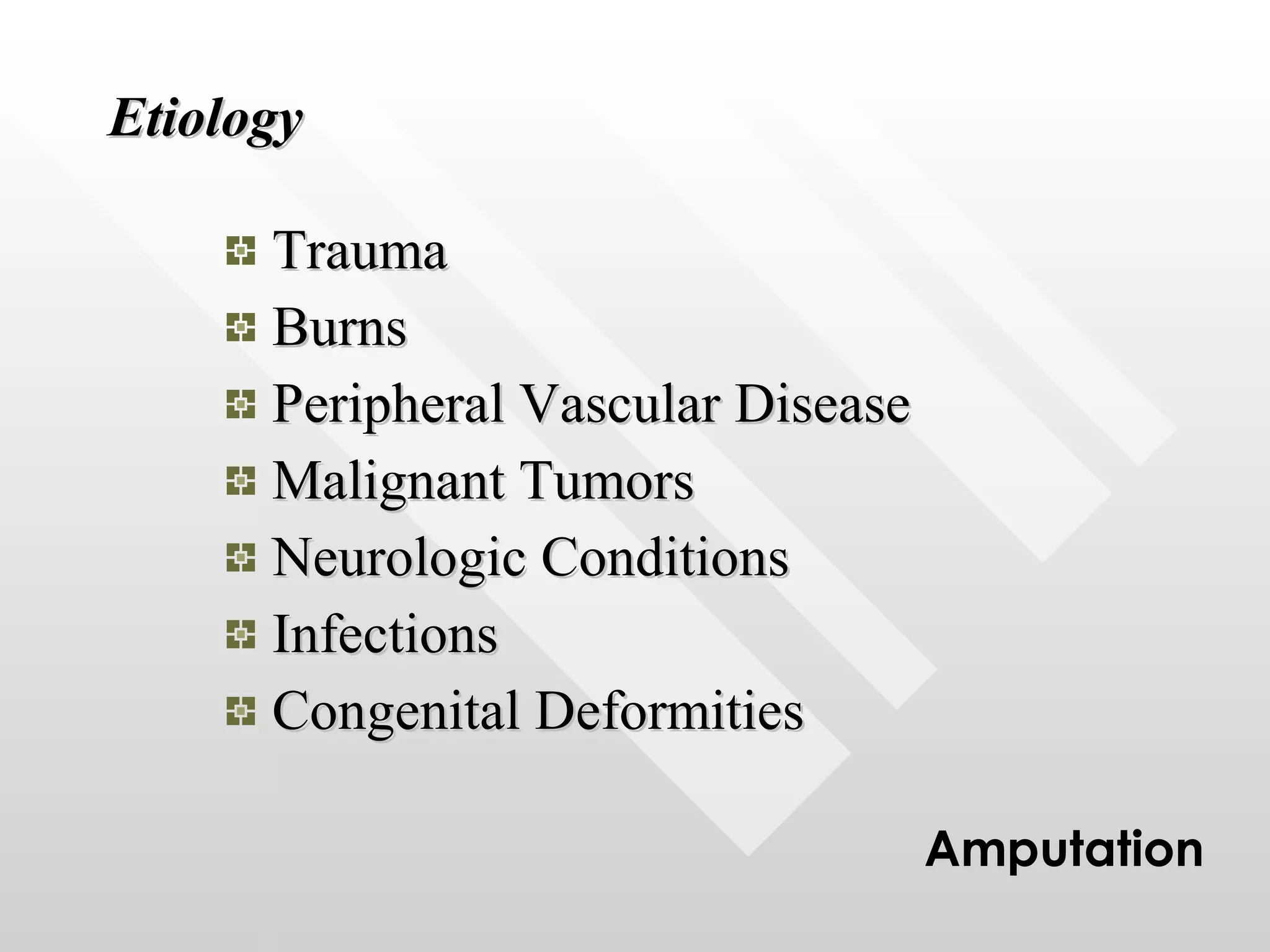
Etiology Trauma Burns Peripheral Vascular Disease Malignant Tumors Neurologic Conditions Infections Congenital Deformities Amputation
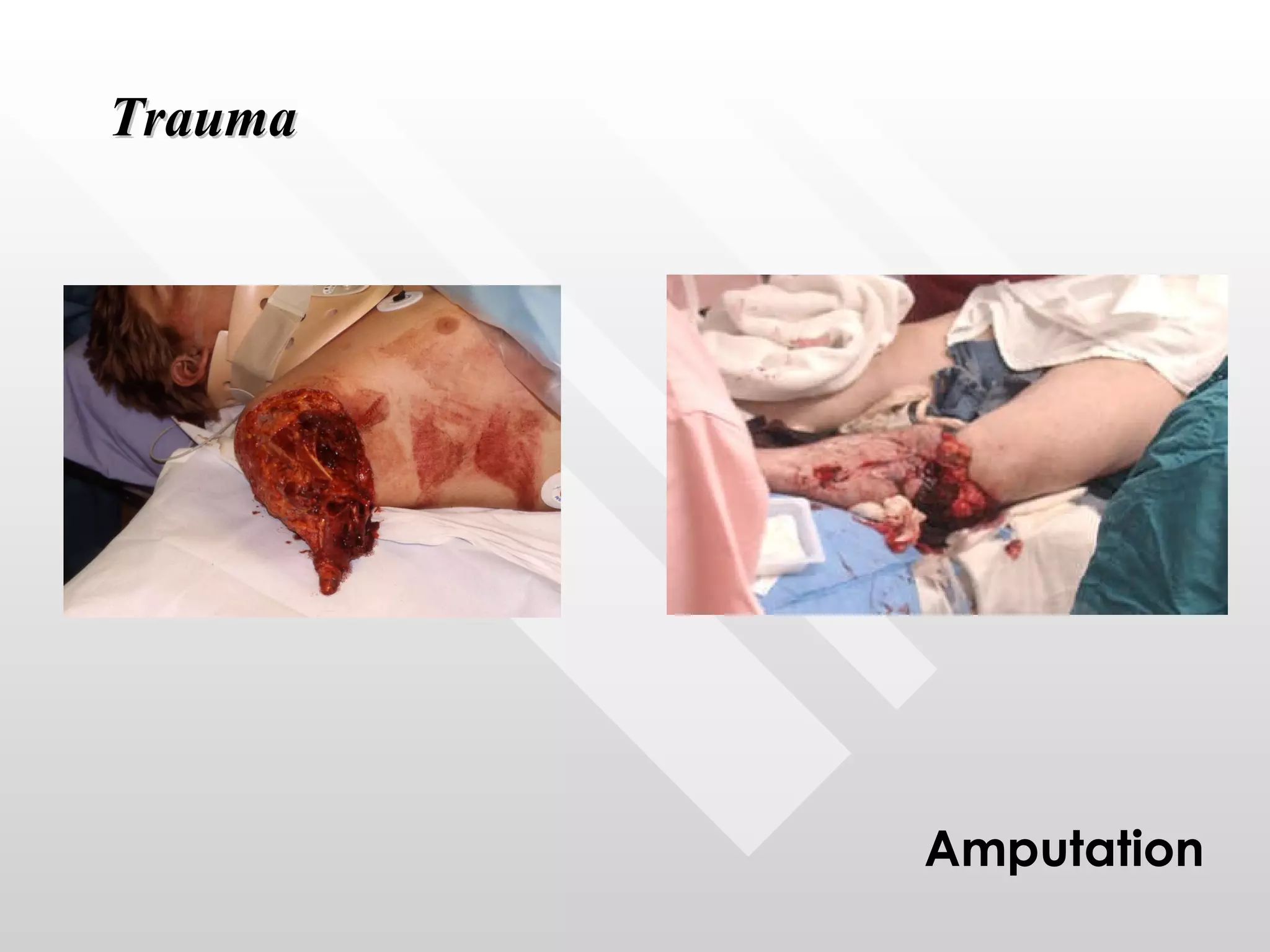
Trauma Amputation
Malignant Tumor Amputation
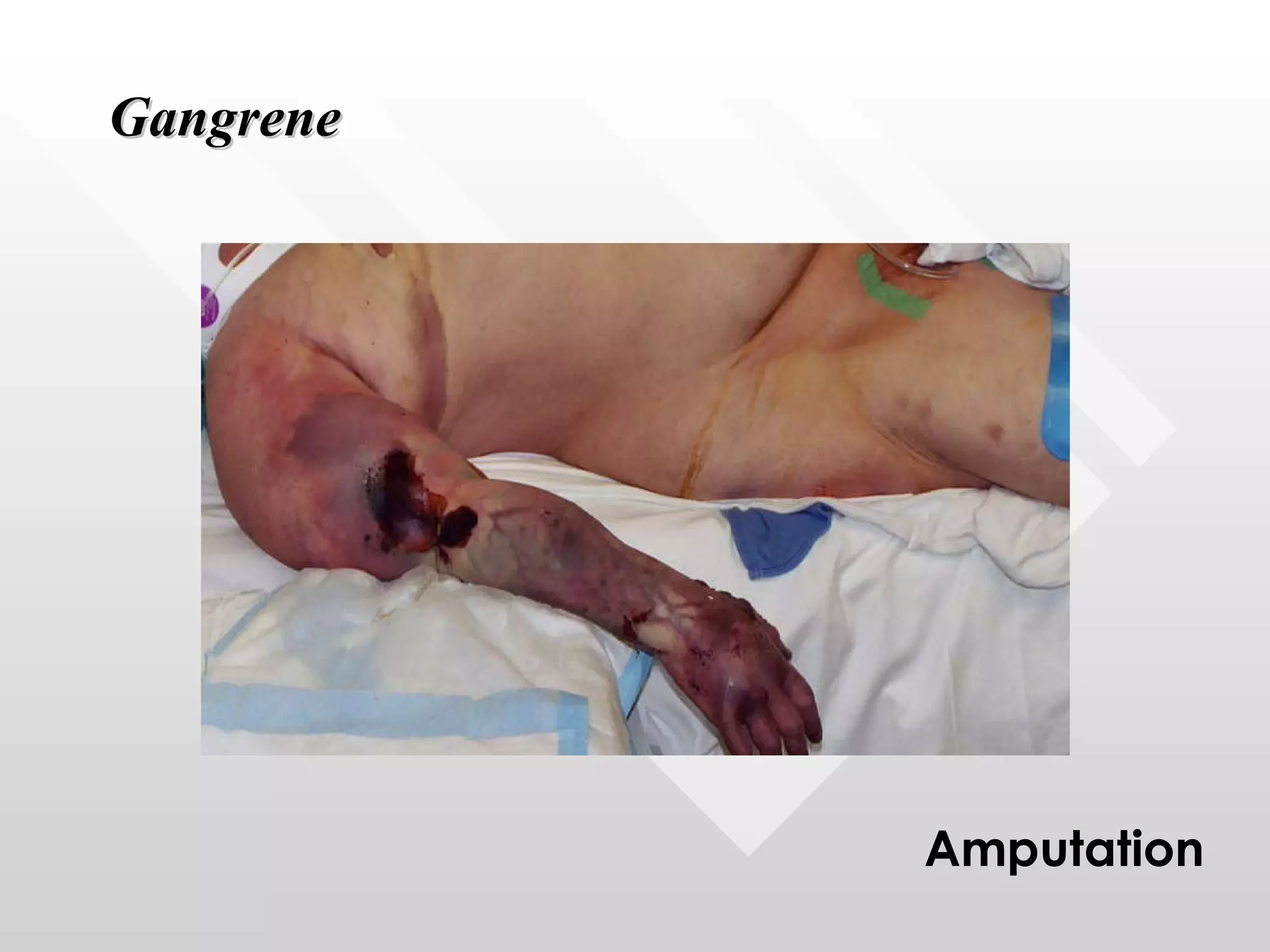
Gangrene Amputation
Crush Amputation
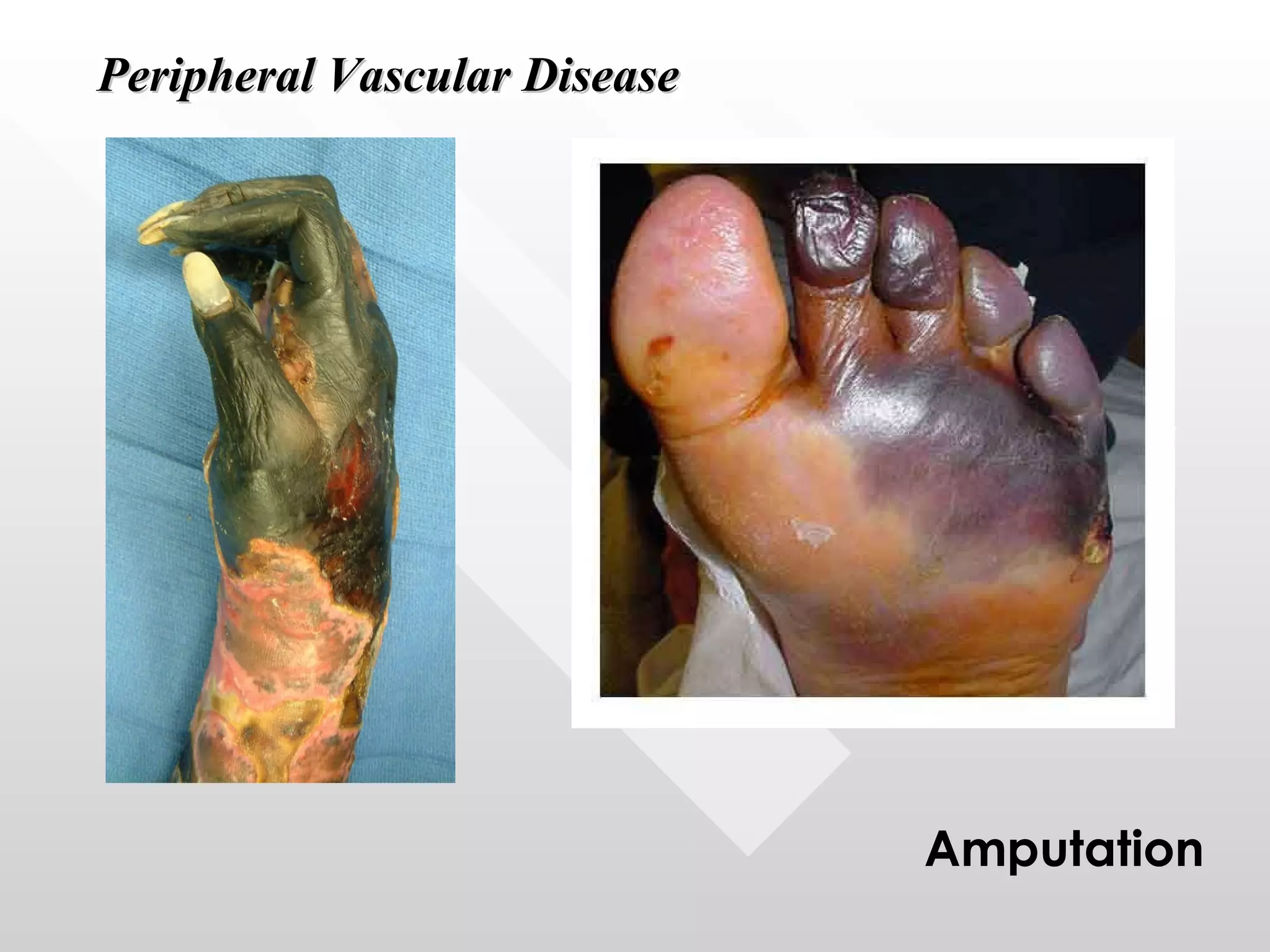
Peripheral Vascular Disease Amputation
Congenial Anomaly Polydactyly Amputation
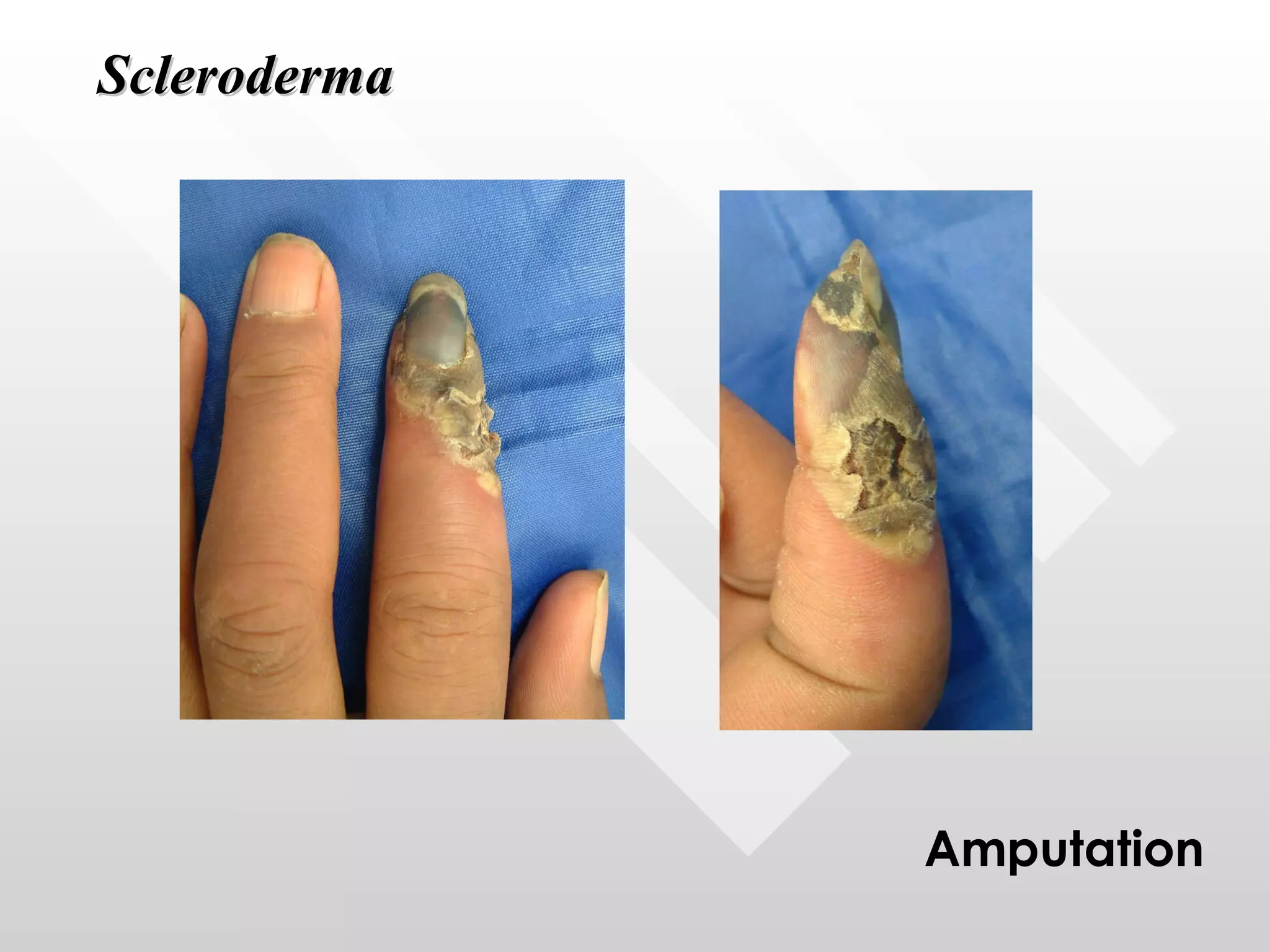
Scleroderma Amputation
Determination of level Zone of Injury (trauma) Adequate margins (tumor) Adequate circulation (vascular disease) Soft tissue envelope Bone and joint condition Control of infection Nutritional status Amputation
Debridement of all Nonviable tissue and foreign material Several debridements may be required Primary wound closure often contraindicated High voltage, electrical burn injuries require careful evaluation because necrosis of deep muscle may be present while superficial muscles can remain viable Techniques Amputation
Nerve Prevent neuroma formation Draw nerve distally, section it, allow it to retract proximally Skin Opportunistic flaps Rotation flaps Tension free Skin grafts Techniques Amputation
Bone: Choose appropriate level Smooth edges of bone Narrow metaphyseal flare for some disarticulations Postoperative Dressing: Soft Rigid Amputation Techniques
Goals of Postoperative Management Prompt, uncomplicated wound healing Control of edema Control of Postoperative pain Prevention of joint contractures Rapid rehabilitation Techniques Amputation
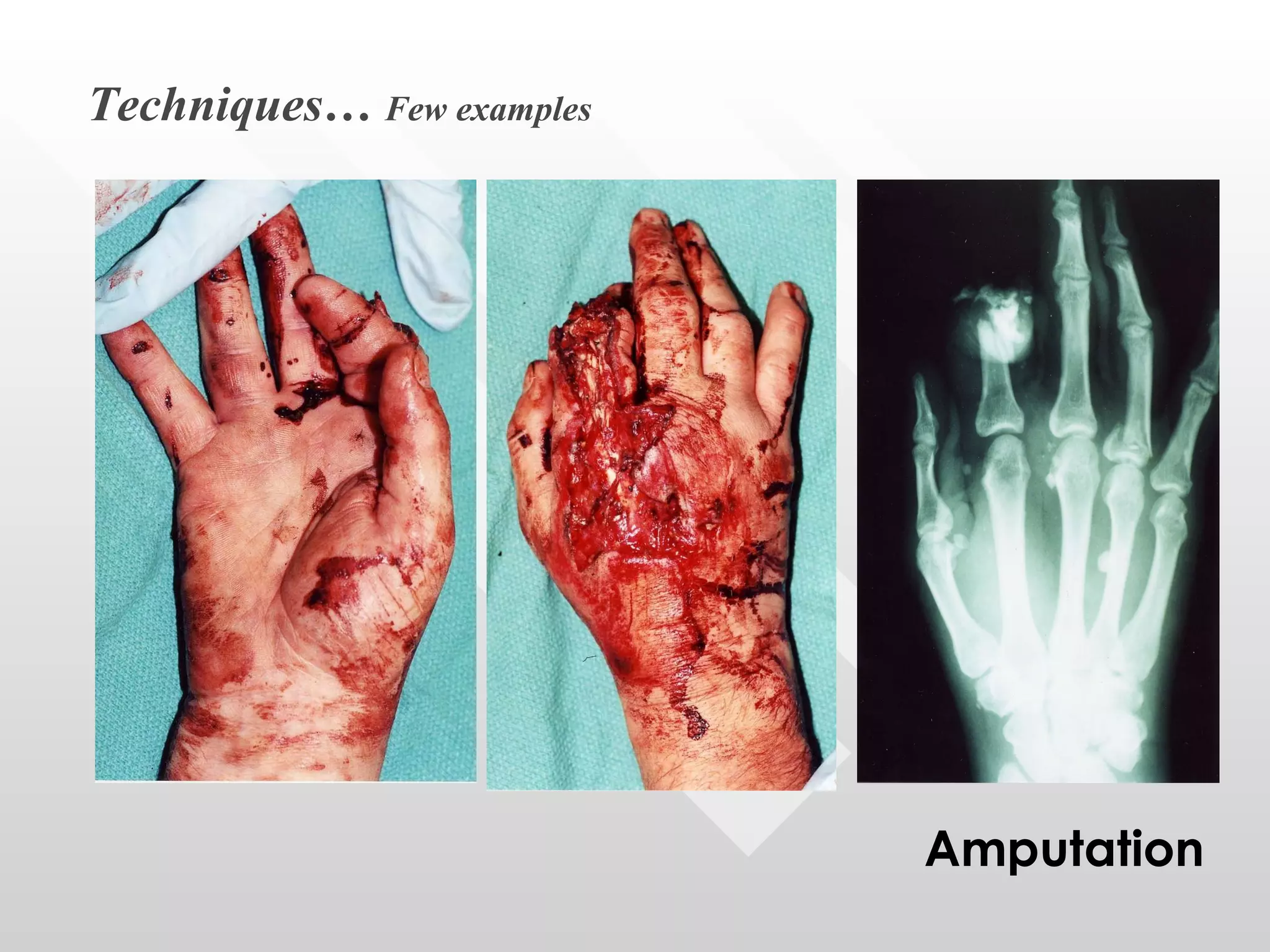
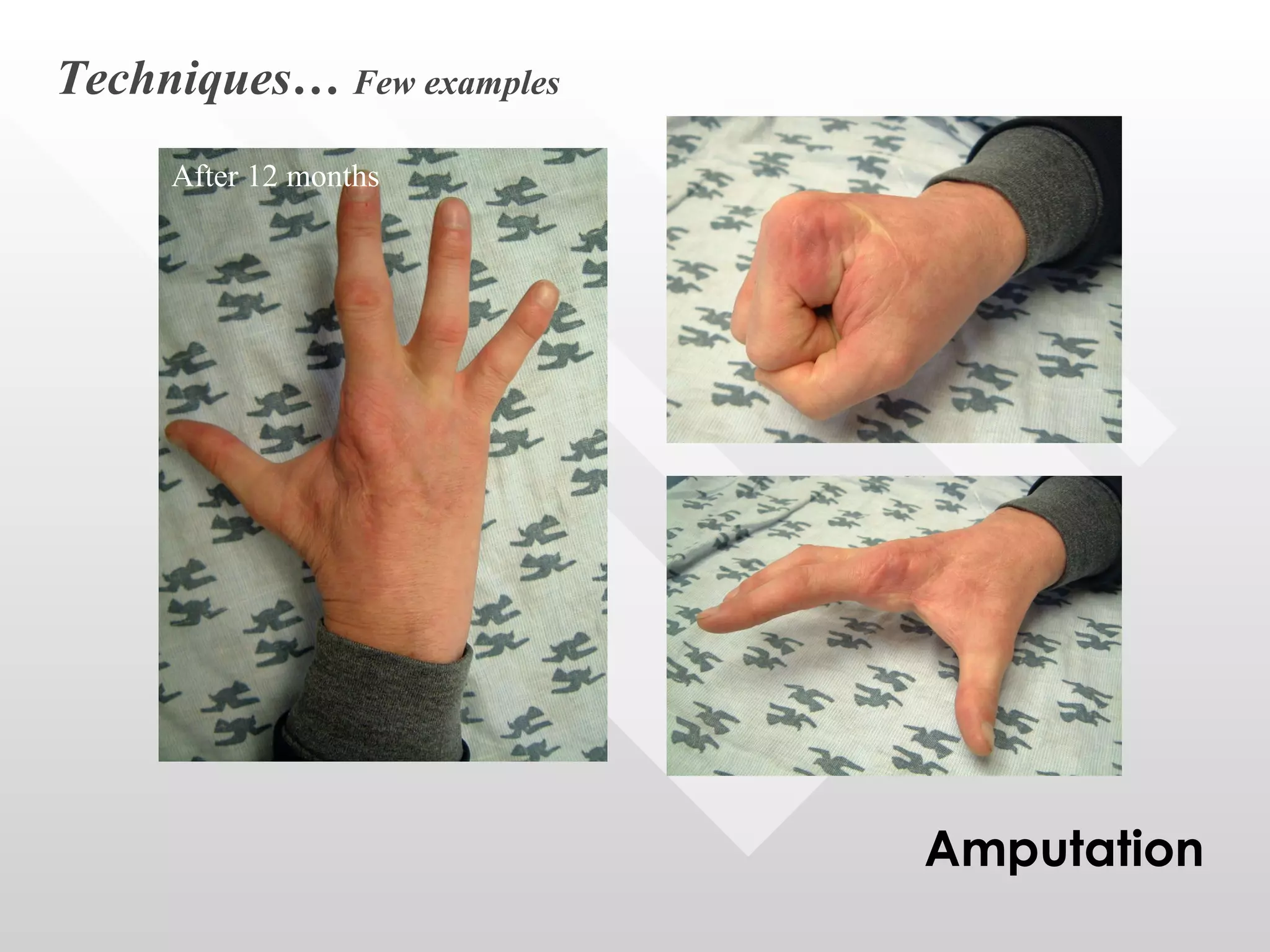
Techniques…  Few examples Amputation
After 12 months Techniques…  Few examples Amputation
Goals of Postoperative Management Prompt, uncomplicated wound healing Control of edema Control of Postoperative pain Prevention of joint contractures Rapid rehabilitation Techniques Amputation
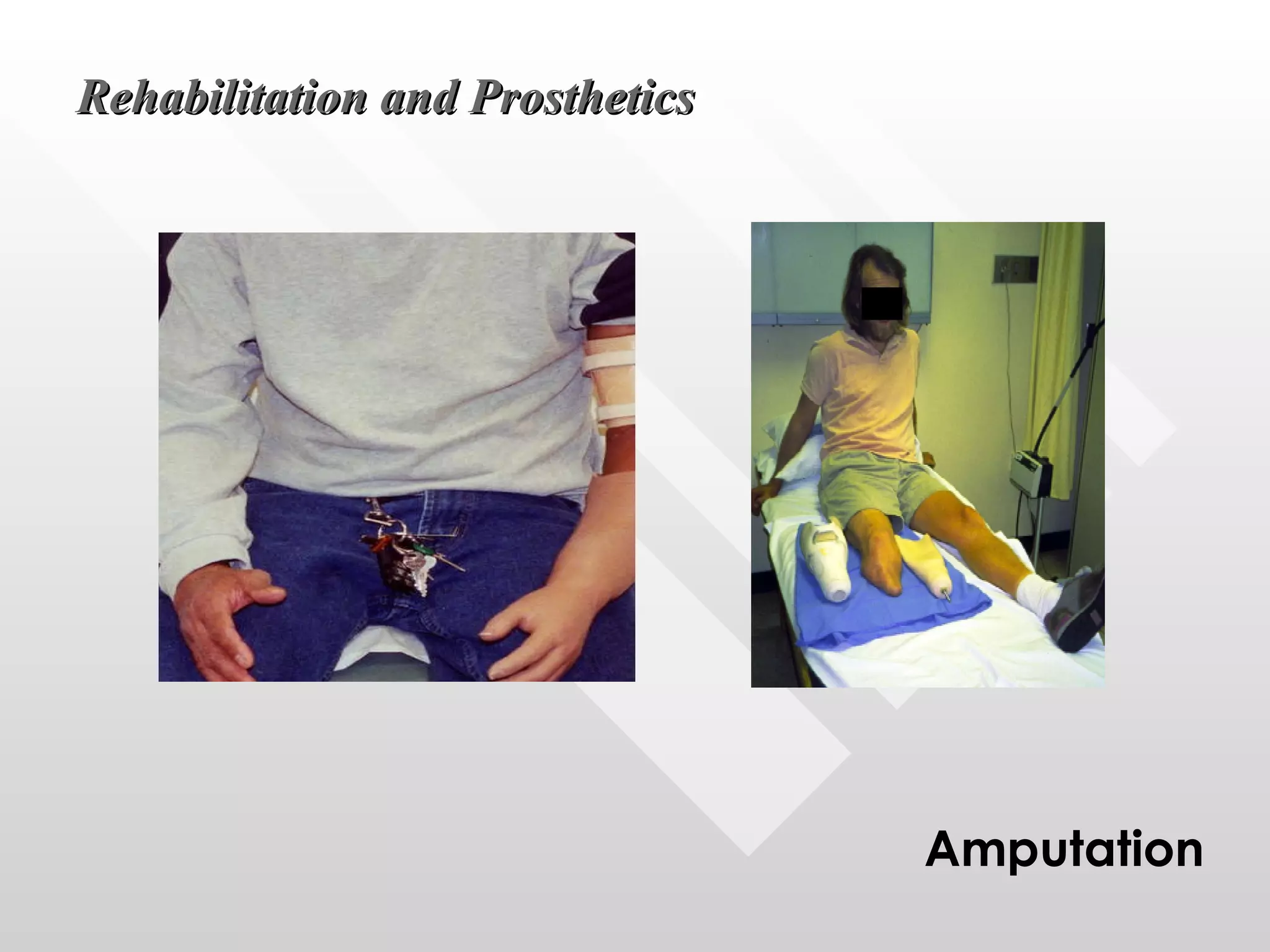
Rehabilitation and Prosthetics Amputation
Goals of Postoperative Management Prompt, uncomplicated wound healing Control of edema Control of Postoperative pain Prevention of joint contractures Rapid rehabilitation Techniques Amputation
1. Residual Limb Shrinkage and Shaping 2. Limb Desensitization 3. Maintain joint range of motion 4. Strengthen residual limb 5. Maximize Self reliance 6. Patient education: Future goals and prosthetic options Rehabilitations. Amputation
Up to 2/3 of amputees will manifest postoperative psychiatric symptoms Depression Anxiety Crying spells Insomnia Loss of appetite Suicidal ideation Psychological stress. Amputation
Prosthetics Amputation Myoelectric Surface EMG Activation delay Neuroprosthetics Investigational Passive Cosmetic Body Powered Harnesses and cables
Preparation Good Surgical Technique Rehabilitation Early Prosthetic Fitting Team Approach Vocational and Activity Rehabilitation Management of Amputee Amputation

Amputation

  • 1.
  • 2.
    ‘ DDD’ DeadDeadly Dam Nuisance Indications: Amputation
  • 3.
    Derived from theLatin amputare . "to cut away", from ambi- ("about", "around") and putare ("to prune"). Amputation is the complete removal of an injured or deformed body part. The English word "amputation" was first applied to surgery in the 17th century. Nomenclature. Amputation
  • 4.
    History Most ancientof surgical procedure. Historically were stimulated by the aftermath of war. It was a crude procedure by which limb was rapidly severed from unanesthetized patient. The open stamp was then crushed or dipped in boiling oil to obtain hemostasis. Hippocrates was the first to use ligature. Ambroise Pare ( a France military surgeon) introduced artery forceps. He also designed prosthesis. Amputation
  • 5.
    Etiology Trauma BurnsPeripheral Vascular Disease Malignant Tumors Neurologic Conditions Infections Congenital Deformities Amputation
  • 6.
  • 7.
  • 8.
  • 9.
  • 10.
  • 11.
  • 12.
  • 13.
    Determination of levelZone of Injury (trauma) Adequate margins (tumor) Adequate circulation (vascular disease) Soft tissue envelope Bone and joint condition Control of infection Nutritional status Amputation
  • 14.
    Debridement of allNonviable tissue and foreign material Several debridements may be required Primary wound closure often contraindicated High voltage, electrical burn injuries require careful evaluation because necrosis of deep muscle may be present while superficial muscles can remain viable Techniques Amputation
  • 15.
    Nerve Prevent neuromaformation Draw nerve distally, section it, allow it to retract proximally Skin Opportunistic flaps Rotation flaps Tension free Skin grafts Techniques Amputation
  • 16.
    Bone: Choose appropriatelevel Smooth edges of bone Narrow metaphyseal flare for some disarticulations Postoperative Dressing: Soft Rigid Amputation Techniques
  • 17.
    Goals of PostoperativeManagement Prompt, uncomplicated wound healing Control of edema Control of Postoperative pain Prevention of joint contractures Rapid rehabilitation Techniques Amputation
  • 18.
    Techniques… Fewexamples Amputation
  • 19.
    Techniques… Fewexamples Amputation
  • 20.
    After 12 monthsTechniques… Few examples Amputation
  • 21.
    Goals of PostoperativeManagement Prompt, uncomplicated wound healing Control of edema Control of Postoperative pain Prevention of joint contractures Rapid rehabilitation Techniques Amputation
  • 22.
  • 23.
    Goals of PostoperativeManagement Prompt, uncomplicated wound healing Control of edema Control of Postoperative pain Prevention of joint contractures Rapid rehabilitation Techniques Amputation
  • 24.
    1. Residual LimbShrinkage and Shaping 2. Limb Desensitization 3. Maintain joint range of motion 4. Strengthen residual limb 5. Maximize Self reliance 6. Patient education: Future goals and prosthetic options Rehabilitations. Amputation
  • 25.
    Up to 2/3of amputees will manifest postoperative psychiatric symptoms Depression Anxiety Crying spells Insomnia Loss of appetite Suicidal ideation Psychological stress. Amputation
  • 26.
    Prosthetics Amputation MyoelectricSurface EMG Activation delay Neuroprosthetics Investigational Passive Cosmetic Body Powered Harnesses and cables
  • 27.
    Preparation Good SurgicalTechnique Rehabilitation Early Prosthetic Fitting Team Approach Vocational and Activity Rehabilitation Management of Amputee Amputation