19-Jan-20 1
Allele Mining in Crop Improvement
Supervisor: Prof. J. P. Shahi
Presented by-
Miss. Gayatri Kumawat
ID No. = 17412GPB006
Genetics and Plant breeding
M. Sc. 2nd year
19-Jan-20 33
Contents
Dept. of Genetics & Plant Breeding
What is allele mining ?
Allele mining set
Approaches
Comparison
Challenges
Case study
Introduction
Applications
19-Jan-20 Dept. of Genetics & Plant Breeding 4
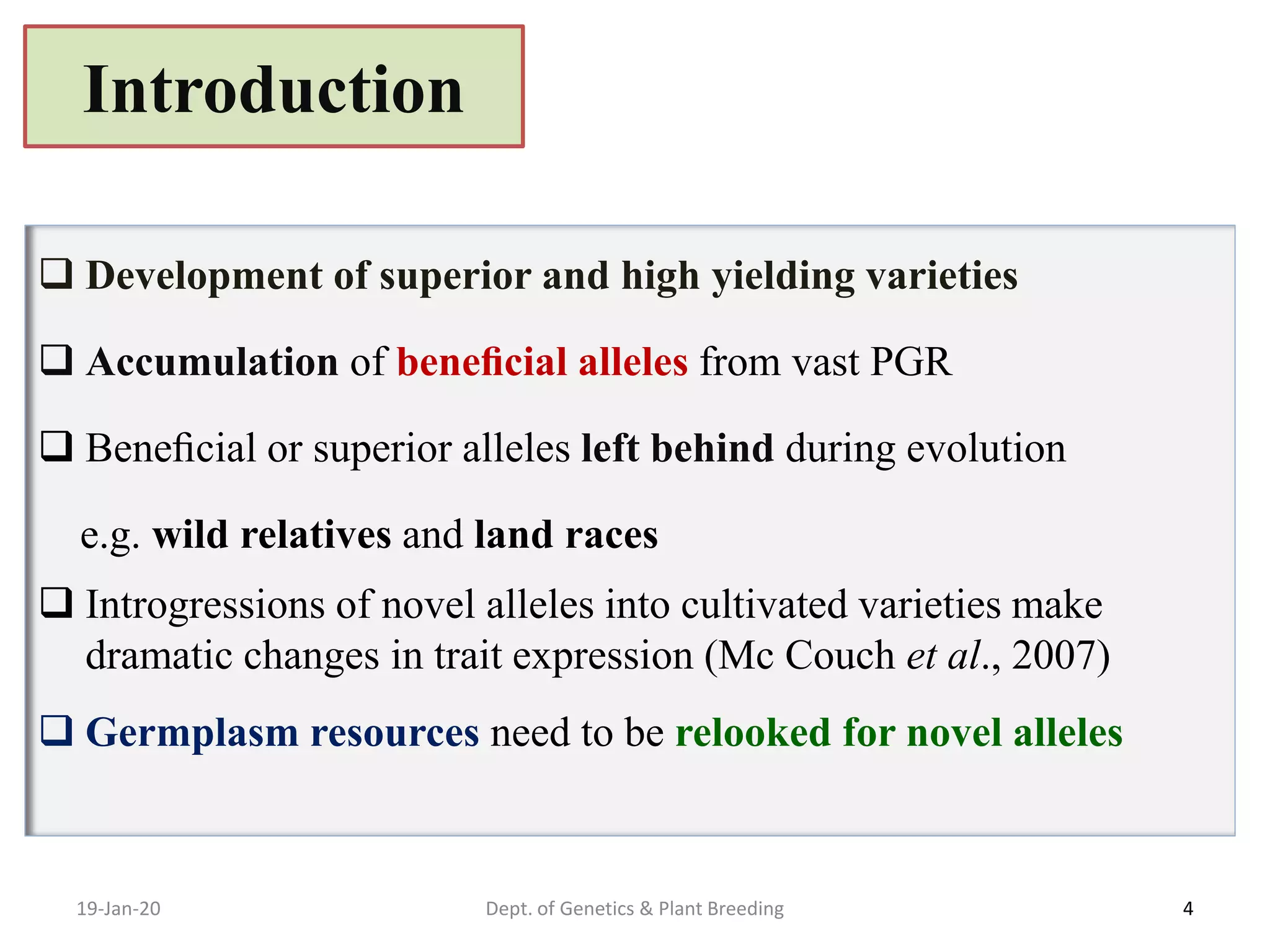
 Development of superior and high yielding varieties
 Accumulation of beneficial alleles from vast PGR
 Beneficial or superior alleles left behind during evolution
e.g. wild relatives and land races
 Introgressions of novel alleles into cultivated varieties make
dramatic changes in trait expression (Mc Couch et al., 2007)
 Germplasm resources need to be relooked for novel alleles
Introduction
19-Jan-20 5Dept. of Genetics & Plant Breeding
Plant Genetic Resources (PGR)
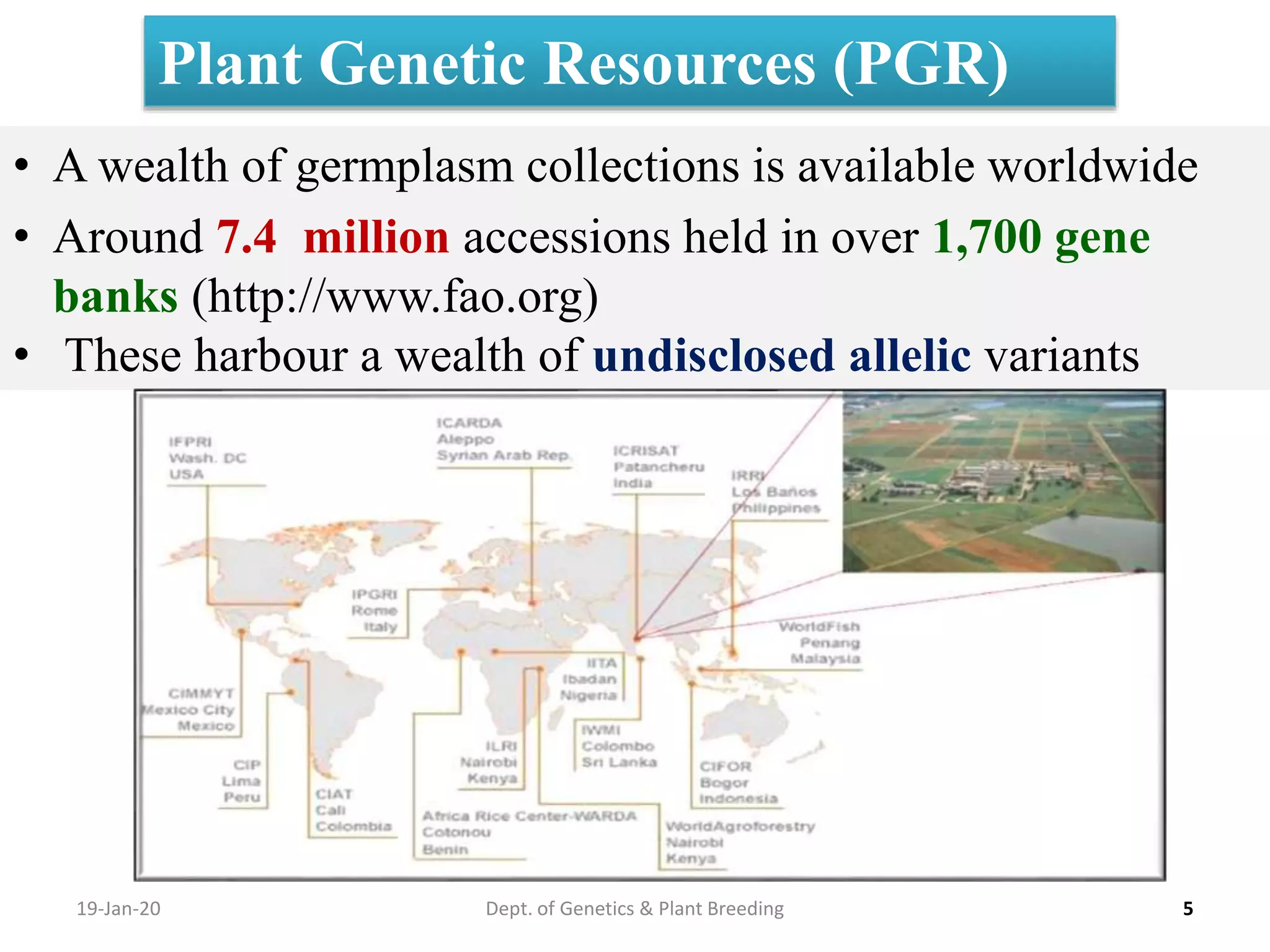
• A wealth of germplasm collections is available worldwide
• Around 7.4 million accessions held in over 1,700 gene
banks (http://www.fao.org)
• These harbour a wealth of undisclosed allelic variants
19-Jan-20 Dept. of Genetics & Plant Breeding 6
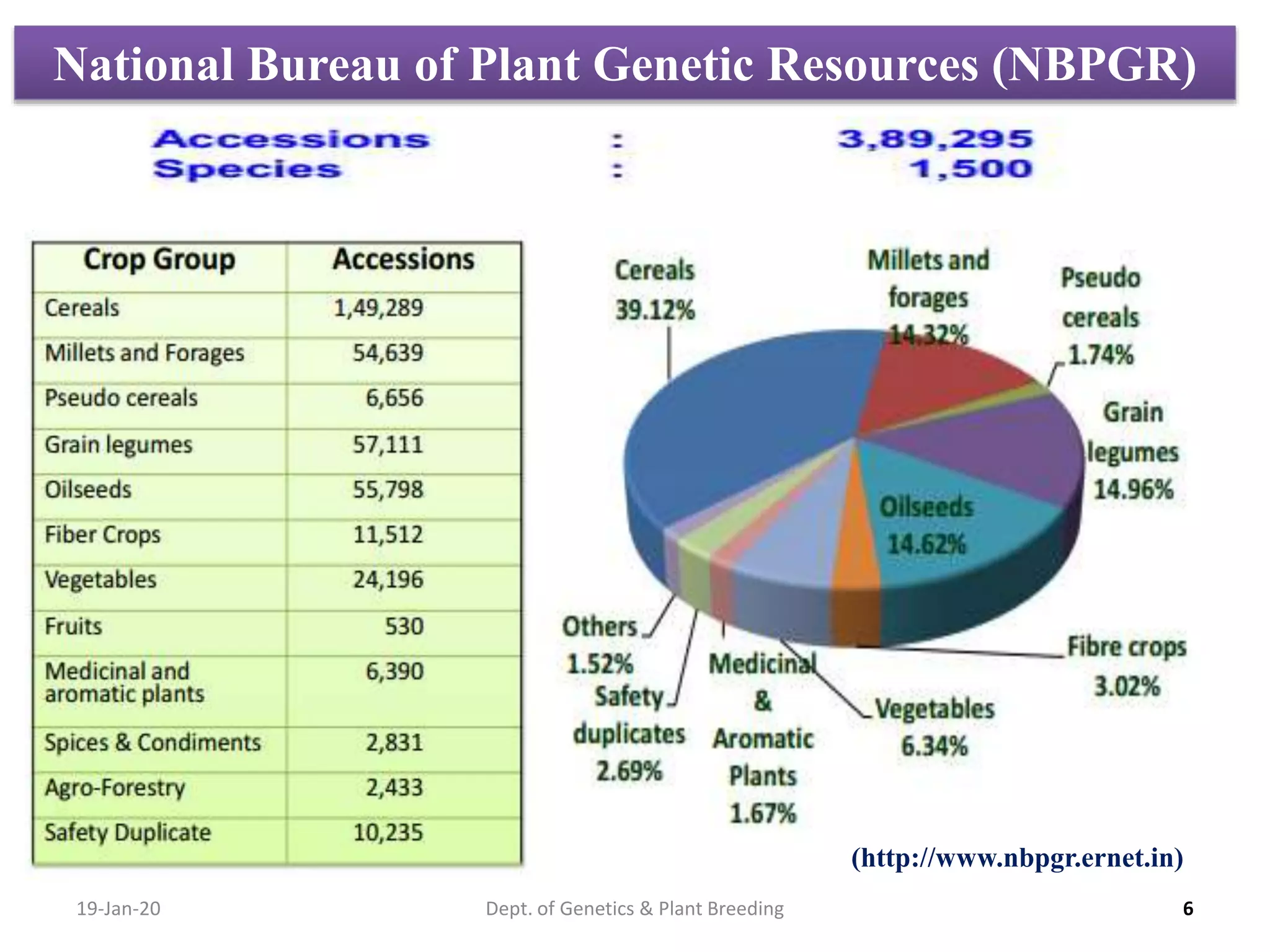
National Bureau of Plant Genetic Resources (NBPGR)
(http://www.nbpgr.ernet.in)
19-Jan-20 Dept. of Genetics & Plant Breeding 7
The challenge is how to unlock this variation ????
Solution
Allele mining
19-Jan-20 8
What is allele and allele mining ?
Dept. of Genetics & Plant Breeding
Allele : Alternative form of a gene
Allele mining:
 Identifying allelic variation of relevant traits within genetic
resources collections
 Dissection of naturally occurring variation at candidate
genes/loci
 Searching for new superior alleles
19-Jan-20 10
Evolution of new alleles
Mutation:
- Evolutionary driving force
- SNP or InDel in coding or regulatory regions may have tremendous
effect on the phenotype e.g. prostrate growth habit of wild rice gene
PROG1 (Tan et al., 2008)
Dept. of Genetics & Plant Breeding
19-Jan-20 11
True allele mining
Dept. of Genetics & Plant Breeding
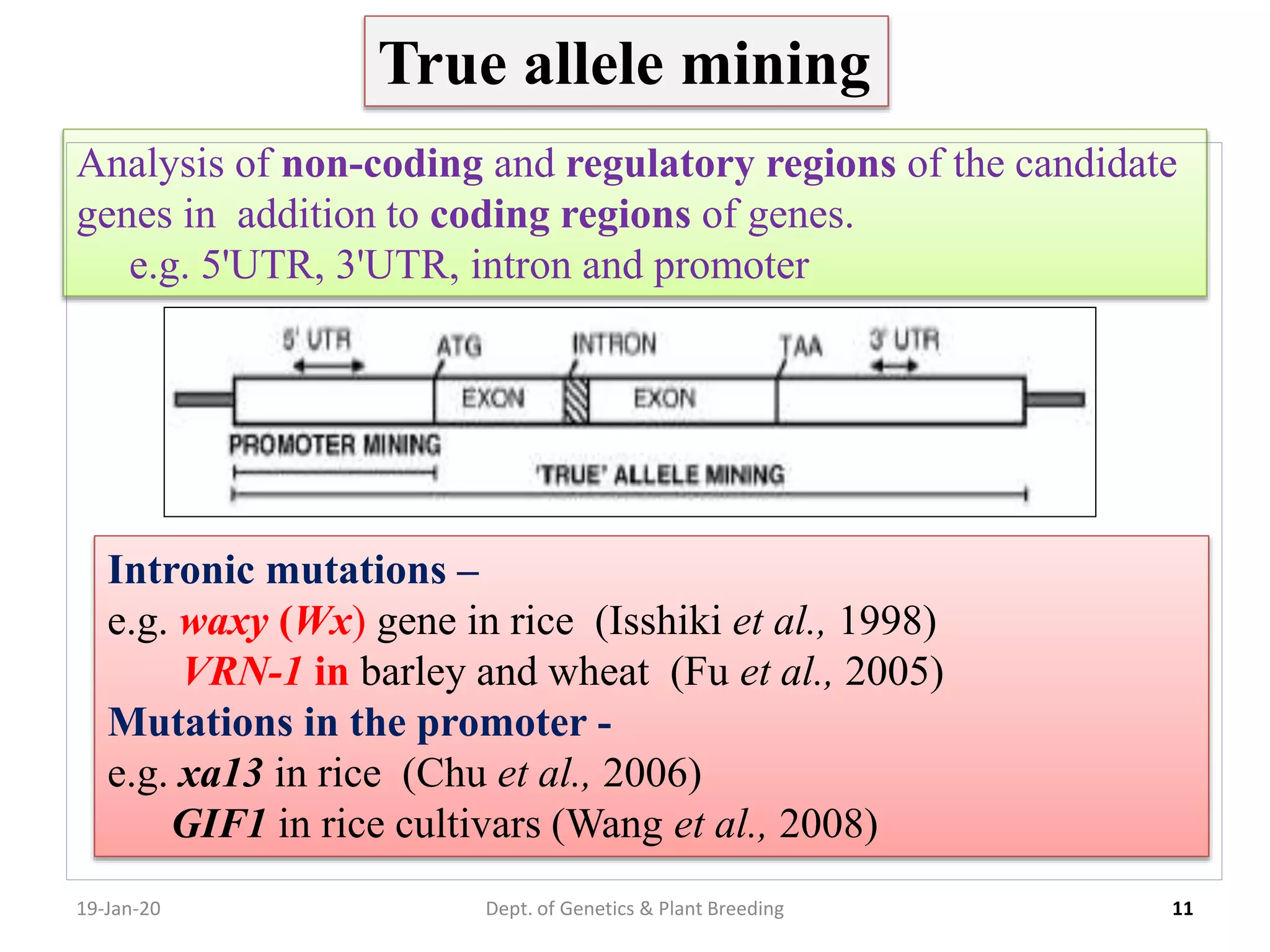
Analysis of non-coding and regulatory regions of the candidate
genes in addition to coding regions of genes.
e.g. 5'UTR, 3'UTR, intron and promoter
Intronic mutations –
e.g. waxy (Wx) gene in rice (Isshiki et al., 1998)
VRN-1 in barley and wheat (Fu et al., 2005)
Mutations in the promoter -
e.g. xa13 in rice (Chu et al., 2006)
GIF1 in rice cultivars (Wang et al., 2008)
1219-Jan-20 Dept. of Genetics & Plant Breeding
Requirements for allele mining ?
Direct access to genes conferring:
• Resistance to biotic stresses
• Tolerance against abiotic stresses
• Greater nutrient use efficiency
• Enhancing the yield of crops
• Improved the quality
 Enormous progress has been made in depositing an exponential
amount of sequence information into GeneBank
 Based on gene and genome sequences, PCR strategies are
devised to isolate useful alleles of genes from a wide range of
species (Latha et al., 2004).
19-Jan-20 13
(Gowda CLL et al., 2013)
Construction of core and mini-core collections
Dept. of Genetics & Plant Breeding
19-Jan-20 14Dept. of Genetics & Plant Breeding
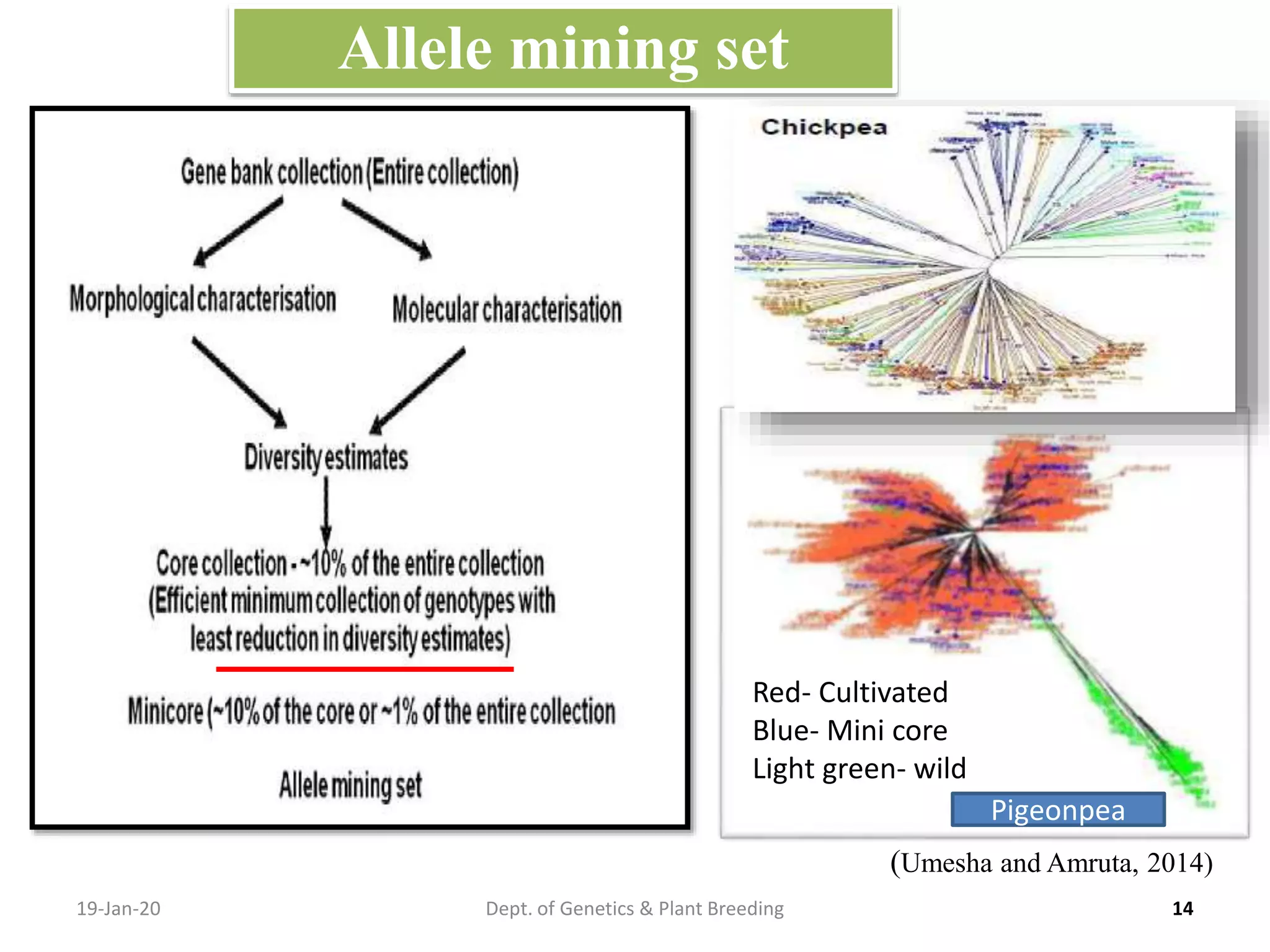
Allele mining set
(Umesha and Amruta, 2014)
Red- Cultivated
Blue- Mini core
Light green- wild
Pigeonpea
Approaches for allele mining
1) TILLING based allele mining
2) PCR based or Sequencing based allele mining
19-Jan-20 Dept. of Genetics & Plant Breeding 16
TILLING
 TILLING expanded as Targeted Induced Local Lesions IN Genomes
 TILLING is a non transgenic reverse genetics approach that allows
directed identification of point mutations in a specific gene
 Developed by McCallum et al., 2000
 This technique was designed to detect mutations in Arabidopsis
thaliana treated with the chemical mutagen, EMS.
 TILLING has since been used as a method in other organisms such
as zebrafish, corn, wheat, rice, soybean, tomato and lettuce.
Forward and Reverse Genetics
Phenotype
Search
Reverse Genetics
Forward Genetics
Phenotype
Mutations
18
What are SNPs ?
• SNPs (snips) are
single base variants
of the wild
nucleotide sequence
• May be at DNA level
or at mRNA level
• SNPs at mRNA are
known as cSNPs
SNP
19
TILLING Procedure
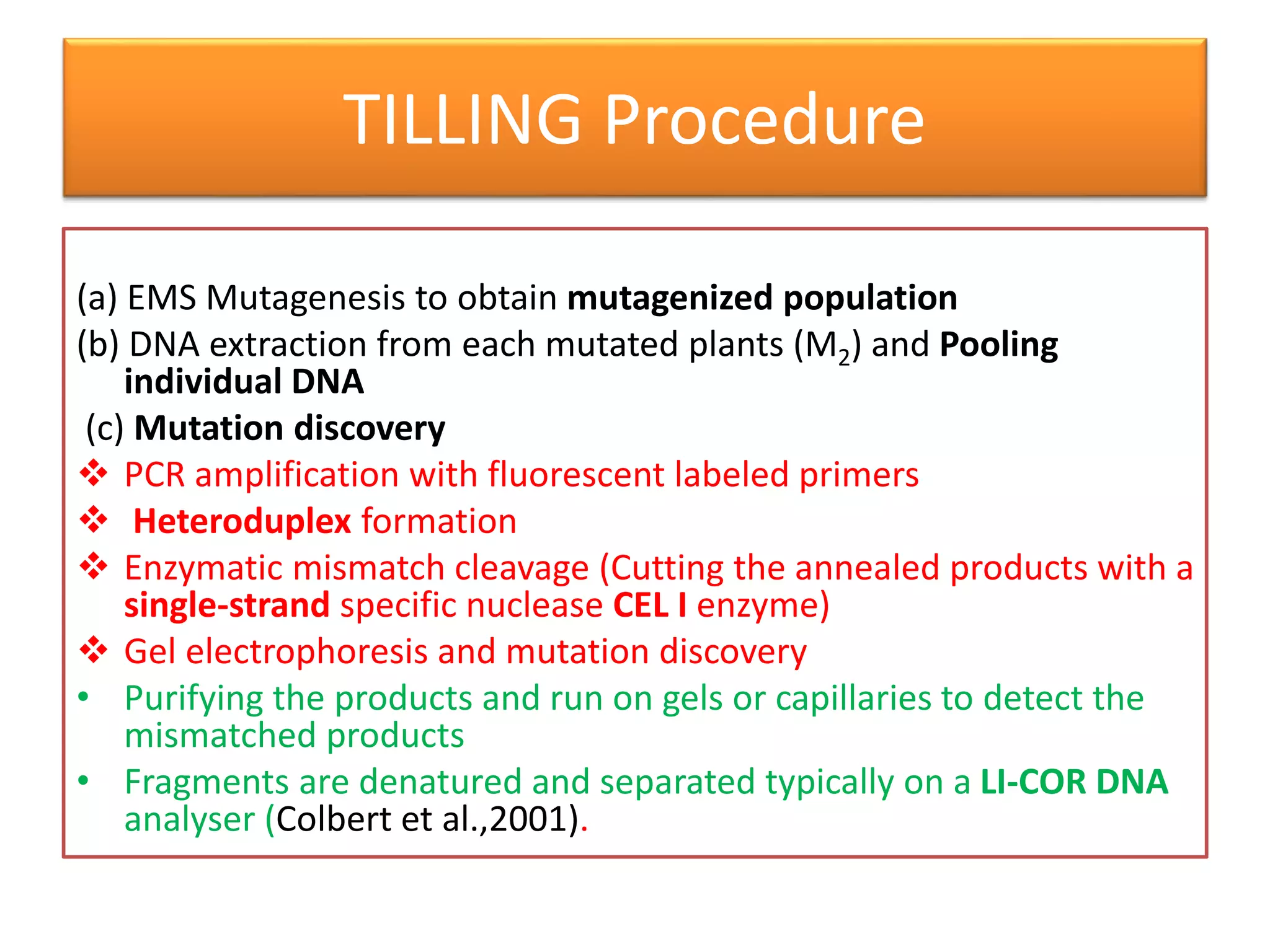
(a) EMS Mutagenesis to obtain mutagenized population
(b) DNA extraction from each mutated plants (M2) and Pooling
individual DNA
(c) Mutation discovery
 PCR amplification with fluorescent labeled primers
 Heteroduplex formation
 Enzymatic mismatch cleavage (Cutting the annealed products with a
single-strand specific nuclease CEL I enzyme)
 Gel electrophoresis and mutation discovery
• Purifying the products and run on gels or capillaries to detect the
mismatched products
• Fragments are denatured and separated typically on a LI-COR DNA
analyser (Colbert et al.,2001).
TILLING
Ashkani et al.2015
Eco-TILLING
• Modified TILLING
• Developed by Comai et al., 2004
• Good in heterozygous population
• To determine natural polymorphisms
• TILLING used as a simple nucleotide polymorphism
(SNP) discovery tool to examine DNA variation in
natural populations is called as EcoTILLING.
• EcoTILLING was found to be robust at characterizing
natural genetic variation.
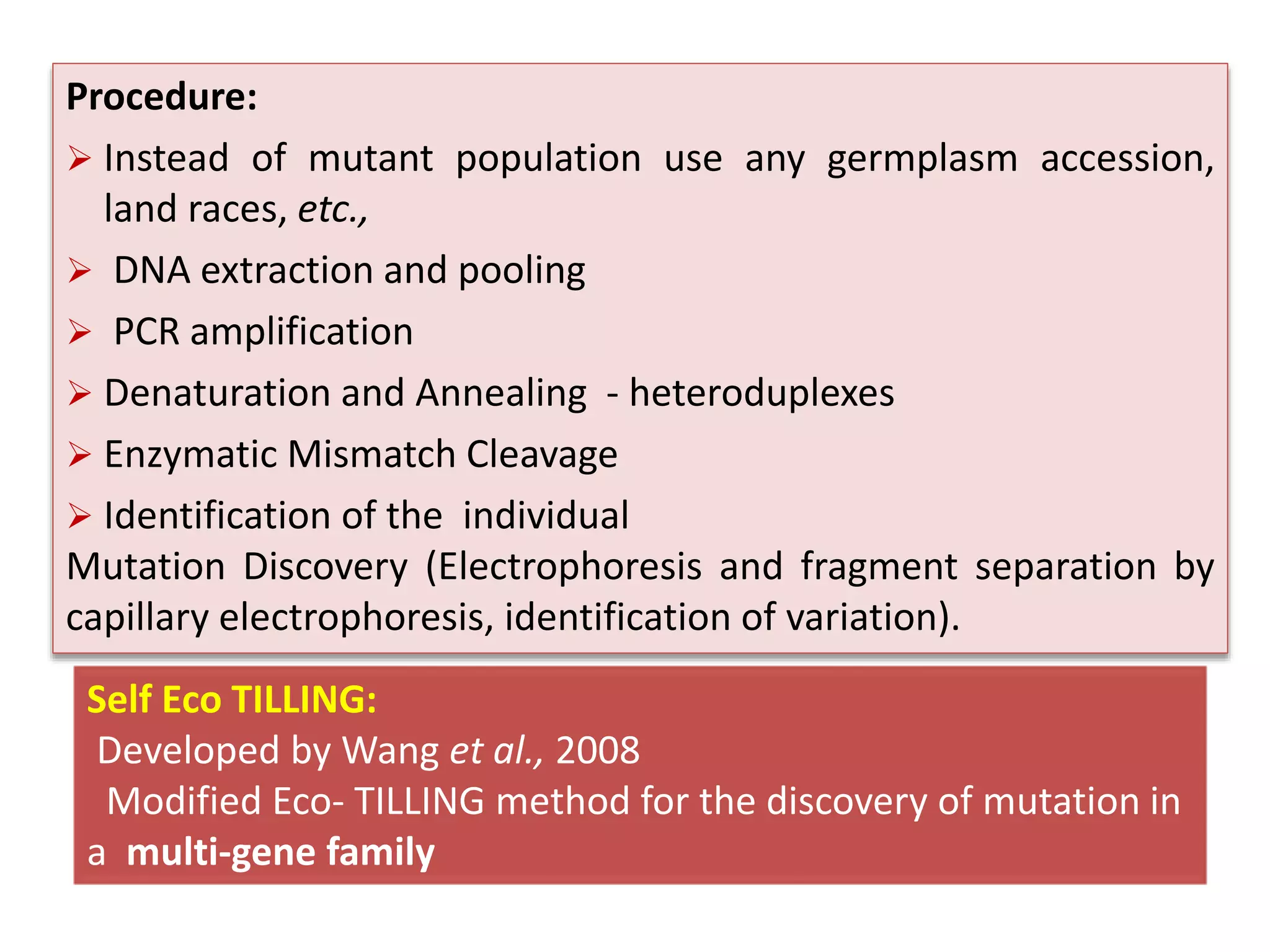
Self Eco TILLING:
Developed by Wang et al., 2008
Modified Eco- TILLING method for the discovery of mutation in
a multi-gene family
Procedure:
 Instead of mutant population use any germplasm accession,
land races, etc.,
 DNA extraction and pooling
 PCR amplification
 Denaturation and Annealing - heteroduplexes
 Enzymatic Mismatch Cleavage
 Identification of the individual
Mutation Discovery (Electrophoresis and fragment separation by
capillary electrophoresis, identification of variation).
Eco Tilling
Ashkani et al., 2015
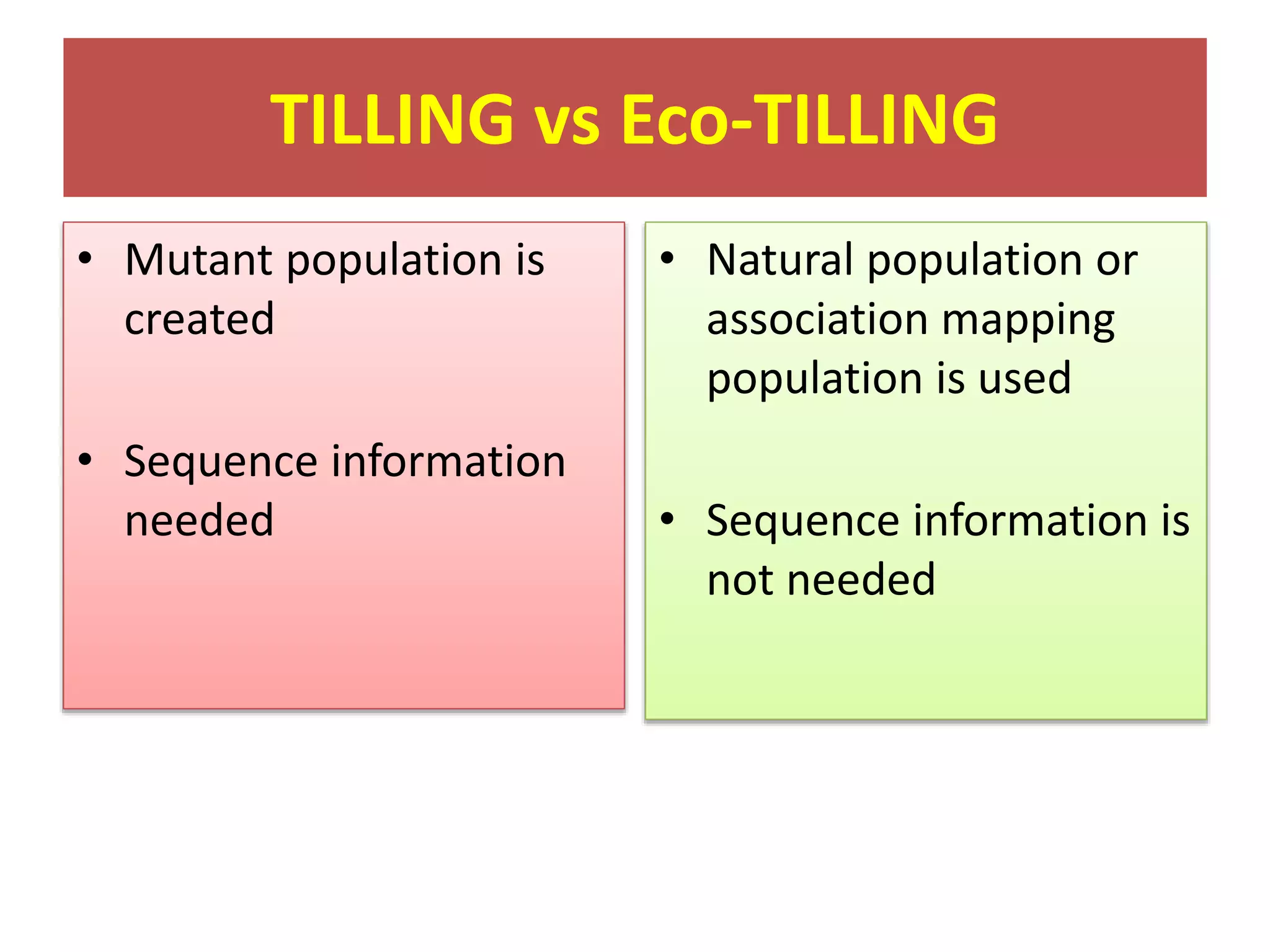
TILLING vs Eco-TILLING
• Mutant population is
created
• Sequence information
needed
• Natural population or
association mapping
population is used
• Sequence information is
not needed
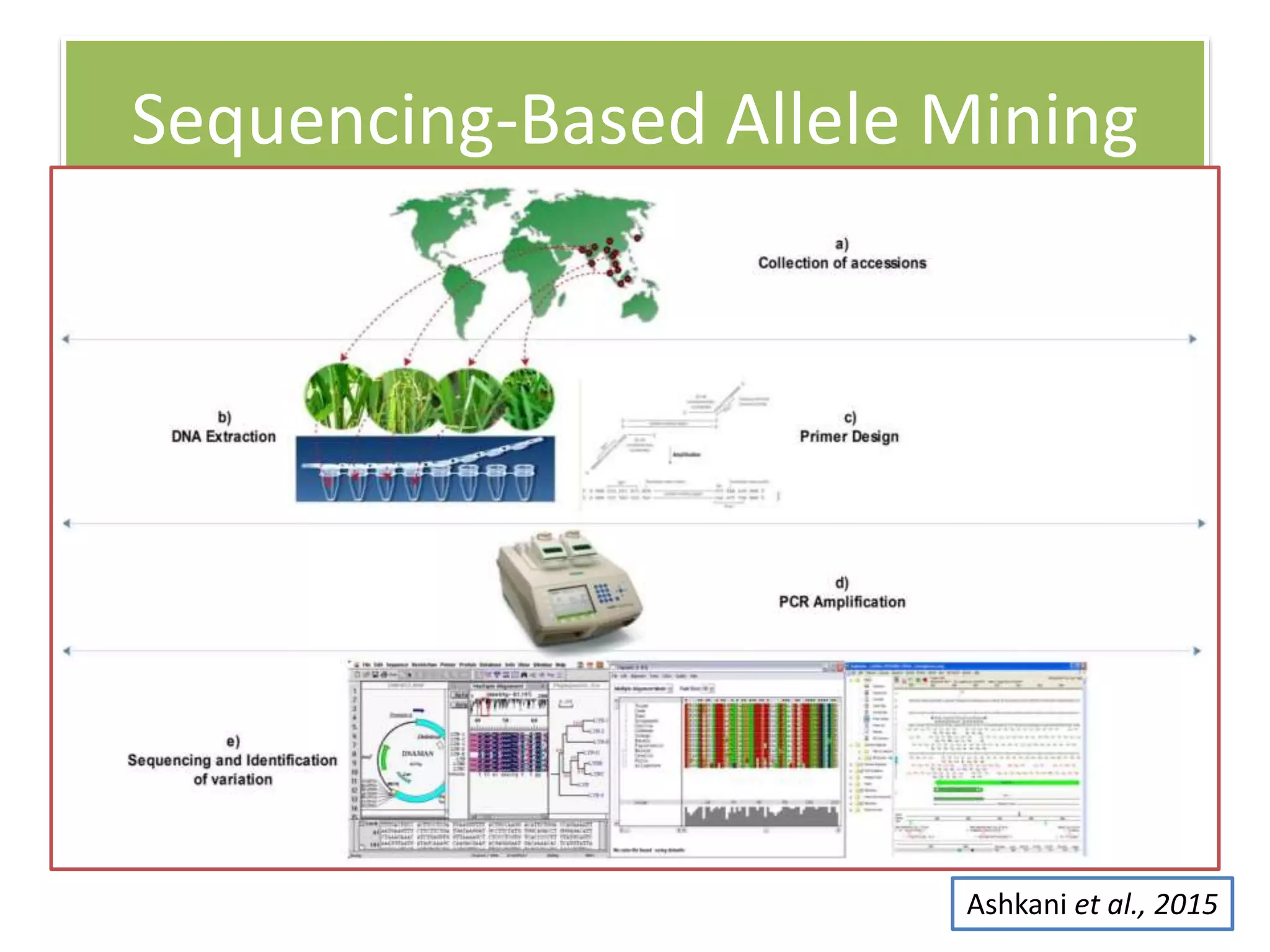
Sequencing-Based Allele Mining
• Developed by Huang in 2009
• Based on PCR and sequencing
Procedure
Collection of accession
DNA extraction
Primer design
PCR amplification
Sequencing and identification of allelic variation.
Sequencing-Based Allele Mining
Ashkani et al., 2015
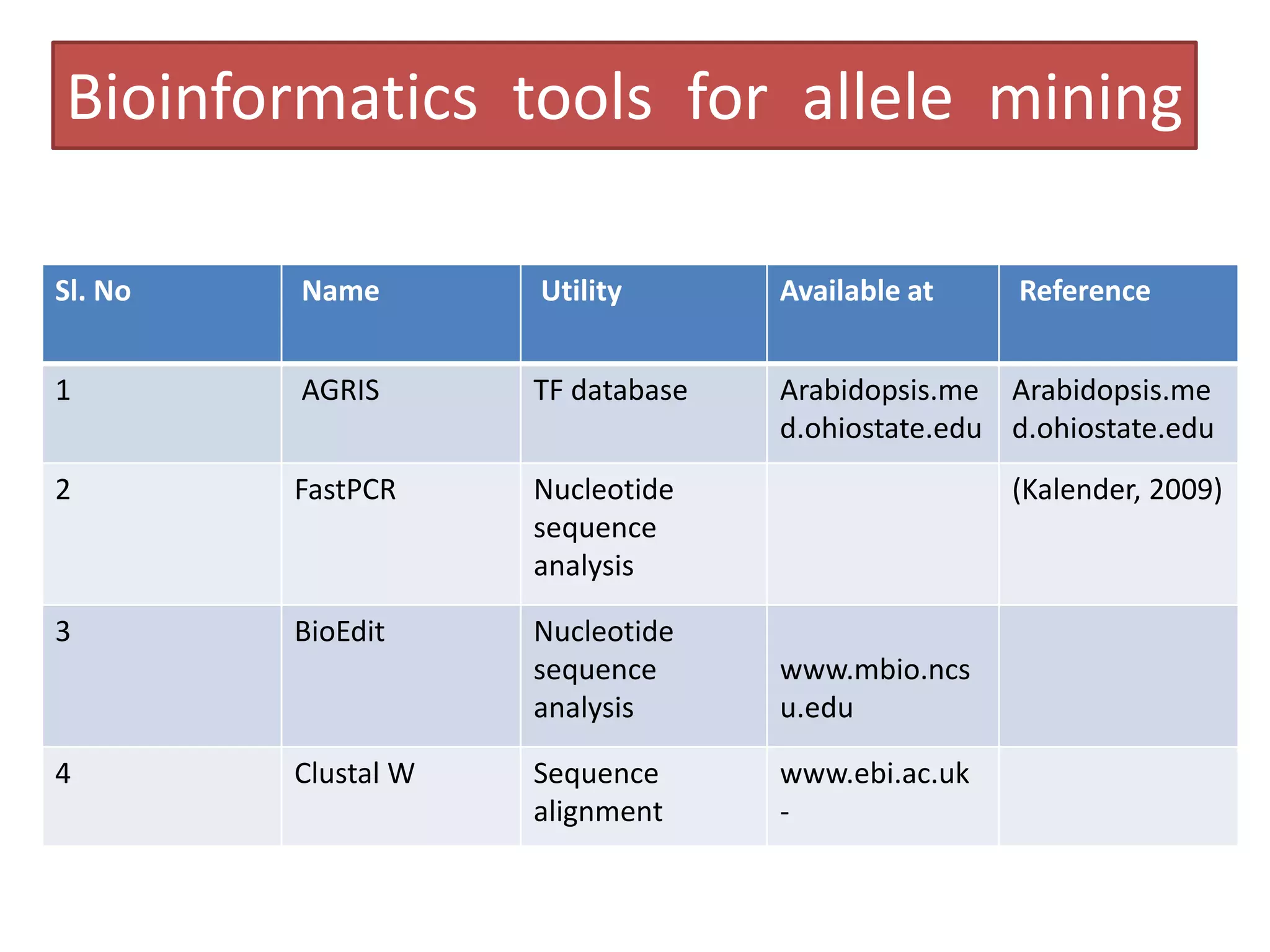
Sl. No Name Utility Available at Reference
1 AGRIS TF database Arabidopsis.me
d.ohiostate.edu
Arabidopsis.me
d.ohiostate.edu
2 FastPCR Nucleotide
sequence
analysis
(Kalender, 2009)
3 BioEdit Nucleotide
sequence
analysis
www.mbio.ncs
u.edu
4 Clustal W Sequence
alignment
www.ebi.ac.uk
-
Bioinformatics tools for allele mining
Different steps involved in two approaches of allele mining
Kumari et al., 2018
Limitations of TILLING
• A successful TILLING project depends on the
development of a densely mutagenized population
and the preparation of DNA of suitable quality for PCR.
• Because, protocols for chemical mutagenesis in
different plant and animal species can vary
dramatically, no single protocol can be considered
general.
• Highly heterozygous species where the large number
of bands from natural polymorphisms could potentially
inhibit the detection of rare induced mutations.
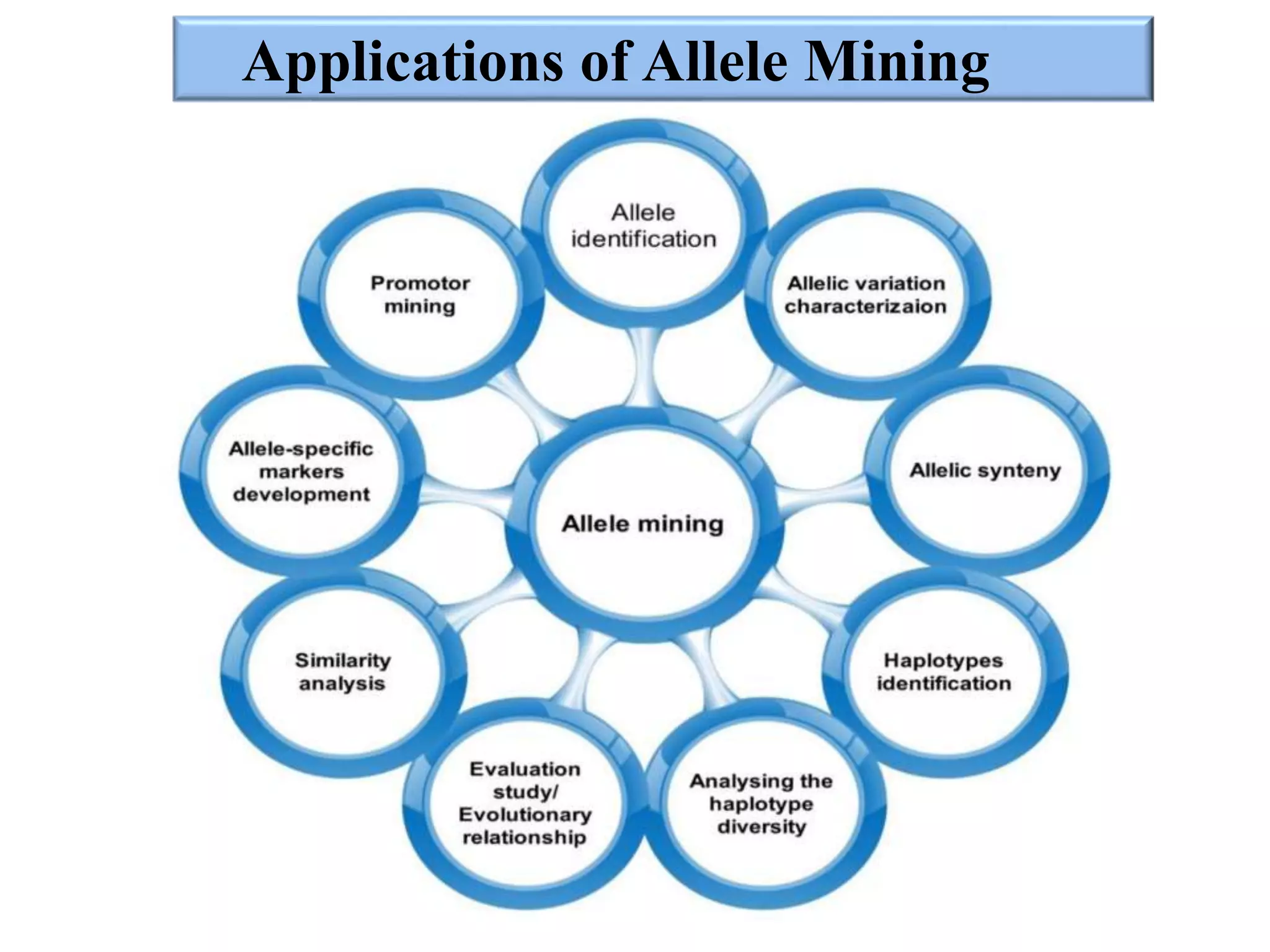
Applications of Allele Mining
Parameters Eco-TILLING
Sequencing-based
allele mining
DNA pooling Yes No
Heteroduplex formation Yes No
Primer labeling by
fluorescent dyes Yes No
Primer cost High Low
Enzymatic mismatch cleavage Yes No
Electrophoresis
Fragments are denatured and
separated typically on a LI-
COR DNA analyser
Simple Agarose Gel
Comparison of allele mining techniques
Cost of Sequencing Medium-to-high High
Samples size for sequencing Less More
Time required
More( especially
for sample preparation) Less
Technical expertise
High ( especially for DNA
Pooling and detection of
cleavage of heteroduplexes) Low
Lab facilities High Sophisticated Low Sophisticated
Nucleotide detection
Effective in detection of
SNPs rather than InDels
Effective in detection of
any type of nucleotide
Throughput Medium-to-high High
Complexity More Less
Parameters Eco-TILLING
Sequencing-based allele
mining
3419-Jan-20 Dept. of Genetics & Plant Breeding
Challenges
• Development of core/mini core collections
• Accurate phenotyping methods
• Flexible computational tools
- Repetitiveness and genetic redundancy
- Challenge to effective management
• Handling genomic resources
• Demarcation of promoter region
19-Jan-20 Dept. of Genetics & Plant Breeding 35
(Kumar et al., 2010)
Status of Allele Mining in Crop Improvement
Case Study 1..
Case study 2..
19-Jan-20 38
Conclusion
 Allele mining can be visualized as a vital link between
effective utilization of genetic and genomic resources
in genomics.
 Allele mining is a promising approach to dissect
naturally occurring allelic variation at candidate genes
controlling key agronomic traits which has potential
applications in crop improvement programs.
 It is certainly expected that sequencing-based allele
mining would emerge as a method of choice in
revealing natural variations and in providing novel and
effective alleles and would take centre stage for all crop
improvement activities.
Dept. of Genetics & Plant Breeding
39

Allele mining in crop improvement

  • 1.
  • 2.
    Allele Mining inCrop Improvement Supervisor: Prof. J. P. Shahi Presented by- Miss. Gayatri Kumawat ID No. = 17412GPB006 Genetics and Plant breeding M. Sc. 2nd year
  • 3.
    19-Jan-20 33 Contents Dept. ofGenetics & Plant Breeding What is allele mining ? Allele mining set Approaches Comparison Challenges Case study Introduction Applications
  • 4.
    19-Jan-20 Dept. ofGenetics & Plant Breeding 4  Development of superior and high yielding varieties  Accumulation of beneficial alleles from vast PGR  Beneficial or superior alleles left behind during evolution e.g. wild relatives and land races  Introgressions of novel alleles into cultivated varieties make dramatic changes in trait expression (Mc Couch et al., 2007)  Germplasm resources need to be relooked for novel alleles Introduction
  • 5.
    19-Jan-20 5Dept. ofGenetics & Plant Breeding Plant Genetic Resources (PGR) • A wealth of germplasm collections is available worldwide • Around 7.4 million accessions held in over 1,700 gene banks (http://www.fao.org) • These harbour a wealth of undisclosed allelic variants
  • 6.
    19-Jan-20 Dept. ofGenetics & Plant Breeding 6 National Bureau of Plant Genetic Resources (NBPGR) (http://www.nbpgr.ernet.in)
  • 7.
    19-Jan-20 Dept. ofGenetics & Plant Breeding 7 The challenge is how to unlock this variation ???? Solution Allele mining
  • 8.
    19-Jan-20 8 What isallele and allele mining ? Dept. of Genetics & Plant Breeding Allele : Alternative form of a gene Allele mining:  Identifying allelic variation of relevant traits within genetic resources collections  Dissection of naturally occurring variation at candidate genes/loci  Searching for new superior alleles
  • 10.
    19-Jan-20 10 Evolution ofnew alleles Mutation: - Evolutionary driving force - SNP or InDel in coding or regulatory regions may have tremendous effect on the phenotype e.g. prostrate growth habit of wild rice gene PROG1 (Tan et al., 2008) Dept. of Genetics & Plant Breeding
  • 11.
    19-Jan-20 11 True allelemining Dept. of Genetics & Plant Breeding Analysis of non-coding and regulatory regions of the candidate genes in addition to coding regions of genes. e.g. 5'UTR, 3'UTR, intron and promoter Intronic mutations – e.g. waxy (Wx) gene in rice (Isshiki et al., 1998) VRN-1 in barley and wheat (Fu et al., 2005) Mutations in the promoter - e.g. xa13 in rice (Chu et al., 2006) GIF1 in rice cultivars (Wang et al., 2008)
  • 12.
    1219-Jan-20 Dept. ofGenetics & Plant Breeding Requirements for allele mining ? Direct access to genes conferring: • Resistance to biotic stresses • Tolerance against abiotic stresses • Greater nutrient use efficiency • Enhancing the yield of crops • Improved the quality  Enormous progress has been made in depositing an exponential amount of sequence information into GeneBank  Based on gene and genome sequences, PCR strategies are devised to isolate useful alleles of genes from a wide range of species (Latha et al., 2004).
  • 13.
    19-Jan-20 13 (Gowda CLLet al., 2013) Construction of core and mini-core collections Dept. of Genetics & Plant Breeding
  • 14.
    19-Jan-20 14Dept. ofGenetics & Plant Breeding Allele mining set (Umesha and Amruta, 2014) Red- Cultivated Blue- Mini core Light green- wild Pigeonpea
  • 16.
    Approaches for allelemining 1) TILLING based allele mining 2) PCR based or Sequencing based allele mining 19-Jan-20 Dept. of Genetics & Plant Breeding 16
  • 17.
    TILLING  TILLING expandedas Targeted Induced Local Lesions IN Genomes  TILLING is a non transgenic reverse genetics approach that allows directed identification of point mutations in a specific gene  Developed by McCallum et al., 2000  This technique was designed to detect mutations in Arabidopsis thaliana treated with the chemical mutagen, EMS.  TILLING has since been used as a method in other organisms such as zebrafish, corn, wheat, rice, soybean, tomato and lettuce.
  • 18.
    Forward and ReverseGenetics Phenotype Search Reverse Genetics Forward Genetics Phenotype Mutations 18
  • 19.
    What are SNPs? • SNPs (snips) are single base variants of the wild nucleotide sequence • May be at DNA level or at mRNA level • SNPs at mRNA are known as cSNPs SNP 19
  • 20.
    TILLING Procedure (a) EMSMutagenesis to obtain mutagenized population (b) DNA extraction from each mutated plants (M2) and Pooling individual DNA (c) Mutation discovery  PCR amplification with fluorescent labeled primers  Heteroduplex formation  Enzymatic mismatch cleavage (Cutting the annealed products with a single-strand specific nuclease CEL I enzyme)  Gel electrophoresis and mutation discovery • Purifying the products and run on gels or capillaries to detect the mismatched products • Fragments are denatured and separated typically on a LI-COR DNA analyser (Colbert et al.,2001).
  • 21.
  • 22.
    Eco-TILLING • Modified TILLING •Developed by Comai et al., 2004 • Good in heterozygous population • To determine natural polymorphisms • TILLING used as a simple nucleotide polymorphism (SNP) discovery tool to examine DNA variation in natural populations is called as EcoTILLING. • EcoTILLING was found to be robust at characterizing natural genetic variation.
  • 23.
    Self Eco TILLING: Developedby Wang et al., 2008 Modified Eco- TILLING method for the discovery of mutation in a multi-gene family Procedure:  Instead of mutant population use any germplasm accession, land races, etc.,  DNA extraction and pooling  PCR amplification  Denaturation and Annealing - heteroduplexes  Enzymatic Mismatch Cleavage  Identification of the individual Mutation Discovery (Electrophoresis and fragment separation by capillary electrophoresis, identification of variation).
  • 24.
  • 25.
    TILLING vs Eco-TILLING •Mutant population is created • Sequence information needed • Natural population or association mapping population is used • Sequence information is not needed
  • 26.
    Sequencing-Based Allele Mining •Developed by Huang in 2009 • Based on PCR and sequencing Procedure Collection of accession DNA extraction Primer design PCR amplification Sequencing and identification of allelic variation.
  • 27.
  • 28.
    Sl. No NameUtility Available at Reference 1 AGRIS TF database Arabidopsis.me d.ohiostate.edu Arabidopsis.me d.ohiostate.edu 2 FastPCR Nucleotide sequence analysis (Kalender, 2009) 3 BioEdit Nucleotide sequence analysis www.mbio.ncs u.edu 4 Clustal W Sequence alignment www.ebi.ac.uk - Bioinformatics tools for allele mining
  • 29.
    Different steps involvedin two approaches of allele mining Kumari et al., 2018
  • 30.
    Limitations of TILLING •A successful TILLING project depends on the development of a densely mutagenized population and the preparation of DNA of suitable quality for PCR. • Because, protocols for chemical mutagenesis in different plant and animal species can vary dramatically, no single protocol can be considered general. • Highly heterozygous species where the large number of bands from natural polymorphisms could potentially inhibit the detection of rare induced mutations.
  • 31.
  • 32.
    Parameters Eco-TILLING Sequencing-based allele mining DNApooling Yes No Heteroduplex formation Yes No Primer labeling by fluorescent dyes Yes No Primer cost High Low Enzymatic mismatch cleavage Yes No Electrophoresis Fragments are denatured and separated typically on a LI- COR DNA analyser Simple Agarose Gel Comparison of allele mining techniques
  • 33.
    Cost of SequencingMedium-to-high High Samples size for sequencing Less More Time required More( especially for sample preparation) Less Technical expertise High ( especially for DNA Pooling and detection of cleavage of heteroduplexes) Low Lab facilities High Sophisticated Low Sophisticated Nucleotide detection Effective in detection of SNPs rather than InDels Effective in detection of any type of nucleotide Throughput Medium-to-high High Complexity More Less Parameters Eco-TILLING Sequencing-based allele mining
  • 34.
    3419-Jan-20 Dept. ofGenetics & Plant Breeding Challenges • Development of core/mini core collections • Accurate phenotyping methods • Flexible computational tools - Repetitiveness and genetic redundancy - Challenge to effective management • Handling genomic resources • Demarcation of promoter region
  • 35.
    19-Jan-20 Dept. ofGenetics & Plant Breeding 35 (Kumar et al., 2010) Status of Allele Mining in Crop Improvement
  • 36.
  • 37.
  • 38.
    19-Jan-20 38 Conclusion  Allelemining can be visualized as a vital link between effective utilization of genetic and genomic resources in genomics.  Allele mining is a promising approach to dissect naturally occurring allelic variation at candidate genes controlling key agronomic traits which has potential applications in crop improvement programs.  It is certainly expected that sequencing-based allele mining would emerge as a method of choice in revealing natural variations and in providing novel and effective alleles and would take centre stage for all crop improvement activities. Dept. of Genetics & Plant Breeding
  • 39.