Agreeing and 
Disagreeing
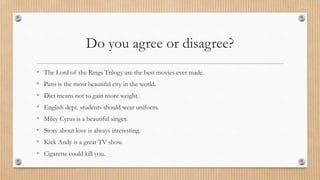
Do you agree or disagree? 
• The Lord of the Rings Trilogy are the best movies ever made. 
• Paris is the most beautiful city in the world. 
• Diet means not to gain more weight. 
• English dept. students should wear uniform. 
• Miley Cyrus is a beautiful singer. 
• Story about love is always interesting. 
• Kick Andy is a great TV show. 
• Cigarette could kill you.
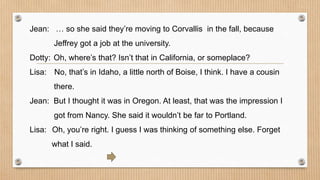
Jean: … so she said they’re moving to Corvallis in the fall, because 
Jeffrey got a job at the university. 
Dotty: Oh, where’s that? Isn’t that in California, or someplace? 
Lisa: No, that’s in Idaho, a little north of Boise, I think. I have a cousin 
there. 
Jean: But I thought it was in Oregon. At least, that was the impression I 
got from Nancy. She said it wouldn’t be far to Portland. 
Lisa: Oh, you’re right. I guess I was thinking of something else. Forget 
what I said.
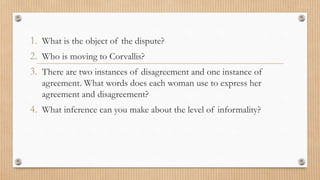
1. What is the object of the dispute? 
2. Who is moving to Corvallis? 
3. There are two instances of disagreement and one instance of 
agreement. What words does each woman use to express her 
agreement and disagreement? 
4. What inference can you make about the level of informality?
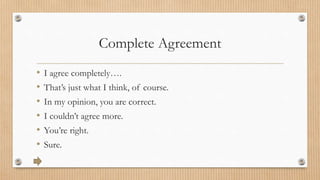
Complete Agreement 
• I agree completely…. 
• That’s just what I think, of course. 
• In my opinion, you are correct. 
• I couldn’t agree more. 
• You’re right. 
• Sure.
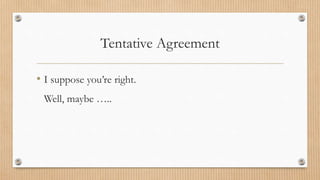
Tentative Agreement 
• I suppose you’re right. 
Well, maybe …..
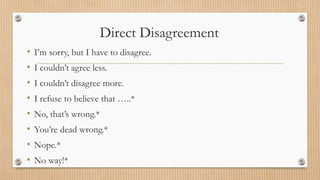
Direct Disagreement 
• I’m sorry, but I have to disagree. 
• I couldn’t agree less. 
• I couldn’t disagree more. 
• I refuse to believe that …..* 
• No, that’s wrong.* 
• You’re dead wrong.* 
• Nope.* 
• No way!*
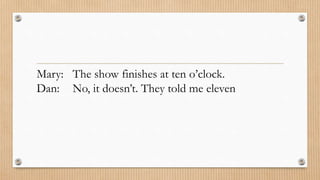
Mary: The show finishes at ten o’clock. 
Dan: No, it doesn’t. They told me eleven
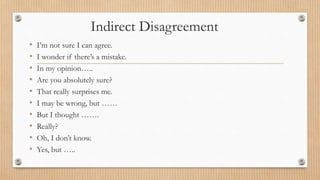
Indirect Disagreement 
• I’m not sure I can agree. 
• I wonder if there’s a mistake. 
• In my opinion….. 
• Are you absolutely sure? 
• That really surprises me. 
• I may be wrong, but …… 
• But I thought ……. 
• Really? 
• Oh, I don’t know. 
• Yes, but …..
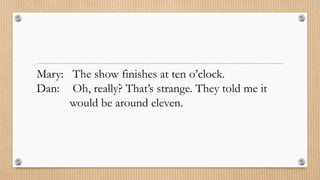
Mary: The show finishes at ten o’clock. 
Dan: Oh, really? That’s strange. They told me it 
would be around eleven.
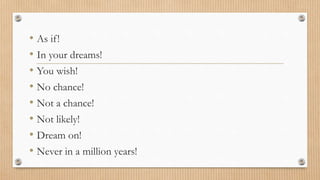
• As if ! 
• In your dreams! 
• You wish! 
• No chance! 
• Not a chance! 
• Not likely! 
• Dream on! 
• Never in a million years!
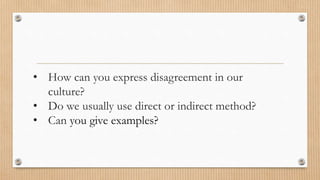
• How can you express disagreement in our 
culture? 
• Do we usually use direct or indirect method? 
• Can you give examples?
source 
• Tillitt, B. & Bruder, M. N. 1985. Speaking Naturally. Press Syndicate. 
Cambridge University Press. UK

agreeing and disagreeing

  • 1.
  • 2.
    Do you agreeor disagree? • The Lord of the Rings Trilogy are the best movies ever made. • Paris is the most beautiful city in the world. • Diet means not to gain more weight. • English dept. students should wear uniform. • Miley Cyrus is a beautiful singer. • Story about love is always interesting. • Kick Andy is a great TV show. • Cigarette could kill you.
  • 3.
    Jean: … soshe said they’re moving to Corvallis in the fall, because Jeffrey got a job at the university. Dotty: Oh, where’s that? Isn’t that in California, or someplace? Lisa: No, that’s in Idaho, a little north of Boise, I think. I have a cousin there. Jean: But I thought it was in Oregon. At least, that was the impression I got from Nancy. She said it wouldn’t be far to Portland. Lisa: Oh, you’re right. I guess I was thinking of something else. Forget what I said.
  • 4.
    1. What isthe object of the dispute? 2. Who is moving to Corvallis? 3. There are two instances of disagreement and one instance of agreement. What words does each woman use to express her agreement and disagreement? 4. What inference can you make about the level of informality?
  • 5.
    Complete Agreement •I agree completely…. • That’s just what I think, of course. • In my opinion, you are correct. • I couldn’t agree more. • You’re right. • Sure.
  • 6.
    Tentative Agreement •I suppose you’re right. Well, maybe …..
  • 7.
    Direct Disagreement •I’m sorry, but I have to disagree. • I couldn’t agree less. • I couldn’t disagree more. • I refuse to believe that …..* • No, that’s wrong.* • You’re dead wrong.* • Nope.* • No way!*
  • 8.
    Mary: The showfinishes at ten o’clock. Dan: No, it doesn’t. They told me eleven
  • 9.
    Indirect Disagreement •I’m not sure I can agree. • I wonder if there’s a mistake. • In my opinion….. • Are you absolutely sure? • That really surprises me. • I may be wrong, but …… • But I thought ……. • Really? • Oh, I don’t know. • Yes, but …..
  • 10.
    Mary: The showfinishes at ten o’clock. Dan: Oh, really? That’s strange. They told me it would be around eleven.
  • 11.
    • As if! • In your dreams! • You wish! • No chance! • Not a chance! • Not likely! • Dream on! • Never in a million years!
  • 13.
    • How canyou express disagreement in our culture? • Do we usually use direct or indirect method? • Can you give examples?
  • 16.
    source • Tillitt,B. & Bruder, M. N. 1985. Speaking Naturally. Press Syndicate. Cambridge University Press. UK