Aged Care in the Cloud
Allan Turner
CIO, Silver Chain Group
Australia
November 2011
What is Cloud Computing?


“Cloud computing is Internet-based computing, whereby
    shared resources, software, and information are
 provided to computers and other devices on demand.

 In general, cloud computing customers do not own the
     physical infrastructure, instead avoiding capital
expenditure by renting usage from a third-party provider.

 They consume resources as a service and pay only for
             resources that they use.”
What is Cloud Computing?


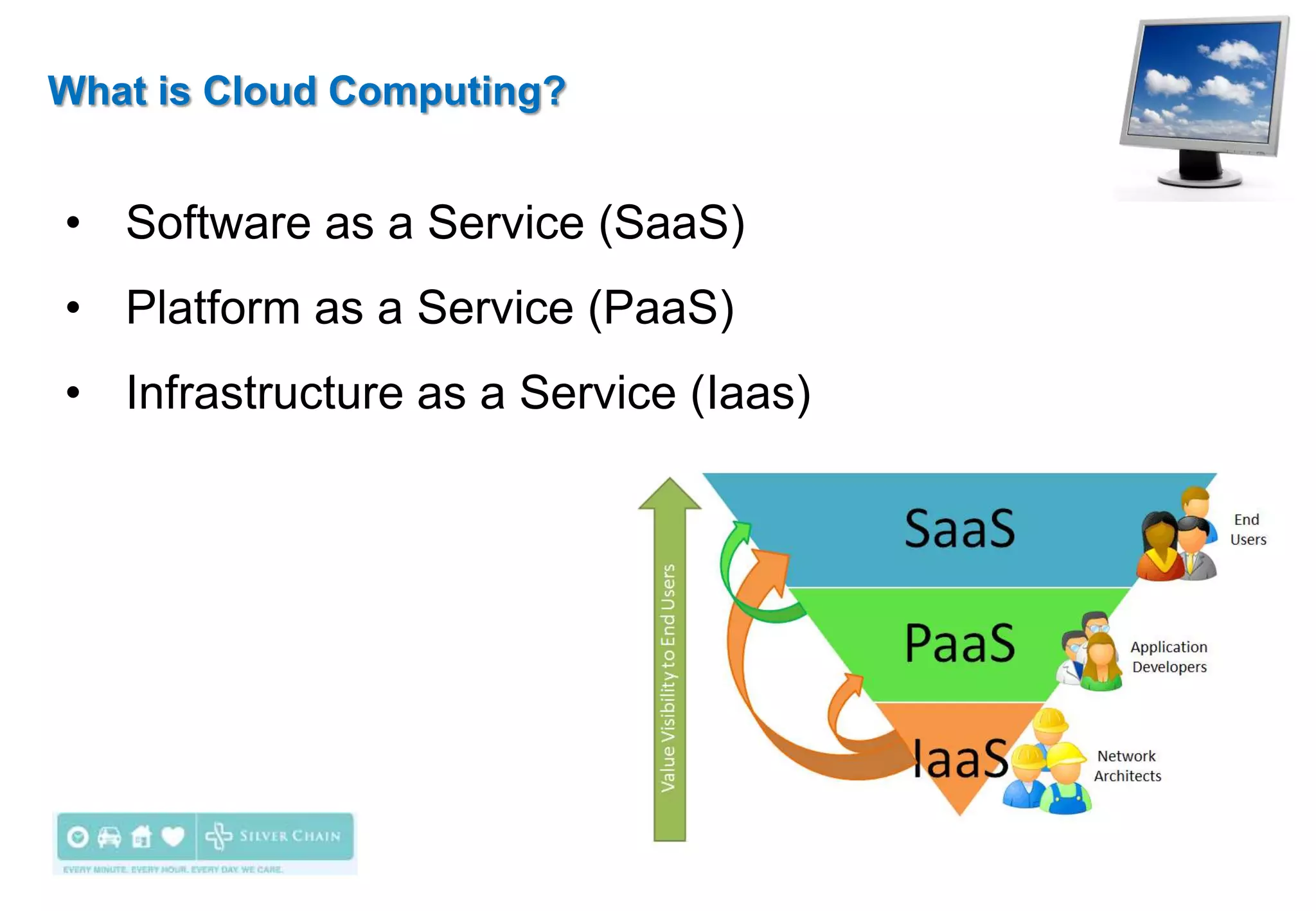
• Software as a Service (SaaS)
• Platform as a Service (PaaS)
• Infrastructure as a Service (Iaas)
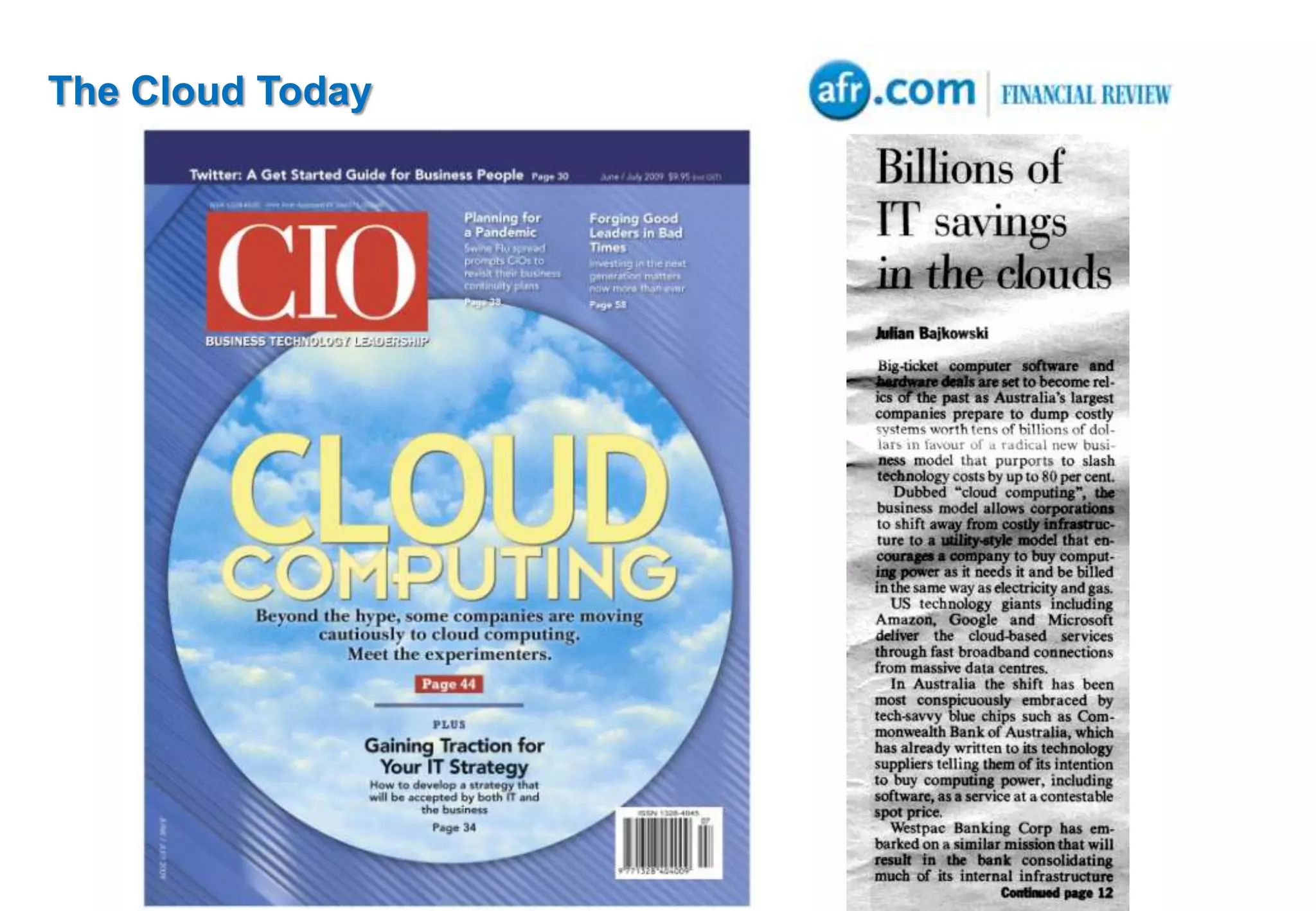
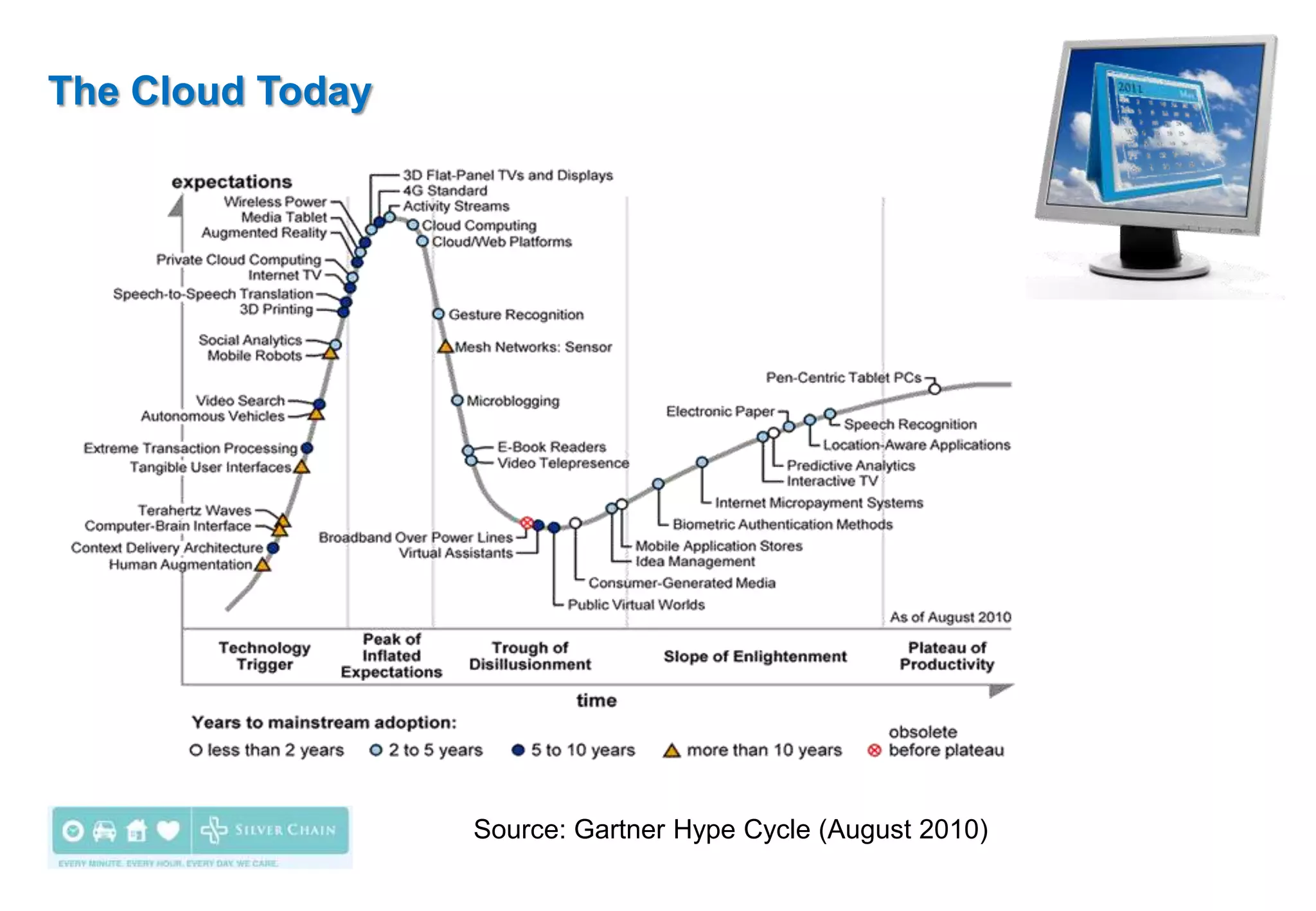
The Cloud Today
The Cloud Today


                  Source: Gartner Hype Cycle (August 2010)
Cloud Computing Key findings


• Cloud computing is controversial & important
• The public cloud market is more complex than expected
• Public cloud pricing structures are evolving
• Service level agreements are key to cloud adoption
• Security is the #1 cloud quality of service concern
• Reliability and availability are under increasing scrutiny
                     Source: OVUM, Planning for Cloud Computing (November 2010)
The Cloud Myths


1. Cloud computing replaces the traditional ‘on-premise’
   software model
2. The cloud represents compromise
3. Cloud computing puts IT departments out of jobs
4. There are greater data security and safety risks
   associated with the cloud
5. Cloud computing is only for large organisations with
   professional IT departments

                        Source: Tracy Fellows, Area Vice President for Microsoft Asia Pacific
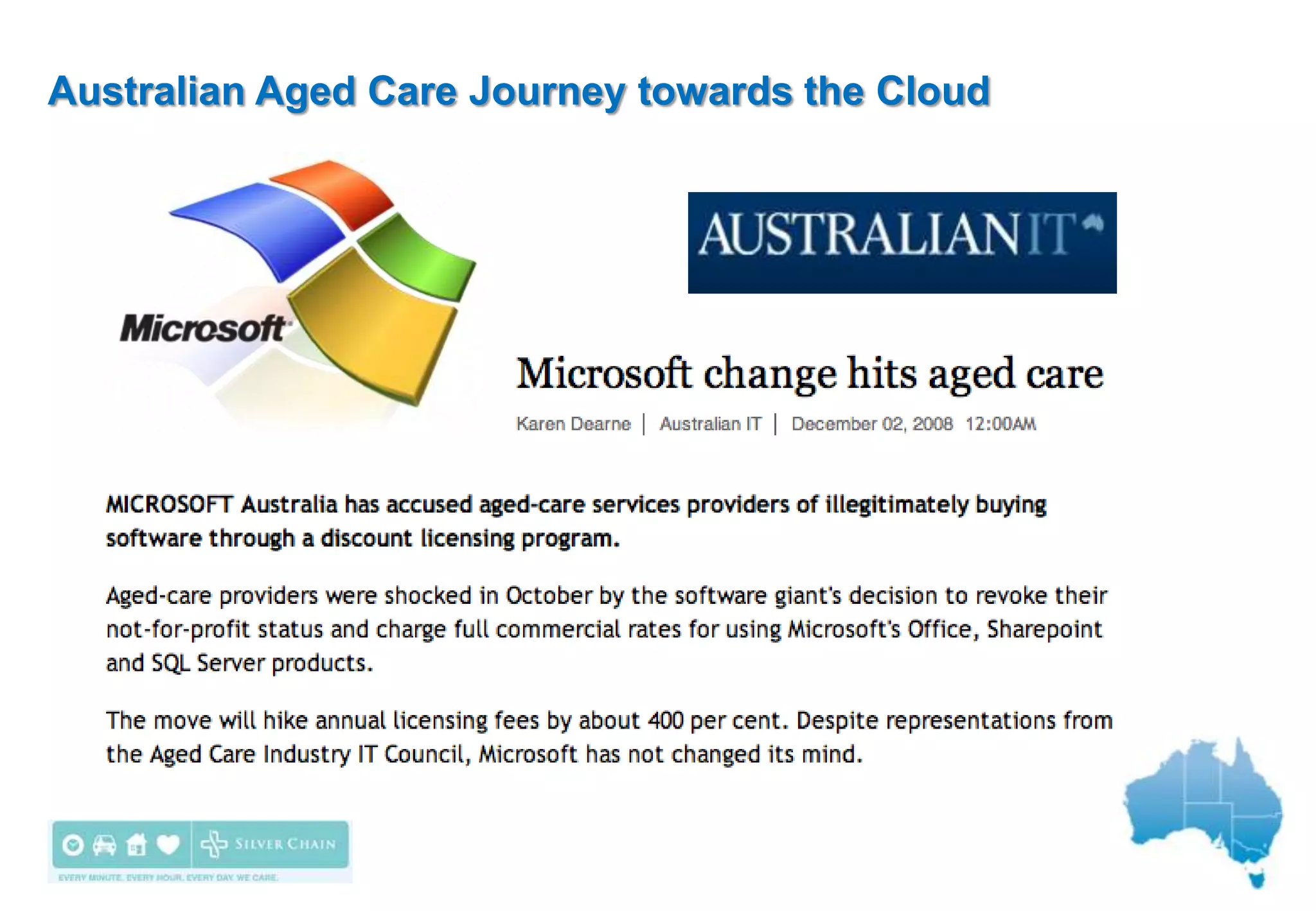
Australian Aged Care Journey towards the Cloud


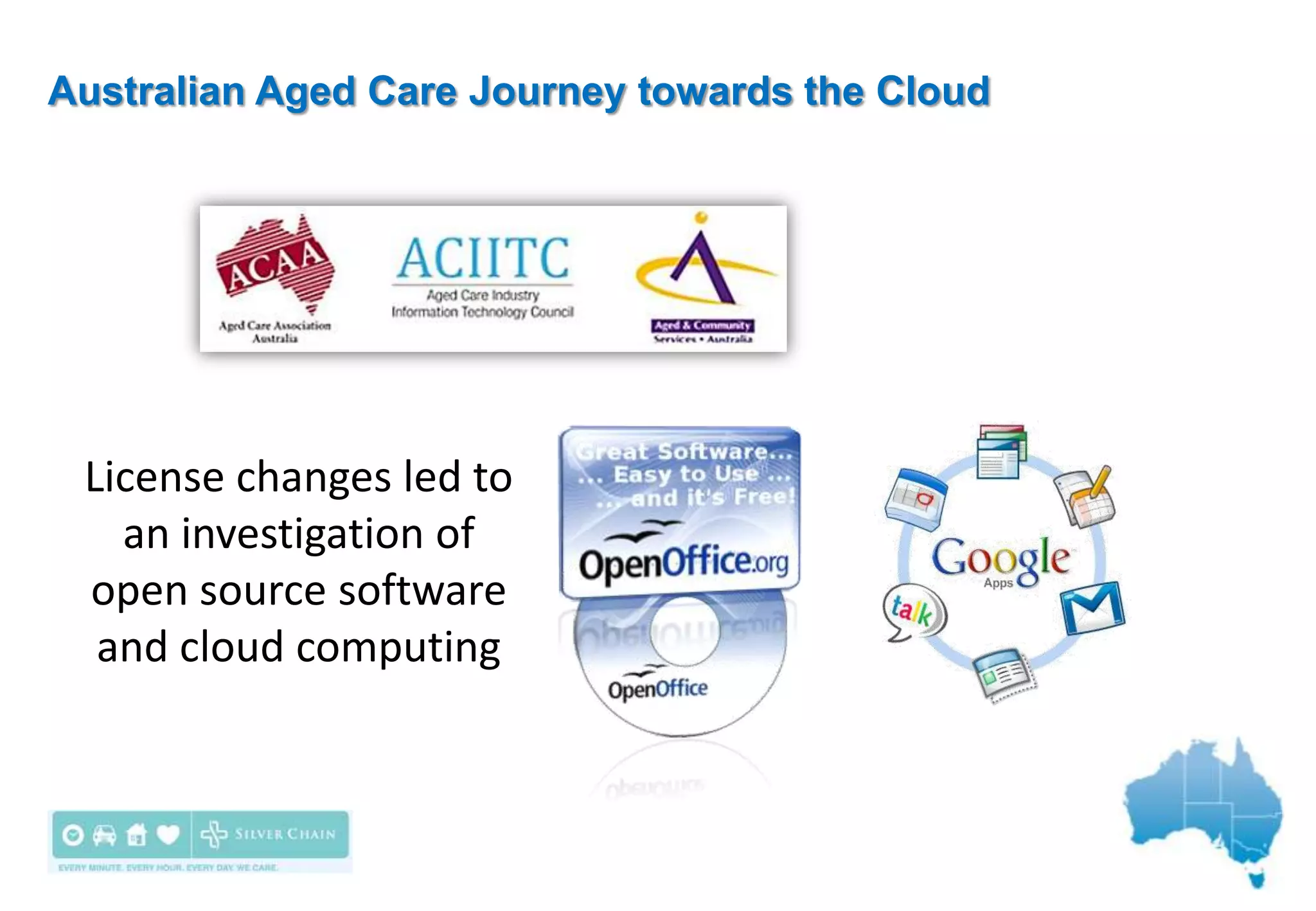
 License changes led to
   an investigation of
 open source software
  and cloud computing
Australian Aged Care Journey towards the Cloud
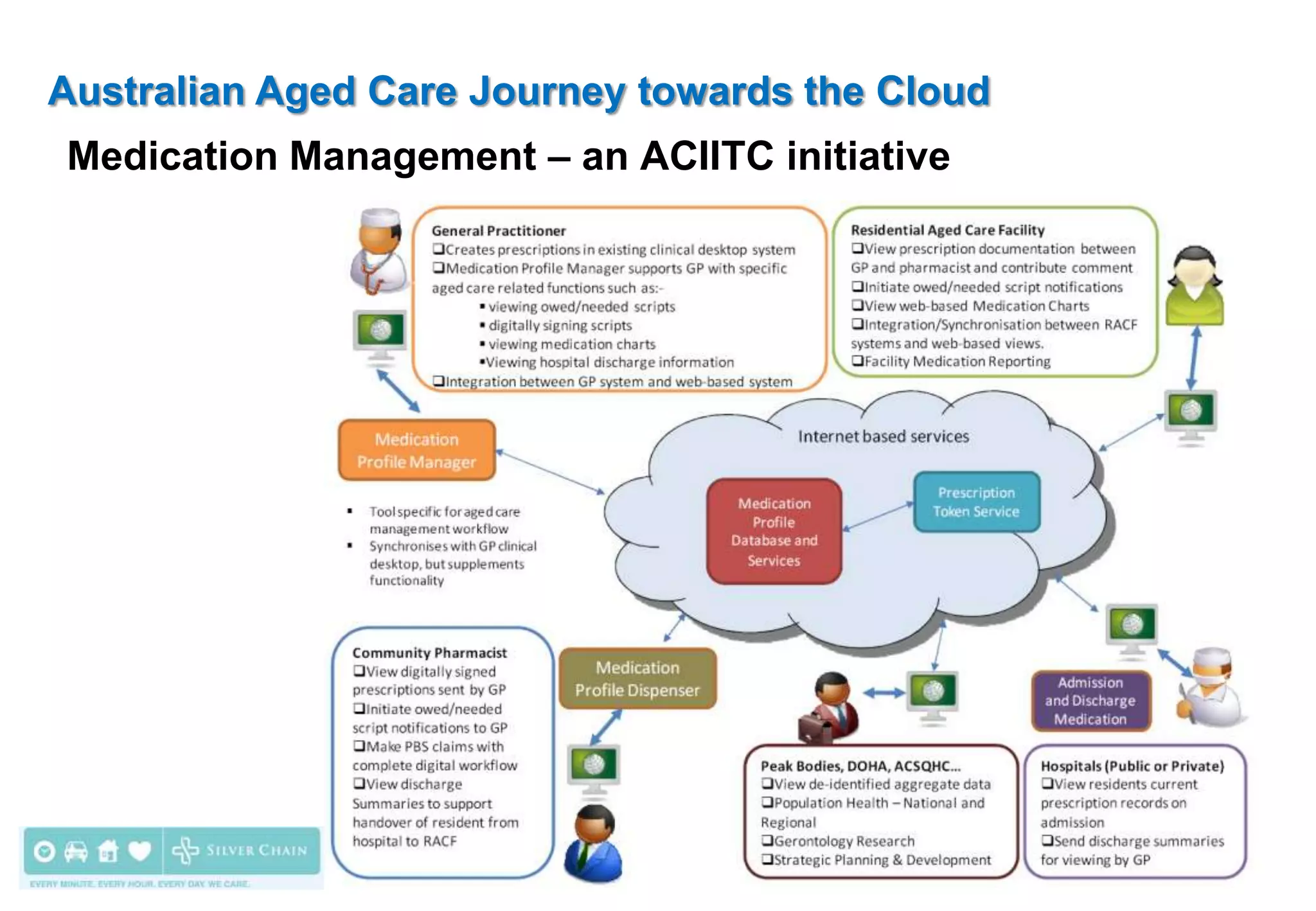
Medication Management – an ACIITC initiative
Australian Aged Care Journey towards the Cloud
Australian Aged Care Journey towards the cloud


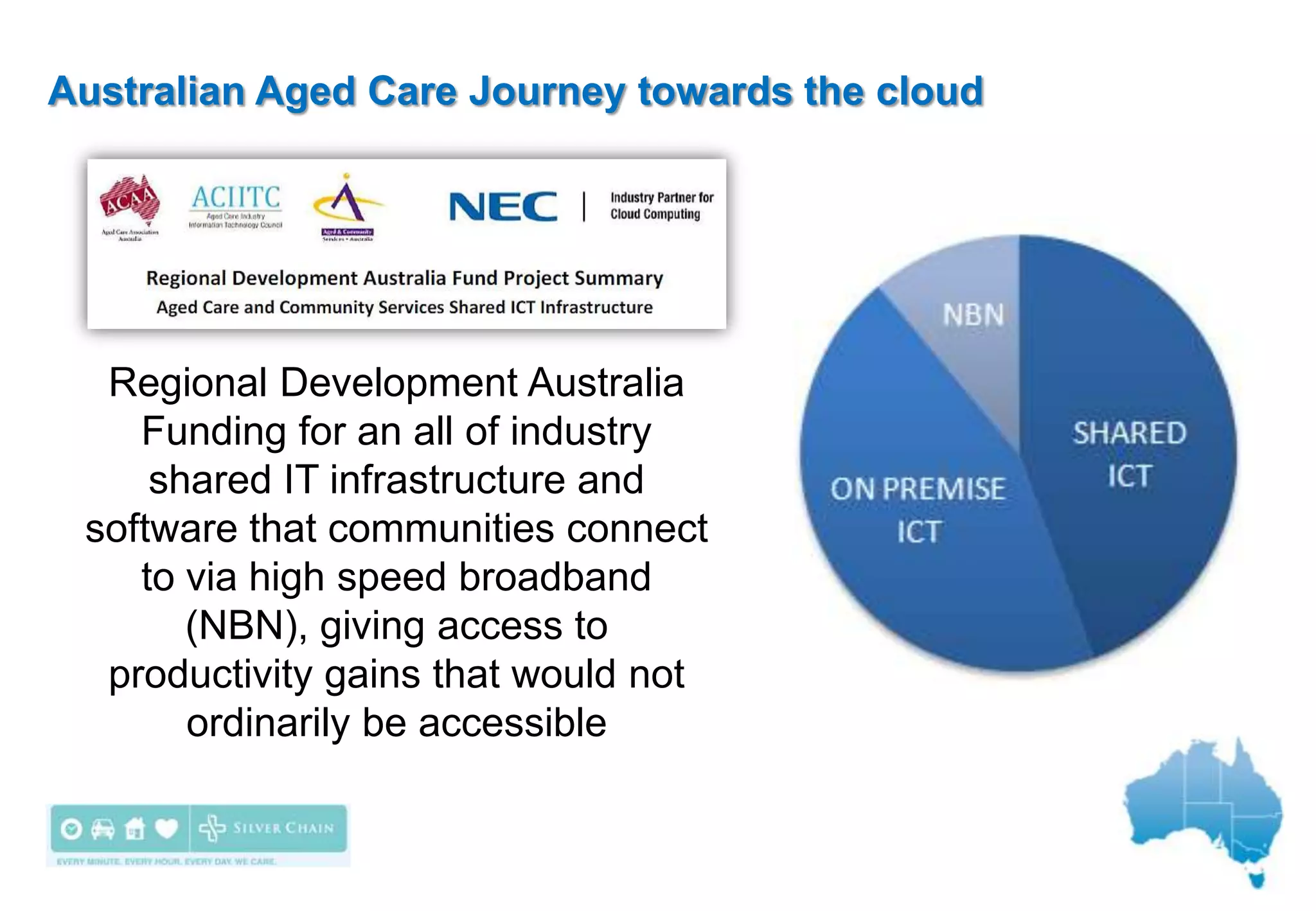
  Regional Development Australia
    Funding for an all of industry
     shared IT infrastructure and
 software that communities connect
    to via high speed broadband
       (NBN), giving access to
  productivity gains that would not
       ordinarily be accessible
The CIO’s Challenge

     As CIO you have to deliver:

        Cost efficiencies
        Scalability
        Robustness
        Performance
        Redundancy
        Flexibility
        Agility
        Time to market

     Then: understand IF and HOW cloud computing can help.

     If you dismiss cloud computing for your organisation,
     WHAT is your PLAN B?
Final Word


   “Cloud computing promises to tackles two
    hitherto irreconcilable IT challenges: the
   need to lower costs and the need to boost
 innovation. However, it will take a lot of effort
   from enterprises to actually make it work”
  Source: OVUM, Planning for Cloud Computing
              (November 2010)

Aged Care In The Cloud - Allan Turner

  • 1.
    Aged Care inthe Cloud Allan Turner CIO, Silver Chain Group Australia November 2011
  • 2.
    What is CloudComputing? “Cloud computing is Internet-based computing, whereby shared resources, software, and information are provided to computers and other devices on demand. In general, cloud computing customers do not own the physical infrastructure, instead avoiding capital expenditure by renting usage from a third-party provider. They consume resources as a service and pay only for resources that they use.”
  • 3.
    What is CloudComputing? • Software as a Service (SaaS) • Platform as a Service (PaaS) • Infrastructure as a Service (Iaas)
  • 4.
  • 5.
    The Cloud Today Source: Gartner Hype Cycle (August 2010)
  • 6.
    Cloud Computing Keyfindings • Cloud computing is controversial & important • The public cloud market is more complex than expected • Public cloud pricing structures are evolving • Service level agreements are key to cloud adoption • Security is the #1 cloud quality of service concern • Reliability and availability are under increasing scrutiny Source: OVUM, Planning for Cloud Computing (November 2010)
  • 7.
    The Cloud Myths 1.Cloud computing replaces the traditional ‘on-premise’ software model 2. The cloud represents compromise 3. Cloud computing puts IT departments out of jobs 4. There are greater data security and safety risks associated with the cloud 5. Cloud computing is only for large organisations with professional IT departments Source: Tracy Fellows, Area Vice President for Microsoft Asia Pacific
  • 8.
    Australian Aged CareJourney towards the Cloud
  • 9.
    Australian Aged CareJourney towards the Cloud License changes led to an investigation of open source software and cloud computing
  • 10.
    Australian Aged CareJourney towards the Cloud Medication Management – an ACIITC initiative
  • 11.
    Australian Aged CareJourney towards the Cloud
  • 12.
    Australian Aged CareJourney towards the cloud Regional Development Australia Funding for an all of industry shared IT infrastructure and software that communities connect to via high speed broadband (NBN), giving access to productivity gains that would not ordinarily be accessible
  • 13.
    The CIO’s Challenge As CIO you have to deliver: Cost efficiencies Scalability Robustness Performance Redundancy Flexibility Agility Time to market Then: understand IF and HOW cloud computing can help. If you dismiss cloud computing for your organisation, WHAT is your PLAN B?
  • 14.
    Final Word “Cloud computing promises to tackles two hitherto irreconcilable IT challenges: the need to lower costs and the need to boost innovation. However, it will take a lot of effort from enterprises to actually make it work” Source: OVUM, Planning for Cloud Computing (November 2010)