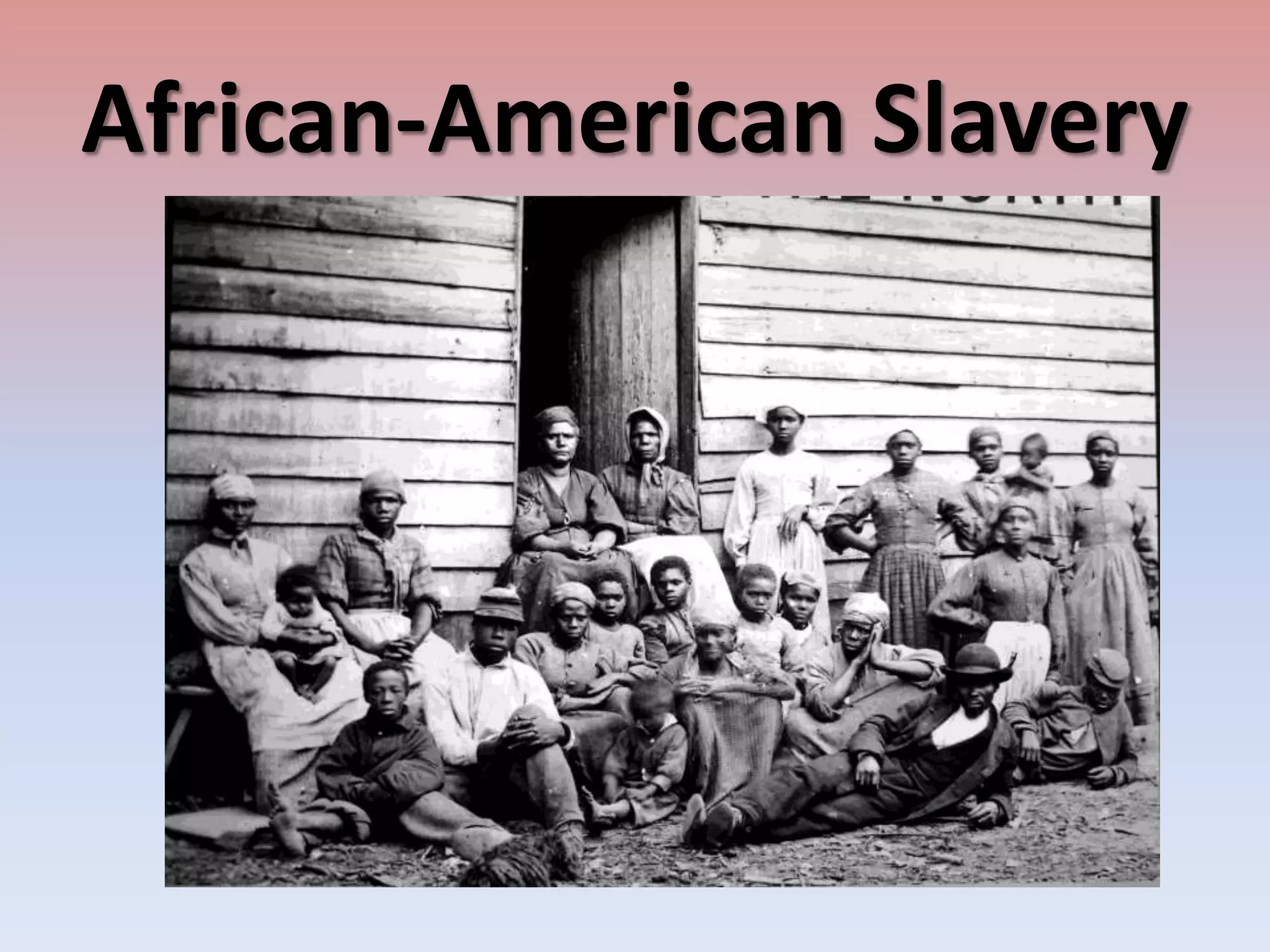
African-American Slavery
The Universal Declaration of Human Rights
• The Universal
Declaration of Human
Rights (1948) is
supposed to be a
common standard of
achievement for all
peoples and all nations.
• There are 30 Human
Rights. In this lesson, we
are going to talk about
Article 4: Freedom from
Slavery
Being a slave
• Most of the people who became slaves in North America
were from West Africa.
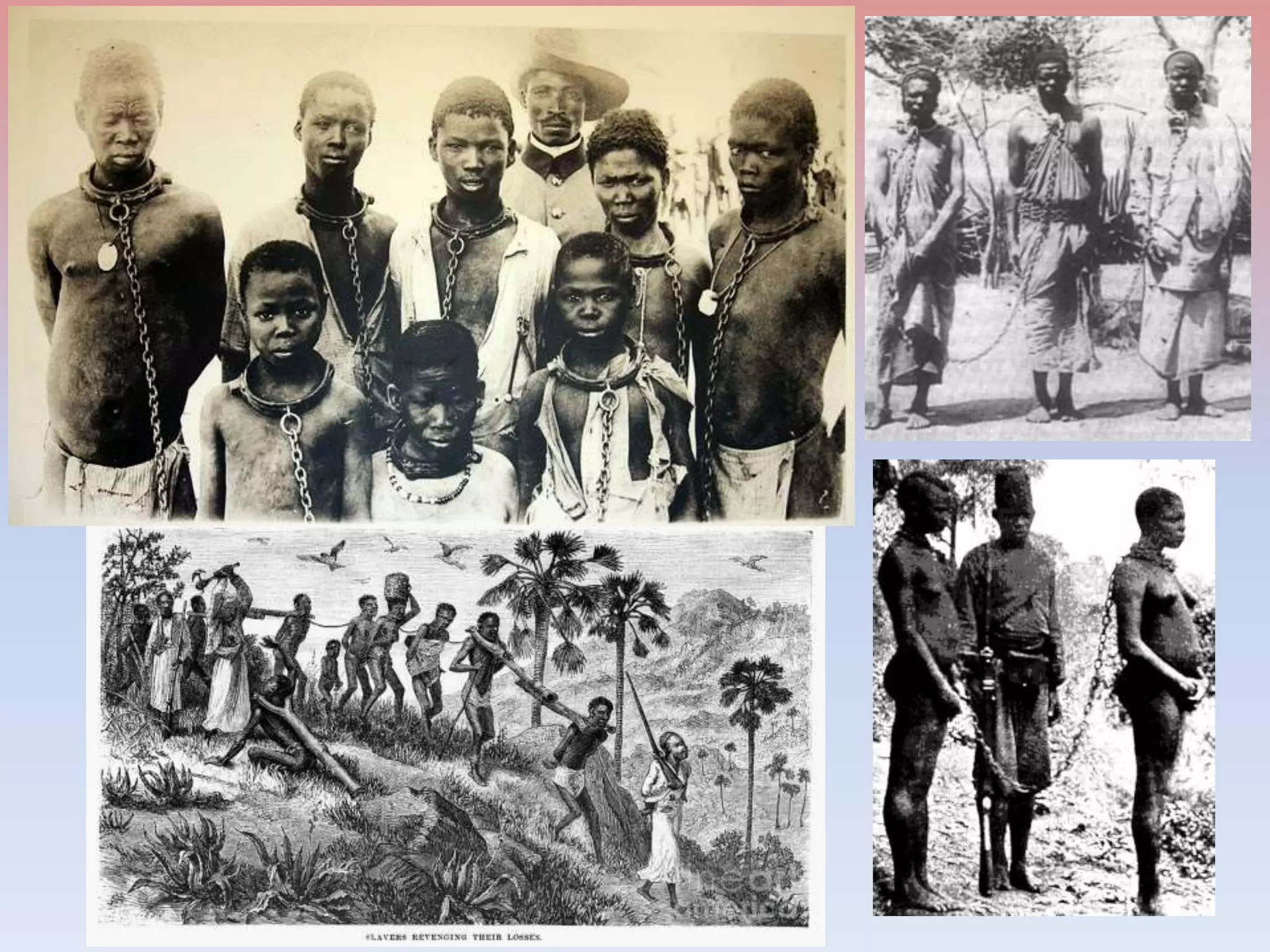
• You would be living in a village when outsiders attacked and
captured you, and then they would sell you to somebody else,
who sold you to somebody else, and in the end somebody
would sell you to a white man who would keep you in a slave
fort on the coast of Africa.
• Half of the people captured with you died
of hunger or sickness, while you were walking to the coast.
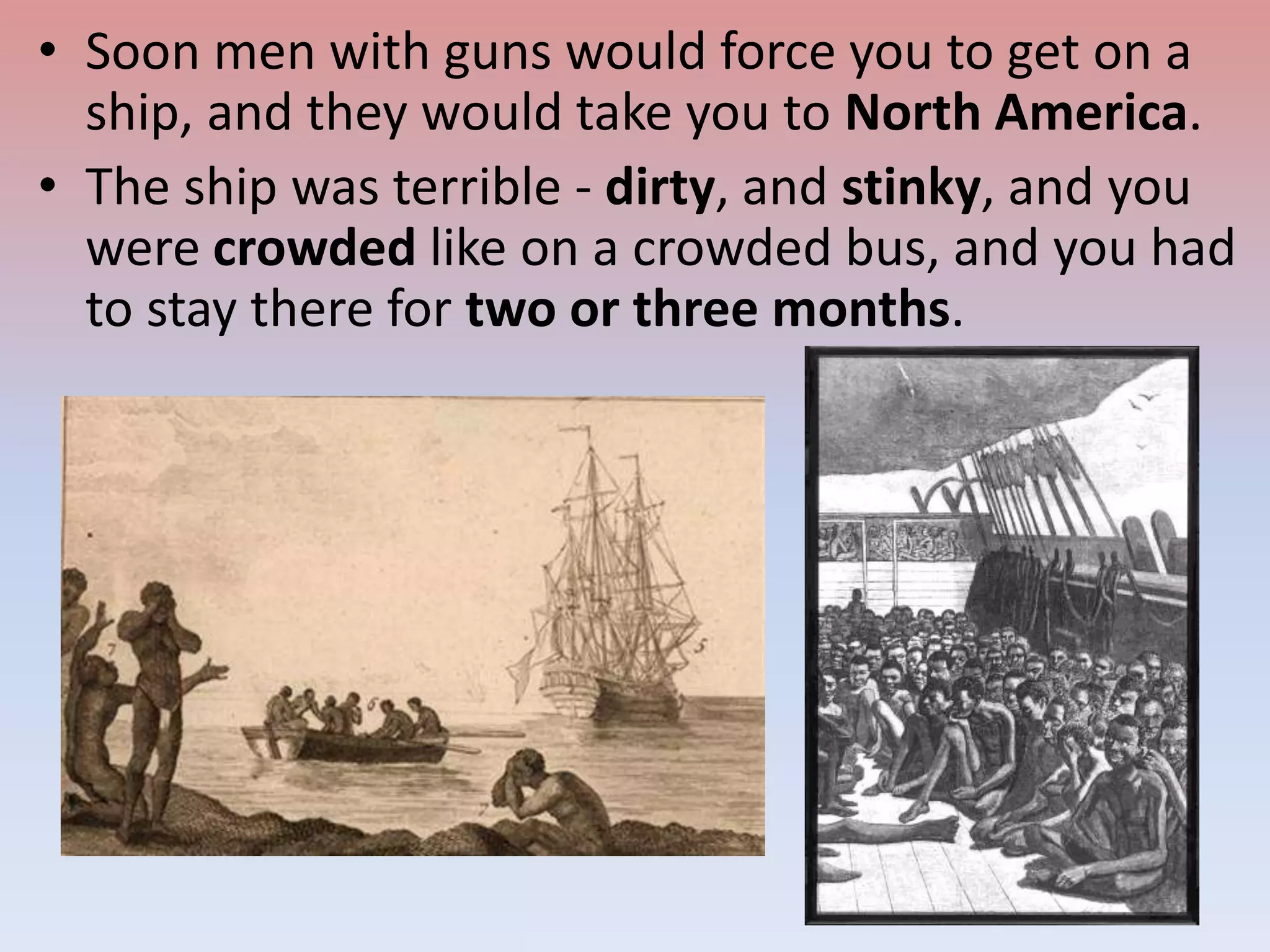
• Soon men with guns would force you to get on a
ship, and they would take you to North America.
• The ship was terrible - dirty, and stinky, and you
were crowded like on a crowded bus, and you had
to stay there for two or three months.
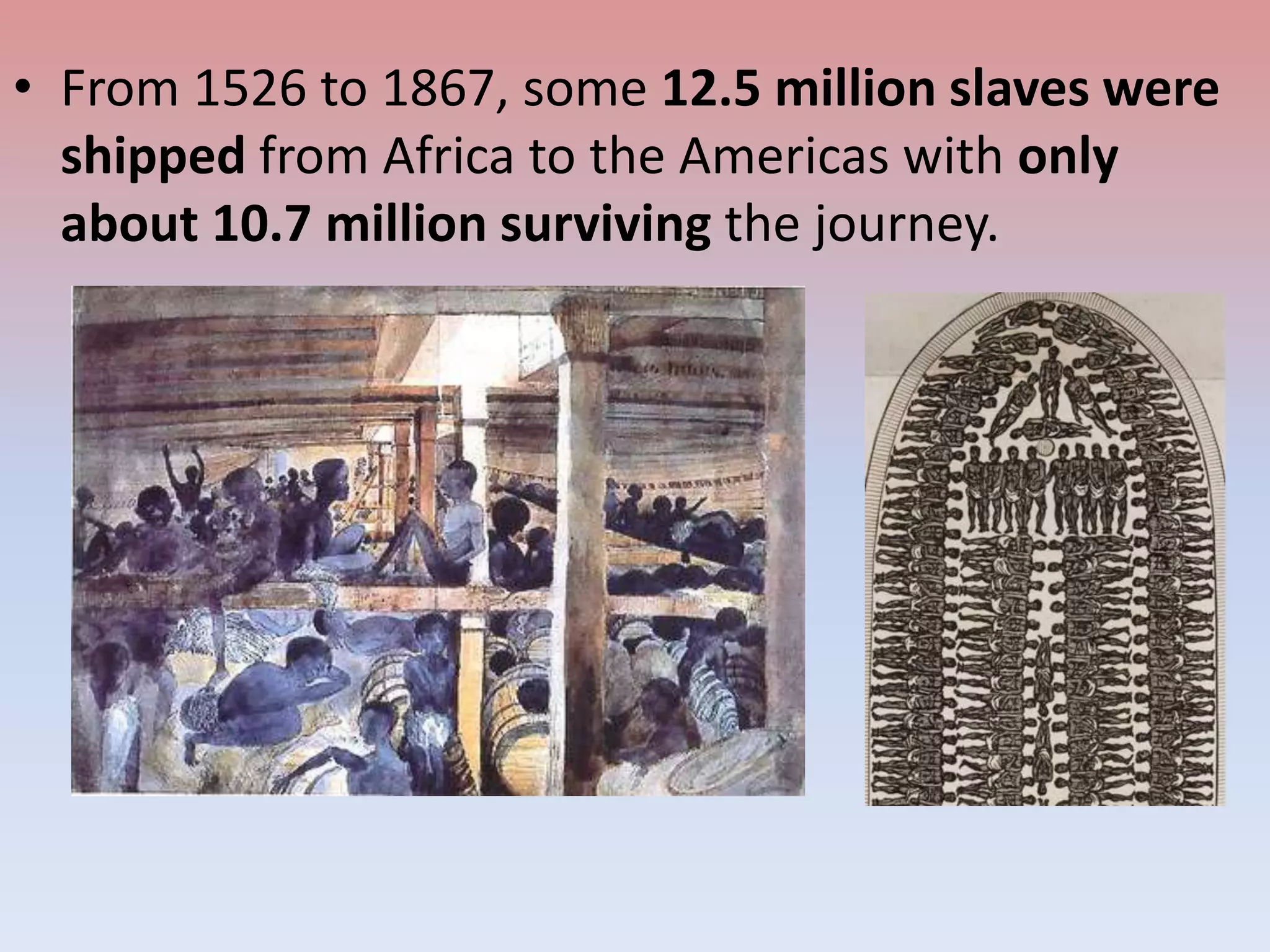
• From 1526 to 1867, some 12.5 million slaves were
shipped from Africa to the Americas with only
about 10.7 million surviving the journey.
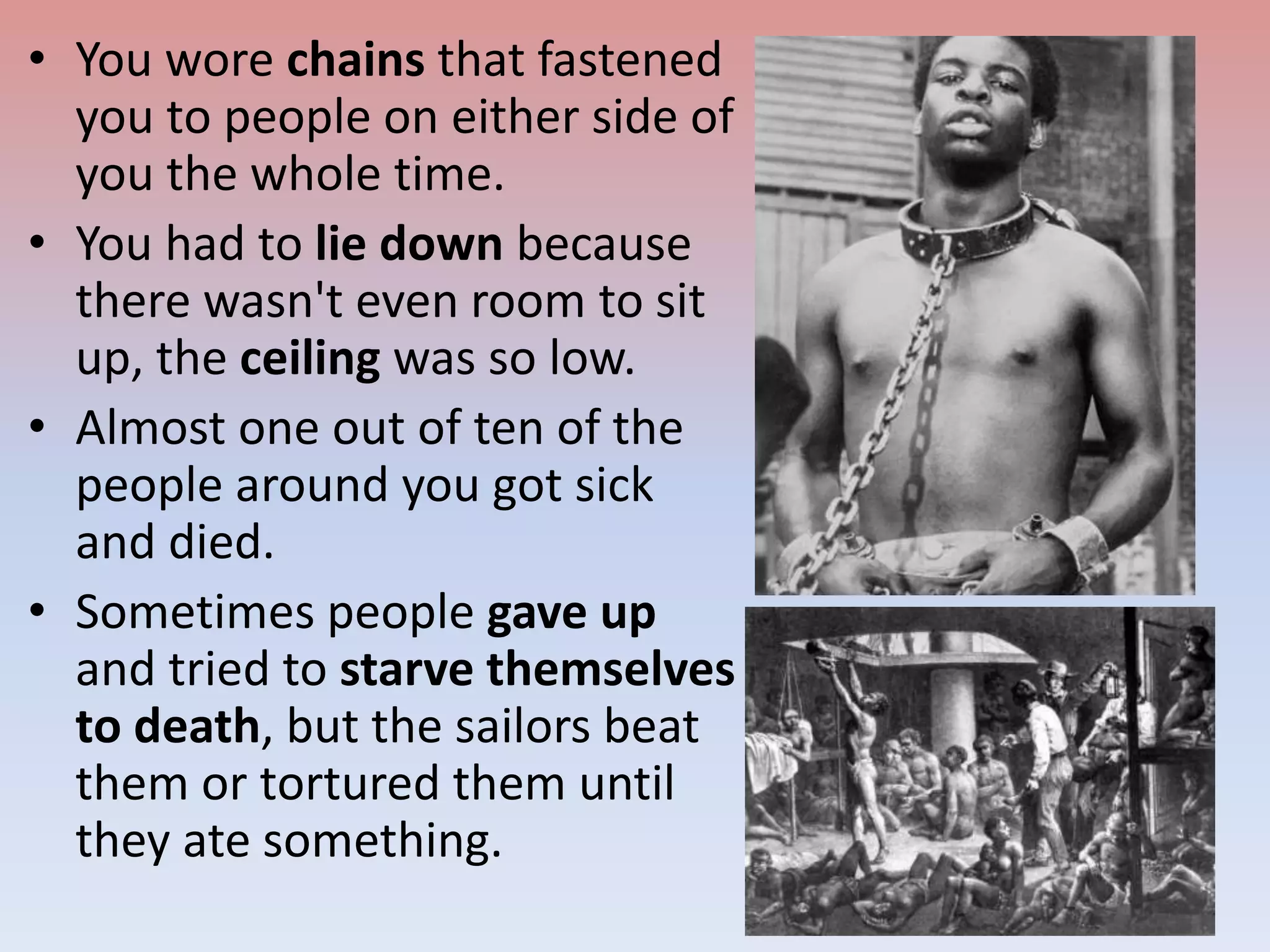
• You wore chains that fastened
you to people on either side of
you the whole time.
• You had to lie down because
there wasn't even room to sit
up, the ceiling was so low.
• Almost one out of ten of the
people around you got sick
and died.
• Sometimes people gave up
and tried to starve themselves
to death, but the sailors beat
them or tortured them until
they ate something.
• When you got to North America, you got a few weeks
to get healthier, and you got a European-style dress or
pants to wear, and then the slave trader sold you to
whoever would pay the most for you.
• The average cost of a slave in America in 1850
was about $400 (about $12,000 in today’s
money)
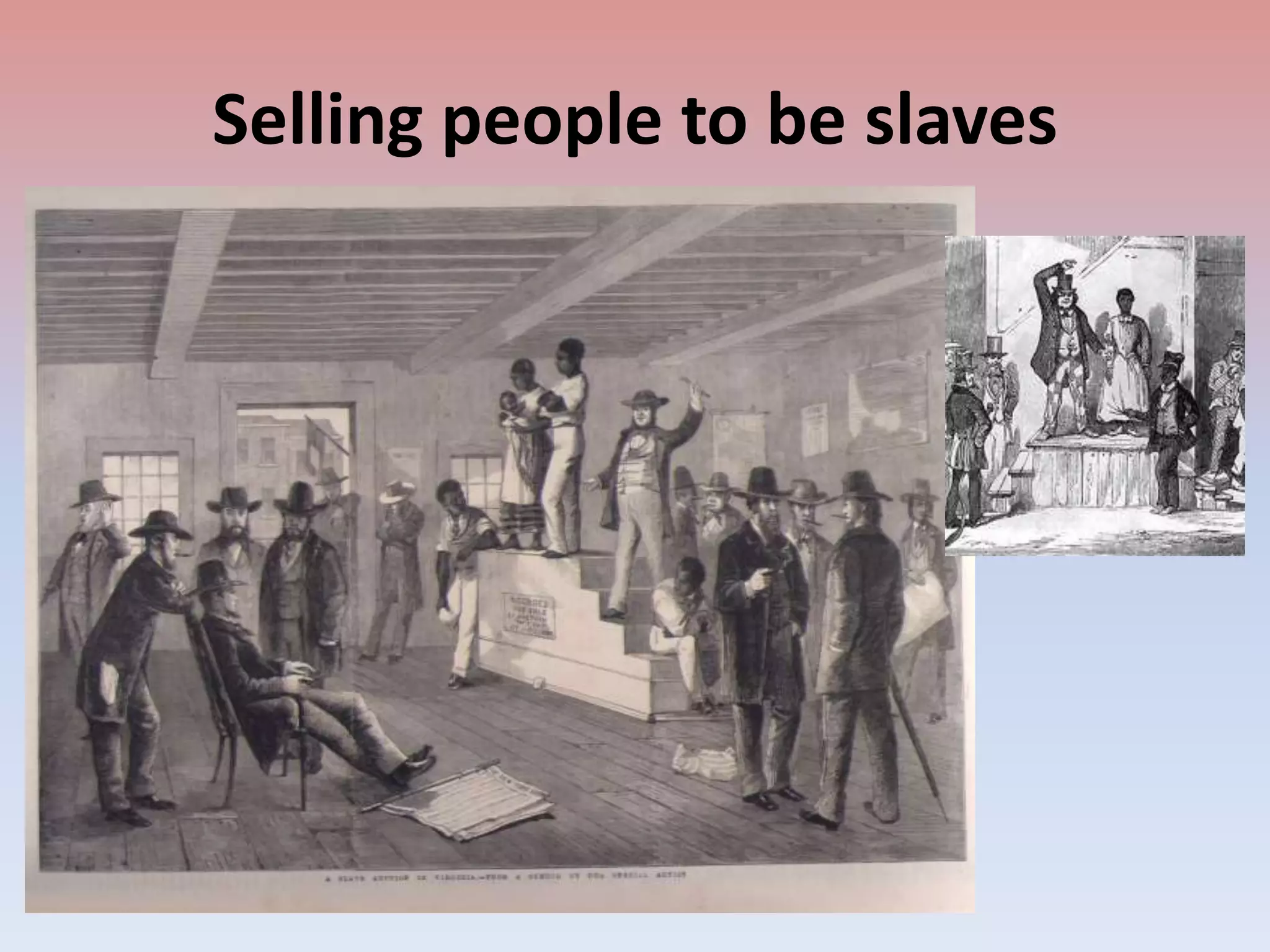
Selling people to be slaves
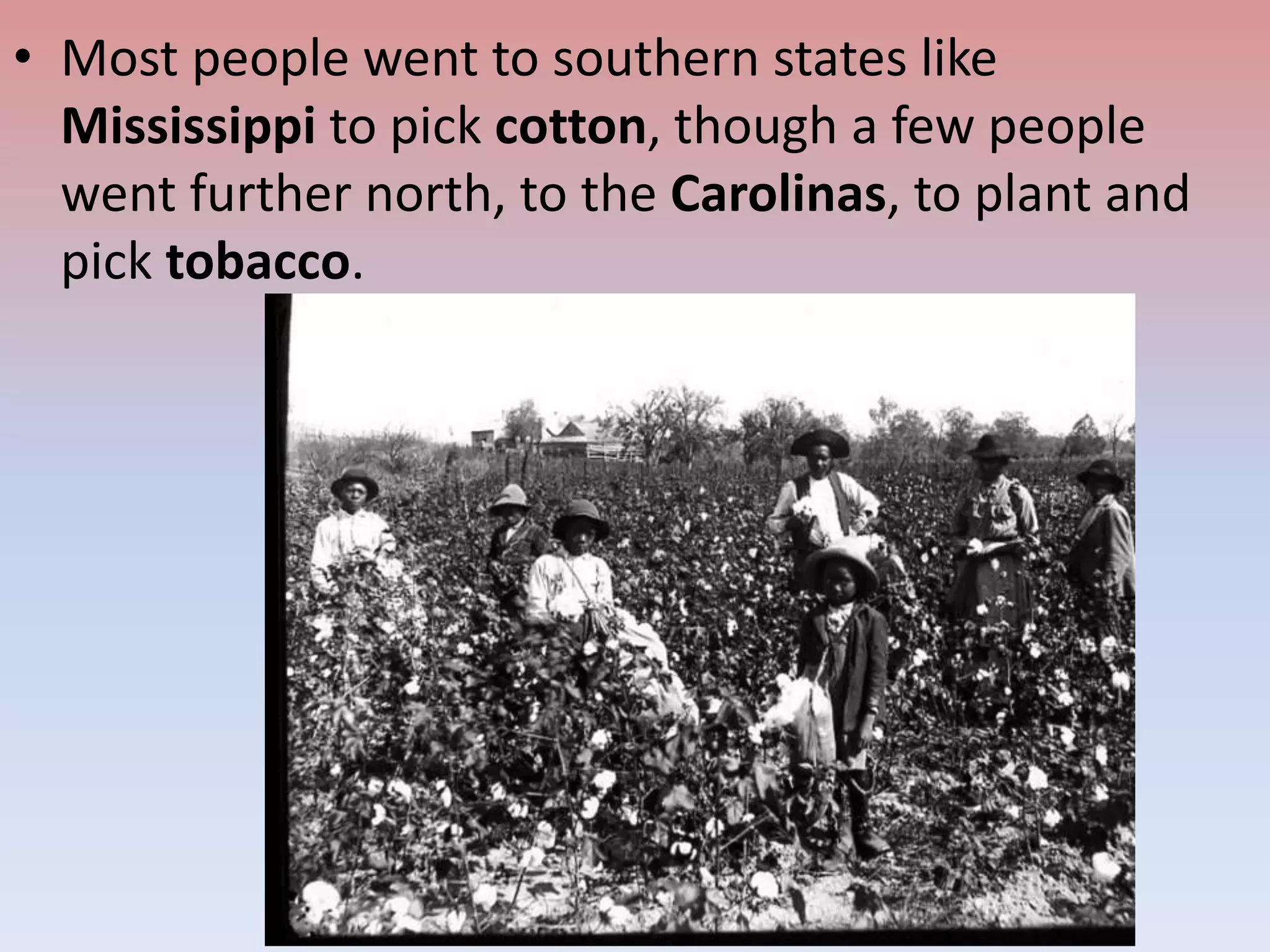
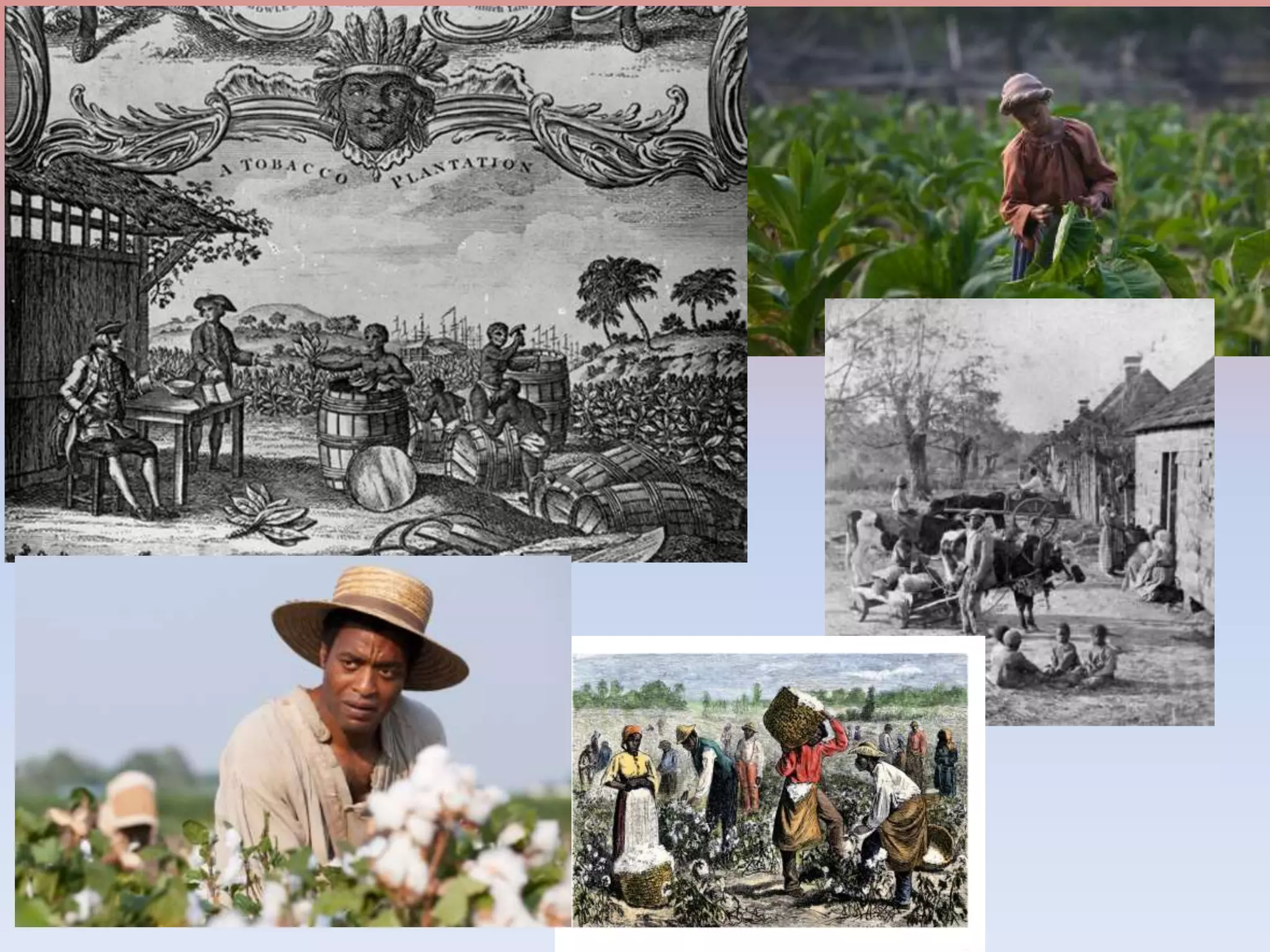
• Most people went to southern states like
Mississippi to pick cotton, though a few people
went further north, to the Carolinas, to plant and
pick tobacco.
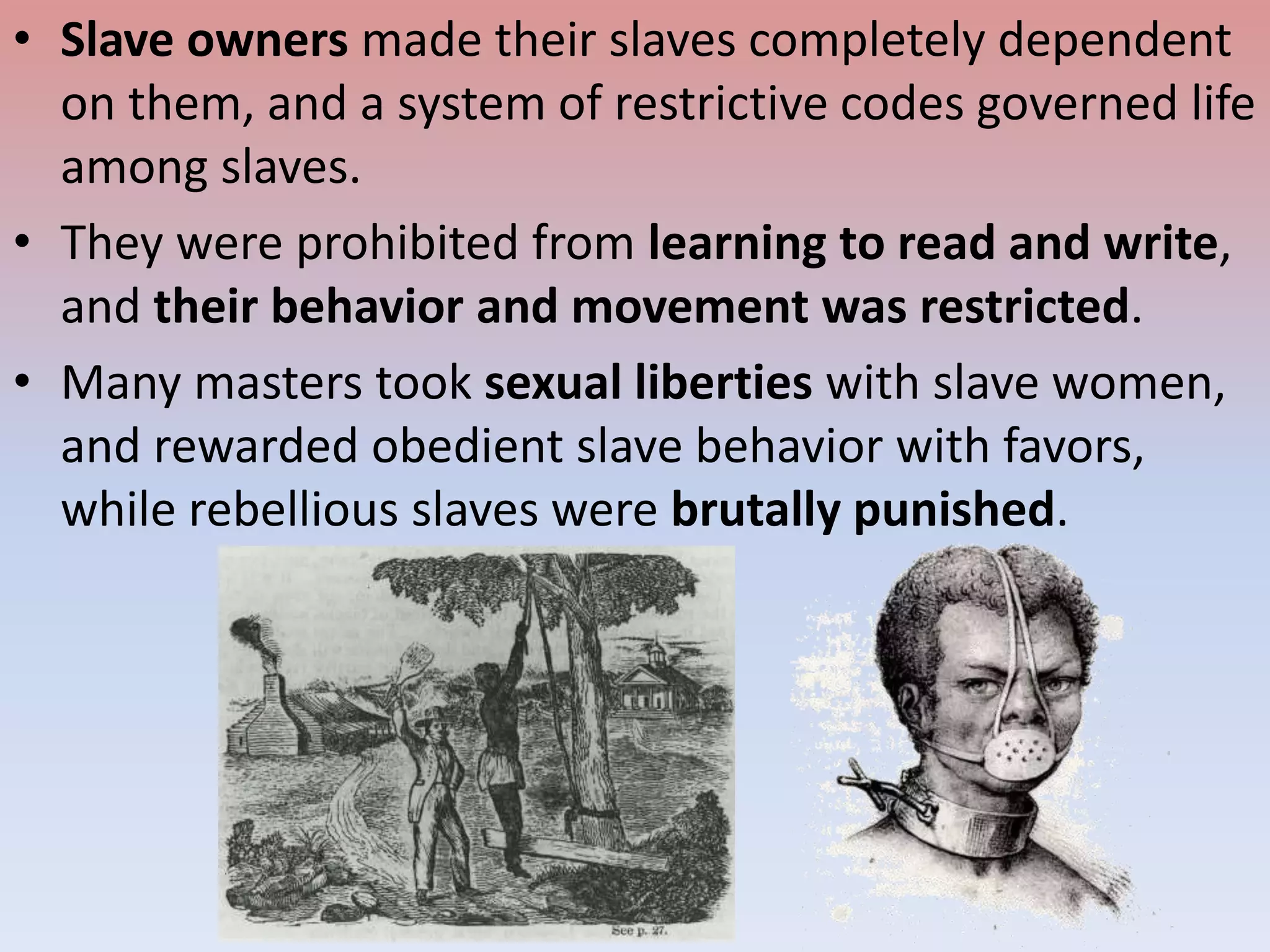
• Slave owners made their slaves completely dependent
on them, and a system of restrictive codes governed life
among slaves.
• They were prohibited from learning to read and write,
and their behavior and movement was restricted.
• Many masters took sexual liberties with slave women,
and rewarded obedient slave behavior with favors,
while rebellious slaves were brutally punished.
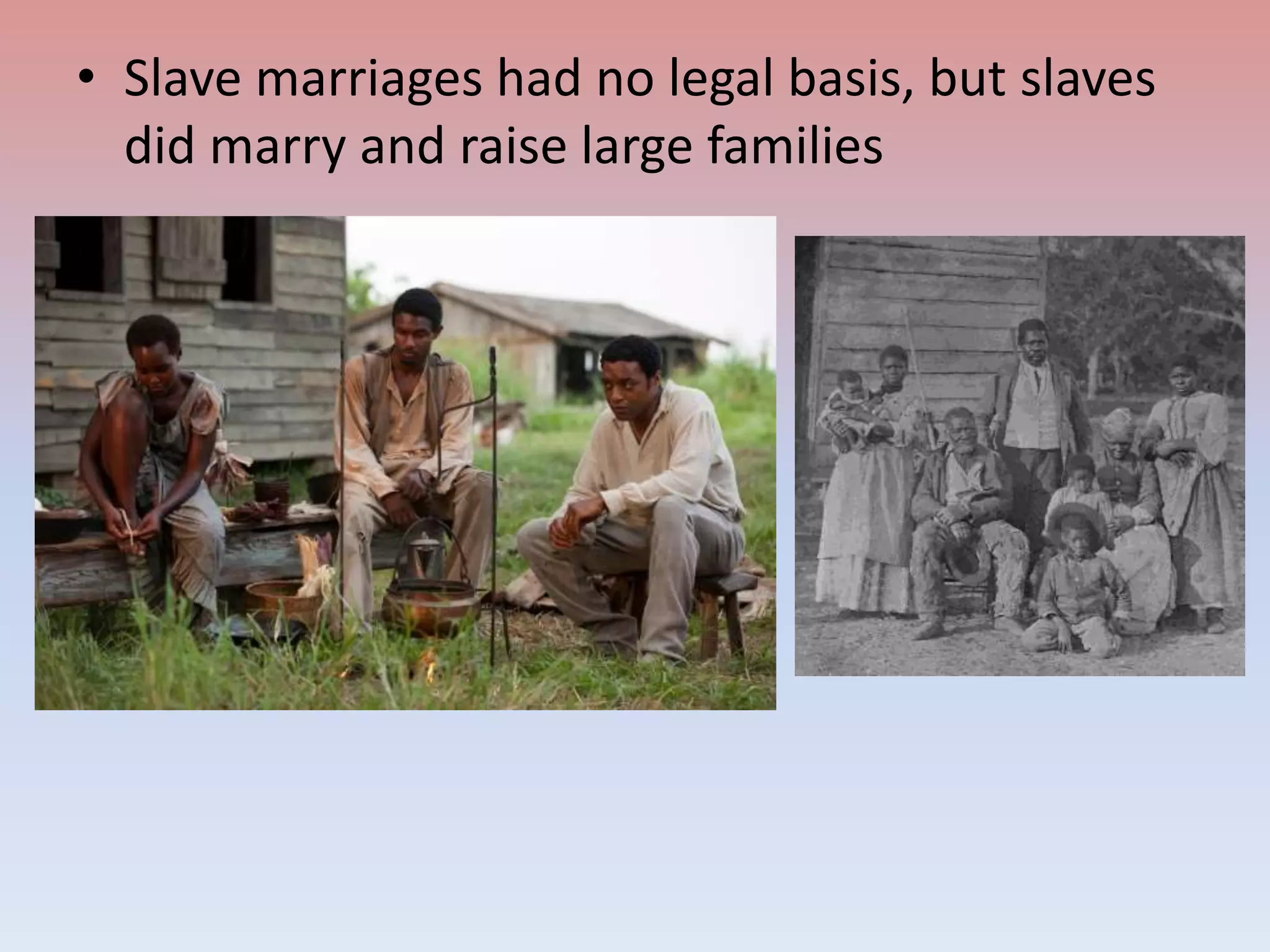
• Slave marriages had no legal basis, but slaves
did marry and raise large families
• From the 1830s to the 1860s, a
movement to abolish slavery in
America gained strength in the
northern United States, led by
free blacks and white
abolitionists such as Harriet
Beecher Stowe, who published
the bestselling antislavery novel
“Uncle Tom’s Cabin” (1852).
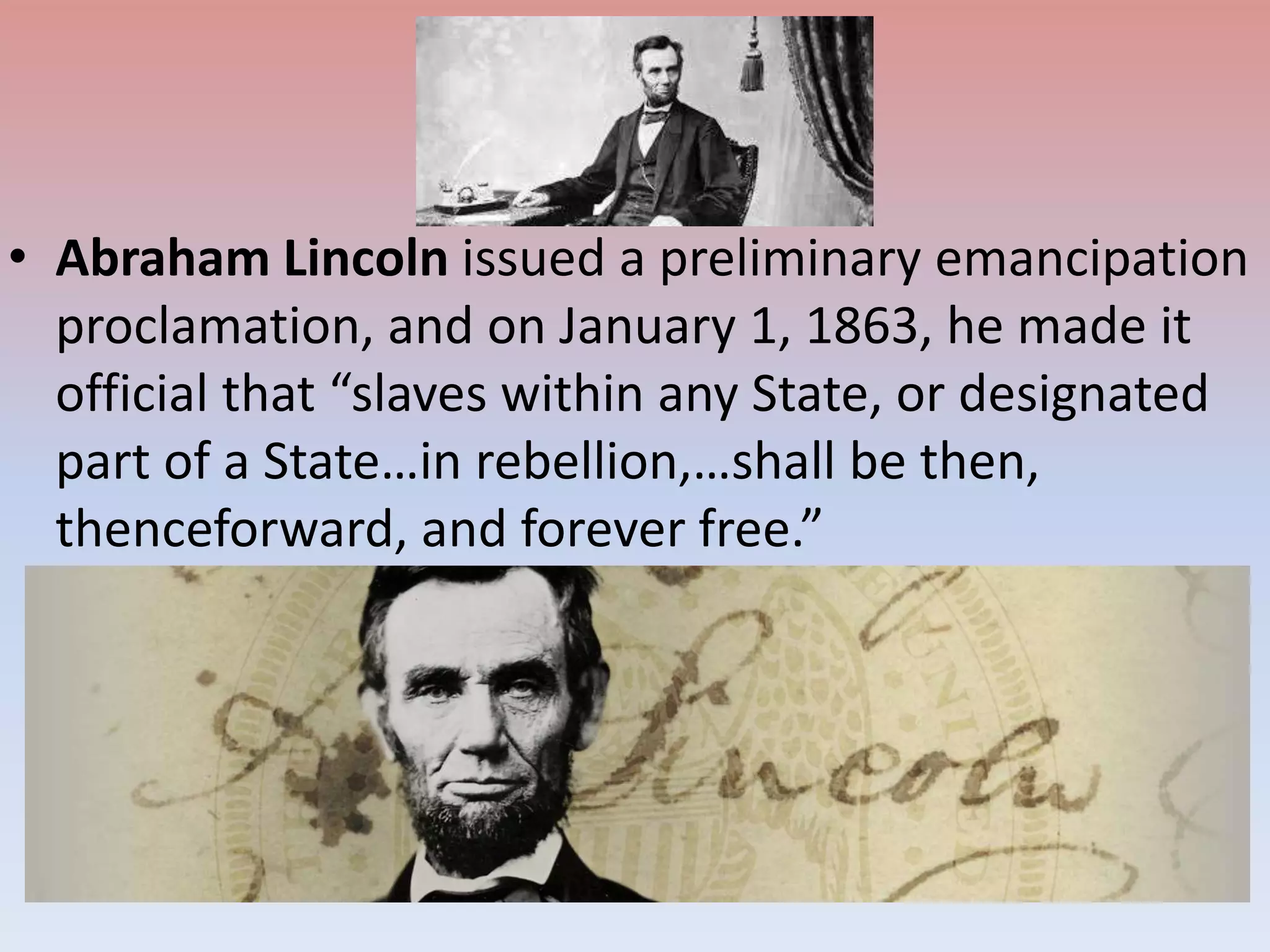
• Abraham Lincoln issued a preliminary emancipation
proclamation, and on January 1, 1863, he made it
official that “slaves within any State, or designated
part of a State…in rebellion,…shall be then,
thenceforward, and forever free.”
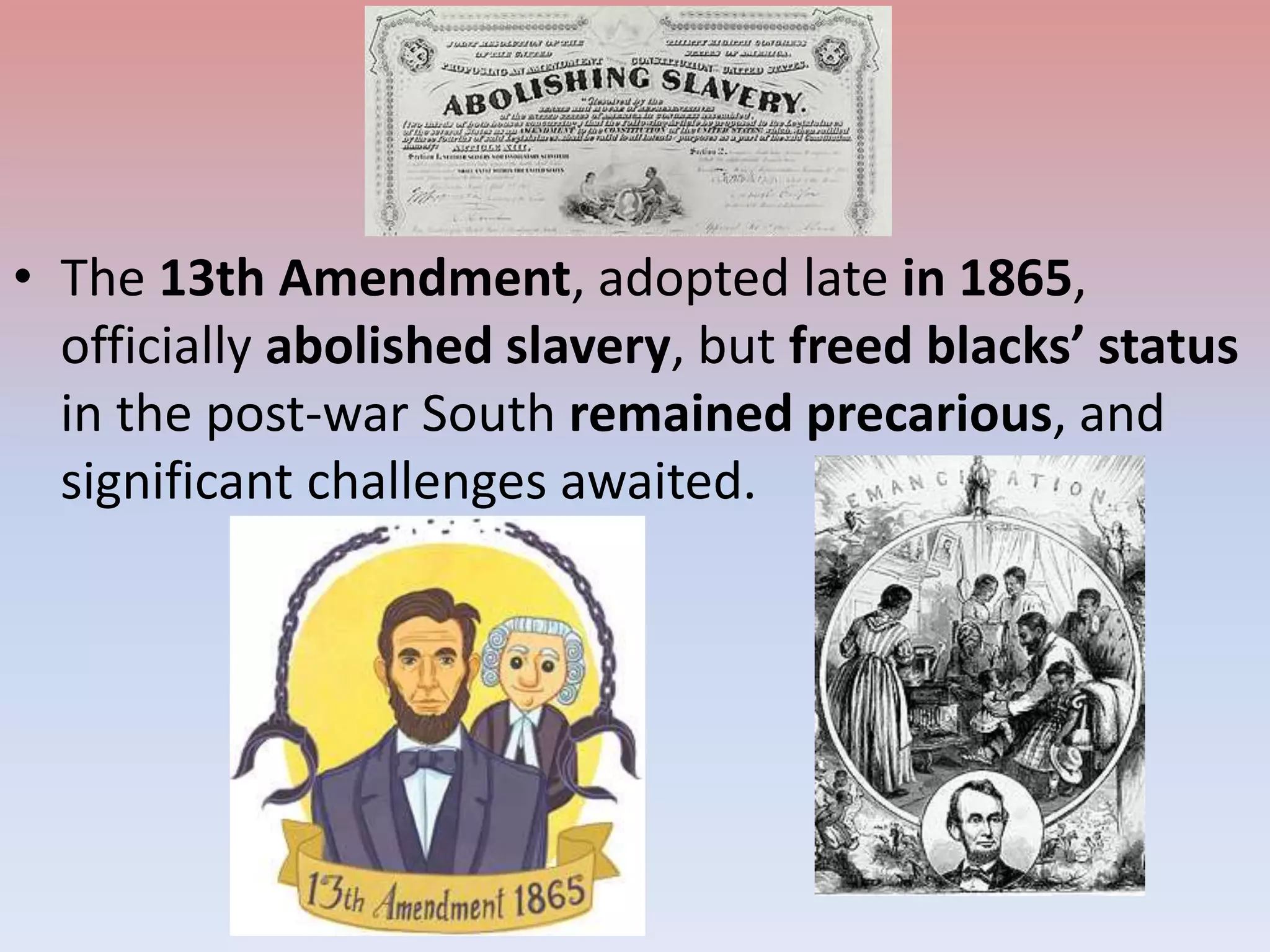
• The 13th Amendment, adopted late in 1865,
officially abolished slavery, but freed blacks’ status
in the post-war South remained precarious, and
significant challenges awaited.
THE BLUES STORY
• It began in Africa with one tribe kidnapping people
from neighbouring villages, who were then forced
on to ships and taken off to America. They were
eventually sold into slavery for a few hundred
dollars each and made to work on the plantations
in the south.
• With them came their customs, language, dress
and their songs which would be sung in the cotton
fields to help the days go by. From these people
came the children who grew up to become the
great Blues singers and musicians.
• Most, like Charlie Patton, Willie Dixon, Magic Sam,
Bo Diddley, Sonny Boy Williamson II, Howlin' Wolf,
Muddy Waters, John Lee Hooker & B.B. King came
from Mississippi, while others came from the
surrounding areas, Jimmy Witherspoon from
Arkansas, Blind Willie McTell from Georgia,
Leadbelly & Little Walter from Louisiana, but still
all from the south.
African-american slavery

African-american slavery

  • 1.
  • 2.
    The Universal Declarationof Human Rights • The Universal Declaration of Human Rights (1948) is supposed to be a common standard of achievement for all peoples and all nations. • There are 30 Human Rights. In this lesson, we are going to talk about Article 4: Freedom from Slavery
  • 4.
    Being a slave •Most of the people who became slaves in North America were from West Africa. • You would be living in a village when outsiders attacked and captured you, and then they would sell you to somebody else, who sold you to somebody else, and in the end somebody would sell you to a white man who would keep you in a slave fort on the coast of Africa. • Half of the people captured with you died of hunger or sickness, while you were walking to the coast.
  • 7.
    • Soon menwith guns would force you to get on a ship, and they would take you to North America. • The ship was terrible - dirty, and stinky, and you were crowded like on a crowded bus, and you had to stay there for two or three months.
  • 8.
    • From 1526to 1867, some 12.5 million slaves were shipped from Africa to the Americas with only about 10.7 million surviving the journey.
  • 9.
    • You worechains that fastened you to people on either side of you the whole time. • You had to lie down because there wasn't even room to sit up, the ceiling was so low. • Almost one out of ten of the people around you got sick and died. • Sometimes people gave up and tried to starve themselves to death, but the sailors beat them or tortured them until they ate something.
  • 10.
    • When yougot to North America, you got a few weeks to get healthier, and you got a European-style dress or pants to wear, and then the slave trader sold you to whoever would pay the most for you.
  • 11.
    • The averagecost of a slave in America in 1850 was about $400 (about $12,000 in today’s money)
  • 12.
  • 13.
    • Most peoplewent to southern states like Mississippi to pick cotton, though a few people went further north, to the Carolinas, to plant and pick tobacco.
  • 15.
    • Slave ownersmade their slaves completely dependent on them, and a system of restrictive codes governed life among slaves. • They were prohibited from learning to read and write, and their behavior and movement was restricted. • Many masters took sexual liberties with slave women, and rewarded obedient slave behavior with favors, while rebellious slaves were brutally punished.
  • 17.
    • Slave marriageshad no legal basis, but slaves did marry and raise large families
  • 18.
    • From the1830s to the 1860s, a movement to abolish slavery in America gained strength in the northern United States, led by free blacks and white abolitionists such as Harriet Beecher Stowe, who published the bestselling antislavery novel “Uncle Tom’s Cabin” (1852).
  • 19.
    • Abraham Lincolnissued a preliminary emancipation proclamation, and on January 1, 1863, he made it official that “slaves within any State, or designated part of a State…in rebellion,…shall be then, thenceforward, and forever free.”
  • 20.
    • The 13thAmendment, adopted late in 1865, officially abolished slavery, but freed blacks’ status in the post-war South remained precarious, and significant challenges awaited.
  • 21.
    THE BLUES STORY •It began in Africa with one tribe kidnapping people from neighbouring villages, who were then forced on to ships and taken off to America. They were eventually sold into slavery for a few hundred dollars each and made to work on the plantations in the south.
  • 22.
    • With themcame their customs, language, dress and their songs which would be sung in the cotton fields to help the days go by. From these people came the children who grew up to become the great Blues singers and musicians.
  • 23.
    • Most, likeCharlie Patton, Willie Dixon, Magic Sam, Bo Diddley, Sonny Boy Williamson II, Howlin' Wolf, Muddy Waters, John Lee Hooker & B.B. King came from Mississippi, while others came from the surrounding areas, Jimmy Witherspoon from Arkansas, Blind Willie McTell from Georgia, Leadbelly & Little Walter from Louisiana, but still all from the south.