Submitted by
Aditya Rawat
B M L S (1st semester)
(2022-2023)
Submitted to
Miss. Priya Singh
Lecturer
BORA INSTITUTE OF NURSING & PARAMEDICAL SCIENCES
Operating System
Topic :
Subject- Computer
Basic Concepts on Operating system
An operating system is an impotant component of a
computer system which controls all other
components of the computer system.
Major components of a computer system are:
1. The Hardware
2. The operating system
3. The application program
4. The Humanware (Users)
Role of Operating System
The Operating system provides certain services to program and
to the users of the programs.
i. Program Execution
ii. Handling InputOutput Operations
iii. Manipulation of file system
iv. Error detection and handling
v. Resource allocation
vi. Accounting
vii. Information and Resource Protection
Function of Operating System
Function of operating system broadly fall into
three categories;
1. Essential Functions
2. Monitoring Functions
3. Service Functions
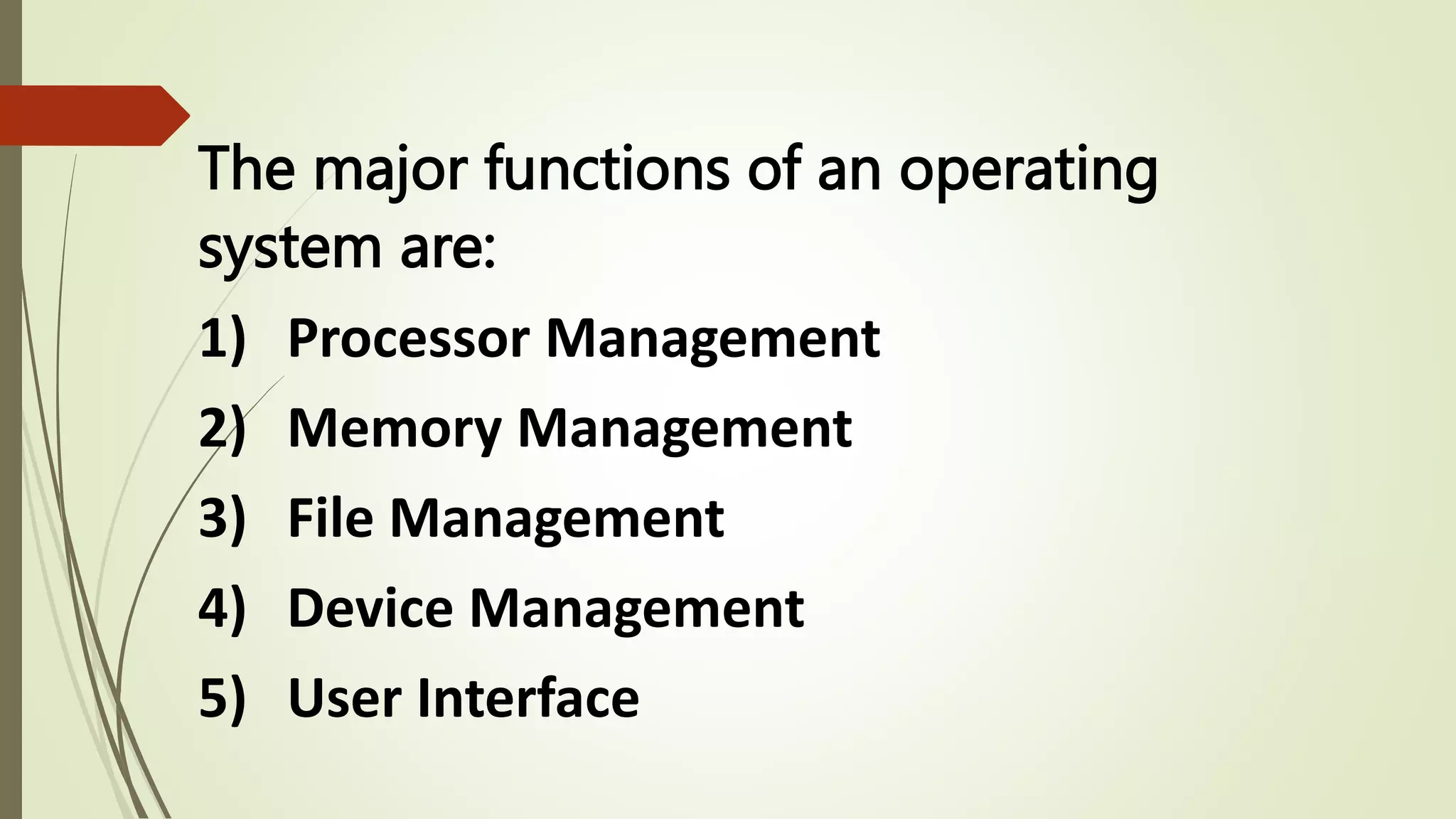
The major functions of an operating
system are:
1) Processor Management
2) Memory Management
3) File Management
4) Device Management
5) User Interface
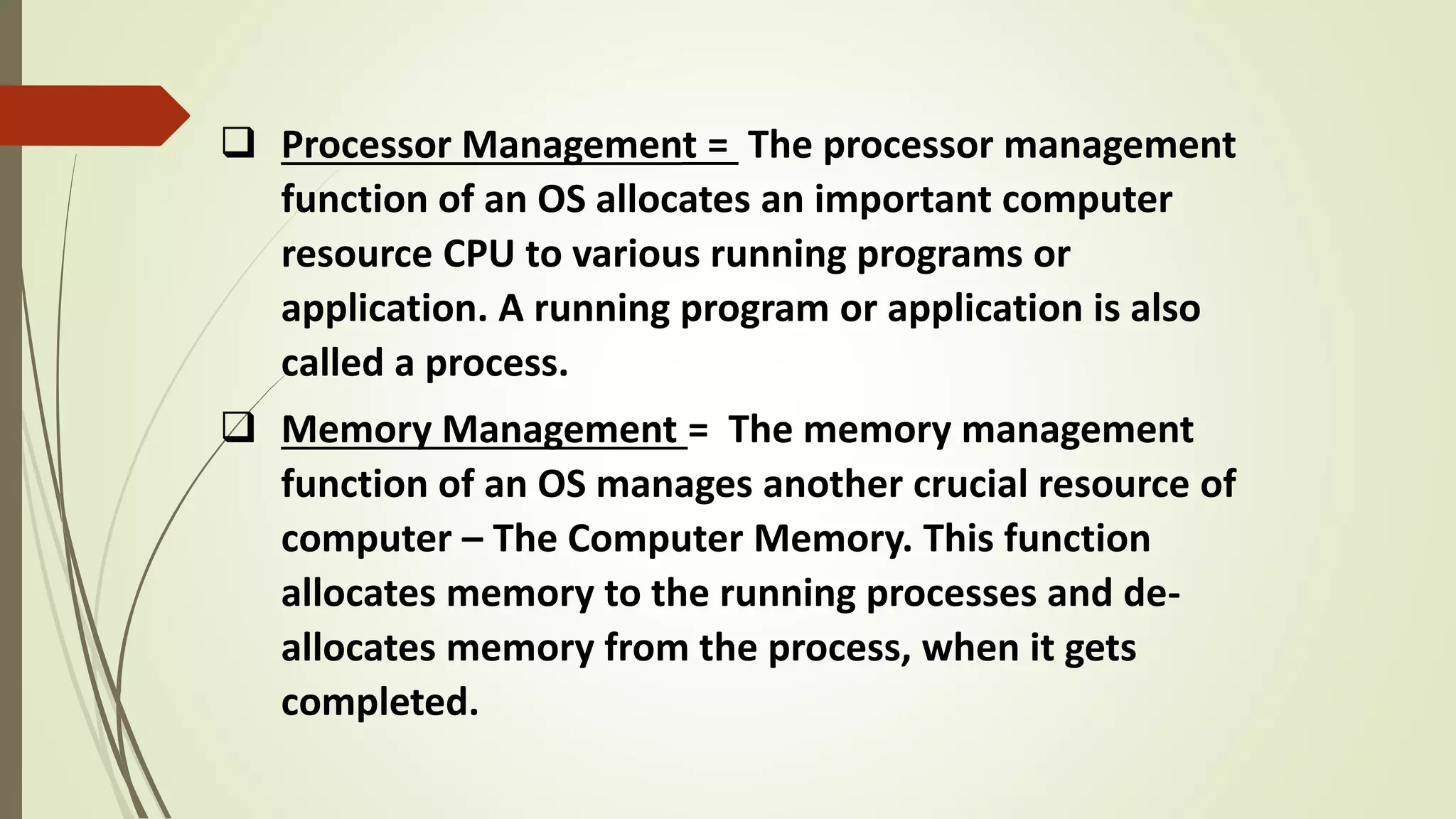
 Processor Management = The processor management
function of an OS allocates an important computer
resource CPU to various running programs or
application. A running program or application is also
called a process.
 Memory Management = The memory management
function of an OS manages another crucial resource of
computer – The Computer Memory. This function
allocates memory to the running processes and de-
allocates memory from the process, when it gets
completed.
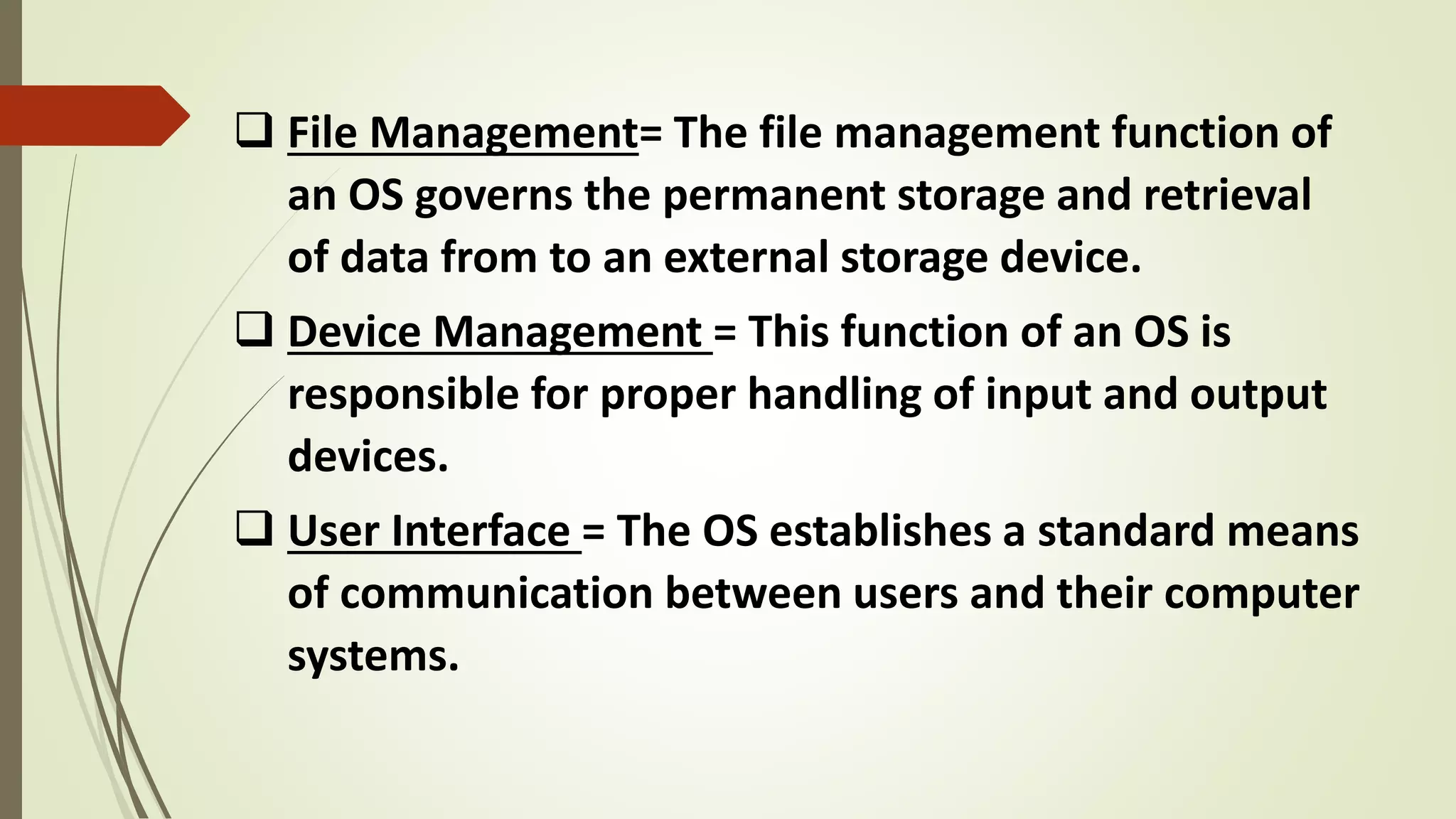
 File Management= The file management function of
an OS governs the permanent storage and retrieval
of data from to an external storage device.
 Device Management = This function of an OS is
responsible for proper handling of input and output
devices.
 User Interface = The OS establishes a standard means
of communication between users and their computer
systems.
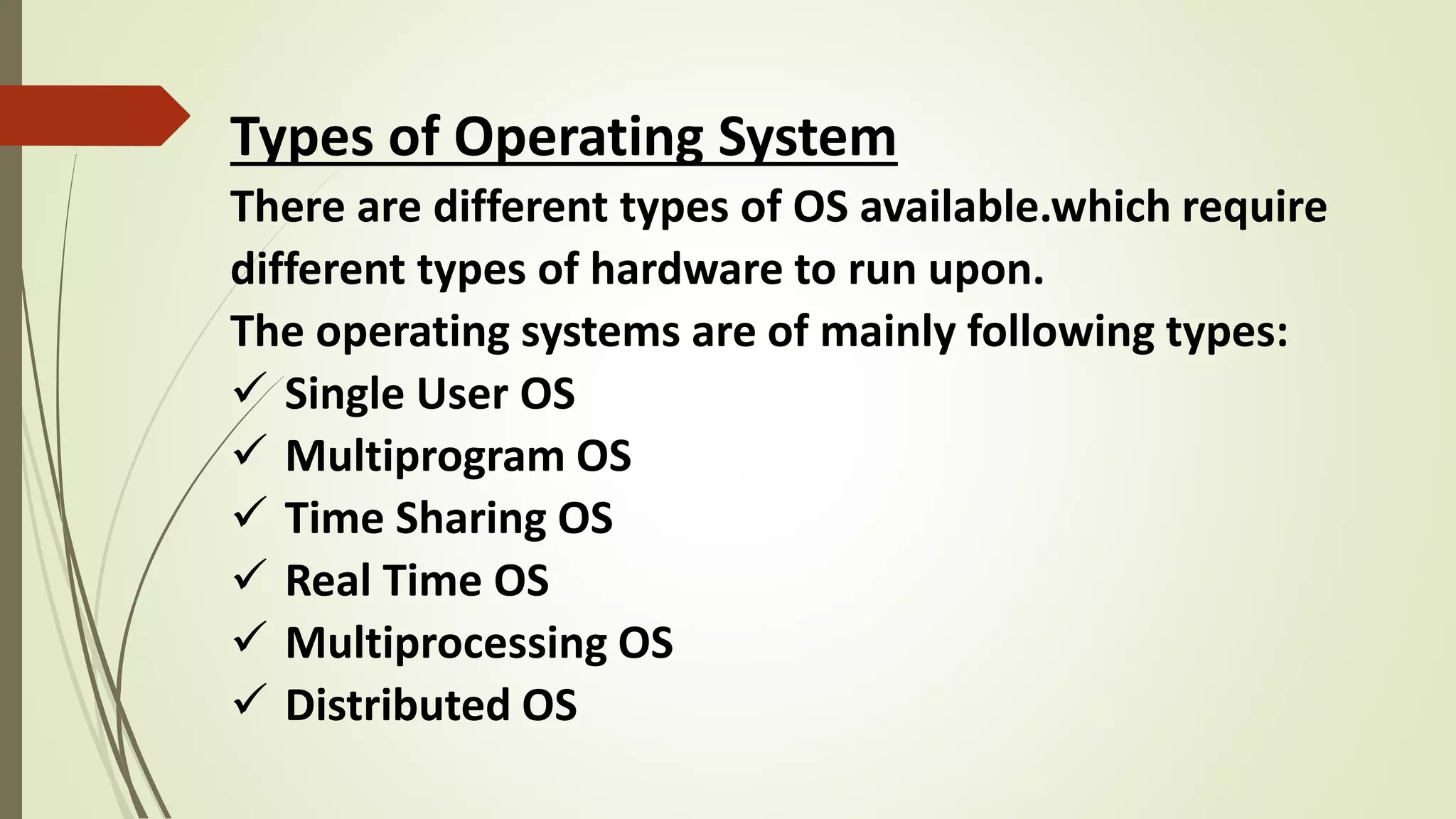
Types of Operating System
There are different types of OS available.which require
different types of hardware to run upon.
The operating systems are of mainly following types:
 Single User OS
 Multiprogram OS
 Time Sharing OS
 Real Time OS
 Multiprocessing OS
 Distributed OS
 Single user OS = This OS is single user
operating System, so only one user can be
supported by it at any point of time.
 There can be two subcategories of this OS
type:
 Single Task OS
 Single User, Multitasking OS
Example = Windows Vista,Windows 78, Linux
 Multiprogram OS = It supports
Multiprogramming i.e, more than one
user can be supported by it,
therefore, more than one user
programs are loaded and in the main
store at the same time.
Examples = Unix, Linux, IBM AS400
etc.
Time Sharing OS = Each active user
program is given a fair share of time if the
time elapses or an IO operation is
requested.CPU shifts over to the waiting and
the previous program is put to wait or
handed over the manager.
Examples = BSD Unix, NOS/VE, GEnie etc.
 Real Time OS = In real time OS, the jobs have fixed
deadlines and the jobs have to be completed within
deadlines
 Examples = LynxOS, OSE, RT Linux etc.
 Multiprocessing OS = The multiprocessing OS is
capable of handling more than one processors as the
jobs have executed on more than one processor.
 Examples = Unix, Linux, Windows NT etc.
Distributed OS = A distributed OS shares and
resources among its multiple serves to get
maximum efficiency.
Examples= Unix, Linux,DCE, X/Open.
Commonly Used Operating System
 Linux
 Windows
 BOSS( Bharat Operating System Solution)
 Mobile Operating System
 Solaris Operating System
Thank you !

Operating system

  • 1.
    Submitted by Aditya Rawat BM L S (1st semester) (2022-2023) Submitted to Miss. Priya Singh Lecturer BORA INSTITUTE OF NURSING & PARAMEDICAL SCIENCES Operating System Topic : Subject- Computer
  • 2.
    Basic Concepts onOperating system An operating system is an impotant component of a computer system which controls all other components of the computer system. Major components of a computer system are: 1. The Hardware 2. The operating system 3. The application program 4. The Humanware (Users)
  • 3.
    Role of OperatingSystem The Operating system provides certain services to program and to the users of the programs. i. Program Execution ii. Handling InputOutput Operations iii. Manipulation of file system iv. Error detection and handling v. Resource allocation vi. Accounting vii. Information and Resource Protection
  • 4.
    Function of OperatingSystem Function of operating system broadly fall into three categories; 1. Essential Functions 2. Monitoring Functions 3. Service Functions
  • 5.
    The major functionsof an operating system are: 1) Processor Management 2) Memory Management 3) File Management 4) Device Management 5) User Interface
  • 6.
     Processor Management= The processor management function of an OS allocates an important computer resource CPU to various running programs or application. A running program or application is also called a process.  Memory Management = The memory management function of an OS manages another crucial resource of computer – The Computer Memory. This function allocates memory to the running processes and de- allocates memory from the process, when it gets completed.
  • 7.
     File Management=The file management function of an OS governs the permanent storage and retrieval of data from to an external storage device.  Device Management = This function of an OS is responsible for proper handling of input and output devices.  User Interface = The OS establishes a standard means of communication between users and their computer systems.
  • 8.
    Types of OperatingSystem There are different types of OS available.which require different types of hardware to run upon. The operating systems are of mainly following types:  Single User OS  Multiprogram OS  Time Sharing OS  Real Time OS  Multiprocessing OS  Distributed OS
  • 9.
     Single userOS = This OS is single user operating System, so only one user can be supported by it at any point of time.  There can be two subcategories of this OS type:  Single Task OS  Single User, Multitasking OS Example = Windows Vista,Windows 78, Linux
  • 10.
     Multiprogram OS= It supports Multiprogramming i.e, more than one user can be supported by it, therefore, more than one user programs are loaded and in the main store at the same time. Examples = Unix, Linux, IBM AS400 etc.
  • 11.
    Time Sharing OS= Each active user program is given a fair share of time if the time elapses or an IO operation is requested.CPU shifts over to the waiting and the previous program is put to wait or handed over the manager. Examples = BSD Unix, NOS/VE, GEnie etc.
  • 12.
     Real TimeOS = In real time OS, the jobs have fixed deadlines and the jobs have to be completed within deadlines  Examples = LynxOS, OSE, RT Linux etc.  Multiprocessing OS = The multiprocessing OS is capable of handling more than one processors as the jobs have executed on more than one processor.  Examples = Unix, Linux, Windows NT etc.
  • 13.
    Distributed OS =A distributed OS shares and resources among its multiple serves to get maximum efficiency. Examples= Unix, Linux,DCE, X/Open.
  • 14.
    Commonly Used OperatingSystem  Linux  Windows  BOSS( Bharat Operating System Solution)  Mobile Operating System  Solaris Operating System
  • 15.