Action to Empathy:
Creating Social Entrepreneurs
Lynn Mittler
MICDS, St. Louis, MO
https://lynnmittler.wikispaces.com
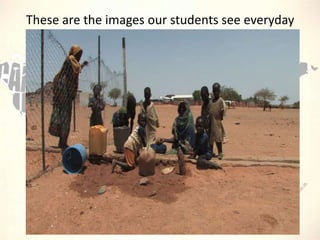
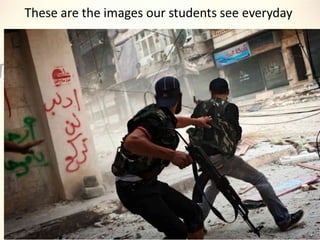
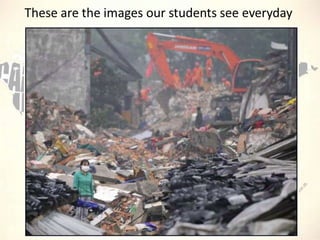
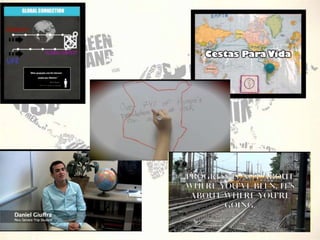
These are the images our students see everyday
Reality
• Our students were in grade school (or
younger) when 9/11 occurred.
• They have lived over half of their lives with
their country embroiled in conflict on at least
two fronts.
• They have not known a world without a
terrorism threat.
• They have always had to take their shoes off at
the airport.
Reality
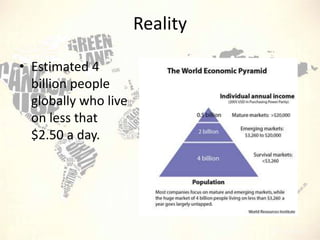
• Estimated 4
billion people
globally who live
on less that
$2.50 a day.
Reality
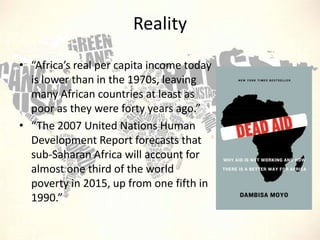
• “Africa’s real per capita income today
is lower than in the 1970s, leaving
many African countries at least as
poor as they were forty years ago.”
• “The 2007 United Nations Human
Development Report forecasts that
sub-Saharan Africa will account for
almost one third of the world
poverty in 2015, up from one fifth in
1990.”
Reality
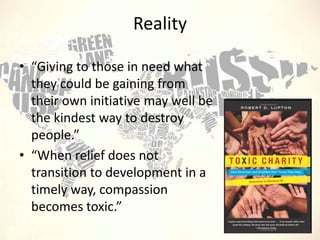
• “Giving to those in need what
they could be gaining from
their own initiative may well be
the kindest way to destroy
people.”
• “When relief does not
transition to development in a
timely way, compassion
becomes toxic.”
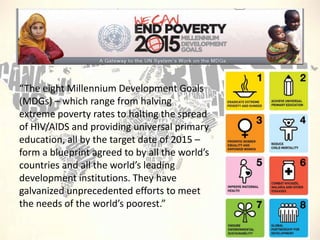
“The eight Millennium Development Goals
(MDGs) – which range from halving
extreme poverty rates to halting the spread
of HIV/AIDS and providing universal primary
education, all by the target date of 2015 –
form a blueprint agreed to by all the world’s
countries and all the world’s leading
development institutions. They have
galvanized unprecedented efforts to meet
the needs of the world’s poorest.”
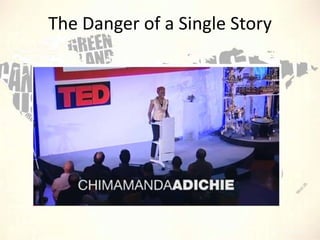
The Danger of a Single Story
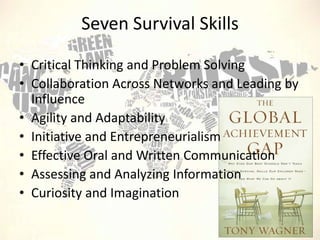
Seven Survival Skills
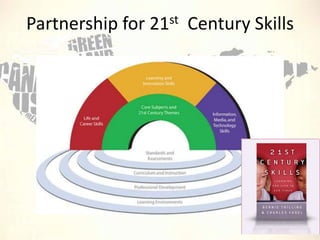
• Critical Thinking and Problem Solving
• Collaboration Across Networks and Leading by
Influence
• Agility and Adaptability
• Initiative and Entrepreneurialism
• Effective Oral and Written Communication
• Assessing and Analyzing Information
• Curiosity and Imagination
Partnership for 21st Century Skills
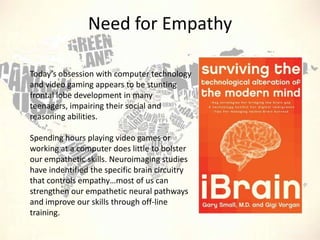
Need for Empathy
Today’s obsession with computer technology
and video gaming appears to be stunting
frontal lobe development in many
teenagers, impairing their social and
reasoning abilities.

Spending hours playing video games or
working at a computer does little to bolster
our empathetic skills. Neuroimaging studies
have indentified the specific brain circuitry
that controls empathy…most of us can
strengthen our empathetic neural pathways
and improve our skills through off-line
training.
Our Mission Statement
More than ever our nation needs responsible men and women who can meet
the challenges of this world with confidence and embrace all its people with
compassion. The next generation must include those who think critically and
resolve to stand for what is good and right.
Our School cherishes academic rigor, encourages and praises meaningful
individual achievement, and fosters virtue. Our independent education
prepares young people for higher learning and for lives of purpose and
service.
What is possible
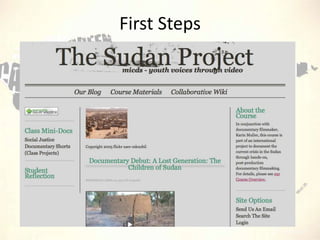
First Steps
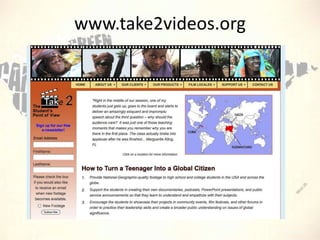
www.take2videos.org
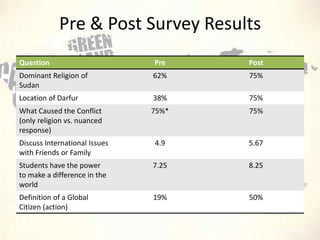
Pre & Post Survey Results
Question

Pre

Post

Dominant Religion of
Sudan

62%

75%

Location of Darfur

38%

75%

What Caused the Conflict
(only religion vs. nuanced
response)

75%*

75%

Discuss International Issues
with Friends or Family

4.9

5.67

Students have the power
to make a difference in the
world

7.25

8.25

Definition of a Global
Citizen (action)

19%

50%
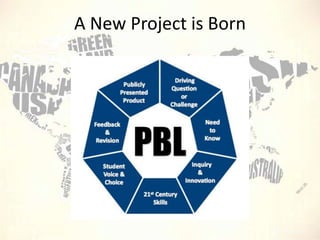
A New Project is Born
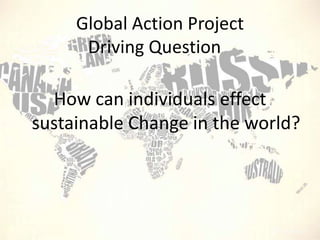
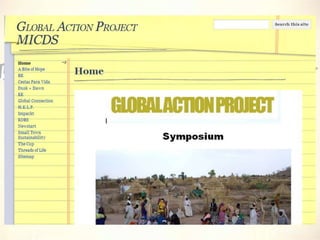
Global Action Project
Driving Question

How can individuals effect
sustainable Change in the world?
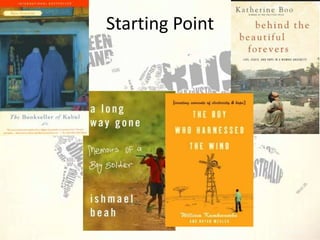
Starting Point
Blogging (Vlogging) along the way
•
•
•
•
•

Self-reflection
Text analysis
Examining interests
Writing personal mission statements
Searching for passion
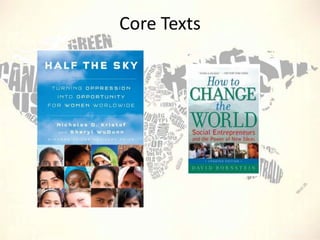
Core Texts
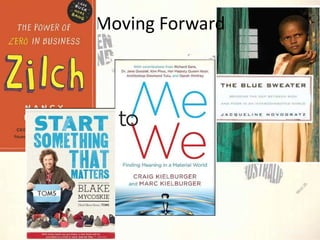
Moving Forward
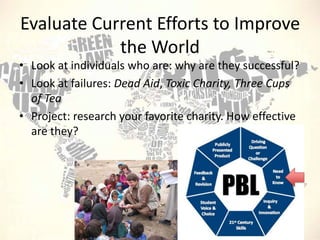
Evaluate Current Efforts to Improve
the World
• Look at individuals who are: why are they successful?
• Look at failures: Dead Aid, Toxic Charity, Three Cups
of Tea
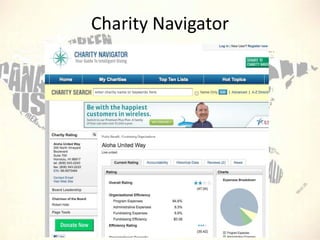
• Project: research your favorite charity. How effective
are they?
Charity Navigator
Next Steps
• What are the biggest problems facing the
world? Who gets attention and why?
• What steps need to be taken to solve these
problems?
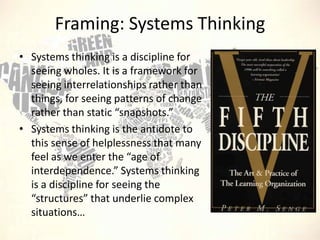
Framing: Systems Thinking
• Systems thinking is a discipline for
seeing wholes. It is a framework for
seeing interrelationships rather than
things, for seeing patterns of change
rather than static “snapshots.”
• Systems thinking is the antidote to
this sense of helplessness that many
feel as we enter the “age of
interdependence.” Systems thinking
is a discipline for seeing the
“structures” that underlie complex
situations…
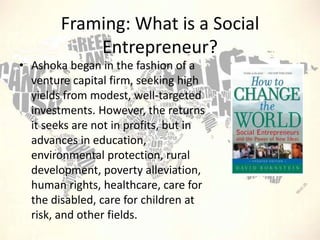
Framing: What is a Social
Entrepreneur?
• Ashoka began in the fashion of a
venture capital firm, seeking high
yields from modest, well-targeted
investments. However, the returns
it seeks are not in profits, but in
advances in education,
environmental protection, rural
development, poverty alleviation,
human rights, healthcare, care for
the disabled, care for children at
risk, and other fields.
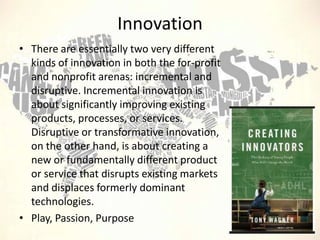
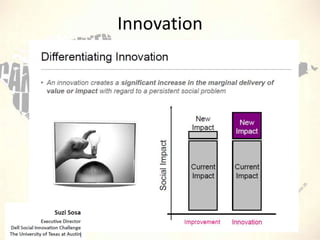
Innovation
• There are essentially two very different
kinds of innovation in both the for-profit
and nonprofit arenas: incremental and
disruptive. Incremental innovation is
about significantly improving existing
products, processes, or services.
Disruptive or transformative innovation,
on the other hand, is about creating a
new or fundamentally different product
or service that disrupts existing markets
and displaces formerly dominant
technologies.
• Play, Passion, Purpose
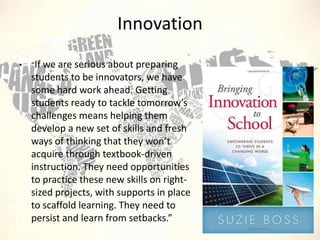
Innovation
•

“If we are

serious about preparing
students to be innovators, we have
some hard work ahead. Getting
students ready to tackle tomorrow’s
challenges means helping them
develop a new set of skills and fresh
ways of thinking that they won’t
acquire through textbook-driven
instruction. They need opportunities
to practice these new skills on rightsized projects, with supports in place
to scaffold learning. They need to
persist and learn from setbacks.”
Innovation
Design Thinking
Design Thinking
Design Thinking
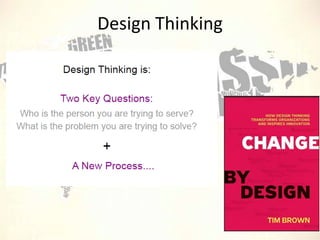
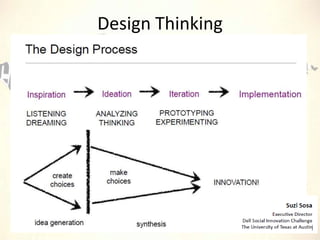
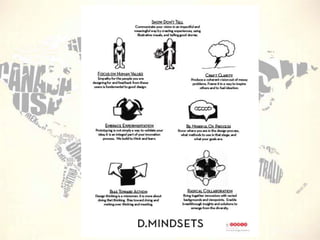
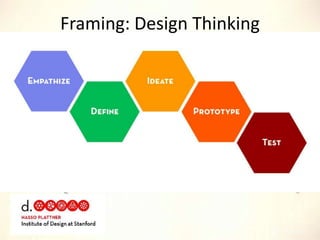
Framing: Design Thinking
Design Thinking

Build to think and launch to learn.
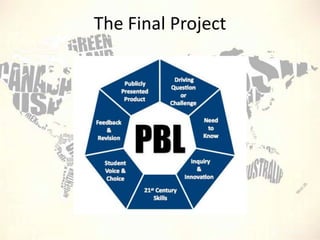
The Final Project
The Final Project
• Now take all of this information and design an
enterprise that will effect change?
• What problem will you address?
• How will it be sustainable?
• What problems do you anticipate?
• How will you sell others on your idea? Both
those who will support you to those who may
need you?
Steps along the way
• Design your own project: what will you read,
how will you research, how will you tell your
story?
• Clear calendar of deadlines
• Write a business plan
• Create a documentary
• TED Talk-like presentation explaining their
choice
• Practice presenting to a panel who will ask
you questions
Previous Preparation
• Summer Reading assessment
• Multiple presentation with self-reflection
• Question and Answer sessions with Dead Aid
and Toxic Charity
• Design Thinking: School-based issue, Half the
Sky
• Mission statement writing
• Multiple films, including a documentary
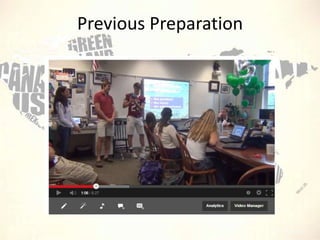
Previous Preparation
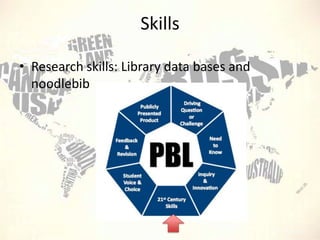
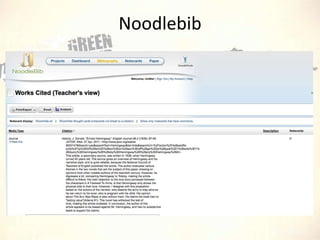
Skills
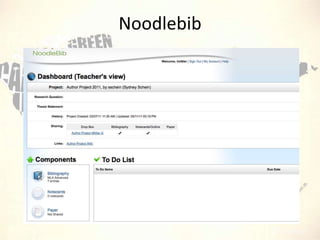
• Research skills: Library data bases and
noodlebib
Noodlebib
Noodlebib
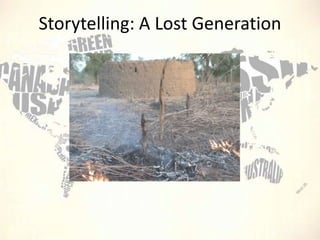
Storytelling: A Lost Generation
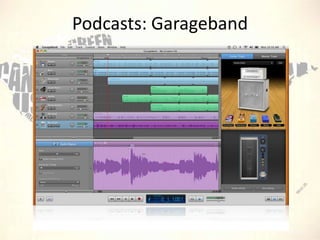
Podcasts: Garageband
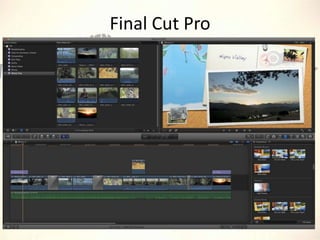
Final Cut Pro
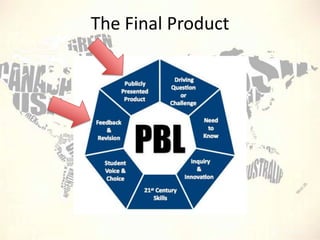
The Final Product
Final Product
• Documentary
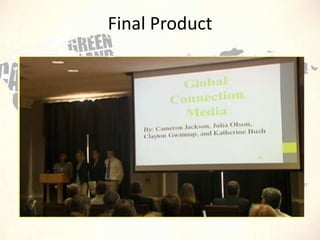
• Presentation, including a documentary, given
in front of “real” people
• Business plan submitted
• Research provided to support their position
Final Product
Accounting for the
Seven Survival Skills

• Critical Thinking and Problem Solving
• Collaboration Across Networks and Leading by
Influence
• Agility and Adaptability
• Initiative and Entrepreneurialism
• Effective Oral and Written Communication
• Assessing and Analyzing Information
• Curiosity and Imagination
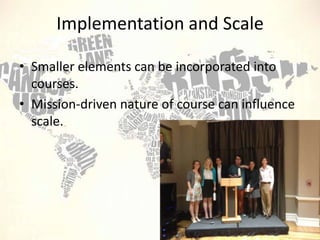
Implementation and Scale
• Smaller elements can be incorporated into
courses.
• Mission-driven nature of course can influence
scale.

Action to empathy

  • 1.
    Action to Empathy: CreatingSocial Entrepreneurs Lynn Mittler MICDS, St. Louis, MO https://lynnmittler.wikispaces.com
  • 2.
    These are theimages our students see everyday
  • 5.
    Reality • Our studentswere in grade school (or younger) when 9/11 occurred. • They have lived over half of their lives with their country embroiled in conflict on at least two fronts. • They have not known a world without a terrorism threat. • They have always had to take their shoes off at the airport.
  • 6.
    Reality • Estimated 4 billionpeople globally who live on less that $2.50 a day.
  • 7.
    Reality • “Africa’s realper capita income today is lower than in the 1970s, leaving many African countries at least as poor as they were forty years ago.” • “The 2007 United Nations Human Development Report forecasts that sub-Saharan Africa will account for almost one third of the world poverty in 2015, up from one fifth in 1990.”
  • 8.
    Reality • “Giving tothose in need what they could be gaining from their own initiative may well be the kindest way to destroy people.” • “When relief does not transition to development in a timely way, compassion becomes toxic.”
  • 9.
    “The eight MillenniumDevelopment Goals (MDGs) – which range from halving extreme poverty rates to halting the spread of HIV/AIDS and providing universal primary education, all by the target date of 2015 – form a blueprint agreed to by all the world’s countries and all the world’s leading development institutions. They have galvanized unprecedented efforts to meet the needs of the world’s poorest.”
  • 10.
    The Danger ofa Single Story
  • 11.
    Seven Survival Skills •Critical Thinking and Problem Solving • Collaboration Across Networks and Leading by Influence • Agility and Adaptability • Initiative and Entrepreneurialism • Effective Oral and Written Communication • Assessing and Analyzing Information • Curiosity and Imagination
  • 12.
    Partnership for 21stCentury Skills
  • 13.
    Need for Empathy Today’sobsession with computer technology and video gaming appears to be stunting frontal lobe development in many teenagers, impairing their social and reasoning abilities. Spending hours playing video games or working at a computer does little to bolster our empathetic skills. Neuroimaging studies have indentified the specific brain circuitry that controls empathy…most of us can strengthen our empathetic neural pathways and improve our skills through off-line training.
  • 14.
    Our Mission Statement Morethan ever our nation needs responsible men and women who can meet the challenges of this world with confidence and embrace all its people with compassion. The next generation must include those who think critically and resolve to stand for what is good and right. Our School cherishes academic rigor, encourages and praises meaningful individual achievement, and fosters virtue. Our independent education prepares young people for higher learning and for lives of purpose and service.
  • 15.
  • 16.
  • 17.
  • 18.
    Pre & PostSurvey Results Question Pre Post Dominant Religion of Sudan 62% 75% Location of Darfur 38% 75% What Caused the Conflict (only religion vs. nuanced response) 75%* 75% Discuss International Issues with Friends or Family 4.9 5.67 Students have the power to make a difference in the world 7.25 8.25 Definition of a Global Citizen (action) 19% 50%
  • 19.
  • 20.
    Global Action Project DrivingQuestion How can individuals effect sustainable Change in the world?
  • 21.
  • 22.
    Blogging (Vlogging) alongthe way • • • • • Self-reflection Text analysis Examining interests Writing personal mission statements Searching for passion
  • 23.
  • 24.
  • 25.
    Evaluate Current Effortsto Improve the World • Look at individuals who are: why are they successful? • Look at failures: Dead Aid, Toxic Charity, Three Cups of Tea • Project: research your favorite charity. How effective are they?
  • 26.
  • 27.
    Next Steps • Whatare the biggest problems facing the world? Who gets attention and why? • What steps need to be taken to solve these problems?
  • 28.
    Framing: Systems Thinking •Systems thinking is a discipline for seeing wholes. It is a framework for seeing interrelationships rather than things, for seeing patterns of change rather than static “snapshots.” • Systems thinking is the antidote to this sense of helplessness that many feel as we enter the “age of interdependence.” Systems thinking is a discipline for seeing the “structures” that underlie complex situations…
  • 29.
    Framing: What isa Social Entrepreneur? • Ashoka began in the fashion of a venture capital firm, seeking high yields from modest, well-targeted investments. However, the returns it seeks are not in profits, but in advances in education, environmental protection, rural development, poverty alleviation, human rights, healthcare, care for the disabled, care for children at risk, and other fields.
  • 30.
    Innovation • There areessentially two very different kinds of innovation in both the for-profit and nonprofit arenas: incremental and disruptive. Incremental innovation is about significantly improving existing products, processes, or services. Disruptive or transformative innovation, on the other hand, is about creating a new or fundamentally different product or service that disrupts existing markets and displaces formerly dominant technologies. • Play, Passion, Purpose
  • 31.
    Innovation • “If we are seriousabout preparing students to be innovators, we have some hard work ahead. Getting students ready to tackle tomorrow’s challenges means helping them develop a new set of skills and fresh ways of thinking that they won’t acquire through textbook-driven instruction. They need opportunities to practice these new skills on rightsized projects, with supports in place to scaffold learning. They need to persist and learn from setbacks.”
  • 32.
  • 33.
  • 34.
  • 35.
  • 36.
  • 38.
    Design Thinking Build tothink and launch to learn.
  • 39.
  • 40.
    The Final Project •Now take all of this information and design an enterprise that will effect change? • What problem will you address? • How will it be sustainable? • What problems do you anticipate? • How will you sell others on your idea? Both those who will support you to those who may need you?
  • 41.
    Steps along theway • Design your own project: what will you read, how will you research, how will you tell your story? • Clear calendar of deadlines • Write a business plan • Create a documentary • TED Talk-like presentation explaining their choice • Practice presenting to a panel who will ask you questions
  • 42.
    Previous Preparation • SummerReading assessment • Multiple presentation with self-reflection • Question and Answer sessions with Dead Aid and Toxic Charity • Design Thinking: School-based issue, Half the Sky • Mission statement writing • Multiple films, including a documentary
  • 43.
  • 44.
    Skills • Research skills:Library data bases and noodlebib
  • 45.
  • 46.
  • 47.
  • 48.
  • 49.
  • 50.
  • 51.
    Final Product • Documentary •Presentation, including a documentary, given in front of “real” people • Business plan submitted • Research provided to support their position
  • 53.
  • 55.
    Accounting for the SevenSurvival Skills • Critical Thinking and Problem Solving • Collaboration Across Networks and Leading by Influence • Agility and Adaptability • Initiative and Entrepreneurialism • Effective Oral and Written Communication • Assessing and Analyzing Information • Curiosity and Imagination
  • 56.
    Implementation and Scale •Smaller elements can be incorporated into courses. • Mission-driven nature of course can influence scale.