Abhas mahawar
EN 0936121001
 rrimt,lucknow
Overview
•   Introduction and History
•   Working Principle
•   Piezoelectric Effect
•   Practical Implementation
•   Applications
•   Advantages & Disadvantages
•   Hydrophone vs. Sonar
•   Conclusion
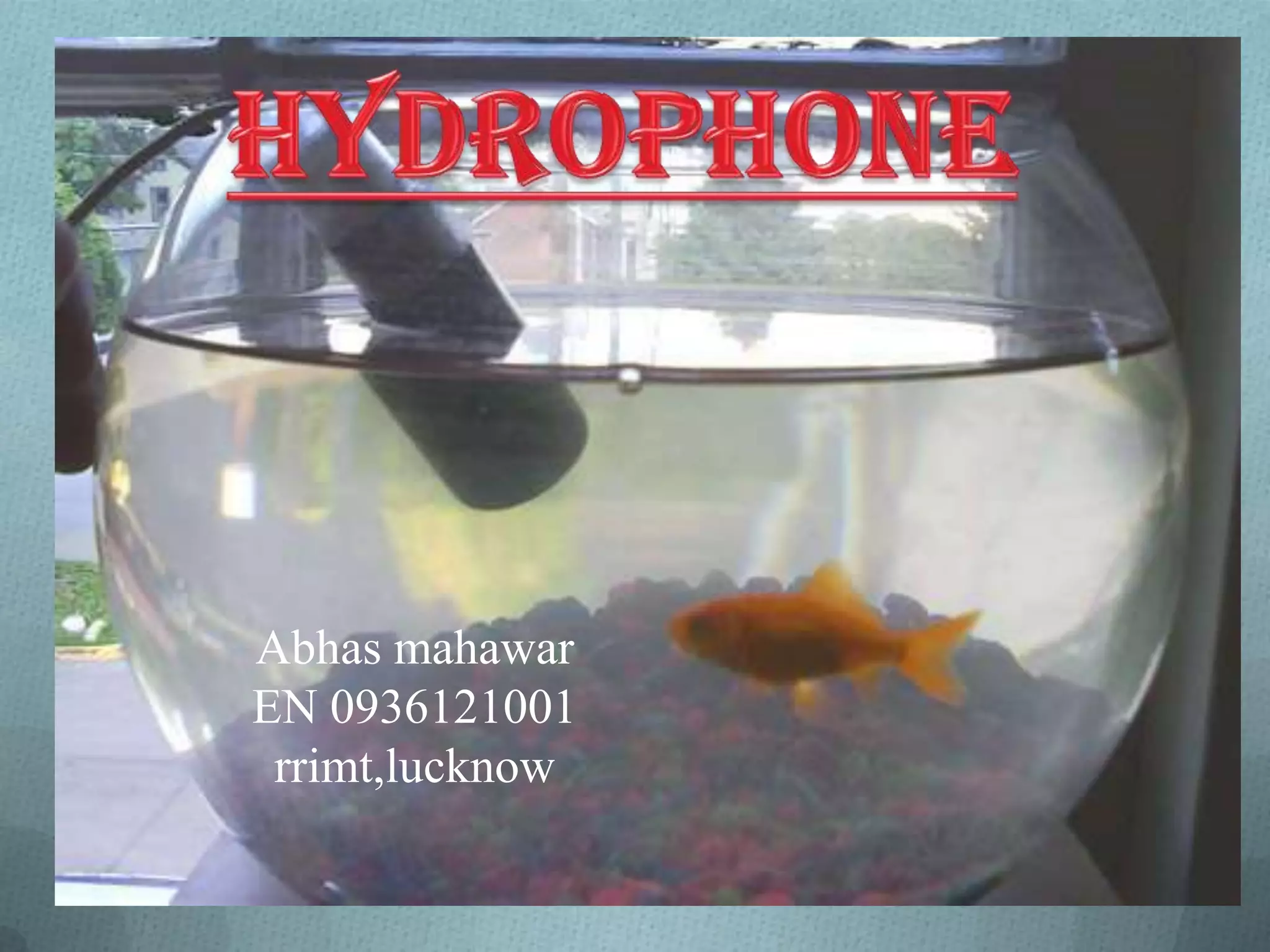
Hydrophone?

Hydrophone (Greek
"hydro" = "water" and "phone"
= "sound") is a microphone
designed to be used
underwater for recording or
listening to underwater sound.
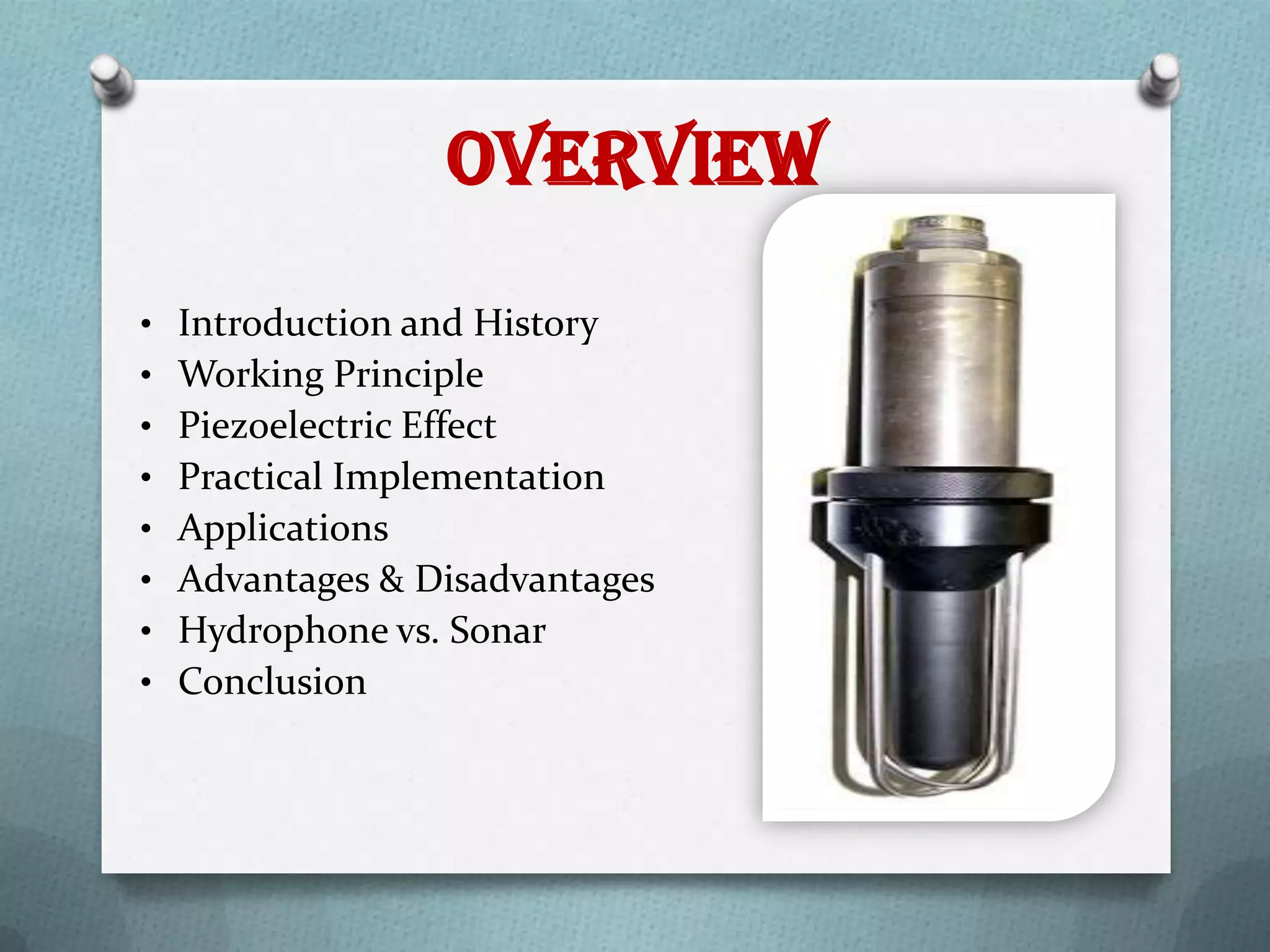
 A "Hydrophone" is a device which will listen to, or
  pick up, the acoustic energy underwater, converts
  acoustic energy into electrical energy.

 Most Hydrophones are based on a
  piezoelectric transducer that generates
  electricity when subjected to a pressure
  changes underwater.

 Hydrophones are usually used below
  their resonance frequency.
History
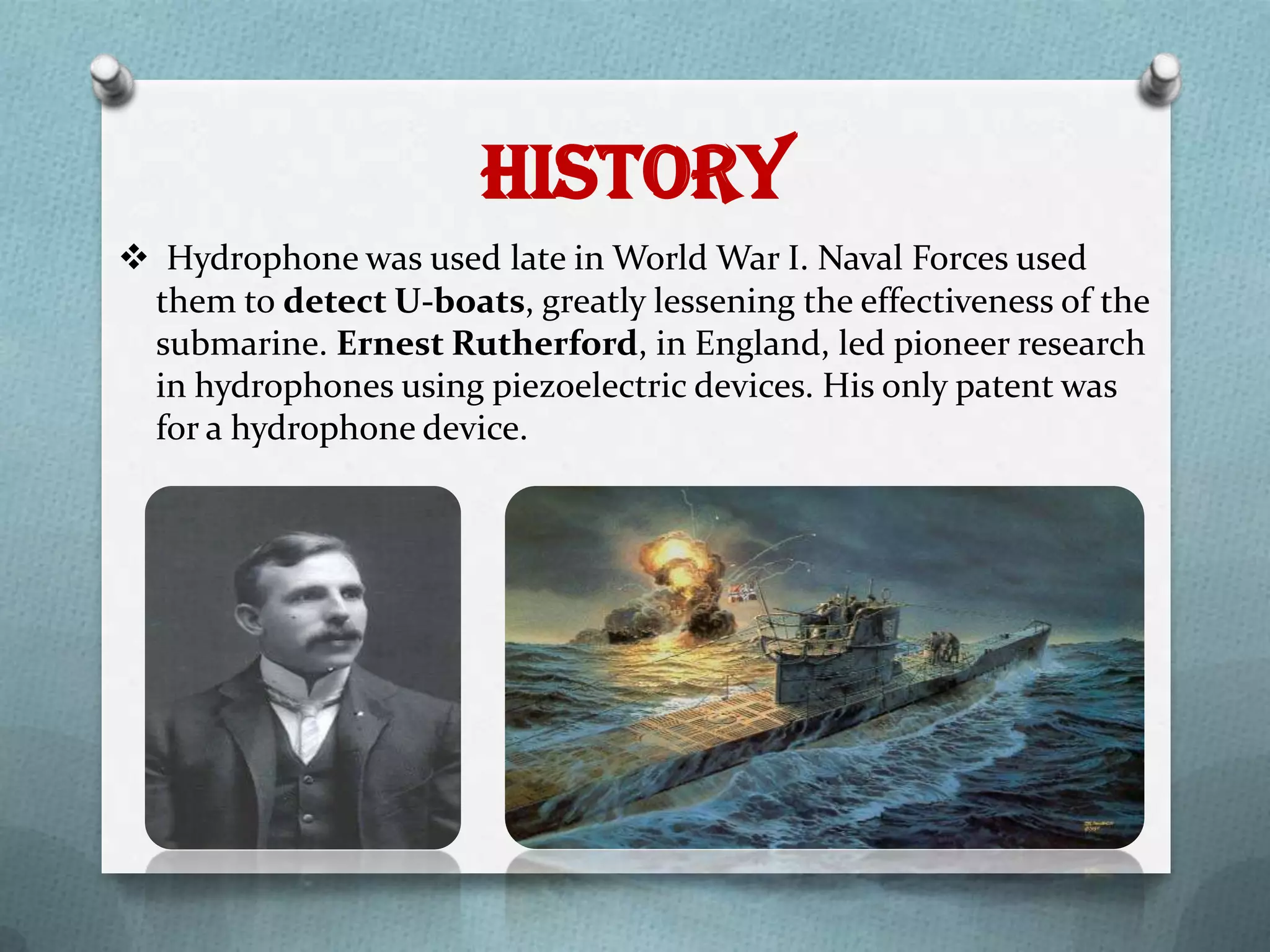
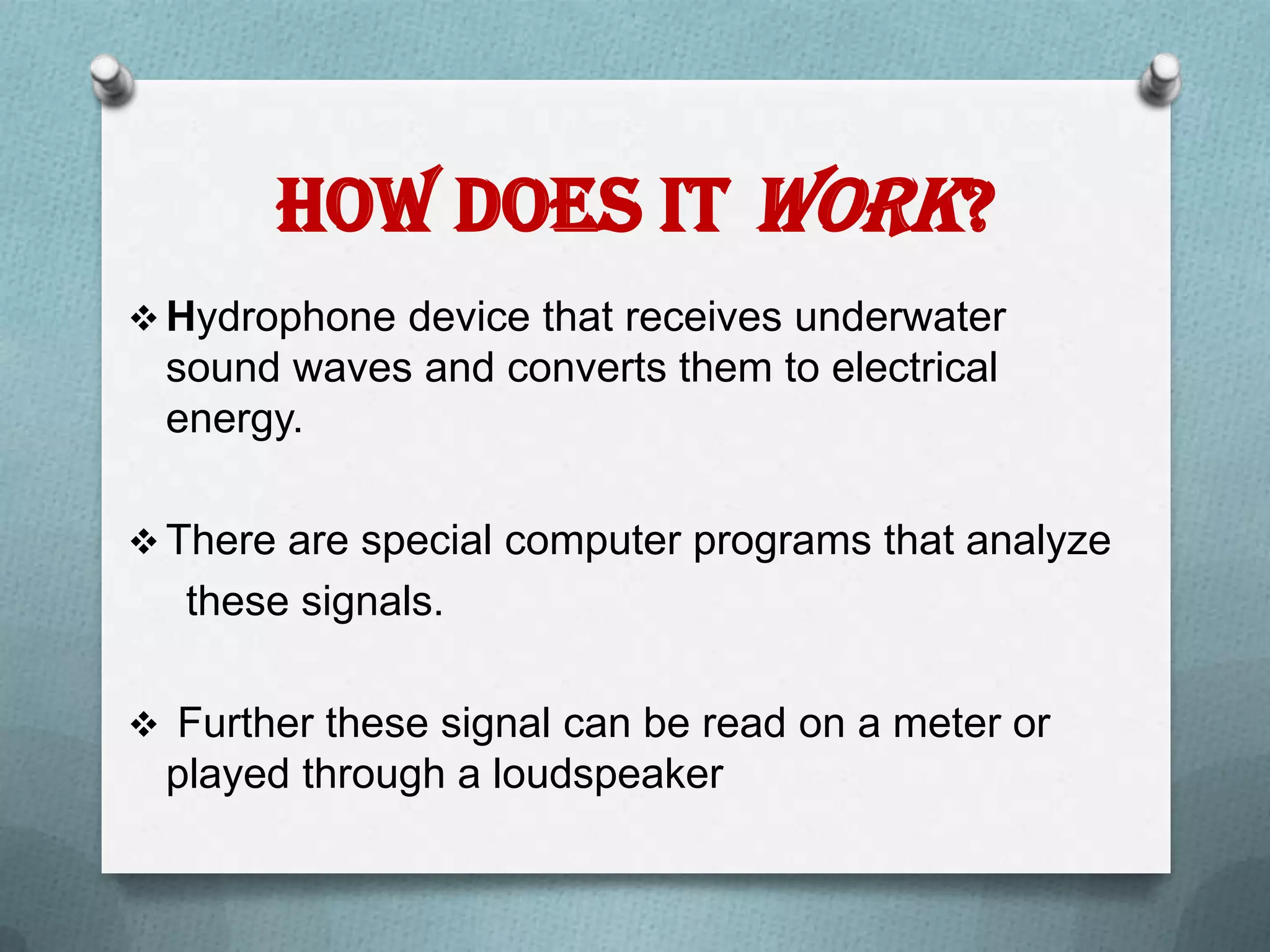
 Hydrophone was used late in World War I. Naval Forces used
 them to detect U-boats, greatly lessening the effectiveness of the
 submarine. Ernest Rutherford, in England, led pioneer research
 in hydrophones using piezoelectric devices. His only patent was
 for a hydrophone device.
How does it Work?
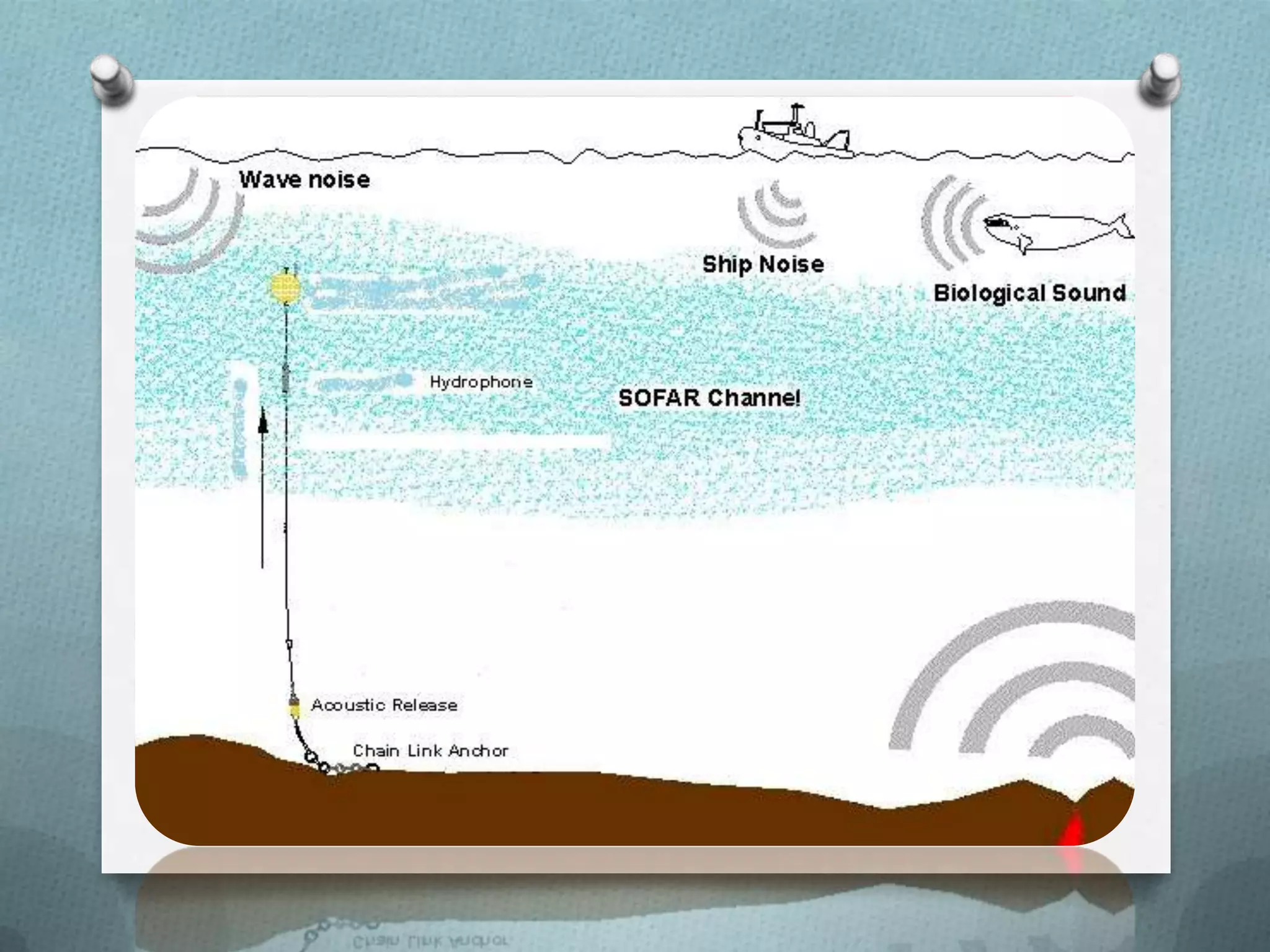
 Hydrophone device that receives underwater
 sound waves and converts them to electrical
 energy.

 There are special computer programs that analyze
   these signals.

 Further these signal can be read on a meter or
 played through a loudspeaker
Principle
 The basic working principle is the piezoelectric
  effect.

 Hydrophones are being embedded with these
  piezoelectric transducers.

 These transducer converts changes in water
  pressure into an electrical form.
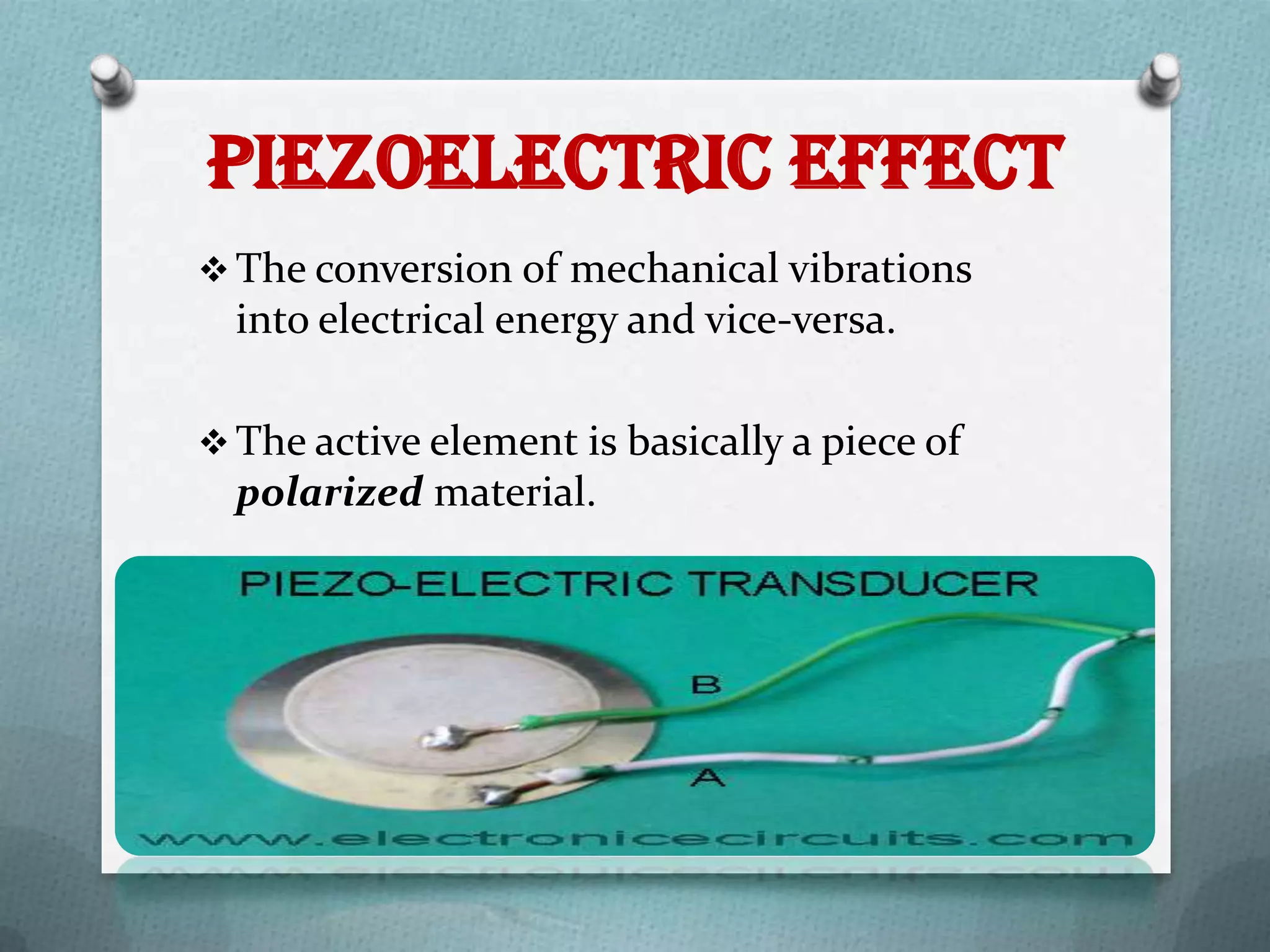
Piezoelectric Effect
 The conversion of mechanical vibrations
  into electrical energy and vice-versa.

 The active element is basically a piece of
  polarized material.
Affecting Factor
 The factors affecting the working is acoustic
  impedance.

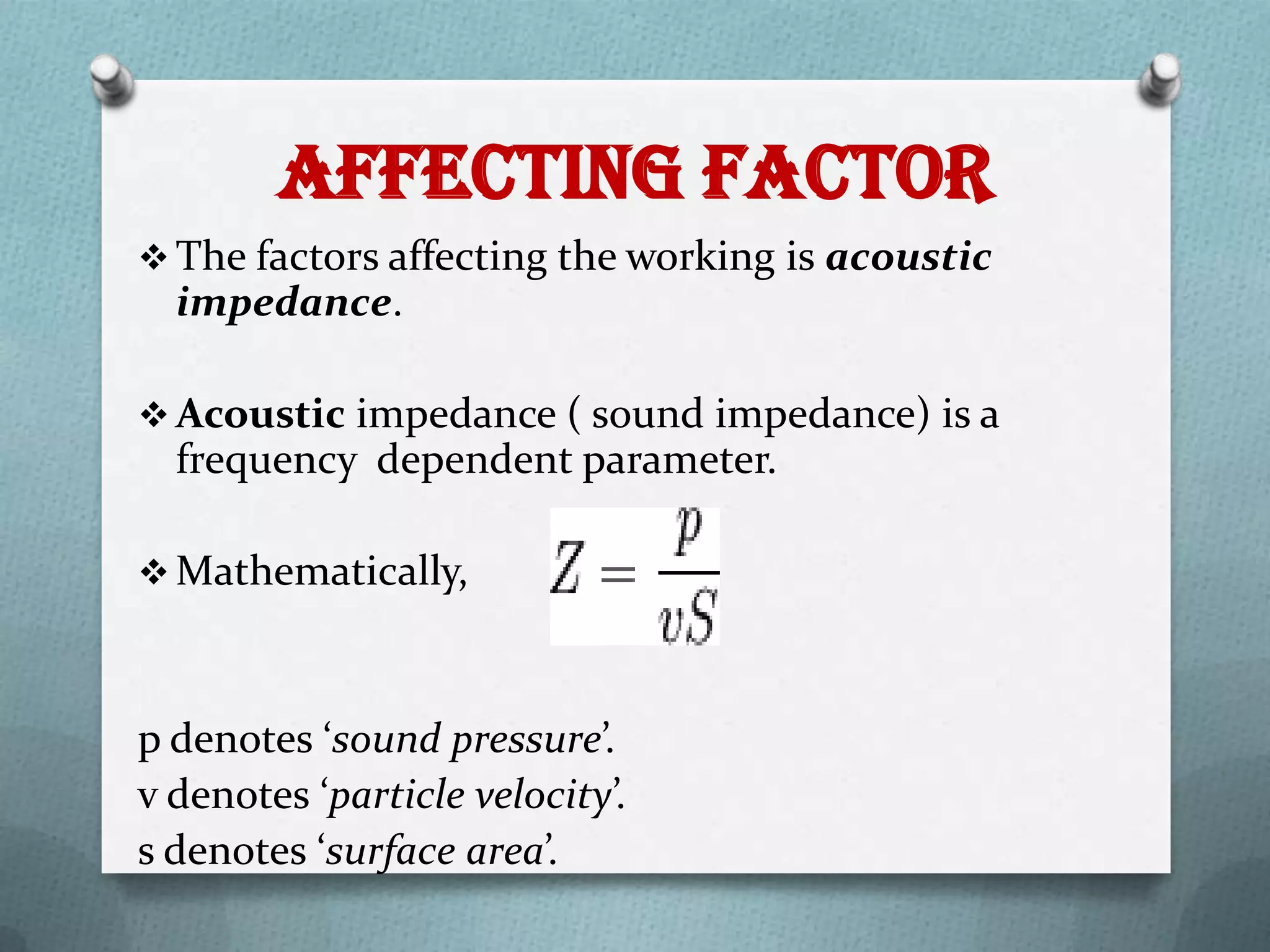
 Acoustic impedance ( sound impedance) is a
  frequency dependent parameter.

 Mathematically,


p denotes ‘sound pressure’.
v denotes ‘particle velocity’.
s denotes ‘surface area’.
Types of Hydrophones
 Hydrophones are generally of two types

 OMNIDIRECTIONAL HYDROPHONES
  which records sounds from all directions with
  equal sensitivity.

 DIRECTIONAL HYDROPHONES which have
  a higher sensitivity to signals from a particular
  direction.
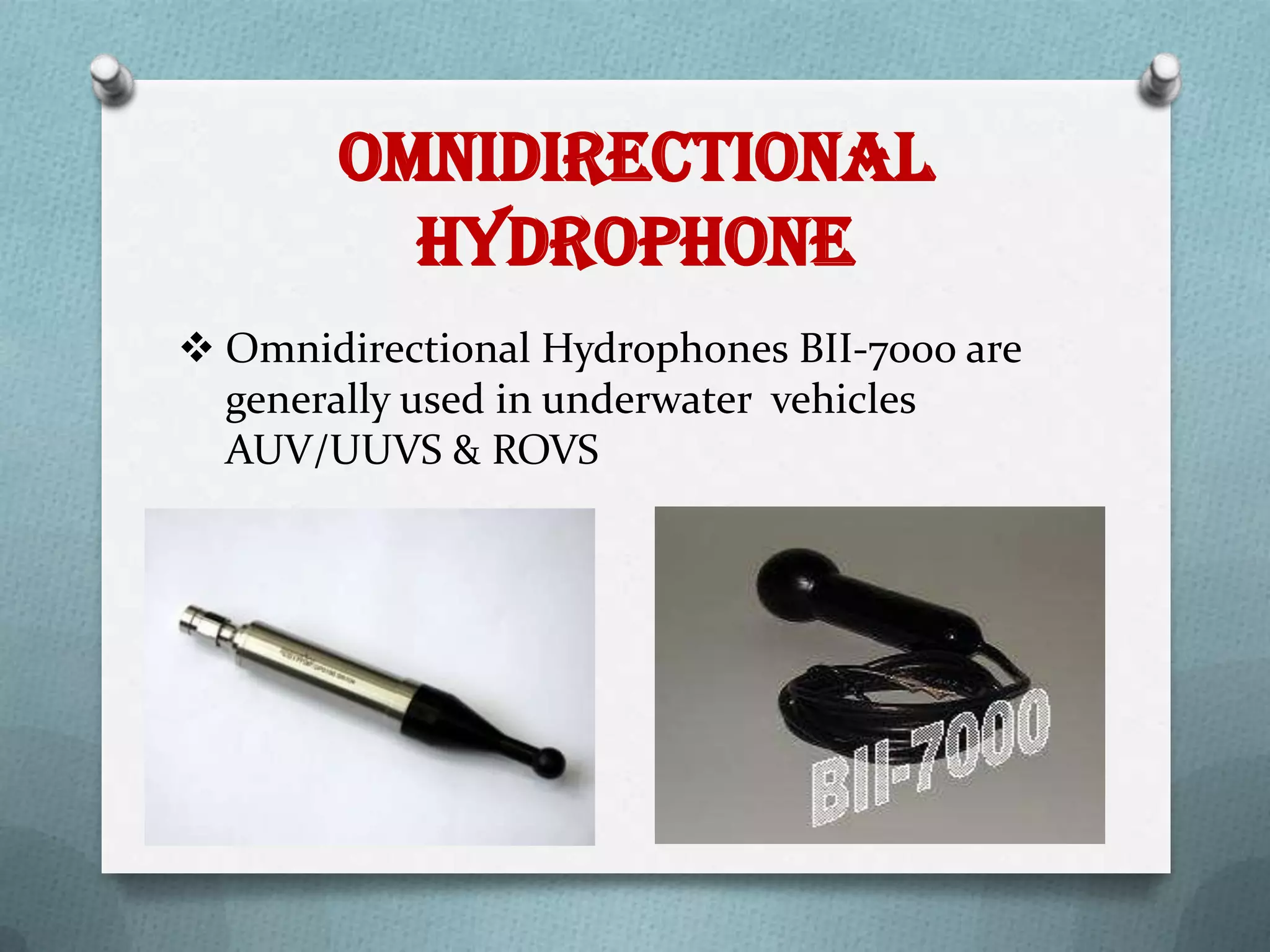
OMNIDIRECTIONAL
         HYDROPHONE
 Omnidirectional Hydrophones BII-7000 are
  generally used in underwater vehicles
  AUV/UUVS & ROVS
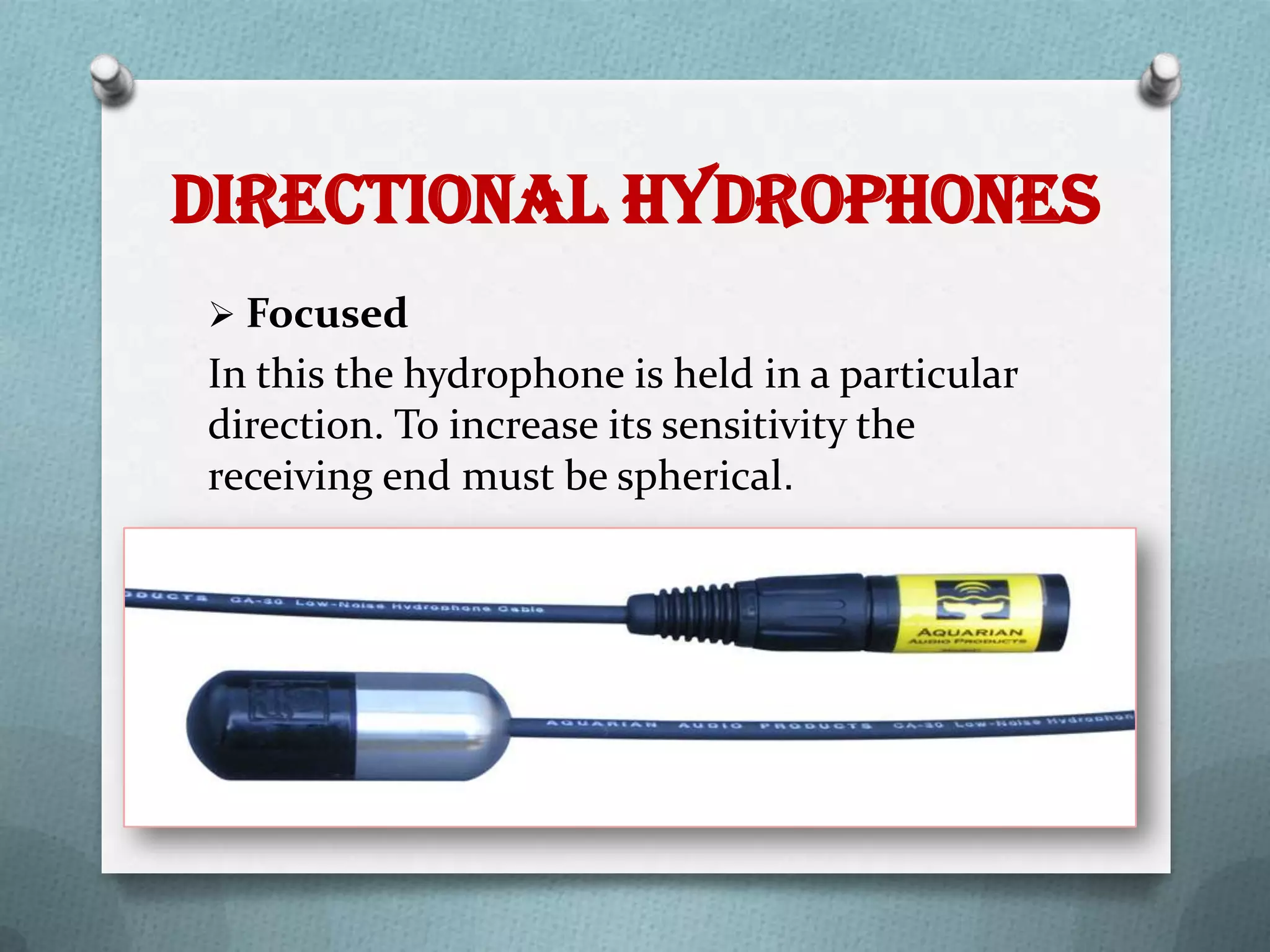
Directional Hydrophones
 Focused
In this the hydrophone is held in a particular
direction. To increase its sensitivity the
receiving end must be spherical.
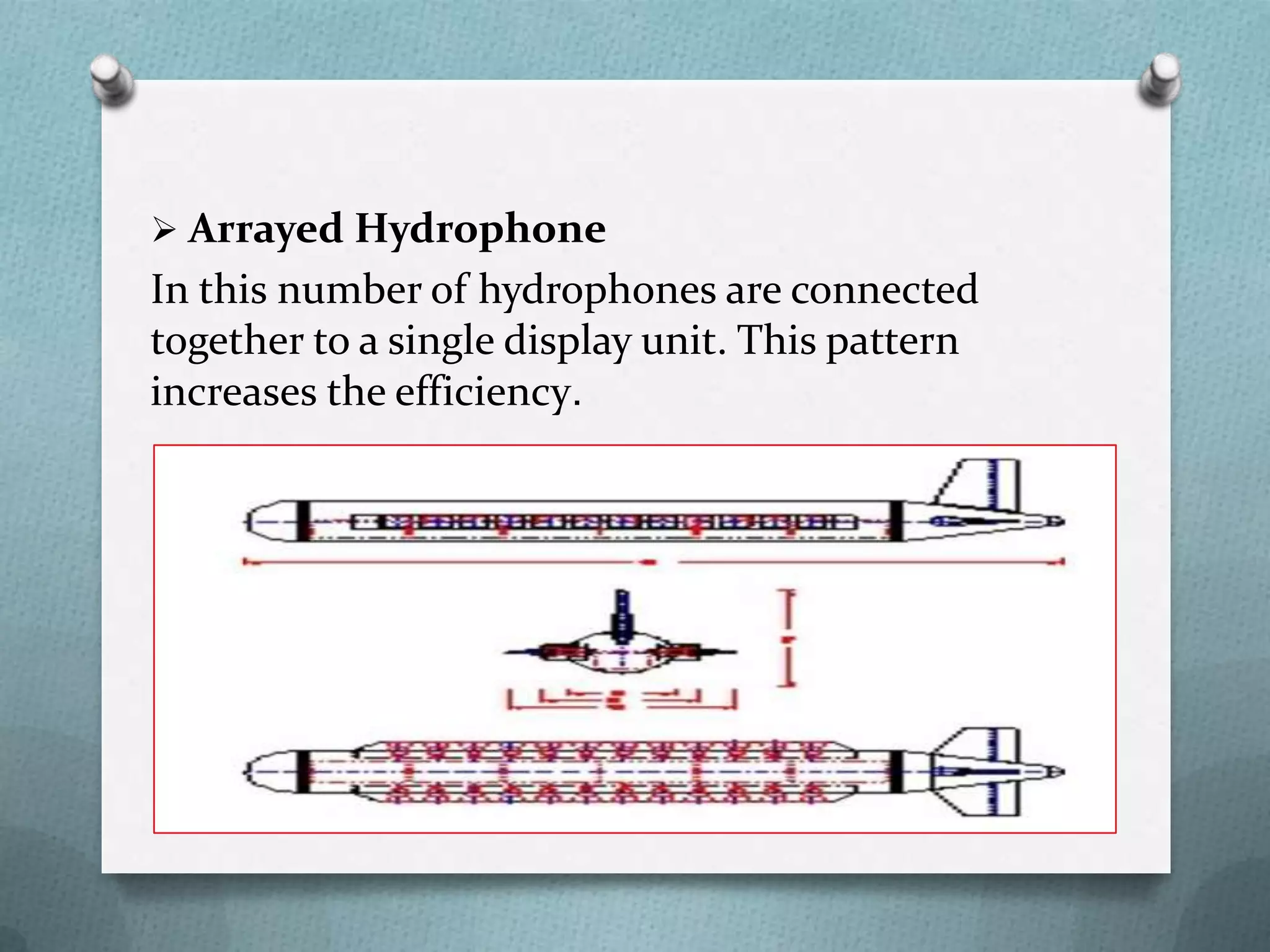
 Arrayed Hydrophone
In this number of hydrophones are connected
together to a single display unit. This pattern
increases the efficiency.
Practical
       Implementation
 Widely used in submarines and ships.


 Helpful for naval defense services.


 Detection of different sound wave
  frequencies.
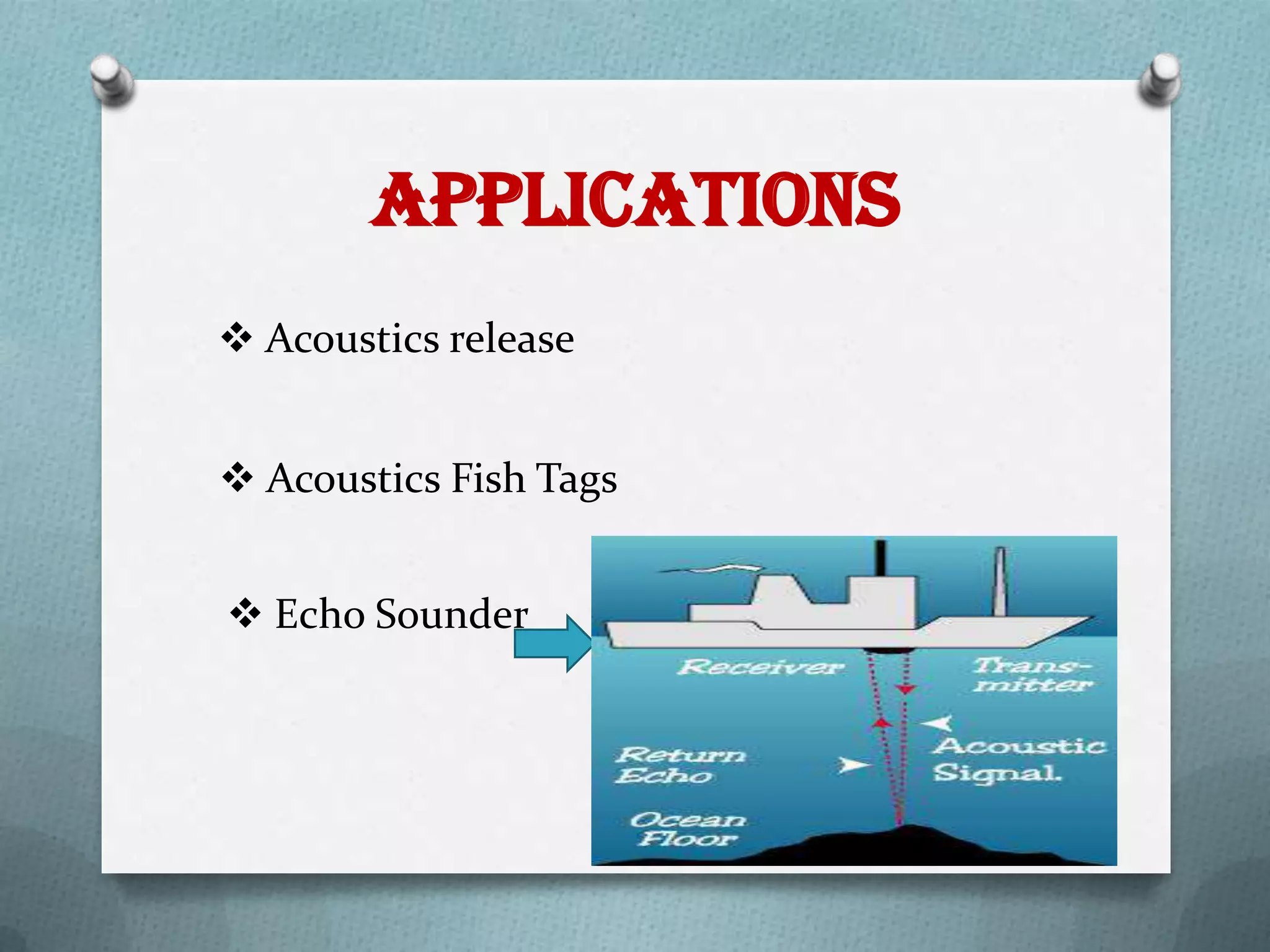
APPLICATIONs
 Acoustics release


 Acoustics Fish Tags


 Echo Sounder
Advantage
 Hydrophones does not require a power
 source as they convert mechanical energy
 into electrical energy. Although other
 devices such as underwater cameras need a
 power source.

 Underwater cameras are not as accurate as
 hydrophones because underwater cameras
 must be kept in an air-tight container
Disadvantages
 Hydrophones can only listen to sounds and pressure
  differences.

 Hydrophones    are limited in their ability to
  distinguish between multiple objects or natural
  phenomenon and artificial noise

 Set up requires time and space.
Comparison
 Hydrophone is generally a unidirectional device while
  sonar is an omnidirectional device.

 Not all hydrophones work as emitter but sonar
  works as a receiver and transmitter.
Conclusion
 The technique is based on piezoelectric
  effect.

 A unidirectional device that can be further
  improved.

 The technique can only be used in denser
  fluid because of the acoustic impedance
  matching.
Abhas hydrophone

Abhas hydrophone

  • 1.
  • 2.
    Overview • Introduction and History • Working Principle • Piezoelectric Effect • Practical Implementation • Applications • Advantages & Disadvantages • Hydrophone vs. Sonar • Conclusion
  • 3.
    Hydrophone? Hydrophone (Greek "hydro" ="water" and "phone" = "sound") is a microphone designed to be used underwater for recording or listening to underwater sound.
  • 4.
     A "Hydrophone"is a device which will listen to, or pick up, the acoustic energy underwater, converts acoustic energy into electrical energy.  Most Hydrophones are based on a piezoelectric transducer that generates electricity when subjected to a pressure changes underwater.  Hydrophones are usually used below their resonance frequency.
  • 5.
    History  Hydrophone wasused late in World War I. Naval Forces used them to detect U-boats, greatly lessening the effectiveness of the submarine. Ernest Rutherford, in England, led pioneer research in hydrophones using piezoelectric devices. His only patent was for a hydrophone device.
  • 6.
    How does itWork?  Hydrophone device that receives underwater sound waves and converts them to electrical energy.  There are special computer programs that analyze these signals.  Further these signal can be read on a meter or played through a loudspeaker
  • 8.
    Principle  The basicworking principle is the piezoelectric effect.  Hydrophones are being embedded with these piezoelectric transducers.  These transducer converts changes in water pressure into an electrical form.
  • 9.
    Piezoelectric Effect  Theconversion of mechanical vibrations into electrical energy and vice-versa.  The active element is basically a piece of polarized material.
  • 10.
    Affecting Factor  Thefactors affecting the working is acoustic impedance.  Acoustic impedance ( sound impedance) is a frequency dependent parameter.  Mathematically, p denotes ‘sound pressure’. v denotes ‘particle velocity’. s denotes ‘surface area’.
  • 11.
    Types of Hydrophones Hydrophones are generally of two types  OMNIDIRECTIONAL HYDROPHONES which records sounds from all directions with equal sensitivity.  DIRECTIONAL HYDROPHONES which have a higher sensitivity to signals from a particular direction.
  • 12.
    OMNIDIRECTIONAL HYDROPHONE  Omnidirectional Hydrophones BII-7000 are generally used in underwater vehicles AUV/UUVS & ROVS
  • 13.
    Directional Hydrophones  Focused Inthis the hydrophone is held in a particular direction. To increase its sensitivity the receiving end must be spherical.
  • 14.
     Arrayed Hydrophone Inthis number of hydrophones are connected together to a single display unit. This pattern increases the efficiency.
  • 15.
    Practical Implementation  Widely used in submarines and ships.  Helpful for naval defense services.  Detection of different sound wave frequencies.
  • 16.
    APPLICATIONs  Acoustics release Acoustics Fish Tags  Echo Sounder
  • 17.
    Advantage  Hydrophones doesnot require a power source as they convert mechanical energy into electrical energy. Although other devices such as underwater cameras need a power source.  Underwater cameras are not as accurate as hydrophones because underwater cameras must be kept in an air-tight container
  • 18.
    Disadvantages  Hydrophones canonly listen to sounds and pressure differences.  Hydrophones are limited in their ability to distinguish between multiple objects or natural phenomenon and artificial noise  Set up requires time and space.
  • 19.
    Comparison  Hydrophone isgenerally a unidirectional device while sonar is an omnidirectional device.  Not all hydrophones work as emitter but sonar works as a receiver and transmitter.
  • 20.
    Conclusion  The techniqueis based on piezoelectric effect.  A unidirectional device that can be further improved.  The technique can only be used in denser fluid because of the acoustic impedance matching.