UNIVERSITY OF GUYANA
DEPARTMENT OF INSTRUCTION AND CURRICULUM
ERE4102 – Introduction to Literacy Studies
Group Assessment – Balanced Literacy
Lecturer: Miss Ayana Williams
Due Date: November 12, 2024
Jennet Fredericks USI:1051234
Pulwattie Narine USI:1050564
Keana Primo USI:1051939
Jason Marshall USI:1054407
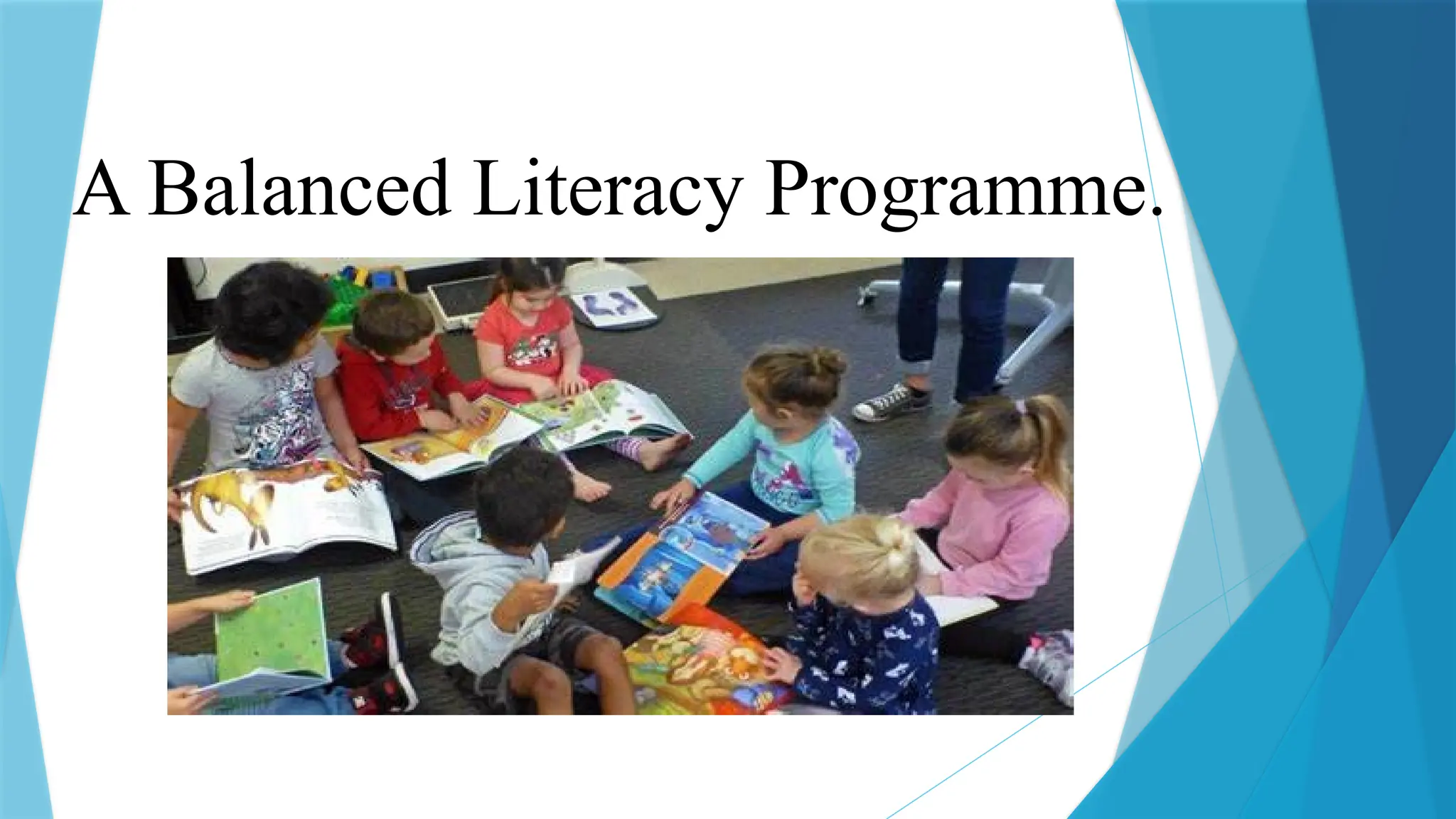
A Balanced Literacy Programme.
Introduction
A classroom where all students are mentally present, taking part in
activities, making links between reading, writing and discussing – this is
the picture a balanced literacy program is intended to create. Integrating
different pedagogical approaches, this particular program aims at
creating readers and writers who are effective and enthusiastic. In a
balanced literacy program, the teacher deploys several approaches to
teaching, so that as many students as possible are able to acquire the
necessary skills in literacy. This Powerpoint presentation will examine
the key elements of a balanced literacy program such as: Read Aloud,
Guided Reading, Shared Reading, Independent Reading, Word Study and
Writing. All these components are central in the provision of an all round
and comprehensive literacy education which empowers the students with
the skills required for success at school and even after school
Characteristics and components of balanced literacy programmes.
Fluency – is the ability to effortlessly and correctly read, speak
and write English.
Writing – the process of students generating text, whether on
paper or on a screen.
Vocabulary – knowledge of words and meanings.
Phonics – teaching the students that specific sounds belong to
specific letters
Comprehension strategies – understanding of what they are
reading.
Phonemic Awareness – ability to hear that a spoken word is
made up of a series of discrete sounds.
Assessment in a balanced literacy programme.
Formative
assessment
Summative
assessment
Running
records
Writing
samples
Diagnostic
assessment
Portfolio
assessment
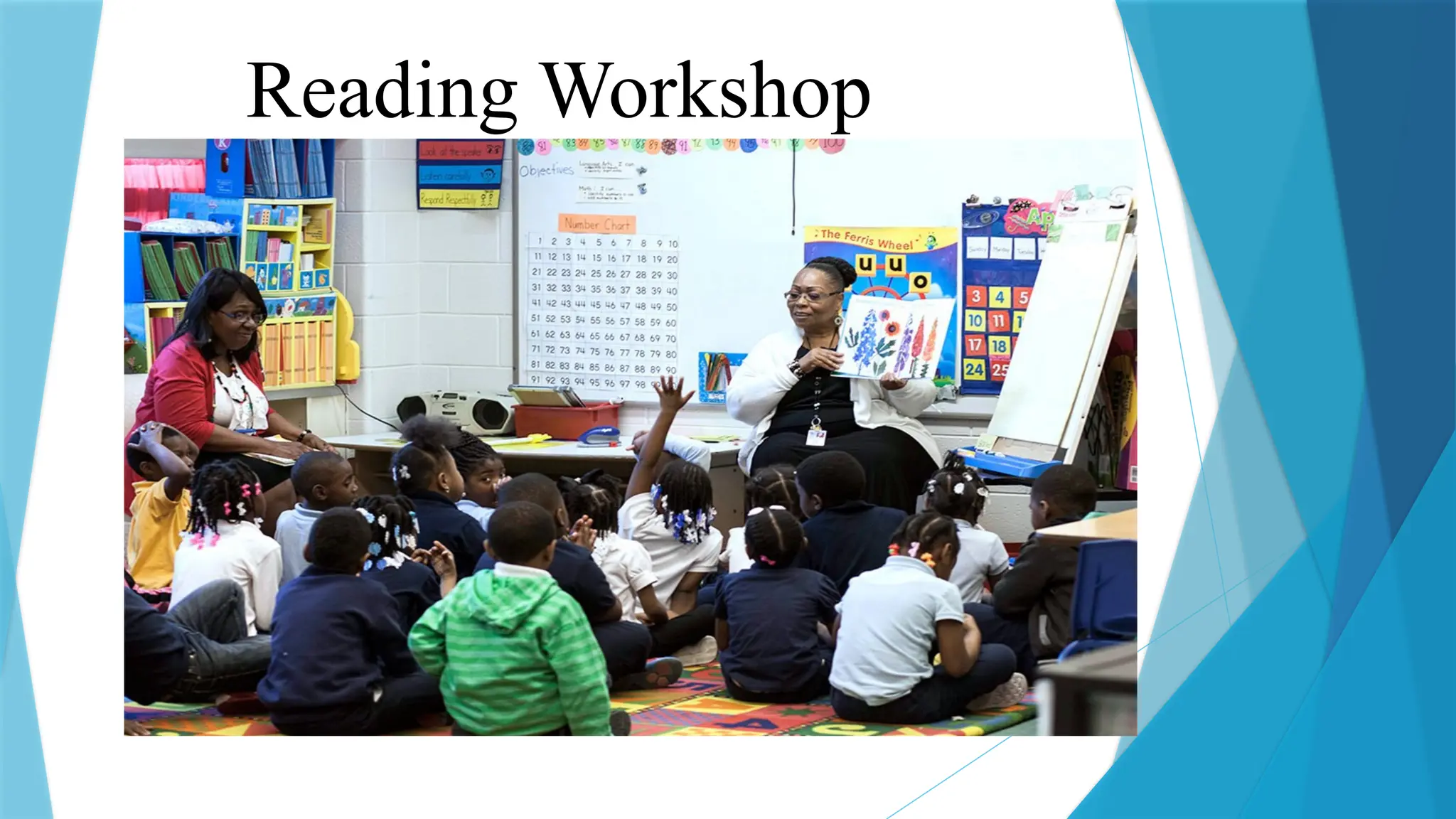
Reading Workshop
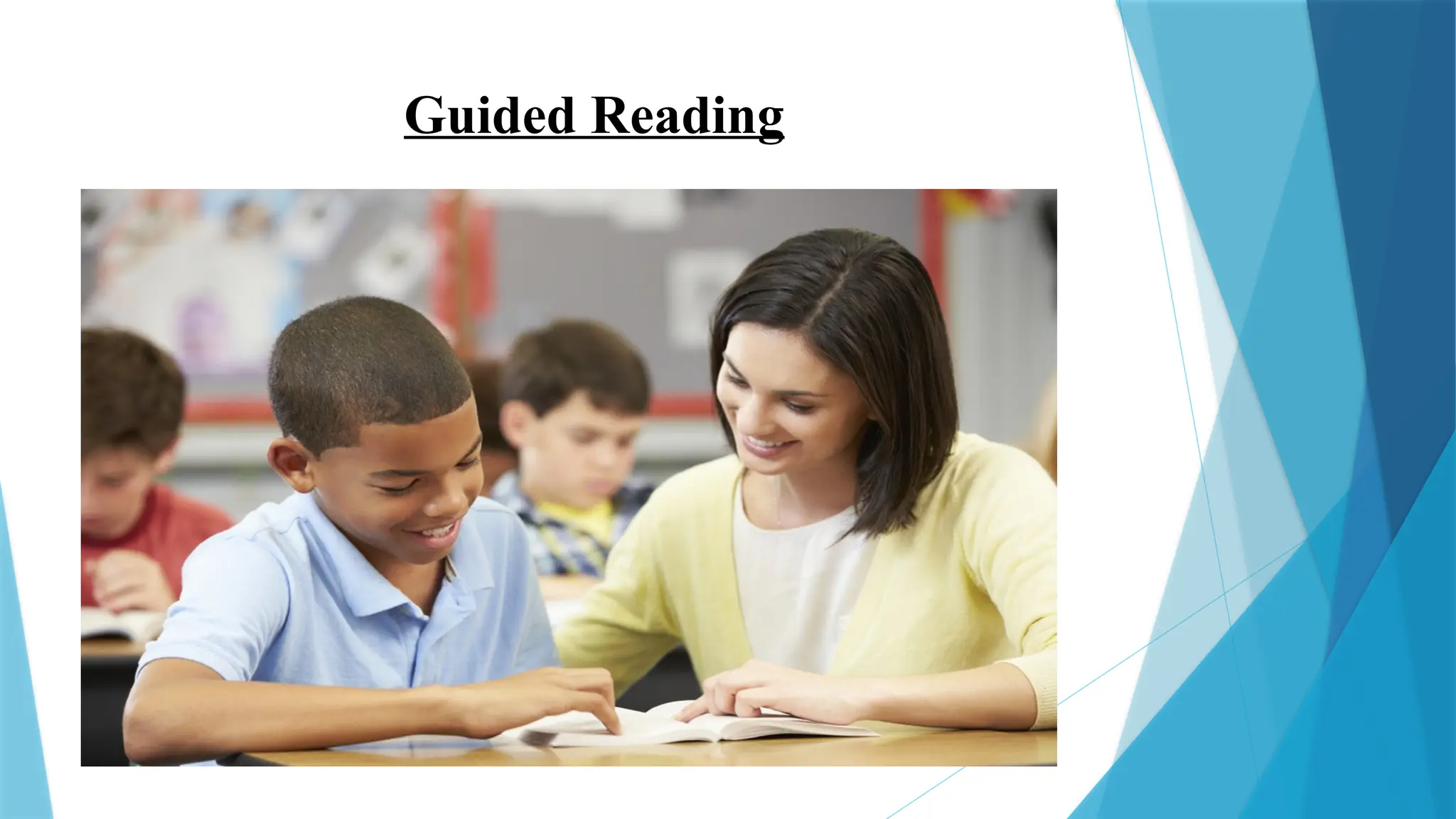
Guided Reading
Reading Workshop
Guided Reading
Objective: Tailored small-group reading sessions targeting specific reading levels and needs.
Activities and Strategies:
 Before Reading: Give a short background of the text, focusing on the vocabulary, as well
as defining a learning objective.
 During Reading: Let the students read on their own or aloud at the same time, while using
specific questions and cues to steer the students through the text. Identify specific readers
and what they are doing and observe the strategies which they are using to read.
 After Reading: After reading this text, comprehension, connections, and inference skills
should be a major point of discussion. Be verbal in your reward by proving motivating
comments and follow-up detailing.
 Skills Focus: Group reading with phonics, decoding, fluency, vocabulary and
comprehension strategies to individual groups’ requirements.
 Materials: Levelled text, graphic organizers, notebooks or jotter for taking notes and
thoughts.
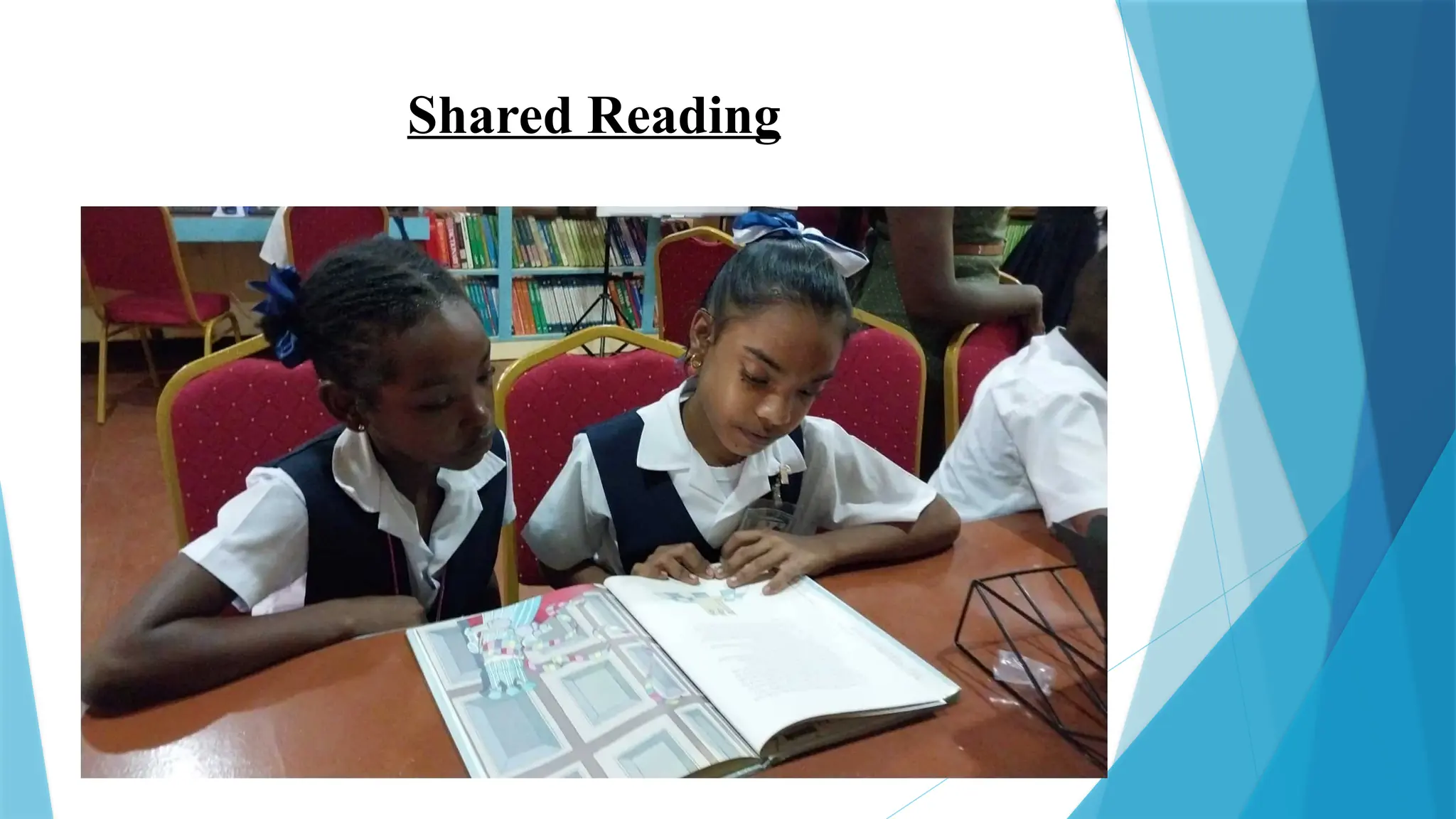
Shared Reading
Shared Reading
Objective: Read with the whole class or group with the purpose of demonstrating proper
reading and showing how to understand what has been read.
Activities and Strategies:
Introduce the Text: Introduce the book or passage, using title page and cover and/or
illustrations if any. Predict what might happen.
Read Together: Finally, enlarge the text to read with your students or use an interactive
whiteboard or a big book and include the kids.
Engage with the Text: Stop for some time to give an opportunity for students to raise questions
or concerns, and to prompt students to anticipate, read, or even answer to questions.
Rereading: Read and discuss in following days with a concentration on a different aspect of
comprehension or a different word set.
Skills Focus: Sight word recognition, word recognition and phonics, high-frequency words,
vocabulary meaning, understanding, and response, and listening and viewing.
Materials: Large books, use of an interactive whiteboard, big charts used for reading
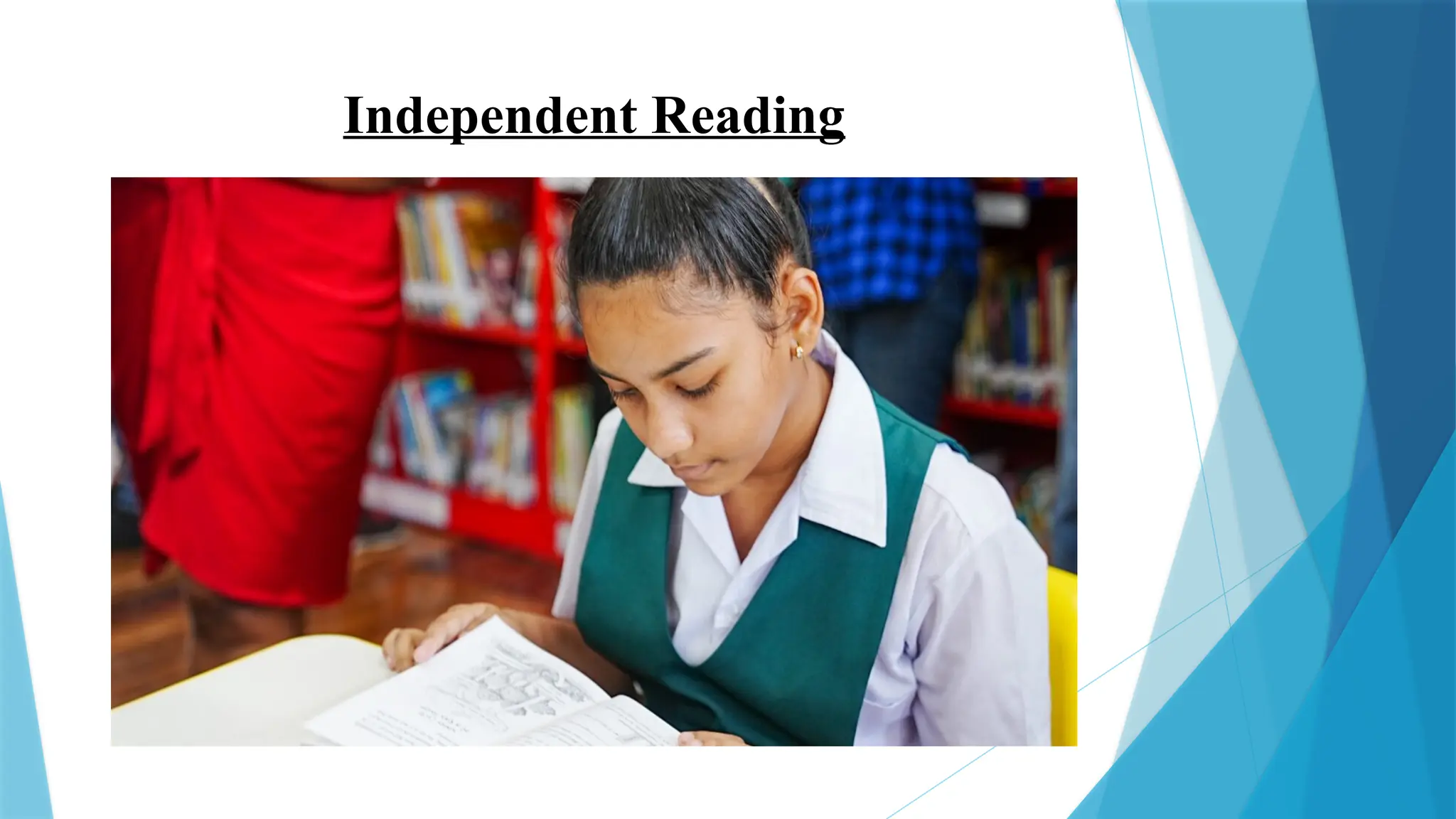
Independent Reading
Independent Reading
Objective: Promote reading stamina, enjoyment, and self-selected reading practice.
Activities and Strategies:
Set Up Reading Time: Introduce independent reading and practice daily, asking students to choose a
comfortable place to read.
Book Selection: Students need to be taught ways to select books that are neither too hard nor too easy
for them to read.
Accountability: This means that when they read, they should keep reading logs, reflection journals, or
short prediction checklists to remind them of goal setting.
Mini-Lessons: Teach brief concept mini-lessons focusing on genre study, monitoring own
understanding, and context-based learning.
Reflection: During reading, prompt students to write or talk about their learning, focusing on relativity
personal experience or other works.
Skills Focus: To monitor their own understanding, writing, thinking and creating a reading culture within
them.
Materials: Reading anthologies, classroom library of a variety of books, reading logs, journals, or an
electronic reading app.
Read-Aloud Sessions
Read-Aloud Sessions
Objective: Model expressive reading, introduce diverse genres, and expose students to vocabulary and
comprehension strategies.
Activities and Strategies:
Interactive Read-Aloud: Use modelling questions that include those which may be predictive, those
that encourage reflection or analysis at intervals. Teach students to think aloud.
Vocabulary Focus: Emphasize new or difficult words, and support them with gestures or illustrations or
a word in writing.
Think-Aloud Strategy: Teach methods such as looking ahead, creating mental pictures, or identifying
the meaning of the author.
Discussion: Following reading, a discussion or some brief activity that helps students to consolidate
their ideas about the themes, characters, and personal associations could be held.
Extension Activities: Integrate the story to writing activities, art processes or group discussions that
improve understanding.
Skills Focus: Oral fluency, understanding the meaning of new words, reading more broadly, as well as
matching with the students so that one can read or listen while the other explains.
Materials: Quality picture books – a variety of themes and topics, picture dictionaries, and discussion
questions.
Writing Workshop
Guided Writing
Writing Workshop
Guided Writing
Purpose: Support small groups of students who need similar guidance or skills
development in writing.
Activities and Strategies:
Focused Mini-Lessons: Every lesson starts with a brief teacher explanation on
developing focus skill/ strategy (e.g. Description, Paraphrasing, Organisation of ideas).
Think-Aloud: Explain how ideas of a writing task are being developed and what word
choices are made when thinking aloud in front of students.
Collaborative Writing: Begin a new sentence or paragraph, and let students resume the
action with his/her words if necessary.
Peer Feedback Exchange: Encourage formation of peer-writing groups that critique
their fellow student’s work
Shared Writing
Shared Writing
Purpose: Engage the whole class in the writing process, fostering a collaborative
approach.
Activities and Strategies:
Interactive Writing: This activity involves developing a large class story in
which each member of the class types one sentence or one idea so that they
appreciate the sequence of a story.
Writing Prompts with Shared Discussion: Start with a writing stimulus, and
continue in groups, expressing ideas and making a response as a group.
Teacher-as-Scribe: A chart is used by the teacher to capture students’ ideas in
relation to how they may be grouped to from a structured style.
Sentence Starters: To assist students how to get over writer’s block and to help
them develop ideas, use of sentence starters.
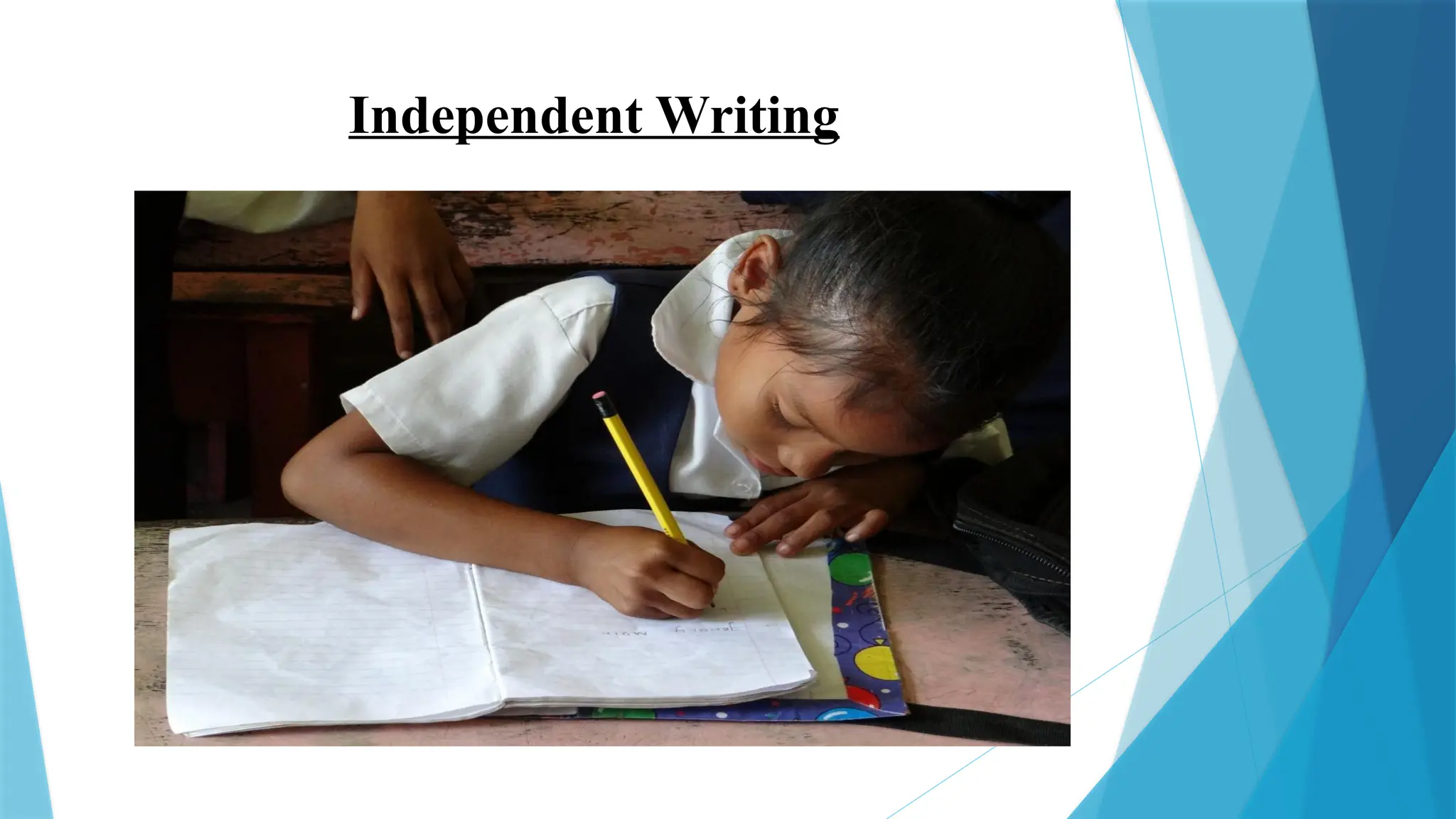
Independent Writing
Independent Writing
Purpose: Allow students to explore personal writing goals and practice writing
independently.
Activities and Strategies:
Writer’s Notebook: Have students use a writer’s notebook for idea, self-
reflection, and to answer questions about the day’s writing.
Choice Writing Time: So if one wants to encourage students let them decide
whether they wish to write in a particular genre ie narratives, poetry or
information writing etc.
Weekly Goal-Setting: Let students to set and discuss their weekly writing
objectives for encouraging autonomy in the writing endeavor.
Publishing Opportunities: Give opportunities to share their writing with others:
discuss ways where students can ‘publish’ what they have written (e.g. class
displays, student writers’ collection).
Writing Conferences
Writing Conferences
Purpose: Provide personalized feedback and support, helping students identify
strengths and areas for improvement.
Activities and Strategies:
One-on-One Conferences: Spend 5-10 minutes per student to discuss their current
writing, focusing on specific goals.
Use of Checklists: Develop a simple checklist for students to self-assess before the
conference, such as “Did I include descriptive details?”
Two Stars and a Wish: Offer two positive observations about the student’s writing
and one suggestion for improvement.
Goal-Tracking Sheets: Keep records of individual goals and progress over time,
helping students see their development.
Word study
Phonics
Word study
Phonics
Purpose: Strengthen students' understanding of sound-letter relationships to improve
reading and spelling.
Activities and Strategies:
Sound Sorting: Use picture or word cards to have students sort based on beginning,
middle, or ending sounds (e.g., sorting words with “-at” and “-an” sounds).
Blending and Segmenting: Practice combining sounds to make words and breaking
down words into individual sounds through games (e.g., “What’s My Word?” where
students sound out letters one by one).
Word Families: Focus on word families, such as “-ing” or “-ock,” to help students
recognize patterns and make connections between similar words.
Phonics Flip Books: Create flip books where students can change the beginning,
middle, or end sound to form new words (e.g., “bat” to “cat” to “sat”).
Spelling
Spelling
Purpose: Improve spelling accuracy and word recognition by teaching spelling
patterns and rules.
Activities and Strategies:
Weekly Spelling Patterns: Focus on one spelling rule or pattern each week
(e.g., “i before e except after c”) and incorporate words with the same pattern.
Word Ladders: Give students a series of words, changing one letter at a time to
create a new word, helping them recognize letter-sound relationships (e.g., “cat”
to “bat” to “rat”).
Rainbow Words: Have students write their spelling words in different colors,
reinforcing letter order and visual memory.
Partner Spelling Tests: Let students test each other, discussing any mistakes
and helping reinforce correct spelling through collaboration.
Vocabulary
Vocabulary
Purpose: Expand students’ vocabulary knowledge to enhance comprehension and
expressive language.
Activities and Strategies:
Vocabulary Journals: Students keep a journal where they write new words,
definitions, and example sentences, creating a personal dictionary.
Semantic Mapping: Use concept maps to help students connect words to meanings,
synonyms, antonyms, and usage (e.g., for the word “brave,” link to “courage,”
“fearless,” etc.).
Context Clues Challenge: Provide sentences where students use context clues to infer
the meaning of unfamiliar words.
Synonym and Antonym Puzzles: Have students match pairs of synonyms and
antonyms, which builds word knowledge and reinforces understanding of word
relationships.
Assessment
Oral Retelling
Purpose: To evaluate understanding and recall.
Strategy: Ask students to retell a story they have read. Listen for the
inclusion of main ideas and details.
Phonics and Sight Word Assessments
Purpose: To assess decoding skills and sight word recognition.
Strategy: Use phonics checklists or flashcards for common sight words
and track recognition and fluency in reading them.
Writing Journals
Purpose: To observe writing progress over time.
Strategy: Encourage students to write daily in their
notebook. Collect notebook weekly assess growth in
writing skills, vocabulary, sentence structure, and idea
development.
Rubrics for Writing Assignments
Purpose: To provide feedback on writing structure, spelling,
grammar, and creativity.
Strategy: Develop age-appropriate rubrics that focus on basic skills
such as sentence formation, punctuation, and staying on topic.
Parent-Teacher Conferences and Student Reflections
Purpose: To discuss and share progress in reading and writing.
Strategy: Hold conferences to share assessment data and work
samples. Encourage students to reflect on their strengths and goals.
References
Hegwood, V. (2024). 15 Guided Reading Activities and Strategies for Teachers.
Prodigygame.com. https://www.prodigygame.com/main-en/blog/guided-reading-activities/
Reading Rockets. (2024). Shared Reading | Reading Rockets. Www.readingrockets.org.
https://www.readingrockets.org/classroom/classroom-strategies/shared-reading
therigorousowl. (2020, May 16). Independent Reading in the Reading Workshop Model - The
Rigorous Owl. The Rigorous Owl.
https://therigorousowl.com/independent-reading-in-the-reading-workshop-model/
OneStopTeacherShop. (2019, June 17). Reader’s Workshop: Ideas for Independent Reading. One
Stop Teacher Shop.
https://onestopteachershop.com/2019/06/reading-workshop-independent-reading.html
Read-Aloud Workshop – Learning in the Living Room. (2023). Learninginthelivingroom.com.
https://learninginthelivingroom.com/events/read-aloud-workshop/
therigorousowl. (2020a, May 9). The Read-Aloud in the Reader’s Workshop Model - The Rigorous
Owl. The Rigorous Owl. https://therigorousowl.com/the-read-aloud-in-the-readers-workshop-model/
Children's Literacy Initiative. (2016). Writing Workshop > Overview | LEARN - Children’s Literacy
Initiative. Learn.cli.org. https://learn.cli.org/best-practices/writing-workshop/overview
The WRITING Workshop -Instructional Practices and Non Negotiables. (n.d.). Retrieved October 30,
2024, from
https://www.kismetparkps.vic.edu.au/source/Writing%20Instructional%20Practices%20KPPS.pdf
Phonics Workshop WELCOME TO OUR PHONICS WORKSHOP FOR RECEPTION PARENTS.
(n.d.). Retrieved October 30, 2024, from
https://www.standrewsprimaryschoolstockwell.org/wp-content/uploads/2017/10/Phonics-Workshop-1
.pdf

A balanced literacy programme in education

  • 1.
    UNIVERSITY OF GUYANA DEPARTMENTOF INSTRUCTION AND CURRICULUM ERE4102 – Introduction to Literacy Studies Group Assessment – Balanced Literacy Lecturer: Miss Ayana Williams Due Date: November 12, 2024 Jennet Fredericks USI:1051234 Pulwattie Narine USI:1050564 Keana Primo USI:1051939 Jason Marshall USI:1054407
  • 2.
  • 3.
    Introduction A classroom whereall students are mentally present, taking part in activities, making links between reading, writing and discussing – this is the picture a balanced literacy program is intended to create. Integrating different pedagogical approaches, this particular program aims at creating readers and writers who are effective and enthusiastic. In a balanced literacy program, the teacher deploys several approaches to teaching, so that as many students as possible are able to acquire the necessary skills in literacy. This Powerpoint presentation will examine the key elements of a balanced literacy program such as: Read Aloud, Guided Reading, Shared Reading, Independent Reading, Word Study and Writing. All these components are central in the provision of an all round and comprehensive literacy education which empowers the students with the skills required for success at school and even after school
  • 4.
    Characteristics and componentsof balanced literacy programmes. Fluency – is the ability to effortlessly and correctly read, speak and write English. Writing – the process of students generating text, whether on paper or on a screen. Vocabulary – knowledge of words and meanings.
  • 5.
    Phonics – teachingthe students that specific sounds belong to specific letters Comprehension strategies – understanding of what they are reading. Phonemic Awareness – ability to hear that a spoken word is made up of a series of discrete sounds.
  • 6.
    Assessment in abalanced literacy programme. Formative assessment Summative assessment Running records Writing samples Diagnostic assessment Portfolio assessment
  • 7.
  • 8.
  • 9.
    Reading Workshop Guided Reading Objective:Tailored small-group reading sessions targeting specific reading levels and needs. Activities and Strategies:  Before Reading: Give a short background of the text, focusing on the vocabulary, as well as defining a learning objective.  During Reading: Let the students read on their own or aloud at the same time, while using specific questions and cues to steer the students through the text. Identify specific readers and what they are doing and observe the strategies which they are using to read.  After Reading: After reading this text, comprehension, connections, and inference skills should be a major point of discussion. Be verbal in your reward by proving motivating comments and follow-up detailing.  Skills Focus: Group reading with phonics, decoding, fluency, vocabulary and comprehension strategies to individual groups’ requirements.  Materials: Levelled text, graphic organizers, notebooks or jotter for taking notes and thoughts.
  • 10.
  • 11.
    Shared Reading Objective: Readwith the whole class or group with the purpose of demonstrating proper reading and showing how to understand what has been read. Activities and Strategies: Introduce the Text: Introduce the book or passage, using title page and cover and/or illustrations if any. Predict what might happen. Read Together: Finally, enlarge the text to read with your students or use an interactive whiteboard or a big book and include the kids. Engage with the Text: Stop for some time to give an opportunity for students to raise questions or concerns, and to prompt students to anticipate, read, or even answer to questions. Rereading: Read and discuss in following days with a concentration on a different aspect of comprehension or a different word set. Skills Focus: Sight word recognition, word recognition and phonics, high-frequency words, vocabulary meaning, understanding, and response, and listening and viewing. Materials: Large books, use of an interactive whiteboard, big charts used for reading
  • 12.
  • 13.
    Independent Reading Objective: Promotereading stamina, enjoyment, and self-selected reading practice. Activities and Strategies: Set Up Reading Time: Introduce independent reading and practice daily, asking students to choose a comfortable place to read. Book Selection: Students need to be taught ways to select books that are neither too hard nor too easy for them to read. Accountability: This means that when they read, they should keep reading logs, reflection journals, or short prediction checklists to remind them of goal setting. Mini-Lessons: Teach brief concept mini-lessons focusing on genre study, monitoring own understanding, and context-based learning. Reflection: During reading, prompt students to write or talk about their learning, focusing on relativity personal experience or other works. Skills Focus: To monitor their own understanding, writing, thinking and creating a reading culture within them. Materials: Reading anthologies, classroom library of a variety of books, reading logs, journals, or an electronic reading app.
  • 14.
  • 15.
    Read-Aloud Sessions Objective: Modelexpressive reading, introduce diverse genres, and expose students to vocabulary and comprehension strategies. Activities and Strategies: Interactive Read-Aloud: Use modelling questions that include those which may be predictive, those that encourage reflection or analysis at intervals. Teach students to think aloud. Vocabulary Focus: Emphasize new or difficult words, and support them with gestures or illustrations or a word in writing. Think-Aloud Strategy: Teach methods such as looking ahead, creating mental pictures, or identifying the meaning of the author. Discussion: Following reading, a discussion or some brief activity that helps students to consolidate their ideas about the themes, characters, and personal associations could be held. Extension Activities: Integrate the story to writing activities, art processes or group discussions that improve understanding. Skills Focus: Oral fluency, understanding the meaning of new words, reading more broadly, as well as matching with the students so that one can read or listen while the other explains. Materials: Quality picture books – a variety of themes and topics, picture dictionaries, and discussion questions.
  • 16.
  • 17.
  • 18.
    Writing Workshop Guided Writing Purpose:Support small groups of students who need similar guidance or skills development in writing. Activities and Strategies: Focused Mini-Lessons: Every lesson starts with a brief teacher explanation on developing focus skill/ strategy (e.g. Description, Paraphrasing, Organisation of ideas). Think-Aloud: Explain how ideas of a writing task are being developed and what word choices are made when thinking aloud in front of students. Collaborative Writing: Begin a new sentence or paragraph, and let students resume the action with his/her words if necessary. Peer Feedback Exchange: Encourage formation of peer-writing groups that critique their fellow student’s work
  • 19.
  • 20.
    Shared Writing Purpose: Engagethe whole class in the writing process, fostering a collaborative approach. Activities and Strategies: Interactive Writing: This activity involves developing a large class story in which each member of the class types one sentence or one idea so that they appreciate the sequence of a story. Writing Prompts with Shared Discussion: Start with a writing stimulus, and continue in groups, expressing ideas and making a response as a group. Teacher-as-Scribe: A chart is used by the teacher to capture students’ ideas in relation to how they may be grouped to from a structured style. Sentence Starters: To assist students how to get over writer’s block and to help them develop ideas, use of sentence starters.
  • 21.
  • 22.
    Independent Writing Purpose: Allowstudents to explore personal writing goals and practice writing independently. Activities and Strategies: Writer’s Notebook: Have students use a writer’s notebook for idea, self- reflection, and to answer questions about the day’s writing. Choice Writing Time: So if one wants to encourage students let them decide whether they wish to write in a particular genre ie narratives, poetry or information writing etc. Weekly Goal-Setting: Let students to set and discuss their weekly writing objectives for encouraging autonomy in the writing endeavor. Publishing Opportunities: Give opportunities to share their writing with others: discuss ways where students can ‘publish’ what they have written (e.g. class displays, student writers’ collection).
  • 23.
  • 24.
    Writing Conferences Purpose: Providepersonalized feedback and support, helping students identify strengths and areas for improvement. Activities and Strategies: One-on-One Conferences: Spend 5-10 minutes per student to discuss their current writing, focusing on specific goals. Use of Checklists: Develop a simple checklist for students to self-assess before the conference, such as “Did I include descriptive details?” Two Stars and a Wish: Offer two positive observations about the student’s writing and one suggestion for improvement. Goal-Tracking Sheets: Keep records of individual goals and progress over time, helping students see their development.
  • 25.
  • 26.
  • 27.
    Word study Phonics Purpose: Strengthenstudents' understanding of sound-letter relationships to improve reading and spelling. Activities and Strategies: Sound Sorting: Use picture or word cards to have students sort based on beginning, middle, or ending sounds (e.g., sorting words with “-at” and “-an” sounds). Blending and Segmenting: Practice combining sounds to make words and breaking down words into individual sounds through games (e.g., “What’s My Word?” where students sound out letters one by one). Word Families: Focus on word families, such as “-ing” or “-ock,” to help students recognize patterns and make connections between similar words. Phonics Flip Books: Create flip books where students can change the beginning, middle, or end sound to form new words (e.g., “bat” to “cat” to “sat”).
  • 28.
  • 29.
    Spelling Purpose: Improve spellingaccuracy and word recognition by teaching spelling patterns and rules. Activities and Strategies: Weekly Spelling Patterns: Focus on one spelling rule or pattern each week (e.g., “i before e except after c”) and incorporate words with the same pattern. Word Ladders: Give students a series of words, changing one letter at a time to create a new word, helping them recognize letter-sound relationships (e.g., “cat” to “bat” to “rat”). Rainbow Words: Have students write their spelling words in different colors, reinforcing letter order and visual memory. Partner Spelling Tests: Let students test each other, discussing any mistakes and helping reinforce correct spelling through collaboration.
  • 30.
  • 31.
    Vocabulary Purpose: Expand students’vocabulary knowledge to enhance comprehension and expressive language. Activities and Strategies: Vocabulary Journals: Students keep a journal where they write new words, definitions, and example sentences, creating a personal dictionary. Semantic Mapping: Use concept maps to help students connect words to meanings, synonyms, antonyms, and usage (e.g., for the word “brave,” link to “courage,” “fearless,” etc.). Context Clues Challenge: Provide sentences where students use context clues to infer the meaning of unfamiliar words. Synonym and Antonym Puzzles: Have students match pairs of synonyms and antonyms, which builds word knowledge and reinforces understanding of word relationships.
  • 32.
  • 33.
    Oral Retelling Purpose: Toevaluate understanding and recall. Strategy: Ask students to retell a story they have read. Listen for the inclusion of main ideas and details.
  • 34.
    Phonics and SightWord Assessments Purpose: To assess decoding skills and sight word recognition. Strategy: Use phonics checklists or flashcards for common sight words and track recognition and fluency in reading them.
  • 35.
    Writing Journals Purpose: Toobserve writing progress over time. Strategy: Encourage students to write daily in their notebook. Collect notebook weekly assess growth in writing skills, vocabulary, sentence structure, and idea development.
  • 36.
    Rubrics for WritingAssignments Purpose: To provide feedback on writing structure, spelling, grammar, and creativity. Strategy: Develop age-appropriate rubrics that focus on basic skills such as sentence formation, punctuation, and staying on topic.
  • 37.
    Parent-Teacher Conferences andStudent Reflections Purpose: To discuss and share progress in reading and writing. Strategy: Hold conferences to share assessment data and work samples. Encourage students to reflect on their strengths and goals.
  • 38.
    References Hegwood, V. (2024).15 Guided Reading Activities and Strategies for Teachers. Prodigygame.com. https://www.prodigygame.com/main-en/blog/guided-reading-activities/ Reading Rockets. (2024). Shared Reading | Reading Rockets. Www.readingrockets.org. https://www.readingrockets.org/classroom/classroom-strategies/shared-reading therigorousowl. (2020, May 16). Independent Reading in the Reading Workshop Model - The Rigorous Owl. The Rigorous Owl. https://therigorousowl.com/independent-reading-in-the-reading-workshop-model/
  • 39.
    OneStopTeacherShop. (2019, June17). Reader’s Workshop: Ideas for Independent Reading. One Stop Teacher Shop. https://onestopteachershop.com/2019/06/reading-workshop-independent-reading.html Read-Aloud Workshop – Learning in the Living Room. (2023). Learninginthelivingroom.com. https://learninginthelivingroom.com/events/read-aloud-workshop/ therigorousowl. (2020a, May 9). The Read-Aloud in the Reader’s Workshop Model - The Rigorous Owl. The Rigorous Owl. https://therigorousowl.com/the-read-aloud-in-the-readers-workshop-model/
  • 40.
    Children's Literacy Initiative.(2016). Writing Workshop > Overview | LEARN - Children’s Literacy Initiative. Learn.cli.org. https://learn.cli.org/best-practices/writing-workshop/overview The WRITING Workshop -Instructional Practices and Non Negotiables. (n.d.). Retrieved October 30, 2024, from https://www.kismetparkps.vic.edu.au/source/Writing%20Instructional%20Practices%20KPPS.pdf Phonics Workshop WELCOME TO OUR PHONICS WORKSHOP FOR RECEPTION PARENTS. (n.d.). Retrieved October 30, 2024, from https://www.standrewsprimaryschoolstockwell.org/wp-content/uploads/2017/10/Phonics-Workshop-1 .pdf