
















Presentation to Cumbria CIM Tony Preedy Marketing Director
Tonight’s talk Change Lakeland The job of Marketing Director The internet Summary Q&A


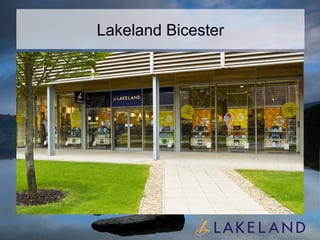
Lakeland Bicester
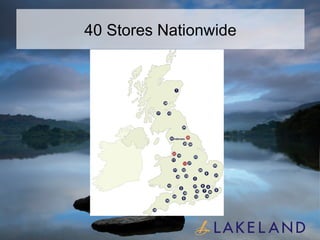
40 Stores Nationwide
 
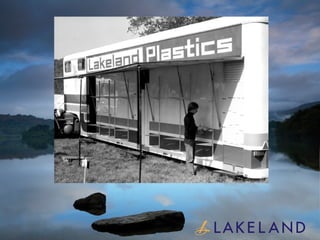
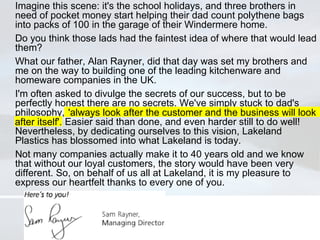
Imagine this scene: it's the school holidays, and three brothers in need of pocket money start helping their dad count polythene bags into packs of 100 in the garage of their Windermere home. Do you think those lads had the faintest idea of where that would lead them? What our father, Alan Rayner, did that day was set my brothers and me on the way to building one of the leading kitchenware and homeware companies in the UK. I'm often asked to divulge the secrets of our success, but to be perfectly honest there are no secrets. We've simply stuck to dad's philosophy, 'always look after the customer and the business will look after itself'. Easier said than done, and even harder still to do well! Nevertheless, by dedicating ourselves to this vision, Lakeland Plastics has blossomed into what Lakeland is today. Not many companies actually make it to 40 years old and we know that without our loyal customers, the story would have been very different. So, on behalf of us all at Lakeland, it is my pleasure to express our heartfelt thanks to every one of you. 'always look after the customer and the business will look after itself'.
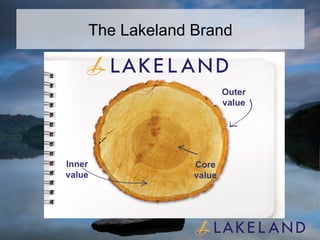
The Lakeland Brand Outer value Core value Inner value
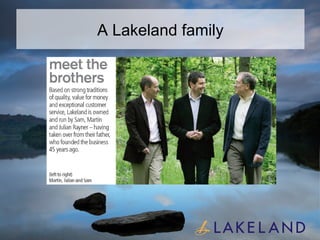
A Lakeland family
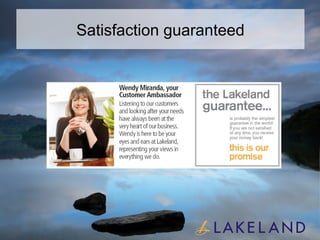
Satisfaction guaranteed


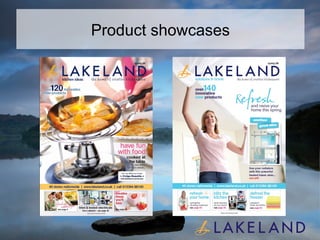
Product showcases
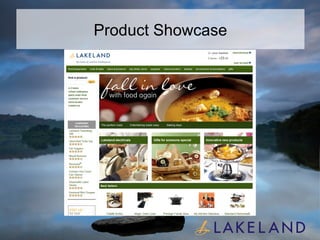
Product Showcases
Product Showcase
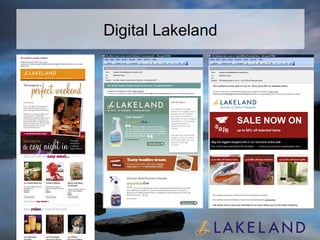
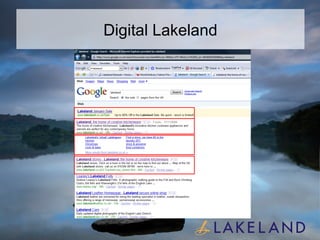
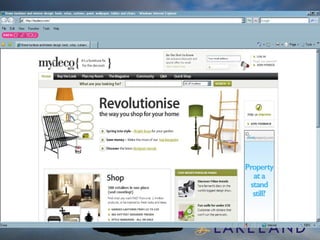
Digital Lakeland
Digital Lakeland
Managing Marketing Investment Customers Campaigns Brand equity
The customer database is the foundation of our business Essential data for a modern home shopping business: Consistent and persistent customer ID recognised across channels Customer product transactions at item level Payment records Address details & associated address level profiling data Communications history (inbound & outbound) including response attributes Some summarisations of detail to aid analysis efficiency Reporting, data mining & predictive modelling capability
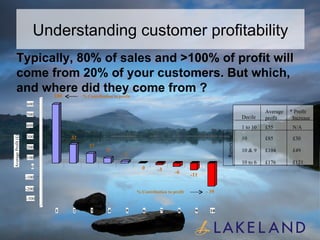
Understanding customer profitability Typically, 80% of sales and >100% of profit will come from 20% of your customers. But which, and where did they come from ? Average Profit (£) 1 2 3 4 5 6 7 8 9 10 100 - 39 32 17 8 3 0 -3 -6 -11 % Contribution to profit % Contribution to profit 10 £30 £85 10 & 9 £49 £104 10 to 6 £121 £176 Decile * Profit Increase Average profit Removing 1 to 10 £55 N/A -300 -200 -100 0 100 200 300 400 500 600
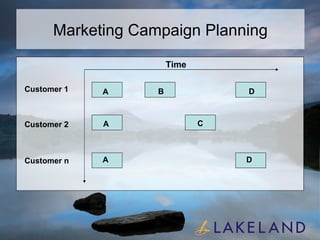
Marketing Campaign Planning Customer 1 Customer 2 Customer n Time A A A B C D D
Testing, testing, 1, 2, n Test “hold out groups” Test segmenting messages Test channels/techniques that don’t work – yet Test products Test creative ideas Test relationships between creative & product Test, test & test again …
For more, much more, on this … See Kevin Hillstrom’s blog at: http://minethatdata.blogspot.com/
 
 
Three shifting tectonic plates Online moves from computers TV moves online Customers participate
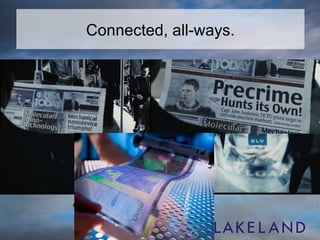
Connected, all-ways.
Sourcing & Ranging +  Service + Marketing + Pricing + Presentation + Systems + Organisation  = Radical Change
Sourcing & Ranging
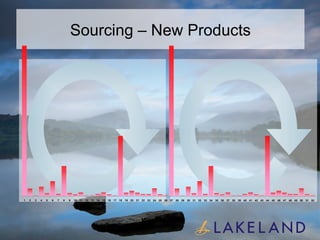
Sourcing – New Products Week Number 1 2 3 4 5 6 7 8 9 10 11 12 13 14 15 16 17 18 19 20 21 22 23 24 25 26 27 28 29 30 31 32 33 34 35 36 37 38 39 40 41 42 43 44 45 46 47 48 49 50 51 52
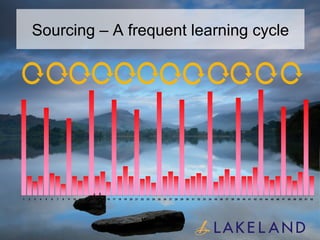
Sourcing – A frequent learning cycle Week Number
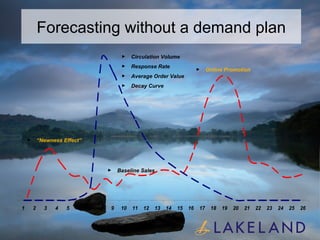
Forecasting without a demand plan Circulation Volume Response Rate Average Order Value Decay Curve “ Newness Effect” Baseline Sales Online Promotion
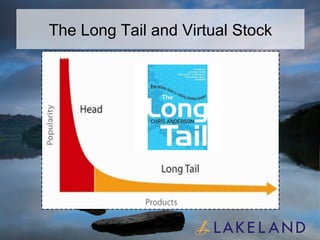
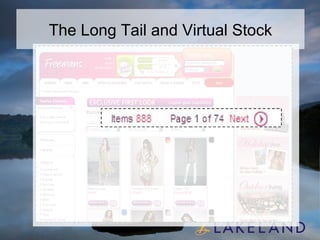
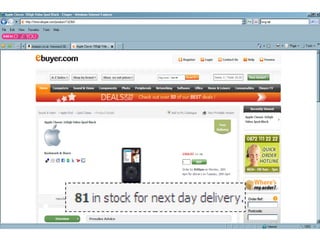
The Long Tail and Virtual Stock
 
So … How do we break out of seasonally orientated planning cycles? How do merchandisers plan & buy stock levels?  How do we prevent customers being confounded by choice? How do connect our supply chain to our customer systems in order to provide the customer with specific delivery promises?
Service
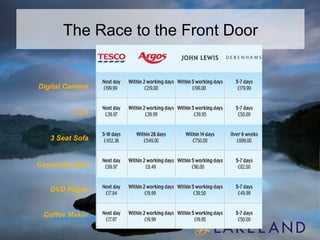
The Race to the Front Door Digital Camera Iron 3 Seat Sofa Casserole Dish DVD Player Coffee Maker
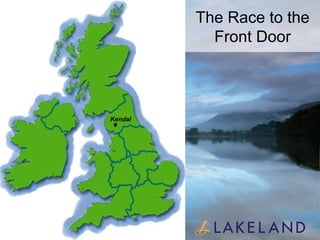
The Race to the Front Door Kendal
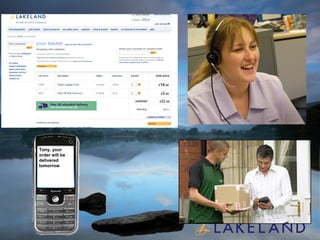
Tony, your order will be delivered tomorrow
Customer Service
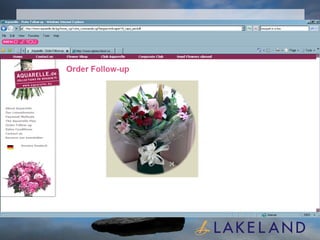
So … So do we make specific, time bound, delivery promises which are a function of where the customer is and what they are ordering? How do we provide real time status updates on orders across multiple channels? How do we provide customers with control over how we communicate with them, particularly over order & payment status?
Marketing
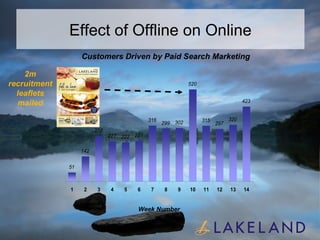
Effect of Offline on Online Customers Driven by Paid Search Marketing Week Number 2m recruitment leaflets mailed
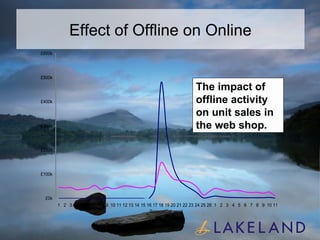
Effect of Offline on Online The impact of offline activity on unit sales in the web shop.
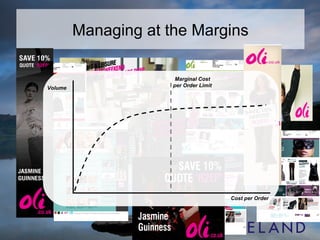
Managing at the Margins Volume Cost per Order Marginal Cost per Order Limit
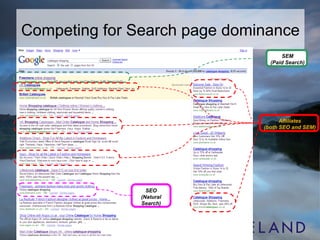
Competing for Search page dominance SEM (Paid Search) SEO (Natural Search) Affiliates (both SEO and SEM)
Goal-hanger?
 
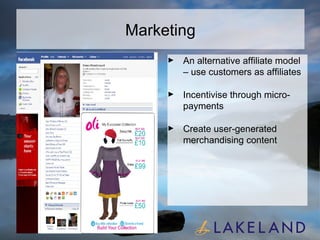
Marketing An alternative affiliate model – use customers as affiliates Incentivise through micro-payments Create user-generated merchandising content
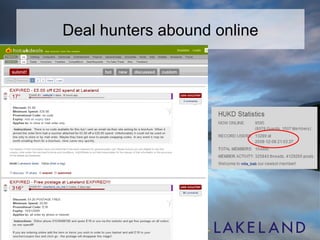
Deal hunters abound online
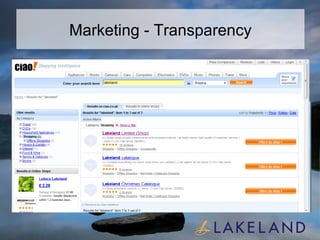
Marketing - Transparency
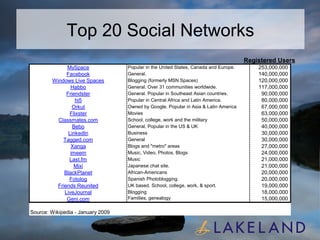
Top 20 Social Networks Registered Users
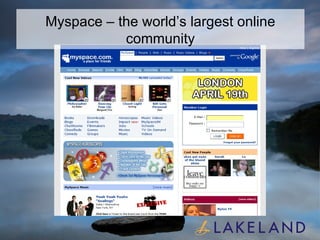
Myspace – the world’s largest online community
Social networks also inhabit virtual worlds e.g. Habbo Hotel & Second Life’s millions of ‘residents’
So … How do we allocate funds to marketing activity when cause and effect is becoming harder and harder to discern? Should expertise in digital marketing be concentrated in a specialist E-Commerce team, or part of a Brand Marketing function? How do we ensure that our relationship with affiliates is a positive one? How much do we attempt to control the reputation of our brands?
Pricing
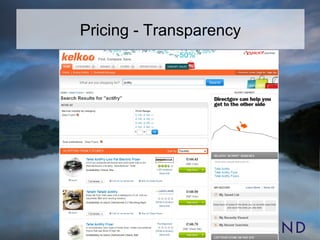
Pricing - Transparency
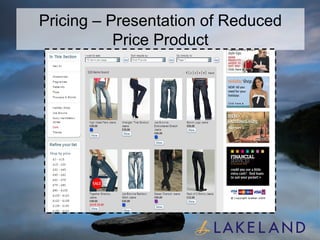
Pricing – Presentation of Reduced Price Product
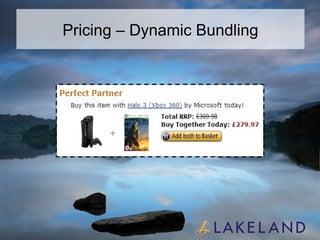
Pricing – Dynamic Bundling
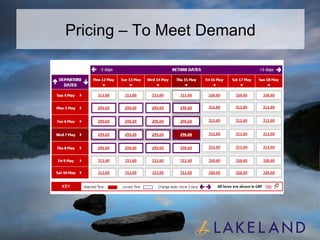
Pricing – To Meet Demand
So … How do manage the mix of reduced price and full price activity? How do we, securely, create & control dynamic price promotions? Is there a role for dynamic pricing?
Presentation
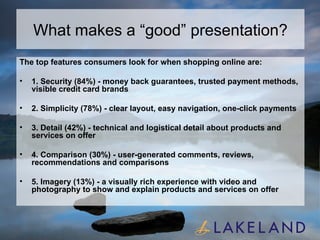
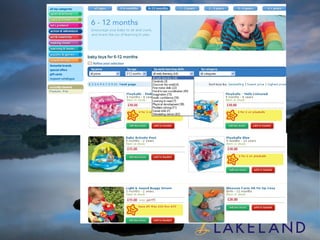
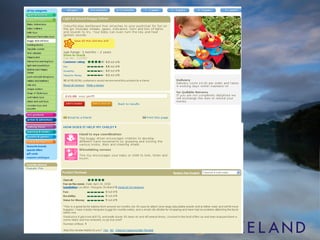
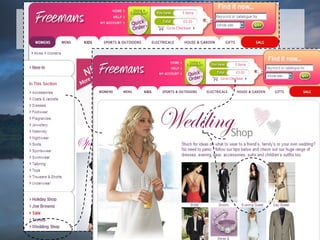
What makes a “good” presentation? The top features consumers look for when shopping online are: 1. Security (84%) - money back guarantees, trusted payment methods, visible credit card brands 2. Simplicity (78%) - clear layout, easy navigation, one-click payments 3. Detail (42%) - technical and logistical detail about products and services on offer 4. Comparison (30%) - user-generated comments, reviews, recommendations and comparisons 5. Imagery (13%) - a visually rich experience with video and photography to show and explain products and services on offer


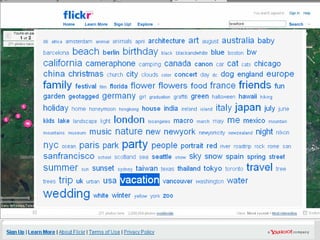
The Value of Product Metadata
User communities – adding & editing
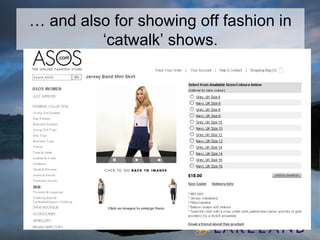
Many Creative Assets for Each Product
…  and also for showing off fashion in ‘catwalk’ shows.
 
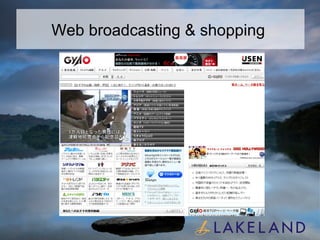
Web broadcasting & shopping
Digital Marketing
So … How do we optimise the journey through the website to maximise conversion to sales? How much investment should we make in creative assets? What is the right balance between form and function when creating interactive experiences? To what extent is a consistant brand experience important? What sort of product attribute data helps us sell? Who decides & who creates this data?
Systems
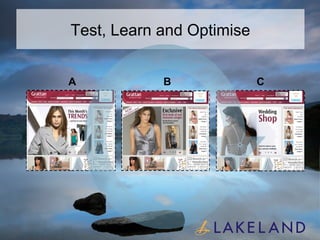
Test, Learn and Optimise A B C
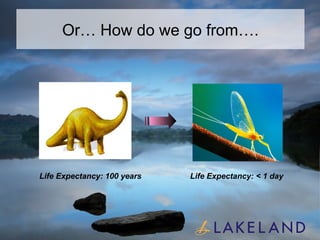
Or… How do we go from…. Life Expectancy: 100 years Life Expectancy: < 1 day
So … How do we create a structured learning environment for e-retailing? Which is better: incremental or radical technical change ? Do we build it ourselves or do we buy package solutions? How do business processes & people need to change to support the new techniques & ways of working?
Summary The execution of the Lakeland brand continues to change The values underpinning the Lakeland brand remain constant The task of extracting maximum return from marketing investment is getting harder. The internet is radically changing business models and the way that we communicate.
thank you for listening www.linkedin.com/in/tonypreedy
 

Presentation To Cumbria Cim

  • 1.
    Presentation to CumbriaCIM Tony Preedy Marketing Director
  • 2.
    Tonight’s talk ChangeLakeland The job of Marketing Director The internet Summary Q&A
  • 3.
  • 4.
  • 5.
  • 6.
  • 7.
  • 8.
  • 9.
  • 10.
    Imagine this scene:it's the school holidays, and three brothers in need of pocket money start helping their dad count polythene bags into packs of 100 in the garage of their Windermere home. Do you think those lads had the faintest idea of where that would lead them? What our father, Alan Rayner, did that day was set my brothers and me on the way to building one of the leading kitchenware and homeware companies in the UK. I'm often asked to divulge the secrets of our success, but to be perfectly honest there are no secrets. We've simply stuck to dad's philosophy, 'always look after the customer and the business will look after itself'. Easier said than done, and even harder still to do well! Nevertheless, by dedicating ourselves to this vision, Lakeland Plastics has blossomed into what Lakeland is today. Not many companies actually make it to 40 years old and we know that without our loyal customers, the story would have been very different. So, on behalf of us all at Lakeland, it is my pleasure to express our heartfelt thanks to every one of you. 'always look after the customer and the business will look after itself'.
  • 11.
    The Lakeland BrandOuter value Core value Inner value
  • 12.
  • 13.
  • 14.
  • 15.
  • 16.
  • 17.
  • 18.
  • 19.
  • 20.
  • 21.
  • 22.
    Managing Marketing InvestmentCustomers Campaigns Brand equity
  • 23.
    The customer databaseis the foundation of our business Essential data for a modern home shopping business: Consistent and persistent customer ID recognised across channels Customer product transactions at item level Payment records Address details & associated address level profiling data Communications history (inbound & outbound) including response attributes Some summarisations of detail to aid analysis efficiency Reporting, data mining & predictive modelling capability
  • 24.
    Understanding customer profitabilityTypically, 80% of sales and >100% of profit will come from 20% of your customers. But which, and where did they come from ? Average Profit (£) 1 2 3 4 5 6 7 8 9 10 100 - 39 32 17 8 3 0 -3 -6 -11 % Contribution to profit % Contribution to profit 10 £30 £85 10 & 9 £49 £104 10 to 6 £121 £176 Decile * Profit Increase Average profit Removing 1 to 10 £55 N/A -300 -200 -100 0 100 200 300 400 500 600
  • 25.
    Marketing Campaign PlanningCustomer 1 Customer 2 Customer n Time A A A B C D D
  • 26.
    Testing, testing, 1,2, n Test “hold out groups” Test segmenting messages Test channels/techniques that don’t work – yet Test products Test creative ideas Test relationships between creative & product Test, test & test again …
  • 27.
    For more, muchmore, on this … See Kevin Hillstrom’s blog at: http://minethatdata.blogspot.com/
  • 28.
  • 29.
  • 30.
    Three shifting tectonicplates Online moves from computers TV moves online Customers participate
  • 31.
  • 32.
    Sourcing & Ranging+ Service + Marketing + Pricing + Presentation + Systems + Organisation = Radical Change
  • 33.
  • 34.
    Sourcing – NewProducts Week Number 1 2 3 4 5 6 7 8 9 10 11 12 13 14 15 16 17 18 19 20 21 22 23 24 25 26 27 28 29 30 31 32 33 34 35 36 37 38 39 40 41 42 43 44 45 46 47 48 49 50 51 52
  • 35.
    Sourcing – Afrequent learning cycle Week Number
  • 36.
    Forecasting without ademand plan Circulation Volume Response Rate Average Order Value Decay Curve “ Newness Effect” Baseline Sales Online Promotion
  • 37.
    The Long Tailand Virtual Stock
  • 38.
    The Long Tailand Virtual Stock
  • 39.
  • 40.
    So … Howdo we break out of seasonally orientated planning cycles? How do merchandisers plan & buy stock levels? How do we prevent customers being confounded by choice? How do connect our supply chain to our customer systems in order to provide the customer with specific delivery promises?
  • 41.
  • 42.
    The Race tothe Front Door Digital Camera Iron 3 Seat Sofa Casserole Dish DVD Player Coffee Maker
  • 43.
    The Race tothe Front Door Kendal
  • 44.
    Tony, your orderwill be delivered tomorrow
  • 45.
  • 46.
    So … Sodo we make specific, time bound, delivery promises which are a function of where the customer is and what they are ordering? How do we provide real time status updates on orders across multiple channels? How do we provide customers with control over how we communicate with them, particularly over order & payment status?
  • 47.
  • 48.
    Effect of Offlineon Online Customers Driven by Paid Search Marketing Week Number 2m recruitment leaflets mailed
  • 49.
    Effect of Offlineon Online The impact of offline activity on unit sales in the web shop.
  • 50.
    Managing at theMargins Volume Cost per Order Marginal Cost per Order Limit
  • 51.
    Competing for Searchpage dominance SEM (Paid Search) SEO (Natural Search) Affiliates (both SEO and SEM)
  • 52.
  • 53.
  • 54.
    Marketing An alternativeaffiliate model – use customers as affiliates Incentivise through micro-payments Create user-generated merchandising content
  • 55.
  • 56.
  • 57.
    Top 20 SocialNetworks Registered Users
  • 58.
    Myspace – theworld’s largest online community
  • 59.
    Social networks alsoinhabit virtual worlds e.g. Habbo Hotel & Second Life’s millions of ‘residents’
  • 60.
    So … Howdo we allocate funds to marketing activity when cause and effect is becoming harder and harder to discern? Should expertise in digital marketing be concentrated in a specialist E-Commerce team, or part of a Brand Marketing function? How do we ensure that our relationship with affiliates is a positive one? How much do we attempt to control the reputation of our brands?
  • 61.
  • 62.
  • 63.
    Pricing – Presentationof Reduced Price Product
  • 64.
  • 65.
    Pricing – ToMeet Demand
  • 66.
    So … Howdo manage the mix of reduced price and full price activity? How do we, securely, create & control dynamic price promotions? Is there a role for dynamic pricing?
  • 67.
  • 68.
    What makes a“good” presentation? The top features consumers look for when shopping online are: 1. Security (84%) - money back guarantees, trusted payment methods, visible credit card brands 2. Simplicity (78%) - clear layout, easy navigation, one-click payments 3. Detail (42%) - technical and logistical detail about products and services on offer 4. Comparison (30%) - user-generated comments, reviews, recommendations and comparisons 5. Imagery (13%) - a visually rich experience with video and photography to show and explain products and services on offer
  • 69.
  • 70.
  • 71.
  • 72.
    The Value ofProduct Metadata
  • 73.
    User communities –adding & editing
  • 74.
    Many Creative Assetsfor Each Product
  • 75.
    … andalso for showing off fashion in ‘catwalk’ shows.
  • 76.
  • 77.
  • 78.
  • 79.
    So … Howdo we optimise the journey through the website to maximise conversion to sales? How much investment should we make in creative assets? What is the right balance between form and function when creating interactive experiences? To what extent is a consistant brand experience important? What sort of product attribute data helps us sell? Who decides & who creates this data?
  • 80.
  • 81.
    Test, Learn andOptimise A B C
  • 82.
    Or… How dowe go from…. Life Expectancy: 100 years Life Expectancy: < 1 day
  • 83.
    So … Howdo we create a structured learning environment for e-retailing? Which is better: incremental or radical technical change ? Do we build it ourselves or do we buy package solutions? How do business processes & people need to change to support the new techniques & ways of working?
  • 84.
    Summary The executionof the Lakeland brand continues to change The values underpinning the Lakeland brand remain constant The task of extracting maximum return from marketing investment is getting harder. The internet is radically changing business models and the way that we communicate.
  • 85.
    thank you forlistening www.linkedin.com/in/tonypreedy
  • 86.

Editor's Notes

  • #2 Thank you for that kind introduction. It’s a pleasure to be here and a privilege to be able to meet some many fellow Cumbrian Marketers. My name is Tony Preedy and I joined Lakeland last year as Marketing Director, so I’m still very much in the early stages of learning the Lakeland business. I will attempt however to share with you a little bit about the Lakeland brand and our approach to doing business. My previous roles were Group Marketing Director for the UK division of Otto UK, the largest Home Shopping company in the world, and prior to the Director of Targeted Marketing at Littlewoods Shop Direct Group, the UK’s largest home Shopping company. I tell you this only so that you know where I’m coming from. My experience has been in the Home Shopping sector, and has concentrated on Direct Marketing. Much of what I say tonight is going to be concentrated on these areas, but I believe that the issues I’m going to talk about will matter to all who’s business is concerned with selling in some form.