7 CRITICALREADINGSTRATEGIES
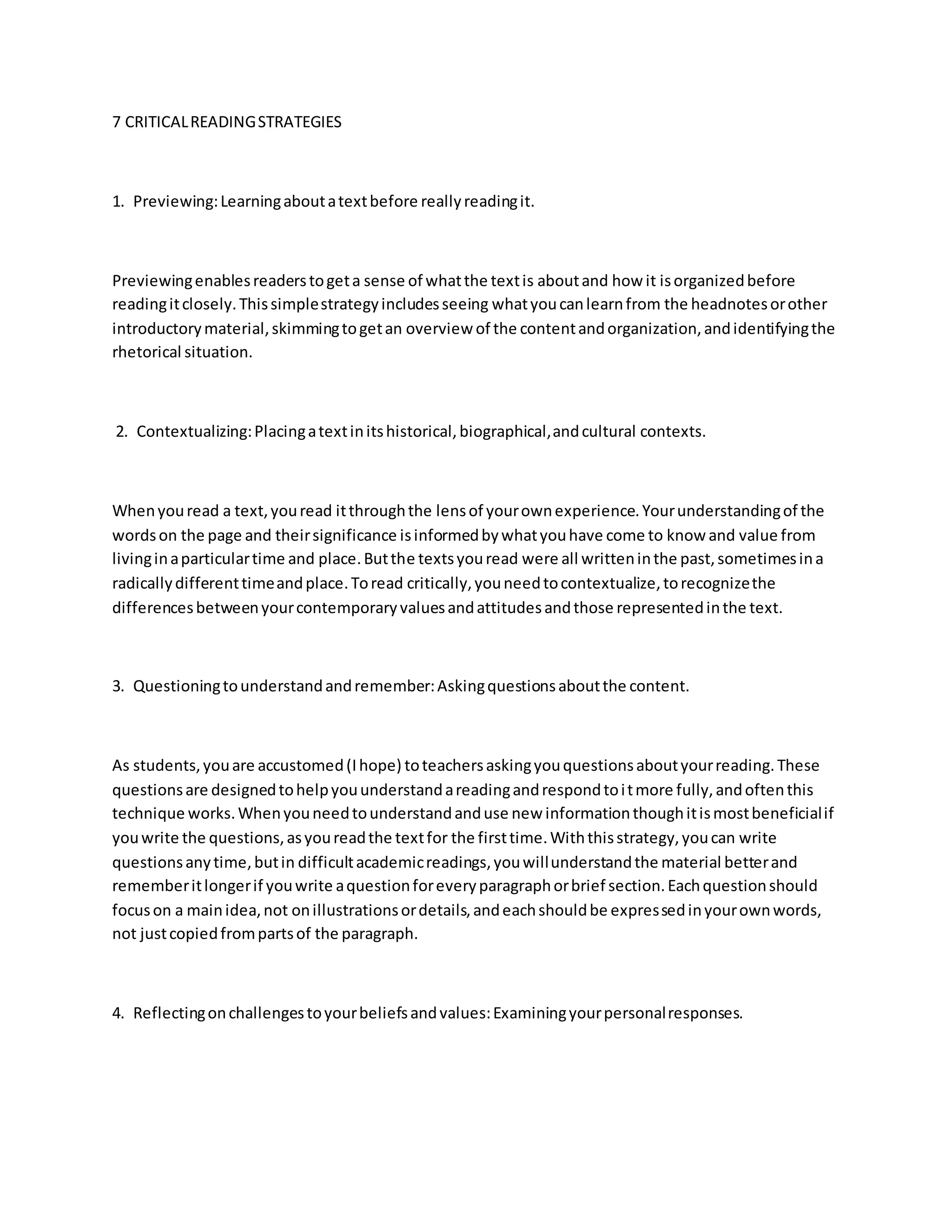
1. Previewing:Learningaboutatextbefore reallyreadingit.
Previewingenablesreaderstogeta sense of whatthe textis aboutand how it isorganizedbefore
readingitclosely.Thissimplestrategyincludesseeing whatyoucanlearnfrom the headnotesorother
introductorymaterial,skimmingtogetan overview of the contentandorganization,andidentifyingthe
rhetorical situation.
2. Contextualizing:Placingatextinitshistorical,biographical,andcultural contexts.
Whenyouread a text,youread itthroughthe lensof yourownexperience.Yourunderstandingof the
wordson the page and theirsignificance isinformedbywhatyouhave come to know and value from
livinginaparticulartime and place.Butthe textsyouread were all writteninthe past,sometimesina
radicallydifferenttimeandplace.Toread critically,youneedtocontextualize,torecognizethe
differencesbetweenyourcontemporaryvaluesandattitudesandthose representedinthe text.
3. Questioningtounderstandandremember:Askingquestionsaboutthe content.
As students,youare accustomed(Ihope) toteachersaskingyouquestionsaboutyourreading.These
questionsare designedtohelpyouunderstandareadingandrespondtoitmore fully,andoftenthis
technique works.Whenyouneedtounderstandanduse new informationthoughitismostbeneficialif
youwrite the questions,asyoureadthe textfor the firsttime.Withthisstrategy,youcan write
questionsanytime,butin difficultacademicreadings,youwillunderstandthe material betterand
rememberitlongerif youwrite aquestionforeveryparagraphorbrief section.Eachquestionshould
focuson a mainidea,not onillustrationsordetails,andeachshouldbe expressedinyourownwords,
not justcopiedfrompartsof the paragraph.
4. Reflectingonchallengestoyourbeliefsandvalues:Examiningyourpersonalresponses.
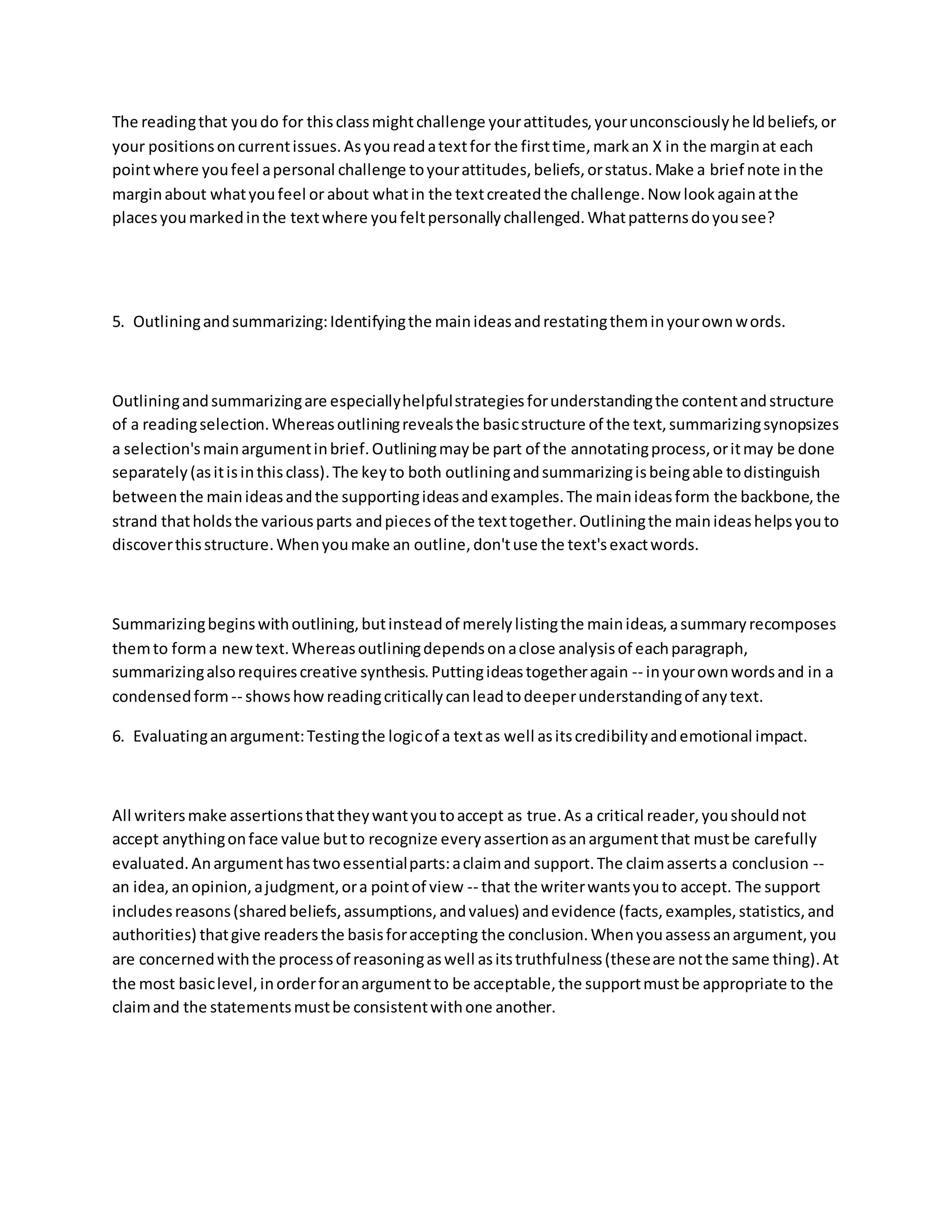
The readingthat youdo for thisclassmightchallenge yourattitudes,yourunconsciouslyheldbeliefs,or
your positionsoncurrentissues.Asyoureadatextfor the firsttime,markan X in the marginat each
pointwhere youfeel apersonal challenge toyourattitudes,beliefs,orstatus.Make a brief note inthe
marginabout whatyoufeel orabout whatin the textcreatedthe challenge.Now lookagainatthe
placesyoumarkedinthe textwhere youfeltpersonallychallenged.Whatpatternsdoyousee?
5. Outliningandsummarizing:Identifyingthe mainideasandrestatingtheminyourownwords.
Outliningandsummarizingare especiallyhelpfulstrategiesforunderstandingthe contentandstructure
of a readingselection.Whereasoutliningrevealsthe basicstructure of the text,summarizingsynopsizes
a selection'smainargumentinbrief.Outliningmaybe part of the annotatingprocess,oritmay be done
separately(asitisinthisclass).The keyto both outliningandsummarizingisbeingable todistinguish
betweenthe mainideasandthe supportingideasandexamples.The mainideasform the backbone,the
strand thatholdsthe variousparts andpiecesof the texttogether.Outliningthe mainideashelpsyouto
discoverthisstructure.Whenyoumake an outline,don'tuse the text'sexactwords.
Summarizingbeginswithoutlining,butinsteadof merelylistingthe mainideas,asummaryrecomposes
themto forma newtext.Whereasoutliningdependsonaclose analysisof eachparagraph,
summarizingalsorequirescreative synthesis.Puttingideastogetheragain -- inyourownwordsand in a
condensedform-- showshowreadingcriticallycanleadtodeeperunderstandingof anytext.
6. Evaluatinganargument:Testingthe logicof a textas well asitscredibilityandemotional impact.
All writersmake assertionsthattheywantyoutoaccept as true.As a critical reader,youshouldnot
accept anythingonface value butto recognize everyassertionasanargumentthat mustbe carefully
evaluated.Anargumenthastwoessentialparts:aclaimand support.The claimassertsa conclusion --
an idea, anopinion,ajudgment,ora pointof view -- that the writerwantsyouto accept. The support
includesreasons(sharedbeliefs,assumptions,andvalues) andevidence (facts,examples,statistics,and
authorities) thatgive readersthe basisforaccepting the conclusion.Whenyouassessanargument,you
are concernedwiththe processof reasoningaswell asitstruthfulness(theseare notthe same thing).At
the most basiclevel,inorderforanargumentto be acceptable,the supportmustbe appropriate to the
claimand the statementsmustbe consistentwithone another.
7. Comparingandcontrastingrelatedreadings:Exploringlikenessesanddifferencesbetweentextsto
understandthembetter.
Many of the authorswe read are concernedwiththe same issuesorquestions,butapproachhowto
discussthemindifferentways.Fittingatextintoanongoingdialectichelpsincreaseunderstandingof
whyan author approacheda particularissue orquestioninthe wayhe or she did.

7 critical reading strategies

  • 1.
    7 CRITICALREADINGSTRATEGIES 1. Previewing:Learningaboutatextbeforereallyreadingit. Previewingenablesreaderstogeta sense of whatthe textis aboutand how it isorganizedbefore readingitclosely.Thissimplestrategyincludesseeing whatyoucanlearnfrom the headnotesorother introductorymaterial,skimmingtogetan overview of the contentandorganization,andidentifyingthe rhetorical situation. 2. Contextualizing:Placingatextinitshistorical,biographical,andcultural contexts. Whenyouread a text,youread itthroughthe lensof yourownexperience.Yourunderstandingof the wordson the page and theirsignificance isinformedbywhatyouhave come to know and value from livinginaparticulartime and place.Butthe textsyouread were all writteninthe past,sometimesina radicallydifferenttimeandplace.Toread critically,youneedtocontextualize,torecognizethe differencesbetweenyourcontemporaryvaluesandattitudesandthose representedinthe text. 3. Questioningtounderstandandremember:Askingquestionsaboutthe content. As students,youare accustomed(Ihope) toteachersaskingyouquestionsaboutyourreading.These questionsare designedtohelpyouunderstandareadingandrespondtoitmore fully,andoftenthis technique works.Whenyouneedtounderstandanduse new informationthoughitismostbeneficialif youwrite the questions,asyoureadthe textfor the firsttime.Withthisstrategy,youcan write questionsanytime,butin difficultacademicreadings,youwillunderstandthe material betterand rememberitlongerif youwrite aquestionforeveryparagraphorbrief section.Eachquestionshould focuson a mainidea,not onillustrationsordetails,andeachshouldbe expressedinyourownwords, not justcopiedfrompartsof the paragraph. 4. Reflectingonchallengestoyourbeliefsandvalues:Examiningyourpersonalresponses.
  • 2.
    The readingthat youdofor thisclassmightchallenge yourattitudes,yourunconsciouslyheldbeliefs,or your positionsoncurrentissues.Asyoureadatextfor the firsttime,markan X in the marginat each pointwhere youfeel apersonal challenge toyourattitudes,beliefs,orstatus.Make a brief note inthe marginabout whatyoufeel orabout whatin the textcreatedthe challenge.Now lookagainatthe placesyoumarkedinthe textwhere youfeltpersonallychallenged.Whatpatternsdoyousee? 5. Outliningandsummarizing:Identifyingthe mainideasandrestatingtheminyourownwords. Outliningandsummarizingare especiallyhelpfulstrategiesforunderstandingthe contentandstructure of a readingselection.Whereasoutliningrevealsthe basicstructure of the text,summarizingsynopsizes a selection'smainargumentinbrief.Outliningmaybe part of the annotatingprocess,oritmay be done separately(asitisinthisclass).The keyto both outliningandsummarizingisbeingable todistinguish betweenthe mainideasandthe supportingideasandexamples.The mainideasform the backbone,the strand thatholdsthe variousparts andpiecesof the texttogether.Outliningthe mainideashelpsyouto discoverthisstructure.Whenyoumake an outline,don'tuse the text'sexactwords. Summarizingbeginswithoutlining,butinsteadof merelylistingthe mainideas,asummaryrecomposes themto forma newtext.Whereasoutliningdependsonaclose analysisof eachparagraph, summarizingalsorequirescreative synthesis.Puttingideastogetheragain -- inyourownwordsand in a condensedform-- showshowreadingcriticallycanleadtodeeperunderstandingof anytext. 6. Evaluatinganargument:Testingthe logicof a textas well asitscredibilityandemotional impact. All writersmake assertionsthattheywantyoutoaccept as true.As a critical reader,youshouldnot accept anythingonface value butto recognize everyassertionasanargumentthat mustbe carefully evaluated.Anargumenthastwoessentialparts:aclaimand support.The claimassertsa conclusion -- an idea, anopinion,ajudgment,ora pointof view -- that the writerwantsyouto accept. The support includesreasons(sharedbeliefs,assumptions,andvalues) andevidence (facts,examples,statistics,and authorities) thatgive readersthe basisforaccepting the conclusion.Whenyouassessanargument,you are concernedwiththe processof reasoningaswell asitstruthfulness(theseare notthe same thing).At the most basiclevel,inorderforanargumentto be acceptable,the supportmustbe appropriate to the claimand the statementsmustbe consistentwithone another.
  • 3.
    7. Comparingandcontrastingrelatedreadings:Exploringlikenessesanddifferencesbetweentextsto understandthembetter. Many ofthe authorswe read are concernedwiththe same issuesorquestions,butapproachhowto discussthemindifferentways.Fittingatextintoanongoingdialectichelpsincreaseunderstandingof whyan author approacheda particularissue orquestioninthe wayhe or she did.