














644H and 644H MH
Loader
Operation and Tests
TECHNICAL MANUAL
644H and 644H MH Loader
Operation and Test
TM1637 15JAN04 (ENGLISH)
For complete service information also see:
644H and 644H MH Loader Operation and
Test . . . . . . . . . . . . . . . . . . . . . . . . . . . . . . . . TM1637
644H and 644H MH Loader Repair . . . . . . . . TM1638
8.1 L Engine Repair. . . . . . . . . . . . . . . . . . . . CTM86
6.8 L and 8.1 L Engine Level 3 Electronic
Fuel Systems with Bosch In-Line Pump . . . CTM134
8.1 L Engine Level 9 Electronic Fuel
System With High Pressure Common
Rail . . . . . . . . . . . . . . . . . . . . . . . . . . . . . . . . . CTM255
Alternators and Starting Motors. . . . . . . . . . CTM77
TeamMate III Axles . . . . . . . . . . . . . . . . . . . CTM150
Worldwide Construction
And Forestry Division
LITHO IN U.S.A.
TM1637 (15JAN04) 644H and 644H MH Loader
011504
PN=2
Foreword
This manual is written for an experienced technician.
Essential tools required in performing certain service work
are identified in this manual and are recommended for
use.
Live with safety: Read the safety messages in the
introduction of this manual and the cautions presented
throughout the text of the manual.
This is the safety-alert symbol. When you see this
symbol on the machine or in this manual, be alert to the
potential for personal injury.
Technical manuals are divided in two parts: repair and
operation and tests. Repair sections tell how to repair the
components. Operation and tests sections help you
identify the majority of routine failures quickly.
Information is organized in groups for the various
components requiring service instruction. At the beginning
of each group are summary listings of all applicable
essential tools, service equipment and tools, other
materials needed to do the job, service parts kits,
specifications, wear tolerances, and torque values.
Technical Manuals are concise guides for specific
machines. They are on-the-job guides containing only the
vital information needed for diagnosis, analysis, testing,
and repair.
Fundamental service information is available from other
sources covering basic theory of operation, fundamentals
of troubleshooting, general maintenance, and basic type
of failures and their causes.
TX,INTR,DU2141 –19–22MAR97–1/1
Introduction
TM1637 (15JAN04) 644H and 644H MH Loader
011504
PN=2
Introduction
TM1637 (15JAN04) 644H and 644H MH Loader
011504
PN=3
Technical Information Feedback Form
We need your help to continually improve our technical
publications. Please copy this page and FAX or mail your
comments, ideas and improvements.
SEND TO: John Deere Dubuque Works
P.O. Box 538
Attn: Publications Supervisor, Dept. 303
Dubuque, IA 52004-0538
FAX NUMBER: 563-589-5800
Ideas, Comments (Please State Page Number):
OVERALL, how would you rate the quality of this publication? (Check one)
Poor Fair Good Very Good Excellent
1 2 3 4 5 6 7 8 9 10
Company Name:
Technician Name:
Address:
Phone:
Fax No.:
Dealer Acct. No.:
THANK YOU!
TX,TM,FAX –19–03JUL01–1/1
Introduction
TM1637 (15JAN04) 644H and 644H MH Loader
011504
PN=4
i
TM1637 (15JAN04) 644H and 644H MH Loader
011504
PN=1
SECTION 9000—General Information
Group 01—Safety Information
SECTION 9005—Operational Checkout Procedure
Group 10—Operational Checkout Procedure
SECTION 9010—Engine
Group 05—Theory Of Operation
Group 15—Diagnostic Information
Group 20—Adjustments
Group 25—Tests
SECTION 9015—Electrical System
Group 05—System Information
Group 10—System Diagrams
Group 15—Sub-System Diagnostics
Group 20—References
SECTION 9020—Power Train
Group 05—Theory Of Operation
Group 15—Diagnostic Information
Group 20—Adjustments
Group 25—Tests
SECTION 9025—Hydraulic System
Group 05—Theory Of Operation
Group 15—Diagnostic Information
Group 20—Adjustments
Group 25—Test
SECTION 9031—Heating And A/C
Group 05—Theory Of Operation
Group 15—Diagnostic Information
Group 25—Tests
All information, illustrations and specifications in this manual are based on
9000
9005
9010
9015
9020
9025
9031
INDX
Contents
i
TM1637 (15JAN04) 644H and 644H MH Loader
011504
PN=1
the latest information available at the time of publication. The right is
reserved to make changes at any time without notice.
COPYRIGHT ©
2004
DEERE & COMPANY
Moline, Illinois
All rights reserved
A John Deere ILLUSTRUCTION
Manual
Previous Editions
Copyright ©
1999, 2000, 2001
ii
TM1637 (15JAN04) 644H and 644H MH Loader
011504
PN=2
Contents
9000
9005
9010
9015
9020
9025
9031
INDX
9000-1
TM1637 (15JAN04) 644H and 644H MH Loader
011504
PN=1
Section 9000
General Information
Contents
Page Page
Group 01—Safety Information
4WD Loader Safety Features ......................... 9000-01-1
Recognize Safety Information.......................... 9000-01-2
Understand Signal Words................................ 9000-01-2
Follow Safety Instructions ............................... 9000-01-2
Avoid Injury from Rollover Accidents
- -------------------------------- Wear Your Seat
Belt---------------------------------- Do Not
Attempt to Jump Clear of Tipping
Machine—Serious or Fatal Crushing
Injuries Will Result --------------------------------
Machine Will Tip Over Faster Than You
Can Jump Free ............................................ 9000-01-3
Avoid Injury from Backover Accidents
- ------------------------------------ Before Moving
Machine, Be Sure All Persons are Clear of
Area---------------------------------------Always Be
Alert for Bystanders Moving into the Work
Area. Use Horn or Other Signal to Warn
Bystanders Before Moving Machine
- ------------------------------------ When Using a
Signal Person, Keep Person in View at all
Times. Be Sure Signal Person is Clear
Before Backing Up....................................... 9000-01-4
Avoid Injury from Rollaway Accidents
To Prevent
Rollaway, Always Make Sure Machine is
Properly Secured Before Leaving
Operator’s Seat
Death or Serious Injury May Result if
You Attempt to Mount or Stop a Moving
Machine........................................................ 9000-01-5
Inspect Machine............................................... 9000-01-5
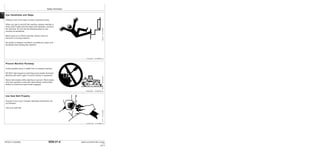
Use Handholds and Steps .............................. 9000-01-6
Prevent Machine Runaway ............................. 9000-01-6
Use Seat Belt Properly.................................... 9000-01-6
Maintain Seat Belt............................................ 9000-01-7
Secondary Exits ............................................... 9000-01-7
Travel Safely.................................................... 9000-01-8
Drive Machine Safely....................................... 9000-01-8
Operate Machine with Caution ........................ 9000-01-9
Operating on Slopes ........................................ 9000-01-9
Carrying Loads............................................... 9000-01-10
Avoid Power Lines......................................... 9000-01-10
Beware of Exhaust Fumes............................ 9000-01-10
Keep Riders Off Machine.............................. 9000-01-11
Handle Fuel Safely—Avoid Fires...................9000-01-11
Prepare for Emergencies...............................9000-01-11
Handle Starting Fluid Safely..........................9000-01-12
Clean Trash from Machine ............................ 9000-01-12
Protect Against Flying Debris ........................9000-01-12
Wear Protective Clothing ............................... 9000-01-13
Protect Against Noise .................................... 9000-01-13
Handle Chemical Products Safely.................9000-01-13
Use Safety Lights and Devices .....................9000-01-14
Keep ROPS Installed Properly ...................... 9000-01-14
Warn Others of Service Work ........................ 9000-01-15
Practice Safe Maintenance............................ 9000-01-16
Support Machine Properly ............................. 9000-01-16
Remove Paint Before Welding or
Heating........................................................ 9000-01-17
Avoid Heating Near Pressurized Fluid
Lines............................................................ 9000-01-17
Avoid High-Pressure Fluids ...........................9000-01-18
Clean the Machine Regularly ........................ 9000-01-18
Service Cooling System Safely .....................9000-01-19
Store Attachments Safely .............................. 9000-01-19
Dispose of Waste Properly ............................9000-01-19
9000
9000-2
TM1637 (15JAN04) 644H and 644H MH Loader
011504
PN=2
Contents
9000
011504
PN=9
TM1637 (15JAN04) 9000-01-1 644H and 644H MH Loader
Group 01
Safety Information
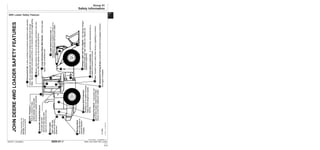
4WD Loader Safety Features
9000
01
1
TX,05,JC2303 –19–09NOV98–1/1
T111699
–19–04NOV98
9000-01-2
TM1637 (15JAN04) 644H and 644H MH Loader
011504
PN=10
9000
01
2
Recognize Safety Information
This is a safety-alert symbol. When you see this symbol
on your machine or in this manual, be alert to the
potential for personal injury.
Follow recommended precautions and safe operating
practices.
DX,ALERT –19–29SEP98–1/1
Safety Information
Understand Signal Words
A signal word—DANGER, WARNING, or CAUTION—is
used with the safety-alert symbol. DANGER identifies the
most serious hazards.
DANGER or WARNING safety signs are located near
specific hazards. General precautions are listed on
CAUTION safety signs. CAUTION also calls attention to
safety messages in this manual.
DX,SIGNAL –19–03MAR93–1/1
Follow Safety Instructions
Carefully read all safety messages in this manual and on
your machine safety signs. Keep safety signs in good
condition. Replace missing or damaged safety signs. Be
sure new equipment components and repair parts include
the current safety signs. Replacement safety signs are
available from your John Deere dealer.
Learn how to operate the machine and how to use
controls properly. Do not let anyone operate without
instruction.
Keep your machine in proper working condition.
Unauthorized modifications to the machine may impair the
function and/or safety and affect machine life.
If you do not understand any part of this manual and need
assistance, contact your John Deere dealer.
DX,READ –19–03MAR93–1/1
TS201
–UN–23AUG88
TS187
–19–30SEP88
T81389
–UN–07DEC88
Safety Information
9000-01-3
TM1637 (15JAN04) 644H and 644H MH Loader
011504
PN=11
T7242EA
–19–22FEB90
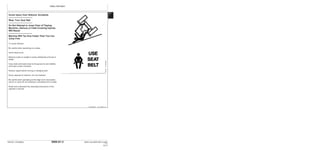
Avoid Injury from Rollover Accidents
--------------------------------
Wear Your Seat Belt
--------------------------------
Do Not Attempt to Jump Clear of Tipping
Machine—Serious or Fatal Crushing Injuries
Will Result
--------------------------------
Machine Will Tip Over Faster Than You Can
Jump Free
9000
01
3
To avoid rollovers:
Be careful when operating on a slope.
Avoid sharp turns.
Balance loads so weight is evenly distributed and load is
stable.
Carry tools and loads close to the ground to aid visibility
and lower center of gravity.
Reduce speed before turning or swinging load.
Know capacity of machine. Do not overload.
Be careful when operating at the edge of an excavation,
trench, or drop-off, and loading or unloading from a trailer.
Read and understand the operating instructions in this
operator’s manual.
TX,05,DH1525 –19–21JUN91–1/1
Safety Information
9000-01-4
TM1637 (15JAN04) 644H and 644H MH Loader
011504
PN=12
9000
01
4
TX,05,DH1573 –19–18MAR91–1/1
Avoid Injury from Backover Accidents
------------------------------------
Before Moving Machine, Be Sure All Persons
are Clear of Area
------------------------------------
Always Be Alert for Bystanders Moving into
the Work Area. Use Horn or Other Signal to
Warn Bystanders Before Moving Machine
------------------------------------
When Using a Signal Person, Keep Person in
View at all Times. Be Sure Signal Person is
Clear Before Backing Up
To avoid backover accidents:
Always look around before you back up. Be sure that
everyone is in the clear.
Keep bystanders away from pivot area of an articulated
machine.
Keep reverse warning alarm in working condition, if
equipped.
Use a signal person when backing up if view is
obstructed. Always keep signal person in view.
Learn the meaning of all flags, signs, and markings used
on the job, and who has the responsibility for signaling.
Keep windows, mirrors, and lights clean and in good
condition.
Dust, heavy rain, fog, etc., can reduce visibility. As
visibility decreases, reduce speed and use proper lighting.
Read and understand the operating instructions in this
operator’s manual. T7241AY
–UN–21FEB90
Safety Information
9000-01-5
TM1637 (15JAN04) 644H and 644H MH Loader
011504
PN=13
T7241AZ
–UN–21FEB90
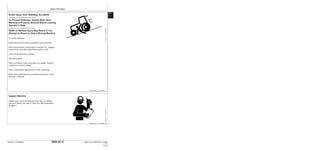
Avoid Injury from Rollaway Accidents
------------------------------------
To Prevent Rollaway, Always Make Sure
Machine is Properly Secured Before Leaving
Operator’s Seat
------------------------------------
Death or Serious Injury May Result if You
Attempt to Mount or Stop a Moving Machine
9000
01
5
To avoid rollaways:
Select level ground when possible to park machine.
Move transmission control lever to neutral "N", engage
neutral lock, and push park brake switch to ON.
Lower all equipment to ground.
Stop the engine.
Block all wheels if you must park on a grade. Position
machine to prevent rolling.
Park a reasonable distance from other machines.
Read and understand the operating instructions in this
operator’s manual.
TX,05,JC1888 –19–18FEB97–1/1
Inspect Machine
Inspect your machine carefully each day by walking
around it before you start it. (See Pre-Start Inspection
Chapter.)
T82,BHSA,CL –19–14MAR90–1/1
T6607AQ
–UN–18OCT88
Safety Information
9000-01-6
TM1637 (15JAN04) 644H and 644H MH Loader
011504
PN=14
9000
01
6
Use Handholds and Steps
Falling is one of the major causes of personal injury.
When you get on and off the machine, always maintain a
three point contact with the steps and handrails, and face
the machine. Do not use the steering wheel or any
controls as handholds.
Never jump on or off the machine. Never mount or
dismount a moving machine.
Be careful of slippery conditions on platforms, steps, and
handrails when leaving the machine.
TX,05,DH553 –19–18MAR91–1/1
Prevent Machine Runaway
Avoid possible injury or death from a runaway machine.
DO NOT start engine by shorting across starter terminals.
Machine will start in gear if normal circuitry is bypassed.
Never start engine while standing on ground. Start engine
only from operator’s seat with transmission control lever
locked in neutral and park brake engaged.
TX,05,DH2281 –19–06OCT92–1/1
Use Seat Belt Properly
Overturns may occur if proper operating instructions are
not followed.
Use your seat belt.
TX,05,JC1044 –19–12JAN96–1/1
TS175
–UN–23AUG88
T6642EB
–UN–20OCT88
T6981AN
–UN–15JUN89
Safety Information
9000-01-7
TM1637 (15JAN04) 644H and 644H MH Loader
011504
PN=15
Secondary Exits
Machines equipped with cabs are equipped with
secondary exits. For additional secondary exit information,
see “Opening Side Window/Secondary Exit” in chapter 10
of this manual.
TX,05,JC1753 –19–09DEC96–1/1
Maintain Seat Belt
9000
01
7
It is important to use the seat belt on ROPS equipped
machines to minimize the chance of injury from an
accident such as an overturn. Keep the seat belt in good
condition.
The complete seat belt assembly should be replaced
after three years of usage, regardless of appearance.
Between replacement intervals:
Carefully examine buckle, webbing, and attaching
hardware.
Be sure that the retractor, if equipped, locks to prevent
belt extension after latching buckle.
Be sure that attaching hardware is in place. Tighten, if
necessary.
Replace the seat belt if it does not operate properly, or if it
is damaged, worn, or deteriorated.
TX,05,JC242 –19–03MAR95–1/1
Safety Information
9000-01-8
TM1637 (15JAN04) 644H and 644H MH Loader
011504
PN=16
9000
01
8
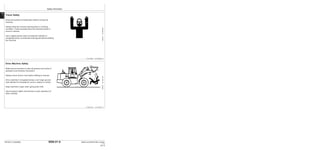
Travel Safely
Know the location of bystanders before moving the
machine.
Always keep the reverse warning alarm in working
condition. It warns people when the machine starts to
move in reverse.
Use a signal person when moving the machine in
congested areas. Coordinate hand signals before starting
the machine.
TX,05,DH496 –19–02AUG89–1/1
Drive Machine Safely
Walk around machine to clear all persons from area of
operation and machine movement.
Always check area to rear before shifting to reverse.
Drive carefully in congested areas, over rough ground,
near ditches for excavations, and on slopes or curves.
Keep machine in gear when going down hills.
Use accessory lights and devices to warn operators of
other vehicles.
TX,05,DH1931 –19–21JUN91–1/1
T6582AS
–UN–25OCT88
T6964AD
–UN–20DEC88
Safety Information
9000-01-9
TM1637 (15JAN04) 644H and 644H MH Loader
011504
PN=17
T6642EF
–UN–18OCT88
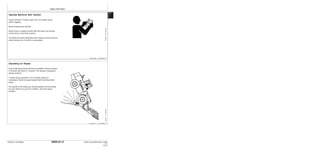
Operate Machine with Caution
9000
01
9
Check location of cables, gas lines, and water mains
before digging.
Keep loading area smooth.
Never lower a loaded bucket with the boom and bucket
control lever in the float position.
Increase the power gradually when pulling a heavy load or
when driving out of a ditch or excavation.
TX,05,DH1932 –19–06JUN91–1/1
Operating on Slopes
Avoid side slope travel whenever possible. Drive up slope
in forward and down in reverse. The danger of tipping is
always present.
In steep slope operation, do not allow engine to
overspeed. Select low gear speed before starting down
slope.
The grade of the slope you should attempt will be limited
by such factors as ground condition, and load being
handled.
TX,05,RR,171 –19–27APR89–1/1
T7050AB
–UN–03AUG89
Safety Information
9000-01-10
TM1637 (15JAN04) 644H and 644H MH Loader
011504
PN=18
9000
01
10
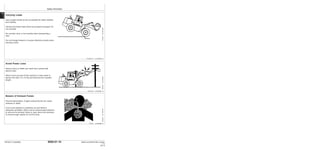
Carrying Loads
Carry loader bucket as low as possible for better stability
and visibility.
Handle only those loads which are properly arranged. Do
not overload.
Do not start, stop, or turn quickly when transporting a
load.
Do not change forward or reverse directions quickly when
carrying a load.
TX,05,RR,172 –19–03JUN92–1/1
Avoid Power Lines
Serious injury or death can result from contact with
electric lines.
Never move any part of the machine or load closer to
electric line than 3 m (10 ft) plus twice the line insulator
length.
02T,05,J18 –19–06JUN91–1/1
Beware of Exhaust Fumes
Prevent asphyxiation. Engine exhaust fumes can cause
sickness or death.
If you must operate in a building, be sure there is
adequate ventilation. Either use an exhaust pipe extension
to remove the exhaust fumes or open doors and windows
to bring enough outside air into the area.
TX,DH,2 –19–09FEB89–1/1
T6458AO
–UN–18OCT88
T6642EG
–UN–20JUN89
T7050AA
–UN–03AUG89
Safety Information
9000-01-11
TM1637 (15JAN04) 644H and 644H MH Loader
011504
PN=19
TS290
–UN–23AUG88
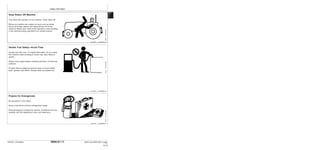
Keep Riders Off Machine
9000
01
11
Only allow the operator on the machine. Keep riders off.
Riders on machine are subject to injury such as being
struck by foreign objects and being thrown off of the
machine. Riders also obstruct the operator’s view resulting
in the machine being operated in an unsafe manner.
DX,RIDER –19–03MAR93–1/1
Handle Fuel Safely—Avoid Fires
Handle fuel with care: it is highly flammable. Do not refuel
the machine while smoking or when near open flame or
sparks.
Always stop engine before refueling machine. Fill fuel tank
outdoors.
Prevent fires by keeping machine clean of accumulated
trash, grease, and debris. Always clean up spilled fuel.
DX,FIRE1 –19–03MAR93–1/1
Prepare for Emergencies
Be prepared if a fire starts.
Keep a first aid kit and fire extinguisher handy.
Keep emergency numbers for doctors, ambulance service,
hospital, and fire department near your telephone.
DX,FIRE2 –19–03MAR93–1/1
TS291
–UN–23AUG88
TS202
–UN–23AUG88
Safety Information
9000-01-12
TM1637 (15JAN04) 644H and 644H MH Loader
011504
PN=20
9000
01
12
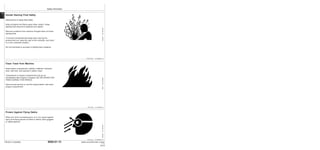
Handle Starting Fluid Safely
Starting fluid is highly flammable.
Keep all sparks and flame away when using it. Keep
starting fluid away from batteries and cables.
Remove container from machine if engine does not need
starting fluid.
To prevent accidental discharge when storing the
pressurized can, keep the cap on the container, and store
in a cool, protected location.
Do not incinerate or puncture a starting fluid container.
TX,05,FF2281 –19–22FEB91–1/1
Clean Trash from Machine
Keep engine compartment, radiator, batteries, hydraulic
lines, fuel tank, and operator’s station clean.
Temperature in engine compartment may go up
immediately after engine is stopped. BE ON GUARD FOR
FIRES DURING THIS PERIOD.
Open access door(s) to cool the engine faster, and clean
engine compartment.
02T,05,J33 –19–13JUN00–1/1
Protect Against Flying Debris
When you drive connecting pins in or out, guard against
injury from flying pieces of metal or debris; wear goggles
or safety glasses.
02T,05,J45 –19–30MAY90–1/1
T6642DK
–UN–18OCT88
TS227
–UN–23AUG88
T6464AV
–UN–18OCT88
Safety Information
9000-01-13
TM1637 (15JAN04) 644H and 644H MH Loader
011504
PN=21
TS206
–UN–23AUG88
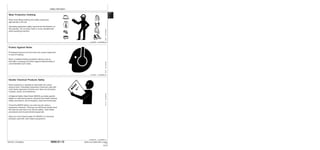
Wear Protective Clothing
9000
01
13
Wear close fitting clothing and safety equipment
appropriate to the job.
Operating equipment safely requires the full attention of
the operator. Do not wear radio or music headphones
while operating machine.
DX,WEAR2 –19–03MAR93–1/1
Protect Against Noise
Prolonged exposure to loud noise can cause impairment
or loss of hearing.
Wear a suitable hearing protective device such as
earmuffs or earplugs to protect against objectionable or
uncomfortable loud noises.
DX,NOISE –19–03MAR93–1/1
Handle Chemical Products Safely
Direct exposure to hazardous chemicals can cause
serious injury. Potentially hazardous chemicals used with
John Deere equipment include such items as lubricants,
coolants, paints, and adhesives.
A Material Safety Data Sheet (MSDS) provides specific
details on chemical products: physical and health hazards,
safety procedures, and emergency response techniques.
Check the MSDS before you start any job using a
hazardous chemical. That way you will know exactly what
the risks are and how to do the job safely. Then follow
procedures and recommended equipment.
(See your John Deere dealer for MSDS’s on chemical
products used with John Deere equipment.)
DX,MSDS,NA –19–03MAR93–1/1
TS1132
–UN–26NOV90
TS207
–UN–23AUG88
Safety Information
9000-01-14
TM1637 (15JAN04) 644H and 644H MH Loader
011504
PN=22
Keep ROPS Installed Properly
A damaged roll-over protective structure (ROPS) should
be replaced, not reused.
The protection offered by ROPS will be impaired if ROPS
is subjected to structural damage, is involved in an
overturn incident, or is in any way altered by welding,
bending, drilling, or cutting.
If ROPS was loosened or removed for any reason, inspect
it carefully before operating the machine again.
To maintain the ROPS:
• Replace missing hardware using correct grade
hardware.
• Check hardware torque.
• Check isolation mounts for damage, looseness or wear;
replace them if necessary.
• Check ROPS for cracks or physical damage.
TX,05,DH1846 –19–14MAY91–1/1
Use Safety Lights and Devices
Operators of machines that travel below normal highway
speeds should take special precautions to avoid collision
with other vehicles.
Before driving on public roads, check state and local laws
that may apply to tractors, self-propelled machines, and
towed equipment. Additional lights, mirrors, SMV
emblems, or reflectors may be required.
Install and use all safety lights and devices necessary to
assure safe operation and local compliance. Keep these
safety items in good condition. Replace missing or
damaged parts immediately.
A—Lights
B—Slow Moving Vehicle Emblem
C—Reflector Tape
D—Reflectors
TX,05,DH1729 –19–26JAN91–1/1
9000
01
14
N36564
–UN–10FEB89
Safety Information
9000-01-15
TM1637 (15JAN04) 644H and 644H MH Loader
011504
PN=23
T7447AO
–19–22APR91
Warn Others of Service Work
9000
01
15
Unexpected machine movement can cause serious injury.
Before performing any work on the machine, attach a "DO
NOT OPERATE" tag to the steering wheel.
TX,05,DH1820 –19–14MAY91–1/1
Safety Information
9000-01-16
TM1637 (15JAN04) 644H and 644H MH Loader
011504
PN=24
9000
01
16
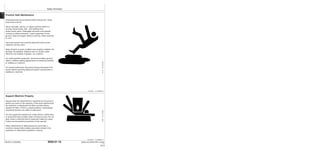
Practice Safe Maintenance
Understand service procedure before doing work. Keep
area clean and dry.
Never lubricate, service, or adjust machine while it is
moving. Keep hands, feet , and clothing from
power-driven parts. Disengage all power and operate
controls to relieve pressure. Lower equipment to the
ground. Stop the engine. Remove the key. Allow machine
to cool.
Securely support any machine elements that must be
raised for service work.
Keep all parts in good condition and properly installed. Fix
damage immediately. Replace worn or broken parts.
Remove any buildup of grease, oil, or debris.
On self-propelled equipment, disconnect battery ground
cable (-) before making adjustments on electrical systems
or welding on machine.
On towed implements, disconnect wiring harnesses from
tractor before servicing electrical system components or
welding on machine.
DX,SERV –19–17FEB99–1/1
Support Machine Properly
Always lower the attachment or implement to the ground
before you work on the machine. If the work requires that
the machine or attachment be lifted, provide secure
support for them. If left in a raised position, hydraulically
supported devices can settle or leak down.
Do not support the machine on cinder blocks, hollow tiles,
or props that may crumble under continuous load. Do not
work under a machine that is supported solely by a jack.
Follow recommended procedures in this manual.
When implements or attachments are used with a
machine, always follow safety precautions listed in the
implement or attachment operator’s manual.
DX,LOWER –19–24FEB00–1/1
TS229
–UN–23AUG88
TS218
–UN–23AUG88
Safety Information
9000-01-17
TM1637 (15JAN04) 644H and 644H MH Loader
011504
PN=25
TS220
–UN–23AUG88
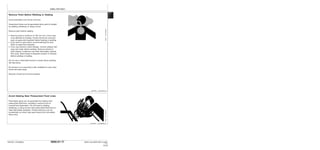
Remove Paint Before Welding or Heating
9000
01
17
Avoid potentially toxic fumes and dust.
Hazardous fumes can be generated when paint is heated
by welding, soldering, or using a torch.
Remove paint before heating:
• Remove paint a minimum of 100 mm (4 in.) from area
to be affected by heating. If paint cannot be removed,
wear an approved respirator before heating or welding.
• If you sand or grind paint, avoid breathing the dust.
Wear an approved respirator.
• If you use solvent or paint stripper, remove stripper with
soap and water before welding. Remove solvent or
paint stripper containers and other flammable material
from area. Allow fumes to disperse at least 15 minutes
before welding or heating.
Do not use a chlorinated solvent in areas where welding
will take place.
Do all work in an area that is well ventilated to carry toxic
fumes and dust away.
Dispose of paint and solvent properly.
DX,PAINT –19–24JUL02–1/1
Avoid Heating Near Pressurized Fluid Lines
Flammable spray can be generated by heating near
pressurized fluid lines, resulting in severe burns to
yourself and bystanders. Do not heat by welding,
soldering, or using a torch near pressurized fluid lines or
other flammable materials. Pressurized lines can be
accidentally cut when heat goes beyond the immediate
flame area.
DX,TORCH –19–03MAR93–1/1
TS953
–UN–15MAY90
Safety Information
9000-01-18
TM1637 (15JAN04) 644H and 644H MH Loader
011504
PN=26
9000
01
18
Avoid High-Pressure Fluids
Escaping fluid under pressure can penetrate the skin
causing serious injury.
Avoid the hazard by relieving pressure before
disconnecting hydraulic or other lines. Tighten all
connections before applying pressure.
Search for leaks with a piece of cardboard. Protect hands
and body from high pressure fluids.
If an accident occurs, see a doctor immediately. Any fluid
injected into the skin must be surgically removed within a
few hours or gangrene may result. Doctors unfamiliar with
this type of injury should reference a knowledgeable
medical source. Such information is available from Deere
& Company Medical Department in Moline, Illinois, U.S.A.
DX,FLUID –19–03MAR93–1/1
Clean the Machine Regularly
Remove any grease, oil, fuel, or debris build-up to avoid
possible injury or machine damage.
High pressure washing [greater than 1379 kpa (13.8 bar)
(200 psi)] can damage freshly painted finishes. Paint
should be allowed to air dry for 30 days minimum after
receipt of machine before cleaning with high pressure.
Use low pressure wash operations until 30 days have
elapsed.
Do not spray oil cooler fins at an angle. Fins may bend.
TX,05,FF2787 –19–27JUL94–1/1
X9811
–UN–23AUG88
T6642EJ
–UN–18OCT88
Safety Information
9000-01-19
TM1637 (15JAN04) 644H and 644H MH Loader
011504
PN=27
TS281
–UN–23AUG88
Service Cooling System Safely
9000
01
19
Explosive release of fluids from pressurized cooling
system can cause serious burns.
Shut off engine. Only remove filler cap when cool enough
to touch with bare hands. Slowly loosen cap to first stop
to relieve pressure before removing completely.
DX,RCAP –19–04JUN90–1/1
Store Attachments Safely
Stored attachments such as dual wheels, cage wheels,
and loaders can fall and cause serious injury or death.
Securely store attachments and implements to prevent
falling. Keep playing children and bystanders away from
storage area.
DX,STORE –19–03MAR93–1/1
Dispose of Waste Properly
Improperly disposing of waste can threaten the
environment and ecology. Potentially harmful waste used
with John Deere equipment include such items as oil, fuel,
coolant, brake fluid, filters, and batteries.
Use leakproof containers when draining fluids. Do not use
food or beverage containers that may mislead someone
into drinking from them.
Do not pour waste onto the ground, down a drain, or into
any water source.
Air conditioning refrigerants escaping into the air can
damage the Earth’s atmosphere. Government regulations
may require a certified air conditioning service center to
recover and recycle used air conditioning refrigerants.
Inquire on the proper way to recycle or dispose of waste
from your local environmental or recycling center, or from
your John Deere dealer.
DX,DRAIN –19–03MAR93–1/1
TS1133
–UN–26NOV90
TS219
–UN–23AUG88
Safety Information
9000-01-20
TM1637 (15JAN04) 644H and 644H MH Loader
011504
PN=28
9000
01
20
9005-1
TM1637 (15JAN04) 644H and 644H MH Loader
011504
PN=1
9005
Page
Group 10—Operational Checkout Procedure
Complete Machine Operational Checkout . . .9005-10-1
Engine Off Checks .......................................... 9005-10-2
Engine Running Checks.................................. 9005-10-5
Monitor Indicator And Gauge Check—Engine
Running ........................................................ 9005-10-6
Brake System, Clutch Cutoff, And Differential
Lock Checks................................................. 9005-10-9
Driving Checks ............................................... 9005-10-16
Hydraulic System Checks ............................. 9005-10-23
Steering System Checks............................... 9005-10-33
Section 9005
Operational Checkout Procedure
Contents
9005-2
TM1637 (15JAN04) 644H and 644H MH Loader
011504
PN=2
Contents
9005

6420 john deere operators maintenance manual

  • 2.
    644H and 644HMH Loader Operation and Tests TECHNICAL MANUAL 644H and 644H MH Loader Operation and Test TM1637 15JAN04 (ENGLISH) For complete service information also see: 644H and 644H MH Loader Operation and Test . . . . . . . . . . . . . . . . . . . . . . . . . . . . . . . . TM1637 644H and 644H MH Loader Repair . . . . . . . . TM1638 8.1 L Engine Repair. . . . . . . . . . . . . . . . . . . . CTM86 6.8 L and 8.1 L Engine Level 3 Electronic Fuel Systems with Bosch In-Line Pump . . . CTM134 8.1 L Engine Level 9 Electronic Fuel System With High Pressure Common Rail . . . . . . . . . . . . . . . . . . . . . . . . . . . . . . . . . CTM255 Alternators and Starting Motors. . . . . . . . . . CTM77 TeamMate III Axles . . . . . . . . . . . . . . . . . . . CTM150 Worldwide Construction And Forestry Division LITHO IN U.S.A.
  • 3.
    TM1637 (15JAN04) 644Hand 644H MH Loader 011504 PN=2 Foreword This manual is written for an experienced technician. Essential tools required in performing certain service work are identified in this manual and are recommended for use. Live with safety: Read the safety messages in the introduction of this manual and the cautions presented throughout the text of the manual. This is the safety-alert symbol. When you see this symbol on the machine or in this manual, be alert to the potential for personal injury. Technical manuals are divided in two parts: repair and operation and tests. Repair sections tell how to repair the components. Operation and tests sections help you identify the majority of routine failures quickly. Information is organized in groups for the various components requiring service instruction. At the beginning of each group are summary listings of all applicable essential tools, service equipment and tools, other materials needed to do the job, service parts kits, specifications, wear tolerances, and torque values. Technical Manuals are concise guides for specific machines. They are on-the-job guides containing only the vital information needed for diagnosis, analysis, testing, and repair. Fundamental service information is available from other sources covering basic theory of operation, fundamentals of troubleshooting, general maintenance, and basic type of failures and their causes. TX,INTR,DU2141 –19–22MAR97–1/1 Introduction
  • 4.
    TM1637 (15JAN04) 644Hand 644H MH Loader 011504 PN=2
  • 5.
    Introduction TM1637 (15JAN04) 644Hand 644H MH Loader 011504 PN=3 Technical Information Feedback Form We need your help to continually improve our technical publications. Please copy this page and FAX or mail your comments, ideas and improvements. SEND TO: John Deere Dubuque Works P.O. Box 538 Attn: Publications Supervisor, Dept. 303 Dubuque, IA 52004-0538 FAX NUMBER: 563-589-5800 Ideas, Comments (Please State Page Number): OVERALL, how would you rate the quality of this publication? (Check one) Poor Fair Good Very Good Excellent 1 2 3 4 5 6 7 8 9 10 Company Name: Technician Name: Address: Phone: Fax No.: Dealer Acct. No.: THANK YOU! TX,TM,FAX –19–03JUL01–1/1
  • 6.
    Introduction TM1637 (15JAN04) 644Hand 644H MH Loader 011504 PN=4
  • 7.
    i TM1637 (15JAN04) 644Hand 644H MH Loader 011504 PN=1 SECTION 9000—General Information Group 01—Safety Information SECTION 9005—Operational Checkout Procedure Group 10—Operational Checkout Procedure SECTION 9010—Engine Group 05—Theory Of Operation Group 15—Diagnostic Information Group 20—Adjustments Group 25—Tests SECTION 9015—Electrical System Group 05—System Information Group 10—System Diagrams Group 15—Sub-System Diagnostics Group 20—References SECTION 9020—Power Train Group 05—Theory Of Operation Group 15—Diagnostic Information Group 20—Adjustments Group 25—Tests SECTION 9025—Hydraulic System Group 05—Theory Of Operation Group 15—Diagnostic Information Group 20—Adjustments Group 25—Test SECTION 9031—Heating And A/C Group 05—Theory Of Operation Group 15—Diagnostic Information Group 25—Tests All information, illustrations and specifications in this manual are based on 9000 9005 9010 9015 9020 9025 9031 INDX Contents
  • 8.
    i TM1637 (15JAN04) 644Hand 644H MH Loader 011504 PN=1 the latest information available at the time of publication. The right is reserved to make changes at any time without notice. COPYRIGHT © 2004 DEERE & COMPANY Moline, Illinois All rights reserved A John Deere ILLUSTRUCTION Manual Previous Editions Copyright © 1999, 2000, 2001
  • 9.
    ii TM1637 (15JAN04) 644Hand 644H MH Loader 011504 PN=2 Contents 9000 9005 9010 9015 9020 9025 9031 INDX
  • 10.
    9000-1 TM1637 (15JAN04) 644Hand 644H MH Loader 011504 PN=1 Section 9000 General Information Contents Page Page Group 01—Safety Information 4WD Loader Safety Features ......................... 9000-01-1 Recognize Safety Information.......................... 9000-01-2 Understand Signal Words................................ 9000-01-2 Follow Safety Instructions ............................... 9000-01-2 Avoid Injury from Rollover Accidents - -------------------------------- Wear Your Seat Belt---------------------------------- Do Not Attempt to Jump Clear of Tipping Machine—Serious or Fatal Crushing Injuries Will Result -------------------------------- Machine Will Tip Over Faster Than You Can Jump Free ............................................ 9000-01-3 Avoid Injury from Backover Accidents - ------------------------------------ Before Moving Machine, Be Sure All Persons are Clear of Area---------------------------------------Always Be Alert for Bystanders Moving into the Work Area. Use Horn or Other Signal to Warn Bystanders Before Moving Machine - ------------------------------------ When Using a Signal Person, Keep Person in View at all Times. Be Sure Signal Person is Clear Before Backing Up....................................... 9000-01-4 Avoid Injury from Rollaway Accidents To Prevent Rollaway, Always Make Sure Machine is Properly Secured Before Leaving Operator’s Seat Death or Serious Injury May Result if You Attempt to Mount or Stop a Moving Machine........................................................ 9000-01-5 Inspect Machine............................................... 9000-01-5 Use Handholds and Steps .............................. 9000-01-6 Prevent Machine Runaway ............................. 9000-01-6 Use Seat Belt Properly.................................... 9000-01-6 Maintain Seat Belt............................................ 9000-01-7 Secondary Exits ............................................... 9000-01-7 Travel Safely.................................................... 9000-01-8 Drive Machine Safely....................................... 9000-01-8 Operate Machine with Caution ........................ 9000-01-9 Operating on Slopes ........................................ 9000-01-9 Carrying Loads............................................... 9000-01-10 Avoid Power Lines......................................... 9000-01-10 Beware of Exhaust Fumes............................ 9000-01-10 Keep Riders Off Machine.............................. 9000-01-11 Handle Fuel Safely—Avoid Fires...................9000-01-11 Prepare for Emergencies...............................9000-01-11 Handle Starting Fluid Safely..........................9000-01-12 Clean Trash from Machine ............................ 9000-01-12 Protect Against Flying Debris ........................9000-01-12 Wear Protective Clothing ............................... 9000-01-13 Protect Against Noise .................................... 9000-01-13 Handle Chemical Products Safely.................9000-01-13 Use Safety Lights and Devices .....................9000-01-14 Keep ROPS Installed Properly ...................... 9000-01-14 Warn Others of Service Work ........................ 9000-01-15 Practice Safe Maintenance............................ 9000-01-16 Support Machine Properly ............................. 9000-01-16 Remove Paint Before Welding or Heating........................................................ 9000-01-17 Avoid Heating Near Pressurized Fluid Lines............................................................ 9000-01-17 Avoid High-Pressure Fluids ...........................9000-01-18 Clean the Machine Regularly ........................ 9000-01-18 Service Cooling System Safely .....................9000-01-19 Store Attachments Safely .............................. 9000-01-19 Dispose of Waste Properly ............................9000-01-19 9000
  • 11.
    9000-2 TM1637 (15JAN04) 644Hand 644H MH Loader 011504 PN=2 Contents 9000
  • 12.
    011504 PN=9 TM1637 (15JAN04) 9000-01-1644H and 644H MH Loader Group 01 Safety Information 4WD Loader Safety Features 9000 01 1 TX,05,JC2303 –19–09NOV98–1/1 T111699 –19–04NOV98
  • 13.
    9000-01-2 TM1637 (15JAN04) 644Hand 644H MH Loader 011504 PN=10 9000 01 2 Recognize Safety Information This is a safety-alert symbol. When you see this symbol on your machine or in this manual, be alert to the potential for personal injury. Follow recommended precautions and safe operating practices. DX,ALERT –19–29SEP98–1/1 Safety Information Understand Signal Words A signal word—DANGER, WARNING, or CAUTION—is used with the safety-alert symbol. DANGER identifies the most serious hazards. DANGER or WARNING safety signs are located near specific hazards. General precautions are listed on CAUTION safety signs. CAUTION also calls attention to safety messages in this manual. DX,SIGNAL –19–03MAR93–1/1 Follow Safety Instructions Carefully read all safety messages in this manual and on your machine safety signs. Keep safety signs in good condition. Replace missing or damaged safety signs. Be sure new equipment components and repair parts include the current safety signs. Replacement safety signs are available from your John Deere dealer. Learn how to operate the machine and how to use controls properly. Do not let anyone operate without instruction. Keep your machine in proper working condition. Unauthorized modifications to the machine may impair the function and/or safety and affect machine life. If you do not understand any part of this manual and need assistance, contact your John Deere dealer. DX,READ –19–03MAR93–1/1 TS201 –UN–23AUG88 TS187 –19–30SEP88 T81389 –UN–07DEC88
  • 14.
    Safety Information 9000-01-3 TM1637 (15JAN04)644H and 644H MH Loader 011504 PN=11 T7242EA –19–22FEB90 Avoid Injury from Rollover Accidents -------------------------------- Wear Your Seat Belt -------------------------------- Do Not Attempt to Jump Clear of Tipping Machine—Serious or Fatal Crushing Injuries Will Result -------------------------------- Machine Will Tip Over Faster Than You Can Jump Free 9000 01 3 To avoid rollovers: Be careful when operating on a slope. Avoid sharp turns. Balance loads so weight is evenly distributed and load is stable. Carry tools and loads close to the ground to aid visibility and lower center of gravity. Reduce speed before turning or swinging load. Know capacity of machine. Do not overload. Be careful when operating at the edge of an excavation, trench, or drop-off, and loading or unloading from a trailer. Read and understand the operating instructions in this operator’s manual. TX,05,DH1525 –19–21JUN91–1/1
  • 15.
    Safety Information 9000-01-4 TM1637 (15JAN04)644H and 644H MH Loader 011504 PN=12 9000 01 4 TX,05,DH1573 –19–18MAR91–1/1 Avoid Injury from Backover Accidents ------------------------------------ Before Moving Machine, Be Sure All Persons are Clear of Area ------------------------------------ Always Be Alert for Bystanders Moving into the Work Area. Use Horn or Other Signal to Warn Bystanders Before Moving Machine ------------------------------------ When Using a Signal Person, Keep Person in View at all Times. Be Sure Signal Person is Clear Before Backing Up To avoid backover accidents: Always look around before you back up. Be sure that everyone is in the clear. Keep bystanders away from pivot area of an articulated machine. Keep reverse warning alarm in working condition, if equipped. Use a signal person when backing up if view is obstructed. Always keep signal person in view. Learn the meaning of all flags, signs, and markings used on the job, and who has the responsibility for signaling. Keep windows, mirrors, and lights clean and in good condition. Dust, heavy rain, fog, etc., can reduce visibility. As visibility decreases, reduce speed and use proper lighting. Read and understand the operating instructions in this operator’s manual. T7241AY –UN–21FEB90
  • 16.
    Safety Information 9000-01-5 TM1637 (15JAN04)644H and 644H MH Loader 011504 PN=13 T7241AZ –UN–21FEB90 Avoid Injury from Rollaway Accidents ------------------------------------ To Prevent Rollaway, Always Make Sure Machine is Properly Secured Before Leaving Operator’s Seat ------------------------------------ Death or Serious Injury May Result if You Attempt to Mount or Stop a Moving Machine 9000 01 5 To avoid rollaways: Select level ground when possible to park machine. Move transmission control lever to neutral "N", engage neutral lock, and push park brake switch to ON. Lower all equipment to ground. Stop the engine. Block all wheels if you must park on a grade. Position machine to prevent rolling. Park a reasonable distance from other machines. Read and understand the operating instructions in this operator’s manual. TX,05,JC1888 –19–18FEB97–1/1 Inspect Machine Inspect your machine carefully each day by walking around it before you start it. (See Pre-Start Inspection Chapter.) T82,BHSA,CL –19–14MAR90–1/1 T6607AQ –UN–18OCT88
  • 17.
    Safety Information 9000-01-6 TM1637 (15JAN04)644H and 644H MH Loader 011504 PN=14 9000 01 6 Use Handholds and Steps Falling is one of the major causes of personal injury. When you get on and off the machine, always maintain a three point contact with the steps and handrails, and face the machine. Do not use the steering wheel or any controls as handholds. Never jump on or off the machine. Never mount or dismount a moving machine. Be careful of slippery conditions on platforms, steps, and handrails when leaving the machine. TX,05,DH553 –19–18MAR91–1/1 Prevent Machine Runaway Avoid possible injury or death from a runaway machine. DO NOT start engine by shorting across starter terminals. Machine will start in gear if normal circuitry is bypassed. Never start engine while standing on ground. Start engine only from operator’s seat with transmission control lever locked in neutral and park brake engaged. TX,05,DH2281 –19–06OCT92–1/1 Use Seat Belt Properly Overturns may occur if proper operating instructions are not followed. Use your seat belt. TX,05,JC1044 –19–12JAN96–1/1 TS175 –UN–23AUG88 T6642EB –UN–20OCT88 T6981AN –UN–15JUN89
  • 18.
    Safety Information 9000-01-7 TM1637 (15JAN04)644H and 644H MH Loader 011504 PN=15 Secondary Exits Machines equipped with cabs are equipped with secondary exits. For additional secondary exit information, see “Opening Side Window/Secondary Exit” in chapter 10 of this manual. TX,05,JC1753 –19–09DEC96–1/1 Maintain Seat Belt 9000 01 7 It is important to use the seat belt on ROPS equipped machines to minimize the chance of injury from an accident such as an overturn. Keep the seat belt in good condition. The complete seat belt assembly should be replaced after three years of usage, regardless of appearance. Between replacement intervals: Carefully examine buckle, webbing, and attaching hardware. Be sure that the retractor, if equipped, locks to prevent belt extension after latching buckle. Be sure that attaching hardware is in place. Tighten, if necessary. Replace the seat belt if it does not operate properly, or if it is damaged, worn, or deteriorated. TX,05,JC242 –19–03MAR95–1/1
  • 19.
    Safety Information 9000-01-8 TM1637 (15JAN04)644H and 644H MH Loader 011504 PN=16 9000 01 8 Travel Safely Know the location of bystanders before moving the machine. Always keep the reverse warning alarm in working condition. It warns people when the machine starts to move in reverse. Use a signal person when moving the machine in congested areas. Coordinate hand signals before starting the machine. TX,05,DH496 –19–02AUG89–1/1 Drive Machine Safely Walk around machine to clear all persons from area of operation and machine movement. Always check area to rear before shifting to reverse. Drive carefully in congested areas, over rough ground, near ditches for excavations, and on slopes or curves. Keep machine in gear when going down hills. Use accessory lights and devices to warn operators of other vehicles. TX,05,DH1931 –19–21JUN91–1/1 T6582AS –UN–25OCT88 T6964AD –UN–20DEC88
  • 20.
    Safety Information 9000-01-9 TM1637 (15JAN04)644H and 644H MH Loader 011504 PN=17 T6642EF –UN–18OCT88 Operate Machine with Caution 9000 01 9 Check location of cables, gas lines, and water mains before digging. Keep loading area smooth. Never lower a loaded bucket with the boom and bucket control lever in the float position. Increase the power gradually when pulling a heavy load or when driving out of a ditch or excavation. TX,05,DH1932 –19–06JUN91–1/1 Operating on Slopes Avoid side slope travel whenever possible. Drive up slope in forward and down in reverse. The danger of tipping is always present. In steep slope operation, do not allow engine to overspeed. Select low gear speed before starting down slope. The grade of the slope you should attempt will be limited by such factors as ground condition, and load being handled. TX,05,RR,171 –19–27APR89–1/1 T7050AB –UN–03AUG89
  • 21.
    Safety Information 9000-01-10 TM1637 (15JAN04)644H and 644H MH Loader 011504 PN=18 9000 01 10 Carrying Loads Carry loader bucket as low as possible for better stability and visibility. Handle only those loads which are properly arranged. Do not overload. Do not start, stop, or turn quickly when transporting a load. Do not change forward or reverse directions quickly when carrying a load. TX,05,RR,172 –19–03JUN92–1/1 Avoid Power Lines Serious injury or death can result from contact with electric lines. Never move any part of the machine or load closer to electric line than 3 m (10 ft) plus twice the line insulator length. 02T,05,J18 –19–06JUN91–1/1 Beware of Exhaust Fumes Prevent asphyxiation. Engine exhaust fumes can cause sickness or death. If you must operate in a building, be sure there is adequate ventilation. Either use an exhaust pipe extension to remove the exhaust fumes or open doors and windows to bring enough outside air into the area. TX,DH,2 –19–09FEB89–1/1 T6458AO –UN–18OCT88 T6642EG –UN–20JUN89 T7050AA –UN–03AUG89
  • 22.
    Safety Information 9000-01-11 TM1637 (15JAN04)644H and 644H MH Loader 011504 PN=19 TS290 –UN–23AUG88 Keep Riders Off Machine 9000 01 11 Only allow the operator on the machine. Keep riders off. Riders on machine are subject to injury such as being struck by foreign objects and being thrown off of the machine. Riders also obstruct the operator’s view resulting in the machine being operated in an unsafe manner. DX,RIDER –19–03MAR93–1/1 Handle Fuel Safely—Avoid Fires Handle fuel with care: it is highly flammable. Do not refuel the machine while smoking or when near open flame or sparks. Always stop engine before refueling machine. Fill fuel tank outdoors. Prevent fires by keeping machine clean of accumulated trash, grease, and debris. Always clean up spilled fuel. DX,FIRE1 –19–03MAR93–1/1 Prepare for Emergencies Be prepared if a fire starts. Keep a first aid kit and fire extinguisher handy. Keep emergency numbers for doctors, ambulance service, hospital, and fire department near your telephone. DX,FIRE2 –19–03MAR93–1/1 TS291 –UN–23AUG88 TS202 –UN–23AUG88
  • 23.
    Safety Information 9000-01-12 TM1637 (15JAN04)644H and 644H MH Loader 011504 PN=20 9000 01 12 Handle Starting Fluid Safely Starting fluid is highly flammable. Keep all sparks and flame away when using it. Keep starting fluid away from batteries and cables. Remove container from machine if engine does not need starting fluid. To prevent accidental discharge when storing the pressurized can, keep the cap on the container, and store in a cool, protected location. Do not incinerate or puncture a starting fluid container. TX,05,FF2281 –19–22FEB91–1/1 Clean Trash from Machine Keep engine compartment, radiator, batteries, hydraulic lines, fuel tank, and operator’s station clean. Temperature in engine compartment may go up immediately after engine is stopped. BE ON GUARD FOR FIRES DURING THIS PERIOD. Open access door(s) to cool the engine faster, and clean engine compartment. 02T,05,J33 –19–13JUN00–1/1 Protect Against Flying Debris When you drive connecting pins in or out, guard against injury from flying pieces of metal or debris; wear goggles or safety glasses. 02T,05,J45 –19–30MAY90–1/1 T6642DK –UN–18OCT88 TS227 –UN–23AUG88 T6464AV –UN–18OCT88
  • 24.
    Safety Information 9000-01-13 TM1637 (15JAN04)644H and 644H MH Loader 011504 PN=21 TS206 –UN–23AUG88 Wear Protective Clothing 9000 01 13 Wear close fitting clothing and safety equipment appropriate to the job. Operating equipment safely requires the full attention of the operator. Do not wear radio or music headphones while operating machine. DX,WEAR2 –19–03MAR93–1/1 Protect Against Noise Prolonged exposure to loud noise can cause impairment or loss of hearing. Wear a suitable hearing protective device such as earmuffs or earplugs to protect against objectionable or uncomfortable loud noises. DX,NOISE –19–03MAR93–1/1 Handle Chemical Products Safely Direct exposure to hazardous chemicals can cause serious injury. Potentially hazardous chemicals used with John Deere equipment include such items as lubricants, coolants, paints, and adhesives. A Material Safety Data Sheet (MSDS) provides specific details on chemical products: physical and health hazards, safety procedures, and emergency response techniques. Check the MSDS before you start any job using a hazardous chemical. That way you will know exactly what the risks are and how to do the job safely. Then follow procedures and recommended equipment. (See your John Deere dealer for MSDS’s on chemical products used with John Deere equipment.) DX,MSDS,NA –19–03MAR93–1/1 TS1132 –UN–26NOV90 TS207 –UN–23AUG88
  • 25.
    Safety Information 9000-01-14 TM1637 (15JAN04)644H and 644H MH Loader 011504 PN=22 Keep ROPS Installed Properly A damaged roll-over protective structure (ROPS) should be replaced, not reused. The protection offered by ROPS will be impaired if ROPS is subjected to structural damage, is involved in an overturn incident, or is in any way altered by welding, bending, drilling, or cutting. If ROPS was loosened or removed for any reason, inspect it carefully before operating the machine again. To maintain the ROPS: • Replace missing hardware using correct grade hardware. • Check hardware torque. • Check isolation mounts for damage, looseness or wear; replace them if necessary. • Check ROPS for cracks or physical damage. TX,05,DH1846 –19–14MAY91–1/1 Use Safety Lights and Devices Operators of machines that travel below normal highway speeds should take special precautions to avoid collision with other vehicles. Before driving on public roads, check state and local laws that may apply to tractors, self-propelled machines, and towed equipment. Additional lights, mirrors, SMV emblems, or reflectors may be required. Install and use all safety lights and devices necessary to assure safe operation and local compliance. Keep these safety items in good condition. Replace missing or damaged parts immediately. A—Lights B—Slow Moving Vehicle Emblem C—Reflector Tape D—Reflectors TX,05,DH1729 –19–26JAN91–1/1 9000 01 14 N36564 –UN–10FEB89
  • 26.
    Safety Information 9000-01-15 TM1637 (15JAN04)644H and 644H MH Loader 011504 PN=23 T7447AO –19–22APR91 Warn Others of Service Work 9000 01 15 Unexpected machine movement can cause serious injury. Before performing any work on the machine, attach a "DO NOT OPERATE" tag to the steering wheel. TX,05,DH1820 –19–14MAY91–1/1
  • 27.
    Safety Information 9000-01-16 TM1637 (15JAN04)644H and 644H MH Loader 011504 PN=24 9000 01 16 Practice Safe Maintenance Understand service procedure before doing work. Keep area clean and dry. Never lubricate, service, or adjust machine while it is moving. Keep hands, feet , and clothing from power-driven parts. Disengage all power and operate controls to relieve pressure. Lower equipment to the ground. Stop the engine. Remove the key. Allow machine to cool. Securely support any machine elements that must be raised for service work. Keep all parts in good condition and properly installed. Fix damage immediately. Replace worn or broken parts. Remove any buildup of grease, oil, or debris. On self-propelled equipment, disconnect battery ground cable (-) before making adjustments on electrical systems or welding on machine. On towed implements, disconnect wiring harnesses from tractor before servicing electrical system components or welding on machine. DX,SERV –19–17FEB99–1/1 Support Machine Properly Always lower the attachment or implement to the ground before you work on the machine. If the work requires that the machine or attachment be lifted, provide secure support for them. If left in a raised position, hydraulically supported devices can settle or leak down. Do not support the machine on cinder blocks, hollow tiles, or props that may crumble under continuous load. Do not work under a machine that is supported solely by a jack. Follow recommended procedures in this manual. When implements or attachments are used with a machine, always follow safety precautions listed in the implement or attachment operator’s manual. DX,LOWER –19–24FEB00–1/1 TS229 –UN–23AUG88 TS218 –UN–23AUG88
  • 28.
    Safety Information 9000-01-17 TM1637 (15JAN04)644H and 644H MH Loader 011504 PN=25 TS220 –UN–23AUG88 Remove Paint Before Welding or Heating 9000 01 17 Avoid potentially toxic fumes and dust. Hazardous fumes can be generated when paint is heated by welding, soldering, or using a torch. Remove paint before heating: • Remove paint a minimum of 100 mm (4 in.) from area to be affected by heating. If paint cannot be removed, wear an approved respirator before heating or welding. • If you sand or grind paint, avoid breathing the dust. Wear an approved respirator. • If you use solvent or paint stripper, remove stripper with soap and water before welding. Remove solvent or paint stripper containers and other flammable material from area. Allow fumes to disperse at least 15 minutes before welding or heating. Do not use a chlorinated solvent in areas where welding will take place. Do all work in an area that is well ventilated to carry toxic fumes and dust away. Dispose of paint and solvent properly. DX,PAINT –19–24JUL02–1/1 Avoid Heating Near Pressurized Fluid Lines Flammable spray can be generated by heating near pressurized fluid lines, resulting in severe burns to yourself and bystanders. Do not heat by welding, soldering, or using a torch near pressurized fluid lines or other flammable materials. Pressurized lines can be accidentally cut when heat goes beyond the immediate flame area. DX,TORCH –19–03MAR93–1/1 TS953 –UN–15MAY90
  • 29.
    Safety Information 9000-01-18 TM1637 (15JAN04)644H and 644H MH Loader 011504 PN=26 9000 01 18 Avoid High-Pressure Fluids Escaping fluid under pressure can penetrate the skin causing serious injury. Avoid the hazard by relieving pressure before disconnecting hydraulic or other lines. Tighten all connections before applying pressure. Search for leaks with a piece of cardboard. Protect hands and body from high pressure fluids. If an accident occurs, see a doctor immediately. Any fluid injected into the skin must be surgically removed within a few hours or gangrene may result. Doctors unfamiliar with this type of injury should reference a knowledgeable medical source. Such information is available from Deere & Company Medical Department in Moline, Illinois, U.S.A. DX,FLUID –19–03MAR93–1/1 Clean the Machine Regularly Remove any grease, oil, fuel, or debris build-up to avoid possible injury or machine damage. High pressure washing [greater than 1379 kpa (13.8 bar) (200 psi)] can damage freshly painted finishes. Paint should be allowed to air dry for 30 days minimum after receipt of machine before cleaning with high pressure. Use low pressure wash operations until 30 days have elapsed. Do not spray oil cooler fins at an angle. Fins may bend. TX,05,FF2787 –19–27JUL94–1/1 X9811 –UN–23AUG88 T6642EJ –UN–18OCT88
  • 30.
    Safety Information 9000-01-19 TM1637 (15JAN04)644H and 644H MH Loader 011504 PN=27 TS281 –UN–23AUG88 Service Cooling System Safely 9000 01 19 Explosive release of fluids from pressurized cooling system can cause serious burns. Shut off engine. Only remove filler cap when cool enough to touch with bare hands. Slowly loosen cap to first stop to relieve pressure before removing completely. DX,RCAP –19–04JUN90–1/1 Store Attachments Safely Stored attachments such as dual wheels, cage wheels, and loaders can fall and cause serious injury or death. Securely store attachments and implements to prevent falling. Keep playing children and bystanders away from storage area. DX,STORE –19–03MAR93–1/1 Dispose of Waste Properly Improperly disposing of waste can threaten the environment and ecology. Potentially harmful waste used with John Deere equipment include such items as oil, fuel, coolant, brake fluid, filters, and batteries. Use leakproof containers when draining fluids. Do not use food or beverage containers that may mislead someone into drinking from them. Do not pour waste onto the ground, down a drain, or into any water source. Air conditioning refrigerants escaping into the air can damage the Earth’s atmosphere. Government regulations may require a certified air conditioning service center to recover and recycle used air conditioning refrigerants. Inquire on the proper way to recycle or dispose of waste from your local environmental or recycling center, or from your John Deere dealer. DX,DRAIN –19–03MAR93–1/1 TS1133 –UN–26NOV90 TS219 –UN–23AUG88
  • 31.
    Safety Information 9000-01-20 TM1637 (15JAN04)644H and 644H MH Loader 011504 PN=28 9000 01 20
  • 32.
    9005-1 TM1637 (15JAN04) 644Hand 644H MH Loader 011504 PN=1 9005 Page Group 10—Operational Checkout Procedure Complete Machine Operational Checkout . . .9005-10-1 Engine Off Checks .......................................... 9005-10-2 Engine Running Checks.................................. 9005-10-5 Monitor Indicator And Gauge Check—Engine Running ........................................................ 9005-10-6 Brake System, Clutch Cutoff, And Differential Lock Checks................................................. 9005-10-9 Driving Checks ............................................... 9005-10-16 Hydraulic System Checks ............................. 9005-10-23 Steering System Checks............................... 9005-10-33 Section 9005 Operational Checkout Procedure Contents
  • 33.
    9005-2 TM1637 (15JAN04) 644Hand 644H MH Loader 011504 PN=2 Contents 9005