6 THINGS TO CONSIDER WHEN
DIGITALIZING
A LABORATORY
digitalization@biosistemika.com
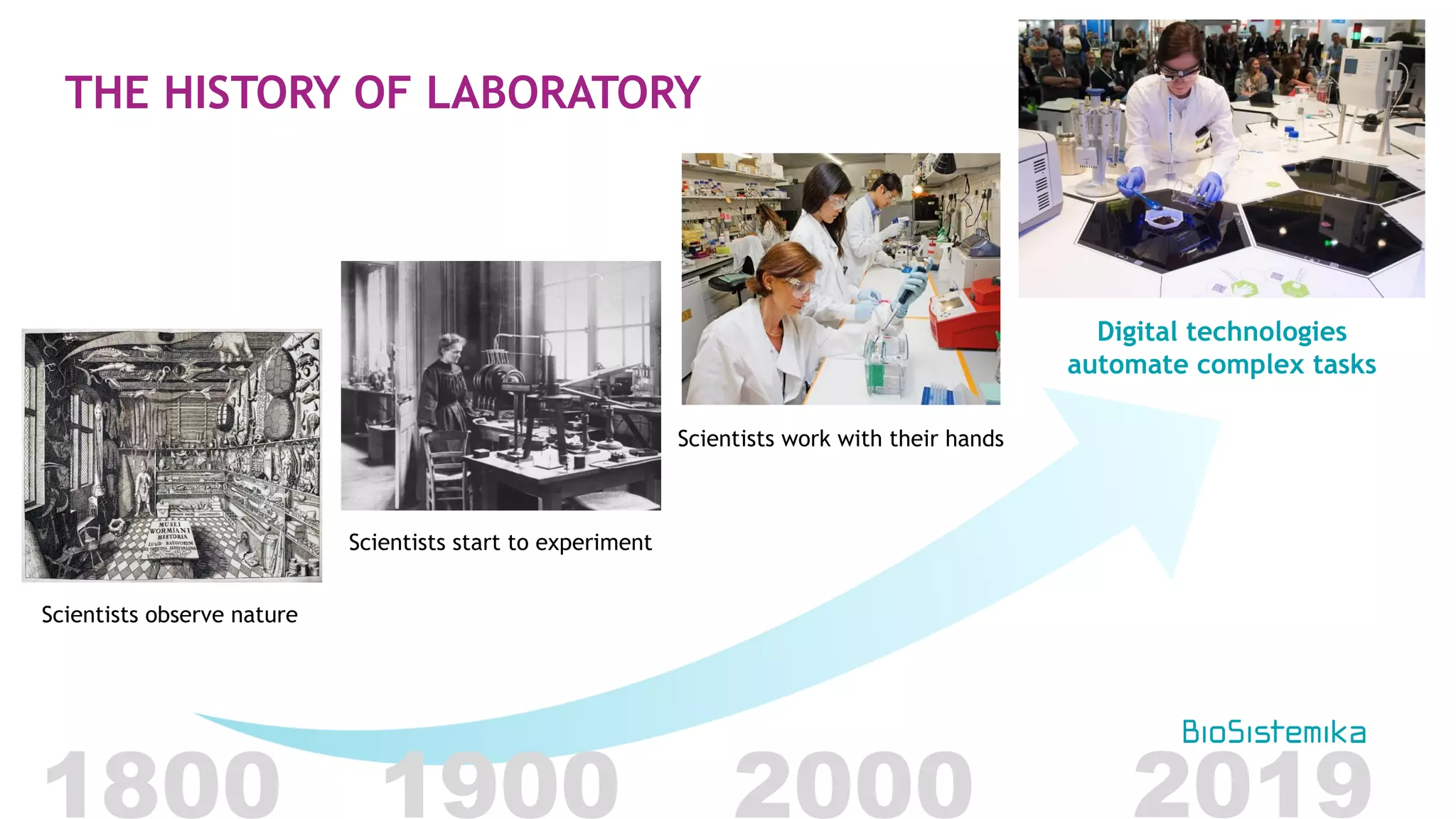
Digital technologies
automate complex tasks
Scientists observe nature
Scientists start to experiment
Scientists work with their hands
1800 1900 2000 2019
THE HISTORY OF LABORATORY
1A DIGITALIZED LABORATORY IS COMPLEX
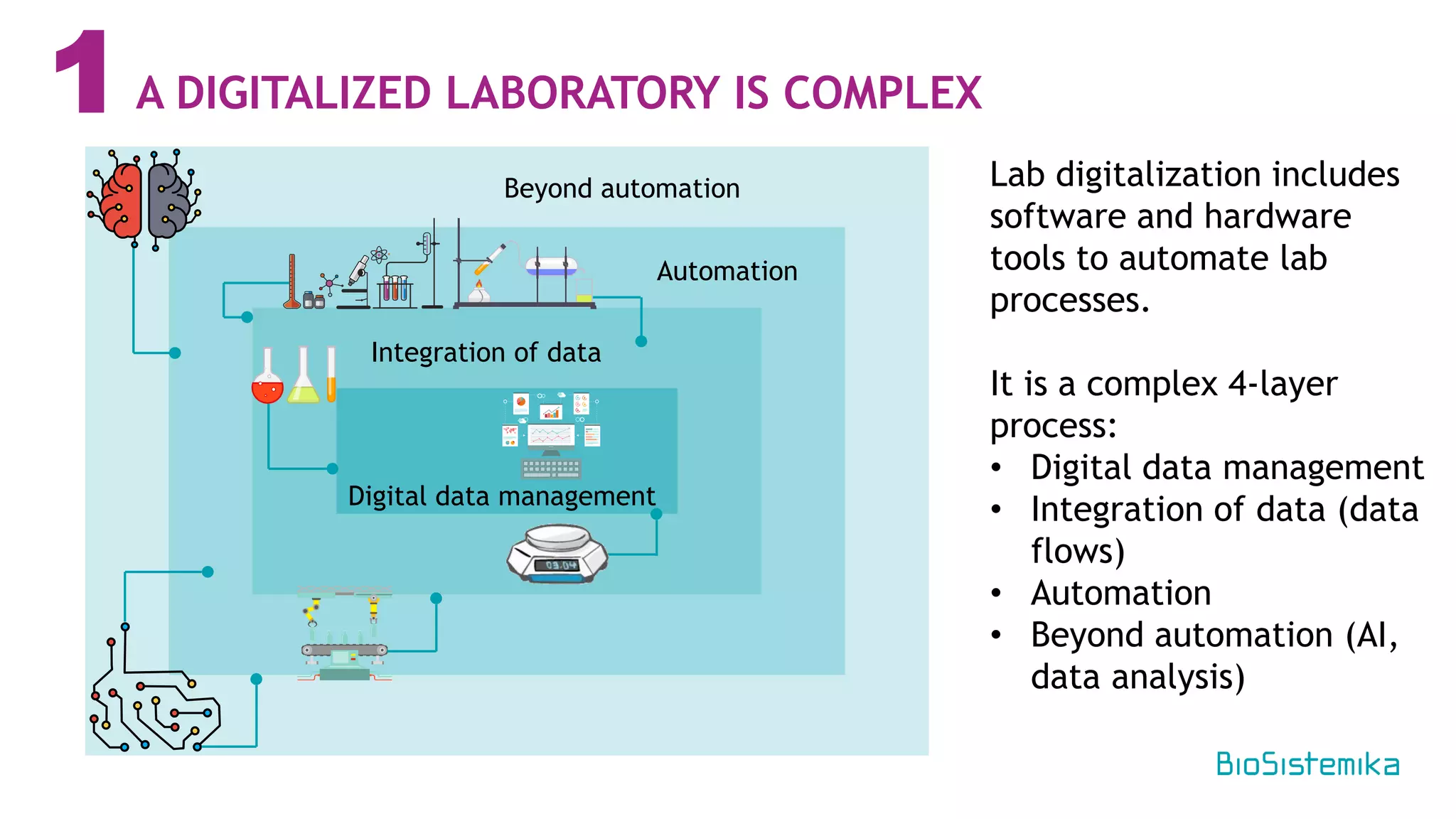
Beyond automation
Digital data management
Integration of data
Automation
Lab digitalization includes
software and hardware
tools to automate lab
processes.
It is a complex 4-layer
process:
• Digital data management
• Integration of data (data
flows)
• Automation
• Beyond automation (AI,
data analysis)
1
1. Digitalize in multiple steps.
2. Implement digital data management systems first.
3. Continue with other layers after.
What should I do?
A DIGITALIZED LABORATORY IS COMPLEX
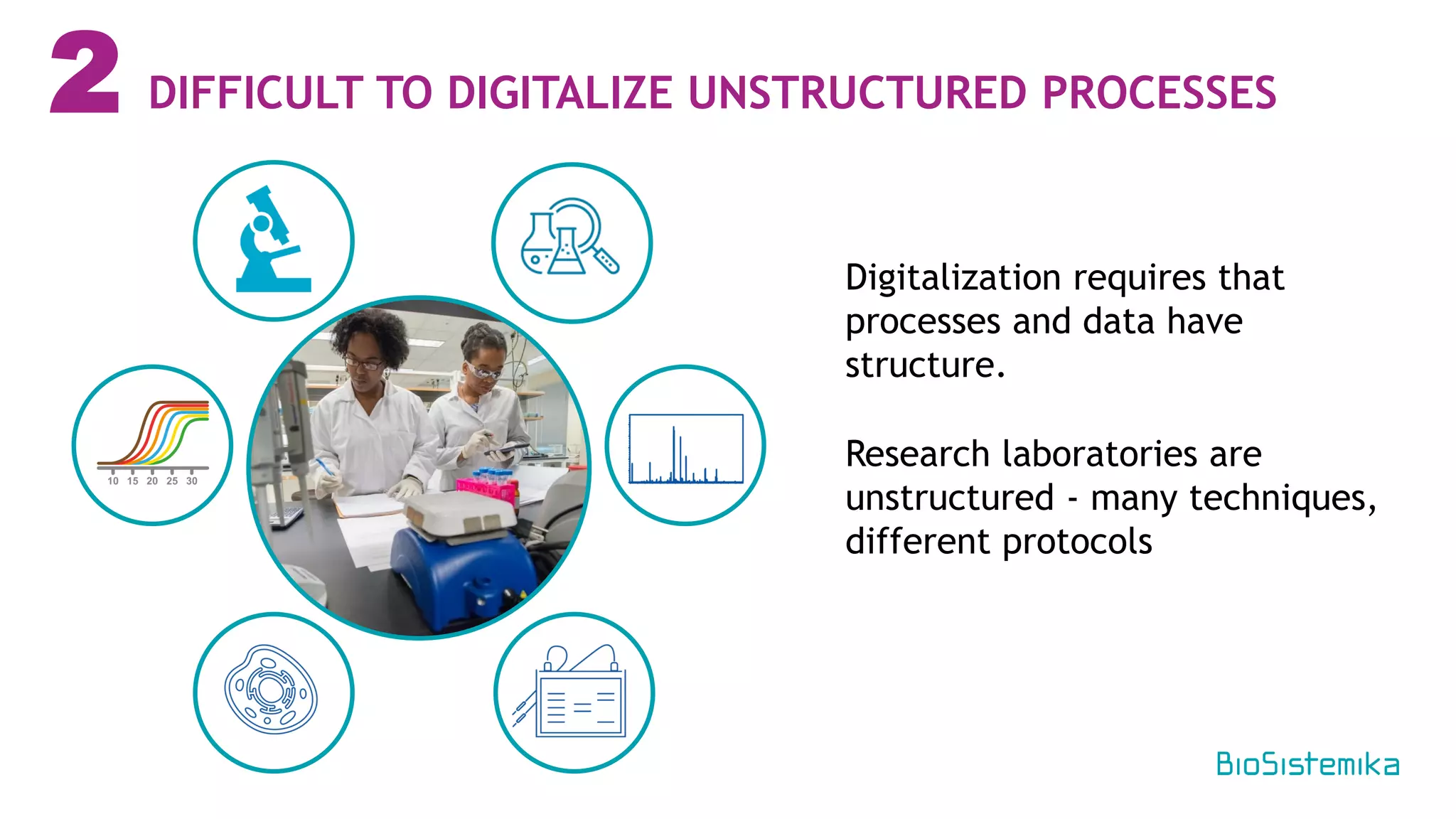
Digitalization requires that
processes and data have
structure.
Research laboratories are
unstructured - many techniques,
different protocols
2 DIFFICULT TO DIGITALIZE UNSTRUCTURED PROCESSES
2
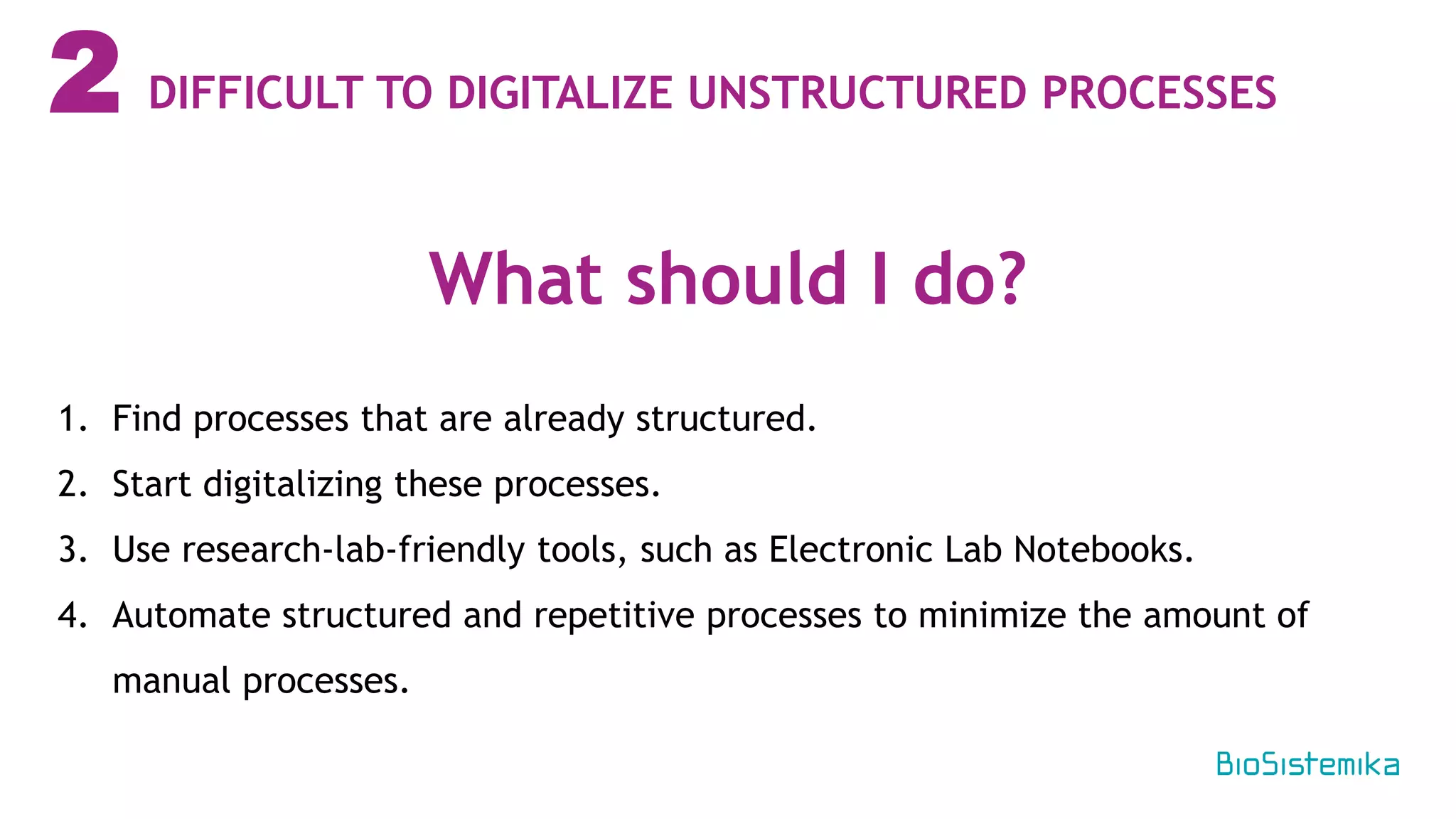
1. Find processes that are already structured.
2. Start digitalizing these processes.
3. Use research-lab-friendly tools, such as Electronic Lab Notebooks.
4. Automate structured and repetitive processes to minimize the amount of
manual processes.
What should I do?
DIFFICULT TO DIGITALIZE UNSTRUCTURED PROCESSES
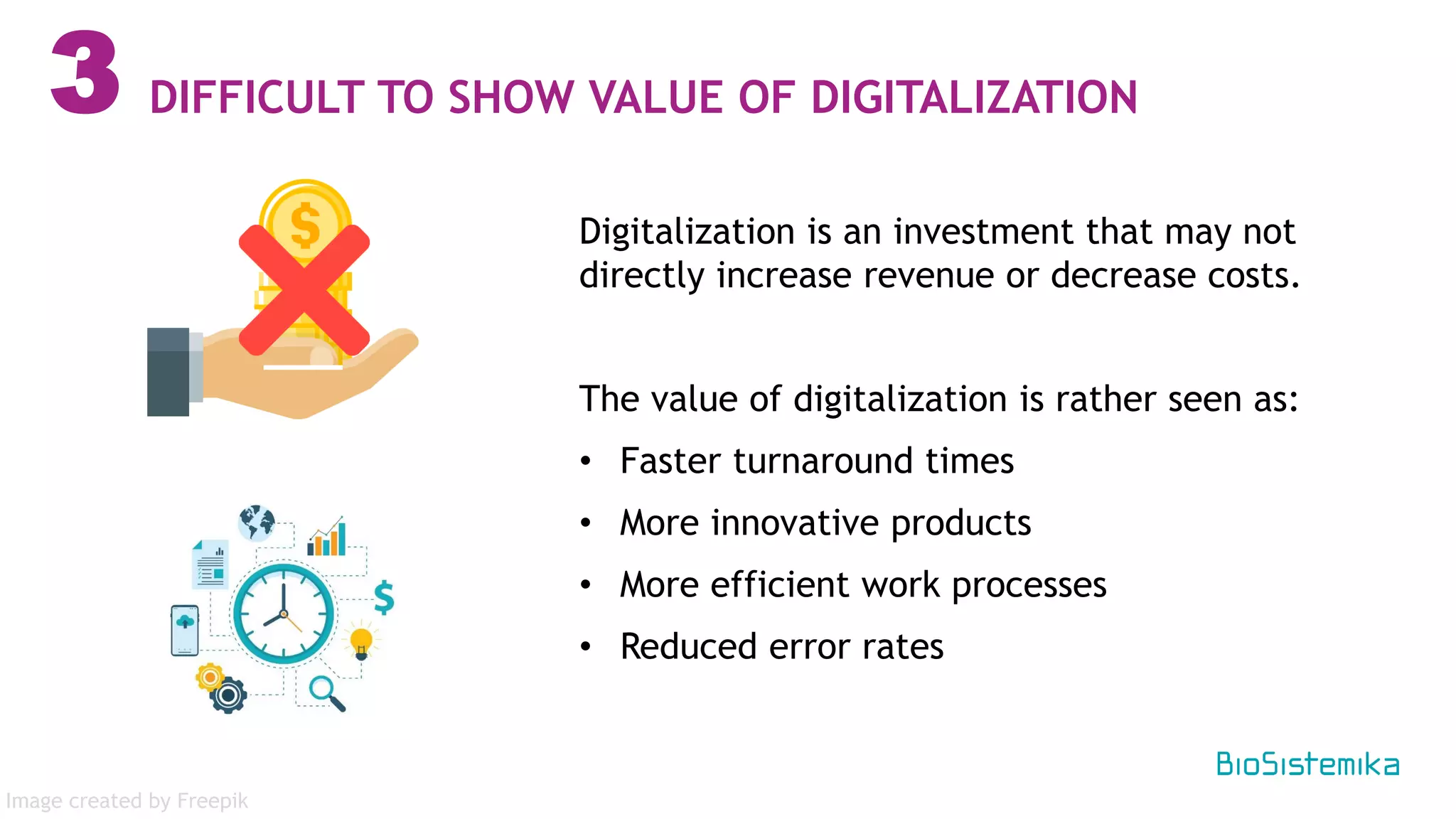
Digitalization is an investment that may not
directly increase revenue or decrease costs.
The value of digitalization is rather seen as:
• Faster turnaround times
• More innovative products
• More efficient work processes
• Reduced error rates
3 DIFFICULT TO SHOW VALUE OF DIGITALIZATION
Image created by Freepik
3
1. Communicate the benefits of digitalization, such as faster turnaround times
and reduced error rates.
2. Explain the necessity of investments into digitalization to the stakeholders.
3. Develop a vision on why digitalization is an advantage for your laboratory.
What should I do?
DIFFICULT TO SHOW VALUE OF DIGITALIZATION
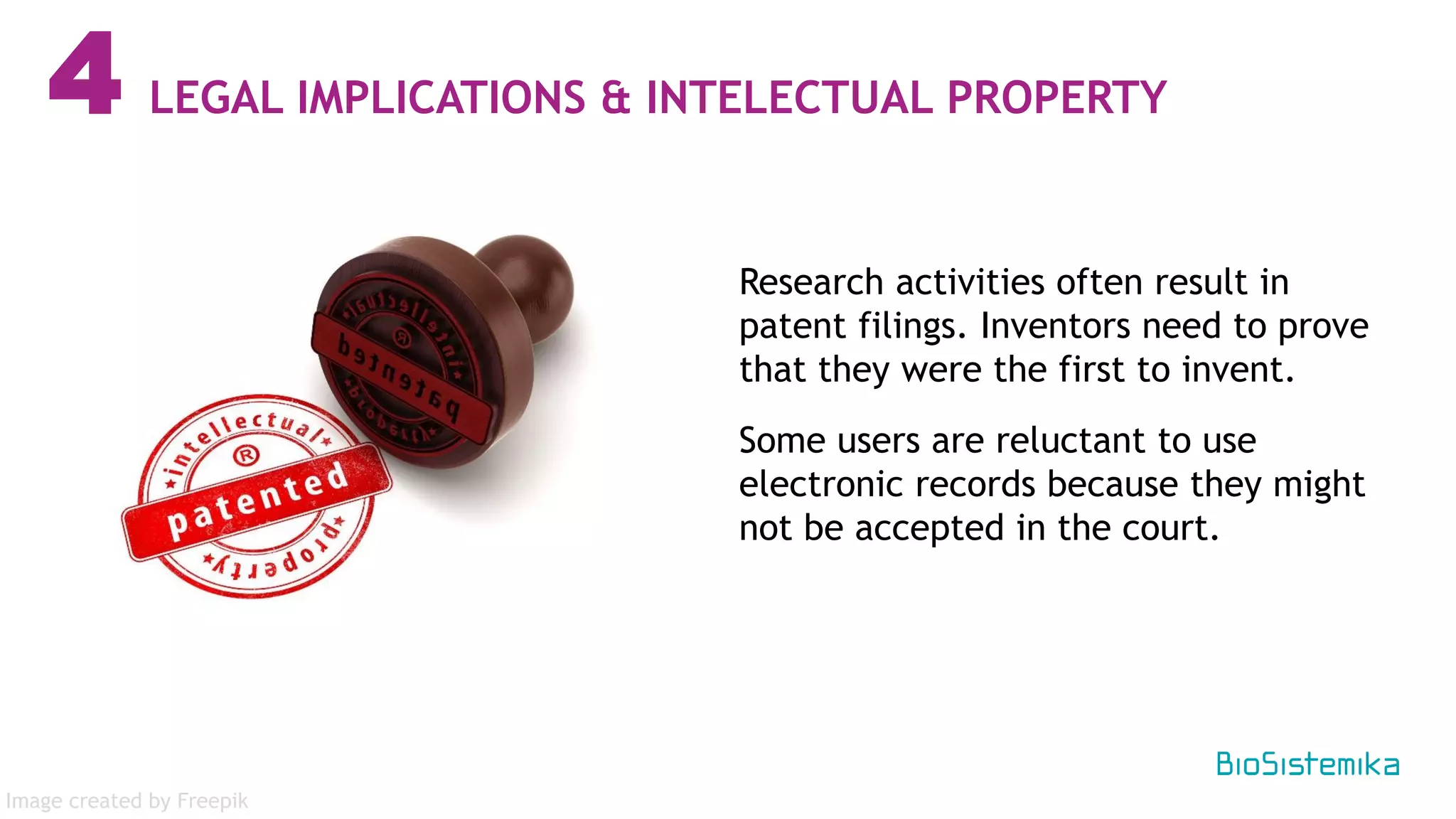
Research activities often result in
patent filings. Inventors need to prove
that they were the first to invent.
Some users are reluctant to use
electronic records because they might
not be accepted in the court.
4 LEGAL IMPLICATIONS & INTELECTUAL PROPERTY
Image created by Freepik
4
1. Electronic and paper records are equally relevant in court.
2. Electronic lab notebooks should be safe, backed-up, multi-user and provide
audit trail capabilities.
3. Software solutions should be compliant with regulations (e.g. CFR 21 Part 11)
4. Consult with a legal advisor when implementing electronic solutions.
What should I do?
LEGAL IMPLICATIONS & INTELECTUAL PROPERTY
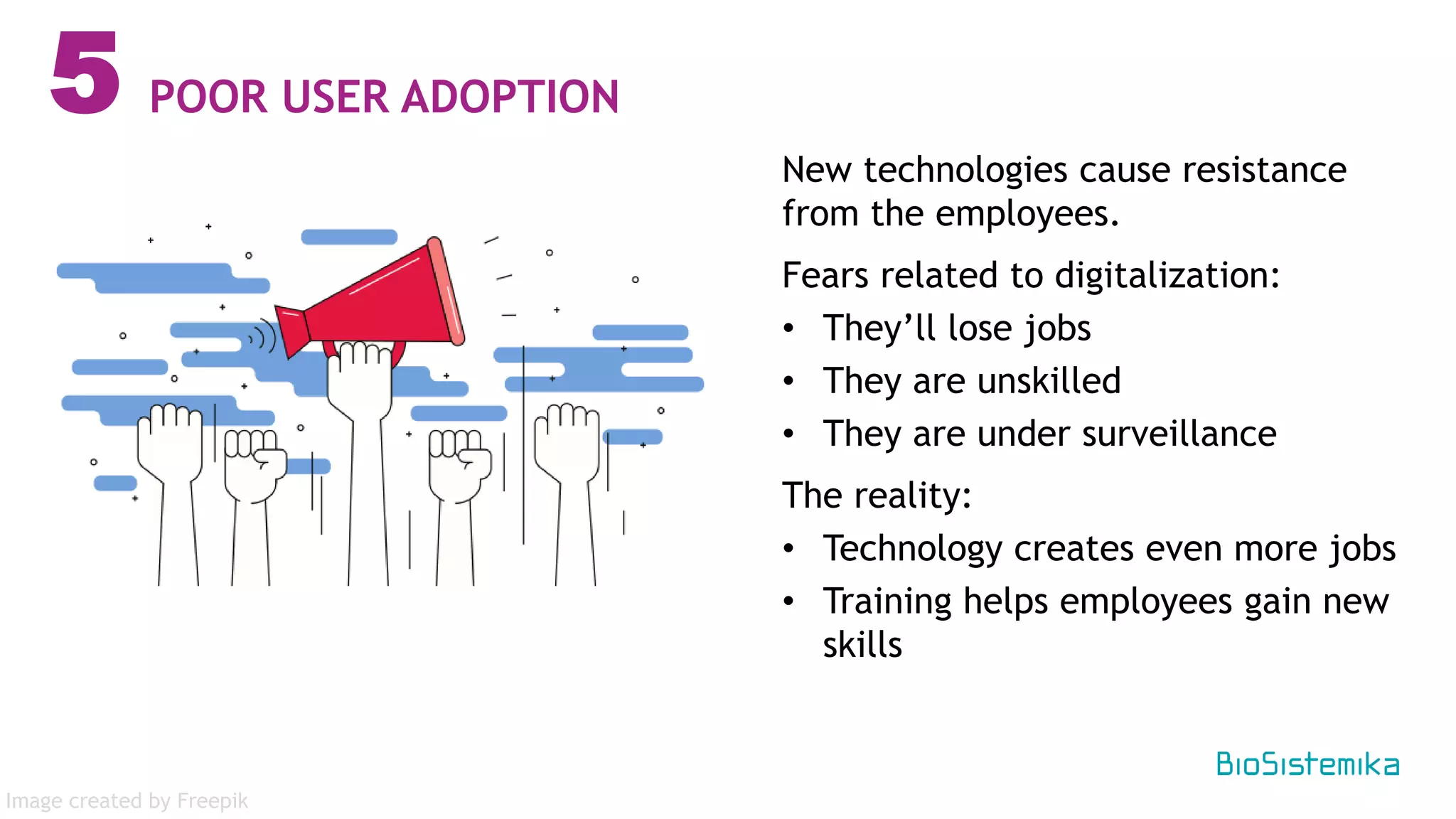
New technologies cause resistance
from the employees.
Fears related to digitalization:
• They’ll lose jobs
• They are unskilled
• They are under surveillance
The reality:
• Technology creates even more jobs
• Training helps employees gain new
skills
5 POOR USER ADOPTION
Image created by Freepik
5
1. Organize user groups and include your employees into the planning phase.
2. Clearly communicate the benefits of digitalization and how it will affect
them.
3. Listen to your employees’ feedback and hear them out.
4. Engage the early adopters, who will be an example to others.
What should I do?
POOR USER ADOPTION
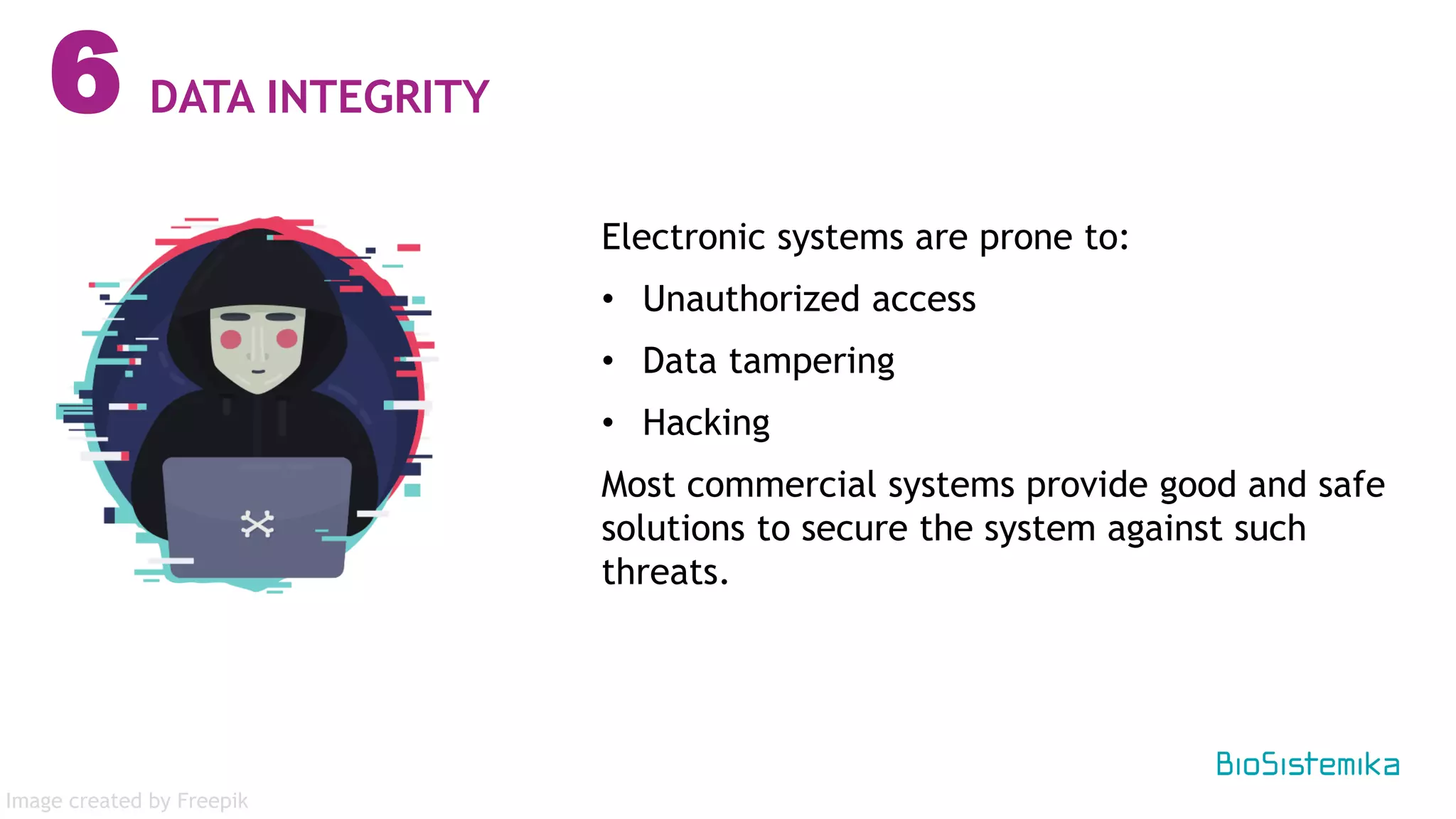
6 DATA INTEGRITY
Electronic systems are prone to:
• Unauthorized access
• Data tampering
• Hacking
Most commercial systems provide good and safe
solutions to secure the system against such
threats.
Image created by Freepik
6
1. Talk to vendors about the security and data integrity features of the solutions
you’re implementing.
2. Ask your IT service to audit the solutions and provide additional safety
measures.
3. The data storage system should include an audit trail function that tracks all
changes made to the data.
What should I do?
DATA INTEGRITY
• By considering the above 6 points you will reduce the risks associated with the
digitalization process.
• Lab devices are already connected to the internet – make sure they are safe.
• Future laboratories will be fully controlled over the internet and scientists will
focus on the experiment planning and interpretation instead. Examples are
Emerald Cloud Lab and Transcriptic.
• Consult with lab digitalization experts – you will reduce the risks associated
with digitalization while saving time and money.
CONCLUSION
Lab digitalization experts
digitalization@biosistemika.com

6 Things to Consider when Digitalizing a Laboratory

  • 1.
    6 THINGS TOCONSIDER WHEN DIGITALIZING A LABORATORY digitalization@biosistemika.com
  • 2.
    Digital technologies automate complextasks Scientists observe nature Scientists start to experiment Scientists work with their hands 1800 1900 2000 2019 THE HISTORY OF LABORATORY
  • 3.
    1A DIGITALIZED LABORATORYIS COMPLEX Beyond automation Digital data management Integration of data Automation Lab digitalization includes software and hardware tools to automate lab processes. It is a complex 4-layer process: • Digital data management • Integration of data (data flows) • Automation • Beyond automation (AI, data analysis)
  • 4.
    1 1. Digitalize inmultiple steps. 2. Implement digital data management systems first. 3. Continue with other layers after. What should I do? A DIGITALIZED LABORATORY IS COMPLEX
  • 5.
    Digitalization requires that processesand data have structure. Research laboratories are unstructured - many techniques, different protocols 2 DIFFICULT TO DIGITALIZE UNSTRUCTURED PROCESSES
  • 6.
    2 1. Find processesthat are already structured. 2. Start digitalizing these processes. 3. Use research-lab-friendly tools, such as Electronic Lab Notebooks. 4. Automate structured and repetitive processes to minimize the amount of manual processes. What should I do? DIFFICULT TO DIGITALIZE UNSTRUCTURED PROCESSES
  • 7.
    Digitalization is aninvestment that may not directly increase revenue or decrease costs. The value of digitalization is rather seen as: • Faster turnaround times • More innovative products • More efficient work processes • Reduced error rates 3 DIFFICULT TO SHOW VALUE OF DIGITALIZATION Image created by Freepik
  • 8.
    3 1. Communicate thebenefits of digitalization, such as faster turnaround times and reduced error rates. 2. Explain the necessity of investments into digitalization to the stakeholders. 3. Develop a vision on why digitalization is an advantage for your laboratory. What should I do? DIFFICULT TO SHOW VALUE OF DIGITALIZATION
  • 9.
    Research activities oftenresult in patent filings. Inventors need to prove that they were the first to invent. Some users are reluctant to use electronic records because they might not be accepted in the court. 4 LEGAL IMPLICATIONS & INTELECTUAL PROPERTY Image created by Freepik
  • 10.
    4 1. Electronic andpaper records are equally relevant in court. 2. Electronic lab notebooks should be safe, backed-up, multi-user and provide audit trail capabilities. 3. Software solutions should be compliant with regulations (e.g. CFR 21 Part 11) 4. Consult with a legal advisor when implementing electronic solutions. What should I do? LEGAL IMPLICATIONS & INTELECTUAL PROPERTY
  • 11.
    New technologies causeresistance from the employees. Fears related to digitalization: • They’ll lose jobs • They are unskilled • They are under surveillance The reality: • Technology creates even more jobs • Training helps employees gain new skills 5 POOR USER ADOPTION Image created by Freepik
  • 12.
    5 1. Organize usergroups and include your employees into the planning phase. 2. Clearly communicate the benefits of digitalization and how it will affect them. 3. Listen to your employees’ feedback and hear them out. 4. Engage the early adopters, who will be an example to others. What should I do? POOR USER ADOPTION
  • 13.
    6 DATA INTEGRITY Electronicsystems are prone to: • Unauthorized access • Data tampering • Hacking Most commercial systems provide good and safe solutions to secure the system against such threats. Image created by Freepik
  • 14.
    6 1. Talk tovendors about the security and data integrity features of the solutions you’re implementing. 2. Ask your IT service to audit the solutions and provide additional safety measures. 3. The data storage system should include an audit trail function that tracks all changes made to the data. What should I do? DATA INTEGRITY
  • 15.
    • By consideringthe above 6 points you will reduce the risks associated with the digitalization process. • Lab devices are already connected to the internet – make sure they are safe. • Future laboratories will be fully controlled over the internet and scientists will focus on the experiment planning and interpretation instead. Examples are Emerald Cloud Lab and Transcriptic. • Consult with lab digitalization experts – you will reduce the risks associated with digitalization while saving time and money. CONCLUSION
  • 16.