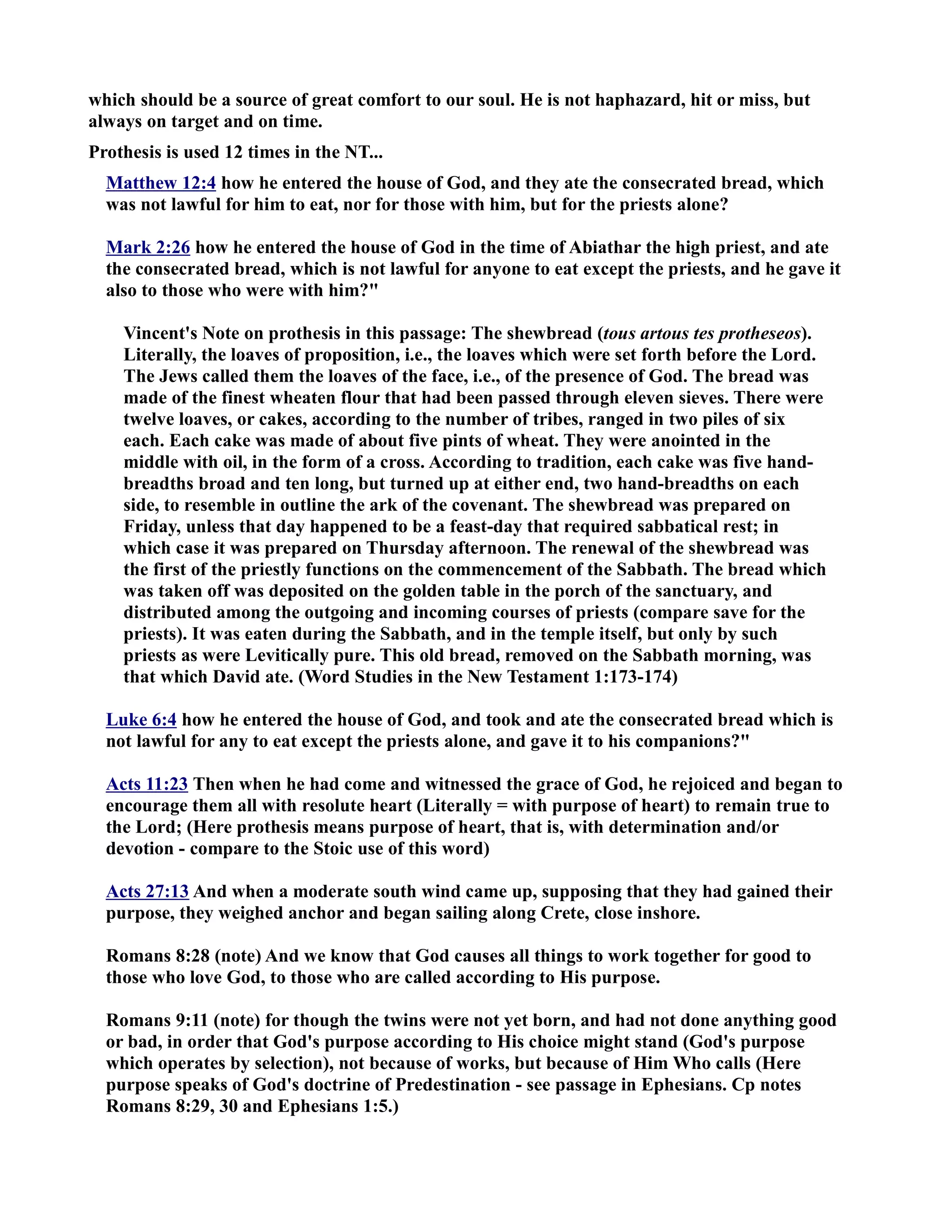
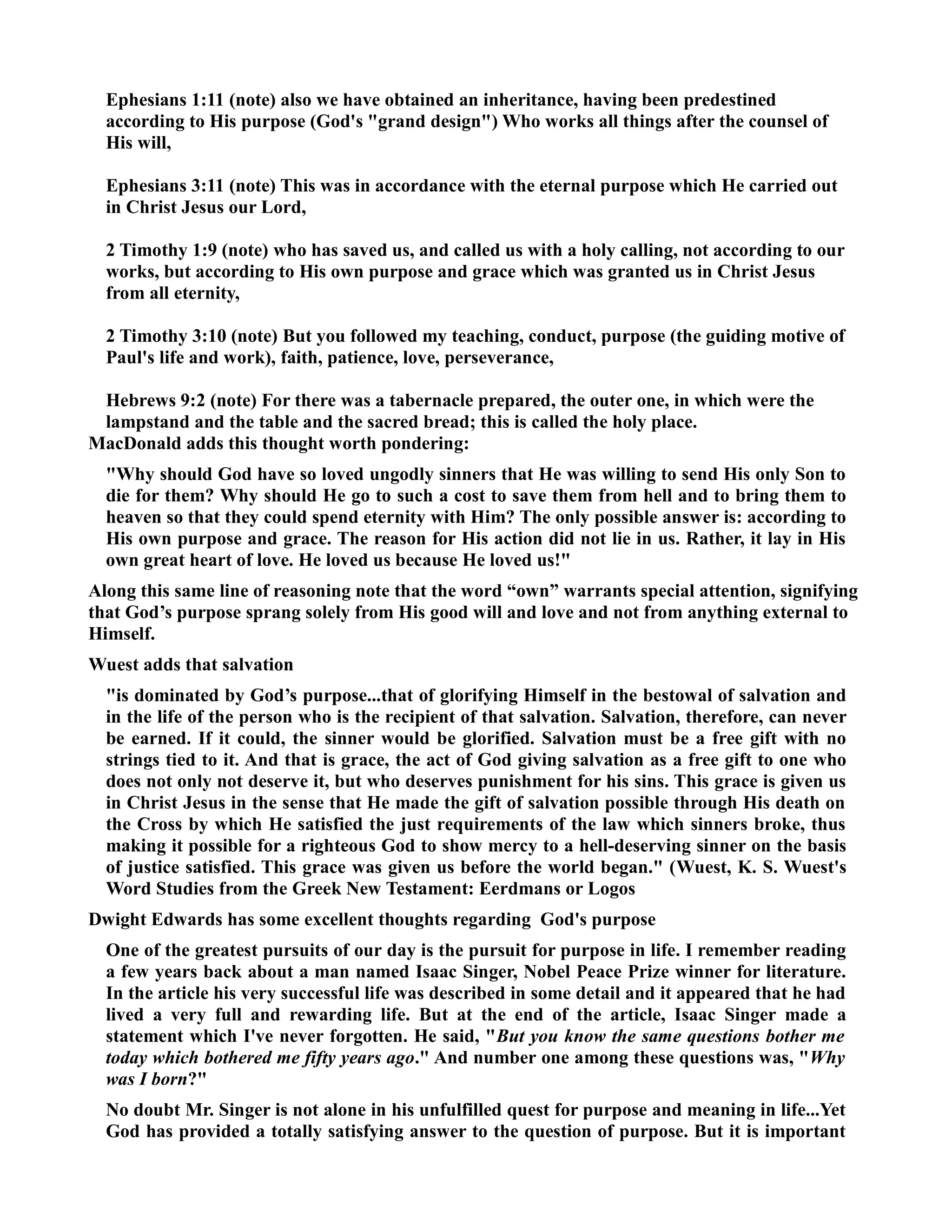
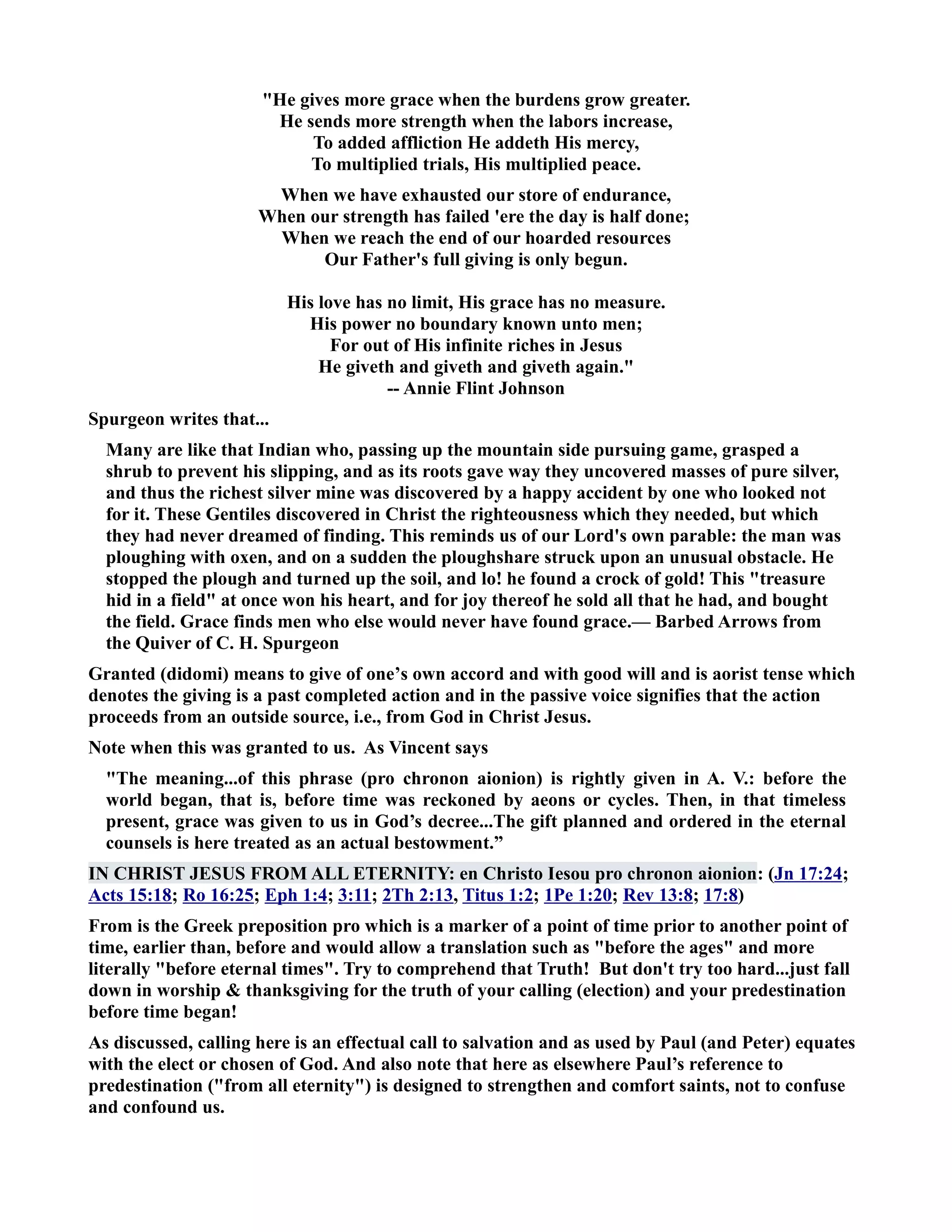
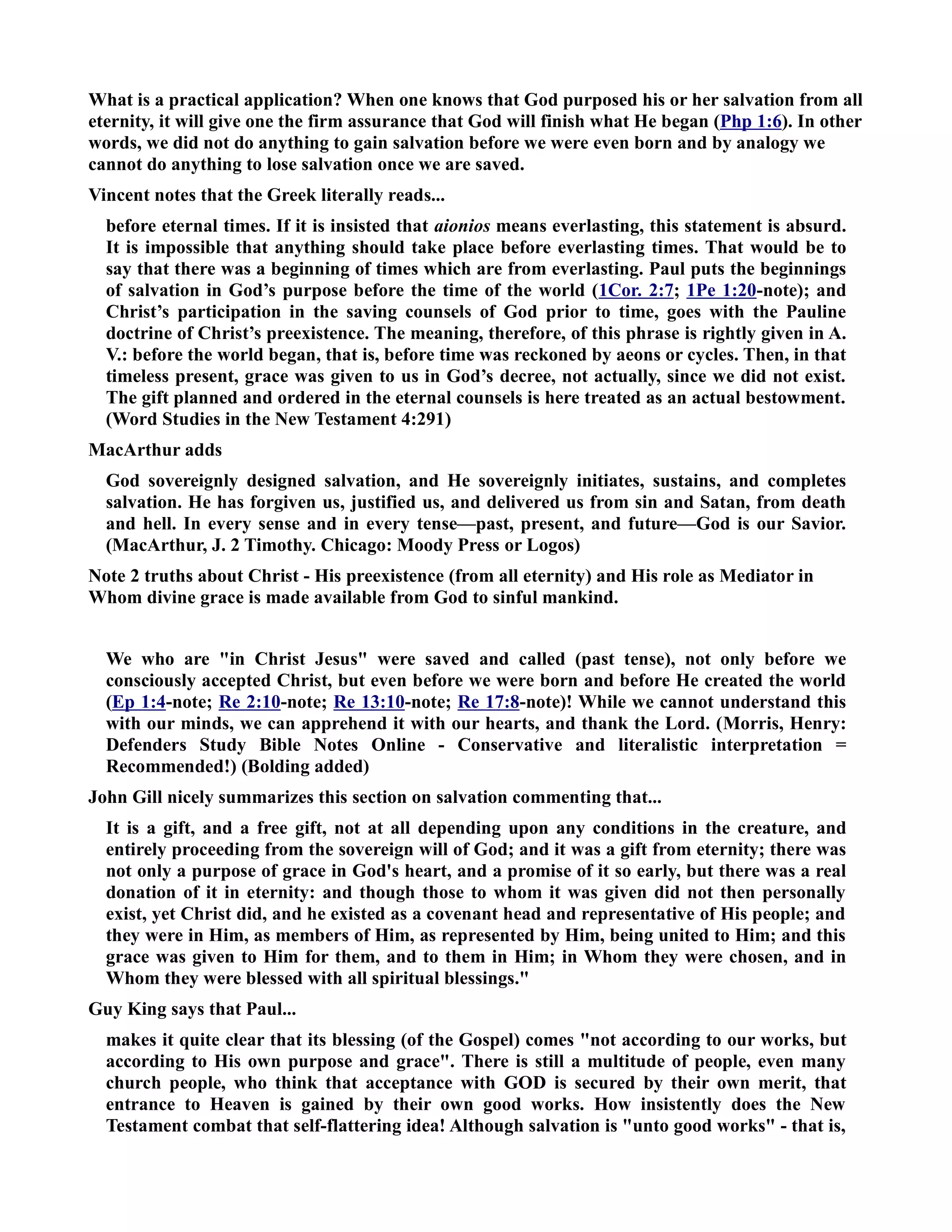
II TIMOTHY 1 COMMETARY 
Written and edited by Glenn Pease 
PREFACE 
I quote many old and new authors, and one of my primary resources is Preceptaustin. I quote 
this resource a great deal, but there is far more on this site that you can get by just typing that 
name into Google. There are literally hundreds of sermons there on this text. I just include their 
summary comments. It was laborious to try and pick and choose what to add to this commentary, 
and so in the final verses I just add all that Preceptaustin has in comments. If any author does not 
wish their wisdom to be shared in this way, they can let me know and I will remove it. My e-mail 
is glenn_p86@yahoo.com 
ITRODUCTIO 
1. This letter of Paul has more negative emotions and comments than most of what Paul wrote. It 
deals with his dying, and the apostasy of many of his followers. 
2. M. F. Sadler, “It was written from Rome shortly before the mart3nrdom of the apostle. It was 
written chiefly to urge Timothy to come to him, all his other companions in the service of Christ 
(excepting Luke) being away. One, Demas, had deserted him ; others, as Tychicus, he had sent 
away. But, though apparently sent for the purpose of urging Timothy to come to him quickly, it 
contains the most precious exhortation to him, and through him to all ministers,  to make full 
proof of their ministry, and this it does in the words of a dying man, who is  ready to be 
offered, and the time of whose departure is at hand. Whatever special onslaughts of the evil one 
were yet in store for him, we have his expression of faith that God would carry him triumphantly 
through all.” 
3. Preceptaustin, “This letter is Paul's last will and testament and therefore deserves every 
believer's careful attention and diligent study. As we see even in these introductory verses, death 
cast no pall (loss of strength) or long standing shadow on the heart of this great man of God who 
testified that it was well with his soul for he knew Whom He had believed (2Ti 1:12-note). May 
God grant all of us this same blessed assurance that it is well with our souls eternally in Christ. 
Amen... 
For me, be it Christ, be it Christ hence to live: 
If Jordan above me shall roll,
o pang shall be mine, for in death as in life 
Thou wilt whisper Thy peace to my soul. 
It is well, with my soul, 
It is well, it is well, with my soul. 
4. Spurgeon, “The second epistle to Timothy is remarkable as being probably the last which the 
apostle wrote; it contains dying advice, written in the immediate prospect of martyrdom. Looking 
forward calmly to the grave, and with the executioner's axe in the foreground, Paul pens this 
letter to his favourite disciple, and solemnly charges him to abide faithful unto death. (The 
Interpreter) 
5. Allen Radmacher, “In light of mortality, what used to seem significant may dim in comparison 
to one’s ultimate fate. That is why we listen to a person’s “last words.” When all is said and done, 
everyone wants to know what gave that person hope in the face of death. Second Timothy is 
Paul’s “last words.” From a cold, lonely Roman prison, the aged apostle Paul wrote his final 
instructions to his protégé Timothy. Paul knew that this letter might well be his final contact with 
Timothy; his execution was most likely imminent. He implored Timothy to come quickly to his 
side. But in case he did not make it, Paul imparted his last words of encouragement to his “son” 
in the faith. 
6. Bob Deffinbaugh, “When Paul wrote 1Timothy, he had been freed from his first Roman 
imprisonment and was carrying on his ministry (in Macedonia? – see 1 Timothy 1:3); as Paul 
writes 2 Timothy, he is once again in prison, and this time he is not nearly as optimistic about the 
outcome (2 Timothy 1:16; 2:9). Some have even suggested that Timothy may not have arrived 
before Paul was executed. Paul’s last words to Timothy sound very much like a farewell address 
(2 Timothy 4:6-8). One definitely gets the feeling that Paul is passing the torch of leadership to 
Timothy, and to those who will succeed him. In 1 Timothy, Paul instructs Timothy how he should 
conduct his ministry in Ephesus; in 2 Timothy, Paul instructs Timothy how he should conduct 
himself and his ministry in the last days, in Paul’s absence.” 
7. William Barclay, “Paul's object in writing is to inspire and strengthen Timothy for his task in 
Ephesus. Timothy was young and he had a hard task in battling against the heresies and the 
infections that were bound to threaten the Church. So, then, in order to keep his courage high 
and his effort strenuous, Paul reminds Timothy of certain things. 
(i) He reminds him of his own confidence in him. There is no greater inspiration than to feel that 
someone believes in us. An appeal to honour is always more effective than a threat of punishment. 
The fear of letting down those who love us is a cleansing thing. 
(ii) He reminds him of his family tradition. Timothy was walking in a fine heritage, and if he 
failed, not only would he smirch his own name, but he would lessen the honour of his family 
name as well. A fine parentage is one of the greatest gifts a man can have. Let him thank God for 
it and never bring dishonour to it. 
(iii) He reminds him of his setting apart to office and of the gift which was conferred upon him.
Once a man enters upon the service of any association with a tradition, anything that he does 
affects not only himself nor has it to be done only in his own strength. There is the strength of a 
tradition to draw upon and the honour of a tradition to preserve. That is specially true of the 
Church. He who serves it has its honour in his hands; he who serves it is strengthened by the 
consciousness of the communion of all the saints. 
(iv) He reminds him of the qualities which should characterize the Christian teacher. These, as 
Paul at that moment saw them, were four. 
(a) There was courage. It was not craven fear but courage that Christian service should bring to 
a man. It always takes courage to be a Christian, and that courage comes from the continual 
consciousness of the presence of Christ. 
(b) There was power. In the true Christian there is the power to cope, the power to shoulder the 
back-breaking task, the power to stand erect in face of the shattering situation, the power to 
retain faith in face of the soul-searing sorrow and the wounding disappointment. The Christian is 
characteristically the man who could pass the breaking-point and not break. 
(c) There was love. In Timothy's case this was love for the brethren, for the congregation of the 
people of Christ over whom he was set. It is precisely that love which gives the Christian pastor 
his other qualities. He must love his people so much that he will never find any toil too great to 
undertake for them or any situation threatening enough to daunt him. o man should ever enter 
the ministry of the Church unless there is love for Christ's people within his heart. 
(d) There was self-discipline. The word is sophronismos (GS4995), one of these great Greek 
untranslatable words. Someone has defined it as the sanity of saintliness. Falconer defines it as 
control of oneself in face of panic or of passion. It is Christ alone who can give us that self-mastery 
which will keep us alike from being swept away and from running away. o man can 
ever rule others unless he has first mastered himself. Sophronismos (GS4995) is that divinely 
given self-control which makes a man a great ruler of others because he is first of all the servant 
of Christ and the master of himself.” 
1 Paul, an apostle of Christ Jesus by the will of God, in 
keeping with the promise of life that is in Christ Jesus, 
1. Preceptaustin has comments on every word of this opening sentence, and this reveals just how 
much we tend to skip over without recognizing the truths being given to us. By looking at every 
detail we become aware of the power of the Word, and why we need to live by every Word that 
proceeds from the mouth of God. Paul was God's spokesman, and so every word he wrote is one 
of those words from the mouth of God. 
“Apostle of Christ Jesus - Paul is saying he is the possession of Christ. He is not his own. He 
belongs to another. This is the perspective which every believer should seek to emulate and
cultivate for indeed we are not our own (1Co 6:19-note, 2Co 5:15-note, Titus 2:14-note) for we all 
have been bought with a price and have the high and holy purpose to glorify God in (our) 
body (1Co 6:20) 
Apostle means one sent forth from by another, often with a special commission to represent 
another and to accomplish his work. It can be a delegate, commissioner, ambassador sent out on 
a mission or orders or commission and with the authority of the one who sent him. The Biblical 
apostles had special authority and power given by God and when they died that was the end of 
the special office of an apostle. In other words, contrary to what some men teach there is no 
Biblical mandate for apostolic succession. 
Apostle is used in two ways in the Scripture - (1) to designate an official office as in this passage 
(2) Generically to refer to anyone who is one sent with a message. 
In secular Greek apostolos referred to someone who was officially commissioned to a position or 
task, such as an envoy. Cargo ships were sometimes called apostolic, because they were 
dispatched with a specific shipment for a specific destination. In secular Greek apostolos was 
used of an admiral of a fleet sent out by the king on special assignment. In the ancient world a 
apostle was the personal representatives of the king, functioning as an ambassador with the 
king’s authority and provided with credentials to prove he was the king's envoy. 
1B. Preceptaustin goes on, “Paul begins five of his Epistles with a similar signature (will of 
God), the other four being... 
Paul, called as an apostle of Jesus Christ by the will of God, and Sosthenes our brother (1 Co 
1:1). 
Paul, an apostle of Christ Jesus by the will of God, and Timothy our brother, 
To the church of God which is at Corinth with all the saints who are throughout Achaia: (2 Co 
1:1). 
Paul, an apostle of Christ Jesus by the will of God, To the saints who are at Ephesus and who 
are faithful in Christ Jesus: (Eph 1:1). 
Paul, an apostle of Jesus Christ by the will of God, and Timothy our brother (Col 1:1). 
By the will of God - The preposition dia can also be translated through, so that the 
instrumentality through which he became an apostle or sent one was through the will of God. 
Stated another way God's will is the efficient cause (BADG). Paul is not being arrogant here 
but is saying in essence that he is in the center of God's will as he proclaims the promise of life in 
Christ Jesus. 
1C. Jerry Bridges, “This repeated emphasis by Paul expresses his continual consciousness that 
the divine will had chosen him as an apostle, despite that fact that he neither sought it nor 
merited it. Practically, his consciousness that this was God's purpose that was being worked out 
and not his own plan, held him firm throughout all the years of his strenuous and eventful life. 
And here in his last written words, it was this conviction that kept him calm in the face of 
impending martyrdom. As a prisoner, lonely and largely forsaken, he could fall back upon the 
consciousness that he was an apostle, not by his own appointment, but by the will of God.”
1D. Will, (thelema from thelo = to will with the -ma suffix indicating the result of the will = a 
thing willed) generally speaks of the result of what one has decided. One sees this root word in 
the feminine name Thelma. In its most basic form, thelema refers to a wish, a strong desire, 
and the willing of some event. (ote: See also the discussion of the preceding word boule for 
comments relating to thelema). The upshot is that thelema indicates that this call of Paul as an 
apostle began in the heart of God...God started it and God completed it in Paul just as He desires 
to do in your life dearly beloved of God (cp Php 1:6-note, 1Th 5:24-note)! 
1E. Zodhiates says that thelema is the...Will, not to be conceived as a demand, but as an 
expression or inclination of pleasure towards that which is liked, that which pleases and creates 
joy. When it denotes God's will, it signifies His gracious disposition toward something. Used to 
designate what God Himself does of His own good pleasure.” 
1F. Preceptaustin, “I love what W. E. Vine says about being in God's will: He who is assured 
that the work in which he engages is God’s will for him will find therein a means of steadfast 
continuance, no matter how great the trials and difficulties he experiences. When the will of God 
is the foundation of our activities, it acts as a counteractive power against all self-glorying and 
should render His glory the inspiring aim of our whole being and service. It will lead us to say 
with Paul, “ot I, but Christ.” (Vine, W. Collected writings of W. E. Vine. ashville: Thomas 
elson ) 
1G. William Barclay, “When Paul speaks of his own apostleship there are always certain 
unmistakable notes in his voice. To him it was always certain things. 
(a) His apostleship was an honour. He was chosen to it by the will of God. Every Christian must 
regard himself as a God-chosen man. 
(b) His apostleship was a responsibility. God chose him because he wanted to do something with 
him. He wished to make him the instrument by which the tidings of new life went out to men. o 
Christian is ever chosen entirely for his own sake, but for what he can do for others. A Christian 
is a man lost in wonder, love and praise at what God has done for him and aflame with eagerness 
to tell others what God can do for them. 
(c) His apostleship was a privilege. It is most significant to see what Paul conceived it his duty to 
bring to others--the promise of God, not his threat. To him, Christianity was not the threat of 
damnation; it was the good news of salvation. It is worth remembering that the greatest 
evangelist and missionary the world has ever seen was out, not to terrify men by shaking them 
over the flames of hell, but to move them to astonished submission at the sight of the love of God. 
The dynamic of his gospel was love, not fear.” 
2. D. Edmond Hiebert, “In accordance with the accepted practice of that day, Paul begins with 
his own name. We moderns sign our name at the end of our letters, while the writer of a letter in 
that day, with greater logic, placed his name at the beginning of his letter. And the very sight of 
that name at the head of this communication to him must have thrilled the soul of Timothy. How
eagerly he would peruse any word from his beloved friend and teacher!” 
3. Barnes, “According to the promise of life which is in Christ Jesus - In accordance with the 
great promise of eternal life through the Saviour; that is, he was called to be an apostle to carry 
out the great purpose of human salvation; compare Eph_3:6. God has made a promise of life to 
mankind through faith in the Lord Jesus, and it was with reference to this that he was called to 
the apostleship. 
4. Clarke, “Paul an apostle - St. Paul at once shows his office, the authority on which he held it, 
and the end for which it was given him. He was an apostle - an extraordinary ambassador from 
heaven. He had his apostleship by the will of God - according to the counsel and design of God’s 
infinite wisdom and goodness. And he was appointed that he might proclaim that eternal life 
which God had in view for mankind by the incarnation of his Son Jesus Christ, and which was 
the end of all the promises he had made to men, and the commandments he had delivered to all 
his prophets since the world began. The mention of this life was peculiarly proper in the apostle, 
who had now the sentence of death in himself, and who knew that he must shortly seal the truth 
with his blood. His life was hidden with Christ in God; and he knew that, as soon as he should be 
absent from the body, he should be present with the Lord. With these words he both comforted 
himself and his son Timothy. 
5. Gill, “ Paul an apostle of Jesus Christ,.... ot of men, nor by men, but by Jesus Christ, from 
whom he was sent; by whom he was qualified; in whose name he came, and ministered; and 
whom he preached. Of his name Paul, and of his office, as an apostle; see Gill on Rom_1:1 into 
which office he came 
by the will of God; not by the will of man, no, not of the best of men, of James, Cephas, or John, 
or any of the other apostles; nor by his own will, he did not thrust himself into this office, or take 
this honour upon himself; nor was it owing to any merits of his, which he always disclaims, but to 
the will and grace of God; it was by the secret determining will of God, that he was from all 
eternity separated unto the Gospel of Christ; and it was by the revealed will of God to the church, 
that he, with Barnabas, was set apart to the ministry of the word; see Rom_1:1. 
According to the promise of life which is in Christ Jesus; or with respect unto it; this points at 
the sum and substance, or subject matter, and end of his apostleship, for which this grace was 
given to him, which was to publish the free promise of life and salvation by Jesus Christ. By 
life here is meant, not this corporeal life, which, and a continuation of it, were promised in the 
covenant of works, on condition of man's obedience to it; but eternal life, the promise of which is 
a free promise made by God, of his own free sovereign will and pleasure, in the covenant of grace, 
from everlasting; and is an absolute and unconditional one, not at all depending upon the works 
of the law, or obedience to it; see Rom_14:16 and this promise is in Christ, in whom all the 
promises are yea and arisen: for it was made before the world began, Tit_1:2 when the persons 
on whose account it was made were not in actual being; but Christ, their head and representative, 
then existed; and to him it was given, and into his hands was it put for them, where it is sure to all 
the seed; and not only the promise, but the life itself is in him, and which is here intended. Christ, 
as Mediator, asked it of his Father for all his people, and he gave it to him, where it is hid safe 
and secure. Christ is the Prince or author of life; he is the procuring cause of it; he was sent, and 
came, that his sheep might have it; he gave his flesh, his human nature for it; and by his
sufferings and death removed all obstructions which sin had thrown in the way, and opened the 
way for their enjoyment of it; and he is the giver of it to as many as the Father has given him; nor 
is it to be had in any other way, or of any other; but of him; and it lies in the knowledge of him, 
communion with him, and conformity to him. ow it is the business, of Gospel ministers, not to 
direct persons to work for life, or to seek to obtain eternal life by their own works of 
righteousness, but to hold forth the word of life, or to show men the way of life and salvation by 
Christ alone. 
6. Henry, “The inscription of the epistle Paul calls himself an apostle by the will of God, merely by 
the good pleasure of God, and by his grace, which he professes himself unworthy of. According to 
the promise of life which is in Christ Jesus, or according to the gospel. The gospel is the promise of 
life in Christ Jesus; life is the end, and Christ the way, Joh_14:6. The life is put into the promise, 
and both are sure in Christ Jesus the faithful witness; for all the promises of God in Christ Jesus 
are yea, and all amen, 2Co_1:20. He calls Timothy his beloved son. Paul felt the warmest affection 
for him both because he had been an instrument of his conversion and because as a son with his 
father he had served with him in the gospel. Observe, 1. Paul was an apostle of Jesus Christ by 
the will of God; as he did not receive the gospel of man, nor was taught it, but had it by the 
revelation of Jesus Christ (Gal_1:12), so his commission to be an apostle was not by the will of 
man, but of God: in the former epistle he says it was by the commandment of God our Saviour, 
and here by the will of God. God called him to be an apostle. 2. We have the promise of life, 
blessed be God for it: In hope of eternal life, which God, who cannot lie, promised before the world 
began, Tit_1:2. It is a promise to discover the freeness and certainty of it. 3. This, as well as all 
other promises, is in and through Jesus Christ; they all take their rise from the mercy of God in 
Christ, and they are sure, so that we may safely depend on them.” 
7. Preceptaustin, “According to is kata which conveys the idea With a view to the fulfillment of 
the promise. The idea is that Paul's apostleship was for the accomplishment of the promise of life 
in Christ Jesus. (cp Ro 1:5) 
Stated another way the preposition kata defines the aim and purpose of Paul's apostleship which 
is to further the promise of life which is in Christ Jesus. In the context of this letter the promise of 
life in Christ Jesus appears to be very compatible with the gospel of Jesus Christ, the good news 
that those who are dead in their trespasses and sins (Eph 2:1-note) can find life in Christ Jesus. 
Paul's introduction to Romans parallels his introduction here in 2Timothty 1:1...Paul, (His 
Position) a bond-servant of Christ Jesus, called as an apostle, (His Purpose) set apart for the 
Gospel of God (Ro 1:1) 
One commentator has written: God chose him (Paul) because He wanted to do something 
with him. He wished to make him the instrument by which the tidings of new life went out to 
men. o Christian is ever chosen entirely for his own sake, but for what he can do for others. 
A Christian is a man lost in wonder, love, and praise at what God has done for him; and 
aflame with eagerness to tell others what God can do for them. 
Guy King agrees with the above assessment on according to the promise...noting that, “The force 
of that according to seems then to be that his call to the apostolate was given him for the 
purpose of his publishing that good news of the promise of life to the needy sons and daughters 
of men. (On the lines of = Moule in pursuance of =Alford in the service of = Moffatt) 
Promise, (epaggelia from epaggello = to announce that one is about to do or furnish something
from epi = upon, intensifies meaning + aggelos = messenger or aggello = to tell or declare) is a 
declaration that one will do or refrain from doing something specified. It is also a legally binding 
declaration that gives the person to whom it is made a right to expect or to claim the performance 
or forbearance of a specified act. Epaggelia is used primarily of the promises of God. In secular 
Greek epaggelia was primarily a legal term denoting a summons and then coming to mean a 
promise to do or give something.” 
8. Guzik comments that...”The words according to the promise of life are unique in Paul's 
greetings; since Paul is imprisoned again in Rome, and facing execution (2Ti 4:6-note), this 
promise is all the more precious to him. 
After Paul was released from the Roman imprisonment mentioned at the end of the book of Acts, 
he enjoyed a few more years of liberty until he was re-arrested, and imprisoned in Rome again. 
You can go to Rome today and see the place where they say Paul was imprisoned. It is really just 
a cold dungeon, a cave in the ground, with bare walls and a little hole in the ceiling where food 
was dropped down. o windows, just a cold, little cell that would have been especially 
uncomfortable in winter (cp 2Ti 4:21). 
Paul writes this letter from his second Roman imprisonment, and he will be condemned and 
executed in Rome at the command of ero shortly. Paul senses this ahead of time; therefore 
Second Timothy is not only the last letter we have from Paul, there is a note of urgency and 
passion we might expect from a man who knows he is on death row!” 
9. Preceptaustin, “Truly meaningful life, life on the highest plane, life that really worthwhile, is 
found only in the promise of life in Christ Jesus (2 Ti 1:1, cp Jn 1:4 3:15 16 36 20:31 6:35 40 51 
1Jn 1:1 5:11 12 13) Who came so that we might have life and might have it abundantly (Jn 
10:10). This abundant life in Christ Jesus, the Word of Life (1Jn 1:1), is a supernatural life which 
will endure throughout eternity but which begins even now in time! How many believers are 
experiencing this quality of supernatural abundant life in this present evil age? Our Father's 
desire for all His children is eternal life, an abundant life of a heavenly quality and quantity now, 
a life which can never be lost. Beloved, eye has not seen and ear has not heard and it has not 
entered the heart of man all that God has prepared for those who love Him (1Co 2:9). Let God's 
sure promise of our future life in Christ Jesus motivate present supernatural living for and in 
Him.” 
It is notable that Paul's uses the phrase Christ Jesus three times in the first two verses - Every 
believer should seek to live with such a Christocentric mindset for He gives temporal 
circumstances a proper perspective, one that Paul certainly needed! Keep in mind that Paul was 
writing from prison, in chains, with the knowledge that everyone in Asia had deserted him and 
with the awareness that his earthly life would soon end! Facing death, Paul focuses on life! 
Life in context includes eternal life proclaimed in the Good ews of Jesus Christ... 
“Truly, truly, I say to you, he who hears My word, and believes Him who sent Me, has 
eternal life, and does not come into judgment, but has passed out of death into life. (Jn 5:24, 
cp Jn 5:39, 40) 
“For this is the will of My Father, that everyone who beholds the Son and believes in Him 
will have eternal life, and I Myself will raise him up on the last day.” (Jn 6:40).
(Jesus speaking) and I give eternal life to them, and they will never perish; and no one will 
snatch them out of My hand. (Jn 10:28) 
“This is eternal life, that they may know You, the only true God, and Jesus Christ whom You 
have sent. (Jn 17:3) 
These things I have written to you who believe in the name of the Son of God, so that you 
may know that you have eternal life. (1 Jn 5:13) 
John declares...He who has the Son has the life; he who does not have the Son of God does not 
have the life. (1Jn 5:12) 
Paul echoes this truth testifying that...I have been crucified with Christ; and it is no longer I who 
live, but Christ lives in me; and the life which I now live in the flesh I live by faith in the Son of 
God, Who loved me, and delivered Himself up for me. (Gal 2:20-note) 
Patrick Fairbairn adds that in this supernatural union with Christ lies life in the higher sense, 
comprehensive of all the blessings and glory, both in this world and the next, which flow from an 
interest in the redemption of Christ. 
Steven Cole notes that although Paul was facing death,...he was focused on the promise of life in 
Christ Jesus. This description of life in Christ Jesus is clearly linked to the Gospel in verse 10 
where Paul states that the purpose and grace which was granted to us in Christ Jesus from all 
eternity (2Ti 1:9)...now has been revealed by the appearing of our Savior Christ Jesus, Who 
abolished death and brought life and immortality to light through the gospel, (2 Ti 1:10-note) 
Dwight Edwards agrees that...The phrase the promise of life which is in Christ Jesus is 
synonymous with the Gospel. We ought to note a few things about this significant phrase. First, it 
is a promise (epangelian zoes) from God to man. Therefore, it can be counted upon with absolute 
certainty. Promises from men to men are often broken, but not so with the living God. 
God is not a man that He should lie, nor a son of man that He should repent. Has He said 
and will He not do it or has He spoken and will He not make it good. (u 23:19, cp Titus 
1:2) Thus, we can present the Gospel with absolute certainty and conviction, for it is the 
good news of God's unchanging love and faithfulness for mankind. This promise is one 
which contains life. The term life in Scripture speaks not of mere existence but of the 
quality of our existence (Jn 1:4,10:10; Ro 8:6-note, etc). God promises man a quality of life 
which is superior to anything this temporal world can offer. This life can only be found in 
Christ Jesus for He alone offers the living water which eternally quenches our spiritual 
thirst. John 4:7 8 9 10 11 12 13 14 15 . John emphasizes this in the prologue of his Gospel In 
Him was life and the life was the light of men. (Jn 1:4) 
So we have seen in this first verse the intense single-mindedness of Paul. He was consumed with 
a holy fire which brought the light and warmth of the Gospel to all he came in contact with. 
And it is this same fire which he desires to see blazing brightly in the life of Timothy, his 
disciple. And it is this same fire God desires to ignite within our lives so that we too bring the 
light and warmth of the Gospel to all God brings our way. (Call to Completion) 
Regarding the promise of life Dwight Moody said that God never made a promise that was too 
good to be true. And He never made a promise that He has not kept. 
ewport J D White comments that...The preciousness of that promise (of life in Christ Jesus) is 
never wholly absent from the minds of Christians; though of course it comes to the surface of our 
consciousness at crises when death is, or seems to be, imminent. (2 Timothy 1 - Expositor's Greek 
Testament)
Barker rightly reminds us that...All spiritual life comes to us only in Christ.” And the more fully 
and consciously we live in him, the richer that life becomes. (Barker, K. L.. Expositor's Bible 
Commentary Abridged. Grand Rapids, MI: Zondervan Publishing House) 
Barton comments that...When we are united with Christ (Ed: Compare related truths - Oneness 
with Christ in the ew Covenant, in Christ), life takes on both immediate and eternal 
dimensions. Paul’s use of the word promise can apply to the “life” that Jesus gives immediately to 
those who trust Him, as well as to the “life” fully realized in eternity. On one hand, Paul said, “If 
anyone is in Christ, he is a new creation” (2Co 5:17-note). So new life begins at conversion. Yet on 
the other hand, “We wait eagerly for our adoption as sons, the redemption of our bodies. For in 
this hope we were saved” (Ro 8:23-note Ro 8:24-note). The present experience we enjoy provides 
a foretaste of our complete redemption at Christ’s return. When we struggle with difficulties in 
this life, remember that the best is yet to come. (Barton, B, et al: The IV Life Application 
Commentary Series: Tyndale or Logos or Wordsearch) (Bolding added for emphasis) 
Life, (zoe) in Scripture is used (1) to refer to physical life (Ro 8:38-note, 1Co 3:22, Php 1:20-note, 
Jas 4:14, etc) but more often to (2) to supernatural life in contrast to a life subject to eternal 
death (Jn 3:36, see all 43 uses of eternal life below). This quality of life speaks of fullness of life 
which alone belongs to God the Giver of life and is available to His children now (Ro 6:4-note, Ep 
4:18-note) as well as in eternity future (Mk 10:30, Titus 1:2-note on Eternal Life). 
Richards writes that..Zoe in classical Greek refers to natural life--the principle that enables living 
things to move and to grow. In the T, zoe focuses on the theological meaning rather than on the 
biological. From the perspective of the T, in every respect life is the counterpart of death. Each 
book of the T speaks of zoe. In each, the principle of life lifts our vision beyond our earthly 
existence to reveal a unique quality of life that spans time and eternity and that has its roots in 
God. It is the biblical use and meaning of zoe that most concerns us as we examine what the T 
says about life. (Richards, L O: Expository Dictionary of Bible Words: Regency) 
Wuest (in comments on 2Pe 1:3-note) writes that zoe...speaks of life in the sense of one who is 
possessed of vitality and animation. It is used to designate the life which God gives to the 
believing sinner, a vital, animating, spiritual, ethical dynamic which transforms his inner being 
and as a result, his behavior. 
(In comments on 1John 1:2 Wuest adds that the) life that God is, is not to be defined as merely 
animation, but as definitely ethical in its content. God is not the mere reason for the universe, 
as the Greeks thought, but a Person with the characteristics and qualities of a divine Person. 
The ethical and spiritual qualities of this life which God is, are communicated to the sinner 
when the latter places his faith in the Lord Jesus as Savior, and this becomes the new, 
animating, energizing, motivating principle which transforms the experience of that 
individual, and the saint thus lives a Christian life. 
The message of (the epistle of) John is that since the believer is a partaker of this life, it is an 
absolute necessity that he show the ethical and spiritual qualities that are part of the essential 
nature of God, in his own life. If these are entirely absent, John says, that person is devoid of 
the life of God, and is unsaved. The ethical and spiritual qualities of this life were exhibited to 
the human race in the earthly life of the Lord Jesus. His life thus becomes the pattern of what 
our lives should be in holiness, self-sacrifice, humility and love.” (Wuest, K. S. Wuest's Word 
Studies from the Greek ew Testament: Eerdmans 
10. W H Griffith Thomas notes in the Gospel of John zoe is a key word, writing that, “Another
characteristic word of John’s Gospel is life. It expresses the ultimate element of his purpose in 
writing. As the result of believing, the readers of this Gospel are intended to have life. The word 
(zoe) always refers in this Gospel to the principle of spiritual life as distinct from the earthly 
manifestation or principle of natural life (bios). This latter word is not found in the fourth Gospel 
and only twice in all of John’s writings (1 John 2:16; 1 John 3:16), where the meaning is quite 
clear. The word zoe occurs thirty-six times in the Gospel of John as compared with seven in 
Matthew, four in Mark, and six in Luke. This again shows the prominence given to it and the 
important place it occupies in the teaching of this Gospel. The idea is found as early as John 1:4, 
and then almost chapter by chapter various aspects of the life are seen and various relationships 
to it are borne by our Lord. The meaning of this life is perhaps best given in the words of our 
Lord’s prayer: “This is life eternal, to know thee the only true God, and Jesus Christ, whom thou 
hast sent” (John 17:3). It consists, therefore, not in any mere existence whether here or hereafter. 
Its essence lies in the experience of fellowship with God. Quality, not duration, is the predominant 
thought of life in this Gospel.” 
11. Preceptaustin, “The life that God promises in Christ is a life that is capable of enjoying the 
things of God down here, and a life that will be equally suitable to our heavenly home. Jesus said 
this is eternal life, that they may know Thee, the only true God, and Jesus Christ Whom Thou 
hast sent. (Jn 17:3) This new quality of life then is the present possession of the believer because 
of his or her relationship with the Lamb Who takes away the sins of the world and it is also our 
future hope when we will receive our glorified bodies, have every tear wiped away and be forever 
free from sin, sickness, sorrow, suffering, and death (Php 3:20, 21 
Christ is a transliteration of the Greek word Christos (from chrio = to anoint, rub with oil, 
consecrate to an office) which is equivalent to the Hebrew word which is translated Messiah, 
the Anointed One. In the Gospels the Christ is not a personal name but an official designation for 
the expected Messiah (see Matthew 2:4, Luke 3:15). As by faith the human Jesus was recognized 
and accepted as the personal Messiah, the definite article (the) was dropped and the 
designation Christ came to be used as a personal name. The name Christ speaks of His 
Messianic dignity and emphasizes that He is the fulfillment of the Old Testament promises 
concerning the coming Messiah. 
The name Jesus, comes from the Greek lesous, the Greek form of the Hebrew name Joshua, 
which means Jehovah saves. It was the name given Him by the angel before He was born 
(Luke 1:31 ; Matthew 1:21). His human name speaks of the fact of His Incarnation, His taking 
upon Himself human form to become our Savior. 
The order Jesus Christ places the emphasis on the historical appearing of the man Jesus Who 
by faith was recognized and acknowledged as the Messiah. It proclaims the fact that Jesus is the 
Christ. It speaks of Him Who came in human form, became obedient unto death,, and was 
afterward exalted and glorified. This order is, always followed in the epistles of Peter, John, 
James,andJude. 
The combination of Christós Iesoús emphasizes His deity and His humanity, fully God and fully 
man! Christ Jesus points to the theological fact that the One who was with the Father in 
eternal glory became incarnate in human form. 
Vine adds the following interesting thoughts on the order of Christ before or after Jesus 
writing that
Christ Jesus describes the Exalted One Who emptied Himself (Php 2:5-note) and testifies to 
His preexistence. Jesus Christ describes the despised and rejected One Who was afterwards 
glorified (Php 2:11-note) and testifies to His resurrection. Christ Jesus suggests His grace. Jesus 
Christ suggests His glory. 
Wuest adds that We have therefore in these two names, the Messianic office of our Lord, His 
deity, and His substitutionary atonement. 
D. Edmond Hiebert notes that...The average English reader uses either order merely to designate 
the Person to whom reference is being made without a clear sense of any difference in meaning. 
But to Paul and his Greek readers each order had a significance over and above that of a mere 
identification of the Person. In either case the first member of the compound name indicated 
whether the theological or the historical idea was uppermost in the writer's mind. (Hiebert, D. 
E. - 2 Timothy in Everyman's Bible Commentary Series). 
Vine adds the following interesting thoughts on the order of Christ before or after Jesus 
writing that The order “Christ Jesus,” points to Him as the One Who had been in the glory with 
the Father, but Who emptied Himself taking the form of a servant, and endured the sufferings 
and death of the Cross. This order testifies to His preexistence (Php 2:5-note). (Vine, W. 
Collected writings of W. E. Vine. ashville: Thomas elson ) 
D. Edmond Hiebert comments that in this short salutation in 2Ti 1:1-2 we find God the Father is 
mentioned twice, while the name of Christ Jesus is mentioned three times. How Paul loved and 
gloried in that adorable ame! The very thought of Him runs through all of his thinking and 
writing. He cannot move, think, or live without Him. Truly for Paul to live is Christ (Php 1:21- 
note). (Ibid) 
How ironic to encounter Paul deserted by those who formerly were with him, imprisoned as a 
criminal, poured out as a drink offering, facing imminent death (2Ti 4:6-note), and yet choosing 
to remind Timothy first of our life in Christ Jesus, a life which no physical death is able to harm 
for Paul knows that to be absent from the body is to be at home with the Lord. (2Co 5:6- 
note, 2Co 5:8-note). This would surely have been an encouragement to Timothy. 
Surely Paul's knowledge of and focus on the wonderful truth of life in Christ Jesus protected 
him from growing weary and losing heart (Gal 6:9-note) in what would appear from a human 
viewpoint appeared to be a hopeless situation. Paul did not have the typical human viewpoint 
but viewed his circumstances from God's perspective, convinced (and firmly held by the truth) 
that Christ was able to guard what Paul had entrusted to Him. O that the Holy Spirit might open 
the eyes of our hearts to really know what is the hope of His calling, what are the riches of the 
glory of His inheritance in the saints and what is the surpassing greatness of His power toward us 
who believe. (Ep 1:18, 19.” 
2 To Timothy, my dear son: Grace, mercy and peace from 
God the Father and Christ Jesus our Lord.
1. Gordon Fee comments that “This verse exactly parallels 1Timothy 1:2, except that dear son 
replaces “my true son in the faith.” Again, this reflects the altered circumstances. This letter is 
not for the church in Ephesus; hence no need exists to legitimatize Timothy before them. Timothy 
is now my dear (or “beloved”) son, as he has always been for Paul (see 1Co 4:17). The appeal to 
these close ties will become a large part of this letter. 
1B. Barclay, “As always when he speaks to Timothy, there is a warmth of loving affection in 
Paul's voice. My beloved child, he calls him. Timothy was his child in the faith. Timothy's 
parents had given him physical life; but it was Paul who gave him eternal life. Many a person 
who never knew physical parenthood has had the joy and privilege of being a father or a mother 
in the faith; and there is no joy in all the world like that of bringing one soul to Christ.” 
2. Preceptaustin, “Beloved (agapetos) means dear (highly valued; precious), very much loved. 
Agapetos speaks of a love called out of one’s heart by the preciousness of the object loved. The 
first 9 uses of this adjective in the T are by God the Father speaking of Christ Jesus, His 
beloved Son (see uses below). These T uses should give a good sense of the preciousness of 
Paul's description of Timothy, and the effect those words must have had on Timothy has he 
began reading this letter. 
Paul's use of teknon is full of fatherly tenderness, a fact which the rendering son in the AS 
and King James versions do not fully convey. Young's Literal version more accurately renders it 
as beloved child. Paul had no real child of his own (as far as we know) and Timothy's father 
was a Greek and probably not a believer (Acts 16:1- notes). The result was that these two grew to 
love one another like a father and son. If you're a father and/or a son, you hopefully have 
experienced the special nature of the father-son relationship. If however you are like me and 
did not know your earthly father or perhaps did not experience a kind, loving relationship, be 
encouraged for if you are a genuine born again one, then you are a child (birthed one) of God 
(Study the 11 T uses of the phrase children [teknon] of God = Jn 1:12; 11:52; Acts 17:29; Ro 
8:16, 21; 9:8; Php 2:15; 1Jn 3:1f, 10; 5:2) and you have the perfect Father...forever. Hallelujah! 
So now imagine how young Timothy felt as his read this epistle.” 
3. Lenski writes that “The whole letter throbs with the love of a father for a beloved child.” 
4. John MacArthur comments that “If we want to truly motivate other believers, we must, like 
Paul, have genuine, loving, and unqualified concern for their full spiritual blessing. In addition to 
their recognizing our authority under God, we want our brothers and sisters in Christ to know 
that they are loved by us without reservation. 
Paul clearly thought highly of his young disciple referring to him on many occasions in his letters 
my beloved and faithful child in the Lord (1Co 4:17) 
my fellow worker (Ro 16:21-note; 1Th 3:2-note; cf. 1Co 16:10) 
our brother (2Co 1:1; 1Th 3:2-note; cf. He 13:23-note),
as a fellow bond-servant of Christ Jesus (Php 1:1-note). 
5. Timothy was with Paul in Corinth (Acts 18:5), was sent into Macedonia (Acts 19:22), and 
accompanied the apostle on his return trip to Jerusalem (Acts 20:4). In addition, Timothy was 
associated with Paul in the writing of Romans (Ro 16:21-note), 2 Corinthians (2Co 1:1), 
Philippians (Php 1:1-note), Colossians (Col 1:1-note), both Thessalonian epistles (1Th 1:1-note; 
2Th 1:1), and Philemon (Philemon 1:1). He served as Paul’s faithful representative in Corinth 
(1Co 4:17), Thessalonica (1Th 3:2-note), Ephesus (1Ti 1:3, 4) and Philippi (Php 2:19-note) 
6. Gill, “To Timothy, my dearly beloved son,.... ot in a natural, but in a spiritual sense; and not 
on account of his being an instrument of his conversion, but by reason of that instruction in the 
doctrines of the Gospel which he gave him, it being usual to call disciples children; and he calls 
him so, because as a son, he, being young in years, served with him, and under him, as a father, in 
the Gospel of Christ; for whom he had a very great affection, on account of his having been a 
companion with him in his travels, and very useful to him in the ministry, and because of his 
singular and eminent gifts, great grace, religion, and holiness: Grace, mercy, and peace, c. 
7. Jamison, “my dearly beloved son — In 1Ti_1:2, and Tit_1:4, written at an earlier period than 
this Epistle, the expression used is in the Greek, “my genuine son.” Alford sees in the change of 
expression an intimation of an altered tone as to Timothy, more of mere love, and less of 
confidence, as though Paul saw m him a want of firmness, whence arose the need of his stirring 
up afresh the faith and grace in Him (2Ti_1:6). But this seems to me not justified by the Greek 
word agapetos, which implies the attachment of reasoning and choice, on the ground of merit in 
the one “beloved,” not of merely instinctive love. See Trench [Greek Synonyms of the ew 
Testament]. 
8. Henry, “The grace, mercy, and peace, which even Paul's dearly beloved son Timothy wanted, 
comes from God the Father and Christ Jesus our Lord; and therefore the one as well as the other 
is the giver of these blessings, and ought to be applied to for them. 5. The best want these 
blessings, and they are the best we can ask for our dearly-beloved friends, that they may have 
grace to help them in the time of need, and mercy to pardon what is amiss, and so may have 
peace with God the Father and Christ Jesus our Lord. 
9. Biblical Illustrator, “The salutation in the three pastoral Epistles introduces between the 
customary  grace  and  peace  the additional idea of  mercy. It is a touching indication of 
the apostle's own humility, and reveals his deepening sense of the need of mercy  as he drew 
near the glory of the unveiled Face. It records the fact that if in Ephesus, Rome, or England there 
are any children of God who fancy they can rise above an utterance of the cry, God be merciful 
to me, apostles and ministers of Christ, even in view of the martyr's crown, cannot forget their 
profound need of Divine  mercy. The association of Christ Jesus with God the Father as the 
common source of grace, mercy, and peace shows what St. Paul thought of his Lord. As 
he commenced his Epistle with this blended petition, we are not surprised to find that his last 
recorded words were, The grace of our Lord Jesus Christ be with you. This was the sum of all 
blessedness, and the exalted Lord, Christ, was Himself the source of it. (H. R. Reynolds, D.D.)
10. Preceptaustin, “Grace, mercy and peace - This greeting is identical to that found in 1 Timothy 
(1Ti 1:2) and both are unique in that mercy is inserted between grace and peace. Such a 
threefold invocation of blessing occurs only one other time in 2John 1:3. 
Grace is getting what we do not deserve. 
Justice is getting what we do deserve. 
Mercy is not getting what we do deserve. 
Undoubtedly, from his experience Paul knows Timothy will need all three in order to fulfill the 
ministry (2Ti 4:5) that has been entrusted to him. As John Stott has succinctly summarized the 
salutation... 
11. Guzik, “Spurgeon used this verse, along with 1Ti 1:2 and Titus 1:4 to show that ministers 
need more mercy than other believers do. After all, in the beginning to his letters to churches in 
general, Paul only says grace and peace in his greeting (Ro 1:7, 1Co 1:3, 2Co 1:2, Gal 1:3, Ep 1:2, 
Php 1:2, Col 1:2, 1Th 1:1, 2Th 1:2). But when he starts writing the pastors (Timothy and Titus) 
he is compelled to say grace, mercy, and peace to him!” 
12. Spurgeon, “Did you ever notice this one thing about Christian ministers, that they need even 
more mercy than other people? Although everybody needs mercy, ministers need it more than 
anybody else; and so we do, for if we are not faithful, we shall be greater sinners even than our 
hearers, and it needs much grace for us always to be faithful, and much mercy will be required to 
cover our shortcomings. So I shall take those three things to myself: 'Grace, mercy, and peace.' 
You may have the two, 'Grace and peace,' but I need mercy more than any of you; so I take it 
from my Lord's loving hand, and I will trust, and not be afraid, despite all my shortcomings, and 
feebleness, and blunders, and mistakes, in the course of my whole ministry.” 
3 I thank God, whom I serve, as my ancestors did, with a 
clear conscience, as night and day I constantly remember 
you in my prayers. 
1. Paul was in a bad situation as a prisoner soon to face possible execution. He had many bad 
things happen to him, and many of his friends had forsaken him because they did not want to be 
associated with a criminal of the state. Yet, even under these terrible circumstances, Paul was a 
man of gratitude for being a servant of God. It was costly, but how much more costly would it 
have been had not Jesus called him to new life and ministry? Paul knew how to focus on the 
things to be thankful for when there was much to grieve about. He was thankful to be God's 
servant, and he was thankful for his son in the faith, Timothy. He counted his blessings, and
named them one by one, and he saw what God had done for him, to him, and through him. 
1B. Thanksgiving is good but thanks-living is better. - Matthew Henry 
It is only with gratitude that life becomes rich. -Dietrich Bonhoeffer (From a man who was 
martyred for His Lord!) 
It ought to be as habitual to us to thank as to ask. - C. H. Spurgeon 
How worthy it is to remember former benefits when we come to beg for new. - Stephen 
Charnock 
Prayer without thanksgiving is like a bird without wings. - William Hendriksen 
Thankfulness is a flower which will never bloom well excepting upon a root of deep humility. - 
J. C. Ryle 
1C. Bob Deffinbaugh, “I have to admit I was puzzled by Paul’s reference to his clear conscience, 
which he likened to that of his ancestors. What was this all about? I recall Paul speaking of his 
“clear conscience,” as he did, for example, when he stood before the Sanhedrin in Acts 23:1. But 
why this reference to his ancestors? What is the difference between “Paul’s ancestors” in 2 
Timothy 1:3 and the “fathers” of unbelieving Jews who are mentioned in Acts 7:51-52; 28:24-28; 
Hebrews 3:8-10? 
I believe that Paul is acknowledging his relationship with the faithful “fathers” of the past, those 
who trusted in God and obeyed His word. These “fathers” would be people like those named in 
the “hall of faith” in Hebrews 11. These “fathers” paid for their faith and obedience by enduring 
suffering and affliction. These “ancestors” would include men like Moses and many others:” 
2. Jamison, “I thank — Greek, “I feel gratitude to God.” whom I serve from my forefathers — 
whom I serve (Rom_1:9) as did my forefathers. He does not mean to put on the same footing the 
Jewish and Christian service of God; but simply to assert his own conscientious service of God as 
he had received it from his progenitors (not Abraham, Isaac, etc., whom he calls “the fathers,” not 
“progenitors” as the Greek is here; Rom_9:5). The memory of those who had gone before to 
whom he is about to be gathered, is now, on the eve of death, pleasant to him; hence also, he calls 
to mind the faith of the mother and grandmother of Timothy; as he walks in the faith of his 
forefathers (Act_23:1; Act_24:14; Act_26:6, Act_26:7; Act_28:20), so Timothy should persevere 
firmly in the faith of his parent and grandparent. ot only Paul, but the Jews who reject Christ, 
forsake the faith of their forefathers, who looked for Christ; when they accept Him, the hearts of 
the children shall only be returning to the faith of their forefathers (Mal_4:6; Luk_1:17; 
Rom_11:23, Rom_11:24, Rom_11:28). Probably Paul had, in his recent defense, dwelt on this 
topic, namely, that he was, in being a Christian, only following his hereditary faith. 
that ... I have remembrance of thee — “how unceasing I make my mention concerning thee” 
(compare Phm_1:4). The cause of Paul’s feeling thankful is, not that he remembers Timothy 
unceasingly in his prayers, but for what Timothy is in faith (2Ti_1:5) and graces; compare 
Rom_1:8, Rom_1:9, from which supply the elliptical sentence thus, “I thank God (for thee, for 
God is my witness) whom I serve ... that (or how) without ceasing I have remembrance (or make 
mention) of thee,” etc. night and day — (See on 1Ti_5:5).
3. Barnes, “I thank God, whom I serve from my forefathers - Paul reckoned among his 
forefathers the patriarchs and the holy men of former times, as being of the same nation with 
himself, though it may be that he also included his more immediate ancestors, who, for anything 
known to the contrary, may have been distinguished examples of piety. His own parents, it is 
certain, took care that he should be trained up in the ways of religion; compare the Phi_3:4-5 
notes; Act_26:4-5. The phrase “from my forefathers,” probably means, after the example of my 
ancestors. He worshipped the same God; he held substantially the same truths; he had the same 
hope of the resurrection and of immortality; he trusted to the same Saviour having come, on 
whom they relied as about to come. His was not, therefore, a different religion from theirs; it was 
the same religion carried out and perfected. The religion of the Old Testament and the ew is 
essentially the same; see the notes at Act_23:6. 
With pure conscience - see the notes at Act_23:1. 
That without ceasing - compare the Rom_12:12 note; 1Th_5:17 note. 
I have remembrance of thee in my prayers night and day - see the notes at Phi_1:3-4. 
4. Clarke, “Whom I serve from my forefathers - Being born a Jew, I was carefully educated in the 
knowledge of the true God, and the proper manner of worshiping him. With pure conscience - 
Ever aiming to please him, even in the time when through ignorance I persecuted the Church. 
Without ceasing I have remembrance of thee - The apostle thanks God that he has constant 
remembrance of Timothy in his prayers. It is a very rare thing now in the Christian Church, that 
a man particularly thanks God that he is enabled to pray for Others. And yet he that can do this 
most must have an increase of that brotherly love which the second greatest commandment of 
God requires: Thou shalt love thy neighbor as thyself. It is also a great blessing to be able to 
maintain the spirit of a pure friendship, especially through a considerable lapse of time and 
absence. He that can do so may well thank God that he is saved from that fickleness and 
unsteadiness of mind which are the bane of friendships, and the reproach of many once warm-hearted 
friends. 
5. Gill, “I thank God,.... After the inscription and salutation follows the preface to the epistle; 
which contains a thanksgiving to God upon Timothy's account, and has a tendency to engage his 
attention to what he was about to write to him in the body of the epistle. God is the object of 
praise and thanksgiving, both as the God of nature and providence, and as the God of all grace; 
for every good thing comes from him, and therefore he ought to have the glory of it; nor should 
any glory, as though they had not received it: and he is here described, as follows, 
whom I serve from my forefathers with pure conscience; the apostle served God in the precepts 
of the law, as in the hands of Christ, and as written upon his heart by the Spirit of God, in which 
he delighted after the inward man, and which he served with his regenerated mind; and also in 
the preaching of the Gospel of Christ, in which he was very diligent and laborious, faithful and 
successful: and this God, whom he served, was the God of his forefathers, of Abraham, Isaac, 
and Jacob, and of Benjamin, of whose tribe he was, and also of his more immediate ancestors. 
The Ethiopic version renders it, from my original; for though he preached the Gospel of 
Christ, and asserted the abrogation of the ceremonial law, yet he worshipped the one, true, and 
living God, the God of Israel, and was not an apostate from the true religion, as his enemies 
would insinuate: and this service of his was performed with a pure conscience: every man has 
a conscience, but the conscience of every natural man is defiled with sin; and that is only a pure
one, which is sprinkled and purged with the blood of Christ; and whereby a person is only fitted 
to serve the living God, without the incumbrance of dead works, and slavish fear, and with faith 
and cheerfulness; and such a conscience the apostle had, and with such an one he served God. 
For this refers not to his serving of God, and to his conscience, while a Pharisee and a persecutor; 
for however moral was his conduct and conversation then, and with what sincerity and 
uprightness soever he behaved, his conscience was not a pure one. He goes on to observe what he 
thanked God for, 
that without ceasing I have remembrance of thee in my prayers night and day; that God had laid 
him upon his heart, and that he had such reason to remember him at the throne of grace 
continually. We learn from hence, that the apostle prayed constantly night and day; and if so 
great a man as he stood in need of continual prayer, much more we; and that in his prayers he 
was not unmindful of his friends, though at a distance from him; and in both these he is to be 
imitated: it becomes us to pray without ceasing: to pray always, and not faint and give out, to 
pray every day and night; and to pray for others as well as for ourselves, for all the saints, yea, 
for our enemies, as well as for our friends. 
6. Henry, “ Paul's thanksgiving to God for Timothy's faith and holiness: he thanks God that he 
remembered Timothy in his prayers. Observe, Whatever good we do, and whatever good office 
we perform for our friends, God must have the glory of it, and we must give him thanks. It is he 
who puts it into our hearts to remember such and such in our prayers. Paul was much in prayer, 
he prayed night and day; in all his prayers he was mindful of his friends, he particularly prayed 
for good ministers, he prayed for Timothy, and had remembrance of him in his prayers night and 
day; he did this without ceasing; prayer was his constant business, and he never forgot his friends 
in his prayers, as we often do. Paul served God from his forefathers with a pure conscience. It 
was a comfort to him that he was born in God's house, and was of the seed of those that served 
God; as likewise that he had served him with a pure conscience, according to the best of his light; 
he had kept a conscience void of offence, and made it his daily exercise to do so, Act_24:16.” 
7. Biblical Illustrator, “The spirit of true service : My desire is that God may be pleased by me 
and glorified in me, not only by my praying and preachiug and almsgiving, but even by my 
eating, drinking, and sleeping, and visits, and discourses ; that I may do all in the name of the 
Lord Jesus, giving glory to God by Him. Too often do I take a wrong aim and miss my mark ; but 
I will tell you what are the rules I set myself and strictly impose upon myself from day to day : 
ever to lie down but in the name of God, not barely for natural refreshment, but that a wearied 
servant of Christ may be recruited and fitted to serve Him better the next day ; never to rise up 
but with this resolution — well, I will go forth this day in the name of God, and will make my 
religion my business, and spend the day for eternity ; never to enter upon my calling but first 
thinking I will do these things as unto God, because He requireth these things at my hands, in the 
place and station to which He hath appointed me ; never to sit down to table but resolving I will 
not eat merely to please my appetite, but to strengthen myself for my Master's work ; never to 
make a visit but upon some holy design, resolving to leave something of God wherever I go. This 
is that which I have been for some time learning and hard pressing after, and if I strive not to 
walk by these rules, let this paper be a witness against me. {J. Alleine.) 
True and false service: — It is said of the Lacedoemonians, who were a poor and homely people,
that they offered lean sacrifices to their gods ; and that the Athenians, who were a wise and 
wealthy people, offered fat and costly sacrifices ; and yet in their wars the former always had the 
mastery of the latter. Whereupon they went to the Oracle to know the reason why those should 
speed worst who gave most. The Oracle returned this answer to them :  That the 
Lacedoemonians were a people who gave their hearts to their gods, but that the Athenians only 
gave their gifts to their gods. Thus a heart without a gift is better than a gift without a heart. {T. 
Seeker.) 
8. Preceptaustin, “Many Christians desire to worship the Lord on Sunday but are too busy to 
serve Him at other times. The ew Testament knows nothing of such a dichotomy or 
compartmentalization of our spiritual life from our secular life. In other words our secular life 
always includes our spiritual life. On the other hand notice that the order in Scripture is first 
“worship” and then “serve”. Acknowledgment of God Himself must have precedence over activity 
in His service. Service to God derives its effectiveness from engagement of the heart with God. 
Any true worshipper of God is also a servant, ready to do his Master's bidding, discharging his or 
her priestly duties. The corollary truth is that good works should be those initiated by and 
empowered by the Spirit of God, so that we engage in the works that God has prepared for each 
of us even before the foundation of the world.” 
Paul's introduction to the Romans conveys a similar nuance: For God, Whom I serve in my spirit 
(with my whole spirit Amp) in the preaching of the gospel of His Son (So what is Paul's 
service?), is my witness as to how unceasingly I make mention of you. (Ro 1:9-note) 
Comment: Paul served God holistically beginning with his spirit, for he knew that those 
who worship Him must worship Him in spirit and in truth (Jn 4:24). God pleasing and God 
honoring service calls for total, unreserved commitment on the part of the worshiper (cp our 
holistic spiritual service [latreia] of worship in Ro 12:1-note). 
MacDonald comments on Paul's use of latreuo noting that for the great apostle this worshipful 
service...was not that of a religious drudge (to do hard, menial, monotonous work), going through 
endless rituals and reciting prayers and liturgies by rote. It was service bathed in fervent, 
believing prayer. It was willing, devoted, tireless service, fired by a spirit that loved the Lord 
Jesus supremely. It was a flaming passion to make known the Good ews about God’s Son. 
(MacDonald, W.,  Farstad, A. Believer's Bible Commentary: Old and ew Testaments. 
ashville: Thomas elson) 
Writing to the Philippians Paul warned them to beware of the false circumcision (probably 
Judaizers who wanted to add works to faith) declaring we are the true circumcision (Ro 2:28 29- 
note), who worship (latreuo - render sacred service and obedience) in the Spirit of God (true 
worship is supernatural, in the power of the Holy Spirit and not through prescribed physical 
rituals, cf Isaiah 29:13) and glory (kauchaomai = boast with exultant joy about what one is most 
proud of - 35/37 uses of this word are by Paul) in Christ Jesus and put no confidence in the flesh 
(sarx = man’s fallen, unredeemed humanness which pictures human ability apart from God). 
(Philippians 3:3-note) 
9. Biblical Illustrator, “ Conscience a delicate creature: — Conscience is a dainty, delicate 
creature, a rare piece of workmanship of the Maker. Keep it whole without a crack, for if there 
be but one hole so that it break, it will with difficulty mend again. (S. Rutherford.) Conscience in 
a Christian : — The Christian can never add a  more faithful adviser, a more active accuser, a
severer witness, a more impartial judge, a sweeter comforter, or a more inexorable enemy. {Bp. 
Sanderson.) Conscience in everything : — Trust that man in nothing who has not a conscience in 
everything. (Sterne.) Conscience makes saints : — Conscience makes cowards of us ; but 
conscience makes saints and heroes too. (J. Lightfoot.) Conscience hurt by sin: — Hurt not your 
conscience with any known sin. (S. Rutherford.) A good conscience independent of outside 
opinion: — In the famous trial of Warren Eastings it was recorded that when he was put on his 
trial in magnificent a manner in Westminster Hall, after the counsel for the prosecution, Burke, 
Sheridan, and others had delivered their eloquent speeches, he began to think he must be the 
greatest criminal on the face of the earth ; but he related that when he turned to his own 
conscience the effect of all those grand speeches was as nothing.  I felt, he said,  that I had 
done my duty, and that they may say what they please. {J. C. Ryle, D.D.) 
Integrity of conscience: — Hugh Miller speaks of the mason with whom he served his 
apprenticeship as one who put his conscience into every stone that he laid. (S. Smiles.) 
Obedience to conscience : — Lord Erskine, when at the Bar, was remarkable for the fearlessness 
with which he contended against the Bench. In a contest he had with Lord Kenyon he explained 
tbe rule and conduct at the Bar in the following terms :  It was, said he,  the first command 
and counsel of my youth always to do what my conscience told me to be my duty, and leave the 
consequences to God. I have hitherto followed it, and have no reason to complain that any 
obedience to it has been even a temporal sacrifice ; I have found it, on the contrary, the road to 
prosperity and wealth, and I shall point it out as such to my children. {W. Baxendale.) 
10. Preceptaustin, “Webster defines conscience as the sense or consciousness of the moral 
goodness or blameworthiness of one’s own conduct, intentions, or character together with a 
feeling of obligation to do right or be good. 
The Greek noun suneidesis is the exact counterpart of the Latin con-science, “a knowing with,” a 
shared or joint knowledge. It is our awareness of ourselves in all the relationships of life, 
especially ethical relationships. We have ideas of right and wrong; and when we perceive their 
truth and claims on us, and will not obey, our souls are at war with themselves and with the law 
of God 
Suneidesis is that process of thought which distinguishes what it considers morally good or bad, 
commending the good, condemning the bad, and so prompting to do the former and avoid the 
latter. 
To have a clear conscience does not mean that we have never sinned or do not commit acts of 
sin. Rather, it means that the underlying direction and motive of life is to obey and please God, so 
that acts of sin are habitually recognized as such and faced before God (1Jn 1:9, cp David's 
attitude Ps 139:23 24, cp Ps 19:13-note) Spurgeon commenting on these passages in Ps 139 says... 
He (David) will have God Himself search him, and search him thoroughly, till every point of 
his being is known, and read, and understood; for he is sure that even by such an 
investigation there will be found in him no complicity with wicked men. He challenges the 
fullest investigation, the innermost search: he had need be a true man who can put himself 
deliberately into such a crucible. Yet we may each one desire such searching; for it would be 
a terrible calamity to us for sin to remain in our hearts unknown and undiscovered. 
Try me, and know my thoughts. Exercise any and every test upon me. By fire and by water 
let me be examined. Read not alone the desires of my heart, but the fugitive thoughts of my 
head. Know with all penetrating knowledge all that is or has been in the chambers of my
mind. What a mercy that there is one being who can know us to perfection! He is intimately 
at home with us. He is graciously inclined towards us, and is willing to bend His omniscience 
to serve the end of our sanctification. Let us pray as David did, and let us be as honest as he. 
We cannot hide our sin: salvation lies the other way, in a plain discovery of evil, and an 
effectual severance from it. 
And see if there be any wicked way in me. See whether there be in my heart, or in my life, 
any evil habit unknown to myself (Ed: cp a clean conscience). If there be such an evil way, 
take me from it, take it from me. o matter how dear the wrong may have become, nor how 
deeply prejudiced I may have been in its favour, be pleased to deliver me therefrom 
altogether, effectually, and at once, that I may tolerate nothing which is contrary to thy mind. 
As I hate the wicked in their way, so would I hate every wicked way in myself. 
And lead me in the way everlasting. If thou hast introduced me already to the good old way, 
be pleased to keep me in it, and conduct me further and further along it. It is a way which 
thou hast set up of old, it is based upon everlasting principles, and it is the way in which 
immortal spirits will gladly run for ever and ever. There will be no end to it world without 
end. It lasts for ever, and they who are in it last for ever. Conduct me into it, O Lord, and 
conduct me throughout the whole length of it. By thy providence, by thy word, by thy grace, 
and by thy Spirit, lead me evermore. 
Think and be careful what thou art within, 
For there is sin in the desire of sin: 
Think and be thankful, in a different case, 
For there is grace in the desire of grace. 
--John Byron, 1691-1763. 
Edwards explains that a... clear conscience consists in being able to say that there is no one 
(God or man) whom I have knowingly offended and not tried to make it right (either by asking 
forgiveness or restoration or both). ). Acts 24:16. Christ spoke of this very issue in the Sermon on 
the Mount where He made it clear that our priestly service must be done with a clear conscience 
to be acceptable before God. Therefore, if you bring your gift to the altar and there remember 
that your brother has something against you, leave your gift there before the altar and go your 
way. First be reconciled to your brother and then come and offer your gift. Mt. 5:23 24 25-note. 
We are being told here that a clear conscience must precede priestly service. (2 Timothy Call to 
Completion) 
Paul wanted Timothy to have no doubt that he endured his present physical afflictions, as he had 
countless others, because of his unswerving faithfulness to the Lord, not as a consequence of 
unfaithful, ungodly living. So as Paul neared his death, he could testify that his conscience did not 
accuse or condemn him. His guilt was forgiven, and his devotion was undivided. To continually 
reject God’s truth causes the conscience to become progressively less sensitive to sin, as if covered 
with layers of unspiritual scar tissue. Paul’s conscience was clear, sensitive,  responsive to its 
convicting voice. Click on the books below to study the T picture of conscience. 
Conscience is like a window that let's in the light. When the window becomes soiled, the light 
gradually becomes darkness. Once conscience is defiled (Titus 1:15-note), it gradually gets worse, 
and eventually it may be so seared that it has no sensitivity at all (1Ti 4:2). Then it becomes an 
evil conscience (He 10:22-note), one that functions just the opposite of a good conscience (1Pe 
3:16-note).”
Conscience is a most important part of our inward man, and plays a most prominent part in our 
spiritual history. It cannot save us. It never yet led any one to Christ. It is blind, and liable to be 
misled. It is lame and powerless, and cannot guide us to heaven. Yet conscience is not to be 
despised. It is the minister's best friend, when he stands up to rebuke sin from the pulpit. It is the 
mother's best friend, when she tries to restrain her children from evil and quicken them to good. 
It is the teacher's best friend, when he presses home on boys and girls their moral duties. Happy 
is he who never stifles his conscience, but strives to keep it tender! Still happier is he who prays to 
have it enlightened by the Holy Spirit, and sprinkled with Christ's blood. (John - chapter 8) 
(Ryle in Looking Unto Jesus) We need inward peace. So long as our conscience is asleep, 
deadened by indulged sin, or dulled and stupefied by incessant pursuit of the things of this 
world—so long can that man get on tolerably well without peace with God. But once let 
conscience open its eyes, and shake itself, and rise, and move—and it will make the stoutest 
child of Adam feel ill at ease. The irrepressible thought that this life is not all—that there is a 
God, and a judgment, and a something after death, an undiscovered destiny from which no 
traveler returns—that thought will come up at times in every man's mind, and make him long 
forinwardpeace. 
It is easy to write brave words about eternal hope, and strew the path to the grave with 
flowers. Such theology is naturally popular: the world loves to have it so. But after all, there is 
something deep down in the heart of hearts of most men, which must be satisfied. The strongest 
evidence of God's eternal truth, is the universal conscience of mankind. Who is there among us 
all, who can sit down and think over the days that are past—school days, and college days, and 
days of middle life, their countless things left undone that ought to have been done, and done 
that ought not to have been done—who, I say, can think over it all without shame, if indeed he 
does not turn from the review with disgust and terror, and refuse to think at all? We all need 
peace. (Ryle Looking Unto Jesus!) 
(Ryle in Without Christ) Moreover, to be without Christ is to be without peace. Every 
man has a conscience within him, which must be satisfied before he can be truly happy. So long 
as this conscience is asleep or half dead, so long, no doubt, he gets along pretty well. But as soon 
as a man’s conscience wakes up, and he begins to think of past sins and present failings and 
future judgment, at once he finds out that he needs something to give him inward rest. But 
what can do it? Repenting and praying and Bible reading, and church going, and sacrament 
receiving, and self–mortification may be tried, and tried in vain. They never yet took off the 
burden from anyone’s conscience. And yet peace must be had! 
There is only one thing can give peace to the conscience, and that is the blood of Jesus Christ 
sprinkled on it. A clear understanding that Christ’s death was an actual payment of our debt to 
God, and that the merit of that death is made over to man when he believes, is the grand secret 
of inward peace. It meets every craving of conscience. It answers every accusation. It calms 
every fear. It is written These things I have spoken unto you, that in Me you might have 
peace. He is our peace. Being justified by faith, we have peace with God through our Lord 
Jesus Christ (Jn 16:33; Ep 2:14; Ro 5:1). We have peace through the blood of His cross: peace 
like a deep mine—peace like an ever–flowing stream. But without Christ we are without 
peace. (Without Christ) 
J C Philpot writes that there can be there is a receiving of the gospel as the word of men into the 
natural COSCIECE; for there is a natural conscience as well as a spiritual conscience. This is 
very evident from the language of the apostle when speaking of the Gentiles– Who show the
work of the law written in their hearts, their conscience also bearing witness, and their thoughts 
the meanwhile accusing or excusing one another. (Ro 2:15.)And do we not read of those in the 
case of the woman taken in adultery, who were convicted by their own conscience, and went out 
one by one, beginning at the eldest, even to the last. (Jn 8:9.) The apostle also speaks of 
commending himself to every man's conscience, in the sight of God. (2Co 4:2.) 
ow as he preached to thousands, he could not have done this unless there was a conscience in 
every man, as well as in every good man. Scarcely anything seems to approach the work of 
grace so nearly as this; and yet we see in the cases of Saul, Ahab, and Herod, that there may be 
the deepest convictions of conscience and yet no saving conversion to God. Thus there is a 
receiving the gospel into the natural conscience, producing moral convictions, and a work that 
seems at first sight to bear a striking similarity to the work of God upon the soul; and yet the 
whole may be a mere imitation of grace, a movement of nature floating upon the surface of the 
mind, and at times touching upon the domain of conscience, yet not springing out of the word 
of God as brought with a divine power into the heart. (The Word of Men and the Word of God) 
Archibald Alexander writes...Peace of conscience is a fruit of reconciliation with God. The blood 
which reconciles, when sprinkled on the conscience, produces a sweet peace which can be 
obtained in no other way. If the atonement of Christ satisfies the law which condemned us, and 
we are assured that this atonement is accepted for us, conscience, which before condemned, as 
being the echo of the law, is now pacified. (The Peace of God)” 
11. John MacArthur writes that...In 1984 an Avianca Airlines jet crashed in Spain. Investigators 
studying the accident made an eerie discovery. The black box cockpit recorders revealed that 
several minutes before impact a shrill, computer-synthesized voice from the plane's automatic 
warning system told the crew repeatedly in English, Pull up! Pull up! 
The pilot, evidently thinking the system was malfunctioning, snapped, Shut up, Gringo! and 
switched the system off. Minutes later the plane plowed into the side of a mountain. Everyone on 
board died. When I saw that tragic story on the news shortly after it happened, it struck me as a 
perfect parable of the way modern people treat guilt--the warning messages of their consciences. 
The wisdom of our age says guilt feelings are nearly always erroneous or hurtful; therefore we 
should switch them off. But is that good advice? What, after all, is the conscience--this sense of 
guilt we all seem to feel? 
The conscience is generally seen by the modern world as a defect that robs people of their self-esteem. 
Far from being a defect or a disorder, however, your ability to sense your own guilt is a 
tremendous gift from God. He designed the conscience into the very framework of the human 
soul. It is the automatic warning system that cries, Pull up! Pull up! before you crash and 
burn.” 
12. Charles Wesley, “I want a principle within of watchful, Godly fear, 
A sensibility of sin, a pain to feel it near. 
Help me the first approach to feel of pride or wrong desire, 
To catch the wand’ring of my will and quench the Spirit’s fire. 
From Thee that I no more may stray, no more Thy goodness grieve, 
Grant me the filial awe, I pray, the tender conscience give. 
Quick as the apple of an eye, O God, my conscience make!
Awake my soul when sin is nigh and keep it still awake. 
Almighty God of truth and love, to me Thy pow’r impart; 
The burden from my soul remove, the hardness from my heart. 
O may the least omission pain my reawakened soul, 
And drive me to that grace again which makes the wounded whole. 
13. Preceptaustin, “Conscience is a marvelous gift from God, the window that lets in the light of 
His truth. If we sin against Him deliberately, that window becomes dirty, and not as much truth 
can filter through. Eventually, the window becomes so dirty that it no longer lets in the light. The 
Bible calls this a defiled, seared conscience...Do you keep a clean conscience? It is a part of your 
inner being that responds to God's truth. When you sin, the window of your conscience becomes 
dirty and filters out truth. Avoid sin in your life and live with a clean conscience. Every day feed 
yourself truth from the Word of God. (Wiersbe, W: Prayer, Praise and Promises: Ps 51:3-6) 
Hurt not your conscience with any known sin. - S. Rutherford 
Conscience is that faculty in me which attaches itself to the highest that I know, and tells me what 
the highest I know demands that I do. 
When there is any debate, quit. There is no debate possible when conscience speaks. 
Once we assuage our conscience by calling something a “necessary evil,” it begins to look more 
and more necessary and less and less evil. - Sidney J. Harris 
Conscience is God’s spy and man’s overseer. -John Trapp 
A good conscience and a good confidence go together. -- Thomas Brooks 
Conscience is a small, still voice that makes minority reports. -- Franklin P. Jones 
Conscience is also what makes a boy tell his mother before his sister does. 
Pop used to say about the Presbyterians, 'It don't prevent them committing all the sins there are, 
but it keeps them from getting any fun but of it.' - Christopher Morley 
The late General Omar Bradley was more serious in commenting on conscience 
The world has achieved brilliance without conscience, he conceded. Ours is a world of 
nuclear giants and ethical infants. 
On the subject of conscience Martin Luther declared before the court of the Roman Empire at 
Worms in 1521 My conscience is captive to the Word of God. ... I am more afraid of my own 
heart than of the pope and all his cardinals. I have within me the great pope, Self. 
When a person comes to faith in Christ, his conscience becomes acutely sensitive to sin. o longer 
as a Christian can he sin with impunity. The story is told about an old Indian chief who was 
converted. Later a missionary asked him: Chief, how are you doing spiritually? Are you 
experiencing victory over the devil? It's like this, the chief replied. I have two dogs inside 
me: a good dog and a bad dog. They are constantly fighting with each other. Which dog wins? 
asked the puzzled missionary. Whichever one I feed the most, retorted the wise old man. His 
conscience was being shaped by the Scriptures.
Billy Graham set out the importance of a clear conscience To have a guilty conscience is a 
feeling. Psychologists may define it as a guilt complex, and may seek to rationalize away the sense 
of guilt, but once it has been awakened through the application of the law of God, no explanation 
will quiet the insistent voice of conscience. 
C H Spurgeon spoke frequently about conscience as seen in the following quite pithy 
quotations...beloved if you are contemplating sinning as you read this or are caught in the web of 
some sin, may the Holy Spirit of the Living God convict you of sin, righteousness and the 
judgment to come, not only for your sake of your Christian life but even more so for the sake of 
His name... 
Conscience may tell me that something is wrong, but how wrong it is conscience itself does not 
know. Did any man's conscience, unenlightened by the Spirit, ever tell him that his sins deserved 
damnation? Did it ever lead any man to feel an abhorrence of sin as sin? Did conscience ever 
bring a man to such self-renunciation that he totally abhorred himself and all his works and 
came to Christ? 
A man sees his enemy before him. By the light of his candle, he marks the insidious approach. His 
enemy is seeking his life. The man puts out the candle and then exclaims, I am now quite at 
peace. That is what you do. Conscience is the candle of the Lord. It shows you your enemy. You 
try to put it out by saying, Peace, peace! Put the enemy out! God give you grace to thrust sin 
out! 
Conscience is like a magnetic needle, which, if once turned aside from its pole, will never cease 
trembling. You can never make it still until it is permitted to return to its proper place. I recollect 
the time when I thought that if I had to live on bread and water all my life and be chained in a 
dungeon, I would cheerfully submit to that if I might but get rid of my sins. When sin haunted 
and burdened my spirit, I am sure I would have counted the martyr's death preferable to a life 
under the lash of a guilty conscience O believe me, guilt upon the conscience is worse than the 
body on the rack. Even the flames of the stake may be cheerfully endured, but the burnings of a 
conscience tormented by God are beyond all measure unendurable. This side of hell, what can be 
worse than the tortures of an awakened conscience? 
He was a fool who killed the watchdog because it alarmed him when thieves were breaking into 
his house. If conscience upbraids you, feel its upbraiding and heed its rebuke. It is your best 
friend. Give me into the power of a roaring lion, but never let me come under the power of an 
awakened, guilty conscience. Shut me up in a dark dungeon, among all manner of loathsome 
creatures—snakes and reptiles of all kinds—but, oh, give me not over to my own thoughts when I 
am consciously guilty before God! 
Fire such as martyrs felt at the stake were but a plaything compared with the flames of a burning 
conscience. Thunderbolts and tornadoes are nothing in force compared with the charges of a
guilty conscience. When a swarm of bees gets about a man, they are above, beneath, around, 
everywhere stinging, every one stinging, until he seems to be stung in every part of his body. So, 
when conscience wakes up the whole hive of our sins, we find ourselves compassed about with 
innumerable evils: sins at the board and sins on the bed, sins at the task and sins in the pew, sins 
in the street and sins in the shop, sins on the land and sins at sea, sins of body, soul, and spirit, 
sins of eye, of lip, of hand, of foot, sins everywhere. It is a horrible discovery when it seems to a 
man as if sin had become as omnipresent with him as God is. 
The conscience of man, when he is really quickened and awakened by the Holy Spirit, speaks the 
truth. It rings the great alarm bell. And if he turns over in his bed, that great alarm bell rings out 
again and again, The wrath to come! The wrath to come! The wrath to come!  othing can be 
more horrible, out of hell, than to have an awakened conscience but not a reconciled God—to see 
sin, yet not see the Savior—to behold the deadly disease in all its loathsomeness, but not trust the 
good Physician, and so to have no hope of ever being healed of our malady. I would bear any 
affliction rather than be burdened with a guilty conscience. 
It is a blessed thing to have a conscience that will shiver when the very ghost of a sin goes by—a 
conscience that is not like our great steamships at sea that do not yield to every wave, but, like a 
cork on the water, goes up and down with every ripple, sensitive in a moment to the very 
approach of sin. May God the Holy Spirit make us so! This sensitiveness the Christian endeavors 
to have, for he knows that if he has it not, he will never be purified from his sin.” 
14. Preceptaustin, “God's Word contains our marching orders for being on prayer patrol. Some 
of them are: 
Pray without ceasing (1Th 5:17-note). 
Continue steadfastly in prayer (Ro 12:12-note). 
Pray morning, noon, and night (Ps. 55:17) (Spurgeon's note) 
Pray always and do not get discouraged (Luke 18:1). 
Commit to pray and intercede-- 
The battle's strong and great's the need; 
And this one truth can't be ignored: 
Our only help comes from the Lord. --Sper 
Praying frequently will lead to praying fervently. 
15. Paul never ceased to pray for Timothy. He knew his life was coming to an end, and hopefully 
Timothy would carry on the torch for Christ. Every servant of God needs a backup plan because 
death will always end every ministry. Timothy was Paul's backup, and that is why he prayed for 
him unceasingly. We all need to intercede like this for someone. 
Teach Me, Lord, to Intercede!
Lord, I see the countless millions 
In the land far o'er the sea, 
Dying with no hope of Jesus, 
Lost through all eternity; 
And I feel so weak and helpless 
As I view this desperate need, 
Humbly, Lord, I do beseech Thee, 
Teach me, now, to intercede. 
Lord, I see my friends and neighbors 
In a death march toward the grave; 
ot one thought of Christ, who bought them, 
or the priceless gift He gave; 
Then I feel my own undoneness 
Viewing thus this crying need, 
And I cry with heartfelt anguish, 
Teach me, Lord, to intercede. 
Lord, I have no wealth to bring Thee, 
And my talents are so few; 
But I long for all to know Thee, 
Love Thee as we ought to do. 
So while men with brains and talents 
Warn the wicked of their need, 
I, within my secret closet, 
Close to God, would intercede. 
—Anna Van Buren Prat, in Way of Holiness 
4 Recalling your tears, I long to see you, so that I may be 
filled with joy. 
1. Paul remembers the tears of Timothy, and we can only speculate what he is referring to. I 
think the view that is expressed by Hiebert makes good sense. He wrote, “Paul does not specify 
the occasion for those tears, but the context implies that it was the bitterness of parting from his 
revered leader, apparently at Paul's last arrest, that caused the tears. They were genuine tears of 
love and concern as his spiritual father was being torn from him. Stimulated by this memory, 
Paul longs for reunion, that I may be filled with joy. To see Timothy again would be joy indeed. 
Paul's memories afford him great joy as he sits in his dismal dungeon, but once more to get to
see Timothy, his beloved Timothy, will fill Paul's cup of joy to the very brim. Gratitude is coupled 
with anticipated joy (Lenski). 
2. Preceptaustin, “Epipotheo was a favorite word with Paul describes a strong desire, an intense 
craving of possession, a great affection for, a deep desire, an earnest yearning for something with 
implication of need. Here it describes the natural yearning of personal affection. Paul loved 
Timothy as a man loves his own son and he longed for the joy of renewed fellowship with him 
face to face. The force of the original Greek sentence emphasizes that the direction of Paul's 
desire is for Timothy. This yearning is further nourished by his constant remembrance of 
Timothy's tears. 
Paul was continuously (present tense) longing to see Timothy. Why? For one reason he had no 
one else of kindred spirit (Philippians 2:20 see note, cf 1Ti 1:15] Timothy was his beloved 
spiritual son. (cf 3Jn 1:4). How it must have touched Timothy’s heart to read that not only was 
Paul praying for him but was also earnestly longing to see him! This is a mark of Paul's special 
love and esteem for Timothy (kindred spirit) and speaks eloquently of the graciousness, 
tenderness, and humility of Paul. 
3. Barnes, “Greatly desiring to see thee; - see 2Ti_4:9, 2Ti_4:21. It was probably on, account of 
this earnest desire that this Epistle was written. He wished to see him, not only on account of the 
warm friendship which he had for him, but because he would be useful to him in his present 
circumstances. 
Being mindful of thy tears - Alluding probably to the tears which he shed at parting from him. 
The occasion to which he refers is not mentioned; but nothing is more probable than that 
Timothy would weep when separated from such a father and friend. It is not wrong thus to weep, 
for religion is not intended to make us stoics or savages. 
That I may be filled with joy - By seeing you again. It is easy to imagine what joy it would give 
Paul, then a prisoner, and forsaken by nearly all his friends, and about to die, to see a friend 
whom he loved as he did this young man. Learn hence, that there may be very pure and warm 
friendship between an old and young man, and that the warmth of true friendship is not 
diminished by the near prospect of death. 
4. Clarke, “Being mindful of thy tears - Whether the apostle refers to the affecting parting with 
the Ephesian Church, mentioned Act_20:37, or to the deep impressions made on Timothy’s heart 
when he instructed him in the doctrine of Christ crucified, or to some interview between 
themselves, it is not certainly known. The mention of this by the apostle is no small proof of his 
most affectionate regards for Timothy, whom he appears to have loved as a father loves his only 
son. 
5. Gill, “Greatly desiring to see thee,.... In his former epistle he had desired him to stay at 
Ephesus, there being some work for him to do, which made it necessary he should continue; but 
now having answered the apostle's purpose, and he standing in need of him at Rome, being 
without any assistant there, some having left him, and others were left by him in other places, 
and others were sent by him elsewhere; and it having been some time since he saw Timothy, he 
longed for a sight of him:
being mindful of thy tears; shed either at the afflictions and sufferings of the apostle, of which 
Timothy, being his companion, was an eyewitness, and he being of a truly Christian sympathizing 
spirit, wept with those that wept; or at their parting from each other, as in Act_20:37 
that I may be filled with joy; at the sight of him, and not at the remembrance of his tears; for the 
last clause is to be read in a parenthesis, and these words stand not connected with that, but with 
the preceding part of the text. The apostle intimates, that a sight of his dearly beloved son 
Timothy would fill him with joy amidst all his troubles and afflictions he endured for the Gospel: 
this is an instance of hearty, sincere, and strong affection. 
6.Henry, “He greatly desired to see Timothy, out of the affection he had for him, that he might 
have some conversation with him, being mindful of his tears at their last parting. Timothy was 
sorry to part with Paul, he wept at parting, and therefore Paul desired to see him again, because 
he had perceived by that what a true affection he had for him. 
7. Biblical Illustrator, “We cannot be surprised that the apostle craved the presence of Timotny. 
He was now a solitary old man, and a prisoner. Of his disciples and fellow-labourers, Titus was 
gone unto Dalmatia, Tychicus he had sent to Ephesus, Trophimus was sick at Miletus, Mark was 
absent, and only Luke remained with him. Besides, ingratitude and desertion had sorely tried his 
affectionate spirit : Alexander the coppersmith had done him much evil ; Demas had forsaken 
him and the faith together ; and when first brought up for trial before the imperial tribunal, none 
of the disciples had stood by him to cheer and secoud him. To Timothy, therefore, and to the 
remembrance of his pious and unfailing affection, the apostle clung very closely ; and his 
presence he desired as his greatest earthly solace and support. The delight and satisfaction which 
the apostle took in Timothy he also testified by expressing his confidence in his Christian 
character, but especially in his faith, the root of all which is Christian in the character of any one 
(ver. 5). St. Paul knew him well. During fourteen or fifteen years had this friendship endured, and 
many were the trials to which it had been put — trials of the constancy of Timothy's affection, 
trials of the integrity of his principles. But Paul had found no decline in his affection, no 
instability in his Christian principles ; he therefore trusted him unfeignedly. 
The causes of that delight and satisfaction. 1. As the great cause, the first cause, the mover and 
originator of all secondary and inferior causes, St. Paul thanks God for the gifts and graces with 
which He had enriched Timothy. 2. But God works by means. The means which He employed, 
the causes to which as to instruments we must look in creating in Timothy such a trustworthy 
and reliable Christian character, were these three — maternal piety, early biblical education, and 
the ministry of the apostle. (H. J. Carter Smith, M.A.) 
He seems not merely to speak of the former tears of Timothy shed at bidding Paul farewell (for 
tears are usually elicited at parting, comp. Acts XX. 37), but of his habitual tears under the 
influence of pious feeling. In this respect also he had him like-minded (Phil. ii. 20) with himself. 
Tears, the flower of the heart, indicate either the greatest hypocrisy or the utmost sincerity.(J. A. 
Bengel.) The power of tears : — There is no power that man can wield so mighty as that of 
genuine tears. The eloquence of words is powerful, but the eloquence of tears is far more so. 
What manly heart has not been often arrested by the genuine sobs of even some poor child in the
streets. A child's tear in the crowded thoroughfare has often arrested the busy merchant in his 
hurried career Coriolanus, who defied  all the swords in Italy and her confederate states, fell 
prostrate before the tears of his mother : •' Oh, my mother, thou hast saved Borne, but lost thy 
son. (D. Thomas, D.D.) Tears described: — Tears have been ^ described as the blood of the 
wounds of the soul, the leaves of the plant of sorrow, the hail and rain of life's winter, the safety-valves 
of the heart when too much pressure is laid on, the vent of anguish-showers blown up by 
the tempests of the soul.” 
5 I am reminded of your sincere faith, which first lived in 
your grandmother Lois and in your mother Eunice and, I 
am persuaded, now lives in you also. 
1. Paul as he faces death begins to reflect back on his experiences with Timothy. He remembers 
the sincerity of this young companion and fellow servant of the Lord. He also reflects on those 
influences that made him the man he was. He goes back to his grandmother and mother as the 
key influences in his spiritual life. He does not mention the father, and it is clear then that he is 
not in the picture of those who had a positive influence on him. This is an example of how a boy 
without a father's influence can still become a marvelous person and child of God. This demands, 
of course, godly committed women who love and teach him. 
2. D. Edmond Hiebert observes that Timothy's faith...is given a twofold description. It is 
unfeigned, literally, unhypocritical; a faith arising out of an inner reality of conviction and 
knowing no sham or pretense. It is further described by the clause which [lit., which is such as] 
dwelt first in thy grandmother Lois, and thy mother Eunice. Timothy is parallel to Paul in that 
he too has a line of godly ancestors, in whom this unhypocritical faith has effectively taken up 
its abode. 
Paul's mention of (Lois and Eunice) by name indicates that both were personally known to Paul. 
And now as he reviews his memories of Timothy he is fully persuaded, or assured, that this same 
faith indwells Timothy also. This is intended to cheer the depressed disciple, and suggests that 
whatever others may assert about Timothy, Paul is assured of his sincere godliness 
3. Ray Pritchard explains how this reminder of Timothy's godly legacy would have encouraged 
the young disciple writing that...We all have a heritage, a family tree. We all have a spiritual 
history—whether good or bad. We are Christians because someone influenced us to come to 
Christ. o one comes completely on his own. We all have others who make their mark on us and 
help us come to the place where we put our trust in Christ alone. We will be blessed and 
strengthened as we remember where we came from. 
4. J R Miller writes...”There is something in genealogy, after all. It is a fine thing for a young man 
to have had a good mother and a godly grandmother. This does not mean that a man is 
necessarily good because of the faith that dwelt in his grandmother and his own mother.
Goodness cannot be passed down like an estate. Some very bad men have had most pious 
ancestry. At the same time, it is fitting when in successive generations piety is found. A young 
man with worthy ancestors owes it to them to be worthy. He should keep unspotted the white 
name he receives. We are responsible for the carrying on of the work which they have begun. 
Paul was persuaded that the faith of his grandmother and mother was also in Timothy. It should 
always be so with young people with Christian parents. Those who have a noble inheritance, of 
memories, influences and teachings, should be better than those who have not had these 
blessings.” 
Our thanks, O God, for mothers 
Who show, by word and deed, 
Commitment to Thy will and plan 
And Thy commandments heed. 
--Johnson 
o man is poor who has had a godly mother! 
--Abraham Lincoln 
4B. Guy King discusses the sincere faith writing that it refers to... 
(a) The genuine article - not merely of the head, but of the heart; not just an intellectual 
acceptance, nor a creedal assent, but a complete trust of heart and whole being. 
(b) Faith is variously set forth. You will be familiar with that description of it in Hebrews 11:1 
-ow faith is the substance of things hoped for, the evidence of things not seen. Or, in Samuel 
Taylor Coleridge's couplet 
Faith is an affirmation, and an act, 
That bids eternal truth be present fact. 
(c) The late Handley Moule says, speaking more particularly, that for Paul, faith means faith 
in CHRIST. Yes, as we said earlier, he always runs beyond, and behind, things, to the Person. 
(d) It is worth noticing that this quality is spoken of here as having dwelt in them - as if it 
were not just a visitor, but a resident; not merely a fair-weather friend, departing in foul. 
(e) This faith in Him should be both initial and continual - that first act of trust which, by His 
infinite grace, makes us His and makes Him ours: and then the attitude of trust which, according 
to His purpose, is to be the secret, and principle, of our daily Christian life. ot only are we 
saved by faith, as Ephesians 2:8 teaches us, but also we walk by faith, as we learn from 2 
Corinthians 5:7. 
Such a faith is one of the fundamental characteristics of this Grandmotherly Religion which we 
are contemplating: faith in Him and faithfulness to Him - a simple trust; a stedfast fidelity. 
The unfeigned faith, which was the common property of this godly family, and which, please 
GOD, is shared, with all its attendant blessings, by every reader.” 
5. Spurgeon comments that...”There is no transmigration of souls, but there is a kind of 
transmigration of faith, as if the very form and shape of faith, which was in Lois and Eunice, 
afterwards appeared in Timothy. Truly, there are certain idiosyncrasies which may pass from 
some Christian people to others; and when those idiosyncrasies are of a high and noble kind, it is
a great mercy to see them reproduced in children and children’s children. “I thought I heard 
your mother speak,” said one, when she heard a Christian woman talking of the Savior, “you 
speak in just the way in which she used to tell out her experience, and describe the love of 
Christ.” Grace does not run in the blood, but it often runs side by side with it. The “grandmother 
Lois” and the “mother Eunice “ had the true grace of saving faith dwelling in them, and Paul was 
persuaded that it dwelt in the son and grandson Timothy.” 
Charles Haddon Spurgeon the prince of preachers, telling about his grandfather in one of his 
sermons, said: He had a large family and a very small income but he loved his Lord, and he 
would not have given up his preaching of the Gospel for anything, not even for an imperial 
crown. He has told me often how the Lord provided for him. He had a little farm to get his. living 
upon it, and he had a cow which used to give milk for his many children, and one day when he 
came up to the cow it fell back with the staggers and died. 
Grandmother said, 'James, how will God provide for the dear children now? What shall we 
do for milk?' 'Mother,' he said, 'God said He would provide, and I believe He could send us 
fifty cows if He pleased.' It so happened that on that day a number of gentlemen were meeting 
in London, persons whom he did not know, were sitting as a committee for the distribution of 
money to poor ministers, and they had given it to all who had asked for any; he liked to earn 
his own money. He did not send in any petition or appeal. Well, after the gentlemen had 
distributed to all who had asked there was five pounds over, and they were considering what 
they should do with this balance. 
'Well,' said one, 'there is a Mr. Spurgeon down at Stambourne, in Essex, a poor minister. He 
stands in need of five pounds.' 'Oh,' said another, 'don't send him five pounds. I will put five 
to it. I know him. He is a worthy man.' 'o,' said another, 'don't send him ten pounds. I will 
give another five pounds if somebody else will put a fourth five to it.' The next morning came 
a letter to grandfather with ninepence to pay! Grandmother did not like to pay out ninepence 
for a letter, but there was twenty pounds in it; and as my grandfather opened it he said, 'ow, 
can't you trust God about an old cow?' How faithful God is!” 
6. Jamison, “When I call to remembrance — This increased his “desire to see” Timothy. The 
oldest manuscripts read, “When I called to remembrance”; implying that some recent incident 
(perhaps the contrasted cowardice of the hypocrite Demas, who forsook him) had reminded him 
of the sincerity of Timothy’s faith. 
faith that is in thee — Alford translates, “that was in thee.” He remembers Timothy’s faith in 
the past as a fact; its present existence in him is only matter of his confident persuasion or hope. 
which — Greek, “such as.” 
dwelt — “made its dwelling” or abode (Joh_14:23). The past tense implies they were now dead. 
first — before it dwelt in thee. She was the furthest back of the progenitors of Timothy whom 
Paul knew. 
mother Eunice — a believing Jewess; but his father was a Greek, that is, a heathen (Act_16:1). 
The faith of the one parent sanctified the child (2Ti_3:15; 1Co_7:14). She was probably converted 
at Paul’s first visit to Lystra (Act_14:6). It is an undesigned coincidence, and so a mark of truth, 
that in Act_16:1 the belief of the mother alone is mentioned, just as here praise is bestowed on the 
faith of the mother, while no notice is taken of the father [Paley, Horae Paulinae]. 
and — Greek, “but,” that is, notwithstanding appearances [Alford]. 
persuaded that — it dwells, or it shall dwell “in thee also.” The mention of the faith of his
mother and grandmother is designed as an incentive to stir up his faith. 
7. Barnes, “When I call to remembrance the unfeigned faith that is in thee; - notes, 1Ti_1:5. On 
the faith of Timothy, see the notes at 1Ti_4:6. 
Which dwelt first in thy grandmother Lois - That is, the same faith dwelt in her; or, she was a 
sincere believer in Christ. It would seem probable, from this, that she was the first of the family 
who had been converted. In the Acts of the Apostles Act_16:1, we have an account of the family of 
Timothy: - “Then came he to Derbe and Lystra; and behold a certain disciple was there, named 
Timotheus, the son of a certain woman which was a Jewess, and believed; but his father was a 
Greek.” In this account no mention is made of the grandmother Lois, but there is no 
improbability in supposing that Paul was better acquainted with the family than Luke. There is, 
at any rate, no contradiction between the two accounts; but the one confirms the other, and the 
“undesigned coincidence” furnishes an argument for the authenticity of both. See Paley’s Horae 
Paulinae, in loc. As the mother of Timothy was a Hebrew, it is clear that his grandmother was 
also. othing more is known of her than is mentioned here. 
And in thy mother Eunice - In Act_16:1, it is said that the mother of Timothy was “a Jewess, 
and believed;” but her name is not mentioned. This shows that Paul was acquainted with the 
family, and that the statement in the Epistle to Timothy was not forged from the account in the 
Acts . Here is another “undesigned coincidence.” In the history in the Acts , nothing is said of the 
father, except that he was “a Greek,” but it is implied that he was not a believer. In the Epistle 
before us, nothing whatever is said of him. But the piety of his mother alone is commended, and it 
is fairly implied that his father was not a believer. This is one of those coincidences on which 
Paley has constructed his beautiful argument in the Horae Paulinae in favor of the genuineness of 
the ew Testament. 
8. Clarke, “The unfeigned faith that is in thee - Timothy had given the fullest proof of the 
sincerity of his conversion, and of the purity of his faith. 
Which dwelt first in thy grandmother Lois - In Act_16:1, we are informed that Paul came to 
Derbe and Lystra; and behold, a certain disciple was there, named Timotheus, the son of a 
certain woman, who was a Jewess, and believed; but his father was a Greek. Luke, the historian, 
it appears, was not particularly acquainted with the family; Paul evidently was. Luke mentions 
the same circumstance which the apostle mentions here; but in the apostle’s account there are 
particulars which argue an intimate acquaintance with the family and its history. Luke says 
Timothy’s father was a Greek, consequently we may believe him to have been then in his heathen 
state; Paul, in mentioning the grandmother, mother, and son, passes by the father in silence; 
which intimates that either the father remained in his unconverted state, or was now dead. Lois 
and Eunice are both Grecian, and indeed heathen names; hence we are led to conclude that, 
although Timothy’s mother was a Jewess according to St. Luke, yet she was a Grecian or 
Hellenist by birth. Lois, the grandmother, appears to have been the first convert to Christianity: 
she instructed her daughter Eunice, and both brought up Timothy in the Christian faith; so that 
he had a general knowledge of it before he met with St. Paul at Lystra. There, it appears the 
apostle was the instrument of the conversion of his heart to God; for a man may be well 
instructed in Divine things, have a very orthodox creed, and yet his heart not be changed. 
Instruction precedes conversion; conversion should follow it. To be brought up in the fear of God 
is a great blessing; and a truly religious education is an advantage of infinite worth.
9. Gill, “When I call to remembrance the unfeigned faith that is in thee,.... This caused him to 
give thanks to God for it, whose gift it is and made him the more desirous of seeing one, who was 
a true believer, and an Israelite indeed. This is to be understood of the grace of faith, which was 
implanted in the heart of Timothy by the Spirit of God, and was genuine and sincere; he believed 
with the heart unto righteousness; his faith worked by love to God, and Christ, and to his people, 
and was attended with good works; 
which dwelt first in thy grandmother Lois: who was his grandmother, not by his father's side, 
who was a Greek, but by his mother's side; and so the Syriac version renders it, thy mother's 
mother; who, though she might not know that the Messiah was come in the flesh, and that Jesus 
of azareth was he, yet believed in the Messiah to come, and died in the faith of it, and in a 
dependence upon righteousness and salvation by him; and so her faith was of the same kind with 
Timothy's; and which dwelt in her, and continued with her to the last: 
and thy mother Eunice: who was a Jewess, and a believer in Christ, Act_16:1 though her name is 
a Greek one, and so is her mother's name; hers signifies good victory, and is the name of one of 
the ereides, the daughters of Oceanus (a); and her mother's signifies better, or more 
excellent. She lived, it seems, if her mother did not, to know that Christ was come, and that 
Jesus, the son of Mary, was he; and she believed in him for righteousness, life, and salvation; and 
in her this faith dwelt and abode to the end. 
And I am persuaded that in thee also; not only that faith was in him, and that that was unfeigned, 
but that it also dwelt, remained, and would continue with him to the end of life; for true faith is 
an abiding grace, it is a gift of God, that is irrevocable, and without repentance; Christ is the 
author and finisher of it, and prays that it fail not, whose prayers are always heard; it is begun, 
carried on, and performed by the power of God, and has salvation inseparably connected with it. 
ow when the same faith is said to dwell, first in his grandmother, and in his mother, and in him, 
this is not to be understood as if this grace was conveyed from one to another by natural 
generation; for grace comes not that way, only sin; men are not born of blood, but of God; but 
the sense is, that the same like precious faith was obtained by one, as by another. This was a rich 
family mercy, and deserved special notice, as being a thing uncommon, and required a particular 
thanksgiving; and is designed as a motive and encouragement to stir up Timothy to the exercise 
of that grace, and every other gift God had bestowed upon him, as in the following verse. 
10. Henry, “He thanks God that Timothy kept up the religion of his ancestors, 2Ti_1:5. Observe, 
The entail of religion descended upon Timothy by the mother's side; he had a good mother, and a 
good grandmother: they believed, though his father did not, Act_16:1. It is a comfortable thing 
when children imitate the faith and holiness of their godly parents, and tread in their steps, 
3Jo_1:4. - Dwelt in thy grandmother and thy mother, and I am persuaded that in thee also. Paul had 
a very charitable opinion of his friends, was very willing to hope the best concerning them; 
indeed he had a great deal of reason to believe well of Timothy, for he had no man like-minded, 
Phi_2:20. Observe, 1. We are, according to St. Paul, to serve God with a pure conscience, so did 
his and our pious forefathers; this is to draw near with a true heart, in full assurance of faith, 
having our heart sprinkled from an evil conscience, Heb_10:22. 2. In our prayers we are to 
remember without ceasing our friends, especially the faithful ministers of Christ. Paul had 
remembrance of his dearly beloved son Timothy in his prayers night and day. 3. The faith that 
dwells in real believers is unfeigned; it is without hypocrisy, it is a faith that will stand the trial,
and it dwells in them as a living principle. It was the matter of Paul's thanksgiving that Timothy 
inherited the faith of his mother Eunice and his grandmother Lois, and ought to be ours 
whenever we see the like; we should rejoice wherever we see the grace of God; so did Barnabas, 
Act_11:23, Act_11:24. I rejoiced greatly that I found of thy children walking in the truth, 2Jo_1:4. 
11. Biblical Illustrator, “Timothy is one of the unblamed youths of the Bible. He ranks along with 
Abel, Joseph, Moses, Josiah, and Daniel. 
I. Timothy's book. His father was a Greek and a heathen ; but his mother, Eunice, and his 
grandmother, Lois (who lived with them), were Jews and believers. They did their best for the 
godly upbringing of their boy ; and they would be left to do as they liked in the matter. For 
heathen fathers gave more attention to their young dogs and horses than to their young children. 
Books were then very scarce and dear, and probably the Old Testament was the only book in 
their house. They used it well, and found it to be a library in itself, and the best children's 
treasury. 
II. Timothy's home. The boy would be strongly tempted to follow his dashing heathen father, 
whose amusements would be such as boys most delight in ; yet he sided with and took after his 
devout mother and grandmother. That fact speaks volumes for him. I believe that he gladly gave 
himself up to all the best influences of his home. Thus his mother was his mother thrice over, for 
she gave life to his mind and to his soul as she had given life to his body. Obedience is only one of 
the outward signs of the true spirit of a child. A girl once heard a sermon upon this subject. On 
the way home, feeling uneasy, she said, '• Mother, do I always obey you ?   You know best 
yourself, my dear, the mother replied.  Well, I never disobey you, the girl continued,  I 
always do what you bid me, but I sometimes go slow. The Bible shows concern chiefly about the 
kind and spirit of your obedience. Children, obey your parents in the Lord. The right feeling to 
parents is so like the right feeling to God that people have used one word for both. The noblest 
characters are found among those men who in youth yielded most to a mother's influence. You 
will find many striking proofs of my view in such books as Smiles' Self-help and Character. 
The reason is soon found. Boys like Timothy unite in their characters what is best in man and 
woman. They are rich in spirit beyond others, for ature gives them manly strength, to which a 
mother's influence adds tenderness and sweetness. A well-known writer has said,  In my best 
moments I find again my mother in myself. Usually man is the son of woman in his best gifts.  
A kiss from my mother, said West,  made me a painter. To love your mother well, then, is a 
liberal education of head and heart. 
III. Timothy's conversion. Some, like Samuel, cannot remember a time when they did not trust 
God. Their love to the Savior is not an after-love, but a first love. Others, like Timothy, have a 
well-marked and a well-remembered conversion. Paul calls him my own son in the faith, . . . 
whom I have begotten in the gospel. Often the successful preacher but reaps what the mother 
had sowed, and watered with her prayers, and brought to the verge of harvest. Timothy must 
have been a mere boy at the time of his conversion. For he was quite young when he was 
ordained, and even when Paul wrote his Epistle to him, he was so boyish- looking that people 
might easily despise his youth. His early conversion was one chief reason why Timothy did so 
much good, and why he still remains such an inviting example of grace. It made him like ewton, 
of whom Bishop Burnet Bays, that he had the whitest soul he ever knew, and was as a very infant 
in purity of mind. Than youthful piety God has no better gift for you but heaven. (James Wells)
Appeal for Loyalty to Paul and the Gospel 
6 For this reason I remind you to fan into flame the gift of 
God, which is in you through the laying on of my hands. 
1. Here we see the union of the natural and the supernatural. The gift of God is not of man, but a 
spiritual act of God to endow Timothy with a gift, but it is not all up to the Spirit of God to make 
it useful. Timothy has a will by which he can choose to make that gift practical in its usefulness. 
He must choose to fan it into flame. If he does not, it will be a gift that will not be useful to 
anyone's benefit. God gives, and man enhances the gift. They work together for the best results. 
God uses Paul to impart the gift by the laying on of his hands, and then uses Timothy to enhance 
the gift by fanning it into flame. God is the source, but he is using human agents to accomplish 
his will. 
1B. Jamison, “Wherefore — Greek, “For which cause,” namely, because thou hast inherited, 
didst once possess, and I trust (“am persuaded”) still dost possess, such unfeigned faith [Alford]. 
stir up — literally, “rekindle,” “revive the spark of”; the opposite of “quench” or “extinguish” 
(1Th_5:19). Paul does not doubt the existence of real faith in Timothy, but he desires it to be put 
into active exercise. Timothy seems to have become somewhat remiss from being so long without 
Paul (2Ti_2:22). 
gift of God — the spiritual grace received for his ministerial office, either at his original 
ordination, or at his consecration to the particular office of superintending the Ephesian Church 
(see on 1Ti_4:14), imparting fearlessness, power, love, and a sound mind (2Ti_1:7). 
by the putting on of my hands — In 1Ti_4:14, it is “with [not by] the laying on of the hands of 
the presbytery.” The apostle was chief in the ordination, and to him “BY” is applied. The 
presbytery were his assistants; so “with,” implying merely accompaniment, is said of them. Paul 
was the instrument in Timothy’s ordination and reception of the grace then conferred; the 
presbyters were the concurrent participants in the act of ordination; so the Greek, “dia” and 
“meta.” So in ordinations by a bishop in our days, he does the principal act; they join in laying on 
hands with him. 
1C. Preceptaustin, “Paul wanted Timothy to actively recall to mind again something he already 
knew. Paul is constantly actively stirring up the embers of past memories to stimulate Timothy 
not to shrink from the sufferings (reproach  tribulation) that a stand for Christ brings. Paul 
knows that remembering will help Timothy to press on to maturity, to run the race with 
endurance, to fight the good fight, to finish the course, to keep the faith. Paul is saying in essence 
Remember when God did this or that for us...when He answered our prayers so clearly...when
He removed incredible obstacles...when He performed the impossible...etc. 
Hiebert explains I remind you as...more literally, I am reminding thee, (which) tactfully 
represent Timothy as himself conscious of these duties which are now urged upon him. All that he 
needs is reminding. Paul makes an appeal for zeal (v. 6) and supplies an incentive (v. 7). 
It is an unwarranted inference to conclude from these words that Timothy has allowed his 
spiritual flame to die down. Such a view is inconsistent with Paul's statement in verse 5. It also 
overlooks the force of the present tense of the infinitive which means rather that Timothy is to 
keep the flame blazing at white heat as he has been doing. It is not an implied rebuke for neglect 
but a fatherly appeal bravely to continue in the face of serious difficulty. The appeal is 
preventative rather than corrective. The appeal is timely and pertinent in view of the 
development of imperial hostility to Christianity. 
1D. Preceptaustin continues, “Clarence Jordon translates this verse 
I’m reminding you to shake the ashes off the God-given fire that’s in you. 
John Wesley says this verb is 
Literally, blowing up the coals into a flame. (John Wesley's Explanatory otes on the Whole 
Bible) 
The only other use in Scripture is from the Septuagint translation of Genesis where anazopureo is 
used to translate the Hebrew word for revived which describes old Jacob's reaction as he 
became convinced that his son Joseph was really alive... 
When they told him all the words of Joseph that he had spoken to them, and when he saw 
the wagons that Joseph had sent to carry him, the spirit of their father Jacob revived. (Lxx = 
anazopureo - ews of Joseph cause Jacob to be rekindled in his spirit, to have the old flames 
stirred up to full blaze. This revelation of Joseph added fuel to the dying embers and he 
became active again!) (Genesis 45:27) 
Amy Carmichael (biography) caught Paul's vision... 
Give me the love that leads the way, 
The faith that nothing can dismay, 
The hope no disappointments tire, 
The passion that will burn like fire. 
Let me not sink to be a clod; 
Make me Thy fuel, Flame of God. 
1E. Gary Demarest rightly comments that “every fire needs repeated stirring and rearranging to 
keep it burning brightly. Here is a powerful insight into a reason why so many Christians are 
more like smoldering ashes than dancing fires. How do you rekindle the fire? Make some 
changes. Do some rearranging. If your devotional life is dull, try some different approaches. If 
your joy in Christ has cooled, try getting closer to someone else to renew the flame. I find small 
groups that meet regularly are the most helpful in shaking off the ashes of lethargy and self-pity. 
Don’t be surprised or alarmed when the flames go down—just shake off some ashes and get some 
new kindling! (Briscoe, D. S.,  Ogilvie, L. J. The Preacher's Commentary Series, ew
Testament. 2003; Thomas elson) 
1F. Calvin, “This exhortation is highly necessary; for it usually happens, and may be said to be 
natural, that the excellence of gifts produces carelessness, which is also accompanied by sloth; 
and Satan continually labors to extinguish all that is of God in us. We ought, therefore, on the 
other hand, to strive to bring to perfection everything that is good in us, and to kindle what is 
languid; for the metaphor, which Paul employs, is taken from a fire which was feeble, or that was 
in course of being gradually extinguished, if strength and fame were not added, by blowing upon 
it and by supplying new fuel. Let us therefore remember that we ought to apply to use the gifts of 
God, lest, being unemployed and concealed, they gather rust. Let us also remember that we 
should diligently profit by them, lest they be extinguished by our slothfulness. 
1G. Preceptaustin gives us these comments from Vance Havner, “Vance Havner once remarked 
that we need...a ministry of exhortation, a stirring ministry... Paul admonished Timothy to stir 
up the gift of God within him. If ever God's people needed to be awakened and aroused and 
shocked and alarmed into a sense of their holy privilege and solemn duty, it is today. 
It is not enough to be orthodox: we must awaken to action. We have more apologists than 
apostles. Too many fundamentalists are sound-sound asleep! Our theology needs to go up in 
doxology. We have the facts but not the fire. If we had as much vitality as we have had vocality, 
we would have set the world on fire long ago. We have talked much farther along than we have 
walked. We need to let our feet catch up with our tongues. We defend the truth, but we do not 
demonstrate the truth. We ponder it instead of proving it. We preach a dynamite gospel and live 
firecracker lives. (Bolding added) 
On another occasion Vance Havner commented on stirring up the gift of God... 
Paul advises Timothy to kindle the sacred flame within him.... There come times in our 
experiences when the fires of God burn low and we must stir up the heavenly flame within our 
hearts. Timothy was not exhorted to stir up himself. It is not our fire but God's that we are to 
kindle.... It is stated in another verse: eglect not the gift that is in thee which was given thee by 
the laying on of the hands of the presbytery (1Ti 4:14). It was the gift of the Spirit for his 
peculiar ministry, the supreme qualification for preaching and witnessing and service. And in 
application it represents the fire of the Spirit in each and all of us believers...If for any reason the 
fire has become coals, stir up the gift of God! Keep aglow at any cost! o price is too great to pay 
to be a burning and shining light for Him! Better go to lengths that may seem absurd to others 
to keep the fire blazing!...We have a lot of dear folk, today, who are either in a state of cholera 
morbus or St. Virus's dance. The thing for us to do is to get going for God. Faith has no value in 
itself unless it connects you with God. The Bible is constantly trying to wake us up. Stir up the 
gift of God. Break up your fallow ground. Gird up the loins of your mind. We need to take 
ourselves by the nape of the neck and make ourselves do the thing we know we ought to do, 
whether we feel like it or not. 
A lot of dear people are waiting for a lovely feeling. You have a Bible there; read it. Pray whether 
you feel like it or not. Go to God's house to pray. March yourself to the place where prayer is 
wont to be made. Get one foot in front of the other and walk down that church aisle and do the 
thing you ought to do. There is none that stirreth up himself to take hold of God. These things 
in the church today hinder the visitation of God. Our sinfulness, our self-righteousness and our 
sluggishness hinder the ministry of the Spirit. Whatever your trouble is, apply the means of grace
and do something about it. God will visit you. He will do it again! 
Finally Vance Havner summed up Paul's exhortation to Timothy...We must stir up the gift of God 
within us, that we may be burning and shining lights. But it is the dynamic of the Spirit, not 
human enthusiasm-old Adam worked up to a high pitch. Stir carries the idea of kindling the 
flame-doctrine that we may believe, discipline that we may behave, dynamic that we may burn! 
That is the true ew Testament Timothy, believing, behaving, burning!” 
2. Barnes, “That thou stir up the gift of God - Greek, That thou “kindle up” as a fire. The 
original word used here denotes the kindling of a fire, as by bellows, etc. It is not uncommon to 
compare piety to a flame or a fire, and the image is one that is obvious when we speak of causing 
that to burn more brightly. The idea is, that Timothy was to use all proper means to keep the 
flame of pure religion in the soul burning, and more particularly his zeal in the great cause to 
which he had been set apart. The agency of man himself is needful to keep the religion of the 
heart warm and glowing. However rich the gifts which God has bestowed upon us, they do not 
grow of their own accord, but need to be cultivated by our own personal care. 
Which is in thee by the putting on of my hands - In connection with the presbytery; see the 
notes at 1Ti_4:14. This proves that Paul took part in the ordination of Timothy; but it does not 
prove either that he performed the duty alone, or that the “ordaining virtue,” whatever that was, 
was imparted by him only; because: 
(1) It is expressly said 1Ti_4:14, that he was ordained by the laying on of the hands of the 
presbytery, of which Paul was doubtless one; and, 
(2) The language here used, “by the putting on of my hands,” is just such as Paul, or any other 
one of the presbytery, would use in referring to the ordination of Timothy, though they were all 
regarded as on a level. It is such an expression as an aged Presbyterian, or Congregational, or 
Baptist minister would address to a son whom he had assisted to ordain. othing would be more 
natural than to remind him that his own hands had been laid on him when he was set apart to the 
work of the ministry. It would be in the nature of a tender, pathetic, and solemn appeal, bringing 
all that there was in his own character, age, and relation to the other, to bear on him, in order to 
induce him to be faithful to his trust. On other occasions, he would naturally remind him that 
others had united with him in the act, and that he had derived his authority through the 
presbytery, just as Paul appeals to Timothy, 1Ti_4:14. But no one would now think of inferring 
from this, that he meant to be understood as saying that he alone had ordained him, or that all 
the authority for preaching the gospel had been imparted through his hands, and that those who 
were associated with him only expressed “concurrence;” that is, that their presence there was 
only an unmeaning ceremony. What was the “gift of God” which had been conferred in this way, 
Paul specifies in the next verse 2Ti_1:7. It is “the spirit of power, and of love, and of a sound 
mind.” The meaning is, that these had been conferred by God, and that the gift had been 
recognized by his ordination. It does not imply that any mysterious influence had gone from the 
hands of the ordainers, imparting any holiness to Timothy which he had not before. 
3. Clarke, “Stir up the gift of God, which is in thee - The gift which Timothy had received was the 
Holy Spirit; and through him, a particular power to preach and defend the truth. This gift is 
represented here, under the notion of a fire, which, if it be not frequently stirred up, and fresh 
fuel added to it, will go out. This is the precise idea which the apostle had in his mind; hence the 
term αναζωπυρειν, which signifies to stir up the fire; to add fresh fuel to it. From this it plainly 
appears, that if Timothy had not continued to be a daily worker with God, he would have
received the grace of God in vain. The Latins have a similar metaphor, excitare igniculos ingenii, 
to stir up the sparks of genius. 
By the putting on of my hands - See on 1Ti_4:14 (note). 
4. Gill, “ Wherefore I put thee in remembrance,.... Because of the great affection the apostle had 
for Timothy, and because of that confidence he had of him, that unfeigned faith dwelt in him, as 
well as because this had had a place in his relations before him; he therefore acts the part of a 
kind monitor to him, and, upon these considerations, doubts not of succeeding in his following 
admonition: 
that thou stir up the gift of God which is in thee; by the gift is meant his ministerial gift; for 
what qualifies men for the ministry, is not anything natural in them, nor acquired by them, but 
what is given unto them, and that of God: and this was in him; it continued with him; it was 
not lost by him, nor taken from him, as gifts may be, when they are not used; and yet it seems as 
if there was some decline, some backwardness and indifference as to the exercise of it: he might 
be too remiss, negligent, and forgetful of it; wherefore the apostle puts him in mind to stir it 
up: there is in the word used a metaphor taken from coals of fire covered with ashes, as if almost 
extinct, and need to be blown up into a flame, and a very apt one it is; since the gifts of the Spirit, 
especially his extraordinary ones, such as ministers in those times had, are compared to fire: see 
Mat_3:11 and these may be reinflamed or increased, when they seem on the decline, by reading, 
meditation, prayer, and the frequent exercise of them. Agreeably to this the Arabic version 
renders it, that thou kindle the fire of the gift of God which is in thee; and the rather the 
apostle took this freedom with Timothy, not only because of his superior age and office, but 
because this gift was through his means; by the putting on of my hands; though not alone, but 
with the rest of the presbytery; 
5. Henry, “Here is an exhortation and excitation of Timothy to his duty (2Ti_1:6): I put thee in 
remembrance. The best men need remembrancers; what we know we should be reminded of. 
2Pe_3:1, I write this, to stir up your pure minds by way of remembrance. 
I. He exhorts him to stir up the gift of God that was in him. Stir it up as fire under the embers. 
It is meant of all the gifts and graces the God had given him, to qualify him for the work of an 
evangelist, the gifts of the Holy Ghost, the extraordinary gifts that were conferred by the 
imposition of the apostle's hands. These he must stir up; he must exercise them and so increase 
them: use gifts and have gifts. To him that hath shall be given, Mat_25:29. He must take all 
opportunities to use these gifts, and so stir them up, for that is the best way of increasing them. 
Whether the gift of God in Timothy was ordinary or extraordinary (though I incline to the 
latter), he must stir it up, otherwise it would decay. Further, you see that this gift was in him by 
the putting on of the apostle's hands, which I take to be distinct from his ordination, for that was 
performed by the hands of the presbytery, 1Ti_4:14. It is probable that Timothy had the Holy 
Ghost, in his extraordinary gifts and graces, conferred on him by the laying on of the apostle's 
hands (for I reckon that none but the apostles had the power of giving the Holy Ghost), and 
afterwards, being thus richly furnished for the work of the ministry, was ordained by the 
presbytery.” 
6. John MacArthur comments that the laying on of hands...may mean that Paul laid his hands on
Timothy at the time of his conversion, which corresponded to the time of receiving his unique 
spiritual giftedness. Or it may mean that Timothy’s spiritual endowment was extraordinary, 
being received, or perhaps enhanced at a later time, through the… hands of the apostle, as well as 
through “the laying on of hands by the presbytery” (1 Tim. 4:14), and “in accordance with the 
prophecies previously made concerning you” (1 Tim. 1:18). But Paul’s basic admonition to 
Timothy, and to every believer, remains unchanged. Divine giftedness is to be continually 
rekindled, fanned into flame, in order that Christ may fully work out His will for us and through 
us. The very fact that we have giftedness from God demands its full and constant use. And the 
fact that every believer has a divinely bestowed gift means that every believer has a divinely 
equipped ministry.” 
7. F B Meyer, “MOST YOUG people are fond of athletics, and the Roman and Greek youth 
were specially addicted to them. The Divine Spirit does not under-value any of these means for 
keeping our physical health vigorous. But if we pay such earnest attention to these things we 
ought, all the more, to give attention to godliness, which disciplines the soul for Eternal Life. We 
all know what it is to discover and bring into play certain muscles of the body which we had not 
previously used. Are we equally keen to discover the hidden properties and resources of the soul 
and spirit? 
Timothy was gifted in various ways, but specially for public ministry; and in this Epistle and the 
next, the Apostle bids him stir it up, i.e. stir into flame (marg.). The fire may be well provided 
with coal, the heat and light may be present, but the poker needs to be used to let in the air. We 
may have gifts, but we must carefully practise the duties in which they can be used for the benefit 
of others. It becomes us all to give ourselves to the duties which lie immediately to our hands, not 
shirking or scamping them. We must not give part of our thought and care to our appointed 
tasks, but give our whole selves. What our hands find to do must be done with our might. Just as 
men build arches of brick over slight structures of wood, and when these are taken away the 
substantial Material remains, so on the passing duties of an hour we are building up habits and 
character which will live for ever. What we do is comparatively unimportant, but how we do 
what we do is all-important. We must always be on guard, always on the alert, for we have in our 
hands the interests of others as well as our own (1Ti 4:16).” 
8. Biblical Illustrator, “Stir up the gift of God which is In thee by the putting on of my hands. — 
The graces of God's Spirit are of a fiery quality : — And here we must all learn a double lesson. 
First, to get this fire ; and next, to keep it from quenching. This is that one thing necessary ; and 
how should we rejoice if it be already kindled,For without it we are blind, corrupt, cold, yea, 
stark dead. We must make our hearts the hearth to uphold it, and our hands the tongs to build 
it ; it must lodge with us daily, send out flame from us, and our lamps must be continually 
burning ; then shall we glorify our God, give light to others, walk safely, as walled about with a 
defense of fire, in this pilgrimage ; and the Lord, at length, shall send us fiery chariots to carry us 
to heaven, where our lamps shall burn day and night, and shine as the Sun in the clear firmament 
for ever and ever. (J. Barlow, D.D.) 
The gifts of God are to be stirred up within, for if they be not, will they not perish ? Have you not 
heard that they are of a fiery quality, and therefore subject, without stirring, blowing, to decay 
and be extinguished ? The things that put out the fire of the spirit in us, are — first, evil 
cogitations ; as smoke weakeneth the eye, cold frosts nip the tender bud, and stinking smells
damp and dull the purest spirits, so do bad thoughts disturb, impoverish, and enfeeble the gifts of 
God that be in us. [Secondly, corrupt speech ; that troubleth the fountain, and stoppeth the 
spirit's spring ; it shakes the young plants of grace, as the boisterous winds do the late grafted 
scions : this will cause the new man to die before his time, and the best fruits he beareth to 
become blasted. Thirdly, wicked works ; they raze the foundation, and, like the boar of the wood, 
root up all ; when these break forth into action, then falls grace suddenly into, a consumption ; 
for they do not only wither the branches and change the complexion, but also kill the body, 
devour the juice of life, and destroy the constitution. Fourthly, loud company ; this doth press 
down and keep under the gifts of God, that they cannot shoot up and spring ; as water to fire, 
green wood to dry, this quencheth all ; one grain of this leaven leaveneth the whole lump. Let the 
Israelites live among the Egyptians, though they hate the men, yet they will learn their manners ; 
and Peter will grow cold if he warm his fingers at Caiaphas' fire. Fifthly, the prosperity of the 
wicked ; that will buffet the soul, wound the very spirit, and make grace to look pale and wan. 
How have the faithful fainted to see this, and the strongest foot of faith reeled, staggered. This 
mud hath made the men of God almost to turn out of the way. Sixthly, and finally, the pampering 
of the flesh. It will impoverish the spirit, and make it look lank and lean. If the one be cherished, 
the other will be staired When one of these buckets is ascending the other is descending. Paul 
knew it well, therefore would beat down his body, and keep it in subjection. These be the greatest 
impediments that hinder the gifts of grace from stirring, growing. {Ibid.) 
Private helps to stir up grace: — First, reading either the Scriptures or other holy writings. This 
being done in a corner will refresh the spirit. It is like food to the fainting passenger. Secondly, 
meditation. He that sits long by the fire shall have his body to grow hot, and his cold spirits to 
become active, nimble. Let this be done thoroughly, and it will make grace to stretch itself beyond 
its ordinary wont, and the Christian to be rapt out of himself. Thirdly, prayer. Who ever in his 
secret chamber went to God by earnest prayer but he was ravished in mind, and in the strength 
of that action spent all that day without weariness ? God giveth the greatest gifts in secret ; and, 
like man, revealeth Himself apart. Yea, private prayer doth both stir up and increase grace 
mightily ; and as secret meals make a fat body, so doth that a well-liking mind. Fourth'y, 
observation, and that of the daily acts of God's providence. Fifthly, example : not the worst, but 
the most excellent. Set before thine eyes the cloud of witnesses, that have far outstripped thee. 
Think what a shame it is for thee to come so far behind them. Will not a comely suite make some 
leap into the fashion ? Sixthly, resolution ; which must consist in propounding to ourselves a 
higher pitch of perfection. He that would shoot or leap further than before will cast his eye and 
aim beyond the mark. But if all these will not stir up this fire, then consider what a loss it is to be 
a dwarf and bankrupt in this grace. How God may forsake us, an evil spirit possess us, and Satan 
seek about to apprehend us, as the Philistines did Samson ; so shall we pluck up our spirits, stir 
up our strength, rise out of this lethargy, and fly for our lives. (Ibid.) 
The ordinances of God are not without profit, if rightly practised:— It is not a trade, but the well 
using of it ; not a farm, but the well husbandry of it, that will enrich the one and the other. 
Wherefore, be steadfast, immoveable, and abundant in the work of the Lord, knowing that your 
labor is not in vain in the Lord. {Ibid.) 
Increase of grace: — First, there may be an increase of grace in the best Christians. For 
Timotbeus was an excellent man before this time ; and were not his gifts now augmented ? 
Secondly, that a minister hath need of more grace than a common Christian. This is the reason 
his gifts were increased. Thirdly, that the more worthy calling God sets us in, the greater portion 
of His spirit will He pour upon us. He did so by Timothy. Fourthly, that preachers may (above 
others) depend upon God for a blessing. For, are they not consecrated with great care and
solemnity ? enriched with extraordinary gifts and graces ? Think on this, ye men of God, and in 
contempt of the world let the honor of your calling, and hope of good success in the faithful 
execution, comfort your souls, and breed an un- daunted resolution in you. (Ibid.) 
St. Paul's concern about St. Timothy: — The letter is a striking but thoroughly natural mixture 
of gloom and brightness. . . The thought which specially oppresses (the apostle) is  anxiety about 
all the Churches  — and about Timothy himself. Dark days are coming. False doctrine will be 
openly preached and will not lack hearers ; and utterly un-Christian conduct and conversation 
will become grievously prevalent. And, while the godly are persecuted, evil men will wax worse 
and worse. This sad state of things has already begun ; and the apostle seems to fear that his 
beloved disciple is not altogether unaffected by it. Separation from St. Paul or the difficulties of 
his position may have told on his over-sensitive temperament, and have caused him to be remiss 
in his work, through indulgence in futile despondency. The words of the text strike the dominant 
chord of the Epistle and reveal to us the motive that prompts it. The apostle puts Timothy in 
remembrance  that he stir up the gift of God which is in him. Again and again he insists ou this 
and similar counsels (see vers. 8, 14, ii. 3, 15, iii. 14). And then, as the letter draws to a close, he 
speaks in still more Bolemn tones of warning (chap. iv. 1, 2, 5). Evidently the apostle is anxious 
lest even the rich gifts with which Timothy is endowed should be allowed to rust through want of 
use. Timidity and weakness may prove fatal to him and his work, in spite of the spiritual 
advantages which he has enjoyed. The apostle's anxiety about the future of the Churches is 
interwoven with anxiety about the present and future conduct of his beloved delegate and 
successor. (A, Plummer, D.D.) 
Grounds of St. Paul's appeal to St. Timothy : — In encouraging Timothy to stir up the gift that is 
in him, and not suffer himself to be ashamed of the ignominy, or afraid of the hardships, which 
the service of Christ entails, the apostle puts before him five considerations. There are the 
beautiful traditions of his family, which are now in his keeping. There is the sublime character of 
the gospel which has been entrusted to him. There is the teaching of St. Paul himself, who has so 
often given him a  pattern of sound words  and a pattern of steadfast endurance. There is the 
example of Onesiphorus with his courageous devotion. And there is the sure hope of  the 
salvation which is in Christ Jesus with eternal glory. Any one of these might suSice to influence 
him : Timothy cannot be proof against them all. (Ibid.) 
Watching the heart fiame : —The Greek word rendered  stir up literally means to kindle up, to 
fan into flame. We know that St. Paul frequently uses for his illustrations of Christian life scenes 
well known among the Greek heathen nations of the Old World, such as the Greek athletic 
games. Is it not possible (the suggestion is Wordsworth's) that the apostle while here charging 
Timothy to take care that the sacred fire of the Holy Ghost did not languish in his heart, while 
urging him to watch the flame, to keep it burning brightly, to fan the flame if burning dimly — is 
it not possible that St. Paul had in mind the solemn words of the Roman law,  Let them watch 
the eternal flame of the public hearth? (Cicero, De Legibus xi. 8). The failure of the flame was 
regarded as an omen of dire misfortune, and the watchers, if they neglected the duty, were 
punished with the severest penalties. {H. D. M. Spence, M.A.) 
A neglected gift enkindled : — Dr. Paley's great talents were first called into vigorous exercise 
under the following circumstances : —  I spent the first two years of my undergraduate- ship, 
said he,  happily, but unprofitably. I was constantly in society, where we were not immoral, but 
idle and rather expensive. At the commencement of my third year, however, after having left the 
usual party at rather a late hour in the evening, I was awakened at five in the morning by one of 
my companions, who stood at my bedside, and said, ' Paley, I have been thinking what a fool you 
are. I could do nothing, probably, were I to try, and can afford the life I lead ; you could do
everything, and cannot afford it. I have had no sleep during the whole night on account of these 
reflections, and am now come solemnly to inform you, that if you persist in your indolence, I 
must renounce your society.' I was so struck, Dr. Paley continued, with the visit and the visitor, 
that I lay in bed great part of the day and formed my plan. I ordered my bed-maker to prepare 
my fire every evening, in order that it might be lighted by myself. I arose at five ; read during the 
whole of the day, except during such hours as chapel and hall required, allotting to each portion 
of time its peculiar branch of study ; and just before the closing of gates (nine o'clock) I went to a 
neighboring coffee-house, where I constantly regaled upon a mutton-chop and a dose of milk-punch. 
And thus on taking my bachelor's degree, I became senior wrangler. {Life of Paley.) 
Individual gifts : — What if God should command the flowers to appear before Him, and the 
sunflower should come bending low with shame because it was not a violet, and the violet should 
come striving to lift itself up to be like a sunflower, and the lily should seek to gain the bloom of 
the rose, and the rose the whiteness of the lily ; and so, each one disdaining itself, should seek to 
grow into the likeness of the other ? God would say,  Stop foolish flowers, I gave you your own 
forms and hues, and odors, and I wish you to bring what you have received. O sunflower, come as 
a sunflower ; and you sweet violet, come as a violet ; let the rose bring the rose's bloom, and the 
lily the lily's whiteness. Perceiving their folly, and ceasing to long for what they had not, violet 
and rose, lily and geranium, mignonette and anemone, and all the floral train would come, each 
in its own loveliness, to send up its fragrance as incense, and all wreathe themselves in a garland 
of beauty about the throne of God. (If. W. Beecher.) 
Self-education : — Every man has two educations — that which is given to him, and that which 
he gives himself. Of the two kinds, the latter is by far the most valuable. Indeed, all that is most 
worthy in a man, he must work out and conquer for himself. It is this that constitutes our real 
and best nourishment. What we are merely taught seldom nourishes the mind like that which we 
teach ourselves. (4. Tynman.) 
The Christian exhorted to stir up the gift of God that is in him : — We must infer from this 
language that Timothy had become somewhat remiss since the departure of St. Paul, and needed 
a word of admonition and rebuke. But we must remember also, in justice to Timothy, that his 
position in Ephesus was an unusually trying one for a man of his age. He had been left in the city 
for the purpose of checking the outgrowth of heresy and licentiousness which had just begun to 
manifest itself. His ordinary duties were anxious and heavy : he had to role presbyters, most of 
whom were older than himself ; to assign to each a stipend in proportion to his work ; to decide 
on charges that might be brought against them ; to regulate the almsgiving and the sisterhoods of 
the Church, and to ordain the presbyters and deacons. But, in addition to all this, there were 
leaders of rival sects in the city — Hymenus, Philetus, and Alexander — men, probably, of 
considerable intellectual power, and certainly wielding great influence in the Christian 
community, who would exert themselves to oppose and to thwart the youthful bishop, and who 
would find in the absence of St. Paul their best opportunity of doing so with effect and success. 
ow Timothy, as it appears, was a man of a gentle and sensitive temperament. Lacking in the 
sterner fibre of character, he shrank from opposition and conflict. But although no mistake was 
made, as the sequel proved, the weaker nature of Timothy required on occasions the support and 
stimulus which the robust mind of the great apostle of the Gentiles was calculated to afford. One 
such occasion we have before us now. There came a visible slackening in the energy and vigor 
with which the youthful disciple held the reins of ecclesiastical government. St. Paul heard of this 
declension, and immediately spoke. The old man, ready to be offered, standing just on the 
confines of martyrdom, and just within reach of his crown, might well speak to his younger 
associate. And very touching are his words.
The first thought on which we shall enlarge will be this— that there is a  gift of God  abiding in 
every one who names the name of Christ, and that this gift is  a spirit of power, and of love, and 
of a sound mind. The second thought will be this — that the gift in question may be permitted, 
through carelessness and neglect, to fall into decay; and that when this is the case, measures must 
immediately be taken to  stir up the gift  — to impart to it, by the use of suitable means, the 
vitality and vigor which it seems to have lost. ow, according to St. Paul, a Christian is one in 
whom the Spirit of God — the personal Spirit, God the Holy Ghost — has taken up His abode, 
and become, as it were, an IMATE. What constitutes a temple is the inhabitation of Deity. It is 
just one with ourselves. Excellence of character and beauty of disposition are not things to be 
despised, but they only constitute the empty habitation; and the man is not a Christian unless the 
Spirit of God is dwelling within him. But, again, according to St. Paul, the Spirit of God does not 
supply to us the place of our spirit ; but leaving the man in his completeness, pervades, animates, 
directs, that part of his nature by which he holds communion with the Divine. 
This gift of God which is in us is in the direction of power, and of love, and of a sound mind. 
What does he mean ? He means this. The office of God the Holy Ghost is to take of the things of 
the Lord Jesus Christ, and to  show  them to the true disciple. In other words, the Holy Ghost 
imparts to the soul a right understanding, a correct perception of Christian truth, and enables us 
to realize our own personal concern and interest in the things that are explained. The apostle 
tells us that THIS Gift or God within us may be allowed to wane — may require to be  stirred 
up.  Yes ; interest abates ; novelty ceases to be novelty ; variety is sought for ; the first flush of 
early love passes away ; the impulse which set us a-going is expended; duties become wearisome ; 
regularity is monotonous. And are we always aware of the process that is going on within us ? ot 
always. We attribute it to others — to causes that are outside ourselves. 
I have frequently visited consumptive patients. The poor fellow, with his wasted frame, and hectic 
flush, and racking cough, tells you that he is a little worse to-day — a little feebler ; but then he 
knows how to account for it — he sat inadvertently in a draught yesterday. On the occasion of 
your next visit he is worse ; but then — he took something at one of his meals which disagreed 
with him. The next time he is still worse ; but he sat up too late — he overstayed his usual hour of 
retiring to rest. He has always a reason to assign that is not the real, the right, the true one. You, 
watching him pityingly, can give a better account of the matter. You know that the bodily frame is 
decaying, — that death is stretching on with rapid strides to claim his victim. So with the 
symptoms of spiritual declension. The man has one excuse or another to account for his decaying 
interest, for his waning spirituality, for his neglect of Bible study, for his less frequent attendance 
at the house of God or at the table of the Lord.  Business has increased  ;  his health is not 
what it used to be  ;  the preaching is not so interesting as it once was. Well, that is his account 
of the matter, as the poor consumptive patient has his account of the matter. You, looking on, 
know that the chill torpor of worldliness has seized upon the soul, and is threatening to bring it 
into the icy stillness of spiritual death. I fear we are all of us object to the waning of the life within 
us. Let us be on our guard, then. The gift of God maybe in us still ; but it may need  stirring 
up. {0. Calthrop, M.A.) 
Christian enthusiasm : — What Timothy seems to have wanted most was fire. St. Paul could have 
no doubt as to his gifts, nor of the fidelity with which he would use them. But the work and the 
times demanded something more than talent and conscientiousness ; they required enthusiasm. 
Hence the apostle urges his friend to  stir up the gift that was in him, or, as his words might be 
better rendered, kindle the gift that is in thee into flame. For the want of this enthusiasm men 
of splendid parts prove splendid failures, and, although otherwise qualified to fill the highest
places and to lead the grandest enterprises, are never heard of, from sheer inability to push their 
way. But our subject is not enthusiasm in general, but Christian enthusiasm in particular ; and 
our text, with its context, supplies us with some useful hints respecting its subject, its nature, and 
its motive. I. Its subject. To be enthusiastic it is obvious that we must have something to be 
enthusiastic about, worthy of our enthusiasm. The enthusiasm of the Christian worker, like that 
of the poet, may be  fine frenzy, but, like the poet's, again, it is not aimless frenzy. It gathers 
round a definite object, which has sufficient force of attraction to draw towards it the whole 
interest and strength of the man over whom it throws its spell. In Timothy's case this subject was 
a gift for the office of bishop and evangelist. otice, then, that this capacity is — 
1. The gift of God. We take the greatest pride in the products of our independent genius and 
industry, or in the purchases of our wealth. But here we have, as the bestowment of a generous 
benefactor, what all our money could not buy, and what all our skill could not fabricate. We serve 
God just because God has given us the ability to serve Him. In Christian work, therefore, 
boasting is shameful, and vanity ridiculous. 
2. A constitutional gift. God has invested us with two classes of gifts — gifts external and gifts 
internal — gifts which go to make up what a man has ; gifts which constitute him what he is. Our 
capacity for Divine service is one of the latter class. It is  in  us. It is a soul faculty. It entered 
into the original plan of our being. Further, this capacity — 
3. Assumes different forms. It is a common gift, but the idiosyncrasies of the individuals to whom 
it is given invest it, in each case, with a peculiar shape. Thus painting and architecture, music and 
science, philosophy and poetry, statesmanship and wealth; that subtle thing called influence, and 
that dreadful thing called war, that prosaic thing called trade, and that humble thing called 
home, have each and all been pressed into the service of illustrating our text: Wren in St. Paul's, 
Handel in the  Messiah, ewton in the  Principia, Bacon in the ovum Organum, Milton in 
the Paradise Lost, Wilberforce in his Parliamentary achievements, Peabody in his munificent 
benefactions, Shaftesbury in the example he set before society, Gordon in the heroism with which 
he defended Khartoum, Moore in his work in the London warehouse, Susannah Wesley in hers in 
the Epworth rectory, and others in what they have done in the house, in the shop, or in the field, 
all seem to say,  There, that is what I mean by the gift that is in me. And that we should 
ascertain what our special talent is, and in what our capacity should be employed, is of the 
utmost importance for many reasons. How often do we hear the remark applied to some social 
failure — and true it is —  he has missed his calling. A man who might have made something 
out in a walk in life for which he was suitably endowed, makes nothing out, because he has 
chosen one for which he is totally unqualified. Once more, this capacity — 
4. Is intended for and must find employment in the service of the Church. St. Paul's injunction 
carries with it the broad principle just laid down, but we must remember that the apostle had in 
view the interests of Christ's Church, and urged Timothy to promote those interests in the way 
for which he was Divinely qualified. 
II. Its nature. We have the gift ; with what shall we kindle it ? 1. Like the capacity it has to kindle 
into flame. Christian enthusiasm is the gift of God. o man ever purchased it ; no man ever 
created it. It is not from beneath and human, it is from above and Divine ;  God hath given us 
the spirit ... of power, of love, and of a sound mind. And that a Divine person should provide the 
materials for the kindling of a Divine gift arises out of the necessities of the case. Like produces 
like, and fire kindles fire. You have in your grates blocks of a cold black mineral, the last things in 
the world, as far as appearances go, from which yon would expect light and heat. But you know 
that fire lies imprisoned and slumbering there. And you know, also, that neither the most careful 
arrangement of the coals, nor the most vigorous use of the fire irons, will be of the least service in
awakening the element and setting it free. What you do, however, is to apply a light, and then the 
cold black mineral becomes fervent and radiant heat. 
Eighteen hundred years ago a few weak and unlettered peasants formed all that there was of the 
Christian Church. Who would have given them credit for a world-converting capacity ? But 
within them lay dormant the Divine gift. They formed no elaborate organization ; they made no 
violent stir. They simply waited and prayed ; and by and by fire from without met its counterpart 
within. The Holy Ghost fell upon them, made them enthusiasts for Christ, and thus enabled them 
to kindle their gift into flame. 
2. Christian enthusiasm is not  the spirit of fear. This is obvious. Until that spirit is laid there 
can be no enthusiasm. It can only be conquered by the Divine Spirit, who, as He subdues the 
craven or the diffident temper, will make us instinct with that Christian enthusiasm which is — 
(1) The spirit of power. And being this, it is distinguished from excitement, which is the spirit of 
weakness. The two may, indeed, be confounded for a time, just as a meteor may, at first, be 
mistaken for a star. o ; Christian enthusiasm is not a transient spasm of excitement ; it is power, 
and that means stability, persistence, inexhaustible resources, unwearied and inextinguishable 
force. The spirit of power, however, although the first and basal element in Christian enthusiasm, 
is not the only one. For power, by itself, will make a man not an enthusiast, but a fanatic. 
Fanaticism is by no means weakness, it is force, often of the most vigorous kind, but force without 
regulation and control. Christian enthusiasm is, therefore — 
(2) The spirit of love. We all know the mighty part that love has sustained in the purest human 
enthusiasms. Love of children ; for what heroism has that not qualified the weakest of mothers ? 
Love of country ; what flames has that not kindled in the most phlegmatic of citizens? Love of 
man; for what endurance and what effort has that not nerved some of the feeblest of our race ? 
Analyze any given case of noble enthusiasm, and you will find the very life of it to be love ; either 
the love which manifests itself in devotion to a person, or the love which finds expression in 
consecration to a cause. Li Christian enthusiasm both of these loves find play, for it is first 
devotion to a person. Christian love is love to God, and if I love God I must cling to Him. But 
Christian enthusiasm is also — 
(3) The spirit of a sound mind — a fact that is most frequently overlooked. Hence, by many, it is 
regarded as a symptom of goodness of heart, possibly, but certainly of weakness of head. In the 
world the enthusiast is not a mad speculator or simple dreamer ; he is the man who, by the 
sagacity with which he lays his plans, the common sense lines on which he works them, the 
alertness with which he seizes every opportunity, and the tenacity with which he retains his hold 
on every advantage, builds up a colossal business and amasses a vast fortune. And we refuse to 
recognize as a Christian enthusiast the man who, by his wild vagaries neutralizes the good of 
which he might have been otherwise capable, or the man whose sanguine temperament is 
imposed upon by impossible ideals. We claim for Christian enthusiasm rational as well as 
emotional qualities. It demands the consecration of the intellect at its freshest and its best, that it 
may help the body to render *' a reasonable service. And what is this sound-mindedness ? It is 
the self-control which conserves its energies, the patience which bides its time, the discernment 
which perceives that its time has come ; it is the knowledge that understands its work, the 
judgment that determines where the work can be best done, the wisdom that suggests how to do 
it in the best way ; it is the prudence which prepares for difficulties, the resolution which faces 
them, the tact which threads its way through them, or turns them to its own account. In one 
word, it is the mind in full health, in the health which consists of the wholeness, vigor, and 
harmonious activity of all the rational faculties ; the intellect filled with the Holy Spirit of God. 
III. Its motives. We have the gift ; by what considerations are we urged and encouraged to kindle
it ? 1. Timothy was reminded of his responsibility in the very terms of our text. 2. Timothy was 
reminded of his ancestral traditions. Men of noble lineage are supposed to have stronger motives 
to do nobly than those of meaner origin. They have a family as well as a personal reputation to 
sustain. 3, Timothy was reminded of his share in the great salvation. That we might kindle our 
gift, God, if I may so say, kindled His. 4. Lastly, Timothy was reminded that he had been honored 
with a Divine call to stir up his gift. He was  called with a holy calling. There was nothing meri-torious 
in him, as the apostle is careful to remind him, to occasion this call. It was of God's grace, 
and God, who had entrusted him with the gift, now laid formal claim to the use of His own. (J. W. 
Burn.) 
7 For the Spirit God gave us does not make us timid, but 
gives us power, love and self-discipline. 
1. Jamison, “For, etc. — implying that Timothy needed the exhortation “to stir up the gift of God 
in him,” being constitutionally “timid”: “For God did not give us (so the Greek, namely, at our 
ordination or consecration) the spirit of fear.” The spirit which He gave us, was not the spirit of 
timidity (literally, “cowardice,” which is weakness), but of “power” (exhibited in a fearless 
“testimony” for Christ, 2Ti_1:8). “Power is the invariable accompaniment of the gift of the Holy 
Ghost. Luk_24:49; Act_1:8; compare Act_6:6, “full of faith and of the Holy Ghost,” with 2Ti_1:8, 
“full of faith and power.” Fear is the result of “the spirit of bondage” (Rom_8:15). Fear within 
exaggerates the causes of fear without. “The spirit of power” is the spirit of man dwelt in by the 
Spirit of God imparting power; this power “casteth out fear” from ourselves, and stimulates us to 
try to cast it out of others (1Jo_4:18). 
love — which moves the believer while “speaking the truth” with power, when giving his 
testimony for Christ (2Ti_1:8), at the same time to do so “in love” (Eph_4:15). 
a sound mind — The Greek, is rather, “the bringing of men to a sound mind” [Wahl]. Bengel 
supports English Version, “a sound mind,” or “sober-mindedness”; a duty to which a young man 
like Timothy especially needed to be exhorted (2Ti_2:22; 1Ti_4:12; Tit_2:4, Tit_2:6). So Paul 
urges him, in 2Ti_2:4, to give up worldly entanglements, which as thorns (Luk_8:14) choke the 
word. These three gifts are preferable to any miraculous powers whatever. 
2. Barnes, “For God hath not given us the spirit of fear - A timorous and servile spirit. This is said 
in order to encourage Timothy, who was not improbably modest and diffident. 
But of power - Power to encounter foes and dangers; power to bear up under trials; power to 
triumph in persecutions. That is, it is the nature of the gospel to inspire the mind with holy 
courage; compare, however, Luk_24:49. 
And of love - Love to God and to the souls of men. The tendency of This, also, is to “cast out 
fear” 1Jo_4:18, and to make the mind bold and constant. othing will do more to inspire 
courage, to make a man fearless of danger, or ready to endure privation and persecution, than 
“love.” The love of country, and wife, and children, and home, makes the most timid bold when
they are assailed; and the love of Christ and of a dying world nerves the soul to great enterprises, 
and sustains it in the deepest sorrows. 
And of a sound mind - The Greek word denotes one of sober mind; a man of prudence and 
discretion. The state referred to here is that in which the mind is well balanced, and under right 
influences; in which it sees things in their just proportions and relations; in which it is not 
feverish and excited, but when everything is in its proper place. It was this state of mind which 
Timothy was exhorted to cultivate; this which Paul regarded as so necessary to the performance 
of the duties of his office. It is as needful now for the minister of religion as it was then. 
3. Clarke, “God hath not given us the spirit of fear - Here is an allusion to the giving of the law on 
mount Sinai. This was communicated with such terrible majesty as to engender fear in all the 
Israelites: even Moses, on the occasion, did exceedingly fear and tremble. The Gospel was 
ushered in, in a much milder manner; every thing was placed on a level with the human intellect; 
and within reach of every human spirit. othing was terrific, nothing forbidding; but all was 
inviting. The very spirit and genius of it was a spirit of power, of love, and of a sound mind. 
Instead of δειλιας, fear, some MSS. and versions have δουλειας, servitude or bondage; God 
hath not given unto us the spirit of Bondage - but of power, δυναμεως, to work miracles, to 
confound enemies, to support us in trials, and enable us to do that which is lawful and right in his 
sight. And of love, which enables us to hear, believe, hope, and endure all things; and is the 
incentive to all obedience. Of a sound mind, σωφρονισμου, of self-possession and government, 
according to some. But a sound mind implies much more; it means a clear understanding, a 
sound judgment, a rectified will, holy passions, heavenly tempers; in a word, the whole soul 
harmonized in all its powers and faculties; and completely regulated and influenced so as to 
think, speak, and act aright in all things. The apostle says, God hath given the spirit of these 
things; they are not factitious; they are not assumed for times and circumstances; they are radical 
powers and tempers; each produced by its proper principle. 
4. Henry, “The great hindrance of usefulness in the increase of our gifts is slavish fear. Paul 
therefore warns Timothy against this: God hath not given us the spirit of fear, 2Ti_1:7. It was 
through base fear that the evil servant buried his talent, and did not trade with it, Mat_25:25. 
ow God hath therefore armed us against the spirit of fear, by often bidding us fear not. “Fear 
not the face of man; fear not the dangers you may meet with in the way of your duty.” God hath 
delivered us from the spirit of fear, and hath given us the spirit of power, and of love, and of a 
sound mind. The spirit of power, or of courage and resolution to encounter difficulties and 
dangers; - the spirit of love to God, which will carry us through the opposition we may meet with, 
as Jacob made nothing of the hard service he was to endure for Rachel: the spirit of love to God 
will set us above the fear of man, and all the hurt that a man can do us; - and the spirit of a sound 
mind, or quietness of mind, a peaceable enjoyment of ourselves, for we are oftentimes 
discouraged in our way and work by the creatures o our own fancy and imagination, which a 
sober, solid, thinking mind would obviate, and would easily answer. 2. The spirit God gives to his 
ministers is not a fearful, but a courageous spirit; it is a spirit of power, for they speak in his 
name who has all power, both in heaven and earth; and it is a spirit of love, for love to God and 
the souls of men must inflame ministers in all their service; and it is a spirit of a sound mind, for 
they speak the words of truth and soberness.” 
5. D. Edmond Hiebert, Some would interpret spirit here to mean the Holy Spirit. It seems
better... to regard the reference to the inner qualities, the spiritual character wrought in us by the 
Holy Spirit. This Spirit-wrought character, described negatively and positively, is the gift of 
God's grace. egatively, it is not a spirit of fearfulness. God did not give us a spirit of 
fearfulness, cowardice, or timidity, so that we cower and let our flame die down when confronted 
with the prospects of suffering. But, on the contrary, God gave us a spirit of power and love 
and discipline. These three graces are especially needed by one in Timothy's circumstances. 
Threatening clouds are rapidly darkening the sky; added to the prevailing local hostility to the 
planting and development of the Church there is now imperial hostility. In the face of these 
ominous developments there is need for power, aggressive energy in the face of difficulty, which 
overcomes the weakness of cowardice and enables one to work, to endure, to suffer, and to die if 
need be. eeded also is the spirit of love, that self-forgetting love to Christ, the church, and the 
souls of men, which exhorts, warns, rebukes with boldness and fidelity at whatever risk of 
consequences to self. The third quality mentioned is discipline. The original word means the 
act of making sober, or calling to soundness of mind...The meaning is rather that of self-control, 
self-discipline, the exercise of a sane, balanced mind. As Paul grew older and richer in 
experience, he realized the value to the preacher of religious sanity (Greene). 
6. Preceptaustin gives us an in depth study of timidity: “Spirit of timidity - Is Paul suggesting his 
young protégé is a Timid Timothy? Many commentaries and expositors take Paul's phrase as 
suggesting that Timothy was fearful. For example Guy King gently addresses the issue of 
Timothy's supposed timidity writing... 
However, Paul writes to brace him up; he assures him that he need not fear, with such a 
GOD above him, and before him, and behind him, and beneath him, and beside him, and 
within him. What time I am afraid, I will trust in Thee, says David, in Ps 56:3; but Paul 
would prefer the prophet's word for him, I will trust, and not be afraid, Is 12:2 - an 
attitude which, as a matter of fact, the Psalmist did also himself afterwards take up, in Ps 
56:4 and Ps 56:11. We will not dare to criticize Timothy for any tendency to fear, for are we 
not also much inclined that way? How often we refrain from some right word, or action, 
because we are so dreadfully afraid of what other people would think, or say, or do! Do we 
not hesitate again and again from starting upon some good course, or undertaking, because 
of that stupid fear of falling, of not being able, after all, to carry it out, or to keep it up! Are 
we not constantly halted, or crippled, in Christian endeavour because we are afraid of 
looking a fool! Well, this spirit of fear has no right to be there. As we think of the old 
worthies of past days, how completely free they were of all such unworthy feeling. (2Timothy 
1:3-7 Grandmotherly Religion) 
The able expositor Steven Cole seems also to allude to some degree of reticence in young Timothy 
observing... 
It seems that Timothy had a tendency to retreat from the front lines of serving Christ. He 
was rather shy and timid, and not in the best of health (1Ti 5:23). His relative youthfulness 
caused him to be a bit unsure of himself when difficult issues required confident leadership 
(1Ti 4:12). Once Paul had to write to the Corinthians (1Co 16:10), “ow if Timothy comes to 
you, see that he is with you without cause to be afraid.” Paul knew that the rowdy 
Corinthians might run roughshod over this insecure man. 
As Paul sat chained in a Roman dungeon, awaiting execution, he knew that he had to hand 
off the torch to Timothy. So he wrote this final letter to encourage Timothy to keep running 
the race in spite of difficulties and opposition. He words should encourage any of us who may
be tempted to draw back from actively serving the Lord to persevere. And this book exhorts 
all who know Christ, but are not serving, to get into the race. 
In 2Ti 1:6-11, Paul is encouraging Timothy to continue serving the Lord with all of his 
strength, in spite of opposition. His flow of thought goes like this: “Because you are saved, 
you must serve (2Ti 1:6, 7); but when you serve, be prepared to suffer (2Ti 1:8); when you 
suffer, remember your salvation and God’s call to preach the gospel (2Ti 1:9, 10, 11).” Then 
Paul points to his own example of serving in spite of suffering (2Ti 1:12) and to the example 
of Onesiphorus (2Ti 1:16, 17, 18). The theme here is, even if you suffer for serving Christ, do 
not be ashamed of the gospel or of those who preach the gospel (2Ti 1:8, 12, 16). (2 Timothy 
1:6-7 Saved to Serve) 
otice that Paul does not address this statement specifically to Timothy but us, declaring that 
God has not given us..., and so he would seem to include himself in this statement. 
Furthermore, why would Paul send Timothy into spiritually difficult situations if he was so 
timid? For example, it is well known that Timothy was given leadership in the difficult venue of 
the church at Ephesus church, and it would seem quite unlikely that a timid soul would be 
entrusted with such an important post. Furthermore, why would Paul make statements like he 
did in Philippians if Timothy was so fearful... 
For I have no one else of kindred spirit who will genuinely be concerned for your welfare. 
(Php 2:20-note) 
Comment: The key word in regard to this discussion of Timothy's timidity is kindred 
spirit which is the Greek word isopsuchos (from ísos = equal + psuche = soul, mind) 
which literally means one of equal soul, thus like–minded or of like character and 
activated by the same motives. One would hardly classify Paul as a timid believer! 
On the other hand, there is no question that when you receive a letter from your mentor 
explaining that most of his associates have left him (2Ti 1:15, 4:10, 16), that he has been 
imprisoned (2Ti 1:8, 11, 12, 16, 2:9) for the very truths he is trusting to you (2Ti 1:13, 14, 2:2, 
3:10, 11, 4:1,2) and that he himself is about to die for that gospel (2Ti 4:6), would not these 
realities send a shiver through even the most bold of disciples? Indeed they would and such a 
real human reaction, far from detracting from one's usefulness, would actually make them 
potentially more effective in their ministry. In other words, such a person would not foolishly 
brush off the many hindrances to proclamation of the gospel, but be aware of them and in this 
awareness would understand that they could only succeed with the Lord's gracious gift (fully 
adequate!) of power and love and sound mind. It is in the recognition and acknowledgment of 
our human weakness, that the Spirit of Christ can be strong (2Co 12:9, 10). The point is that 
timidity or fear is not an abnormal human emotion, but it should not be one's prevailing mindset, 
for we have all, like Timothy, been given the abundant provision of grace in God's power and 
love and sound mind.” 
Timidity (deilia from deilos = fearful, timid as in Mt 8:26 where it equated their fear with little 
faith and in Septuagint of Jdg 7:3-note, other uses of deilos = Mk 4:40, Re 21:9, deiliao - used 
only in Jn 14:27) (this is the only use of deilia in the T) means lack of mental or moral strength, 
timidity (lacking courage, self confidence, boldness or determination), reticence (inclination to be 
silent or uncommunicative in speech), cowardice (lack of courage or resolution) or shameful fear 
that is generated by weak, selfish character. The picture is one who is in a state of fear because of 
a lack of courage or moral strength. 
As noted deilia is used only here in the T, which makes a discussion of the definition more
difficult than if there were numerous T uses to compare the contextual uses. Deilia however is 
used in the Septuagint (LXX) which might help substantiate the meaning of deilia. For example 
Moses records... 
Lv 26:36 (or Lv 26:36ESV) As for those of you who may be left, I will also bring weakness 
into their hearts in the lands of their enemies. And the sound of a driven leaf will chase them 
and even when no one is pursuing, they will flee as though from the sword, and they will fall. 
Comment: In Lv 26:36, the Hebrew noun morek is translated weakness (AS) or faintness 
(ESV) and conveys the idea of fearfulness or timidity (Dictionary of Biblical Languages with 
Semantic Domains). The Septuagint translators choice of deilia for morek is compatible with the 
definition outlined above. Morek is grouped in the TWOT in a list of Hebrew words that William 
White states all convey... 
The psychological notion of “weak resolve,” which is the basic and underlying meaning is 
easily understood in all of the contexts in which it occurs. (Harris, R L, Archer, G L  
Waltke, B K Theological Wordbook of the Old Testament. Moody Press) 
So again the Hebrew ideas conveyed by morek are very compatible with deilia signifying a lack of 
mental resolve which results in timidity or cowardice. 
In addition Spicq writes that this word group (deilia, deiliao, deilos) is... 
Associated with phobos (Wis 4:17), eklusis (2 Macc 3:24), anandria (cf. 4 Macc 6:20), atolmia 
(Philo, Virtues 25; Josephus, Ant. 4.298; 15.142; Aeneas Tacticus, Polior. 16.20), 
faintheartedness or cowardice can be defined as “a failure of spirit caused by fear.” Rarely 
mentioned in the papyri, it is used for mere reserve or abstention, a lack of courage and of 
reaction, a sort of torpor, and finally fright (tarassō, Ps 55:4; John 14:27; Josephus, Ant. 
5.216) which can become panic and terror in the face of extreme danger. Jesus reproaches 
the apostles for this psychological fear when they are terrified by the storm (Mt 8:26; Mk 
4:40), because it involves a moral deficiency: they no longer have faith, or they have but little 
faith in the presence of the Savior, who has to reassure them. (Spicq, C.,  Ernest, J. D. 
Theological Lexicon of the ew Testament. 1:300-301. Peabody, MA.: Hendrickson) 
Deilia is never used in a good sense, whereas another word for fear (phobos) can be used in 
either a good sense (fear of the Lord) or a bad sense. Deilia is only used here in the T. 
7. Ray Stedman, I do not know any statement in Paul's writings that is more practically 
important to us than that (God has not given us a spirit of fear), because, if you are like me, 
you are oppressed and assaulted by a spirit of fear most of the time. Anxiety, worry, trembling 
about what is going to happen, a sense of terrible disaster looming, of chaos and crisis that is 
about to break upon us -- these are forms of fear; this is the spirit of fear. This verse says that 
these do not come from God. Did it ever occur to you that Christians are forbidden to fear? How 
many times in the Scriptures do we read that Jesus said, Fear not! (Ed: however not the same 
Greek word) Let not your heart be troubled, {Jn 14:1, 14:27}. Do not let it go in that direction. 
Stop it when it starts going that way. God does not give us a spirit of fear. If we have such it is 
coming from another source, the enemy, who is the spirit of fear. (See the full sermon The 
Promise of Life) 
8. John MacArthur records a powerful example of the spirit Paul is writing about in this verse:
“During the Boxer Rebellion (1899–1900), extreme nationalist Chinese fomented a campaign of 
terror against officials of foreign governments, Christian missionaries, and even Chinese 
Christians. After they surrounded a certain mission station, they sealed all exits except one. They 
placed a cross in the dirt in front of the opened gate and told the missionaries and students that 
anyone who walked out and trampled the cross would be spared. According to reports, the first 
seven students who departed trampled the cross and were sent on their way. The eighth student, a 
young girl, approached the cross, knelt down, prayed for strength, carefully walked around the 
cross, and was immediately shot to death. The remaining 92 students, strengthened by that girl’s 
courageous example, also walked around the cross to their deaths.” (MacArthur, J. 2 Timothy. 
Chicago: Moody Press or Logos) 
resources we have from our heavenly Father are power and love and discipline, when we are 
vacillating and apprehensive, we can be sure it is because our focus is on ourselves and our own 
human resources rather than on the Lord and His available divine resources. If God has told 
us to do something this verse takes away the excuse I can't do it, it's too hard 
9. Preceptaustin, “Dunamis is the root from which we derive the English word dynamic, 
(synonyms = energetic, functioning, live, operative, working) which describes that which is 
marked by usually continuous and productive activity or change. That which is dynamic is 
characterized by energy or forces that produce motion, as opposed to that which is static. 
Another English word dynamite, is derived from dunamis and since dunamis is used by Paul to 
describe the power of God, some have suggested that the gospel is God’s dynamite. This is 
misapplication of this English derivative in an attempt to try to picture the life saving power of 
the gospel. Dunamis does not refer to explosive power, as if the gospel will blow men to bits but as 
discussed above, it refers to intrinsic power. The gospel is dynamic, God’s dynamic, and so is 
powerful in the transformation of human lives. 
Regarding dunamis power available to believers today the Open Bible comments that... 
The power of the Holy Spirit was not designed solely for the first-century church. Rather, 
all Christians are indwelt by the Spirit and thus have His power available (1Corinthians 
6:19). However, living the Christian life under the Spirit’s power must not be thought of as 
simply allowing the Spirit to take control while the believer does nothing. Believers still must 
live the Christian life, though they do it through the Spirit’s power. Romans 8:13 (note) says, 
“if by the Spirit you put to death the deeds of the body, you will live.” It is you who are to put 
to death the sinful deeds of the body, but you are to do it through the Spirit’s power. 
Christians who struggle in their own strength to live the Christian life will fail. They must by 
faith appropriate daily the power of the Holy Spirit (Ro 8:4; 8:5 -see notes Ro 8:4; 8:5). 
Described practically, this means that believers trust the Spirit to empower them in specific 
instances such as sharing their faith with others, resisting temptation, being faithful, and so 
on. There is no secret formula that makes the Spirit’s power available. It is simply a reliance 
on the Spirit to help. (The Open Bible: ew King James Version. ashville: Thomas elson 
Publishers) 
Dunamis is the word most often translated as miracles (miraculous powers) {compilation of 
articles: Miracle (ISBE); Miracle (Torrey); Miracles (aves); Miracles (Smith); Miracles 
(Baker's); Miracle (Easton); Miracle (ATS); Miracles (Holman) } are defined as an extraordinary 
work of God, generally though transcending the ordinary powers of ature; an extraordinary 
event manifesting divine intervention in human affairs; an event that is contrary to the
established laws of nature and attributed to a supernatural cause.” 
What does this dunamis power to be a witness for Jesus look like? It radically touches our inner 
complexities—who we are deep inside. ot only must we have the message, the gospel, but we 
should seek to have the compliment made of us that Sir Henry Stanley gave David Livingstone 
after discovering and spending time with him in Central Africa: 
“If I had been with him any longer, I would have been compelled to be a Christian, and he 
never spoke to me about it at all.” 
David Livingstone’s witness went far beyond mere words because it was not his power but God's 
supernatural inherent (dunamis) power flowing through him. May the compliment be given to 
Livingstone be multiplied in our lives beloved, for the glory of God alone and for His Kingdom. 
God protect us from the danger of forgetting that we cannot do what God can do and that God 
will not do what we can do. 
Kenneth Wuest says that dunamis... 
power in the sense of that which overcomes resistance or effects a change (In Mark 5:30 
literal Greek = “Jesus, perceiving in Himself the out from Him power going out”) It was 
some of (Jesus') supernatural power which He felt leaving Him in the accomplishing of the 
miraculous cure. 
(Describing the effect of the gospel Wuest writes) Paul chooses dunamis to describe the 
effectual working of the good news of salvation (See Romans 1:16 -note For I am not 
ashamed of the gospel, for it is the power [dunamis] of God for salvation to everyone who 
believes, to the Jew first and also to the Greek.). Dunamis is power, natural ability, inherent 
power residing in a thing by virtue of its nature, or, power which a person or thing exerts or 
puts forth. The gospel is the inherent, omnipotent power of God operating in the salvation of 
a lost soul that accepts it. “Unto” is eis a preposition often signifying result. The gospel is 
God’s power resulting in salvation to the one who believes. The definite article is absent 
before “power,” “The gospel is a power of God.” Denney says, “It does no injustice to render 
a ‘divine power.’ The conception of the gospel as a force pervades the epistles to the 
Corinthians; its proof, so to speak, is dynamical, not logical. It is demonstrated, not by 
argument, but by what it does; and looking to what it can do, Paul is proud to preach it 
anywhere.” Vincent says that the gospel is “not merely a powerful means in God’s hands, but 
in itself a divine energy.” It is the good news of salvation energized by the Holy Spirit. Our 
word “dynamite” is the transliteration of this Greek word but not its translation. Dunamis 
does not refer to an explosive powder. The Greeks knew nothing about gunpowder. The 
gospel is not the dynamite of God. It is a sweet and loving message of mercy and grace which 
the Holy Spirit in sovereign grace makes operative in the heart of the sinner elected to 
salvation before the foundation of the universe. 
(Describing the effect of dunamis in Paul's prayer in Ephesians 3:20 (note) ow to Him 
who is able to do exceeding abundantly beyond all that we ask or think, according to the 
power [dunamis] that works [energeo] within us) The power (dunamis) that is putting 
forth energy in us (energeo), is the operation of the Holy Spirit in His work of sanctification. 
God is able to do for us and answer our prayers according to the efficiency, richness, and 
power of the working of the Spirit in our lives. This latter is determined by the yieldedness of 
the believer to the Holy Spirit. Thus, the saint determines what God is able to do for him. In 
His inherent ability, there is no limit to what God can do in and through the saint. But the 
saint limits the working of God in and through him by the degree of his yieldedness to the 
Spirit. (Wuest, K. S. Wuest's Word Studies from the Greek ew Testament: Eerdmans)
(Bolding added) (See note on Ephesians 3:20) 
10. A. W. Tozer, “We are turning out from the Bible schools of this country year after year young 
men and women who know the theory of the Spirit-filled life but do not enjoy the experience. 
These go out into the churches to create in turn a generation of Christians who have never felt 
the power of the Spirit and who know nothing personally about the inner fire....The only power 
God recognizes in His church is the power of His Spirit whereas the only power actually 
recognized today by the majority of evangelicals is the power of man. God does His work by the 
operation of the Spirit, while Christian leaders attempt to do theirs by the power of trained and 
devoted intellect. Bright personality has taken the place of the divine afflatus. Everything that 
men do in their own strength and by means of their own abilities is done for time alone; the 
quality of eternity is not in it. Only what is done through the Eternal Spirit will abide eternally; 
all else is wood, hay, stubble....We have the blessed Holy Spirit present, and we are treating Him 
as if He were not present at all. We resist Him, disobey Him, quench Him and compromise with 
our hearts. We hear a sermon about Him and determine to learn more and do something about it. 
Our conviction wears off, and soon we go back to the same old dead level we were in before. We 
resist the blessed Comforter. He has come to comfort. He has come to teach. He is the Spirit of 
instruction. He has come to bring light for He is the Spirit of light. He comes to bring purity for 
He is the Spirit of holiness. He comes to bring power for He is the Spirit of power...God Almighty 
is saying to us, “I am not wanting to wake up the power that lies in you. Ye shall receive the 
power of the Holy Spirit coming upon you!” That is a different thing altogether. If we had only to 
be awakened, the Lord would simply have gone around waking us up—but we need more than 
this. We need to be endued with power from on high...many Christians spend a lot of time and 
energy in making excuses, because they have never broken through into a real offensive for God 
by the unlimited power of the Holy Spirit!...Many persons preach and teach. Many take part in 
the music. Certain ones try to administer God’s work—but if the power of God’s Spirit does not 
have freedom to energize all they do, these workers might just as well have stayed home. 
11. Preceptaustin comments on love, “Agape love is a prerequisite for the manifestation of the 
character of Christ in all our conduct and service for the Lord, otherwise we are nothing but a 
noisy gong or a clanging cymbal. (1Cor 13:1). As John says 
There is no fear in love; but perfect love casts out fear because fear involves punishment, 
and the one who fears is not perfected in love. We love, because He first loved us. (1 John 
4:18-19) 
Stedman has these comments on a spirit of love: 
We are expected not only to be concerned about our struggles and problems, but others' 
too, and we long to reach out to them to help them with their problems. othing is more 
proof to me that a person is filled with the Spirit than when he evidences concern for 
somebody else's problems. That is the spirit of love. 
MacArthur adds that Agape 
is not emotional and conditional, as philos love often is, and has nothing in common with 
eros love, which is sensual and selfish (Ed note: this Greek word for love is not used in 
Scripture). The love we have from God is constant. It does not share the ebb and flow or the 
unpredictability of those other loves. It is a self-denying grace that says to others, in effect, “I 
will give myself away on your behalf.” Directed back to God, from whom it came, it says, “I
will give my life and everything I have to serve you.” 
12. Preceptaustin comments on self discipline, “Sophronismos describes sound-mindedness in 
action and the opposite mindset is one predisposed to excessive self-indulgence or lack of good 
sense. 
Sophronismos describes the individual marked by a sense of sobriety (temperance, moderation), 
sound judgment, exercise of prudence, moderation, prudence (prudence includes the ability to 
govern and discipline oneself, sagacity or shrewdness in the management of affairs, skill and good 
judgment in the use of resources, caution or circumspection as to danger or risk). 
Paul reminds Timothy that God has given us a mind which has the power to keep self (see flesh) 
in check and free from all excitement. The mind described here has a close parallel in (see Ro 8:5; 
8:6; 8:7- notes Ro 8:5; 8:6; 8:7) 
Gary Demarest adds that... 
the sound mind all alone can become merely academic or speculative. Power, love, and a 
sound mind, given to us by God Himself, is the antidote to the spirit of fear or timidity. 
(Briscoe, D. S.,  Ogilvie, L. J. The Preacher's Commentary Series, ew Testament. 2003; 
Thomas elson) 
Discipline describes a person who is sensibly minded and balanced, who has his life under 
control. 
The Amplified Version reads, 
calm and well-balanced mind and discipline and self-control. 
William MacDonald observes that... 
The words a sound mind do not completely convey the thought. They might suggest that a 
Christian should be sane at all times, free from nervous breakdowns or other mental 
ailments. This verse has often been misused to teach that a Christian who is living close to 
the Lord could never be afflicted with any kind of mental ills. That is not a scriptural 
teaching. Many mental ills can be traced to inherited weaknesses. Many others may be the 
result of some physical condition not connected in any way with the person’s spiritual life. 
What this verse is teaching is that God has given us a spirit of self-control or self-mastery. 
We are to use discretion and not to act rashly, hastily, or foolishly. o matter how adverse 
our circumstances, we should maintain balanced judgment and act soberly. (MacDonald, W 
 Farstad, A. Believer's Bible Commentary: Thomas elson) 
Guy King observes... 
How infinitely more effective is a horse when its wild freedom gives place to a proper control. 
What a wholly revolutionized thing, will that wide-spread, sluggish water become if it is 
confined within narrow banks - able now in its swiftly-running energy to do things, and to 
turn things. It is all the difference between waters dissipated, or disciplined, that is suggested 
by this quality of self-mastery. 
J Vernon McGee remarks that... 
A sound mind means discipline. In other words, God does not intend that defeat should be 
the norm of Christian living. We should be disciplined Christians rather than slaves to our 
emotions. We are all moved by our emotions. That is why people will send money to
organizations that advertise with the picture of a poor, hungry, little orphan. But Christians 
are not to be motivated by their emotions. Our emotions are not to master us. We are to be 
disciplined. (McGee, J V: Thru the Bible Commentary: Thomas elson) 
Ray Stedman adds these practical thoughts regarding discipline (sound mind): 
It is not fanaticism; it is not talking constantly about dreams, visions, special revelations and 
wonderful experiences. It is talking about sober, realistic appraisals of a situation, deciding 
the right thing to do, and then, steadfastly, quietly, moving to do it. That is the spirit of sound 
judgment. 
John MacArthur adds that a God-given discipline allows believers to control every element of 
their lives, whether positive or negative. It allows them to experience success without becoming 
proud and to suffer failure without becoming bitter or hopeless. The disciplined life is the 
divinely ordered life, in which godly wisdom is applied to every situation...When we live by the 
godly discipline that our gracious Lord supplies, our priorities are placed in the right order, 
and every aspect of our lives is devoted to advancing the cause of Christ...The great spiritual 
triumvirate of power, love, and discipline belong to every believer. These are not natural 
endowments. We are not born with them, and they cannot be learned in a classroom or 
developed from experience. They are not the result of heritage or environment or instruction. 
But all believers possess these marvelous, God-given endowments: power, to be effective in His 
service; love, to have the right attitude toward Him and others; and discipline, to focus and 
apply every part of our lives according to His will. When those endowments are all present, 
marvelous results occur. (MacArthur, J. 2 Timothy. Chicago: Moody Press) 
8 So do not be ashamed of the testimony about our Lord 
or of me his prisoner. Rather, join with me in suffering for 
the gospel, by the power of God. 
1. Jamison, “therefore — seeing that God hath given us such a spirit, not that of fear. 
Be not thou ... ashamed — I agree with Ellicott, in opposition to Alford, that the Greek 
subjunctive here, with the negative, implies action completed at one time, not continued action, 
which the present imperative would express; thus implying that Timothy had not decidedly yet 
evinced such feeling of shame; though I think, Paul, amidst the desertion of others who once 
promised fair, and from being aware of Timothy’s constitutional timidity (see on 2Ti_1:7), felt it 
necessary to stir him up and guard him against the possibility of unchristian dereliction of duty 
as to bold confession of Christ. Shame (2Ti_1:8) is the companion of fear (2Ti_1:7); if fear be 
overcome, false shame flees [Bengel]. Paul himself (2Ti_1:12), and Onesiphorus (2Ti_1:16), were 
instances of fearless profession removing false shame. He presents in contrast sad instances of
fear and shame (2Ti_1:15). 
of the testimony of our Lord — of the testimony which thou art bound to give in the cause of 
our Lord; he says “our,” to connect Timothy and himself together in the testimony which both 
should give for their common Lord. The testimony which Christ gave before Pilate (1Ti_6:12, 
1Ti_6:13), is an incentive to the believer that he should, after His Lord’s example, witness a good 
testimony or confession. 
nor of me his prisoner — The cause of God’s servants is the cause of God Himself (Eph_4:1). 
Timothy might easily be tempted to be ashamed of one in prison, especially as not only worldly 
shame, but great risk, attended any recognition of Paul the prisoner. 
be thou partaker — with me. 
of the gospel — rather, as Greek, “for the Gospel,” that is, suffered for the Gospel (2Ti_2:3-5; 
Phm_1:13). 
according to the power of God — exhibited in having saved and called us (2Ti_1:9). God who 
has done the greater act of power (that is, saved us), will surely do the less (carry us safe through 
afflictions borne for the Gospel). “Think not that thou hast to bear these afflictions by thine own 
power; nay, it is by the power of God. It was a greater exercise of power than His making the 
heaven, His persuading the world to embrace salvation” [Chrysostom]. 
2. Barnes, “Be not thou therefore ashamed of the testimony of our Lord - Do not be ashamed to 
bear your testimony to the doctrines taught by the Lord Jesus; Joh_3:11, Joh_3:32-33; Joh_7:7; 
compare Act_10:22; Act_20:24; 1Co_1:6; Rev_22:16. Paul seems to have apprehended that 
Timothy was in some danger of being ashamed of this gospel, or of shrinking back from its open 
avowal in the trials and persecutions to which he now saw it exposed him. 
or of me his prisoner - Of the testimony which I have borne to the truth of the gospel. This 
passage proves that, when Paul wrote this Epistle, he was in confinement; compare Eph_3:1; 
Eph_6:20; Phi_1:13-14, Phi_1:16; Col_4:3, Col_4:18; Phm_1:9. Timothy knew that he had been 
thrown into prison on account of his love for the gospel. To avoid that himself, there might be 
some danger that a timid young man might shrink from an open avowal of his belief in the same 
system of truth. 
But be thou partaker of the afflictions of the gospel - The sufferings to which the profession of 
the gospel may expose you; compare the notes at Col_1:24. 
According to the power of God - That is, according to the power which God gives to those who 
are afflicted on account of the gospel. The apostle evidently supposes that they who were 
subjected to trials on account of the gospel, might look for divine strength to uphold them, and 
asks him to endure those trials, relying on that strength, and not on his own. 
3. Clarke, “Be not - ashamed of the testimony - The testimony of Christ is the Gospel in general, 
which proclaims Christ crucified, and redemption through his blood. In the sight of the world, 
there appeared to be reason why a man should be ashamed of this; ashamed of him who was 
crucified as a malefactor; but, when this Gospel became the power of God to the salvation of 
every one that believed, it was a subject to exult in. Hence the apostle, Rom_1:16 (note), said, I 
am not ashamed of the Gospel of Christ. 
or of me his prisoner - When our friends are in power and credit, we can readily acknowledge 
them, and take opportunities to show that we have such and such connections; but when the 
person falls into disgrace or discredit, though we cannot pretend not to know him, yet we take
care not to acknowledge him. This induced Cicero, in relation to friendships, to give for a maxim 
- Amicus certus in re incerta cernitur: “A true friend is known in adverse circumstances;” and 
from this we have borrowed our proverb, A friend in need, is a friend indeed. 
Be thou partaker of the afflictions of the Gospel - o parent could love a child better than Paul 
loved Timothy; and, behold! he who could wish him nothing but what was great, honorable, and 
good, wishes him to be a partaker of the afflictions of the Gospel! Because, to suffer for Christ, 
and suffer with Christ, was the highest glory to which any human being in this state could arrive. 
The royal way to the crown of glory, is by the cross of Christ. 
According to the power of God - While thou hast no more affliction than thou hast grace to 
sustain thee under, thou canst have no cause to complain. And God will take care that if a faithful 
discharge of thy duty shall expose thee to afflictions, his power manifested in thee shall be in 
proportion to thy necessities. His load cannot be oppressive, who is strengthened to bear it by the 
power of God. 
4. Gill, “ Be not then therefore ashamed of the testimony of our Lord,.... Either that testimony 
which Christ bore personally by his doctrine and miracles, and by his sufferings and death; or 
rather the Gospel so called, because it comes from Christ, and because it is a testimony 
concerning him; concerning his person, his offices, his righteousness, blood, sacrifice, and 
satisfaction; concerning his obedience, sufferings, death, resurrection, ascension, session at God's 
right hand, intercession for his people, and second coming to judgment; and concerning life and 
salvation by him: and which no preacher or professor of Christ has reason to be ashamed of, it 
being so true in itself, so great, so glorious, and so useful; and whoever is, Christ will be ashamed 
of him another day: 
nor of me his prisoner; for Paul was now a prisoner at Rome, but not for any capital crime, or for 
any immorality, but for the sake of Christ, and for preaching his Gospel; wherefore none of his 
friends had any reason to be ashamed of him; he was suffering in a glorious cause, and setting a 
noble example to others; it looks as if Timothy was somewhat blameworthy in this respect. 
But be thou partaker of the afflictions of the Gospel; the Gospel is here represented as a person 
suffering afflictions, and the apostle would have Timothy suffer them as that did, and along with 
it; he means those afflictions which come upon men for preaching and professing the Gospel; for 
though the Gospel is a Gospel of peace, yet, through the corruption and depravity of men, it 
brings a sword, division, and trouble. Tribulation arises on account of it; and this should be 
endured patiently, and constantly, for the sake of it: 
according to the power of God; which is only sufficient to enable persons to bear them; and is 
mentioned for the encouragement of Timothy and others, to endure them cheerfully. 
5. Henry, “He exhorts him to count upon afflictions, and get ready for them: “Be not thou 
therefore ashamed of the testimony of our Lord, nor of me his prisoner. Be not thou ashamed of the 
gospel, of the testimony thou hast borne to it.” Observe, 
1. The gospel of Christ is what we have none of us reason to be ashamed of. We must not be 
ashamed of those who are suffering for the gospel of Christ. Timothy must not be ashamed of 
good old Paul, though he was now in bonds. As he must not himself be afraid of suffering, so he 
must not be afraid of owning those who were sufferers for the cause of Christ. (1.) The gospel is 
the testimony of our Lord; in and by this he bears testimony of himself to us, and by professing
our adherence to it we bear testimony of him and for him. (2.) Paul was the Lord's prisoner, his 
prisoner, Eph_4:1. For his sake he was bound with a chain. (3.) We have no reason to be ashamed 
either of the testimony of our Lord or of his prisoners; if we are ashamed of either now, Christ 
will be ashamed of us hereafter. “But be thou partaker of the afflictions of the gospel, according to 
the power of God, that is, expect afflictions for the gospel's sake, prepare for them, count upon 
them, be willing to take thy lot with the suffering saints in this world. Be partaker of the 
afflictions of the gospel;” or, as it may be read, Do thou suffer with the gospel; “not only 
sympathize with those who suffer for it, but be ready to suffer with them and suffer like them.” If 
at any time the gospel be in distress, he who hopes for life and salvation by it will be content to 
suffer with it. Observe, [1.] Then we are likely to bear afflictions as well, when we fetch strength 
and power from God to enable us to bear them: Be thou partaker of the afflictions of the gospel, 
according to the power of God. [2.] All Christians, but especially ministers, must expect afflictions 
and persecutions for the sake of the gospel. [3.] These shall be proportioned, according to the 
power of God (1Co_10:13) resting upon us.” 
6. Preceptaustin has numerous comments on this verse, and I will share them all, for it is difficult 
to choose what is valuable and what is not. “Ashamed (epaischunomai from epi = upon or used to 
intensify the meaning of the following word + aischunomai from aischos = disfigurement  then 
disgrace) means to experience a painful feeling or sense of loss of status because of some 
particular event or activity. It describes one's consciousness of guilt or of exposure or the fear of 
embarrassment that one's expectations may prove false. Epaischunomai is associated with being 
afraid, feeling shame which prevents one from doing something, a reluctance to say or do 
something because of fear of humiliation, experiencing a lack of courage to stand up for 
something or feeling shame because of what has been done. 
Epaischunomai is used 11 times in the T in the ASB - Mark 8:38; Luke 9:26; Rom 1:16; 6:21; 
2 Tim 1:8, 12, 16; Heb 2:11; 11:16. In Septuagint 3x - Ps 118:6, Job 34:19, Is 1:29 
Webster adds that to be ashamed is to experience the painful emotion caused by consciousness of 
guilt, shortcoming, or impropriety, to experience the condition of humiliating disgrace or 
disrepute, or to experience something that brings censure or reproach. Another source states that 
ashamed is 
Almost exclusively moral in significance; confusion or abashment through consciousness of 
guilt or of its exposure. Often including also a sense of terror or fear because of the disgrace 
connected with the performance of some action. Capacity for shame indicates that moral 
sense (conscience) is not extinct. (ISBE, 1918). 
The 1828 Webster's adds ashamed is 
Confused by a consciousness of guilt or of inferiority; by the mortification of pride; by 
failure or disappointment...(and that shame is) A painful sensation excited by a 
consciousness of guilt, or of having done something which injures reputation; or by of that 
which nature nature or modesty prompts us to conceal. Shame is particularly excited by the 
disclosure of actions which, in the view of men, are mean and degrading. Hence it it is often 
or always manifested by a downcast look or by blushes, called confusion of face. 
The aorist tense and subjunctive mood when used with a negative particle (me = not) conveys 
the idea of a prohibition designed to prevent an action from arising. It could be phrased Don't 
begin to be ashamed. In other words Paul was not telling Timothy to stop being ashamed as if he 
already was ashamed.
Marvin Vincent writes that... 
The feeling expressed by (epaischunomai) has reference to incurring dishonor or shame in 
the eyes of men. It is “the grief a man conceives from his own imperfections considered with 
relation to the world taking notice of them; grief upon the sense of disesteem” (“South, ” cit. 
by Trench). Hence it does not spring out of a reverence for right in itself, but from fear of the 
knowledge and opinion of men. (Vincent, M. R. Word studies in the ew Testament. Vol. 1, 
Page 3-342) 
Bengel notes that 
shame is the companion of fear; if fear is overcome, disgraceful shame flees away. 
Kenneth Wuest agrees writing that... 
The exhortation, “Be not ashamed,” does not mean that Timothy was ashamed. Had that 
been the case, Paul would have used the present imperative, which with the negative, forbids 
the continuance of an action already going on. Here he uses the aorist subjunctive with the 
negative which forbids the doing of an act not yet begun. (Wuest, K. S: Wuest's Word 
Studies from the Greek ew Testament: For the English Reader. Grand Rapids: Eerdmans) 
(Bolding added) 
So Paul is saying do not be ashamed of the gospel of Christ. Do not yield to the temptation to 
become ashamed. He must not. 
Paul then encourages (exhortation) Timothy with his example, explaining that of he had been 
appointed as a preacher and an apostle and a teacher of the gospel and that... 
For this reason I also suffer these things, but I am not ashamed (epaischunomai); for I 
know Whom I have believed and I am convinced that He is able to guard what I have 
entrusted to Him until that day. (see note 2 Timothy 1:12) (Compare same thoughts in this 
chapter in 2 Timothy 1:12 1:16) It was not so much what Paul knew (and he surely knew 
theology better than any other man) but it was Who he knew. May we all grow in intimacy 
with our Lord, so that Jesus alone becomes our ultimate source of comfort and strength. 
What you know you hold, but Who you know holds you! 
Paul goes on to give the example of Onesiphorus in order to encourage Timothy writing... 
The Lord grant mercy to the house of Onesiphorus for he often refreshed me, and was not 
ashamed of (epaischunomai) my chains; but when he was in Rome, he eagerly searched for 
me, and found me. (see notes 2 Timothy 1:16; 1:17) 
Paul knew there would be many challenges when Timothy preached the word not fearing men 
but fearing God (Pr 29:25) and that he might be tempted to feel shame for taking a bold stand. 
(Ps 40:9) Timothy had surely heard this admonition before, for in Paul's first missionary journey 
through Timothy's hometown he had declared... 
Through many tribulations we must enter the kingdom of God. (Acts 14:21,22) 
Remember that at the time this letter was written being a Christian not only brought almost 
universal criticism but frequently persecution, imprisonment and even death. 
Jesus after asking what would it profit one to gain the whole world and forfeit his soul and what 
would one give in exchange for their soul, then warned that... 
whoever is ashamed (epaischunomai - Bible Knowledge Commentary adds will not identify
with Him or believe on Him) of Me and My words (which of course would include the 
Gospel) in this adulterous and sinful generation, the Son of Man will also be ashamed 
(epaischunomai) of him when He comes in the glory of His Father with the holy angels. 
(Mark 8:38) 
The interpretation of this passage is radically split between those who feel Jesus is saying 
those who are ashamed are unbelievers and others who say they are believers who will only 
suffer loss of rewards. I favor the former interpretation (eg, see the preceding context - 
especially forfeit his soul - to aid your interpretation) Literally, of course, the glorified 
Christ cannot experience the sense of shame, but the idea at the root is the same. It will be as 
if he should feel himself disgraced before the Father and the holy angels in owning any 
fellowship with those who have been ashamed of him. Jesus gives this warning because He 
knows that a major deterrent against total commitment to His testimony, the gospel, is the 
fear of shame. It is completely irrational for a creature to be ashamed of his Creator, for a 
sinner to be ashamed of his Savior.” 
A W Tozer wrote that... 
Little by little evangelical Christians these days are being brainwashed. One evidence is that 
increasing numbers of them are becoming ashamed to be found unequivocally on the side of 
truth. They say they believe but their beliefs have been so diluted as to be impossible of clear 
definition. 
The Bible has a great deal to say about suffering and most of it is encouraging. 
Samuel Johnson (1709–1784) wrote that... 
Shame arises from the fear of men, conscience from the fear of God. 
Suffering... is the badge of the true Christian. - Dietrich Bonhoeffer 
There is a certain kind of maturity that can be attained only through the discipline of suffering. - 
D. A. Carson 
Do not kick against suffering, for in so doing you may be fighting against God. - Spurgeon 
Life without struggle and difficulty is thin and tasteless. How can a noble life be constructed if 
there be no difficulty to overcome, no suffering to bear? -Spurgeon 
He who can touch the secret springs of the heart, apart from circumstances and conditions, has 
often made a man glad when he has been racked with pain, or when he has been in the depths of 
poverty, or when he has been suffering at the demoniacal hands of inquisitors. - Spurgeon 
I believe that one of the sweetest joys under heaven comes out of the severest suffering when 
patience is brought into play. - Spurgeon 
There is a great want about all Christians who have not suffered. Some flowers must be broken 
or bruised before they emit any fragrance. - Robert Murray M’Cheyne 
When missionary Dan Crawford's body was found, a well worn ew Testament was found in the
coat pocket of that great missionary to Africa. Inside he had penned the words of a man 
unashamed of the testimony of His Lord 
I cannot do it alone! 
The waves dash fast and high; 
The fog comes chilling around, 
And the light goes out in the sky. 
But I know that we two shall win in the end— 
Jesus and I. 
Coward and wayward and weak, 
I change with the changing sky, 
Today so strong and brave, 
Tomorrow too weak to fly. 
But He never gives up, 
So we two shall win in the end: 
Jesus and I. 
(ote: Some have attributed this poem to Corrie Ten Boom) 
As you ponder In what ways am I ashamed of Jesus, His Cross and His Gospel? click the links 
to the hymns and spiritual songs below be overwhelmed by the love of God Who was not 
ashamed to send His only Son to die on a cruel, shameful Cross in our stead... 
Our God Reigns 
It was our sin and guilt that bruised and wounded Him. 
It was our sin that brought Him down. 
When we like sheep had gone astray our Shepherd came 
And on His shoulders bore our shame. 
Jesus, Thy Blood and Righteousness... 
Jesus, Thy blood and righteousness 
My beauty are, my glorious dress; 
’Midst flaming worlds, in these arrayed, 
With joy shall I lift up my head. 
Bold shall I stand in Thy great day; 
For who aught to my charge shall lay? 
Fully absolved through these I am— 
From sin and fear, from guilt and shame. 
Savior, Again to Thy Dear ame 
Grant us Thy peace upon our homeward way; 
With Thee began, with Thee shall end the day. 
Guard thou the lips from sin, the hearts from shame, 
That in this house have called upon Thy ame. 
Before Thy Throne, O God, We Kneel 
Before Thy throne, O God, we kneel; 
Give us a conscience quick to feel, 
A ready mind to understand
The meaning of Thy chastening hand; 
Whate’er the pain and shame may be, 
Bring us, O Father, nearer Thee. 
The Old Rugged Cross 
To the old rugged cross I will ever be true; 
Its shame and reproach gladly bear; 
Then He’ll call me some day to my home far away, 
Where His glory forever I’ll share. 
Stand Up, Stand Up for Jesus 
Stand up, stand up for Jesus, the solemn watchword hear; 
If while ye sleep He suffers, away with shame and fear; 
Where’er ye meet with evil, within you or without, 
Charge for the God of battles, and put the foe to rout. 
   
On March 28, 1997, pastor Eugenio ij of San Raymundo, Guatemala, was arrested and 
imprisoned on charges of assault and attempted murder. The charges were completely false--no 
evidence was produced. Yet Eugenio remained in prison despite petitions signed by hundreds of 
townspeople. In jail Eugenio continued to minister. He told Pulse magazine: “I’ve preached thirty 
or forty times in the fifty days I’ve been here. . . . I’ve also been able to comfort fellow prisoners, 
some of whom have confessed their crimes to me while others are innocent. There have been 
twenty to thirty conversions. . . . As a minister, I find this a special experience from God.” (Today 
in the Word) 
   
Suffering for the Gospel - Early in the morning on January 23, 1999, a group of about sixty 
Hindu fundamentalists shattered the windows of Graham Staines’s jeep. Graham, longtime 
director of a leprosy mission in India, and his sons, Philip and Timothy, were participating in a 
Bible conference in the village Monoharpur. After breaking the windows, the fanatics poured 
gasoline over the vehicle and set it on fire. Graham and his sons died, though not instantly, as 
many heard screams coming from the blaze. Days later, Graham’s wife, Gladys, made a public 
statement forgiving the murderers of her husband and sons. She also expressed hope that the 
guilty individuals would be touched by the love of Christ. India was stunned by her spirit of 
forgiveness, as well as her commitment to stay on and direct the mission. Gladys has this advice 
for future missionaries: “Make very sure of your call from God and, once you’re sure of it, be 
very prepared for whatever, even if it costs your life.” The strength, love, and commitment of the 
Staines family teach us much about a godly response to suffering, the focus of today’s devotion. 
We suffer in the knowledge of reward and victory. Jesus promised: “Blessed are those who are 
persecuted because of righteousness, for theirs is the kingdom of heaven” (Matt. 5:10-12; 2 Thess. 
1:4-5; Heb. 10:32-39; Rev. 2:10). (Today in the Word) 
   
OF THE TESTIMOY OF OUR LORD: to marturion tou kuriou hemon: (Ps 19:7; Jn 15:27; 
19:35; 1Ti 2:6; 1Jn 4:14; 1Jn 5:11,12; Rev 1:2; Rev 12:11; 19:10) 
Testimony (3142) (marturion source of English martyr) means the declaration which confirms
or makes something known. 
Marturion - 19x in 19v - Matt 8:4; 10:18; 24:14; Mark 1:44; 6:11; 13:9; Luke 5:14; 9:5; 21:13; 
Acts 4:33; 7:44; 1 Cor 1:6; 2 Cor 1:12; 2 Thess 1:10; 1 Tim 2:6; 2 Tim 1:8; Heb 3:5; Jas 5:3; Rev 
15:5. AS = testimony(19), witness(1). 
Marturion refers to the firsthand authentication of a fact and provides information about a 
person or an event concerning which the speaker has direct knowledge. Christ made known the 
truth about sin, righteousness and the judgment to come and men gnashed their teeth at Him 
(and they will at us also!). 
In the context of this epistle, this phrase, the testimony of our Lord is a reference to the 
gospel and is used this way in the following T passages 
And this gospel of the kingdom shall be preached in the whole world for a testimony 
(marturion) to all the nations, and then the end shall come. (Matthew 24:14) 
When will this testimony be preached in the whole world? Remembering that Scripture is always 
the best commentary on Scripture (Click for discussion of this principle), in the Revelation (at the 
midpoint of Daniel's Seventieth Week, often called the Tribulation) John records his 
testimony... 
And I saw another angel flying in midheaven, having an eternal gospel to preach to those 
who live on the earth, and to every nation and tribe and tongue and people and he said with 
a loud voice, Fear God, and give Him glory, because the hour of His judgment has come; 
and worship Him who made the heaven and the earth and sea and springs of waters. (see 
notes Revelation 14:6; 14:7) 
Luke records the beginning of the spread of the gospel from the first church in Jerusalem writing 
that... 
with great power (dunamis = intrinsic power which Jesus had stated must be present for 
witnessing in Acts 1:8 where power = dunamis) the apostles were giving (imperfect tense = 
over and over) witness to the resurrection of the Lord Jesus (the very thing the Sanhedrin 
had forbidden them to do - the apostles were not ashamed of the testimony our Lord), and 
abundant grace was upon them all. (Acts 4:33) 
John records his punishment for preaching the gospel testifying... 
I, John, your brother and fellow partaker in the tribulation and kingdom and perseverance 
(hupomone = remaining under = patiently enduring affliction without giving up) which are 
in Jesus, was on the island called Patmos, because of the word of God (the gospel) and the 
testimony of Jesus. (the gospel) (see note Revelation 1:9). 
John later describes the scene in heaven which illustrates the cost some had to pay for taking a 
stand and not being ashamed of the testimony of our Lord... 
I saw the souls of those who had been beheaded because of their testimony of Jesus (the 
gospel) and because of the word of God (the gospel) (see note Revelation 20:4) 
OR OF ME HIS PRISOER: mede eme ton desmion autou: 
Prisoner (1198)(desmios from deo = to bind) is an adjective, primarily denoting binding, bound, 
then, as a noun, the person bound, a captive or prisoner, one who was a deprived of liberty and 
kept in prison or some other form of custody as a punishment for a crime, while awaiting trial, or 
for some other reason. Click description of ancient prisons.
Desmios - 16x in 16v - Matt 27:15f; Mark 15:6; Acts 16:25, 27; 23:18; 25:14, 27; 28:17; Eph 3:1; 
4:1; 2 Tim 1:8; Philemon 1:1, 9; Heb 10:34; 13:3 
Paul may be in a Roman dungeon but he is foremost the prisoner of the Lord Jesus who had 
sovereign control of his life. As Dwight Edwards writes, Paul's... 
chains were not clamped on by an oppressive Roman government, but by the hand of a 
loving, faithful Father Who was working it all to Paul's ultimate good and His glory. And so 
Paul was able to avoid bitterness toward the Roman authorities, for he did not see them as 
acting on their own. He had developed 50-20 vision which Joseph describes in Ge 50:20, but 
as for you, you meant evil against me; but God meant it for good. (Call to Completion) 
(Bolding added) 
BUT JOI WITH ME I SUFFERIG: alla sugkakopatheson (2SAAM): 
Join with me in suffering (4777) (sugkakopatheo from sun = with + kakos = evil + pathos = 
passion) literally means to suffer hardship, evil or affliction along with someone. It means to 
suffer something bad or base, to suffer ill treatment along with some else. It means to undergo the 
same type of suffering as others do, to join with them in suffering, to assume one’s share of 
suffering or to suffer together. 
Paul like a wartime general uses the aorist imperative which is a command calling for immediate 
and urgent action. Timothy, do this now, without hesitation is the idea. 
As a side note this letter has the most commands of any pastoral epistle - 2 Timothy has 31 second 
person singular imperatives compared with 30 in the longer 1 Timothy and 12 in Titus. 
ote the little preposition sun (Click in depth discussion) which means with. Sun pictures an 
intimate union. When Timothy suffered for the gospel, Paul's heart (while he was alive) was knit 
with Timothy's and suffered along with him (1Cor 12:26). Then as well as today, when anyone is 
persecuted for the sake of His ame, Jesus is there as He explained to Saul on the Damascus 
Road in Acts... 
And it came about that as (Paul) journeyed, he was approaching Damascus, and suddenly a 
light from heaven flashed around him; 4 and he fell to the ground, and heard a voice saying 
to him, Saul, Saul, why are you persecuting Me? 5 And he said, Who art Thou, Lord? 
And He said, I am Jesus whom you are persecuting, 6 but rise, and enter the city, and it 
shall be told you what you must do. (Acts 9:3-6). 
Because Jesus is in covenant with those who have placed their faith in Him, He is obligated to be 
their avenger, which is the truth that Paul discovered on the Damascus Road. What an 
encouragement to Timothy and to us is this truth that Jesus is there when persecution comes and 
even when everyone else deserts us (cf notes (cf 2Ti 4:16; 17- notes 2Ti 4:16; 17, Hebrews 13:5, 6- 
note) Jesus has always been there for His suffering saints. 
Daniel records ebuchadnezzar's amazing vision after Shadrach, Meshach and Abed-nego (who 
refused to bow and worship the image of ebuchadnezzar) were thrown into the midst of the 
furnace of blazing fire. 
Then ebuchadnezzar the king was astounded and stood up in haste; he responded and 
said to his high officials, Was it not three men we cast bound into the midst of the fire? 
They answered and said to the king, Certainly, O king. He answered and said, Look! I 
see four men loosed and walking about in the midst of the fire without harm, and the 
appearance of the fourth is like a son of the gods (KJV translates this like the Son of 
God)! (Daniel 3:24-25).
Although not everyone agrees that the fourth man in the fire was the Preincarnate Messiah, I 
think the evidence supports this premise. For example, the Septuagint (Greek translation of the 
Hebrew OT) reads the fourth is like the Son of God. While one cannot be dogmatic, many 
excellent conservative commentators agree that this person was most likely the preincarnate 
Lord Jesus or the Angel of the LORD. 
Church tradition says that most of the apostles died as martyrs. Paul is concerned that in the face 
of vicious, deadly opposition, Timothy might be afraid to boldly proclaim the gospel. This is not 
an unreasonable consideration in light of the fact that all who were in Asia turned away from 
Paul (in prison) and Demas deserted him (see note 2 Timothy 4:10-note) 
Did Timothy keep the faith and finish his course? In the epistle to the Hebrews we read that 
Timothy has been released (see note Hebrews 13:23-note) which suggests that Timothy had 
endured hardship and fulfilled his ministry, unashamed of the gospel even to the point of 
suffering imprisonment. 
This call to join with me has the ring of a teacher (Paul) calling on his disciple (Timothy) to follow 
in his steps. In both the secular Greek and the Jewish cultures disciples (Students of rabbis or 
philosophers, normally committed to memorizing and living according to their master’s 
teachings) were called to follow in their teachers’ steps. Ultimately both Paul and Timothy were 
disciples of 
How incredible that Timothy and you and I have been considered worthy to suffer shame for 
His name (Acts 5:41) 
Paul is inviting Timothy ( all genuine disciples of Christ) to join a not too popular club The 
Pain of Shame Club. And Paul uses the Aorist imperative construction which is a command to 
do this now, without hesitation, even conveying a sense of urgency. 
Bear evil treatment along with me Timothy, for afflictions will come upon those who preach and 
profess the Gospel, for even though the Gospel is a Gospel of peace, men are corrupt and 
depraved (see note Romans 1:28-note) and the Gospel brings a sword (Mt 10:34), division (Jn 
7:43, 10:19 Mt 10:35 Lk 12:51), and trouble (Acts 16:20KJV). Tribulation arises on account of 
the Gospel; and this suffering should be endured patiently, and constantly, for he sake of the 
Gospel. Do we really understand Paul's 'invitation in 21st Century America? Our Lord Jesus 
made it clear that we would have trouble. (Jn 16:33) Paul repeatedly affirmed that suffering for 
the gospel was the expected lot of believers (see note 2 Timothy 3:12-note). He had consistently 
proclaimed this truth throughout his ministry (Acts 14:21,22; 1Th 3:4; Philippians 1:29 [note], 
etc). Christians today must not be blind to this plain teaching of Scripture and must avoid 
surprise when opposition to the gospel produces a personal attack. 
Wuest adds 
The exhortation is “Be a fellow-partaker with us (the Lord and Paul) with respect to our 
sufferings for the gospel’s sake.” The sufferings are those that are a natural accompaniment 
of the preaching of the gospel. Paul alludes to the same thing in Colossians 1:24 (see note). 
(Wuest, K. S. Wuest's Word Studies from the Greek ew Testament: Eerdmans or Logos) 
John R. Scott gives a modern example of one who suffered for the gospel observing that... 
Few men of this century have understood better the inevitability of suffering than Dietrich 
Bonhoeffer. He seems never to have wavered in his Christian antagonism to the azi regime, 
although it meant for him imprisonment, the threat of torture, danger to his own family, and 
finally death. He was executed by direct order of Heinrich Himmler in April 1945, in the
Flossenburg concentration camp, only a few days before it was liberated. It was the 
fulfillment of what he had always believed and taught: Suffering, then, is the badge of true 
discipleship. The disciple is not above his master. Following Christ means 'passio passiva' 
suffering because we have to suffer. That is why Luther reckoned suffering among the 
marks of the true church, and one of the memoranda drawn up in preparation for the 
Augsburg Confession similarly defines the Church as the community of those who are 
persecuted and martyred for the gospel's sake… Discipleship means allegiance to the 
suffering Christ, and it is therefore not at all surprising that Christians should be called 
upon to suffer. (John R. Scott, Christian Counter Culture) 
Am I a Soldier of the Cross? 
click to play 
Am I a soldier of the cross, a follower of the Lamb? 
And shall I fear to own His cause, or blush to speak His name? 
Must I be carried to the skies on flowery beds of ease? 
While others fought to win the prize, and sailed through bloody seas. 
Sure I must fight if I would reign, Increase my courage Lord. 
I'll bear the toil, endure the pain, supported by thy Word. 
---- Isaac Watts 
FOR THE GOSPEL ACCORDIG TO THE POWER OF GOD: to euaggelio kata dunamin 
theou: 
Spurgeon comments that... 
The old man eloquent feels his soul kindling as he describes the glories of the gospel, 
eternal in its purpose, matchless in its achievements. He sits on the brink of the grave, and 
sings of One who hath abolished death. Faith in the resurrection could alone suggest such a 
triumphant exclamation. (The Interpreter) 
Gospel (2098) (euaggelion from eú = good + aggéllo = proclaim, tell) means literally good news. 
(Click word study of euaggelion) 
Wuest gives these added insights on euaggelion explaining that... 
Gospel” comes from the Saxon word gode-spell [gode meaning good  “spell” = a story, a 
tale]. Euaggelion was in just as common use in the first century as our words good news. 
“Have you any good news (euaggelion) for me today?” must have been a common question. 
Our word GOSPEL today has a definite religious connotation. In the ordinary conversation 
of the first century, it did not have such a meaning. However, it was taken over into the Cult 
of the Caesar where it acquired a religious significance. The Cult of the Caesar was the state 
religion of the Roman empire, in which the emperor was worshipped as a god. When the 
announcement of the emperor’s birthday was made, or the accession of a new Caesar 
proclaimed, the account of either event was designated by the word euaggelion. Thus, when 
the Bible writers were announcing the good news of salvation, they used the word euaggelion 
which word meant to the 1st century readers “good news.” 
Vine adds that 
The gospel, like the kingdom of God, does not make progress with “outward show.” Its 
methods do not make an appeal to the natural mind. Its ministry involves hardships, 
inevitable to all who faithfully proclaim it, as was the case with Him who constitutes it 
subject. (Vine, W. Collected writings of W. E. Vine. ashville: Thomas elson or Logos)
According to - This is the Greek preposition kata which is not out of but according to His infinite 
power. To illustrate the principle imagine that I am a billionaire and I give you ten dollars, I have 
given you out of my riches. ow on the other hand, if I give you a million dollars, I have given to 
you according to my riches. The first $10 gift was only a portion (and a small one at that) but the 
second was a proportion of my wealth. In the first gift, I would take it out of my riches, and thus 
would be like the wealthy Mr. Rockefeller who would give his caddy a dime after carrying his 
clubs for 18 holes! God is not that way and He gives according to His power, which is where 
the illustration breaks down for God's riches and power are infinite and inexhaustible. Does this 
truth boggle your mind even a little? It should beloved for His resources are what we now have 
access to! 
Power (1411) (dunamis) of God enables us to suffer hardship and affliction for the gospel. God 
gives us in Christ Jesus and the Spirit Who indwells us. It is an inherent ability which gives us the 
potential to carry out whatever God calls us to do, including to suffer. 
Dunamis conveys the idea of effective, productive energy, rather than that which is raw and 
unbridled. God gives every believer the same supernatural power which was manifest in 
Jesus’ life and which resurrected Him from the dead. We have at our disposal this same 
resurrection power beloved! And notice that it given to us according to, which is explained 
below. In Acts we see the disciples manifesting this power in boldly witnessing, not fearing 
persecution or imprisonment. And what was their source of this power? The Holy Spirit had 
come upon them as Jesus had prophesied in (Acts 1:8) where He declared that they would 
receive 
receive power when the Holy Spirit has come upon you; and you shall be My witnesses both 
in Jerusalem, and in all Judea and Samaria, and even to the remotest part of the earth. 
Today every believer has been baptized by (identified with) the Holy Spirit (1Corinthians 12:13) 
and thus he or she has access to the same power the believers in the early church had. There is no 
difference in the power available to us today beloved (although certain miraculous works appear 
to have been restricted to this unique transition time in history as outlined in the book of Acts - 
beloved please do not be sidetracked - the greatest miracle of a dead sinner being resurrected to 
newness of life is still a reality and this should be our desire and focus). Do we really believe we 
have access to God's supernatural power? Why then do so few of us experience this divine 
power? Could it be that we resist, quench and/or grieve the Spirit of God Who gives us this 
power? Could it be that we are not letting the Word of Christ dwell in us richly (more than a 
verse or two in the morning), obeying (under grace not law) that Word as directed (filled, 
controlled) by the Holy Spirit? Or perhaps we are like the saints at Ephesus who must have been 
instructed about their source of inherent spiritual power and yet Paul was still moved by the 
Spirit to pray for them to know this power deep within their innermost being, praying that... 
18 the eyes of your heart may be enlightened, so that you may know what is the hope of His 
calling, what are the riches of the glory of His inheritance in the saints, 
19 and what is the surpassing greatness of His power toward us who believe. These are in 
accordance with the working of the strength of His might 
20 which He brought about in Christ, when He raised Him from the dead (how great is the 
power available to us? Here Paul equates it with resurrection power and secondly states that 
it is a power greater than that of any spiritual forces arrayed against us - far above all power 
- we are seated with Him according to Ephesians 2:6 [note]6), and seated Him at His right 
hand in the heavenly places, 
21 far above all rule and authority and power and dominion, and every name that is named, 
not only in this age, but also in the one to come.
22 And He put all things in subjection under His feet, and gave Him as head over all things to 
the church, 
23 which is His body, the fulness of Him who fills all in all. (see notes Ephesians 1:18; 1:19; 
1:20; 1:21; 1:22; 1:23) 
Hiebert comments that... 
lest Timothy, naturally inclined to be timid, might feel that this made a demand beyond his 
abilities, Paul reminds him that the suffering is to be according to the power of God. The 
reference may be either to the power which God imparts (2Ti 1:7) or the power which 
belongs to God and He has exhibited in our salvation (2Ti 1:9). From the context the latter 
reference seems preferable but surely both thoughts are involved. That power which God has 
displayed in working our own salvation He also imparts to us to be enabled to suffer for the 
Gospel. The test of our power lies in our ability to suffer for the Gospel. (2 Timothy by D. 
Edmond Hiebert) 
F. B. Meyer wrote: 
God’s soldiers must be brave and unflinching in meeting the opposition of the world. When 
once we realize that the stores which reside in God are at the disposal of our faith, we too 
shall be invulnerable and irresistible. 
Warren Wiersbe writes... 
Years ago, I read about a Christian who was in prison because of his faith. He was to be 
burned at the stake, and he was certain he would never be able to endure the suffering. One 
night, he experimented with pain by putting his little finger into the candle flame. It hurt, 
and he immediately withdrew it. “I will disgrace my Lord,” he said to himself. “I cannot bear 
the pain.” But when the hour came for him to die, he praised God and gave a noble witness 
for Jesus Christ. God gave him the power when he needed it, and not before. (Wiersbe, W: 
Bible Exposition Commentary. 1989. Victor or Logos) 
Hodges rightly notes that... 
We can bear less than we think if we trust our strength, more than we think if we trust His. 
 
Knock, Knock! - A knock came at the door of the home of a man who had a young family. When 
the father answered the door, he was greeted by someone he had never met—a friendly man from 
a nearby church who had stopped by to say hello. 
His pleasant demeanor and kind words impressed the dad, and the two agreed to meet again. 
When they did, the visitor introduced the man to the gospel of Jesus Christ. Both he and his wife 
trusted Jesus as Savior. 
That changed everything. The couple began attending church, and all six of their children 
became believers in Christ. Eventually the dad became a Sunday school teacher and a deacon. 
One of this couple’s daughters grew up to attend the same Christian college I attended. That 
student’s name was Sue, and from the first time I saw this cute girl from Grand Rapids, I was 
smitten. The man who had answered the door eventually became my father-in-law. That door-to-door 
ambassador changed not just one man, but an entire family—and the results continue to 
reverberate.
Paul encouraged us, Let your speech always be with grace, seasoned with salt, that you may 
know how you ought to answer each one (Col. 4:6). 
Whose life, whose future, will you impact? — Dave Branon 
Lord, lay some soul upon my heart, 
And love that soul through me; 
And may I nobly do my part 
To win that soul for Thee. —Tucker 
The Good ews of Christ is too good to keep to yourself. 
7. William Barclay, “It is inevitable that loyalty to the gospel will bring trouble. For Timothy, it 
meant loyalty to a man who was regarded as a criminal, because as Paul wrote he was in prison 
in Rome. But here Paul sets out the gospel in all its glory, something worth suffering for. 
Sometimes by implication and sometimes by direct statement he brings out element after element 
in that glory. Few passages in the ew Testament have in them and behind them such a sense of 
the sheer grandeur of the gospel. 
(i) It is the gospel of power. Any suffering which it involves is to be borne in the power of God. To 
the ancient world the gospel was the power to live. That very age in which Paul was writing was 
the great age of suicide. The highest-principled of the ancient thinkers were the Stoics; but they 
had their own way out when life became intolerable. They had a saying: God gave men life, but 
God gave men the still greater gift of being able to take their own lives away. The gospel was, 
and is, power, power to conquer self, power to master circumstances, power to go on living when 
life is unlivable, power to be a Christian when being a Christian looks impossible. 
(ii) It is the gospel of salvation. God is the God who saves us. The gospel is rescue. It is rescue 
from sin; it liberates a man from the things which have him in their grip; it enables him to break 
with the habits which are unbreakable. The gospel is a rescuing force which can make bad men 
good. 
(iii) It is the gospel of consecration. It is not simply rescue from the consequences of past sin; it is 
a summons to walk the way of holiness. In The Bible in World Evangelism A. M. Chirgwin quotes 
two amazing instances of the miraculous changing power of Christ. 
There was a ew York gangster who had recently been in prison for robbery with violence. He 
was on his way to join his old gang with a view to taking part in another robbery when he picked 
a man's pocket in Fifth Avenue. He went into Central Park to see what he had succeeded in 
stealing and discovered to his disgust that it was a ew Testament. Since he had time to spare, he 
began idly to turn over the pages and to read. Soon he was deep in the book, and he read to such 
effect that a few hours later he went to his old comrades and broke with them for ever. For that 
ex-convict the gospel was the call to holiness. 
There was a young Arab in Aleppo who had a bitter quarrel with a former friend. He told a 
Christian evangelist: I hated him so much that I plotted revenge, even to the point of murder. 
Then, he went on, one day I ran into you and you induced me to buy a copy of St. Matthew. I 
only bought it to please you. I never intended to read. it. But as I was going to bed that night the 
book fell out of my pocket, and I picked it up and started to read. When I reached the place
where it says: `Ye have heard that it hath been said of old time, Thou shalt not kill.... But I say 
unto you that whosoever is angry with his brother without a cause shall be in danger of the 
judgment,' I remembered the hatred I was nourishing against my enemy. As I read on my 
uneasiness grew until I reached the words, `Come unto me all ye who labour and are heavy laden, 
and I will give you rest. Take my yoke upon you, and learn of me; for I am meek and lowly in 
heart; and ye shall find rest unto your souls.' Then I was compelled to cry: `God be merciful to 
me a sinner.' Joy and peace filled my heart and my hatred disappeared. Since then I have been a 
new man, and my chief delight is to read God's word. 
It was the gospel which set the ex-convict in ew York and the would-be murderer in Aleppo on 
the road to holiness. It is here that so much of our Church Christianity falls down. It does not 
change people; and therefore is not real. The man who has known the saving power of the gospel 
is a changed man, in his business, in his pleasure, in his home, in his character. There should be 
an essential difference between the Christian and the non-Christian, because the Christian has 
obeyed the summons to walk the road to holiness. 
(iv) It is the gospel of grace. It is not something which we achieve, but something which we 
accept. God did not call us because we are holy; he called us to make us holy. If we had to deserve 
the love of God, our situation would be helpless and hopeless. The gospel is the free gift of God. 
He does not love us because we deserve his love; he loves us out of the sheer generosity of his 
heart. 
(v) It is the gospel of God's eternal purpose. It was planned before time began. We must never 
think that once God was stern law and that only since the life and death of Jesus, he has been 
forgiving love. From the beginning of time God's love has been searching for men, and his grace 
and forgiveness have been offered to them. Love is the essence of the eternal nature of God. 
(vi) It is the gospel of life and immortality. It is Paul's conviction that Christ Jesus brought life 
and incorruption to light. The ancient world feared death; or, if it did not fear it, regarded it as 
extinction. It was the message of Jesus that death was the way to life, and that so far from 
separating men from God, it brought men into his nearer presence. 
(vii) It is the gospel of service. It was this gospel which made Paul a herald, an apostle and a 
teacher of the faith. It did not leave him comfortably feeling that now his own soul was saved and 
he did not need to worry any more. It laid on him the inescapable task of wearing himself out in 
the service of God and of his fellow-men. This gospel laid three necessities on Paul. 
(a) It made him a herald. The word is kerux (GS2783), which has three main lines of meaning, 
each with something to suggest about our Christian duty. The kerux (GS2783) was the herald 
who brought the announcement from the king. The kerux (GS2783) was the emissary when two 
armies were opposed to each other, who brought the terms of or the request for truce and peace. 
The kerux (GS2783) was the man whom an auctioneer or a merchantman employed to shout his 
wares and invite people to come and buy. So the Christian is to be the man who brings the 
message to his fellow-men; the man who brings men into peace with God; the man who calls on 
his fellow-men to accept the rich offer which God is making to them. 
(b) It made him an apostle, apostolos (GS0652), literally one who is sent out. The word can 
mean an envoy or an ambassador. The apostolos (GS0652) did not speak for himself, but for 
him who sent him. He did not come in his own authority, but in the authority of him who sent 
him. The Christian is the ambassador of Christ, come to speak for him and to represent him to 
men. 
(c) It made him a teacher. There is a very real sense in which the teaching task of the Christian
and of the Church is the most important of all. Certainly the task of the teacher is very much 
harder than the task of the evangelist. The evangelist's task is to appeal to men and confront 
them with the love of God. In a moment of vivid emotion, a man may respond to that summons. 
But a long road remains. He must learn the meaning and discipline of the Christian life. The 
foundations have been laid but the edifice has still to be raised. The flame of evangelism has to be 
followed by the steady glow of Christian teaching. It may well be that people drift away from the 
Church, after their first decision, for the simple, yet fundamental, reason that they have not been 
taught into the meaning of the Christian faith. 
Herald, ambassador, teacher--here is the threefold function of the Christian who would serve his 
Lord and his Church. 
(viii) It is the gospel of Christ Jesus. It was full displayed through his appearance. The word Paul 
uses for appearance is one with a great history. It is epiphaneia (GS2015), a word which the 
Jews repeatedly used of the great saving manifestations of God in the terrible days of the 
Maccabaean struggles, when the enemies of Israel were deliberately seeking to obliterate him. 
In the days of Onias the High Priest there came a certain Heliodorus to plunder the Temple 
treasury at Jerusalem. either prayers nor entreaties would stop him carrying out this sacrilege. 
And, so the story runs, as Heliodorus was about to set hands on the treasury, the Lord of Spirits 
and the Prince of Power caused a great epiphaneia (GS2015).... For there appeared unto them 
an horse with a terrible rider upon him... and he ran fiercely and smote at Heliodorus with his 
forefeet.... And Heliodorus fell suddenly to the ground and was compassed with great darkness 
(2Macc.3:24-30). What exactly happened we may never know; but in Israel's hour of need there 
came this tremendous epiphaneia (GS2015) of God. When Judas Maccabaeus and his little 
army were confronted with the might of icanor, they prayed: O Lord, who didst send thine 
angel in the time of Hezekiah king of Judaea, and didst slay in the host of Sennacherib an 
hundred fourscore and five thousand (compare 2Kgs.19:35-36), wherefore now also, O Lord of 
Heaven, send a good angel before us for a fear and a dread unto them; and through the might of 
thine arm let those be stricken with terror, that come against thy holy people to blaspheme. And 
then the story goes on: Then icanor and they that were with him came forward with trumpets 
and with songs. But Judas and his company encountered the enemy with invocation and prayer. 
So that, fighting with their hands and praying unto God with their hearts, they slew no less than 
thirty and five thousand men; for through the epiphaneia (GS2015) of God they were greatly 
cheered (2Macc.15:22-27). Once again we do not know exactly what happened; but God made a 
great and saving appearance for his people. To the Jew epiphaneia (GS2015) denoted a rescuing 
intervention of God. 
To the Greek this was an equally great word. The accession of the Emperor to his throne was 
called his epiphaneia (GS2015). It was his manifestation. Every Emperor came to the throne 
with high hopes; his coming was hailed as the dawn of a new and precious day, and of great 
blessings to come. 
The gospel was full displayed with the epiphaneia (GS2015) of Jesus; the very word shows that 
he was God's great, rescuing intervention and manifestation into the world.” 
9 He has saved us and called us to a holy life—not because
of anything we have done but because of his own purpose 
and grace. This grace was given us in Christ Jesus before 
the beginning of time, 
1. Jamison, “Who ... called us — namely, God the Father (Gal_1:6). The having “saved us” in His 
eternal purpose of “grace, given us in Christ before the world began,” precedes his actual 
“calling” of us in due time with a call made effective to us by the Holy Spirit; therefore, “saved 
us” comes before “called us” (Rom_8:28-30). 
holy calling — the actual call to a life of holiness. Heb_3:1, “heavenly calling” [Tittmann, Greek 
Synonyms of the ew Testament]; whereas we were sinners and enemies (Eph_1:18; Eph_4:1). The 
call comes wholly from God and claims us wholly for God. “Holy” implies the separation of 
believers from the rest of the world unto God. 
not according to — not having regard to our works in His election and calling of grace 
(Rom_9:11; Eph_2:8, Eph_2:9). 
his own purpose — The origination of salvation was of His own purpose, flowing from His own 
goodness, not for works of ours coming first, but wholly because of His own gratuitous, electing 
love [Theodoret and Calvin]. 
grace ... given us — in His everlasting purpose, regarded as the same as when actually 
accomplished in due time. 
in Christ — believers being regarded by God as I HIM, with whom the Father makes the 
covenant of salvation (Eph_1:4; Eph_3:11). 
before the world began — Greek, “before the times (periods) of ages”; the enduring ages of 
which no end is contemplated (1Co_2:7; Eph_3:11). 
2. Barnes, “Who hath saved us; - See the notes at Mat_1:21. He has brought us into a state in 
which salvation is so certain, that Paul could speak of it as if it were already done. 
And called us - see the notes at Rom_8:28, Rom_8:30. 
With an holy calling - A calling which is in its own nature holy, and which leads to holiness; 
compare the Eph_4:1 note; Phi_3:14 note; Heb_3:1 note. 
ot according to our works - Tit_3:5; notes, Eph_2:8-9. The idea is, that our own works have 
nothing to do in inducing God to call us. As, when we become Christians, he does not choose us 
because of our works, so the eternal purpose in regard to our salvation could not have been 
formed because he foresaw that we would perform such works as would be a reason why he 
should choose us. The whole arrangement was irrespective of our deserts. 
But according to his own purpose and grace - see the Rom_9:11-13 notes, 16; Eph_1:4-5 notes. 
Which was given us in Christ Jesus, before the world began - That is, which he intended to give 
us, for it was not then actually given. The thing was so certain in the divine purposes, that it 
might be said to be already done; compare the notes at Rom_4:17.
3. Clarke, “Who hath saved us - From sin; the spirit of bondage, and all tormenting fear. This is 
the design of the Gospel. 
And called us with a holy calling - Invited us to holiness and comfort here; and to eternal glory 
hereafter. 
ot according to our works - We have not deserved any part of the good we have received; and 
can never merit one moment of the exceeding great and eternal weight of glory which is 
promised. See the notes on the parallel passages. 
Before the world began - Προ χρονων αιωνιων. Before the Mosaic dispensation took place, God 
purposed the salvation of the Gentiles by Christ Jesus; and the Mosaic dispensation was intended 
only as the introducer of the Gospel. The law was our schoolmaster unto Christ, Gal_3:24. See 
the parallel places, and the notes there. 
4. Gill, “Who hath saved us, and called us,.... And therefore should not be ashamed of his Gospel, 
but should readily partake of the afflictions of it, depending on his power to support under them. 
There is a salvation previous to calling: there is a temporal salvation; a special providence 
attends the elect of God, as soon as born; God's visitation in a very special manner preserves 
their spirits; they are kept from many imminent dangers, and some of them from the grosser 
immoralities of life; and there is a chain of providences, as the fixing of their habitations, 
bringing to such a place, and under such a ministry, with various other things, ways and 
methods, which lead on to the effectual calling: and there is a preservation of them in Christ 
Jesus, antecedent to calling, Jud_1:1. God had a mind to save some; he pitched on his own Son to 
be the Saviour of them; he put those persons into his hands, where they are safely preserved; so 
as not to be damned, and everlastingly perish, notwithstanding their fall in Adam, their original 
corruption, and actual transgressions, until called by grace: yea, that spiritual and eternal 
salvation, which is by Jesus Christ, is before calling; this was resolved upon from eternity; a 
council of peace was formed; a covenant of grace was made; a promise of life given; persons were 
fixed upon to be saved; a Saviour was appointed, and blessings of grace were put into his hands; 
and all according to an eternal purpose. Salvation was not only resolved upon, but the scheme of 
it was contrived from eternity, in a way agreeable to all the divine perfections, in which Satan is 
most mortified, the creature abased, and the elect effectually saved; nay, salvation is obtained 
before calling, Christ being called to this work, and having undertook it, was in the fulness of 
time sent to effect it, and is become the author of it: the thing is done, and all that remain are the 
application of it, which is in the effectual calling, and the full possession of it, which will be in 
heaven. The calling here spoken of is not to an office, nor a mere call by the external ministry of 
the word, but a call by special grace, to special privileges, to grace and glory; and is an high and 
heavenly one, and is here called holy, for it follows, 
with an holy calling. The Vulgate Latin and Ethiopic versions read, with his holy calling: the 
author of it is holy; it is a call to holiness, and the means of it are holy; and in it persons have 
principles of grace and holiness implanted in them; and are influenced to live holy lives and 
conversations: 
not according to our works; neither salvation nor calling are according to the works of men: not 
salvation; works are not the moving cause of it, but the free love and favour of God; nor the 
procuring cause of it, but the Lord Jesus Christ; nor the adjuvant or helping cause of it, for his 
own arm brought salvation alone: nor calling; which must be either according to works before, or 
after; not according to works before calling, for such are not properly good works, being
destitute of faith in Christ, and proceeding neither from a right principle, nor to a right end; not 
according to works after calling, as they are after it they are the fruits of calling grace, and 
cannot be the cause, or rule, and measure at it: 
but according to his own purpose and grace; salvation is according to both: it is according to the 
purpose of God; God resolved upon the salvation of some; in pursuance of this resolution, he set 
up Christ as the Mediator; and it being necessary that he should be man, this was agreed to, and 
a body was prepared him; the time of his coming was fixed, called the fulness of time; and his 
sufferings and death, with all the circumstances of them, were determined by God. And it is 
according to grace; the resolution for it, and the contrivance of it, are owing to the grace of God; 
and which also appears in the making of a covenant; in setting up Christ as the Mediator of it; in 
the mission of him into this world; and in all the parts and branches of salvation: in the choice of 
persons to it; in the redemption of them by Christ; in their justification by his righteousness; in 
the pardon of their sins through his blood; in their adoption, regeneration, sanctification, and 
eternal glory; and the end of it is the glory of the grace of God. Vocation is also according to both 
the purpose and grace of God: it is according to his purpose; the persons called are fixed upon by 
him; whom he predestinates he calls; none are called, but whom God purposed to call; and for 
their calling no other reason can be assigned but the sovereign will of God, nor can any other 
reason be given why others are not called; the time of their calling is fixed in the decrees of God; 
and the place where, and means whereby, and occasion whereof, all are predetermined by him: 
and this is also according to grace; the author of it is the God of all grace; and in it is made the 
first discovery of grace to sinners; nothing out of God could move him to do it, and so it is 
sovereign grace; it is of some men, and not all, and so is distinguishing grace; it is of sinners, and 
so is free grace; and it is both to grace and glory, and so is rich grace: and it is according to grace 
which was given us in Christ Jesus before the world began; it is a gift, and a free gift, not at all 
depending upon any conditions in the creature, and entirely proceeding from the sovereign will of 
God; and it was a gift from eternity; there was not only a purpose of grace in God's heart, and a 
promise of it so early, but there was a real donation of it in eternity: and though those to whom it 
was given did not then personally exist, yet Christ did, and he existed as a covenant head and 
representative of his people; and they were in him, as members of him, as represented by him, 
being united to him; and this grace was given to him for them, and to them in him; in whom they 
were chosen, and in whom they were blessed with all spiritual blessings. The Ethiopic version 
reads, in Christ Jesus, who before the world was; but without any foundation. 
5. Henry, “Mentioning God and the gospel, he takes notice what great things God has done for us 
by the gospel, 2Ti_1:9, 2Ti_1:10. To encourage him to suffer, he urges two considerations: - 
(1.) The nature of that gospel which he was called to suffer for, and the glorious and gracious 
designs and purposes of it. It is usual with Paul, when he mentions Christ, and the gospel of 
Christ, to digress from his subject, and enlarge upon them; so full was he of that which is all our 
salvation, and ought to be all our desire. Observe, [1.] The gospel aims at our salvation: He has 
saved us, and we must not think much to suffer for that which we hope to be saved by. He has 
begun to save us, and will complete it in due time; for God calls those things that are not (that are 
not yet completed) as though they were (Rom_4:17); therefore he says, who has saved us. [2.] It is 
designed for our sanctification: And called us with a holy calling, called us to holiness. 
Christianity is a calling, a holy calling; it is the calling wherewith we are called, the calling to 
which we are called, to labour in it. Observe, All who shall be saved hereafter are sanctified now. 
Wherever the call of the gospel is an effectual call, it is found to be a holy call, making those holy
who are effectually called. [3.] The origin of it is the free grace and eternal purpose of God in 
Christ Jesus. If we had merited it, it had been hard to suffer for it; but our salvation by it is of 
free grace, and not according to our works, and therefore we must not think much to suffer for it. 
This grace is said to be given us before the world began, that is, in the purpose and designs of God 
from all eternity; in Christ Jesus, for all the gifts that come from God to sinful man come in and 
through Christ Jesus.” 
6. Preceptaustin, “In the Greek text, note that verses 8-11 are a single sentence. 
ote that this next section is an expansion of the last word in the previous verse God and His 
infinite power. Paul simply cannot resist the opportunity to enlarge upon the gospel of God and 
what He did in providing the way (ote: ot a way but the only way, Jn 14:6 where the 
definite article the precedes way, truth, and life, cp Acts 4:12) of escape from the divine wrath 
to come, a wrath which was otherwise justly deserved by sinners such as he (and we). 
Steven Cole has a poignant introduction in his exposition of this passage observing that... 
Most evangelistic appeals today pitch the gospel as the way to have an abundant life. “Jesus 
came to offer you abundant life. Trust in Him and He will give you peace, joy, and a truly 
happy life.” While all of those claims are true if properly defined, what the salesman hasn’t 
told the potential customer is that your problems may grow much worse after you have 
trusted in Christ. 
When we pitch Jesus as a better way to self-fulfillment, we’re promoting an Americanized 
message that is not identical with the biblical gospel. What if the potential convert is from a 
Muslim background? Will his life be one of trouble-free happiness if he trusts in Christ? His 
family will disown him and possibly kill him because he converted to Christianity. What if he 
is from China? He may lose his job or be sent to a labor camp on account of his Christian 
faith. In 2Ti 3:12 (note), Paul says, 
“Indeed, all who desire to live godly in Christ Jesus will be persecuted.” 
We had better present a gospel that is worth suffering for! 
In the Greek text, 2Ti 1:8-11 are a single sentence. In 2Ti 1:8, Paul exhorts Timothy not to 
“be ashamed of the testimony of our Lord, or of me His prisoner, but join with me in 
suffering for the gospel according to the power of God.” 
Then in 2Ti 1:12, Paul states, 
“For this reason, I also suffer these things, but I am not ashamed.” 
So our text is sandwiched between an exhortation to embrace suffering for the gospel 
without shame and an example of one who had done so. The motive that Paul uses to urge 
Timothy to embrace suffering is the glorious gospel of God’s sovereign grace. He is saying 
that… 
Because God has saved us by His sovereign grace, we should be willing to suffer for the 
gospel. 
Getting a grasp of the glorious truth that God saved us according to His own purpose and 
grace, which was granted to us in Christ Jesus from all eternity, will give us the strength to 
endure suffering for the sake of the gospel. Remember, these words are coming to us from 
the Holy Spirit through the mouth of a man who is facing imminent execution on account of
the gospel. So these truths are powerfully practical, but we must understand and submit to 
them in order to benefit from them. (Why Suffer for the Gospel? By Steven Cole) 
Saved (4982) (sozo [word study]) has the basic meanings of to rescue from peril, danger or 
destruction (ultimately the second death in the Lake Of Fire - See also Garland's Births, 
Deaths, and Resurrections), to protect, to keep alive in either a physical or spiritual sense (the 
latter of course being the most important in eternal terms). 
Sozo occurs 54x in the Gospels, 14 uses relating to deliverance from disease or demon possession 
(Mt 9:21, 22, Lk 8:36), 20x to the rescue of physical life from some impending peril or death (Mt 
8:25; 14:30) and the remaining 20x referring to spiritual salvation (Mt 1:21; 10:22; Lk 8:12; 
Jn10:9). 
Sozo - 106x in 99v in AS - Matt 1:21; 8:25; 9:21f; 10:22; 14:30; 16:25; 19:25; 24:13, 22; 27:40, 
42, 49; Mark 3:4; 5:23, 28, 34; 6:56; 8:35; 10:26, 52; 13:13, 20; 15:30f; 16:16; Luke 6:9; 7:50; 
8:12, 36, 48, 50; 9:24; 13:23; 17:19; 18:26, 42; 19:10; 23:35, 37, 39; John 3:17; 5:34; 10:9; 11:12; 
12:27, 47; Acts 2:21, 40, 47; 4:9, 12; 11:14; 14:9; 15:1, 11; 16:30f; 27:20, 31; Rom 5:9f; 8:24; 9:27; 
10:9, 13; 11:14, 26; 1 Cor 1:18, 21; 3:15; 5:5; 7:16; 9:22; 10:33; 15:2; 2 Cor 2:15; Eph 2:5, 8; 1 
Thess 2:16; 2 Thess 2:10; 1 Tim 1:15; 2:4, 15; 4:16; 2 Tim 1:9; 4:18; Titus 3:5; Heb 5:7; 7:25; Jas 
1:21; 2:14; 4:12; 5:15, 20; 1 Pet 3:21; 4:18; Jude 1:5, 23. AS = bring...safely(1), cured(1), ensure 
salvation(1), get(1), get well(2), made...well(6), made well(5), preserved(1), recover(1), restore(1), 
save(36), saved(50), saves(1), saving(1). 
Saved in this verse is in the aorist tense (as is the following verb called) which signifies that 
God's act of saving (and calling) the believer was at a point in time. In other words in this 
context, the aorist tense speaks of a specific historical event. 
Edwards points out that... 
This is one of the few times in the T where the word save (sozo) refers only to 
justification (salvation from the penalty of sin). In each case when save is used only for 
justification, it is used in a past tense (either aorist or perfect). Ep 2:8, Titus 3:5, Lk 8:12. It is 
interesting to note the contrast in the use of save here with 1Ti 4:16. In 1Ti 4:16, Timothy's 
salvation is still future and is conditional. Here Timothy's salvation is past and 
unconditional. Is there a contradiction? o, 1Ti 4:16 is talking about SACTIFICATIO 
(salvation from the power and effects of sin) while 2Ti 1:9 is in reference to 
JUSTIFICATIO. Untold confusion has arisen by men forcing justification upon the 
word save whenever they see it in the T. 
We ought to note that it is God Who reached down and saved us. He initiated the process 
from before time eternal, He wooed us and won us by the convicting ministry of His Spirit, 
and He will consummate the process in His good time. Truly there can be no boasting on 
man's part for all we ever did was turn farther away from the One Who created and 
redeemed us. Inseparably linked to our salvation, is our calling. . . . and called us with a 
holy calling. (2 Timothy Call to Completion) 
Do you remember the day you were saved? (I only know the season myself = My Testimony to 
God's Grace). Paul’s is saying that since God has saved us and called us at a definite point of 
time, this glorious truth ought to strengthen our faith to be willing to suffer unashamedly. He has 
reminded Timothy that he (and we) have God's gifts (2Ti 1:7-note) and God's power (Recall to 
mind God's power = omnipotent) to overcome opposition (cp overcomers 1Jn 5:4, 5, Ro 8:35, 
36-note, Ro 8:37, 38, 39-note). Beloved, as we suffer, let us be sure that we are suffering for doing 
good and not evil! (cp 1Pe 2:20-note, 1Pe 3:17-note)
Through the cleansing blood of the dying Lamb, 
Through the pow’r of grace and the precious ame, 
Through the light that beams from the Morning Star, 
More than conquerors, conquerors we are. 
(Play) 
Spurgeon writes that 
The apostle uses the perfect tense and says, Who hath saved us. Believers in Christ Jesus 
are saved. They are not looked upon as persons who are in a hopeful state, and may 
ultimately be saved, but they are already saved. Salvation is not a blessing to be enjoyed 
upon the dying bed, and to be sung of in a future state above, but a matter to be obtained, 
received, promised, and enjoyed now. The Christian is perfectly saved in God’s purpose; 
God has ordained him unto salvation, and that purpose is complete. He is saved also as to the 
price which has been paid for him: “It is finished” was the cry of the Saviour ere he died. 
The believer is also perfectly saved in his covenant head, for as he fell in Adam, so he lives in 
Christ. This complete salvation is accompanied by a holy calling. Those whom the Saviour 
saved upon the cross are in due time effectually called by the power of God the Holy Spirit 
unto holiness: they leave their sins; they endeavour to be like Christ; they choose holiness, 
not out of any compulsion, but from the stress of a new nature, which leads them to rejoice in 
holiness just as naturally as aforetime they delighted in sin. God neither chose them nor 
called them because they were holy, but he called them that they might be holy, and holiness 
is the beauty produced by his workmanship in them. The excellencies which we see in a 
believer are as much the work of God as the atonement itself. Thus is brought out very 
sweetly the fulness of the grace of God. Salvation must be of grace, because the Lord is the 
author of it: and what motive but grace could move him to save the guilty? Salvation must be 
of grace, because the Lord works in such a manner that our righteousness is for ever 
excluded. Such is the believer’s privilege—a present salvation; such is the evidence that he is 
called to it—a holy life. (Morning and Evening) 
Steven Cole has a good discussion on salvation writing... 
As I’ve often said, salvation is a radical word. You don’t need saving if you’re in pretty good 
shape. All you need then is a little help. You need saving when you’re perishing and are 
helpless to save yourself. The Bible uses a number of metaphors to show that we are 
desperately helpless and unable to save ourselves. It says that we were dead in our sins (Eph. 
2:1; John 11). It pictures us as blind (John 9; 2 Cor. 4:4), lost (Luke 15), leprous (Luke 5:12- 
14), crippled (Luke 5:18-25), deaf (Mark 7:31-35), and hardened in our hearts (Eph. 4:18). 
Salvation means that God came to us while we were His sinful enemies (Rom. 5:8, 10), 
rescued us from our helpless condition, and gave us new life as His free gift. As William 
Hendriksen put it (ew Testament Commentary, 1  2 Timothy, Titus [Baker], p. 232), “God 
has delivered us from the greatest of all evils and he has placed us in possession of the 
greatest of all blessings.” 
But here is where much controversy arises. Many will say, “It’s true that God saves us, but 
the sinner has to exercise his free will in order to accept God’s gift.” In other words, God has 
done His part by sending Christ to die for our sins, but now it’s up to us to accept Him. 
Implicit in this teaching is that everyone has the ability to believe in Christ. Without such 
ability, they say, God’s offer of salvation is a sham. What good is it to tell a sinner to trust in 
Christ if he is not able to trust in Christ? 
Several things need to be said here. First, sinners must repent and trust in Christ to be saved.
Christ commands sinners to repent and believe the gospel (Mark 1:15). But the command 
does not imply ability. Jesus plainly said (John 6:44, 65), “o one can come to Me unless the 
Father who sent Me draws him; and I will raise him up on the last day…. For this reason I 
have said to you, that no one can come to Me unless it has been granted him from the 
Father.” Clearly, the Father does not draw everyone to Christ, because Jesus promises to 
raise up on the last day all who come to Him through the Father’s drawing. But not all will 
be saved. Jesus said (Luke 10:22), “All things have been handed over to Me by My Father, 
and no one knows who the Son is except the Father, and who the Father is except the Son, 
and anyone to whom the Son wills to reveal Him.” Clearly, Jesus does not will to reveal the 
Father to everyone. When the disciples asked Jesus why He spoke to the multitudes in 
parables, He replied (Matt. 13:11), “To you it has been granted to know the mysteries of the 
kingdom of heaven, but to them it has not been granted.” 
In John 8:43, 44, Jesus asked the unbelieving Jews, “Why do you not understand what I am 
saying? It is because you cannot hear My word. You are of your father the devil, and you 
want to do the desires of your father….” Jesus did not say, “It is because you chose by your 
free will not to hear My word,” but rather, “because you cannot hear My word.” Because 
they were not born again, they were of their father the devil, and they acted in accordance 
with their nature. 
If we had time, I could multiply verses that say the same thing (e.g., Ro 8:7, 8; 1Cor. 2:14; 
2Co 4:4; Ep 2:1, 2, 3; 4:17, 18). So to speak of “free will” is really misleading. As Martin 
Luther correctly argued against Erasmus (The Bondage of the Will), the fallen human will 
(before conversion) is in bondage to sin. Or, as Charles Wesley put it (“And Can it Be?”), 
“Long my imprisoned spirit lay, fast bound in sin and nature’s night….” God has to send 
that quickening (life-giving) ray to awaken us from our darkness, death, and bondage. At 
that instant, we respond in faith and repentance, which also come from God. It is God who 
saves us. (Why Suffer for the Gospel?) 
AD CALLED US: kai kalesantos (AAPMSG): (Ro 8:28, 30. 9:24. 1Th 1:4. 4:7. 2Th 2:13, 14. He 
3:1. 1Pe 1:15, 16, 2:9, 20, 21. 2Pe 1:3) 
Called (2564) (kaleo [word study]) has several nuances including (1) to identify by name or 
attribute, call, call by name, name (Lk 1:59, Jn 10:3) (2) to request the presence of someone at a 
social gathering, invite (Mt 22:9) (3) to use authority to have a person or group appear or to 
summon (Mt 2:7) and (4) from the meanings ‘summon’  ‘invite’ there develops the extended 
sense of to choose for receipt of a special benefit or experience which is the meaning in the 
context of the present verse (Heb 5:4 of God calling one to be priest, 1Pe 5:10 called to eternal 
glory). 
Vincent comments that called 
It is Paul’s technical term for God’s summoning men to salvation. 
Jamieson rightly says 
The call comes wholly from God and claims us wholly for God. (and adds that) “Holy” 
implies the separation of believers from the rest of the world unto God. 
As John Gill says 
The calling here spoken of is not to an office, nor a mere call by the external ministry of the 
word, but a call by special grace, to special privileges, to grace and glory; and is an high and 
heavenly one, and is here called holy.
WITH A HOLY CALLIG: klesei hagia: (Ro 8:28, 29, 30; 9:24; 1Th 4:7; 2Th 2:13,14; Heb 3:1; 
1Pet 2:9; 2:21) 
Edwards comments on the four aspects of our calling 
1) It is a HOLY CALLIG: The word holy (hagios) means set apart. God has always 
desired His people to be set apart people. Dt. 7:6, Isa. 52:11, 1 Pet. 1:15,16. We are to be 
set apart from sin and set apart to the Savior. Holiness is not an option for the believer, 
it is a family obligation for all those who are joined together in Christ. Let everyone who 
names the name of the Lord depart from iniquity. II Tim. 2:19. 
(2) It is an UMERITED CALLIG: not according to our works but according to his 
own . . . grace. Our salvation and calling are utterly unmerited by US. Our righteous deeds 
are but filthy rags (Is. 64:6) and the only thing our lives truly merit is the wrath of 
Almighty God. Yet because of God's unfathomable love, He reached out to us who were dead 
in trespasses and sin and has made us alive together in Christ. (Eph 2:1-5). Isaac Watts put it 
well: 
Alas and did my Savior bleed? and did my Sovereign die? 
Would He devote that sacred head for such as worm as I? 
Was it for crimes that I have done He groaned upon the tree? 
Amazing pity! grace unknown! and love beyond degree! 
Click to play  ponder the full hymn @ Cyberhymnal 
(3) It is a PURPOSEFUL CALLIG: but according to His own purpose . . .  One of the 
greatest pursuits of our day is the pursuit for purpose in life. I remember reading a few years 
back about a man named Isaac Singer, obel Peace Prize winner for literature. In the article 
his very successful life was described in some detail and it appeared that he had lived a very 
full and rewarding life. But at the end of the article, Isaac Singer made a statement which 
I've never forgotten. He said, But you know the same questions bother me today which 
bothered me fifty years ago. And number one among these questions was, Why was I 
born? o doubt Mr. Singer is not alone in his unfulfilled quest for purpose and meaning in 
life. In fact Dr. Karl Jung, the famous psychologist made the statement not long ago that 
Purposelessness is the neurosis of our day. Yet God has provided a totally satisfying 
answer to the question of purpose. But it is important to note that this answer is according 
to HIS OW purpose. Until we are willing to live life for HIS purpose then we will chafe at 
His answer for it cuts across the grain of our natural desire for personal HAPPIESS. God's 
purpose (prothesis) for our lives is not personal HAPPIESS but personal HOLIESS 
(Christ-likeness) Ro 8:28,29. 
God's great goal for our lives is to conform us to the image of His Son Ro 8:29. He will 
stop at nothing to bring about this holy task. Thus, the great purpose set before us is to be 
consumed with the calling of Christ-likeness and to unrelentlessly pursue this great goal, no 
matter what the cost. Like the apostle Paul, we should set as our primary purpose in life to 
know Him, and the power of His resurrection, and the fellowship of His sufferings, being 
conformed to His death, if by any means I may attain to the resurrection from the dead. 
(Php 3:10,11) 
(4) It is an ETERAL CALLIG. which was given to us in Christ Jesus before time 
began. The pronoun which is probably referring back to both purpose and grace. Here 
we catch a glimpse of the majestic sovereignty of God Who works all things according to
the counsel of His will (Ep 1:11). God's purpose and grace were given to us in the person of 
Christ Jesus. But look when we received them: before times eternal (pro chronon aionion). 
The human mind is simply incapable of fully grasping the immensity of truths such as these; 
yet it should not frustrate us that we are not able to pigeonhole God's eternal workings by 
our frail, finite intellects. Rather, truths such as these should stir our hearts to deeper 
appreciation and fuller worship of the great God we serve. Oh the depth of the riches both 
of the wisdom and knowledge of God! How unsearchable are His judgments and His ways 
past finding out! (Ro 11:33) What may appear to us to be taking place in the here and now, 
took place in the mind of God even before He set time in motion. Thus it is no accident that 
you and I are come upon the stage of human history at this particular point in time. We are 
simply playing a part God designed and decreed for us long, long ago even before the genesis 
of time itself. (2 Timothy Call to Completion) 
In another letter Paul reminds the saints that... 
God has not called us for the purpose of impurity (uncleanness, word used of graves), but in 
sanctification (holiness, to dedicate ourselves to the most thorough purity [Amp]). (1Th 
4:7) 
Moses describes what God's will is for His people... 
For I am the LORD your God. Consecrate yourselves therefore, and be holy; for I am holy. 
And you shall not make yourselves unclean with any of the swarming things that swarm on 
the earth. (Leviticus 11:44) 
Matthew Poole comments on a holy calling noting that... 
in order to our obtaining it, hath effectually called, renewed, and sanctified us. 
Holy (40) (hagios [word study]) defines a believer's calling as not profane, but separate from the 
corrupt, contaminated world. Believers are set apart (hagios) from sin and set apart for the 
Master's (kurios) use (cp 2Ti 2:21-note). (Click discussion of Be holy and holiness) 
The holy calling is from God and is often referred to as His effectual call of a sinner to salvation 
in which the sinner called, willingly accepts the salvation God offers him. This is God’s invitation 
to man to accept the benefits of salvation. In short, in the epistles, God's calling always denotes 
an effective and successful calling. 
Why is it referred to as a holy calling? Gill has this succinct answer: 
The Author of it is holy; it is a call to holiness, and the means of it are holy; and in it persons 
have principles of grace and holiness implanted in them; and are influenced to live holy lives 
and conversations. Stated another way this calling is holy because it is not only the 
invitation to a holy life, but also to the holy life which the one called is expected to live. God 
has always desired His people to be a set apart people (Dt 7:6, Isa 52:11). 
Holiness is not an option for the believer, it is a family obligation (see how His children are to 
act - 1Pe 1:15,16-notes) for all those who are joined together in Christ and all who name the 
name of the Lord (are to) abstain (aorist imperative - do it now, sense of urgency) from 
wickedness. (2Ti 2:19-note, see Torrey's Topic Character of Saints) 
The Christian’s holy calling is described in some detail in Ephesians 1–3, especially Eph 1:3-14 
where we see the truths that saints are chosen (Ep 1:4-note), predestined (Ep 1:5-1:11-see notes 
Ep1:5, 11), adopted as sons (Ep 1:5-note), accepted in the Beloved (Ep 1:6-note), redeemed
through His blood (Ep 1:7-note), forgiven (Ep 1:7-note), sealed with the Holy Spirit (Ep 1:13- 
note) and given the earnest of our inheritance (Ep 1:14-note). 
In addition to a holy calling, saints also have a high (upward) calling (Php 3:14-note) and a 
heavenly calling (He 3:1-note) 
The called are those are benefactors of the calling of God. Ponder (and then Praise God for) the 
Scriptural associations (benefits/responsibilities) of the saint's calling... 
by grace (Kaleo - Gal 1:6) 
through the gospel that we may gain the glory of our Lord Jesus Christ (Kaleo - 2Th 
2:14) 
to salvation (Kaleo - Ro 8:30-note) 
saints by calling (Kletos - 1Co 1:2) 
brought into fellowship with His Son, Jesus Christ our Lord (Kaleo - 1Co 1:9) 
both Jews and Greeks (Kletos - 1Co 1:24) 
not from among Jews only, but also from among Gentiles (Kaleo - Ro 9:24-note) 
according to His purpose (Kletos - Ro 8:28-note) 
to walk worthy (Kaleo - Ep 4:1- note) 
(to proclaim His excellencies) out of darkness into His marvelous light (Kaleo - 1Pe 2:9-note) 
for this purpose (to suffer...follow in His steps) - (Kaleo - 1Pe 2:21-note) 
heavenly calling (klesis) (Heb 3:1-note) 
(a holy calling) having been called (kaleo) with a holy calling (klesis) (2Ti 1:9-note) 
to be holy yourselves in all your behavior - (Kaleo - 1Pe 1:15-note) 
to inherit a blessing (following Christ's example) - (Kaleo -1Pe 3:9-note) 
to His eternal glory in Christ (Kaleo - 1Pe 5:10-note) 
and return in triumph with Him at the end of this age (Kletos - Re 17:14-note). 
These magnificent truths on called should cause all the called of Jesus Christ to cry out 
Glory! 
Hiebert comments on the two words saved and called writing that... 
The order of the two terms, united under one article, is interesting. Boise observes 'As the 
order now stands, it presents the picture of one who is wandering away from God. He is 
stopped in his course. This first divine act saves him. He is then called, invited, with a holy 
calling-holy in contrast with the invitations to sin such as he had previously listened to. The
calling is the work of God's holiness and it leads to holiness in the called.' (2 Timothy by D. 
Edmond Hiebert). 
Steven Cole notes that... 
One common objection to the view that salvation is totally by God’s grace is that such 
teaching will lead to licentiousness. The charge was leveled against Paul (Ro 3:8,6-see notes 
Romans 3:8; 6:1). But he always made it clear that God calls us to live holy lives. If someone 
claims to be saved but continues living in sin, he had better examine whether he was truly 
saved at all. Salvation that does not result in a life of progressive holiness is not genuine 
salvation. It dishonors the name of God when someone claims to be saved, especially 
someone in public ministry, but he lives in sin. While no one can be totally free from sin in 
this life, those whom God has saved will sin less as they grow in holiness in thought, word, 
and deed. God’s call to holiness is effectual, which is to say, it is something that He purposes 
and promises to accomplish in us. Yet at the same time, we must actively strive for holiness 
according to the means that God has provided. (Why Suffer for the Gospel? ) 
OT ACCORDIG TO OUR WORKS: ou kata ta erga hemon: (Titus 3:5, Eph 2:8, 9,10, Ro 
3:20, 4:5, 9:11, 11:5, 6; Gal 2:16) (Click discussion of good deeds Torrey's Good Works) 
ot according to - Fittingly Paul uses the strongest Greek word for not (ou) to convey that 
there is absolutely no way works of a man can merit salvation. This false belief is so important to 
refute that he reiterates this same idea many times in his epistles... 
Romans 3:20 (note) because by the works of the Law no flesh will be justified in His sight; 
for through the Law comes the knowledge of sin. 
Romans 4:4 (note) ow to the one who works, his wage is not reckoned as a favor, but as 
what is due. 4:5 But to the one who does not work, but believes in Him who justifies the 
ungodly, his faith is reckoned as righteousness, 
Romans 11:6 (note) But if it is by grace, it is no longer on the basis of works, otherwise grace 
is no longer grace. 
Galatians 2:16 nevertheless knowing that a man is not justified by the works of the Law but 
through faith in Christ Jesus, even we have believed in Christ Jesus, that we may be justified 
by faith in Christ, and not by the works of the Law; since by the works of the Law shall no 
flesh be justified. 
Ephesians 2:8 (note) For by grace you have been saved through faith; and that not of 
yourselves, it is the gift of God; 2:9 not as a result of works, that no one should boast. 2:10 
For we are His workmanship, created in Christ Jesus for good works, which God prepared 
beforehand, that we should walk in them. 
Titus 3:4 (note) But when the kindness of God our Savior and His love for mankind 
appeared, 3:5 He saved us, not on the basis of deeds which we have done in righteousness, 
but according to His mercy, by the washing of regeneration and renewing by the Holy Spirit, 
3:6 whom He poured out upon us richly through Jesus Christ our Savior, 
Our works have not the least trace of holiness to merit God's holy calling. As Spurgeon once 
said... 
The first link between my soul and Christ is not my goodness but my badness, not my merit 
but my misery, not my riches but my need. 
Saints were saved not according to their good works (none are good, no not one) but for or
unto good works (Ep 2:10-note; Titus 2:14-note; He 10:24-note; 1Pe 2:12-note; Re 22:12-note) cf 
Acts 9:36 ,1Ti 6:18) the ultimate work being to bring glory to our Father in heaven. 
Our righteous deeds are but filthy rags (Isa 64:6) and the only thing our lives truly merit is the 
wrath of Almighty God. Thus Paul always emphasizes that men are saved despite what they 
deserve, not because of what they deserve! 
Gill explains man's works as not properly good works (2Ti 2:21-note; 2Ti 3:17-note), being 
destitute of faith in Christ, and proceeding neither from a right principle, nor to a right end...no 
matter how good they may appear to other men. (Jer 17:9,10) Salvation is not earned nor 
merited by anything that the sinner does. 
Calvin astutely observes that 
If God chose us before the creation of the world He could not have considered the question of 
our works, which could have had no existence at a period when we ourselves were not. 
John Blanchard's quip puts our works in their proper place... 
We are saved not by merit but by mercy. 
Spurgeon 
William Wickham being appointed by King Edward to build a stately church, wrote in the 
windows, This work made William Wickham. When charged by the king for assuming the 
honour of that work to himself as the author, whereas he was only the overseer, he answered 
that he meant not that he made the work, but that the work made him, having before been 
very poor, and then in great credit. 
Lord, when we read in thy Word that we must work out our own salvation, thy meaning is 
not that our salvation should be the effect of our work, but our work the evidence of our 
salvation.— Feathers for Arrows 
BUT ACCORDIG TO HIS OW PURPOSE: alla kata idian prothesin: (Dt 7:7, 7:8; Isa 
14:26,27; Mt 11:25,26; Lk 10:21; Jn 15:16, Ro 8:28; 9:11, 12, 13, 16, 10:20, 1Co 1:27, 28, 29, Ep 
1:3, 4, 5, 6, 7, 9, 11, 3:11) 
But according to - This is a humbling contrast of which we would be wise to never lose sight. He 
did not save us because of how famous we were, of how great we were, on the basis of what great 
things we had done, etc, but because it was His holy purpose! This is humbling and should 
stimulate great gratitude. 
Jamieson adds that.. 
The origination of salvation was of His own purpose, flowing from His own goodness, not for 
works of ours coming first, but wholly because of His own gratuitous, electing love 
His own - This phrase is emphatic in the Greek sentence. God was self-moved, impelled by 
motives, not from without, but from within Himself and His own private purpose (Wuest 
translation). 
Hiebert adds that... 
Only God's sovereign and wise purpose is the norm for our salvation. If our salvation 
depended on our own deserving, we might well despair, but it has its ground in God's eternal 
and unshakable purpose. And that purpose expressed itself in grace, the unmerited favor 
of God toward us guilty sinners. (2 Timothy by D. Edmond Hiebert).
Purpose (4286) (prothesis from protithemai = set before oneself to be looked at or exposed to view 
and then to purpose or plan) is literally placing before or setting before and so means the setting 
forth of a thing or placing of it in view, a putting forward openly -- a presentation, setting forth, 
plan, design, purpose, resolve, will. 
Prothesis has a secular Greek use meaning setting forth of something in public and in a similar 
T use refers to the name give to the shewbread (loaves of presentation) in the Temple which is 
exposed before God. The bread before the Presence of the Lord consisted of twelve loaves of 
wheat bread offered every Sabbath (12 = number of the tribes of Israel) and arranged in two 
rows on the table before the Holy of Holies and to remain there for seven days. (See topics: 
Vincent's note below, The Shewbread; shewbread; table of shewbread or showbread). 
The 11 non-apocryphal uses in the Septuagint (LXX) apply prothesis only to the shewbread (see 
Ex. 39:36; 40:4, 23; 1 Sa 21:6; 1 Chr. 9:32; 23:29; 28:16; 2 Chr. 2:4; 4:19; 13:11; 29:18). Prothesis 
meaning intention, purpose, plan, is found only in the apocryphal books of 2 Macc 3:8; 3 Macc. 
1:22; 2:26; 5:12, 29. 
The other major T meaning of prothesis is purpose, which is something set up as an object or 
end to be attained. Purpose describes fixed intention in doing something or the reason for which 
something is done or for which something exists. It describes what one intends to accomplish or 
attain and suggests a settled determination (this is going to happen - see uses below that 
especially relate to God's purpose). 
Richards observes that... 
God's sovereignty is affirmed in both OT and T. An important T aspect of this 
affirmation is found in the repeated emphasis on that which God has purposed, planned, and 
decreed. Two Greek words, prothesis and boule, are particularly significant. Prothesis means 
a plan or a resolve, denoting a decision that has been made. The IV renders this word 
purpose in four of the twelve places where it appears in the T (Ro 8:28; 9:11; Eph 1:11; 
3:11). Boule is a strong term, indicating God's fixed intention. That which is his purpose 
stands utterly fixed and cannot be changed by any action of others. (Richards, L O: 
Expository Dictionary of Bible Words: Regency) 
Prothesis speaks of the action of an individual setting before himself a proposed action. Thus, it 
presupposes deliberation upon a course of conduct, and then the determination to carry it 
through. 
Prothesis was also used to denote the public lying in state of the dead (Plato, Leg., 12, 947b), 
public announcements (Aristot., Pol., 6, 8, p. 1322a 9), and later an intention (Polyb., 5, 35, 
2). From Aristotle on prothesis was used to express purpose and as shown below Paul uses it 
of 'the Divine purpose of God for the salvation of mankind,' the 'purpose of the ages' 
determined in the Divine mind before the creation of the world. (Adapted in part from 
Brown, Colin, Editor. ew International Dictionary of T Theology. 1986. Zondervan) 
Vincent writes that prothesis originally referred to... 
a placing in public or setting before. Hence of the shew-bread, the loaves set forth before the 
Lord (see Mark 2:26). Something set before one as an object of attainment: a purpose. 
Here in 2 Timothy God's purpose refers to His plan and grace is the means of accomplishing His 
plan (cf similar truth in 2Ti 1:1 according to the will of God). ote that several other passages 
also refer to God's purpose (cp Ro 8:28- note, Ro 9:11-note, Ep 1:11-note, Ep 3:11-note). Clearly 
one thing we learn from these divine uses of prothesis is that God is a very purposeful God,
which should be a source of great comfort to our soul. He is not haphazard, hit or miss, but 
always on target and on time. 
Prothesis is used 12 times in the T... 
Matthew 12:4 how he entered the house of God, and they ate the consecrated bread, which 
was not lawful for him to eat, nor for those with him, but for the priests alone? 
Mark 2:26 how he entered the house of God in the time of Abiathar the high priest, and ate 
the consecrated bread, which is not lawful for anyone to eat except the priests, and he gave it 
also to those who were with him? 
Vincent's ote on prothesis in this passage: The shewbread (tous artous tes protheseos). 
Literally, the loaves of proposition, i.e., the loaves which were set forth before the Lord. 
The Jews called them the loaves of the face, i.e., of the presence of God. The bread was 
made of the finest wheaten flour that had been passed through eleven sieves. There were 
twelve loaves, or cakes, according to the number of tribes, ranged in two piles of six 
each. Each cake was made of about five pints of wheat. They were anointed in the 
middle with oil, in the form of a cross. According to tradition, each cake was five hand-breadths 
broad and ten long, but turned up at either end, two hand-breadths on each 
side, to resemble in outline the ark of the covenant. The shewbread was prepared on 
Friday, unless that day happened to be a feast-day that required sabbatical rest; in 
which case it was prepared on Thursday afternoon. The renewal of the shewbread was 
the first of the priestly functions on the commencement of the Sabbath. The bread which 
was taken off was deposited on the golden table in the porch of the sanctuary, and 
distributed among the outgoing and incoming courses of priests (compare save for the 
priests). It was eaten during the Sabbath, and in the temple itself, but only by such 
priests as were Levitically pure. This old bread, removed on the Sabbath morning, was 
that which David ate. (Word Studies in the ew Testament 1:173-174) 
Luke 6:4 how he entered the house of God, and took and ate the consecrated bread which is 
not lawful for any to eat except the priests alone, and gave it to his companions? 
Acts 11:23 Then when he had come and witnessed the grace of God, he rejoiced and began to 
encourage them all with resolute heart (Literally = with purpose of heart) to remain true to 
the Lord; (Here prothesis means purpose of heart, that is, with determination and/or 
devotion - compare to the Stoic use of this word) 
Acts 27:13 And when a moderate south wind came up, supposing that they had gained their 
purpose, they weighed anchor and began sailing along Crete, close inshore. 
Romans 8:28 (note) And we know that God causes all things to work together for good to 
those who love God, to those who are called according to His purpose. 
Romans 9:11 (note) for though the twins were not yet born, and had not done anything good 
or bad, in order that God's purpose according to His choice might stand (God's purpose 
which operates by selection), not because of works, but because of Him Who calls (Here 
purpose speaks of God's doctrine of Predestination - see passage in Ephesians. Cp notes 
Romans 8:29, 30 and Ephesians 1:5.)
Ephesians 1:11 (note) also we have obtained an inheritance, having been predestined 
according to His purpose (God's grand design) Who works all things after the counsel of 
His will, 
Ephesians 3:11 (note) This was in accordance with the eternal purpose which He carried out 
in Christ Jesus our Lord, 
2 Timothy 1:9 (note) who has saved us, and called us with a holy calling, not according to our 
works, but according to His own purpose and grace which was granted us in Christ Jesus 
from all eternity, 
2 Timothy 3:10 (note) But you followed my teaching, conduct, purpose (the guiding motive of 
Paul's life and work), faith, patience, love, perseverance, 
Hebrews 9:2 (note) For there was a tabernacle prepared, the outer one, in which were the 
lampstand and the table and the sacred bread; this is called the holy place. 
MacDonald adds this thought worth pondering: 
Why should God have so loved ungodly sinners that He was willing to send His only Son to 
die for them? Why should He go to such a cost to save them from hell and to bring them to 
heaven so that they could spend eternity with Him? The only possible answer is: according to 
His own purpose and grace. The reason for His action did not lie in us. Rather, it lay in His 
own great heart of love. He loved us because He loved us! 
Along this same line of reasoning note that the word “own” warrants special attention, signifying 
that God’s purpose sprang solely from His good will and love and not from anything external to 
Himself. 
Wuest adds that salvation 
is dominated by God’s purpose...that of glorifying Himself in the bestowal of salvation and 
in the life of the person who is the recipient of that salvation. Salvation, therefore, can never 
be earned. If it could, the sinner would be glorified. Salvation must be a free gift with no 
strings tied to it. And that is grace, the act of God giving salvation as a free gift to one who 
does not only not deserve it, but who deserves punishment for his sins. This grace is given us 
in Christ Jesus in the sense that He made the gift of salvation possible through His death on 
the Cross by which He satisfied the just requirements of the law which sinners broke, thus 
making it possible for a righteous God to show mercy to a hell-deserving sinner on the basis 
of justice satisfied. This grace was given us before the world began. (Wuest, K. S. Wuest's 
Word Studies from the Greek ew Testament: Eerdmans or Logos 
Dwight Edwards has some excellent thoughts regarding God's purpose 
One of the greatest pursuits of our day is the pursuit for purpose in life. I remember reading 
a few years back about a man named Isaac Singer, obel Peace Prize winner for literature. 
In the article his very successful life was described in some detail and it appeared that he had 
lived a very full and rewarding life. But at the end of the article, Isaac Singer made a 
statement which I've never forgotten. He said, But you know the same questions bother me 
today which bothered me fifty years ago. And number one among these questions was, Why 
was I born? 
o doubt Mr. Singer is not alone in his unfulfilled quest for purpose and meaning in life...Yet 
God has provided a totally satisfying answer to the question of purpose. But it is important
to note that this answer is according to HIS OW purpose. Until we are willing to live life 
for HIS purpose then we will chafe at His answer for it cuts across the grain of our natural 
desire for personal HAPPIESS. God's purpose for our lives is not personal HAPPIESS 
but personal HOLIESS (Christ-likeness) (Ro 8:28ff-note) God's great goal for our lives is 
to conform us to the image of His Son (Ro 8:29-note). He will stop at nothing to bring 
about this holy task. Thus, the great purpose set before us is to be consumed with the 
calling of Christ-likeness and to unrelentlessly pursue this great goal, no matter what the 
cost. Like the apostle Paul, we should set as our primary purpose in life 
that I may know Him and the power of His resurrection and the fellowship of His 
sufferings, being conformed to His death; in order that I may attain to the 
resurrection from the dead. (Php 3:10,11-note) 
AD GRACE WHICH WAS GRATED US: kai charin ten dotheisan (APPFSA) hemin: (Grace 
- Acts 15:11) (Which was granted us - Jn 6:37; 10:28,29; 17:9; 1Cor 1:4, 3:21,22; Eph 1:3) 
Grace (charis [word study]) is the beneficent disposition of God toward mankind. God's Riches 
At Christ's Expense. Unmerited favor from God to man. 
My God, how excellent Thy grace, 
Whence all our hope and comfort spring! 
The sons of Adam in distress 
Fly to the shadow of thy wing. 
--Isaac Watts 
Grace is God's unmerited favor and supernatural enablement and empowerment for salvation 
and for daily sanctification (cp empowering/strengthening aspect of grace in 1Cor 15:10, 2Co 
12:9-note, 2Ti 2:1-note). Grace is everything for nothing to those who don't deserve anything. 
Justice is getting what you deserve; mercy is not getting what you deserve; grace is getting what 
you do not deserve. 
J. H. Jowett defined grace as holy love on the move. 
Grace is needed for every service, mercy for every failure and peace for every circumstance. 
Accept God's grace through faith, then prove his grace through works, for God does not save us 
by grace so that we might then live in disgrace (to His holy ame). 
The grace of God does not find men fit for salvation, but makes them so. - Augustine 
The only limits to God's grace are the limits we put on it. 
Grace is as large in renewing us as sin was in defacing. - Stephen Charnock 
Grace in the heart of man is an exotic. It is a new principle from without, sent down from 
heaven and implanted in his soul. - J. C. Ryle 
As heat is opposed to cold, and light to darkness, so grace is opposed to sin. Fire and water 
may as well agree in the same vessel as grace and sin in the same heart. - Thomas Brooks 
The law tells me how crooked I am. Grace comes along and straightens me out. - D. L. 
Moody 
Grace is what all need, what none can merit and what God alone can give. - George Barlow 
Saving grace makes a man as willing to leave his lusts as a slave is willing to leave his galley, 
or a prisoner his dungeon, or a thief his bolts, or a beggar his rags. - Thomas Brooks
He gives more grace when the burdens grow greater. 
He sends more strength when the labors increase, 
To added affliction He addeth His mercy, 
To multiplied trials, His multiplied peace. 
When we have exhausted our store of endurance, 
When our strength has failed 'ere the day is half done; 
When we reach the end of our hoarded resources 
Our Father's full giving is only begun. 
His love has no limit, His grace has no measure. 
His power no boundary known unto men; 
For out of His infinite riches in Jesus 
He giveth and giveth and giveth again. 
-- Annie Flint Johnson 
Spurgeon writes that... 
Many are like that Indian who, passing up the mountain side pursuing game, grasped a 
shrub to prevent his slipping, and as its roots gave way they uncovered masses of pure silver, 
and thus the richest silver mine was discovered by a happy accident by one who looked not 
for it. These Gentiles discovered in Christ the righteousness which they needed, but which 
they had never dreamed of finding. This reminds us of our Lord's own parable: the man was 
ploughing with oxen, and on a sudden the ploughshare struck upon an unusual obstacle. He 
stopped the plough and turned up the soil, and lo! he found a crock of gold! This treasure 
hid in a field at once won his heart, and for joy thereof he sold all that he had, and bought 
the field. Grace finds men who else would never have found grace.— Barbed Arrows from 
the Quiver of C. H. Spurgeon 
Granted (didomi) means to give of one’s own accord and with good will and is aorist tense which 
denotes the giving is a past completed action and in the passive voice signifies that the action 
proceeds from an outside source, i.e., from God in Christ Jesus. 
ote when this was granted to us. As Vincent says 
The meaning...of this phrase (pro chronon aionion) is rightly given in A. V.: before the 
world began, that is, before time was reckoned by aeons or cycles. Then, in that timeless 
present, grace was given to us in God’s decree...The gift planned and ordered in the eternal 
counsels is here treated as an actual bestowment.” 
I CHRIST JESUS FROM ALL ETERITY: en Christo Iesou pro chronon aionion: (Jn 17:24; 
Acts 15:18; Ro 16:25; Eph 1:4; 3:11; 2Th 2:13, Titus 1:2; 1Pe 1:20; Rev 13:8; 17:8) 
From is the Greek preposition pro which is a marker of a point of time prior to another point of 
time, earlier than, before and would allow a translation such as before the ages and more 
literally before eternal times. Try to comprehend that Truth! But don't try too hard...just fall 
down in worship  thanksgiving for the truth of your calling (election) and your predestination 
before time began! 
As discussed, calling here is an effectual call to salvation and as used by Paul (and Peter) equates 
with the elect or chosen of God. And also note that here as elsewhere Paul’s reference to 
predestination (from all eternity) is designed to strengthen and comfort saints, not to confuse 
and confound us.
What is a practical application? When one knows that God purposed his or her salvation from all 
eternity, it will give one the firm assurance that God will finish what He began (Php 1:6). In other 
words, we did not do anything to gain salvation before we were even born and by analogy we 
cannot do anything to lose salvation once we are saved. 
Vincent notes that the Greek literally reads... 
before eternal times. If it is insisted that aionios means everlasting, this statement is absurd. 
It is impossible that anything should take place before everlasting times. That would be to 
say that there was a beginning of times which are from everlasting. Paul puts the beginnings 
of salvation in God’s purpose before the time of the world (1Cor. 2:7; 1Pe 1:20-note); and 
Christ’s participation in the saving counsels of God prior to time, goes with the Pauline 
doctrine of Christ’s preexistence. The meaning, therefore, of this phrase is rightly given in A. 
V.: before the world began, that is, before time was reckoned by aeons or cycles. Then, in that 
timeless present, grace was given to us in God’s decree, not actually, since we did not exist. 
The gift planned and ordered in the eternal counsels is here treated as an actual bestowment. 
(Word Studies in the ew Testament 4:291) 
MacArthur adds 
God sovereignly designed salvation, and He sovereignly initiates, sustains, and completes 
salvation. He has forgiven us, justified us, and delivered us from sin and Satan, from death 
and hell. In every sense and in every tense—past, present, and future—God is our Savior. 
(MacArthur, J. 2 Timothy. Chicago: Moody Press or Logos) 
ote 2 truths about Christ - His preexistence (from all eternity) and His role as Mediator in 
Whom divine grace is made available from God to sinful mankind. 
We who are in Christ Jesus were saved and called (past tense), not only before we 
consciously accepted Christ, but even before we were born and before He created the world 
(Ep 1:4-note; Re 2:10-note; Re 13:10-note; Re 17:8-note)! While we cannot understand this 
with our minds, we can apprehend it with our hearts, and thank the Lord. (Morris, Henry: 
Defenders Study Bible otes Online - Conservative and literalistic interpretation = 
Recommended!) (Bolding added) 
John Gill nicely summarizes this section on salvation commenting that... 
It is a gift, and a free gift, not at all depending upon any conditions in the creature, and 
entirely proceeding from the sovereign will of God; and it was a gift from eternity; there was 
not only a purpose of grace in God's heart, and a promise of it so early, but there was a real 
donation of it in eternity: and though those to whom it was given did not then personally 
exist, yet Christ did, and he existed as a covenant head and representative of His people; and 
they were in Him, as members of Him, as represented by Him, being united to Him; and this 
grace was given to Him for them, and to them in Him; in Whom they were chosen, and in 
Whom they were blessed with all spiritual blessings. 
Guy King says that Paul... 
makes it quite clear that its blessing (of the Gospel) comes not according to our works, but 
according to His own purpose and grace. There is still a multitude of people, even many 
church people, who think that acceptance with GOD is secured by their own merit, that 
entrance to Heaven is gained by their own good works. How insistently does the ew 
Testament combat that self-flattering idea! Although salvation is unto good works - that is,
it commits its recipients to a subsequent practical Christianity yet - it is not of works - that 
is, our works cannot win it. His finished Work for us must first be accepted by faith, and 
then our continual works for Him must follow, as the mark of our gratitude and the fruit of 
our love. Such is the teaching, not of this present poor scribe, but of the inspired writer of Ep 
2:8, 9-note, Ep 2:10-note. All comes of His own purpose and grace: because of His infinite 
grace, He conceived the loving purpose of our salvation. When did He come by that purpose? 
Let us dare to take just a few steps into that realm of mystery, and note 
How the Gospel is prepared. Before the world began, says our verse 9. It was not a sudden 
whim of the Almighty: it was prepared before the face (perhaps here = the existence) of all 
people, sang old Simeon, in Luke 2:31. Before the sin happened, before the sinner came, 
before the sinner's world was - the salvation plan was drawn up ready. The Lamb, Who is 
the Plan, was foreordained before the foundation of the world, Peter was allowed to reveal 
to us, in 1Pe 1:20-note. That word foundation means the architect's plan. He has the 
conception of his house in his mind; then he sets about drawing his plans. With his thoughts 
upon what will be the needs of those who will come to inhabit it, he puts in this and that - 
kitchen, bedrooms, coal cellar, bathroom, study, lounge, and so on. Our word suggests to us 
the Architect of the Universe, first conceiving, and then planning, this World - House for the 
habitation of men. All the while, His mind will be dwelling upon what will be their need. He 
sees them in His mind, as if they were already here in occupation of the house. According to 
the foreknowledge, as 1Peter 1:2-note has it. The Architect knows that the chief need will be 
for the provision of a way of dealing with sin - so it is put down in the Plan. Even before the 
emergency of sin, there is the emergence of grace. In the course of time the Plan was put into 
effect and, as our passage (2Ti 1:10-note) says, is now made manifest by the appearing of 
our Saviour Jesus Christ. Hebrews 9:24ff speaks of three appearances of Him - He [hath] 
appeared to put away sin by the sacrifice of Himself; He has gone back into Heaven now 
to appear in the presence of God for us; and He [shall] appear the second time . . . unto 
salvation. (Reference) 
 
Caught And Cleaned - There's a little church in the mountains west of Boise, Idaho, that recently 
celebrated its centennial. One part of the celebration was an enactment of the history of their 
church. Townspeople dressed in period costume portrayed the pastors who served their church 
over the years. 
One of the former ministers was played by an old logger who had lived through much of the 
history of the church. The logger had come to faith in Christ as a result of that pastor's ministry. 
He told of the efforts of the pastor to reach him—a hard-drinking, hard-living man with no 
interest in the gospel, a man who once said he had never met a preacher he liked. 
The minister was praying one day and complaining that he'd never win the logger to Christ, and 
that even if he did he wouldn't know what to do with him. The Lord's answer came to him in a 
way he could understand: Don't worry about a thing. You 'catch' him, I'll 'clean' him. 
It's a privilege to tell people about Christ. Salvation is a holy calling, not according to our 
works, but according to His own purpose and grace (2Timothy 1:9). 
If we just keep fishing, we'll catch some, and God will make the foulest clean—just as He has
done for us. —David H. Roper (Our Daily Bread, Copyright RBC Ministries, Grand Rapids, MI. 
Reprinted by permission. All rights reserved) 
You've fished for men's souls for years, 
Yet little success you can claim; 
Keep casting the net where God leads— 
Your faithfulness honors His name. —Egner 
You can never speak to the wrong person about Christ. 
7. Biblical Illustrator, “ 
10 but it has now been revealed through the appearing of 
our Savior, Christ Jesus, who has destroyed death and has 
brought life and immortality to light through the gospel. 
1. Jamison, “But ... now ... manifest — in contrast to its concealment heretofore in the eternal 
purpose of God “before the world began” (2Ti_1:9; Col_1:16; Tit_1:2, Tit_1:3). 
appearing — the visible manifestation in the flesh. 
abolished death — Greek, “taken away the power from death” [Tittmann]. The Greek article 
before “death” implies that Christ abolished death, not only in some particular instance, but in 
its very essence, being, and idea, as well as in all its aspects and consequences (Joh_11:26; 
Rom_8:2, Rom_8:38; 1Co_15:26, 1Co_15:55; Heb_2:14). The carrying out of the abolition of 
death into full effect is to be at the resurrection (Rev_20:14). The death of the body meanwhile is 
but temporary, and is made no account of by Christ and the apostles. 
brought ... to light — making visible by the Gospel what was before hidden in God’s purpose. 
life — of the Spirit, acting first on the soul here, about to act on the body also at the 
resurrection. 
immortality — Greek, “incorruptibility” of the new life, not merely of the risen body [Alford], 
(Rom_8:11). 
through — by means of the Gospel, which brings to light the life and immortality purposed by 
God from eternity, but manifested now first to man by Christ, who in His own resurrection has 
given the pledge of His people’s final triumph over death through Him. Before the Gospel 
revelation from God, man, by the light of nature, under the most favorable circumstances, had 
but a glimmering idea of the possibility of a future being of the soul, but not the faintest idea of 
the resurrection of the body (Act_17:18, Act_17:32). If Christ were not “the life,” the dead could 
never live; if He were not the resurrection, they could never rise; had He not the keys of hell and 
death (Rev_1:18), we could never break through the bars of death or gates of hell [Bishop
Pearson]. 
2. Barnes, “But is now made manifest - The purpose to save us was long concealed in the divine 
mind, but the Saviour came that he might make it known. 
Who hath abolished death - That is, he has made it so certain that death will be abolished, that 
it may be spoken of as already done. It is remarkable how often, in this chapter, Paul speaks of 
what God intends to do as so certain, that it may be spoken of as a thing that is already done. In 
the meaning of the expression here, see the notes at 1Co_15:54; compare the notes at Heb_2:14. 
The meaning is, that, through the gospel, death will cease to reign, and over those who are saved 
there will be no such thing as we now understand by dying. 
And hath brought life and immortality to light through the gospel - This is one of the great and 
glorious achievements of the gospel, and one of the things by which it is distinguished from every 
other system. The word rendered “hath brought to light” - φωτίζω phōtizō - means to give light, 
to shine; then to give light to, to shine upon; and then to bring to light, to make known. Robinson, 
Lexicon. The sense is, that these things were before obscure or unknown, and that they have been 
disclosed to us by the gospel. It is, of course, not meant that there were no intimations of these 
truths before, or that nothing was known of them - for the Old Testament shed some light on 
them; but that they are fully disclosed to man in the gospel. It is there that all ambiguity and 
doubt are removed, and that the evidence is so clearly stated as to leave no doubt on the subject. 
The intimations of a future state, among the wisest of the pagan, were certainly very obscure, and 
their hopes very faint. 
The hope of a future state is styled by Cicero, Futurorum quoddam augurium saeculorum - “a 
conjecture or surmise of future ages. Tusc. Q. 1. Seneca says it is “that which our wise men do 
promise, but they do not prove.” Epis. 102. Socrates, even at his death, said, “I hope to go hence 
to good men, but of that I am not very confident; nor doth it become any wise man to be positive 
that so it will be. I must now die, and you shall live; but which of us is in the better state, the 
living or the dead, only God knows.” Pliny says, “either soul nor body has any more sense after 
death, than before it was born.” Cicero begins his discourse on the subject with a profession that 
he intended to deliver nothing as fixed and certain, but only as probable, and as having some 
likelihood of truth. And, having mentioned the different sentiments of philosophers, he concludes, 
- “Which of these opinions is true, some god must tell us; which is most like to truth, is a great 
question.” 
See Whitby, “in loc.” Such doubts existed in regard to the immortality of the soul; but of the 
resurrection and future life of the body, they had no conception whatever; compare the notes at 
Act_17:32. With what propriety, then, may it be said that these doctrines were brought to light 
through the gospel! Man would never have known them if it had not been for revelation. The 
word “life,” here, refers undoubtedly to life in the future world. The question was, whether man 
would live at all; and that question has been determined by the gospel. The word “immortality” 
means, properly, “incorruption, incapacity of decay;” and may be applied either to the body or 
the soul. See it explained in the notes at 1Co_15:42. It is used in reference to the body, in 
1Co_15:42, 1Co_15:53-54; in Rom_2:7, it is applied to the future state of rewards, without special 
reference to the body or soul. Here it seems to refer to the future state as that in which there will 
be no corruption or decay. 
Many suppose that the phrase “life and immortality,” here, is used by hendiadys (two things 
for one), as meaning immortal or incorruptible life. The gospel thus has truths not found in any 
other system, and contains what man never would have discovered of himself. As fair a trial had 
been made among the philosophers of Greece and Rome as could be made, to determine whether
the unaided powers of the human mind could arrive at these great truths; and their most 
distinguished philosophers confessed that they could arrive at no certainty on the subject. In this 
state of things, the gospel comes and reveals truths worthy of all acceptation; sheds light where 
man had desired it; solves the great problems which had for ages perplexed the human mind, and 
discloses to man all that he could wish - that not only the soul will live for ever, but that the body 
will be raised from the grave, and that the entire man will become immortal. How strange it is 
that men will not embrace the gospel! Socrates and Cicero would have hailed its light, and 
welcomed its truths, as those which their whole nature panted to know. 
3. Clarke, “But is now made manifest - This purpose of God to save the Gentiles as well as the 
Jews, and call them to the same state of salvation by Jesus Christ, was, previously to the 
manifestation of Christ, generally hidden; and what was revealed of it, was only through the 
means of types and ceremonies. 
Who hath abolished death - Καταργησαντος μεν τον θανατον. Who has counterworked death; 
operated against his operations, destroyed his batteries, undersunk and destroyed his mines, and 
rendered all his instruments and principles of attack useless. By death here, we are not to 
understand merely natural death, but that corruption and decomposition which take place in 
consequence of it; and which would be naturally endless, but for the work and energy of Christ. 
By him alone, comes the resurrection of the body; and through him eternal life and glory are 
given to the souls of believers. 
Brought life and immortality to light - The literal translation of the original is, He hath 
illustrated life and incorruption by the Gospel. Life eternal, or the doctrine of life eternal, even 
implying the resurrection of the body, was not unknown among the Jews. They expected this, for 
they found it in their prophets. It abounded among them long before the incarnation: and they 
certainly never borrowed any notion in it from the Christians; therefore the Gospel could not be 
stated as bringing to light what certainly was in the light before that time. But this doctrine was 
never illustrated and demonstrated before; it existed in promise, but had never been practically 
exhibited. Jesus Christ died, and lay under the empire of death; he arose again from the dead, 
and thus illustrated the doctrine of the resurrection: he took the same human body up into 
heaven, in the sight of his disciples; and ever appears in the presence of God for us; and thus, has 
illustrated the doctrine of incorruption. In his death, resurrection, and ascension, the doctrine of 
eternal life, and the resurrection of the human body, and its final incorruptibility, are fully 
illustrated by example, and established by fact. 
4. Gill, “ But is now made manifest by the appearing of our Saviour Jesus Christ,.... The grace 
according to which the elect of God are saved and called; though it was given to them in Christ, 
before the world was, yet lay hid in the heart of God; in his thoughts, council and covenant; and 
in Jesus Christ; and in the types, shadows, sacrifices, prophecies, and promises of the Old 
Testament; but is now made manifest in the clearness, freeness, and abundance of it by the 
appearance of Christ, as a Saviour in human nature; who is come full of grace and truth, and 
through whom there is a plentiful exhibition of it to the sons of men: 
who hath abolished death; the law of sin and death, which is the cause of death; and has 
destroyed him which has the power of it, the devil; he has abolished corporeal death with regard 
to his people, as a penal evil, he has took away its sting, and removed its curse, and made it a 
blessing to them; and he has utterly, with respect to them, abolished the second death, so as that 
it shall have no power over them, or they ever be hurt by it; all which he did by dying, and rising
again: for though he died, yet he continued not under the power of death; but rose again and 
triumphed over it, as having got the victory of it; and the keys of it are in his hand: 
and hath brought life and immortality to light through the Gospel. Christ was the first that rose 
again from the dead to an immortal life; the path of life was first shown to him, and brought to 
light by him; and though the doctrine of the resurrection of the dead was known by the Old 
Testament saints, yet not so clearly as it is now revealed in the Gospel; and in which is so fully 
attested the resurrection of Christ, and of many of the saints with him, as well as the general 
resurrection at the last day: and besides, eternal life, which is the free gift of God, lay hid in his 
purpose, promise, and covenant, and in his Son Jesus Christ, into whose hands it was put; and 
which he has brought to light in a more clear manner than ever it was before; by his appearance 
in human nature, by his personal ministry, by his death and resurrection from the dead, and 
through the Gospel, as preached by his ministers; which gives an account of the nature of it, 
shows the way unto it, and points out and describes the persons that shall enjoy it. 
5. Henry, “ The gospel is the manifestation of this purpose and grace: By the appearing of our 
Saviour Jesus Christ, who had lain in the bosom of the Father from eternity, and was perfectly 
apprised of all his gracious purposes. By his appearing this gracious purpose was made manifest 
to us. Did Jesus Christ suffer for it, and shall we think much to suffer for it? [5.] By the gospel of 
Christ death is abolished: He has abolished death, not only weakened it, but taken it out of the 
way, has broken the power of death over us; by taking away sin he has abolished death (for the 
sting of death is sin, 1Co_15:56), in altering the property of it, and breaking the power of it. 
Death now of an enemy has become a friend; it is the gate by which we pass out of a troublesome, 
vexatious, sinful world, into a world of perfect peace and purity; and the power thereof is broken, 
for death does not triumph over those who believe the gospel, but they triumph over it. O death! 
where is thy sting? O grave! where is thy victory? 1Co_15:55. [6.] He has brought life and 
immortality to light by the gospel; he has shown us another world more clearly than it was before 
discovered under any former dispensation, and the happiness of that world, the certain 
recompence of our obedience by faith: we all with open face, as in a glass, behold the glory of 
God. He has brought it to light, not only set it before us, but offered it to us, by the gospel. Let us 
value the gospel more than ever, as it is that whereby life and immortality are brought to light, 
for herein it has the pre-eminence above all former discoveries; so that it is the gospel of life and 
immortality, as it discovers them to us, and directs us in the ready way that leads thereto, as well 
as proposes the most weighty motives to excite our endeavours in seeking after glory, honour, and 
immortality.” 
6. Dr. Ray Pritchard, “Our text makes a wonderful affirmation when it declares that Jesus has 
destroyed death. Let us pause for a moment to consider those words. The older versions say he 
has abolished death. 
There is but one problem with that thought. Death does not appear to have been abolished. If 
death has been destroyed, someone forgot to tell the undertakers. People still die every day. The 
cemeteries fill up and new ones open. People claim that Forest Park (a community adjacent to 
Oak Park) has more dead residents than living ones Ð which is a strange thought but apparently 
true. There is no end of funeral homes, mortuaries, wakes, and weeping spouses. And there is no 
end of cancer, strokes, heart attack, sudden accidents, unexplained tragedies, ethnic cleansing, 
and bombs in the night. If you doubt my words, just pick up the Chicago Tribune and read the 
obituary section. Yesterday there were 54 different listings, including a 91-year-old former Girl
Scout leader, a man who made his fortune on the Mercantile Exchange, a veteran of the Korean 
War, a college student who died of kidney cancer, and a 17-year-old boy who attended Wheaton 
Bible Church. The list goes on and on. Death we have aplenty, where is the resurrection? How 
can we say that death has been abolished when death seems to stare us in the face every day? 
The word translated destroyed in II Timothy 1:10 means to render powerless. When Jesus rose 
from the dead, he broke the power of death forever. And one day death itself will die. Until then 
death has taken on new meaning for the Christian. This is what Jesus meant when he said, 
Whoever lives and believes in me will never die (John 11:26). Death for the Christian is a 
temporary interruption, a passing from one stage of life to another. That is what Paul meant 
when he declared that to live is Christ, and to die is gain (Philippians 1:21). 
After I preached this, Ted King suggested a modern computer software analogy. Right now I am 
Ray Pritchard Version 7.0. Because I am a work in progress I am susceptible to viruses, quirky 
incompatibility, and sudden system failures. But the day is coming when God will issue Ray 
Pritchard Version 12.0 and I will be immune to viruses, completely compatible, and free from 
system failure for all eternity. 
7. Preceptaustin, “But now marks Paul's abrupt transition from a discussion of God’s purposes 
in eternity to Christ’s appearance in time. In ages past Jesus was not yet incarnate. But at the 
incarnation Jesus became manifest to the senses and visible to all men. ote the powerful effect of 
the gospel. 
But ow 
Why are these two of the greatest words in the Bible? 
Study the following passages for the answer... 
Romans 3:21-note, Ro 6:22-note, Ro 7:6-note, Ro 11:30-note, Ro 16:26-note 
1Corinthians 15:20 
Galatians 3:25, Gal 4:9 
Ephesians 2:13-note, Ephesians 5:8-note 
Hebrews 9:26-note 
1Pe 2:10-note, 1Pe 2:25-note 
Revealed (5319) (phaneroo) means more than just to appear and includes the sense of making 
manifest, visible or known what was previously hidden or unknown. 
Phaneroo - 49 times in the T - Mk 4:22; 16:12, 14; Jn 1:31; 2:11; 3:21; 7:4; 9:3; 17:6; 21:1, 14; 
Ro 1:19; 3:21; 16:26; 1Co 4:5; 2Co 2:14; 3:3; 4:10, 11; 5:10, 11; 7:12; 11:6; Ep 5:13, 14; Col 1:26; 
3:4; 4:4; 1Ti 3:16; 2Ti 1:10; Titus 1:3; Heb. 9:8, 26; 1Pe 1:20; 5:4; 1Jn 1:2; 2:19, 28; 3:2, 5, 8; 4:9; 
Re 3:18; 15:4.
A person may appear in a false guise or without a disclosure of what he truly is, but to be 
manifested is to be revealed in one's true character. 
Jesus' life and death and fulfilling of the Father's will revealed His character and purpose...He 
became obedient to the point of death, even death on a Cross (see note Philippians 2:8),thus 
accomplishing the Father's will  work for Him (compare the words of Jesus' early ministry -Jn 
4:34- and latter ministry - Jn 17:4). 
Isaiah prophesied of the coming of the Light of the World (Jn 8:12, cp Mary's song Lk 1:76, 77, 
78, 79; Simeon's testimony in Lk 2:30, 31, 32, co Jn 1:5, 12:35, 36, 46)... 
For behold, darkness will cover the earth, And deep darkness the peoples; But the LORD 
will rise upon you, And His glory will appear upon you. And nations will come to your light, 
And kings to the brightness of your rising. (Isa 60:2,3 cp Isaiah's prophecy in Isa 9:1,2 - see 
the ultimate fulfillment of the prophecy in the ew Heaven and ew Earth - Rev 21:23-note, 
Re 21:24-note) 
BY THE APPEARIG OF OUR SAVIOR CHRIST JESUS: dia tes epiphaneias tou soteros 
hemon Christou Iesou: 
through the coming (TEV) 
with the coming (GWT) 
of our Deliverer the Messiah Yeshua (JT) 
by the illumination of our Saviour Jesus Christ (Douay-Rheims) 
By the appearing of our Savior - Titus associates the appearing of Christ Jesus with the 
appearance of the grace of God writing... 
For the grace of God has appeared, bringing salvation to all men (Titus 2:11-note) 
John describes this appearing in the opening of his first epistle testifying that ... 
1Jn 1:1 What was from the beginning, what we have heard, what we have seen with our eyes, 
what we beheld and our hands handled, concerning the Word of Life--2 and the life was 
manifested, (the Incarnation) and we have seen and bear witness and proclaim to you the 
eternal life, which was with the Father and was manifested to us 
Appearing (2015) (epiphaneia [word study] from epí = upon + phaino = to shine) (Click for in 
depth study of related word epiphaino) literally means a shining upon and is used three times 
in this epistle. Epiphaneia gives us the English word epiphany and was a word quite familiar in 
Paul's time and was used by the pagan Greeks to describe the glorious appearance of a Greek 
mythological god. 
Epiphaneia - 6x in 6v - 2 Thess 2:8; 1 Tim 6:14; 2 Tim 1:10; 4:1, 8; Titus 2:13. 
In other T uses epiphaneia refers to the return of Christ (2Ti 4:1-note, 2Ti 4:8-note, 2Th 3:8, 
1Ti 6:14, Titus 2:13-note, cf the shining upon in Mt 24:27, See Table comparing Rapture vs 
Second Coming) but in the present context epiphaneia refers to the first Advent. 
Both the verb revealed and the noun appearing (appearing), which have the same root, express 
the thought of making plain or bringing into view that which was previously hidden. The 
appearing or epiphany of Christ refers to His Incarnation (His humanity) and His entire 
earthly ministry. Only here does Paul use the word epiphany of Christ's First Advent. Don't 
miss the fact that this truth of Jesus Christ appearing also implies that He existed before He came 
to this earth, which furthermore is an assertion of His deity. If He had not been fully God
salvation would have had no good news. As an aside the importance of this truth is reflected by 
the fact that the cults go to great lengths to counter Jesus' deity, for if He is not fully God and 
fully Man, there is no gospel and He cannot save us from our sins. (eg, see what the Jehovah's 
Witnesses do pulling Colossians 1:15 out of context - click here - scroll to bottom of note on Col 
1:15) 
Epiphaneia was 
a technical term relating to transcendence...to a visible and frequently sudden manifestation 
of a hidden divinity, either in the form of a personal appearance, or by some deed of power 
or oracular communication by which its presence is made known...to help humans. (Arndt) 
Savior (4990) (soter) (Click word study of soter) is a rich term worth meditating on for it includes 
the ideas of a rescuer (one who sets free from confinement or danger), a deliverer (one who 
releases a person from confinement, temptation, slavery, or suffering), preserver (one who keeps 
safe from injury, harm, or destruction). A soter saves from danger or destruction and brings into 
a state of prosperity and blessedness. 
Soter - 24 times in the T - Lk. 1:47; 2:11; Jn. 4:42; Acts 5:31; 13:23; Eph. 5:23; Phil. 3:20; 1Ti 
1:1; 2:3; 4:10; 2 Tim. 1:10; Titus 1:3f; 2:10, 13; 3:4, 6; 2 Pet. 1:1, 11; 2:20; 3:2, 18; 1 Jn. 4:14; 
Jude 1:25 
Greeks applied soter as the epithet especially of Asclepius (Aesculapius), the god of healing (a 
symbol today of the medical profession). 
At an early date soter was used as a title of honor for deserving persons  of high-ranking 
officials, being applied to personalities who are active in the world’s affairs, in order to remove 
them fro the ranks of ordinary mankind and place them in a significantly higher position. For 
example, Epicurus is called soter by his followers. Of much greater import is the designation of 
the (deified) rulers or emperors of Rome as soter. 
WHO ABOLISHED DEATH: katargesantos (AAPMSG) men ton thanaton: (Isa 25:8, Jn 11:25, 
1Co 15:55, Heb 2:15) 
He has broken the power of death (ET) 
Who annulled death and made it of no effect (Amp) 
Who has destroyed death (IV) 
He not only made of none effect the death (Wuest) 
The redemptive work of Christ is set forth first its destructive aspect and then its 
constructive aspect. 
Abolished (2673) (katargeo [word study] from kata = intensifies meaning + argeo = to be idle or 
inactive from argos = ineffective, idle, inactive from a = without + érgon = work) literally means 
to reduce to inactivity. The idea is to make the power or force of something ineffective and so to 
render powerless, reduce to inactivity, to cause to be idle or useless, inoperative or ineffective. 
Katargeo - 27 times in T - Lk. 13:7; Rom. 3:3, 31; 4:14; 6:6; 7:2, 6; 1 Co. 1:28; 2:6; 6:13; 13:8, 
10f; 15:24, 26; 2 Co. 3:7, 11, 13f; Gal. 3:17; 5:4, 11; Eph. 2:15; 2 Thess. 2:8; 2 Tim. 1:10; Heb.
2:14 
Abolished does not mean annihilation of death but that death is nullified or made of no effect, 
which is the result of Christ's death and resurrection. Death is reduced to powerlessness. Because 
of Christ's sacrifice, physical death loses its power or effectiveness over believers. In fact for a 
believer, death is the doorway leading to our entrance into the presence of our Lord and our 
Savior Jesus Christ. 
Katargeo also means to cause the release of someone from an obligation -- think about this. All 
men are born in Adam and owe a wage (debt) called death (Ro 3:23-note). But if anyone by grace 
through faith (Ep 2:8, 9-notes) enters the ark which is in Christ they are delivered from the 
wrath to come (1Th 1:10-note) and from eternal death because Christ has paid the price in full 
that releases us from our obligation to pay the debt incurred by our sin. Thus believers no longer 
need to fear death. Formerly the devil held the power of death (He 2:14-note) in sense that we 
were subject to his domain and he could entice us to sin which brings death. For a believer now 
to die is gain because to die is to be with Christ (Php 1:21-note; Php 1:23-note). There will be 
no more death (Re 20:6-note; Re 21:4-note). All human beings still must die (unless they are 
raptured), but death is not the end for there is hope beyond the grave and that certain hope (not 
a hope so hope) counters the fear of death. 
Steven Cole explains that... 
when Paul says that Christ abolished death, he means that through His death and 
resurrection, Jesus broke the power of death and freed us from fear of judgment (He 2:14, 
15-notes). While believers are still subject to physical death (unless we’re alive at His 
coming), the sting of death has been removed... 
It is because Jesus Christ took the sting of death from us (1Co 15:55, 56) that death for 
believers is now referred to as sleep (Acts 7:60; 1Th 4:13-note). This does not mean that our 
souls sleep. The moment we die, we are consciously in the presence of the Lord in heaven 
(2Co 5:8). But our bodies sleep in the grave until the return of Christ, when they will be 
raised and transformed into incorruptible bodies that are suited for heaven. 
I love that scene in The Pilgrim's Progress where Christian and Hopeful come to the final 
river of death. They are fearful that the water will be over their heads. But Hopeful goes first 
and calls back to Christian, “Be of good cheer, my brother; I feel the bottom, and it is good.” 
For every Christian, the bottom is good because of the word of Christ Jesus our Savior, who 
has promised that He will take us to be with Him in heaven (John 14:3). When you face 
death, trust in His promise to bring you safely to the other side. (See A Cause Worth Dying 
For) 
Vine adds that 
katargeo or abolished literally means to reduce to inactivity. By His death and resurrection 
He actually and potentially for all His people robbed death of its sting and rendered its 
activity nugatory. “By dying, death He slew.” As regards death, whether of the body or 
spiritual death, the Lord Himself said, “He that believeth on Me, though he die, yet shall he 
live: and whosoever liveth and believeth on Me shall never die” (Jn 11:26). For the believer 
physical death is but the entrance upon a condition in which the spirit enjoys an activity far 
superior to that experienced here, a life entirely free from all effects of sin. This will be 
extended to his whole being, when the Lord comes to the air to receive the saints to Himself, 
death in all its forms having been robbed of its power by Him when He accomplished that for 
which He became incarnate.
Death (2288) (thanatos) includes not only physical death, but also the quality of one's present life 
(1Ti 5:6). Here Paul uses the term of the death brought in by human sin. 
Death came though the tree of life - in the garden by Adam (Ro 5:12-note) - life came through the 
tree of death (cross) on Calvary by the second Adam (Christ - 1Pe 2:24-note). Adam's 
disobedience brought death to all; so Christ's obedience brought life to all (1Cor 15:22). Adam 
took and ate and thus brought death to men. Christ died and thus brought life to man by the 
same words, Take and eat. (Mt 26:26). Truly, Christ put death out of business (not existence) 
and so we can sing with the apostle Paul, 
O Death, where is your sting? O Hades, where is your victory? (1Cor 15:55) 
Death for the believer has been deprived of its power and terror by the removal of its sting, for 
death is now a believer's portal into the presence of our Lord. The final and ultimate annihilation 
of death is future when at the Great White Throne judgment death and Hades (will be) thrown 
into the lake of fire. (Rev 20:14-note) 
 
When The End Is A Beginning - Our faith in Jesus Christ ought to make a difference in the way 
we live--and in the way we die. 
God wants us to live with zest and happiness. Indeed, Jesus said He came to offer us abundant 
life (Jn 10:10). Paul too affirmed that God gives us richly all things to enjoy (1Ti 6:17). 
Yet we can't escape the fact that our days on earth are numbered. So it is wise to think about our 
inevitable appointment with death (He 9:27-note). 
Is our attitude toward our departure from this world like that of famous scientist Marie Curie, 
who with her husband Pierre discovered radium? When he was accidentally killed, she lamented, 
It is the end of everything, everything, everything! 
Our attitude should be radically different. Because of our trust in the death-conquering Savior, 
we can say as a young German theologian (see note below) did the night before the azis hanged 
him in 1945, 
For me, this is the beginning. 
For the believer, death is the end of all pain, loneliness, and sorrow, the end of whatever has made 
this life less than abundant, and the beginning of unimaginable blessing (Rev 21:1, 2, 3, 4, 5, 6). 
That prospect enables us to exclaim, O Death, where is your sting? (1Co 15:55). —Vernon C 
Grounds (Our Daily Bread, Copyright RBC Ministries, Grand Rapids, MI. Reprinted by 
permission. All rights reserved) 
To Him I trust my soul, my dust, 
When flesh and spirit sever; 
The Christ we sing has plucked the sting 
Away from death forever. --Anon. 
Christ is the difference 
between hope and hopelessness.
Scared To Death - The opening line of a country song, “Sarabeth is scared to death . . . ,” leads 
the listener into the fearful heart of a teenage girl who is diagnosed with cancer. The lyrics of 
“Skin (Sarabeth)” expose the struggles she faces, not only with the disease and its treatment but 
also with the obvious evidence of her struggle—the loss of her hair (hence, the title). It is a 
touching song of triumph in the midst of tragedy, as Sarabeth deals with the understandable life-and- 
death fears that cancer brings. 
The specter of death is faced by every human being. Yet, whether we face that reality with fear or 
with confidence is not dependent on having a good outlook or a positive attitude. The way we face 
death depends completely on whether or not we have a personal relationship with Jesus, who 
gave Himself to die so that death itself could be abolished. 
Paul wrote to Timothy that our Savior was the One who “abolished death and brought life and 
immortality to light through the gospel” (2Ti 1:10). The result is that even in the most disturbing 
times of life, we never need to be scared to death. 
We can live confidently and filled with hope, because Jesus conquered death. —Bill Crowder 
(Our Daily Bread, Copyright RBC Ministries, Grand Rapids, MI. Reprinted by permission. All 
rights reserved) 
Your love, O God, would spare no pain 
To conquer death and win; 
You sent Your only Son to die 
To rescue us from sin. —M. Gustafson 
Because Christ is alive, 
we need not fear death. 
 
Touching Bottom - Crowds gathered each week to hear the soul-stirring sermons of Joseph 
Parker, the famous pastor of London's City Temple in the late 19th century. Then a crisis hit him 
hard. His wife died after an agonizing illness. Parker later said he would not have allowed a dog 
to suffer as she did. A heartbroken husband whose prayers had gone unanswered, he confessed 
publicly that for a week he had even denied that God existed. 
But Parker's loss of faith was only temporary. From that experience he gained a stronger 
personal trust in Jesus' death-destroying resurrection and began to testify: I have touched the 
bottom, and it is sound. 
Listen to this exclamation of triumph from the risen Christ as He proclaims His victory over the 
grave: Do not be afraid; I am the First and the Last. I am He who lives, and was dead, and 
behold, I am alive forevermore (Revelation 1:17, 18). 
Death is our most venomous enemy, robbing us of joy and hope—unless the triumph of Christ's 
resurrection reverberates in our heart. As we believe in the mighty Victor over death, doubt is 
banished and light drives away the darkness. 
Hold fast to that triumphant trust as you struggle through life's worst crises.—Vernon C 
Grounds (Our Daily Bread, Copyright RBC Ministries, Grand Rapids, MI. Reprinted by
permission. All rights reserved) 
Some through the waters, some through the flood, 
Some through the fire, but all through the blood; 
Some through great sorrow, but God gives a song 
In the night season and all the day long. —Young 
(Play God Lead Us Along) 
Because of Christ's empty tomb, 
we can be full of hope. 
 
ews From The Graveyard - What's the foundation of our Christian faith? An empty tomb! Yes, 
the cornerstone of the gospel is that grave which held no corpse on that first resurrection 
morning. 
French skeptic Joseph-Ernst Renan unwittingly spoke about the truth of the resurrection when 
he sneered, 
Christianity lives on the fragrance of the empty vase. 
To express the truth more accurately, Christianity lives on the saving grace of the resurrected 
Jesus. He did indeed arise, breaking the bonds of death and leaving empty that garden sepulcher. 
And that is the good news which ever since has been proclaimed by followers of Jesus Christ. 
A character in Ernest Poole's novel The Harbor remarks cynically, 
History is just news from a graveyard. 
There's one great exception to the sadness of all graveyards with their silent message of death— 
the electrifying news from the graveyard where Jesus was buried. The news is that death has 
been defeated and the door to eternal life has been opened by His nail-pierced hands (1Cor. 
15:54, 55, 56, 57). 
The next time you drive past a cemetery or attend a funeral service, remember the good news of 
the resurrection of Christ and the promise of our own. —Vernon C Grounds (Our Daily Bread, 
Copyright RBC Ministries, Grand Rapids, MI. Reprinted by permission. All rights reserved) 
Grave, where is thy victory now? 
See the light upon His brow! 
Empty see the stony bed; 
Christ is risen from the dead. —Chisholm 
Christ's empty tomb is full of hope. 
 
For Whom The Bell Tolls - In 17th-century England, church bells tolled out the news of what was 
taking place in a parish. They announced not only religious services but also weddings and 
funerals. 
So when John Donne, author and dean of St. Paul's Cathedral, lay desperately sick with the 
plague that was killing people in London by the thousands, he could hear the bells announce
death after death. Writing down his thoughts in the devotional diary that became a classic, Donne 
urged his readers, ever send to know for whom the bell tolls. It tolls for thee. 
How true! The book of Hebrews teaches that we will all face death one day: It is appointed for 
men to die once, but after this the judgment (He 9:27-note). 
But if we are believers in the gospel, news of death does not need to arouse dread. We know, as 
Paul joyfully assured us, that by His resurrection Jesus has broken the power of death and 
brought life and immortality to light through the gospel (2Timothy 1:10). Death has been 
swallowed up in victory by the Lord Jesus Christ (1Corinthians 15:54). Its sting is gone (1Cor 
15:55). 
When the bell tolls for the Christian, it announces the good news of Jesus' victory over death. — 
Vernon C Grounds (Our Daily Bread, Copyright RBC Ministries, Grand Rapids, MI. Reprinted 
by permission. All rights reserved) 
Ring the bells, ring the bells; 
Let the whole world know 
Christ the Savior lives today 
As He did so long ago. —Bollback 
© 1958, Singspiration, Inc. 
Christ's resurrection is cause for our celebration 
 
Dietrich Bonhoeffer's tireless efforts on behalf of Jews and other victims of the Third Reich led at 
last to his arrest by the Gestapo on April 5, 1943. But even prison could not repress his passion 
for ministry to the sick and fellow prisoners. He was so congenial and selfless that his guards 
apologized to him for locking him in his cell after rounds in the courtyard. In prison, the Gestapo 
used many tactics to persuade Bonhoeffer to recant his faith. They threatened him with torture 
and the arrest of his family and fiancée, all of whom had helped him with his resistance efforts. 
Still, he defiantly declared his opposition to ational Socialism and all for which it stood. Sunday, 
April 8, 1945, Bonhoeffer was leading a worship service to comfort women whose husbands had 
been executed for their resistance efforts. He had just completed the final prayer when two 
Gestapo agents entered the room and said, 
Prisoner Bonhoeffer, get ready to come with us. 
As he bade farewell to his friends, he turned to a British officer, Payne Best, and whispered to 
him, 
For me, this is the beginning of life. 
The next day, at Flossenburg prison in the Bavarian forest, he was hanged. (See related story of 
Martin eimoller) 
AD BROUGHT LIFE AD IMMORTALITY TO LIGHT: photisantos (AAPMSG) de zoen kai 
aphtharsian: (LIFE  Jn 5:24, 25, 26, 27, 28, 29,40; 14:6; 20:31; Ro 2:7; 5:17;5:18 1Cor 15:53; 
2Cor 5:4; 2Pe 1:3; 1Jn 1:2; Rev 2:7; 22:1,2,14,17; LIGHT  Lk 11:36; Jn 1:9; 1Cor 4:5; Eph 
1:18; Heb 10:32; Rev 18:1) 
He showed us the way to have life that cannot be destroyed (ICB)
showed us the way to everlasting life (LT) 
and brought to light life and incorruptibility (Darby) 
brought life and immortality (immunity from eternal death) (Amp) 
brought to light life and incorruption (Wuest) 
brought eternal life into full view (GWT) 
made life unending come to light through the good news (BBE) 
Thayer says brought...to light (photizo) means 
to cause something to exist and thus come to light and become clear to all 
Hiebert writes that... 
Christ's work of redemption illuminated like a blazing light of noonday sun, truth which 
previously existed but which was shrouded in uncertainty. The hope of immortality was in 
the world before but He brought it into a certainty through His teaching and above all by His 
own resurrection. (2 Timothy by D. Edmond Hiebert). 
The Old Testament doctrines of eternal life, death, resurrection, and the eternal state were 
presented in shadows. Here and there one finds glimpses of light but for the most part, the 
picture is dark. But when Jesus Christ shone His light on death and the grave through the 
Gospel, He illumined the truths about eternal life, resurrection, and the hope of heaven. 
Life (2222) (zoe) refers to the new (eternal) life believers receive at the new birth (regeneration) 
here includes the present spiritual life of the believer and the glorified state realized at the coming 
of Christ for His saints. This truth about life explains in part the the promise of life in Christ 
Jesus in (2Ti 1:1-note). 
Life and immortality to light - The true meaning of life as God intended for us to experience is 
found only in our Savior, Christ Jesus. This eternal, incorruptible (immortal) life can never be 
taken from us, for Jesus declared... 
I give eternal life to them, and they shall never perish; and no one shall snatch them out of 
My hand. (John 10:28) 
Immortality (861) (aphtharsia [word study] from a = not or without + phthartós = corruptible 
from the verb phtheiro = to corrupt, shrivel, wither, spoil by any process, ruin , deprave, defile, 
destroy; see related words aphthartos; phthora) is a state of not being subject to decay or death - 
immortality, incorruptibility (state of being free from physical decay), perpetuity. 
Aphtharsia defines the state of not being subject to decay, dissolution or interruption. It speaks of 
an unending existence, of that which is not capable of corruption. In a word not rotting! 
Aphtharsia indicates immunity to the decay that infects all of creation. 
Aphtharsia - Used 7x in T - Rom. 2:7; 1Co. 15:42, 50, 53, 54; Eph. 6:24; 2Ti 1:10 
Aphtharsia is thus more accurately rendered incorruption or imperishability for it refers to 
that which is not capable of corruption. 
Paul is describing the state of unending existence in which believer's glorified resurrection body 
will not be subject to decay or corruption. 
We enter into this state when we have been born again not of seed which is perishable but 
imperishable (aphtharsia) that is, through the living and abiding word of God. (see note 1 Peter
1:23) 
Vine writes that aphtharsia is used 
(a) of the resurrection body, 1Cor 15:42, 50, 53, 54; 
(b) of a condition associated with glory and honour and life, including perhaps a moral 
significance, Romans 2:7 (note); 2 Ti 1:10; this is wrongly translated “immortality” in the 
AV; 
(c) of love to Christ, that which is sincere and undiminishing, Ephesians 6:24 (note) (Vine, W 
E: Vine's Complete Expository Dictionary of Old and ew Testament Words. 1996. elson) 
Aphtharsia is translated imperishable (ASB) in 1 Corinthians where Paul describes the 
resurrection of the dead whose body is sown a perishable body, (but) ...raised an imperishable 
body (1Co 15:42) adding that the perishable (phthartos) must put on the imperishable (1Cor 
15:53, 54). 
Though our body is presently corruptible because of the decaying and destructive effects of sin 
one day we are assured that it will be raised imperishable and immortal. Then we will have a 
resurrected, glorified body which will be conformed to His glorious body. (Php 3:21-note). 
John tells us that 
it has not appeared as yet what we will be. We know that when He appears, we will be like 
Him, because we will see Him just as He is  everyone who has this hope fixed on Him 
purifies himself, just as He is pure (1Jn 3:2-3) 
Brought...to light - The Old Testament has only scattered references to the hope of eternal life 
beyond the grave, and these were only dimly visible, in a comparative dusk, until the Son of 
righteousness came and brought these truths into full light in the gospel. 
THROUGH THE GOSPEL: dia tou euaggeliou: 
the Good ews (GWT) 
the glad tidings (Darby) 
Through (dia) in this verse serves as a marker of instrumentality (the gospel) whereby something 
is accomplished (death rendered ineffective and life and immortality come to light). 
All the glorious truths Paul has described in 1Timothy 1:9-10 are brought to light through (by 
means of) the gospel. And yet though God brought these truths to light through the gospel, 
God's human agents must bring the life and light giving gospel to lost men and women so that 
they might have clear exposure to the gospel's transforming power. 
Gospel (2098) (euaggelion [word study] from eú = good + aggéllo = proclaim, tell) is literally good 
news or glad tidings) in secular Greek originally referred to a reward for good news and later 
became the good news itself. The word euaggelion was commonly used in the first century as our 
words good news today. The idea then and now is something like this - “Have you any good 
news (euaggelion) for me today?” This was a common question in the ancient world. Our English 
word Gospel is from the Old English or Saxon word gōdspell (gōd = good + spell = message) 
which is literally good tale, message. When I was a young man Godspell was actually the name 
of a popular musical play (See description). I wonder if they really understood the meaning of 
this word which is the very foundation stone of Christianity. 
Euaggelion - 76 times in the T - Matt. 4:23; 9:35; 24:14; 26:13; Mk. 1:1, 14f; 8:35; 10:29; 13:10; 
14:9; 16:15; Acts 15:7; 20:24; Rom. 1:1, 9, 16; 2:16; 10:16; 11:28; 15:16, 19; 16:25; 1 Co. 4:15;
9:12, 14, 18, 23; 15:1; 2 Co. 2:12; 4:3f; 8:18; 9:13; 10:14; 11:4, 7; Gal. 1:6f, 11; 2:2, 5, 7, 14; Eph. 
1:13; 3:6; 6:15, 19; Phil. 1:5, 7, 12, 16, 27; 2:22; 4:3, 15; Col. 1:5, 23; 1 Thess. 1:5; 2:2, 4, 8f; 3:2; 2 
Thess. 1:8; 2:14; 1 Tim. 1:11; 2 Tim. 1:8, 10; 2:8; Philemon 1:13; 1 Pet. 4:17; Rev. 14:6 
In modern secular use gospel has an interesting meaning of something accepted as infallible truth 
or as a guiding principle (e.g., such and such is the gospel truth). This is not a bad Biblical 
definition either! 
In ancient secular Greek as alluded to above, euaggelion described good news of any kind and 
prior to the writing of the ew Testament, had no definite religious connotation in the ancient 
world until it was taken over by the Cult of Caesar which was the state religion and in which 
the emperor was worshipped as a god (see more discussion of this use below). 
The writers of the ew Testament adapted the term as God's message of salvation for lost 
sinners. The gospel key opens the door to eternal life where death is abolished and immortality 
becomes reality. 
So Timothy does not need to be ashamed of the gospel for it is 
the power of God for salvation to everyone who believes (see note Romans 1:16) 
As Hiebert reminds us 
comparatively few among the masses of humanity saw personally the manifestation of life an 
immortality in Christ; so it is through the preaching of the Gospel, in which the 
manifestation is enshrined, that this revelation is now made known to men. (2 Timothy by D. 
Edmond Hiebert). 
11 And of this gospel I was appointed a herald and an 
apostle and a teacher. 
1. Clarke, “Whereunto I am appointed a preacher - Κηρυξ, a herald. See the notes at Mat_3:17. 
And an apostle - Sent immediately from God to man. 
A teacher - One whose business it is to instruct men, and particularly the Gentiles, to whom he 
was especially sent; to proclaim the doctrines of eternal life, the resurrection and final 
incorruptibility of the human body; and, in a word, the salvation both of the body and soul of 
man by Christ Jesus. 
2. Gill, “ Whereunto I am appointed a preacher,.... Both from eternity, in the counsel and purpose 
of God, Act_9:15 and in time, by the church at Antioch, and the prophets in it, according to the 
express order of the Holy Ghost, Act_13:2. And if ever there was a preacher of the Gospel, Paul 
was one; he preached purely, powerfully, publicly, constantly, boldly, and with all faithfulness 
and integrity:
and an apostle; that is, of the Gentiles, as follows, and as he elsewhere styles himself, Rom_11:13 
for it does not run so smooth and easy to connect this with the word Gospel. In 2Ti_1:1, he is 
called the apostle of Jesus Christ, because he was sent by him; and here the apostle of the 
Gentiles, because, he was sent to them; and this by the same appointment, by which he became a 
preacher: 
and a teacher of the Gentiles; though all the apostles, by their commission, were sent to teach all 
nations, or the Gentiles in the several parts of the world, as well as Jews; yet the apostle was 
eminently a teacher of them; his work chiefly lay among them; the Gospel of the uncircumcision, 
or the ministration of the Gospel to the uncircumcised Gentiles, was committed to him; and he 
was a teacher of them in faith and verity, as in 1Ti_2:7. The Alexandrian copy only reads, and a 
teacher. 
3. Preceptaustin, “FOR I WAS APPOITED : eis ho etethen (1SAPI) ego: 
For - The flow of Paul's argument in this section is salvation that leads to service. 
I was appointed - Jesus Himself appointed Paul as 
a chosen instrument of Mine, to bear My name before the Gentiles and kings and the sons of 
Israel (Acts 9:15, cp Acts 13:2, 1Ti 2:7) 
A PREACHER: kerux kai: (Eph 3:7,8, 1Ti 2:7, 1Co 1:17, 1:23, 2:1, 2) 
Preacher (2783) (kerux) is the Greek term describing the Imperial Herald (Crier, 
Messenger, Proclaimer) who made a public proclamations for kings, magistrates, princes, 
military commanders. 
A kerux was the town crier or herald. The kerux, who often served as a close confidant of the 
king, would travel throughout the realm announcing to the people whatever the king wished to 
make known. It is this note of authoritative declaration that is so appropriately transferred to the 
proclamation of the gospel. 
Kerux is used 3 times in the ew Testament... 
And for this I was appointed a preacher and an apostle (I am telling the truth, I am not 
lying) as a teacher of the Gentiles in faith and truth. (1 Ti 2:7) 
and did not spare the ancient world, but preserved oah, a preacher of righteousness, with 
seven others, when He brought a flood upon the world of the ungodly (See notes 2 Peter 2:5) 
This proclamation was given with a sense of formality, gravity and authority which must be 
heeded. 
Kerusso the verb form of kerux is used by Paul in 2Ti 4:2 to command his young recruit 
Timothy to publicly declare the gospel... 
preach (aorist imperative = do it now, and do it effectively!) the Word in season and out. (see 
note 2 Timothy 4:2 ) 
In Classic Greek kerux was used of a public servant of supreme power both in peace and in war, 
who summoned the town gathering (which is the Greek word ekklesia translated in the T as 
church). Paul was the public crier of the gospel message resulting in the ekklesia being called 
out of the world and unto God into the body of Christ, the church. That the gospel message was 
also found in the OT, is implied by Peter's description of oah as a preacher (kerux) of 
righteousness (2Pe 2:5-note).
Kerux word also stresses the boldness and openness of Paul’s evangelistic work because he had a 
message which he boldly, uncompromisingly proclaimed before both kings and commoners. 
Paul (and every Christian in a sense) is the herald of Christ. We are not called to bring men our 
opinions but the message of the gospel of Jesus Christ. 
William Barclay writes that ... 
Kerux is the Greek word for herald, and the herald was the man who brought a message 
direct from the king. This word tells us of certain characteristics of the preaching of Jesus 
and these are characteristics which should be in all preaching. 
(i) The herald had in his voice a note of certainty. There was no doubt about his message; he 
did not come with perhapses and maybes and probably’s; he came with a definite message. 
Goethe had it: “Tell me of your certainties: I have doubts enough of my own.” Preaching is 
the proclamation of certainties, and a man cannot make others sure of that about which he 
himself is in doubt. 
(ii) The herald had in his voice the note of authority. He was speaking for the king; he was 
laying down and announcing the king’s law, the king’s command, and the king’s decision. As 
was said of a great preacher, “he did not cloudily guess; he knew.” Preaching, as it has been 
put, is the application of prophetic authority to the present situation. 
(iii) The herald’s message came from a source beyond himself; it came from the king. 
Preaching speaks from a source beyond the preacher. It is not the expression of one man’s 
personal opinions; it is the voice of God that Jesus spoke to men. (Barclay, W: The Daily 
Study Bible Series. The Westminster Press or Logos) 
We may not all be appointed preachers like Paul but we do have the same gospel message and we 
have all been in a sense appointed as ambassadors for Christ with the good news of the word 
of reconciliation. (2Cor 5:19 20). The question we each need to ask is will we be found a 
trustworthy steward when our Lord and Master returns? (1Cor 4:2, Mt 25:21) 
Edwards adds these thoughts to help illustrate kerux 
This was a graphic word in the ancient Greek world. It was used in several different ways, 
each of which exemplified Paul's ministry. It was used of a herald who brought an 
announcement from the king. Paul (as well as us) was sent forth to herald the good news of 
salvation from the King of kings. It was used of an emissary when two armies were opposed 
to each other. The man of God is sent as a go-between to offer conditions of peace to men in 
opposition to God. It was also used of an auctioneer or merchant shouting out his wares and 
inviting people to come and buy. So we are to make known to those around us the gift of 
eternal life which God is inviting all men to come receive freely. Clearly Paul saw the gospel 
as something to be VERBALLY communicated. While it is absolutely essential that our walk 
backs our talk, it is equally essential that our talk explains our walk. Otherwise, how will 
people come to know the real reason for the difference in our lifestyle? (2 Timothy: Call to 
Completion) 
AD A APOSTLE : apostolos kai: 
Apostle (652) (apostolos [word study]) is one sent out as an envoy or ambassador with a special 
commission and a proclamation to be delivered with such gravity, formality, and authority as to 
be heeded (eg see before Felix Acts 24:25  before Agrippa Acts 24:28) and so Paul again (2Ti
1:1-note) emphasizes his authority as a messenger of Christ Jesus. 
Apostolos - 80 times in T - Matt. 10:2; Mk. 3:14; 6:30; Lk. 6:13; 9:10; 11:49; 17:5; 22:14; 24:10; 
Jn. 13:16; Acts 1:2, 26; 2:37, 42f; 4:33, 35, 36, 37; 5:2, 12, 18, 29, 40; 6:6; 8:1, 14, 18; 9:27; 11:1; 
14:4, 14; 15:2, 4, 6, 22f; 16:4; Ro 1:1; 11:13; 16:7; 1 Co. 1:1; 4:9; 9:1f, 5; 12:28f; 15:7, 9; 2 Co. 
1:1; 8:23; 11:5, 13; 12:11, 12; Gal. 1:1, 17, 19; Eph. 1:1; 2:20; 3:5; 4:11; Phil. 2:25; Col. 1:1; 
1Thess. 2:7; 1Tim. 1:1; 2:7; 2Tim. 1:1, 11; Titus 1:1; Heb. 3:1; 1Pet. 1:1; 2Pet. 1:1; 3:2; Jude 
1:17; Rev. 2:2; 18:20; 21:14 
The apostolos did not speak for himself, but for him who sent him. He did not come in his own 
authority, but in the authority of him who sent him. The Christian is the ambassador of Christ, 
come to speak for him and to represent him to men. 
Cole notes that... 
The office of apostle as one who had unique authority from Christ no longer exists, because 
the church was built on the foundation of the apostles and prophets (Eph. 2:20). We have the 
apostolic foundation in the ew Testament. In the sense of “one sent out to plant churches,” 
the role does exist. But for the sake of avoiding confusion, such people should not be called 
apostles, but missionaries or church planters (A Cause Worth Dying For ) 
AD A TEACHER: kai didaskalos: 
Teacher (1320) (didaskalos gives us English didactic - click here for in depth study of related 
word didaskalía and of the verb didasko = to teach) and was one who taught others with the 
specific purpose of shaping the will of the one being taught by the content of what was taught, in 
this case the gospel. Here teacher has reference to the method of imparting the message. 
Didaskalia - 59 times in the T - Matt. 8:19; 9:11; 10:24f; 12:38; 17:24; 19:16; 22:16, 24, 36; 23:8; 
26:18; Mk. 4:38; 5:35; 9:17, 38; 10:17, 20, 35; 12:14, 19, 32; 13:1; 14:14; Lk. 2:46; 3:12; 6:40; 
7:40; 8:49; 9:38; 10:25; 11:45; 12:13; 18:18; 19:39; 20:21, 28, 39; 21:7; 22:11; Jn. 1:38; 3:2, 10; 
8:4; 11:28; 13:13f; 20:16; Acts 13:1; Rom. 2:20; 1 Co. 12:28f; Eph. 4:11; 1 Tim. 2:7; 2 Tim. 1:11; 
4:3; Heb. 5:12; Jas. 3:1 
Preacher views his office in relation to his message, apostle in relation to his credentials, teacher 
in relation to those to whom he ministers.” 
12 That is why I am suffering as I am. Yet this is no cause 
for shame, because I know whom I have believed, and am 
convinced that he is able to guard what I have entrusted 
to him until that day.
1. Jamison, “For the which cause — For the Gospel cause of which I was appointed a preacher 
(2Ti_1:10, 2Ti_1:11). 
I also suffer — besides my active work as a missionary. Ellicott translates, “I suffer even these 
things”; the sufferings attendant on my being a prisoner (2Ti_1:8, 2Ti_1:15). 
I am not ashamed — neither be thou (2Ti_1:8). 
for — Confidence as to the future drives away shame [Bengel]. 
I know — though the world knows Him not (Joh_10:14; Joh_17:25). 
whom — I know what a faithful, promise-keeping God He is (2Ti_2:13). It is not, I know how I 
have believed, but, I know WHOM I have believed; a feeble faith may clasp a strong Savior. 
believed — rather, “trusted”; carrying out the metaphor of a depositor depositing his pledge 
with one whom he trusts. 
am persuaded — (Rom_8:38). 
he is able — in spite of so many foes around me. 
that which I have committed unto him — Greek, “my deposit”; the body, soul, and spirit, which 
I have deposited in God’s safe keeping (1Th_5:23; 1Pe_4:19). So Christ Himself in dying 
(Luk_23:46). “God deposits with us His word; we deposit with God our spirit” [Grotius]. There is 
one deposit (His revelation) committed by God to us, which we ought to keep (2Ti_1:13, 
2Ti_1:14) and transmit to others (2Ti_2:2); there is another committed by God to us, which we 
should commit to His keeping, namely, ourselves and our heavenly portion. 
that day — the day of His appearing (2Ti_1:18; 2Ti_4:8). 
2. Barnes, “For the which cause I also suffer these things - That is, I suffer on account of my 
purpose to carry the gospel to the Gentiles; see the notes at Col_1:24. 
evertheless I am not ashamed - compare the notes at Rom_1:16. 
For I know whom I have believed - Margin, “trusted.” The idea is, that he understood the 
character of that Redeemer to whom he had committed his eternal interests, and knew that he 
had no reason to be ashamed of confiding in him. He was able to keep all that he had intrusted to 
his care, and would not suffer him to be lost; see Isa_28:16. 
And am persuaded that he is able to keep that which I have committed unto him - That is, the 
soul, with all its immortal interests. A man has nothing of higher value to intrust to another than 
the interests of his soul, and there is no other act of confidence like that in which he intrusts the 
keeping of that soul to the Son of God. Hence, learn: 
(1) That religion consists in committing the soul to the care of the Lord Jesus; because: 
(a) We feel that we cannot secure the soul’s salvation ourselves. 
(b) The soul is by nature in danger. 
(c) If not saved by him, the soul will not be saved at all. 
(2) That the soul is a great and invaluable treasure which is committed to him. 
(a) o higher treasure can be committed to another; 
(b) In connection with that the whole question of our happiness on earth and in heaven is 
entrusted to him, and all depends on his fidelity. 
(3) It is done by the true Christian with the most entire confidence, so that the mind is at rest. 
The grounds of this confidence are: 
(a) What is said of the mighty power of the Saviour;
(b) His promises that he will keep all who confide in him (compare the notes at Joh_10:27- 
29; 
(c) Experience - the fact that those who have trusted in him have found that he is able to 
keep them. 
(4) This act of committing the soul, with all its interests, to the Saviour, is the true source of 
peace in the trials of life. This is so because: 
(a) Having done this, we feel that our great interests are secure. If the soul is safe, why 
need we be disturbed by the loss of health, or property, or other temporal comforts? 
Those are secondary things. A man who is shipwrecked, and who sees his son or daughter 
safe with him on the shore, will be little concerned that a casket of jewels fell overboard - 
however valuable it might be: 
(b) All those trials will soon pass away, and he will be safe in heaven. 
(c) These very things may further the great object - the salvation of the soul. A man’s 
great interests may be more safe when in a prison than when in a palace; on a pallet of 
straw than on a bed of down; when constrained to say, “Give us this day our daily 
bread,” than when encompassed with the wealth of Croesus. 
Against that day - The day of judgment - called “that day,” without anything further to 
designate it, because it is the great day; “the day for which all others days were made.” It seems 
to have been so much the object of thought and conversation among the early Christians, that the 
apostle supposed that he would be understood by merely referring to it as “that day;” that is, the 
day which they were always preaching about, and talking about, and thinking about. 
3. Clarke, “I am not ashamed - Though I suffer for the Gospel, I am not ashamed of the Gospel; 
nor am I confounded in my expectation; his grace being at all times sufficient for me. 
For I know whom I have believed - I am well acquainted with the goodness, mercy, and power 
of Christ; and know that I cannot confide in him in vain. 
That which I have committed unto him - This is variously understood. Some think he means his 
life, which he had put, as it were, into the hands of Christ, in order that he might receive it again, 
in the resurrection, at the great day. Others think he means his soul. This he had also given into 
the hands of his faithful Creator, knowing that although wicked men might be permitted to take 
away his life, yet they could not destroy his soul, nor disturb its peace. Others think that he is 
speaking of the Gospel, which he knows will be carefully preserved by the great Head of the 
Church; for, though he shall be soon called to seal the truth with his blood, yet he knows that God 
will take care that the same truth shall be proclaimed to the world by others, whom God shall 
raise up for that very purpose. 
4. Gill, “For the which cause I also suffer these things,.... The present imprisonment and bonds in 
which he now was; these, with all the indignities, reproaches, distresses, and persecutions, came 
upon him, for the sake of his being a preacher of the Gospel; and particularly for his being a 
teacher of the Gentiles: the Jews hated him, and persecuted him, because he preached the Gospel, 
and the more because he preached it to the Gentiles, that they might be saved; and the 
unbelieving Gentiles were stirred up against him, for introducing a new religion among them, to 
the destruction of their idolatry and superstition; and the sufferings which he endured were 
many; and he was appointed to them, as well as to the Gospel, which he preached.
evertheless I am not ashamed; neither of the Gospel, and the truths and ordinances of it, for 
which he suffered; but he continued to own and confess it constantly, and to preach it boldly; 
none of these things moved him from it: nor of the sufferings he endured, for the sake of it; since 
they were not for murder, or theft, or sedition, or any enormity whatever, but in a good cause; 
wherefore he was so far from being ashamed of them, that he took pleasure in them, and gloried 
of them. or was he ashamed of Christ, whose Gospel he preached, and for whom he suffered; 
nor of his faith and hope in him. For it follows, 
for I know whom I have believed. A spiritual knowledge of Christ is necessary to faith in him: an 
unknown Christ cannot be the object of faith, though an unseen Christ, as to bodily sight, may 
be, and is. Knowledge and faith go together: they that truly know Christ, believe in him, and the 
more they know him, the more strongly do they believe in him: such who spiritually and savingly 
know Christ, have seen the glories of his person, and the fulness of his grace; and they approve of 
him, as their Saviour, being every way suitable to them, and disapprove of all others; they love 
him above all others, and with all their hearts; and they put their trust in him, and trust him with 
all they have; and they know whom they trust, what an able, willing, suitable, and complete 
Saviour he is. This knowledge which they have of him, is not from themselves, but from the 
Father, who reveals him to them, and in them; and from himself, who gives them an 
understanding that they may know him; and from the spirit of wisdom and revelation in the 
knowledge of him: and be it more or less, it is practical, and leads to the discharge of duty, from a 
principle of love to Christ; and is of a soul humbling nature, and appropriates Christ to a man's 
self; and has always some degree of certainty in it; and though it is imperfect, it is progressive; 
and the least measure of it is saving, and has eternal life connected with it: and that faith which 
accompanies it, and terminates on the object known, is the grace, by which a man sees Christ in 
the riches of his grace; goes to him in a sense of need of him; lays hold upon him as a Saviour; 
receives and embraces him; commits its all unto him; trusts him with all; leans and lives upon 
him, and walks on in him till it receives the end of faith, even eternal salvation. 
And I am persuaded that he is able to keep that which I have committed unto him against that 
day. By that which he had committed to him is meant, not the great treasure of his labours and 
sufferings for Christ, as if he had deposited these in Christ's hands, in order to be brought forth 
at the great day of account to his advantage; for though his labours and sufferings were many, 
yet he always ascribed the strength by which he endured them to the grace of God; and he knew 
they were not worthy to be compared, nor made mention of, with the glory that was to be 
revealed in him. Rather this may be understood of the souls of those he had been instrumental in 
the converting of, whom he had commended to Christ, hoping to meet them as his joy and crown 
of rejoicing another day; though it seems best of all to interpret it either of his natural life, the 
care of which he had committed to Christ, and which he knew he was able to preserve, and would 
preserve for usefulness until the day appointed for his death; or rather his precious and immortal 
soul, and the eternal welfare and salvation of it: and the act of committing it to Christ, designs his 
giving himself to him, leaving himself with him, trusting in him for eternal life and salvation, 
believing he was able to save him to the uttermost; even unto the day of death, when he hoped to 
be with him, which is far better than to be in this world; and unto the day of the resurrection, 
when both soul and body will be glorified with him; and to the day of judgment, when the crown 
of righteousness will be received from his hands. And what might induce the apostle, and so any 
other believer, to conclude the ability of Christ to keep the souls of those that are committed to 
him, are, his proper deity, he having all the fulness of the Godhead, or the perfections of deity 
dwelling in him; his being the Creator and upholder of all things; his having accomplished the 
great work of redemption and salvation, by his own arm; his mediatorial fulness of grace and
power; and his being trusted by his Father with all the persons, grace, and glory of the elect, to 
whom he has been faithful. And now the consideration of all this, as it was a support to the 
apostle, under all his afflictions, and sufferings for the Gospel, and in a view of death itself, so it 
may be, as it often has been, a relief to believers, under all the sorrows of this life, and in a 
prospect of death and eternity. Philo the Jew (b) speaks in like manner as the apostle here of 
παρακαταθηκη ψυχης, the depositum of the soul: though he knew not where to commit it for 
safety, as the apostle did, and every true believer does. 
5. Henry, “Consider the example of blessed Paul, 2Ti_1:11, 2Ti_1:12. He was appointed to preach 
the gospel, and particularly appointed to teach the Gentiles. He though it a cause worth suffering 
for, and why should not Timothy think so too? o man needs to be afraid nor ashamed to suffer 
for the cause of the gospel: I am not ashamed, says Paul, for I know whom I have believed, and am 
persuaded that he is able to keep that which I have committed unto him against that day. Observe, 
[1.] Good men often suffer many things for the best cause in the world: For which cause I suffer 
these things; that is, “for my preaching, and adhering to the gospel.” [2.] They need not be 
ashamed, the cause will bear them out; but those who oppose it shall be clothed with shame. [3.] 
Those who trust in Christ know whom they have trusted. The apostle speaks with a holy triumph 
and exultation, as much as to say, “I stand on firm ground. I know I have lodged the great trust 
in the hands of the best trustee.” And am persuaded, etc. What must we commit to Christ? The 
salvation of our souls, and their preservation to the heavenly kingdom; and what we so commit to 
him he will keep. There is a day coming when our souls will be enquired after: “Man! Woman! 
thou hadst a soul committed to thee, what hast thou done with it? To whom it was offered, to God 
or Satan? How was it employed, in the service of sin or in the service of Christ?” There is a day 
coming, and it will be a very solemn and awful day, when we must give an account of our 
stewardship (Luk_16:2), give an account of our souls: now, if by an active obedient faith we 
commit it to Jesus Christ, we may be sure he is able to keep it, and it shall be forthcoming to our 
comfort in that day.” 
6. Preceptaustin, “FOR THIS REASO I ALSO SUFFER THESE THIGS: di en aitian kai 
tauta pascho (1SPAI): (2Ti 1:8; 2:9; 3:10, 11;3:12 4:16; 4:17 Acts 9:16; 13:46; 13:50 14:5,6; 21:27, 
28, 29, 30, 31; Acts 22:21, 22, 23, 24; Eph 3:1, 2,3, 4, 5, 6, 7, 8; 1Thes 2:16) 
For this reason - Always stop and ask What reason? Check the immediate context. What is 
Paul preaching and teaching about? Preaching and teaching the gospel. 
Suffer (3958) (pascho) means to be affected by something (in this case evil) from without. 
Pascho - Used 42 times in the T - Matt. 16:21; 17:12, 15; 27:19; Mk. 5:26; 8:31; 9:12; Lk. 9:22; 
13:2; 17:25; 22:15; 24:26, 46; Acts 1:3; 3:18; 9:16; 17:3; 28:5; 1 Co. 12:26; 2 Co. 1:6; Gal. 3:4; 
Phil. 1:29; 1 Thess. 2:14; 2 Thess. 1:5; 2 Tim. 1:12; Heb. 2:18; 5:8; 9:26; 13:12; 1 Pet. 2:19ff, 23; 
3:14, 17f; 4:1, 15, 19; 5:10; Rev. 2:10 
Pascho is in the present tense indicating that Paul's experience of suffering was a continual action 
going on in the present (2Ti 3:12-note). 
Paul was not asking Timothy to do anything he had not done. 
Dwight Edwards makes an excellent practical point 
The way we cross the dark valleys of undeserved suffering will determine whether we end 
up as holy or bitter individuals. Undeserved suffering will drive us into one of these two
camps; either it will purify our faith so that we become increasingly holy or it will erode our 
confidence in God so that w e become increasingly bitter. (see notes Hebrews 12:11; 12:12; 
12:13; 12:14; 12:15) We see in this passage how Paul responded to his undeserved 
suffering...This suffering had not diminished his confidence in God, in fact it was strong as 
ever. (2 Timothy: Call to Completion) 
These things (tauta) - Paul does not enumerate here but in the context of this letter some of these 
things would include imprisonment and all that is entailed as well as the painful fact that all in 
Asia turned away from him (2Ti 1:!5 [note], cf 2Cor 11:23, 24, 25f). He had experienced the 
suffering of one was abandoned and undoubtedly was lonely (cf his plea for Timothy to make 
every effort to come 2Ti 4:9-note, 2Ti 4:21-note) 
Paul had a proper perspective on suffering writing 
I rejoice in my sufferings for your (the Colossian saints) sake (see note Colossians 1:24) 
BUT I AM OT ASHAMED: all ouk epaischunomai (1SPPI): (2 Ti 1:8 1:16, 2:12 Ro 1:16, 1Pe 
4:16) 
Still I am not ashamed (Amp) 
yet I am not in the least ashamed (Phillips) 
but I have no feeling of shame (BBE) 
But I am not ashamed. I know Jesus, the One I have believed in (ICB). 
But - Introduces a striking contrast - suffering but unashamed. This is not humanly possible but 
reflects Paul's having learned the principle of Christ's sufficiency for his human weaknesses (see 
2Co 12:9-note, 2Co 12:10-note) 
ot (3756) (ouk) is as absolute negative. In no way was Paul ashamed. 
Ashamed (1870) (epaischunomai from epi = upon or intensifies meaning of + aischunomai from 
aischos = disfigurement  then disgrace) means to experience a painful feeling or sense of loss of 
status because of some particular event or activity. It describes one's consciousness of guilt or of 
exposure or the fear of embarrassment that one's expectations may prove false. 
Epaischunomai - 11 times in the T - Mk. 8:38; Lk. 9:26; Ro 1:16; 6:21; 2Ti 1:8, 12, 16; Heb. 
2:11; 11:16 
Epaischunomai is associated with being afraid, feeling shame which prevents one from doing 
something, a reluctance to say or do something because of fear of humiliation, experiencing a lack 
of courage to stand up for something or feeling shame because of what has been done. 
Marvin Vincent writes that... 
The feeling expressed by (epaischunomai) has reference to incurring dishonor or shame in 
the eyes of men. It is “the grief a man conceives from his own imperfections considered with 
relation to the world taking notice of them; grief upon the sense of disesteem” (“South, ” cit. 
by Trench). Hence it does not spring out of a reverence for right in itself, but from fear of the 
knowledge and opinion of men. (Vincent, M. R. Word studies in the ew Testament. Vol. 1, 
Page 3-342) 
Isaiah records a prophecy concerning the Messiah, writing 
For the Lord GOD helps Me, therefore, I am not disgraced. Therefore, I have set My face 
like flint, and I know that I shall not be ashamed. (Isa 50:7)
Paul likewise is convinced that God is strong to enable him to be faithful to his apostolic calling, 
in spite of the sufferings which attend it, until the day when he shall be summoned to render his 
final account. Paul had learned the secret of being filled and going hungry, both of having 
abundance and suffering need (Php 4:12-note) and that secret was the Person of Christ, Who 
enabled Paul to exclaim I can do all things through Him who strengthens me. (Php 4:13-note) 
Paul's abiding knowledge of the Person of Jesus removed all sense of shame. From a Roman 
prison Paul wrote to his beloved brethren at Philippi reminding them (quoting from the LT): 
I live in eager expectation and hope that I will never do anything that causes me shame, but 
that I will always be bold for Christ, as I have been in the past, and that my life will always 
honor Christ, whether I live or I die. (see note Philippians 1:20) 
Vine adds that 
Paul’s example of freedom from shame was intended as an incentive to his younger fellow 
missionary to show the same confidence and endurance. He who is conscious of pleasing God 
has no reason for feelings of shame through experiencing any form of suffering in 
consequence. Faithfulness to God frees the believer from bondage to human opinion, regard, 
and reward. (Vine, W. Collected writings of W. E. Vine. ashville: Thomas elson or 
Logos) 
I KOW WHOM I HAVE BELIEVED: oida (1SRAI) gar o pepisteuka (1SRAI): (Click Fanny 
Crosby's hymn ’Tis Summer in My Heart) 
adhered to and trusted in and relied on (Amp) 
in Whom I have put my trust (ISV) 
in Whom my trust reposes (WT) 
for I know Him in whom I have trusted and still am trusting, and I became convinced and 
still am convinced that He is able to guard my deposit until that day.” (Literal translation 
bringing out the verb tenses - Steven Cole) 
Know (1492) (oida) is the Greek verb that signifies absolute, beyond a doubt knowledge. This 
knowledge is not personal knowledge gained by experience, but knowledge of a Person Who he 
had found absolutely dependable in any circumstance. His personal knowledge of Jesus as the 
One in Whom he had learned to trust, imparted the absolute assurance of His unfailing 
faithfulness. 
Spurgeon writes that Paul's text... 
THE text is wholly taken up with three things; namely, with knowing, with believing, and 
with the person who is known and believed; and upon both the knowing and the believing 
Paul is very decided. He puts in no “if,” no word of change; he does not say, “I hope so,” or 
“I trust so,” but “I know I have believed, and I know whom I have believed.” 
It is all assurance, and not a shadow of doubt. Let us imitate the apostle, or ask for grace to 
be able to imitate him, that we may shake off the dubious phraseology which is so common 
among Christians nowadays, and may be able to speak with apostolic confidence upon, a 
matter upon which we ought to be confident if anywhere at all, namely, our own salvation... 
“I know,” saith the apostle, — not “what “ — but “whom I have believed.” He does not say, 
“I know the catechism which I have believed,” nor “I know the Institutes of Calvin,” nor “I 
know the body and system of theology”; but, “I know whom I have believed.” Both the 
knowing and the believing center round the wondrous person who for our sakes left his
starry throne and became a man; knowing whom, is a saving knowledge, and trusting whom, 
is saving trust, but of which, all other knowing and believing falls short. (see full sermon 2 
Timothy 1:12 Knowing and Believing) 
“He is able, he is willing: 
Doubt no more.” 
Believed (4100) (pisteuo from pistis; pistos; related studies the faith, the obedience of faith) 
means to consider something to be true and therefore worthy of one’s trust. To accept as true, 
genuine, or real. To have a firm conviction as to the goodness, efficacy, or ability of something or 
someone. To consider to be true. To accept the word or evidence of. 
Using the perfect tense Paul is saying 
I first trusted Jesus on the Damascus Road and I still trust Him with my eternal present and 
eternal future. 
Paul had permanently put his trust and confidence (convinced below is also perfect tense) in 
Christ Jesus and still trusted Him even as the shadow of death loomed over him. This speaks of 
Paul's trust as permanent and abiding. 
Wuest paraphrases the idea of the perfect tense - 
I have believed with the present result that my faith is a firmly settled one.” It is like 
hammering a nail through a board and clinching it on the other side. It is there to stay. So, 
Paul’s faith was placed permanently in the God whom he knew, which faith was 
immovable. 
ote how Paul puts it: “I know Whom I have believed. He doesn’t say I know what I have 
believed,” though that would be true. And he doesn’t say, “I know how much I have believed,” 
even though that is also true. And he doesn’t say, “I know when I believed,” which he could well 
have said. And he doesn’t say, “I know why I have believed,” even though that would be true as 
well. 
Hiebert adds that... 
Paul testifies personally to that which he has asked of Timothy (v8) and explains that the 
secret of his attitude is a Person. It is his abiding knowledge of this Person that removes all 
sense of shame. The world may regard his faith in a crucified Jesus a thing of folly and a just 
cause for shame, but his personal relations with this Person prevent any such feeling. This 
Person will never put him to shame. He has permanently put his trust and confidence in Him 
(perfect tense), has been trusting Him all along, and is trusting Him now in the face of 
impending death. It is his settled, fixed assurance that he is able to guard that which I have 
committed to Him. The Greek is literally, that he is able to guard my deposit. He has 
unshaken confidence in His ability to do what he trusts Him to do. He is able effectively to 
guard my deposit.. (2 Timothy by D. Edmond Hiebert) 
As Spurgeon puts it, it is as if Paul says, 
I know the Person into whose hand I have committed my present condition, and my eternal 
destiny. I know Who he is, and I therefore, without any hesitation, leave myself in His hands. 
It is the beginning of spiritual life to believe Jesus Christ. Spurgeon goes on to add that 
Jesus was a distinct Person to the apostle, so real as to be known to him as a man knows a 
friend. Paul knew nobody else so well as he knew his Lord.” 
If you are trying to keep your own soul, you are in serious trouble and will be rudely surprised
one day. You cannot keep yourself safe. Your only hope is to entrust all that you are and have to 
Jesus. Lay it all at his feet and you will be safe. 
MacArthur adds that Paul's 
confidence did not come from a creed or a theological system or a denomination or an 
ordination. It came solely from a close, unbroken relationship with God, to whom he 
unreservedly gave his life, going about his divine mission with no concern for his own 
welfare, safety, or life. 
Gill adds that 
A spiritual knowledge of Christ is necessary to faith in Him: an unknown Christ cannot be 
the object of faith... Knowledge and faith go together: they that truly know Christ, believe in 
Him, and the more they know Him, the more strongly do they believe in Him... and they 
know... what an able, willing, suitable, and complete Saviour He is. This knowledge which 
they have of him... is practical, and leads to the discharge of duty, from a principle of love to 
Christ. 
I Know Whom I Have Believed 
Daniel Whittle 
I know not why God’s wondrous grace 
To me He hath made known, 
or why, unworthy, Christ in love 
Redeemed me for His own. 
Refrain 
But I know Whom I have believèd, 
And am persuaded that He is able 
To keep that which I’ve committed 
Unto Him against that day. 
I know not how this saving faith 
To me He did impart, 
or how believing in His Word 
Wrought peace within my heart. 
Refrain 
I know not how the Spirit moves, 
Convincing us of sin, 
Revealing Jesus through the Word, 
Creating faith in Him. 
Refrain 
I know not what of good or ill 
May be reserved for me, 
Of weary ways or golden days, 
Before His face I see. 
Refrain 
I know not when my Lord may come,
At night or noonday fair, 
or if I walk the vale with Him, 
Or meet Him in the air. 
Refrain 
AD I AM COVICED THAT: kai pepeismai (1SRPI) hoti: (cf Ro 8:38) 
I am sure (CV) 
I am positively persuaded (Amp) 
I am absolutely sure (Williams) 
I am thoroughly persuaded (Centenary) 
Convinced (3982) (peitho [word study]) means literally to persuade or induce by words to believe 
(Acts 19:26, Mt 27:20, Ro 14:14). Peitho is a strong verb which which conveys the ideas of 
confidence, reliance, and hope. 
Peitho - 52 times in the T - Mt 27:20, 43; 28:14; Lk. 11:22; 16:31; 18:9; 20:6; Acts 5:36, 37, 39; 
12:20; 13:43; 14:19; 17:4; 18:4; 19:8, 26; 21:14; 23:21; 26:26, 28; 27:11; 28:23, 24; Ro 2:8, 19; 
8:38; 14:14; 15:14; 2Co. 1:9; 2:3; 5:11; 10:7; Gal. 1:10; 5:7, 10; Php 1:6, 14, 25; 2:24; 3:3, 4; 2Th 
3:4; 2Ti 1:5, 12; Philemon 1:21; Heb 2:13; 6:9; 13:17, 18; Jas 3:3; 1Jn. 3:19 
The use of the perfect tense indicates that Paul became convinced when he was saved by Christ 
and he remained convinced of His saving and keeping power. Paul had a settled, fixed assurance 
that Christ was able. 
Wuest adds 
Paul had come to a settled persuasion regarding the matter and was fixed in an immovable 
position. You could not budge him. 
Paul trusted his absolute security in God. He had been through years of relentless temptations, 
trials and testing, opportunities and hardships. He had seen the power of God at work again and 
again, both in him and around him. Are you convinced Jesus is able to guard you? 
In Romans 8 Paul was likewise convinced writing... 
For I am convinced that neither death, nor life, nor angels, nor principalities, nor things 
present, nor things to come, nor powers (see note Romans 8:38) 
HE IS ABLE TO GUARD: dunatos estin (3SPAI) phulaxai (AA): 
He is able to safeguard (JB) 
He is able to guard safely (Berkley) 
able to protect (GWT) 
able to keep safe (TEV) 
Able (1415) (dunatos [word study] from dunamai = referring to power one has by virtue of 
inherent ability and resources; see study of dunamis) means powerful, able, strong. Able 
describes that which has sufficient or necessary power, means, skill, or resources to accomplish 
an objective. Thus dunatos describes one who is powerful enough, who has the ability to perform 
the function in this case of guarding Paul's deposit. 
TDT notes that all words deriving from the stem duna- have the basic meaning of “being able,” 
of “capacity” in virtue of an ability) pertains to being capable, able (having the ability to perform
some function; having sufficient power, skill, or resources to accomplish an objective), adept 
(highly skilled or well-trained implying aptitude as well as proficiency) or competent (being what 
is necessary; having requisite or adequate ability or qualities). 
Dunatos - 32 uses in T - Matt. 19:26; 24:24; 26:39; Mk. 9:23; 10:27; 13:22; 14:35f; Lk. 1:49; 
14:31; 18:27; 24:19; Acts 2:24; 7:22; 11:17; 18:24; 20:16; 25:5; Rom. 4:21; 9:22; 11:23; 12:18; 
15:1; 1 Co. 1:26; 2 Co. 10:4; 12:10; 13:9; Gal. 4:15; 2 Tim. 1:12; Titus 1:9; Heb. 11:19; Jas. 3:2 
Paul like Abraham was 
fully assured that what (God) had promised, He was able (dunatos) also to perform. (see 
note Romans 4:21) 
Luke uses dunatos to describe God as the Mighty One (Lk 1:49). 
Paul writes to the Corinthians that God is 
able (dunatos) to make all grace abound to you, that always having all sufficiency in 
everything, you may have an abundance for every good deed (2Cor 9:8) 
Would that we all knew the Mighty One with such a confidence. 
Paul understood the truth that the Lord God was 
laying in Zion a stone, a tested stone, a costly cornerstone for the foundation, firmly placed. 
He who believes in it will not be disturbed. (Lxx = ashamed) (Isaiah 28:16) 
Guard (5442) (phulasso [word study] from phulax = watchman) means not simply to keep as a 
possession, but to keep secure and was a military term that denotes the activity or office of a 
watchman whose job it was “to protect” those who are asleep from harm during the night. 
The soldier on watch was accountable with his own life to protect that which was entrusted to his 
care. 
Phulasso - 31 uses in the T - Mt 19:20; Mk. 10:20; Lk. 2:8; 8:29; 11:21, 28; 12:15; 18:21; Jn. 
12:25, 47; 17:12; Acts 7:53; 12:4; 16:4; 21:24f; 22:20; 23:35; 28:16; Ro 2:26; Gal. 6:13; 2Th 3:3; 
1Ti 5:21; 6:20; 2Ti 1:12, 14; 4:15; 2Pe 2:5; 3:17; 1Jn 5:21; Jude 1:24. AS = abstain(1), guard(8), 
guarded(1), guarding(1), guards(1), keep(5), keeping(2), keeps(1), kept(4), kept under guard(1), 
maintain(1), observe(2), preserved(1), protect(1), watching(1). 
Phulasso refers specifically to deliberate and conscious watching, being on the alert, carrying out 
sentinel functions, to guard (one assigned to protect or oversee another) or to protect by taking 
careful measures. What a word picture of our ever alert, all powerful Sentinel Christ Jesus 
Who is MIGHTY enough to guard against robbery or preserve from loss. 
Jesus in His great prayer to His Father said 
While I was with them...I guarded (phulasso) them and not one of them perished but the son 
of perdition.... (John 17:12) 
Paul reminded the afflicted saints at Thessalonica that 
the Lord is faithful and He will strengthen and protect (phulasso) you from the evil one. 
(2Thes 3:3) 
Jude uses phulasso to describe 
Him Who is able to keep (us) from stumbling... (Jude 1:24). 
WHAT I HAVE ETRUSTED TO HIM: ten paratheken mou:
Martin Luther wrote... 
I have had many things in my hands and have lost them all. But whatever I have been able to 
place in God's hands I still possess. 
Peter has a parallel thought writing... 
Therefore, those also who suffer according to the will of God shall entrust their souls to a 
faithful Creator in doing what is right. (see note 1 Peter 4:19) 
ote that there are 2 ways this phrase can be translated: This could refer to what Paul entrusted 
to God or alternatively could refer to what God had entrusted to Paul's care (eg, the gospel). 
The ASB and the following versions translate this section with emphasis on Paul entrusting to 
God -- 
what I have entrusted to Him (IV) 
that which I have committed to Him (YLT) 
what I have committed to Him (KJV) 
the deposit I have entrusted to Him (Darby) 
to keep that which I have given into His care (BBE). 
The following versions by contrast translate the phrase with the emphasis on what God entrusted 
to Paul -- 
what He had entrusted to me (GWT) 
what has been entrusted to me (ESV, JT) 
what He has entrusted to me (TEV) 
the work He has committed to me (Phillips) 
that which has been committed as a trust to me (Wuest). 
The Amplified version is interesting as it includes both views in its translation -- 
that which has been entrusted to me and which I have committed to Him (Amp). 
Hiebert has an excellent summary writing that 
the former view...regards the deposit variously as Paul's soul, his salvation or his final 
reward. Thus viewed, God is pictured as the Trustee with Whom he has deposited for 
safekeeping his temporal and eternal welfare. This truth provides wondrous comfort to the 
tried and tested servant of the Lord. The majority of Greek expositors... have held that the 
deposit is best explained here...in the sense of the Christian message with which Paul 
himself has been entrusted. The word (paratheke) occurs only in (1Ti 6:20), here and in (2Ti 
1:14 [note]) following. In the other two passages the word clearly expresses what is 
committed by God to a person and for which he is answerable to God. This fact makes it 
probable that Paul, in the absence of any indication otherwise, uses it in the same sense 
here...Thus viewed the meaning is that the precious deposit of the Gospel, which God has 
entrusted to Paul, God will not in these difficult times allow to be lost. In view of his 
impending martyrdom and the devastating persecutions of the Church which appear 
inevitable (2Ti 3:12 [note]) Paul is confident that the all powerful Guardian and Protector, 
Whom he has learned to trust implicitly, will Himself safeguard the message which He has 
given. We let the deposit mean the Gospel which has been entrusted to him, yet this
assurance ultimately includes himself, his all, since the preaching of that Gospel was his very 
life. 
Robertson favors the former translation and so says 
Literally, “my deposit,” as in a bank, the bank of heaven which no burglar can break (Mt 
6:19-note). 
Entrusted (3866) (paratheke from paratithemi from para = beside + tithemi = place) literally 
denotes “a putting with,” and so refers to a deposit (anything entrusted to the care of another for 
safekeeping), a trust, or something consigned or committed to another's charge for faithful 
keeping. This practice was common in days when there were no banks. The picture Paul is 
painting is drawn from this practice of one person trusting another with some precious deposit, 
to be kept for a time and then restored intact. 
Paratheke is used only three times in Scripture and each time in combination with the Greek 
word phulasso (translated guard or keep): 1Ti 6:20 2Ti 1:12, 2Ti 1:14 
In his first epistle Paul used the same combination of phulasso and paratheke in his exhortation 
to Timothy to 
O Timothy, guard what has been entrusted to (paratheke) you, avoiding (ektrepo = present 
tense = continually turning away from, shunning, avoiding meeting or associating with 
because false doctrine is like a deadly, highly contagious plague) worldly (bebelos = 
originally referred to everything outside the sacred grounds of a Greek temple = describes 
what is outside the realm of truth, and hence unholy and profane = same word in 2Ti 2:16- 
note) and empty chatter and the opposing arguments (antithesis, a technical term used in 
rhetoric for a counter proposition in a debate. Timothy was to avoid the pseudo-intellectual 
arguments of those who merely wanted to attack Scripture for their talk “will spread like 
gangrene” 2Ti 2:17-note) of what is falsely called “knowledge”—which some have professed 
and thus gone astray from ( missed the mark concerning) the faith. Grace be with you. (1Ti 
6:20, 21) 
The third use of paratheke is found in this same chapter... 
Guard (aorist imperative), through the Holy Spirit who dwells in us, the treasure which has 
been entrusted to you. (See note 2 Timothy 1:14) 
Paratheke refers to something entrusted to another for faithful keeping or deposited for 
protection. 
Paratheke was a secular legal term describing something placed on trust in another's keeping. 
TDT adds that paratheke referred to... 
a trust agreement and a legal device whereby an object can be entrusted to another’s 
keeping for a specific period. This object was to be kept free, unused and undamaged until 
restoration. The trustworthiness of the trustee was thus most important. (Kittel, G., 
Friedrich, G.,  Bromiley, G. W. Theological Dictionary of the ew Testament. Eerdmans) 
Vincent notes that 
sums deposited with a Bishop for the use of the church were called trust-funds (paratheke) of 
the church. 
J. . D. Kelly comments concerning paratheke that this truth... 
is not something which the church’s minister works out for himself or is entitled to add to; it
is a divine revelation which has been committed to his care, and which it is his bounden duty 
to pass on unimpaired to others. 
The root verb paratithemi is used in the Septuagint in Ps 31:5 where the David puts himself 
under (entrusts himself to) God’s protection writing... 
Into Thy hand I commit (paratithemi) my spirit. Thou hast ransomed me, O LORD, God of 
truth. (Psalm 31:5) (See Spurgeon's ote) 
Our Lord Jesus quotes first half of this verse from the cross 
crying out with a loud voice, said, “Father, into Thy hands I commit (paratithemi - entrust) 
My spirit. And having said this, He breathed His last. (Luke 23:46) 
Does not this use of the related verb paratithemi give you a added sense of the meaning of the 
noun paratheke and why Paul was able to triumphantly withstand suffering for his Lord. It is 
also interesting that church history reveals that many martyrs have also quoted this verse from 
Psalm 31:5 at the moment of execution. Such confidence at the point of death reveals tremendous 
trust in the Lord. 
F B Meyer (in Our Daily Homily) writes that... 
There is a double deposit here, and the comparison comes out clear and marked in the 
Greek. When we give our most precious treasure into the custodianship of Jesus, He turns to 
honor us by entrusting His own treasure to our care. Oh that we might be as eager to keep 
that which He entrusts to us, as He is that which we entrust to Him; so that He might be able 
to say of us, I know them in whom I have trusted, and am persuaded that they will never 
fail to do whatever needs to be done for My honor and glory. 
Our deposit with Christ. - What is the true policy of life? How can I best spend these few 
years to the best advantage? What is there beyond, and beyond? Such questions come to all 
earnest souls, and greatly trouble them, till they entrust the keeping of their souls and the 
direction of their lives into the hands of the faithful Saviour. We feel sure that He has the 
words of eternal life, and that all power is given to Him in heaven and on earth. At first there 
is something of a venture - we trust Him; next, there is the knowledge which comes from 
experience - we know Him; lastly, there is strong confidence - we are persuaded that He is 
able. 
Christ's deposit with us. - And what is this? 1Ti 6:20, 1Ti 4:16, suggests the answer. To every 
believer Jesus hands the custody of His honor, His Gospel, His Father's glory, His holy day, 
the ordinances which He bequeathed to the Church. As Ezra charged the priests to bear 
safely through the desert march the sacred vessels, so our Captain charges us, and 
throughout the whole Bible rings the injunction: Be ye clean, ye that bear the vessels of the 
Lord. 
Steven Cole tells this story... 
I read once about a family that put their elderly grandmother on a plane for her first flight. 
She wasn’t too sure about this mode of transportation, but she grudgingly went along with it. 
When she returned, some of the family members couldn’t help playfully asking, “Grannie, 
did the plane hold you up okay?” She reluctantly admitted that it did, but then added, “But I 
never put my full weight down on it.” 
Trusting Christ as your Savior means getting on board and putting your full weight down on
Him. You let go of any notion that you can do anything to save yourself. You abandon any 
trust in your good works. You rely on Christ and His shed blood as the only acceptable 
payment for your sins. That is the starting point of banking with God. 
Someone may wonder, “If I deposit all of my life with Christ, does that mean that I have to 
be a missionary in Africa?” The answer is, maybe, maybe not. It does mean that you must be 
willing to be a missionary in Africa if the Lord calls you to do that. Trusting Christ means 
that you trust that He is good and that He knows what is best for your life. If He wants you 
to be a missionary in Africa, you’d be miserable to be a successful stockbroker on Wall 
Street. You’ve got to trust Him for that. You hand Him a blank check for all of your life and 
He fills in the details. (Banking with God) 
 
Christ Is Able! - Only when we fully trust someone will we commit ourselves to that person. Such 
complete trust is depicted in the following story. 
A crowd gazed in awe as a tightrope walker inched his way across iagara Falls. The people 
cheered when he accomplished the feat. 
Then he turned to a man and said, Do you think I could carry someone across? Sure, the 
man replied. 
Let's go then! o thanks! the man exclaimed. So the tightroper asked another man, What 
about you? Will you trust me? Yes, I will, he said. That man climbed onto his shoulders, and 
with the water roaring below they reached the other side. 
Hidden in this story is a spiritual challenge each of us must face. Our sinfulness is a yawning 
chasm between us and God, and we are unable to cross it. Only Jesus is able to bring us safely to 
the other side. But we must repent and trust Him with our lives. The apostle Paul confidently 
wrote, I know whom I have believed and am persuaded that He is able to keep what I have 
committed to Him until that Day (2Ti. 1:12). 
Are you trying on your own to cross the chasm of sin that separates you from God? It's 
impossible. Put your trust in Christ, for He alone is able to bring you to God. —Joanie Yoder 
(Our Daily Bread, Copyright RBC Ministries, Grand Rapids, MI. Reprinted by permission. All 
rights reserved) 
My hope is built on nothing less 
Than Jesus' blood and righteousness; 
I dare not trust the sweetest frame, 
But wholly lean on Jesus' name. --Mote 
Christ is the bridge over the chasm of sin. 
TO HIM UTIL THAT DAY: eis ekeinen ten hemeran: 
That day (same phrase in 2Ti 1:18, 4:8) - This begs the question What day? For Paul it would 
be the day he would see Jesus, either by Jesus coming for Paul (see harpazo - the Rapture) or by 
Paul going to Jesus (falling asleep in Jesus). The early saints lived with an awareness of 
imminency of that day, and this was so well known to them that they did not even need to identify 
it. That Day was enough.
Most expositors favor that day in context has reference to the Second Coming of the Lord, when 
the church will be raptured and then experience the Judgment (bema) Seat of Christ (see 2Co 
5:10-note, cf Ro 14:10-note) where 
each man's work will become evident; for the day will show it, because it is to be revealed 
with fire and the fire itself will test the quality of each man's work. If any man's work which 
he has built upon it remains, he shall receive a reward. If any man's work is burned up, he 
shall suffer loss; but he himself shall be saved, yet so as through fire. (1Cor 3:13, 14, 15) 
Comparison with the other two uses of that day in 2 Timothy would support this interpretation. 
Remember that the best commentary on Scripture is always Scripture (See topic - Compare 
Scripture with Scripture). 
the Lord grant to him (Onesiphorus) to find mercy from the Lord on that day-- and you 
know very well what services he rendered at Ephesus. (see note 2 Timothy 1:18) 
Thomas Constable commenting on 2Timothy 1:18 writes that 
Paul wished the Lord would show Onesiphorus “mercy” at the judgment seat of Christ 
[cf. “that day” in 2Ti 1:12]. Paul seems to have been envisioning a scene in which all his 
unfaithful brethren would stand before the Lord, Onesiphorus among them, namely 
Christ’s judgment seat. God would express displeasure with the failure of the others, but 
Onesiphorus would escape that shame (cf. 1John 2:28). (2 Timothy) 
in the future there is laid up for me the crown of righteousness, which the Lord, the 
righteous Judge, will award to me on that day; and not only to me, but also to all who have 
loved His appearing. (see note 2 Timothy 4:8) 
Barnes has an interesting, convicting thought on that day - 
It seems to have been so much the object of thought and conversation among the early 
Christians, that the apostle supposed that he would be understood by merely referring to it 
as that day; that is, the day which they were always preaching about, and talking about, and 
thinking about. 
Steven Cole explains until that day as Paul's reference to... 
the day of judgment, when all accounts will be squared away before God. If this life is all 
that there is, then we live in a cruel and unfair world. Here is a godly, self-sacrificing apostle 
in a dungeon while a perverted lunatic revels in luxury and debauchery as he rules the 
Roman Empire. Paul was executed while ero kept on partying. That was not fair! But, that 
day is coming. When he was preaching to the intellectuals in Athens, Paul proclaimed (Acts 
17:31) that God “has fixed a day in which He will judge the world in righteousness through a 
Man whom He has appointed, having furnished proof to all men by raising Him from the 
dead.” If Jesus is risen, then that day is coming. o one will get away with anything. All 
wrongs will be brought to light and punished. All who have trusted in Christ will not face 
judgment, but will “stand in the presence of His glory blameless with great joy” (Jude 24). In 
light of eternity, it is a secure and wise investment to deposit your life with Jesus Christ. 
Have you made that deposit with your life? That’s where you begin. You commit everything 
that you are and have to Christ, convinced that He is able to guard your deposit until that 
day. (Banking with God) 
The reality (and certainty) of that day that should motivate each of us to discipline ourselves for 
godliness, even laboring and striving toward that worthy goal (1Ti 4:7, 8, 9, 10-see notes 1Ti 4:7; 
4:8; 4:9; 4:10). In light of that day we should seek to cleanse ourselves from
all defilement of the flesh and spirit, perfecting holiness in the fear of God? (2Cor 7:1-note, cf 
1Jn 3:2, 3:3) 
Tozer said... 
Before the judgment seat of Christ my service will not be judged by how much I have done 
but by how much of me there is in it. 
When Sir James Simpson, the discoverer of chloroform, was on his deathbed, a friend asked him, 
“Sir, what are your speculations?” Simpson replied: “Speculations! I have no speculations! 
‘For I know whom I have believed, and am persuaded that He is able to keep that which I 
have committed unto Him against that day.” 
How wonderful that the last words on his life were a recollection of the keeping power of our 
Mighty Savior. I pray it be likewise with us all dear reader.” 
7. Barclay on 12 to 14, “This passage uses a very vivid Greek word in a most suggestive double 
way. Paul talks of that which he has entrusted to God; and he urges Timothy to safeguard the 
trust God has reposed in him. In both cases the word is paratheke (GS3866), which means a 
deposit committed to someone's trust. A man might deposit something with a friend to be kept for 
his children or his loved ones; he might deposit his valuables in a temple for safe keeping, for the 
temples were the banks of the ancient world. In each case the thing deposited was a paratheke 
(GS3866). In the ancient world there was no more sacred duty than the safe-guarding of such a 
deposit and the returning of it when in due time it was claimed. 
There was a famous Greek story which told just how sacred such a trust was (Herodotus 6: 89; 
Juvenal: Satires, 13: 199-208). The Spartans were famous for their strict honour and honesty. A 
certain man of Miletus came to a certain Glaucus of Sparta. He said that he had heard such great 
reports of the honesty of the Spartans that he had turned half his possessions into money and 
wished to deposit that money with Glaucus, until he or his heirs should claim it again. Certain 
symbols were given and received which would identify the rightful claimant when he should 
make his claim. The years passed on; the man of Miletus died; his sons came to Sparta to see 
Glaucus, produced the identifying tallies and asked for the return of the deposited money. But 
Glaucus claimed that he had no memory of ever receiving it. The sons from Miletus went 
sorrowfully away; but Glaucus went to the famous oracle at Delphi to see whether he should 
admit the trust or, as Greek law entitled him to do, should swear that he knew nothing about it. 
The oracle answered: 
Best for the present it were, O Glaucus, to do as thou wishest, Swearing an oath to prevail, and 
so to make prize of the money. Swear then--death is the lot even of those who never swear falsely. 
Yet hath the Oath-god a son who is nameless, footless and handless; Mighty in strength he 
approaches to vengeance, and whelms in destruction All who belong to the race, or the house of 
the man who is perjured. But oath-keeping men leave behind them a flourishing offspring. 
Glaucus understood; the oracle was telling him that if he wished for momentary profit, he should 
deny the trust, but such a denial would inevitably bring eternal loss. He besought the oracle to 
pardon his question; but the answer was that to have tempted the god was as bad as to have done 
the deed. He sent for the sons of the man of Miletus and restored the money. Herodotus goes on: 
Glaucus at this present time has not a single descendant; nor is there any family known as his; 
root and branch has he been removed from Sparta. It is a good thing therefore, when a pledge 
has been left with one, not even in thought to doubt about restoring it. To the Greeks a
paratheke (GS3866) was completely sacred. 
Paul says that he has made his deposit with God. He means that he has entrusted both his work 
and his life to him. It might seem that he had been cut off in mid-career; that he should end as a 
criminal in a Roman gaol might seem the undoing of all his work. But he had sowed his seed and 
preached his gospel, and the result he left in the hands of God. Paul had entrusted his life to God; 
and he was sure that in life and in death he was safe. Why was he so sure? Because he knew 
whom he had believed in. We must always remember that Paul does not say that he knew what he 
had believed. His certainty did not come from the intellectual knowledge of a creed or a theology; 
it came from a personal knowledge of God. He knew God personally and intimately; he knew 
what he was like in love and in power; and to Paul it was inconceivable that he should fail him. If 
we have worked honestly and done the best that we can, we can leave the result to God, however 
meagre that work may seem to us. With him in this or any other world life is safe, for nothing can 
separate us from his love in Christ Jesus our Lord. 
But there is another side to this matter of trust; there is another paratheke (GS3866). Paul 
urges Timothy to safeguard and keep inviolate the trust God has reposed in him. ot only do we 
put our trust in God; he also puts his trust in us. The idea of God's dependence on men is never 
far from ew Testament thought. When God wants something done, he has to find a man to do it. 
If he wants a child taught, a message brought, a sermon preached, a wanderer found, a sorrowing 
one comforted, a sick one healed, he has to find some instrument to do his work. 
The trust that God had particularly reposed in Timothy was the oversight and the edification of 
the Church. If Timothy was truly to discharge that trust, he had to do certain things. 
(i) He had to hold fast to the pattern of health-giving words. That is to say, he had to see to it that 
Christian belief was maintained in all its purity and that false and misleading ideas were not 
allowed to enter in. That is not to say that in the Christian Church there must be no new thought 
and no development in doctrine and belief; but it does mean to say that there are certain great 
Christian verities which must always be preserved intact. And it may well be that the one 
Christian truth which must for ever stand is summed up in the creed of the early Church, Jesus 
Christ is Lord (Php.2:11). Any theology which seeks to remove Christ from the topmost niche or 
take from him his unique place in the scheme of revelation and salvation is necessarily wrong. 
The Christian Church must ever be restating its faith--but the faith restated must be faith in 
Christ. 
(ii) He must never slacken in faith. Faith here has two ideas at its heart. (a) It has the idea of 
fidelity. The Christian leader must be for ever true and loyal to Jesus Christ. He must never be 
ashamed to show whose he is and whom he serves. Fidelity is the oldest and the most essential 
virtue in the world. (b) But faith also has in it the idea of hope. The Christian must never lose his 
confidence in God; he must never despair. As A. H. Clough wrote: 
Say not, `The struggle naught availeth; The labour and the wounds are vain; The enemy faints 
not, nor faileth, And as things have been they remain.' For while the tired waves, vainly breaking, 
Seem here no painful inch to gain, Far back, through creeks and inlets making, Comes silent, 
flooding in, the main. 
There must be no pessimism, either for himself or for the world, in the heart of the Christian. 
(iii) He must never slacken in love. To love men is to see them as God sees them. It is to refuse 
ever to do anything but seek their highest good. It is to meet bitterness with forgiveness; it is to 
meet hatred with love; it is to meet indifference with a flaming passion which cannot be 
quenched. Christian love insistently seeks to love men as God loves them and as he has first loved
us.” 
13 What you heard from me, keep as the pattern of sound 
teaching, with faith and love in Christ Jesus. 
1. Jamison, “Hold fast the form — rather as Greek, “Have (that is, keep) a pattern of sound 
(Greek, ‘healthy’) words which thou hast heard from me, in faith and love.” “Keep” suits the 
reference to a deposit in the context. The secondary position of the verb in the Greek forbids our 
taking it so strongly as English Version, “Hold fast.” The Greek for “form” is translated “pattern” 
in 1Ti_1:16, the only other passage where it occurs. Have such a pattern drawn from my sound 
words, in opposition to the unsound doctrines so current at Ephesus, vividly impressed (Wahl 
translates it “delineation”; the verb implies “to make a lively and lasting impress”) on thy mind. 
in faith and love — the element I which my sound words had place, and in which thou art to 
have the vivid impression of them as thy inwardly delineated pattern, molding conformably thy 
outward profession. So nearly Bengel explains, 1Ti_3:9. 
2. Barnes, “Hold fast the form of sound words; - see the notes at 1Ti_1:3. On the Greek word 
here rendered “form,” see the notes at 1Ti_1:16, where it is rendered pattern. The word means a 
form, sketch, or imperfect delineation - an outline. Grotius says that it here means “an exemplar, 
but an exemplar fixed in the mind - an idea.” Calvin says that the command is that he should 
adhere to the doctrine which he had learned, not only in its substance, but in its form. Dr. 
Tillotson explains this as meaning the profession of faith which was made by Christians at 
baptism. There seems to be an allusion to some summary or outline of truth which Paul had 
given to Timothy, though there is no evidence that it was written. Indeed, there is every 
presumption that, if it refers to such a summary, it was not committed to writing. If it had been, it 
would have been regarded as inspired, and would have taken its place in the canon of Scripture. 
It may be presumed that almost none of the sacred writings would have been more sacredly 
preserved than such a condensed summary of Christian truth. But there is no improbability in 
supposing that Paul, either at his ordination, or on some other occasion, may have stated the 
outlines of the Christian religion to Timothy, that he might have a clear and connected view of the 
subject. The passage, therefore, may be used as an argument for the propriety of some brief 
summary of doctrine as a matter of convenience, though not as having binding authority on the 
consciences of others. “Of sound words;” compare the notes at 1Ti_6:3. The Greek is the same in 
both places. 
Which thou hast heard of me - This proves that he does not refer to a written creed, since what 
he refers to was something which he had heard. 
In faith and love which is in Christ Jesus - Hold these truths with sincere faith in the Lord 
Jesus, and with that love which is the best evidence of attachment to him.
3. Clarke, “Hold fast the form of sound words - The word ὑποτυπωσις signifies the sketch, plan, 
or outline of a building, picture, etc.; and here refers to the plan of salvation which the apostle 
had taught Timothy. o man was left to invent a religion for his own use, and after his own mind. 
God alone knows that with which God can be pleased. If God did not give a revelation of himself, 
the inventions of man, in religious things, would be endless error, involving itself in contortions of 
unlimited confusion. God gives, in his mercy to man, a form of sound words or doctrines; a 
perfect plan and sketch of the original building; fair and well defined outlines of every thing 
which concerns the present and eternal welfare of man, and his own glory. 
In faith and love - Faith credits the Divine doctrines. Love reduces them all to practice. Faith 
lays hold on Jesus Christ, and obtains that love by which every precept is cheerfully and 
effectually obeyed. 
4. Gill, “Hold fast the form of sound words,.... By words are meant, not mere words, but 
doctrines; for the servants of the Lord should not strive about words, to no profit, or be too 
tenacious of them. Indeed when words have long obtained, and have been very useful to convey 
just ideas of truth to the mind, they are not to be easily parted with, though they are not 
syllabically expressed in Scripture, unless other and better words can be substituted in their 
room; and especially they are to be tenaciously abode by, when the apparent design by dropping 
or changing them is to set aside the truths signified by them; such as trinity, unity, essence, 
person, imputed righteousness, satisfaction, c. But here words design doctrines, the words of 
faith and good doctrine, the wholesome words of our Lord Jesus Christ; and which are said to be 
sound, in opposition to the words and doctrines of false teachers, which are corrupt and 
unsound, and are pernicious, and eat as do a canker; and because they are so in themselves; they 
are not only sweet and pleasant, but salutary and nourishing; they are milk for babes, and meat 
for strong men; they are food for faith, and nourish up to eternal life. The form of them either 
intends the manner of teaching them, which should be it, apt and acceptable words, plain and 
easy to be understood, and not with the enticing words of men's wisdom; or a brief summary, a 
compendium of Gospel truth. It was usual with both Jews and Christians to reduce the principles 
of their religion into a narrow compass, into a short form or breviary. The Jew had his form of 
knowledge, and of the truth in the law, Rom_2:20, which was a rule to himself, and an 
instruction to others; and such a form, or Jewish creed, may be seen in Heb_6:1. The Apostle 
Paul gives a summary of the Gospel, which he preached, and which he reduces to two heads; 
repentance towards God, and faith towards our Lord Jesus Christ, Act_20:20 and an excellent 
compendium and abridgment of the Gospel, and a glorious form of sound words, we have in 
Rom_8:29 and such an one Timothy had heard and received from the apostle, as a pattern for 
him hereafter to preach by, as this word signifies; and as it is rendered in 1Ti_1:16. There seems 
to be an allusion to painters, who first make their outlines, and take a rough draught before they 
lay on their colours and beautiful strokes; and which rough draught and first lines are the rule 
and pattern of their after work; and which they never exceed, but keep within the compass of: so 
there is a set of Gospel truths, which may be called the analogy or proportion of faith, which are 
a rule and pattern, as for hearers to judge by, so for ministers to preach according to, 1Ti_6:3 
And such a form or pattern was the apostle's doctrine to Timothy, and which he full well knew: 
and this form includes the doctrines concerning the trinity of persons in the Godhead, Father, 
Son, and Spirit, and the proper deity and distinct personality of each of them; concerning the 
everlasting love of the three Persons to the elect, the covenant of grace, and the transactions in it 
relating to them; their personal and eternal election in Christ, and his suretyship engagements 
for them; the state and condition of men by the fall, and through, sin, as that Adam's sin is 
imputed to all his posterity, and a corrupt nature propagated from him, and that man is
altogether impure, and entirely impotent all that is spiritually good; as also such doctrines as 
concern particular redemption by Christ, satisfaction for sin by his sacrifice, free and full pardon 
by his blood, and justification by his imputed righteousness: regeneration and sanctification by 
the powerful and efficacious grace of the Spirit of God; and the final perseverance of the saints to 
eternal glory, as the free gift of God. And this is a form never to departed from, but to be held 
fast, as Timothy is exhorted; which supposes that he had it, as he had, not only in his head, but in 
his heart; and that there was danger of dropping it through the temptations that surrounded him, 
the reproach and persecution the Gospel lay under, and through the sleight of false teachers, who 
lay in wait to deceive, and to take every opportunity of wringing it out of his hands; and therefore 
it became him, as he had it, not only to hold it forth, and publish it, but to hold it fast, in 
opposition to any wavering about it, or cowardice in it, or departure from it in any degree. And 
the argument to hold it fast follows, 
which thou hast heard of me; both in private conversation, and in the public ministry of the 
word; and which the apostle had not from men, but by the revelation of Christ; and therefore 
was to be depended upon, and to be abode by, or held fast, in the manner next directed to: 
in faith and love which is in Christ Jesus; in the exercise of faith, and from a principle of love; 
which two graces always go together, and have Christ, as here, for their object: though this 
clause, may be connected with the word heard, and the sense be, either that Timothy had 
heard Paul preach these sound doctrines with great faith and faithfulness, and with much 
fervency and affection to Christ, and the souls of men; or Timothy had heard them himself, and 
embraced and mixed them with faith, and received them in love: or it may be read in connection 
with the form of sound words; the sum of which is faith in Christ, and love to him; the Gospel 
is the doctrine of faith; and it puts men on discharging their duty from love to Christ. 
5. Henry, “ He exhorts him to hold fast the form of sound words, 2Ti_1:13. 1. “Have a form of 
sound words” (so it may be read), “a short form, a catechism, an abstract of the first principles of 
religion, according to the scriptures, a scheme of sound words, a brief summary of the Christian 
faith, in a proper method, drawn out by thyself from the holy scriptures for thy own use;” or, 
rather, by the form of sound words I understand the holy scriptures themselves. 2. “Having it, 
hold it fast, remember it, retain it, adhere to it. Adhere to it in opposition to all heresies and false 
doctrine, which corrupt the Christian faith. Hold that fast which thou hast heard of me.” Paul was 
divinely inspired. It is good to adhere to those forms of sound words which we have in the 
scriptures; for these, we are sure, were divinely inspired. That is sound speech, which cannot be 
condemned, Tit_2:8. But how must it be held fast? In faith and love; that is, we must assent to it 
as a faithful saying, and bid it welcome as worthy of all acceptation. Hold it fast in a good heart, 
this is the ark of the covenant, in which the tables both of law and gospel are most safely and 
profitably deposited, Psa_119:11. Faith and love must go together; it is not enough to believe the 
sound words, and to give an assent to them, but we must love them, believe their truth and love 
their goodness, and we must propagate the form of sound words in love; speaking the truth in 
love, Eph_4:15. Faith and love which are in Christ Jesus; it must be Christian faith and love, faith 
and love fastening upon Jesus Christ, in and by whom God speaks to us and we to him. Timothy, 
as a minister, must hold fast the form of sound words, for the benefit of others. Of healing words, 
so it may read; there is healing virtue in the word of God; he sent his word, and healed them.” 
6. Preceptaustin, “RETAI THE STADARD: eche (2SPAM) Hupotuposin:(2Ti 3:14; Pr
3:18,21; 4:4 5 6 7 8,13; 23:23; Php 1:27; 1Th 5:21; Titus 1:9; Heb 3:6; 4:14; 10:23; Jude 1:3; Rev 
2:25; 3:3,11) 
Follow the true teachings you heard from me (ICB) 
Be holding [the] pattern (ALT) 
hold on to the pattern (LT) 
Have an outline of sound words (Darby) 
Keep the form of those true words (BBE) 
Retain (2192) (echo) means to hold, keep in one's possession. Hold in one's charge for 
safekeeping. 
Paul is saying Timothy don't lose your grip on the standard. 
Spurgeon adds that... 
This is the main burden of the apostle's pleading with Timothy, Hold fast. We have equal 
need of the same exhortation, for this is an evil day, and thousands hold everything or 
nothing as the winds of opinion may change. 
Paul uses the present imperative indicating that this is a command of vital importance for 
Timothy calling for habitual action (present tense) on Timothy's part -- continually hold the 
outline (see standard below) taught by Paul. The battle for truth is a mind game. Our 
memory retains those truths that have been suggested to our mind. It can be very tempting to let 
go of what we once learned to take hold of a seemingly new, more exciting, more 
palatable truth but Paul warned Timothy in (2Ti 4:2,4-note) and forewarned is forearmed. 
Hold the sound words fast 
and their disinfectant qualities will hold you fast! 
Solomon the wisest man in the OT reminds us about new, exciting truths declaring that 
There is nothing new under the sun (Eccl 1:9) 
So often today's new truth turns out to be yesterday's heresy, simply redressed. 
One of the best ways for saints today to hold fast God's word is to hide it in our hearts, 
memorizing (See Memorizing His Word) and meditating (See Meditating on His Word) upon it 
(Ps 119:9, 10, 11). 
When was the last time you memorized a passage of Scripture? 
Don't put off laboring and striving in this vital spiritual discipline (1Ti 4:7 8 9 10-see notes 1Ti 
4:7; 4:8; 4:9; 4:10), because your spiritual life and health depend on it. And don't say you're too 
old or it's too late to do this now. You are never too old and it's never too late. 
Adhere to the standard in opposition to all heresies and false doctrine, which weaken and corrupt 
the Christian faith as shown in corrupt, ungodly behavior. 
In his first epistle Paul had similarly exhorted Timothy to 
remain on at Ephesus, in order that you may instruct (paraggello does not mean to teach, but 
to command and thus demands obedience from an inferior to an order from a superior) 
certain men not to teach strange doctrines (heterodidaskaleo = heteros = another of a
different kind, doctrine which poses as true Christian doctrine, but which is diametrically 
opposed to the true teachings of Christianity + didaskalos = teacher) (1Ti 1:3) 
Steven Cole explains that... 
While the gospel is contained in the written Word, the Bible, at the same time it is preserved 
and communicated in and through the lives of God’s people. Many people never read the 
Bible, but they read your life. You are to personify the good news of Jesus Christ in what you 
believe and how you live. While in 2Ti 1:12 the emphasis is on whom you believe, in 2Ti 1:13 
14 the emphasis is on what you believe. Satan is relentless in attacking the truth of the gospel, 
because “it is the power of God for salvation to everyone who believes” (Ro 1:16-note). 
(Banking with God) 
Standard (5296) (hupotuposis from hupotupóo = to draw a sketch or first draft as painters when 
they begin a picture) is literally an undertype and means a model for imitation, an outline, a 
sketch or model used by an artist. In literature it described the rough draft forming the basis of a 
fuller exposition. 
Hupotuposis is emphatic (positioned first in the Greek sentence for emphasis). Paul wants to 
emphasize the vital importance of the standard. Our English word prototype conveys the same 
picture, for a prototype is an original model on which something is patterned or a first full-scale 
and usually functional form of a new type or design of a construction. The gospel is the 
prototype upon which which all preaching and teaching should be founded. 
Larry Richards has an insightful note regarding personal application writing that... 
In T times, hypotyposis was used of a floor plan to guide a builder or of a first draft of 
written material used to guide fuller development. Paul's point is that life is to be founded on 
Scripture's revelation of reality. But each person and culture must move on to construction, 
not violating the principles laid down, but constantly seeking to flesh out the divine vision. 
(Richards, L O: Expository Dictionary of Bible Words: Regency) (Bolding added) 
Paul used this same word in his first epistle writing that 
I was shown mercy so that in me, the worst of sinners, Christ Jesus might display his 
unlimited patience as an example for those who would believe on him and receive eternal life. 
(IV) (1Ti 1:19). 
Hupotuposis referred to the outline or model used by an artist. So just as the artist has a model or 
an initial sketch before them, so Timothy is to keep before him the outline which he has heard 
from Paul and never depart from it. The idea is analogous to the writer's rough draft which 
forms the basis of a fuller exposition of a writing. This picturesque word thus speaks of a pattern 
by which one can maintain the sameness of a thing and without which the original work (in this 
case the gospel) would be corrupted or distorted over time. 
Paul had earlier conveyed to Timothy an outline of doctrinal beliefs that were important. He now 
wanted Timothy to use them as a model in his own ministry. There was a definite outline of 
doctrine in the early church, a standard by which teaching was tested. If Timothy changed this 
outline or abandoned it, then he would have nothing by which to test other teachers and 
preachers. It would be similar to the builder of a house discarding his plumb line and just eye 
balling the frame of the house to see if the corners were close enough to perpendicular. On 
the other hand, a wall built with a plumb line is a perpendicular wall with mechanical correctness 
and solidity, a wall built to last. Paul then in so many words told Timothy, to retain the plumb 
line which you can entrust to faithful men who will be able to teach others (2Ti 2:2-note)
thereby building up strong, solid saints. As we approach closer to the end of this present age and 
the glorious return of our Lord, saints need to hold fast to the life giving gospel of Christ Jesus 
(2Ti 1:1-note; 2Ti 1:10-note). 
Paul uses the root word tupos (model, pattern or mold) writing to the Roman saints who had 
become 
obedient from the heart to that form (tupos) of teaching to which you were committed 
(delivered or entrusted). (Ro 6:17-note) 
Hiebert makes an interesting practical application of the outline Timothy was to retain stating 
that 
the validity of a minister's message lies in its adherence to the great verities of the Christian 
revelation. He goes on to quote Lipscomb one can be too careful in stating the truths of 
the Scriptures in the language of the inspired writers. When men cannot convey their 
thoughts in the words of the Scriptures, it is generally because they do not hold sound 
doctrine. You might re-read that last sentence, especially if you are a preacher or teacher of 
God's Word. 
MacDonald gives us an excellent illustration of what it means for us today to retain the standard: 
It is not just that he is to be loyal to the truth of God’s word, but that he is to cling to the very 
expressions by which this truth is conveyed. Perhaps an illustration of this might help. In our 
day, it is sometimes suggested that we should abandon such old-fashioned expressions as 
“being born again” or “the blood of Jesus.” People want to use more sophisticated language. 
But there is a subtle danger here. In abandoning the scriptural mode of expression, they 
often abandon the very truths which are communicated by these expressions. (MacDonald, 
W  Farstad, A. Believer's Bible Commentary: Thomas elson or Logos) 
The only other Scriptural use of hupotuposis is in Paul's first epistle to Timothy where he wrote... 
It is a trustworthy statement, deserving full acceptance, that Christ Jesus came into the 
world to save sinners, among whom I am foremost of all. 16 And yet for this reason (term of 
conclusion - When you see this phrase always and stop and ask what is the conclusion? Or 
for what reason?) I found mercy, in order that in me as the foremost, Jesus Christ might 
demonstrate His perfect patience, as an example for those who would believe in Him for 
eternal life. (1Timothy 1:15 16) 
Thayer explains the use of hupotuposis in first Timothy writing that it was 
for an example of those who should hereafter believe, i.e., to show by the example of my 
conversion that the same grace which I had obtained would not be wanting also to those who 
should hereafter believe. 
William Barclay adds that... 
Paul uses a vivid picture. He says that what happened to him was a kind of outline-sketch of 
what was going to happen to those who would accept Christ in the days to come. The word 
he uses is hupotuposis which means an outline, a sketch-plan, a first draft, a preliminary 
model. It is as if Paul were saying, “Look what Christ has done for me! If someone like me 
can be saved, there is hope for everyone.” Suppose a man was seriously ill and had to go 
through a dangerous operation, it would be the greatest encouragement to him if he met and 
talked with someone who had undergone the same operation and had emerged completely 
cured. Paul did not shrinkingly conceal his record; he blazoned it abroad, that others might
take courage and be filled with hope that the grace which had changed him could change 
them too. (Barclay, W: The Daily Study Bible Series. The Westminster Press or Logos) 
John MacArthur commenting on this passage in first Timothy writes that 
It was for this reason (the fact that Paul had been one of the worst sinners) that Paul found 
mercy. God didn’t save him merely to get him out of hell or into heaven. or did He save him 
to preach the gospel or write the epistles; God could have had others do that. The purpose of 
salvation, whether Paul’s or ours, is to display God’s grace, power, and patience and produce 
a true worshiper of God (John 4:21 22 23 24). It is for His glory primarily, our benefit is 
secondary. It was through saving Paul that Jesus Christ could most clearly demonstrate His 
perfect patience. Makrothumia (patience) means to be patient with people. Paul’s point is 
that if the Lord was patient with the worst of sinners, no one is beyond the reach of His 
grace. As an example for those who would believe in Him for eternal life, Paul was living 
proof that God can save any sinner. He was the hupotuposis, the model, type, or pattern. 
Those who fear that God cannot save them would do well to consider the case of Paul. 
(MacArthur, John: 1Timothy Moody Press) (Bolding added) 
OF SOUD WORDS: hugiainonton (PAPMPG) logon: [1Ti 1:10, 6:3, 2Ti 4:3, 4:4 Titus 1:9] 
of the wholesome wordes (Geneva) 
right teaching (LT) 
Sound (5198) (hugiaino gives us our English word hygiene which refers to clean or healthy 
practices which promote good health!) (Click word study on hugiaino) 
Hugiano means healthy, sound, wholesome, free from flaw, defect or error and emphasizes the 
absence of disease, weakness, or malfunction. 
Hugiano is translated as good (physical) health in (3Jn 1:2, cf Lk 5:31) and in the present 
context refers to words which produce good spiritual health. False ear tickling teaching (2Ti 
4:3,4-note) by contrast leads to spiritual sickness at best and eternal death at worst! 
Unhealthy teaching composed of unsound words will manifest itself in ungodly behavior, 
because what (healthy or unhealthy doctrine) one is taught and what one believes affects how one 
behaves. Truth and falsehood will always be discerned by the fruit they produce (Mt 7:15; 16- 
note). God’s truth produces godliness (Titus 1:1-note). The transformation wrought by the intake 
of sound words is visibly manifest by holy conduct. 
Paul did not tell Timothy he need to hold forth with a good sound but to hold fast to sound 
words! We are not called to please the masses but to afflict the comfortable and comfort the 
afflicted with God's sound words. Any message that does not conform to Paul's words (and the 
rest of the Scripture), no matter how good the teacher might sound or how large their following is 
to be assiduously avoided! 
Barnes describes sound words as 
words conducing to a healthful state of the church; that is, doctrines tending to produce 
order and a due observance of the proprieties of life; doctrines leading to contentment, and 
sober industry, and the patient endurance of evils. 
Henry translates sound words as healing words noting that there is healing virtue in the Word 
of God. 
The Psalmist records that in answer to Israel's cry of distress, God
sent His Word and healed them. (Ps 107:19, 20) 
Spurgeon commenting on Psalm 107:20 writes that... 
Man is not healed by medicine alone, but by the word which proceedeth out of the mouth of 
God is man restored from going down to the grave. A word will do it, a word has done it 
thousands of times... The word of the Lord has a great delivering power; he has but to speak 
and the armies of death flee in an instant. Sin sick souls should remember the power of the 
Word, and be much in hearing it and meditating upon it. 
Christ the Word is the essential cure. He heals the guilt, habit, depression, and evil results of 
sin. For every form of malady Christ has healing; hence preachers should preach him much, 
and all meditate much upon him. The word in the Book is the instrumental cure: its 
teachings, doctrines, precepts, promises, encouragements, invitations, examples. The word 
of the Lord by the Holy Spirit is the applying cure. He leads us to believe. He is to be sought 
by the sick soul. He is to be relied upon by those who would bring others to the Great 
Physician. 
Paul says hold tight to words that are pure and uncorrupted because sound words (healthy 
doctrine) produce holistic health manifest by wholly holy lives. 
Bible doctrine should always breed spiritual health and vitality wherever it goes. 
Dead orthodoxy brings no honor to the Living God. Paul is reminding Timothy that in sound 
words (here tantamount to the gospel), we have God’s true standard which is the only divinely 
inspired, divinely revealed, absolute, unique, perfect, and sufficient truth which provides 
everything necessary for salvation (justification or past tense salvation) and for living out the 
saved life (sanctification or present tense salvation - see Three Tenses of Salvation). 
Adam Clarke has sage advice on sound words: 
o man was left to invent a religion for his own use, and after his own mind. God alone 
knows that with which God can be pleased. If God did not give a revelation of himself, the 
inventions of man, in religious things, would be endless error, involving itself in contortions 
of unlimited confusion. God gives, in his mercy to man, a form of sound words or doctrines; 
a perfect plan and sketch of the original building; fair and well defined outlines of every 
thing which concerns the present and eternal welfare of man, and his own glory.  
Spurgeon alludes to sound words in his famous statement that 
It is blessed, to eat into the very soul of the Bible until, at last, you come to talk in Scriptural 
language, and your spirit is flavored with the words of the Lord, so that your blood is Bibline 
and the very essence of the Bible flows from you. 
Dr M R De Haan founder of Radio Bible Class warned... 
Be on guard against any tampering with the Word, whether disguised as a search for truth, 
or a scholarly attempt at apparently hidden meanings; and beware of the confusion created 
by the senseless rash of new versions, translations, editions, and improvements upon the 
tried and tested Bible of our fathers and grandfathers. 
WHICH YOU HAVE HEARD FROM ME: on par emou ekousas (2SAAI):(2Ti 2:2, Php 4:9) 
which words from me personally you have heard (Wuest) 
which you have heard from my lips (WT) 
Have heard is aorist tense which in this context indicates a past completed action of a real event
(indicative mood). Compare similar phrases the things which you have heard from me in the 
presence of many witnesses (see note 2 Timothy 2:2) and you followed my teaching... (see note 
2 Timothy 3:10) 
Wuest adds 
Paul exhorts Timothy to hold fast the pattern of the sound words committed to him. That is, 
he is to hold to the doctrinal phraseology he received from the great apostle. Particular 
words are to be retained and used so that the doctrinal statements of the truth may remain 
accurate and a norm for future teachers and preachers. This is vitally connected with the 
doctrine of verbal inspiration which holds that the Bible writers wrote down in God-chosen 
words, the truth given by revelation. 
I THE FAITH AD LOVE WHICH ARE I CHRIST JESUS: en pistei kai agape te en Christo 
Iesou: 
faith and love which are ours in union with Christ Jesus (TEV) 
How was Timothy to cling to the sound words he had heard from Paul? Was it to be a formal, 
lifeless retention of a rote formula and rigid orthodoxy? 
Clearly not and so Paul adds in the faith and love which mark the sphere in which the pattern 
of sound words must be held. 
How one maintains orthodoxy is as important as the content of orthodoxy itself. Just as Timothy 
is called to suffer for the gospel not in his own strength but according to the power of God (2Ti 
1:8-note), so also this faith and love are not inherent qualities but rather supernatural gifts given 
to those who are “in Christ Jesus”. (See related topics: in Christ and in Christ Jesus ) 
Timothy’s faith and love were fruit of his union with Jesus Christ. Timothy's faith was energized 
in the faith found in Christ Jesus and the life that flows from Him. Timothy's love bathed in the 
love of Christ Jesus was to be intelligent and purposeful, loving the lost even as the Father so 
loved the world. ote that genuine love in Christ Jesus is zealous for the truth (cf Jn 2:15 16 17) 
and is not indifferent to the promotion of doctrines which are unhealthy and unholy. 
Vincent explains this section: 
The teaching is to be held, preached, and practiced, not as a mere schedule of conduct, 
however excellent, but with the strong conviction of faith and the fervor of love. 
Vine adds 
Christ Jesus is the Source and Fountain of both faith and love. 
MacArthur comments 
When we defend God’s Word in a self-righteous, unloving spirit, the resulting controversy 
and opposition are not caused wholly by the offense of the truth itself but also by the 
offensive and unspiritual way in which we proclaim it. We are to defend God’s Word in the 
faith, that is, with the right attitude of confidence toward God; and we are to defend it in 
love, with the right attitude of kindness and compassion toward unbelievers and toward 
poorly taught and immature believers. “Speaking the truth in love, we are to grow up in all 
aspects into Him, who is the head, even Christ” (Ep 4:15-note). Although we must not have a 
doubting or a dead orthodoxy, neither should we have a loveless, cold, and insensitive 
orthodoxy. 
Barnes comments that the idea is that Timothy is to
Hold these truths with sincere faith in the Lord Jesus, and with that love which is the best 
evidence of attachment to Him. 
Steven Cole explains that... 
holding to sound doctrine is not enough. How you hold to sound doctrine matters greatly! 
First, you must hold to sound doctrine in the faith that is in Christ Jesus. You must truly 
believe what the Bible teaches, to the degree that it filters down into your everyday life. Jesus 
said (Luke 6:46), “Why do you call Me, ‘Lord, Lord,’ and do not do what I say?” Genuine 
faith always results in obedience to Christ. 
Second, you must hold to sound doctrine in the love that is in Christ Jesus. Biblical love is 
not syrupy sentiment, but rather a commitment to seek the highest good of the one loved. It 
is not mere words, but also good deeds (1Jn 3:18). I have known men who hold to sound 
doctrine, but they do not hold it in genuine love towards others. Rather, they use their 
knowledge of the truth to prove that they are right and to put down those who are wrong. 
That is just pride, not love. But, as Paul says (2Ti 2:24-note), we must not be quarrelsome, 
but kind, patient, and gentle towards those who do not know the truth. 
 
An Atheist’s Point Of View - Three young men who say they are atheists decided to “sample” and 
report on several churches in their city. One of these men said, “There is something other than 
teaching that is appealing to people. We didn’t see a lot of doctrine. . . . The appeal was mostly 
the community. The content in most churches isn’t nearly as important as the packaging.” The 
three atheists offered this explanation for why thousands of people in their area attend church 
each Sunday: The attraction stems more from a person’s Christian identity than from what the 
religion teaches. 
Their experience agrees with the observation of author A. W. Tozer, who said, “Increasing 
numbers of [Christians] are becoming ashamed to be found unequivocally on the side of truth. 
They say they believe, but their beliefs have been so diluted as to be impossible of clear 
definition.” 
The apostle Paul knew whom he believed, and he instructed Timothy to “hold fast” to the truth 
he had been taught (2Timothy 1:12 13). We too need to hold tightly to our beliefs based on the 
unfailing, God-inspired Bible. What we believe about God is more crucial than any feeling we get 
by being in church. Tozer calls us to stand “firm on the Word of God that lives and abides 
forever.” —Anne Cetas (Our Daily Bread, Copyright RBC Ministries, Grand Rapids, MI. 
Reprinted by permission. All rights reserved) 
Since by faith I have clear vision, 
Your blest Word is rich and new; 
Men with eyes by sin distorted 
Cannot all its treasures view. —Bosch 
Don’t be a Christian in name only.
14 Guard the good deposit that was entrusted to you— 
guard it with the help of the Holy Spirit who lives in us. 
1. Barnes, “That good thing which was committed unto thee; - see the notes at 1Ti_6:20. The 
reference here in the phrase, “that good thing committed to thee,” is to the sound Christian 
doctrine with which he had been intrusted, and which he was required to transmit to others. 
Keep by the Holy Ghost - By the aid of the Holy Spirit. One of the best methods of preserving 
the knowledge and the love of truth is to cherish the influences of the Holy Spirit. 
2. Clarke, “That good thing - The everlasting Gospel, keep by the Holy Ghost; for without a 
continual spiritual energy man can do nothing. This indwelling Spirit will make them effectual to 
thy own salvation, and enable thee to preach them to the salvation of the souls of others. 
3. Gill, “That good thing which was committed to thee,.... By which he means either his 
ministerial work and office, which is a good work, the dispensation of which was committed to 
him, and which it became him so to observe, as that the ministry might not be blamed; or else the 
good and excellent gifts of the Spirit, which qualified him for the discharge of that work, and 
which were not to be neglected, but to be stirred up, exercised, and improved, lest they should be 
lost, or took away; or rather the Gospel, which was committed to his trust, to preach: and this 
may be called a good thing, from the author of it, who is good, whence it is named the Gospel of 
God, and the Gospel of Christ; and from the matter of it, it consists of good things come by 
Christ, the High priest, and which it publishes, such as peace, pardon, righteousness, and eternal 
salvation by him; and from the end and use of it, it being both for the glory of God, the 
magnifying the riches of his grace, and the exaltation of Christ; and also is the power of God in 
regeneration and sanctification unto salvation to everyone that believes. And it being said to be 
committed to Timothy, denotes the excellency of it; that it is a treasure, as indeed it is a rich 
one, it contains the riches of grace, even the unsearchable riches of Christ, is more valuable than 
thousands of gold and silver: and that it is a trust, and requires faithfulness in ministers, who are 
the stewards of it; and that it is to be accounted for. Wherefore great care should be had in 
dispensing and keeping it: 
keep by the Holy Ghost. It should be kept pure and incorrupt, free from all the adulterations and 
mixtures of men; and safe and sound, that it be not snatched away from the churches by false 
teachers. And whereas the apostle knew, that neither Timothy, nor any other, were sufficient of 
themselves, for these things, he directs to the keeping of it by the Holy Ghost; who makes men 
overseers of churches, bestows gifts upon them, to fit them for their work, and leads them into all 
the truths of the Gospel; and under his influence and teachings, and by the assistance of his 
grace, are they enabled to discharge their trust, abide by the Gospel, and persevere in the 
ministration of it to the end. 
Which dwelleth in us; in all believers, who are the temples of the Holy Ghost; and in all the 
churches, which are built up by him, an habitation for God; and in all the ministers of the word, 
to direct, instruct, support, and uphold them; and who dwells with them, and continues in them,
and that for ever, Joh_14:16. 
4. Henry, “That good thing was the form of sound words, the Christian doctrine, which was 
committed to Timothy in his baptism and education as he was a Christian, and in his ordination 
as he was a minister. Observe, (1.) The Christian doctrine is a trust committed to us. It is 
committed to Christians in general, but to ministers in particular. It is a good thing, of 
unspeakable value in itself, and which will be of unspeakable advantage to us; it is a good thing 
indeed, it is an inestimable jewel, for it discovers to us the unsearchable riches of Christ, 
Eph_3:8. It is committed to us to be preserved pure and entire, and to be transmitted to those 
who shall come after us, and we must keep it, and not contribute any thing to the corrupting of 
its purity, the weakening of its power, or the diminishing of its perfection: Keep it by the Holy 
Ghost that dwelleth in us. Observe, Even those who are ever so well taught cannot keep what they 
have learned, any more than they could at first learn it, without the assistance of the Holy Spirit. 
We must not think to keep it by our own strength, but keep it by the Holy Ghost. (2.) The Holy 
Ghost dwells in all good ministers and Christians; they are his temples, and he enables them to 
keep the gospel pure and uncorrupt; and yet they must use their best endeavours to keep this 
good thing, for the assistance and indwelling of the Holy Ghost do not exclude men's endeavours, 
but they very well consist together.” 
5. Preceptaustin, “GUARD: phulaxon (2SAAM): [1Ti 6:20 Pr 4:23] 
Protect that good thing entrusted to you (ET) 
carefully guard (LT) 
guard and keep with the greatest care (Amp) 
The word order of this verse reads more literally 
That good thing, the trust, the deposit which was committed to you, guard 
Guard (5442) (phulasso [word study]) is same verb Paul used used earlier to describes Jesus' 
guarding what Paul had entrusted to Him (2Ti 1:12-note). 
Here Paul uses phulasso in the aorist tense and imperative mood which calls for urgent attention, 
following through with firm resolution and conviction. The idea is Do this now and don't delay 
Timothy. 
Timothy is to guard, watch, and defend the truth once for all delivered to the saints in view of the 
defection from the truth beginning even in the first century. 
A T Robertson points out that because 
God has also made an investment in Timothy, Timothy must not let that fail. And neither 
must we. Therefore, every time we listen to a tape, each time we hear a sermon, each time we 
read a devotional we need to be on guard (albeit not offensive or defensive, arrogant or 
paranoid) to maintain the integrity of the Word of Truth, our Standard of Holiness (cf Acts 
17:12-note). 
THROUGH THE HOLY SPIRIT WHO DWELLS I US: dia pneumatos hagiou tou enoikountos 
(PAPSG) en hemin: (Jn 14:17; Ro 8:11; 1Cor 3:16; 6:19; Eph 2:22) 
With the help of the Holy Spirit who lives within us (LT) 
Who has His home in our hearts (WT)
through the power of the Holy Spirit (TEV) 
guard it with the help of the Holy Spirit Who lives in us (IV) 
by the help of the Holy Spirit Who makes His home in us (Amp) 
The Holy Spirit Who dwells in us - Paul reiterates this glorious truth throughout his epistles... 
However, you are not in the flesh but in the Spirit, if indeed (There is no doubt about this 
statement = those who belong to Christ have the Holy Spirit) the Spirit of God dwells in you. 
But if anyone does not have the Spirit of Christ, he does not belong to Him. (See notes 
Romans 8:9) (Comment: This verse makes it clear that every believer has the Spirit - we do 
not need to pray to receive the Spirit. If we do not have the Spirit we are not yet born again 
and indeed, then we do need to pray to receive the Spirit!) 
Do you (plural - indicates he is referring to the local church at Corinth viewed as a temple of 
God - see following verse) not know that you are a temple (ot the Greek word hieron = the 
entire temple complex, but naos = the Holy of holies!) of God, and that the Spirit of God 
dwells in you? (1Cor 3:16) (Comment: ote this verse although referring to the church still 
can be applied to each individual especially in view of the context of this passage which is the 
Judgment Seat of Christ [bema] - Paul's point is that we need to be very careful what we do 
with our bodies for we shall one day soon appear before our Lord.) 
Or do you not know that your body is a temple of the Holy Spirit who is in you, whom you 
have from God, and that you are not your own? (1Co 6:19-note) (Comment: In America 
which is inebriated by the sensuality of sex this verse needs to be emblazoned on bill boards 
and the hearts of believing men, lest we be tempted to bite at this omnipresent lascivious 
lure, cp Jas 1:14 15-note Jas 1:16-note. Do not be deceived, my beloved brethren. Ryrie 
makes the excellent point that our body as a holy temple is A sharp contrast to the temple of 
Aphrodite in Corinth where the priestesses were prostitutes. - The Ryrie Study Bible) 
in Whom (Christ Jesus) the whole building, being fitted together is growing into a holy 
temple in the Lord in Whom you also are being built together into a dwelling of God in the 
Spirit. (Ep 2:21, 22-notes Ep 2:21; 22) 
Dwells (1774) (enoikeo from en = in + oikéo = dwell) literally means to dwell in and so to take up 
residence, make one's home in or among and the present tense signifies a continual indwelling. 
The Spirit of God makes his home in us, not in temples made with hands (Acts 7:48). 
Paul reminded the Corinthians Do you not know that you are a temple of God, and that the 
Spirit of God dwells in you? (1Cor 3:16, 6:19, 2Cor 6:16) Even those who are well taught cannot 
keep spiritual truth they have learned, any more than they could at first learn it, without the 
assistance of the Holy Spirit, which parallels Jesus' warning that apart from Me you can do 
nothing. (Jn 15:5). 
We must not think we can protect this spiritual truth by our own strength, but must abide in 
Christ, let His Word richly dwell in us, be filled with His Spirit, humbly maintaining a sense of 
determined dependence upon our Helper, the Holy Spirit. So in this verse we see man's 
responsibility (guard) and God's sovereignty (through the Holy Spirit) working together to bring 
about the intended result. The ministry of the Holy Spirit will enable Timothy and all believers to 
be a good custodian of the Gospel. 
Jameison writes that... 
The indwelling Spirit enables us to keep from the robbers of the soul the deposit of His
word committed to us by God. 
By way of contrast Boise adds that 
then as now men who were wise in their own conceit, who trusted more to their own strength 
than to the guidance of the Holy Spirit, were preaching doctrines far removed from the 
teachings of Christ and His apostles. 
Steven Cole writes that... 
The Holy Spirit is the divine interpreter of sound doctrine. Jesus promised the apostles (John 
14:26) that “the Holy Spirit, whom the Father will send in My name, He will teach you all 
things….” John later wrote to a church that was wracked with confusion because of false 
teachers (1John 2:27) 
As for you, the anointing which you received from Him abides in you, and you have no 
need for anyone to teach you; but as His anointing teaches you about all things, and is 
true and is not a lie, and just as it has taught you, you abide in Him. 
John was not dispensing with the need for human teachers, in that he himself was at that 
moment teaching them! Rather, he was writing against the Gnostic false teachers, who 
claimed that you had to go through them to understand the secret truths about God. John 
was affirming the ability of believers, indwelled by the Spirit, to interpret the Word of God. 
As we depend on the Holy Spirit and diligently study the Scriptures, He will enable us to 
guard the treasure of the gospel that is always under attack. 
The Holy Spirit is the divine enabler for a godly life. As we saw, we guard the deposit of the 
gospel by living in the faith and love that are in Christ Jesus. If we walk in daily dependence 
on the Holy Spirit, we will not carry out the deeds of the flesh (Gal. 5:16-21), but will instead 
produce the fruit of the Spirit (Gal 5:22, 23-see notes Gal 5:22; 23;): “love, joy, peace, 
patience, kindness, goodness, faithfulness, gentleness, self-control….” Walking in dependence 
on the Holy Spirit enables our lives to back up the gospel, so that we will guard that good 
deposit that God has entrusted to us. 
In one of his books, Watchman ee points out that a person will walk differently when he 
has a treasure in his pocket. If you’re walking down the street and only have a quarter in 
your pocket, you aren’t very concerned about losing it. But if you’re given $10,000 and told 
to guard it in your pocket as you go from one place to another, you’ll walk a bit differently 
than if you only have a quarter. You’ll be careful not to go to certain places, where you could 
get mugged. There are certain things that you just won’t do, for fear of losing that treasure. 
If you have deposited your life with Jesus Christ, then He has deposited the precious treasure 
of the gospel with you. He asks you to guard it by holding to sound doctrine and by godly 
living. To be apathetic about growing in sound doctrine or to be careless about how you live 
as a believer is not to guard the treasure. Walk carefully! Invest your life wisely, which 
means, invest wisely how you spend each day. To invest your life successfully, deposit it with 
Christ and guard His deposit with you. (Ibid) 
THE TREASURE (the good deposit) WHICH HAS BEE ETRUSTED TO YOU: ten kalen 
paratheken: 
Treasure which has been entrusted - This phrase is actually two Greek words - kalos (good) + 
paratheke (deposit) 
Good (2570)(kalos) means inherently excellent or intrinsically good and providing some special or
superior benefit, an excellent description of the gospel. 
Treasure (3866) (paratheke from paratithemi = place alongside, then to entrust) (Click discussion 
of paratheke) refers to something entrusted to another for faithful keeping or deposited for 
protection. 
Other translations preserve the two separate words (kalos + paratheke) more clearly than the 
ASB... 
the good thing entrusted (literal) 
the good thing committed (YLT) 
That precious treasure which is in your charge (WT), 
the good deposit that was entrusted (IV) 
“That good thing which was committed to you” (KJV) 
the good treasure entrusted (RSV) 
the precious entrusted deposit (Berkley) 
Paratheke was a secular legal term describing something placed on trust in another's keeping. 
C Maurer in the one volume abridged TDT writes that the secular use of paratheke had the 
technical meaning “to deposit,” “to entrust,” in the legal sense of leaving an object in 
another’s keeping, with strict penalties for embezzlement. A transferred sense develops out of 
the technical use. (Kittel, G., Friedrich, G.,  Bromiley, G. W. Theological Dictionary of the 
ew Testament. Eerdmans) 
The treasure...entrusted - In context this phrase refers to the standard of sound words, the 
Christian doctrine and specifically the Gospel. Here the reference is to the deposit God makes 
with Timothy for which he will one day give an account of his stewardship. The deposit of our 
lives with God is secure. The question is, how secure is His deposit of truth with us? 
Keener adds that paratheke 
was originally a monetary image, although other writers had also applied it to teaching; one 
was responsible to safeguard or multiply any money given one for safekeeping. Jewish 
teachers felt that they were passing on a sacred deposit to their disciples, who were expected 
to pass it on to others in turn. (cf note 2 Timothy 2:2) (Keener, Craig: The IVP Bible 
Background Commentary: ew Testament. 1994. IVP) 
Paratheke was used two other times, both by Paul, one in this same chapter (see note 2 Timothy 
1:12) and the other in the first epistle to Timothy, where Paul uses paratheke in his closing 
charge... 
O Timothy, guard (aorist imperative - command to carry this out effectively and 
immediately. Can convey a sense of urgency.) what has been entrusted to you, avoiding 
(present tense = continually doing so because the pressure to compromise the standard of the 
pure Gospel will be continually present) worldly and empty chatter and the opposing 
arguments of what is falsely called knowledge--which some have professed and thus gone 
astray from the faith. Grace be with you.
O Timothy, guard what has been entrusted (paratheke - the deposit, the thing consigned to 
his faithful keeping) to you, avoiding worldly and empty chatter and the opposing arguments 
of what is falsely called knowledge  (1Ti 6:20) 
W E Vine writes that the gospel.. 
is viewed as a treasure sedulously (constant, persistent attention and implies painstaking and 
persevering application) to be kept free from the admixture of error, and without loss 
through neglect of any detail, and that not only for the spiritual welfare of the teacher 
himself but for those to whom he ministers. The danger of compromise with those who 
ignore, or fail to teach, certain truths of the faith is ever to be avoided. (Vine, W. Collected 
writings of W. E. Vine. ashville: Thomas elson or Logos) 
The Jewish people had been entrusted with the oracles of God (see note Romans 3:2). Paul 
had been entrusted with the gospel to the uncircumcised (Gal 2:7, 1Ti 1:11), which he referred 
to as a stewardship entrusted (1Cor 9:17). ow he was passing the precious baton to 
Timothy. 
Matthew Henry adds that 
The Christian doctrine is a trust committed to us....It is committed to us to be preserved pure 
and entire, and to be transmitted to those who shall come after us, and we must keep it, and 
not contribute any thing to the corrupting of its purity, the weakening of its power, or the 
diminishing of its perfection 
Barclay writes that in this verse... 
Paul urges Timothy to safeguard and keep inviolate the trust God has reposed in him. ot 
only do we put our trust in God; he also puts his trust in us. The idea of God’s dependence 
on men is never far from ew Testament thought. When God wants something done, he has 
to find a man to do it. If he wants a child taught, a message brought, a sermon preached, a 
wanderer found, a sorrowing one comforted, a sick one healed, he has to find some 
instrument to do his work. (Ibid) 
God has made an investment in you. Are you protecting and preserving (in His power) His 
deposit of the gospel so that you might be able to reliably transmit it to other faithful men and 
women? (see note 2 Timothy 2:2) 
Gill elaborates on the idea of the 
treasure...entrusted adding that it is a treasure...a rich one, it contains the riches of grace, 
even the unsearchable riches of Christ, is more valuable than thousands of gold and silver. 
In regard to a good deposit Gill adds that that it is a trust, and requires faithfulness in 
ministers, who are the stewards of it; and that it is to be accounted for. Wherefore great care 
should be had in dispensing and keeping it: 
John MacArthur sums up this section with some thoughts on application... 
Christian colleges, seminaries, pastors, and other church leaders who deviate from Scripture, 
defecting to “a different gospel” and wanting “to distort the gospel of Christ” (Ga1:6-7), will 
face a dreadful day of reckoning before God. 
When a church or any other Christian organization becomes liberal, not surprisingly this drift 
usually begins with a weakening of the convictions of the leadership regarding the inerrancy and 
sufficiency of the Word of God. 
Do not be deceived beloved brethren.
Hold fast to the Truth. 
Examples of Disloyalty and Loyalty 
15 You know that everyone in the province of Asia has 
deserted me, including Phygelus and Hermogenes. 
1. Paul is both sad and glad as he reflects on his supporters. He is sad because all of his 
supporters in Asia deserted him, and two were especially shocking, for he mentions that even 
Phygelus and Hermogenes deserted him. They are picked out of the others and named because it 
is more surprising that even they would do what others have done. They were obviously more 
dedicated to follow Paul. Saying everyone includes them, but he adds them as a special loss of 
support because of former loyalty that he thought he could count on. These were good Christian 
men who, for some unknown reason, could not continue with Paul. We might have a hint by the 
words of Paul about Onesiphorus in the next verse. He is praised for not being ashamed of Paul's 
chains, and maybe this is why the others deserted him. They were embarrassed by his being 
under arrest and a prisoner. We see this very thing in our day. A well known Christian may get 
into serious trouble and be arrested, and many of their Christian friends will forsake them, and 
no longer consider them worthy of fellowship. So what we have here is Christians who are the 
bad guys in forsaking a good and godly leader, and the good guy who sticks with him through 
thick and thin. Christians can be either loyal, or disloyal. It is a shame, but who of us knows if we 
would have stuck with Paul, or found an excuse to go back home and escape a difficult situation? 
2. As you read the comments below you will see a lot of speculation about these deserters of Paul, 
but that is all it is, for we have no knowledge of their motive, and what they actually did in 
deserting Paul. Some speculate that they left the faith that Paul was preaching, and that would 
mean that they were his converts to Christ, but they forsook Christ as well as Paul and became 
apostates. This is a severe speculation, for it is possible to desert a man of God like Paul, and still 
not forsake faith in Christ. Christians do it all the time as they follow a man of God for many 
years; supporting him in every way, and then circumstance cause them to take their loyalty to 
some other leader and desert their former pastor or evangelist. We cannot read into this 
complaint of Paul that all who forsook him also forsook the Lord. We have no authority to make 
such a judgment. What makes it unlikely is that Paul has some very strong language in dealing 
with apostates, but he does not use such language in this context. 
3. Clarke, “It seems as if the apostle must refer to the Asiatic Christians which were then at 
Rome, or had been lately there. Finding the apostle in disgrace, and thinking it dangerous to own
him or his cause, they neither visited him, or confessed Christianity. He cannot be speaking of 
any general defection of the Asiatic Churches, but of those Asiatics who had professed a 
particular friendship for him. Phygellus and Hermogenes - These were two of the persons of 
whom he complains; but who they were, or what office they held, or whether they were any thing 
but private Christians who had for a time ministered to St. Paul in prison, and, when they found 
the state determined to destroy him, ceased to acknowledge him, we cannot tell. 
4. Gill, “This thou knowest, that all they which are in Asia,.... Either those that followed the 
apostle from Asia to Rome; or who came from thence thither, upon business, and were upon the 
spot when the apostle was in his greatest troubles, and yet all forsook him and no man stood by 
him; or else the churches and ministers in Asia, that is, a great number of them; for it cannot be 
said of every minister and church, and of all the members of churches there, what follows, 
be turned away from me; were ashamed of him, because of his chain, and despised him under his 
afflictions, and had him in abhorrence and contempt, and revolted from his doctrine; though the 
defection was very general, and the apostle appeals to Timothy for the truth of it, as a fact well 
known to him: this thou knowest; Timothy being at Ephesus, which was in Asia; and since 
there was so great an apostasy in the country where he was, the above exhortations were very 
seasonable, to hold fast the form of sound words, and keep the good thing committed to him; 
seeing so many were falling off from the truth of the Gospel: 
of whom are Phygellus and Hermogenes: who very likely were ministers of the word, and who 
had shone for a while, but were now stars fallen from heaven, had erred from the faith, and were 
become apostates, and proved men of corrupt minds, and deceivers of the people; and it may be 
that these were more open and infamous than some others, or might be more known to Timothy, 
and therefore are particularly mentioned. They are both of them said to have been of the seventy 
disciples; See Gill on Luk_10:1 and afterwards followers of Simon Magus. The name of the first 
of these signifies a fugitive, and such was he from the cause of Christ. Pliny (c) makes mention 
of a town in Asia, called Phygella, from the fugitives which built it; and the latter signifies born of 
Mercury; there was one of the name in Tertullian's time, against whom he wrote.” 
5. Henry, “He mentions the apostasy of many from the doctrine of Christ, 2Ti_1:15. It seems, in 
the best and purest ages of the church, there were those that had embraced the Christian faith, 
and yet afterwards revolted from it, nay, there were many such. He does not say that they had 
turned away from the doctrine of Christ (though it should seem they had) but they had turned 
away from him, they had turned their backs upon him, and disowned him in the time of his 
distress. And should we wonder at it, when many turned their backs on a much better than Paul? 
I mean the Lord Jesus Christ, Joh_6:66.” 
6. Preceptaustin, “YOU ARE AWARE OF THE FACT THAT: Oidas (2SRAI) touto hoti: 
EXAMPLES OF 
THOSE WHO FAILED 
You are aware (1492) (oida) speaks of absolute, positive, beyond a doubt knowledge and the 
perfect tense indicates that Timothy had somehow become aware of this forsaking of Paul and 
was in a settled state of understanding. Having dealt with Timothy's responsibility to kindle
afresh the gift of God and not to shrink back from or be ashamed of fulfilling his God-given role 
of retaining the standard and guarding the treasure, Paul now reinforces these exhortations with 
the vivid contrast between an unfaithful (ashamed) soldier  a faithful (unashamed) soldier. Paul 
reminds Timothy of these men with whom he was familiar that he might keep their negative 
example clearly in mind, as a constant negative incentive not to act like them. 
Hiebert notes that 
The presentation of personal examples is often an important stimulus for the diligent 
fulfillment of personal duty. Paul appeals to the power of human example, both negative 
(the Asiatics) and positive (Onesiphorus), as an incentive to Timothy to fidelity. 
ALL WHO ARE I ASIA TURED AWAY FROM ME: apestraphesan (3PAPI) me pantes hoi en 
te Asia: (Torrey's Topic Apostates) 
All (pas) means everyone but here is used as hyperbole or sweeping generalization because 
Timothy for one had not deserted Paul, nor had Onesiphorus (from Asia) as shown in the 
following verses and neither had Tychicus (2Ti 4:12). And yet this still has to be one of the 
saddest verses in the T. 
Asia (cf all who lived in Asia Acts 19:10, 19:27 19:31 Acts 16:6; 20:16; 1Co 16:19) is not the 
continent of Asia but in the context of the T times refers to the Roman province of western Asia 
Minor (modern day Turkey) of which Ephesus was the most prominent city (cf. 1Ti 1:3). 
Vincent has a more detailed explanation of Asia writing that 
Proconsular Asia (proconsul = governor or military commander of a Roman province), 
known as Asia Propria or simply Asia. It was the Roman province formed out of the 
kingdom of Pergamus, which was bequeathed to the Romans by Attalus III (b.c. 130), 
including the Greek cities on the western coast of Asia, and the adjacent islands with Rhodes. 
It included Mysia, Lydia, Caria, and Phrygia. The division Asia Major and Asia Minor was 
not adopted until the fourth century a.d. Asia Minor (Anatolia = Turkey) was bounded by 
the Euxine (Black Sea), Aegean, and Mediterranean on the north, west, and south; and on 
the east by the mountains on the west of the upper course of the Euphrates. 
Turned away (654) (apostrepho [word study] from apo = away from, a marker of dissociation, 
implying a rupture from a former association and indicates separation, departure, cessation, 
reversal + strepho = turn quite around, twist, reverse, turn oneself about) means literally to turn 
back or away 
Apostrepho is used also in 2Ti 4:4 (note) describing those who will turn away their ears from the 
truth (cp similar idea - 2Ti 4:10, 16, Php 2:21 - see notes on 2Ti 4:10; 4:16, Php 2:21) 
Apostrepho - 9x in 9v - Matt 5:42; 26:52; Luke 23:14; Acts 3:26; Rom 11:26; 2 Tim 1:15; 4:4; 
Titus 1:14; Heb 12:25. AS = incites...to rebellion(1), put...back(1), remove(1), turn away(4), 
turned away (1), turning (1). 
The picture is to turn away from someone or something by rejecting (turn away by not accepting, 
receiving, or considering) or repudiating. (refusing to have anything to do with and implies a 
casting off or disowning as untrue or unworthy of acceptance). 
It reflects an abandoning of a former relationship or association. Paul uses this same verb 
(apostrepho) to describe men who turn away from the truth (Titus 1:14-note).
Turned away is aorist tense, indicating a past completed action and pointing to a particular 
circumstance or incident. Although apostrepho can refer to doctrinal defection (Titus 1:14- 
note), the present context does not necessarily indicate that has occurred. But it does indicate that 
all who are in Asia deserted Paul (turned away from me not necessarily from the faith) in 
his hour of great need. When they should have shown him friendship, they essentially ignored 
him disowning any association with him. By what or whom were they caused to desert Paul? Fear 
of man or of Rome (especially fear of guilt by association)? Maybe both. 
The fear of man brings a snare (can describe bait or lure that entraps), but he who trusts in 
the LORD will be exalted. (as was Onesiphorus who did not fear man) (Pr 29:25) 
One named Demas left because he loved this present world (if we love His appearing we will 
have a difficult time loving the world - 2Ti 4:8 -note) more than the eternal glorious world to 
come (2Ti 4:10-note) Have you ever been forsaken by anyone in your hour of greatest need? I 
have been forsaken by one who I would pray with, both of us on our faces on the floor and yet 
when the time came for him to stand by me, he turned away. It devastated me and almost led to 
my withdrawal from active service to my Lord. If this has happened to you, dearly beloved, then 
you too can commiserate and empathize with the great grief and pain Paul must have felt in the 
dungeon when he received this word about those in Asia. Super saints have emotions too and 
are not immune to their circumstances, and this includes your pastor. Are you bearing one 
another's burdens? Are you praying for him? Are you an Aaron or a Hur who bore up Moses 
arms while Joshua fought the Amalekites? 
When Jesus declared the difficult truth about salvation in John 6, the apostle records the sad 
result that ...many of His disciples (clearly not regenerate disciples) withdrew and were not 
walking with Him anymore. (John 6:66) It is also interesting to note the similarity of the end of 
Paul's life and the last hours of Christ's life (cf Mt 26:56). 
Peter fled and even denied Christ but after he had turned back strengthened his brethren (Lk 
22:31, 32) writing that Christ's disciples are called to follow in His steps (1Pe2:21-note) 
The question for each of us as His disciple who are called to suffer hardship (evil) with Him is 
this: 
How far down the rugged road of discipleship are we willing to follow Christ? Until we are 
willing to die for Him, we cannot really say that we are willing to live for Him. 
AMOG WHOM ARE PHYGELUS AD HERMOGEES: estin (3SPAI) Phugelos kai 
Hermogenes: 
Guy King comments that these two 
couldn’t help their ugly names, but they could have helped their ugly character.” 
These two are named specifically and must have represented a special disappointment to Paul. 
The fact that they are named specifically and without other distinguishing information suggest 
that they were also well known by Timothy. 
What a contrast - selfish motives of these men versus the selfless motives of Onesiphorus. Two 
unwilling to die to self. One giving no thought to self. It is interesting that Onesiphorus' name 
means help bringer, bringing advantage, profit bearer or profit bringing! He was 
certainly a profitable friend to Paul, living up up to his name. His godly actions proved 
profitable for all things, holding promise for the present life (mercy to the house of 
Onesiphorus)  also for the life to come. (on that day v18) (1Ti 4:8-note)
MacArthur adds 
To be rejected by the world is not pleasant, but to be deserted by fellow workers in the 
service of Christ is particularly painful. To have those you have spent your life spiritually 
nurturing turn away from you, and sometimes even against you, is heartbreaking in the 
extreme. 
7. Barclay on 15 to 18, “Here is a passage in which pathos and joy are combined. In the end the 
same thing happened to Paul as happened to Jesus, his Master. His friends forsook him and fled. 
In the ew Testament Asia is not the continent of Asia, but the Roman province which consisted 
of the western part of Asia Minor. Its capital was the city of Ephesus. When Paul was imprisoned 
his friends abandoned him--most likely out of fear. The Romans would never have proceeded 
against him on a purely religious charge; the Jews must have persuaded them that he was a 
dangerous troublemaker and disturber of the public peace. There can be no doubt that in the end 
Paul would be held on a political charge. To be a friend of a man like that was dangerous; and in 
his hour of need his friends from Asia abandoned him because they were afraid for their own 
safety. 
But however others might desert, one man was loyal to the end. His name was Onesiphorus, 
which means profitable. P. . Harrison draws a vivid picture of Onesiphorus' search for Paul in 
Rome: We seem to catch glimpses of one purposeful face in a drifting crowd, and follow with 
quickening interest this stranger from the far coasts of the Aegean, as he threads the maze of 
unfamiliar streets, knocking at many doors, following up every clue, warned of the risks he is 
taking but not to be turned from his quest; till in some obscure prison-house a known voice greets 
him, and he discovers Paul chained to a Roman soldier. Having once found his way Onesiphorus 
is not content with a single visit, but, true to his name, proves unwearied in his ministrations. 
Others have flinched from the menace and ignominy of that chain; but this visitor counts it the 
supreme privilege of his life to share with such a criminal the reproach of the Cross. One series of 
turnings in the vast labyrinth (of the streets of Rome) he comes to know as if it were his own 
Ephesus. There is no doubt that, when Onesiphorus sought out Paul and came to see him again 
and again, he took his life in his hands. It was dangerous to keep asking where a certain criminal 
could be found; it was dangerous to visit him; it was still more dangerous to keep on visiting him; 
but that is what Onesiphorus did. 
Again and again the Bible bangs us face to face with a question which is real for every one of us. 
Again and again it introduces and dismisses a man from the stage of history with a single 
sentence. Hermogenes and Phygelus--we know nothing whatever of them beyond their names and 
the fact that they were traitors to Paul. Onesiphorus--we know nothing of him except that in his 
loyalty to Paul he risked--and perhaps lost--his life. Hermogenes and Phygelus go down to history 
branded as deserters; Onesiphorus goes down to history as the friend who stuck closer than a 
brother. If we were to be described in one sentence, what would it be? Would it be the verdict on 
a traitor, or the verdict on a disciple who was true? 
Before we leave this passage we must note that in one particular connection it is a storm centre. 
Each one must form his own opinion, but there are many who feel that the implication is that 
Onesiphorus is dead. It is for his family that Paul first prays. ow if he was dead, this passage 
shows us Paul praying for the dead, for it shows him praying that Onesiphorus may find mercy 
on the last day. 
Prayers for the dead are a much-disputed problem which we do not intend to discuss here. But 
one thing we can say--to the Jews prayers for the dead were by no means unknown. In the days of
the Maccabaean wars there was a battle between the troops of Judas Maccabaeus and the army 
of Gorgias, the governor of Idumaea, which ended in a victory for Judas Maccabaeus. After the 
battle the Jews were gathering the bodies of those who had fallen in battle. On each one of them 
they found things consecrated to the idols of the Jamnites, which is forbidden the Jews by the 
law. What is meant is that the dead Jewish soldiers were wearing heathen amulets in a 
superstitious attempt to protect their lives. The story goes on to say that every man who had been 
slain was wearing such an amulet and it was because of this that he was in fact slain. Seeing this, 
Judas and all the people prayed that the sin of these men might be wholly put out of 
remembrance. Judas then collected money and made a sin-offering for those who had fallen, 
because they believed that, since there was a resurrection, it was not superfluous to pray and 
offer sacrifices for the dead. The story ends with the saying of Judas Maccabaeus that it was 
an holy and good thing to pray for the dead. Whereupon he made a reconciliation for the dead, 
that they might be delivered from sin (2Macc.12:39-45). 
It is clear that Paul was brought up in a way of belief which saw in prayers for the dead, not a 
hateful, but a lovely thing. This is a subject on which there has been long and bitter dispute; but 
this one thing we can and must say--if we love a person with all our hearts, and if the 
remembrance of that person is never absent from our minds and memories, then, whatever the 
intellect of the theologian may say about it, the instinct of the heart is to remember such a one in 
prayer, whether he is in this or in any other world.” 
16 May the Lord show mercy to the household of 
Onesiphorus, because he often refreshed me and was not 
ashamed of my chains. 
1. Jamison, “The Lord give mercy — even as OESIPHORUS had abounded in works of mercy. 
the house of Onesiphorus — He himself was then absent from Ephesus, which accounts for the 
form of expression (2Ti_4:19). His household would hardly retain his name after the master was 
dead, as Bengel supposes him to have been. owhere has Paul prayers for the dead, which is fatal 
to the theory, favored by Alford also, that he was dead. God blesses not only the righteous man 
himself, but all his household. 
my chain — Paul in the second, as in his first imprisonment, was bound by a chain to the 
soldier who guarded him. 
2. Barnes, “The Lord give mercy unto the house of Onesiphorus - The family of Onesiphorus - for 
so the word house is often used. He was himself still living 2Ti_1:18, but not improbably then 
absent from his home; compare the notes at 2Ti_4:19. He was evidently of Asia, and is the only 
one who is mentioned from that region who had showed the apostle kindness in his trials. He is 
mentioned only in this Epistle, and nothing more is known of him. The record is entirely
honorable to him, and for his family the apostle felt a warm interest on account of the kindness 
which he had showed to him in prison. The ecclesiastical traditions also state that he was one of 
the seventy disciples, and was ultimately Bishop of Corone. But there is no evidence of this. There 
is much force in the remark of the Editor of the Pictorial Bible, that “the pretended lists of the 70 
disciples seem to have been made out on the principle of including all the names incidentally 
mentioned in the sacred books, and not otherwise appropriated.” 
For he oft refreshed me - That is, showed me kindness, and ministered to my needs. 
And was not ashamed of my chain - Was not ashamed to be known as a friend of one who was a 
prisoner on account of religion. Paul was bound with a chain when a prisoner at Rome; Phi_1:13- 
14, Phi_1:16; Col_4:3, Col_4:18; Phm_1:10; see the notes at Act_28:20. 
3. Clarke, “The Lord give mercy - Onesiphorus had acknowledged him, and continued to do so; 
he, and his house, or family, ministered to him in prison, and were not ashamed of their 
imprisoned pastor, nor of the cause for which he was in disgrace and suffering. As he showed 
mercy to the apostle, the apostle prays the Lord to show mercy to him. 
4. Gill, “The Lord give mercy to the house of Onesiphorus,.... Who seems to have been one of 
Asia, and of Ephesus, and is an exception from the general apostasy, or from those that turned 
away from the apostle; and therefore he prays that the Lord would show mercy to his family; 
that he would give regenerating grace and mercy to such of them as were without it, or pardoning 
grace and mercy, or the great mercy of eternal life and salvation by Christ; and this doubtless 
was a prayer in faith, upon the promises of God, and upon instances and examples, in which God 
has remarkably shown mercy to the families of good men, who have faithfully served him, and 
abode in his interest in times of trouble; thus the house of Obed Edom was blessed for the sake of 
the ark, that was taken care of by them; the reasons of this prayer and good wishes follow: 
for he oft refreshed me; both with his Christian visits, and spiritual conversation, which to the 
apostle, in the heat of his affliction and persecution, were like a fan in hot weather, cooling and 
reviving, as the word signifies; and also by supplying him with the necessaries of life, as food and 
raiment, or money to purchase them with. He answered to his name, which signifies, one that 
brings profit: he is said to be one of the seventy disciples; See Gill on Luk_10:1 and afterwards 
to be bishop of Corone: 
and was not ashamed of my chain; the Syriac version adds, with which I am bound; in which 
he lay, or by which he was held, and led by a soldier; see Act_28:16. Onesiphorus was not 
ashamed of the apostle, though he was bound with a chain; nor was he ashamed of the cause for 
which he suffered: and the apostle proposes him to Timothy, as an example worthy of imitation, 
in those times of defection. See 2Ti_1:8. 
5. Henry, “ He mentions the constancy of one that adhered to him, namely, Onesiphorus: For he 
often refreshed me, and was not ashamed of my chain, 2Ti_1:16. Observe, 1. What kindness 
Onesiphorus had shown to Paul: he refreshed him, he often refreshed him with his letters, and 
counsels, and comforts, and he was not ashamed of his chains. He was not ashamed of him, not 
withstanding the disgrace he was now under. He was kind to him not once or twice, but often; not 
only when he was at Ephesus among his own friends, but when Onesiphorus was at Rome; he 
took care to seek Paul out very diligently, and found him, 2Ti_1:17.
6. Preceptaustin, “THE LORD GRAT MERCY TO THE HOUSE OF OESIPHORUS: doe 
(3SAAO) eleos o kurios to Onesiphorou oiko: (Lord - 2Ti 1:18. e 5:19, 13:14, 22, 31 Ps 18:25, 
37:26. Mt 5:7, 10:41, 42, 25:35, 36, 37, 38, 39, 40. 2Co 9:12, 13, 14. He 6:10, 10:34) (House. 
Metonymy of the Subject where “house” equates with his family - Ge 7:1. 2Ti 4:19. Ru 4:12. 
2Sa 7:25, 26, 27, 28, 29. Ac 16:15) 
EXAMPLE OF OE WHO 
REMAIED FAITHFUL 
The house of Onesiphorus - ot the literal physical house of course but the household. Paul first 
prays for the family of Onesiphorus. 
Grant (1325) (didomi) means a granting based on a decision of the will of the Giver and not on 
any merit of the recipient, especially in regard to what is being granted here - mercy. This verse is 
a wonderful illustration of the truth 
Blessed are the merciful for they shall receive mercy (Mt 5:7-note). 
The optative mood in the T usually indicates a prayer in this case a request for mercy (see 
discussion on mercy below). ote well that here we see Paul in dire straits himself and yet still 
interceding for the needs of others (cf Acts 20:35) 
Mercy (1656) (eleos) is the outward manifestation of pity and assumes need on the part of those 
who are recipients of the mercy and sufficient resources to meet the need on the part of those who 
show it. 
The idea of mercy is to show kindness or concern for someone in serious need or to give help to 
the wretched, to relieve the miserable. Here the essential thought is that mercy gives attention to 
those in misery. 
Larry Richards notes that... 
Originally (eleos) expressed only the emotion that was aroused by contact with a person who 
was suffering. By T times, however, the concept incorporated compassionate response. A 
person who felt for and with a sufferer would be moved to help. This concept of mercy--as a 
concern for the afflicted that prompts giving help--is prominent in both the Gospels and the 
Epistles. (Richards, L O: Expository Dictionary of Bible Words: Regency) 
Vincent commenting on Luke 1:50 (see verses at end of this verse note) writes that eleos... 
emphasizes the misery with which grace deals; hence, peculiarly the sense of human 
wretchedness coupled with the impulse to relieve it, which issues in gracious ministry. Bengel 
remarks, “Grace takes away the fault, mercy the misery.” 
--- 
Mercy for past sins; grace for future work, trial, and resistance to temptation. (Ed: see more 
below on distinction between mercy and grace) 
--- 
The pre-Christian definitions of the word eleos include the element of grief experienced on 
account of the unworthy suffering of another. So Aristotle. The Latin misericordia (miser 
“wretched,” cor “the heart”) carries the same idea. So Cicero defines it, the sorrow arising 
from the wretchedness of another suffering wrongfully. Strictly speaking, the word as 
applied to God, cannot include either of these elements, since grief cannot be ascribed to
Him, and suffering is the legitimate result of sin. The sentiment in God assumes the 
character of pitying love. Mercy is kindness and good-will toward the miserable and 
afflicted, joined with a desire to relieve them. (Vincent, M. R. Word Studies in the ew 
Testament) (Bolding added) 
In Classical Greek... 
eleos was used as a technical term for the end of the speech for the defence, in which the 
accused tried to awaken the compassion of the judges. (Brown, Colin, Editor. ew 
International Dictionary of T Theology. 1986. Zondervan) 
Trench adds that... 
Aristotle defined eleos this way: Let mercy [eleos] be a certain grief for an apparently 
destructive and painful evil toward one who experienced what was undeserved in respect to 
what he himself or one of his family might expect to suffer. (Trench's Synonyms of the ew 
Testament) 
Wuest writes that eleos is... 
God’s “kindness and goodwill toward the miserable and afflicted, joined with a desire to 
relieve them” (Vincent). Grace meets man’s need in respect to his guilt and lost condition; 
mercy, with reference to his suffering as a result of that sin. (Wuest, K. S. Wuest's Word 
Studies from the Greek ew Testament: Eerdmans or Logos) 
Broadus writes that mercy 
includes also the idea of compassion, and implies a desire to remove the evils which excite 
compassion. It thus denotes not only mercy to the guilty, but pity for the suffering, and help 
to the needy. (Broadus, J. Sermon on the Mount). 
A debtor to mercy alone, 
Of covenant mercy I sing; 
or fear, with thy righteousness on, 
My person and offering to bring; 
The terrors of law and of God 
With me can have nothing to do; 
My Saviour's obedience and blood 
Hide all my transgressions from view. 
Augustus M. Toplady 
(Click to play his hymn) 
Vincent comments on another Greek word for mercy 
oiktirmos (Ed: “pity, compassion for the ills of others”), from oiktos, pity or mercy, the 
feeling which expresses itself in the exclamation Oh! on seeing another's misery. The 
distinction between this and eleos, according to which oiktirmos signifies the feeling, and 
eleos the manifestation, cannot be strictly held, since the manifestation is often expressed by 
oiktirmos. See Sept., Psalm 24:6; 102:4; 118:77. (Adapted Vincent's Word Studies in the ew 
Testament) (Bolding added) 
Eleos- 27x in 26v in the AS - Mt 9:13; 12:7; 23:23; Lk 1:50, 54, 58, 72, 78; 10:37; Ro 9:23; 11:31; 
15:9; Gal 6:16; Ep 2:4; 1Ti 1:2; 2Ti 1:2, 16, 18; Titus 3:5; He 4:16; Jas 2:13; 3:17; 1Pe 1:3; 2Jn 
1:3; Jude 1:2, 21. AS = compassion, 2; mercy, 25.
Eleos is used over 170 times in the OT (Septuagint) with 91 of those uses being in the psalms most 
often for the Hebrew word for Lovingkindness (02617) hesed/chesed/heced an important OT 
word (246x in 239v) is defined as not merely an attitude or an emotion but an emotion that leads 
to an activity beneficial to the recipient. Hesed differs somewhat from the T meaning of eleos in 
that hesed is a beneficent action performed, in the context of a deep and enduring commitment 
between two persons or parties (it is closely associated with the concept of Covenant - see Greek 
word diatheke), by one who is able to render assistance to the needy party who in the 
circumstances is unable to help him or herself. 
One needs to distinguish between grace and mercy. Grace or Charis is God’s free gift for the 
forgiveness to guilty sinners whereas His mercy is the gift He gives to alleviate the consequences 
of our sins. Charis or grace emphasizes the free, unmerited aspect of salvation whereas mercy is 
in a sense the application of grace. Grace is shown to the undeserving, while mercy is compassion 
to the miserable. Grace is God’s solution to man’s sin. Mercy is God’s solution to man’s misery. 
Thus grace is especially associated with men in their sins, while mercy is usually associated with 
men in their misery. Grace covers the sin, while mercy removes the pain. Grace forgives, while 
mercy restores. Grace gives us what we don’t deserve while mercy withholds what we do deserve. 
Grace is getting what we do not deserve. 
Justice is getting what we do deserve. 
Mercy is not getting what we do deserve. 
In the distinction between grace and mercy, Trench adds that... 
While charis (grace) has reference to the sins of men, and is that glorious attribute of God 
which these sins call out and display, His free gift in their forgiveness, eleos (mercy) has 
special and immediate regard to the misery which is the consequence of these sins, being the 
tender sense of this misery displaying itself in the effort, which only the continued 
perverseness of man can hinder or defeat, to assuage and entirely remove it.… In the divine 
Mind, and in the order of our salvation, as conceived therein, the mercy precedes the grace: 
God so loved the world with a pitying love (herein was the mercy), that He gave His only 
begotten Son (herein is the grace), that the world through Him might be saved. But in the 
order of the manifestation of God’s purposes in salvation, the grace must go before, and 
make way for the mercy. (Trench, R. C. Synonyms of the ew Testament. Hendrickson 
Publishers. 2000) 
Eleos is often used in the Septuagint (LXX) for the Hebrew word hesed which refers to God's 
covenant faithful love. 
Mercy includes at least three elements - recognizing the need, motivation to meet the need and 
taking action to meet the specific need... 
1. ”I see the need” 
2. “I am moved by the need” 
3. “I move to meet the need” 
Mercy says I have the feeling of sorrow over another person's sad situation and I make the 
volitional choice to seek to do something about their need. This is mercy in action, preeminently 
portrayed by our Mercy Filled (Merciful) God Who sees the sad state of lost sinners, feels 
compassion for them (Eph 2:1-3) and acts to grant them His mercy. 
Mercy is more than a feeling, but not less than that. Mercy begins with simple recognition that
someone is hurting around you. But mere seeing or feeling isn’t mercy. Mercy moves from feeling 
to action. It is active compassion for those in need or distress. 
owhere do we imitate God more than in showing mercy. - Albert Barnes 
The more godly any man is, the more merciful that man will be. -Thomas Brooks 
Mercy prefers to deal with the needy in terms of what is needed rather than what is 
deserved. - D. Edmond Hiebert 
If God should have no more mercy on us than we have charity one to another, what would 
become of us? - Thomas Fuller 
Show your piety by your pity. - Thomas Watson 
Mercy imitates God and disappoints Satan. - Chrysostom 
Our presence in a place of need is more powerful than a thousand sermons. - Charles Colson 
If the end of one mercy were not the beginning of another, we were undone. - Philip Henry 
There is nothing little in God; His mercy is like Himself—it is infinite. - Spurgeon 
He who demands mercy and shows none burns the bridges over which he himself must later 
pass. 
God's throne is mercy—not marble. 
Remembrance of past mercies is a great stimulus to present faith. - Jerry Bridges 
All our past mercies are tokens of future mercies. - C. H. Spurgeon 
There’s a wideness in God’s mercy, 
Like the wideness of the sea 
- Frederick W. Faber 
(Play hymn) 
Mercy is God's Benjamin; the last born and best beloved of his attributes. - C. H. Spurgeon 
If God should have no more mercy on us than we have charity one to another, what would 
become of us? - Thomas Fuller 
If God dealt with people today as he did in the days of Ananias and Sapphira, every church 
would need a morgue in the basement. - Vance Havner 
Have mercy on us, God most high, 
Who lift our hearts to Thee; 
Have mercy on us worms of earth, 
Most holy Trinity. 
- Frederick W. Faber 
(Play Hymn) 
God has two sheepdogs: Goodness and Mercy (Ed: cp Psalm 23:6). He sends them to us from 
his throne of grace; sometimes to bark at us, to badger us; sometimes to woo us by 
persuading us that his will is good and perfect for our lives. - Sinclair Ferguson 
Spurgeon comments on this phrase goodness and mercy shall follow me all the days of 
my life (Psalm 23:6) - This is a fact as indisputable as it is encouraging, and therefore a 
heavenly verily, or surely is set as a seal upon it. This sentence may be read, only 
goodness and mercy, for there shall be unmingled mercy in our history. These twin
guardian angels will always be with me at my back and my beck. Just as when great 
princes go abroad they must not go unattended, so it is with the believer. Goodness and 
mercy follow him always -- all the days of his life -- the black days as well as the bright 
days, the days of fasting as well as the days of feasting, the dreary days of winter as well 
as the bright days of summer. Goodness supplies our needs, and mercy blots out our 
sins. 
What a world this would be if God sat on a throne of justice only, and if no mercy were ever 
to be shown to men! - Albert Barnes 
We are saved by God's mercy, not by our merit—by Christ's dying, not by our doing. 
God's wrath comes by measure; His mercy without measure. 
Depth of mercy! Can there be 
Mercy still reserved for me? 
Can my God His wrath forbear, 
Me, the chief of sinners, spare? 
- Charles Wesley 
(Play Depth of Mercy) 
An actress in a town in England, while passing along the street, heard singing in a house. Out 
of curiosity she looked in through the open door and saw a number of people sitting together 
singing this hymn (Depth of Mercy). She listened to the song, and afterwards to a simple but 
earnest prayer. When she went away the hymn had so impressed her that she procured a 
copy of a book containing it. Reading and re-reading the hymn led her to give her heart to 
God and to resolve to leave the stage. The manager of the theater pleaded with her to 
continue to take the leading part in a play which she had made famous in other cities, and 
finally he persuaded her to appear at the theater. As the curtain rose the orchestra began to 
play the accompaniment to the song which she was expected to sing. She stood like one lost in 
thought, and the band, supposing her embarrassed, played the prelude over a second and a 
third time. Then with clasped hands she stepped forward and sang with deep emotion: 
“Depth of mercy, can there be 
Mercy still reserved for me?” 
This put a sudden stop to the performance; not a few were impressed, though many scoffed. 
The change in her life was as permanent as it was singular. Soon after she became the wife of 
a minister of the Gospel (Ed: What a great tale of His great mercy.) (Sankey, Ira David. My 
Life and the Story of the Gospel Hymns. Harper  Brothers, 1906) (Download from Google 
Books) 
God of mercy, God of grace, 
Show the brightness of Thy face; 
Shine upon us, Savior, shine, 
Fill Thy Church with light divine, 
And Thy saving health extend, 
Unto earth’s remotest end. 
- Henry F Lyte 
(Play hymn) 
The Blue Letter Bible has this helpful note... 
Mercy is when that which is deserved is withheld to the benefit of the object of the mercy.
God has demonstrated this attribute in abundance with respect to mankind. We from nearly 
the beginning of our existence have deserved nothing but wrath; having sinned and fallen 
short of eternal life in glory, we can do nothing to commend ourselves to or defend ourselves 
before God. But thankfully, God has been so amazing in His mercy. Over and against merely 
having the mercy to allow us to live out our miserable lives without destroying us instantly, 
God has chosen us to greatness and glory by the hand of His Son. The believer finds himself 
in Christ and enjoys full well the fruits of God's mercy. (Blue Letter Bible) 
Tasker explains, 
The merciful are those who are conscious that they are themselves the unworthy recipients of 
God’s mercy, and that but for the grace of God they would be not only sinners, but 
condemned sinners. 
The mercy of God is an ocean divine, 
A boundless and fathomless flood. 
Launch out in the deep, cut away the shore line, 
And be lost in the fullness of God. 
- Albert B. Simpson, 
(Play Hymn) 
Leon Morris observes 
These are people who show by their habitual merciful deeds that they have responded to 
God's love and are living by His grace. They will receive mercy on the last day. 
othing proves that we have been forgiven (received God's mercy) better than our own readiness 
to forgive (dispense God's mercy)! 
Hiebert defines mercy as 
“the self-moved, spontaneous loving kindness of God which causes Him to deal in 
compassion and tender affection with the miserable and distressed.” 
O sing the greatness of His mercy, 
Unto those that seek Him ever full and free; 
O sing, while angels join the chorus, 
Rolling onward like the sea. 
- Fanny Crosby, 
(Play Hymn) 
Spurgeon charges us to meditate on mercy... 
The mercy of God. Psalm 52:8 
Meditate a little on this mercy of the Lord. 
It is tender mercy. With gentle, loving touch, He healeth the broken in heart, and bindeth up 
their wounds. He is as gracious in the manner of His mercy as in the matter of it. 
It is great mercy. There is nothing little in God; His mercy is like Himself--it is infinite. You 
cannot measure it. His mercy is so great that it forgives great sins to great sinners, after great 
lengths of time, and then gives great favours and great privileges, and raises us up to great 
enjoyments in the great heaven of the great God. 
It is undeserved mercy, as indeed all true mercy must be, for deserved mercy is only a
misnomer for justice. There was no right on the sinner's part to the kind consideration of the 
Most High; had the rebel been doomed at once to eternal fire he would have richly merited 
the doom, and if delivered from wrath, sovereign love alone has found a cause, for there was 
none in the sinner himself. 
It is rich mercy. Some things are great, but have little efficacy in them, but this mercy is a 
cordial to your drooping spirits; a golden ointment to your bleeding wounds; a heavenly 
bandage to your broken bones; a royal chariot for your weary feet; a bosom of love for your 
trembling heart. It is manifold mercy. As Bunyan says, All the flowers in God's garden are 
double. There is no single mercy. You may think you have but one mercy, but you shall find 
it to be a whole cluster of mercies. 
It is abounding mercy. Millions have received it, yet far from its being exhausted; it is as 
fresh, as full, and as free as ever. 
It is unfailing mercy. It will never leave thee. If mercy be thy friend, mercy will be with thee 
in temptation to keep thee from yielding; with thee in trouble to prevent thee from sinking; 
with thee living to be the light and life of thy countenance; and with thee dying to be the joy 
of thy soul when earthly comfort is ebbing fast. — Morning and Evening 
House (3624) (oikos) literally means a place of dwelling (a home) but in the present context is 
used metaphorically for the household or family (cf similar use 1Ti 3:4, 5) 
Dwight Edwards comments that 
In the midst of Paul's darkest hours, one light still shines brightly. That light belongs to 
Onesiphorus for he truly was a brother born for adversity. In spite of personal danger and 
repeated sacrifice, Onesiphorus made his way to Rome and there refreshed the heart and 
soul of his beloved friend, Paul. Onesiphorus is an outstanding example of genuine love and 
true friendship. We find at least three Christ-like characteristics exemplified in his life: 
unconcerned for self (he often refreshed me), undaunted by sacrifice (when he was in 
Rome he eagerly searched for me) and unceasing in expression (you know very well what 
services he rendered at Ephesus) Truly Onesiphorus is an outstanding example of all that 
Paul has been exhorting Timothy to do...Onesiphorus has been eternally etched upon the 
pages of Scripture for his selfless, sacrificial service. Truly it is only by losing our life for the 
sake of Christ that we guarantee its worth to be saved beyond the grave. (2Timothy: Call to 
Completion) 
FOR HE OFTE REFRESHED ME: hoti pollakis me anepsuxen (3SAAI):(1Cor 16:18; 
Philemon 1:7 1:20) 
because he often visited and encouraged me (LT) 
because he has often been a comfort to me (JB) 
he often gave me new heart (AB) 
he visited me and encouraged me often. His visits revived me like a breath of fresh air (TLB) 
For he often refreshed me - Don't overlook the little word often (pollakis) which means many 
times, again and again, time after time. It conveys a vivid picture of the ministry of Onesiphorus 
to Paul. 
Young's literal accurately conveys the sense of the original Greek word order as many times he 
did refresh me, thus placing emphasis on the many times. Clearly Onesiphorus did not 
stealthily sneak in to see Paul and leave never to see him again, but he seems to have come back
time after time. 
Refreshed (404) (anapsucho from ana = again ~repetition + psucho = breathe, cool, wax cold) 
literally means to cool again, to make cool or refresh, or to experience cooling so as to recover 
from the effects of overheating and so to revive by fresh air. In a transitive sense it means to give 
someone breathing space and thus to refresh them, revive them or cheer them up. In the 
intransitive sense it means to experience relief, reviving or refreshing. 
Anapsucho is used only here in the T in a metaphorical sense to describe relief provided to Paul 
from the distress associated with being in prison and being forsaken by all who are in Asia. It 
is as if the air conditioner was turned on in the dank dungeon when Onesiphorus came into the 
cell. 
The related combination verb (sunanapauomai) is used by Paul in Romans 15 in which he ask the 
saints at Rome to pray for him... 
so that I may come to you in joy by the will of God and find refreshing rest in your company. 
(Literally may be refreshed with) (see note Romans 15:32) 
Do you have that kind of effect on your brethren? Or do they begin to feel suffocated by your 
presence? 
Phillips paraphrases it 
many times did that man put fresh heart into me. 
Amplified renders it... 
bracing me like fresh air. 
Onesiphorus' visits into the squalid conditions of the dungeon was like a cool breeze reviving 
Paul's spirit and soul. 
Don't we all thank God for sending those saints who are like “a breath of fresh air” in our time of 
trial? 
Anapsucho is the related root for the noun anapsuxis used in (Acts 3:19, 20) where Peter appeals 
to his unregenerate Jewish listeners at Pentecost to be born again and so to... 
Repent (aorist imperative = Do this now!) therefore and return, (aorist imperative = Do this 
now!) that your sins may be wiped away, in order that times of refreshing (anapsuxis) may 
come from the presence of the Lord and that He may send Jesus, the Christ appointed for 
you. (Acts 3:19, 20) 
The Septuagint (LXX), the Greek translation of the OT (Septuagint) uses the related word 
anapsucho to describe the refreshing that came over Saul whenever David would play his harp 
So it came about whenever the evil spirit from God came to Saul, David would take the harp 
and play it with his hand; and Saul would be refreshed (Lxx = anapsucho) and be well, and 
the evil spirit would depart from him.(1Sa 16:23) 
In Exodus 23 anapsucho is used to describe the refreshment that was to be enjoyed on the 
Sabbath (rest) day... 
Six days you are to do your work, but on the seventh day you shall cease from labor in order 
that your ox and your donkey may rest, and the son of your female slave, as well as your 
stranger, may refresh (Lxx = anapsucho) themselves. (Exodus 23:12) 
Paul used another verb anapauo with a similar meaning to anapsucho, writing to the church at
Corinth Paul said... 
And I rejoice over the coming of Stephanas and Fortunatus and Achaicus; because they have 
supplied what was lacking on your part. For they have refreshed (anapauo = caused to rest) 
my spirit and yours. Therefore acknowledge such men. (1Corinthians 16:1, -18) 
Onesiphorus reminds one of the proverb which says that... 
A friend loves at all times, and a brother is born for adversity. (Pr 17:17) 
 
Be A Friend - I received an e-mail asking if I would spend some time with an ailing pastor. The 
writer said, Even pastors need to be ministered to. 
She is right. Everybody needs the encouragement of a friend. Even the courageous and deeply 
spiritual apostle Paul drew on the support of friends as he languished in a dungeon awaiting 
execution. This is evident from his desire that the Lord extend special mercy to the family of a 
friend named Onesiphorus (2 Ti 1:16). 
This man had gone to great lengths to find Paul, who was imprisoned in Rome. His visits to the 
apostle were a great encouragement. Paul expressed his gratitude for Onesiphorus, and he wrote, 
The Lord grant to him that he may find mercy from the Lord in that Day (v.18). Since all 
believers will receive mercy when they stand before Christ, I believe Paul meant that God will 
give special recognition to those who have shown special kindness to His servants. 
Many people are looking for a little encouragement from a Christian friend. A pleasant greeting, 
a verse from the Bible, or a simple prayer can do wonders. Onesiphorus was a special friend 
because he showed special kindness. Let's follow his example. —Herbert Vander Lugt (Our Daily 
Bread, Copyright RBC Ministries, Grand Rapids, MI. Reprinted by permission. All rights 
reserved) 
Our world around us surges--duties vie 
For all our time, our energies, our care; 
But greater duty urges: Don't pass by 
A hurting heart whose burden we may share. 
--Gustafson 
Kind words 
are always music to a heavy heart 
 
Oliver Greene writes that... 
The majority of friends (so-called) will forsake us in the darkest hour of need; but the friend 
who is to be treasured as a jewel is the man who stands with us when we need 
encouragement, when all others are against us, and seemingly we have lost the battle. o 
words could ever express the worth of such a friend! (Oliver Greene, The Epistles of Paul the 
Apostle to Timothy and Titus, p.228f) 
 
A Faithful Friend - After one of my relatives had a stroke, she needed help to get around and 
could no longer remember recent events. One day, my wife Ginny suggested that we take her out
to dinner. I wondered if we should, because afterward she wouldn't even remember what we had 
done. Ginny responded, While we are with her she will know we love her. How true! 
All of us need to know we are loved. I recall the answer I received when I asked a 90-year-old 
shut-in how his grandchildren were doing. He said, I don't know. I never see them. 
The apostle Paul was locked in a damp Roman dungeon, awaiting execution. He couldn't help but 
feel hurt that many former friends had deserted him. How grateful he was for the friendship of 
Onesiphorus! 
This man left his family and an active ministry in Ephesus to befriend Paul. When he arrived in 
Rome, he searched diligently to find where Paul was imprisoned (2Timothy 1:17). And he 
courageously visited the apostle again and again. Paul said of Onesiphorus, He often refreshed 
me, and was not ashamed of my chain (v.16). 
Remember, A friend loves at all times, especially in adversity (Proverbs 17:17). Like 
Onesiphorus, let's commit ourselves to being faithful to our friends. —Herbert Vander Lugt 
Someday I hope with you to stand 
Before the throne, at God's right hand, 
And say to you at journey's end, 
Praise God, you've been to me a friend. —Clark 
Adversity is the test of true friendship. 
AD WAS OT ASHAMED OF MY CHAIS: kai ten halusin mou ouk epaiscunth (3SAPI): 
(Acts 28:20; Eph 6:20-note in both these XRef's chain is singular) 
He was never ashamed of me because I was in prison. (LT) 
He... was not ashamed that I was in prison. (ICB) 
ot (ouk) is the strongest Greek negative and expresses direct and full negation, independently 
and absolutely. The point is that Onesiphorus was absolutely not ashamed! 
Ashamed (1870) (epaischunomai [word study] from epi = upon or used to intensify the meaning 
of the following word + aischunomai from aischos = disfigurement  then disgrace) means to 
experience a painful feeling or sense of loss of status because of some particular event or activity. 
It describes one's consciousness of guilt or of exposure or the fear of embarrassment that one's 
expectations may prove false. Epaischunomai is associated with being afraid, feeling shame 
which prevents one from doing something, a reluctance to say or do something because of fear of 
humiliation, experiencing a lack of courage to stand up for something or feeling shame because 
of what has been done. 
This great soul Onesiphorus manifested not a single one of the characteristics of shame! This 
man's example illustrates and exemplifies Paul's exhortation in 2 Timothy 1:8 to... 
not be ashamed of the testimony of our Lord or of me His prisoner. (See note 2 Timothy 1:8) 
It is interesting that the Greek word for ashamed is used only 9 times in the T but three of those 
uses are in this first chapter! This observation is worth pondering. 
Onesiphorus was OT reluctant to seek and succor Paul in his distress for fear of shame or 
suffering. He was bold as only a man controlled by a spirit of power and love and discipline (2Ti
1:7-note) could be. Furthermore, he was unashamed of the gospel (Ro 1:16-note) for which Paul 
was in prison (2Ti 1:8-note). 
Onesiphorus lived his life in the light (and in the power of the Light of the world) of eternity for 
he knew Whom he had believed and had entrusted himself to Him (cf 2Co 4:18, He 11:27-note) 
Chains (254) (halusis) is chain singular not plural which some commentators take as evidence 
that he was chained to a Roman guard. Halusis is a series of interconnected (usually metallic) 
links intended to bind the hands or feet. Paul was handcuffed to a Roman soldier twenty-four 
hours a day. 
Jowett has an interesting thought on Paul's chains writing that 
A man’s chain often lessens the circle of his friends. The chain of poverty keeps many people 
away, and so does the chain of unpopularity. When a man is in high repute he has many 
friends. When he begins to wear a chain, the friends are apt to fall away. But the ministers of 
the morning breeze love to come in the shades of night. They delight to minister in the region 
of despondency, and where the bonds lie heaviest upon the soul. “He was not ashamed of my 
chain.” The chain was really an allurement. It gave speed to the feet of Onesiphorus and 
urgency to his ministry. (Ed: May his tribe increase!) 
Towner adds that 
it was not too long ago that open association with the Christian church in Eastern Europe 
and the former Soviet Union meant severe persecution. In Islamic countries and provinces 
this still holds true (while the situation in China is hardly predictable from one day to the 
next). When the church is under fire, to give aid to an imprisoned pastor becomes a 
courageous act of faith. At one of the worst, most dangerous times for Christians, this is 
precisely what Onesiphorus did for Paul. The apostle was in prison in Rome in the time of 
ero. By repeatedly visiting him at this time and giving aid, Onesiphorus identified himself 
closely with this enemy of the state and his illegal religion. It is certainly not exaggerating to 
say that this friend risked his life in order to help Paul. This is “unashamed” loyalty to the 
gospel....we learn from this instruction to Timothy that the faithful Christian will not shrink 
back from speaking up about Christ and his work. Loyalty to the Lord is measured in 
perseverance in the face of opposition. We also learn that all that is needed to be this kind of 
Christian is provided in the Holy Spirit. In view of the gift of the Spirit, the gospel record of 
all that God has done for us and the human models of faithfulness and loyalty, there is no 
excuse for halfhearted commitment to God. How do we react when challenged by friends, 
family, classmates, colleagues who ridicule the Christian message as anti-intellectual, old-fashioned, 
narrow-minded or sheer fantasy? Perhaps the church had more riding on 
Timothy than it does today on us. But in our personal walk with God, we, like Timothy and 
Onesiphorus, must decide ourselves to be loyal to Christ or ashamed of him. (Bolding 
added for emphasis) 
The 27 T uses of eleos... 
When all thy mercies, O my God, 
My rising soul surveys, 
Transported with the view, 
I'm lost In wonder, love and praise 
- Joseph Addison 
(Play this hymn) 
Matthew 9:13 But go and learn what this means, 'I desire compassion, and not sacrifice,'
for I did not come to call the righteous, but sinners. 
Comment: The God of Mercy desires His offspring to demonstrate the same quality! See 
below for what Jesus says about the Pharisees who neglect showing this quality. 
Matthew 12:7 But if you had known what this means, 'I desire compassion, and not a 
sacrifice,' you would not have condemned the innocent. 
Matthew 23:23 Woe to you, scribes and Pharisees, hypocrites! For you tithe mint and dill 
and cummin, and have neglected the weightier provisions of the law: justice and mercy and 
faithfulness; but these are the things you should have done without neglecting the others. 
Luke 1:50 And His mercy is upon generation after generation Toward those who fear Him. 
Comment: J. H. Bernard calls “mercy” (eleos) the key word of the Magnificat. Mercy 
looks toward misery and reveals the compassionate heart of God toward those who are 
in distress. Here we learn three things about God’s mercy: (1) it is unmerited, for God is 
in debt to none; (2) it is selective, for it is “to those that fear him” (3) and it is unending, 
for it is “from generation to generation” and includes the nations as well as Israel. 
(Bibliotheca Sacra) 
Luke 1:54 He has given help to Israel His servant, In remembrance of His mercy, 
Luke 1:58 And her neighbors and her relatives heard that the Lord had displayed His great 
mercy toward her; and they were rejoicing with her. 
Luke 1:72 To show mercy toward our fathers, And to remember His holy covenant, 
Luke 1:78 Because of the tender (splagchnon) mercy (literally splagchna eleous = bowels 
of mercy) of our God, With which the Sunrise from (cp Malachi 4:2 the Sun of 
Righteousness will rise with healing in his wings) on high shall visit us, 
Comment: All the compassions of all the tender fathers in the world compared with the 
tender mercies of our God would be but as a candle to the sun or a drop to the ocean. 
-Matthew Henry 
God of mercy, God of grace, 
Show the brightness of Thy face; 
Shine upon us, Savior, shine, 
Fill Thy Church with light divine, 
And Thy saving health extend, 
Unto earth’s remotest end. 
- Henry Lyte 
(Click to Play) 
Luke 10:37 And he said, The one who showed mercy toward him. And Jesus said to him, 
Go and do the same.
Romans 9:23 (note) And He did so in order that He might make known the riches of His 
glory upon vessels of mercy, which He prepared beforehand for glory, 
Romans 11:31 (note) so these also now have been disobedient, in order that because of the 
mercy shown to you they also may now be shown mercy. (eleeo - verb form of eleos) 
Romans 15:9 (note) and for the Gentiles to glorify God for His mercy; as it is written, 
Therefore I will give praise to Thee among the Gentiles, And I will sing to Thy name. 
Galatians 6:16 And those who will walk by this rule, peace and mercy be upon them, and 
upon the Israel of God. 
Comment: Eleos or mercy is joined with eirene or peace in Gal. 6:16; 1 Tim. 1:2 ; 2 Tim . 
1:2; Titus 1:4; 2 John 1:3 ; Jude 1:2. 
Ephesians 2:4 (note) But God, being rich in mercy, because of His great love with which He 
loved us, 
1 Timothy 1:2 to Timothy, my true child in the faith: Grace, mercy and peace from God the 
Father and Christ Jesus our Lord. 
2 Timothy 1:2 (note) to Timothy, my beloved son: Grace, mercy and peace from God the 
Father and Christ Jesus our Lord. 
2 Timothy 1:16 (note) The Lord grant mercy to the house of Onesiphorus for he often 
refreshed me, and was not ashamed of my chains; 
2 Timothy 1:18 (note) the Lord grant to him to find mercy from the Lord on that day-- and 
you know very well what services he rendered at Ephesus. 
Titus 3:5 (note) He saved us, not on the basis of deeds which we have done in righteousness, 
but according to His mercy, by the washing of regeneration and renewing by the Holy Spirit, 
Comment: The phrase according to His mercy is only 1 Pet. 1:3. Comp. Rom. 15:9; Eph. 
2:4; Jude 21. 
Hebrews 4:16 (note) Let us therefore draw near with confidence to the throne of grace, that 
we may receive mercy and may find grace to help in time of need. 
James 2:13 For judgment will be merciless to one who has shown no mercy; mercy triumphs 
over judgment. 
James 3:17 But the wisdom from above is first pure, then peaceable, gentle, reasonable, full 
of mercy and good fruits, unwavering, without hypocrisy. 
1 Peter 1:3 (note) Blessed be the God and Father of our Lord Jesus Christ, who according to 
His great mercy has caused us to be born again to a living hope through the resurrection of 
Jesus Christ from the dead,
2 John 1:3 Grace, mercy and peace will be with us, from God the Father and from Jesus 
Christ, the Son of the Father, in truth and love. 
Comment: God’s blessings—favor (charis), compassion (eleos), and inner harmony and 
tranquility (eirene)—are enjoyed in an atmosphere where “truth” and “love” are in 
control. (Walvoord, J. F., Zuck, R. B., et al: The Bible Knowledge Commentary. 1985. 
Victor or Logos) 
Jude 1:2 May mercy and peace and love be multiplied to you. 
Jude 1:21 keep yourselves in the love of God, waiting anxiously for the mercy of our Lord 
Jesus Christ to eternal life.” 
17 On the contrary, when he was in Rome, he searched 
hard for me until he found me. 
1. Barnes, “But when he was in Rome - What was the employment of Onesiphorus is not known. 
It may have been that he was a merchant, and had occasion to visit Rome on business. At all 
events, he was at pains to search out the apostle, and his attention was the more valuable because 
it cost him trouble to find him. It is not everyone, even among professors of religion, who in a 
great and splendid city would be at the trouble to search out a Christian brother, or even a 
minister, who was a prisoner, and endeavor to relieve his sorrows. This man, so kind to the great 
apostle, will be among those to whom the Saviour will say, at the final judgment, “I was in prison, 
and ye came unto me;” Mat_25:36. 
2. Clarke, “When he was in Rome - Onesiphorus was no doubt an Asiatic, (probably an Ephesian, 
see below), who had frequent business at Rome; and when he came sought out the apostle, who, it 
is supposed, had been confined in some close and private prison, (see the preface), so that it was 
with great difficulty he could find him out. This man had entertained the apostle when he was at 
Ephesus, and now he sought him out at Rome. Pure love feels no loads. Here was a true friend, 
one that sticketh closer than a brother. 
3. Gill, “But when he was in Rome,.... Upon some business or another, where the apostle was a 
prisoner: 
he sought me out very diligently, and found me; as there might be many prisons in Rome, he went 
from one to another, till he found him; and was one of those to whom Christ will say hereafter, I 
was in prison and ye came unto me, Mat_25:36 or the reason of his going from place to place in
quest of him was this; the apostle was not in any particular place of confinement, but had a 
lodging where he was kept by a soldier, and which with some difficulty Onesiphorus found out: 
the manner of his bonds was this; he had a long chain fastened at one end to his right arm, and at 
the other to the left arm of the soldier that kept him, who constantly attended him in this form, 
wherever he went; and it is possible that in this way he might have liberty to go about and visit 
his friends; and this might still make it more difficult for Onesiphorus to find him. 
4. Henry, “A good man will seek opportunities of doing good, and will not shun any that offer. At 
Ephesus he had ministered to him, and been very kind to him: Timothy knew it. 2. How Paul 
returns his kindness, 2Ti_1:16-18. He that receives a prophet shall have a prophet's reward. He 
repays him with his prayers: The Lord give mercy to Onesiphorus. It is probable that Onesiphorus 
was now absent from home, and in company with Paul; Paul therefore prays that his house might 
be kept during his absence. Though the papists will have it that he was now dead; and, from 
Paul's praying for him that he might find mercy, they conclude the warrantableness of praying 
for the dead; but who told them that Onesiphorus was dead? And can it be safe to ground a 
doctrine and practice of such importance on a mere supposition and very great uncertainty? 
5. Preceptaustin, “BUT WHE HE WAS I ROME HE EAGERLY SEARCHED FOR ME AD 
FOUD ME: alla genomenos (AMPMS) en Rome spoudaios ezetesen (3SAAI) me kai heuren 
(3SAAI): 
On the contrary, as soon as he reached Rome, he searched hard for me and found me (JB) 
he went in search of me everywhere, (BBE) 
sought me out very diligently (Darby) 
he started looking for me until he found me (TEV) 
he searched hard for me (GWT) 
ay, when he was here in Rome, he took great pains to inquire where I was living, and at last 
he found me (Weymouth) 
but when he was in Rome he sought me out with more than ordinary diligence and found me 
(Wuest) 
MacDonald notes that 
When Onesiphorus arrived in Rome, he had at least three choices. First, he could have 
avoided any contact with the Christians. Secondly, he could have met with the believers 
secretly. Finally, he could boldly expose himself to danger by visiting Paul in prison. This 
would bring him into direct contact with the Roman authorities. To his everlasting credit, he 
chose the last policy. 
Eagerly (4709) (spoudaios - see in depth study of the related verb form spoudazo) pertains to 
being quick in doing something with focus on the importance of what is done. What a word 
picture providing us a glimpse into the character of Onesiphorus who searched for Paul 
earnestly, diligently, promptly, zealously or as Phillips phrases it - he went to a great deal of 
trouble to find me. 
Zeal is like fire; in the chimney it is one of the best servants, but out of the chimney it is one of the 
worst masters. -- Thomas Brooks
Searched (2212) (zeteo) means to try to learn location of something, often by movement from 
place to place in the process of searching and includes the idea of attempting to learn something 
by careful investigation. Again we see that Onesiphorus' search for Paul was not an afterthought 
but his primary objective. The fact that he had to search for Paul eagerly strongly supports that 
this episode Paul describes here is a different imprisonment than that in Acts 28 in which 
he stayed two full years in his own rented quarters and was welcoming all who came to him, 
preaching the kingdom of God and teaching concerning the Lord Jesus Christ with all 
openness, unhindered (Acts 28:30-31) 
The clear implication is that in this imprisonment Paul was difficult to find. 
Found (heurisko) means to come upon something or learn the location of something or 
someone after a purposeful search. 
The T makes several allusions to ministering to the needs of those suffering imprisonment for 
the cause of Christ: I was in prison  you came to Me Mt 25:36; you showed sympathy to the 
prisoners Heb 10:34; 
Remember the prisoners, as though in prison with them  those who are ill-treated, since 
you yourselves also are in the body Heb 13:3 
18 May the Lord grant that he will find mercy from the 
Lord on that day! You know very well in how many ways 
he helped me in Ephesus. 
1. Barnes, “The Lord grant unto him that he may find mercy of the Lord in that day - The day of 
judgment; notes at 2Ti_1:12. This proves that Onesiphorus was then alive, as Paul would not 
offer prayer for him if he was dead. The Papists, indeed, argue from this in favor of praying for 
the dead - assuminG from 2Ti_4:19, that Onesiphorus was then dead. But there is no evidence of 
that. The passage in 2Ti_4:19, would prove only that he was then absent from his family. 
And in how many things he ministered unto me at Ephesus - This was the home of 
Onesiphorus, and his family was still there; 2Ti_4:19. When Paul was at Ephesus, it would seem 
that Onesiphorus had showed him great kindness. His affection for him did not change when he 
became a prisoner. True friendship, and especially that which is based on religion, will live in all 
the vicissitudes of fortune, whether we are in prosperity or adversity; whether in a home of 
plenty, or in a prison. 
This chapter is full of interest, and may suggest many interesting reflections. We see: 
(1) A holy man imprisoned and about to die. He had nearly finished his course, and had the 
prospect of soon departing. 
(2) He was forsaken by his friends, and left to bear his sorrows alone. They on whom he might
have relied, had left him; and to all his outward sufferings, there was added this, one of the 
keenest which his Master endured before him, that his friends forsook him, and left him to bear 
his sorrows alone. 
(3) Yet his mind is calm, and his faith in the gospel is unshaken. He expresses no regret that he 
had embraced the gospel; no sorrow that he had been so zealous in it as to bring these calamities 
upon himself. That gospel he still loves, and his great solicitude is, that his young friend may 
never shrink from avowing it, though it may call him also to pass through scenes of persecution 
and sorrow. 
(4) In the general apostasy, the turning away of those on whom he might have relied, it is 
refreshing and interesting, to find mention made of one unshaken friend; 2Ti_1:16. He never 
swerved in his affections. He had been kind to him in former years of comparative honor, and he 
did not leave him now in the dark day of adversity. It is always interesting to find true friendship 
in this world - friendship that survives all reverses, and that is willing to manifest itself when the 
great mass turn coldly away. There is such a thing as friendship, and there is such a thing as 
religion, and when they meet and mingle in the same heart, the one strengthens the other; and 
then neither persecution, nor poverty, nor chains, will prevent our doing good to him who is in 
prison and is about to die; see the notes at 2Ti_4:16. 
2. Clarke, “The Lord grant - that he may find mercy of the Lord - Some think that this is a 
prayer to God the Father to communicate grace to him, that he might find mercy in the great day 
at the hand of Jesus Christ the Judge. It is probably only a Hebraism for, God grant that he may 
here be so saved by Divine grace, that in the great day he may receive the mercy of the Lord 
Jesus Christ unto eternal life. See a similar form of expression, Gen_9:16; Gen_19:24; Exo_24:1, 
Exo_24:2. 
It is impossible to read this chapter over without feeling deeply interested for this most noble 
and amiable of men. To what trials did God expose him! His life was a life of perils and 
tribulations, his labors were superabundant, and his success all but incredible. Wherever he 
went, he left a track of light and life behind him. To him, as the grand instrument of God, the 
Gentiles, the whole habitable world, owe their salvation. Yet see him, in his old age, neglected by 
his friends, apparently forsaken of God, and abandoned to the hands of ruthless men; in prison 
and in chains; triumphing over sufferings and death; perfectly unshaken, unstumbled, with the 
evils with which he is obliged to contend, having the fullest persuasion of the truth of the 
doctrines which he had preached, and the strongest and most encouraging anticipation of the 
glory that was about to be revealed. He felt no evil, and he feared none. Sin had lost its power, 
and death its sting; the grave its victory, and hell its horrors. He had the happiness which 
heathenism spoke of, but could not attain, because it knew not the great Source whence it must 
proceed. This God he knew, feared, loved, obeyed, and was happy. Who but the righteous man 
can sing: - 
Felix, qui potuit rerum cognoscere causas; 
Atque metus omnes et inexorabile fatum 
Subjecit pedibus, strepitumque Acherontis avari! - 
Illum non populi fasces, non purpura regum 
Flexit, et infidos agitans discordia fratres; - 
on res Romanae, perituraque regna. 
Virg. Georg. ii. v. 490. 
o murmur is heard from his heart; he is persuaded that all things work together for good to
them that love God; the miserable uncertainty of friendship, the defection of cowardly brethren, 
and the apostasy of once zealous professors, did not move him. As far as it is lawful, he courts 
death, knowing that to be absent from the body is to be present with the Lord. Glorious system of 
truth by which such an apostle was formed! and glorious apostle by whom this system was 
illustrated and confirmed! The character and conduct of St. Paul must make Christianity doubly 
amiable to believers and highly respectable even to its enemies. 
3. Gill, “The Lord grant unto him that he may find mercy of the Lord in that day;.... In return 
for his diligent seeking till he found the apostle. By mercy, he means the mercy of our Lord 
Jesus Christ unto eternal life; or that crown of righteousness and everlasting glory and 
happiness, which will be a grant from the Lord, or a free gift through Jesus Christ; the effect of 
pure grace and mercy, and not of merit. The apostle does not propose to requite him himself; he 
knew it was out of his power; but he had an interest in the Lord, and at the throne of grace; and 
he makes use of that in his favour, and prays the Lord that he might find mercy of him: and the 
meaning is either, that he prayed to God, that he might find mercy of him; or he prayed 
particularly to the Lord Jesus Christ to act the part of a Mediator for him with his Father, that 
he might enjoy eternal life through him; or he prayed to God the Father, that he would grant that 
he might find mercy at the hands of Jesus Christ his Son, the Judge of quick and dead, who, at 
the great and last day, will give the crown of righteousness to all that love him, and his 
appearance: 
and in how many things he ministered unto me at Ephesus, thou knowest very well: or better. 
Timothy being at Ephesus, of which city Onesiphorus seems to have been, and that when the 
apostle was there, he very freely communicated to him, as Timothy, who was with him there, 
knew very well: the apostle does not forget, but remembers former kindnesses, as well as takes 
notice of present favours, and which shows a grateful mind. The phrase, unto me, is not in the 
Greek copies, though it is in the Vulgate Latin and in all the Oriental versions; wherefore the 
words may be understood of the things which Onesiphorus had ministered to Timothy, and to the 
church at Ephesus, and to the poor saints there; which Timothy was better acquainted with 
than the apostle could be, he being on the spot: and now since there were so many fallen off, and 
so few that remained hearty and faithful, but one Onesiphorus to all them that were in Asia; the 
apostle exhorts to firmness and constancy, in a dependence on the Spirit and grace of God, as 
follows. 
4. Henry, “He prays for Onesiphorus himself, as well as for his house: That he may find mercy in 
that day, in the day of death and of judgment, when Christ will account all the good offices done 
to his poor members as done to himself. Observe, 1. The day of death and judgment is an awful 
day, and may be emphatically called that day. 2. We need desire no more to make us happy than 
to find mercy of the Lord in that day, when those that have shown no mercy will have judgment 
without mercy. 3. The best Christians will want mercy in that day; looking for the mercy of our 
Lord Jesus Christ, Jud_1:21. 4. If you would have mercy then, you must seek for it now of the 
Lord. 5. It is of and from the Lord that we must have mercy; for, unless the Lord has mercy on 
us, in vain will be the pity and compassion of men or angels. 6. We are to seek and ask for mercy 
of the Lord, who is the giver and bestower of it; for the Lord Jesus Christ has satisfied justice, 
that mercy might be displayed. We are to come to a throne of grace, that we may obtain mercy, 
and find grace to help in the time of need. 7. The best thing we can seek, either for ourselves or 
our friends, is that the Lord will grant to them that they may find mercy of the Lord in that day,
when they must pass our of time into eternity, and exchange this world for the other, and appear 
before the judgment-seat of Christ: the Lord then grant unto all of us that we may find mercy of 
the Lord in that day.” 
5. Preceptaustin, “THE LORD GRAT TO HIM TO FID MERCY FROM THE LORD O 
THAT DAY: doe (3SAAO) auto o kurios heurein (AA) eleos para kuriou en ekeine te hemera: 
The Lord grant to him to find mercy in the presence of and from the Lord in that day 
(Wuest) 
Grant (1325) (didomi) is again (cp note 2 Timothy 1:16) aorist tense and optative mood marking 
this verse as a prayer by Paul for his beloved Onesiphorus. It is interesting that some 
commentaries state that Onesiphorus was obviously dead (a fact that would be difficult to 
prove from the T verses) and then go one step further and use this verse (v16) to justify the 
unscriptural practice of praying for the dead. 
Spurgeon comments... 
This good man is here immortalized. When he risked his life to find out and succour a poor 
despised prisoner, he little knew that he would live for ever on the page of the church's 
history. His cup of cold water given to an apostle has received an apostle's reward. Are there 
any yet alive like Paul to whom we might minister in love after the manner of Onesiphorus? 
Stripp'd of my earthly friends, 
I find them all in One; 
And peace, and joy that never ends, 
And heav'n, in Christ alone! 
Mercy (1656) (eleos) is the outward manifestation of pity. Mercy refers to the outward 
manifestation of pity and assumes need on the part of those who receive it and sufficient 
resources to meet the need on the part of those who show it. 
Eleos assumes need on the part of him who receives it and resources adequate (God being rich 
in mercy - see note Ephesians 2:4) to meet need on part of Him (God) Who bestows it. The idea 
is to show kindness or concern for someone in serious need or to give help to the wretched, to 
relieve the miserable. Here the essential thought is that mercy gives attention to those in misery. 
As Matthew Henry aptly observes 
the best Christians will want mercy in that day and so the best thing we can seek, either 
for ourselves or our friends, is that the Lord will grant to them that they may find mercy of 
the Lord in that day, when they must pass out of time into eternity, and exchange this world 
for the other, and appear before the judgment seat of Christ (2Cor 5:10, Ro 14:10, 1Cor 
3:10-15): the Lord then grant unto all of us that we may find mercy of the Lord in that day. 
As the psalmist reminds us all If Thou, LORD, should mark iniquities, O Lord, who could 
stand? But there is forgiveness with Thee, that Thou may be feared. (Ps 130:3 130:4) 
In the context of that day (found here and in 2Ti 1:12, 4:8) is clearly an allusion to the day in 
which our Lord Jesus Christ sits as Righteous Judge of the deeds of His saints (2Cor 5:10, Ro 
14:10, etc). It was a frequent wish on the part of the apostles that their converts might receive 
receive a full reward at the Bema Seat of Christ and that they might not lose what (the 
apostles had) accomplished (2 John 8, cf 1Co 3:14; 4:5). 
If the love of God sets us to work, 
the God of love will find us the wages.
Work for the Lord. 
The pay isn't much, 
but the retirement benefit is out of this world. 
AD YOU KOW VERY WELL WHAT SERVICES HE REDERED AT EPHESUS: kai hosa 
en Epheso diekonesen (3SAAI), beltion su ginoskeis (2SPAI): (Lu 8:3; Heb 6:10) 
You know better than anyone else how much he helped me at Ephesus (JB) 
You know very well in how many ways he helped me in Ephesus (IV) 
Know (ginosko) means knowledge obtained by personal experience suggesting that Timothy had 
clearly seen and experienced the servant heart of Onesiphorus. 
Wuest nicely picks up this meaning 
And in how many things he served me in Ephesus, you know by experience better [than I]. 
Services...rendered (1247) (diakoneo - derivation uncertain - cp diakonis = in the dust laboring or 
running through the dust or possibly diako = to run on errands; see also study of related noun - 
diakonia) means to minister by way of rendering service in any form or to take care of by 
rendering humble service. 
ote: For numerous additional insights concerning this word group (diakonos, diakoneo, 
diakonia) see the study of diakonos 
Diakoneo gives us our English words diaconate (an official body of deacons) and deacon. 
The root word diakonos refers to one who serves as a waiter upon tables performing menial 
duties (see below Matt 8:15; 20:28; 27:55; Mark 1:31; 10:45; 15:41; Luke 4:39; 10:40; 12:37; 
17:8; 22:26, 27; John 12:2). Diakoneo conveys the basic idea of personal service, and depending 
on the context can mean specifically to serve, to wait on, to see after or to care for someone's 
needs by performing a service (conveying the sense that help is provided to the one being served - 
see Mt 4:11, 25:44, Mark 1:13). 
ote that some T uses convey the sense of distributing alms (charitable donations of money or 
food to relief the poor) (see Ro 15:25; money referred to as grace or charis in 2 Cor. 8:19 , 20). 
In this sense diakoneo refer to someone simply administrating a task, such as the collection. 
The group of words related to diakoneo (diakonia, diakonos) word group differs the other Greek 
word group, douleuo (doulos) which also means to serve, in that the former word group connotes 
“service” on behalf of someone while the latter speaks of “service” as a slave under or 
subordinate to someone (as a bondservant or bondslave to the “lord” or “master”). As Richards 
says... 
In Greek thought, both types of service were shameful. The duty of the Greek person was to 
himself, to achieve his potential for excellence. To be forced to subject his will or surrender 
his time and efforts for the sake of others was intensely distasteful, even humiliating. But 
Jesus came to serve, not to be served. In giving Himself for others, Jesus set the pattern for a 
transformed value system. In Christ, serving is the highway to greatness. In Christ we 
achieve our full potential by giving, not by grasping. (Richards, L O: Expository Dictionary 
of Bible Words: Regency) (Ed: Or as John Blanchard says Christian service has been 
dignified by Deity. 
John Calvin said that... 
The highest honour in the church is not government but service. (and added)...We shall never
be fit for the service of God if we look not beyond this fleeting life. 
TDT writes that... 
For the Greeks service is undignified; we are born to rule, not to serve. Service acquires 
value only when it promotes individual development, or the development of the whole as 
service of the state (or ultimately as service of God). If this demands some renunciation, the 
idea of self-sacrificial service finds little place...By exalting service and relating it to love of 
God, Jesus both sets forth a completely different view from that of the Greeks and purifies 
the Jewish concept. 
Vance Havner 
There are no trivial assignments in the work of the Lord. 
Henrietta Mears 
Serving God with our little is the way to make it more; and we must never think that wasted 
with which God is honoured or men are blessed. 
Richards writes that... 
These words are distinctive in that their focus is squarely on loving action on behalf of a 
brother or sister or a neighbor. A similar word, doulos (127 times in the T) can mean either 
slave or servant, and it focuses attention on our subjection to Jesus. But these ministry 
words call us to look at our fellow human beings as objects of the loving services we extend to 
them for Jesus' sake. (Ibid) 
Bridges rightly observes that... 
Service to God through service to mankind is the only motivation acceptable to God for 
diligence and hard work in our vocational calling. 
A good picture of the meaning of diakoneo is depicted by Peter's mother-in-law who was healed 
by Jesus 
and she immediately got up and waited (diakoneo) on them. (Lu 4:39) 
Were it not for Paul’s letter, we would never know that Onesiphorus had served Paul and the 
church. But the Lord knew and will reward him and He will reward you for your faithful service 
“on that day” 
for God is not unjust so as to forget your work and the love which you have shown toward 
His name, in having ministered (diakoneo) and in still ministering (diakoneo) to the saints 
(see note Hebrews 6:10) 
See Torrey's Topic Reward of Saints 
Diakoneo is used 38 times (see below) in the T in the ASB ( 5x M t ; 4x M k ; 7x L u ; 2x J n ; 2x 
A c ts ; 1x R o ; 3x 2 Co ; 2x 1 Ti ; 1x 2 Ti ; 1x P hile ; 1x H eb ; 3x 1 Pe ) and is translated as follows: 
administered, 1; administration, 1; cared, 1; contributing...support, 1; do...the serving, 1; 
employ...in serving, 1; minister, 3; ministered, 2; ministering, 3; servant, 1; serve, 4; serve as 
deacons, 1; served, 2; served as deacons, 1; serves, 5; services...rendered, 1; serving, 4; take care, 
1; wait, 1; waited, 3. There are surprisingly no uses in the Septuagint (LXX). 
Augustine said that... 
We do the works, but God works in us the doing of the works.
Without God, we cannot. Without us, God will not. 
Mark Hepner states that 
A survey of the uses of diakoneo in the T indicates a basic meaning of “giving someone 
what is necessary to sustain their physical life.” Consequently the word is frequently used in 
the gospels to mean “set food before someone” or “wait on someone.” In Mt. 4:11 angels 
“attend” Jesus in the wilderness after his very long period of fasting. Later on, Peter’s 
mother-in-law “begins to wait on” Jesus and his disciples after being healed (Mk. 1:31). Luke 
relates Martha’s complaint to Jesus that her sister has left her alone with the “work” of 
providing Jesus and his disciples with a meal (Lk. 10:40). There are numerous other 
references in the gospels and Acts where this word is used to denote “serving food to” or 
“waiting table on” people, e.g. Lk. 12:37; 17:8; 22:27; Jn. 12:2; Acts 6:2. Beyond the idea of 
setting food before someone to eat, the word may also denote any act of generosity that 
supplies what is necessary to sustain everyday physical life. Luke tells of women who 
“supported” Jesus and his disciples out of their own means (8:3; cf. Mt. 27:55; Mk. 15:41). 
The use of diakoneo to refer to the provision of what is necessary to sustain material or 
physical life continues on into the epistles. In Rom. 15:25 Paul refers to his task of delivering 
and overseeing the distribution of an offering to alleviate the material needs of impoverished 
believers in the church in Jerusalem as “serving” the saints. In 2 Tim. 1:18 Paul remembers 
with fondness Onesiphorus for the many ways he helped Paul in Ephesus, surely a reference 
to service aimed at meeting the practical needs of staying alive. Finally, the author of 
Hebrews reassures his readers that God will not forget their past and current practice of 
“helping his people,” again most likely a reference to providing practical assistance to God’s 
people to meet the needs of day-to-day survival, probably in the face of persecution (Heb. 
6:10). 
Metaphorically, diakoneō is used to refer to serving people in the interests of preserving and 
enhancing their spiritual life with God. Thus Jesus came to serve by ransoming God’s people 
from the forces that held them captive (Mt. 20:28). It was also a spiritual service that the 
prophets of old provided for the saints in ages to come (1 Pet. 1:12). Whether referring to 
physical or spiritual sustenance, diakoneō generally denotes the practical acts of service that 
help people by supplying what they need to ‘carry on with’ the business of daily life... 
To sum up, this survey of the diakonia word group indicates that the core idea of ministry is 
supplying what people need to keep on living as Christ’s body in the world. Christian 
ministry is fundamentally a practical activity, consisting of acts of service to others for the 
purpose of sustaining their life as a community of faith, promoting their maturity and 
growth in Christ-likeness, and enhancing their ability to carry on the mission of Christ. 
Ministry is obedient service done on behalf of the Master for the benefit of his people. 
Ministry is making the needs of fellow believers equivalent to the command of the Lord 
Himself and willingly distributing to them what the Master has placed in their hands to meet 
those needs. (Ashland Theological Journal Volume 37:51ff. 2005) 
SERVAT 
SYOYMS 
There are several synonyms used in the T to describe service or ministry. 
(1) Diakonos - a minister, waiter, attendant, servant (applied to a teacher, pastor or deacon), 
and speaks of service or ministry to other men and women as objects of the loving services 
we extend to them for Jesus' sake. (Richards)
(2) Doulos - one who is in bondage and thus a servant related to the master as a slave who 
must at all times be subservient. In the T doulos often speaks of a believer's submission to 
their Master Jesus, whereas diakonos (diakonia, diakoneo) speaks more about the loving 
action on behalf of a brother or sister or neighbor (Richards) a motif concerning which 
Jesus set the premier example (cp Mk 10:45, Mt 20:28). 
(3) Huperetes - literally an under-oarsman (originally an under–rower in a galley ship) and 
so a subordinate servant, a subordinate official waiting to accomplish the commands of his 
superior (Mt 5:25, Lk 4:20, Jn 18:36, Acts 13:5) 
(4) Leitourgos - in Classic Greek one who performed public duties (Ro 13:6) but used most 
often in T of a servant or minister of God (Ro 13:6, Ro 15:16 Php 2:25 Heb 1:7 Heb 8:2) 
(5) Therapon - a menial attendant who shows serves voluntarily. Trench says therapon 
conveys the sense of one whose services are tenderer, nobler, freer than those of the doulos. 
(Only used in Heb 3:5) 
(6) Oiketes- a household or domestic servant (Lk 16:13; Ac 10:7; Ro 14:4; 1Pe 2:18) 
(7) Misthios and misthotos (see root misthos) - a hired servant, a hireling (in both good and 
bad sense) (misthios - Lk 15:17, 19) (misthotos - Mk 1:20; Jn 10:12, 13)

50508732 ii-timothy-1-commentary

  • 1.
    II TIMOTHY 1COMMETARY Written and edited by Glenn Pease PREFACE I quote many old and new authors, and one of my primary resources is Preceptaustin. I quote this resource a great deal, but there is far more on this site that you can get by just typing that name into Google. There are literally hundreds of sermons there on this text. I just include their summary comments. It was laborious to try and pick and choose what to add to this commentary, and so in the final verses I just add all that Preceptaustin has in comments. If any author does not wish their wisdom to be shared in this way, they can let me know and I will remove it. My e-mail is glenn_p86@yahoo.com ITRODUCTIO 1. This letter of Paul has more negative emotions and comments than most of what Paul wrote. It deals with his dying, and the apostasy of many of his followers. 2. M. F. Sadler, “It was written from Rome shortly before the mart3nrdom of the apostle. It was written chiefly to urge Timothy to come to him, all his other companions in the service of Christ (excepting Luke) being away. One, Demas, had deserted him ; others, as Tychicus, he had sent away. But, though apparently sent for the purpose of urging Timothy to come to him quickly, it contains the most precious exhortation to him, and through him to all ministers, to make full proof of their ministry, and this it does in the words of a dying man, who is ready to be offered, and the time of whose departure is at hand. Whatever special onslaughts of the evil one were yet in store for him, we have his expression of faith that God would carry him triumphantly through all.” 3. Preceptaustin, “This letter is Paul's last will and testament and therefore deserves every believer's careful attention and diligent study. As we see even in these introductory verses, death cast no pall (loss of strength) or long standing shadow on the heart of this great man of God who testified that it was well with his soul for he knew Whom He had believed (2Ti 1:12-note). May God grant all of us this same blessed assurance that it is well with our souls eternally in Christ. Amen... For me, be it Christ, be it Christ hence to live: If Jordan above me shall roll,
  • 2.
    o pang shallbe mine, for in death as in life Thou wilt whisper Thy peace to my soul. It is well, with my soul, It is well, with my soul, It is well, it is well, with my soul. 4. Spurgeon, “The second epistle to Timothy is remarkable as being probably the last which the apostle wrote; it contains dying advice, written in the immediate prospect of martyrdom. Looking forward calmly to the grave, and with the executioner's axe in the foreground, Paul pens this letter to his favourite disciple, and solemnly charges him to abide faithful unto death. (The Interpreter) 5. Allen Radmacher, “In light of mortality, what used to seem significant may dim in comparison to one’s ultimate fate. That is why we listen to a person’s “last words.” When all is said and done, everyone wants to know what gave that person hope in the face of death. Second Timothy is Paul’s “last words.” From a cold, lonely Roman prison, the aged apostle Paul wrote his final instructions to his protégé Timothy. Paul knew that this letter might well be his final contact with Timothy; his execution was most likely imminent. He implored Timothy to come quickly to his side. But in case he did not make it, Paul imparted his last words of encouragement to his “son” in the faith. 6. Bob Deffinbaugh, “When Paul wrote 1Timothy, he had been freed from his first Roman imprisonment and was carrying on his ministry (in Macedonia? – see 1 Timothy 1:3); as Paul writes 2 Timothy, he is once again in prison, and this time he is not nearly as optimistic about the outcome (2 Timothy 1:16; 2:9). Some have even suggested that Timothy may not have arrived before Paul was executed. Paul’s last words to Timothy sound very much like a farewell address (2 Timothy 4:6-8). One definitely gets the feeling that Paul is passing the torch of leadership to Timothy, and to those who will succeed him. In 1 Timothy, Paul instructs Timothy how he should conduct his ministry in Ephesus; in 2 Timothy, Paul instructs Timothy how he should conduct himself and his ministry in the last days, in Paul’s absence.” 7. William Barclay, “Paul's object in writing is to inspire and strengthen Timothy for his task in Ephesus. Timothy was young and he had a hard task in battling against the heresies and the infections that were bound to threaten the Church. So, then, in order to keep his courage high and his effort strenuous, Paul reminds Timothy of certain things. (i) He reminds him of his own confidence in him. There is no greater inspiration than to feel that someone believes in us. An appeal to honour is always more effective than a threat of punishment. The fear of letting down those who love us is a cleansing thing. (ii) He reminds him of his family tradition. Timothy was walking in a fine heritage, and if he failed, not only would he smirch his own name, but he would lessen the honour of his family name as well. A fine parentage is one of the greatest gifts a man can have. Let him thank God for it and never bring dishonour to it. (iii) He reminds him of his setting apart to office and of the gift which was conferred upon him.
  • 3.
    Once a manenters upon the service of any association with a tradition, anything that he does affects not only himself nor has it to be done only in his own strength. There is the strength of a tradition to draw upon and the honour of a tradition to preserve. That is specially true of the Church. He who serves it has its honour in his hands; he who serves it is strengthened by the consciousness of the communion of all the saints. (iv) He reminds him of the qualities which should characterize the Christian teacher. These, as Paul at that moment saw them, were four. (a) There was courage. It was not craven fear but courage that Christian service should bring to a man. It always takes courage to be a Christian, and that courage comes from the continual consciousness of the presence of Christ. (b) There was power. In the true Christian there is the power to cope, the power to shoulder the back-breaking task, the power to stand erect in face of the shattering situation, the power to retain faith in face of the soul-searing sorrow and the wounding disappointment. The Christian is characteristically the man who could pass the breaking-point and not break. (c) There was love. In Timothy's case this was love for the brethren, for the congregation of the people of Christ over whom he was set. It is precisely that love which gives the Christian pastor his other qualities. He must love his people so much that he will never find any toil too great to undertake for them or any situation threatening enough to daunt him. o man should ever enter the ministry of the Church unless there is love for Christ's people within his heart. (d) There was self-discipline. The word is sophronismos (GS4995), one of these great Greek untranslatable words. Someone has defined it as the sanity of saintliness. Falconer defines it as control of oneself in face of panic or of passion. It is Christ alone who can give us that self-mastery which will keep us alike from being swept away and from running away. o man can ever rule others unless he has first mastered himself. Sophronismos (GS4995) is that divinely given self-control which makes a man a great ruler of others because he is first of all the servant of Christ and the master of himself.” 1 Paul, an apostle of Christ Jesus by the will of God, in keeping with the promise of life that is in Christ Jesus, 1. Preceptaustin has comments on every word of this opening sentence, and this reveals just how much we tend to skip over without recognizing the truths being given to us. By looking at every detail we become aware of the power of the Word, and why we need to live by every Word that proceeds from the mouth of God. Paul was God's spokesman, and so every word he wrote is one of those words from the mouth of God. “Apostle of Christ Jesus - Paul is saying he is the possession of Christ. He is not his own. He belongs to another. This is the perspective which every believer should seek to emulate and
  • 4.
    cultivate for indeedwe are not our own (1Co 6:19-note, 2Co 5:15-note, Titus 2:14-note) for we all have been bought with a price and have the high and holy purpose to glorify God in (our) body (1Co 6:20) Apostle means one sent forth from by another, often with a special commission to represent another and to accomplish his work. It can be a delegate, commissioner, ambassador sent out on a mission or orders or commission and with the authority of the one who sent him. The Biblical apostles had special authority and power given by God and when they died that was the end of the special office of an apostle. In other words, contrary to what some men teach there is no Biblical mandate for apostolic succession. Apostle is used in two ways in the Scripture - (1) to designate an official office as in this passage (2) Generically to refer to anyone who is one sent with a message. In secular Greek apostolos referred to someone who was officially commissioned to a position or task, such as an envoy. Cargo ships were sometimes called apostolic, because they were dispatched with a specific shipment for a specific destination. In secular Greek apostolos was used of an admiral of a fleet sent out by the king on special assignment. In the ancient world a apostle was the personal representatives of the king, functioning as an ambassador with the king’s authority and provided with credentials to prove he was the king's envoy. 1B. Preceptaustin goes on, “Paul begins five of his Epistles with a similar signature (will of God), the other four being... Paul, called as an apostle of Jesus Christ by the will of God, and Sosthenes our brother (1 Co 1:1). Paul, an apostle of Christ Jesus by the will of God, and Timothy our brother, To the church of God which is at Corinth with all the saints who are throughout Achaia: (2 Co 1:1). Paul, an apostle of Christ Jesus by the will of God, To the saints who are at Ephesus and who are faithful in Christ Jesus: (Eph 1:1). Paul, an apostle of Jesus Christ by the will of God, and Timothy our brother (Col 1:1). By the will of God - The preposition dia can also be translated through, so that the instrumentality through which he became an apostle or sent one was through the will of God. Stated another way God's will is the efficient cause (BADG). Paul is not being arrogant here but is saying in essence that he is in the center of God's will as he proclaims the promise of life in Christ Jesus. 1C. Jerry Bridges, “This repeated emphasis by Paul expresses his continual consciousness that the divine will had chosen him as an apostle, despite that fact that he neither sought it nor merited it. Practically, his consciousness that this was God's purpose that was being worked out and not his own plan, held him firm throughout all the years of his strenuous and eventful life. And here in his last written words, it was this conviction that kept him calm in the face of impending martyrdom. As a prisoner, lonely and largely forsaken, he could fall back upon the consciousness that he was an apostle, not by his own appointment, but by the will of God.”
  • 5.
    1D. Will, (thelemafrom thelo = to will with the -ma suffix indicating the result of the will = a thing willed) generally speaks of the result of what one has decided. One sees this root word in the feminine name Thelma. In its most basic form, thelema refers to a wish, a strong desire, and the willing of some event. (ote: See also the discussion of the preceding word boule for comments relating to thelema). The upshot is that thelema indicates that this call of Paul as an apostle began in the heart of God...God started it and God completed it in Paul just as He desires to do in your life dearly beloved of God (cp Php 1:6-note, 1Th 5:24-note)! 1E. Zodhiates says that thelema is the...Will, not to be conceived as a demand, but as an expression or inclination of pleasure towards that which is liked, that which pleases and creates joy. When it denotes God's will, it signifies His gracious disposition toward something. Used to designate what God Himself does of His own good pleasure.” 1F. Preceptaustin, “I love what W. E. Vine says about being in God's will: He who is assured that the work in which he engages is God’s will for him will find therein a means of steadfast continuance, no matter how great the trials and difficulties he experiences. When the will of God is the foundation of our activities, it acts as a counteractive power against all self-glorying and should render His glory the inspiring aim of our whole being and service. It will lead us to say with Paul, “ot I, but Christ.” (Vine, W. Collected writings of W. E. Vine. ashville: Thomas elson ) 1G. William Barclay, “When Paul speaks of his own apostleship there are always certain unmistakable notes in his voice. To him it was always certain things. (a) His apostleship was an honour. He was chosen to it by the will of God. Every Christian must regard himself as a God-chosen man. (b) His apostleship was a responsibility. God chose him because he wanted to do something with him. He wished to make him the instrument by which the tidings of new life went out to men. o Christian is ever chosen entirely for his own sake, but for what he can do for others. A Christian is a man lost in wonder, love and praise at what God has done for him and aflame with eagerness to tell others what God can do for them. (c) His apostleship was a privilege. It is most significant to see what Paul conceived it his duty to bring to others--the promise of God, not his threat. To him, Christianity was not the threat of damnation; it was the good news of salvation. It is worth remembering that the greatest evangelist and missionary the world has ever seen was out, not to terrify men by shaking them over the flames of hell, but to move them to astonished submission at the sight of the love of God. The dynamic of his gospel was love, not fear.” 2. D. Edmond Hiebert, “In accordance with the accepted practice of that day, Paul begins with his own name. We moderns sign our name at the end of our letters, while the writer of a letter in that day, with greater logic, placed his name at the beginning of his letter. And the very sight of that name at the head of this communication to him must have thrilled the soul of Timothy. How
  • 6.
    eagerly he wouldperuse any word from his beloved friend and teacher!” 3. Barnes, “According to the promise of life which is in Christ Jesus - In accordance with the great promise of eternal life through the Saviour; that is, he was called to be an apostle to carry out the great purpose of human salvation; compare Eph_3:6. God has made a promise of life to mankind through faith in the Lord Jesus, and it was with reference to this that he was called to the apostleship. 4. Clarke, “Paul an apostle - St. Paul at once shows his office, the authority on which he held it, and the end for which it was given him. He was an apostle - an extraordinary ambassador from heaven. He had his apostleship by the will of God - according to the counsel and design of God’s infinite wisdom and goodness. And he was appointed that he might proclaim that eternal life which God had in view for mankind by the incarnation of his Son Jesus Christ, and which was the end of all the promises he had made to men, and the commandments he had delivered to all his prophets since the world began. The mention of this life was peculiarly proper in the apostle, who had now the sentence of death in himself, and who knew that he must shortly seal the truth with his blood. His life was hidden with Christ in God; and he knew that, as soon as he should be absent from the body, he should be present with the Lord. With these words he both comforted himself and his son Timothy. 5. Gill, “ Paul an apostle of Jesus Christ,.... ot of men, nor by men, but by Jesus Christ, from whom he was sent; by whom he was qualified; in whose name he came, and ministered; and whom he preached. Of his name Paul, and of his office, as an apostle; see Gill on Rom_1:1 into which office he came by the will of God; not by the will of man, no, not of the best of men, of James, Cephas, or John, or any of the other apostles; nor by his own will, he did not thrust himself into this office, or take this honour upon himself; nor was it owing to any merits of his, which he always disclaims, but to the will and grace of God; it was by the secret determining will of God, that he was from all eternity separated unto the Gospel of Christ; and it was by the revealed will of God to the church, that he, with Barnabas, was set apart to the ministry of the word; see Rom_1:1. According to the promise of life which is in Christ Jesus; or with respect unto it; this points at the sum and substance, or subject matter, and end of his apostleship, for which this grace was given to him, which was to publish the free promise of life and salvation by Jesus Christ. By life here is meant, not this corporeal life, which, and a continuation of it, were promised in the covenant of works, on condition of man's obedience to it; but eternal life, the promise of which is a free promise made by God, of his own free sovereign will and pleasure, in the covenant of grace, from everlasting; and is an absolute and unconditional one, not at all depending upon the works of the law, or obedience to it; see Rom_14:16 and this promise is in Christ, in whom all the promises are yea and arisen: for it was made before the world began, Tit_1:2 when the persons on whose account it was made were not in actual being; but Christ, their head and representative, then existed; and to him it was given, and into his hands was it put for them, where it is sure to all the seed; and not only the promise, but the life itself is in him, and which is here intended. Christ, as Mediator, asked it of his Father for all his people, and he gave it to him, where it is hid safe and secure. Christ is the Prince or author of life; he is the procuring cause of it; he was sent, and came, that his sheep might have it; he gave his flesh, his human nature for it; and by his
  • 7.
    sufferings and deathremoved all obstructions which sin had thrown in the way, and opened the way for their enjoyment of it; and he is the giver of it to as many as the Father has given him; nor is it to be had in any other way, or of any other; but of him; and it lies in the knowledge of him, communion with him, and conformity to him. ow it is the business, of Gospel ministers, not to direct persons to work for life, or to seek to obtain eternal life by their own works of righteousness, but to hold forth the word of life, or to show men the way of life and salvation by Christ alone. 6. Henry, “The inscription of the epistle Paul calls himself an apostle by the will of God, merely by the good pleasure of God, and by his grace, which he professes himself unworthy of. According to the promise of life which is in Christ Jesus, or according to the gospel. The gospel is the promise of life in Christ Jesus; life is the end, and Christ the way, Joh_14:6. The life is put into the promise, and both are sure in Christ Jesus the faithful witness; for all the promises of God in Christ Jesus are yea, and all amen, 2Co_1:20. He calls Timothy his beloved son. Paul felt the warmest affection for him both because he had been an instrument of his conversion and because as a son with his father he had served with him in the gospel. Observe, 1. Paul was an apostle of Jesus Christ by the will of God; as he did not receive the gospel of man, nor was taught it, but had it by the revelation of Jesus Christ (Gal_1:12), so his commission to be an apostle was not by the will of man, but of God: in the former epistle he says it was by the commandment of God our Saviour, and here by the will of God. God called him to be an apostle. 2. We have the promise of life, blessed be God for it: In hope of eternal life, which God, who cannot lie, promised before the world began, Tit_1:2. It is a promise to discover the freeness and certainty of it. 3. This, as well as all other promises, is in and through Jesus Christ; they all take their rise from the mercy of God in Christ, and they are sure, so that we may safely depend on them.” 7. Preceptaustin, “According to is kata which conveys the idea With a view to the fulfillment of the promise. The idea is that Paul's apostleship was for the accomplishment of the promise of life in Christ Jesus. (cp Ro 1:5) Stated another way the preposition kata defines the aim and purpose of Paul's apostleship which is to further the promise of life which is in Christ Jesus. In the context of this letter the promise of life in Christ Jesus appears to be very compatible with the gospel of Jesus Christ, the good news that those who are dead in their trespasses and sins (Eph 2:1-note) can find life in Christ Jesus. Paul's introduction to Romans parallels his introduction here in 2Timothty 1:1...Paul, (His Position) a bond-servant of Christ Jesus, called as an apostle, (His Purpose) set apart for the Gospel of God (Ro 1:1) One commentator has written: God chose him (Paul) because He wanted to do something with him. He wished to make him the instrument by which the tidings of new life went out to men. o Christian is ever chosen entirely for his own sake, but for what he can do for others. A Christian is a man lost in wonder, love, and praise at what God has done for him; and aflame with eagerness to tell others what God can do for them. Guy King agrees with the above assessment on according to the promise...noting that, “The force of that according to seems then to be that his call to the apostolate was given him for the purpose of his publishing that good news of the promise of life to the needy sons and daughters of men. (On the lines of = Moule in pursuance of =Alford in the service of = Moffatt) Promise, (epaggelia from epaggello = to announce that one is about to do or furnish something
  • 8.
    from epi =upon, intensifies meaning + aggelos = messenger or aggello = to tell or declare) is a declaration that one will do or refrain from doing something specified. It is also a legally binding declaration that gives the person to whom it is made a right to expect or to claim the performance or forbearance of a specified act. Epaggelia is used primarily of the promises of God. In secular Greek epaggelia was primarily a legal term denoting a summons and then coming to mean a promise to do or give something.” 8. Guzik comments that...”The words according to the promise of life are unique in Paul's greetings; since Paul is imprisoned again in Rome, and facing execution (2Ti 4:6-note), this promise is all the more precious to him. After Paul was released from the Roman imprisonment mentioned at the end of the book of Acts, he enjoyed a few more years of liberty until he was re-arrested, and imprisoned in Rome again. You can go to Rome today and see the place where they say Paul was imprisoned. It is really just a cold dungeon, a cave in the ground, with bare walls and a little hole in the ceiling where food was dropped down. o windows, just a cold, little cell that would have been especially uncomfortable in winter (cp 2Ti 4:21). Paul writes this letter from his second Roman imprisonment, and he will be condemned and executed in Rome at the command of ero shortly. Paul senses this ahead of time; therefore Second Timothy is not only the last letter we have from Paul, there is a note of urgency and passion we might expect from a man who knows he is on death row!” 9. Preceptaustin, “Truly meaningful life, life on the highest plane, life that really worthwhile, is found only in the promise of life in Christ Jesus (2 Ti 1:1, cp Jn 1:4 3:15 16 36 20:31 6:35 40 51 1Jn 1:1 5:11 12 13) Who came so that we might have life and might have it abundantly (Jn 10:10). This abundant life in Christ Jesus, the Word of Life (1Jn 1:1), is a supernatural life which will endure throughout eternity but which begins even now in time! How many believers are experiencing this quality of supernatural abundant life in this present evil age? Our Father's desire for all His children is eternal life, an abundant life of a heavenly quality and quantity now, a life which can never be lost. Beloved, eye has not seen and ear has not heard and it has not entered the heart of man all that God has prepared for those who love Him (1Co 2:9). Let God's sure promise of our future life in Christ Jesus motivate present supernatural living for and in Him.” It is notable that Paul's uses the phrase Christ Jesus three times in the first two verses - Every believer should seek to live with such a Christocentric mindset for He gives temporal circumstances a proper perspective, one that Paul certainly needed! Keep in mind that Paul was writing from prison, in chains, with the knowledge that everyone in Asia had deserted him and with the awareness that his earthly life would soon end! Facing death, Paul focuses on life! Life in context includes eternal life proclaimed in the Good ews of Jesus Christ... “Truly, truly, I say to you, he who hears My word, and believes Him who sent Me, has eternal life, and does not come into judgment, but has passed out of death into life. (Jn 5:24, cp Jn 5:39, 40) “For this is the will of My Father, that everyone who beholds the Son and believes in Him will have eternal life, and I Myself will raise him up on the last day.” (Jn 6:40).
  • 9.
    (Jesus speaking) andI give eternal life to them, and they will never perish; and no one will snatch them out of My hand. (Jn 10:28) “This is eternal life, that they may know You, the only true God, and Jesus Christ whom You have sent. (Jn 17:3) These things I have written to you who believe in the name of the Son of God, so that you may know that you have eternal life. (1 Jn 5:13) John declares...He who has the Son has the life; he who does not have the Son of God does not have the life. (1Jn 5:12) Paul echoes this truth testifying that...I have been crucified with Christ; and it is no longer I who live, but Christ lives in me; and the life which I now live in the flesh I live by faith in the Son of God, Who loved me, and delivered Himself up for me. (Gal 2:20-note) Patrick Fairbairn adds that in this supernatural union with Christ lies life in the higher sense, comprehensive of all the blessings and glory, both in this world and the next, which flow from an interest in the redemption of Christ. Steven Cole notes that although Paul was facing death,...he was focused on the promise of life in Christ Jesus. This description of life in Christ Jesus is clearly linked to the Gospel in verse 10 where Paul states that the purpose and grace which was granted to us in Christ Jesus from all eternity (2Ti 1:9)...now has been revealed by the appearing of our Savior Christ Jesus, Who abolished death and brought life and immortality to light through the gospel, (2 Ti 1:10-note) Dwight Edwards agrees that...The phrase the promise of life which is in Christ Jesus is synonymous with the Gospel. We ought to note a few things about this significant phrase. First, it is a promise (epangelian zoes) from God to man. Therefore, it can be counted upon with absolute certainty. Promises from men to men are often broken, but not so with the living God. God is not a man that He should lie, nor a son of man that He should repent. Has He said and will He not do it or has He spoken and will He not make it good. (u 23:19, cp Titus 1:2) Thus, we can present the Gospel with absolute certainty and conviction, for it is the good news of God's unchanging love and faithfulness for mankind. This promise is one which contains life. The term life in Scripture speaks not of mere existence but of the quality of our existence (Jn 1:4,10:10; Ro 8:6-note, etc). God promises man a quality of life which is superior to anything this temporal world can offer. This life can only be found in Christ Jesus for He alone offers the living water which eternally quenches our spiritual thirst. John 4:7 8 9 10 11 12 13 14 15 . John emphasizes this in the prologue of his Gospel In Him was life and the life was the light of men. (Jn 1:4) So we have seen in this first verse the intense single-mindedness of Paul. He was consumed with a holy fire which brought the light and warmth of the Gospel to all he came in contact with. And it is this same fire which he desires to see blazing brightly in the life of Timothy, his disciple. And it is this same fire God desires to ignite within our lives so that we too bring the light and warmth of the Gospel to all God brings our way. (Call to Completion) Regarding the promise of life Dwight Moody said that God never made a promise that was too good to be true. And He never made a promise that He has not kept. ewport J D White comments that...The preciousness of that promise (of life in Christ Jesus) is never wholly absent from the minds of Christians; though of course it comes to the surface of our consciousness at crises when death is, or seems to be, imminent. (2 Timothy 1 - Expositor's Greek Testament)
  • 10.
    Barker rightly remindsus that...All spiritual life comes to us only in Christ.” And the more fully and consciously we live in him, the richer that life becomes. (Barker, K. L.. Expositor's Bible Commentary Abridged. Grand Rapids, MI: Zondervan Publishing House) Barton comments that...When we are united with Christ (Ed: Compare related truths - Oneness with Christ in the ew Covenant, in Christ), life takes on both immediate and eternal dimensions. Paul’s use of the word promise can apply to the “life” that Jesus gives immediately to those who trust Him, as well as to the “life” fully realized in eternity. On one hand, Paul said, “If anyone is in Christ, he is a new creation” (2Co 5:17-note). So new life begins at conversion. Yet on the other hand, “We wait eagerly for our adoption as sons, the redemption of our bodies. For in this hope we were saved” (Ro 8:23-note Ro 8:24-note). The present experience we enjoy provides a foretaste of our complete redemption at Christ’s return. When we struggle with difficulties in this life, remember that the best is yet to come. (Barton, B, et al: The IV Life Application Commentary Series: Tyndale or Logos or Wordsearch) (Bolding added for emphasis) Life, (zoe) in Scripture is used (1) to refer to physical life (Ro 8:38-note, 1Co 3:22, Php 1:20-note, Jas 4:14, etc) but more often to (2) to supernatural life in contrast to a life subject to eternal death (Jn 3:36, see all 43 uses of eternal life below). This quality of life speaks of fullness of life which alone belongs to God the Giver of life and is available to His children now (Ro 6:4-note, Ep 4:18-note) as well as in eternity future (Mk 10:30, Titus 1:2-note on Eternal Life). Richards writes that..Zoe in classical Greek refers to natural life--the principle that enables living things to move and to grow. In the T, zoe focuses on the theological meaning rather than on the biological. From the perspective of the T, in every respect life is the counterpart of death. Each book of the T speaks of zoe. In each, the principle of life lifts our vision beyond our earthly existence to reveal a unique quality of life that spans time and eternity and that has its roots in God. It is the biblical use and meaning of zoe that most concerns us as we examine what the T says about life. (Richards, L O: Expository Dictionary of Bible Words: Regency) Wuest (in comments on 2Pe 1:3-note) writes that zoe...speaks of life in the sense of one who is possessed of vitality and animation. It is used to designate the life which God gives to the believing sinner, a vital, animating, spiritual, ethical dynamic which transforms his inner being and as a result, his behavior. (In comments on 1John 1:2 Wuest adds that the) life that God is, is not to be defined as merely animation, but as definitely ethical in its content. God is not the mere reason for the universe, as the Greeks thought, but a Person with the characteristics and qualities of a divine Person. The ethical and spiritual qualities of this life which God is, are communicated to the sinner when the latter places his faith in the Lord Jesus as Savior, and this becomes the new, animating, energizing, motivating principle which transforms the experience of that individual, and the saint thus lives a Christian life. The message of (the epistle of) John is that since the believer is a partaker of this life, it is an absolute necessity that he show the ethical and spiritual qualities that are part of the essential nature of God, in his own life. If these are entirely absent, John says, that person is devoid of the life of God, and is unsaved. The ethical and spiritual qualities of this life were exhibited to the human race in the earthly life of the Lord Jesus. His life thus becomes the pattern of what our lives should be in holiness, self-sacrifice, humility and love.” (Wuest, K. S. Wuest's Word Studies from the Greek ew Testament: Eerdmans 10. W H Griffith Thomas notes in the Gospel of John zoe is a key word, writing that, “Another
  • 11.
    characteristic word ofJohn’s Gospel is life. It expresses the ultimate element of his purpose in writing. As the result of believing, the readers of this Gospel are intended to have life. The word (zoe) always refers in this Gospel to the principle of spiritual life as distinct from the earthly manifestation or principle of natural life (bios). This latter word is not found in the fourth Gospel and only twice in all of John’s writings (1 John 2:16; 1 John 3:16), where the meaning is quite clear. The word zoe occurs thirty-six times in the Gospel of John as compared with seven in Matthew, four in Mark, and six in Luke. This again shows the prominence given to it and the important place it occupies in the teaching of this Gospel. The idea is found as early as John 1:4, and then almost chapter by chapter various aspects of the life are seen and various relationships to it are borne by our Lord. The meaning of this life is perhaps best given in the words of our Lord’s prayer: “This is life eternal, to know thee the only true God, and Jesus Christ, whom thou hast sent” (John 17:3). It consists, therefore, not in any mere existence whether here or hereafter. Its essence lies in the experience of fellowship with God. Quality, not duration, is the predominant thought of life in this Gospel.” 11. Preceptaustin, “The life that God promises in Christ is a life that is capable of enjoying the things of God down here, and a life that will be equally suitable to our heavenly home. Jesus said this is eternal life, that they may know Thee, the only true God, and Jesus Christ Whom Thou hast sent. (Jn 17:3) This new quality of life then is the present possession of the believer because of his or her relationship with the Lamb Who takes away the sins of the world and it is also our future hope when we will receive our glorified bodies, have every tear wiped away and be forever free from sin, sickness, sorrow, suffering, and death (Php 3:20, 21 Christ is a transliteration of the Greek word Christos (from chrio = to anoint, rub with oil, consecrate to an office) which is equivalent to the Hebrew word which is translated Messiah, the Anointed One. In the Gospels the Christ is not a personal name but an official designation for the expected Messiah (see Matthew 2:4, Luke 3:15). As by faith the human Jesus was recognized and accepted as the personal Messiah, the definite article (the) was dropped and the designation Christ came to be used as a personal name. The name Christ speaks of His Messianic dignity and emphasizes that He is the fulfillment of the Old Testament promises concerning the coming Messiah. The name Jesus, comes from the Greek lesous, the Greek form of the Hebrew name Joshua, which means Jehovah saves. It was the name given Him by the angel before He was born (Luke 1:31 ; Matthew 1:21). His human name speaks of the fact of His Incarnation, His taking upon Himself human form to become our Savior. The order Jesus Christ places the emphasis on the historical appearing of the man Jesus Who by faith was recognized and acknowledged as the Messiah. It proclaims the fact that Jesus is the Christ. It speaks of Him Who came in human form, became obedient unto death,, and was afterward exalted and glorified. This order is, always followed in the epistles of Peter, John, James,andJude. The combination of Christós Iesoús emphasizes His deity and His humanity, fully God and fully man! Christ Jesus points to the theological fact that the One who was with the Father in eternal glory became incarnate in human form. Vine adds the following interesting thoughts on the order of Christ before or after Jesus writing that
  • 12.
    Christ Jesus describesthe Exalted One Who emptied Himself (Php 2:5-note) and testifies to His preexistence. Jesus Christ describes the despised and rejected One Who was afterwards glorified (Php 2:11-note) and testifies to His resurrection. Christ Jesus suggests His grace. Jesus Christ suggests His glory. Wuest adds that We have therefore in these two names, the Messianic office of our Lord, His deity, and His substitutionary atonement. D. Edmond Hiebert notes that...The average English reader uses either order merely to designate the Person to whom reference is being made without a clear sense of any difference in meaning. But to Paul and his Greek readers each order had a significance over and above that of a mere identification of the Person. In either case the first member of the compound name indicated whether the theological or the historical idea was uppermost in the writer's mind. (Hiebert, D. E. - 2 Timothy in Everyman's Bible Commentary Series). Vine adds the following interesting thoughts on the order of Christ before or after Jesus writing that The order “Christ Jesus,” points to Him as the One Who had been in the glory with the Father, but Who emptied Himself taking the form of a servant, and endured the sufferings and death of the Cross. This order testifies to His preexistence (Php 2:5-note). (Vine, W. Collected writings of W. E. Vine. ashville: Thomas elson ) D. Edmond Hiebert comments that in this short salutation in 2Ti 1:1-2 we find God the Father is mentioned twice, while the name of Christ Jesus is mentioned three times. How Paul loved and gloried in that adorable ame! The very thought of Him runs through all of his thinking and writing. He cannot move, think, or live without Him. Truly for Paul to live is Christ (Php 1:21- note). (Ibid) How ironic to encounter Paul deserted by those who formerly were with him, imprisoned as a criminal, poured out as a drink offering, facing imminent death (2Ti 4:6-note), and yet choosing to remind Timothy first of our life in Christ Jesus, a life which no physical death is able to harm for Paul knows that to be absent from the body is to be at home with the Lord. (2Co 5:6- note, 2Co 5:8-note). This would surely have been an encouragement to Timothy. Surely Paul's knowledge of and focus on the wonderful truth of life in Christ Jesus protected him from growing weary and losing heart (Gal 6:9-note) in what would appear from a human viewpoint appeared to be a hopeless situation. Paul did not have the typical human viewpoint but viewed his circumstances from God's perspective, convinced (and firmly held by the truth) that Christ was able to guard what Paul had entrusted to Him. O that the Holy Spirit might open the eyes of our hearts to really know what is the hope of His calling, what are the riches of the glory of His inheritance in the saints and what is the surpassing greatness of His power toward us who believe. (Ep 1:18, 19.” 2 To Timothy, my dear son: Grace, mercy and peace from God the Father and Christ Jesus our Lord.
  • 13.
    1. Gordon Feecomments that “This verse exactly parallels 1Timothy 1:2, except that dear son replaces “my true son in the faith.” Again, this reflects the altered circumstances. This letter is not for the church in Ephesus; hence no need exists to legitimatize Timothy before them. Timothy is now my dear (or “beloved”) son, as he has always been for Paul (see 1Co 4:17). The appeal to these close ties will become a large part of this letter. 1B. Barclay, “As always when he speaks to Timothy, there is a warmth of loving affection in Paul's voice. My beloved child, he calls him. Timothy was his child in the faith. Timothy's parents had given him physical life; but it was Paul who gave him eternal life. Many a person who never knew physical parenthood has had the joy and privilege of being a father or a mother in the faith; and there is no joy in all the world like that of bringing one soul to Christ.” 2. Preceptaustin, “Beloved (agapetos) means dear (highly valued; precious), very much loved. Agapetos speaks of a love called out of one’s heart by the preciousness of the object loved. The first 9 uses of this adjective in the T are by God the Father speaking of Christ Jesus, His beloved Son (see uses below). These T uses should give a good sense of the preciousness of Paul's description of Timothy, and the effect those words must have had on Timothy has he began reading this letter. Paul's use of teknon is full of fatherly tenderness, a fact which the rendering son in the AS and King James versions do not fully convey. Young's Literal version more accurately renders it as beloved child. Paul had no real child of his own (as far as we know) and Timothy's father was a Greek and probably not a believer (Acts 16:1- notes). The result was that these two grew to love one another like a father and son. If you're a father and/or a son, you hopefully have experienced the special nature of the father-son relationship. If however you are like me and did not know your earthly father or perhaps did not experience a kind, loving relationship, be encouraged for if you are a genuine born again one, then you are a child (birthed one) of God (Study the 11 T uses of the phrase children [teknon] of God = Jn 1:12; 11:52; Acts 17:29; Ro 8:16, 21; 9:8; Php 2:15; 1Jn 3:1f, 10; 5:2) and you have the perfect Father...forever. Hallelujah! So now imagine how young Timothy felt as his read this epistle.” 3. Lenski writes that “The whole letter throbs with the love of a father for a beloved child.” 4. John MacArthur comments that “If we want to truly motivate other believers, we must, like Paul, have genuine, loving, and unqualified concern for their full spiritual blessing. In addition to their recognizing our authority under God, we want our brothers and sisters in Christ to know that they are loved by us without reservation. Paul clearly thought highly of his young disciple referring to him on many occasions in his letters my beloved and faithful child in the Lord (1Co 4:17) my fellow worker (Ro 16:21-note; 1Th 3:2-note; cf. 1Co 16:10) our brother (2Co 1:1; 1Th 3:2-note; cf. He 13:23-note),
  • 14.
    as a fellowbond-servant of Christ Jesus (Php 1:1-note). 5. Timothy was with Paul in Corinth (Acts 18:5), was sent into Macedonia (Acts 19:22), and accompanied the apostle on his return trip to Jerusalem (Acts 20:4). In addition, Timothy was associated with Paul in the writing of Romans (Ro 16:21-note), 2 Corinthians (2Co 1:1), Philippians (Php 1:1-note), Colossians (Col 1:1-note), both Thessalonian epistles (1Th 1:1-note; 2Th 1:1), and Philemon (Philemon 1:1). He served as Paul’s faithful representative in Corinth (1Co 4:17), Thessalonica (1Th 3:2-note), Ephesus (1Ti 1:3, 4) and Philippi (Php 2:19-note) 6. Gill, “To Timothy, my dearly beloved son,.... ot in a natural, but in a spiritual sense; and not on account of his being an instrument of his conversion, but by reason of that instruction in the doctrines of the Gospel which he gave him, it being usual to call disciples children; and he calls him so, because as a son, he, being young in years, served with him, and under him, as a father, in the Gospel of Christ; for whom he had a very great affection, on account of his having been a companion with him in his travels, and very useful to him in the ministry, and because of his singular and eminent gifts, great grace, religion, and holiness: Grace, mercy, and peace, c. 7. Jamison, “my dearly beloved son — In 1Ti_1:2, and Tit_1:4, written at an earlier period than this Epistle, the expression used is in the Greek, “my genuine son.” Alford sees in the change of expression an intimation of an altered tone as to Timothy, more of mere love, and less of confidence, as though Paul saw m him a want of firmness, whence arose the need of his stirring up afresh the faith and grace in Him (2Ti_1:6). But this seems to me not justified by the Greek word agapetos, which implies the attachment of reasoning and choice, on the ground of merit in the one “beloved,” not of merely instinctive love. See Trench [Greek Synonyms of the ew Testament]. 8. Henry, “The grace, mercy, and peace, which even Paul's dearly beloved son Timothy wanted, comes from God the Father and Christ Jesus our Lord; and therefore the one as well as the other is the giver of these blessings, and ought to be applied to for them. 5. The best want these blessings, and they are the best we can ask for our dearly-beloved friends, that they may have grace to help them in the time of need, and mercy to pardon what is amiss, and so may have peace with God the Father and Christ Jesus our Lord. 9. Biblical Illustrator, “The salutation in the three pastoral Epistles introduces between the customary grace and peace the additional idea of mercy. It is a touching indication of the apostle's own humility, and reveals his deepening sense of the need of mercy as he drew near the glory of the unveiled Face. It records the fact that if in Ephesus, Rome, or England there are any children of God who fancy they can rise above an utterance of the cry, God be merciful to me, apostles and ministers of Christ, even in view of the martyr's crown, cannot forget their profound need of Divine mercy. The association of Christ Jesus with God the Father as the common source of grace, mercy, and peace shows what St. Paul thought of his Lord. As he commenced his Epistle with this blended petition, we are not surprised to find that his last recorded words were, The grace of our Lord Jesus Christ be with you. This was the sum of all blessedness, and the exalted Lord, Christ, was Himself the source of it. (H. R. Reynolds, D.D.)
  • 15.
    10. Preceptaustin, “Grace,mercy and peace - This greeting is identical to that found in 1 Timothy (1Ti 1:2) and both are unique in that mercy is inserted between grace and peace. Such a threefold invocation of blessing occurs only one other time in 2John 1:3. Grace is getting what we do not deserve. Justice is getting what we do deserve. Mercy is not getting what we do deserve. Undoubtedly, from his experience Paul knows Timothy will need all three in order to fulfill the ministry (2Ti 4:5) that has been entrusted to him. As John Stott has succinctly summarized the salutation... 11. Guzik, “Spurgeon used this verse, along with 1Ti 1:2 and Titus 1:4 to show that ministers need more mercy than other believers do. After all, in the beginning to his letters to churches in general, Paul only says grace and peace in his greeting (Ro 1:7, 1Co 1:3, 2Co 1:2, Gal 1:3, Ep 1:2, Php 1:2, Col 1:2, 1Th 1:1, 2Th 1:2). But when he starts writing the pastors (Timothy and Titus) he is compelled to say grace, mercy, and peace to him!” 12. Spurgeon, “Did you ever notice this one thing about Christian ministers, that they need even more mercy than other people? Although everybody needs mercy, ministers need it more than anybody else; and so we do, for if we are not faithful, we shall be greater sinners even than our hearers, and it needs much grace for us always to be faithful, and much mercy will be required to cover our shortcomings. So I shall take those three things to myself: 'Grace, mercy, and peace.' You may have the two, 'Grace and peace,' but I need mercy more than any of you; so I take it from my Lord's loving hand, and I will trust, and not be afraid, despite all my shortcomings, and feebleness, and blunders, and mistakes, in the course of my whole ministry.” 3 I thank God, whom I serve, as my ancestors did, with a clear conscience, as night and day I constantly remember you in my prayers. 1. Paul was in a bad situation as a prisoner soon to face possible execution. He had many bad things happen to him, and many of his friends had forsaken him because they did not want to be associated with a criminal of the state. Yet, even under these terrible circumstances, Paul was a man of gratitude for being a servant of God. It was costly, but how much more costly would it have been had not Jesus called him to new life and ministry? Paul knew how to focus on the things to be thankful for when there was much to grieve about. He was thankful to be God's servant, and he was thankful for his son in the faith, Timothy. He counted his blessings, and
  • 16.
    named them oneby one, and he saw what God had done for him, to him, and through him. 1B. Thanksgiving is good but thanks-living is better. - Matthew Henry It is only with gratitude that life becomes rich. -Dietrich Bonhoeffer (From a man who was martyred for His Lord!) It ought to be as habitual to us to thank as to ask. - C. H. Spurgeon How worthy it is to remember former benefits when we come to beg for new. - Stephen Charnock Prayer without thanksgiving is like a bird without wings. - William Hendriksen Thankfulness is a flower which will never bloom well excepting upon a root of deep humility. - J. C. Ryle 1C. Bob Deffinbaugh, “I have to admit I was puzzled by Paul’s reference to his clear conscience, which he likened to that of his ancestors. What was this all about? I recall Paul speaking of his “clear conscience,” as he did, for example, when he stood before the Sanhedrin in Acts 23:1. But why this reference to his ancestors? What is the difference between “Paul’s ancestors” in 2 Timothy 1:3 and the “fathers” of unbelieving Jews who are mentioned in Acts 7:51-52; 28:24-28; Hebrews 3:8-10? I believe that Paul is acknowledging his relationship with the faithful “fathers” of the past, those who trusted in God and obeyed His word. These “fathers” would be people like those named in the “hall of faith” in Hebrews 11. These “fathers” paid for their faith and obedience by enduring suffering and affliction. These “ancestors” would include men like Moses and many others:” 2. Jamison, “I thank — Greek, “I feel gratitude to God.” whom I serve from my forefathers — whom I serve (Rom_1:9) as did my forefathers. He does not mean to put on the same footing the Jewish and Christian service of God; but simply to assert his own conscientious service of God as he had received it from his progenitors (not Abraham, Isaac, etc., whom he calls “the fathers,” not “progenitors” as the Greek is here; Rom_9:5). The memory of those who had gone before to whom he is about to be gathered, is now, on the eve of death, pleasant to him; hence also, he calls to mind the faith of the mother and grandmother of Timothy; as he walks in the faith of his forefathers (Act_23:1; Act_24:14; Act_26:6, Act_26:7; Act_28:20), so Timothy should persevere firmly in the faith of his parent and grandparent. ot only Paul, but the Jews who reject Christ, forsake the faith of their forefathers, who looked for Christ; when they accept Him, the hearts of the children shall only be returning to the faith of their forefathers (Mal_4:6; Luk_1:17; Rom_11:23, Rom_11:24, Rom_11:28). Probably Paul had, in his recent defense, dwelt on this topic, namely, that he was, in being a Christian, only following his hereditary faith. that ... I have remembrance of thee — “how unceasing I make my mention concerning thee” (compare Phm_1:4). The cause of Paul’s feeling thankful is, not that he remembers Timothy unceasingly in his prayers, but for what Timothy is in faith (2Ti_1:5) and graces; compare Rom_1:8, Rom_1:9, from which supply the elliptical sentence thus, “I thank God (for thee, for God is my witness) whom I serve ... that (or how) without ceasing I have remembrance (or make mention) of thee,” etc. night and day — (See on 1Ti_5:5).
  • 17.
    3. Barnes, “Ithank God, whom I serve from my forefathers - Paul reckoned among his forefathers the patriarchs and the holy men of former times, as being of the same nation with himself, though it may be that he also included his more immediate ancestors, who, for anything known to the contrary, may have been distinguished examples of piety. His own parents, it is certain, took care that he should be trained up in the ways of religion; compare the Phi_3:4-5 notes; Act_26:4-5. The phrase “from my forefathers,” probably means, after the example of my ancestors. He worshipped the same God; he held substantially the same truths; he had the same hope of the resurrection and of immortality; he trusted to the same Saviour having come, on whom they relied as about to come. His was not, therefore, a different religion from theirs; it was the same religion carried out and perfected. The religion of the Old Testament and the ew is essentially the same; see the notes at Act_23:6. With pure conscience - see the notes at Act_23:1. That without ceasing - compare the Rom_12:12 note; 1Th_5:17 note. I have remembrance of thee in my prayers night and day - see the notes at Phi_1:3-4. 4. Clarke, “Whom I serve from my forefathers - Being born a Jew, I was carefully educated in the knowledge of the true God, and the proper manner of worshiping him. With pure conscience - Ever aiming to please him, even in the time when through ignorance I persecuted the Church. Without ceasing I have remembrance of thee - The apostle thanks God that he has constant remembrance of Timothy in his prayers. It is a very rare thing now in the Christian Church, that a man particularly thanks God that he is enabled to pray for Others. And yet he that can do this most must have an increase of that brotherly love which the second greatest commandment of God requires: Thou shalt love thy neighbor as thyself. It is also a great blessing to be able to maintain the spirit of a pure friendship, especially through a considerable lapse of time and absence. He that can do so may well thank God that he is saved from that fickleness and unsteadiness of mind which are the bane of friendships, and the reproach of many once warm-hearted friends. 5. Gill, “I thank God,.... After the inscription and salutation follows the preface to the epistle; which contains a thanksgiving to God upon Timothy's account, and has a tendency to engage his attention to what he was about to write to him in the body of the epistle. God is the object of praise and thanksgiving, both as the God of nature and providence, and as the God of all grace; for every good thing comes from him, and therefore he ought to have the glory of it; nor should any glory, as though they had not received it: and he is here described, as follows, whom I serve from my forefathers with pure conscience; the apostle served God in the precepts of the law, as in the hands of Christ, and as written upon his heart by the Spirit of God, in which he delighted after the inward man, and which he served with his regenerated mind; and also in the preaching of the Gospel of Christ, in which he was very diligent and laborious, faithful and successful: and this God, whom he served, was the God of his forefathers, of Abraham, Isaac, and Jacob, and of Benjamin, of whose tribe he was, and also of his more immediate ancestors. The Ethiopic version renders it, from my original; for though he preached the Gospel of Christ, and asserted the abrogation of the ceremonial law, yet he worshipped the one, true, and living God, the God of Israel, and was not an apostate from the true religion, as his enemies would insinuate: and this service of his was performed with a pure conscience: every man has a conscience, but the conscience of every natural man is defiled with sin; and that is only a pure
  • 18.
    one, which issprinkled and purged with the blood of Christ; and whereby a person is only fitted to serve the living God, without the incumbrance of dead works, and slavish fear, and with faith and cheerfulness; and such a conscience the apostle had, and with such an one he served God. For this refers not to his serving of God, and to his conscience, while a Pharisee and a persecutor; for however moral was his conduct and conversation then, and with what sincerity and uprightness soever he behaved, his conscience was not a pure one. He goes on to observe what he thanked God for, that without ceasing I have remembrance of thee in my prayers night and day; that God had laid him upon his heart, and that he had such reason to remember him at the throne of grace continually. We learn from hence, that the apostle prayed constantly night and day; and if so great a man as he stood in need of continual prayer, much more we; and that in his prayers he was not unmindful of his friends, though at a distance from him; and in both these he is to be imitated: it becomes us to pray without ceasing: to pray always, and not faint and give out, to pray every day and night; and to pray for others as well as for ourselves, for all the saints, yea, for our enemies, as well as for our friends. 6. Henry, “ Paul's thanksgiving to God for Timothy's faith and holiness: he thanks God that he remembered Timothy in his prayers. Observe, Whatever good we do, and whatever good office we perform for our friends, God must have the glory of it, and we must give him thanks. It is he who puts it into our hearts to remember such and such in our prayers. Paul was much in prayer, he prayed night and day; in all his prayers he was mindful of his friends, he particularly prayed for good ministers, he prayed for Timothy, and had remembrance of him in his prayers night and day; he did this without ceasing; prayer was his constant business, and he never forgot his friends in his prayers, as we often do. Paul served God from his forefathers with a pure conscience. It was a comfort to him that he was born in God's house, and was of the seed of those that served God; as likewise that he had served him with a pure conscience, according to the best of his light; he had kept a conscience void of offence, and made it his daily exercise to do so, Act_24:16.” 7. Biblical Illustrator, “The spirit of true service : My desire is that God may be pleased by me and glorified in me, not only by my praying and preachiug and almsgiving, but even by my eating, drinking, and sleeping, and visits, and discourses ; that I may do all in the name of the Lord Jesus, giving glory to God by Him. Too often do I take a wrong aim and miss my mark ; but I will tell you what are the rules I set myself and strictly impose upon myself from day to day : ever to lie down but in the name of God, not barely for natural refreshment, but that a wearied servant of Christ may be recruited and fitted to serve Him better the next day ; never to rise up but with this resolution — well, I will go forth this day in the name of God, and will make my religion my business, and spend the day for eternity ; never to enter upon my calling but first thinking I will do these things as unto God, because He requireth these things at my hands, in the place and station to which He hath appointed me ; never to sit down to table but resolving I will not eat merely to please my appetite, but to strengthen myself for my Master's work ; never to make a visit but upon some holy design, resolving to leave something of God wherever I go. This is that which I have been for some time learning and hard pressing after, and if I strive not to walk by these rules, let this paper be a witness against me. {J. Alleine.) True and false service: — It is said of the Lacedoemonians, who were a poor and homely people,
  • 19.
    that they offeredlean sacrifices to their gods ; and that the Athenians, who were a wise and wealthy people, offered fat and costly sacrifices ; and yet in their wars the former always had the mastery of the latter. Whereupon they went to the Oracle to know the reason why those should speed worst who gave most. The Oracle returned this answer to them : That the Lacedoemonians were a people who gave their hearts to their gods, but that the Athenians only gave their gifts to their gods. Thus a heart without a gift is better than a gift without a heart. {T. Seeker.) 8. Preceptaustin, “Many Christians desire to worship the Lord on Sunday but are too busy to serve Him at other times. The ew Testament knows nothing of such a dichotomy or compartmentalization of our spiritual life from our secular life. In other words our secular life always includes our spiritual life. On the other hand notice that the order in Scripture is first “worship” and then “serve”. Acknowledgment of God Himself must have precedence over activity in His service. Service to God derives its effectiveness from engagement of the heart with God. Any true worshipper of God is also a servant, ready to do his Master's bidding, discharging his or her priestly duties. The corollary truth is that good works should be those initiated by and empowered by the Spirit of God, so that we engage in the works that God has prepared for each of us even before the foundation of the world.” Paul's introduction to the Romans conveys a similar nuance: For God, Whom I serve in my spirit (with my whole spirit Amp) in the preaching of the gospel of His Son (So what is Paul's service?), is my witness as to how unceasingly I make mention of you. (Ro 1:9-note) Comment: Paul served God holistically beginning with his spirit, for he knew that those who worship Him must worship Him in spirit and in truth (Jn 4:24). God pleasing and God honoring service calls for total, unreserved commitment on the part of the worshiper (cp our holistic spiritual service [latreia] of worship in Ro 12:1-note). MacDonald comments on Paul's use of latreuo noting that for the great apostle this worshipful service...was not that of a religious drudge (to do hard, menial, monotonous work), going through endless rituals and reciting prayers and liturgies by rote. It was service bathed in fervent, believing prayer. It was willing, devoted, tireless service, fired by a spirit that loved the Lord Jesus supremely. It was a flaming passion to make known the Good ews about God’s Son. (MacDonald, W., Farstad, A. Believer's Bible Commentary: Old and ew Testaments. ashville: Thomas elson) Writing to the Philippians Paul warned them to beware of the false circumcision (probably Judaizers who wanted to add works to faith) declaring we are the true circumcision (Ro 2:28 29- note), who worship (latreuo - render sacred service and obedience) in the Spirit of God (true worship is supernatural, in the power of the Holy Spirit and not through prescribed physical rituals, cf Isaiah 29:13) and glory (kauchaomai = boast with exultant joy about what one is most proud of - 35/37 uses of this word are by Paul) in Christ Jesus and put no confidence in the flesh (sarx = man’s fallen, unredeemed humanness which pictures human ability apart from God). (Philippians 3:3-note) 9. Biblical Illustrator, “ Conscience a delicate creature: — Conscience is a dainty, delicate creature, a rare piece of workmanship of the Maker. Keep it whole without a crack, for if there be but one hole so that it break, it will with difficulty mend again. (S. Rutherford.) Conscience in a Christian : — The Christian can never add a more faithful adviser, a more active accuser, a
  • 20.
    severer witness, amore impartial judge, a sweeter comforter, or a more inexorable enemy. {Bp. Sanderson.) Conscience in everything : — Trust that man in nothing who has not a conscience in everything. (Sterne.) Conscience makes saints : — Conscience makes cowards of us ; but conscience makes saints and heroes too. (J. Lightfoot.) Conscience hurt by sin: — Hurt not your conscience with any known sin. (S. Rutherford.) A good conscience independent of outside opinion: — In the famous trial of Warren Eastings it was recorded that when he was put on his trial in magnificent a manner in Westminster Hall, after the counsel for the prosecution, Burke, Sheridan, and others had delivered their eloquent speeches, he began to think he must be the greatest criminal on the face of the earth ; but he related that when he turned to his own conscience the effect of all those grand speeches was as nothing. I felt, he said, that I had done my duty, and that they may say what they please. {J. C. Ryle, D.D.) Integrity of conscience: — Hugh Miller speaks of the mason with whom he served his apprenticeship as one who put his conscience into every stone that he laid. (S. Smiles.) Obedience to conscience : — Lord Erskine, when at the Bar, was remarkable for the fearlessness with which he contended against the Bench. In a contest he had with Lord Kenyon he explained tbe rule and conduct at the Bar in the following terms : It was, said he, the first command and counsel of my youth always to do what my conscience told me to be my duty, and leave the consequences to God. I have hitherto followed it, and have no reason to complain that any obedience to it has been even a temporal sacrifice ; I have found it, on the contrary, the road to prosperity and wealth, and I shall point it out as such to my children. {W. Baxendale.) 10. Preceptaustin, “Webster defines conscience as the sense or consciousness of the moral goodness or blameworthiness of one’s own conduct, intentions, or character together with a feeling of obligation to do right or be good. The Greek noun suneidesis is the exact counterpart of the Latin con-science, “a knowing with,” a shared or joint knowledge. It is our awareness of ourselves in all the relationships of life, especially ethical relationships. We have ideas of right and wrong; and when we perceive their truth and claims on us, and will not obey, our souls are at war with themselves and with the law of God Suneidesis is that process of thought which distinguishes what it considers morally good or bad, commending the good, condemning the bad, and so prompting to do the former and avoid the latter. To have a clear conscience does not mean that we have never sinned or do not commit acts of sin. Rather, it means that the underlying direction and motive of life is to obey and please God, so that acts of sin are habitually recognized as such and faced before God (1Jn 1:9, cp David's attitude Ps 139:23 24, cp Ps 19:13-note) Spurgeon commenting on these passages in Ps 139 says... He (David) will have God Himself search him, and search him thoroughly, till every point of his being is known, and read, and understood; for he is sure that even by such an investigation there will be found in him no complicity with wicked men. He challenges the fullest investigation, the innermost search: he had need be a true man who can put himself deliberately into such a crucible. Yet we may each one desire such searching; for it would be a terrible calamity to us for sin to remain in our hearts unknown and undiscovered. Try me, and know my thoughts. Exercise any and every test upon me. By fire and by water let me be examined. Read not alone the desires of my heart, but the fugitive thoughts of my head. Know with all penetrating knowledge all that is or has been in the chambers of my
  • 21.
    mind. What amercy that there is one being who can know us to perfection! He is intimately at home with us. He is graciously inclined towards us, and is willing to bend His omniscience to serve the end of our sanctification. Let us pray as David did, and let us be as honest as he. We cannot hide our sin: salvation lies the other way, in a plain discovery of evil, and an effectual severance from it. And see if there be any wicked way in me. See whether there be in my heart, or in my life, any evil habit unknown to myself (Ed: cp a clean conscience). If there be such an evil way, take me from it, take it from me. o matter how dear the wrong may have become, nor how deeply prejudiced I may have been in its favour, be pleased to deliver me therefrom altogether, effectually, and at once, that I may tolerate nothing which is contrary to thy mind. As I hate the wicked in their way, so would I hate every wicked way in myself. And lead me in the way everlasting. If thou hast introduced me already to the good old way, be pleased to keep me in it, and conduct me further and further along it. It is a way which thou hast set up of old, it is based upon everlasting principles, and it is the way in which immortal spirits will gladly run for ever and ever. There will be no end to it world without end. It lasts for ever, and they who are in it last for ever. Conduct me into it, O Lord, and conduct me throughout the whole length of it. By thy providence, by thy word, by thy grace, and by thy Spirit, lead me evermore. Think and be careful what thou art within, For there is sin in the desire of sin: Think and be thankful, in a different case, For there is grace in the desire of grace. --John Byron, 1691-1763. Edwards explains that a... clear conscience consists in being able to say that there is no one (God or man) whom I have knowingly offended and not tried to make it right (either by asking forgiveness or restoration or both). ). Acts 24:16. Christ spoke of this very issue in the Sermon on the Mount where He made it clear that our priestly service must be done with a clear conscience to be acceptable before God. Therefore, if you bring your gift to the altar and there remember that your brother has something against you, leave your gift there before the altar and go your way. First be reconciled to your brother and then come and offer your gift. Mt. 5:23 24 25-note. We are being told here that a clear conscience must precede priestly service. (2 Timothy Call to Completion) Paul wanted Timothy to have no doubt that he endured his present physical afflictions, as he had countless others, because of his unswerving faithfulness to the Lord, not as a consequence of unfaithful, ungodly living. So as Paul neared his death, he could testify that his conscience did not accuse or condemn him. His guilt was forgiven, and his devotion was undivided. To continually reject God’s truth causes the conscience to become progressively less sensitive to sin, as if covered with layers of unspiritual scar tissue. Paul’s conscience was clear, sensitive, responsive to its convicting voice. Click on the books below to study the T picture of conscience. Conscience is like a window that let's in the light. When the window becomes soiled, the light gradually becomes darkness. Once conscience is defiled (Titus 1:15-note), it gradually gets worse, and eventually it may be so seared that it has no sensitivity at all (1Ti 4:2). Then it becomes an evil conscience (He 10:22-note), one that functions just the opposite of a good conscience (1Pe 3:16-note).”
  • 22.
    Conscience is amost important part of our inward man, and plays a most prominent part in our spiritual history. It cannot save us. It never yet led any one to Christ. It is blind, and liable to be misled. It is lame and powerless, and cannot guide us to heaven. Yet conscience is not to be despised. It is the minister's best friend, when he stands up to rebuke sin from the pulpit. It is the mother's best friend, when she tries to restrain her children from evil and quicken them to good. It is the teacher's best friend, when he presses home on boys and girls their moral duties. Happy is he who never stifles his conscience, but strives to keep it tender! Still happier is he who prays to have it enlightened by the Holy Spirit, and sprinkled with Christ's blood. (John - chapter 8) (Ryle in Looking Unto Jesus) We need inward peace. So long as our conscience is asleep, deadened by indulged sin, or dulled and stupefied by incessant pursuit of the things of this world—so long can that man get on tolerably well without peace with God. But once let conscience open its eyes, and shake itself, and rise, and move—and it will make the stoutest child of Adam feel ill at ease. The irrepressible thought that this life is not all—that there is a God, and a judgment, and a something after death, an undiscovered destiny from which no traveler returns—that thought will come up at times in every man's mind, and make him long forinwardpeace. It is easy to write brave words about eternal hope, and strew the path to the grave with flowers. Such theology is naturally popular: the world loves to have it so. But after all, there is something deep down in the heart of hearts of most men, which must be satisfied. The strongest evidence of God's eternal truth, is the universal conscience of mankind. Who is there among us all, who can sit down and think over the days that are past—school days, and college days, and days of middle life, their countless things left undone that ought to have been done, and done that ought not to have been done—who, I say, can think over it all without shame, if indeed he does not turn from the review with disgust and terror, and refuse to think at all? We all need peace. (Ryle Looking Unto Jesus!) (Ryle in Without Christ) Moreover, to be without Christ is to be without peace. Every man has a conscience within him, which must be satisfied before he can be truly happy. So long as this conscience is asleep or half dead, so long, no doubt, he gets along pretty well. But as soon as a man’s conscience wakes up, and he begins to think of past sins and present failings and future judgment, at once he finds out that he needs something to give him inward rest. But what can do it? Repenting and praying and Bible reading, and church going, and sacrament receiving, and self–mortification may be tried, and tried in vain. They never yet took off the burden from anyone’s conscience. And yet peace must be had! There is only one thing can give peace to the conscience, and that is the blood of Jesus Christ sprinkled on it. A clear understanding that Christ’s death was an actual payment of our debt to God, and that the merit of that death is made over to man when he believes, is the grand secret of inward peace. It meets every craving of conscience. It answers every accusation. It calms every fear. It is written These things I have spoken unto you, that in Me you might have peace. He is our peace. Being justified by faith, we have peace with God through our Lord Jesus Christ (Jn 16:33; Ep 2:14; Ro 5:1). We have peace through the blood of His cross: peace like a deep mine—peace like an ever–flowing stream. But without Christ we are without peace. (Without Christ) J C Philpot writes that there can be there is a receiving of the gospel as the word of men into the natural COSCIECE; for there is a natural conscience as well as a spiritual conscience. This is very evident from the language of the apostle when speaking of the Gentiles– Who show the
  • 23.
    work of thelaw written in their hearts, their conscience also bearing witness, and their thoughts the meanwhile accusing or excusing one another. (Ro 2:15.)And do we not read of those in the case of the woman taken in adultery, who were convicted by their own conscience, and went out one by one, beginning at the eldest, even to the last. (Jn 8:9.) The apostle also speaks of commending himself to every man's conscience, in the sight of God. (2Co 4:2.) ow as he preached to thousands, he could not have done this unless there was a conscience in every man, as well as in every good man. Scarcely anything seems to approach the work of grace so nearly as this; and yet we see in the cases of Saul, Ahab, and Herod, that there may be the deepest convictions of conscience and yet no saving conversion to God. Thus there is a receiving the gospel into the natural conscience, producing moral convictions, and a work that seems at first sight to bear a striking similarity to the work of God upon the soul; and yet the whole may be a mere imitation of grace, a movement of nature floating upon the surface of the mind, and at times touching upon the domain of conscience, yet not springing out of the word of God as brought with a divine power into the heart. (The Word of Men and the Word of God) Archibald Alexander writes...Peace of conscience is a fruit of reconciliation with God. The blood which reconciles, when sprinkled on the conscience, produces a sweet peace which can be obtained in no other way. If the atonement of Christ satisfies the law which condemned us, and we are assured that this atonement is accepted for us, conscience, which before condemned, as being the echo of the law, is now pacified. (The Peace of God)” 11. John MacArthur writes that...In 1984 an Avianca Airlines jet crashed in Spain. Investigators studying the accident made an eerie discovery. The black box cockpit recorders revealed that several minutes before impact a shrill, computer-synthesized voice from the plane's automatic warning system told the crew repeatedly in English, Pull up! Pull up! The pilot, evidently thinking the system was malfunctioning, snapped, Shut up, Gringo! and switched the system off. Minutes later the plane plowed into the side of a mountain. Everyone on board died. When I saw that tragic story on the news shortly after it happened, it struck me as a perfect parable of the way modern people treat guilt--the warning messages of their consciences. The wisdom of our age says guilt feelings are nearly always erroneous or hurtful; therefore we should switch them off. But is that good advice? What, after all, is the conscience--this sense of guilt we all seem to feel? The conscience is generally seen by the modern world as a defect that robs people of their self-esteem. Far from being a defect or a disorder, however, your ability to sense your own guilt is a tremendous gift from God. He designed the conscience into the very framework of the human soul. It is the automatic warning system that cries, Pull up! Pull up! before you crash and burn.” 12. Charles Wesley, “I want a principle within of watchful, Godly fear, A sensibility of sin, a pain to feel it near. Help me the first approach to feel of pride or wrong desire, To catch the wand’ring of my will and quench the Spirit’s fire. From Thee that I no more may stray, no more Thy goodness grieve, Grant me the filial awe, I pray, the tender conscience give. Quick as the apple of an eye, O God, my conscience make!
  • 24.
    Awake my soulwhen sin is nigh and keep it still awake. Almighty God of truth and love, to me Thy pow’r impart; The burden from my soul remove, the hardness from my heart. O may the least omission pain my reawakened soul, And drive me to that grace again which makes the wounded whole. 13. Preceptaustin, “Conscience is a marvelous gift from God, the window that lets in the light of His truth. If we sin against Him deliberately, that window becomes dirty, and not as much truth can filter through. Eventually, the window becomes so dirty that it no longer lets in the light. The Bible calls this a defiled, seared conscience...Do you keep a clean conscience? It is a part of your inner being that responds to God's truth. When you sin, the window of your conscience becomes dirty and filters out truth. Avoid sin in your life and live with a clean conscience. Every day feed yourself truth from the Word of God. (Wiersbe, W: Prayer, Praise and Promises: Ps 51:3-6) Hurt not your conscience with any known sin. - S. Rutherford Conscience is that faculty in me which attaches itself to the highest that I know, and tells me what the highest I know demands that I do. When there is any debate, quit. There is no debate possible when conscience speaks. Once we assuage our conscience by calling something a “necessary evil,” it begins to look more and more necessary and less and less evil. - Sidney J. Harris Conscience is God’s spy and man’s overseer. -John Trapp A good conscience and a good confidence go together. -- Thomas Brooks Conscience is a small, still voice that makes minority reports. -- Franklin P. Jones Conscience is also what makes a boy tell his mother before his sister does. Pop used to say about the Presbyterians, 'It don't prevent them committing all the sins there are, but it keeps them from getting any fun but of it.' - Christopher Morley The late General Omar Bradley was more serious in commenting on conscience The world has achieved brilliance without conscience, he conceded. Ours is a world of nuclear giants and ethical infants. On the subject of conscience Martin Luther declared before the court of the Roman Empire at Worms in 1521 My conscience is captive to the Word of God. ... I am more afraid of my own heart than of the pope and all his cardinals. I have within me the great pope, Self. When a person comes to faith in Christ, his conscience becomes acutely sensitive to sin. o longer as a Christian can he sin with impunity. The story is told about an old Indian chief who was converted. Later a missionary asked him: Chief, how are you doing spiritually? Are you experiencing victory over the devil? It's like this, the chief replied. I have two dogs inside me: a good dog and a bad dog. They are constantly fighting with each other. Which dog wins? asked the puzzled missionary. Whichever one I feed the most, retorted the wise old man. His conscience was being shaped by the Scriptures.
  • 25.
    Billy Graham setout the importance of a clear conscience To have a guilty conscience is a feeling. Psychologists may define it as a guilt complex, and may seek to rationalize away the sense of guilt, but once it has been awakened through the application of the law of God, no explanation will quiet the insistent voice of conscience. C H Spurgeon spoke frequently about conscience as seen in the following quite pithy quotations...beloved if you are contemplating sinning as you read this or are caught in the web of some sin, may the Holy Spirit of the Living God convict you of sin, righteousness and the judgment to come, not only for your sake of your Christian life but even more so for the sake of His name... Conscience may tell me that something is wrong, but how wrong it is conscience itself does not know. Did any man's conscience, unenlightened by the Spirit, ever tell him that his sins deserved damnation? Did it ever lead any man to feel an abhorrence of sin as sin? Did conscience ever bring a man to such self-renunciation that he totally abhorred himself and all his works and came to Christ? A man sees his enemy before him. By the light of his candle, he marks the insidious approach. His enemy is seeking his life. The man puts out the candle and then exclaims, I am now quite at peace. That is what you do. Conscience is the candle of the Lord. It shows you your enemy. You try to put it out by saying, Peace, peace! Put the enemy out! God give you grace to thrust sin out! Conscience is like a magnetic needle, which, if once turned aside from its pole, will never cease trembling. You can never make it still until it is permitted to return to its proper place. I recollect the time when I thought that if I had to live on bread and water all my life and be chained in a dungeon, I would cheerfully submit to that if I might but get rid of my sins. When sin haunted and burdened my spirit, I am sure I would have counted the martyr's death preferable to a life under the lash of a guilty conscience O believe me, guilt upon the conscience is worse than the body on the rack. Even the flames of the stake may be cheerfully endured, but the burnings of a conscience tormented by God are beyond all measure unendurable. This side of hell, what can be worse than the tortures of an awakened conscience? He was a fool who killed the watchdog because it alarmed him when thieves were breaking into his house. If conscience upbraids you, feel its upbraiding and heed its rebuke. It is your best friend. Give me into the power of a roaring lion, but never let me come under the power of an awakened, guilty conscience. Shut me up in a dark dungeon, among all manner of loathsome creatures—snakes and reptiles of all kinds—but, oh, give me not over to my own thoughts when I am consciously guilty before God! Fire such as martyrs felt at the stake were but a plaything compared with the flames of a burning conscience. Thunderbolts and tornadoes are nothing in force compared with the charges of a
  • 26.
    guilty conscience. Whena swarm of bees gets about a man, they are above, beneath, around, everywhere stinging, every one stinging, until he seems to be stung in every part of his body. So, when conscience wakes up the whole hive of our sins, we find ourselves compassed about with innumerable evils: sins at the board and sins on the bed, sins at the task and sins in the pew, sins in the street and sins in the shop, sins on the land and sins at sea, sins of body, soul, and spirit, sins of eye, of lip, of hand, of foot, sins everywhere. It is a horrible discovery when it seems to a man as if sin had become as omnipresent with him as God is. The conscience of man, when he is really quickened and awakened by the Holy Spirit, speaks the truth. It rings the great alarm bell. And if he turns over in his bed, that great alarm bell rings out again and again, The wrath to come! The wrath to come! The wrath to come! othing can be more horrible, out of hell, than to have an awakened conscience but not a reconciled God—to see sin, yet not see the Savior—to behold the deadly disease in all its loathsomeness, but not trust the good Physician, and so to have no hope of ever being healed of our malady. I would bear any affliction rather than be burdened with a guilty conscience. It is a blessed thing to have a conscience that will shiver when the very ghost of a sin goes by—a conscience that is not like our great steamships at sea that do not yield to every wave, but, like a cork on the water, goes up and down with every ripple, sensitive in a moment to the very approach of sin. May God the Holy Spirit make us so! This sensitiveness the Christian endeavors to have, for he knows that if he has it not, he will never be purified from his sin.” 14. Preceptaustin, “God's Word contains our marching orders for being on prayer patrol. Some of them are: Pray without ceasing (1Th 5:17-note). Continue steadfastly in prayer (Ro 12:12-note). Pray morning, noon, and night (Ps. 55:17) (Spurgeon's note) Pray always and do not get discouraged (Luke 18:1). Commit to pray and intercede-- The battle's strong and great's the need; And this one truth can't be ignored: Our only help comes from the Lord. --Sper Praying frequently will lead to praying fervently. 15. Paul never ceased to pray for Timothy. He knew his life was coming to an end, and hopefully Timothy would carry on the torch for Christ. Every servant of God needs a backup plan because death will always end every ministry. Timothy was Paul's backup, and that is why he prayed for him unceasingly. We all need to intercede like this for someone. Teach Me, Lord, to Intercede!
  • 27.
    Lord, I seethe countless millions In the land far o'er the sea, Dying with no hope of Jesus, Lost through all eternity; And I feel so weak and helpless As I view this desperate need, Humbly, Lord, I do beseech Thee, Teach me, now, to intercede. Lord, I see my friends and neighbors In a death march toward the grave; ot one thought of Christ, who bought them, or the priceless gift He gave; Then I feel my own undoneness Viewing thus this crying need, And I cry with heartfelt anguish, Teach me, Lord, to intercede. Lord, I have no wealth to bring Thee, And my talents are so few; But I long for all to know Thee, Love Thee as we ought to do. So while men with brains and talents Warn the wicked of their need, I, within my secret closet, Close to God, would intercede. —Anna Van Buren Prat, in Way of Holiness 4 Recalling your tears, I long to see you, so that I may be filled with joy. 1. Paul remembers the tears of Timothy, and we can only speculate what he is referring to. I think the view that is expressed by Hiebert makes good sense. He wrote, “Paul does not specify the occasion for those tears, but the context implies that it was the bitterness of parting from his revered leader, apparently at Paul's last arrest, that caused the tears. They were genuine tears of love and concern as his spiritual father was being torn from him. Stimulated by this memory, Paul longs for reunion, that I may be filled with joy. To see Timothy again would be joy indeed. Paul's memories afford him great joy as he sits in his dismal dungeon, but once more to get to
  • 28.
    see Timothy, hisbeloved Timothy, will fill Paul's cup of joy to the very brim. Gratitude is coupled with anticipated joy (Lenski). 2. Preceptaustin, “Epipotheo was a favorite word with Paul describes a strong desire, an intense craving of possession, a great affection for, a deep desire, an earnest yearning for something with implication of need. Here it describes the natural yearning of personal affection. Paul loved Timothy as a man loves his own son and he longed for the joy of renewed fellowship with him face to face. The force of the original Greek sentence emphasizes that the direction of Paul's desire is for Timothy. This yearning is further nourished by his constant remembrance of Timothy's tears. Paul was continuously (present tense) longing to see Timothy. Why? For one reason he had no one else of kindred spirit (Philippians 2:20 see note, cf 1Ti 1:15] Timothy was his beloved spiritual son. (cf 3Jn 1:4). How it must have touched Timothy’s heart to read that not only was Paul praying for him but was also earnestly longing to see him! This is a mark of Paul's special love and esteem for Timothy (kindred spirit) and speaks eloquently of the graciousness, tenderness, and humility of Paul. 3. Barnes, “Greatly desiring to see thee; - see 2Ti_4:9, 2Ti_4:21. It was probably on, account of this earnest desire that this Epistle was written. He wished to see him, not only on account of the warm friendship which he had for him, but because he would be useful to him in his present circumstances. Being mindful of thy tears - Alluding probably to the tears which he shed at parting from him. The occasion to which he refers is not mentioned; but nothing is more probable than that Timothy would weep when separated from such a father and friend. It is not wrong thus to weep, for religion is not intended to make us stoics or savages. That I may be filled with joy - By seeing you again. It is easy to imagine what joy it would give Paul, then a prisoner, and forsaken by nearly all his friends, and about to die, to see a friend whom he loved as he did this young man. Learn hence, that there may be very pure and warm friendship between an old and young man, and that the warmth of true friendship is not diminished by the near prospect of death. 4. Clarke, “Being mindful of thy tears - Whether the apostle refers to the affecting parting with the Ephesian Church, mentioned Act_20:37, or to the deep impressions made on Timothy’s heart when he instructed him in the doctrine of Christ crucified, or to some interview between themselves, it is not certainly known. The mention of this by the apostle is no small proof of his most affectionate regards for Timothy, whom he appears to have loved as a father loves his only son. 5. Gill, “Greatly desiring to see thee,.... In his former epistle he had desired him to stay at Ephesus, there being some work for him to do, which made it necessary he should continue; but now having answered the apostle's purpose, and he standing in need of him at Rome, being without any assistant there, some having left him, and others were left by him in other places, and others were sent by him elsewhere; and it having been some time since he saw Timothy, he longed for a sight of him:
  • 29.
    being mindful ofthy tears; shed either at the afflictions and sufferings of the apostle, of which Timothy, being his companion, was an eyewitness, and he being of a truly Christian sympathizing spirit, wept with those that wept; or at their parting from each other, as in Act_20:37 that I may be filled with joy; at the sight of him, and not at the remembrance of his tears; for the last clause is to be read in a parenthesis, and these words stand not connected with that, but with the preceding part of the text. The apostle intimates, that a sight of his dearly beloved son Timothy would fill him with joy amidst all his troubles and afflictions he endured for the Gospel: this is an instance of hearty, sincere, and strong affection. 6.Henry, “He greatly desired to see Timothy, out of the affection he had for him, that he might have some conversation with him, being mindful of his tears at their last parting. Timothy was sorry to part with Paul, he wept at parting, and therefore Paul desired to see him again, because he had perceived by that what a true affection he had for him. 7. Biblical Illustrator, “We cannot be surprised that the apostle craved the presence of Timotny. He was now a solitary old man, and a prisoner. Of his disciples and fellow-labourers, Titus was gone unto Dalmatia, Tychicus he had sent to Ephesus, Trophimus was sick at Miletus, Mark was absent, and only Luke remained with him. Besides, ingratitude and desertion had sorely tried his affectionate spirit : Alexander the coppersmith had done him much evil ; Demas had forsaken him and the faith together ; and when first brought up for trial before the imperial tribunal, none of the disciples had stood by him to cheer and secoud him. To Timothy, therefore, and to the remembrance of his pious and unfailing affection, the apostle clung very closely ; and his presence he desired as his greatest earthly solace and support. The delight and satisfaction which the apostle took in Timothy he also testified by expressing his confidence in his Christian character, but especially in his faith, the root of all which is Christian in the character of any one (ver. 5). St. Paul knew him well. During fourteen or fifteen years had this friendship endured, and many were the trials to which it had been put — trials of the constancy of Timothy's affection, trials of the integrity of his principles. But Paul had found no decline in his affection, no instability in his Christian principles ; he therefore trusted him unfeignedly. The causes of that delight and satisfaction. 1. As the great cause, the first cause, the mover and originator of all secondary and inferior causes, St. Paul thanks God for the gifts and graces with which He had enriched Timothy. 2. But God works by means. The means which He employed, the causes to which as to instruments we must look in creating in Timothy such a trustworthy and reliable Christian character, were these three — maternal piety, early biblical education, and the ministry of the apostle. (H. J. Carter Smith, M.A.) He seems not merely to speak of the former tears of Timothy shed at bidding Paul farewell (for tears are usually elicited at parting, comp. Acts XX. 37), but of his habitual tears under the influence of pious feeling. In this respect also he had him like-minded (Phil. ii. 20) with himself. Tears, the flower of the heart, indicate either the greatest hypocrisy or the utmost sincerity.(J. A. Bengel.) The power of tears : — There is no power that man can wield so mighty as that of genuine tears. The eloquence of words is powerful, but the eloquence of tears is far more so. What manly heart has not been often arrested by the genuine sobs of even some poor child in the
  • 30.
    streets. A child'stear in the crowded thoroughfare has often arrested the busy merchant in his hurried career Coriolanus, who defied all the swords in Italy and her confederate states, fell prostrate before the tears of his mother : •' Oh, my mother, thou hast saved Borne, but lost thy son. (D. Thomas, D.D.) Tears described: — Tears have been ^ described as the blood of the wounds of the soul, the leaves of the plant of sorrow, the hail and rain of life's winter, the safety-valves of the heart when too much pressure is laid on, the vent of anguish-showers blown up by the tempests of the soul.” 5 I am reminded of your sincere faith, which first lived in your grandmother Lois and in your mother Eunice and, I am persuaded, now lives in you also. 1. Paul as he faces death begins to reflect back on his experiences with Timothy. He remembers the sincerity of this young companion and fellow servant of the Lord. He also reflects on those influences that made him the man he was. He goes back to his grandmother and mother as the key influences in his spiritual life. He does not mention the father, and it is clear then that he is not in the picture of those who had a positive influence on him. This is an example of how a boy without a father's influence can still become a marvelous person and child of God. This demands, of course, godly committed women who love and teach him. 2. D. Edmond Hiebert observes that Timothy's faith...is given a twofold description. It is unfeigned, literally, unhypocritical; a faith arising out of an inner reality of conviction and knowing no sham or pretense. It is further described by the clause which [lit., which is such as] dwelt first in thy grandmother Lois, and thy mother Eunice. Timothy is parallel to Paul in that he too has a line of godly ancestors, in whom this unhypocritical faith has effectively taken up its abode. Paul's mention of (Lois and Eunice) by name indicates that both were personally known to Paul. And now as he reviews his memories of Timothy he is fully persuaded, or assured, that this same faith indwells Timothy also. This is intended to cheer the depressed disciple, and suggests that whatever others may assert about Timothy, Paul is assured of his sincere godliness 3. Ray Pritchard explains how this reminder of Timothy's godly legacy would have encouraged the young disciple writing that...We all have a heritage, a family tree. We all have a spiritual history—whether good or bad. We are Christians because someone influenced us to come to Christ. o one comes completely on his own. We all have others who make their mark on us and help us come to the place where we put our trust in Christ alone. We will be blessed and strengthened as we remember where we came from. 4. J R Miller writes...”There is something in genealogy, after all. It is a fine thing for a young man to have had a good mother and a godly grandmother. This does not mean that a man is necessarily good because of the faith that dwelt in his grandmother and his own mother.
  • 31.
    Goodness cannot bepassed down like an estate. Some very bad men have had most pious ancestry. At the same time, it is fitting when in successive generations piety is found. A young man with worthy ancestors owes it to them to be worthy. He should keep unspotted the white name he receives. We are responsible for the carrying on of the work which they have begun. Paul was persuaded that the faith of his grandmother and mother was also in Timothy. It should always be so with young people with Christian parents. Those who have a noble inheritance, of memories, influences and teachings, should be better than those who have not had these blessings.” Our thanks, O God, for mothers Who show, by word and deed, Commitment to Thy will and plan And Thy commandments heed. --Johnson o man is poor who has had a godly mother! --Abraham Lincoln 4B. Guy King discusses the sincere faith writing that it refers to... (a) The genuine article - not merely of the head, but of the heart; not just an intellectual acceptance, nor a creedal assent, but a complete trust of heart and whole being. (b) Faith is variously set forth. You will be familiar with that description of it in Hebrews 11:1 -ow faith is the substance of things hoped for, the evidence of things not seen. Or, in Samuel Taylor Coleridge's couplet Faith is an affirmation, and an act, That bids eternal truth be present fact. (c) The late Handley Moule says, speaking more particularly, that for Paul, faith means faith in CHRIST. Yes, as we said earlier, he always runs beyond, and behind, things, to the Person. (d) It is worth noticing that this quality is spoken of here as having dwelt in them - as if it were not just a visitor, but a resident; not merely a fair-weather friend, departing in foul. (e) This faith in Him should be both initial and continual - that first act of trust which, by His infinite grace, makes us His and makes Him ours: and then the attitude of trust which, according to His purpose, is to be the secret, and principle, of our daily Christian life. ot only are we saved by faith, as Ephesians 2:8 teaches us, but also we walk by faith, as we learn from 2 Corinthians 5:7. Such a faith is one of the fundamental characteristics of this Grandmotherly Religion which we are contemplating: faith in Him and faithfulness to Him - a simple trust; a stedfast fidelity. The unfeigned faith, which was the common property of this godly family, and which, please GOD, is shared, with all its attendant blessings, by every reader.” 5. Spurgeon comments that...”There is no transmigration of souls, but there is a kind of transmigration of faith, as if the very form and shape of faith, which was in Lois and Eunice, afterwards appeared in Timothy. Truly, there are certain idiosyncrasies which may pass from some Christian people to others; and when those idiosyncrasies are of a high and noble kind, it is
  • 32.
    a great mercyto see them reproduced in children and children’s children. “I thought I heard your mother speak,” said one, when she heard a Christian woman talking of the Savior, “you speak in just the way in which she used to tell out her experience, and describe the love of Christ.” Grace does not run in the blood, but it often runs side by side with it. The “grandmother Lois” and the “mother Eunice “ had the true grace of saving faith dwelling in them, and Paul was persuaded that it dwelt in the son and grandson Timothy.” Charles Haddon Spurgeon the prince of preachers, telling about his grandfather in one of his sermons, said: He had a large family and a very small income but he loved his Lord, and he would not have given up his preaching of the Gospel for anything, not even for an imperial crown. He has told me often how the Lord provided for him. He had a little farm to get his. living upon it, and he had a cow which used to give milk for his many children, and one day when he came up to the cow it fell back with the staggers and died. Grandmother said, 'James, how will God provide for the dear children now? What shall we do for milk?' 'Mother,' he said, 'God said He would provide, and I believe He could send us fifty cows if He pleased.' It so happened that on that day a number of gentlemen were meeting in London, persons whom he did not know, were sitting as a committee for the distribution of money to poor ministers, and they had given it to all who had asked for any; he liked to earn his own money. He did not send in any petition or appeal. Well, after the gentlemen had distributed to all who had asked there was five pounds over, and they were considering what they should do with this balance. 'Well,' said one, 'there is a Mr. Spurgeon down at Stambourne, in Essex, a poor minister. He stands in need of five pounds.' 'Oh,' said another, 'don't send him five pounds. I will put five to it. I know him. He is a worthy man.' 'o,' said another, 'don't send him ten pounds. I will give another five pounds if somebody else will put a fourth five to it.' The next morning came a letter to grandfather with ninepence to pay! Grandmother did not like to pay out ninepence for a letter, but there was twenty pounds in it; and as my grandfather opened it he said, 'ow, can't you trust God about an old cow?' How faithful God is!” 6. Jamison, “When I call to remembrance — This increased his “desire to see” Timothy. The oldest manuscripts read, “When I called to remembrance”; implying that some recent incident (perhaps the contrasted cowardice of the hypocrite Demas, who forsook him) had reminded him of the sincerity of Timothy’s faith. faith that is in thee — Alford translates, “that was in thee.” He remembers Timothy’s faith in the past as a fact; its present existence in him is only matter of his confident persuasion or hope. which — Greek, “such as.” dwelt — “made its dwelling” or abode (Joh_14:23). The past tense implies they were now dead. first — before it dwelt in thee. She was the furthest back of the progenitors of Timothy whom Paul knew. mother Eunice — a believing Jewess; but his father was a Greek, that is, a heathen (Act_16:1). The faith of the one parent sanctified the child (2Ti_3:15; 1Co_7:14). She was probably converted at Paul’s first visit to Lystra (Act_14:6). It is an undesigned coincidence, and so a mark of truth, that in Act_16:1 the belief of the mother alone is mentioned, just as here praise is bestowed on the faith of the mother, while no notice is taken of the father [Paley, Horae Paulinae]. and — Greek, “but,” that is, notwithstanding appearances [Alford]. persuaded that — it dwells, or it shall dwell “in thee also.” The mention of the faith of his
  • 33.
    mother and grandmotheris designed as an incentive to stir up his faith. 7. Barnes, “When I call to remembrance the unfeigned faith that is in thee; - notes, 1Ti_1:5. On the faith of Timothy, see the notes at 1Ti_4:6. Which dwelt first in thy grandmother Lois - That is, the same faith dwelt in her; or, she was a sincere believer in Christ. It would seem probable, from this, that she was the first of the family who had been converted. In the Acts of the Apostles Act_16:1, we have an account of the family of Timothy: - “Then came he to Derbe and Lystra; and behold a certain disciple was there, named Timotheus, the son of a certain woman which was a Jewess, and believed; but his father was a Greek.” In this account no mention is made of the grandmother Lois, but there is no improbability in supposing that Paul was better acquainted with the family than Luke. There is, at any rate, no contradiction between the two accounts; but the one confirms the other, and the “undesigned coincidence” furnishes an argument for the authenticity of both. See Paley’s Horae Paulinae, in loc. As the mother of Timothy was a Hebrew, it is clear that his grandmother was also. othing more is known of her than is mentioned here. And in thy mother Eunice - In Act_16:1, it is said that the mother of Timothy was “a Jewess, and believed;” but her name is not mentioned. This shows that Paul was acquainted with the family, and that the statement in the Epistle to Timothy was not forged from the account in the Acts . Here is another “undesigned coincidence.” In the history in the Acts , nothing is said of the father, except that he was “a Greek,” but it is implied that he was not a believer. In the Epistle before us, nothing whatever is said of him. But the piety of his mother alone is commended, and it is fairly implied that his father was not a believer. This is one of those coincidences on which Paley has constructed his beautiful argument in the Horae Paulinae in favor of the genuineness of the ew Testament. 8. Clarke, “The unfeigned faith that is in thee - Timothy had given the fullest proof of the sincerity of his conversion, and of the purity of his faith. Which dwelt first in thy grandmother Lois - In Act_16:1, we are informed that Paul came to Derbe and Lystra; and behold, a certain disciple was there, named Timotheus, the son of a certain woman, who was a Jewess, and believed; but his father was a Greek. Luke, the historian, it appears, was not particularly acquainted with the family; Paul evidently was. Luke mentions the same circumstance which the apostle mentions here; but in the apostle’s account there are particulars which argue an intimate acquaintance with the family and its history. Luke says Timothy’s father was a Greek, consequently we may believe him to have been then in his heathen state; Paul, in mentioning the grandmother, mother, and son, passes by the father in silence; which intimates that either the father remained in his unconverted state, or was now dead. Lois and Eunice are both Grecian, and indeed heathen names; hence we are led to conclude that, although Timothy’s mother was a Jewess according to St. Luke, yet she was a Grecian or Hellenist by birth. Lois, the grandmother, appears to have been the first convert to Christianity: she instructed her daughter Eunice, and both brought up Timothy in the Christian faith; so that he had a general knowledge of it before he met with St. Paul at Lystra. There, it appears the apostle was the instrument of the conversion of his heart to God; for a man may be well instructed in Divine things, have a very orthodox creed, and yet his heart not be changed. Instruction precedes conversion; conversion should follow it. To be brought up in the fear of God is a great blessing; and a truly religious education is an advantage of infinite worth.
  • 34.
    9. Gill, “WhenI call to remembrance the unfeigned faith that is in thee,.... This caused him to give thanks to God for it, whose gift it is and made him the more desirous of seeing one, who was a true believer, and an Israelite indeed. This is to be understood of the grace of faith, which was implanted in the heart of Timothy by the Spirit of God, and was genuine and sincere; he believed with the heart unto righteousness; his faith worked by love to God, and Christ, and to his people, and was attended with good works; which dwelt first in thy grandmother Lois: who was his grandmother, not by his father's side, who was a Greek, but by his mother's side; and so the Syriac version renders it, thy mother's mother; who, though she might not know that the Messiah was come in the flesh, and that Jesus of azareth was he, yet believed in the Messiah to come, and died in the faith of it, and in a dependence upon righteousness and salvation by him; and so her faith was of the same kind with Timothy's; and which dwelt in her, and continued with her to the last: and thy mother Eunice: who was a Jewess, and a believer in Christ, Act_16:1 though her name is a Greek one, and so is her mother's name; hers signifies good victory, and is the name of one of the ereides, the daughters of Oceanus (a); and her mother's signifies better, or more excellent. She lived, it seems, if her mother did not, to know that Christ was come, and that Jesus, the son of Mary, was he; and she believed in him for righteousness, life, and salvation; and in her this faith dwelt and abode to the end. And I am persuaded that in thee also; not only that faith was in him, and that that was unfeigned, but that it also dwelt, remained, and would continue with him to the end of life; for true faith is an abiding grace, it is a gift of God, that is irrevocable, and without repentance; Christ is the author and finisher of it, and prays that it fail not, whose prayers are always heard; it is begun, carried on, and performed by the power of God, and has salvation inseparably connected with it. ow when the same faith is said to dwell, first in his grandmother, and in his mother, and in him, this is not to be understood as if this grace was conveyed from one to another by natural generation; for grace comes not that way, only sin; men are not born of blood, but of God; but the sense is, that the same like precious faith was obtained by one, as by another. This was a rich family mercy, and deserved special notice, as being a thing uncommon, and required a particular thanksgiving; and is designed as a motive and encouragement to stir up Timothy to the exercise of that grace, and every other gift God had bestowed upon him, as in the following verse. 10. Henry, “He thanks God that Timothy kept up the religion of his ancestors, 2Ti_1:5. Observe, The entail of religion descended upon Timothy by the mother's side; he had a good mother, and a good grandmother: they believed, though his father did not, Act_16:1. It is a comfortable thing when children imitate the faith and holiness of their godly parents, and tread in their steps, 3Jo_1:4. - Dwelt in thy grandmother and thy mother, and I am persuaded that in thee also. Paul had a very charitable opinion of his friends, was very willing to hope the best concerning them; indeed he had a great deal of reason to believe well of Timothy, for he had no man like-minded, Phi_2:20. Observe, 1. We are, according to St. Paul, to serve God with a pure conscience, so did his and our pious forefathers; this is to draw near with a true heart, in full assurance of faith, having our heart sprinkled from an evil conscience, Heb_10:22. 2. In our prayers we are to remember without ceasing our friends, especially the faithful ministers of Christ. Paul had remembrance of his dearly beloved son Timothy in his prayers night and day. 3. The faith that dwells in real believers is unfeigned; it is without hypocrisy, it is a faith that will stand the trial,
  • 35.
    and it dwellsin them as a living principle. It was the matter of Paul's thanksgiving that Timothy inherited the faith of his mother Eunice and his grandmother Lois, and ought to be ours whenever we see the like; we should rejoice wherever we see the grace of God; so did Barnabas, Act_11:23, Act_11:24. I rejoiced greatly that I found of thy children walking in the truth, 2Jo_1:4. 11. Biblical Illustrator, “Timothy is one of the unblamed youths of the Bible. He ranks along with Abel, Joseph, Moses, Josiah, and Daniel. I. Timothy's book. His father was a Greek and a heathen ; but his mother, Eunice, and his grandmother, Lois (who lived with them), were Jews and believers. They did their best for the godly upbringing of their boy ; and they would be left to do as they liked in the matter. For heathen fathers gave more attention to their young dogs and horses than to their young children. Books were then very scarce and dear, and probably the Old Testament was the only book in their house. They used it well, and found it to be a library in itself, and the best children's treasury. II. Timothy's home. The boy would be strongly tempted to follow his dashing heathen father, whose amusements would be such as boys most delight in ; yet he sided with and took after his devout mother and grandmother. That fact speaks volumes for him. I believe that he gladly gave himself up to all the best influences of his home. Thus his mother was his mother thrice over, for she gave life to his mind and to his soul as she had given life to his body. Obedience is only one of the outward signs of the true spirit of a child. A girl once heard a sermon upon this subject. On the way home, feeling uneasy, she said, '• Mother, do I always obey you ? You know best yourself, my dear, the mother replied. Well, I never disobey you, the girl continued, I always do what you bid me, but I sometimes go slow. The Bible shows concern chiefly about the kind and spirit of your obedience. Children, obey your parents in the Lord. The right feeling to parents is so like the right feeling to God that people have used one word for both. The noblest characters are found among those men who in youth yielded most to a mother's influence. You will find many striking proofs of my view in such books as Smiles' Self-help and Character. The reason is soon found. Boys like Timothy unite in their characters what is best in man and woman. They are rich in spirit beyond others, for ature gives them manly strength, to which a mother's influence adds tenderness and sweetness. A well-known writer has said, In my best moments I find again my mother in myself. Usually man is the son of woman in his best gifts. A kiss from my mother, said West, made me a painter. To love your mother well, then, is a liberal education of head and heart. III. Timothy's conversion. Some, like Samuel, cannot remember a time when they did not trust God. Their love to the Savior is not an after-love, but a first love. Others, like Timothy, have a well-marked and a well-remembered conversion. Paul calls him my own son in the faith, . . . whom I have begotten in the gospel. Often the successful preacher but reaps what the mother had sowed, and watered with her prayers, and brought to the verge of harvest. Timothy must have been a mere boy at the time of his conversion. For he was quite young when he was ordained, and even when Paul wrote his Epistle to him, he was so boyish- looking that people might easily despise his youth. His early conversion was one chief reason why Timothy did so much good, and why he still remains such an inviting example of grace. It made him like ewton, of whom Bishop Burnet Bays, that he had the whitest soul he ever knew, and was as a very infant in purity of mind. Than youthful piety God has no better gift for you but heaven. (James Wells)
  • 36.
    Appeal for Loyaltyto Paul and the Gospel 6 For this reason I remind you to fan into flame the gift of God, which is in you through the laying on of my hands. 1. Here we see the union of the natural and the supernatural. The gift of God is not of man, but a spiritual act of God to endow Timothy with a gift, but it is not all up to the Spirit of God to make it useful. Timothy has a will by which he can choose to make that gift practical in its usefulness. He must choose to fan it into flame. If he does not, it will be a gift that will not be useful to anyone's benefit. God gives, and man enhances the gift. They work together for the best results. God uses Paul to impart the gift by the laying on of his hands, and then uses Timothy to enhance the gift by fanning it into flame. God is the source, but he is using human agents to accomplish his will. 1B. Jamison, “Wherefore — Greek, “For which cause,” namely, because thou hast inherited, didst once possess, and I trust (“am persuaded”) still dost possess, such unfeigned faith [Alford]. stir up — literally, “rekindle,” “revive the spark of”; the opposite of “quench” or “extinguish” (1Th_5:19). Paul does not doubt the existence of real faith in Timothy, but he desires it to be put into active exercise. Timothy seems to have become somewhat remiss from being so long without Paul (2Ti_2:22). gift of God — the spiritual grace received for his ministerial office, either at his original ordination, or at his consecration to the particular office of superintending the Ephesian Church (see on 1Ti_4:14), imparting fearlessness, power, love, and a sound mind (2Ti_1:7). by the putting on of my hands — In 1Ti_4:14, it is “with [not by] the laying on of the hands of the presbytery.” The apostle was chief in the ordination, and to him “BY” is applied. The presbytery were his assistants; so “with,” implying merely accompaniment, is said of them. Paul was the instrument in Timothy’s ordination and reception of the grace then conferred; the presbyters were the concurrent participants in the act of ordination; so the Greek, “dia” and “meta.” So in ordinations by a bishop in our days, he does the principal act; they join in laying on hands with him. 1C. Preceptaustin, “Paul wanted Timothy to actively recall to mind again something he already knew. Paul is constantly actively stirring up the embers of past memories to stimulate Timothy not to shrink from the sufferings (reproach tribulation) that a stand for Christ brings. Paul knows that remembering will help Timothy to press on to maturity, to run the race with endurance, to fight the good fight, to finish the course, to keep the faith. Paul is saying in essence Remember when God did this or that for us...when He answered our prayers so clearly...when
  • 37.
    He removed incredibleobstacles...when He performed the impossible...etc. Hiebert explains I remind you as...more literally, I am reminding thee, (which) tactfully represent Timothy as himself conscious of these duties which are now urged upon him. All that he needs is reminding. Paul makes an appeal for zeal (v. 6) and supplies an incentive (v. 7). It is an unwarranted inference to conclude from these words that Timothy has allowed his spiritual flame to die down. Such a view is inconsistent with Paul's statement in verse 5. It also overlooks the force of the present tense of the infinitive which means rather that Timothy is to keep the flame blazing at white heat as he has been doing. It is not an implied rebuke for neglect but a fatherly appeal bravely to continue in the face of serious difficulty. The appeal is preventative rather than corrective. The appeal is timely and pertinent in view of the development of imperial hostility to Christianity. 1D. Preceptaustin continues, “Clarence Jordon translates this verse I’m reminding you to shake the ashes off the God-given fire that’s in you. John Wesley says this verb is Literally, blowing up the coals into a flame. (John Wesley's Explanatory otes on the Whole Bible) The only other use in Scripture is from the Septuagint translation of Genesis where anazopureo is used to translate the Hebrew word for revived which describes old Jacob's reaction as he became convinced that his son Joseph was really alive... When they told him all the words of Joseph that he had spoken to them, and when he saw the wagons that Joseph had sent to carry him, the spirit of their father Jacob revived. (Lxx = anazopureo - ews of Joseph cause Jacob to be rekindled in his spirit, to have the old flames stirred up to full blaze. This revelation of Joseph added fuel to the dying embers and he became active again!) (Genesis 45:27) Amy Carmichael (biography) caught Paul's vision... Give me the love that leads the way, The faith that nothing can dismay, The hope no disappointments tire, The passion that will burn like fire. Let me not sink to be a clod; Make me Thy fuel, Flame of God. 1E. Gary Demarest rightly comments that “every fire needs repeated stirring and rearranging to keep it burning brightly. Here is a powerful insight into a reason why so many Christians are more like smoldering ashes than dancing fires. How do you rekindle the fire? Make some changes. Do some rearranging. If your devotional life is dull, try some different approaches. If your joy in Christ has cooled, try getting closer to someone else to renew the flame. I find small groups that meet regularly are the most helpful in shaking off the ashes of lethargy and self-pity. Don’t be surprised or alarmed when the flames go down—just shake off some ashes and get some new kindling! (Briscoe, D. S., Ogilvie, L. J. The Preacher's Commentary Series, ew
  • 38.
    Testament. 2003; Thomaselson) 1F. Calvin, “This exhortation is highly necessary; for it usually happens, and may be said to be natural, that the excellence of gifts produces carelessness, which is also accompanied by sloth; and Satan continually labors to extinguish all that is of God in us. We ought, therefore, on the other hand, to strive to bring to perfection everything that is good in us, and to kindle what is languid; for the metaphor, which Paul employs, is taken from a fire which was feeble, or that was in course of being gradually extinguished, if strength and fame were not added, by blowing upon it and by supplying new fuel. Let us therefore remember that we ought to apply to use the gifts of God, lest, being unemployed and concealed, they gather rust. Let us also remember that we should diligently profit by them, lest they be extinguished by our slothfulness. 1G. Preceptaustin gives us these comments from Vance Havner, “Vance Havner once remarked that we need...a ministry of exhortation, a stirring ministry... Paul admonished Timothy to stir up the gift of God within him. If ever God's people needed to be awakened and aroused and shocked and alarmed into a sense of their holy privilege and solemn duty, it is today. It is not enough to be orthodox: we must awaken to action. We have more apologists than apostles. Too many fundamentalists are sound-sound asleep! Our theology needs to go up in doxology. We have the facts but not the fire. If we had as much vitality as we have had vocality, we would have set the world on fire long ago. We have talked much farther along than we have walked. We need to let our feet catch up with our tongues. We defend the truth, but we do not demonstrate the truth. We ponder it instead of proving it. We preach a dynamite gospel and live firecracker lives. (Bolding added) On another occasion Vance Havner commented on stirring up the gift of God... Paul advises Timothy to kindle the sacred flame within him.... There come times in our experiences when the fires of God burn low and we must stir up the heavenly flame within our hearts. Timothy was not exhorted to stir up himself. It is not our fire but God's that we are to kindle.... It is stated in another verse: eglect not the gift that is in thee which was given thee by the laying on of the hands of the presbytery (1Ti 4:14). It was the gift of the Spirit for his peculiar ministry, the supreme qualification for preaching and witnessing and service. And in application it represents the fire of the Spirit in each and all of us believers...If for any reason the fire has become coals, stir up the gift of God! Keep aglow at any cost! o price is too great to pay to be a burning and shining light for Him! Better go to lengths that may seem absurd to others to keep the fire blazing!...We have a lot of dear folk, today, who are either in a state of cholera morbus or St. Virus's dance. The thing for us to do is to get going for God. Faith has no value in itself unless it connects you with God. The Bible is constantly trying to wake us up. Stir up the gift of God. Break up your fallow ground. Gird up the loins of your mind. We need to take ourselves by the nape of the neck and make ourselves do the thing we know we ought to do, whether we feel like it or not. A lot of dear people are waiting for a lovely feeling. You have a Bible there; read it. Pray whether you feel like it or not. Go to God's house to pray. March yourself to the place where prayer is wont to be made. Get one foot in front of the other and walk down that church aisle and do the thing you ought to do. There is none that stirreth up himself to take hold of God. These things in the church today hinder the visitation of God. Our sinfulness, our self-righteousness and our sluggishness hinder the ministry of the Spirit. Whatever your trouble is, apply the means of grace
  • 39.
    and do somethingabout it. God will visit you. He will do it again! Finally Vance Havner summed up Paul's exhortation to Timothy...We must stir up the gift of God within us, that we may be burning and shining lights. But it is the dynamic of the Spirit, not human enthusiasm-old Adam worked up to a high pitch. Stir carries the idea of kindling the flame-doctrine that we may believe, discipline that we may behave, dynamic that we may burn! That is the true ew Testament Timothy, believing, behaving, burning!” 2. Barnes, “That thou stir up the gift of God - Greek, That thou “kindle up” as a fire. The original word used here denotes the kindling of a fire, as by bellows, etc. It is not uncommon to compare piety to a flame or a fire, and the image is one that is obvious when we speak of causing that to burn more brightly. The idea is, that Timothy was to use all proper means to keep the flame of pure religion in the soul burning, and more particularly his zeal in the great cause to which he had been set apart. The agency of man himself is needful to keep the religion of the heart warm and glowing. However rich the gifts which God has bestowed upon us, they do not grow of their own accord, but need to be cultivated by our own personal care. Which is in thee by the putting on of my hands - In connection with the presbytery; see the notes at 1Ti_4:14. This proves that Paul took part in the ordination of Timothy; but it does not prove either that he performed the duty alone, or that the “ordaining virtue,” whatever that was, was imparted by him only; because: (1) It is expressly said 1Ti_4:14, that he was ordained by the laying on of the hands of the presbytery, of which Paul was doubtless one; and, (2) The language here used, “by the putting on of my hands,” is just such as Paul, or any other one of the presbytery, would use in referring to the ordination of Timothy, though they were all regarded as on a level. It is such an expression as an aged Presbyterian, or Congregational, or Baptist minister would address to a son whom he had assisted to ordain. othing would be more natural than to remind him that his own hands had been laid on him when he was set apart to the work of the ministry. It would be in the nature of a tender, pathetic, and solemn appeal, bringing all that there was in his own character, age, and relation to the other, to bear on him, in order to induce him to be faithful to his trust. On other occasions, he would naturally remind him that others had united with him in the act, and that he had derived his authority through the presbytery, just as Paul appeals to Timothy, 1Ti_4:14. But no one would now think of inferring from this, that he meant to be understood as saying that he alone had ordained him, or that all the authority for preaching the gospel had been imparted through his hands, and that those who were associated with him only expressed “concurrence;” that is, that their presence there was only an unmeaning ceremony. What was the “gift of God” which had been conferred in this way, Paul specifies in the next verse 2Ti_1:7. It is “the spirit of power, and of love, and of a sound mind.” The meaning is, that these had been conferred by God, and that the gift had been recognized by his ordination. It does not imply that any mysterious influence had gone from the hands of the ordainers, imparting any holiness to Timothy which he had not before. 3. Clarke, “Stir up the gift of God, which is in thee - The gift which Timothy had received was the Holy Spirit; and through him, a particular power to preach and defend the truth. This gift is represented here, under the notion of a fire, which, if it be not frequently stirred up, and fresh fuel added to it, will go out. This is the precise idea which the apostle had in his mind; hence the term αναζωπυρειν, which signifies to stir up the fire; to add fresh fuel to it. From this it plainly appears, that if Timothy had not continued to be a daily worker with God, he would have
  • 40.
    received the graceof God in vain. The Latins have a similar metaphor, excitare igniculos ingenii, to stir up the sparks of genius. By the putting on of my hands - See on 1Ti_4:14 (note). 4. Gill, “ Wherefore I put thee in remembrance,.... Because of the great affection the apostle had for Timothy, and because of that confidence he had of him, that unfeigned faith dwelt in him, as well as because this had had a place in his relations before him; he therefore acts the part of a kind monitor to him, and, upon these considerations, doubts not of succeeding in his following admonition: that thou stir up the gift of God which is in thee; by the gift is meant his ministerial gift; for what qualifies men for the ministry, is not anything natural in them, nor acquired by them, but what is given unto them, and that of God: and this was in him; it continued with him; it was not lost by him, nor taken from him, as gifts may be, when they are not used; and yet it seems as if there was some decline, some backwardness and indifference as to the exercise of it: he might be too remiss, negligent, and forgetful of it; wherefore the apostle puts him in mind to stir it up: there is in the word used a metaphor taken from coals of fire covered with ashes, as if almost extinct, and need to be blown up into a flame, and a very apt one it is; since the gifts of the Spirit, especially his extraordinary ones, such as ministers in those times had, are compared to fire: see Mat_3:11 and these may be reinflamed or increased, when they seem on the decline, by reading, meditation, prayer, and the frequent exercise of them. Agreeably to this the Arabic version renders it, that thou kindle the fire of the gift of God which is in thee; and the rather the apostle took this freedom with Timothy, not only because of his superior age and office, but because this gift was through his means; by the putting on of my hands; though not alone, but with the rest of the presbytery; 5. Henry, “Here is an exhortation and excitation of Timothy to his duty (2Ti_1:6): I put thee in remembrance. The best men need remembrancers; what we know we should be reminded of. 2Pe_3:1, I write this, to stir up your pure minds by way of remembrance. I. He exhorts him to stir up the gift of God that was in him. Stir it up as fire under the embers. It is meant of all the gifts and graces the God had given him, to qualify him for the work of an evangelist, the gifts of the Holy Ghost, the extraordinary gifts that were conferred by the imposition of the apostle's hands. These he must stir up; he must exercise them and so increase them: use gifts and have gifts. To him that hath shall be given, Mat_25:29. He must take all opportunities to use these gifts, and so stir them up, for that is the best way of increasing them. Whether the gift of God in Timothy was ordinary or extraordinary (though I incline to the latter), he must stir it up, otherwise it would decay. Further, you see that this gift was in him by the putting on of the apostle's hands, which I take to be distinct from his ordination, for that was performed by the hands of the presbytery, 1Ti_4:14. It is probable that Timothy had the Holy Ghost, in his extraordinary gifts and graces, conferred on him by the laying on of the apostle's hands (for I reckon that none but the apostles had the power of giving the Holy Ghost), and afterwards, being thus richly furnished for the work of the ministry, was ordained by the presbytery.” 6. John MacArthur comments that the laying on of hands...may mean that Paul laid his hands on
  • 41.
    Timothy at thetime of his conversion, which corresponded to the time of receiving his unique spiritual giftedness. Or it may mean that Timothy’s spiritual endowment was extraordinary, being received, or perhaps enhanced at a later time, through the… hands of the apostle, as well as through “the laying on of hands by the presbytery” (1 Tim. 4:14), and “in accordance with the prophecies previously made concerning you” (1 Tim. 1:18). But Paul’s basic admonition to Timothy, and to every believer, remains unchanged. Divine giftedness is to be continually rekindled, fanned into flame, in order that Christ may fully work out His will for us and through us. The very fact that we have giftedness from God demands its full and constant use. And the fact that every believer has a divinely bestowed gift means that every believer has a divinely equipped ministry.” 7. F B Meyer, “MOST YOUG people are fond of athletics, and the Roman and Greek youth were specially addicted to them. The Divine Spirit does not under-value any of these means for keeping our physical health vigorous. But if we pay such earnest attention to these things we ought, all the more, to give attention to godliness, which disciplines the soul for Eternal Life. We all know what it is to discover and bring into play certain muscles of the body which we had not previously used. Are we equally keen to discover the hidden properties and resources of the soul and spirit? Timothy was gifted in various ways, but specially for public ministry; and in this Epistle and the next, the Apostle bids him stir it up, i.e. stir into flame (marg.). The fire may be well provided with coal, the heat and light may be present, but the poker needs to be used to let in the air. We may have gifts, but we must carefully practise the duties in which they can be used for the benefit of others. It becomes us all to give ourselves to the duties which lie immediately to our hands, not shirking or scamping them. We must not give part of our thought and care to our appointed tasks, but give our whole selves. What our hands find to do must be done with our might. Just as men build arches of brick over slight structures of wood, and when these are taken away the substantial Material remains, so on the passing duties of an hour we are building up habits and character which will live for ever. What we do is comparatively unimportant, but how we do what we do is all-important. We must always be on guard, always on the alert, for we have in our hands the interests of others as well as our own (1Ti 4:16).” 8. Biblical Illustrator, “Stir up the gift of God which is In thee by the putting on of my hands. — The graces of God's Spirit are of a fiery quality : — And here we must all learn a double lesson. First, to get this fire ; and next, to keep it from quenching. This is that one thing necessary ; and how should we rejoice if it be already kindled,For without it we are blind, corrupt, cold, yea, stark dead. We must make our hearts the hearth to uphold it, and our hands the tongs to build it ; it must lodge with us daily, send out flame from us, and our lamps must be continually burning ; then shall we glorify our God, give light to others, walk safely, as walled about with a defense of fire, in this pilgrimage ; and the Lord, at length, shall send us fiery chariots to carry us to heaven, where our lamps shall burn day and night, and shine as the Sun in the clear firmament for ever and ever. (J. Barlow, D.D.) The gifts of God are to be stirred up within, for if they be not, will they not perish ? Have you not heard that they are of a fiery quality, and therefore subject, without stirring, blowing, to decay and be extinguished ? The things that put out the fire of the spirit in us, are — first, evil cogitations ; as smoke weakeneth the eye, cold frosts nip the tender bud, and stinking smells
  • 42.
    damp and dullthe purest spirits, so do bad thoughts disturb, impoverish, and enfeeble the gifts of God that be in us. [Secondly, corrupt speech ; that troubleth the fountain, and stoppeth the spirit's spring ; it shakes the young plants of grace, as the boisterous winds do the late grafted scions : this will cause the new man to die before his time, and the best fruits he beareth to become blasted. Thirdly, wicked works ; they raze the foundation, and, like the boar of the wood, root up all ; when these break forth into action, then falls grace suddenly into, a consumption ; for they do not only wither the branches and change the complexion, but also kill the body, devour the juice of life, and destroy the constitution. Fourthly, loud company ; this doth press down and keep under the gifts of God, that they cannot shoot up and spring ; as water to fire, green wood to dry, this quencheth all ; one grain of this leaven leaveneth the whole lump. Let the Israelites live among the Egyptians, though they hate the men, yet they will learn their manners ; and Peter will grow cold if he warm his fingers at Caiaphas' fire. Fifthly, the prosperity of the wicked ; that will buffet the soul, wound the very spirit, and make grace to look pale and wan. How have the faithful fainted to see this, and the strongest foot of faith reeled, staggered. This mud hath made the men of God almost to turn out of the way. Sixthly, and finally, the pampering of the flesh. It will impoverish the spirit, and make it look lank and lean. If the one be cherished, the other will be staired When one of these buckets is ascending the other is descending. Paul knew it well, therefore would beat down his body, and keep it in subjection. These be the greatest impediments that hinder the gifts of grace from stirring, growing. {Ibid.) Private helps to stir up grace: — First, reading either the Scriptures or other holy writings. This being done in a corner will refresh the spirit. It is like food to the fainting passenger. Secondly, meditation. He that sits long by the fire shall have his body to grow hot, and his cold spirits to become active, nimble. Let this be done thoroughly, and it will make grace to stretch itself beyond its ordinary wont, and the Christian to be rapt out of himself. Thirdly, prayer. Who ever in his secret chamber went to God by earnest prayer but he was ravished in mind, and in the strength of that action spent all that day without weariness ? God giveth the greatest gifts in secret ; and, like man, revealeth Himself apart. Yea, private prayer doth both stir up and increase grace mightily ; and as secret meals make a fat body, so doth that a well-liking mind. Fourth'y, observation, and that of the daily acts of God's providence. Fifthly, example : not the worst, but the most excellent. Set before thine eyes the cloud of witnesses, that have far outstripped thee. Think what a shame it is for thee to come so far behind them. Will not a comely suite make some leap into the fashion ? Sixthly, resolution ; which must consist in propounding to ourselves a higher pitch of perfection. He that would shoot or leap further than before will cast his eye and aim beyond the mark. But if all these will not stir up this fire, then consider what a loss it is to be a dwarf and bankrupt in this grace. How God may forsake us, an evil spirit possess us, and Satan seek about to apprehend us, as the Philistines did Samson ; so shall we pluck up our spirits, stir up our strength, rise out of this lethargy, and fly for our lives. (Ibid.) The ordinances of God are not without profit, if rightly practised:— It is not a trade, but the well using of it ; not a farm, but the well husbandry of it, that will enrich the one and the other. Wherefore, be steadfast, immoveable, and abundant in the work of the Lord, knowing that your labor is not in vain in the Lord. {Ibid.) Increase of grace: — First, there may be an increase of grace in the best Christians. For Timotbeus was an excellent man before this time ; and were not his gifts now augmented ? Secondly, that a minister hath need of more grace than a common Christian. This is the reason his gifts were increased. Thirdly, that the more worthy calling God sets us in, the greater portion of His spirit will He pour upon us. He did so by Timothy. Fourthly, that preachers may (above others) depend upon God for a blessing. For, are they not consecrated with great care and
  • 43.
    solemnity ? enrichedwith extraordinary gifts and graces ? Think on this, ye men of God, and in contempt of the world let the honor of your calling, and hope of good success in the faithful execution, comfort your souls, and breed an un- daunted resolution in you. (Ibid.) St. Paul's concern about St. Timothy: — The letter is a striking but thoroughly natural mixture of gloom and brightness. . . The thought which specially oppresses (the apostle) is anxiety about all the Churches — and about Timothy himself. Dark days are coming. False doctrine will be openly preached and will not lack hearers ; and utterly un-Christian conduct and conversation will become grievously prevalent. And, while the godly are persecuted, evil men will wax worse and worse. This sad state of things has already begun ; and the apostle seems to fear that his beloved disciple is not altogether unaffected by it. Separation from St. Paul or the difficulties of his position may have told on his over-sensitive temperament, and have caused him to be remiss in his work, through indulgence in futile despondency. The words of the text strike the dominant chord of the Epistle and reveal to us the motive that prompts it. The apostle puts Timothy in remembrance that he stir up the gift of God which is in him. Again and again he insists ou this and similar counsels (see vers. 8, 14, ii. 3, 15, iii. 14). And then, as the letter draws to a close, he speaks in still more Bolemn tones of warning (chap. iv. 1, 2, 5). Evidently the apostle is anxious lest even the rich gifts with which Timothy is endowed should be allowed to rust through want of use. Timidity and weakness may prove fatal to him and his work, in spite of the spiritual advantages which he has enjoyed. The apostle's anxiety about the future of the Churches is interwoven with anxiety about the present and future conduct of his beloved delegate and successor. (A, Plummer, D.D.) Grounds of St. Paul's appeal to St. Timothy : — In encouraging Timothy to stir up the gift that is in him, and not suffer himself to be ashamed of the ignominy, or afraid of the hardships, which the service of Christ entails, the apostle puts before him five considerations. There are the beautiful traditions of his family, which are now in his keeping. There is the sublime character of the gospel which has been entrusted to him. There is the teaching of St. Paul himself, who has so often given him a pattern of sound words and a pattern of steadfast endurance. There is the example of Onesiphorus with his courageous devotion. And there is the sure hope of the salvation which is in Christ Jesus with eternal glory. Any one of these might suSice to influence him : Timothy cannot be proof against them all. (Ibid.) Watching the heart fiame : —The Greek word rendered stir up literally means to kindle up, to fan into flame. We know that St. Paul frequently uses for his illustrations of Christian life scenes well known among the Greek heathen nations of the Old World, such as the Greek athletic games. Is it not possible (the suggestion is Wordsworth's) that the apostle while here charging Timothy to take care that the sacred fire of the Holy Ghost did not languish in his heart, while urging him to watch the flame, to keep it burning brightly, to fan the flame if burning dimly — is it not possible that St. Paul had in mind the solemn words of the Roman law, Let them watch the eternal flame of the public hearth? (Cicero, De Legibus xi. 8). The failure of the flame was regarded as an omen of dire misfortune, and the watchers, if they neglected the duty, were punished with the severest penalties. {H. D. M. Spence, M.A.) A neglected gift enkindled : — Dr. Paley's great talents were first called into vigorous exercise under the following circumstances : — I spent the first two years of my undergraduate- ship, said he, happily, but unprofitably. I was constantly in society, where we were not immoral, but idle and rather expensive. At the commencement of my third year, however, after having left the usual party at rather a late hour in the evening, I was awakened at five in the morning by one of my companions, who stood at my bedside, and said, ' Paley, I have been thinking what a fool you are. I could do nothing, probably, were I to try, and can afford the life I lead ; you could do
  • 44.
    everything, and cannotafford it. I have had no sleep during the whole night on account of these reflections, and am now come solemnly to inform you, that if you persist in your indolence, I must renounce your society.' I was so struck, Dr. Paley continued, with the visit and the visitor, that I lay in bed great part of the day and formed my plan. I ordered my bed-maker to prepare my fire every evening, in order that it might be lighted by myself. I arose at five ; read during the whole of the day, except during such hours as chapel and hall required, allotting to each portion of time its peculiar branch of study ; and just before the closing of gates (nine o'clock) I went to a neighboring coffee-house, where I constantly regaled upon a mutton-chop and a dose of milk-punch. And thus on taking my bachelor's degree, I became senior wrangler. {Life of Paley.) Individual gifts : — What if God should command the flowers to appear before Him, and the sunflower should come bending low with shame because it was not a violet, and the violet should come striving to lift itself up to be like a sunflower, and the lily should seek to gain the bloom of the rose, and the rose the whiteness of the lily ; and so, each one disdaining itself, should seek to grow into the likeness of the other ? God would say, Stop foolish flowers, I gave you your own forms and hues, and odors, and I wish you to bring what you have received. O sunflower, come as a sunflower ; and you sweet violet, come as a violet ; let the rose bring the rose's bloom, and the lily the lily's whiteness. Perceiving their folly, and ceasing to long for what they had not, violet and rose, lily and geranium, mignonette and anemone, and all the floral train would come, each in its own loveliness, to send up its fragrance as incense, and all wreathe themselves in a garland of beauty about the throne of God. (If. W. Beecher.) Self-education : — Every man has two educations — that which is given to him, and that which he gives himself. Of the two kinds, the latter is by far the most valuable. Indeed, all that is most worthy in a man, he must work out and conquer for himself. It is this that constitutes our real and best nourishment. What we are merely taught seldom nourishes the mind like that which we teach ourselves. (4. Tynman.) The Christian exhorted to stir up the gift of God that is in him : — We must infer from this language that Timothy had become somewhat remiss since the departure of St. Paul, and needed a word of admonition and rebuke. But we must remember also, in justice to Timothy, that his position in Ephesus was an unusually trying one for a man of his age. He had been left in the city for the purpose of checking the outgrowth of heresy and licentiousness which had just begun to manifest itself. His ordinary duties were anxious and heavy : he had to role presbyters, most of whom were older than himself ; to assign to each a stipend in proportion to his work ; to decide on charges that might be brought against them ; to regulate the almsgiving and the sisterhoods of the Church, and to ordain the presbyters and deacons. But, in addition to all this, there were leaders of rival sects in the city — Hymenus, Philetus, and Alexander — men, probably, of considerable intellectual power, and certainly wielding great influence in the Christian community, who would exert themselves to oppose and to thwart the youthful bishop, and who would find in the absence of St. Paul their best opportunity of doing so with effect and success. ow Timothy, as it appears, was a man of a gentle and sensitive temperament. Lacking in the sterner fibre of character, he shrank from opposition and conflict. But although no mistake was made, as the sequel proved, the weaker nature of Timothy required on occasions the support and stimulus which the robust mind of the great apostle of the Gentiles was calculated to afford. One such occasion we have before us now. There came a visible slackening in the energy and vigor with which the youthful disciple held the reins of ecclesiastical government. St. Paul heard of this declension, and immediately spoke. The old man, ready to be offered, standing just on the confines of martyrdom, and just within reach of his crown, might well speak to his younger associate. And very touching are his words.
  • 45.
    The first thoughton which we shall enlarge will be this— that there is a gift of God abiding in every one who names the name of Christ, and that this gift is a spirit of power, and of love, and of a sound mind. The second thought will be this — that the gift in question may be permitted, through carelessness and neglect, to fall into decay; and that when this is the case, measures must immediately be taken to stir up the gift — to impart to it, by the use of suitable means, the vitality and vigor which it seems to have lost. ow, according to St. Paul, a Christian is one in whom the Spirit of God — the personal Spirit, God the Holy Ghost — has taken up His abode, and become, as it were, an IMATE. What constitutes a temple is the inhabitation of Deity. It is just one with ourselves. Excellence of character and beauty of disposition are not things to be despised, but they only constitute the empty habitation; and the man is not a Christian unless the Spirit of God is dwelling within him. But, again, according to St. Paul, the Spirit of God does not supply to us the place of our spirit ; but leaving the man in his completeness, pervades, animates, directs, that part of his nature by which he holds communion with the Divine. This gift of God which is in us is in the direction of power, and of love, and of a sound mind. What does he mean ? He means this. The office of God the Holy Ghost is to take of the things of the Lord Jesus Christ, and to show them to the true disciple. In other words, the Holy Ghost imparts to the soul a right understanding, a correct perception of Christian truth, and enables us to realize our own personal concern and interest in the things that are explained. The apostle tells us that THIS Gift or God within us may be allowed to wane — may require to be stirred up. Yes ; interest abates ; novelty ceases to be novelty ; variety is sought for ; the first flush of early love passes away ; the impulse which set us a-going is expended; duties become wearisome ; regularity is monotonous. And are we always aware of the process that is going on within us ? ot always. We attribute it to others — to causes that are outside ourselves. I have frequently visited consumptive patients. The poor fellow, with his wasted frame, and hectic flush, and racking cough, tells you that he is a little worse to-day — a little feebler ; but then he knows how to account for it — he sat inadvertently in a draught yesterday. On the occasion of your next visit he is worse ; but then — he took something at one of his meals which disagreed with him. The next time he is still worse ; but he sat up too late — he overstayed his usual hour of retiring to rest. He has always a reason to assign that is not the real, the right, the true one. You, watching him pityingly, can give a better account of the matter. You know that the bodily frame is decaying, — that death is stretching on with rapid strides to claim his victim. So with the symptoms of spiritual declension. The man has one excuse or another to account for his decaying interest, for his waning spirituality, for his neglect of Bible study, for his less frequent attendance at the house of God or at the table of the Lord. Business has increased ; his health is not what it used to be ; the preaching is not so interesting as it once was. Well, that is his account of the matter, as the poor consumptive patient has his account of the matter. You, looking on, know that the chill torpor of worldliness has seized upon the soul, and is threatening to bring it into the icy stillness of spiritual death. I fear we are all of us object to the waning of the life within us. Let us be on our guard, then. The gift of God maybe in us still ; but it may need stirring up. {0. Calthrop, M.A.) Christian enthusiasm : — What Timothy seems to have wanted most was fire. St. Paul could have no doubt as to his gifts, nor of the fidelity with which he would use them. But the work and the times demanded something more than talent and conscientiousness ; they required enthusiasm. Hence the apostle urges his friend to stir up the gift that was in him, or, as his words might be better rendered, kindle the gift that is in thee into flame. For the want of this enthusiasm men of splendid parts prove splendid failures, and, although otherwise qualified to fill the highest
  • 46.
    places and tolead the grandest enterprises, are never heard of, from sheer inability to push their way. But our subject is not enthusiasm in general, but Christian enthusiasm in particular ; and our text, with its context, supplies us with some useful hints respecting its subject, its nature, and its motive. I. Its subject. To be enthusiastic it is obvious that we must have something to be enthusiastic about, worthy of our enthusiasm. The enthusiasm of the Christian worker, like that of the poet, may be fine frenzy, but, like the poet's, again, it is not aimless frenzy. It gathers round a definite object, which has sufficient force of attraction to draw towards it the whole interest and strength of the man over whom it throws its spell. In Timothy's case this subject was a gift for the office of bishop and evangelist. otice, then, that this capacity is — 1. The gift of God. We take the greatest pride in the products of our independent genius and industry, or in the purchases of our wealth. But here we have, as the bestowment of a generous benefactor, what all our money could not buy, and what all our skill could not fabricate. We serve God just because God has given us the ability to serve Him. In Christian work, therefore, boasting is shameful, and vanity ridiculous. 2. A constitutional gift. God has invested us with two classes of gifts — gifts external and gifts internal — gifts which go to make up what a man has ; gifts which constitute him what he is. Our capacity for Divine service is one of the latter class. It is in us. It is a soul faculty. It entered into the original plan of our being. Further, this capacity — 3. Assumes different forms. It is a common gift, but the idiosyncrasies of the individuals to whom it is given invest it, in each case, with a peculiar shape. Thus painting and architecture, music and science, philosophy and poetry, statesmanship and wealth; that subtle thing called influence, and that dreadful thing called war, that prosaic thing called trade, and that humble thing called home, have each and all been pressed into the service of illustrating our text: Wren in St. Paul's, Handel in the Messiah, ewton in the Principia, Bacon in the ovum Organum, Milton in the Paradise Lost, Wilberforce in his Parliamentary achievements, Peabody in his munificent benefactions, Shaftesbury in the example he set before society, Gordon in the heroism with which he defended Khartoum, Moore in his work in the London warehouse, Susannah Wesley in hers in the Epworth rectory, and others in what they have done in the house, in the shop, or in the field, all seem to say, There, that is what I mean by the gift that is in me. And that we should ascertain what our special talent is, and in what our capacity should be employed, is of the utmost importance for many reasons. How often do we hear the remark applied to some social failure — and true it is — he has missed his calling. A man who might have made something out in a walk in life for which he was suitably endowed, makes nothing out, because he has chosen one for which he is totally unqualified. Once more, this capacity — 4. Is intended for and must find employment in the service of the Church. St. Paul's injunction carries with it the broad principle just laid down, but we must remember that the apostle had in view the interests of Christ's Church, and urged Timothy to promote those interests in the way for which he was Divinely qualified. II. Its nature. We have the gift ; with what shall we kindle it ? 1. Like the capacity it has to kindle into flame. Christian enthusiasm is the gift of God. o man ever purchased it ; no man ever created it. It is not from beneath and human, it is from above and Divine ; God hath given us the spirit ... of power, of love, and of a sound mind. And that a Divine person should provide the materials for the kindling of a Divine gift arises out of the necessities of the case. Like produces like, and fire kindles fire. You have in your grates blocks of a cold black mineral, the last things in the world, as far as appearances go, from which yon would expect light and heat. But you know that fire lies imprisoned and slumbering there. And you know, also, that neither the most careful arrangement of the coals, nor the most vigorous use of the fire irons, will be of the least service in
  • 47.
    awakening the elementand setting it free. What you do, however, is to apply a light, and then the cold black mineral becomes fervent and radiant heat. Eighteen hundred years ago a few weak and unlettered peasants formed all that there was of the Christian Church. Who would have given them credit for a world-converting capacity ? But within them lay dormant the Divine gift. They formed no elaborate organization ; they made no violent stir. They simply waited and prayed ; and by and by fire from without met its counterpart within. The Holy Ghost fell upon them, made them enthusiasts for Christ, and thus enabled them to kindle their gift into flame. 2. Christian enthusiasm is not the spirit of fear. This is obvious. Until that spirit is laid there can be no enthusiasm. It can only be conquered by the Divine Spirit, who, as He subdues the craven or the diffident temper, will make us instinct with that Christian enthusiasm which is — (1) The spirit of power. And being this, it is distinguished from excitement, which is the spirit of weakness. The two may, indeed, be confounded for a time, just as a meteor may, at first, be mistaken for a star. o ; Christian enthusiasm is not a transient spasm of excitement ; it is power, and that means stability, persistence, inexhaustible resources, unwearied and inextinguishable force. The spirit of power, however, although the first and basal element in Christian enthusiasm, is not the only one. For power, by itself, will make a man not an enthusiast, but a fanatic. Fanaticism is by no means weakness, it is force, often of the most vigorous kind, but force without regulation and control. Christian enthusiasm is, therefore — (2) The spirit of love. We all know the mighty part that love has sustained in the purest human enthusiasms. Love of children ; for what heroism has that not qualified the weakest of mothers ? Love of country ; what flames has that not kindled in the most phlegmatic of citizens? Love of man; for what endurance and what effort has that not nerved some of the feeblest of our race ? Analyze any given case of noble enthusiasm, and you will find the very life of it to be love ; either the love which manifests itself in devotion to a person, or the love which finds expression in consecration to a cause. Li Christian enthusiasm both of these loves find play, for it is first devotion to a person. Christian love is love to God, and if I love God I must cling to Him. But Christian enthusiasm is also — (3) The spirit of a sound mind — a fact that is most frequently overlooked. Hence, by many, it is regarded as a symptom of goodness of heart, possibly, but certainly of weakness of head. In the world the enthusiast is not a mad speculator or simple dreamer ; he is the man who, by the sagacity with which he lays his plans, the common sense lines on which he works them, the alertness with which he seizes every opportunity, and the tenacity with which he retains his hold on every advantage, builds up a colossal business and amasses a vast fortune. And we refuse to recognize as a Christian enthusiast the man who, by his wild vagaries neutralizes the good of which he might have been otherwise capable, or the man whose sanguine temperament is imposed upon by impossible ideals. We claim for Christian enthusiasm rational as well as emotional qualities. It demands the consecration of the intellect at its freshest and its best, that it may help the body to render *' a reasonable service. And what is this sound-mindedness ? It is the self-control which conserves its energies, the patience which bides its time, the discernment which perceives that its time has come ; it is the knowledge that understands its work, the judgment that determines where the work can be best done, the wisdom that suggests how to do it in the best way ; it is the prudence which prepares for difficulties, the resolution which faces them, the tact which threads its way through them, or turns them to its own account. In one word, it is the mind in full health, in the health which consists of the wholeness, vigor, and harmonious activity of all the rational faculties ; the intellect filled with the Holy Spirit of God. III. Its motives. We have the gift ; by what considerations are we urged and encouraged to kindle
  • 48.
    it ? 1.Timothy was reminded of his responsibility in the very terms of our text. 2. Timothy was reminded of his ancestral traditions. Men of noble lineage are supposed to have stronger motives to do nobly than those of meaner origin. They have a family as well as a personal reputation to sustain. 3, Timothy was reminded of his share in the great salvation. That we might kindle our gift, God, if I may so say, kindled His. 4. Lastly, Timothy was reminded that he had been honored with a Divine call to stir up his gift. He was called with a holy calling. There was nothing meri-torious in him, as the apostle is careful to remind him, to occasion this call. It was of God's grace, and God, who had entrusted him with the gift, now laid formal claim to the use of His own. (J. W. Burn.) 7 For the Spirit God gave us does not make us timid, but gives us power, love and self-discipline. 1. Jamison, “For, etc. — implying that Timothy needed the exhortation “to stir up the gift of God in him,” being constitutionally “timid”: “For God did not give us (so the Greek, namely, at our ordination or consecration) the spirit of fear.” The spirit which He gave us, was not the spirit of timidity (literally, “cowardice,” which is weakness), but of “power” (exhibited in a fearless “testimony” for Christ, 2Ti_1:8). “Power is the invariable accompaniment of the gift of the Holy Ghost. Luk_24:49; Act_1:8; compare Act_6:6, “full of faith and of the Holy Ghost,” with 2Ti_1:8, “full of faith and power.” Fear is the result of “the spirit of bondage” (Rom_8:15). Fear within exaggerates the causes of fear without. “The spirit of power” is the spirit of man dwelt in by the Spirit of God imparting power; this power “casteth out fear” from ourselves, and stimulates us to try to cast it out of others (1Jo_4:18). love — which moves the believer while “speaking the truth” with power, when giving his testimony for Christ (2Ti_1:8), at the same time to do so “in love” (Eph_4:15). a sound mind — The Greek, is rather, “the bringing of men to a sound mind” [Wahl]. Bengel supports English Version, “a sound mind,” or “sober-mindedness”; a duty to which a young man like Timothy especially needed to be exhorted (2Ti_2:22; 1Ti_4:12; Tit_2:4, Tit_2:6). So Paul urges him, in 2Ti_2:4, to give up worldly entanglements, which as thorns (Luk_8:14) choke the word. These three gifts are preferable to any miraculous powers whatever. 2. Barnes, “For God hath not given us the spirit of fear - A timorous and servile spirit. This is said in order to encourage Timothy, who was not improbably modest and diffident. But of power - Power to encounter foes and dangers; power to bear up under trials; power to triumph in persecutions. That is, it is the nature of the gospel to inspire the mind with holy courage; compare, however, Luk_24:49. And of love - Love to God and to the souls of men. The tendency of This, also, is to “cast out fear” 1Jo_4:18, and to make the mind bold and constant. othing will do more to inspire courage, to make a man fearless of danger, or ready to endure privation and persecution, than “love.” The love of country, and wife, and children, and home, makes the most timid bold when
  • 49.
    they are assailed;and the love of Christ and of a dying world nerves the soul to great enterprises, and sustains it in the deepest sorrows. And of a sound mind - The Greek word denotes one of sober mind; a man of prudence and discretion. The state referred to here is that in which the mind is well balanced, and under right influences; in which it sees things in their just proportions and relations; in which it is not feverish and excited, but when everything is in its proper place. It was this state of mind which Timothy was exhorted to cultivate; this which Paul regarded as so necessary to the performance of the duties of his office. It is as needful now for the minister of religion as it was then. 3. Clarke, “God hath not given us the spirit of fear - Here is an allusion to the giving of the law on mount Sinai. This was communicated with such terrible majesty as to engender fear in all the Israelites: even Moses, on the occasion, did exceedingly fear and tremble. The Gospel was ushered in, in a much milder manner; every thing was placed on a level with the human intellect; and within reach of every human spirit. othing was terrific, nothing forbidding; but all was inviting. The very spirit and genius of it was a spirit of power, of love, and of a sound mind. Instead of δειλιας, fear, some MSS. and versions have δουλειας, servitude or bondage; God hath not given unto us the spirit of Bondage - but of power, δυναμεως, to work miracles, to confound enemies, to support us in trials, and enable us to do that which is lawful and right in his sight. And of love, which enables us to hear, believe, hope, and endure all things; and is the incentive to all obedience. Of a sound mind, σωφρονισμου, of self-possession and government, according to some. But a sound mind implies much more; it means a clear understanding, a sound judgment, a rectified will, holy passions, heavenly tempers; in a word, the whole soul harmonized in all its powers and faculties; and completely regulated and influenced so as to think, speak, and act aright in all things. The apostle says, God hath given the spirit of these things; they are not factitious; they are not assumed for times and circumstances; they are radical powers and tempers; each produced by its proper principle. 4. Henry, “The great hindrance of usefulness in the increase of our gifts is slavish fear. Paul therefore warns Timothy against this: God hath not given us the spirit of fear, 2Ti_1:7. It was through base fear that the evil servant buried his talent, and did not trade with it, Mat_25:25. ow God hath therefore armed us against the spirit of fear, by often bidding us fear not. “Fear not the face of man; fear not the dangers you may meet with in the way of your duty.” God hath delivered us from the spirit of fear, and hath given us the spirit of power, and of love, and of a sound mind. The spirit of power, or of courage and resolution to encounter difficulties and dangers; - the spirit of love to God, which will carry us through the opposition we may meet with, as Jacob made nothing of the hard service he was to endure for Rachel: the spirit of love to God will set us above the fear of man, and all the hurt that a man can do us; - and the spirit of a sound mind, or quietness of mind, a peaceable enjoyment of ourselves, for we are oftentimes discouraged in our way and work by the creatures o our own fancy and imagination, which a sober, solid, thinking mind would obviate, and would easily answer. 2. The spirit God gives to his ministers is not a fearful, but a courageous spirit; it is a spirit of power, for they speak in his name who has all power, both in heaven and earth; and it is a spirit of love, for love to God and the souls of men must inflame ministers in all their service; and it is a spirit of a sound mind, for they speak the words of truth and soberness.” 5. D. Edmond Hiebert, Some would interpret spirit here to mean the Holy Spirit. It seems
  • 50.
    better... to regardthe reference to the inner qualities, the spiritual character wrought in us by the Holy Spirit. This Spirit-wrought character, described negatively and positively, is the gift of God's grace. egatively, it is not a spirit of fearfulness. God did not give us a spirit of fearfulness, cowardice, or timidity, so that we cower and let our flame die down when confronted with the prospects of suffering. But, on the contrary, God gave us a spirit of power and love and discipline. These three graces are especially needed by one in Timothy's circumstances. Threatening clouds are rapidly darkening the sky; added to the prevailing local hostility to the planting and development of the Church there is now imperial hostility. In the face of these ominous developments there is need for power, aggressive energy in the face of difficulty, which overcomes the weakness of cowardice and enables one to work, to endure, to suffer, and to die if need be. eeded also is the spirit of love, that self-forgetting love to Christ, the church, and the souls of men, which exhorts, warns, rebukes with boldness and fidelity at whatever risk of consequences to self. The third quality mentioned is discipline. The original word means the act of making sober, or calling to soundness of mind...The meaning is rather that of self-control, self-discipline, the exercise of a sane, balanced mind. As Paul grew older and richer in experience, he realized the value to the preacher of religious sanity (Greene). 6. Preceptaustin gives us an in depth study of timidity: “Spirit of timidity - Is Paul suggesting his young protégé is a Timid Timothy? Many commentaries and expositors take Paul's phrase as suggesting that Timothy was fearful. For example Guy King gently addresses the issue of Timothy's supposed timidity writing... However, Paul writes to brace him up; he assures him that he need not fear, with such a GOD above him, and before him, and behind him, and beneath him, and beside him, and within him. What time I am afraid, I will trust in Thee, says David, in Ps 56:3; but Paul would prefer the prophet's word for him, I will trust, and not be afraid, Is 12:2 - an attitude which, as a matter of fact, the Psalmist did also himself afterwards take up, in Ps 56:4 and Ps 56:11. We will not dare to criticize Timothy for any tendency to fear, for are we not also much inclined that way? How often we refrain from some right word, or action, because we are so dreadfully afraid of what other people would think, or say, or do! Do we not hesitate again and again from starting upon some good course, or undertaking, because of that stupid fear of falling, of not being able, after all, to carry it out, or to keep it up! Are we not constantly halted, or crippled, in Christian endeavour because we are afraid of looking a fool! Well, this spirit of fear has no right to be there. As we think of the old worthies of past days, how completely free they were of all such unworthy feeling. (2Timothy 1:3-7 Grandmotherly Religion) The able expositor Steven Cole seems also to allude to some degree of reticence in young Timothy observing... It seems that Timothy had a tendency to retreat from the front lines of serving Christ. He was rather shy and timid, and not in the best of health (1Ti 5:23). His relative youthfulness caused him to be a bit unsure of himself when difficult issues required confident leadership (1Ti 4:12). Once Paul had to write to the Corinthians (1Co 16:10), “ow if Timothy comes to you, see that he is with you without cause to be afraid.” Paul knew that the rowdy Corinthians might run roughshod over this insecure man. As Paul sat chained in a Roman dungeon, awaiting execution, he knew that he had to hand off the torch to Timothy. So he wrote this final letter to encourage Timothy to keep running the race in spite of difficulties and opposition. He words should encourage any of us who may
  • 51.
    be tempted todraw back from actively serving the Lord to persevere. And this book exhorts all who know Christ, but are not serving, to get into the race. In 2Ti 1:6-11, Paul is encouraging Timothy to continue serving the Lord with all of his strength, in spite of opposition. His flow of thought goes like this: “Because you are saved, you must serve (2Ti 1:6, 7); but when you serve, be prepared to suffer (2Ti 1:8); when you suffer, remember your salvation and God’s call to preach the gospel (2Ti 1:9, 10, 11).” Then Paul points to his own example of serving in spite of suffering (2Ti 1:12) and to the example of Onesiphorus (2Ti 1:16, 17, 18). The theme here is, even if you suffer for serving Christ, do not be ashamed of the gospel or of those who preach the gospel (2Ti 1:8, 12, 16). (2 Timothy 1:6-7 Saved to Serve) otice that Paul does not address this statement specifically to Timothy but us, declaring that God has not given us..., and so he would seem to include himself in this statement. Furthermore, why would Paul send Timothy into spiritually difficult situations if he was so timid? For example, it is well known that Timothy was given leadership in the difficult venue of the church at Ephesus church, and it would seem quite unlikely that a timid soul would be entrusted with such an important post. Furthermore, why would Paul make statements like he did in Philippians if Timothy was so fearful... For I have no one else of kindred spirit who will genuinely be concerned for your welfare. (Php 2:20-note) Comment: The key word in regard to this discussion of Timothy's timidity is kindred spirit which is the Greek word isopsuchos (from ísos = equal + psuche = soul, mind) which literally means one of equal soul, thus like–minded or of like character and activated by the same motives. One would hardly classify Paul as a timid believer! On the other hand, there is no question that when you receive a letter from your mentor explaining that most of his associates have left him (2Ti 1:15, 4:10, 16), that he has been imprisoned (2Ti 1:8, 11, 12, 16, 2:9) for the very truths he is trusting to you (2Ti 1:13, 14, 2:2, 3:10, 11, 4:1,2) and that he himself is about to die for that gospel (2Ti 4:6), would not these realities send a shiver through even the most bold of disciples? Indeed they would and such a real human reaction, far from detracting from one's usefulness, would actually make them potentially more effective in their ministry. In other words, such a person would not foolishly brush off the many hindrances to proclamation of the gospel, but be aware of them and in this awareness would understand that they could only succeed with the Lord's gracious gift (fully adequate!) of power and love and sound mind. It is in the recognition and acknowledgment of our human weakness, that the Spirit of Christ can be strong (2Co 12:9, 10). The point is that timidity or fear is not an abnormal human emotion, but it should not be one's prevailing mindset, for we have all, like Timothy, been given the abundant provision of grace in God's power and love and sound mind.” Timidity (deilia from deilos = fearful, timid as in Mt 8:26 where it equated their fear with little faith and in Septuagint of Jdg 7:3-note, other uses of deilos = Mk 4:40, Re 21:9, deiliao - used only in Jn 14:27) (this is the only use of deilia in the T) means lack of mental or moral strength, timidity (lacking courage, self confidence, boldness or determination), reticence (inclination to be silent or uncommunicative in speech), cowardice (lack of courage or resolution) or shameful fear that is generated by weak, selfish character. The picture is one who is in a state of fear because of a lack of courage or moral strength. As noted deilia is used only here in the T, which makes a discussion of the definition more
  • 52.
    difficult than ifthere were numerous T uses to compare the contextual uses. Deilia however is used in the Septuagint (LXX) which might help substantiate the meaning of deilia. For example Moses records... Lv 26:36 (or Lv 26:36ESV) As for those of you who may be left, I will also bring weakness into their hearts in the lands of their enemies. And the sound of a driven leaf will chase them and even when no one is pursuing, they will flee as though from the sword, and they will fall. Comment: In Lv 26:36, the Hebrew noun morek is translated weakness (AS) or faintness (ESV) and conveys the idea of fearfulness or timidity (Dictionary of Biblical Languages with Semantic Domains). The Septuagint translators choice of deilia for morek is compatible with the definition outlined above. Morek is grouped in the TWOT in a list of Hebrew words that William White states all convey... The psychological notion of “weak resolve,” which is the basic and underlying meaning is easily understood in all of the contexts in which it occurs. (Harris, R L, Archer, G L Waltke, B K Theological Wordbook of the Old Testament. Moody Press) So again the Hebrew ideas conveyed by morek are very compatible with deilia signifying a lack of mental resolve which results in timidity or cowardice. In addition Spicq writes that this word group (deilia, deiliao, deilos) is... Associated with phobos (Wis 4:17), eklusis (2 Macc 3:24), anandria (cf. 4 Macc 6:20), atolmia (Philo, Virtues 25; Josephus, Ant. 4.298; 15.142; Aeneas Tacticus, Polior. 16.20), faintheartedness or cowardice can be defined as “a failure of spirit caused by fear.” Rarely mentioned in the papyri, it is used for mere reserve or abstention, a lack of courage and of reaction, a sort of torpor, and finally fright (tarassō, Ps 55:4; John 14:27; Josephus, Ant. 5.216) which can become panic and terror in the face of extreme danger. Jesus reproaches the apostles for this psychological fear when they are terrified by the storm (Mt 8:26; Mk 4:40), because it involves a moral deficiency: they no longer have faith, or they have but little faith in the presence of the Savior, who has to reassure them. (Spicq, C., Ernest, J. D. Theological Lexicon of the ew Testament. 1:300-301. Peabody, MA.: Hendrickson) Deilia is never used in a good sense, whereas another word for fear (phobos) can be used in either a good sense (fear of the Lord) or a bad sense. Deilia is only used here in the T. 7. Ray Stedman, I do not know any statement in Paul's writings that is more practically important to us than that (God has not given us a spirit of fear), because, if you are like me, you are oppressed and assaulted by a spirit of fear most of the time. Anxiety, worry, trembling about what is going to happen, a sense of terrible disaster looming, of chaos and crisis that is about to break upon us -- these are forms of fear; this is the spirit of fear. This verse says that these do not come from God. Did it ever occur to you that Christians are forbidden to fear? How many times in the Scriptures do we read that Jesus said, Fear not! (Ed: however not the same Greek word) Let not your heart be troubled, {Jn 14:1, 14:27}. Do not let it go in that direction. Stop it when it starts going that way. God does not give us a spirit of fear. If we have such it is coming from another source, the enemy, who is the spirit of fear. (See the full sermon The Promise of Life) 8. John MacArthur records a powerful example of the spirit Paul is writing about in this verse:
  • 53.
    “During the BoxerRebellion (1899–1900), extreme nationalist Chinese fomented a campaign of terror against officials of foreign governments, Christian missionaries, and even Chinese Christians. After they surrounded a certain mission station, they sealed all exits except one. They placed a cross in the dirt in front of the opened gate and told the missionaries and students that anyone who walked out and trampled the cross would be spared. According to reports, the first seven students who departed trampled the cross and were sent on their way. The eighth student, a young girl, approached the cross, knelt down, prayed for strength, carefully walked around the cross, and was immediately shot to death. The remaining 92 students, strengthened by that girl’s courageous example, also walked around the cross to their deaths.” (MacArthur, J. 2 Timothy. Chicago: Moody Press or Logos) resources we have from our heavenly Father are power and love and discipline, when we are vacillating and apprehensive, we can be sure it is because our focus is on ourselves and our own human resources rather than on the Lord and His available divine resources. If God has told us to do something this verse takes away the excuse I can't do it, it's too hard 9. Preceptaustin, “Dunamis is the root from which we derive the English word dynamic, (synonyms = energetic, functioning, live, operative, working) which describes that which is marked by usually continuous and productive activity or change. That which is dynamic is characterized by energy or forces that produce motion, as opposed to that which is static. Another English word dynamite, is derived from dunamis and since dunamis is used by Paul to describe the power of God, some have suggested that the gospel is God’s dynamite. This is misapplication of this English derivative in an attempt to try to picture the life saving power of the gospel. Dunamis does not refer to explosive power, as if the gospel will blow men to bits but as discussed above, it refers to intrinsic power. The gospel is dynamic, God’s dynamic, and so is powerful in the transformation of human lives. Regarding dunamis power available to believers today the Open Bible comments that... The power of the Holy Spirit was not designed solely for the first-century church. Rather, all Christians are indwelt by the Spirit and thus have His power available (1Corinthians 6:19). However, living the Christian life under the Spirit’s power must not be thought of as simply allowing the Spirit to take control while the believer does nothing. Believers still must live the Christian life, though they do it through the Spirit’s power. Romans 8:13 (note) says, “if by the Spirit you put to death the deeds of the body, you will live.” It is you who are to put to death the sinful deeds of the body, but you are to do it through the Spirit’s power. Christians who struggle in their own strength to live the Christian life will fail. They must by faith appropriate daily the power of the Holy Spirit (Ro 8:4; 8:5 -see notes Ro 8:4; 8:5). Described practically, this means that believers trust the Spirit to empower them in specific instances such as sharing their faith with others, resisting temptation, being faithful, and so on. There is no secret formula that makes the Spirit’s power available. It is simply a reliance on the Spirit to help. (The Open Bible: ew King James Version. ashville: Thomas elson Publishers) Dunamis is the word most often translated as miracles (miraculous powers) {compilation of articles: Miracle (ISBE); Miracle (Torrey); Miracles (aves); Miracles (Smith); Miracles (Baker's); Miracle (Easton); Miracle (ATS); Miracles (Holman) } are defined as an extraordinary work of God, generally though transcending the ordinary powers of ature; an extraordinary event manifesting divine intervention in human affairs; an event that is contrary to the
  • 54.
    established laws ofnature and attributed to a supernatural cause.” What does this dunamis power to be a witness for Jesus look like? It radically touches our inner complexities—who we are deep inside. ot only must we have the message, the gospel, but we should seek to have the compliment made of us that Sir Henry Stanley gave David Livingstone after discovering and spending time with him in Central Africa: “If I had been with him any longer, I would have been compelled to be a Christian, and he never spoke to me about it at all.” David Livingstone’s witness went far beyond mere words because it was not his power but God's supernatural inherent (dunamis) power flowing through him. May the compliment be given to Livingstone be multiplied in our lives beloved, for the glory of God alone and for His Kingdom. God protect us from the danger of forgetting that we cannot do what God can do and that God will not do what we can do. Kenneth Wuest says that dunamis... power in the sense of that which overcomes resistance or effects a change (In Mark 5:30 literal Greek = “Jesus, perceiving in Himself the out from Him power going out”) It was some of (Jesus') supernatural power which He felt leaving Him in the accomplishing of the miraculous cure. (Describing the effect of the gospel Wuest writes) Paul chooses dunamis to describe the effectual working of the good news of salvation (See Romans 1:16 -note For I am not ashamed of the gospel, for it is the power [dunamis] of God for salvation to everyone who believes, to the Jew first and also to the Greek.). Dunamis is power, natural ability, inherent power residing in a thing by virtue of its nature, or, power which a person or thing exerts or puts forth. The gospel is the inherent, omnipotent power of God operating in the salvation of a lost soul that accepts it. “Unto” is eis a preposition often signifying result. The gospel is God’s power resulting in salvation to the one who believes. The definite article is absent before “power,” “The gospel is a power of God.” Denney says, “It does no injustice to render a ‘divine power.’ The conception of the gospel as a force pervades the epistles to the Corinthians; its proof, so to speak, is dynamical, not logical. It is demonstrated, not by argument, but by what it does; and looking to what it can do, Paul is proud to preach it anywhere.” Vincent says that the gospel is “not merely a powerful means in God’s hands, but in itself a divine energy.” It is the good news of salvation energized by the Holy Spirit. Our word “dynamite” is the transliteration of this Greek word but not its translation. Dunamis does not refer to an explosive powder. The Greeks knew nothing about gunpowder. The gospel is not the dynamite of God. It is a sweet and loving message of mercy and grace which the Holy Spirit in sovereign grace makes operative in the heart of the sinner elected to salvation before the foundation of the universe. (Describing the effect of dunamis in Paul's prayer in Ephesians 3:20 (note) ow to Him who is able to do exceeding abundantly beyond all that we ask or think, according to the power [dunamis] that works [energeo] within us) The power (dunamis) that is putting forth energy in us (energeo), is the operation of the Holy Spirit in His work of sanctification. God is able to do for us and answer our prayers according to the efficiency, richness, and power of the working of the Spirit in our lives. This latter is determined by the yieldedness of the believer to the Holy Spirit. Thus, the saint determines what God is able to do for him. In His inherent ability, there is no limit to what God can do in and through the saint. But the saint limits the working of God in and through him by the degree of his yieldedness to the Spirit. (Wuest, K. S. Wuest's Word Studies from the Greek ew Testament: Eerdmans)
  • 55.
    (Bolding added) (Seenote on Ephesians 3:20) 10. A. W. Tozer, “We are turning out from the Bible schools of this country year after year young men and women who know the theory of the Spirit-filled life but do not enjoy the experience. These go out into the churches to create in turn a generation of Christians who have never felt the power of the Spirit and who know nothing personally about the inner fire....The only power God recognizes in His church is the power of His Spirit whereas the only power actually recognized today by the majority of evangelicals is the power of man. God does His work by the operation of the Spirit, while Christian leaders attempt to do theirs by the power of trained and devoted intellect. Bright personality has taken the place of the divine afflatus. Everything that men do in their own strength and by means of their own abilities is done for time alone; the quality of eternity is not in it. Only what is done through the Eternal Spirit will abide eternally; all else is wood, hay, stubble....We have the blessed Holy Spirit present, and we are treating Him as if He were not present at all. We resist Him, disobey Him, quench Him and compromise with our hearts. We hear a sermon about Him and determine to learn more and do something about it. Our conviction wears off, and soon we go back to the same old dead level we were in before. We resist the blessed Comforter. He has come to comfort. He has come to teach. He is the Spirit of instruction. He has come to bring light for He is the Spirit of light. He comes to bring purity for He is the Spirit of holiness. He comes to bring power for He is the Spirit of power...God Almighty is saying to us, “I am not wanting to wake up the power that lies in you. Ye shall receive the power of the Holy Spirit coming upon you!” That is a different thing altogether. If we had only to be awakened, the Lord would simply have gone around waking us up—but we need more than this. We need to be endued with power from on high...many Christians spend a lot of time and energy in making excuses, because they have never broken through into a real offensive for God by the unlimited power of the Holy Spirit!...Many persons preach and teach. Many take part in the music. Certain ones try to administer God’s work—but if the power of God’s Spirit does not have freedom to energize all they do, these workers might just as well have stayed home. 11. Preceptaustin comments on love, “Agape love is a prerequisite for the manifestation of the character of Christ in all our conduct and service for the Lord, otherwise we are nothing but a noisy gong or a clanging cymbal. (1Cor 13:1). As John says There is no fear in love; but perfect love casts out fear because fear involves punishment, and the one who fears is not perfected in love. We love, because He first loved us. (1 John 4:18-19) Stedman has these comments on a spirit of love: We are expected not only to be concerned about our struggles and problems, but others' too, and we long to reach out to them to help them with their problems. othing is more proof to me that a person is filled with the Spirit than when he evidences concern for somebody else's problems. That is the spirit of love. MacArthur adds that Agape is not emotional and conditional, as philos love often is, and has nothing in common with eros love, which is sensual and selfish (Ed note: this Greek word for love is not used in Scripture). The love we have from God is constant. It does not share the ebb and flow or the unpredictability of those other loves. It is a self-denying grace that says to others, in effect, “I will give myself away on your behalf.” Directed back to God, from whom it came, it says, “I
  • 56.
    will give mylife and everything I have to serve you.” 12. Preceptaustin comments on self discipline, “Sophronismos describes sound-mindedness in action and the opposite mindset is one predisposed to excessive self-indulgence or lack of good sense. Sophronismos describes the individual marked by a sense of sobriety (temperance, moderation), sound judgment, exercise of prudence, moderation, prudence (prudence includes the ability to govern and discipline oneself, sagacity or shrewdness in the management of affairs, skill and good judgment in the use of resources, caution or circumspection as to danger or risk). Paul reminds Timothy that God has given us a mind which has the power to keep self (see flesh) in check and free from all excitement. The mind described here has a close parallel in (see Ro 8:5; 8:6; 8:7- notes Ro 8:5; 8:6; 8:7) Gary Demarest adds that... the sound mind all alone can become merely academic or speculative. Power, love, and a sound mind, given to us by God Himself, is the antidote to the spirit of fear or timidity. (Briscoe, D. S., Ogilvie, L. J. The Preacher's Commentary Series, ew Testament. 2003; Thomas elson) Discipline describes a person who is sensibly minded and balanced, who has his life under control. The Amplified Version reads, calm and well-balanced mind and discipline and self-control. William MacDonald observes that... The words a sound mind do not completely convey the thought. They might suggest that a Christian should be sane at all times, free from nervous breakdowns or other mental ailments. This verse has often been misused to teach that a Christian who is living close to the Lord could never be afflicted with any kind of mental ills. That is not a scriptural teaching. Many mental ills can be traced to inherited weaknesses. Many others may be the result of some physical condition not connected in any way with the person’s spiritual life. What this verse is teaching is that God has given us a spirit of self-control or self-mastery. We are to use discretion and not to act rashly, hastily, or foolishly. o matter how adverse our circumstances, we should maintain balanced judgment and act soberly. (MacDonald, W Farstad, A. Believer's Bible Commentary: Thomas elson) Guy King observes... How infinitely more effective is a horse when its wild freedom gives place to a proper control. What a wholly revolutionized thing, will that wide-spread, sluggish water become if it is confined within narrow banks - able now in its swiftly-running energy to do things, and to turn things. It is all the difference between waters dissipated, or disciplined, that is suggested by this quality of self-mastery. J Vernon McGee remarks that... A sound mind means discipline. In other words, God does not intend that defeat should be the norm of Christian living. We should be disciplined Christians rather than slaves to our emotions. We are all moved by our emotions. That is why people will send money to
  • 57.
    organizations that advertisewith the picture of a poor, hungry, little orphan. But Christians are not to be motivated by their emotions. Our emotions are not to master us. We are to be disciplined. (McGee, J V: Thru the Bible Commentary: Thomas elson) Ray Stedman adds these practical thoughts regarding discipline (sound mind): It is not fanaticism; it is not talking constantly about dreams, visions, special revelations and wonderful experiences. It is talking about sober, realistic appraisals of a situation, deciding the right thing to do, and then, steadfastly, quietly, moving to do it. That is the spirit of sound judgment. John MacArthur adds that a God-given discipline allows believers to control every element of their lives, whether positive or negative. It allows them to experience success without becoming proud and to suffer failure without becoming bitter or hopeless. The disciplined life is the divinely ordered life, in which godly wisdom is applied to every situation...When we live by the godly discipline that our gracious Lord supplies, our priorities are placed in the right order, and every aspect of our lives is devoted to advancing the cause of Christ...The great spiritual triumvirate of power, love, and discipline belong to every believer. These are not natural endowments. We are not born with them, and they cannot be learned in a classroom or developed from experience. They are not the result of heritage or environment or instruction. But all believers possess these marvelous, God-given endowments: power, to be effective in His service; love, to have the right attitude toward Him and others; and discipline, to focus and apply every part of our lives according to His will. When those endowments are all present, marvelous results occur. (MacArthur, J. 2 Timothy. Chicago: Moody Press) 8 So do not be ashamed of the testimony about our Lord or of me his prisoner. Rather, join with me in suffering for the gospel, by the power of God. 1. Jamison, “therefore — seeing that God hath given us such a spirit, not that of fear. Be not thou ... ashamed — I agree with Ellicott, in opposition to Alford, that the Greek subjunctive here, with the negative, implies action completed at one time, not continued action, which the present imperative would express; thus implying that Timothy had not decidedly yet evinced such feeling of shame; though I think, Paul, amidst the desertion of others who once promised fair, and from being aware of Timothy’s constitutional timidity (see on 2Ti_1:7), felt it necessary to stir him up and guard him against the possibility of unchristian dereliction of duty as to bold confession of Christ. Shame (2Ti_1:8) is the companion of fear (2Ti_1:7); if fear be overcome, false shame flees [Bengel]. Paul himself (2Ti_1:12), and Onesiphorus (2Ti_1:16), were instances of fearless profession removing false shame. He presents in contrast sad instances of
  • 58.
    fear and shame(2Ti_1:15). of the testimony of our Lord — of the testimony which thou art bound to give in the cause of our Lord; he says “our,” to connect Timothy and himself together in the testimony which both should give for their common Lord. The testimony which Christ gave before Pilate (1Ti_6:12, 1Ti_6:13), is an incentive to the believer that he should, after His Lord’s example, witness a good testimony or confession. nor of me his prisoner — The cause of God’s servants is the cause of God Himself (Eph_4:1). Timothy might easily be tempted to be ashamed of one in prison, especially as not only worldly shame, but great risk, attended any recognition of Paul the prisoner. be thou partaker — with me. of the gospel — rather, as Greek, “for the Gospel,” that is, suffered for the Gospel (2Ti_2:3-5; Phm_1:13). according to the power of God — exhibited in having saved and called us (2Ti_1:9). God who has done the greater act of power (that is, saved us), will surely do the less (carry us safe through afflictions borne for the Gospel). “Think not that thou hast to bear these afflictions by thine own power; nay, it is by the power of God. It was a greater exercise of power than His making the heaven, His persuading the world to embrace salvation” [Chrysostom]. 2. Barnes, “Be not thou therefore ashamed of the testimony of our Lord - Do not be ashamed to bear your testimony to the doctrines taught by the Lord Jesus; Joh_3:11, Joh_3:32-33; Joh_7:7; compare Act_10:22; Act_20:24; 1Co_1:6; Rev_22:16. Paul seems to have apprehended that Timothy was in some danger of being ashamed of this gospel, or of shrinking back from its open avowal in the trials and persecutions to which he now saw it exposed him. or of me his prisoner - Of the testimony which I have borne to the truth of the gospel. This passage proves that, when Paul wrote this Epistle, he was in confinement; compare Eph_3:1; Eph_6:20; Phi_1:13-14, Phi_1:16; Col_4:3, Col_4:18; Phm_1:9. Timothy knew that he had been thrown into prison on account of his love for the gospel. To avoid that himself, there might be some danger that a timid young man might shrink from an open avowal of his belief in the same system of truth. But be thou partaker of the afflictions of the gospel - The sufferings to which the profession of the gospel may expose you; compare the notes at Col_1:24. According to the power of God - That is, according to the power which God gives to those who are afflicted on account of the gospel. The apostle evidently supposes that they who were subjected to trials on account of the gospel, might look for divine strength to uphold them, and asks him to endure those trials, relying on that strength, and not on his own. 3. Clarke, “Be not - ashamed of the testimony - The testimony of Christ is the Gospel in general, which proclaims Christ crucified, and redemption through his blood. In the sight of the world, there appeared to be reason why a man should be ashamed of this; ashamed of him who was crucified as a malefactor; but, when this Gospel became the power of God to the salvation of every one that believed, it was a subject to exult in. Hence the apostle, Rom_1:16 (note), said, I am not ashamed of the Gospel of Christ. or of me his prisoner - When our friends are in power and credit, we can readily acknowledge them, and take opportunities to show that we have such and such connections; but when the person falls into disgrace or discredit, though we cannot pretend not to know him, yet we take
  • 59.
    care not toacknowledge him. This induced Cicero, in relation to friendships, to give for a maxim - Amicus certus in re incerta cernitur: “A true friend is known in adverse circumstances;” and from this we have borrowed our proverb, A friend in need, is a friend indeed. Be thou partaker of the afflictions of the Gospel - o parent could love a child better than Paul loved Timothy; and, behold! he who could wish him nothing but what was great, honorable, and good, wishes him to be a partaker of the afflictions of the Gospel! Because, to suffer for Christ, and suffer with Christ, was the highest glory to which any human being in this state could arrive. The royal way to the crown of glory, is by the cross of Christ. According to the power of God - While thou hast no more affliction than thou hast grace to sustain thee under, thou canst have no cause to complain. And God will take care that if a faithful discharge of thy duty shall expose thee to afflictions, his power manifested in thee shall be in proportion to thy necessities. His load cannot be oppressive, who is strengthened to bear it by the power of God. 4. Gill, “ Be not then therefore ashamed of the testimony of our Lord,.... Either that testimony which Christ bore personally by his doctrine and miracles, and by his sufferings and death; or rather the Gospel so called, because it comes from Christ, and because it is a testimony concerning him; concerning his person, his offices, his righteousness, blood, sacrifice, and satisfaction; concerning his obedience, sufferings, death, resurrection, ascension, session at God's right hand, intercession for his people, and second coming to judgment; and concerning life and salvation by him: and which no preacher or professor of Christ has reason to be ashamed of, it being so true in itself, so great, so glorious, and so useful; and whoever is, Christ will be ashamed of him another day: nor of me his prisoner; for Paul was now a prisoner at Rome, but not for any capital crime, or for any immorality, but for the sake of Christ, and for preaching his Gospel; wherefore none of his friends had any reason to be ashamed of him; he was suffering in a glorious cause, and setting a noble example to others; it looks as if Timothy was somewhat blameworthy in this respect. But be thou partaker of the afflictions of the Gospel; the Gospel is here represented as a person suffering afflictions, and the apostle would have Timothy suffer them as that did, and along with it; he means those afflictions which come upon men for preaching and professing the Gospel; for though the Gospel is a Gospel of peace, yet, through the corruption and depravity of men, it brings a sword, division, and trouble. Tribulation arises on account of it; and this should be endured patiently, and constantly, for the sake of it: according to the power of God; which is only sufficient to enable persons to bear them; and is mentioned for the encouragement of Timothy and others, to endure them cheerfully. 5. Henry, “He exhorts him to count upon afflictions, and get ready for them: “Be not thou therefore ashamed of the testimony of our Lord, nor of me his prisoner. Be not thou ashamed of the gospel, of the testimony thou hast borne to it.” Observe, 1. The gospel of Christ is what we have none of us reason to be ashamed of. We must not be ashamed of those who are suffering for the gospel of Christ. Timothy must not be ashamed of good old Paul, though he was now in bonds. As he must not himself be afraid of suffering, so he must not be afraid of owning those who were sufferers for the cause of Christ. (1.) The gospel is the testimony of our Lord; in and by this he bears testimony of himself to us, and by professing
  • 60.
    our adherence toit we bear testimony of him and for him. (2.) Paul was the Lord's prisoner, his prisoner, Eph_4:1. For his sake he was bound with a chain. (3.) We have no reason to be ashamed either of the testimony of our Lord or of his prisoners; if we are ashamed of either now, Christ will be ashamed of us hereafter. “But be thou partaker of the afflictions of the gospel, according to the power of God, that is, expect afflictions for the gospel's sake, prepare for them, count upon them, be willing to take thy lot with the suffering saints in this world. Be partaker of the afflictions of the gospel;” or, as it may be read, Do thou suffer with the gospel; “not only sympathize with those who suffer for it, but be ready to suffer with them and suffer like them.” If at any time the gospel be in distress, he who hopes for life and salvation by it will be content to suffer with it. Observe, [1.] Then we are likely to bear afflictions as well, when we fetch strength and power from God to enable us to bear them: Be thou partaker of the afflictions of the gospel, according to the power of God. [2.] All Christians, but especially ministers, must expect afflictions and persecutions for the sake of the gospel. [3.] These shall be proportioned, according to the power of God (1Co_10:13) resting upon us.” 6. Preceptaustin has numerous comments on this verse, and I will share them all, for it is difficult to choose what is valuable and what is not. “Ashamed (epaischunomai from epi = upon or used to intensify the meaning of the following word + aischunomai from aischos = disfigurement then disgrace) means to experience a painful feeling or sense of loss of status because of some particular event or activity. It describes one's consciousness of guilt or of exposure or the fear of embarrassment that one's expectations may prove false. Epaischunomai is associated with being afraid, feeling shame which prevents one from doing something, a reluctance to say or do something because of fear of humiliation, experiencing a lack of courage to stand up for something or feeling shame because of what has been done. Epaischunomai is used 11 times in the T in the ASB - Mark 8:38; Luke 9:26; Rom 1:16; 6:21; 2 Tim 1:8, 12, 16; Heb 2:11; 11:16. In Septuagint 3x - Ps 118:6, Job 34:19, Is 1:29 Webster adds that to be ashamed is to experience the painful emotion caused by consciousness of guilt, shortcoming, or impropriety, to experience the condition of humiliating disgrace or disrepute, or to experience something that brings censure or reproach. Another source states that ashamed is Almost exclusively moral in significance; confusion or abashment through consciousness of guilt or of its exposure. Often including also a sense of terror or fear because of the disgrace connected with the performance of some action. Capacity for shame indicates that moral sense (conscience) is not extinct. (ISBE, 1918). The 1828 Webster's adds ashamed is Confused by a consciousness of guilt or of inferiority; by the mortification of pride; by failure or disappointment...(and that shame is) A painful sensation excited by a consciousness of guilt, or of having done something which injures reputation; or by of that which nature nature or modesty prompts us to conceal. Shame is particularly excited by the disclosure of actions which, in the view of men, are mean and degrading. Hence it it is often or always manifested by a downcast look or by blushes, called confusion of face. The aorist tense and subjunctive mood when used with a negative particle (me = not) conveys the idea of a prohibition designed to prevent an action from arising. It could be phrased Don't begin to be ashamed. In other words Paul was not telling Timothy to stop being ashamed as if he already was ashamed.
  • 61.
    Marvin Vincent writesthat... The feeling expressed by (epaischunomai) has reference to incurring dishonor or shame in the eyes of men. It is “the grief a man conceives from his own imperfections considered with relation to the world taking notice of them; grief upon the sense of disesteem” (“South, ” cit. by Trench). Hence it does not spring out of a reverence for right in itself, but from fear of the knowledge and opinion of men. (Vincent, M. R. Word studies in the ew Testament. Vol. 1, Page 3-342) Bengel notes that shame is the companion of fear; if fear is overcome, disgraceful shame flees away. Kenneth Wuest agrees writing that... The exhortation, “Be not ashamed,” does not mean that Timothy was ashamed. Had that been the case, Paul would have used the present imperative, which with the negative, forbids the continuance of an action already going on. Here he uses the aorist subjunctive with the negative which forbids the doing of an act not yet begun. (Wuest, K. S: Wuest's Word Studies from the Greek ew Testament: For the English Reader. Grand Rapids: Eerdmans) (Bolding added) So Paul is saying do not be ashamed of the gospel of Christ. Do not yield to the temptation to become ashamed. He must not. Paul then encourages (exhortation) Timothy with his example, explaining that of he had been appointed as a preacher and an apostle and a teacher of the gospel and that... For this reason I also suffer these things, but I am not ashamed (epaischunomai); for I know Whom I have believed and I am convinced that He is able to guard what I have entrusted to Him until that day. (see note 2 Timothy 1:12) (Compare same thoughts in this chapter in 2 Timothy 1:12 1:16) It was not so much what Paul knew (and he surely knew theology better than any other man) but it was Who he knew. May we all grow in intimacy with our Lord, so that Jesus alone becomes our ultimate source of comfort and strength. What you know you hold, but Who you know holds you! Paul goes on to give the example of Onesiphorus in order to encourage Timothy writing... The Lord grant mercy to the house of Onesiphorus for he often refreshed me, and was not ashamed of (epaischunomai) my chains; but when he was in Rome, he eagerly searched for me, and found me. (see notes 2 Timothy 1:16; 1:17) Paul knew there would be many challenges when Timothy preached the word not fearing men but fearing God (Pr 29:25) and that he might be tempted to feel shame for taking a bold stand. (Ps 40:9) Timothy had surely heard this admonition before, for in Paul's first missionary journey through Timothy's hometown he had declared... Through many tribulations we must enter the kingdom of God. (Acts 14:21,22) Remember that at the time this letter was written being a Christian not only brought almost universal criticism but frequently persecution, imprisonment and even death. Jesus after asking what would it profit one to gain the whole world and forfeit his soul and what would one give in exchange for their soul, then warned that... whoever is ashamed (epaischunomai - Bible Knowledge Commentary adds will not identify
  • 62.
    with Him orbelieve on Him) of Me and My words (which of course would include the Gospel) in this adulterous and sinful generation, the Son of Man will also be ashamed (epaischunomai) of him when He comes in the glory of His Father with the holy angels. (Mark 8:38) The interpretation of this passage is radically split between those who feel Jesus is saying those who are ashamed are unbelievers and others who say they are believers who will only suffer loss of rewards. I favor the former interpretation (eg, see the preceding context - especially forfeit his soul - to aid your interpretation) Literally, of course, the glorified Christ cannot experience the sense of shame, but the idea at the root is the same. It will be as if he should feel himself disgraced before the Father and the holy angels in owning any fellowship with those who have been ashamed of him. Jesus gives this warning because He knows that a major deterrent against total commitment to His testimony, the gospel, is the fear of shame. It is completely irrational for a creature to be ashamed of his Creator, for a sinner to be ashamed of his Savior.” A W Tozer wrote that... Little by little evangelical Christians these days are being brainwashed. One evidence is that increasing numbers of them are becoming ashamed to be found unequivocally on the side of truth. They say they believe but their beliefs have been so diluted as to be impossible of clear definition. The Bible has a great deal to say about suffering and most of it is encouraging. Samuel Johnson (1709–1784) wrote that... Shame arises from the fear of men, conscience from the fear of God. Suffering... is the badge of the true Christian. - Dietrich Bonhoeffer There is a certain kind of maturity that can be attained only through the discipline of suffering. - D. A. Carson Do not kick against suffering, for in so doing you may be fighting against God. - Spurgeon Life without struggle and difficulty is thin and tasteless. How can a noble life be constructed if there be no difficulty to overcome, no suffering to bear? -Spurgeon He who can touch the secret springs of the heart, apart from circumstances and conditions, has often made a man glad when he has been racked with pain, or when he has been in the depths of poverty, or when he has been suffering at the demoniacal hands of inquisitors. - Spurgeon I believe that one of the sweetest joys under heaven comes out of the severest suffering when patience is brought into play. - Spurgeon There is a great want about all Christians who have not suffered. Some flowers must be broken or bruised before they emit any fragrance. - Robert Murray M’Cheyne When missionary Dan Crawford's body was found, a well worn ew Testament was found in the
  • 63.
    coat pocket ofthat great missionary to Africa. Inside he had penned the words of a man unashamed of the testimony of His Lord I cannot do it alone! The waves dash fast and high; The fog comes chilling around, And the light goes out in the sky. But I know that we two shall win in the end— Jesus and I. Coward and wayward and weak, I change with the changing sky, Today so strong and brave, Tomorrow too weak to fly. But He never gives up, So we two shall win in the end: Jesus and I. (ote: Some have attributed this poem to Corrie Ten Boom) As you ponder In what ways am I ashamed of Jesus, His Cross and His Gospel? click the links to the hymns and spiritual songs below be overwhelmed by the love of God Who was not ashamed to send His only Son to die on a cruel, shameful Cross in our stead... Our God Reigns It was our sin and guilt that bruised and wounded Him. It was our sin that brought Him down. When we like sheep had gone astray our Shepherd came And on His shoulders bore our shame. Jesus, Thy Blood and Righteousness... Jesus, Thy blood and righteousness My beauty are, my glorious dress; ’Midst flaming worlds, in these arrayed, With joy shall I lift up my head. Bold shall I stand in Thy great day; For who aught to my charge shall lay? Fully absolved through these I am— From sin and fear, from guilt and shame. Savior, Again to Thy Dear ame Grant us Thy peace upon our homeward way; With Thee began, with Thee shall end the day. Guard thou the lips from sin, the hearts from shame, That in this house have called upon Thy ame. Before Thy Throne, O God, We Kneel Before Thy throne, O God, we kneel; Give us a conscience quick to feel, A ready mind to understand
  • 64.
    The meaning ofThy chastening hand; Whate’er the pain and shame may be, Bring us, O Father, nearer Thee. The Old Rugged Cross To the old rugged cross I will ever be true; Its shame and reproach gladly bear; Then He’ll call me some day to my home far away, Where His glory forever I’ll share. Stand Up, Stand Up for Jesus Stand up, stand up for Jesus, the solemn watchword hear; If while ye sleep He suffers, away with shame and fear; Where’er ye meet with evil, within you or without, Charge for the God of battles, and put the foe to rout. On March 28, 1997, pastor Eugenio ij of San Raymundo, Guatemala, was arrested and imprisoned on charges of assault and attempted murder. The charges were completely false--no evidence was produced. Yet Eugenio remained in prison despite petitions signed by hundreds of townspeople. In jail Eugenio continued to minister. He told Pulse magazine: “I’ve preached thirty or forty times in the fifty days I’ve been here. . . . I’ve also been able to comfort fellow prisoners, some of whom have confessed their crimes to me while others are innocent. There have been twenty to thirty conversions. . . . As a minister, I find this a special experience from God.” (Today in the Word) Suffering for the Gospel - Early in the morning on January 23, 1999, a group of about sixty Hindu fundamentalists shattered the windows of Graham Staines’s jeep. Graham, longtime director of a leprosy mission in India, and his sons, Philip and Timothy, were participating in a Bible conference in the village Monoharpur. After breaking the windows, the fanatics poured gasoline over the vehicle and set it on fire. Graham and his sons died, though not instantly, as many heard screams coming from the blaze. Days later, Graham’s wife, Gladys, made a public statement forgiving the murderers of her husband and sons. She also expressed hope that the guilty individuals would be touched by the love of Christ. India was stunned by her spirit of forgiveness, as well as her commitment to stay on and direct the mission. Gladys has this advice for future missionaries: “Make very sure of your call from God and, once you’re sure of it, be very prepared for whatever, even if it costs your life.” The strength, love, and commitment of the Staines family teach us much about a godly response to suffering, the focus of today’s devotion. We suffer in the knowledge of reward and victory. Jesus promised: “Blessed are those who are persecuted because of righteousness, for theirs is the kingdom of heaven” (Matt. 5:10-12; 2 Thess. 1:4-5; Heb. 10:32-39; Rev. 2:10). (Today in the Word) OF THE TESTIMOY OF OUR LORD: to marturion tou kuriou hemon: (Ps 19:7; Jn 15:27; 19:35; 1Ti 2:6; 1Jn 4:14; 1Jn 5:11,12; Rev 1:2; Rev 12:11; 19:10) Testimony (3142) (marturion source of English martyr) means the declaration which confirms
  • 65.
    or makes somethingknown. Marturion - 19x in 19v - Matt 8:4; 10:18; 24:14; Mark 1:44; 6:11; 13:9; Luke 5:14; 9:5; 21:13; Acts 4:33; 7:44; 1 Cor 1:6; 2 Cor 1:12; 2 Thess 1:10; 1 Tim 2:6; 2 Tim 1:8; Heb 3:5; Jas 5:3; Rev 15:5. AS = testimony(19), witness(1). Marturion refers to the firsthand authentication of a fact and provides information about a person or an event concerning which the speaker has direct knowledge. Christ made known the truth about sin, righteousness and the judgment to come and men gnashed their teeth at Him (and they will at us also!). In the context of this epistle, this phrase, the testimony of our Lord is a reference to the gospel and is used this way in the following T passages And this gospel of the kingdom shall be preached in the whole world for a testimony (marturion) to all the nations, and then the end shall come. (Matthew 24:14) When will this testimony be preached in the whole world? Remembering that Scripture is always the best commentary on Scripture (Click for discussion of this principle), in the Revelation (at the midpoint of Daniel's Seventieth Week, often called the Tribulation) John records his testimony... And I saw another angel flying in midheaven, having an eternal gospel to preach to those who live on the earth, and to every nation and tribe and tongue and people and he said with a loud voice, Fear God, and give Him glory, because the hour of His judgment has come; and worship Him who made the heaven and the earth and sea and springs of waters. (see notes Revelation 14:6; 14:7) Luke records the beginning of the spread of the gospel from the first church in Jerusalem writing that... with great power (dunamis = intrinsic power which Jesus had stated must be present for witnessing in Acts 1:8 where power = dunamis) the apostles were giving (imperfect tense = over and over) witness to the resurrection of the Lord Jesus (the very thing the Sanhedrin had forbidden them to do - the apostles were not ashamed of the testimony our Lord), and abundant grace was upon them all. (Acts 4:33) John records his punishment for preaching the gospel testifying... I, John, your brother and fellow partaker in the tribulation and kingdom and perseverance (hupomone = remaining under = patiently enduring affliction without giving up) which are in Jesus, was on the island called Patmos, because of the word of God (the gospel) and the testimony of Jesus. (the gospel) (see note Revelation 1:9). John later describes the scene in heaven which illustrates the cost some had to pay for taking a stand and not being ashamed of the testimony of our Lord... I saw the souls of those who had been beheaded because of their testimony of Jesus (the gospel) and because of the word of God (the gospel) (see note Revelation 20:4) OR OF ME HIS PRISOER: mede eme ton desmion autou: Prisoner (1198)(desmios from deo = to bind) is an adjective, primarily denoting binding, bound, then, as a noun, the person bound, a captive or prisoner, one who was a deprived of liberty and kept in prison or some other form of custody as a punishment for a crime, while awaiting trial, or for some other reason. Click description of ancient prisons.
  • 66.
    Desmios - 16xin 16v - Matt 27:15f; Mark 15:6; Acts 16:25, 27; 23:18; 25:14, 27; 28:17; Eph 3:1; 4:1; 2 Tim 1:8; Philemon 1:1, 9; Heb 10:34; 13:3 Paul may be in a Roman dungeon but he is foremost the prisoner of the Lord Jesus who had sovereign control of his life. As Dwight Edwards writes, Paul's... chains were not clamped on by an oppressive Roman government, but by the hand of a loving, faithful Father Who was working it all to Paul's ultimate good and His glory. And so Paul was able to avoid bitterness toward the Roman authorities, for he did not see them as acting on their own. He had developed 50-20 vision which Joseph describes in Ge 50:20, but as for you, you meant evil against me; but God meant it for good. (Call to Completion) (Bolding added) BUT JOI WITH ME I SUFFERIG: alla sugkakopatheson (2SAAM): Join with me in suffering (4777) (sugkakopatheo from sun = with + kakos = evil + pathos = passion) literally means to suffer hardship, evil or affliction along with someone. It means to suffer something bad or base, to suffer ill treatment along with some else. It means to undergo the same type of suffering as others do, to join with them in suffering, to assume one’s share of suffering or to suffer together. Paul like a wartime general uses the aorist imperative which is a command calling for immediate and urgent action. Timothy, do this now, without hesitation is the idea. As a side note this letter has the most commands of any pastoral epistle - 2 Timothy has 31 second person singular imperatives compared with 30 in the longer 1 Timothy and 12 in Titus. ote the little preposition sun (Click in depth discussion) which means with. Sun pictures an intimate union. When Timothy suffered for the gospel, Paul's heart (while he was alive) was knit with Timothy's and suffered along with him (1Cor 12:26). Then as well as today, when anyone is persecuted for the sake of His ame, Jesus is there as He explained to Saul on the Damascus Road in Acts... And it came about that as (Paul) journeyed, he was approaching Damascus, and suddenly a light from heaven flashed around him; 4 and he fell to the ground, and heard a voice saying to him, Saul, Saul, why are you persecuting Me? 5 And he said, Who art Thou, Lord? And He said, I am Jesus whom you are persecuting, 6 but rise, and enter the city, and it shall be told you what you must do. (Acts 9:3-6). Because Jesus is in covenant with those who have placed their faith in Him, He is obligated to be their avenger, which is the truth that Paul discovered on the Damascus Road. What an encouragement to Timothy and to us is this truth that Jesus is there when persecution comes and even when everyone else deserts us (cf notes (cf 2Ti 4:16; 17- notes 2Ti 4:16; 17, Hebrews 13:5, 6- note) Jesus has always been there for His suffering saints. Daniel records ebuchadnezzar's amazing vision after Shadrach, Meshach and Abed-nego (who refused to bow and worship the image of ebuchadnezzar) were thrown into the midst of the furnace of blazing fire. Then ebuchadnezzar the king was astounded and stood up in haste; he responded and said to his high officials, Was it not three men we cast bound into the midst of the fire? They answered and said to the king, Certainly, O king. He answered and said, Look! I see four men loosed and walking about in the midst of the fire without harm, and the appearance of the fourth is like a son of the gods (KJV translates this like the Son of God)! (Daniel 3:24-25).
  • 67.
    Although not everyoneagrees that the fourth man in the fire was the Preincarnate Messiah, I think the evidence supports this premise. For example, the Septuagint (Greek translation of the Hebrew OT) reads the fourth is like the Son of God. While one cannot be dogmatic, many excellent conservative commentators agree that this person was most likely the preincarnate Lord Jesus or the Angel of the LORD. Church tradition says that most of the apostles died as martyrs. Paul is concerned that in the face of vicious, deadly opposition, Timothy might be afraid to boldly proclaim the gospel. This is not an unreasonable consideration in light of the fact that all who were in Asia turned away from Paul (in prison) and Demas deserted him (see note 2 Timothy 4:10-note) Did Timothy keep the faith and finish his course? In the epistle to the Hebrews we read that Timothy has been released (see note Hebrews 13:23-note) which suggests that Timothy had endured hardship and fulfilled his ministry, unashamed of the gospel even to the point of suffering imprisonment. This call to join with me has the ring of a teacher (Paul) calling on his disciple (Timothy) to follow in his steps. In both the secular Greek and the Jewish cultures disciples (Students of rabbis or philosophers, normally committed to memorizing and living according to their master’s teachings) were called to follow in their teachers’ steps. Ultimately both Paul and Timothy were disciples of How incredible that Timothy and you and I have been considered worthy to suffer shame for His name (Acts 5:41) Paul is inviting Timothy ( all genuine disciples of Christ) to join a not too popular club The Pain of Shame Club. And Paul uses the Aorist imperative construction which is a command to do this now, without hesitation, even conveying a sense of urgency. Bear evil treatment along with me Timothy, for afflictions will come upon those who preach and profess the Gospel, for even though the Gospel is a Gospel of peace, men are corrupt and depraved (see note Romans 1:28-note) and the Gospel brings a sword (Mt 10:34), division (Jn 7:43, 10:19 Mt 10:35 Lk 12:51), and trouble (Acts 16:20KJV). Tribulation arises on account of the Gospel; and this suffering should be endured patiently, and constantly, for he sake of the Gospel. Do we really understand Paul's 'invitation in 21st Century America? Our Lord Jesus made it clear that we would have trouble. (Jn 16:33) Paul repeatedly affirmed that suffering for the gospel was the expected lot of believers (see note 2 Timothy 3:12-note). He had consistently proclaimed this truth throughout his ministry (Acts 14:21,22; 1Th 3:4; Philippians 1:29 [note], etc). Christians today must not be blind to this plain teaching of Scripture and must avoid surprise when opposition to the gospel produces a personal attack. Wuest adds The exhortation is “Be a fellow-partaker with us (the Lord and Paul) with respect to our sufferings for the gospel’s sake.” The sufferings are those that are a natural accompaniment of the preaching of the gospel. Paul alludes to the same thing in Colossians 1:24 (see note). (Wuest, K. S. Wuest's Word Studies from the Greek ew Testament: Eerdmans or Logos) John R. Scott gives a modern example of one who suffered for the gospel observing that... Few men of this century have understood better the inevitability of suffering than Dietrich Bonhoeffer. He seems never to have wavered in his Christian antagonism to the azi regime, although it meant for him imprisonment, the threat of torture, danger to his own family, and finally death. He was executed by direct order of Heinrich Himmler in April 1945, in the
  • 68.
    Flossenburg concentration camp,only a few days before it was liberated. It was the fulfillment of what he had always believed and taught: Suffering, then, is the badge of true discipleship. The disciple is not above his master. Following Christ means 'passio passiva' suffering because we have to suffer. That is why Luther reckoned suffering among the marks of the true church, and one of the memoranda drawn up in preparation for the Augsburg Confession similarly defines the Church as the community of those who are persecuted and martyred for the gospel's sake… Discipleship means allegiance to the suffering Christ, and it is therefore not at all surprising that Christians should be called upon to suffer. (John R. Scott, Christian Counter Culture) Am I a Soldier of the Cross? click to play Am I a soldier of the cross, a follower of the Lamb? And shall I fear to own His cause, or blush to speak His name? Must I be carried to the skies on flowery beds of ease? While others fought to win the prize, and sailed through bloody seas. Sure I must fight if I would reign, Increase my courage Lord. I'll bear the toil, endure the pain, supported by thy Word. ---- Isaac Watts FOR THE GOSPEL ACCORDIG TO THE POWER OF GOD: to euaggelio kata dunamin theou: Spurgeon comments that... The old man eloquent feels his soul kindling as he describes the glories of the gospel, eternal in its purpose, matchless in its achievements. He sits on the brink of the grave, and sings of One who hath abolished death. Faith in the resurrection could alone suggest such a triumphant exclamation. (The Interpreter) Gospel (2098) (euaggelion from eú = good + aggéllo = proclaim, tell) means literally good news. (Click word study of euaggelion) Wuest gives these added insights on euaggelion explaining that... Gospel” comes from the Saxon word gode-spell [gode meaning good “spell” = a story, a tale]. Euaggelion was in just as common use in the first century as our words good news. “Have you any good news (euaggelion) for me today?” must have been a common question. Our word GOSPEL today has a definite religious connotation. In the ordinary conversation of the first century, it did not have such a meaning. However, it was taken over into the Cult of the Caesar where it acquired a religious significance. The Cult of the Caesar was the state religion of the Roman empire, in which the emperor was worshipped as a god. When the announcement of the emperor’s birthday was made, or the accession of a new Caesar proclaimed, the account of either event was designated by the word euaggelion. Thus, when the Bible writers were announcing the good news of salvation, they used the word euaggelion which word meant to the 1st century readers “good news.” Vine adds that The gospel, like the kingdom of God, does not make progress with “outward show.” Its methods do not make an appeal to the natural mind. Its ministry involves hardships, inevitable to all who faithfully proclaim it, as was the case with Him who constitutes it subject. (Vine, W. Collected writings of W. E. Vine. ashville: Thomas elson or Logos)
  • 69.
    According to -This is the Greek preposition kata which is not out of but according to His infinite power. To illustrate the principle imagine that I am a billionaire and I give you ten dollars, I have given you out of my riches. ow on the other hand, if I give you a million dollars, I have given to you according to my riches. The first $10 gift was only a portion (and a small one at that) but the second was a proportion of my wealth. In the first gift, I would take it out of my riches, and thus would be like the wealthy Mr. Rockefeller who would give his caddy a dime after carrying his clubs for 18 holes! God is not that way and He gives according to His power, which is where the illustration breaks down for God's riches and power are infinite and inexhaustible. Does this truth boggle your mind even a little? It should beloved for His resources are what we now have access to! Power (1411) (dunamis) of God enables us to suffer hardship and affliction for the gospel. God gives us in Christ Jesus and the Spirit Who indwells us. It is an inherent ability which gives us the potential to carry out whatever God calls us to do, including to suffer. Dunamis conveys the idea of effective, productive energy, rather than that which is raw and unbridled. God gives every believer the same supernatural power which was manifest in Jesus’ life and which resurrected Him from the dead. We have at our disposal this same resurrection power beloved! And notice that it given to us according to, which is explained below. In Acts we see the disciples manifesting this power in boldly witnessing, not fearing persecution or imprisonment. And what was their source of this power? The Holy Spirit had come upon them as Jesus had prophesied in (Acts 1:8) where He declared that they would receive receive power when the Holy Spirit has come upon you; and you shall be My witnesses both in Jerusalem, and in all Judea and Samaria, and even to the remotest part of the earth. Today every believer has been baptized by (identified with) the Holy Spirit (1Corinthians 12:13) and thus he or she has access to the same power the believers in the early church had. There is no difference in the power available to us today beloved (although certain miraculous works appear to have been restricted to this unique transition time in history as outlined in the book of Acts - beloved please do not be sidetracked - the greatest miracle of a dead sinner being resurrected to newness of life is still a reality and this should be our desire and focus). Do we really believe we have access to God's supernatural power? Why then do so few of us experience this divine power? Could it be that we resist, quench and/or grieve the Spirit of God Who gives us this power? Could it be that we are not letting the Word of Christ dwell in us richly (more than a verse or two in the morning), obeying (under grace not law) that Word as directed (filled, controlled) by the Holy Spirit? Or perhaps we are like the saints at Ephesus who must have been instructed about their source of inherent spiritual power and yet Paul was still moved by the Spirit to pray for them to know this power deep within their innermost being, praying that... 18 the eyes of your heart may be enlightened, so that you may know what is the hope of His calling, what are the riches of the glory of His inheritance in the saints, 19 and what is the surpassing greatness of His power toward us who believe. These are in accordance with the working of the strength of His might 20 which He brought about in Christ, when He raised Him from the dead (how great is the power available to us? Here Paul equates it with resurrection power and secondly states that it is a power greater than that of any spiritual forces arrayed against us - far above all power - we are seated with Him according to Ephesians 2:6 [note]6), and seated Him at His right hand in the heavenly places, 21 far above all rule and authority and power and dominion, and every name that is named, not only in this age, but also in the one to come.
  • 70.
    22 And Heput all things in subjection under His feet, and gave Him as head over all things to the church, 23 which is His body, the fulness of Him who fills all in all. (see notes Ephesians 1:18; 1:19; 1:20; 1:21; 1:22; 1:23) Hiebert comments that... lest Timothy, naturally inclined to be timid, might feel that this made a demand beyond his abilities, Paul reminds him that the suffering is to be according to the power of God. The reference may be either to the power which God imparts (2Ti 1:7) or the power which belongs to God and He has exhibited in our salvation (2Ti 1:9). From the context the latter reference seems preferable but surely both thoughts are involved. That power which God has displayed in working our own salvation He also imparts to us to be enabled to suffer for the Gospel. The test of our power lies in our ability to suffer for the Gospel. (2 Timothy by D. Edmond Hiebert) F. B. Meyer wrote: God’s soldiers must be brave and unflinching in meeting the opposition of the world. When once we realize that the stores which reside in God are at the disposal of our faith, we too shall be invulnerable and irresistible. Warren Wiersbe writes... Years ago, I read about a Christian who was in prison because of his faith. He was to be burned at the stake, and he was certain he would never be able to endure the suffering. One night, he experimented with pain by putting his little finger into the candle flame. It hurt, and he immediately withdrew it. “I will disgrace my Lord,” he said to himself. “I cannot bear the pain.” But when the hour came for him to die, he praised God and gave a noble witness for Jesus Christ. God gave him the power when he needed it, and not before. (Wiersbe, W: Bible Exposition Commentary. 1989. Victor or Logos) Hodges rightly notes that... We can bear less than we think if we trust our strength, more than we think if we trust His. Knock, Knock! - A knock came at the door of the home of a man who had a young family. When the father answered the door, he was greeted by someone he had never met—a friendly man from a nearby church who had stopped by to say hello. His pleasant demeanor and kind words impressed the dad, and the two agreed to meet again. When they did, the visitor introduced the man to the gospel of Jesus Christ. Both he and his wife trusted Jesus as Savior. That changed everything. The couple began attending church, and all six of their children became believers in Christ. Eventually the dad became a Sunday school teacher and a deacon. One of this couple’s daughters grew up to attend the same Christian college I attended. That student’s name was Sue, and from the first time I saw this cute girl from Grand Rapids, I was smitten. The man who had answered the door eventually became my father-in-law. That door-to-door ambassador changed not just one man, but an entire family—and the results continue to reverberate.
  • 71.
    Paul encouraged us,Let your speech always be with grace, seasoned with salt, that you may know how you ought to answer each one (Col. 4:6). Whose life, whose future, will you impact? — Dave Branon Lord, lay some soul upon my heart, And love that soul through me; And may I nobly do my part To win that soul for Thee. —Tucker The Good ews of Christ is too good to keep to yourself. 7. William Barclay, “It is inevitable that loyalty to the gospel will bring trouble. For Timothy, it meant loyalty to a man who was regarded as a criminal, because as Paul wrote he was in prison in Rome. But here Paul sets out the gospel in all its glory, something worth suffering for. Sometimes by implication and sometimes by direct statement he brings out element after element in that glory. Few passages in the ew Testament have in them and behind them such a sense of the sheer grandeur of the gospel. (i) It is the gospel of power. Any suffering which it involves is to be borne in the power of God. To the ancient world the gospel was the power to live. That very age in which Paul was writing was the great age of suicide. The highest-principled of the ancient thinkers were the Stoics; but they had their own way out when life became intolerable. They had a saying: God gave men life, but God gave men the still greater gift of being able to take their own lives away. The gospel was, and is, power, power to conquer self, power to master circumstances, power to go on living when life is unlivable, power to be a Christian when being a Christian looks impossible. (ii) It is the gospel of salvation. God is the God who saves us. The gospel is rescue. It is rescue from sin; it liberates a man from the things which have him in their grip; it enables him to break with the habits which are unbreakable. The gospel is a rescuing force which can make bad men good. (iii) It is the gospel of consecration. It is not simply rescue from the consequences of past sin; it is a summons to walk the way of holiness. In The Bible in World Evangelism A. M. Chirgwin quotes two amazing instances of the miraculous changing power of Christ. There was a ew York gangster who had recently been in prison for robbery with violence. He was on his way to join his old gang with a view to taking part in another robbery when he picked a man's pocket in Fifth Avenue. He went into Central Park to see what he had succeeded in stealing and discovered to his disgust that it was a ew Testament. Since he had time to spare, he began idly to turn over the pages and to read. Soon he was deep in the book, and he read to such effect that a few hours later he went to his old comrades and broke with them for ever. For that ex-convict the gospel was the call to holiness. There was a young Arab in Aleppo who had a bitter quarrel with a former friend. He told a Christian evangelist: I hated him so much that I plotted revenge, even to the point of murder. Then, he went on, one day I ran into you and you induced me to buy a copy of St. Matthew. I only bought it to please you. I never intended to read. it. But as I was going to bed that night the book fell out of my pocket, and I picked it up and started to read. When I reached the place
  • 72.
    where it says:`Ye have heard that it hath been said of old time, Thou shalt not kill.... But I say unto you that whosoever is angry with his brother without a cause shall be in danger of the judgment,' I remembered the hatred I was nourishing against my enemy. As I read on my uneasiness grew until I reached the words, `Come unto me all ye who labour and are heavy laden, and I will give you rest. Take my yoke upon you, and learn of me; for I am meek and lowly in heart; and ye shall find rest unto your souls.' Then I was compelled to cry: `God be merciful to me a sinner.' Joy and peace filled my heart and my hatred disappeared. Since then I have been a new man, and my chief delight is to read God's word. It was the gospel which set the ex-convict in ew York and the would-be murderer in Aleppo on the road to holiness. It is here that so much of our Church Christianity falls down. It does not change people; and therefore is not real. The man who has known the saving power of the gospel is a changed man, in his business, in his pleasure, in his home, in his character. There should be an essential difference between the Christian and the non-Christian, because the Christian has obeyed the summons to walk the road to holiness. (iv) It is the gospel of grace. It is not something which we achieve, but something which we accept. God did not call us because we are holy; he called us to make us holy. If we had to deserve the love of God, our situation would be helpless and hopeless. The gospel is the free gift of God. He does not love us because we deserve his love; he loves us out of the sheer generosity of his heart. (v) It is the gospel of God's eternal purpose. It was planned before time began. We must never think that once God was stern law and that only since the life and death of Jesus, he has been forgiving love. From the beginning of time God's love has been searching for men, and his grace and forgiveness have been offered to them. Love is the essence of the eternal nature of God. (vi) It is the gospel of life and immortality. It is Paul's conviction that Christ Jesus brought life and incorruption to light. The ancient world feared death; or, if it did not fear it, regarded it as extinction. It was the message of Jesus that death was the way to life, and that so far from separating men from God, it brought men into his nearer presence. (vii) It is the gospel of service. It was this gospel which made Paul a herald, an apostle and a teacher of the faith. It did not leave him comfortably feeling that now his own soul was saved and he did not need to worry any more. It laid on him the inescapable task of wearing himself out in the service of God and of his fellow-men. This gospel laid three necessities on Paul. (a) It made him a herald. The word is kerux (GS2783), which has three main lines of meaning, each with something to suggest about our Christian duty. The kerux (GS2783) was the herald who brought the announcement from the king. The kerux (GS2783) was the emissary when two armies were opposed to each other, who brought the terms of or the request for truce and peace. The kerux (GS2783) was the man whom an auctioneer or a merchantman employed to shout his wares and invite people to come and buy. So the Christian is to be the man who brings the message to his fellow-men; the man who brings men into peace with God; the man who calls on his fellow-men to accept the rich offer which God is making to them. (b) It made him an apostle, apostolos (GS0652), literally one who is sent out. The word can mean an envoy or an ambassador. The apostolos (GS0652) did not speak for himself, but for him who sent him. He did not come in his own authority, but in the authority of him who sent him. The Christian is the ambassador of Christ, come to speak for him and to represent him to men. (c) It made him a teacher. There is a very real sense in which the teaching task of the Christian
  • 73.
    and of theChurch is the most important of all. Certainly the task of the teacher is very much harder than the task of the evangelist. The evangelist's task is to appeal to men and confront them with the love of God. In a moment of vivid emotion, a man may respond to that summons. But a long road remains. He must learn the meaning and discipline of the Christian life. The foundations have been laid but the edifice has still to be raised. The flame of evangelism has to be followed by the steady glow of Christian teaching. It may well be that people drift away from the Church, after their first decision, for the simple, yet fundamental, reason that they have not been taught into the meaning of the Christian faith. Herald, ambassador, teacher--here is the threefold function of the Christian who would serve his Lord and his Church. (viii) It is the gospel of Christ Jesus. It was full displayed through his appearance. The word Paul uses for appearance is one with a great history. It is epiphaneia (GS2015), a word which the Jews repeatedly used of the great saving manifestations of God in the terrible days of the Maccabaean struggles, when the enemies of Israel were deliberately seeking to obliterate him. In the days of Onias the High Priest there came a certain Heliodorus to plunder the Temple treasury at Jerusalem. either prayers nor entreaties would stop him carrying out this sacrilege. And, so the story runs, as Heliodorus was about to set hands on the treasury, the Lord of Spirits and the Prince of Power caused a great epiphaneia (GS2015).... For there appeared unto them an horse with a terrible rider upon him... and he ran fiercely and smote at Heliodorus with his forefeet.... And Heliodorus fell suddenly to the ground and was compassed with great darkness (2Macc.3:24-30). What exactly happened we may never know; but in Israel's hour of need there came this tremendous epiphaneia (GS2015) of God. When Judas Maccabaeus and his little army were confronted with the might of icanor, they prayed: O Lord, who didst send thine angel in the time of Hezekiah king of Judaea, and didst slay in the host of Sennacherib an hundred fourscore and five thousand (compare 2Kgs.19:35-36), wherefore now also, O Lord of Heaven, send a good angel before us for a fear and a dread unto them; and through the might of thine arm let those be stricken with terror, that come against thy holy people to blaspheme. And then the story goes on: Then icanor and they that were with him came forward with trumpets and with songs. But Judas and his company encountered the enemy with invocation and prayer. So that, fighting with their hands and praying unto God with their hearts, they slew no less than thirty and five thousand men; for through the epiphaneia (GS2015) of God they were greatly cheered (2Macc.15:22-27). Once again we do not know exactly what happened; but God made a great and saving appearance for his people. To the Jew epiphaneia (GS2015) denoted a rescuing intervention of God. To the Greek this was an equally great word. The accession of the Emperor to his throne was called his epiphaneia (GS2015). It was his manifestation. Every Emperor came to the throne with high hopes; his coming was hailed as the dawn of a new and precious day, and of great blessings to come. The gospel was full displayed with the epiphaneia (GS2015) of Jesus; the very word shows that he was God's great, rescuing intervention and manifestation into the world.” 9 He has saved us and called us to a holy life—not because
  • 74.
    of anything wehave done but because of his own purpose and grace. This grace was given us in Christ Jesus before the beginning of time, 1. Jamison, “Who ... called us — namely, God the Father (Gal_1:6). The having “saved us” in His eternal purpose of “grace, given us in Christ before the world began,” precedes his actual “calling” of us in due time with a call made effective to us by the Holy Spirit; therefore, “saved us” comes before “called us” (Rom_8:28-30). holy calling — the actual call to a life of holiness. Heb_3:1, “heavenly calling” [Tittmann, Greek Synonyms of the ew Testament]; whereas we were sinners and enemies (Eph_1:18; Eph_4:1). The call comes wholly from God and claims us wholly for God. “Holy” implies the separation of believers from the rest of the world unto God. not according to — not having regard to our works in His election and calling of grace (Rom_9:11; Eph_2:8, Eph_2:9). his own purpose — The origination of salvation was of His own purpose, flowing from His own goodness, not for works of ours coming first, but wholly because of His own gratuitous, electing love [Theodoret and Calvin]. grace ... given us — in His everlasting purpose, regarded as the same as when actually accomplished in due time. in Christ — believers being regarded by God as I HIM, with whom the Father makes the covenant of salvation (Eph_1:4; Eph_3:11). before the world began — Greek, “before the times (periods) of ages”; the enduring ages of which no end is contemplated (1Co_2:7; Eph_3:11). 2. Barnes, “Who hath saved us; - See the notes at Mat_1:21. He has brought us into a state in which salvation is so certain, that Paul could speak of it as if it were already done. And called us - see the notes at Rom_8:28, Rom_8:30. With an holy calling - A calling which is in its own nature holy, and which leads to holiness; compare the Eph_4:1 note; Phi_3:14 note; Heb_3:1 note. ot according to our works - Tit_3:5; notes, Eph_2:8-9. The idea is, that our own works have nothing to do in inducing God to call us. As, when we become Christians, he does not choose us because of our works, so the eternal purpose in regard to our salvation could not have been formed because he foresaw that we would perform such works as would be a reason why he should choose us. The whole arrangement was irrespective of our deserts. But according to his own purpose and grace - see the Rom_9:11-13 notes, 16; Eph_1:4-5 notes. Which was given us in Christ Jesus, before the world began - That is, which he intended to give us, for it was not then actually given. The thing was so certain in the divine purposes, that it might be said to be already done; compare the notes at Rom_4:17.
  • 75.
    3. Clarke, “Whohath saved us - From sin; the spirit of bondage, and all tormenting fear. This is the design of the Gospel. And called us with a holy calling - Invited us to holiness and comfort here; and to eternal glory hereafter. ot according to our works - We have not deserved any part of the good we have received; and can never merit one moment of the exceeding great and eternal weight of glory which is promised. See the notes on the parallel passages. Before the world began - Προ χρονων αιωνιων. Before the Mosaic dispensation took place, God purposed the salvation of the Gentiles by Christ Jesus; and the Mosaic dispensation was intended only as the introducer of the Gospel. The law was our schoolmaster unto Christ, Gal_3:24. See the parallel places, and the notes there. 4. Gill, “Who hath saved us, and called us,.... And therefore should not be ashamed of his Gospel, but should readily partake of the afflictions of it, depending on his power to support under them. There is a salvation previous to calling: there is a temporal salvation; a special providence attends the elect of God, as soon as born; God's visitation in a very special manner preserves their spirits; they are kept from many imminent dangers, and some of them from the grosser immoralities of life; and there is a chain of providences, as the fixing of their habitations, bringing to such a place, and under such a ministry, with various other things, ways and methods, which lead on to the effectual calling: and there is a preservation of them in Christ Jesus, antecedent to calling, Jud_1:1. God had a mind to save some; he pitched on his own Son to be the Saviour of them; he put those persons into his hands, where they are safely preserved; so as not to be damned, and everlastingly perish, notwithstanding their fall in Adam, their original corruption, and actual transgressions, until called by grace: yea, that spiritual and eternal salvation, which is by Jesus Christ, is before calling; this was resolved upon from eternity; a council of peace was formed; a covenant of grace was made; a promise of life given; persons were fixed upon to be saved; a Saviour was appointed, and blessings of grace were put into his hands; and all according to an eternal purpose. Salvation was not only resolved upon, but the scheme of it was contrived from eternity, in a way agreeable to all the divine perfections, in which Satan is most mortified, the creature abased, and the elect effectually saved; nay, salvation is obtained before calling, Christ being called to this work, and having undertook it, was in the fulness of time sent to effect it, and is become the author of it: the thing is done, and all that remain are the application of it, which is in the effectual calling, and the full possession of it, which will be in heaven. The calling here spoken of is not to an office, nor a mere call by the external ministry of the word, but a call by special grace, to special privileges, to grace and glory; and is an high and heavenly one, and is here called holy, for it follows, with an holy calling. The Vulgate Latin and Ethiopic versions read, with his holy calling: the author of it is holy; it is a call to holiness, and the means of it are holy; and in it persons have principles of grace and holiness implanted in them; and are influenced to live holy lives and conversations: not according to our works; neither salvation nor calling are according to the works of men: not salvation; works are not the moving cause of it, but the free love and favour of God; nor the procuring cause of it, but the Lord Jesus Christ; nor the adjuvant or helping cause of it, for his own arm brought salvation alone: nor calling; which must be either according to works before, or after; not according to works before calling, for such are not properly good works, being
  • 76.
    destitute of faithin Christ, and proceeding neither from a right principle, nor to a right end; not according to works after calling, as they are after it they are the fruits of calling grace, and cannot be the cause, or rule, and measure at it: but according to his own purpose and grace; salvation is according to both: it is according to the purpose of God; God resolved upon the salvation of some; in pursuance of this resolution, he set up Christ as the Mediator; and it being necessary that he should be man, this was agreed to, and a body was prepared him; the time of his coming was fixed, called the fulness of time; and his sufferings and death, with all the circumstances of them, were determined by God. And it is according to grace; the resolution for it, and the contrivance of it, are owing to the grace of God; and which also appears in the making of a covenant; in setting up Christ as the Mediator of it; in the mission of him into this world; and in all the parts and branches of salvation: in the choice of persons to it; in the redemption of them by Christ; in their justification by his righteousness; in the pardon of their sins through his blood; in their adoption, regeneration, sanctification, and eternal glory; and the end of it is the glory of the grace of God. Vocation is also according to both the purpose and grace of God: it is according to his purpose; the persons called are fixed upon by him; whom he predestinates he calls; none are called, but whom God purposed to call; and for their calling no other reason can be assigned but the sovereign will of God, nor can any other reason be given why others are not called; the time of their calling is fixed in the decrees of God; and the place where, and means whereby, and occasion whereof, all are predetermined by him: and this is also according to grace; the author of it is the God of all grace; and in it is made the first discovery of grace to sinners; nothing out of God could move him to do it, and so it is sovereign grace; it is of some men, and not all, and so is distinguishing grace; it is of sinners, and so is free grace; and it is both to grace and glory, and so is rich grace: and it is according to grace which was given us in Christ Jesus before the world began; it is a gift, and a free gift, not at all depending upon any conditions in the creature, and entirely proceeding from the sovereign will of God; and it was a gift from eternity; there was not only a purpose of grace in God's heart, and a promise of it so early, but there was a real donation of it in eternity: and though those to whom it was given did not then personally exist, yet Christ did, and he existed as a covenant head and representative of his people; and they were in him, as members of him, as represented by him, being united to him; and this grace was given to him for them, and to them in him; in whom they were chosen, and in whom they were blessed with all spiritual blessings. The Ethiopic version reads, in Christ Jesus, who before the world was; but without any foundation. 5. Henry, “Mentioning God and the gospel, he takes notice what great things God has done for us by the gospel, 2Ti_1:9, 2Ti_1:10. To encourage him to suffer, he urges two considerations: - (1.) The nature of that gospel which he was called to suffer for, and the glorious and gracious designs and purposes of it. It is usual with Paul, when he mentions Christ, and the gospel of Christ, to digress from his subject, and enlarge upon them; so full was he of that which is all our salvation, and ought to be all our desire. Observe, [1.] The gospel aims at our salvation: He has saved us, and we must not think much to suffer for that which we hope to be saved by. He has begun to save us, and will complete it in due time; for God calls those things that are not (that are not yet completed) as though they were (Rom_4:17); therefore he says, who has saved us. [2.] It is designed for our sanctification: And called us with a holy calling, called us to holiness. Christianity is a calling, a holy calling; it is the calling wherewith we are called, the calling to which we are called, to labour in it. Observe, All who shall be saved hereafter are sanctified now. Wherever the call of the gospel is an effectual call, it is found to be a holy call, making those holy
  • 77.
    who are effectuallycalled. [3.] The origin of it is the free grace and eternal purpose of God in Christ Jesus. If we had merited it, it had been hard to suffer for it; but our salvation by it is of free grace, and not according to our works, and therefore we must not think much to suffer for it. This grace is said to be given us before the world began, that is, in the purpose and designs of God from all eternity; in Christ Jesus, for all the gifts that come from God to sinful man come in and through Christ Jesus.” 6. Preceptaustin, “In the Greek text, note that verses 8-11 are a single sentence. ote that this next section is an expansion of the last word in the previous verse God and His infinite power. Paul simply cannot resist the opportunity to enlarge upon the gospel of God and what He did in providing the way (ote: ot a way but the only way, Jn 14:6 where the definite article the precedes way, truth, and life, cp Acts 4:12) of escape from the divine wrath to come, a wrath which was otherwise justly deserved by sinners such as he (and we). Steven Cole has a poignant introduction in his exposition of this passage observing that... Most evangelistic appeals today pitch the gospel as the way to have an abundant life. “Jesus came to offer you abundant life. Trust in Him and He will give you peace, joy, and a truly happy life.” While all of those claims are true if properly defined, what the salesman hasn’t told the potential customer is that your problems may grow much worse after you have trusted in Christ. When we pitch Jesus as a better way to self-fulfillment, we’re promoting an Americanized message that is not identical with the biblical gospel. What if the potential convert is from a Muslim background? Will his life be one of trouble-free happiness if he trusts in Christ? His family will disown him and possibly kill him because he converted to Christianity. What if he is from China? He may lose his job or be sent to a labor camp on account of his Christian faith. In 2Ti 3:12 (note), Paul says, “Indeed, all who desire to live godly in Christ Jesus will be persecuted.” We had better present a gospel that is worth suffering for! In the Greek text, 2Ti 1:8-11 are a single sentence. In 2Ti 1:8, Paul exhorts Timothy not to “be ashamed of the testimony of our Lord, or of me His prisoner, but join with me in suffering for the gospel according to the power of God.” Then in 2Ti 1:12, Paul states, “For this reason, I also suffer these things, but I am not ashamed.” So our text is sandwiched between an exhortation to embrace suffering for the gospel without shame and an example of one who had done so. The motive that Paul uses to urge Timothy to embrace suffering is the glorious gospel of God’s sovereign grace. He is saying that… Because God has saved us by His sovereign grace, we should be willing to suffer for the gospel. Getting a grasp of the glorious truth that God saved us according to His own purpose and grace, which was granted to us in Christ Jesus from all eternity, will give us the strength to endure suffering for the sake of the gospel. Remember, these words are coming to us from the Holy Spirit through the mouth of a man who is facing imminent execution on account of
  • 78.
    the gospel. Sothese truths are powerfully practical, but we must understand and submit to them in order to benefit from them. (Why Suffer for the Gospel? By Steven Cole) Saved (4982) (sozo [word study]) has the basic meanings of to rescue from peril, danger or destruction (ultimately the second death in the Lake Of Fire - See also Garland's Births, Deaths, and Resurrections), to protect, to keep alive in either a physical or spiritual sense (the latter of course being the most important in eternal terms). Sozo occurs 54x in the Gospels, 14 uses relating to deliverance from disease or demon possession (Mt 9:21, 22, Lk 8:36), 20x to the rescue of physical life from some impending peril or death (Mt 8:25; 14:30) and the remaining 20x referring to spiritual salvation (Mt 1:21; 10:22; Lk 8:12; Jn10:9). Sozo - 106x in 99v in AS - Matt 1:21; 8:25; 9:21f; 10:22; 14:30; 16:25; 19:25; 24:13, 22; 27:40, 42, 49; Mark 3:4; 5:23, 28, 34; 6:56; 8:35; 10:26, 52; 13:13, 20; 15:30f; 16:16; Luke 6:9; 7:50; 8:12, 36, 48, 50; 9:24; 13:23; 17:19; 18:26, 42; 19:10; 23:35, 37, 39; John 3:17; 5:34; 10:9; 11:12; 12:27, 47; Acts 2:21, 40, 47; 4:9, 12; 11:14; 14:9; 15:1, 11; 16:30f; 27:20, 31; Rom 5:9f; 8:24; 9:27; 10:9, 13; 11:14, 26; 1 Cor 1:18, 21; 3:15; 5:5; 7:16; 9:22; 10:33; 15:2; 2 Cor 2:15; Eph 2:5, 8; 1 Thess 2:16; 2 Thess 2:10; 1 Tim 1:15; 2:4, 15; 4:16; 2 Tim 1:9; 4:18; Titus 3:5; Heb 5:7; 7:25; Jas 1:21; 2:14; 4:12; 5:15, 20; 1 Pet 3:21; 4:18; Jude 1:5, 23. AS = bring...safely(1), cured(1), ensure salvation(1), get(1), get well(2), made...well(6), made well(5), preserved(1), recover(1), restore(1), save(36), saved(50), saves(1), saving(1). Saved in this verse is in the aorist tense (as is the following verb called) which signifies that God's act of saving (and calling) the believer was at a point in time. In other words in this context, the aorist tense speaks of a specific historical event. Edwards points out that... This is one of the few times in the T where the word save (sozo) refers only to justification (salvation from the penalty of sin). In each case when save is used only for justification, it is used in a past tense (either aorist or perfect). Ep 2:8, Titus 3:5, Lk 8:12. It is interesting to note the contrast in the use of save here with 1Ti 4:16. In 1Ti 4:16, Timothy's salvation is still future and is conditional. Here Timothy's salvation is past and unconditional. Is there a contradiction? o, 1Ti 4:16 is talking about SACTIFICATIO (salvation from the power and effects of sin) while 2Ti 1:9 is in reference to JUSTIFICATIO. Untold confusion has arisen by men forcing justification upon the word save whenever they see it in the T. We ought to note that it is God Who reached down and saved us. He initiated the process from before time eternal, He wooed us and won us by the convicting ministry of His Spirit, and He will consummate the process in His good time. Truly there can be no boasting on man's part for all we ever did was turn farther away from the One Who created and redeemed us. Inseparably linked to our salvation, is our calling. . . . and called us with a holy calling. (2 Timothy Call to Completion) Do you remember the day you were saved? (I only know the season myself = My Testimony to God's Grace). Paul’s is saying that since God has saved us and called us at a definite point of time, this glorious truth ought to strengthen our faith to be willing to suffer unashamedly. He has reminded Timothy that he (and we) have God's gifts (2Ti 1:7-note) and God's power (Recall to mind God's power = omnipotent) to overcome opposition (cp overcomers 1Jn 5:4, 5, Ro 8:35, 36-note, Ro 8:37, 38, 39-note). Beloved, as we suffer, let us be sure that we are suffering for doing good and not evil! (cp 1Pe 2:20-note, 1Pe 3:17-note)
  • 79.
    Through the cleansingblood of the dying Lamb, Through the pow’r of grace and the precious ame, Through the light that beams from the Morning Star, More than conquerors, conquerors we are. (Play) Spurgeon writes that The apostle uses the perfect tense and says, Who hath saved us. Believers in Christ Jesus are saved. They are not looked upon as persons who are in a hopeful state, and may ultimately be saved, but they are already saved. Salvation is not a blessing to be enjoyed upon the dying bed, and to be sung of in a future state above, but a matter to be obtained, received, promised, and enjoyed now. The Christian is perfectly saved in God’s purpose; God has ordained him unto salvation, and that purpose is complete. He is saved also as to the price which has been paid for him: “It is finished” was the cry of the Saviour ere he died. The believer is also perfectly saved in his covenant head, for as he fell in Adam, so he lives in Christ. This complete salvation is accompanied by a holy calling. Those whom the Saviour saved upon the cross are in due time effectually called by the power of God the Holy Spirit unto holiness: they leave their sins; they endeavour to be like Christ; they choose holiness, not out of any compulsion, but from the stress of a new nature, which leads them to rejoice in holiness just as naturally as aforetime they delighted in sin. God neither chose them nor called them because they were holy, but he called them that they might be holy, and holiness is the beauty produced by his workmanship in them. The excellencies which we see in a believer are as much the work of God as the atonement itself. Thus is brought out very sweetly the fulness of the grace of God. Salvation must be of grace, because the Lord is the author of it: and what motive but grace could move him to save the guilty? Salvation must be of grace, because the Lord works in such a manner that our righteousness is for ever excluded. Such is the believer’s privilege—a present salvation; such is the evidence that he is called to it—a holy life. (Morning and Evening) Steven Cole has a good discussion on salvation writing... As I’ve often said, salvation is a radical word. You don’t need saving if you’re in pretty good shape. All you need then is a little help. You need saving when you’re perishing and are helpless to save yourself. The Bible uses a number of metaphors to show that we are desperately helpless and unable to save ourselves. It says that we were dead in our sins (Eph. 2:1; John 11). It pictures us as blind (John 9; 2 Cor. 4:4), lost (Luke 15), leprous (Luke 5:12- 14), crippled (Luke 5:18-25), deaf (Mark 7:31-35), and hardened in our hearts (Eph. 4:18). Salvation means that God came to us while we were His sinful enemies (Rom. 5:8, 10), rescued us from our helpless condition, and gave us new life as His free gift. As William Hendriksen put it (ew Testament Commentary, 1 2 Timothy, Titus [Baker], p. 232), “God has delivered us from the greatest of all evils and he has placed us in possession of the greatest of all blessings.” But here is where much controversy arises. Many will say, “It’s true that God saves us, but the sinner has to exercise his free will in order to accept God’s gift.” In other words, God has done His part by sending Christ to die for our sins, but now it’s up to us to accept Him. Implicit in this teaching is that everyone has the ability to believe in Christ. Without such ability, they say, God’s offer of salvation is a sham. What good is it to tell a sinner to trust in Christ if he is not able to trust in Christ? Several things need to be said here. First, sinners must repent and trust in Christ to be saved.
  • 80.
    Christ commands sinnersto repent and believe the gospel (Mark 1:15). But the command does not imply ability. Jesus plainly said (John 6:44, 65), “o one can come to Me unless the Father who sent Me draws him; and I will raise him up on the last day…. For this reason I have said to you, that no one can come to Me unless it has been granted him from the Father.” Clearly, the Father does not draw everyone to Christ, because Jesus promises to raise up on the last day all who come to Him through the Father’s drawing. But not all will be saved. Jesus said (Luke 10:22), “All things have been handed over to Me by My Father, and no one knows who the Son is except the Father, and who the Father is except the Son, and anyone to whom the Son wills to reveal Him.” Clearly, Jesus does not will to reveal the Father to everyone. When the disciples asked Jesus why He spoke to the multitudes in parables, He replied (Matt. 13:11), “To you it has been granted to know the mysteries of the kingdom of heaven, but to them it has not been granted.” In John 8:43, 44, Jesus asked the unbelieving Jews, “Why do you not understand what I am saying? It is because you cannot hear My word. You are of your father the devil, and you want to do the desires of your father….” Jesus did not say, “It is because you chose by your free will not to hear My word,” but rather, “because you cannot hear My word.” Because they were not born again, they were of their father the devil, and they acted in accordance with their nature. If we had time, I could multiply verses that say the same thing (e.g., Ro 8:7, 8; 1Cor. 2:14; 2Co 4:4; Ep 2:1, 2, 3; 4:17, 18). So to speak of “free will” is really misleading. As Martin Luther correctly argued against Erasmus (The Bondage of the Will), the fallen human will (before conversion) is in bondage to sin. Or, as Charles Wesley put it (“And Can it Be?”), “Long my imprisoned spirit lay, fast bound in sin and nature’s night….” God has to send that quickening (life-giving) ray to awaken us from our darkness, death, and bondage. At that instant, we respond in faith and repentance, which also come from God. It is God who saves us. (Why Suffer for the Gospel?) AD CALLED US: kai kalesantos (AAPMSG): (Ro 8:28, 30. 9:24. 1Th 1:4. 4:7. 2Th 2:13, 14. He 3:1. 1Pe 1:15, 16, 2:9, 20, 21. 2Pe 1:3) Called (2564) (kaleo [word study]) has several nuances including (1) to identify by name or attribute, call, call by name, name (Lk 1:59, Jn 10:3) (2) to request the presence of someone at a social gathering, invite (Mt 22:9) (3) to use authority to have a person or group appear or to summon (Mt 2:7) and (4) from the meanings ‘summon’ ‘invite’ there develops the extended sense of to choose for receipt of a special benefit or experience which is the meaning in the context of the present verse (Heb 5:4 of God calling one to be priest, 1Pe 5:10 called to eternal glory). Vincent comments that called It is Paul’s technical term for God’s summoning men to salvation. Jamieson rightly says The call comes wholly from God and claims us wholly for God. (and adds that) “Holy” implies the separation of believers from the rest of the world unto God. As John Gill says The calling here spoken of is not to an office, nor a mere call by the external ministry of the word, but a call by special grace, to special privileges, to grace and glory; and is an high and heavenly one, and is here called holy.
  • 81.
    WITH A HOLYCALLIG: klesei hagia: (Ro 8:28, 29, 30; 9:24; 1Th 4:7; 2Th 2:13,14; Heb 3:1; 1Pet 2:9; 2:21) Edwards comments on the four aspects of our calling 1) It is a HOLY CALLIG: The word holy (hagios) means set apart. God has always desired His people to be set apart people. Dt. 7:6, Isa. 52:11, 1 Pet. 1:15,16. We are to be set apart from sin and set apart to the Savior. Holiness is not an option for the believer, it is a family obligation for all those who are joined together in Christ. Let everyone who names the name of the Lord depart from iniquity. II Tim. 2:19. (2) It is an UMERITED CALLIG: not according to our works but according to his own . . . grace. Our salvation and calling are utterly unmerited by US. Our righteous deeds are but filthy rags (Is. 64:6) and the only thing our lives truly merit is the wrath of Almighty God. Yet because of God's unfathomable love, He reached out to us who were dead in trespasses and sin and has made us alive together in Christ. (Eph 2:1-5). Isaac Watts put it well: Alas and did my Savior bleed? and did my Sovereign die? Would He devote that sacred head for such as worm as I? Was it for crimes that I have done He groaned upon the tree? Amazing pity! grace unknown! and love beyond degree! Click to play ponder the full hymn @ Cyberhymnal (3) It is a PURPOSEFUL CALLIG: but according to His own purpose . . . One of the greatest pursuits of our day is the pursuit for purpose in life. I remember reading a few years back about a man named Isaac Singer, obel Peace Prize winner for literature. In the article his very successful life was described in some detail and it appeared that he had lived a very full and rewarding life. But at the end of the article, Isaac Singer made a statement which I've never forgotten. He said, But you know the same questions bother me today which bothered me fifty years ago. And number one among these questions was, Why was I born? o doubt Mr. Singer is not alone in his unfulfilled quest for purpose and meaning in life. In fact Dr. Karl Jung, the famous psychologist made the statement not long ago that Purposelessness is the neurosis of our day. Yet God has provided a totally satisfying answer to the question of purpose. But it is important to note that this answer is according to HIS OW purpose. Until we are willing to live life for HIS purpose then we will chafe at His answer for it cuts across the grain of our natural desire for personal HAPPIESS. God's purpose (prothesis) for our lives is not personal HAPPIESS but personal HOLIESS (Christ-likeness) Ro 8:28,29. God's great goal for our lives is to conform us to the image of His Son Ro 8:29. He will stop at nothing to bring about this holy task. Thus, the great purpose set before us is to be consumed with the calling of Christ-likeness and to unrelentlessly pursue this great goal, no matter what the cost. Like the apostle Paul, we should set as our primary purpose in life to know Him, and the power of His resurrection, and the fellowship of His sufferings, being conformed to His death, if by any means I may attain to the resurrection from the dead. (Php 3:10,11) (4) It is an ETERAL CALLIG. which was given to us in Christ Jesus before time began. The pronoun which is probably referring back to both purpose and grace. Here we catch a glimpse of the majestic sovereignty of God Who works all things according to
  • 82.
    the counsel ofHis will (Ep 1:11). God's purpose and grace were given to us in the person of Christ Jesus. But look when we received them: before times eternal (pro chronon aionion). The human mind is simply incapable of fully grasping the immensity of truths such as these; yet it should not frustrate us that we are not able to pigeonhole God's eternal workings by our frail, finite intellects. Rather, truths such as these should stir our hearts to deeper appreciation and fuller worship of the great God we serve. Oh the depth of the riches both of the wisdom and knowledge of God! How unsearchable are His judgments and His ways past finding out! (Ro 11:33) What may appear to us to be taking place in the here and now, took place in the mind of God even before He set time in motion. Thus it is no accident that you and I are come upon the stage of human history at this particular point in time. We are simply playing a part God designed and decreed for us long, long ago even before the genesis of time itself. (2 Timothy Call to Completion) In another letter Paul reminds the saints that... God has not called us for the purpose of impurity (uncleanness, word used of graves), but in sanctification (holiness, to dedicate ourselves to the most thorough purity [Amp]). (1Th 4:7) Moses describes what God's will is for His people... For I am the LORD your God. Consecrate yourselves therefore, and be holy; for I am holy. And you shall not make yourselves unclean with any of the swarming things that swarm on the earth. (Leviticus 11:44) Matthew Poole comments on a holy calling noting that... in order to our obtaining it, hath effectually called, renewed, and sanctified us. Holy (40) (hagios [word study]) defines a believer's calling as not profane, but separate from the corrupt, contaminated world. Believers are set apart (hagios) from sin and set apart for the Master's (kurios) use (cp 2Ti 2:21-note). (Click discussion of Be holy and holiness) The holy calling is from God and is often referred to as His effectual call of a sinner to salvation in which the sinner called, willingly accepts the salvation God offers him. This is God’s invitation to man to accept the benefits of salvation. In short, in the epistles, God's calling always denotes an effective and successful calling. Why is it referred to as a holy calling? Gill has this succinct answer: The Author of it is holy; it is a call to holiness, and the means of it are holy; and in it persons have principles of grace and holiness implanted in them; and are influenced to live holy lives and conversations. Stated another way this calling is holy because it is not only the invitation to a holy life, but also to the holy life which the one called is expected to live. God has always desired His people to be a set apart people (Dt 7:6, Isa 52:11). Holiness is not an option for the believer, it is a family obligation (see how His children are to act - 1Pe 1:15,16-notes) for all those who are joined together in Christ and all who name the name of the Lord (are to) abstain (aorist imperative - do it now, sense of urgency) from wickedness. (2Ti 2:19-note, see Torrey's Topic Character of Saints) The Christian’s holy calling is described in some detail in Ephesians 1–3, especially Eph 1:3-14 where we see the truths that saints are chosen (Ep 1:4-note), predestined (Ep 1:5-1:11-see notes Ep1:5, 11), adopted as sons (Ep 1:5-note), accepted in the Beloved (Ep 1:6-note), redeemed
  • 83.
    through His blood(Ep 1:7-note), forgiven (Ep 1:7-note), sealed with the Holy Spirit (Ep 1:13- note) and given the earnest of our inheritance (Ep 1:14-note). In addition to a holy calling, saints also have a high (upward) calling (Php 3:14-note) and a heavenly calling (He 3:1-note) The called are those are benefactors of the calling of God. Ponder (and then Praise God for) the Scriptural associations (benefits/responsibilities) of the saint's calling... by grace (Kaleo - Gal 1:6) through the gospel that we may gain the glory of our Lord Jesus Christ (Kaleo - 2Th 2:14) to salvation (Kaleo - Ro 8:30-note) saints by calling (Kletos - 1Co 1:2) brought into fellowship with His Son, Jesus Christ our Lord (Kaleo - 1Co 1:9) both Jews and Greeks (Kletos - 1Co 1:24) not from among Jews only, but also from among Gentiles (Kaleo - Ro 9:24-note) according to His purpose (Kletos - Ro 8:28-note) to walk worthy (Kaleo - Ep 4:1- note) (to proclaim His excellencies) out of darkness into His marvelous light (Kaleo - 1Pe 2:9-note) for this purpose (to suffer...follow in His steps) - (Kaleo - 1Pe 2:21-note) heavenly calling (klesis) (Heb 3:1-note) (a holy calling) having been called (kaleo) with a holy calling (klesis) (2Ti 1:9-note) to be holy yourselves in all your behavior - (Kaleo - 1Pe 1:15-note) to inherit a blessing (following Christ's example) - (Kaleo -1Pe 3:9-note) to His eternal glory in Christ (Kaleo - 1Pe 5:10-note) and return in triumph with Him at the end of this age (Kletos - Re 17:14-note). These magnificent truths on called should cause all the called of Jesus Christ to cry out Glory! Hiebert comments on the two words saved and called writing that... The order of the two terms, united under one article, is interesting. Boise observes 'As the order now stands, it presents the picture of one who is wandering away from God. He is stopped in his course. This first divine act saves him. He is then called, invited, with a holy calling-holy in contrast with the invitations to sin such as he had previously listened to. The
  • 84.
    calling is thework of God's holiness and it leads to holiness in the called.' (2 Timothy by D. Edmond Hiebert). Steven Cole notes that... One common objection to the view that salvation is totally by God’s grace is that such teaching will lead to licentiousness. The charge was leveled against Paul (Ro 3:8,6-see notes Romans 3:8; 6:1). But he always made it clear that God calls us to live holy lives. If someone claims to be saved but continues living in sin, he had better examine whether he was truly saved at all. Salvation that does not result in a life of progressive holiness is not genuine salvation. It dishonors the name of God when someone claims to be saved, especially someone in public ministry, but he lives in sin. While no one can be totally free from sin in this life, those whom God has saved will sin less as they grow in holiness in thought, word, and deed. God’s call to holiness is effectual, which is to say, it is something that He purposes and promises to accomplish in us. Yet at the same time, we must actively strive for holiness according to the means that God has provided. (Why Suffer for the Gospel? ) OT ACCORDIG TO OUR WORKS: ou kata ta erga hemon: (Titus 3:5, Eph 2:8, 9,10, Ro 3:20, 4:5, 9:11, 11:5, 6; Gal 2:16) (Click discussion of good deeds Torrey's Good Works) ot according to - Fittingly Paul uses the strongest Greek word for not (ou) to convey that there is absolutely no way works of a man can merit salvation. This false belief is so important to refute that he reiterates this same idea many times in his epistles... Romans 3:20 (note) because by the works of the Law no flesh will be justified in His sight; for through the Law comes the knowledge of sin. Romans 4:4 (note) ow to the one who works, his wage is not reckoned as a favor, but as what is due. 4:5 But to the one who does not work, but believes in Him who justifies the ungodly, his faith is reckoned as righteousness, Romans 11:6 (note) But if it is by grace, it is no longer on the basis of works, otherwise grace is no longer grace. Galatians 2:16 nevertheless knowing that a man is not justified by the works of the Law but through faith in Christ Jesus, even we have believed in Christ Jesus, that we may be justified by faith in Christ, and not by the works of the Law; since by the works of the Law shall no flesh be justified. Ephesians 2:8 (note) For by grace you have been saved through faith; and that not of yourselves, it is the gift of God; 2:9 not as a result of works, that no one should boast. 2:10 For we are His workmanship, created in Christ Jesus for good works, which God prepared beforehand, that we should walk in them. Titus 3:4 (note) But when the kindness of God our Savior and His love for mankind appeared, 3:5 He saved us, not on the basis of deeds which we have done in righteousness, but according to His mercy, by the washing of regeneration and renewing by the Holy Spirit, 3:6 whom He poured out upon us richly through Jesus Christ our Savior, Our works have not the least trace of holiness to merit God's holy calling. As Spurgeon once said... The first link between my soul and Christ is not my goodness but my badness, not my merit but my misery, not my riches but my need. Saints were saved not according to their good works (none are good, no not one) but for or
  • 85.
    unto good works(Ep 2:10-note; Titus 2:14-note; He 10:24-note; 1Pe 2:12-note; Re 22:12-note) cf Acts 9:36 ,1Ti 6:18) the ultimate work being to bring glory to our Father in heaven. Our righteous deeds are but filthy rags (Isa 64:6) and the only thing our lives truly merit is the wrath of Almighty God. Thus Paul always emphasizes that men are saved despite what they deserve, not because of what they deserve! Gill explains man's works as not properly good works (2Ti 2:21-note; 2Ti 3:17-note), being destitute of faith in Christ, and proceeding neither from a right principle, nor to a right end...no matter how good they may appear to other men. (Jer 17:9,10) Salvation is not earned nor merited by anything that the sinner does. Calvin astutely observes that If God chose us before the creation of the world He could not have considered the question of our works, which could have had no existence at a period when we ourselves were not. John Blanchard's quip puts our works in their proper place... We are saved not by merit but by mercy. Spurgeon William Wickham being appointed by King Edward to build a stately church, wrote in the windows, This work made William Wickham. When charged by the king for assuming the honour of that work to himself as the author, whereas he was only the overseer, he answered that he meant not that he made the work, but that the work made him, having before been very poor, and then in great credit. Lord, when we read in thy Word that we must work out our own salvation, thy meaning is not that our salvation should be the effect of our work, but our work the evidence of our salvation.— Feathers for Arrows BUT ACCORDIG TO HIS OW PURPOSE: alla kata idian prothesin: (Dt 7:7, 7:8; Isa 14:26,27; Mt 11:25,26; Lk 10:21; Jn 15:16, Ro 8:28; 9:11, 12, 13, 16, 10:20, 1Co 1:27, 28, 29, Ep 1:3, 4, 5, 6, 7, 9, 11, 3:11) But according to - This is a humbling contrast of which we would be wise to never lose sight. He did not save us because of how famous we were, of how great we were, on the basis of what great things we had done, etc, but because it was His holy purpose! This is humbling and should stimulate great gratitude. Jamieson adds that.. The origination of salvation was of His own purpose, flowing from His own goodness, not for works of ours coming first, but wholly because of His own gratuitous, electing love His own - This phrase is emphatic in the Greek sentence. God was self-moved, impelled by motives, not from without, but from within Himself and His own private purpose (Wuest translation). Hiebert adds that... Only God's sovereign and wise purpose is the norm for our salvation. If our salvation depended on our own deserving, we might well despair, but it has its ground in God's eternal and unshakable purpose. And that purpose expressed itself in grace, the unmerited favor of God toward us guilty sinners. (2 Timothy by D. Edmond Hiebert).
  • 86.
    Purpose (4286) (prothesisfrom protithemai = set before oneself to be looked at or exposed to view and then to purpose or plan) is literally placing before or setting before and so means the setting forth of a thing or placing of it in view, a putting forward openly -- a presentation, setting forth, plan, design, purpose, resolve, will. Prothesis has a secular Greek use meaning setting forth of something in public and in a similar T use refers to the name give to the shewbread (loaves of presentation) in the Temple which is exposed before God. The bread before the Presence of the Lord consisted of twelve loaves of wheat bread offered every Sabbath (12 = number of the tribes of Israel) and arranged in two rows on the table before the Holy of Holies and to remain there for seven days. (See topics: Vincent's note below, The Shewbread; shewbread; table of shewbread or showbread). The 11 non-apocryphal uses in the Septuagint (LXX) apply prothesis only to the shewbread (see Ex. 39:36; 40:4, 23; 1 Sa 21:6; 1 Chr. 9:32; 23:29; 28:16; 2 Chr. 2:4; 4:19; 13:11; 29:18). Prothesis meaning intention, purpose, plan, is found only in the apocryphal books of 2 Macc 3:8; 3 Macc. 1:22; 2:26; 5:12, 29. The other major T meaning of prothesis is purpose, which is something set up as an object or end to be attained. Purpose describes fixed intention in doing something or the reason for which something is done or for which something exists. It describes what one intends to accomplish or attain and suggests a settled determination (this is going to happen - see uses below that especially relate to God's purpose). Richards observes that... God's sovereignty is affirmed in both OT and T. An important T aspect of this affirmation is found in the repeated emphasis on that which God has purposed, planned, and decreed. Two Greek words, prothesis and boule, are particularly significant. Prothesis means a plan or a resolve, denoting a decision that has been made. The IV renders this word purpose in four of the twelve places where it appears in the T (Ro 8:28; 9:11; Eph 1:11; 3:11). Boule is a strong term, indicating God's fixed intention. That which is his purpose stands utterly fixed and cannot be changed by any action of others. (Richards, L O: Expository Dictionary of Bible Words: Regency) Prothesis speaks of the action of an individual setting before himself a proposed action. Thus, it presupposes deliberation upon a course of conduct, and then the determination to carry it through. Prothesis was also used to denote the public lying in state of the dead (Plato, Leg., 12, 947b), public announcements (Aristot., Pol., 6, 8, p. 1322a 9), and later an intention (Polyb., 5, 35, 2). From Aristotle on prothesis was used to express purpose and as shown below Paul uses it of 'the Divine purpose of God for the salvation of mankind,' the 'purpose of the ages' determined in the Divine mind before the creation of the world. (Adapted in part from Brown, Colin, Editor. ew International Dictionary of T Theology. 1986. Zondervan) Vincent writes that prothesis originally referred to... a placing in public or setting before. Hence of the shew-bread, the loaves set forth before the Lord (see Mark 2:26). Something set before one as an object of attainment: a purpose. Here in 2 Timothy God's purpose refers to His plan and grace is the means of accomplishing His plan (cf similar truth in 2Ti 1:1 according to the will of God). ote that several other passages also refer to God's purpose (cp Ro 8:28- note, Ro 9:11-note, Ep 1:11-note, Ep 3:11-note). Clearly one thing we learn from these divine uses of prothesis is that God is a very purposeful God,
  • 87.
    which should bea source of great comfort to our soul. He is not haphazard, hit or miss, but always on target and on time. Prothesis is used 12 times in the T... Matthew 12:4 how he entered the house of God, and they ate the consecrated bread, which was not lawful for him to eat, nor for those with him, but for the priests alone? Mark 2:26 how he entered the house of God in the time of Abiathar the high priest, and ate the consecrated bread, which is not lawful for anyone to eat except the priests, and he gave it also to those who were with him? Vincent's ote on prothesis in this passage: The shewbread (tous artous tes protheseos). Literally, the loaves of proposition, i.e., the loaves which were set forth before the Lord. The Jews called them the loaves of the face, i.e., of the presence of God. The bread was made of the finest wheaten flour that had been passed through eleven sieves. There were twelve loaves, or cakes, according to the number of tribes, ranged in two piles of six each. Each cake was made of about five pints of wheat. They were anointed in the middle with oil, in the form of a cross. According to tradition, each cake was five hand-breadths broad and ten long, but turned up at either end, two hand-breadths on each side, to resemble in outline the ark of the covenant. The shewbread was prepared on Friday, unless that day happened to be a feast-day that required sabbatical rest; in which case it was prepared on Thursday afternoon. The renewal of the shewbread was the first of the priestly functions on the commencement of the Sabbath. The bread which was taken off was deposited on the golden table in the porch of the sanctuary, and distributed among the outgoing and incoming courses of priests (compare save for the priests). It was eaten during the Sabbath, and in the temple itself, but only by such priests as were Levitically pure. This old bread, removed on the Sabbath morning, was that which David ate. (Word Studies in the ew Testament 1:173-174) Luke 6:4 how he entered the house of God, and took and ate the consecrated bread which is not lawful for any to eat except the priests alone, and gave it to his companions? Acts 11:23 Then when he had come and witnessed the grace of God, he rejoiced and began to encourage them all with resolute heart (Literally = with purpose of heart) to remain true to the Lord; (Here prothesis means purpose of heart, that is, with determination and/or devotion - compare to the Stoic use of this word) Acts 27:13 And when a moderate south wind came up, supposing that they had gained their purpose, they weighed anchor and began sailing along Crete, close inshore. Romans 8:28 (note) And we know that God causes all things to work together for good to those who love God, to those who are called according to His purpose. Romans 9:11 (note) for though the twins were not yet born, and had not done anything good or bad, in order that God's purpose according to His choice might stand (God's purpose which operates by selection), not because of works, but because of Him Who calls (Here purpose speaks of God's doctrine of Predestination - see passage in Ephesians. Cp notes Romans 8:29, 30 and Ephesians 1:5.)
  • 88.
    Ephesians 1:11 (note)also we have obtained an inheritance, having been predestined according to His purpose (God's grand design) Who works all things after the counsel of His will, Ephesians 3:11 (note) This was in accordance with the eternal purpose which He carried out in Christ Jesus our Lord, 2 Timothy 1:9 (note) who has saved us, and called us with a holy calling, not according to our works, but according to His own purpose and grace which was granted us in Christ Jesus from all eternity, 2 Timothy 3:10 (note) But you followed my teaching, conduct, purpose (the guiding motive of Paul's life and work), faith, patience, love, perseverance, Hebrews 9:2 (note) For there was a tabernacle prepared, the outer one, in which were the lampstand and the table and the sacred bread; this is called the holy place. MacDonald adds this thought worth pondering: Why should God have so loved ungodly sinners that He was willing to send His only Son to die for them? Why should He go to such a cost to save them from hell and to bring them to heaven so that they could spend eternity with Him? The only possible answer is: according to His own purpose and grace. The reason for His action did not lie in us. Rather, it lay in His own great heart of love. He loved us because He loved us! Along this same line of reasoning note that the word “own” warrants special attention, signifying that God’s purpose sprang solely from His good will and love and not from anything external to Himself. Wuest adds that salvation is dominated by God’s purpose...that of glorifying Himself in the bestowal of salvation and in the life of the person who is the recipient of that salvation. Salvation, therefore, can never be earned. If it could, the sinner would be glorified. Salvation must be a free gift with no strings tied to it. And that is grace, the act of God giving salvation as a free gift to one who does not only not deserve it, but who deserves punishment for his sins. This grace is given us in Christ Jesus in the sense that He made the gift of salvation possible through His death on the Cross by which He satisfied the just requirements of the law which sinners broke, thus making it possible for a righteous God to show mercy to a hell-deserving sinner on the basis of justice satisfied. This grace was given us before the world began. (Wuest, K. S. Wuest's Word Studies from the Greek ew Testament: Eerdmans or Logos Dwight Edwards has some excellent thoughts regarding God's purpose One of the greatest pursuits of our day is the pursuit for purpose in life. I remember reading a few years back about a man named Isaac Singer, obel Peace Prize winner for literature. In the article his very successful life was described in some detail and it appeared that he had lived a very full and rewarding life. But at the end of the article, Isaac Singer made a statement which I've never forgotten. He said, But you know the same questions bother me today which bothered me fifty years ago. And number one among these questions was, Why was I born? o doubt Mr. Singer is not alone in his unfulfilled quest for purpose and meaning in life...Yet God has provided a totally satisfying answer to the question of purpose. But it is important
  • 89.
    to note thatthis answer is according to HIS OW purpose. Until we are willing to live life for HIS purpose then we will chafe at His answer for it cuts across the grain of our natural desire for personal HAPPIESS. God's purpose for our lives is not personal HAPPIESS but personal HOLIESS (Christ-likeness) (Ro 8:28ff-note) God's great goal for our lives is to conform us to the image of His Son (Ro 8:29-note). He will stop at nothing to bring about this holy task. Thus, the great purpose set before us is to be consumed with the calling of Christ-likeness and to unrelentlessly pursue this great goal, no matter what the cost. Like the apostle Paul, we should set as our primary purpose in life that I may know Him and the power of His resurrection and the fellowship of His sufferings, being conformed to His death; in order that I may attain to the resurrection from the dead. (Php 3:10,11-note) AD GRACE WHICH WAS GRATED US: kai charin ten dotheisan (APPFSA) hemin: (Grace - Acts 15:11) (Which was granted us - Jn 6:37; 10:28,29; 17:9; 1Cor 1:4, 3:21,22; Eph 1:3) Grace (charis [word study]) is the beneficent disposition of God toward mankind. God's Riches At Christ's Expense. Unmerited favor from God to man. My God, how excellent Thy grace, Whence all our hope and comfort spring! The sons of Adam in distress Fly to the shadow of thy wing. --Isaac Watts Grace is God's unmerited favor and supernatural enablement and empowerment for salvation and for daily sanctification (cp empowering/strengthening aspect of grace in 1Cor 15:10, 2Co 12:9-note, 2Ti 2:1-note). Grace is everything for nothing to those who don't deserve anything. Justice is getting what you deserve; mercy is not getting what you deserve; grace is getting what you do not deserve. J. H. Jowett defined grace as holy love on the move. Grace is needed for every service, mercy for every failure and peace for every circumstance. Accept God's grace through faith, then prove his grace through works, for God does not save us by grace so that we might then live in disgrace (to His holy ame). The grace of God does not find men fit for salvation, but makes them so. - Augustine The only limits to God's grace are the limits we put on it. Grace is as large in renewing us as sin was in defacing. - Stephen Charnock Grace in the heart of man is an exotic. It is a new principle from without, sent down from heaven and implanted in his soul. - J. C. Ryle As heat is opposed to cold, and light to darkness, so grace is opposed to sin. Fire and water may as well agree in the same vessel as grace and sin in the same heart. - Thomas Brooks The law tells me how crooked I am. Grace comes along and straightens me out. - D. L. Moody Grace is what all need, what none can merit and what God alone can give. - George Barlow Saving grace makes a man as willing to leave his lusts as a slave is willing to leave his galley, or a prisoner his dungeon, or a thief his bolts, or a beggar his rags. - Thomas Brooks
  • 90.
    He gives moregrace when the burdens grow greater. He sends more strength when the labors increase, To added affliction He addeth His mercy, To multiplied trials, His multiplied peace. When we have exhausted our store of endurance, When our strength has failed 'ere the day is half done; When we reach the end of our hoarded resources Our Father's full giving is only begun. His love has no limit, His grace has no measure. His power no boundary known unto men; For out of His infinite riches in Jesus He giveth and giveth and giveth again. -- Annie Flint Johnson Spurgeon writes that... Many are like that Indian who, passing up the mountain side pursuing game, grasped a shrub to prevent his slipping, and as its roots gave way they uncovered masses of pure silver, and thus the richest silver mine was discovered by a happy accident by one who looked not for it. These Gentiles discovered in Christ the righteousness which they needed, but which they had never dreamed of finding. This reminds us of our Lord's own parable: the man was ploughing with oxen, and on a sudden the ploughshare struck upon an unusual obstacle. He stopped the plough and turned up the soil, and lo! he found a crock of gold! This treasure hid in a field at once won his heart, and for joy thereof he sold all that he had, and bought the field. Grace finds men who else would never have found grace.— Barbed Arrows from the Quiver of C. H. Spurgeon Granted (didomi) means to give of one’s own accord and with good will and is aorist tense which denotes the giving is a past completed action and in the passive voice signifies that the action proceeds from an outside source, i.e., from God in Christ Jesus. ote when this was granted to us. As Vincent says The meaning...of this phrase (pro chronon aionion) is rightly given in A. V.: before the world began, that is, before time was reckoned by aeons or cycles. Then, in that timeless present, grace was given to us in God’s decree...The gift planned and ordered in the eternal counsels is here treated as an actual bestowment.” I CHRIST JESUS FROM ALL ETERITY: en Christo Iesou pro chronon aionion: (Jn 17:24; Acts 15:18; Ro 16:25; Eph 1:4; 3:11; 2Th 2:13, Titus 1:2; 1Pe 1:20; Rev 13:8; 17:8) From is the Greek preposition pro which is a marker of a point of time prior to another point of time, earlier than, before and would allow a translation such as before the ages and more literally before eternal times. Try to comprehend that Truth! But don't try too hard...just fall down in worship thanksgiving for the truth of your calling (election) and your predestination before time began! As discussed, calling here is an effectual call to salvation and as used by Paul (and Peter) equates with the elect or chosen of God. And also note that here as elsewhere Paul’s reference to predestination (from all eternity) is designed to strengthen and comfort saints, not to confuse and confound us.
  • 91.
    What is apractical application? When one knows that God purposed his or her salvation from all eternity, it will give one the firm assurance that God will finish what He began (Php 1:6). In other words, we did not do anything to gain salvation before we were even born and by analogy we cannot do anything to lose salvation once we are saved. Vincent notes that the Greek literally reads... before eternal times. If it is insisted that aionios means everlasting, this statement is absurd. It is impossible that anything should take place before everlasting times. That would be to say that there was a beginning of times which are from everlasting. Paul puts the beginnings of salvation in God’s purpose before the time of the world (1Cor. 2:7; 1Pe 1:20-note); and Christ’s participation in the saving counsels of God prior to time, goes with the Pauline doctrine of Christ’s preexistence. The meaning, therefore, of this phrase is rightly given in A. V.: before the world began, that is, before time was reckoned by aeons or cycles. Then, in that timeless present, grace was given to us in God’s decree, not actually, since we did not exist. The gift planned and ordered in the eternal counsels is here treated as an actual bestowment. (Word Studies in the ew Testament 4:291) MacArthur adds God sovereignly designed salvation, and He sovereignly initiates, sustains, and completes salvation. He has forgiven us, justified us, and delivered us from sin and Satan, from death and hell. In every sense and in every tense—past, present, and future—God is our Savior. (MacArthur, J. 2 Timothy. Chicago: Moody Press or Logos) ote 2 truths about Christ - His preexistence (from all eternity) and His role as Mediator in Whom divine grace is made available from God to sinful mankind. We who are in Christ Jesus were saved and called (past tense), not only before we consciously accepted Christ, but even before we were born and before He created the world (Ep 1:4-note; Re 2:10-note; Re 13:10-note; Re 17:8-note)! While we cannot understand this with our minds, we can apprehend it with our hearts, and thank the Lord. (Morris, Henry: Defenders Study Bible otes Online - Conservative and literalistic interpretation = Recommended!) (Bolding added) John Gill nicely summarizes this section on salvation commenting that... It is a gift, and a free gift, not at all depending upon any conditions in the creature, and entirely proceeding from the sovereign will of God; and it was a gift from eternity; there was not only a purpose of grace in God's heart, and a promise of it so early, but there was a real donation of it in eternity: and though those to whom it was given did not then personally exist, yet Christ did, and he existed as a covenant head and representative of His people; and they were in Him, as members of Him, as represented by Him, being united to Him; and this grace was given to Him for them, and to them in Him; in Whom they were chosen, and in Whom they were blessed with all spiritual blessings. Guy King says that Paul... makes it quite clear that its blessing (of the Gospel) comes not according to our works, but according to His own purpose and grace. There is still a multitude of people, even many church people, who think that acceptance with GOD is secured by their own merit, that entrance to Heaven is gained by their own good works. How insistently does the ew Testament combat that self-flattering idea! Although salvation is unto good works - that is,
  • 92.
    it commits itsrecipients to a subsequent practical Christianity yet - it is not of works - that is, our works cannot win it. His finished Work for us must first be accepted by faith, and then our continual works for Him must follow, as the mark of our gratitude and the fruit of our love. Such is the teaching, not of this present poor scribe, but of the inspired writer of Ep 2:8, 9-note, Ep 2:10-note. All comes of His own purpose and grace: because of His infinite grace, He conceived the loving purpose of our salvation. When did He come by that purpose? Let us dare to take just a few steps into that realm of mystery, and note How the Gospel is prepared. Before the world began, says our verse 9. It was not a sudden whim of the Almighty: it was prepared before the face (perhaps here = the existence) of all people, sang old Simeon, in Luke 2:31. Before the sin happened, before the sinner came, before the sinner's world was - the salvation plan was drawn up ready. The Lamb, Who is the Plan, was foreordained before the foundation of the world, Peter was allowed to reveal to us, in 1Pe 1:20-note. That word foundation means the architect's plan. He has the conception of his house in his mind; then he sets about drawing his plans. With his thoughts upon what will be the needs of those who will come to inhabit it, he puts in this and that - kitchen, bedrooms, coal cellar, bathroom, study, lounge, and so on. Our word suggests to us the Architect of the Universe, first conceiving, and then planning, this World - House for the habitation of men. All the while, His mind will be dwelling upon what will be their need. He sees them in His mind, as if they were already here in occupation of the house. According to the foreknowledge, as 1Peter 1:2-note has it. The Architect knows that the chief need will be for the provision of a way of dealing with sin - so it is put down in the Plan. Even before the emergency of sin, there is the emergence of grace. In the course of time the Plan was put into effect and, as our passage (2Ti 1:10-note) says, is now made manifest by the appearing of our Saviour Jesus Christ. Hebrews 9:24ff speaks of three appearances of Him - He [hath] appeared to put away sin by the sacrifice of Himself; He has gone back into Heaven now to appear in the presence of God for us; and He [shall] appear the second time . . . unto salvation. (Reference) Caught And Cleaned - There's a little church in the mountains west of Boise, Idaho, that recently celebrated its centennial. One part of the celebration was an enactment of the history of their church. Townspeople dressed in period costume portrayed the pastors who served their church over the years. One of the former ministers was played by an old logger who had lived through much of the history of the church. The logger had come to faith in Christ as a result of that pastor's ministry. He told of the efforts of the pastor to reach him—a hard-drinking, hard-living man with no interest in the gospel, a man who once said he had never met a preacher he liked. The minister was praying one day and complaining that he'd never win the logger to Christ, and that even if he did he wouldn't know what to do with him. The Lord's answer came to him in a way he could understand: Don't worry about a thing. You 'catch' him, I'll 'clean' him. It's a privilege to tell people about Christ. Salvation is a holy calling, not according to our works, but according to His own purpose and grace (2Timothy 1:9). If we just keep fishing, we'll catch some, and God will make the foulest clean—just as He has
  • 93.
    done for us.—David H. Roper (Our Daily Bread, Copyright RBC Ministries, Grand Rapids, MI. Reprinted by permission. All rights reserved) You've fished for men's souls for years, Yet little success you can claim; Keep casting the net where God leads— Your faithfulness honors His name. —Egner You can never speak to the wrong person about Christ. 7. Biblical Illustrator, “ 10 but it has now been revealed through the appearing of our Savior, Christ Jesus, who has destroyed death and has brought life and immortality to light through the gospel. 1. Jamison, “But ... now ... manifest — in contrast to its concealment heretofore in the eternal purpose of God “before the world began” (2Ti_1:9; Col_1:16; Tit_1:2, Tit_1:3). appearing — the visible manifestation in the flesh. abolished death — Greek, “taken away the power from death” [Tittmann]. The Greek article before “death” implies that Christ abolished death, not only in some particular instance, but in its very essence, being, and idea, as well as in all its aspects and consequences (Joh_11:26; Rom_8:2, Rom_8:38; 1Co_15:26, 1Co_15:55; Heb_2:14). The carrying out of the abolition of death into full effect is to be at the resurrection (Rev_20:14). The death of the body meanwhile is but temporary, and is made no account of by Christ and the apostles. brought ... to light — making visible by the Gospel what was before hidden in God’s purpose. life — of the Spirit, acting first on the soul here, about to act on the body also at the resurrection. immortality — Greek, “incorruptibility” of the new life, not merely of the risen body [Alford], (Rom_8:11). through — by means of the Gospel, which brings to light the life and immortality purposed by God from eternity, but manifested now first to man by Christ, who in His own resurrection has given the pledge of His people’s final triumph over death through Him. Before the Gospel revelation from God, man, by the light of nature, under the most favorable circumstances, had but a glimmering idea of the possibility of a future being of the soul, but not the faintest idea of the resurrection of the body (Act_17:18, Act_17:32). If Christ were not “the life,” the dead could never live; if He were not the resurrection, they could never rise; had He not the keys of hell and death (Rev_1:18), we could never break through the bars of death or gates of hell [Bishop
  • 94.
    Pearson]. 2. Barnes,“But is now made manifest - The purpose to save us was long concealed in the divine mind, but the Saviour came that he might make it known. Who hath abolished death - That is, he has made it so certain that death will be abolished, that it may be spoken of as already done. It is remarkable how often, in this chapter, Paul speaks of what God intends to do as so certain, that it may be spoken of as a thing that is already done. In the meaning of the expression here, see the notes at 1Co_15:54; compare the notes at Heb_2:14. The meaning is, that, through the gospel, death will cease to reign, and over those who are saved there will be no such thing as we now understand by dying. And hath brought life and immortality to light through the gospel - This is one of the great and glorious achievements of the gospel, and one of the things by which it is distinguished from every other system. The word rendered “hath brought to light” - φωτίζω phōtizō - means to give light, to shine; then to give light to, to shine upon; and then to bring to light, to make known. Robinson, Lexicon. The sense is, that these things were before obscure or unknown, and that they have been disclosed to us by the gospel. It is, of course, not meant that there were no intimations of these truths before, or that nothing was known of them - for the Old Testament shed some light on them; but that they are fully disclosed to man in the gospel. It is there that all ambiguity and doubt are removed, and that the evidence is so clearly stated as to leave no doubt on the subject. The intimations of a future state, among the wisest of the pagan, were certainly very obscure, and their hopes very faint. The hope of a future state is styled by Cicero, Futurorum quoddam augurium saeculorum - “a conjecture or surmise of future ages. Tusc. Q. 1. Seneca says it is “that which our wise men do promise, but they do not prove.” Epis. 102. Socrates, even at his death, said, “I hope to go hence to good men, but of that I am not very confident; nor doth it become any wise man to be positive that so it will be. I must now die, and you shall live; but which of us is in the better state, the living or the dead, only God knows.” Pliny says, “either soul nor body has any more sense after death, than before it was born.” Cicero begins his discourse on the subject with a profession that he intended to deliver nothing as fixed and certain, but only as probable, and as having some likelihood of truth. And, having mentioned the different sentiments of philosophers, he concludes, - “Which of these opinions is true, some god must tell us; which is most like to truth, is a great question.” See Whitby, “in loc.” Such doubts existed in regard to the immortality of the soul; but of the resurrection and future life of the body, they had no conception whatever; compare the notes at Act_17:32. With what propriety, then, may it be said that these doctrines were brought to light through the gospel! Man would never have known them if it had not been for revelation. The word “life,” here, refers undoubtedly to life in the future world. The question was, whether man would live at all; and that question has been determined by the gospel. The word “immortality” means, properly, “incorruption, incapacity of decay;” and may be applied either to the body or the soul. See it explained in the notes at 1Co_15:42. It is used in reference to the body, in 1Co_15:42, 1Co_15:53-54; in Rom_2:7, it is applied to the future state of rewards, without special reference to the body or soul. Here it seems to refer to the future state as that in which there will be no corruption or decay. Many suppose that the phrase “life and immortality,” here, is used by hendiadys (two things for one), as meaning immortal or incorruptible life. The gospel thus has truths not found in any other system, and contains what man never would have discovered of himself. As fair a trial had been made among the philosophers of Greece and Rome as could be made, to determine whether
  • 95.
    the unaided powersof the human mind could arrive at these great truths; and their most distinguished philosophers confessed that they could arrive at no certainty on the subject. In this state of things, the gospel comes and reveals truths worthy of all acceptation; sheds light where man had desired it; solves the great problems which had for ages perplexed the human mind, and discloses to man all that he could wish - that not only the soul will live for ever, but that the body will be raised from the grave, and that the entire man will become immortal. How strange it is that men will not embrace the gospel! Socrates and Cicero would have hailed its light, and welcomed its truths, as those which their whole nature panted to know. 3. Clarke, “But is now made manifest - This purpose of God to save the Gentiles as well as the Jews, and call them to the same state of salvation by Jesus Christ, was, previously to the manifestation of Christ, generally hidden; and what was revealed of it, was only through the means of types and ceremonies. Who hath abolished death - Καταργησαντος μεν τον θανατον. Who has counterworked death; operated against his operations, destroyed his batteries, undersunk and destroyed his mines, and rendered all his instruments and principles of attack useless. By death here, we are not to understand merely natural death, but that corruption and decomposition which take place in consequence of it; and which would be naturally endless, but for the work and energy of Christ. By him alone, comes the resurrection of the body; and through him eternal life and glory are given to the souls of believers. Brought life and immortality to light - The literal translation of the original is, He hath illustrated life and incorruption by the Gospel. Life eternal, or the doctrine of life eternal, even implying the resurrection of the body, was not unknown among the Jews. They expected this, for they found it in their prophets. It abounded among them long before the incarnation: and they certainly never borrowed any notion in it from the Christians; therefore the Gospel could not be stated as bringing to light what certainly was in the light before that time. But this doctrine was never illustrated and demonstrated before; it existed in promise, but had never been practically exhibited. Jesus Christ died, and lay under the empire of death; he arose again from the dead, and thus illustrated the doctrine of the resurrection: he took the same human body up into heaven, in the sight of his disciples; and ever appears in the presence of God for us; and thus, has illustrated the doctrine of incorruption. In his death, resurrection, and ascension, the doctrine of eternal life, and the resurrection of the human body, and its final incorruptibility, are fully illustrated by example, and established by fact. 4. Gill, “ But is now made manifest by the appearing of our Saviour Jesus Christ,.... The grace according to which the elect of God are saved and called; though it was given to them in Christ, before the world was, yet lay hid in the heart of God; in his thoughts, council and covenant; and in Jesus Christ; and in the types, shadows, sacrifices, prophecies, and promises of the Old Testament; but is now made manifest in the clearness, freeness, and abundance of it by the appearance of Christ, as a Saviour in human nature; who is come full of grace and truth, and through whom there is a plentiful exhibition of it to the sons of men: who hath abolished death; the law of sin and death, which is the cause of death; and has destroyed him which has the power of it, the devil; he has abolished corporeal death with regard to his people, as a penal evil, he has took away its sting, and removed its curse, and made it a blessing to them; and he has utterly, with respect to them, abolished the second death, so as that it shall have no power over them, or they ever be hurt by it; all which he did by dying, and rising
  • 96.
    again: for thoughhe died, yet he continued not under the power of death; but rose again and triumphed over it, as having got the victory of it; and the keys of it are in his hand: and hath brought life and immortality to light through the Gospel. Christ was the first that rose again from the dead to an immortal life; the path of life was first shown to him, and brought to light by him; and though the doctrine of the resurrection of the dead was known by the Old Testament saints, yet not so clearly as it is now revealed in the Gospel; and in which is so fully attested the resurrection of Christ, and of many of the saints with him, as well as the general resurrection at the last day: and besides, eternal life, which is the free gift of God, lay hid in his purpose, promise, and covenant, and in his Son Jesus Christ, into whose hands it was put; and which he has brought to light in a more clear manner than ever it was before; by his appearance in human nature, by his personal ministry, by his death and resurrection from the dead, and through the Gospel, as preached by his ministers; which gives an account of the nature of it, shows the way unto it, and points out and describes the persons that shall enjoy it. 5. Henry, “ The gospel is the manifestation of this purpose and grace: By the appearing of our Saviour Jesus Christ, who had lain in the bosom of the Father from eternity, and was perfectly apprised of all his gracious purposes. By his appearing this gracious purpose was made manifest to us. Did Jesus Christ suffer for it, and shall we think much to suffer for it? [5.] By the gospel of Christ death is abolished: He has abolished death, not only weakened it, but taken it out of the way, has broken the power of death over us; by taking away sin he has abolished death (for the sting of death is sin, 1Co_15:56), in altering the property of it, and breaking the power of it. Death now of an enemy has become a friend; it is the gate by which we pass out of a troublesome, vexatious, sinful world, into a world of perfect peace and purity; and the power thereof is broken, for death does not triumph over those who believe the gospel, but they triumph over it. O death! where is thy sting? O grave! where is thy victory? 1Co_15:55. [6.] He has brought life and immortality to light by the gospel; he has shown us another world more clearly than it was before discovered under any former dispensation, and the happiness of that world, the certain recompence of our obedience by faith: we all with open face, as in a glass, behold the glory of God. He has brought it to light, not only set it before us, but offered it to us, by the gospel. Let us value the gospel more than ever, as it is that whereby life and immortality are brought to light, for herein it has the pre-eminence above all former discoveries; so that it is the gospel of life and immortality, as it discovers them to us, and directs us in the ready way that leads thereto, as well as proposes the most weighty motives to excite our endeavours in seeking after glory, honour, and immortality.” 6. Dr. Ray Pritchard, “Our text makes a wonderful affirmation when it declares that Jesus has destroyed death. Let us pause for a moment to consider those words. The older versions say he has abolished death. There is but one problem with that thought. Death does not appear to have been abolished. If death has been destroyed, someone forgot to tell the undertakers. People still die every day. The cemeteries fill up and new ones open. People claim that Forest Park (a community adjacent to Oak Park) has more dead residents than living ones Ð which is a strange thought but apparently true. There is no end of funeral homes, mortuaries, wakes, and weeping spouses. And there is no end of cancer, strokes, heart attack, sudden accidents, unexplained tragedies, ethnic cleansing, and bombs in the night. If you doubt my words, just pick up the Chicago Tribune and read the obituary section. Yesterday there were 54 different listings, including a 91-year-old former Girl
  • 97.
    Scout leader, aman who made his fortune on the Mercantile Exchange, a veteran of the Korean War, a college student who died of kidney cancer, and a 17-year-old boy who attended Wheaton Bible Church. The list goes on and on. Death we have aplenty, where is the resurrection? How can we say that death has been abolished when death seems to stare us in the face every day? The word translated destroyed in II Timothy 1:10 means to render powerless. When Jesus rose from the dead, he broke the power of death forever. And one day death itself will die. Until then death has taken on new meaning for the Christian. This is what Jesus meant when he said, Whoever lives and believes in me will never die (John 11:26). Death for the Christian is a temporary interruption, a passing from one stage of life to another. That is what Paul meant when he declared that to live is Christ, and to die is gain (Philippians 1:21). After I preached this, Ted King suggested a modern computer software analogy. Right now I am Ray Pritchard Version 7.0. Because I am a work in progress I am susceptible to viruses, quirky incompatibility, and sudden system failures. But the day is coming when God will issue Ray Pritchard Version 12.0 and I will be immune to viruses, completely compatible, and free from system failure for all eternity. 7. Preceptaustin, “But now marks Paul's abrupt transition from a discussion of God’s purposes in eternity to Christ’s appearance in time. In ages past Jesus was not yet incarnate. But at the incarnation Jesus became manifest to the senses and visible to all men. ote the powerful effect of the gospel. But ow Why are these two of the greatest words in the Bible? Study the following passages for the answer... Romans 3:21-note, Ro 6:22-note, Ro 7:6-note, Ro 11:30-note, Ro 16:26-note 1Corinthians 15:20 Galatians 3:25, Gal 4:9 Ephesians 2:13-note, Ephesians 5:8-note Hebrews 9:26-note 1Pe 2:10-note, 1Pe 2:25-note Revealed (5319) (phaneroo) means more than just to appear and includes the sense of making manifest, visible or known what was previously hidden or unknown. Phaneroo - 49 times in the T - Mk 4:22; 16:12, 14; Jn 1:31; 2:11; 3:21; 7:4; 9:3; 17:6; 21:1, 14; Ro 1:19; 3:21; 16:26; 1Co 4:5; 2Co 2:14; 3:3; 4:10, 11; 5:10, 11; 7:12; 11:6; Ep 5:13, 14; Col 1:26; 3:4; 4:4; 1Ti 3:16; 2Ti 1:10; Titus 1:3; Heb. 9:8, 26; 1Pe 1:20; 5:4; 1Jn 1:2; 2:19, 28; 3:2, 5, 8; 4:9; Re 3:18; 15:4.
  • 98.
    A person mayappear in a false guise or without a disclosure of what he truly is, but to be manifested is to be revealed in one's true character. Jesus' life and death and fulfilling of the Father's will revealed His character and purpose...He became obedient to the point of death, even death on a Cross (see note Philippians 2:8),thus accomplishing the Father's will work for Him (compare the words of Jesus' early ministry -Jn 4:34- and latter ministry - Jn 17:4). Isaiah prophesied of the coming of the Light of the World (Jn 8:12, cp Mary's song Lk 1:76, 77, 78, 79; Simeon's testimony in Lk 2:30, 31, 32, co Jn 1:5, 12:35, 36, 46)... For behold, darkness will cover the earth, And deep darkness the peoples; But the LORD will rise upon you, And His glory will appear upon you. And nations will come to your light, And kings to the brightness of your rising. (Isa 60:2,3 cp Isaiah's prophecy in Isa 9:1,2 - see the ultimate fulfillment of the prophecy in the ew Heaven and ew Earth - Rev 21:23-note, Re 21:24-note) BY THE APPEARIG OF OUR SAVIOR CHRIST JESUS: dia tes epiphaneias tou soteros hemon Christou Iesou: through the coming (TEV) with the coming (GWT) of our Deliverer the Messiah Yeshua (JT) by the illumination of our Saviour Jesus Christ (Douay-Rheims) By the appearing of our Savior - Titus associates the appearing of Christ Jesus with the appearance of the grace of God writing... For the grace of God has appeared, bringing salvation to all men (Titus 2:11-note) John describes this appearing in the opening of his first epistle testifying that ... 1Jn 1:1 What was from the beginning, what we have heard, what we have seen with our eyes, what we beheld and our hands handled, concerning the Word of Life--2 and the life was manifested, (the Incarnation) and we have seen and bear witness and proclaim to you the eternal life, which was with the Father and was manifested to us Appearing (2015) (epiphaneia [word study] from epí = upon + phaino = to shine) (Click for in depth study of related word epiphaino) literally means a shining upon and is used three times in this epistle. Epiphaneia gives us the English word epiphany and was a word quite familiar in Paul's time and was used by the pagan Greeks to describe the glorious appearance of a Greek mythological god. Epiphaneia - 6x in 6v - 2 Thess 2:8; 1 Tim 6:14; 2 Tim 1:10; 4:1, 8; Titus 2:13. In other T uses epiphaneia refers to the return of Christ (2Ti 4:1-note, 2Ti 4:8-note, 2Th 3:8, 1Ti 6:14, Titus 2:13-note, cf the shining upon in Mt 24:27, See Table comparing Rapture vs Second Coming) but in the present context epiphaneia refers to the first Advent. Both the verb revealed and the noun appearing (appearing), which have the same root, express the thought of making plain or bringing into view that which was previously hidden. The appearing or epiphany of Christ refers to His Incarnation (His humanity) and His entire earthly ministry. Only here does Paul use the word epiphany of Christ's First Advent. Don't miss the fact that this truth of Jesus Christ appearing also implies that He existed before He came to this earth, which furthermore is an assertion of His deity. If He had not been fully God
  • 99.
    salvation would havehad no good news. As an aside the importance of this truth is reflected by the fact that the cults go to great lengths to counter Jesus' deity, for if He is not fully God and fully Man, there is no gospel and He cannot save us from our sins. (eg, see what the Jehovah's Witnesses do pulling Colossians 1:15 out of context - click here - scroll to bottom of note on Col 1:15) Epiphaneia was a technical term relating to transcendence...to a visible and frequently sudden manifestation of a hidden divinity, either in the form of a personal appearance, or by some deed of power or oracular communication by which its presence is made known...to help humans. (Arndt) Savior (4990) (soter) (Click word study of soter) is a rich term worth meditating on for it includes the ideas of a rescuer (one who sets free from confinement or danger), a deliverer (one who releases a person from confinement, temptation, slavery, or suffering), preserver (one who keeps safe from injury, harm, or destruction). A soter saves from danger or destruction and brings into a state of prosperity and blessedness. Soter - 24 times in the T - Lk. 1:47; 2:11; Jn. 4:42; Acts 5:31; 13:23; Eph. 5:23; Phil. 3:20; 1Ti 1:1; 2:3; 4:10; 2 Tim. 1:10; Titus 1:3f; 2:10, 13; 3:4, 6; 2 Pet. 1:1, 11; 2:20; 3:2, 18; 1 Jn. 4:14; Jude 1:25 Greeks applied soter as the epithet especially of Asclepius (Aesculapius), the god of healing (a symbol today of the medical profession). At an early date soter was used as a title of honor for deserving persons of high-ranking officials, being applied to personalities who are active in the world’s affairs, in order to remove them fro the ranks of ordinary mankind and place them in a significantly higher position. For example, Epicurus is called soter by his followers. Of much greater import is the designation of the (deified) rulers or emperors of Rome as soter. WHO ABOLISHED DEATH: katargesantos (AAPMSG) men ton thanaton: (Isa 25:8, Jn 11:25, 1Co 15:55, Heb 2:15) He has broken the power of death (ET) Who annulled death and made it of no effect (Amp) Who has destroyed death (IV) He not only made of none effect the death (Wuest) The redemptive work of Christ is set forth first its destructive aspect and then its constructive aspect. Abolished (2673) (katargeo [word study] from kata = intensifies meaning + argeo = to be idle or inactive from argos = ineffective, idle, inactive from a = without + érgon = work) literally means to reduce to inactivity. The idea is to make the power or force of something ineffective and so to render powerless, reduce to inactivity, to cause to be idle or useless, inoperative or ineffective. Katargeo - 27 times in T - Lk. 13:7; Rom. 3:3, 31; 4:14; 6:6; 7:2, 6; 1 Co. 1:28; 2:6; 6:13; 13:8, 10f; 15:24, 26; 2 Co. 3:7, 11, 13f; Gal. 3:17; 5:4, 11; Eph. 2:15; 2 Thess. 2:8; 2 Tim. 1:10; Heb.
  • 100.
    2:14 Abolished doesnot mean annihilation of death but that death is nullified or made of no effect, which is the result of Christ's death and resurrection. Death is reduced to powerlessness. Because of Christ's sacrifice, physical death loses its power or effectiveness over believers. In fact for a believer, death is the doorway leading to our entrance into the presence of our Lord and our Savior Jesus Christ. Katargeo also means to cause the release of someone from an obligation -- think about this. All men are born in Adam and owe a wage (debt) called death (Ro 3:23-note). But if anyone by grace through faith (Ep 2:8, 9-notes) enters the ark which is in Christ they are delivered from the wrath to come (1Th 1:10-note) and from eternal death because Christ has paid the price in full that releases us from our obligation to pay the debt incurred by our sin. Thus believers no longer need to fear death. Formerly the devil held the power of death (He 2:14-note) in sense that we were subject to his domain and he could entice us to sin which brings death. For a believer now to die is gain because to die is to be with Christ (Php 1:21-note; Php 1:23-note). There will be no more death (Re 20:6-note; Re 21:4-note). All human beings still must die (unless they are raptured), but death is not the end for there is hope beyond the grave and that certain hope (not a hope so hope) counters the fear of death. Steven Cole explains that... when Paul says that Christ abolished death, he means that through His death and resurrection, Jesus broke the power of death and freed us from fear of judgment (He 2:14, 15-notes). While believers are still subject to physical death (unless we’re alive at His coming), the sting of death has been removed... It is because Jesus Christ took the sting of death from us (1Co 15:55, 56) that death for believers is now referred to as sleep (Acts 7:60; 1Th 4:13-note). This does not mean that our souls sleep. The moment we die, we are consciously in the presence of the Lord in heaven (2Co 5:8). But our bodies sleep in the grave until the return of Christ, when they will be raised and transformed into incorruptible bodies that are suited for heaven. I love that scene in The Pilgrim's Progress where Christian and Hopeful come to the final river of death. They are fearful that the water will be over their heads. But Hopeful goes first and calls back to Christian, “Be of good cheer, my brother; I feel the bottom, and it is good.” For every Christian, the bottom is good because of the word of Christ Jesus our Savior, who has promised that He will take us to be with Him in heaven (John 14:3). When you face death, trust in His promise to bring you safely to the other side. (See A Cause Worth Dying For) Vine adds that katargeo or abolished literally means to reduce to inactivity. By His death and resurrection He actually and potentially for all His people robbed death of its sting and rendered its activity nugatory. “By dying, death He slew.” As regards death, whether of the body or spiritual death, the Lord Himself said, “He that believeth on Me, though he die, yet shall he live: and whosoever liveth and believeth on Me shall never die” (Jn 11:26). For the believer physical death is but the entrance upon a condition in which the spirit enjoys an activity far superior to that experienced here, a life entirely free from all effects of sin. This will be extended to his whole being, when the Lord comes to the air to receive the saints to Himself, death in all its forms having been robbed of its power by Him when He accomplished that for which He became incarnate.
  • 101.
    Death (2288) (thanatos)includes not only physical death, but also the quality of one's present life (1Ti 5:6). Here Paul uses the term of the death brought in by human sin. Death came though the tree of life - in the garden by Adam (Ro 5:12-note) - life came through the tree of death (cross) on Calvary by the second Adam (Christ - 1Pe 2:24-note). Adam's disobedience brought death to all; so Christ's obedience brought life to all (1Cor 15:22). Adam took and ate and thus brought death to men. Christ died and thus brought life to man by the same words, Take and eat. (Mt 26:26). Truly, Christ put death out of business (not existence) and so we can sing with the apostle Paul, O Death, where is your sting? O Hades, where is your victory? (1Cor 15:55) Death for the believer has been deprived of its power and terror by the removal of its sting, for death is now a believer's portal into the presence of our Lord. The final and ultimate annihilation of death is future when at the Great White Throne judgment death and Hades (will be) thrown into the lake of fire. (Rev 20:14-note) When The End Is A Beginning - Our faith in Jesus Christ ought to make a difference in the way we live--and in the way we die. God wants us to live with zest and happiness. Indeed, Jesus said He came to offer us abundant life (Jn 10:10). Paul too affirmed that God gives us richly all things to enjoy (1Ti 6:17). Yet we can't escape the fact that our days on earth are numbered. So it is wise to think about our inevitable appointment with death (He 9:27-note). Is our attitude toward our departure from this world like that of famous scientist Marie Curie, who with her husband Pierre discovered radium? When he was accidentally killed, she lamented, It is the end of everything, everything, everything! Our attitude should be radically different. Because of our trust in the death-conquering Savior, we can say as a young German theologian (see note below) did the night before the azis hanged him in 1945, For me, this is the beginning. For the believer, death is the end of all pain, loneliness, and sorrow, the end of whatever has made this life less than abundant, and the beginning of unimaginable blessing (Rev 21:1, 2, 3, 4, 5, 6). That prospect enables us to exclaim, O Death, where is your sting? (1Co 15:55). —Vernon C Grounds (Our Daily Bread, Copyright RBC Ministries, Grand Rapids, MI. Reprinted by permission. All rights reserved) To Him I trust my soul, my dust, When flesh and spirit sever; The Christ we sing has plucked the sting Away from death forever. --Anon. Christ is the difference between hope and hopelessness.
  • 102.
    Scared To Death- The opening line of a country song, “Sarabeth is scared to death . . . ,” leads the listener into the fearful heart of a teenage girl who is diagnosed with cancer. The lyrics of “Skin (Sarabeth)” expose the struggles she faces, not only with the disease and its treatment but also with the obvious evidence of her struggle—the loss of her hair (hence, the title). It is a touching song of triumph in the midst of tragedy, as Sarabeth deals with the understandable life-and- death fears that cancer brings. The specter of death is faced by every human being. Yet, whether we face that reality with fear or with confidence is not dependent on having a good outlook or a positive attitude. The way we face death depends completely on whether or not we have a personal relationship with Jesus, who gave Himself to die so that death itself could be abolished. Paul wrote to Timothy that our Savior was the One who “abolished death and brought life and immortality to light through the gospel” (2Ti 1:10). The result is that even in the most disturbing times of life, we never need to be scared to death. We can live confidently and filled with hope, because Jesus conquered death. —Bill Crowder (Our Daily Bread, Copyright RBC Ministries, Grand Rapids, MI. Reprinted by permission. All rights reserved) Your love, O God, would spare no pain To conquer death and win; You sent Your only Son to die To rescue us from sin. —M. Gustafson Because Christ is alive, we need not fear death. Touching Bottom - Crowds gathered each week to hear the soul-stirring sermons of Joseph Parker, the famous pastor of London's City Temple in the late 19th century. Then a crisis hit him hard. His wife died after an agonizing illness. Parker later said he would not have allowed a dog to suffer as she did. A heartbroken husband whose prayers had gone unanswered, he confessed publicly that for a week he had even denied that God existed. But Parker's loss of faith was only temporary. From that experience he gained a stronger personal trust in Jesus' death-destroying resurrection and began to testify: I have touched the bottom, and it is sound. Listen to this exclamation of triumph from the risen Christ as He proclaims His victory over the grave: Do not be afraid; I am the First and the Last. I am He who lives, and was dead, and behold, I am alive forevermore (Revelation 1:17, 18). Death is our most venomous enemy, robbing us of joy and hope—unless the triumph of Christ's resurrection reverberates in our heart. As we believe in the mighty Victor over death, doubt is banished and light drives away the darkness. Hold fast to that triumphant trust as you struggle through life's worst crises.—Vernon C Grounds (Our Daily Bread, Copyright RBC Ministries, Grand Rapids, MI. Reprinted by
  • 103.
    permission. All rightsreserved) Some through the waters, some through the flood, Some through the fire, but all through the blood; Some through great sorrow, but God gives a song In the night season and all the day long. —Young (Play God Lead Us Along) Because of Christ's empty tomb, we can be full of hope. ews From The Graveyard - What's the foundation of our Christian faith? An empty tomb! Yes, the cornerstone of the gospel is that grave which held no corpse on that first resurrection morning. French skeptic Joseph-Ernst Renan unwittingly spoke about the truth of the resurrection when he sneered, Christianity lives on the fragrance of the empty vase. To express the truth more accurately, Christianity lives on the saving grace of the resurrected Jesus. He did indeed arise, breaking the bonds of death and leaving empty that garden sepulcher. And that is the good news which ever since has been proclaimed by followers of Jesus Christ. A character in Ernest Poole's novel The Harbor remarks cynically, History is just news from a graveyard. There's one great exception to the sadness of all graveyards with their silent message of death— the electrifying news from the graveyard where Jesus was buried. The news is that death has been defeated and the door to eternal life has been opened by His nail-pierced hands (1Cor. 15:54, 55, 56, 57). The next time you drive past a cemetery or attend a funeral service, remember the good news of the resurrection of Christ and the promise of our own. —Vernon C Grounds (Our Daily Bread, Copyright RBC Ministries, Grand Rapids, MI. Reprinted by permission. All rights reserved) Grave, where is thy victory now? See the light upon His brow! Empty see the stony bed; Christ is risen from the dead. —Chisholm Christ's empty tomb is full of hope. For Whom The Bell Tolls - In 17th-century England, church bells tolled out the news of what was taking place in a parish. They announced not only religious services but also weddings and funerals. So when John Donne, author and dean of St. Paul's Cathedral, lay desperately sick with the plague that was killing people in London by the thousands, he could hear the bells announce
  • 104.
    death after death.Writing down his thoughts in the devotional diary that became a classic, Donne urged his readers, ever send to know for whom the bell tolls. It tolls for thee. How true! The book of Hebrews teaches that we will all face death one day: It is appointed for men to die once, but after this the judgment (He 9:27-note). But if we are believers in the gospel, news of death does not need to arouse dread. We know, as Paul joyfully assured us, that by His resurrection Jesus has broken the power of death and brought life and immortality to light through the gospel (2Timothy 1:10). Death has been swallowed up in victory by the Lord Jesus Christ (1Corinthians 15:54). Its sting is gone (1Cor 15:55). When the bell tolls for the Christian, it announces the good news of Jesus' victory over death. — Vernon C Grounds (Our Daily Bread, Copyright RBC Ministries, Grand Rapids, MI. Reprinted by permission. All rights reserved) Ring the bells, ring the bells; Let the whole world know Christ the Savior lives today As He did so long ago. —Bollback © 1958, Singspiration, Inc. Christ's resurrection is cause for our celebration Dietrich Bonhoeffer's tireless efforts on behalf of Jews and other victims of the Third Reich led at last to his arrest by the Gestapo on April 5, 1943. But even prison could not repress his passion for ministry to the sick and fellow prisoners. He was so congenial and selfless that his guards apologized to him for locking him in his cell after rounds in the courtyard. In prison, the Gestapo used many tactics to persuade Bonhoeffer to recant his faith. They threatened him with torture and the arrest of his family and fiancée, all of whom had helped him with his resistance efforts. Still, he defiantly declared his opposition to ational Socialism and all for which it stood. Sunday, April 8, 1945, Bonhoeffer was leading a worship service to comfort women whose husbands had been executed for their resistance efforts. He had just completed the final prayer when two Gestapo agents entered the room and said, Prisoner Bonhoeffer, get ready to come with us. As he bade farewell to his friends, he turned to a British officer, Payne Best, and whispered to him, For me, this is the beginning of life. The next day, at Flossenburg prison in the Bavarian forest, he was hanged. (See related story of Martin eimoller) AD BROUGHT LIFE AD IMMORTALITY TO LIGHT: photisantos (AAPMSG) de zoen kai aphtharsian: (LIFE Jn 5:24, 25, 26, 27, 28, 29,40; 14:6; 20:31; Ro 2:7; 5:17;5:18 1Cor 15:53; 2Cor 5:4; 2Pe 1:3; 1Jn 1:2; Rev 2:7; 22:1,2,14,17; LIGHT Lk 11:36; Jn 1:9; 1Cor 4:5; Eph 1:18; Heb 10:32; Rev 18:1) He showed us the way to have life that cannot be destroyed (ICB)
  • 105.
    showed us theway to everlasting life (LT) and brought to light life and incorruptibility (Darby) brought life and immortality (immunity from eternal death) (Amp) brought to light life and incorruption (Wuest) brought eternal life into full view (GWT) made life unending come to light through the good news (BBE) Thayer says brought...to light (photizo) means to cause something to exist and thus come to light and become clear to all Hiebert writes that... Christ's work of redemption illuminated like a blazing light of noonday sun, truth which previously existed but which was shrouded in uncertainty. The hope of immortality was in the world before but He brought it into a certainty through His teaching and above all by His own resurrection. (2 Timothy by D. Edmond Hiebert). The Old Testament doctrines of eternal life, death, resurrection, and the eternal state were presented in shadows. Here and there one finds glimpses of light but for the most part, the picture is dark. But when Jesus Christ shone His light on death and the grave through the Gospel, He illumined the truths about eternal life, resurrection, and the hope of heaven. Life (2222) (zoe) refers to the new (eternal) life believers receive at the new birth (regeneration) here includes the present spiritual life of the believer and the glorified state realized at the coming of Christ for His saints. This truth about life explains in part the the promise of life in Christ Jesus in (2Ti 1:1-note). Life and immortality to light - The true meaning of life as God intended for us to experience is found only in our Savior, Christ Jesus. This eternal, incorruptible (immortal) life can never be taken from us, for Jesus declared... I give eternal life to them, and they shall never perish; and no one shall snatch them out of My hand. (John 10:28) Immortality (861) (aphtharsia [word study] from a = not or without + phthartós = corruptible from the verb phtheiro = to corrupt, shrivel, wither, spoil by any process, ruin , deprave, defile, destroy; see related words aphthartos; phthora) is a state of not being subject to decay or death - immortality, incorruptibility (state of being free from physical decay), perpetuity. Aphtharsia defines the state of not being subject to decay, dissolution or interruption. It speaks of an unending existence, of that which is not capable of corruption. In a word not rotting! Aphtharsia indicates immunity to the decay that infects all of creation. Aphtharsia - Used 7x in T - Rom. 2:7; 1Co. 15:42, 50, 53, 54; Eph. 6:24; 2Ti 1:10 Aphtharsia is thus more accurately rendered incorruption or imperishability for it refers to that which is not capable of corruption. Paul is describing the state of unending existence in which believer's glorified resurrection body will not be subject to decay or corruption. We enter into this state when we have been born again not of seed which is perishable but imperishable (aphtharsia) that is, through the living and abiding word of God. (see note 1 Peter
  • 106.
    1:23) Vine writesthat aphtharsia is used (a) of the resurrection body, 1Cor 15:42, 50, 53, 54; (b) of a condition associated with glory and honour and life, including perhaps a moral significance, Romans 2:7 (note); 2 Ti 1:10; this is wrongly translated “immortality” in the AV; (c) of love to Christ, that which is sincere and undiminishing, Ephesians 6:24 (note) (Vine, W E: Vine's Complete Expository Dictionary of Old and ew Testament Words. 1996. elson) Aphtharsia is translated imperishable (ASB) in 1 Corinthians where Paul describes the resurrection of the dead whose body is sown a perishable body, (but) ...raised an imperishable body (1Co 15:42) adding that the perishable (phthartos) must put on the imperishable (1Cor 15:53, 54). Though our body is presently corruptible because of the decaying and destructive effects of sin one day we are assured that it will be raised imperishable and immortal. Then we will have a resurrected, glorified body which will be conformed to His glorious body. (Php 3:21-note). John tells us that it has not appeared as yet what we will be. We know that when He appears, we will be like Him, because we will see Him just as He is everyone who has this hope fixed on Him purifies himself, just as He is pure (1Jn 3:2-3) Brought...to light - The Old Testament has only scattered references to the hope of eternal life beyond the grave, and these were only dimly visible, in a comparative dusk, until the Son of righteousness came and brought these truths into full light in the gospel. THROUGH THE GOSPEL: dia tou euaggeliou: the Good ews (GWT) the glad tidings (Darby) Through (dia) in this verse serves as a marker of instrumentality (the gospel) whereby something is accomplished (death rendered ineffective and life and immortality come to light). All the glorious truths Paul has described in 1Timothy 1:9-10 are brought to light through (by means of) the gospel. And yet though God brought these truths to light through the gospel, God's human agents must bring the life and light giving gospel to lost men and women so that they might have clear exposure to the gospel's transforming power. Gospel (2098) (euaggelion [word study] from eú = good + aggéllo = proclaim, tell) is literally good news or glad tidings) in secular Greek originally referred to a reward for good news and later became the good news itself. The word euaggelion was commonly used in the first century as our words good news today. The idea then and now is something like this - “Have you any good news (euaggelion) for me today?” This was a common question in the ancient world. Our English word Gospel is from the Old English or Saxon word gōdspell (gōd = good + spell = message) which is literally good tale, message. When I was a young man Godspell was actually the name of a popular musical play (See description). I wonder if they really understood the meaning of this word which is the very foundation stone of Christianity. Euaggelion - 76 times in the T - Matt. 4:23; 9:35; 24:14; 26:13; Mk. 1:1, 14f; 8:35; 10:29; 13:10; 14:9; 16:15; Acts 15:7; 20:24; Rom. 1:1, 9, 16; 2:16; 10:16; 11:28; 15:16, 19; 16:25; 1 Co. 4:15;
  • 107.
    9:12, 14, 18,23; 15:1; 2 Co. 2:12; 4:3f; 8:18; 9:13; 10:14; 11:4, 7; Gal. 1:6f, 11; 2:2, 5, 7, 14; Eph. 1:13; 3:6; 6:15, 19; Phil. 1:5, 7, 12, 16, 27; 2:22; 4:3, 15; Col. 1:5, 23; 1 Thess. 1:5; 2:2, 4, 8f; 3:2; 2 Thess. 1:8; 2:14; 1 Tim. 1:11; 2 Tim. 1:8, 10; 2:8; Philemon 1:13; 1 Pet. 4:17; Rev. 14:6 In modern secular use gospel has an interesting meaning of something accepted as infallible truth or as a guiding principle (e.g., such and such is the gospel truth). This is not a bad Biblical definition either! In ancient secular Greek as alluded to above, euaggelion described good news of any kind and prior to the writing of the ew Testament, had no definite religious connotation in the ancient world until it was taken over by the Cult of Caesar which was the state religion and in which the emperor was worshipped as a god (see more discussion of this use below). The writers of the ew Testament adapted the term as God's message of salvation for lost sinners. The gospel key opens the door to eternal life where death is abolished and immortality becomes reality. So Timothy does not need to be ashamed of the gospel for it is the power of God for salvation to everyone who believes (see note Romans 1:16) As Hiebert reminds us comparatively few among the masses of humanity saw personally the manifestation of life an immortality in Christ; so it is through the preaching of the Gospel, in which the manifestation is enshrined, that this revelation is now made known to men. (2 Timothy by D. Edmond Hiebert). 11 And of this gospel I was appointed a herald and an apostle and a teacher. 1. Clarke, “Whereunto I am appointed a preacher - Κηρυξ, a herald. See the notes at Mat_3:17. And an apostle - Sent immediately from God to man. A teacher - One whose business it is to instruct men, and particularly the Gentiles, to whom he was especially sent; to proclaim the doctrines of eternal life, the resurrection and final incorruptibility of the human body; and, in a word, the salvation both of the body and soul of man by Christ Jesus. 2. Gill, “ Whereunto I am appointed a preacher,.... Both from eternity, in the counsel and purpose of God, Act_9:15 and in time, by the church at Antioch, and the prophets in it, according to the express order of the Holy Ghost, Act_13:2. And if ever there was a preacher of the Gospel, Paul was one; he preached purely, powerfully, publicly, constantly, boldly, and with all faithfulness and integrity:
  • 108.
    and an apostle;that is, of the Gentiles, as follows, and as he elsewhere styles himself, Rom_11:13 for it does not run so smooth and easy to connect this with the word Gospel. In 2Ti_1:1, he is called the apostle of Jesus Christ, because he was sent by him; and here the apostle of the Gentiles, because, he was sent to them; and this by the same appointment, by which he became a preacher: and a teacher of the Gentiles; though all the apostles, by their commission, were sent to teach all nations, or the Gentiles in the several parts of the world, as well as Jews; yet the apostle was eminently a teacher of them; his work chiefly lay among them; the Gospel of the uncircumcision, or the ministration of the Gospel to the uncircumcised Gentiles, was committed to him; and he was a teacher of them in faith and verity, as in 1Ti_2:7. The Alexandrian copy only reads, and a teacher. 3. Preceptaustin, “FOR I WAS APPOITED : eis ho etethen (1SAPI) ego: For - The flow of Paul's argument in this section is salvation that leads to service. I was appointed - Jesus Himself appointed Paul as a chosen instrument of Mine, to bear My name before the Gentiles and kings and the sons of Israel (Acts 9:15, cp Acts 13:2, 1Ti 2:7) A PREACHER: kerux kai: (Eph 3:7,8, 1Ti 2:7, 1Co 1:17, 1:23, 2:1, 2) Preacher (2783) (kerux) is the Greek term describing the Imperial Herald (Crier, Messenger, Proclaimer) who made a public proclamations for kings, magistrates, princes, military commanders. A kerux was the town crier or herald. The kerux, who often served as a close confidant of the king, would travel throughout the realm announcing to the people whatever the king wished to make known. It is this note of authoritative declaration that is so appropriately transferred to the proclamation of the gospel. Kerux is used 3 times in the ew Testament... And for this I was appointed a preacher and an apostle (I am telling the truth, I am not lying) as a teacher of the Gentiles in faith and truth. (1 Ti 2:7) and did not spare the ancient world, but preserved oah, a preacher of righteousness, with seven others, when He brought a flood upon the world of the ungodly (See notes 2 Peter 2:5) This proclamation was given with a sense of formality, gravity and authority which must be heeded. Kerusso the verb form of kerux is used by Paul in 2Ti 4:2 to command his young recruit Timothy to publicly declare the gospel... preach (aorist imperative = do it now, and do it effectively!) the Word in season and out. (see note 2 Timothy 4:2 ) In Classic Greek kerux was used of a public servant of supreme power both in peace and in war, who summoned the town gathering (which is the Greek word ekklesia translated in the T as church). Paul was the public crier of the gospel message resulting in the ekklesia being called out of the world and unto God into the body of Christ, the church. That the gospel message was also found in the OT, is implied by Peter's description of oah as a preacher (kerux) of righteousness (2Pe 2:5-note).
  • 109.
    Kerux word alsostresses the boldness and openness of Paul’s evangelistic work because he had a message which he boldly, uncompromisingly proclaimed before both kings and commoners. Paul (and every Christian in a sense) is the herald of Christ. We are not called to bring men our opinions but the message of the gospel of Jesus Christ. William Barclay writes that ... Kerux is the Greek word for herald, and the herald was the man who brought a message direct from the king. This word tells us of certain characteristics of the preaching of Jesus and these are characteristics which should be in all preaching. (i) The herald had in his voice a note of certainty. There was no doubt about his message; he did not come with perhapses and maybes and probably’s; he came with a definite message. Goethe had it: “Tell me of your certainties: I have doubts enough of my own.” Preaching is the proclamation of certainties, and a man cannot make others sure of that about which he himself is in doubt. (ii) The herald had in his voice the note of authority. He was speaking for the king; he was laying down and announcing the king’s law, the king’s command, and the king’s decision. As was said of a great preacher, “he did not cloudily guess; he knew.” Preaching, as it has been put, is the application of prophetic authority to the present situation. (iii) The herald’s message came from a source beyond himself; it came from the king. Preaching speaks from a source beyond the preacher. It is not the expression of one man’s personal opinions; it is the voice of God that Jesus spoke to men. (Barclay, W: The Daily Study Bible Series. The Westminster Press or Logos) We may not all be appointed preachers like Paul but we do have the same gospel message and we have all been in a sense appointed as ambassadors for Christ with the good news of the word of reconciliation. (2Cor 5:19 20). The question we each need to ask is will we be found a trustworthy steward when our Lord and Master returns? (1Cor 4:2, Mt 25:21) Edwards adds these thoughts to help illustrate kerux This was a graphic word in the ancient Greek world. It was used in several different ways, each of which exemplified Paul's ministry. It was used of a herald who brought an announcement from the king. Paul (as well as us) was sent forth to herald the good news of salvation from the King of kings. It was used of an emissary when two armies were opposed to each other. The man of God is sent as a go-between to offer conditions of peace to men in opposition to God. It was also used of an auctioneer or merchant shouting out his wares and inviting people to come and buy. So we are to make known to those around us the gift of eternal life which God is inviting all men to come receive freely. Clearly Paul saw the gospel as something to be VERBALLY communicated. While it is absolutely essential that our walk backs our talk, it is equally essential that our talk explains our walk. Otherwise, how will people come to know the real reason for the difference in our lifestyle? (2 Timothy: Call to Completion) AD A APOSTLE : apostolos kai: Apostle (652) (apostolos [word study]) is one sent out as an envoy or ambassador with a special commission and a proclamation to be delivered with such gravity, formality, and authority as to be heeded (eg see before Felix Acts 24:25 before Agrippa Acts 24:28) and so Paul again (2Ti
  • 110.
    1:1-note) emphasizes hisauthority as a messenger of Christ Jesus. Apostolos - 80 times in T - Matt. 10:2; Mk. 3:14; 6:30; Lk. 6:13; 9:10; 11:49; 17:5; 22:14; 24:10; Jn. 13:16; Acts 1:2, 26; 2:37, 42f; 4:33, 35, 36, 37; 5:2, 12, 18, 29, 40; 6:6; 8:1, 14, 18; 9:27; 11:1; 14:4, 14; 15:2, 4, 6, 22f; 16:4; Ro 1:1; 11:13; 16:7; 1 Co. 1:1; 4:9; 9:1f, 5; 12:28f; 15:7, 9; 2 Co. 1:1; 8:23; 11:5, 13; 12:11, 12; Gal. 1:1, 17, 19; Eph. 1:1; 2:20; 3:5; 4:11; Phil. 2:25; Col. 1:1; 1Thess. 2:7; 1Tim. 1:1; 2:7; 2Tim. 1:1, 11; Titus 1:1; Heb. 3:1; 1Pet. 1:1; 2Pet. 1:1; 3:2; Jude 1:17; Rev. 2:2; 18:20; 21:14 The apostolos did not speak for himself, but for him who sent him. He did not come in his own authority, but in the authority of him who sent him. The Christian is the ambassador of Christ, come to speak for him and to represent him to men. Cole notes that... The office of apostle as one who had unique authority from Christ no longer exists, because the church was built on the foundation of the apostles and prophets (Eph. 2:20). We have the apostolic foundation in the ew Testament. In the sense of “one sent out to plant churches,” the role does exist. But for the sake of avoiding confusion, such people should not be called apostles, but missionaries or church planters (A Cause Worth Dying For ) AD A TEACHER: kai didaskalos: Teacher (1320) (didaskalos gives us English didactic - click here for in depth study of related word didaskalía and of the verb didasko = to teach) and was one who taught others with the specific purpose of shaping the will of the one being taught by the content of what was taught, in this case the gospel. Here teacher has reference to the method of imparting the message. Didaskalia - 59 times in the T - Matt. 8:19; 9:11; 10:24f; 12:38; 17:24; 19:16; 22:16, 24, 36; 23:8; 26:18; Mk. 4:38; 5:35; 9:17, 38; 10:17, 20, 35; 12:14, 19, 32; 13:1; 14:14; Lk. 2:46; 3:12; 6:40; 7:40; 8:49; 9:38; 10:25; 11:45; 12:13; 18:18; 19:39; 20:21, 28, 39; 21:7; 22:11; Jn. 1:38; 3:2, 10; 8:4; 11:28; 13:13f; 20:16; Acts 13:1; Rom. 2:20; 1 Co. 12:28f; Eph. 4:11; 1 Tim. 2:7; 2 Tim. 1:11; 4:3; Heb. 5:12; Jas. 3:1 Preacher views his office in relation to his message, apostle in relation to his credentials, teacher in relation to those to whom he ministers.” 12 That is why I am suffering as I am. Yet this is no cause for shame, because I know whom I have believed, and am convinced that he is able to guard what I have entrusted to him until that day.
  • 111.
    1. Jamison, “Forthe which cause — For the Gospel cause of which I was appointed a preacher (2Ti_1:10, 2Ti_1:11). I also suffer — besides my active work as a missionary. Ellicott translates, “I suffer even these things”; the sufferings attendant on my being a prisoner (2Ti_1:8, 2Ti_1:15). I am not ashamed — neither be thou (2Ti_1:8). for — Confidence as to the future drives away shame [Bengel]. I know — though the world knows Him not (Joh_10:14; Joh_17:25). whom — I know what a faithful, promise-keeping God He is (2Ti_2:13). It is not, I know how I have believed, but, I know WHOM I have believed; a feeble faith may clasp a strong Savior. believed — rather, “trusted”; carrying out the metaphor of a depositor depositing his pledge with one whom he trusts. am persuaded — (Rom_8:38). he is able — in spite of so many foes around me. that which I have committed unto him — Greek, “my deposit”; the body, soul, and spirit, which I have deposited in God’s safe keeping (1Th_5:23; 1Pe_4:19). So Christ Himself in dying (Luk_23:46). “God deposits with us His word; we deposit with God our spirit” [Grotius]. There is one deposit (His revelation) committed by God to us, which we ought to keep (2Ti_1:13, 2Ti_1:14) and transmit to others (2Ti_2:2); there is another committed by God to us, which we should commit to His keeping, namely, ourselves and our heavenly portion. that day — the day of His appearing (2Ti_1:18; 2Ti_4:8). 2. Barnes, “For the which cause I also suffer these things - That is, I suffer on account of my purpose to carry the gospel to the Gentiles; see the notes at Col_1:24. evertheless I am not ashamed - compare the notes at Rom_1:16. For I know whom I have believed - Margin, “trusted.” The idea is, that he understood the character of that Redeemer to whom he had committed his eternal interests, and knew that he had no reason to be ashamed of confiding in him. He was able to keep all that he had intrusted to his care, and would not suffer him to be lost; see Isa_28:16. And am persuaded that he is able to keep that which I have committed unto him - That is, the soul, with all its immortal interests. A man has nothing of higher value to intrust to another than the interests of his soul, and there is no other act of confidence like that in which he intrusts the keeping of that soul to the Son of God. Hence, learn: (1) That religion consists in committing the soul to the care of the Lord Jesus; because: (a) We feel that we cannot secure the soul’s salvation ourselves. (b) The soul is by nature in danger. (c) If not saved by him, the soul will not be saved at all. (2) That the soul is a great and invaluable treasure which is committed to him. (a) o higher treasure can be committed to another; (b) In connection with that the whole question of our happiness on earth and in heaven is entrusted to him, and all depends on his fidelity. (3) It is done by the true Christian with the most entire confidence, so that the mind is at rest. The grounds of this confidence are: (a) What is said of the mighty power of the Saviour;
  • 112.
    (b) His promisesthat he will keep all who confide in him (compare the notes at Joh_10:27- 29; (c) Experience - the fact that those who have trusted in him have found that he is able to keep them. (4) This act of committing the soul, with all its interests, to the Saviour, is the true source of peace in the trials of life. This is so because: (a) Having done this, we feel that our great interests are secure. If the soul is safe, why need we be disturbed by the loss of health, or property, or other temporal comforts? Those are secondary things. A man who is shipwrecked, and who sees his son or daughter safe with him on the shore, will be little concerned that a casket of jewels fell overboard - however valuable it might be: (b) All those trials will soon pass away, and he will be safe in heaven. (c) These very things may further the great object - the salvation of the soul. A man’s great interests may be more safe when in a prison than when in a palace; on a pallet of straw than on a bed of down; when constrained to say, “Give us this day our daily bread,” than when encompassed with the wealth of Croesus. Against that day - The day of judgment - called “that day,” without anything further to designate it, because it is the great day; “the day for which all others days were made.” It seems to have been so much the object of thought and conversation among the early Christians, that the apostle supposed that he would be understood by merely referring to it as “that day;” that is, the day which they were always preaching about, and talking about, and thinking about. 3. Clarke, “I am not ashamed - Though I suffer for the Gospel, I am not ashamed of the Gospel; nor am I confounded in my expectation; his grace being at all times sufficient for me. For I know whom I have believed - I am well acquainted with the goodness, mercy, and power of Christ; and know that I cannot confide in him in vain. That which I have committed unto him - This is variously understood. Some think he means his life, which he had put, as it were, into the hands of Christ, in order that he might receive it again, in the resurrection, at the great day. Others think he means his soul. This he had also given into the hands of his faithful Creator, knowing that although wicked men might be permitted to take away his life, yet they could not destroy his soul, nor disturb its peace. Others think that he is speaking of the Gospel, which he knows will be carefully preserved by the great Head of the Church; for, though he shall be soon called to seal the truth with his blood, yet he knows that God will take care that the same truth shall be proclaimed to the world by others, whom God shall raise up for that very purpose. 4. Gill, “For the which cause I also suffer these things,.... The present imprisonment and bonds in which he now was; these, with all the indignities, reproaches, distresses, and persecutions, came upon him, for the sake of his being a preacher of the Gospel; and particularly for his being a teacher of the Gentiles: the Jews hated him, and persecuted him, because he preached the Gospel, and the more because he preached it to the Gentiles, that they might be saved; and the unbelieving Gentiles were stirred up against him, for introducing a new religion among them, to the destruction of their idolatry and superstition; and the sufferings which he endured were many; and he was appointed to them, as well as to the Gospel, which he preached.
  • 113.
    evertheless I amnot ashamed; neither of the Gospel, and the truths and ordinances of it, for which he suffered; but he continued to own and confess it constantly, and to preach it boldly; none of these things moved him from it: nor of the sufferings he endured, for the sake of it; since they were not for murder, or theft, or sedition, or any enormity whatever, but in a good cause; wherefore he was so far from being ashamed of them, that he took pleasure in them, and gloried of them. or was he ashamed of Christ, whose Gospel he preached, and for whom he suffered; nor of his faith and hope in him. For it follows, for I know whom I have believed. A spiritual knowledge of Christ is necessary to faith in him: an unknown Christ cannot be the object of faith, though an unseen Christ, as to bodily sight, may be, and is. Knowledge and faith go together: they that truly know Christ, believe in him, and the more they know him, the more strongly do they believe in him: such who spiritually and savingly know Christ, have seen the glories of his person, and the fulness of his grace; and they approve of him, as their Saviour, being every way suitable to them, and disapprove of all others; they love him above all others, and with all their hearts; and they put their trust in him, and trust him with all they have; and they know whom they trust, what an able, willing, suitable, and complete Saviour he is. This knowledge which they have of him, is not from themselves, but from the Father, who reveals him to them, and in them; and from himself, who gives them an understanding that they may know him; and from the spirit of wisdom and revelation in the knowledge of him: and be it more or less, it is practical, and leads to the discharge of duty, from a principle of love to Christ; and is of a soul humbling nature, and appropriates Christ to a man's self; and has always some degree of certainty in it; and though it is imperfect, it is progressive; and the least measure of it is saving, and has eternal life connected with it: and that faith which accompanies it, and terminates on the object known, is the grace, by which a man sees Christ in the riches of his grace; goes to him in a sense of need of him; lays hold upon him as a Saviour; receives and embraces him; commits its all unto him; trusts him with all; leans and lives upon him, and walks on in him till it receives the end of faith, even eternal salvation. And I am persuaded that he is able to keep that which I have committed unto him against that day. By that which he had committed to him is meant, not the great treasure of his labours and sufferings for Christ, as if he had deposited these in Christ's hands, in order to be brought forth at the great day of account to his advantage; for though his labours and sufferings were many, yet he always ascribed the strength by which he endured them to the grace of God; and he knew they were not worthy to be compared, nor made mention of, with the glory that was to be revealed in him. Rather this may be understood of the souls of those he had been instrumental in the converting of, whom he had commended to Christ, hoping to meet them as his joy and crown of rejoicing another day; though it seems best of all to interpret it either of his natural life, the care of which he had committed to Christ, and which he knew he was able to preserve, and would preserve for usefulness until the day appointed for his death; or rather his precious and immortal soul, and the eternal welfare and salvation of it: and the act of committing it to Christ, designs his giving himself to him, leaving himself with him, trusting in him for eternal life and salvation, believing he was able to save him to the uttermost; even unto the day of death, when he hoped to be with him, which is far better than to be in this world; and unto the day of the resurrection, when both soul and body will be glorified with him; and to the day of judgment, when the crown of righteousness will be received from his hands. And what might induce the apostle, and so any other believer, to conclude the ability of Christ to keep the souls of those that are committed to him, are, his proper deity, he having all the fulness of the Godhead, or the perfections of deity dwelling in him; his being the Creator and upholder of all things; his having accomplished the great work of redemption and salvation, by his own arm; his mediatorial fulness of grace and
  • 114.
    power; and hisbeing trusted by his Father with all the persons, grace, and glory of the elect, to whom he has been faithful. And now the consideration of all this, as it was a support to the apostle, under all his afflictions, and sufferings for the Gospel, and in a view of death itself, so it may be, as it often has been, a relief to believers, under all the sorrows of this life, and in a prospect of death and eternity. Philo the Jew (b) speaks in like manner as the apostle here of παρακαταθηκη ψυχης, the depositum of the soul: though he knew not where to commit it for safety, as the apostle did, and every true believer does. 5. Henry, “Consider the example of blessed Paul, 2Ti_1:11, 2Ti_1:12. He was appointed to preach the gospel, and particularly appointed to teach the Gentiles. He though it a cause worth suffering for, and why should not Timothy think so too? o man needs to be afraid nor ashamed to suffer for the cause of the gospel: I am not ashamed, says Paul, for I know whom I have believed, and am persuaded that he is able to keep that which I have committed unto him against that day. Observe, [1.] Good men often suffer many things for the best cause in the world: For which cause I suffer these things; that is, “for my preaching, and adhering to the gospel.” [2.] They need not be ashamed, the cause will bear them out; but those who oppose it shall be clothed with shame. [3.] Those who trust in Christ know whom they have trusted. The apostle speaks with a holy triumph and exultation, as much as to say, “I stand on firm ground. I know I have lodged the great trust in the hands of the best trustee.” And am persuaded, etc. What must we commit to Christ? The salvation of our souls, and their preservation to the heavenly kingdom; and what we so commit to him he will keep. There is a day coming when our souls will be enquired after: “Man! Woman! thou hadst a soul committed to thee, what hast thou done with it? To whom it was offered, to God or Satan? How was it employed, in the service of sin or in the service of Christ?” There is a day coming, and it will be a very solemn and awful day, when we must give an account of our stewardship (Luk_16:2), give an account of our souls: now, if by an active obedient faith we commit it to Jesus Christ, we may be sure he is able to keep it, and it shall be forthcoming to our comfort in that day.” 6. Preceptaustin, “FOR THIS REASO I ALSO SUFFER THESE THIGS: di en aitian kai tauta pascho (1SPAI): (2Ti 1:8; 2:9; 3:10, 11;3:12 4:16; 4:17 Acts 9:16; 13:46; 13:50 14:5,6; 21:27, 28, 29, 30, 31; Acts 22:21, 22, 23, 24; Eph 3:1, 2,3, 4, 5, 6, 7, 8; 1Thes 2:16) For this reason - Always stop and ask What reason? Check the immediate context. What is Paul preaching and teaching about? Preaching and teaching the gospel. Suffer (3958) (pascho) means to be affected by something (in this case evil) from without. Pascho - Used 42 times in the T - Matt. 16:21; 17:12, 15; 27:19; Mk. 5:26; 8:31; 9:12; Lk. 9:22; 13:2; 17:25; 22:15; 24:26, 46; Acts 1:3; 3:18; 9:16; 17:3; 28:5; 1 Co. 12:26; 2 Co. 1:6; Gal. 3:4; Phil. 1:29; 1 Thess. 2:14; 2 Thess. 1:5; 2 Tim. 1:12; Heb. 2:18; 5:8; 9:26; 13:12; 1 Pet. 2:19ff, 23; 3:14, 17f; 4:1, 15, 19; 5:10; Rev. 2:10 Pascho is in the present tense indicating that Paul's experience of suffering was a continual action going on in the present (2Ti 3:12-note). Paul was not asking Timothy to do anything he had not done. Dwight Edwards makes an excellent practical point The way we cross the dark valleys of undeserved suffering will determine whether we end up as holy or bitter individuals. Undeserved suffering will drive us into one of these two
  • 115.
    camps; either itwill purify our faith so that we become increasingly holy or it will erode our confidence in God so that w e become increasingly bitter. (see notes Hebrews 12:11; 12:12; 12:13; 12:14; 12:15) We see in this passage how Paul responded to his undeserved suffering...This suffering had not diminished his confidence in God, in fact it was strong as ever. (2 Timothy: Call to Completion) These things (tauta) - Paul does not enumerate here but in the context of this letter some of these things would include imprisonment and all that is entailed as well as the painful fact that all in Asia turned away from him (2Ti 1:!5 [note], cf 2Cor 11:23, 24, 25f). He had experienced the suffering of one was abandoned and undoubtedly was lonely (cf his plea for Timothy to make every effort to come 2Ti 4:9-note, 2Ti 4:21-note) Paul had a proper perspective on suffering writing I rejoice in my sufferings for your (the Colossian saints) sake (see note Colossians 1:24) BUT I AM OT ASHAMED: all ouk epaischunomai (1SPPI): (2 Ti 1:8 1:16, 2:12 Ro 1:16, 1Pe 4:16) Still I am not ashamed (Amp) yet I am not in the least ashamed (Phillips) but I have no feeling of shame (BBE) But I am not ashamed. I know Jesus, the One I have believed in (ICB). But - Introduces a striking contrast - suffering but unashamed. This is not humanly possible but reflects Paul's having learned the principle of Christ's sufficiency for his human weaknesses (see 2Co 12:9-note, 2Co 12:10-note) ot (3756) (ouk) is as absolute negative. In no way was Paul ashamed. Ashamed (1870) (epaischunomai from epi = upon or intensifies meaning of + aischunomai from aischos = disfigurement then disgrace) means to experience a painful feeling or sense of loss of status because of some particular event or activity. It describes one's consciousness of guilt or of exposure or the fear of embarrassment that one's expectations may prove false. Epaischunomai - 11 times in the T - Mk. 8:38; Lk. 9:26; Ro 1:16; 6:21; 2Ti 1:8, 12, 16; Heb. 2:11; 11:16 Epaischunomai is associated with being afraid, feeling shame which prevents one from doing something, a reluctance to say or do something because of fear of humiliation, experiencing a lack of courage to stand up for something or feeling shame because of what has been done. Marvin Vincent writes that... The feeling expressed by (epaischunomai) has reference to incurring dishonor or shame in the eyes of men. It is “the grief a man conceives from his own imperfections considered with relation to the world taking notice of them; grief upon the sense of disesteem” (“South, ” cit. by Trench). Hence it does not spring out of a reverence for right in itself, but from fear of the knowledge and opinion of men. (Vincent, M. R. Word studies in the ew Testament. Vol. 1, Page 3-342) Isaiah records a prophecy concerning the Messiah, writing For the Lord GOD helps Me, therefore, I am not disgraced. Therefore, I have set My face like flint, and I know that I shall not be ashamed. (Isa 50:7)
  • 116.
    Paul likewise isconvinced that God is strong to enable him to be faithful to his apostolic calling, in spite of the sufferings which attend it, until the day when he shall be summoned to render his final account. Paul had learned the secret of being filled and going hungry, both of having abundance and suffering need (Php 4:12-note) and that secret was the Person of Christ, Who enabled Paul to exclaim I can do all things through Him who strengthens me. (Php 4:13-note) Paul's abiding knowledge of the Person of Jesus removed all sense of shame. From a Roman prison Paul wrote to his beloved brethren at Philippi reminding them (quoting from the LT): I live in eager expectation and hope that I will never do anything that causes me shame, but that I will always be bold for Christ, as I have been in the past, and that my life will always honor Christ, whether I live or I die. (see note Philippians 1:20) Vine adds that Paul’s example of freedom from shame was intended as an incentive to his younger fellow missionary to show the same confidence and endurance. He who is conscious of pleasing God has no reason for feelings of shame through experiencing any form of suffering in consequence. Faithfulness to God frees the believer from bondage to human opinion, regard, and reward. (Vine, W. Collected writings of W. E. Vine. ashville: Thomas elson or Logos) I KOW WHOM I HAVE BELIEVED: oida (1SRAI) gar o pepisteuka (1SRAI): (Click Fanny Crosby's hymn ’Tis Summer in My Heart) adhered to and trusted in and relied on (Amp) in Whom I have put my trust (ISV) in Whom my trust reposes (WT) for I know Him in whom I have trusted and still am trusting, and I became convinced and still am convinced that He is able to guard my deposit until that day.” (Literal translation bringing out the verb tenses - Steven Cole) Know (1492) (oida) is the Greek verb that signifies absolute, beyond a doubt knowledge. This knowledge is not personal knowledge gained by experience, but knowledge of a Person Who he had found absolutely dependable in any circumstance. His personal knowledge of Jesus as the One in Whom he had learned to trust, imparted the absolute assurance of His unfailing faithfulness. Spurgeon writes that Paul's text... THE text is wholly taken up with three things; namely, with knowing, with believing, and with the person who is known and believed; and upon both the knowing and the believing Paul is very decided. He puts in no “if,” no word of change; he does not say, “I hope so,” or “I trust so,” but “I know I have believed, and I know whom I have believed.” It is all assurance, and not a shadow of doubt. Let us imitate the apostle, or ask for grace to be able to imitate him, that we may shake off the dubious phraseology which is so common among Christians nowadays, and may be able to speak with apostolic confidence upon, a matter upon which we ought to be confident if anywhere at all, namely, our own salvation... “I know,” saith the apostle, — not “what “ — but “whom I have believed.” He does not say, “I know the catechism which I have believed,” nor “I know the Institutes of Calvin,” nor “I know the body and system of theology”; but, “I know whom I have believed.” Both the knowing and the believing center round the wondrous person who for our sakes left his
  • 117.
    starry throne andbecame a man; knowing whom, is a saving knowledge, and trusting whom, is saving trust, but of which, all other knowing and believing falls short. (see full sermon 2 Timothy 1:12 Knowing and Believing) “He is able, he is willing: Doubt no more.” Believed (4100) (pisteuo from pistis; pistos; related studies the faith, the obedience of faith) means to consider something to be true and therefore worthy of one’s trust. To accept as true, genuine, or real. To have a firm conviction as to the goodness, efficacy, or ability of something or someone. To consider to be true. To accept the word or evidence of. Using the perfect tense Paul is saying I first trusted Jesus on the Damascus Road and I still trust Him with my eternal present and eternal future. Paul had permanently put his trust and confidence (convinced below is also perfect tense) in Christ Jesus and still trusted Him even as the shadow of death loomed over him. This speaks of Paul's trust as permanent and abiding. Wuest paraphrases the idea of the perfect tense - I have believed with the present result that my faith is a firmly settled one.” It is like hammering a nail through a board and clinching it on the other side. It is there to stay. So, Paul’s faith was placed permanently in the God whom he knew, which faith was immovable. ote how Paul puts it: “I know Whom I have believed. He doesn’t say I know what I have believed,” though that would be true. And he doesn’t say, “I know how much I have believed,” even though that is also true. And he doesn’t say, “I know when I believed,” which he could well have said. And he doesn’t say, “I know why I have believed,” even though that would be true as well. Hiebert adds that... Paul testifies personally to that which he has asked of Timothy (v8) and explains that the secret of his attitude is a Person. It is his abiding knowledge of this Person that removes all sense of shame. The world may regard his faith in a crucified Jesus a thing of folly and a just cause for shame, but his personal relations with this Person prevent any such feeling. This Person will never put him to shame. He has permanently put his trust and confidence in Him (perfect tense), has been trusting Him all along, and is trusting Him now in the face of impending death. It is his settled, fixed assurance that he is able to guard that which I have committed to Him. The Greek is literally, that he is able to guard my deposit. He has unshaken confidence in His ability to do what he trusts Him to do. He is able effectively to guard my deposit.. (2 Timothy by D. Edmond Hiebert) As Spurgeon puts it, it is as if Paul says, I know the Person into whose hand I have committed my present condition, and my eternal destiny. I know Who he is, and I therefore, without any hesitation, leave myself in His hands. It is the beginning of spiritual life to believe Jesus Christ. Spurgeon goes on to add that Jesus was a distinct Person to the apostle, so real as to be known to him as a man knows a friend. Paul knew nobody else so well as he knew his Lord.” If you are trying to keep your own soul, you are in serious trouble and will be rudely surprised
  • 118.
    one day. Youcannot keep yourself safe. Your only hope is to entrust all that you are and have to Jesus. Lay it all at his feet and you will be safe. MacArthur adds that Paul's confidence did not come from a creed or a theological system or a denomination or an ordination. It came solely from a close, unbroken relationship with God, to whom he unreservedly gave his life, going about his divine mission with no concern for his own welfare, safety, or life. Gill adds that A spiritual knowledge of Christ is necessary to faith in Him: an unknown Christ cannot be the object of faith... Knowledge and faith go together: they that truly know Christ, believe in Him, and the more they know Him, the more strongly do they believe in Him... and they know... what an able, willing, suitable, and complete Saviour He is. This knowledge which they have of him... is practical, and leads to the discharge of duty, from a principle of love to Christ. I Know Whom I Have Believed Daniel Whittle I know not why God’s wondrous grace To me He hath made known, or why, unworthy, Christ in love Redeemed me for His own. Refrain But I know Whom I have believèd, And am persuaded that He is able To keep that which I’ve committed Unto Him against that day. I know not how this saving faith To me He did impart, or how believing in His Word Wrought peace within my heart. Refrain I know not how the Spirit moves, Convincing us of sin, Revealing Jesus through the Word, Creating faith in Him. Refrain I know not what of good or ill May be reserved for me, Of weary ways or golden days, Before His face I see. Refrain I know not when my Lord may come,
  • 119.
    At night ornoonday fair, or if I walk the vale with Him, Or meet Him in the air. Refrain AD I AM COVICED THAT: kai pepeismai (1SRPI) hoti: (cf Ro 8:38) I am sure (CV) I am positively persuaded (Amp) I am absolutely sure (Williams) I am thoroughly persuaded (Centenary) Convinced (3982) (peitho [word study]) means literally to persuade or induce by words to believe (Acts 19:26, Mt 27:20, Ro 14:14). Peitho is a strong verb which which conveys the ideas of confidence, reliance, and hope. Peitho - 52 times in the T - Mt 27:20, 43; 28:14; Lk. 11:22; 16:31; 18:9; 20:6; Acts 5:36, 37, 39; 12:20; 13:43; 14:19; 17:4; 18:4; 19:8, 26; 21:14; 23:21; 26:26, 28; 27:11; 28:23, 24; Ro 2:8, 19; 8:38; 14:14; 15:14; 2Co. 1:9; 2:3; 5:11; 10:7; Gal. 1:10; 5:7, 10; Php 1:6, 14, 25; 2:24; 3:3, 4; 2Th 3:4; 2Ti 1:5, 12; Philemon 1:21; Heb 2:13; 6:9; 13:17, 18; Jas 3:3; 1Jn. 3:19 The use of the perfect tense indicates that Paul became convinced when he was saved by Christ and he remained convinced of His saving and keeping power. Paul had a settled, fixed assurance that Christ was able. Wuest adds Paul had come to a settled persuasion regarding the matter and was fixed in an immovable position. You could not budge him. Paul trusted his absolute security in God. He had been through years of relentless temptations, trials and testing, opportunities and hardships. He had seen the power of God at work again and again, both in him and around him. Are you convinced Jesus is able to guard you? In Romans 8 Paul was likewise convinced writing... For I am convinced that neither death, nor life, nor angels, nor principalities, nor things present, nor things to come, nor powers (see note Romans 8:38) HE IS ABLE TO GUARD: dunatos estin (3SPAI) phulaxai (AA): He is able to safeguard (JB) He is able to guard safely (Berkley) able to protect (GWT) able to keep safe (TEV) Able (1415) (dunatos [word study] from dunamai = referring to power one has by virtue of inherent ability and resources; see study of dunamis) means powerful, able, strong. Able describes that which has sufficient or necessary power, means, skill, or resources to accomplish an objective. Thus dunatos describes one who is powerful enough, who has the ability to perform the function in this case of guarding Paul's deposit. TDT notes that all words deriving from the stem duna- have the basic meaning of “being able,” of “capacity” in virtue of an ability) pertains to being capable, able (having the ability to perform
  • 120.
    some function; havingsufficient power, skill, or resources to accomplish an objective), adept (highly skilled or well-trained implying aptitude as well as proficiency) or competent (being what is necessary; having requisite or adequate ability or qualities). Dunatos - 32 uses in T - Matt. 19:26; 24:24; 26:39; Mk. 9:23; 10:27; 13:22; 14:35f; Lk. 1:49; 14:31; 18:27; 24:19; Acts 2:24; 7:22; 11:17; 18:24; 20:16; 25:5; Rom. 4:21; 9:22; 11:23; 12:18; 15:1; 1 Co. 1:26; 2 Co. 10:4; 12:10; 13:9; Gal. 4:15; 2 Tim. 1:12; Titus 1:9; Heb. 11:19; Jas. 3:2 Paul like Abraham was fully assured that what (God) had promised, He was able (dunatos) also to perform. (see note Romans 4:21) Luke uses dunatos to describe God as the Mighty One (Lk 1:49). Paul writes to the Corinthians that God is able (dunatos) to make all grace abound to you, that always having all sufficiency in everything, you may have an abundance for every good deed (2Cor 9:8) Would that we all knew the Mighty One with such a confidence. Paul understood the truth that the Lord God was laying in Zion a stone, a tested stone, a costly cornerstone for the foundation, firmly placed. He who believes in it will not be disturbed. (Lxx = ashamed) (Isaiah 28:16) Guard (5442) (phulasso [word study] from phulax = watchman) means not simply to keep as a possession, but to keep secure and was a military term that denotes the activity or office of a watchman whose job it was “to protect” those who are asleep from harm during the night. The soldier on watch was accountable with his own life to protect that which was entrusted to his care. Phulasso - 31 uses in the T - Mt 19:20; Mk. 10:20; Lk. 2:8; 8:29; 11:21, 28; 12:15; 18:21; Jn. 12:25, 47; 17:12; Acts 7:53; 12:4; 16:4; 21:24f; 22:20; 23:35; 28:16; Ro 2:26; Gal. 6:13; 2Th 3:3; 1Ti 5:21; 6:20; 2Ti 1:12, 14; 4:15; 2Pe 2:5; 3:17; 1Jn 5:21; Jude 1:24. AS = abstain(1), guard(8), guarded(1), guarding(1), guards(1), keep(5), keeping(2), keeps(1), kept(4), kept under guard(1), maintain(1), observe(2), preserved(1), protect(1), watching(1). Phulasso refers specifically to deliberate and conscious watching, being on the alert, carrying out sentinel functions, to guard (one assigned to protect or oversee another) or to protect by taking careful measures. What a word picture of our ever alert, all powerful Sentinel Christ Jesus Who is MIGHTY enough to guard against robbery or preserve from loss. Jesus in His great prayer to His Father said While I was with them...I guarded (phulasso) them and not one of them perished but the son of perdition.... (John 17:12) Paul reminded the afflicted saints at Thessalonica that the Lord is faithful and He will strengthen and protect (phulasso) you from the evil one. (2Thes 3:3) Jude uses phulasso to describe Him Who is able to keep (us) from stumbling... (Jude 1:24). WHAT I HAVE ETRUSTED TO HIM: ten paratheken mou:
  • 121.
    Martin Luther wrote... I have had many things in my hands and have lost them all. But whatever I have been able to place in God's hands I still possess. Peter has a parallel thought writing... Therefore, those also who suffer according to the will of God shall entrust their souls to a faithful Creator in doing what is right. (see note 1 Peter 4:19) ote that there are 2 ways this phrase can be translated: This could refer to what Paul entrusted to God or alternatively could refer to what God had entrusted to Paul's care (eg, the gospel). The ASB and the following versions translate this section with emphasis on Paul entrusting to God -- what I have entrusted to Him (IV) that which I have committed to Him (YLT) what I have committed to Him (KJV) the deposit I have entrusted to Him (Darby) to keep that which I have given into His care (BBE). The following versions by contrast translate the phrase with the emphasis on what God entrusted to Paul -- what He had entrusted to me (GWT) what has been entrusted to me (ESV, JT) what He has entrusted to me (TEV) the work He has committed to me (Phillips) that which has been committed as a trust to me (Wuest). The Amplified version is interesting as it includes both views in its translation -- that which has been entrusted to me and which I have committed to Him (Amp). Hiebert has an excellent summary writing that the former view...regards the deposit variously as Paul's soul, his salvation or his final reward. Thus viewed, God is pictured as the Trustee with Whom he has deposited for safekeeping his temporal and eternal welfare. This truth provides wondrous comfort to the tried and tested servant of the Lord. The majority of Greek expositors... have held that the deposit is best explained here...in the sense of the Christian message with which Paul himself has been entrusted. The word (paratheke) occurs only in (1Ti 6:20), here and in (2Ti 1:14 [note]) following. In the other two passages the word clearly expresses what is committed by God to a person and for which he is answerable to God. This fact makes it probable that Paul, in the absence of any indication otherwise, uses it in the same sense here...Thus viewed the meaning is that the precious deposit of the Gospel, which God has entrusted to Paul, God will not in these difficult times allow to be lost. In view of his impending martyrdom and the devastating persecutions of the Church which appear inevitable (2Ti 3:12 [note]) Paul is confident that the all powerful Guardian and Protector, Whom he has learned to trust implicitly, will Himself safeguard the message which He has given. We let the deposit mean the Gospel which has been entrusted to him, yet this
  • 122.
    assurance ultimately includeshimself, his all, since the preaching of that Gospel was his very life. Robertson favors the former translation and so says Literally, “my deposit,” as in a bank, the bank of heaven which no burglar can break (Mt 6:19-note). Entrusted (3866) (paratheke from paratithemi from para = beside + tithemi = place) literally denotes “a putting with,” and so refers to a deposit (anything entrusted to the care of another for safekeeping), a trust, or something consigned or committed to another's charge for faithful keeping. This practice was common in days when there were no banks. The picture Paul is painting is drawn from this practice of one person trusting another with some precious deposit, to be kept for a time and then restored intact. Paratheke is used only three times in Scripture and each time in combination with the Greek word phulasso (translated guard or keep): 1Ti 6:20 2Ti 1:12, 2Ti 1:14 In his first epistle Paul used the same combination of phulasso and paratheke in his exhortation to Timothy to O Timothy, guard what has been entrusted to (paratheke) you, avoiding (ektrepo = present tense = continually turning away from, shunning, avoiding meeting or associating with because false doctrine is like a deadly, highly contagious plague) worldly (bebelos = originally referred to everything outside the sacred grounds of a Greek temple = describes what is outside the realm of truth, and hence unholy and profane = same word in 2Ti 2:16- note) and empty chatter and the opposing arguments (antithesis, a technical term used in rhetoric for a counter proposition in a debate. Timothy was to avoid the pseudo-intellectual arguments of those who merely wanted to attack Scripture for their talk “will spread like gangrene” 2Ti 2:17-note) of what is falsely called “knowledge”—which some have professed and thus gone astray from ( missed the mark concerning) the faith. Grace be with you. (1Ti 6:20, 21) The third use of paratheke is found in this same chapter... Guard (aorist imperative), through the Holy Spirit who dwells in us, the treasure which has been entrusted to you. (See note 2 Timothy 1:14) Paratheke refers to something entrusted to another for faithful keeping or deposited for protection. Paratheke was a secular legal term describing something placed on trust in another's keeping. TDT adds that paratheke referred to... a trust agreement and a legal device whereby an object can be entrusted to another’s keeping for a specific period. This object was to be kept free, unused and undamaged until restoration. The trustworthiness of the trustee was thus most important. (Kittel, G., Friedrich, G., Bromiley, G. W. Theological Dictionary of the ew Testament. Eerdmans) Vincent notes that sums deposited with a Bishop for the use of the church were called trust-funds (paratheke) of the church. J. . D. Kelly comments concerning paratheke that this truth... is not something which the church’s minister works out for himself or is entitled to add to; it
  • 123.
    is a divinerevelation which has been committed to his care, and which it is his bounden duty to pass on unimpaired to others. The root verb paratithemi is used in the Septuagint in Ps 31:5 where the David puts himself under (entrusts himself to) God’s protection writing... Into Thy hand I commit (paratithemi) my spirit. Thou hast ransomed me, O LORD, God of truth. (Psalm 31:5) (See Spurgeon's ote) Our Lord Jesus quotes first half of this verse from the cross crying out with a loud voice, said, “Father, into Thy hands I commit (paratithemi - entrust) My spirit. And having said this, He breathed His last. (Luke 23:46) Does not this use of the related verb paratithemi give you a added sense of the meaning of the noun paratheke and why Paul was able to triumphantly withstand suffering for his Lord. It is also interesting that church history reveals that many martyrs have also quoted this verse from Psalm 31:5 at the moment of execution. Such confidence at the point of death reveals tremendous trust in the Lord. F B Meyer (in Our Daily Homily) writes that... There is a double deposit here, and the comparison comes out clear and marked in the Greek. When we give our most precious treasure into the custodianship of Jesus, He turns to honor us by entrusting His own treasure to our care. Oh that we might be as eager to keep that which He entrusts to us, as He is that which we entrust to Him; so that He might be able to say of us, I know them in whom I have trusted, and am persuaded that they will never fail to do whatever needs to be done for My honor and glory. Our deposit with Christ. - What is the true policy of life? How can I best spend these few years to the best advantage? What is there beyond, and beyond? Such questions come to all earnest souls, and greatly trouble them, till they entrust the keeping of their souls and the direction of their lives into the hands of the faithful Saviour. We feel sure that He has the words of eternal life, and that all power is given to Him in heaven and on earth. At first there is something of a venture - we trust Him; next, there is the knowledge which comes from experience - we know Him; lastly, there is strong confidence - we are persuaded that He is able. Christ's deposit with us. - And what is this? 1Ti 6:20, 1Ti 4:16, suggests the answer. To every believer Jesus hands the custody of His honor, His Gospel, His Father's glory, His holy day, the ordinances which He bequeathed to the Church. As Ezra charged the priests to bear safely through the desert march the sacred vessels, so our Captain charges us, and throughout the whole Bible rings the injunction: Be ye clean, ye that bear the vessels of the Lord. Steven Cole tells this story... I read once about a family that put their elderly grandmother on a plane for her first flight. She wasn’t too sure about this mode of transportation, but she grudgingly went along with it. When she returned, some of the family members couldn’t help playfully asking, “Grannie, did the plane hold you up okay?” She reluctantly admitted that it did, but then added, “But I never put my full weight down on it.” Trusting Christ as your Savior means getting on board and putting your full weight down on
  • 124.
    Him. You letgo of any notion that you can do anything to save yourself. You abandon any trust in your good works. You rely on Christ and His shed blood as the only acceptable payment for your sins. That is the starting point of banking with God. Someone may wonder, “If I deposit all of my life with Christ, does that mean that I have to be a missionary in Africa?” The answer is, maybe, maybe not. It does mean that you must be willing to be a missionary in Africa if the Lord calls you to do that. Trusting Christ means that you trust that He is good and that He knows what is best for your life. If He wants you to be a missionary in Africa, you’d be miserable to be a successful stockbroker on Wall Street. You’ve got to trust Him for that. You hand Him a blank check for all of your life and He fills in the details. (Banking with God) Christ Is Able! - Only when we fully trust someone will we commit ourselves to that person. Such complete trust is depicted in the following story. A crowd gazed in awe as a tightrope walker inched his way across iagara Falls. The people cheered when he accomplished the feat. Then he turned to a man and said, Do you think I could carry someone across? Sure, the man replied. Let's go then! o thanks! the man exclaimed. So the tightroper asked another man, What about you? Will you trust me? Yes, I will, he said. That man climbed onto his shoulders, and with the water roaring below they reached the other side. Hidden in this story is a spiritual challenge each of us must face. Our sinfulness is a yawning chasm between us and God, and we are unable to cross it. Only Jesus is able to bring us safely to the other side. But we must repent and trust Him with our lives. The apostle Paul confidently wrote, I know whom I have believed and am persuaded that He is able to keep what I have committed to Him until that Day (2Ti. 1:12). Are you trying on your own to cross the chasm of sin that separates you from God? It's impossible. Put your trust in Christ, for He alone is able to bring you to God. —Joanie Yoder (Our Daily Bread, Copyright RBC Ministries, Grand Rapids, MI. Reprinted by permission. All rights reserved) My hope is built on nothing less Than Jesus' blood and righteousness; I dare not trust the sweetest frame, But wholly lean on Jesus' name. --Mote Christ is the bridge over the chasm of sin. TO HIM UTIL THAT DAY: eis ekeinen ten hemeran: That day (same phrase in 2Ti 1:18, 4:8) - This begs the question What day? For Paul it would be the day he would see Jesus, either by Jesus coming for Paul (see harpazo - the Rapture) or by Paul going to Jesus (falling asleep in Jesus). The early saints lived with an awareness of imminency of that day, and this was so well known to them that they did not even need to identify it. That Day was enough.
  • 125.
    Most expositors favorthat day in context has reference to the Second Coming of the Lord, when the church will be raptured and then experience the Judgment (bema) Seat of Christ (see 2Co 5:10-note, cf Ro 14:10-note) where each man's work will become evident; for the day will show it, because it is to be revealed with fire and the fire itself will test the quality of each man's work. If any man's work which he has built upon it remains, he shall receive a reward. If any man's work is burned up, he shall suffer loss; but he himself shall be saved, yet so as through fire. (1Cor 3:13, 14, 15) Comparison with the other two uses of that day in 2 Timothy would support this interpretation. Remember that the best commentary on Scripture is always Scripture (See topic - Compare Scripture with Scripture). the Lord grant to him (Onesiphorus) to find mercy from the Lord on that day-- and you know very well what services he rendered at Ephesus. (see note 2 Timothy 1:18) Thomas Constable commenting on 2Timothy 1:18 writes that Paul wished the Lord would show Onesiphorus “mercy” at the judgment seat of Christ [cf. “that day” in 2Ti 1:12]. Paul seems to have been envisioning a scene in which all his unfaithful brethren would stand before the Lord, Onesiphorus among them, namely Christ’s judgment seat. God would express displeasure with the failure of the others, but Onesiphorus would escape that shame (cf. 1John 2:28). (2 Timothy) in the future there is laid up for me the crown of righteousness, which the Lord, the righteous Judge, will award to me on that day; and not only to me, but also to all who have loved His appearing. (see note 2 Timothy 4:8) Barnes has an interesting, convicting thought on that day - It seems to have been so much the object of thought and conversation among the early Christians, that the apostle supposed that he would be understood by merely referring to it as that day; that is, the day which they were always preaching about, and talking about, and thinking about. Steven Cole explains until that day as Paul's reference to... the day of judgment, when all accounts will be squared away before God. If this life is all that there is, then we live in a cruel and unfair world. Here is a godly, self-sacrificing apostle in a dungeon while a perverted lunatic revels in luxury and debauchery as he rules the Roman Empire. Paul was executed while ero kept on partying. That was not fair! But, that day is coming. When he was preaching to the intellectuals in Athens, Paul proclaimed (Acts 17:31) that God “has fixed a day in which He will judge the world in righteousness through a Man whom He has appointed, having furnished proof to all men by raising Him from the dead.” If Jesus is risen, then that day is coming. o one will get away with anything. All wrongs will be brought to light and punished. All who have trusted in Christ will not face judgment, but will “stand in the presence of His glory blameless with great joy” (Jude 24). In light of eternity, it is a secure and wise investment to deposit your life with Jesus Christ. Have you made that deposit with your life? That’s where you begin. You commit everything that you are and have to Christ, convinced that He is able to guard your deposit until that day. (Banking with God) The reality (and certainty) of that day that should motivate each of us to discipline ourselves for godliness, even laboring and striving toward that worthy goal (1Ti 4:7, 8, 9, 10-see notes 1Ti 4:7; 4:8; 4:9; 4:10). In light of that day we should seek to cleanse ourselves from
  • 126.
    all defilement ofthe flesh and spirit, perfecting holiness in the fear of God? (2Cor 7:1-note, cf 1Jn 3:2, 3:3) Tozer said... Before the judgment seat of Christ my service will not be judged by how much I have done but by how much of me there is in it. When Sir James Simpson, the discoverer of chloroform, was on his deathbed, a friend asked him, “Sir, what are your speculations?” Simpson replied: “Speculations! I have no speculations! ‘For I know whom I have believed, and am persuaded that He is able to keep that which I have committed unto Him against that day.” How wonderful that the last words on his life were a recollection of the keeping power of our Mighty Savior. I pray it be likewise with us all dear reader.” 7. Barclay on 12 to 14, “This passage uses a very vivid Greek word in a most suggestive double way. Paul talks of that which he has entrusted to God; and he urges Timothy to safeguard the trust God has reposed in him. In both cases the word is paratheke (GS3866), which means a deposit committed to someone's trust. A man might deposit something with a friend to be kept for his children or his loved ones; he might deposit his valuables in a temple for safe keeping, for the temples were the banks of the ancient world. In each case the thing deposited was a paratheke (GS3866). In the ancient world there was no more sacred duty than the safe-guarding of such a deposit and the returning of it when in due time it was claimed. There was a famous Greek story which told just how sacred such a trust was (Herodotus 6: 89; Juvenal: Satires, 13: 199-208). The Spartans were famous for their strict honour and honesty. A certain man of Miletus came to a certain Glaucus of Sparta. He said that he had heard such great reports of the honesty of the Spartans that he had turned half his possessions into money and wished to deposit that money with Glaucus, until he or his heirs should claim it again. Certain symbols were given and received which would identify the rightful claimant when he should make his claim. The years passed on; the man of Miletus died; his sons came to Sparta to see Glaucus, produced the identifying tallies and asked for the return of the deposited money. But Glaucus claimed that he had no memory of ever receiving it. The sons from Miletus went sorrowfully away; but Glaucus went to the famous oracle at Delphi to see whether he should admit the trust or, as Greek law entitled him to do, should swear that he knew nothing about it. The oracle answered: Best for the present it were, O Glaucus, to do as thou wishest, Swearing an oath to prevail, and so to make prize of the money. Swear then--death is the lot even of those who never swear falsely. Yet hath the Oath-god a son who is nameless, footless and handless; Mighty in strength he approaches to vengeance, and whelms in destruction All who belong to the race, or the house of the man who is perjured. But oath-keeping men leave behind them a flourishing offspring. Glaucus understood; the oracle was telling him that if he wished for momentary profit, he should deny the trust, but such a denial would inevitably bring eternal loss. He besought the oracle to pardon his question; but the answer was that to have tempted the god was as bad as to have done the deed. He sent for the sons of the man of Miletus and restored the money. Herodotus goes on: Glaucus at this present time has not a single descendant; nor is there any family known as his; root and branch has he been removed from Sparta. It is a good thing therefore, when a pledge has been left with one, not even in thought to doubt about restoring it. To the Greeks a
  • 127.
    paratheke (GS3866) wascompletely sacred. Paul says that he has made his deposit with God. He means that he has entrusted both his work and his life to him. It might seem that he had been cut off in mid-career; that he should end as a criminal in a Roman gaol might seem the undoing of all his work. But he had sowed his seed and preached his gospel, and the result he left in the hands of God. Paul had entrusted his life to God; and he was sure that in life and in death he was safe. Why was he so sure? Because he knew whom he had believed in. We must always remember that Paul does not say that he knew what he had believed. His certainty did not come from the intellectual knowledge of a creed or a theology; it came from a personal knowledge of God. He knew God personally and intimately; he knew what he was like in love and in power; and to Paul it was inconceivable that he should fail him. If we have worked honestly and done the best that we can, we can leave the result to God, however meagre that work may seem to us. With him in this or any other world life is safe, for nothing can separate us from his love in Christ Jesus our Lord. But there is another side to this matter of trust; there is another paratheke (GS3866). Paul urges Timothy to safeguard and keep inviolate the trust God has reposed in him. ot only do we put our trust in God; he also puts his trust in us. The idea of God's dependence on men is never far from ew Testament thought. When God wants something done, he has to find a man to do it. If he wants a child taught, a message brought, a sermon preached, a wanderer found, a sorrowing one comforted, a sick one healed, he has to find some instrument to do his work. The trust that God had particularly reposed in Timothy was the oversight and the edification of the Church. If Timothy was truly to discharge that trust, he had to do certain things. (i) He had to hold fast to the pattern of health-giving words. That is to say, he had to see to it that Christian belief was maintained in all its purity and that false and misleading ideas were not allowed to enter in. That is not to say that in the Christian Church there must be no new thought and no development in doctrine and belief; but it does mean to say that there are certain great Christian verities which must always be preserved intact. And it may well be that the one Christian truth which must for ever stand is summed up in the creed of the early Church, Jesus Christ is Lord (Php.2:11). Any theology which seeks to remove Christ from the topmost niche or take from him his unique place in the scheme of revelation and salvation is necessarily wrong. The Christian Church must ever be restating its faith--but the faith restated must be faith in Christ. (ii) He must never slacken in faith. Faith here has two ideas at its heart. (a) It has the idea of fidelity. The Christian leader must be for ever true and loyal to Jesus Christ. He must never be ashamed to show whose he is and whom he serves. Fidelity is the oldest and the most essential virtue in the world. (b) But faith also has in it the idea of hope. The Christian must never lose his confidence in God; he must never despair. As A. H. Clough wrote: Say not, `The struggle naught availeth; The labour and the wounds are vain; The enemy faints not, nor faileth, And as things have been they remain.' For while the tired waves, vainly breaking, Seem here no painful inch to gain, Far back, through creeks and inlets making, Comes silent, flooding in, the main. There must be no pessimism, either for himself or for the world, in the heart of the Christian. (iii) He must never slacken in love. To love men is to see them as God sees them. It is to refuse ever to do anything but seek their highest good. It is to meet bitterness with forgiveness; it is to meet hatred with love; it is to meet indifference with a flaming passion which cannot be quenched. Christian love insistently seeks to love men as God loves them and as he has first loved
  • 128.
    us.” 13 Whatyou heard from me, keep as the pattern of sound teaching, with faith and love in Christ Jesus. 1. Jamison, “Hold fast the form — rather as Greek, “Have (that is, keep) a pattern of sound (Greek, ‘healthy’) words which thou hast heard from me, in faith and love.” “Keep” suits the reference to a deposit in the context. The secondary position of the verb in the Greek forbids our taking it so strongly as English Version, “Hold fast.” The Greek for “form” is translated “pattern” in 1Ti_1:16, the only other passage where it occurs. Have such a pattern drawn from my sound words, in opposition to the unsound doctrines so current at Ephesus, vividly impressed (Wahl translates it “delineation”; the verb implies “to make a lively and lasting impress”) on thy mind. in faith and love — the element I which my sound words had place, and in which thou art to have the vivid impression of them as thy inwardly delineated pattern, molding conformably thy outward profession. So nearly Bengel explains, 1Ti_3:9. 2. Barnes, “Hold fast the form of sound words; - see the notes at 1Ti_1:3. On the Greek word here rendered “form,” see the notes at 1Ti_1:16, where it is rendered pattern. The word means a form, sketch, or imperfect delineation - an outline. Grotius says that it here means “an exemplar, but an exemplar fixed in the mind - an idea.” Calvin says that the command is that he should adhere to the doctrine which he had learned, not only in its substance, but in its form. Dr. Tillotson explains this as meaning the profession of faith which was made by Christians at baptism. There seems to be an allusion to some summary or outline of truth which Paul had given to Timothy, though there is no evidence that it was written. Indeed, there is every presumption that, if it refers to such a summary, it was not committed to writing. If it had been, it would have been regarded as inspired, and would have taken its place in the canon of Scripture. It may be presumed that almost none of the sacred writings would have been more sacredly preserved than such a condensed summary of Christian truth. But there is no improbability in supposing that Paul, either at his ordination, or on some other occasion, may have stated the outlines of the Christian religion to Timothy, that he might have a clear and connected view of the subject. The passage, therefore, may be used as an argument for the propriety of some brief summary of doctrine as a matter of convenience, though not as having binding authority on the consciences of others. “Of sound words;” compare the notes at 1Ti_6:3. The Greek is the same in both places. Which thou hast heard of me - This proves that he does not refer to a written creed, since what he refers to was something which he had heard. In faith and love which is in Christ Jesus - Hold these truths with sincere faith in the Lord Jesus, and with that love which is the best evidence of attachment to him.
  • 129.
    3. Clarke, “Holdfast the form of sound words - The word ὑποτυπωσις signifies the sketch, plan, or outline of a building, picture, etc.; and here refers to the plan of salvation which the apostle had taught Timothy. o man was left to invent a religion for his own use, and after his own mind. God alone knows that with which God can be pleased. If God did not give a revelation of himself, the inventions of man, in religious things, would be endless error, involving itself in contortions of unlimited confusion. God gives, in his mercy to man, a form of sound words or doctrines; a perfect plan and sketch of the original building; fair and well defined outlines of every thing which concerns the present and eternal welfare of man, and his own glory. In faith and love - Faith credits the Divine doctrines. Love reduces them all to practice. Faith lays hold on Jesus Christ, and obtains that love by which every precept is cheerfully and effectually obeyed. 4. Gill, “Hold fast the form of sound words,.... By words are meant, not mere words, but doctrines; for the servants of the Lord should not strive about words, to no profit, or be too tenacious of them. Indeed when words have long obtained, and have been very useful to convey just ideas of truth to the mind, they are not to be easily parted with, though they are not syllabically expressed in Scripture, unless other and better words can be substituted in their room; and especially they are to be tenaciously abode by, when the apparent design by dropping or changing them is to set aside the truths signified by them; such as trinity, unity, essence, person, imputed righteousness, satisfaction, c. But here words design doctrines, the words of faith and good doctrine, the wholesome words of our Lord Jesus Christ; and which are said to be sound, in opposition to the words and doctrines of false teachers, which are corrupt and unsound, and are pernicious, and eat as do a canker; and because they are so in themselves; they are not only sweet and pleasant, but salutary and nourishing; they are milk for babes, and meat for strong men; they are food for faith, and nourish up to eternal life. The form of them either intends the manner of teaching them, which should be it, apt and acceptable words, plain and easy to be understood, and not with the enticing words of men's wisdom; or a brief summary, a compendium of Gospel truth. It was usual with both Jews and Christians to reduce the principles of their religion into a narrow compass, into a short form or breviary. The Jew had his form of knowledge, and of the truth in the law, Rom_2:20, which was a rule to himself, and an instruction to others; and such a form, or Jewish creed, may be seen in Heb_6:1. The Apostle Paul gives a summary of the Gospel, which he preached, and which he reduces to two heads; repentance towards God, and faith towards our Lord Jesus Christ, Act_20:20 and an excellent compendium and abridgment of the Gospel, and a glorious form of sound words, we have in Rom_8:29 and such an one Timothy had heard and received from the apostle, as a pattern for him hereafter to preach by, as this word signifies; and as it is rendered in 1Ti_1:16. There seems to be an allusion to painters, who first make their outlines, and take a rough draught before they lay on their colours and beautiful strokes; and which rough draught and first lines are the rule and pattern of their after work; and which they never exceed, but keep within the compass of: so there is a set of Gospel truths, which may be called the analogy or proportion of faith, which are a rule and pattern, as for hearers to judge by, so for ministers to preach according to, 1Ti_6:3 And such a form or pattern was the apostle's doctrine to Timothy, and which he full well knew: and this form includes the doctrines concerning the trinity of persons in the Godhead, Father, Son, and Spirit, and the proper deity and distinct personality of each of them; concerning the everlasting love of the three Persons to the elect, the covenant of grace, and the transactions in it relating to them; their personal and eternal election in Christ, and his suretyship engagements for them; the state and condition of men by the fall, and through, sin, as that Adam's sin is imputed to all his posterity, and a corrupt nature propagated from him, and that man is
  • 130.
    altogether impure, andentirely impotent all that is spiritually good; as also such doctrines as concern particular redemption by Christ, satisfaction for sin by his sacrifice, free and full pardon by his blood, and justification by his imputed righteousness: regeneration and sanctification by the powerful and efficacious grace of the Spirit of God; and the final perseverance of the saints to eternal glory, as the free gift of God. And this is a form never to departed from, but to be held fast, as Timothy is exhorted; which supposes that he had it, as he had, not only in his head, but in his heart; and that there was danger of dropping it through the temptations that surrounded him, the reproach and persecution the Gospel lay under, and through the sleight of false teachers, who lay in wait to deceive, and to take every opportunity of wringing it out of his hands; and therefore it became him, as he had it, not only to hold it forth, and publish it, but to hold it fast, in opposition to any wavering about it, or cowardice in it, or departure from it in any degree. And the argument to hold it fast follows, which thou hast heard of me; both in private conversation, and in the public ministry of the word; and which the apostle had not from men, but by the revelation of Christ; and therefore was to be depended upon, and to be abode by, or held fast, in the manner next directed to: in faith and love which is in Christ Jesus; in the exercise of faith, and from a principle of love; which two graces always go together, and have Christ, as here, for their object: though this clause, may be connected with the word heard, and the sense be, either that Timothy had heard Paul preach these sound doctrines with great faith and faithfulness, and with much fervency and affection to Christ, and the souls of men; or Timothy had heard them himself, and embraced and mixed them with faith, and received them in love: or it may be read in connection with the form of sound words; the sum of which is faith in Christ, and love to him; the Gospel is the doctrine of faith; and it puts men on discharging their duty from love to Christ. 5. Henry, “ He exhorts him to hold fast the form of sound words, 2Ti_1:13. 1. “Have a form of sound words” (so it may be read), “a short form, a catechism, an abstract of the first principles of religion, according to the scriptures, a scheme of sound words, a brief summary of the Christian faith, in a proper method, drawn out by thyself from the holy scriptures for thy own use;” or, rather, by the form of sound words I understand the holy scriptures themselves. 2. “Having it, hold it fast, remember it, retain it, adhere to it. Adhere to it in opposition to all heresies and false doctrine, which corrupt the Christian faith. Hold that fast which thou hast heard of me.” Paul was divinely inspired. It is good to adhere to those forms of sound words which we have in the scriptures; for these, we are sure, were divinely inspired. That is sound speech, which cannot be condemned, Tit_2:8. But how must it be held fast? In faith and love; that is, we must assent to it as a faithful saying, and bid it welcome as worthy of all acceptation. Hold it fast in a good heart, this is the ark of the covenant, in which the tables both of law and gospel are most safely and profitably deposited, Psa_119:11. Faith and love must go together; it is not enough to believe the sound words, and to give an assent to them, but we must love them, believe their truth and love their goodness, and we must propagate the form of sound words in love; speaking the truth in love, Eph_4:15. Faith and love which are in Christ Jesus; it must be Christian faith and love, faith and love fastening upon Jesus Christ, in and by whom God speaks to us and we to him. Timothy, as a minister, must hold fast the form of sound words, for the benefit of others. Of healing words, so it may read; there is healing virtue in the word of God; he sent his word, and healed them.” 6. Preceptaustin, “RETAI THE STADARD: eche (2SPAM) Hupotuposin:(2Ti 3:14; Pr
  • 131.
    3:18,21; 4:4 56 7 8,13; 23:23; Php 1:27; 1Th 5:21; Titus 1:9; Heb 3:6; 4:14; 10:23; Jude 1:3; Rev 2:25; 3:3,11) Follow the true teachings you heard from me (ICB) Be holding [the] pattern (ALT) hold on to the pattern (LT) Have an outline of sound words (Darby) Keep the form of those true words (BBE) Retain (2192) (echo) means to hold, keep in one's possession. Hold in one's charge for safekeeping. Paul is saying Timothy don't lose your grip on the standard. Spurgeon adds that... This is the main burden of the apostle's pleading with Timothy, Hold fast. We have equal need of the same exhortation, for this is an evil day, and thousands hold everything or nothing as the winds of opinion may change. Paul uses the present imperative indicating that this is a command of vital importance for Timothy calling for habitual action (present tense) on Timothy's part -- continually hold the outline (see standard below) taught by Paul. The battle for truth is a mind game. Our memory retains those truths that have been suggested to our mind. It can be very tempting to let go of what we once learned to take hold of a seemingly new, more exciting, more palatable truth but Paul warned Timothy in (2Ti 4:2,4-note) and forewarned is forearmed. Hold the sound words fast and their disinfectant qualities will hold you fast! Solomon the wisest man in the OT reminds us about new, exciting truths declaring that There is nothing new under the sun (Eccl 1:9) So often today's new truth turns out to be yesterday's heresy, simply redressed. One of the best ways for saints today to hold fast God's word is to hide it in our hearts, memorizing (See Memorizing His Word) and meditating (See Meditating on His Word) upon it (Ps 119:9, 10, 11). When was the last time you memorized a passage of Scripture? Don't put off laboring and striving in this vital spiritual discipline (1Ti 4:7 8 9 10-see notes 1Ti 4:7; 4:8; 4:9; 4:10), because your spiritual life and health depend on it. And don't say you're too old or it's too late to do this now. You are never too old and it's never too late. Adhere to the standard in opposition to all heresies and false doctrine, which weaken and corrupt the Christian faith as shown in corrupt, ungodly behavior. In his first epistle Paul had similarly exhorted Timothy to remain on at Ephesus, in order that you may instruct (paraggello does not mean to teach, but to command and thus demands obedience from an inferior to an order from a superior) certain men not to teach strange doctrines (heterodidaskaleo = heteros = another of a
  • 132.
    different kind, doctrinewhich poses as true Christian doctrine, but which is diametrically opposed to the true teachings of Christianity + didaskalos = teacher) (1Ti 1:3) Steven Cole explains that... While the gospel is contained in the written Word, the Bible, at the same time it is preserved and communicated in and through the lives of God’s people. Many people never read the Bible, but they read your life. You are to personify the good news of Jesus Christ in what you believe and how you live. While in 2Ti 1:12 the emphasis is on whom you believe, in 2Ti 1:13 14 the emphasis is on what you believe. Satan is relentless in attacking the truth of the gospel, because “it is the power of God for salvation to everyone who believes” (Ro 1:16-note). (Banking with God) Standard (5296) (hupotuposis from hupotupóo = to draw a sketch or first draft as painters when they begin a picture) is literally an undertype and means a model for imitation, an outline, a sketch or model used by an artist. In literature it described the rough draft forming the basis of a fuller exposition. Hupotuposis is emphatic (positioned first in the Greek sentence for emphasis). Paul wants to emphasize the vital importance of the standard. Our English word prototype conveys the same picture, for a prototype is an original model on which something is patterned or a first full-scale and usually functional form of a new type or design of a construction. The gospel is the prototype upon which which all preaching and teaching should be founded. Larry Richards has an insightful note regarding personal application writing that... In T times, hypotyposis was used of a floor plan to guide a builder or of a first draft of written material used to guide fuller development. Paul's point is that life is to be founded on Scripture's revelation of reality. But each person and culture must move on to construction, not violating the principles laid down, but constantly seeking to flesh out the divine vision. (Richards, L O: Expository Dictionary of Bible Words: Regency) (Bolding added) Paul used this same word in his first epistle writing that I was shown mercy so that in me, the worst of sinners, Christ Jesus might display his unlimited patience as an example for those who would believe on him and receive eternal life. (IV) (1Ti 1:19). Hupotuposis referred to the outline or model used by an artist. So just as the artist has a model or an initial sketch before them, so Timothy is to keep before him the outline which he has heard from Paul and never depart from it. The idea is analogous to the writer's rough draft which forms the basis of a fuller exposition of a writing. This picturesque word thus speaks of a pattern by which one can maintain the sameness of a thing and without which the original work (in this case the gospel) would be corrupted or distorted over time. Paul had earlier conveyed to Timothy an outline of doctrinal beliefs that were important. He now wanted Timothy to use them as a model in his own ministry. There was a definite outline of doctrine in the early church, a standard by which teaching was tested. If Timothy changed this outline or abandoned it, then he would have nothing by which to test other teachers and preachers. It would be similar to the builder of a house discarding his plumb line and just eye balling the frame of the house to see if the corners were close enough to perpendicular. On the other hand, a wall built with a plumb line is a perpendicular wall with mechanical correctness and solidity, a wall built to last. Paul then in so many words told Timothy, to retain the plumb line which you can entrust to faithful men who will be able to teach others (2Ti 2:2-note)
  • 133.
    thereby building upstrong, solid saints. As we approach closer to the end of this present age and the glorious return of our Lord, saints need to hold fast to the life giving gospel of Christ Jesus (2Ti 1:1-note; 2Ti 1:10-note). Paul uses the root word tupos (model, pattern or mold) writing to the Roman saints who had become obedient from the heart to that form (tupos) of teaching to which you were committed (delivered or entrusted). (Ro 6:17-note) Hiebert makes an interesting practical application of the outline Timothy was to retain stating that the validity of a minister's message lies in its adherence to the great verities of the Christian revelation. He goes on to quote Lipscomb one can be too careful in stating the truths of the Scriptures in the language of the inspired writers. When men cannot convey their thoughts in the words of the Scriptures, it is generally because they do not hold sound doctrine. You might re-read that last sentence, especially if you are a preacher or teacher of God's Word. MacDonald gives us an excellent illustration of what it means for us today to retain the standard: It is not just that he is to be loyal to the truth of God’s word, but that he is to cling to the very expressions by which this truth is conveyed. Perhaps an illustration of this might help. In our day, it is sometimes suggested that we should abandon such old-fashioned expressions as “being born again” or “the blood of Jesus.” People want to use more sophisticated language. But there is a subtle danger here. In abandoning the scriptural mode of expression, they often abandon the very truths which are communicated by these expressions. (MacDonald, W Farstad, A. Believer's Bible Commentary: Thomas elson or Logos) The only other Scriptural use of hupotuposis is in Paul's first epistle to Timothy where he wrote... It is a trustworthy statement, deserving full acceptance, that Christ Jesus came into the world to save sinners, among whom I am foremost of all. 16 And yet for this reason (term of conclusion - When you see this phrase always and stop and ask what is the conclusion? Or for what reason?) I found mercy, in order that in me as the foremost, Jesus Christ might demonstrate His perfect patience, as an example for those who would believe in Him for eternal life. (1Timothy 1:15 16) Thayer explains the use of hupotuposis in first Timothy writing that it was for an example of those who should hereafter believe, i.e., to show by the example of my conversion that the same grace which I had obtained would not be wanting also to those who should hereafter believe. William Barclay adds that... Paul uses a vivid picture. He says that what happened to him was a kind of outline-sketch of what was going to happen to those who would accept Christ in the days to come. The word he uses is hupotuposis which means an outline, a sketch-plan, a first draft, a preliminary model. It is as if Paul were saying, “Look what Christ has done for me! If someone like me can be saved, there is hope for everyone.” Suppose a man was seriously ill and had to go through a dangerous operation, it would be the greatest encouragement to him if he met and talked with someone who had undergone the same operation and had emerged completely cured. Paul did not shrinkingly conceal his record; he blazoned it abroad, that others might
  • 134.
    take courage andbe filled with hope that the grace which had changed him could change them too. (Barclay, W: The Daily Study Bible Series. The Westminster Press or Logos) John MacArthur commenting on this passage in first Timothy writes that It was for this reason (the fact that Paul had been one of the worst sinners) that Paul found mercy. God didn’t save him merely to get him out of hell or into heaven. or did He save him to preach the gospel or write the epistles; God could have had others do that. The purpose of salvation, whether Paul’s or ours, is to display God’s grace, power, and patience and produce a true worshiper of God (John 4:21 22 23 24). It is for His glory primarily, our benefit is secondary. It was through saving Paul that Jesus Christ could most clearly demonstrate His perfect patience. Makrothumia (patience) means to be patient with people. Paul’s point is that if the Lord was patient with the worst of sinners, no one is beyond the reach of His grace. As an example for those who would believe in Him for eternal life, Paul was living proof that God can save any sinner. He was the hupotuposis, the model, type, or pattern. Those who fear that God cannot save them would do well to consider the case of Paul. (MacArthur, John: 1Timothy Moody Press) (Bolding added) OF SOUD WORDS: hugiainonton (PAPMPG) logon: [1Ti 1:10, 6:3, 2Ti 4:3, 4:4 Titus 1:9] of the wholesome wordes (Geneva) right teaching (LT) Sound (5198) (hugiaino gives us our English word hygiene which refers to clean or healthy practices which promote good health!) (Click word study on hugiaino) Hugiano means healthy, sound, wholesome, free from flaw, defect or error and emphasizes the absence of disease, weakness, or malfunction. Hugiano is translated as good (physical) health in (3Jn 1:2, cf Lk 5:31) and in the present context refers to words which produce good spiritual health. False ear tickling teaching (2Ti 4:3,4-note) by contrast leads to spiritual sickness at best and eternal death at worst! Unhealthy teaching composed of unsound words will manifest itself in ungodly behavior, because what (healthy or unhealthy doctrine) one is taught and what one believes affects how one behaves. Truth and falsehood will always be discerned by the fruit they produce (Mt 7:15; 16- note). God’s truth produces godliness (Titus 1:1-note). The transformation wrought by the intake of sound words is visibly manifest by holy conduct. Paul did not tell Timothy he need to hold forth with a good sound but to hold fast to sound words! We are not called to please the masses but to afflict the comfortable and comfort the afflicted with God's sound words. Any message that does not conform to Paul's words (and the rest of the Scripture), no matter how good the teacher might sound or how large their following is to be assiduously avoided! Barnes describes sound words as words conducing to a healthful state of the church; that is, doctrines tending to produce order and a due observance of the proprieties of life; doctrines leading to contentment, and sober industry, and the patient endurance of evils. Henry translates sound words as healing words noting that there is healing virtue in the Word of God. The Psalmist records that in answer to Israel's cry of distress, God
  • 135.
    sent His Wordand healed them. (Ps 107:19, 20) Spurgeon commenting on Psalm 107:20 writes that... Man is not healed by medicine alone, but by the word which proceedeth out of the mouth of God is man restored from going down to the grave. A word will do it, a word has done it thousands of times... The word of the Lord has a great delivering power; he has but to speak and the armies of death flee in an instant. Sin sick souls should remember the power of the Word, and be much in hearing it and meditating upon it. Christ the Word is the essential cure. He heals the guilt, habit, depression, and evil results of sin. For every form of malady Christ has healing; hence preachers should preach him much, and all meditate much upon him. The word in the Book is the instrumental cure: its teachings, doctrines, precepts, promises, encouragements, invitations, examples. The word of the Lord by the Holy Spirit is the applying cure. He leads us to believe. He is to be sought by the sick soul. He is to be relied upon by those who would bring others to the Great Physician. Paul says hold tight to words that are pure and uncorrupted because sound words (healthy doctrine) produce holistic health manifest by wholly holy lives. Bible doctrine should always breed spiritual health and vitality wherever it goes. Dead orthodoxy brings no honor to the Living God. Paul is reminding Timothy that in sound words (here tantamount to the gospel), we have God’s true standard which is the only divinely inspired, divinely revealed, absolute, unique, perfect, and sufficient truth which provides everything necessary for salvation (justification or past tense salvation) and for living out the saved life (sanctification or present tense salvation - see Three Tenses of Salvation). Adam Clarke has sage advice on sound words: o man was left to invent a religion for his own use, and after his own mind. God alone knows that with which God can be pleased. If God did not give a revelation of himself, the inventions of man, in religious things, would be endless error, involving itself in contortions of unlimited confusion. God gives, in his mercy to man, a form of sound words or doctrines; a perfect plan and sketch of the original building; fair and well defined outlines of every thing which concerns the present and eternal welfare of man, and his own glory. Spurgeon alludes to sound words in his famous statement that It is blessed, to eat into the very soul of the Bible until, at last, you come to talk in Scriptural language, and your spirit is flavored with the words of the Lord, so that your blood is Bibline and the very essence of the Bible flows from you. Dr M R De Haan founder of Radio Bible Class warned... Be on guard against any tampering with the Word, whether disguised as a search for truth, or a scholarly attempt at apparently hidden meanings; and beware of the confusion created by the senseless rash of new versions, translations, editions, and improvements upon the tried and tested Bible of our fathers and grandfathers. WHICH YOU HAVE HEARD FROM ME: on par emou ekousas (2SAAI):(2Ti 2:2, Php 4:9) which words from me personally you have heard (Wuest) which you have heard from my lips (WT) Have heard is aorist tense which in this context indicates a past completed action of a real event
  • 136.
    (indicative mood). Comparesimilar phrases the things which you have heard from me in the presence of many witnesses (see note 2 Timothy 2:2) and you followed my teaching... (see note 2 Timothy 3:10) Wuest adds Paul exhorts Timothy to hold fast the pattern of the sound words committed to him. That is, he is to hold to the doctrinal phraseology he received from the great apostle. Particular words are to be retained and used so that the doctrinal statements of the truth may remain accurate and a norm for future teachers and preachers. This is vitally connected with the doctrine of verbal inspiration which holds that the Bible writers wrote down in God-chosen words, the truth given by revelation. I THE FAITH AD LOVE WHICH ARE I CHRIST JESUS: en pistei kai agape te en Christo Iesou: faith and love which are ours in union with Christ Jesus (TEV) How was Timothy to cling to the sound words he had heard from Paul? Was it to be a formal, lifeless retention of a rote formula and rigid orthodoxy? Clearly not and so Paul adds in the faith and love which mark the sphere in which the pattern of sound words must be held. How one maintains orthodoxy is as important as the content of orthodoxy itself. Just as Timothy is called to suffer for the gospel not in his own strength but according to the power of God (2Ti 1:8-note), so also this faith and love are not inherent qualities but rather supernatural gifts given to those who are “in Christ Jesus”. (See related topics: in Christ and in Christ Jesus ) Timothy’s faith and love were fruit of his union with Jesus Christ. Timothy's faith was energized in the faith found in Christ Jesus and the life that flows from Him. Timothy's love bathed in the love of Christ Jesus was to be intelligent and purposeful, loving the lost even as the Father so loved the world. ote that genuine love in Christ Jesus is zealous for the truth (cf Jn 2:15 16 17) and is not indifferent to the promotion of doctrines which are unhealthy and unholy. Vincent explains this section: The teaching is to be held, preached, and practiced, not as a mere schedule of conduct, however excellent, but with the strong conviction of faith and the fervor of love. Vine adds Christ Jesus is the Source and Fountain of both faith and love. MacArthur comments When we defend God’s Word in a self-righteous, unloving spirit, the resulting controversy and opposition are not caused wholly by the offense of the truth itself but also by the offensive and unspiritual way in which we proclaim it. We are to defend God’s Word in the faith, that is, with the right attitude of confidence toward God; and we are to defend it in love, with the right attitude of kindness and compassion toward unbelievers and toward poorly taught and immature believers. “Speaking the truth in love, we are to grow up in all aspects into Him, who is the head, even Christ” (Ep 4:15-note). Although we must not have a doubting or a dead orthodoxy, neither should we have a loveless, cold, and insensitive orthodoxy. Barnes comments that the idea is that Timothy is to
  • 137.
    Hold these truthswith sincere faith in the Lord Jesus, and with that love which is the best evidence of attachment to Him. Steven Cole explains that... holding to sound doctrine is not enough. How you hold to sound doctrine matters greatly! First, you must hold to sound doctrine in the faith that is in Christ Jesus. You must truly believe what the Bible teaches, to the degree that it filters down into your everyday life. Jesus said (Luke 6:46), “Why do you call Me, ‘Lord, Lord,’ and do not do what I say?” Genuine faith always results in obedience to Christ. Second, you must hold to sound doctrine in the love that is in Christ Jesus. Biblical love is not syrupy sentiment, but rather a commitment to seek the highest good of the one loved. It is not mere words, but also good deeds (1Jn 3:18). I have known men who hold to sound doctrine, but they do not hold it in genuine love towards others. Rather, they use their knowledge of the truth to prove that they are right and to put down those who are wrong. That is just pride, not love. But, as Paul says (2Ti 2:24-note), we must not be quarrelsome, but kind, patient, and gentle towards those who do not know the truth. An Atheist’s Point Of View - Three young men who say they are atheists decided to “sample” and report on several churches in their city. One of these men said, “There is something other than teaching that is appealing to people. We didn’t see a lot of doctrine. . . . The appeal was mostly the community. The content in most churches isn’t nearly as important as the packaging.” The three atheists offered this explanation for why thousands of people in their area attend church each Sunday: The attraction stems more from a person’s Christian identity than from what the religion teaches. Their experience agrees with the observation of author A. W. Tozer, who said, “Increasing numbers of [Christians] are becoming ashamed to be found unequivocally on the side of truth. They say they believe, but their beliefs have been so diluted as to be impossible of clear definition.” The apostle Paul knew whom he believed, and he instructed Timothy to “hold fast” to the truth he had been taught (2Timothy 1:12 13). We too need to hold tightly to our beliefs based on the unfailing, God-inspired Bible. What we believe about God is more crucial than any feeling we get by being in church. Tozer calls us to stand “firm on the Word of God that lives and abides forever.” —Anne Cetas (Our Daily Bread, Copyright RBC Ministries, Grand Rapids, MI. Reprinted by permission. All rights reserved) Since by faith I have clear vision, Your blest Word is rich and new; Men with eyes by sin distorted Cannot all its treasures view. —Bosch Don’t be a Christian in name only.
  • 138.
    14 Guard thegood deposit that was entrusted to you— guard it with the help of the Holy Spirit who lives in us. 1. Barnes, “That good thing which was committed unto thee; - see the notes at 1Ti_6:20. The reference here in the phrase, “that good thing committed to thee,” is to the sound Christian doctrine with which he had been intrusted, and which he was required to transmit to others. Keep by the Holy Ghost - By the aid of the Holy Spirit. One of the best methods of preserving the knowledge and the love of truth is to cherish the influences of the Holy Spirit. 2. Clarke, “That good thing - The everlasting Gospel, keep by the Holy Ghost; for without a continual spiritual energy man can do nothing. This indwelling Spirit will make them effectual to thy own salvation, and enable thee to preach them to the salvation of the souls of others. 3. Gill, “That good thing which was committed to thee,.... By which he means either his ministerial work and office, which is a good work, the dispensation of which was committed to him, and which it became him so to observe, as that the ministry might not be blamed; or else the good and excellent gifts of the Spirit, which qualified him for the discharge of that work, and which were not to be neglected, but to be stirred up, exercised, and improved, lest they should be lost, or took away; or rather the Gospel, which was committed to his trust, to preach: and this may be called a good thing, from the author of it, who is good, whence it is named the Gospel of God, and the Gospel of Christ; and from the matter of it, it consists of good things come by Christ, the High priest, and which it publishes, such as peace, pardon, righteousness, and eternal salvation by him; and from the end and use of it, it being both for the glory of God, the magnifying the riches of his grace, and the exaltation of Christ; and also is the power of God in regeneration and sanctification unto salvation to everyone that believes. And it being said to be committed to Timothy, denotes the excellency of it; that it is a treasure, as indeed it is a rich one, it contains the riches of grace, even the unsearchable riches of Christ, is more valuable than thousands of gold and silver: and that it is a trust, and requires faithfulness in ministers, who are the stewards of it; and that it is to be accounted for. Wherefore great care should be had in dispensing and keeping it: keep by the Holy Ghost. It should be kept pure and incorrupt, free from all the adulterations and mixtures of men; and safe and sound, that it be not snatched away from the churches by false teachers. And whereas the apostle knew, that neither Timothy, nor any other, were sufficient of themselves, for these things, he directs to the keeping of it by the Holy Ghost; who makes men overseers of churches, bestows gifts upon them, to fit them for their work, and leads them into all the truths of the Gospel; and under his influence and teachings, and by the assistance of his grace, are they enabled to discharge their trust, abide by the Gospel, and persevere in the ministration of it to the end. Which dwelleth in us; in all believers, who are the temples of the Holy Ghost; and in all the churches, which are built up by him, an habitation for God; and in all the ministers of the word, to direct, instruct, support, and uphold them; and who dwells with them, and continues in them,
  • 139.
    and that forever, Joh_14:16. 4. Henry, “That good thing was the form of sound words, the Christian doctrine, which was committed to Timothy in his baptism and education as he was a Christian, and in his ordination as he was a minister. Observe, (1.) The Christian doctrine is a trust committed to us. It is committed to Christians in general, but to ministers in particular. It is a good thing, of unspeakable value in itself, and which will be of unspeakable advantage to us; it is a good thing indeed, it is an inestimable jewel, for it discovers to us the unsearchable riches of Christ, Eph_3:8. It is committed to us to be preserved pure and entire, and to be transmitted to those who shall come after us, and we must keep it, and not contribute any thing to the corrupting of its purity, the weakening of its power, or the diminishing of its perfection: Keep it by the Holy Ghost that dwelleth in us. Observe, Even those who are ever so well taught cannot keep what they have learned, any more than they could at first learn it, without the assistance of the Holy Spirit. We must not think to keep it by our own strength, but keep it by the Holy Ghost. (2.) The Holy Ghost dwells in all good ministers and Christians; they are his temples, and he enables them to keep the gospel pure and uncorrupt; and yet they must use their best endeavours to keep this good thing, for the assistance and indwelling of the Holy Ghost do not exclude men's endeavours, but they very well consist together.” 5. Preceptaustin, “GUARD: phulaxon (2SAAM): [1Ti 6:20 Pr 4:23] Protect that good thing entrusted to you (ET) carefully guard (LT) guard and keep with the greatest care (Amp) The word order of this verse reads more literally That good thing, the trust, the deposit which was committed to you, guard Guard (5442) (phulasso [word study]) is same verb Paul used used earlier to describes Jesus' guarding what Paul had entrusted to Him (2Ti 1:12-note). Here Paul uses phulasso in the aorist tense and imperative mood which calls for urgent attention, following through with firm resolution and conviction. The idea is Do this now and don't delay Timothy. Timothy is to guard, watch, and defend the truth once for all delivered to the saints in view of the defection from the truth beginning even in the first century. A T Robertson points out that because God has also made an investment in Timothy, Timothy must not let that fail. And neither must we. Therefore, every time we listen to a tape, each time we hear a sermon, each time we read a devotional we need to be on guard (albeit not offensive or defensive, arrogant or paranoid) to maintain the integrity of the Word of Truth, our Standard of Holiness (cf Acts 17:12-note). THROUGH THE HOLY SPIRIT WHO DWELLS I US: dia pneumatos hagiou tou enoikountos (PAPSG) en hemin: (Jn 14:17; Ro 8:11; 1Cor 3:16; 6:19; Eph 2:22) With the help of the Holy Spirit who lives within us (LT) Who has His home in our hearts (WT)
  • 140.
    through the powerof the Holy Spirit (TEV) guard it with the help of the Holy Spirit Who lives in us (IV) by the help of the Holy Spirit Who makes His home in us (Amp) The Holy Spirit Who dwells in us - Paul reiterates this glorious truth throughout his epistles... However, you are not in the flesh but in the Spirit, if indeed (There is no doubt about this statement = those who belong to Christ have the Holy Spirit) the Spirit of God dwells in you. But if anyone does not have the Spirit of Christ, he does not belong to Him. (See notes Romans 8:9) (Comment: This verse makes it clear that every believer has the Spirit - we do not need to pray to receive the Spirit. If we do not have the Spirit we are not yet born again and indeed, then we do need to pray to receive the Spirit!) Do you (plural - indicates he is referring to the local church at Corinth viewed as a temple of God - see following verse) not know that you are a temple (ot the Greek word hieron = the entire temple complex, but naos = the Holy of holies!) of God, and that the Spirit of God dwells in you? (1Cor 3:16) (Comment: ote this verse although referring to the church still can be applied to each individual especially in view of the context of this passage which is the Judgment Seat of Christ [bema] - Paul's point is that we need to be very careful what we do with our bodies for we shall one day soon appear before our Lord.) Or do you not know that your body is a temple of the Holy Spirit who is in you, whom you have from God, and that you are not your own? (1Co 6:19-note) (Comment: In America which is inebriated by the sensuality of sex this verse needs to be emblazoned on bill boards and the hearts of believing men, lest we be tempted to bite at this omnipresent lascivious lure, cp Jas 1:14 15-note Jas 1:16-note. Do not be deceived, my beloved brethren. Ryrie makes the excellent point that our body as a holy temple is A sharp contrast to the temple of Aphrodite in Corinth where the priestesses were prostitutes. - The Ryrie Study Bible) in Whom (Christ Jesus) the whole building, being fitted together is growing into a holy temple in the Lord in Whom you also are being built together into a dwelling of God in the Spirit. (Ep 2:21, 22-notes Ep 2:21; 22) Dwells (1774) (enoikeo from en = in + oikéo = dwell) literally means to dwell in and so to take up residence, make one's home in or among and the present tense signifies a continual indwelling. The Spirit of God makes his home in us, not in temples made with hands (Acts 7:48). Paul reminded the Corinthians Do you not know that you are a temple of God, and that the Spirit of God dwells in you? (1Cor 3:16, 6:19, 2Cor 6:16) Even those who are well taught cannot keep spiritual truth they have learned, any more than they could at first learn it, without the assistance of the Holy Spirit, which parallels Jesus' warning that apart from Me you can do nothing. (Jn 15:5). We must not think we can protect this spiritual truth by our own strength, but must abide in Christ, let His Word richly dwell in us, be filled with His Spirit, humbly maintaining a sense of determined dependence upon our Helper, the Holy Spirit. So in this verse we see man's responsibility (guard) and God's sovereignty (through the Holy Spirit) working together to bring about the intended result. The ministry of the Holy Spirit will enable Timothy and all believers to be a good custodian of the Gospel. Jameison writes that... The indwelling Spirit enables us to keep from the robbers of the soul the deposit of His
  • 141.
    word committed tous by God. By way of contrast Boise adds that then as now men who were wise in their own conceit, who trusted more to their own strength than to the guidance of the Holy Spirit, were preaching doctrines far removed from the teachings of Christ and His apostles. Steven Cole writes that... The Holy Spirit is the divine interpreter of sound doctrine. Jesus promised the apostles (John 14:26) that “the Holy Spirit, whom the Father will send in My name, He will teach you all things….” John later wrote to a church that was wracked with confusion because of false teachers (1John 2:27) As for you, the anointing which you received from Him abides in you, and you have no need for anyone to teach you; but as His anointing teaches you about all things, and is true and is not a lie, and just as it has taught you, you abide in Him. John was not dispensing with the need for human teachers, in that he himself was at that moment teaching them! Rather, he was writing against the Gnostic false teachers, who claimed that you had to go through them to understand the secret truths about God. John was affirming the ability of believers, indwelled by the Spirit, to interpret the Word of God. As we depend on the Holy Spirit and diligently study the Scriptures, He will enable us to guard the treasure of the gospel that is always under attack. The Holy Spirit is the divine enabler for a godly life. As we saw, we guard the deposit of the gospel by living in the faith and love that are in Christ Jesus. If we walk in daily dependence on the Holy Spirit, we will not carry out the deeds of the flesh (Gal. 5:16-21), but will instead produce the fruit of the Spirit (Gal 5:22, 23-see notes Gal 5:22; 23;): “love, joy, peace, patience, kindness, goodness, faithfulness, gentleness, self-control….” Walking in dependence on the Holy Spirit enables our lives to back up the gospel, so that we will guard that good deposit that God has entrusted to us. In one of his books, Watchman ee points out that a person will walk differently when he has a treasure in his pocket. If you’re walking down the street and only have a quarter in your pocket, you aren’t very concerned about losing it. But if you’re given $10,000 and told to guard it in your pocket as you go from one place to another, you’ll walk a bit differently than if you only have a quarter. You’ll be careful not to go to certain places, where you could get mugged. There are certain things that you just won’t do, for fear of losing that treasure. If you have deposited your life with Jesus Christ, then He has deposited the precious treasure of the gospel with you. He asks you to guard it by holding to sound doctrine and by godly living. To be apathetic about growing in sound doctrine or to be careless about how you live as a believer is not to guard the treasure. Walk carefully! Invest your life wisely, which means, invest wisely how you spend each day. To invest your life successfully, deposit it with Christ and guard His deposit with you. (Ibid) THE TREASURE (the good deposit) WHICH HAS BEE ETRUSTED TO YOU: ten kalen paratheken: Treasure which has been entrusted - This phrase is actually two Greek words - kalos (good) + paratheke (deposit) Good (2570)(kalos) means inherently excellent or intrinsically good and providing some special or
  • 142.
    superior benefit, anexcellent description of the gospel. Treasure (3866) (paratheke from paratithemi = place alongside, then to entrust) (Click discussion of paratheke) refers to something entrusted to another for faithful keeping or deposited for protection. Other translations preserve the two separate words (kalos + paratheke) more clearly than the ASB... the good thing entrusted (literal) the good thing committed (YLT) That precious treasure which is in your charge (WT), the good deposit that was entrusted (IV) “That good thing which was committed to you” (KJV) the good treasure entrusted (RSV) the precious entrusted deposit (Berkley) Paratheke was a secular legal term describing something placed on trust in another's keeping. C Maurer in the one volume abridged TDT writes that the secular use of paratheke had the technical meaning “to deposit,” “to entrust,” in the legal sense of leaving an object in another’s keeping, with strict penalties for embezzlement. A transferred sense develops out of the technical use. (Kittel, G., Friedrich, G., Bromiley, G. W. Theological Dictionary of the ew Testament. Eerdmans) The treasure...entrusted - In context this phrase refers to the standard of sound words, the Christian doctrine and specifically the Gospel. Here the reference is to the deposit God makes with Timothy for which he will one day give an account of his stewardship. The deposit of our lives with God is secure. The question is, how secure is His deposit of truth with us? Keener adds that paratheke was originally a monetary image, although other writers had also applied it to teaching; one was responsible to safeguard or multiply any money given one for safekeeping. Jewish teachers felt that they were passing on a sacred deposit to their disciples, who were expected to pass it on to others in turn. (cf note 2 Timothy 2:2) (Keener, Craig: The IVP Bible Background Commentary: ew Testament. 1994. IVP) Paratheke was used two other times, both by Paul, one in this same chapter (see note 2 Timothy 1:12) and the other in the first epistle to Timothy, where Paul uses paratheke in his closing charge... O Timothy, guard (aorist imperative - command to carry this out effectively and immediately. Can convey a sense of urgency.) what has been entrusted to you, avoiding (present tense = continually doing so because the pressure to compromise the standard of the pure Gospel will be continually present) worldly and empty chatter and the opposing arguments of what is falsely called knowledge--which some have professed and thus gone astray from the faith. Grace be with you.
  • 143.
    O Timothy, guardwhat has been entrusted (paratheke - the deposit, the thing consigned to his faithful keeping) to you, avoiding worldly and empty chatter and the opposing arguments of what is falsely called knowledge (1Ti 6:20) W E Vine writes that the gospel.. is viewed as a treasure sedulously (constant, persistent attention and implies painstaking and persevering application) to be kept free from the admixture of error, and without loss through neglect of any detail, and that not only for the spiritual welfare of the teacher himself but for those to whom he ministers. The danger of compromise with those who ignore, or fail to teach, certain truths of the faith is ever to be avoided. (Vine, W. Collected writings of W. E. Vine. ashville: Thomas elson or Logos) The Jewish people had been entrusted with the oracles of God (see note Romans 3:2). Paul had been entrusted with the gospel to the uncircumcised (Gal 2:7, 1Ti 1:11), which he referred to as a stewardship entrusted (1Cor 9:17). ow he was passing the precious baton to Timothy. Matthew Henry adds that The Christian doctrine is a trust committed to us....It is committed to us to be preserved pure and entire, and to be transmitted to those who shall come after us, and we must keep it, and not contribute any thing to the corrupting of its purity, the weakening of its power, or the diminishing of its perfection Barclay writes that in this verse... Paul urges Timothy to safeguard and keep inviolate the trust God has reposed in him. ot only do we put our trust in God; he also puts his trust in us. The idea of God’s dependence on men is never far from ew Testament thought. When God wants something done, he has to find a man to do it. If he wants a child taught, a message brought, a sermon preached, a wanderer found, a sorrowing one comforted, a sick one healed, he has to find some instrument to do his work. (Ibid) God has made an investment in you. Are you protecting and preserving (in His power) His deposit of the gospel so that you might be able to reliably transmit it to other faithful men and women? (see note 2 Timothy 2:2) Gill elaborates on the idea of the treasure...entrusted adding that it is a treasure...a rich one, it contains the riches of grace, even the unsearchable riches of Christ, is more valuable than thousands of gold and silver. In regard to a good deposit Gill adds that that it is a trust, and requires faithfulness in ministers, who are the stewards of it; and that it is to be accounted for. Wherefore great care should be had in dispensing and keeping it: John MacArthur sums up this section with some thoughts on application... Christian colleges, seminaries, pastors, and other church leaders who deviate from Scripture, defecting to “a different gospel” and wanting “to distort the gospel of Christ” (Ga1:6-7), will face a dreadful day of reckoning before God. When a church or any other Christian organization becomes liberal, not surprisingly this drift usually begins with a weakening of the convictions of the leadership regarding the inerrancy and sufficiency of the Word of God. Do not be deceived beloved brethren.
  • 144.
    Hold fast tothe Truth. Examples of Disloyalty and Loyalty 15 You know that everyone in the province of Asia has deserted me, including Phygelus and Hermogenes. 1. Paul is both sad and glad as he reflects on his supporters. He is sad because all of his supporters in Asia deserted him, and two were especially shocking, for he mentions that even Phygelus and Hermogenes deserted him. They are picked out of the others and named because it is more surprising that even they would do what others have done. They were obviously more dedicated to follow Paul. Saying everyone includes them, but he adds them as a special loss of support because of former loyalty that he thought he could count on. These were good Christian men who, for some unknown reason, could not continue with Paul. We might have a hint by the words of Paul about Onesiphorus in the next verse. He is praised for not being ashamed of Paul's chains, and maybe this is why the others deserted him. They were embarrassed by his being under arrest and a prisoner. We see this very thing in our day. A well known Christian may get into serious trouble and be arrested, and many of their Christian friends will forsake them, and no longer consider them worthy of fellowship. So what we have here is Christians who are the bad guys in forsaking a good and godly leader, and the good guy who sticks with him through thick and thin. Christians can be either loyal, or disloyal. It is a shame, but who of us knows if we would have stuck with Paul, or found an excuse to go back home and escape a difficult situation? 2. As you read the comments below you will see a lot of speculation about these deserters of Paul, but that is all it is, for we have no knowledge of their motive, and what they actually did in deserting Paul. Some speculate that they left the faith that Paul was preaching, and that would mean that they were his converts to Christ, but they forsook Christ as well as Paul and became apostates. This is a severe speculation, for it is possible to desert a man of God like Paul, and still not forsake faith in Christ. Christians do it all the time as they follow a man of God for many years; supporting him in every way, and then circumstance cause them to take their loyalty to some other leader and desert their former pastor or evangelist. We cannot read into this complaint of Paul that all who forsook him also forsook the Lord. We have no authority to make such a judgment. What makes it unlikely is that Paul has some very strong language in dealing with apostates, but he does not use such language in this context. 3. Clarke, “It seems as if the apostle must refer to the Asiatic Christians which were then at Rome, or had been lately there. Finding the apostle in disgrace, and thinking it dangerous to own
  • 145.
    him or hiscause, they neither visited him, or confessed Christianity. He cannot be speaking of any general defection of the Asiatic Churches, but of those Asiatics who had professed a particular friendship for him. Phygellus and Hermogenes - These were two of the persons of whom he complains; but who they were, or what office they held, or whether they were any thing but private Christians who had for a time ministered to St. Paul in prison, and, when they found the state determined to destroy him, ceased to acknowledge him, we cannot tell. 4. Gill, “This thou knowest, that all they which are in Asia,.... Either those that followed the apostle from Asia to Rome; or who came from thence thither, upon business, and were upon the spot when the apostle was in his greatest troubles, and yet all forsook him and no man stood by him; or else the churches and ministers in Asia, that is, a great number of them; for it cannot be said of every minister and church, and of all the members of churches there, what follows, be turned away from me; were ashamed of him, because of his chain, and despised him under his afflictions, and had him in abhorrence and contempt, and revolted from his doctrine; though the defection was very general, and the apostle appeals to Timothy for the truth of it, as a fact well known to him: this thou knowest; Timothy being at Ephesus, which was in Asia; and since there was so great an apostasy in the country where he was, the above exhortations were very seasonable, to hold fast the form of sound words, and keep the good thing committed to him; seeing so many were falling off from the truth of the Gospel: of whom are Phygellus and Hermogenes: who very likely were ministers of the word, and who had shone for a while, but were now stars fallen from heaven, had erred from the faith, and were become apostates, and proved men of corrupt minds, and deceivers of the people; and it may be that these were more open and infamous than some others, or might be more known to Timothy, and therefore are particularly mentioned. They are both of them said to have been of the seventy disciples; See Gill on Luk_10:1 and afterwards followers of Simon Magus. The name of the first of these signifies a fugitive, and such was he from the cause of Christ. Pliny (c) makes mention of a town in Asia, called Phygella, from the fugitives which built it; and the latter signifies born of Mercury; there was one of the name in Tertullian's time, against whom he wrote.” 5. Henry, “He mentions the apostasy of many from the doctrine of Christ, 2Ti_1:15. It seems, in the best and purest ages of the church, there were those that had embraced the Christian faith, and yet afterwards revolted from it, nay, there were many such. He does not say that they had turned away from the doctrine of Christ (though it should seem they had) but they had turned away from him, they had turned their backs upon him, and disowned him in the time of his distress. And should we wonder at it, when many turned their backs on a much better than Paul? I mean the Lord Jesus Christ, Joh_6:66.” 6. Preceptaustin, “YOU ARE AWARE OF THE FACT THAT: Oidas (2SRAI) touto hoti: EXAMPLES OF THOSE WHO FAILED You are aware (1492) (oida) speaks of absolute, positive, beyond a doubt knowledge and the perfect tense indicates that Timothy had somehow become aware of this forsaking of Paul and was in a settled state of understanding. Having dealt with Timothy's responsibility to kindle
  • 146.
    afresh the giftof God and not to shrink back from or be ashamed of fulfilling his God-given role of retaining the standard and guarding the treasure, Paul now reinforces these exhortations with the vivid contrast between an unfaithful (ashamed) soldier a faithful (unashamed) soldier. Paul reminds Timothy of these men with whom he was familiar that he might keep their negative example clearly in mind, as a constant negative incentive not to act like them. Hiebert notes that The presentation of personal examples is often an important stimulus for the diligent fulfillment of personal duty. Paul appeals to the power of human example, both negative (the Asiatics) and positive (Onesiphorus), as an incentive to Timothy to fidelity. ALL WHO ARE I ASIA TURED AWAY FROM ME: apestraphesan (3PAPI) me pantes hoi en te Asia: (Torrey's Topic Apostates) All (pas) means everyone but here is used as hyperbole or sweeping generalization because Timothy for one had not deserted Paul, nor had Onesiphorus (from Asia) as shown in the following verses and neither had Tychicus (2Ti 4:12). And yet this still has to be one of the saddest verses in the T. Asia (cf all who lived in Asia Acts 19:10, 19:27 19:31 Acts 16:6; 20:16; 1Co 16:19) is not the continent of Asia but in the context of the T times refers to the Roman province of western Asia Minor (modern day Turkey) of which Ephesus was the most prominent city (cf. 1Ti 1:3). Vincent has a more detailed explanation of Asia writing that Proconsular Asia (proconsul = governor or military commander of a Roman province), known as Asia Propria or simply Asia. It was the Roman province formed out of the kingdom of Pergamus, which was bequeathed to the Romans by Attalus III (b.c. 130), including the Greek cities on the western coast of Asia, and the adjacent islands with Rhodes. It included Mysia, Lydia, Caria, and Phrygia. The division Asia Major and Asia Minor was not adopted until the fourth century a.d. Asia Minor (Anatolia = Turkey) was bounded by the Euxine (Black Sea), Aegean, and Mediterranean on the north, west, and south; and on the east by the mountains on the west of the upper course of the Euphrates. Turned away (654) (apostrepho [word study] from apo = away from, a marker of dissociation, implying a rupture from a former association and indicates separation, departure, cessation, reversal + strepho = turn quite around, twist, reverse, turn oneself about) means literally to turn back or away Apostrepho is used also in 2Ti 4:4 (note) describing those who will turn away their ears from the truth (cp similar idea - 2Ti 4:10, 16, Php 2:21 - see notes on 2Ti 4:10; 4:16, Php 2:21) Apostrepho - 9x in 9v - Matt 5:42; 26:52; Luke 23:14; Acts 3:26; Rom 11:26; 2 Tim 1:15; 4:4; Titus 1:14; Heb 12:25. AS = incites...to rebellion(1), put...back(1), remove(1), turn away(4), turned away (1), turning (1). The picture is to turn away from someone or something by rejecting (turn away by not accepting, receiving, or considering) or repudiating. (refusing to have anything to do with and implies a casting off or disowning as untrue or unworthy of acceptance). It reflects an abandoning of a former relationship or association. Paul uses this same verb (apostrepho) to describe men who turn away from the truth (Titus 1:14-note).
  • 147.
    Turned away isaorist tense, indicating a past completed action and pointing to a particular circumstance or incident. Although apostrepho can refer to doctrinal defection (Titus 1:14- note), the present context does not necessarily indicate that has occurred. But it does indicate that all who are in Asia deserted Paul (turned away from me not necessarily from the faith) in his hour of great need. When they should have shown him friendship, they essentially ignored him disowning any association with him. By what or whom were they caused to desert Paul? Fear of man or of Rome (especially fear of guilt by association)? Maybe both. The fear of man brings a snare (can describe bait or lure that entraps), but he who trusts in the LORD will be exalted. (as was Onesiphorus who did not fear man) (Pr 29:25) One named Demas left because he loved this present world (if we love His appearing we will have a difficult time loving the world - 2Ti 4:8 -note) more than the eternal glorious world to come (2Ti 4:10-note) Have you ever been forsaken by anyone in your hour of greatest need? I have been forsaken by one who I would pray with, both of us on our faces on the floor and yet when the time came for him to stand by me, he turned away. It devastated me and almost led to my withdrawal from active service to my Lord. If this has happened to you, dearly beloved, then you too can commiserate and empathize with the great grief and pain Paul must have felt in the dungeon when he received this word about those in Asia. Super saints have emotions too and are not immune to their circumstances, and this includes your pastor. Are you bearing one another's burdens? Are you praying for him? Are you an Aaron or a Hur who bore up Moses arms while Joshua fought the Amalekites? When Jesus declared the difficult truth about salvation in John 6, the apostle records the sad result that ...many of His disciples (clearly not regenerate disciples) withdrew and were not walking with Him anymore. (John 6:66) It is also interesting to note the similarity of the end of Paul's life and the last hours of Christ's life (cf Mt 26:56). Peter fled and even denied Christ but after he had turned back strengthened his brethren (Lk 22:31, 32) writing that Christ's disciples are called to follow in His steps (1Pe2:21-note) The question for each of us as His disciple who are called to suffer hardship (evil) with Him is this: How far down the rugged road of discipleship are we willing to follow Christ? Until we are willing to die for Him, we cannot really say that we are willing to live for Him. AMOG WHOM ARE PHYGELUS AD HERMOGEES: estin (3SPAI) Phugelos kai Hermogenes: Guy King comments that these two couldn’t help their ugly names, but they could have helped their ugly character.” These two are named specifically and must have represented a special disappointment to Paul. The fact that they are named specifically and without other distinguishing information suggest that they were also well known by Timothy. What a contrast - selfish motives of these men versus the selfless motives of Onesiphorus. Two unwilling to die to self. One giving no thought to self. It is interesting that Onesiphorus' name means help bringer, bringing advantage, profit bearer or profit bringing! He was certainly a profitable friend to Paul, living up up to his name. His godly actions proved profitable for all things, holding promise for the present life (mercy to the house of Onesiphorus) also for the life to come. (on that day v18) (1Ti 4:8-note)
  • 148.
    MacArthur adds Tobe rejected by the world is not pleasant, but to be deserted by fellow workers in the service of Christ is particularly painful. To have those you have spent your life spiritually nurturing turn away from you, and sometimes even against you, is heartbreaking in the extreme. 7. Barclay on 15 to 18, “Here is a passage in which pathos and joy are combined. In the end the same thing happened to Paul as happened to Jesus, his Master. His friends forsook him and fled. In the ew Testament Asia is not the continent of Asia, but the Roman province which consisted of the western part of Asia Minor. Its capital was the city of Ephesus. When Paul was imprisoned his friends abandoned him--most likely out of fear. The Romans would never have proceeded against him on a purely religious charge; the Jews must have persuaded them that he was a dangerous troublemaker and disturber of the public peace. There can be no doubt that in the end Paul would be held on a political charge. To be a friend of a man like that was dangerous; and in his hour of need his friends from Asia abandoned him because they were afraid for their own safety. But however others might desert, one man was loyal to the end. His name was Onesiphorus, which means profitable. P. . Harrison draws a vivid picture of Onesiphorus' search for Paul in Rome: We seem to catch glimpses of one purposeful face in a drifting crowd, and follow with quickening interest this stranger from the far coasts of the Aegean, as he threads the maze of unfamiliar streets, knocking at many doors, following up every clue, warned of the risks he is taking but not to be turned from his quest; till in some obscure prison-house a known voice greets him, and he discovers Paul chained to a Roman soldier. Having once found his way Onesiphorus is not content with a single visit, but, true to his name, proves unwearied in his ministrations. Others have flinched from the menace and ignominy of that chain; but this visitor counts it the supreme privilege of his life to share with such a criminal the reproach of the Cross. One series of turnings in the vast labyrinth (of the streets of Rome) he comes to know as if it were his own Ephesus. There is no doubt that, when Onesiphorus sought out Paul and came to see him again and again, he took his life in his hands. It was dangerous to keep asking where a certain criminal could be found; it was dangerous to visit him; it was still more dangerous to keep on visiting him; but that is what Onesiphorus did. Again and again the Bible bangs us face to face with a question which is real for every one of us. Again and again it introduces and dismisses a man from the stage of history with a single sentence. Hermogenes and Phygelus--we know nothing whatever of them beyond their names and the fact that they were traitors to Paul. Onesiphorus--we know nothing of him except that in his loyalty to Paul he risked--and perhaps lost--his life. Hermogenes and Phygelus go down to history branded as deserters; Onesiphorus goes down to history as the friend who stuck closer than a brother. If we were to be described in one sentence, what would it be? Would it be the verdict on a traitor, or the verdict on a disciple who was true? Before we leave this passage we must note that in one particular connection it is a storm centre. Each one must form his own opinion, but there are many who feel that the implication is that Onesiphorus is dead. It is for his family that Paul first prays. ow if he was dead, this passage shows us Paul praying for the dead, for it shows him praying that Onesiphorus may find mercy on the last day. Prayers for the dead are a much-disputed problem which we do not intend to discuss here. But one thing we can say--to the Jews prayers for the dead were by no means unknown. In the days of
  • 149.
    the Maccabaean warsthere was a battle between the troops of Judas Maccabaeus and the army of Gorgias, the governor of Idumaea, which ended in a victory for Judas Maccabaeus. After the battle the Jews were gathering the bodies of those who had fallen in battle. On each one of them they found things consecrated to the idols of the Jamnites, which is forbidden the Jews by the law. What is meant is that the dead Jewish soldiers were wearing heathen amulets in a superstitious attempt to protect their lives. The story goes on to say that every man who had been slain was wearing such an amulet and it was because of this that he was in fact slain. Seeing this, Judas and all the people prayed that the sin of these men might be wholly put out of remembrance. Judas then collected money and made a sin-offering for those who had fallen, because they believed that, since there was a resurrection, it was not superfluous to pray and offer sacrifices for the dead. The story ends with the saying of Judas Maccabaeus that it was an holy and good thing to pray for the dead. Whereupon he made a reconciliation for the dead, that they might be delivered from sin (2Macc.12:39-45). It is clear that Paul was brought up in a way of belief which saw in prayers for the dead, not a hateful, but a lovely thing. This is a subject on which there has been long and bitter dispute; but this one thing we can and must say--if we love a person with all our hearts, and if the remembrance of that person is never absent from our minds and memories, then, whatever the intellect of the theologian may say about it, the instinct of the heart is to remember such a one in prayer, whether he is in this or in any other world.” 16 May the Lord show mercy to the household of Onesiphorus, because he often refreshed me and was not ashamed of my chains. 1. Jamison, “The Lord give mercy — even as OESIPHORUS had abounded in works of mercy. the house of Onesiphorus — He himself was then absent from Ephesus, which accounts for the form of expression (2Ti_4:19). His household would hardly retain his name after the master was dead, as Bengel supposes him to have been. owhere has Paul prayers for the dead, which is fatal to the theory, favored by Alford also, that he was dead. God blesses not only the righteous man himself, but all his household. my chain — Paul in the second, as in his first imprisonment, was bound by a chain to the soldier who guarded him. 2. Barnes, “The Lord give mercy unto the house of Onesiphorus - The family of Onesiphorus - for so the word house is often used. He was himself still living 2Ti_1:18, but not improbably then absent from his home; compare the notes at 2Ti_4:19. He was evidently of Asia, and is the only one who is mentioned from that region who had showed the apostle kindness in his trials. He is mentioned only in this Epistle, and nothing more is known of him. The record is entirely
  • 150.
    honorable to him,and for his family the apostle felt a warm interest on account of the kindness which he had showed to him in prison. The ecclesiastical traditions also state that he was one of the seventy disciples, and was ultimately Bishop of Corone. But there is no evidence of this. There is much force in the remark of the Editor of the Pictorial Bible, that “the pretended lists of the 70 disciples seem to have been made out on the principle of including all the names incidentally mentioned in the sacred books, and not otherwise appropriated.” For he oft refreshed me - That is, showed me kindness, and ministered to my needs. And was not ashamed of my chain - Was not ashamed to be known as a friend of one who was a prisoner on account of religion. Paul was bound with a chain when a prisoner at Rome; Phi_1:13- 14, Phi_1:16; Col_4:3, Col_4:18; Phm_1:10; see the notes at Act_28:20. 3. Clarke, “The Lord give mercy - Onesiphorus had acknowledged him, and continued to do so; he, and his house, or family, ministered to him in prison, and were not ashamed of their imprisoned pastor, nor of the cause for which he was in disgrace and suffering. As he showed mercy to the apostle, the apostle prays the Lord to show mercy to him. 4. Gill, “The Lord give mercy to the house of Onesiphorus,.... Who seems to have been one of Asia, and of Ephesus, and is an exception from the general apostasy, or from those that turned away from the apostle; and therefore he prays that the Lord would show mercy to his family; that he would give regenerating grace and mercy to such of them as were without it, or pardoning grace and mercy, or the great mercy of eternal life and salvation by Christ; and this doubtless was a prayer in faith, upon the promises of God, and upon instances and examples, in which God has remarkably shown mercy to the families of good men, who have faithfully served him, and abode in his interest in times of trouble; thus the house of Obed Edom was blessed for the sake of the ark, that was taken care of by them; the reasons of this prayer and good wishes follow: for he oft refreshed me; both with his Christian visits, and spiritual conversation, which to the apostle, in the heat of his affliction and persecution, were like a fan in hot weather, cooling and reviving, as the word signifies; and also by supplying him with the necessaries of life, as food and raiment, or money to purchase them with. He answered to his name, which signifies, one that brings profit: he is said to be one of the seventy disciples; See Gill on Luk_10:1 and afterwards to be bishop of Corone: and was not ashamed of my chain; the Syriac version adds, with which I am bound; in which he lay, or by which he was held, and led by a soldier; see Act_28:16. Onesiphorus was not ashamed of the apostle, though he was bound with a chain; nor was he ashamed of the cause for which he suffered: and the apostle proposes him to Timothy, as an example worthy of imitation, in those times of defection. See 2Ti_1:8. 5. Henry, “ He mentions the constancy of one that adhered to him, namely, Onesiphorus: For he often refreshed me, and was not ashamed of my chain, 2Ti_1:16. Observe, 1. What kindness Onesiphorus had shown to Paul: he refreshed him, he often refreshed him with his letters, and counsels, and comforts, and he was not ashamed of his chains. He was not ashamed of him, not withstanding the disgrace he was now under. He was kind to him not once or twice, but often; not only when he was at Ephesus among his own friends, but when Onesiphorus was at Rome; he took care to seek Paul out very diligently, and found him, 2Ti_1:17.
  • 151.
    6. Preceptaustin, “THELORD GRAT MERCY TO THE HOUSE OF OESIPHORUS: doe (3SAAO) eleos o kurios to Onesiphorou oiko: (Lord - 2Ti 1:18. e 5:19, 13:14, 22, 31 Ps 18:25, 37:26. Mt 5:7, 10:41, 42, 25:35, 36, 37, 38, 39, 40. 2Co 9:12, 13, 14. He 6:10, 10:34) (House. Metonymy of the Subject where “house” equates with his family - Ge 7:1. 2Ti 4:19. Ru 4:12. 2Sa 7:25, 26, 27, 28, 29. Ac 16:15) EXAMPLE OF OE WHO REMAIED FAITHFUL The house of Onesiphorus - ot the literal physical house of course but the household. Paul first prays for the family of Onesiphorus. Grant (1325) (didomi) means a granting based on a decision of the will of the Giver and not on any merit of the recipient, especially in regard to what is being granted here - mercy. This verse is a wonderful illustration of the truth Blessed are the merciful for they shall receive mercy (Mt 5:7-note). The optative mood in the T usually indicates a prayer in this case a request for mercy (see discussion on mercy below). ote well that here we see Paul in dire straits himself and yet still interceding for the needs of others (cf Acts 20:35) Mercy (1656) (eleos) is the outward manifestation of pity and assumes need on the part of those who are recipients of the mercy and sufficient resources to meet the need on the part of those who show it. The idea of mercy is to show kindness or concern for someone in serious need or to give help to the wretched, to relieve the miserable. Here the essential thought is that mercy gives attention to those in misery. Larry Richards notes that... Originally (eleos) expressed only the emotion that was aroused by contact with a person who was suffering. By T times, however, the concept incorporated compassionate response. A person who felt for and with a sufferer would be moved to help. This concept of mercy--as a concern for the afflicted that prompts giving help--is prominent in both the Gospels and the Epistles. (Richards, L O: Expository Dictionary of Bible Words: Regency) Vincent commenting on Luke 1:50 (see verses at end of this verse note) writes that eleos... emphasizes the misery with which grace deals; hence, peculiarly the sense of human wretchedness coupled with the impulse to relieve it, which issues in gracious ministry. Bengel remarks, “Grace takes away the fault, mercy the misery.” --- Mercy for past sins; grace for future work, trial, and resistance to temptation. (Ed: see more below on distinction between mercy and grace) --- The pre-Christian definitions of the word eleos include the element of grief experienced on account of the unworthy suffering of another. So Aristotle. The Latin misericordia (miser “wretched,” cor “the heart”) carries the same idea. So Cicero defines it, the sorrow arising from the wretchedness of another suffering wrongfully. Strictly speaking, the word as applied to God, cannot include either of these elements, since grief cannot be ascribed to
  • 152.
    Him, and sufferingis the legitimate result of sin. The sentiment in God assumes the character of pitying love. Mercy is kindness and good-will toward the miserable and afflicted, joined with a desire to relieve them. (Vincent, M. R. Word Studies in the ew Testament) (Bolding added) In Classical Greek... eleos was used as a technical term for the end of the speech for the defence, in which the accused tried to awaken the compassion of the judges. (Brown, Colin, Editor. ew International Dictionary of T Theology. 1986. Zondervan) Trench adds that... Aristotle defined eleos this way: Let mercy [eleos] be a certain grief for an apparently destructive and painful evil toward one who experienced what was undeserved in respect to what he himself or one of his family might expect to suffer. (Trench's Synonyms of the ew Testament) Wuest writes that eleos is... God’s “kindness and goodwill toward the miserable and afflicted, joined with a desire to relieve them” (Vincent). Grace meets man’s need in respect to his guilt and lost condition; mercy, with reference to his suffering as a result of that sin. (Wuest, K. S. Wuest's Word Studies from the Greek ew Testament: Eerdmans or Logos) Broadus writes that mercy includes also the idea of compassion, and implies a desire to remove the evils which excite compassion. It thus denotes not only mercy to the guilty, but pity for the suffering, and help to the needy. (Broadus, J. Sermon on the Mount). A debtor to mercy alone, Of covenant mercy I sing; or fear, with thy righteousness on, My person and offering to bring; The terrors of law and of God With me can have nothing to do; My Saviour's obedience and blood Hide all my transgressions from view. Augustus M. Toplady (Click to play his hymn) Vincent comments on another Greek word for mercy oiktirmos (Ed: “pity, compassion for the ills of others”), from oiktos, pity or mercy, the feeling which expresses itself in the exclamation Oh! on seeing another's misery. The distinction between this and eleos, according to which oiktirmos signifies the feeling, and eleos the manifestation, cannot be strictly held, since the manifestation is often expressed by oiktirmos. See Sept., Psalm 24:6; 102:4; 118:77. (Adapted Vincent's Word Studies in the ew Testament) (Bolding added) Eleos- 27x in 26v in the AS - Mt 9:13; 12:7; 23:23; Lk 1:50, 54, 58, 72, 78; 10:37; Ro 9:23; 11:31; 15:9; Gal 6:16; Ep 2:4; 1Ti 1:2; 2Ti 1:2, 16, 18; Titus 3:5; He 4:16; Jas 2:13; 3:17; 1Pe 1:3; 2Jn 1:3; Jude 1:2, 21. AS = compassion, 2; mercy, 25.
  • 153.
    Eleos is usedover 170 times in the OT (Septuagint) with 91 of those uses being in the psalms most often for the Hebrew word for Lovingkindness (02617) hesed/chesed/heced an important OT word (246x in 239v) is defined as not merely an attitude or an emotion but an emotion that leads to an activity beneficial to the recipient. Hesed differs somewhat from the T meaning of eleos in that hesed is a beneficent action performed, in the context of a deep and enduring commitment between two persons or parties (it is closely associated with the concept of Covenant - see Greek word diatheke), by one who is able to render assistance to the needy party who in the circumstances is unable to help him or herself. One needs to distinguish between grace and mercy. Grace or Charis is God’s free gift for the forgiveness to guilty sinners whereas His mercy is the gift He gives to alleviate the consequences of our sins. Charis or grace emphasizes the free, unmerited aspect of salvation whereas mercy is in a sense the application of grace. Grace is shown to the undeserving, while mercy is compassion to the miserable. Grace is God’s solution to man’s sin. Mercy is God’s solution to man’s misery. Thus grace is especially associated with men in their sins, while mercy is usually associated with men in their misery. Grace covers the sin, while mercy removes the pain. Grace forgives, while mercy restores. Grace gives us what we don’t deserve while mercy withholds what we do deserve. Grace is getting what we do not deserve. Justice is getting what we do deserve. Mercy is not getting what we do deserve. In the distinction between grace and mercy, Trench adds that... While charis (grace) has reference to the sins of men, and is that glorious attribute of God which these sins call out and display, His free gift in their forgiveness, eleos (mercy) has special and immediate regard to the misery which is the consequence of these sins, being the tender sense of this misery displaying itself in the effort, which only the continued perverseness of man can hinder or defeat, to assuage and entirely remove it.… In the divine Mind, and in the order of our salvation, as conceived therein, the mercy precedes the grace: God so loved the world with a pitying love (herein was the mercy), that He gave His only begotten Son (herein is the grace), that the world through Him might be saved. But in the order of the manifestation of God’s purposes in salvation, the grace must go before, and make way for the mercy. (Trench, R. C. Synonyms of the ew Testament. Hendrickson Publishers. 2000) Eleos is often used in the Septuagint (LXX) for the Hebrew word hesed which refers to God's covenant faithful love. Mercy includes at least three elements - recognizing the need, motivation to meet the need and taking action to meet the specific need... 1. ”I see the need” 2. “I am moved by the need” 3. “I move to meet the need” Mercy says I have the feeling of sorrow over another person's sad situation and I make the volitional choice to seek to do something about their need. This is mercy in action, preeminently portrayed by our Mercy Filled (Merciful) God Who sees the sad state of lost sinners, feels compassion for them (Eph 2:1-3) and acts to grant them His mercy. Mercy is more than a feeling, but not less than that. Mercy begins with simple recognition that
  • 154.
    someone is hurtingaround you. But mere seeing or feeling isn’t mercy. Mercy moves from feeling to action. It is active compassion for those in need or distress. owhere do we imitate God more than in showing mercy. - Albert Barnes The more godly any man is, the more merciful that man will be. -Thomas Brooks Mercy prefers to deal with the needy in terms of what is needed rather than what is deserved. - D. Edmond Hiebert If God should have no more mercy on us than we have charity one to another, what would become of us? - Thomas Fuller Show your piety by your pity. - Thomas Watson Mercy imitates God and disappoints Satan. - Chrysostom Our presence in a place of need is more powerful than a thousand sermons. - Charles Colson If the end of one mercy were not the beginning of another, we were undone. - Philip Henry There is nothing little in God; His mercy is like Himself—it is infinite. - Spurgeon He who demands mercy and shows none burns the bridges over which he himself must later pass. God's throne is mercy—not marble. Remembrance of past mercies is a great stimulus to present faith. - Jerry Bridges All our past mercies are tokens of future mercies. - C. H. Spurgeon There’s a wideness in God’s mercy, Like the wideness of the sea - Frederick W. Faber (Play hymn) Mercy is God's Benjamin; the last born and best beloved of his attributes. - C. H. Spurgeon If God should have no more mercy on us than we have charity one to another, what would become of us? - Thomas Fuller If God dealt with people today as he did in the days of Ananias and Sapphira, every church would need a morgue in the basement. - Vance Havner Have mercy on us, God most high, Who lift our hearts to Thee; Have mercy on us worms of earth, Most holy Trinity. - Frederick W. Faber (Play Hymn) God has two sheepdogs: Goodness and Mercy (Ed: cp Psalm 23:6). He sends them to us from his throne of grace; sometimes to bark at us, to badger us; sometimes to woo us by persuading us that his will is good and perfect for our lives. - Sinclair Ferguson Spurgeon comments on this phrase goodness and mercy shall follow me all the days of my life (Psalm 23:6) - This is a fact as indisputable as it is encouraging, and therefore a heavenly verily, or surely is set as a seal upon it. This sentence may be read, only goodness and mercy, for there shall be unmingled mercy in our history. These twin
  • 155.
    guardian angels willalways be with me at my back and my beck. Just as when great princes go abroad they must not go unattended, so it is with the believer. Goodness and mercy follow him always -- all the days of his life -- the black days as well as the bright days, the days of fasting as well as the days of feasting, the dreary days of winter as well as the bright days of summer. Goodness supplies our needs, and mercy blots out our sins. What a world this would be if God sat on a throne of justice only, and if no mercy were ever to be shown to men! - Albert Barnes We are saved by God's mercy, not by our merit—by Christ's dying, not by our doing. God's wrath comes by measure; His mercy without measure. Depth of mercy! Can there be Mercy still reserved for me? Can my God His wrath forbear, Me, the chief of sinners, spare? - Charles Wesley (Play Depth of Mercy) An actress in a town in England, while passing along the street, heard singing in a house. Out of curiosity she looked in through the open door and saw a number of people sitting together singing this hymn (Depth of Mercy). She listened to the song, and afterwards to a simple but earnest prayer. When she went away the hymn had so impressed her that she procured a copy of a book containing it. Reading and re-reading the hymn led her to give her heart to God and to resolve to leave the stage. The manager of the theater pleaded with her to continue to take the leading part in a play which she had made famous in other cities, and finally he persuaded her to appear at the theater. As the curtain rose the orchestra began to play the accompaniment to the song which she was expected to sing. She stood like one lost in thought, and the band, supposing her embarrassed, played the prelude over a second and a third time. Then with clasped hands she stepped forward and sang with deep emotion: “Depth of mercy, can there be Mercy still reserved for me?” This put a sudden stop to the performance; not a few were impressed, though many scoffed. The change in her life was as permanent as it was singular. Soon after she became the wife of a minister of the Gospel (Ed: What a great tale of His great mercy.) (Sankey, Ira David. My Life and the Story of the Gospel Hymns. Harper Brothers, 1906) (Download from Google Books) God of mercy, God of grace, Show the brightness of Thy face; Shine upon us, Savior, shine, Fill Thy Church with light divine, And Thy saving health extend, Unto earth’s remotest end. - Henry F Lyte (Play hymn) The Blue Letter Bible has this helpful note... Mercy is when that which is deserved is withheld to the benefit of the object of the mercy.
  • 156.
    God has demonstratedthis attribute in abundance with respect to mankind. We from nearly the beginning of our existence have deserved nothing but wrath; having sinned and fallen short of eternal life in glory, we can do nothing to commend ourselves to or defend ourselves before God. But thankfully, God has been so amazing in His mercy. Over and against merely having the mercy to allow us to live out our miserable lives without destroying us instantly, God has chosen us to greatness and glory by the hand of His Son. The believer finds himself in Christ and enjoys full well the fruits of God's mercy. (Blue Letter Bible) Tasker explains, The merciful are those who are conscious that they are themselves the unworthy recipients of God’s mercy, and that but for the grace of God they would be not only sinners, but condemned sinners. The mercy of God is an ocean divine, A boundless and fathomless flood. Launch out in the deep, cut away the shore line, And be lost in the fullness of God. - Albert B. Simpson, (Play Hymn) Leon Morris observes These are people who show by their habitual merciful deeds that they have responded to God's love and are living by His grace. They will receive mercy on the last day. othing proves that we have been forgiven (received God's mercy) better than our own readiness to forgive (dispense God's mercy)! Hiebert defines mercy as “the self-moved, spontaneous loving kindness of God which causes Him to deal in compassion and tender affection with the miserable and distressed.” O sing the greatness of His mercy, Unto those that seek Him ever full and free; O sing, while angels join the chorus, Rolling onward like the sea. - Fanny Crosby, (Play Hymn) Spurgeon charges us to meditate on mercy... The mercy of God. Psalm 52:8 Meditate a little on this mercy of the Lord. It is tender mercy. With gentle, loving touch, He healeth the broken in heart, and bindeth up their wounds. He is as gracious in the manner of His mercy as in the matter of it. It is great mercy. There is nothing little in God; His mercy is like Himself--it is infinite. You cannot measure it. His mercy is so great that it forgives great sins to great sinners, after great lengths of time, and then gives great favours and great privileges, and raises us up to great enjoyments in the great heaven of the great God. It is undeserved mercy, as indeed all true mercy must be, for deserved mercy is only a
  • 157.
    misnomer for justice.There was no right on the sinner's part to the kind consideration of the Most High; had the rebel been doomed at once to eternal fire he would have richly merited the doom, and if delivered from wrath, sovereign love alone has found a cause, for there was none in the sinner himself. It is rich mercy. Some things are great, but have little efficacy in them, but this mercy is a cordial to your drooping spirits; a golden ointment to your bleeding wounds; a heavenly bandage to your broken bones; a royal chariot for your weary feet; a bosom of love for your trembling heart. It is manifold mercy. As Bunyan says, All the flowers in God's garden are double. There is no single mercy. You may think you have but one mercy, but you shall find it to be a whole cluster of mercies. It is abounding mercy. Millions have received it, yet far from its being exhausted; it is as fresh, as full, and as free as ever. It is unfailing mercy. It will never leave thee. If mercy be thy friend, mercy will be with thee in temptation to keep thee from yielding; with thee in trouble to prevent thee from sinking; with thee living to be the light and life of thy countenance; and with thee dying to be the joy of thy soul when earthly comfort is ebbing fast. — Morning and Evening House (3624) (oikos) literally means a place of dwelling (a home) but in the present context is used metaphorically for the household or family (cf similar use 1Ti 3:4, 5) Dwight Edwards comments that In the midst of Paul's darkest hours, one light still shines brightly. That light belongs to Onesiphorus for he truly was a brother born for adversity. In spite of personal danger and repeated sacrifice, Onesiphorus made his way to Rome and there refreshed the heart and soul of his beloved friend, Paul. Onesiphorus is an outstanding example of genuine love and true friendship. We find at least three Christ-like characteristics exemplified in his life: unconcerned for self (he often refreshed me), undaunted by sacrifice (when he was in Rome he eagerly searched for me) and unceasing in expression (you know very well what services he rendered at Ephesus) Truly Onesiphorus is an outstanding example of all that Paul has been exhorting Timothy to do...Onesiphorus has been eternally etched upon the pages of Scripture for his selfless, sacrificial service. Truly it is only by losing our life for the sake of Christ that we guarantee its worth to be saved beyond the grave. (2Timothy: Call to Completion) FOR HE OFTE REFRESHED ME: hoti pollakis me anepsuxen (3SAAI):(1Cor 16:18; Philemon 1:7 1:20) because he often visited and encouraged me (LT) because he has often been a comfort to me (JB) he often gave me new heart (AB) he visited me and encouraged me often. His visits revived me like a breath of fresh air (TLB) For he often refreshed me - Don't overlook the little word often (pollakis) which means many times, again and again, time after time. It conveys a vivid picture of the ministry of Onesiphorus to Paul. Young's literal accurately conveys the sense of the original Greek word order as many times he did refresh me, thus placing emphasis on the many times. Clearly Onesiphorus did not stealthily sneak in to see Paul and leave never to see him again, but he seems to have come back
  • 158.
    time after time. Refreshed (404) (anapsucho from ana = again ~repetition + psucho = breathe, cool, wax cold) literally means to cool again, to make cool or refresh, or to experience cooling so as to recover from the effects of overheating and so to revive by fresh air. In a transitive sense it means to give someone breathing space and thus to refresh them, revive them or cheer them up. In the intransitive sense it means to experience relief, reviving or refreshing. Anapsucho is used only here in the T in a metaphorical sense to describe relief provided to Paul from the distress associated with being in prison and being forsaken by all who are in Asia. It is as if the air conditioner was turned on in the dank dungeon when Onesiphorus came into the cell. The related combination verb (sunanapauomai) is used by Paul in Romans 15 in which he ask the saints at Rome to pray for him... so that I may come to you in joy by the will of God and find refreshing rest in your company. (Literally may be refreshed with) (see note Romans 15:32) Do you have that kind of effect on your brethren? Or do they begin to feel suffocated by your presence? Phillips paraphrases it many times did that man put fresh heart into me. Amplified renders it... bracing me like fresh air. Onesiphorus' visits into the squalid conditions of the dungeon was like a cool breeze reviving Paul's spirit and soul. Don't we all thank God for sending those saints who are like “a breath of fresh air” in our time of trial? Anapsucho is the related root for the noun anapsuxis used in (Acts 3:19, 20) where Peter appeals to his unregenerate Jewish listeners at Pentecost to be born again and so to... Repent (aorist imperative = Do this now!) therefore and return, (aorist imperative = Do this now!) that your sins may be wiped away, in order that times of refreshing (anapsuxis) may come from the presence of the Lord and that He may send Jesus, the Christ appointed for you. (Acts 3:19, 20) The Septuagint (LXX), the Greek translation of the OT (Septuagint) uses the related word anapsucho to describe the refreshing that came over Saul whenever David would play his harp So it came about whenever the evil spirit from God came to Saul, David would take the harp and play it with his hand; and Saul would be refreshed (Lxx = anapsucho) and be well, and the evil spirit would depart from him.(1Sa 16:23) In Exodus 23 anapsucho is used to describe the refreshment that was to be enjoyed on the Sabbath (rest) day... Six days you are to do your work, but on the seventh day you shall cease from labor in order that your ox and your donkey may rest, and the son of your female slave, as well as your stranger, may refresh (Lxx = anapsucho) themselves. (Exodus 23:12) Paul used another verb anapauo with a similar meaning to anapsucho, writing to the church at
  • 159.
    Corinth Paul said... And I rejoice over the coming of Stephanas and Fortunatus and Achaicus; because they have supplied what was lacking on your part. For they have refreshed (anapauo = caused to rest) my spirit and yours. Therefore acknowledge such men. (1Corinthians 16:1, -18) Onesiphorus reminds one of the proverb which says that... A friend loves at all times, and a brother is born for adversity. (Pr 17:17) Be A Friend - I received an e-mail asking if I would spend some time with an ailing pastor. The writer said, Even pastors need to be ministered to. She is right. Everybody needs the encouragement of a friend. Even the courageous and deeply spiritual apostle Paul drew on the support of friends as he languished in a dungeon awaiting execution. This is evident from his desire that the Lord extend special mercy to the family of a friend named Onesiphorus (2 Ti 1:16). This man had gone to great lengths to find Paul, who was imprisoned in Rome. His visits to the apostle were a great encouragement. Paul expressed his gratitude for Onesiphorus, and he wrote, The Lord grant to him that he may find mercy from the Lord in that Day (v.18). Since all believers will receive mercy when they stand before Christ, I believe Paul meant that God will give special recognition to those who have shown special kindness to His servants. Many people are looking for a little encouragement from a Christian friend. A pleasant greeting, a verse from the Bible, or a simple prayer can do wonders. Onesiphorus was a special friend because he showed special kindness. Let's follow his example. —Herbert Vander Lugt (Our Daily Bread, Copyright RBC Ministries, Grand Rapids, MI. Reprinted by permission. All rights reserved) Our world around us surges--duties vie For all our time, our energies, our care; But greater duty urges: Don't pass by A hurting heart whose burden we may share. --Gustafson Kind words are always music to a heavy heart Oliver Greene writes that... The majority of friends (so-called) will forsake us in the darkest hour of need; but the friend who is to be treasured as a jewel is the man who stands with us when we need encouragement, when all others are against us, and seemingly we have lost the battle. o words could ever express the worth of such a friend! (Oliver Greene, The Epistles of Paul the Apostle to Timothy and Titus, p.228f) A Faithful Friend - After one of my relatives had a stroke, she needed help to get around and could no longer remember recent events. One day, my wife Ginny suggested that we take her out
  • 160.
    to dinner. Iwondered if we should, because afterward she wouldn't even remember what we had done. Ginny responded, While we are with her she will know we love her. How true! All of us need to know we are loved. I recall the answer I received when I asked a 90-year-old shut-in how his grandchildren were doing. He said, I don't know. I never see them. The apostle Paul was locked in a damp Roman dungeon, awaiting execution. He couldn't help but feel hurt that many former friends had deserted him. How grateful he was for the friendship of Onesiphorus! This man left his family and an active ministry in Ephesus to befriend Paul. When he arrived in Rome, he searched diligently to find where Paul was imprisoned (2Timothy 1:17). And he courageously visited the apostle again and again. Paul said of Onesiphorus, He often refreshed me, and was not ashamed of my chain (v.16). Remember, A friend loves at all times, especially in adversity (Proverbs 17:17). Like Onesiphorus, let's commit ourselves to being faithful to our friends. —Herbert Vander Lugt Someday I hope with you to stand Before the throne, at God's right hand, And say to you at journey's end, Praise God, you've been to me a friend. —Clark Adversity is the test of true friendship. AD WAS OT ASHAMED OF MY CHAIS: kai ten halusin mou ouk epaiscunth (3SAPI): (Acts 28:20; Eph 6:20-note in both these XRef's chain is singular) He was never ashamed of me because I was in prison. (LT) He... was not ashamed that I was in prison. (ICB) ot (ouk) is the strongest Greek negative and expresses direct and full negation, independently and absolutely. The point is that Onesiphorus was absolutely not ashamed! Ashamed (1870) (epaischunomai [word study] from epi = upon or used to intensify the meaning of the following word + aischunomai from aischos = disfigurement then disgrace) means to experience a painful feeling or sense of loss of status because of some particular event or activity. It describes one's consciousness of guilt or of exposure or the fear of embarrassment that one's expectations may prove false. Epaischunomai is associated with being afraid, feeling shame which prevents one from doing something, a reluctance to say or do something because of fear of humiliation, experiencing a lack of courage to stand up for something or feeling shame because of what has been done. This great soul Onesiphorus manifested not a single one of the characteristics of shame! This man's example illustrates and exemplifies Paul's exhortation in 2 Timothy 1:8 to... not be ashamed of the testimony of our Lord or of me His prisoner. (See note 2 Timothy 1:8) It is interesting that the Greek word for ashamed is used only 9 times in the T but three of those uses are in this first chapter! This observation is worth pondering. Onesiphorus was OT reluctant to seek and succor Paul in his distress for fear of shame or suffering. He was bold as only a man controlled by a spirit of power and love and discipline (2Ti
  • 161.
    1:7-note) could be.Furthermore, he was unashamed of the gospel (Ro 1:16-note) for which Paul was in prison (2Ti 1:8-note). Onesiphorus lived his life in the light (and in the power of the Light of the world) of eternity for he knew Whom he had believed and had entrusted himself to Him (cf 2Co 4:18, He 11:27-note) Chains (254) (halusis) is chain singular not plural which some commentators take as evidence that he was chained to a Roman guard. Halusis is a series of interconnected (usually metallic) links intended to bind the hands or feet. Paul was handcuffed to a Roman soldier twenty-four hours a day. Jowett has an interesting thought on Paul's chains writing that A man’s chain often lessens the circle of his friends. The chain of poverty keeps many people away, and so does the chain of unpopularity. When a man is in high repute he has many friends. When he begins to wear a chain, the friends are apt to fall away. But the ministers of the morning breeze love to come in the shades of night. They delight to minister in the region of despondency, and where the bonds lie heaviest upon the soul. “He was not ashamed of my chain.” The chain was really an allurement. It gave speed to the feet of Onesiphorus and urgency to his ministry. (Ed: May his tribe increase!) Towner adds that it was not too long ago that open association with the Christian church in Eastern Europe and the former Soviet Union meant severe persecution. In Islamic countries and provinces this still holds true (while the situation in China is hardly predictable from one day to the next). When the church is under fire, to give aid to an imprisoned pastor becomes a courageous act of faith. At one of the worst, most dangerous times for Christians, this is precisely what Onesiphorus did for Paul. The apostle was in prison in Rome in the time of ero. By repeatedly visiting him at this time and giving aid, Onesiphorus identified himself closely with this enemy of the state and his illegal religion. It is certainly not exaggerating to say that this friend risked his life in order to help Paul. This is “unashamed” loyalty to the gospel....we learn from this instruction to Timothy that the faithful Christian will not shrink back from speaking up about Christ and his work. Loyalty to the Lord is measured in perseverance in the face of opposition. We also learn that all that is needed to be this kind of Christian is provided in the Holy Spirit. In view of the gift of the Spirit, the gospel record of all that God has done for us and the human models of faithfulness and loyalty, there is no excuse for halfhearted commitment to God. How do we react when challenged by friends, family, classmates, colleagues who ridicule the Christian message as anti-intellectual, old-fashioned, narrow-minded or sheer fantasy? Perhaps the church had more riding on Timothy than it does today on us. But in our personal walk with God, we, like Timothy and Onesiphorus, must decide ourselves to be loyal to Christ or ashamed of him. (Bolding added for emphasis) The 27 T uses of eleos... When all thy mercies, O my God, My rising soul surveys, Transported with the view, I'm lost In wonder, love and praise - Joseph Addison (Play this hymn) Matthew 9:13 But go and learn what this means, 'I desire compassion, and not sacrifice,'
  • 162.
    for I didnot come to call the righteous, but sinners. Comment: The God of Mercy desires His offspring to demonstrate the same quality! See below for what Jesus says about the Pharisees who neglect showing this quality. Matthew 12:7 But if you had known what this means, 'I desire compassion, and not a sacrifice,' you would not have condemned the innocent. Matthew 23:23 Woe to you, scribes and Pharisees, hypocrites! For you tithe mint and dill and cummin, and have neglected the weightier provisions of the law: justice and mercy and faithfulness; but these are the things you should have done without neglecting the others. Luke 1:50 And His mercy is upon generation after generation Toward those who fear Him. Comment: J. H. Bernard calls “mercy” (eleos) the key word of the Magnificat. Mercy looks toward misery and reveals the compassionate heart of God toward those who are in distress. Here we learn three things about God’s mercy: (1) it is unmerited, for God is in debt to none; (2) it is selective, for it is “to those that fear him” (3) and it is unending, for it is “from generation to generation” and includes the nations as well as Israel. (Bibliotheca Sacra) Luke 1:54 He has given help to Israel His servant, In remembrance of His mercy, Luke 1:58 And her neighbors and her relatives heard that the Lord had displayed His great mercy toward her; and they were rejoicing with her. Luke 1:72 To show mercy toward our fathers, And to remember His holy covenant, Luke 1:78 Because of the tender (splagchnon) mercy (literally splagchna eleous = bowels of mercy) of our God, With which the Sunrise from (cp Malachi 4:2 the Sun of Righteousness will rise with healing in his wings) on high shall visit us, Comment: All the compassions of all the tender fathers in the world compared with the tender mercies of our God would be but as a candle to the sun or a drop to the ocean. -Matthew Henry God of mercy, God of grace, Show the brightness of Thy face; Shine upon us, Savior, shine, Fill Thy Church with light divine, And Thy saving health extend, Unto earth’s remotest end. - Henry Lyte (Click to Play) Luke 10:37 And he said, The one who showed mercy toward him. And Jesus said to him, Go and do the same.
  • 163.
    Romans 9:23 (note)And He did so in order that He might make known the riches of His glory upon vessels of mercy, which He prepared beforehand for glory, Romans 11:31 (note) so these also now have been disobedient, in order that because of the mercy shown to you they also may now be shown mercy. (eleeo - verb form of eleos) Romans 15:9 (note) and for the Gentiles to glorify God for His mercy; as it is written, Therefore I will give praise to Thee among the Gentiles, And I will sing to Thy name. Galatians 6:16 And those who will walk by this rule, peace and mercy be upon them, and upon the Israel of God. Comment: Eleos or mercy is joined with eirene or peace in Gal. 6:16; 1 Tim. 1:2 ; 2 Tim . 1:2; Titus 1:4; 2 John 1:3 ; Jude 1:2. Ephesians 2:4 (note) But God, being rich in mercy, because of His great love with which He loved us, 1 Timothy 1:2 to Timothy, my true child in the faith: Grace, mercy and peace from God the Father and Christ Jesus our Lord. 2 Timothy 1:2 (note) to Timothy, my beloved son: Grace, mercy and peace from God the Father and Christ Jesus our Lord. 2 Timothy 1:16 (note) The Lord grant mercy to the house of Onesiphorus for he often refreshed me, and was not ashamed of my chains; 2 Timothy 1:18 (note) the Lord grant to him to find mercy from the Lord on that day-- and you know very well what services he rendered at Ephesus. Titus 3:5 (note) He saved us, not on the basis of deeds which we have done in righteousness, but according to His mercy, by the washing of regeneration and renewing by the Holy Spirit, Comment: The phrase according to His mercy is only 1 Pet. 1:3. Comp. Rom. 15:9; Eph. 2:4; Jude 21. Hebrews 4:16 (note) Let us therefore draw near with confidence to the throne of grace, that we may receive mercy and may find grace to help in time of need. James 2:13 For judgment will be merciless to one who has shown no mercy; mercy triumphs over judgment. James 3:17 But the wisdom from above is first pure, then peaceable, gentle, reasonable, full of mercy and good fruits, unwavering, without hypocrisy. 1 Peter 1:3 (note) Blessed be the God and Father of our Lord Jesus Christ, who according to His great mercy has caused us to be born again to a living hope through the resurrection of Jesus Christ from the dead,
  • 164.
    2 John 1:3Grace, mercy and peace will be with us, from God the Father and from Jesus Christ, the Son of the Father, in truth and love. Comment: God’s blessings—favor (charis), compassion (eleos), and inner harmony and tranquility (eirene)—are enjoyed in an atmosphere where “truth” and “love” are in control. (Walvoord, J. F., Zuck, R. B., et al: The Bible Knowledge Commentary. 1985. Victor or Logos) Jude 1:2 May mercy and peace and love be multiplied to you. Jude 1:21 keep yourselves in the love of God, waiting anxiously for the mercy of our Lord Jesus Christ to eternal life.” 17 On the contrary, when he was in Rome, he searched hard for me until he found me. 1. Barnes, “But when he was in Rome - What was the employment of Onesiphorus is not known. It may have been that he was a merchant, and had occasion to visit Rome on business. At all events, he was at pains to search out the apostle, and his attention was the more valuable because it cost him trouble to find him. It is not everyone, even among professors of religion, who in a great and splendid city would be at the trouble to search out a Christian brother, or even a minister, who was a prisoner, and endeavor to relieve his sorrows. This man, so kind to the great apostle, will be among those to whom the Saviour will say, at the final judgment, “I was in prison, and ye came unto me;” Mat_25:36. 2. Clarke, “When he was in Rome - Onesiphorus was no doubt an Asiatic, (probably an Ephesian, see below), who had frequent business at Rome; and when he came sought out the apostle, who, it is supposed, had been confined in some close and private prison, (see the preface), so that it was with great difficulty he could find him out. This man had entertained the apostle when he was at Ephesus, and now he sought him out at Rome. Pure love feels no loads. Here was a true friend, one that sticketh closer than a brother. 3. Gill, “But when he was in Rome,.... Upon some business or another, where the apostle was a prisoner: he sought me out very diligently, and found me; as there might be many prisons in Rome, he went from one to another, till he found him; and was one of those to whom Christ will say hereafter, I was in prison and ye came unto me, Mat_25:36 or the reason of his going from place to place in
  • 165.
    quest of himwas this; the apostle was not in any particular place of confinement, but had a lodging where he was kept by a soldier, and which with some difficulty Onesiphorus found out: the manner of his bonds was this; he had a long chain fastened at one end to his right arm, and at the other to the left arm of the soldier that kept him, who constantly attended him in this form, wherever he went; and it is possible that in this way he might have liberty to go about and visit his friends; and this might still make it more difficult for Onesiphorus to find him. 4. Henry, “A good man will seek opportunities of doing good, and will not shun any that offer. At Ephesus he had ministered to him, and been very kind to him: Timothy knew it. 2. How Paul returns his kindness, 2Ti_1:16-18. He that receives a prophet shall have a prophet's reward. He repays him with his prayers: The Lord give mercy to Onesiphorus. It is probable that Onesiphorus was now absent from home, and in company with Paul; Paul therefore prays that his house might be kept during his absence. Though the papists will have it that he was now dead; and, from Paul's praying for him that he might find mercy, they conclude the warrantableness of praying for the dead; but who told them that Onesiphorus was dead? And can it be safe to ground a doctrine and practice of such importance on a mere supposition and very great uncertainty? 5. Preceptaustin, “BUT WHE HE WAS I ROME HE EAGERLY SEARCHED FOR ME AD FOUD ME: alla genomenos (AMPMS) en Rome spoudaios ezetesen (3SAAI) me kai heuren (3SAAI): On the contrary, as soon as he reached Rome, he searched hard for me and found me (JB) he went in search of me everywhere, (BBE) sought me out very diligently (Darby) he started looking for me until he found me (TEV) he searched hard for me (GWT) ay, when he was here in Rome, he took great pains to inquire where I was living, and at last he found me (Weymouth) but when he was in Rome he sought me out with more than ordinary diligence and found me (Wuest) MacDonald notes that When Onesiphorus arrived in Rome, he had at least three choices. First, he could have avoided any contact with the Christians. Secondly, he could have met with the believers secretly. Finally, he could boldly expose himself to danger by visiting Paul in prison. This would bring him into direct contact with the Roman authorities. To his everlasting credit, he chose the last policy. Eagerly (4709) (spoudaios - see in depth study of the related verb form spoudazo) pertains to being quick in doing something with focus on the importance of what is done. What a word picture providing us a glimpse into the character of Onesiphorus who searched for Paul earnestly, diligently, promptly, zealously or as Phillips phrases it - he went to a great deal of trouble to find me. Zeal is like fire; in the chimney it is one of the best servants, but out of the chimney it is one of the worst masters. -- Thomas Brooks
  • 166.
    Searched (2212) (zeteo)means to try to learn location of something, often by movement from place to place in the process of searching and includes the idea of attempting to learn something by careful investigation. Again we see that Onesiphorus' search for Paul was not an afterthought but his primary objective. The fact that he had to search for Paul eagerly strongly supports that this episode Paul describes here is a different imprisonment than that in Acts 28 in which he stayed two full years in his own rented quarters and was welcoming all who came to him, preaching the kingdom of God and teaching concerning the Lord Jesus Christ with all openness, unhindered (Acts 28:30-31) The clear implication is that in this imprisonment Paul was difficult to find. Found (heurisko) means to come upon something or learn the location of something or someone after a purposeful search. The T makes several allusions to ministering to the needs of those suffering imprisonment for the cause of Christ: I was in prison you came to Me Mt 25:36; you showed sympathy to the prisoners Heb 10:34; Remember the prisoners, as though in prison with them those who are ill-treated, since you yourselves also are in the body Heb 13:3 18 May the Lord grant that he will find mercy from the Lord on that day! You know very well in how many ways he helped me in Ephesus. 1. Barnes, “The Lord grant unto him that he may find mercy of the Lord in that day - The day of judgment; notes at 2Ti_1:12. This proves that Onesiphorus was then alive, as Paul would not offer prayer for him if he was dead. The Papists, indeed, argue from this in favor of praying for the dead - assuminG from 2Ti_4:19, that Onesiphorus was then dead. But there is no evidence of that. The passage in 2Ti_4:19, would prove only that he was then absent from his family. And in how many things he ministered unto me at Ephesus - This was the home of Onesiphorus, and his family was still there; 2Ti_4:19. When Paul was at Ephesus, it would seem that Onesiphorus had showed him great kindness. His affection for him did not change when he became a prisoner. True friendship, and especially that which is based on religion, will live in all the vicissitudes of fortune, whether we are in prosperity or adversity; whether in a home of plenty, or in a prison. This chapter is full of interest, and may suggest many interesting reflections. We see: (1) A holy man imprisoned and about to die. He had nearly finished his course, and had the prospect of soon departing. (2) He was forsaken by his friends, and left to bear his sorrows alone. They on whom he might
  • 167.
    have relied, hadleft him; and to all his outward sufferings, there was added this, one of the keenest which his Master endured before him, that his friends forsook him, and left him to bear his sorrows alone. (3) Yet his mind is calm, and his faith in the gospel is unshaken. He expresses no regret that he had embraced the gospel; no sorrow that he had been so zealous in it as to bring these calamities upon himself. That gospel he still loves, and his great solicitude is, that his young friend may never shrink from avowing it, though it may call him also to pass through scenes of persecution and sorrow. (4) In the general apostasy, the turning away of those on whom he might have relied, it is refreshing and interesting, to find mention made of one unshaken friend; 2Ti_1:16. He never swerved in his affections. He had been kind to him in former years of comparative honor, and he did not leave him now in the dark day of adversity. It is always interesting to find true friendship in this world - friendship that survives all reverses, and that is willing to manifest itself when the great mass turn coldly away. There is such a thing as friendship, and there is such a thing as religion, and when they meet and mingle in the same heart, the one strengthens the other; and then neither persecution, nor poverty, nor chains, will prevent our doing good to him who is in prison and is about to die; see the notes at 2Ti_4:16. 2. Clarke, “The Lord grant - that he may find mercy of the Lord - Some think that this is a prayer to God the Father to communicate grace to him, that he might find mercy in the great day at the hand of Jesus Christ the Judge. It is probably only a Hebraism for, God grant that he may here be so saved by Divine grace, that in the great day he may receive the mercy of the Lord Jesus Christ unto eternal life. See a similar form of expression, Gen_9:16; Gen_19:24; Exo_24:1, Exo_24:2. It is impossible to read this chapter over without feeling deeply interested for this most noble and amiable of men. To what trials did God expose him! His life was a life of perils and tribulations, his labors were superabundant, and his success all but incredible. Wherever he went, he left a track of light and life behind him. To him, as the grand instrument of God, the Gentiles, the whole habitable world, owe their salvation. Yet see him, in his old age, neglected by his friends, apparently forsaken of God, and abandoned to the hands of ruthless men; in prison and in chains; triumphing over sufferings and death; perfectly unshaken, unstumbled, with the evils with which he is obliged to contend, having the fullest persuasion of the truth of the doctrines which he had preached, and the strongest and most encouraging anticipation of the glory that was about to be revealed. He felt no evil, and he feared none. Sin had lost its power, and death its sting; the grave its victory, and hell its horrors. He had the happiness which heathenism spoke of, but could not attain, because it knew not the great Source whence it must proceed. This God he knew, feared, loved, obeyed, and was happy. Who but the righteous man can sing: - Felix, qui potuit rerum cognoscere causas; Atque metus omnes et inexorabile fatum Subjecit pedibus, strepitumque Acherontis avari! - Illum non populi fasces, non purpura regum Flexit, et infidos agitans discordia fratres; - on res Romanae, perituraque regna. Virg. Georg. ii. v. 490. o murmur is heard from his heart; he is persuaded that all things work together for good to
  • 168.
    them that loveGod; the miserable uncertainty of friendship, the defection of cowardly brethren, and the apostasy of once zealous professors, did not move him. As far as it is lawful, he courts death, knowing that to be absent from the body is to be present with the Lord. Glorious system of truth by which such an apostle was formed! and glorious apostle by whom this system was illustrated and confirmed! The character and conduct of St. Paul must make Christianity doubly amiable to believers and highly respectable even to its enemies. 3. Gill, “The Lord grant unto him that he may find mercy of the Lord in that day;.... In return for his diligent seeking till he found the apostle. By mercy, he means the mercy of our Lord Jesus Christ unto eternal life; or that crown of righteousness and everlasting glory and happiness, which will be a grant from the Lord, or a free gift through Jesus Christ; the effect of pure grace and mercy, and not of merit. The apostle does not propose to requite him himself; he knew it was out of his power; but he had an interest in the Lord, and at the throne of grace; and he makes use of that in his favour, and prays the Lord that he might find mercy of him: and the meaning is either, that he prayed to God, that he might find mercy of him; or he prayed particularly to the Lord Jesus Christ to act the part of a Mediator for him with his Father, that he might enjoy eternal life through him; or he prayed to God the Father, that he would grant that he might find mercy at the hands of Jesus Christ his Son, the Judge of quick and dead, who, at the great and last day, will give the crown of righteousness to all that love him, and his appearance: and in how many things he ministered unto me at Ephesus, thou knowest very well: or better. Timothy being at Ephesus, of which city Onesiphorus seems to have been, and that when the apostle was there, he very freely communicated to him, as Timothy, who was with him there, knew very well: the apostle does not forget, but remembers former kindnesses, as well as takes notice of present favours, and which shows a grateful mind. The phrase, unto me, is not in the Greek copies, though it is in the Vulgate Latin and in all the Oriental versions; wherefore the words may be understood of the things which Onesiphorus had ministered to Timothy, and to the church at Ephesus, and to the poor saints there; which Timothy was better acquainted with than the apostle could be, he being on the spot: and now since there were so many fallen off, and so few that remained hearty and faithful, but one Onesiphorus to all them that were in Asia; the apostle exhorts to firmness and constancy, in a dependence on the Spirit and grace of God, as follows. 4. Henry, “He prays for Onesiphorus himself, as well as for his house: That he may find mercy in that day, in the day of death and of judgment, when Christ will account all the good offices done to his poor members as done to himself. Observe, 1. The day of death and judgment is an awful day, and may be emphatically called that day. 2. We need desire no more to make us happy than to find mercy of the Lord in that day, when those that have shown no mercy will have judgment without mercy. 3. The best Christians will want mercy in that day; looking for the mercy of our Lord Jesus Christ, Jud_1:21. 4. If you would have mercy then, you must seek for it now of the Lord. 5. It is of and from the Lord that we must have mercy; for, unless the Lord has mercy on us, in vain will be the pity and compassion of men or angels. 6. We are to seek and ask for mercy of the Lord, who is the giver and bestower of it; for the Lord Jesus Christ has satisfied justice, that mercy might be displayed. We are to come to a throne of grace, that we may obtain mercy, and find grace to help in the time of need. 7. The best thing we can seek, either for ourselves or our friends, is that the Lord will grant to them that they may find mercy of the Lord in that day,
  • 169.
    when they mustpass our of time into eternity, and exchange this world for the other, and appear before the judgment-seat of Christ: the Lord then grant unto all of us that we may find mercy of the Lord in that day.” 5. Preceptaustin, “THE LORD GRAT TO HIM TO FID MERCY FROM THE LORD O THAT DAY: doe (3SAAO) auto o kurios heurein (AA) eleos para kuriou en ekeine te hemera: The Lord grant to him to find mercy in the presence of and from the Lord in that day (Wuest) Grant (1325) (didomi) is again (cp note 2 Timothy 1:16) aorist tense and optative mood marking this verse as a prayer by Paul for his beloved Onesiphorus. It is interesting that some commentaries state that Onesiphorus was obviously dead (a fact that would be difficult to prove from the T verses) and then go one step further and use this verse (v16) to justify the unscriptural practice of praying for the dead. Spurgeon comments... This good man is here immortalized. When he risked his life to find out and succour a poor despised prisoner, he little knew that he would live for ever on the page of the church's history. His cup of cold water given to an apostle has received an apostle's reward. Are there any yet alive like Paul to whom we might minister in love after the manner of Onesiphorus? Stripp'd of my earthly friends, I find them all in One; And peace, and joy that never ends, And heav'n, in Christ alone! Mercy (1656) (eleos) is the outward manifestation of pity. Mercy refers to the outward manifestation of pity and assumes need on the part of those who receive it and sufficient resources to meet the need on the part of those who show it. Eleos assumes need on the part of him who receives it and resources adequate (God being rich in mercy - see note Ephesians 2:4) to meet need on part of Him (God) Who bestows it. The idea is to show kindness or concern for someone in serious need or to give help to the wretched, to relieve the miserable. Here the essential thought is that mercy gives attention to those in misery. As Matthew Henry aptly observes the best Christians will want mercy in that day and so the best thing we can seek, either for ourselves or our friends, is that the Lord will grant to them that they may find mercy of the Lord in that day, when they must pass out of time into eternity, and exchange this world for the other, and appear before the judgment seat of Christ (2Cor 5:10, Ro 14:10, 1Cor 3:10-15): the Lord then grant unto all of us that we may find mercy of the Lord in that day. As the psalmist reminds us all If Thou, LORD, should mark iniquities, O Lord, who could stand? But there is forgiveness with Thee, that Thou may be feared. (Ps 130:3 130:4) In the context of that day (found here and in 2Ti 1:12, 4:8) is clearly an allusion to the day in which our Lord Jesus Christ sits as Righteous Judge of the deeds of His saints (2Cor 5:10, Ro 14:10, etc). It was a frequent wish on the part of the apostles that their converts might receive receive a full reward at the Bema Seat of Christ and that they might not lose what (the apostles had) accomplished (2 John 8, cf 1Co 3:14; 4:5). If the love of God sets us to work, the God of love will find us the wages.
  • 170.
    Work for theLord. The pay isn't much, but the retirement benefit is out of this world. AD YOU KOW VERY WELL WHAT SERVICES HE REDERED AT EPHESUS: kai hosa en Epheso diekonesen (3SAAI), beltion su ginoskeis (2SPAI): (Lu 8:3; Heb 6:10) You know better than anyone else how much he helped me at Ephesus (JB) You know very well in how many ways he helped me in Ephesus (IV) Know (ginosko) means knowledge obtained by personal experience suggesting that Timothy had clearly seen and experienced the servant heart of Onesiphorus. Wuest nicely picks up this meaning And in how many things he served me in Ephesus, you know by experience better [than I]. Services...rendered (1247) (diakoneo - derivation uncertain - cp diakonis = in the dust laboring or running through the dust or possibly diako = to run on errands; see also study of related noun - diakonia) means to minister by way of rendering service in any form or to take care of by rendering humble service. ote: For numerous additional insights concerning this word group (diakonos, diakoneo, diakonia) see the study of diakonos Diakoneo gives us our English words diaconate (an official body of deacons) and deacon. The root word diakonos refers to one who serves as a waiter upon tables performing menial duties (see below Matt 8:15; 20:28; 27:55; Mark 1:31; 10:45; 15:41; Luke 4:39; 10:40; 12:37; 17:8; 22:26, 27; John 12:2). Diakoneo conveys the basic idea of personal service, and depending on the context can mean specifically to serve, to wait on, to see after or to care for someone's needs by performing a service (conveying the sense that help is provided to the one being served - see Mt 4:11, 25:44, Mark 1:13). ote that some T uses convey the sense of distributing alms (charitable donations of money or food to relief the poor) (see Ro 15:25; money referred to as grace or charis in 2 Cor. 8:19 , 20). In this sense diakoneo refer to someone simply administrating a task, such as the collection. The group of words related to diakoneo (diakonia, diakonos) word group differs the other Greek word group, douleuo (doulos) which also means to serve, in that the former word group connotes “service” on behalf of someone while the latter speaks of “service” as a slave under or subordinate to someone (as a bondservant or bondslave to the “lord” or “master”). As Richards says... In Greek thought, both types of service were shameful. The duty of the Greek person was to himself, to achieve his potential for excellence. To be forced to subject his will or surrender his time and efforts for the sake of others was intensely distasteful, even humiliating. But Jesus came to serve, not to be served. In giving Himself for others, Jesus set the pattern for a transformed value system. In Christ, serving is the highway to greatness. In Christ we achieve our full potential by giving, not by grasping. (Richards, L O: Expository Dictionary of Bible Words: Regency) (Ed: Or as John Blanchard says Christian service has been dignified by Deity. John Calvin said that... The highest honour in the church is not government but service. (and added)...We shall never
  • 171.
    be fit forthe service of God if we look not beyond this fleeting life. TDT writes that... For the Greeks service is undignified; we are born to rule, not to serve. Service acquires value only when it promotes individual development, or the development of the whole as service of the state (or ultimately as service of God). If this demands some renunciation, the idea of self-sacrificial service finds little place...By exalting service and relating it to love of God, Jesus both sets forth a completely different view from that of the Greeks and purifies the Jewish concept. Vance Havner There are no trivial assignments in the work of the Lord. Henrietta Mears Serving God with our little is the way to make it more; and we must never think that wasted with which God is honoured or men are blessed. Richards writes that... These words are distinctive in that their focus is squarely on loving action on behalf of a brother or sister or a neighbor. A similar word, doulos (127 times in the T) can mean either slave or servant, and it focuses attention on our subjection to Jesus. But these ministry words call us to look at our fellow human beings as objects of the loving services we extend to them for Jesus' sake. (Ibid) Bridges rightly observes that... Service to God through service to mankind is the only motivation acceptable to God for diligence and hard work in our vocational calling. A good picture of the meaning of diakoneo is depicted by Peter's mother-in-law who was healed by Jesus and she immediately got up and waited (diakoneo) on them. (Lu 4:39) Were it not for Paul’s letter, we would never know that Onesiphorus had served Paul and the church. But the Lord knew and will reward him and He will reward you for your faithful service “on that day” for God is not unjust so as to forget your work and the love which you have shown toward His name, in having ministered (diakoneo) and in still ministering (diakoneo) to the saints (see note Hebrews 6:10) See Torrey's Topic Reward of Saints Diakoneo is used 38 times (see below) in the T in the ASB ( 5x M t ; 4x M k ; 7x L u ; 2x J n ; 2x A c ts ; 1x R o ; 3x 2 Co ; 2x 1 Ti ; 1x 2 Ti ; 1x P hile ; 1x H eb ; 3x 1 Pe ) and is translated as follows: administered, 1; administration, 1; cared, 1; contributing...support, 1; do...the serving, 1; employ...in serving, 1; minister, 3; ministered, 2; ministering, 3; servant, 1; serve, 4; serve as deacons, 1; served, 2; served as deacons, 1; serves, 5; services...rendered, 1; serving, 4; take care, 1; wait, 1; waited, 3. There are surprisingly no uses in the Septuagint (LXX). Augustine said that... We do the works, but God works in us the doing of the works.
  • 172.
    Without God, wecannot. Without us, God will not. Mark Hepner states that A survey of the uses of diakoneo in the T indicates a basic meaning of “giving someone what is necessary to sustain their physical life.” Consequently the word is frequently used in the gospels to mean “set food before someone” or “wait on someone.” In Mt. 4:11 angels “attend” Jesus in the wilderness after his very long period of fasting. Later on, Peter’s mother-in-law “begins to wait on” Jesus and his disciples after being healed (Mk. 1:31). Luke relates Martha’s complaint to Jesus that her sister has left her alone with the “work” of providing Jesus and his disciples with a meal (Lk. 10:40). There are numerous other references in the gospels and Acts where this word is used to denote “serving food to” or “waiting table on” people, e.g. Lk. 12:37; 17:8; 22:27; Jn. 12:2; Acts 6:2. Beyond the idea of setting food before someone to eat, the word may also denote any act of generosity that supplies what is necessary to sustain everyday physical life. Luke tells of women who “supported” Jesus and his disciples out of their own means (8:3; cf. Mt. 27:55; Mk. 15:41). The use of diakoneo to refer to the provision of what is necessary to sustain material or physical life continues on into the epistles. In Rom. 15:25 Paul refers to his task of delivering and overseeing the distribution of an offering to alleviate the material needs of impoverished believers in the church in Jerusalem as “serving” the saints. In 2 Tim. 1:18 Paul remembers with fondness Onesiphorus for the many ways he helped Paul in Ephesus, surely a reference to service aimed at meeting the practical needs of staying alive. Finally, the author of Hebrews reassures his readers that God will not forget their past and current practice of “helping his people,” again most likely a reference to providing practical assistance to God’s people to meet the needs of day-to-day survival, probably in the face of persecution (Heb. 6:10). Metaphorically, diakoneō is used to refer to serving people in the interests of preserving and enhancing their spiritual life with God. Thus Jesus came to serve by ransoming God’s people from the forces that held them captive (Mt. 20:28). It was also a spiritual service that the prophets of old provided for the saints in ages to come (1 Pet. 1:12). Whether referring to physical or spiritual sustenance, diakoneō generally denotes the practical acts of service that help people by supplying what they need to ‘carry on with’ the business of daily life... To sum up, this survey of the diakonia word group indicates that the core idea of ministry is supplying what people need to keep on living as Christ’s body in the world. Christian ministry is fundamentally a practical activity, consisting of acts of service to others for the purpose of sustaining their life as a community of faith, promoting their maturity and growth in Christ-likeness, and enhancing their ability to carry on the mission of Christ. Ministry is obedient service done on behalf of the Master for the benefit of his people. Ministry is making the needs of fellow believers equivalent to the command of the Lord Himself and willingly distributing to them what the Master has placed in their hands to meet those needs. (Ashland Theological Journal Volume 37:51ff. 2005) SERVAT SYOYMS There are several synonyms used in the T to describe service or ministry. (1) Diakonos - a minister, waiter, attendant, servant (applied to a teacher, pastor or deacon), and speaks of service or ministry to other men and women as objects of the loving services we extend to them for Jesus' sake. (Richards)
  • 173.
    (2) Doulos -one who is in bondage and thus a servant related to the master as a slave who must at all times be subservient. In the T doulos often speaks of a believer's submission to their Master Jesus, whereas diakonos (diakonia, diakoneo) speaks more about the loving action on behalf of a brother or sister or neighbor (Richards) a motif concerning which Jesus set the premier example (cp Mk 10:45, Mt 20:28). (3) Huperetes - literally an under-oarsman (originally an under–rower in a galley ship) and so a subordinate servant, a subordinate official waiting to accomplish the commands of his superior (Mt 5:25, Lk 4:20, Jn 18:36, Acts 13:5) (4) Leitourgos - in Classic Greek one who performed public duties (Ro 13:6) but used most often in T of a servant or minister of God (Ro 13:6, Ro 15:16 Php 2:25 Heb 1:7 Heb 8:2) (5) Therapon - a menial attendant who shows serves voluntarily. Trench says therapon conveys the sense of one whose services are tenderer, nobler, freer than those of the doulos. (Only used in Heb 3:5) (6) Oiketes- a household or domestic servant (Lk 16:13; Ac 10:7; Ro 14:4; 1Pe 2:18) (7) Misthios and misthotos (see root misthos) - a hired servant, a hireling (in both good and bad sense) (misthios - Lk 15:17, 19) (misthotos - Mk 1:20; Jn 10:12, 13)