04
Contents
Course outline andsyllabus
Introduction of the course
Examination process
Marking process
Course objectives?
5.
Course objectives
05
What arethe objectives of this course?
To learn about concept of Apparel Manufacturing.
To know about the garments construction, sewing, sewing
aids, apparel machineries sewing faults.
To learn about apparel pressing and finishing. To learn
apparel embroidery.
To know about the folding and packing as well as apparel
inspection quality control and product quality audit.
To prepare students for their job life by covering the
basics of all merchandising functions.
6.
Course outline andsyllabus
06
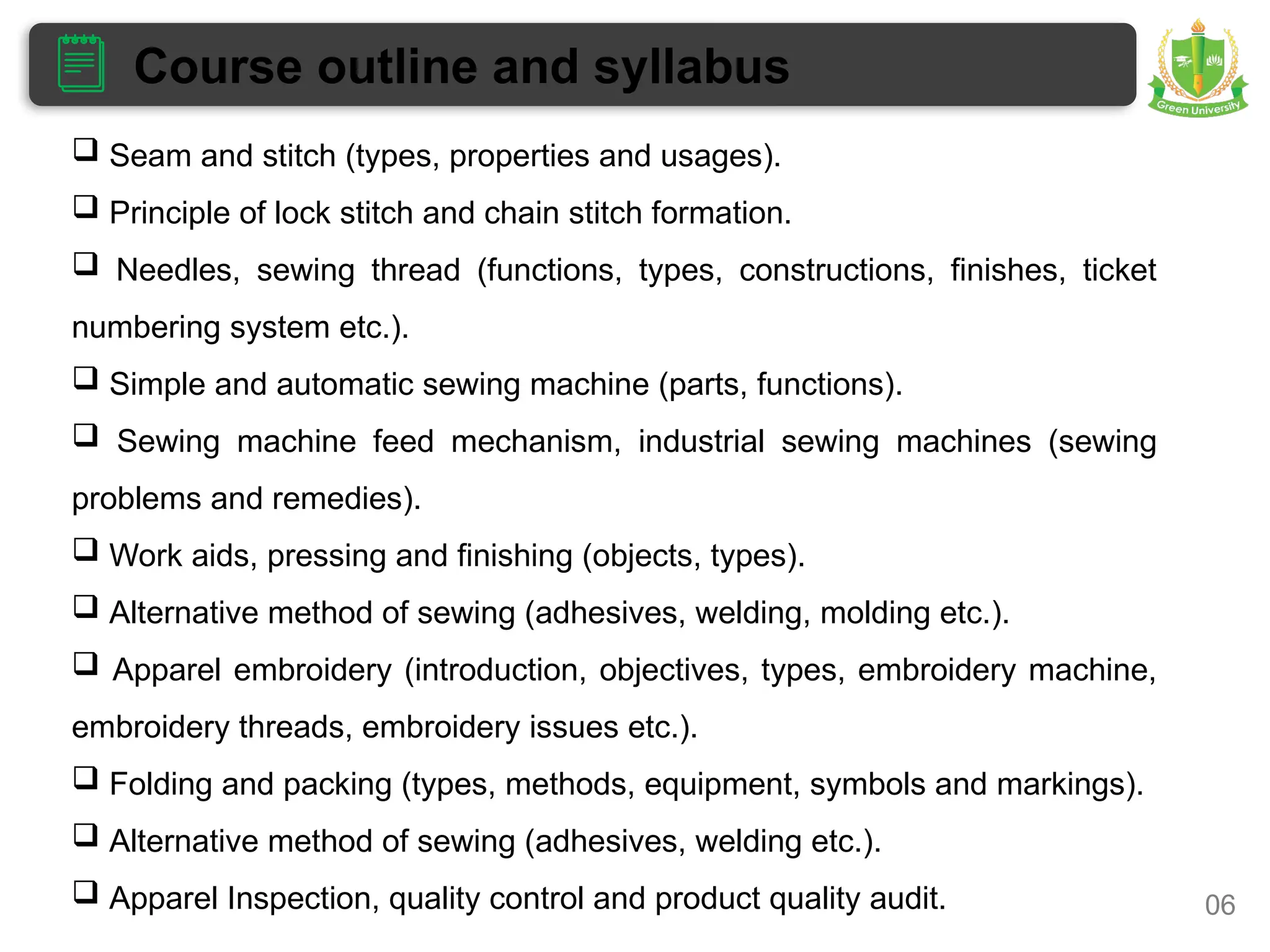
Seam and stitch (types, properties and usages).
Principle of lock stitch and chain stitch formation.
Needles, sewing thread (functions, types, constructions, finishes, ticket
numbering system etc.).
Simple and automatic sewing machine (parts, functions).
Sewing machine feed mechanism, industrial sewing machines (sewing
problems and remedies).
Work aids, pressing and finishing (objects, types).
Alternative method of sewing (adhesives, welding, molding etc.).
Apparel embroidery (introduction, objectives, types, embroidery machine,
embroidery threads, embroidery issues etc.).
Folding and packing (types, methods, equipment, symbols and markings).
Alternative method of sewing (adhesives, welding etc.).
Apparel Inspection, quality control and product quality audit.
7.
Introduction of thecourse
06
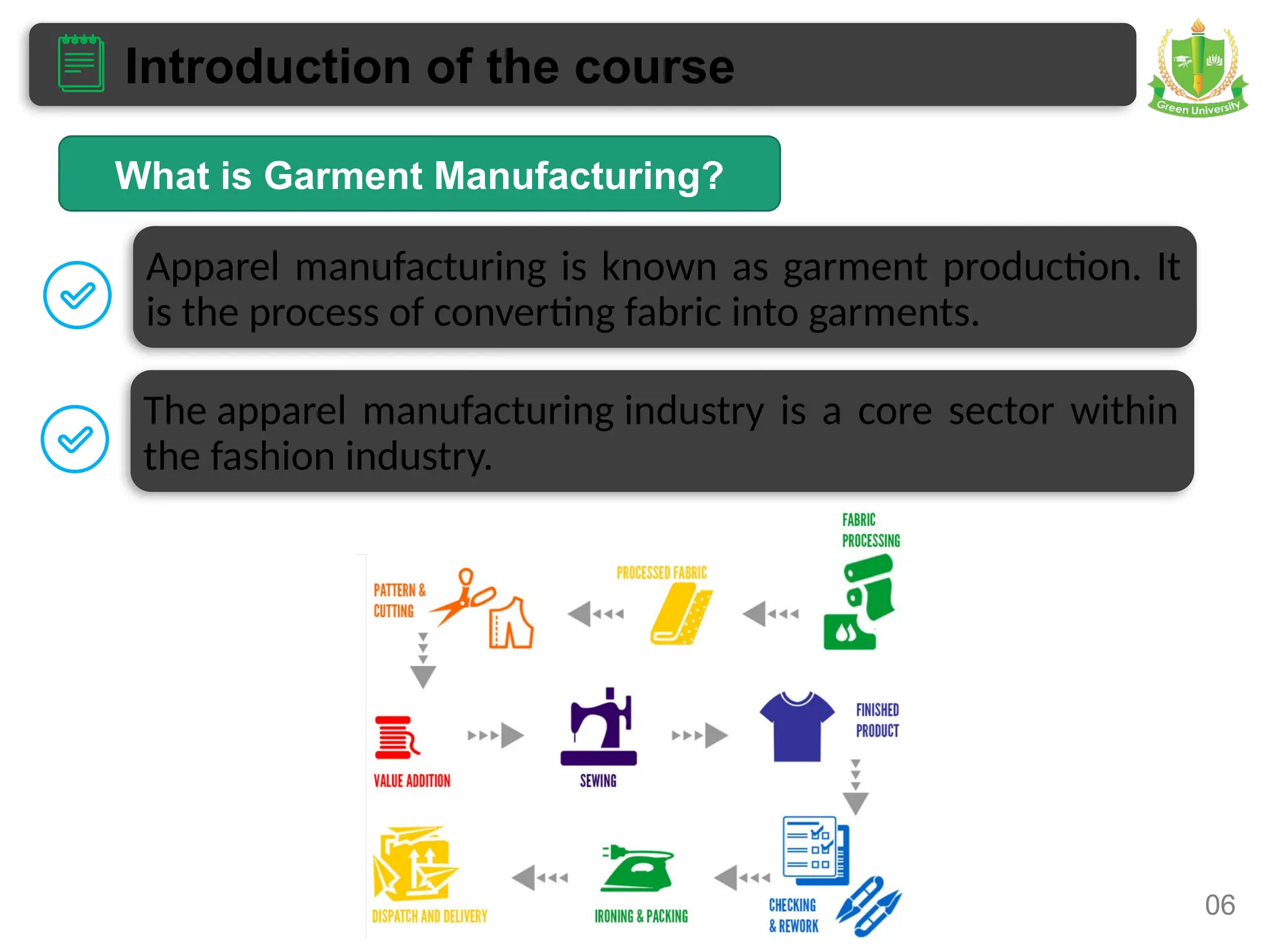
What is Garment Manufacturing?
Apparel manufacturing is known as garment production. It
is the process of converting fabric into garments.
The apparel manufacturing industry is a core sector within
the fashion industry.
8.
Job Opportunities inthe Apparel Manufacturing Field
06
Career Paths
Production Manager
Quality Control Specialist
Sustainability Consultant
Design/Product Development
Research & Development.
Growing Industry
Demand for skilled professionals, especially in sustainability and digital
manufacturing.
Opportunities in established brands and startups.
Emerging Trends
Automation, artificial intelligence, eco-friendly practices.
Expanding job opportunities in digital printing, 3D knitting, garment technology.
9.
Examination process
17
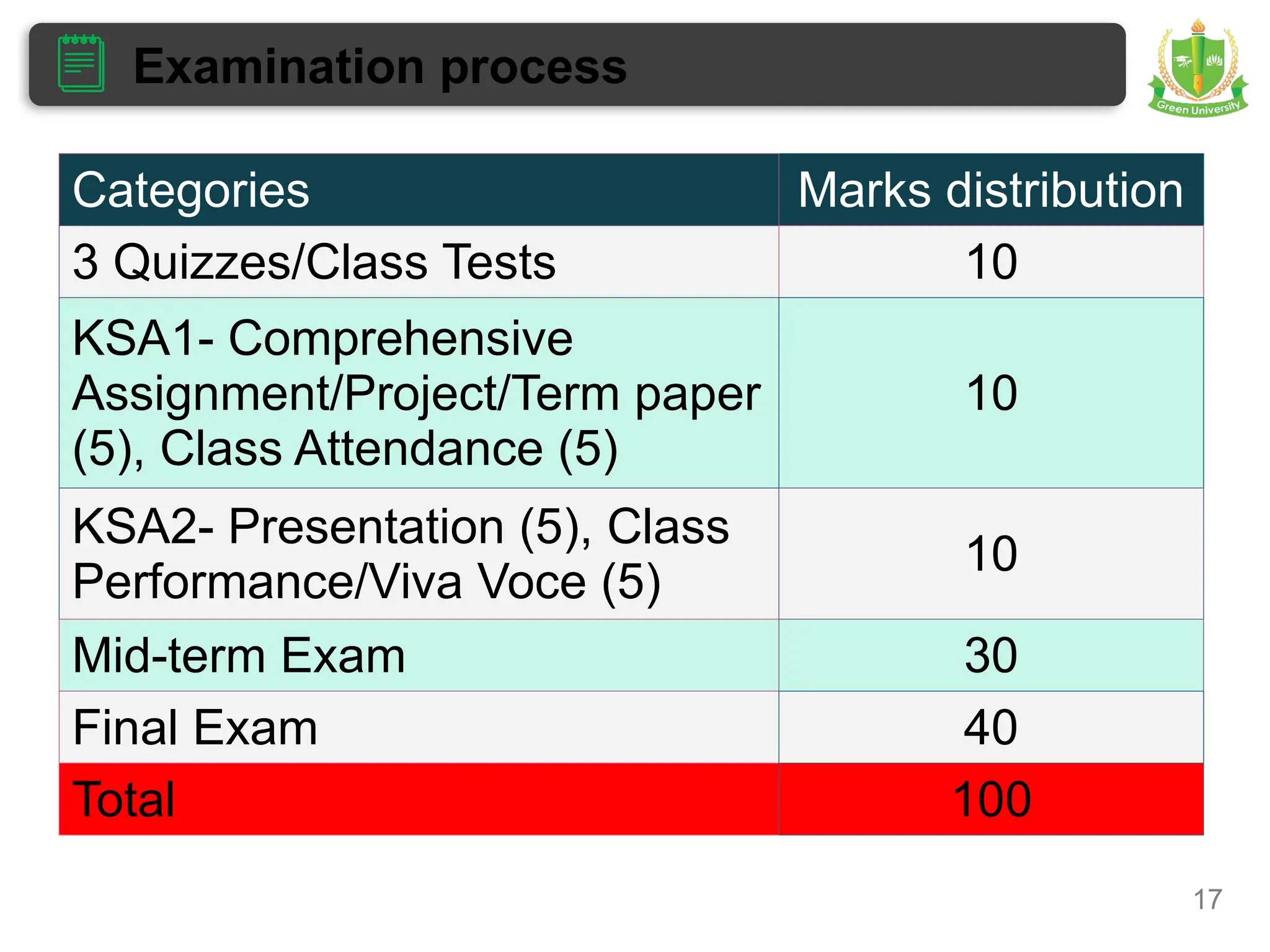
Categories Marksdistribution
3 Quizzes/Class Tests 10
KSA1- Comprehensive
Assignment/Project/Term paper
(5), Class Attendance (5)
10
KSA2- Presentation (5), Class
Performance/Viva Voce (5)
10
Mid-term Exam 30
Final Exam 40
Total 100
10.
Marking process
18
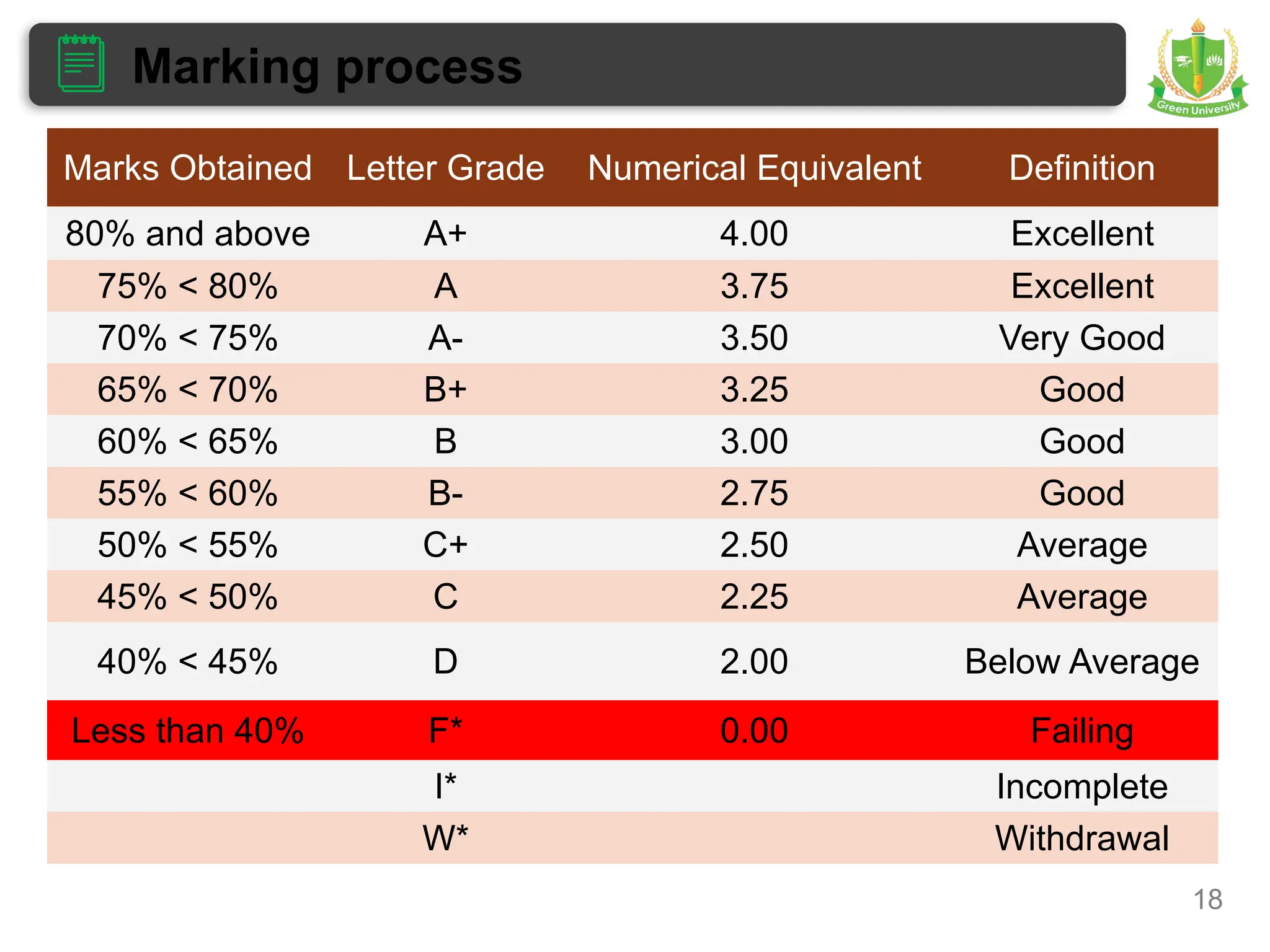
Marks ObtainedLetter Grade Numerical Equivalent Definition
80% and above A+ 4.00 Excellent
75% < 80% A 3.75 Excellent
70% < 75% A- 3.50 Very Good
65% < 70% B+ 3.25 Good
60% < 65% B 3.00 Good
55% < 60% B- 2.75 Good
50% < 55% C+ 2.50 Average
45% < 50% C 2.25 Average
40% < 45% D 2.00 Below Average
Less than 40% F* 0.00 Failing
I* Incomplete
W* Withdrawal
11.
Books
08
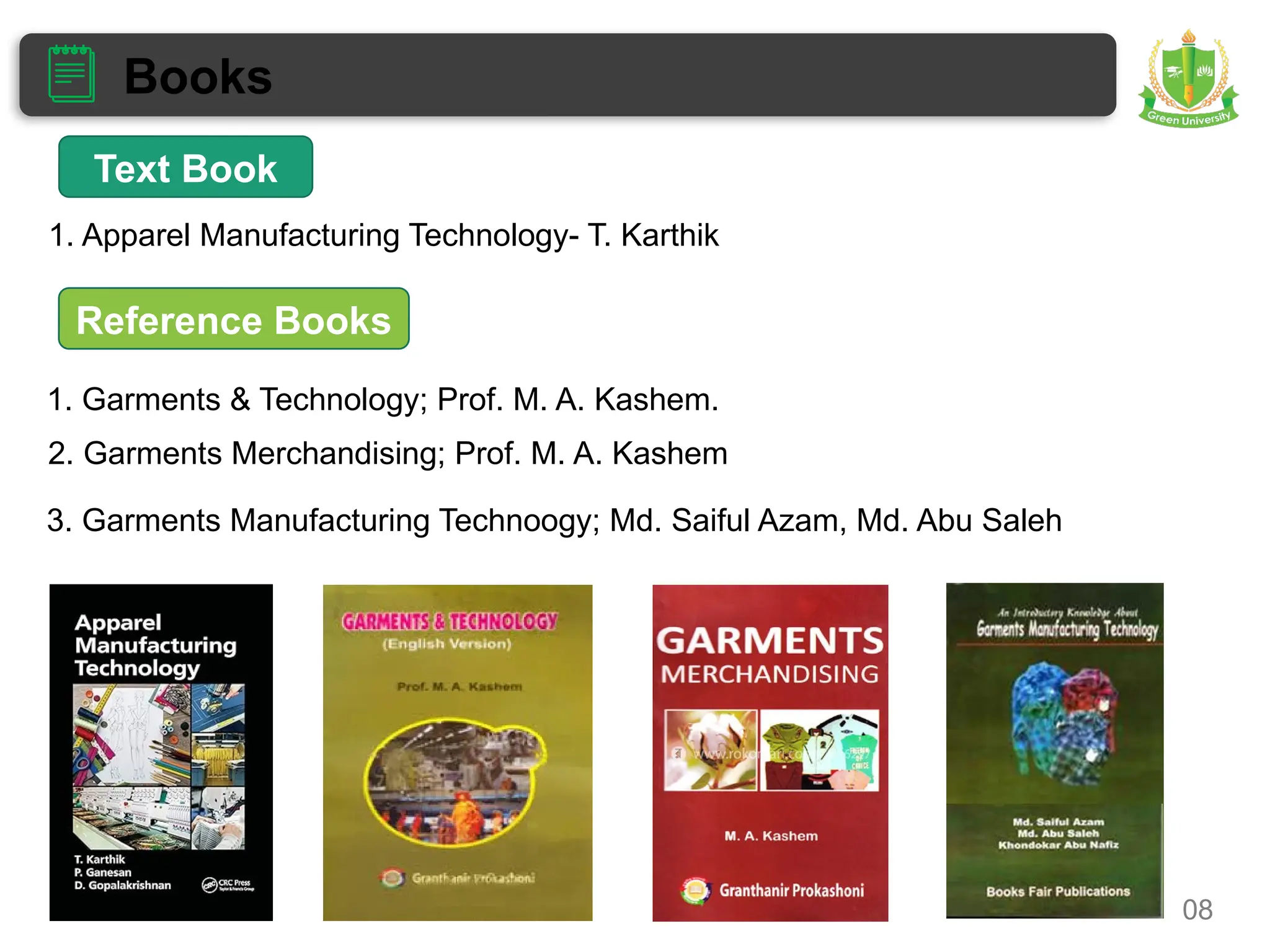
1. Garments &Technology; Prof. M. A. Kashem.
2. Garments Merchandising; Prof. M. A. Kashem
3. Garments Manufacturing Technoogy; Md. Saiful Azam, Md. Abu Saleh
1. Apparel Manufacturing Technology- T. Karthik
Text Book
Reference Books