3 Soccer
Training Secrets
to Penalty
Taking
SoccerSkillsPro.com
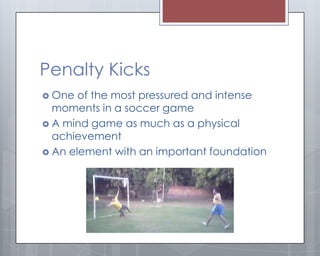
Penalty Kicks
 One  of the most pressured and intense
  moments in a soccer game
 A mind game as much as a physical
  achievement
 An element with an important foundation
1
    • It pays not to be overconfident but to
      really know your strengths and tactics in
      advance.


2
    • It pays not to play games of reverse
      psychology as the goalkeeper is likely to
      be well aware of what you’re up to.


3
    • It’s important not to give the game
      away with your eyes and body
      movements.
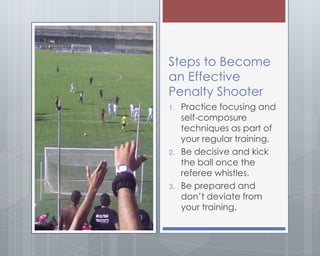
Steps to Become
an Effective
Penalty Shooter
1.   Practice focusing and
     self-composure
     techniques as part of
     your regular training.
2.   Be decisive and kick
     the ball once the
     referee whistles.
3.   Be prepared and
     don’t deviate from
     your training.
1. Practice focusing and self-
composure techniques as part of
your regular training.
 Even before you      a.   Learn how to
 are in the position        remain focused.
 of having to take a   b.   Practice staying
 penalty goal, part         calm under
 of your training           pressure, not
 should always be           thinking about the
 to learn the               things that could
                            go wrong.
 techniques for
 keeping yourself      c.   Practice
 calm under                 visualization of
                            positive results.
 pressure.
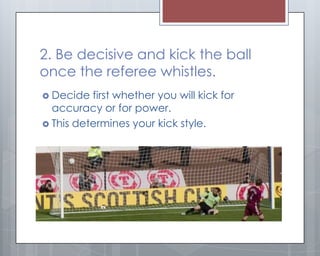
2. Be decisive and kick the ball
once the referee whistles.
 Decide  first whether you will kick for
  accuracy or for power.
 This determines your kick style.
If it’s “precision over
   power” you want,
          then the
recommended kick is
      the inside-foot.
Sometimes power can be
 enough to take the ball
   past the keeper. To
 achieve this shot, shoot
 hard with the instep, i.e.
     from the laces.
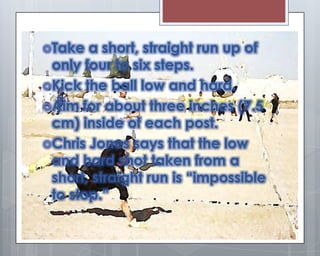
Take  a short, straight run up of
 only four to six steps.
Kick the ball low and hard.
Aim for about three inches (7.5
 cm) inside of each post.
Chris Jones says that the low
 and hard shot taken from a
 short, straight run is “impossible
 to stop.”
3. Be prepared and don’t deviate
from your training.
 Don’t:
     Turn the expectation of a goal into added
      pressure
     Feel that the shot has to leave the ground
     Hesitate about where you will place the
      ball
     Place undue importance on the moment
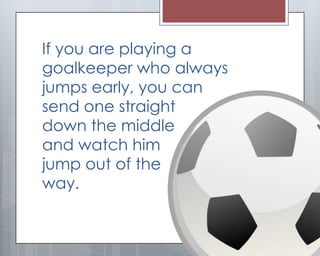
If you are playing a
goalkeeper who always
jumps early, you can
send one straight
down the middle
and watch him
jump out of the
way.
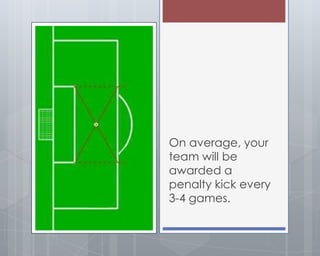
On average, your
team will be
awarded a
penalty kick every
3-4 games.
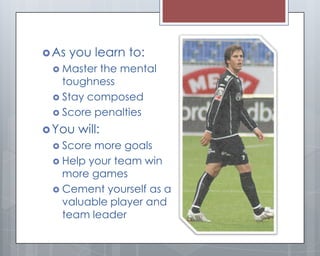
 As   you learn to:
  Master the mental
   toughness
  Stay composed
  Score penalties

 You   will:
  Score more goals
  Help your team win
   more games
  Cement yourself as a
   valuable player and
   team leader

3 soccer training secrets to penalty taking

  • 1.
    3 Soccer Training Secrets toPenalty Taking SoccerSkillsPro.com
  • 2.
    Penalty Kicks  One of the most pressured and intense moments in a soccer game  A mind game as much as a physical achievement  An element with an important foundation
  • 3.
    1 • It pays not to be overconfident but to really know your strengths and tactics in advance. 2 • It pays not to play games of reverse psychology as the goalkeeper is likely to be well aware of what you’re up to. 3 • It’s important not to give the game away with your eyes and body movements.
  • 4.
    Steps to Become anEffective Penalty Shooter 1. Practice focusing and self-composure techniques as part of your regular training. 2. Be decisive and kick the ball once the referee whistles. 3. Be prepared and don’t deviate from your training.
  • 5.
    1. Practice focusingand self- composure techniques as part of your regular training.  Even before you a. Learn how to are in the position remain focused. of having to take a b. Practice staying penalty goal, part calm under of your training pressure, not should always be thinking about the to learn the things that could go wrong. techniques for keeping yourself c. Practice calm under visualization of positive results. pressure.
  • 6.
    2. Be decisiveand kick the ball once the referee whistles.  Decide first whether you will kick for accuracy or for power.  This determines your kick style.
  • 7.
    If it’s “precisionover power” you want, then the recommended kick is the inside-foot.
  • 8.
    Sometimes power canbe enough to take the ball past the keeper. To achieve this shot, shoot hard with the instep, i.e. from the laces.
  • 9.
    Take ashort, straight run up of only four to six steps. Kick the ball low and hard. Aim for about three inches (7.5 cm) inside of each post. Chris Jones says that the low and hard shot taken from a short, straight run is “impossible to stop.”
  • 10.
    3. Be preparedand don’t deviate from your training.  Don’t:  Turn the expectation of a goal into added pressure  Feel that the shot has to leave the ground  Hesitate about where you will place the ball  Place undue importance on the moment
  • 11.
    If you areplaying a goalkeeper who always jumps early, you can send one straight down the middle and watch him jump out of the way.
  • 12.
    On average, your teamwill be awarded a penalty kick every 3-4 games.
  • 13.
     As you learn to:  Master the mental toughness  Stay composed  Score penalties  You will:  Score more goals  Help your team win more games  Cement yourself as a valuable player and team leader