Cloud Formation

 Kaitlynn Coldren
Adiabatic Temperature Changes and
        Expansion and Cooling.
• Adiabatic Temperature Changes are changes in
  temperature that happen even if heat is not
  added into the atmosphere.
• There are two different types of adiabatic rates
  there is the dry adiabatic rate and the wet
  adiabatic rate.
• The dry adiabatic rate is the rate of cooling or
  heating unsaturated air.
The wet adiabatic rate is the rate that is slower than
  the dry adiabatic rate
Orographic Lifting
• This occurs when high or elevated terrains like
  mountains canyons or glaciers experience
  acting like barriers to air flow.
• This causes the air flow on the elevated
  terrains to rise up into the atmostphere.
Frontal wedging
• Frontal wedging occurs at the front of a cloud
  or storm cloud odd dense air rises and acts
  like a barrier over which warmer less dense air
  rises through the cloud.
Convergence
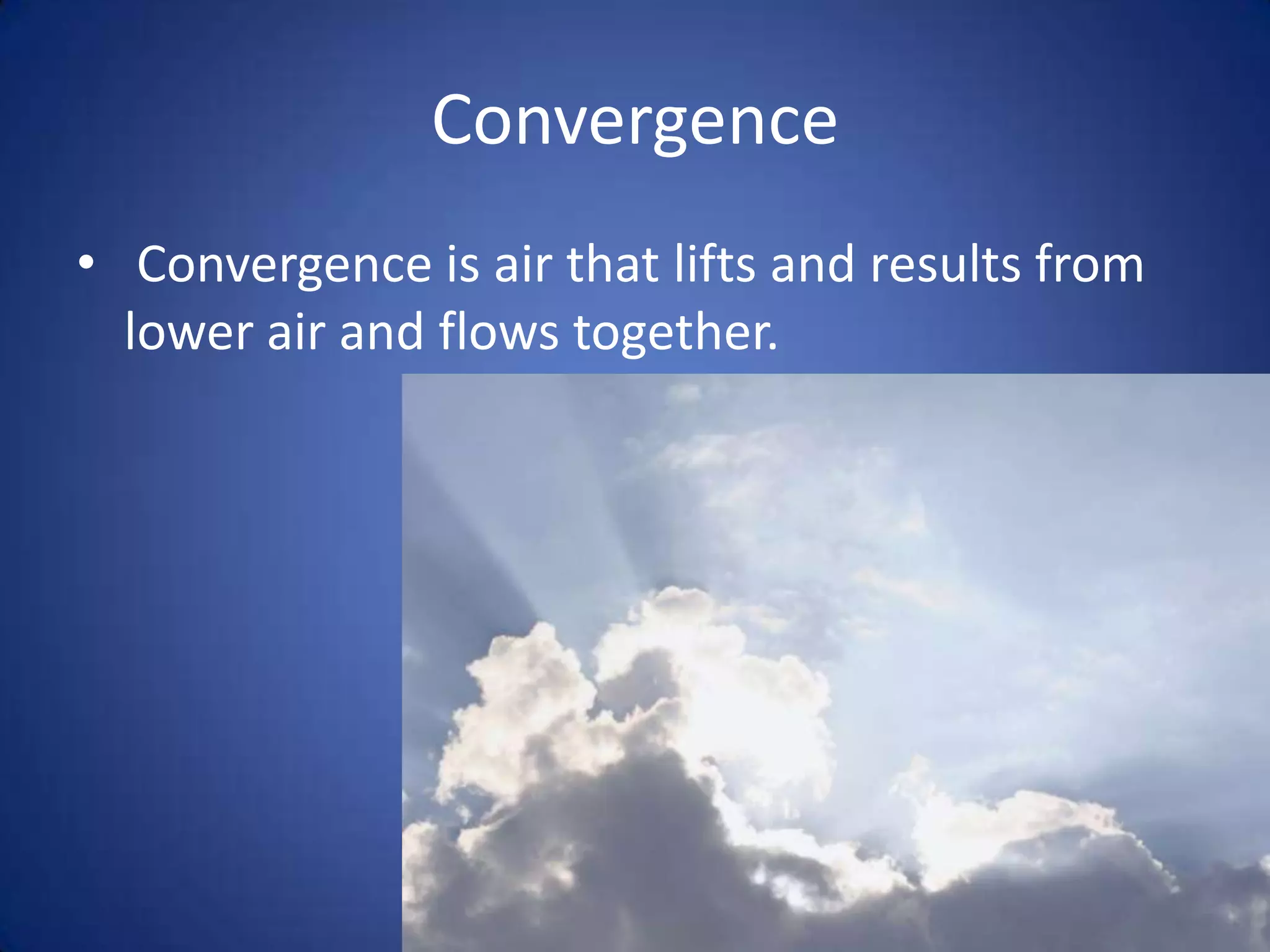
• Convergence is air that lifts and results from
  lower air and flows together.
Localized Convective Lifting
• Localized Convection lifting happens when
  unbalanced heating of the Earths surface
  warms up a pocket of air more than other
  spots around that air.
• When this happens it lowers the air pockets
  density.
Stability
• The moist and stable conditions happen when
  air temperature actually increases with height
  called a temperature inversion.
Condensation
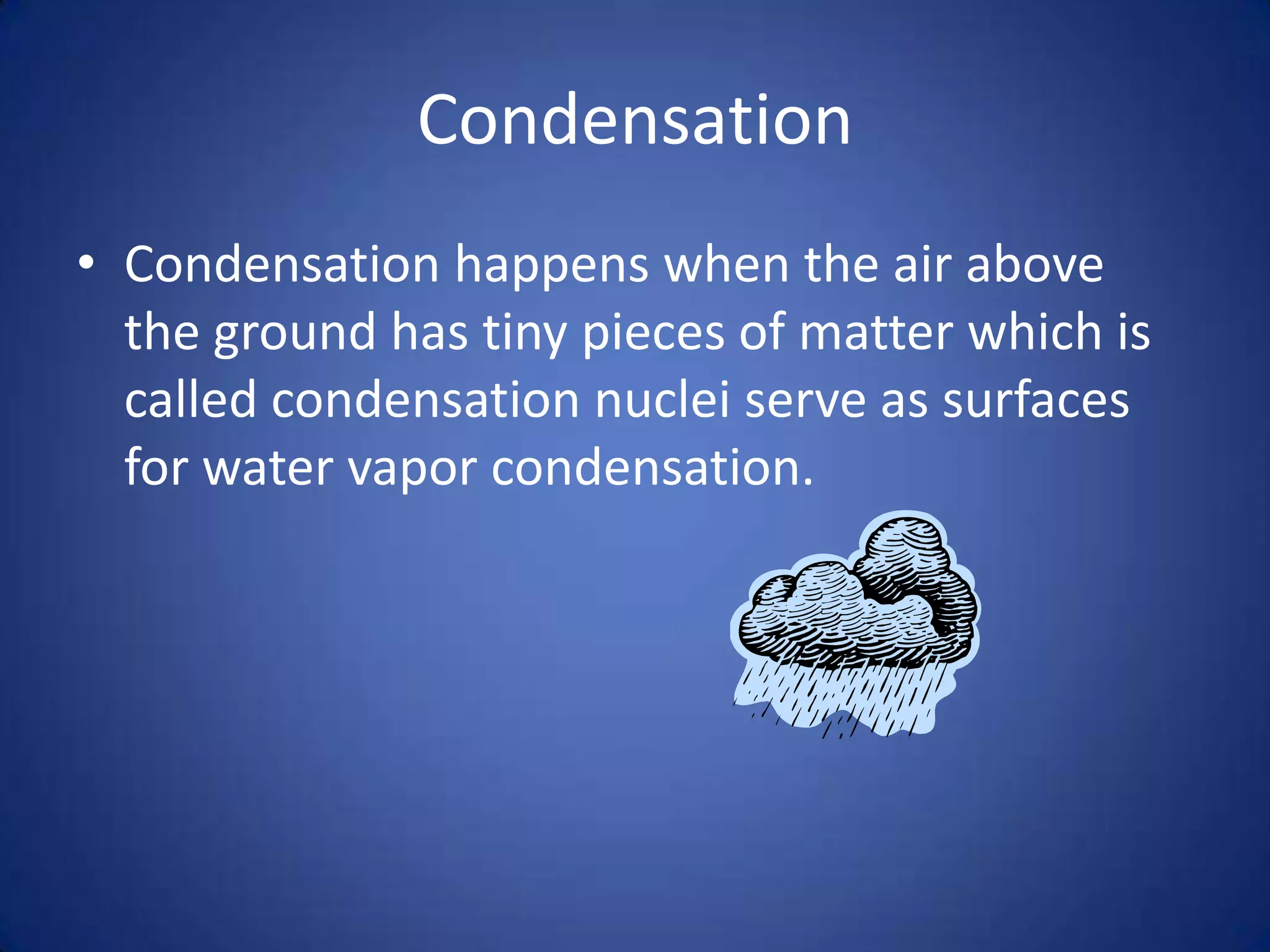
• Condensation happens when the air above
  the ground has tiny pieces of matter which is
  called condensation nuclei serve as surfaces
  for water vapor condensation.
Types of Clouds
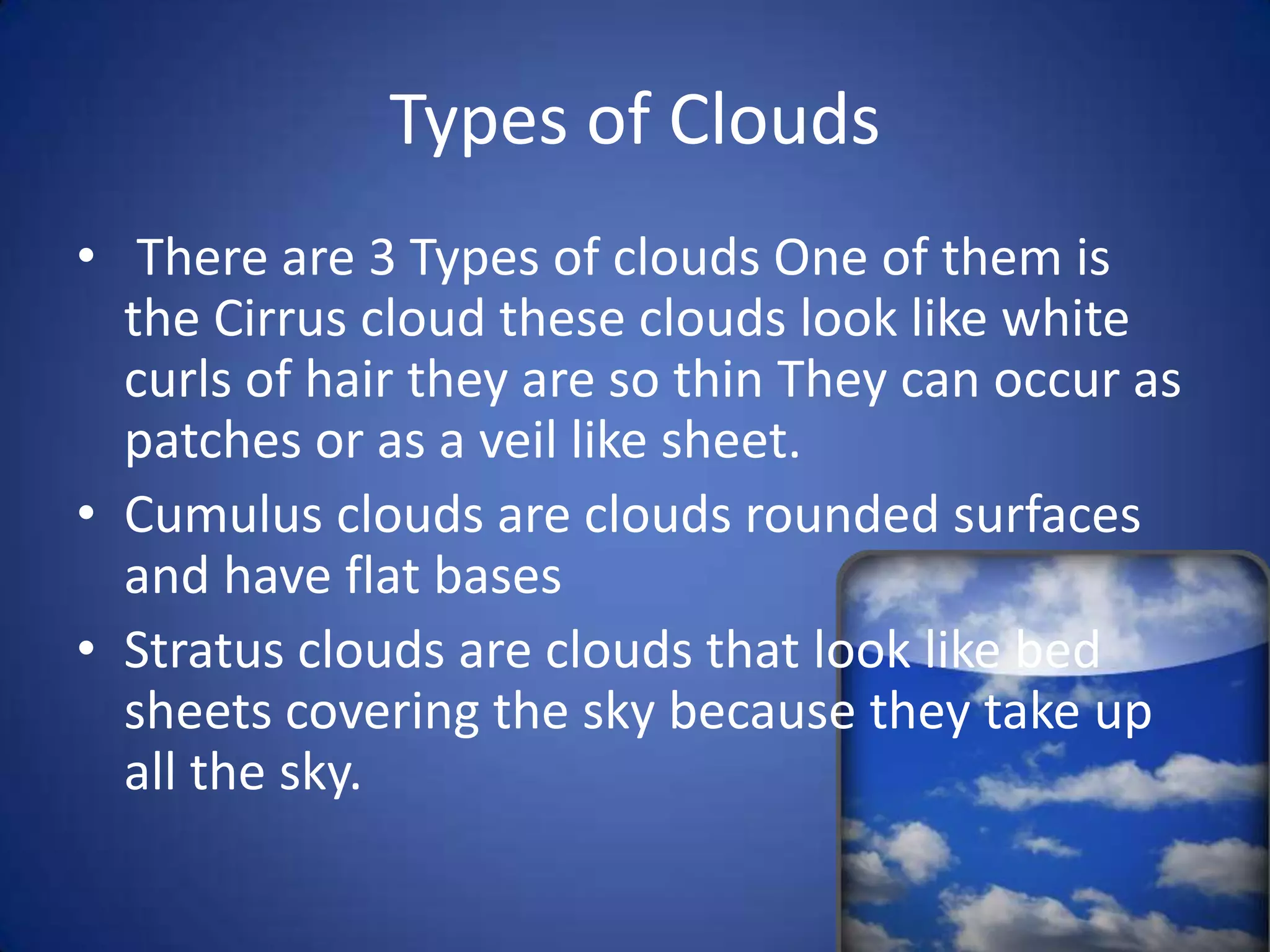
• There are 3 Types of clouds One of them is
  the Cirrus cloud these clouds look like white
  curls of hair they are so thin They can occur as
  patches or as a veil like sheet.
• Cumulus clouds are clouds rounded surfaces
  and have flat bases
• Stratus clouds are clouds that look like bed
  sheets covering the sky because they take up
  all the sky.
High Clouds
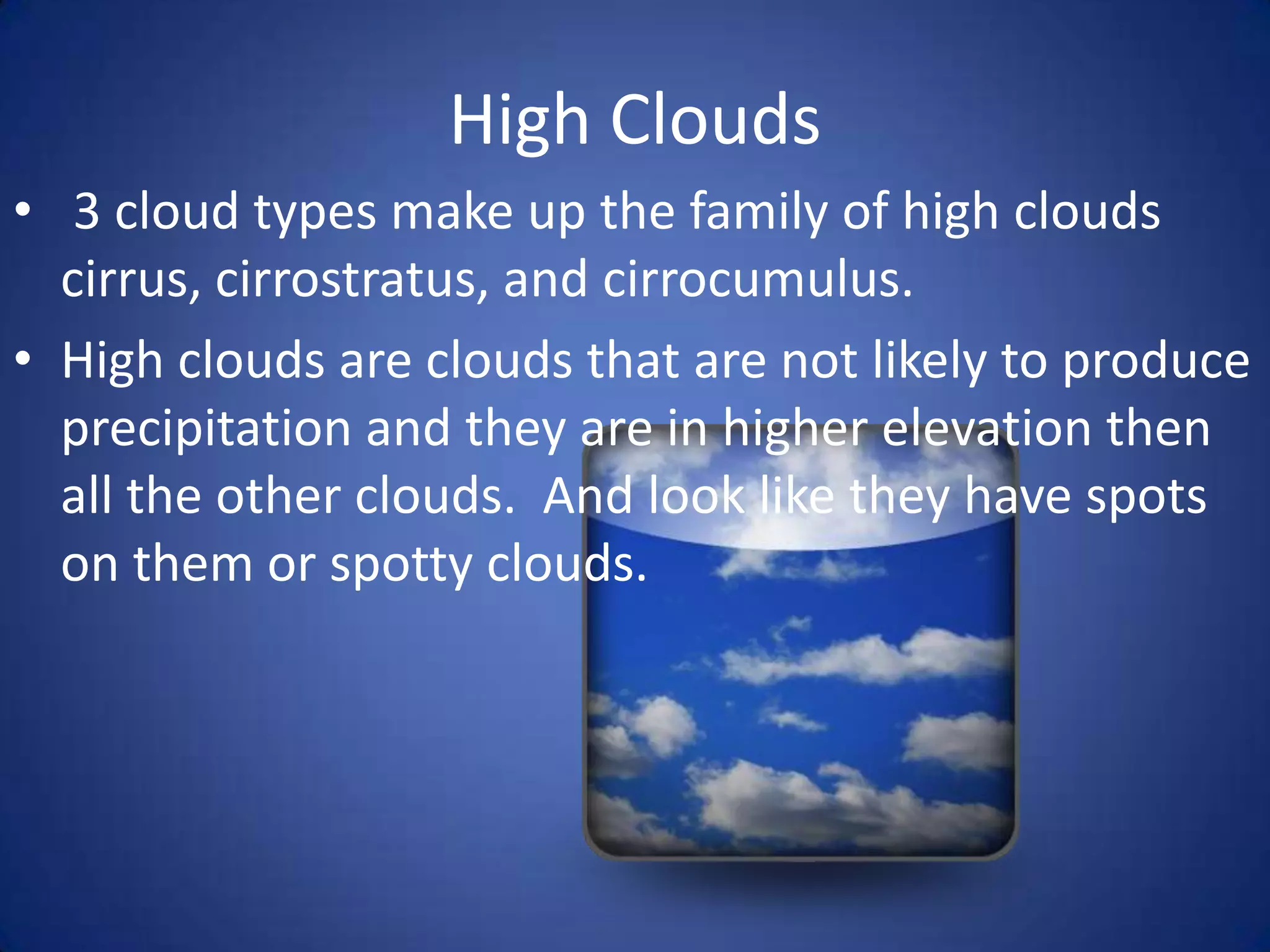
• 3 cloud types make up the family of high clouds
  cirrus, cirrostratus, and cirrocumulus.
• High clouds are clouds that are not likely to produce
  precipitation and they are in higher elevation then
  all the other clouds. And look like they have spots
  on them or spotty clouds.
Middle clouds

• The Middle clouds form in the middle range
  of the atmosphere and they are called
  Altocumulus clouds
• These clouds are much more dense and thick
• The Middle clouds have a white grayish sheet
  sort of look to them. Some times they can
  produce snow drizzle or maybe rain.
Low Clouds
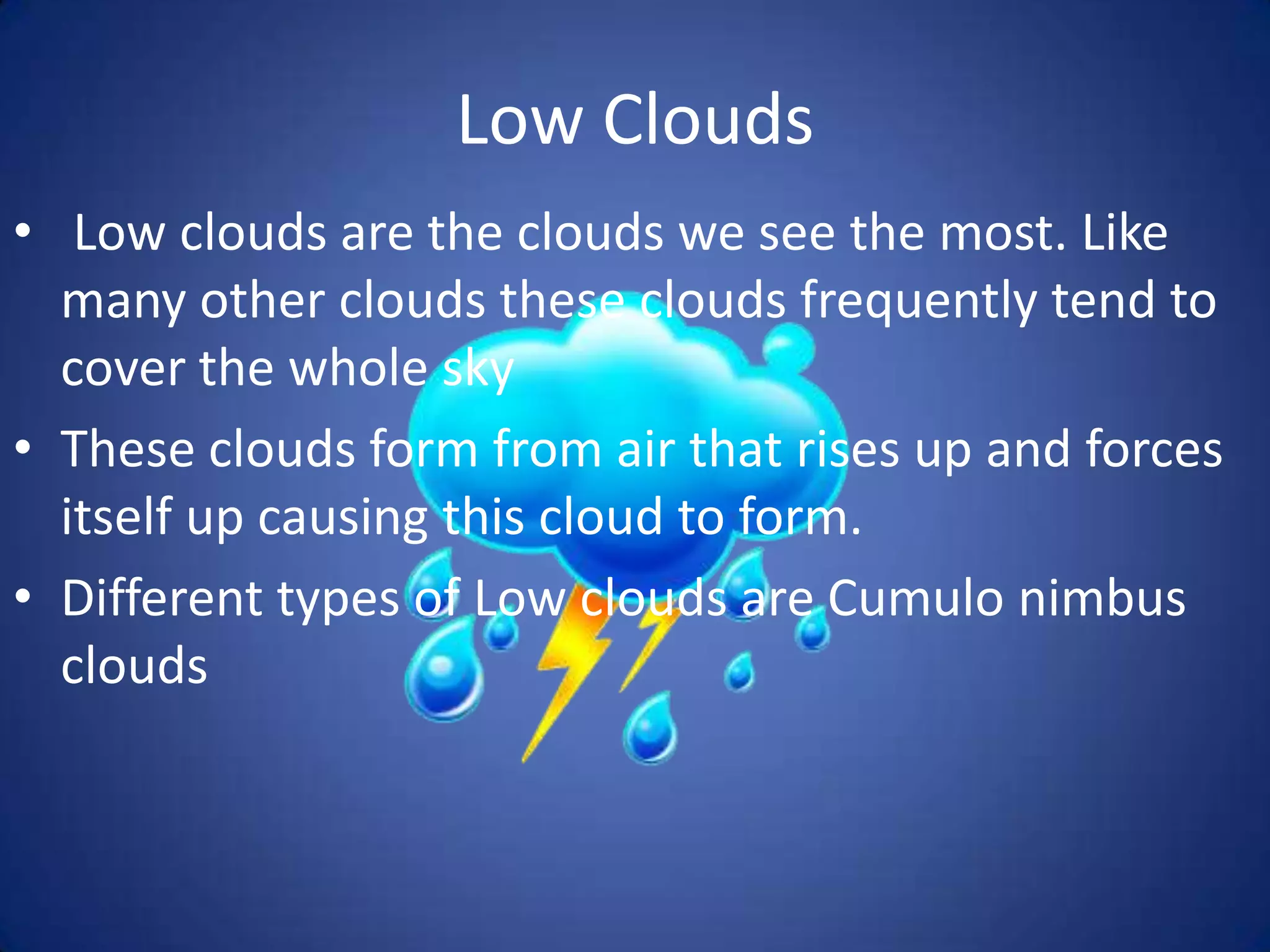
• Low clouds are the clouds we see the most. Like
  many other clouds these clouds frequently tend to
  cover the whole sky
• These clouds form from air that rises up and forces
  itself up causing this cloud to form.
• Different types of Low clouds are Cumulo nimbus
  clouds
Clouds of Vertical Development
• Some clouds do not fit into any one of the three height
  categories mentioned. Such clouds have their bases in
  the low height range but often extend upward into the
  middle or high altitudes. They all are related to one
  another and are associated with unstable air
• Although cumulus clouds are often connected with fair
  weather they may grow dramatically undre the proper
  circumstances. Once upward movement is triggered,
  acceleration is powerful and clouds with great vertical
  range form. The end result often is a cumulonimbus
  cloud that may produce rain showers or a
  thunderstorm
Fog
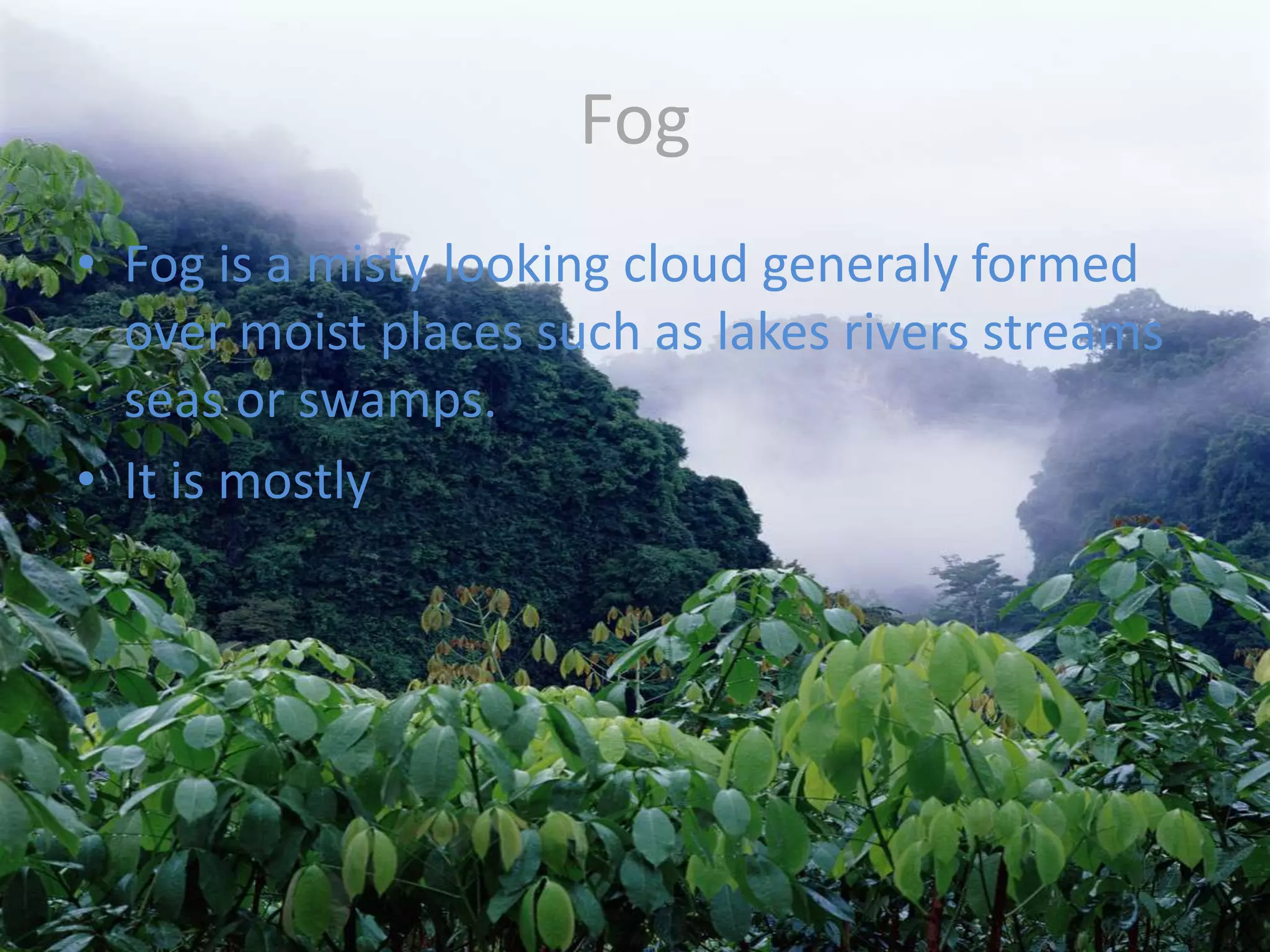
• Fog is a misty looking cloud generaly formed
  over moist places such as lakes rivers streams
  seas or swamps.
• It is mostly

2Kcoldren

  • 1.
  • 2.
    Adiabatic Temperature Changesand Expansion and Cooling. • Adiabatic Temperature Changes are changes in temperature that happen even if heat is not added into the atmosphere. • There are two different types of adiabatic rates there is the dry adiabatic rate and the wet adiabatic rate. • The dry adiabatic rate is the rate of cooling or heating unsaturated air. The wet adiabatic rate is the rate that is slower than the dry adiabatic rate
  • 3.
    Orographic Lifting • Thisoccurs when high or elevated terrains like mountains canyons or glaciers experience acting like barriers to air flow. • This causes the air flow on the elevated terrains to rise up into the atmostphere.
  • 4.
    Frontal wedging • Frontalwedging occurs at the front of a cloud or storm cloud odd dense air rises and acts like a barrier over which warmer less dense air rises through the cloud.
  • 5.
    Convergence • Convergence isair that lifts and results from lower air and flows together.
  • 6.
    Localized Convective Lifting •Localized Convection lifting happens when unbalanced heating of the Earths surface warms up a pocket of air more than other spots around that air. • When this happens it lowers the air pockets density.
  • 7.
    Stability • The moistand stable conditions happen when air temperature actually increases with height called a temperature inversion.
  • 8.
    Condensation • Condensation happenswhen the air above the ground has tiny pieces of matter which is called condensation nuclei serve as surfaces for water vapor condensation.
  • 9.
    Types of Clouds •There are 3 Types of clouds One of them is the Cirrus cloud these clouds look like white curls of hair they are so thin They can occur as patches or as a veil like sheet. • Cumulus clouds are clouds rounded surfaces and have flat bases • Stratus clouds are clouds that look like bed sheets covering the sky because they take up all the sky.
  • 10.
    High Clouds • 3cloud types make up the family of high clouds cirrus, cirrostratus, and cirrocumulus. • High clouds are clouds that are not likely to produce precipitation and they are in higher elevation then all the other clouds. And look like they have spots on them or spotty clouds.
  • 11.
    Middle clouds • TheMiddle clouds form in the middle range of the atmosphere and they are called Altocumulus clouds • These clouds are much more dense and thick • The Middle clouds have a white grayish sheet sort of look to them. Some times they can produce snow drizzle or maybe rain.
  • 12.
    Low Clouds • Lowclouds are the clouds we see the most. Like many other clouds these clouds frequently tend to cover the whole sky • These clouds form from air that rises up and forces itself up causing this cloud to form. • Different types of Low clouds are Cumulo nimbus clouds
  • 13.
    Clouds of VerticalDevelopment • Some clouds do not fit into any one of the three height categories mentioned. Such clouds have their bases in the low height range but often extend upward into the middle or high altitudes. They all are related to one another and are associated with unstable air • Although cumulus clouds are often connected with fair weather they may grow dramatically undre the proper circumstances. Once upward movement is triggered, acceleration is powerful and clouds with great vertical range form. The end result often is a cumulonimbus cloud that may produce rain showers or a thunderstorm
  • 14.
    Fog • Fog isa misty looking cloud generaly formed over moist places such as lakes rivers streams seas or swamps. • It is mostly