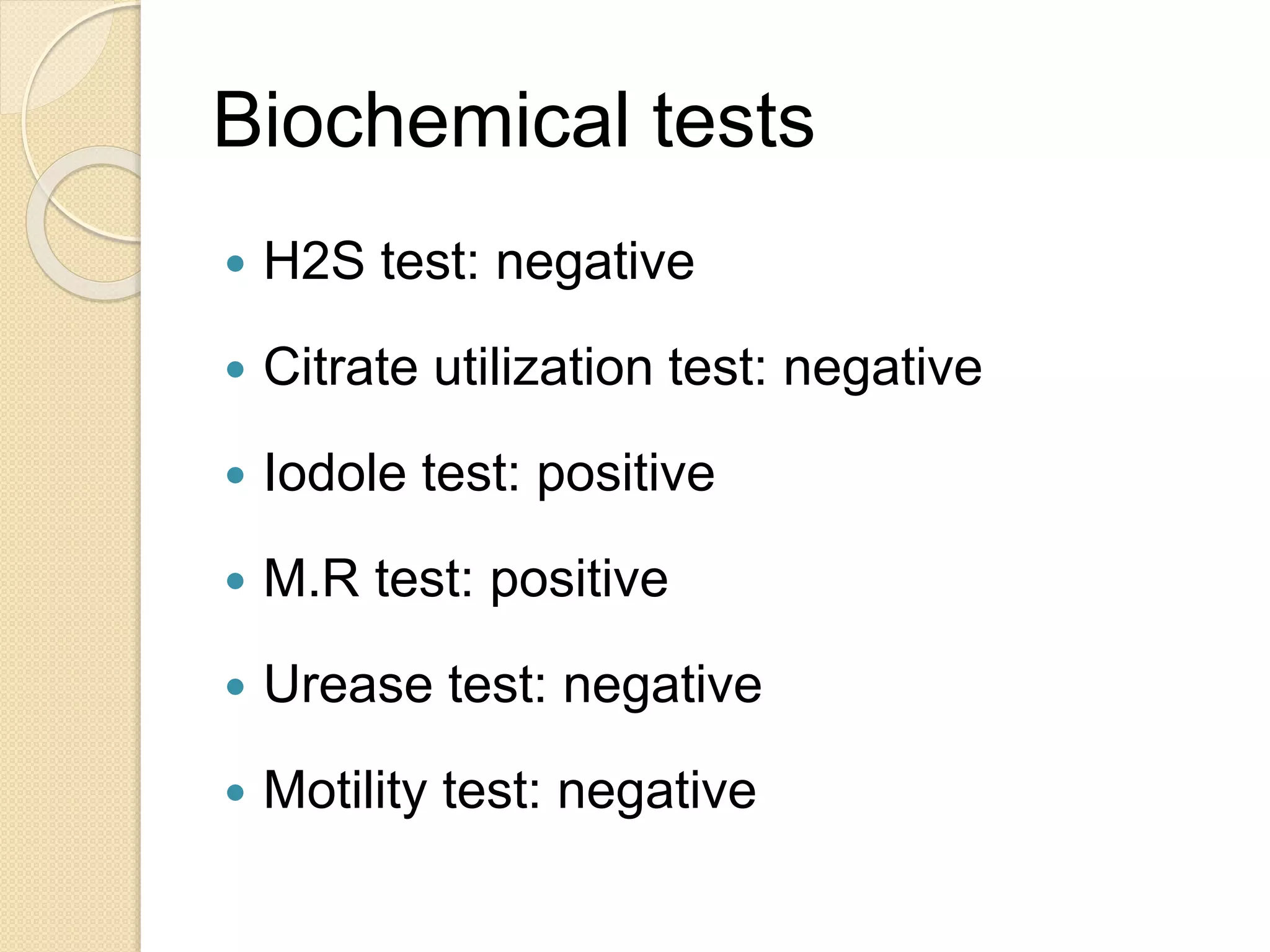
Shigella dysenteriae is a gram-negative, non-motile bacillus that causes dysentery. It grows well at 37°C in nutrient broth, forming colorless colonies on MacConkey agar and red colonies without black centers on XLD agar. S. dysenteriae infection is caused by ingesting contaminated food or water and leads to dysentery characterized by bloody mucus in stool. Laboratory diagnosis involves examining stool samples microscopically for pus cells and macrophages, culturing on selective media to isolate non-lactose fermenting colonies, and conducting biochemical tests and slide agglutination with specific antisera. Tetracycline and chloramphenicol are used