
GROUPS OF ANIMALS
S
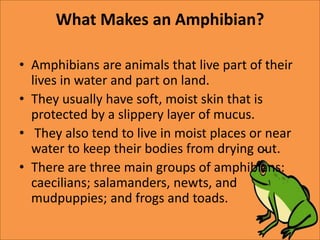
What Makes an Amphibian?
• Amphibians are animals that live part of their
lives in water and part on land.
• They usually have soft, moist skin that is
protected by a slippery layer of mucus.
• They also tend to live in moist places or near
water to keep their bodies from drying out.
• There are three main groups of amphibians:
caecilians; salamanders, newts, and
mudpuppies; and frogs and toads.
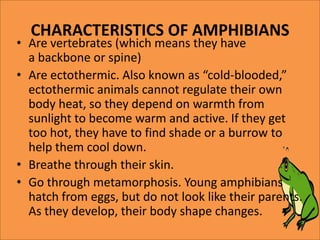
CHARACTERISTICS OF AMPHIBIANS
• Are vertebrates (which means they have
a backbone or spine)
• Are ectothermic. Also known as “cold-blooded,”
ectothermic animals cannot regulate their own
body heat, so they depend on warmth from
sunlight to become warm and active. If they get
too hot, they have to find shade or a burrow to
help them cool down.
• Breathe through their skin.
• Go through metamorphosis. Young amphibians
hatch from eggs, but do not look like their parents.
As they develop, their body shape changes.
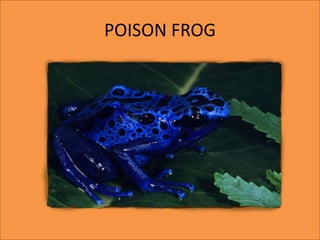
POISON FROG
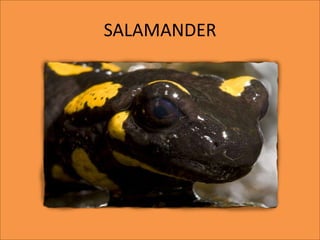
SALAMANDER
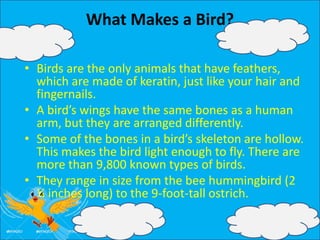
What Makes a Bird?
• Birds are the only animals that have feathers,
which are made of keratin, just like your hair and
fingernails.
• A bird’s wings have the same bones as a human
arm, but they are arranged differently.
• Some of the bones in a bird’s skeleton are hollow.
This makes the bird light enough to fly. There are
more than 9,800 known types of birds.
• They range in size from the bee hummingbird (2
¼ inches long) to the 9-foot-tall ostrich.
Characteristics of Birds
• They are vertebrates (which means they have
a backbone or spine)
• They are endothermic. Also known as “warm-
blooded,” endothermic animals regulate their
own body temperature which allows them to live
in almost every climate on earth.
• They have feathers
• Lay eggs with hard, waterproof shells. The parent
birds incubate the eggs until they hatch, and care
for their young.
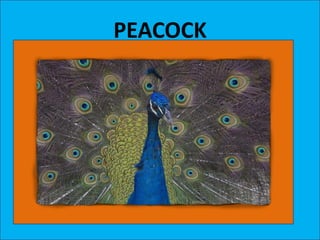
PEACOCK
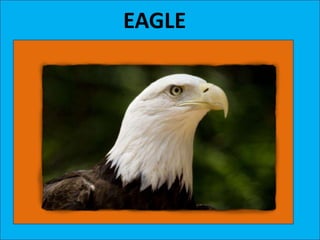
EAGLE
MAMMALS
What Makes a Mammal?
• There are more than 4,000 different species of
mammals.
• The smallest is the hog-nosed bat, which
weighs 0.05 ounces.
• The largest is the blue whale, which can be
100 feet long and weigh 150 tons. But
whether they live on land or water, all
mammals share some common
characteristics.
Characteristics of Mammals
• They are vertebrates (which means they have
abackbone or spine).
• They are endothermic. Also known as “warm-
blooded,” endothermic animals regulate their
own body temperate which allows them to live in
almost every climate on Earth.
• They have hair on their bodies.
• They produce milk to feed their babies. This
allows them to spend more time with their young
and teach them important skills they need to
survive on their own.
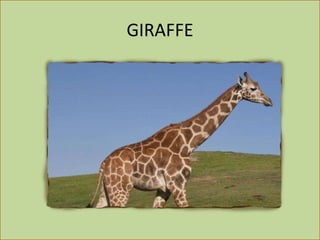
GIRAFFE
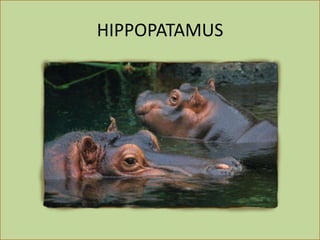
HIPPOPATAMUS
REPTILE
What Makes a Reptile?
• There are four main groups of reptiles: turtles
and tortoises; lizards and snakes; crocodiles
and alligators; and the tuatara.
• Many reptiles spend most of their time on
land, but some spend a great deal of time in
the water.
• Reptile species can be found in all types
of habitat except polar ice and tundra.
Characteristics of Reptiles
• Are vertebrates (which means they have
a backbone or spine)
• Are ectothermic. Also known as “cold-blooded,”
ectothermic animals cannot regulate their own
body heat, so they depend on warmth from
sunlight to become warm and active. If they get
too hot, they have to find shade or a burrow to
help them cool down.
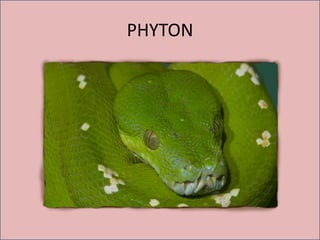
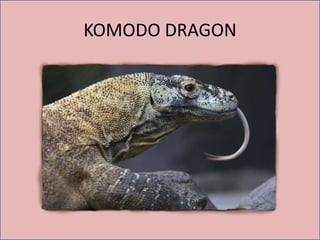
• Are covered with scales
• Have lungs for breathing
PHYTON
KOMODO DRAGON
INSECT
What Makes an Insect?
• Insects are divided into two main groups:
those with wings and those without.
• There are nearly one million known species of
insects, and more are being discovered each
year!
• Many people think that spiders are insects—
they are not. Spiders belong to a different
group of animals called arachnids, which also
includes scorpions.
Characteristics of Insects
• All insects:
• Are invertebrates (which means they do not have
a backbone or internal skeleton. Instead, they
have a hard exoskeleton on the outside of the
body.)
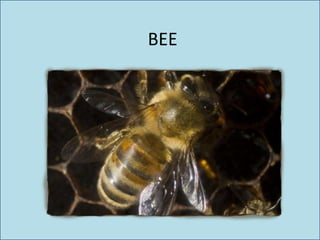
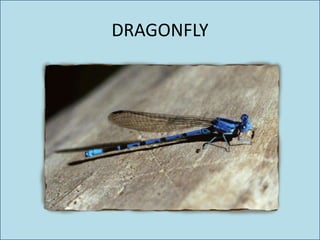
• Have a body divided into three parts: the
head, the thorax (the middle section), and the
abdomen.
• Have two antennae and six legs
• Hatch from eggs
BEE
DRAGONFLY
14   grace

14 grace

  • 1.
  • 2.
  • 3.
    What Makes anAmphibian? • Amphibians are animals that live part of their lives in water and part on land. • They usually have soft, moist skin that is protected by a slippery layer of mucus. • They also tend to live in moist places or near water to keep their bodies from drying out. • There are three main groups of amphibians: caecilians; salamanders, newts, and mudpuppies; and frogs and toads.
  • 4.
    CHARACTERISTICS OF AMPHIBIANS •Are vertebrates (which means they have a backbone or spine) • Are ectothermic. Also known as “cold-blooded,” ectothermic animals cannot regulate their own body heat, so they depend on warmth from sunlight to become warm and active. If they get too hot, they have to find shade or a burrow to help them cool down. • Breathe through their skin. • Go through metamorphosis. Young amphibians hatch from eggs, but do not look like their parents. As they develop, their body shape changes.
  • 5.
  • 6.
  • 8.
    What Makes aBird? • Birds are the only animals that have feathers, which are made of keratin, just like your hair and fingernails. • A bird’s wings have the same bones as a human arm, but they are arranged differently. • Some of the bones in a bird’s skeleton are hollow. This makes the bird light enough to fly. There are more than 9,800 known types of birds. • They range in size from the bee hummingbird (2 ¼ inches long) to the 9-foot-tall ostrich.
  • 9.
    Characteristics of Birds •They are vertebrates (which means they have a backbone or spine) • They are endothermic. Also known as “warm- blooded,” endothermic animals regulate their own body temperature which allows them to live in almost every climate on earth. • They have feathers • Lay eggs with hard, waterproof shells. The parent birds incubate the eggs until they hatch, and care for their young.
  • 10.
  • 11.
  • 12.
  • 13.
    What Makes aMammal? • There are more than 4,000 different species of mammals. • The smallest is the hog-nosed bat, which weighs 0.05 ounces. • The largest is the blue whale, which can be 100 feet long and weigh 150 tons. But whether they live on land or water, all mammals share some common characteristics.
  • 14.
    Characteristics of Mammals •They are vertebrates (which means they have abackbone or spine). • They are endothermic. Also known as “warm- blooded,” endothermic animals regulate their own body temperate which allows them to live in almost every climate on Earth. • They have hair on their bodies. • They produce milk to feed their babies. This allows them to spend more time with their young and teach them important skills they need to survive on their own.
  • 15.
  • 16.
  • 17.
  • 18.
    What Makes aReptile? • There are four main groups of reptiles: turtles and tortoises; lizards and snakes; crocodiles and alligators; and the tuatara. • Many reptiles spend most of their time on land, but some spend a great deal of time in the water. • Reptile species can be found in all types of habitat except polar ice and tundra.
  • 19.
    Characteristics of Reptiles •Are vertebrates (which means they have a backbone or spine) • Are ectothermic. Also known as “cold-blooded,” ectothermic animals cannot regulate their own body heat, so they depend on warmth from sunlight to become warm and active. If they get too hot, they have to find shade or a burrow to help them cool down. • Are covered with scales • Have lungs for breathing
  • 20.
  • 21.
  • 22.
  • 23.
    What Makes anInsect? • Insects are divided into two main groups: those with wings and those without. • There are nearly one million known species of insects, and more are being discovered each year! • Many people think that spiders are insects— they are not. Spiders belong to a different group of animals called arachnids, which also includes scorpions.
  • 24.
    Characteristics of Insects •All insects: • Are invertebrates (which means they do not have a backbone or internal skeleton. Instead, they have a hard exoskeleton on the outside of the body.) • Have a body divided into three parts: the head, the thorax (the middle section), and the abdomen. • Have two antennae and six legs • Hatch from eggs
  • 25.
  • 26.