WELCOME!
Question
What actions will you take to meet your
career development goals?
Brief Introductions
Step 1: In one word, complete the
following sentence:
For my career development,
_____________ is/are what
matters.
Step 2: Create a name tag,
including:
• Your name
• Your department
• Your “one word”
Step 3: *Meet as many
people as you can in the next
ten minutes, sharing this
information.
Today’s Agenda
 Course and program overview
-expectations, logistics, and career development model
 Best practices from CEO Alum
 Career goal setting
 MBTI- Self Examination
Class Logistics
 Web page
 Assignments
 Support
Career Development Model
• Self-Assessments
-Interests, Values,
Preferences
• Research careers
• Identify skills and
transferrable skills
obtained and
needed
Step 1: Explore
Career Development Model
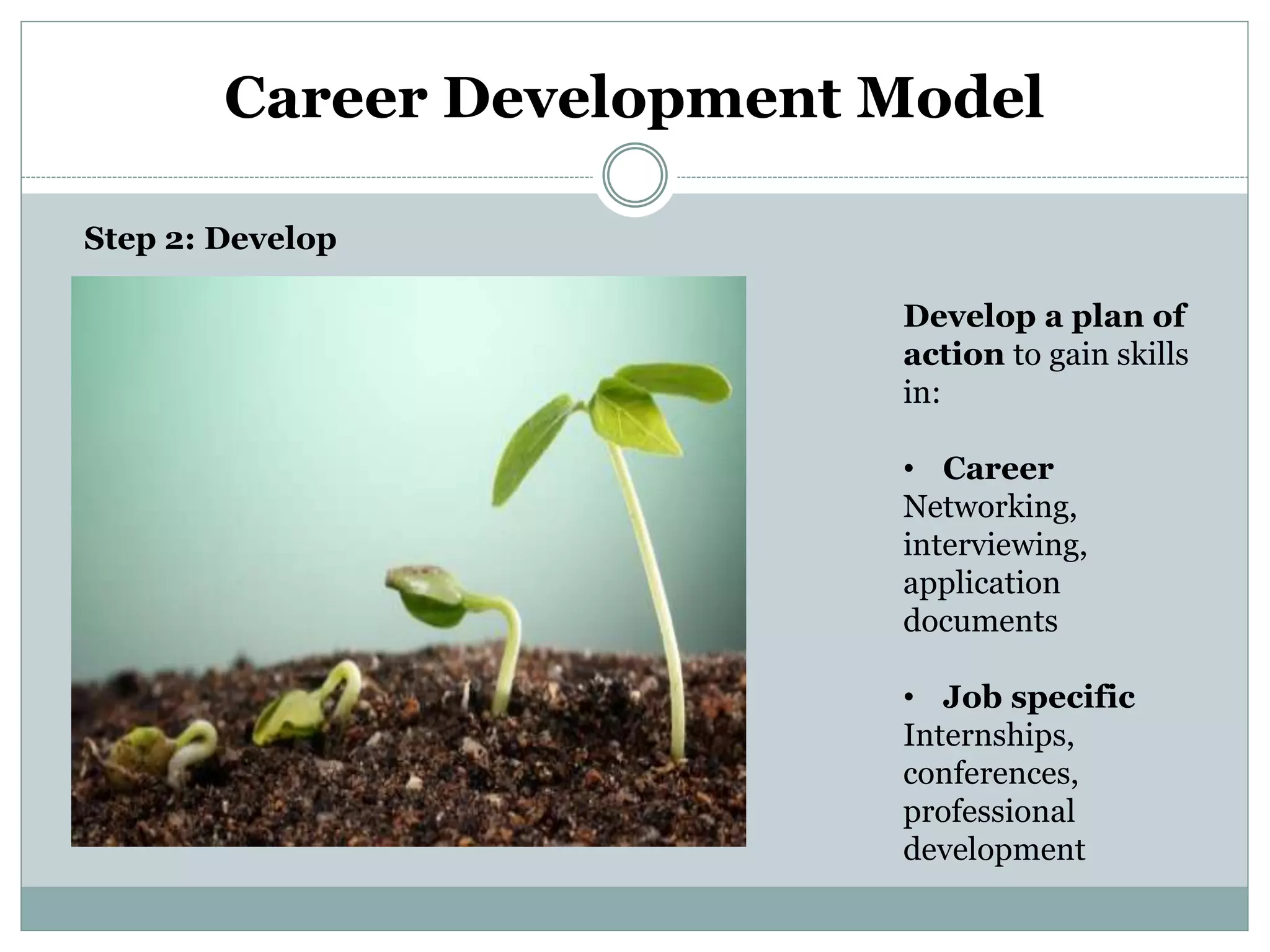
Develop a plan of
action to gain skills
in:
• Career
Networking,
interviewing,
application
documents
• Job specific
Internships,
conferences,
professional
development
Step 2: Develop
Career Development Model
Target your
actions to gain
specific skills,
experiences,
contacts, and
competencies
related to your
careers of
choice.
Target
application
materials and
“brand”
towards specific
roles.
Step 3: Target to roles/sectors
Career Development Model
Step 4: Transition
Synthesize steps 1-
3, to move forward
with your plan.
Translate skills,
experiences, and
training into
meaningful
opportunity.
Goal Setting
“The discipline of writing something down is
the first step toward making it happen. In
conversation you can get away with all kinds of
vagueness and nonsense, often without even
realizing it. But there’s something about putting
your thoughts on paper that forces you to get
specific.”
-Lee Iaacoca, former CEO of Ford, and Chrysler Motors on documenting goals
Words from CEO alumni
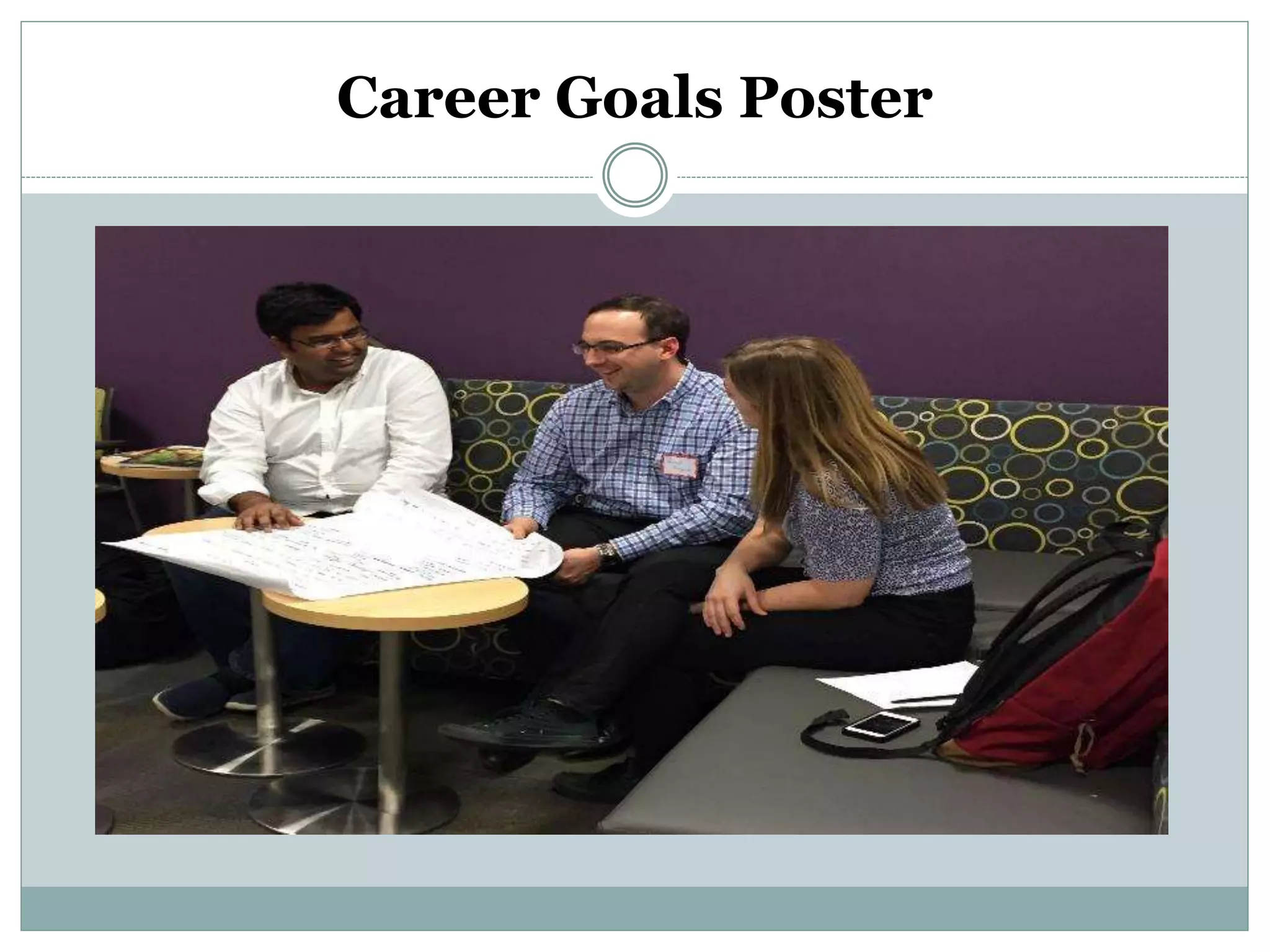
Career Goals Poster
MBTI
• Based on theory that people have observable and
predictable preferences
• Used for:
 Career Counseling
 Team Building
 Leadership Training
10/1/15
10/1/15
Sensing vs. Intuition
Thinking vs. Feeling
How do you structure your time?
REVIEW RESULTS
• Review your reported type
• Is your score Slight, Moderate, Clear or
Very Clear for each preference?
• Read your profile(s) on 16 Types table
• If unsure, read the description for the
opposite preference
• Pick up the expanded handout for your
preference
10/1/15
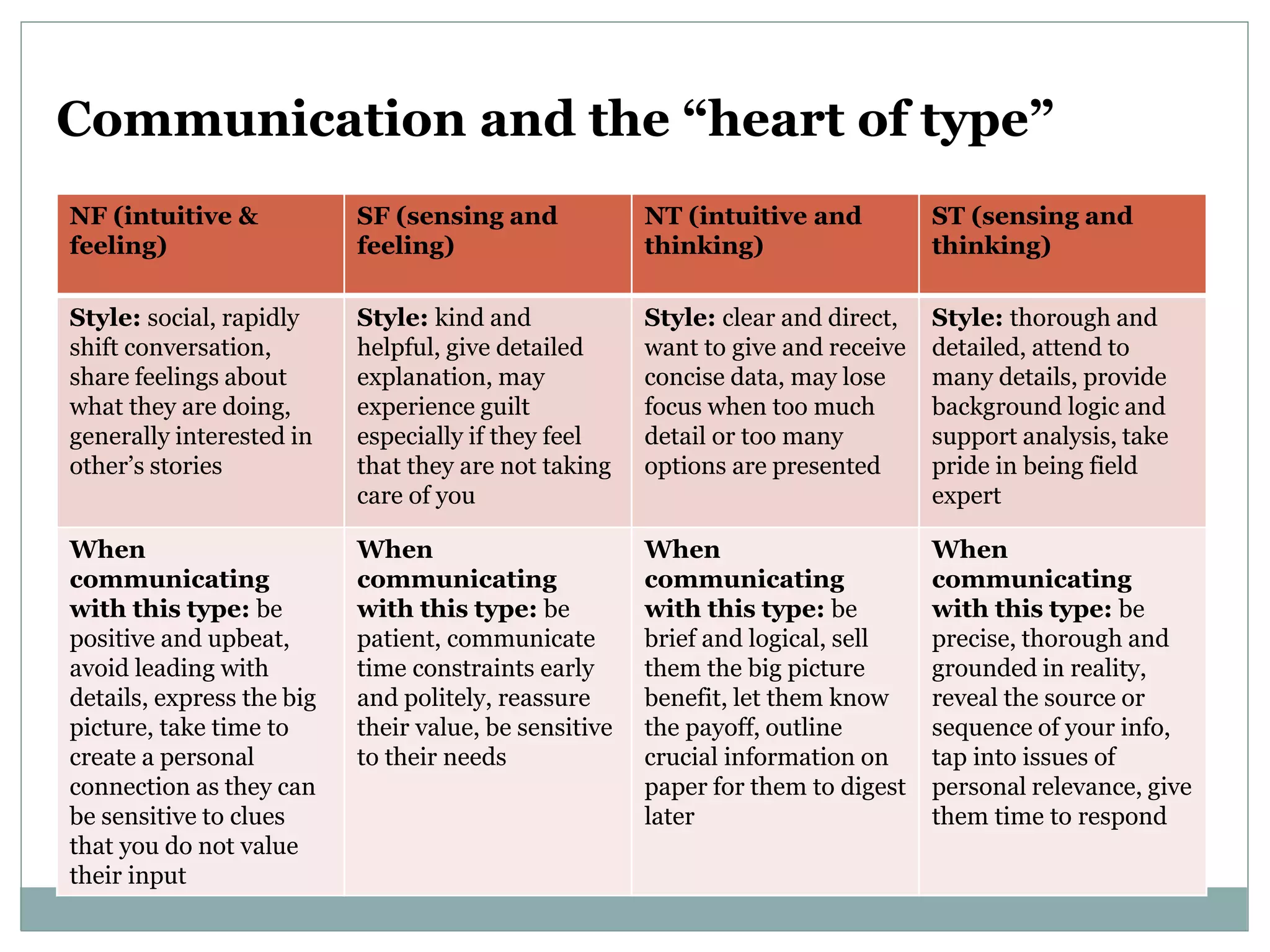
Communication and the “heart of type”
NF (intuitive &
feeling)
SF (sensing and
feeling)
NT (intuitive and
thinking)
ST (sensing and
thinking)
Style: social, rapidly
shift conversation,
share feelings about
what they are doing,
generally interested in
other’s stories
Style: kind and
helpful, give detailed
explanation, may
experience guilt
especially if they feel
that they are not taking
care of you
Style: clear and direct,
want to give and receive
concise data, may lose
focus when too much
detail or too many
options are presented
Style: thorough and
detailed, attend to
many details, provide
background logic and
support analysis, take
pride in being field
expert
When
communicating
with this type: be
positive and upbeat,
avoid leading with
details, express the big
picture, take time to
create a personal
connection as they can
be sensitive to clues
that you do not value
their input
When
communicating
with this type: be
patient, communicate
time constraints early
and politely, reassure
their value, be sensitive
to their needs
When
communicating
with this type: be
brief and logical, sell
them the big picture
benefit, let them know
the payoff, outline
crucial information on
paper for them to digest
later
When
communicating
with this type: be
precise, thorough and
grounded in reality,
reveal the source or
sequence of your info,
tap into issues of
personal relevance, give
them time to respond
APPLYING THE MBTI
You can apply your MBTI results by identifying:
 Potential careers/environmental matches
 Challenges and strengths in the career search process customized to your type
 Career development strategies and action steps
 Questions to ask in networking and employment interview situations
 Best ways to modify your communication style to different personality types
10/1/15
Question
What actions will you take to meet your
career development goals?
Next week
Guest speaker:
The value of your Phd
Anett Gyurak, PhD
 User Experience Researcher @ Facebook

1.14.16.ceo class1

  • 1.
  • 2.
    Question What actions willyou take to meet your career development goals?
  • 3.
    Brief Introductions Step 1:In one word, complete the following sentence: For my career development, _____________ is/are what matters. Step 2: Create a name tag, including: • Your name • Your department • Your “one word” Step 3: *Meet as many people as you can in the next ten minutes, sharing this information.
  • 4.
    Today’s Agenda  Courseand program overview -expectations, logistics, and career development model  Best practices from CEO Alum  Career goal setting  MBTI- Self Examination
  • 5.
    Class Logistics  Webpage  Assignments  Support
  • 6.
    Career Development Model •Self-Assessments -Interests, Values, Preferences • Research careers • Identify skills and transferrable skills obtained and needed Step 1: Explore
  • 7.
    Career Development Model Developa plan of action to gain skills in: • Career Networking, interviewing, application documents • Job specific Internships, conferences, professional development Step 2: Develop
  • 8.
    Career Development Model Targetyour actions to gain specific skills, experiences, contacts, and competencies related to your careers of choice. Target application materials and “brand” towards specific roles. Step 3: Target to roles/sectors
  • 9.
    Career Development Model Step4: Transition Synthesize steps 1- 3, to move forward with your plan. Translate skills, experiences, and training into meaningful opportunity.
  • 10.
    Goal Setting “The disciplineof writing something down is the first step toward making it happen. In conversation you can get away with all kinds of vagueness and nonsense, often without even realizing it. But there’s something about putting your thoughts on paper that forces you to get specific.” -Lee Iaacoca, former CEO of Ford, and Chrysler Motors on documenting goals
  • 11.
  • 12.
  • 13.
    MBTI • Based ontheory that people have observable and predictable preferences • Used for:  Career Counseling  Team Building  Leadership Training 10/1/15
  • 14.
  • 16.
  • 17.
  • 18.
    How do youstructure your time?
  • 19.
    REVIEW RESULTS • Reviewyour reported type • Is your score Slight, Moderate, Clear or Very Clear for each preference? • Read your profile(s) on 16 Types table • If unsure, read the description for the opposite preference • Pick up the expanded handout for your preference 10/1/15
  • 20.
    Communication and the“heart of type” NF (intuitive & feeling) SF (sensing and feeling) NT (intuitive and thinking) ST (sensing and thinking) Style: social, rapidly shift conversation, share feelings about what they are doing, generally interested in other’s stories Style: kind and helpful, give detailed explanation, may experience guilt especially if they feel that they are not taking care of you Style: clear and direct, want to give and receive concise data, may lose focus when too much detail or too many options are presented Style: thorough and detailed, attend to many details, provide background logic and support analysis, take pride in being field expert When communicating with this type: be positive and upbeat, avoid leading with details, express the big picture, take time to create a personal connection as they can be sensitive to clues that you do not value their input When communicating with this type: be patient, communicate time constraints early and politely, reassure their value, be sensitive to their needs When communicating with this type: be brief and logical, sell them the big picture benefit, let them know the payoff, outline crucial information on paper for them to digest later When communicating with this type: be precise, thorough and grounded in reality, reveal the source or sequence of your info, tap into issues of personal relevance, give them time to respond
  • 21.
    APPLYING THE MBTI Youcan apply your MBTI results by identifying:  Potential careers/environmental matches  Challenges and strengths in the career search process customized to your type  Career development strategies and action steps  Questions to ask in networking and employment interview situations  Best ways to modify your communication style to different personality types 10/1/15
  • 22.
    Question What actions willyou take to meet your career development goals?
  • 23.
    Next week Guest speaker: Thevalue of your Phd Anett Gyurak, PhD  User Experience Researcher @ Facebook