https://softuni.org
Software University
Technical Trainers
SoftUni Team
Definitions, Implementations and Examples
Iterators and Generators
2
1. What are Iterators?
 Loops and Iterators
2. What are Generators?
 The yield Statement
 Generators and Functions
 Generator Expressions
Table of Contents
3
sli.do
#python-advanced
Have a Question?
__iter__() and __next__()
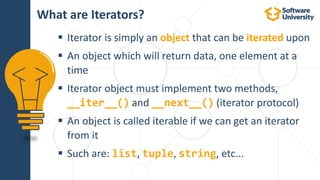
What are Iterators?
4
 Iterator is simply an object that can be iterated upon
 An object which will return data, one element at a
time
 Iterator object must implement two methods,
__iter__() and __next__() (iterator protocol)
 An object is called iterable if we can get an iterator
from it
 Such are: list, tuple, string, etc...
What are Iterators?
6
my_list = [4, 7, 0, 3]
# get an iterator using iter()
my_iter = iter(my_list)
print(next(my_iter)) # 4
print(next(my_iter)) # 7
print(my_iter.__next__()) # 0
print(my_iter.__next__()) # 3
next(my_iter) # Error
 The iter() function (which in turn calls the __iter__()
method) returns an iterator from an iterable
Example: Iterator
7
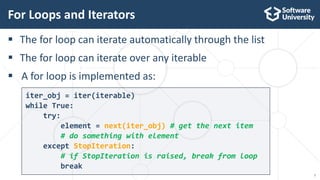
iter_obj = iter(iterable)
while True:
try:
element = next(iter_obj) # get the next item
# do something with element
except StopIteration:
# if StopIteration is raised, break from loop
break
 The for loop can iterate automatically through the list
 The for loop can iterate over any iterable
 A for loop is implemented as:
For Loops and Iterators
8
 The for loop creates an iterator object, iter_obj by calling
iter() on the iterable
 Inside the loop, it calls next() to get the next element and
executes the body of the for loop with this value
 After all the items exhaust, StopIteration is raised which is
internally caught and the loop ends
Explanation
9
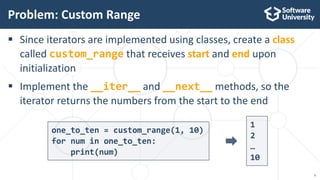
one_to_ten = custom_range(1, 10)
for num in one_to_ten:
print(num)
 Since iterators are implemented using classes, create a class
called custom_range that receives start and end upon
initialization
 Implement the __iter__ and __next__ methods, so the
iterator returns the numbers from the start to the end
Problem: Custom Range
1
2
…
10
10
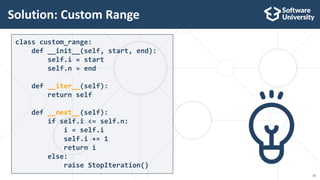
class custom_range:
def __init__(self, start, end):
self.i = start
self.n = end
def __iter__(self):
return self
def __next__(self):
if self.i <= self.n:
i = self.i
self.i += 1
return i
else:
raise StopIteration()
Solution: Custom Range
11
reversed_list = reverse_iter([1, 2, 3, 4])
for item in reversed_list:
print(item)
 Create a class called reverse_iter which should receive an
iterable upon initialization
 Implement the __iter__ and __next__ methods, so the
iterator returns the items of the iterable in reversed order
Problem: Reverse Iter
4
3
2
1
12
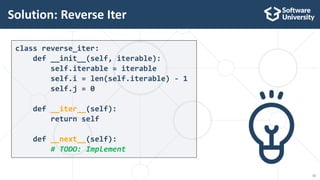
class reverse_iter:
def __init__(self, iterable):
self.iterable = iterable
self.i = len(self.iterable) - 1
self.j = 0
def __iter__(self):
return self
def __next__(self):
# TODO: Implement
Solution: Reverse Iter
Way of Creating Iterators
What are Generators?
1
 Generators are a simple way of creating iterators
 A generator is a function that returns an object
(iterator)
 This iterator can later be iterated over (one value at a
time)
What are Generators?
15
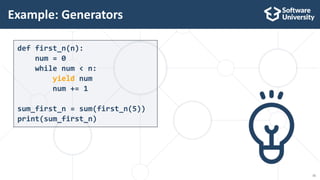
def first_n(n):
num = 0
while num < n:
yield num
num += 1
sum_first_n = sum(first_n(5))
print(sum_first_n)
Example: Generators
16
 If a function contains at least one yield statement, it
becomes a generator function
 Both yield and return will return a value from a
function
 The difference between yield and return is that the
return statement terminates a function entirely
 Yield however pauses the function saving all its states
and later continues from there on successive calls
The yield Statement
17
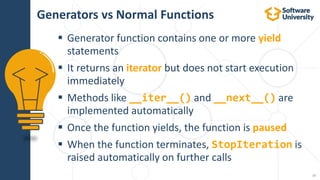
 Generator function contains one or more yield
statements
 It returns an iterator but does not start execution
immediately
 Methods like __iter__() and __next__() are
implemented automatically
 Once the function yields, the function is paused
 When the function terminates, StopIteration is
raised automatically on further calls
Generators vs Normal Functions
18
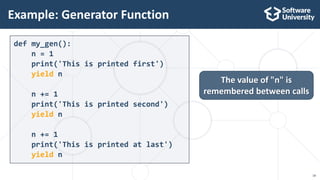
def my_gen():
n = 1
print('This is printed first')
yield n
n += 1
print('This is printed second')
yield n
n += 1
print('This is printed at last')
yield n
Example: Generator Function
The value of "n" is
remembered between calls
19
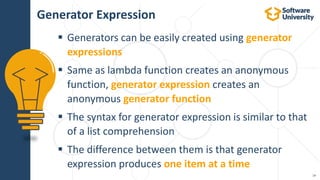
 Generators can be easily created using generator
expressions
 Same as lambda function creates an anonymous
function, generator expression creates an
anonymous generator function
 The syntax for generator expression is similar to that
of a list comprehension
 The difference between them is that generator
expression produces one item at a time
Generator Expression
20
# Initialize the list
my_list = [1, 3, 6, 10]
# square each term using list comprehension
# Output: [1, 9, 36, 100]
[x**2 for x in my_list]
# same thing can be done using generator expression
# Output: <generator object <genexpr> at 0x0000000002EBDAF8>
(x**2 for x in my_list)
Example: Generator Expression
21
print(list(squares(5)))
 Create a generator function called squares that should
receive a number n
 It should generate the squares of all numbers from 1 to n
Problem: Squares
[1, 4, 9, 16, 25]
def squares(n):
i = 1
while i <= n:
yield i * i
i += 1
22
print(list(genrange(1, 10)))
 Create a generator function called genrange that receives a
start and an end
 It should generate all the numbers from the start to the end
Problem: Generator Range
[1, 2, 3, 4, 5, 6, 7, 8, 9, 10]
23
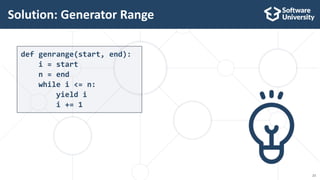
def genrange(start, end):
i = start
n = end
while i <= n:
yield i
i += 1
Solution: Generator Range
24
Summary
 Iterator is an object that can be iterated
upon
 Functions that returns iterators is called
generators
 Generators - yield, Functions - return
 Generator expression is like a list
comprehension
© SoftUni – https://softuni.org. Copyrighted document. Unauthorized copy, reproduction or use is not permitted.
26
SoftUni Diamond Partners
27
SoftUni Organizational Partners
28
 This course (slides, examples, demos, exercises, homework,
documents, videos and other assets) is copyrighted content
 Unauthorized copy, reproduction or use is illegal
 © SoftUni – https://softuni.org
 © Software University – https://softuni.bg
License
29
 Software University – High-Quality Education,
Profession and Job for Software Developers
 softuni.bg, softuni.org
 Software University Foundation
 softuni.foundation
 Software University @ Facebook
 facebook.com/SoftwareUniversity
 Software University Forums
 forum.softuni.bg
Trainings @ Software University (SoftUni)

08-Iterators-and-Generators.pptx

  • 1.
    https://softuni.org Software University Technical Trainers SoftUniTeam Definitions, Implementations and Examples Iterators and Generators
  • 2.
    2 1. What areIterators?  Loops and Iterators 2. What are Generators?  The yield Statement  Generators and Functions  Generator Expressions Table of Contents
  • 3.
  • 4.
  • 5.
     Iterator issimply an object that can be iterated upon  An object which will return data, one element at a time  Iterator object must implement two methods, __iter__() and __next__() (iterator protocol)  An object is called iterable if we can get an iterator from it  Such are: list, tuple, string, etc... What are Iterators?
  • 6.
    6 my_list = [4,7, 0, 3] # get an iterator using iter() my_iter = iter(my_list) print(next(my_iter)) # 4 print(next(my_iter)) # 7 print(my_iter.__next__()) # 0 print(my_iter.__next__()) # 3 next(my_iter) # Error  The iter() function (which in turn calls the __iter__() method) returns an iterator from an iterable Example: Iterator
  • 7.
    7 iter_obj = iter(iterable) whileTrue: try: element = next(iter_obj) # get the next item # do something with element except StopIteration: # if StopIteration is raised, break from loop break  The for loop can iterate automatically through the list  The for loop can iterate over any iterable  A for loop is implemented as: For Loops and Iterators
  • 8.
    8  The forloop creates an iterator object, iter_obj by calling iter() on the iterable  Inside the loop, it calls next() to get the next element and executes the body of the for loop with this value  After all the items exhaust, StopIteration is raised which is internally caught and the loop ends Explanation
  • 9.
    9 one_to_ten = custom_range(1,10) for num in one_to_ten: print(num)  Since iterators are implemented using classes, create a class called custom_range that receives start and end upon initialization  Implement the __iter__ and __next__ methods, so the iterator returns the numbers from the start to the end Problem: Custom Range 1 2 … 10
  • 10.
    10 class custom_range: def __init__(self,start, end): self.i = start self.n = end def __iter__(self): return self def __next__(self): if self.i <= self.n: i = self.i self.i += 1 return i else: raise StopIteration() Solution: Custom Range
  • 11.
    11 reversed_list = reverse_iter([1,2, 3, 4]) for item in reversed_list: print(item)  Create a class called reverse_iter which should receive an iterable upon initialization  Implement the __iter__ and __next__ methods, so the iterator returns the items of the iterable in reversed order Problem: Reverse Iter 4 3 2 1
  • 12.
    12 class reverse_iter: def __init__(self,iterable): self.iterable = iterable self.i = len(self.iterable) - 1 self.j = 0 def __iter__(self): return self def __next__(self): # TODO: Implement Solution: Reverse Iter
  • 13.
    Way of CreatingIterators What are Generators? 1
  • 14.
     Generators area simple way of creating iterators  A generator is a function that returns an object (iterator)  This iterator can later be iterated over (one value at a time) What are Generators?
  • 15.
    15 def first_n(n): num =0 while num < n: yield num num += 1 sum_first_n = sum(first_n(5)) print(sum_first_n) Example: Generators
  • 16.
    16  If afunction contains at least one yield statement, it becomes a generator function  Both yield and return will return a value from a function  The difference between yield and return is that the return statement terminates a function entirely  Yield however pauses the function saving all its states and later continues from there on successive calls The yield Statement
  • 17.
    17  Generator functioncontains one or more yield statements  It returns an iterator but does not start execution immediately  Methods like __iter__() and __next__() are implemented automatically  Once the function yields, the function is paused  When the function terminates, StopIteration is raised automatically on further calls Generators vs Normal Functions
  • 18.
    18 def my_gen(): n =1 print('This is printed first') yield n n += 1 print('This is printed second') yield n n += 1 print('This is printed at last') yield n Example: Generator Function The value of "n" is remembered between calls
  • 19.
    19  Generators canbe easily created using generator expressions  Same as lambda function creates an anonymous function, generator expression creates an anonymous generator function  The syntax for generator expression is similar to that of a list comprehension  The difference between them is that generator expression produces one item at a time Generator Expression
  • 20.
    20 # Initialize thelist my_list = [1, 3, 6, 10] # square each term using list comprehension # Output: [1, 9, 36, 100] [x**2 for x in my_list] # same thing can be done using generator expression # Output: <generator object <genexpr> at 0x0000000002EBDAF8> (x**2 for x in my_list) Example: Generator Expression
  • 21.
    21 print(list(squares(5)))  Create agenerator function called squares that should receive a number n  It should generate the squares of all numbers from 1 to n Problem: Squares [1, 4, 9, 16, 25] def squares(n): i = 1 while i <= n: yield i * i i += 1
  • 22.
    22 print(list(genrange(1, 10)))  Createa generator function called genrange that receives a start and an end  It should generate all the numbers from the start to the end Problem: Generator Range [1, 2, 3, 4, 5, 6, 7, 8, 9, 10]
  • 23.
    23 def genrange(start, end): i= start n = end while i <= n: yield i i += 1 Solution: Generator Range
  • 24.
    24 Summary  Iterator isan object that can be iterated upon  Functions that returns iterators is called generators  Generators - yield, Functions - return  Generator expression is like a list comprehension
  • 25.
    © SoftUni –https://softuni.org. Copyrighted document. Unauthorized copy, reproduction or use is not permitted. © SoftUni – https://softuni.org. Copyrighted document. Unauthorized copy, reproduction or use is not permitted.
  • 26.
  • 27.
  • 28.
    28  This course(slides, examples, demos, exercises, homework, documents, videos and other assets) is copyrighted content  Unauthorized copy, reproduction or use is illegal  © SoftUni – https://softuni.org  © Software University – https://softuni.bg License
  • 29.
    29  Software University– High-Quality Education, Profession and Job for Software Developers  softuni.bg, softuni.org  Software University Foundation  softuni.foundation  Software University @ Facebook  facebook.com/SoftwareUniversity  Software University Forums  forum.softuni.bg Trainings @ Software University (SoftUni)