Pulmonary Hypertension
Differences in Hemodynamic
and Oxygenation Responses to Three
Different Phosphodiesterase-5 Inhibitors
in Patients With Pulmonary Arterial Hypertension
A Randomized Prospective Study
Hossein A. Ghofrani, MD, Robert Voswinckel, MD, Frank Reichenberger, MD, Horst Olschewski, MD,
Peter Haredza, Burcu Karadas¸, Ralph T. Schermuly, PHD, Norbert Weissmann, PHD, Werner Seeger, MD,
Friedrich Grimminger, MD
Giessen, Germany
OBJECTIVES We sought to compare the short-term impact of three different phosphodiesterase-5 (PDE5)
inhibitors on pulmonary and systemic hemodynamics and gas exchange parameters in patients
with pulmonary arterial hypertension (PAH).
BACKGROUND The PDE5 inhibitor sildenafil has been reported to cause pulmonary vasodilation in patients
with PAH. Vardenafil and tadalafil are new PDE5 inhibitors, recently being approved for the
treatment of erectile dysfunction.
METHODS Sixty consecutive PAH patients (New York Heart Association functional class II to IV) who
underwent right heart catheterization received short-term nitric oxide (NO) inhalation and
were subsequently assigned to oral intake of 50 mg sildenafil (n ϭ 19), 10 mg (n ϭ 7) or 20
mg (n ϭ 9) vardenafil, or 20 mg (n ϭ 9), 40 mg (n ϭ 8), or 60 mg (n ϭ 8) tadalafil.
Hemodynamics and changes in oxygenation were assessed over a subsequent 120-min
observation period.
RESULTS All three PDE5 inhibitors caused significant pulmonary vasorelaxation, with maximum effects
being obtained after 40 to 45 min (vardenafil), 60 min (sildenafil), and 75 to 90 min
(tadalafil). Sildenafil and tadalafil, but not vardenafil, caused a significant reduction in the
pulmonary to systemic vascular resistance ratio. Significant improvement in arterial oxygen-
ation (equally to NO inhalation) was only noted with sildenafil.
CONCLUSIONS In PAH patients, the three PDE5 inhibitors differ markedly in their kinetics of pulmonary
vasorelaxation (most rapid effect by vardenafil), their selectivity for the pulmonary circulation
(sildenafil and tadalafil, but not vardenafil), and their impact on arterial oxygenation
(improvement with sildenafil only). Careful evaluation of each new PDE5 inhibitor, when
being considered for PAH treatment, has to be undertaken, despite common classification as
PDE5 inhibitors. (J Am Coll Cardiol 2004;44:1488–96) © 2004 by the American College
of Cardiology Foundation
In recent years, several new drugs have been developed for
the treatment of pulmonary arterial hypertension (PAH),
including continuous intravenous epoprosterenol (1), in-
haled iloprost (2), subcutaneous trepostinil (3), oral bosen-
tan (4), and oral beraprost (5,6). In addition, there is
increasing evidence for the therapeutic effectiveness of the
phosphodiesterase-5 (PDE5) inhibitor sildenafil in PAH
(7–9). Phosphodiesterases are a superfamily of enzymes that
inactivate cyclic adenosine monophosphate and cyclic
guanosine monophosphate, the second messengers of pros-
tacyclin and nitric oxide (NO) (Fig. 1). The phosphodies-
terases have different tissue distributions and substrate
affinities (10). Interestingly, PDE5 is abundantly expressed
in lung tissue (11), thus offering as target molecule for PAH
treatment concepts.
Recently, the new PDE5 inhibitors vardenafil and
tadalafil have been approved for the treatment of erectile
dysfunction. These PDE5 inhibitors share major properties
with sildenafil, including mechanisms of action and prefer-
ential though not fully selective inhibition of PDE5. The
clinical efficacy and safety profiles of these medications are
linked to their molecular mode of action, their selectivity for
PDE5, and their pharmacokinetic properties (12). How-
ever, all investigations performed so far have mainly focused
From the Department of Internal Medicine, University Hospital Giessen, Giessen,
Germany. This work was supported by the German Research Foundation (DFG;
Sonderforschungsbereich 547). Dr. Ghofrani receives grant and contract support from
Pfizer Ltd., Altana Pharma AG, and Schering AG; in addition, he serves on the Advisory
Board of Pfizer Ltd. Dr. Olschewski receives grant and contract support by Schering AG,
Lung Rx, and Myogen; in addition, he serves on the Advisory Boards of Schering AG and
Lung Rx. Dr. Seeger receives grant and contract support by Schering AG, Pfizer Ltd.,
Altana Pharma AG, Lung Rx, and Myogen; in addition, he serves on the Advisory
Boards of Schering AG, Altana Pharma AG, and Lung Rx. Dr. Grimminger receives
grant and contract support by Pfizer Ltd., Bayer AG, and Altana Pharma AG; in
addition, he serves on the Advisory Board of Altana Pharma AG.
Manuscript received April 21, 2004; revised manuscript received May 26, 2004,
accepted June 7, 2004.
Journal of the American College of Cardiology Vol. 44, No. 7, 2004
© 2004 by the American College of Cardiology Foundation ISSN 0735-1097/04/$30.00
Published by Elsevier Inc. doi:10.1016/j.jacc.2004.06.060
Downloaded From: http://content.onlinejacc.org/pdfAccess.ashx?url=/data/Journals/JAC/23025/ on 12/24/2014
on comparing the effects of these substances on erectile
dysfunction. No data exist addressing the efficacy and safety
of vardenafil and tadalafil, as opposed to sildenafil, on
pulmonary and systemic hemodynamics in patients with
PAH.
In the present study, we characterized the hemodynamic
profile of different doses of vardenafil and tadalafil in
patients with PAH. Response profiles were compared with
those of inhaled NO (20 to 40 ppm) and sildenafil (50 mg),
serving as reference agents, as previously described
(7,9,13,14). Dosing of vardenafil and tadalafil was based on
the labeling of these substances in their original indication,
as well as preliminary investigations of our own group (data
not published) addressing dose-response profiles of these
agents.
METHODS
Patients. Overall, 82 patients were screened, of whom 22
were excluded (12 did not meet inclusion criteria, seven did
not provide consent, and three were clinically unstable
between screening and study onset). Sixty patients (39
women and 21 men) with chronic PAH, as defined by the
recent World Conference on Pulmonary Hypertension (15),
were included: 46 with idiopathic PAH, seven with Eisen-
menger’s disease, four with CREST (calcinosis cutis,
Raynaud phenomenon, esophageal dysfunction, sclerodac-
tyly, and telangiectasia), two with porto-pulmonary hyper-
tension, and one with human immunodeficiency virus
associated.
All patients were admitted to our pulmonary hyperten-
sion center for testing of pulmonary vasoreactivity and
evaluation of therapeutic options. Diagnostic procedures
preceding patient recruitment included clinical chemistry,
immunologic analysis, chest X-ray, lung function testing,
echocardiography, and a high-resolution computed tomo-
graphic scan of the lung. In all cases, perfusion scintigraphy,
spiral computed tomography, and, in selected cases, pulmo-
nary angiography were performed to exclude chronic throm-
boembolism as the underlying reason for pulmonary hyper-
tension. All patients were tested for the first time and had
not been previously treated with pulmonary vasodilators,
except for 14 of the patients receiving low-dose calcium
channel blocker therapy.
Abbreviations and Acronyms
cGMP ϭ cyclic guanosine monophosphate
CI ϭ confidence interval
mPAP ϭ mean pulmonary arterial pressure
NO ϭ nitric oxide
NYHA ϭ New York Heart Association
PAH ϭ pulmonary arterial hypertension
PDE ϭ phosphodiesterase
PVRI ϭ pulmonary vascular resistance index
SVRI ϭ systemic vascular resistance index
Figure 1. Intracellular signaling pathway of nitric oxide (NO), prostanoids, and natriuretic peptides: role of phosphodiesterases (PDEs). Ligands (i.e., NO,
atrial natriuretic peptide [ANP], brain natriuretic peptide [BNP], and prostanoids) activate membrane-bound or soluble cyclases. Guanylate and adenylate
cyclases generate cyclic guanosine monophosphate (cGMP) and adenosine monophosphate (cAMP) from GTP and ATP. These intracellular second
messengers, via activation of protein kinases, induce cellular responses (i.e., vasodilation and anti-proliferation). Phosphodiesterases limit the effects of the
ligands by degradation of second messengers cGMP and cAMP into inactive GMP and AMP. Thus, by inhibition of the PDEs, the PDE inhibitors
augment and prolong the cellular responses to NO, prostanoids, and natriuretic peptides.
1489JACC Vol. 44, No. 7, 2004 Ghofrani et al.
October 6, 2004:1488–96 Comparison of PDE5 Inhibitors in PAH
Downloaded From: http://content.onlinejacc.org/pdfAccess.ashx?url=/data/Journals/JAC/23025/ on 12/24/2014
Exclusion criteria were pulmonary hypertension second-
ary to chronic obstructive or restrictive pulmonary disease,
recurrent pulmonary embolism, pulmonary venous conges-
tion, acute or chronic inflammatory lung disease, pregnancy
or insufficient contraceptive measures, and previous treat-
ment with PDE inhibitors. The individual response to
vasodilators, including inhaled NO, was neither an inclu-
sion nor an exclusion criterion. The study protocol was
approved by the Justus-Liebig-University Ethics Commit-
tee, and each patient gave written, informed consent. The
procedures followed were in accordance with institutional
guidelines.
A fiberoptic thermodilution pulmonary artery catheter
(Edwards Swan-Ganz, 93A-754H 7.5-F; Baxter Health-
care, Irvine, California) was used to measure central venous
pressure, pulmonary artery pressure, pulmonary artery
wedge pressure, cardiac output, and mixed venous oxygen
saturation. Patients received continuous nasal oxygen
throughout the entire test procedure if initial arterial oxygen
saturation was below 88%.
Treatment. After assessment of baseline hemodynamic
values, each patient received short-term inhaled NO; the
maximum vasodilator response to this agent required 20 to
40 ppm NO. When hemodynamic parameters had returned
to baseline values after cessation of NO inhalation, patients
received one oral dose of a PDE5 inhibitor. In the first 19
patients presenting with PAH, 50 mg sildenafil was orally
administered. Subsequently, PAH patients were randomly
assigned to receive either 10 mg (n ϭ 7) or 20 mg (n ϭ 9)
oral vardenafil or 20 mg (n ϭ 9), 40 mg (n ϭ 9), or 60 mg
(n ϭ 8) oral tadalafil (Fig. 2). Patients were assigned to the
therapeutic regimens by using computerized randomization
in groups of five; no more than two patients in a row were
assigned to one group. Hemodynamic measurements were
performed at baseline, during maximum effect of inhaled
NO, and 15, 30, 45, 60, 90, and 120 min (and, in selected
cases, after 150 min) after ingestion of each PDE5 inhibitor.
Calculations were made at peak reduction of pulmonary
vascular resistance (PVR).
Statistics. All baseline data are given as the median and
range (minimum to maximum). Hodges-Lehmann point
estimates of median difference and exact 95% confi-
dence intervals (CIs) are presented for the response of
each parameter to each vasodilator challenge (pre- and
post-intervention values). One-way analysis of variance
with the Scheffé post-test for multiple comparisons was
used to seek for statistical differences between hemody-
namic and gas exchange variables in the different treat-
ment groups at baseline and to analyze for statistical
differences regarding the responsiveness to each
vasodilator.
Role of funding source. The sponsor of the study had no
role in study design, data collection, data analysis, data
interpretation, or writing of the report.
RESULTS
Functional classification and baseline hemodynamics. Ac-
cording to clinical criteria, nine patients were classified as
being in New York Heart Association (NYHA) functional
class II, 35 patients in class III, and 16 patients in class IV.
The mean pulmonary artery pressure (mPAP) was markedly
elevated (53.0 mm Hg [range 30 to 87 mm Hg]), and the
cardiac index was in the lower normal range (2.2 l/min per
m2
[range 1.0 to 4.0 l/min per m2
]), with a correspondingly
increased PVRI (PVRI 1,569 dynes/cmϪ5
per m2
[range
402 to 4,099]). Distribution to functional classes, to PAH
subgroups, as well as baseline hemodynamics did not sig-
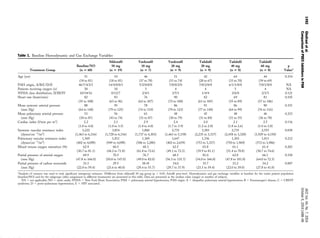
nificantly differ between the treatment groups (Table 1).
Nitric oxide inhalation. Inhalation of NO caused a rapid
decrease in mPAP by Ϫ9.8% (CI Ϫ7.2 to Ϫ13.4), accom-
panied by a median increase in the cardiac index by 6.0%
(CI 2.6 to 9.4), resulting in a PVRI reduction of Ϫ15.5%
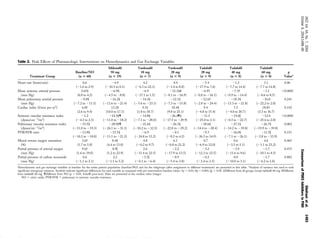
(CI Ϫ11.0 to Ϫ19.3) (Table 2, Fig. 3). Pulmonary selectivity
of the vasodilatory effect was reflected by a reduction of
Ϫ13.8% (CI Ϫ10.5 to Ϫ17.9) in the PVR/systemic vascular
resistance (SVR) ratio. Concomitantly, a significant increase in
arterial pO2 of 9.6% (CI 1.6 to 19.0) was noted. All NO-
induced changes returned to baseline within Ͻ10 min after
stopping inhalation of this agent.
Sildenafil. Fifty mg of oral sildenafil caused a significant
decrease of mPAP by Ϫ16.2% (CI Ϫ11.6 to Ϫ21.5),
accompanied by a median increase in the cardiac index by
13.2% (CI 9.9 to 17.1), resulting in a PVRI reduction of
Ϫ28.0% (CI Ϫ26.1 to Ϫ31.2) (Fig. 3). A peak vasodilatory
effect was noted at 60 min (CI 52.0 to 67.5) after drug
intake (Fig. 4). Despite systemic administration, pulmonary
selectivity of the vasodilatory effect was reflected by a
Ϫ15.5% (CI Ϫ11.1 to Ϫ21.3) reduction in the PVR/SVR
ratio. As with inhaled NO, a concomitant significant
increase in arterial pO2 of 8.9% (CI 1.2 to 22.9) was noted.
No adverse events were reported during this short-term
vasodilatory testing procedure on intake of sildenafil.
Vardenafil. Oral vardenafil at doses of 10 mg and 20 mg
caused a significant decrease of mPAP of Ϫ14.3% (CI Ϫ5.6
to Ϫ23.1) and Ϫ12.1% (CI Ϫ7.3 to Ϫ15.8), respectively. A
median increase in the cardiac index of 9.3% (CI 1.8 to
18.7) was noted after 10 mg vardenafil and of 18.4% (CI 9.8
to 25.1) after 20 mg vardenafil, respectively. The PVRI was
reduced by Ϫ21.6% (CI Ϫ10.2 to Ϫ32.3) and Ϫ26.3 (CI
Ϫ22.8 to Ϫ29.2), respectively (Fig. 3). Peak vasodilatory
effect was noted at 41.3 min (CI 22.5 to 60.0) after intake
of 10 mg vardenafil and at 45 min (CI 37.5 to 60.0) of 20
mg vardenafil (Fig. 4). By contrast with inhaled NO and
oral sildenafil, vardenafil caused almost an equipotent re-
duction of SVR and PVR, as reflected by the PVR/SVR
ratios of Ϫ6.9 (CI Ϫ24.8 to 15.2) for 10 mg and Ϫ0.1 (CI
Ϫ8.2 to 4.2) for 20 mg of this substance. Arterial oxygen-
ation remained virtually unchanged with both concentra-
tions of this agent (Fig. 3). Despite the lack of pulmonary
selectivity, only minor adverse events (such as flushing and
1490 Ghofrani et al. JACC Vol. 44, No. 7, 2004
Comparison of PDE5 Inhibitors in PAH October 6, 2004:1488–96
Downloaded From: http://content.onlinejacc.org/pdfAccess.ashx?url=/data/Journals/JAC/23025/ on 12/24/2014
a light headache in three of nine patients in the 20-mg
group) were reported after intake of vardenafil.
Tadalafil. Oral tadalafil, given at doses of 20, 40, and 60
mg, caused a significant decrease of mPAP of Ϫ12.6%
(CI Ϫ3.6 to Ϫ24.4), Ϫ18.3% (CI Ϫ13.9 to Ϫ21.8), and
Ϫ10.0% (CI Ϫ22.2 to 1.1), respectively. Median increases
in the cardiac index of 9.3% (CI Ϫ4.8 to 15.4), 7.5% (CI
Ϫ4.0 to 20.7), and 18.8% (CI 3.3 to 36.7) were noted for
Figure 2. Hemodynamic and oxygenation response to inhaled nitric oxide (NO), oral sildenafil, oral vardenafil, and oral tadalafil. Deviations from the
pre-intervention baseline value are displayed (point estimates of median difference [percentage of baseline ϭ symbols], with exact 95% confidence intervals
[bars] for inhaled NO [NO 20 to 40 ppm ϭ solid circles], oral sildenafil [Sil 50 mg ϭ red squares], 10 and 20 mg oral vardenafil [Vard 10 mg and Vard
20 mg ϭ blue diamonds], and 20, 40, and 60 mg oral tadalafil [Tada 20 mg, Tada 40 mg, Tada 60 mg ϭ green inverted triangles]). mSAP ϭ mean
systemic arterial pressure; CI ϭ cardiac index; pO2 ϭ partial pressure of arterial oxygen. The p values indicate significant differences of treatment effects,
as determined by one-way analysis of variance. ¶Different from NO. ʈDifferent from tadalafil 60 mg (p Ͻ 0.05, Scheffé post-test).
1491JACC Vol. 44, No. 7, 2004 Ghofrani et al.
October 6, 2004:1488–96 Comparison of PDE5 Inhibitors in PAH
Downloaded From: http://content.onlinejacc.org/pdfAccess.ashx?url=/data/Journals/JAC/23025/ on 12/24/2014
Table 1. Baseline Hemodynamic and Gas Exchange Variables
Treatment Group
Baseline/NO
(n ‫؍‬ 60)
Sildenafil
50 mg
(n ‫؍‬ 19)
Vardenafil
10 mg
(n ‫؍‬ 7)
Vardenafil
20 mg
(n ‫؍‬ 9)
Tadalafil
20 mg
(n ‫؍‬ 9)
Tadalafil
40 mg
(n ‫؍‬ 8)
Tadalafil
60 mg
(n ‫؍‬ 8)
p
Value*
Age (yrs) 51
(18 to 81)
54
(18 to 81)
46
(37 to 78)
51
(31 to 74)
42
(28 to 67)
64
(33 to 70)
44
(39 to 69)
0.334
PAH origin, A/B/C/D/E 46/7/4/2/1 14/4/0/0/1 5/2/0/0/0 7/0/0/2/0 7/0/2/0/0 6/1/1/0/0 7/0/1/0/0 NA
Patients receiving oxygen (n) 30 10 3 4 4 5 4 NA
NYHA class distribution, II/III/IV 10/34/16 0/12/7 2/4/1 3/5/1 1/4/4 2/6/0 2/3/3 0.121
Heart rate (beats/min) 82
(55 to 108)
83
(63 to 96)
76
(62 to 107)
90
(72 to 108)
82
(61 to 105)
69
(55 to 89)
81
(57 to 106)
0.105
Mean systemic arterial pressure
(mm Hg)
88
(64 to 140)
95
(79 to 125)
78
(74 to 110)
86
(70 to 123)
91
(77 to 140)
86
(64 to 99)
90
(76 to 116)
0.331
Mean pulmonary arterial pressure
(mm Hg)
53
(30 to 87)
56
(43 to 74)
61
(31 to 87)
48
(30 to 79)
45
(31 to 84)
48
(31 to 55)
46
(36 to 78)
0.233
Cardiac index (l/min per m2
) 2.2
(1.0 to 4.0)
2.1
(1.0 to 3.5)
2.9
(1.8 to 4.0)
2.4
(1.7 to 3.9)
2.0
(1.2 to 2.8)
2.1
(1.8 to 2.6)
2.5
(1.0 to 3.8)
0.116
Systemic vascular resistance index
(dynes/cmϪ5
/m2
)
3,222
(1,463 to 6,316)
3,854
(1,728 to 6,316)
1,860
(1,737 to 4,303)
2,735
(1,463 to 5,158)
3,383
(2,235 to 3,337)
2,735
(2,458 to 3,328)
2,555
(1,929 to 4,150)
0.038
Pulmonary vascular resistance index
(dynes/cmϪ5
/m2
)
1,569
(402 to 4,098)
1,811
(949 to 4,098)
1,369
(586 to 3,280)
1,647
(402 to 2,659)
1,336
(753 to 3,337)
1,303
(750 to 1,969)
1,011
(572 to 3,986)
0.212
Mixed venous oxygen saturation (%) 62.9
(30.7 to 81.1)
60.5
(44.2 to 71.8)
68.3
(61.8 to 72.6)
62.5
(49.1 to 72.3)
65.8
(39.9 to 81.1)
61.1
(51.4 to 78.8)
61.4
(30.7 to 74.6)
0.265
Partial pressure of arterial oxygen
(mm Hg)
69.9
(47.8 to 166.0)
70.5
(50.0 to 147.0)
76.7
(49.0 to 82.0)
68.5
(56.3 to 135.7)
81.0
(54.0 to 166.0)
62.8
(47.8 to 101.0)
66.1
(64.0 to 72.3)
0.330
Partial pressure of carbon monoxide
(mm Hg)
33.3
(22.0 to 59.4)
29.5
(23.6 to 40.0)
38.4†
(29.4 to 55.7)
34.0
(29.7 to 37.9)
35.7
(23.5 to 59.4)
33.2
(22.0 to 39.0)
34.2
(27.8 to 41.0)
0.007
*Analysis of variance was used to seek significant intergroup variances. †Different from sildenafil 50 mg group (p Ͻ 0.05, Scheffé post-test). Hemodynamic and gas exchange variables at baseline for the entire patient population
(baseline/NO) and for the subgroups (after assignment to different treatments) are presented in this table. Data are presented as the median value (range) or number of subjects.
NA ϭ not applicable; NO ϭ nitric oxide; NYHA ϭ New York Heart Association; PAH ϭ pulmonary arterial hypertension; PAH origin: A ϭ idiopathic pulmonary arterial hypertension; B ϭ Eisenmenger’s disease; C ϭ CREST
syndrome; D ϭ porto-pulmonary hypertension; E ϭ HIV associated.
1492Ghofranietal.JACCVol.44,No.7,2004
ComparisonofPDE5InhibitorsinPAHOctober6,2004:1488–96
Downloaded From: http://content.onlinejacc.org/pdfAccess.ashx?url=/data/Journals/JAC/23025/ on 12/24/2014
Table 2. Peak Effects of Pharmacologic Interventions on Hemodynamics and Gas Exchange Variables
Treatment Group
Baseline/NO
(n ‫؍‬ 60)
Sildenafil
50 mg
(n ‫؍‬ 19)
Vardenafil
10 mg
(n ‫؍‬ 7)
Vardenafil
20 mg
(n ‫؍‬ 9)
Tadalafil
20 mg
(n ‫؍‬ 9)
Tadalafil
40 mg
(n ‫؍‬ 8)
Tadalafil
60 mg
(n ‫؍‬ 8)
p
Value*
Heart rate (beats/min) 0.6
(Ϫ1.6 to 2.9)
Ϫ4.9
(Ϫ10.3 to 0.1)
4.2
(Ϫ6.3 to 22.1)
4.4
(Ϫ3.4 to 8.8)
Ϫ5.4
(Ϫ17.9 to 7.6)
Ϫ1.2
(Ϫ7.7 to 14.4)
3.1
(Ϫ7.7 to 14.8)
0.06
Mean systemic arterial pressure
(mm Hg)
2.6†‡
(0.8 to 4.2)
Ϫ6.9§
(Ϫ4.5 to Ϫ8.8)
Ϫ6.9
(Ϫ17.1 to 1.5)
Ϫ12.1§#
(Ϫ8.1 to Ϫ16.9)
Ϫ6.9†
(Ϫ0.8 to Ϫ16.1)
Ϫ7.3†
(Ϫ0.9 to Ϫ14.4)
Ϫ1.1
(Ϫ8.6 to 8.5)
Ͻ0.0001
Mean pulmonary arterial pressure
(mm Hg)
Ϫ9.8§
(Ϫ7.2 to Ϫ13.3)
Ϫ16.2§
(Ϫ11.6 to Ϫ21.4)
Ϫ14.3§
(Ϫ5.6 to Ϫ23.1)
Ϫ12.1§
(Ϫ7.3 to Ϫ15.8)
Ϫ12.6†
(Ϫ2.8 to Ϫ24.4)
Ϫ18.3§
(Ϫ13.3 to Ϫ21.8)
Ϫ10.0
(Ϫ22.2 to 2.0)
0.241
Cardiac index (l/min per m2
) 6.0†
(2.6 to 9.4)
13.2§
(10.0 to 17.1)
9.3†
(1.8 to 18.7)
18.4§
(9.8 to 25.1)
9.4
(Ϫ4.8 to 15.4)
7.5
(Ϫ4.0 to 20.7)
18.8†
(3.3 to 36.7)
0.142
Systemic vascular resistance index
(dynes/cmϪ5
/m2
)
Ϫ1.2
(Ϫ4.3 to 2.3)
Ϫ14.3§¶
(Ϫ11.0 to Ϫ18.2)
Ϫ14.8§
(Ϫ7.1 to Ϫ28.0)
Ϫ26.4¶§
(Ϫ17.5 to Ϫ29.9)
Ϫ11.5
(Ϫ25.0 to 3.1)
Ϫ14.0ʈ
(Ϫ0.3 to Ϫ22.7)
Ϫ12.0
(Ϫ25.6 to 2.0)
Ͻ0.0001
Pulmonary vascular resistance index
(dynes/cmϪ5
/m2
)
Ϫ15.5§
(Ϫ11.0 to Ϫ19.3)
Ϫ28.0§¶
(Ϫ26.1 to Ϫ31.1)
Ϫ21.6§
(Ϫ10.2 to Ϫ32.3)
Ϫ26.3§
(Ϫ22.8 to Ϫ29.2)
Ϫ18.6§
(Ϫ14.4 to Ϫ28.4)
Ϫ27.1§
(Ϫ14.2 to Ϫ39.8)
Ϫ26.7§
(Ϫ19.9 to Ϫ39.8)
0.002
PVR/SVR ratio Ϫ13.8§
(Ϫ10.2 to Ϫ18.0)
Ϫ15.5§
(Ϫ11.1 to Ϫ21.2)
Ϫ6.9
(Ϫ24.8 to 15.2)
Ϫ0.1
(Ϫ8.2 to 4.2)
Ϫ9.3
(Ϫ26.5 to 14.9)
Ϫ16.0§
(Ϫ7.1 to Ϫ26.1)
Ϫ11.5ʈ
(Ϫ2.8 to Ϫ33.9)
0.151
Mixed venous oxygen saturation
(%)
3.6†
(1.7 to 5.8)
8.4§
(4.4 to 13.0)
4.8
(Ϫ0.2 to 9.7)
6.1
(Ϫ0.8 to 21.2)
0.7
(Ϫ6.9 to 12.0)
0.6
(Ϫ3.5 to 5.1)
4.6
(Ϫ1.1 to 23.2)
0.465
Partial pressure of arterial oxygen
(mm Hg)
9.6†
(1.6 to 19.0)
8.9ʈ
(1.2 to 22.9)
2.6
(Ϫ11.4 to 22.5)
Ϫ2.2
(Ϫ17.9 to 13.5)
Ϫ3.2
(Ϫ12.3 to 12.5)
Ϫ3.9
(Ϫ11.6 to 9.6)
Ϫ1.7
(Ϫ10.1 to 4.5)
0.475
Partial pressure of carbon monoxide
(mm Hg)
0.6
(Ϫ1.1 to 2.1)
2.2
(Ϫ1.1 to 5.2)
Ϫ3.3ʈ
(Ϫ0.1 to Ϫ6.4)
Ϫ0.9
(Ϫ5.4 to 3.8)
Ϫ0.2
(Ϫ3.4 to 3.5)
0.0
(Ϫ10.0 to 3.1)
Ϫ1.7
(Ϫ6.2 to 1.0)
0.882
Hemodynamic and gas exchange variables at baseline for the entire patient population (baseline/NO) and for the subgroups (after assignment to different treatments) are presented in this table. *Analysis of variance was used to seek
significant intergroup variances. Symbols indicate significant differences for each variable as compared with pre-intervention baseline values: †p Ͻ 0.01; §p Ͻ 0.001; ʈp Ͻ 0.05. ‡Different from all groups except tadalafil 60 mg. #Different
from tadalafil 60 mg. ¶Different from NO (p Ͻ 0.05, Scheffé post-test). Data are presented as the median value (range).
NO ϭ nitric oxide; PVR/SVR ϭ pulmonary to systemic vascular resistance.
1493JACCVol.44,No.7,2004Ghofranietal.
October6,2004:1488–96ComparisonofPDE5InhibitorsinPAH
Downloaded From: http://content.onlinejacc.org/pdfAccess.ashx?url=/data/Journals/JAC/23025/ on 12/24/2014
20, 40, and 60 mg of tadalafil. The PVRI was reduced by
Ϫ18.6% (CI Ϫ14.0 to Ϫ28.4), Ϫ27.1% (CI Ϫ14.2 to
Ϫ39.8), and Ϫ26.7 (CI Ϫ19.9 to Ϫ39.8), respectively (Fig.
3). A peak vasodilatory effect was noted at 75 min (CI 52.5
to 120) after intake of 20 mg, at 90 min (CI 60 to 120) with
40 mg, and at 86.3 min (CI 52.5 to 135) with 60 mg of
tadalafil, respectively (Fig. 4). Interestingly, even at the
highest dosage of 60 mg tadalafil, selectivity for the pulmo-
nary circulation was reflected by a significant reduction of
the PRV/SVR ratio of Ϫ11.4% (CI Ϫ2.8 to Ϫ33.9). As
with oral vardenafil, arterial oxygenation remained virtually
unchanged with all concentrations of tadalafil employed
(Fig. 3). No adverse events were reported after intake of oral
tadalafil.
DISCUSSION
Our data show that despite sharing structural and pharma-
cologic similarities with sildenafil, vardenafil and tadalafil
differ substantially from sildenafil in their effects on the
pulmonary circulation.
Lung tissue is a rich source of phosphodiesterases, in-
cluding PDE5, the major function of which is acceleration
of the decay of cyclic guanosine monophosphate (cGMP)
(11). Thereby, PDE5 limits the vasodilatory effects of
guanylate cyclase stimuli, such as NO and atrial natriuretic
peptides (10). Inhaled NO is a widely accepted vasodilatory
agent frequently used for the assessment of pulmonary
vascular reactivity in patients with chronic pulmonary hy-
pertension (16,17). The rate of so-called responders to this
agent (definition for response: fall in mPAP and PVRI of
more than 20%; 11 of 60 patients in the current study) is
well in line with previously published reports (13,14).
We and others recently showed that the PDE5-selective
inhibitor sildenafil causes strong and dose-dependent pul-
monary vasodilation (7–9). Notably, even at the high dose
of 50 mg sildenafil, the characteristics of preferential pul-
monary over systemic vasodilation were found to be pre-
served in those preceding studies. Based on these results, we
employed 50 mg oral sildenafil as a reference agent in the
current study. The profile of preferential pulmonary vaso-
dilation was well reproduced, with a maximum PVRI
reduction of ϳ30% and a reduction of PVRI/SVRI ratio of
ϳ15% (Fig. 3). At the time being, our best explanation for
the preferential pulmonary vasodilatory effect of sildenafil
derives from the assumption of a substantial baseline stim-
ulation of guanylate cyclase in the lung vasculature of
patients with chronic pulmonary hypertension, attributable
to ongoing pulmonary NO production (18–20) and to
circulating natriuretic peptides such as atrial and brain
natriuretic peptide (21–23).
Most interestingly, sildenafil not only displays character-
istics of pulmonary selectivity but also appears to ameliorate
ventilation-perfusion matching (“intrapulmonary selectiv-
ity”), thereby improving arterial oxygenation. This has
previously been shown in patients with lung fibrosis and
secondary pulmonary hypertension, in whom sildenafil si-
multaneously reduced PVR and improved gas exchange
properties (24). In the currently tested patients, ventilation-
perfusion matching was not directly assessed, but intrapul-
monary selectivity of sildenafil is again indicated by a
significant increase of arterial oxygenation. It may be spec-
ulated that sildenafil does not act as a nonspecific vasodilator
Figure 3. Kinetics of peak pulmonary vasodilatory effects of the different
phosphodiesterase-5 (PDE5) inhibitors. Deviations from the pre-
intervention baseline values (point estimates of median difference [percent-
age of baseline ϭ symbols], with exact 95% confidence intervals [CIs]
[vertical bars]) for PVRI over time; also displayed are point estimates of
median difference effects (percentage of baseline ϭ symbols), with exact
95% CIs (horizontal bars). The changes are noted in response to sildenafil
(Sil 50 mg ϭ red square), vardenafil (Vard 10 mg ϭ solid blue diamond;
Vard 20 mg ϭ open blue diamond), and tadalafil (Tada 20 mg ϭ green
hourglass; Tada 40 mg ϭ open green inverted triangle; Tada 60 mg ϭ
solid green inverted triangle). The p value indicates significant difference
of time to peak pulmonary vasodilation between the different therapeutic
agents, as determined by analysis of variance (#
different from Tadalafil 40
mg group; p Ͻ 0.05, Scheffé post-test). There was no difference in the
magnitude of response among the treatment groups (p ϭ 0.185). PVRI ϭ
pulmonary vascular resistance index.
Figure 4. Flow chart of participants. The design of the study and
assignment of subjects to the therapeutic interventions are shown in this
flow chart.
1494 Ghofrani et al. JACC Vol. 44, No. 7, 2004
Comparison of PDE5 Inhibitors in PAH October 6, 2004:1488–96
Downloaded From: http://content.onlinejacc.org/pdfAccess.ashx?url=/data/Journals/JAC/23025/ on 12/24/2014
in this vascular bed, but rather amplifies local cGMP-based
vasoregulatory loops, thereby improving rather than disturb-
ing adaptation of perfusion to ventilation distribution.
The newly introduced PDE5 inhibitors vardenafil and
tadalafil have both been reported to be equally effective as
sildenafil with regard to the treatment of erectile dysfunc-
tion (25,26). The main differences described so far are
related to the rapidity of the onset of effects and to the
duration of effects. Furthermore, several reports indicate a
slightly different side-effect profile of vardenafil, tadalafil,
and sildenafil (27–29). Currently, most authors explain
these differences by the different selectivities of sildenafil,
vardenafil, and tadalafil for the various PDE subgroups:
sildenafil’s 50% inhibitory capacity values for PDE5 (3.5
nmol), PDE6 (37 nmol), PDE1 (281 nmol), and PDE11 A
(2,730 nmol) indicate a high selectivity for PDE5, but not
an exclusive effect on this PDE (25). Similarly, vardenafil’s
selectivity for PDE5 over PDE6, PDE1, and PDE11 A is
25-fold, 500-fold, and 1,160-fold, respectively. By contrast,
tadalafil is considerably more selective for PDE5 than for
PDE6 (187-fold) but has significantly less selectivity for
PDE11 A (fivefold selectivity for PDE5 over PDE11 A). In
addition, there are major differences in mean half-lives: 3 to
4 h for sildenafil and vardenafil (30) and ϳ18 h for tadalafil
(31).
Our current observations regarding peak hemodynamic
effects being reached after ϳ40 min with vardenafil, ϳ60
min with sildenafil, and ϳ90 min with tadalafil are well in
agreement with previous reports addressing kinetics of
effects in the erectile dysfunction area (31). However,
despite sharing many similarities with sildenafil in terms of
structure and pharmacologic properties, vardenafil was
found to lack pulmonary selectivity in our currently inves-
tigated patient cohort. This observation was true for both
the 10-mg and 20-mg vardenafil group, as indicated by
virtually equivalent reductions of PVR and SVR in response
to both dosages. Further studies are needed to address the
question of whether this surprisingly different profile, as
compared with sildenafil, is due to the minor differences in
the PDE inhibition pattern or to PDE’s unrelated, currently
unknown modes of actions.
Tadalafil is currently approved for the treatment of
erectile dysfunction in dosages of 10 mg and 20 mg per
tablet (32). However, in studies investigating the effects of
tadalafil on cardiac and circulatory function, single doses up
to 50 mg have been reported to be safe in terms of an
absence of significant systemic vasodilation (33). In preced-
ing pilot studies in PAH patients (data not given), up to 60
mg tadalafil was found to be well tolerated, without major
systemic side effects. Based on these data, we decided to use
20, 40, and 60 mg of oral tadalafil in the current investiga-
tion in a randomized fashion. Most interestingly, tadalafil
displayed selectivity for the pulmonary circulation, even in
the 60-mg group. As expected from previous pharmacoki-
netic data, the peak hemodynamic effects of tadalafil were
noted after ϳ90 min. We have not extended the observation
period over 120 min (and in selected cases up to 150 min),
as the entire catheterization and vasoreactivity testing pro-
cedure exceeded 6 h on average. Pharmacokinetic studies
characterizing the maximum duration of PDE5 effects will
be subject to forthcoming investigations.
By contrast with inhaled NO and sildenafil, neither
vardenafil nor tadalafil improved arterial oxygenation. As
multiple inert gas elimination measurements were not
performed in the present study, the underlying mechanisms
may not be fully resolved. There was no difference in cardiac
output increase between sildenafil on the one side and both
vardenafil and tadalafil on the other, and it is thus highly
unlikely that differences in central venous oxygen saturation
are responsible for the differences in arterial oxygenation.
Thus, it may be assumed that sildenafil, as mentioned
earlier, exerted a favorable impact on ventilation-perfusion
matching, but this was not the case for vardenafil and
tadalafil. It is presently fully unknown whether the discussed
differences in the PDE inhibition pattern or PDE’s unre-
lated modes of actions of sildenafil may be responsible for
this interesting difference.
Conclusions. The present study is the first to compare the
short-term hemodynamic profiles of three different PDE5
inhibitors—sildenafil, vardenafil and tadalafil—in a well-
defined patient collective suffering from chronic PAH.
Although vardenafil showed the most rapid onset of effects,
this substance lacked selectivity for the pulmonary circula-
tion, which was demonstrated for sildenafil and tadalafil,
even at high doses of the latter agent. The pulmonary
vasodilatory response to tadalafil appeared to be the most
long-lasting, as anticipated from previous studies in the field
of erectile dysfunction. By contrast with sildenafil, vard-
enafil and tadalafil did not improve arterial oxygenation.
Obviously, we cannot translate short-term effects into long-
term effects, because we know that long-term effects may be
significantly more efficacious than short-term effects, such as
has been observed with epoprostenol; however, the converse
may also occur. These findings thus strongly support the
notion that careful evaluation of the pulmonary hemody-
namic and gas exchange effects of each new PDE inhibitor
focusing on cGMP decay is to be undertaken, despite
common classification as PDE5 inhibitors.
Acknowledgment
Our gratitude goes to Rory Morty, PhD, for thorough
linguistic editing of the manuscript.
Reprint requests and correspondence: Dr. Friedrich Grim-
minger, Department of Internal Medicine, University Hospital
Giessen, Klinikstrasse 36, 35392 Giessen, Germany. E-mail:
friedrich.grimminger@innere.med.uni-giessen.de.
REFERENCES
1. Barst RJ, Rubin LJ, Long WA, et al., the Primary Pulmonary
Hypertension Study Group. A comparison of continuous intravenous
1495JACC Vol. 44, No. 7, 2004 Ghofrani et al.
October 6, 2004:1488–96 Comparison of PDE5 Inhibitors in PAH
Downloaded From: http://content.onlinejacc.org/pdfAccess.ashx?url=/data/Journals/JAC/23025/ on 12/24/2014
epoprostenol (prostacyclin) with conventional therapy for primary
pulmonary hypertension. N Engl J Med 1996;334:296–302.
2. Olschewski H, Simonneau G, Galie N, et al. Inhaled iloprost for
severe pulmonary hypertension. N Engl J Med 2002;347:322–9.
3. Simonneau G, Barst RJ, Galie N, et al. Continuous subcutaneous
infusion of treprostinil, a prostacyclin analogue, in patients with
pulmonary arterial hypertension: a double-blind, randomized, placebo-
controlled trial. Am J Respir Crit Care Med 2002;165:800–4.
4. Rubin LJ, Badesch DB, Barst RJ, et al. Bosentan therapy for
pulmonary arterial hypertension. N Engl J Med 2002;346:896–903.
5. Galie N, Humbert M, Vachiery JL, et al. Effects of beraprost sodium,
an oral prostacyclin analogue, in patients with pulmonary arterial
hypertension: a randomized, double-blind, placebo-controlled trial.
J Am Coll Cardiol 2002;39:1496–502.
6. Barst RJ, McGoon M, McLaughlin V, et al. Beraprost therapy for
pulmonary arterial hypertension. J Am Coll Cardiol 2003;41:2119–25.
7. Ghofrani HA, Wiedemann R, Rose F, et al. Combination therapy
with oral sildenafil and inhaled iloprost for severe pulmonary hyper-
tension. Ann Intern Med 2002;136:515–22.
8. Wilkens H, Guth A, Konig J, et al. Effect of inhaled iloprost plus oral
sildenafil in patients with primary pulmonary hypertension. Circula-
tion 2001;104:1218–22.
9. Michelakis E, Tymchak W, Lien D, et al. Oral sildenafil is an effective
and specific pulmonary vasodilator in patients with pulmonary arterial
hypertension: comparison with inhaled nitric oxide. Circulation 2002;
105:2398–403.
10. Beavo JA. Cyclic nucleotide phosphodiesterases: functional implica-
tions of multiple isoforms. Physiol Rev 1995;75:725–748.
11. Ahn HS, Foster M, Cable M, et al. Ca/CaM-stimulated and cGMP-
specific phosphodiesterases in vascular and non-vascular tissues. Adv
Exp Med Biol 1991;308:191–7.
12. Corbin JD, Francis SH. Pharmacology of phosphodiesterase-5 inhib-
itors. Int J Clin Pract 2002;56:453–9.
13. Sitbon O, Humbert M, Jagot JL, et al. Inhaled nitric oxide as a
screening agent for safely identifying responders to oral calcium-
channel blockers in primary pulmonary hypertension (see comments).
Eur Respir J 1998;12:265–70.
14. Hoeper MM, Olschewski H, Ghofrani HA, et al., the German PPH
Study Group. A comparison of the acute hemodynamic effects of
inhaled nitric oxide and aerosolized iloprost in primary pulmonary
hypertension. J Am Coll Cardiol 2000;35:176–82.
15. Galie N, Torbicki A. Pulmonary arterial hypertension: new ideas and
perspectives. Heart 2001;85:475–80.
16. Sitbon O, Brenot F, Denjean A, et al. Inhaled nitric oxide as a
screening vasodilator agent in primary pulmonary hypertension: a
dose-response study and comparison with prostacyclin. Am J Respir
Crit Care Med 1995;151:384–9.
17. Olschewski H, Walmrath D, Schermuly R, et al. Aerosolized prosta-
cyclin and iloprost in severe pulmonary hypertension. Ann Intern Med
1996;124:820–4.
18. Hanson KA, Burns F, Rybalkin SD, et al. Developmental changes in
lung cGMP phosphodiesterase-5 activity, protein, and message. Am J
Respir Crit Care Med 1998;158:279–88.
19. Hanson KA, Ziegler JW, Rybalkin SD, et al. Chronic pulmonary
hypertension increases fetal lung cGMP phosphodiesterase activity.
Am J Physiol 1998;275:L931–41.
20. Grimminger F, Spriestersbach R, Weissmann N, et al. Nitric oxide
generation and hypoxic vasoconstriction in buffer-perfused rabbit
lungs. J Appl Physiol 1995;78:1509–15.
21. Wiedemann R, Ghofrani HA, Weissmann N, et al. Atrial natriuretic
peptide in severe primary and nonprimary pulmonary hypertension:
response to iloprost inhalation. J Am Coll Cardiol 2001;38:1130–6.
22. Ghofrani HA, Wiedemann R, Rose F, et al. Lung cGMP release
subsequent to NO inhalation in pulmonary hypertension: responders
versus nonresponders. Eur Respir J 2002;19:664–71.
23. Nagaya N, Nishikimi T, Uematsu M, et al. Plasma brain natriuretic
peptide as a prognostic indicator in patients with primary pulmonary
hypertension. Circulation 2000;102:865–70.
24. Ghofrani HA, Wiedemann R, Rose F, et al. Sildenafil for treatment of
lung fibrosis and pulmonary hypertension: a randomised controlled
trial. Lancet 2002;360:895–900.
25. Gresser U, Gleiter CH. Erectile dysfunction: comparison of efficacy
and side effects of the PDE-5 inhibitors sildenafil, vardenafil and
tadalafil—review of the literature. Eur J Med Res 2002;7:435–46.
26. Young JM. Vardenafil. Expert Opin Investig Drugs 2002;11:1487–96.
27. Hellstrom WJ, Gittelman M, Karlin G, et al. Sustained efficacy and
tolerability of vardenafil, a highly potent selective phosphodiester-
ase type 5 inhibitor, in men with erectile dysfunction: results of a
randomized, double-blind, 26-week placebo-controlled pivotal
trial. Urology 2003;61:8–14.
28. Kloner RA, Mitchell M, Emmick JT. Cardiovascular effects of
tadalafil. Am J Cardiol 2003;92:37M–46M.
29. Rosen RC, Kostis JB. Overview of phosphodiesterase 5 inhibition in
erectile dysfunction. Am J Cardiol 2003;92:9M–18M.
30. Saenz de Tejada I, Angulo J, Cuevas P, et al. The phosphodiesterase
inhibitory selectivity and the in vitro and in vivo potency of the new
PDE5 inhibitor vardenafil. Int J Impot Res 2001;13:282–90.
31. Francis SH, Corbin JD. Molecular mechanisms and pharmacokinetics
of phosphodiesterase-5 antagonists. Curr Urol Rep 2003;4:457–65.
32. Brock GB, McMahon CG, Chen KK, et al. Efficacy and safety of
tadalafil for the treatment of erectile dysfunction: results of integrated
analyses. J Urol 2002;168:1332–6.
33. Porst H. IC351 (tadalafil, Cialis): update on clinical experience. Int J
Impot Res 2002;14 Suppl 1:S57–64.
1496 Ghofrani et al. JACC Vol. 44, No. 7, 2004
Comparison of PDE5 Inhibitors in PAH October 6, 2004:1488–96
Downloaded From: http://content.onlinejacc.org/pdfAccess.ashx?url=/data/Journals/JAC/23025/ on 12/24/2014

06060

  • 1.
    Pulmonary Hypertension Differences inHemodynamic and Oxygenation Responses to Three Different Phosphodiesterase-5 Inhibitors in Patients With Pulmonary Arterial Hypertension A Randomized Prospective Study Hossein A. Ghofrani, MD, Robert Voswinckel, MD, Frank Reichenberger, MD, Horst Olschewski, MD, Peter Haredza, Burcu Karadas¸, Ralph T. Schermuly, PHD, Norbert Weissmann, PHD, Werner Seeger, MD, Friedrich Grimminger, MD Giessen, Germany OBJECTIVES We sought to compare the short-term impact of three different phosphodiesterase-5 (PDE5) inhibitors on pulmonary and systemic hemodynamics and gas exchange parameters in patients with pulmonary arterial hypertension (PAH). BACKGROUND The PDE5 inhibitor sildenafil has been reported to cause pulmonary vasodilation in patients with PAH. Vardenafil and tadalafil are new PDE5 inhibitors, recently being approved for the treatment of erectile dysfunction. METHODS Sixty consecutive PAH patients (New York Heart Association functional class II to IV) who underwent right heart catheterization received short-term nitric oxide (NO) inhalation and were subsequently assigned to oral intake of 50 mg sildenafil (n ϭ 19), 10 mg (n ϭ 7) or 20 mg (n ϭ 9) vardenafil, or 20 mg (n ϭ 9), 40 mg (n ϭ 8), or 60 mg (n ϭ 8) tadalafil. Hemodynamics and changes in oxygenation were assessed over a subsequent 120-min observation period. RESULTS All three PDE5 inhibitors caused significant pulmonary vasorelaxation, with maximum effects being obtained after 40 to 45 min (vardenafil), 60 min (sildenafil), and 75 to 90 min (tadalafil). Sildenafil and tadalafil, but not vardenafil, caused a significant reduction in the pulmonary to systemic vascular resistance ratio. Significant improvement in arterial oxygen- ation (equally to NO inhalation) was only noted with sildenafil. CONCLUSIONS In PAH patients, the three PDE5 inhibitors differ markedly in their kinetics of pulmonary vasorelaxation (most rapid effect by vardenafil), their selectivity for the pulmonary circulation (sildenafil and tadalafil, but not vardenafil), and their impact on arterial oxygenation (improvement with sildenafil only). Careful evaluation of each new PDE5 inhibitor, when being considered for PAH treatment, has to be undertaken, despite common classification as PDE5 inhibitors. (J Am Coll Cardiol 2004;44:1488–96) © 2004 by the American College of Cardiology Foundation In recent years, several new drugs have been developed for the treatment of pulmonary arterial hypertension (PAH), including continuous intravenous epoprosterenol (1), in- haled iloprost (2), subcutaneous trepostinil (3), oral bosen- tan (4), and oral beraprost (5,6). In addition, there is increasing evidence for the therapeutic effectiveness of the phosphodiesterase-5 (PDE5) inhibitor sildenafil in PAH (7–9). Phosphodiesterases are a superfamily of enzymes that inactivate cyclic adenosine monophosphate and cyclic guanosine monophosphate, the second messengers of pros- tacyclin and nitric oxide (NO) (Fig. 1). The phosphodies- terases have different tissue distributions and substrate affinities (10). Interestingly, PDE5 is abundantly expressed in lung tissue (11), thus offering as target molecule for PAH treatment concepts. Recently, the new PDE5 inhibitors vardenafil and tadalafil have been approved for the treatment of erectile dysfunction. These PDE5 inhibitors share major properties with sildenafil, including mechanisms of action and prefer- ential though not fully selective inhibition of PDE5. The clinical efficacy and safety profiles of these medications are linked to their molecular mode of action, their selectivity for PDE5, and their pharmacokinetic properties (12). How- ever, all investigations performed so far have mainly focused From the Department of Internal Medicine, University Hospital Giessen, Giessen, Germany. This work was supported by the German Research Foundation (DFG; Sonderforschungsbereich 547). Dr. Ghofrani receives grant and contract support from Pfizer Ltd., Altana Pharma AG, and Schering AG; in addition, he serves on the Advisory Board of Pfizer Ltd. Dr. Olschewski receives grant and contract support by Schering AG, Lung Rx, and Myogen; in addition, he serves on the Advisory Boards of Schering AG and Lung Rx. Dr. Seeger receives grant and contract support by Schering AG, Pfizer Ltd., Altana Pharma AG, Lung Rx, and Myogen; in addition, he serves on the Advisory Boards of Schering AG, Altana Pharma AG, and Lung Rx. Dr. Grimminger receives grant and contract support by Pfizer Ltd., Bayer AG, and Altana Pharma AG; in addition, he serves on the Advisory Board of Altana Pharma AG. Manuscript received April 21, 2004; revised manuscript received May 26, 2004, accepted June 7, 2004. Journal of the American College of Cardiology Vol. 44, No. 7, 2004 © 2004 by the American College of Cardiology Foundation ISSN 0735-1097/04/$30.00 Published by Elsevier Inc. doi:10.1016/j.jacc.2004.06.060 Downloaded From: http://content.onlinejacc.org/pdfAccess.ashx?url=/data/Journals/JAC/23025/ on 12/24/2014
  • 2.
    on comparing theeffects of these substances on erectile dysfunction. No data exist addressing the efficacy and safety of vardenafil and tadalafil, as opposed to sildenafil, on pulmonary and systemic hemodynamics in patients with PAH. In the present study, we characterized the hemodynamic profile of different doses of vardenafil and tadalafil in patients with PAH. Response profiles were compared with those of inhaled NO (20 to 40 ppm) and sildenafil (50 mg), serving as reference agents, as previously described (7,9,13,14). Dosing of vardenafil and tadalafil was based on the labeling of these substances in their original indication, as well as preliminary investigations of our own group (data not published) addressing dose-response profiles of these agents. METHODS Patients. Overall, 82 patients were screened, of whom 22 were excluded (12 did not meet inclusion criteria, seven did not provide consent, and three were clinically unstable between screening and study onset). Sixty patients (39 women and 21 men) with chronic PAH, as defined by the recent World Conference on Pulmonary Hypertension (15), were included: 46 with idiopathic PAH, seven with Eisen- menger’s disease, four with CREST (calcinosis cutis, Raynaud phenomenon, esophageal dysfunction, sclerodac- tyly, and telangiectasia), two with porto-pulmonary hyper- tension, and one with human immunodeficiency virus associated. All patients were admitted to our pulmonary hyperten- sion center for testing of pulmonary vasoreactivity and evaluation of therapeutic options. Diagnostic procedures preceding patient recruitment included clinical chemistry, immunologic analysis, chest X-ray, lung function testing, echocardiography, and a high-resolution computed tomo- graphic scan of the lung. In all cases, perfusion scintigraphy, spiral computed tomography, and, in selected cases, pulmo- nary angiography were performed to exclude chronic throm- boembolism as the underlying reason for pulmonary hyper- tension. All patients were tested for the first time and had not been previously treated with pulmonary vasodilators, except for 14 of the patients receiving low-dose calcium channel blocker therapy. Abbreviations and Acronyms cGMP ϭ cyclic guanosine monophosphate CI ϭ confidence interval mPAP ϭ mean pulmonary arterial pressure NO ϭ nitric oxide NYHA ϭ New York Heart Association PAH ϭ pulmonary arterial hypertension PDE ϭ phosphodiesterase PVRI ϭ pulmonary vascular resistance index SVRI ϭ systemic vascular resistance index Figure 1. Intracellular signaling pathway of nitric oxide (NO), prostanoids, and natriuretic peptides: role of phosphodiesterases (PDEs). Ligands (i.e., NO, atrial natriuretic peptide [ANP], brain natriuretic peptide [BNP], and prostanoids) activate membrane-bound or soluble cyclases. Guanylate and adenylate cyclases generate cyclic guanosine monophosphate (cGMP) and adenosine monophosphate (cAMP) from GTP and ATP. These intracellular second messengers, via activation of protein kinases, induce cellular responses (i.e., vasodilation and anti-proliferation). Phosphodiesterases limit the effects of the ligands by degradation of second messengers cGMP and cAMP into inactive GMP and AMP. Thus, by inhibition of the PDEs, the PDE inhibitors augment and prolong the cellular responses to NO, prostanoids, and natriuretic peptides. 1489JACC Vol. 44, No. 7, 2004 Ghofrani et al. October 6, 2004:1488–96 Comparison of PDE5 Inhibitors in PAH Downloaded From: http://content.onlinejacc.org/pdfAccess.ashx?url=/data/Journals/JAC/23025/ on 12/24/2014
  • 3.
    Exclusion criteria werepulmonary hypertension second- ary to chronic obstructive or restrictive pulmonary disease, recurrent pulmonary embolism, pulmonary venous conges- tion, acute or chronic inflammatory lung disease, pregnancy or insufficient contraceptive measures, and previous treat- ment with PDE inhibitors. The individual response to vasodilators, including inhaled NO, was neither an inclu- sion nor an exclusion criterion. The study protocol was approved by the Justus-Liebig-University Ethics Commit- tee, and each patient gave written, informed consent. The procedures followed were in accordance with institutional guidelines. A fiberoptic thermodilution pulmonary artery catheter (Edwards Swan-Ganz, 93A-754H 7.5-F; Baxter Health- care, Irvine, California) was used to measure central venous pressure, pulmonary artery pressure, pulmonary artery wedge pressure, cardiac output, and mixed venous oxygen saturation. Patients received continuous nasal oxygen throughout the entire test procedure if initial arterial oxygen saturation was below 88%. Treatment. After assessment of baseline hemodynamic values, each patient received short-term inhaled NO; the maximum vasodilator response to this agent required 20 to 40 ppm NO. When hemodynamic parameters had returned to baseline values after cessation of NO inhalation, patients received one oral dose of a PDE5 inhibitor. In the first 19 patients presenting with PAH, 50 mg sildenafil was orally administered. Subsequently, PAH patients were randomly assigned to receive either 10 mg (n ϭ 7) or 20 mg (n ϭ 9) oral vardenafil or 20 mg (n ϭ 9), 40 mg (n ϭ 9), or 60 mg (n ϭ 8) oral tadalafil (Fig. 2). Patients were assigned to the therapeutic regimens by using computerized randomization in groups of five; no more than two patients in a row were assigned to one group. Hemodynamic measurements were performed at baseline, during maximum effect of inhaled NO, and 15, 30, 45, 60, 90, and 120 min (and, in selected cases, after 150 min) after ingestion of each PDE5 inhibitor. Calculations were made at peak reduction of pulmonary vascular resistance (PVR). Statistics. All baseline data are given as the median and range (minimum to maximum). Hodges-Lehmann point estimates of median difference and exact 95% confi- dence intervals (CIs) are presented for the response of each parameter to each vasodilator challenge (pre- and post-intervention values). One-way analysis of variance with the Scheffé post-test for multiple comparisons was used to seek for statistical differences between hemody- namic and gas exchange variables in the different treat- ment groups at baseline and to analyze for statistical differences regarding the responsiveness to each vasodilator. Role of funding source. The sponsor of the study had no role in study design, data collection, data analysis, data interpretation, or writing of the report. RESULTS Functional classification and baseline hemodynamics. Ac- cording to clinical criteria, nine patients were classified as being in New York Heart Association (NYHA) functional class II, 35 patients in class III, and 16 patients in class IV. The mean pulmonary artery pressure (mPAP) was markedly elevated (53.0 mm Hg [range 30 to 87 mm Hg]), and the cardiac index was in the lower normal range (2.2 l/min per m2 [range 1.0 to 4.0 l/min per m2 ]), with a correspondingly increased PVRI (PVRI 1,569 dynes/cmϪ5 per m2 [range 402 to 4,099]). Distribution to functional classes, to PAH subgroups, as well as baseline hemodynamics did not sig- nificantly differ between the treatment groups (Table 1). Nitric oxide inhalation. Inhalation of NO caused a rapid decrease in mPAP by Ϫ9.8% (CI Ϫ7.2 to Ϫ13.4), accom- panied by a median increase in the cardiac index by 6.0% (CI 2.6 to 9.4), resulting in a PVRI reduction of Ϫ15.5% (CI Ϫ11.0 to Ϫ19.3) (Table 2, Fig. 3). Pulmonary selectivity of the vasodilatory effect was reflected by a reduction of Ϫ13.8% (CI Ϫ10.5 to Ϫ17.9) in the PVR/systemic vascular resistance (SVR) ratio. Concomitantly, a significant increase in arterial pO2 of 9.6% (CI 1.6 to 19.0) was noted. All NO- induced changes returned to baseline within Ͻ10 min after stopping inhalation of this agent. Sildenafil. Fifty mg of oral sildenafil caused a significant decrease of mPAP by Ϫ16.2% (CI Ϫ11.6 to Ϫ21.5), accompanied by a median increase in the cardiac index by 13.2% (CI 9.9 to 17.1), resulting in a PVRI reduction of Ϫ28.0% (CI Ϫ26.1 to Ϫ31.2) (Fig. 3). A peak vasodilatory effect was noted at 60 min (CI 52.0 to 67.5) after drug intake (Fig. 4). Despite systemic administration, pulmonary selectivity of the vasodilatory effect was reflected by a Ϫ15.5% (CI Ϫ11.1 to Ϫ21.3) reduction in the PVR/SVR ratio. As with inhaled NO, a concomitant significant increase in arterial pO2 of 8.9% (CI 1.2 to 22.9) was noted. No adverse events were reported during this short-term vasodilatory testing procedure on intake of sildenafil. Vardenafil. Oral vardenafil at doses of 10 mg and 20 mg caused a significant decrease of mPAP of Ϫ14.3% (CI Ϫ5.6 to Ϫ23.1) and Ϫ12.1% (CI Ϫ7.3 to Ϫ15.8), respectively. A median increase in the cardiac index of 9.3% (CI 1.8 to 18.7) was noted after 10 mg vardenafil and of 18.4% (CI 9.8 to 25.1) after 20 mg vardenafil, respectively. The PVRI was reduced by Ϫ21.6% (CI Ϫ10.2 to Ϫ32.3) and Ϫ26.3 (CI Ϫ22.8 to Ϫ29.2), respectively (Fig. 3). Peak vasodilatory effect was noted at 41.3 min (CI 22.5 to 60.0) after intake of 10 mg vardenafil and at 45 min (CI 37.5 to 60.0) of 20 mg vardenafil (Fig. 4). By contrast with inhaled NO and oral sildenafil, vardenafil caused almost an equipotent re- duction of SVR and PVR, as reflected by the PVR/SVR ratios of Ϫ6.9 (CI Ϫ24.8 to 15.2) for 10 mg and Ϫ0.1 (CI Ϫ8.2 to 4.2) for 20 mg of this substance. Arterial oxygen- ation remained virtually unchanged with both concentra- tions of this agent (Fig. 3). Despite the lack of pulmonary selectivity, only minor adverse events (such as flushing and 1490 Ghofrani et al. JACC Vol. 44, No. 7, 2004 Comparison of PDE5 Inhibitors in PAH October 6, 2004:1488–96 Downloaded From: http://content.onlinejacc.org/pdfAccess.ashx?url=/data/Journals/JAC/23025/ on 12/24/2014
  • 4.
    a light headachein three of nine patients in the 20-mg group) were reported after intake of vardenafil. Tadalafil. Oral tadalafil, given at doses of 20, 40, and 60 mg, caused a significant decrease of mPAP of Ϫ12.6% (CI Ϫ3.6 to Ϫ24.4), Ϫ18.3% (CI Ϫ13.9 to Ϫ21.8), and Ϫ10.0% (CI Ϫ22.2 to 1.1), respectively. Median increases in the cardiac index of 9.3% (CI Ϫ4.8 to 15.4), 7.5% (CI Ϫ4.0 to 20.7), and 18.8% (CI 3.3 to 36.7) were noted for Figure 2. Hemodynamic and oxygenation response to inhaled nitric oxide (NO), oral sildenafil, oral vardenafil, and oral tadalafil. Deviations from the pre-intervention baseline value are displayed (point estimates of median difference [percentage of baseline ϭ symbols], with exact 95% confidence intervals [bars] for inhaled NO [NO 20 to 40 ppm ϭ solid circles], oral sildenafil [Sil 50 mg ϭ red squares], 10 and 20 mg oral vardenafil [Vard 10 mg and Vard 20 mg ϭ blue diamonds], and 20, 40, and 60 mg oral tadalafil [Tada 20 mg, Tada 40 mg, Tada 60 mg ϭ green inverted triangles]). mSAP ϭ mean systemic arterial pressure; CI ϭ cardiac index; pO2 ϭ partial pressure of arterial oxygen. The p values indicate significant differences of treatment effects, as determined by one-way analysis of variance. ¶Different from NO. ʈDifferent from tadalafil 60 mg (p Ͻ 0.05, Scheffé post-test). 1491JACC Vol. 44, No. 7, 2004 Ghofrani et al. October 6, 2004:1488–96 Comparison of PDE5 Inhibitors in PAH Downloaded From: http://content.onlinejacc.org/pdfAccess.ashx?url=/data/Journals/JAC/23025/ on 12/24/2014
  • 5.
    Table 1. BaselineHemodynamic and Gas Exchange Variables Treatment Group Baseline/NO (n ‫؍‬ 60) Sildenafil 50 mg (n ‫؍‬ 19) Vardenafil 10 mg (n ‫؍‬ 7) Vardenafil 20 mg (n ‫؍‬ 9) Tadalafil 20 mg (n ‫؍‬ 9) Tadalafil 40 mg (n ‫؍‬ 8) Tadalafil 60 mg (n ‫؍‬ 8) p Value* Age (yrs) 51 (18 to 81) 54 (18 to 81) 46 (37 to 78) 51 (31 to 74) 42 (28 to 67) 64 (33 to 70) 44 (39 to 69) 0.334 PAH origin, A/B/C/D/E 46/7/4/2/1 14/4/0/0/1 5/2/0/0/0 7/0/0/2/0 7/0/2/0/0 6/1/1/0/0 7/0/1/0/0 NA Patients receiving oxygen (n) 30 10 3 4 4 5 4 NA NYHA class distribution, II/III/IV 10/34/16 0/12/7 2/4/1 3/5/1 1/4/4 2/6/0 2/3/3 0.121 Heart rate (beats/min) 82 (55 to 108) 83 (63 to 96) 76 (62 to 107) 90 (72 to 108) 82 (61 to 105) 69 (55 to 89) 81 (57 to 106) 0.105 Mean systemic arterial pressure (mm Hg) 88 (64 to 140) 95 (79 to 125) 78 (74 to 110) 86 (70 to 123) 91 (77 to 140) 86 (64 to 99) 90 (76 to 116) 0.331 Mean pulmonary arterial pressure (mm Hg) 53 (30 to 87) 56 (43 to 74) 61 (31 to 87) 48 (30 to 79) 45 (31 to 84) 48 (31 to 55) 46 (36 to 78) 0.233 Cardiac index (l/min per m2 ) 2.2 (1.0 to 4.0) 2.1 (1.0 to 3.5) 2.9 (1.8 to 4.0) 2.4 (1.7 to 3.9) 2.0 (1.2 to 2.8) 2.1 (1.8 to 2.6) 2.5 (1.0 to 3.8) 0.116 Systemic vascular resistance index (dynes/cmϪ5 /m2 ) 3,222 (1,463 to 6,316) 3,854 (1,728 to 6,316) 1,860 (1,737 to 4,303) 2,735 (1,463 to 5,158) 3,383 (2,235 to 3,337) 2,735 (2,458 to 3,328) 2,555 (1,929 to 4,150) 0.038 Pulmonary vascular resistance index (dynes/cmϪ5 /m2 ) 1,569 (402 to 4,098) 1,811 (949 to 4,098) 1,369 (586 to 3,280) 1,647 (402 to 2,659) 1,336 (753 to 3,337) 1,303 (750 to 1,969) 1,011 (572 to 3,986) 0.212 Mixed venous oxygen saturation (%) 62.9 (30.7 to 81.1) 60.5 (44.2 to 71.8) 68.3 (61.8 to 72.6) 62.5 (49.1 to 72.3) 65.8 (39.9 to 81.1) 61.1 (51.4 to 78.8) 61.4 (30.7 to 74.6) 0.265 Partial pressure of arterial oxygen (mm Hg) 69.9 (47.8 to 166.0) 70.5 (50.0 to 147.0) 76.7 (49.0 to 82.0) 68.5 (56.3 to 135.7) 81.0 (54.0 to 166.0) 62.8 (47.8 to 101.0) 66.1 (64.0 to 72.3) 0.330 Partial pressure of carbon monoxide (mm Hg) 33.3 (22.0 to 59.4) 29.5 (23.6 to 40.0) 38.4† (29.4 to 55.7) 34.0 (29.7 to 37.9) 35.7 (23.5 to 59.4) 33.2 (22.0 to 39.0) 34.2 (27.8 to 41.0) 0.007 *Analysis of variance was used to seek significant intergroup variances. †Different from sildenafil 50 mg group (p Ͻ 0.05, Scheffé post-test). Hemodynamic and gas exchange variables at baseline for the entire patient population (baseline/NO) and for the subgroups (after assignment to different treatments) are presented in this table. Data are presented as the median value (range) or number of subjects. NA ϭ not applicable; NO ϭ nitric oxide; NYHA ϭ New York Heart Association; PAH ϭ pulmonary arterial hypertension; PAH origin: A ϭ idiopathic pulmonary arterial hypertension; B ϭ Eisenmenger’s disease; C ϭ CREST syndrome; D ϭ porto-pulmonary hypertension; E ϭ HIV associated. 1492Ghofranietal.JACCVol.44,No.7,2004 ComparisonofPDE5InhibitorsinPAHOctober6,2004:1488–96 Downloaded From: http://content.onlinejacc.org/pdfAccess.ashx?url=/data/Journals/JAC/23025/ on 12/24/2014
  • 6.
    Table 2. PeakEffects of Pharmacologic Interventions on Hemodynamics and Gas Exchange Variables Treatment Group Baseline/NO (n ‫؍‬ 60) Sildenafil 50 mg (n ‫؍‬ 19) Vardenafil 10 mg (n ‫؍‬ 7) Vardenafil 20 mg (n ‫؍‬ 9) Tadalafil 20 mg (n ‫؍‬ 9) Tadalafil 40 mg (n ‫؍‬ 8) Tadalafil 60 mg (n ‫؍‬ 8) p Value* Heart rate (beats/min) 0.6 (Ϫ1.6 to 2.9) Ϫ4.9 (Ϫ10.3 to 0.1) 4.2 (Ϫ6.3 to 22.1) 4.4 (Ϫ3.4 to 8.8) Ϫ5.4 (Ϫ17.9 to 7.6) Ϫ1.2 (Ϫ7.7 to 14.4) 3.1 (Ϫ7.7 to 14.8) 0.06 Mean systemic arterial pressure (mm Hg) 2.6†‡ (0.8 to 4.2) Ϫ6.9§ (Ϫ4.5 to Ϫ8.8) Ϫ6.9 (Ϫ17.1 to 1.5) Ϫ12.1§# (Ϫ8.1 to Ϫ16.9) Ϫ6.9† (Ϫ0.8 to Ϫ16.1) Ϫ7.3† (Ϫ0.9 to Ϫ14.4) Ϫ1.1 (Ϫ8.6 to 8.5) Ͻ0.0001 Mean pulmonary arterial pressure (mm Hg) Ϫ9.8§ (Ϫ7.2 to Ϫ13.3) Ϫ16.2§ (Ϫ11.6 to Ϫ21.4) Ϫ14.3§ (Ϫ5.6 to Ϫ23.1) Ϫ12.1§ (Ϫ7.3 to Ϫ15.8) Ϫ12.6† (Ϫ2.8 to Ϫ24.4) Ϫ18.3§ (Ϫ13.3 to Ϫ21.8) Ϫ10.0 (Ϫ22.2 to 2.0) 0.241 Cardiac index (l/min per m2 ) 6.0† (2.6 to 9.4) 13.2§ (10.0 to 17.1) 9.3† (1.8 to 18.7) 18.4§ (9.8 to 25.1) 9.4 (Ϫ4.8 to 15.4) 7.5 (Ϫ4.0 to 20.7) 18.8† (3.3 to 36.7) 0.142 Systemic vascular resistance index (dynes/cmϪ5 /m2 ) Ϫ1.2 (Ϫ4.3 to 2.3) Ϫ14.3§¶ (Ϫ11.0 to Ϫ18.2) Ϫ14.8§ (Ϫ7.1 to Ϫ28.0) Ϫ26.4¶§ (Ϫ17.5 to Ϫ29.9) Ϫ11.5 (Ϫ25.0 to 3.1) Ϫ14.0ʈ (Ϫ0.3 to Ϫ22.7) Ϫ12.0 (Ϫ25.6 to 2.0) Ͻ0.0001 Pulmonary vascular resistance index (dynes/cmϪ5 /m2 ) Ϫ15.5§ (Ϫ11.0 to Ϫ19.3) Ϫ28.0§¶ (Ϫ26.1 to Ϫ31.1) Ϫ21.6§ (Ϫ10.2 to Ϫ32.3) Ϫ26.3§ (Ϫ22.8 to Ϫ29.2) Ϫ18.6§ (Ϫ14.4 to Ϫ28.4) Ϫ27.1§ (Ϫ14.2 to Ϫ39.8) Ϫ26.7§ (Ϫ19.9 to Ϫ39.8) 0.002 PVR/SVR ratio Ϫ13.8§ (Ϫ10.2 to Ϫ18.0) Ϫ15.5§ (Ϫ11.1 to Ϫ21.2) Ϫ6.9 (Ϫ24.8 to 15.2) Ϫ0.1 (Ϫ8.2 to 4.2) Ϫ9.3 (Ϫ26.5 to 14.9) Ϫ16.0§ (Ϫ7.1 to Ϫ26.1) Ϫ11.5ʈ (Ϫ2.8 to Ϫ33.9) 0.151 Mixed venous oxygen saturation (%) 3.6† (1.7 to 5.8) 8.4§ (4.4 to 13.0) 4.8 (Ϫ0.2 to 9.7) 6.1 (Ϫ0.8 to 21.2) 0.7 (Ϫ6.9 to 12.0) 0.6 (Ϫ3.5 to 5.1) 4.6 (Ϫ1.1 to 23.2) 0.465 Partial pressure of arterial oxygen (mm Hg) 9.6† (1.6 to 19.0) 8.9ʈ (1.2 to 22.9) 2.6 (Ϫ11.4 to 22.5) Ϫ2.2 (Ϫ17.9 to 13.5) Ϫ3.2 (Ϫ12.3 to 12.5) Ϫ3.9 (Ϫ11.6 to 9.6) Ϫ1.7 (Ϫ10.1 to 4.5) 0.475 Partial pressure of carbon monoxide (mm Hg) 0.6 (Ϫ1.1 to 2.1) 2.2 (Ϫ1.1 to 5.2) Ϫ3.3ʈ (Ϫ0.1 to Ϫ6.4) Ϫ0.9 (Ϫ5.4 to 3.8) Ϫ0.2 (Ϫ3.4 to 3.5) 0.0 (Ϫ10.0 to 3.1) Ϫ1.7 (Ϫ6.2 to 1.0) 0.882 Hemodynamic and gas exchange variables at baseline for the entire patient population (baseline/NO) and for the subgroups (after assignment to different treatments) are presented in this table. *Analysis of variance was used to seek significant intergroup variances. Symbols indicate significant differences for each variable as compared with pre-intervention baseline values: †p Ͻ 0.01; §p Ͻ 0.001; ʈp Ͻ 0.05. ‡Different from all groups except tadalafil 60 mg. #Different from tadalafil 60 mg. ¶Different from NO (p Ͻ 0.05, Scheffé post-test). Data are presented as the median value (range). NO ϭ nitric oxide; PVR/SVR ϭ pulmonary to systemic vascular resistance. 1493JACCVol.44,No.7,2004Ghofranietal. October6,2004:1488–96ComparisonofPDE5InhibitorsinPAH Downloaded From: http://content.onlinejacc.org/pdfAccess.ashx?url=/data/Journals/JAC/23025/ on 12/24/2014
  • 7.
    20, 40, and60 mg of tadalafil. The PVRI was reduced by Ϫ18.6% (CI Ϫ14.0 to Ϫ28.4), Ϫ27.1% (CI Ϫ14.2 to Ϫ39.8), and Ϫ26.7 (CI Ϫ19.9 to Ϫ39.8), respectively (Fig. 3). A peak vasodilatory effect was noted at 75 min (CI 52.5 to 120) after intake of 20 mg, at 90 min (CI 60 to 120) with 40 mg, and at 86.3 min (CI 52.5 to 135) with 60 mg of tadalafil, respectively (Fig. 4). Interestingly, even at the highest dosage of 60 mg tadalafil, selectivity for the pulmo- nary circulation was reflected by a significant reduction of the PRV/SVR ratio of Ϫ11.4% (CI Ϫ2.8 to Ϫ33.9). As with oral vardenafil, arterial oxygenation remained virtually unchanged with all concentrations of tadalafil employed (Fig. 3). No adverse events were reported after intake of oral tadalafil. DISCUSSION Our data show that despite sharing structural and pharma- cologic similarities with sildenafil, vardenafil and tadalafil differ substantially from sildenafil in their effects on the pulmonary circulation. Lung tissue is a rich source of phosphodiesterases, in- cluding PDE5, the major function of which is acceleration of the decay of cyclic guanosine monophosphate (cGMP) (11). Thereby, PDE5 limits the vasodilatory effects of guanylate cyclase stimuli, such as NO and atrial natriuretic peptides (10). Inhaled NO is a widely accepted vasodilatory agent frequently used for the assessment of pulmonary vascular reactivity in patients with chronic pulmonary hy- pertension (16,17). The rate of so-called responders to this agent (definition for response: fall in mPAP and PVRI of more than 20%; 11 of 60 patients in the current study) is well in line with previously published reports (13,14). We and others recently showed that the PDE5-selective inhibitor sildenafil causes strong and dose-dependent pul- monary vasodilation (7–9). Notably, even at the high dose of 50 mg sildenafil, the characteristics of preferential pul- monary over systemic vasodilation were found to be pre- served in those preceding studies. Based on these results, we employed 50 mg oral sildenafil as a reference agent in the current study. The profile of preferential pulmonary vaso- dilation was well reproduced, with a maximum PVRI reduction of ϳ30% and a reduction of PVRI/SVRI ratio of ϳ15% (Fig. 3). At the time being, our best explanation for the preferential pulmonary vasodilatory effect of sildenafil derives from the assumption of a substantial baseline stim- ulation of guanylate cyclase in the lung vasculature of patients with chronic pulmonary hypertension, attributable to ongoing pulmonary NO production (18–20) and to circulating natriuretic peptides such as atrial and brain natriuretic peptide (21–23). Most interestingly, sildenafil not only displays character- istics of pulmonary selectivity but also appears to ameliorate ventilation-perfusion matching (“intrapulmonary selectiv- ity”), thereby improving arterial oxygenation. This has previously been shown in patients with lung fibrosis and secondary pulmonary hypertension, in whom sildenafil si- multaneously reduced PVR and improved gas exchange properties (24). In the currently tested patients, ventilation- perfusion matching was not directly assessed, but intrapul- monary selectivity of sildenafil is again indicated by a significant increase of arterial oxygenation. It may be spec- ulated that sildenafil does not act as a nonspecific vasodilator Figure 3. Kinetics of peak pulmonary vasodilatory effects of the different phosphodiesterase-5 (PDE5) inhibitors. Deviations from the pre- intervention baseline values (point estimates of median difference [percent- age of baseline ϭ symbols], with exact 95% confidence intervals [CIs] [vertical bars]) for PVRI over time; also displayed are point estimates of median difference effects (percentage of baseline ϭ symbols), with exact 95% CIs (horizontal bars). The changes are noted in response to sildenafil (Sil 50 mg ϭ red square), vardenafil (Vard 10 mg ϭ solid blue diamond; Vard 20 mg ϭ open blue diamond), and tadalafil (Tada 20 mg ϭ green hourglass; Tada 40 mg ϭ open green inverted triangle; Tada 60 mg ϭ solid green inverted triangle). The p value indicates significant difference of time to peak pulmonary vasodilation between the different therapeutic agents, as determined by analysis of variance (# different from Tadalafil 40 mg group; p Ͻ 0.05, Scheffé post-test). There was no difference in the magnitude of response among the treatment groups (p ϭ 0.185). PVRI ϭ pulmonary vascular resistance index. Figure 4. Flow chart of participants. The design of the study and assignment of subjects to the therapeutic interventions are shown in this flow chart. 1494 Ghofrani et al. JACC Vol. 44, No. 7, 2004 Comparison of PDE5 Inhibitors in PAH October 6, 2004:1488–96 Downloaded From: http://content.onlinejacc.org/pdfAccess.ashx?url=/data/Journals/JAC/23025/ on 12/24/2014
  • 8.
    in this vascularbed, but rather amplifies local cGMP-based vasoregulatory loops, thereby improving rather than disturb- ing adaptation of perfusion to ventilation distribution. The newly introduced PDE5 inhibitors vardenafil and tadalafil have both been reported to be equally effective as sildenafil with regard to the treatment of erectile dysfunc- tion (25,26). The main differences described so far are related to the rapidity of the onset of effects and to the duration of effects. Furthermore, several reports indicate a slightly different side-effect profile of vardenafil, tadalafil, and sildenafil (27–29). Currently, most authors explain these differences by the different selectivities of sildenafil, vardenafil, and tadalafil for the various PDE subgroups: sildenafil’s 50% inhibitory capacity values for PDE5 (3.5 nmol), PDE6 (37 nmol), PDE1 (281 nmol), and PDE11 A (2,730 nmol) indicate a high selectivity for PDE5, but not an exclusive effect on this PDE (25). Similarly, vardenafil’s selectivity for PDE5 over PDE6, PDE1, and PDE11 A is 25-fold, 500-fold, and 1,160-fold, respectively. By contrast, tadalafil is considerably more selective for PDE5 than for PDE6 (187-fold) but has significantly less selectivity for PDE11 A (fivefold selectivity for PDE5 over PDE11 A). In addition, there are major differences in mean half-lives: 3 to 4 h for sildenafil and vardenafil (30) and ϳ18 h for tadalafil (31). Our current observations regarding peak hemodynamic effects being reached after ϳ40 min with vardenafil, ϳ60 min with sildenafil, and ϳ90 min with tadalafil are well in agreement with previous reports addressing kinetics of effects in the erectile dysfunction area (31). However, despite sharing many similarities with sildenafil in terms of structure and pharmacologic properties, vardenafil was found to lack pulmonary selectivity in our currently inves- tigated patient cohort. This observation was true for both the 10-mg and 20-mg vardenafil group, as indicated by virtually equivalent reductions of PVR and SVR in response to both dosages. Further studies are needed to address the question of whether this surprisingly different profile, as compared with sildenafil, is due to the minor differences in the PDE inhibition pattern or to PDE’s unrelated, currently unknown modes of actions. Tadalafil is currently approved for the treatment of erectile dysfunction in dosages of 10 mg and 20 mg per tablet (32). However, in studies investigating the effects of tadalafil on cardiac and circulatory function, single doses up to 50 mg have been reported to be safe in terms of an absence of significant systemic vasodilation (33). In preced- ing pilot studies in PAH patients (data not given), up to 60 mg tadalafil was found to be well tolerated, without major systemic side effects. Based on these data, we decided to use 20, 40, and 60 mg of oral tadalafil in the current investiga- tion in a randomized fashion. Most interestingly, tadalafil displayed selectivity for the pulmonary circulation, even in the 60-mg group. As expected from previous pharmacoki- netic data, the peak hemodynamic effects of tadalafil were noted after ϳ90 min. We have not extended the observation period over 120 min (and in selected cases up to 150 min), as the entire catheterization and vasoreactivity testing pro- cedure exceeded 6 h on average. Pharmacokinetic studies characterizing the maximum duration of PDE5 effects will be subject to forthcoming investigations. By contrast with inhaled NO and sildenafil, neither vardenafil nor tadalafil improved arterial oxygenation. As multiple inert gas elimination measurements were not performed in the present study, the underlying mechanisms may not be fully resolved. There was no difference in cardiac output increase between sildenafil on the one side and both vardenafil and tadalafil on the other, and it is thus highly unlikely that differences in central venous oxygen saturation are responsible for the differences in arterial oxygenation. Thus, it may be assumed that sildenafil, as mentioned earlier, exerted a favorable impact on ventilation-perfusion matching, but this was not the case for vardenafil and tadalafil. It is presently fully unknown whether the discussed differences in the PDE inhibition pattern or PDE’s unre- lated modes of actions of sildenafil may be responsible for this interesting difference. Conclusions. The present study is the first to compare the short-term hemodynamic profiles of three different PDE5 inhibitors—sildenafil, vardenafil and tadalafil—in a well- defined patient collective suffering from chronic PAH. Although vardenafil showed the most rapid onset of effects, this substance lacked selectivity for the pulmonary circula- tion, which was demonstrated for sildenafil and tadalafil, even at high doses of the latter agent. The pulmonary vasodilatory response to tadalafil appeared to be the most long-lasting, as anticipated from previous studies in the field of erectile dysfunction. By contrast with sildenafil, vard- enafil and tadalafil did not improve arterial oxygenation. Obviously, we cannot translate short-term effects into long- term effects, because we know that long-term effects may be significantly more efficacious than short-term effects, such as has been observed with epoprostenol; however, the converse may also occur. These findings thus strongly support the notion that careful evaluation of the pulmonary hemody- namic and gas exchange effects of each new PDE inhibitor focusing on cGMP decay is to be undertaken, despite common classification as PDE5 inhibitors. Acknowledgment Our gratitude goes to Rory Morty, PhD, for thorough linguistic editing of the manuscript. Reprint requests and correspondence: Dr. Friedrich Grim- minger, Department of Internal Medicine, University Hospital Giessen, Klinikstrasse 36, 35392 Giessen, Germany. E-mail: friedrich.grimminger@innere.med.uni-giessen.de. REFERENCES 1. Barst RJ, Rubin LJ, Long WA, et al., the Primary Pulmonary Hypertension Study Group. A comparison of continuous intravenous 1495JACC Vol. 44, No. 7, 2004 Ghofrani et al. October 6, 2004:1488–96 Comparison of PDE5 Inhibitors in PAH Downloaded From: http://content.onlinejacc.org/pdfAccess.ashx?url=/data/Journals/JAC/23025/ on 12/24/2014
  • 9.
    epoprostenol (prostacyclin) withconventional therapy for primary pulmonary hypertension. N Engl J Med 1996;334:296–302. 2. Olschewski H, Simonneau G, Galie N, et al. Inhaled iloprost for severe pulmonary hypertension. N Engl J Med 2002;347:322–9. 3. Simonneau G, Barst RJ, Galie N, et al. Continuous subcutaneous infusion of treprostinil, a prostacyclin analogue, in patients with pulmonary arterial hypertension: a double-blind, randomized, placebo- controlled trial. Am J Respir Crit Care Med 2002;165:800–4. 4. Rubin LJ, Badesch DB, Barst RJ, et al. Bosentan therapy for pulmonary arterial hypertension. N Engl J Med 2002;346:896–903. 5. Galie N, Humbert M, Vachiery JL, et al. Effects of beraprost sodium, an oral prostacyclin analogue, in patients with pulmonary arterial hypertension: a randomized, double-blind, placebo-controlled trial. J Am Coll Cardiol 2002;39:1496–502. 6. Barst RJ, McGoon M, McLaughlin V, et al. Beraprost therapy for pulmonary arterial hypertension. J Am Coll Cardiol 2003;41:2119–25. 7. Ghofrani HA, Wiedemann R, Rose F, et al. Combination therapy with oral sildenafil and inhaled iloprost for severe pulmonary hyper- tension. Ann Intern Med 2002;136:515–22. 8. Wilkens H, Guth A, Konig J, et al. Effect of inhaled iloprost plus oral sildenafil in patients with primary pulmonary hypertension. Circula- tion 2001;104:1218–22. 9. Michelakis E, Tymchak W, Lien D, et al. Oral sildenafil is an effective and specific pulmonary vasodilator in patients with pulmonary arterial hypertension: comparison with inhaled nitric oxide. Circulation 2002; 105:2398–403. 10. Beavo JA. Cyclic nucleotide phosphodiesterases: functional implica- tions of multiple isoforms. Physiol Rev 1995;75:725–748. 11. Ahn HS, Foster M, Cable M, et al. Ca/CaM-stimulated and cGMP- specific phosphodiesterases in vascular and non-vascular tissues. Adv Exp Med Biol 1991;308:191–7. 12. Corbin JD, Francis SH. Pharmacology of phosphodiesterase-5 inhib- itors. Int J Clin Pract 2002;56:453–9. 13. Sitbon O, Humbert M, Jagot JL, et al. Inhaled nitric oxide as a screening agent for safely identifying responders to oral calcium- channel blockers in primary pulmonary hypertension (see comments). Eur Respir J 1998;12:265–70. 14. Hoeper MM, Olschewski H, Ghofrani HA, et al., the German PPH Study Group. A comparison of the acute hemodynamic effects of inhaled nitric oxide and aerosolized iloprost in primary pulmonary hypertension. J Am Coll Cardiol 2000;35:176–82. 15. Galie N, Torbicki A. Pulmonary arterial hypertension: new ideas and perspectives. Heart 2001;85:475–80. 16. Sitbon O, Brenot F, Denjean A, et al. Inhaled nitric oxide as a screening vasodilator agent in primary pulmonary hypertension: a dose-response study and comparison with prostacyclin. Am J Respir Crit Care Med 1995;151:384–9. 17. Olschewski H, Walmrath D, Schermuly R, et al. Aerosolized prosta- cyclin and iloprost in severe pulmonary hypertension. Ann Intern Med 1996;124:820–4. 18. Hanson KA, Burns F, Rybalkin SD, et al. Developmental changes in lung cGMP phosphodiesterase-5 activity, protein, and message. Am J Respir Crit Care Med 1998;158:279–88. 19. Hanson KA, Ziegler JW, Rybalkin SD, et al. Chronic pulmonary hypertension increases fetal lung cGMP phosphodiesterase activity. Am J Physiol 1998;275:L931–41. 20. Grimminger F, Spriestersbach R, Weissmann N, et al. Nitric oxide generation and hypoxic vasoconstriction in buffer-perfused rabbit lungs. J Appl Physiol 1995;78:1509–15. 21. Wiedemann R, Ghofrani HA, Weissmann N, et al. Atrial natriuretic peptide in severe primary and nonprimary pulmonary hypertension: response to iloprost inhalation. J Am Coll Cardiol 2001;38:1130–6. 22. Ghofrani HA, Wiedemann R, Rose F, et al. Lung cGMP release subsequent to NO inhalation in pulmonary hypertension: responders versus nonresponders. Eur Respir J 2002;19:664–71. 23. Nagaya N, Nishikimi T, Uematsu M, et al. Plasma brain natriuretic peptide as a prognostic indicator in patients with primary pulmonary hypertension. Circulation 2000;102:865–70. 24. Ghofrani HA, Wiedemann R, Rose F, et al. Sildenafil for treatment of lung fibrosis and pulmonary hypertension: a randomised controlled trial. Lancet 2002;360:895–900. 25. Gresser U, Gleiter CH. Erectile dysfunction: comparison of efficacy and side effects of the PDE-5 inhibitors sildenafil, vardenafil and tadalafil—review of the literature. Eur J Med Res 2002;7:435–46. 26. Young JM. Vardenafil. Expert Opin Investig Drugs 2002;11:1487–96. 27. Hellstrom WJ, Gittelman M, Karlin G, et al. Sustained efficacy and tolerability of vardenafil, a highly potent selective phosphodiester- ase type 5 inhibitor, in men with erectile dysfunction: results of a randomized, double-blind, 26-week placebo-controlled pivotal trial. Urology 2003;61:8–14. 28. Kloner RA, Mitchell M, Emmick JT. Cardiovascular effects of tadalafil. Am J Cardiol 2003;92:37M–46M. 29. Rosen RC, Kostis JB. Overview of phosphodiesterase 5 inhibition in erectile dysfunction. Am J Cardiol 2003;92:9M–18M. 30. Saenz de Tejada I, Angulo J, Cuevas P, et al. The phosphodiesterase inhibitory selectivity and the in vitro and in vivo potency of the new PDE5 inhibitor vardenafil. Int J Impot Res 2001;13:282–90. 31. Francis SH, Corbin JD. Molecular mechanisms and pharmacokinetics of phosphodiesterase-5 antagonists. Curr Urol Rep 2003;4:457–65. 32. Brock GB, McMahon CG, Chen KK, et al. Efficacy and safety of tadalafil for the treatment of erectile dysfunction: results of integrated analyses. J Urol 2002;168:1332–6. 33. Porst H. IC351 (tadalafil, Cialis): update on clinical experience. Int J Impot Res 2002;14 Suppl 1:S57–64. 1496 Ghofrani et al. JACC Vol. 44, No. 7, 2004 Comparison of PDE5 Inhibitors in PAH October 6, 2004:1488–96 Downloaded From: http://content.onlinejacc.org/pdfAccess.ashx?url=/data/Journals/JAC/23025/ on 12/24/2014