UNIT III APPLIEDDESIGN
THINKING TOOLS
OME354 APPLIED DESIGN THINKING
Dinesh R, AP, CSE
Stella Mary’s College of Engineering
2.
UNIT III APPLIEDDESIGN THINKING TOOLS
Concept of Minimum Usable Prototype [MUP] - MUP
challenge brief - Designing & Crafting the value
proposition - Designing and Testing Value Proposition;
Design a compelling value proposition; Process, tools
and techniques of Value Proposition Design
3.
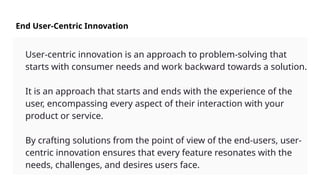
End User-Centric Innovation
User-centricinnovation is an approach to problem-solving that
starts with consumer needs and work backward towards a solution.
It is an approach that starts and ends with the experience of the
user, encompassing every aspect of their interaction with your
product or service.
By crafting solutions from the point of view of the end-users, user-
centric innovation ensures that every feature resonates with the
needs, challenges, and desires users face.
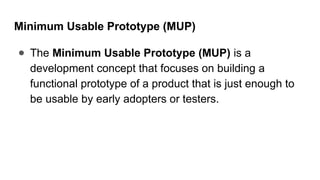
Minimum Usable Prototype(MUP)
● The Minimum Usable Prototype (MUP) is a
development concept that focuses on building a
functional prototype of a product that is just enough to
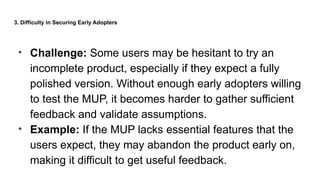
be usable by early adopters or testers.
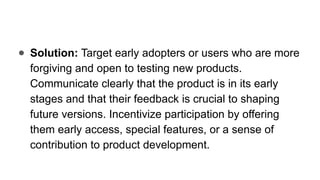
6.
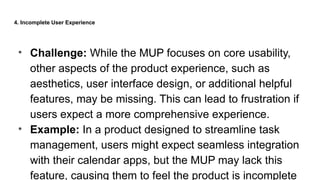
● It emphasizescreating a version of the product with the
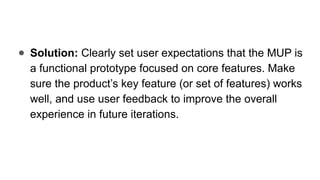
most essential and core features to test the viability
of the product and gather early feedback from real
users, but it is not a fully polished or feature-complete
product.
7.
● While theMinimum Viable Product (MVP) concept is
more well-known, focusing on delivering just enough
functionality to validate a business hypothesis, the
MUP concept is more about delivering an early-stage
product that is usable in a practical sense.
8.
● MUP strikesa balance between a raw prototype and a
fully operational product, offering a version that users
can interact with in a meaningful way, even though it
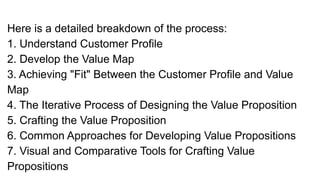
may not have all the bells and whistles of the final
product.
9.
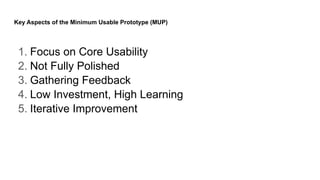
Key Aspects ofthe Minimum Usable Prototype (MUP)
1. Focus on Core Usability
2. Not Fully Polished
3. Gathering Feedback
4. Low Investment, High Learning
5. Iterative Improvement
10.
1. Focus onCore Usability
● The MUP is focused on delivering the minimum set of
core features that make the product usable. These
features address the basic functionality and ensure
that users can accomplish the primary task or
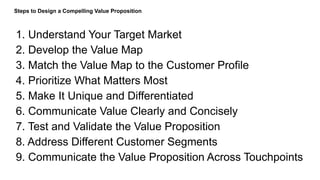
purpose of the product. It’s not just about having the
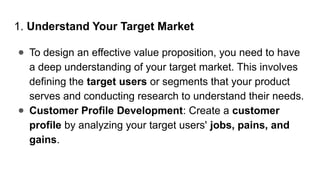
basic features but ensuring those features work well
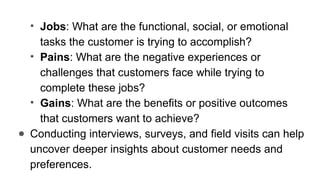
enough to allow real use.
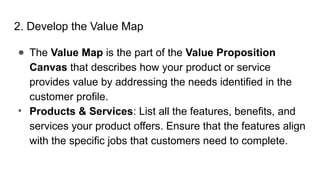
11.
2. Not FullyPolished
● The MUP does not aim to be perfect in terms of
design, scalability, or performance. Instead, it is an
early-stage product that gets the job done in a
functional way. There might be rough edges in terms of
UI design, performance, or additional features, but it
is sufficient for users to try out and provide
valuable feedback.
12.
3. Gathering Feedback:
●One of the primary goals of the MUP is to gather
feedback from users based on their interactions with the
prototype. The feedback gathered can help the
development team refine the product and prioritize
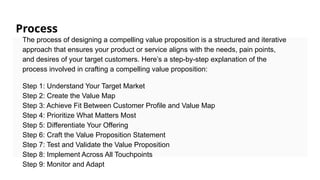
features for the next iterations. Real-world feedback is
invaluable for understanding whether the product meets
user needs, works as expected, or requires significant
changes before further development.
13.
4. Low Investment,High Learning
● The MUP approach encourages building a low-cost,
early-stage version of the product, which allows the
team to validate the core concepts without sinking too
much time or resources into development. It’s about
learning as quickly as possible by putting something
into users' hands without waiting for a fully developed
product.
14.
5. Iterative Improvement
●Once feedback from the MUP is received, the
development team can iterate on the product to improve
usability, add more features, fix issues, and address
any concerns raised by users. This iterative approach
ensures that the product evolves based on real user
experience rather than assumptions made in
development.
15.
Why is theMUP Concept Important?
1. Real-world Testing
2. Early Adoption
3. Resource Efficiency
4. Improved User Experience
16.
1. Real-world Testing
●MUP allows companies to test a usable version of the
product with real users in the real world. It focuses on
practical, actionable feedback, unlike high-level
theoretical validation with mockups or wireframes.
17.
2. Early Adoption
●By creating an MUP, companies can attract early
adopters who are willing to try new products in their
early stages. These users provide critical insights into
what works and what doesn’t.
18.
3. Resource Efficiency
●The MUP requires less time and effort compared to
building a full-featured product upfront, reducing the risk
of over-investing in features or designs that may not
resonate with users.
19.
4. Improved UserExperience
● While an MVP may validate basic product-market fit, an
MUP improves usability by focusing on delivering a
functional experience. This makes it more likely to retain
early users and gather deeper insights into how they
engage with the product.
The Minimum UsablePrototype (MUP) approach has several
benefits, such as allowing for early real-world feedback and
efficient use of resources. However, it also comes with certain
challenges. Here’s a brief overview of the common challenges
associated with the MUP concept:
1. Defining “Minimum Usable” Features
2. Lack of Polish
3. Difficulty in Securing Early Adopters
4. Incomplete User Experience
5. Risk of Negative Perception
6. Scaling Feedback Effectively
7. Short-Term Usability vs. Long-Term Scalability
22.
1. Defining “MinimumUsable” Features
● Challenge: One of the biggest hurdles in developing an
MUP is determining what constitutes the "minimum
usable" version of the product. It’s not always easy to
strike the right balance between delivering essential
features that provide value and cutting non-critical
features that could improve usability.
● Example: A product might require more features to be
genuinely usable than initially anticipated, leading to
debates within the team about what should be included
in the MUP.
23.
● Solution: Startby focusing on the core functionality
that addresses the primary problem your users are
facing. Use customer discovery techniques, such as
interviews and observations, to identify which features
are truly necessary for the first prototype.
24.
2. Lack ofPolish
• Challenge: The MUP, by definition, is not a fully
polished product. This can lead to early adopters
encountering rough edges, such as minor bugs,
incomplete designs, or missing features, which can lead
to negative first impressions or customer dissatisfaction.
• Example: A basic but functional app might be slow or
have a clunky user interface, which could frustrate
users even though the core functionality is present.
25.
● Solution: Ensurethat while the MUP doesn’t have to
be feature-rich, the core features that are implemented
should work smoothly. Focus on stability and usability
for those few key elements, and make sure the
prototype doesn’t break during real-world use.
26.
3. Difficulty inSecuring Early Adopters
• Challenge: Some users may be hesitant to try an
incomplete product, especially if they expect a fully
polished version. Without enough early adopters willing
to test the MUP, it becomes harder to gather sufficient
feedback and validate assumptions.
• Example: If the MUP lacks essential features that the
users expect, they may abandon the product early on,
making it difficult to get useful feedback.
27.
● Solution: Targetearly adopters or users who are more
forgiving and open to testing new products.
Communicate clearly that the product is in its early
stages and that their feedback is crucial to shaping
future versions. Incentivize participation by offering
them early access, special features, or a sense of
contribution to product development.
28.
4. Incomplete UserExperience
• Challenge: While the MUP focuses on core usability,
other aspects of the product experience, such as
aesthetics, user interface design, or additional helpful
features, may be missing. This can lead to frustration if
users expect a more comprehensive experience.
• Example: In a product designed to streamline task
management, users might expect seamless integration
with their calendar apps, but the MUP may lack this
feature, causing them to feel the product is incomplete
29.
● Solution: Clearlyset user expectations that the MUP is
a functional prototype focused on core features. Make
sure the product’s key feature (or set of features) works
well, and use user feedback to improve the overall
experience in future iterations.
30.
5. Risk ofNegative Perception
• Challenge: If users encounter too many usability issues
or limitations in the MUP, it can create a negative
perception of the product. Even if the product is
improved in future iterations, it might be hard to win
back users who had a poor initial experience.
• Example: A fitness app MUP may allow users to log
workouts but lacks motivational elements, which could
make users feel the product is underwhelming, leading
them to abandon it early on.
31.
● Solution: Makesure the MUP delivers clear, tangible
value to users, even if it is minimal. Focus on solving a
key pain point well and communicate the product’s
roadmap to users, letting them know improvements are
coming. Engage users who provide feedback to make
them feel part of the product’s evolution.
32.
6. Scaling FeedbackEffectively
• Challenge: While an MUP enables you to collect early
feedback, it can be challenging to process and act on
all the feedback received, especially when different
users provide conflicting suggestions. Prioritizing what
to implement or improve next can become difficult.
• Example: One group of users may want additional
integrations with existing tools, while another may focus
on improving the design, creating tension around what
to prioritize in the next development phase.
33.
● Solution: Prioritizefeedback that aligns with the
original problem your product is trying to solve. Focus
on the feedback that supports the most critical
improvements needed to ensure the core product
remains usable and valuable. Use frameworks like the
ICE (Impact, Confidence, Ease) scoring model to
prioritize features.
34.
7. Short-Term Usabilityvs. Long-Term Scalability
• Challenge: When focusing on the MUP, the temptation
is to build something quickly that works in the short term
but may not scale well in the long term. For example, a
quick solution may work for a few users but won’t be
efficient or scalable when the user base grows.
• Example: A payment solution MUP might support
manual processing of transactions for a small number
of users, but this method won’t be scalable for a larger
user base, potentially requiring the re-engineering of
35.
● Solution: Whilethe MUP focuses on the immediate
usability, plan for scalability in the long term. Build the
foundation (in terms of architecture and design) in a
way that future scalability is not compromised, even if
you’re delivering a bare-bones product now.
36.
8. Transitioning fromMUP to MVP or Full Product
• Challenge: Once the MUP has been tested, it can be
difficult to determine the next step. What should the
product evolve into—a more feature-rich MVP or the full
version? Balancing the feedback from the MUP with the
product’s long-term vision can be tricky.
• Example: After testing an MUP, you may find that users
demand multiple features or additional functionality,
which may complicate the original product vision.
Deciding what to build next becomes challenging.
37.
● Solution: Aftergathering feedback, identify the most
valuable and impactful improvements that should be
added next. Work closely with your development,
design, and product teams to decide on the most
strategic next steps—whether it's iterating on the MUP,
moving towards an MVP, or even a full-featured
product.
Value Proposition
● Avalue proposition is defined as the set of benefits
that a product or service offers to customers. It
describes how the product or service solves a
customer's problem or fulfills a need, creating value
in a way that is engaging to the customer.
● In the context of Value Proposition Design, a value
proposition is constructed by identifying specific
customer jobs, pains, and gains, and then designing
solutions that effectively address these aspects.
40.
● The valueproposition aims to match the key elements
of what customers are trying to achieve (jobs), lighten
their frustrations or challenges (pains), and deliver
desired outcomes or additional benefits (gains).
● This process involves using the Value Proposition
Canvas, which helps to clarify the product's key
features (products and services) and how these
features relieve pains and create gains for the target
customer.
41.
● The ultimategoal of a value proposition is to achieve a
"fit" between the product and customer needs, where
the product's benefits align closely with what matters
most to customers—addressing important jobs,
reducing significant pains, and providing valuable gains.
42.
Designing & Craftingthe Value Proposition
● Designing and crafting a value proposition is a
structured process that involves creating a product
or service offering that aligns with the needs, pain
points, and desires of your target customers.
● The Value Proposition Canvas is a primary tool used
to accomplish this, as it allows companies to visualize
and test their ideas iteratively, ensuring that the value
proposition resonates well with potential customers.
43.
Here is adetailed breakdown of the process:
1. Understand Customer Profile
2. Develop the Value Map
3. Achieving "Fit" Between the Customer Profile and Value
Map
4. The Iterative Process of Designing the Value Proposition
5. Crafting the Value Proposition
6. Common Approaches for Developing Value Propositions
7. Visual and Comparative Tools for Crafting Value
Propositions
44.
1. Understand CustomerProfile
● To design a compelling value proposition, you first need
to have a deep understanding of the Customer Profile,
which includes:
• Customer Jobs: What tasks or problems are
customers trying to solve? These can be functional,
emotional, or social tasks.
45.
• Pains: Thenegative experiences, challenges, and risks
that the customer encounters while trying to accomplish
their jobs.
• Gains: The positive outcomes or benefits that
customers expect, desire, or would be delighted by
when using a product or service.
● By understanding these components, the goal is to
identify the most significant customer jobs, pains, and
gains to be addressed.
46.
2. Develop theValue Map
● The Value Map is the other part of the Value
Proposition Canvas, which matches the customer
profile:
• Products & Services: The core offerings that provide
solutions to customer jobs.
47.
• Pain Relievers:How the product or service lightens specific
customer pains. These features should effectively eliminate,
reduce, or address the negative aspects that the customer
experiences.
• Gain Creators: How the product or service provides gains.
These should include features that enhance, improve, or
provide additional value that exceeds customer
expectations.
48.
3. Achieving "Fit"Between the Customer Profile and Value Map
● The ultimate goal of designing a value proposition is to
achieve a "fit" between the Customer Profile and the
Value Map. This involves ensuring that:
• Your products and services are precisely solving
significant customer jobs.
• The pain relievers effectively address important pains.
• The gain creators deliver meaningful value that matters
to the customer.
49.
● The processof achieving fit happens in three stages:
1. Problem-Solution Fit: This occurs when you identify
customer jobs, pains, and gains and design a value
proposition to address them.
2. Product-Market Fit: This is achieved when customers react
positively to the value proposition, and it gains traction in the
market.
3. Business Model Fit: This occurs when you can successfully
embed the value proposition into a scalable and profitable
business model.
50.
4. The IterativeProcess of Designing the Value Proposition
● Designing a value proposition is not a linear process;
it's an iterative one involving continuous cycles of
prototyping, testing, and learning:
• Prototyping: Begin by developing multiple versions of
your value proposition using quick and inexpensive
methods like sketches, storyboards, or simple mockups.
The objective is to make the ideas tangible enough to
test with customers.
51.
• Testing: Putprototypes in front of real customers to
gather feedback. The focus is on validating
assumptions about customer needs and whether the
proposed value resonates with them.
• Refinement: Based on feedback, iterate and refine the
value proposition to ensure that it better meets the
needs and addresses the pain points of the target users
52.
5. Crafting theValue Proposition
● Crafting a value proposition requires clear
communication about what makes your product or
service distinct and valuable. The following are
essential aspects of crafting a value proposition:
• Focus on the Most Important Jobs, Pains, and
Gains: You can't address every need; instead, prioritize
the jobs, pains, and gains that are most relevant and
significant for your target audience.
53.
• Be Specific:Avoid vague claims. Describe precisely
how your product solves customer problems and what
value it brings.
• Differentiation: Your value proposition should clearly
articulate what makes your product or service better
than alternatives. Use pain relievers and gain creators
that set your solution apart from competitors.
54.
6. Common Approachesfor Developing Value Propositions
● There are multiple entry points for developing value
propositions, including:
• Customer-Centric Starting Point: Start by identifying an
unmet customer need or an underserved market segment
and design a value proposition tailored to address that
need.
• Technology Push: Alternatively, start with a new
invention or technological capability and create a value
proposition that leverages this innovation to meet a
55.
7. Visual andComparative Tools for Crafting Value Propositions
● Strategy Canvas: Use a strategy canvas to compare
your value proposition against those of your
competitors. This visual tool helps to differentiate your
offering by assessing how your product performs on
various competitive factors like gains and pain relievers
compared to alternatives in the market.
Design a compellingvalue proposition
● Designing a compelling value proposition involves
clearly defining the unique value your product or
service provides to customers, emphasizing how it
meets their needs better than any alternatives.
● A compelling value proposition is more than just a
statement—it's a strategic tool that aligns your offering
with the key problems, needs, and desires of your
target market.
58.
Steps to Designa Compelling Value Proposition
1. Understand Your Target Market
2. Develop the Value Map
3. Match the Value Map to the Customer Profile
4. Prioritize What Matters Most
5. Make It Unique and Differentiated
6. Communicate Value Clearly and Concisely
7. Test and Validate the Value Proposition
8. Address Different Customer Segments
9. Communicate the Value Proposition Across Touchpoints
59.
1. Understand YourTarget Market
● To design an effective value proposition, you need to have
a deep understanding of your target market. This involves
defining the target users or segments that your product
serves and conducting research to understand their needs.
● Customer Profile Development: Create a customer
profile by analyzing your target users' jobs, pains, and
gains.
60.
• Jobs: Whatare the functional, social, or emotional
tasks the customer is trying to accomplish?
• Pains: What are the negative experiences or
challenges that customers face while trying to
complete these jobs?
• Gains: What are the benefits or positive outcomes
that customers want to achieve?
● Conducting interviews, surveys, and field visits can help
uncover deeper insights about customer needs and
preferences.
61.
2. Develop theValue Map
● The Value Map is the part of the Value Proposition
Canvas that describes how your product or service
provides value by addressing the needs identified in the
customer profile.
• Products & Services: List all the features, benefits, and
services your product offers. Ensure that the features align
with the specific jobs that customers need to complete.
62.
● Pain Relievers:Define how your product alleviates or
eliminates the pains faced by customers. These could
be pain points like inefficiency, cost, inconvenience, or
complexity.
● Gain Creators: Highlight how your product or service
provides gains for customers, such as enhancing their
experience, saving them time, or giving them access to
something they desire.
63.
3. Match theValue Map to the Customer Profile
● The key to designing a compelling value proposition is
to achieve a fit between the Customer Profile and the
Value Map. This means ensuring that:
• Your products and services align directly with customer
jobs.
• Your pain relievers effectively address the most
significant pain points.
• Your gain creators provide meaningful and valuable
benefits that are attractive to the customer.
64.
● To dothis, you need to carefully evaluate the customer
profile and select the most critical jobs, pains, and
gains. Then match them to the products, pain relievers,
and gain creators in your value map.
65.
4. Prioritize WhatMatters Most
● You cannot solve every problem or offer every possible
feature. To create a compelling value proposition, focus
on:
• Most Significant Jobs: Identify the jobs that matter
most to your customers and design your product to
address these core needs.
66.
● Addressing MajorPains: Focus on alleviating the most
painful experiences or frustrations your customers face.
Solve a critical pain point effectively, and you will create
a compelling reason for customers to choose your
product.
● Delivering High-Value Gains: Look for opportunities to
create gains that exceed customer expectations or
create delightful surprise
67.
5. Make ItUnique and Differentiated
● A compelling value proposition sets your product apart
from competitors. To differentiate your offering:
• Competitive Benchmarking: Analyze your
competitors’ value propositions and assess how they
address similar customer needs. Look for gaps or
opportunities where your product can excel.
• Highlight Unique Differentiators: Identify what makes
your product different or better, whether it's a unique
feature, superior customer experience, better pricing, or
an innovative approach to solving customer problems.
68.
6. Communicate ValueClearly and Concisely
● Craft a value proposition statement that communicates
the value of your product in a simple and easily
understood way. This statement should be:
• Focused on the Customer: Avoid technical jargon or
industry buzzwords; instead, speak in a language that
resonates with your target customers.
69.
● Outcome-Oriented: Focuson the outcomes or results
that the customer will receive. For example, instead of
saying “our product has a 20% faster processing
speed,” say “our product helps you complete tasks 20%
faster.”
● Memorable: Make it easy for potential customers to
remember your value proposition. Use short, impactful
phrases.
70.
● A typicalvalue proposition template might look like:
• “For [target customer], who [customer needs], our
product is [product type] that provides [key benefit].
Unlike [competitor], our product [unique differentiator].”
71.
7. Test andValidate the Value Proposition
● Designing a compelling value proposition is an iterative
process. To make sure that your value proposition
resonates with your target audience:
• Prototype and Test: Create versions of your value
proposition statement and test them with potential
customers. This could be through direct interviews,
online surveys, or focus groups.
72.
● Customer Feedback:Gather feedback to understand
what parts of the value proposition resonate, what
needs to be changed, and which benefits are most
compelling to customers.
● Refinement: Iterate on your value proposition based on
customer feedback until you achieve a message that
effectively communicates the core value of your
product.
73.
8. Address DifferentCustomer Segments
● Sometimes, you may serve multiple customer segments
with distinct needs. In such cases:
• Create Multiple Value Propositions: Develop a unique
value proposition for each customer segment. This
helps in targeting specific needs and creating a tailored
approach.
• Segmented Marketing Strategies: Use different
marketing messages that align with each value
proposition to reach different segments effectively.
74.
9. Communicate theValue Proposition Across Touchpoints
● A compelling value proposition should be visible across
all customer touchpoints, including:
• Website: Clearly showcase the value proposition on
your website’s homepage, product pages, and other
key landing pages.
• Marketing and Advertising: Use your value
proposition to drive marketing campaigns. Make sure
that ads, social media posts, and content marketing
materials convey the core benefits effectively.
75.
• Sales Conversations:Equip sales teams with value
proposition-focused materials and talking points to
ensure they can clearly communicate the value to
potential customers.
Process
The process ofdesigning a compelling value proposition is a structured and iterative
approach that ensures your product or service aligns with the needs, pain points,
and desires of your target customers. Here’s a step-by-step explanation of the
process involved in crafting a compelling value proposition:
Step 1: Understand Your Target Market
Step 2: Create the Value Map
Step 3: Achieve Fit Between Customer Profile and Value Map
Step 4: Prioritize What Matters Most
Step 5: Differentiate Your Offering
Step 6: Craft the Value Proposition Statement
Step 7: Test and Validate the Value Proposition
Step 8: Implement Across All Touchpoints
Step 9: Monitor and Adapt
78.
Step 1: UnderstandYour Target Market
● Identify the Target Users: Start by defining who your target users are. This includes
specific segments of the market that would benefit from your product or service.
● Conduct Research: Use various research methods such as interviews, surveys, customer
feedback, and market analysis to gather data on your target users. The goal is to gain a
deep understanding of their needs, behaviors, challenges, and desires.
● Develop the Customer Profile: This profile includes the key aspects of your target market:
● Customer Jobs: Tasks, problems, or needs that the customers are trying to solve. These
can be functional, social, or emotional tasks.
● Pains: Negative experiences, obstacles, or risks associated with their jobs. These are the
problems or frustrations customers want to avoid.
● Gains: The benefits or positive outcomes customers seek. These are the results or
achievements they want when using a product.
79.
Step 2: Createthe Value Map
● The Value Map is part of the Value Proposition Canvas and serves as a
blueprint for aligning your product's features with customer needs.
● Products & Services: List the products, features, or services your company
offers that are relevant to the customer’s jobs.
● Pain Relievers: Describe how your product helps alleviate the customer’s
pains. This could include features that reduce costs, save time, or eliminate
frustrations.
● Gain Creators: Explain how your product provides benefits that meet or
exceed customer expectations. Gain creators may include added
convenience, improved performance, or additional features that bring value.
80.
Step 3: AchieveFit Between Customer Profile and Value Map
● The goal is to create a strong alignment between the Customer Profile and the
Value Map.
● Match Products & Services to Customer Jobs: Ensure that the features and
services directly address the tasks or problems the customer is trying to solve.
● Align Pain Relievers with Customer Pains: Make sure the solutions
effectively address the most significant pain points for customers.
● Connect Gain Creators to Desired Gains: The value you provide should
offer meaningful and relevant benefits that appeal to the customer.
● Achieving this "fit" means that your value proposition resonates with the target
customers because it addresses their most important needs
81.
Step 4: PrioritizeWhat Matters Most
● Focus on the most significant jobs, pains, and gains for your target
customers. It’s important to prioritize the aspects that will deliver the most
value.
● You may not be able to solve every problem or deliver every gain, so prioritize
based on the issues that matter most to your target users.
● Use the insights gathered during research to rank customer needs and pain
points according to their impact on user satisfaction and adoption.
82.
Step 5: DifferentiateYour Offering
● Identify Your Unique Differentiators: Determine what sets your product or
service apart from competitors. This could be unique features, a superior
customer experience, better pricing, or innovative technology.
● Competitive Analysis: Study what your competitors are offering and find
opportunities to position your product as better or different. Highlight the
specific aspects that make your solution superior.
● Emphasize Unique Value: Clearly communicate why your product or service
is the best choice for solving the customer’s problem
83.
Step 6: Craftthe Value Proposition Statement
• Create a Clear and Compelling Statement: Formulate a value proposition
statement that succinctly describes the value your product or service
provides, why it’s relevant, and how it’s different from alternatives.
• Focus on Outcomes: Describe how the product helps customers achieve
their goals or solve their problems.
• Template for the Value Proposition Statement:
• “For [target customer] who [needs], our [product/service] is [unique solution] that provides
[benefit/outcome]. Unlike [competitors], our product [differentiator].”
84.
Step 7: Testand Validate the Value Proposition
• Create Prototypes or Mockups: Develop prototypes, mockups, or early
versions of your product and present them to potential customers for feedback.
• Collect Feedback: Use various methods, such as customer interviews,
surveys, focus groups, or usability testing, to gather feedback on your value
proposition. This feedback will help you understand if the proposed value
resonates with users.
• Iterate and Refine: Based on feedback, make changes to the value
proposition to improve its alignment with customer needs. This iterative
approach ensures that you continuously refine the message until it effectively
communicates the core benefits.
85.
Step 8: ImplementAcross All Touchpoints
• Integrate the Value Proposition into Marketing: Ensure your marketing
messages, advertisements, and promotional materials consistently reflect
your value proposition.
• Use the Value Proposition in Sales Conversations: Train your sales teams
to communicate the value proposition clearly during interactions with potential
customers.
• Consistently Deliver the Value: Make sure the actual product experience
aligns with the value proposition. Customers should experience the promised
value when they use your product.
86.
Step 9: Monitorand Adapt
• Track Metrics: Use key performance indicators (KPIs) to measure the
effectiveness of your value proposition. These metrics could include customer
satisfaction, conversion rates, retention rates, and market share.
• Adapt Based on Market Changes: As customer needs and market
conditions evolve, continuously revisit and update your value proposition to
stay relevant.
87.
3. 6 Toolsand Techniques of Value
Proposition Design
88.
● Value PropositionDesign involves a set of tools and techniques that help
businesses systematically create, refine, and test their value propositions.
These tools aim to ensure that the value proposition aligns with the needs,
pains, and gains of the target customers and stands out against the
competition. Here’s a detailed overview of the most important tools and
techniques used in value proposition design:
89.
● Value Map:This section covers:
○ Products & Services: The offerings that help customers complete their jobs.
○ Pain Relievers: How the product addresses specific customer pains.
○ Gain Creators: How the product provides desired benefits or positive outcomes.
● Technique: Start by filling out the customer profile to understand the target
customers deeply, then map your value proposition to ensure alignment
between what customers need and what your product provides.
90.
2. Customer DevelopmentInterviews
• Customer development interviews involve speaking directly with potential
or current customers to understand their needs, challenges, and preferences.
• Technique: Use open-ended questions to gather deep insights into customer
jobs, pains, and gains. The insights gathered from these interviews can help
validate assumptions about the customer profile and inform adjustments to
the value proposition.
91.
3. Prototyping
• Prototypinginvolves creating simple, low-fidelity versions of the product or
specific features to test with customers.
• Technique: Build quick prototypes (e.g., sketches, wireframes, mockups) that
represent different aspects of the value proposition. Use these prototypes to
gather user feedback on specific pain relievers, gain creators, or overall
product usability. This iterative process helps refine the value proposition
based on actual customer responses.
92.
4. Minimum ViableProduct (MVP)
• The Minimum Viable Product (MVP) is a version of a product that includes
just enough features to be usable by early adopters while still allowing for
feedback collection.
• Technique: Launch an MVP to test whether the value proposition resonates
with your target market. Use feedback from MVP users to understand which
features are valued, which pain relievers are effective, and what additional
gains customers desire. This helps in fine-tuning the value proposition.
93.
5. A/B Testing
•A/B testing is a method of comparing two versions of a product, feature, or
marketing message to see which one performs better.
• Technique: Use A/B testing to test different value proposition statements,
product features, or marketing messages with your target audience. For
example, you could test two different landing pages, each highlighting
different aspects of the value proposition, to determine which one drives more
conversions.
94.
6. Empathy Map
•An Empathy Map is a visual tool used to gain a deeper understanding of the
customer by capturing what they say, think, feel, and do in relation to a
particular problem or task.
• Technique: Create an empathy map based on customer interviews or
observations to help identify hidden needs, unspoken pains, and unexpected
gains. This can provide insights into how to enhance the value proposition to
better match customer expectations.
95.
7. Customer JourneyMapping
• Customer Journey Mapping involves creating a visual representation of the
steps customers take when interacting with your product or service, from
awareness to purchase and beyond.
• Technique: Use customer journey maps to identify touchpoints where
customers experience pain or delight. This helps in determining which parts of
the value proposition need to be strengthened or communicated more
effectively.
96.
8. SWOT Analysis(Strengths, Weaknesses, Opportunities, Threats)
• SWOT Analysis is a strategic tool that helps businesses assess their internal
strengths and weaknesses, as well as external opportunities and threats.
• Technique: Perform a SWOT analysis for your value proposition to identify
areas where your product excels (strengths), areas that need improvement
(weaknesses), market opportunities to leverage (opportunities), and
competitive risks (threats). This analysis can guide refinements in the value
proposition design.
97.
9. Strategy Canvas
•The Strategy Canvas is a tool from Blue Ocean Strategy that allows you to
compare your value proposition against competitors based on various
competitive factors.
• Technique: Plot your product's performance and your competitors'
performance across different attributes (e.g., price, quality, features). Identify
where your value proposition can differentiate by either offering a higher level
of value or addressing factors that competitors overlook.
98.
10. Test Cardsand Learning Cards
• Test Cards and Learning Cards are tools used to systematically validate
assumptions about the value proposition.
• Test Cards: Outline hypotheses about customer jobs, pains, or gains, and detail how you plan
to test them.
• Learning Cards: Capture insights and learnings from each test, which inform further iterations
of the value proposition.
• Technique: Use these cards to guide experiments and tests on different
aspects of the value proposition, and document the results to refine your
strategy continuously
99.
11. NABC Framework(Need, Approach, Benefit, Competition)
• The NABC Framework is a structured way to describe the value proposition
by addressing four key components:
• Need: What customer need is being addressed?
• Approach: What is your approach to addressing this need?
• Benefit: What are the specific benefits that customers will receive?
• Competition: How does your approach compare to existing solutions?
• Technique: Use the NABC framework to structure your value proposition and
communicate it clearly to stakeholders and customers. It helps ensure that the
proposition addresses key questions about why customers should choose
your solution.
100.
12. Brainstorming andCo-Creation Sessions
• Involve your team and even customers in brainstorming or co-creation
workshops to generate ideas for the value proposition.
• Technique: Use facilitated sessions to gather diverse perspectives on
customer needs, product features, and potential differentiators. Co-creation
with customers can provide first-hand insights and help shape a value
proposition that resonates.
101.
13. Value PropositionStatement Template
• A structured format for crafting the value proposition statement:
• “For [target customer], who [customer need], our [product/service] is [solution] that provides
[key benefit]. Unlike [competitors], our solution [unique differentiator].”
• Technique: Use this template to craft a clear and compelling value
proposition statement. Refine the statement through iterations based on
customer feedback and testing
102.
14. Jobs-to-Be-Done Framework
•The Jobs-to-Be-Done (JTBD) Framework helps understand the underlying
"jobs" or tasks that customers hire a product to do.
• Technique: Use the JTBD framework to identify what jobs your customers
are trying to accomplish and align your value proposition around solving those
jobs effectively.
103.
15. Competitor Analysis
•Competitor Analysis helps in understanding the strengths and weaknesses
of rival products or services and identifying gaps in the market.
• Technique: Compare your value proposition with those of your competitors to
identify unique selling points and differentiation strategies.
![UNIT III APPLIED DESIGN THINKING TOOLS
Concept of Minimum Usable Prototype [MUP] - MUP
challenge brief - Designing & Crafting the value
proposition - Designing and Testing Value Proposition;
Design a compelling value proposition; Process, tools
and techniques of Value Proposition Design](https://image.slidesharecdn.com/03unit-iii-full-notes-260206040530-272c8f20/85/03-unit-III-Full-Notes-Design-Thinking-pptx-2-320.jpg)
![3. 1 Concept of Minimum Usable
Prototype [MUP]](https://image.slidesharecdn.com/03unit-iii-full-notes-260206040530-272c8f20/85/03-unit-III-Full-Notes-Design-Thinking-pptx-4-320.jpg)
![● A typical value proposition template might look like:
• “For [target customer], who [customer needs], our
product is [product type] that provides [key benefit].
Unlike [competitor], our product [unique differentiator].”](https://image.slidesharecdn.com/03unit-iii-full-notes-260206040530-272c8f20/85/03-unit-III-Full-Notes-Design-Thinking-pptx-70-320.jpg)

![Step 6: Craft the Value Proposition Statement
• Create a Clear and Compelling Statement: Formulate a value proposition
statement that succinctly describes the value your product or service
provides, why it’s relevant, and how it’s different from alternatives.
• Focus on Outcomes: Describe how the product helps customers achieve
their goals or solve their problems.
• Template for the Value Proposition Statement:
• “For [target customer] who [needs], our [product/service] is [unique solution] that provides
[benefit/outcome]. Unlike [competitors], our product [differentiator].”](https://image.slidesharecdn.com/03unit-iii-full-notes-260206040530-272c8f20/85/03-unit-III-Full-Notes-Design-Thinking-pptx-83-320.jpg)
![13. Value Proposition Statement Template
• A structured format for crafting the value proposition statement:
• “For [target customer], who [customer need], our [product/service] is [solution] that provides
[key benefit]. Unlike [competitors], our solution [unique differentiator].”
• Technique: Use this template to craft a clear and compelling value
proposition statement. Refine the statement through iterations based on
customer feedback and testing](https://image.slidesharecdn.com/03unit-iii-full-notes-260206040530-272c8f20/85/03-unit-III-Full-Notes-Design-Thinking-pptx-101-320.jpg)



![[DevDay2019] Lean UX - By Bryant Castro, Bryant Castro at Wizeline](https://cdn.slidesharecdn.com/ss_thumbnails/bryantcastro-43ddopresoleanux-190416065313-thumbnail.jpg?width=640&height=640&fit=bounds)


