Using Azure Cognitive Services
Radu Vunvulea / Endava
@RaduVunvulea
Azure Cognitive Services
Intelligent
Applications
customize
applications
Intelligence
full solution
Creating applications that can see, hear, speak and understand
Build it Yourself
https://aka.ms/ai-nights-beginner
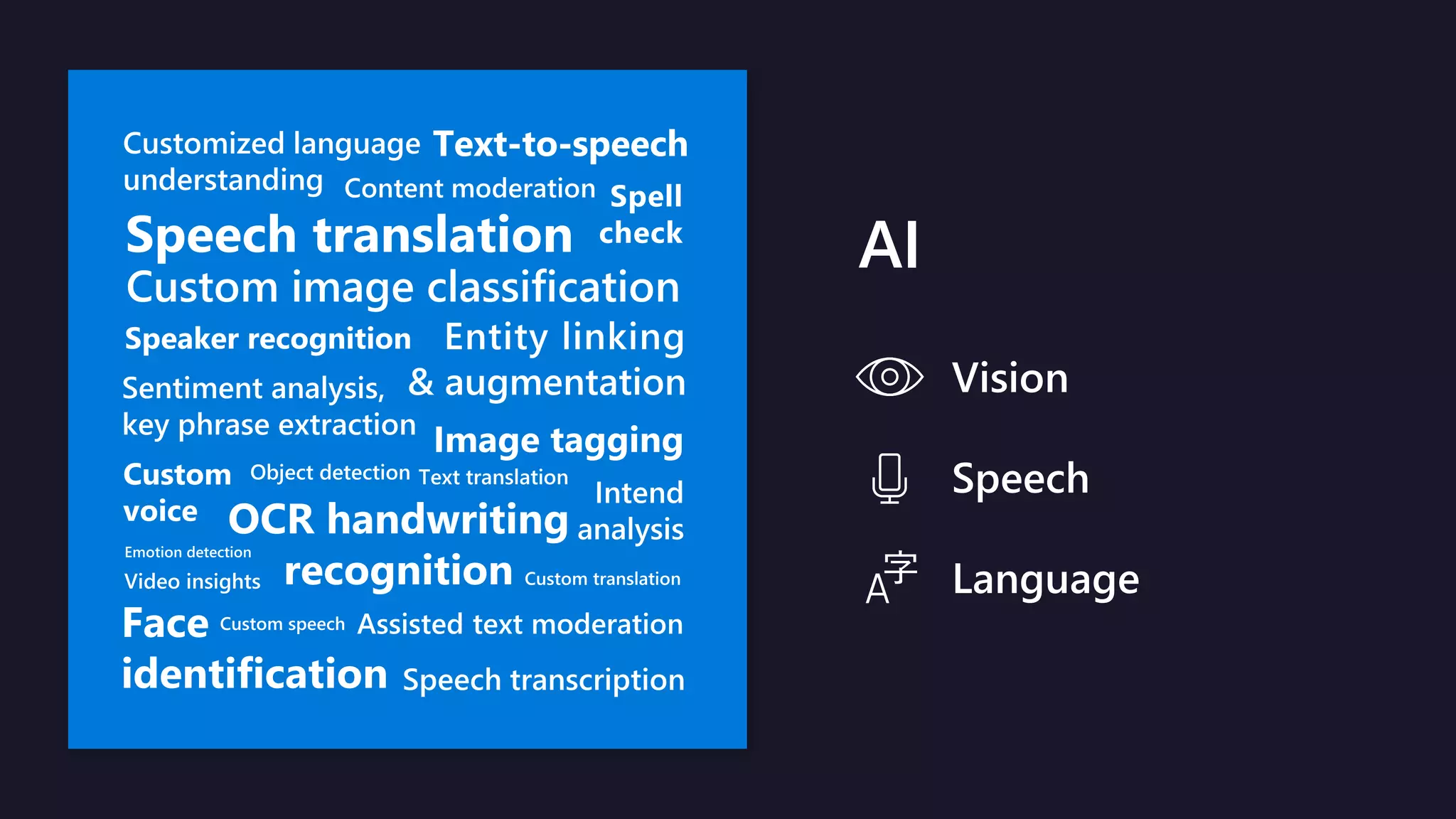
AI
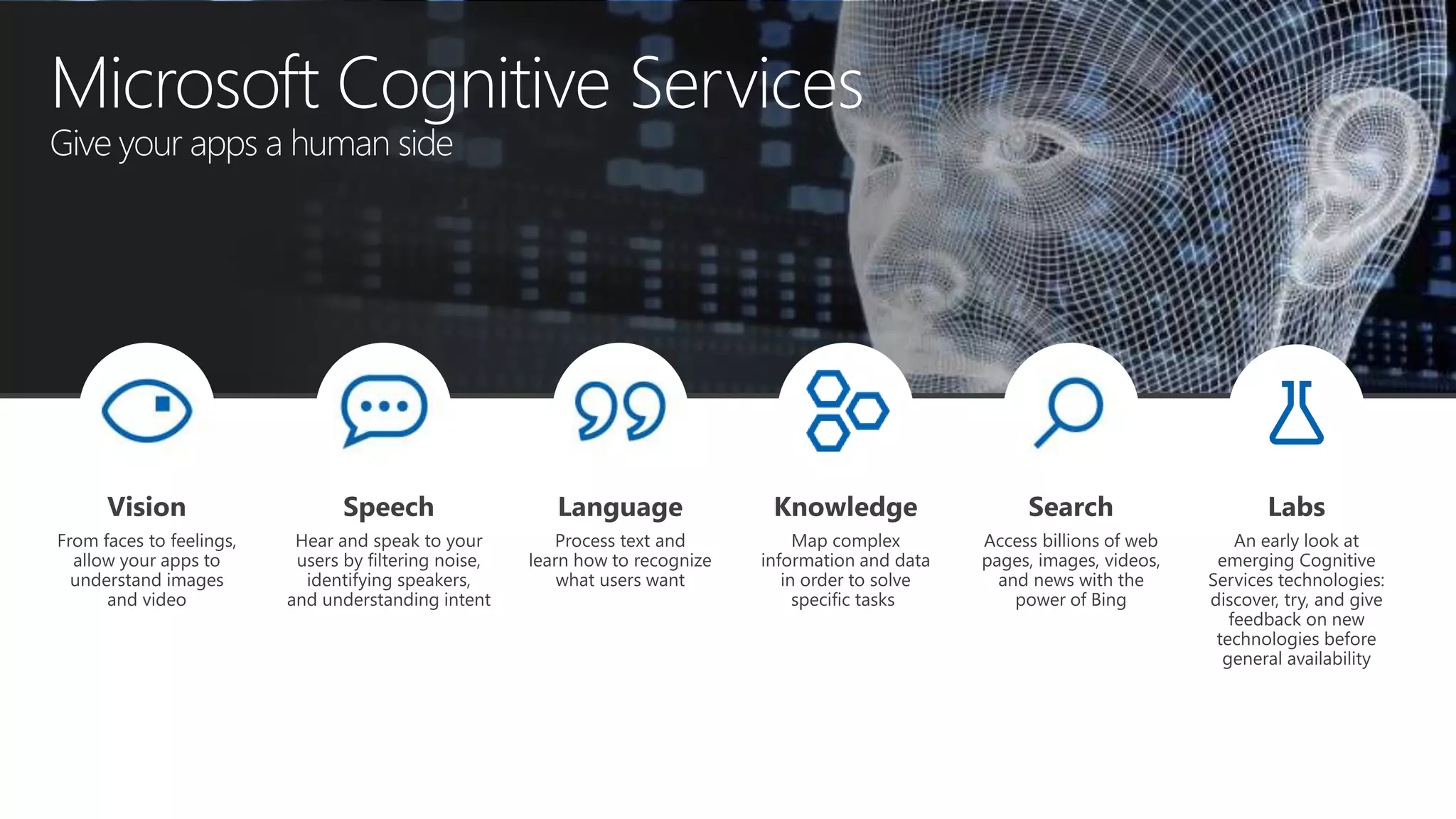
Vision
Speech
Language
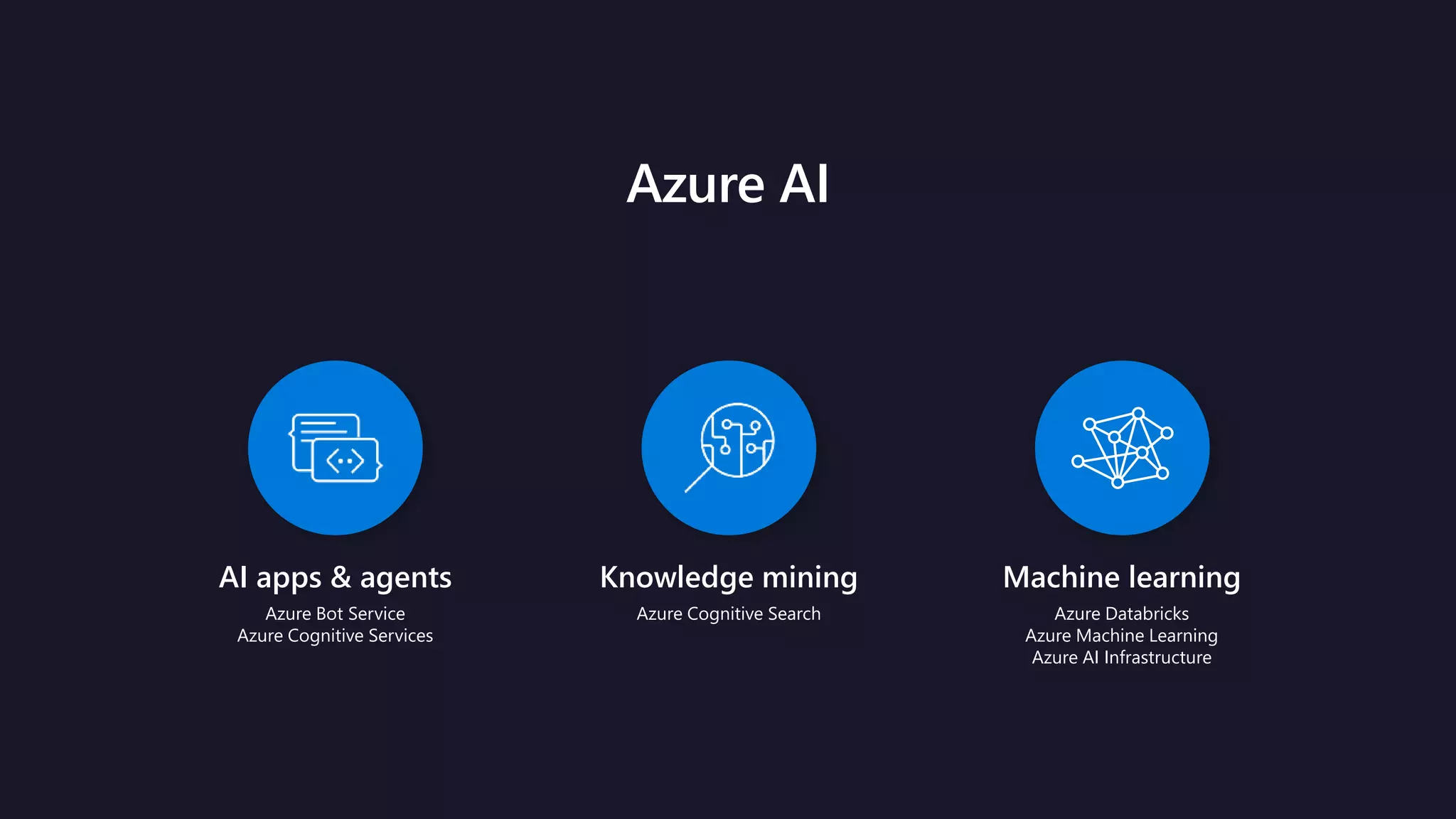
Azure AI
Machine learning
Azure Databricks
Azure Machine Learning
Azure AI Infrastructure
AI apps & agents
Azure Bot Service
Azure Cognitive Services
Knowledge mining
Azure Cognitive Search
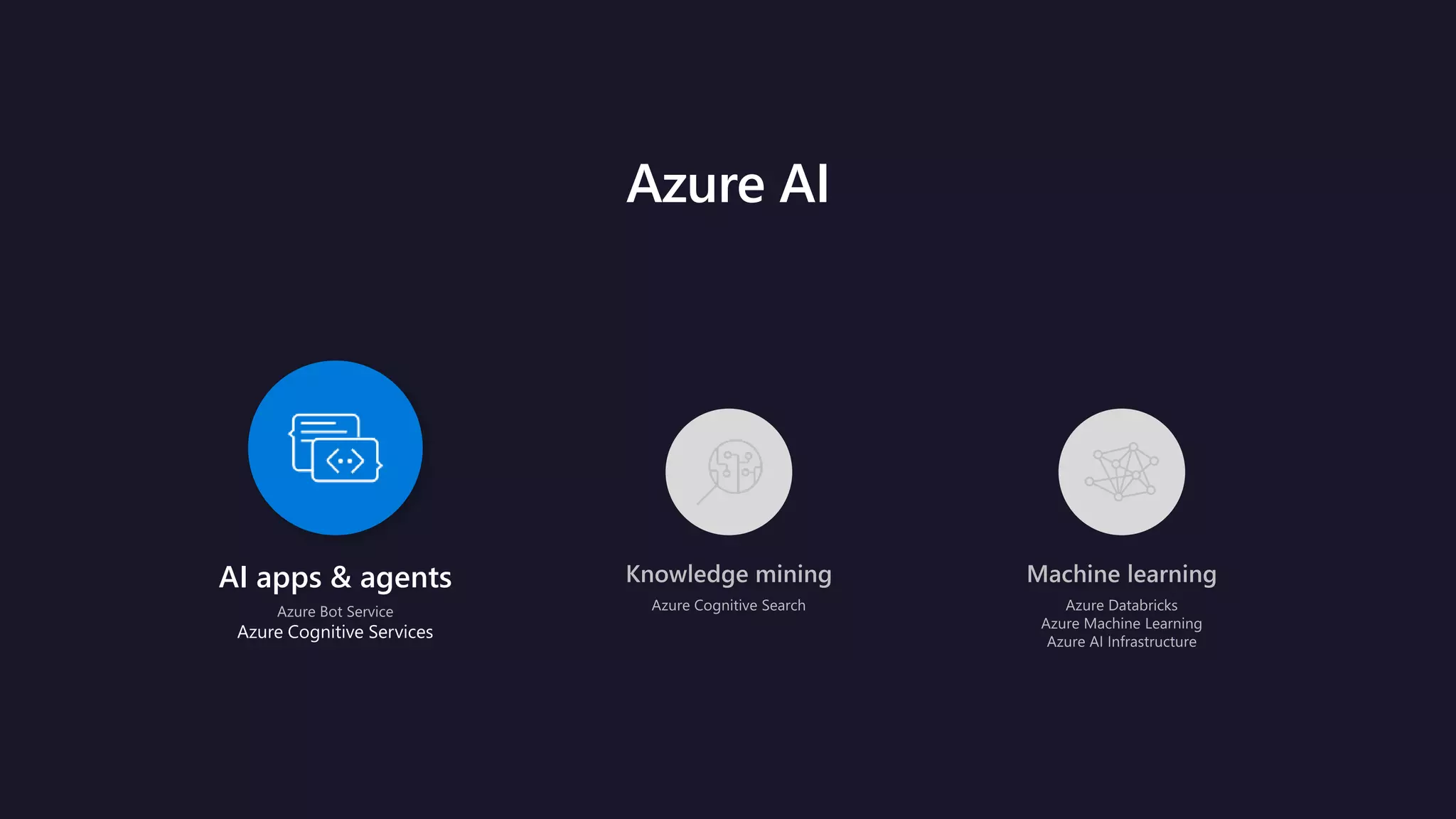
Azure AI
AI apps & agents
Azure Cognitive Services
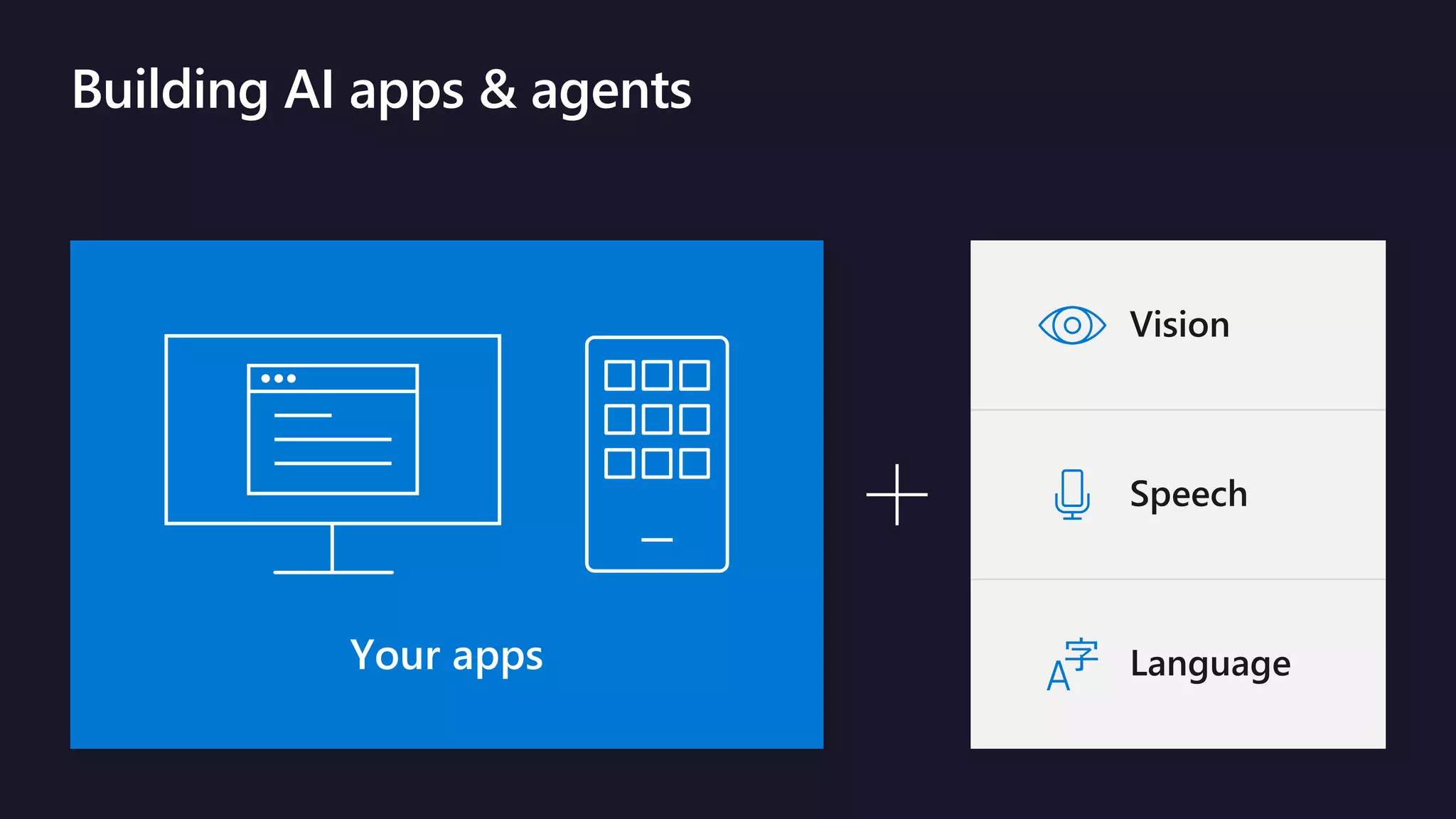
Building AI apps & agents
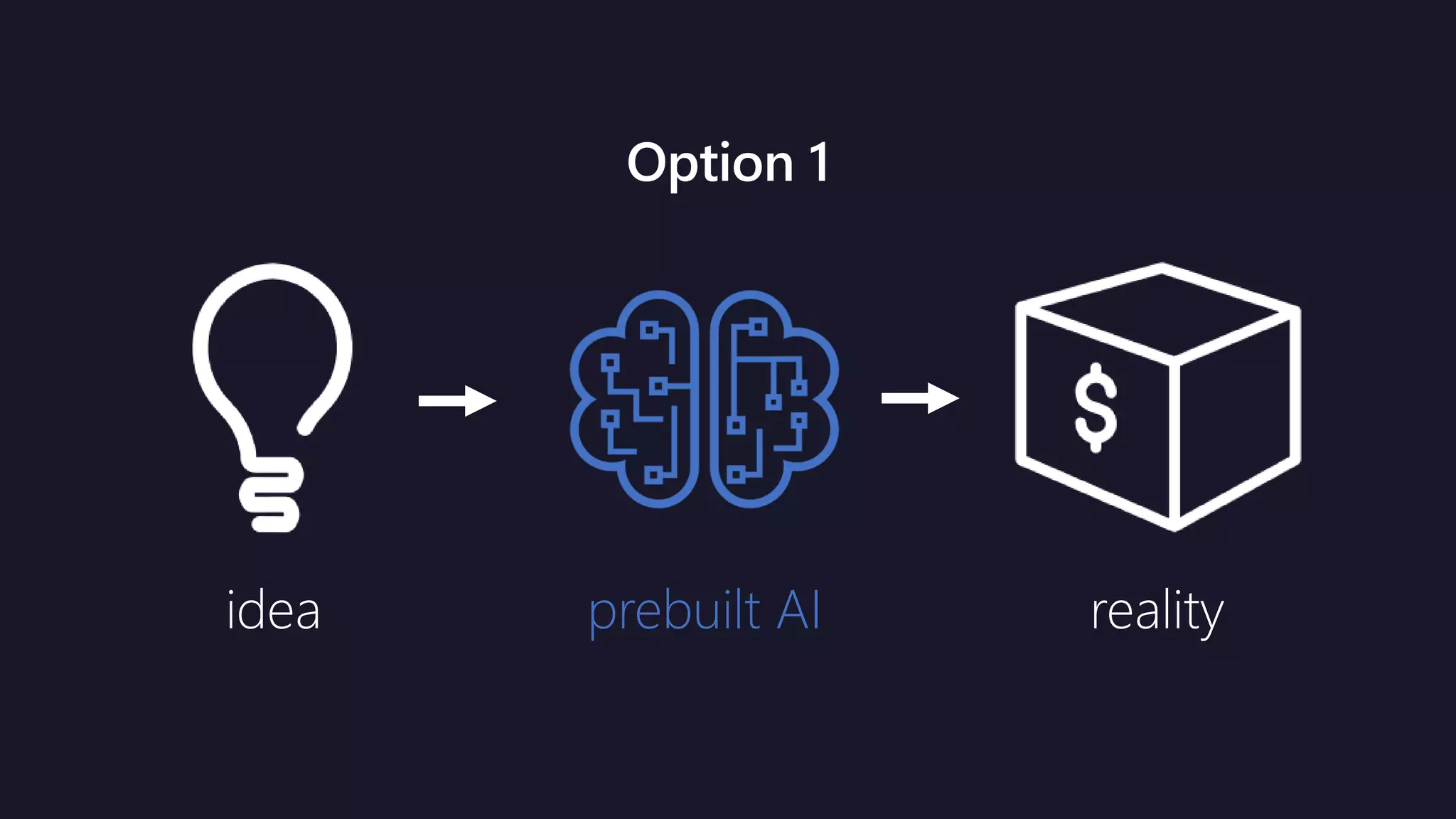
idea realityprebuilt AI
Option 1
Azure Cognitive Services
https://aka.ms/ai-nights-beginner
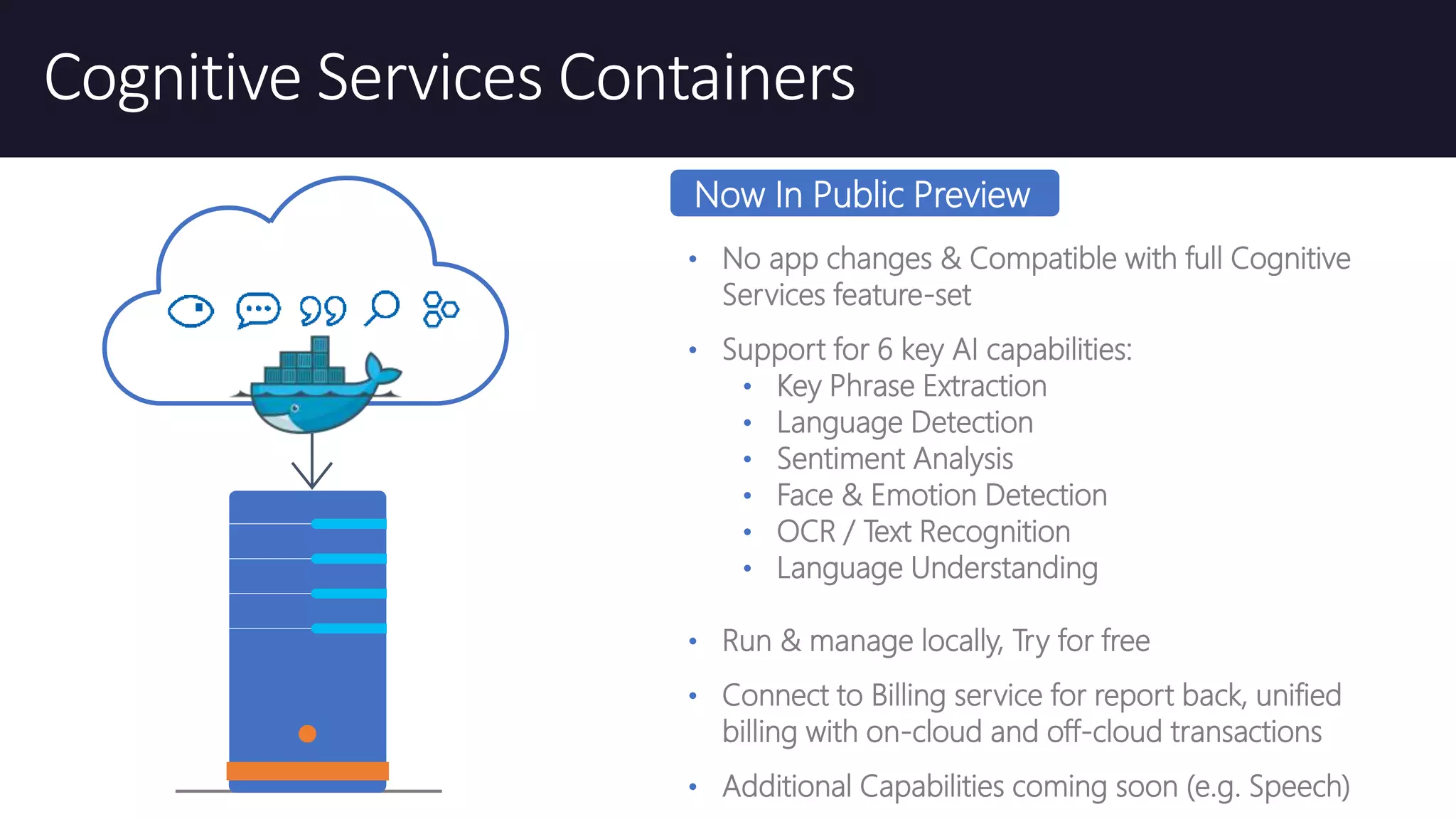
• No app changes & Compatible with full Cognitive
Services feature-set
• Support for 6 key AI capabilities:
• Key Phrase Extraction
• Language Detection
• Sentiment Analysis
• Face & Emotion Detection
• OCR / Text Recognition
• Language Understanding
• Run & manage locally, Try for free
• Connect to Billing service for report back, unified
billing with on-cloud and off-cloud transactions
• Additional Capabilities coming soon (e.g. Speech)
Now In Public Preview
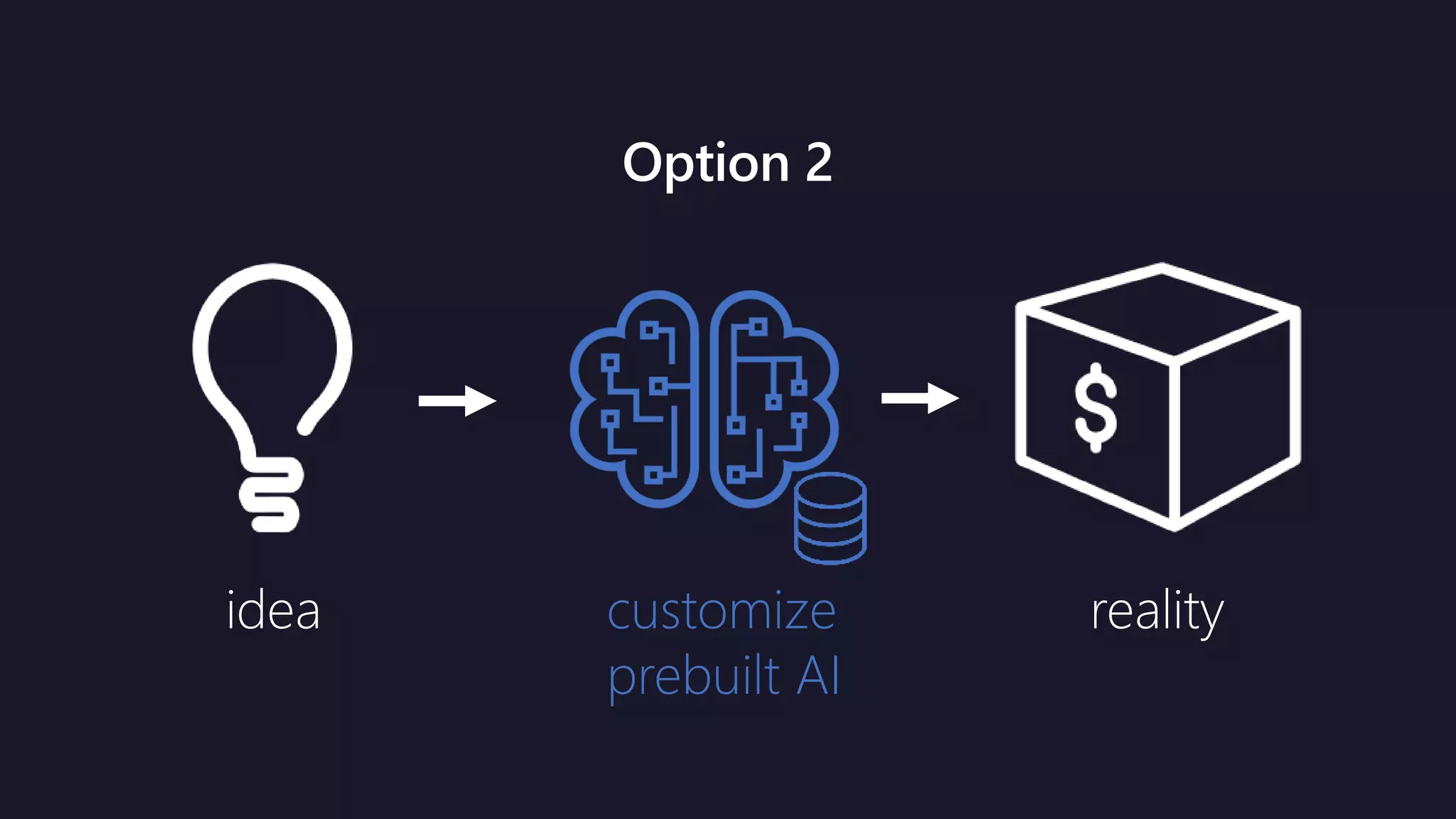
idea realitycustomize
prebuilt AI
Option 2
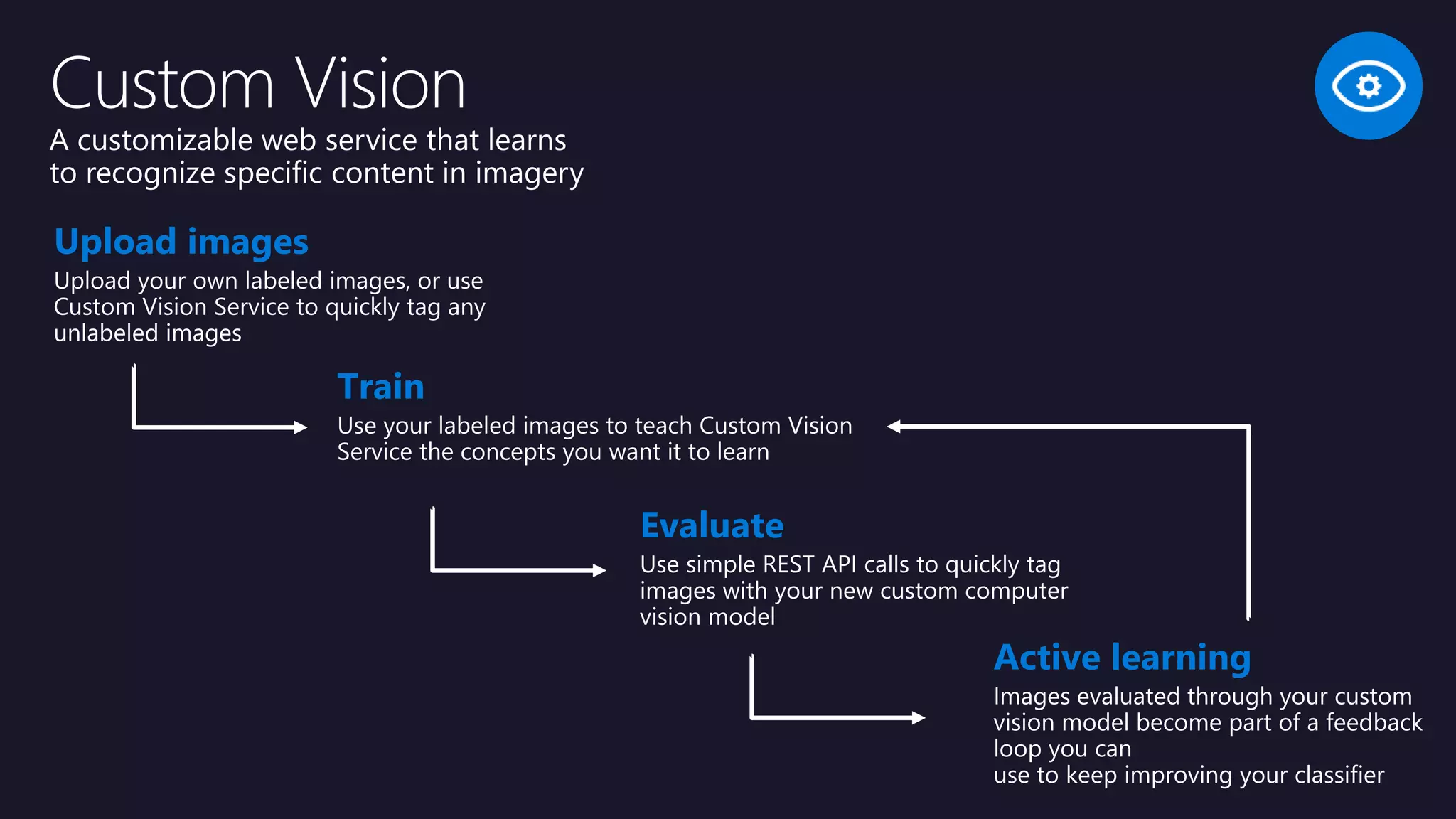
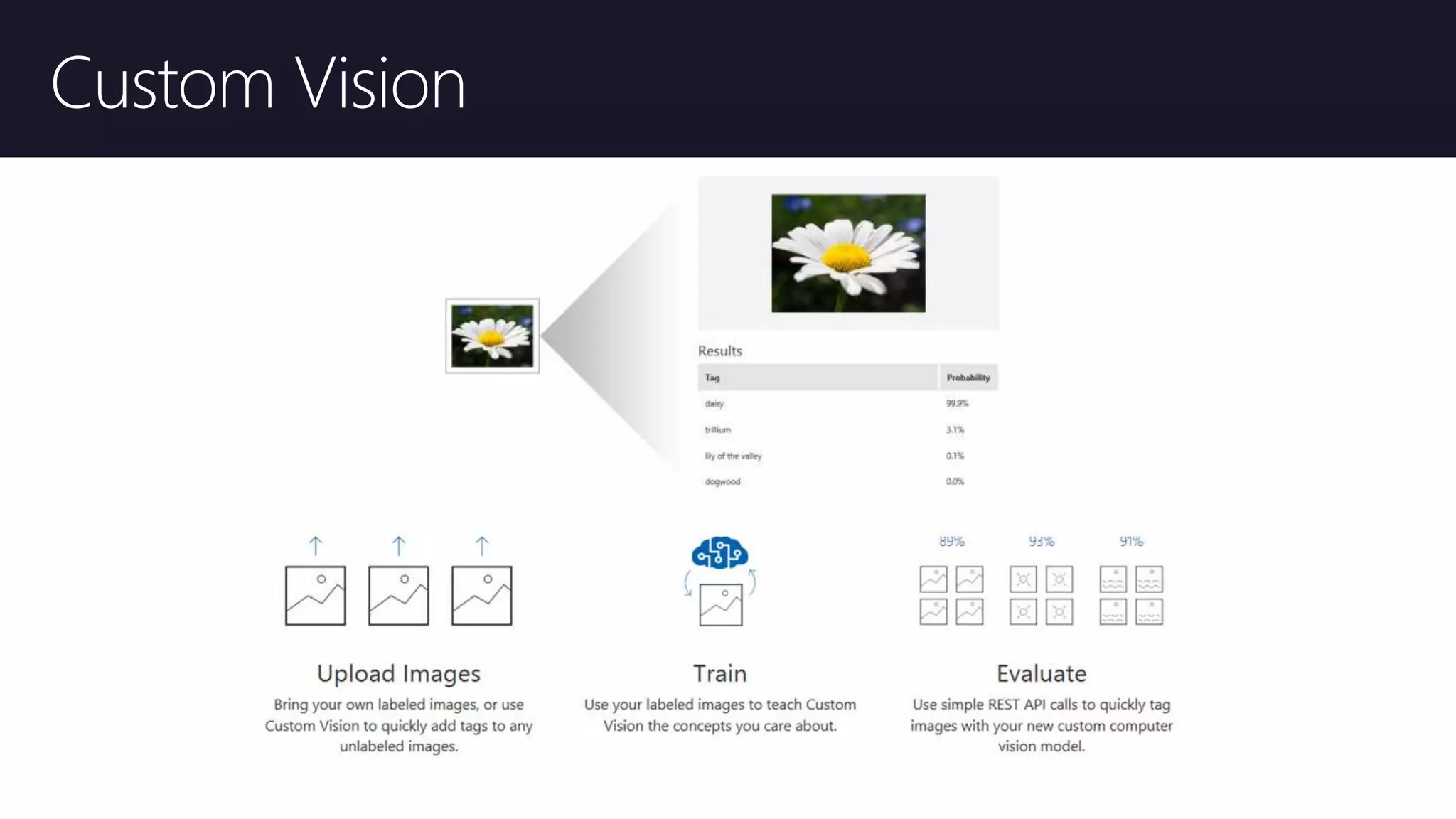
Train
Upload images
Evaluate
Active learning
Azure Custom Vision
https://aka.ms/ai-nights-beginner
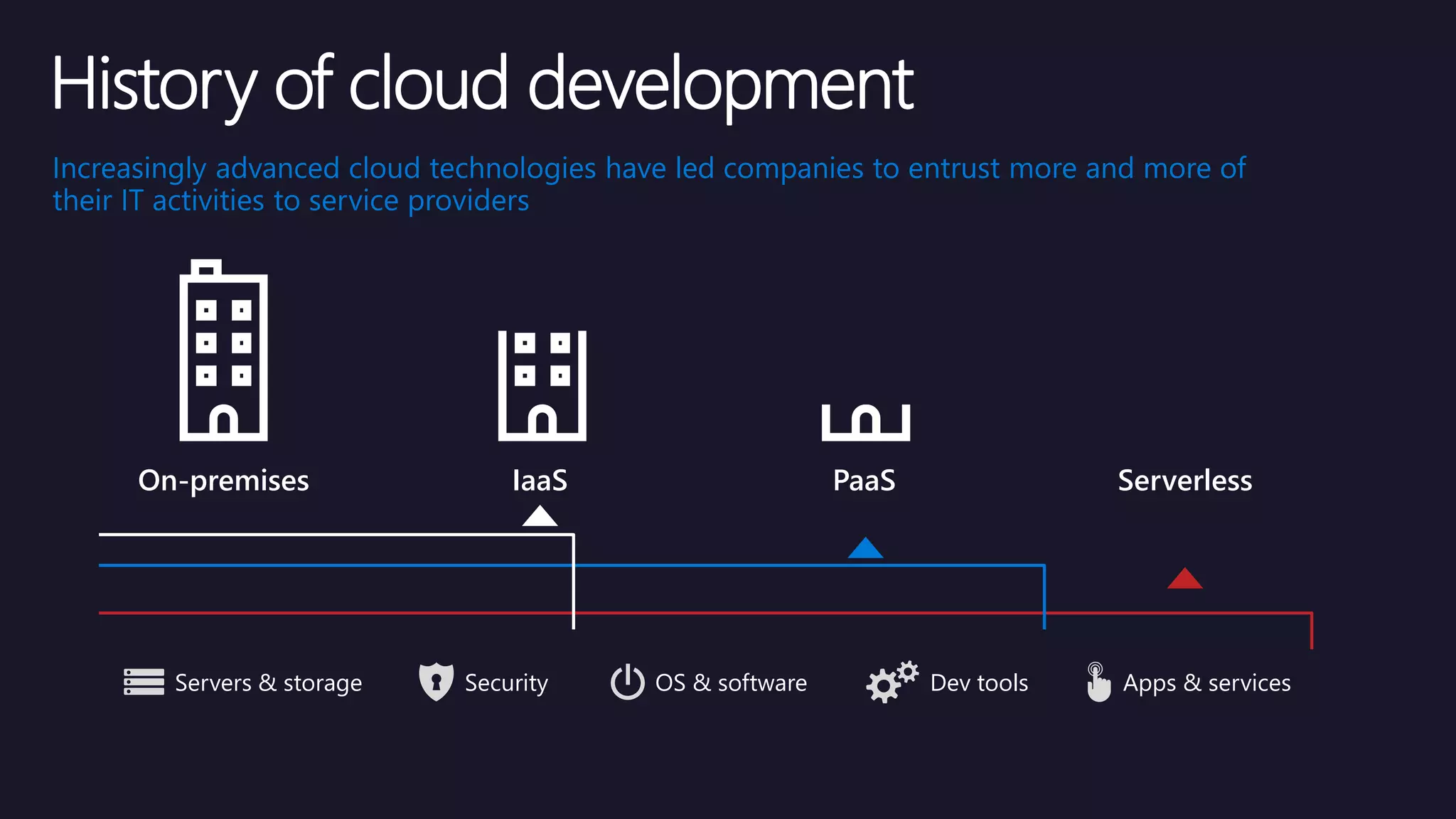
On-premises IaaS PaaS Serverless
Servers & storage Security OS & software Dev tools Apps & services
Increasingly advanced cloud technologies have led companies to entrust more and more of
their IT activities to service providers
History of cloud development
*Supporting services, like storage and networking, may be charged separately.
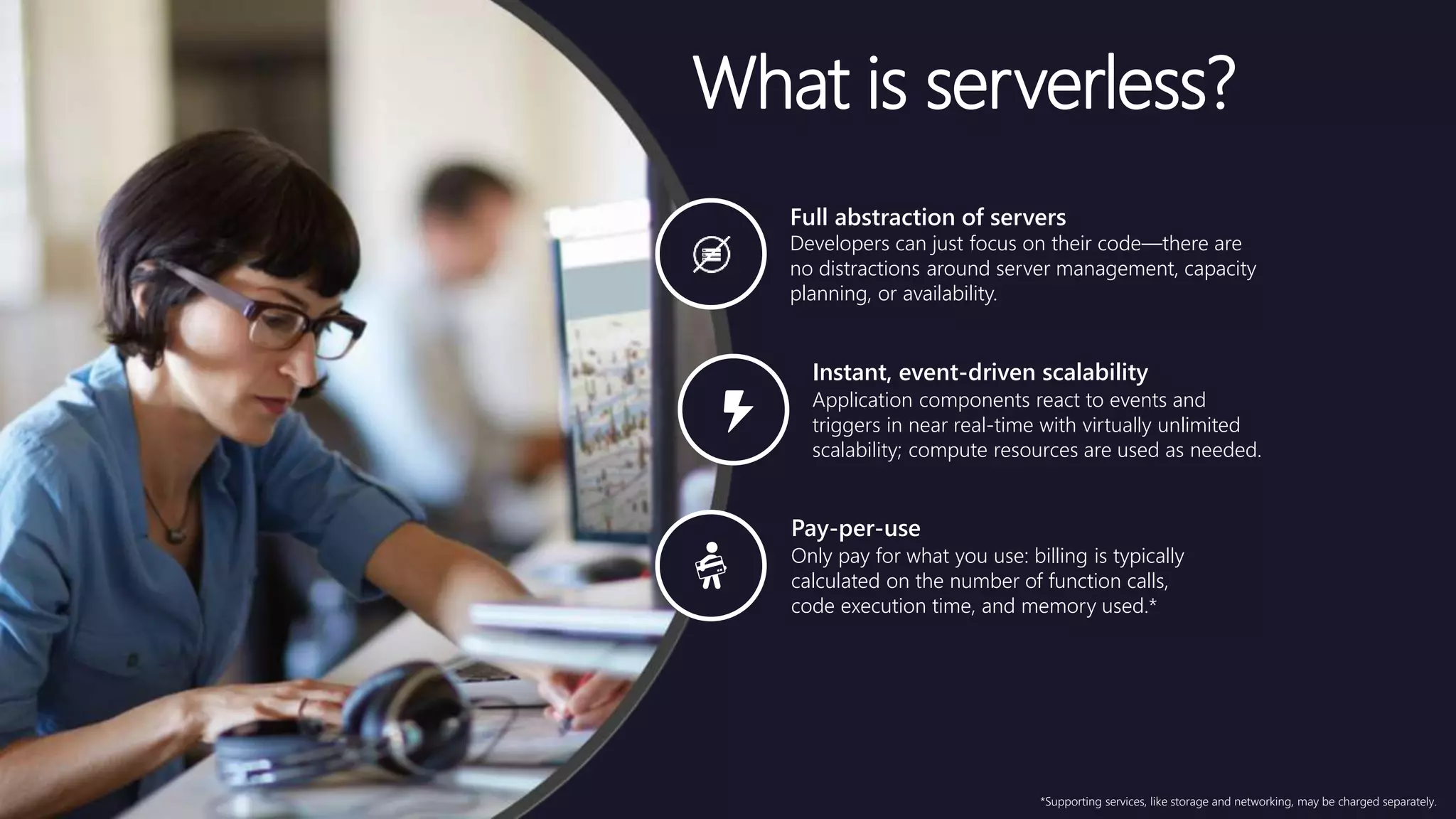
Pay-per-use
Only pay for what you use: billing is typically
calculated on the number of function calls,
code execution time, and memory used.*
Instant, event-driven scalability
Application components react to events and
triggers in near real-time with virtually unlimited
scalability; compute resources are used as needed.
Full abstraction of servers
Developers can just focus on their code—there are
no distractions around server management, capacity
planning, or availability.
What is serverless?
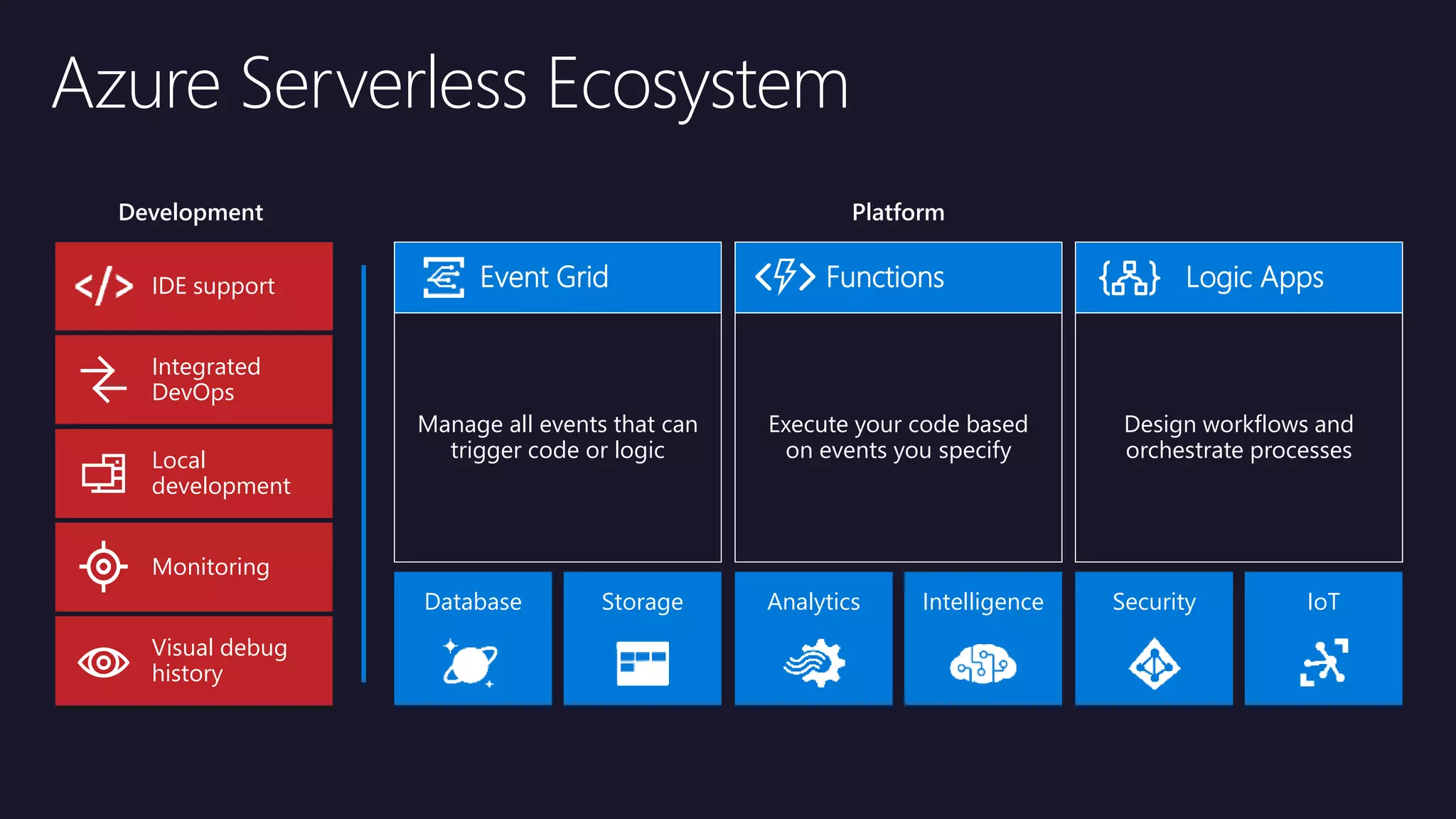
Development Platform
Local
development
Monitoring
IDE support
Integrated
DevOps
Visual debug
history
Database Storage IntelligenceAnalytics IoTSecurity
Logic Apps
Design workflows and
orchestrate processes
Event Grid
Manage all events that can
trigger code or logic
Functions
Execute your code based
on events you specify
Azure Serverless Ecosystem
Custom Vision and Logic Apps
https://aka.ms/ai-nights-beginner
Azure Cognitive Services
I can customize some services to build bespoke
applications
Intelligence is powerful when it’s a full solution
Azure Logic Apps Documentation:
Azure Cognitive Services Documentation:
Azure Custom Vision Service:
Creating applications that can see, hear, speak and understand
Build it Yourself
https://aka.ms/ai-nights-beginner

Creating applications that can see, hear, speak or understand using microsoft cognitive services workshop

Editor's Notes

  • #7 Simply put, AI represents the ability to take a lot of data that you have, and to teach machines to make intelligent predictions on it. These are some of the most common use cases: For example, Computer vision is enabling organizations to use images and video to change the way they handle a variety of scenarios to enable things like facial recognition and object detection. Additionally, speech is enabling organizations to transcribe Speech-to-Text, or enable natural sounding Text-to-Speech in a seamless and easy manner Finally, Language is the ability to not only transcribe, but to also understand what the intent of the user is, and how to create a flow of dialog.
  • #8 There are three main solutions you can build with Azure AI.    Build AI apps and agents that have the ability to interact with users naturally, with pre-trained AI models and bots  Unlock insights lying latent in your content with Knowledge Mining Build your own AI machine learning models      As you can see we’ve also outlined the main products for each of these solutions areas.   
  • #9 We will focus on AI apps & Agents and specifically the Azure Cognitive Services
  • #10 What is an AI App or AI agent and how do you build one?   The simplest way to get started is to take your existing web and mobile applications and add Vision, Speech, Language capabilities to them using AI models we’ve built. Build processes to trigger the intelligence to make your customers/users more productive
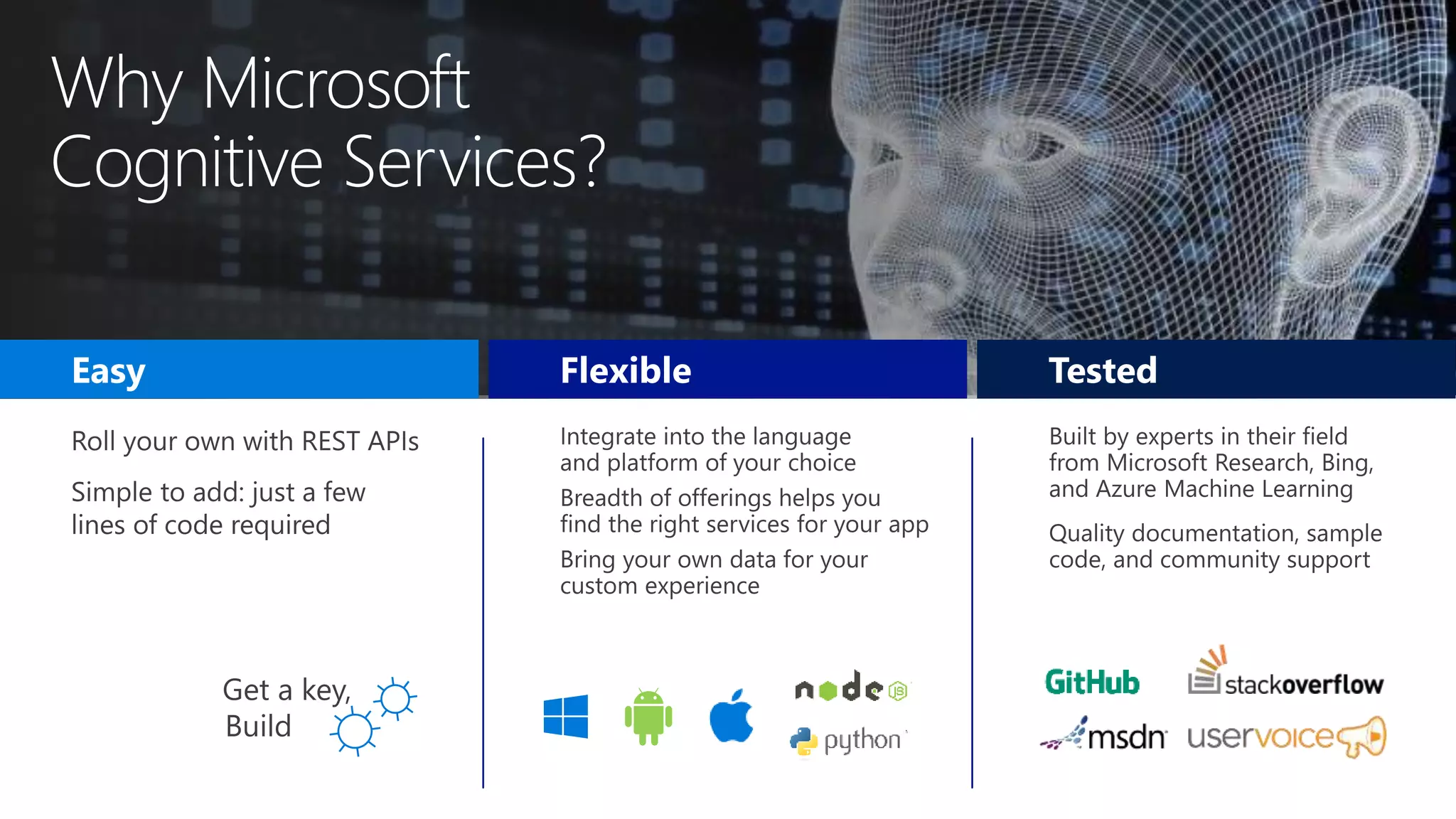
  • #13 Why choose these APIs ? They work, and it’s easy. Easy:  The APIs are easy to implement because of the simple REST calls.  Being REST APIs, there’s a common way to implement and you can get started with all of them for free simply by going to one place, one website, www.microsoft.com/cognitive.  (You don’t have to hunt around to different places.)  Flexible:  We’ve got a breadth of intelligence and knowledge APIs so developers will be able to find what intelligence feature they need; and importantly, they all work on whatever language, framework, or platform developers choose. So, devs can integrated into their apps—iOS, Android, Windows—using their own tools they know and love (such as python or node.js, etc.). Tested: Tap into an ever-growing collection of powerful AI algorithms developed by experts. Developers can trust the quality and expertise build into each by experts in their field from Microsoft’s Research organization, Bing, and Azure machine learning and these capabilities are used across many Microsoft first party products such as Cortana, Bing and Skype. 
  • #17 An easy-to-use, customizable web service that learns to recognize specific content in imagery, powered by state-of-the-art machine learning neural networks that become smarter with training. You can train it to recognize whatever you choose, whether that be animals, objects, or abstract symbols. This technology could easily apply to retail environments for machine-assisted product identification, or in digital space to automatically help sorting categories of pictures.
  • #20 19