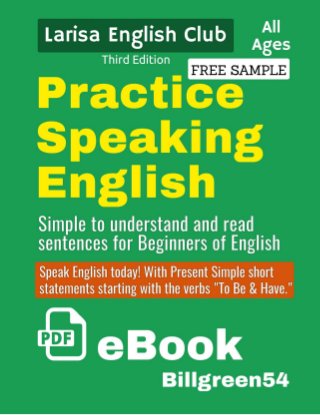

Practice Speaking English
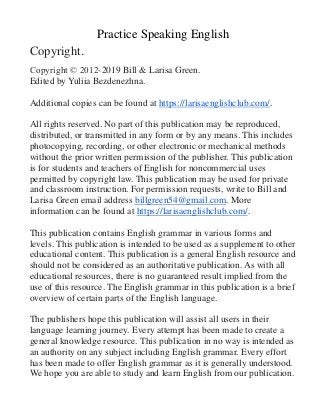
Copyright.
Copyright © 2012-2019 Bill & Larisa Green.
Edited by Yuliia Bezdenezhna.
Additional copies can be found at https://larisaenglishclub.com/.
All rights reserved. No part of this publication may be reproduced,
distributed, or transmitted in any form or by any means. This includes
photocopying, recording, or other electronic or mechanical methods
without the prior written permission of the publisher. This publication
is for students and teachers of English for noncommercial uses
permitted by copyright law. This publication may be used for private
and classroom instruction. For permission requests, write to Bill and
Larisa Green email address billgreen54@gmail.com. More
information can be found at https://larisaenglishclub.com/.
This publication contains English grammar in various forms and
levels. This publication is intended to be used as a supplement to other
educational content. This publication is a general English resource and
should not be considered as an authoritative publication. As with all
educational resources, there is no guaranteed result implied from the
use of this resource. The English grammar in this publication is a brief
overview of certain parts of the English language.
The publishers hope this publication will assist all users in their
language learning journey. Every attempt has been made to create a
general knowledge resource. This publication in no way is intended as
an authority on any subject including English grammar. Every effort
has been made to offer English grammar as it is generally understood.
We hope you are able to study and learn English from our publication.
.
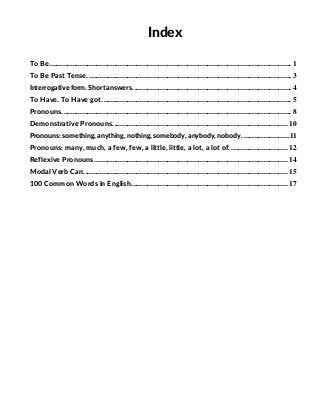
Index
To Be..................................................................................................................................... 1
To Be Past Tense. ............................................................................................................... 3
Interrogative form. Short answers. ...................................................................................... 4
To Have. To Have got........................................................................................................ 5
Pronouns.............................................................................................................................. 8
Demonstrative Pronouns................................................................................................ 10
Pronouns: something, anything, nothing, somebody, anybody, nobody. .........................11
Pronouns: many, much, a few, few, a little, little, a lot, a lot of................................ 12
Reflexive Pronouns. ......................................................................................................... 14
Modal Verb Can................................................................................................................ 15
100 Common Words in English...................................................................................... 17
.
Index
1
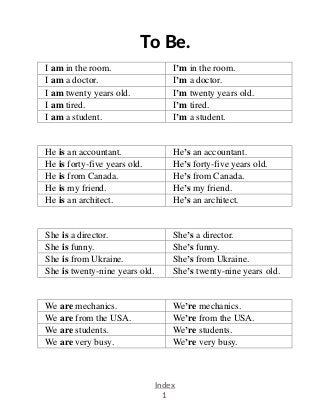
To Be.
I am in the room. I’m in the room.
I am a doctor. I’m a doctor.
I am twenty years old. I’m twenty years old.
I am tired. I’m tired.
I am a student. I’m a student.
He is an accountant. He’s an accountant.
He is forty-five years old. He’s forty-five years old.
He is from Canada. He’s from Canada.
He is my friend. He’s my friend.
He is an architect. He’s an architect.
She is a director. She’s a director.
She is funny. She’s funny.
She is from Ukraine. She’s from Ukraine.
She is twenty-nine years old. She’s twenty-nine years old.
We are mechanics. We’re mechanics.
We are from the USA. We’re from the USA.
We are students. We’re students.
We are very busy. We’re very busy.
Index
2
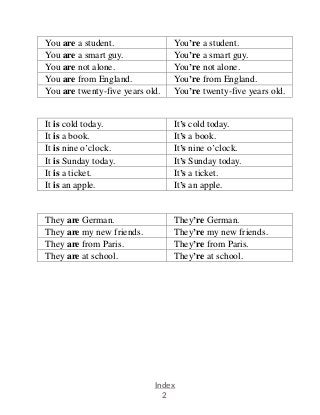
You are a student. You’re a student.
You are a smart guy. You’re a smart guy.
You are not alone. You’re not alone.
You are from England. You’re from England.
You are twenty-five years old. You’re twenty-five years old.
It is cold today. It’s cold today.
It is a book. It’s a book.
It is nine o’clock. It’s nine o’clock.
It is Sunday today. It’s Sunday today.
It is a ticket. It’s a ticket.
It is an apple. It’s an apple.
They are German. They’re German.
They are my new friends. They’re my new friends.
They are from Paris. They’re from Paris.
They are at school. They’re at school.
.
Index
3
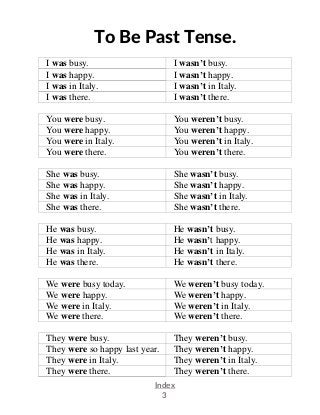
To Be Past Tense.
I was busy. I wasn’t busy.
I was happy. I wasn’t happy.
I was in Italy. I wasn’t in Italy.
I was there. I wasn’t there.
You were busy. You weren’t busy.
You were happy. You weren’t happy.
You were in Italy. You weren’t in Italy.
You were there. You weren’t there.
She was busy. She wasn’t busy.
She was happy. She wasn’t happy.
She was in Italy. She wasn’t in Italy.
She was there. She wasn’t there.
He was busy. He wasn’t busy.
He was happy. He wasn’t happy.
He was in Italy. He wasn’t in Italy.
He was there. He wasn’t there.
We were busy today. We weren’t busy today.
We were happy. We weren’t happy.
We were in Italy. We weren’t in Italy.
We were there. We weren’t there.
They were busy. They weren’t busy.
They were so happy last year. They weren’t happy.
They were in Italy. They weren’t in Italy.
They were there. They weren’t there.
Index
4
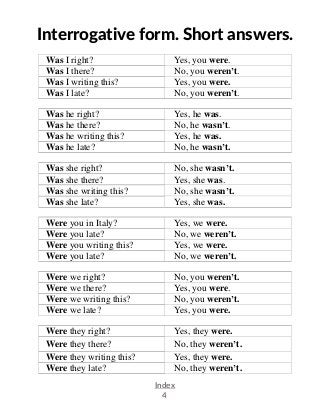
Interrogative form. Short answers.
Was I right? Yes, you were.
Was I there? No, you weren’t.
Was I writing this? Yes, you were.
Was I late? No, you weren’t.
Was he right? Yes, he was.
Was he there? No, he wasn’t.
Was he writing this? Yes, he was.
Was he late? No, he wasn’t.
Was she right? No, she wasn’t.
Was she there? Yes, she was.
Was she writing this? No, she wasn’t.
Was she late? Yes, she was.
Were you in Italy? Yes, we were.
Were you late? No, we weren’t.
Were you writing this? Yes, we were.
Were you late? No, we weren’t.
Were we right? No, you weren’t.
Were we there? Yes, you were.
Were we writing this? No, you weren’t.
Were we late? Yes, you were.
Were they right? Yes, they were.
Were they there? No, they weren’t.
Were they writing this? Yes, they were.
Were they late? No, they weren’t.
Index
5
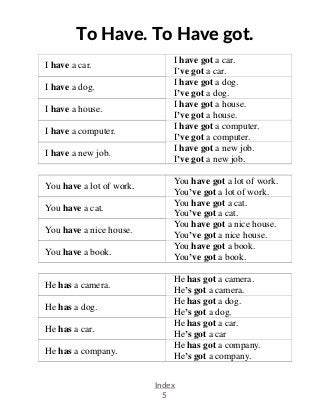
To Have. To Have got.
I have a car.
I have got a car.
I’ve got a car.
I have a dog.
I have got a dog.
I’ve got a dog.
I have a house.
I have got a house.
I’ve got a house.
I have a computer.
I have got a computer.
I’ve got a computer.
I have a new job.
I have got a new job.
I’ve got a new job.
You have a lot of work.
You have got a lot of work.
You’ve got a lot of work.
You have a cat.
You have got a cat.
You’ve got a cat.
You have a nice house.
You have got a nice house.
You’ve got a nice house.
You have a book.
You have got a book.
You’ve got a book.
He has a camera.
He has got a camera.
He’s got a camera.
He has a dog.
He has got a dog.
He’s got a dog.
He has a car.
He has got a car.
He’s got a car
He has a company.
He has got a company.
He’s got a company.
Index
6
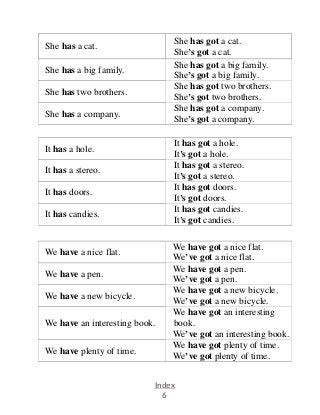
She has a cat.
She has got a cat.
She’s got a cat.
She has a big family.
She has got a big family.
She’s got a big family.
She has two brothers.
She has got two brothers.
She’s got two brothers.
She has a company.
She has got a company.
She’s got a company.
It has a hole.
It has got a hole.
It’s got a hole.
It has a stereo.
It has got a stereo.
It’s got a stereo.
It has doors.
It has got doors.
It’s got doors.
It has candies.
It has got candies.
It’s got candies.
We have a nice flat.
We have got a nice flat.
We’ve got a nice flat.
We have a pen.
We have got a pen.
We’ve got a pen.
We have a new bicycle.
We have got a new bicycle.
We’ve got a new bicycle.
We have an interesting book.
We have got an interesting
book.
We’ve got an interesting book.
We have plenty of time.
We have got plenty of time.
We’ve got plenty of time.
Index
7
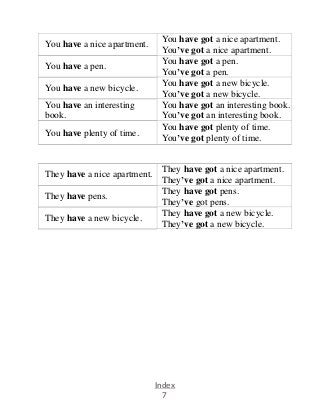
You have a nice apartment.
You have got a nice apartment.
You’ve got a nice apartment.
You have a pen.
You have got a pen.
You’ve got a pen.
You have a new bicycle.
You have got a new bicycle.
You’ve got a new bicycle.
You have an interesting
book.
You have got an interesting book.
You’ve got an interesting book.
You have plenty of time.
You have got plenty of time.
You’ve got plenty of time.
They have a nice apartment.
They have got a nice apartment.
They’ve got a nice apartment.
They have pens.
They have got pens.
They’ve got pens.
They have a new bicycle.
They have got a new bicycle.
They’ve got a new bicycle.
.

Practice Speaking English Practice PDF Book

  • 3.
    Practice Speaking English Copyright. Copyright© 2012-2019 Bill & Larisa Green. Edited by Yuliia Bezdenezhna. Additional copies can be found at https://larisaenglishclub.com/. All rights reserved. No part of this publication may be reproduced, distributed, or transmitted in any form or by any means. This includes photocopying, recording, or other electronic or mechanical methods without the prior written permission of the publisher. This publication is for students and teachers of English for noncommercial uses permitted by copyright law. This publication may be used for private and classroom instruction. For permission requests, write to Bill and Larisa Green email address billgreen54@gmail.com. More information can be found at https://larisaenglishclub.com/. This publication contains English grammar in various forms and levels. This publication is intended to be used as a supplement to other educational content. This publication is a general English resource and should not be considered as an authoritative publication. As with all educational resources, there is no guaranteed result implied from the use of this resource. The English grammar in this publication is a brief overview of certain parts of the English language. The publishers hope this publication will assist all users in their language learning journey. Every attempt has been made to create a general knowledge resource. This publication in no way is intended as an authority on any subject including English grammar. Every effort has been made to offer English grammar as it is generally understood. We hope you are able to study and learn English from our publication.
  • 4.
    . Index To Be..................................................................................................................................... 1 ToBe Past Tense. ............................................................................................................... 3 Interrogative form. Short answers. ...................................................................................... 4 To Have. To Have got........................................................................................................ 5 Pronouns.............................................................................................................................. 8 Demonstrative Pronouns................................................................................................ 10 Pronouns: something, anything, nothing, somebody, anybody, nobody. .........................11 Pronouns: many, much, a few, few, a little, little, a lot, a lot of................................ 12 Reflexive Pronouns. ......................................................................................................... 14 Modal Verb Can................................................................................................................ 15 100 Common Words in English...................................................................................... 17
  • 5.
    . Index 1 To Be. I amin the room. I’m in the room. I am a doctor. I’m a doctor. I am twenty years old. I’m twenty years old. I am tired. I’m tired. I am a student. I’m a student. He is an accountant. He’s an accountant. He is forty-five years old. He’s forty-five years old. He is from Canada. He’s from Canada. He is my friend. He’s my friend. He is an architect. He’s an architect. She is a director. She’s a director. She is funny. She’s funny. She is from Ukraine. She’s from Ukraine. She is twenty-nine years old. She’s twenty-nine years old. We are mechanics. We’re mechanics. We are from the USA. We’re from the USA. We are students. We’re students. We are very busy. We’re very busy.
  • 6.
    Index 2 You are astudent. You’re a student. You are a smart guy. You’re a smart guy. You are not alone. You’re not alone. You are from England. You’re from England. You are twenty-five years old. You’re twenty-five years old. It is cold today. It’s cold today. It is a book. It’s a book. It is nine o’clock. It’s nine o’clock. It is Sunday today. It’s Sunday today. It is a ticket. It’s a ticket. It is an apple. It’s an apple. They are German. They’re German. They are my new friends. They’re my new friends. They are from Paris. They’re from Paris. They are at school. They’re at school.
  • 7.
    . Index 3 To Be PastTense. I was busy. I wasn’t busy. I was happy. I wasn’t happy. I was in Italy. I wasn’t in Italy. I was there. I wasn’t there. You were busy. You weren’t busy. You were happy. You weren’t happy. You were in Italy. You weren’t in Italy. You were there. You weren’t there. She was busy. She wasn’t busy. She was happy. She wasn’t happy. She was in Italy. She wasn’t in Italy. She was there. She wasn’t there. He was busy. He wasn’t busy. He was happy. He wasn’t happy. He was in Italy. He wasn’t in Italy. He was there. He wasn’t there. We were busy today. We weren’t busy today. We were happy. We weren’t happy. We were in Italy. We weren’t in Italy. We were there. We weren’t there. They were busy. They weren’t busy. They were so happy last year. They weren’t happy. They were in Italy. They weren’t in Italy. They were there. They weren’t there.
  • 8.
    Index 4 Interrogative form. Shortanswers. Was I right? Yes, you were. Was I there? No, you weren’t. Was I writing this? Yes, you were. Was I late? No, you weren’t. Was he right? Yes, he was. Was he there? No, he wasn’t. Was he writing this? Yes, he was. Was he late? No, he wasn’t. Was she right? No, she wasn’t. Was she there? Yes, she was. Was she writing this? No, she wasn’t. Was she late? Yes, she was. Were you in Italy? Yes, we were. Were you late? No, we weren’t. Were you writing this? Yes, we were. Were you late? No, we weren’t. Were we right? No, you weren’t. Were we there? Yes, you were. Were we writing this? No, you weren’t. Were we late? Yes, you were. Were they right? Yes, they were. Were they there? No, they weren’t. Were they writing this? Yes, they were. Were they late? No, they weren’t.
  • 9.
    Index 5 To Have. ToHave got. I have a car. I have got a car. I’ve got a car. I have a dog. I have got a dog. I’ve got a dog. I have a house. I have got a house. I’ve got a house. I have a computer. I have got a computer. I’ve got a computer. I have a new job. I have got a new job. I’ve got a new job. You have a lot of work. You have got a lot of work. You’ve got a lot of work. You have a cat. You have got a cat. You’ve got a cat. You have a nice house. You have got a nice house. You’ve got a nice house. You have a book. You have got a book. You’ve got a book. He has a camera. He has got a camera. He’s got a camera. He has a dog. He has got a dog. He’s got a dog. He has a car. He has got a car. He’s got a car He has a company. He has got a company. He’s got a company.
  • 10.
    Index 6 She has acat. She has got a cat. She’s got a cat. She has a big family. She has got a big family. She’s got a big family. She has two brothers. She has got two brothers. She’s got two brothers. She has a company. She has got a company. She’s got a company. It has a hole. It has got a hole. It’s got a hole. It has a stereo. It has got a stereo. It’s got a stereo. It has doors. It has got doors. It’s got doors. It has candies. It has got candies. It’s got candies. We have a nice flat. We have got a nice flat. We’ve got a nice flat. We have a pen. We have got a pen. We’ve got a pen. We have a new bicycle. We have got a new bicycle. We’ve got a new bicycle. We have an interesting book. We have got an interesting book. We’ve got an interesting book. We have plenty of time. We have got plenty of time. We’ve got plenty of time.
  • 11.
    Index 7 You have anice apartment. You have got a nice apartment. You’ve got a nice apartment. You have a pen. You have got a pen. You’ve got a pen. You have a new bicycle. You have got a new bicycle. You’ve got a new bicycle. You have an interesting book. You have got an interesting book. You’ve got an interesting book. You have plenty of time. You have got plenty of time. You’ve got plenty of time. They have a nice apartment. They have got a nice apartment. They’ve got a nice apartment. They have pens. They have got pens. They’ve got pens. They have a new bicycle. They have got a new bicycle. They’ve got a new bicycle.
  • 12.