Borcelle Zoo
Introduction
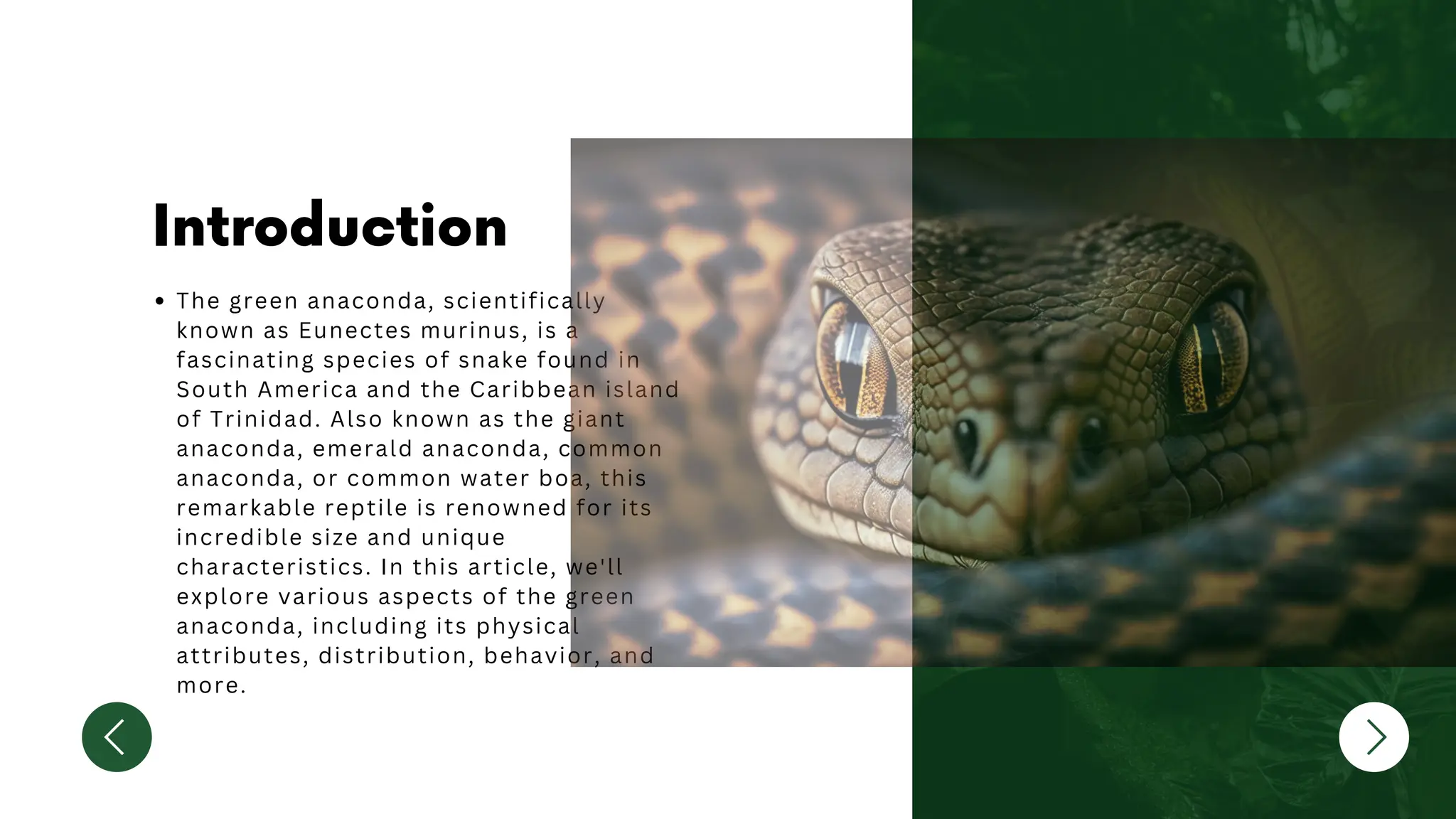
The green anaconda, scientifically
known as Eunectes murinus, is a
fascinating species of snake found in
South America and the Caribbean island
of Trinidad. Also known as the giant
anaconda, emerald anaconda, common
anaconda, or common water boa, this
remarkable reptile is renowned for its
incredible size and unique
characteristics. In this article, we'll
explore various aspects of the green
anaconda, including its physical
attributes, distribution, behavior, and
more.
Overview
The green anaconda is known for its impressive size, making it
the world's heaviest snake and the second longest, following
the reticulated python. It can grow to a length of up to 5.21
meters (17 feet 1 inch), although more typical mature
specimens measure around 5 meters (16 feet 5 inches). Adult
females are usually larger, with an average length of about
4.6 meters (15 feet 1 inch), compared to males that average
around 3 meters (9 feet 10 inches). Weights of green
anacondas can range from 30 to 80 kilograms (66 to 176
pounds) in typical adults.
French Guiana 30,000
Argentina 100,000
Bolivia 600,000
Brazil 700,000
Colombia 100,000
Ecuador 400,000
Population
2
1
Green anacondas are predominantly
nocturnal and aquatic creatures. They
are skilled swimmers, able to move
swiftly in the water. Their unique
adaptation allows them to stay nearly
completely submerged while still being
able to breathe and observe their
surroundings.
Behavior
CONCLUSION
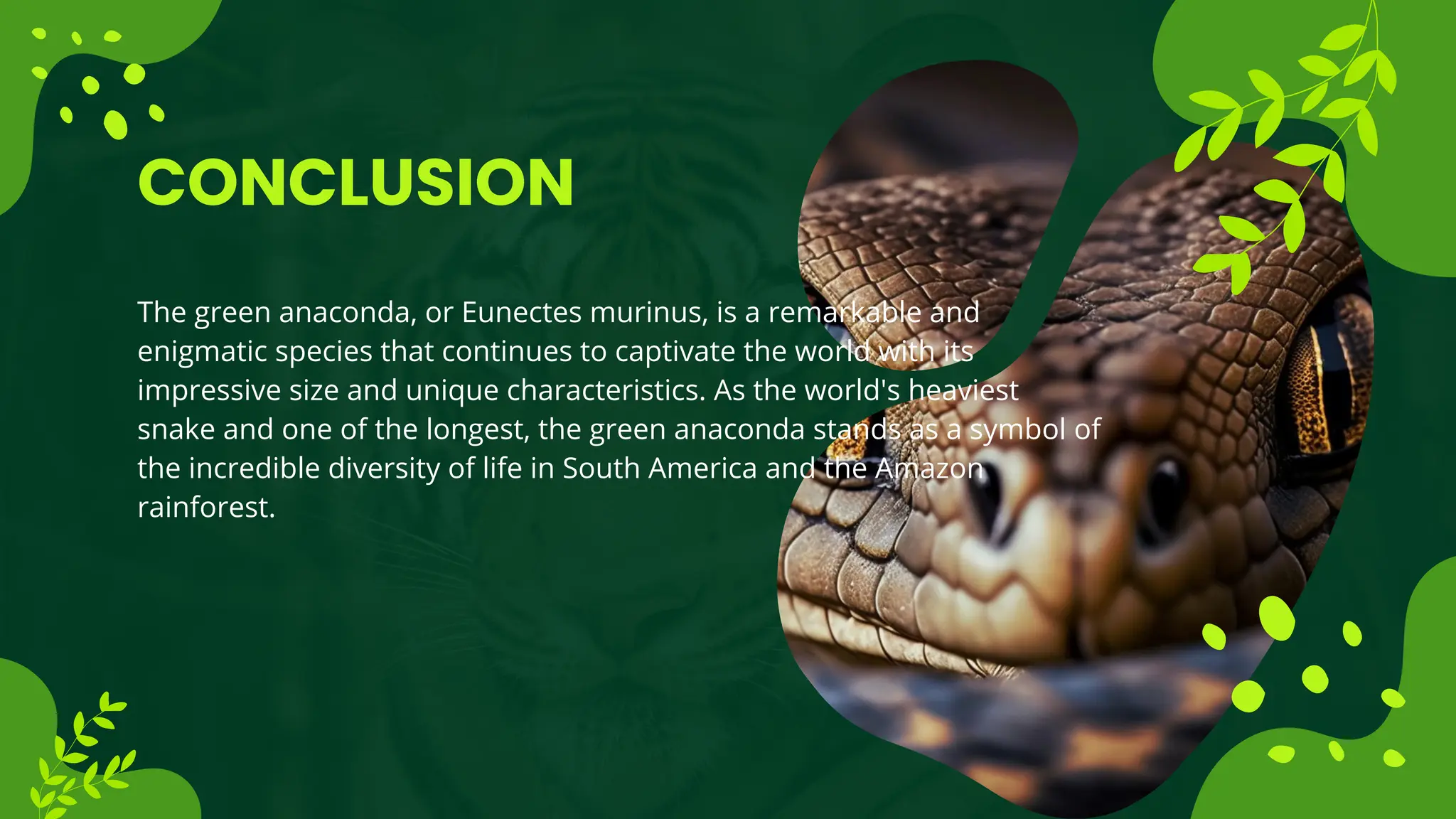
The green anaconda, or Eunectes murinus, is a remarkable and
enigmatic species that continues to captivate the world with its
impressive size and unique characteristics. As the world's heaviest
snake and one of the longest, the green anaconda stands as a symbol of
the incredible diversity of life in South America and the Amazon
rainforest.

Green Organic Exploring Anaconda.pdf

  • 1.
  • 2.
    Introduction The green anaconda,scientifically known as Eunectes murinus, is a fascinating species of snake found in South America and the Caribbean island of Trinidad. Also known as the giant anaconda, emerald anaconda, common anaconda, or common water boa, this remarkable reptile is renowned for its incredible size and unique characteristics. In this article, we'll explore various aspects of the green anaconda, including its physical attributes, distribution, behavior, and more.
  • 3.
    Overview The green anacondais known for its impressive size, making it the world's heaviest snake and the second longest, following the reticulated python. It can grow to a length of up to 5.21 meters (17 feet 1 inch), although more typical mature specimens measure around 5 meters (16 feet 5 inches). Adult females are usually larger, with an average length of about 4.6 meters (15 feet 1 inch), compared to males that average around 3 meters (9 feet 10 inches). Weights of green anacondas can range from 30 to 80 kilograms (66 to 176 pounds) in typical adults.
  • 4.
    French Guiana 30,000 Argentina100,000 Bolivia 600,000 Brazil 700,000 Colombia 100,000 Ecuador 400,000 Population
  • 5.
    2 1 Green anacondas arepredominantly nocturnal and aquatic creatures. They are skilled swimmers, able to move swiftly in the water. Their unique adaptation allows them to stay nearly completely submerged while still being able to breathe and observe their surroundings. Behavior
  • 6.
    CONCLUSION The green anaconda,or Eunectes murinus, is a remarkable and enigmatic species that continues to captivate the world with its impressive size and unique characteristics. As the world's heaviest snake and one of the longest, the green anaconda stands as a symbol of the incredible diversity of life in South America and the Amazon rainforest.