Downloaded 281 times

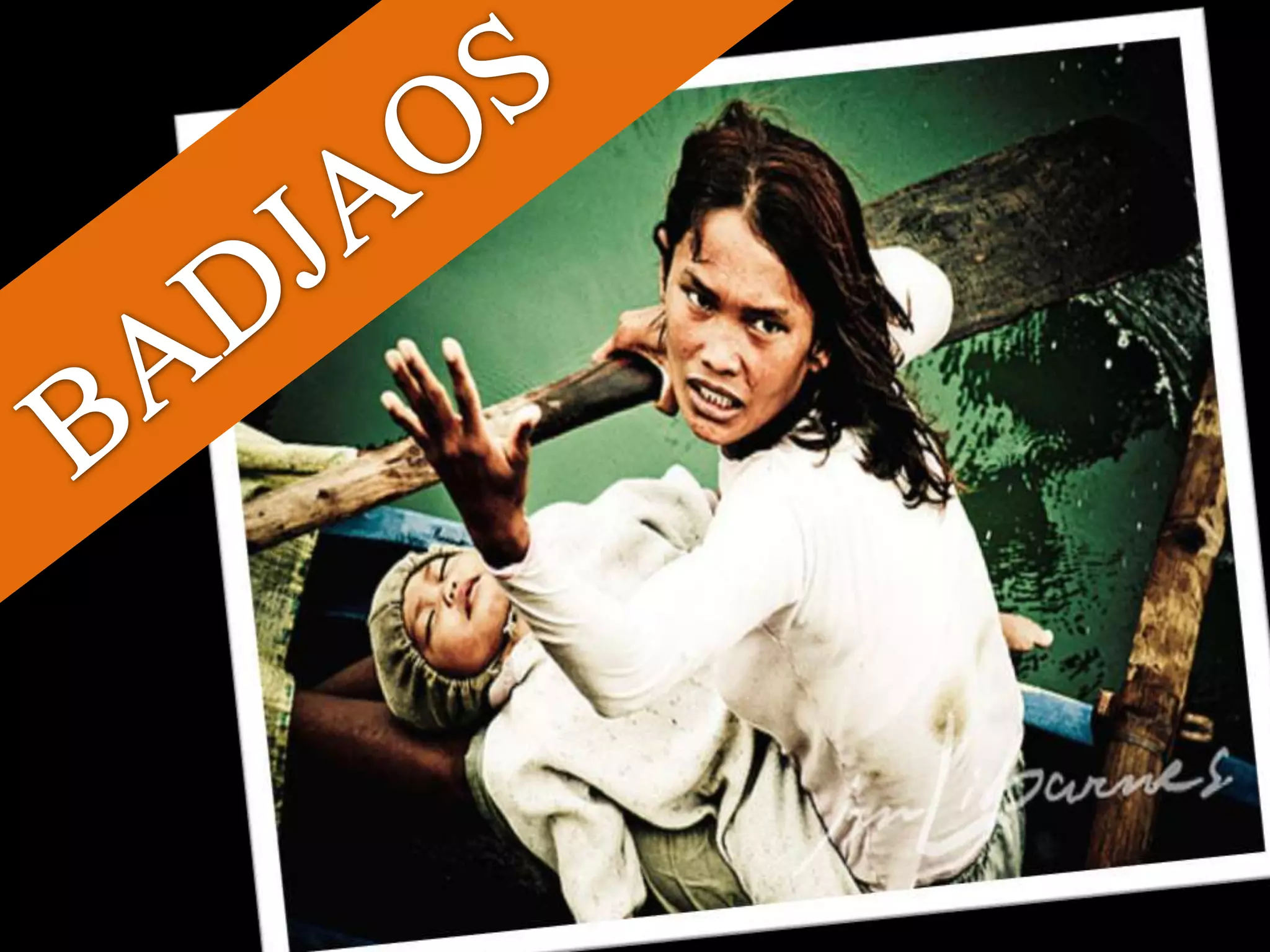
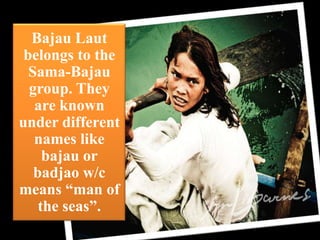

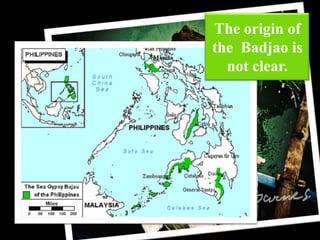

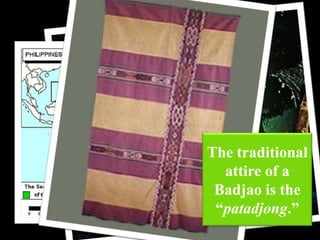
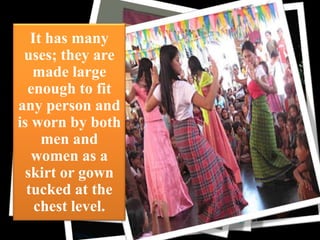



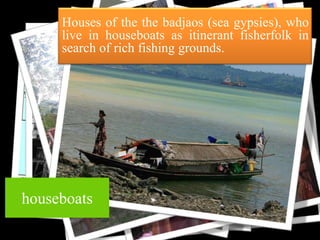

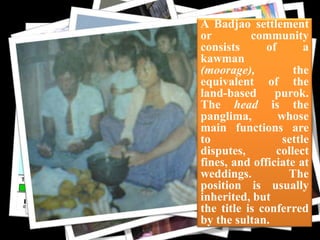

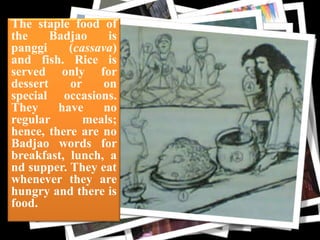


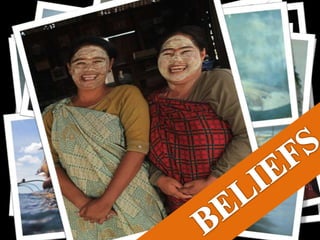
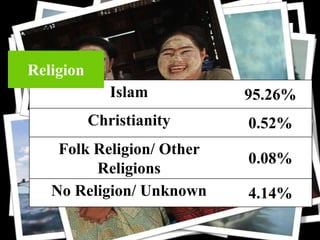

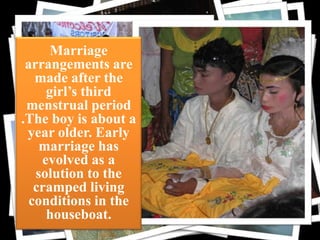
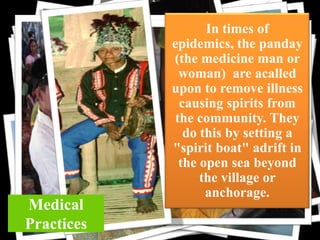
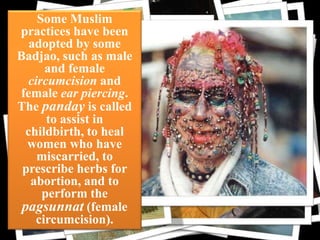


The document provides information about the Badjao people, known as "sea gypsies" who live primarily on boats in the seas. It describes their traditional attire as a large skirt called a "patadjong" worn by both men and women. It also discusses their housing, which includes houseboats for more nomadic groups and stilt houses or clustered land houses for more settled groups. The culture includes a leader called a panglima and settlements known as kawman. Their staple food is cassava and fish. Men fish and the women weave mats. Most are Muslim but some practices Christianity or folk religions. Marriages are arranged and celebrations last three days. Medical practices include a


