Defer Tax Gain into New Replacement Property
1031 TAX DEFERRED EXCHANGES
William E Bryant CPA, CVA & Realtor - Copyright 2016
• Trade of Like-Kind Property for Like-Kind Property
– Real Property Exchanged for other Real Property
• Must be Property Held for Investment in the same Property Class.
– For example, Land can be exchanged for other Land, or exchanged for Rental
Property or Commercial Property, since it’s in the same Class.
– Personal Property for Personal Property
• Antique Car for Antique Car
• Artwork & Collectibles for other Artwork & Collectibles
– What does NOT Qualify?
• Trading Personal Property for Investment Real Property – Mixed Class
• Partnership Interest (considered Personal Property) for Real Property
• Trading your Principal Residence (not considered an Investment Property)
WHAT QUALIFIES FOR A 1031 EXCHANGE
William E Bryant CPA, CVA & Realtor - Copyright 2016
• Tax Consequences of Traditional Sale vs 1031 Exchange
– Traditional Sale of Property – Typical Transaction (See Chart)
• Must pay Federal and State Income Taxes on the Capital Gain.
– Pay higher Tax Rate on Recapture of Depreciation on those Assets.
– Have less Net Cash Proceeds Available to Reinvest in Replacement Property.
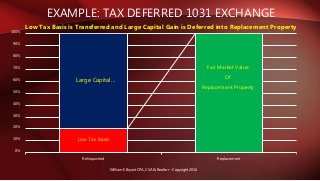
– Tax Deferred 1031 Exchange (See Chart)
• No Taxes paid if you “Trade Up” and if no Cash is received.
• Transfer low tax basis into the Replacement Property.
• Defer Large Capital Gain until Final Sale or Include later in a Final Estate.
TAX BENEFITS OF A 1031 EXCHANGE
William E Bryant CPA, CVA & Realtor - Copyright 2016
Disbursement of Cash Proceeds on Typical Sale – Assume No Loan Payoff
EXAMPLE: TAX CONSEQUENCES OF TRADITIONAL SALE
William E Bryant CPA, CVA & Realtor - Copyright 2016
Low Tax Basis
Fair Market Value
Of
Replacement Property
Large Capital…
0%
10%
20%
30%
40%
50%
60%
70%
80%
90%
100%
Relinquished Replacement
EXAMPLE: TAX DEFERRED 1031 EXCHANGE
William E Bryant CPA, CVA & Realtor - Copyright 2016
Low Tax Basis is Transferred and Large Capital Gain is Deferred into Replacement Property
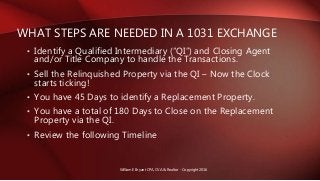
• Identify a Qualified Intermediary (“QI”) and Closing Agent
and/or Title Company to handle the Transactions.
• Sell the Relinquished Property via the QI – Now the Clock
starts ticking!
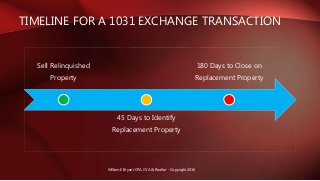
• You have 45 Days to identify a Replacement Property.
• You have a total of 180 Days to Close on the Replacement
Property via the QI.
• Review the following Timeline
WHAT STEPS ARE NEEDED IN A 1031 EXCHANGE
William E Bryant CPA, CVA & Realtor - Copyright 2016
Sell Relinquished
Property
45 Days to Identify
Replacement Property
180 Days to Close on
Replacement Property
TIMELINE FOR A 1031 EXCHANGE TRANSACTION
William E Bryant CPA, CVA & Realtor - Copyright 2016
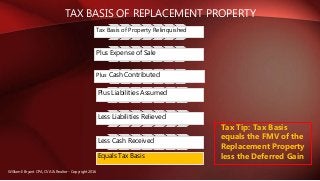
TAX BASIS OF REPLACEMENT PROPERTY
William E Bryant CPA, CVA & Realtor - Copyright 2016
Tax Basis of Property Relinquished
Plus Expense of Sale
Plus Cash Contributed
Plus Liabilities Assumed
Less Liabilities Relieved
Less Cash Received
Equals Tax Basis
Tax Tip: Tax Basis
equals the FMV of the
Replacement Property
less the Deferred Gain
• The Ownership in the Replacement Property must be identical to
the Ownership in the Relinquished Property.
• There is a 2-Year Investment requirement if a related Party is
involved in the Transaction.
• Consider using Tenants in Common (“TIC”) to separate the
Property ownership from a Partnership, then proceed with the
1031 transaction with your share as TIC owner.
• Reverse Exchanges might be a good strategy in certain Market
and/or Unique Opportunity situations.
• UpREITS and other Post-Transaction Strategies are possible.
OTHER CONSIDERATIONS IN A 1031 EXCHANGE
William E Bryant CPA, CVA & Realtor - Copyright 2016
• For more information about 1031 Tax Deferred Strategies:
– Or to work with a Qualified Intermediary
– Or to assist in the Sale/Purchase of the Real Estate
– Or to Consult with a Tax Advisor about your specific situation
• Please contact Bill Bryant at 612-872-9684 or email at:
• Also please visit: for more info.
THANK YOU
William E Bryant CPA, CVA & Realtor - Copyright 2016


Tax Deferred Exchanges

  • 1.
    Defer Tax Gaininto New Replacement Property 1031 TAX DEFERRED EXCHANGES William E Bryant CPA, CVA & Realtor - Copyright 2016
  • 2.
    • Trade ofLike-Kind Property for Like-Kind Property – Real Property Exchanged for other Real Property • Must be Property Held for Investment in the same Property Class. – For example, Land can be exchanged for other Land, or exchanged for Rental Property or Commercial Property, since it’s in the same Class. – Personal Property for Personal Property • Antique Car for Antique Car • Artwork & Collectibles for other Artwork & Collectibles – What does NOT Qualify? • Trading Personal Property for Investment Real Property – Mixed Class • Partnership Interest (considered Personal Property) for Real Property • Trading your Principal Residence (not considered an Investment Property) WHAT QUALIFIES FOR A 1031 EXCHANGE William E Bryant CPA, CVA & Realtor - Copyright 2016
  • 3.
    • Tax Consequencesof Traditional Sale vs 1031 Exchange – Traditional Sale of Property – Typical Transaction (See Chart) • Must pay Federal and State Income Taxes on the Capital Gain. – Pay higher Tax Rate on Recapture of Depreciation on those Assets. – Have less Net Cash Proceeds Available to Reinvest in Replacement Property. – Tax Deferred 1031 Exchange (See Chart) • No Taxes paid if you “Trade Up” and if no Cash is received. • Transfer low tax basis into the Replacement Property. • Defer Large Capital Gain until Final Sale or Include later in a Final Estate. TAX BENEFITS OF A 1031 EXCHANGE William E Bryant CPA, CVA & Realtor - Copyright 2016
  • 4.
    Disbursement of CashProceeds on Typical Sale – Assume No Loan Payoff EXAMPLE: TAX CONSEQUENCES OF TRADITIONAL SALE William E Bryant CPA, CVA & Realtor - Copyright 2016
  • 5.
    Low Tax Basis FairMarket Value Of Replacement Property Large Capital… 0% 10% 20% 30% 40% 50% 60% 70% 80% 90% 100% Relinquished Replacement EXAMPLE: TAX DEFERRED 1031 EXCHANGE William E Bryant CPA, CVA & Realtor - Copyright 2016 Low Tax Basis is Transferred and Large Capital Gain is Deferred into Replacement Property
  • 6.
    • Identify aQualified Intermediary (“QI”) and Closing Agent and/or Title Company to handle the Transactions. • Sell the Relinquished Property via the QI – Now the Clock starts ticking! • You have 45 Days to identify a Replacement Property. • You have a total of 180 Days to Close on the Replacement Property via the QI. • Review the following Timeline WHAT STEPS ARE NEEDED IN A 1031 EXCHANGE William E Bryant CPA, CVA & Realtor - Copyright 2016
  • 7.
    Sell Relinquished Property 45 Daysto Identify Replacement Property 180 Days to Close on Replacement Property TIMELINE FOR A 1031 EXCHANGE TRANSACTION William E Bryant CPA, CVA & Realtor - Copyright 2016
  • 8.
    TAX BASIS OFREPLACEMENT PROPERTY William E Bryant CPA, CVA & Realtor - Copyright 2016 Tax Basis of Property Relinquished Plus Expense of Sale Plus Cash Contributed Plus Liabilities Assumed Less Liabilities Relieved Less Cash Received Equals Tax Basis Tax Tip: Tax Basis equals the FMV of the Replacement Property less the Deferred Gain
  • 9.
    • The Ownershipin the Replacement Property must be identical to the Ownership in the Relinquished Property. • There is a 2-Year Investment requirement if a related Party is involved in the Transaction. • Consider using Tenants in Common (“TIC”) to separate the Property ownership from a Partnership, then proceed with the 1031 transaction with your share as TIC owner. • Reverse Exchanges might be a good strategy in certain Market and/or Unique Opportunity situations. • UpREITS and other Post-Transaction Strategies are possible. OTHER CONSIDERATIONS IN A 1031 EXCHANGE William E Bryant CPA, CVA & Realtor - Copyright 2016

  • 10.
    • For moreinformation about 1031 Tax Deferred Strategies: – Or to work with a Qualified Intermediary – Or to assist in the Sale/Purchase of the Real Estate – Or to Consult with a Tax Advisor about your specific situation • Please contact Bill Bryant at 612-872-9684 or email at: • Also please visit: for more info. THANK YOU William E Bryant CPA, CVA & Realtor - Copyright 2016