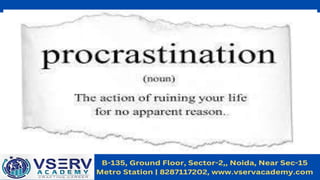
Procrastination
A Topic we have been meaning to cover all
year.
Tim Urban: Inside the mind of a master procrastinator
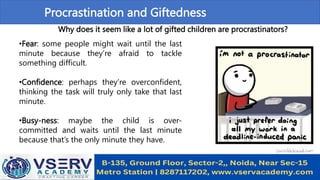
Procrastination and Giftedness
Why does it seem like a lot of gifted children are procrastinators?
•Fear: some people might wait until the last
minute because they’re afraid to tackle
something difficult.
•Confidence: perhaps they’re overconfident,
thinking the task will truly only take that last
minute.
•Busy-ness: maybe the child is over-
committed and waits until the last minute
because that’s the only minute they have.
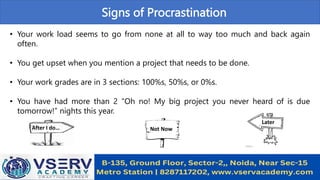
Signs of Procrastination
• Your work load seems to go from none at all to way too much and back again
often.
• You get upset when you mention a project that needs to be done.
• Your work grades are in 3 sections: 100%s, 50%s, or 0%s.
• You have had more than 2 “Oh no! My big project you never heard of is due
tomorrow!” nights this year.
After I do… Not Now
Later
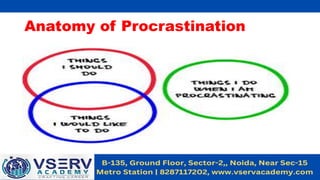
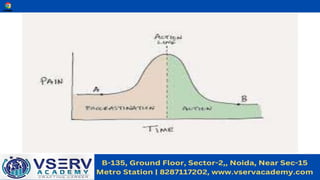
Anatomy of Procrastination
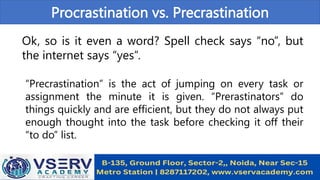
Procrastination vs. Precrastination
Ok, so is it even a word? Spell check says “no”, but
the internet says “yes”.
“Precrastination” is the act of jumping on every task or
assignment the minute it is given. “Prerastinators” do
things quickly and are efficient, but they do not always put
enough thought into the task before checking it off their
“to do” list.
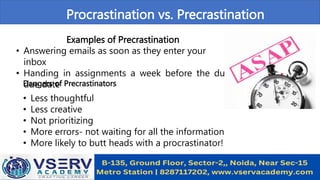
Examples of Precrastination
• Answering emails as soon as they enter your
inbox
• Handing in assignments a week before the due
due date
Dangers of Precrastinators
• Less thoughtful
• Less creative
• Not prioritizing
• More errors- not waiting for all the information
• More likely to butt heads with a procrastinator!
Procrastination vs. Precrastination
Benefits of Procrastination
Here are five benefits to procrastinating and putting off a dreaded
(or not so dreaded) task.
1. Active procrastinators can often create better work under pressure.
2. Procrastinating allows time for ideas to ruminate and flourish on their own.
3. Relaxation can be more beneficial in the long-run than working harder and
longer.
4. Procrastination can cut down on busy work.
5. Procrastination offers a chance to plan ahead.
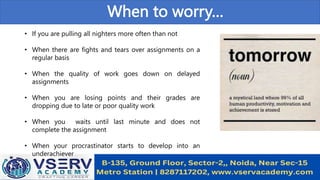
When to worry…
• If you are pulling all nighters more often than not
• When there are fights and tears over assignments on a
regular basis
• When the quality of work goes down on delayed
assignments
• When you are losing points and their grades are
dropping due to late or poor quality work
• When you waits until last minute and does not
complete the assignment
• When your procrastinator starts to develop into an
underachiever
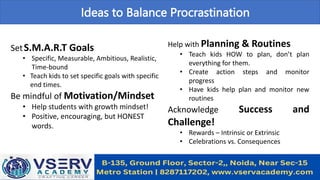
Ideas to Balance Procrastination
SetS.M.A.R.T Goals
• Specific, Measurable, Ambitious, Realistic,
Time-bound
• Teach kids to set specific goals with specific
end times.
Be mindful of Motivation/Mindset
• Help students with growth mindset!
• Positive, encouraging, but HONEST
words.
Help with Planning & Routines
• Teach kids HOW to plan, don’t plan
everything for them.
• Create action steps and monitor
progress
• Have kids help plan and monitor new
routines
Acknowledge Success and
Challenge!
• Rewards – Intrinsic or Extrinsic
• Celebrations vs. Consequences
Procrastination Situations
What does procrastination look like to you?
(List behaviors you see when you KNOW you are
procrastinating)
When does you are procrastinating?
(Times of year, subject areas, etc.)
Procrastination Situations
What are the typical consequences of procrastination for
you?
(What happens as a result of procrastination)
Procrastination Situations
What are the typical rewards of not procrastinating for you?
(Think about planning and routines that go well)
PROCASTINATION.pptx

PROCASTINATION.pptx

  • 1.
    Procrastination A Topic wehave been meaning to cover all year.
  • 2.
    Tim Urban: Insidethe mind of a master procrastinator
  • 4.
    Procrastination and Giftedness Whydoes it seem like a lot of gifted children are procrastinators? •Fear: some people might wait until the last minute because they’re afraid to tackle something difficult. •Confidence: perhaps they’re overconfident, thinking the task will truly only take that last minute. •Busy-ness: maybe the child is over- committed and waits until the last minute because that’s the only minute they have.
  • 5.
    Signs of Procrastination •Your work load seems to go from none at all to way too much and back again often. • You get upset when you mention a project that needs to be done. • Your work grades are in 3 sections: 100%s, 50%s, or 0%s. • You have had more than 2 “Oh no! My big project you never heard of is due tomorrow!” nights this year. After I do… Not Now Later
  • 6.
  • 7.
    Procrastination vs. Precrastination Ok,so is it even a word? Spell check says “no”, but the internet says “yes”. “Precrastination” is the act of jumping on every task or assignment the minute it is given. “Prerastinators” do things quickly and are efficient, but they do not always put enough thought into the task before checking it off their “to do” list.
  • 9.
    Examples of Precrastination •Answering emails as soon as they enter your inbox • Handing in assignments a week before the due due date Dangers of Precrastinators • Less thoughtful • Less creative • Not prioritizing • More errors- not waiting for all the information • More likely to butt heads with a procrastinator! Procrastination vs. Precrastination
  • 11.
    Benefits of Procrastination Hereare five benefits to procrastinating and putting off a dreaded (or not so dreaded) task. 1. Active procrastinators can often create better work under pressure. 2. Procrastinating allows time for ideas to ruminate and flourish on their own. 3. Relaxation can be more beneficial in the long-run than working harder and longer. 4. Procrastination can cut down on busy work. 5. Procrastination offers a chance to plan ahead.
  • 12.
    When to worry… •If you are pulling all nighters more often than not • When there are fights and tears over assignments on a regular basis • When the quality of work goes down on delayed assignments • When you are losing points and their grades are dropping due to late or poor quality work • When you waits until last minute and does not complete the assignment • When your procrastinator starts to develop into an underachiever
  • 13.
    Ideas to BalanceProcrastination SetS.M.A.R.T Goals • Specific, Measurable, Ambitious, Realistic, Time-bound • Teach kids to set specific goals with specific end times. Be mindful of Motivation/Mindset • Help students with growth mindset! • Positive, encouraging, but HONEST words. Help with Planning & Routines • Teach kids HOW to plan, don’t plan everything for them. • Create action steps and monitor progress • Have kids help plan and monitor new routines Acknowledge Success and Challenge! • Rewards – Intrinsic or Extrinsic • Celebrations vs. Consequences
  • 14.
    Procrastination Situations What doesprocrastination look like to you? (List behaviors you see when you KNOW you are procrastinating)
  • 15.
    When does youare procrastinating? (Times of year, subject areas, etc.) Procrastination Situations
  • 16.
    Procrastination Situations What arethe typical consequences of procrastination for you? (What happens as a result of procrastination)
  • 17.
    Procrastination Situations What arethe typical rewards of not procrastinating for you? (Think about planning and routines that go well)