#stayathome
#staysafe
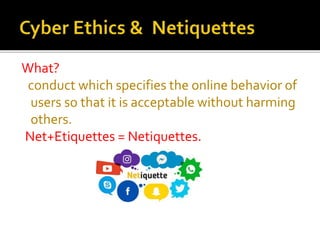
What?
conduct which specifies the online behavior of
users so that it is acceptable without harming
others.
Net+Etiquettes = Netiquettes.
 Don’t backbite.
 Don’t Plagiarize.
 Thank people who help you.
 Don’t post private or embarrassing
comments.
Online services which involve range of
activities such as creating a product , show
casing it online with exact information &
processing its sale.
Challenges :
 Privacy
 Online Fraud
 Secure DataTransmission.
 Most important factor ,because it builds trust
among users / customers.
 During an online transactions, many personal
details of customers such as credit/debit card no.
etc. are provided to the merchant company.
 Sometimes these are sold to other companies to
make profits which may lead to cyber crime against
the user, thus it is important to protect the privacy
of the users.
To do so, Merchant companies use HTTPS,SSL
protocols along with firewall.
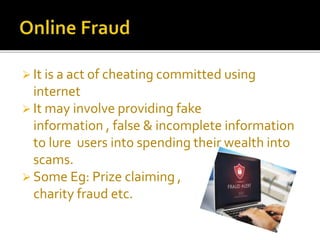
 It is a act of cheating committed using
internet
 It may involve providing fake
information , false & incomplete information
to lure users into spending their wealth into
scams.
 Some Eg: Prize claiming ,
charity fraud etc.
 Don’t share user ID
 Avoid using online transactions using public
Wi-Fi
 Never revel your bank account information
such as card no. , OTP .
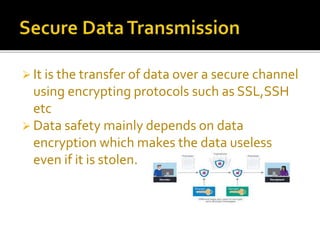
 It is the transfer of data over a secure channel
using encrypting protocols such as SSL,SSH
etc
 Data safety mainly depends on data
encryption which makes the data useless
even if it is stolen.
 Explain E-commerce .Write top 5 websites in
India of E – commerce.
 How we can secure our information while
using internet?
#stayathome
#staysafe
 Original work such as an idea , design ,
invention etc. created for the first time by an
intellectual or company.
 IPR: Exclusive Rights to an intellectual or
company to use its ideas, design, invention
etc. without the worry of competition for a
specific period.
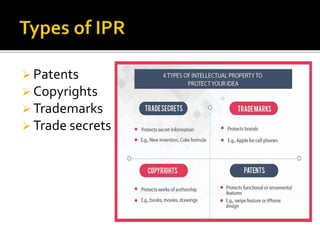
 Patents
 Copyrights
 Trademarks
 Trade secrets
 Intellectual property
right which gives an
inventor the exclusive
right to exclude others
from making , using ,or
selling his /her
invention for a fixed
period of time.
 It gives the creator of
an original creative
work .The exclusive
right to determine
whether & under what
conditions it may be
copied & used by
others.
 Which consist of a
recognizable sign
,design,or expression
to differentiate
between products
&services.
 Which consist of
secrets formula , secret
design , secret
techniques etc . used
by a company in
creating its products to
gain advantages over
competitors.
Act of copying of another person’s ideas &
other works while pretending that they are
one’s own.
How to Avoid It
 Paraphrase
 Quoting
 Citing
 Referencing
Digital property : Digital Information such as
database , internet accounts , cloud storage
etc.
DPR: Rights that grants access and control of
digital information.
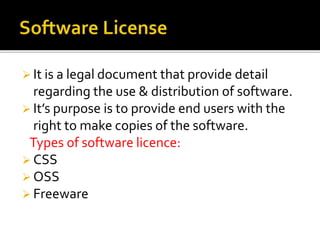
 It is a legal document that provide detail
regarding the use & distribution of software.
 It’s purpose is to provide end users with the
right to make copies of the software.
Types of software licence:
 CSS
 OSS
 Freeware
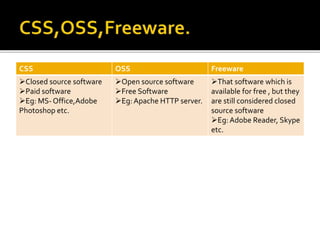
CSS OSS Freeware
Closed source software
Paid software
Eg: MS- Office,Adobe
Photoshop etc.
Open source software
Free Software
Eg:Apache HTTP server.
That software which is
available for free , but they
are still considered closed
source software
Eg:Adobe Reader, Skype
etc.
 Differentiate between Copyright andTrade
mark.
 Explain Plagiarism.
 Differentiate between CSS and OSS.

Cyber ethics

  • 1.
  • 2.
    What? conduct which specifiesthe online behavior of users so that it is acceptable without harming others. Net+Etiquettes = Netiquettes.
  • 3.
     Don’t backbite. Don’t Plagiarize.  Thank people who help you.  Don’t post private or embarrassing comments.
  • 4.
    Online services whichinvolve range of activities such as creating a product , show casing it online with exact information & processing its sale. Challenges :  Privacy  Online Fraud  Secure DataTransmission.
  • 5.
     Most importantfactor ,because it builds trust among users / customers.  During an online transactions, many personal details of customers such as credit/debit card no. etc. are provided to the merchant company.  Sometimes these are sold to other companies to make profits which may lead to cyber crime against the user, thus it is important to protect the privacy of the users. To do so, Merchant companies use HTTPS,SSL protocols along with firewall.
  • 6.
     It isa act of cheating committed using internet  It may involve providing fake information , false & incomplete information to lure users into spending their wealth into scams.  Some Eg: Prize claiming , charity fraud etc.
  • 7.
     Don’t shareuser ID  Avoid using online transactions using public Wi-Fi  Never revel your bank account information such as card no. , OTP .
  • 8.
     It isthe transfer of data over a secure channel using encrypting protocols such as SSL,SSH etc  Data safety mainly depends on data encryption which makes the data useless even if it is stolen.
  • 9.
     Explain E-commerce.Write top 5 websites in India of E – commerce.  How we can secure our information while using internet?
  • 10.
  • 11.
     Original worksuch as an idea , design , invention etc. created for the first time by an intellectual or company.  IPR: Exclusive Rights to an intellectual or company to use its ideas, design, invention etc. without the worry of competition for a specific period.
  • 12.
     Patents  Copyrights Trademarks  Trade secrets
  • 13.
     Intellectual property rightwhich gives an inventor the exclusive right to exclude others from making , using ,or selling his /her invention for a fixed period of time.  It gives the creator of an original creative work .The exclusive right to determine whether & under what conditions it may be copied & used by others.
  • 14.
     Which consistof a recognizable sign ,design,or expression to differentiate between products &services.  Which consist of secrets formula , secret design , secret techniques etc . used by a company in creating its products to gain advantages over competitors.
  • 15.
    Act of copyingof another person’s ideas & other works while pretending that they are one’s own. How to Avoid It  Paraphrase  Quoting  Citing  Referencing
  • 16.
    Digital property :Digital Information such as database , internet accounts , cloud storage etc. DPR: Rights that grants access and control of digital information.
  • 17.
     It isa legal document that provide detail regarding the use & distribution of software.  It’s purpose is to provide end users with the right to make copies of the software. Types of software licence:  CSS  OSS  Freeware
  • 18.
    CSS OSS Freeware Closedsource software Paid software Eg: MS- Office,Adobe Photoshop etc. Open source software Free Software Eg:Apache HTTP server. That software which is available for free , but they are still considered closed source software Eg:Adobe Reader, Skype etc.
  • 19.
     Differentiate betweenCopyright andTrade mark.  Explain Plagiarism.  Differentiate between CSS and OSS.