Yannick Beaudoin, Director General
Ontario and Northern Canada
Peatlands and Landscapes
in a Changing North
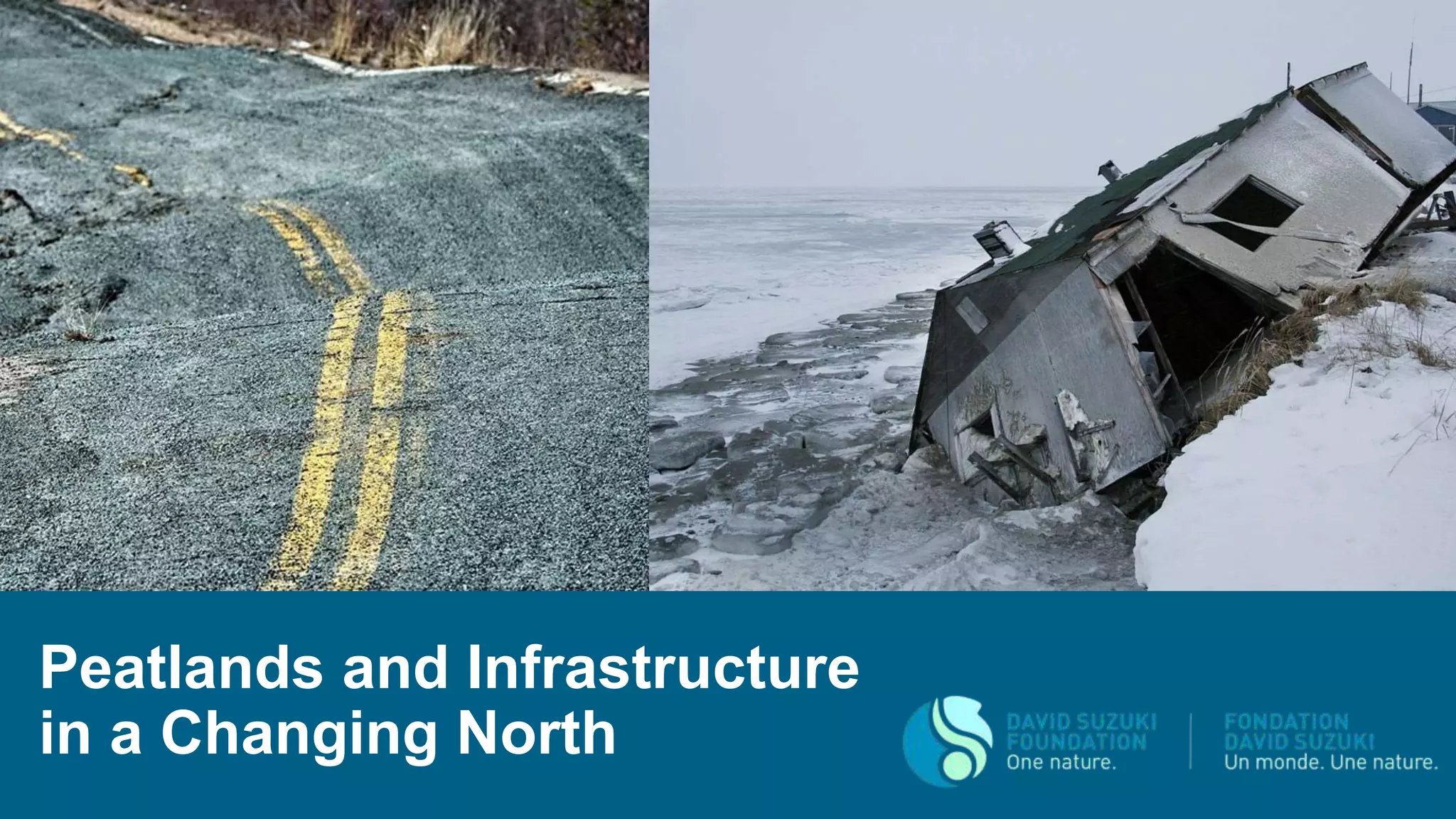
Peatlands and Infrastructure
in a Changing North
Peatlands and Livelihoods in
a Changing North
Peatlands, Permafrost, Climate
Change and Traditional Knowledge
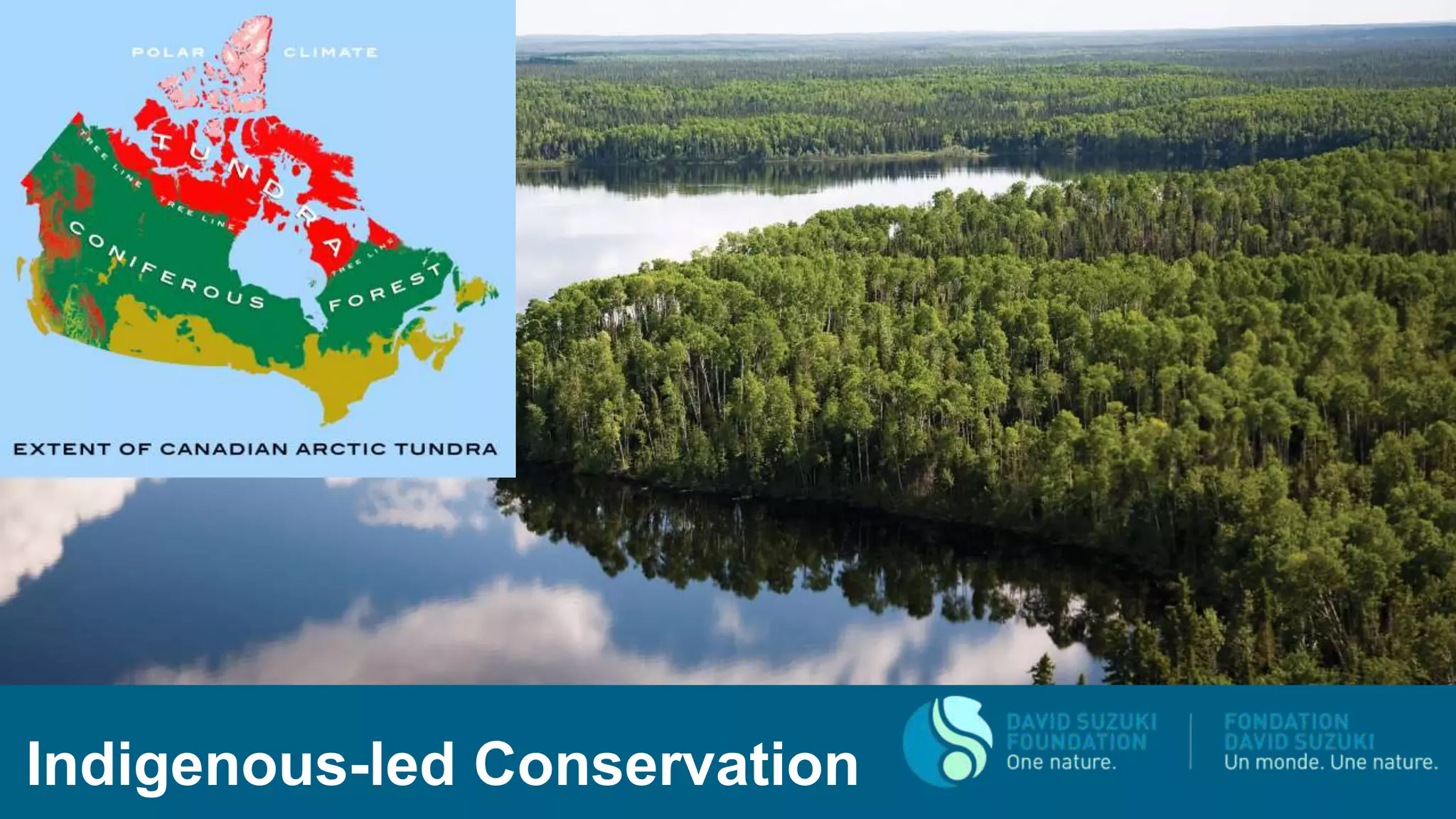
Indigenous-led Conservation
Embedding
Indigenous
worldviews
Protecting carbon
sinks
Generating
sustainable
livelihoods
Nation to Nation
relationship
Indigenous Protected and
Conserved Areas
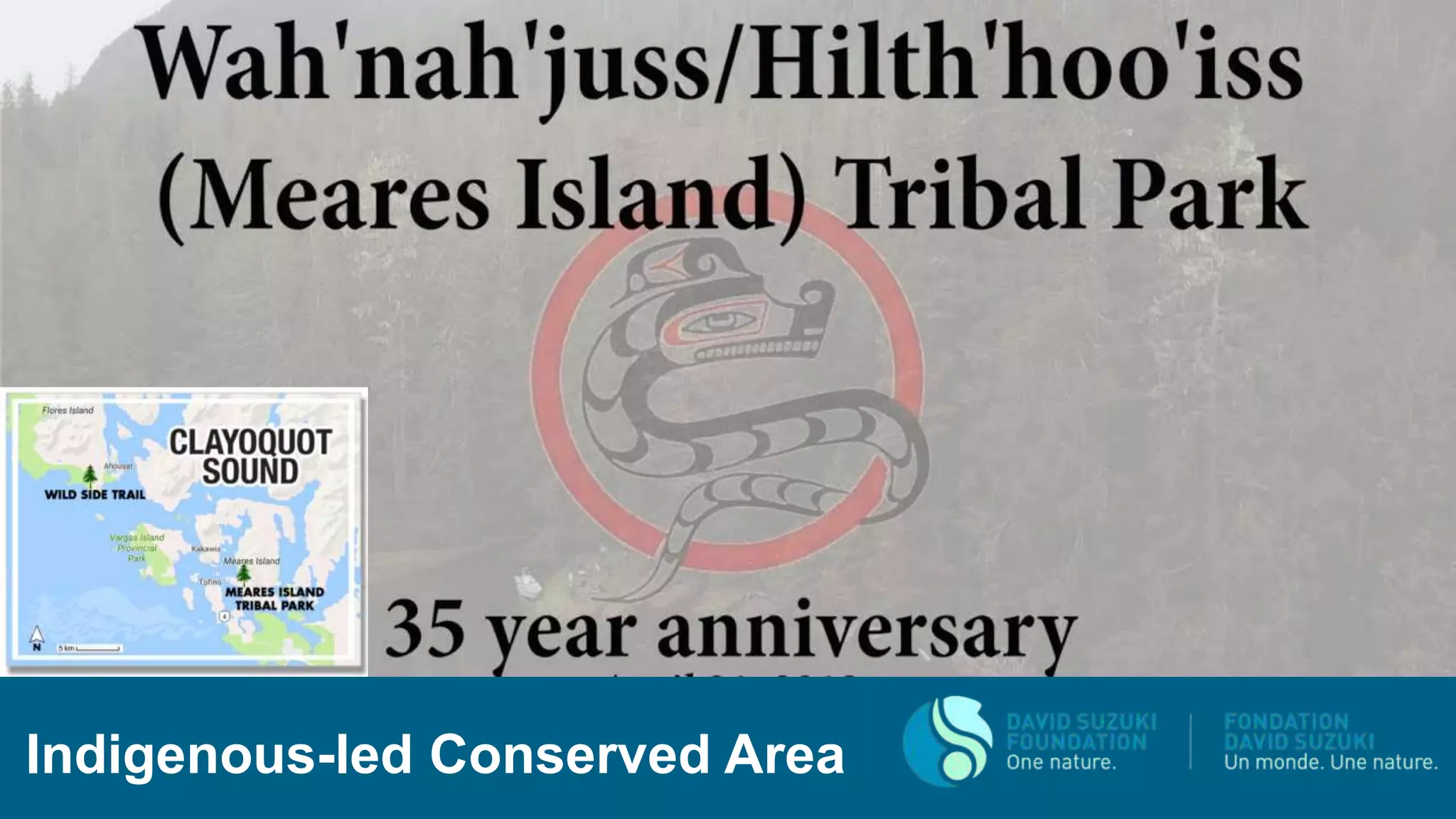
A Tribal Park Example
Indigenous-led Conserved Area
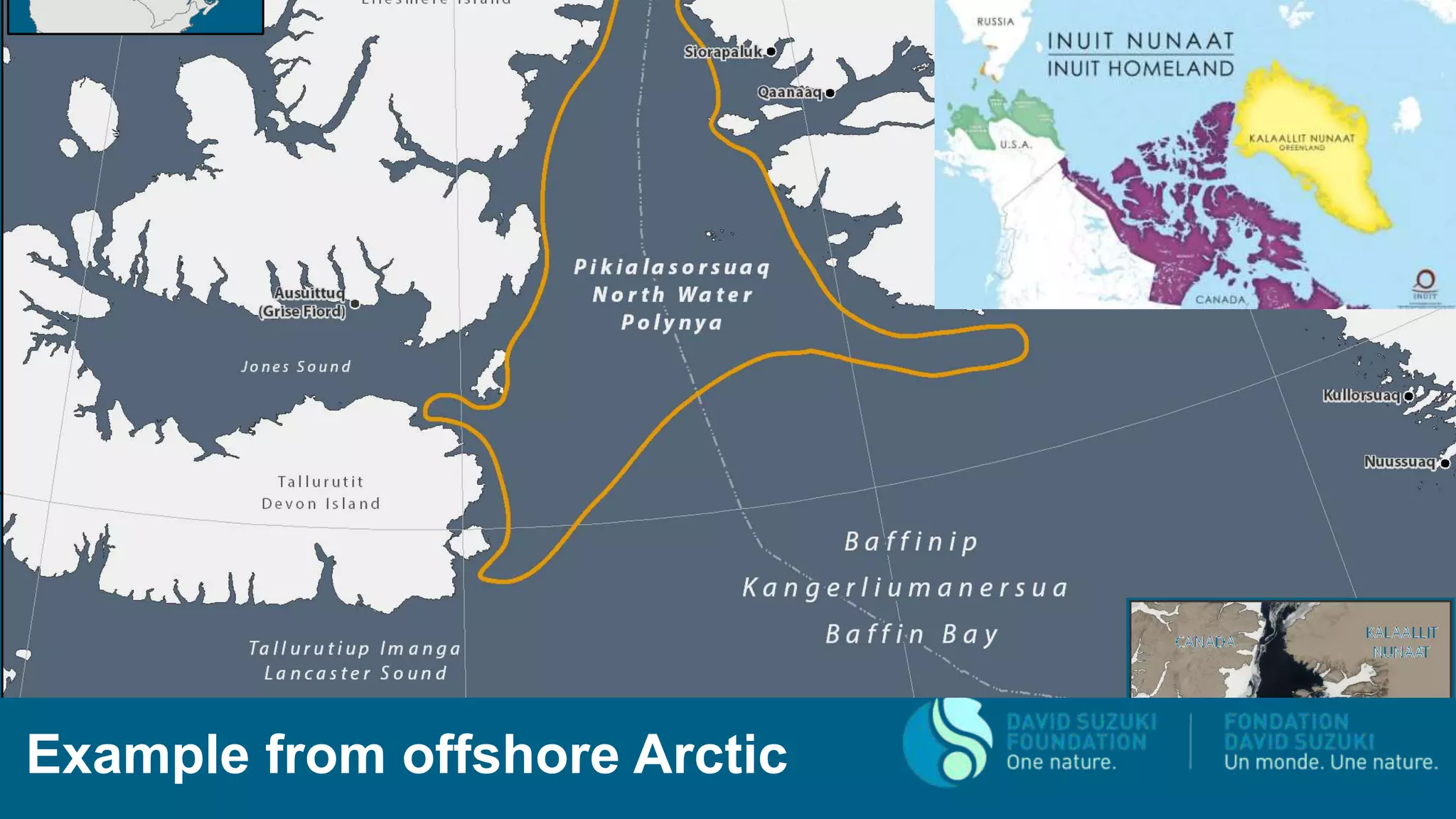
Example from offshore Arctic
Governance Innovation?
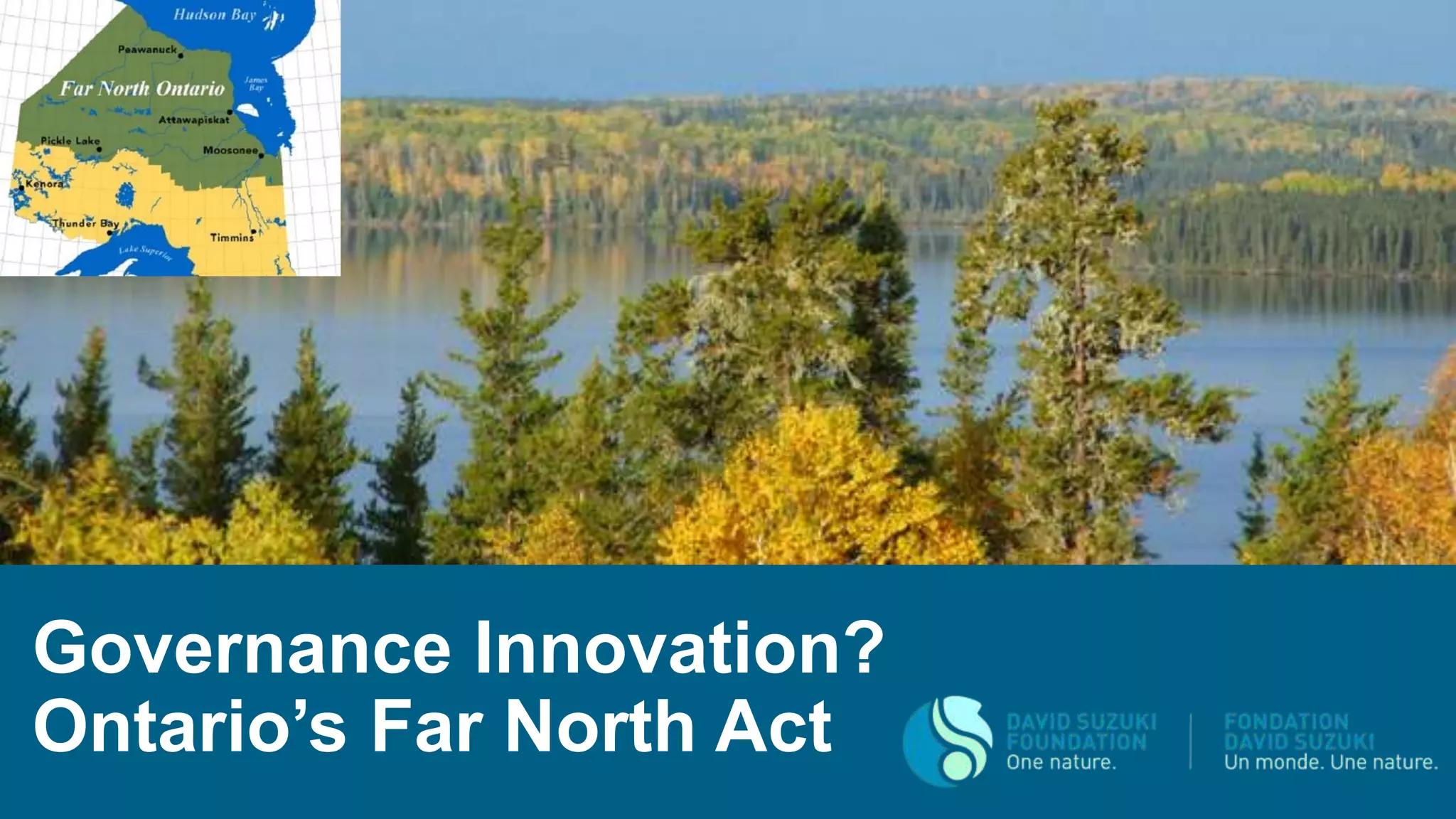
Ontario’s Far North Act
Far North Act – The
Basics
“The Far North [of Ontario] is not open for business
without First Nations involvement in development our
territories.”
Sol Mamakwa, Kingfisher First Nation, Member of
Provincial Parliament
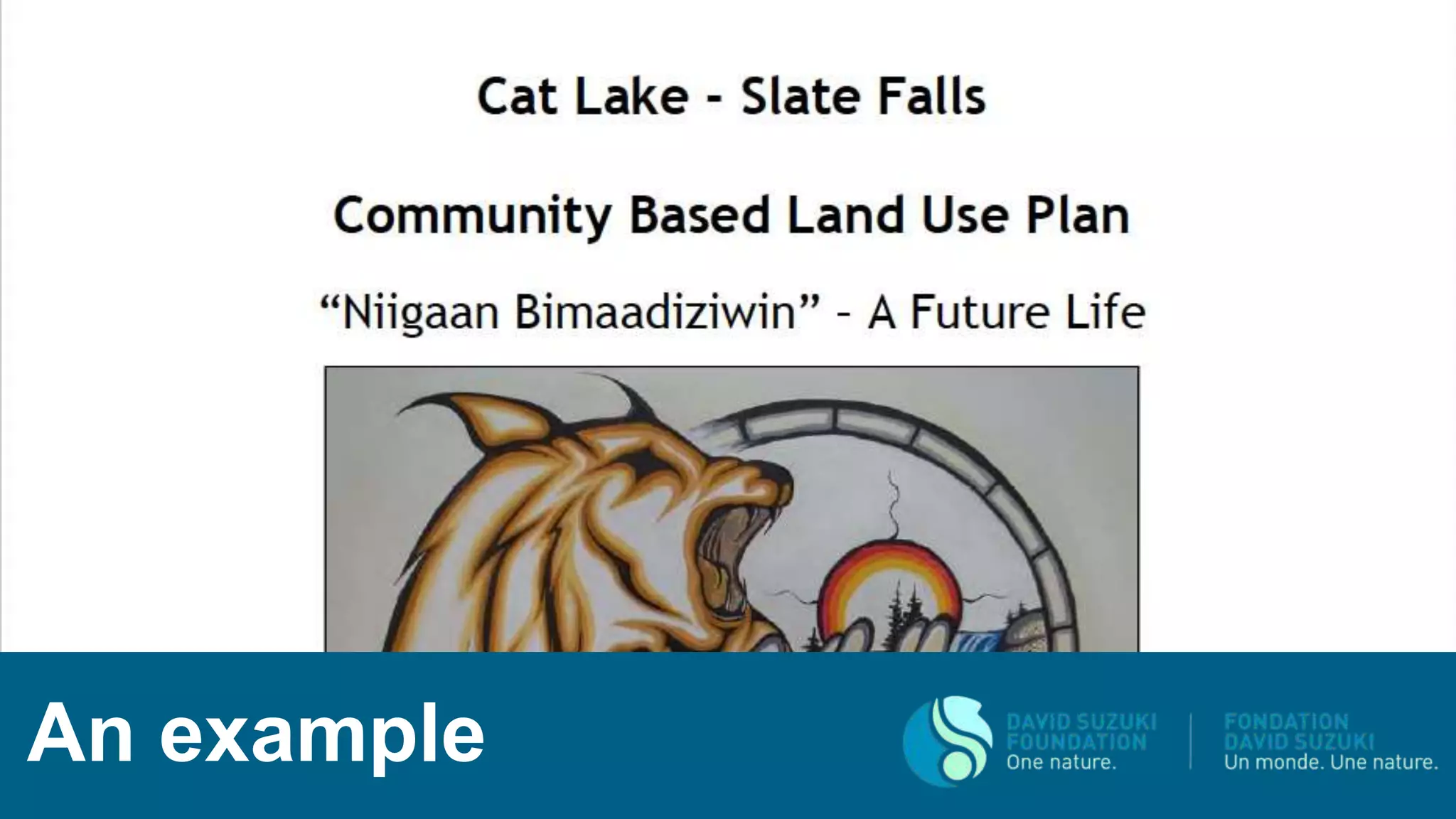
An example
Reactions from First Nations
The Province of Ontario has described the
homelands of the NAN people as a “globally
significant carbon sink”
Nishnawbe Aski Nations
At the same time, they are excluding First Nations from
any meaningful involvement in policy discussion on
carbon storage and carbon credits, even though a vast
swath of NAN homelands is being confiscated for this
law.
Section 12 of the Act provides the entire far forth area
(100% within NAN territory) is frozen for most forms of
modern development. By the stroke of a pen, First
Nations peoples are not permitted to engage in most
forms of modern economic development throughout their
traditional territory.
Thank you from our Founders

Peatlands and Landscapes in a changing north

Editor's Notes

  • #15 Passed in 2011: 1-significant role for First Nations in the planning. 2-protection of areas of cultural value in the Far North and the protection of ecological systems in the Far North by including at least 225,000 square kilometres of 3-the Far North in an interconnected network of protected areas designated in community based land use plans. 4-maintenance of biological diversity, ecological processes and ecological functions, including the storage and sequestration of carbon in the Far North. 5-enabling sustainable economic development that benefits the First Nations. This is a great step forward…but its only a step…more progress needs to be made that more fully recognizes and empowers First Nations in Ontario to make decisions about how their lands should be stewarded…decisions they can have a real final say in.
  • #16 Sets out an aspirational framework for co-management of activities that may be contemplated in the geographical area covered by the plan. It does not speak to how financial benefits derived by non-Indigenous entities on Indigenous land, would be shared It does not prevent provincial override of First Nations wishes
  • #17 It does not allow for true Indigenous leadership… the Province retains a veto power that can override anything proposed by First Nations. Only a step towards nation to nation relationship…but not quite there yet. So if First Nations decided to dedicate their territories to climate positive actions and development, their intent could (and most likely would) be overridden by the pressure to extract and generate financial returns in the name of “what’s better for the people of Ontario”.