How African mobile data users ages affect African
mobile networks
amgoo.com /blog/how-african-mobile-data-users-ages-affect-african-mobile-networks
Jan 28, 2015 8:00:00 AM
We already know that Africa is the 'mobile continent' and that African mobile data use is on the rise, so
African mobile networks need to understand why this is happening, who is driving it forward,
and how they can capitalise on the growing trend of data use to access the internet.
Read on, as we explore these three issues, and what mobile networks can learn from them...
Why Is African Mobile Data Use Increasing?
The advent of smartphones has brought with it, globally, a massive surge in mobile internet use, but
nowhere more so than Africa, where it is generally the only way of accessing the internet.
According to the ITU Telecommunications Development Bureau, mobile broadband use is exploding in
Africa:
"Africa stands out with a growth rate of over 40% – twice as high as the global average.
By end 2014, mobile-broadband penetration in Africa will have reached almost 20%, up
from less than 2% four years earlier." (source)
The reason for this is that mobile internet suits Africa, a huge and varied continent where it's difficult to
provide large-scale fixed-line broadband infrastructure.
Who Is Driving Forward Mobile Data Use?
Internet use is intrinsically linked with today's youth. Hardly a surprise, because over the years it is
traditionally the younger generation who drive progress, whether it be social, cultural, artistic, or
technological.
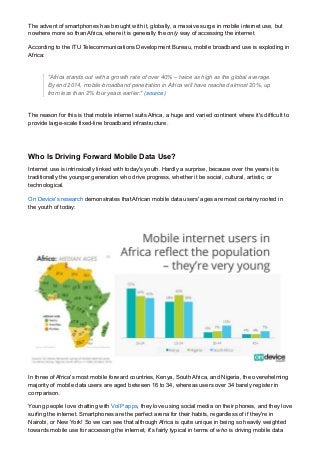
On Device's research demonstrates that African mobile data users' ages are most certainy rooted in
the youth of today:
In three of Africa's most mobile forward countries, Kenya, South Africa, and Nigeria, the overwhelming
majority of mobile data users are aged between 16 to 34, whereas users over 34 barely register in
comparison.
Young people love chatting with VoIP apps, they love using social media on their phones, and they love
surfing the internet. Smartphones are the perfect arena for their habits, regardless of if they're in
Nairobi, or New York! So we can see that although Africa is quite unique in being so heavily weighted
towards mobile use for accessing the internet, it's fairly typical in terms of who is driving mobile data
use.
How Do African Mobile Networks Capitalise?
Mobile broadband really sells itself once users have had a taste of its usefulness via smartphones.
SMS-based apps have already been changing lives in Africa for years, but they're quite rudimentary
and as smartphones have started to become an option in Africa, people are moving away from them
and towards full-blown mobile apps, such as Facebook, Wikipedia, LinkedIn, Google Maps, and all
kinds of others (there are more than 1 Million available on Android after all).
The issue for mobile network operators is how to get smartphones into the hands of younger Africans.
African phone users, especially those aged 24 and under (the most active age group for mobile data
use in the 'big three' mobile countries), tend to have a very low budget when it comes to purchasing
new mobile phones. This is pegged to their incomes which are comparatively very low on the world
scale, and so whereas Western users take having a smartphone for granted, it is still a dream for many
people in Africa.
Times are changing, and the era of affordable smartphones in Africa is arriving right now. This in turn is
eroding voice and SMS revenues.
So mobile networks must:
Drive down prices for data so it is attractive to be used more by subscribers
Offer more varied data bundles
Give a broad choice of attractive handset options
Offer affordable smartphones that fit subscribers' budgets
Educate subscribers on the benefits of smartphones over feature phones
This may sound easier said than done, but it all starts with the handset itself in my opinion.
Your subscribers, or potential subscribers, need a smartphone that is both attractive in cost, and gives
them the features which will increase your ARPU (average revenue per user): Namely access to mobile
data, ease of use, and ability to use popular apps.
The Solution.
Simply put, you need to partner with Chinese mobile phone manufacturers who you can rely on to
supply you with affordable smartphones which are going to fulfill both yours and your subscribers'
needs.
But finding a partner like this isn't easy when you're in Africa, and they're in China.
Let AMGOO Telecom co. help! We're experienced with working with some of Africa's major mobile
networks, and we hope that you'll be the next! Click below, and we'll be in touch with how we can
help your network take advantage of Africa's growing mobile internet market:
Topics: Africa mobile industry

How African mobile data users ages affect African mobile networks

  • 1.
    How African mobiledata users ages affect African mobile networks amgoo.com /blog/how-african-mobile-data-users-ages-affect-african-mobile-networks Jan 28, 2015 8:00:00 AM We already know that Africa is the 'mobile continent' and that African mobile data use is on the rise, so African mobile networks need to understand why this is happening, who is driving it forward, and how they can capitalise on the growing trend of data use to access the internet. Read on, as we explore these three issues, and what mobile networks can learn from them... Why Is African Mobile Data Use Increasing?
  • 2.
    The advent ofsmartphones has brought with it, globally, a massive surge in mobile internet use, but nowhere more so than Africa, where it is generally the only way of accessing the internet. According to the ITU Telecommunications Development Bureau, mobile broadband use is exploding in Africa: "Africa stands out with a growth rate of over 40% – twice as high as the global average. By end 2014, mobile-broadband penetration in Africa will have reached almost 20%, up from less than 2% four years earlier." (source) The reason for this is that mobile internet suits Africa, a huge and varied continent where it's difficult to provide large-scale fixed-line broadband infrastructure. Who Is Driving Forward Mobile Data Use? Internet use is intrinsically linked with today's youth. Hardly a surprise, because over the years it is traditionally the younger generation who drive progress, whether it be social, cultural, artistic, or technological. On Device's research demonstrates that African mobile data users' ages are most certainy rooted in the youth of today: In three of Africa's most mobile forward countries, Kenya, South Africa, and Nigeria, the overwhelming majority of mobile data users are aged between 16 to 34, whereas users over 34 barely register in comparison. Young people love chatting with VoIP apps, they love using social media on their phones, and they love surfing the internet. Smartphones are the perfect arena for their habits, regardless of if they're in Nairobi, or New York! So we can see that although Africa is quite unique in being so heavily weighted towards mobile use for accessing the internet, it's fairly typical in terms of who is driving mobile data
  • 3.
    use. How Do AfricanMobile Networks Capitalise? Mobile broadband really sells itself once users have had a taste of its usefulness via smartphones. SMS-based apps have already been changing lives in Africa for years, but they're quite rudimentary and as smartphones have started to become an option in Africa, people are moving away from them and towards full-blown mobile apps, such as Facebook, Wikipedia, LinkedIn, Google Maps, and all kinds of others (there are more than 1 Million available on Android after all). The issue for mobile network operators is how to get smartphones into the hands of younger Africans. African phone users, especially those aged 24 and under (the most active age group for mobile data use in the 'big three' mobile countries), tend to have a very low budget when it comes to purchasing new mobile phones. This is pegged to their incomes which are comparatively very low on the world scale, and so whereas Western users take having a smartphone for granted, it is still a dream for many people in Africa. Times are changing, and the era of affordable smartphones in Africa is arriving right now. This in turn is eroding voice and SMS revenues. So mobile networks must: Drive down prices for data so it is attractive to be used more by subscribers Offer more varied data bundles Give a broad choice of attractive handset options Offer affordable smartphones that fit subscribers' budgets Educate subscribers on the benefits of smartphones over feature phones This may sound easier said than done, but it all starts with the handset itself in my opinion. Your subscribers, or potential subscribers, need a smartphone that is both attractive in cost, and gives them the features which will increase your ARPU (average revenue per user): Namely access to mobile data, ease of use, and ability to use popular apps. The Solution.
  • 4.
    Simply put, youneed to partner with Chinese mobile phone manufacturers who you can rely on to supply you with affordable smartphones which are going to fulfill both yours and your subscribers' needs. But finding a partner like this isn't easy when you're in Africa, and they're in China. Let AMGOO Telecom co. help! We're experienced with working with some of Africa's major mobile networks, and we hope that you'll be the next! Click below, and we'll be in touch with how we can help your network take advantage of Africa's growing mobile internet market: Topics: Africa mobile industry