MISSION: To legitimize
and spread the practice
of solutions journalism—
rigorous reporting about
responses to social
problems and their
associated results
THE SOLUTIONS
JOURNALISM
NETWORK
Social shares
+230%
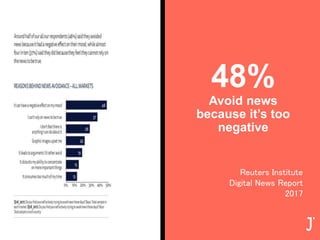
48%
Avoid news
because it’s too
negative
Reuters Institute
Digital News Report
2017
Basic Toolkit in:
English
Spanish
French
Indonesian
Chinese
Russian
Arabic
Czech
Polish
Hungarian
Romanian
Upcoming:
Korean
German
LEARNING
LAB
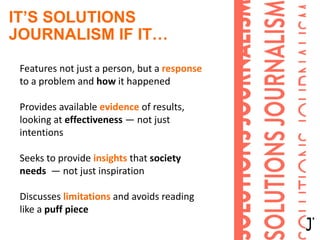
IT’S SOLUTIONS
JOURNALISM IF IT…
Features not just a person, but a response
to a problem and how it happened
Provides available evidence of results,
looking at effectiveness — not just
intentions
Seeks to provide insights that society
needs — not just inspiration
Discusses limitations and avoids reading
like a puff piece
I don’t want to give the impression
everything is fine!
I don’t want to give the impression
everything is fine!
It’s not news when an airplane lands
safely!
I don’t want to give the impression
everything is fine!
It’s not news when an airplane lands
safely!
Isn’t it advocacy just to choose a response
to highlight?
I don’t want to give the impression
everything is fine!
It’s not news when an airplane lands
safely!
Isn’t it advocacy just to choose a response
to highlight?
What happens if it the program is flawed?
I don’t want to give the impression
everything is fine!
It’s not news when an airplane lands
safely!
Isn’t it advocacy just to choose a response
to highlight?
What happens if it the program is flawed?
What if it’s not the best response?
When should I look for a
solutions story?
It’s not breaking news
The subject is a widely-shared
problem
Finding solutions stories
Starting with a solution you hear
about can be problematic
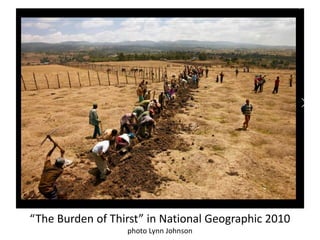
“The Burden of Thirst” in National Geographic 2010
photo Lynn Johnson
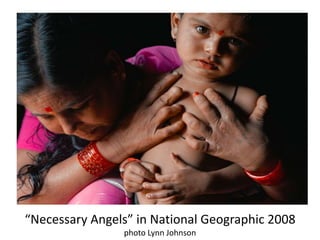
“Necessary Angels” in National Geographic 2008
photo Lynn Johnson
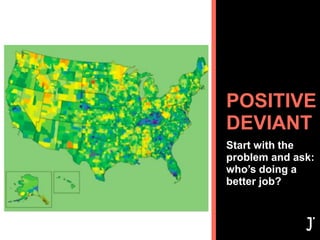
POSITIVE
DEVIANT
Start with the
problem and ask:
who’s doing a
better job?
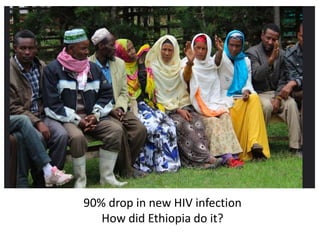
90% drop in new HIV infection
How did Ethiopia do it?
SLICES
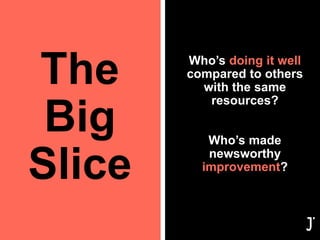
The
Big
Slice
Who’s doing it well
compared to others
with the same
resources?
Who’s made
newsworthy
improvement?
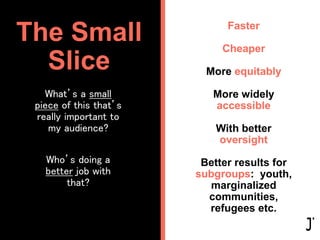
What’s a small
piece of this that’s
really important to
my audience?
Who’s doing a
better job with
that?
The Small
Slice
Faster
Cheaper
More equitably
More widely
accessible
With better
oversight
Better results for
subgroups: youth,
marginalized
communities,
refugees etc.
Solutions Visual Journalism: What and How

Solutions Visual Journalism: What and How