









SHORT  STORY ENGLISH  LITERATURE : By zafeen
BY HEIDI MUNAN HOW  " DALAT "  GOT  ITS  NAME (  Bagaimana kampung “ Dalat  ” mendapat namanya )
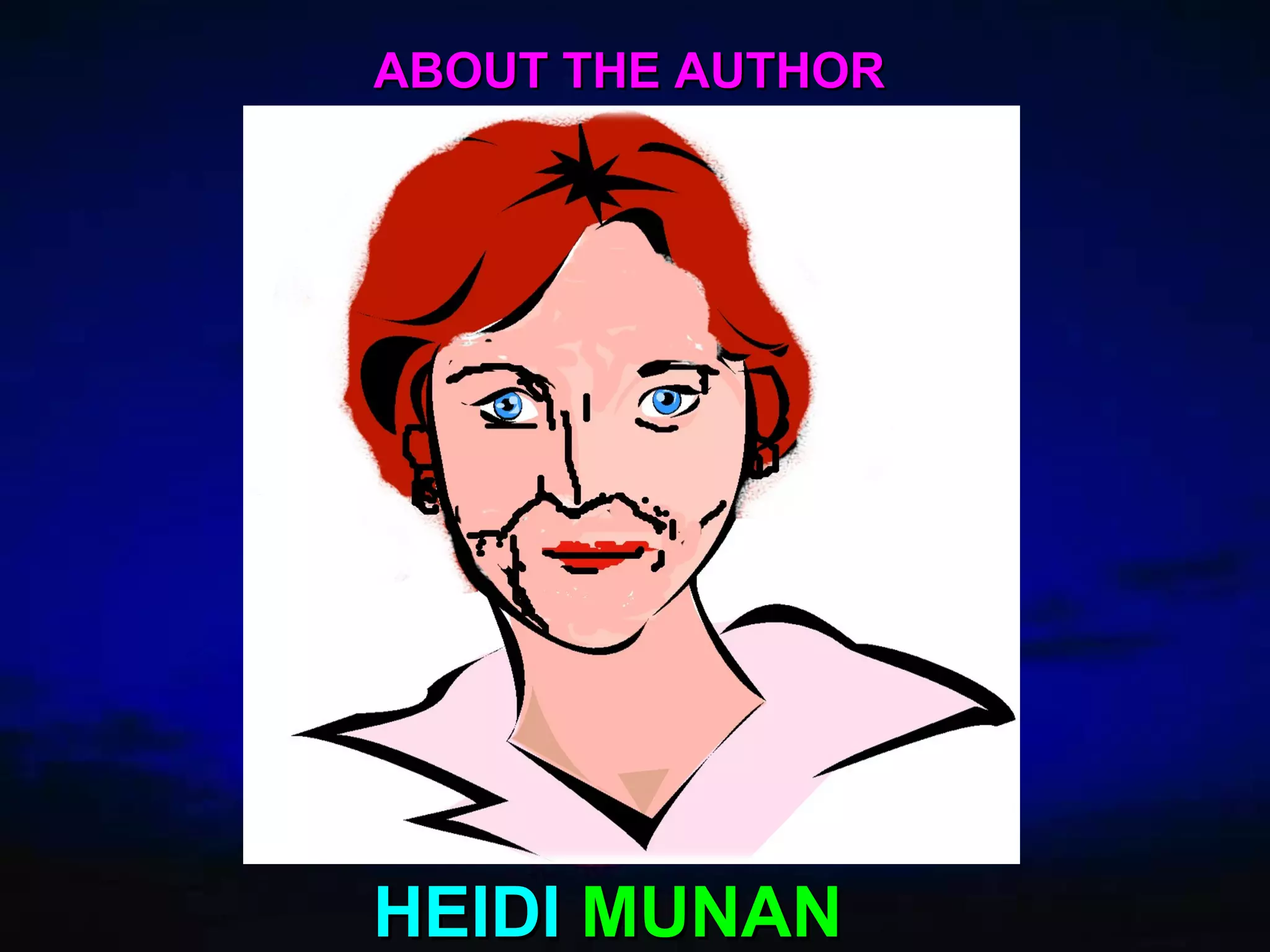
ABOUT THE AUTHOR HEIDI   MUNAN
ABOUT THE AUTHOR (  TENTANG DIRI PENGARANG  ) NAME   : H E I D I  M U N A N BIRTH PLACE   : Switzerland. Lived in Sarawak   since her marriage EDUCATION   : Switzerland, ( B.A. ( Edu ),    T. Dip. ), New Zealand EARLY OCCUPATION   : Worked as graduate post –    primary teacher ( 1965 ) INTEREST   : Interested in folk tales. Loved   listening to her late mother   in law telling children’s stories
ABOUT THE AUTHOR (  TENTANG DIRI PENGARANG  )   1. Sarawak Crafts ( Pub. TIMES )   2. Culture Shock Borneo   ( Pub. TIMES )   3. Culture Of the World –    Malaysia ( Pub. TIMES )   4. Sarawak Stories   ( Pub. FAJAR BAKTI )   5. Iban Stories ( Pub. FAJAR   BAKTI )   6. Bidayuh Stories ( Pub. FAJAR   BAKTI )   7. Melanau Stories ( Pub.    FAJAR BAKTI ) Her writing :
ABOUT THE AUTHOR (  TENTANG DIRI PENGARANG  ) INTEREST  :   freelancing as a regular    contributor to national and   foreign newspaper and    publication – eg: MAS in – flight   magazine – “ GOING PLACES ”   Doing research into local –   SARAWAKIAN – Malaysian    herritage at Sarawak Museum
ABOUT THE AUTHOR (  TENTANG DIRI PENGARANG  ) BACKGROUND TO THE STORY   :  The author fist heard this folk   from a dear friend in Mukah,   a town near Dalat.     she recorded it and then re –   wrote the story
story OVER VIEW
ABOUT THE TITLE FROM THE WORD   FLIES WHAT IS   FLIES? HOW DO YOU THINK , DALAT GOT ITS NAME?
FLIES
FLY  FLY  MEANS “  DALAT ”  IN MELANAU   ( LANGUAGE OF SARAWAK ) HERE WE CALL IT “ LALAT ” SO “ DALAT ” OR “ LALAT ” IS THE SAME THING
OVER VIEW This short story is about how a small riverine  MELANAU  Village on the  OYA RIVER  in  SARAWAK   acquired its name a long time ago The Melanau community lives as an  AGRARIAN   society work on farms near the river The people are  RULED  by tradition and hold on to their traditional customs and values. It is set in a  SMALL TOWN  called “  DALAT  ”
OVER VIEW The old Melanau Chief died without naming  his  HEIR A power struggle between the old chief ‘s  two ELDER SONS :  GALAU   &  UMAT,   caused a rift in the Melanau village community Umat  JOINED  forces with the  ENEMY  to  OVERTHROW  his brother, Galau The war that followed ended in destruction,  bloodshed and deaths
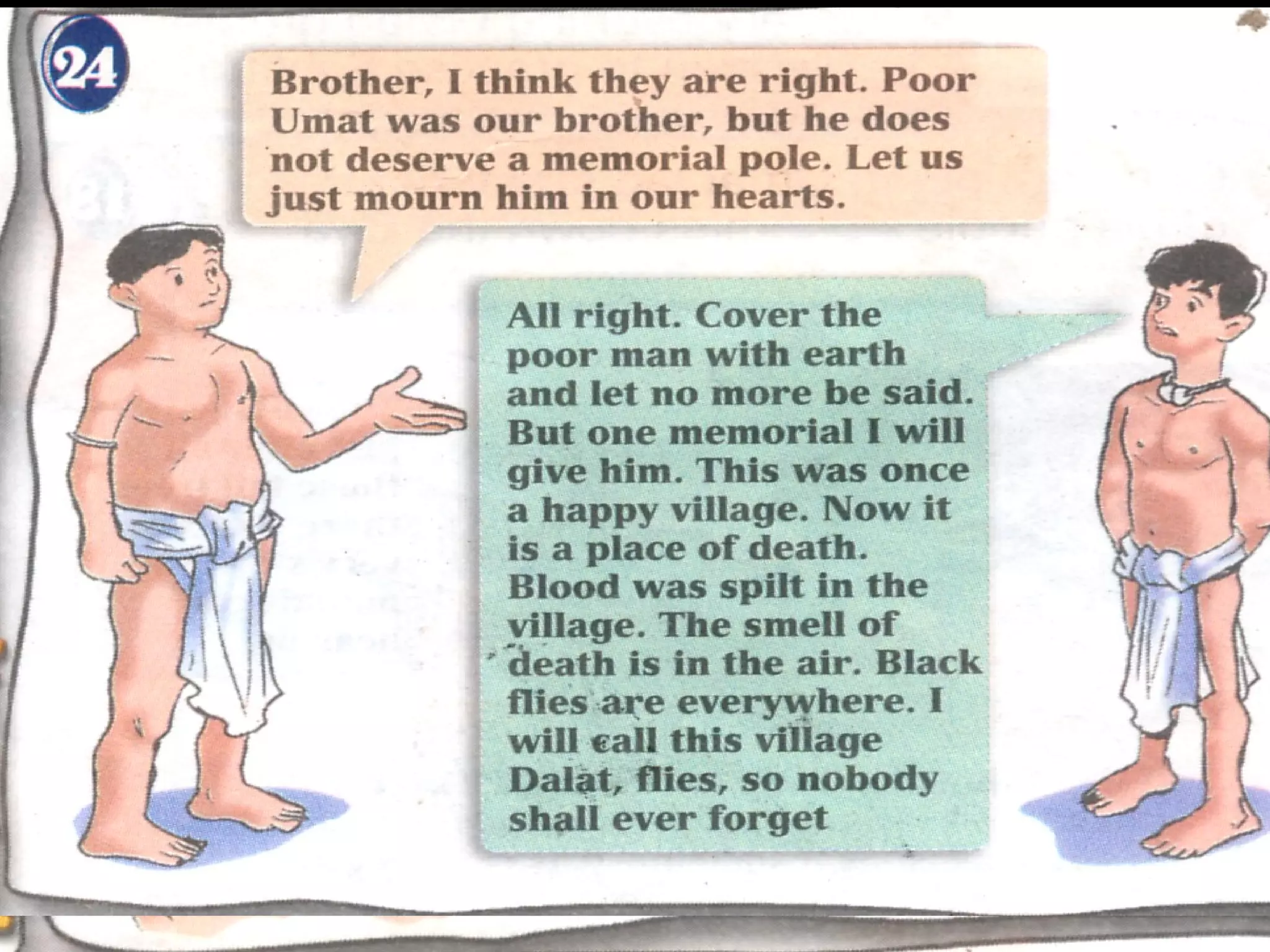
OVER VIEW In memory of his dead brother and as a memorial  of the war, Galau  renamed the village “  DALAT   “,  the Melanau word for  FLIES Flies had settled on the rotting and bloody corpes. The bahasa Melayu word for  FLIES  is  LALAT . This act was to remind the villagers of the  IMPOTANCE OF PEACE & FRIENDSHIP
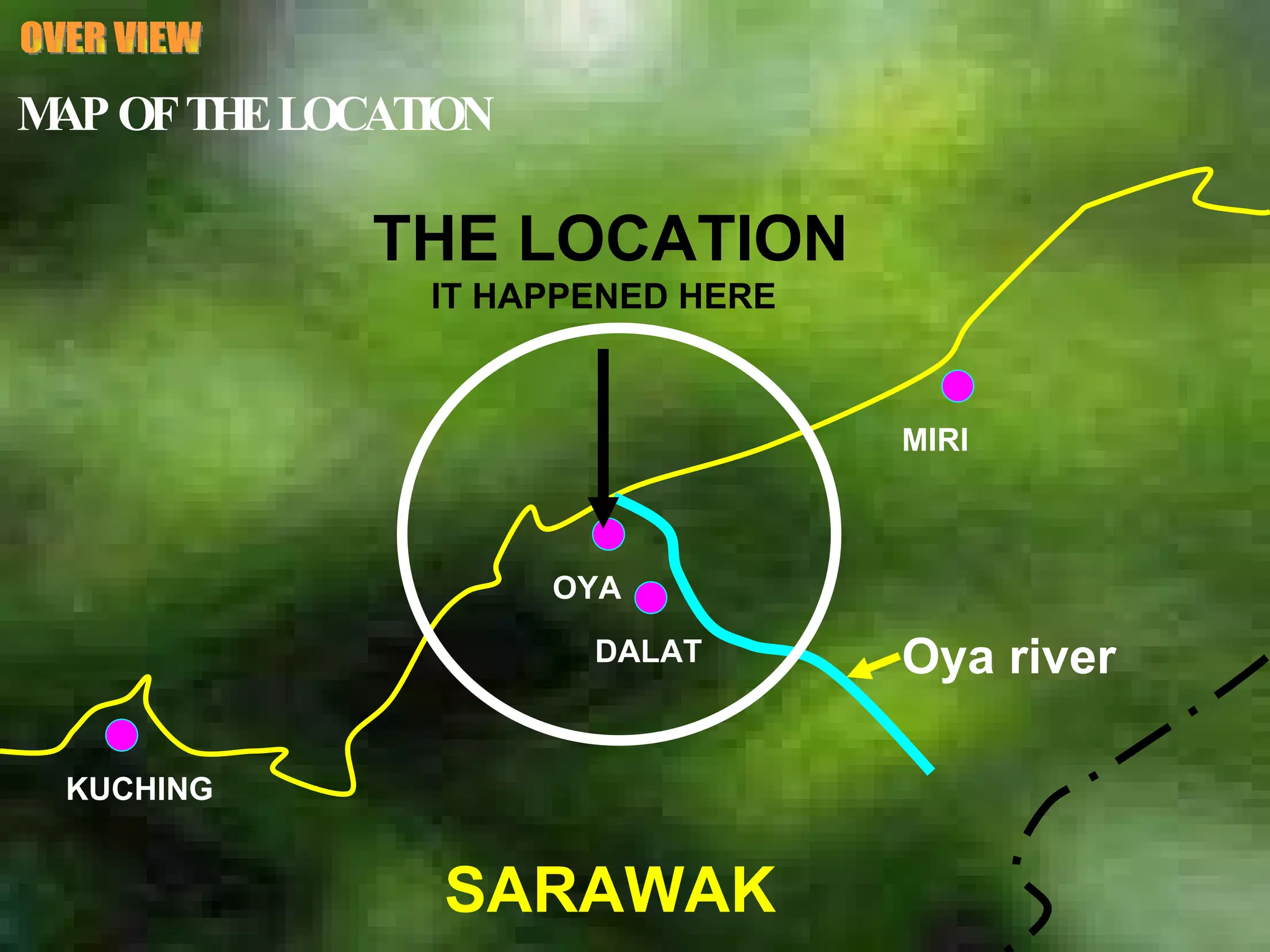
OVER VIEW MAP OF THE LOCATION SARAWAK KUCHING OYA DALAT MIRI THE LOCATION IT HAPPENED HERE Oya river
S Y N O P S I S
SYNOPSIS But been challenged by his own ambitious brother, UMAT. This caused a rift in the Melanau community The wise old chief dies without any  HEIR  left  This story is about how a peaceful, Melanau coastal town is  RENAMED  after a  BITTER FIGHT  between 2 brothers ( GALAU & UMAT ) Tradition states that, Galau, the eldest son, should be chief Umat gets help of enemy villagers Galau prepares the villagers for war
SYNOPSIS Dead body ( rotten and corpses ) unburied Many people dead. Dead body everywhere  Followed by the bloody battle ( war )  Implication : Destruction, bloodshed and deaths  Flies swarm settled on the dead body After that, the noble Galau renames the village as  “  DALAT  ” ( or LALAT / Flies ) in memory of his Brother ( Umat ) and the dead innocent people Peace and order is finally restored
SETTING
SETTING The story is set in riverine  Melanau Village ( Near the town  of Sibu in Sarawak ) The village sits on the OYA RIVER It is a small pleasant village The villagers are HOUSEHOLD in  LONGHOUSES
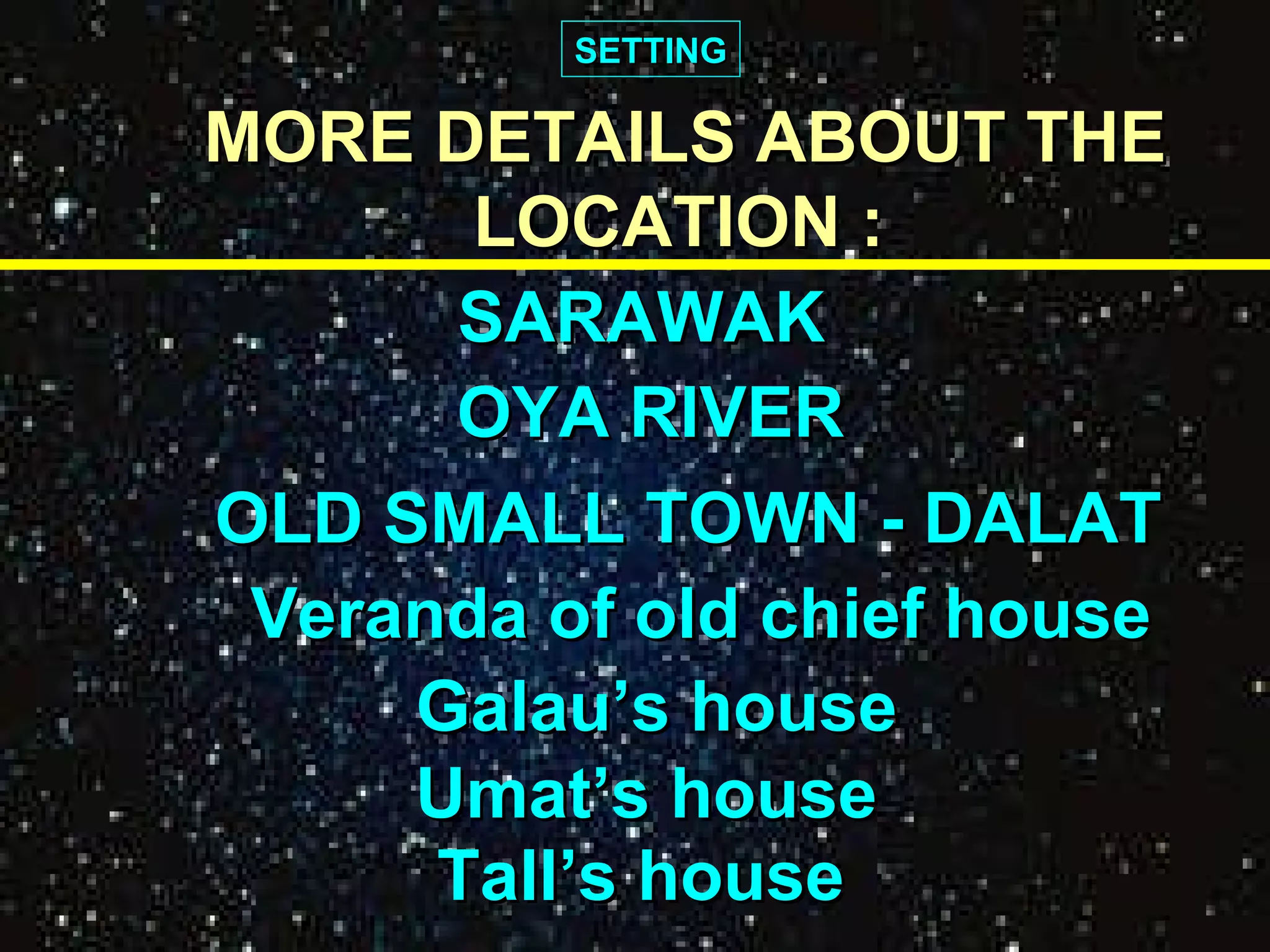
SETTING MORE DETAILS ABOUT THE   LOCATION : OYA RIVER OLD SMALL TOWN - DALAT Veranda of old chief house Galau’s house Umat’s house Tall’s house SARAWAK
P L O T
 
P L O T  S  U  M  M  A  R Y  :
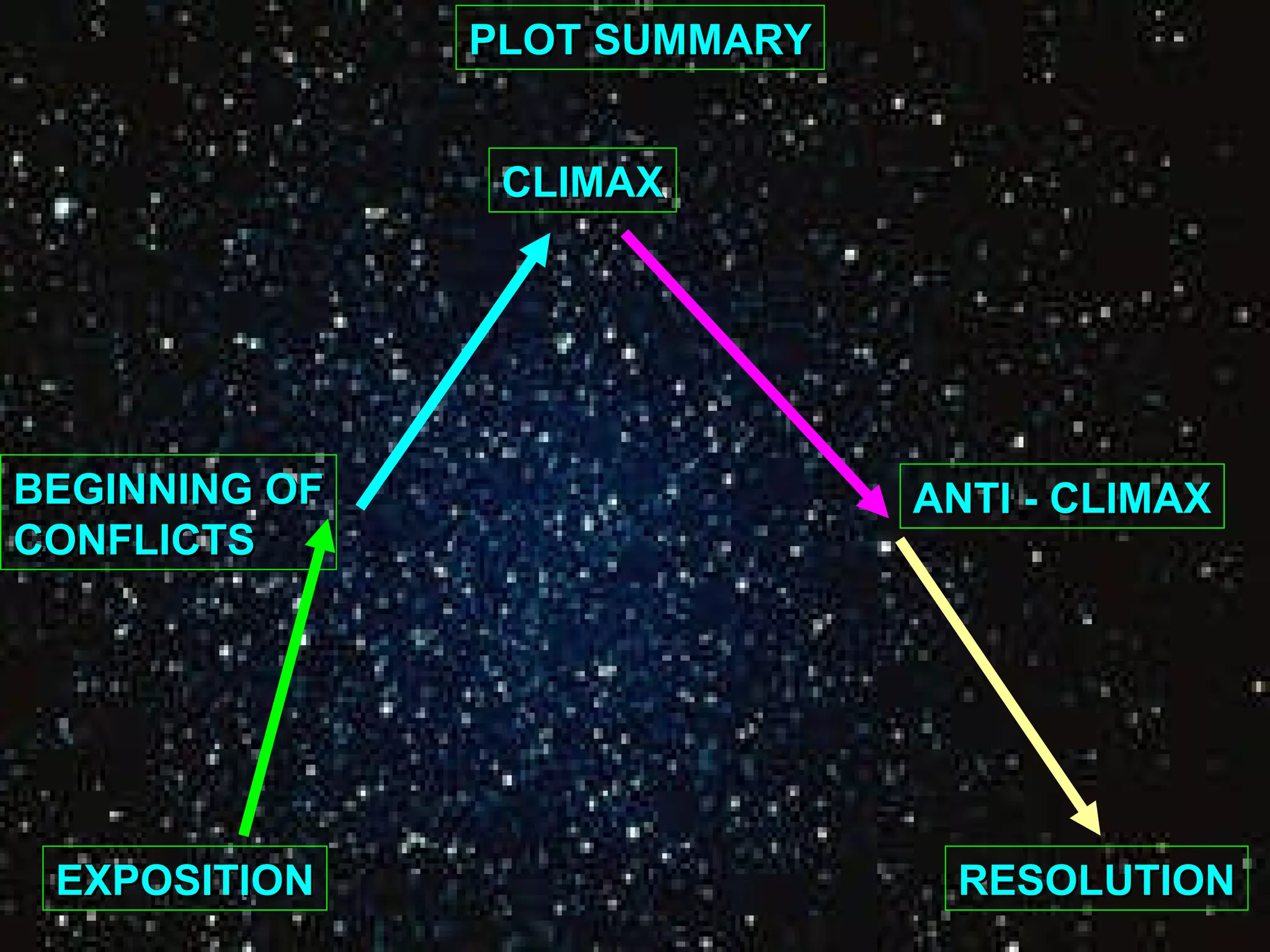
PLOT SUMMARY EXPOSITION BEGINNING OF CONFLICTS CLIMAX ANTI - CLIMAX RESOLUTION
1.  T H E M E S  :
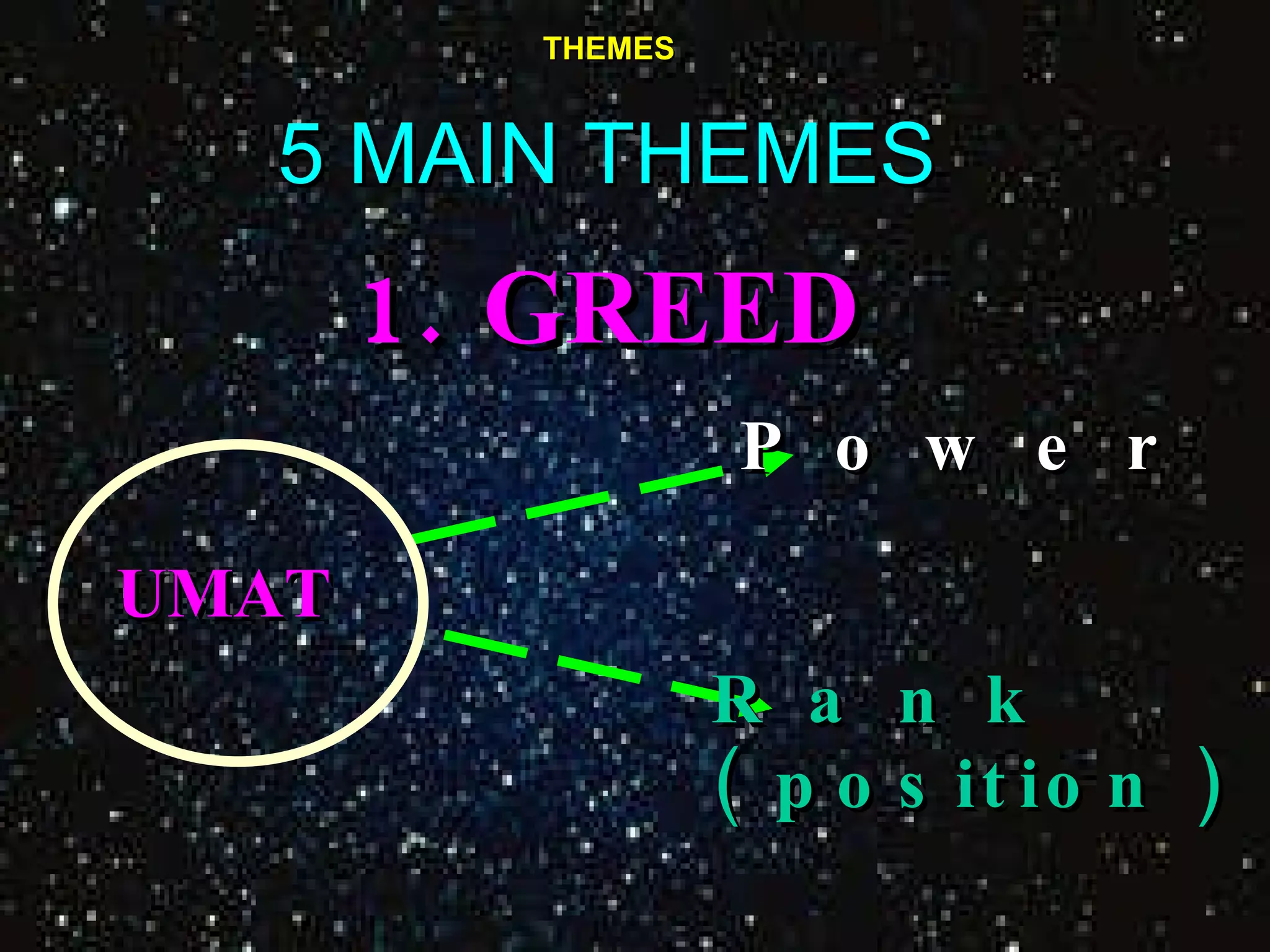
THEMES 5 MAIN THEMES 1.  GREED   UMAT P o w e r  R a n k ( position )
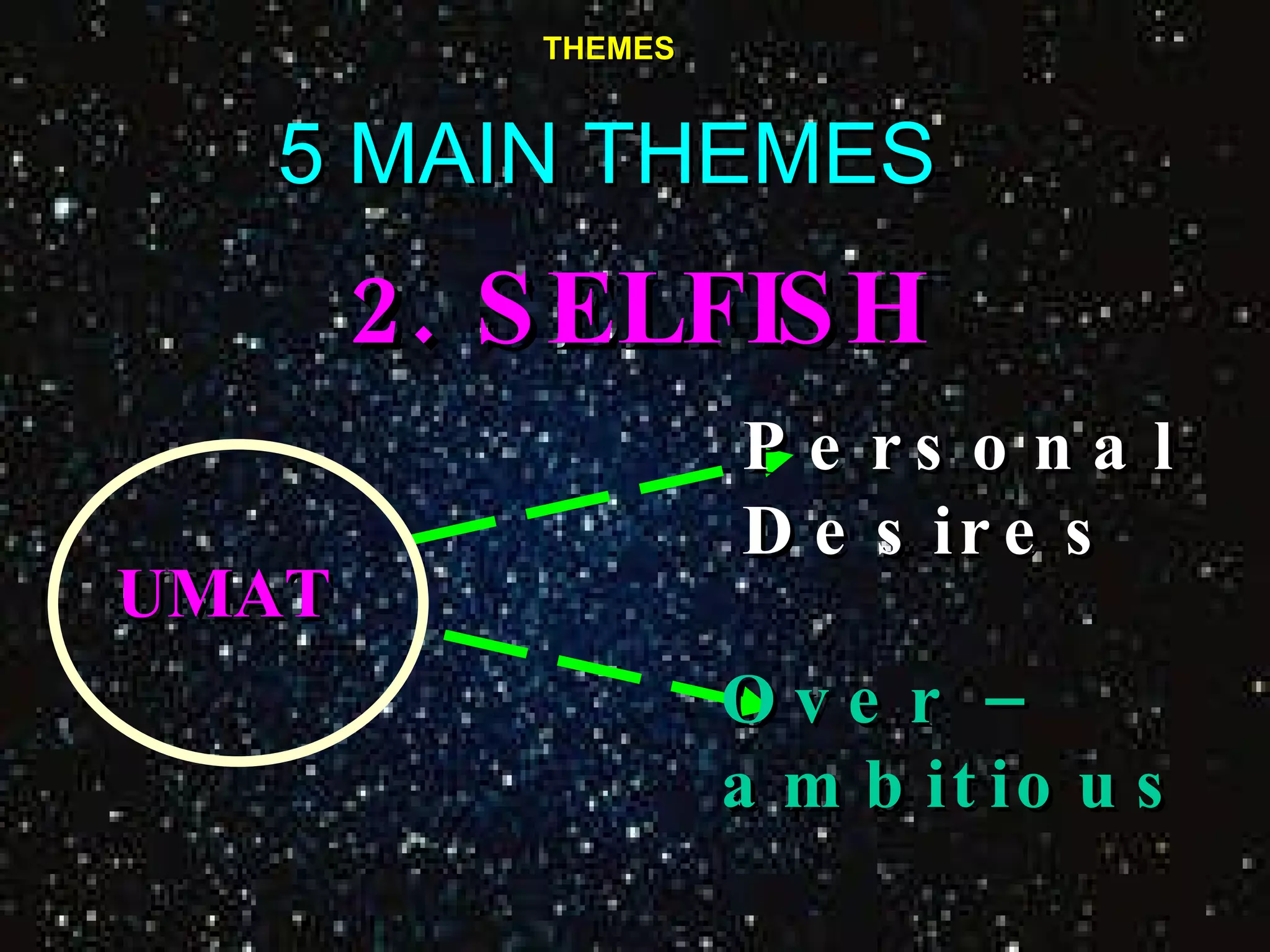
THEMES 5 MAIN THEMES 2.  SELFISH   UMAT Personal Desires  Over –  ambitious
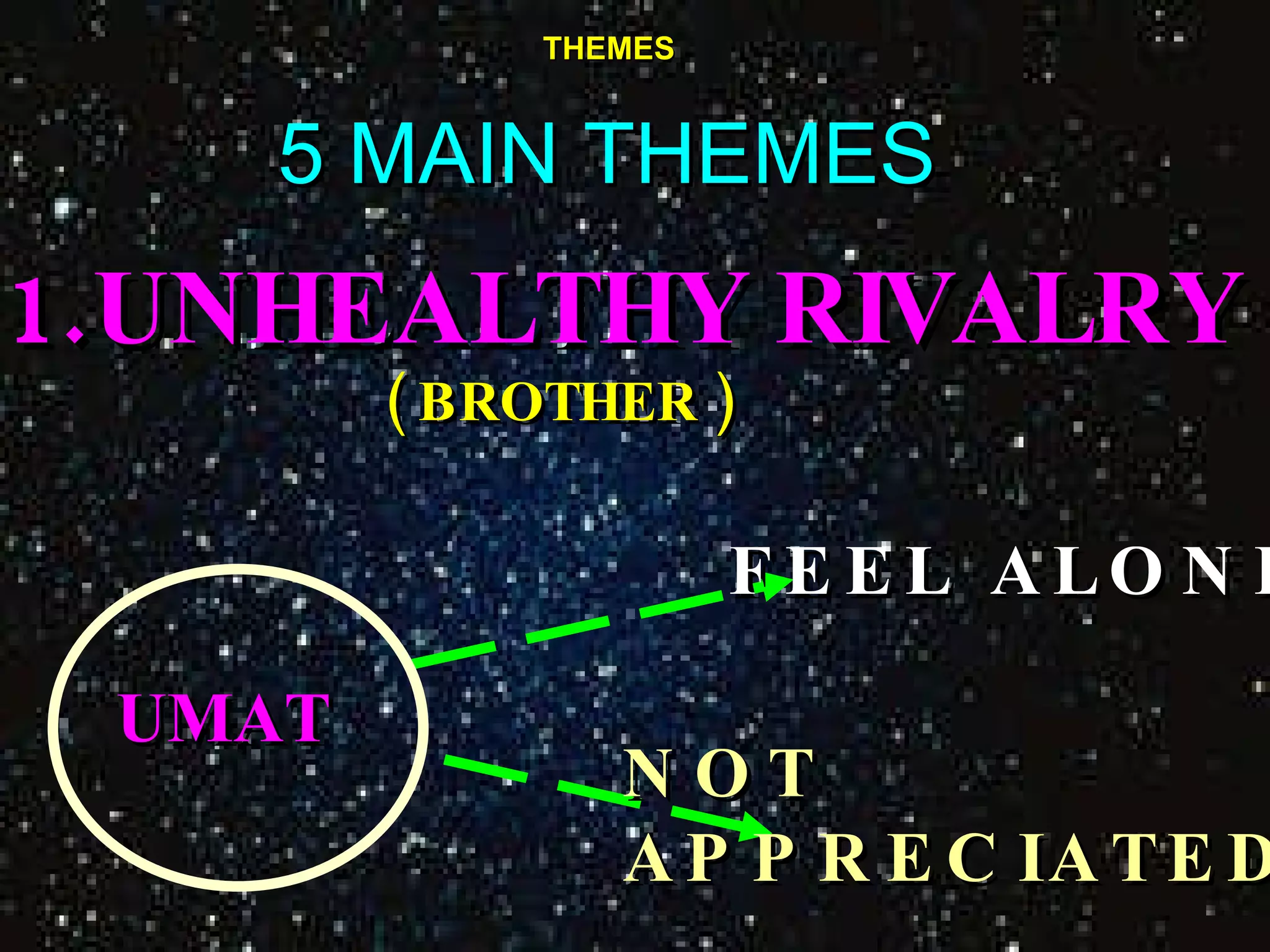
THEMES 5 MAIN THEMES UNHEALTHY RIVALRY   ( BROTHER )  UMAT FEEL ALONE  NOT  APPRECIATED
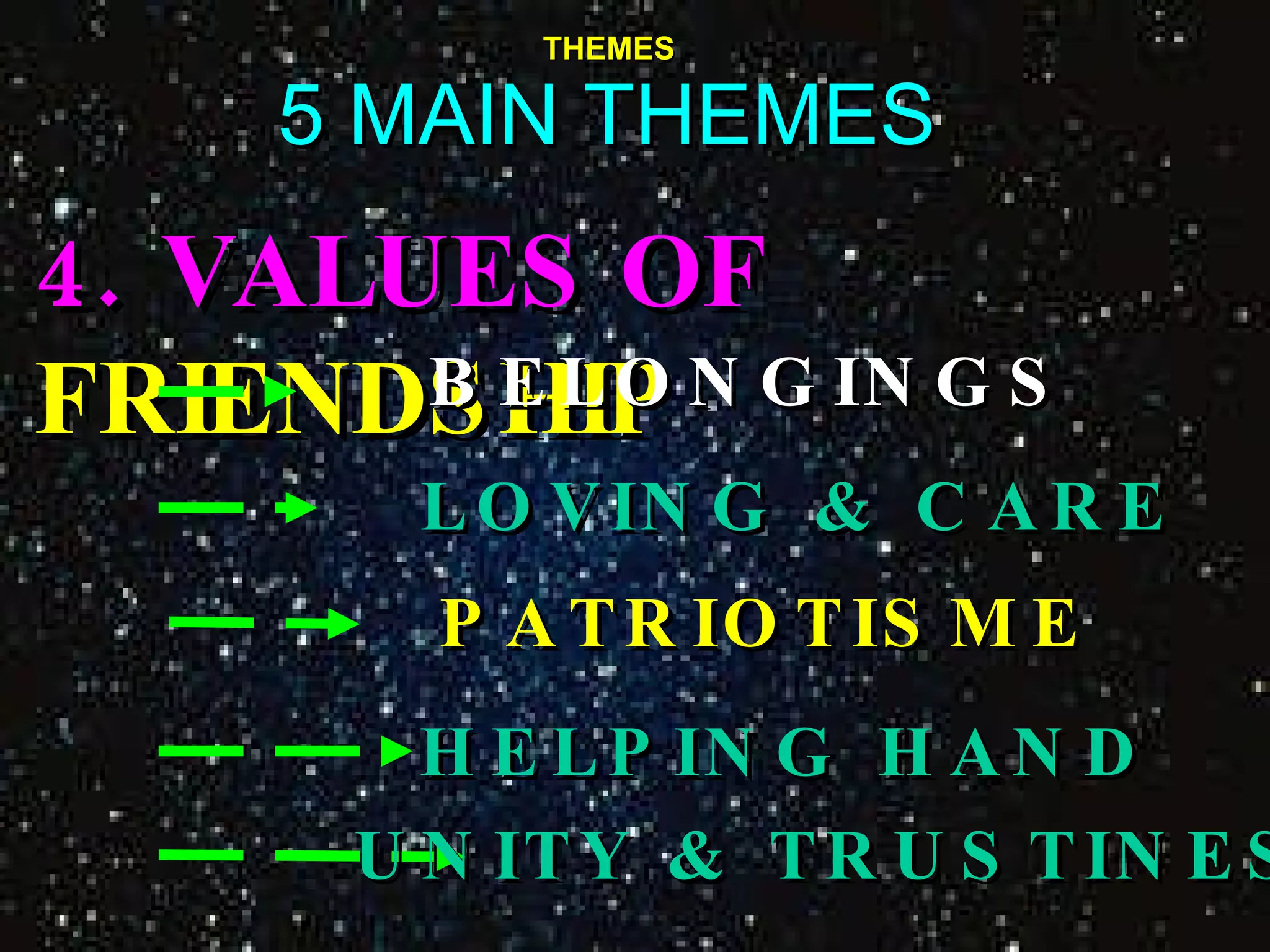
THEMES 5 MAIN THEMES 4.  VALUES OF  FRIENDSHIP BELONGINGS  LOVING & CARE PATRIOTISME HELPING HAND UNITY & TRUSTINESS
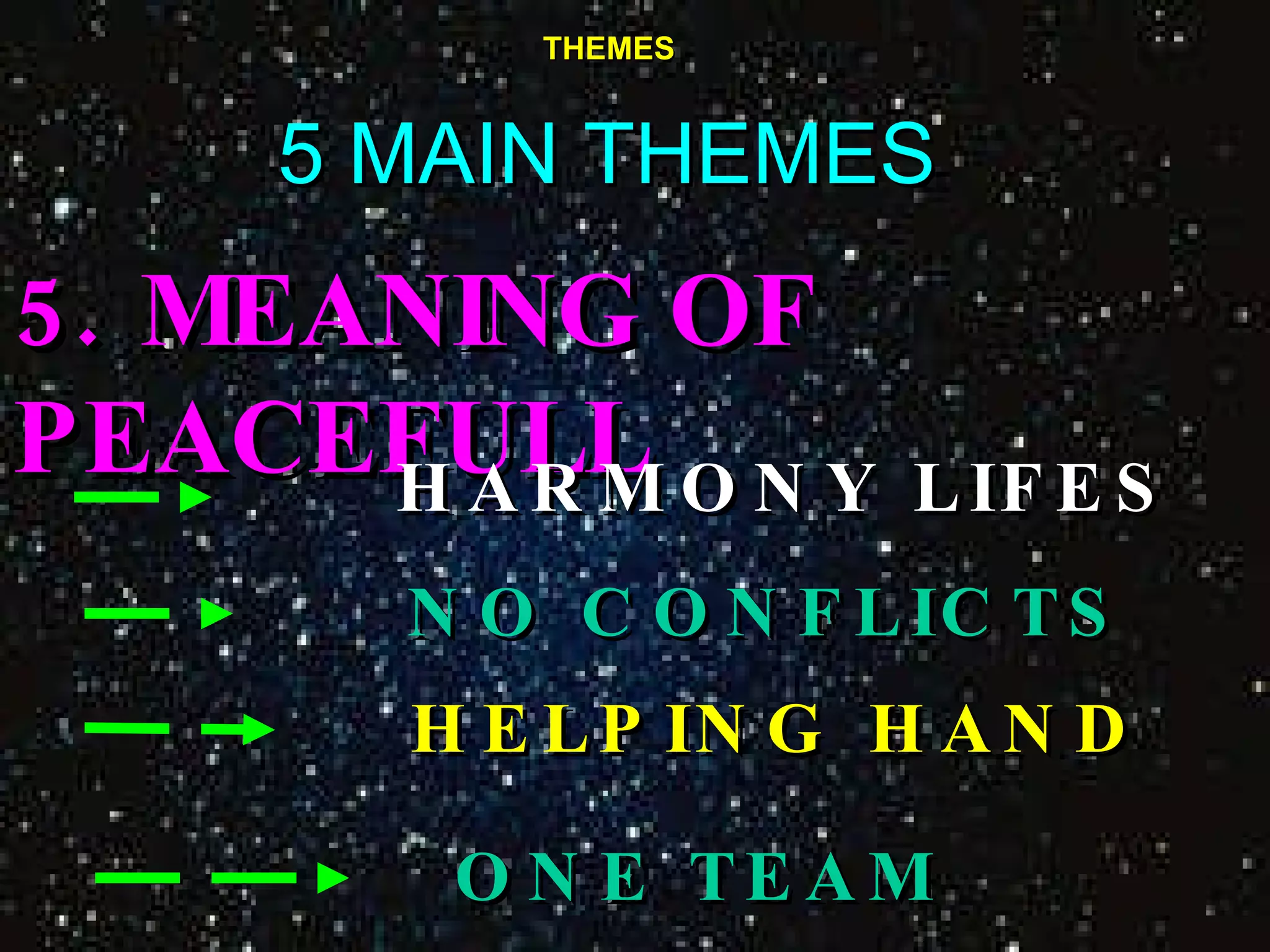
THEMES 5 MAIN THEMES 5.  MEANING OF PEACEFULL HARMONY LIFES  NO CONFLICTS HELPING HAND ONE TEAM
2 . C H R A C T E R S  :
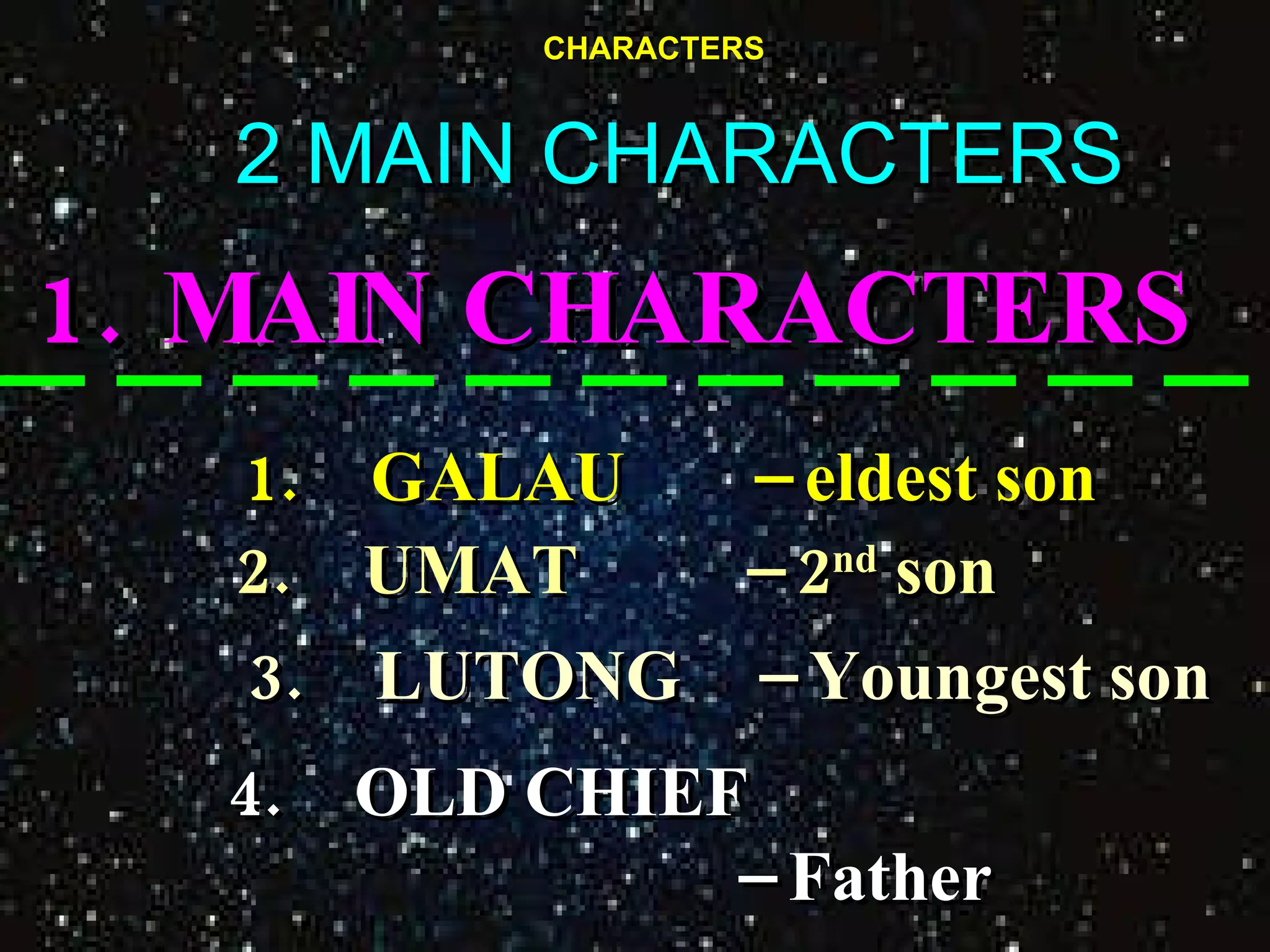
CHARACTERS 2 MAIN CHARACTERS 1.  MAIN CHARACTERS   1. GALAU  – eldest son 2. UMAT  – 2 nd  son 3. LUTONG  – Youngest son 4. OLD CHIEF –  Father
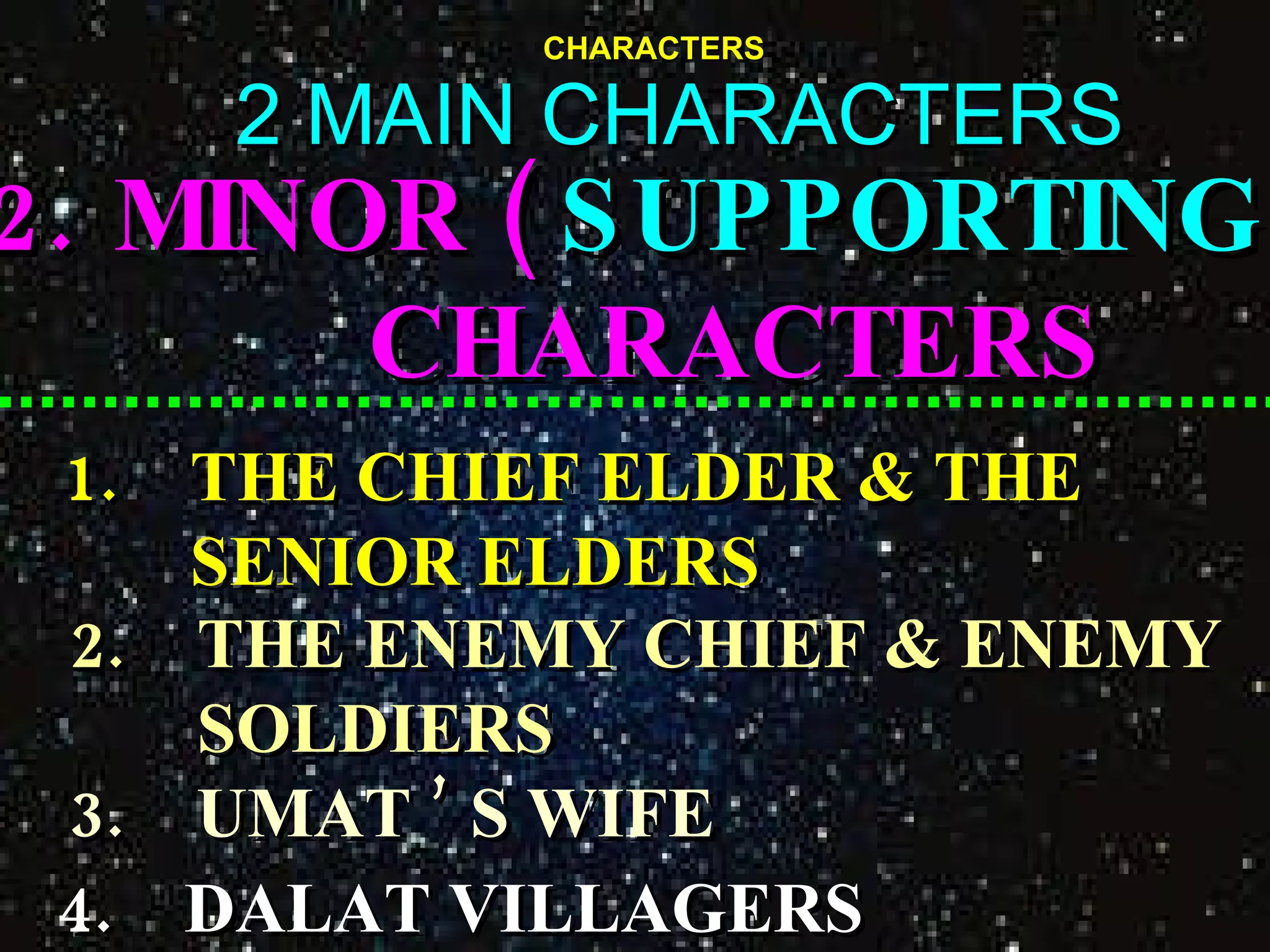
CHARACTERS 2 MAIN CHARACTERS 2.  MINOR (  SUPPORTING  )  CHARACTERS   1. THE CHIEF ELDER & THE SENIOR ELDERS 2. THE ENEMY CHIEF & ENEMY SOLDIERS 3. UMAT ’ S WIFE  4. DALAT VILLAGERS
3 . V A L U E S  :
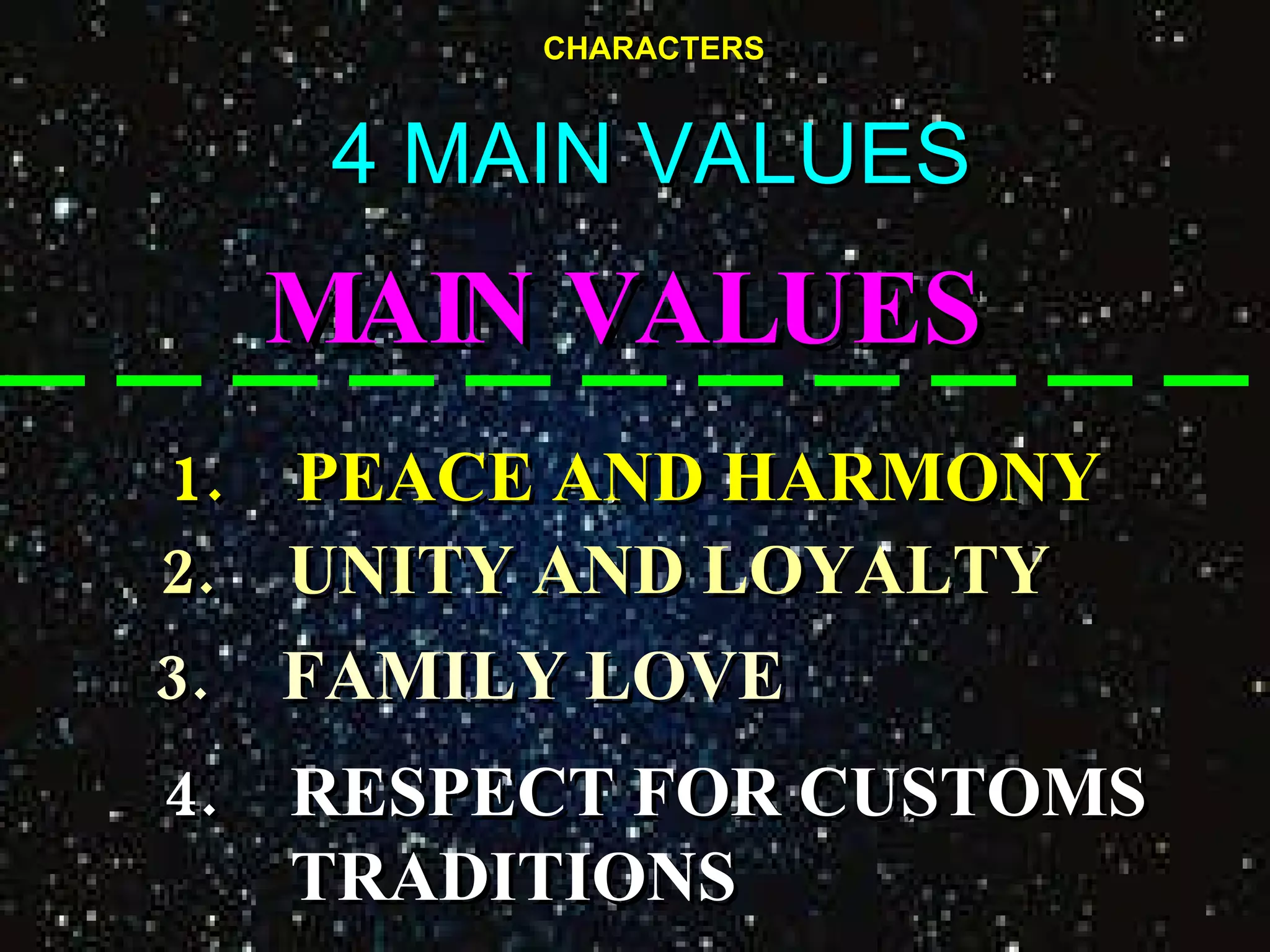
CHARACTERS 4 MAIN VALUES MAIN VALUES   1. PEACE AND HARMONY 2. UNITY AND LOYALTY 3. FAMILY LOVE 4. RESPECT FOR CUSTOMS TRADITIONS
T H E  E N D

How Dalat Got Its Name1

  • 1.
    SHORT STORYENGLISH LITERATURE : By zafeen
  • 2.
    BY HEIDI MUNANHOW " DALAT " GOT ITS NAME ( Bagaimana kampung “ Dalat ” mendapat namanya )
  • 3.
    ABOUT THE AUTHORHEIDI MUNAN
  • 4.
    ABOUT THE AUTHOR( TENTANG DIRI PENGARANG ) NAME : H E I D I M U N A N BIRTH PLACE : Switzerland. Lived in Sarawak since her marriage EDUCATION : Switzerland, ( B.A. ( Edu ), T. Dip. ), New Zealand EARLY OCCUPATION : Worked as graduate post – primary teacher ( 1965 ) INTEREST : Interested in folk tales. Loved listening to her late mother in law telling children’s stories
  • 5.
    ABOUT THE AUTHOR( TENTANG DIRI PENGARANG ) 1. Sarawak Crafts ( Pub. TIMES ) 2. Culture Shock Borneo ( Pub. TIMES ) 3. Culture Of the World – Malaysia ( Pub. TIMES ) 4. Sarawak Stories ( Pub. FAJAR BAKTI ) 5. Iban Stories ( Pub. FAJAR BAKTI ) 6. Bidayuh Stories ( Pub. FAJAR BAKTI ) 7. Melanau Stories ( Pub. FAJAR BAKTI ) Her writing :
  • 6.
    ABOUT THE AUTHOR( TENTANG DIRI PENGARANG ) INTEREST : freelancing as a regular contributor to national and foreign newspaper and publication – eg: MAS in – flight magazine – “ GOING PLACES ” Doing research into local – SARAWAKIAN – Malaysian herritage at Sarawak Museum
  • 7.
    ABOUT THE AUTHOR( TENTANG DIRI PENGARANG ) BACKGROUND TO THE STORY : The author fist heard this folk from a dear friend in Mukah, a town near Dalat. she recorded it and then re – wrote the story
  • 8.
  • 9.
    ABOUT THE TITLEFROM THE WORD FLIES WHAT IS FLIES? HOW DO YOU THINK , DALAT GOT ITS NAME?
  • 10.
  • 11.
    FLY FLY MEANS “ DALAT ” IN MELANAU ( LANGUAGE OF SARAWAK ) HERE WE CALL IT “ LALAT ” SO “ DALAT ” OR “ LALAT ” IS THE SAME THING
  • 12.
    OVER VIEW Thisshort story is about how a small riverine MELANAU Village on the OYA RIVER in SARAWAK acquired its name a long time ago The Melanau community lives as an AGRARIAN society work on farms near the river The people are RULED by tradition and hold on to their traditional customs and values. It is set in a SMALL TOWN called “ DALAT ”
  • 13.
    OVER VIEW Theold Melanau Chief died without naming his HEIR A power struggle between the old chief ‘s two ELDER SONS : GALAU & UMAT, caused a rift in the Melanau village community Umat JOINED forces with the ENEMY to OVERTHROW his brother, Galau The war that followed ended in destruction, bloodshed and deaths
  • 14.
    OVER VIEW Inmemory of his dead brother and as a memorial of the war, Galau renamed the village “ DALAT “, the Melanau word for FLIES Flies had settled on the rotting and bloody corpes. The bahasa Melayu word for FLIES is LALAT . This act was to remind the villagers of the IMPOTANCE OF PEACE & FRIENDSHIP
  • 15.
    OVER VIEW MAPOF THE LOCATION SARAWAK KUCHING OYA DALAT MIRI THE LOCATION IT HAPPENED HERE Oya river
  • 16.
    S Y NO P S I S
  • 17.
    SYNOPSIS But beenchallenged by his own ambitious brother, UMAT. This caused a rift in the Melanau community The wise old chief dies without any HEIR left This story is about how a peaceful, Melanau coastal town is RENAMED after a BITTER FIGHT between 2 brothers ( GALAU & UMAT ) Tradition states that, Galau, the eldest son, should be chief Umat gets help of enemy villagers Galau prepares the villagers for war
  • 18.
    SYNOPSIS Dead body( rotten and corpses ) unburied Many people dead. Dead body everywhere Followed by the bloody battle ( war ) Implication : Destruction, bloodshed and deaths Flies swarm settled on the dead body After that, the noble Galau renames the village as “ DALAT ” ( or LALAT / Flies ) in memory of his Brother ( Umat ) and the dead innocent people Peace and order is finally restored
  • 19.
  • 20.
    SETTING The storyis set in riverine Melanau Village ( Near the town of Sibu in Sarawak ) The village sits on the OYA RIVER It is a small pleasant village The villagers are HOUSEHOLD in LONGHOUSES
  • 21.
    SETTING MORE DETAILSABOUT THE LOCATION : OYA RIVER OLD SMALL TOWN - DALAT Veranda of old chief house Galau’s house Umat’s house Tall’s house SARAWAK
  • 22.
  • 23.
  • 24.
    P L OT S U M M A R Y :
  • 25.
    PLOT SUMMARY EXPOSITIONBEGINNING OF CONFLICTS CLIMAX ANTI - CLIMAX RESOLUTION
  • 26.
    1. TH E M E S :
  • 27.
    THEMES 5 MAINTHEMES 1. GREED UMAT P o w e r R a n k ( position )
  • 28.
    THEMES 5 MAINTHEMES 2. SELFISH UMAT Personal Desires Over – ambitious
  • 29.
    THEMES 5 MAINTHEMES UNHEALTHY RIVALRY ( BROTHER ) UMAT FEEL ALONE NOT APPRECIATED
  • 30.
    THEMES 5 MAINTHEMES 4. VALUES OF FRIENDSHIP BELONGINGS LOVING & CARE PATRIOTISME HELPING HAND UNITY & TRUSTINESS
  • 31.
    THEMES 5 MAINTHEMES 5. MEANING OF PEACEFULL HARMONY LIFES NO CONFLICTS HELPING HAND ONE TEAM
  • 32.
    2 . CH R A C T E R S :
  • 33.
    CHARACTERS 2 MAINCHARACTERS 1. MAIN CHARACTERS 1. GALAU – eldest son 2. UMAT – 2 nd son 3. LUTONG – Youngest son 4. OLD CHIEF – Father
  • 34.
    CHARACTERS 2 MAINCHARACTERS 2. MINOR ( SUPPORTING ) CHARACTERS 1. THE CHIEF ELDER & THE SENIOR ELDERS 2. THE ENEMY CHIEF & ENEMY SOLDIERS 3. UMAT ’ S WIFE 4. DALAT VILLAGERS
  • 35.
    3 . VA L U E S :
  • 36.
    CHARACTERS 4 MAINVALUES MAIN VALUES 1. PEACE AND HARMONY 2. UNITY AND LOYALTY 3. FAMILY LOVE 4. RESPECT FOR CUSTOMS TRADITIONS
  • 37.
    T H E E N D

Editor's Notes