Language Comparison
    Presentation
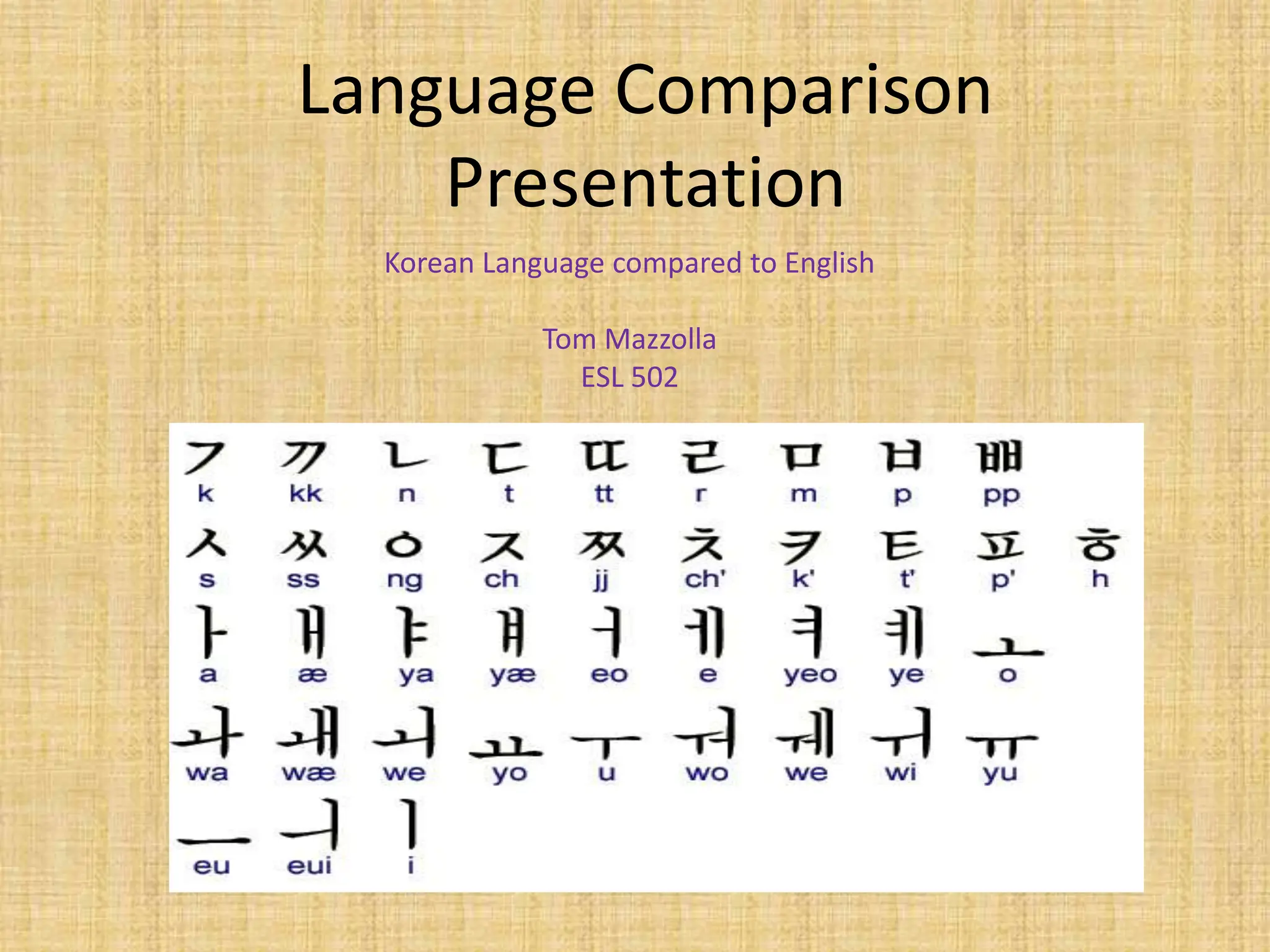
  Korean Language compared to English

             Tom Mazzolla
               ESL 502
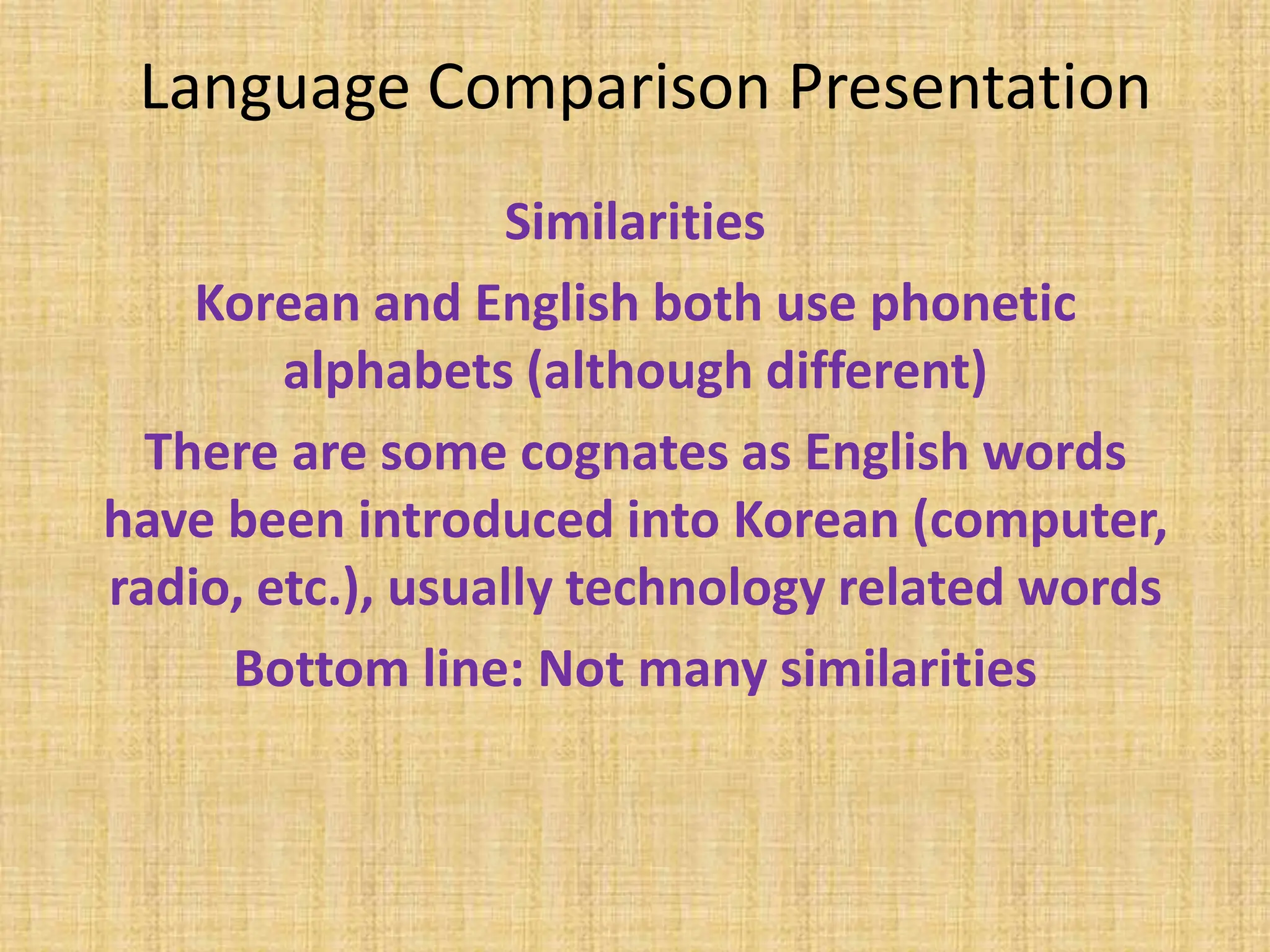
Language Comparison Presentation
                  Similarities
    Korean and English both use phonetic
        alphabets (although different)
  There are some cognates as English words
have been introduced into Korean (computer,
radio, etc.), usually technology related words
     Bottom line: Not many similarities
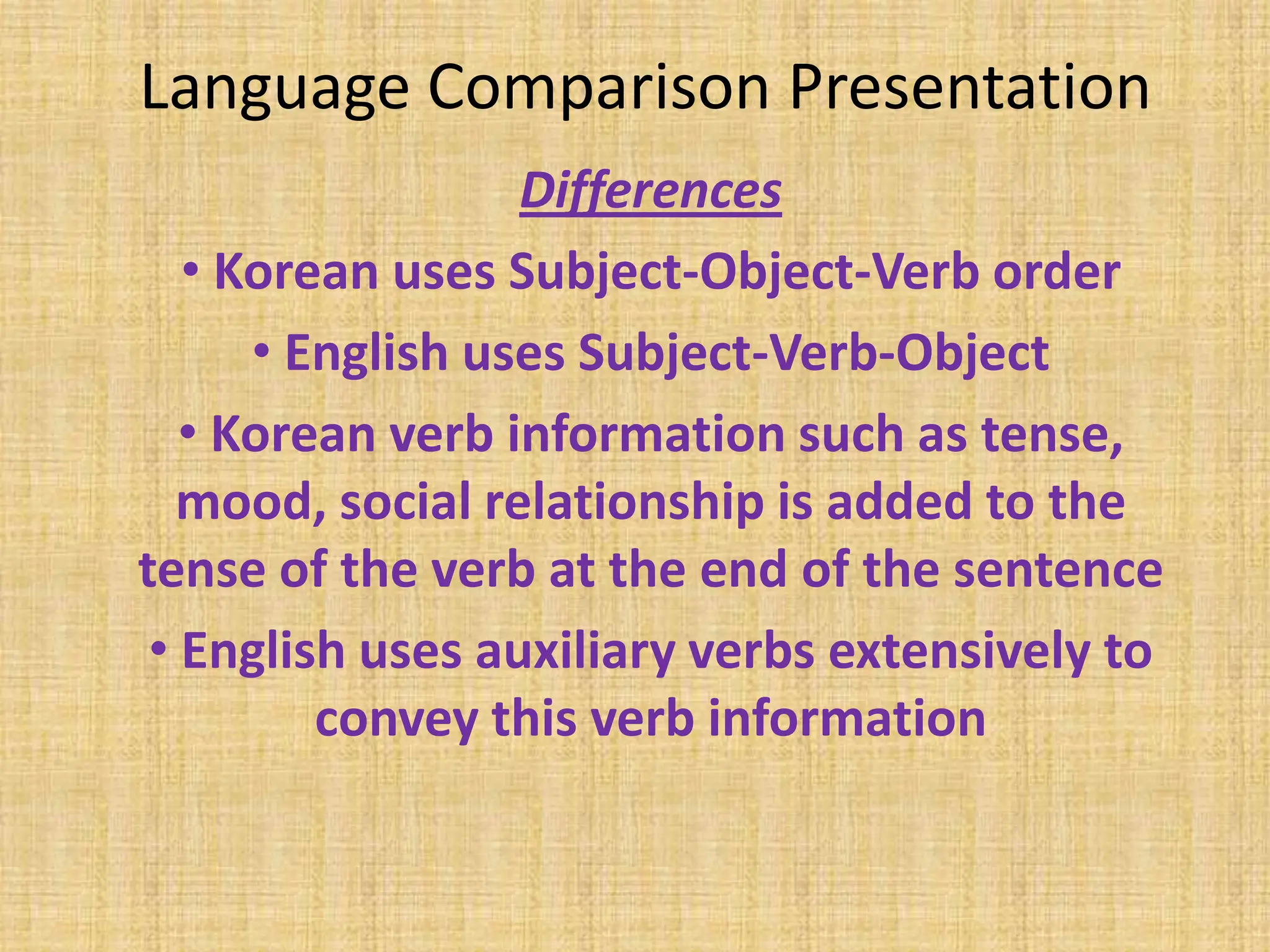
Language Comparison Presentation
                  Differences
   • Korean uses Subject-Object-Verb order
      • English uses Subject-Verb-Object
   • Korean verb information such as tense,
   mood, social relationship is added to the
tense of the verb at the end of the sentence
 • English uses auxiliary verbs extensively to
         convey this verb information
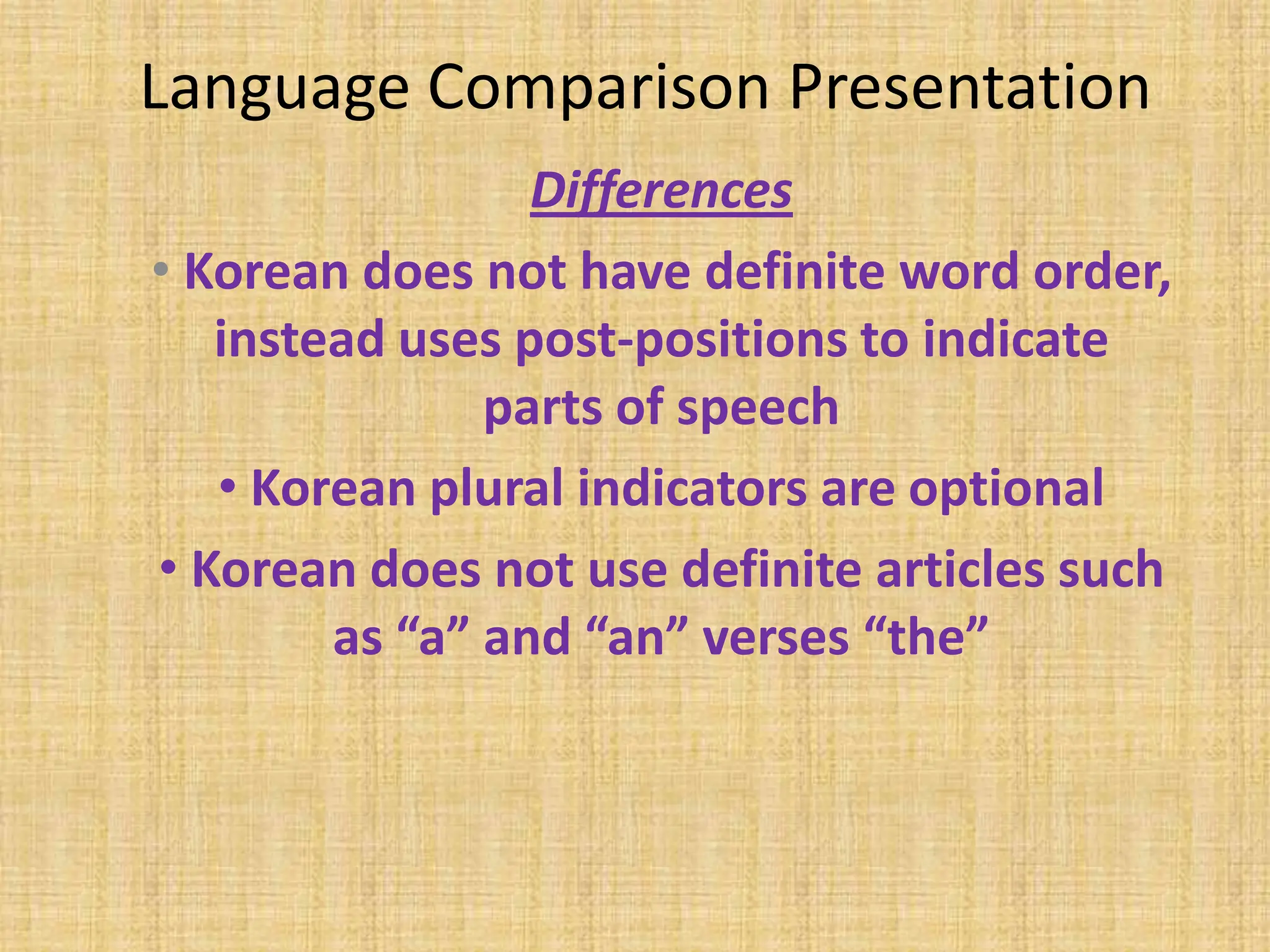
Language Comparison Presentation
                 Differences
• Korean does not have definite word order,
   instead uses post-positions to indicate
               parts of speech
   • Korean plural indicators are optional
• Korean does not use definite articles such
        as “a” and “an” verses “the”
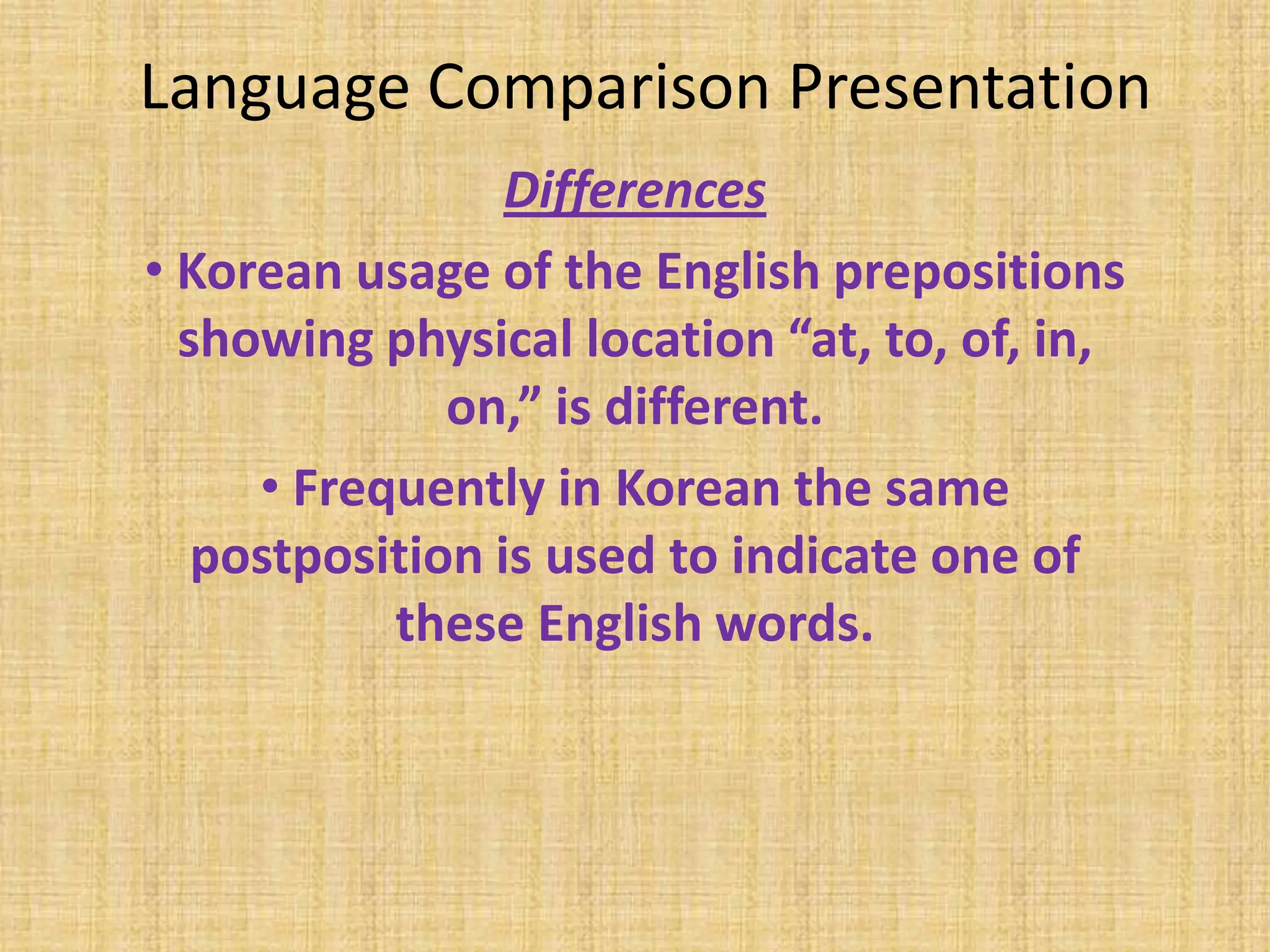
Language Comparison Presentation
                 Differences
• Korean usage of the English prepositions
  showing physical location “at, to, of, in,
              on,” is different.
     • Frequently in Korean the same
   postposition is used to indicate one of
           these English words.
Language Comparison Presentation
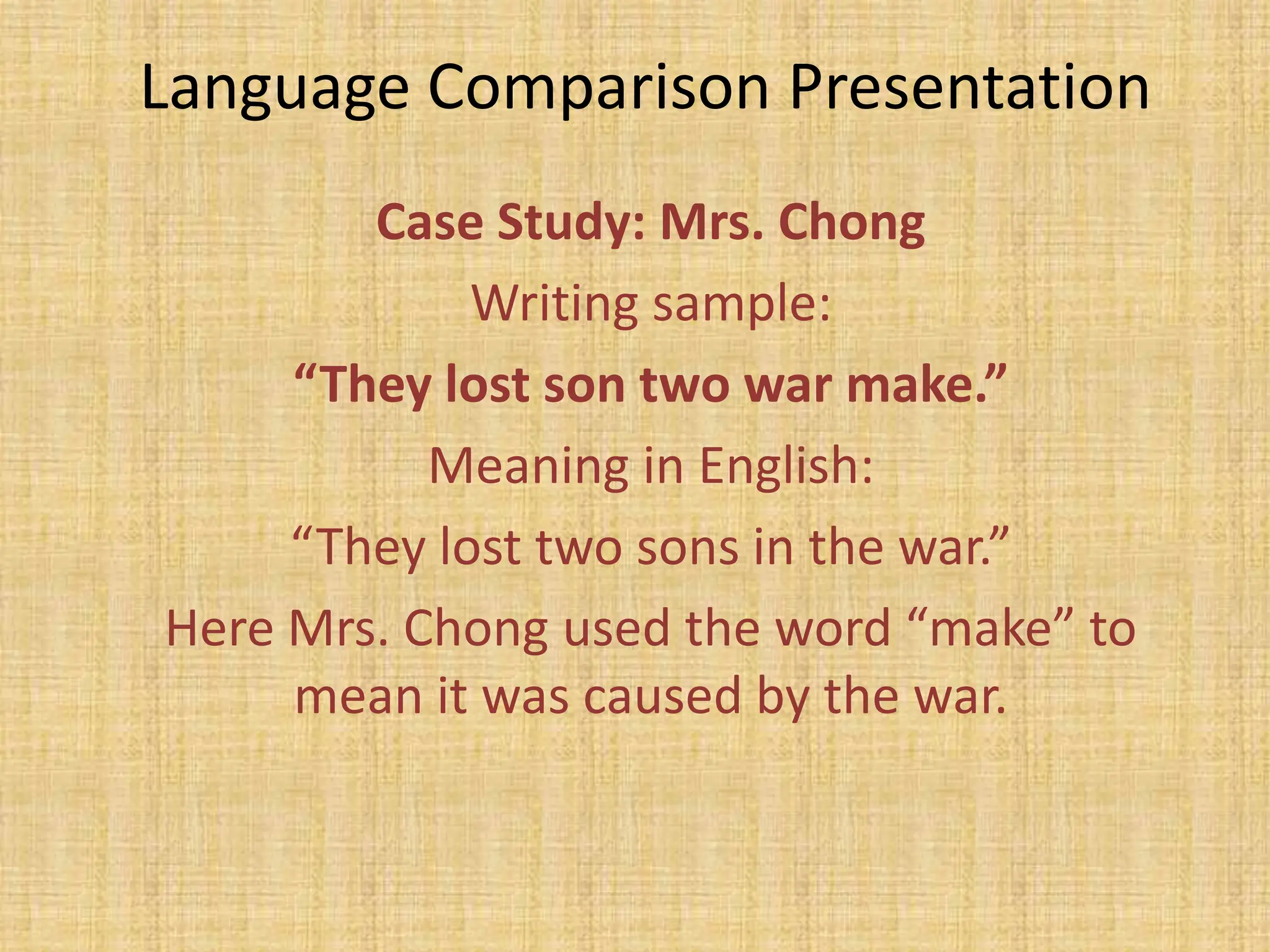
        Case Study: Mrs. Chong
             Writing sample:
     “They lost son two war make.”
           Meaning in English:
     “They lost two sons in the war.”
Here Mrs. Chong used the word “make” to
     mean it was caused by the war.
Language Comparison Presentation
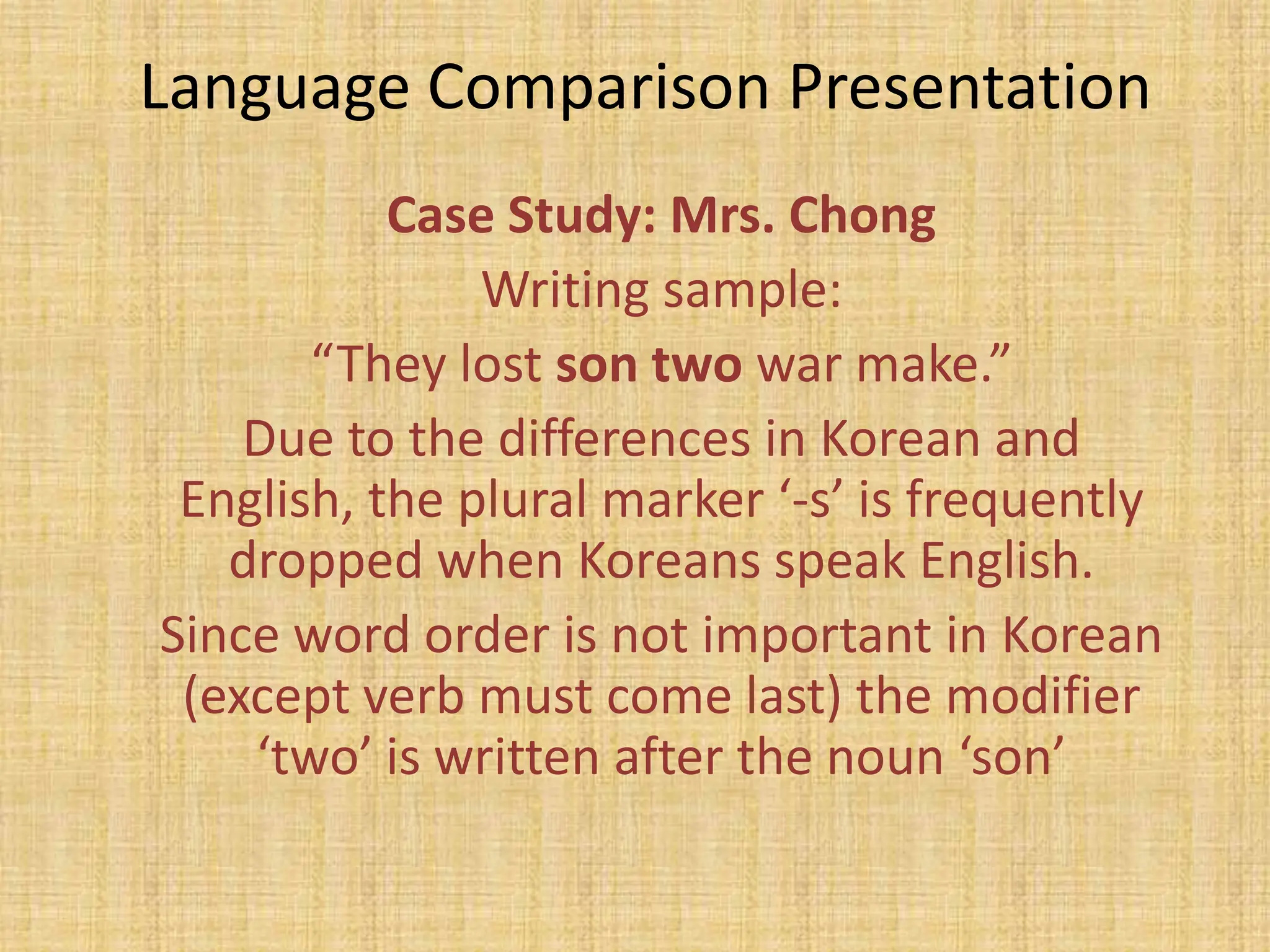
           Case Study: Mrs. Chong
               Writing sample:
       “They lost son two war make.”
    Due to the differences in Korean and
 English, the plural marker ‘-s’ is frequently
   dropped when Koreans speak English.
Since word order is not important in Korean
 (except verb must come last) the modifier
    ‘two’ is written after the noun ‘son’
Language Comparison Presentation
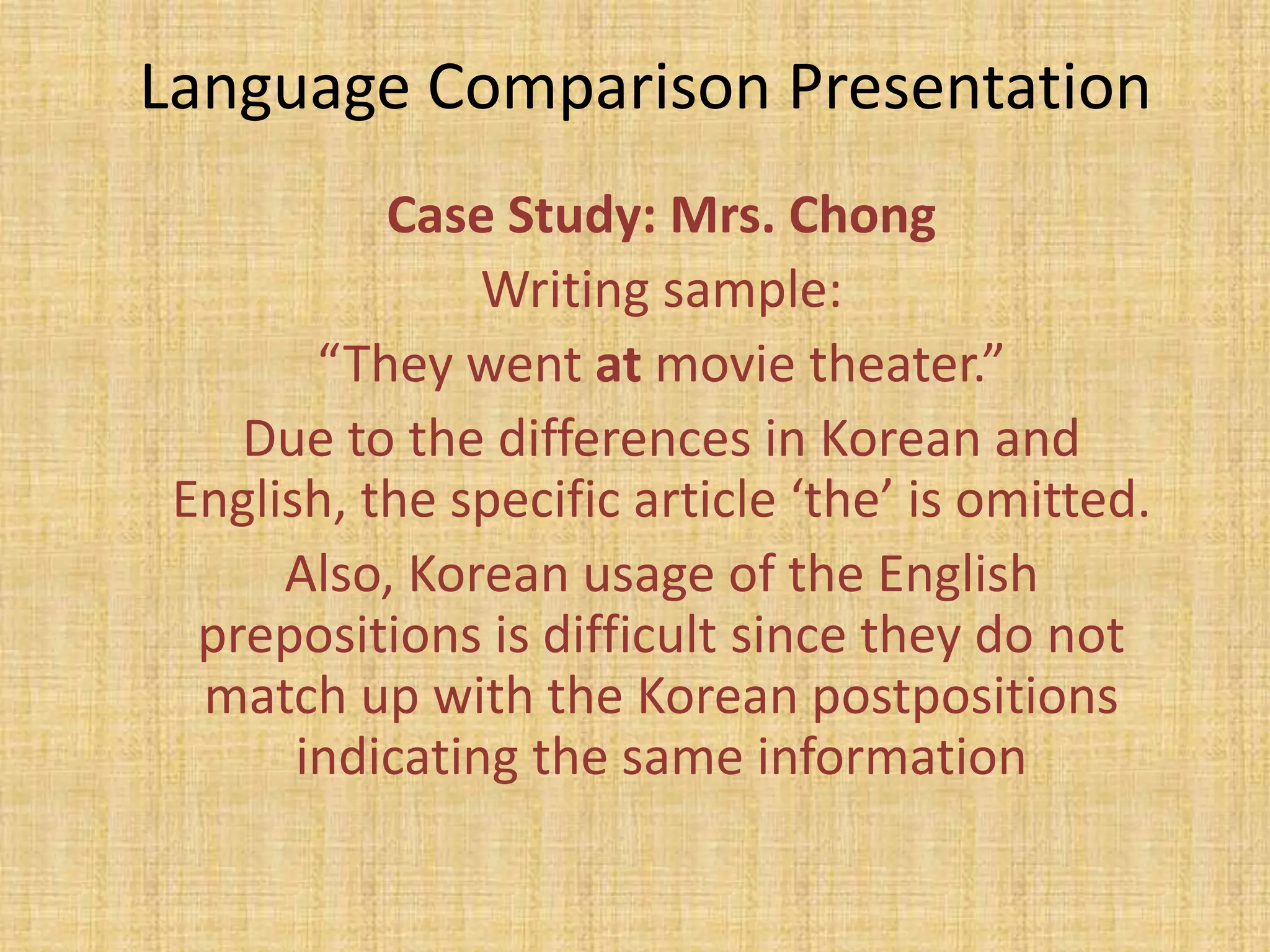
           Case Study: Mrs. Chong
                Writing sample:
        “They went at movie theater.”
    Due to the differences in Korean and
 English, the specific article ‘the’ is omitted.
      Also, Korean usage of the English
  prepositions is difficult since they do not
  match up with the Korean postpositions
       indicating the same information
Language Comparison Presentation
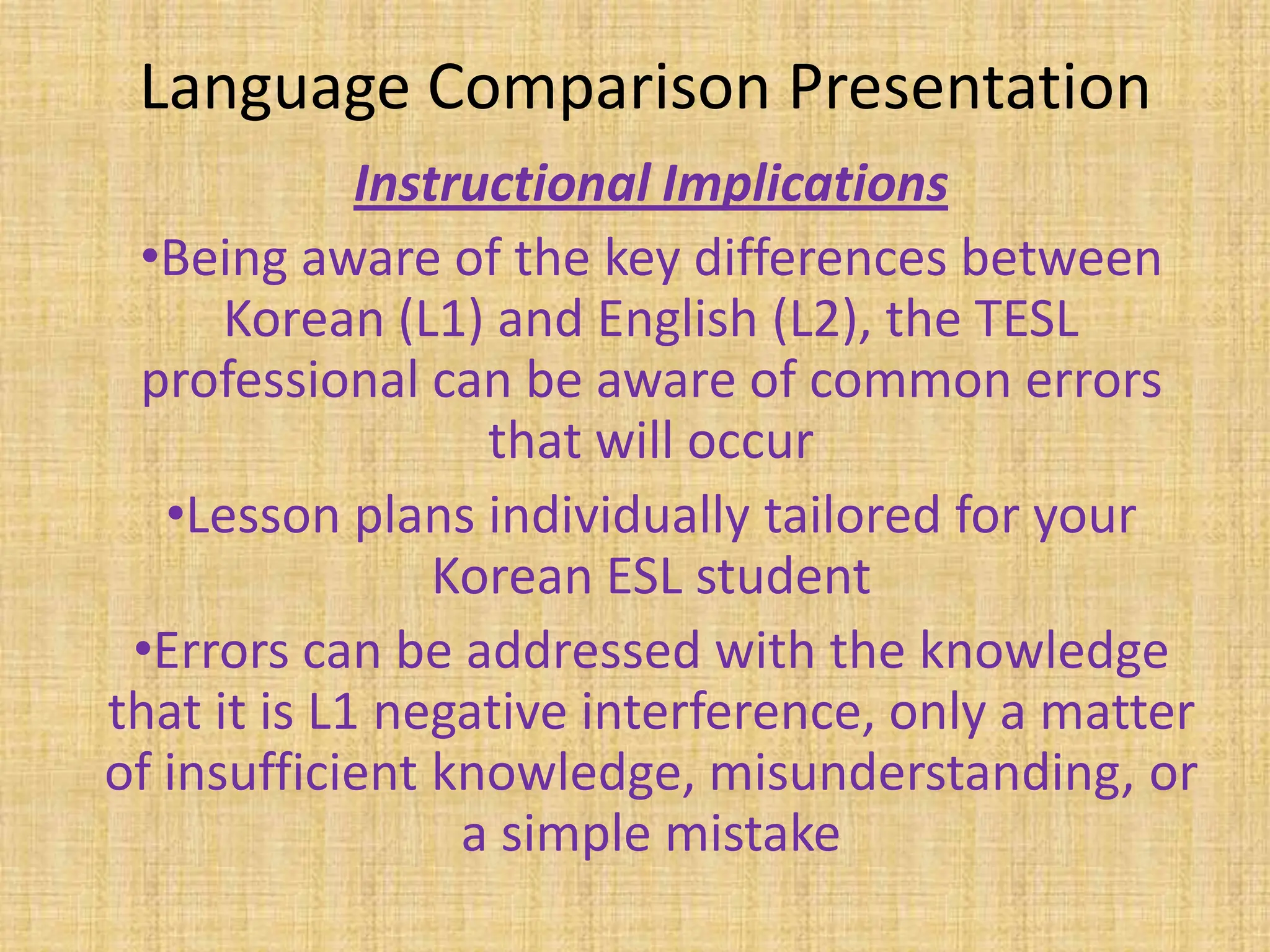
             Instructional Implications
 •Being aware of the key differences between
      Korean (L1) and English (L2), the TESL
 professional can be aware of common errors
                   that will occur
   •Lesson plans individually tailored for your
                 Korean ESL student
 •Errors can be addressed with the knowledge
that it is L1 negative interference, only a matter
of insufficient knowledge, misunderstanding, or
                  a simple mistake
Language Comparison Presentation

                   Resources:
http://www.smashingmagazine.com/2010/05/1
8/the-beauty-of-typography-writing-systems-
and-calligraphy-of-the-world/

Language comparison presentation

  • 1.
    Language Comparison Presentation Korean Language compared to English Tom Mazzolla ESL 502
  • 2.
    Language Comparison Presentation Similarities Korean and English both use phonetic alphabets (although different) There are some cognates as English words have been introduced into Korean (computer, radio, etc.), usually technology related words Bottom line: Not many similarities
  • 3.
    Language Comparison Presentation Differences • Korean uses Subject-Object-Verb order • English uses Subject-Verb-Object • Korean verb information such as tense, mood, social relationship is added to the tense of the verb at the end of the sentence • English uses auxiliary verbs extensively to convey this verb information
  • 4.
    Language Comparison Presentation Differences • Korean does not have definite word order, instead uses post-positions to indicate parts of speech • Korean plural indicators are optional • Korean does not use definite articles such as “a” and “an” verses “the”
  • 5.
    Language Comparison Presentation Differences • Korean usage of the English prepositions showing physical location “at, to, of, in, on,” is different. • Frequently in Korean the same postposition is used to indicate one of these English words.
  • 6.
    Language Comparison Presentation Case Study: Mrs. Chong Writing sample: “They lost son two war make.” Meaning in English: “They lost two sons in the war.” Here Mrs. Chong used the word “make” to mean it was caused by the war.
  • 7.
    Language Comparison Presentation Case Study: Mrs. Chong Writing sample: “They lost son two war make.” Due to the differences in Korean and English, the plural marker ‘-s’ is frequently dropped when Koreans speak English. Since word order is not important in Korean (except verb must come last) the modifier ‘two’ is written after the noun ‘son’
  • 8.
    Language Comparison Presentation Case Study: Mrs. Chong Writing sample: “They went at movie theater.” Due to the differences in Korean and English, the specific article ‘the’ is omitted. Also, Korean usage of the English prepositions is difficult since they do not match up with the Korean postpositions indicating the same information
  • 9.
    Language Comparison Presentation Instructional Implications •Being aware of the key differences between Korean (L1) and English (L2), the TESL professional can be aware of common errors that will occur •Lesson plans individually tailored for your Korean ESL student •Errors can be addressed with the knowledge that it is L1 negative interference, only a matter of insufficient knowledge, misunderstanding, or a simple mistake
  • 10.
    Language Comparison Presentation Resources: http://www.smashingmagazine.com/2010/05/1 8/the-beauty-of-typography-writing-systems- and-calligraphy-of-the-world/